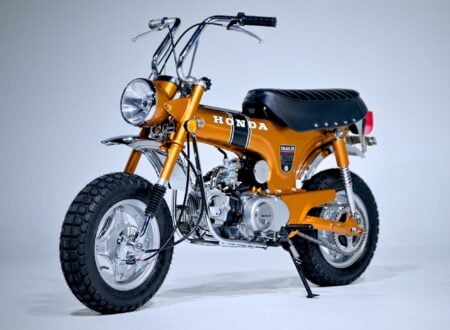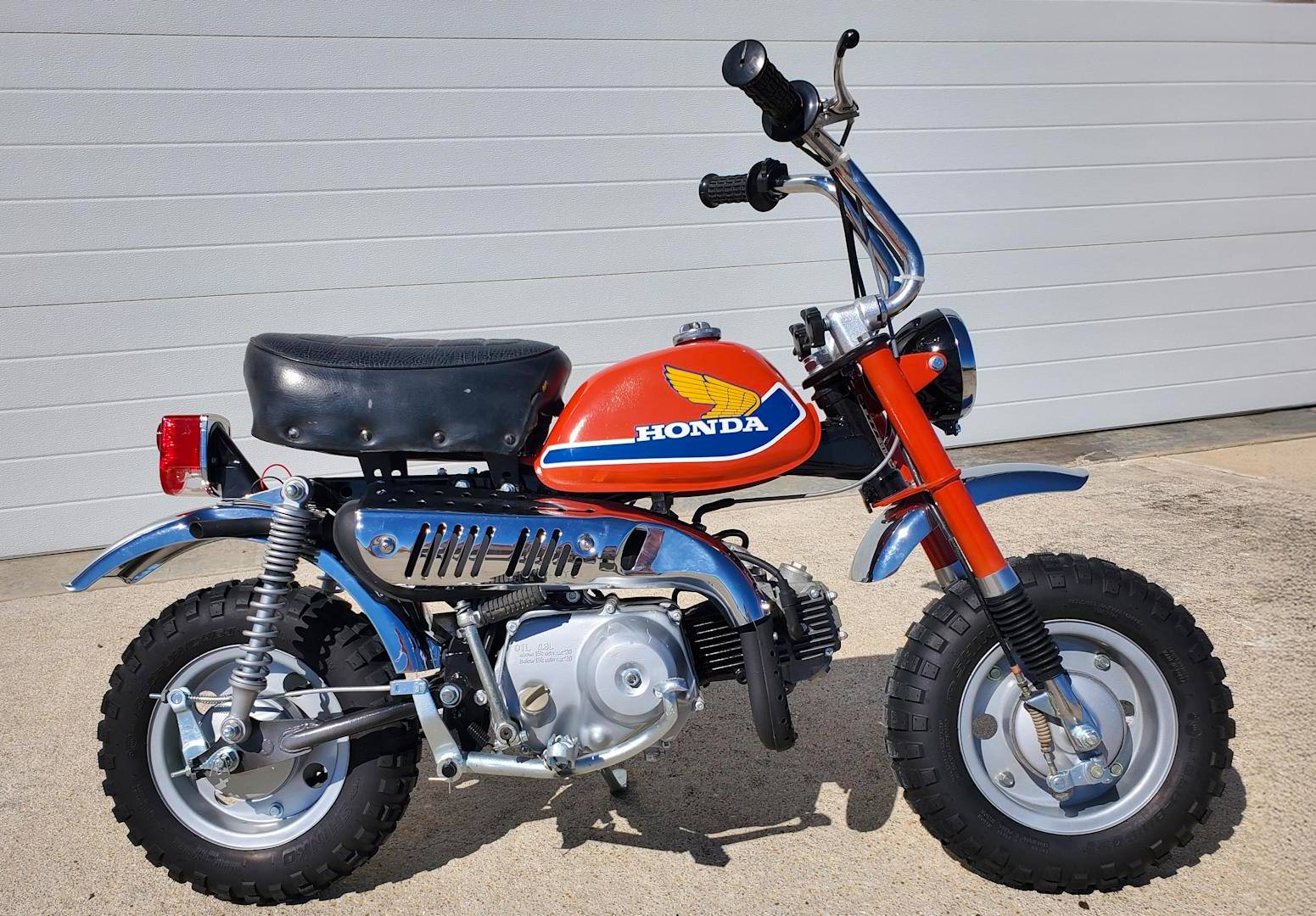
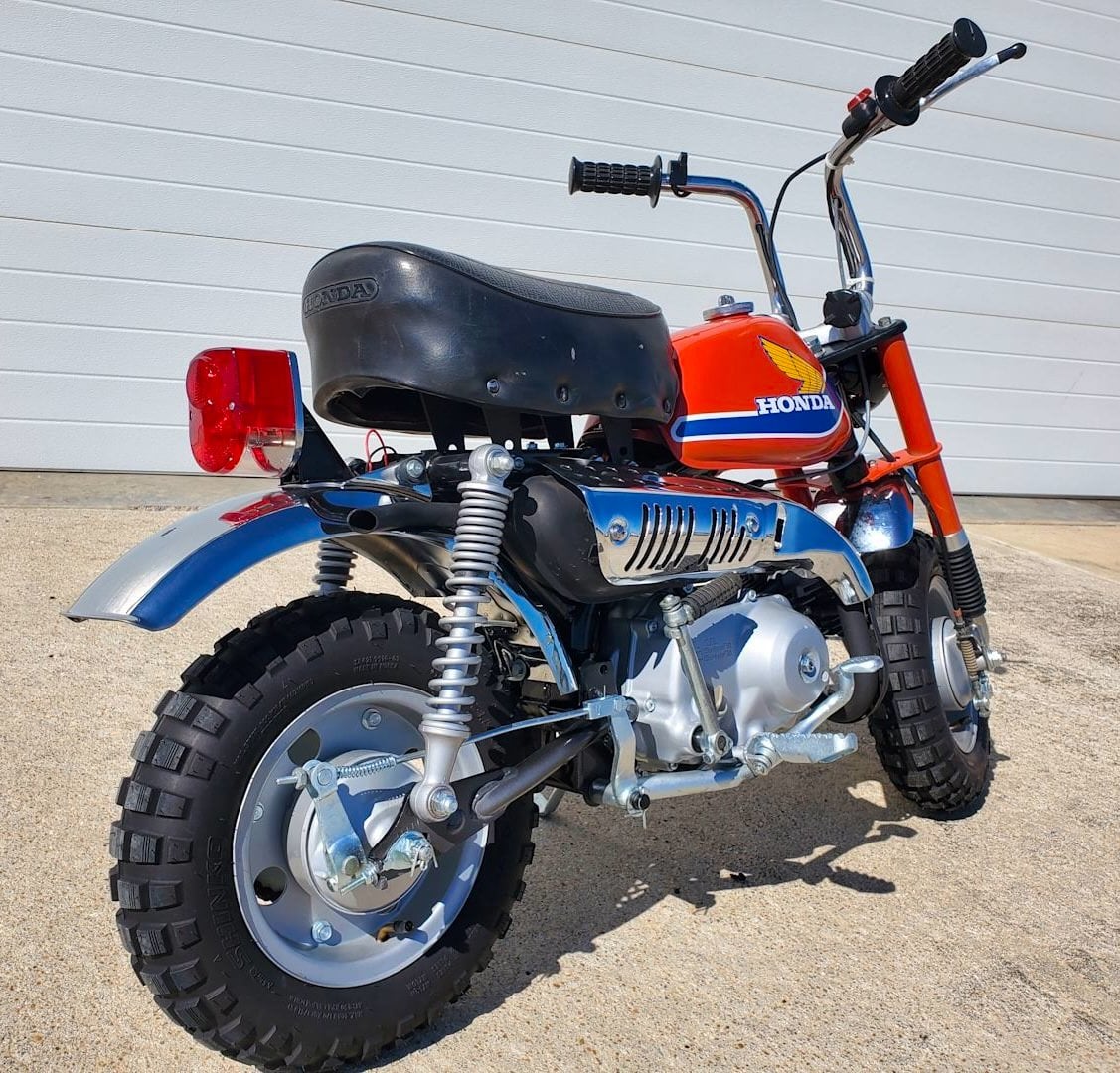
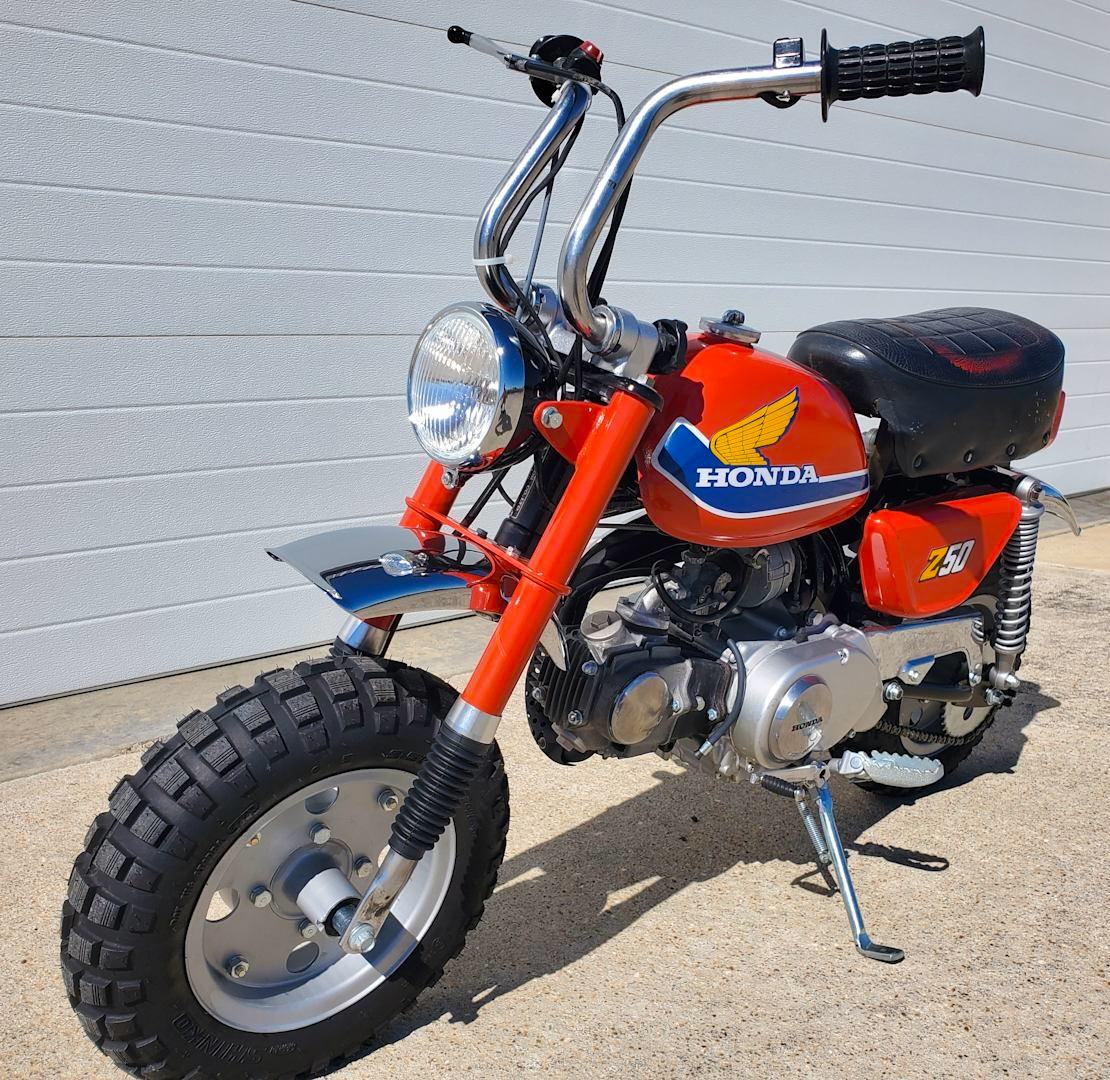
This is an original Honda Z50A from 1977, it now benefits from significant recent restoration work, including all new paintwork, refurbished original parts, and a professionally rebuilt engine.
Honda minibikes like the Z50A formed the backbone of the 1970s junior motorcycle boom, they sold in their thousands from coast to coast (and around the world), and many motorcyclists got their first taste of life on two wheels on them.
Fast Facts: A 1977 Honda Z50A Mini Bike
- The Honda Z50A was developed from Honda’s Z100 amusement-park minibike, created in Japan in 1961 for new riders. Its popularity at European motor shows led to the road-legal CZ100, followed by the Japanese Z50M and eventually the Z50A, establishing the small Honda as one of the defining “monkey bikes.”
- In America, the Z50A arrived during the minibike boom and stood apart from the glut of other manufacturers with a proper Honda four-stroke engine, 3-speed transmission, automatic clutch, front suspension, and dealer support. Later versions had lighting and rear suspension, while the model became a common first motorcycle for young riders during the 1970s.
- The Z50A helped introduce a generation to motorcycling, with future champions among its young riders. It remained in production through the 1978 model year before being replaced by the Z50R for 1979. That lineage continued through the XR50R and later the CRF50F, which remains part of Honda’s range.
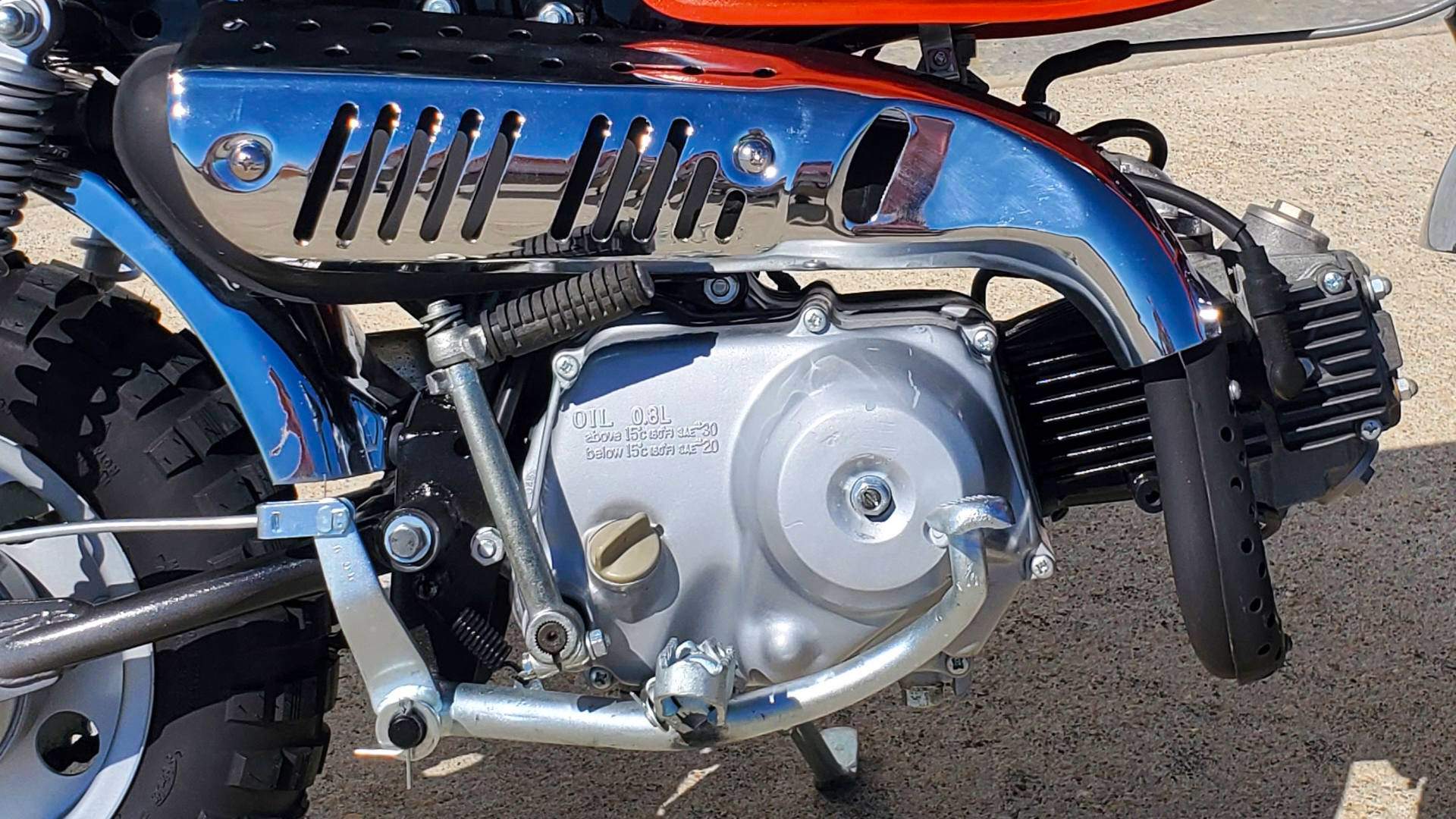
- This 1977 Z50A has received a comprehensive frame-off restoration with fresh Tahitian Red paint, traditional Honda wing graphics, and many refurbished original components. Its original 49cc four-stroke engine and carburetor were professionally rebuilt, while the factory three-speed semi-automatic transmission and original Honda seat have also been retained.
History Speedrun: The 1977 Honda Z50A
The Honda Z50A Mini Trail had actually started life as a fairground ride in Japan, long before it became a two-wheeled zeitgeist of life in 1970s America. In October of 1961, Honda opened two motoring-themed amusement parks, Tama Tech in the Tokyo suburbs and Ikoma Tech in Nara Prefecture, and built a miniature motorcycle called the Z100 for visitors to ride.
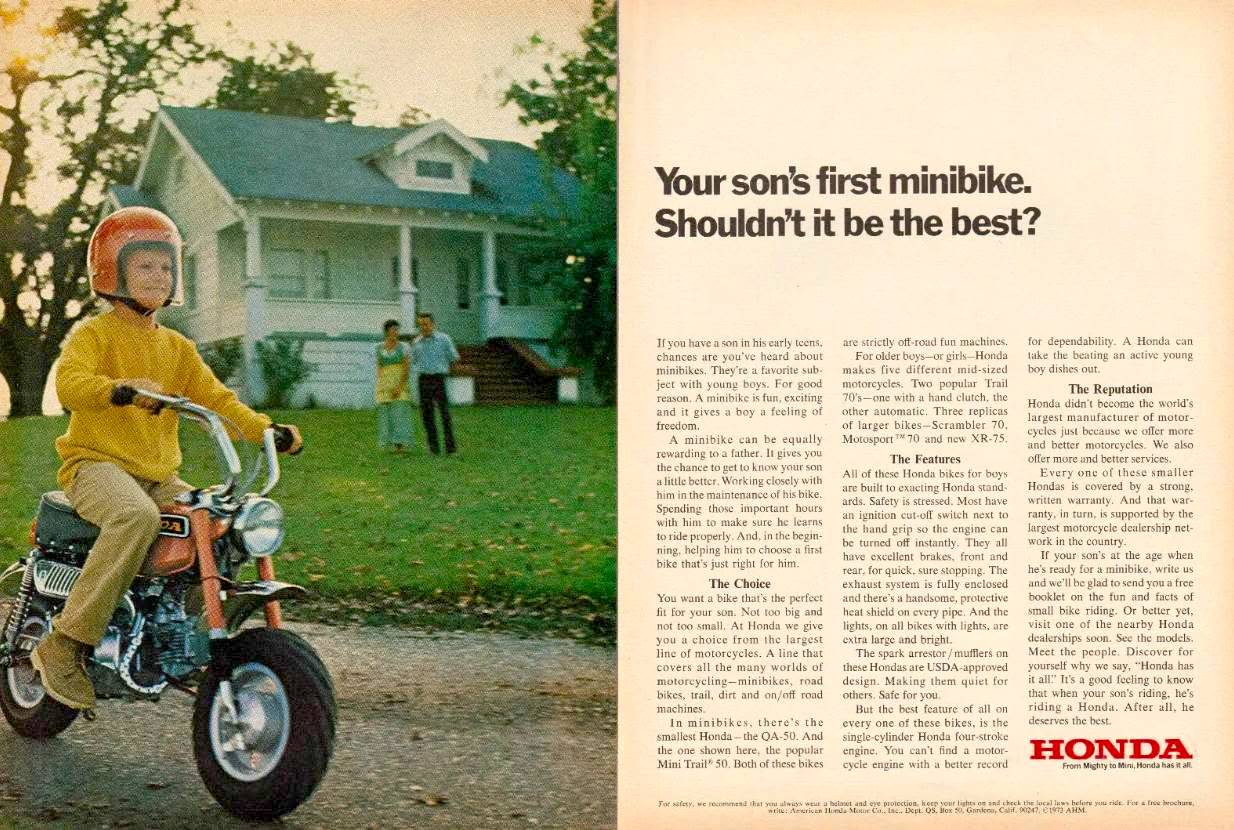
 The Honda Z50A Mini Trail had actually started life as a fairground ride in Japan, long before it became a two-wheeled zeitgeist of life in 1970s America. Image courtesy of Honda.
The little Z100 sat on 5-inch tires and used the Super Cub’s 49cc overhead-valve single, a 3-speed gearbox and an automatic centrifugal clutch. Honda had no plans to sell it, they just wanted a fun and easy fairground ride for people who had never thrown a leg over a motorcycle before. It was quickly nicknamed the “monkey bike” because of how adults looked when riding them (particularly when viewed from the back) with their knees up and arms out, due to the small size of the Z100.
Honda’s no-public-sales plans changed after the Z100 appeared at the Frankfurt and London Motor Shows in late 1962, where they were very warmly received by show attendees – Honda shipped 20 of them to its European operation that December for evaluation.
Long story short, the Europeans loved it, and a road-legal export model soon followed, the Honda CZ100, with a stiffer frame to carry adults and a fuel tank borrowed from the pre-existing Honda Sports Cub. Production began in 1964 on a small assembly line in a corner of the Suzuka factory, where five workers built 20 bikes a day. Around 2,500 were made in three years, exported mainly to France and Germany.
The first of these monkey bikes that sold in Japan was the 1967 Honda Z50M. It switched to the Super Cub’s overhead-cam engine, added lights for the road, and had a seat and handlebars that folded so the bike could ride in a car trunk. Honda didn’t yet build a car with a trunk big enough to take one, but that arrived two years later with the introduction of the Honda 1300 in 1969.
The Honda Z50A Debuts
Honda’s Japanese Z50A of 1969 moved up to 8-inch wheels and added front suspension, a 6-volt battery and turn signals. It also put both brake controls on the handlebars, an easier option than the earlier foot-operated rear brake for new riders. The American version, the 1968-model K0 sold as the Honda Mini Trail, had no lights at all and was meant for trails, campgrounds, and beaches.
The 1969 K1 model gained lights for road registration, and in 1972 the K3 replaced the rigid tail with a swingarm and twin shocks to relieve stress on the frame (and rider). That layout lasted until the Z50A was retired after the 1978 model year. Its larger sibling, the Honda CT70 Trail, had joined it in 1969, and had become a cult classic in its own right.
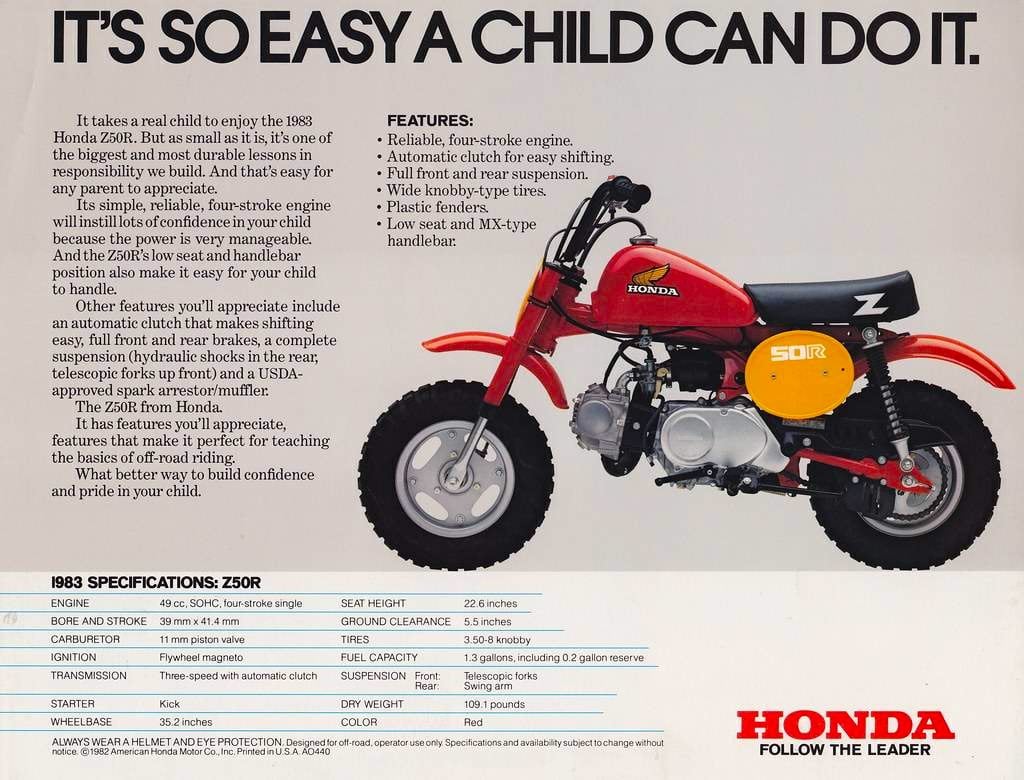
The Z50R replaced the Z50A for 1979, it was an off-road model aimed at young riders who wanted a minibike for the track, and it stayed in production until 1999. The XR50R took over in 2000 and became the CRF50F in 2004, a model Honda still builds today. Image courtesy of Honda.
The Mini Trail In America
The Honda Mini Trail landed smack bang in the middle of an American minibike craze. At its peak more than 150 companies were building minibikes, most of them with lawn-mower engines, sold through hardware shops, farm-equipment dealers, and even suburban department stores.
The Honda offered three gears, an automatic clutch, front suspension and a motorcycle dealer for parts and servicing. By 1974 the number of minibike makers had fallen to just 10. Tom Drzewiecki, a Wisconsin collector with more than 60 of the older machines, describes the Honda’s arrival as “pretty much the end” for the local American manufacturers.
The child performing a long wheelie on a Mini Trail in the opening minutes of the 1971 documentary On Any Sunday, filmed at Saddleback Park, was Jeff Ward. He went on to win AMA Supercross and Motocross championships in the 1980s. He was just one of many kids who got their start riding little Hondas, before graduating to the big bikes and making a name for themselves.
The Successors To The Z50A
The Z50R replaced the Z50A for 1979, it was an off-road model aimed at young riders who wanted a minibike for the track, and it stayed in production until 1999. The XR50R took over in 2000 and became the CRF50F in 2004, a model Honda still builds today.
The 1977 Honda Z50A Shown Here
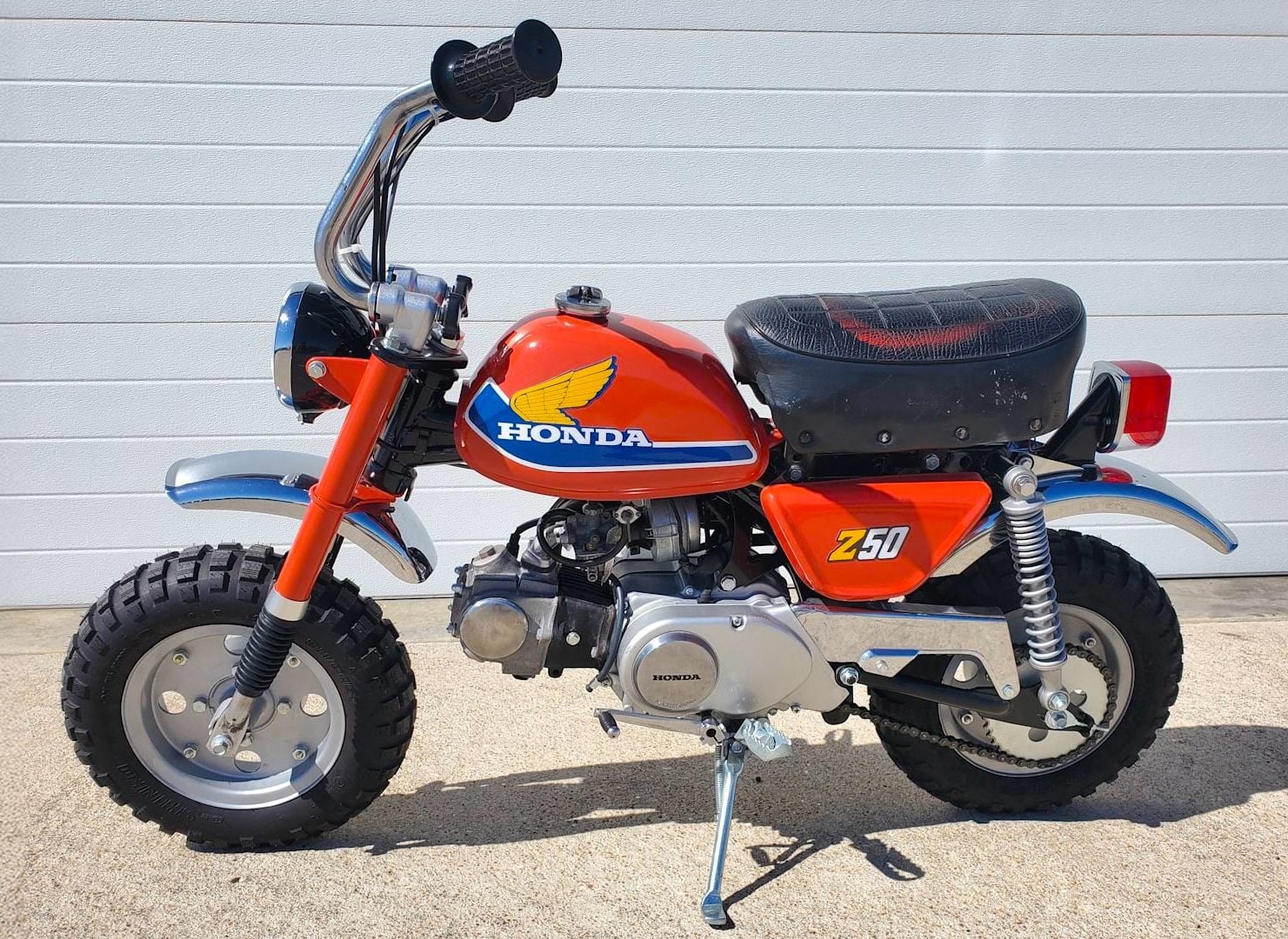
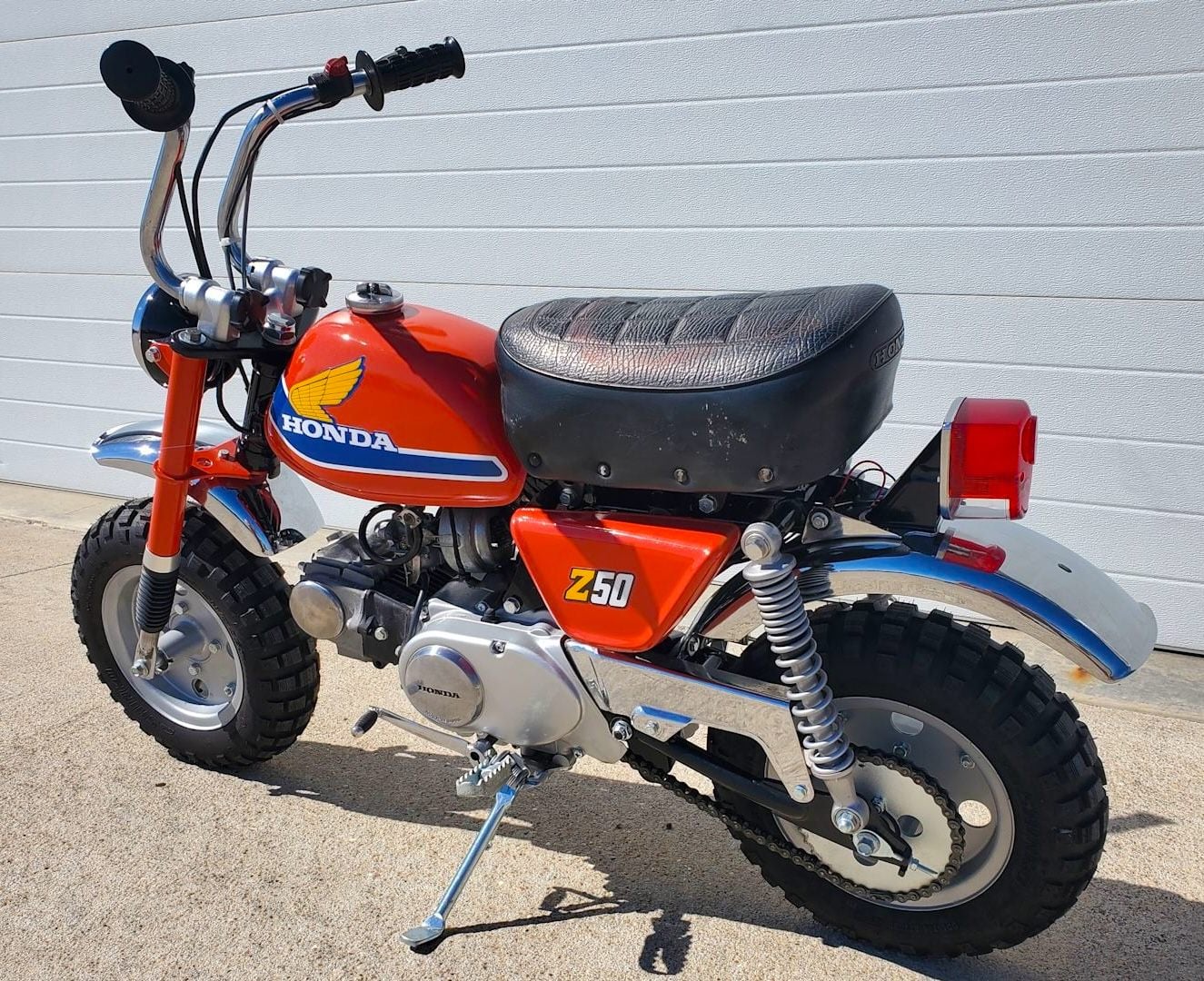
This original 1977 Honda Z50A Mini Trail has recently undergone a comprehensive frame-off restoration, returning it to its classic, period-correct finish. It has Tahitian Red paintwork with traditional Honda wing graphics on the fuel tank, and it keeps numerous original factory Honda parts that were refurbished during the restoration.
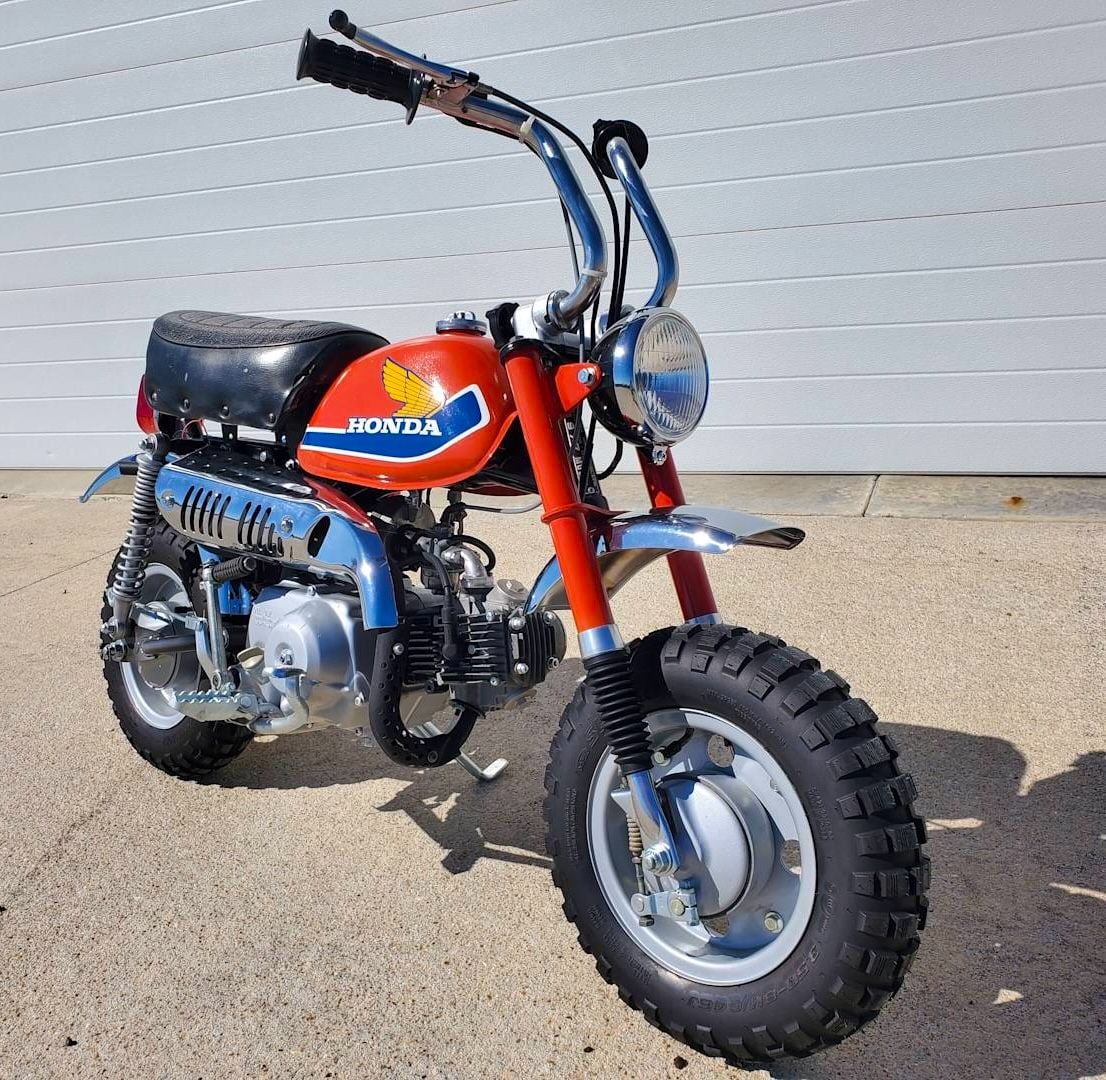
This is an original Honda Z50A from 1977, it now benefits from significant recent restoration work, including all new paintwork, refurbished original parts, and a professionally rebuilt engine.
Power comes from its original 49cc four-stroke single-cylinder engine, which has been professionally rebuilt. The original carburetor has also been professionally rebuilt, and the engine is paired with the factory 3-speed semi-automatic transmission, allowing gear changes without a manually operated clutch.
The restoration also preserved the bike’s original Honda seat. It’s described as being in running condition, working condition, and it’s now due to roll across the auction block with Mecum in early December. You can visit the listing here if you’d like to read more about it or register to bid.
Images courtesy of Mecum + Honda

Articles that Ben Branch has written have been covered on CNN, Popular Mechanics, Smithsonian Magazine, Road & Track Magazine, the official Pinterest blog, the official eBay Motors blog, BuzzFeed, Autoweek Magazine, Wired Magazine, Autoblog, Gear Patrol, Jalopnik, The Verge, and many more.
Silodrome was founded by Ben back in 2010, in the years since the site has grown to become a world leader in the alternative and vintage motoring sector, with well over a million monthly readers from around the world and many hundreds of thousands of followers on social media.