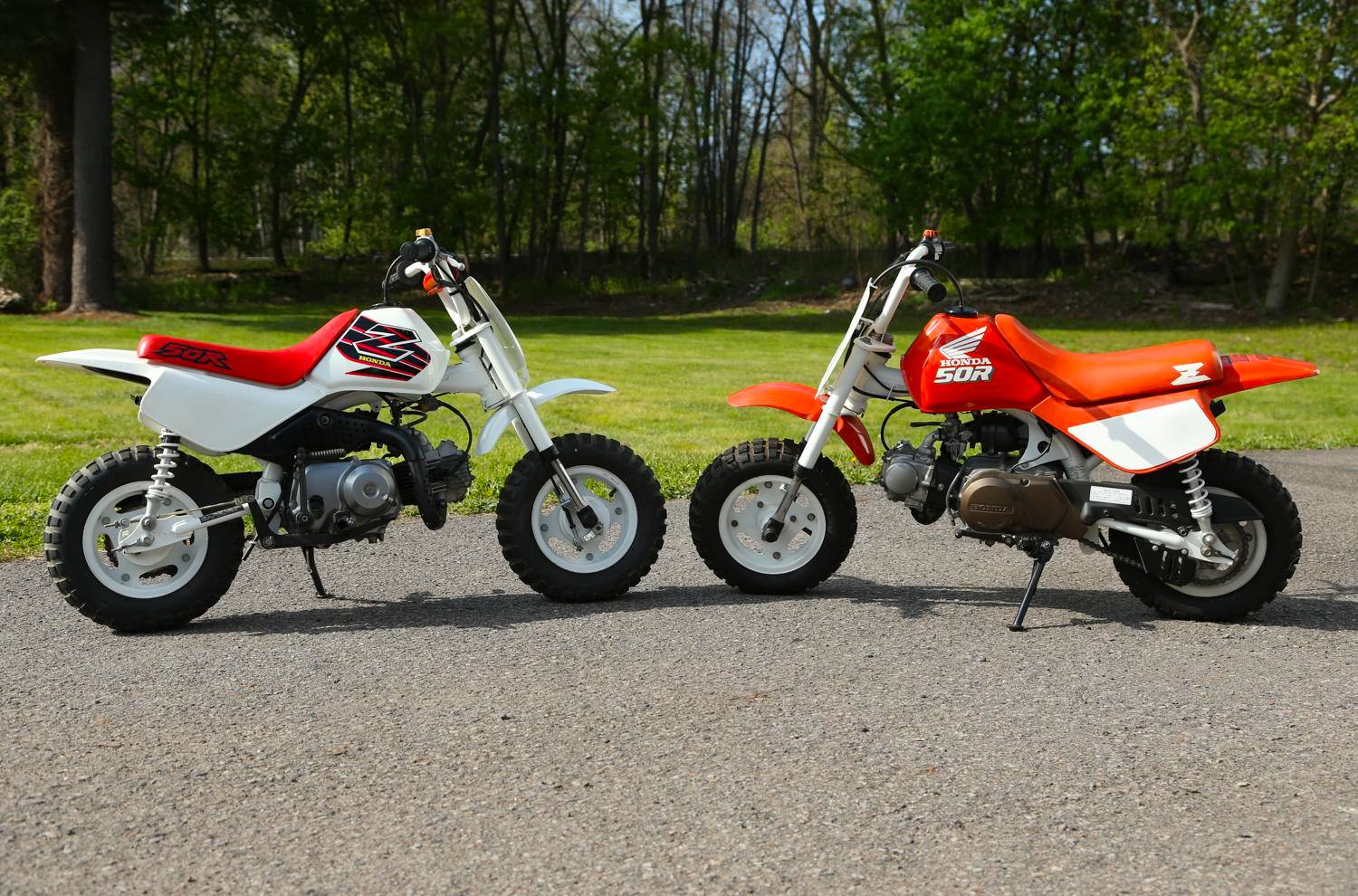
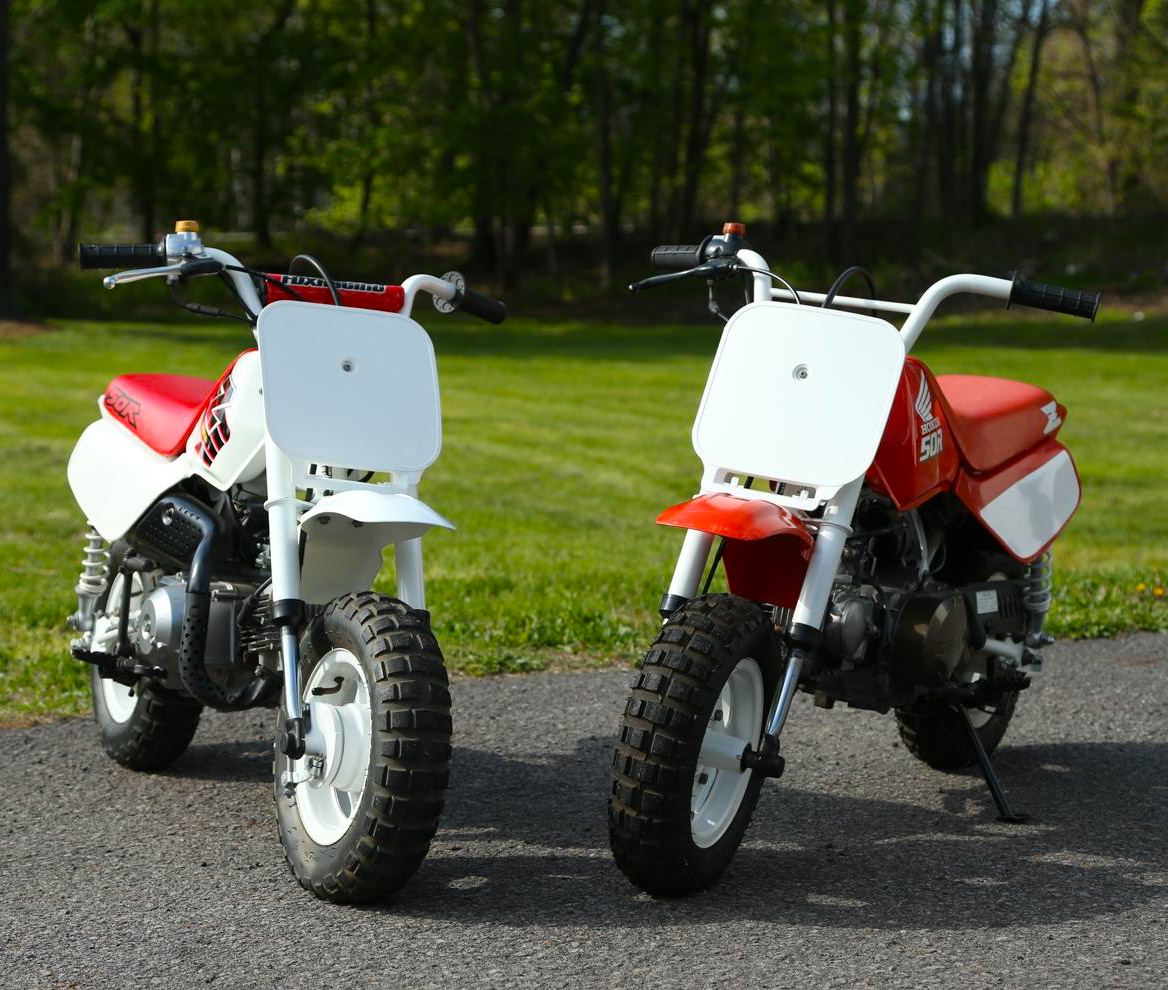
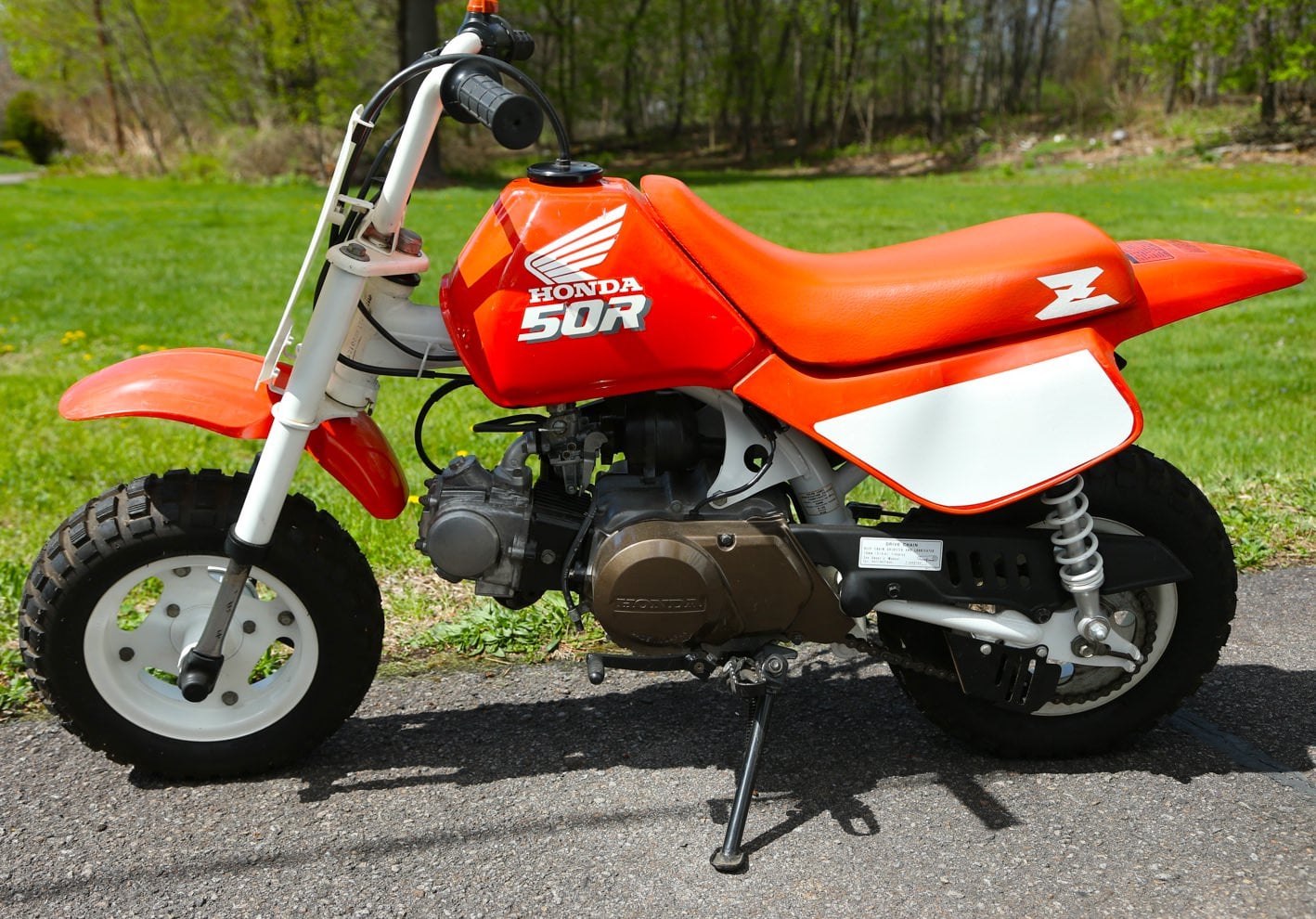
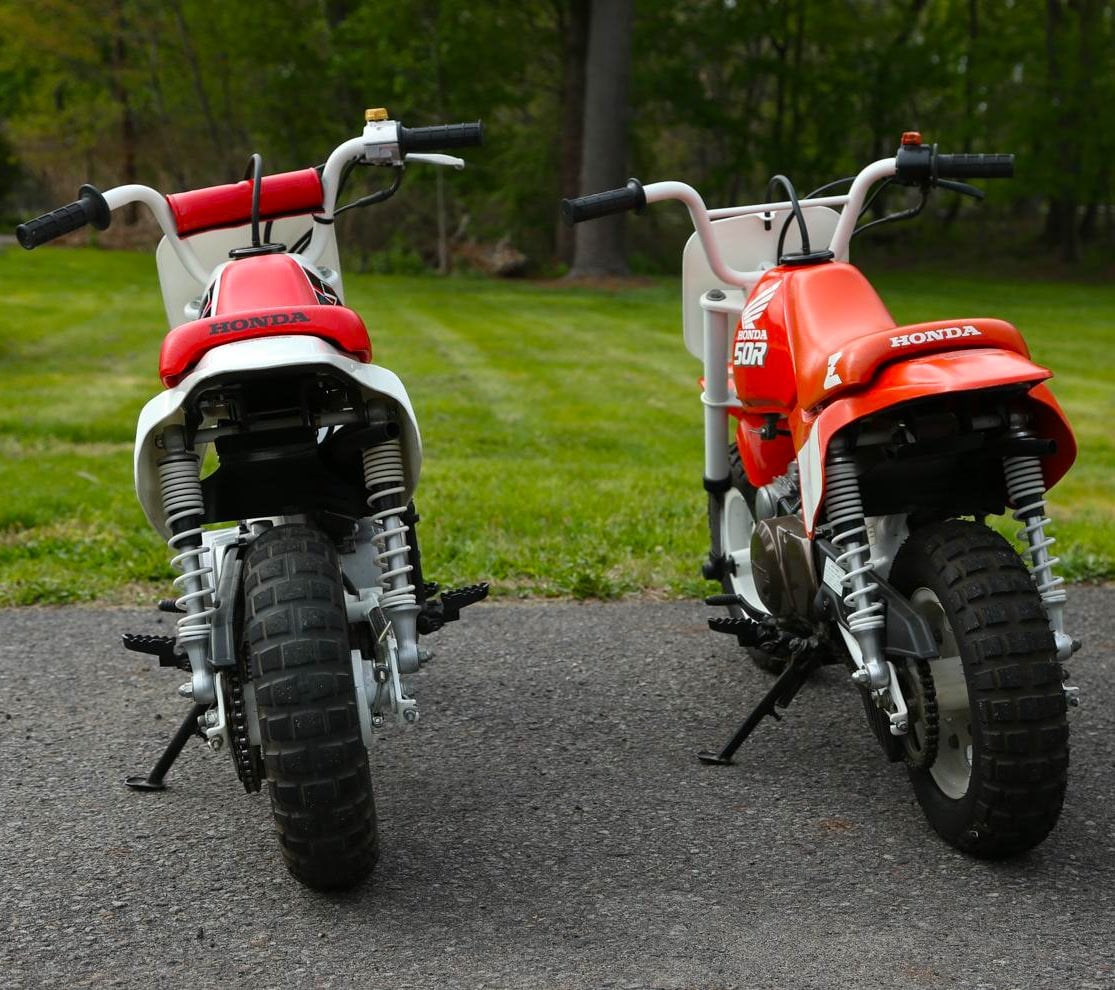
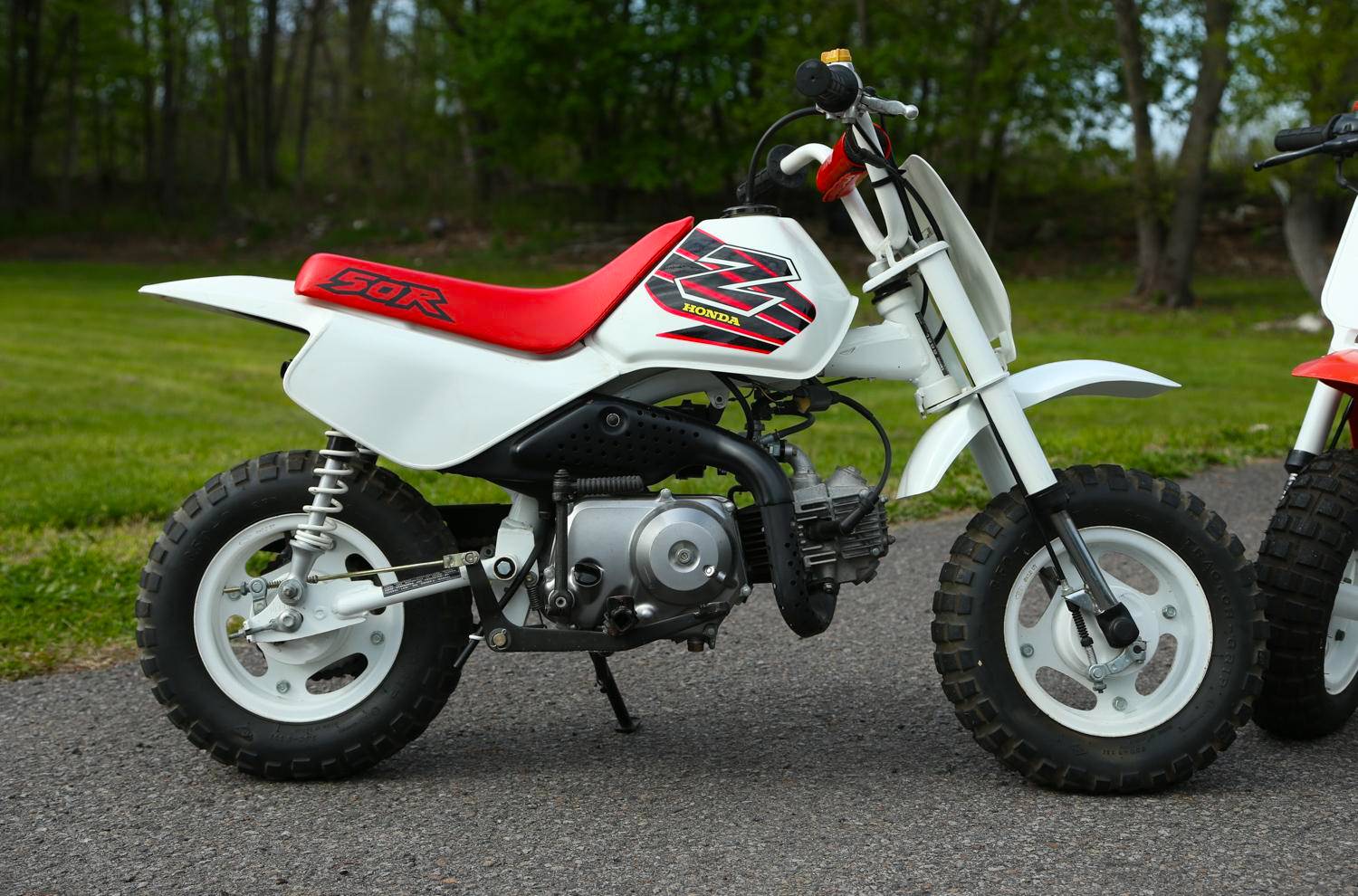
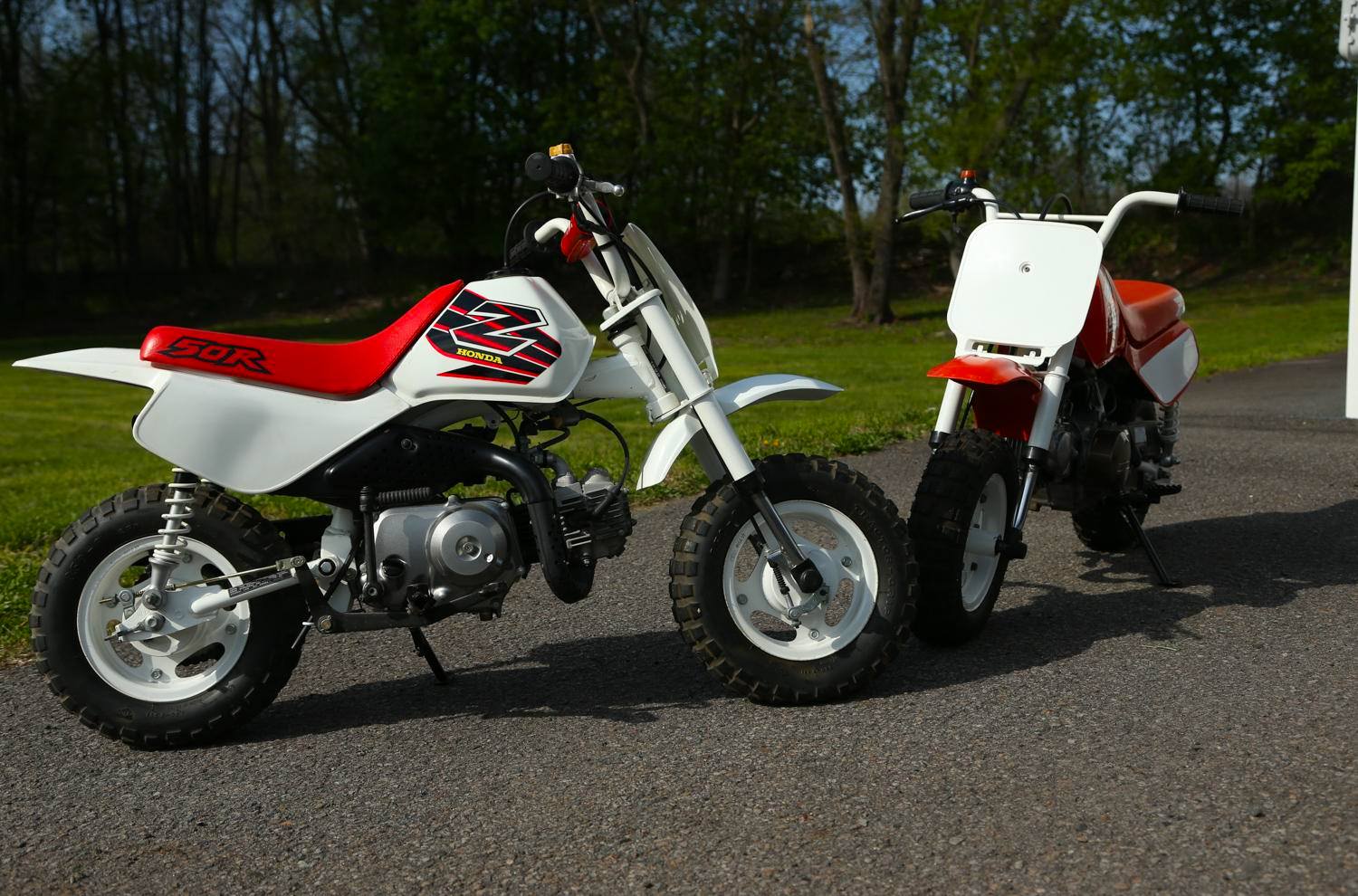
This is a pair of Honda Z50R minibikes, the red one is from 1989 and the white one is from 1999 – exactly a decade later. They’re both powered by 49cc four-stroke engines, paired with semi-automatic 3-speed transmissions.
Z50Rs like these provided the first taste of motorcycling for many young riders, they’re easy to ride, lightweight, and mechanically reliable – as a result they’ve become hugely sought after on the vintage market.
Fast Facts: A Pair Of Honda Z50R Minibikes
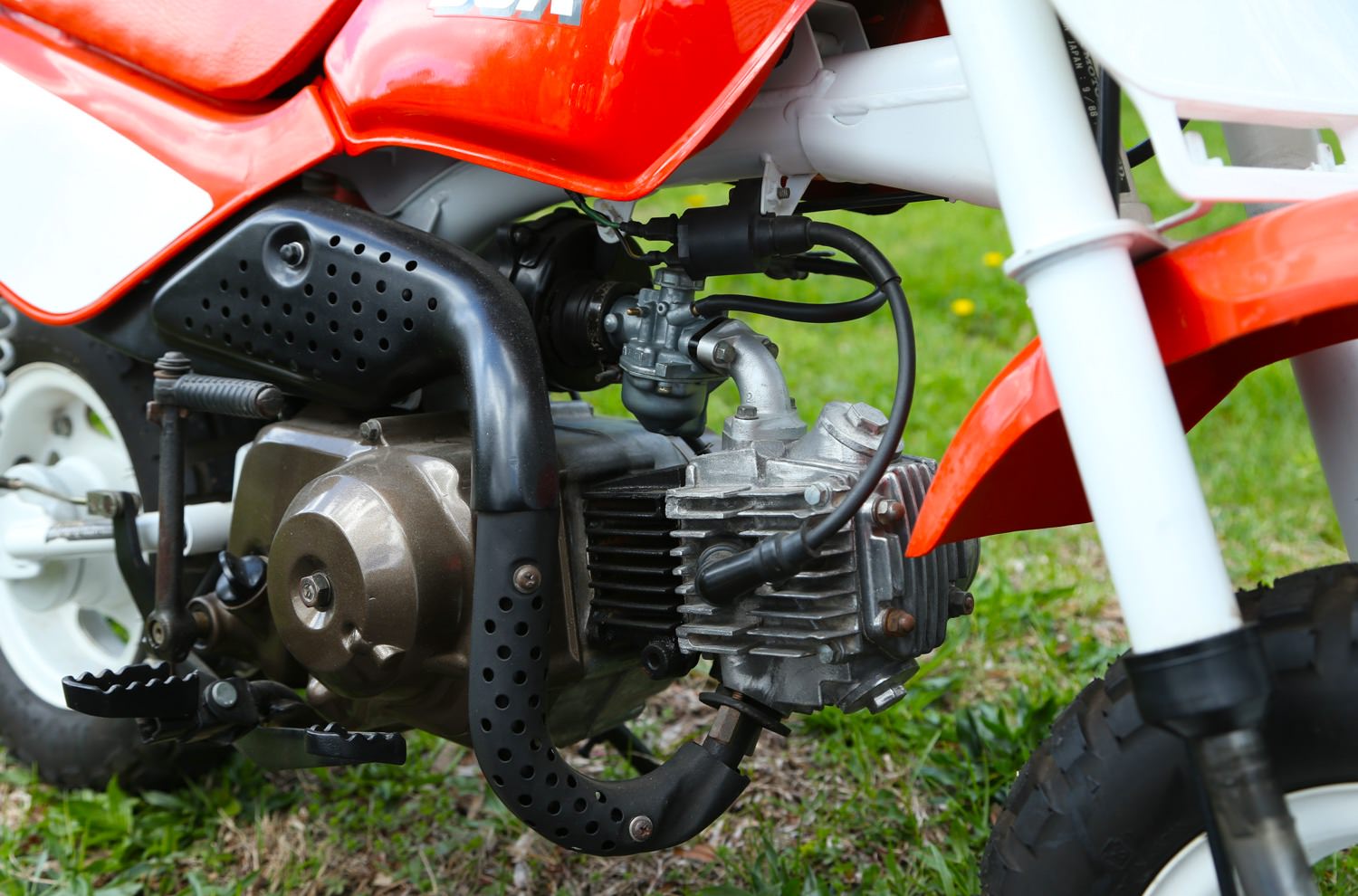
- This is a pair of 1989 and 1999 Honda Z50R minibikes being offered as a package deal out of Wilkes Barre, Pennsylvania. Both are powered by 49cc four-stroke singles with automatic clutches and 3-speed transmissions, and they sit on white backbone frames with red solo seats.
- The 1989 model wears red bodywork while the 1999 is finished in white. Both roll on two-piece 8-inch white steel wheels with drum-brake hubs. The tires on the 1999 bike were reportedly replaced around 2021, and both sets of wheels were repainted at that time.
- Suspension on each consists of an inverted telescopic fork and twin rear shocks with white springs. The cockpits are simple — white cross-braced handlebars, black waffle-pattern grips, and no instrumentation, so total mileage on both bikes is unknown.
- The bikes are being offered on Bring a Trailer with bills of sale only – no titles or registrations are included. They’re listed for off-road use only and sold at no reserve. The seller originally acquired the pair through Bring a Trailer in October of 2023.
History Speedrun: The Honda Z50R
The Honda Z50R holds a bit of an unusual place in motorcycle history, it’s the machine that taught almost an entire generation how to ride, and some of those pint-sized riders would go on to become world champion motorcycle racers.
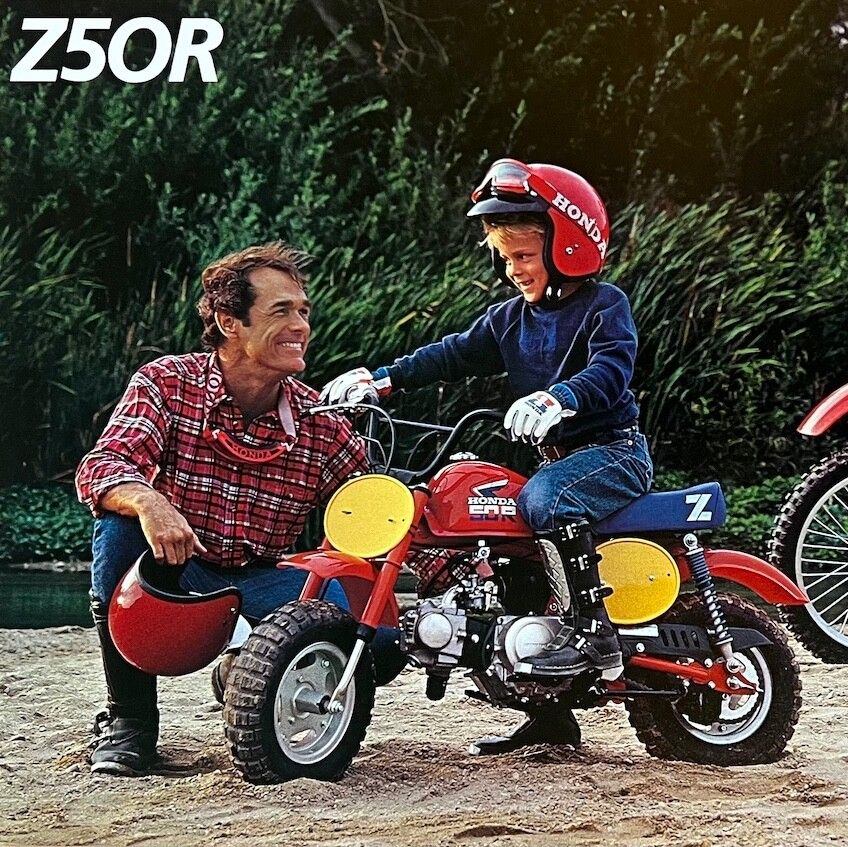
 The Honda Z50R holds a bit of an unusual place in motorcycle history, it’s the machine that taught almost an entire generation how to ride, and some of those pint-sized riders would go on to become world champion motorcycle racers. Image courtesy of Honda.
Built from 1979 to 1999, the Z50R family was Honda’s 50cc answer to the increasing demand for kid-oriented competition minibikes, and across 20 model years it became one of the most recognizable small-displacement motos ever made.
The Beginning Of The Z50 Family
The Z50R’s origins go all the way back to the mid-1960s, to a Honda-owned Japanese amusement park called Tama Tech, where a tiny 50cc motorcycle was created as a children’s ride. These little bikes proved wildly popular with kids and adults alike, and the concept soon evolved into the Z50A “Mini Trail” – a small, folding-handlebar trail bike designed to fit in the trunk of a car.
The Z50A became hugely popular during the minibike craze of the late 1960s and early 1970s, it was a major step up from the basic lawn-mower-engined machines of the era, thanks in no small part to Honda’s engineering polish. The riding position earned it the nickname the “Monkey Bike,” as when an adult rode it, with their knees up and their arms out, they looked like a monkey from the back.
By 1972, Honda had added a proper swingarm and dual shock absorbers, and the “Mini Trail” designation appeared in 1973. But by the late 1970s the market was shifting – parents wanted something that could prepare their kids for real life motocross competition. Honda developed with the Z50R as a result, which formally debuted for the 1979 model year.
The 1979 Launch + Specifications
The Z50R was a significant rethink of the Z50 platform. The OHV engine of the outgoing Z50A was replaced with a new 49cc overhead-cam (OHC) single-cylinder four-stroke, paired with a 3-speed transmission and automatic centrifugal clutch – far more manageable for young riders who didn’t yet need to worry about clutch control.
The frame was fitted with BMX-style handlebars and a redesigned fuel tank.
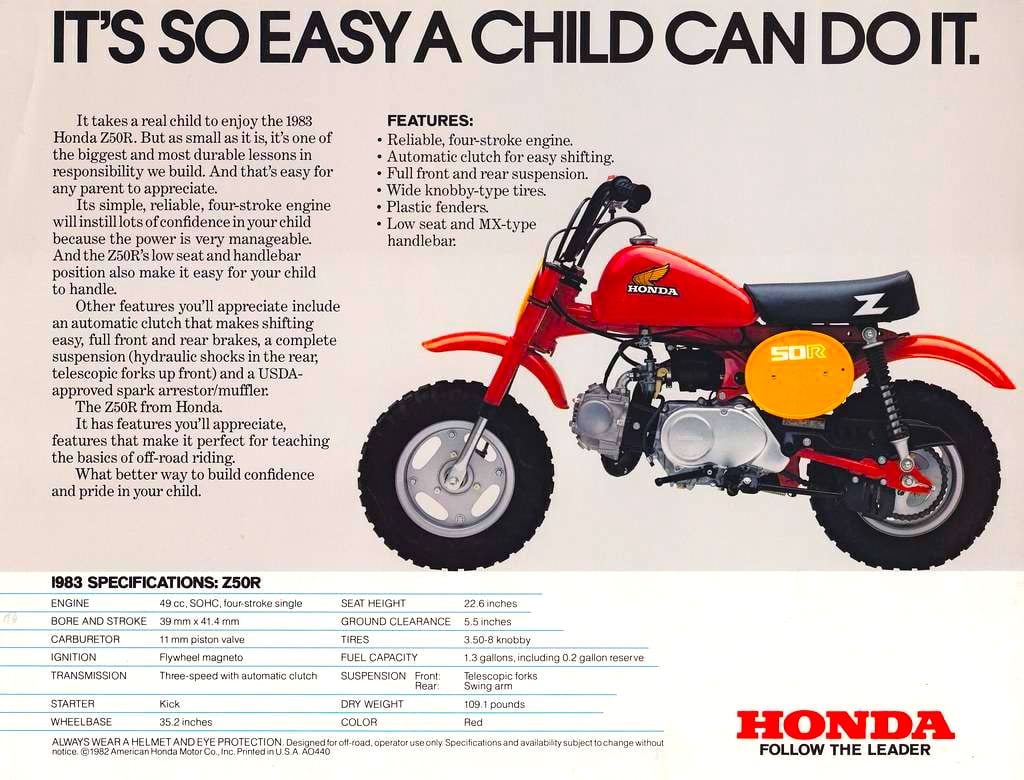
The fundamental specifications remained fairly consistent throughout the model’s production life, and by the mid-1980s, Honda listed the dry weight at approximately 109 lbs (49.5 kgs), the wheelbase at 35.2 inches, and the seat height at 22.6 inches. Image courtesy of Honda.
The fundamental specifications remained fairly consistent throughout the model’s production life, and by the mid-1980s, Honda listed the dry weight at approximately 109 lbs (49.5 kgs), the wheelbase at 35.2 inches, and the seat height at 22.6 inches.
Both wheels were shod with 3.50-8 tires, and stopping was handled by drum brakes front and back. The engine produced 3 bhp, obviously this isn’t much, but it was more than enough to keep a young rider entertained on a backyard track.
Z50R Evolution
Though the Z50R’s overall layout barely changed from 1979 to 1999, Honda did apply a steady stream of smaller detail improvements over time, improvements that can be grouped into three primary mechanical generations.
The first generation covers 1979 to 1981. These early Z50Rs used a short connecting rod in the engine, a 12-tooth front sprocket, and points ignition. They were finished in Tahitian Red, the same color as the outgoing Z50A, and carried relatively simple graphics packages.
The second generation began in 1982, when Honda switched to a longer connecting rod with a revised piston and a smaller combustion chamber with reduced valve sizes. The front sprocket grew to 13 teeth, and the color shifted from Tahitian Red to Blaze Red with Shasta White accents.
From 1984 onward, Honda began styling the Z50R to closely mirror its full-size CR motocross range – blue seats, yellow number plates, and matching graphics – a deliberate strategy to build what they hoped would be a lifetime of brand loyalty.
An unusual variant appeared in 1986, the Z50RD, this was a limited “Special Edition” dealer model finished almost entirely in chrome and polished metal, with red grips and a red seat.
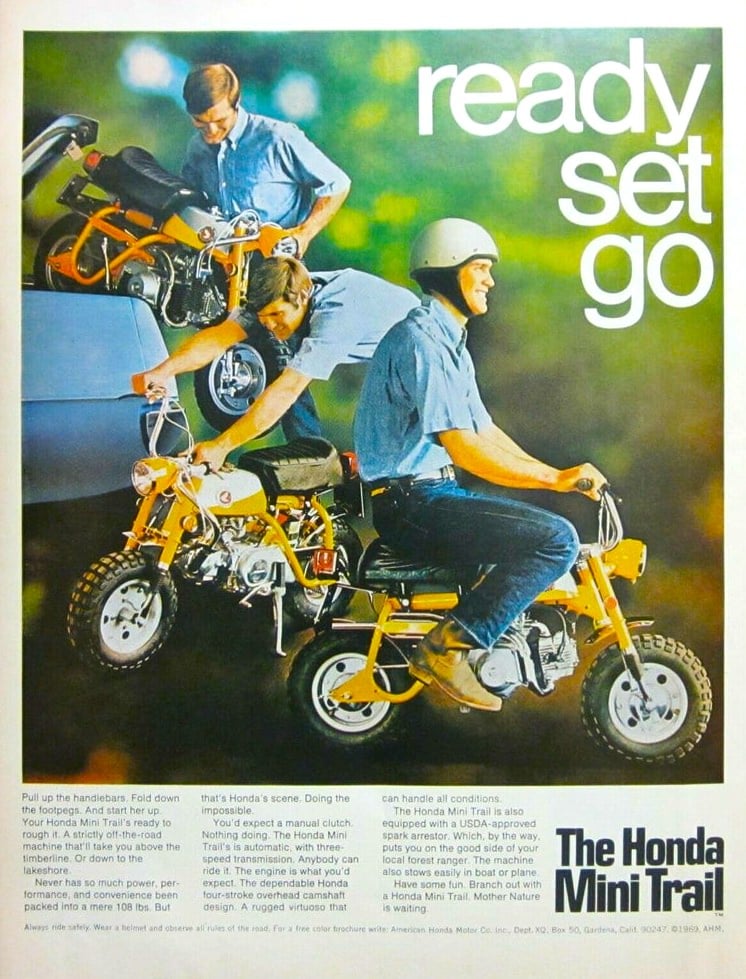
The Z50A became hugely popular during the minibike craze of the late 1960s and early 1970s, it was a major step up from the basic lawn-mower-engined machines of the era, thanks in no small part to Honda’s engineering polish. Image courtesy of Honda,
The third generation arrived in 1988 with the most significant mechanical update of the Z50R’s life. Honda introduced CDI (capacitor discharge ignition), replacing the old points system. The engine received another revised piston and cylinder head with still-smaller valves, and the front sprocket increased to 14 teeth.
There was no 1990 model year, making the full production run 1979 to 1989 and 1991 to 1999. Through the 1990s, updates were exclusively cosmetic – fresh graphics and revised tank logos on the now familiar Shasta White and Red theme.
The Key Competitors
The Z50R’s primary rival was the Suzuki JR50, a two-stroke 49cc minibike introduced in 1978 that remained in production through to 2006. The JR50 used a single-speed automatic transmission and was lighter and simpler, but its two-stroke engine had a more peaky powerband that could be trickier for beginners.
The Kawasaki KDX50 was also a competitor, but it was mechanically identical to the JR50, a product of the two Japanese manufacturers’ model-sharing agreement.
The Yamaha PW50, introduced in 1980, took a different approach. Its two-stroke engine was oil-injected, it used shaft drive instead of a chain, and its seat height was lower than the Z50R’s, making it better suited to very young or small riders.
The PW50 became the dominant beginner bike for the youngest age group, while the Z50R held its ground among slightly older children looking for a more competition-oriented machine.
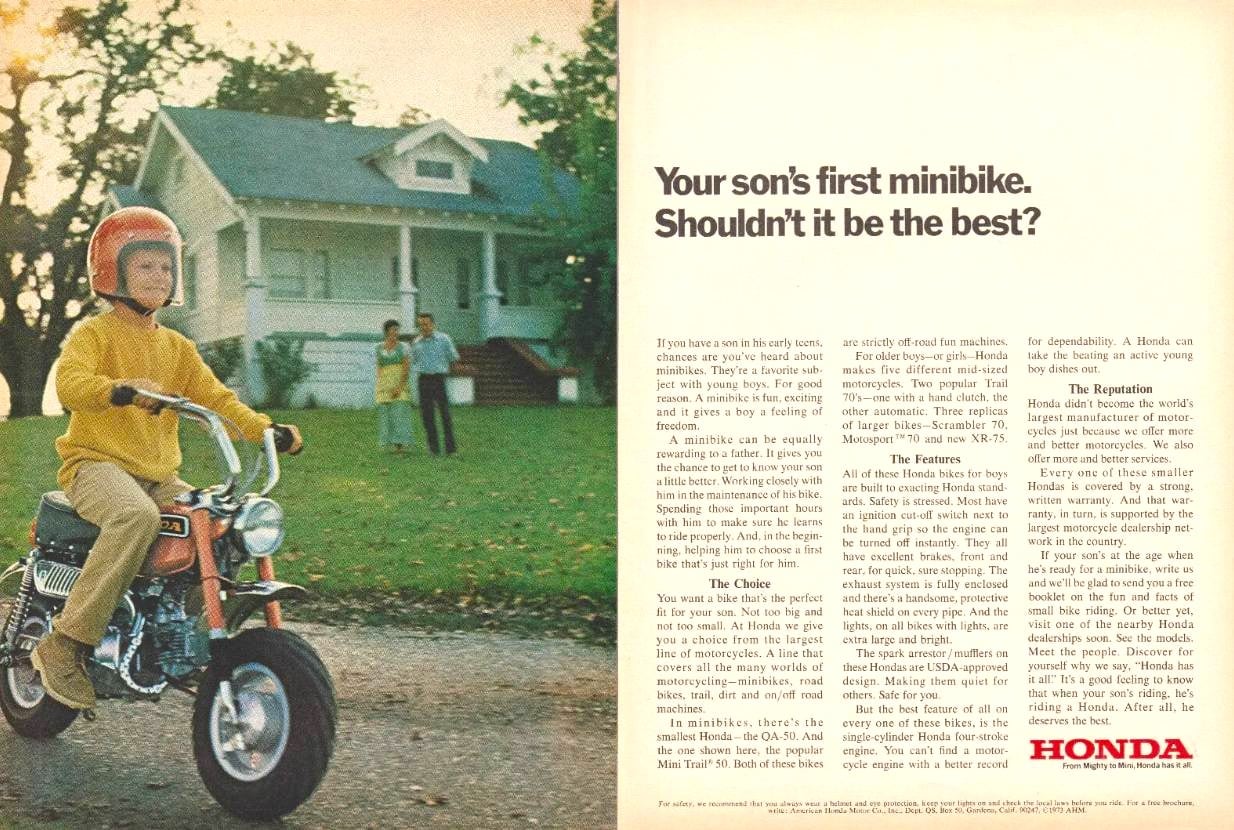
The riding position earned it the nickname the “Monkey Bike,” as when an adult rode it, with their knees up and their arms out, they looked like a monkey from the back. Image courtesy of Honda.
The End Of The Line (And A New Beginning)
Honda discontinued the Z50R after the 1999 model year, replacing it with the XR50R for 2000, which later became the CRF50F. The successor carried forward the same fundamental recipe of its forebear, with a 49cc SOHC four-stroke with a 3-speed automatic clutch, but now in a more modern chassis.
Today the original Z50Rs are a sought-after collector’s bike, with clean examples commanding prices north of $2,000 and a massive aftermarket ecosystem of big-bore kits, performance exhausts, and reproduction parts.
The Pair Of Honda Z50R Minibikes Shown Here
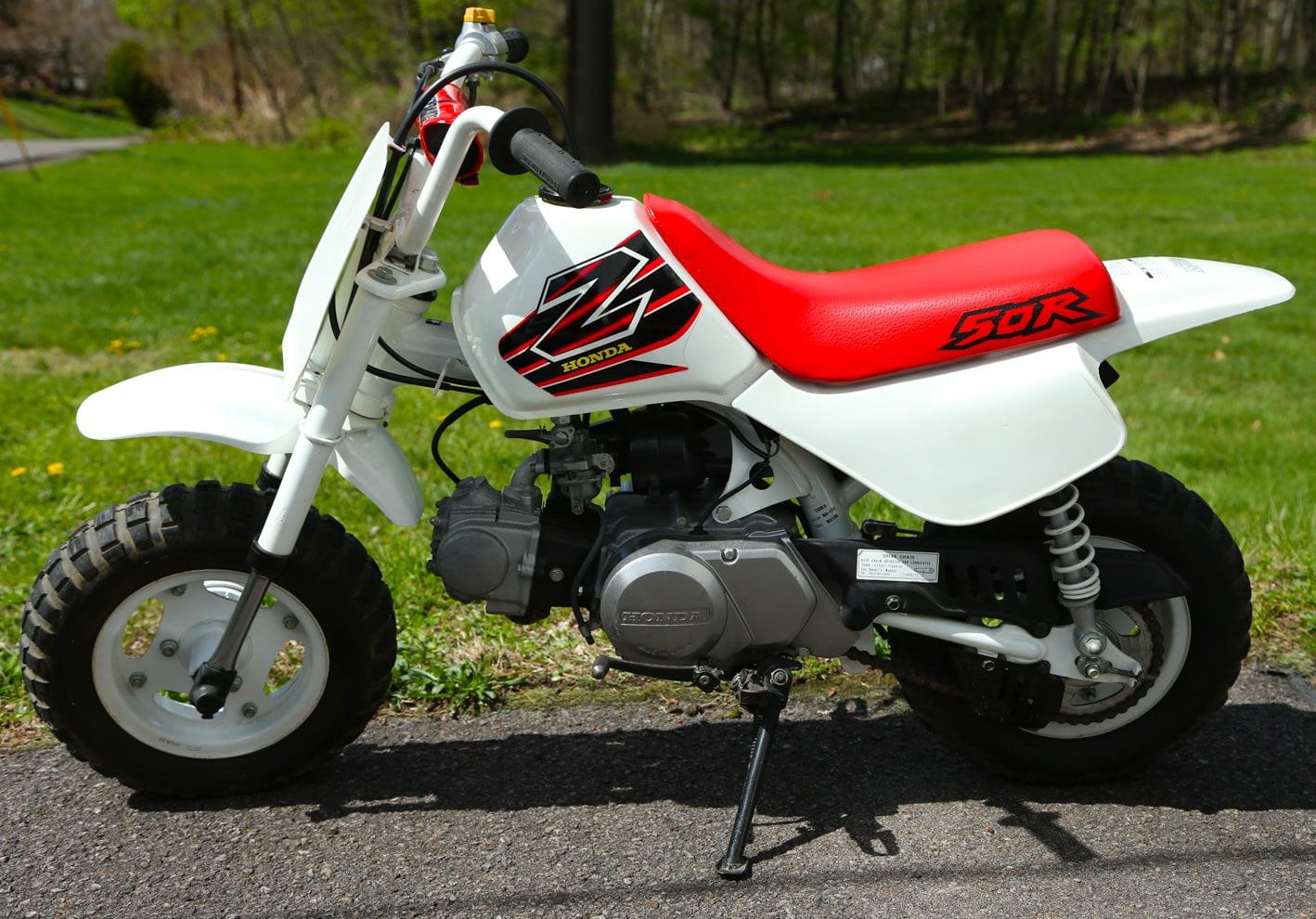
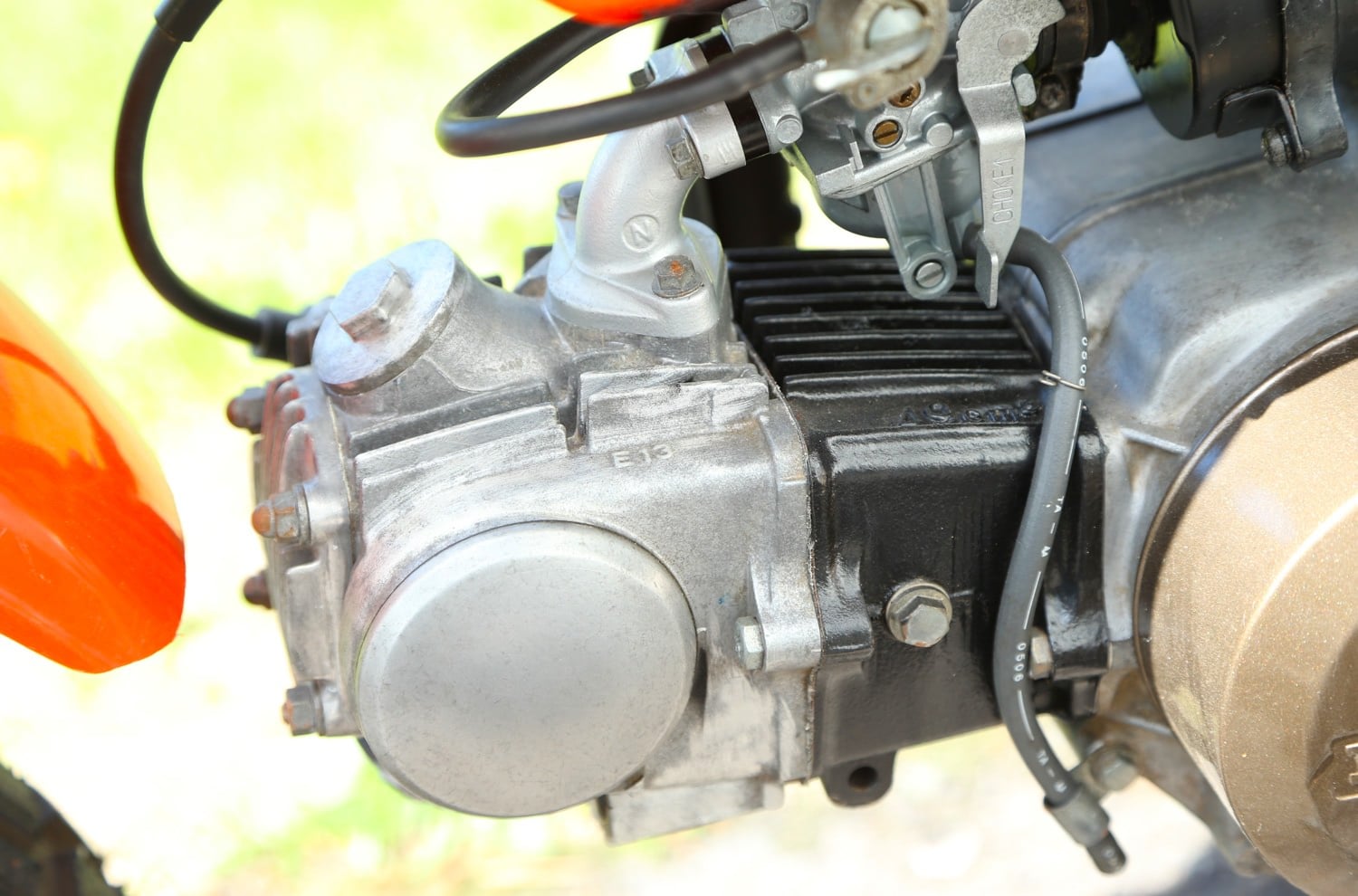
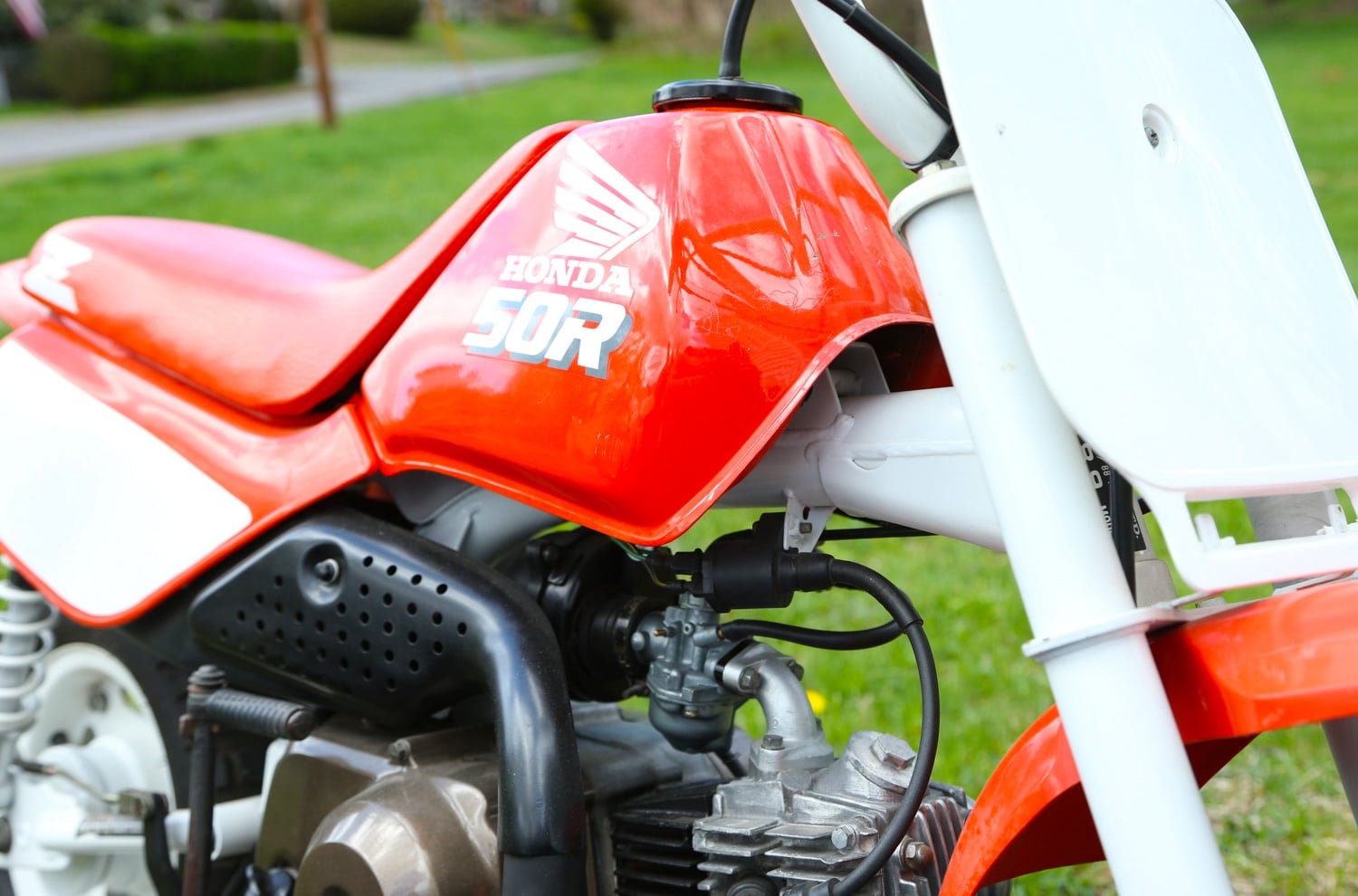
This is a pair of 1989 and 1999 Honda Z50Rs that are now being offered as a package deal. Both are powered by the familiar horizontal 49cc four-stroke single with a kickstarter, paired with an automatic clutch and 3-speed transmission driving the rear wheel by chain.
The 1989 example has red bodywork while the 1999 is finished in white, and both sit on white backbone frames with red solo seats.
Each bike rolls on two-piece 8-inch steel wheels finished in white with drum-brake hubs. The tires on the 1999 machine were reportedly replaced around 2021 under prior ownership, and both sets of wheels were repainted at that time.
Suspension consists of an inverted telescopic fork up front and twin shock absorbers with white springs at the rear. There are paint chips noted on the shocks of both bikes.
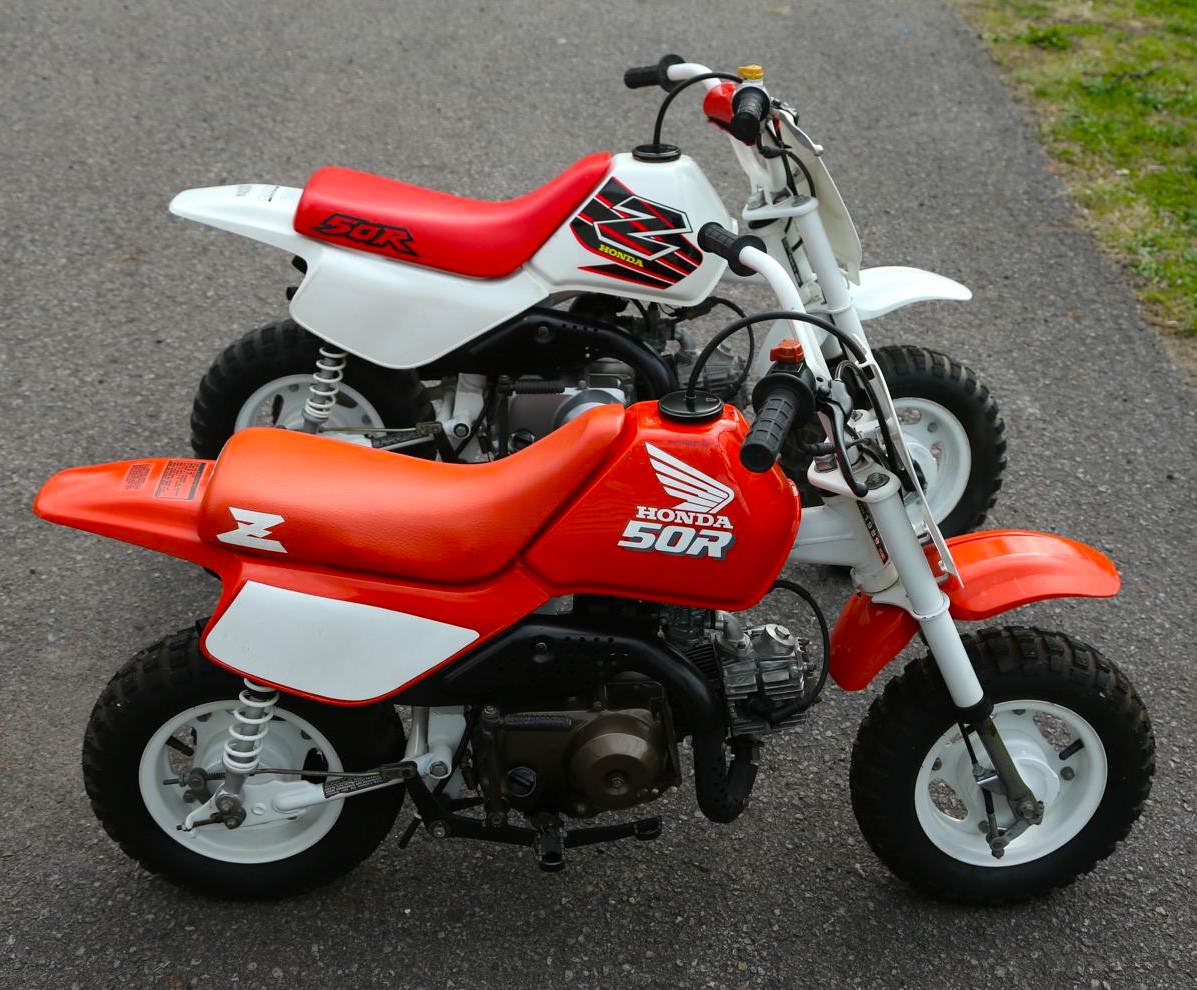
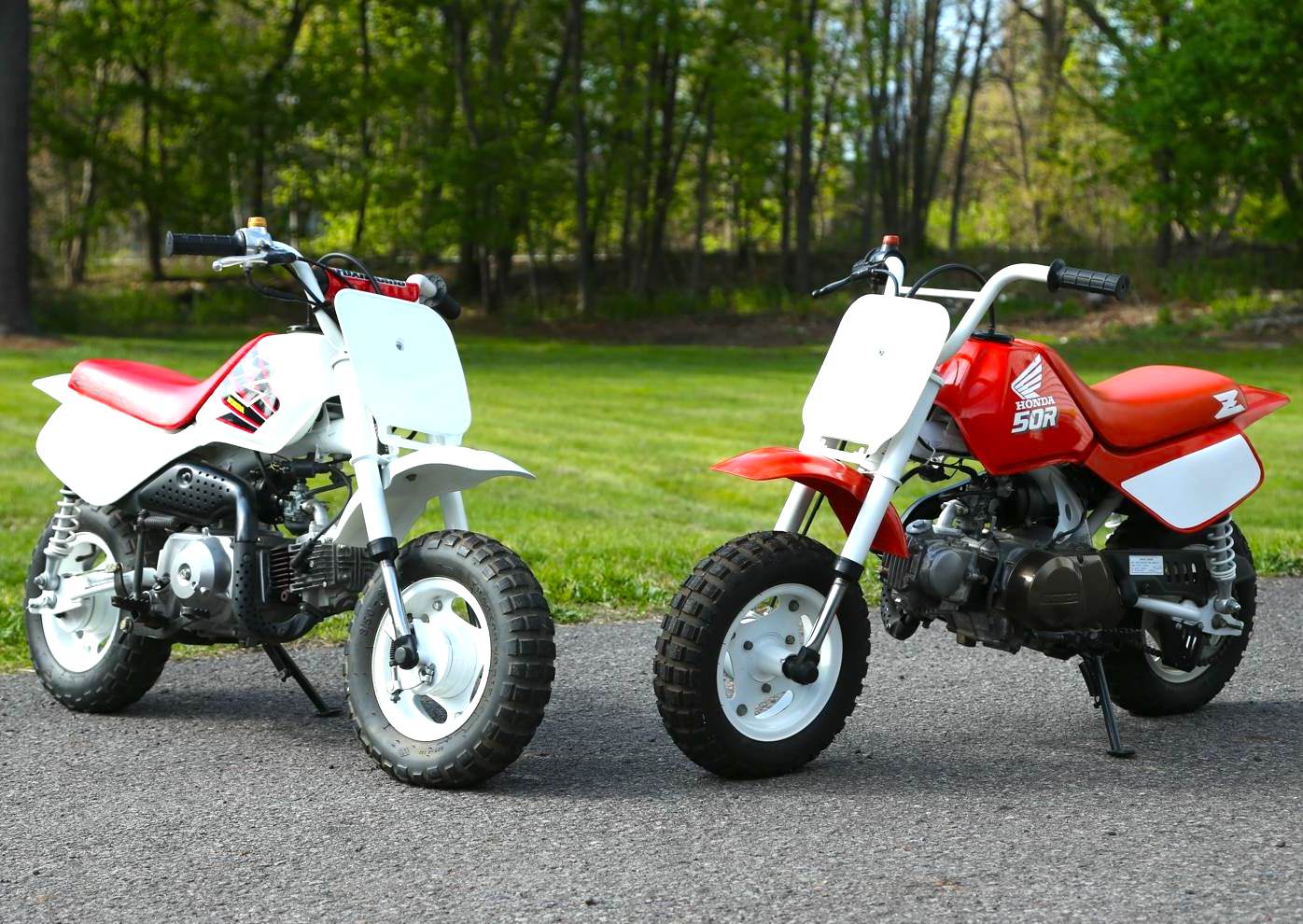
This is a pair of 1989 and 1999 Honda Z50Rs that are now being offered as a package deal. Both are powered by the familiar horizontal 49cc four-stroke single with a kickstarter, paired with an automatic clutch and 3-speed transmission driving the rear wheel by chain.
As you might expect, the cockpit on each is straightforward, with white cross-braced handlebars with black waffle-pattern grips, a twist-grip throttle, a run switch, and a front brake lever. Neither bike carries any instrumentation, so total mileage on both is unknown.
They’re now being offered on Bring a Trailer out of Wilkes Barre, Pennsylvania for off-road use only with bills of sale. If you’d like to read more or place a bid you can visit the listing here.
Images courtesy of Bring a Trailer

Articles that Ben Branch has written have been covered on CNN, Popular Mechanics, Smithsonian Magazine, Road & Track Magazine, the official Pinterest blog, the official eBay Motors blog, BuzzFeed, Autoweek Magazine, Wired Magazine, Autoblog, Gear Patrol, Jalopnik, The Verge, and many more.
Silodrome was founded by Ben back in 2010, in the years since the site has grown to become a world leader in the alternative and vintage motoring sector, with well over a million monthly readers from around the world and many hundreds of thousands of followers on social media.