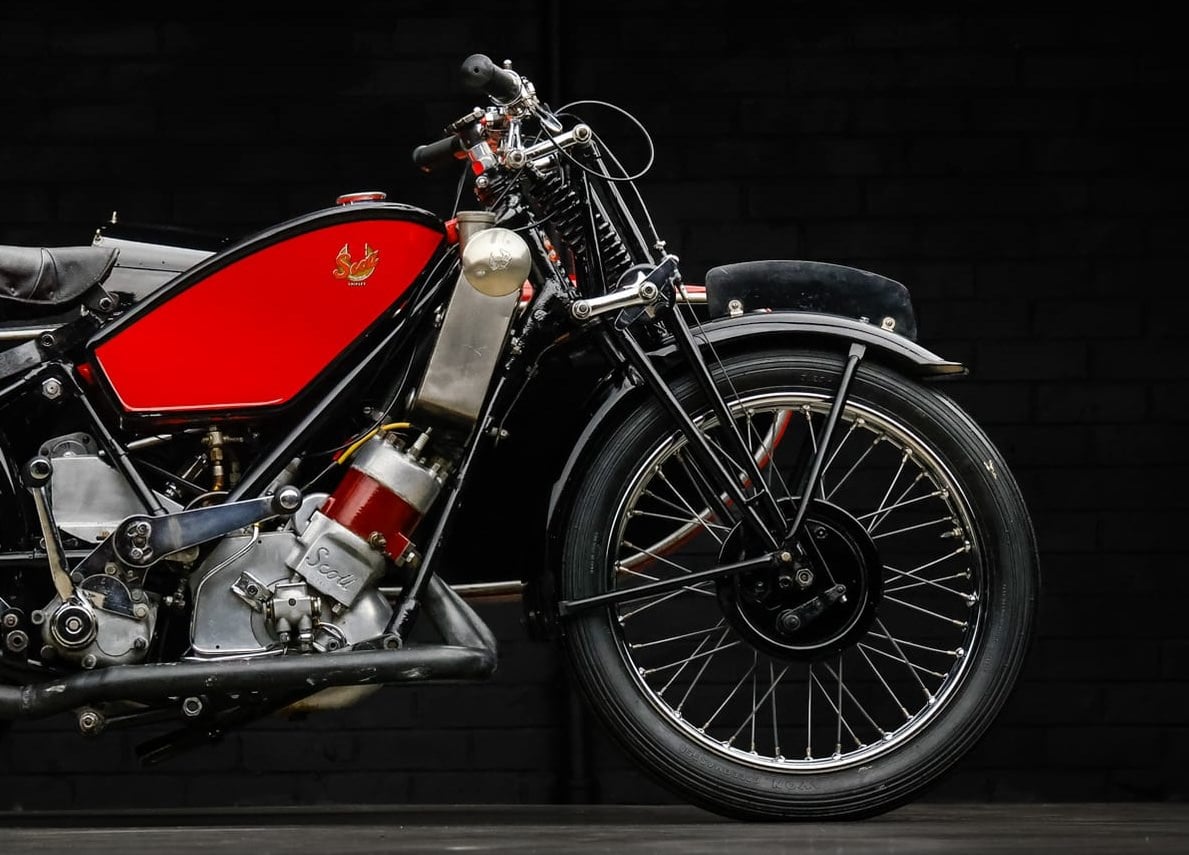
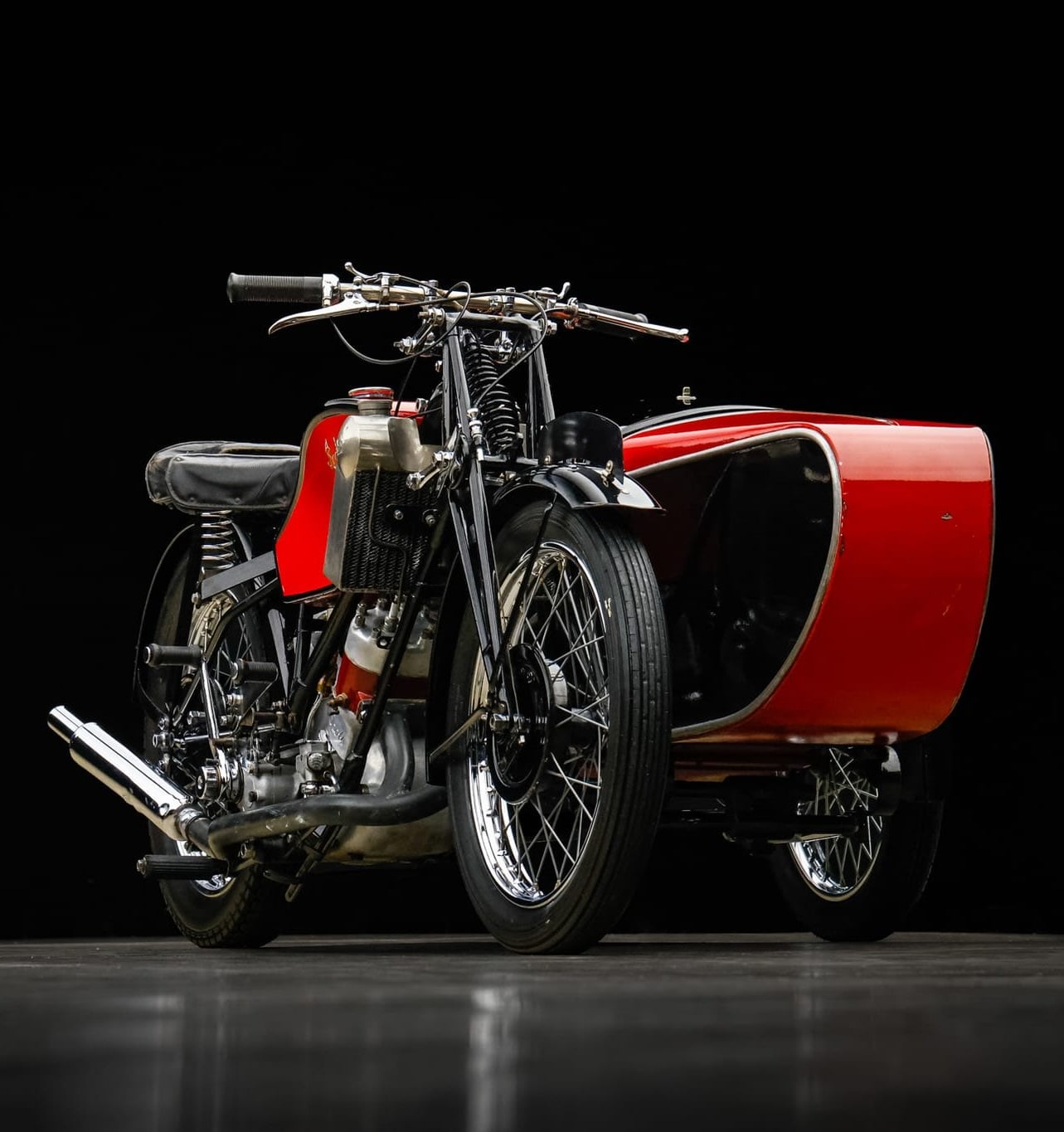
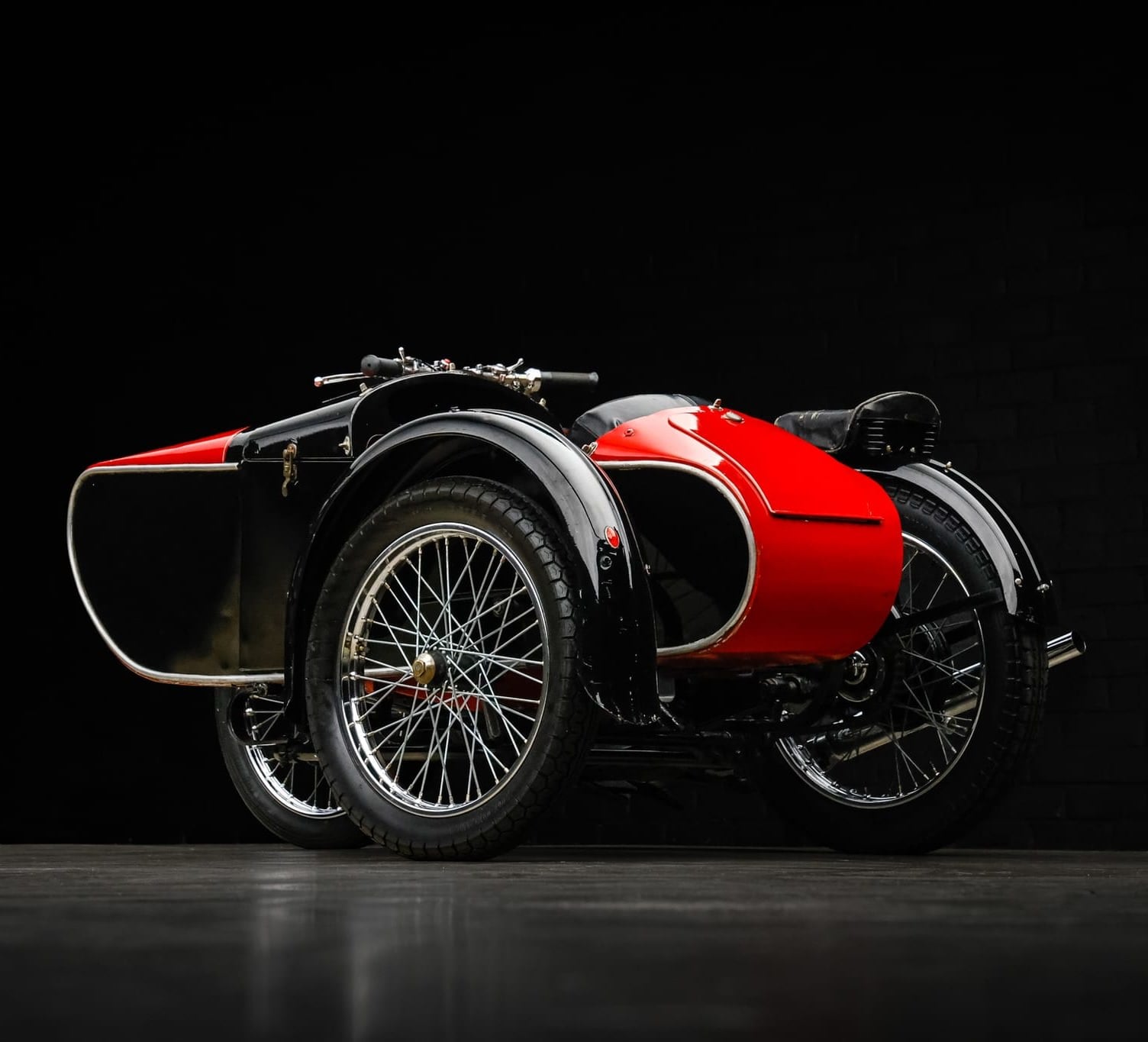
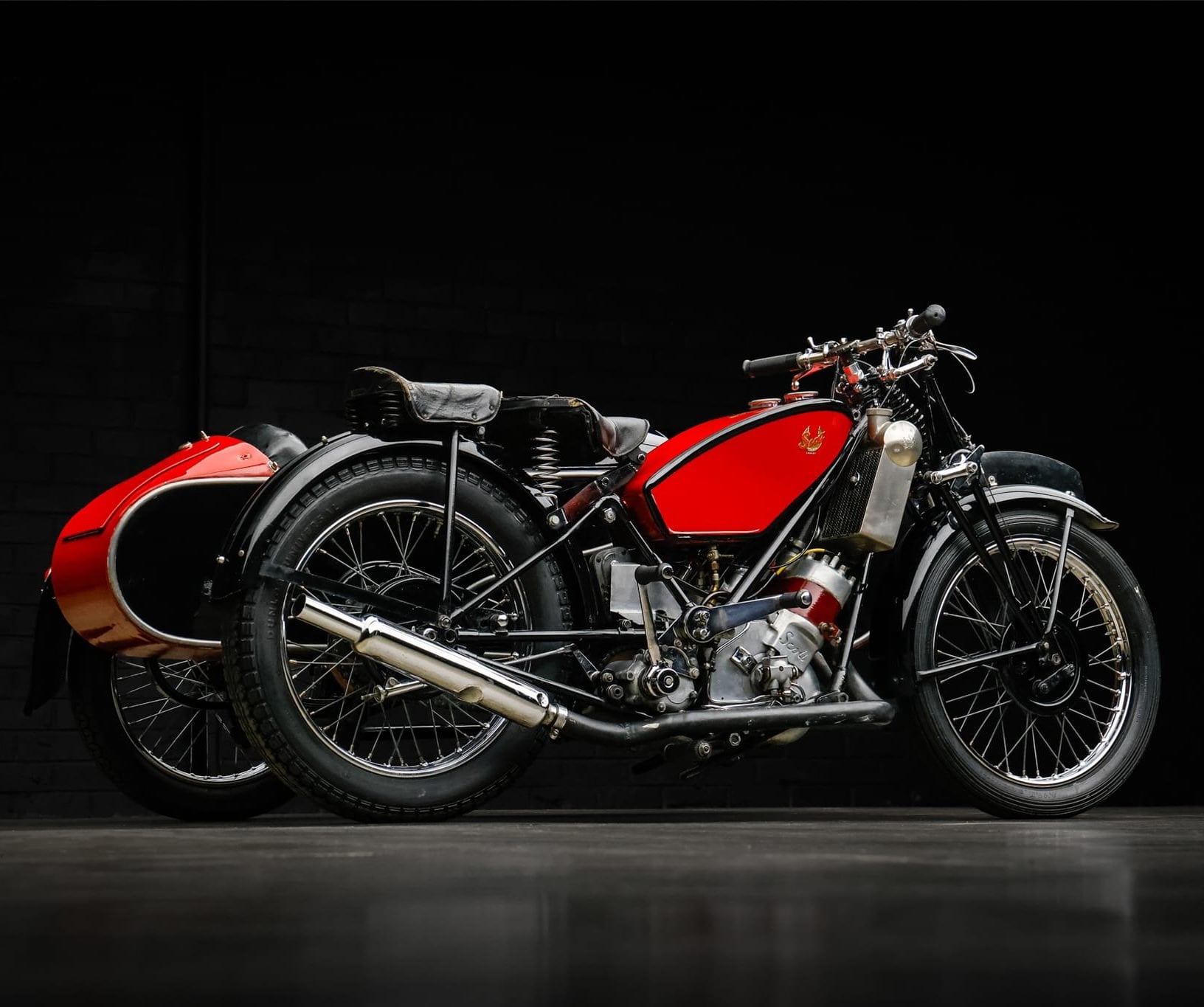
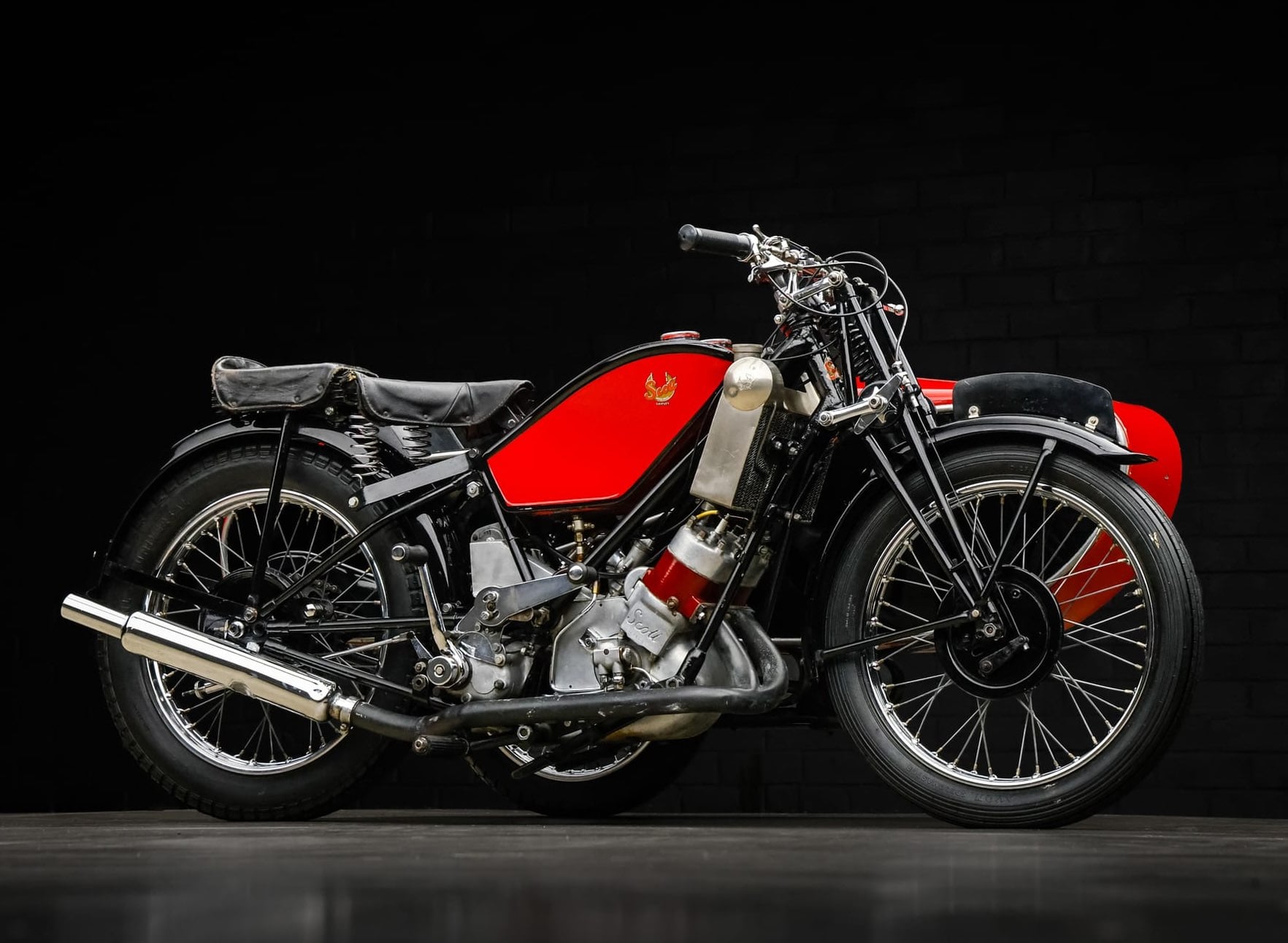
This is a late-1930s-era Scott Flying Squirrel, possibly the greatest-named motorcycle in history, and it comes with a matching sidecar. It formerly belonged to legendary Hollywood A-lister Steve McQueen, and it’s now being offered for sale.
The Flying Squirrel was a motorcycle well ahead of its time, it’s powered by a parallel-twin, liquid-cooled two-stroke engine, this engine also acts as a stressed member within the duplex cradle frame. The crankcase also has inspection doors that let you look at pistons, rings and main bearings – all without pulling the engine apart.
Fast Facts: Steve McQueen’s Flying Squirrel
- This late-1937 or early-1938 Scott Flying Squirrel sidecar outfit was refurbished during Steve McQueen’s ownership and stayed in his collection until his death in 1980. It sold through the McQueen estate auction in Las Vegas in November of 1984 and it’s now offered for sale out of Newbury Park, California.
- Alfred Angas Scott fitted a two-stroke twin to a Premier bicycle in 1901 and built his first complete motorcycle in 1908. Scotts were quick enough that the ACU handicapped them in competition, and Frank Applebee’s 1912 Senior TT victory made Scott the first two-stroke marque to win the race.
- Launched at Olympia in 1925 and comprehensively redesigned for 1927, the Flying Squirrel was powered by a liquid-cooled two-stroke twin acting as a stressed frame member. It became Scott’s only model through the 1930s, survived into 1950, and is remembered for the hard exhaust note owners call the “yowl.”
- Power comes from a 498cc long-stroke Power Plus twin with thermosiphon cooling, Amal carburetor, Pilgrim oil pump and Lucas magneto, driving through a 3-speed gearbox. A Webb girder fork, 19 inch wheels and a leaf-sprung single-seat sidecar complete the rig, which carries a signed McQueen ownership certificate.
History Speedrun: Scott
Alfred Angas Scott fitted a motorcycle engine to his Premier bicycle in 1901, it was a twin-cylinder two-stroke bolted ahead of the headstock, driving the front wheel by friction against the tire. He was a Bradford man, trained in engineering at the Kirkcaldy shipbuilders Douglas and Grant and then at W. Sisson and Co in Gloucester, where he learned the intricacies of designing marine engines.
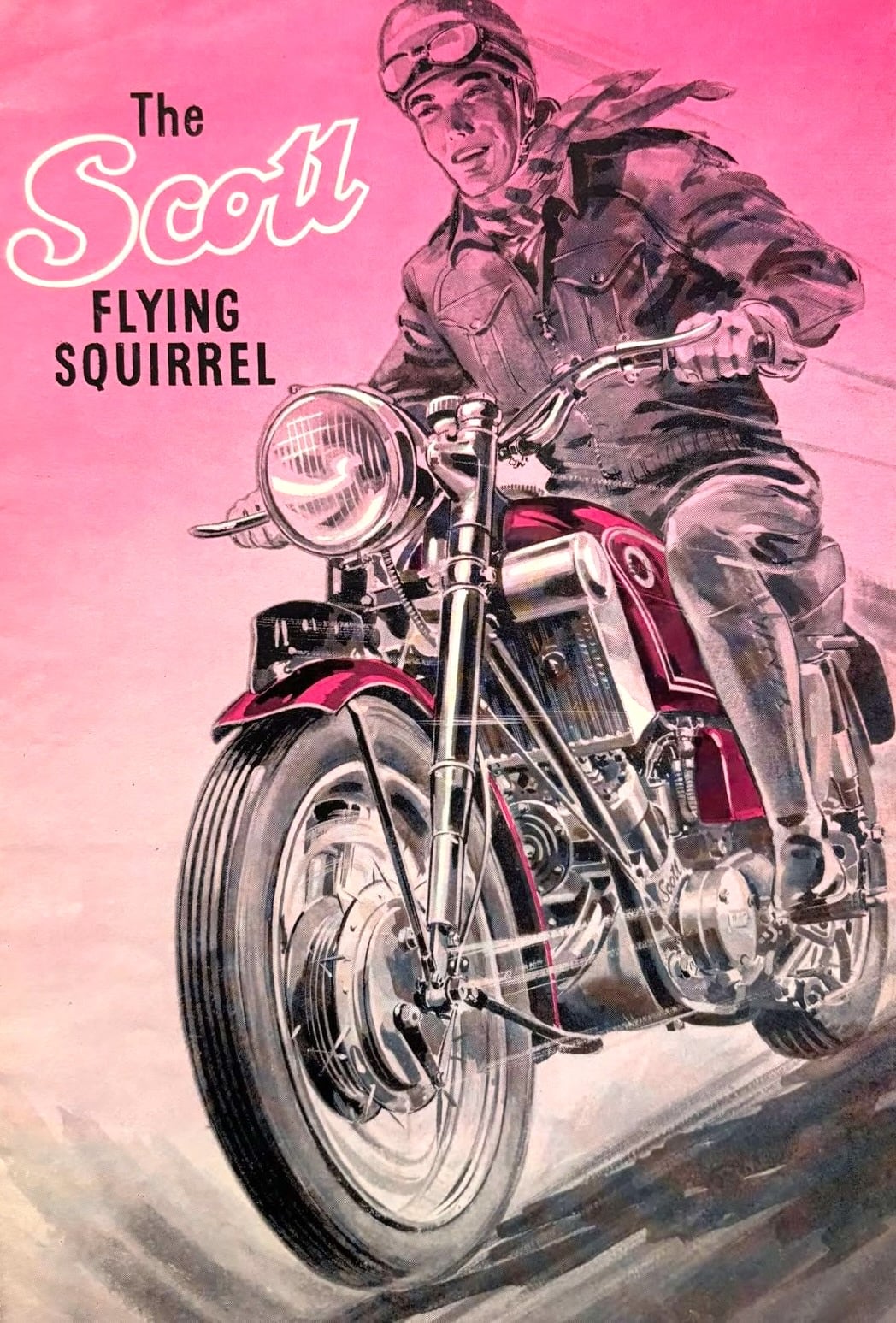
 Scott showed the Flying Squirrel at the Olympia Show in 1925 and sold it as a road-going version of the works TT bike. Image courtesy of the Scott Motorcycle Company.
By 1900 he was building engines for boats, a lucrative business at the time. Three years after the Premier experiment he patented the layout that would define the marque for the next half century – a twin-cylinder two-stroke with a central flywheel, overhung crankshafts, and round crankcase doors.
The first complete Scott motorcycle debuted in 1908, with a 333cc engine, air-cooled cylinders with water-cooled heads all sitting in a triangulated frame, with a chain drive and a 2-speed foot change transmission. The Jowett brothers built it under contract in Bradford, but they only made six. Scott formed his own company the following year, leased a premises at Mornington Works in Manningham, enlarged the engine to 450cc and added a kick-starter on the rear wheel spindle.
Early advertising ran on a slogan about two strokes, two speeds, and two cylinders, and the firm later used the registration AK222 in its promotional material because the digits said the same thing. Petrol tanks up to 1912 were purple, reputedly after the color of a favorite dress belonging to Scott’s sister-in-law, with two silver bands around them.
The bikes were quick enough to annoy people, the Auto-Cycle Union handicapped two-strokes in competition, multiplying the capacity of air-cooled machines by 1.25 and water-cooled ones (the Scotts among them) by 1.32. Frank Philipp took the Isle of Man lap record to 50.11 mph in 1911 on a Scott despite the severe handicap.
The following year in 1912 Frank Applebee won the Senior TT outright, the first two-stroke ever to do so, leading from the start and finishing an astonishing 6 minutes and 54 seconds clear of Jack Haswell’s Triumph, Tim Wood then repeated the win in 1913.
Scott himself did not stay with his eponymous company long, he left to build the Sociable, a three-wheeled car, having in 1915 designed a machine gun mounting for a motorcycle that he demonstrated in the grounds of Buckingham Palace.
He died of pneumonia on the 11th of August 1923, aged 48, after driving home in wet clothes from a caving trip. He was only 48 at the time, and you can’t help but wonder what other feats he might have achieved had his life not been cut short.
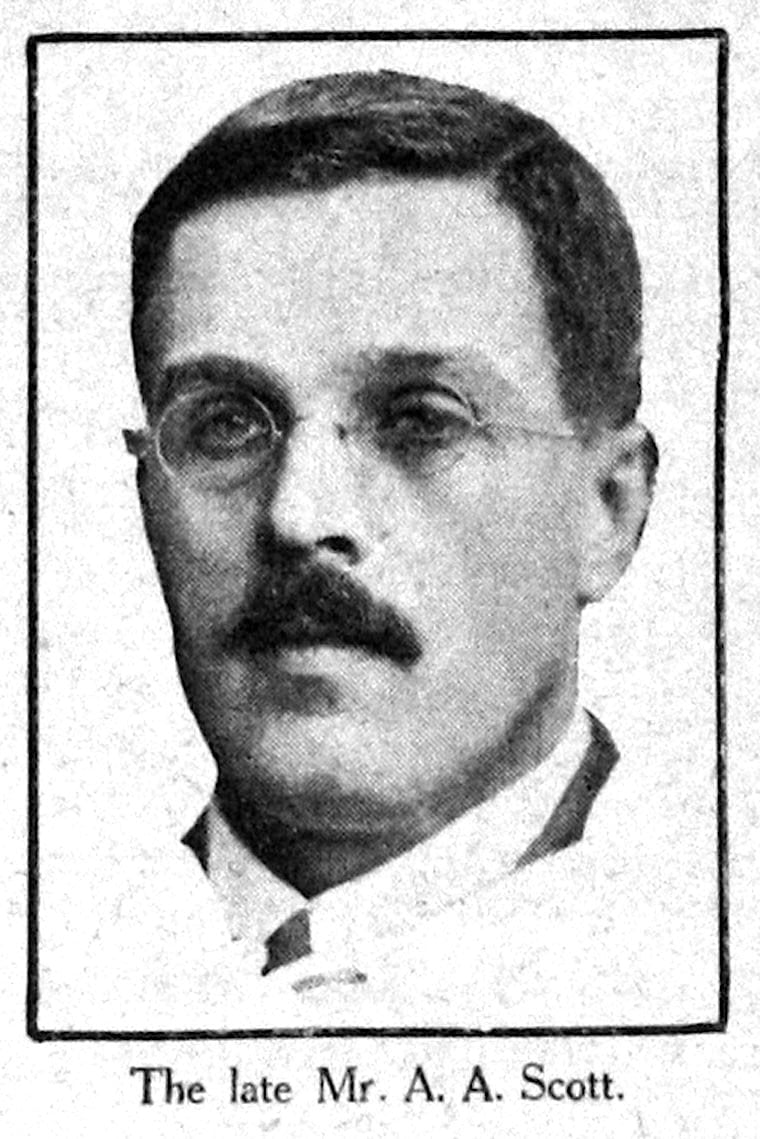
Alfred Angas Scott fitted a motorcycle engine to his Premier bicycle in 1901, it was a twin-cylinder two-stroke bolted ahead of the headstock, driving the front wheel by friction against the tire. He was a Bradford man, trained in engineering at the Kirkcaldy shipbuilders Douglas and Grant and then at W. Sisson and Co in Gloucester, where he learned to design marine engines. Image courtesy of the Scott Family Archives.
Scott continued on, and it continued with the Squirrels: the 486cc Squirrel of 1922, the Super Squirrel of 1924, and then the model that outlasted both, the legendary Scott Flying Squirrel.
The Flying Squirrel
Scott showed the Flying Squirrel at the Olympia Show in 1925 and sold it as a road-going version of the works TT bike. The 498 cost £86, the 596 for £3 more, and the bigger engine made it the most expensive machine Scott had for sale. Both had larger polished exhaust ports than the racer, a head redesigned to cool better around the plugs, and mechanical oiling from a Best and Lloyd pump on the crankcase door.
The frame was the familiar tubular steel Scott design with an oval tank clamped to the seat tube, though the full TT tank could be ordered at extra cost. The bike tipped the scales at 240 lbs.
That first bike lasted a year, for the 1927 year Scott showed an entirely new Flying Squirrel at Olympia in the autumn of 1926, based on that year’s newer TT machines – almost everything had changed. There was a triangulated duplex frame, a slim combined oil and petrol tank, a wider radiator, bulkier brakes, braced “kite” forks and a close-ratio 3-speed gearbox with a multi-plate clutch.
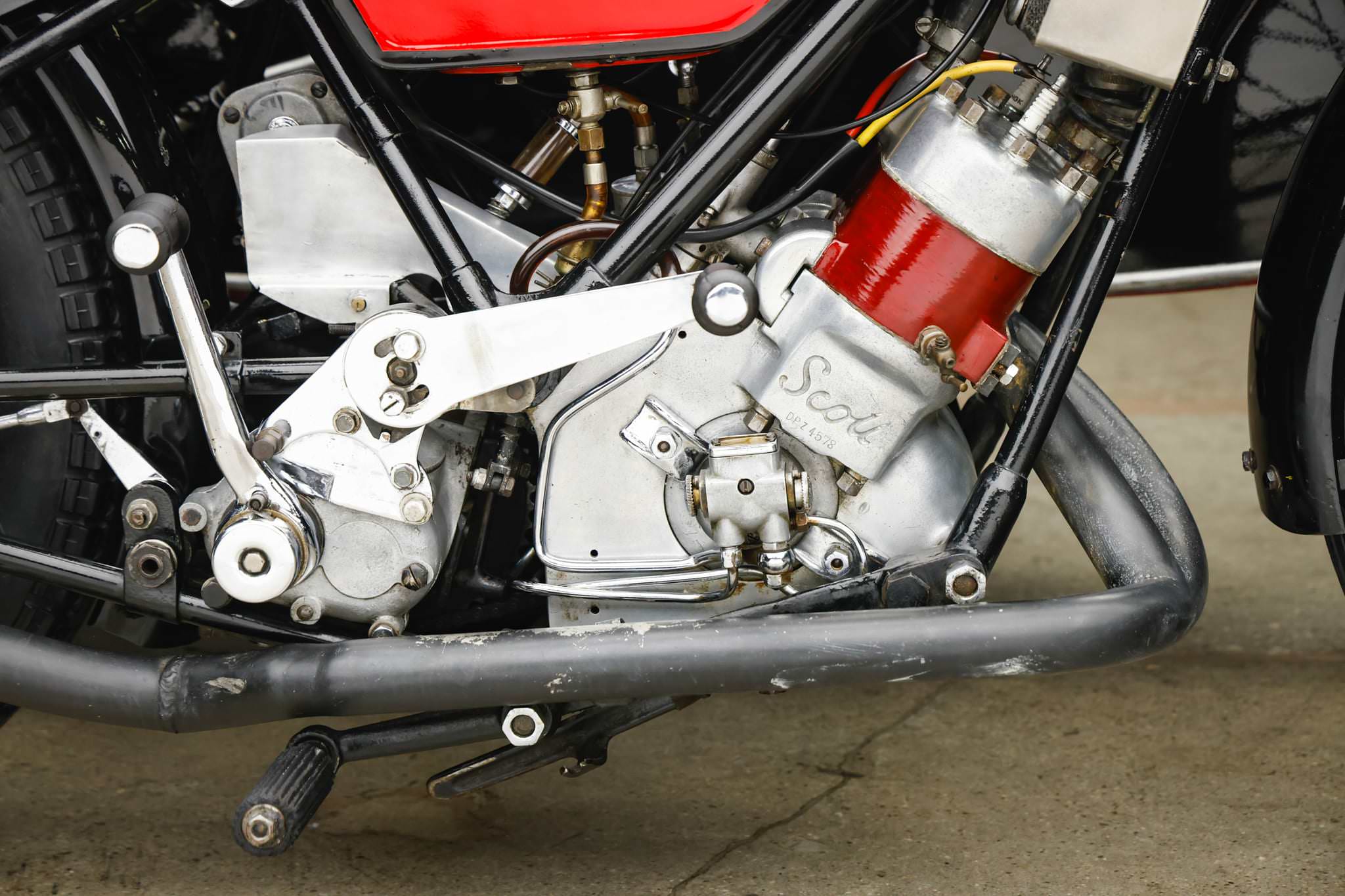
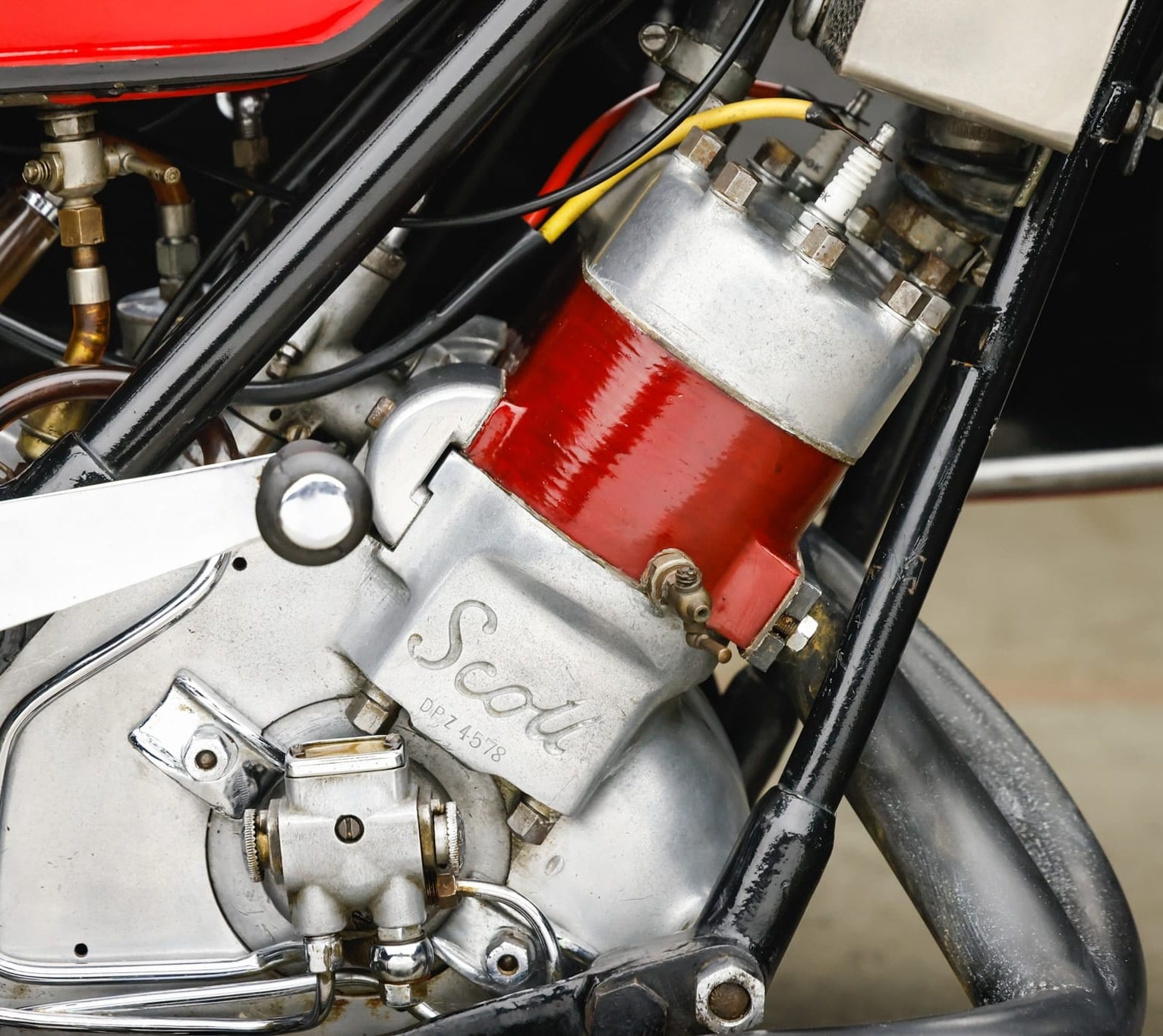
The 596cc engine underneath was recognizably Alfred Scott’s design, with a bore x stroke of 74.6mm x 68.25mm, a central flywheel, overhung crankpins, and doors in the crankcase that let an owner inspect pistons, rings and main bearings without stripping it. The engine was a stressed member of the frame, an advanced design feature for the time. The unique sound that came pouring out of the exhaust was much of the reason many people bought one, it was a hard, high two-stroke note that Scott owners call the “yowl.”
Tommy Hatch finished third in the 1928 Senior TT, the race was run in heavy rain and mist, he finished behind Charlie Dodson’s Sunbeam and George Rowley’s AJS at an average of 60.89 mph. Scott responded within the season with the TT Replica, which had a long-stroke 498cc or 596cc engine, racing filler caps, a separate chain oiler, cylinder-wall auxiliary oiling and a two-into-one exhaust. A cheaper Tourer and a De Luxe arrived alongside it.
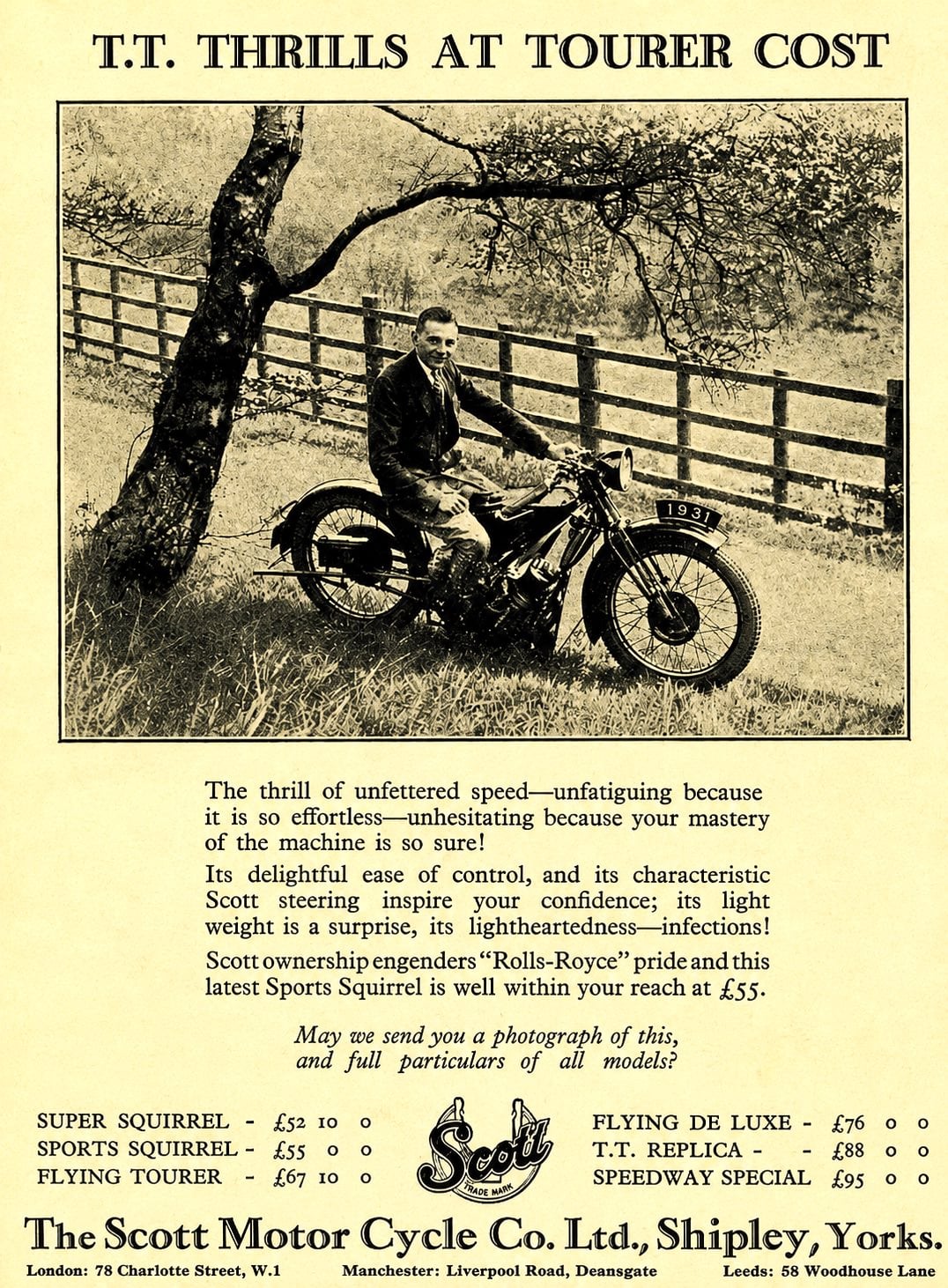
The engine was a stressed member of the frame, an advanced design feature for the time. The unique sound that came pouring out of the exhaust was much of the reason many people bought one, it was a hard, high two-stroke note that Scott owners call the “yowl.” Image courtesy of the Scott Motorcycle Company.
The Great Depression Arrives
Sales peaked in 1928 but The Great Depression that landed in 1929 very nearly killed the company, along with many other motorcycle and automotive manufacturers. Prices were cut by as much as 20 guineas in 1929 and the company went into liquidation early in 1931.
This wasn’t to be the end though, the company that emerged was a smaller operation with just one model – through the 1930s the Flying Squirrel was the entire Scott range. Power Plus engines with detachable cylinder heads arrived in 1933, and foot change along with a more modern tank became standard.
An August of 1965 Scott Owners Club magazine listed 28 bhp for the long-stroke 596 Power Plus, 24 bhp for the 498, and 20 and 17 bhp for the corresponding short-stroke Tourer engines. Those numbers have been argued over within the club ever since.
One Scott engine specialist estimated that a standard long-stroke 596 made closer to 18 or 19 bhp and called the published figures fiction. Another member counters with timed speeds, a 596 Sprint Special reaching 94 mph at the end of a standing-start kilometer, as evidence the period numbers were about right. If there’s one thing obscure owner’s clubs do well, it’s arguing. I’ll probably have some irate club members in my inbox now just for saying that.
The 498 was dropped in 1938, and the 1939 Clubman’s Special was the last prewar development of real consequence, with a race-prepared engine on dual oil pumps, 19 inch wheels, heavyweight Webb forks and optional rear springing. It weighed over 400 lbs, was claimed to reach more than 90 mph, but only a few were built before the factory turned to working for the war effort.
Motorcycle production resumed in 1946 with the 596cc engine only, girder forks gave way to Dowty Oleomatic air forks in early 1947, which contained no springs and were inflated through a valve. Coil ignition replaced the magneto for 1948.
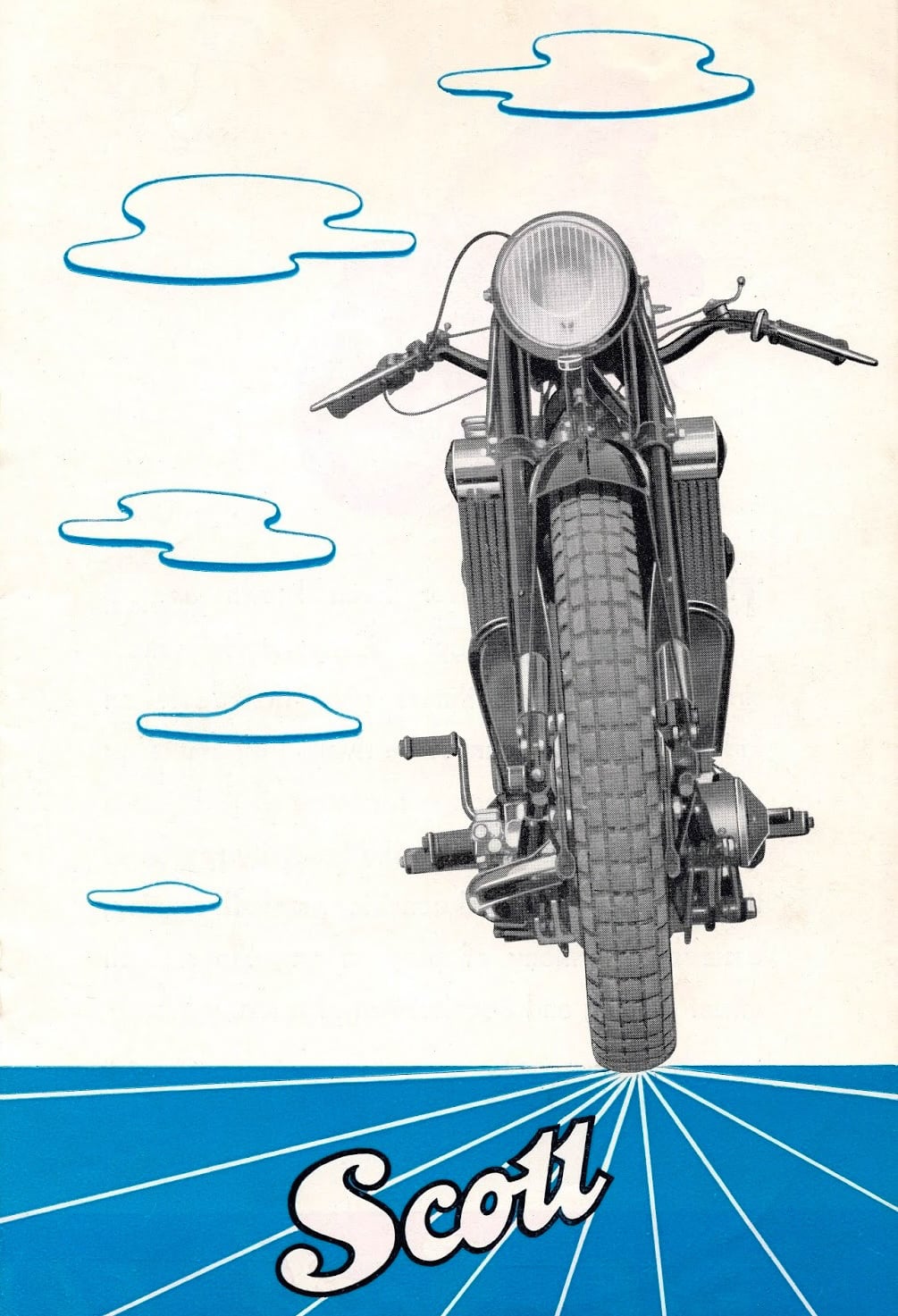
The Flying Squirrel engine was recognizably Alfred Scott’s design, with a bore x stroke of 74.6mm x 68.25mm, a central flywheel, overhung crankpins, and doors in the crankcase that let an owner inspect pistons, rings and main bearings without stripping it. Image courtesy of the Scott Motorcycle Company.
At around 410 lbs, on a rigid frame with only a sprung saddle for suspension, the bike was no longer really a sporting motorcycle. Roland Brown, riding a 1947 example for Hagerty, found it cruised at 55 mph, revved to only 5,000, pulled hard from low down through an unusually tall bottom gear and had a front brake that did almost nothing. The sales brochure leaned on the marque instead – “The Scott has ever been known as the ‘different’ motorcycle.”
Scott entered liquidation in March of 1950. Aerco Jig and Tool of Birmingham, owned by the Scott enthusiast Matt Holder, bought the assets and built Birmingham Scotts from 1956 in a duplex frame with swinging-arm rear suspension, but only in small numbers and mostly to order.
Without the one-two punch of The Great Depression and World War II, you can only wonder what Scott might have been able to achieve had their development budget not been cut so severely – never to recover. The marque has counted many remarkable people among its fanbase over the years, including Steve McQueen who is reported to have loved his and kept it in pride of place in his collection.
The Ex-Steve McQueen Flying Squirrel Shown Here
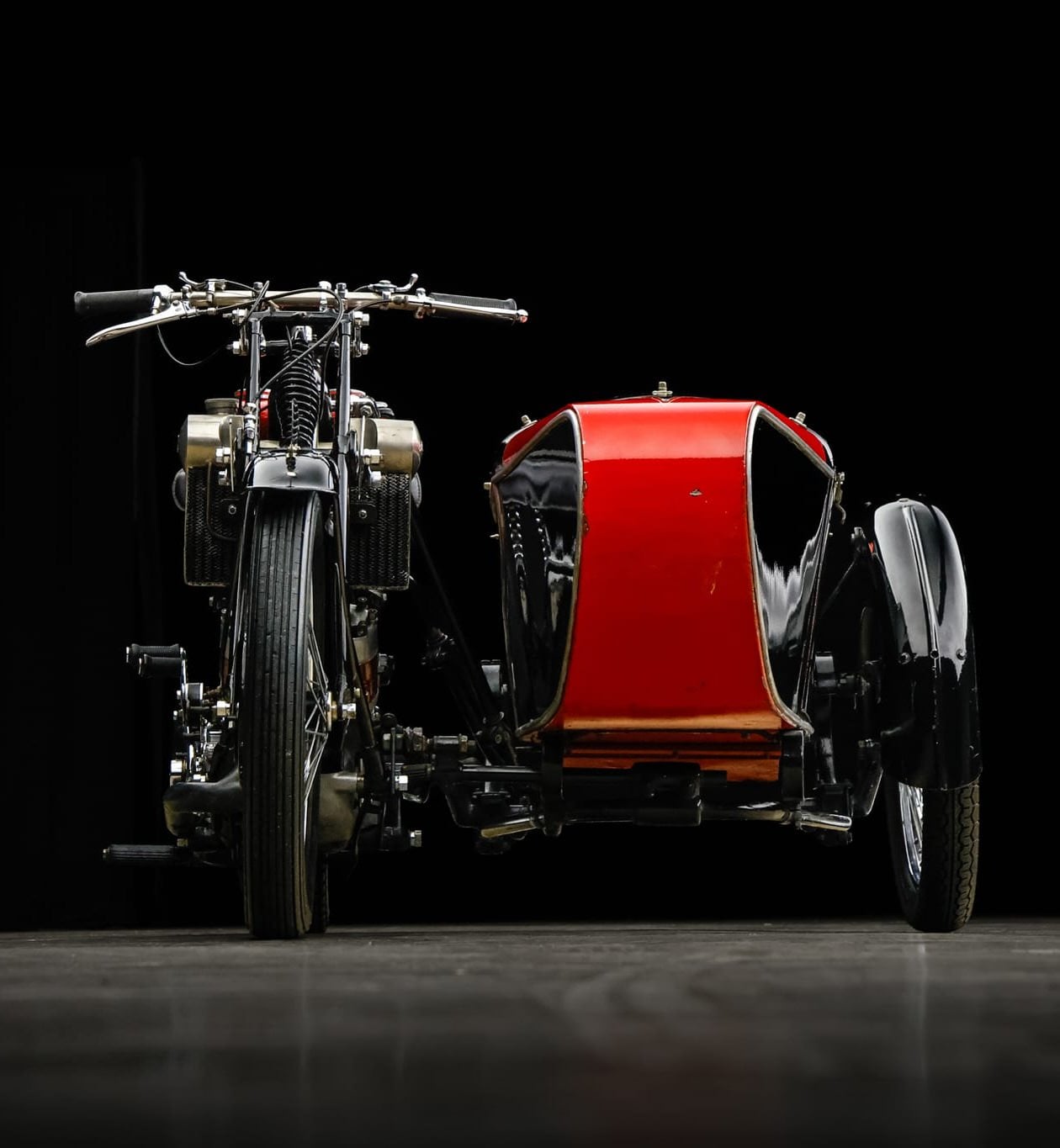
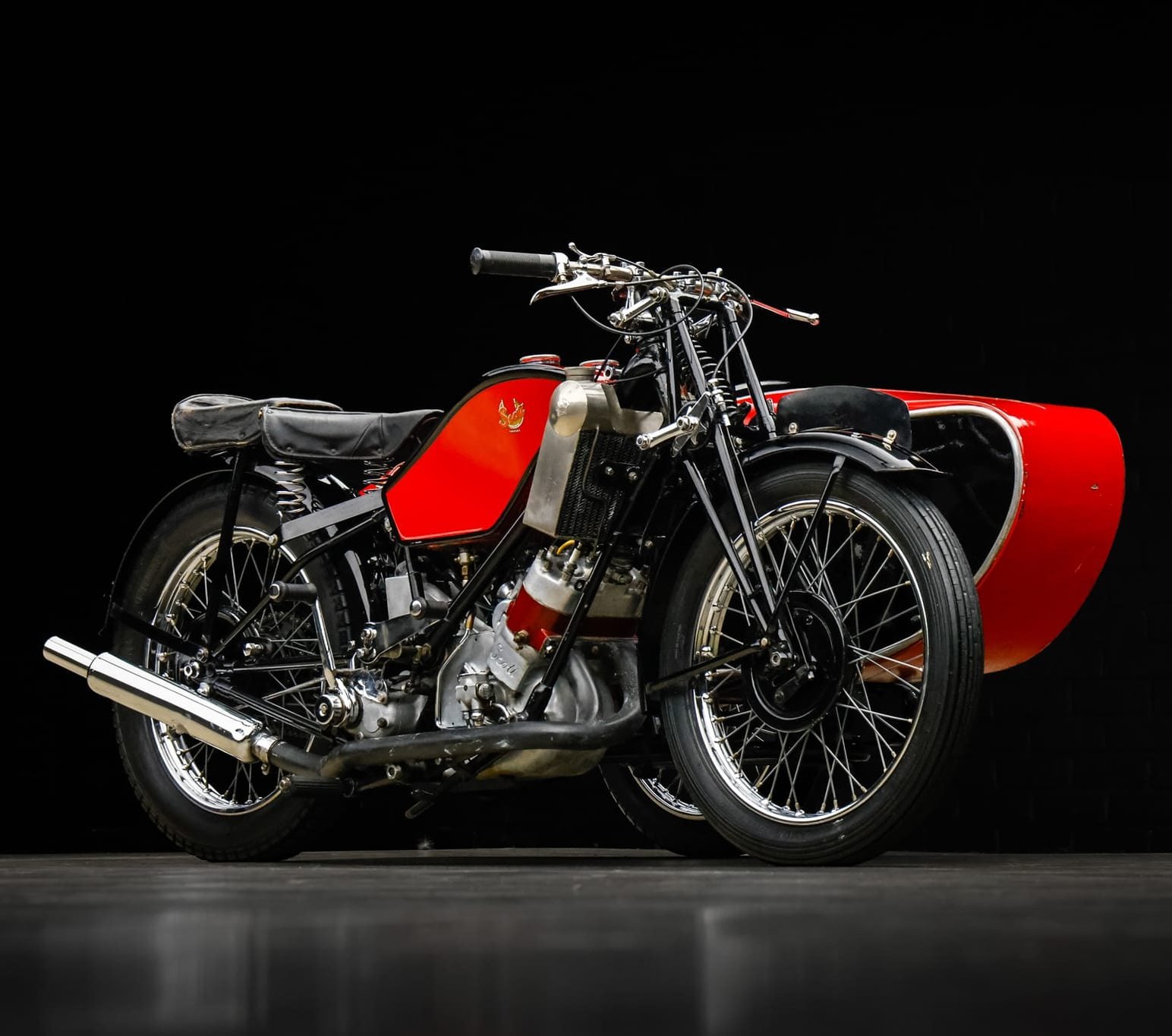
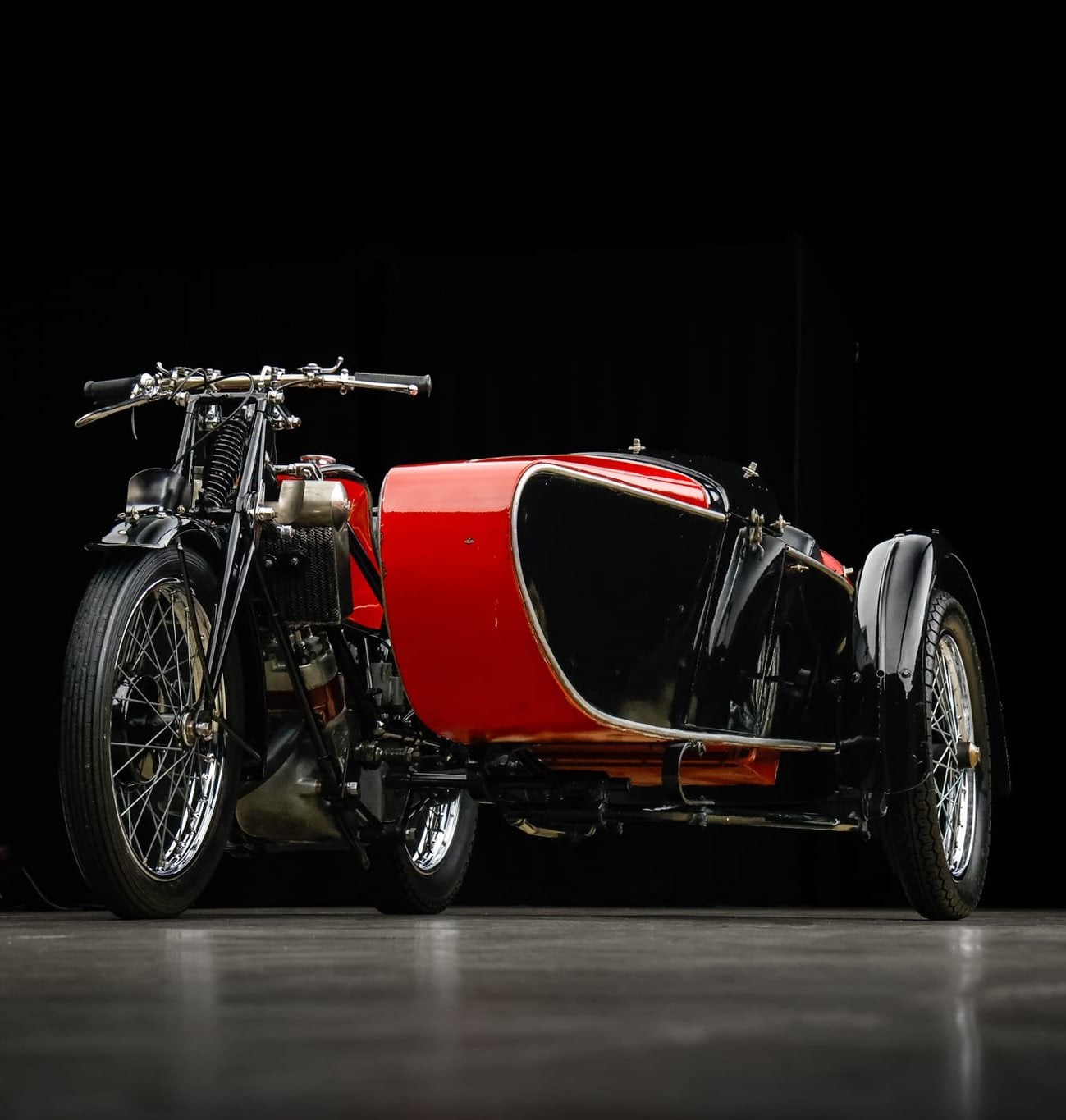
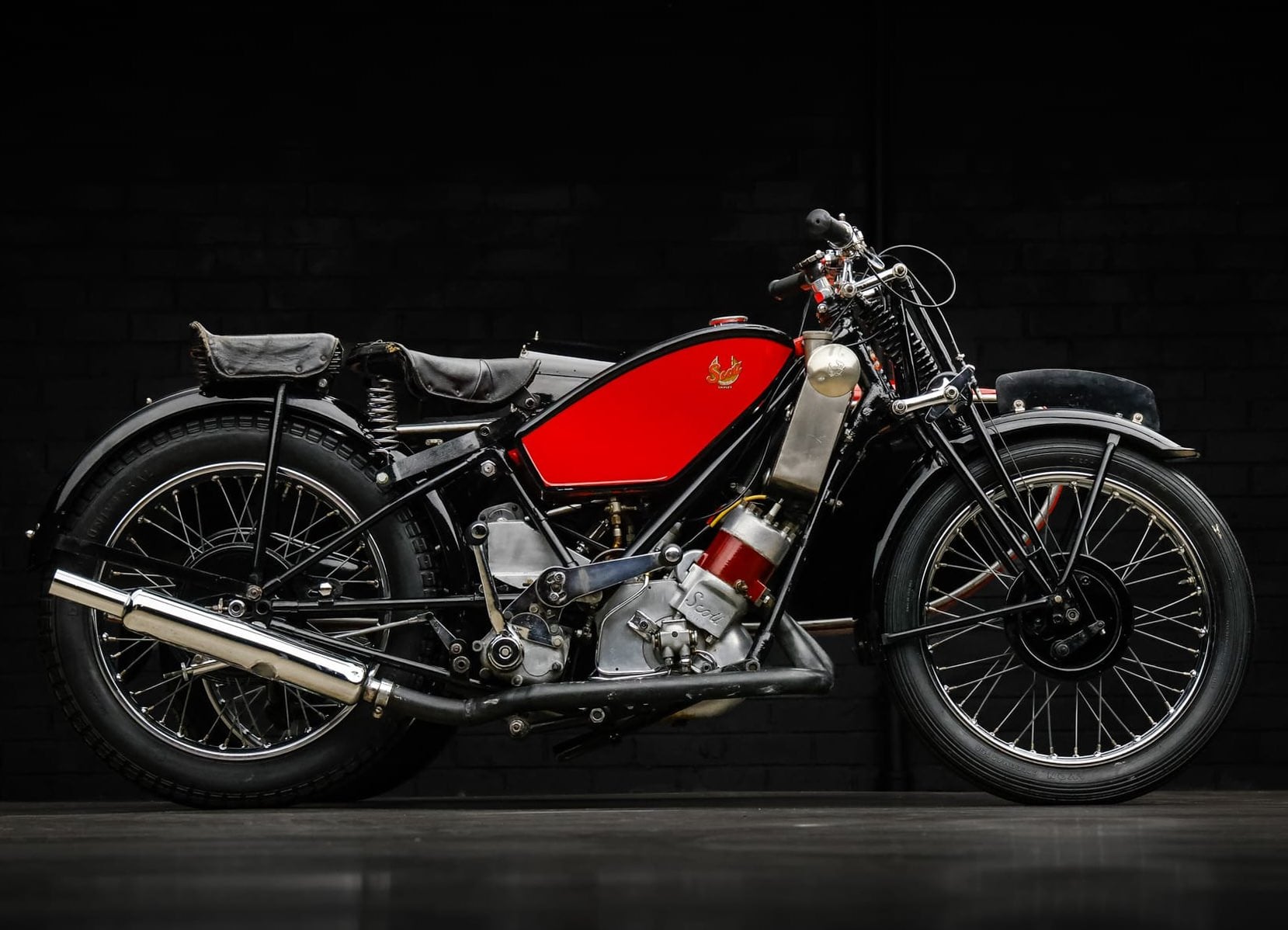
This Scott Flying Squirrel sidecar outfit dates from late 1937 or early 1938 and was refurbished during Steve McQueen’s ownership, remaining in his collection until his death in 1980, possibly a sign of just how much he liked it. It was sold through the McQueen estate auction in Las Vegas in November of 1984.
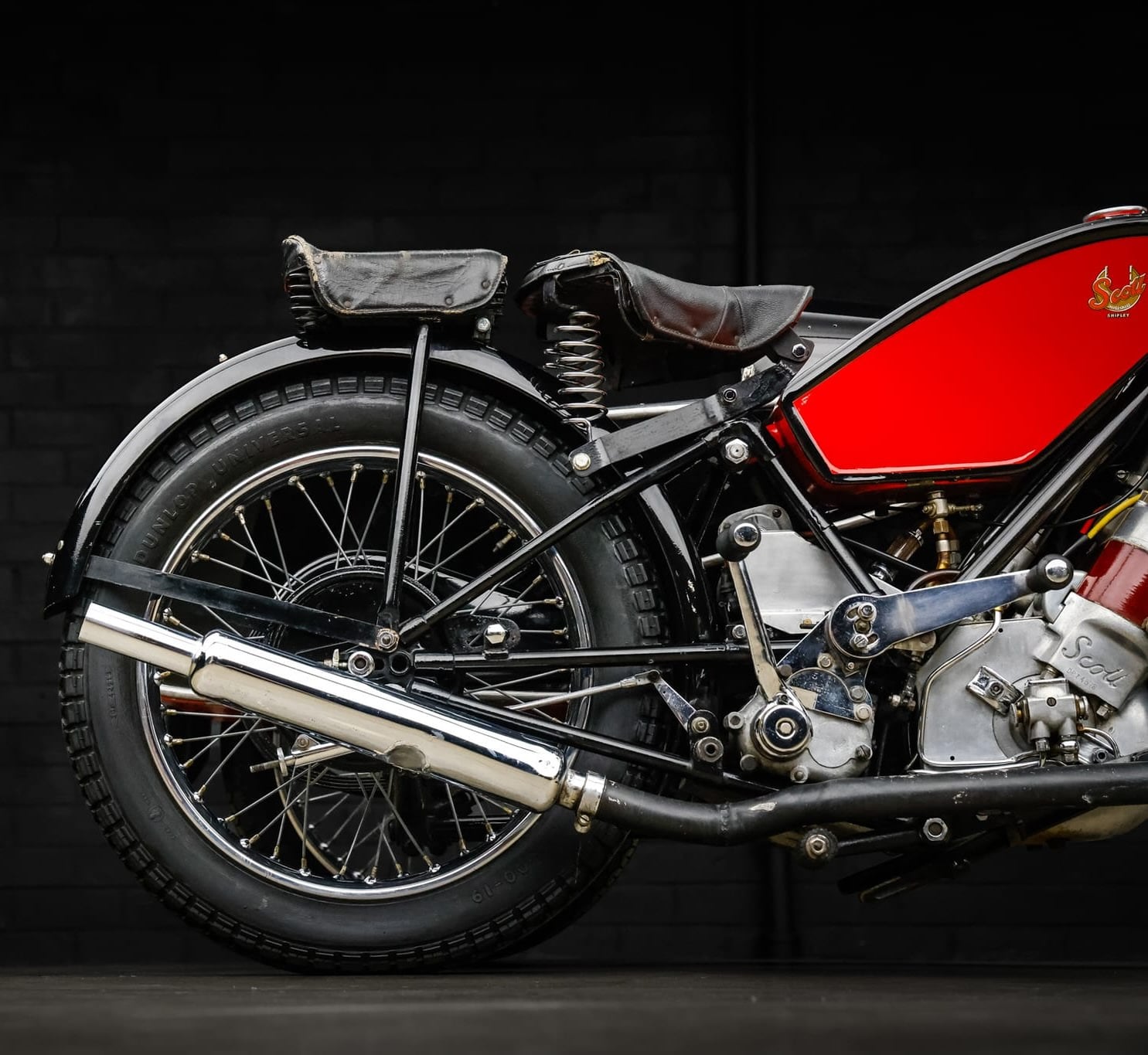
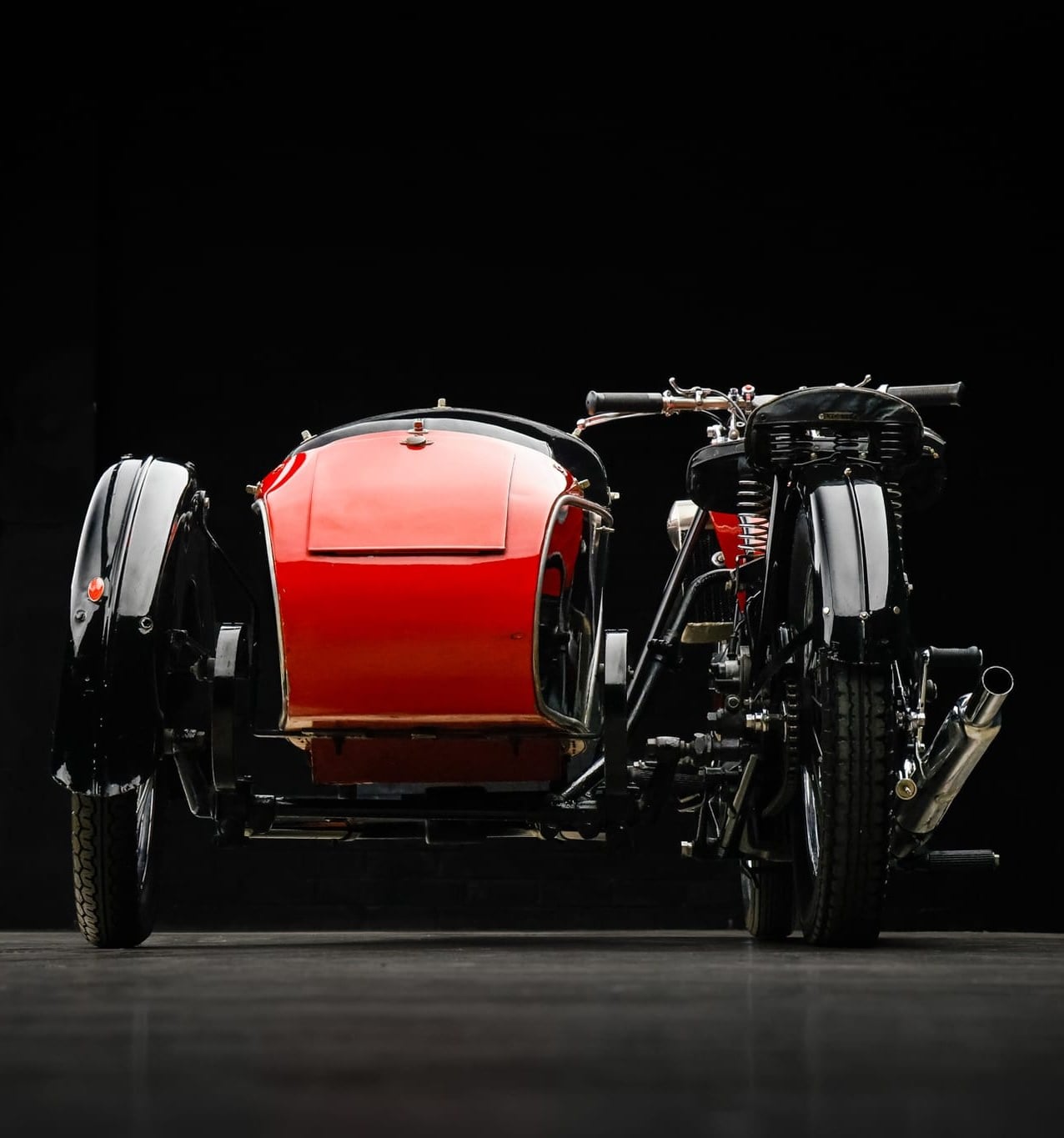
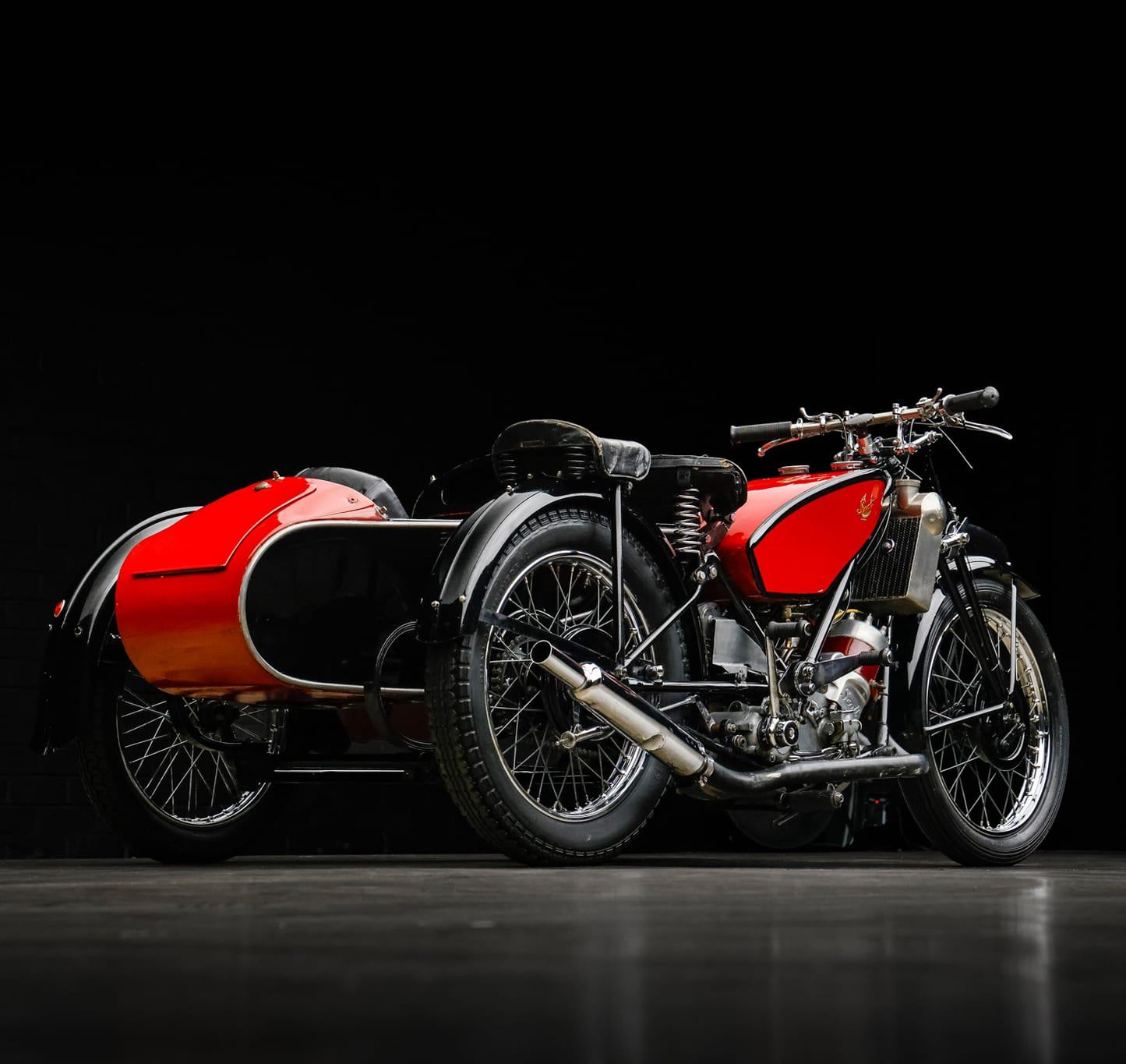
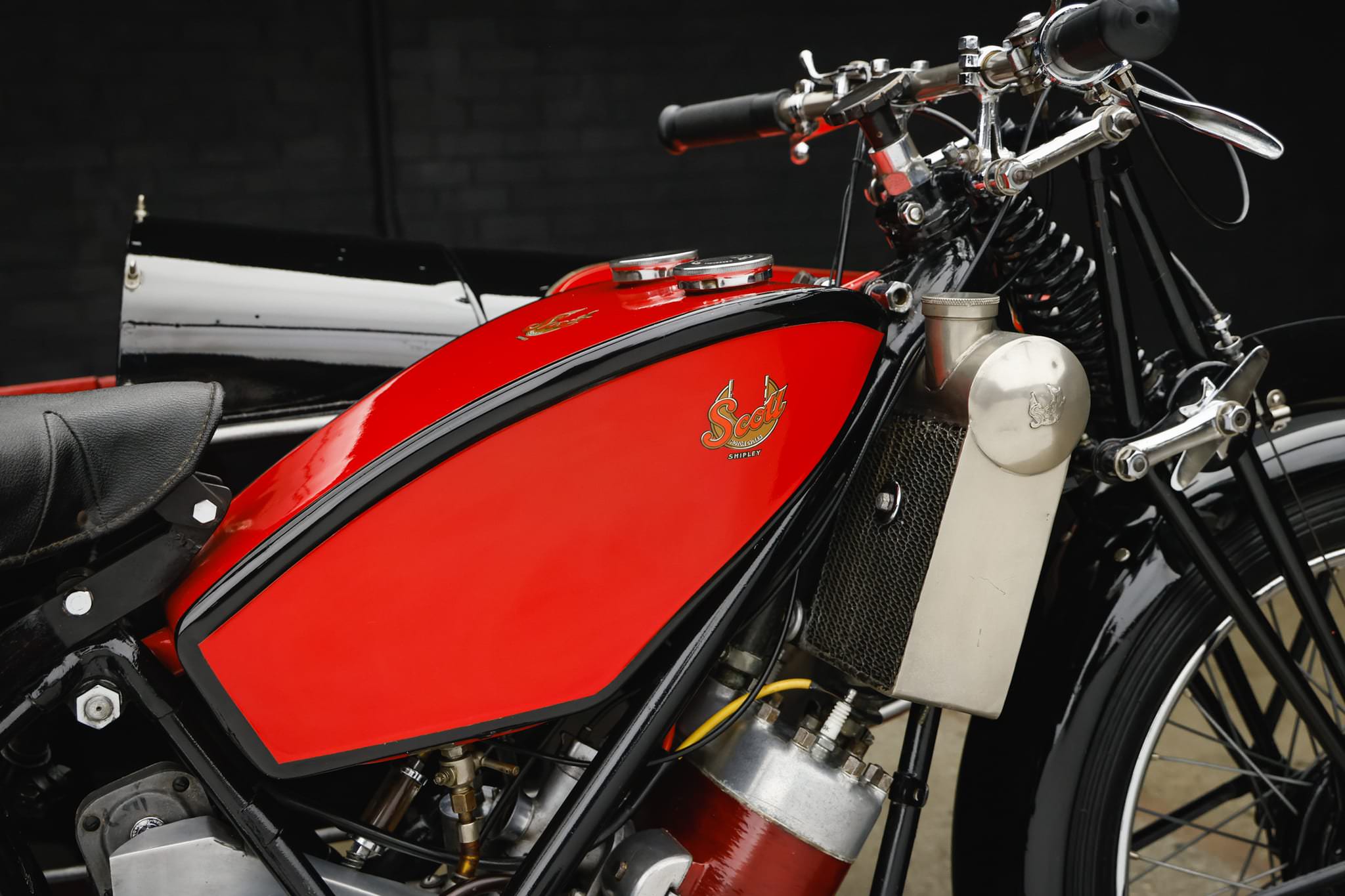
The bike is finished in black and red, with a flat-sided fuel tank set into the open section of the triangulated duplex frame. It has a front-hinged double-sprung solo saddle, a fender-mounted Lycett pillion with a cracked black leather cover, and a pedestrian-slicer number plate.
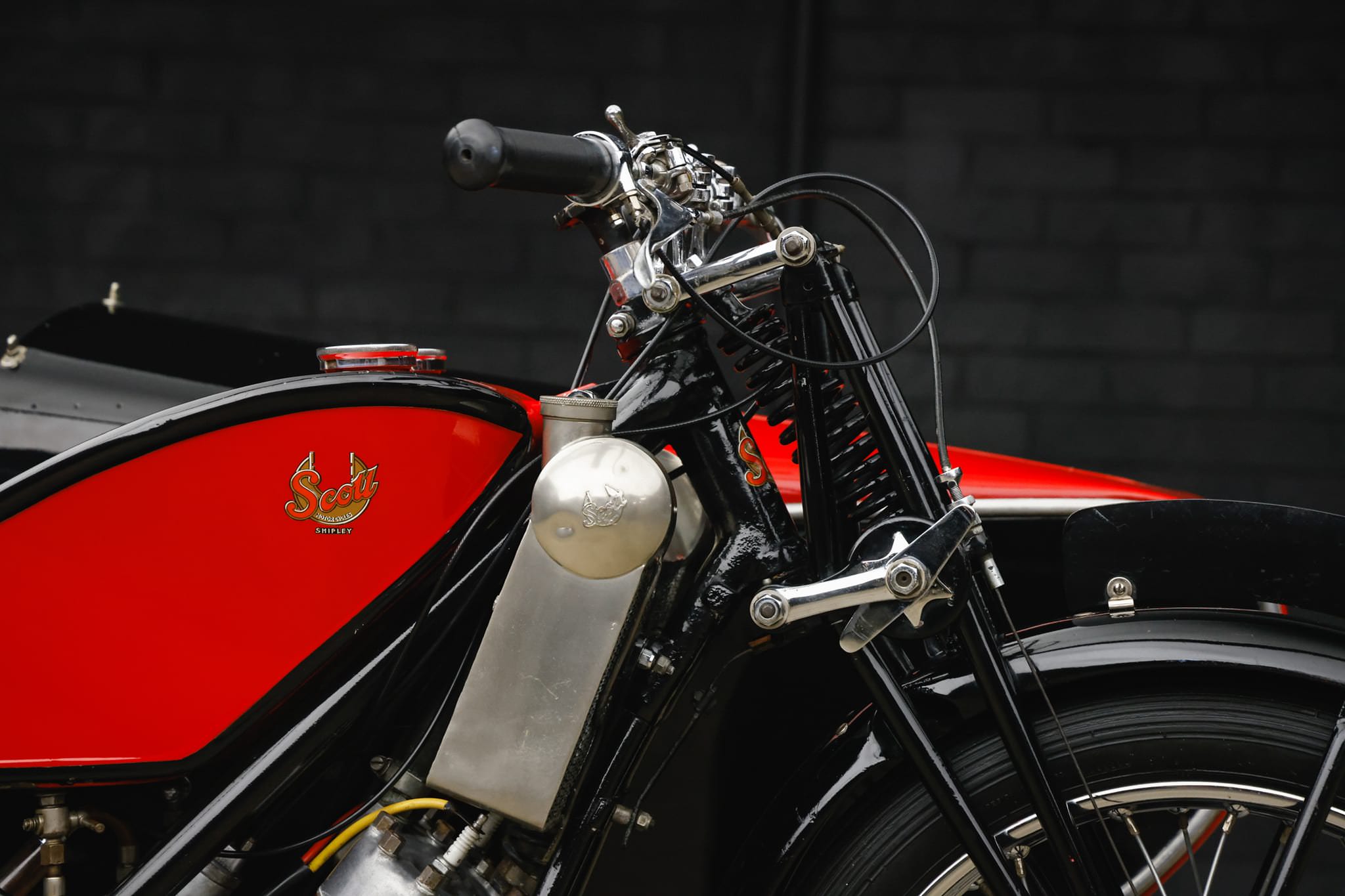
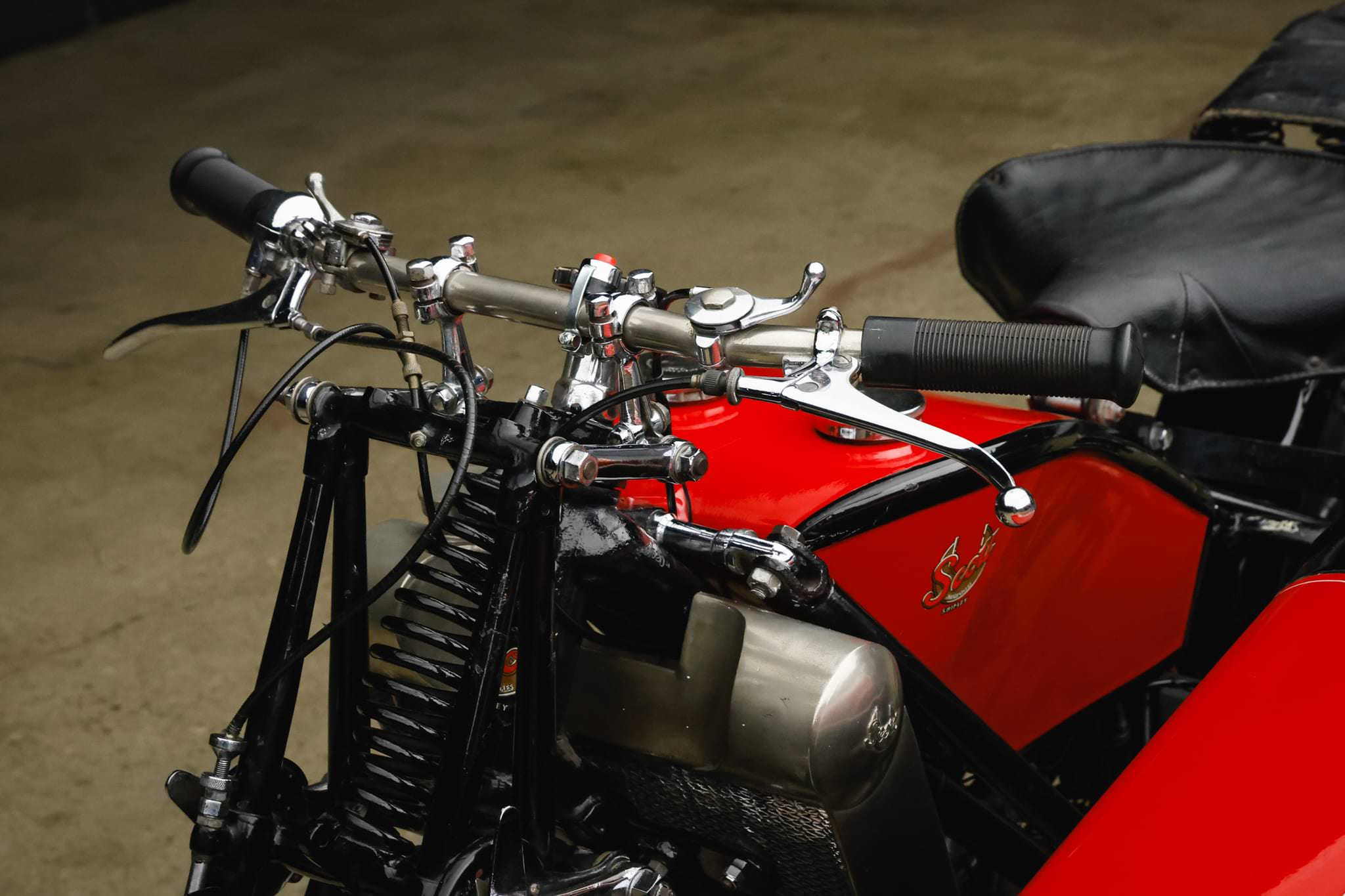
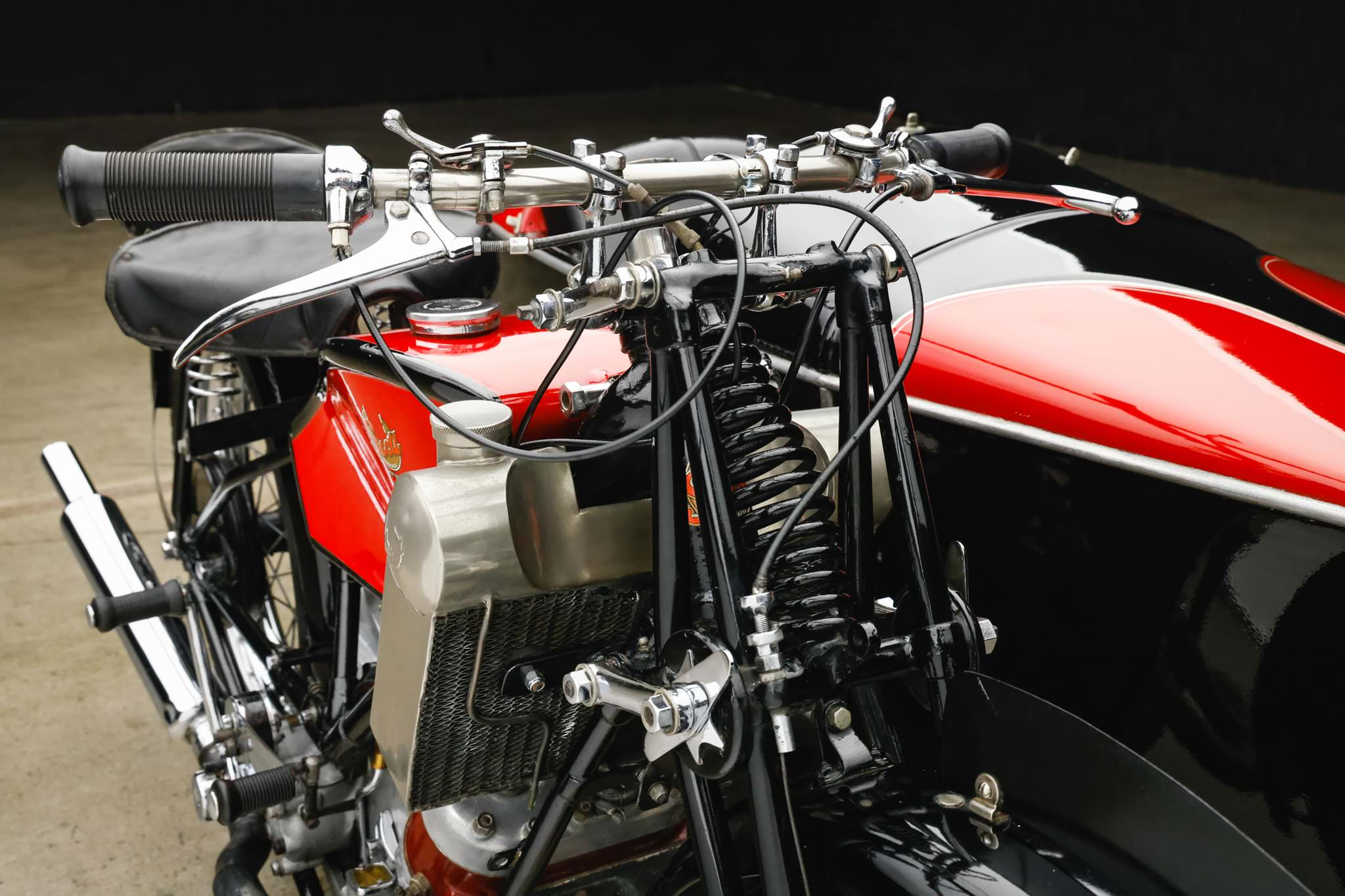
Suspension is limited to a Webb girder fork with a central barrel spring and adjustable side friction dampers. Chrome 19″ steel rims are laced to black-painted drum-brake hubs, wearing an Avon Speedmaster MKII front and a Dunlop Universal rear.
The flat handlebar holds Amal controls and chrome risers flanking the steering-damper adjuster – there’s no instrumentation, so mileage is unknown, though the bike is thought to have covered only a handful of miles under current ownership.
Power comes from the 498cc long-stroke “Power Plus” two-stroke parallel-twin used in Scott’s sports models, cooled by thermosiphon through the radiator and fitted with a detachable cylinder head, an Amal pre-Monobloc carburetor, a Pilgrim oil pump, and a Lucas magneto. A black Siamese headpipe feeds a chrome upswept Burgess-style silencer. Drive runs through a right-side-shifted 3-speed gearbox and chain final drive to the rear wheel.
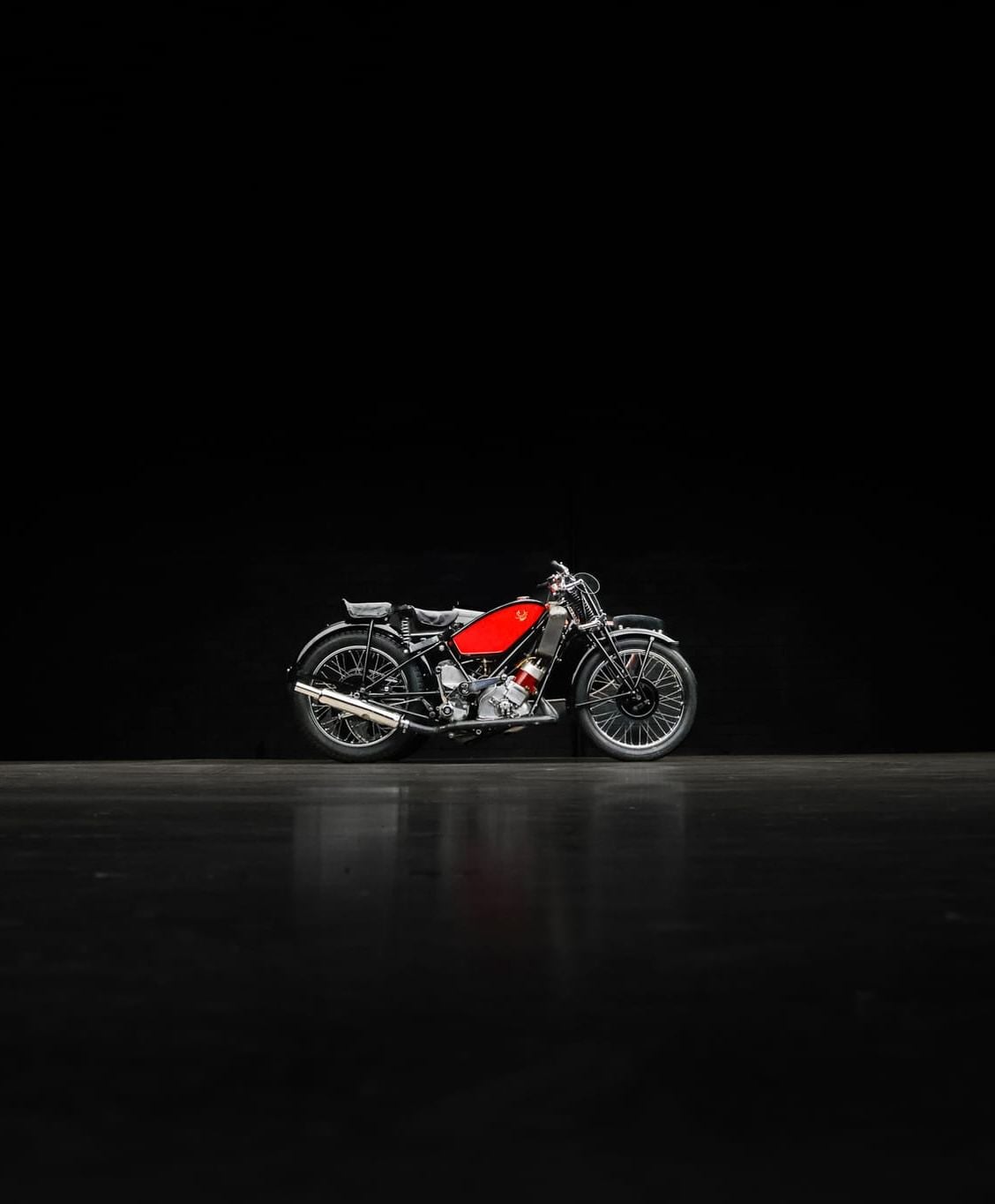
This is a late-1930s-era Scott Flying Squirrel, possibly the greatest-named motorcycle in history, and it comes with a matching sidecar. It formerly belonged to legendary Hollywood A-lister Steve McQueen, and it’s now being offered for sale.
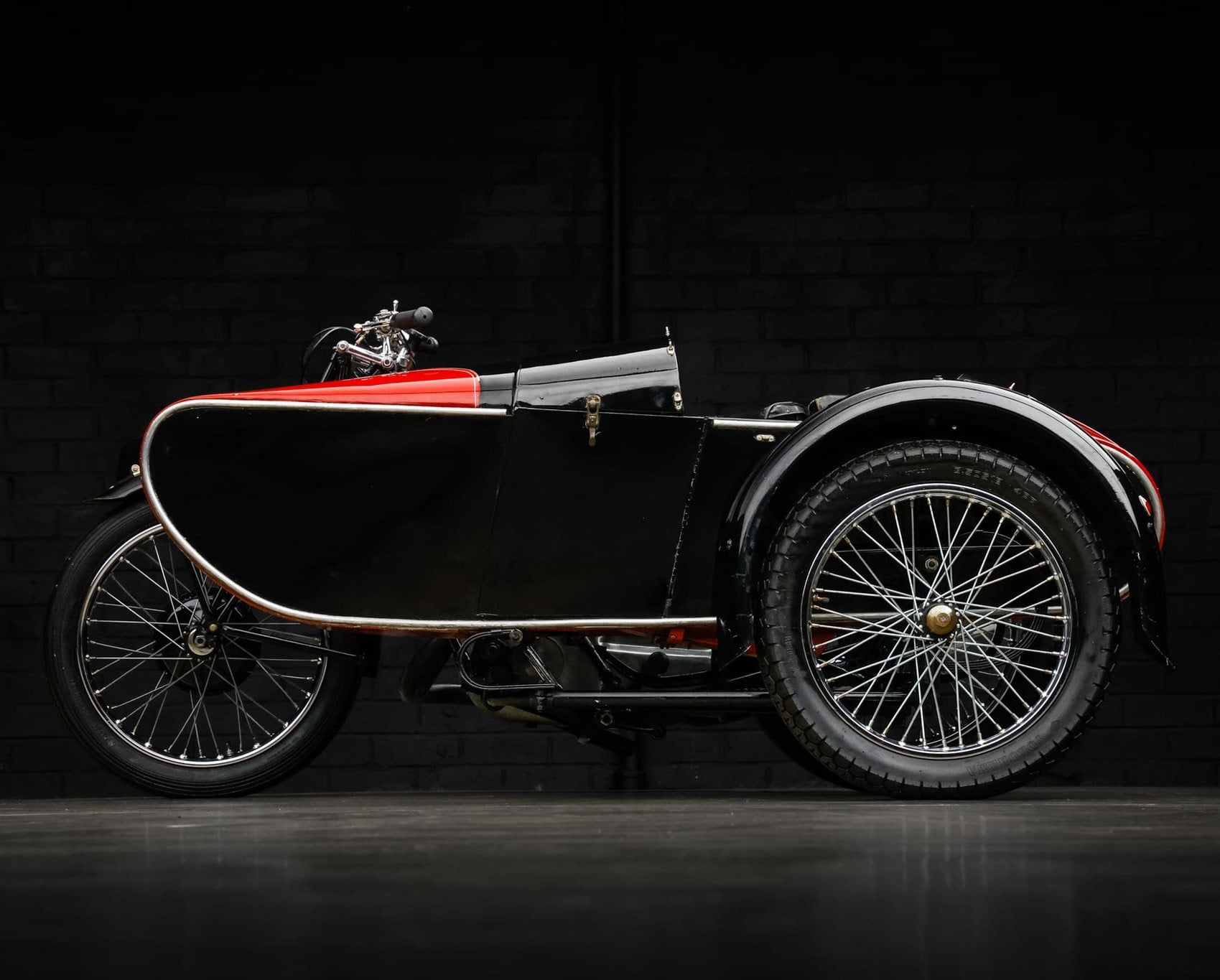
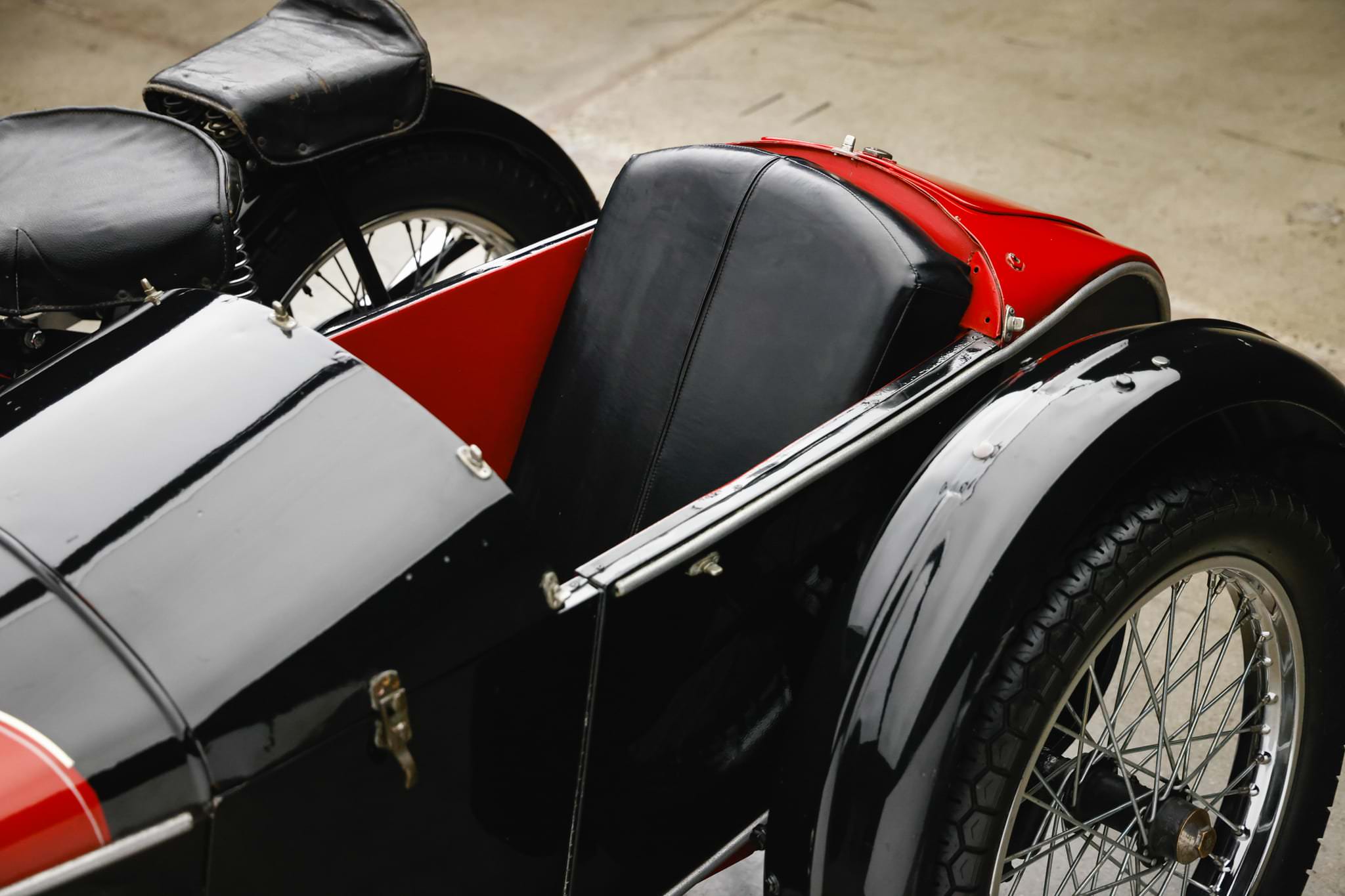
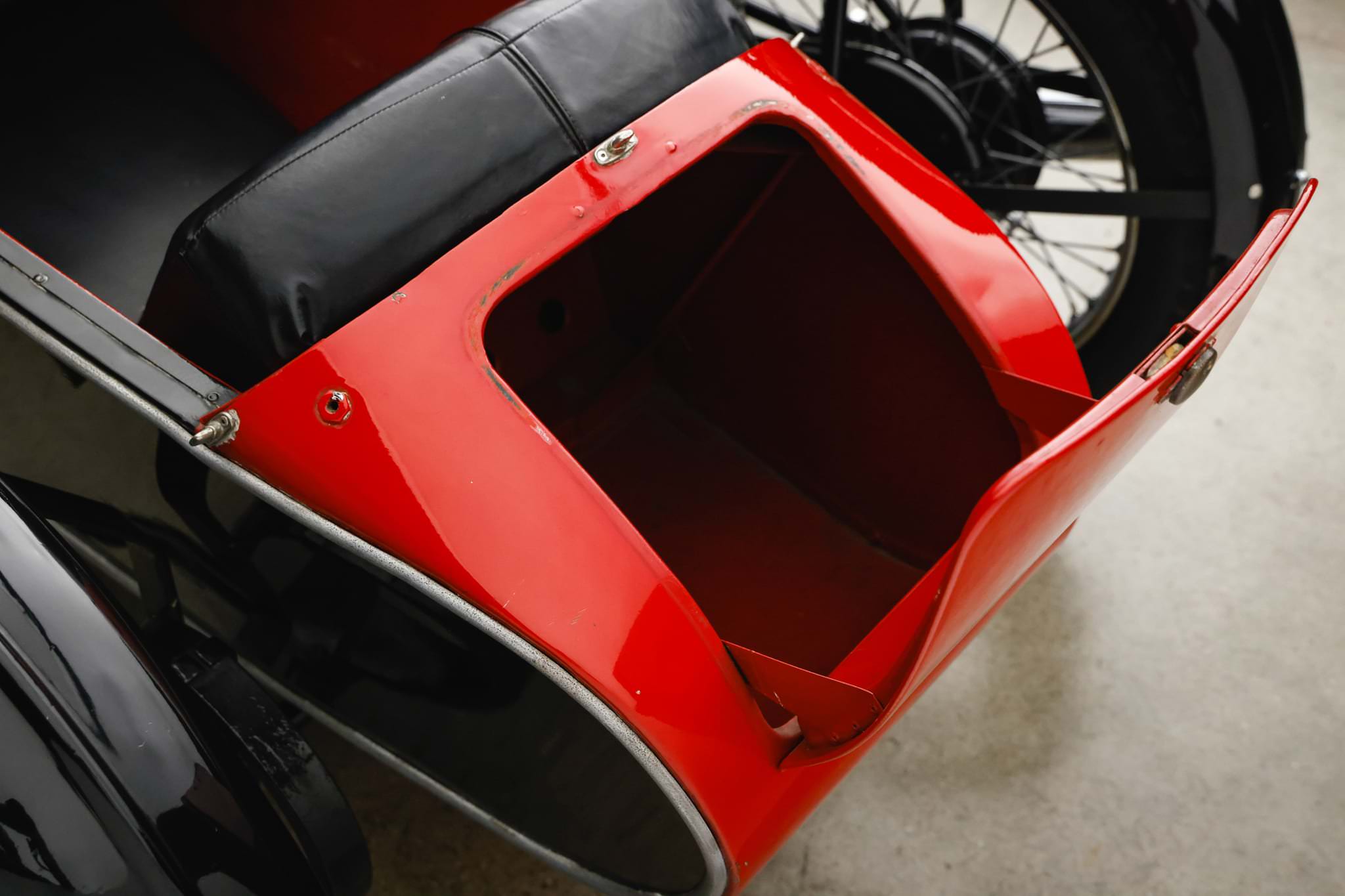
The matching single-seat sidecar mounts English-style on the left, with a side-hinged cowl, a rear-hinged door, a trunk compartment, a leaf-spring chassis, and a 19″ wire wheel on a Yokohama tire. Paperwork includes a laminated McQueen Certificate of Authenticity from the 1984 estate sale signed by the actor’s daughter and son, a 1990 UK Customs and Excise import form, and tax-relief correspondence from the vice president of the UK chapter of the Society of Automotive Historians.
It’s now being offered for sale out of Newbury Park, California and you can visit the listing here if you’d like to read more about it or register to bid.
Images courtesy of Silodrome
Articles that Ben Branch has written have been covered on CNN, Popular Mechanics, Smithsonian Magazine, Road & Track Magazine, the official Pinterest blog, the official eBay Motors blog, BuzzFeed, Autoweek Magazine, Wired Magazine, Autoblog, Gear Patrol, Jalopnik, The Verge, and many more.
Silodrome was founded by Ben back in 2010, in the years since the site has grown to become a world leader in the alternative and vintage motoring sector, with well over a million monthly readers from around the world and many hundreds of thousands of followers on social media.