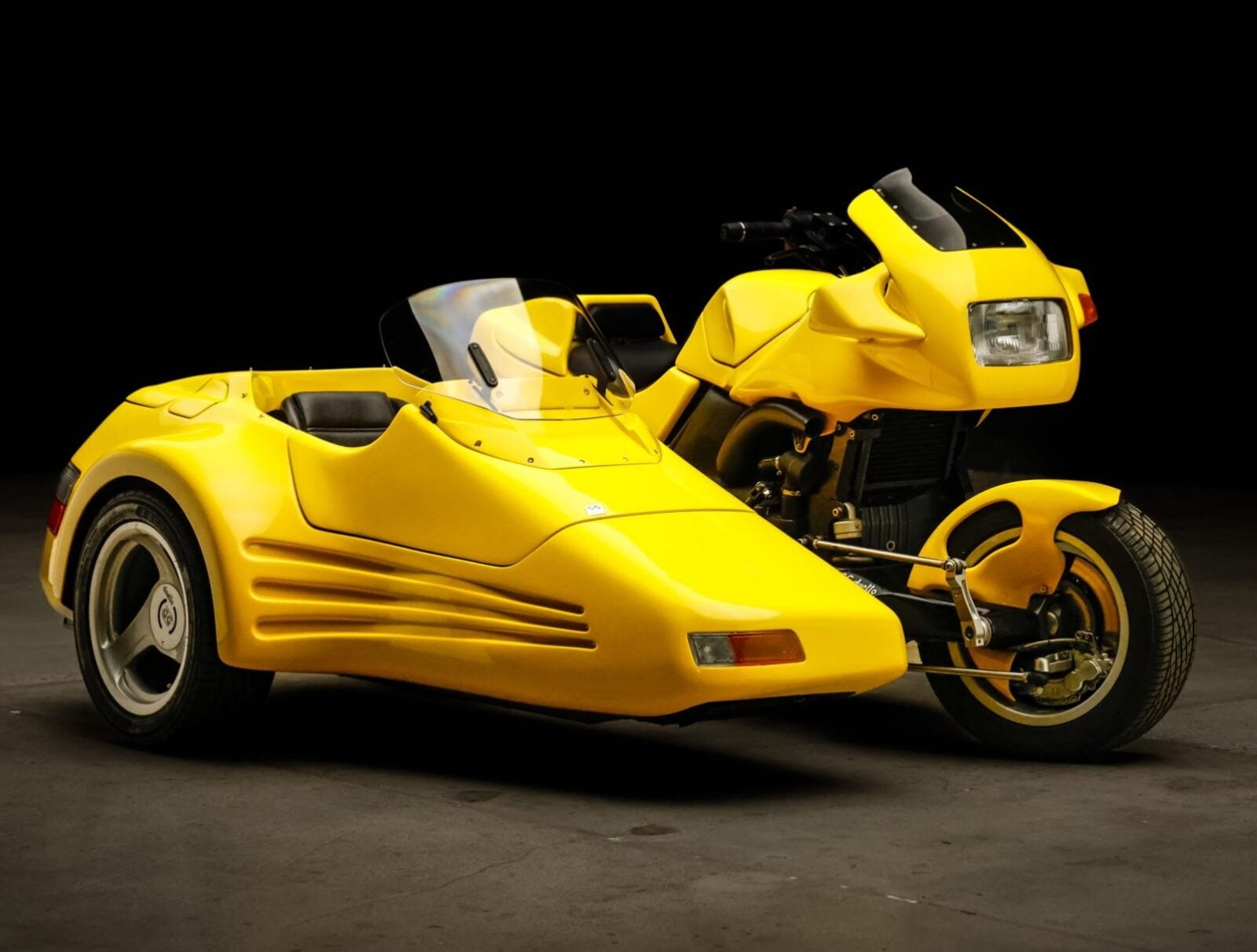
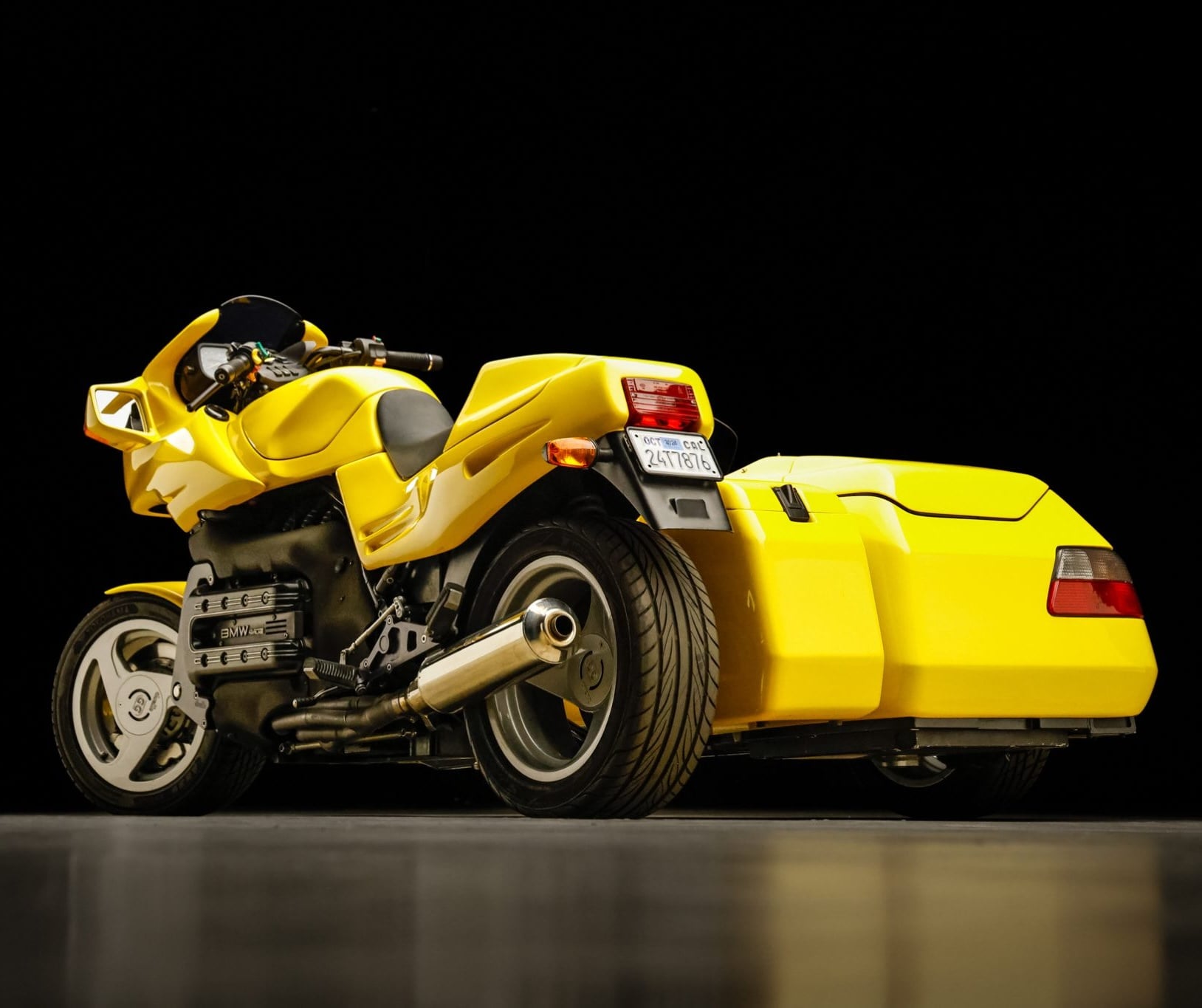
This is a 1999 GG Duetto, it’s an extremely rare Swiss-built motorcycle with a permanently-attached sidecar. Just 30 of these were made, and they sold in the mid-1990s for ~$50,000 USD, that’s over $109,000 USD today.
When new, the GG Duetto was only sold in Europe and Japan, and its production ran was just five years long from 1994 to 1999. We only see them come up for sale very rarely, and this is the best-preserved example we’ve come across in recent memory.
 This is a 1999 GG Duetto, it’s an extremely rare Swiss-built motorcycle with a permanently-attached sidecar. Just 30 of these were made, and they sold in the mid-1990s for ~$50,000 USD, that’s over $109,000 USD today.
History Speedrun: The GG Duetto
The GG Duetto is one of those machines that completely defies any sort of easy categorization. It was built in tiny numbers by a small Swiss engineering firm in the mid-1990s and it basically took the concept of the motorcycle sidecar and reimagined it from scratch – applying the kind of obsessive precision engineering that the Swiss are famous for.
Grüter + Gut: The Company Behind The Duetto
The firm behind the Duetto, Grüter + Gut Motorradtechnik GmbH, was founded on May the 1st, 1983, in the canton of Lucerne by Walter Grüter and Daniel Gut. Both were motorcycle enthusiasts, and the business initially focused on retailing and servicing Moto Guzzi and Ducati motorcycles. In 1985, BMW was added to their lineup.
Tragedy struck the company early on, when Daniel Gut was killed in a sidecar accident in 1986, and Grüter (a trained mechanical engineer) decided to continue alone, keeping his late partner’s name on the door out of respect. The business soon grew into more than a dealership, Grüter built out a fully equipped machine shop and earned a reputation for beautifully made aftermarket parts, especially for Moto Guzzis.
Ultimately, Grüter wasn’t content to simply improve other manufacturers’ products. As early as 1986, the same year he lost his business partner, he began work on a prototype for an entirely new kind of sidecar outfit. Years of development, testing, and refinement followed before the production-standard GG Duetto finally emerged in 1994.
Development + Engineering
The Duetto was not a conventional sidecar bolted to an existing motorcycle. It was a purpose-built, fully integrated three-wheeled vehicle – the motorcycle and sidecar could not be separated. It was sold only as a complete, assembled unit, and was never registered as a BMW product despite using mostly BMW running gear.
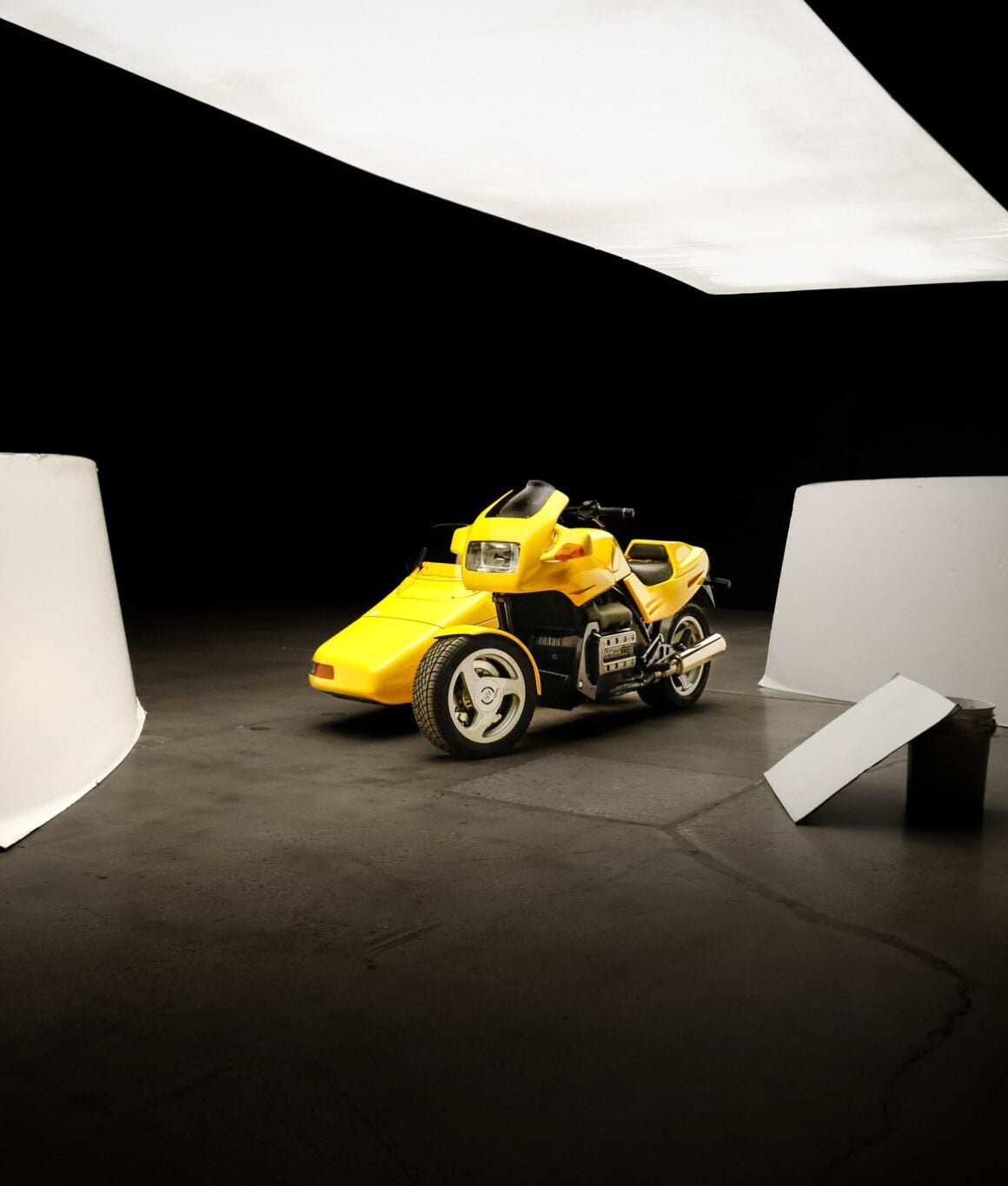
When new, the GG Duetto was only sold in Europe and Japan, and its production ran was just five years long from 1994 to 1999. We only see them come up for sale very rarely, and this is the best-preserved example we’ve come across in recent memory.
Grüter and his team evaluated the motorcycle market and settled on the BMW K1100LT as the ideal donor platform. Its liquid-cooled 1,092cc DOHC inline four-cylinder engine, with electronic fuel injection via BMW’s Motronic system, was rated by BMW at 100 bhp at 7,500 rpm and approximately 79 lb ft of torque at 5,500 rpm.
Power was sent through a 5-speed gearbox with a dry clutch and shaft final drive, and an optional 4-speed transmission with reverse was available, this was a practical feature for a machine that tipped the scales at 904 lbs dry.
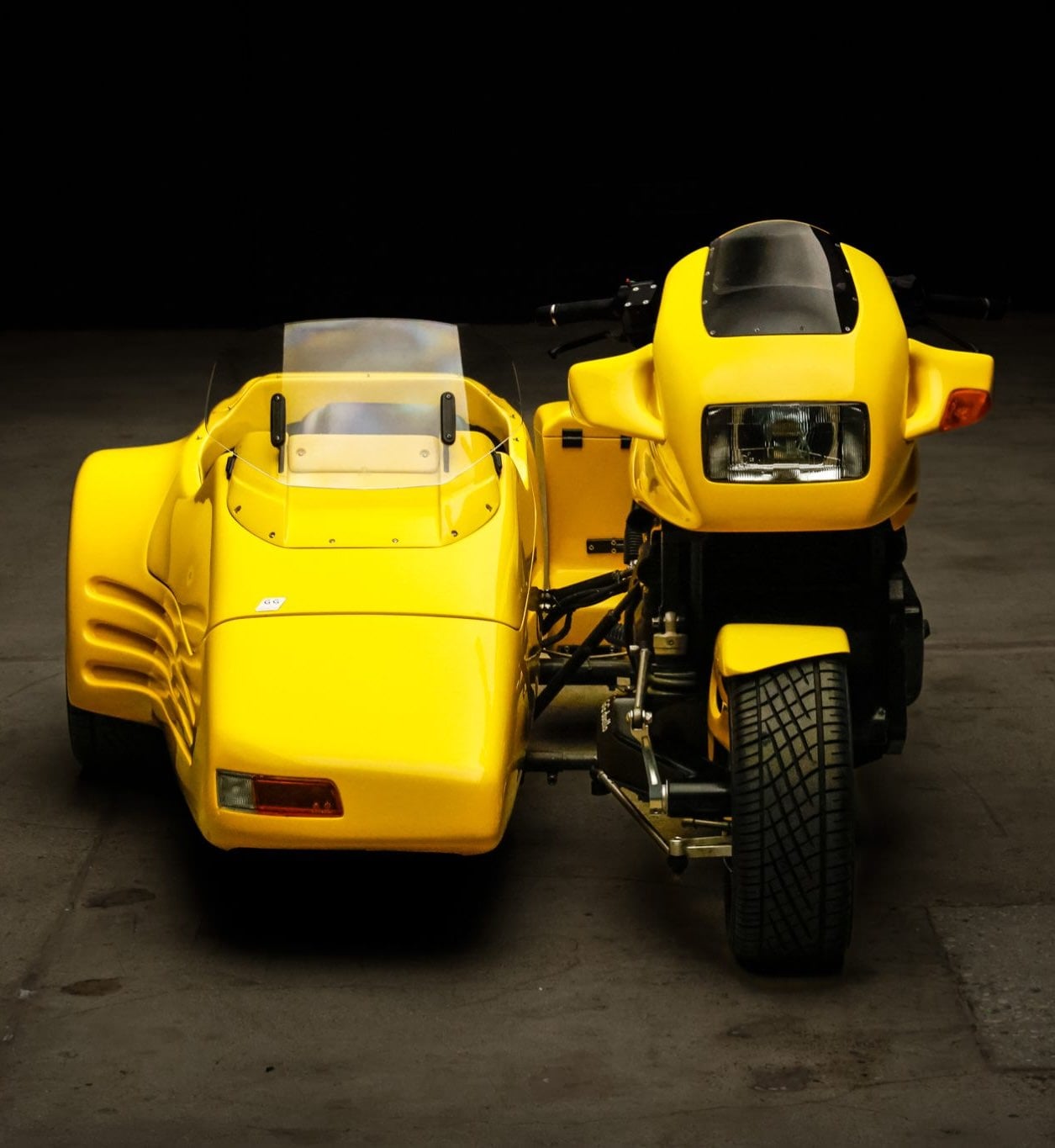
Starting with the stock K1100LT, Grüter stripped away the forks, wheels, and bodywork. In their place, he designed a hub-center steering system with a single-sided aluminum swingarm up front – this was a sophisticated arrangement where the steering pivot points sit inside the wheel hub rather than above the wheel at the headstock.
For a sidecar outfit, where asymmetric loads from the third wheel can wreak havoc on conventional fork geometry, it was an smart choice. A fully adjustable remote-reservoir WP shock absorber handled suspension duties.
The front brake was a work of art in its own right, an eight-piston caliper machined from aluminum billet in-house at GG, clamping a large ventilated disc. All three wheels had electronic ABS – this was a genuine rarity on any sidecar in the mid-1990s.
The wheels themselves were custom units manufactured by Marchesini in Italy to GG’s specifications, measuring 6×14 inches front and sidecar and 6×15 inches rear. Since the Duetto doesn’t lean into corners, it ran squared-off performance car tires – 185/50-14 VR front, 195/50-15 VR rear, and 185/50-14 VR on the sidecar.
Weight distribution received careful attention for very obvious reasons, the fuel tank was relocated from its conventional position on the motorcycle to a spot behind the sidecar wheel, and the battery was placed there as well, lowering the center of gravity and helping to improve balance.
The Bodywork + Passenger Compartment
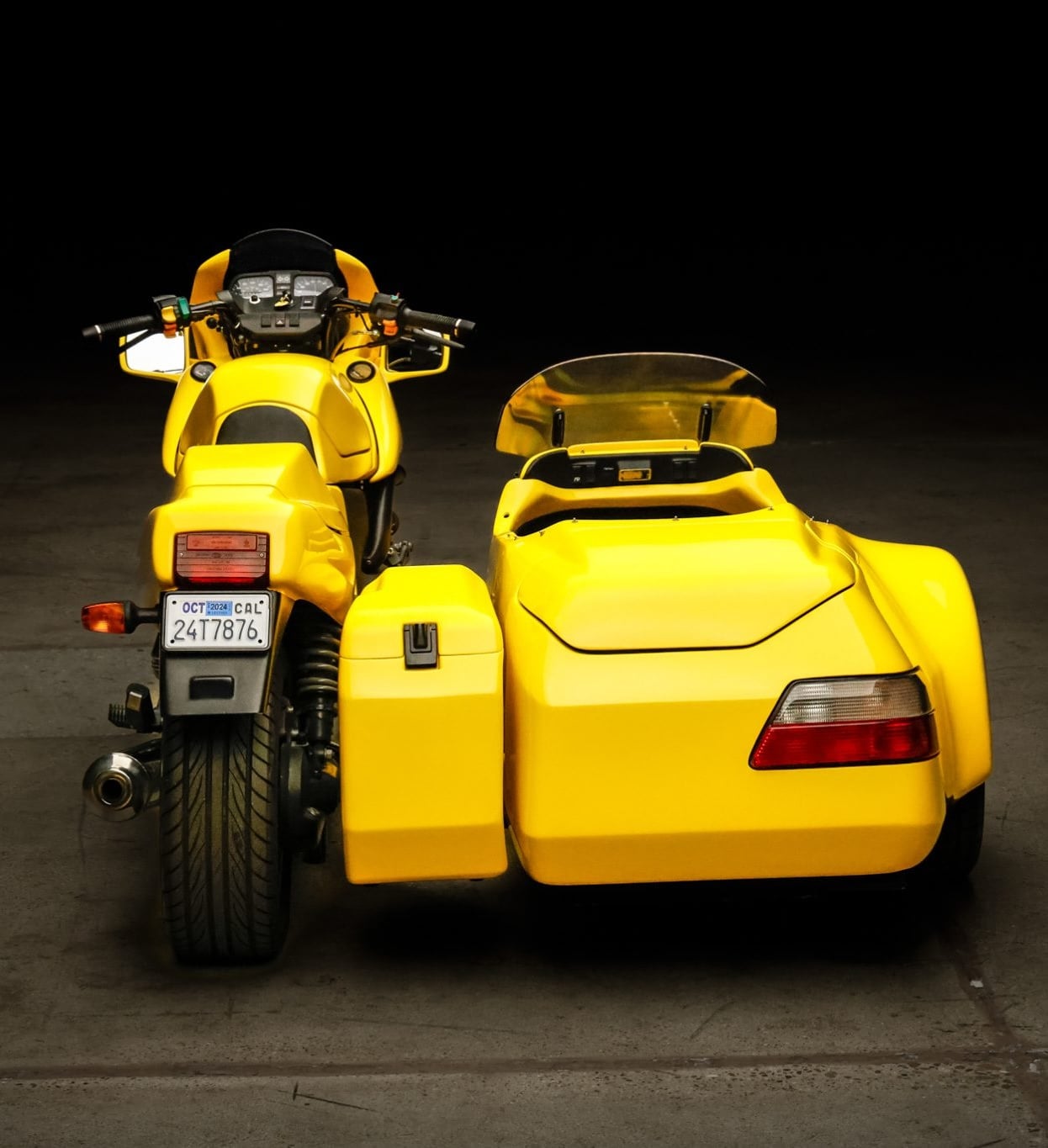
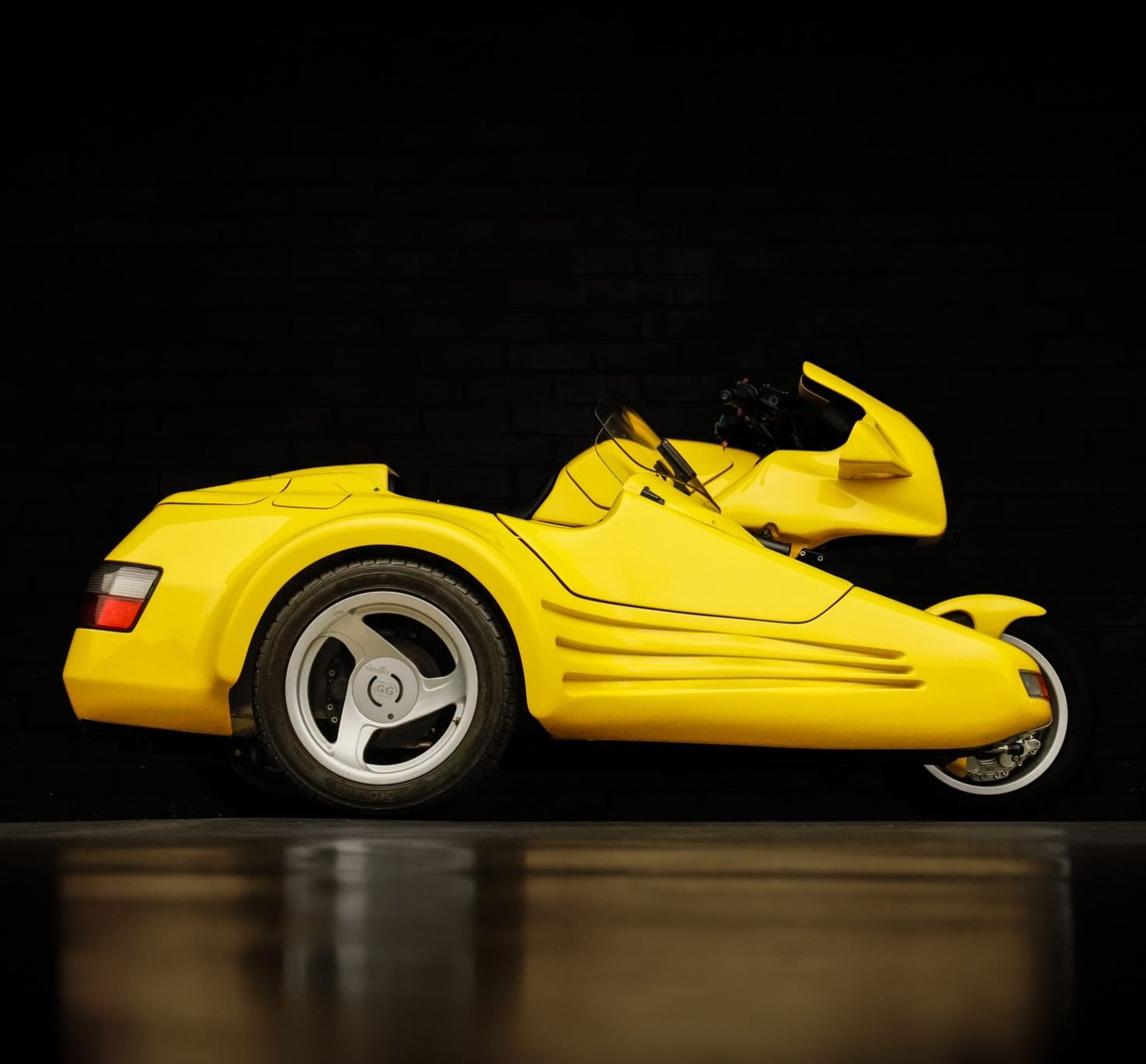
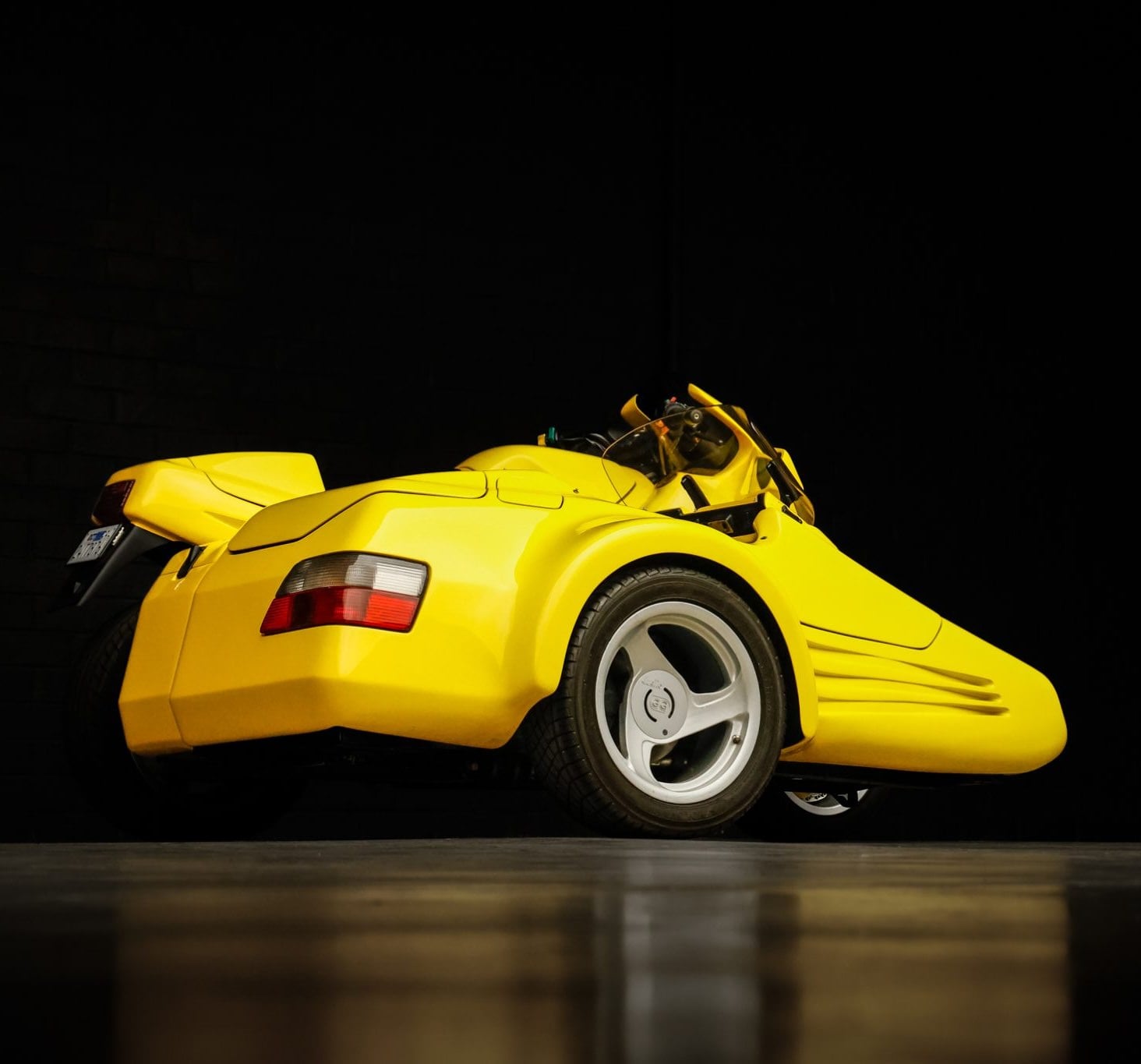
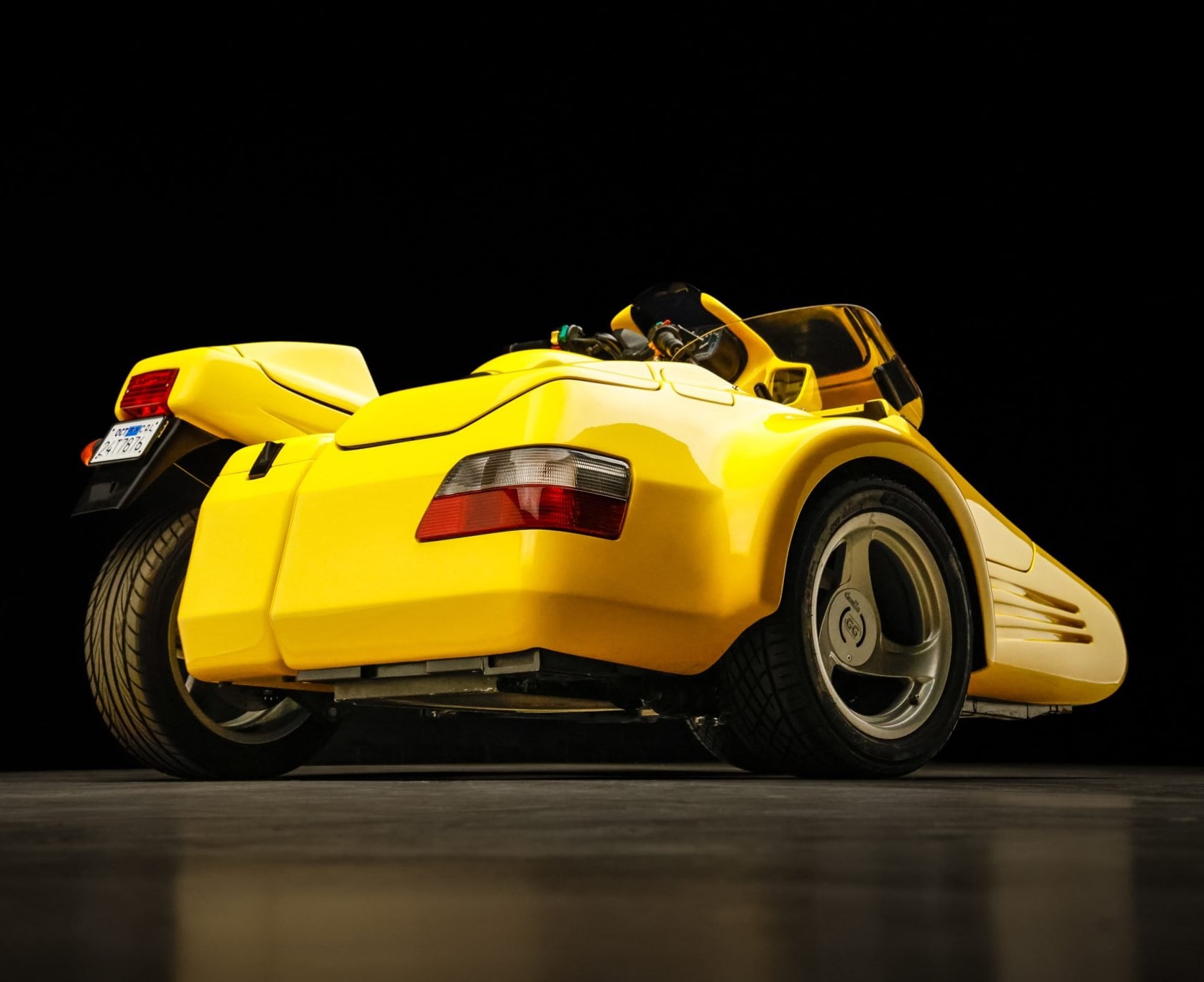
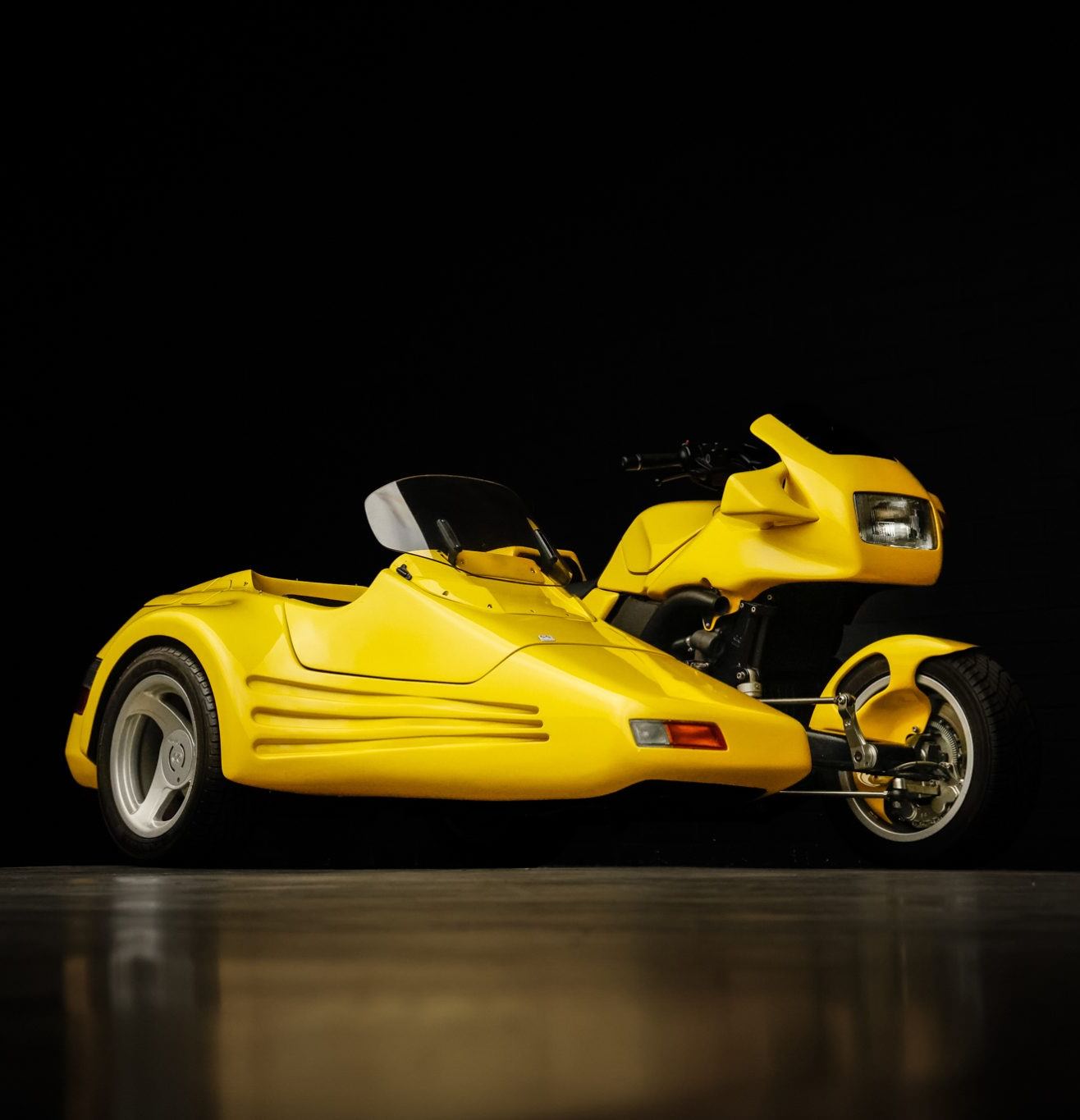
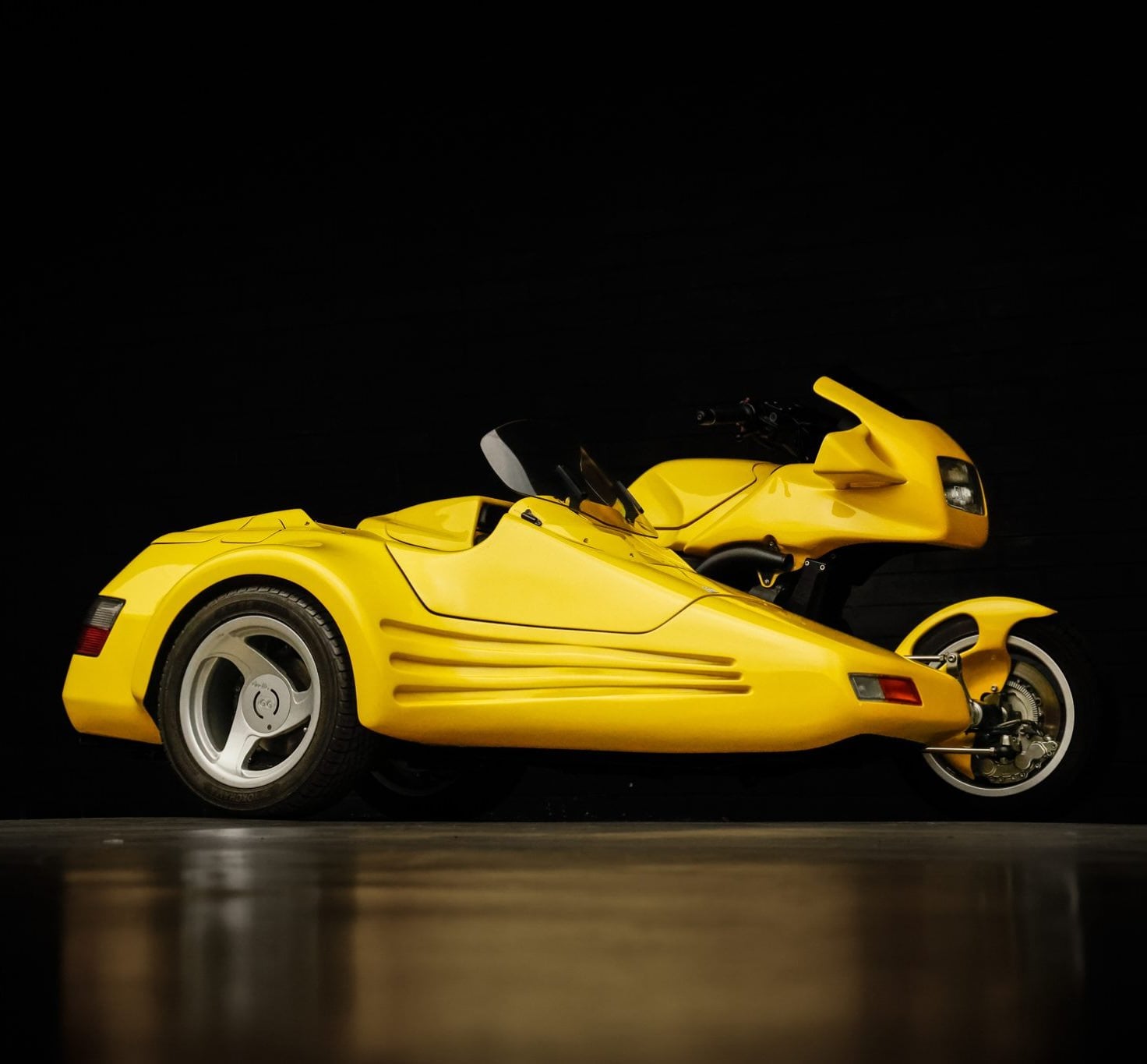
The body was made from GFK-laminate (glass-fiber reinforced plastic), with all mounting hardware hidden beneath the panels. The motorcycle side had a half-fairing and a dummy fuel tank with a locking storage compartment. The sidecar body, with its louvered flanks, drew flattering comparisons to the Ferrari Testarossa, which had likely inspired its look.
Grüter and his team evaluated the motorcycle market and settled on the BMW K1100LT as the ideal donor platform. Its liquid-cooled 1,092cc DOHC inline four-cylinder engine, with electronic fuel injection via BMW’s Motronic system, was rated by BMW at 100 bhp at 7,500 rpm and approximately 79 lb ft of torque at 5,500 rpm.
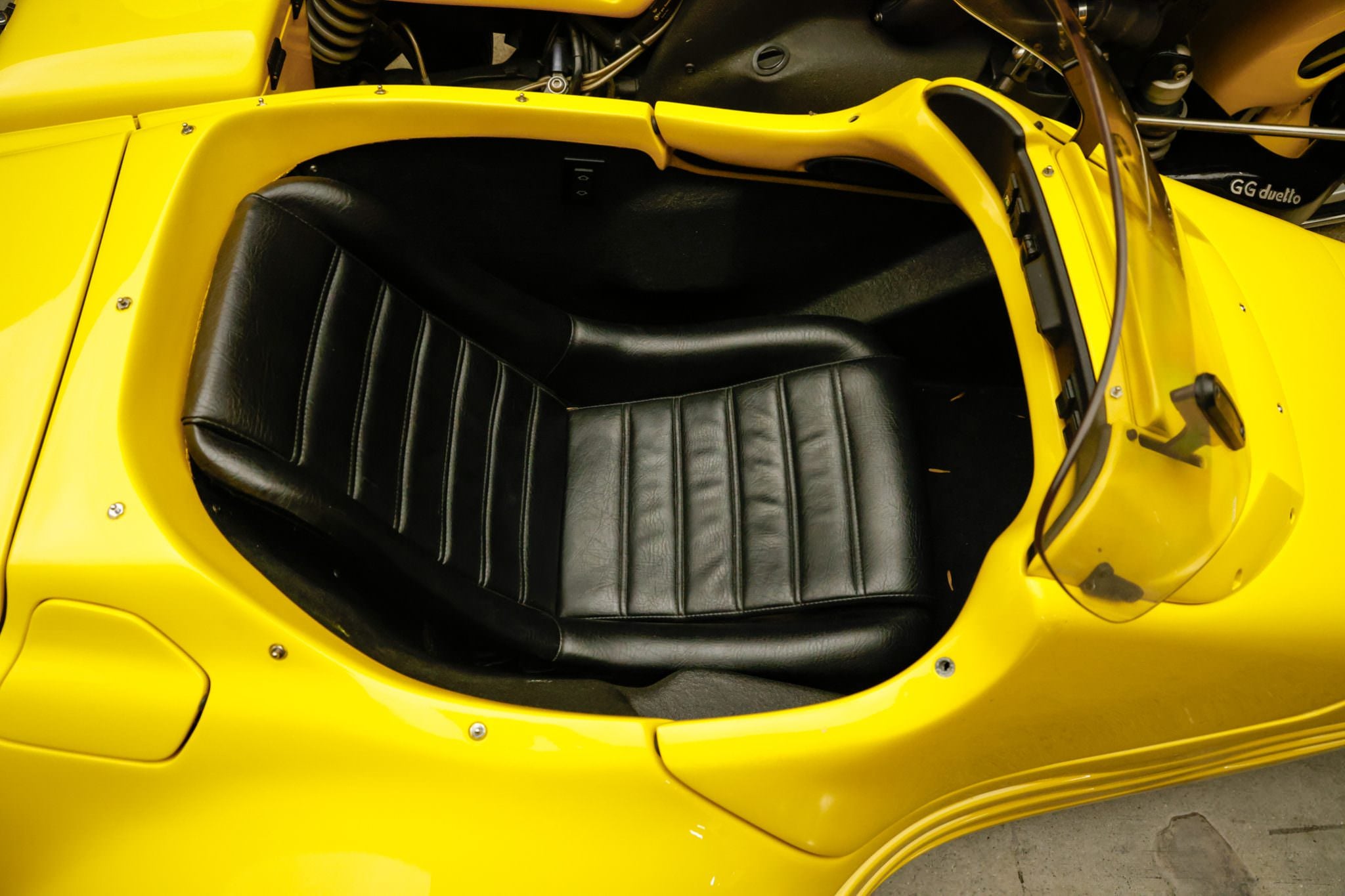
The passenger compartment was closer to a luxury car interior than a typical sidecar tub. Access was via a large hood opened and closed by an electric motor, and the interior had a comfortable BMW car seat, plush carpeting, and an electrically height-adjustable windscreen carried over from the K1100LT. A radio or CD player could be fitted as an option.
Production + Price
Just 30 GG Duettos were built between 1994 and 1999, with units sold across Europe and Japan. The retail price was 59,650 Swiss francs – that was roughly $50,000 USD at the time, placing it firmly in exotic car territory. When Cycle World tested the only example in North America for their August 1996 issue, the magazine described it as perhaps the world’s most sophisticated and exclusive three-wheeler. The test unit was on temporary loan to Ride West BMW in Seattle and it was apparently returned to Europe after the review.
The Duetto put GG Motorradtechnik on the international map and this soon led directly to bigger things. The company’s reputation for precision engineering earned it a contract from BMW Switzerland to convert 600 BMW motorcycles for the Swiss Army between 2001 and 2003. GG was also recognized as the only independent vehicle manufacturer in the world to receive motorcycle engines supplied directly from BMW’s factory.
Grüter went on to develop the GG Spartaco, the GG Cruso, and eventually the four-wheeled GG Quad, but the Duetto remains the machine that started it all, a monument of sorts to what happens when a gifted Swiss engineer decides that traditional sidecars aren’t good enough, and sets out to build one from a blank slate.
The 1999 GG Duetto Shown Here
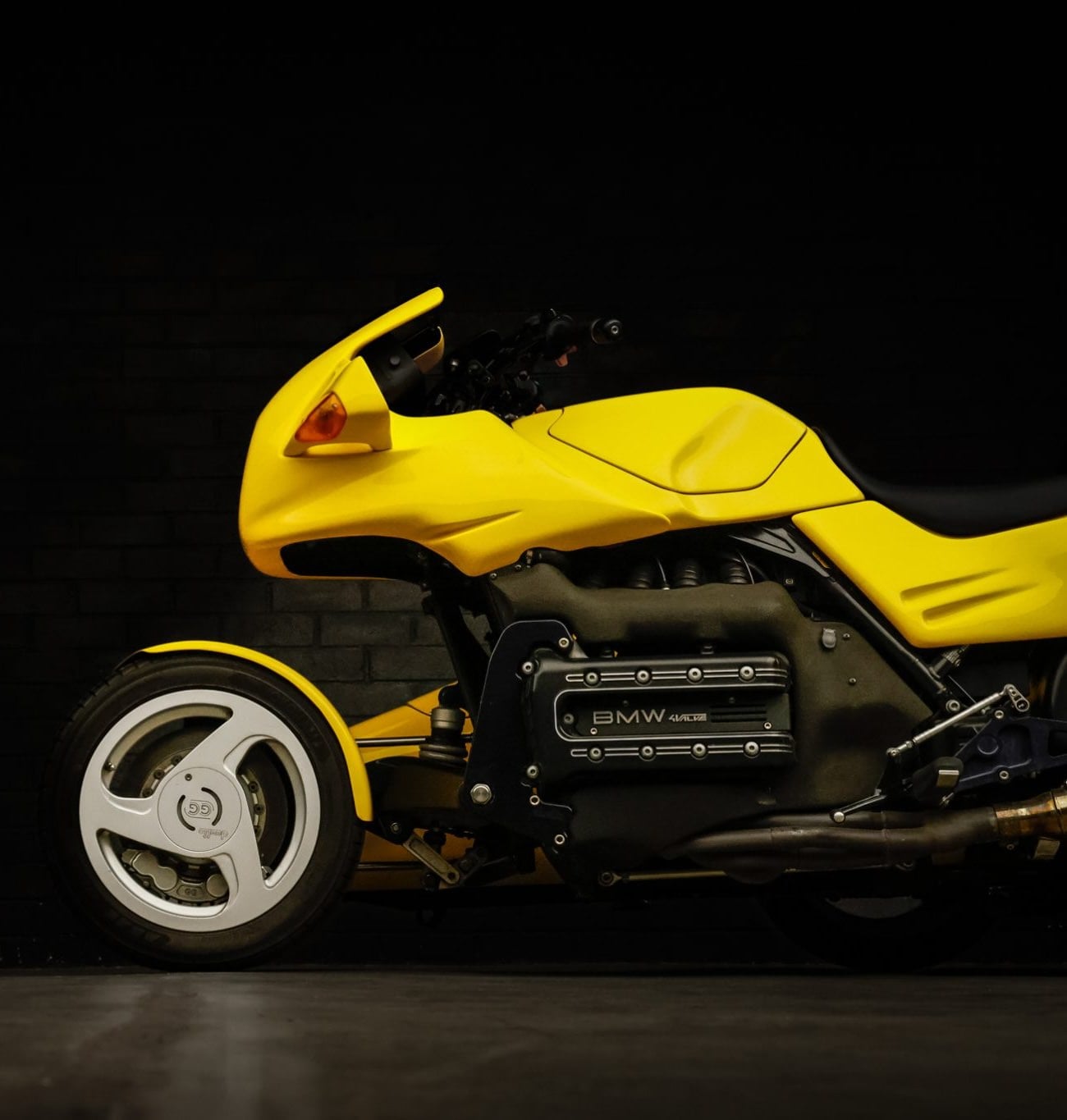
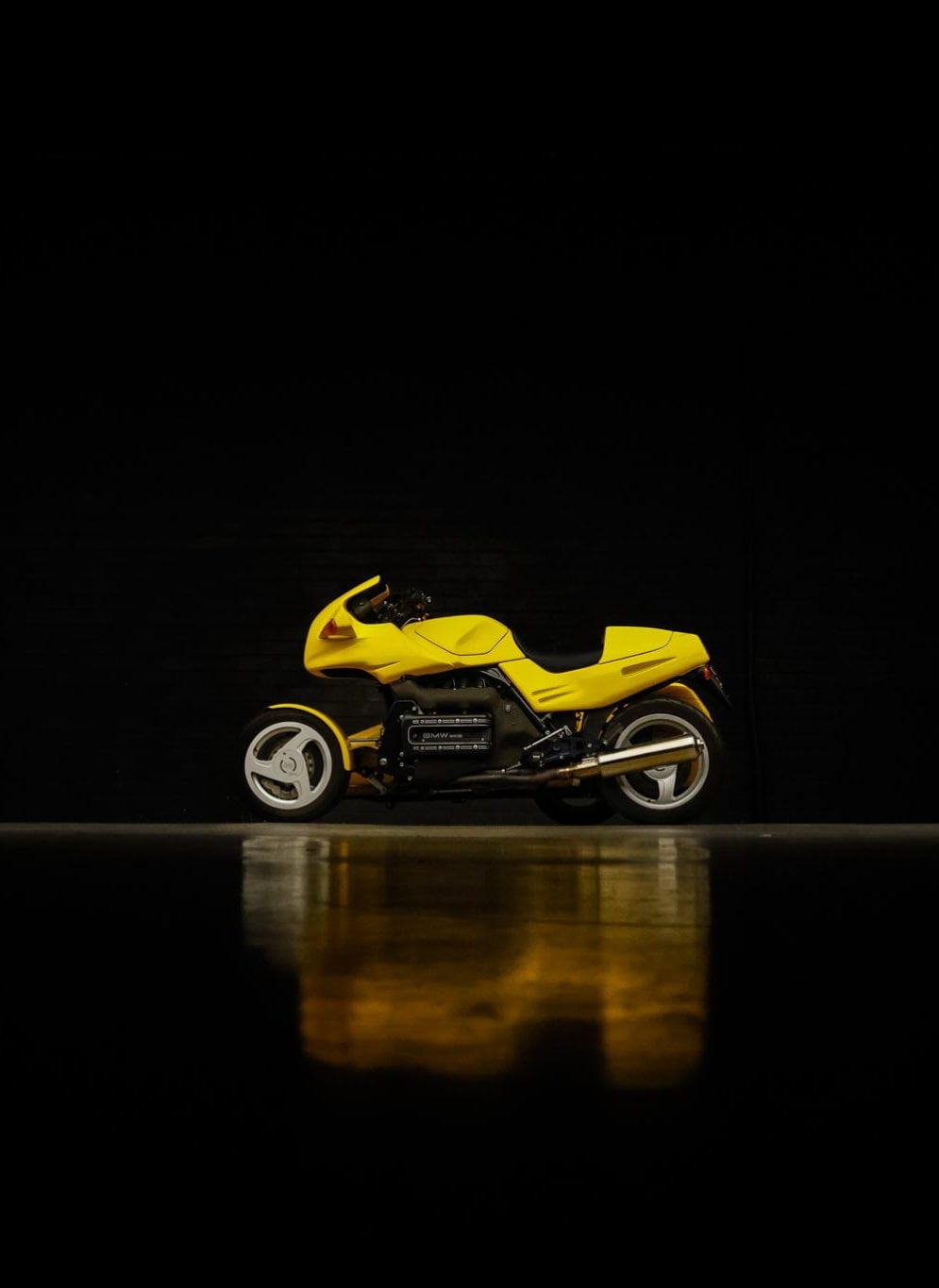
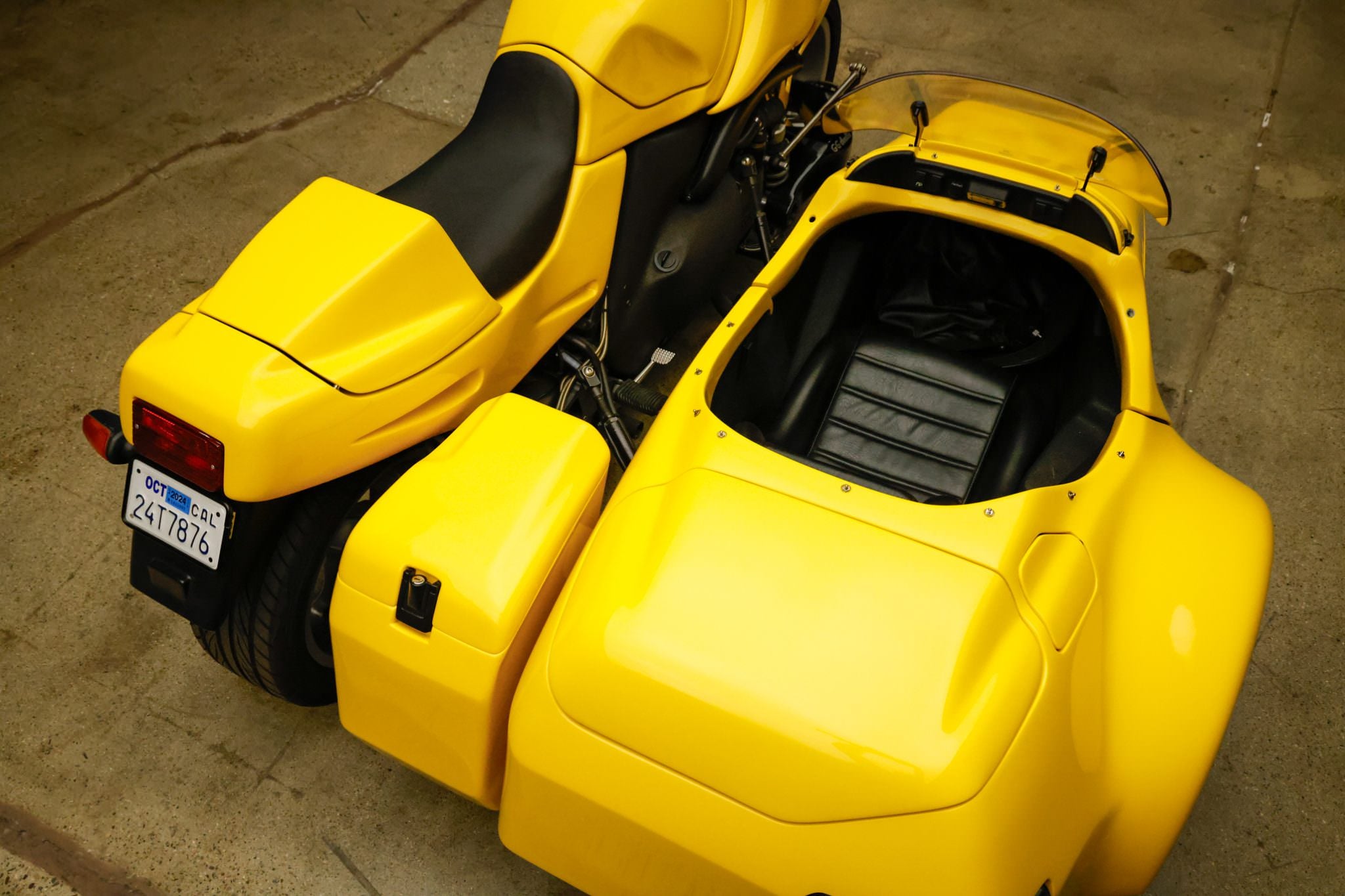
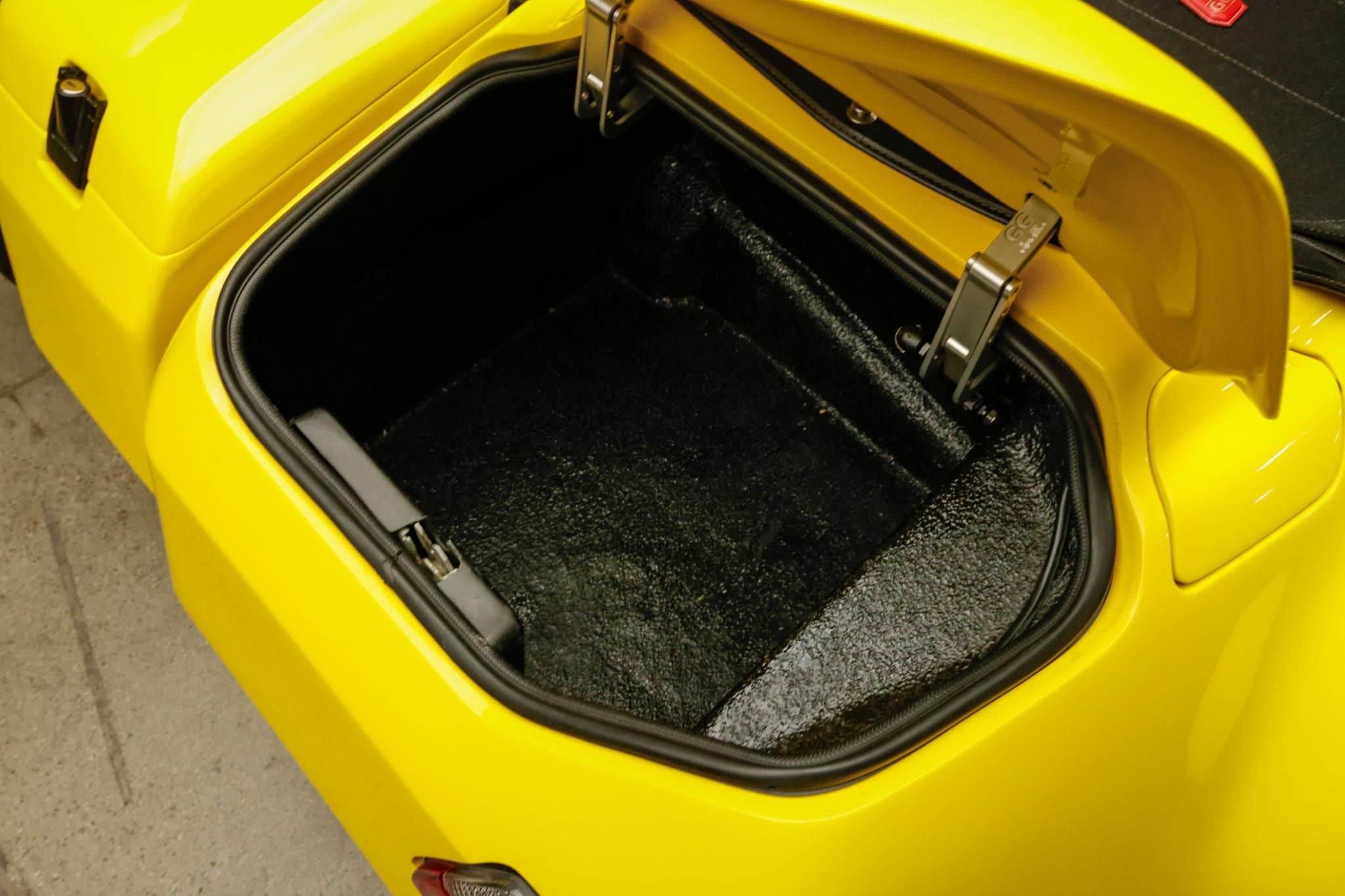
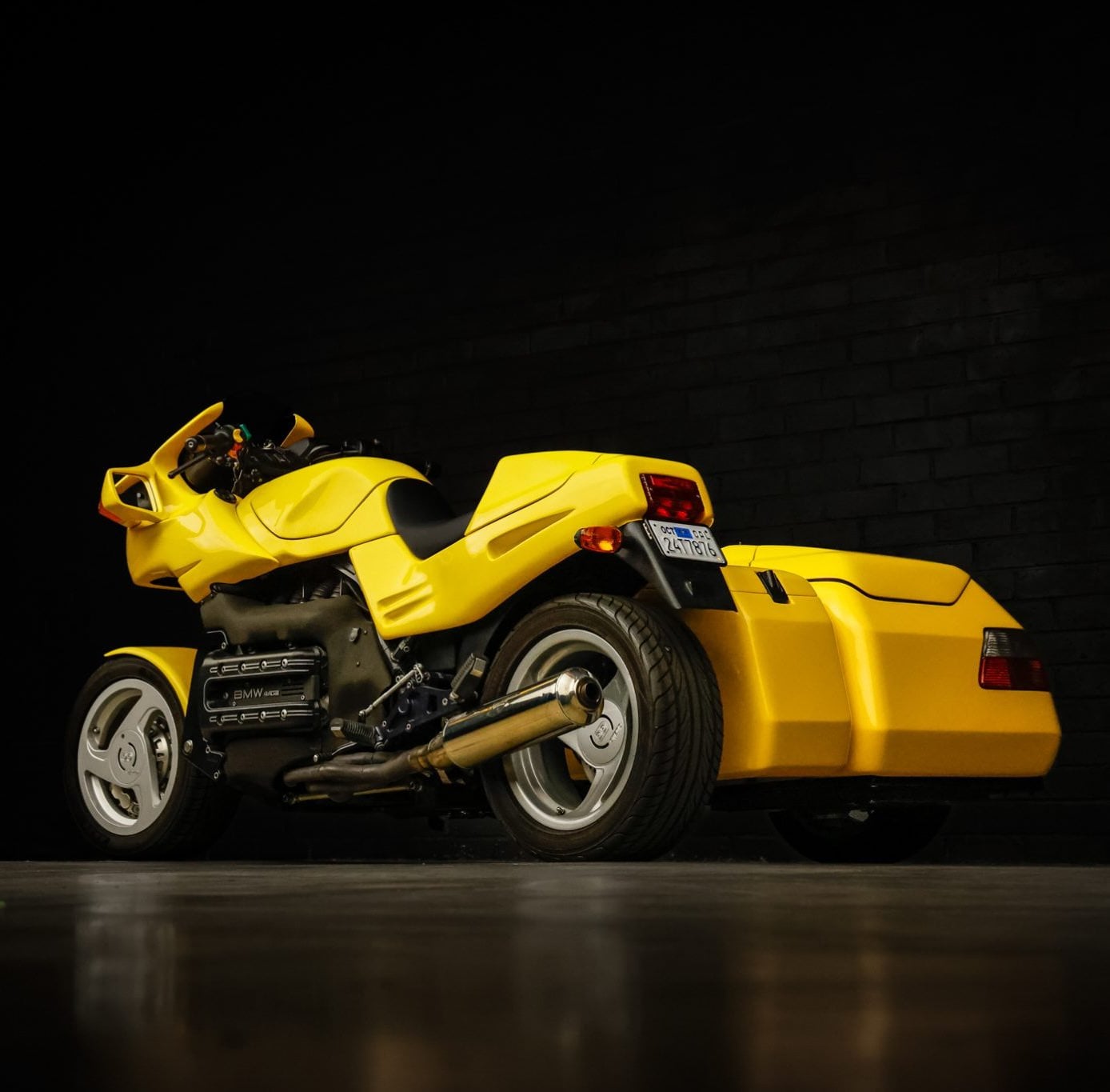
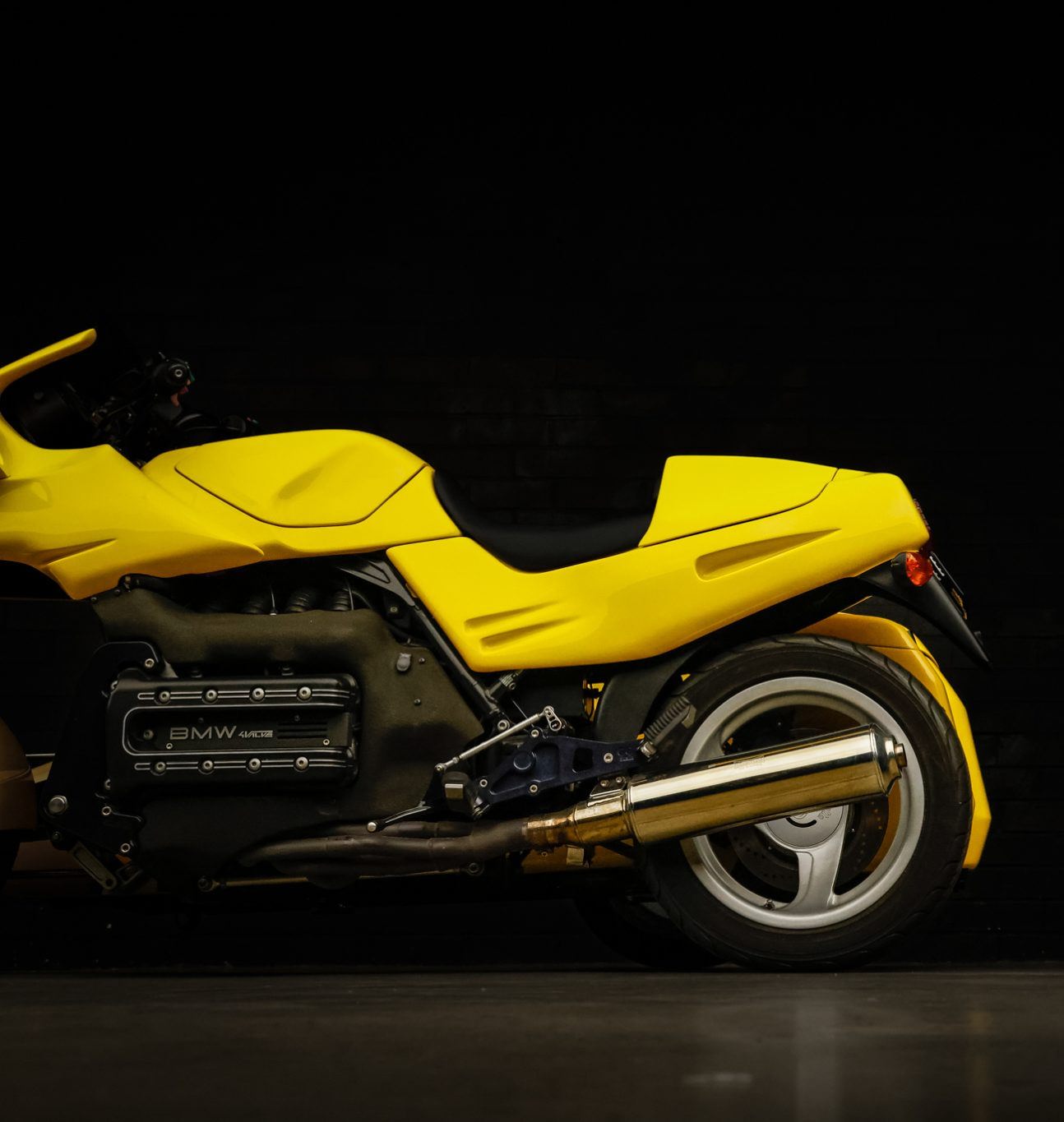
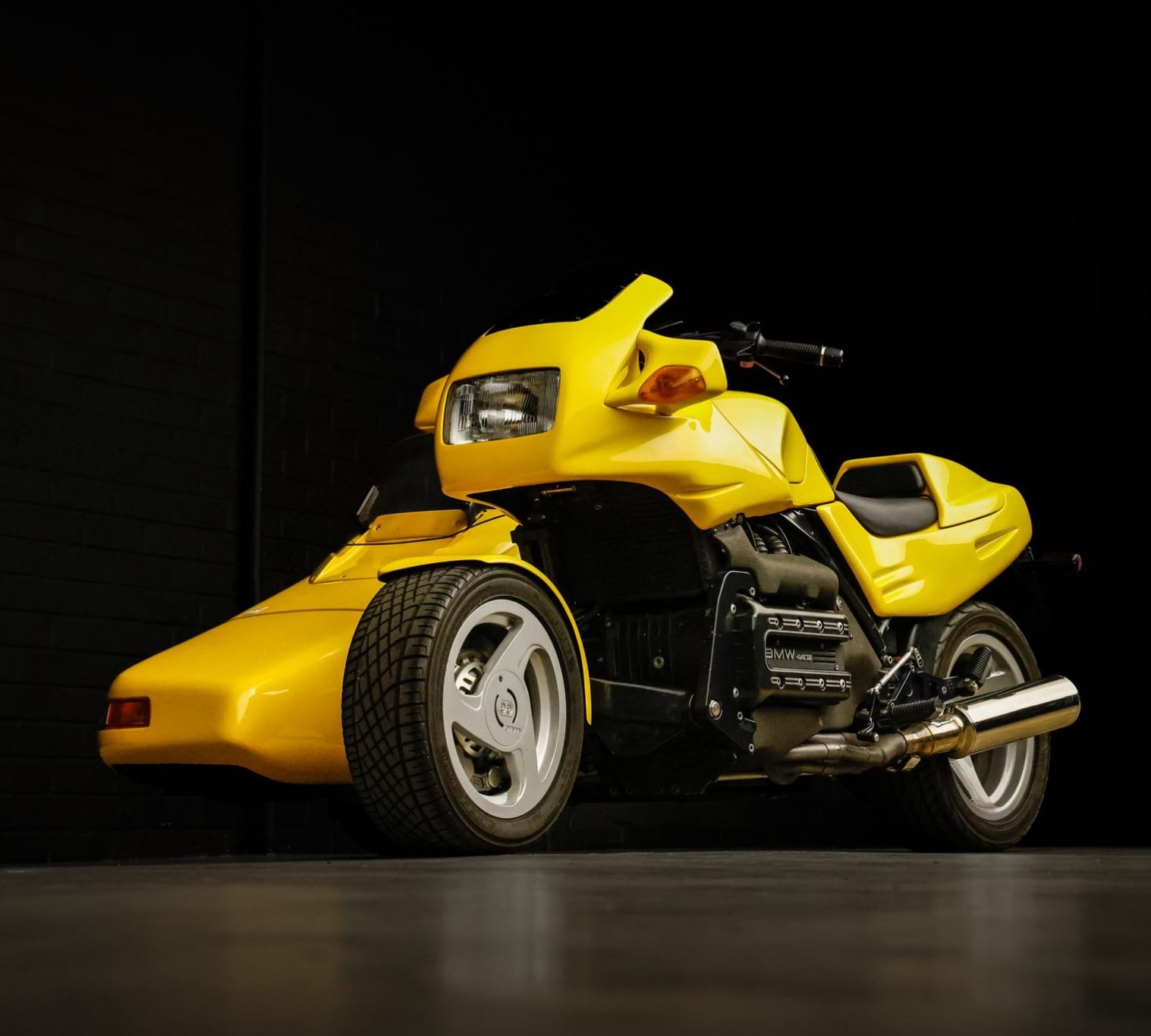
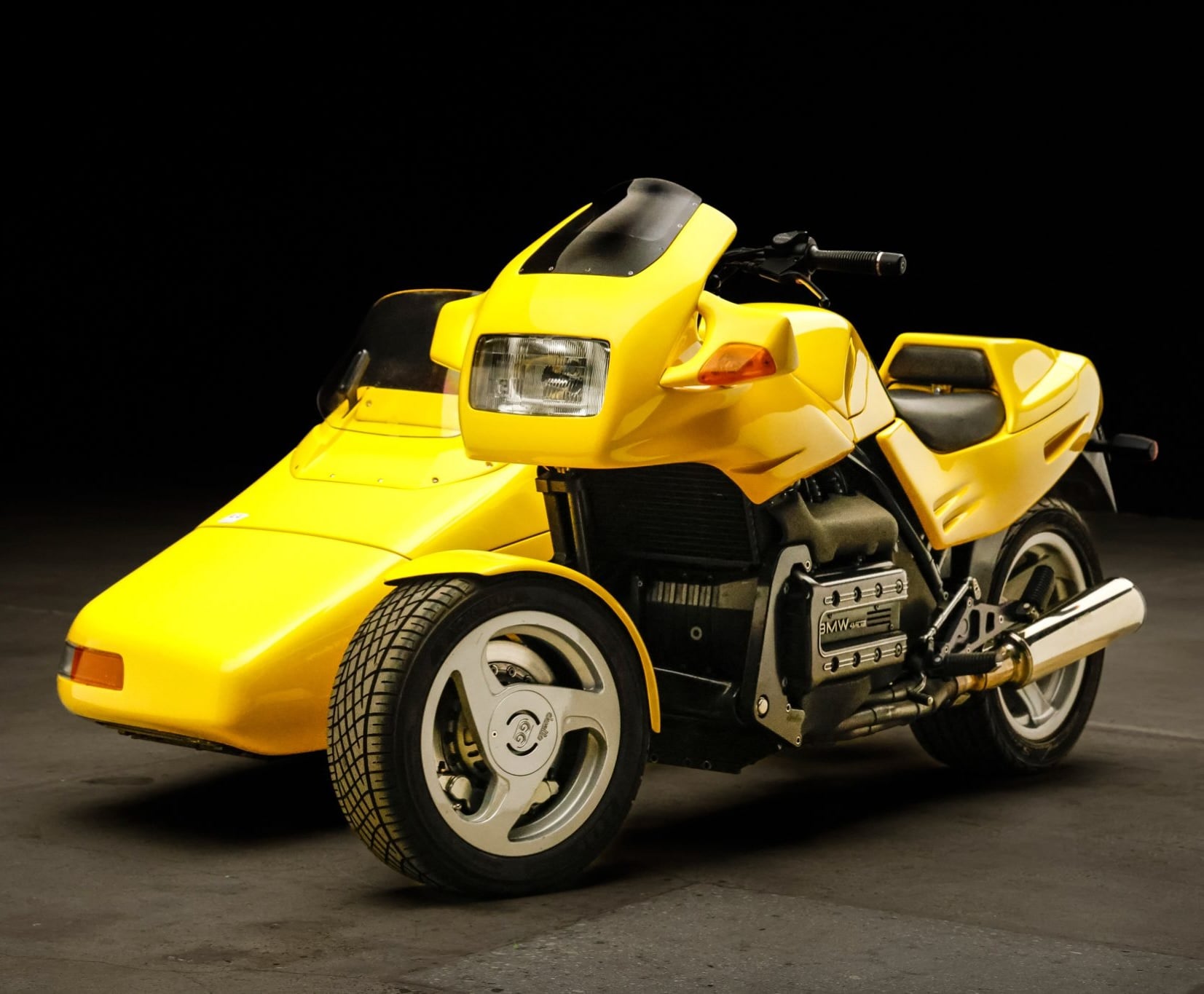
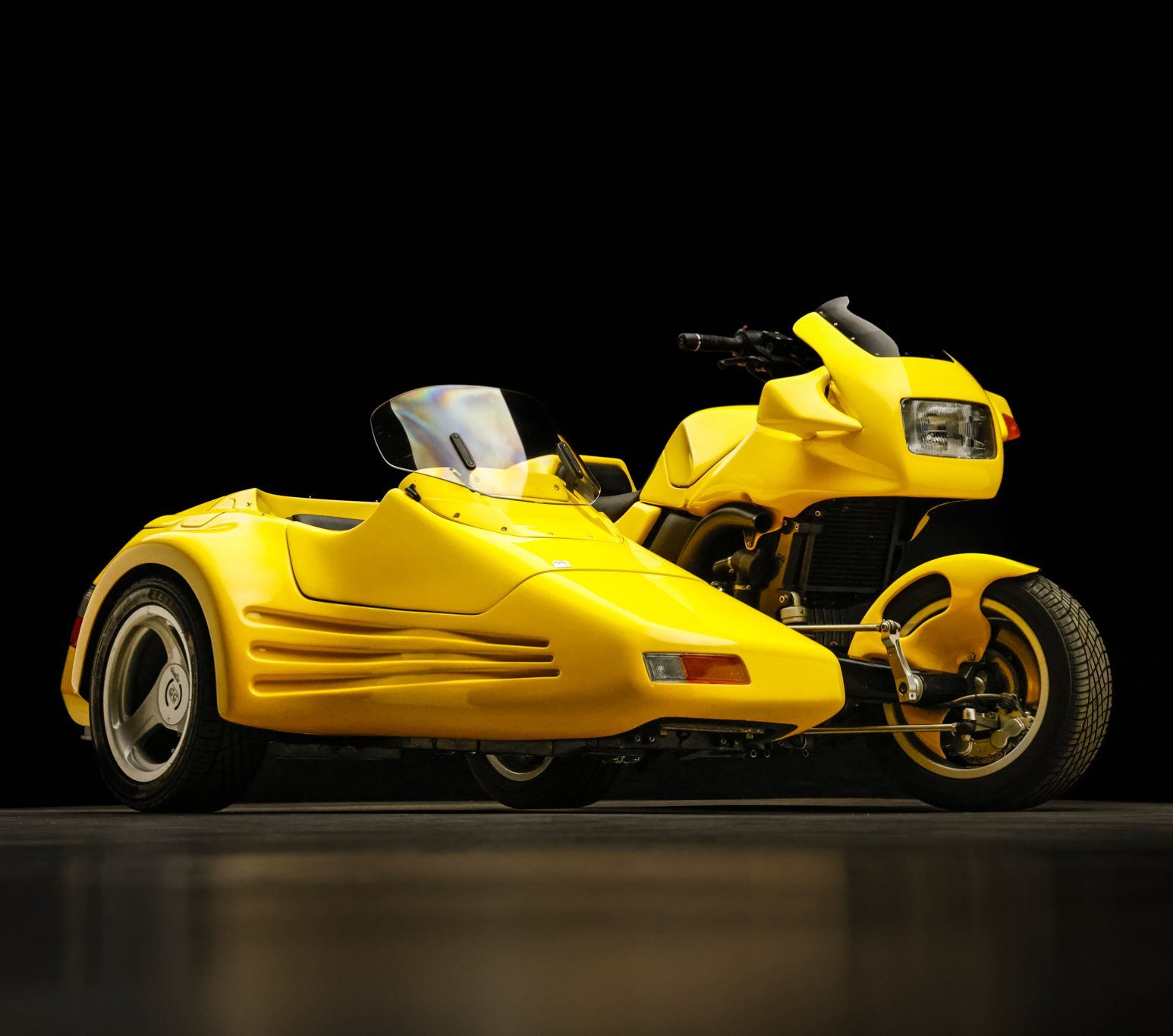
The 1999 GG Duetto you see here is finished in yellow GFK-laminate plastic bodywork and is one of only 30 examples built during the model’s production run. It has a molded-in half-fairing with a rectangular headlight, a tinted windscreen, mirrors with an integrated front turn signal on the left side, a faux fuel tank with a locking storage compartment, a storage box sandwiched between the bike and sidecar, and a two-up seat with a pillion cover and folding passenger foot pegs.
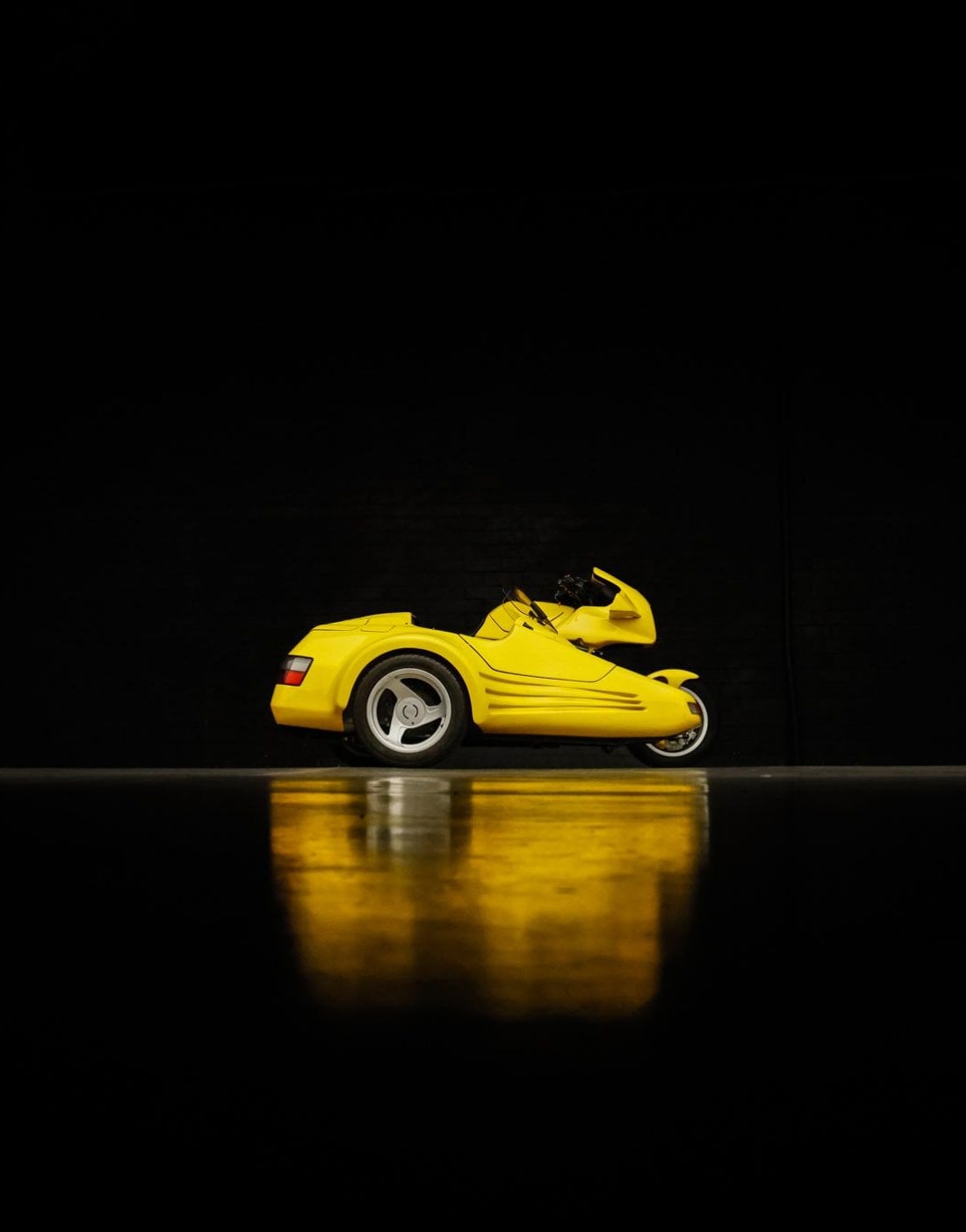
The 1999 GG Duetto you see here is finished in yellow GFK-laminate plastic bodywork and is one of only 30 examples built during the model’s production run.
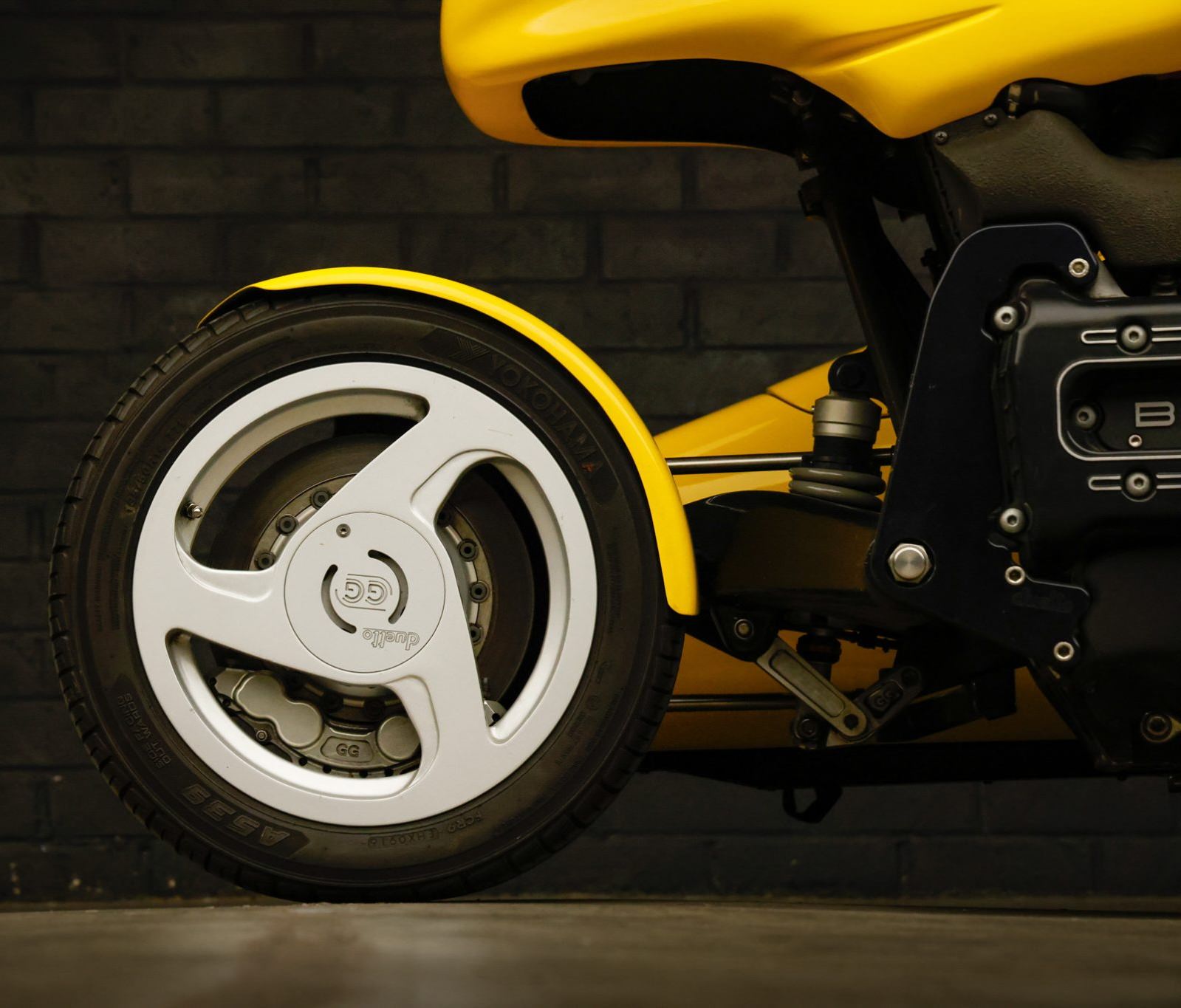
The front end is built around a single-sided cast aluminum swingarm with hub-center steering and an adjustable remote-reservoir WP shock, while the rear retains the K1100’s Paralever single-sided swingarm setup. Braking is handled by a custom eight-piston billet aluminum caliper over a ventilated disc up front, with two-piston Brembo calipers at the rear and on the sidecar, the latter two activated simultaneously by the foot brake pedal.
All three wheels are equipped with electronic ABS. The three-spoke forged Marchesini aluminum wheels are currently fitted with Yokohama A539 tires, with a 185/50-14 front and 195/50-15 rear, all showing 2016 production date codes.
The black-finished BMW 1,092cc DOHC inline-four was factory rated at 100 bhp and equipped with electronic fuel injection and Bosch Motronic 2.1 engine management. It drives a 4-speed transmission with a reverse gear, sending power through an enclosed Paralever driveshaft.
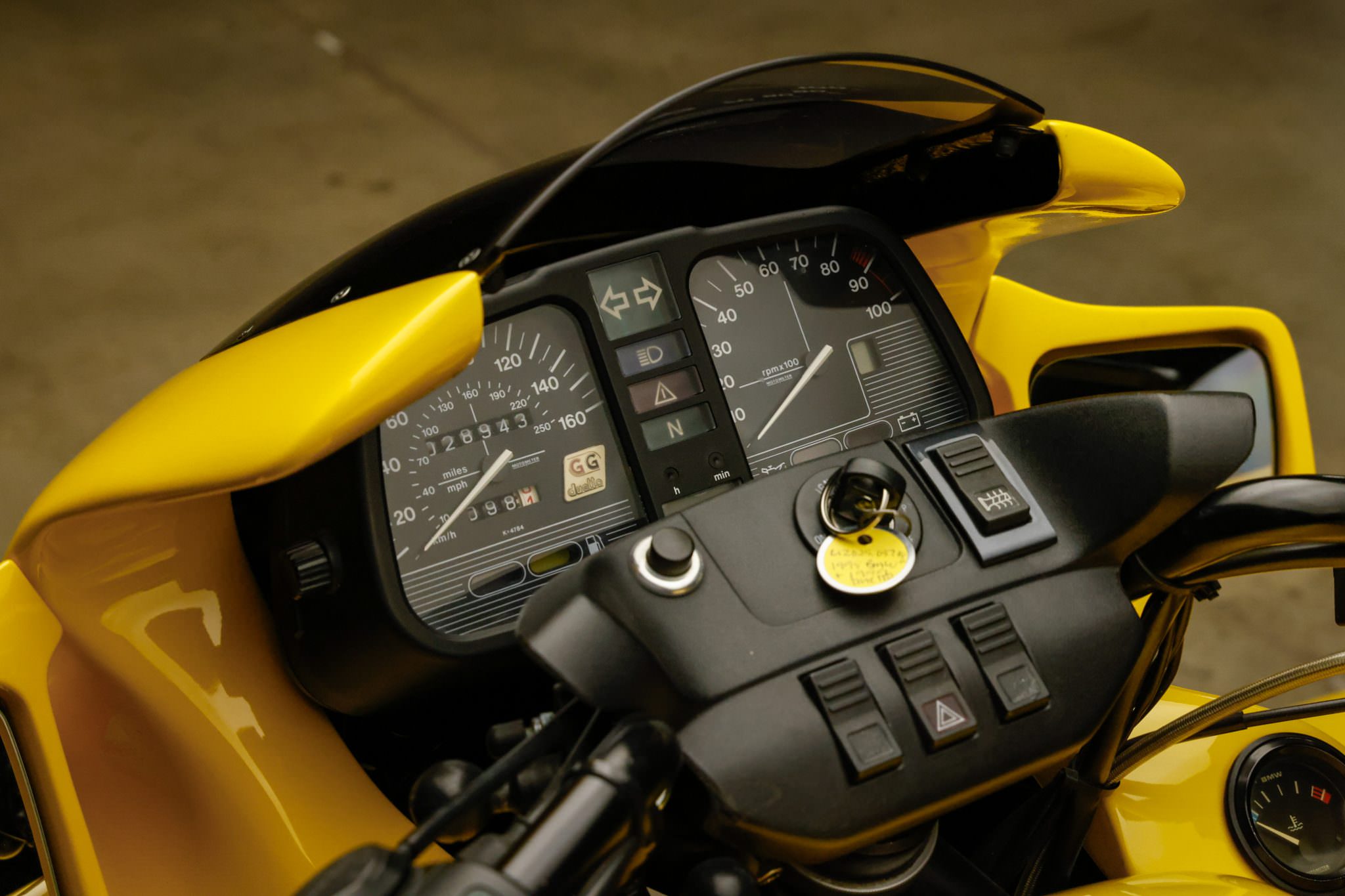
The exhaust is a four-into-one header fitted with a polished stainless-steel Staintune muffler. The cockpit has a MotoMeter 160 mph speedometer and matching tachometer with an 8,500 rpm redline, a digital clock, a vertical bank of warning lamps, and fairing-mounted gauges for fuel level and coolant temperature. Additional equipment includes heated hand grips and emergency flashers. The five-digit odometer currently shows 29,000 miles.
The sidecar has a black vinyl BMW bucket seat with color-coordinated molded side panels and carpeting, an electrically powered hinged hood for entry, a height-adjustable electric windshield, an auxiliary power outlet, a cable-pull trunk release, and a tonneau cover. The 10 gallon aluminum fuel tank and its electric pump and the battery are positioned inboard of the sidecar wheel.
This example is offered on dealer consignment with a clean California title, English and German-language marketing brochures, a BMW service booklet, sales, service, and import records, a French-language magazine article, copies of Cycle World, a copy of BMW Owners News containing the original owner’s first-person account of acquiring the machine, and a photo of that owner at the GG factory.
This example is offered on dealer consignment with a clean California title, English and German-language marketing brochures, a BMW service booklet, sales, service, and import records, a French-language magazine article, copies of Cycle World, a copy of BMW Owners News containing the original owner’s first-person account of acquiring the machine, and a photo of that owner at the GG factory.
It’s now being offered for sale out of Newbury Park, California on Bring a Trailer and you can visit the listing here if you’d like to read more about it or place a bid.
Images courtesy of Bring a Trailer

Articles that Ben Branch has written have been covered on CNN, Popular Mechanics, Smithsonian Magazine, Road & Track Magazine, the official Pinterest blog, the official eBay Motors blog, BuzzFeed, Autoweek Magazine, Wired Magazine, Autoblog, Gear Patrol, Jalopnik, The Verge, and many more.
Silodrome was founded by Ben back in 2010, in the years since the site has grown to become a world leader in the alternative and vintage motoring sector, with well over a million monthly readers from around the world and many hundreds of thousands of followers on social media.