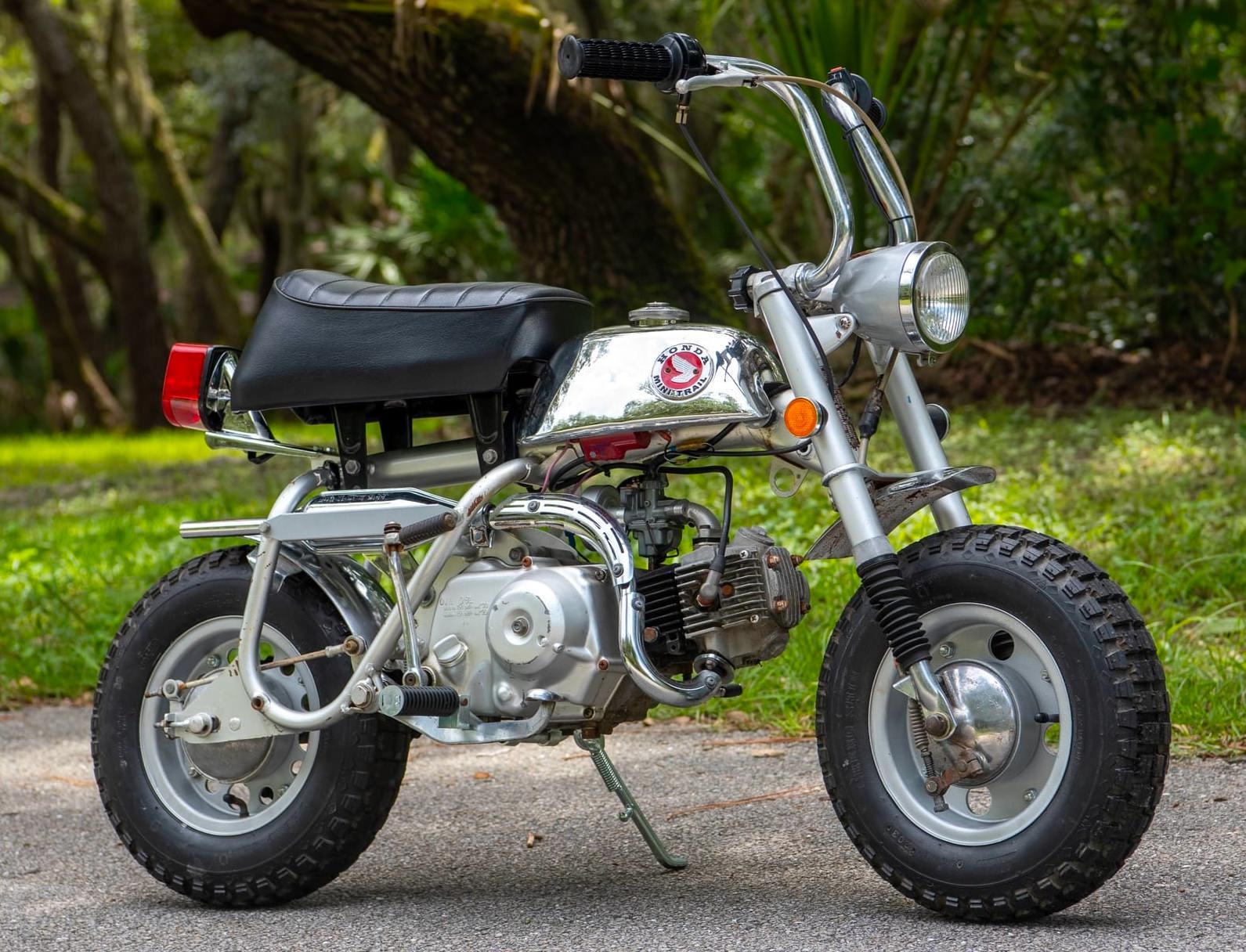
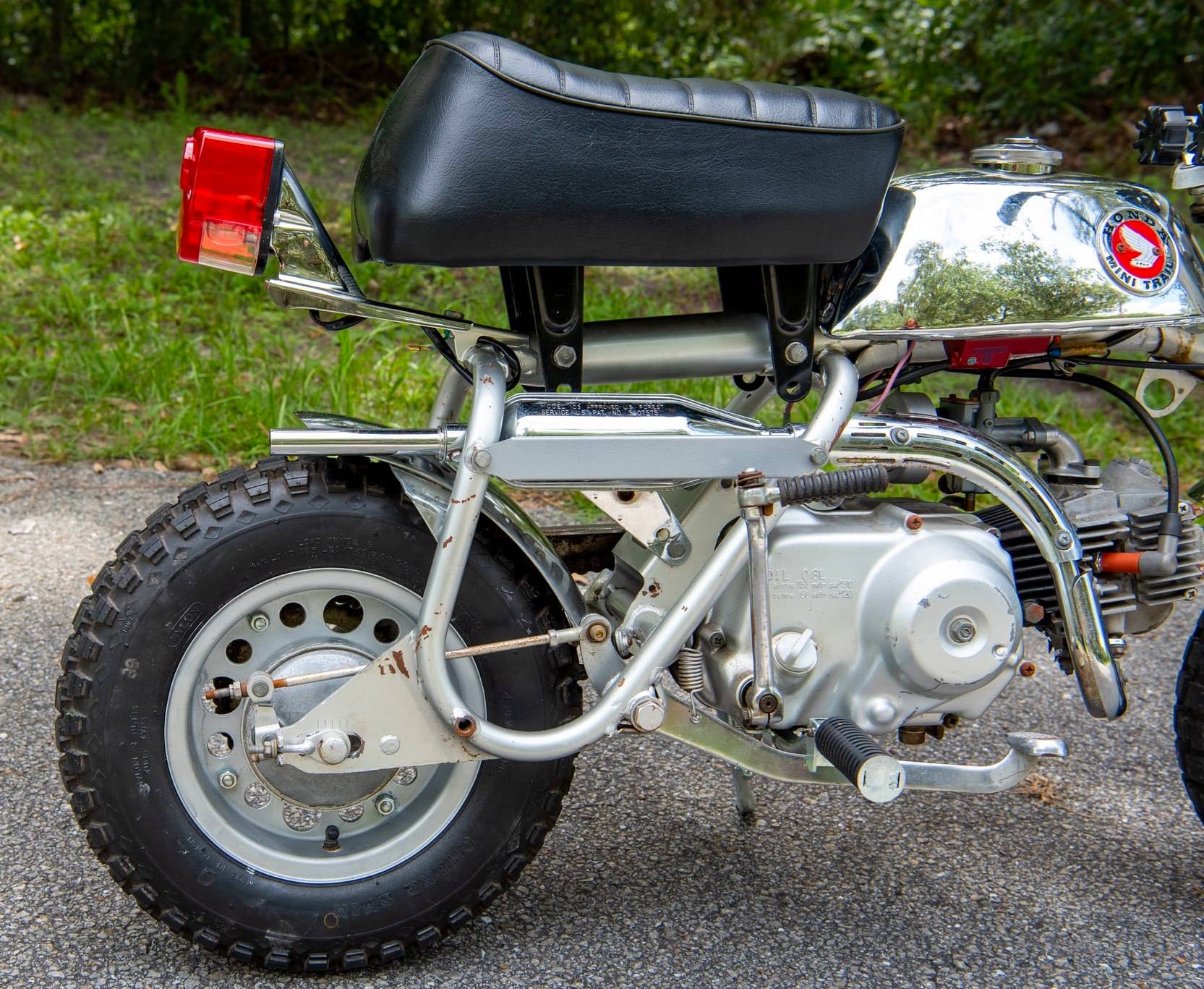
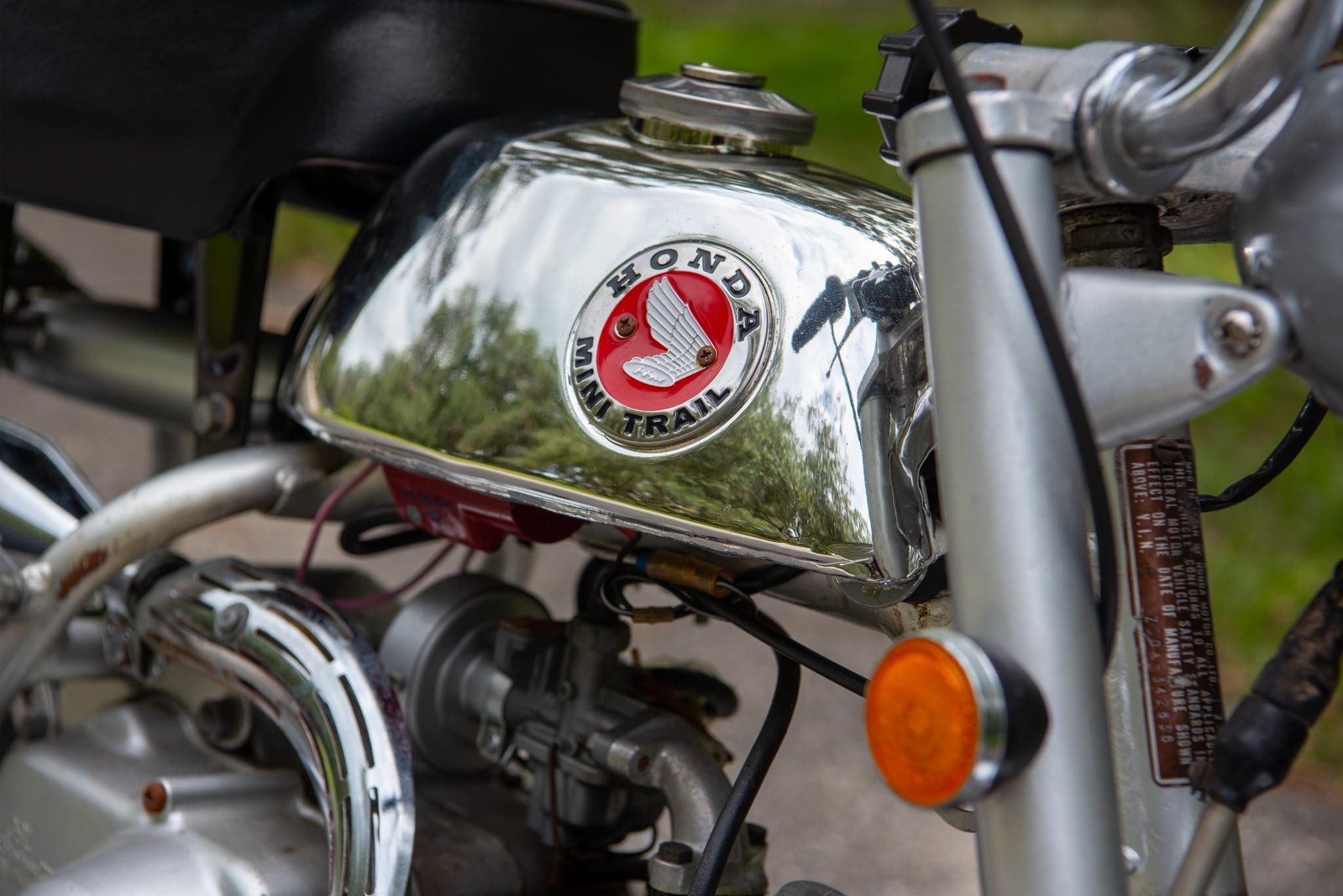
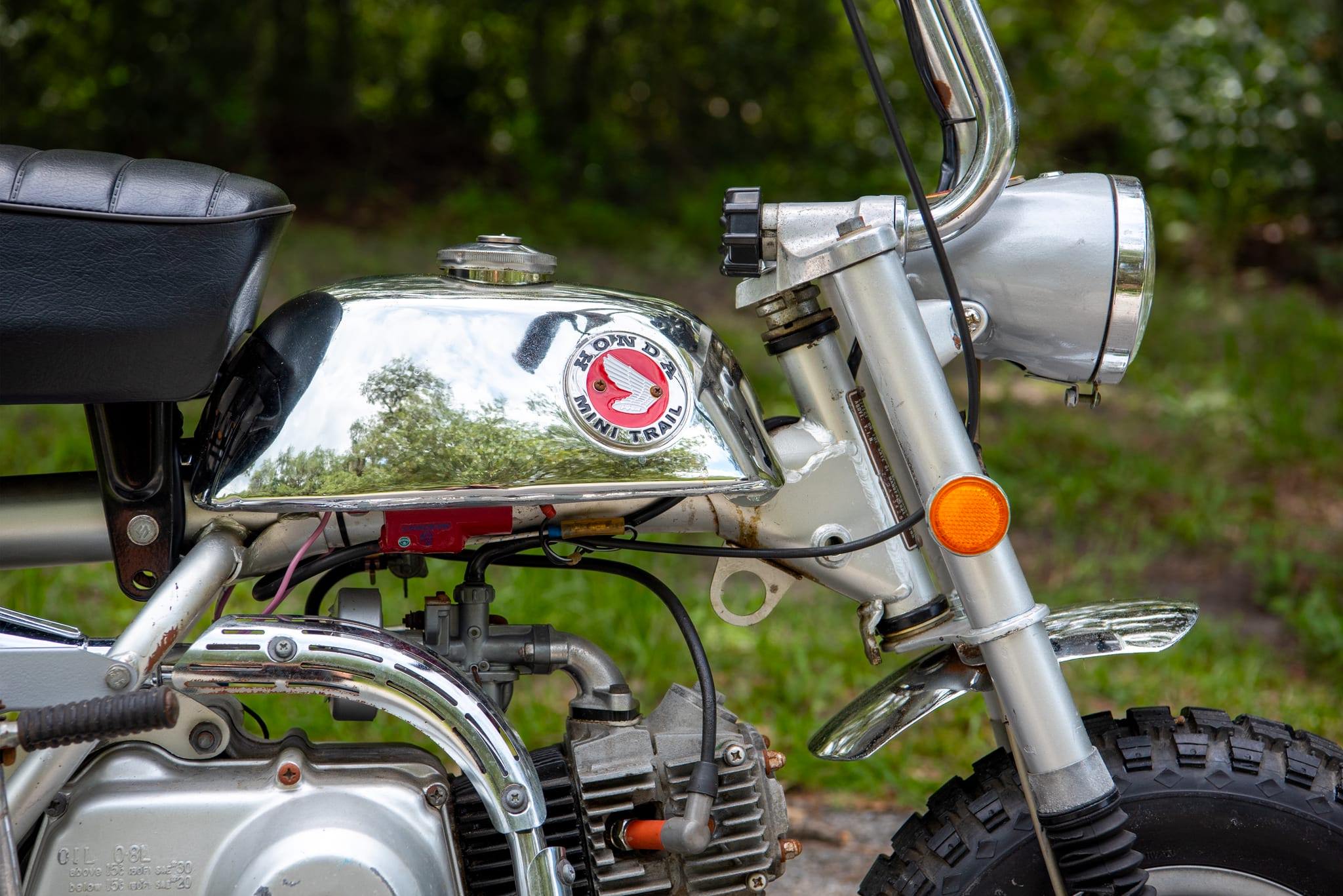
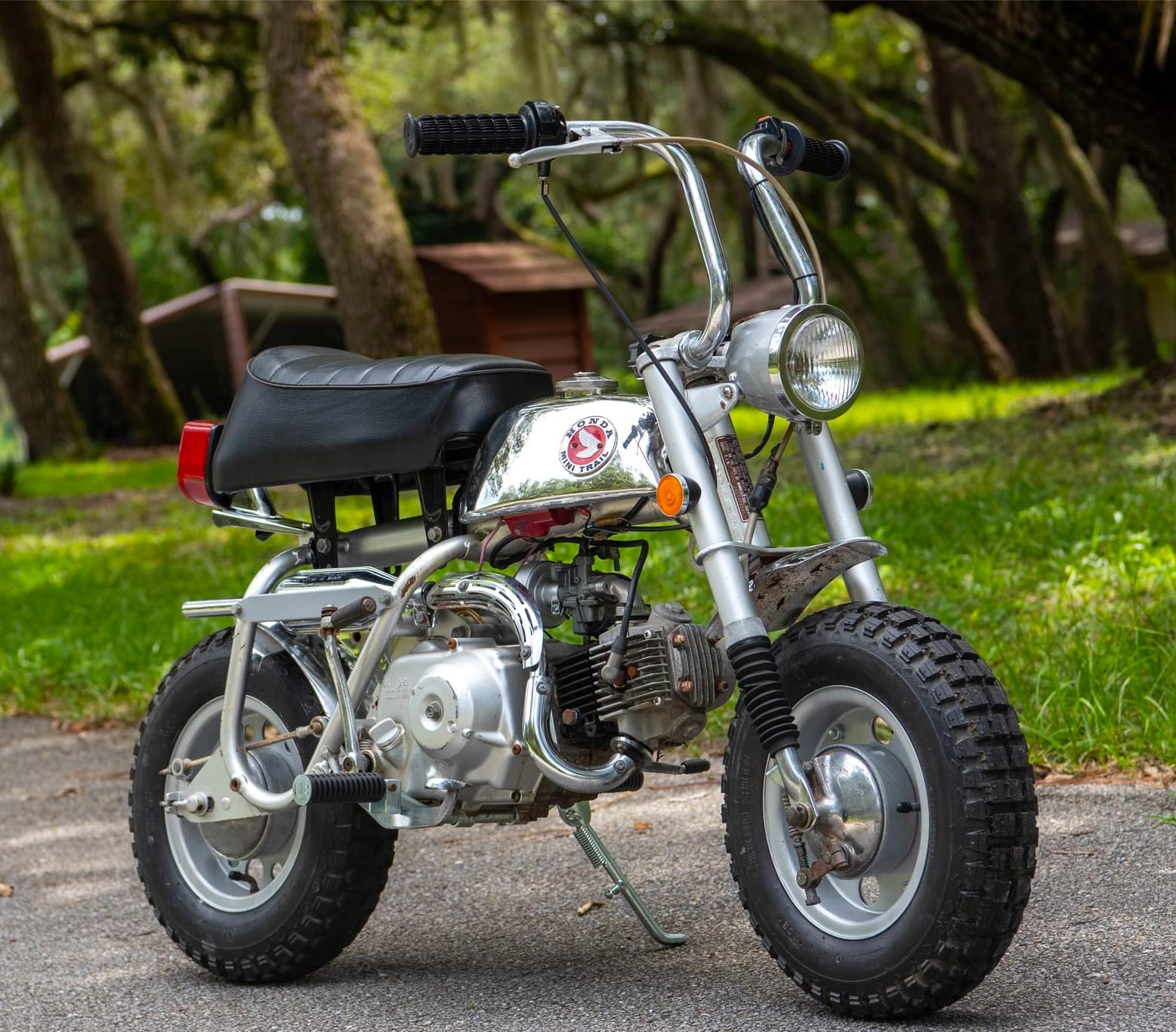
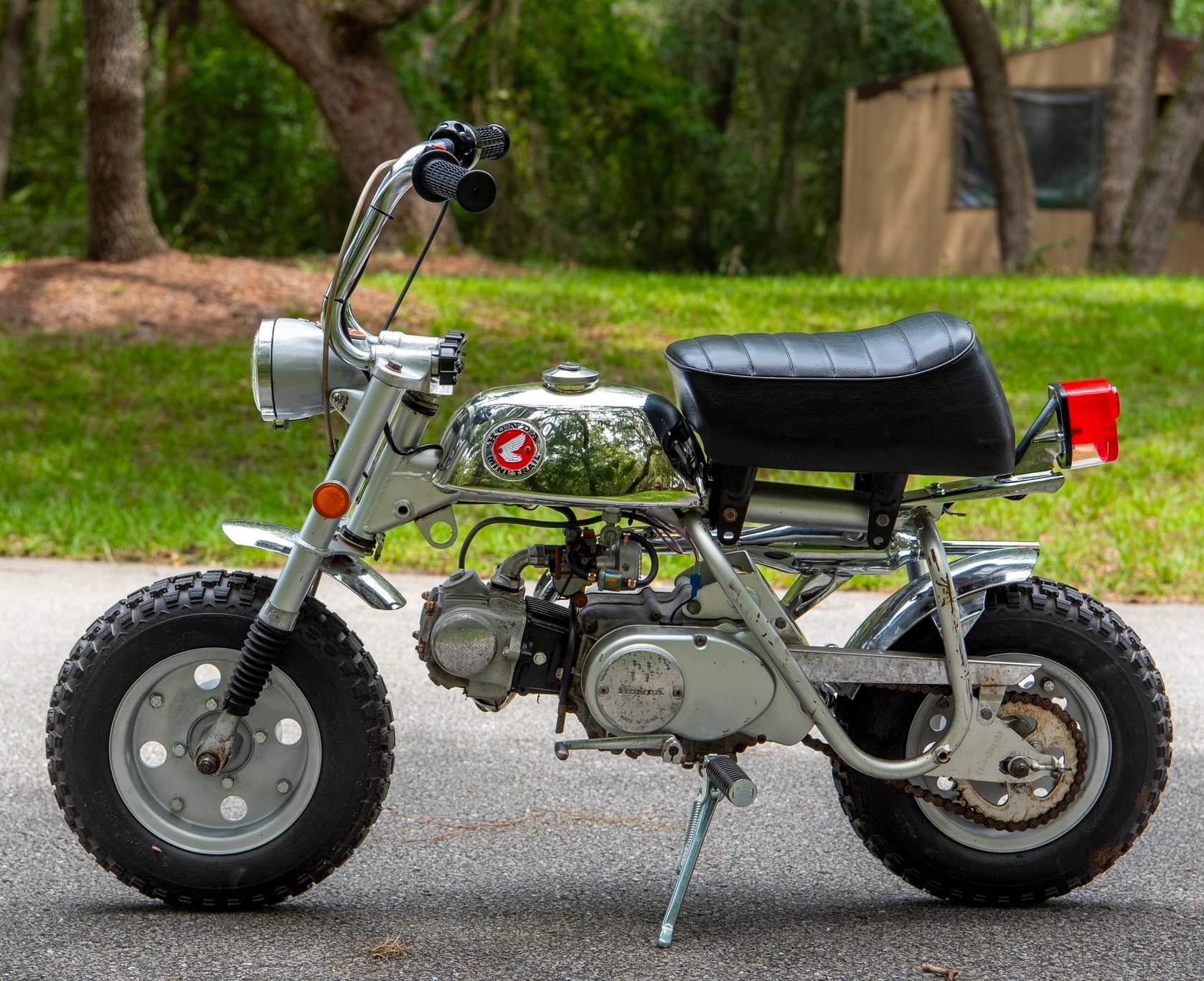
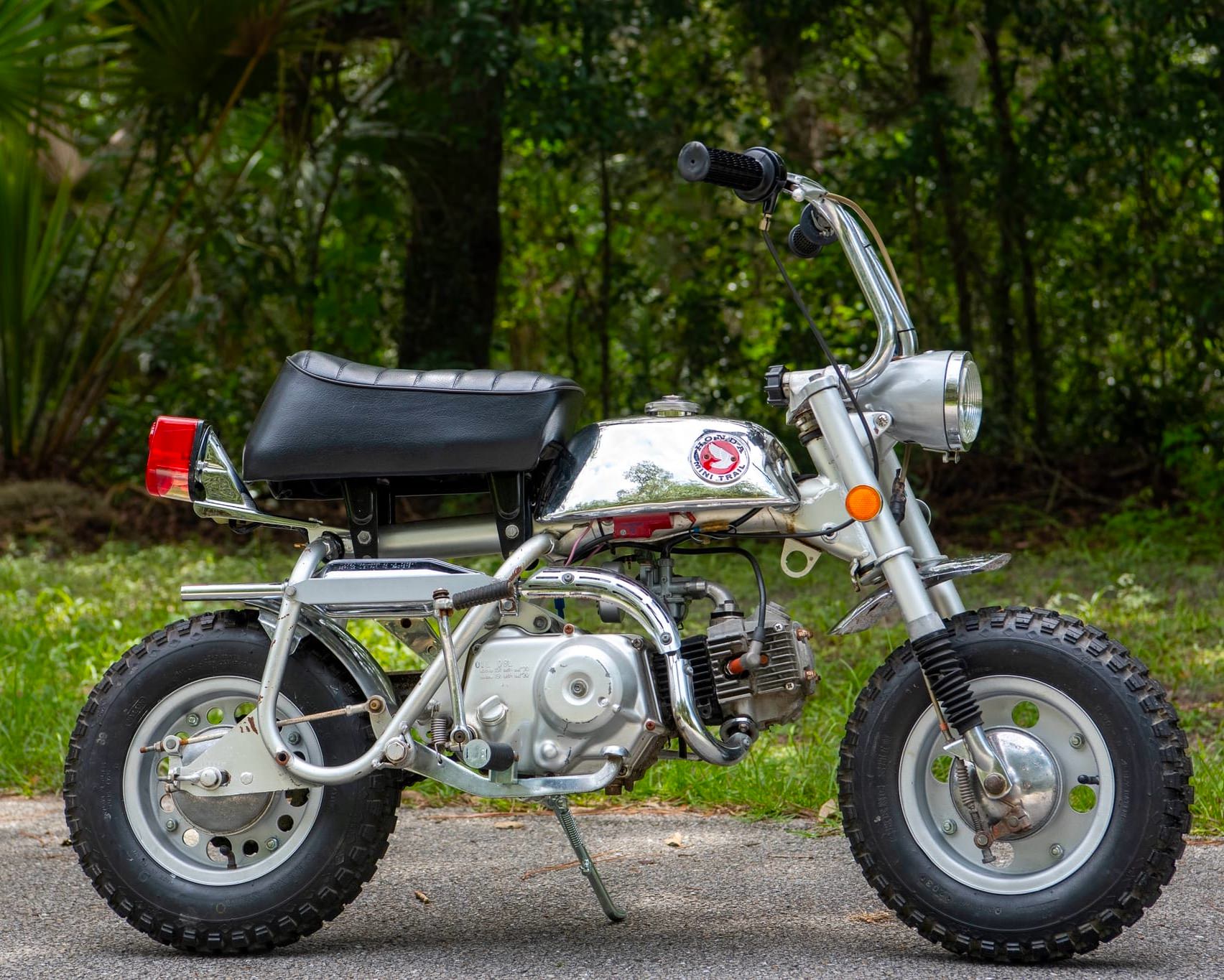
This is a 1971 Honda Z50A Mini Trail, it’s an original “Monkey Bike” with that classic chrome fuel tank, knobby tires, and a thick seat designed to compensate for the lack of rear suspension.
The Mini Trail is one of the most beloved motorcycles in history, largely because so many riders got their start on one. They’re very simple to operate, as they have a clutchless 3-speed gearbox, and remarkably forgiving riding characteristics. As a result, they’re now considered highly collectible.
 The Z50A Mini Trail is one of the most beloved motorcycles in history, largely because so many riders got their start on one. They’re very simple to operate, as they have a clutchless 3-speed gearbox, and remarkably forgiving riding characteristics. As a result, they’re now considered highly collectible. Image courtesy of Honda.
History Speedrun: Honda Z50A Mini Trail
In late-1968 Honda still hadn’t decided whether to import the Z50A Mini-Trail into the United States in any significant volume. The question the company faced was whether a neatly finished 49cc minibike priced at a bit more than $200 could compete with American-built minibikes powered by Briggs & Stratton lawnmower engines and selling for $129.95.
If the Z50A could genuinely win sales, it would be imported in proper numbers, if not, the exercise would be written off as market research and the bike would be largely forgotten. Ultimately, Honda opted to import it, and it stayed on the American market through to 1978, becoming a pint-sized legend in the process.
The Monkey had already been through three generations of development over in Japan. Honda’s subsidiary Motorsports Land opened the Tama Tech amusement park in Hino, Tokyo, in October of 1961, and Honda built a tiny motorcycle called the Z100 as a fairground ride for it – it was basically a Super Cub engine in a purpose-built frame on 5 inch tires, sized for kids.
The story behind the origins of the “Monkey” name is legendary in motorcycle circles, apparently when adults rode the little bikes they looked like monkeys or apes from behind – with their knees up and elbows out to fit on the tiny two-wheeler.
Initially, there was no plan to sell the diminutive fairground bike. Honda had shown the Z100 at the Frankfurt and London shows in late-1962, and the response was positive enough that 20 were shipped to Honda Europe that December. A road-legal export version, the CZ100, followed in 1964 with a stiffer frame for adult riders and a 6 liter tank borrowed from the Honda Sports Cub. 2,500 were built over three years on a 7 meter assembly line in a corner of the Suzuka factory, where five workers finished 20 a day, most of them bound for France and Germany.
The 1967 Honda Z50M was the first Monkey sold locally in Japan, it kept the 5 inch wheels and rigid frame but it was given the Super Cub’s more modern overhead-cam engine, a 3-speed gearbox with an automatic centrifugal clutch, and a folding seat and handlebars so it would fit in a car’s trunk. Funnily enough, in 1967 Honda had no passenger car in production with a trunk large enough to fit one. A suitable car wouldn’t arrive until two years later with the Honda 1300 sedan in 1969.
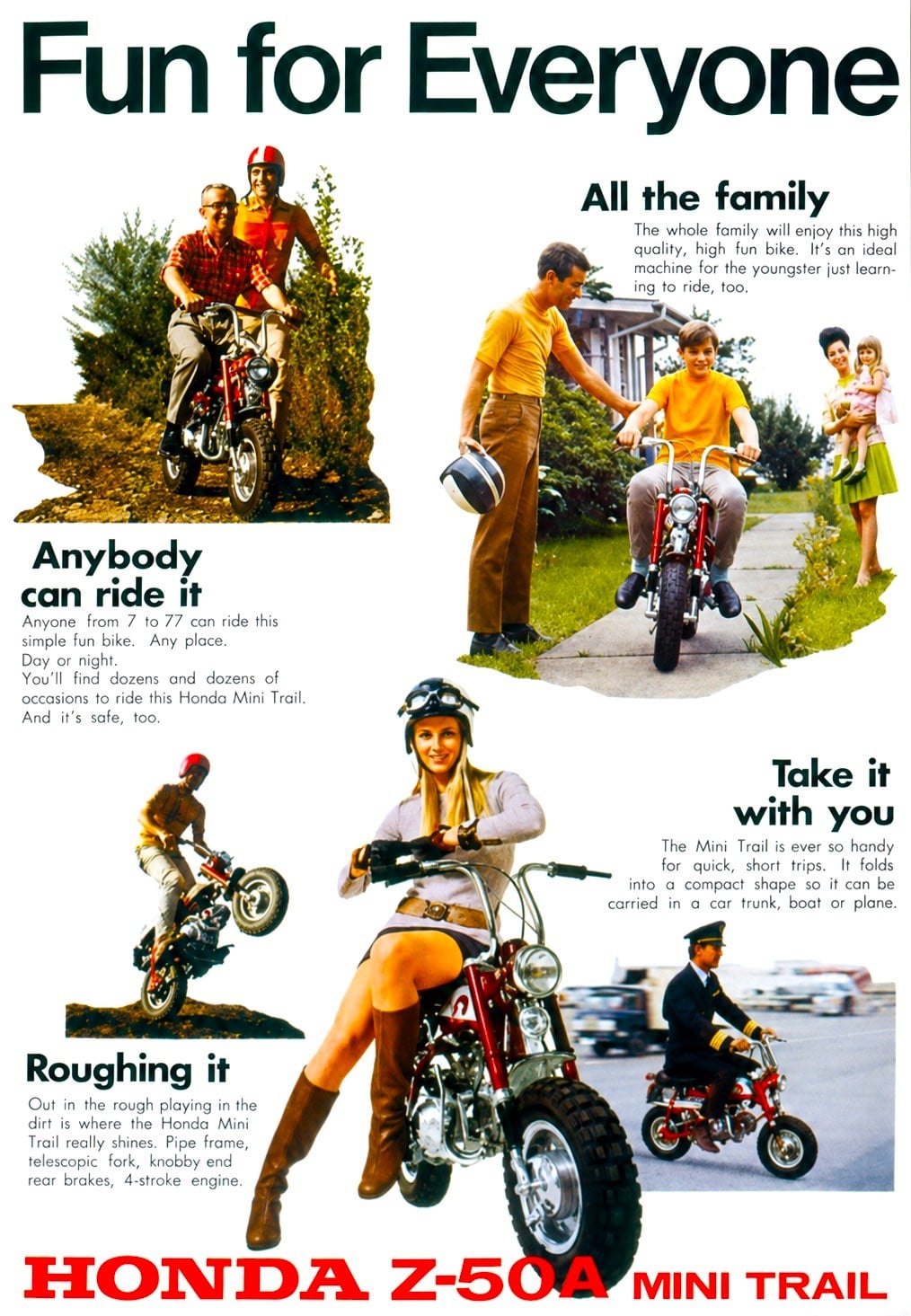
The Honda Z50A was developed to be a Monkey Bike that rode properly rather than one that was merely very small and easy to transport. The wheels grew from 5 inches to 8, a telescopic fork replaced the earlier rigid front end, and the seat got thicker to provide a little extra spine cushioning, as the bike still had a rigid rear end. Image courtesy of Honda.
The Honda Z50A Arrives
With the new Honda Z50A, the aim was a Monkey Bike that rode properly rather than one that was merely very small and easy to transport.
The wheels grew from 5 inches to 8, a telescopic fork replaced the earlier rigid front end, and the seat got thicker to provide a little extra spine cushioning, as the bike still had a rigid rear end.
In Japan it went on sale in 1969 as the “New Monkey,” with a 6 volt battery, turn signals as standard, and both brakes worked from handlebar levers (rather than a handlebar lever and a foot-operated lever) to make it easier on inexperienced riders.
Japanese-market specifications listed 2.6 bhp at 7,000 rpm and 2.2 lb ft at 5,000 rpm from its 49cc single, it had a top speed of 50 km/h (31 mph), and a weight of 55 kgs (121 lbs).
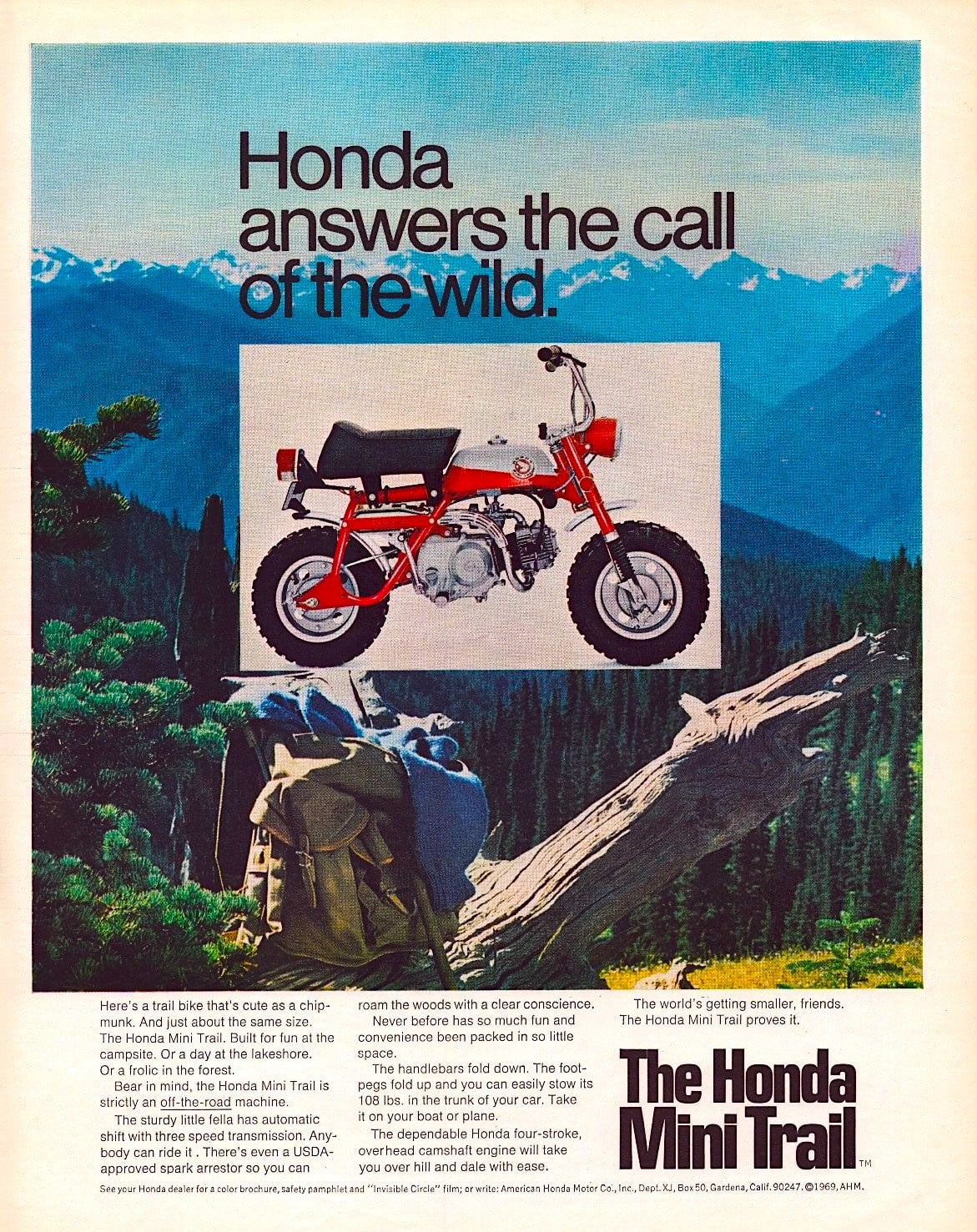
The American Mini-Trail had reached dealers a year earlier, in 1968, as the K0 – it had no lights and it wasn’t street legal. Cycle World magazine described it at the time as secondary transport for adults, stowed in the cargo compartment of a light plane, lashed to the deck of a boat, or carried in a car’s trunk, then used for trail, campground, race track paddock and pit transport, and beach riding once the primary vehicle was parked up.
To make the little Monkey Bike as compact as possible, the handlebars folded at the steering head, the tank had a vent stopper so it could be laid sideways, and the carburetor float bowl drained so the bike could be laid over without leaking fuel. Folded, it measured in at 16 inches wide and 26.5 inches tall.
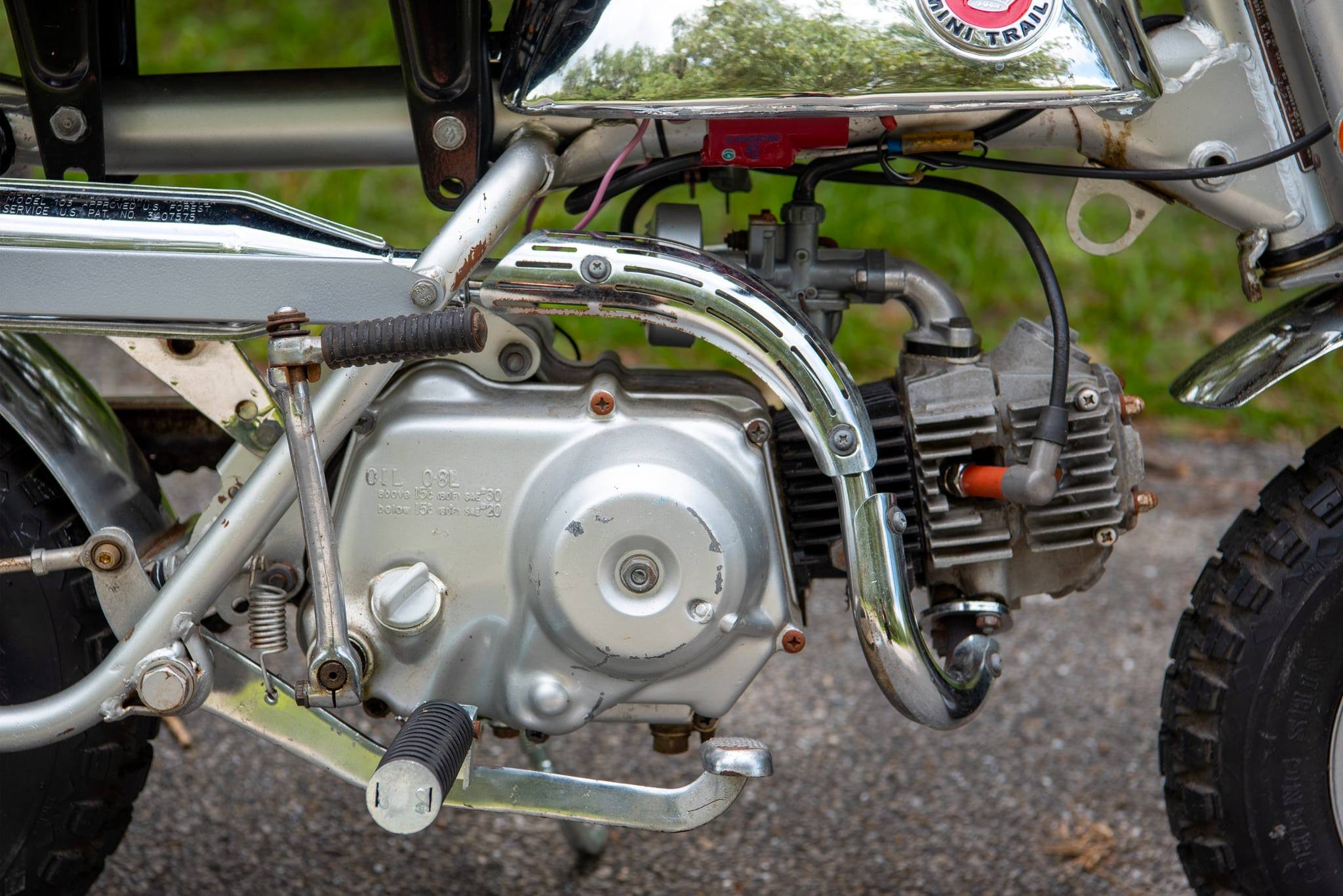
Perhaps the biggest downside was the weight, at 108 lbs dry and 115 lbs wet it was realistically a little too much for most people to lift over a Chevrolet station wagon tailgate or into the baggage bay of a Cessna 172 without busting a hernia. Interestingly, the muffler doubled as a US Forest Service-approved spark arrester.
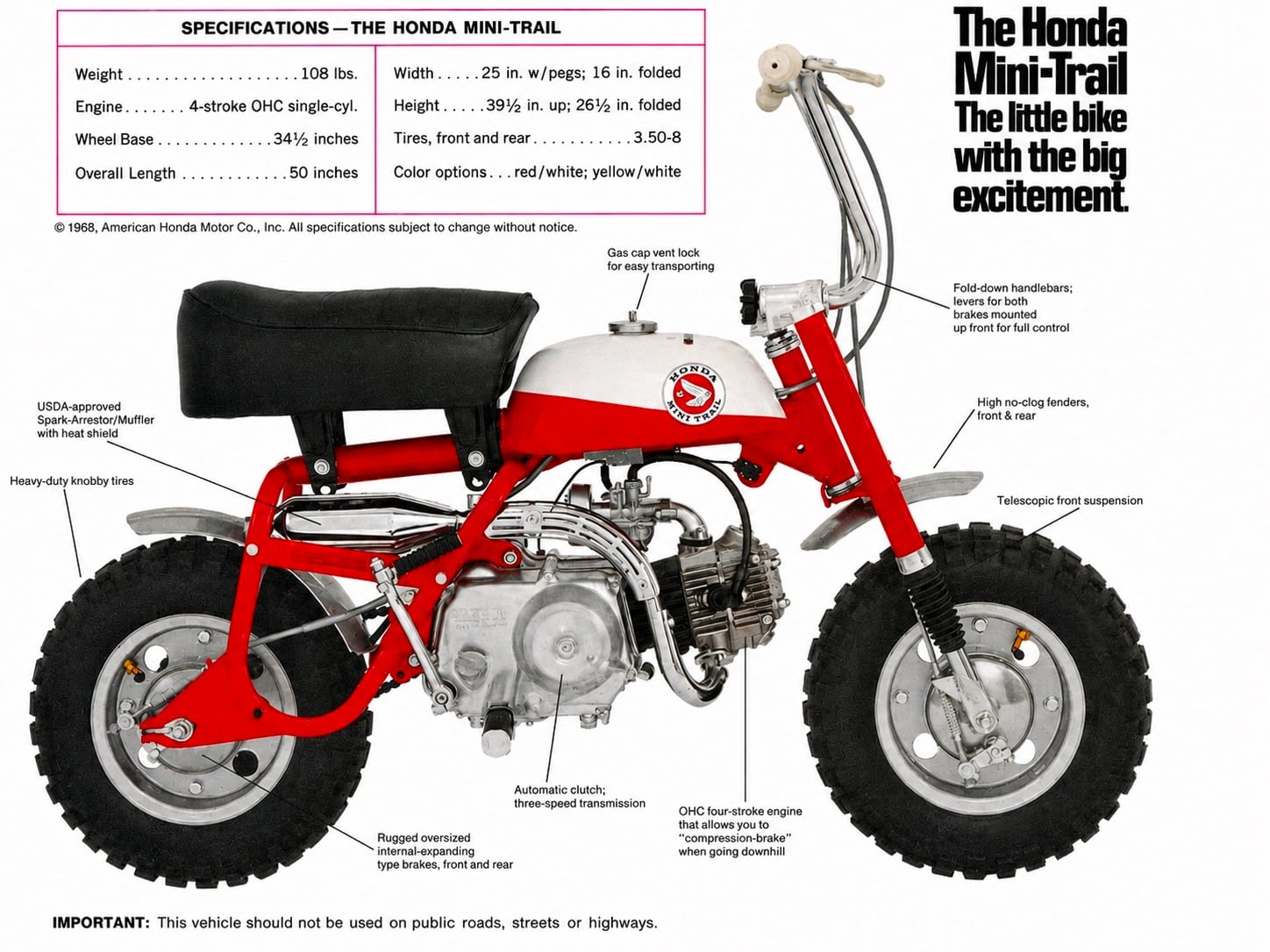
The Honda Mini-Trail reached dealers in 1968 – it had no lights and it wasn’t street legal. It was described as a secondary transport for adults, stowed in the cargo compartment of a light plane, lashed to the deck of a boat, or carried in a car’s trunk. Image courtesy of Honda.
The Key Variants Of The Honda Z50A
Honda changed the specs of the Mini-Trail almost every year – the 1969 K1 added a headlight and taillight, which made it street legal in most states, and they gave it slightly lower handlebars. The 1970/1971 K2 followed, it’s known to collectors as the “long tail.” Together the 1968/1971 bikes are the hardtails due to their lack of rear suspension.
Reports of frames cracking brought a swingarm and twin rear shocks on the 1972 K3, and that layout continued through till the 1978 model year. For 1979 the Z50R took its place, an off-road-only bike styled after Honda’s motocross range.
Japan took a different route in the same years. The 1970 Z50Z restored the foot-operated rear brake, added a center stand, and made the whole front end (fork, wheel, and bars) detachable by a lever on the top bridge, using a mechanism shared with the Dax; Japan’s Motorcyclist magazine timed the separation at 20 seconds. Honda’s 1971 catalog showed it as a pit bike. Then the two lines converged – the 1974 Z50J, which brought rear suspension and a 4 liter tank to the Japanese Monkey and introduced the frame every Monkey used for the next three decades, was based on the 1972 American K3.
Honda ended 50cc Monkey production in 2017, citing the increasing difficulty and cost of meeting new Japanese emissions regulations, and launched the Grom-based Monkey 125 in 2018. The model series had a remarkably long run when you remember that Honda wasn’t even sure they would export it to the US at all.
The 1971 Honda Z50A Mini-Trail Shown Here
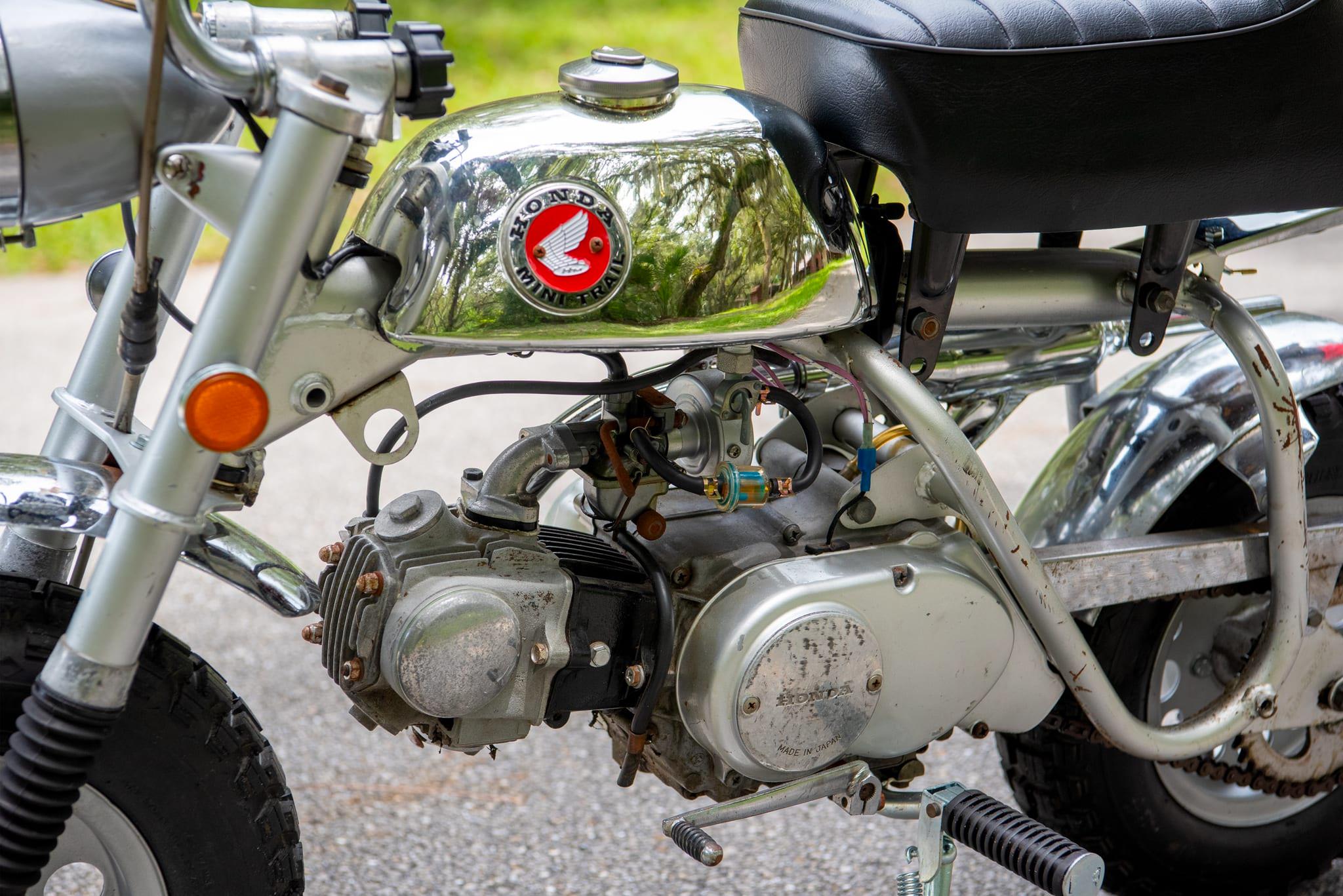
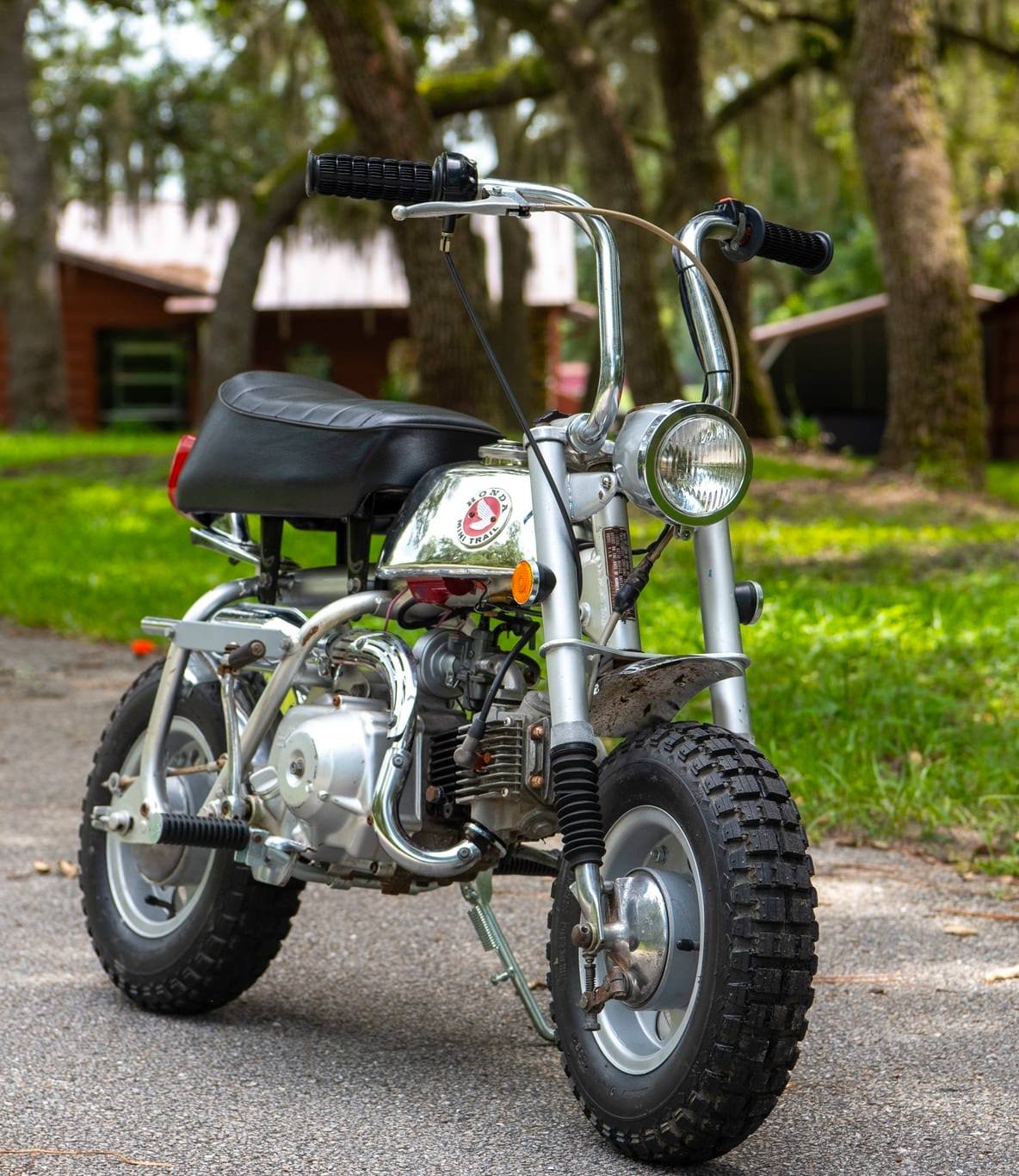
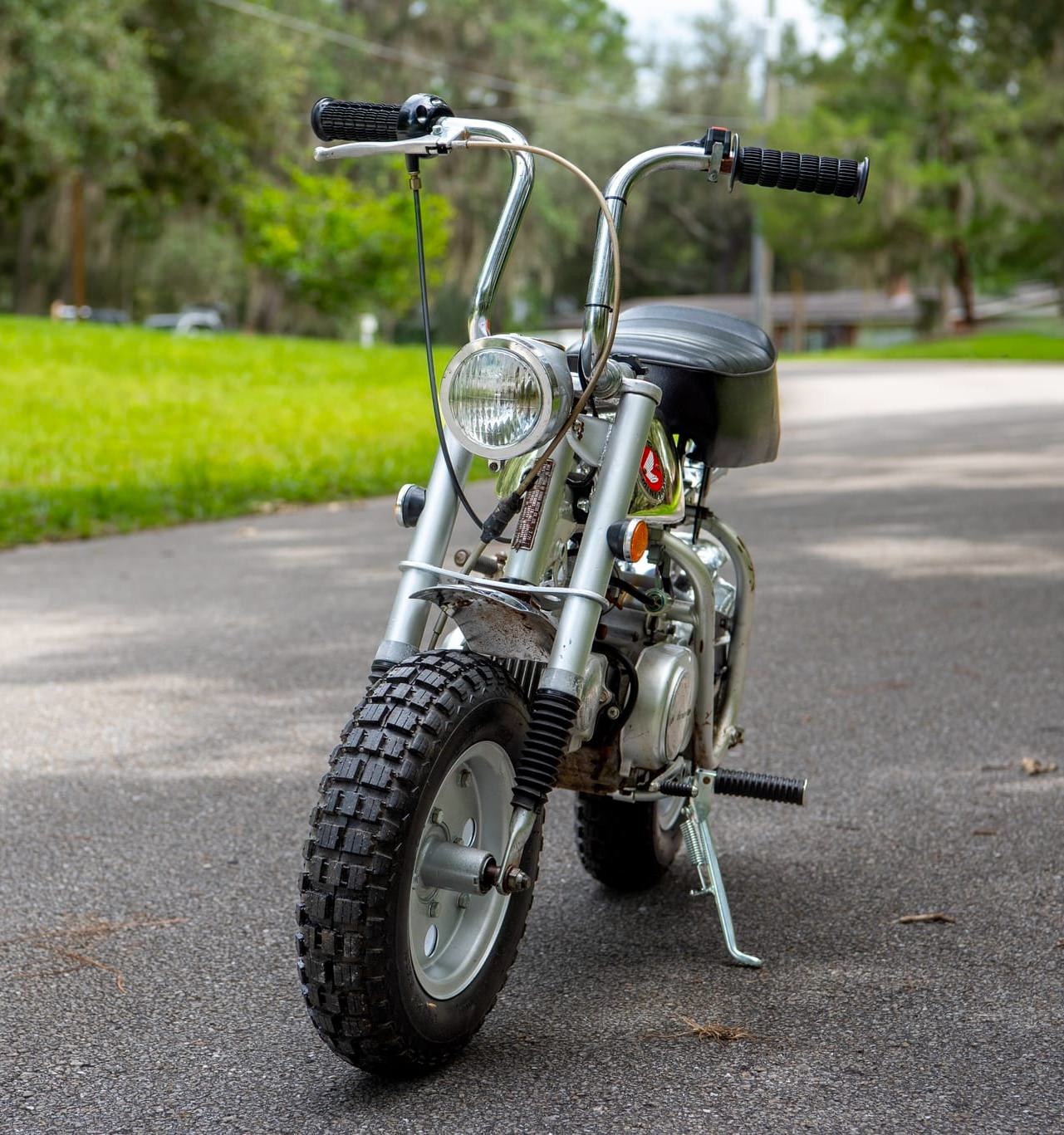
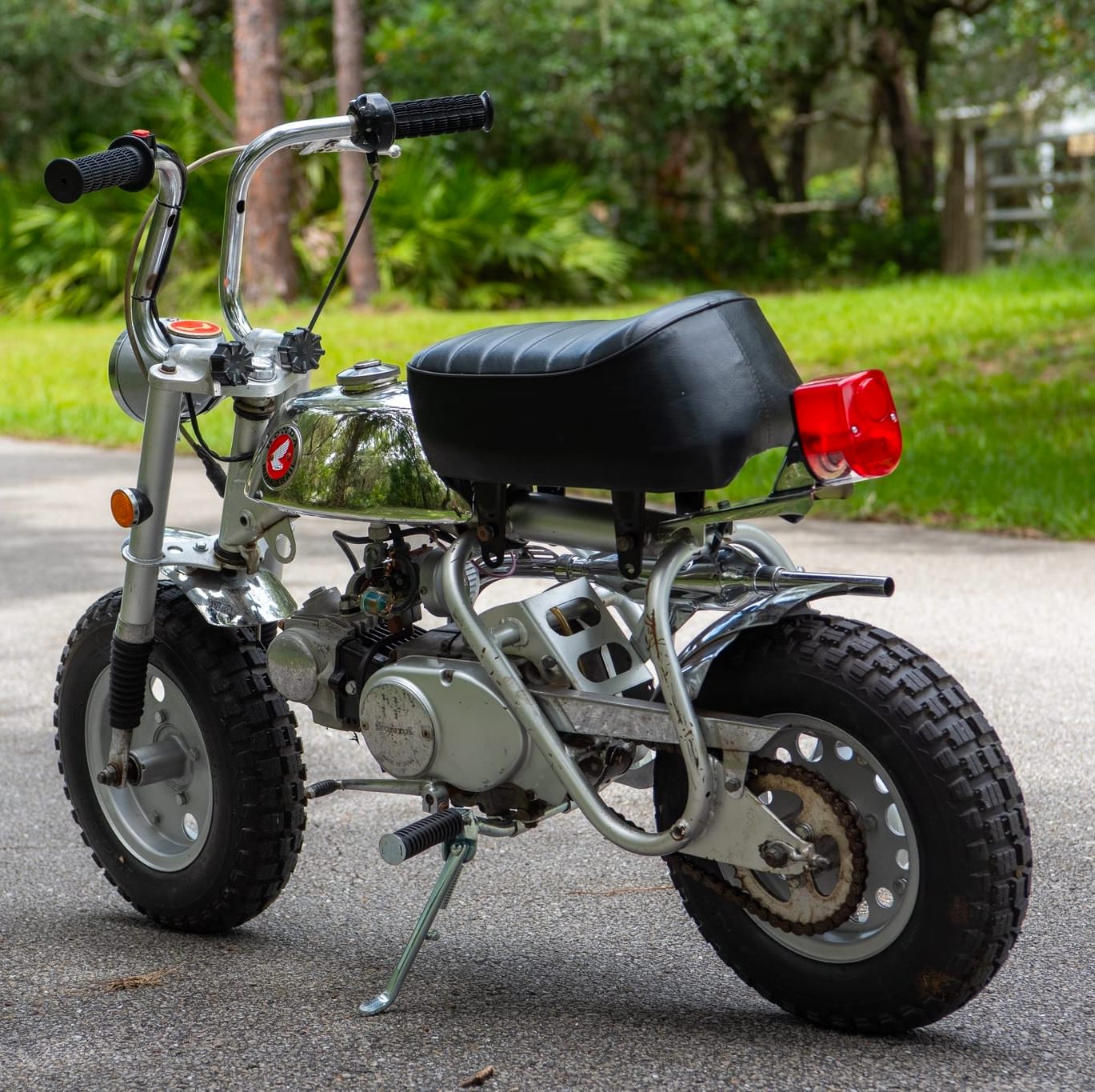
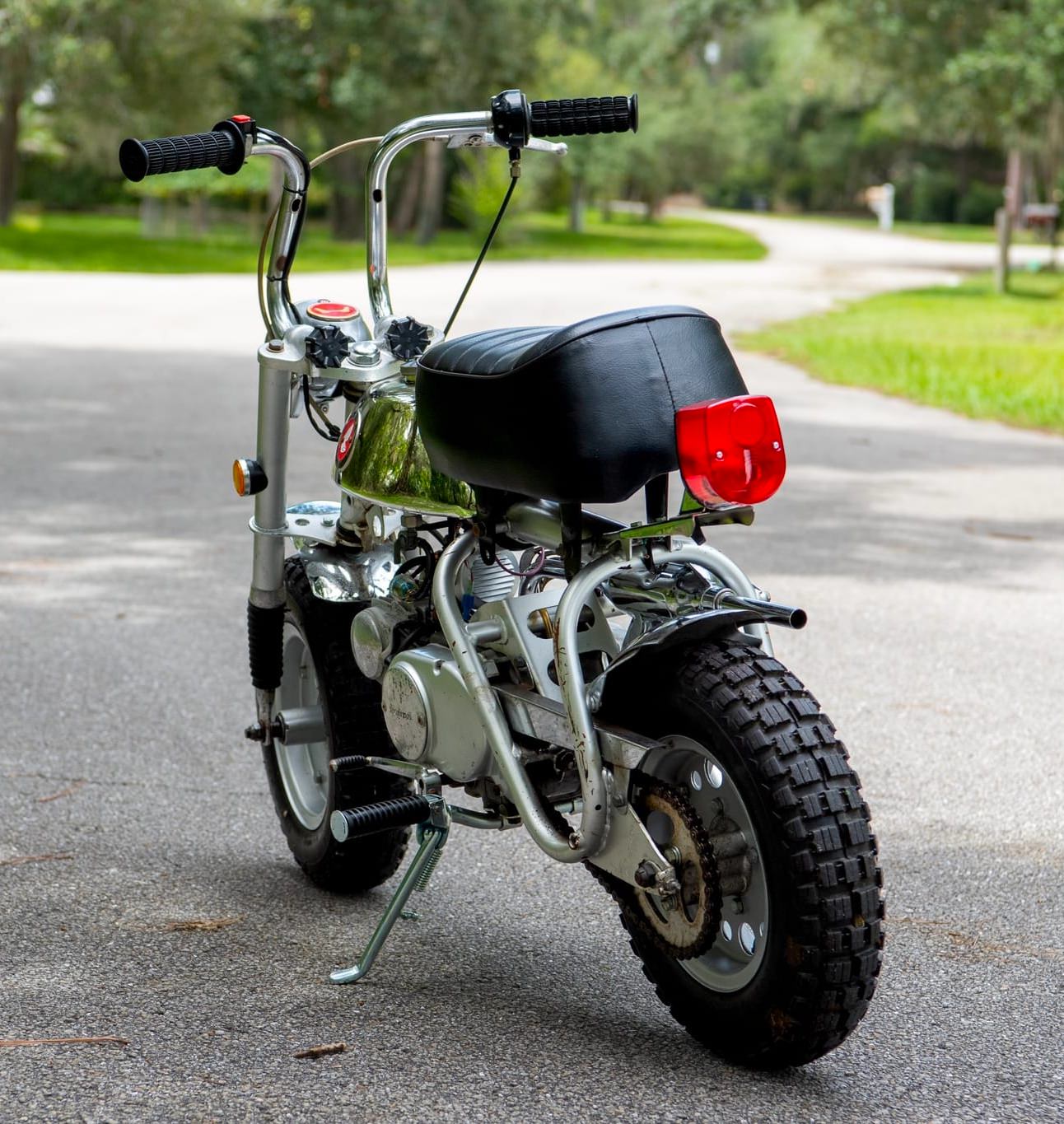
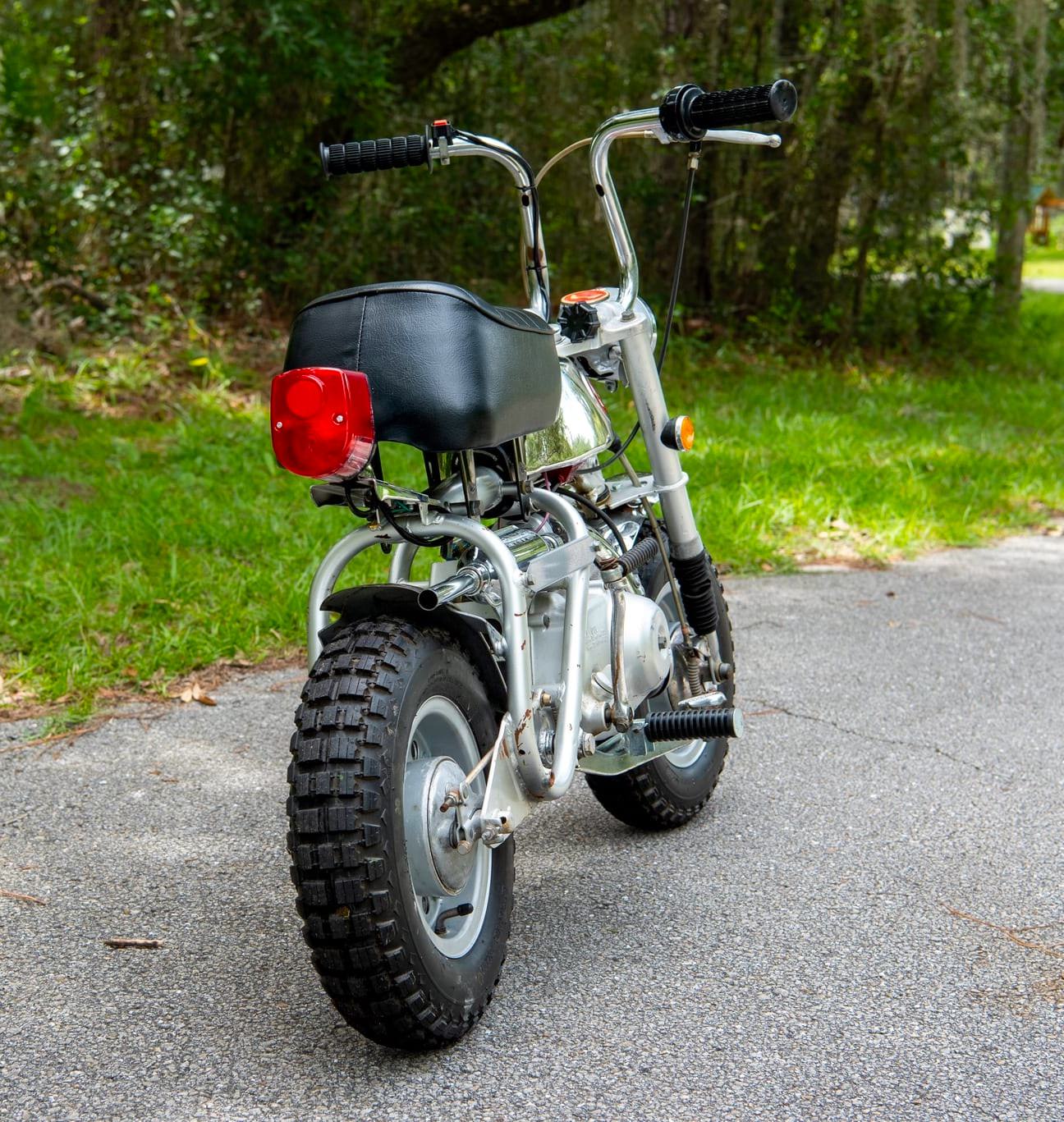
This is an original 1971 Honda Z50A Mini Trail that was refurbished under previous ownership before being bought by its current owner earlier in 2026. The bike is finished in classic silver with a chrome fuel tank, chrome fenders, and a silver-painted steel backbone frame.
The bike also has a height-adjustable black vinyl solo seat, folding handlebars and foot pegs, trail lighting, a side stand, and an inverted fork with black gaiters.
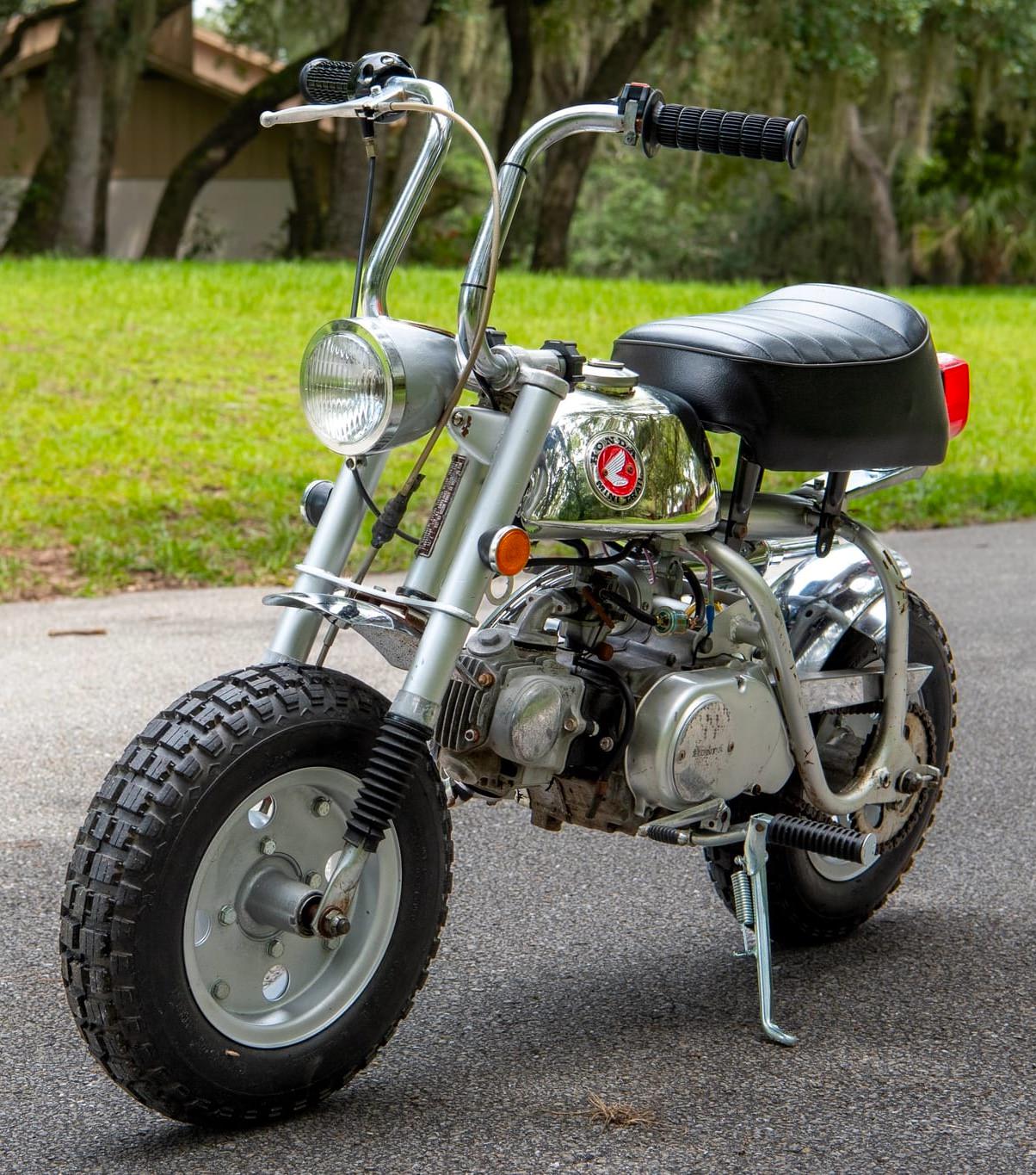
This is an original 1971 Honda Z50A Mini Trail that was refurbished under previous ownership before being bought by its current owner earlier in 2026. The bike is finished in classic silver with a chrome fuel tank, chrome fenders, and a silver-painted steel backbone frame.
Power comes from an air-cooled 49cc four-stroke single-cylinder engine, factory-rated at 2 bhp and 2 lb ft of torque. It drives the rear wheel through a 3-speed semi-automatic transmission and chain drive, and it’s started with a kickstarter. The bike rides on 8 inch steel wheels fitted with older Cheng Shin tires, with drum brakes front and rear.
It’s now being offered for sale out of Oviedo, Florida for off-road use only with a bill of sale. If you’d like to read more about it or register to bid you can visit the listing here.
Images courtesy of Bring a Trailer

Articles that Ben Branch has written have been covered on CNN, Popular Mechanics, Smithsonian Magazine, Road & Track Magazine, the official Pinterest blog, the official eBay Motors blog, BuzzFeed, Autoweek Magazine, Wired Magazine, Autoblog, Gear Patrol, Jalopnik, The Verge, and many more.
Silodrome was founded by Ben back in 2010, in the years since the site has grown to become a world leader in the alternative and vintage motoring sector, with well over a million monthly readers from around the world and many hundreds of thousands of followers on social media.