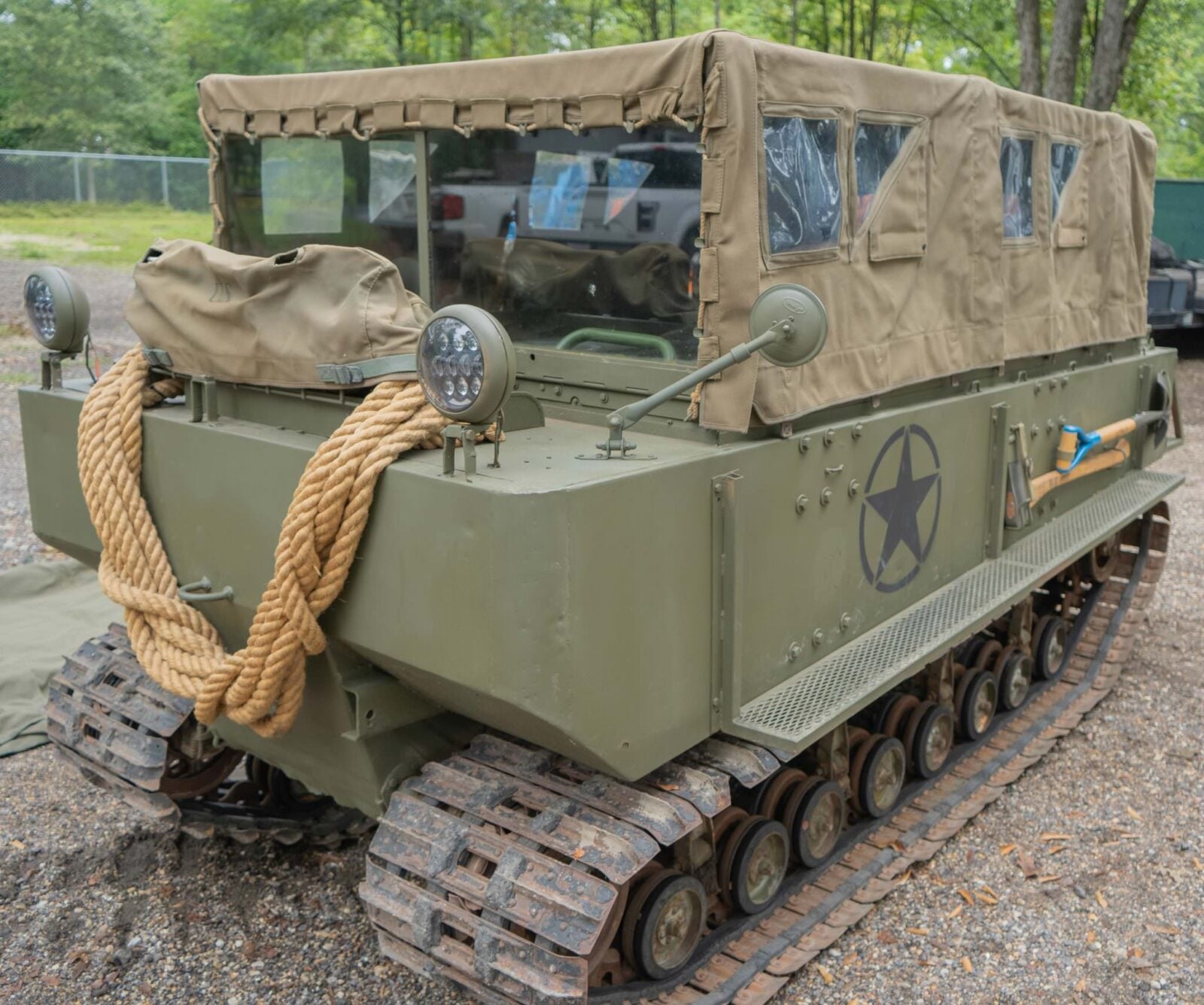
This is an original WWII-era 1943 Studebaker T-24 Weasel, a small, amphibious, tracked military vehicle that proved surprisingly versatile and saw use in all major theaters of the war.
Although it had been designed for use on deep snow, the Weasel would also excel on sand, mud, and other challenging terrain types, and many GIs sang its praises for its ability to get into, and out of, almost anywhere. Albeit slowly.
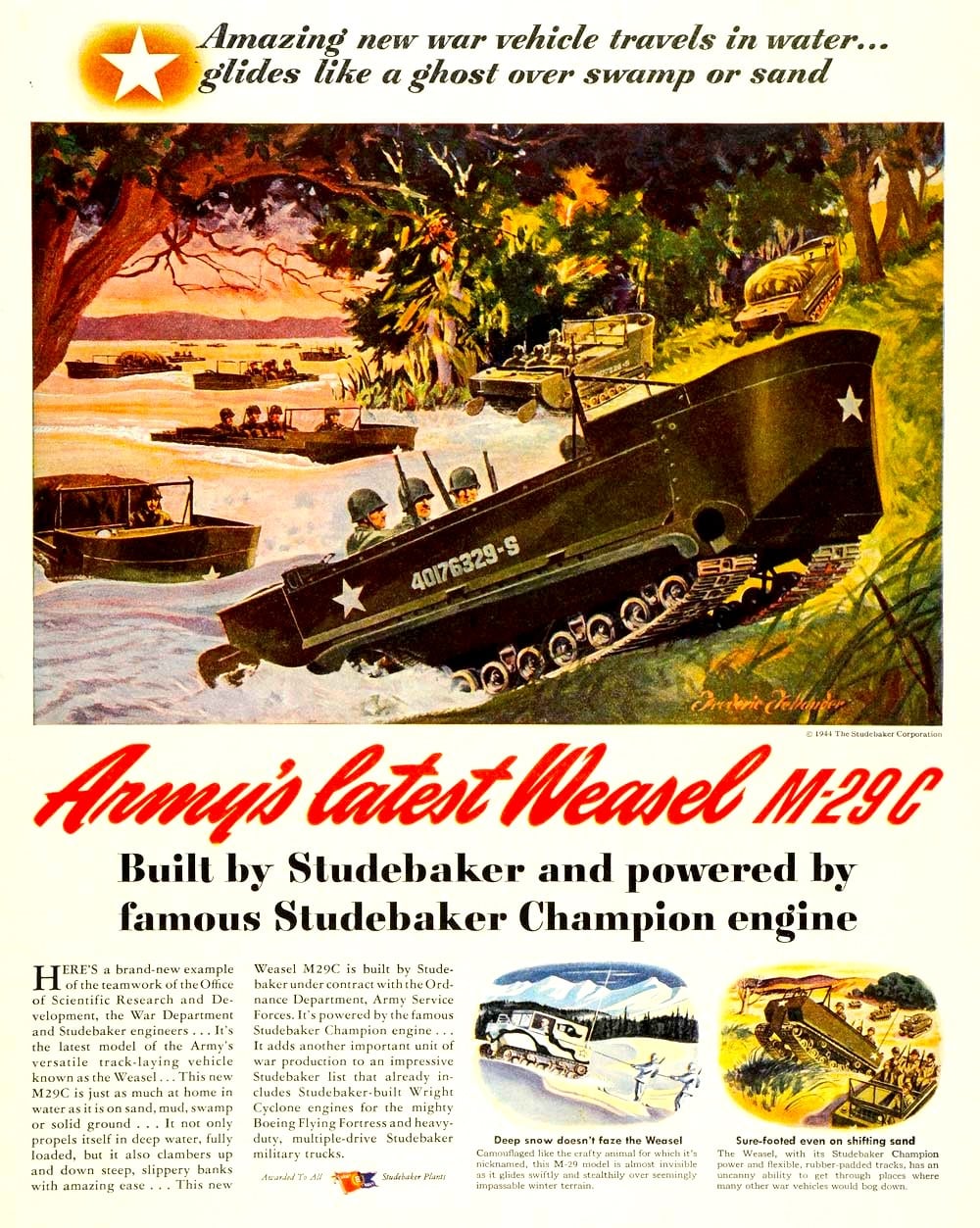
 The Weasel measured in at 10 feet 6 inches long, and 4 feet 3 inches high at the body, or about 5 feet 11 inches to the top of the windscreen. It carried one operator/driver and up to three passengers. Image courtesy of Studebaker.
History Speedrun: The Studebaker T-24 Weasel
The first 1,002 vehicles in the T-24/M29 series left Studebaker’s South Bend plant under the designation T-24, but by then the British commando raid into Norway that they were created to support had been abandoned.
The vehicle vastly outlasted the mission, it was re-designated M29 from serial number 1003 onwards, it went on to work in the Aleutians, Normandy, the Scheldt estuary, Iwo Jima, and Okinawa, and later in Korea, Indochina, and Antarctica.
Project Plough
The concept that would become the T-24 came from Geoffrey Pyke, a British inventor attached to Lord Louis Mountbatten’s Combined Operations staff. Pyke wanted British commandos put into occupied Norway to wreck hydroelectric plants, among them the Vemork works near Rjukan, which produced the heavy water used in German atomic research.
Mountbatten put the Pyke plan to Churchill, Harry Hopkins, and General George Marshall on April the 11th, 1942. The Americans adopted it as Project Plough, and since no vehicle existed that could carry a raiding party at speed across deep snow, the US government went to the automobile industry and instructed them to create one.
Studebaker agreed to design and build it inside six months, an astonishingly quick turn around for a new, untested vehicle design. Pyke wanted the machine propelled by two counter-rotating Archimedean screws that would push it forward on the snow, but the engineers overruled him and used tracks – a much better understood propulsion method and one that would work on many different surface types.
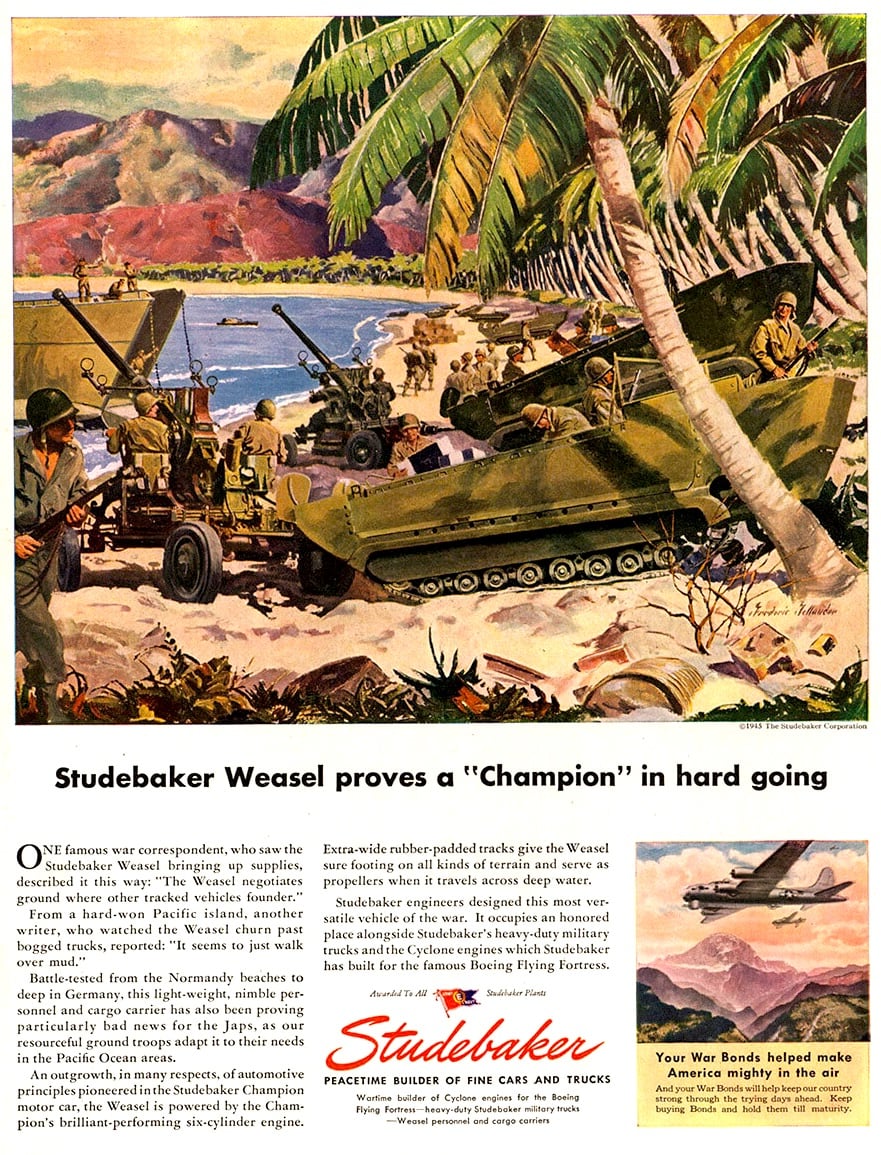
The concept that would become the T-24 came from Geoffrey Pyke, a British inventor attached to Lord Louis Mountbatten’s Combined Operations staff. Pyke wanted British commandos put into occupied Norway to wreck hydroelectric plants, among them the Vemork works near Rjukan, which produced the heavy water used in German atomic research. Image courtesy of Studebaker.
Early prototypes, designated T-15, were running four months later, tested on the sand dunes along the Lake Michigan shore and then on the Columbia Icefield in the Canadian Rockies.
Sadly, they fell short of the specification – the top speed was 15 mph versus the requirement of 20 mph, and range came to about 1/3rd of the 250 miles specified. The rear-mounted engine made them dig into the snow on climbs, and the tracks came off the wheels too easily.
Despite this, the specification had been written for a raid that was about to be cancelled, and against what already existed the T-15 did well, it outran 87th Mountain Infantry skiers over a three-mile course. Eisenhower had already recommended ordering 860 on the grounds that the Army would find a use for them either way – as a result, a total of 766 were built, with many going to the Mountain Training Center for classified testing.
The Avro Lancaster was the only aircraft with a bomb bay large enough to drop the M28, and the RAF’s entire force of 600 planes was committed to bombing Germany. Plough died that autumn and his ambitious plan for a commando raid into Norway was cancelled.
From T-15 To The T-24 “Weasel”
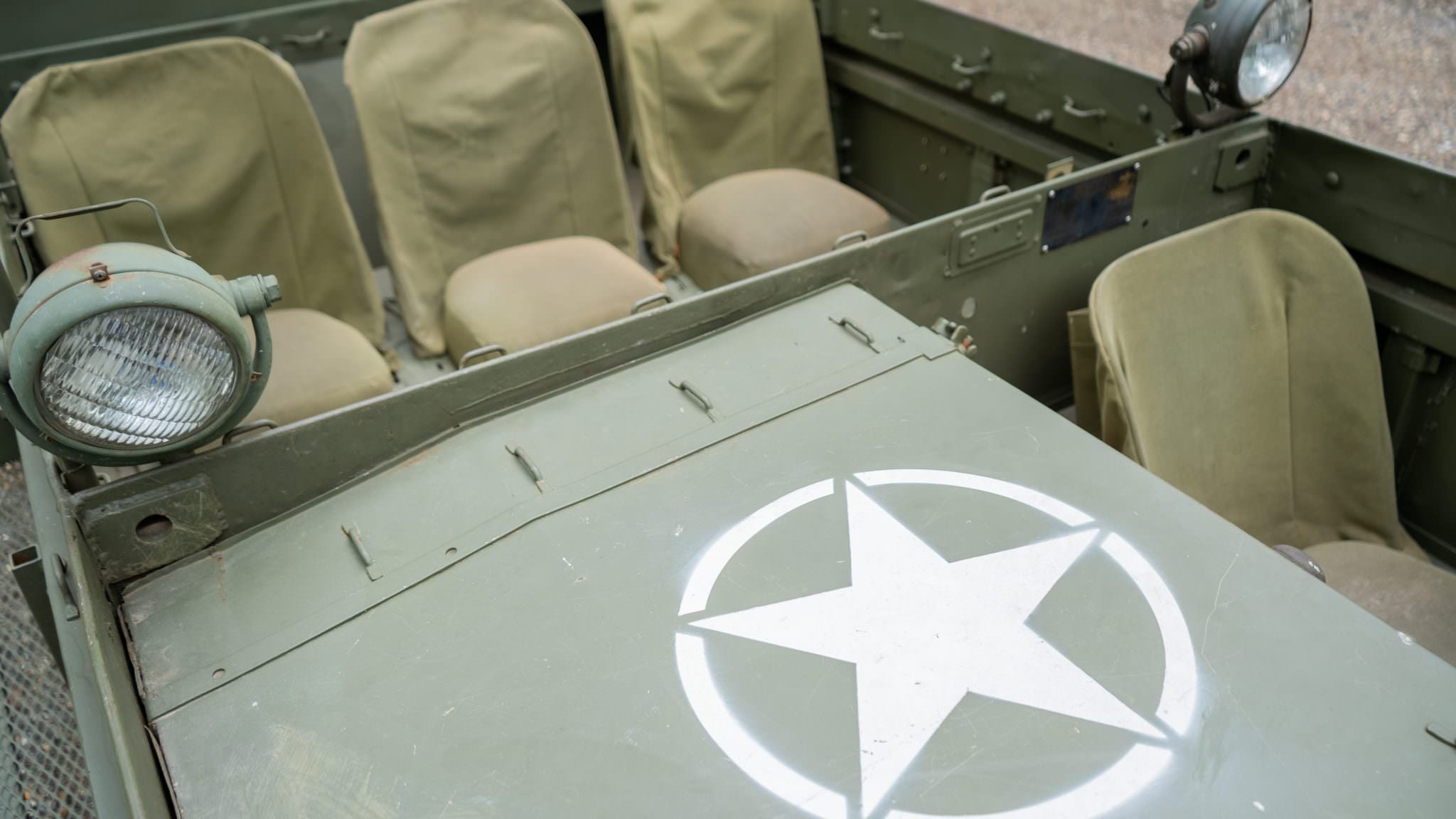
The revised T-24 version of the vehicle reversed the layout, the engine was moved to the right front, beside the driver, with the drive sprockets at the rear and the idlers at the front. Weight shifted forward, that earlier climbing problem largely went away, and the back of the hull was freed for three folding seats, radio sets, or cargo.
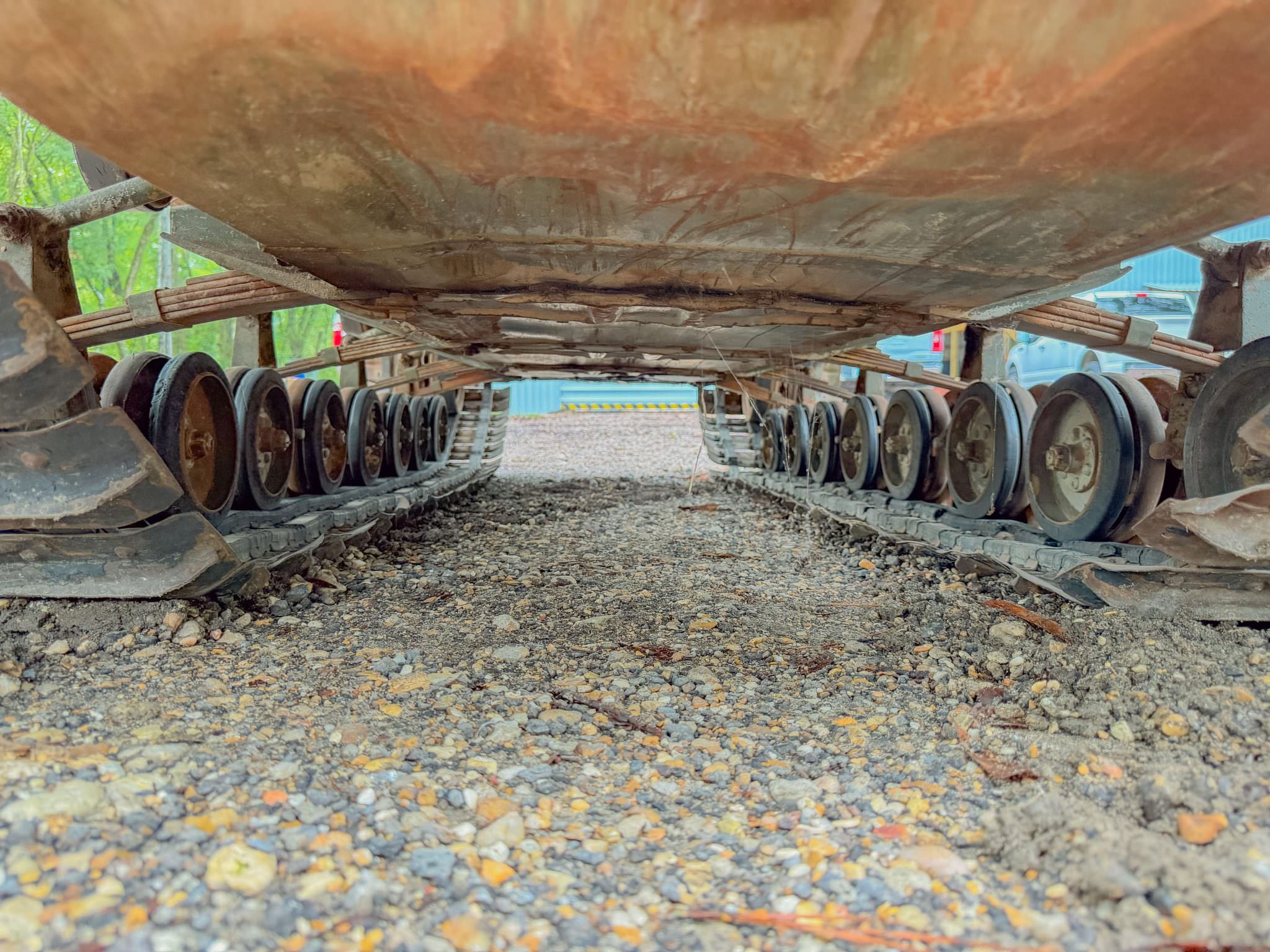
The suspension was rebuilt around four twin-wheel bogies per side, this was double the previous count, to stop the tracks being thrown.
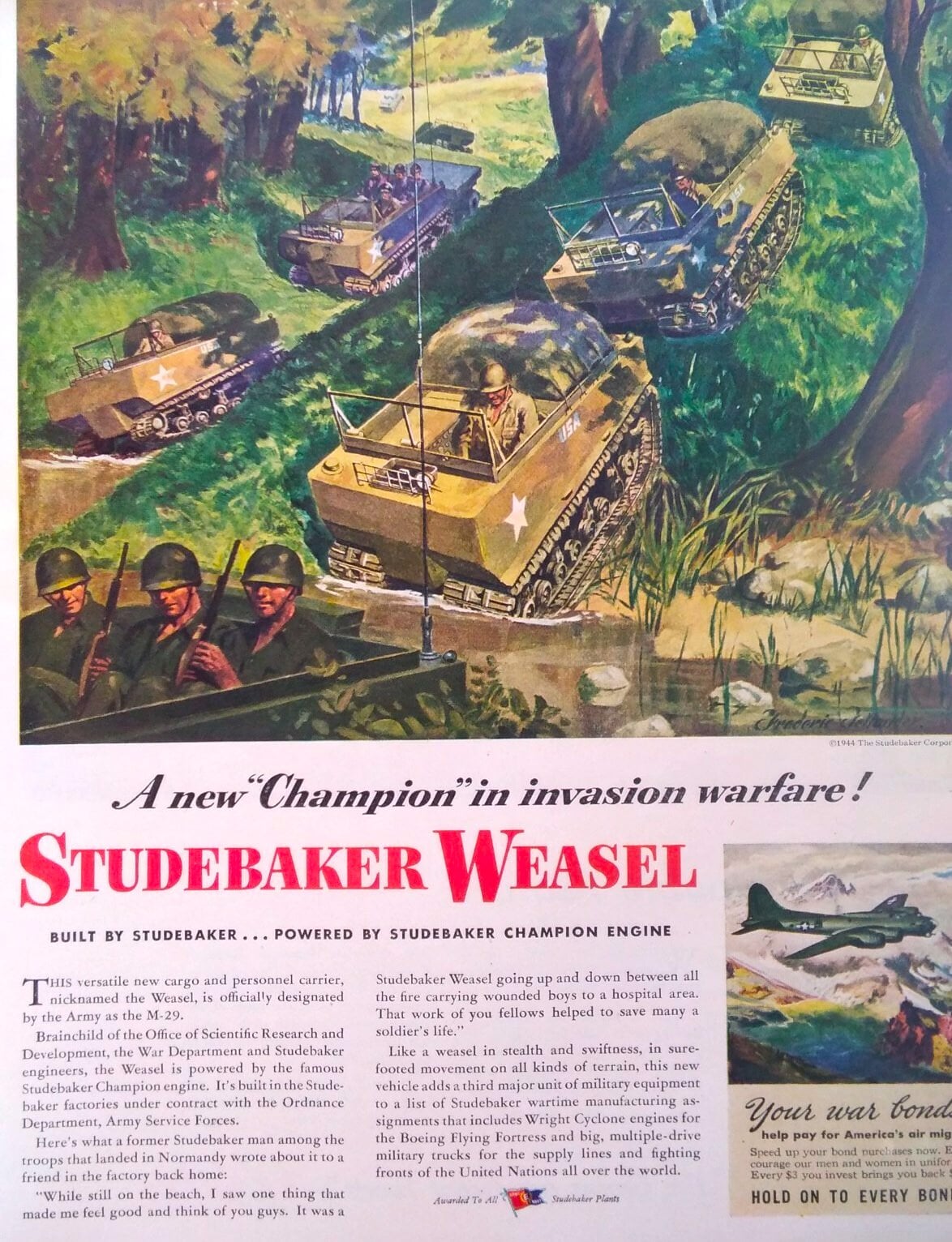
Although it had been designed for use on deep snow, the Weasel would also excel on sand, mud, and other challenging terrain types, and many GIs sang its praises for its ability to get into, and out of, almost anywhere. Image courtesy of Studebaker.
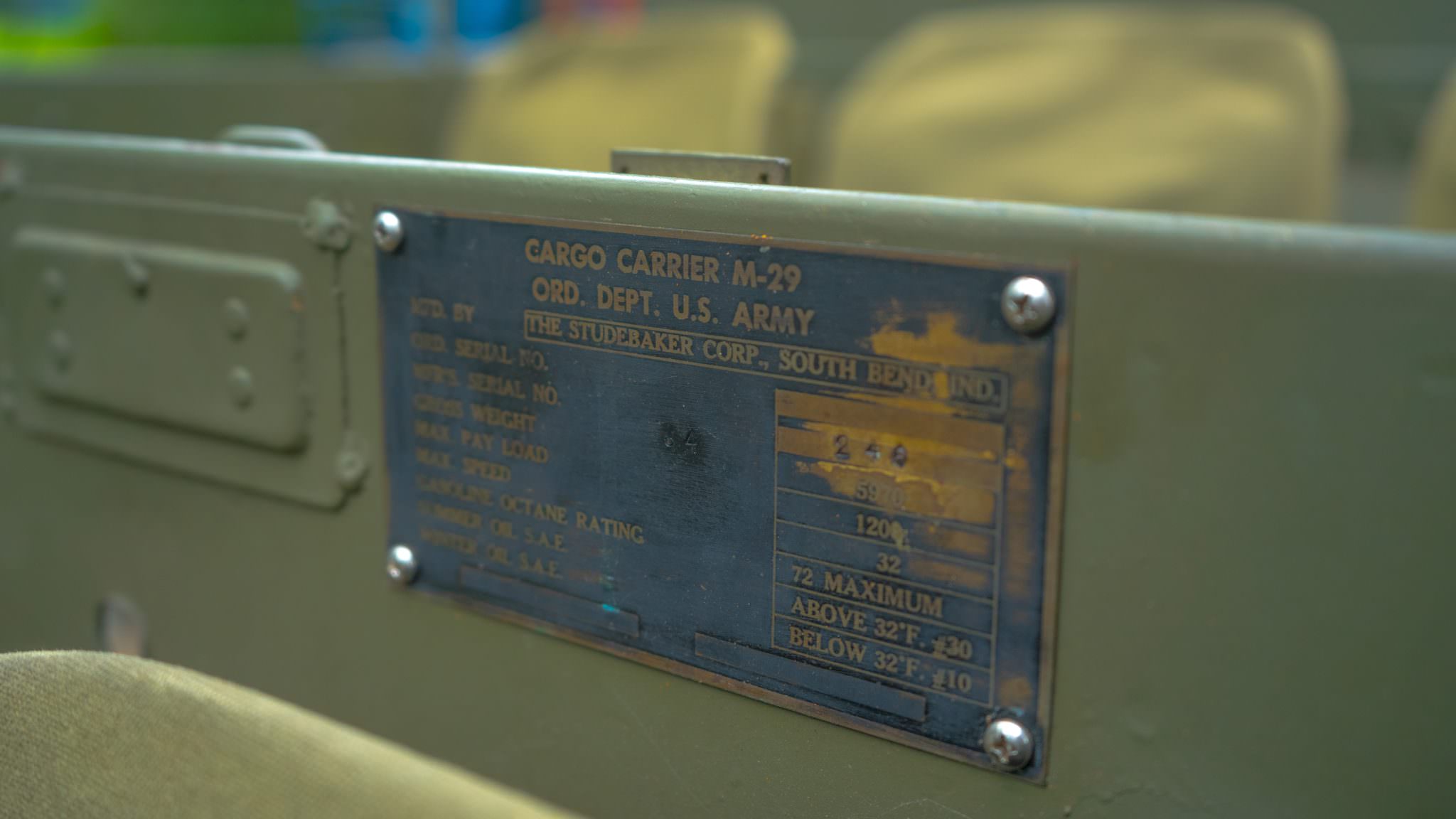
Power came from the Studebaker Model 6-170 Champion, the company’s own L-head six with 169.6 cubic inches (2.8 liters) of displacement, running 72 octane fuel and rated at 75 bhp at 3,800 rpm. Drive passed through a 3-speed gearbox, a controlled differential for steering and a 2-speed planetary final drive. The top speed was now 36 mph, and the 35 gallon tank gave a road cruising range of 175 miles.
The dry weight was 3,800 lbs, not an insignificant amount, but it was geared low and the tracks helped spread the load over broad pair of contact patches. The tracks used steel grouser plates riveted to cable-reinforced rubber bands, a system developed by Firestone and Goodrich.
Vehicles through to serial number 2102 used 15 inch tracks for a ground pressure of just 2.1 psi. From serial 2103 the 20 inch track was standardized, which increased overall width from about 5 feet to 5 feet 6 inches and cut ground pressure to 1.69 psi, a conversion kit for earlier vehicles then arrived in January of 1945.
The Weasel measured in at 10 feet 6 inches long, and 4 feet 3 inches high at the body, or about 5 feet 11 inches to the top of the windscreen. It carried one operator/driver and up to three passengers. The earliest examples had a demolition charge fitted between the engine and the rear deck, so a crew could destroy the vehicle rather than let it be taken and reverse engineered – but the Germans already had the similarly capable Kettenkrad in production.
Weasel Variants + Production Numbers
The M29 version of the T-24 floated, but with almost no freeboard (the amount of hull left above the waterline), the M29C Water Weasel sealed the hull and added buoyancy cells at bow and stern, a surf guard, track aprons, twin rudders and a bow capstan for self-recovery, which took overall length to nearly 16 feet.
It remained an inland-water vehicle however, and one would have to be a very brave soul to take it anywhere near waves or a significant swell.
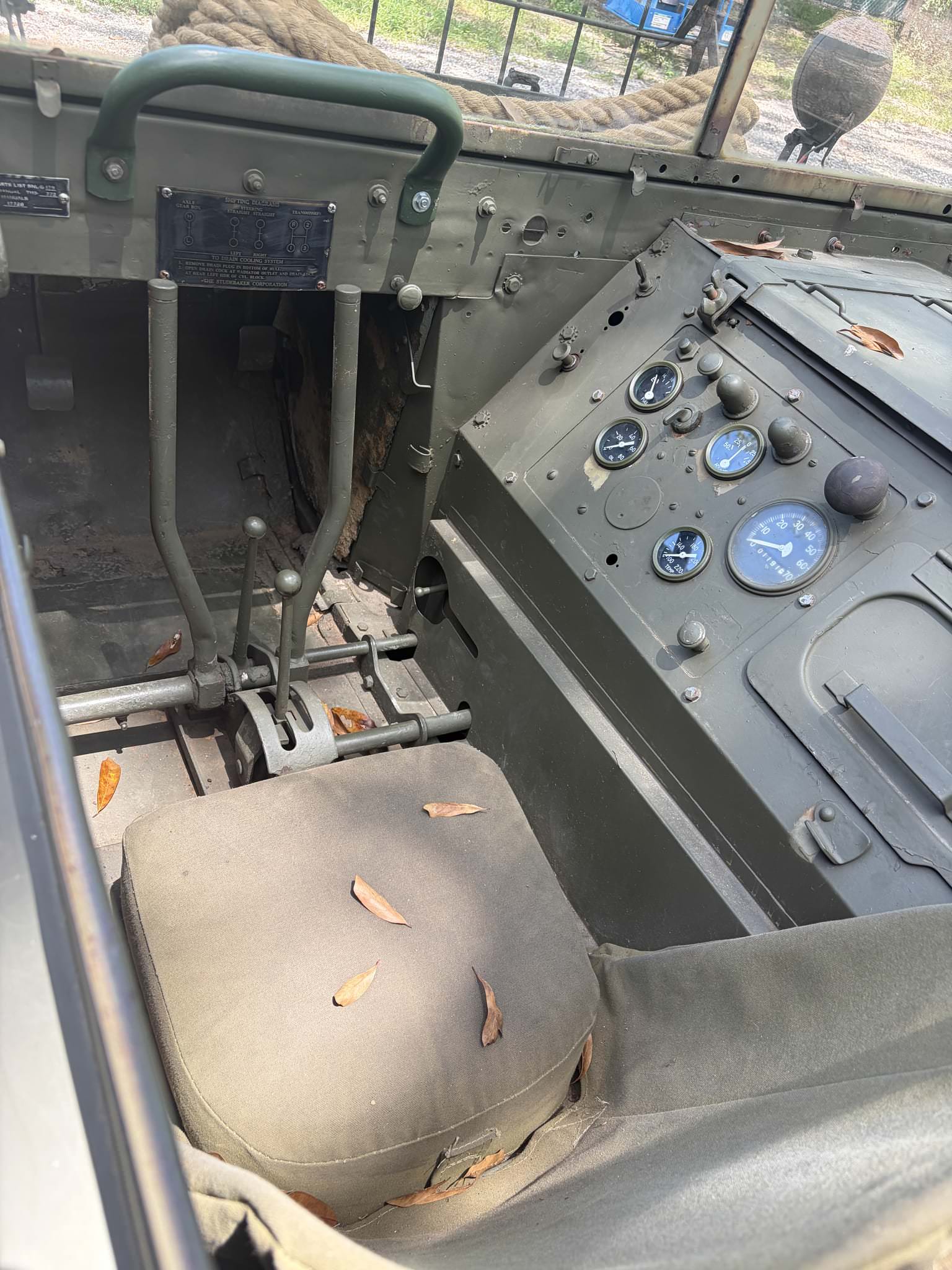
The controls included two pedals and two levers, allowing skid-steer steering, as well as a gated shifter long before they became cool.
Three armed configurations were developed and/or tested – the Type A with a 75 mm recoilless rifle mounted centrally, the Type B with the same gun at the rear, and the Type C with a 37 mm gun amidships. Mine-roller frames and a cable-operated remote-control system were both tried and dropped for various reasons.
Studebaker built 4,476 T-24/M29s and 10,647 M29Cs, making 15,123 of the T-24/M29 series before production ended in mid-1945 due to the end of the war. With the 766 T-15/M28s that preceded them, total Weasel production reached 15,889 units – not bad for an oddball vehicle that had been developed for an unconventional commando raid.
The Weasel In Service
The first operational deployment of the Weasel came in August of 1943 at Kiska in the Aleutians, which also happened to be the First Special Service Force’s first operation. The Force had left its own Weasels behind, the machines in the Aleutians belonged to other American and Canadian Army units, including the 87th Mountain Infantry Regiment and the 13th Canadian Infantry Brigade.
The Japanese had already evacuated, so technically it was a successful first mission.
In Normandy, Weasels hauled ammunition forward and took casualties out. Signals units bolted an RL-31 cable reel to the rear deck, and the hull was wired for SCR-506, 508 and 510 radio sets. Canadian and British troops used it in the flooded Scheldt estuary, and the British 79th Armoured Division took it on for mine clearance.
Its ground pressure was often too low to set off an anti-tank mine, anti-personnel mines would still split a track but that was far better than a GI losing a limb (or their life). In the Pacific the Marine Corps ran Weasels on Iwo Jima and Okinawa, and a corps report of April the 25th, 1945 called it “of inestimable value on land.”
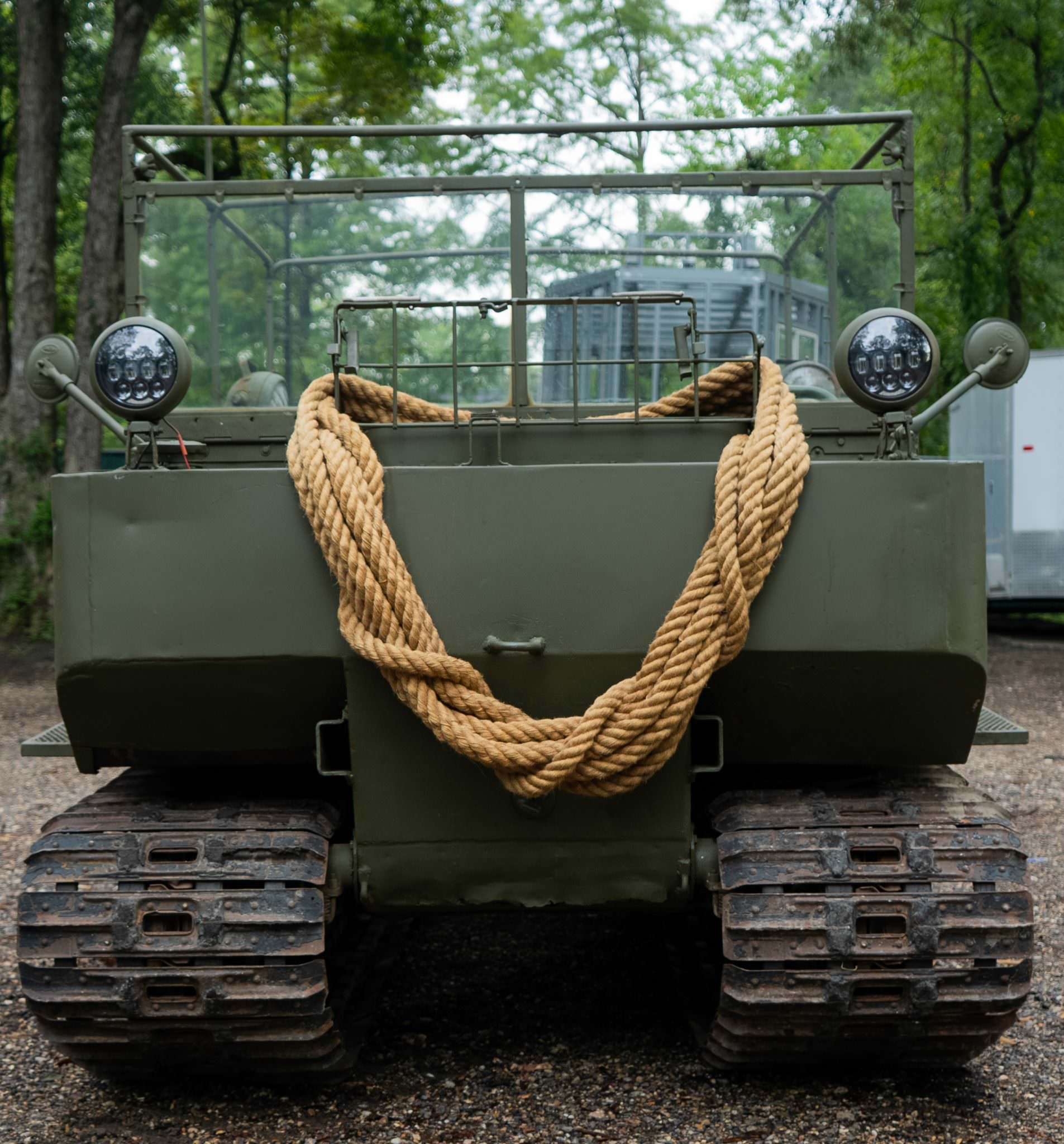
This is an original WWII-era 1943 Studebaker T-24 Weasel, a small, amphibious, tracked military vehicle that proved surprisingly versatile and saw use in all major theaters of the war.
Despite all of its success, roads did prove to be a problem. Driven hard on pavement after the Normandy breakout, the vehicles overheated and shed track plates. An August of 1944 report recorded the cargo carriers overheating, and noted that in several cases “the water has completely boiled out of the radiators.” Crews learned to run in short bursts and let it cool in-between.
After The War
Some Weasels stayed in Arctic service until 1958 and others were used in Korea. The French took them to Indochina, where armed versions were known as Crabes, and kept them with mountain troops and the Gendarmerie until about 1970. The US Navy landed them at Little America IV during Operation Highjump in 1946/1947.
Australian National Antarctic Research Expeditions (ANARE) ran two Weasels alongside two D4 Caterpillars on the 1962 to 1963 Wilkes-Vostok Traverse, some 1,860 miles (3,000 kms) there and back, leaving the coast on September the 17th, 1962 and returning on January the 14th, 1963 at two miles to the gallon. Amazingly, some M29Cs were still working at Dumont d’Urville in 1993, France’s main Antarctic research station.
The 1943 Studebaker T-24 Weasel Shown Here
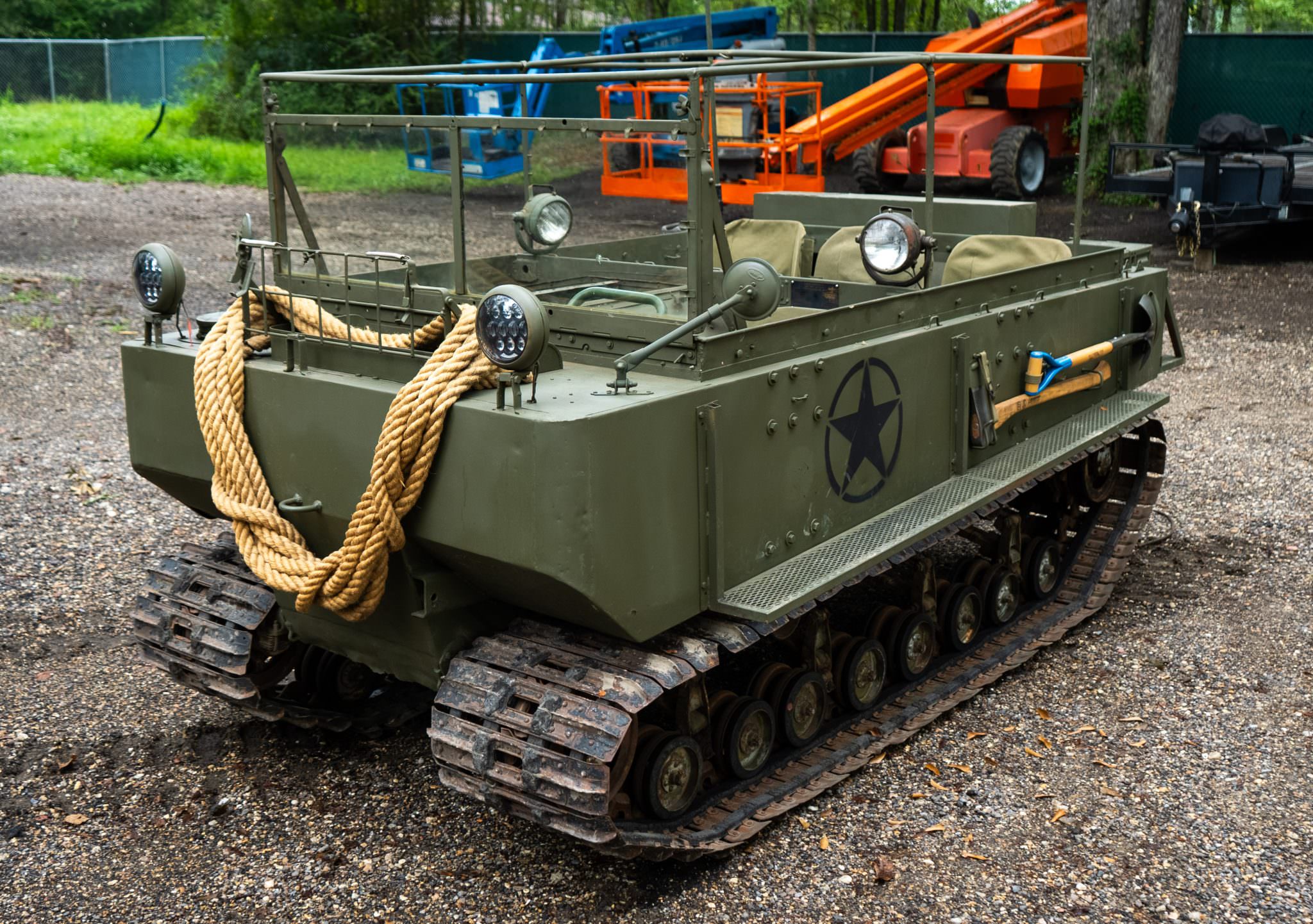
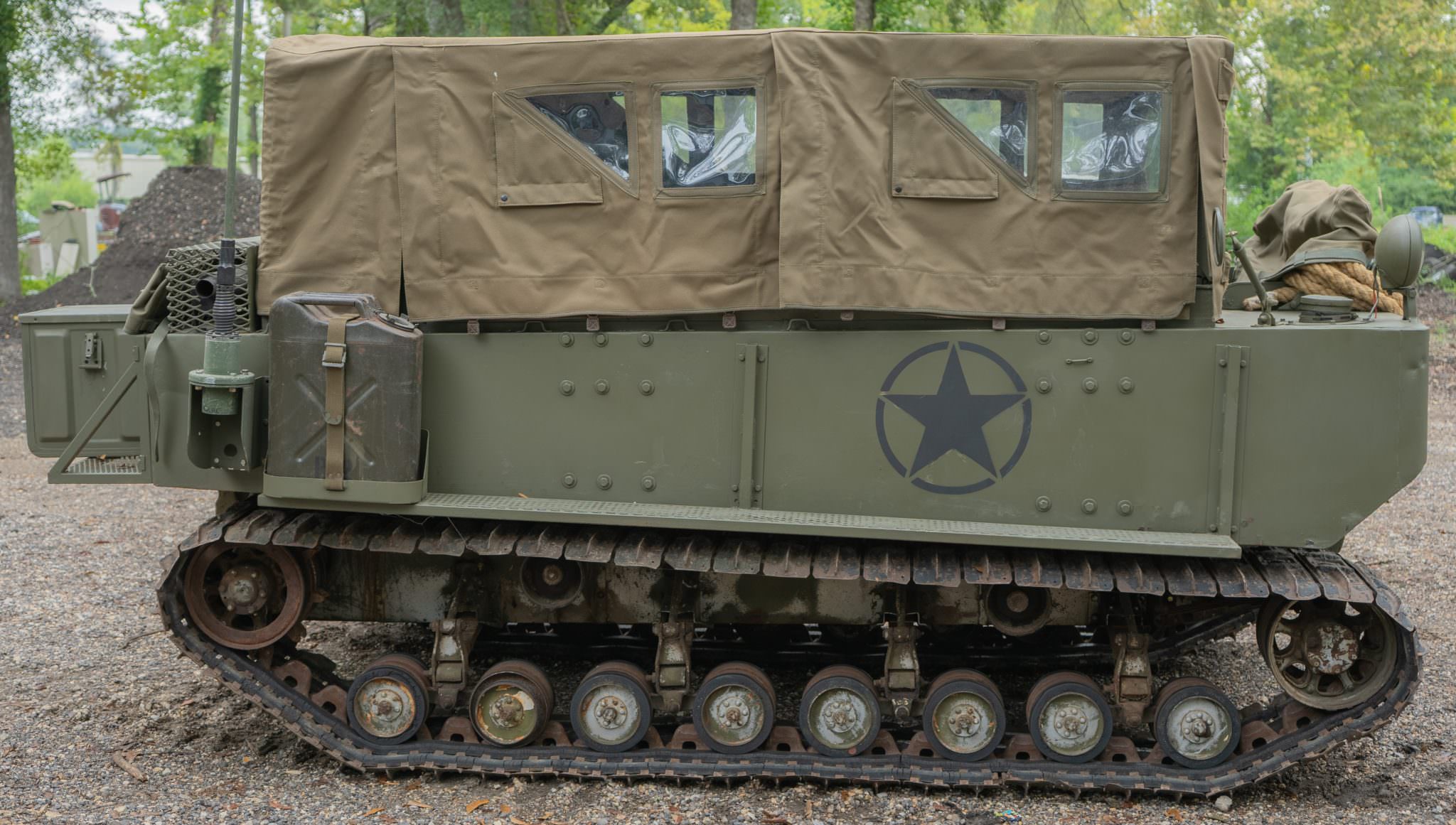
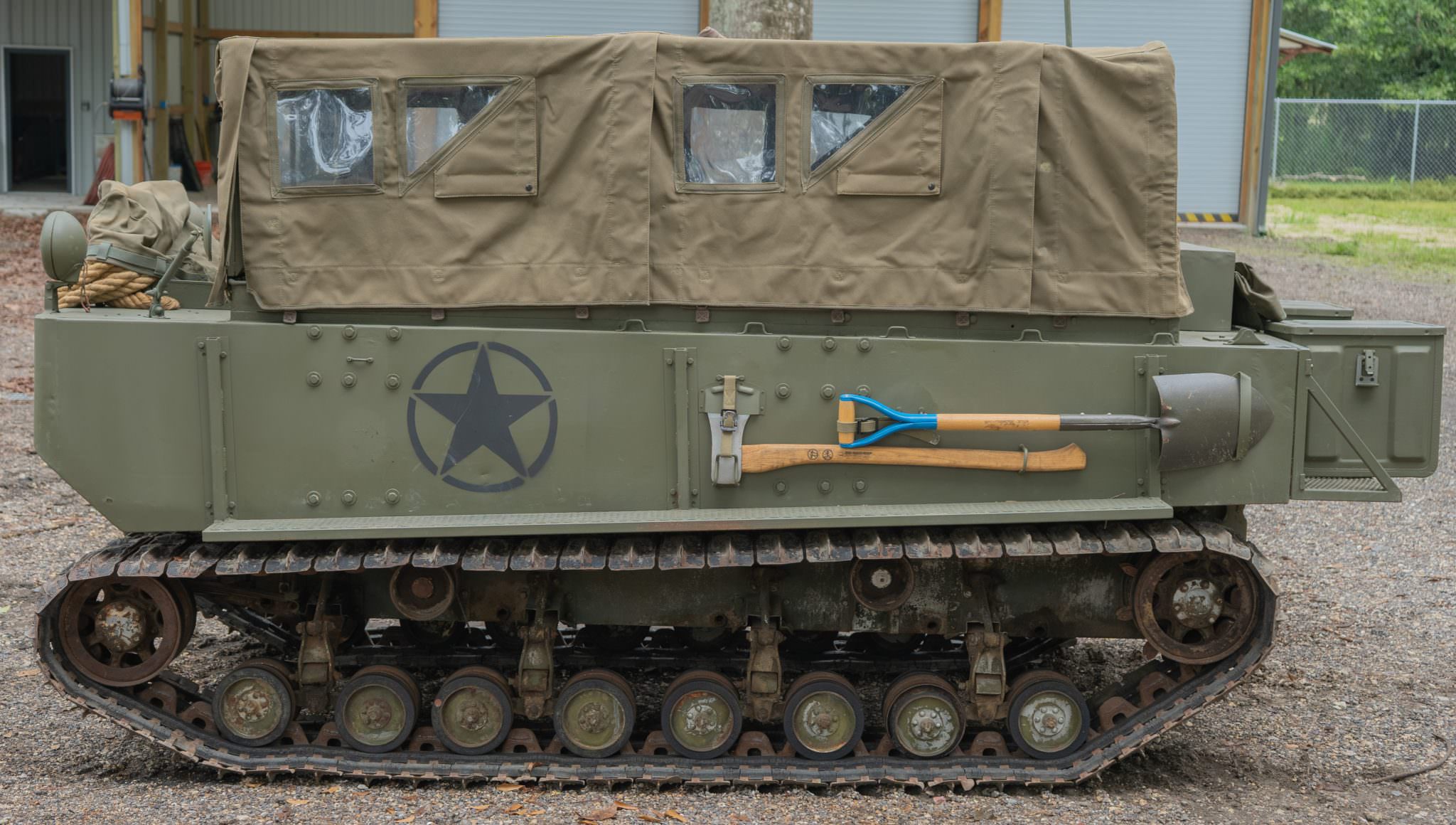
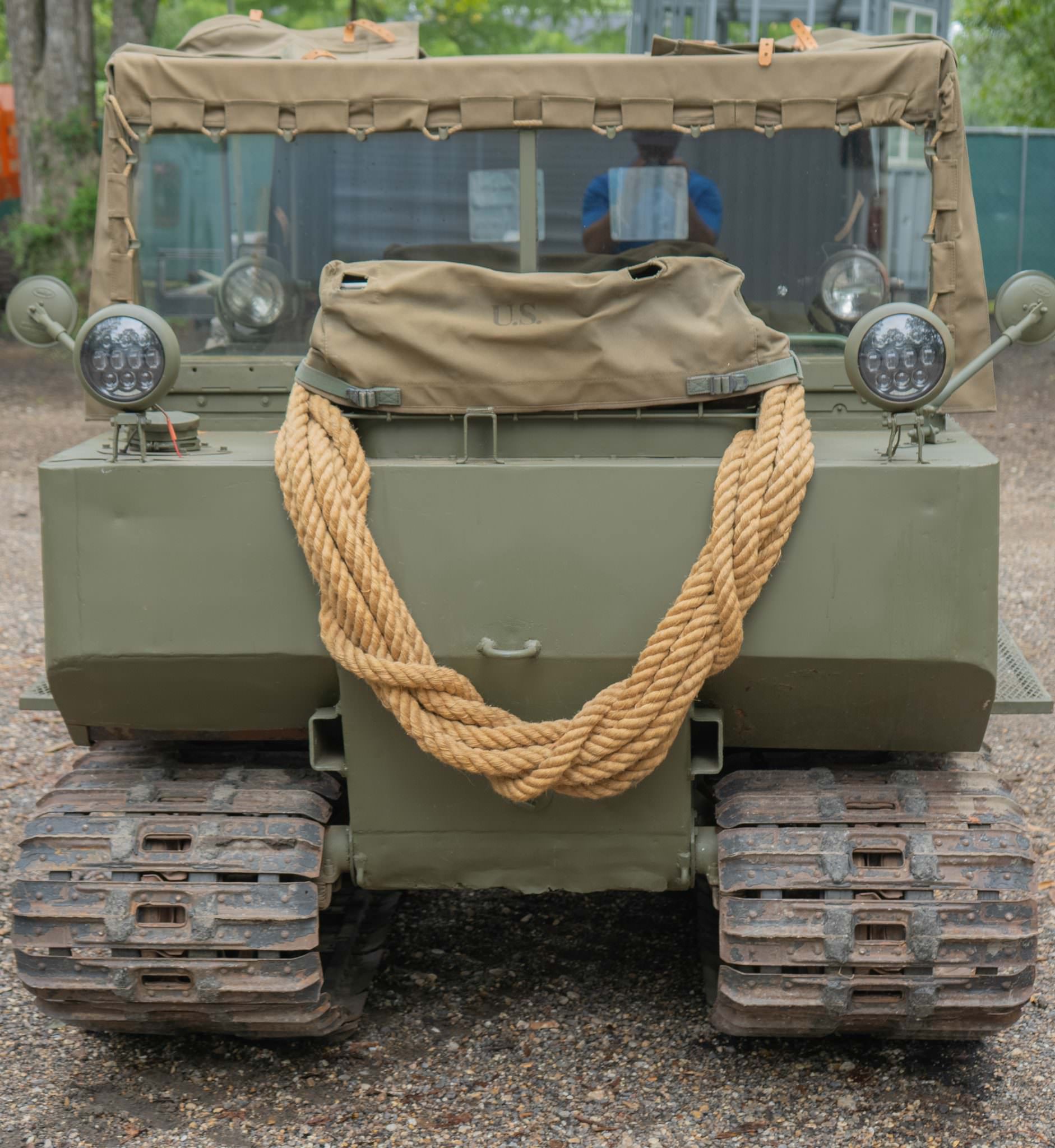
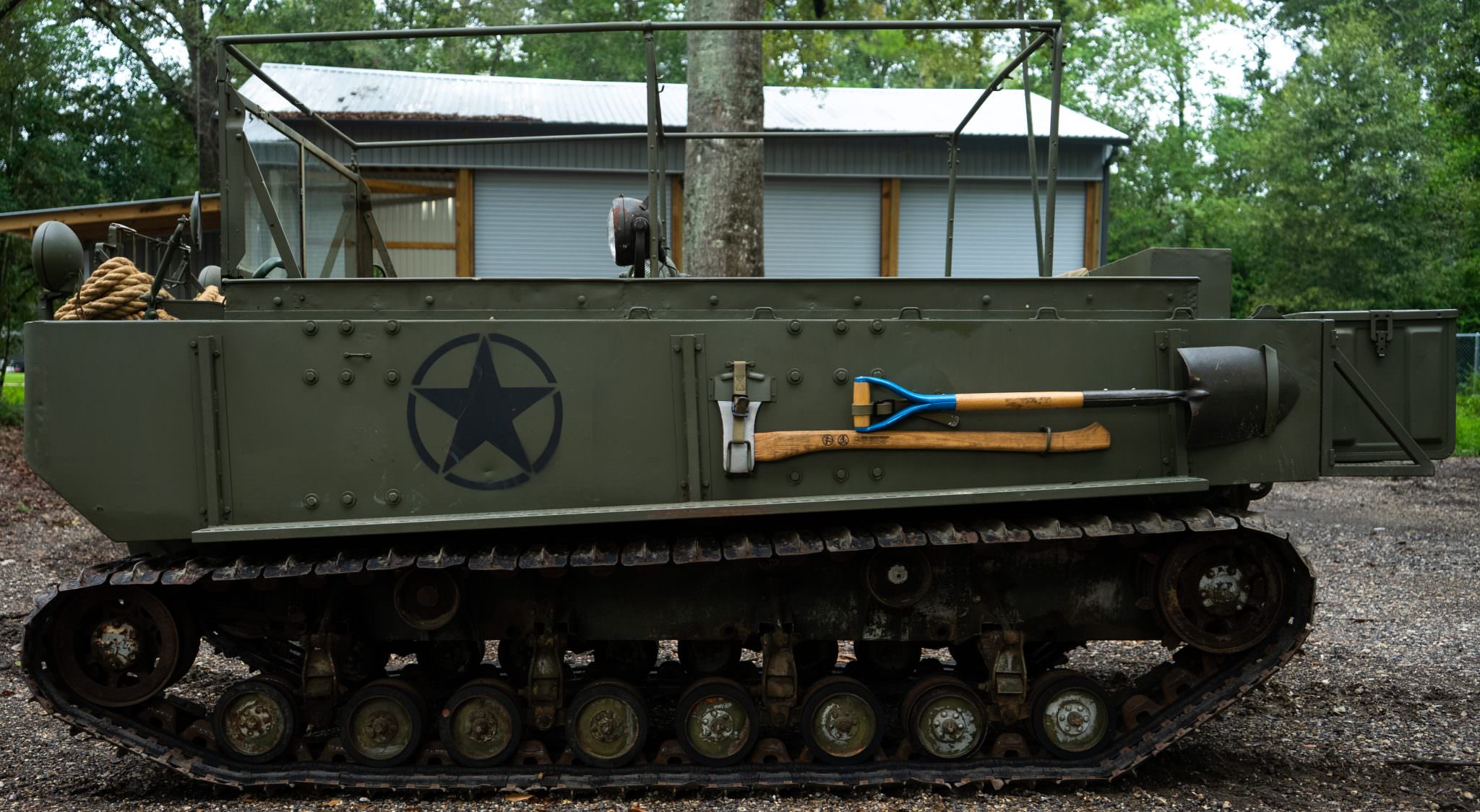
This Studebaker T-24 Weasel is said to be number 244 of the 1,000 or so T24 examples that were built for military use in the Second World War. It was reclassified by the U.S. Army as an M29 before entering service and was refurbished under previous ownership before being bought by the current seller in 2021.
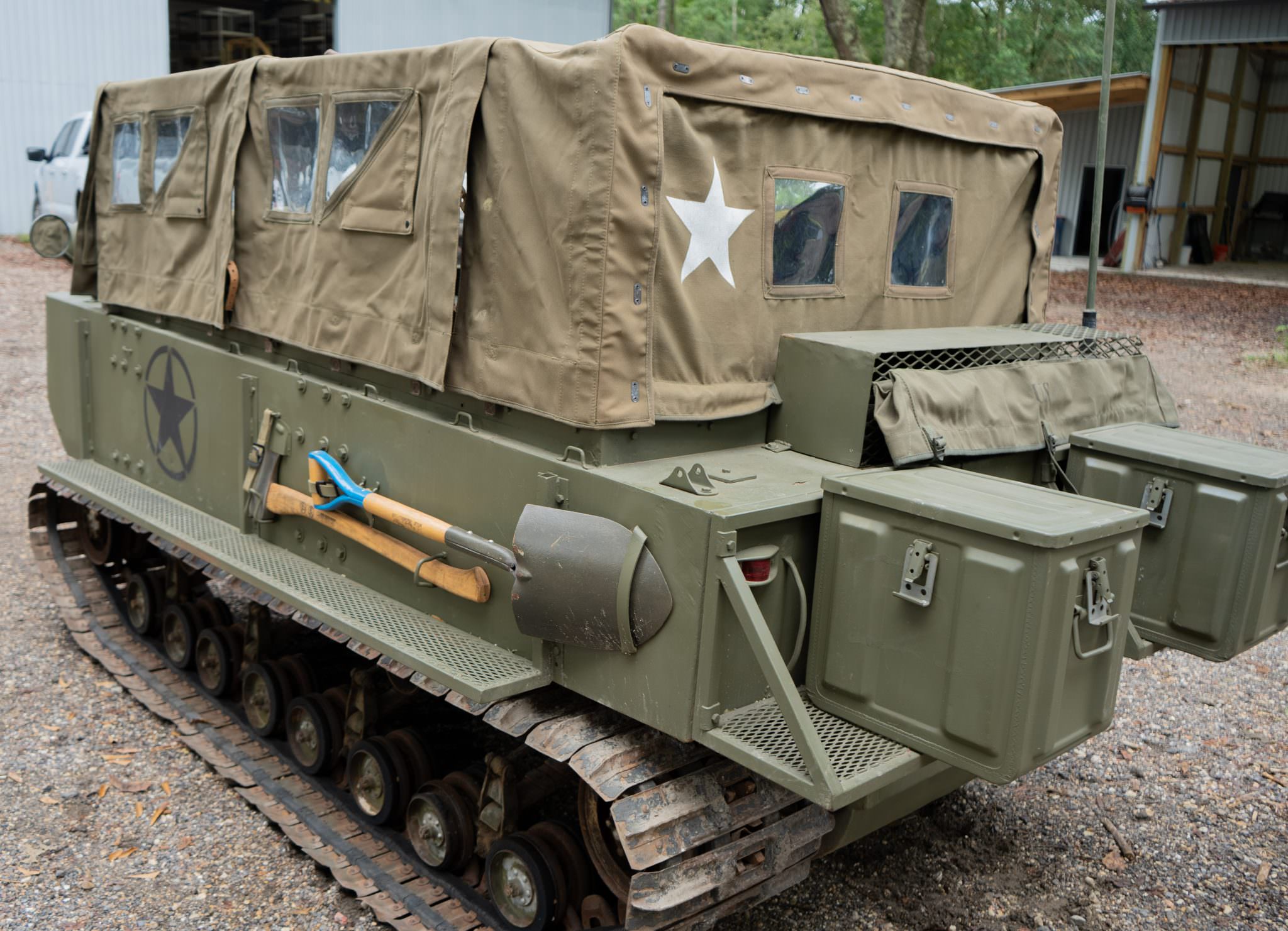
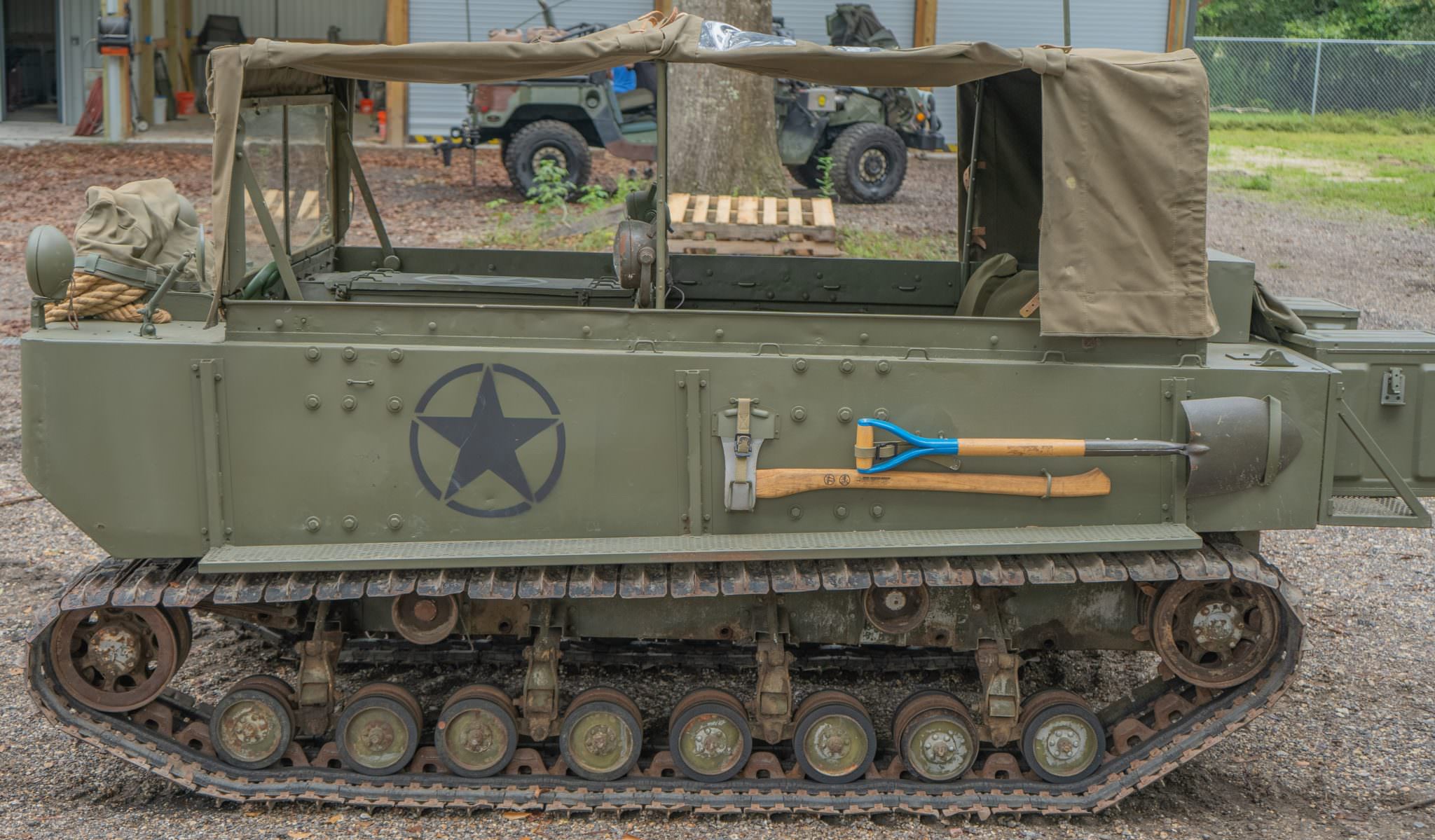
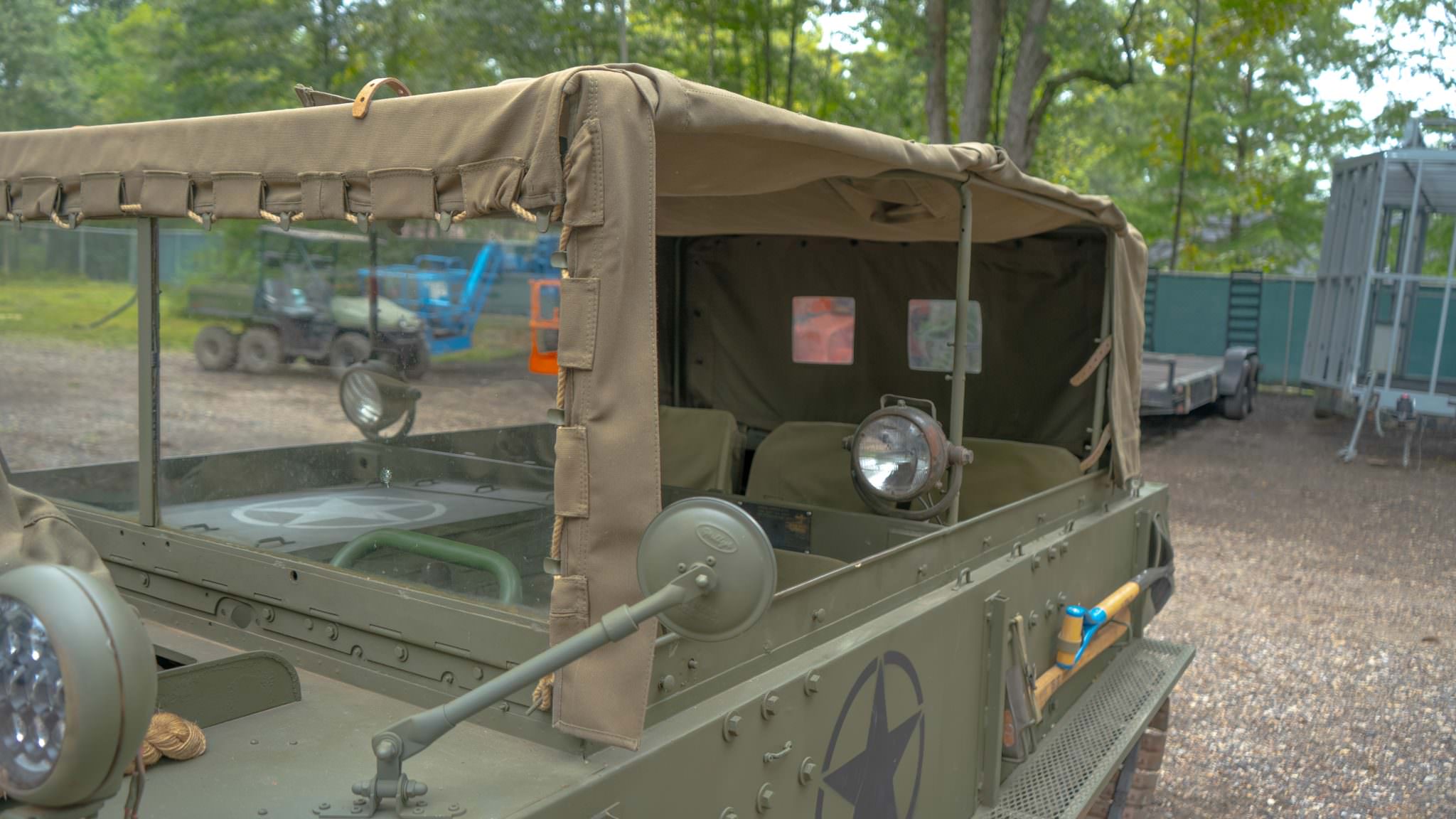
The hull is finished in olive drab with military markings, and the removable tan canvas top has side curtains.
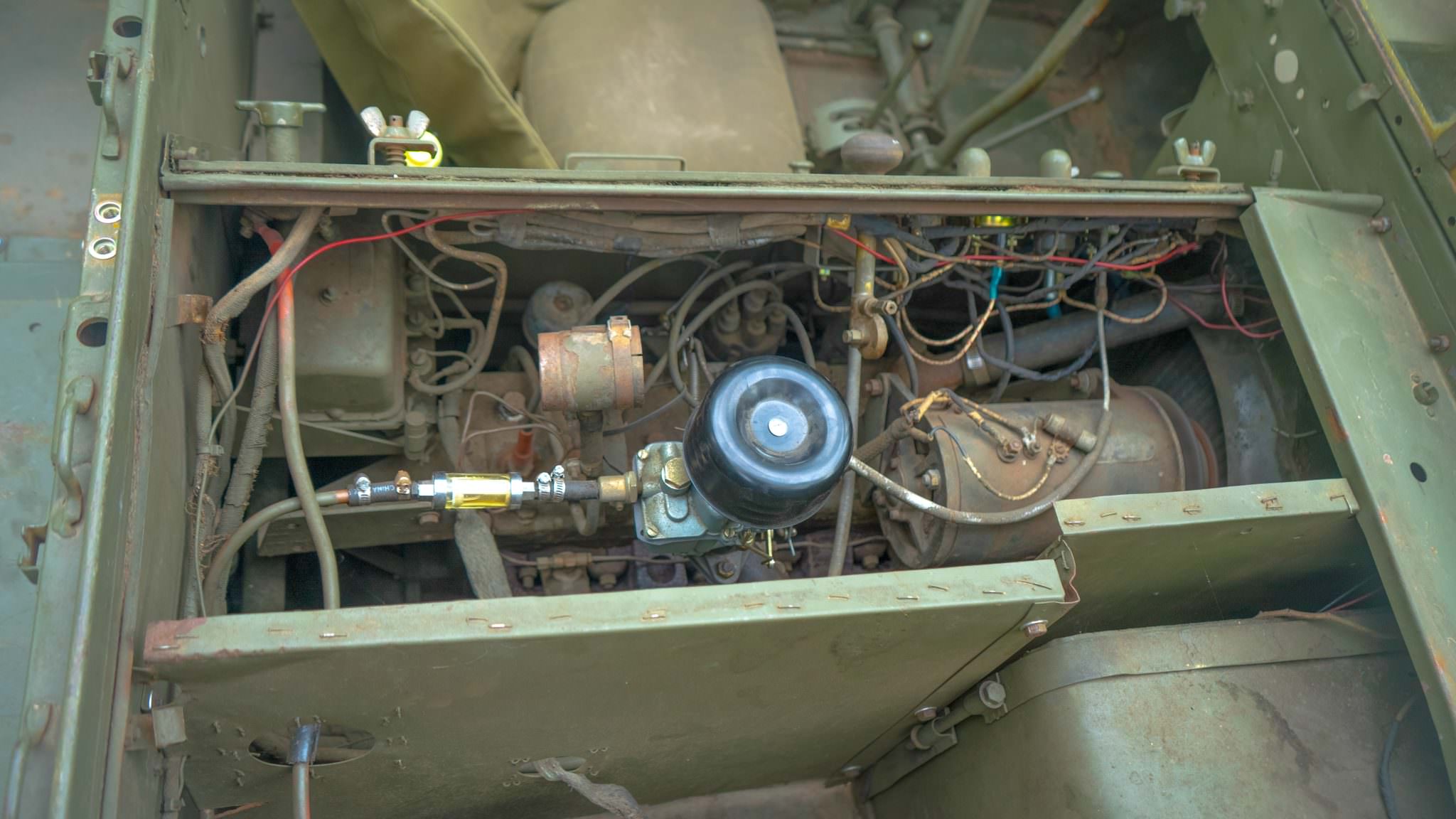
As you would expect, power is provided by Studebaker’s 170 cubic inch inline-six, factory rated at 70 bhp, paired with a 3-speed manual gearbox and dual-range transfer case. Drive is sent through the tracked running gear, which uses rear sprockets, support rollers, and idler wheels.
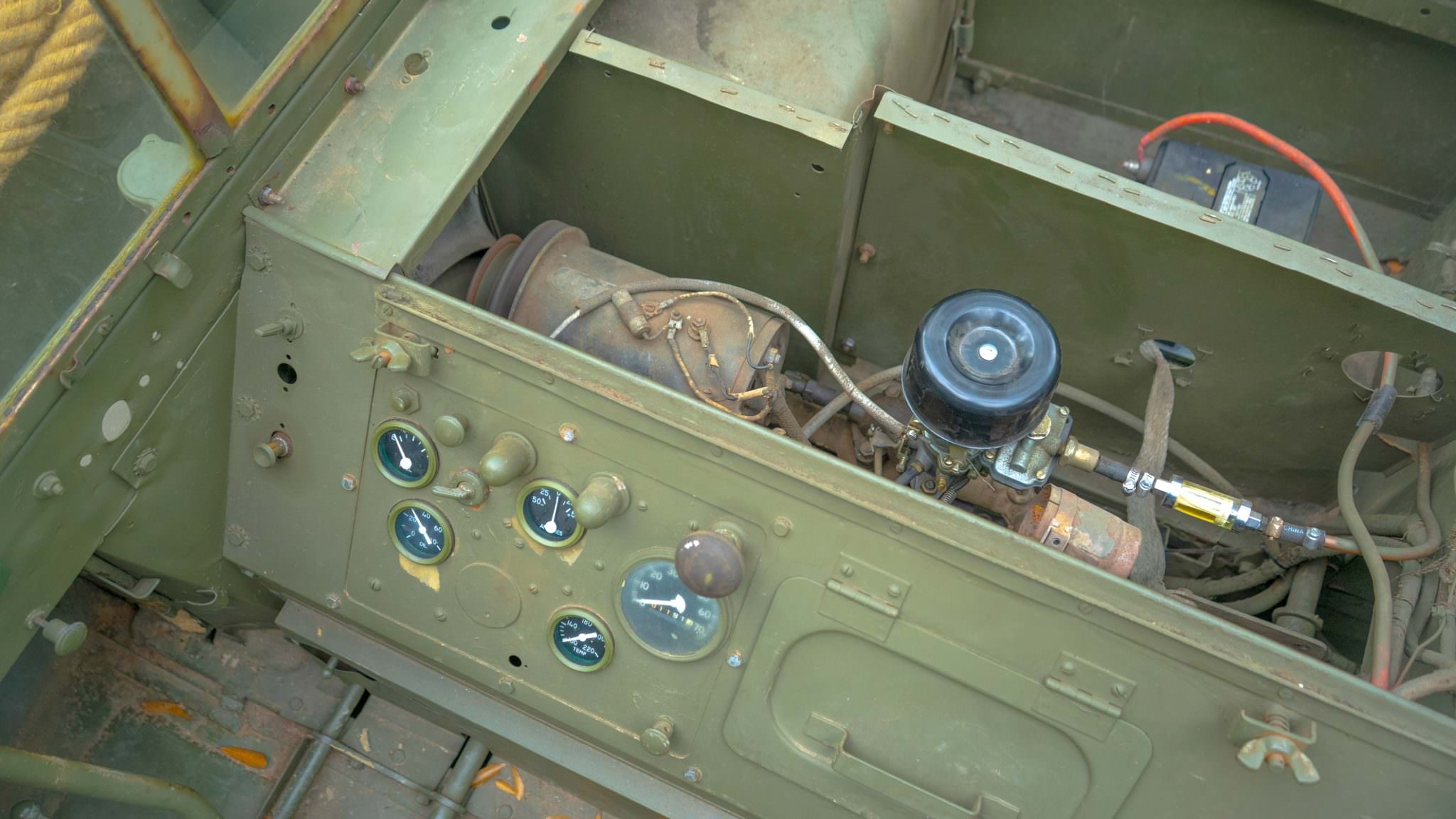
Instrumentation includes a 70 mph speedometer and gauges for fuel, oil pressure, amperage, and coolant temperature, and the odometer shows 1,200 miles, though total mileage since new is unknown.
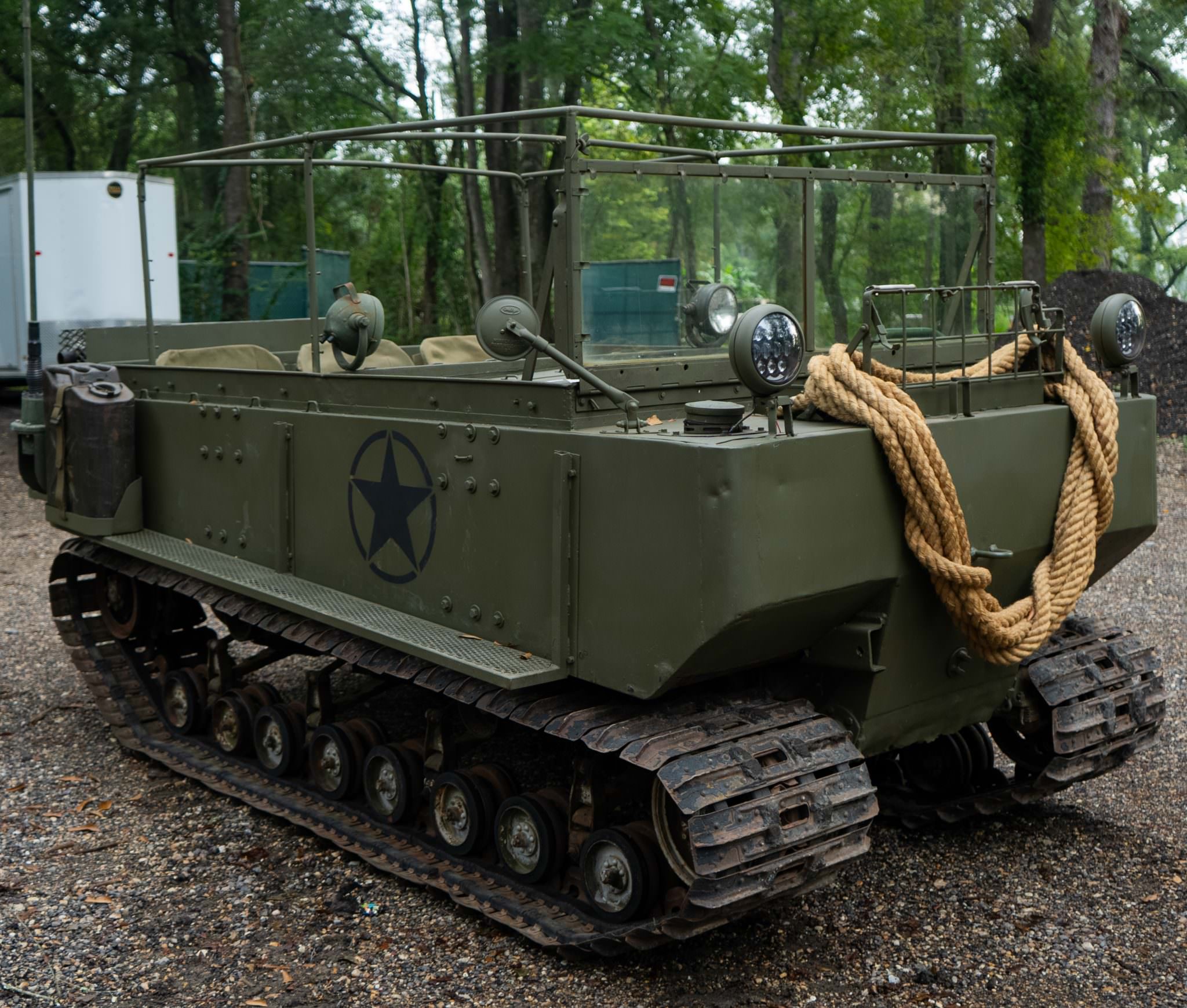
This Studebaker T-24 Weasel is said to be number 244 of the 1,000 or so T24 examples that were built for military use in the Second World War.
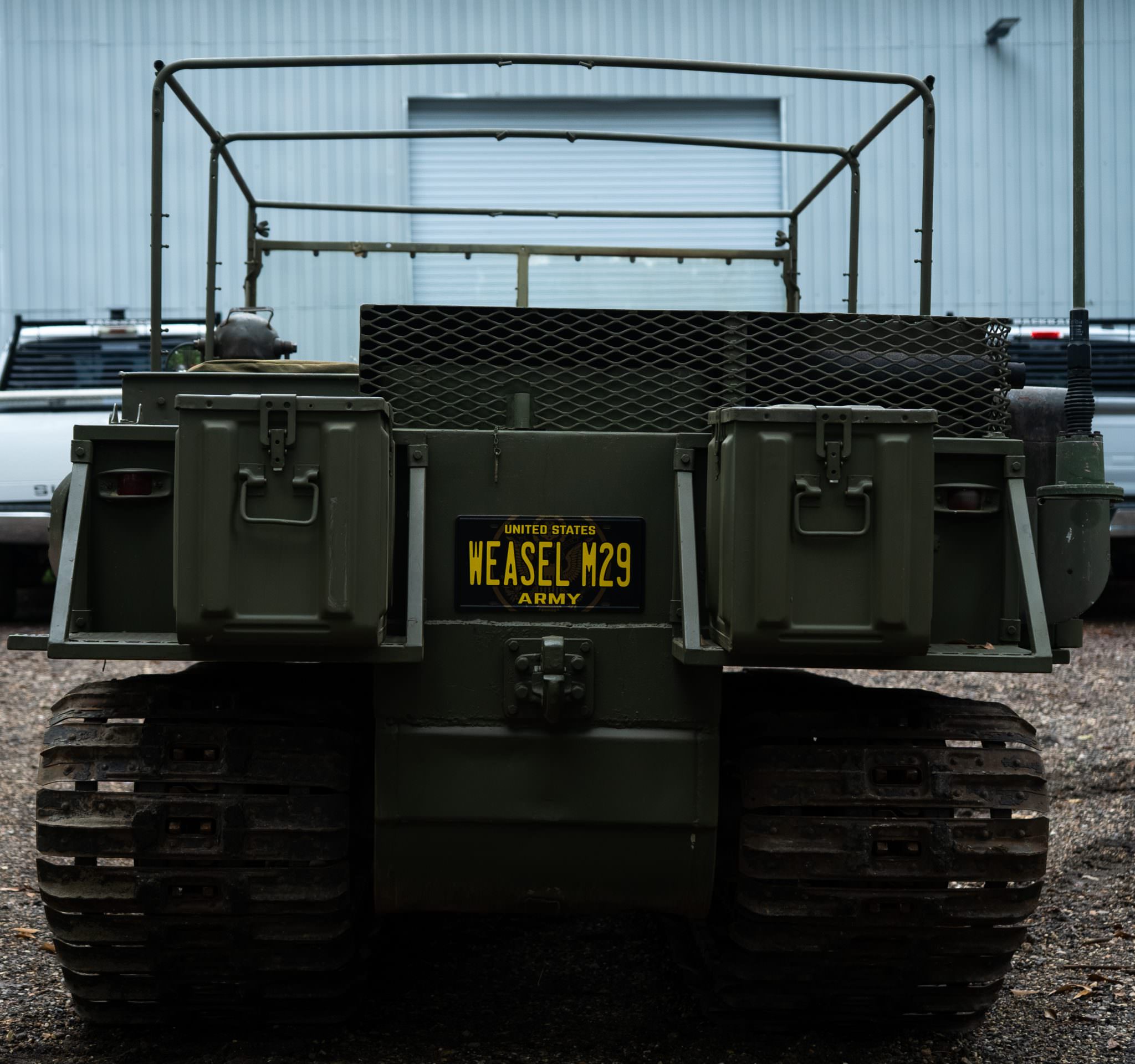
Three additional seats are fitted in the rear compartment, and other equipment includes LED headlights, spotlights, pioneer tools, jerry cans, storage boxes, running boards, a tow rope, and a rear pintle hitch.
The 1943 Studebaker Weasel you see here is now being offered for sale out of Denham Springs, Louisiana and you can visit the listing here if you’d like to read more about it or register to bid.
Images courtesy of Bring a Trailer + Studebaker

Articles that Ben Branch has written have been covered on CNN, Popular Mechanics, Smithsonian Magazine, Road & Track Magazine, the official Pinterest blog, the official eBay Motors blog, BuzzFeed, Autoweek Magazine, Wired Magazine, Autoblog, Gear Patrol, Jalopnik, The Verge, and many more.
Silodrome was founded by Ben back in 2010, in the years since the site has grown to become a world leader in the alternative and vintage motoring sector, with well over a million monthly readers from around the world and many hundreds of thousands of followers on social media.