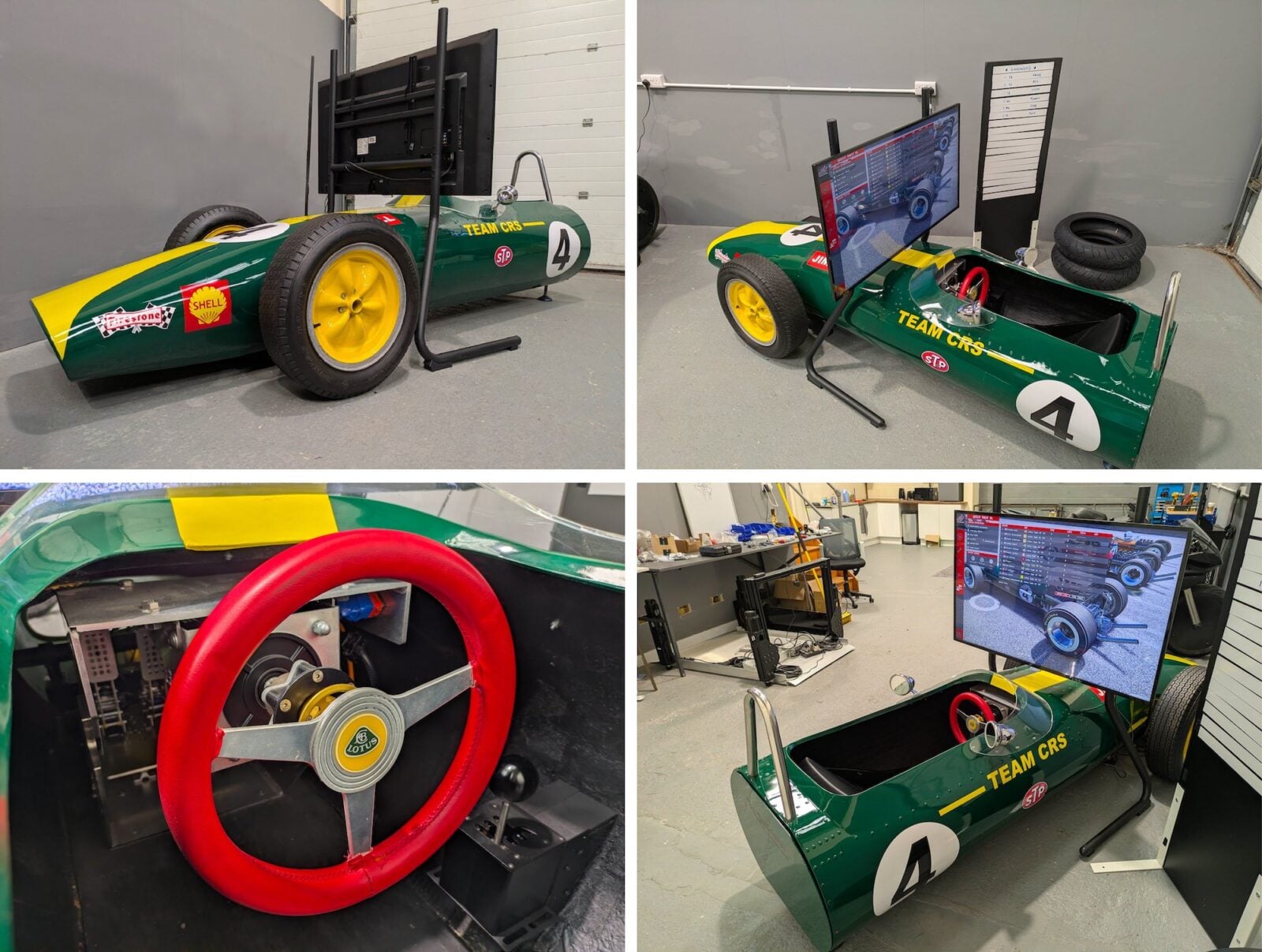
This is a racing simulator built around a 1:1 scale model of the legendary Lotus 49 Formula 1 car from 1967.
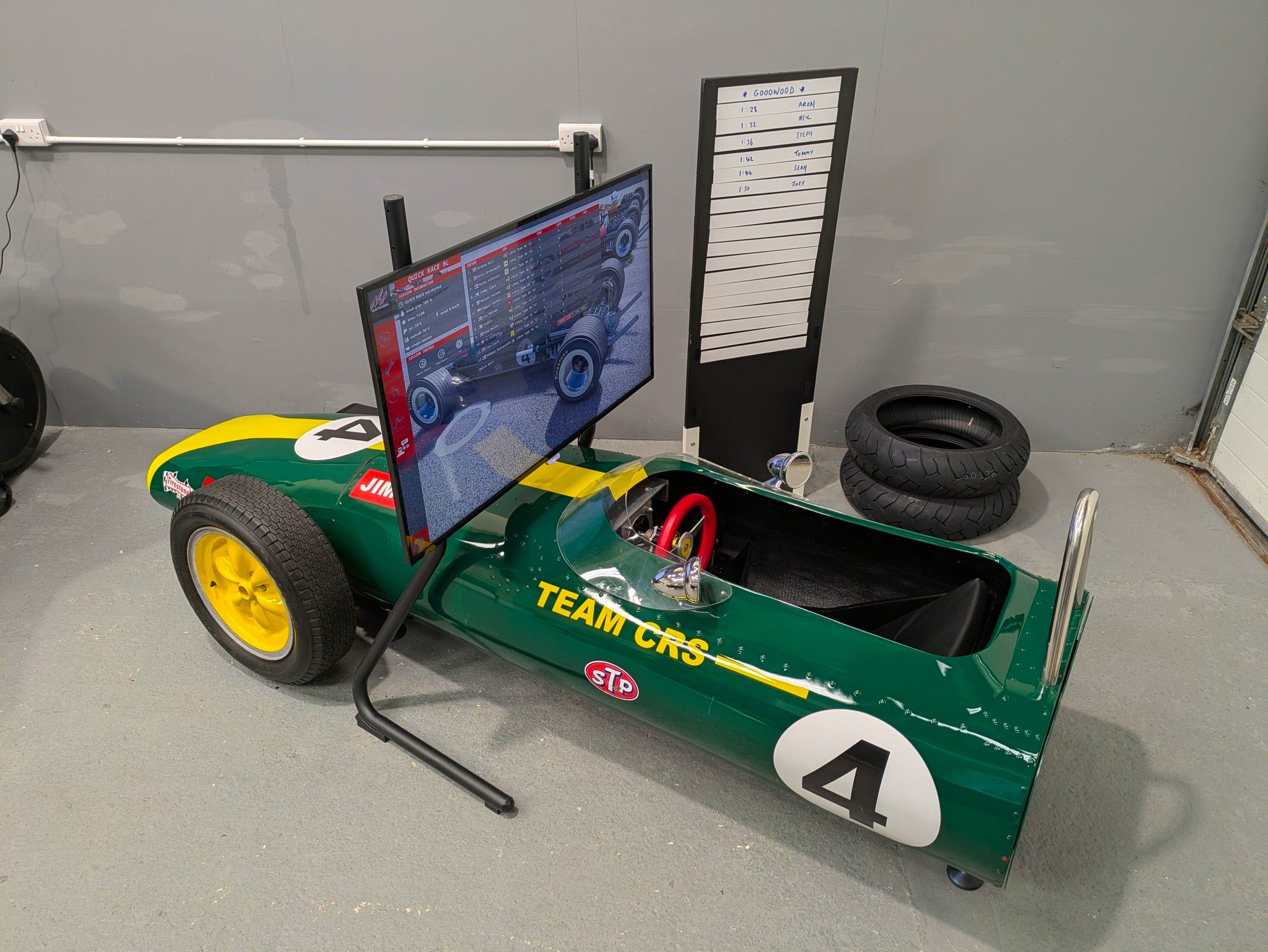
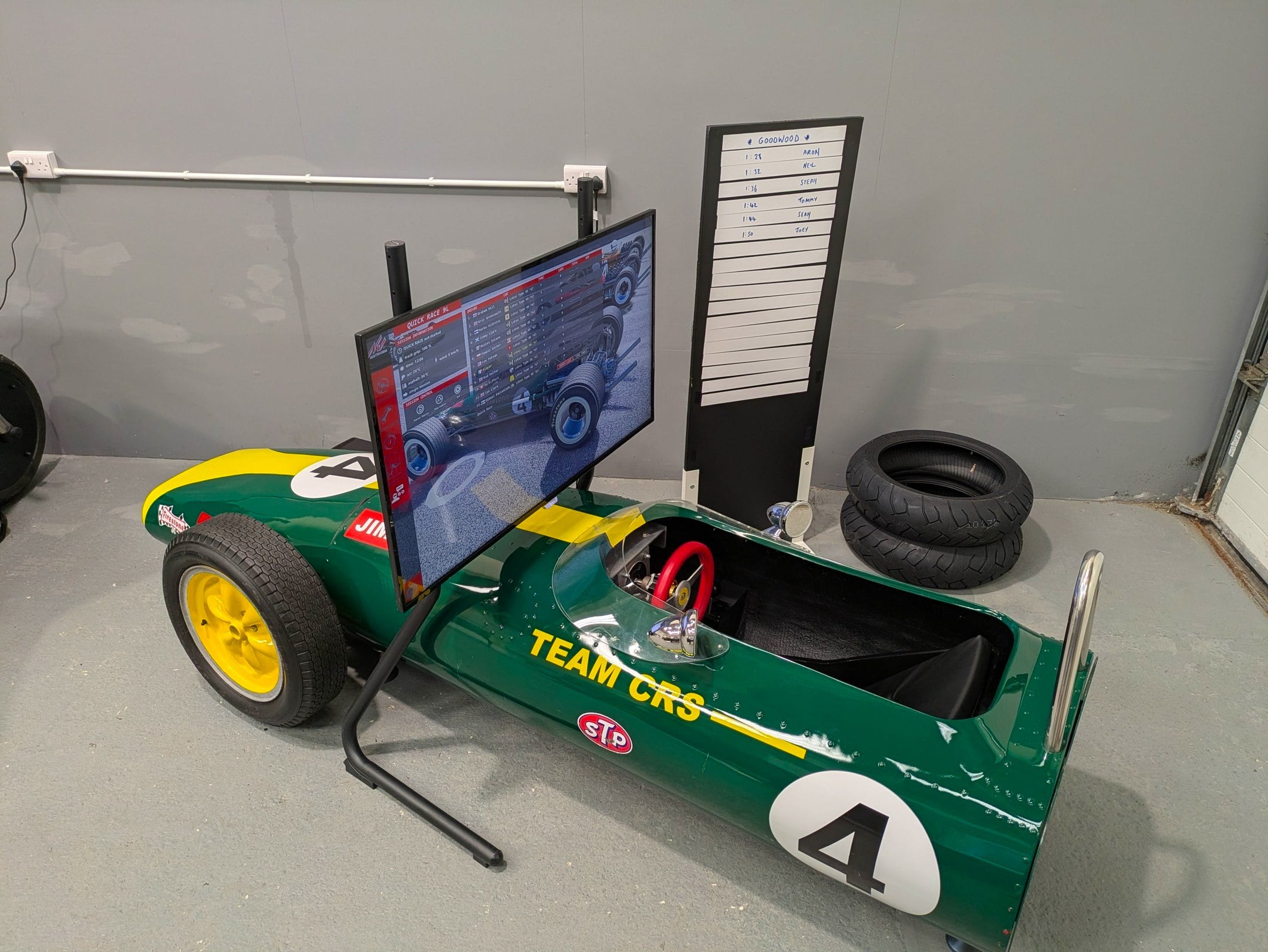
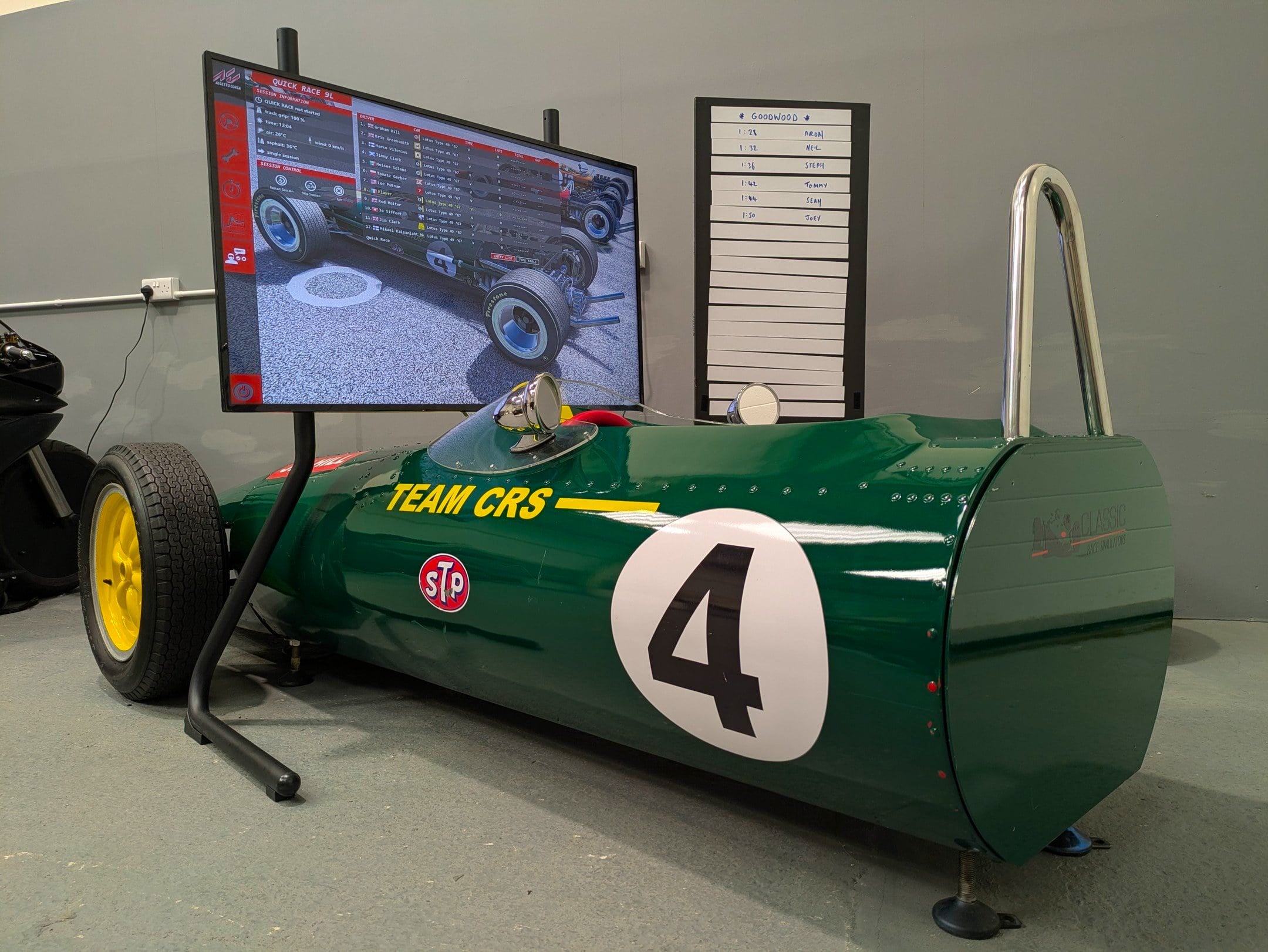
This sim was built in 2018 by Classic Race Simulators of Farnborough as a demonstration unit, it runs on a Scan PC 3X3 with an Nvidia GeForce GTX 1660 graphics card, with a Philips 50 inch flat-screen mounted forward of the 49’s aeroscreen.
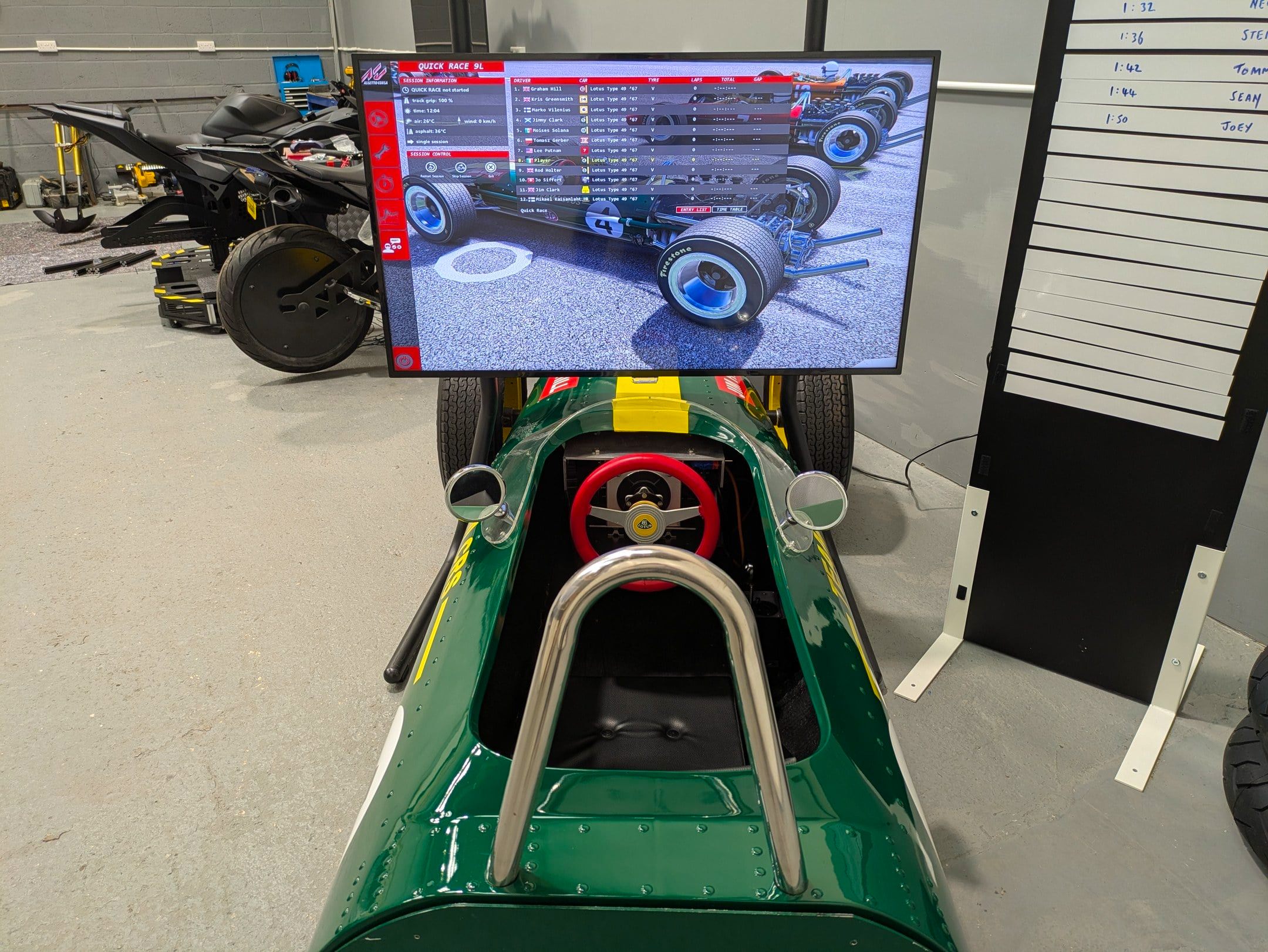
 This is a hand-built, one-off Lotus 49 racing simulator that was built in 2018 by Classic Race Simulators of Farnborough, England as a demonstrator.
History Speedrun: The Lotus 49
The Lotus 49 is widely regarded to be one of the most important cars in Formula 1 history, certainly from an engineering standpoint. Designed by Colin Chapman and Maurice Philippe for the 1967 season, it was developed as a clean-sheet response to Lotus’s troubled 1966 campaign with the heavy and unreliable BRM H16 engine.
Chapman pushed Ford of Britain into funding Keith Duckworth’s design of a purpose-built 3.0 liter V8, and committed Lotus to a new chassis built around it. The result was the Ford-Cosworth DFV V8, or Double Four Valve, a 90º V8 with double overhead cams per bank, four valves per cylinder, Lucas mechanical fuel injection, and a displacement of 2,993cc on a bore and stroke of 85.7 by 64.8 mm.
Power was 400 bhp at 9,000 rpm at launch in 1967, rising to over 410 bhp at 9,500 rpm as development progressed through the late 1960s.
The 49’s aluminum monocoque chassis ended just behind the driver, and the DFV bolted to the rear of it with four fasteners, carrying both the rear suspension loads and the gearbox. The engine wasn’t just a passenger in the chassis, it was a lot bearing part of the chassis. This design concept did have some precedent – the front-engined Lancia D50 of 1954 used a load-bearing/stressed engine, and the BRM P83 and Lotus 43 had tried similar arrangements with the H16, but the Lotus 49 was the first to make it work in a slim, lightweight, race-winning package.
Within a few years, every serious F1 constructor had followed the same fundamental layout, and it remains in use today.
The car made its racing debut at the 1967 Dutch Grand Prix at Zandvoort on June the 4th. Graham Hill took pole, then retired, Jim Clark, sitting in the car for the first time that race weekend, won. The initial transmission used was a ZF 5DS-12 5-speed unit, replaced by Hewland gearboxes from the 49B onwards because changing ratios trackside in the ZF was unworkable.
Clark added three more wins in 1967, finishing third in the championship as mechanical issues, particularly with the ZF gearbox, cost Lotus the title.
Above Video: This short film from Goodwood Road & Racing gives a great look back at the Lotus 49 and its history.
1968 brought the car’s high point but also saw a tragedy – Clark won the season-opening South African Grand Prix, then was killed in a Formula 2 race at Hockenheim on April the 7th. Graham Hill took over team leadership and drove the revised 49B to wins at Spain, Monaco, and Mexico, taking the Drivers’ Championship and securing the Constructors’ title for Team Lotus.
The 49B also introduced front aerofoils at the 1968 Monaco Grand Prix, with tall strut-mounted rear wings appearing later in the season. Privateer Jo Siffert, in Rob Walker’s car, won the 1968 British Grand Prix at Brands Hatch, the last World Championship Formula 1 race ever won by a genuine privateer entry.
The 49 continued into 1969 and 1970 in 49B and 49C form, as the four-wheel-drive Lotus 63 failed to deliver and the wedge-shaped Lotus 72 was readied. Jochen Rindt took his maiden F1 victory in a 49B at the 1969 United States Grand Prix at Watkins Glen, and gave the model its final win at the 1970 Monaco Grand Prix in 49C trim, after pressuring Jack Brabham into a final-corner mistake.
Across four full seasons the 49 took 12 Grand Prix wins, won the 1968 Drivers’ and Constructors’ Championships outright, and contributed to Lotus’s 1970 titles before the 72 took over. Team Lotus built nine Type 49s, seven of them survive today.
The 1:1 Scale Lotus 49 Racing Simulator Shown Here
This is a hand-built, one-off Lotus 49 racing simulator that was built in 2018 by Classic Race Simulators of Farnborough, England as a demonstrator. The rig pairs a 1:1 scale front three-quarter replica of Colin Chapman’s 1967 Grand Prix car with modern direct-drive sim hardware. It’s recently been overhauled and reconfigured by motorsport and aerospace simulation specialists Simbiotix Ltd, and it’s now being offered as a plug-and-play package from a private seller in Rustington, Sussex.
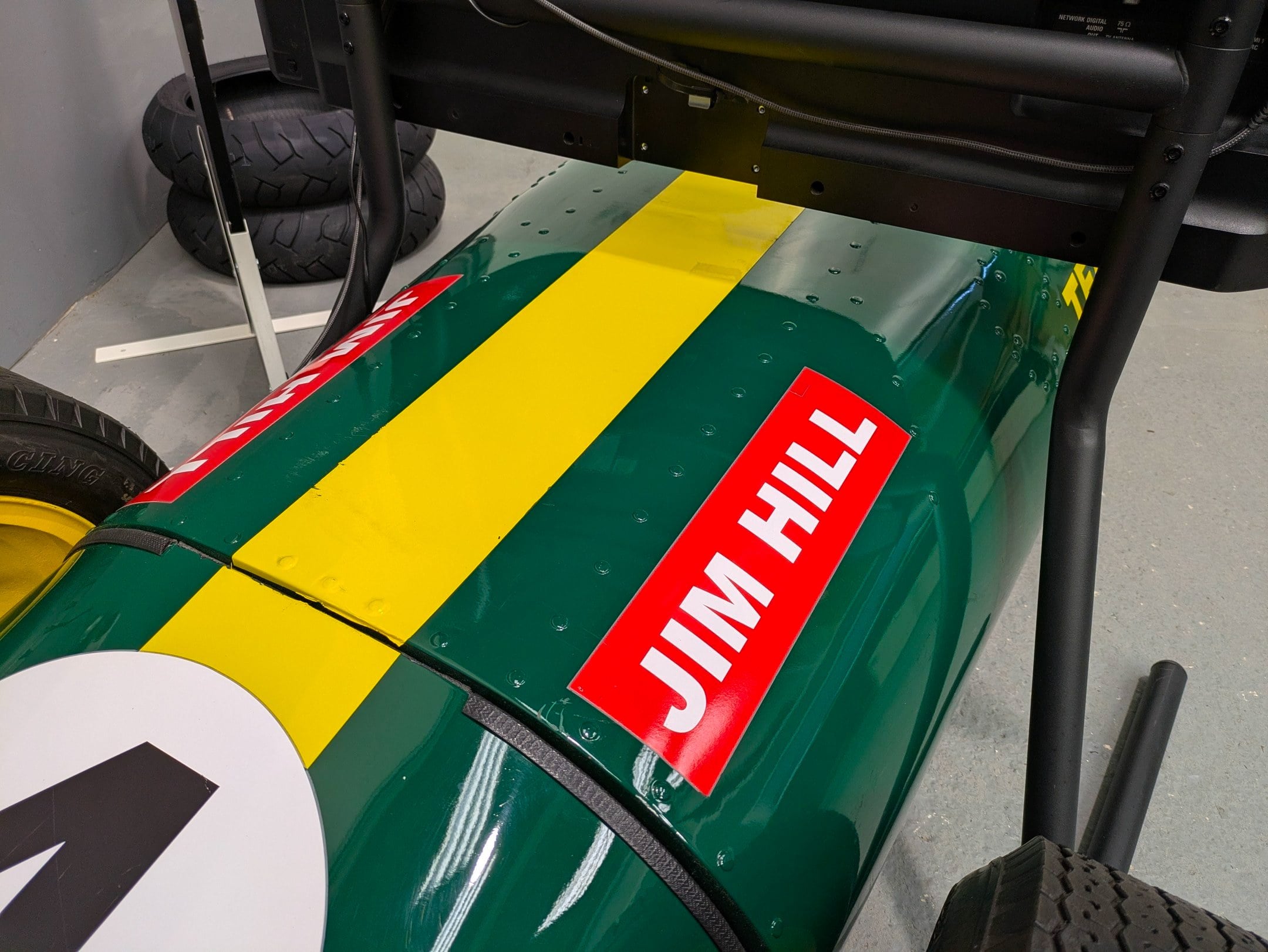
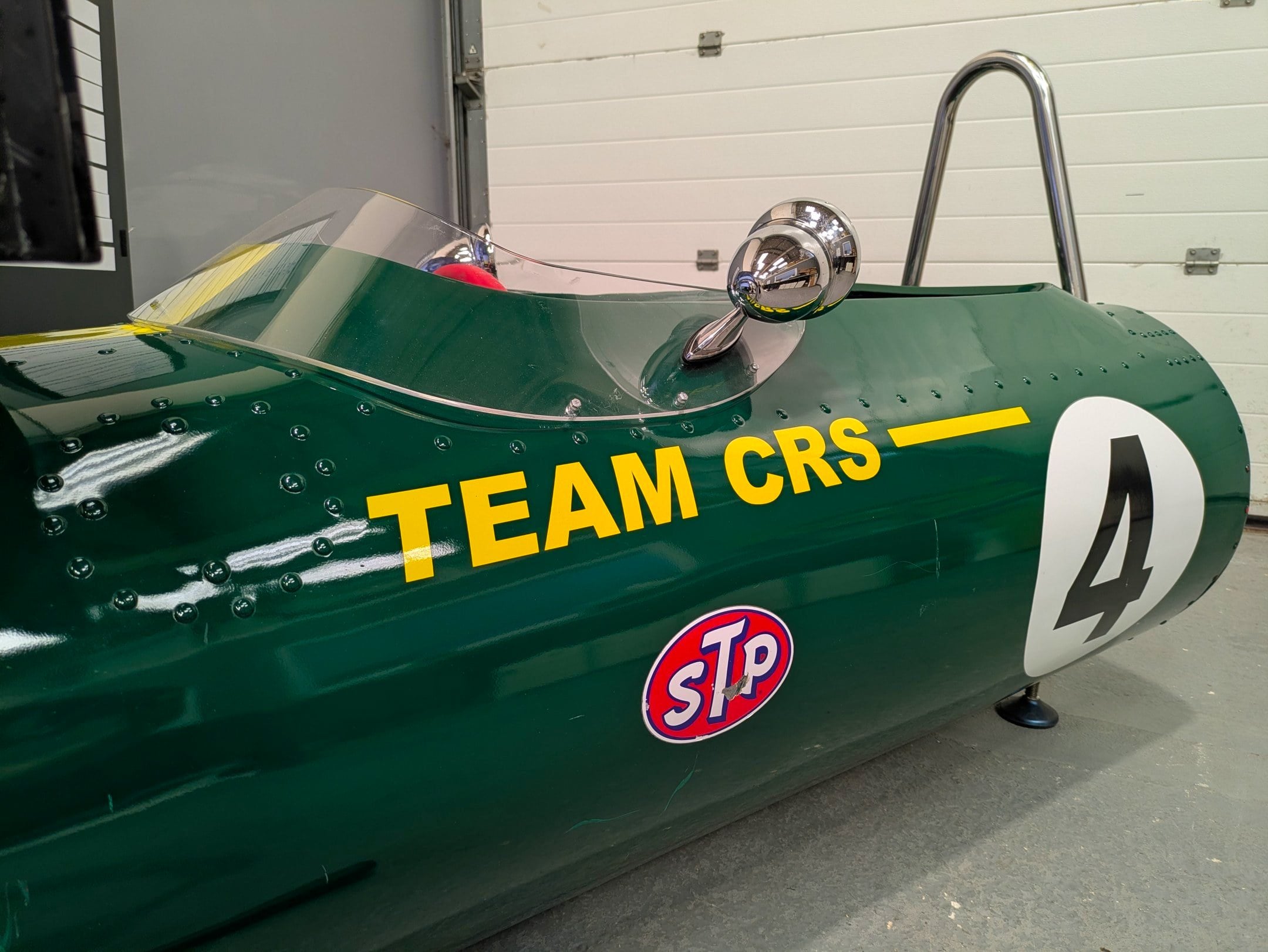
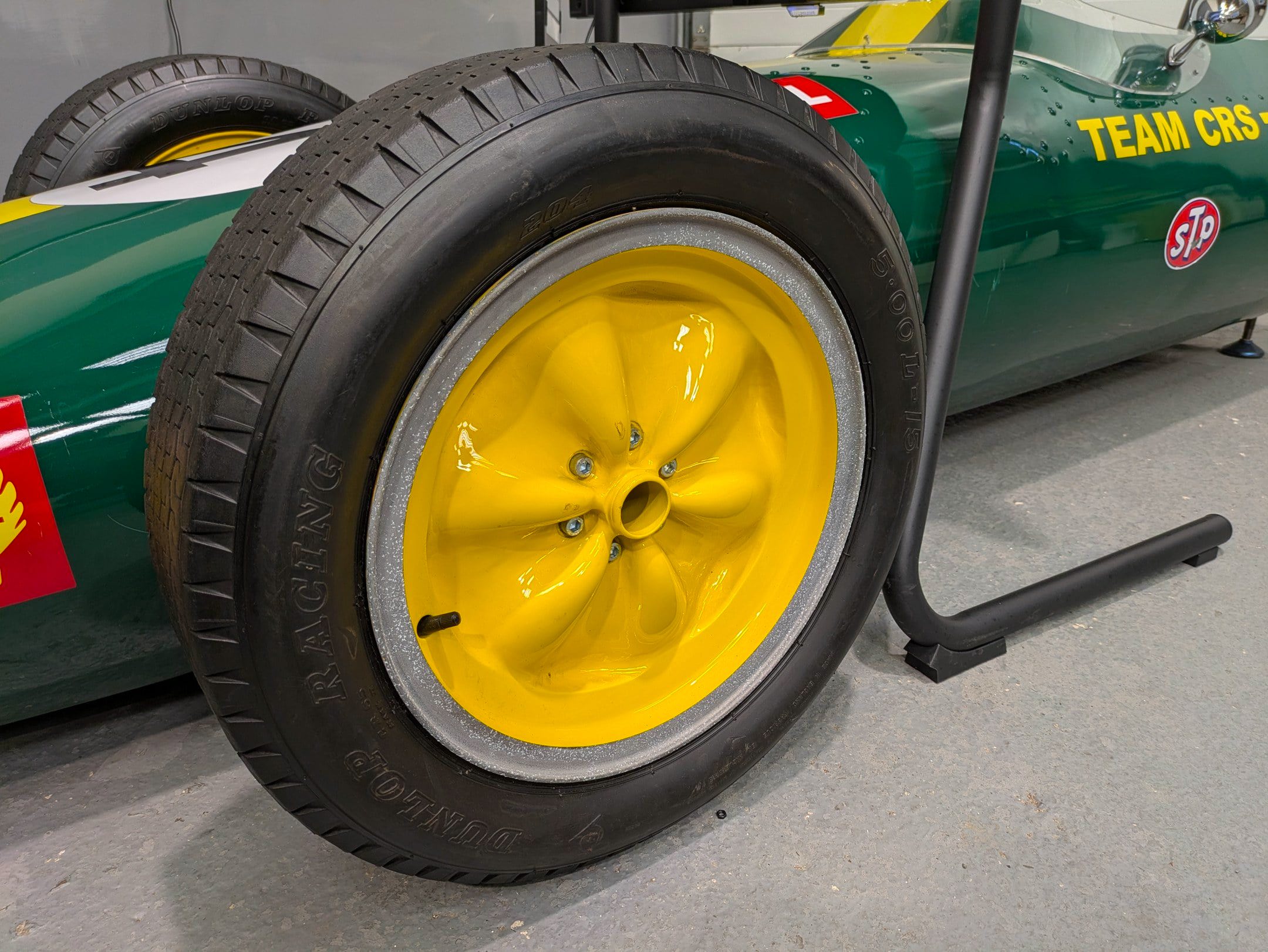
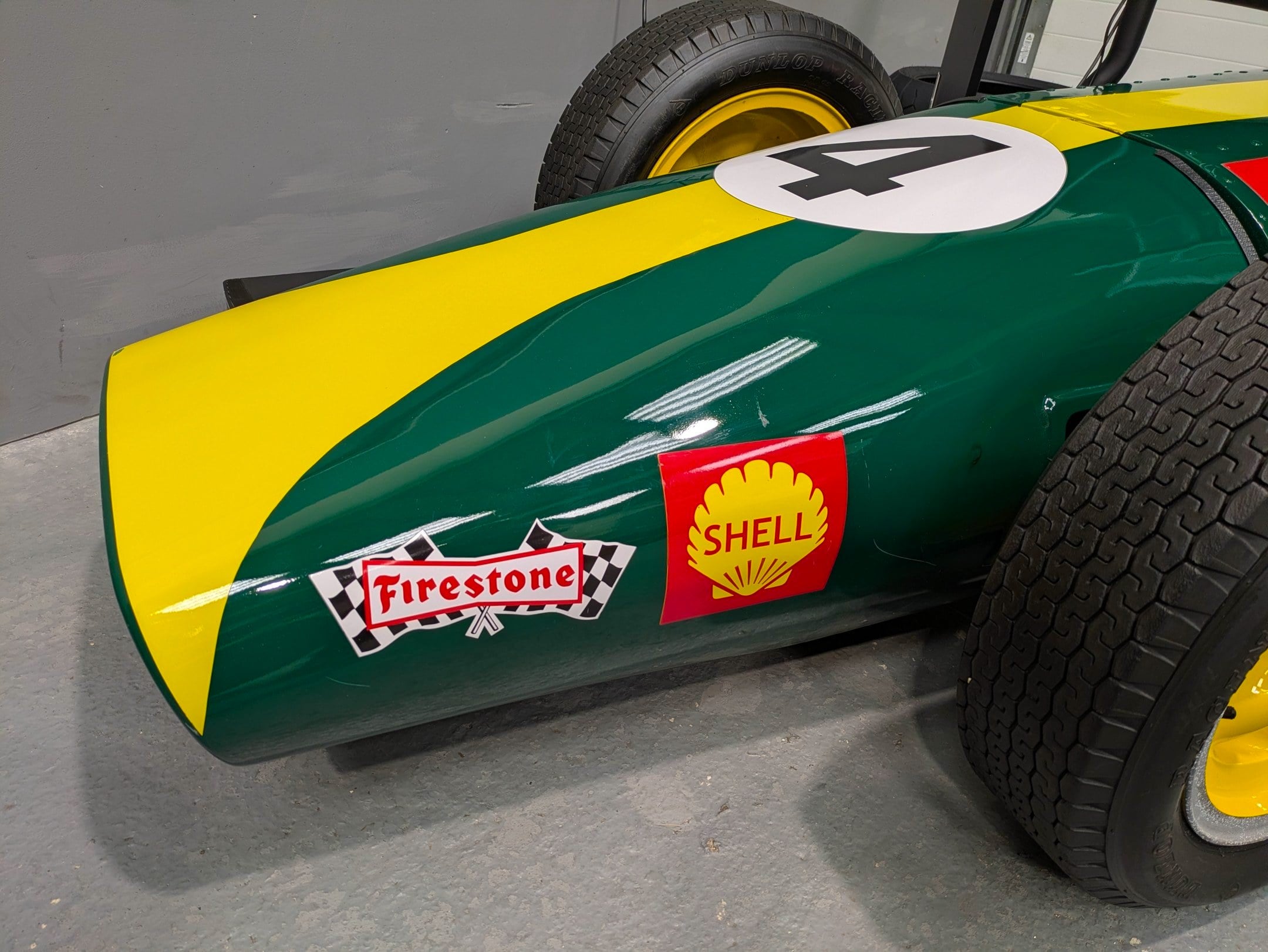
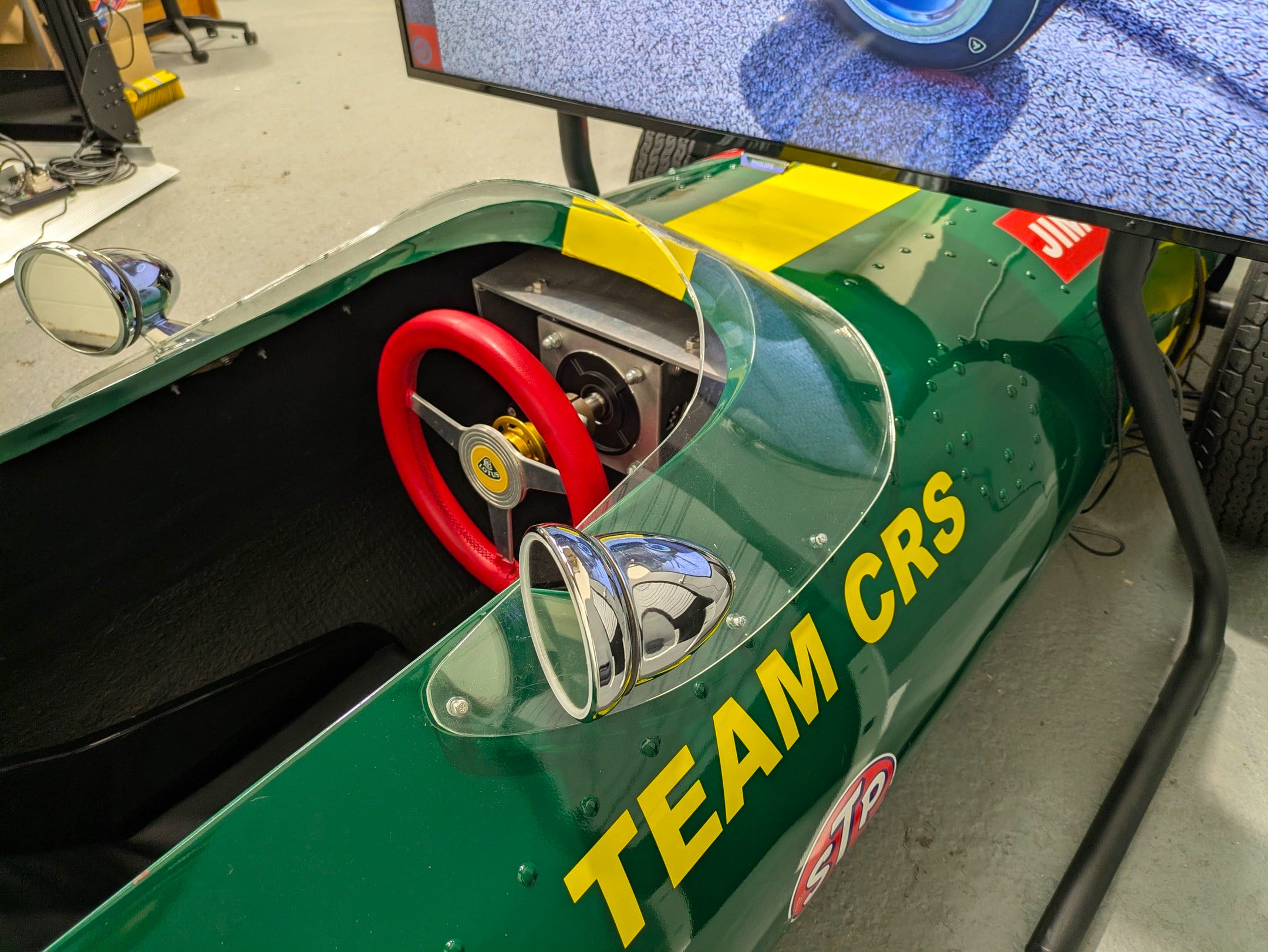
The body is finished in green vinyl with a yellow center stripe and number 4 roundels, plus reproduction STP, Shell, and Firestone sponsor decals from the period. The build follows the same pattern as the original, with visible rivets, a wraparound aeroscreen, twin bullet-style mirrors, a roll bar, and front wheels mounted with genuine used Dunlop tires.
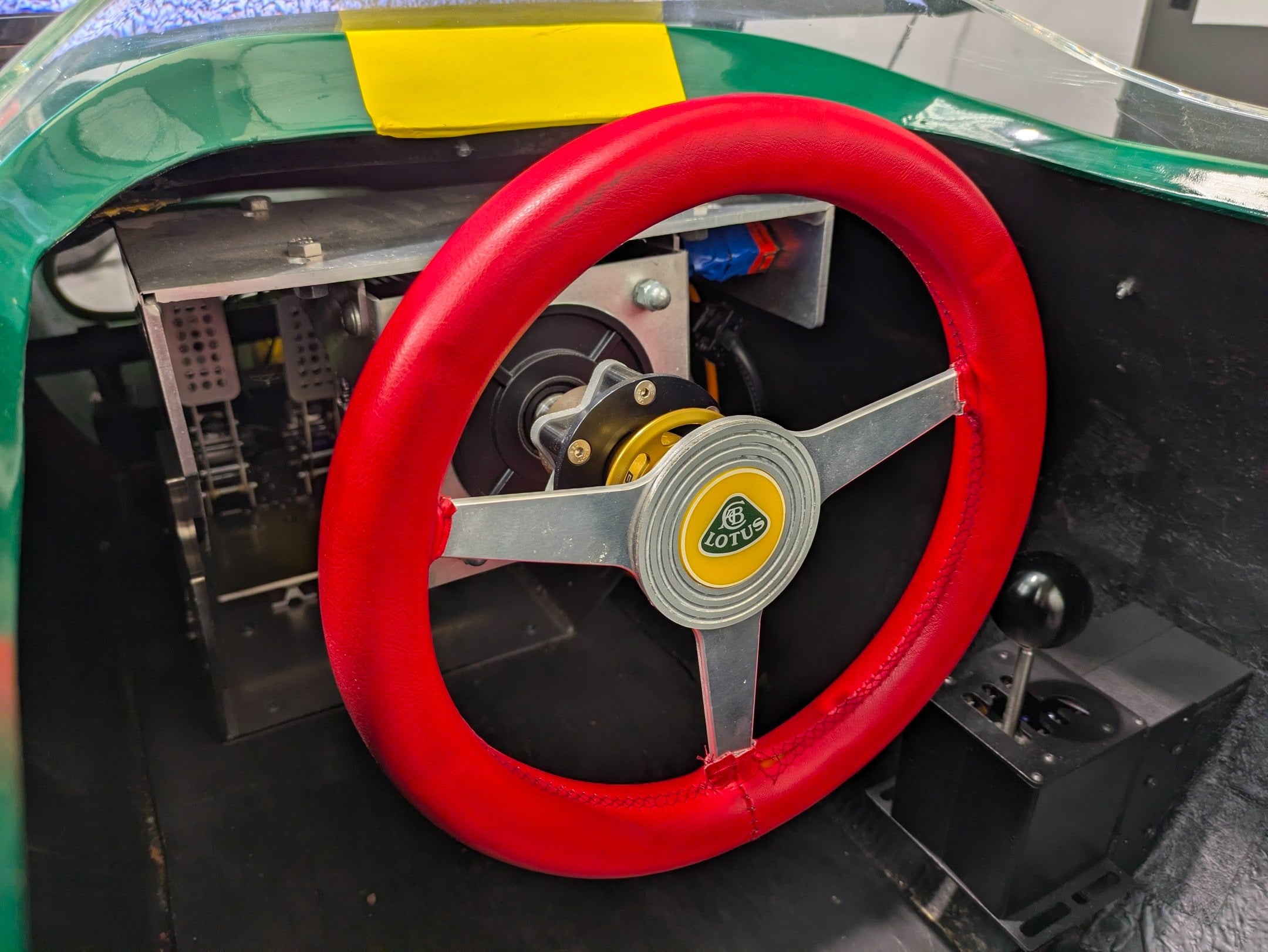
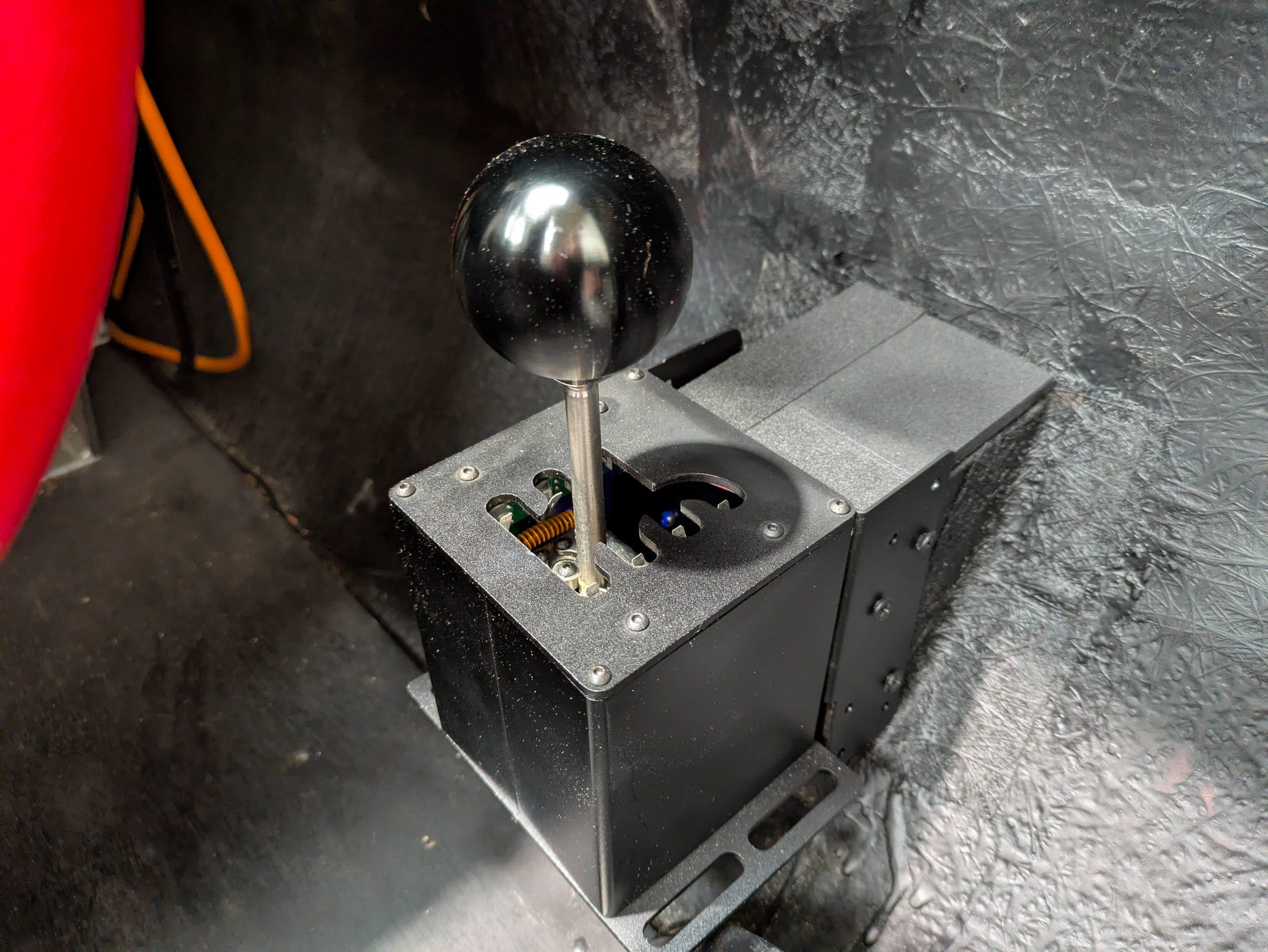
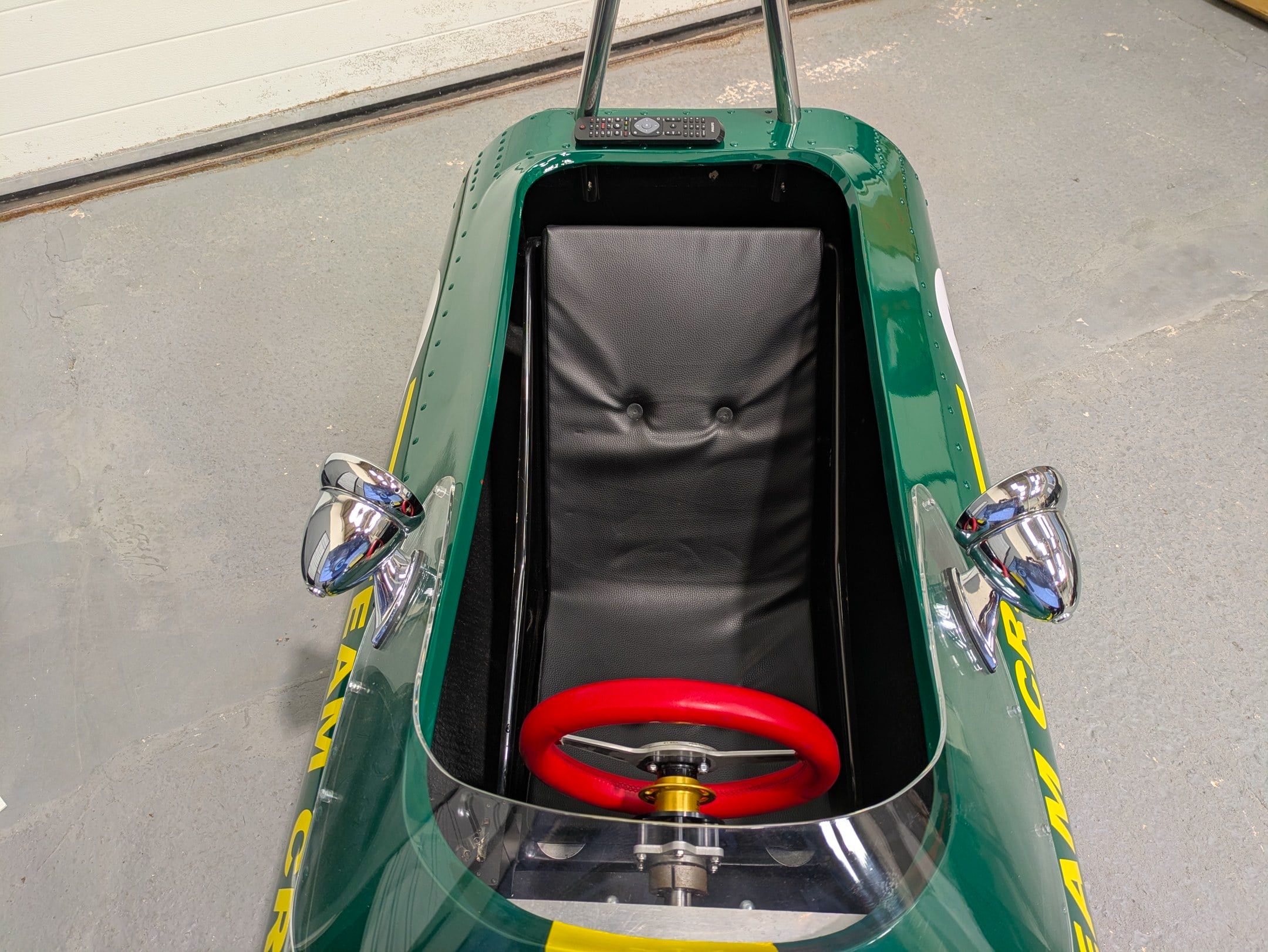
The dimensions are 9.2 feet long by 3.6 feet wide at the wheels, 1:1 scale but still small enough for a domestic or garage space. The cockpit has a red leather-trimmed replica Lotus steering wheel on a “Go Race” quick-release hub, a bespoke left-side gear shifter, and a black leatherette padded seat.
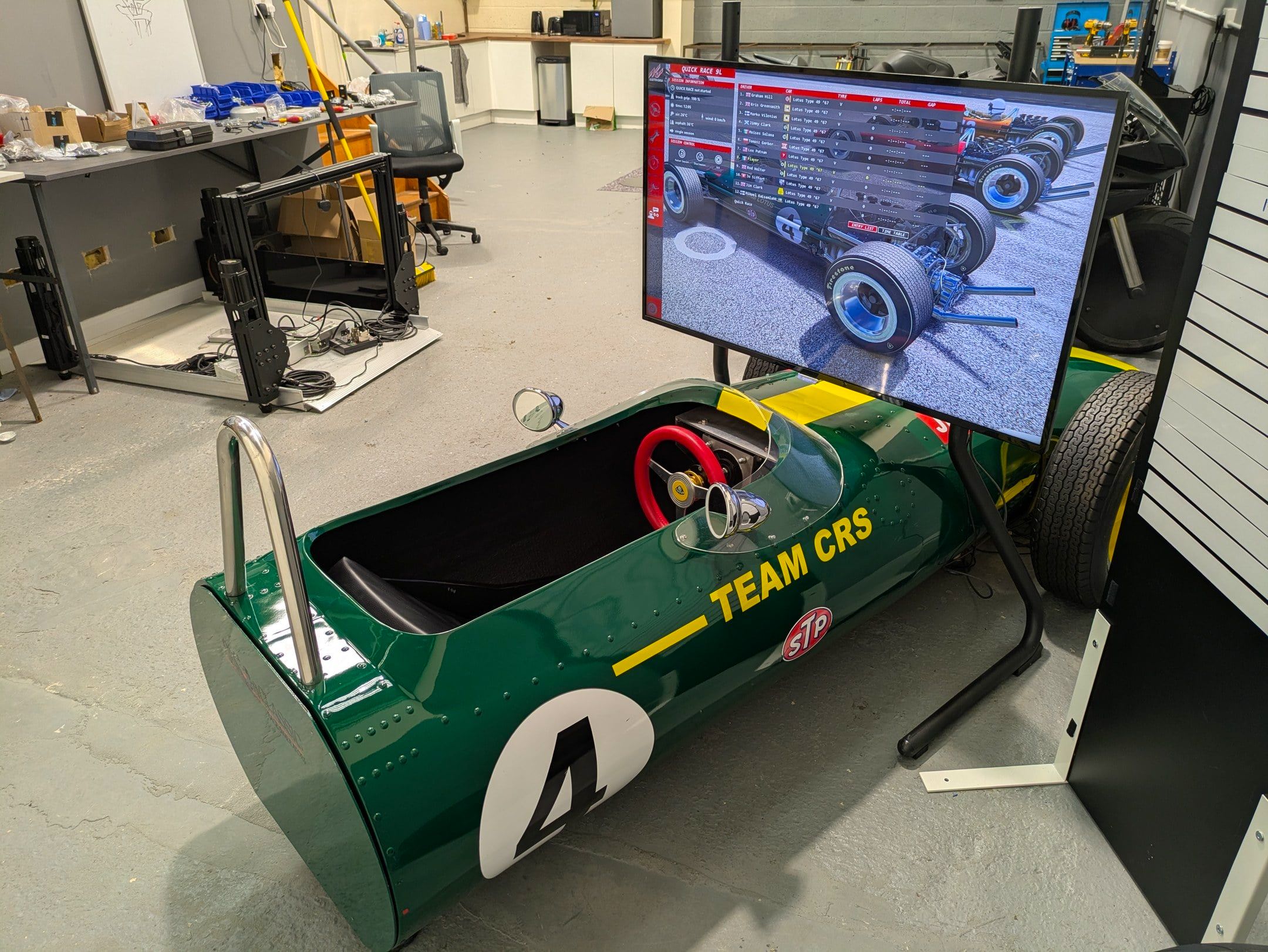
The rig pairs a 1:1 scale front three-quarter replica of Colin Chapman’s 1967 Grand Prix car with modern direct-drive sim hardware. It’s recently been overhauled and reconfigured by motorsport and aerospace simulation specialists Simbiotix Ltd, and it’s now being offered as a plug-and-play package from a private seller in Rustington, Sussex.
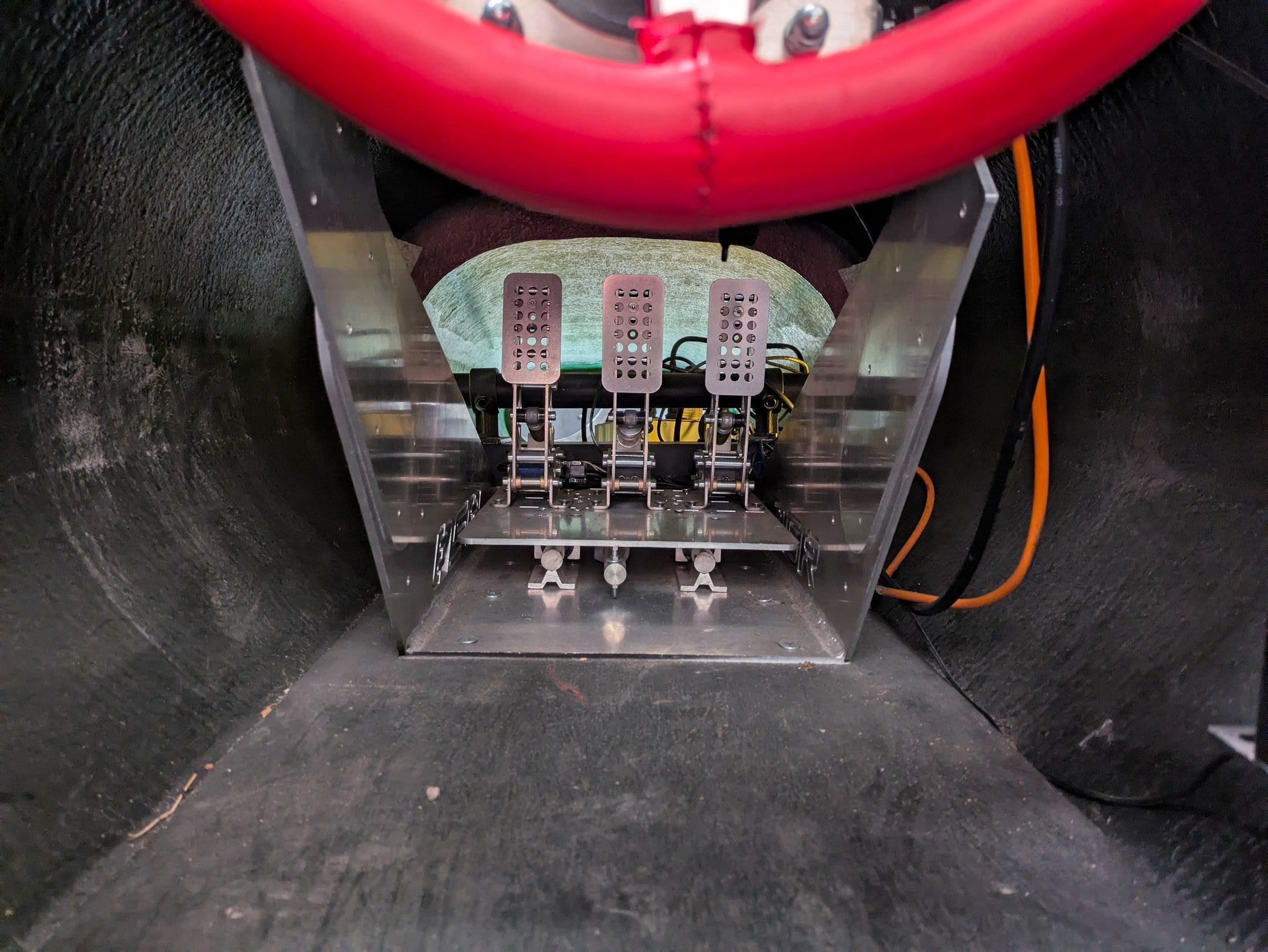
The simulator runs on a Scan PC 3X3 with an Nvidia GeForce GTX 1660 graphics card, powering a Philips 50 inch flat-screen mounted forward of the aeroscreen. Steering force is fed back through a 20Nm direct drive motor with 14.75 lb ft of holding torque. The pedals are a Heusinkveld Pro triple set on an electrically adjustable base plate.
It’s now being offered for sale out of Sussex, England on Car & Classic and you can visit the listing here if you’d like to read more about it or register to bid.
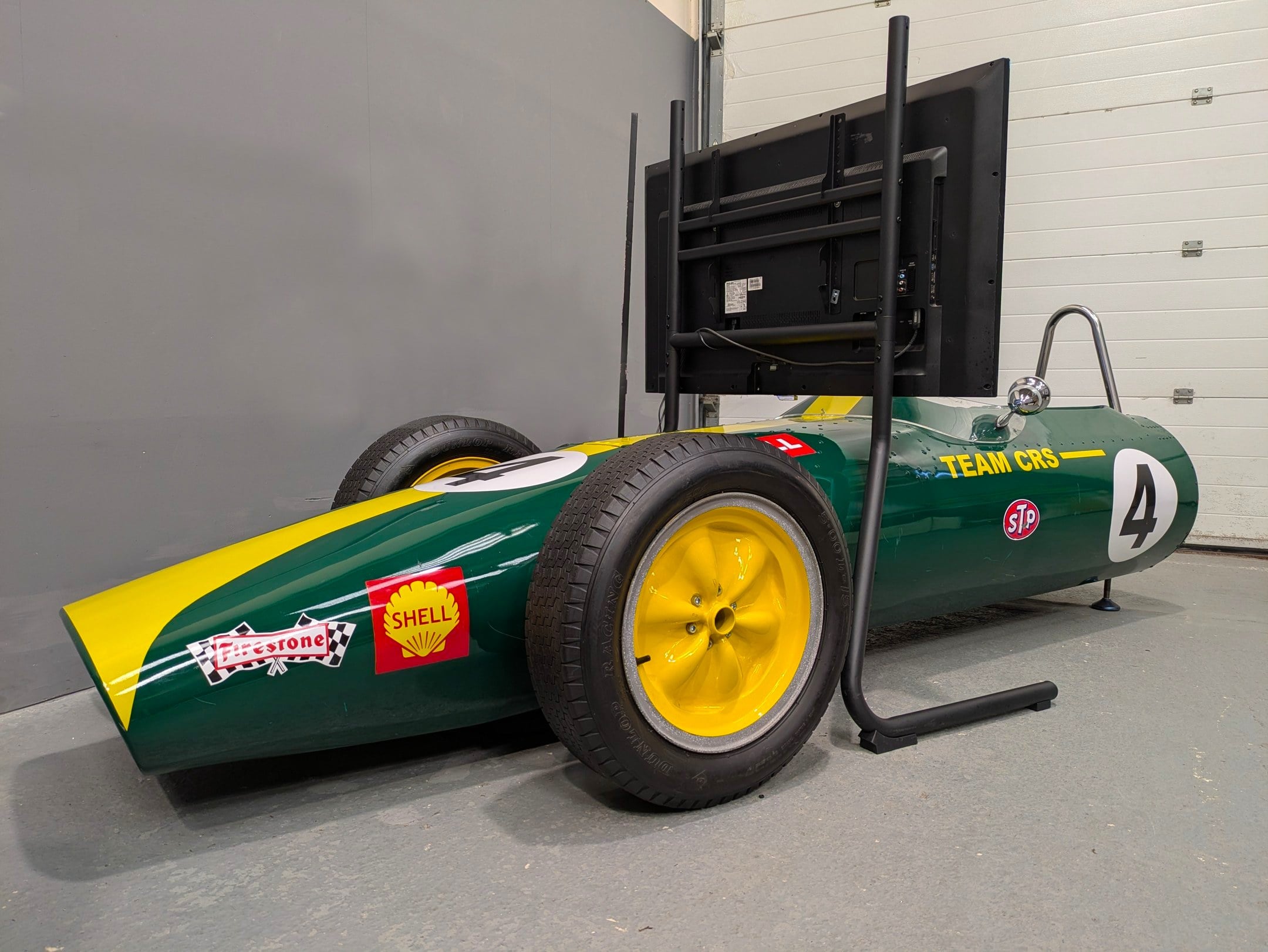
Images courtesy of Car & Classic

Articles that Ben Branch has written have been covered on CNN, Popular Mechanics, Smithsonian Magazine, Road & Track Magazine, the official Pinterest blog, the official eBay Motors blog, BuzzFeed, Autoweek Magazine, Wired Magazine, Autoblog, Gear Patrol, Jalopnik, The Verge, and many more.
Silodrome was founded by Ben back in 2010, in the years since the site has grown to become a world leader in the alternative and vintage motoring sector, with well over a million monthly readers from around the world and many hundreds of thousands of followers on social media.