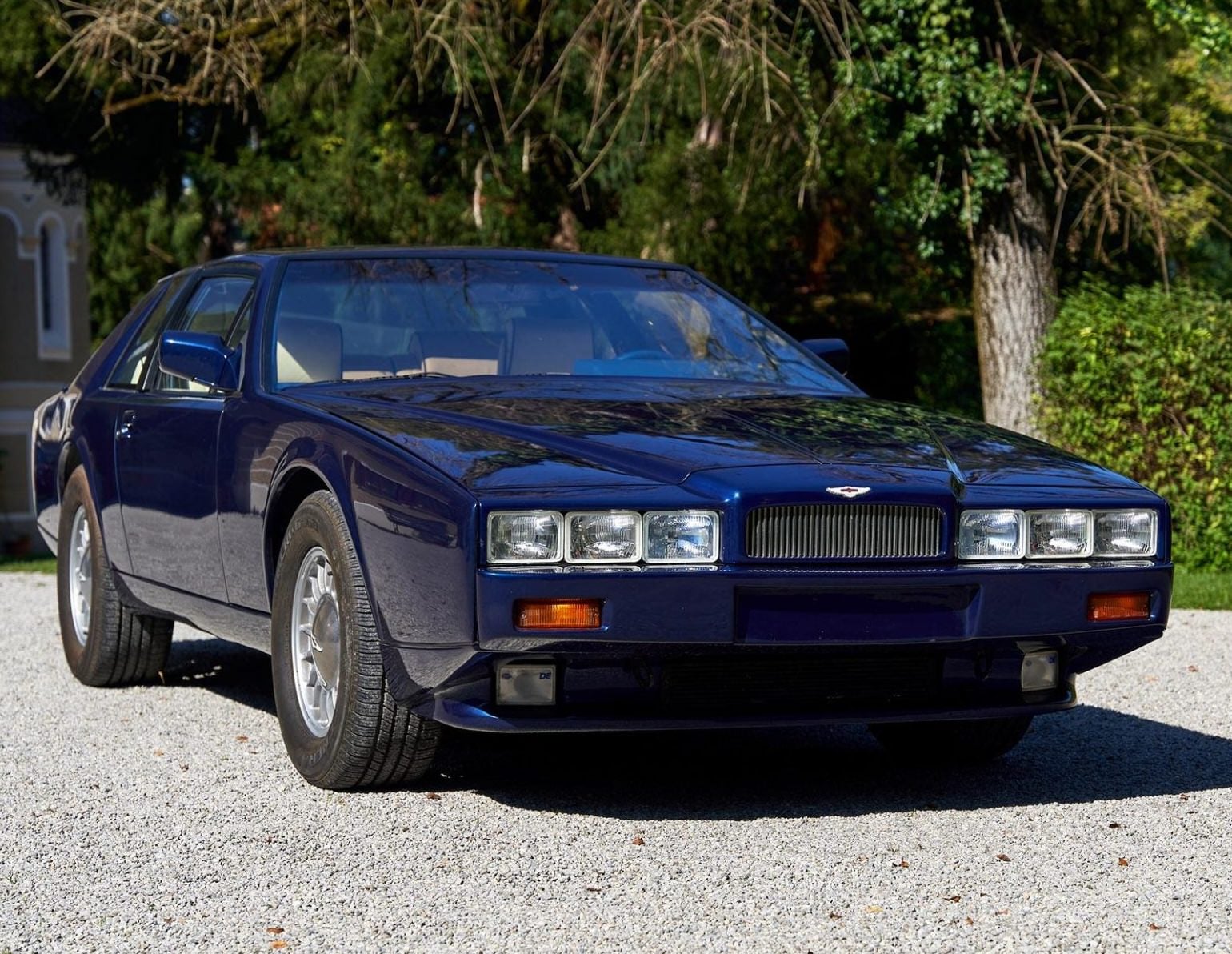
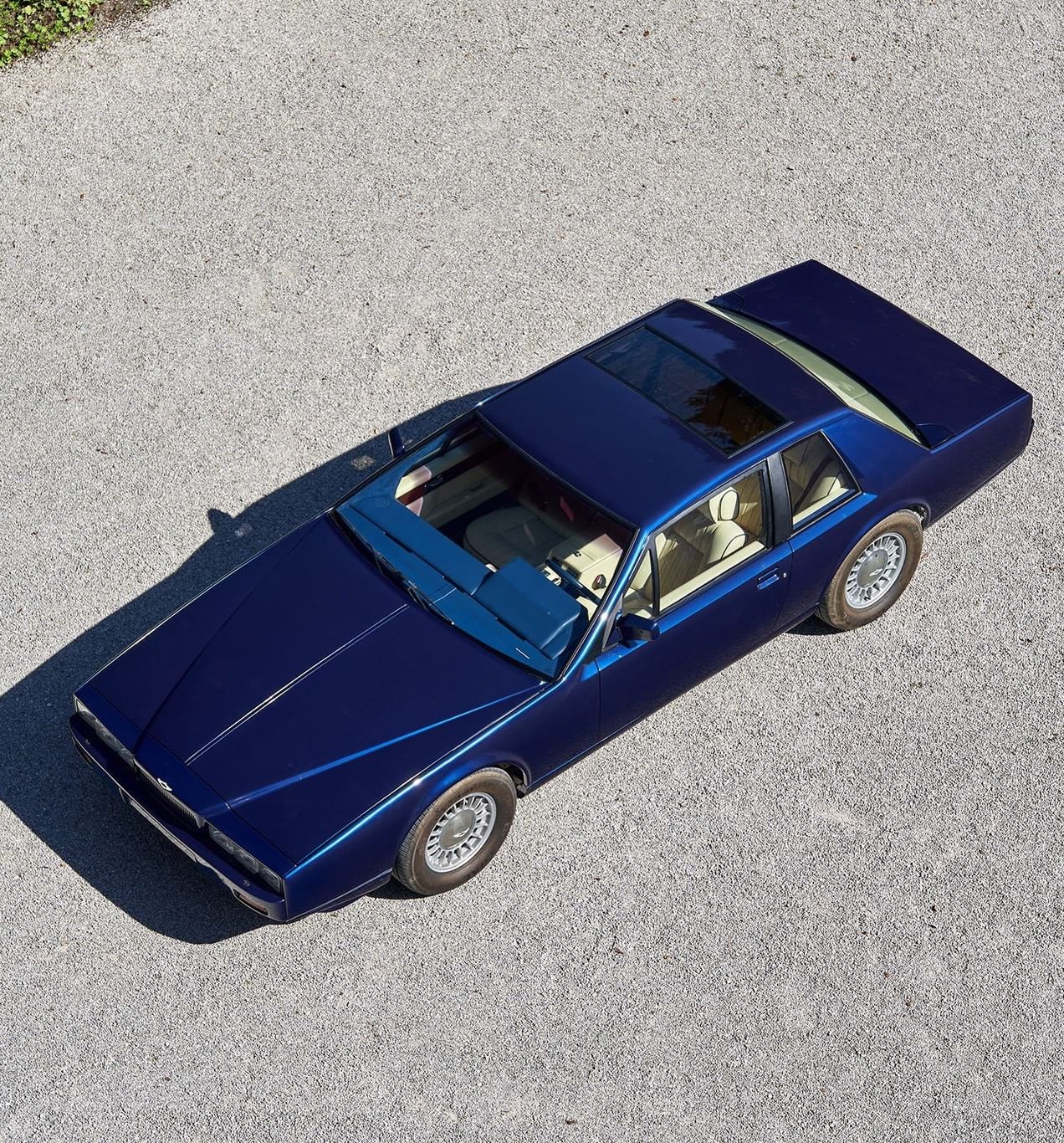
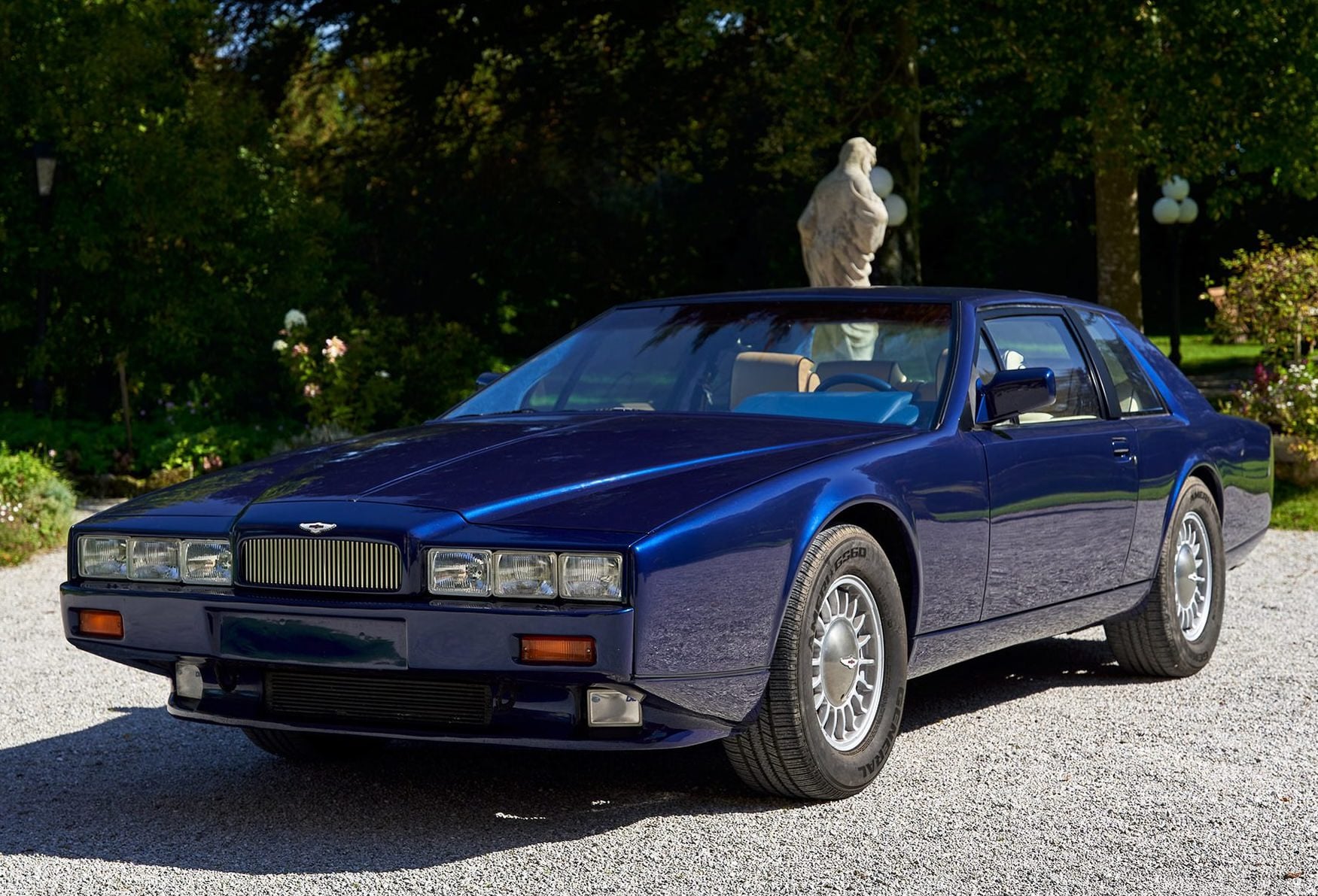
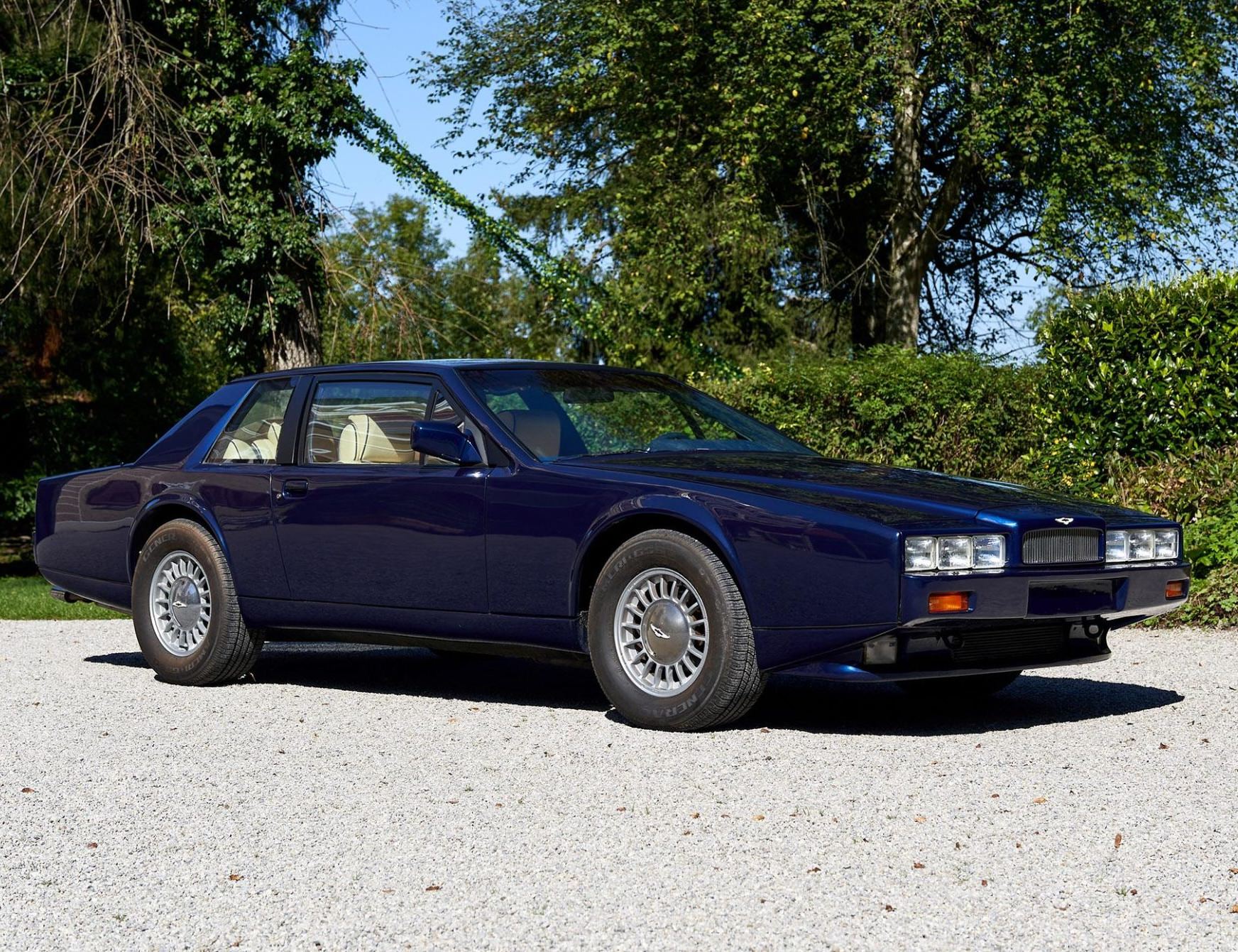
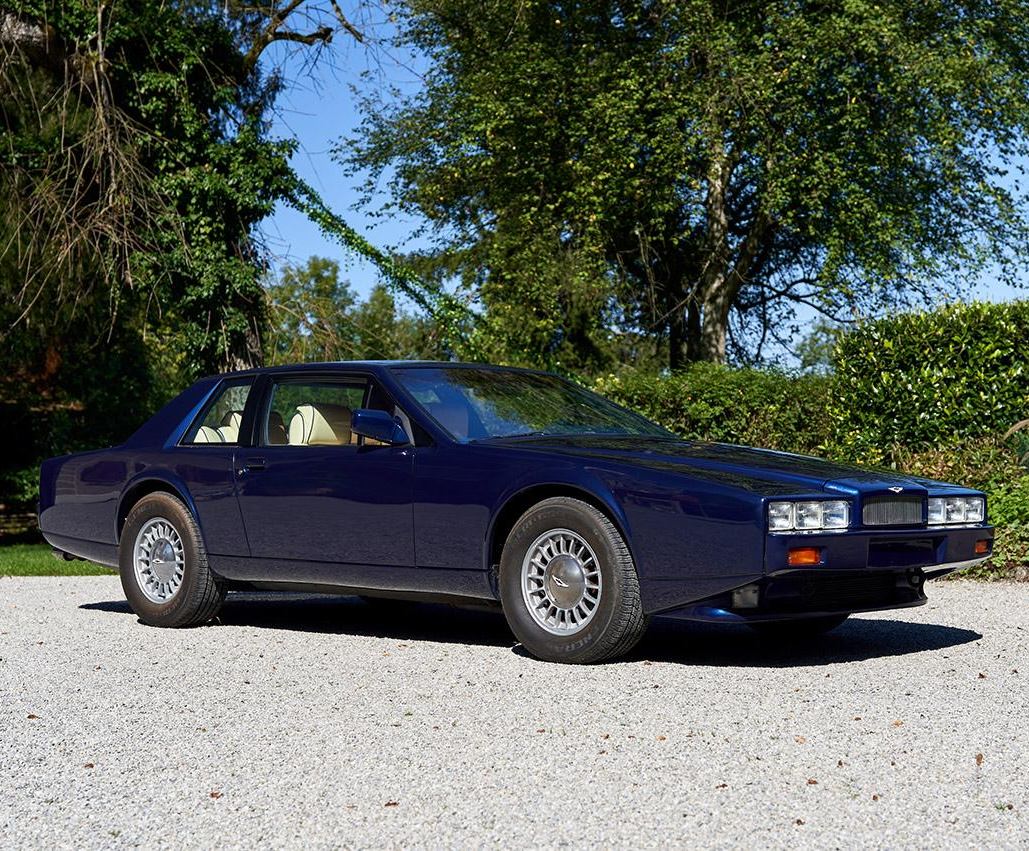
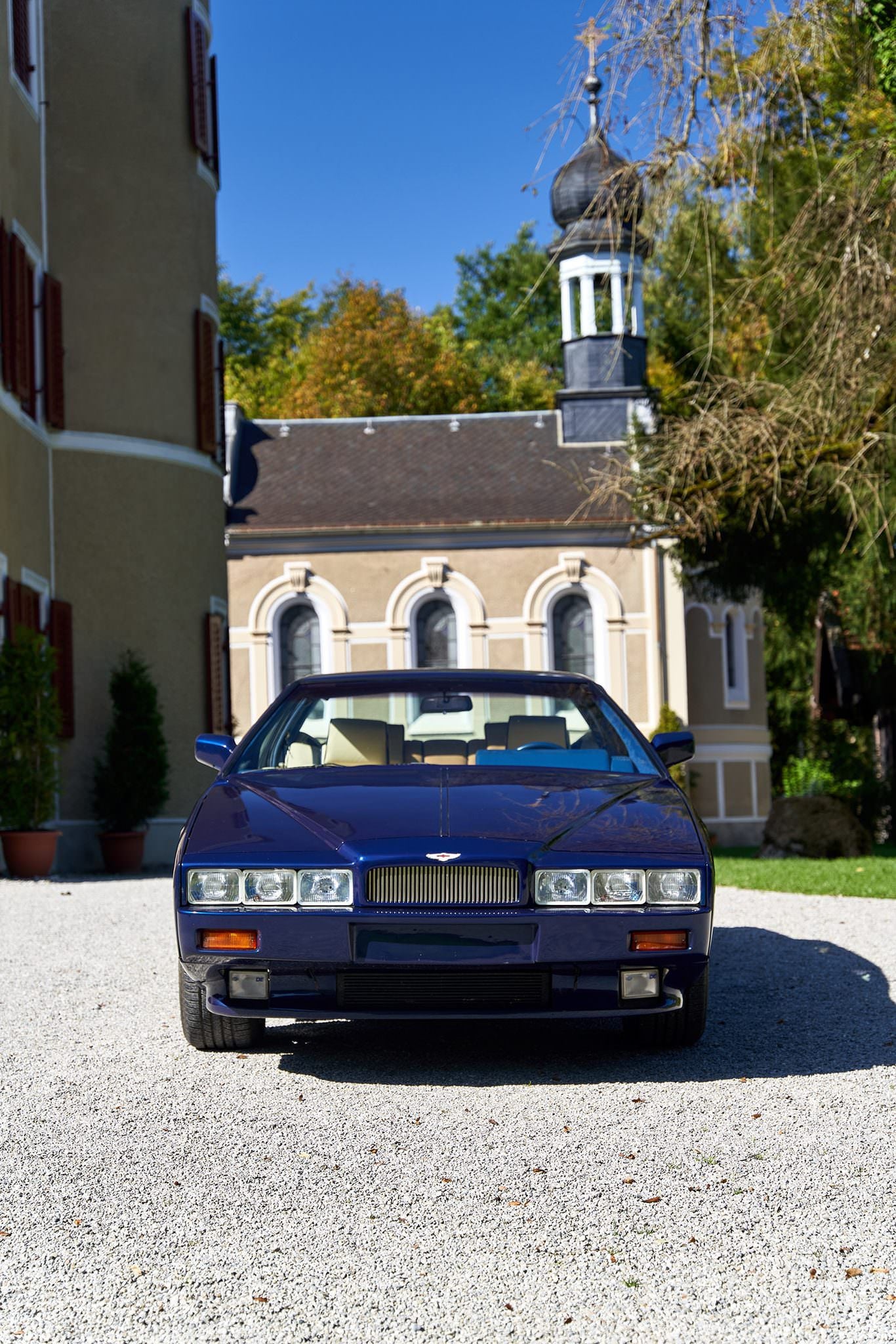
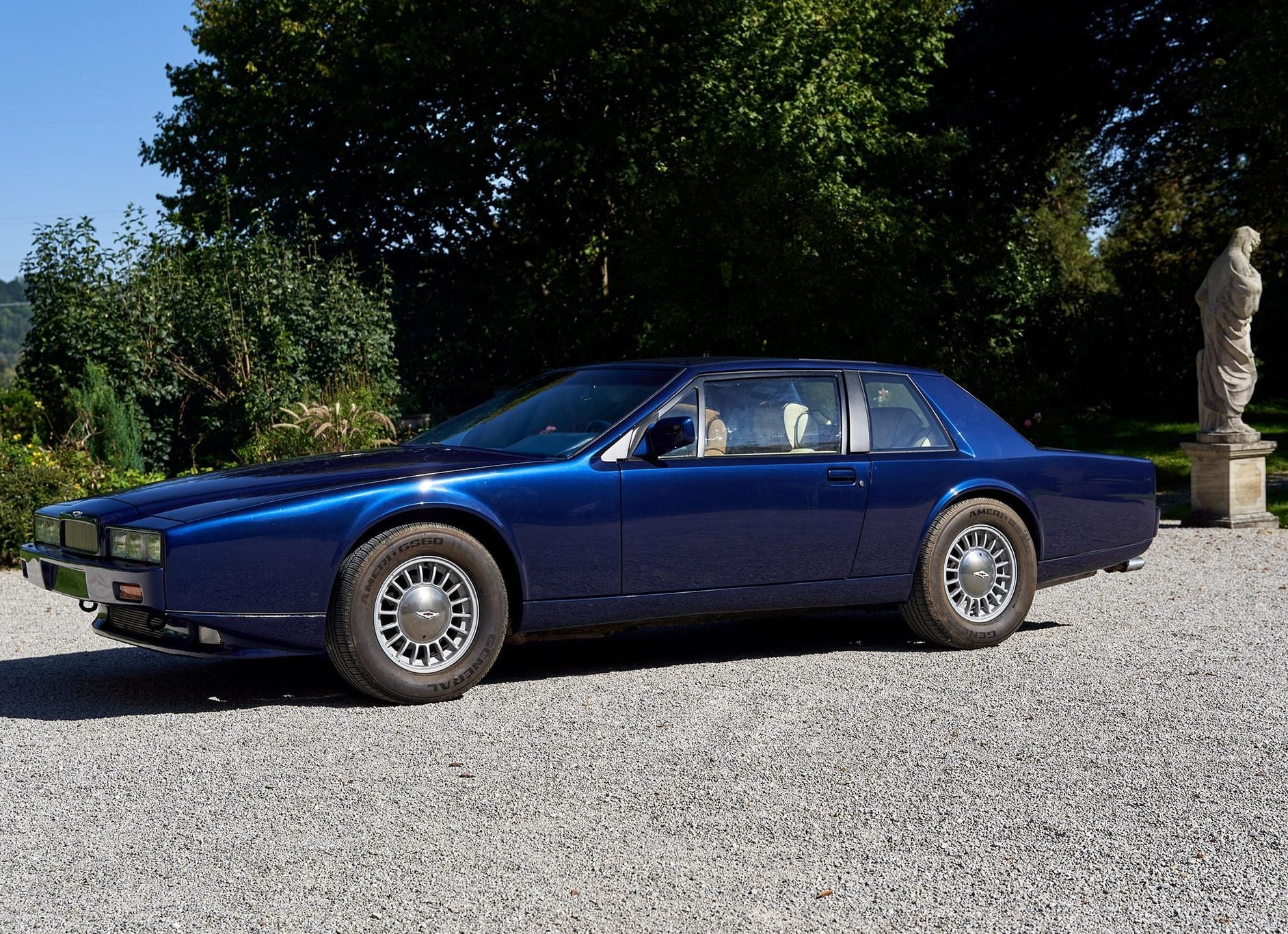
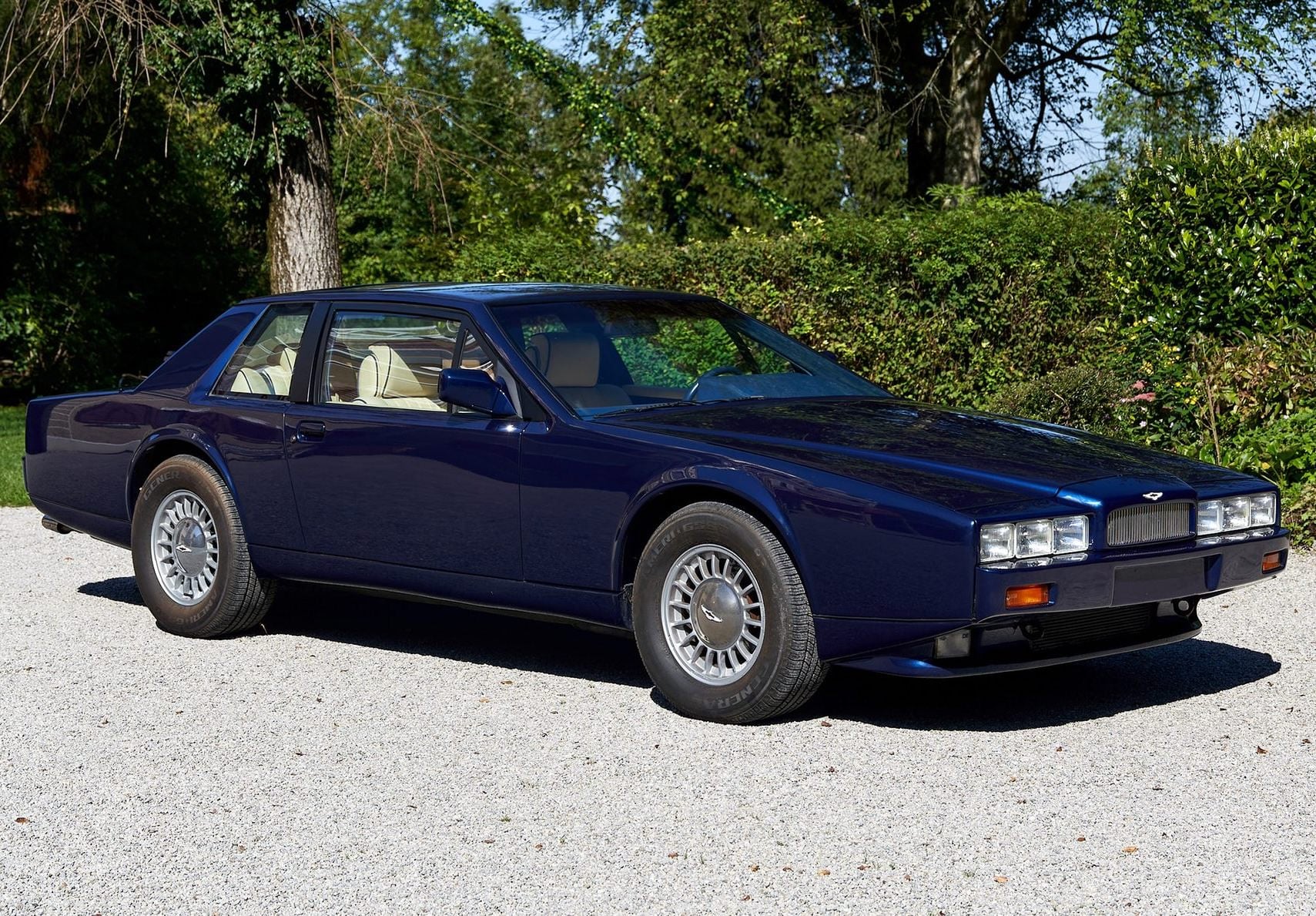
This is a 1989 Aston Martin Lagonda that’s been given a professional conversion from a four-door sedan to a two-door coupe. Importantly, it keep the classic William Town’s styling in place, as well as that Tadek Marek alloy 90º V8.
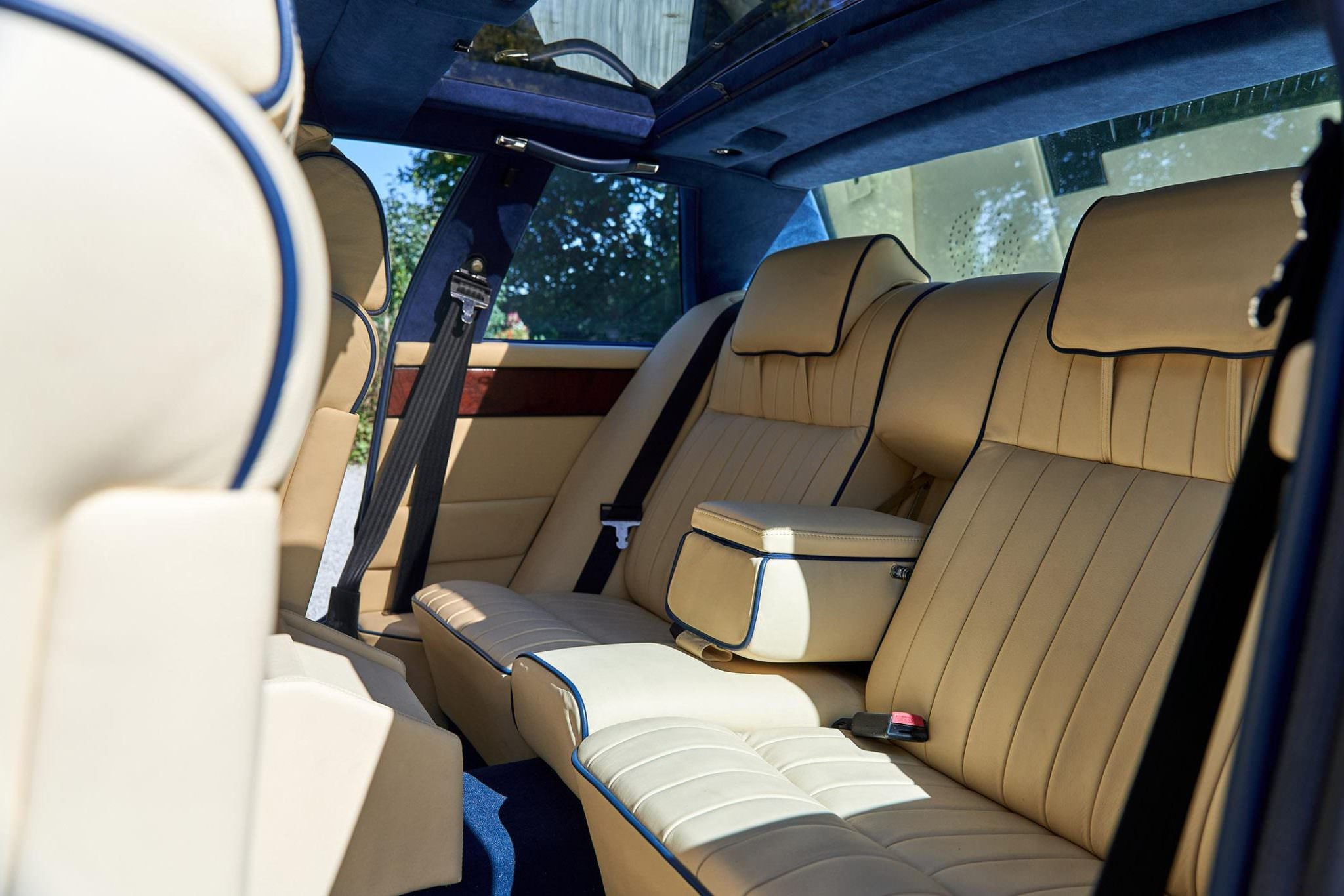
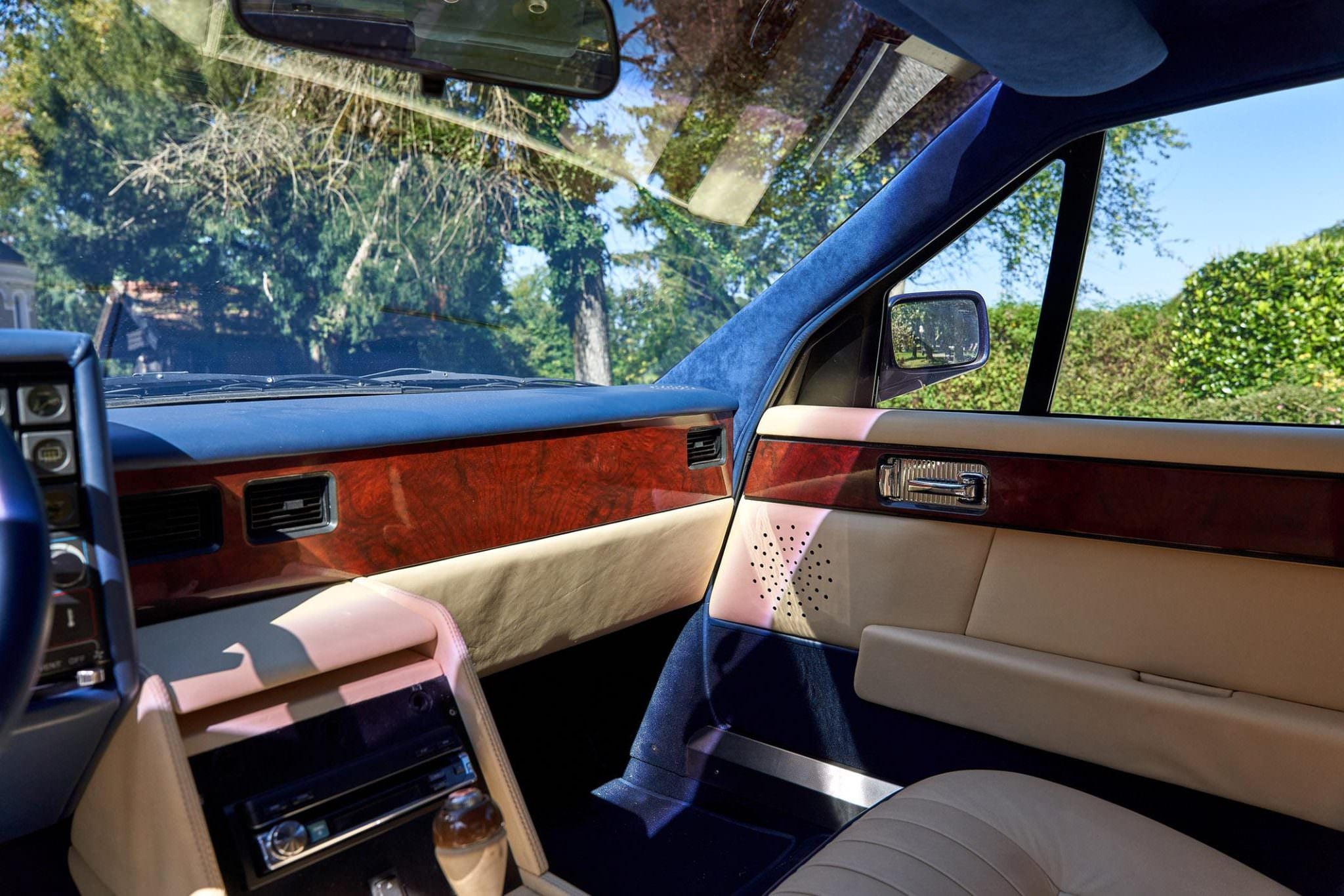
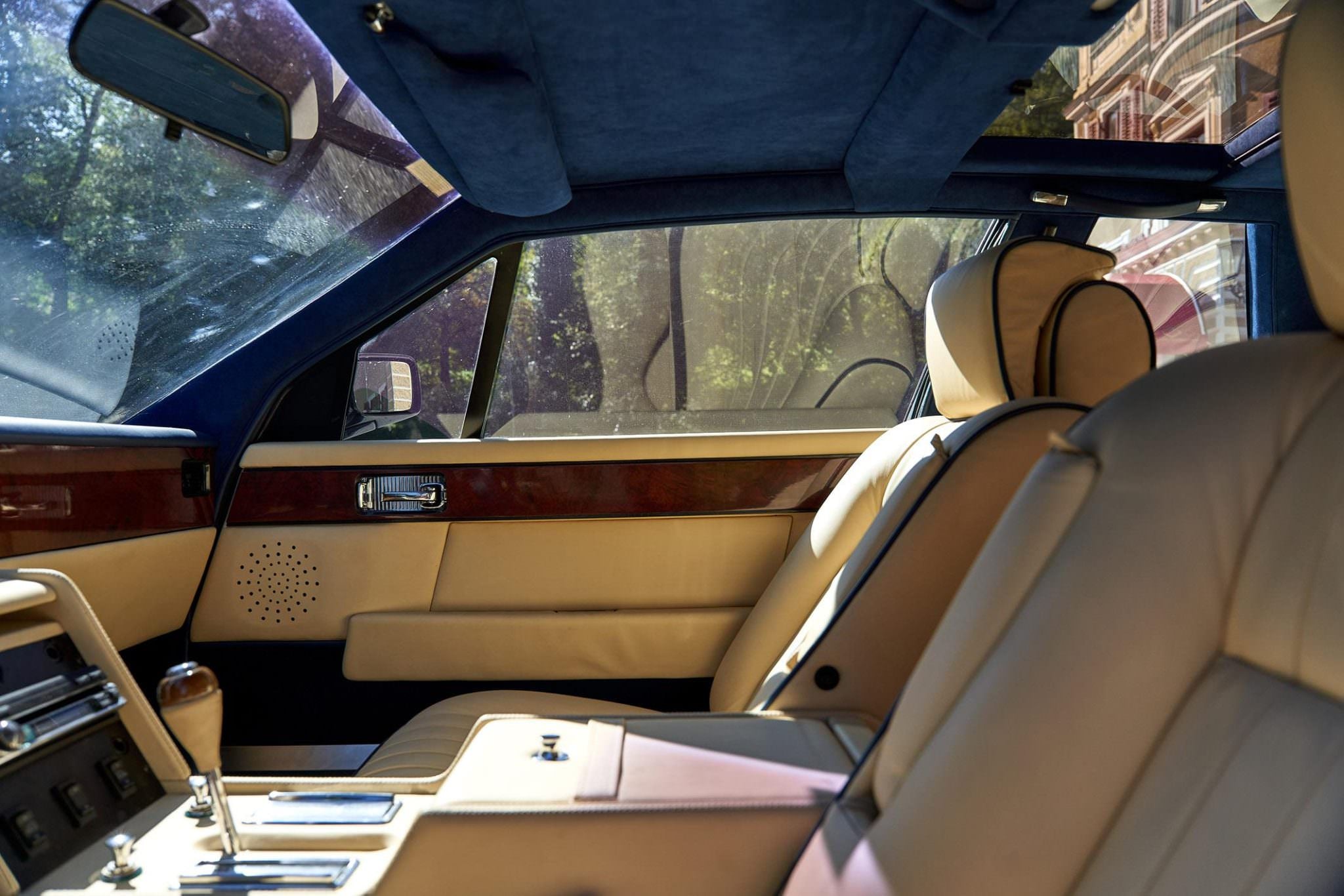
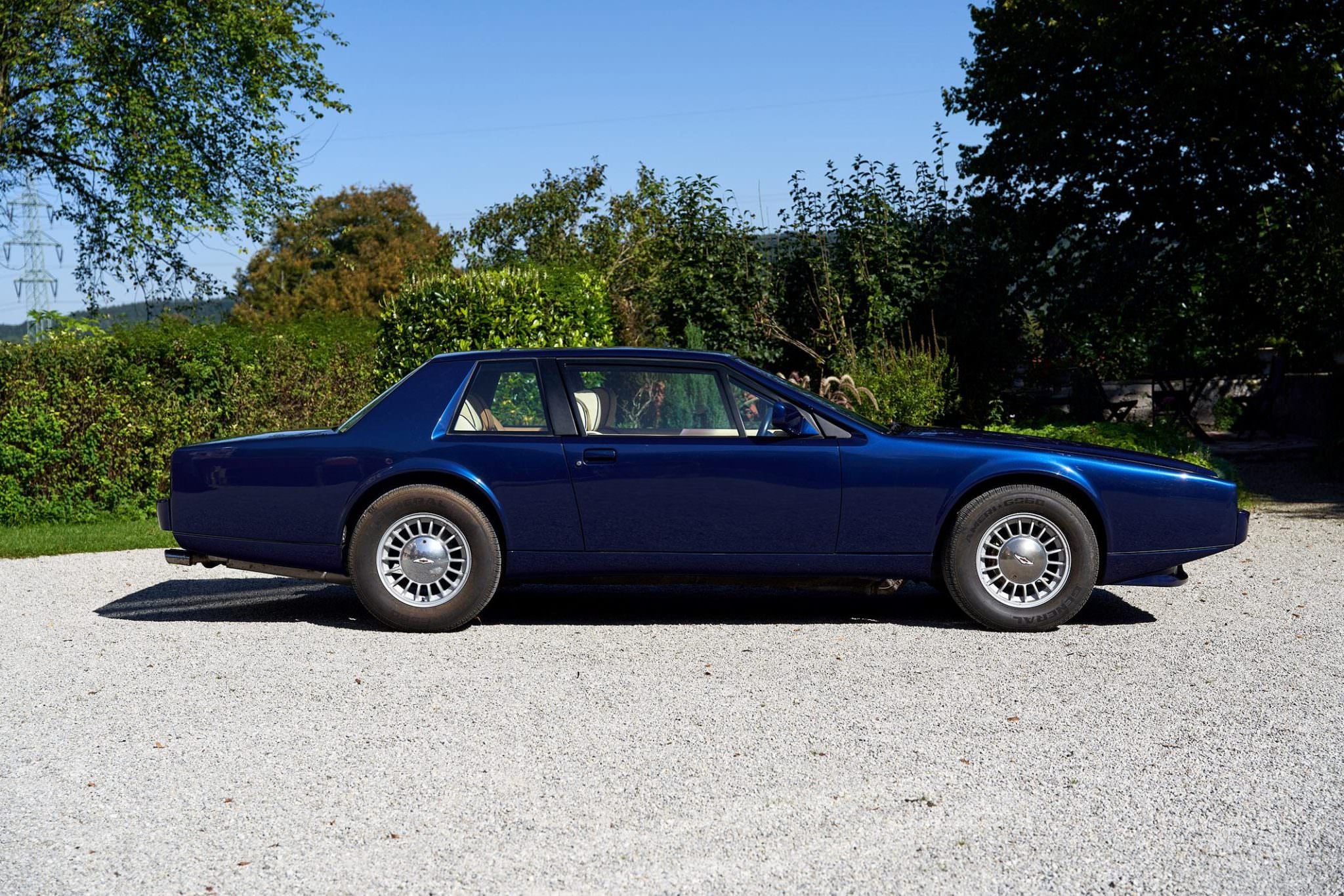
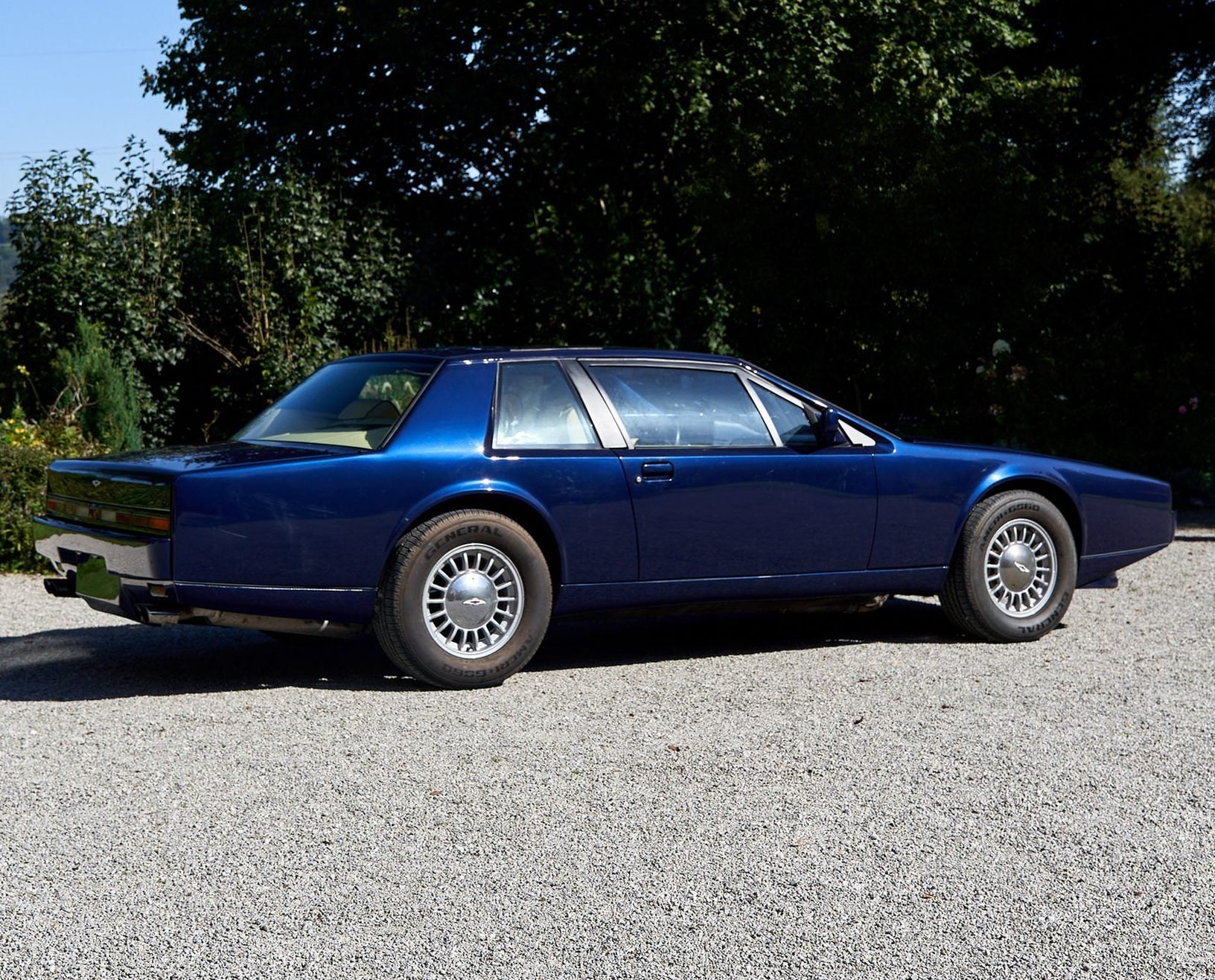
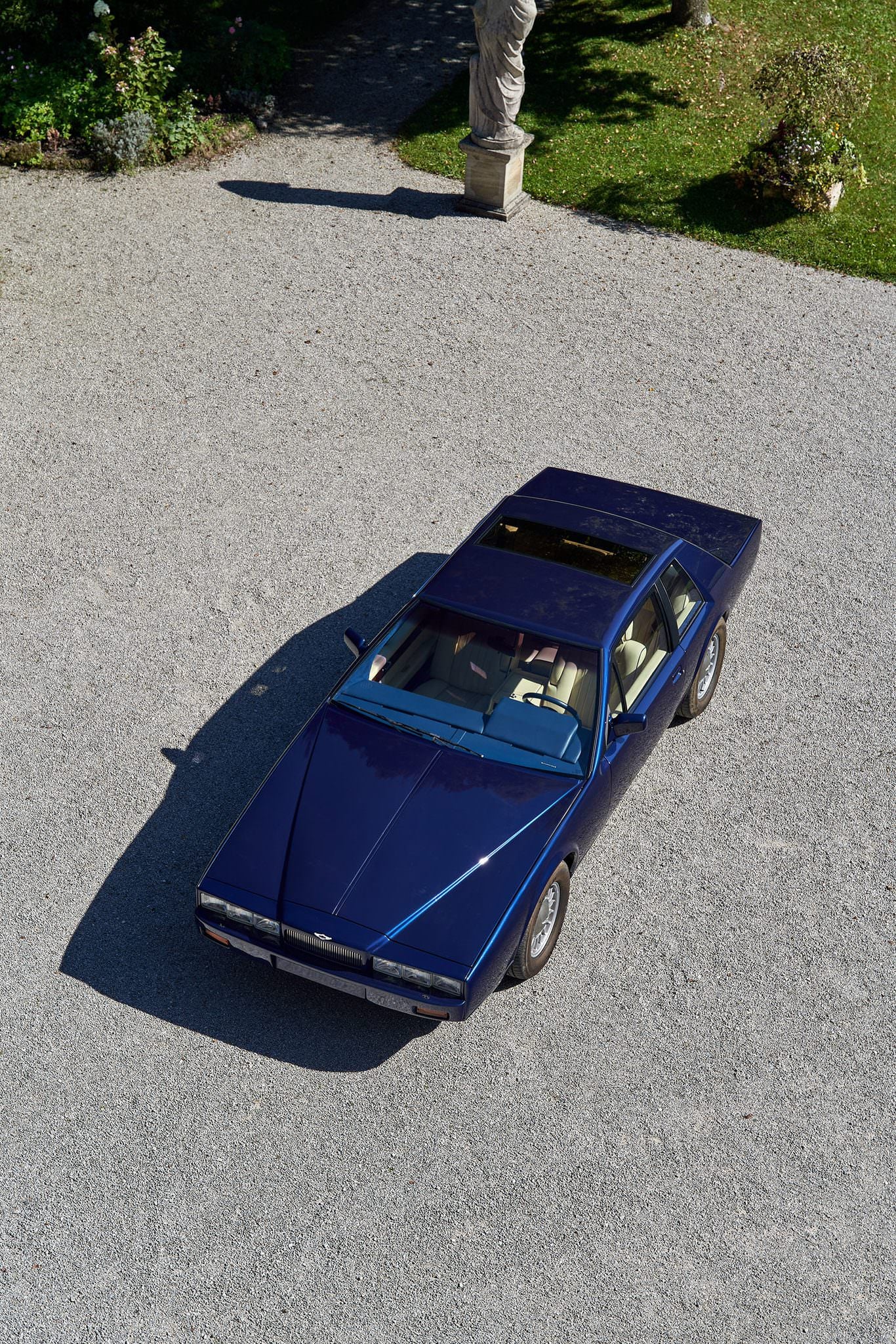
The conversion involved shortening the chassis and body, lengthening the front doors, relocating the B-pillars, narrowing the C-pillars, and fitting custom glass. The interior was also completely re-trimmed. The resulting car looks a lot like the official Aston Martin prototype for a Lagonda coupe from the period.
Fast Facts: A 1989 Aston Martin Lagonda Coupe
- Aston Martin and Lagonda began as separate British manufacturers, founded in 1913 and 1906 respectively, before David Brown brought them together after World War II. By the mid-1970s, Aston Martin was experiencing serious financial difficulties, but new owners backed William Towns’ radical wedge-shaped Lagonda, unveiled at the 1976 London Motor Show.
- The Lagonda combined hand-formed aluminum bodywork with proven Aston Martin mechanicals, including Tadek Marek’s 5.3 liter V8, a 3-speed automatic transmission, and De Dion rear suspension. Its computerized instrumentation and touch-sensitive controls were unusually ambitious for the era, but significant electronic reliability problems delayed customer deliveries until 1979.
- Successive Lagonda versions introduced revised digital displays, fuel injection, and updated exterior styling. The Series 4, unveiled in 1987, replaced the original pop-up headlights with six fixed lamps and softened the wedge-shaped bodywork. Production remained limited, with approximately 105 Series 4 cars built before manufacturing ended in early 1990.
- The 1989 Series 4 shown here was converted into a two-door coupe in Slovakia between 2013 and 2015, receiving shortened bodywork, longer doors, repositioned pillars, and custom glass. Finished in Midnight Blue over Magnolia leather, it retains its original V8 and automatic transmission. It’s now offered for sale out of Munich, Germany.
History Speedrun: Aston Martin Lagonda
Aston Martin and Lagonda started out as completely separate automakers, Lionel Martin and Robert Bamford incorporated Bamford & Martin Ltd in West London in 1913. Martin raced at the Aston Hill climb near Aston Clinton, Buckinghamshire, and the partners joined the hill’s name to his for their first prototype in 1915.
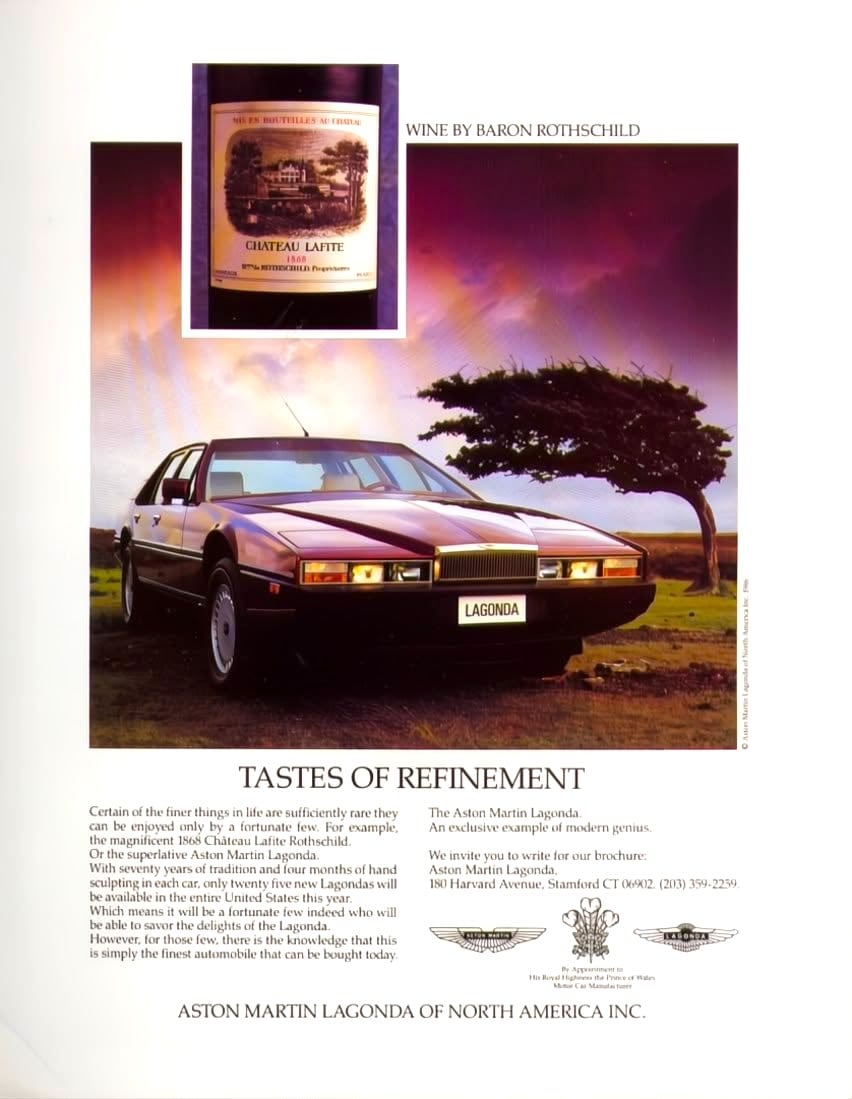
 The bodywork of the Aston Martin Lagonda might have been new, but most of the engineering underneath came from existing Aston Martins. It had handmade aluminum panels on a steel platform chassis with a steel frame built onto it. Image courtesy of Aston Martin Lagonda.
Lagonda was the older of the two. In 1899, Wilbur Gunn, an American-born former opera singer, had set up an engineering business in Middlesex, England. He founded Lagonda in 1906 and named it after Lagonda Creek in his hometown of Springfield, Ohio. The industrialist David Brown bought Aston Martin two years after WWII in 1947 and Lagonda soon afterward, and the two were merged as Aston Martin Lagonda Ltd.
Building The Lagonda Wedge
By the mid-1970s, Lagonda had become the model name for a luxurious four-door Aston Martin sedan. The first attempt was a stretched Aston Martin V8 shown at the 1974 London Motor Show, priced at £14,000 (about $33,000 USD and a king’s ransom at the time), only seven were built. At the end of 1974 Aston Martin’s Newport Pagnell factory was locked and the company went into receivership. In 1975 the American entrepreneur Peter Sprague bought its assets, then brought in the British businessman Alan Curtis as his partner.
Late in 1975, William Towns, who had penned the earlier Aston Martin DBS, showed the board a drawing of a completely radical wedge-shaped four-door design. Peter Sprague said that the decision to build it was made in a day, he later said that the directors had looked at the drawings and asked chief engineer Mike Loasby whether his team could build the car. Loasby said they could, and the rubber stamp hit the paper.
Loasby’s team took nine months to turn the drawing into the show car, an astonishingly fast turnaround. At the Earls Court Motor Show, Prime Minister James Callaghan sat in it, and General Motors design chief Bill Mitchell told Sprague, “We tried to make it shear – but you made it shearer.”
The advanced electronics that became an integral part of the car were Sprague’s idea. He’d been chairman of National Semiconductor and had seen touch-sensitive buttons in the elevators at its California headquarters and wanted these state-of-the-art switches for the car. It would be a fateful decision.
The car’s computer systems were built around a National Semiconductor IMP-16 microprocessor card costing $1,400, the Cranfield Institute of Technology handled integration but it proved remarkably hard to make it reliable.
Truth be told, the initial computer system was a dog’s breakfast. An American company, Javelina Corporation, was contracted to redesign the electronics for the production cars. Deliveries started in 1979.
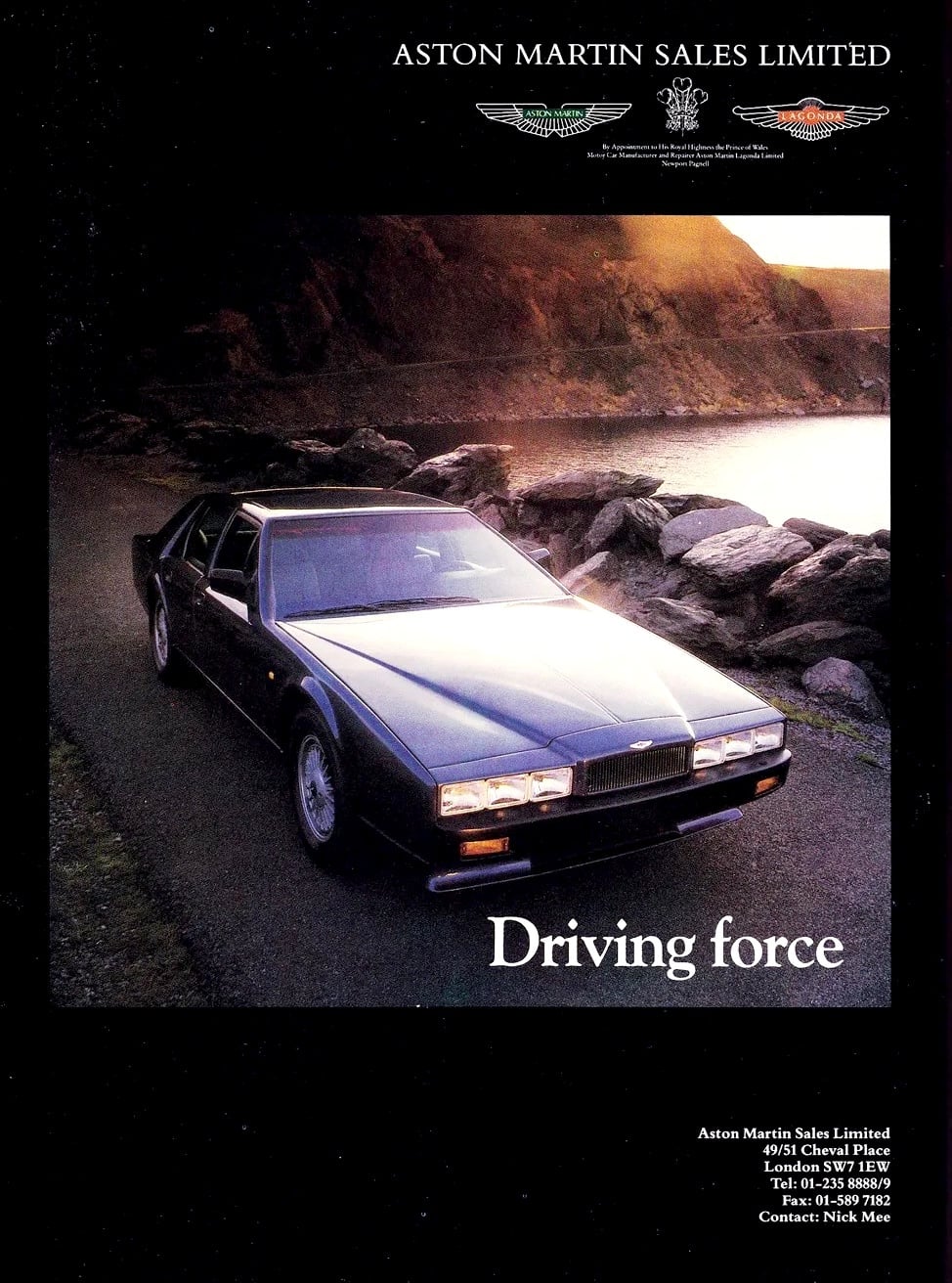
The engine used in the Lagonda was Tadek Marek’s all-alloy 90º V8 with a 5.3 liter (5,340 cc) displacement, with twin overhead cams per bank, two valves per cylinder and four Weber 42DCNF carburetors. It was good for 280 bhp at 5,000 rpm and 360 lb ft of torque at 3,000 rpm. Image courtesy of Aston Martin Lagonda.
Aston Martin Lagonda: The Engineering
The bodywork of the Aston Martin Lagonda might have been new, but most of the engineering underneath came from existing Aston Martins. It had handmade aluminum panels on a steel platform chassis with a steel frame built onto it.
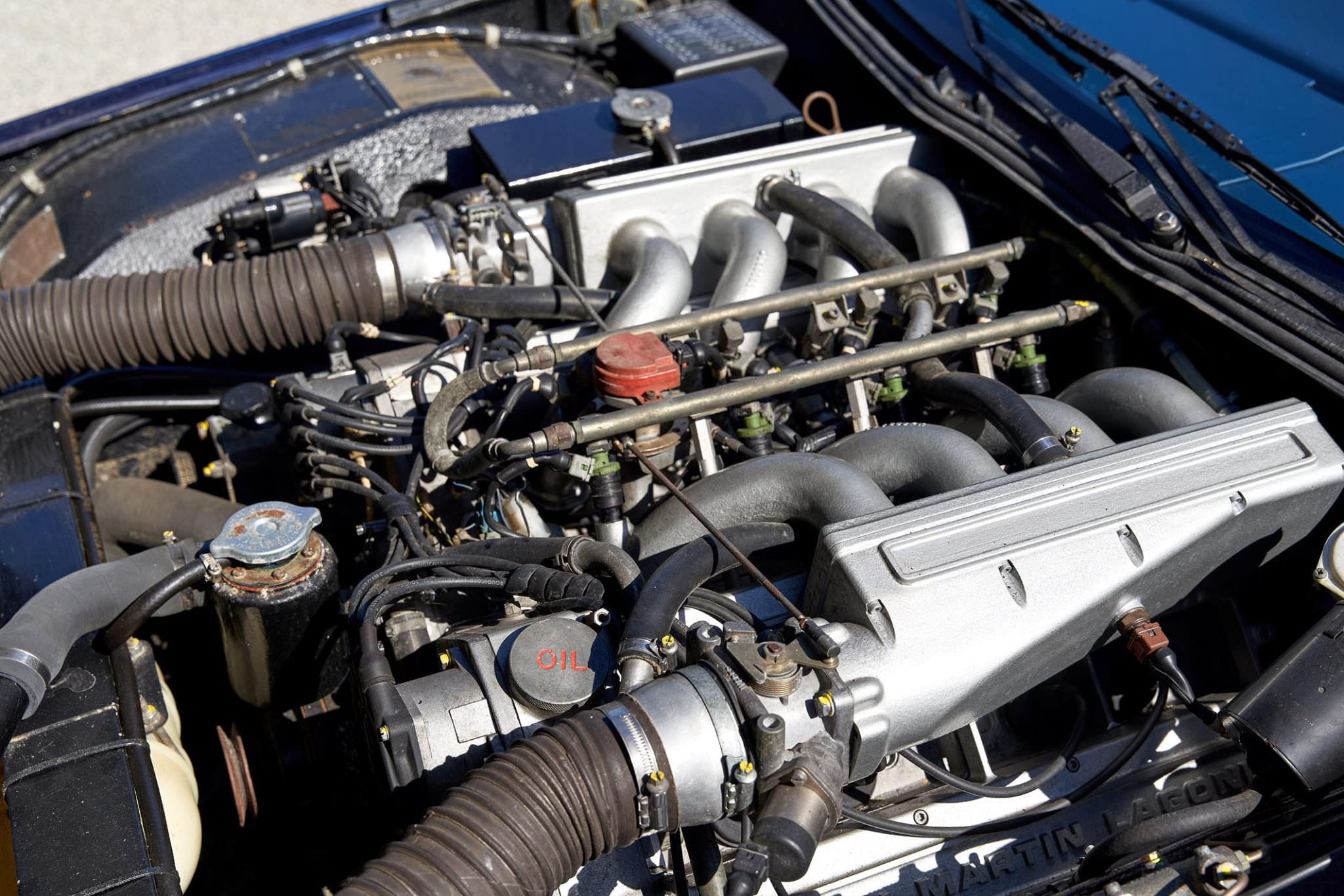
The engine was Tadek Marek’s all-alloy 90º V8 with a 5.3 liter (5,340 cc) displacement, with twin overhead cams per bank, two valves per cylinder and four Weber 42DCNF carburetors. It was good for 280 bhp at 5,000 rpm and 360 lb ft of torque at 3,000 rpm. In Aston Martin tradition, a single expert engine builder assembled each unit and signed it once complete, the job took 34 hours.
A Chrysler TorqueFlite 3-speed automatic was the only transmission option, and it drove the rear wheels through a limited-slip differential. Front suspension used unequal-length wishbones, coil springs, and an anti-roll bar. At the rear was a De Dion tube located by trailing links and a Watt’s linkage, with self-leveling spring and damper units.
All four wheels had ventilated disc brakes, and the power-assisted rack-and-pinion steering had a variable ratio. The car was 17 feet 4 inches long in total, the longest Aston had ever built up until that point in time.
The Aston Martin Lagonda Series 2, 3, + 4
Each car took 2,200 man-hours to build and coachbuilt variants soon followed – the Tickford Lagonda of 1983, with flared body panels and color televisions, and a long-wheelbase Tickford limousine announced in 1984.
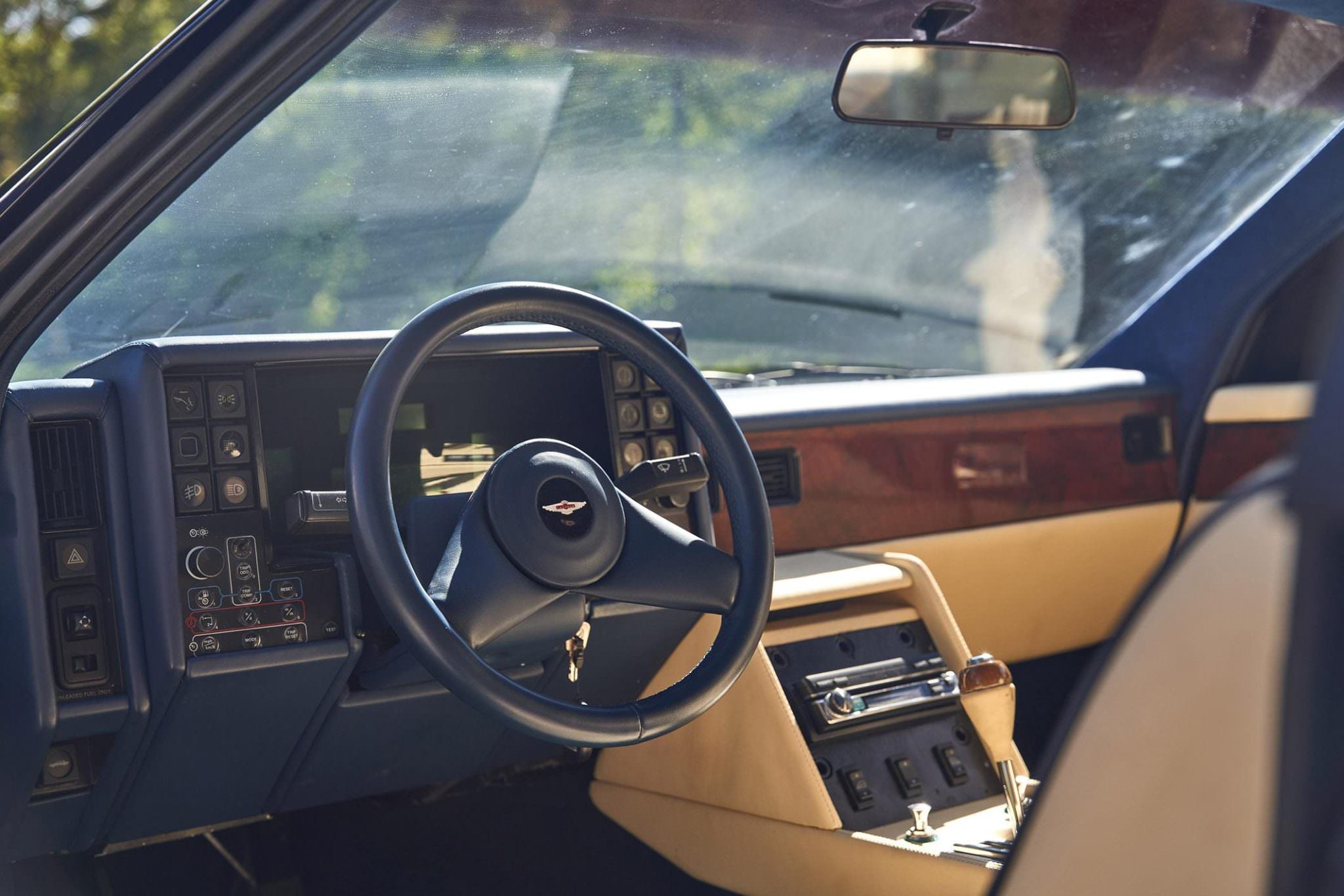
In October of 1984 the Series 2 swapped its LED displays for three cathode-ray-tube screens supplied by Clinton Electronics, which had designed them for the F-15 fighter program. A synthesized voice now announced warnings such as low fuel.
This 1989 Aston Martin Lagonda is a left-hand-drive Series 4 example that was professionally converted from a four-door saloon into a two-door coupe between 2013 and 2015. It’s believed to have been sold new to a record executive in California and as a result, it appeared on the cover of a 1994 new jack swing album.
The Series 3 followed in 1986 with Weber-Marelli fuel injection in place of the carburetors – it looked almost identical to the late Series 2, and later Series 3 cars switched to vacuum-fluorescent instruments.
William Towns returned to restyle the car as the Series 4, shown at the Geneva Motor Show in 1987. Six small headlamps replaced the pop-up units, the edges were rounded off, the side swage line was deleted and 16 inch wheels were fitted. Production was only about one car a week, and the last of 105 Series 4 cars was built in early-1990.
Aston Martin revived the Lagonda name in late 2014 for the Taraf, a V12 saloon with styling clearly influenced by the earlier Aston Martin Lagonda – it was offered at first by invitation-only to well-heeled buyers in the Middle East.
The 1989 Aston Martin Lagonda Coupe Shown Here
This 1989 Aston Martin Lagonda is a left-hand-drive Series 4 example that was professionally converted from a four-door saloon into a two-door coupe between 2013 and 2015. It’s believed to have been sold new to a record executive in California and as a result, it appeared on the cover of a 1994 new jack swing album.
The car was exported to Germany in 2004 and bought by the current seller in 2009, before undergoing its coupe conversion in Slovakia. This conversion involved shortening the aluminum body by approximately 150 mm (6 inches), lengthening the doors, relocating the B-pillars, narrowing the C-pillars, and fitting custom glass. It was a huge undertaking by any measure.
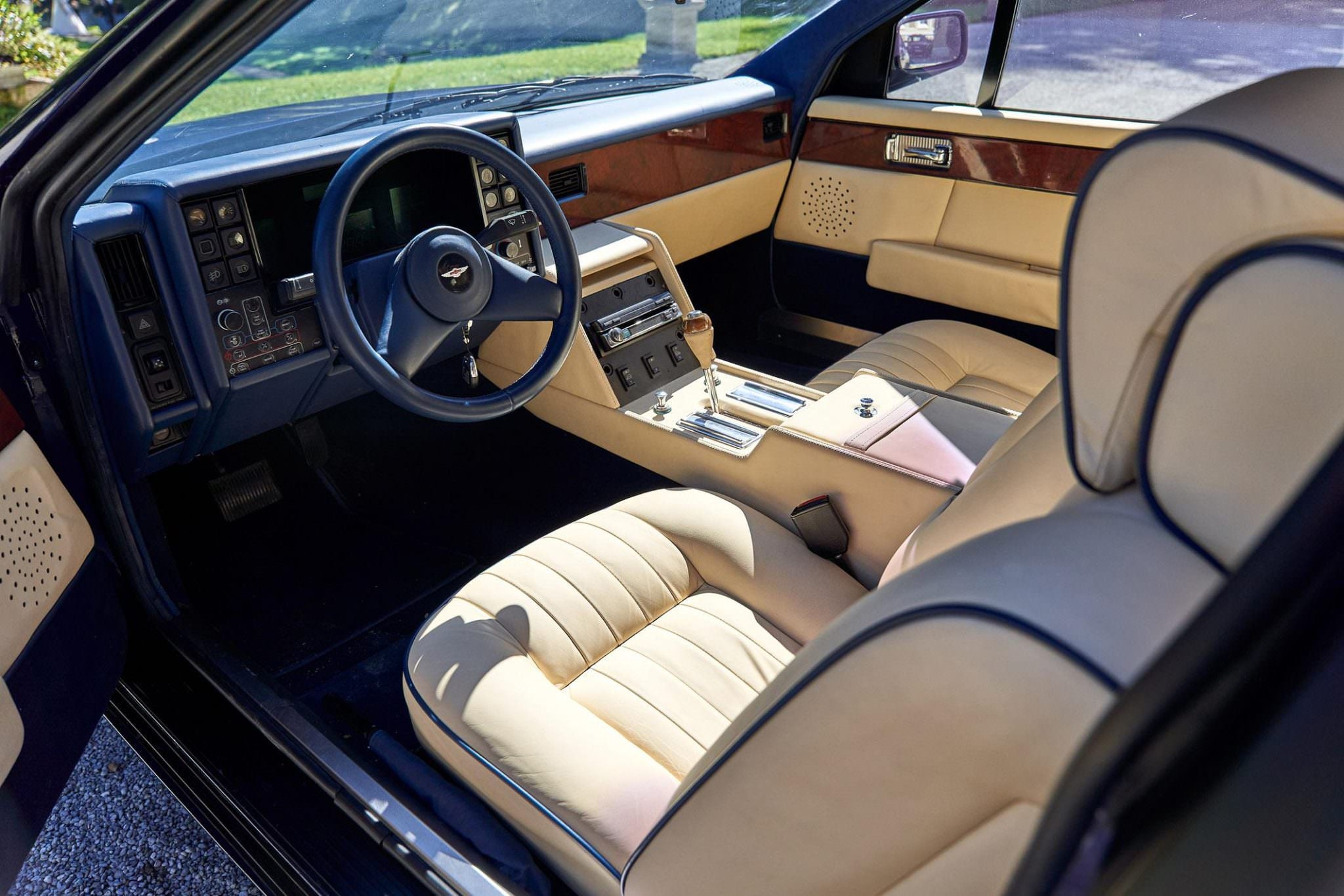
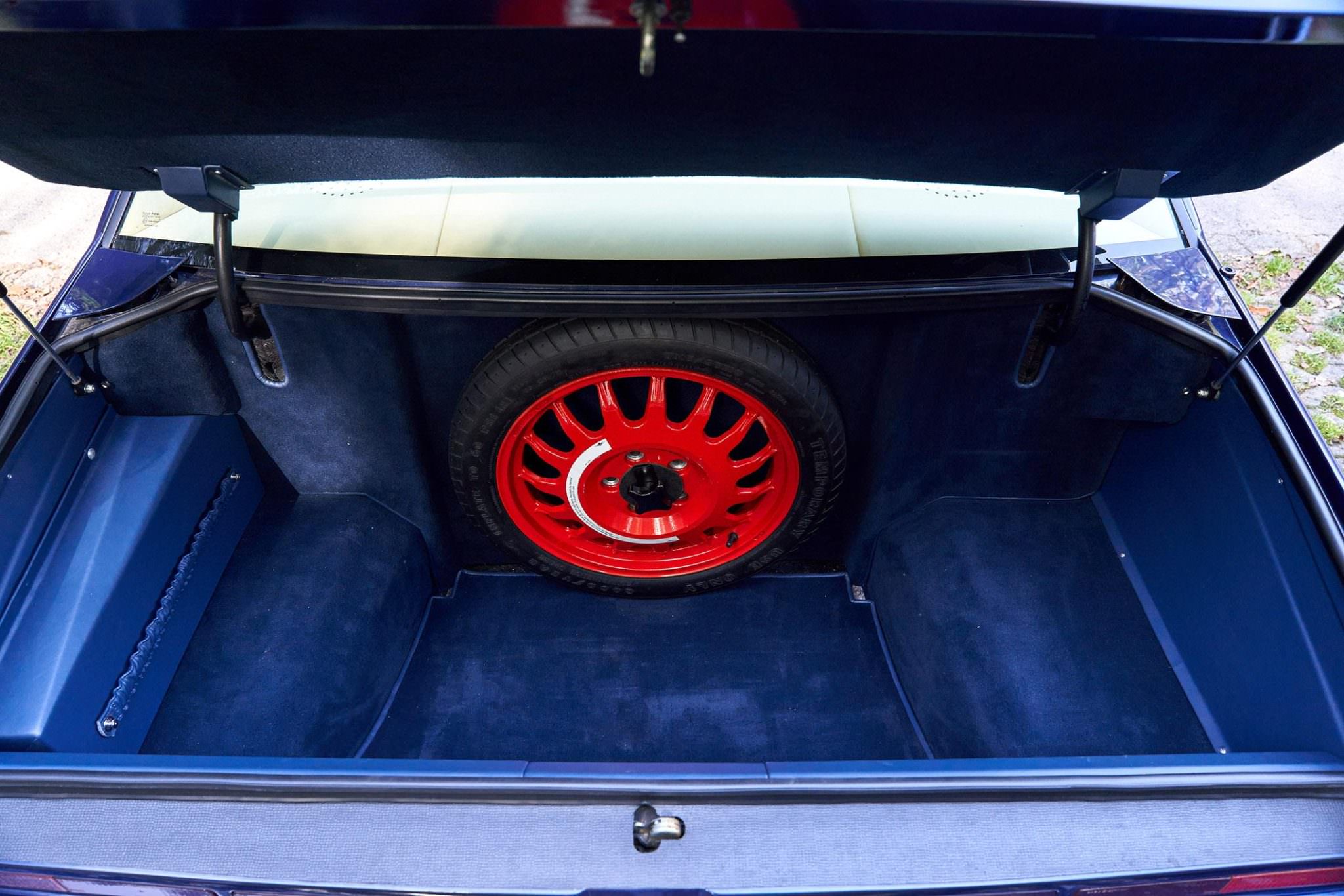
The body was repainted in Rolls-Royce Midnight Blue, and it keeps the Series 4’s distinctive six-headlight front end. Inside, the cabin has been retrimmed in Magnolia leather with blue piping, blue leather dashboard trim, blue microsuede headlining, and burl wood veneer. Equipment includes power-adjustable front seats, digital instrumentation, automatic climate control, an Alpine stereo, and a fixed glass rear sunroof.
Power comes from the original 5.3 liter DOHC V8, which was factory-rated at 289 bhp and 321 lb ft of torque in Series 4 tune. It drives the rear wheels through a Chrysler TorqueFlite 3-speed automatic transmission and a limited-slip differential.
The car was exported to Germany in 2004 and bought by the current seller in 2009, before undergoing its coupe conversion in Slovakia. This conversion involved shortening the aluminum body by approximately 150 mm (6 inches), lengthening the doors, relocating the B-pillars, narrowing the C-pillars, and fitting custom glass. It was a huge undertaking by any measure.
The odometer currently displays ~65,000 kilometers (40,000 miles), although the true mileage is unknown – the seller reports covering ~3,000 kilometers since buying the car. Recent maintenance in September of 2026 included an engine oil change, a new battery, replacement transmission fluid and pan gasket, and new Uniroyal tires.
The car is now being offered for sale out of Munich, Germany with manufacturer’s literature, partial service records, photographs documenting the conversion, a clean US Carfax report covering 1993 to 2004, and German registration in the seller’s name. If you’d like to read more or register to bid you can visit the listing here.
Images courtesy of Bring a Trailer + Aston Martin

Articles that Ben Branch has written have been covered on CNN, Popular Mechanics, Smithsonian Magazine, Road & Track Magazine, the official Pinterest blog, the official eBay Motors blog, BuzzFeed, Autoweek Magazine, Wired Magazine, Autoblog, Gear Patrol, Jalopnik, The Verge, and many more.
Silodrome was founded by Ben back in 2010, in the years since the site has grown to become a world leader in the alternative and vintage motoring sector, with well over a million monthly readers from around the world and many hundreds of thousands of followers on social media.