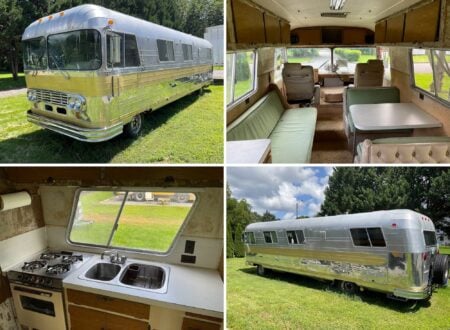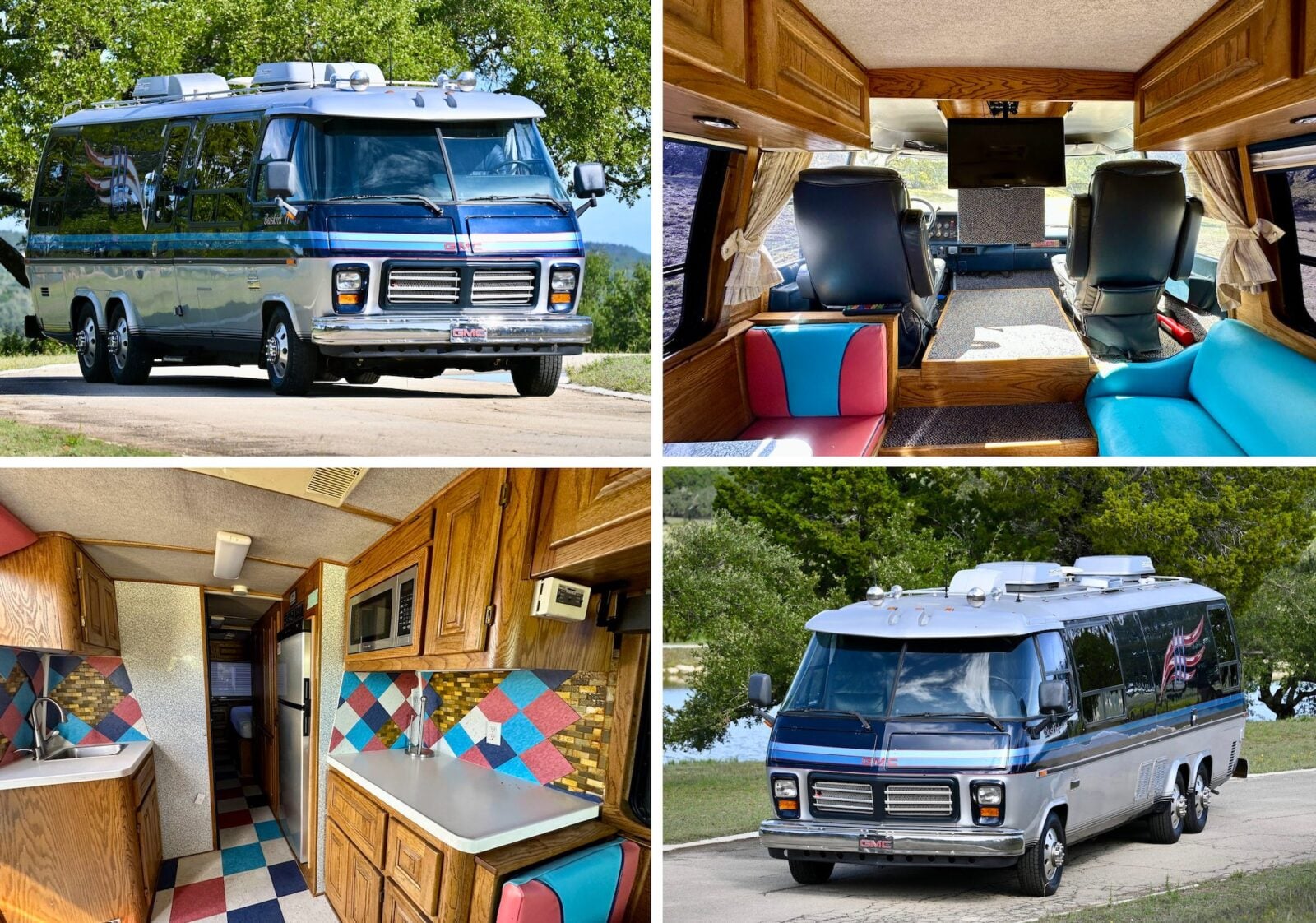
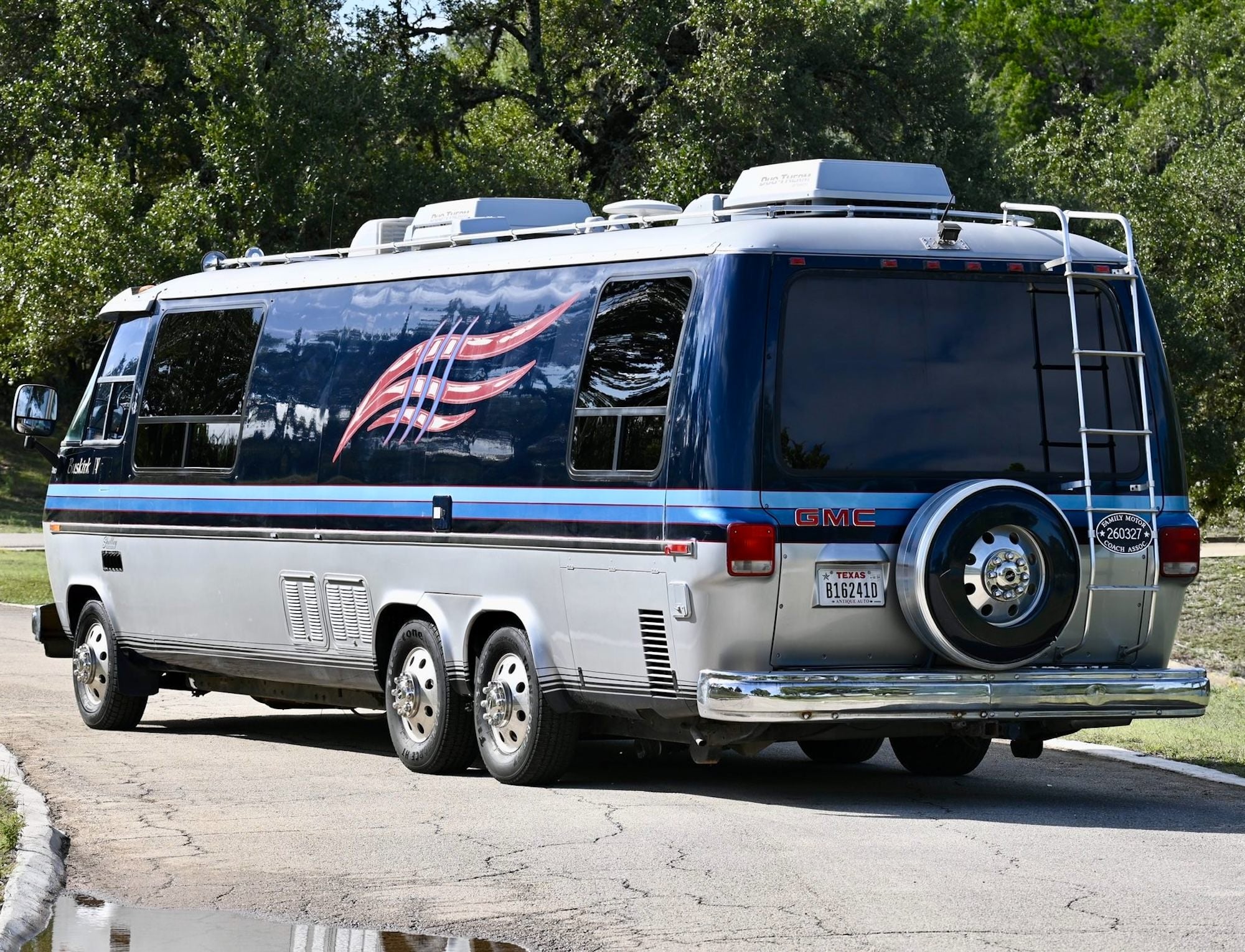
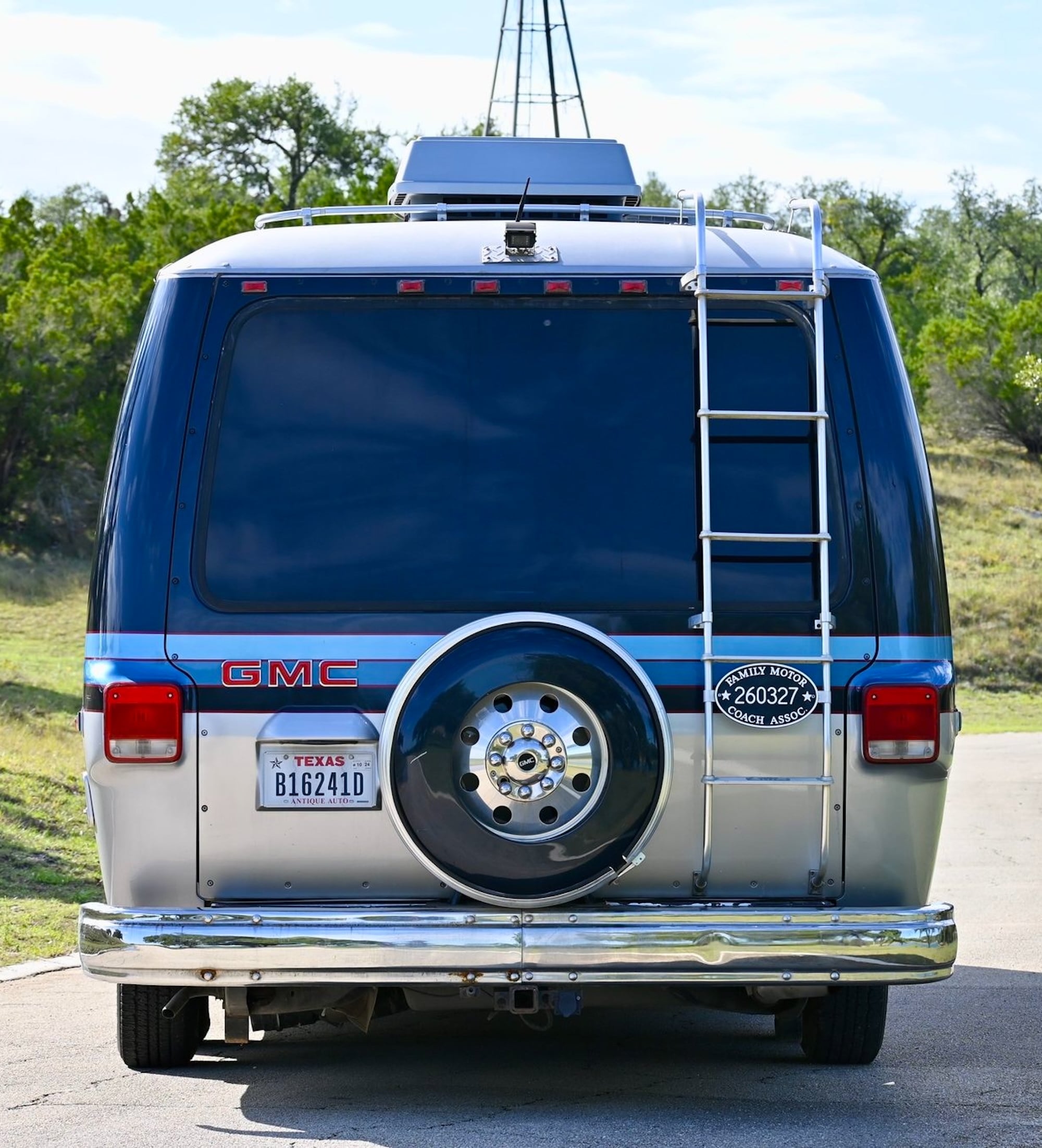
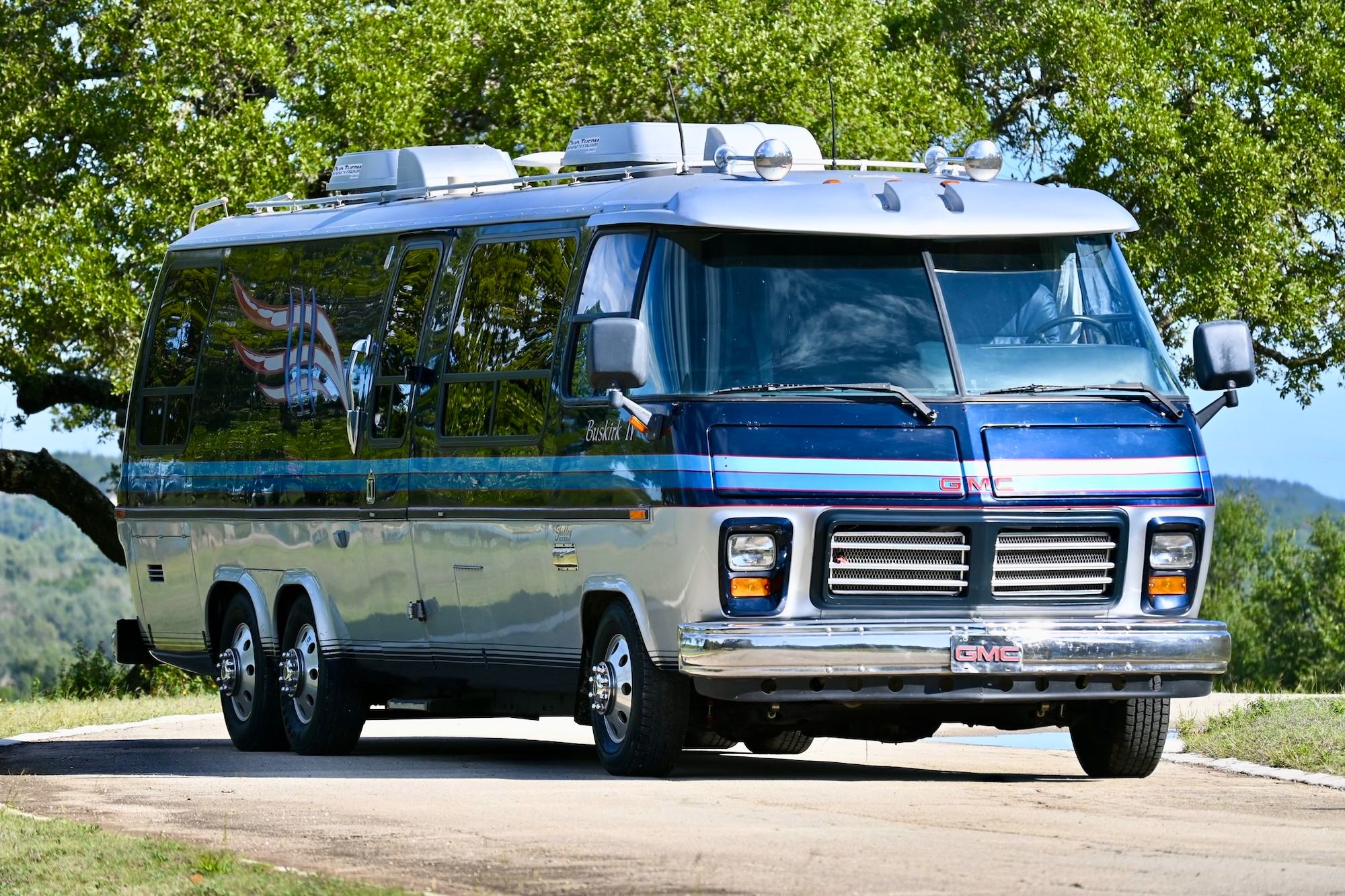
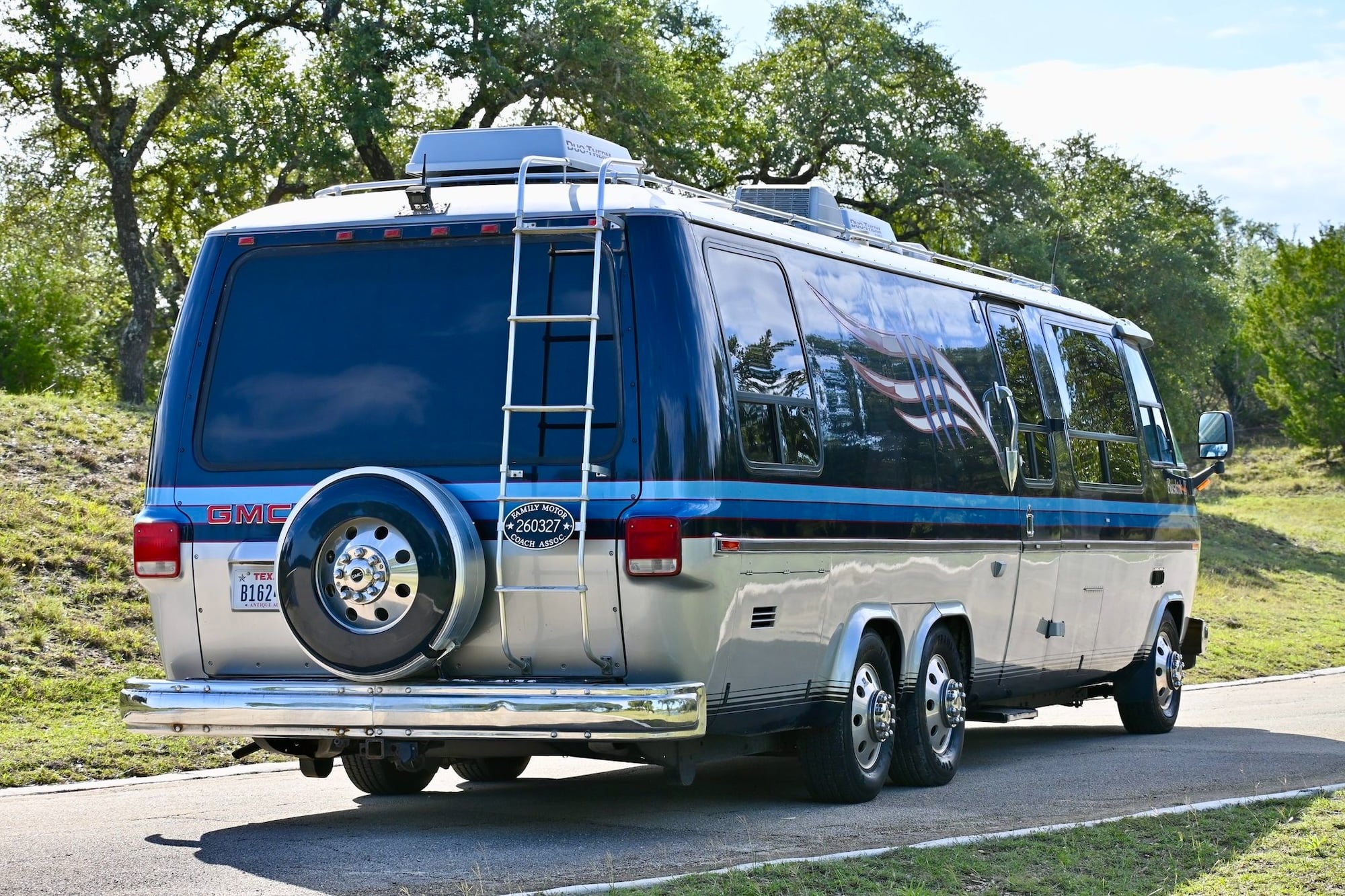
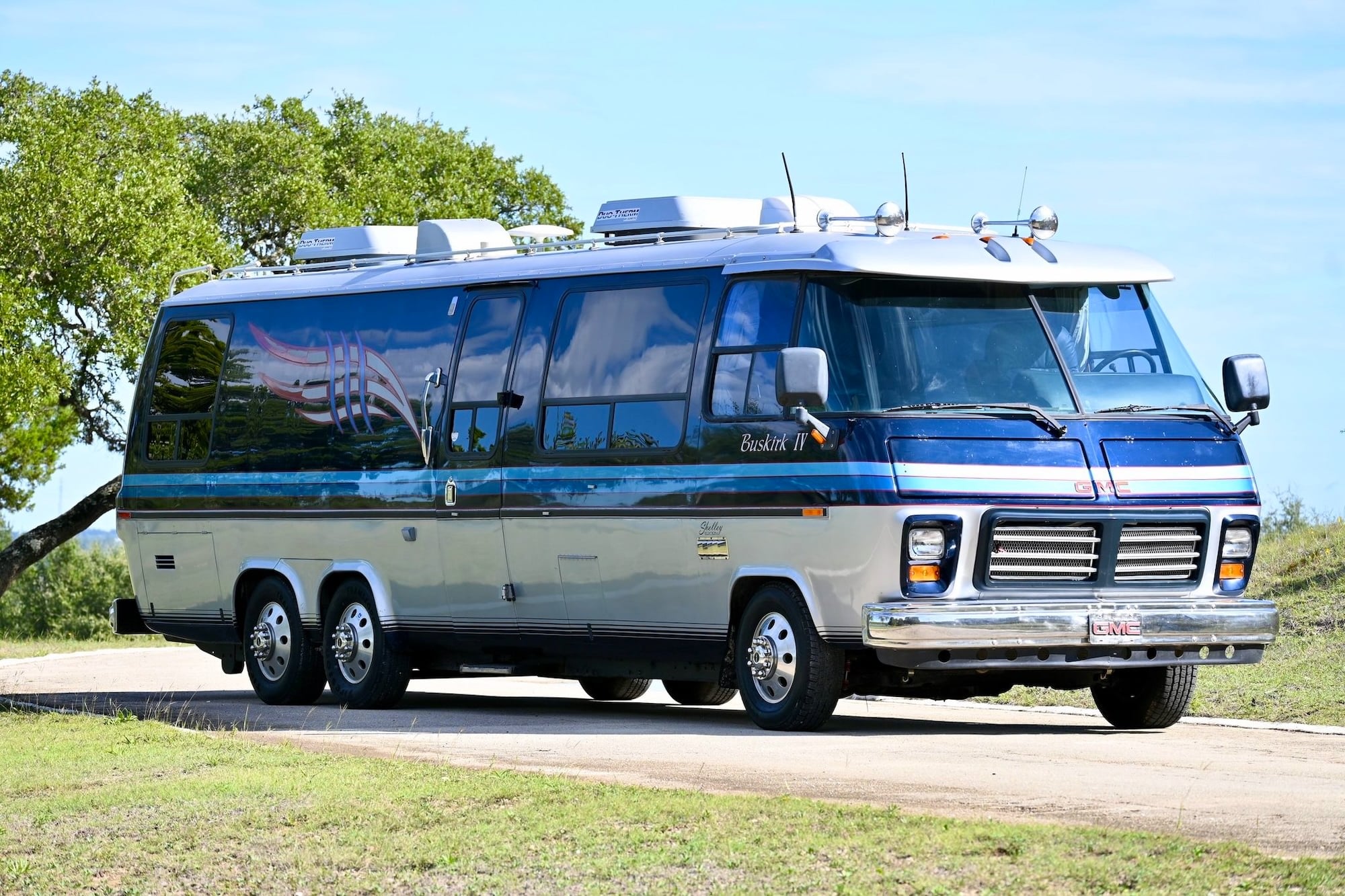
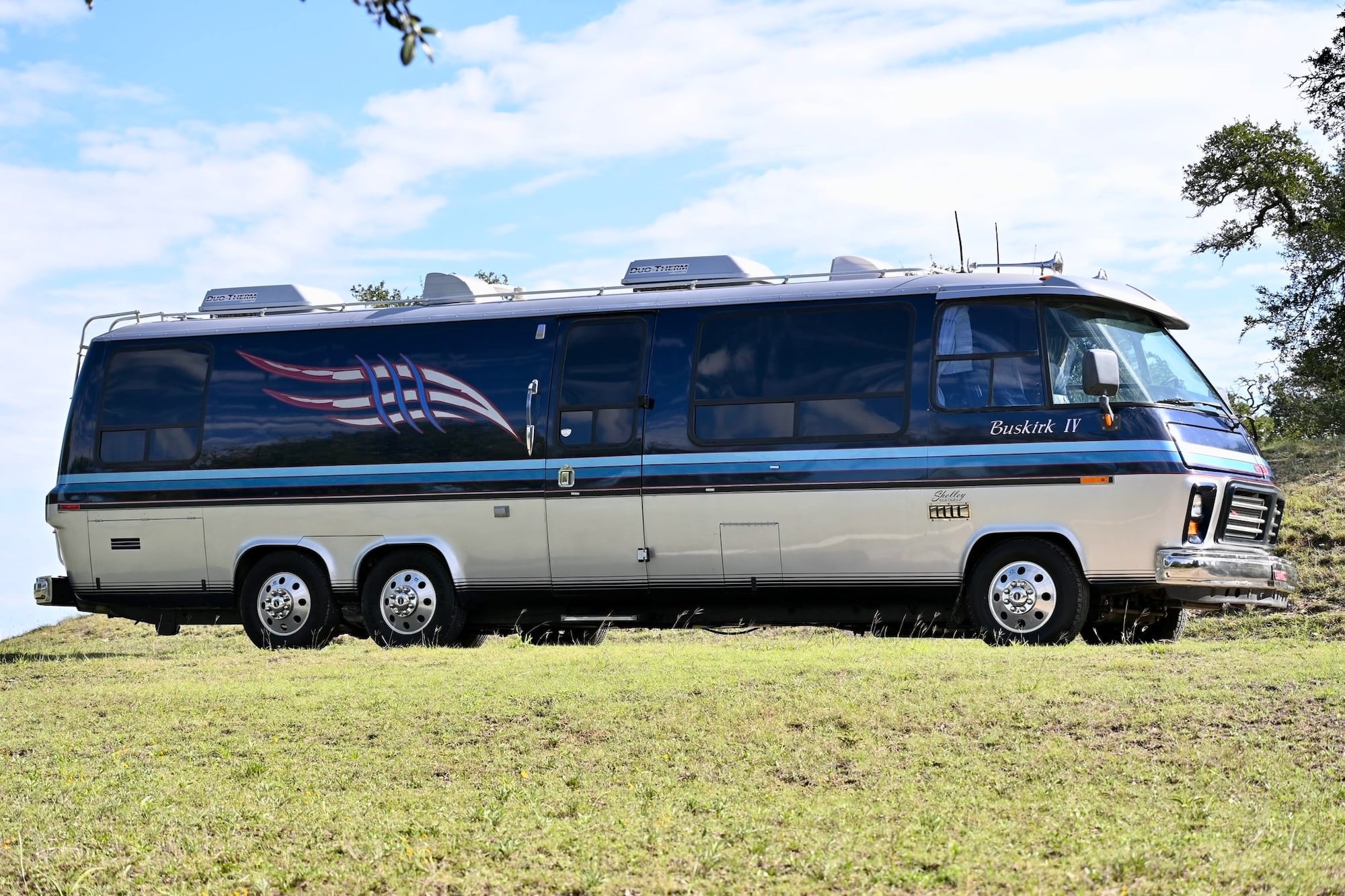
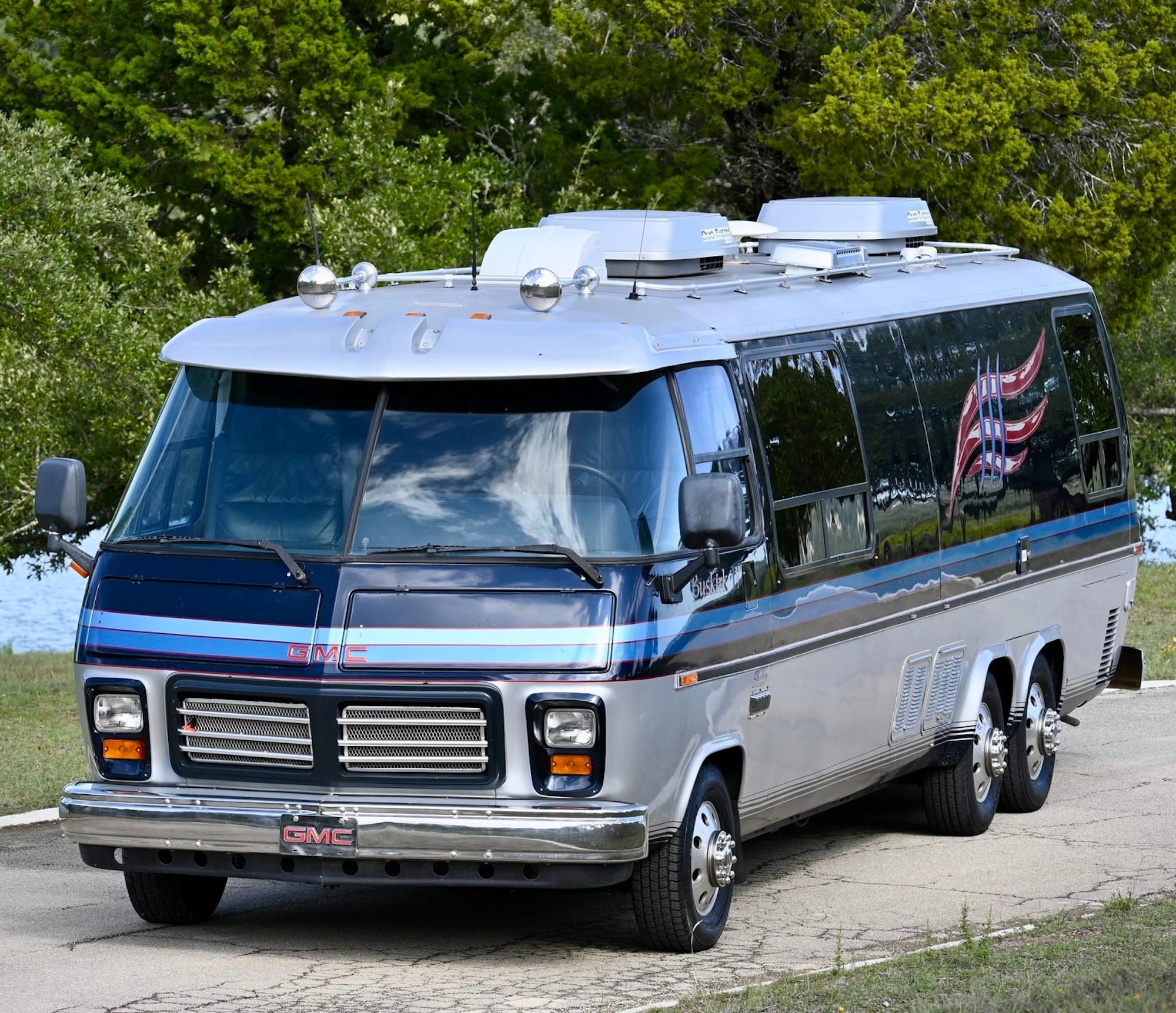
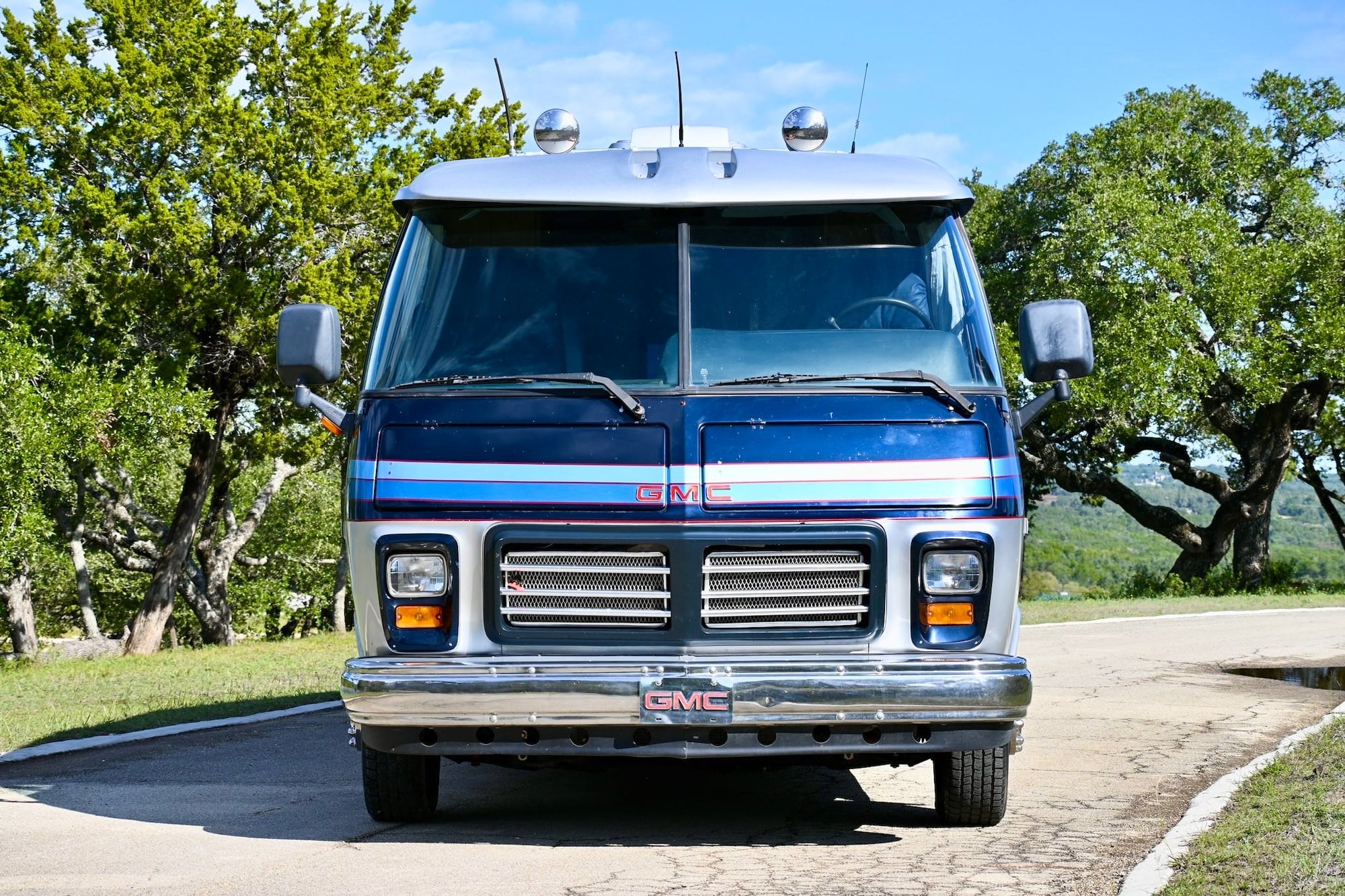
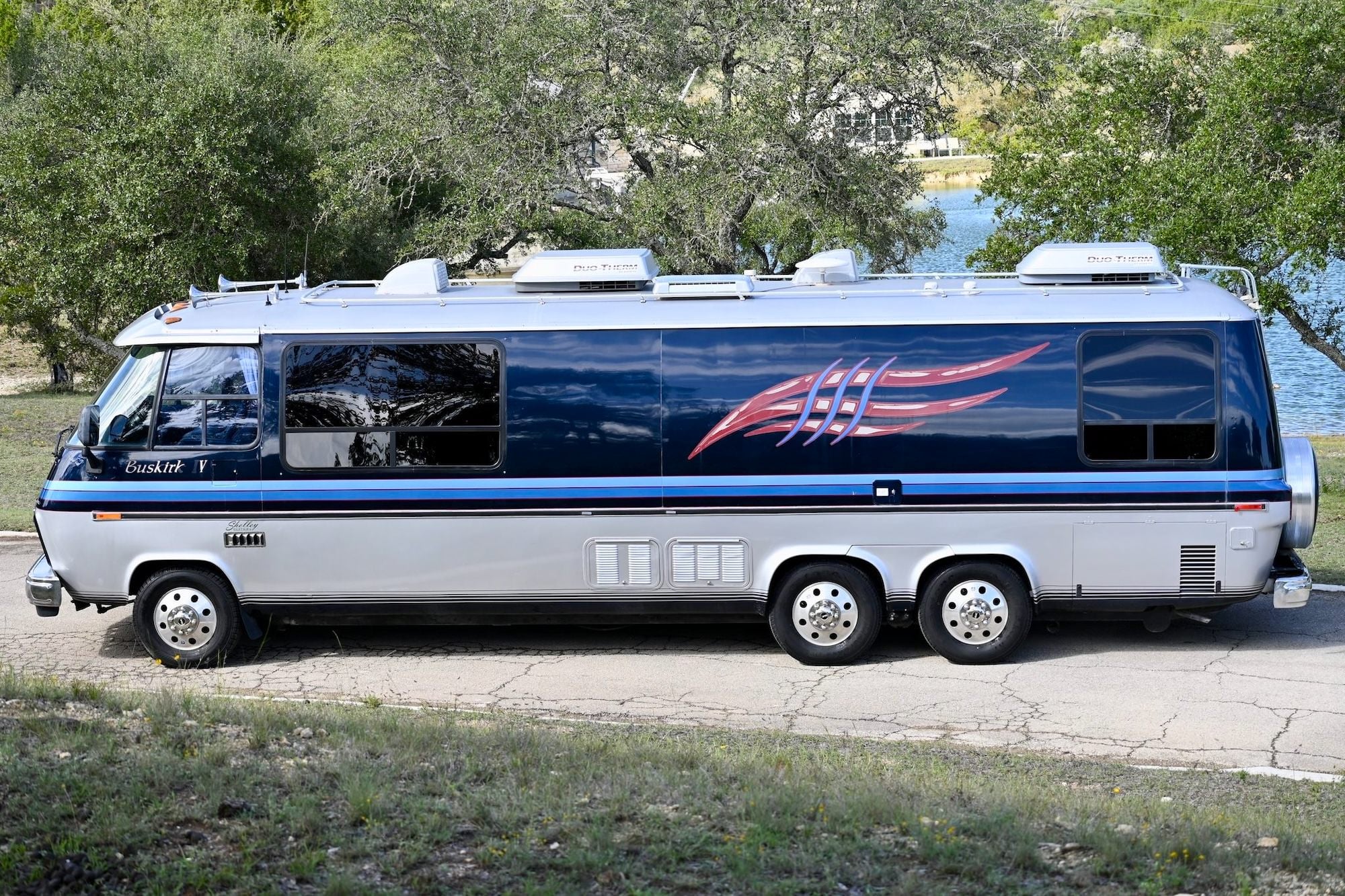
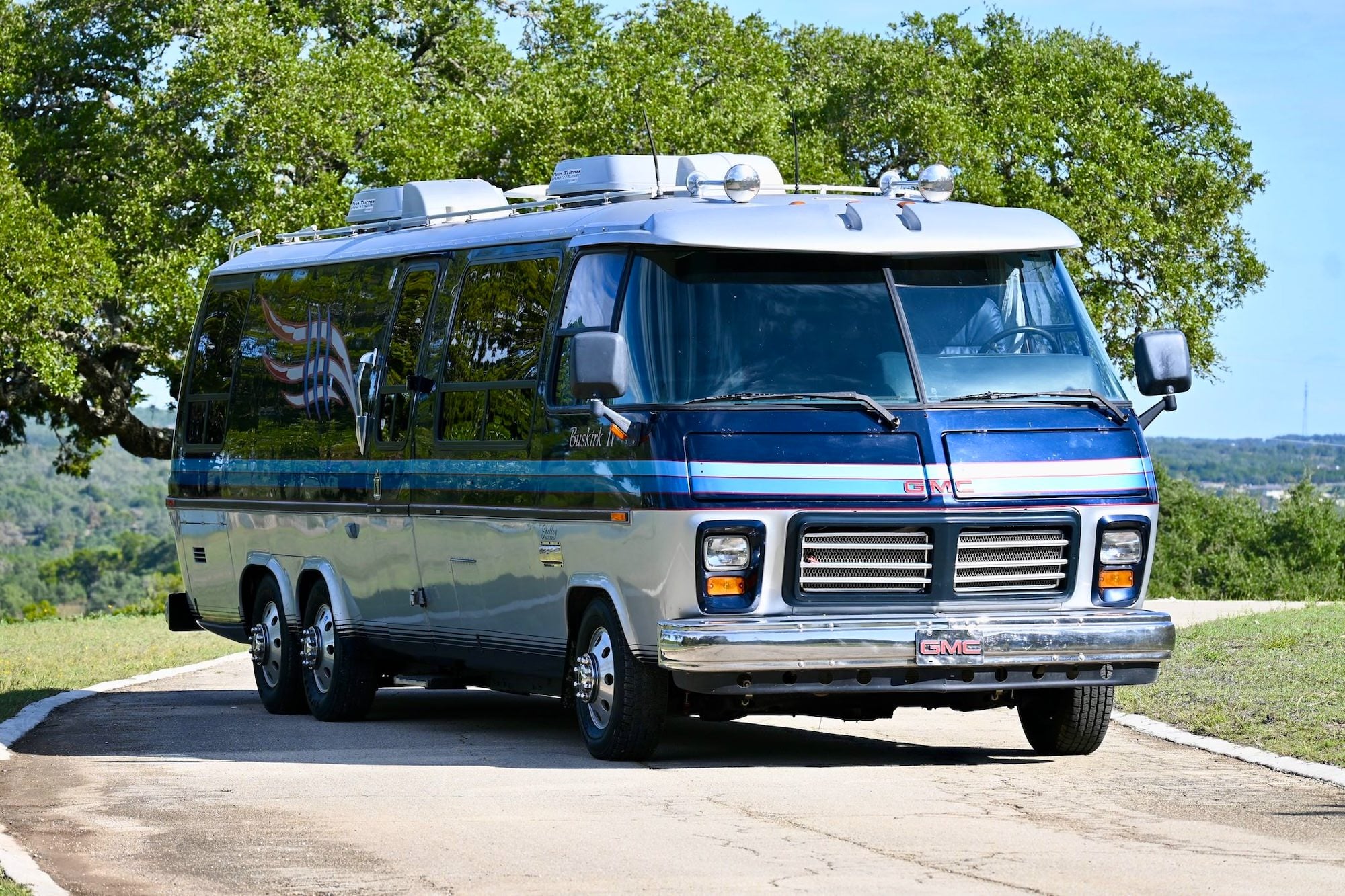
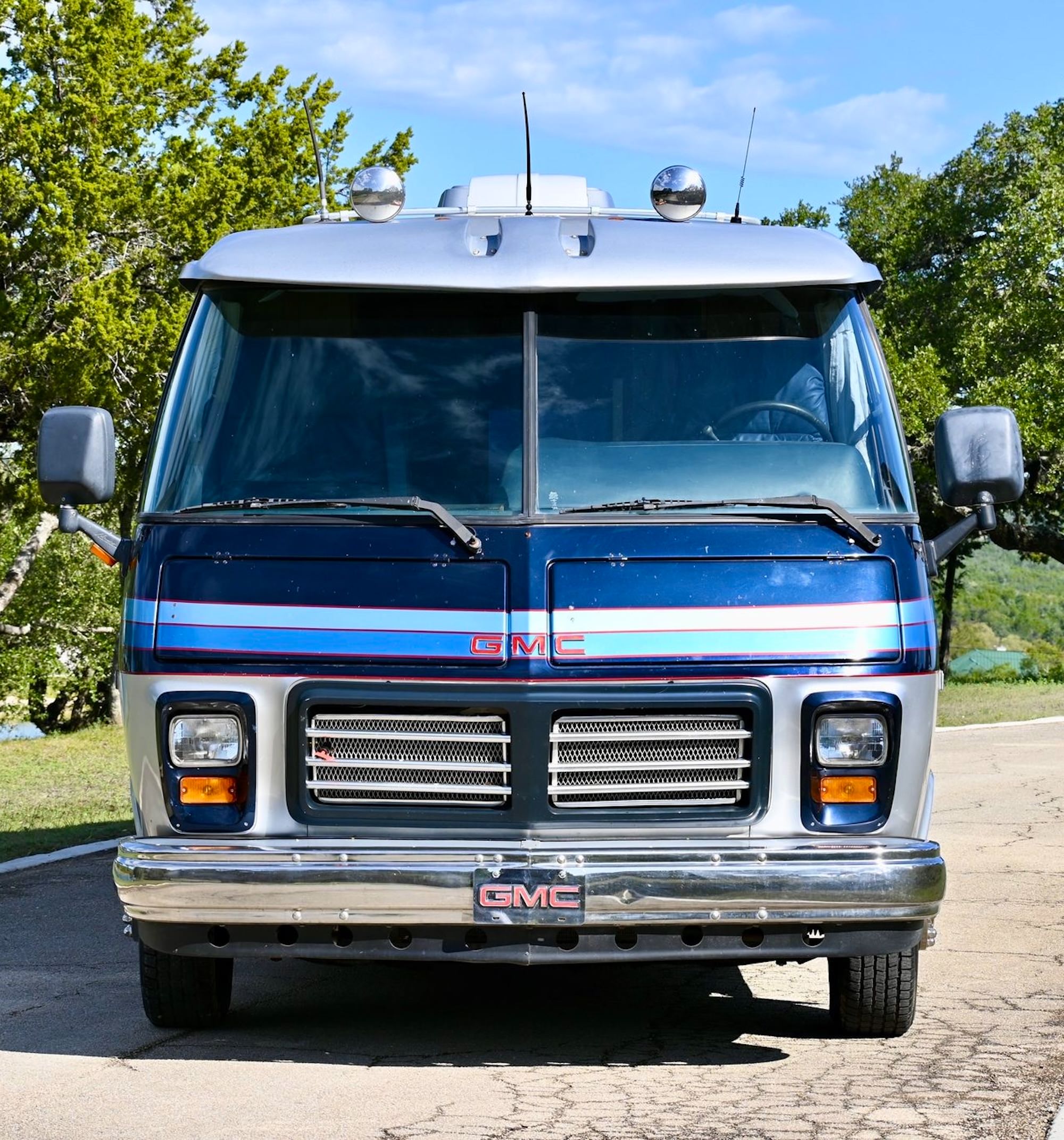
This is a GMC Birchaven Motorhome from 1978, it benefits from a complete professional rebuild and refurb in 1997 by Buskirk-Rush RV, and it’s now powered by an 8.2 liter Chevrolet Marine V8.
The GMC Motorhome was a series of high-end, aluminum-bodied RVs developed and built by General Motors in the 1970s. They made over 12,000 of them, and they remain much sought after today, with 9,000+ believed to still be on the road.
Fast Facts: A 1978 GMC Birchaven Motorhome
- The GMC Motorhome was developed by General Motors beginning in 1969 as an alternative to conventional truck-based RVs. Engineers adapted the Oldsmobile Toronado’s front-wheel-drive V8 powertrain, allowing a lower floor and improved handling. Its body combined aluminum framing and panels with molded fiberglass sections, creating a lightweight, corrosion-resistant structure.
- Introduced for the 1973 model year, the GMC Motorhome initially attracted strong demand before the 1973 Oil Crisis severely affected sales. Its unusual chassis featured independent rear wheels and air suspension rather than a conventional rear axle. Production ended in July of 1978, with 12,921 examples built across six model years.
- Coachmen Industries introduced the Birchaven and Royale in 1976, using GMC Transmode chassis fitted with premium interiors, solid-wood cabinetry, and cedar-lined closets. These models were more expensive and heavier than GMC’s factory-finished motorhomes. Although complete production records have been lost, hundreds of surviving examples have been documented by enthusiasts and owners’ registries.
- The 1978 GMC Birchaven featured here reportedly underwent an extensive rebuild by Buskirk-Rush RV in 1997, receiving a body extension, redesigned interior, and 502 cubic inch Chevrolet Marine V8. Further improvements include electronic fuel injection, upgraded suspension, custom oak cabinetry, and modern amenities. It’s now offered for sale out of Texas.
History Speedrun: The GMC Motorhome
In 1969 a team of engineers at the GM Technical Center in Warren, Michigan, began studying a multipurpose vehicle that could work as a motorhome, an ambulance, a small transit bus, or an airport shuttle bus. The RV and motorhome market of the day was booming, but it was almost entirely based on vehicles using truck chassis, and GM engineers believed they could do better than that. It turns out they were right.
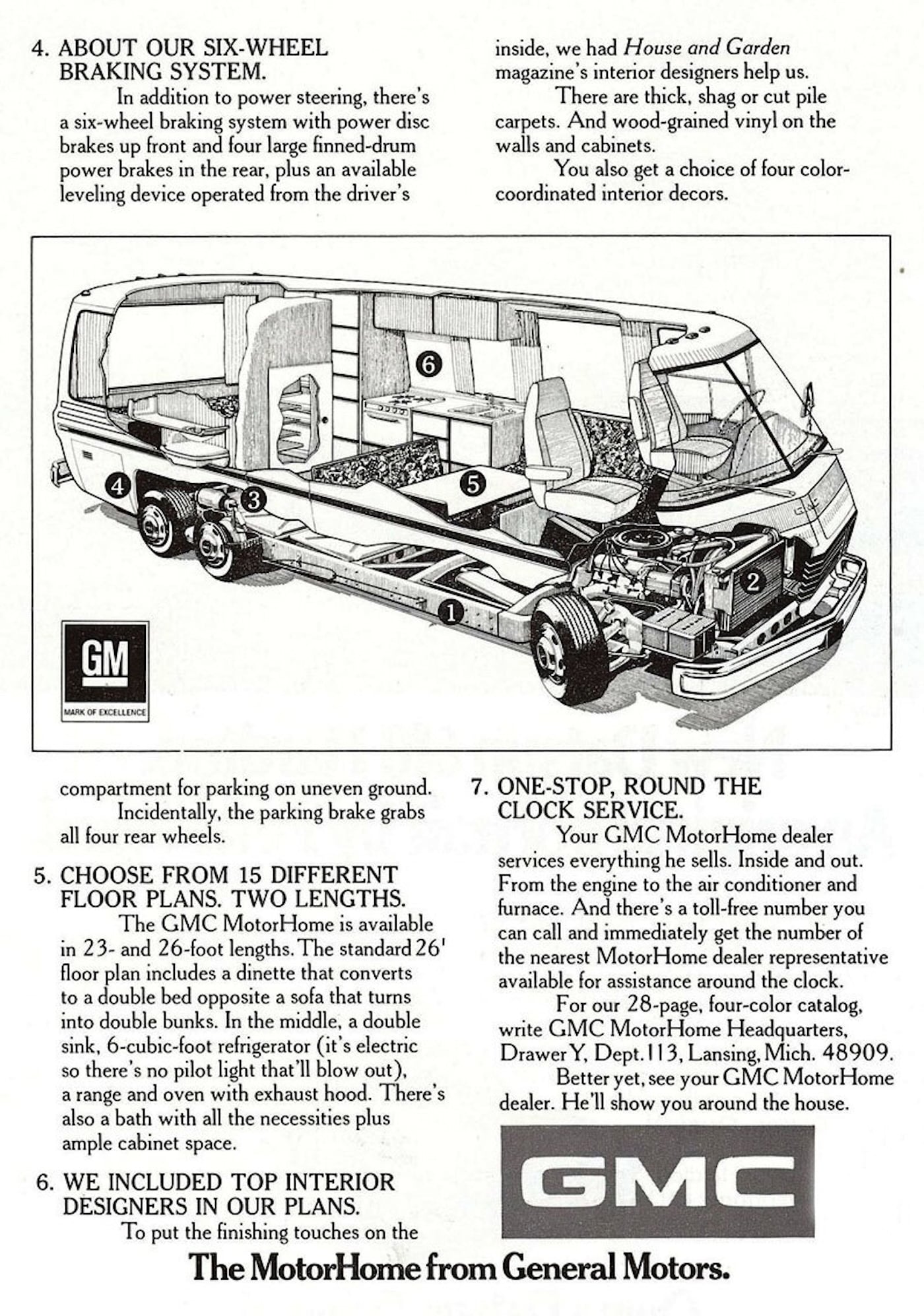
 The GMC Motorhome used a welded steel ladder frame, the Toronado powertrain and its torsion-bar front suspension sat up front, and there was no rear axle at all. Each of the four rear wheels rode on its own leading or trailing arm, and the two wheels on each side shared a single air spring with a height-control valve per side. Image courtesy of General Motors.
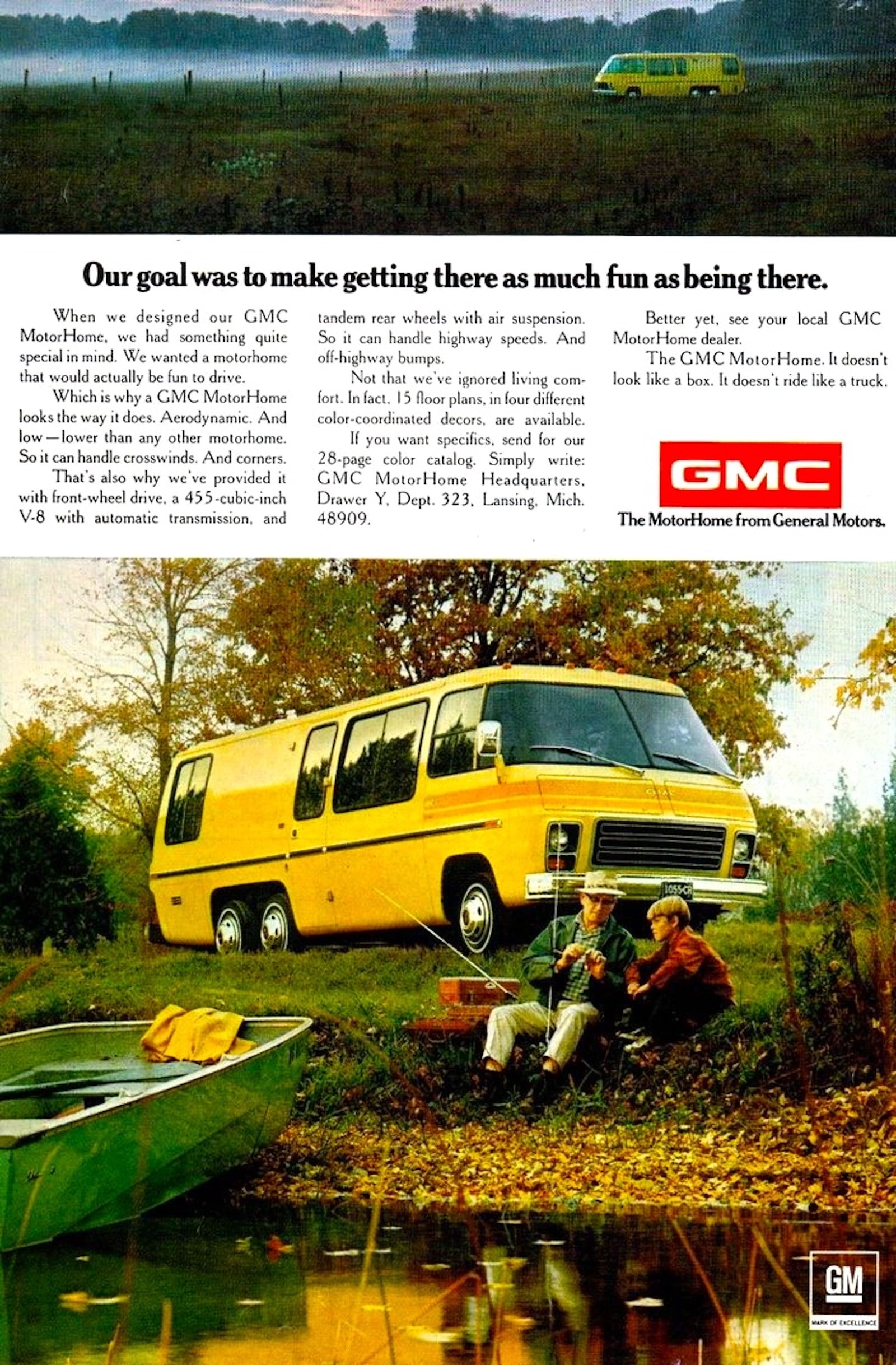
GM’s first running motorhome chassis took a completely different approach to the commonly-used truck chassis foundation of their competitors. Instead, it used the Oldsmobile Toronado’s front-wheel-drive package – including the 455 cubic inch (7.5 liter) V8, the Turbo Hydra-Matic 425 transmission, and the 3.07:1 final drive from the Toronado’s trailer-towing option.
With no driveshaft sending power back to a rear axle under the floor, the frame could sit quite a bit lower. GM engineers mounted a modified van body on it, they nicknamed it the “pie wagon,” and used it to sell GM management on the ride and handling quality. Because the coach would be rated above 10,500 lbs gross, GM’s internal rules handed it to GMC rather than to Chevrolet.
Martin J. Caserio, the GM Vice President running GMC Truck & Coach, wanted a reasonably priced, high-volume product. Ralph Merkle led chassis development, John Locklin took on body engineering, and Michael Lathers of the GM Design Center ran the styling program.
When a prototype appeared with flat, vertical sides, Lathers lobbied to restore his curved design – fortunately he won out. A 1/16th scale model tested in the Guggenheim wind tunnel in California returned a drag coefficient of just 0.310, that was excellent for an RV of the day.
The GMC Motorhome: Chassis – Body – Drivetrain
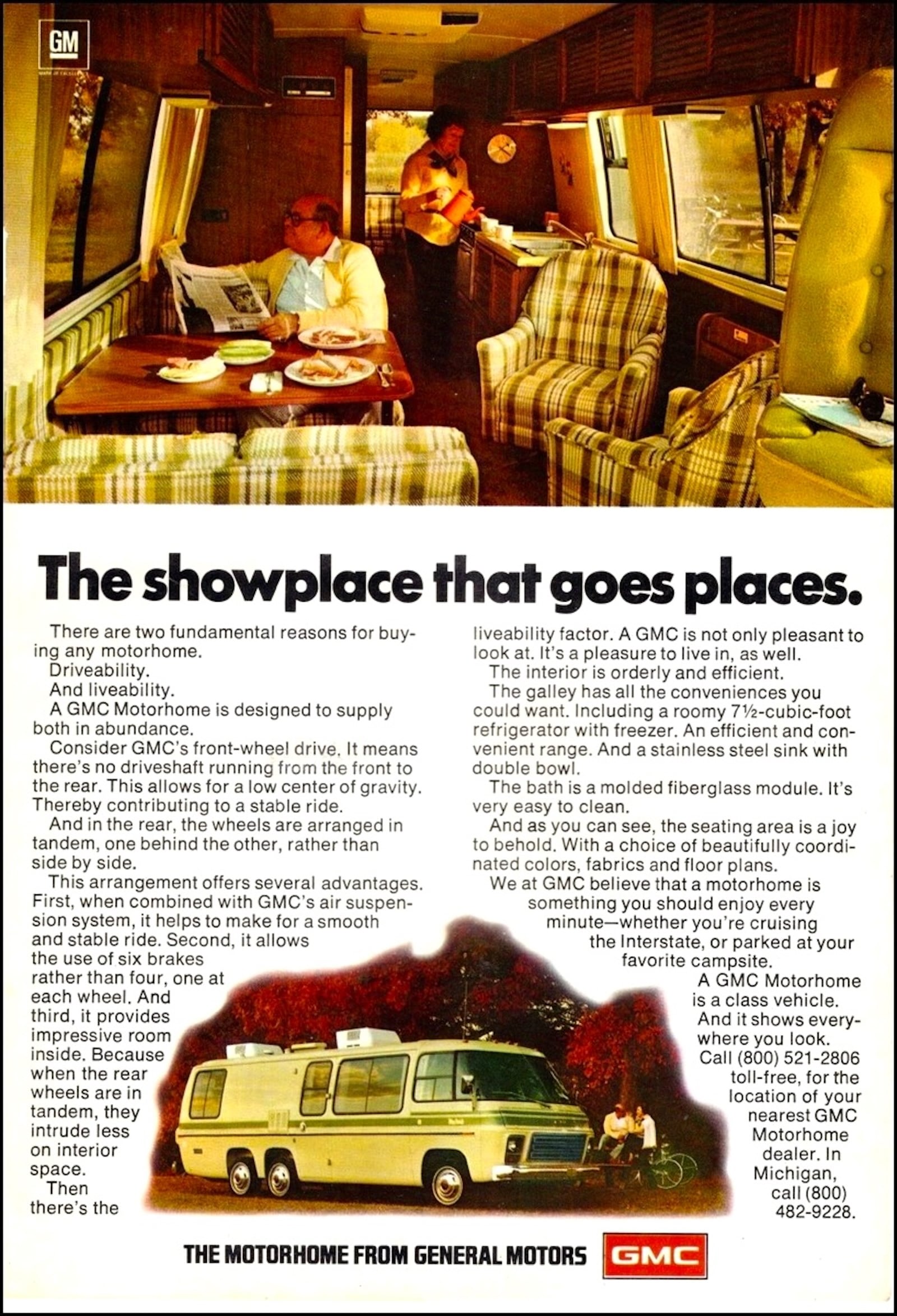
The GMC Motorhome used a welded steel ladder frame, the Toronado powertrain and its torsion-bar front suspension sat up front, and there was no rear axle at all. Each of the four rear wheels rode on its own leading or trailing arm, and the two wheels on each side shared a single air spring with a height-control valve per side.
GM’s Saginaw Division had first designed a hydro-air spring, but its tooling costs ran too high, and a Firestone rolling-lobe air spring went into production instead. Brakes were discs at the front and drums on all four rear wheels, in a power-assisted split hydraulic system, and as you might expect, the steering was power assisted.
GM’s first running motorhome chassis took a completely different approach to the commonly-used truck chassis foundation of their competitors. Instead, it used the Oldsmobile Toronado’s front-wheel-drive package – including the 455 cubic inch (7.5 liter) V8, the Turbo Hydra-Matic 425 transmission, and the 3.07:1 final drive from the Toronado’s trailer-towing option. Image courtesy of General Motors.
A welded aluminum body cage was fitted to the steel frame, flat aluminum panels covered the upper sides and roof, and molded fiberglass formed the lower panels and both ends, all of it bonded on with a 3M adhesive. The 23-foot coach had a 140-inch wheelbase and the 26-footer was on 160 inches, the floor was just 14 inches above the road.
The Launch + The Model Line
GM showed a prototype at the Transpo 72 Exhibition near Washington in May of 1972. The first coaches came down the line at GMC’s Plant 3 in Pontiac, Michigan, late in 1972, and the press drove them at Anaheim Stadium in January of 1973.
The 23-footer started at $13,569 USD (about $103,000 USD in 2026) and the 26-footer at $14,569 USD (about $111,000 USD in 2026). Buyers chose from four models, six colors, and 15 floor plans. There were four models – the Canyonlands, Glacier, Painted Desert, and Sequoia, but they basically just set the interior decor rather than the layout.
More than 1,750 orders had arrived by mid-February 1973, and the backlog reached 3,000 by June. Things were looking up for the GMC Motorhome and it must have seemed that only a completely unexpected black swan event could upend the early success the model was enjoying. The black swan event arrived, right on cue, in October of 1973. It would later be called the 1973 Oil Crisis.
As a result of the skyrocketing oil (and fuel) costs, orders for big-block-gasoline-V8-powered RVs dropped off a cliff. GMC halted assembly in early December 1973 and then suspended it again in March of 1974. A 1974 Mechanix Illustrated test called the 26-footer the best-handling motorhome its staff had driven, though they noted that it did struggle for traction in snow due to the front-wheel drive layout.
For 1975 the Eleganza II and Palm Beach replaced the original models, interior assembly moved in-house, and the 26-footer’s gross rating rose to 11,700 lbs. GMC also stopped finishing the 23-foot coach – from then on it came only as a Transmode, an empty shell that outside firms completed as motorhomes, ambulances, bookmobiles, and airport shuttles. The Glenbrook and the cheaper Edgemont models arrived for 1976, and the Kingsley replaced the Glenbrook for 1977.
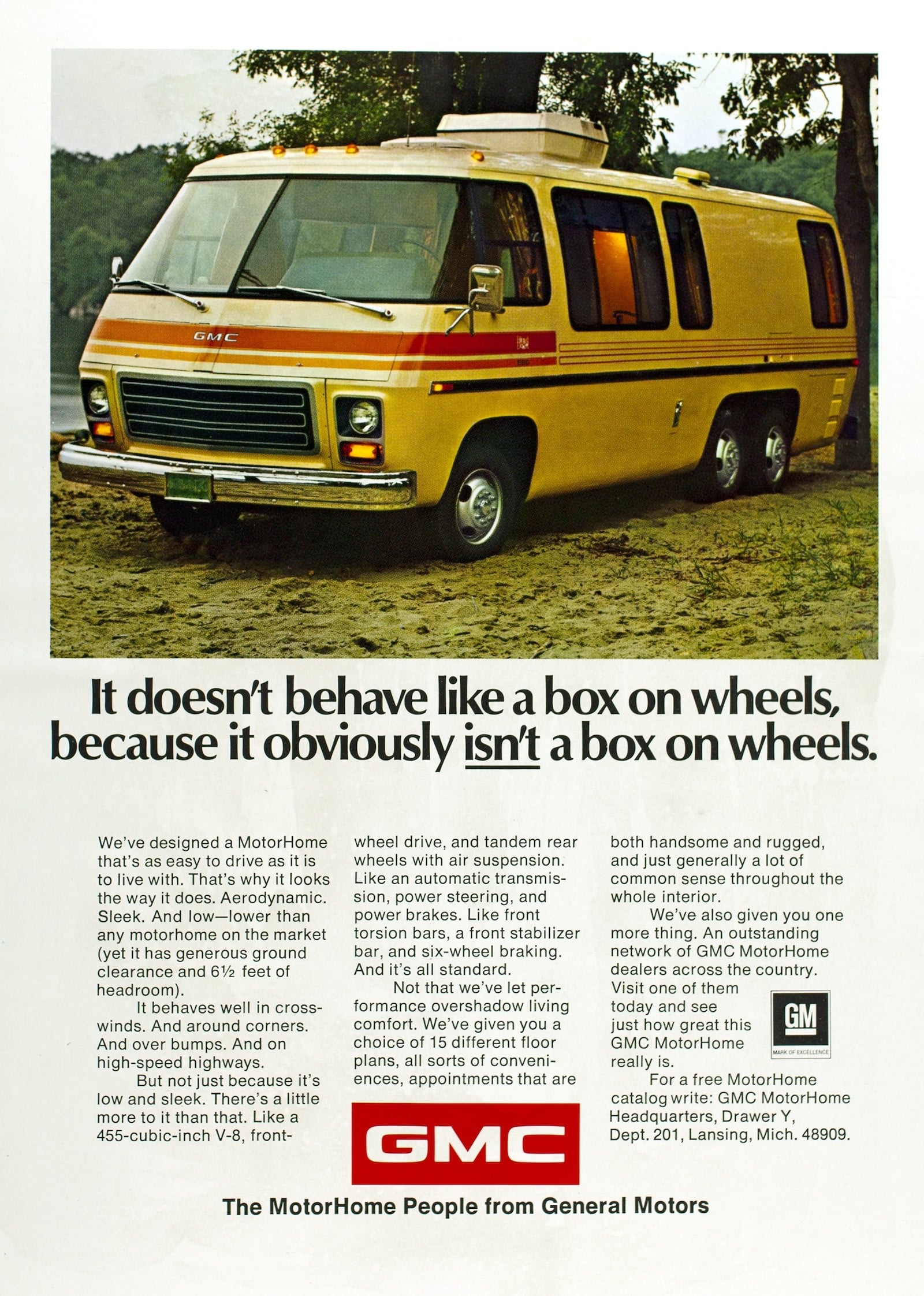
GM showed a prototype at the Transpo 72 Exhibition near Washington in May of 1972. The first coaches came down the line at GMC’s Plant 3 in Pontiac, Michigan, late in 1972, and the press drove them at Anaheim Stadium in January of 1973. Image courtesy of General Motors.
The GMC Birchaven + Royale
Coachmen Industries’ Jimmy Motor Homes division introduced the 26-foot Royale and the 23-foot Birchaven in 1976, by 1978 Coachmen was the major Transmode upfitter. Both came in side-bath and rear-bath layouts with solid-wood cabinetry and cedar-lined closets, and the Birchaven had a side wet bath.
They cost more than the equivalent GMC-finished coaches and they weighed more too, but the fit-out was always first class. Production figures by model are long lost by now, but by 2016 the GMC Motorhome Registry had a record of 543 Birchaven and 953 Royale serial numbers in their books.
The End Of Production
The 403 cubic inch (6.6 liter) Oldsmobile V8, rated at 200 bhp and 330 lb ft, replaced the 455 by the end of January 1977. By late-1977, GMC General Manager Robert W. Truxell announced that Motorhome and Transmode production would stop and the plant space would go to commercial trucks. The Toronado’s big front-drive package was also on its way out with GM’s downsizing, and motorhome volumes simply couldn’t justify engineering a replacement. Production ended in July of 1978.
The total was 12,921 GMC Motorhomes built across the 1973 to 1978 model years. GMC finished 9,715 of them as complete motorhomes, and the other 3,206 left the plant as Transmodes. An owners’ group estimated, from registration data, that close to 9,000 were still in operation in 2023 – a remarkably high percentage.
One of the key reasons for this high survival rate is said to be the aluminum frame and aluminum and fiberglass body – essentially eliminating body rust as a concern.
The GMC Motorhome was a series of high-end, aluminum-bodied RVs developed and built by General Motors in the 1970s. They made over 12,000 of them, and they remain much-sought after today, with 9,000+ believed to still be on the road. Image courtesy of General Motors.
The 1978 GMC Birchaven Motorhome Shown Here
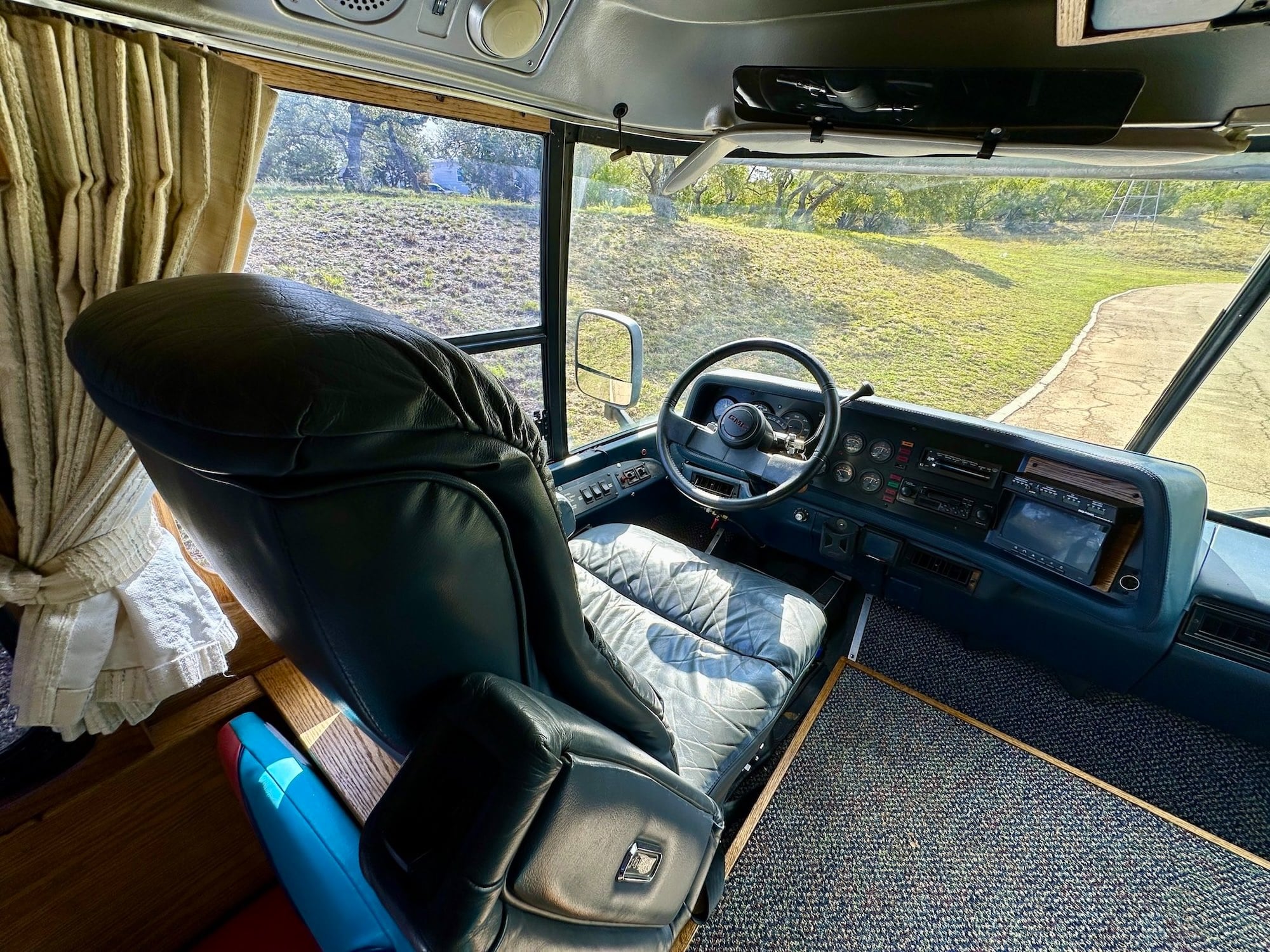
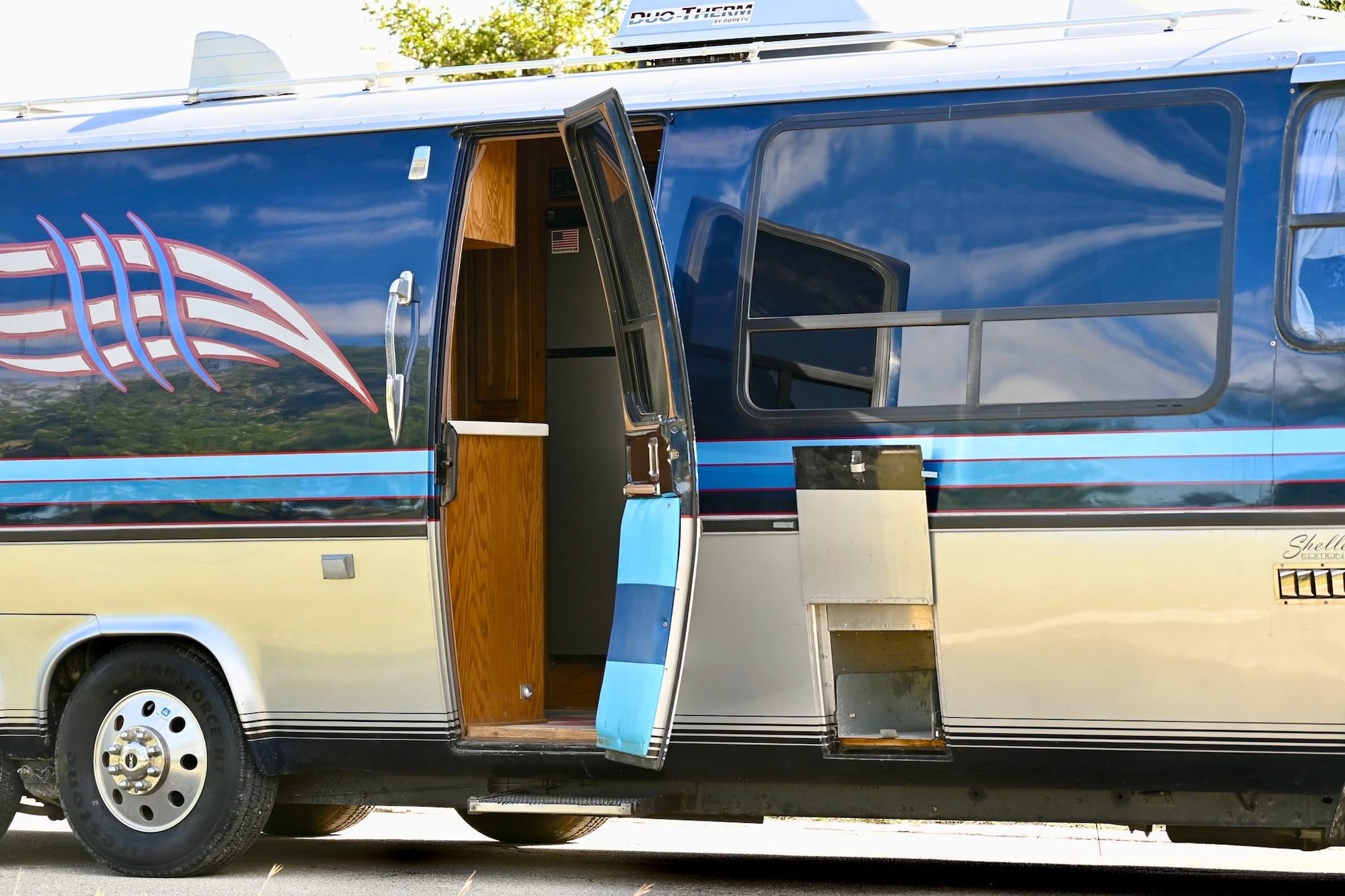
This is an original 1978 GMC Birchaven Motorhome, it’s reportedly the fourth of seven examples extensively rebuilt by Buskirk-Rush RV of Sandusky, Michigan, in 1997. Originally manufactured as a 26-foot motorhome, it received a 3.5-foot rear body extension that brought its overall length to 29.5 feet. The conversion also included a replacement drivetrain, a completely redesigned interior, and a silver and blue exterior finish with multicolored accents.
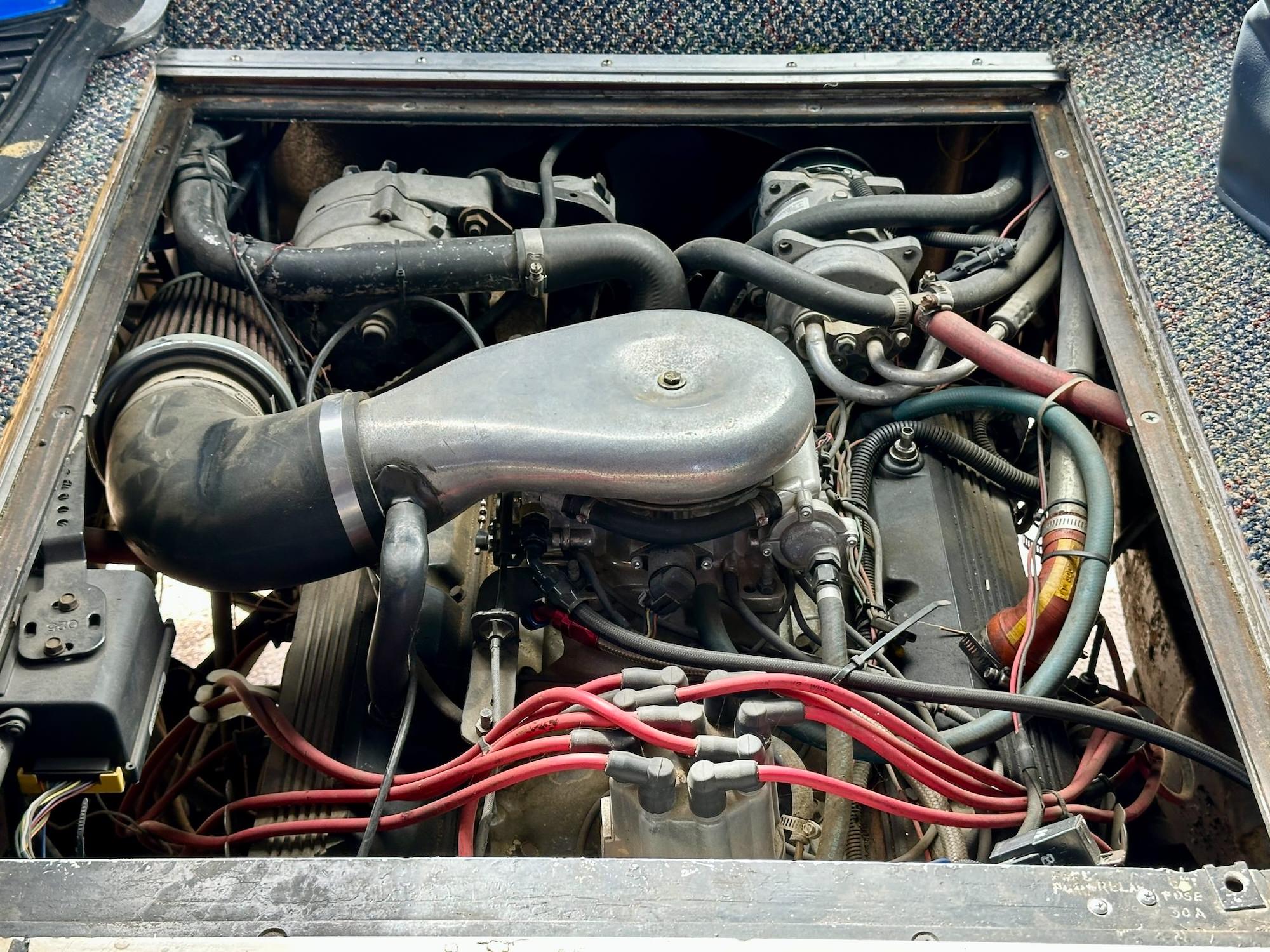
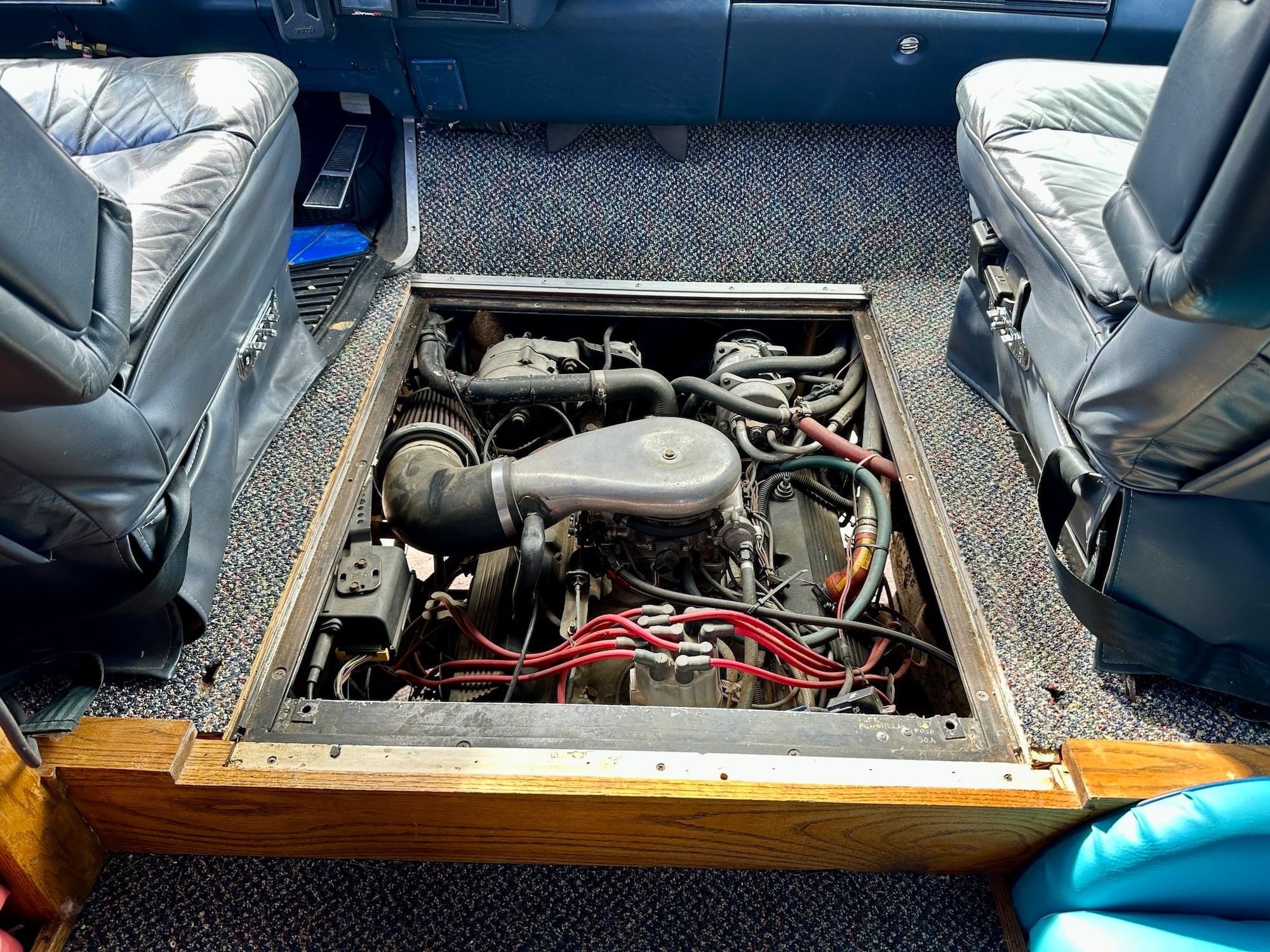
During the rebuild, the original engine was replaced with a more powerful 502 cubic inch (8.2 liter) Chevrolet Marine V8, driving the front wheels through a Turbo-Hydramatic 400 3-speed automatic transaxle. The engine was reportedly rebuilt in 2016 with a roller camshaft and now has Holley Sniper electronic fuel injection.
It rides on 16-inch Alcoa aluminum wheels, Bilstein shock absorbers, and quad rear airbags, it also has power steering, and power-assisted disc brakes. Recent servicing included a replacement fuel pump, serpentine belt, rear suspension air pump, and an oil change.
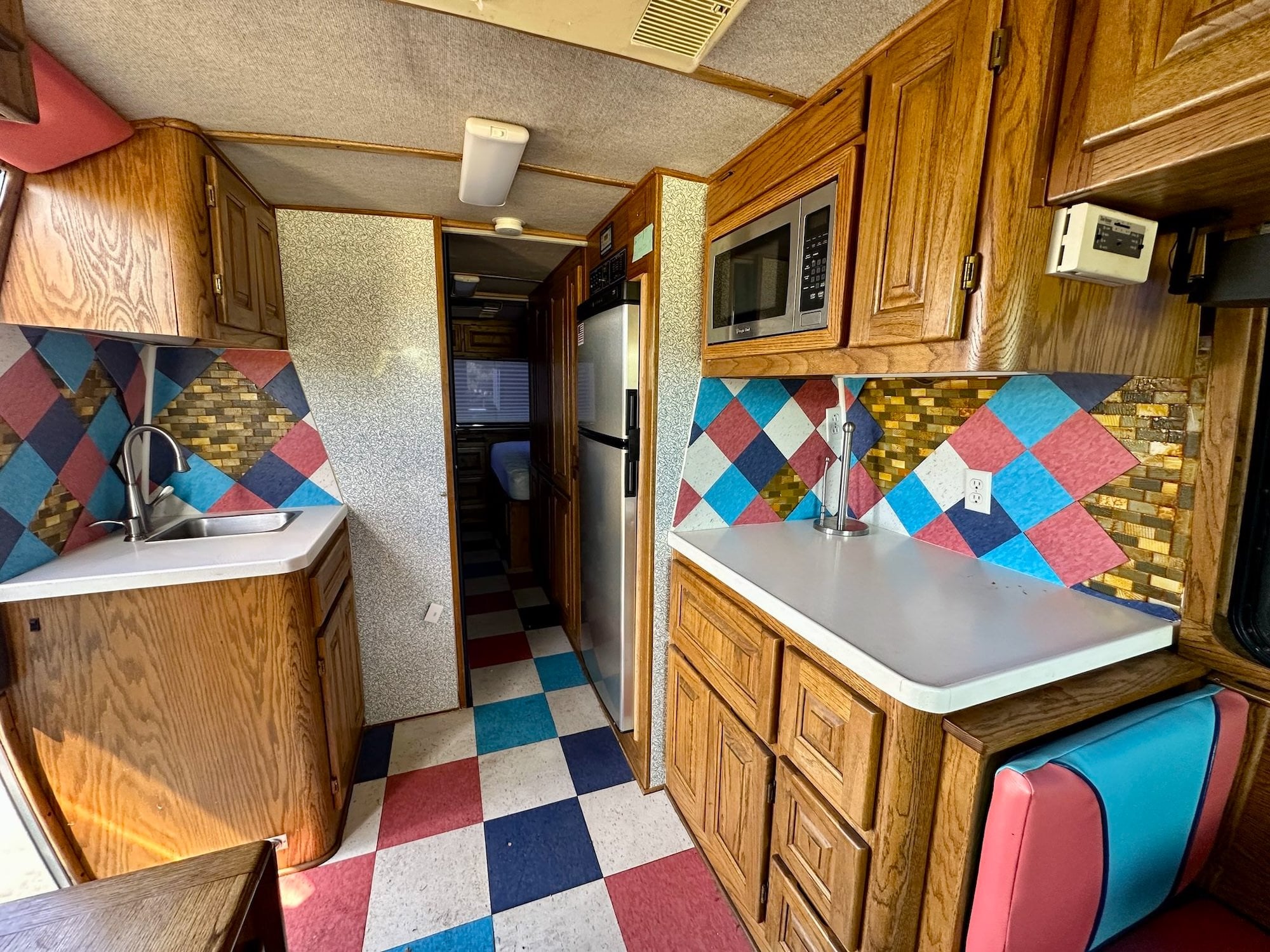
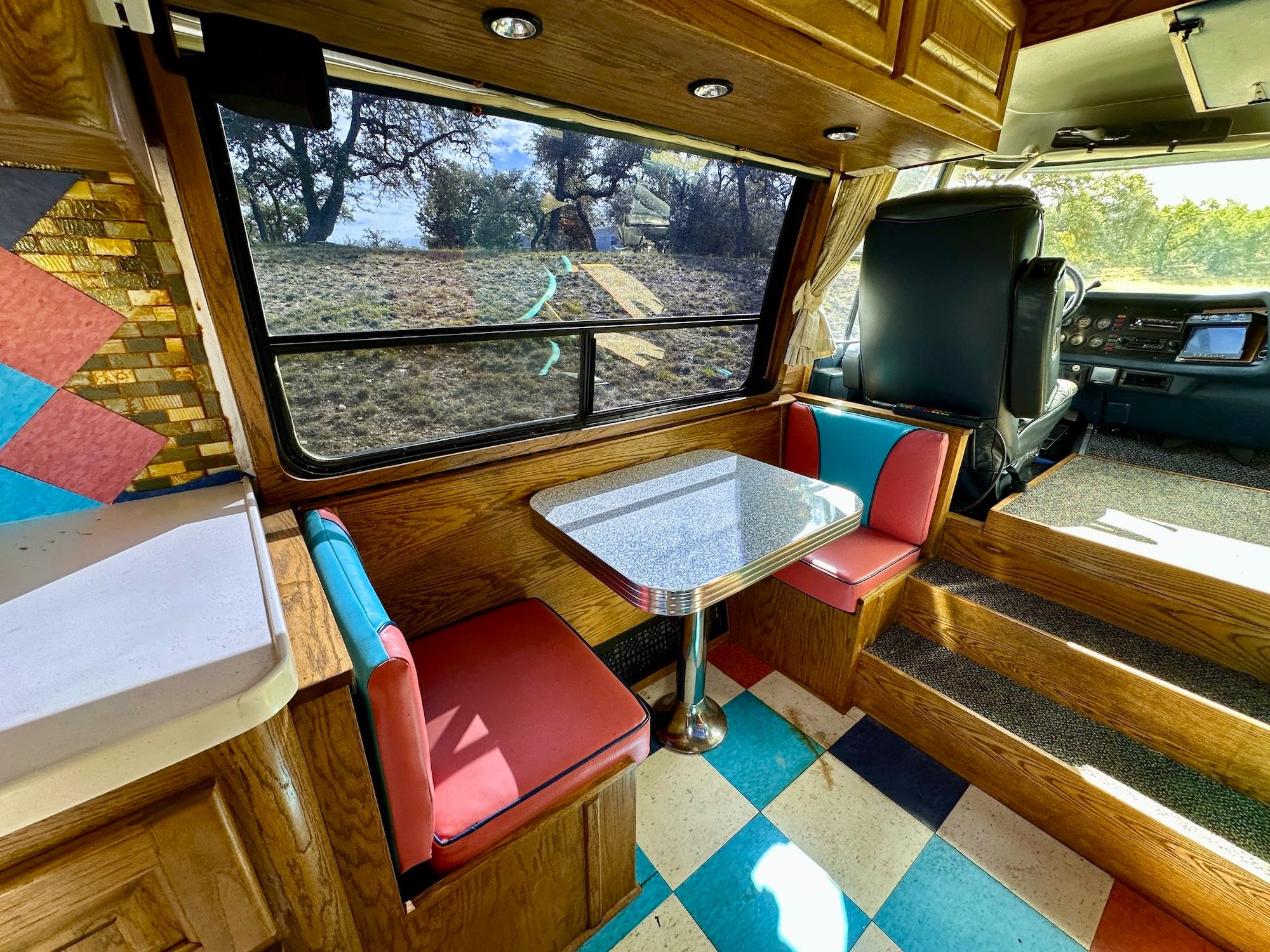
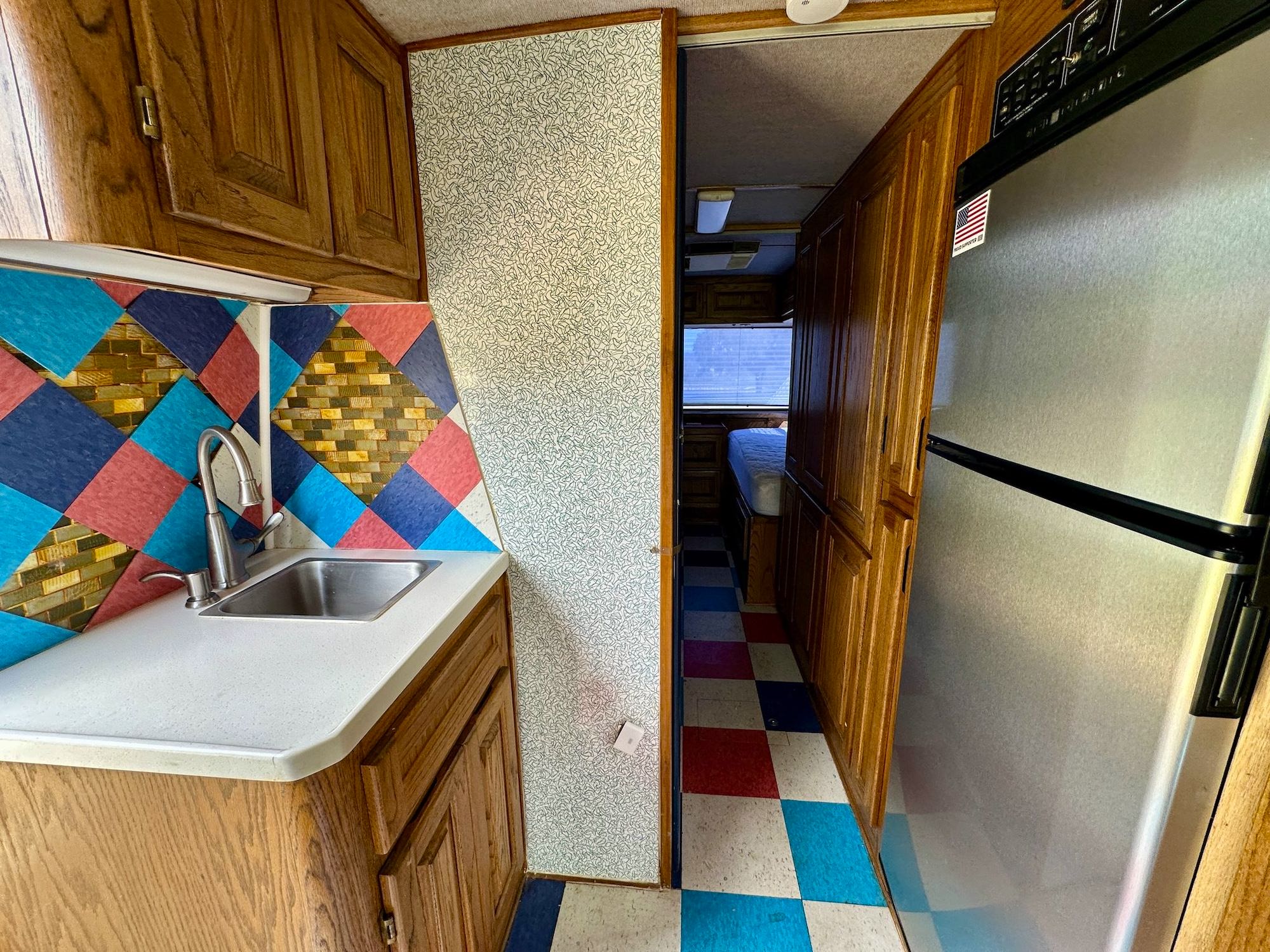
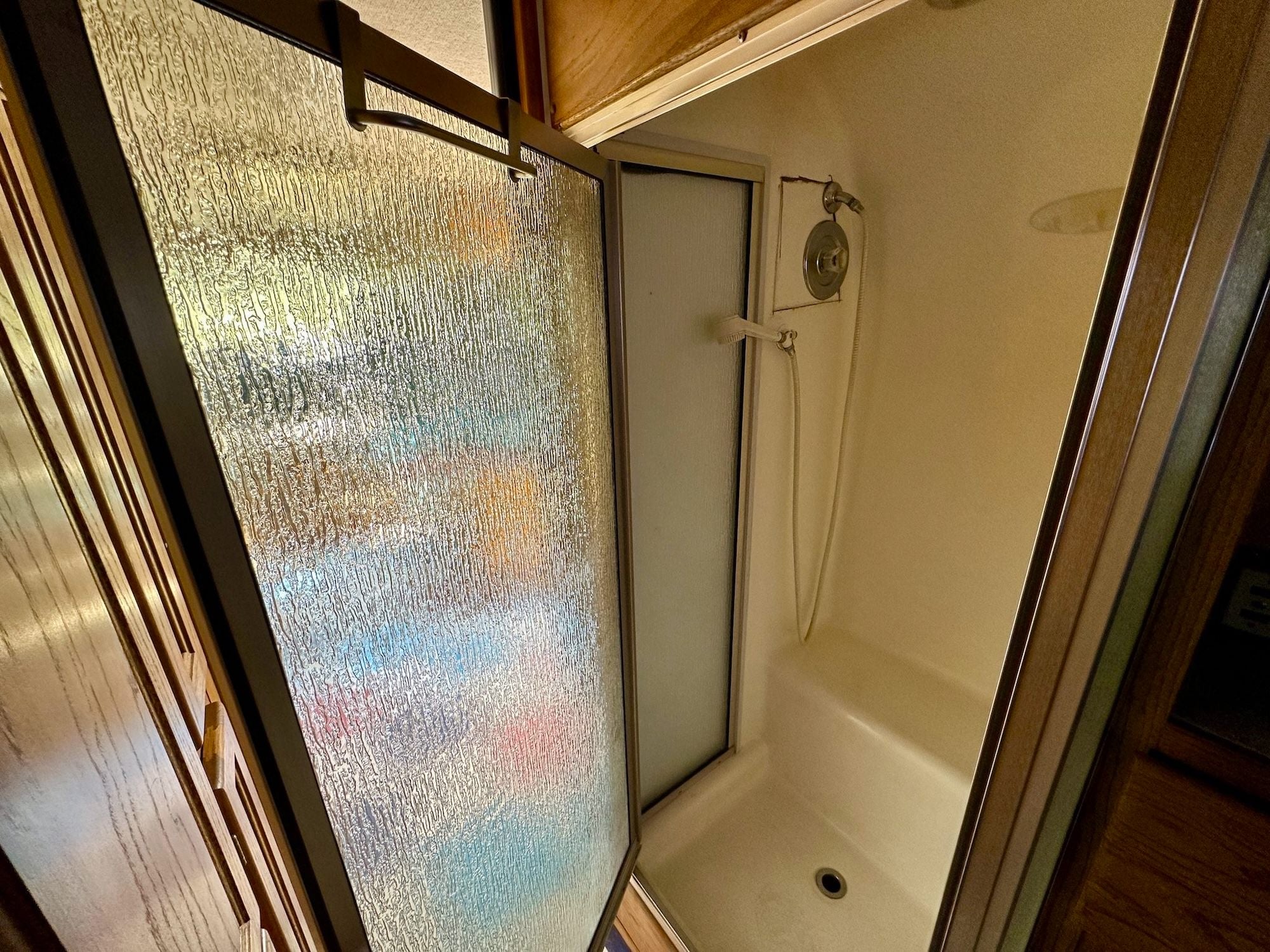
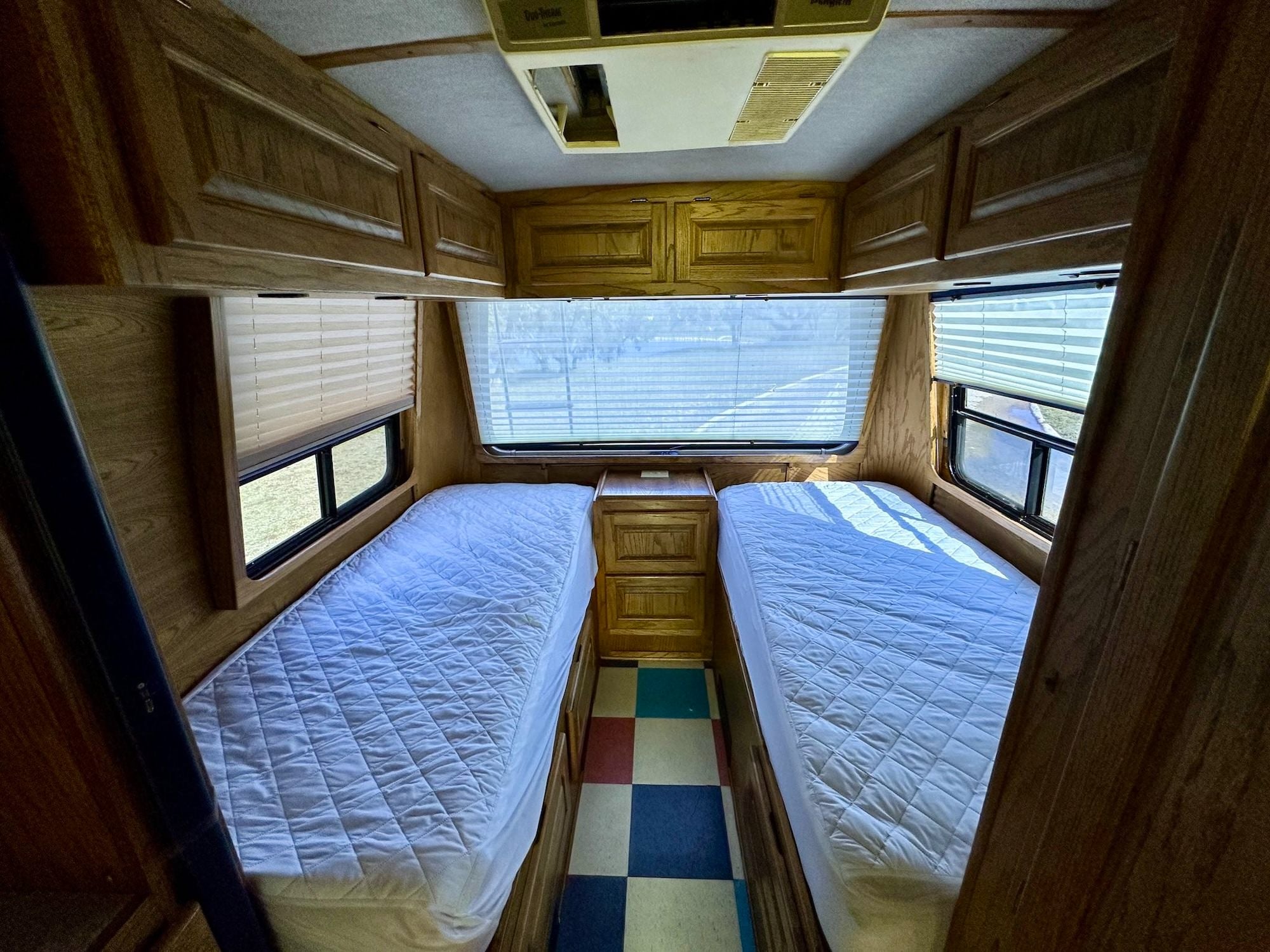
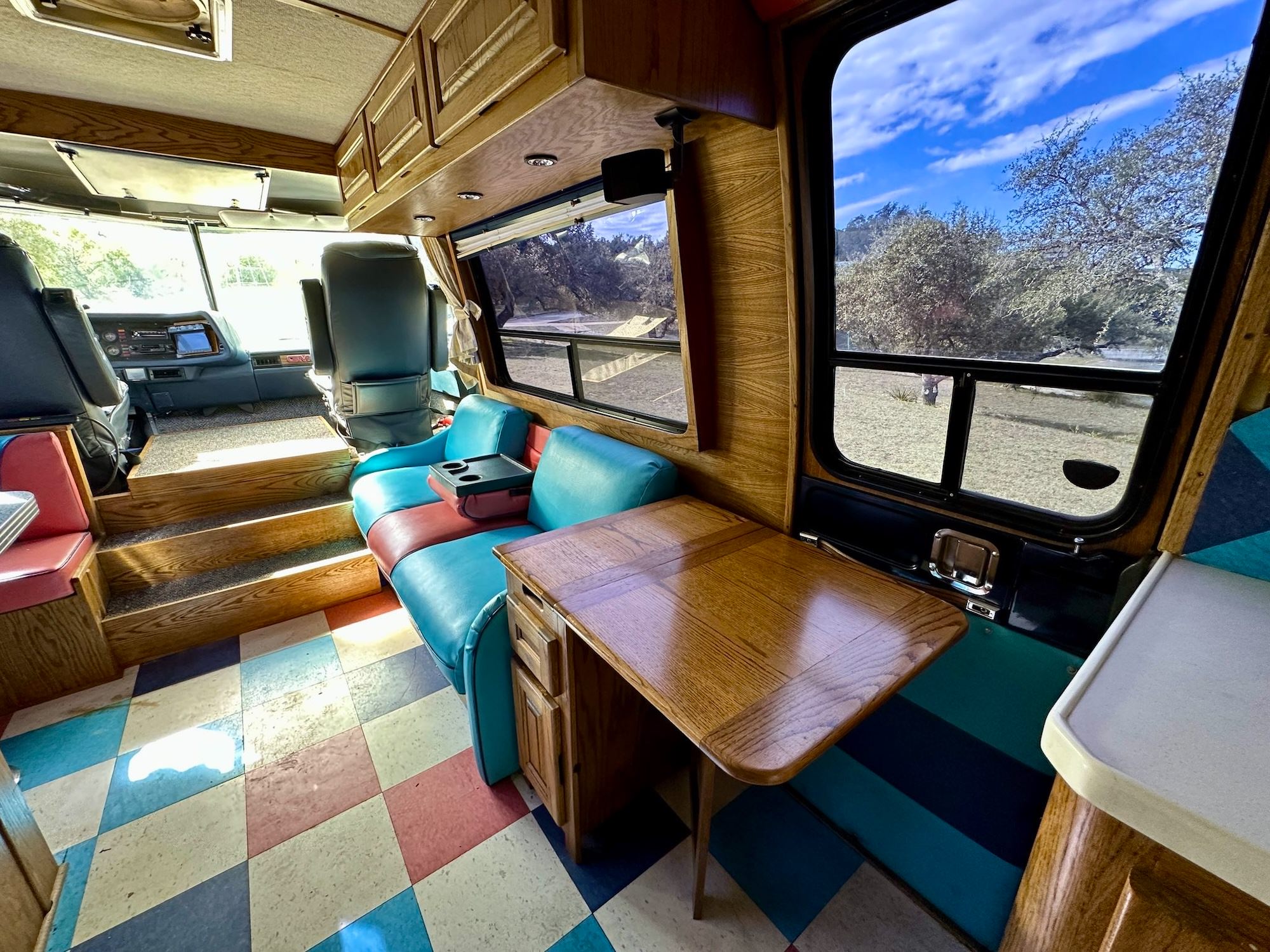
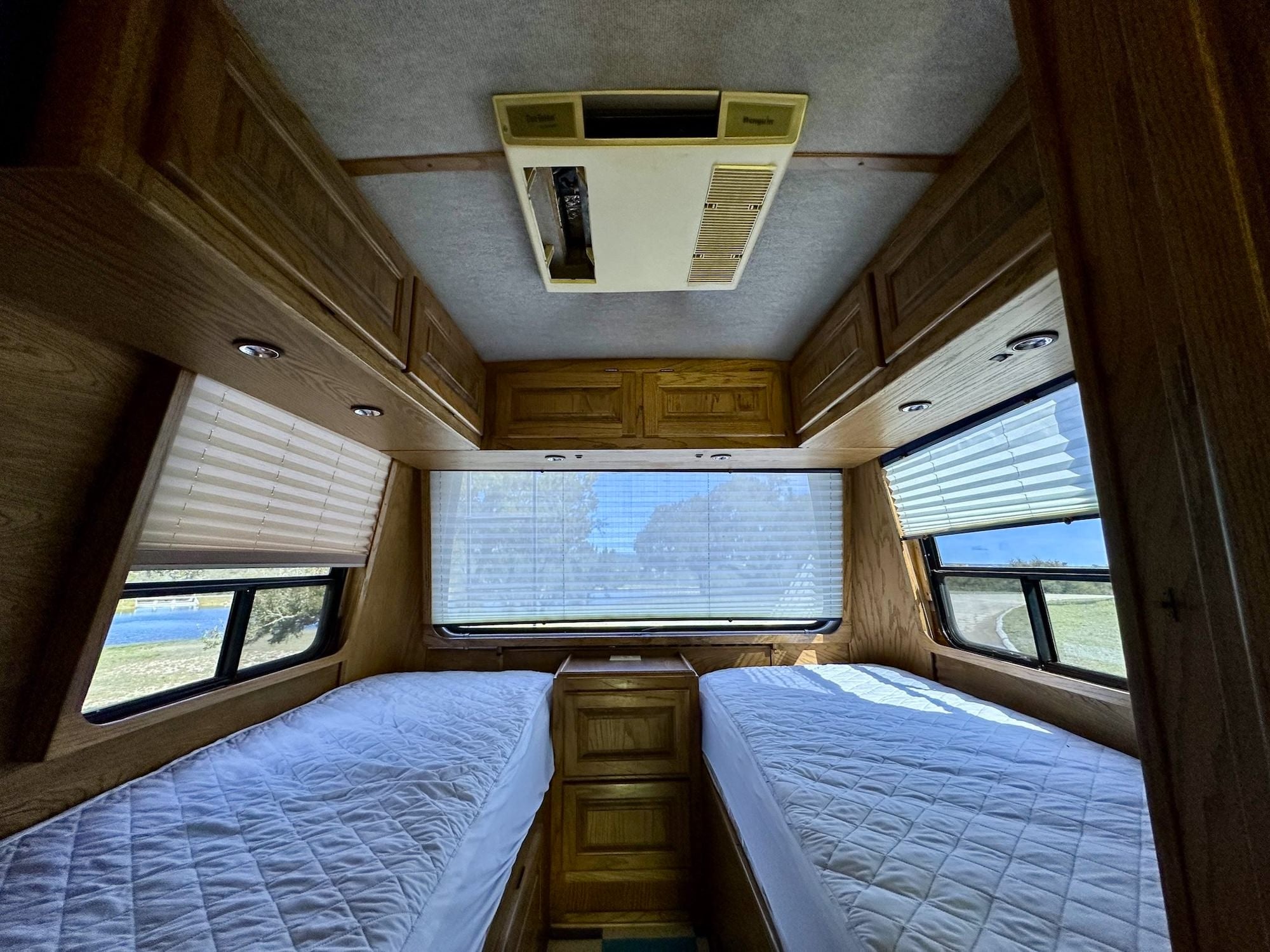
The custom interior features oak cabinetry, multicolored floor tiles, and a floorplan incorporating a forward living area, central galley, and rear bedroom and bathroom. Amenities include a convertible sofa, dinette, stainless steel refrigerator, microwave, fold-down LG television, shower, toilet, and twin beds.
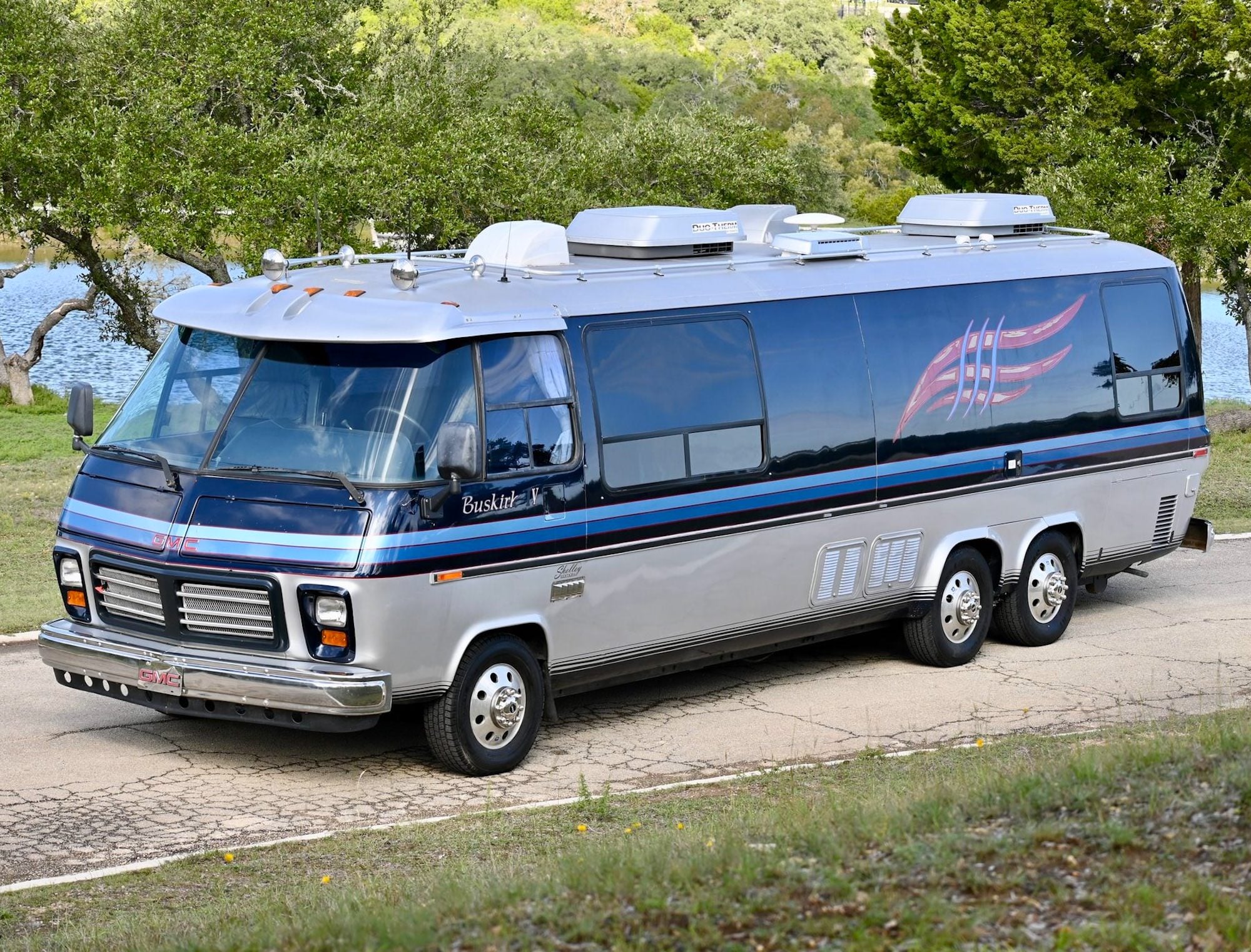
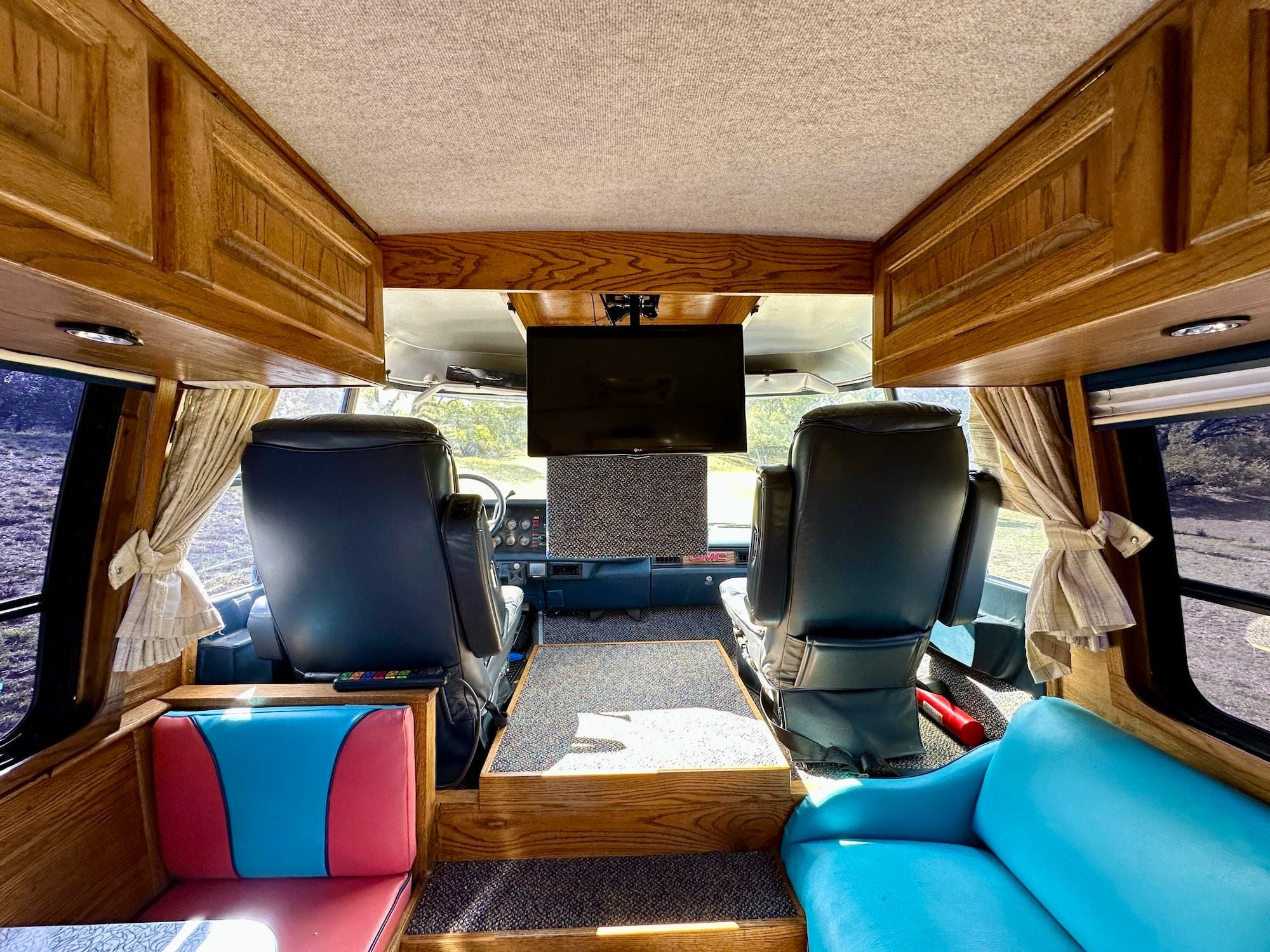
This is a GMC Birchaven Motorhome from 1978, it benefits from a complete professional rebuild and refurbishment in 1997 by Buskirk-Rush RV, and it’s now powered by an 8.2 liter Chevrolet Marine V8.
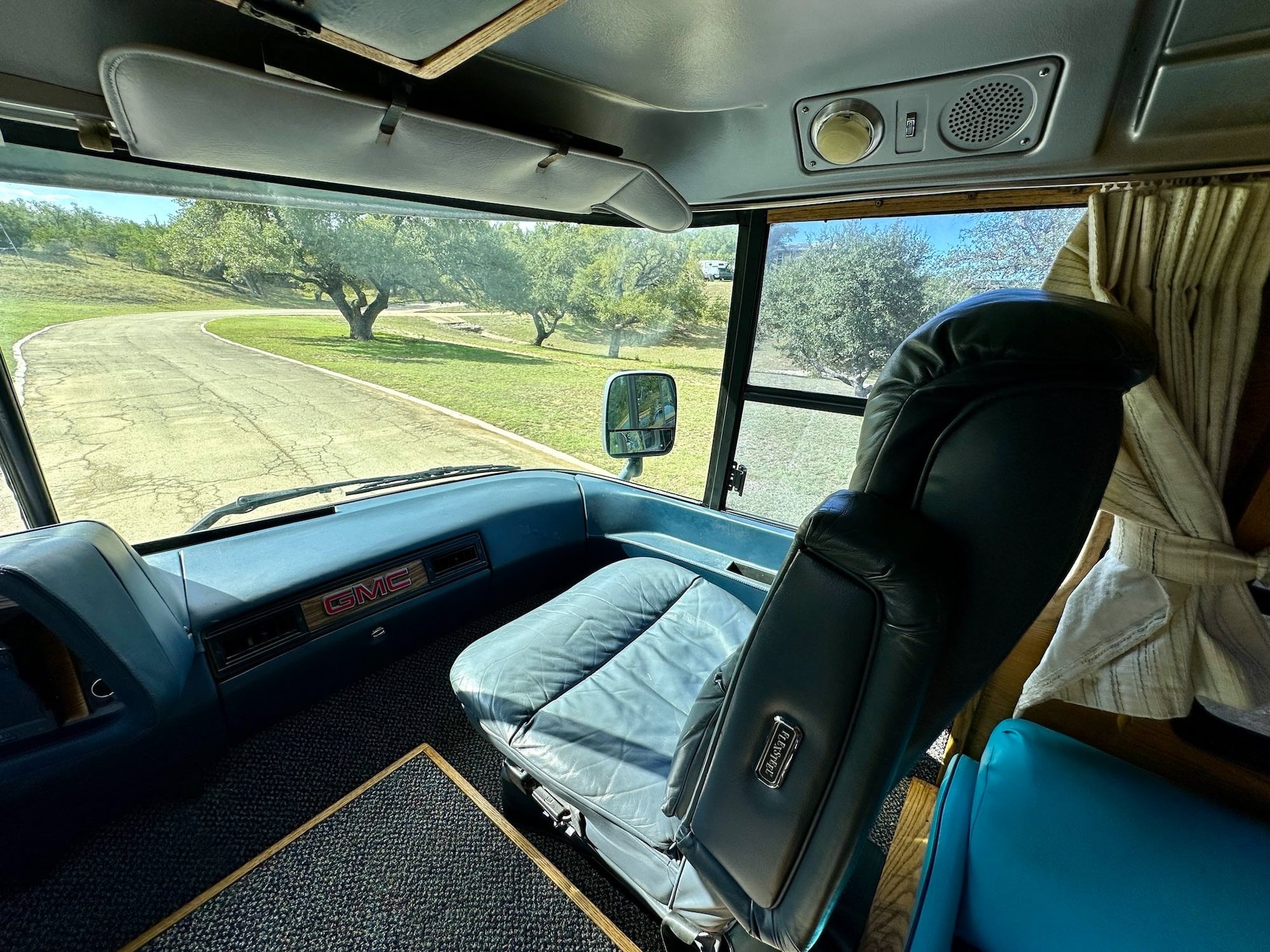
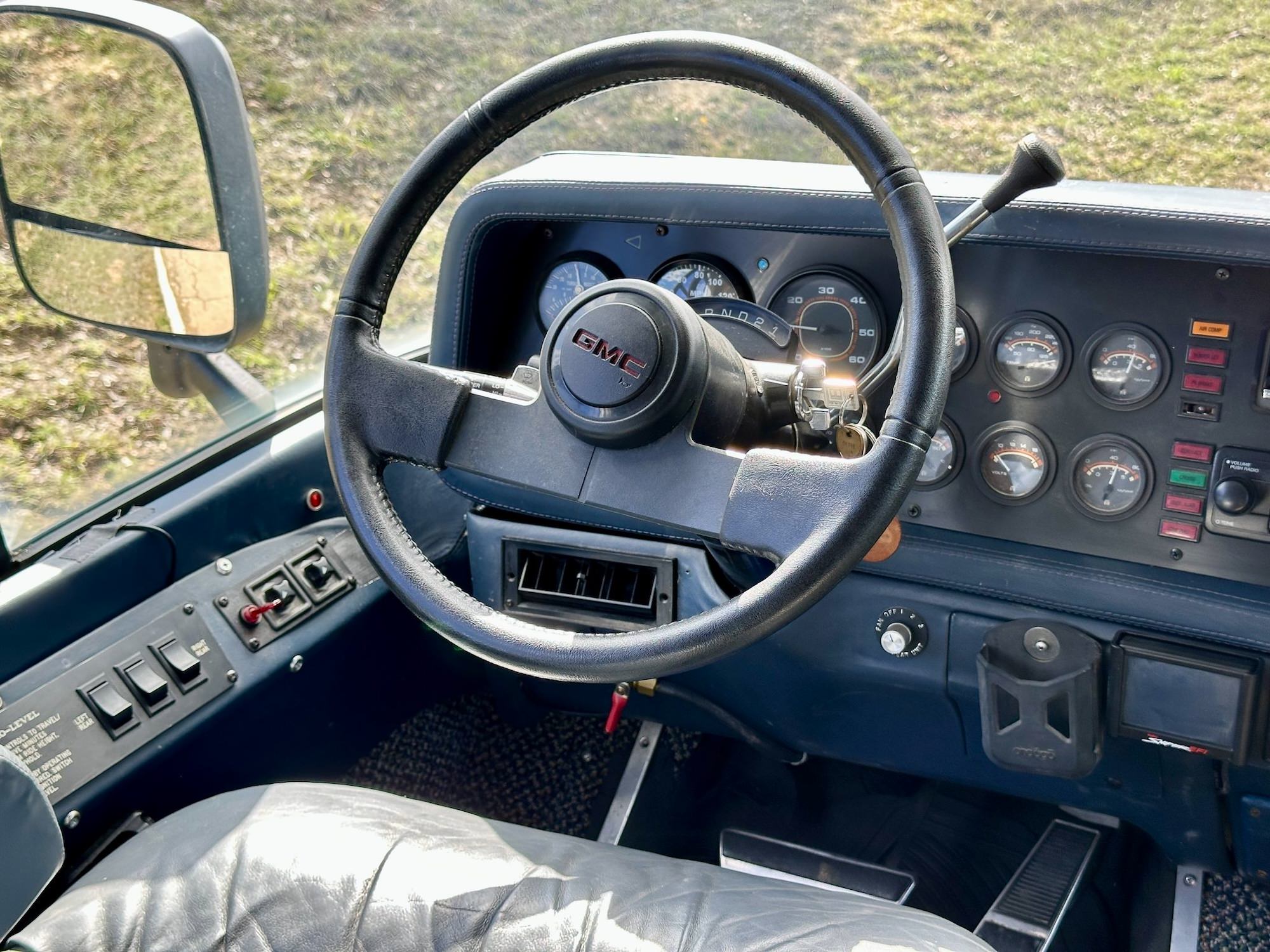
The cockpit has power-adjustable blue leather Flexsteel captain’s chairs, cruise control, a backup camera, and a Digi-Panel monitoring system. Additional equipment includes dual Dometic roof-mounted air conditioners, and a 6,600-watt Generac generator.
It’s now being offered for sale out of Dripping Springs, Texas with literature and a clean Texas title in the owner’s name. If you’d like to read more about it or register to bid, you can visit the listing here.
Images courtesy of Bring a Trailer + General Motors

Articles that Ben Branch has written have been covered on CNN, Popular Mechanics, Smithsonian Magazine, Road & Track Magazine, the official Pinterest blog, the official eBay Motors blog, BuzzFeed, Autoweek Magazine, Wired Magazine, Autoblog, Gear Patrol, Jalopnik, The Verge, and many more.
Silodrome was founded by Ben back in 2010, in the years since the site has grown to become a world leader in the alternative and vintage motoring sector, with well over a million monthly readers from around the world and many hundreds of thousands of followers on social media.