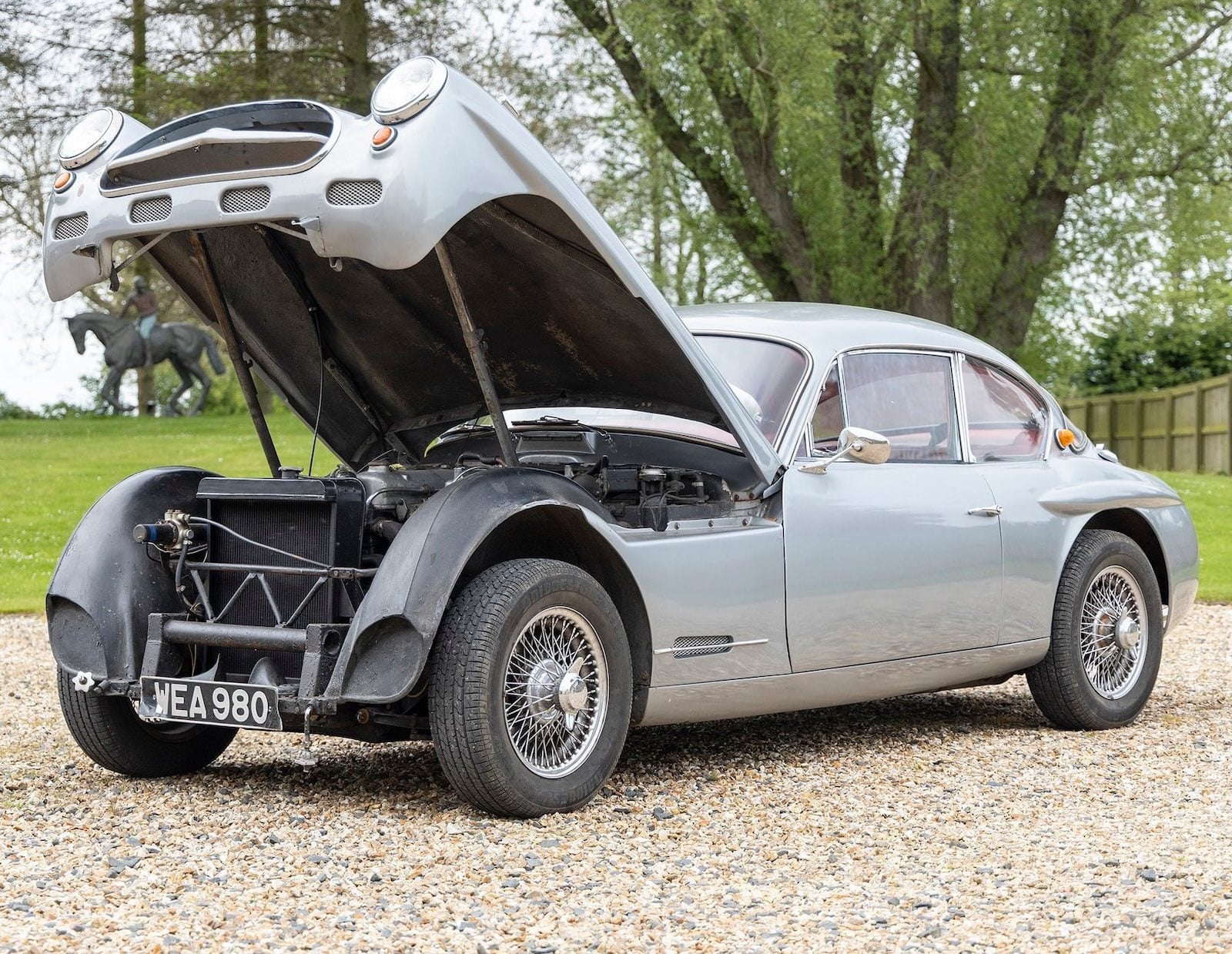
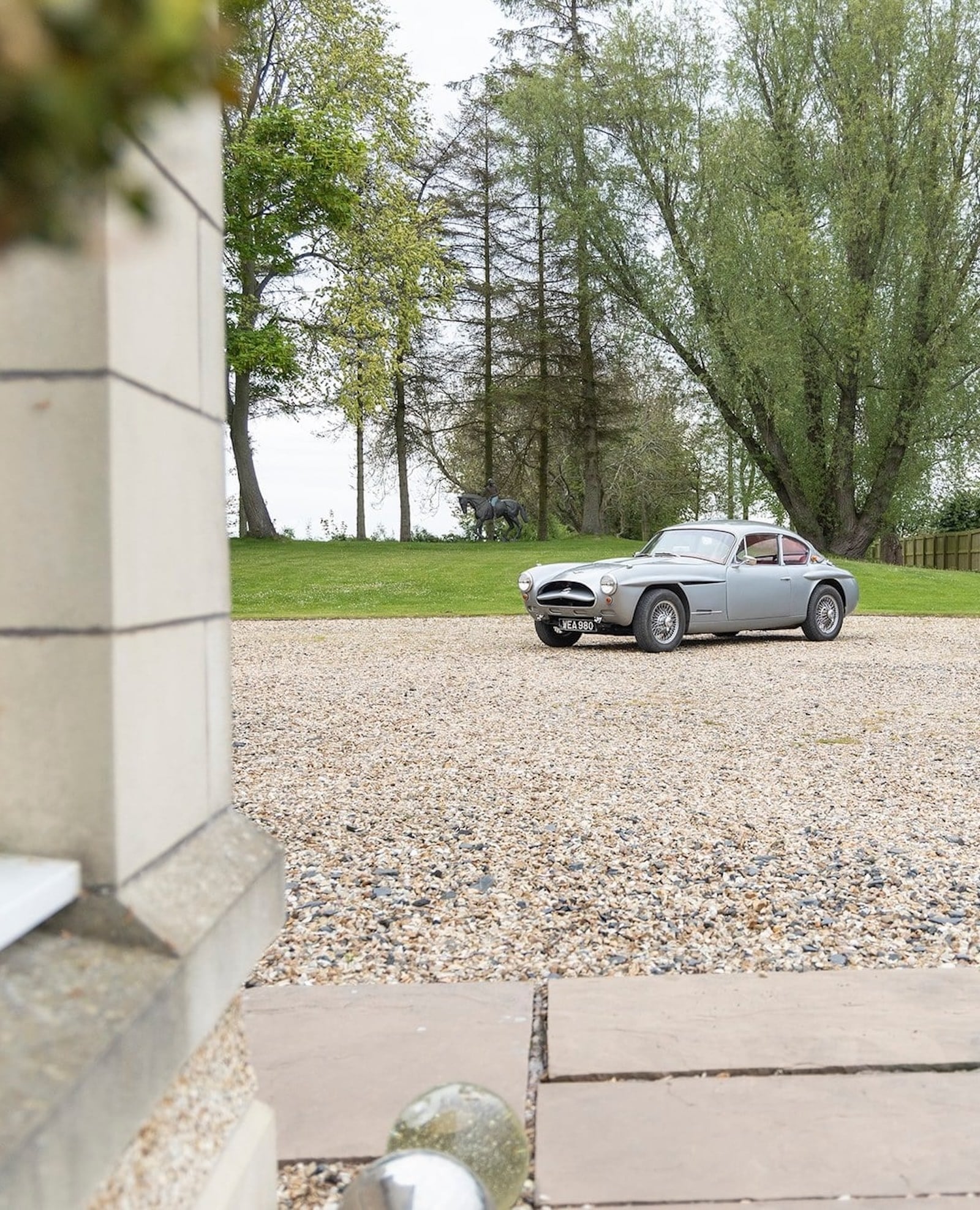
This is a Jensen 541R from 1959, though it’s often overlooked today, it was one of the leading British GT cars of its time, capable of over 125 mph (201 km/h) and built with a body that was impervious to rust – a major feature in a country famous for its rain.
Only a few hundred examples of the 541R were made and today they’re highly collectible. It’s been compared to the likes of the Mercedes-Benz 300SL, Aston Martin DB Mark III, and the Jaguar XK150, but the 541R is typically a lot more affordable than any of them on the classic car market today.
Fast Facts: The Jensen 541R
- The Jensen 541R was a hand-built British grand tourer built by Jensen Motors between 1957 and 1960, with just 193 made. Designed by Eric Neale, it served as Jensen’s high-performance halo model and held the distinction, in period, of being the fastest four-seater production car Autocar magazine had ever tested.
- It used a fiberglass body over a tubular steel ladder-frame chassis, powered by a 4.0 liter Austin straight-six producing 150 bhp through a 4-speed Moss manual gearbox. Four-wheel Dunlop disc brakes were standard, and a driver-operable grille shutter helped achieve a drag coefficient of 0.39, aiding a tested top speed of 127.5 mph.
- Period competitors included the Aston Martin DB Mark III, the Bristol 406, and the Jaguar XK150 fixed-head coupe, with the Mercedes-Benz 300 SL sitting above them. The 541R’s Eric Neale styling drew frequent comparisons to the 300 SL, particularly in its eyebrow-like fender arches, low bonnet, and wraparound rear window.
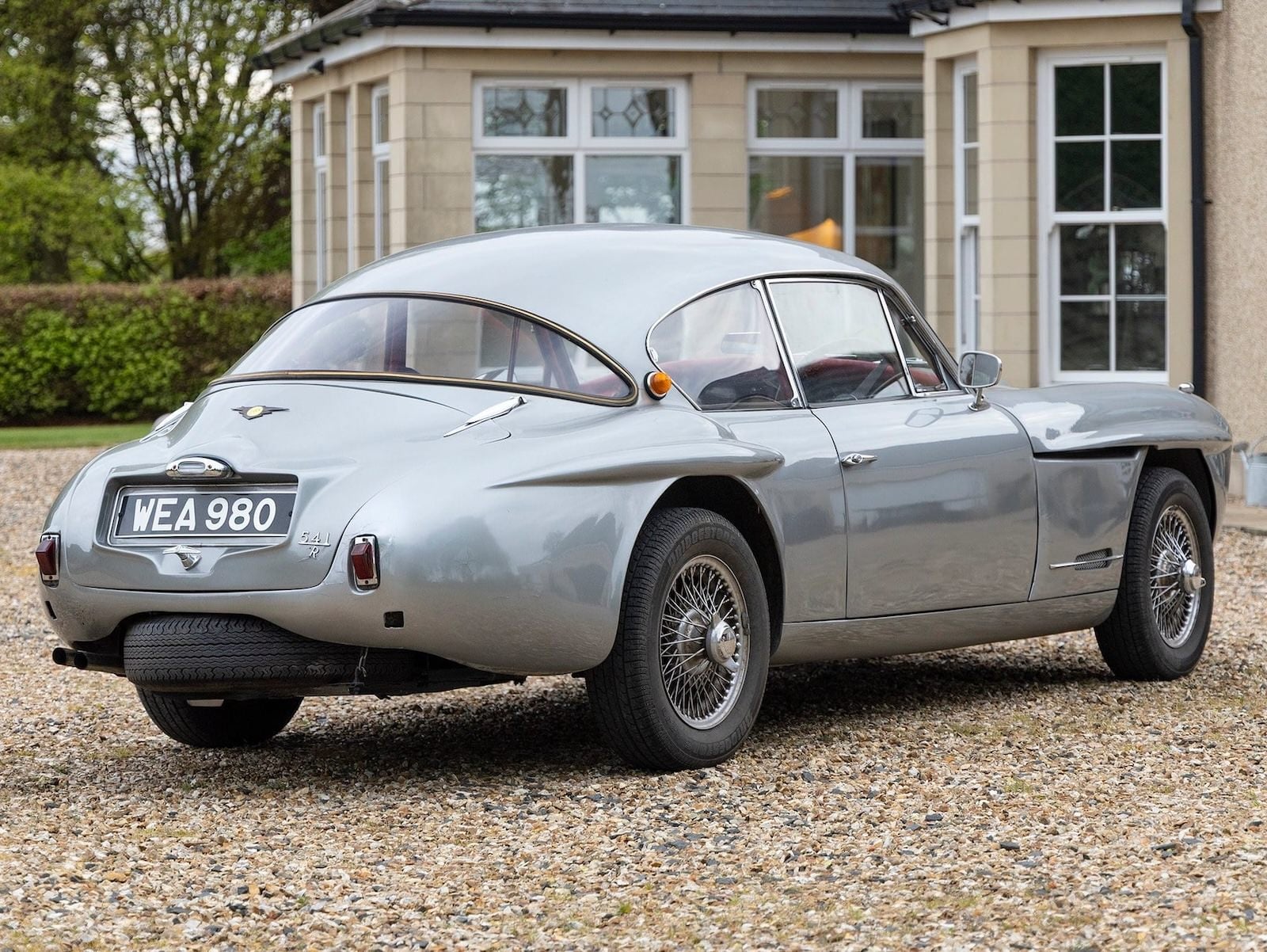
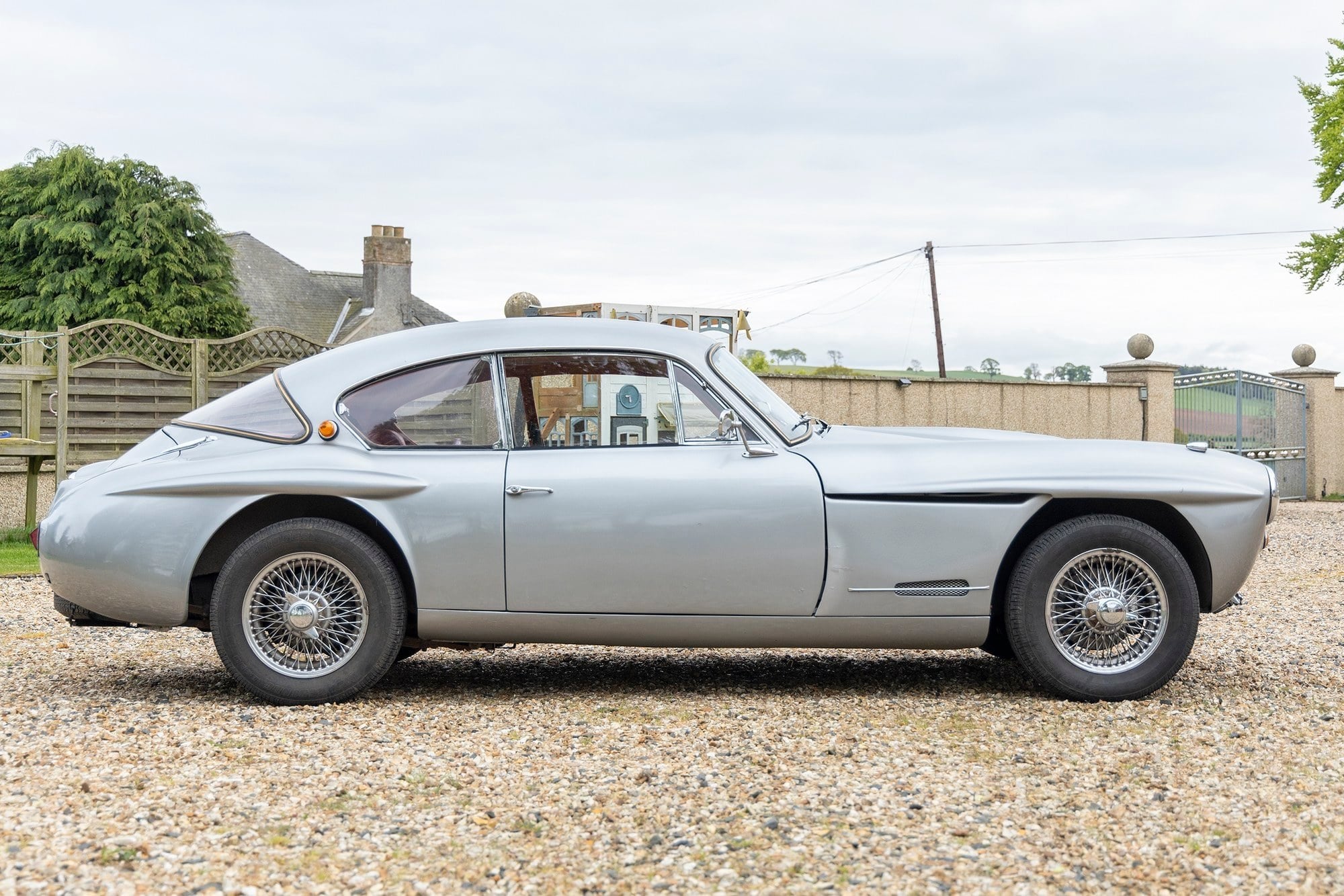
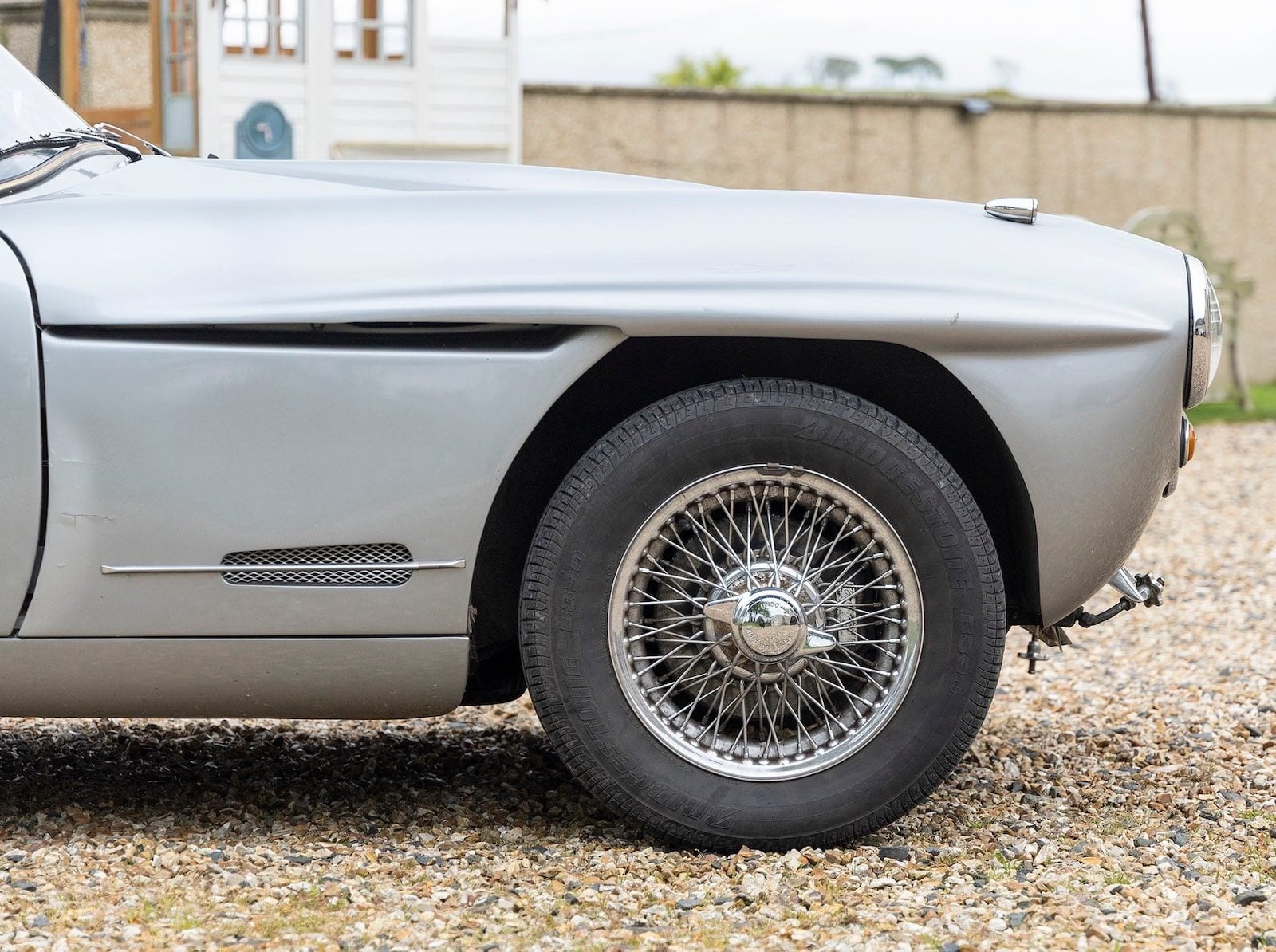
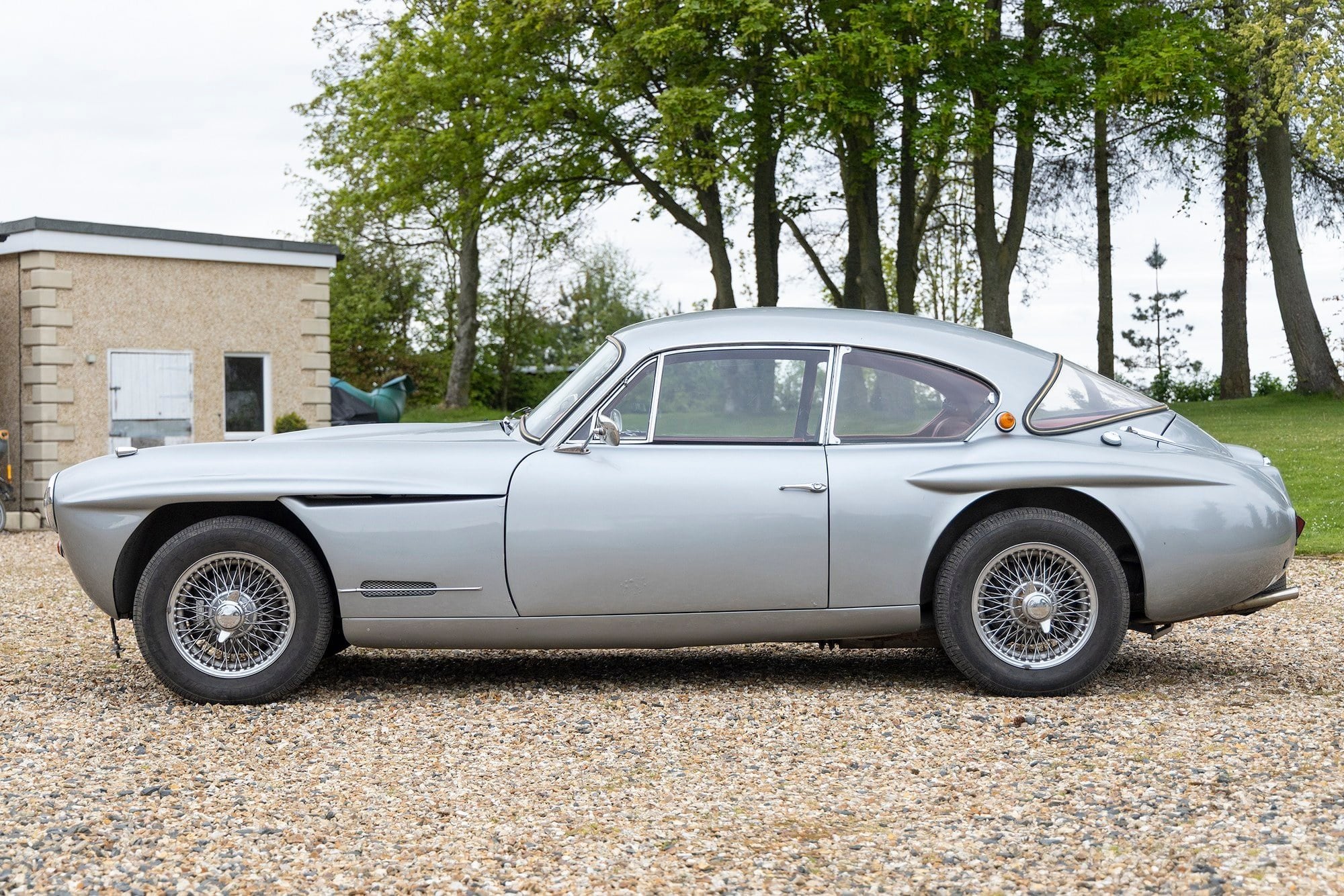
- The 1959 example shown here has been with its current owner for nearly eight years, having been re-wired and overhauled at Bridge Classic Cars during that ownership. It’s finished in silver over a red interior, rides on wire wheels, and is being offered for sale out of Kelso, Scotland.
History Speedrun: The Jensen 541R
The Jensen 541R was a hand-built British grand tourer built by Jensen Motors between 1957 and 1960. It joined the line up in 1957 as the company’s high-performance halo model, and it eventually replaced the earlier 541 and 541 De Luxe. The 541R was the quickest variant of Eric Neale’s 541 body design before the wider, heavier 541S closed out the range in 1963. Just 193 541Rs were built.
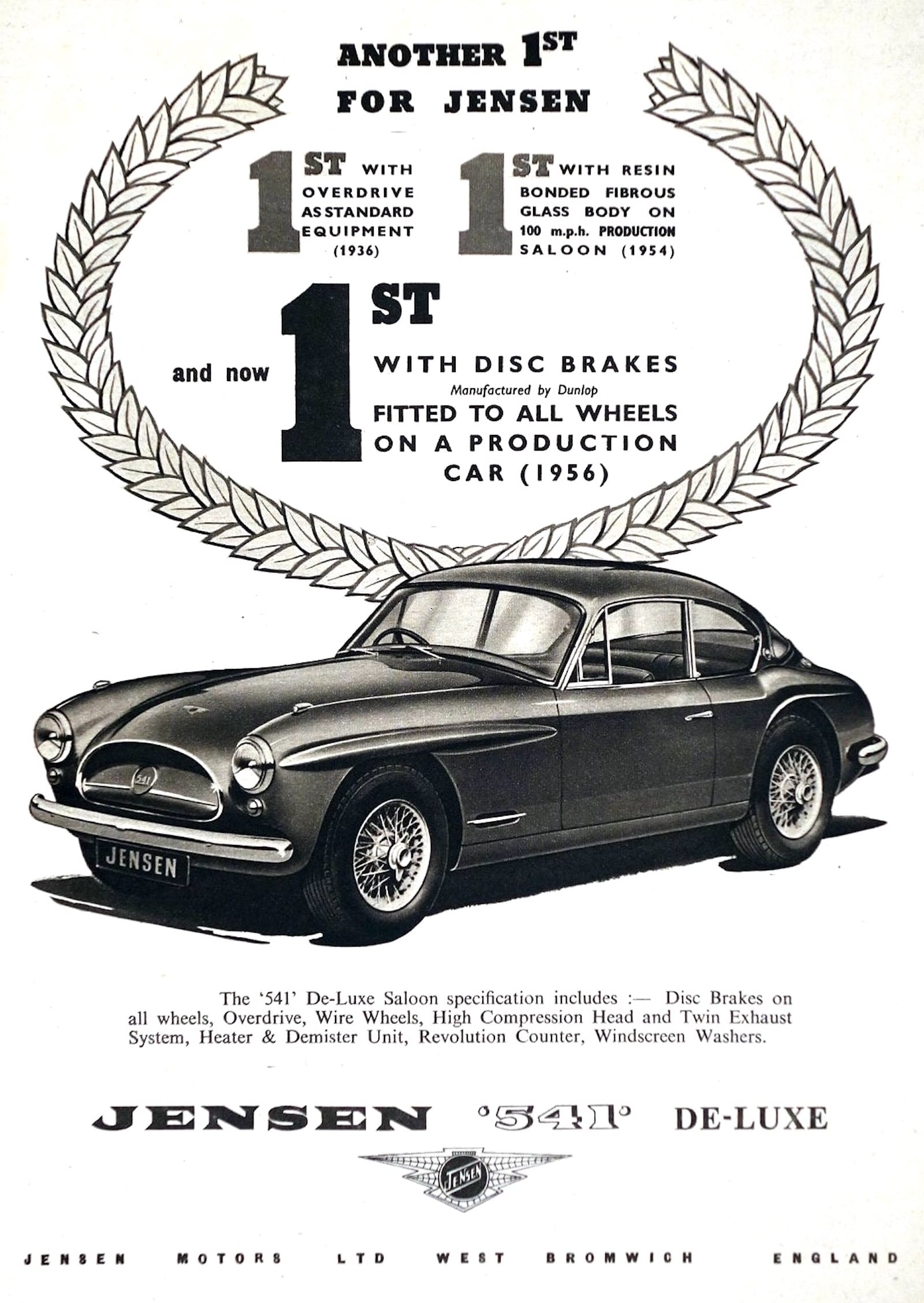
 The Jensen 541 De Luxe debuted in 1956, it was with this model that Jensen made its most important engineering first – they fitted it with Dunlop disc brakes on all four wheels as standard, the De Luxe was the first British production four-seater to leave a factory with discs at both ends, now an industry standard. Image courtesy of Jensen Motors Ltd.
In period, the 541R held the distinction of being the fastest four-seater production car that Autocar magazine had ever tested, high praise indeed.
Jensen Motors And The 541 Series
Jensen Motors was originally founded in 1934 when brothers Alan and Richard Jensen took control of W. J. Smith & Sons, a West Bromwich coachbuilder. The firm spent most of its life building specialist bodies for other manufacturers in parallel with its own low-volume sports and GT cars.
Jensen built bodies for the Austin A40 Sports and the Austin-Healey 100 and 3000, and assembled early Volvo P1800s and Sunbeam Tigers from body shells supplied by Pressed Steel. That contract work funded the small runs of Jensen-badged cars.
The 541 was unveiled (in prototype form) at the 1953 London Motor Show. Its name simply meant that the car was the first Jensen design of 1954: 54 – 1. Production started up the following year, and the road cars swapped the prototype’s hand-beaten aluminum panels for a body built up from three major fiberglass moldings mounted on a steel ladder-frame chassis constructed around large-diameter tubular members.
The doors stayed in aluminum. This made Jensen one of the first British manufacturers to build a production car in glass-reinforced plastic (GRP), following General Motors’ 1953 Corvette and the slew of smaller American manufacturers that had been using the then-new material in the years before that.
The 541 De Luxe model followed a couple of years later in 1956, and it was with this model that Jensen made its most important engineering first – they fitted it with Dunlop disc brakes on all four wheels as standard, the De Luxe was the first British production four-seater to leave a factory with discs at both ends, now an industry standard.
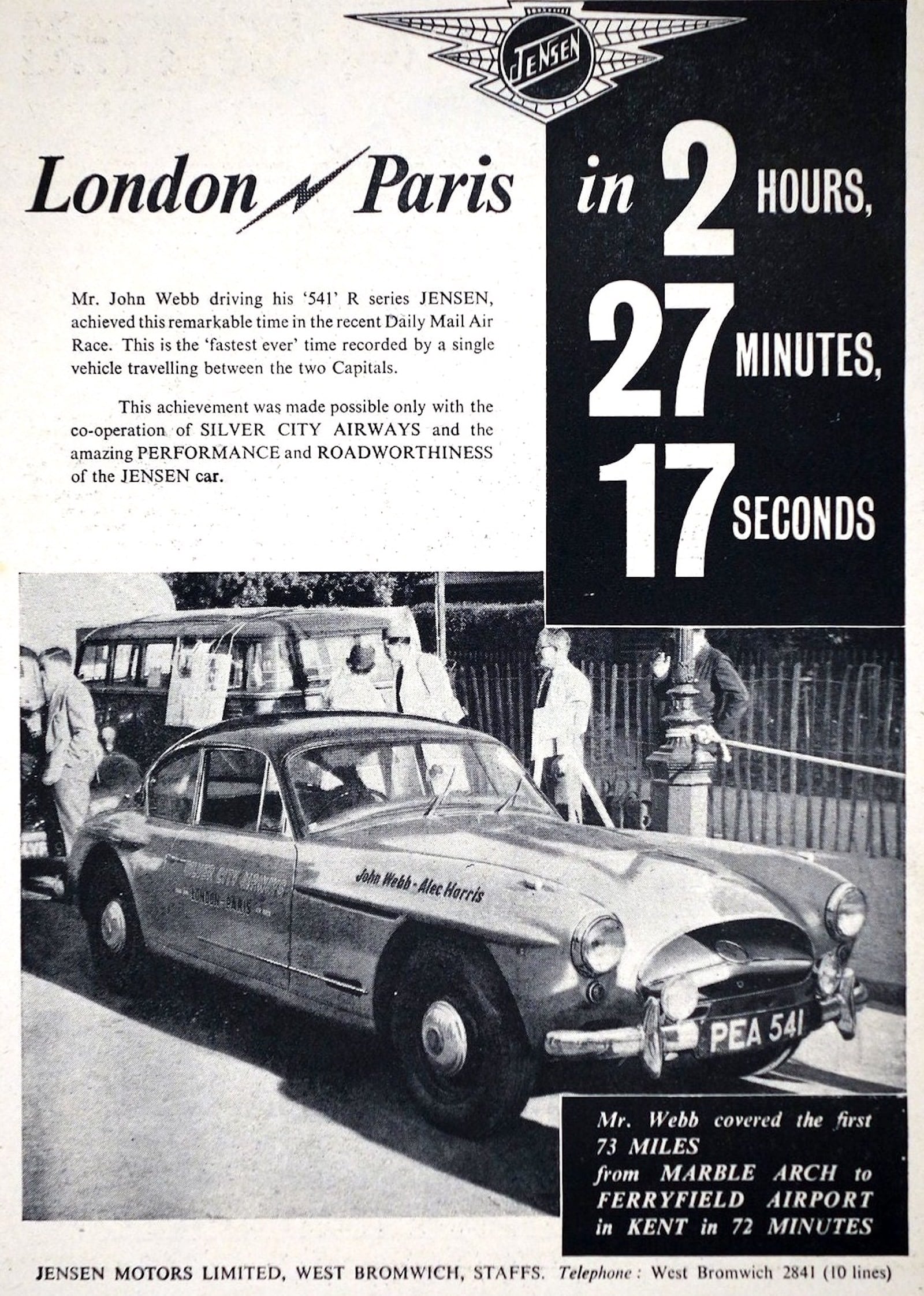
The 541R kept the fiberglass body and ladder-frame chassis of the earlier cars, but the running gear was largely reworked. Rack-and-pinion steering replaced the old cam-and-roller system, sharpening turn-in and giving the car better road feel. Image courtesy of Jensen Motors Ltd.
The limited-production Austin-Healey 100S had introduced four-wheel discs in 1955, but it was a two-seat, racing-oriented car not really meant for all that much road use. The Jensen 541R arrived a year later in 1957 as a thoroughly revised car.
The Jensen 541R
The 541R kept the fiberglass body and ladder-frame chassis of the earlier cars, but the running gear was largely reworked. Rack-and-pinion steering replaced the old cam-and-roller system, sharpening turn-in and giving the car better road feel.
Front suspension was independent with coil springs, the rear used a live axle on semi-elliptic leaf springs as was standard at the time. Dunlop disc brakes were fitted at all four corners as standard, just as they had been with the earlier model.
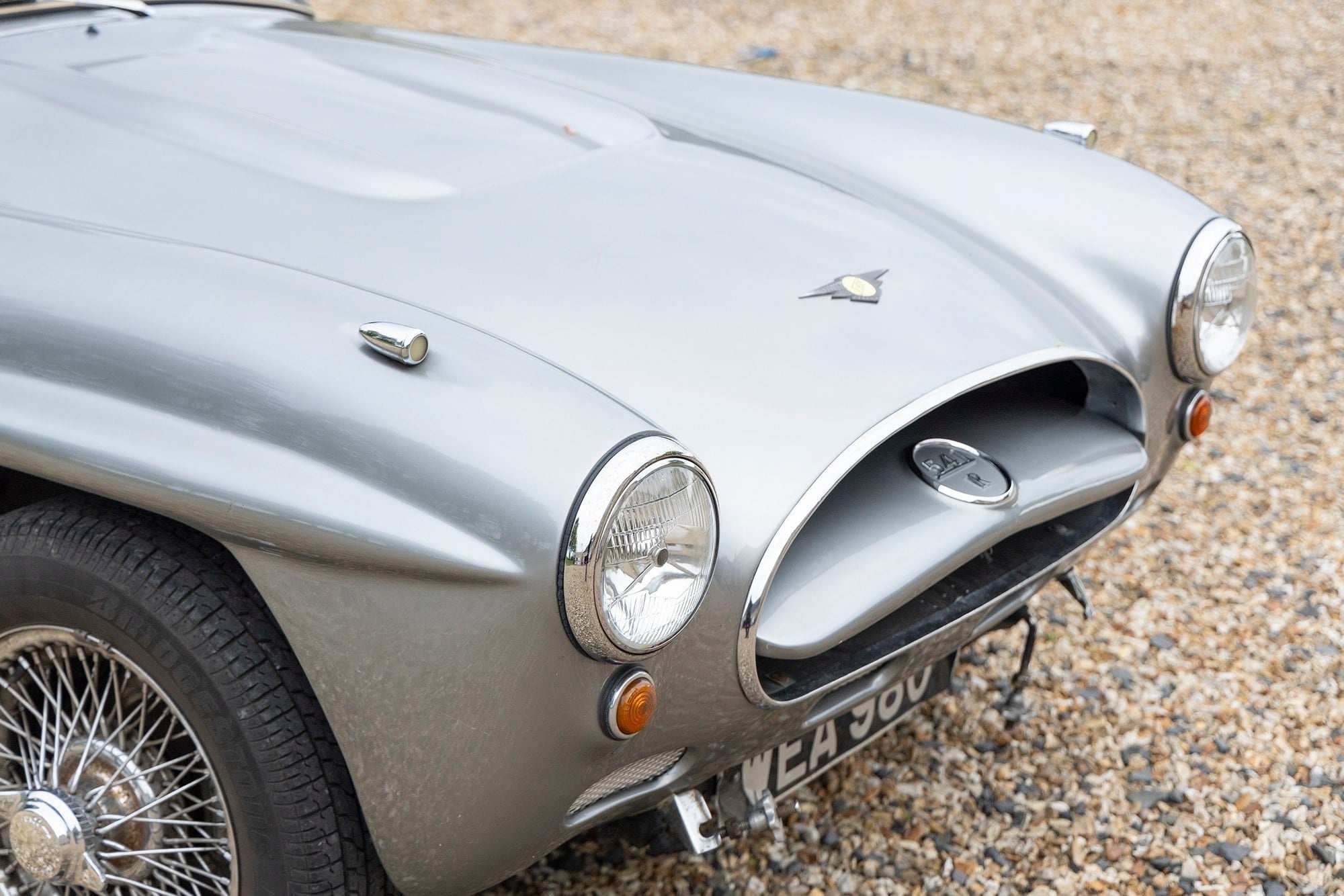
The car’s single most distinctive feature was a driver-operable shutter in the front grille. Closed, it cleaned up the aerodynamics and helped the car achieve a drag coefficient of 0.39. Open, it fed more air to the radiator during hard driving.
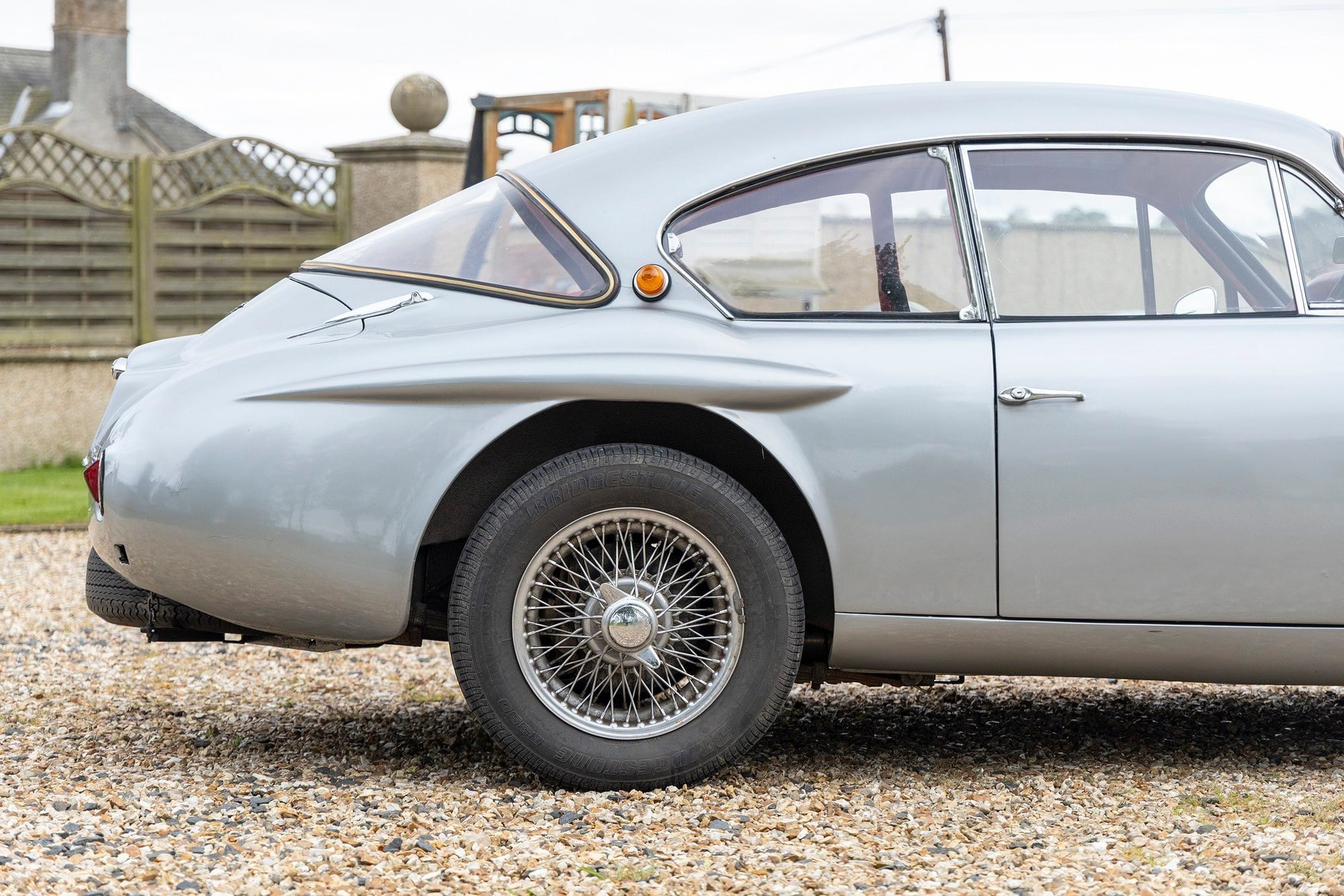
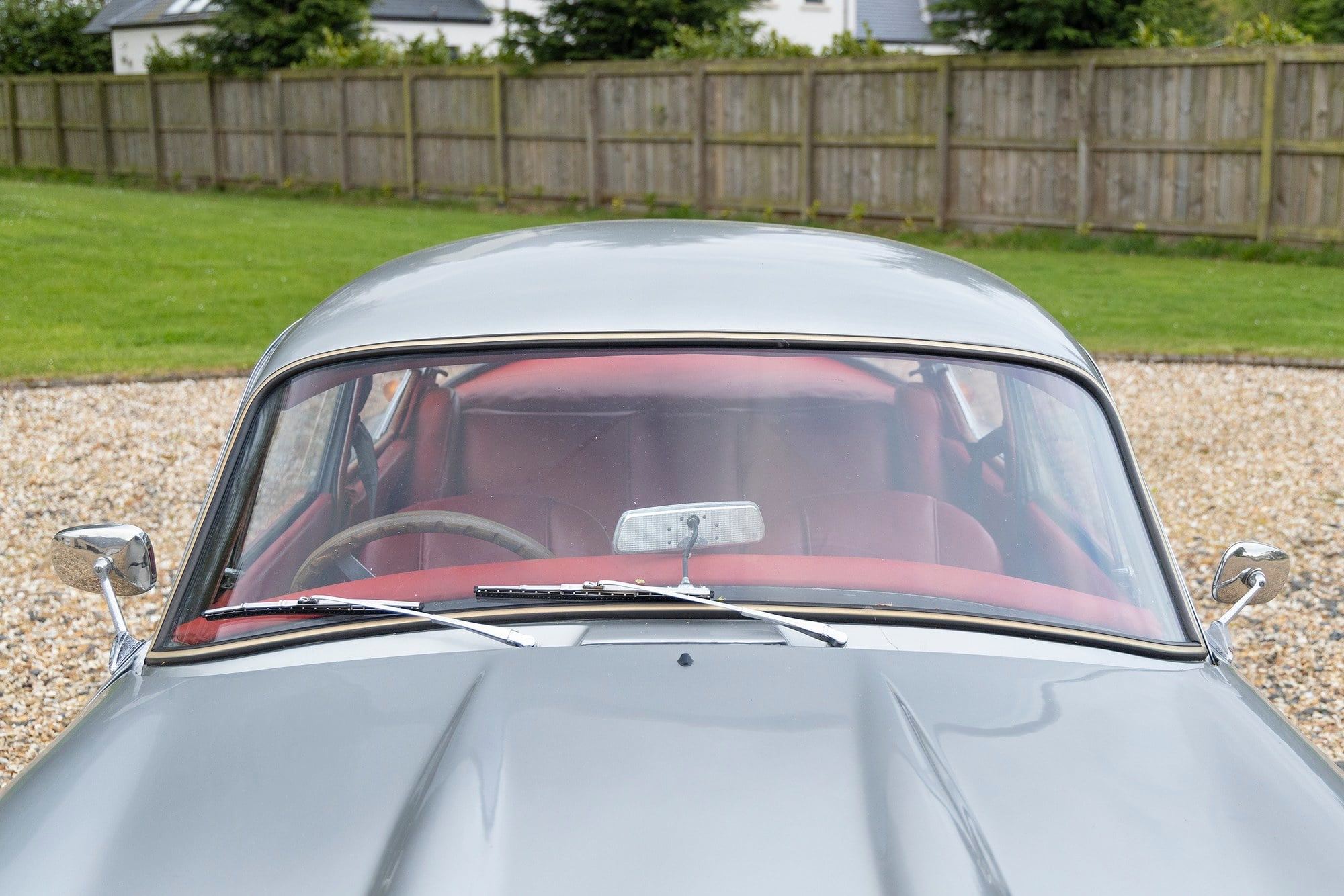
Eric Neale’s overall design was often compared to the Mercedes-Benz 300 SL, particularly the eyebrow-like fender arches, the wraparound rear window, and the low bonnet line. The entire front clip was rear-hinged and could be lifted for engine access.
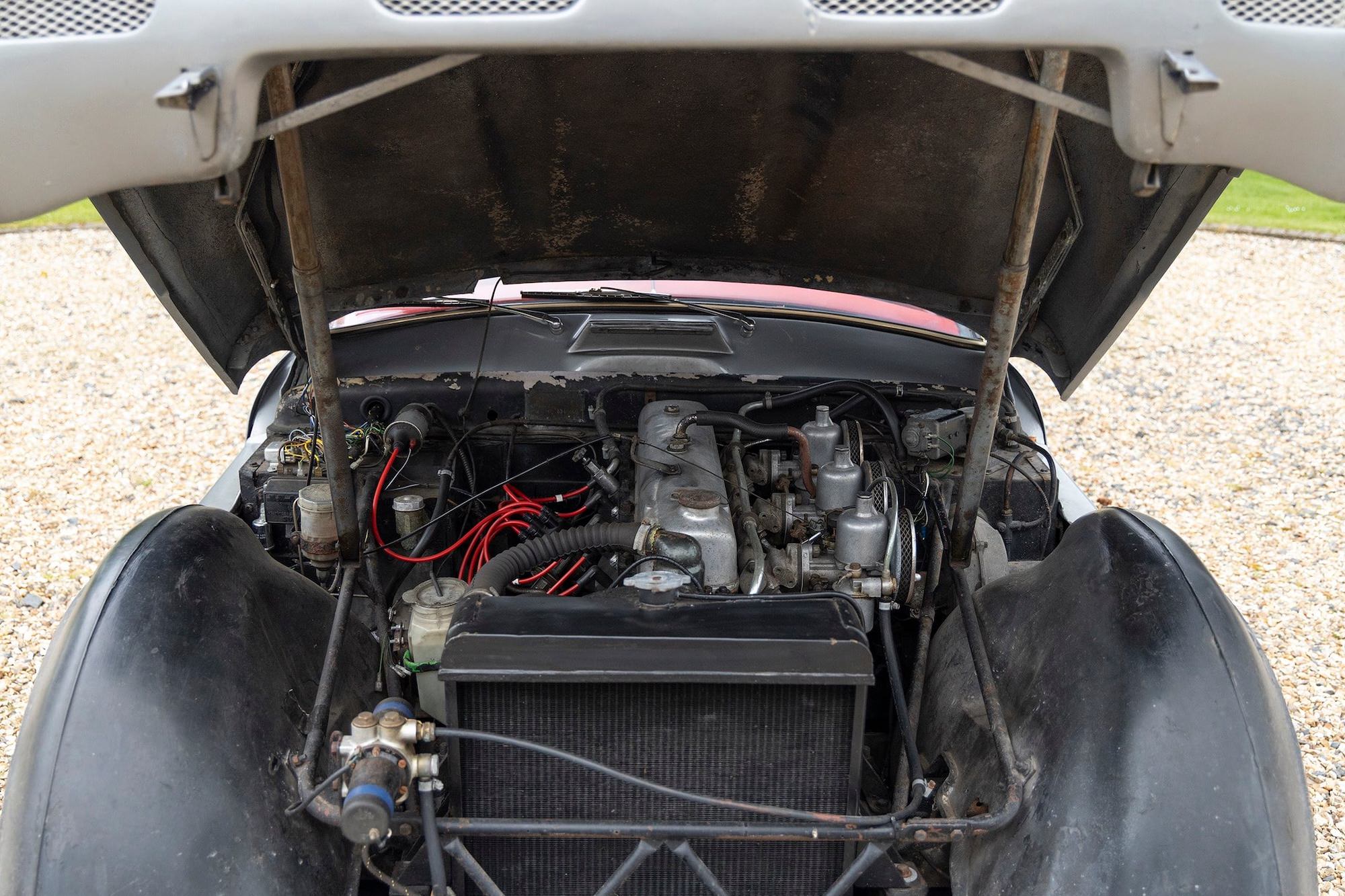
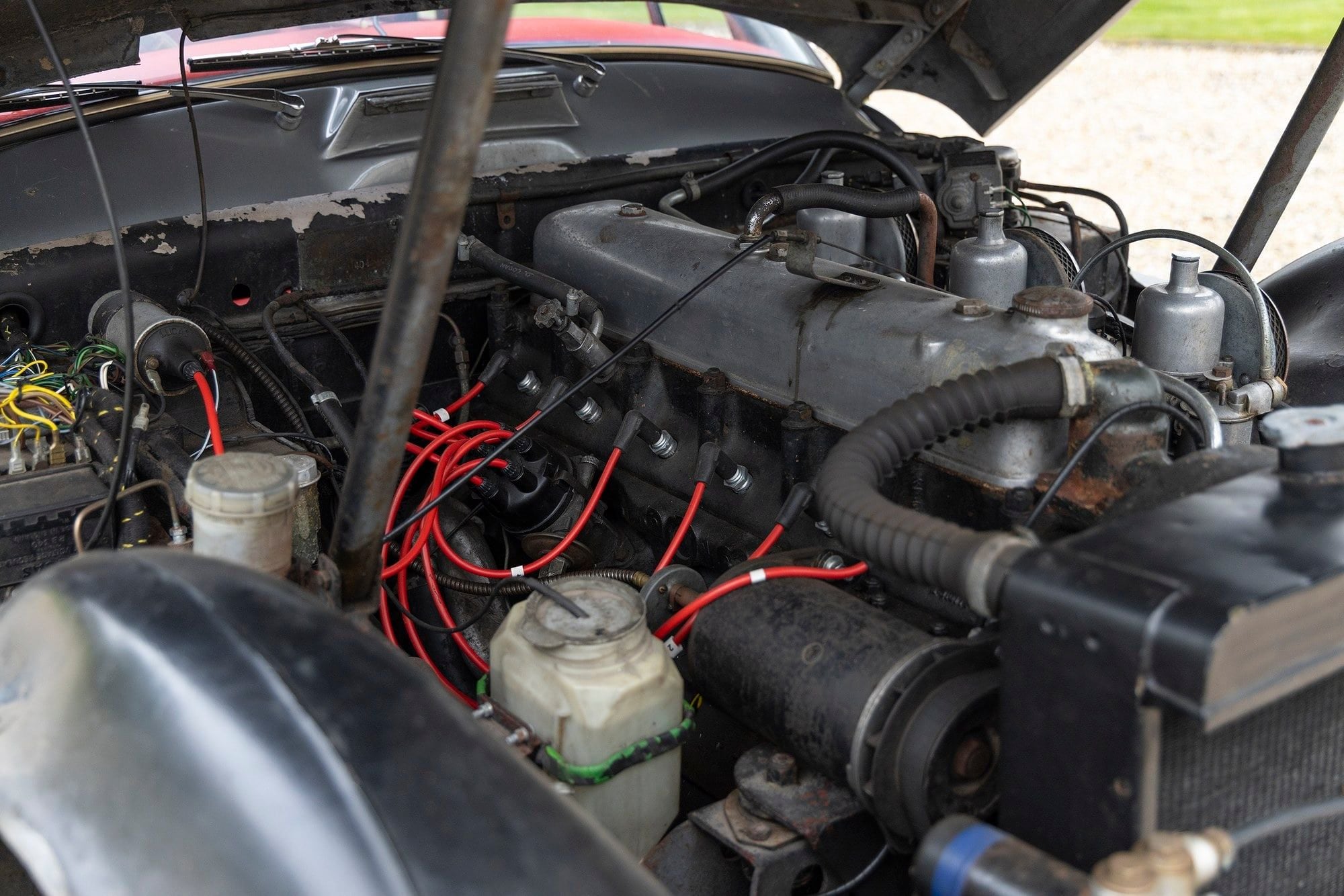
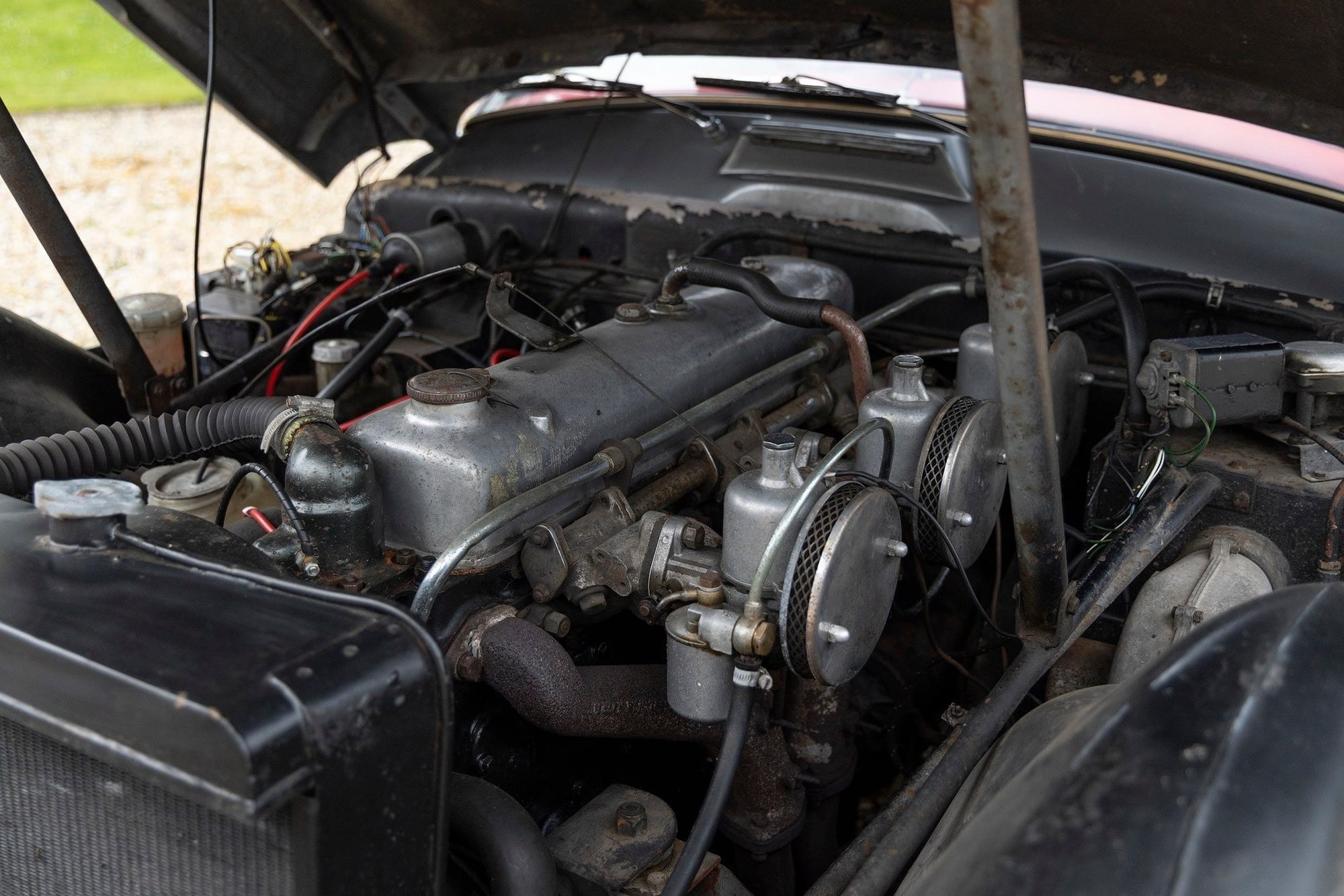
Power came from a 4.0 liter (3,993cc) overhead-valve straight-six borrowed from the Austin Sheerline saloon. Early cars (most agree that it was the first 43) used the DS7 engine variant, running twin SU carburetors and a reworked cylinder head with a 7.6:1 compression ratio.
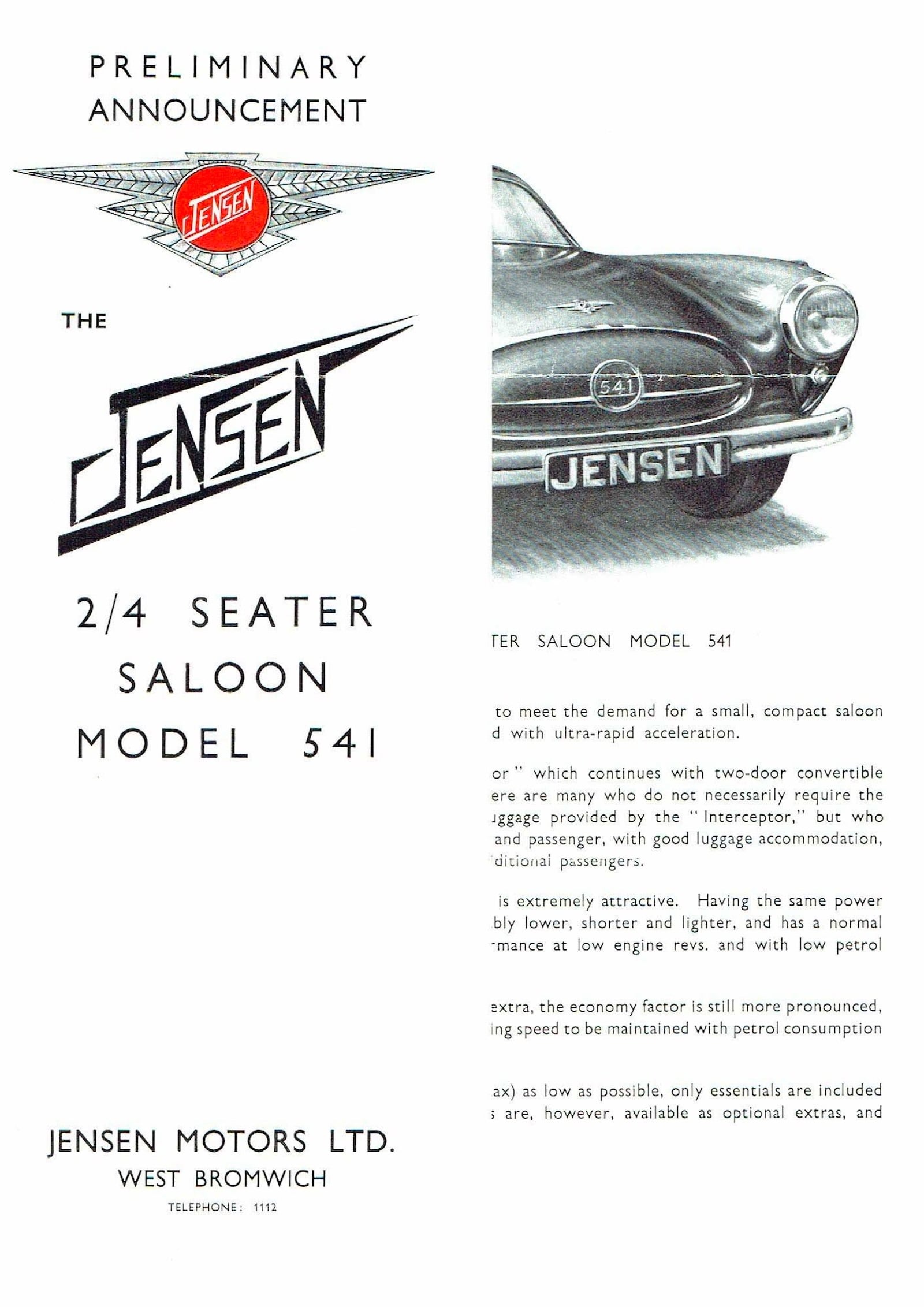
Autocar magazine road-tested a 541R in January of 1958 and recorded a top speed of 127.5 mph, said to have been achieved in below-freezing conditions with a stiff diagonal breeze. At the time, this made the 541R the fastest four-seater the magazine had ever tested. Image courtesy of Jensen Motors Ltd.
Output was 150 bhp at 4,100 rpm and 225 lb ft of torque. Later cars reverted to the DS5 engine with triple SUs. The gearbox was a Moss 4-speed manual, the same unit fitted to the contemporary Jaguar XK, usually specified with the optional Laycock de Normanville overdrive on top gear. The overdrive gearing gave 30 mph per 1,000 rpm in top, which suited Jensen’s stated intention of building a long-legged Continental tourer.
The Jensen 541R: Performance Figures
Autocar magazine road-tested a 541R in January of 1958 and recorded a top speed of 127.5 mph, said to have been achieved in below-freezing conditions with a stiff diagonal breeze. At the time, this made the 541R the fastest four-seater the magazine had ever tested.
0 to 60 mph took 10.6 seconds, and fuel economy across 767 miles of mixed driving averaged 18 mpg imperial. Period reviews were largely positive, particularly on the car’s high-speed refinement, the effectiveness of the disc brakes, and the leather-trimmed cabin. Criticism focused on the Moss gearbox’s slow shift and the fact that there was some wind noise at speed. That said, many simply weren’t used to traveling at these sorts of speeds at the time.
The Period Competitors Of The 541R
The closest rivals of the 541R were the Aston Martin DB Mark III, which was powered by a 2.9 liter DOHC straight-six, and the Bristol 406, a similarly sized four-seater powered by a 2.2 liter version of the ex-BMW straight-six. The AC Greyhound came a little later, an aluminum-bodied 2+2 offered with a choice of AC, Bristol, or Ford straight-six engines.
Above all sat the Jaguar XK150 fixed-head coupe, though this was only just a 2+2, with somewhat minimal rear seats in the coupe version – the Drophead was a strict two-seater.
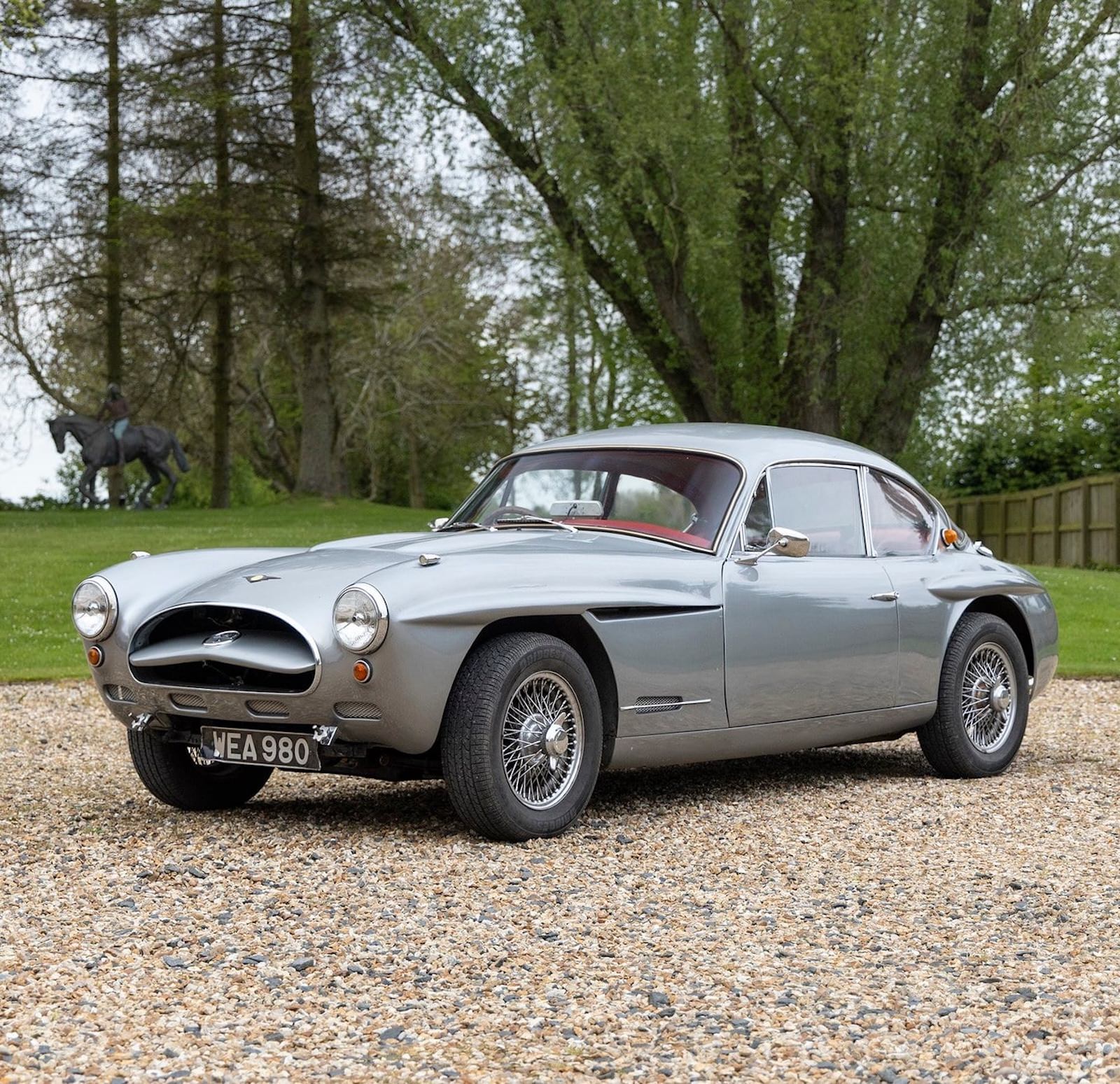
This is a Jensen 541R from 1959, though it’s often forgotten today, it was one of the leading British GT cars of its time, capable of over 125 mph (201 km/h) and built with a body that was impervious to rust – a major feature in a country famous for its rain.
The End Of The Road
The 541S replaced the 541R in the autumn of 1960. Its body was wider and taller, seat belts and a limited-slip differential became standard equipment, and the visible driver-operated grille flap gave way to a conventional grille, though a fascia-operated radiator blind remained.
A GM-licensed Rolls-Royce Hydramatic automatic became the standard transmission. Only 127 were built, with the final examples completed in early 1963 after the Chrysler V8-powered C-V8 had already been introduced in October of 1962. The Interceptor of 1966 marked the end of Jensen’s fiberglass “big car” era, with its move to Italian design and steel bodies.
The 1959 Jensen 541R Shown Here
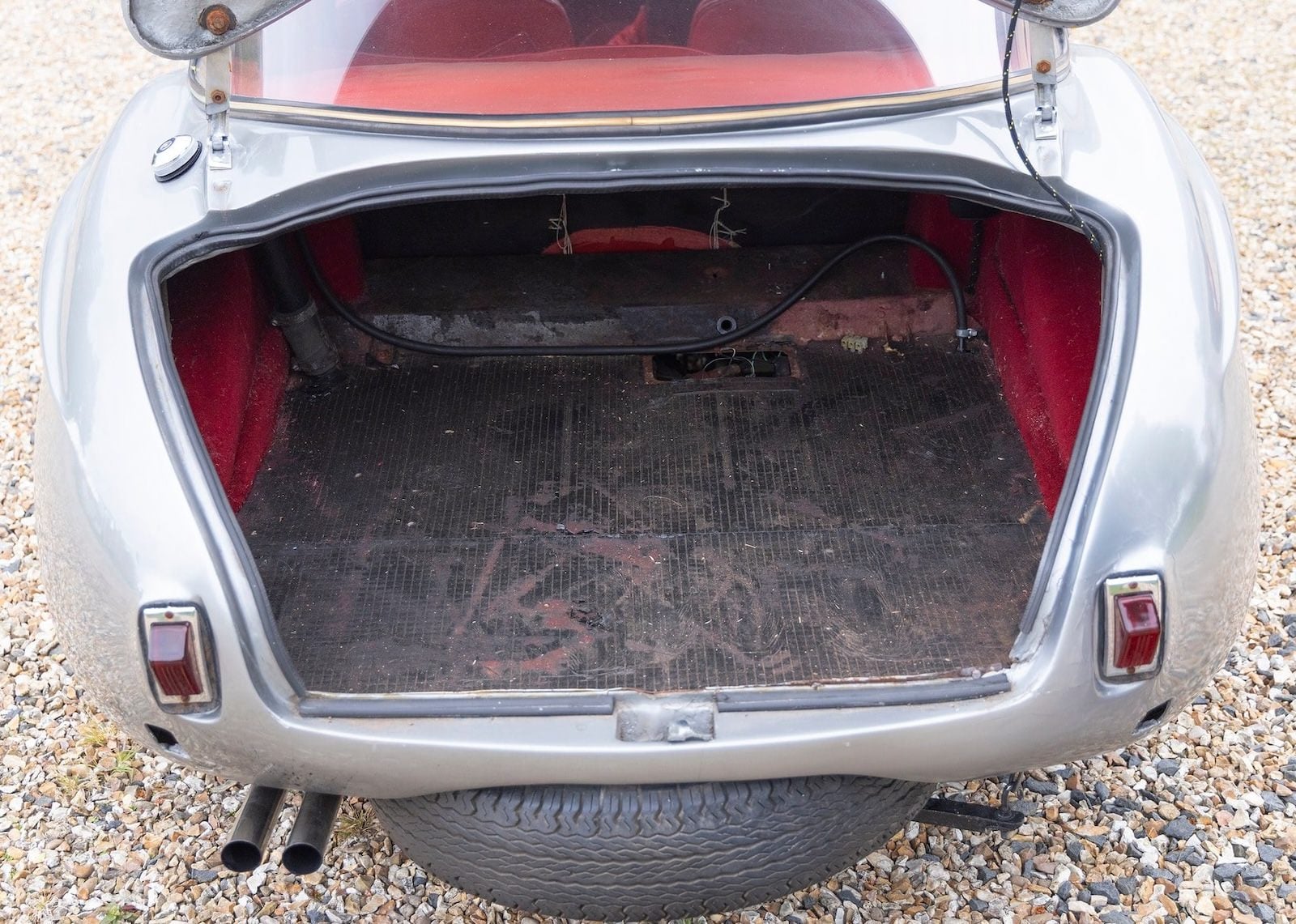
This 1959 Jensen 541R was first registered in the UK and has been in the current owner’s hands for nearly eight years, having been bought from a classic car collector and member of the Bentley Drivers Club. During present ownership the car has reportedly been re-wired and overhauled at Bridge Classic Cars, and it’s been regularly used and serviced.
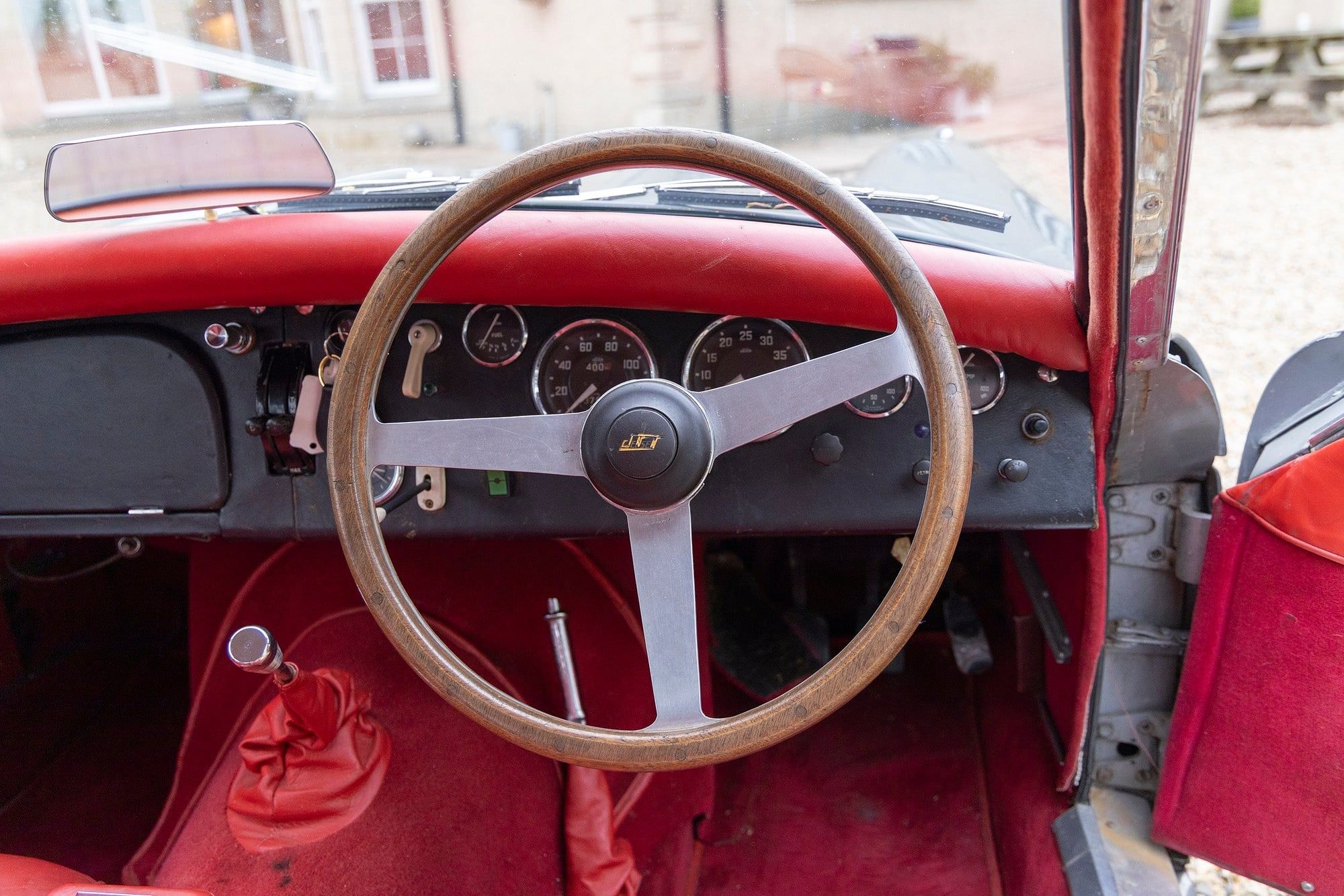
The seller describes it as being in good mechanical order and reports that it drives well. The odometer shows 37,617 miles, though it’s worth noting that the figure hasn’t changed since the last MOT test in 2013, strongly suggesting the odometer may no longer be functioning.
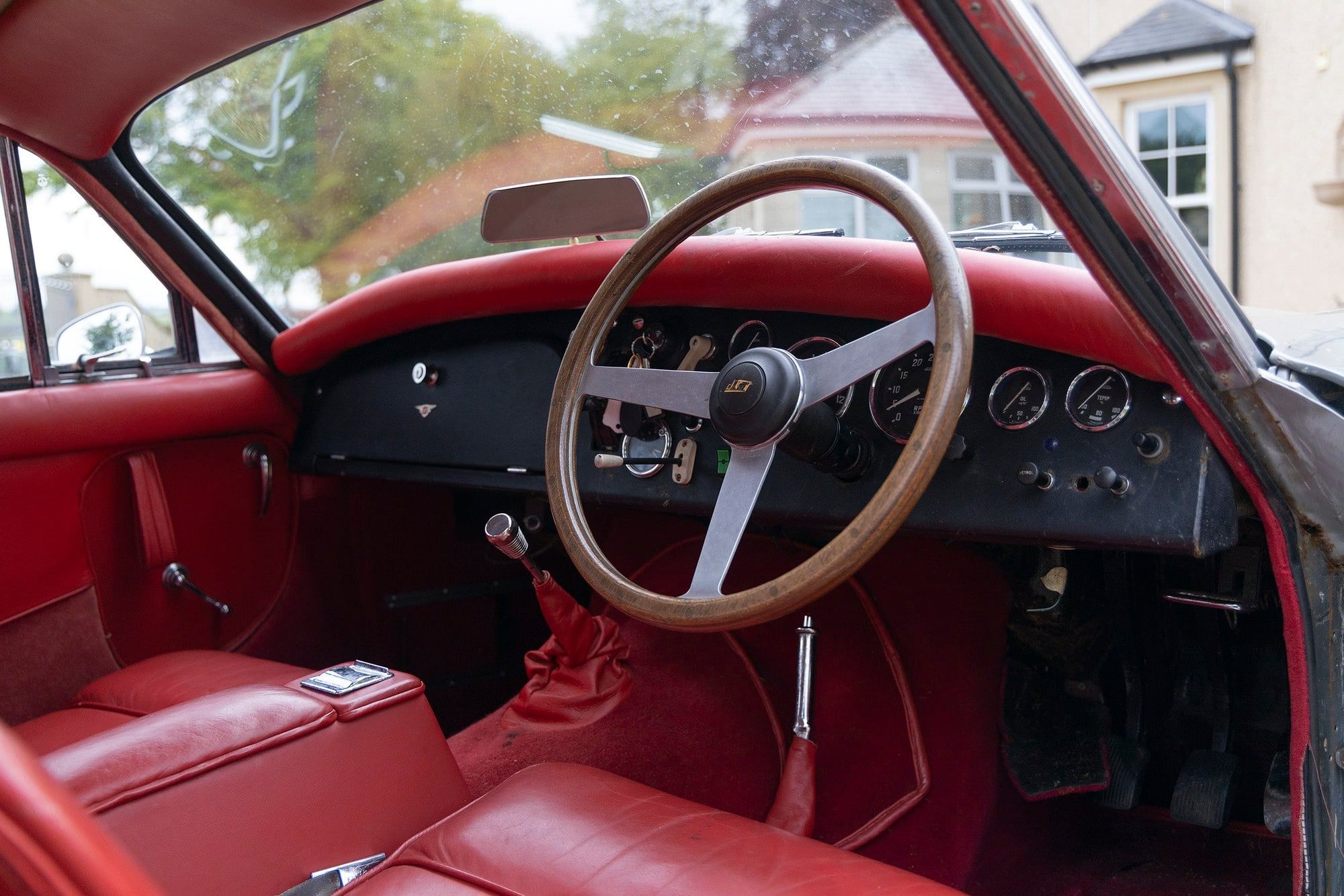
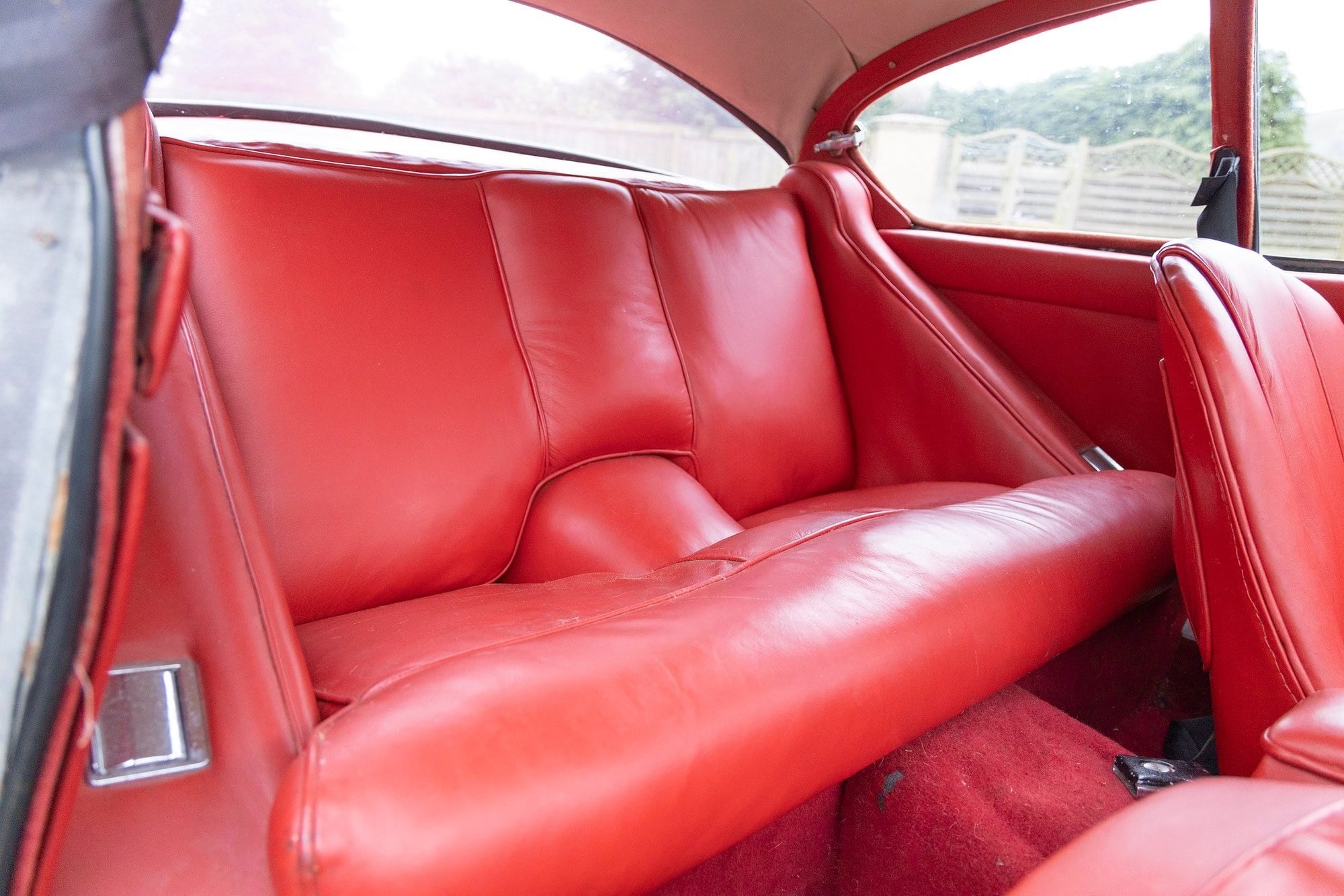
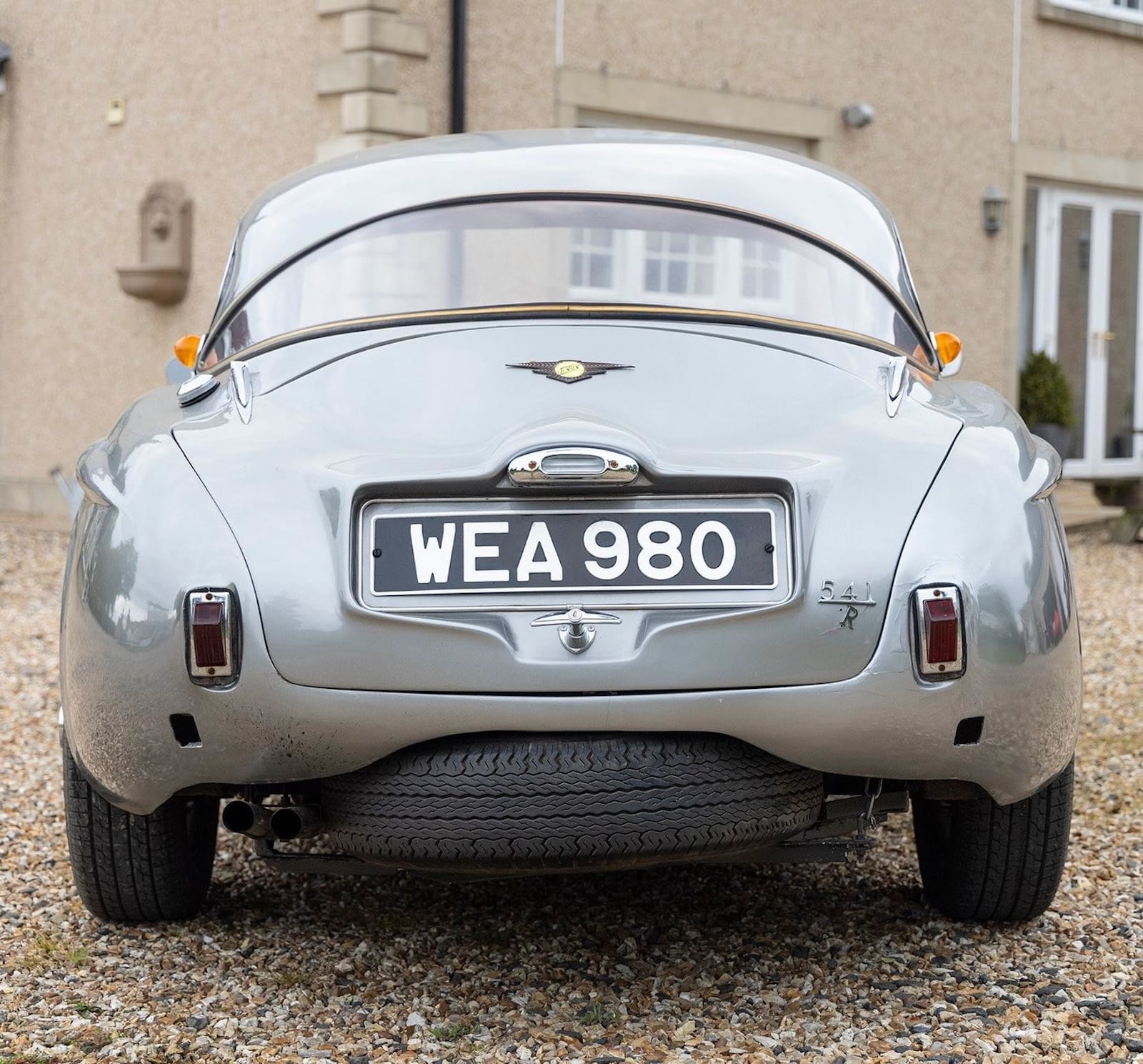
It rides on wire wheels with two-eared knock-off spinners, and a spare wheel is included. The cabin is trimmed in red with a black dashboard panel and a wood-rimmed steering wheel, and the seller reports that the leather upholstery and carpets are both original, presented in good and acceptable condition respectively. Opening front quarter light windows and a fitted fire extinguisher round out the interior. The fiberglass bodywork shows some minor cracks in places.
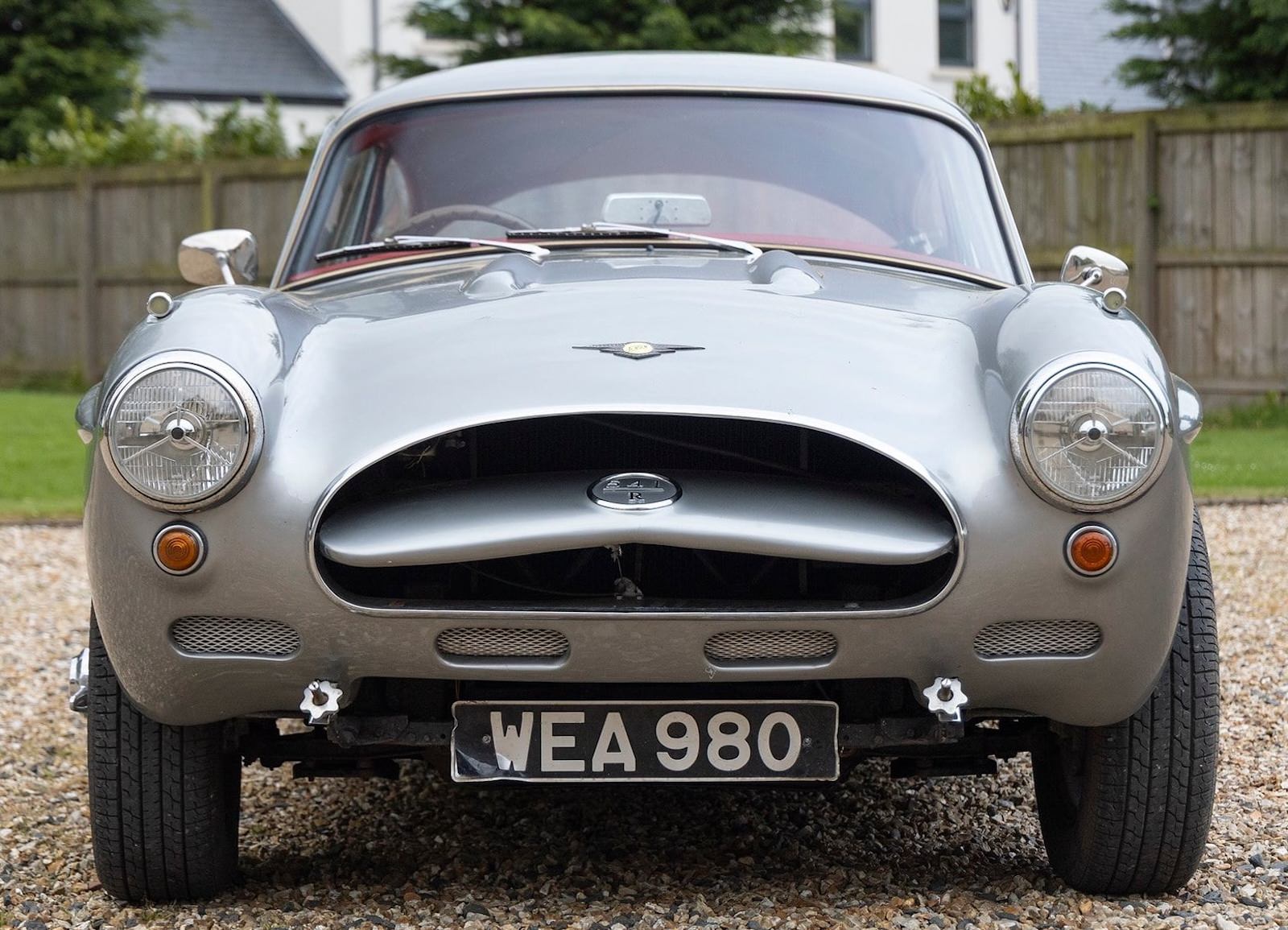
Only a few hundred examples of the 541R were made and today they’re highly collectible. It’s been compared to the likes of the Mercedes-Benz 300SL, Aston Martin DB Mark III, and the Jaguar XK150, but the 541R is typically a lot more affordable than any of them on the classic car market today.
Power comes from a 4.0 liter Austin D-series straight-six, rated at 150 bhp, driving through a 4-speed manual gearbox as you would expect.
The car is now being offered for sale out of Kelso, Scotland and you can visit the listing here if you’d like to read more about it or register to bid.
Images courtesy of Car & Classic

Articles that Ben Branch has written have been covered on CNN, Popular Mechanics, Smithsonian Magazine, Road & Track Magazine, the official Pinterest blog, the official eBay Motors blog, BuzzFeed, Autoweek Magazine, Wired Magazine, Autoblog, Gear Patrol, Jalopnik, The Verge, and many more.
Silodrome was founded by Ben back in 2010, in the years since the site has grown to become a world leader in the alternative and vintage motoring sector, with well over a million monthly readers from around the world and many hundreds of thousands of followers on social media.