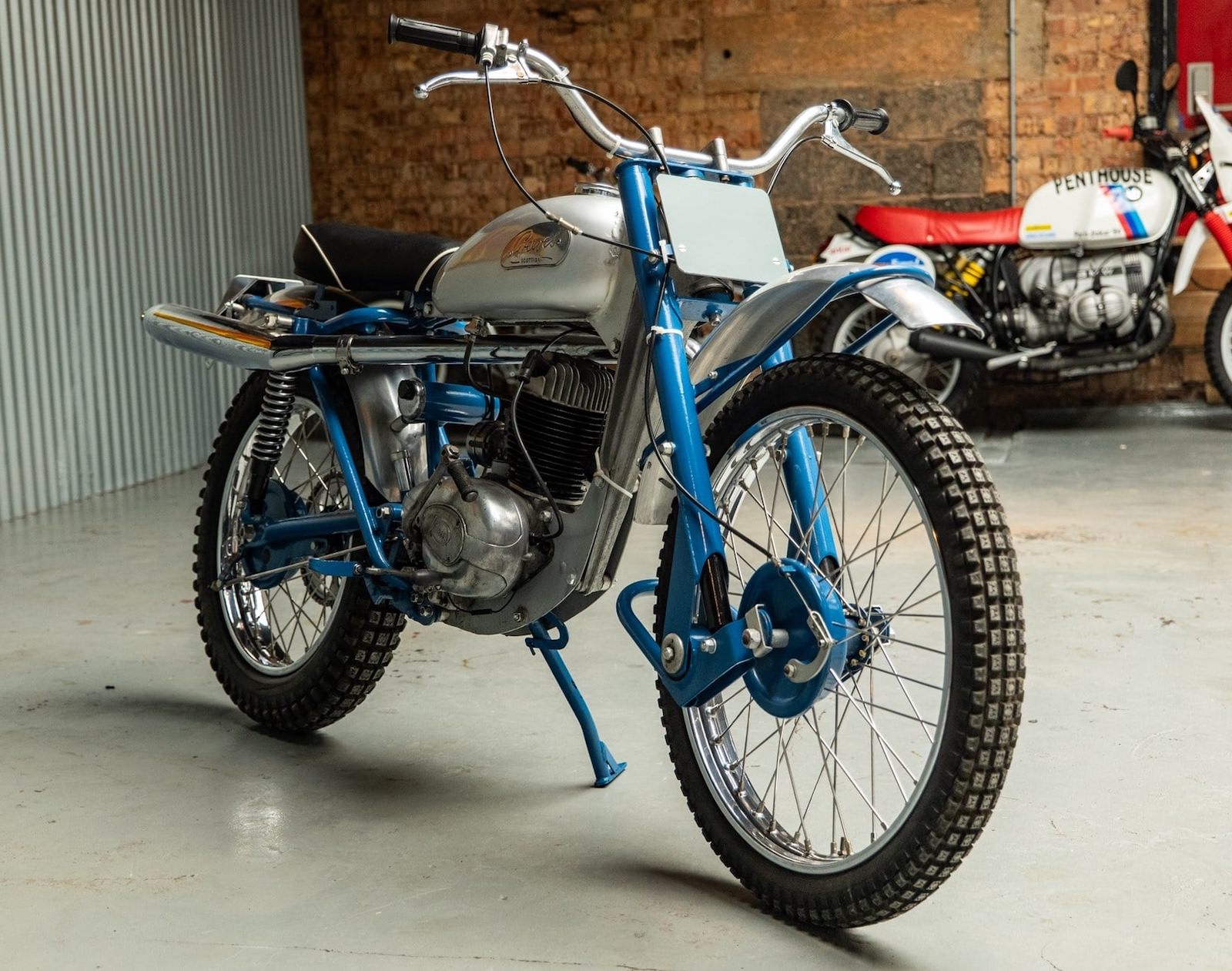
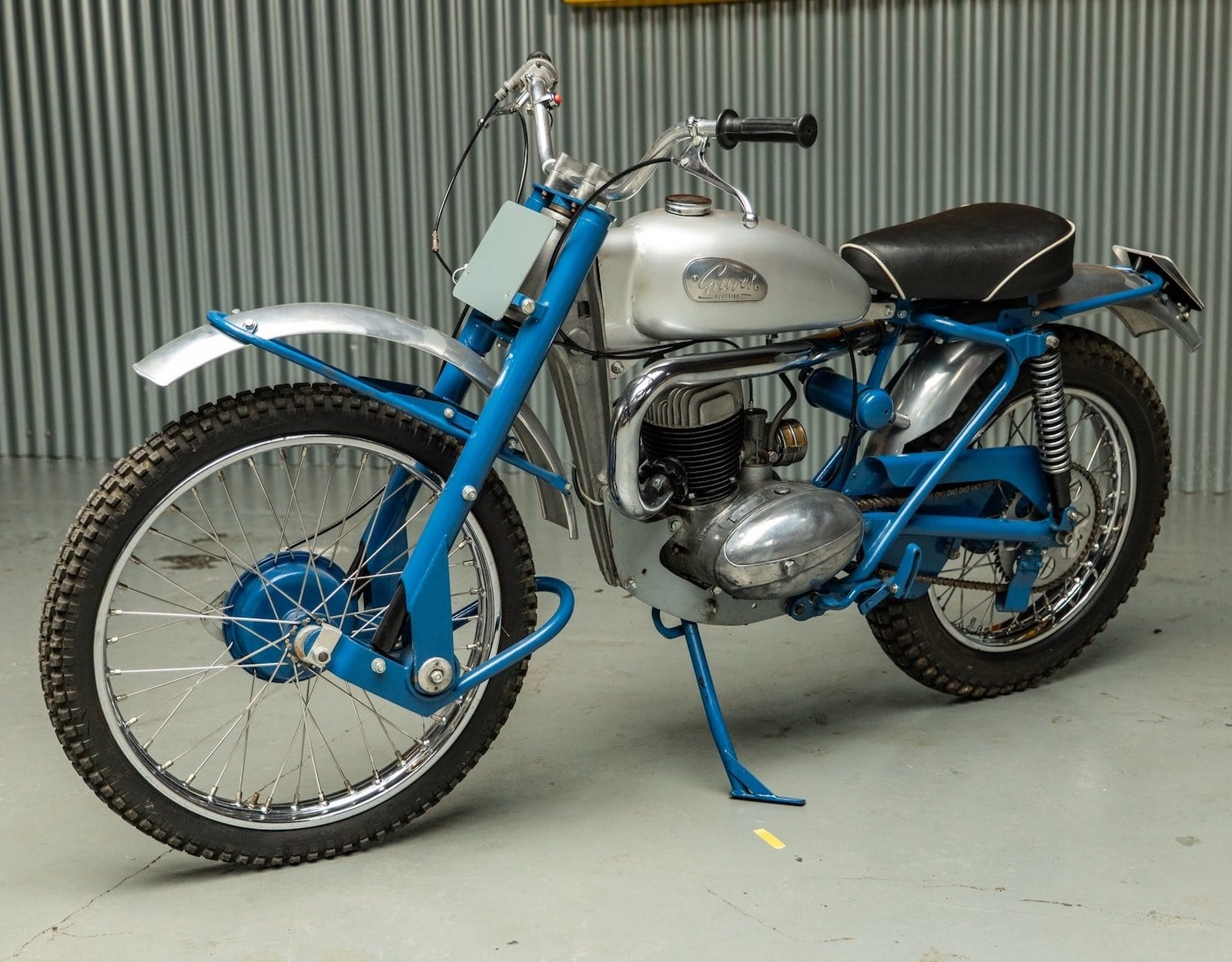
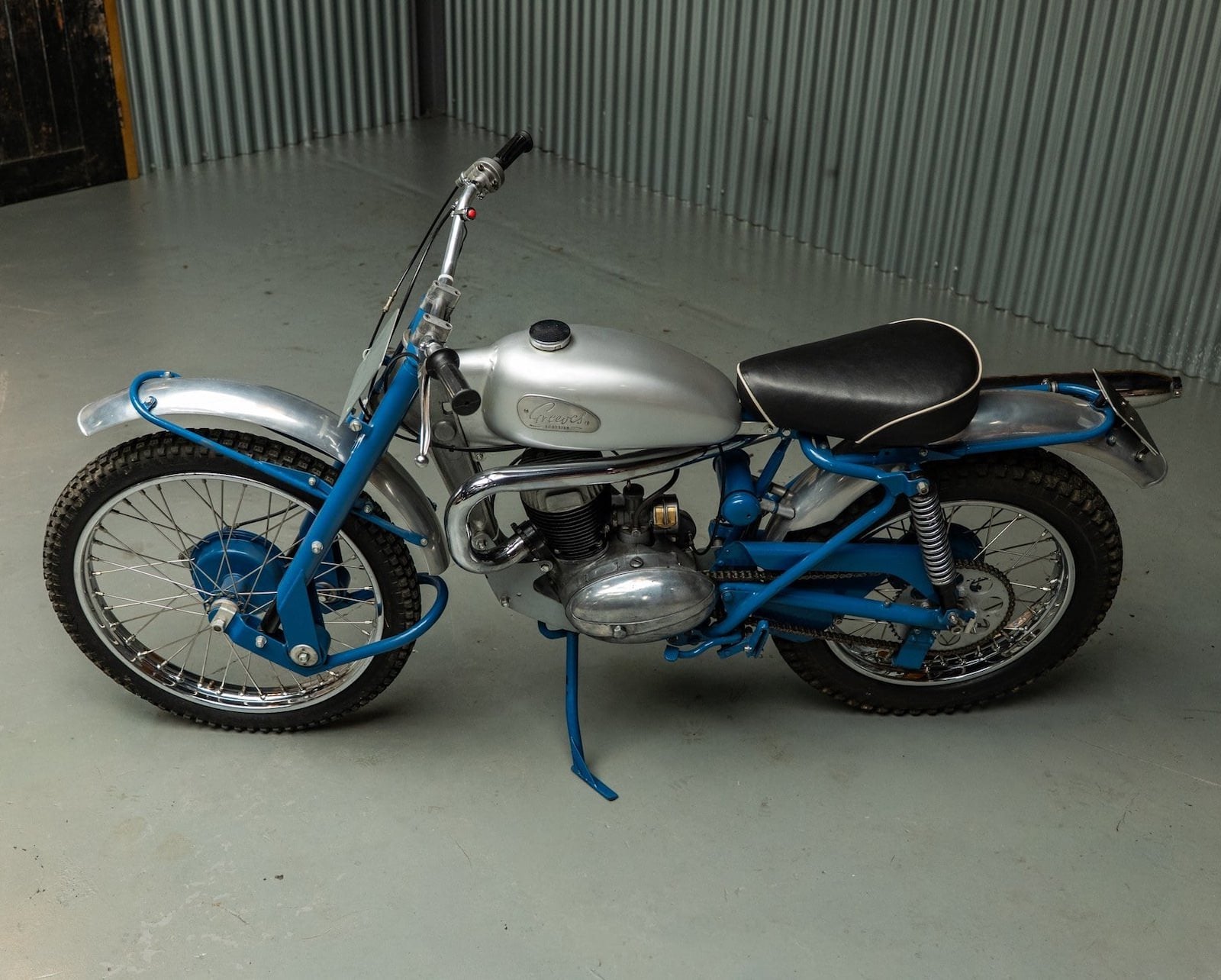
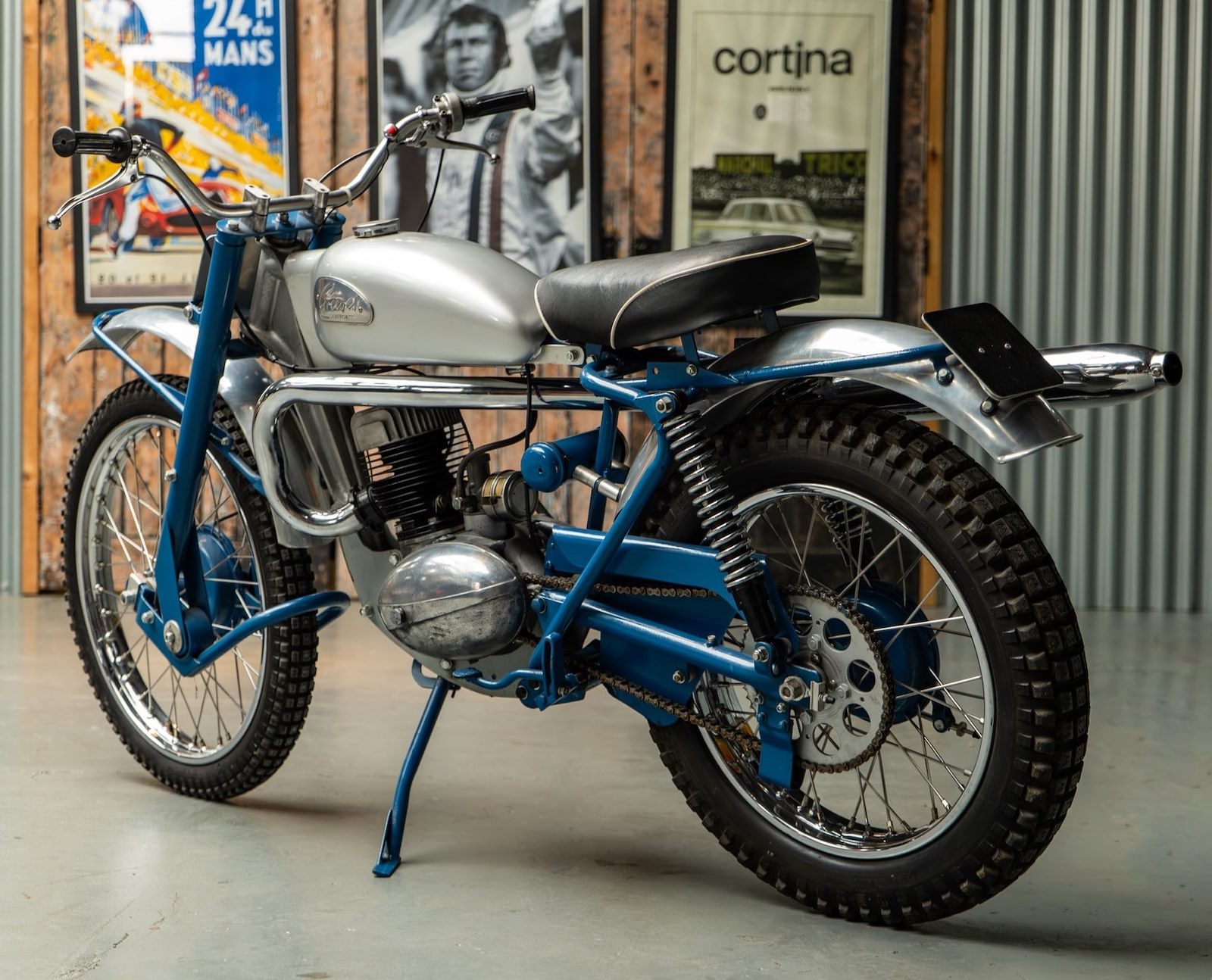
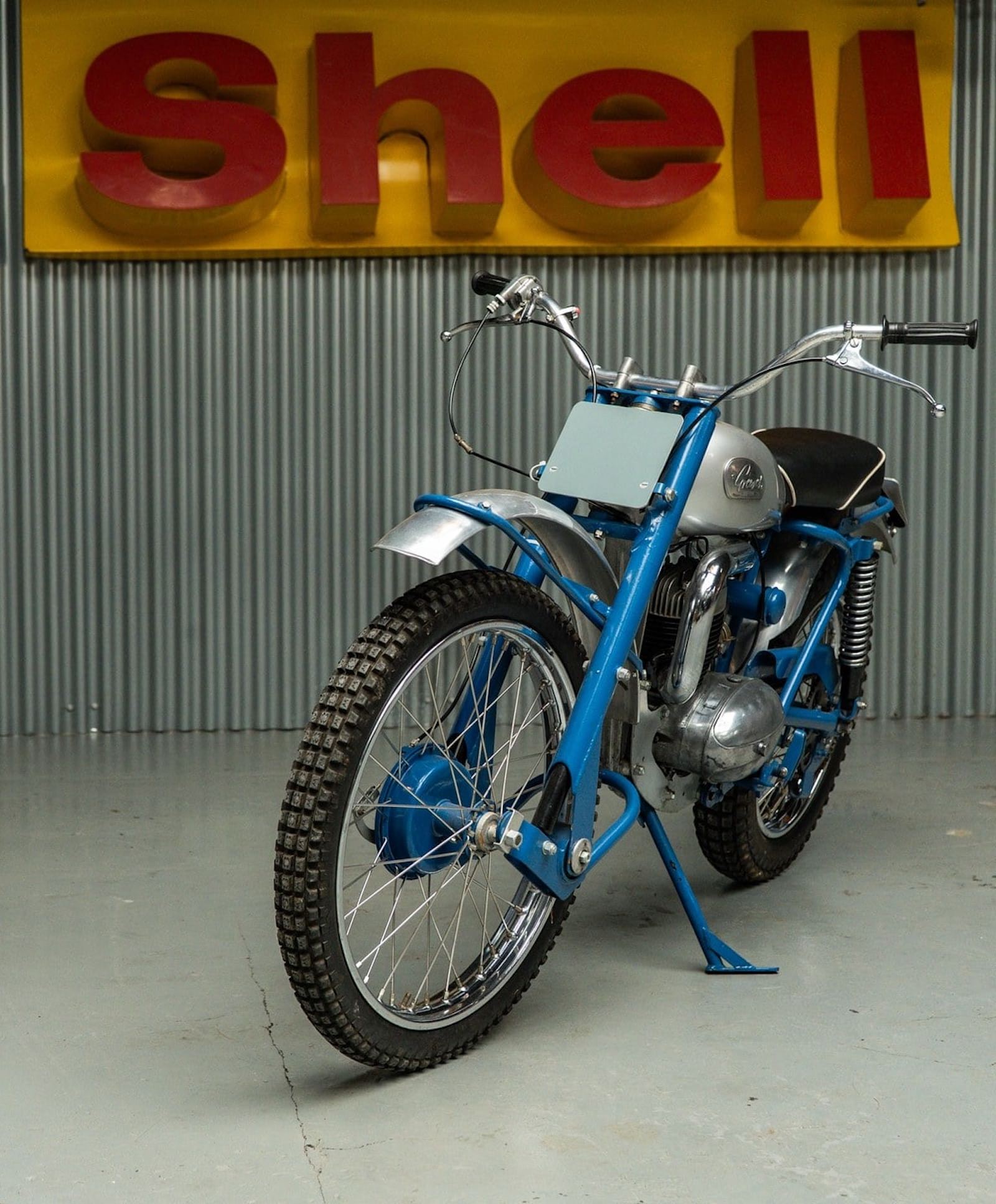
This is an original 1962 Greeves Scottish, one of the most famous and successful British trials motorcycles of the period – thanks in no small part to its lightweight cast-alloy beam frame and its excellent handling over rough terrain.
The unusual-looking Scottish made short work of its period competitors from the likes of Triumph, BSA, and Ariel, winning events like the European Trials Championship, Scottish Six Days Trial, International Six Days Trial (multiple gold medals), and ten consecutive British national trials.
Fast Facts: The Greeves Scottish
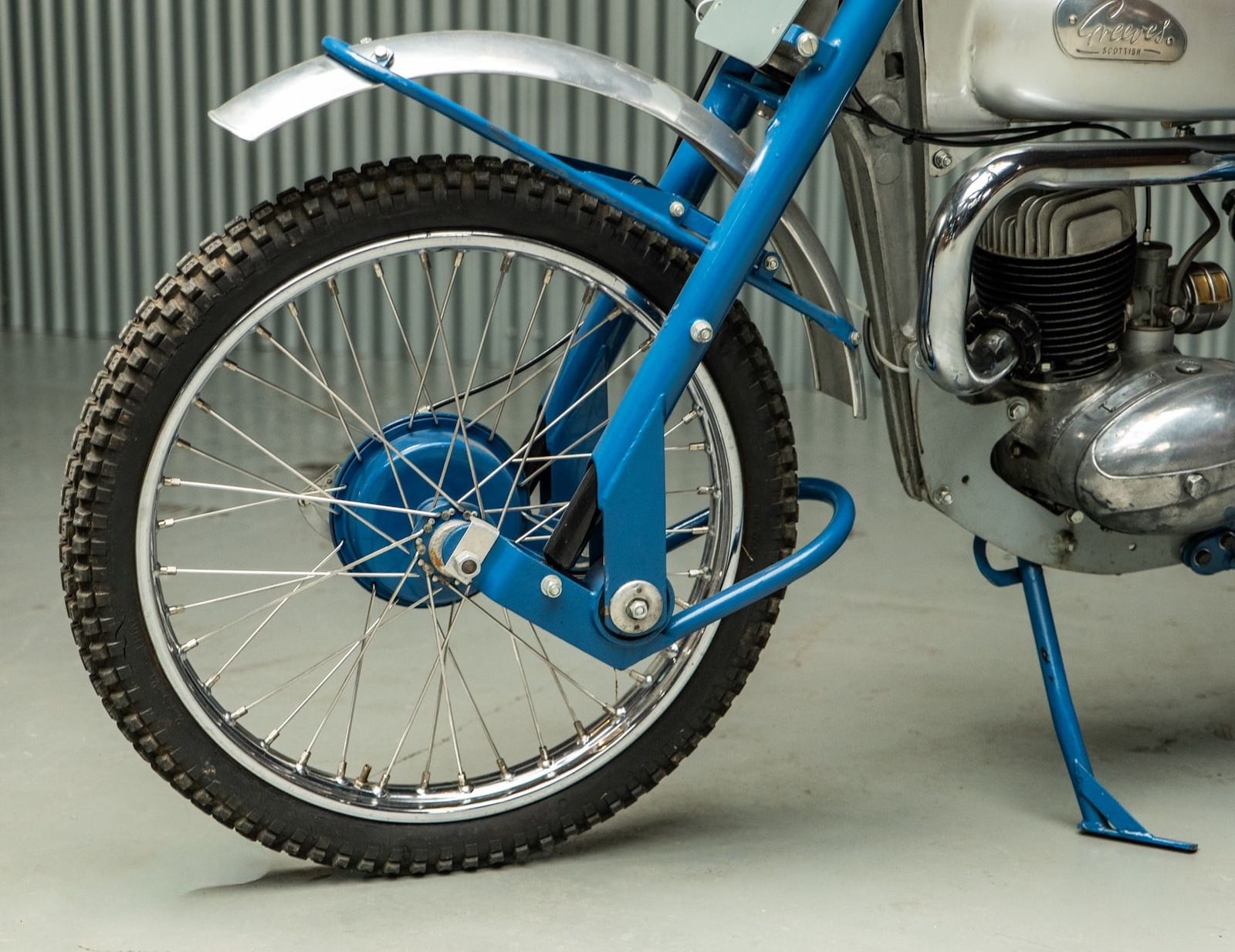
- Greeves Motorcycles was founded by Bert Greeves in Thundersley, Essex, evolving from his Invacar invalid carriage business. The company’s motorcycles were mostly characterized by three signature engineering features – a cast aluminum-silicon alloy I-beam downtube frame, rubber-in-torsion suspension, and distinctive “Banana” leading-link front forks.
- The Greeves Scottish was the company’s dedicated observed trials motorcycle, produced in successive forms from 1958 to 1965. Named after Jack Simpson’s 1957 Scottish Six Days Trial victory, it evolved from a 197cc Villiers-powered machine into a 246cc contender that dominated British trials before the mid-1960s “Spanish Invasion.”
- Don Smith won the 1964 Challenge Henry Groutars on a Greeves Scottish 24TES Mk 2, making him the first rider to claim the international title that later formed part of the FIM Trial World Championship lineage – and the only British rider to win a world-level trials title on a British-built machine.
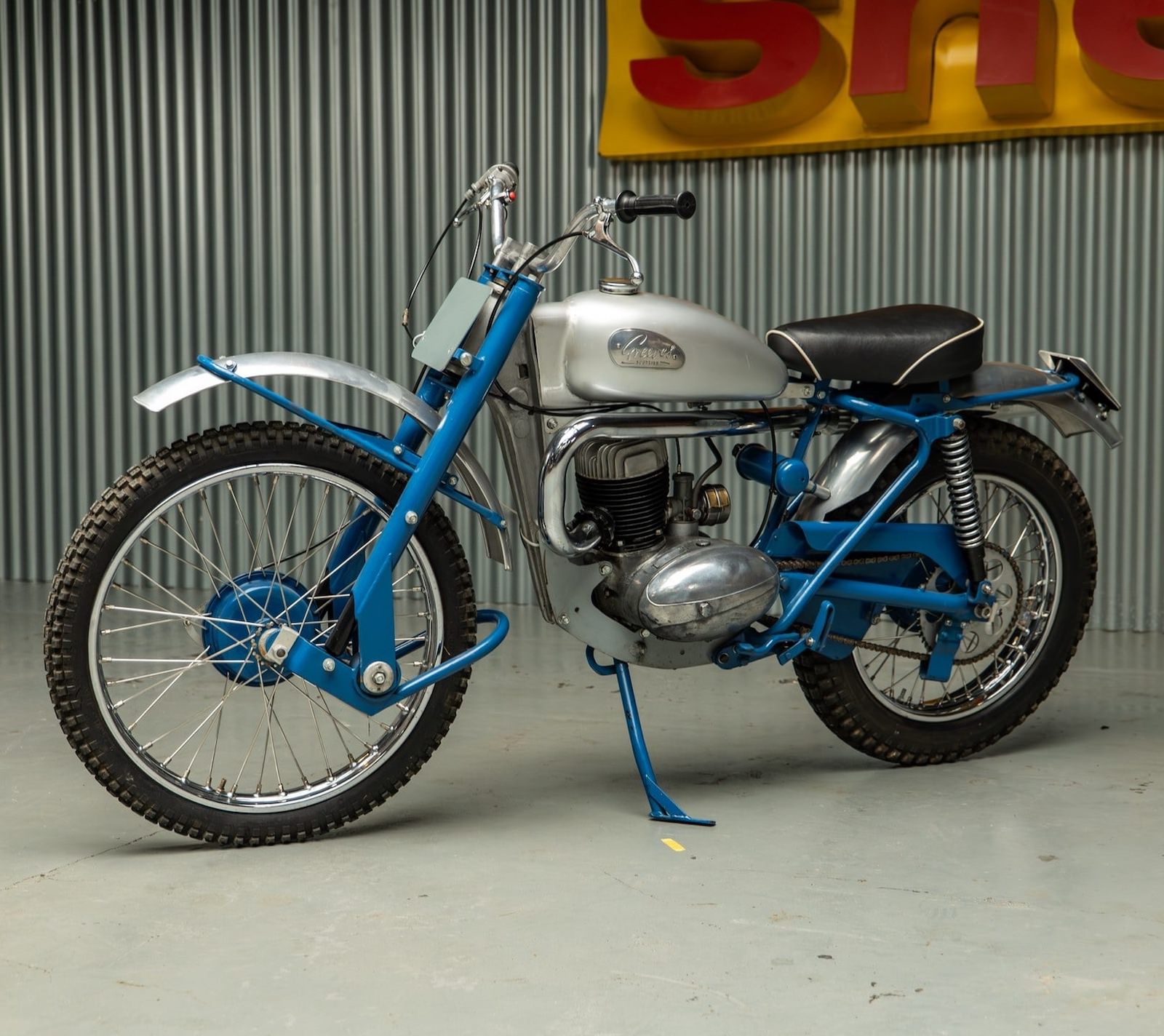
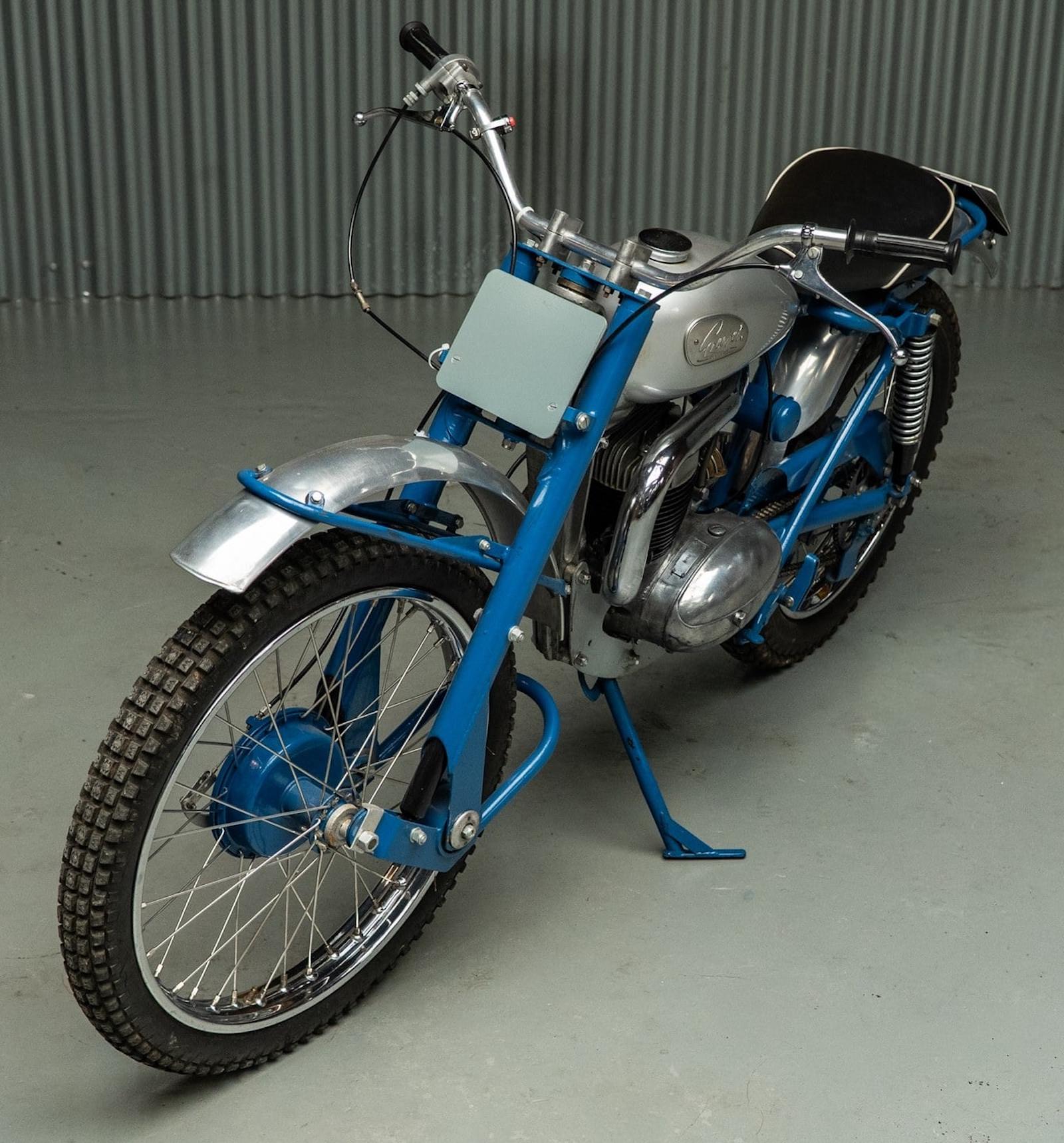
- This 1962 example is a fully restored 197cc Villiers-powered Scottish in period blue livery with polished aluminum components. It’s described as mechanically sound with little use since restoration, it is unregistered and offered without paperwork, making it best suited to green laning or Pre-65 trials competition.
History Speedrun: Greeves Motorcycles
Greeves Motorcycles started out when, in the years shortly after World War II, Bert Greeves fitted a lawnmower engine to the wheelchair of his disabled cousin, Derry Preston-Cobb, who had grown frustrated with the limitations of his battery-powered chair. This improvised creation evolved into the Invacar (a petrol-powered three-wheeled microcar for disabled people) and in 1952 Bert and Derry won a major UK Government contract to supply them through the Ministry of Pensions.
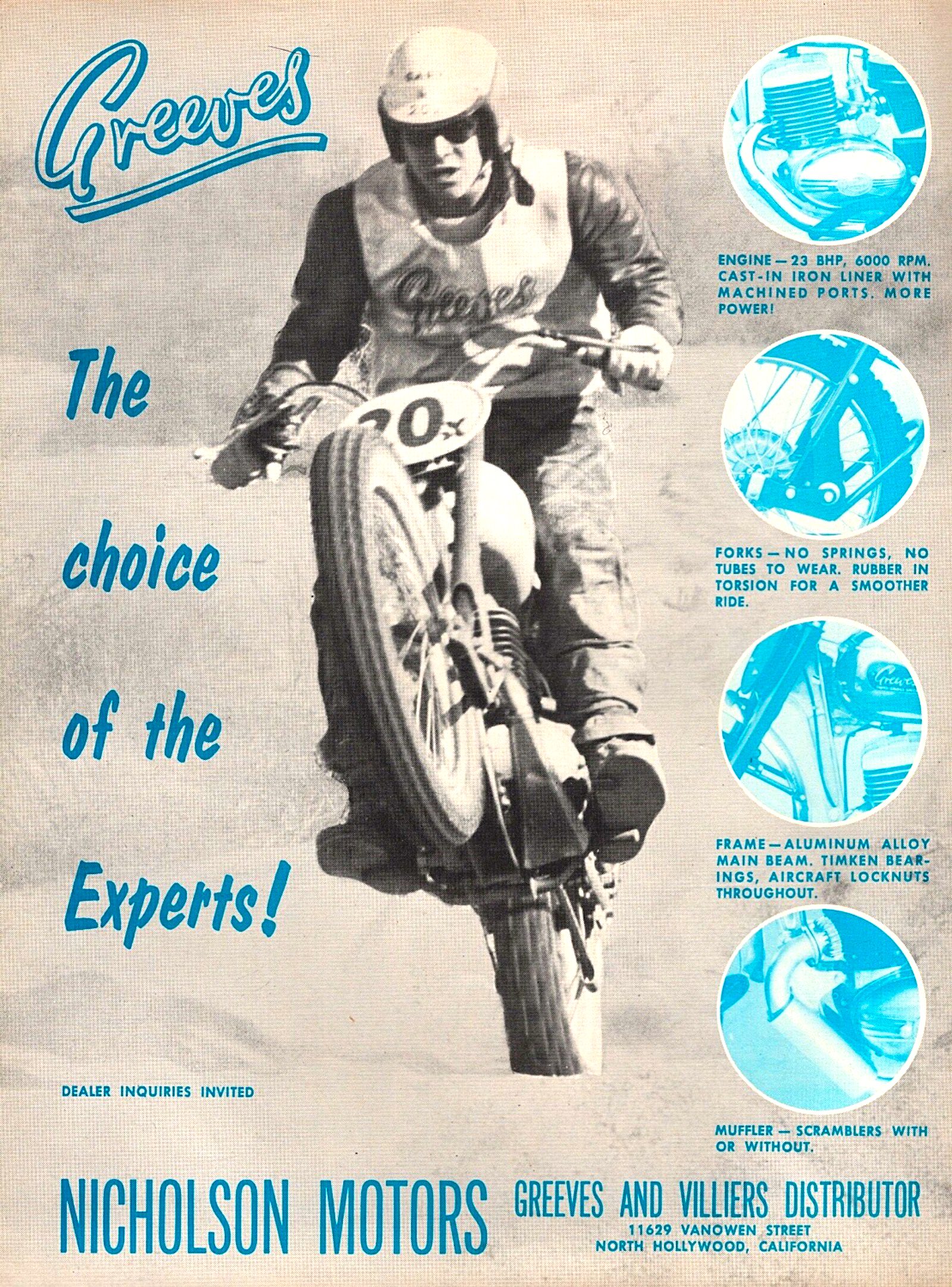
 Looking back at Greeves history, it’s clear that three engineering signatures really defined the brand – a cast LM6 aluminum-silicon alloy I-beam downtube in place of a conventional steel frame tube, rubber-in-torsion springing at both ends, and the distinctive “Banana” leading-link front forks. Image courtesy of Greeves Motorcycles.
Largely as a result of wartime injuries, there were a lot of people in need of transportation designed for disabled people, and it was this steady income from Invacar production that gave Bert the financial footing to pursue his real ambition – designing and building motorcycles.
Bert had been a dedicated motorcyclist from his early teenage years, when he first rode a 225cc James. He was a keen trials rider, and by the early 1950s he had assembled a personal collection that included everything from a 1912 Triumph to a 1951 Vincent Black Shadow – the latter being the fastest production motorcycle in the world at the time.
Working with Derry at their factory in Thundersley, Essex, he developed a prototype motorcycle in 1951 using a 197cc Villiers two-stroke single and a rubber-in-torsion suspension system borrowed directly from the Invacar. Motorcycle production began in the autumn of 1953, and the first models were shown at the Earls Court Motorcycle Show that same year.
Looking back at Greeves history, it’s clear that three engineering signatures really defined the brand – a cast LM6 aluminum-silicon alloy I-beam downtube in place of a conventional steel frame tube, rubber-in-torsion springing at both ends, and the distinctive “Banana” leading-link front forks. These all worked together to give Greeves motorcycles a look and feel unlike anything else on the market, and they proved remarkably tough in off-road competition.
Competition, trials and scrambles racing in particular, was central to the Greeves identity – in 1956 the company signed motocross rider Brian Stonebridge, who beat 500cc machines on his smaller-capacity Greeves at Hawkstone Park in 1957 and earned gold medals at the International Six Days Trial.
After Stonebridge’s tragic death in a car accident in October of 1959 (with Bert at the wheel) the company signed Dave Bickers, who won the 250cc European Motocross Championship in 1960 and 1961. Greeves riders would go on to take victories in the Manx Grand Prix, the Scott Trial, the European Trials Championship, and the Scottish Six Days Trial.
By 1962 there were eleven models in the Greeves range, spanning roadsters, scramblers, trials bikes, and road racers, and the company had built a profitable export business, particularly in the United States, where Greeves played a significant role in growing the sport of off-road motorcycling. The workforce at Thundersley rarely exceeded 125 people, yet this small Essex factory punched well above its weight for over two decades.
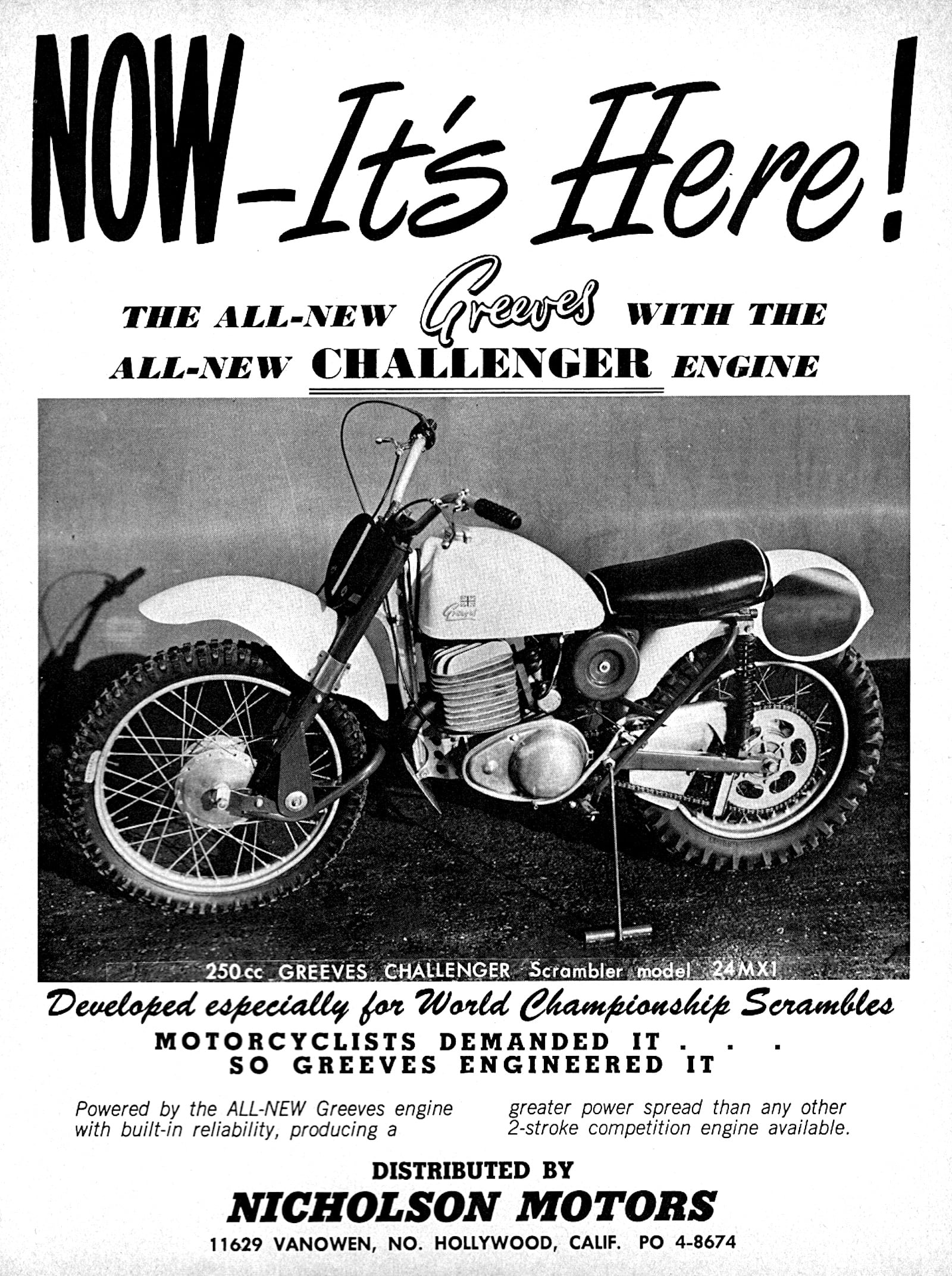
Competition, trials and scrambles racing in particular, was central to the Greeves identity – in 1956 the company signed motocross rider Brian Stonebridge, who beat 500cc machines on his smaller-capacity Greeves at Hawkstone Park in 1957 and earned gold medals at the International Six Days Trial. Image courtesy of Greeves Motorcycles.
When Bert retired in 1973 the company entered a slow decline, and a factory fire in the late 1970s brought the original Greeves story to a close. This wasn’t quite the end though, as Richard Deal bought the rights to the name in 1999 and launched a new Greeves trials bike with an all-new 280cc two-stroke engine in 2009.
The Greeves Scottish
The Greeves Scottish was the company’s dedicated observed trials motorcycle, it was built in various successive forms from 1958 to 1965 before being succeeded by the Greeves Anglian. It earned its name from Jack Simpson’s victory in the 200cc class of the 1957 Scottish Six Days Trial (the first year Greeves had entered a factory team in the event) and it would become one of the most successful British trials machines of the period.
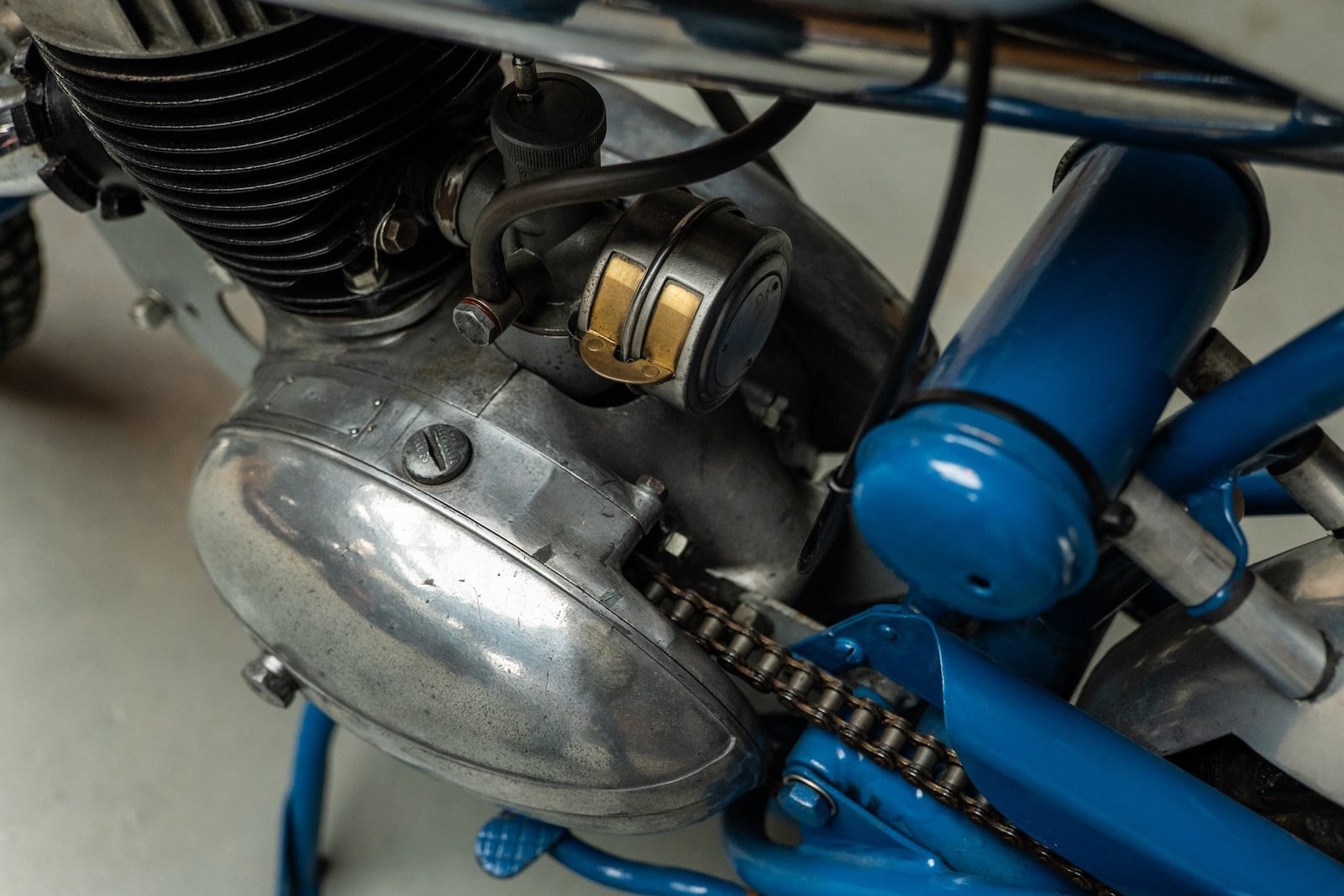
The original Scottish model was the 20TA, introduced for the 1958 season. It was built on the 20SA scrambles frame but fitted with revised footpads, a sprung saddle, and a Villiers 9E engine displacing 197cc. Brian Stonebridge’s development work is what really shaped the machine, and the trials-specific tuning was evident in details like a longer inlet manifold for the Villiers S25 carburetor (providing more torque at lower rpm) a raised exhaust, and a modified muffler.
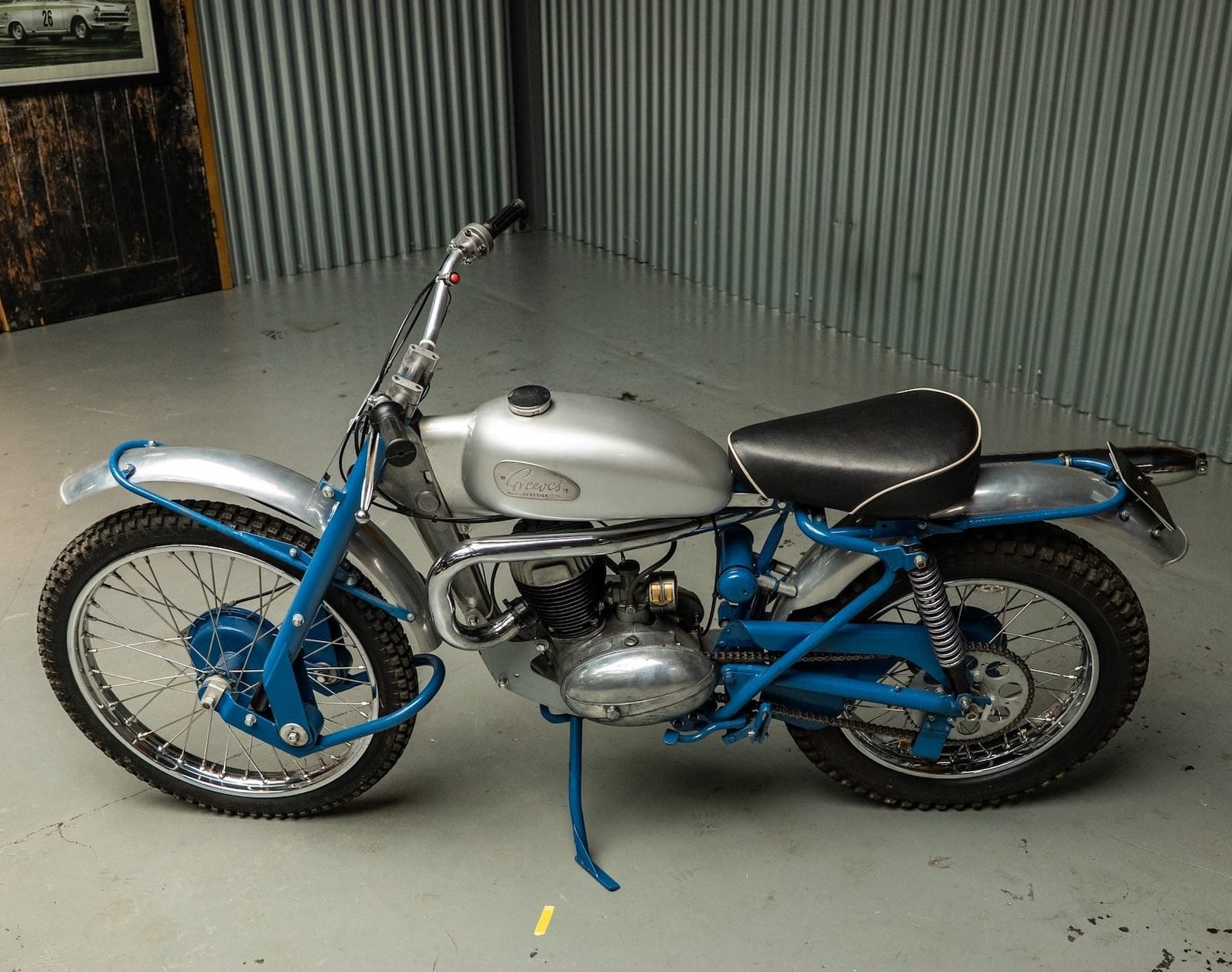
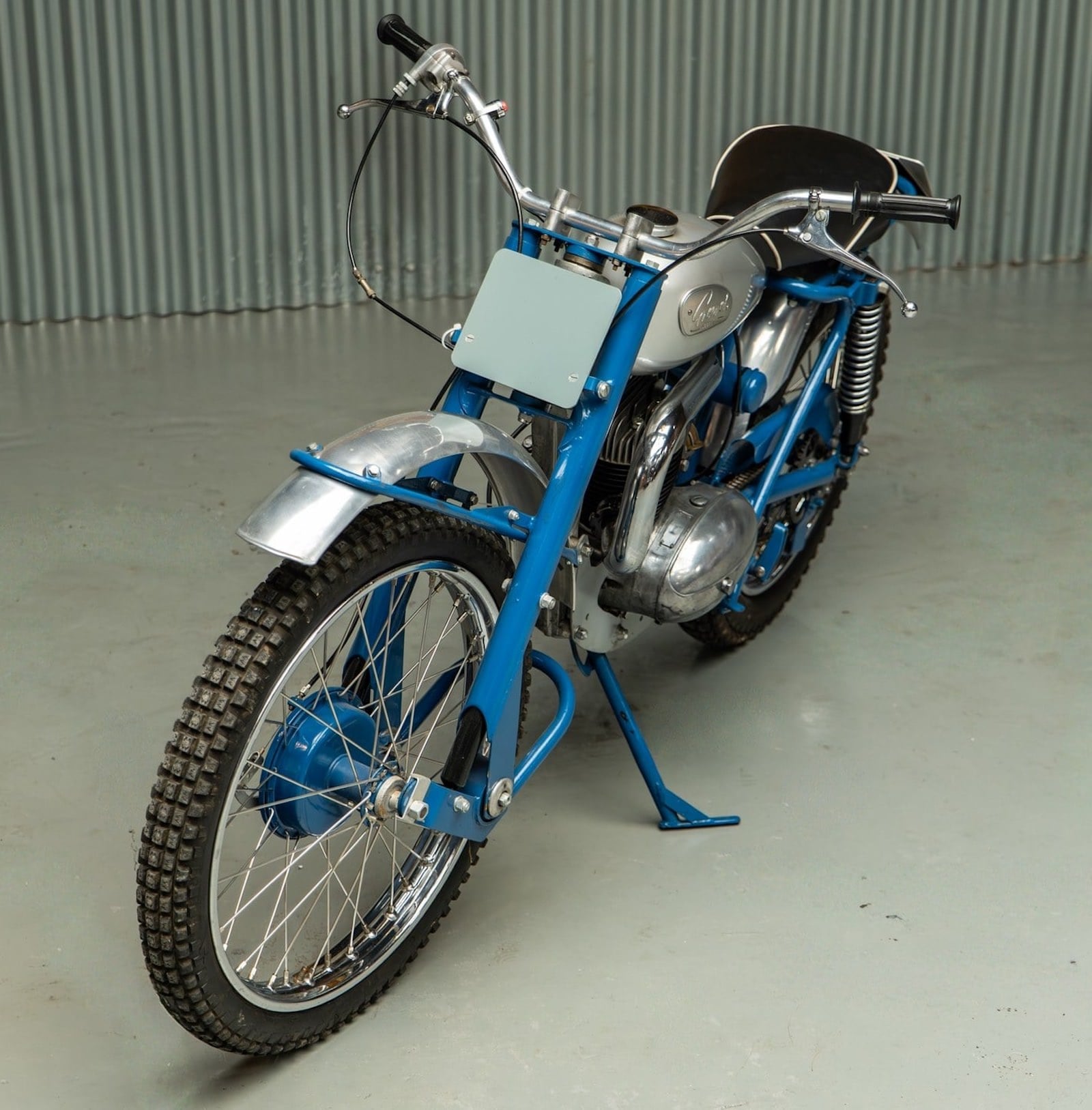
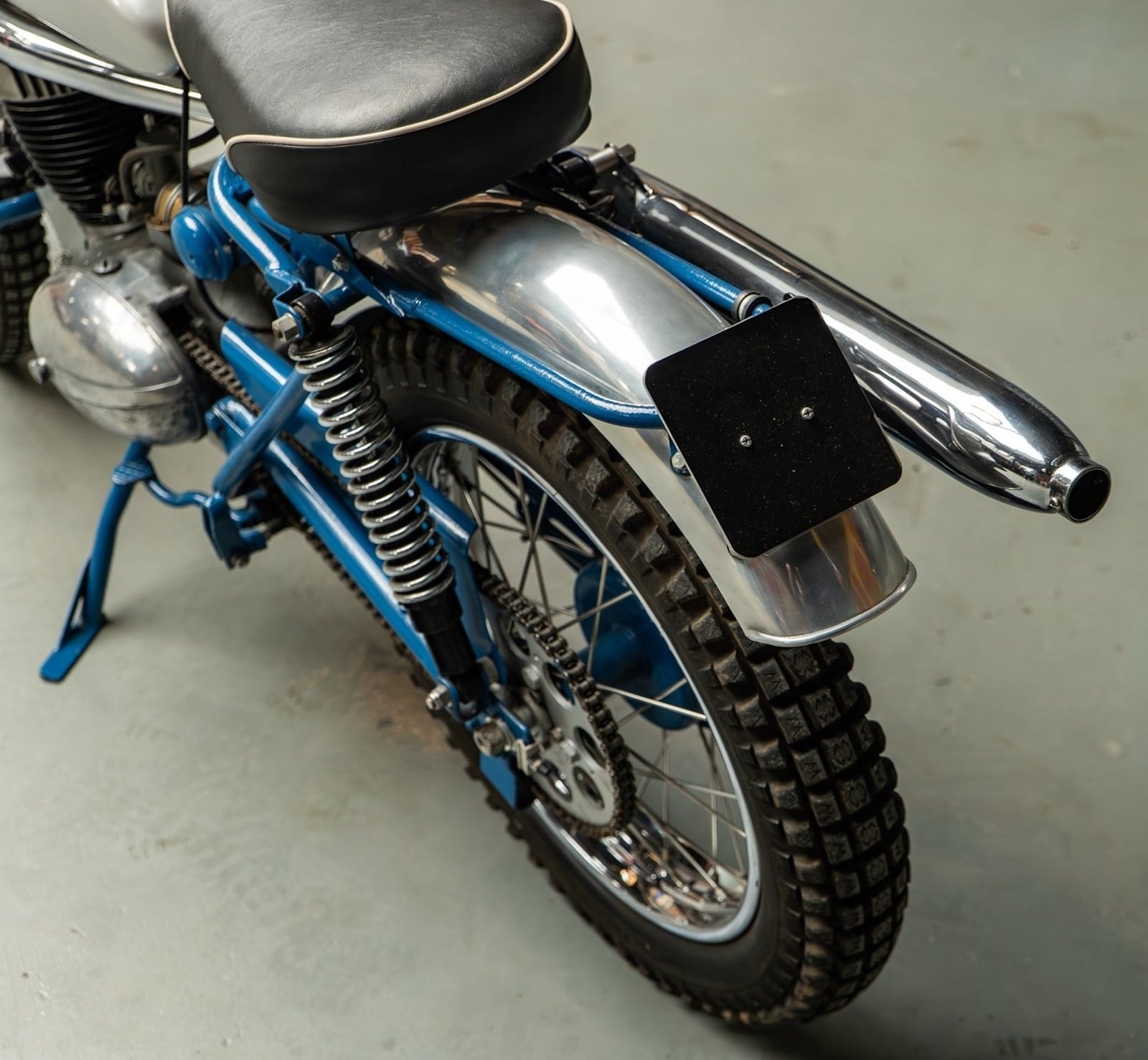
Like all Greeves machines of the period, the Scottish featured the signature cast-alloy I-beam downtube frame, rubber-in-torsion suspension, and Banana leading-link front forks. It also carried several clever practical touches – like oil storage built into the swingarm, a chain oiler with an adjustable needle valve mounted ahead of the rear sprocket, aluminum skid plates to protect the Villiers crankcase from rock strikes, and a box-section exhaust header pipe.
The Scottish evolved steadily through the early 1960s, its displacement grew from 197cc to 246cc as larger Villiers engine assemblies became available, and from 1962 higher-spec variants such as the 24TES used Greeves’ own alloy cylinder barrel and head on the Villiers bottom end – replacing the stock iron barrel with an alloy top end that ran cooler and could produce more power.
The 24TES variant had increased low-rpm pulling power, and it was on a TES Mk 2 that Don Smith won the 1964 Challenge Henry Groutars – the international series that later formed part of the lineage of the FIM Trial World Championship – making him the first rider to claim the title.
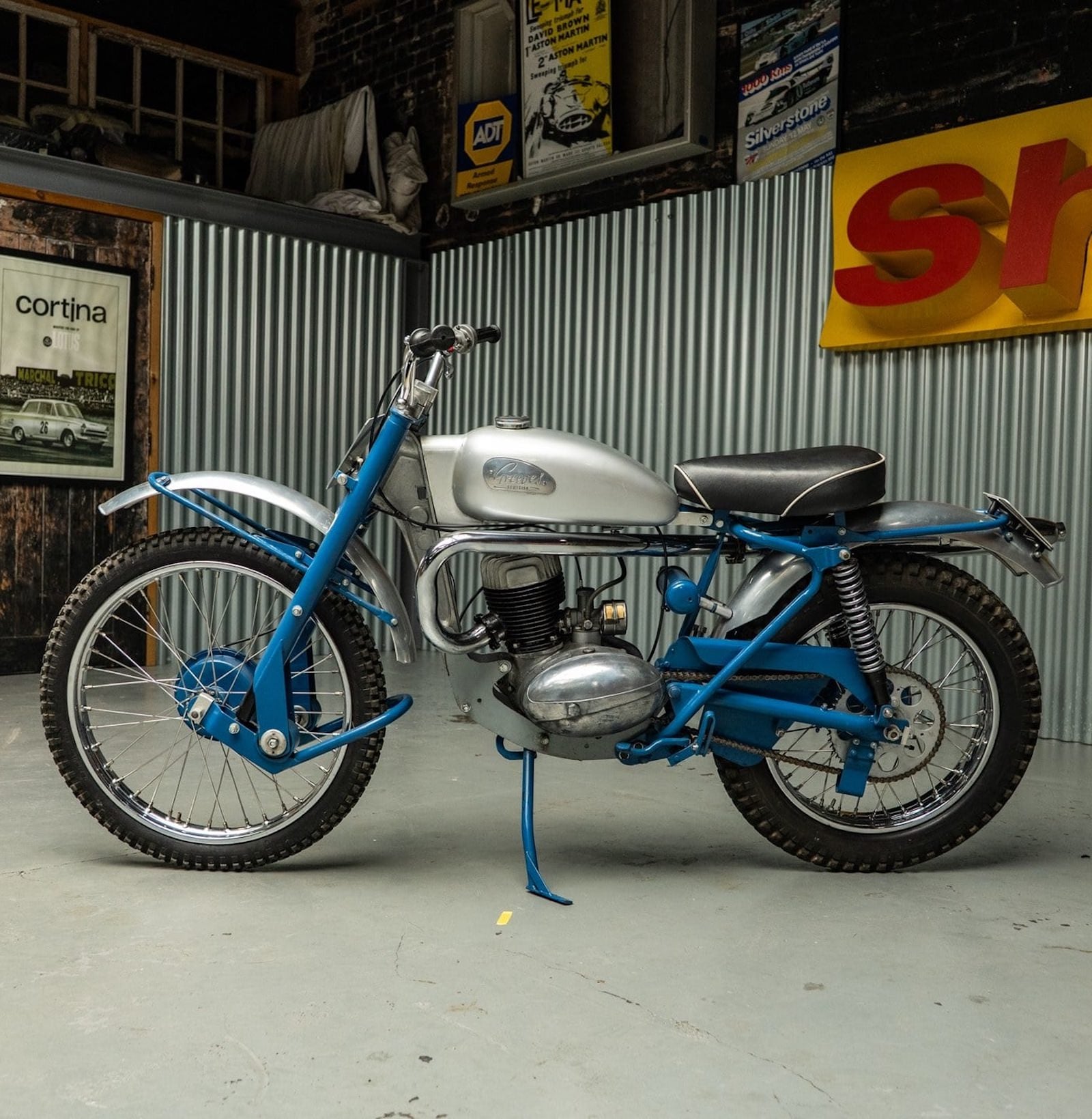
This is a 1962 Greeves Scottish, it’s a 197cc trials machine powered by a Villiers two-stroke single mated to a 4-speed gearbox. It’s been fully restored to a high standard before the current owner’s tenure and it was serviced before the sale.
Smith was the only British rider to win a world-level trials championship on a British-built machine, a feat he repeated in 1967 on the successor Anglian. The final Scottish variant was the 24TFS of 1965, which received the tapered “Challenger barrel” cylinder and head before the model was replaced by the Anglian for 1966.
The Scottish’s main competitors in the early 1960s were the four-stroke trials machines from BSA, Triumph, and Ariel. These were heavier bikes that the lightweight two-stroke Greeves consistently outperformed.
By mid-decade, however, the competitive landscape had shifted. Sammy Miller’s move to the Bultaco Sherpa in 1965 triggered what became known as the “Spanish Invasion,” and the lighter, more refined Spanish two-strokes from Bultaco and Montesa gradually overtook the Greeves in top-level competition.
Even so, Greeves machines remained competitive through the end of the decade – Bill Wilkinson won the 1969 Scottish Six Days Trial on a Greeves Anglian, becoming the last British rider to win the event on a British-built motorcycle.
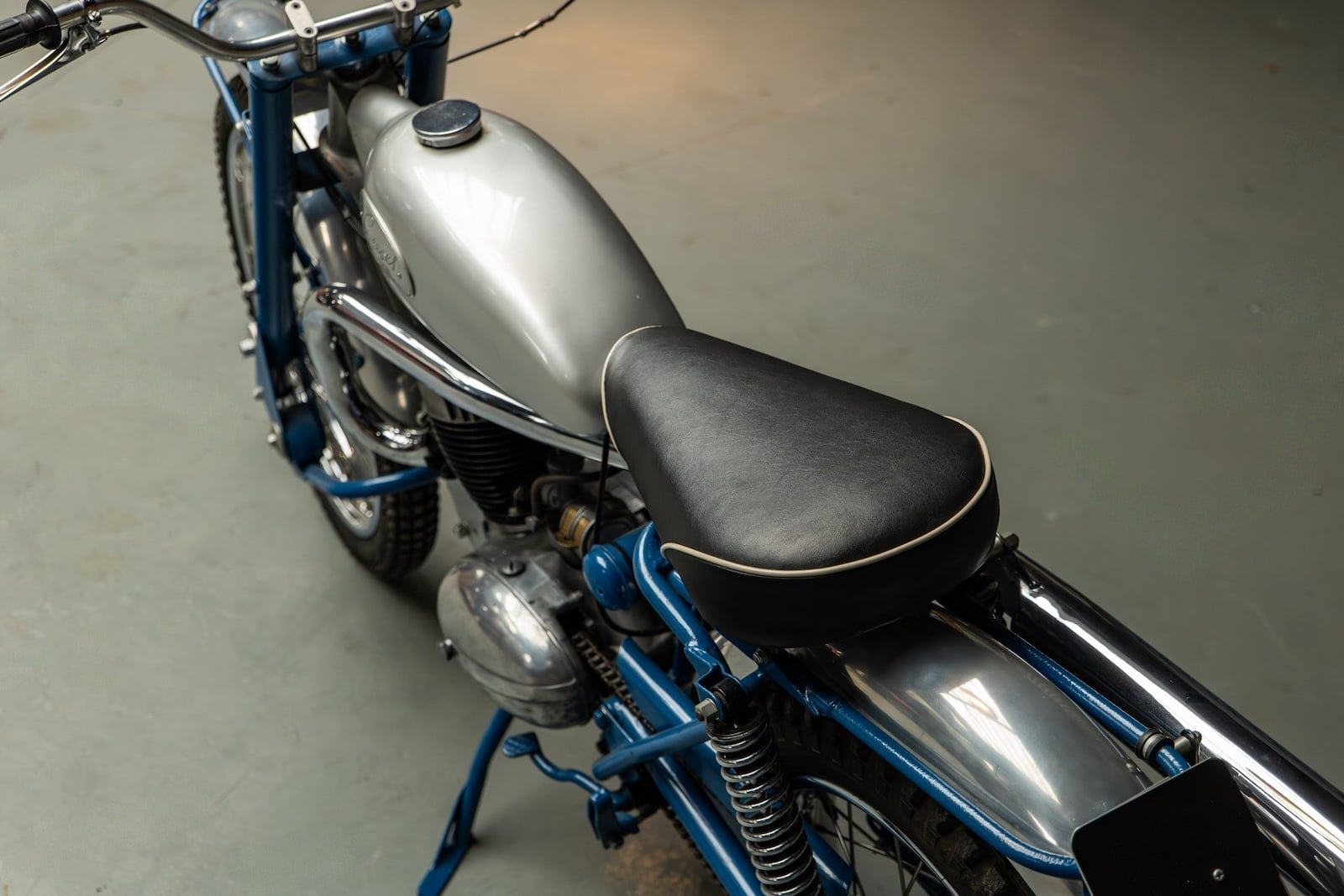
The 1962 Greeves Scottish Shown Here
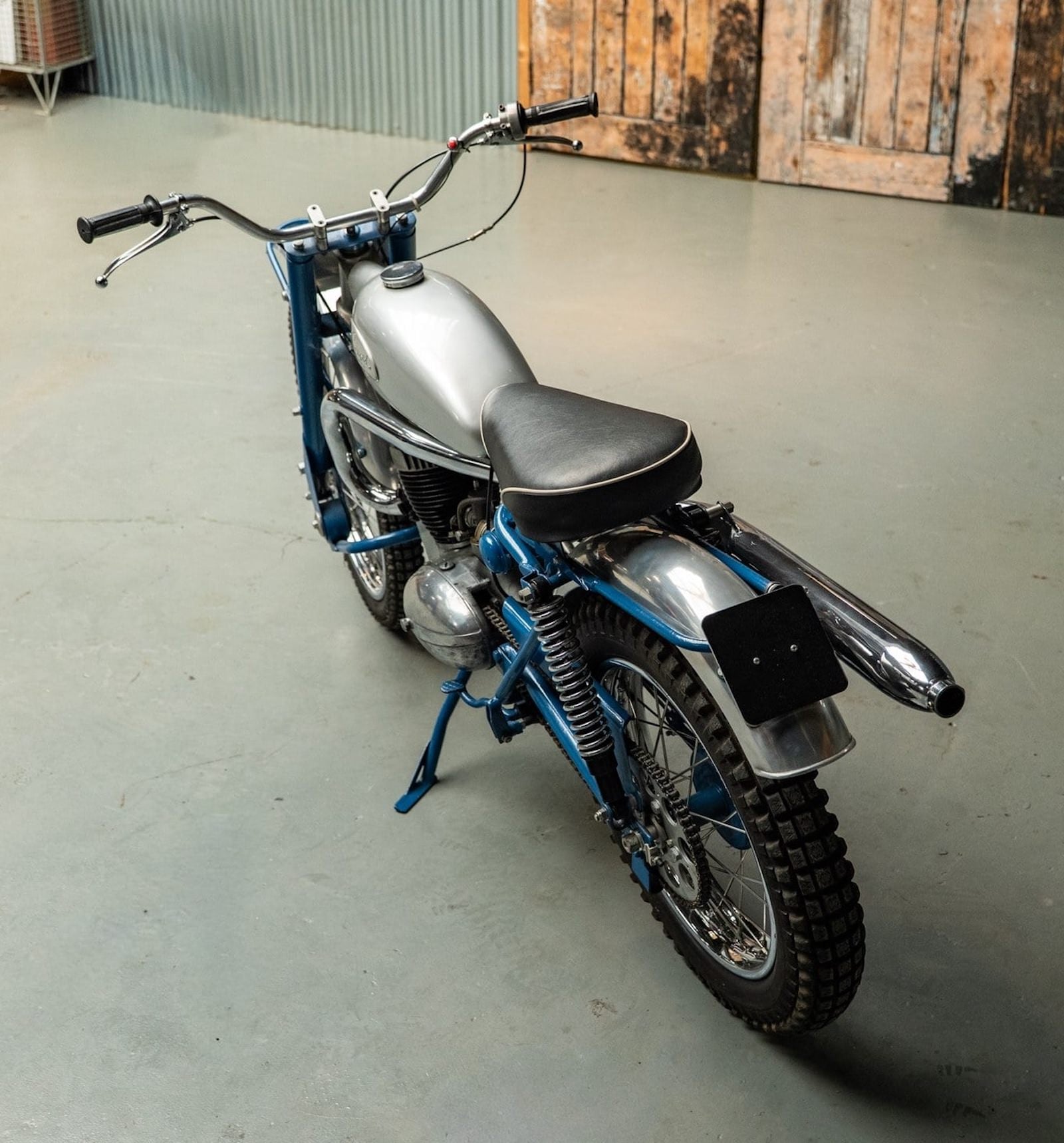
This is a 1962 Greeves Scottish, it’s a 197cc trials machine powered by a Villiers two-stroke single mated to a 4-speed gearbox. It’s been fully restored to a high standard before the current owner’s tenure and it was serviced before the sale.
The seller describes it as mechanically sound and in good riding order, with little apparent use since the restoration was completed. The bike is presented in period Greeves blue livery with polished aluminum parts. It has the signature Greeves cast-alloy beam frame and leading-link front forks that define the model series, and the restoration appears to have kept the machine very close to its original spec.
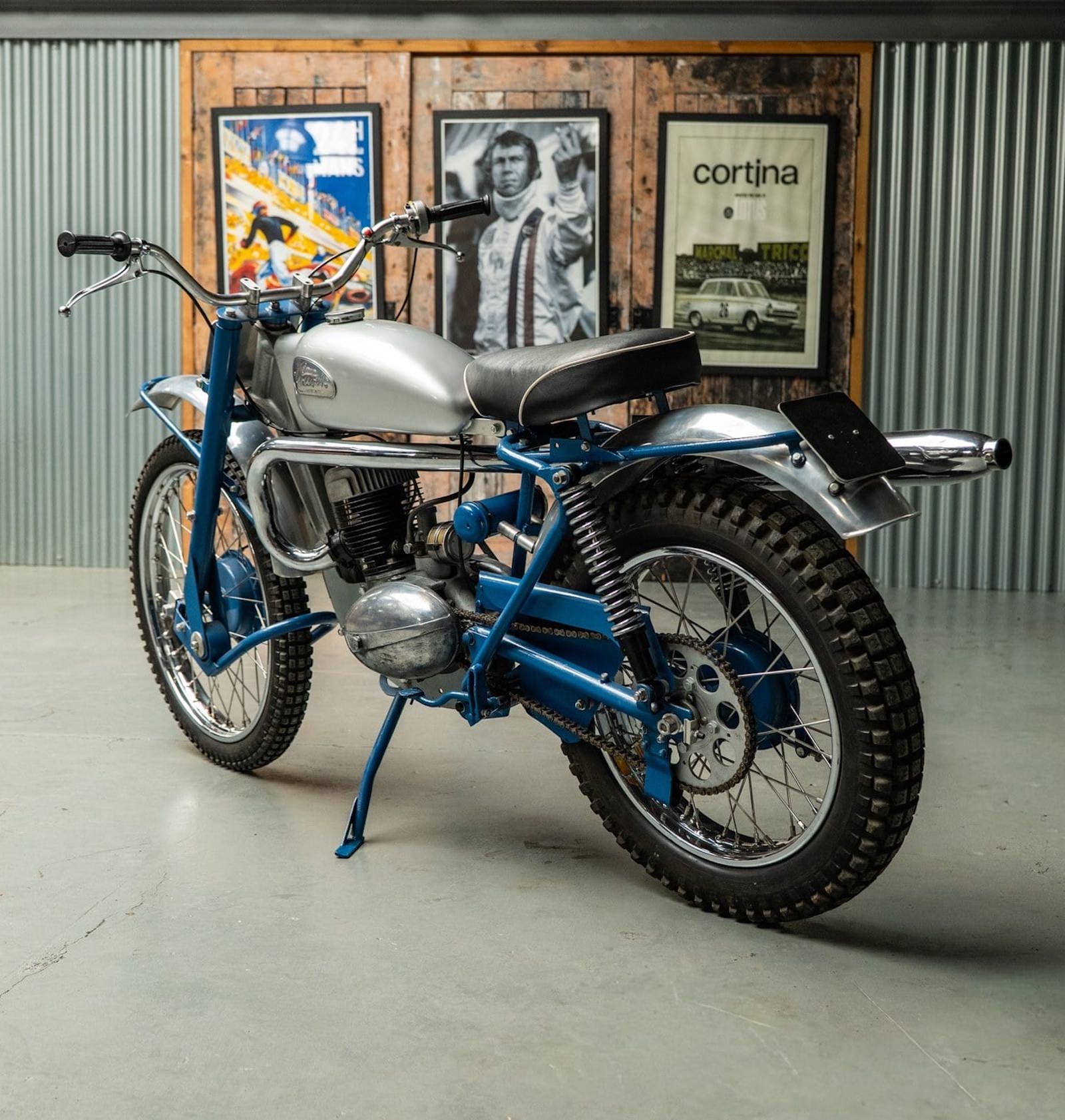
This is an original 1962 Greeves Scottish, one of the most famous and successful British trials motorcycles of the period – thanks in no small part to its lightweight cast-alloy beam frame and its excellent handling over rough terrain.
This example is not road registered and is offered without paperwork, so it would be best suited to off-road use, green laning, or Pre-65 trials competition rather than road riding. There is no odometer fitted, which is typical of competition-oriented trials machines of this period.
It’s now being offered for sale out of Northamptonshire in the United Kingdom on Car & Classic, and you can visit the listing here if you’d like to read more about it or place a bid.
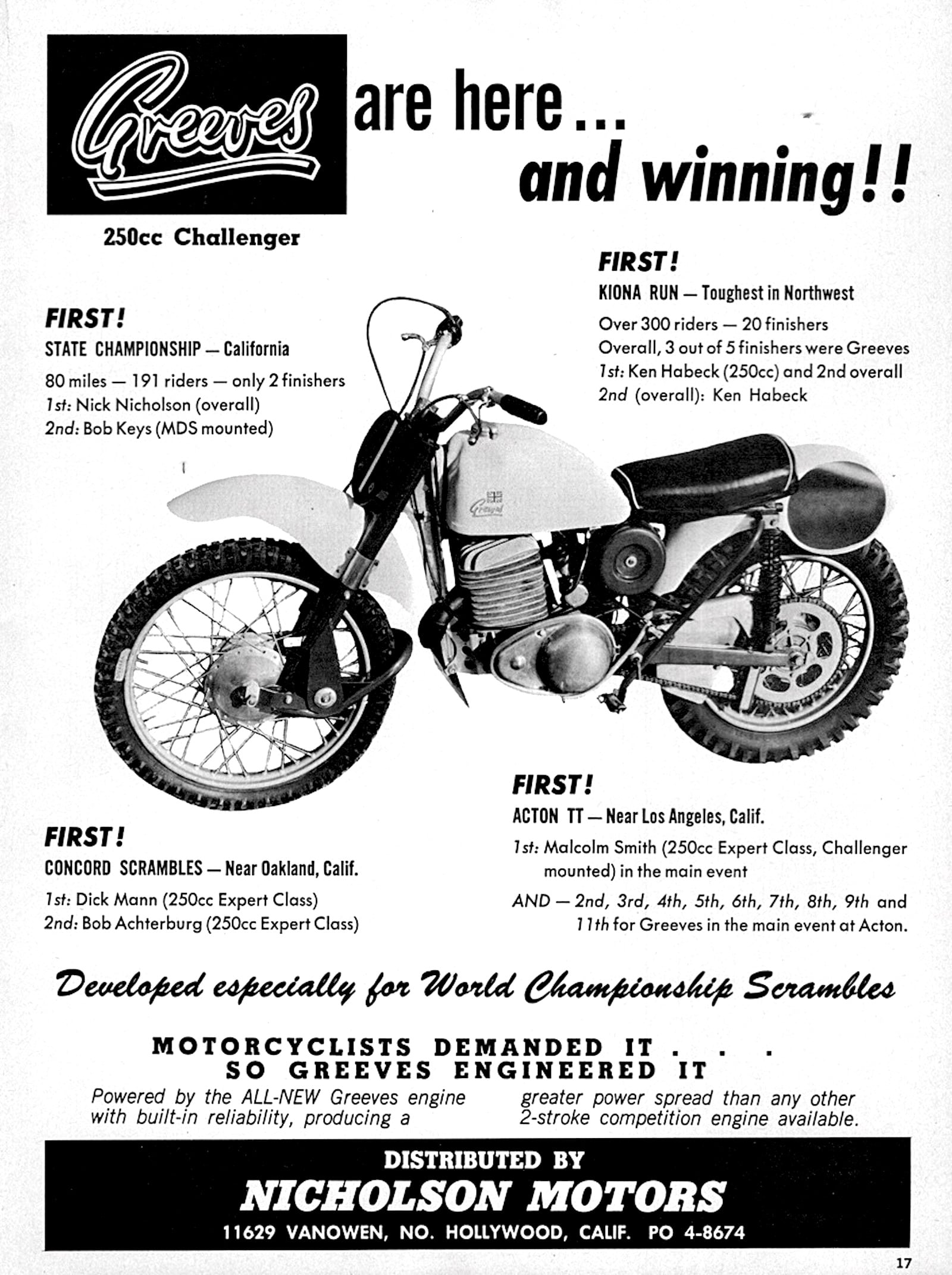
Images courtesy of Car & Classic
Articles that Ben Branch has written have been covered on CNN, Popular Mechanics, Smithsonian Magazine, Road & Track Magazine, the official Pinterest blog, the official eBay Motors blog, BuzzFeed, Autoweek Magazine, Wired Magazine, Autoblog, Gear Patrol, Jalopnik, The Verge, and many more.
Silodrome was founded by Ben back in 2010, in the years since the site has grown to become a world leader in the alternative and vintage motoring sector, with well over a million monthly readers from around the world and many hundreds of thousands of followers on social media.