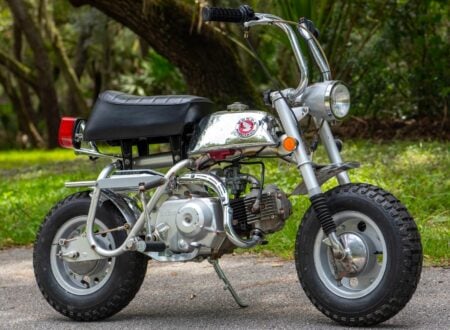
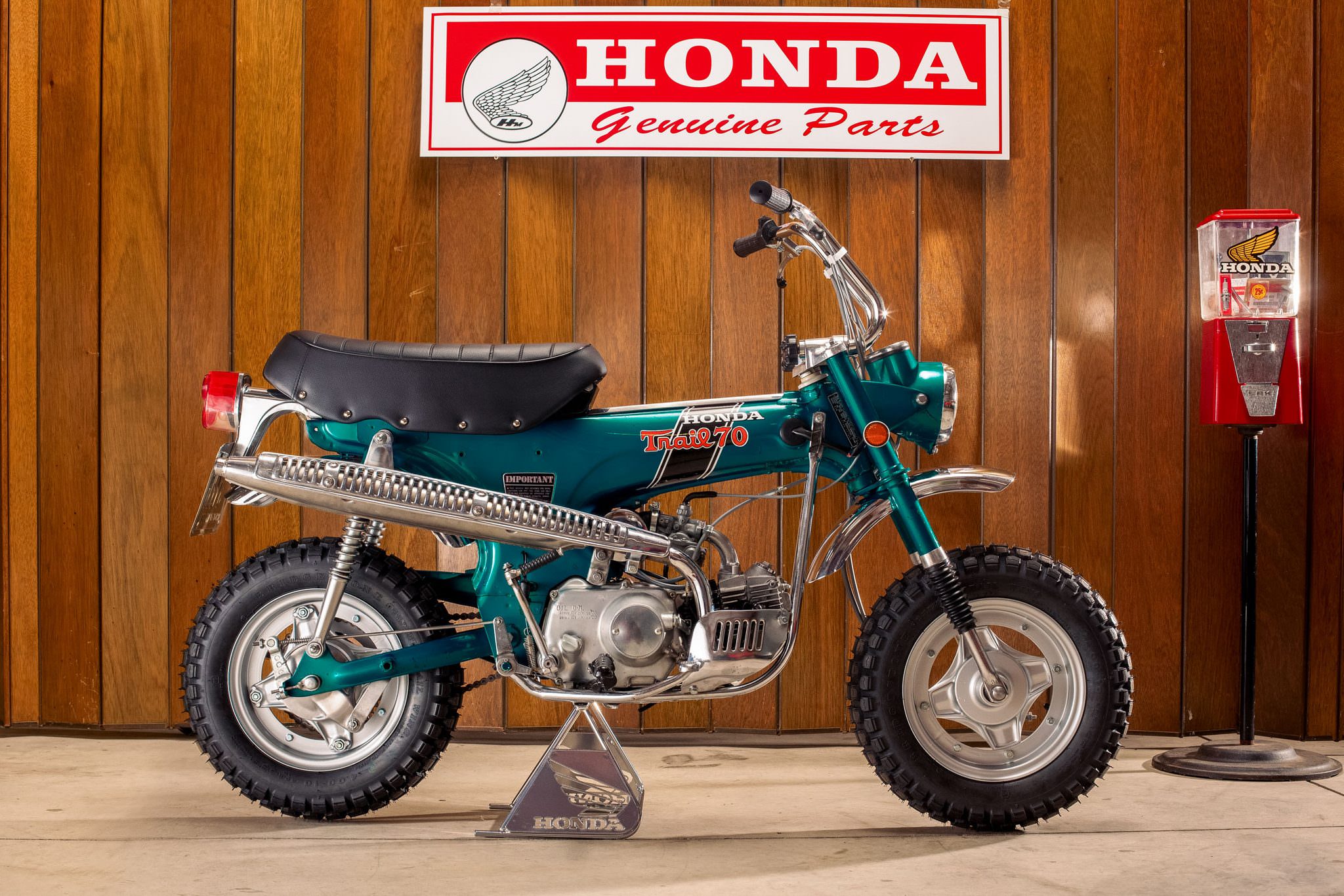
This is a 1970 Honda CT70H Trail that now benefits from a number of upgrades, including the fitment of an 88cc top-end kit to increase the displacement, up from the 72cc of the original, offering a boost in power.
The CT70H version of the Honda Trail was developed for more advanced riders – it had a proper clutch and a 4-speed transmission – and as a result it was a popular stepping-stone bike up from the semi-automatic clutch and the 3-speed box on the standard CT70.
Fast Facts: A 1970 Honda CT70H Trail
- The Honda CT70H Trail 70 was produced from 1970 to 1972 as a more advanced alternative to the standard CT70. It had a 4-speed manual transmission and hand-operated clutch instead of the standard model’s 3-speed semi-automatic gearbox, making it particularly appealing to riders wanting greater control and more ratios.
- Originally introduced in Japan as the Honda Dax in 1969, the CT70 had a distinctive pressed-steel T-bone frame, folding handlebars, and a compact 72cc four-stroke single-cylinder engine. Its small dimensions made it easy to transport, while 10-inch wheels, telescopic front forks, twin rear shocks, and drum brakes provided practical everyday functionality.
- The CT70H kept the standard model’s basic chassis and engine configuration but added a manual clutch and 4-speed gearbox. Early examples were available in three metallic colors, including Candy Blue Green. The H model was discontinued after 1972, while the standard semi-automatic CT70 remained available until 1982, returning briefly from 1991 to 1994.
- The 1970 CT70H featured here is finished in Candy Blue Green and has received extensive mechanical and cosmetic attention. Upgrades include an 88cc engine kit, rebuilt carburetor, replacement brakes, tires, handlebars, and seat. Showing approximately 1,900 miles, it is being offered in Idaho with spare parts, documentation, and a reproduction Honda sign.
History Speedrun: The Honda CT70H Trail
Honda sold the CT70H Trail for just three model years, 1970 through till 1972, it differed from the far more common CT70 mainly in its gearbox. Where the standard bike had a 3-speed semi-automatic that suited beginners, the CT70H had a manual clutch and a 4-speed transmission – it was a bike for more advanced riders, who were ready to work a clutch and row their own gears.
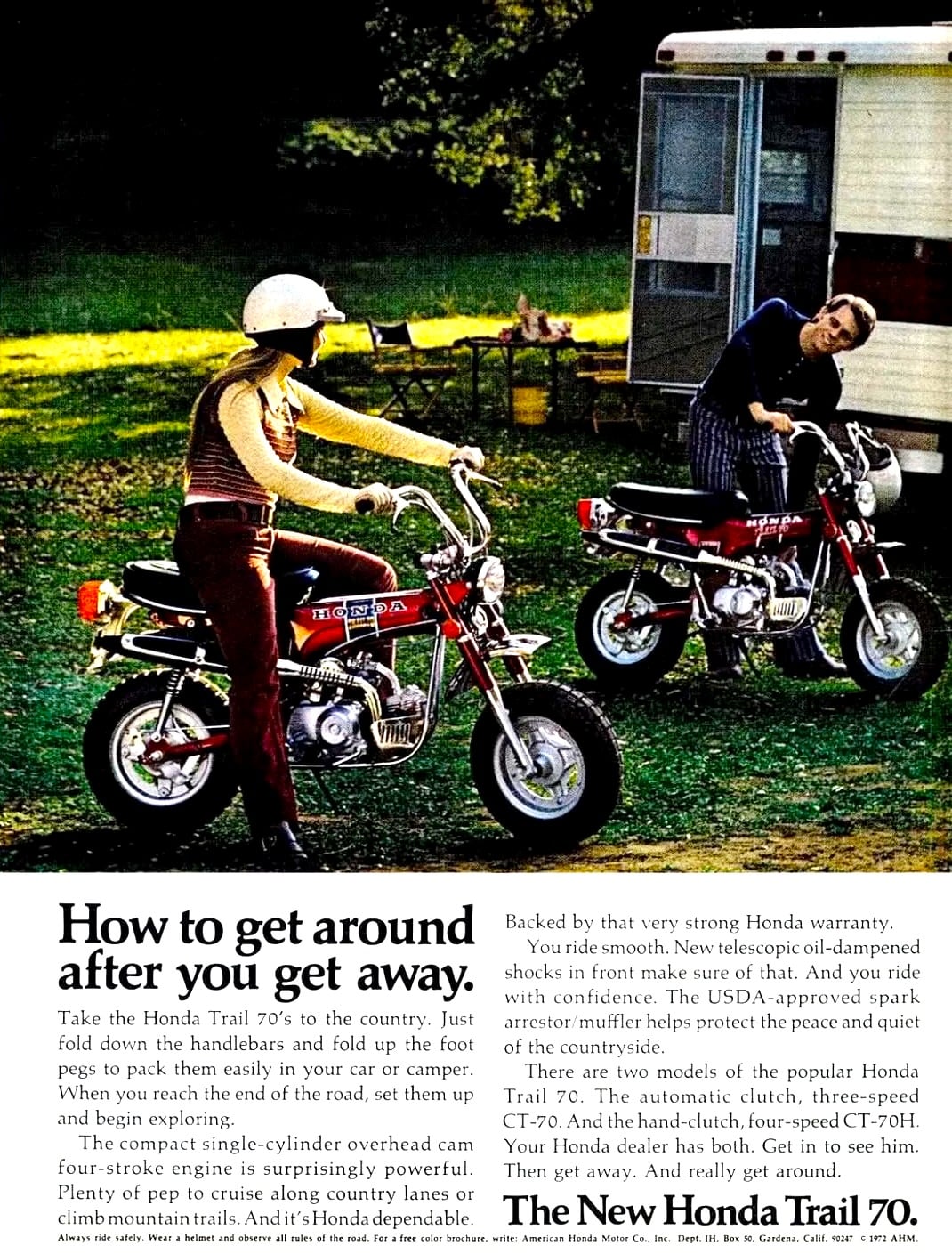
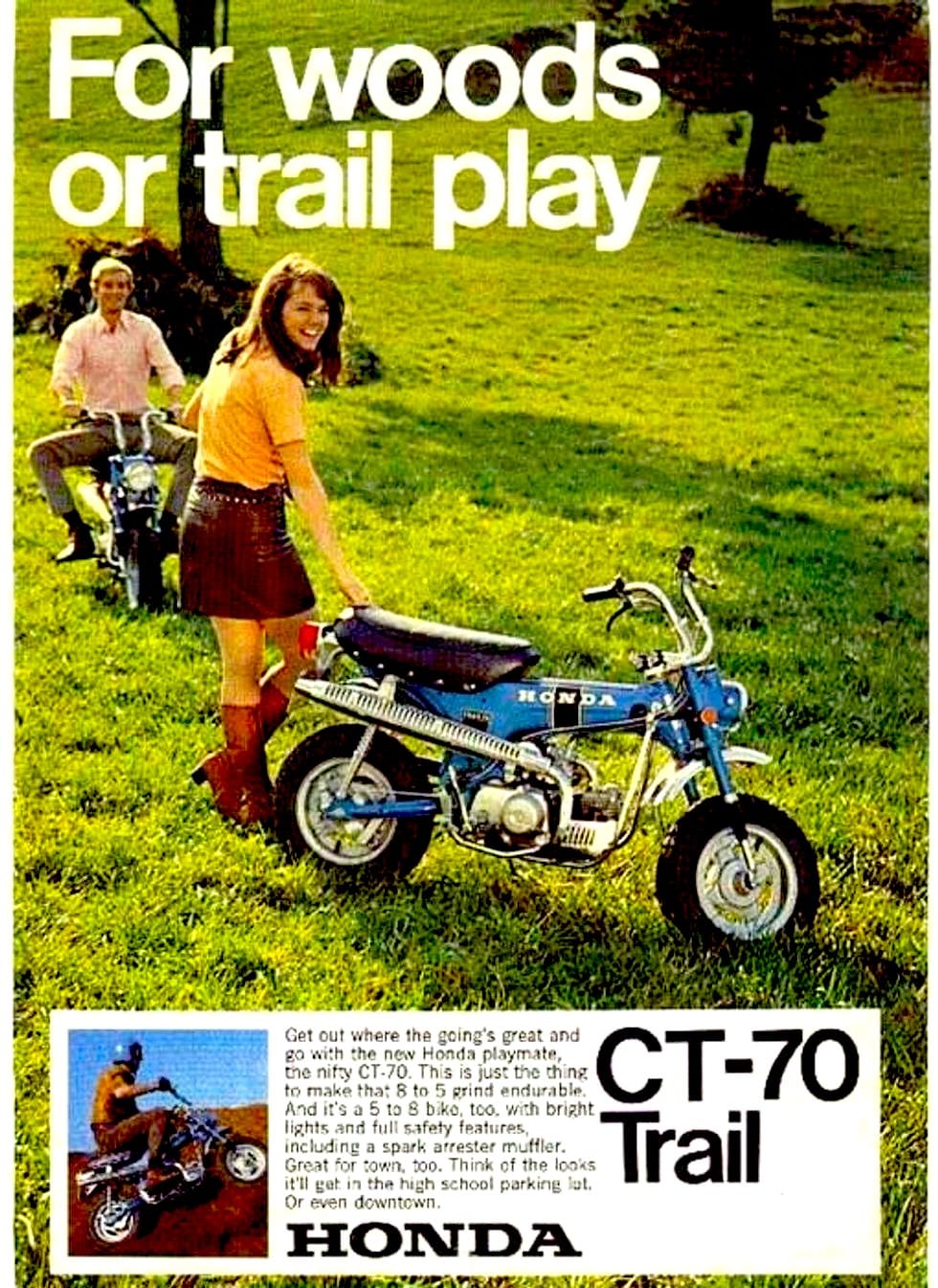
 In America, the Honda CT70 sold for under $300 USD and came with the equipment needed to be street legal if the owner wished. It used a pressed-steel “T-bone” frame with the 2.5 liter (0.66 gallon) fuel tank inside it, it was accessed by swinging the seat up in the forward direction. Image courtesy of Honda.
The Honda CT70 started out in Japan as the Honda Dax. Honda announced the ST50 and ST70 Dax in August of 1969, and unusually, pitched them at car owners. The front end came off easily, the handlebars and footpegs folded, and the fuel tank wouldn’t leak with the bike on its side – so the whole machine could fit neatly in a car’s trunk.
The Dax’s overhead-cam single leaned forward 80º, and Honda rated the domestic ST70 at 5.9 bhp at 9,000 rpm, with a top speed of 47 mph. Honda planned to build 15,000 Dax models a month including exports, and the export version, the CT70, was due on sale in the United States in early September of 1969. The name came from the dachshund, whose long, low outline the pressed-steel frame was said to resemble.
In America, the Honda CT70 sold for under $300 USD and came with the equipment needed to be street legal if the owner wished. It used a pressed-steel “T-bone” frame with the 2.5 liter (0.66 gallon) fuel tank inside it, it was accessed by swinging the seat up in the forward direction. It had a telescopic fork up front and a swingarm in the rear with twin shock absorbers, and it rode on 10 inch wheels front and back, with drum brakes at both ends. The wheelbase was 40.7 inches and curb weight about 137 lbs.
The engine was an air-cooled 72cc single-cylinder unit with an overhead camshaft, 47 by 41.4 mm bore and stroke, 8.8:1 compression, and a single Keihin carburetor. On the standard bike power was sent back through an automatic centrifugal clutch – the rider simply pushed the shift lever, raised the engine speed, and the clutch took up the drive.
Where a clutch lever would normally sit, the left handlebar lever, was repurposed as a second control for the rear brake, in addition to the standard rear brake pedal.
The Honda CT70H replaced that arrangement with a proper manual clutch and a 4-speed gearbox, still driving the rear wheel by chain. It kept the T-bone frame, the fuel tank in the frame and the folding handlebars, and weighed about 143 lbs.
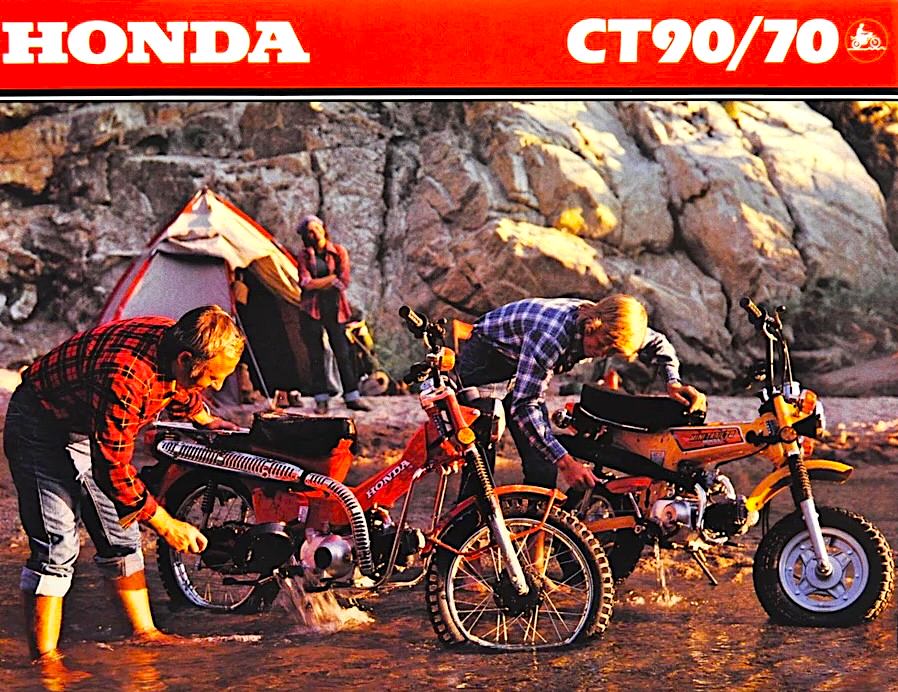
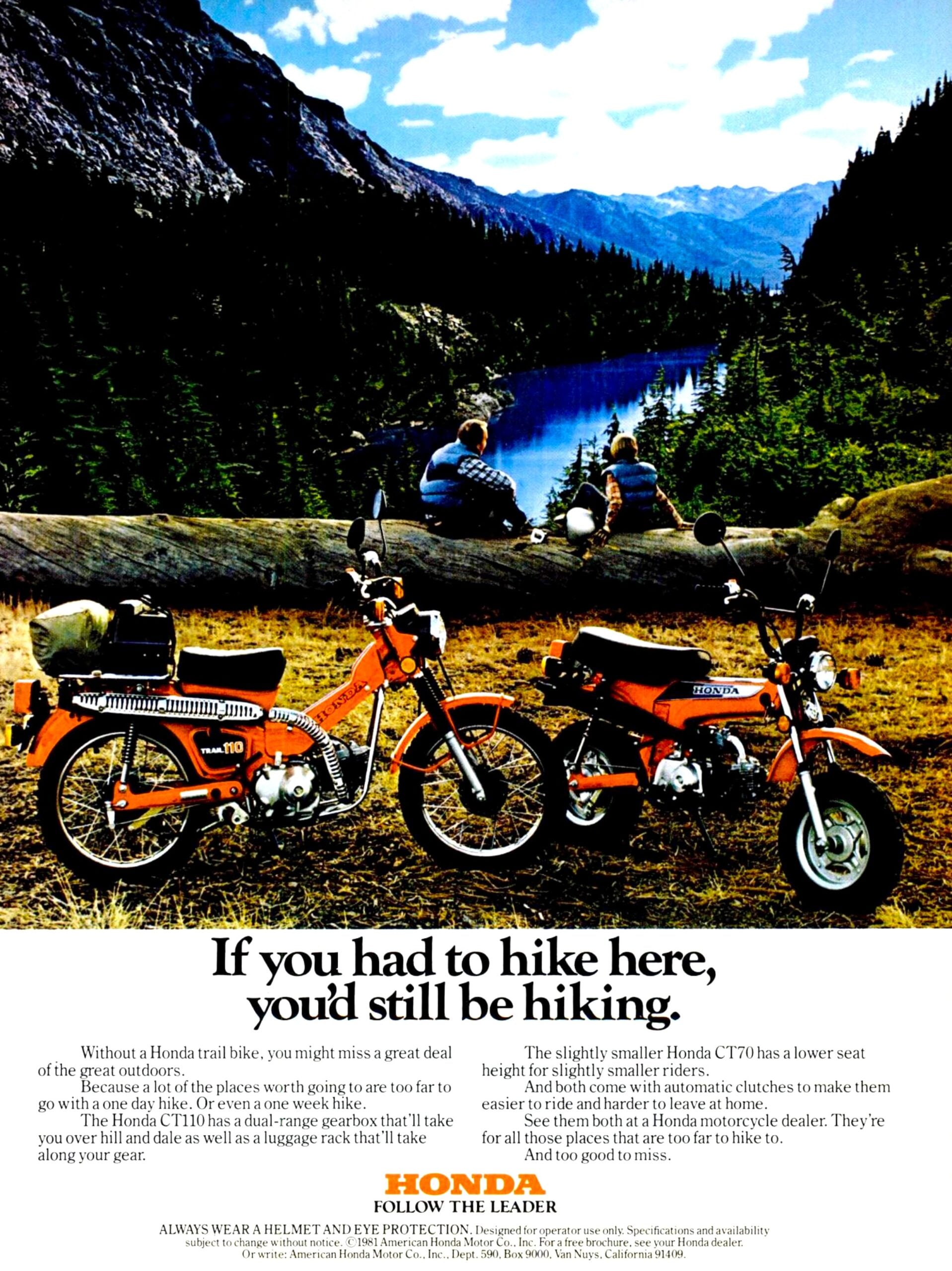
The CT70H version of the Honda Trail was developed for more advanced riders – it had a proper clutch and a 4-speed transmission – and as a result it was a popular stepping-stone bike up from the semi-automatic clutch and the 3-speed box on the standard CT70. Images courtesy of Honda.
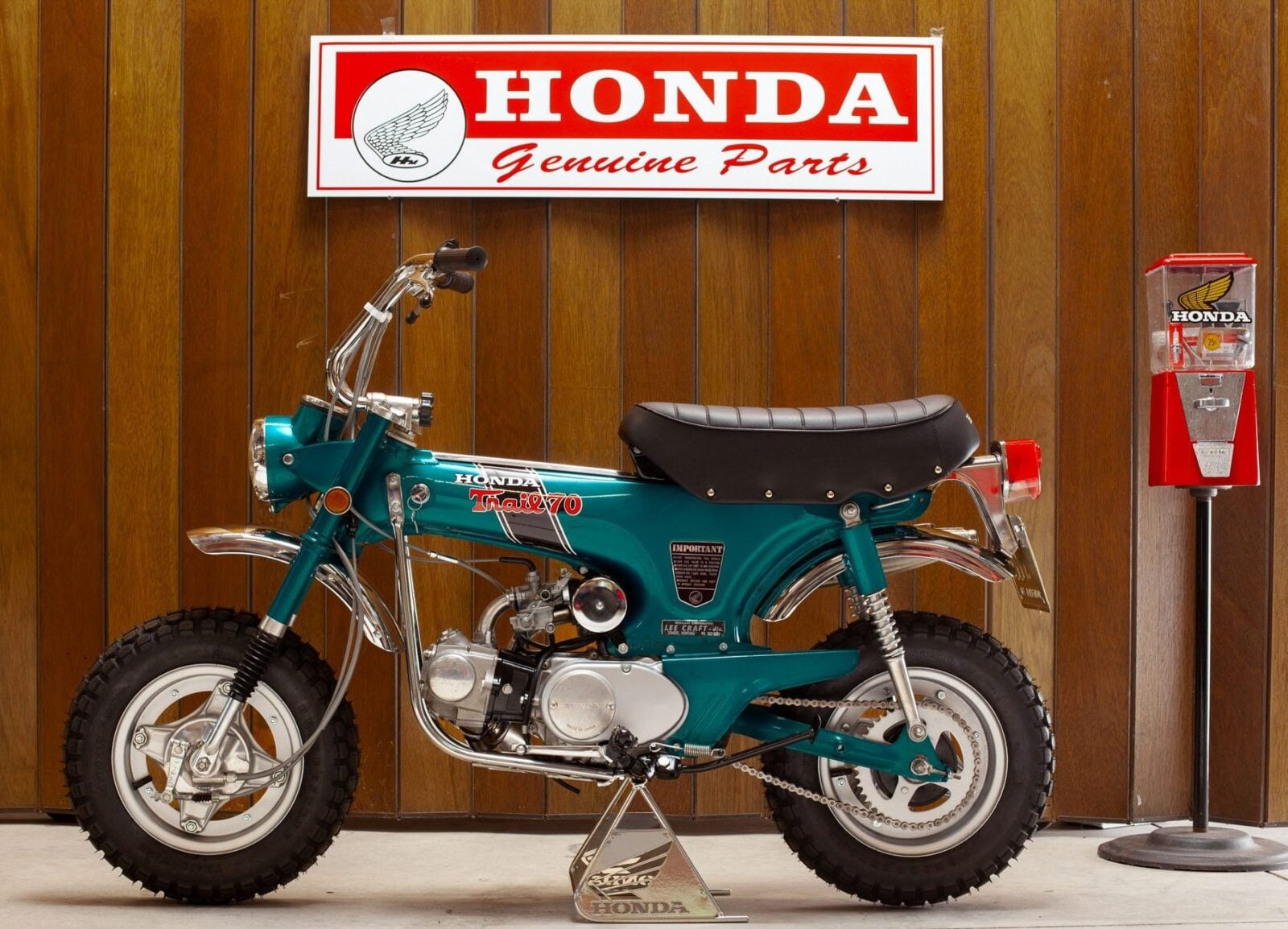
The CT70H of 1970 and 1971 (codenamed CT70HK0), came in Candy Blue Green, Candy Emerald Green, or Candy Topaz Orange. Its speedometer sat in the headlight shell and its exhaust and heat shield were chromed.
The 1972 CT70H (codenamed CT70HK1), came in Candy Ruby Red or Candy Yellow Special, with a separate speedometer and a black exhaust with a chrome-and-black heat shield. The CT70HK1 was the last of them, and the National Motorcycle Museum now puts CT70 production at about 380,000 units between 1969 and 1982, but the vast majority of them were the simpler non-H, semi-automatics.
The Honda CT70 itself stayed in American showrooms until 1982, Honda then revived it for 1991 through 1994, and the revived bikes, like every Trail 70 after the HK1, used the simpler 3-speed semi-automatic box.
The 1970 Honda CT70H Trail Shown Here
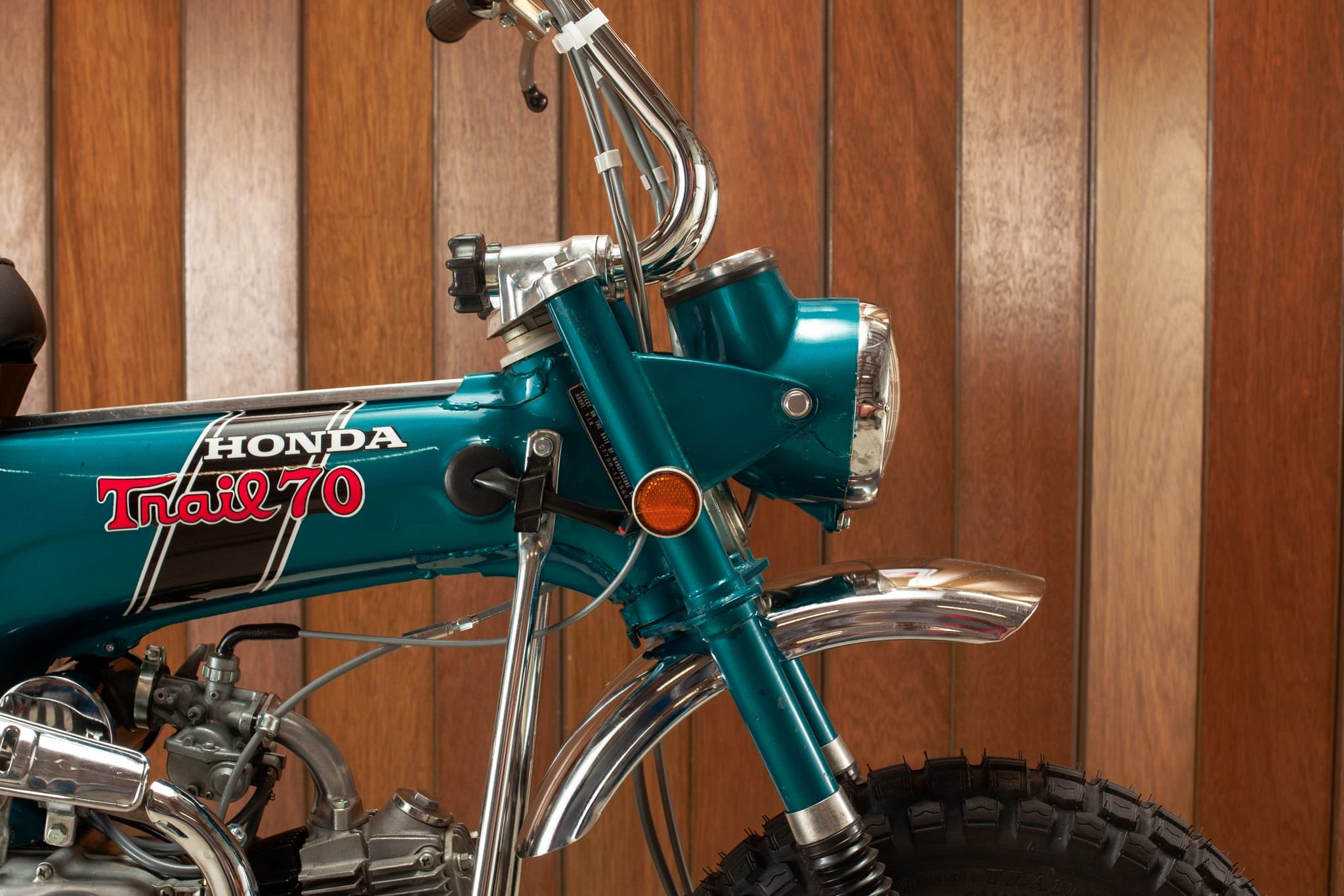
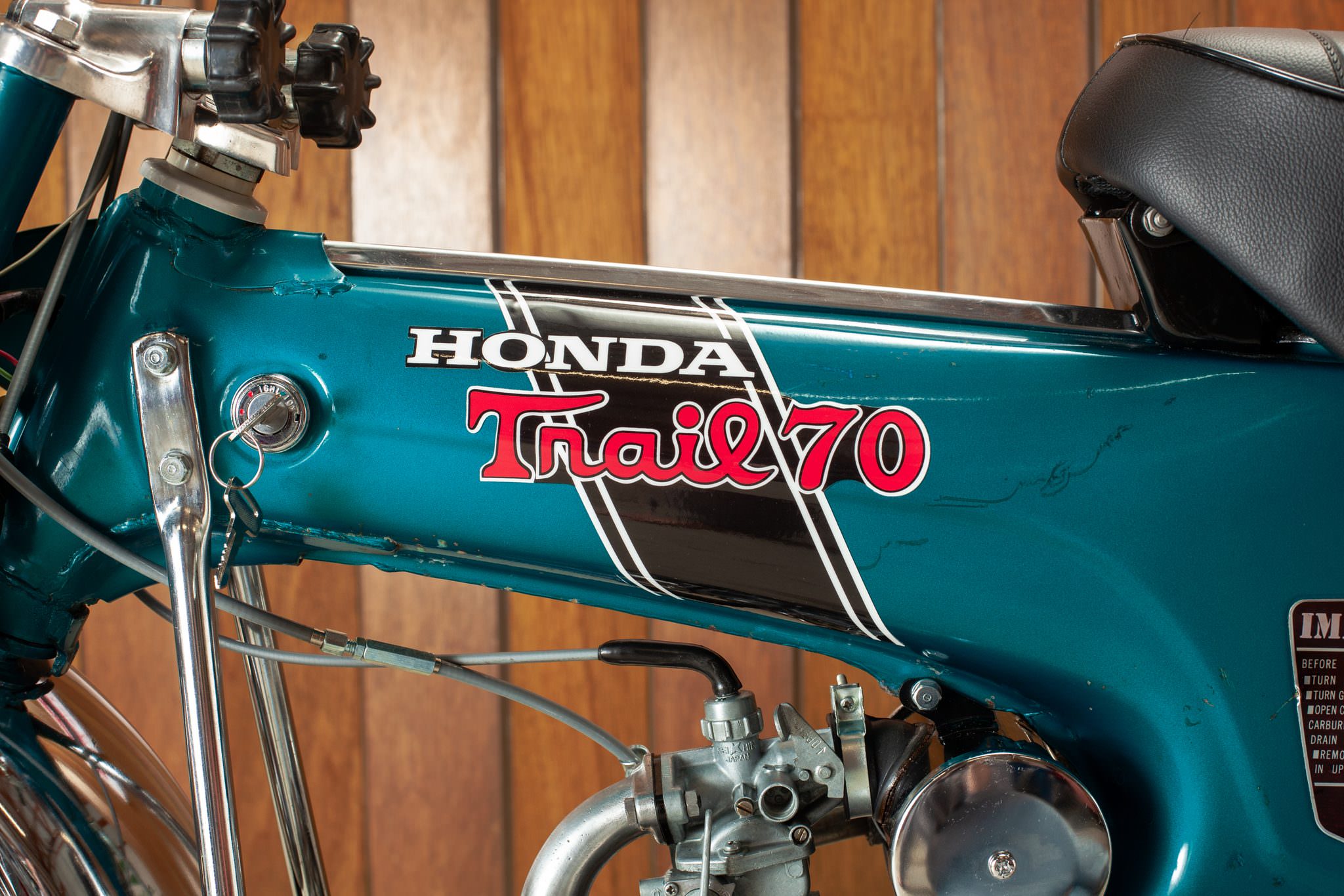
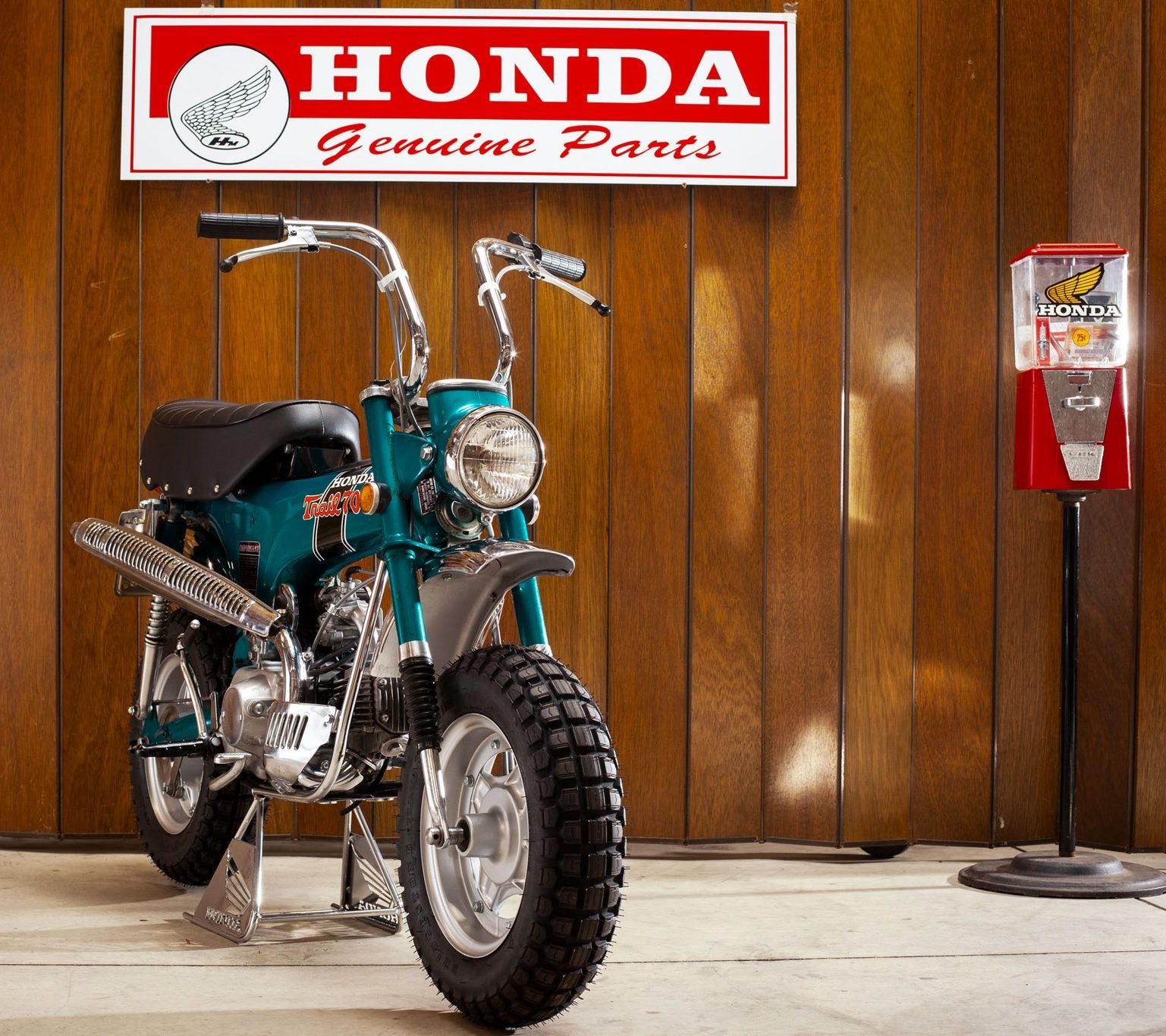
This is an original 1970 Honda CT70H Trail that’s finished in Candy Blue Green and has reportedly spent time in Montana, Washington, and Idaho before it was bought by the current seller earlier in 2026. Its distinctive T-bone frame, folding handlebars, chrome fenders, and upswept exhaust are all in good condition, and it’s received a series of mechanical and cosmetic updates under current ownership.
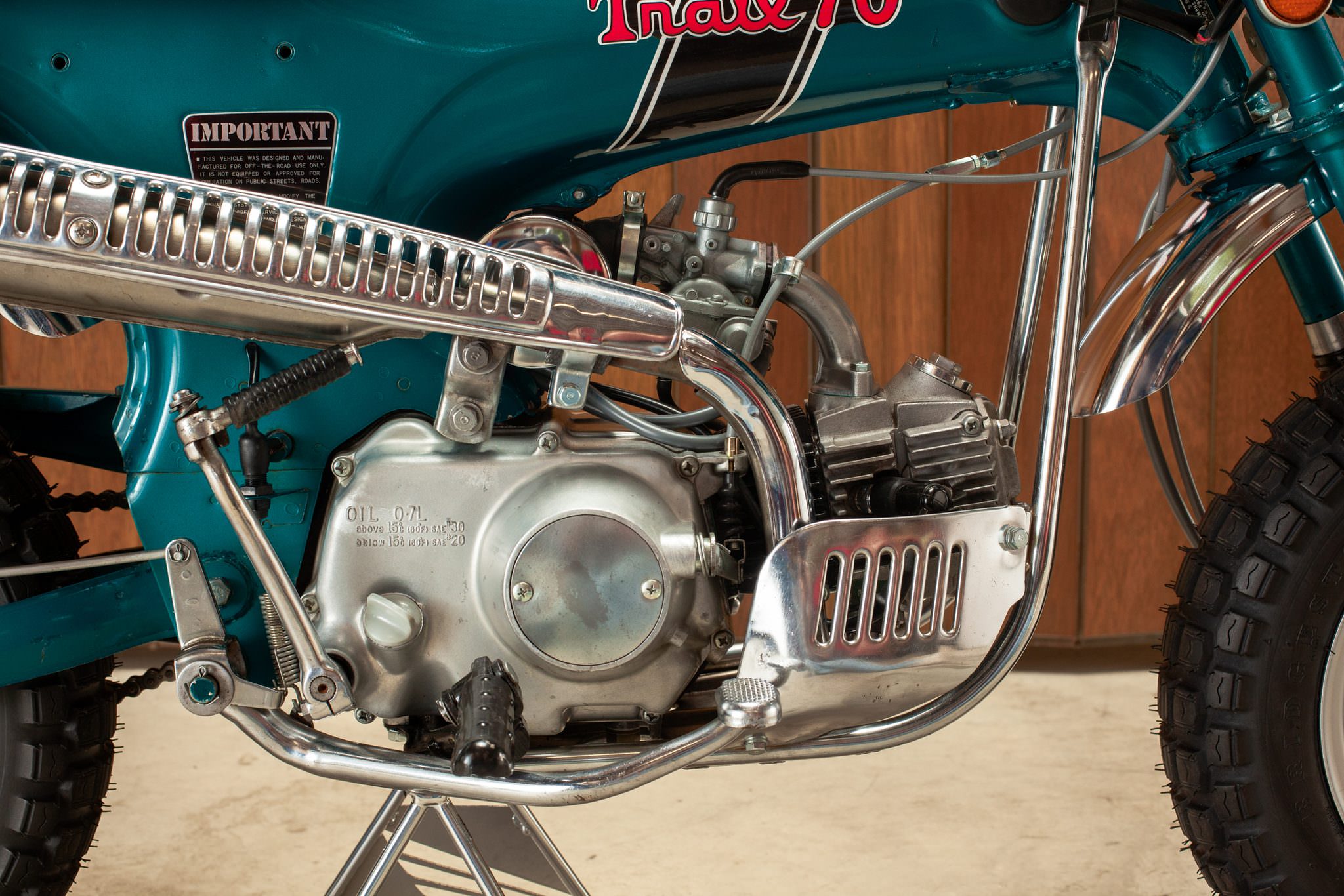
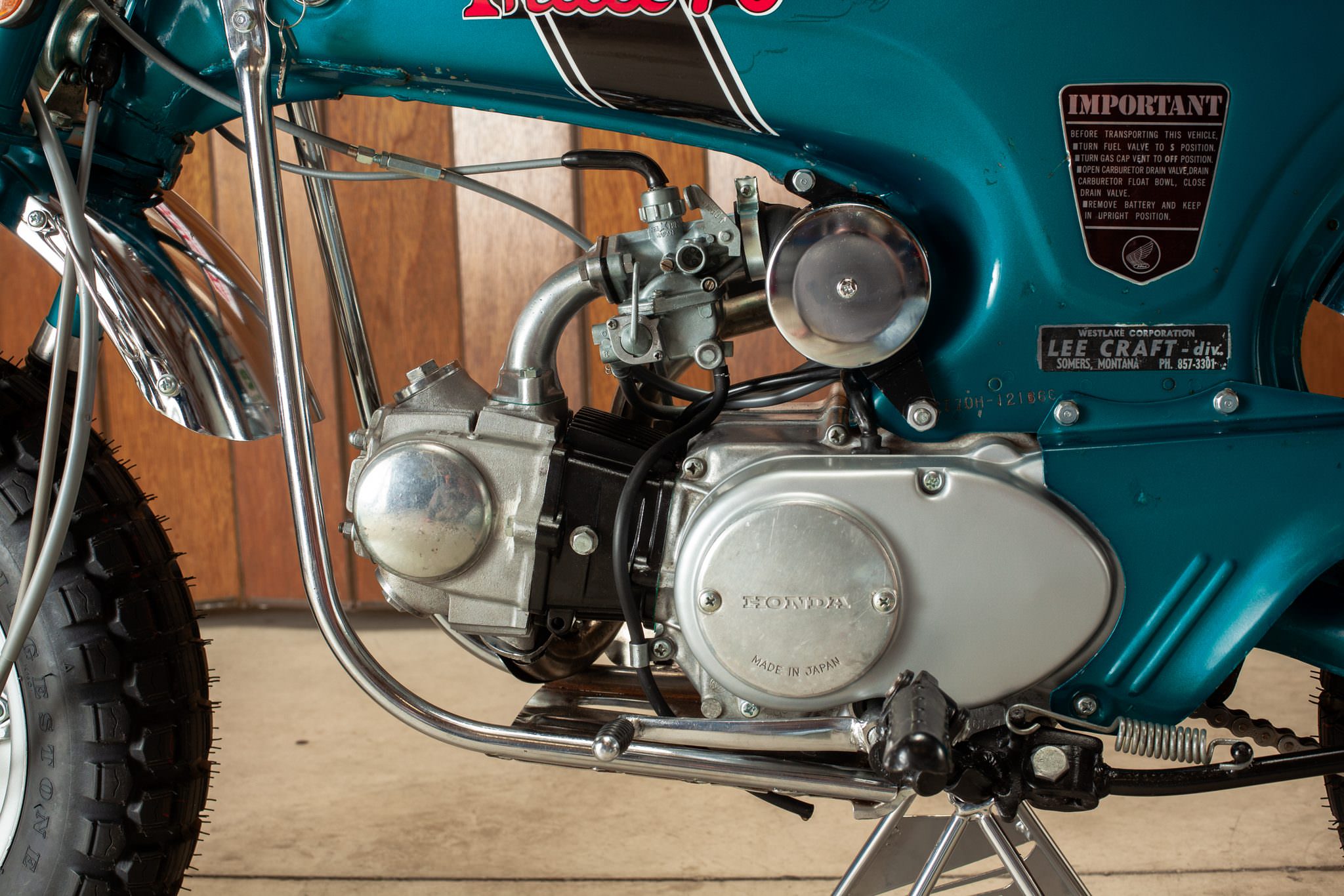
The original 72cc four-stroke single has now been upgraded with an aftermarket 88cc piston and cylinder head kit, while the Keihin carburetor has been overhauled. Additional work included replacing the airbox, air filter, fuel lines, battery, and drive chain. Power is delivered to the rear wheel through a 4-speed manual transmission with a hand-operated clutch. The five-digit odometer currently shows approximately 1,900 miles, although just three miles have reportedly been added since the seller acquired the motorcycle.
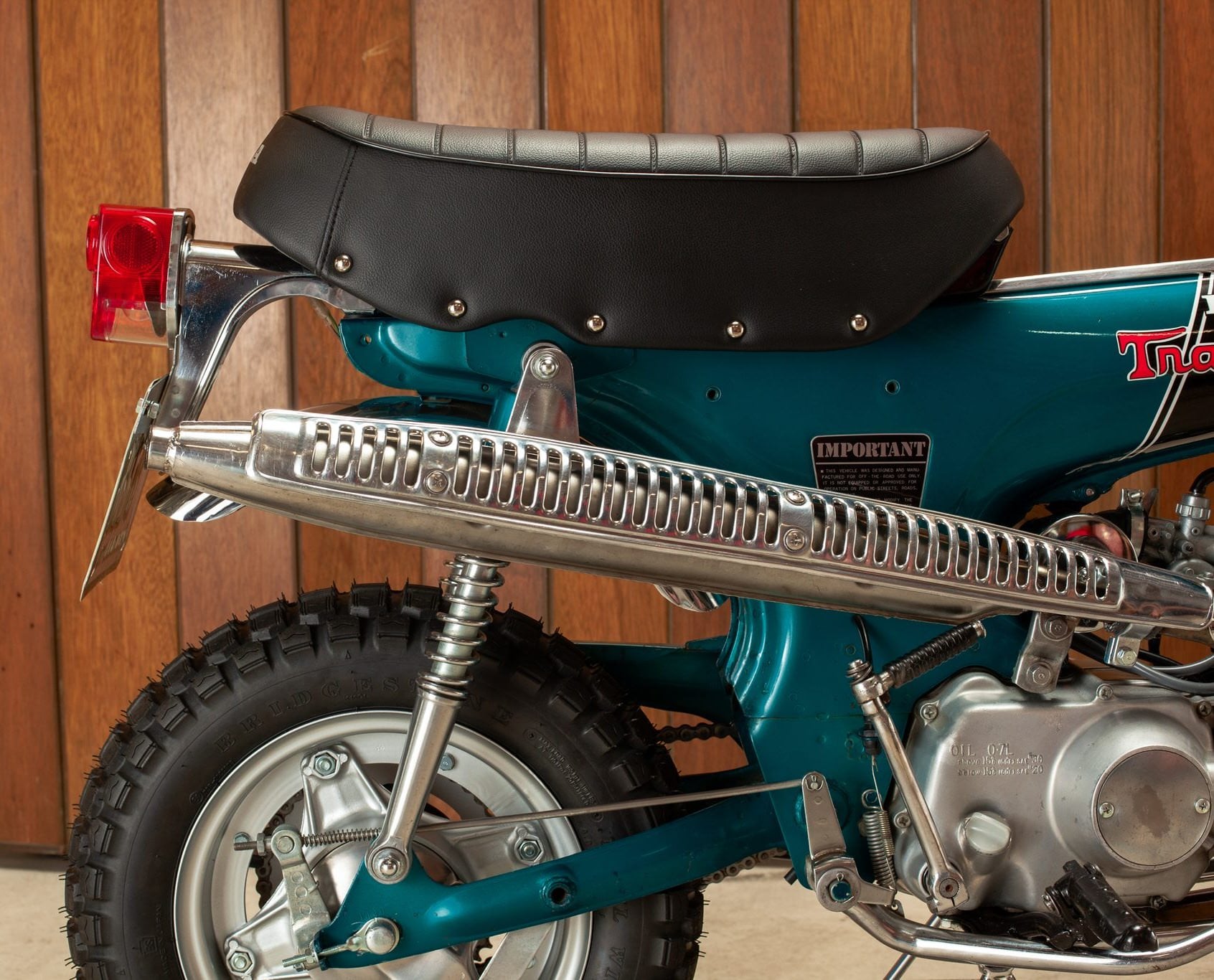
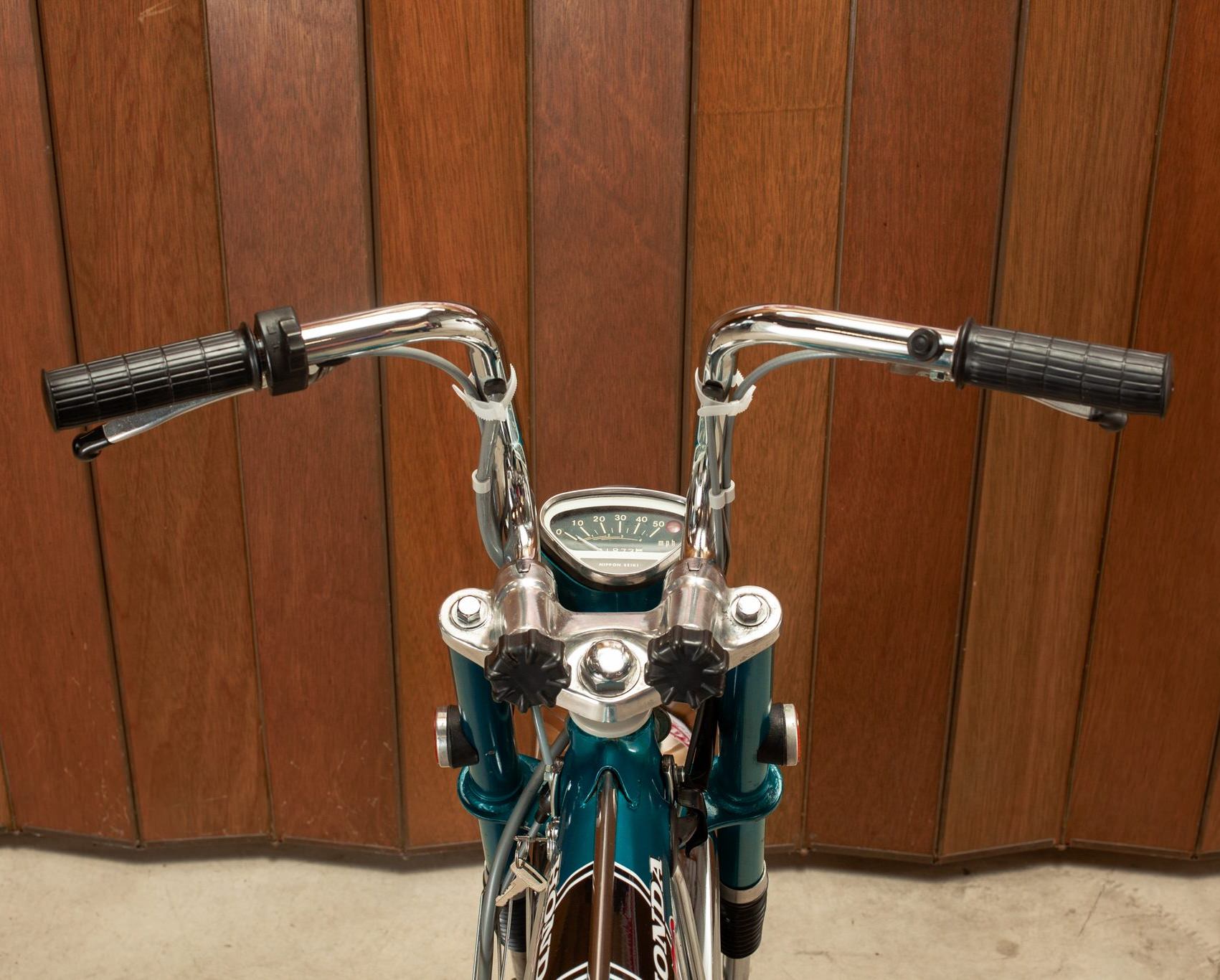
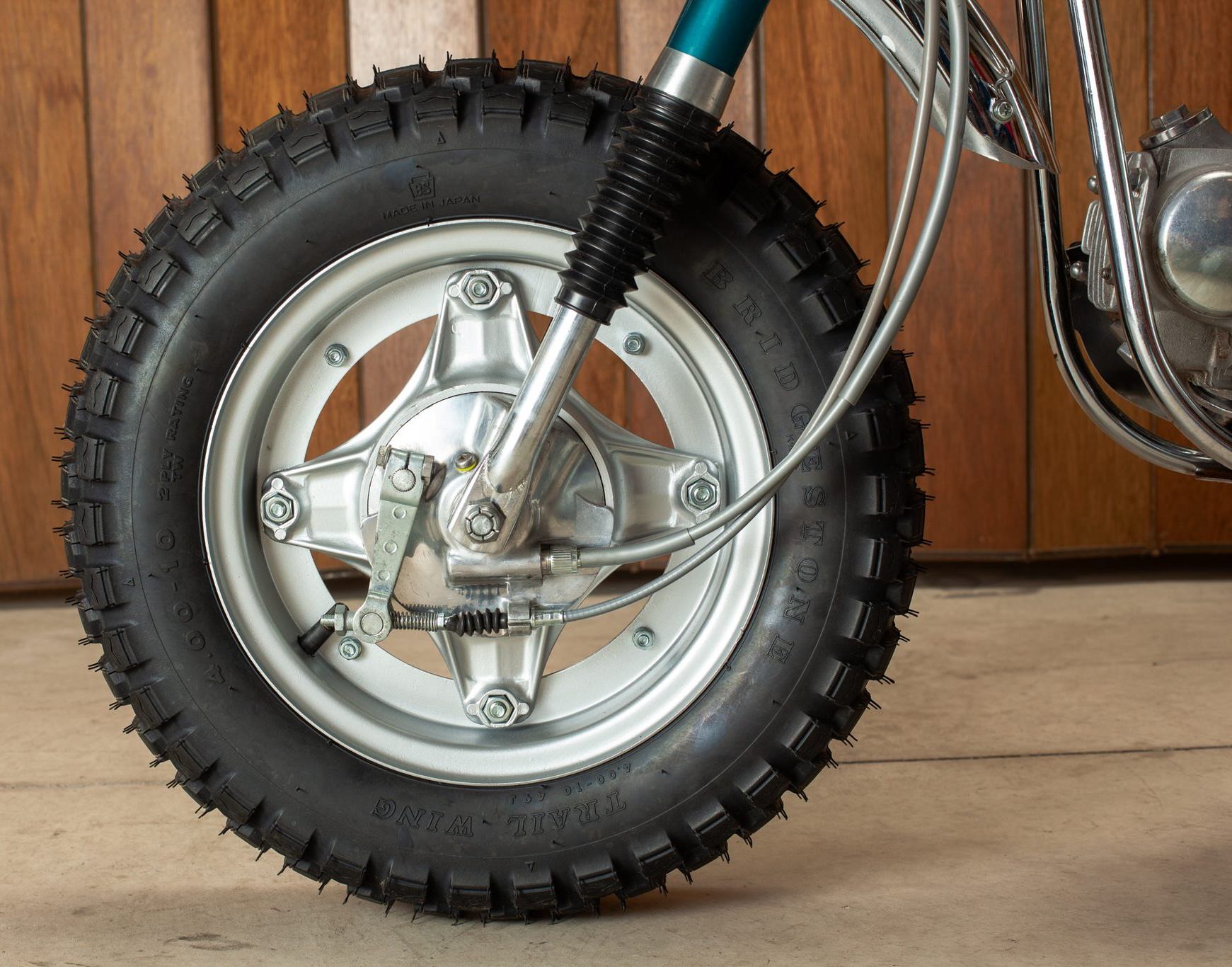
Cosmetic and chassis work included fitting replacement chrome folding handlebars, new controls and cables, a black vinyl seat, and a new taillight lens. The 10-inch three-piece wheels were refinished in silver and fitted with new tubes and Bridgestone Trail Wing tires, while both drum brakes received replacement shoes. The folding footpegs, their mounting bracket, and the side stand were refinished, and the seller also touched up sections of the paintwork and repaired a crack in the headlight bucket.
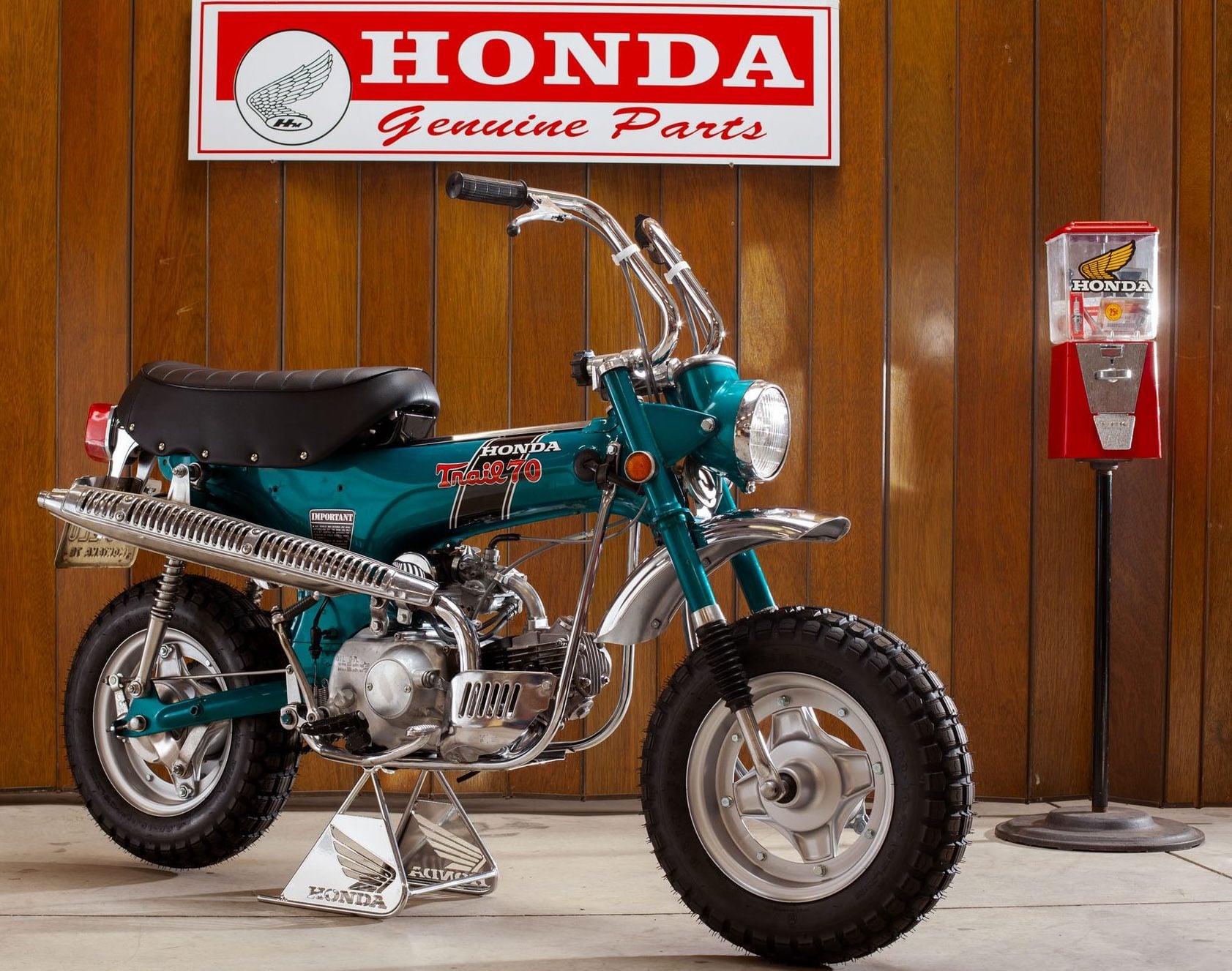
This is a 1970 Honda CT70H Trail that now benefits from a number of upgrades, including the fitment of an 88cc top-end kit to increase the displacement, up from the 72cc of the original, offering a small boost in power.
It’s now being offered for sale out of Hayden, Idaho with a bill of sale, a 1970 Montana license plate, a center stand, removed engine parts, spare parts, and associated parts bags. The sale also includes a reproduction aluminum Honda parts sign, measuring approximately 46 inches wide by 12 inches tall, finished in red, white, and black enamel-style graphics.
If you’d like to read more about it or register to bid you can visit the listing here on Bring a Trailer.
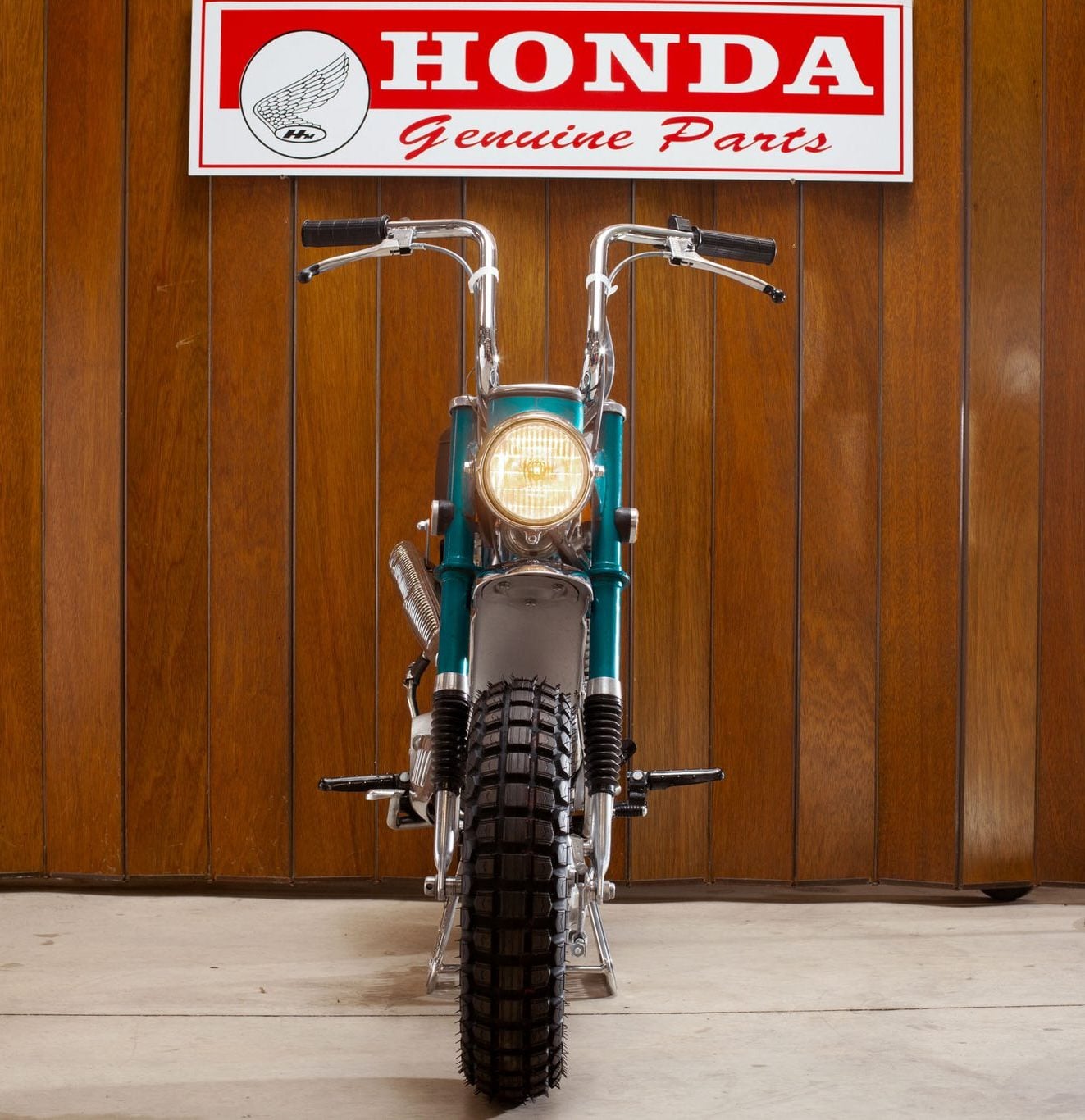
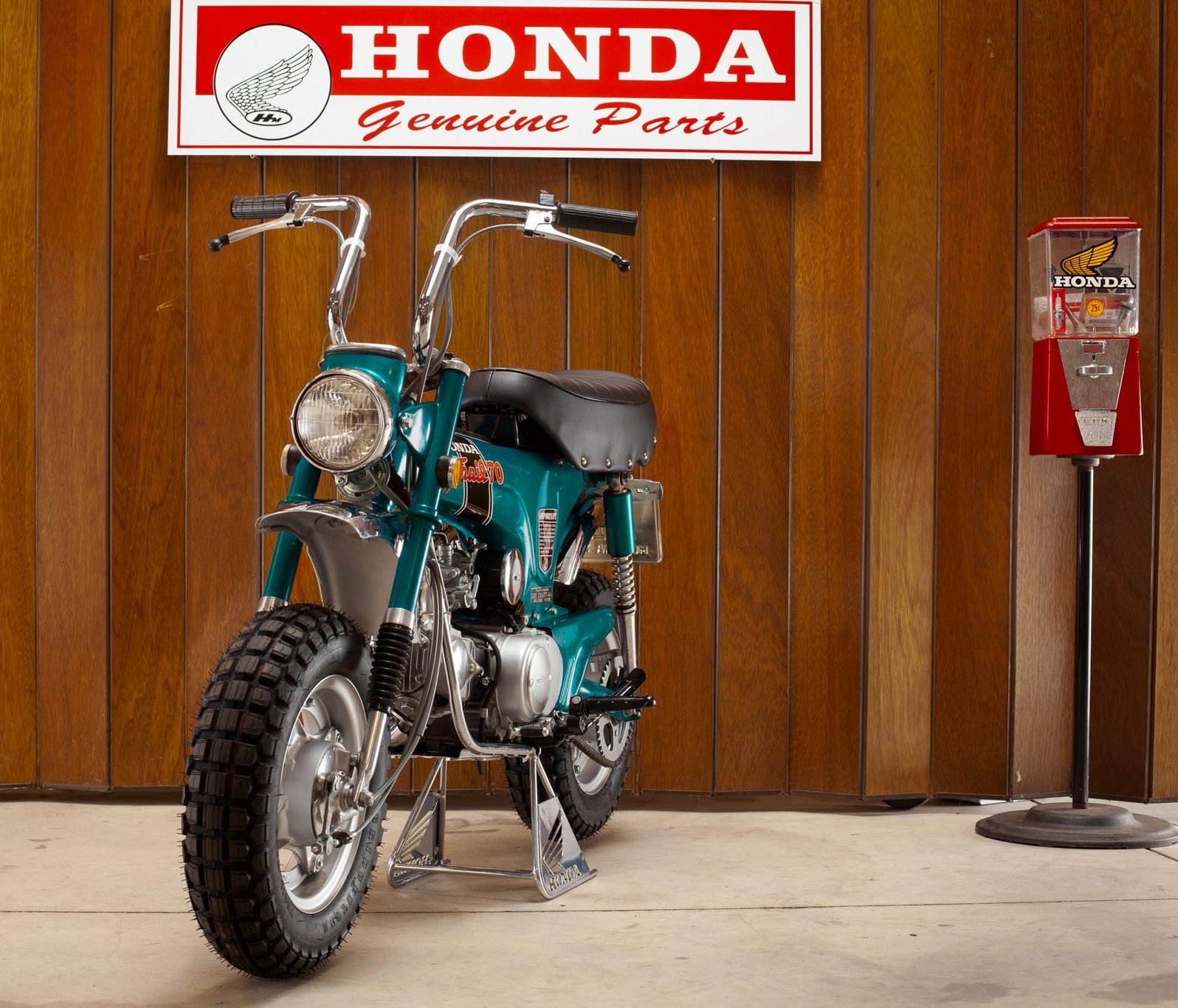
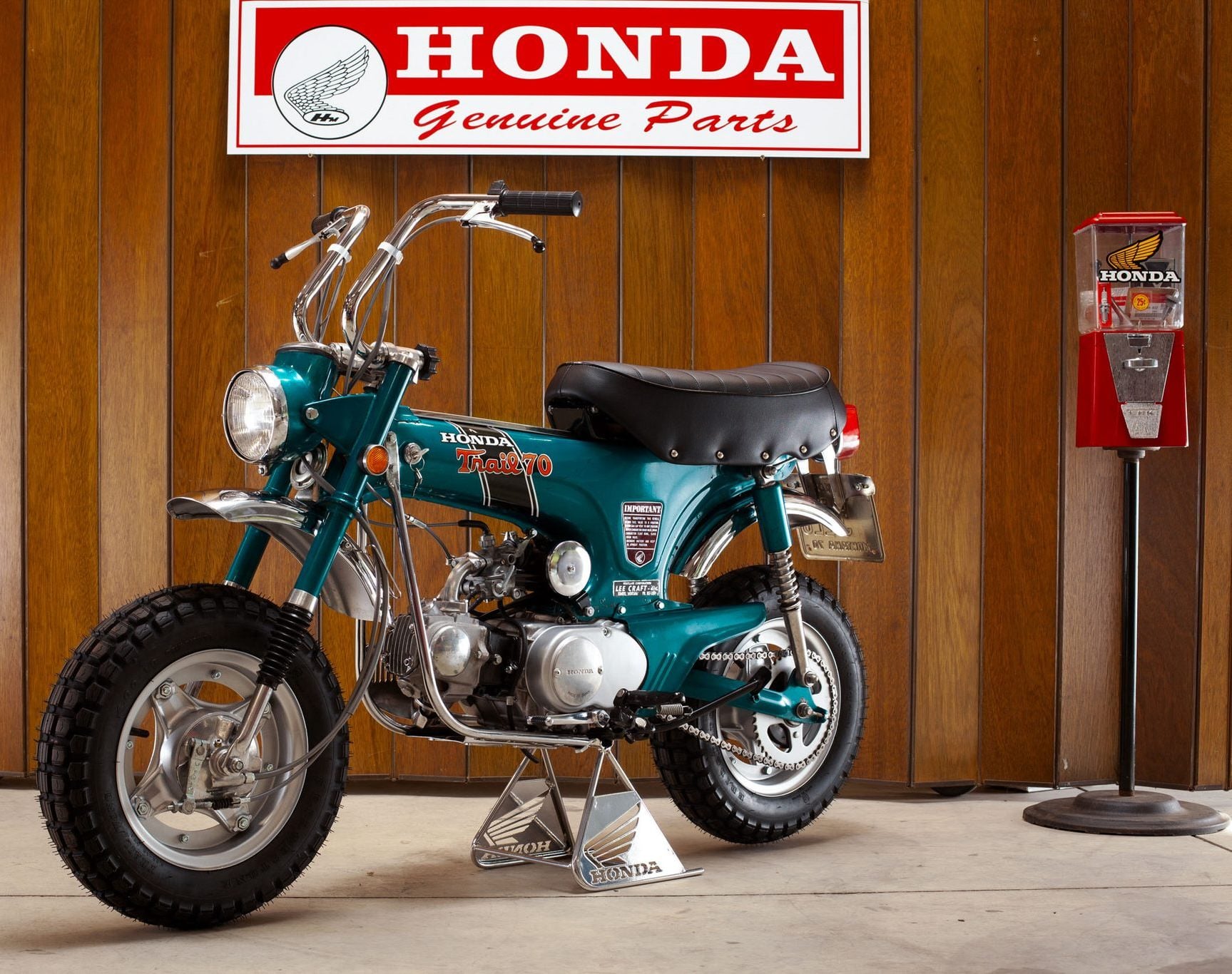
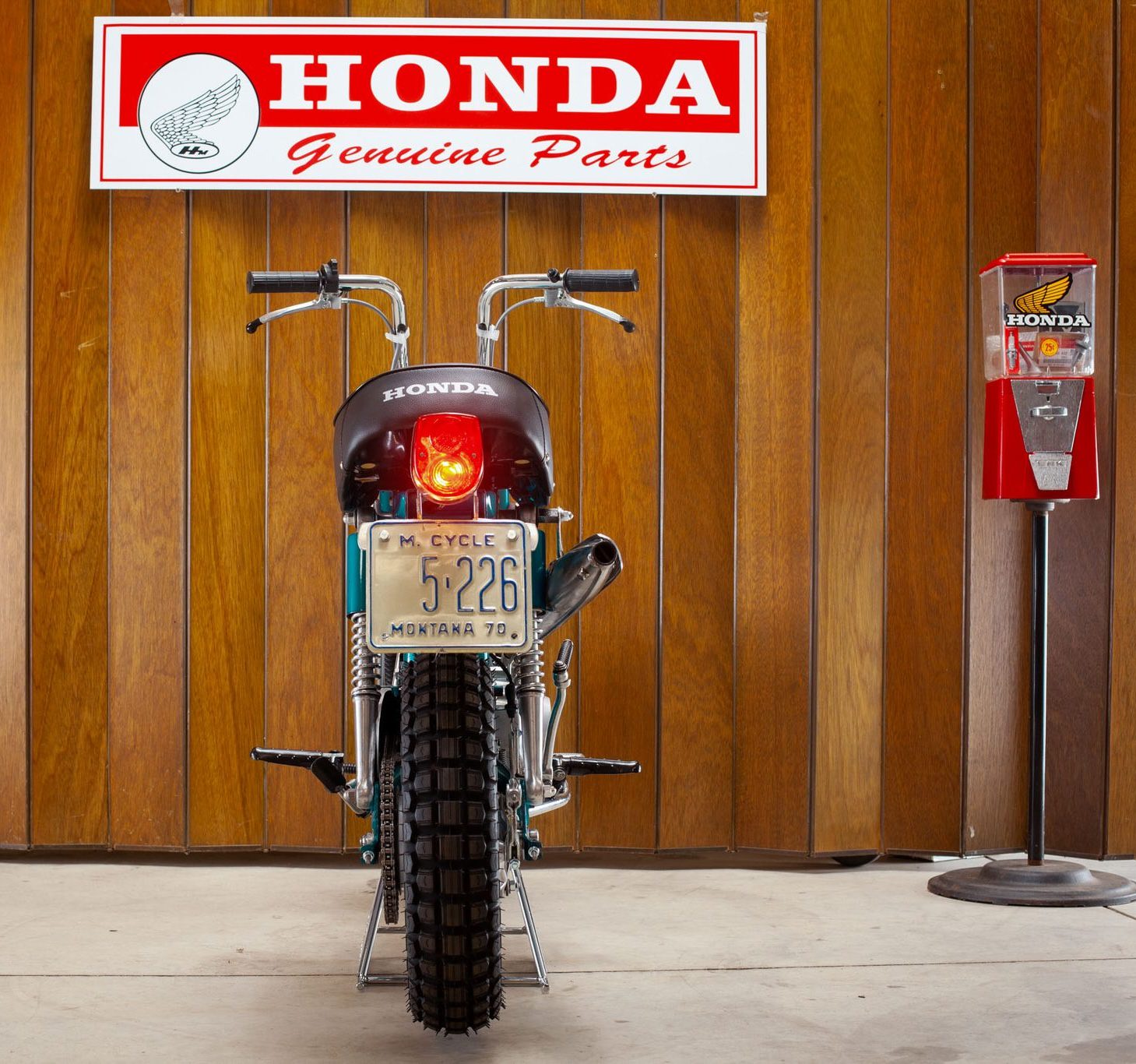
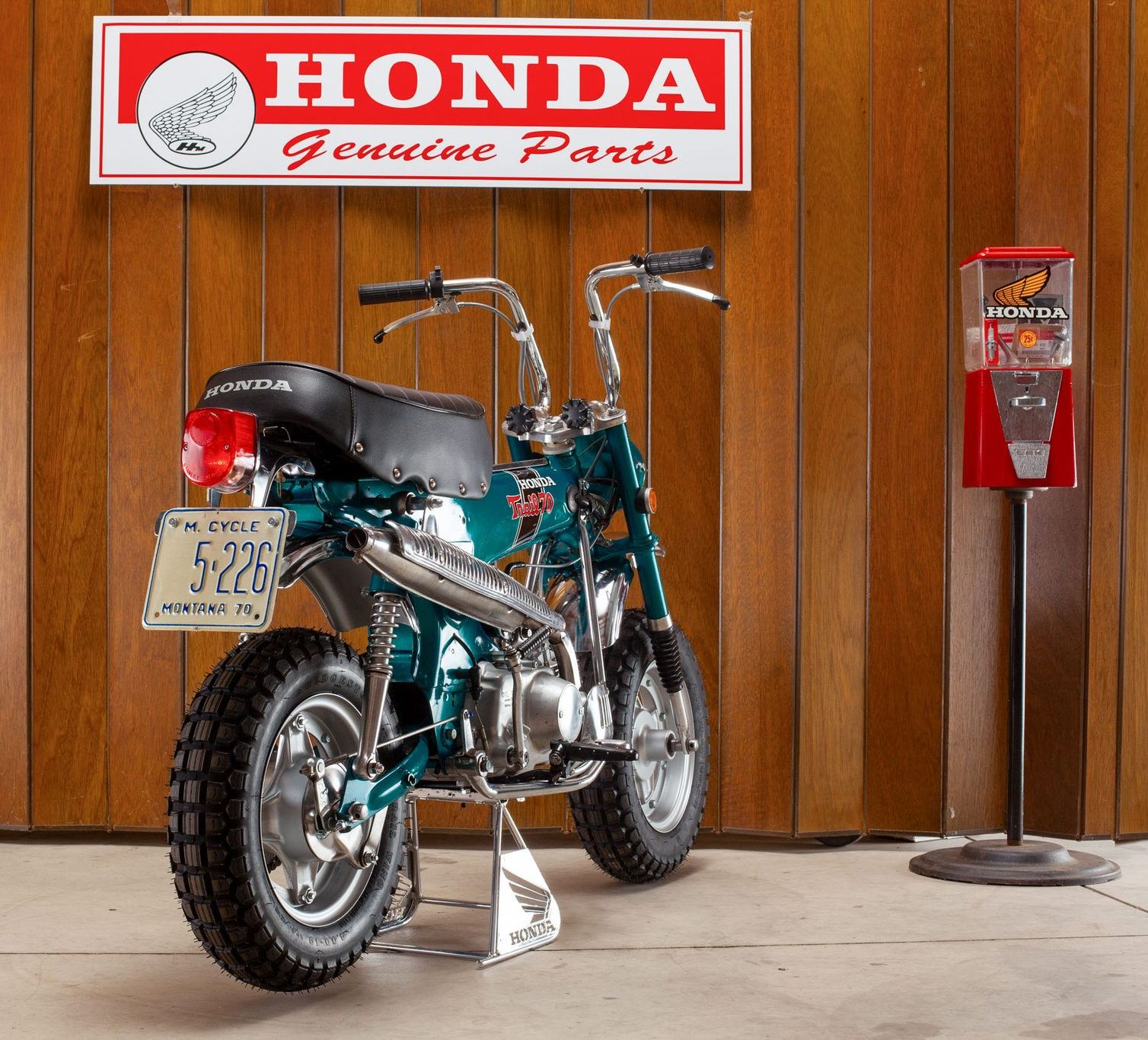
Images courtesy of Bring a Trailer

Articles that Ben Branch has written have been covered on CNN, Popular Mechanics, Smithsonian Magazine, Road & Track Magazine, the official Pinterest blog, the official eBay Motors blog, BuzzFeed, Autoweek Magazine, Wired Magazine, Autoblog, Gear Patrol, Jalopnik, The Verge, and many more.
Silodrome was founded by Ben back in 2010, in the years since the site has grown to become a world leader in the alternative and vintage motoring sector, with well over a million monthly readers from around the world and many hundreds of thousands of followers on social media.