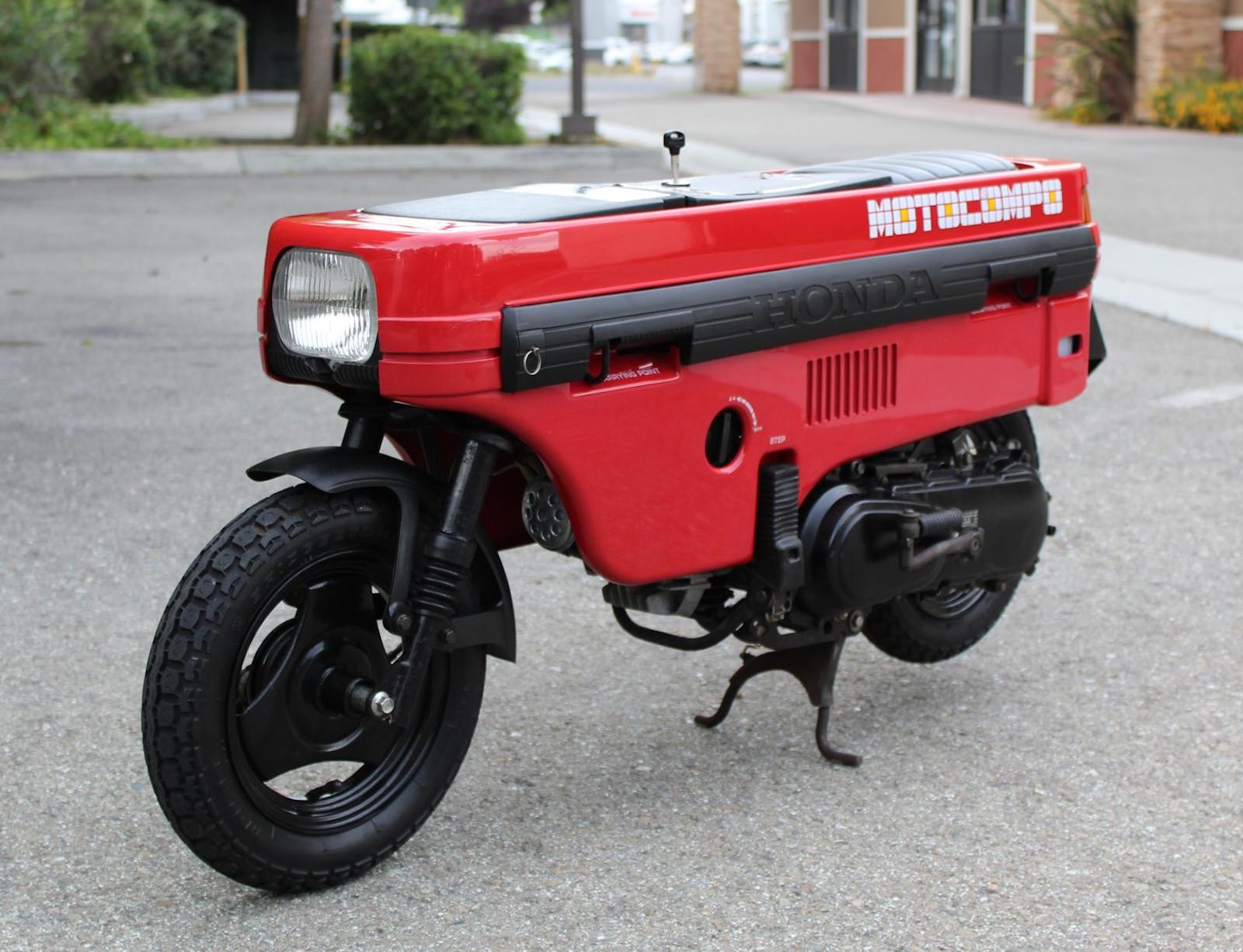
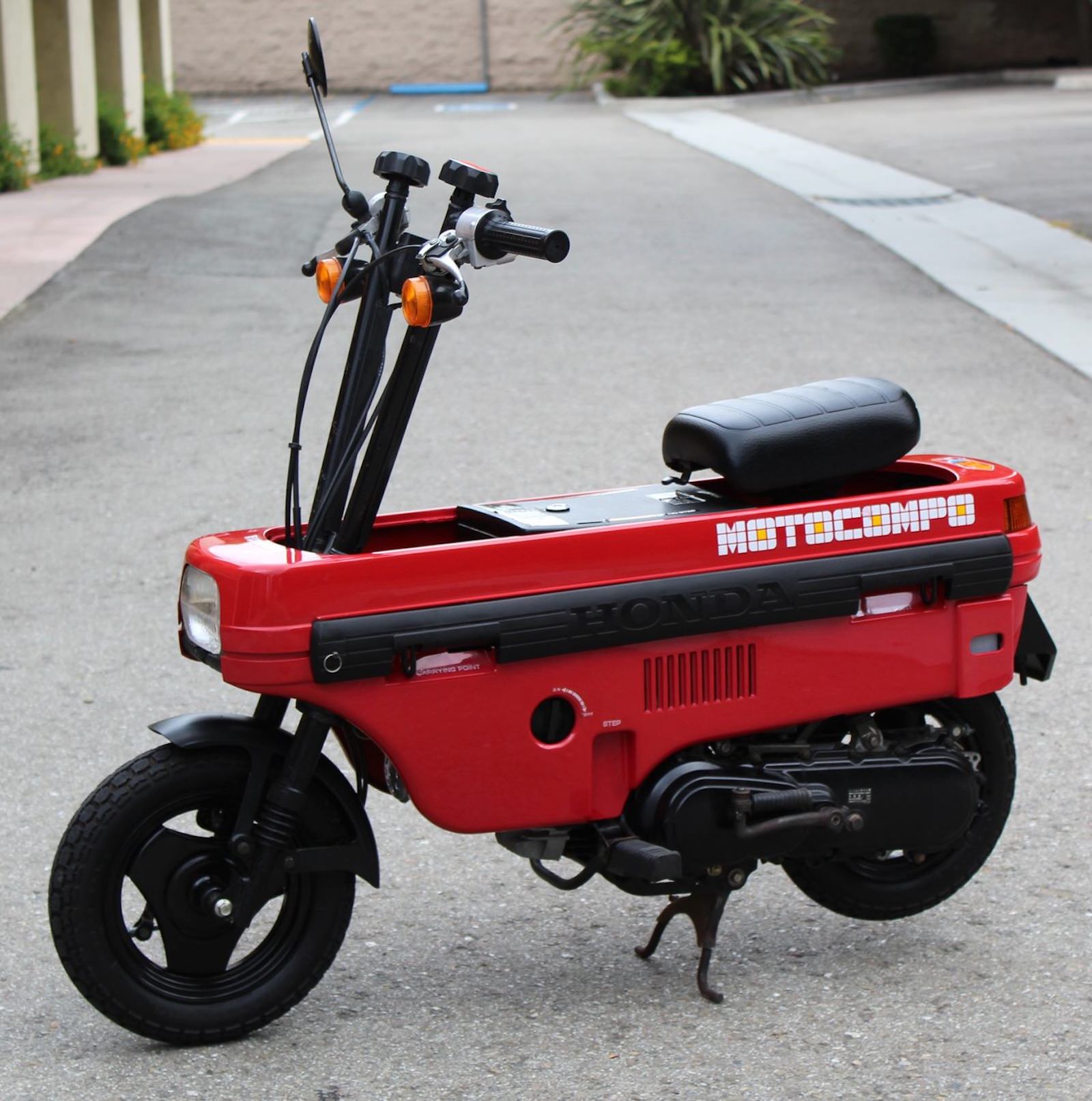
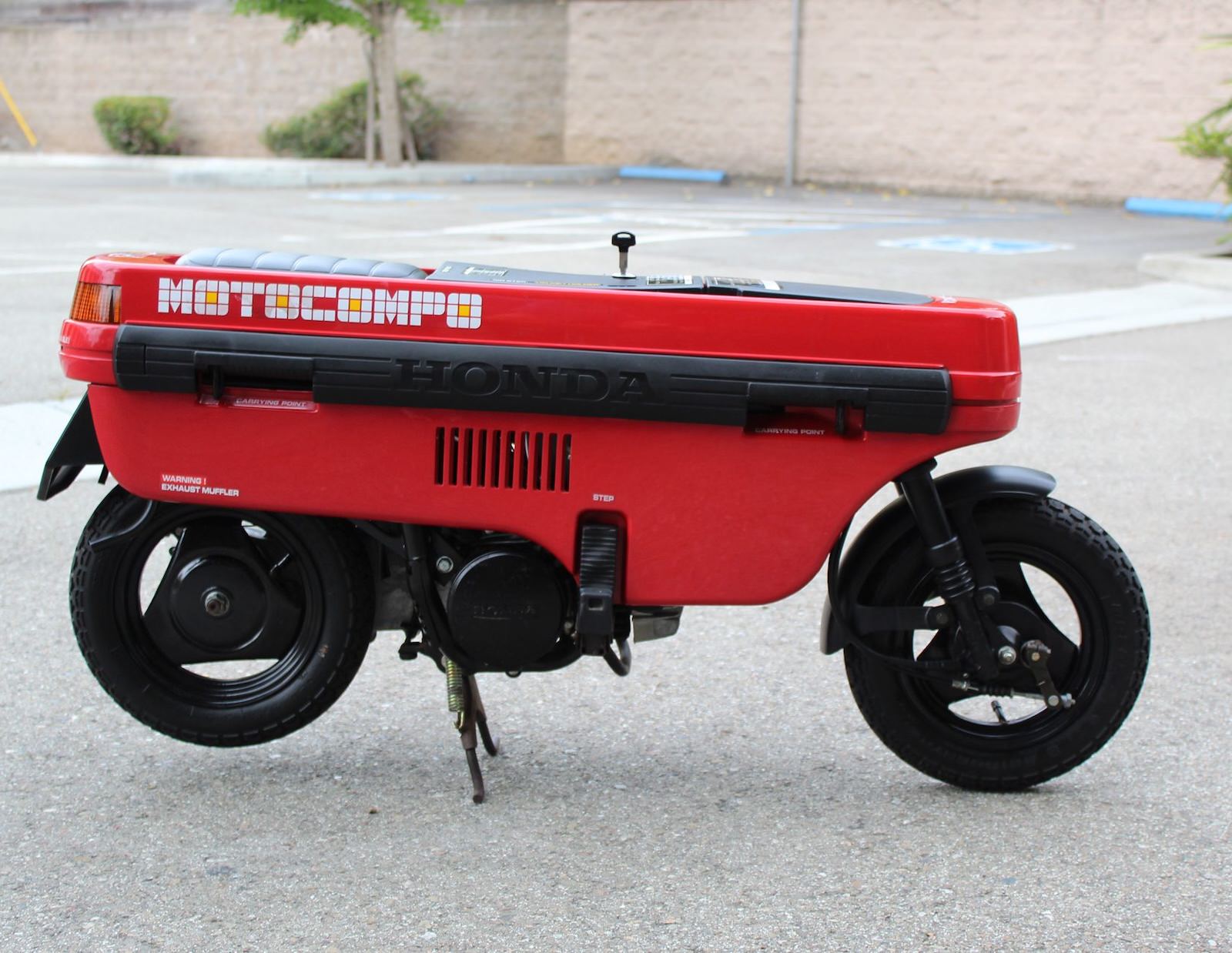
This is a Honda Motocompo from 1982, it’s a pint-sized scooter that can be folded down, then tucked into your car’s trunk as a backup form of urban transport.
Honda engineers intended the Motocompo to be a last-mile transport solution, allowing people in Japan to park their cars outside of the city or town they were commuting to, then pull out their scooter for the last leg of the journey to reduce urban parking and traffic congestion. The concept didn’t catch on, but they still sold over 50,000 of them.
History Speedrun: The Honda Motocompo
The Motocompo has become an icon of 1980s Japanese industrial design, but it owes its underlying concept to a scooter that was dropped behind enemy lines during WWII in aluminum tubes for use by paratroopers.

 Honda hired the wildly-popular British ska/2-tone band Madness to promote the Motocompo, and they appeared broadly in TV ads, print ads, and even the official specification sheets. Image courtesy of Honda.
This WWII-era folding scooter was called the “Welbike,” it was developed by the top secret Station IX (also known as the Inter-Services Research Bureau) which was based in an English country manor called The Frythe, located 30 miles out of London.
Station IX has been identified as one of author Ian Fleming’s inspirations when conceiving Q Branch, the fictional research and development division of the British Secret Service that equipped James Bond with many of his most memorable gadgets.
The Welbike was a folding scooter designed to fit inside a CLE Canister – the standard parachute airdrop container that measured in at 51 inches (130 cm) long, 15 inches (38 cm) high, and 12 inches (30 cm) wide. Over 3,000 Welbikes were made, and they provided instant transportation for paratroopers upon landing. Once they had been unfolded of course.
The Honda Motocompo debuted in 1981 as a companion for subcompact Japanese cars like the Honda Today and the Honda City. The Motocompo could be folded down and stored in the (small) trunk, offering alternative urban transportation, and possibly a solution to navigating traffic jams.
Power is provided by a single-cylinder, air-cooled, two-stroke motor and it has a single speed transmission with an automatic clutch. It’s equipped with front and rear drum brakes, a tubular steel frame, a single seat, and a fiberglass body that covered the internals.
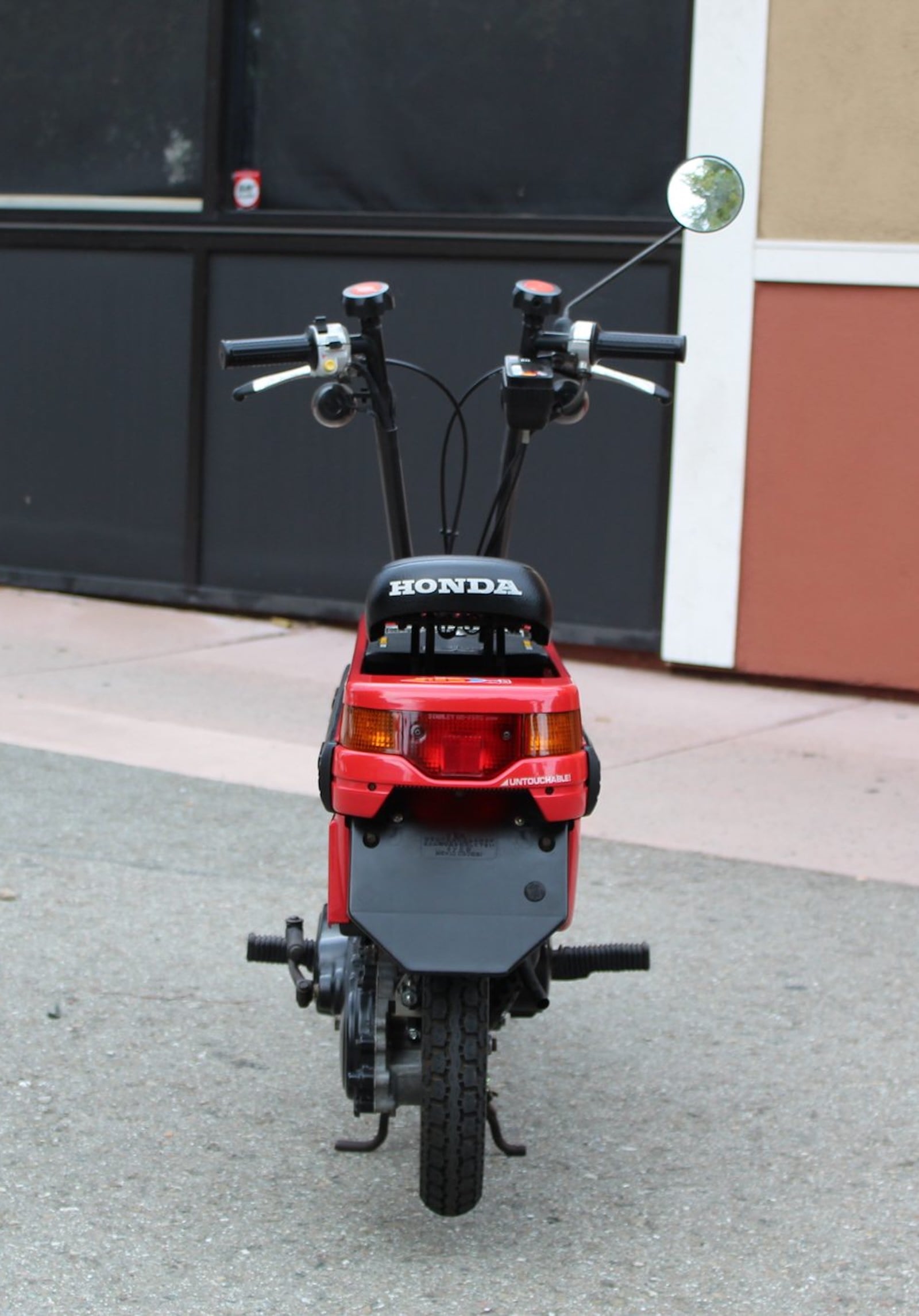
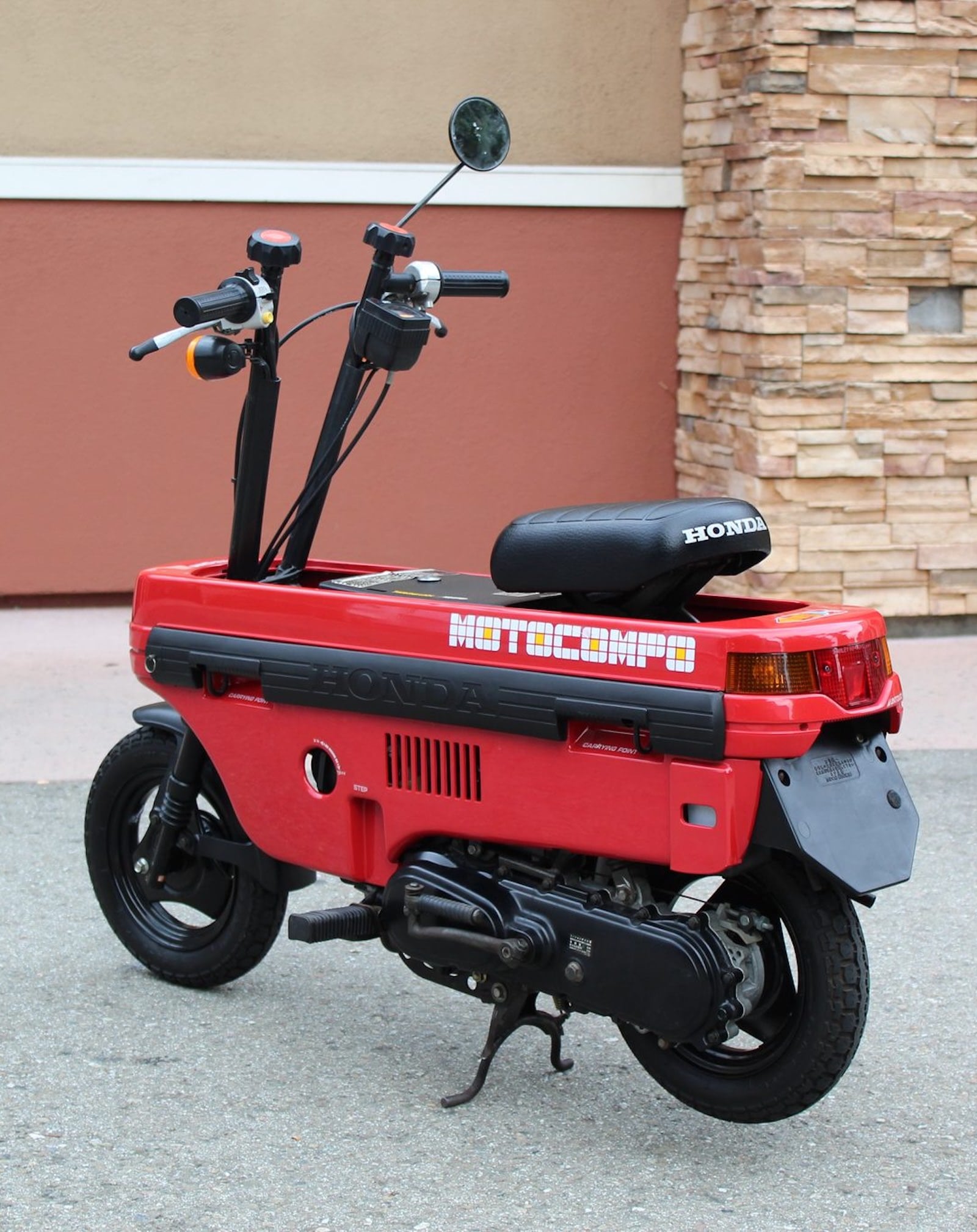
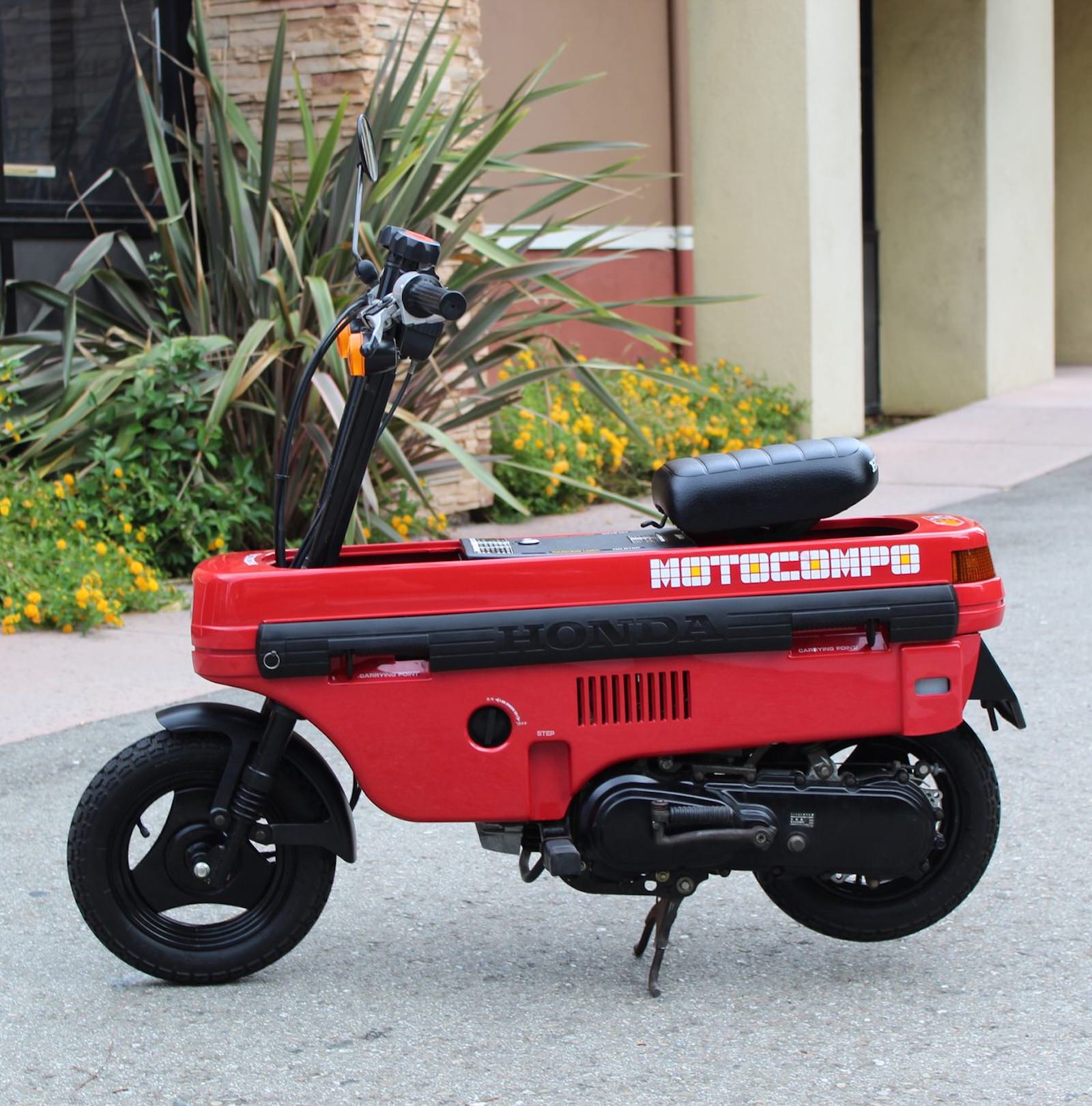
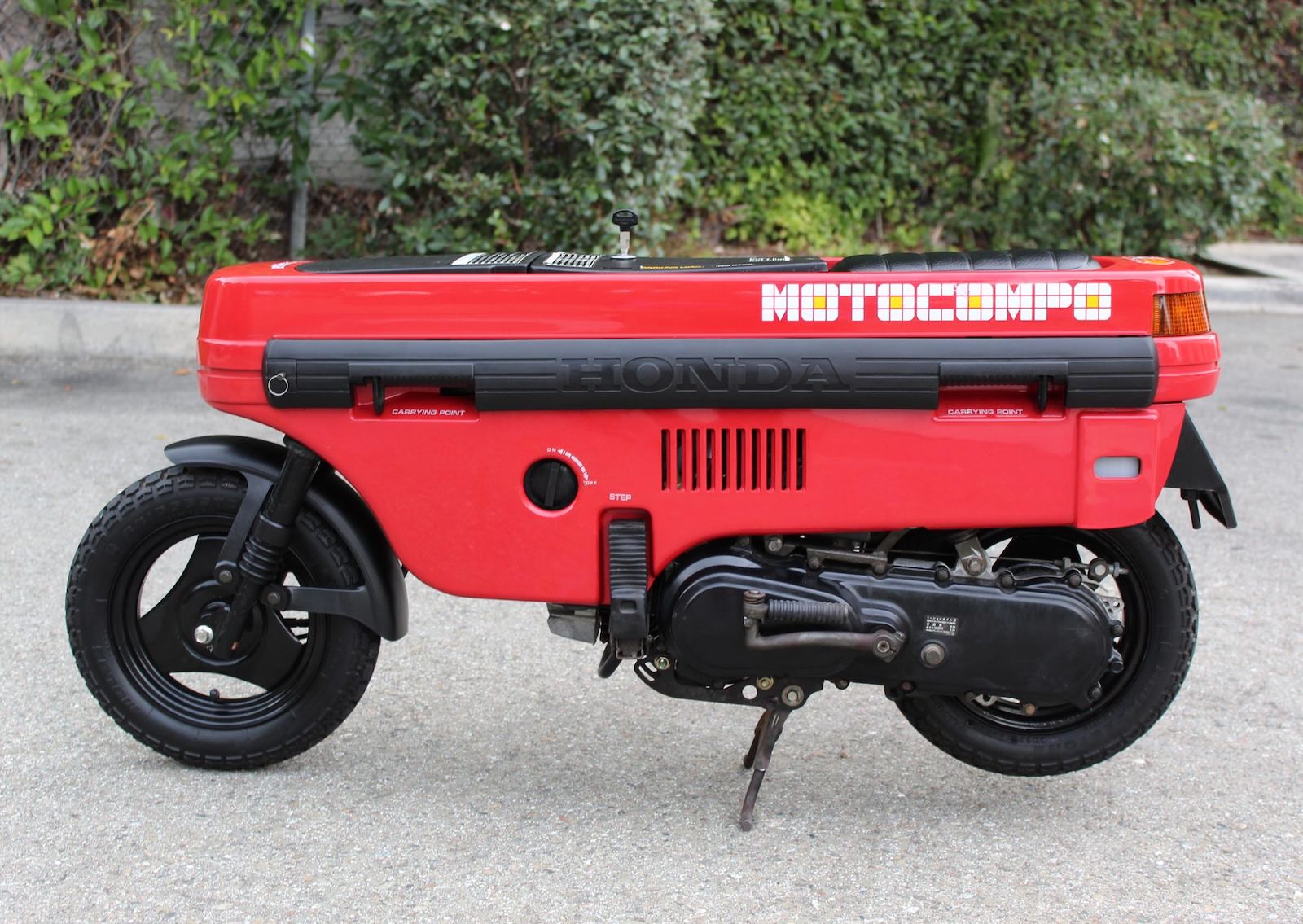
The seat and handlebars can be folded down resulting in a flat top and compact dimensions suitable for transport. The dry weight of 42 kgs (93 lbs) was light by motor scooter standards but still a major challenge for many when it came to physically lifting it singlehandedly, this possibly contributed to the model’s slow sales.
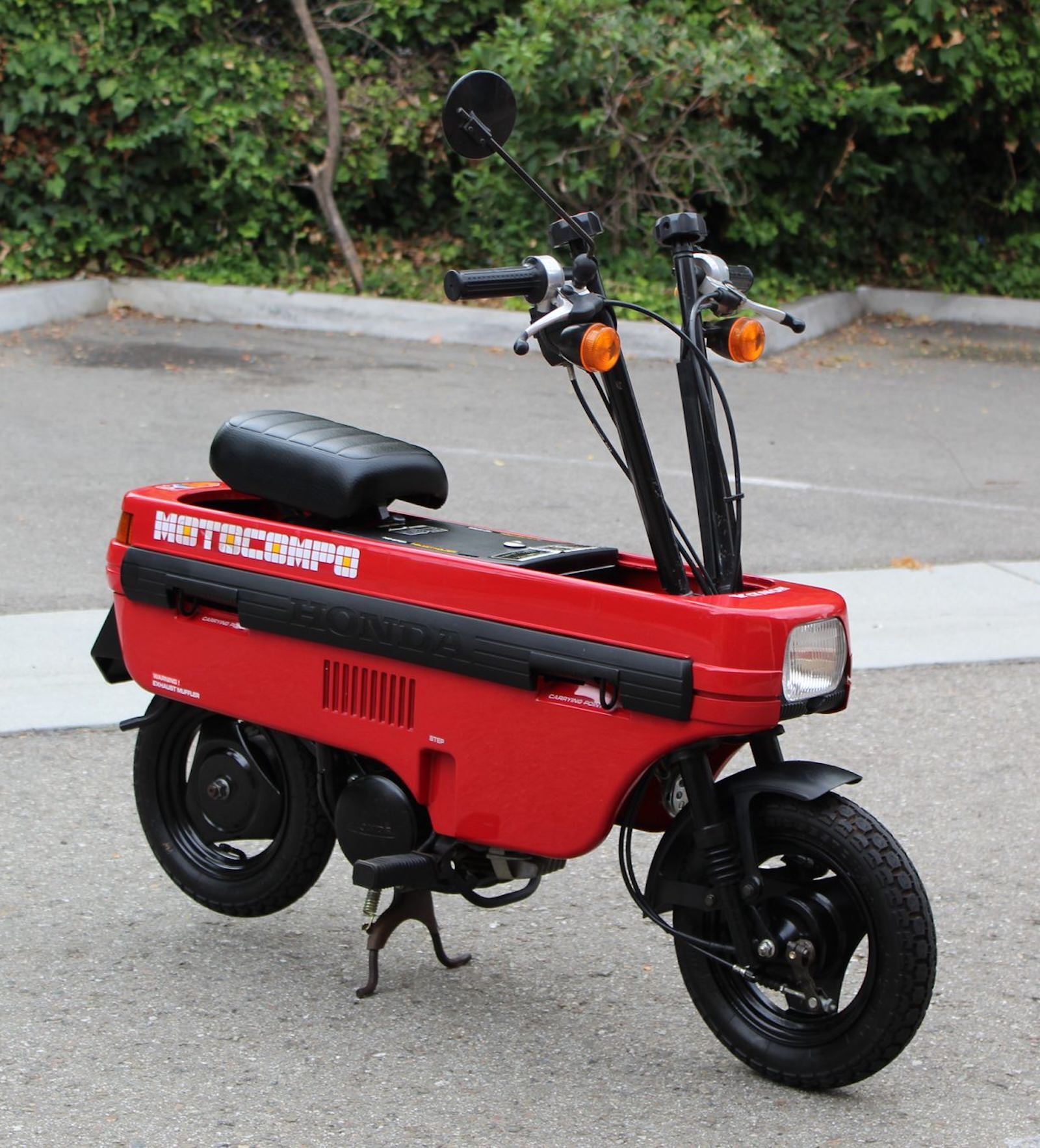
This is a Honda Motocompo from 1982, it’s a pint-sized scooter that can be folded down, then tucked into your car’s trunk as a backup form of urban transport.
Between 1981 and 1983 Honda would sell 53,369 examples of the Motocompo, far fewer than the initial projections of up to 10,000 per month. Though it was technically a sales failure, the Motocompo has influenced a number of Honda concept vehicles including the e-Dax, the e-NSR, and the 2011 “Motor Compo” electric scooter.
The 1982 Honda Motocompo Shown Here
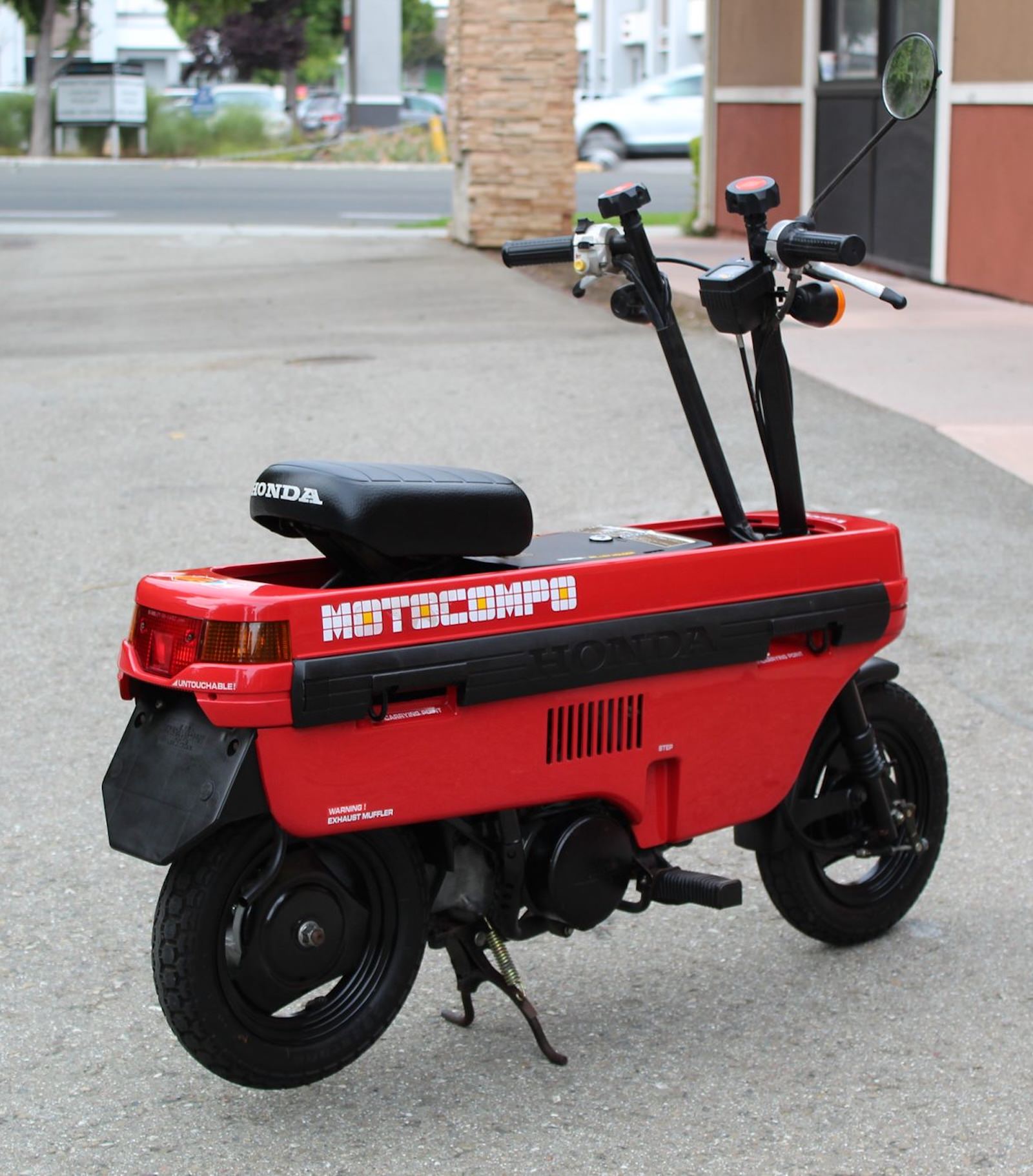
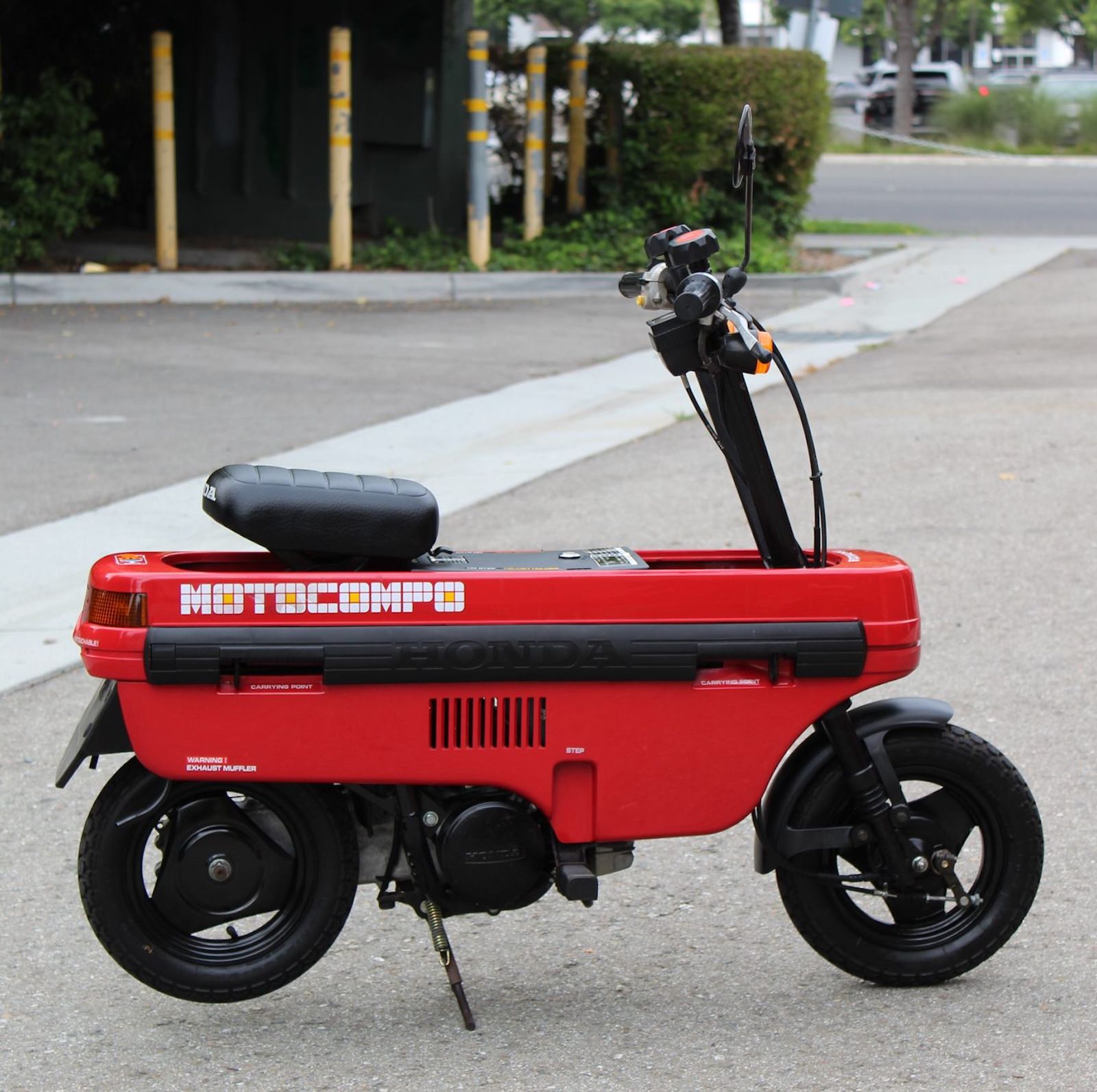
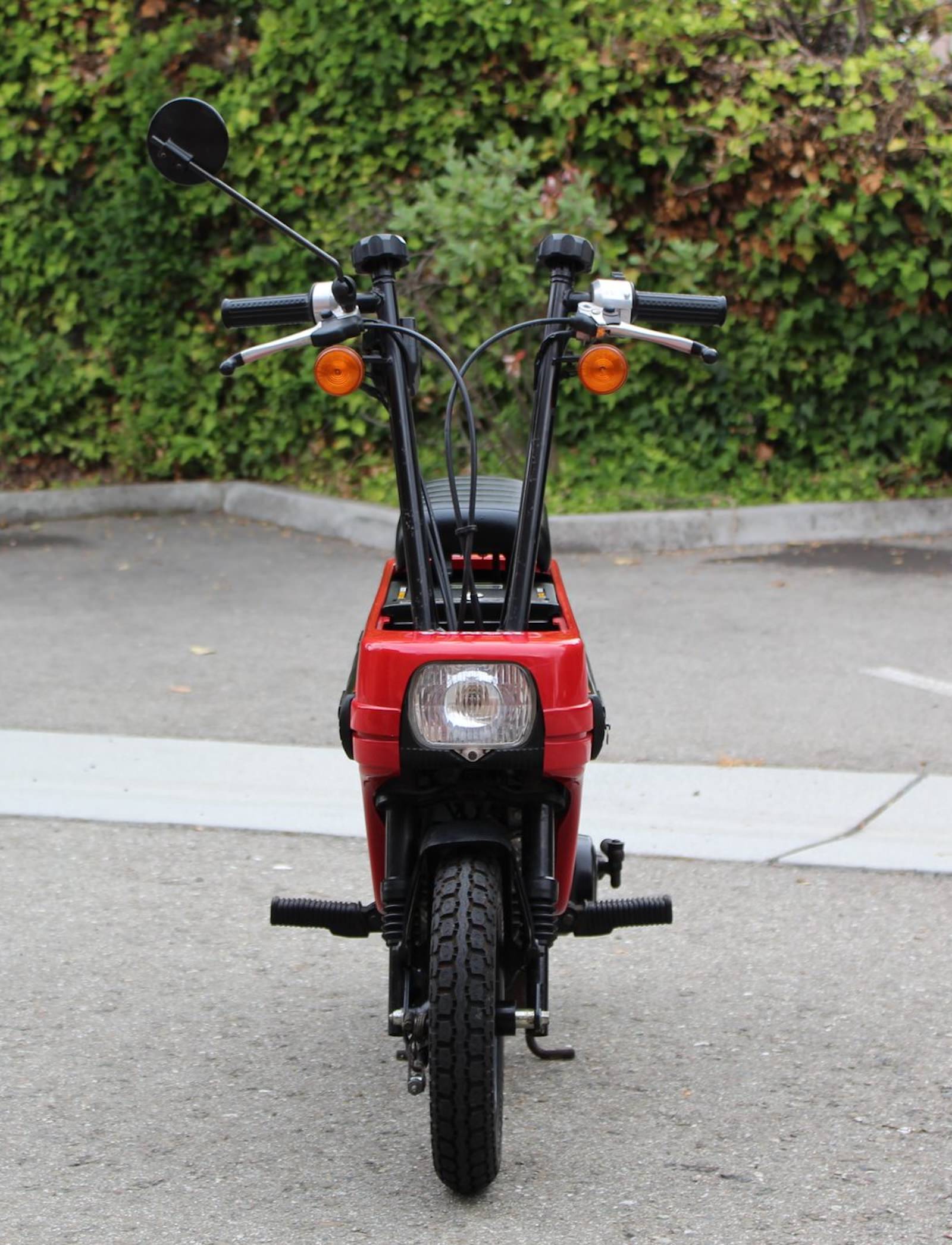
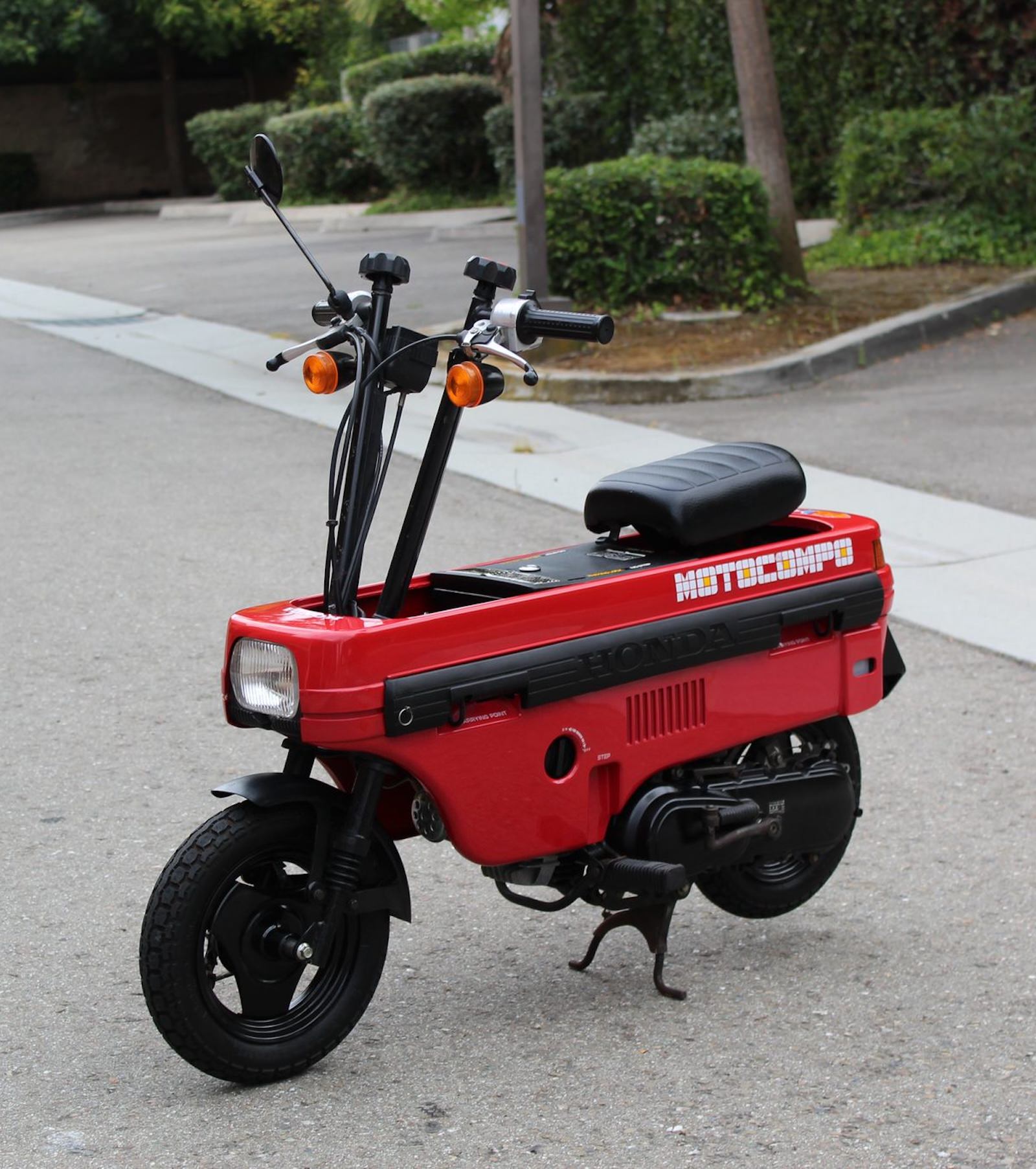
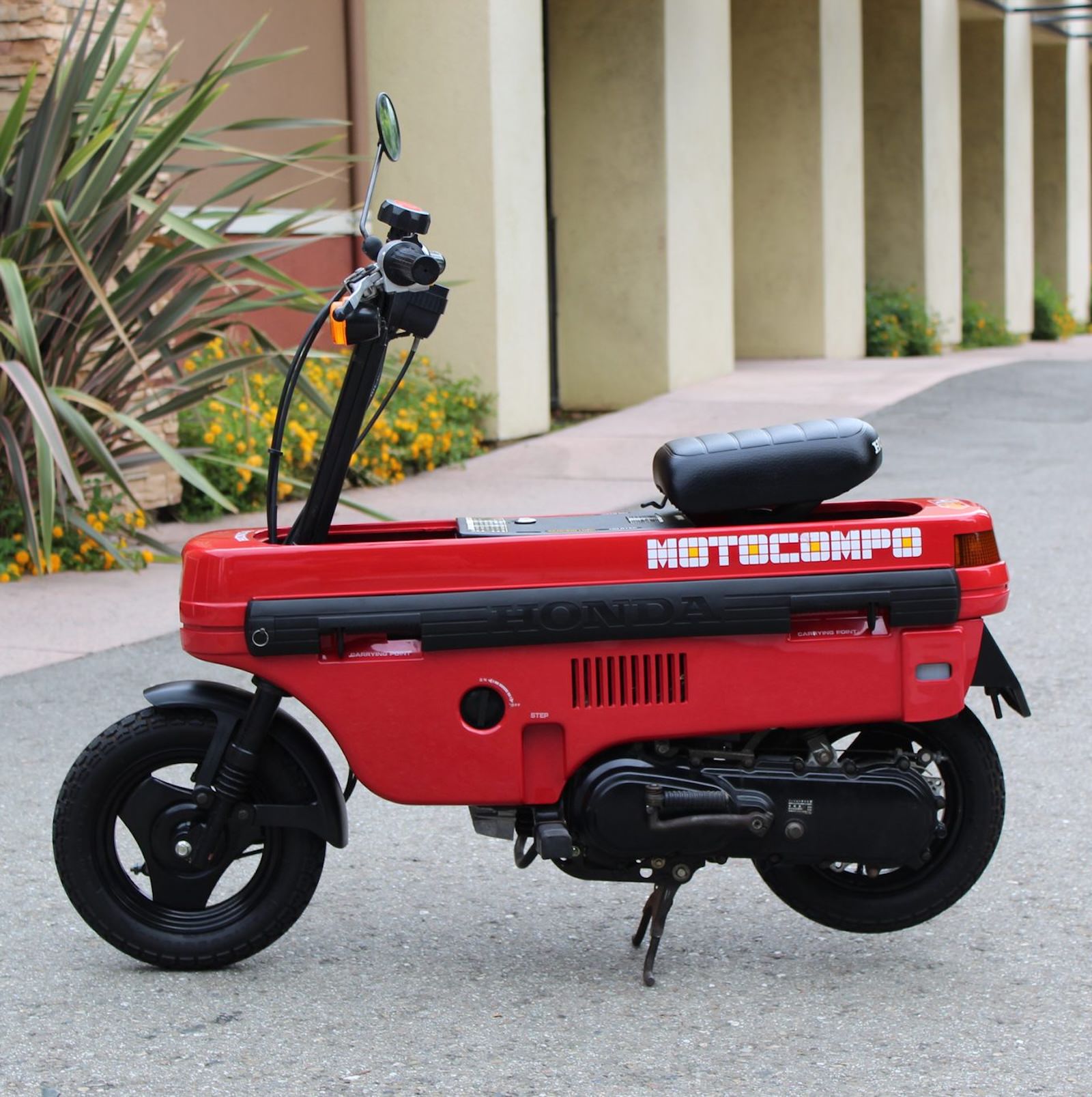
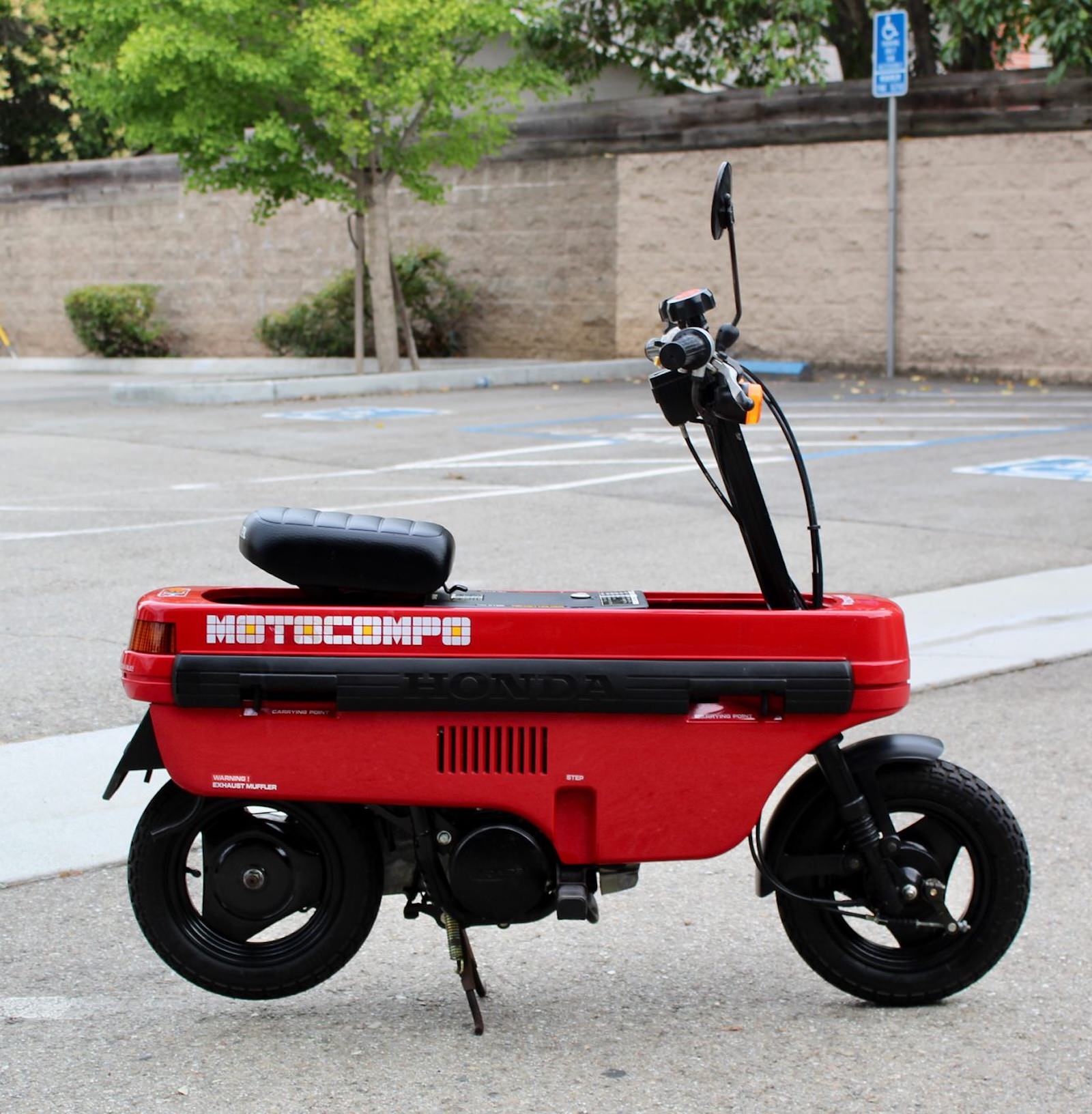
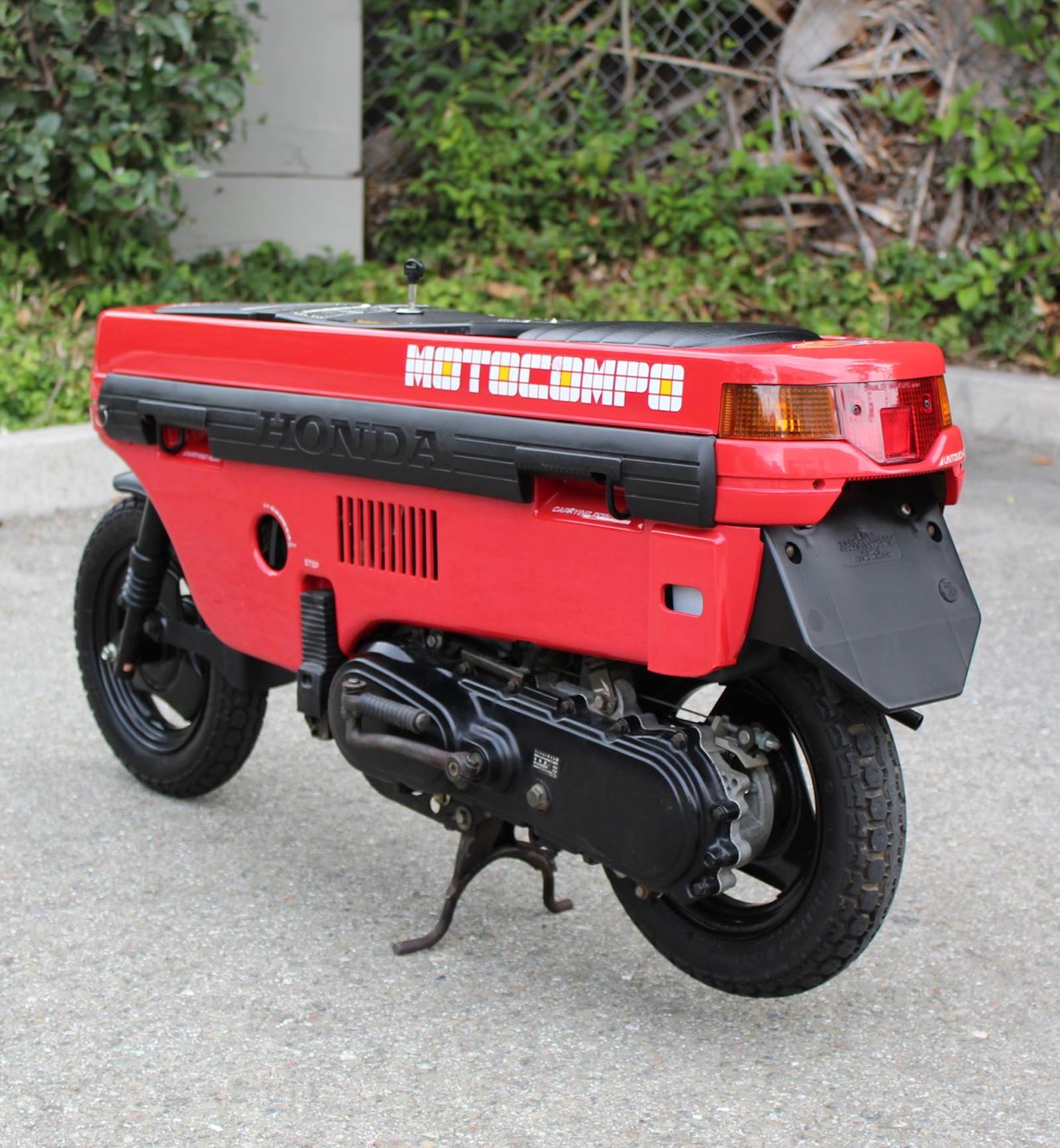
This is an original 1982 Honda Motocompo, it was bought by the seller in Japan in 2025 and then imported into the United States. It’s finished in Caribbean Red with white and yellow Motocompo graphics, black rubber side strips, and a black vinyl seat.
Power comes from an air-cooled 49cc two-stroke single-cylinder engine, factory rated at 2.5 bhp and 2.75 lb ft of torque, paired with a single-speed transmission and automatic clutch. It has oil injection, a kickstarter, an integrated 0.58 gallon fuel tank, and a manual choke.
As with all Motocompos, this one rides on black 8-inch steel wheels, with drum brakes at both ends, a telescopic front fork, and a rear monoshock. The seller explains that work carried out in Japan under previous ownership in 2025 included carburetor servicing and replacement of the battery and spark plug.
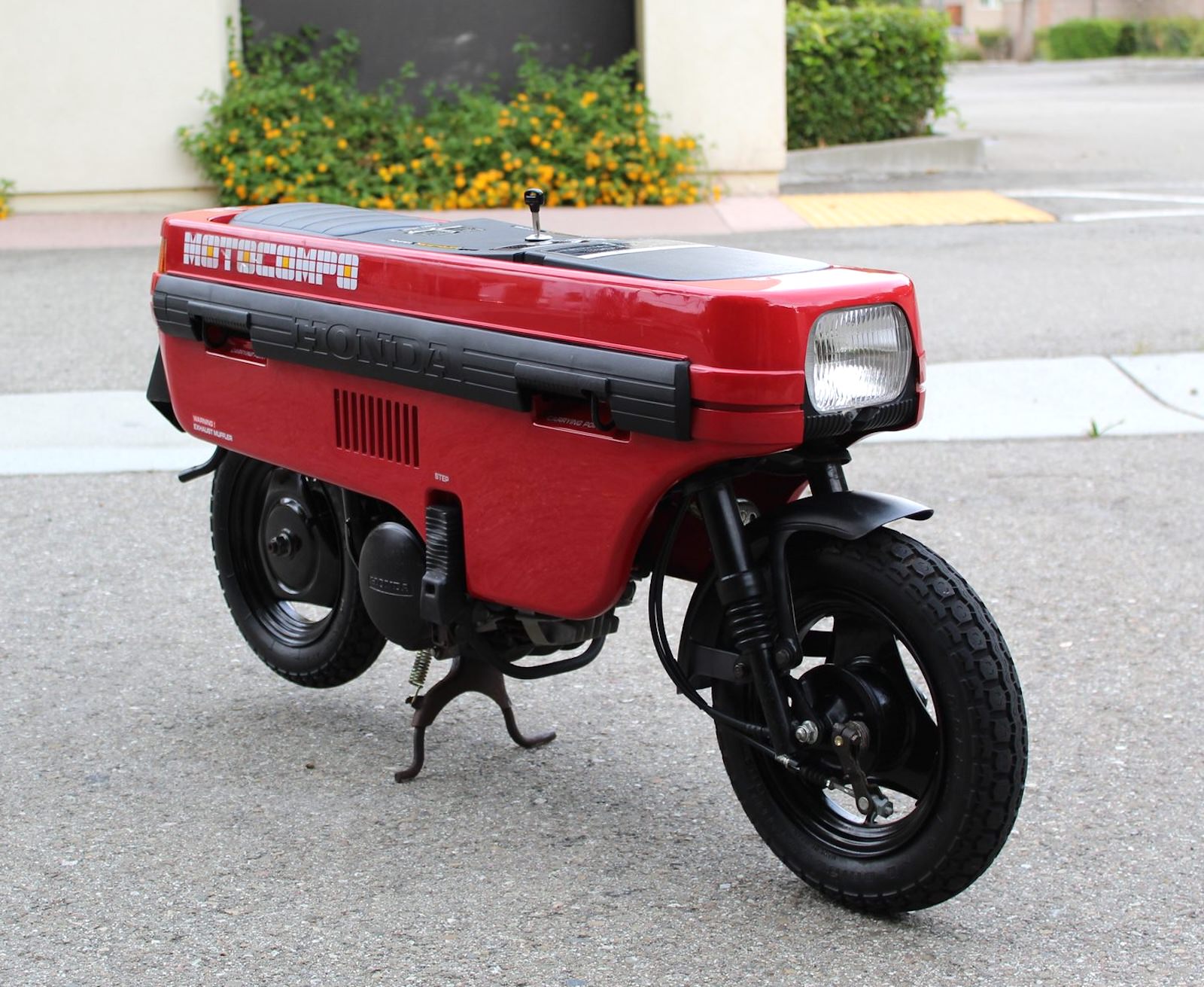
Honda engineers intended the Motocompo to be a last-mile transport solution, allowing people in Japan to park their cars outside of the city or town they were commuting to, then pull out their scooter for the last leg of the journey to reduce urban parking and traffic congestion.
It has all the equipment required for road use, including street lighting, turn signals, a horn, and a handlebar-mounted 50-km/h speedometer, as well as a fuel-level gauge, and integrated lifting and tie-down points for transport. It weighs 99 lbs (45 kgs), and no odometer was fitted from the factory, so total mileage is unknown.
This Motocompo is now being offered for sale out of Los Gatos, California with no reserve, accompanied by a bill of sale. If you’d like to read more about it or register to bid you can visit the listing here.
Images courtesy of Bring a Trailer + Honda

Articles that Ben Branch has written have been covered on CNN, Popular Mechanics, Smithsonian Magazine, Road & Track Magazine, the official Pinterest blog, the official eBay Motors blog, BuzzFeed, Autoweek Magazine, Wired Magazine, Autoblog, Gear Patrol, Jalopnik, The Verge, and many more.
Silodrome was founded by Ben back in 2010, in the years since the site has grown to become a world leader in the alternative and vintage motoring sector, with well over a million monthly readers from around the world and many hundreds of thousands of followers on social media.