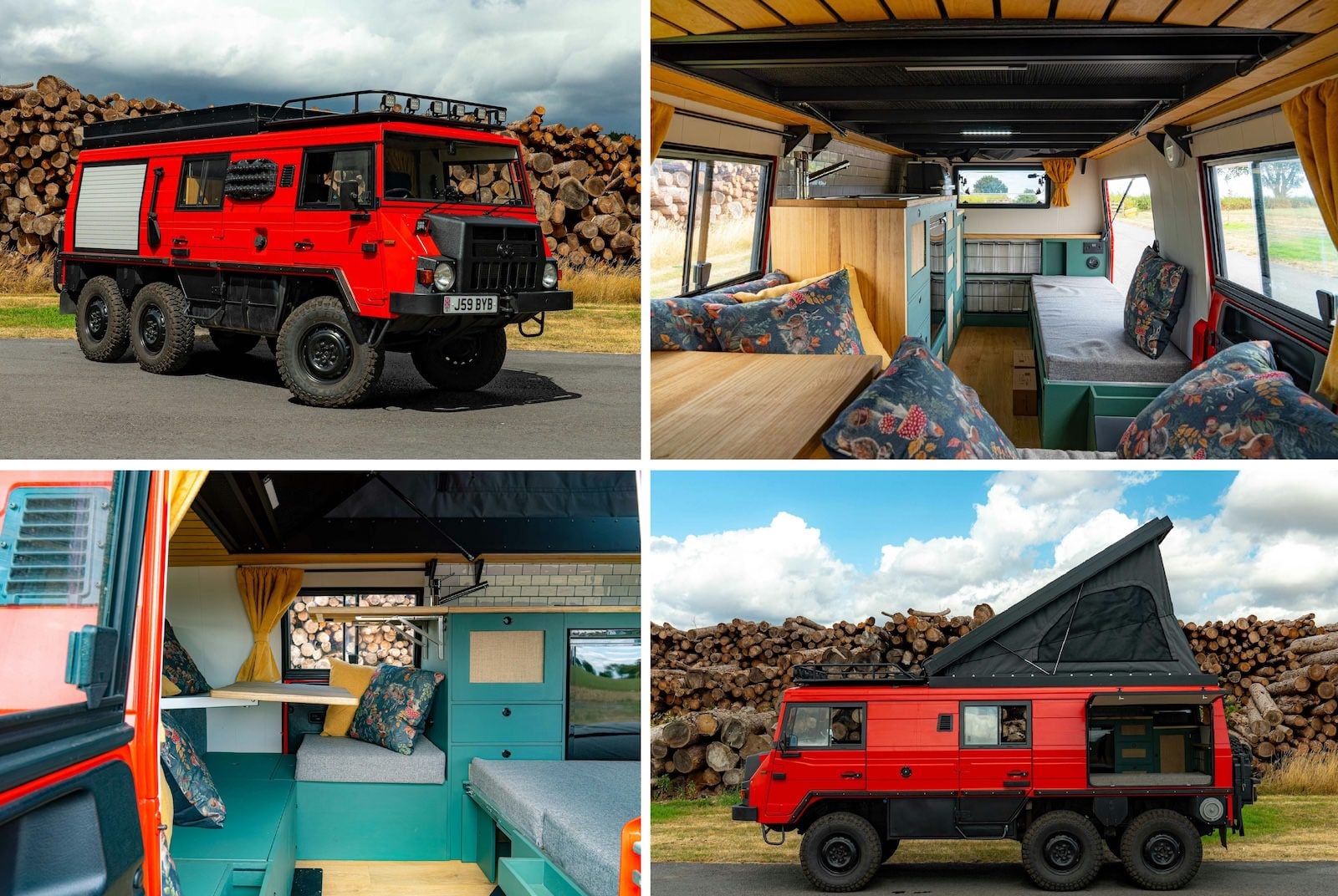
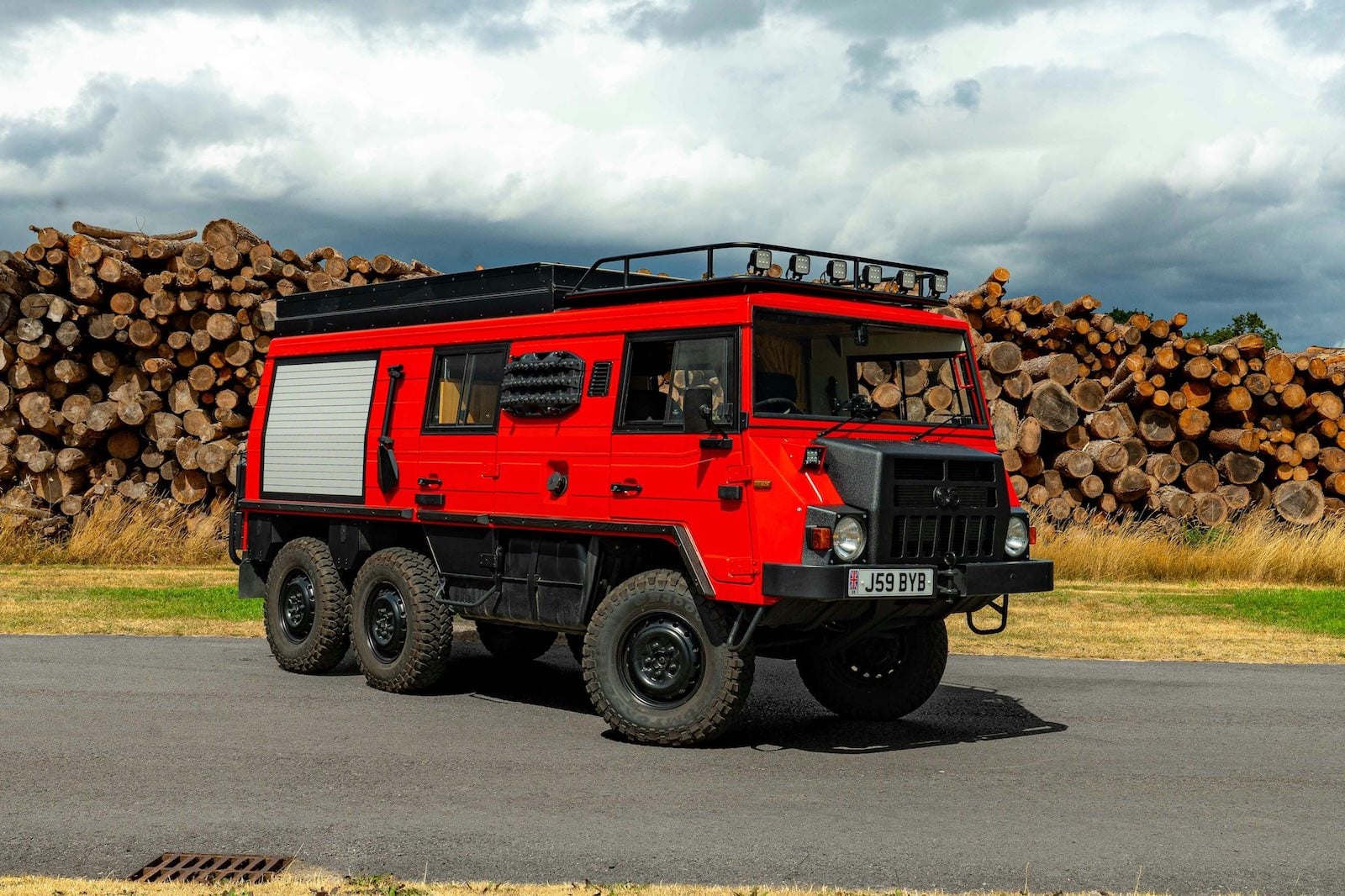
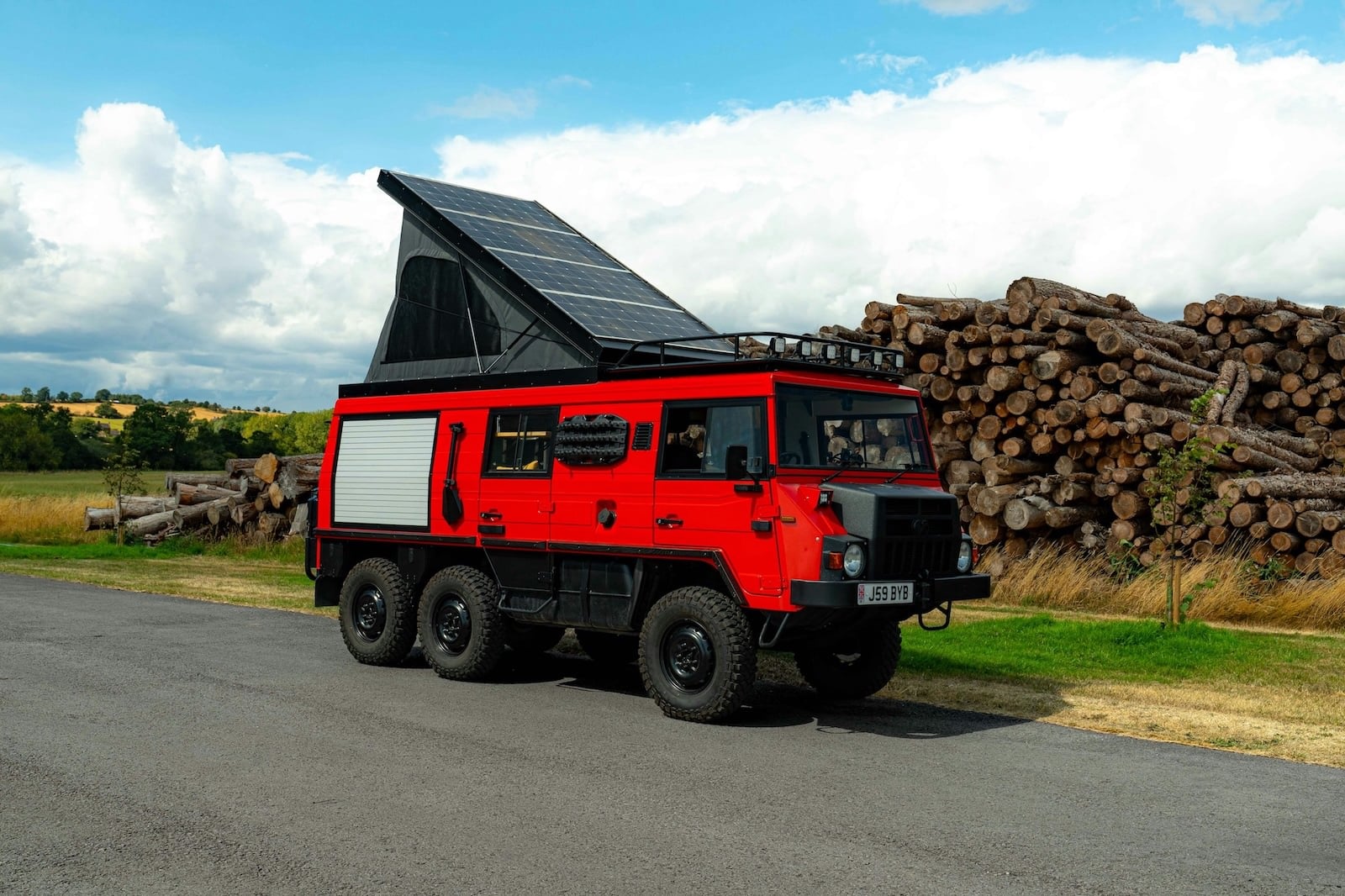
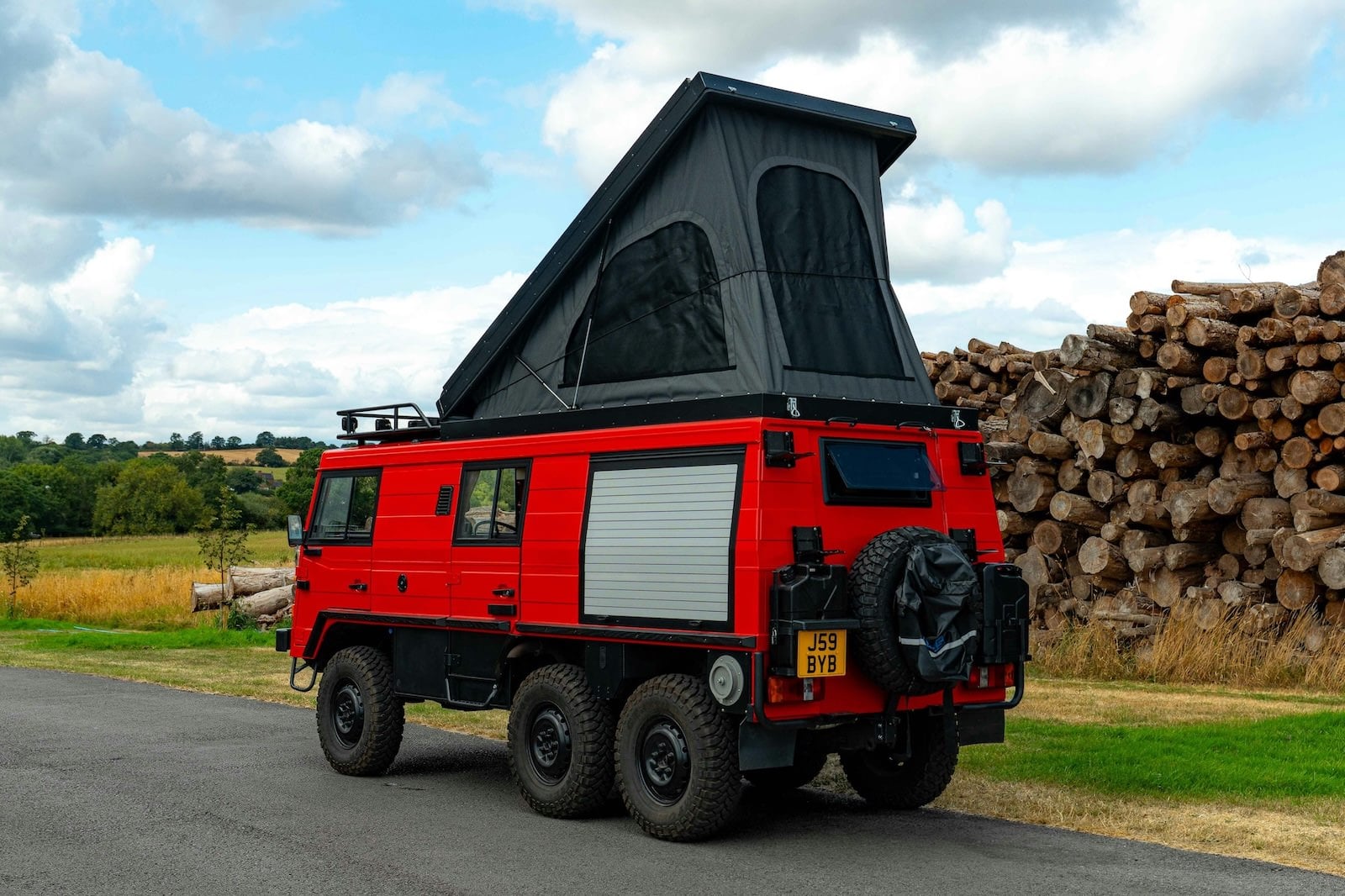
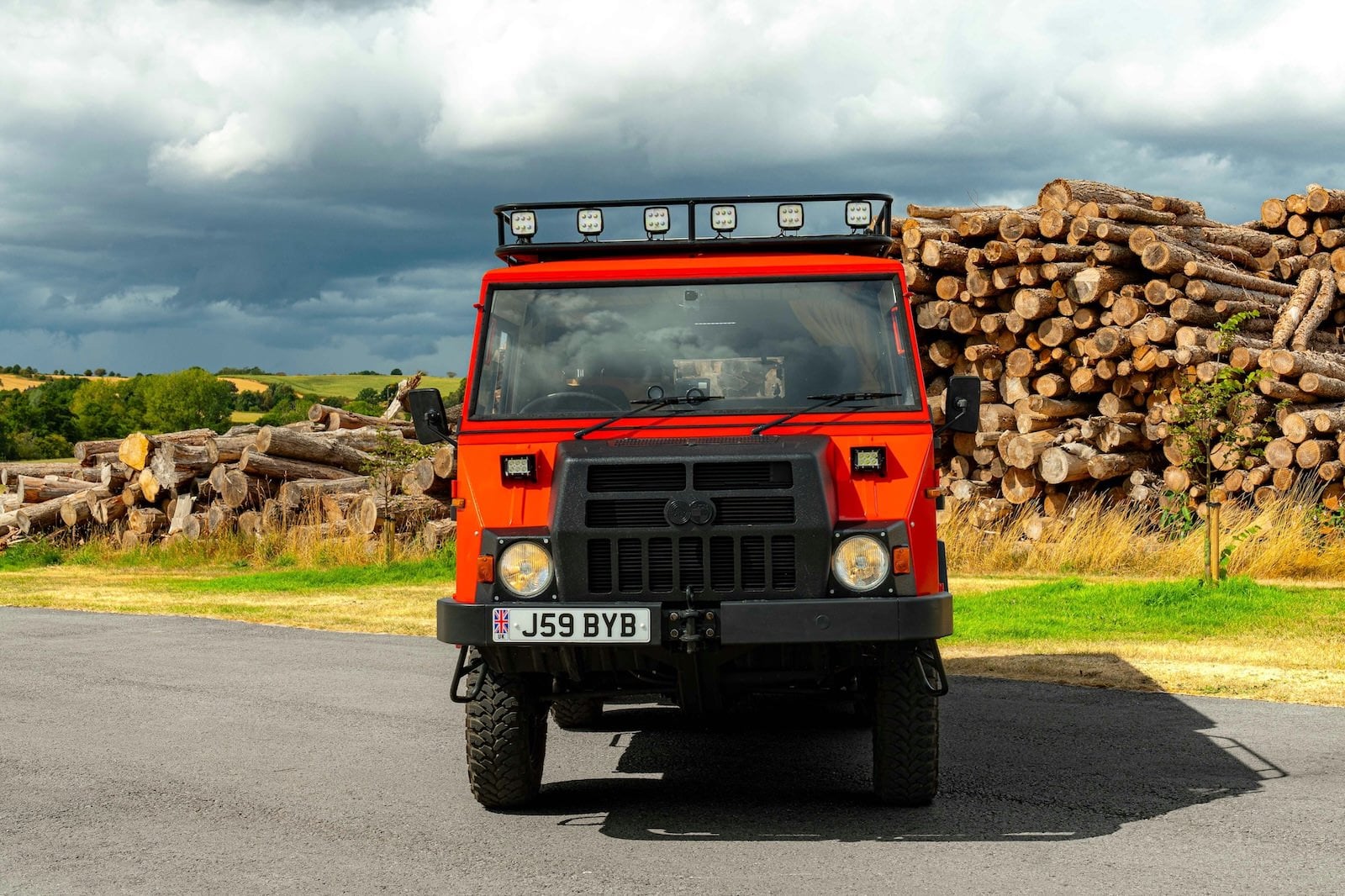
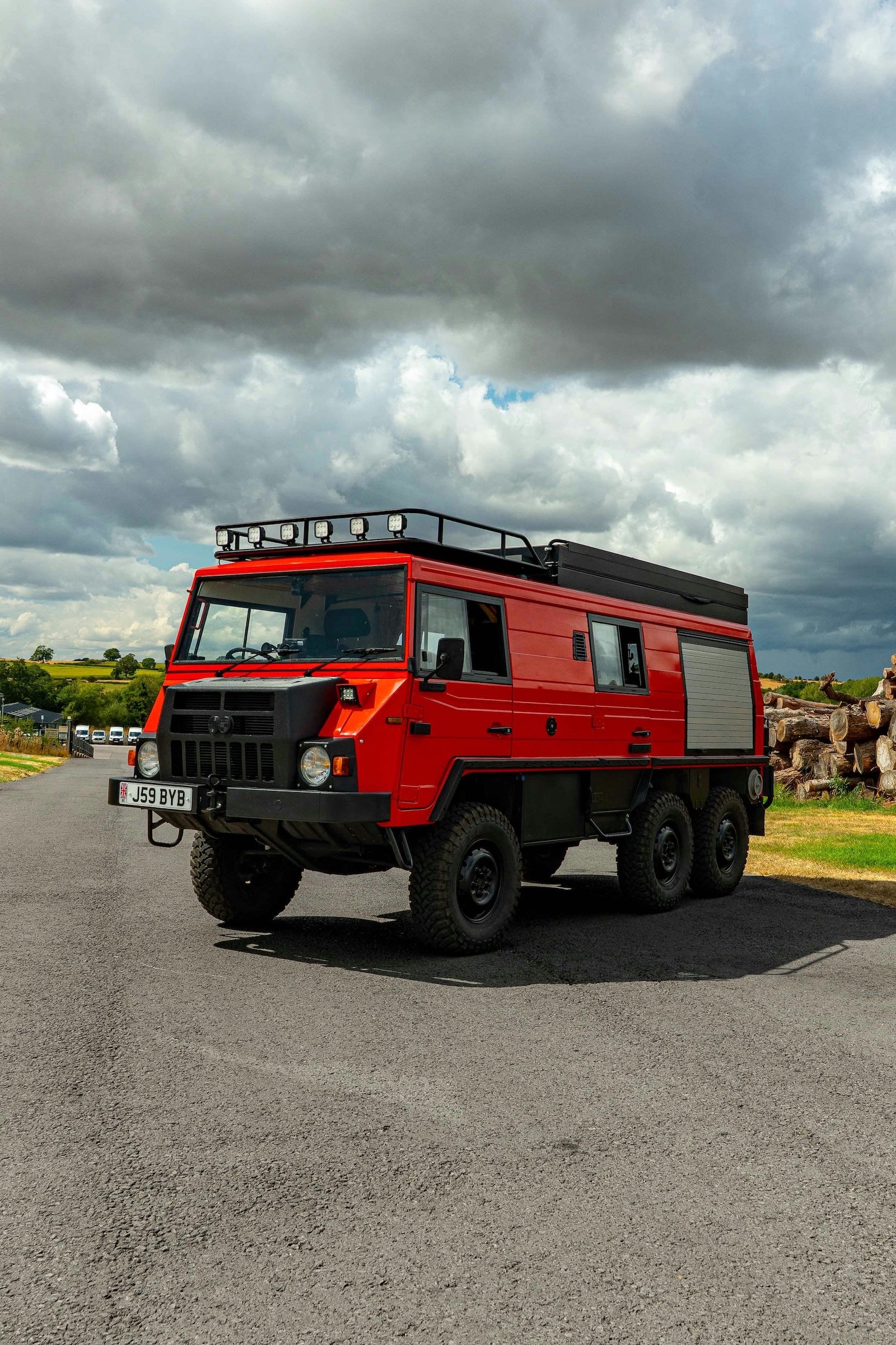
This is a 1991 Steyr-Puch Pinzgauer that’s been converted into a comfortable all-terrain home-on-wheels that can go almost anywhere, thanks to its six-wheel drive powertrain with locking diffs.
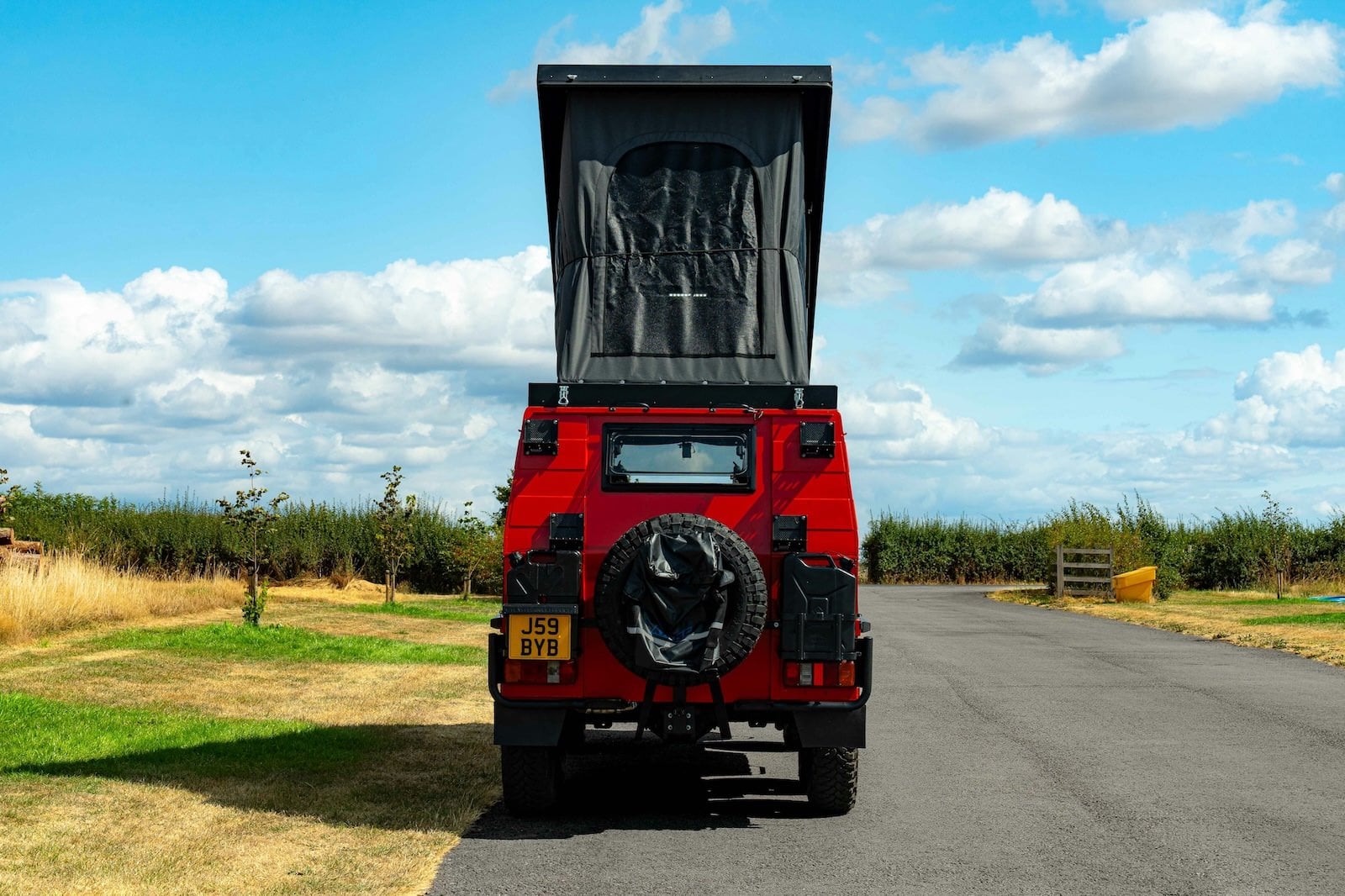
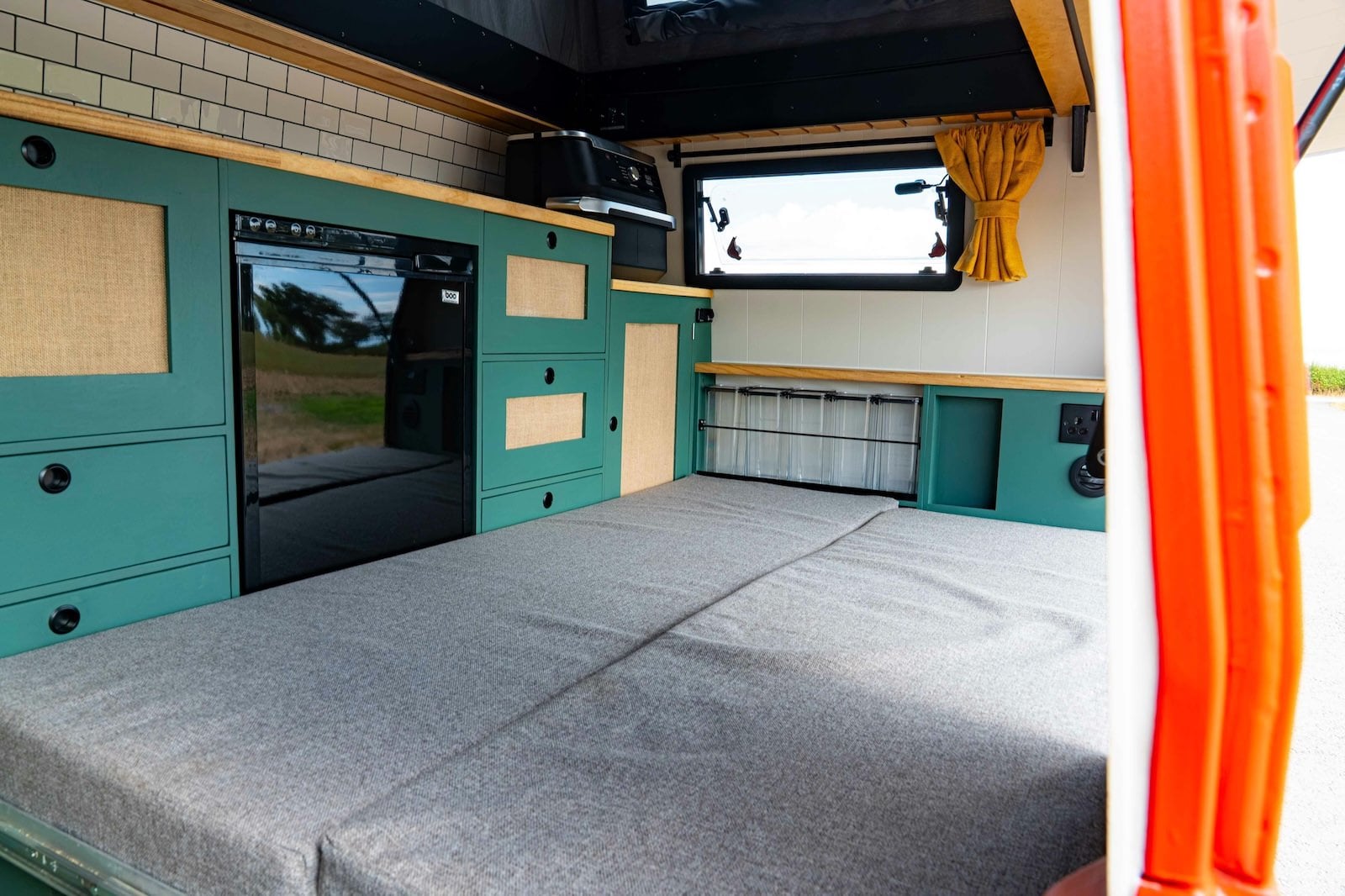
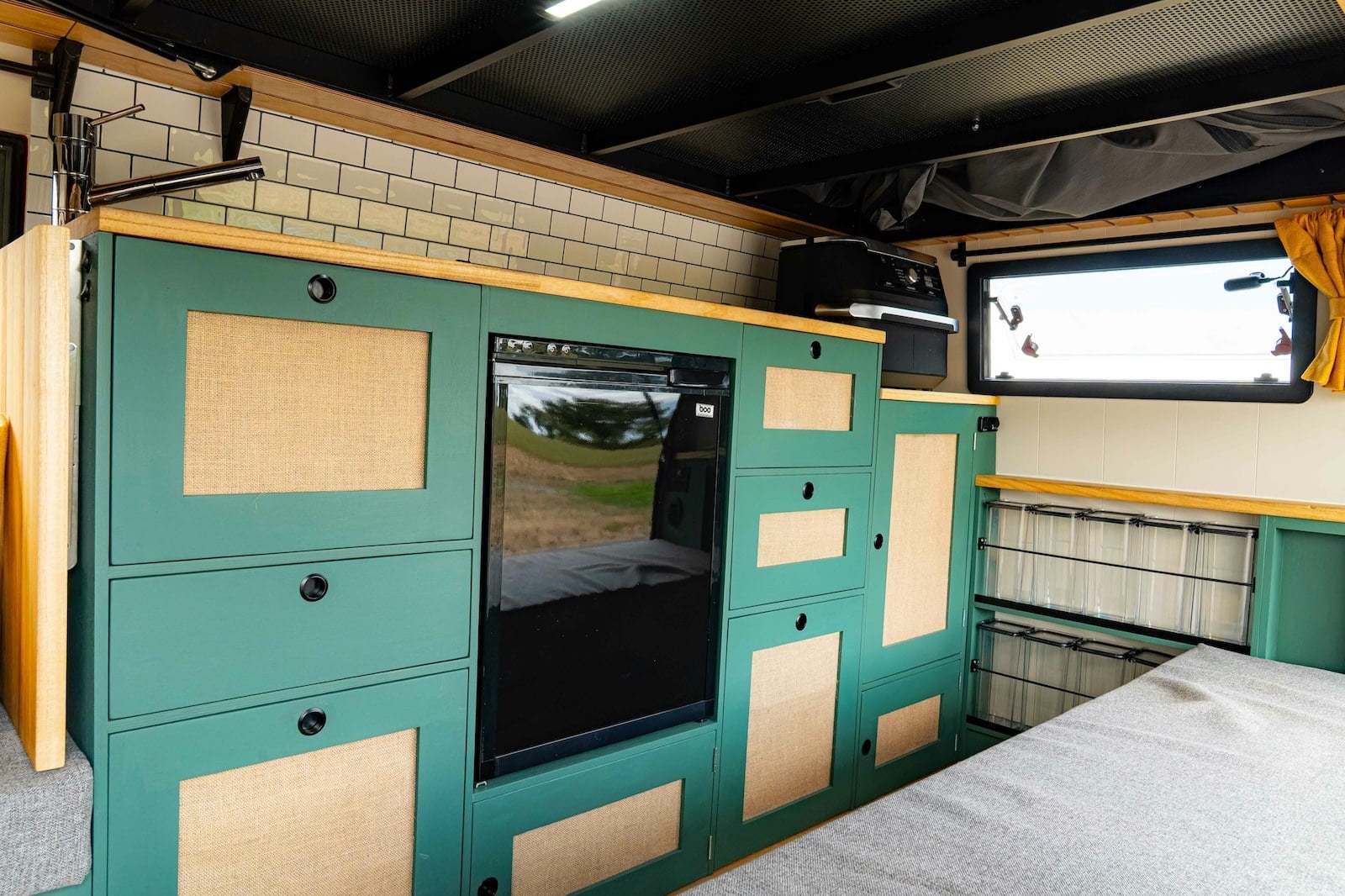
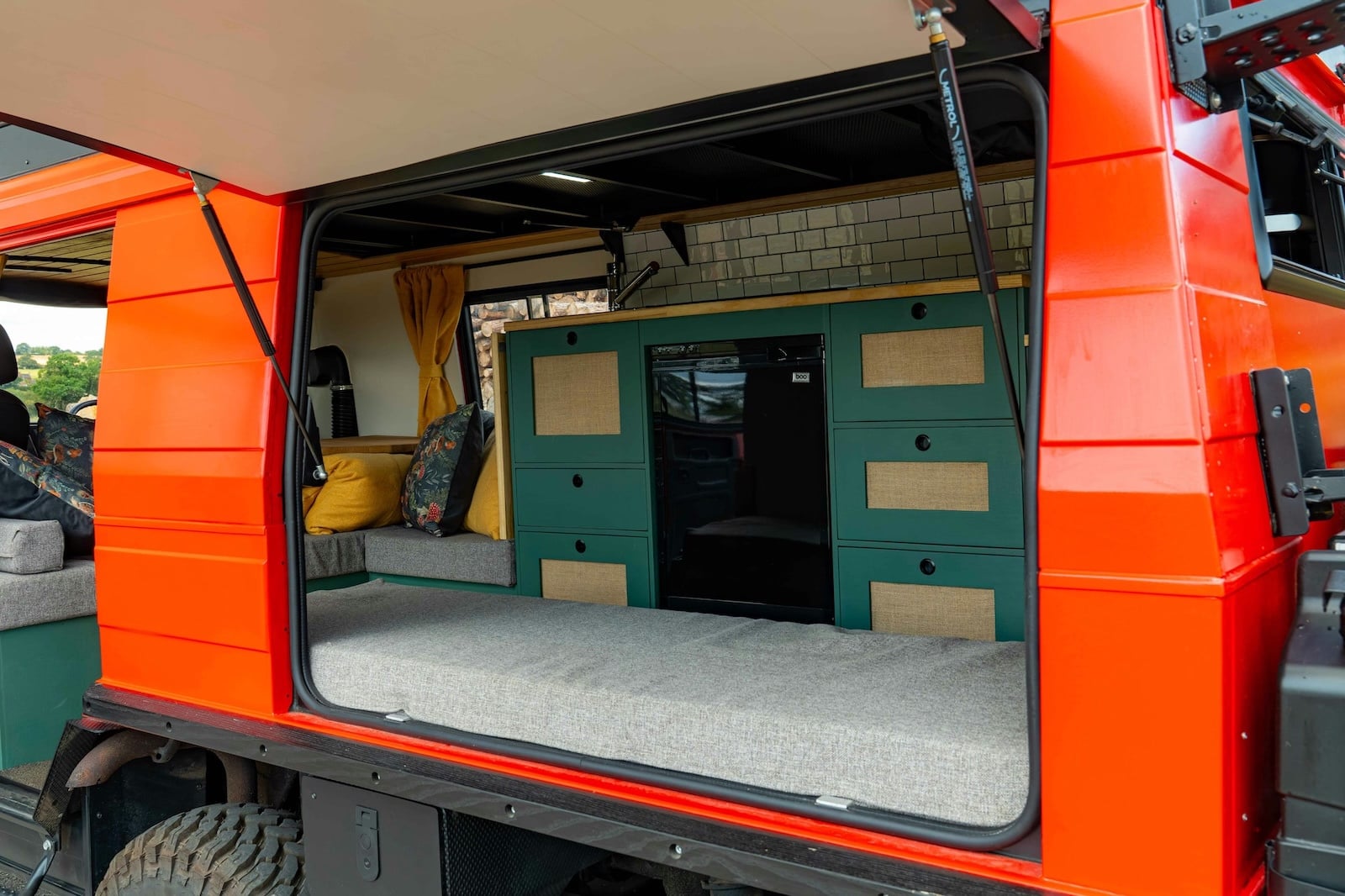
Inside you’ll find well-appointed living quarters, with a bed, dinette, and kitchenette, as well as a pop-top roof for additional headroom. There aren’t many campers that will be as capable as this one off-road, and the great thing about the military-popularity of the Pinzgauer is that spare parts are never too hard to find.
Fast Facts: Steyr-Puch Pinzgauer 6×6 Camper
- The Steyr-Puch Pinzgauer was developed in Austria during the 1960s as a larger, more capable counterpart to the smaller Haflinger. Designed by Erich Ledwinka, it used a central-tube backbone chassis, swing axles, independent suspension, portal hubs, and locking differentials, with 4×4 710 and 6×6 712 versions entering production in 1971.
- Early Pinzgauers used a 2.5 liter air-cooled inline-four producing 89 bhp and 136 lb ft, paired with a 5-speed gearbox and dual-range transfer case. Their portal hubs helped to provide substantial ground clearance, while selectable front drive and hydraulic differential locks gave excellent off-road ability despite modest performance on the asphalt.
- Military forces became the Pinzgauer’s main customers, with examples serving in Britain, Switzerland, Saudi Arabia, Malaysia, Norway, and elsewhere. A diesel-powered second generation arrived in 1986 as the 716 and 718, with production later moving from Graz to Britain before BAE Systems ended UK manufacturing after remaining orders were completed.
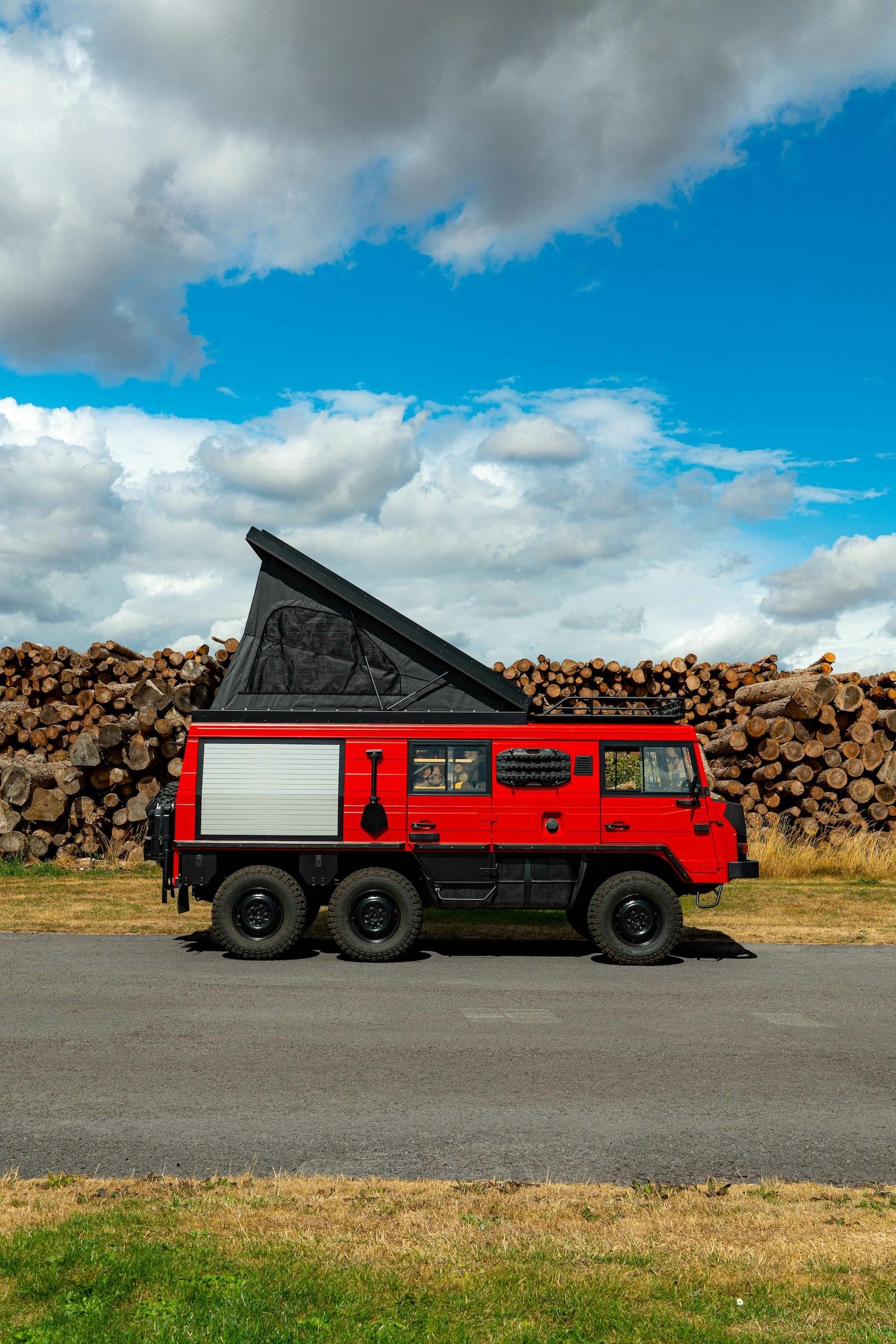
- The 1991 Pinzgauer 718K shown here began life as a UK fire engine before being converted into a two-berth overland camper. It now has a later 2.4 liter Volkswagen turbodiesel, 4-speed automatic, upgraded cooling and gearing, solar panels, a pop-top roof, kitchenette, dinette, convertible bed, and 26,376 indicated miles.
History Speedrun: The Steyr-Puch Pinzgauer
Steyr-Daimler-Puch built the first-generation Pinzgauer in Graz, Austria from 1971 to 1985, in four-wheel drive 710 and six-wheel drive 712 forms. The Pinzgauer was the second vehicle Erich Ledwinka designed for the company around a central-tube backbone chassis and swing axles, after the earlier Haflinger, and it was named after the Pinzgauer horse – a hardy breed ideally suited to life in the Alps.
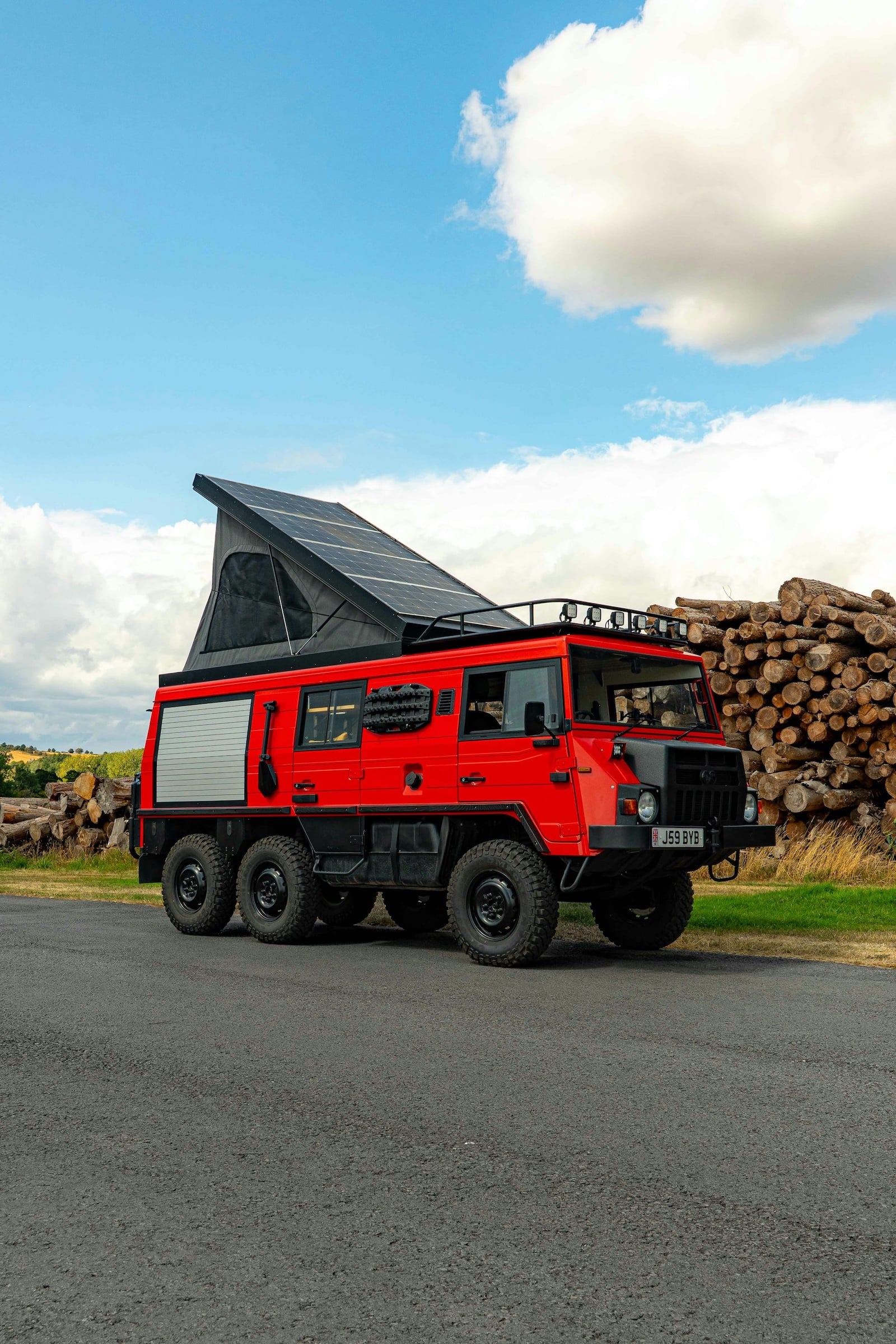
 This is a 1991 Steyr-Puch Pinzgauer that’s been converted into a comfortable all-terrain home-on-wheels that can go almost anywhere thanks to its six-wheel drive powertrain with locking diffs.
Why The Haflinger Wasn’t Enough
When the Austrian Bundesheer (National Army) was established in 1955 as the occupying powers were withdrawing, it inherited a fleet made up almost entirely of American military vehicles. Steyr-Daimler-Puch’s Haflinger model started replacing the smallest of them in the early 1960s, but at 643cc it simply couldn’t do the work of the US-built Dodge trucks the army still ran in large numbers.
From 1962, the Graz factory began developing a heavier military vehicle to fill that gap, and the first 4×4 prototype was shown to the public in 1965.
The Pinzgauer carried over many of its core design principles from the Haflinger, it had a load-bearing central tube with the drive housings bolted to its ends, swing axles and independent suspension at every wheel. It was a Ledwinka family formula, Erich Ledwinka, Steyr-Daimler-Puch’s Chief Engineer from 1950 to 1976, had worked alongside his father Hans at Tatra, where the same backbone-and-swing-axle principles had gone into the Tatra 11 all the way back in the 1920s.
A Backbone Chassis + Portal Hubs
The standard military engine was a Puch design built specifically for this vehicle – it was an air-cooled, pushrod inline-four of 2.5 liters, running a 7.8:1 compression ratio and breathing through two Zenith 36 NDIX downdraft twin-choke carburetors. It was good for 89 bhp and 136 lb ft of torque, these are humble numbers, but the Pinzgauer wasn’t meant to be fast.
The engine sat between the front seats, above the front axle. Behind it was a ZF S5-18/3 5-speed gearbox with synchromesh on every forward gear, then a dual-range transfer case flanged to the central tube, essentially giving it 10 forward speeds.
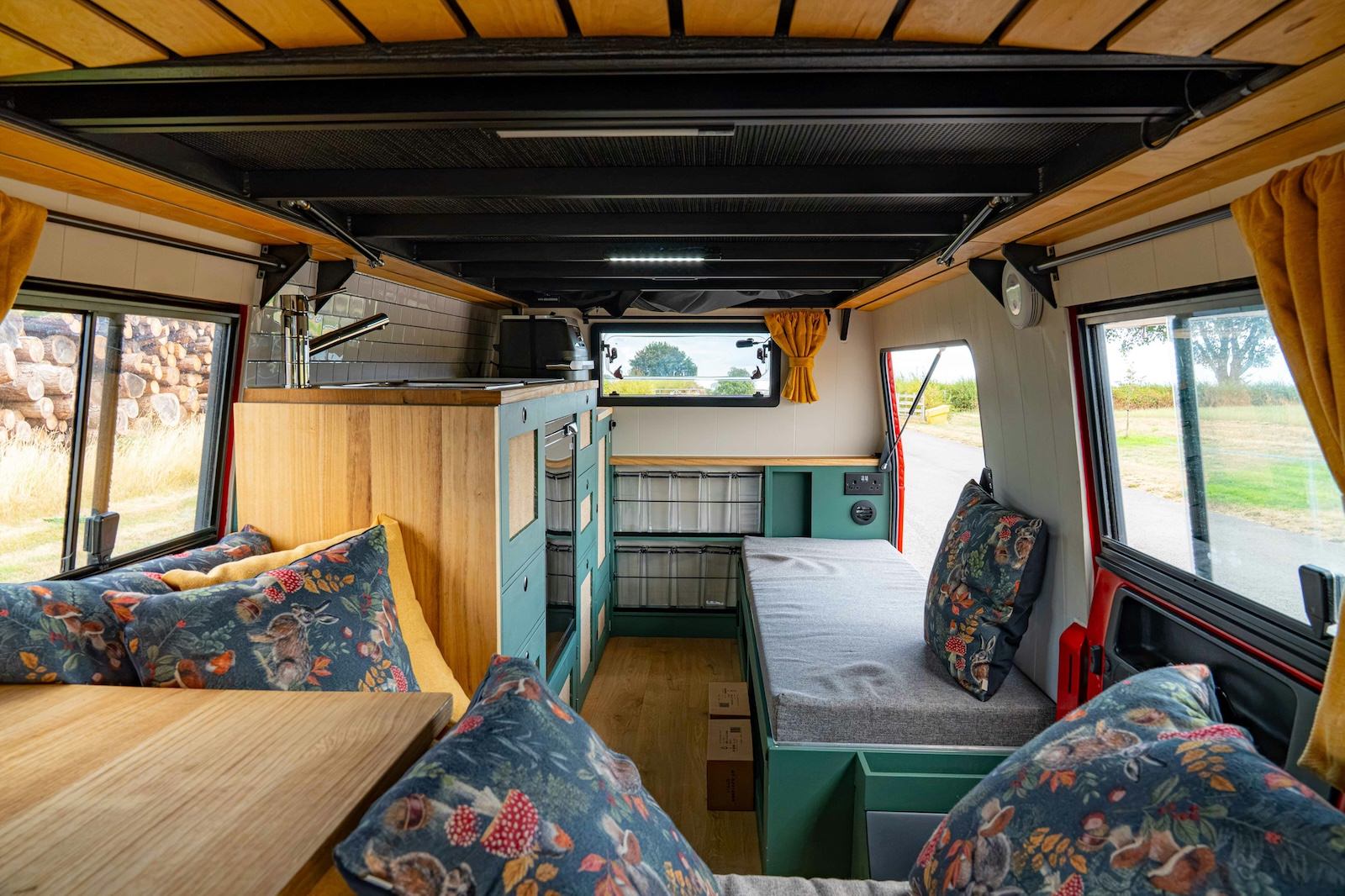
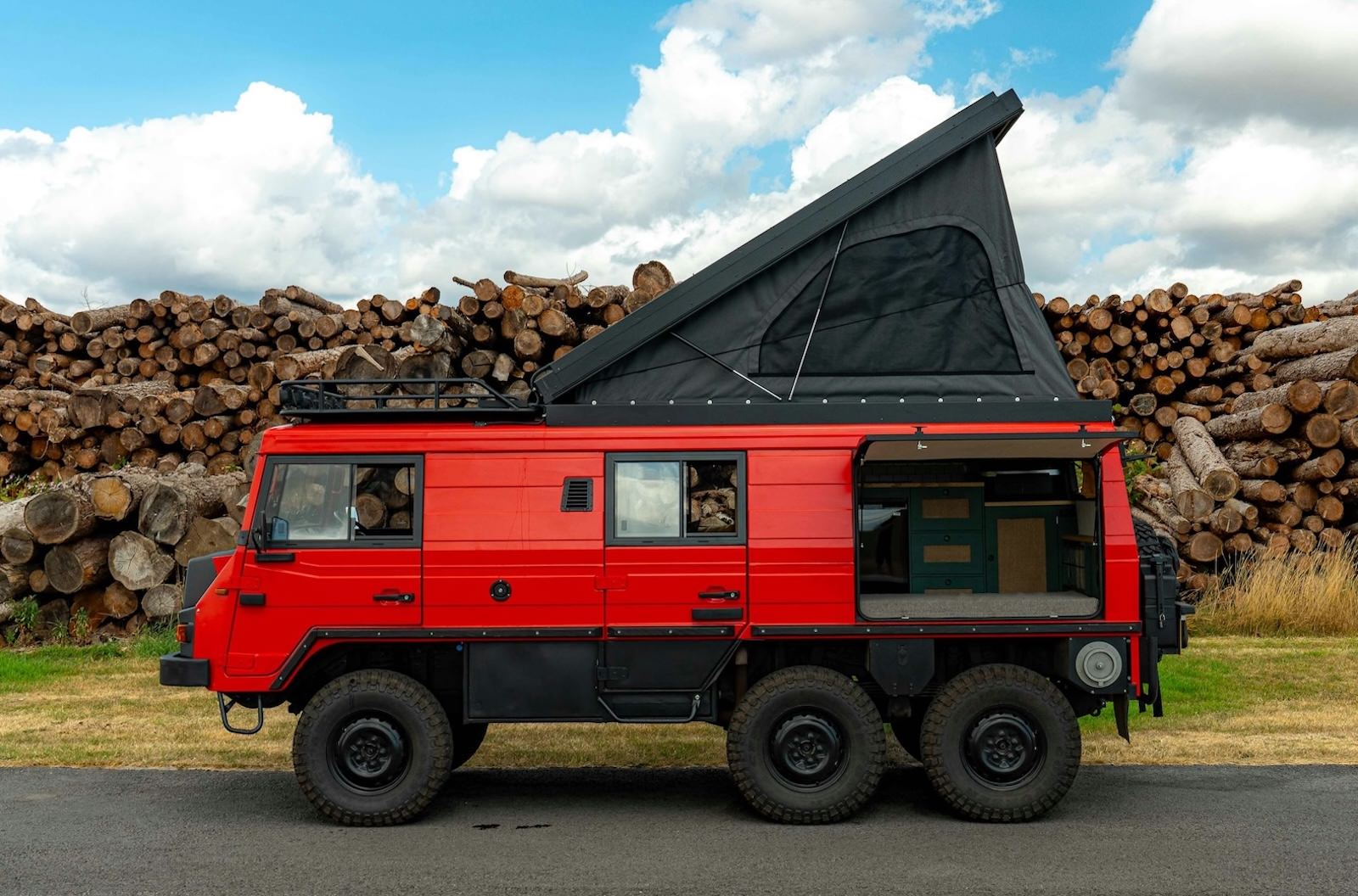
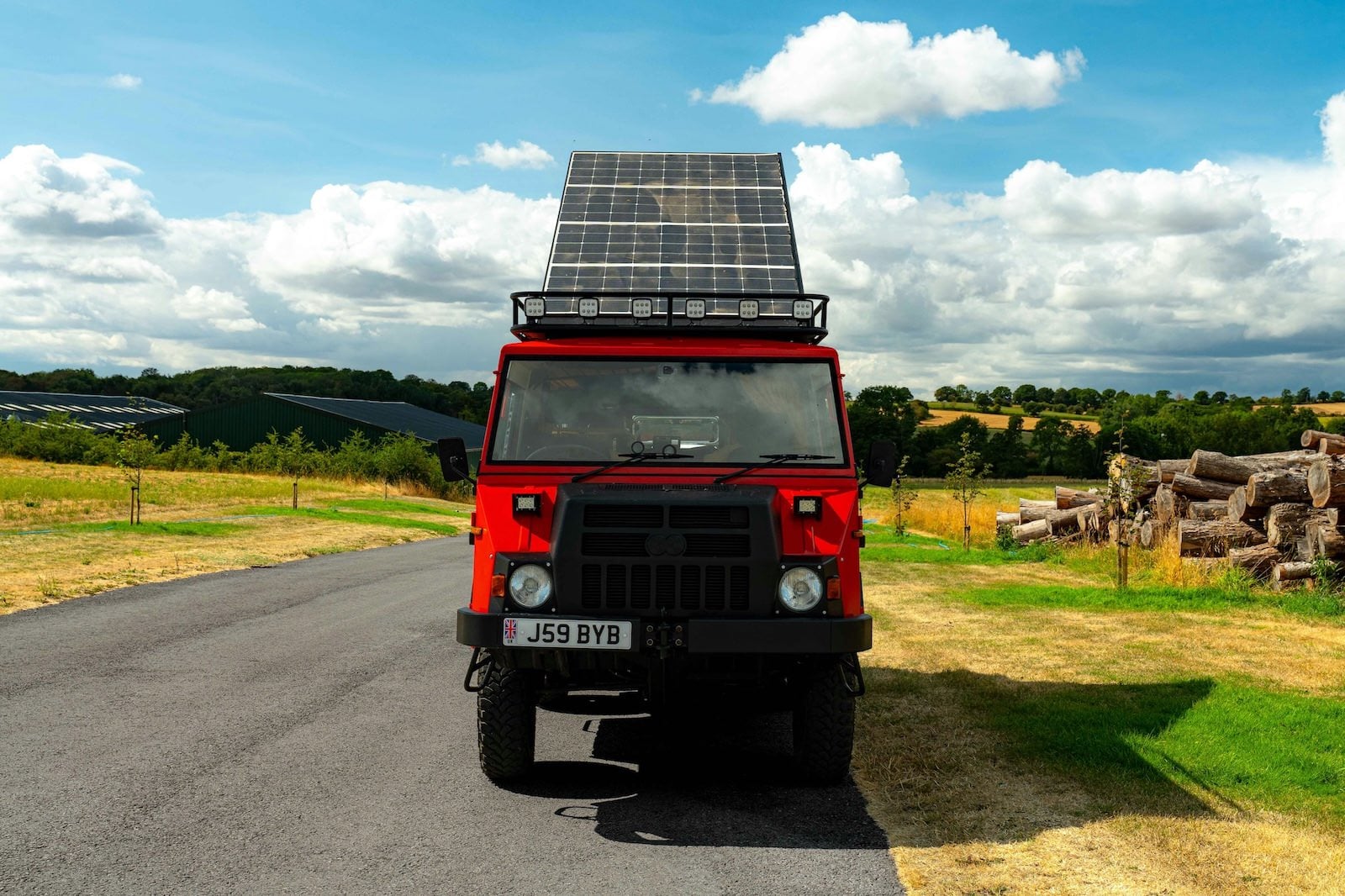
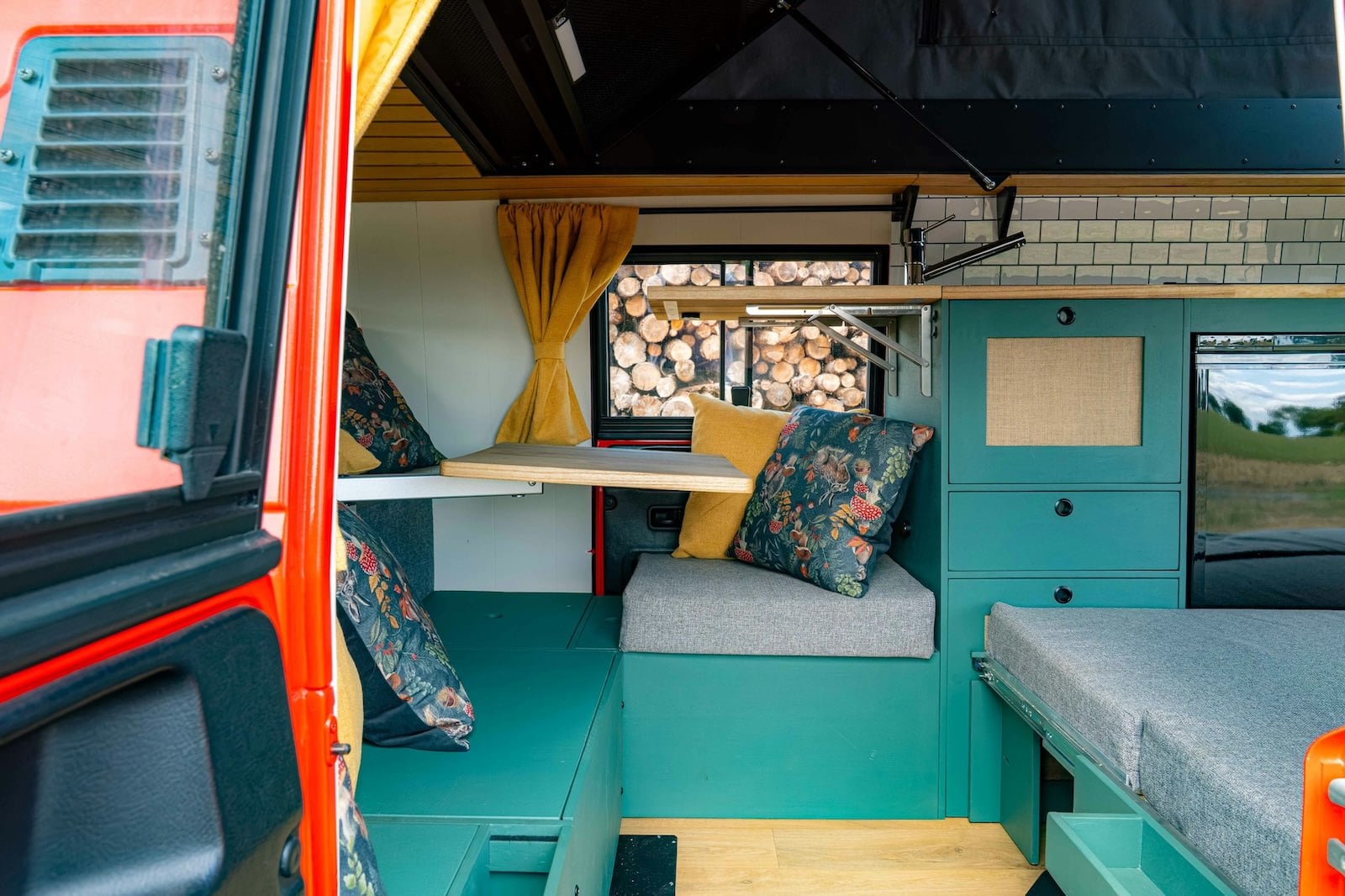
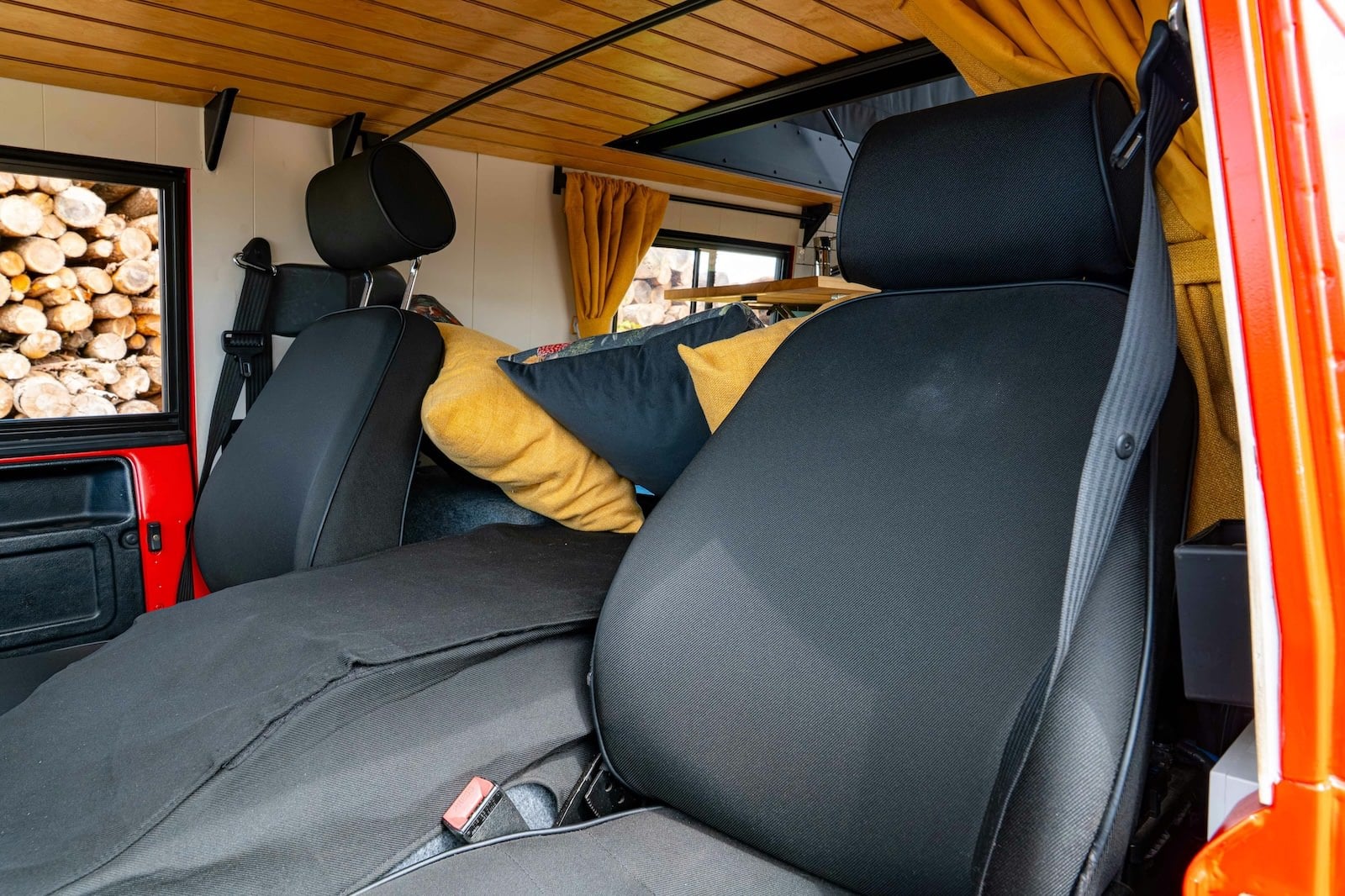
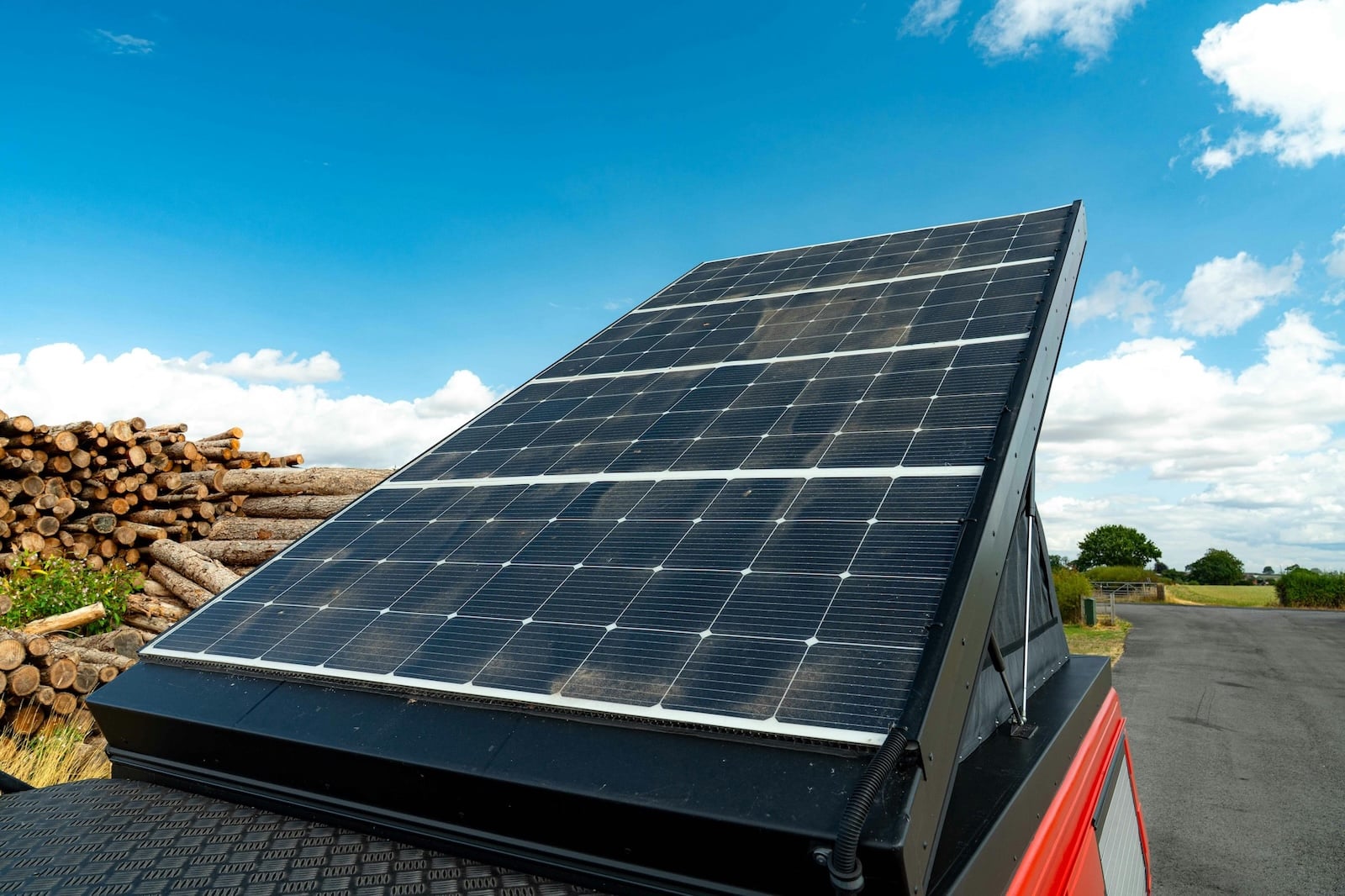
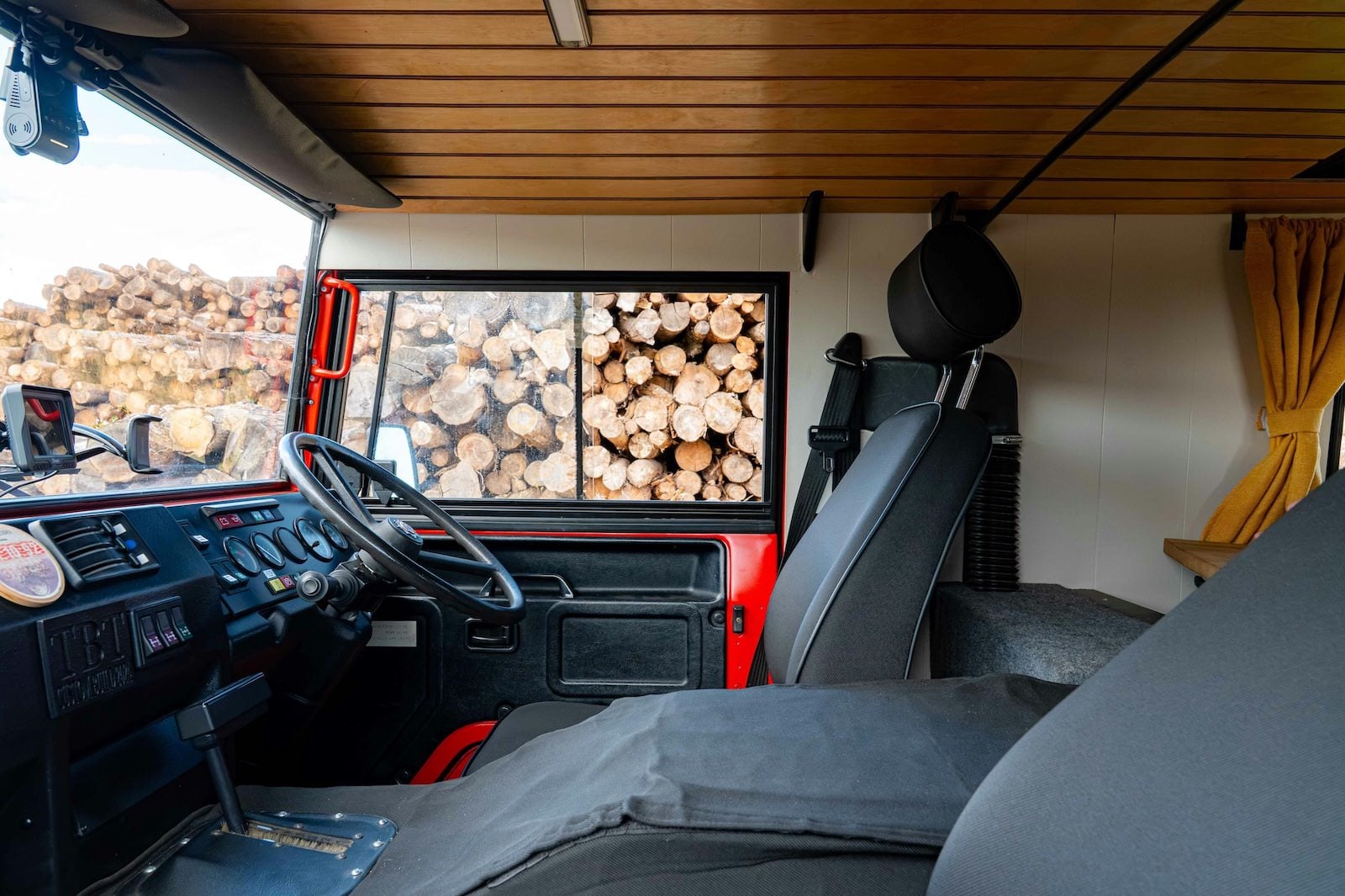
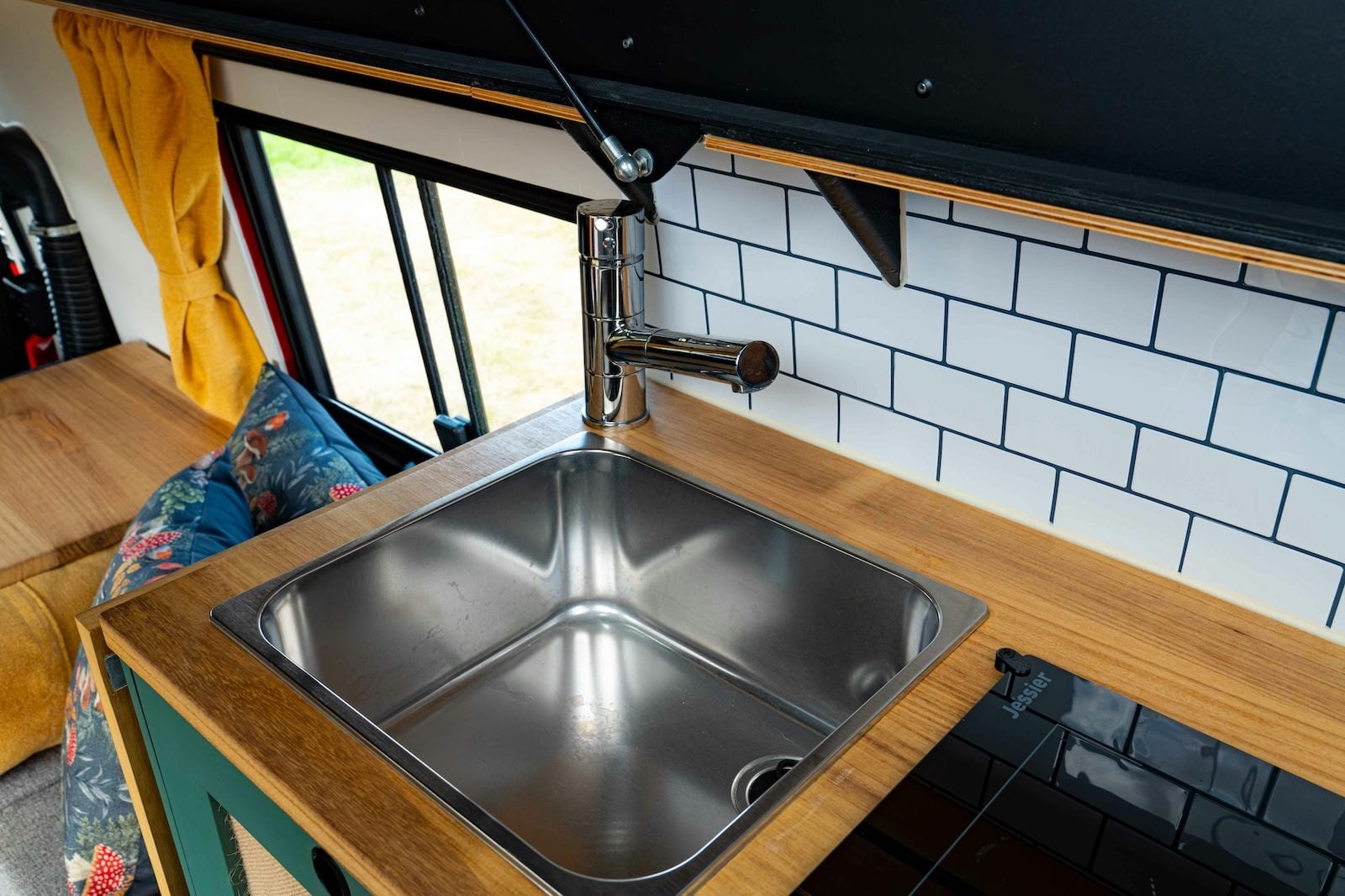
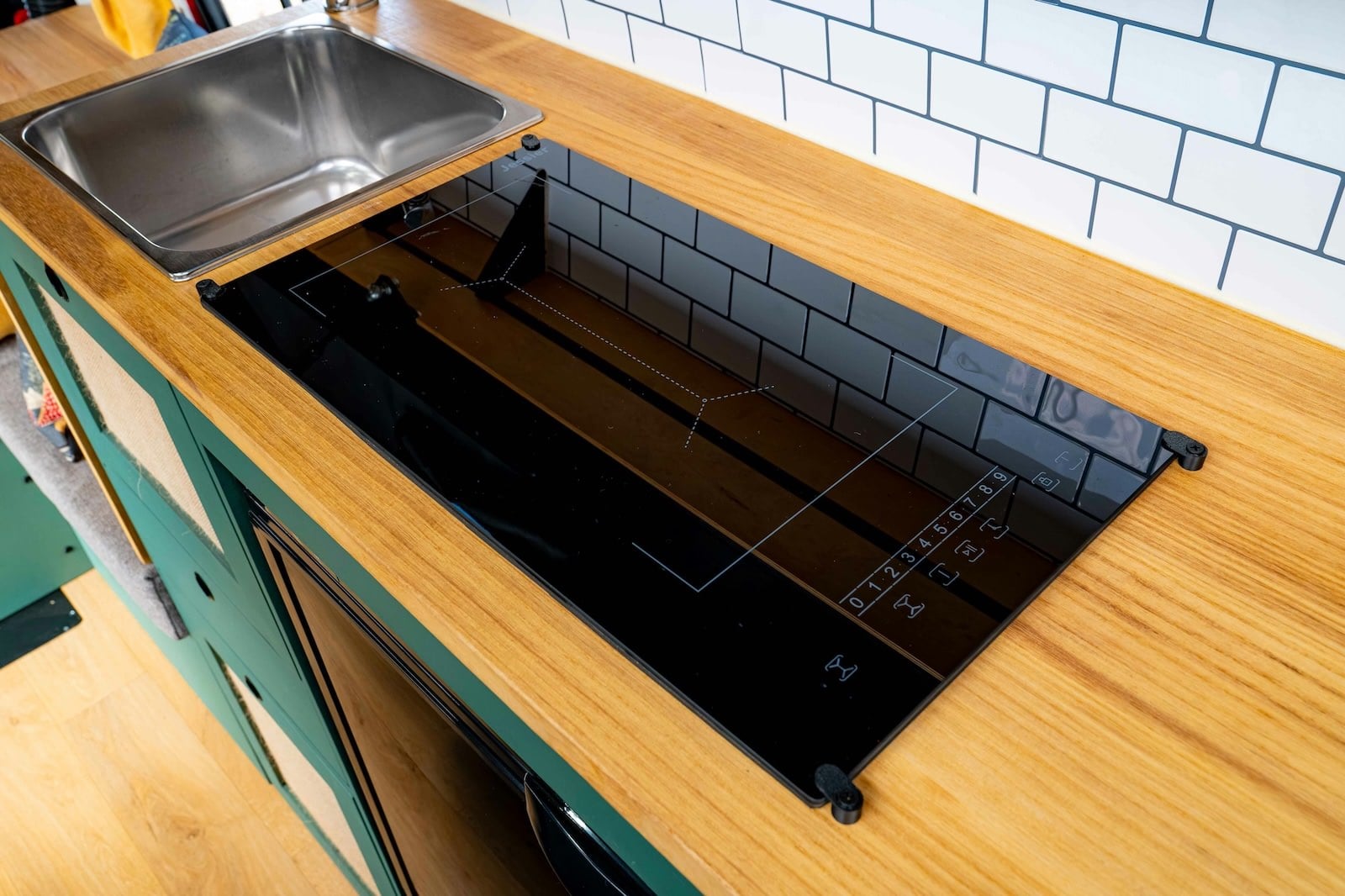
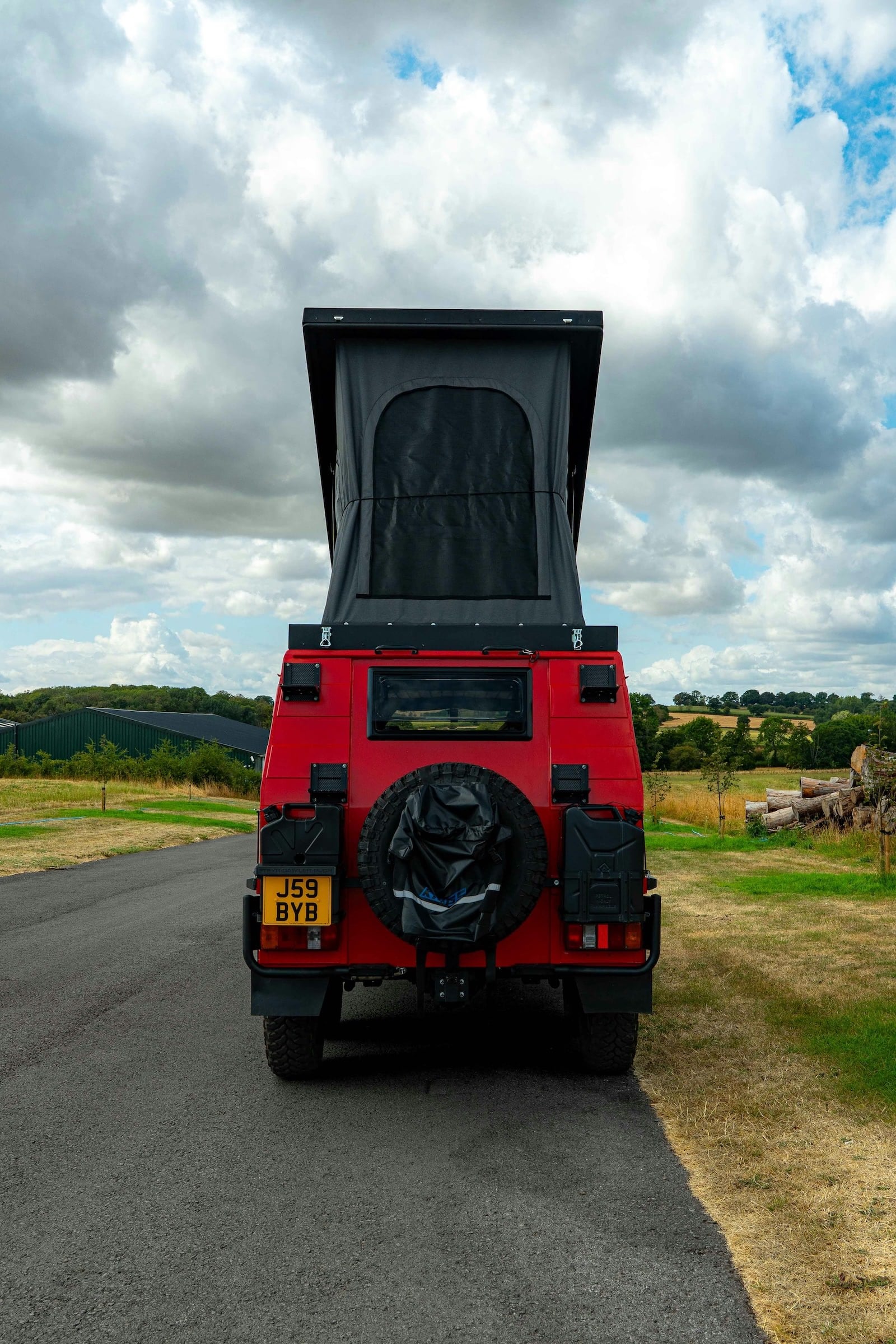
This Pinzgauer is finished in red with a black interior, and it’s accompanied by its instruction books, a full manual, and two keys. It has a fold-up roof for additional headroom, a series of solar cells on the roof, and it has tasteful wooden floors, tables, and cabinetry. There is a dinette set, a sofa that converts to a bed, and a kitchenette.
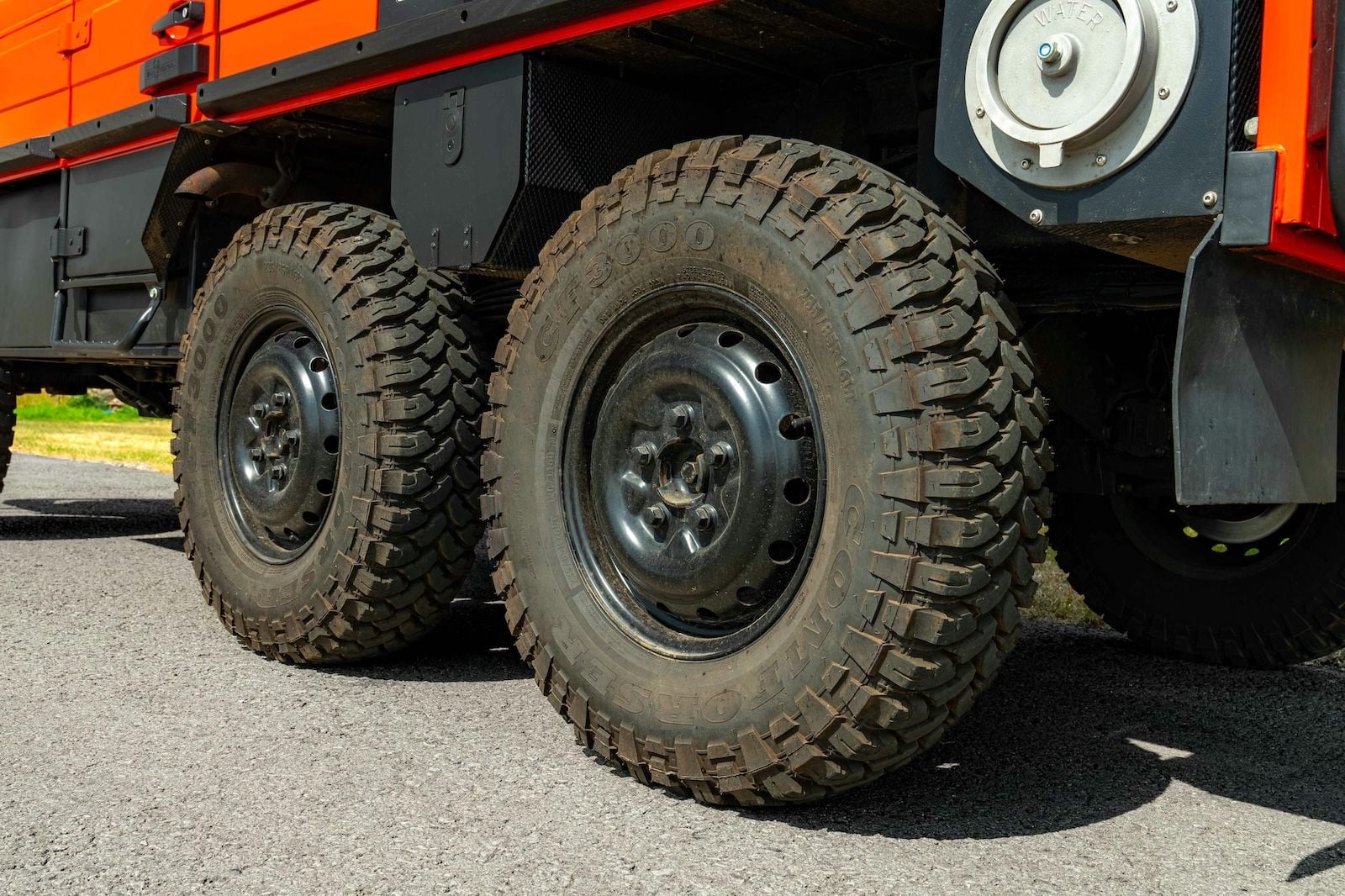
The 710 version (4×4) used 0.88:1 road and 1.69:1 off-road transfer gearing, the 712 (6×6) used 1.00:1 and 1.92:1 respectively. Front drive engaged hydraulically on the move, and hydraulic locks were fitted to the differentials of every axle. At the wheels, a 2.266:1 reduction gear in each portal hub lifted the axle line above the wheel centers resulting in excellent ground clearance.
Springing was by coils on the 710, whereas the 712 used a pivoted longitudinal leaf spring across its rear bogie. Brakes were 285 mm drums all round, with an unusual disc parking brake on the driveshaft behind the rear axle.
The 710M, the soft-top troop carrier, was 4,175 mm long, weighed 1,950 kgs empty and could carry 1,000 kgs, with two in the cab and eight on the bench seats in the back. Adding an axle created the 712M, now 2,400 kgs, and rated for 1,600 kgs of payload or twelve passengers behind the cab. Swiss figures put top speed at 104 km/h for the 710 and 88 km/h for the 712.
When the Pinzgauer reached Britain, Commercial Motor’s Graham Montgomerie tested one for its June 1974 issue. He laid out a route of steep gradients and water-filled gullies and reported that he couldn’t bog it or find a slope it wouldn’t climb, and that the sealed brake drums worked no differently after the vehicle had been driven fully submerged.
He said the handbrake was “the most effective I have encountered on any vehicle,” holding the fully-laden truck on a 1-in-3 slope. He was less taken with the rest. The main gearchange was vague enough that he repeatedly found fifth when reaching for second, the brake pedal felt dead, the steering kicked back hard with the front axle driven, and fuel consumption over nearly 400 km worked out at about 11 mpg. At £6,995 plus VAT, he noted, the Pinzgauer cost as much as roughly three Land-Rovers, and he expected it to sell accordingly. In other words, not very well.
The Pinzgauer’s Main Customers
The vast majority of Pinzgauer customers were militaries, perhaps predictably, including Britain, Switzerland, Saudi Arabia, Jordan, Malaysia, Norway, Venezuela, Cyprus and Yugoslavia.
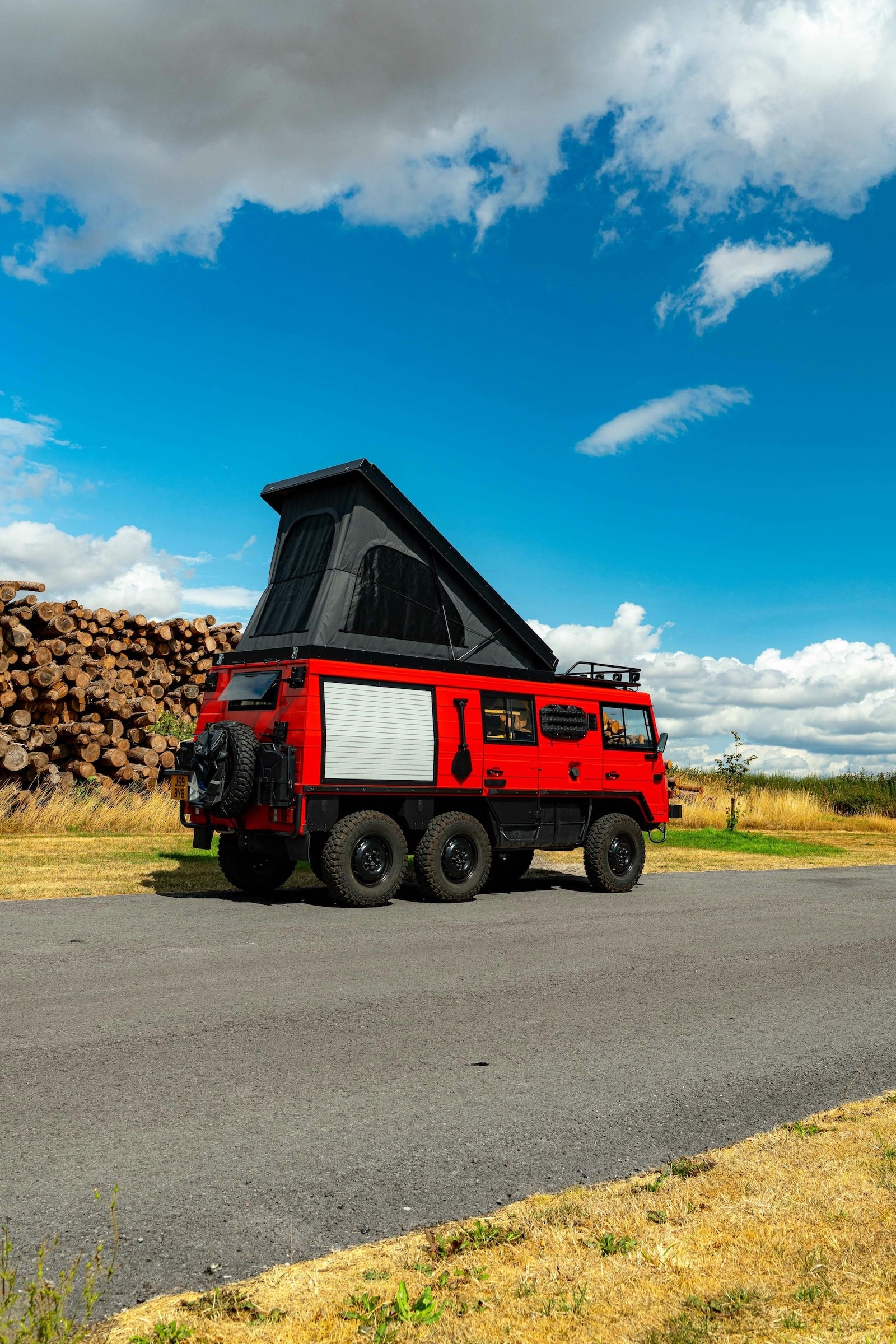
This is a 1991 Steyr-Puch Pinzgauer 718K 6×6 that’s been converted into a self-contained two-berth camper, it now serves as a purpose-built overland vehicle that can go almost anywhere you point it. It was reportedly first used as a fire engine in the UK, and its later camper conversion was documented extensively on the True Blue Travellers YouTube channel.
In 1985 the vehicle was reworked for the diesel-powered second generation, with the 716 (4×4) and 718 (6×6) entering production in 1986, and those kept the Graz line running through to the year 2000. Sources seem to disagree on total Graz factory production, the number seems to vary between 24,000 up to 30,000.
In mid-2000 production moved to Automotive Technik in Guildford, England, whose main customer was the UK Ministry of Defence, which had bought its first batch of Pinzgauer 4×4s in 1994. The rights then passed through Stewart & Stevenson and Armor Holdings to BAE Systems, which announced in early-2008 that it would end UK manufacturing once the remaining Pinzgauer orders were completed, citing workload, production costs and duplication across its sites.
The Pinzgauer remains in service with a number of militaries around the world, but most European nations have now sold theirs off as military surplus, and as a result they’re now in civilian hands. They make popular camper/RV conversions – particularly for those who plan to head into more remote regions.
The Steyr-Puch Pinzgauer Camper Shown Here
This is a 1991 Steyr-Puch Pinzgauer 718K 6×6 that’s been converted into a self-contained two-berth camper, it now serves as a purpose-built overland vehicle that can go almost anywhere you point it. It was reportedly first used as a fire engine in the UK, and its later camper conversion was documented extensively on the True Blue Travellers YouTube channel.
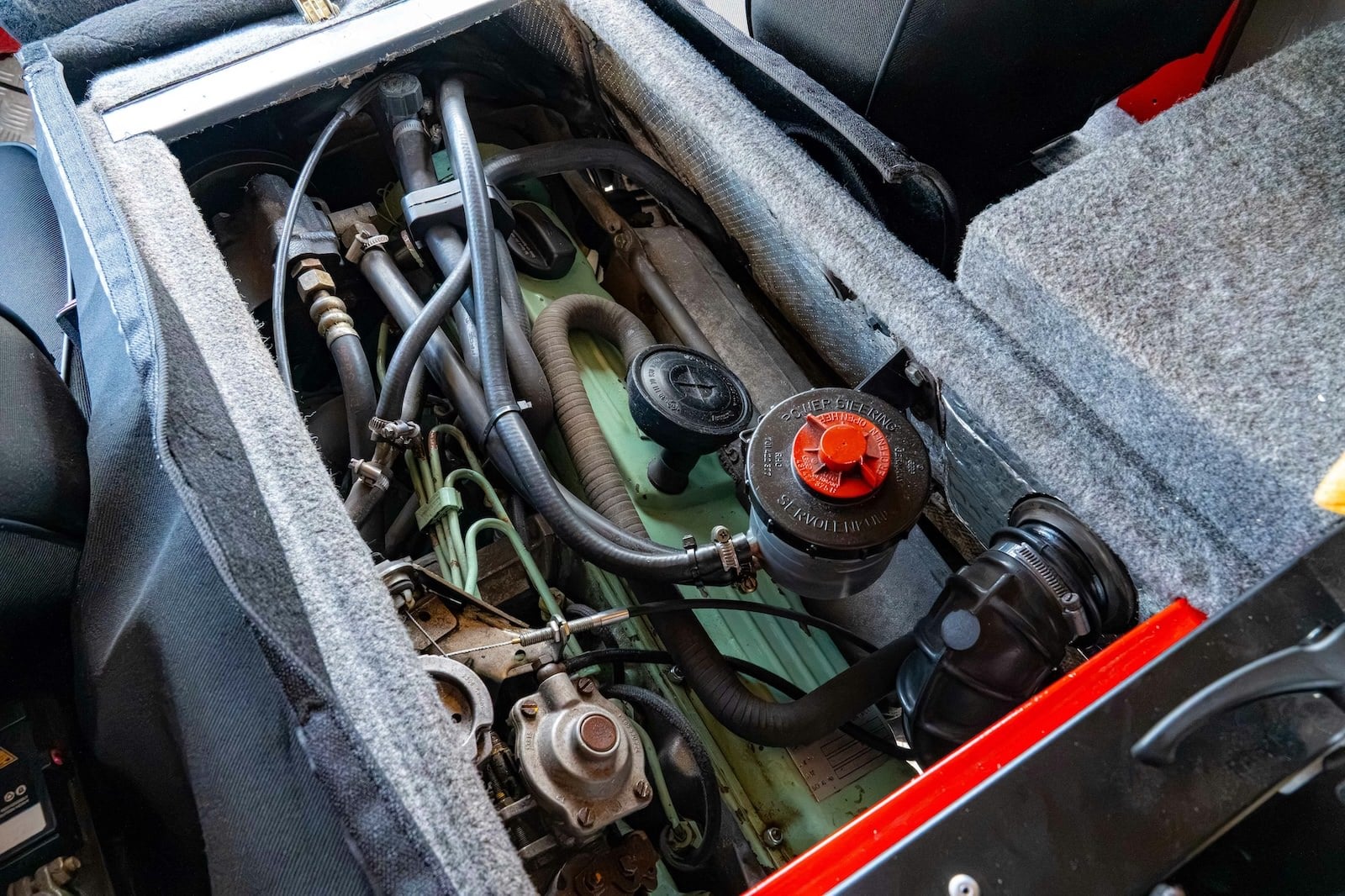
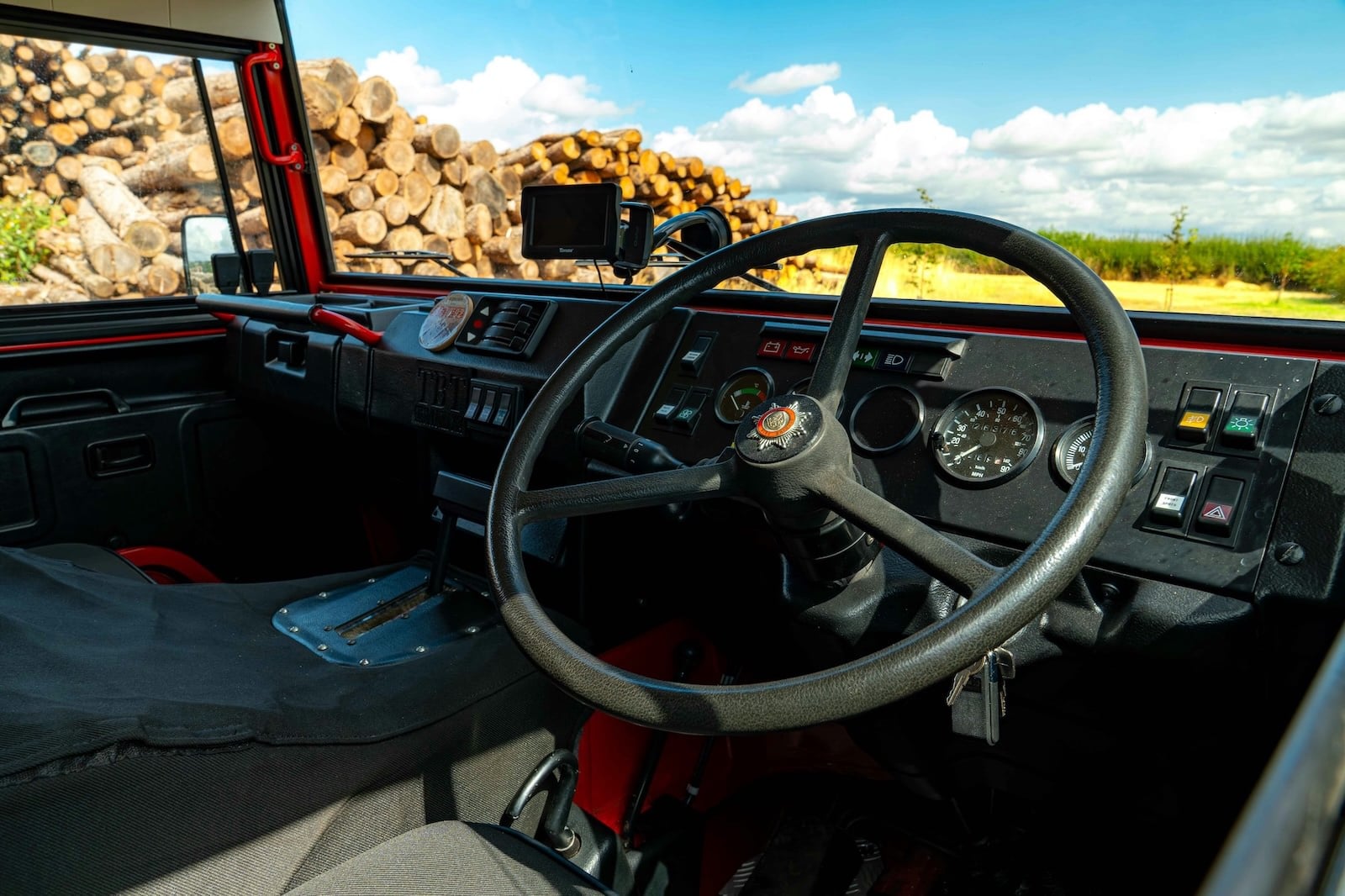
Power comes from a later 2.4 liter Volkswagen inline-six turbodiesel driving through a 4-speed automatic transmission. The drivetrain allows rear, four, or six-wheel drive, with multiple locking differentials for challenging conditions. Mechanical updates include a larger turbocharger, a later cooling nose with a larger radiator, a gearbox cooler, and higher gearing intended to make sustained road cruising more comfortable.
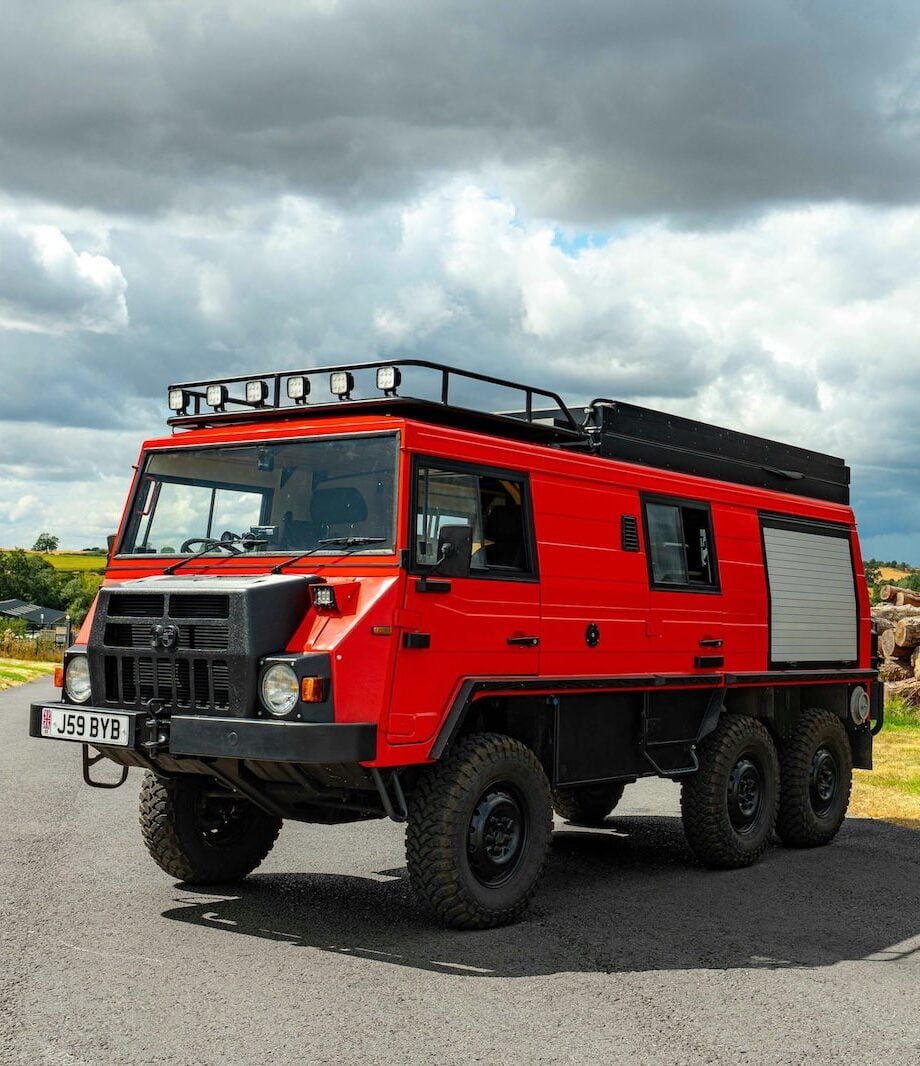
Power comes from a later 2.4 liter Volkswagen inline-six turbodiesel driving through a 4-speed automatic transmission. The drivetrain allows rear, four, or six-wheel drive, with multiple locking differentials for challenging conditions.
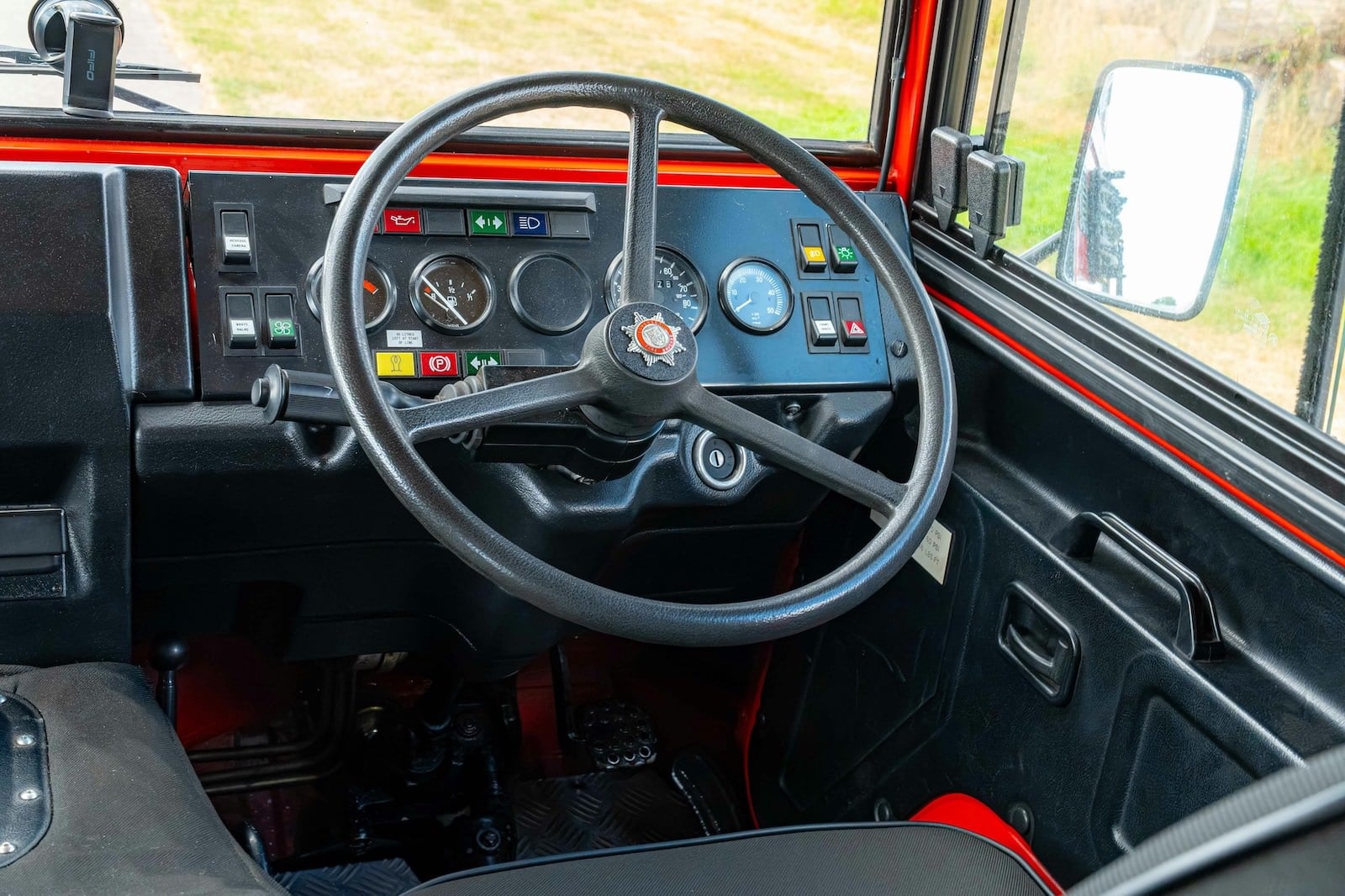
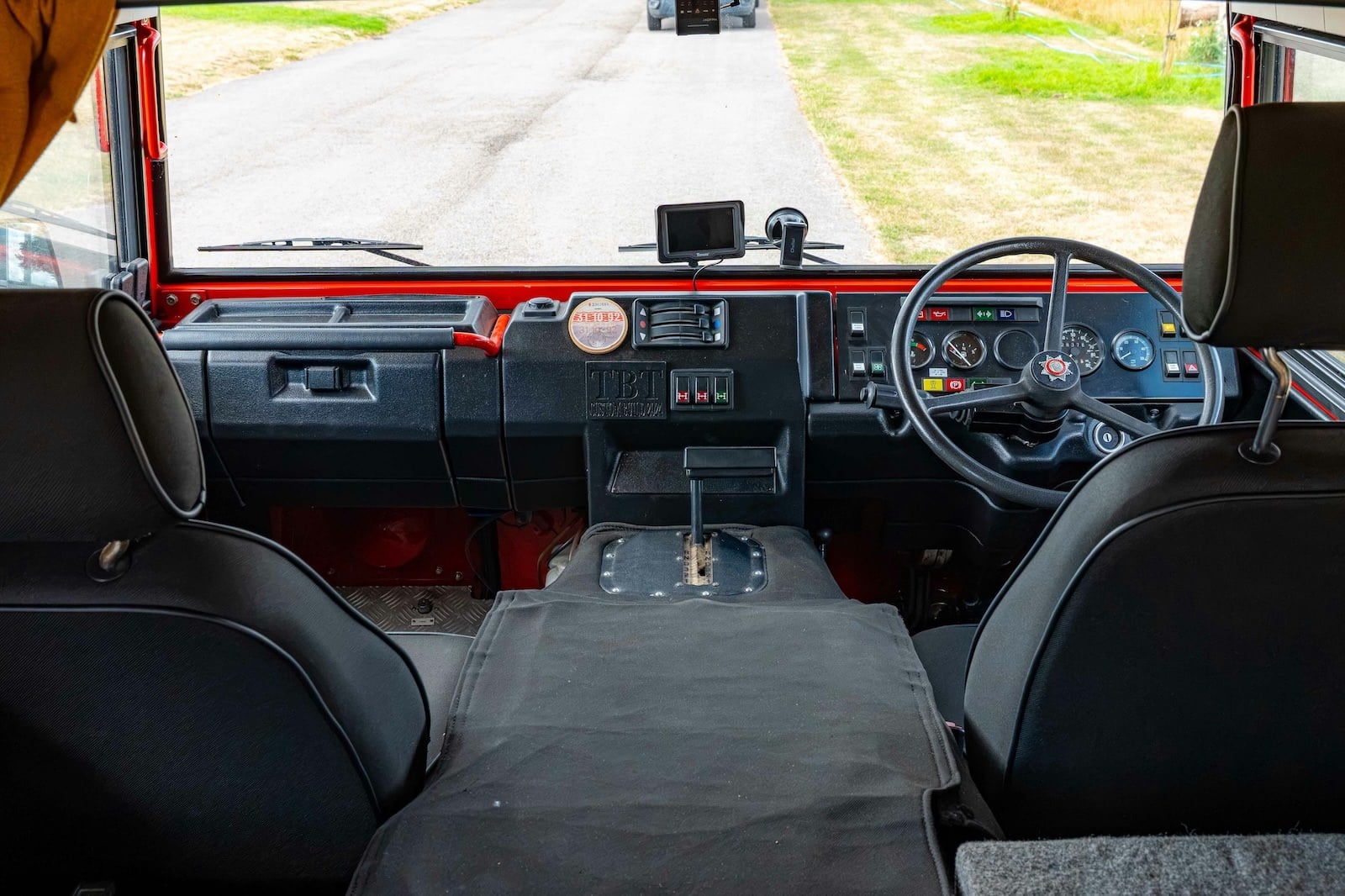
It’s finished in red with a black interior, and it’s accompanied by its instruction books, a full manual, and two keys. It has a fold-up roof for additional headroom, a series of solar cells on the roof, and it has tasteful wooden floors, tables, and cabinetry. There is a dinette set, a sofa that converts to a bed, and a kitchenette.
The odometer shows 26,376 miles, which the seller believes to be genuine, and it’s now being offered for sale out of South Derbyshire in the United Kingdom and you can visit the listing here.
Images courtesy of Collecting Cars

Articles that Ben Branch has written have been covered on CNN, Popular Mechanics, Smithsonian Magazine, Road & Track Magazine, the official Pinterest blog, the official eBay Motors blog, BuzzFeed, Autoweek Magazine, Wired Magazine, Autoblog, Gear Patrol, Jalopnik, The Verge, and many more.
Silodrome was founded by Ben back in 2010, in the years since the site has grown to become a world leader in the alternative and vintage motoring sector, with well over a million monthly readers from around the world and many hundreds of thousands of followers on social media.