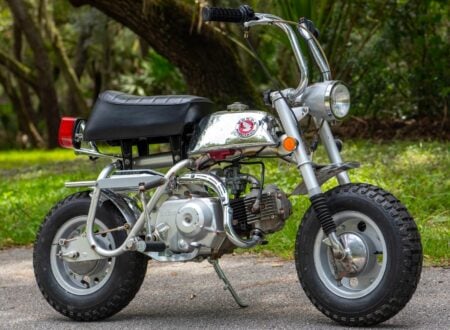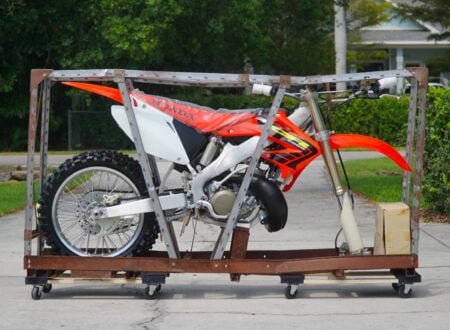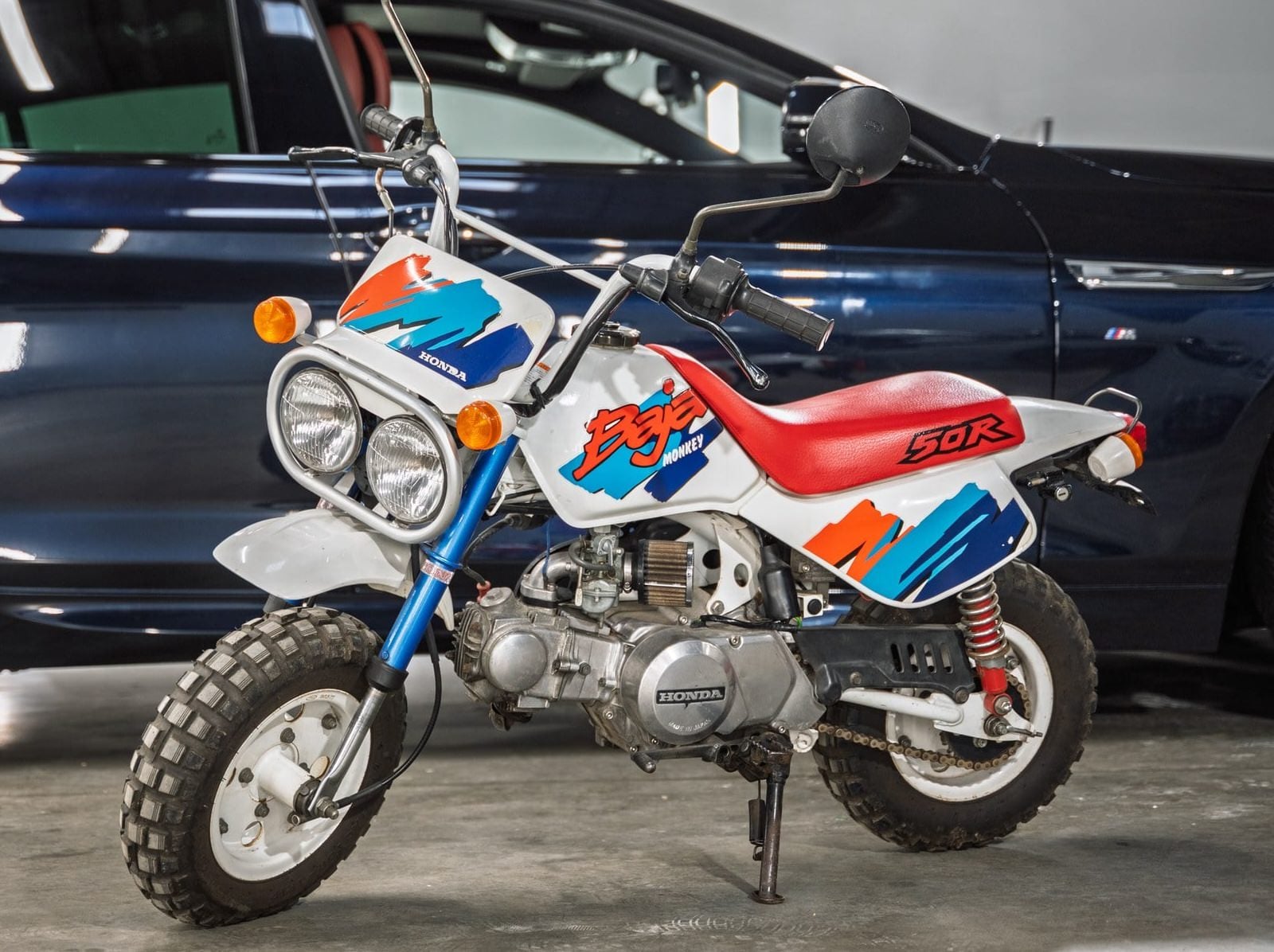
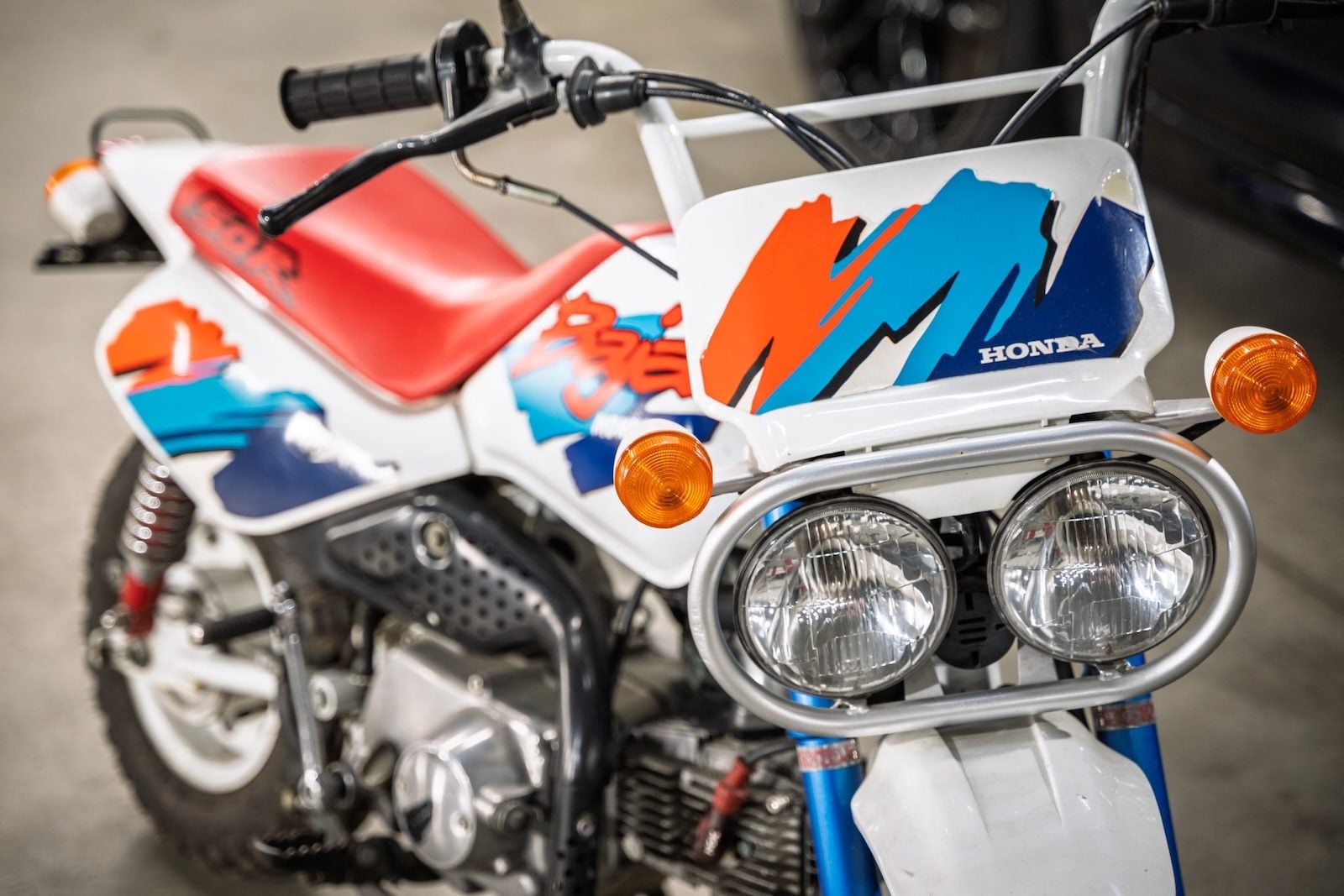
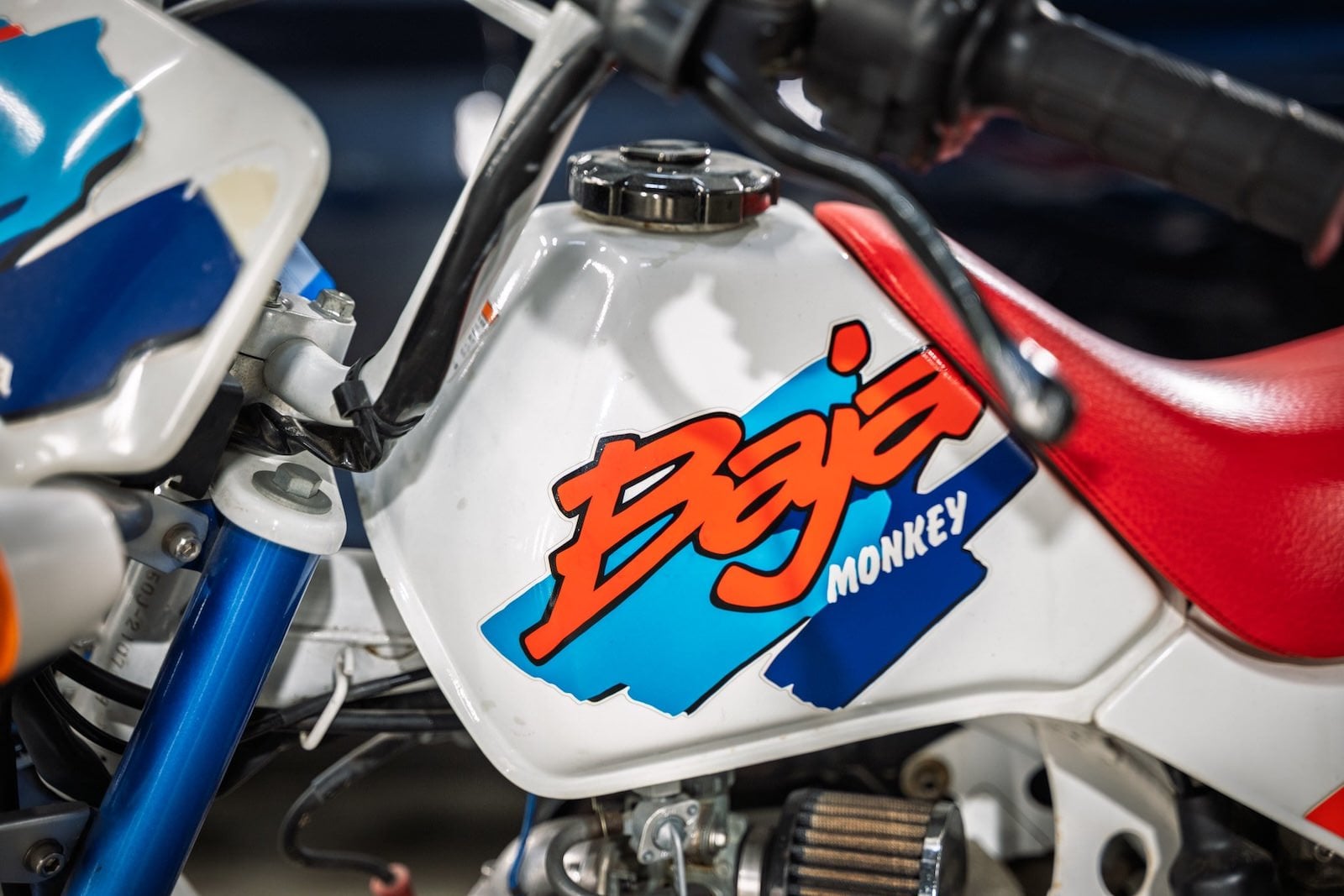
This is an original Honda Z50J2 Baja from 1994, it’s one of the rarer Honda minibikes from the golden age of the pint-sized motos, and they were kitted out to look like the Honda Baja desert racing bikes of the era.
These minibikes weren’t just for show, they’re 100% functional and ridable by both kids and adults. Power is provided by a 49cc single cylinder engine, sending power back through a 4-speed gearbox to the rear wheel. Many learned to ride on these minibikes, and as a result there is a huge amount of sentimentally surrounding them in the collector community.
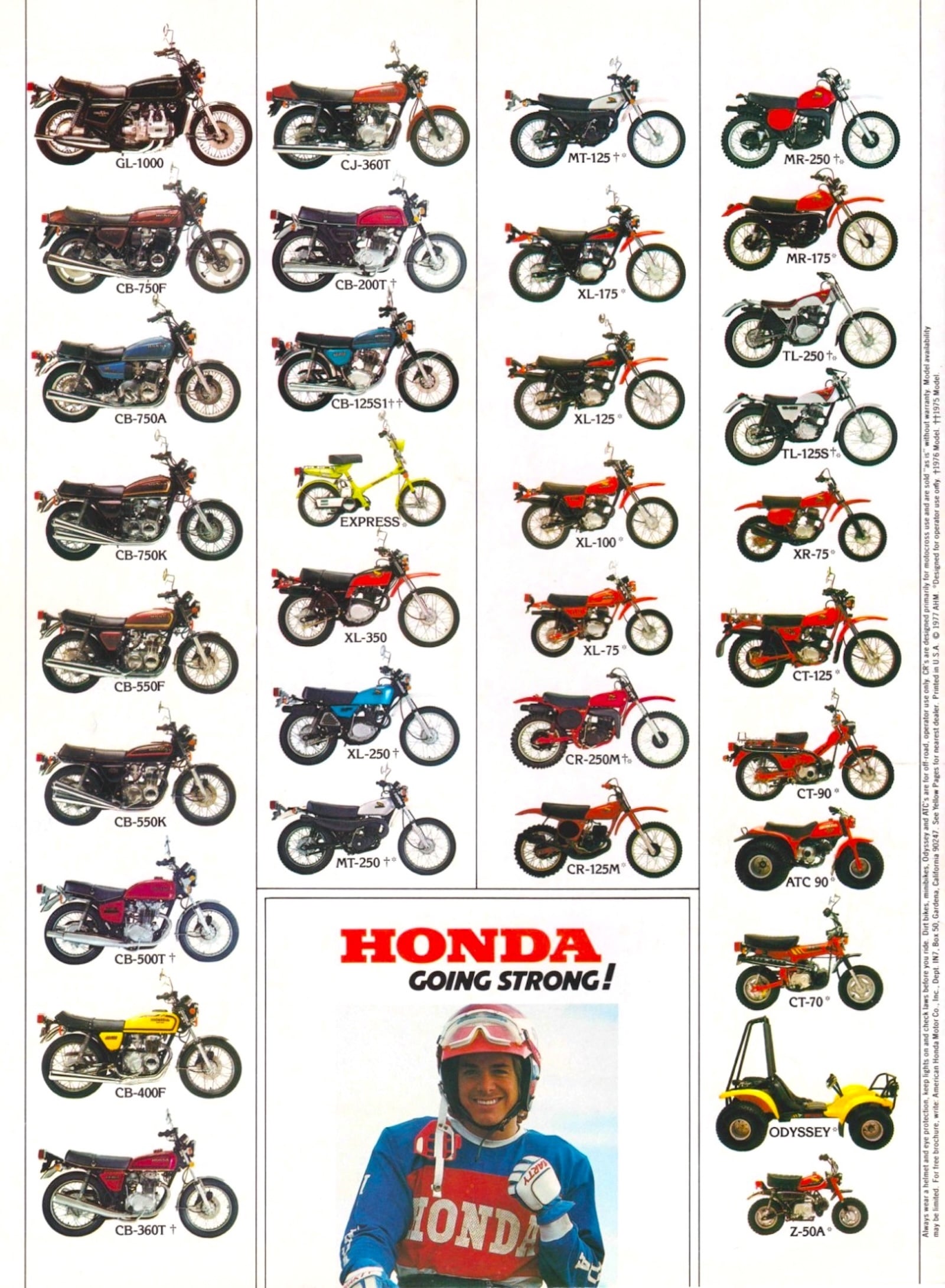
 As you can see here, Honda’s catalogue included a slew of different motorcycles, including the Z50A and even a four-wheeled go kart named the Odyssey. Image provided by Honda.
History Speedrun: The Honda Z50R Minibike
Honda’s Z50 story starts in a place that doesn’t sound like the beginning of a wildly popular series of motorcycles – it started out in an amusement park. In 1961, Honda developed the Z100 as a ride for Tama Tech amusement park in Hino, Tokyo. The small four-stroke 50cc minibike was designed from the outset to be simple, tough, and less intimidating for new riders.
The point of the Z100 minibike wasn’t speed or glamor – it was approachability. These bikes had tiny wheels, easy controls, and a format that let kids (and plenty of adults) get the feel of motorcycle riding without the drama or complexity of dealing with a clutch, gearshifts, or excessive size and weight.
These minibikes were soon nicknamed (monkey bikes) due to the fact that, when viewed from the rear, an adult riding them looked like a monkey – with their knees up, their head leaning forward, and their arms up and out to the side. The monkey bike name stuck, and Honda began using it as an official brand name within a few years.
By 1967, the Z100 minibike idea had matured into a full retail product with the Monkey Z50M model. Honda leaned into portability and first-time motorcycle owners. These bikes had fold-down handlebars which made it easy to carry in a car trunk and head for the campground, fire trails, farm, or wherever else you might want to go riding.
Two years later, the Z50A arrived as the next major step. Honda moved from the tiny 5 inch wheels to 8 inch wheels and added front suspension, pushing the little bike further away from a toy and closer to something you could actually ride over rough ground with some confidence.
In 1974, the new Z50J model brought the changes that enthusiasts still point to as the moment the Honda Monkey became a real small motorcycle – this model had a redesigned frame and rear suspension to match the front, plus block-pattern tires and a larger fuel tank intended to support longer, more independent outings.
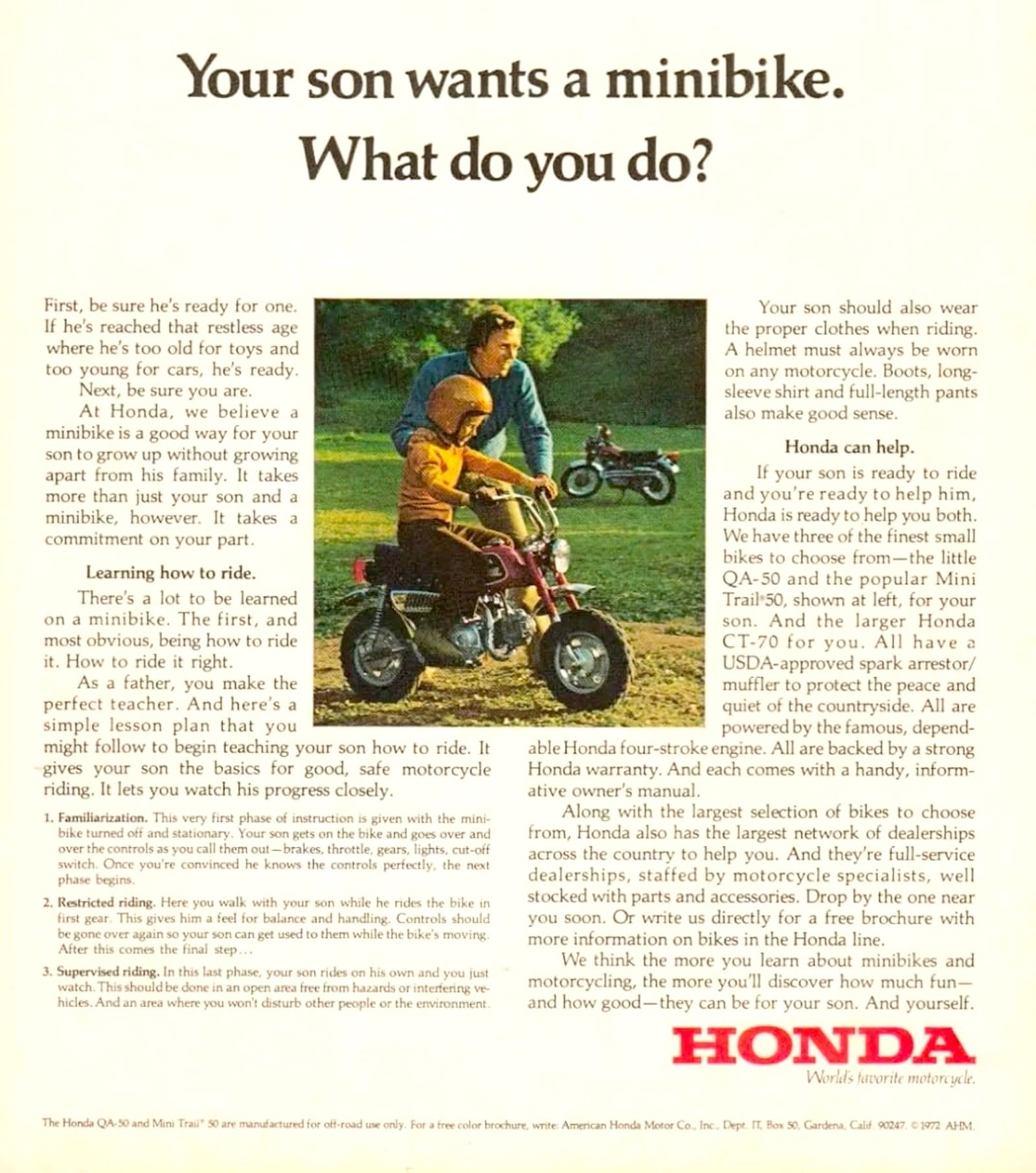
By 1967, the Z100 minibike idea had matured into a full retail product with the Monkey Z50M model. Honda leaned into portability and first-time motorcycle owners. These bikes had fold-down handlebars which made it easy to carry in a car trunk and head for the campground, fire trails, farm, or wherever else you might want to go riding. Image provided by Honda.
For many motorcyclists who started riding as kids in the 1970s and 1980s, it was a Honda Monkey that was their first ever taste of riding. By the late 1970s these minibikes weren’t just campground toys anymore, kids were racing them competitively, and the trackside pit bike role was also becoming a popular use case. Honda’s response to all this was the launch of the Z50R in 1979 – a more dirt and track-oriented interpretation of the Z50 series, and it soon became one of their best-sellers.
Mechanically, the Z50R kept the core Honda Monkey bike bits in place, a 49cc air-cooled, overhead-cam four-stroke single and a 3-speed transmission with an automatic centrifugal clutch. On the early bikes, the shift pattern is the familiar minibike return style (N – 1 – 2 – 3), making it fun and approachable for beginners.
As you might expect, the bike had a backbone frame, telescopic forks up front, and a swingarm rear end, all paired with 3.50-8 tires and drum brakes front and back. Dimensions were compact even by minibike standards at 1,300 mm long, 623 mm wide, 860 mm high, with a 590 mm seat height. Dry weight was just 52 kgs (115 lbs), which goes a long way toward explaining why these bikes could be muscled around a backyard track by riders who still had elementary homework to do.
In 1986, Honda produced the Z50RD, a chrome-finished dealer special based on the Z50R platform. The Z50R continued in production through 1999. For the 2000 model year, Honda introduced the XR50R as its new small off-road model, using a closely related 49cc four-stroke engine architecture.
There were a few other special edition versions of the Z50R made, typically only for the Japanese market. The two most famous are the Z50R Baja and the Z50R Baja Africa, it’s not known exactly how many of each were made but they’re now considered highly collectible in Monkey Bike circles.
The 1994 Honda Z50J Baja Shown Here
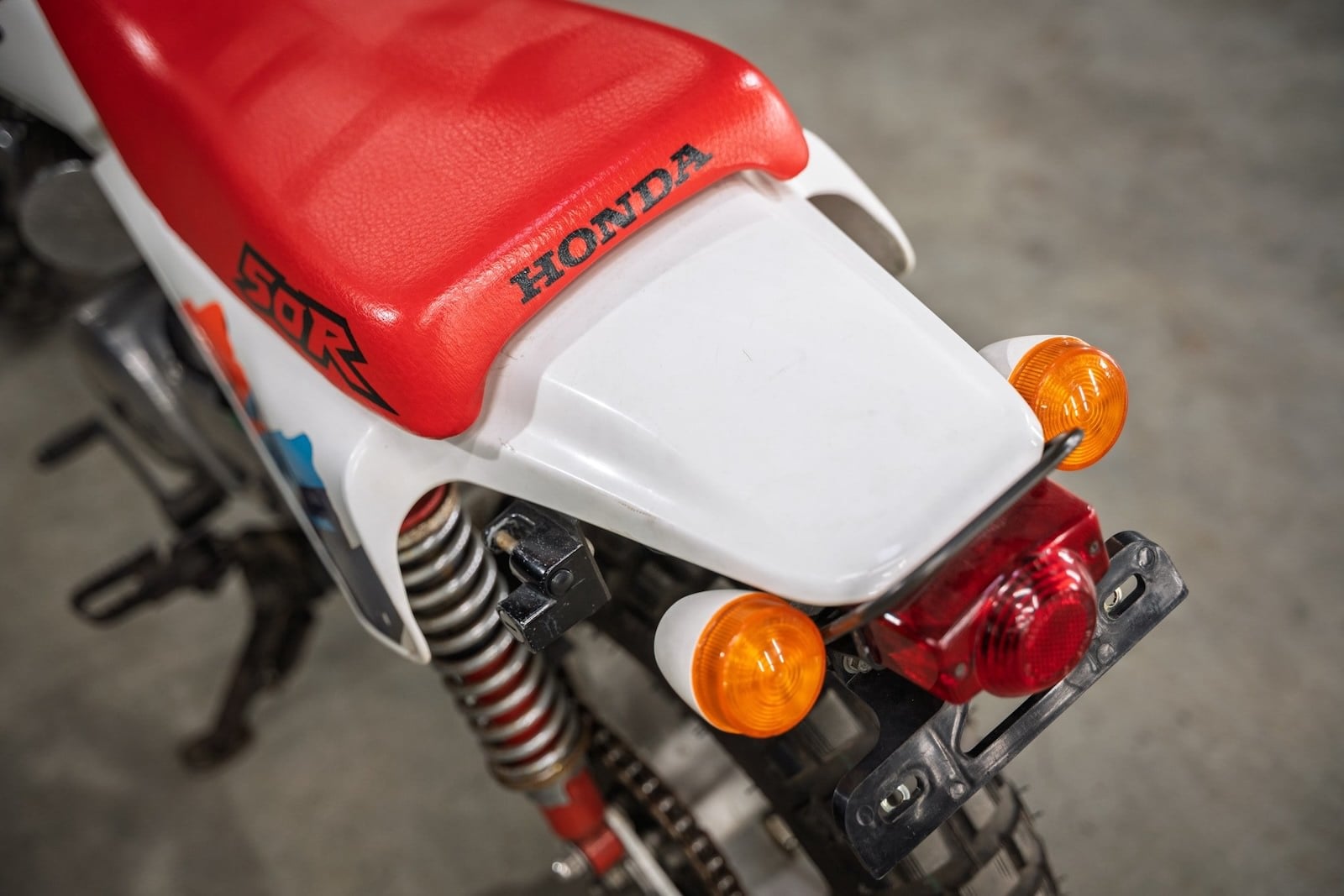
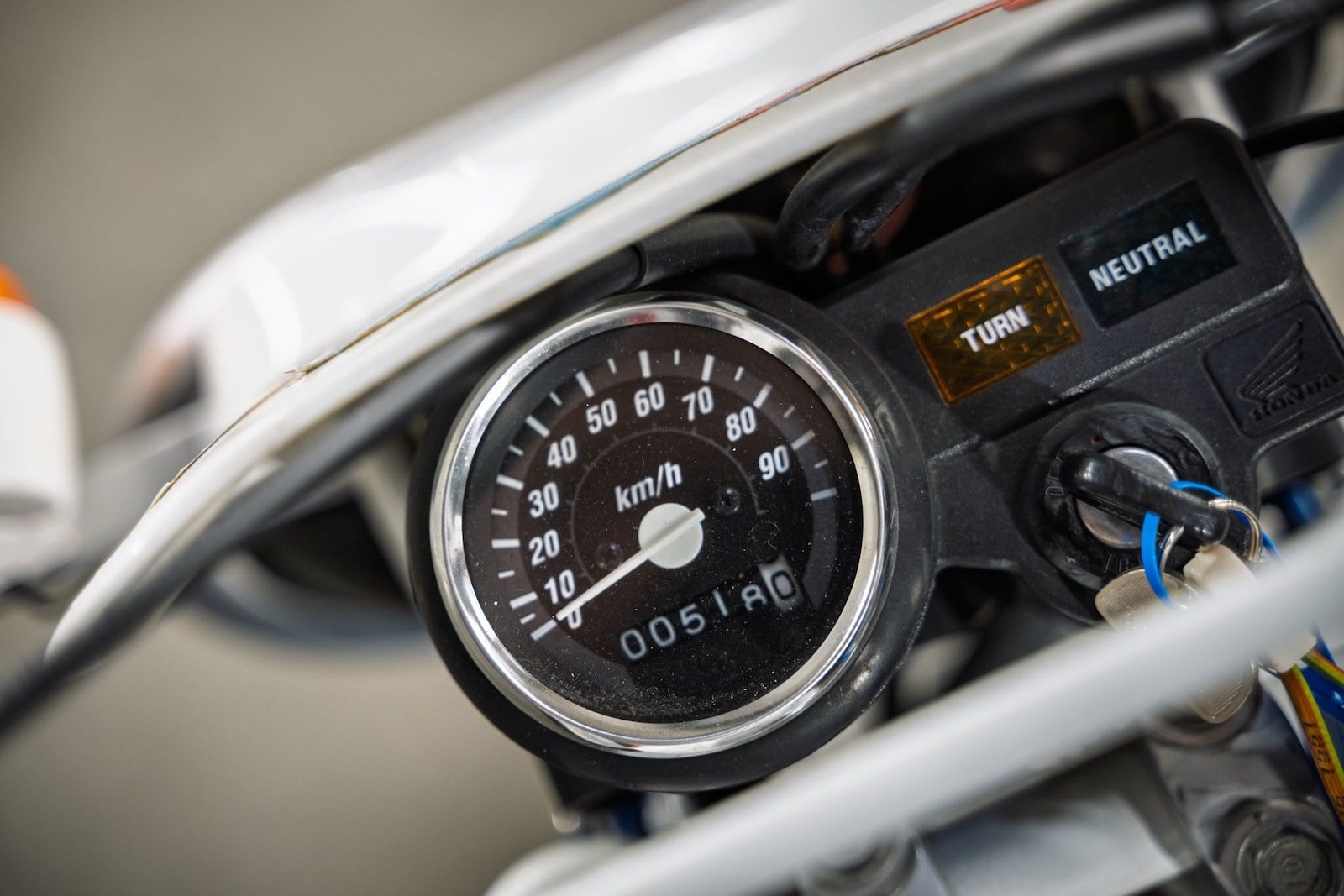
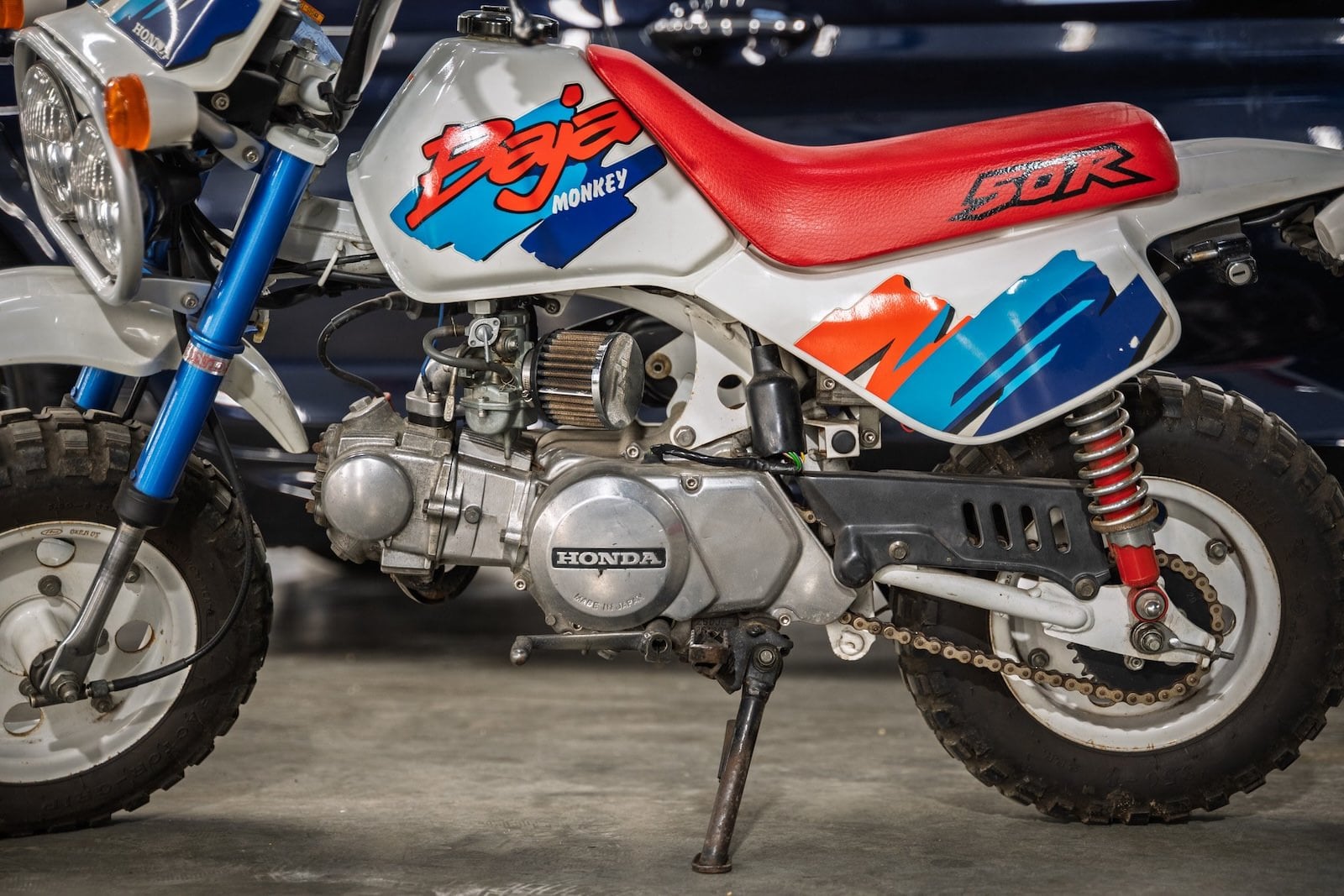
This is an original Honda Z50J Baja from 1994, it’s a Japanese-market example of the distinctive Monkey-derived minibike, with just 518 kms (322 miles) on the odometer from new. It remained with its original owner in Japan until 2025, when it was bought by the selling dealer, and it’s now registered in Poland – its unusually low indicated mileage is believed to be genuine.
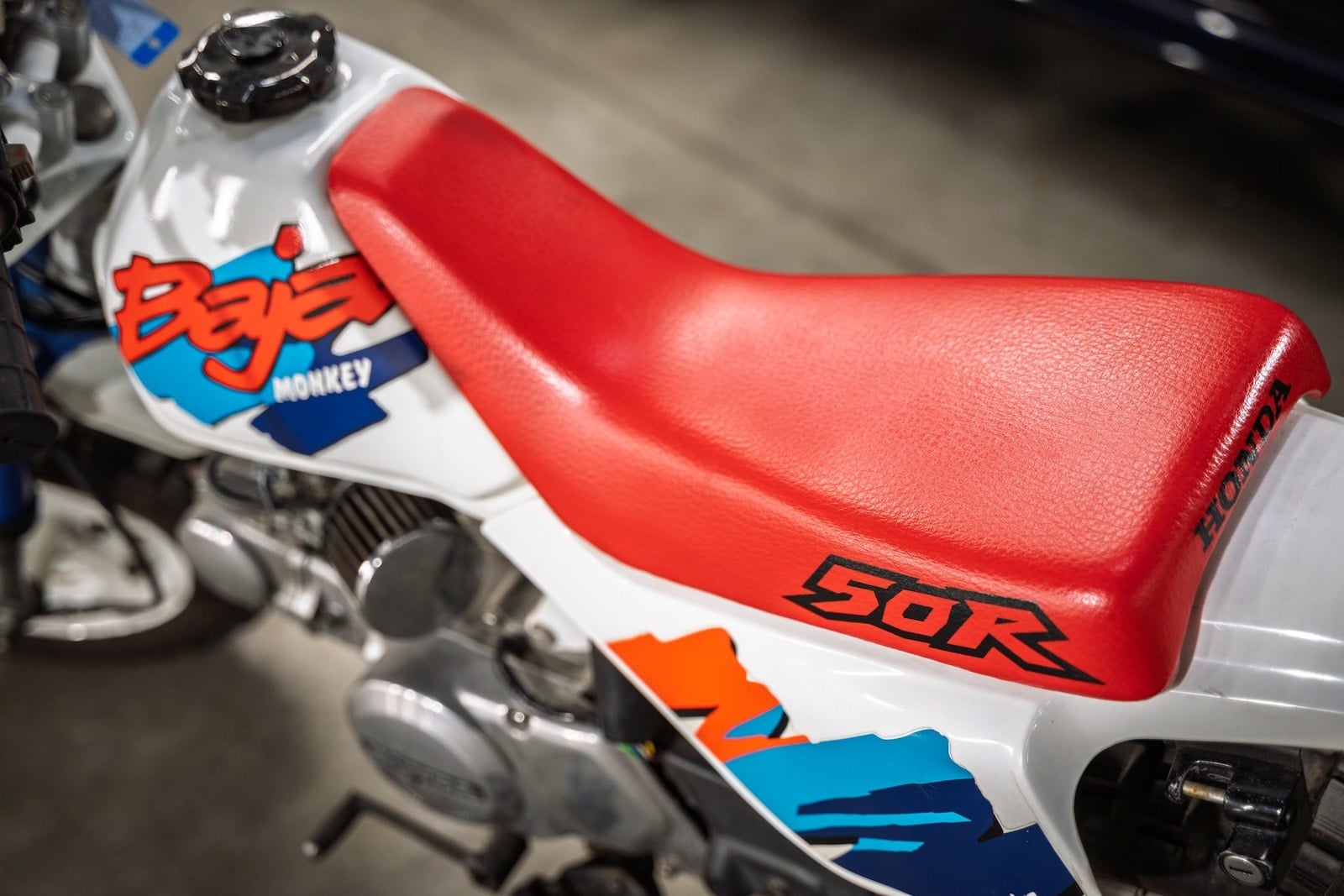
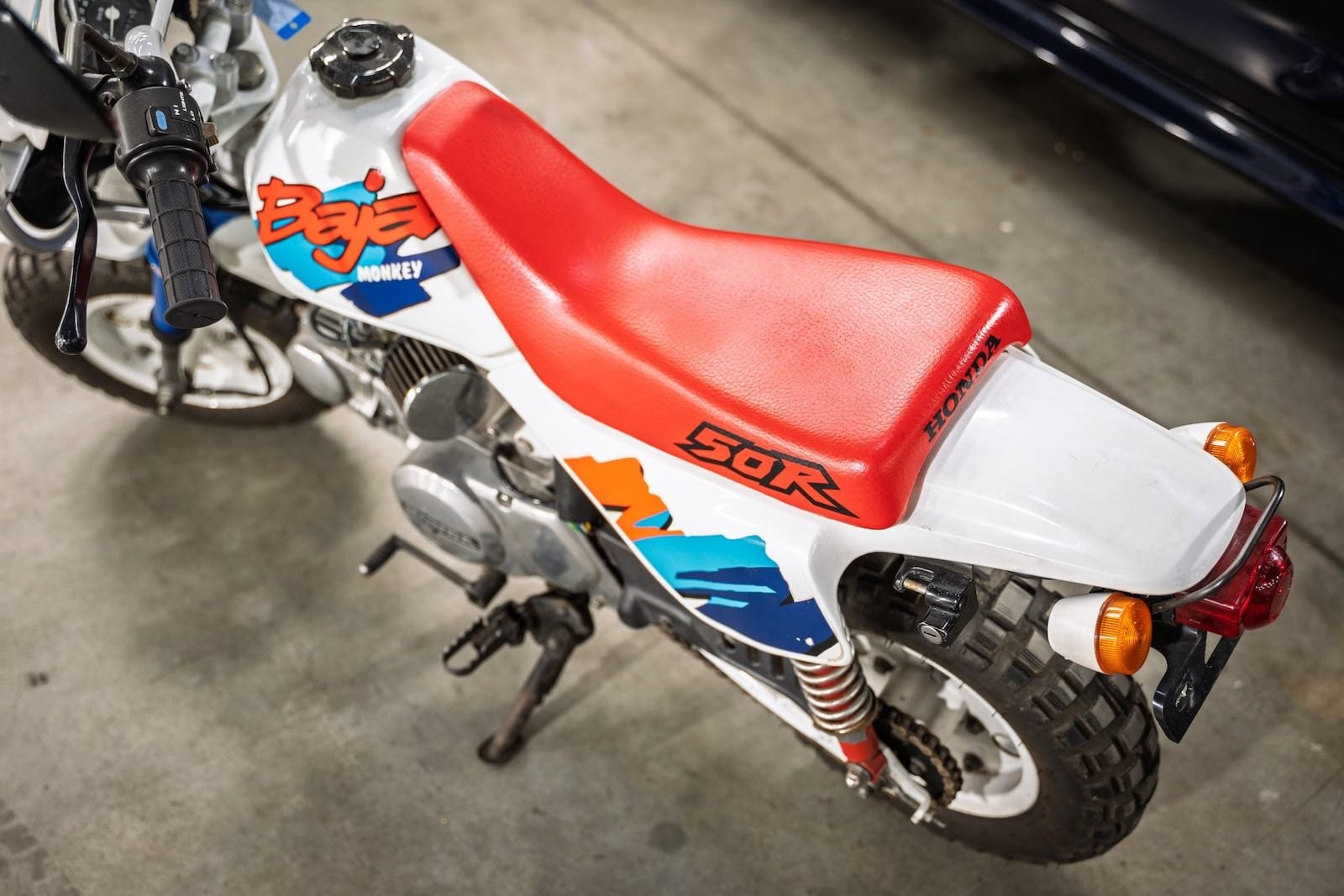
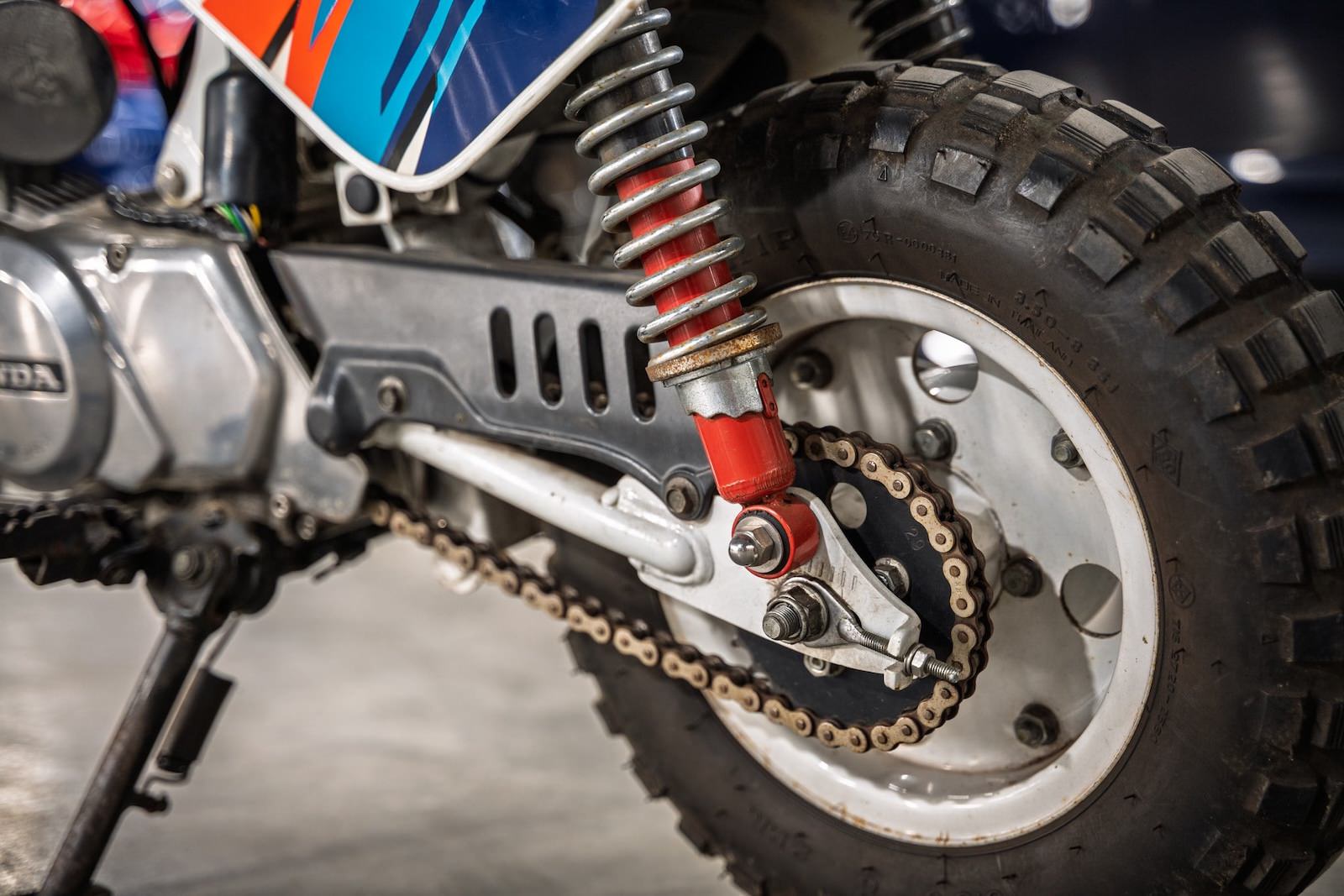
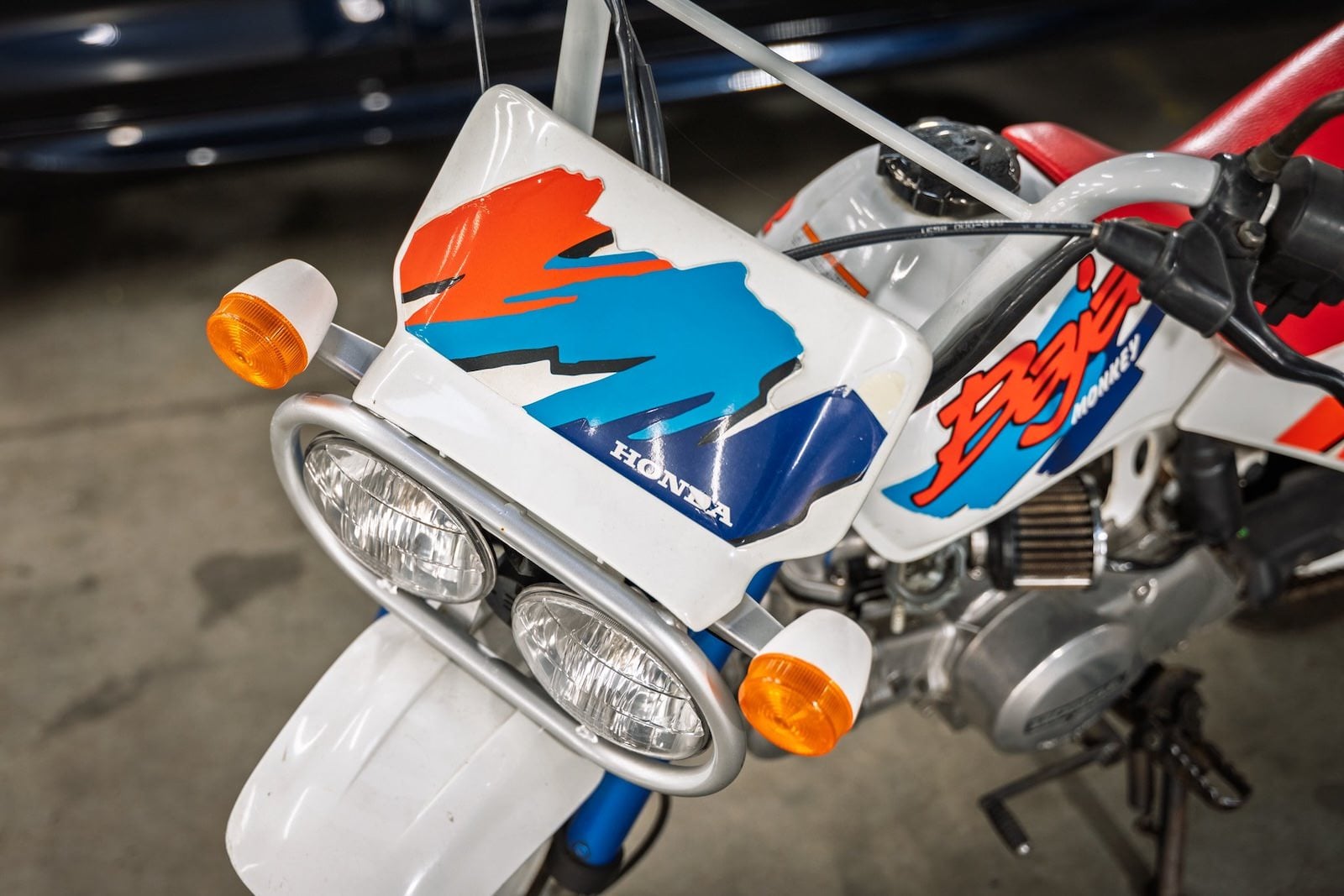
The bike is finished in white with red and blue graphics over a white frame, the bike keeps the Baja model’s classic dual headlights, high-mounted front fender, red solo seat, rear grab handle, and 8 inch steel wheels. The wheels are fitted with IRC Tractor-Grip tires, and braking is handled by drums at both ends as you would expect.
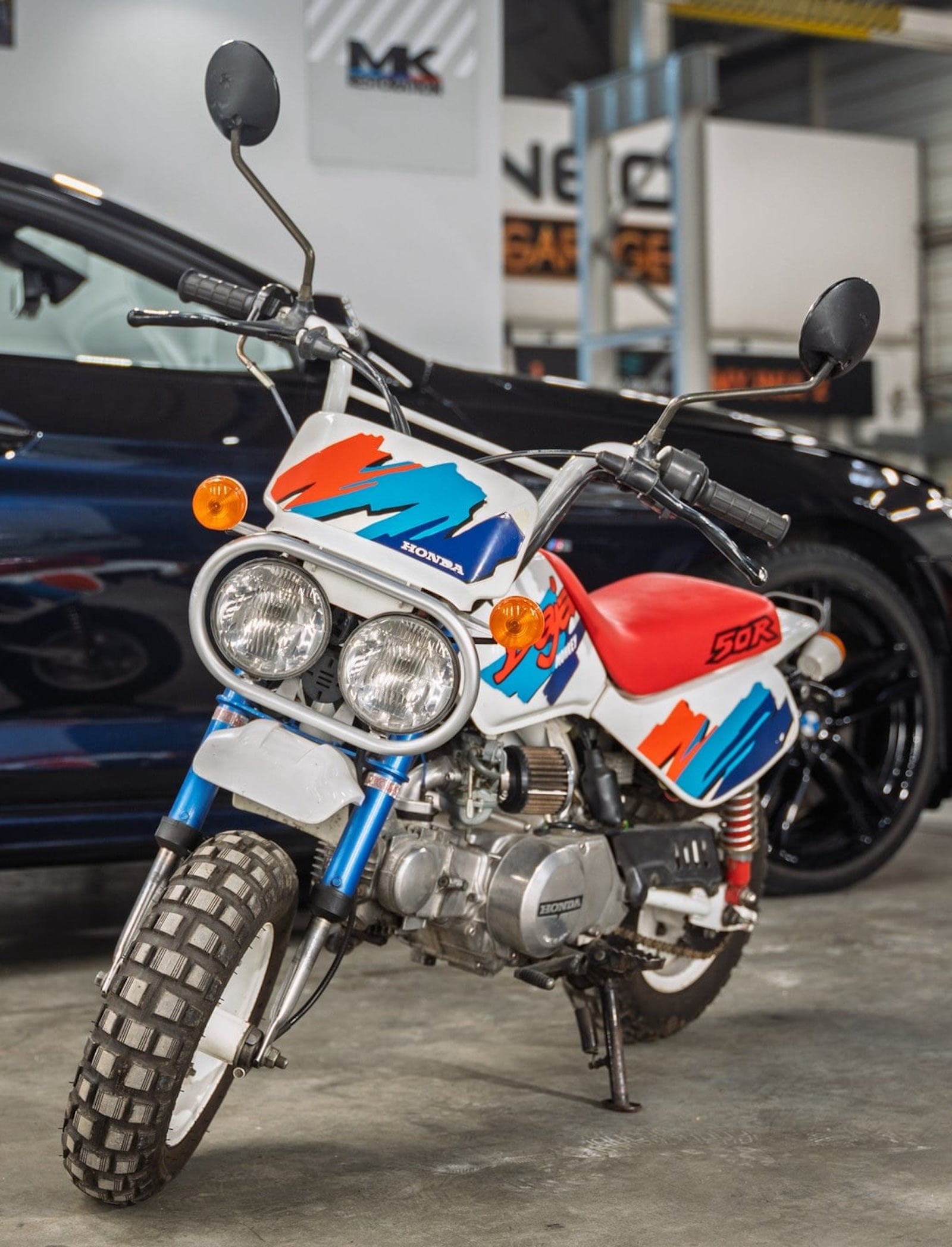
This is an original Honda Z50J2 Baja from 1994, it’s one of the rarer Honda minibikes from the golden age of the pint-sized motos, and they were kitted out to look like the Honda Baja desert racing bikes of the era.
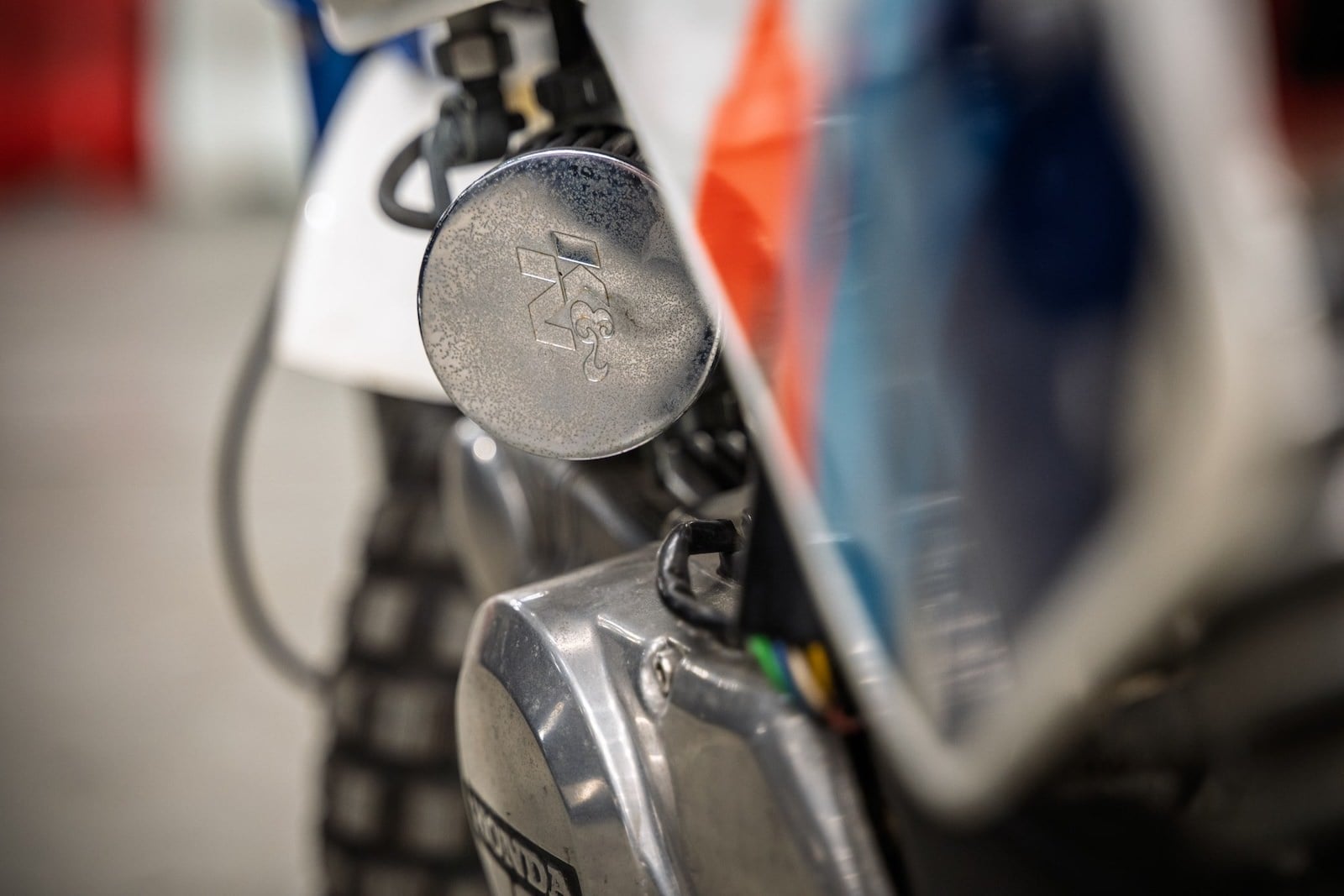
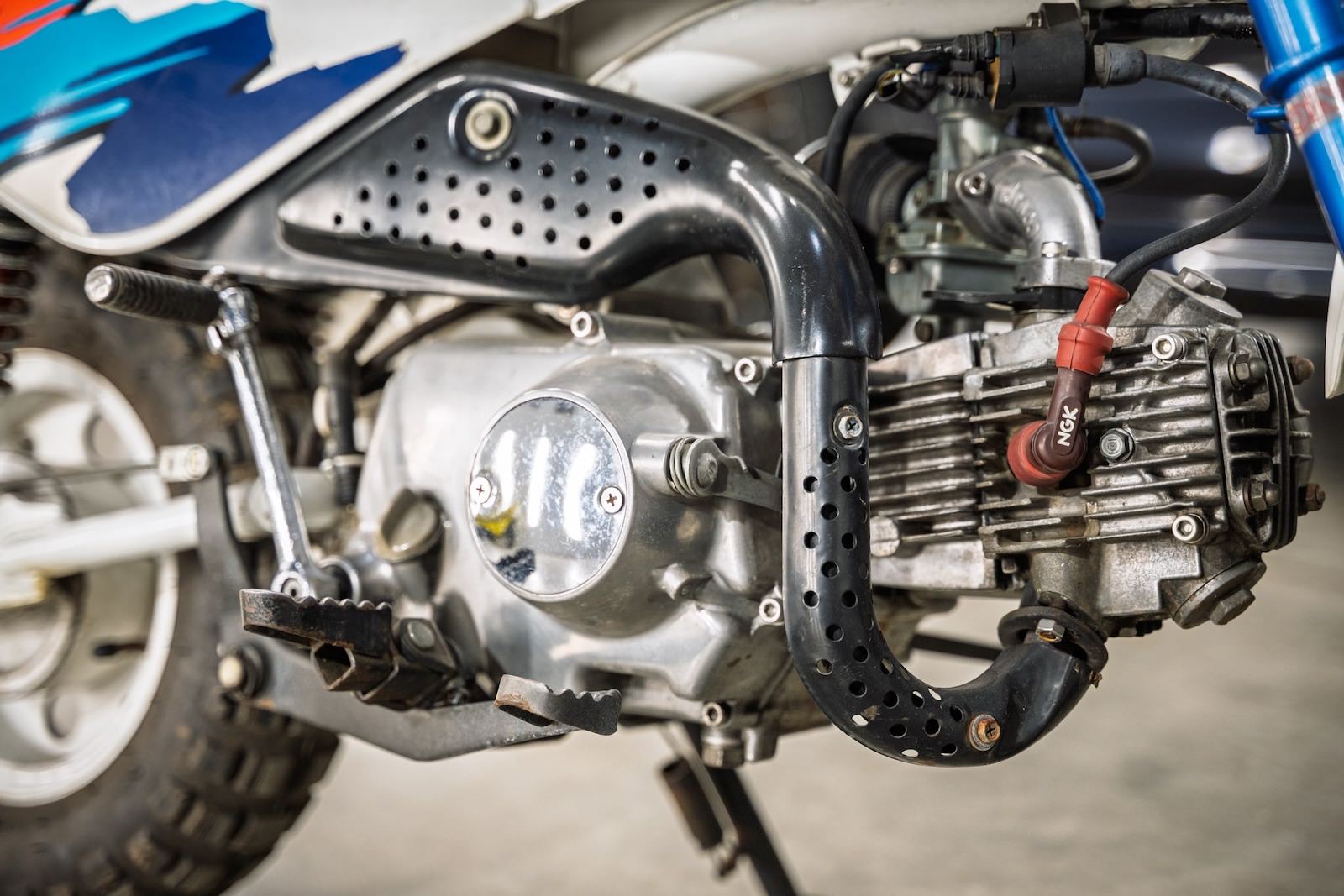
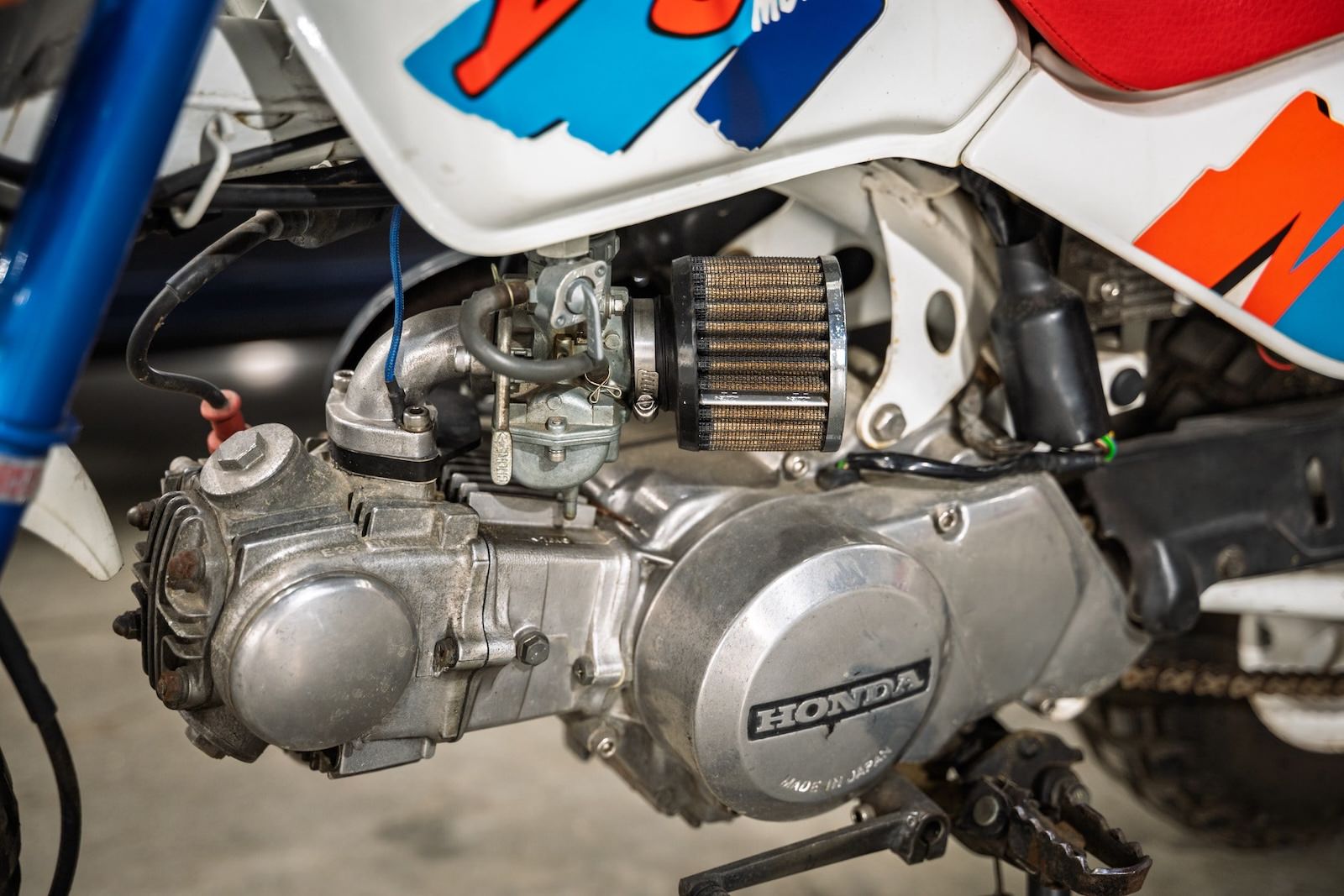
As with all the bikes in the Z50 family, power comes from a 49cc horizontal four-stroke single-cylinder engine paired with a 4-speed manual transmission and chain final drive. The bike has a kick starter, high-mounted exhaust, inverted front fork, and twin rear shocks.
It’s now being offered for sale out of Warsaw, Poland where it’s registered, and it’s had some recent servicing including a carburetor adjustment and an oil change. If you’d like to read more about it or register to bid you can visit the listing here.
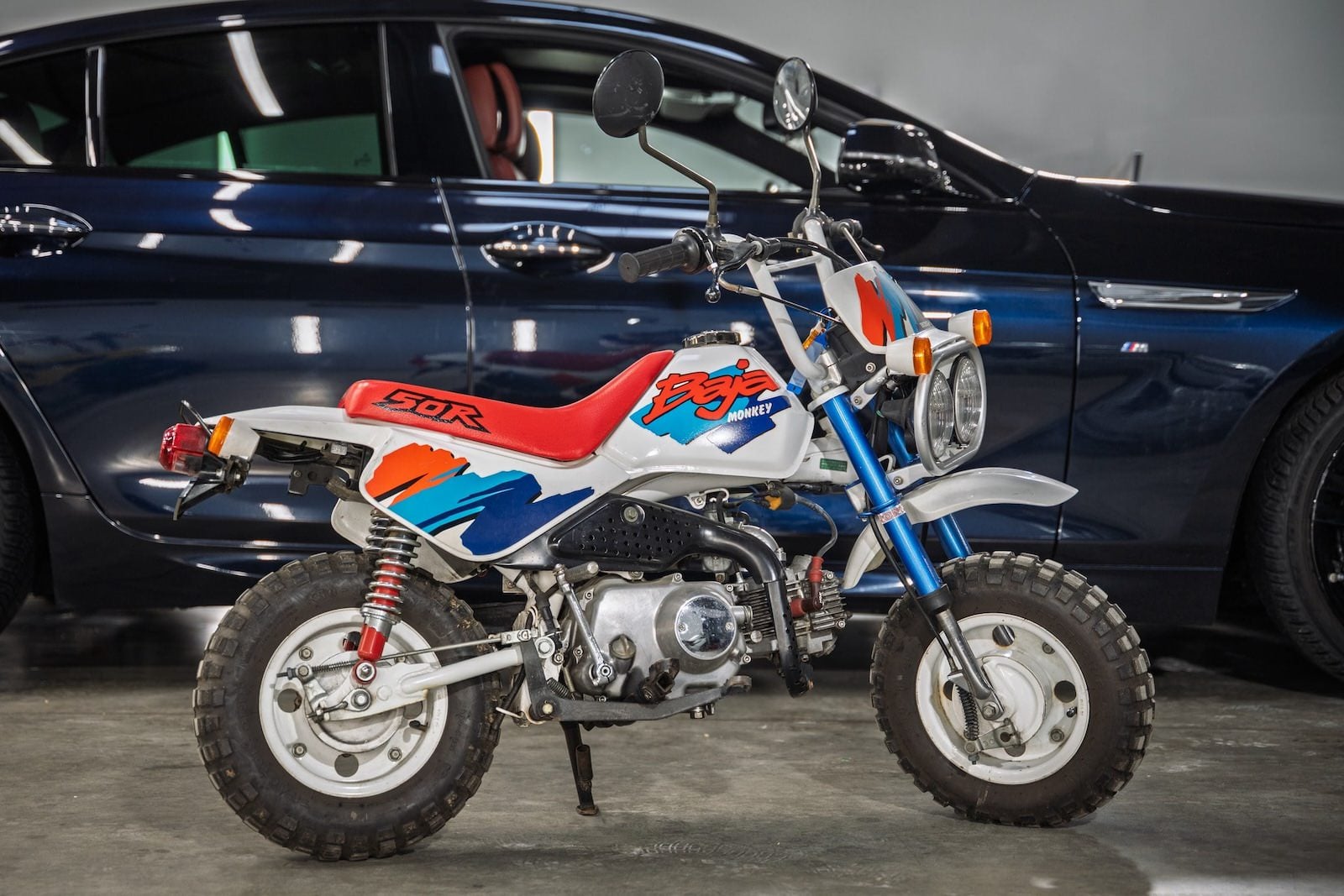
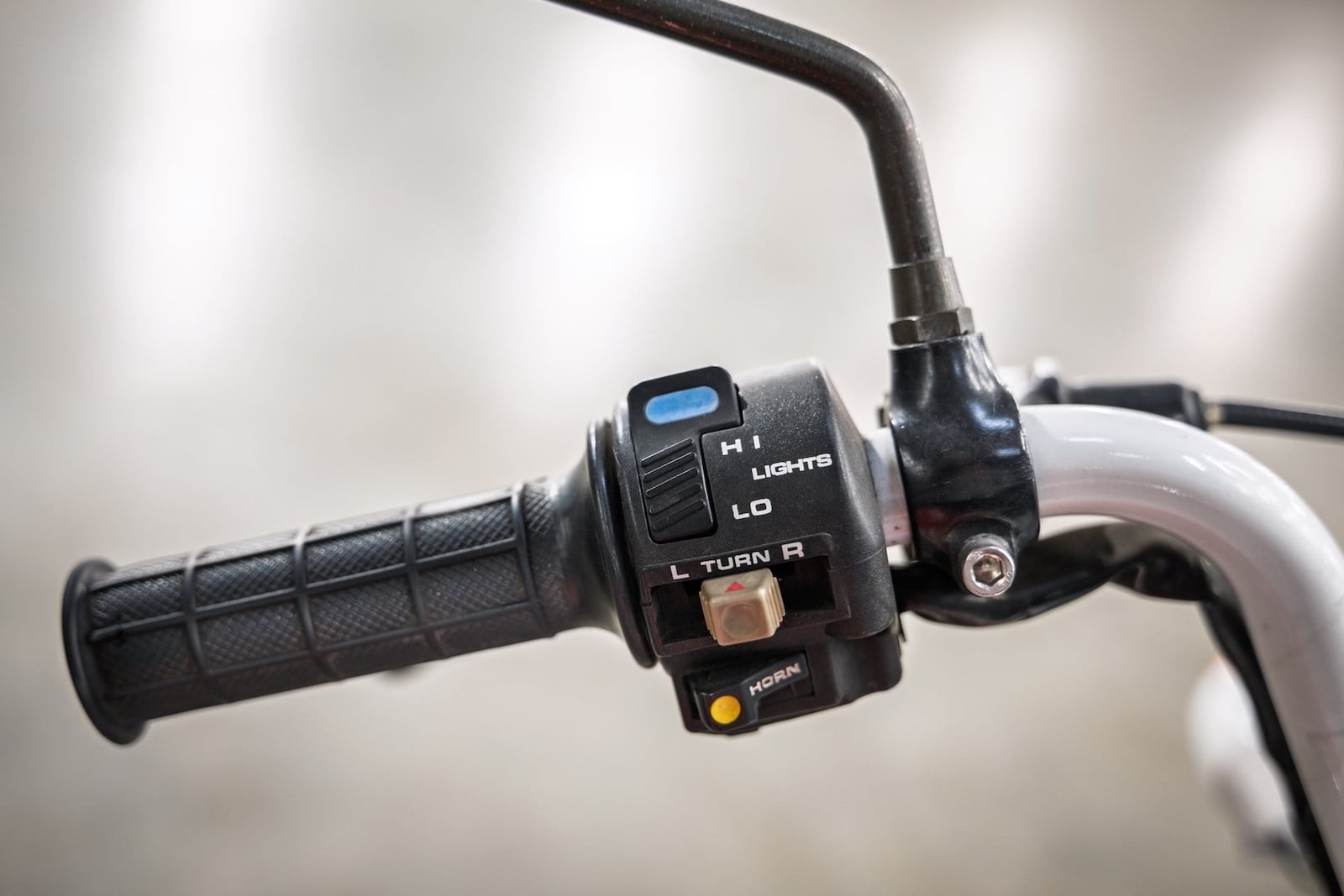
Images provided by Car & Classic

Articles that Ben Branch has written have been covered on CNN, Popular Mechanics, Smithsonian Magazine, Road & Track Magazine, the official Pinterest blog, the official eBay Motors blog, BuzzFeed, Autoweek Magazine, Wired Magazine, Autoblog, Gear Patrol, Jalopnik, The Verge, and many more.
Silodrome was founded by Ben back in 2010, in the years since the site has grown to become a world leader in the alternative and vintage motoring sector, with well over a million monthly readers from around the world and many hundreds of thousands of followers on social media.