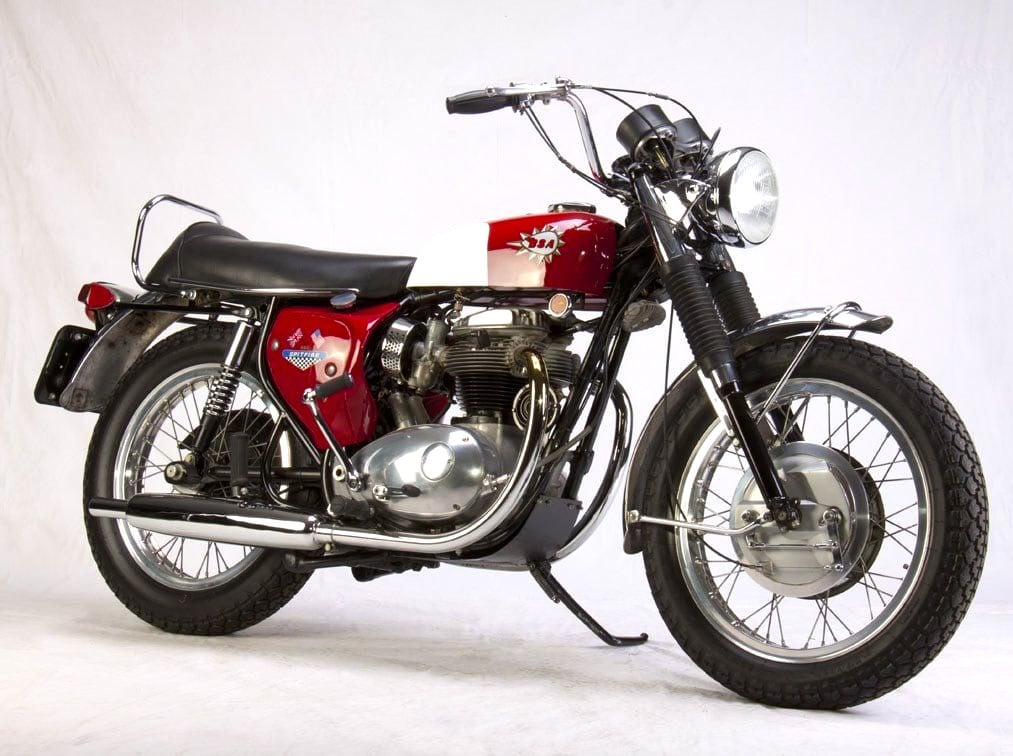
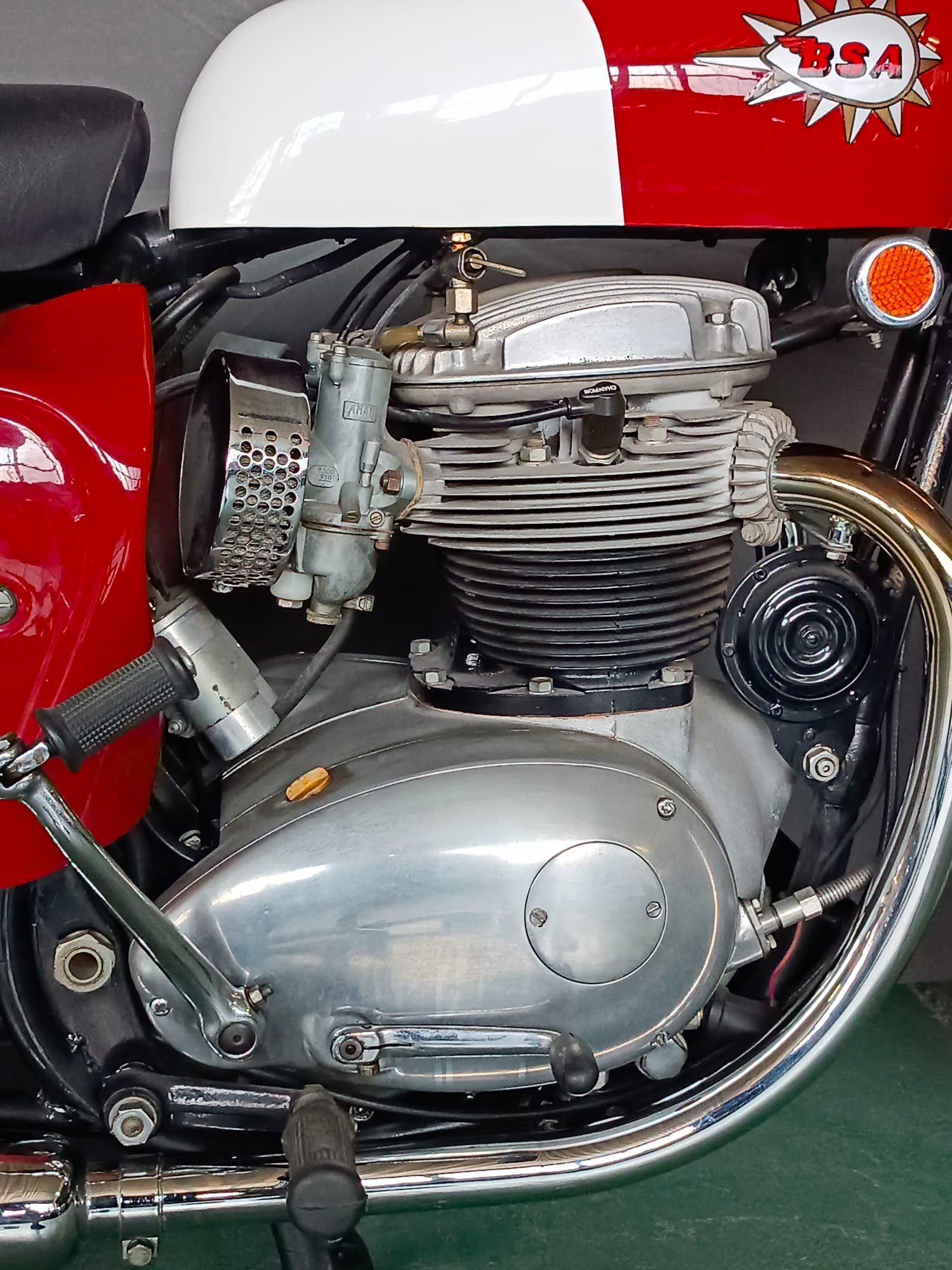
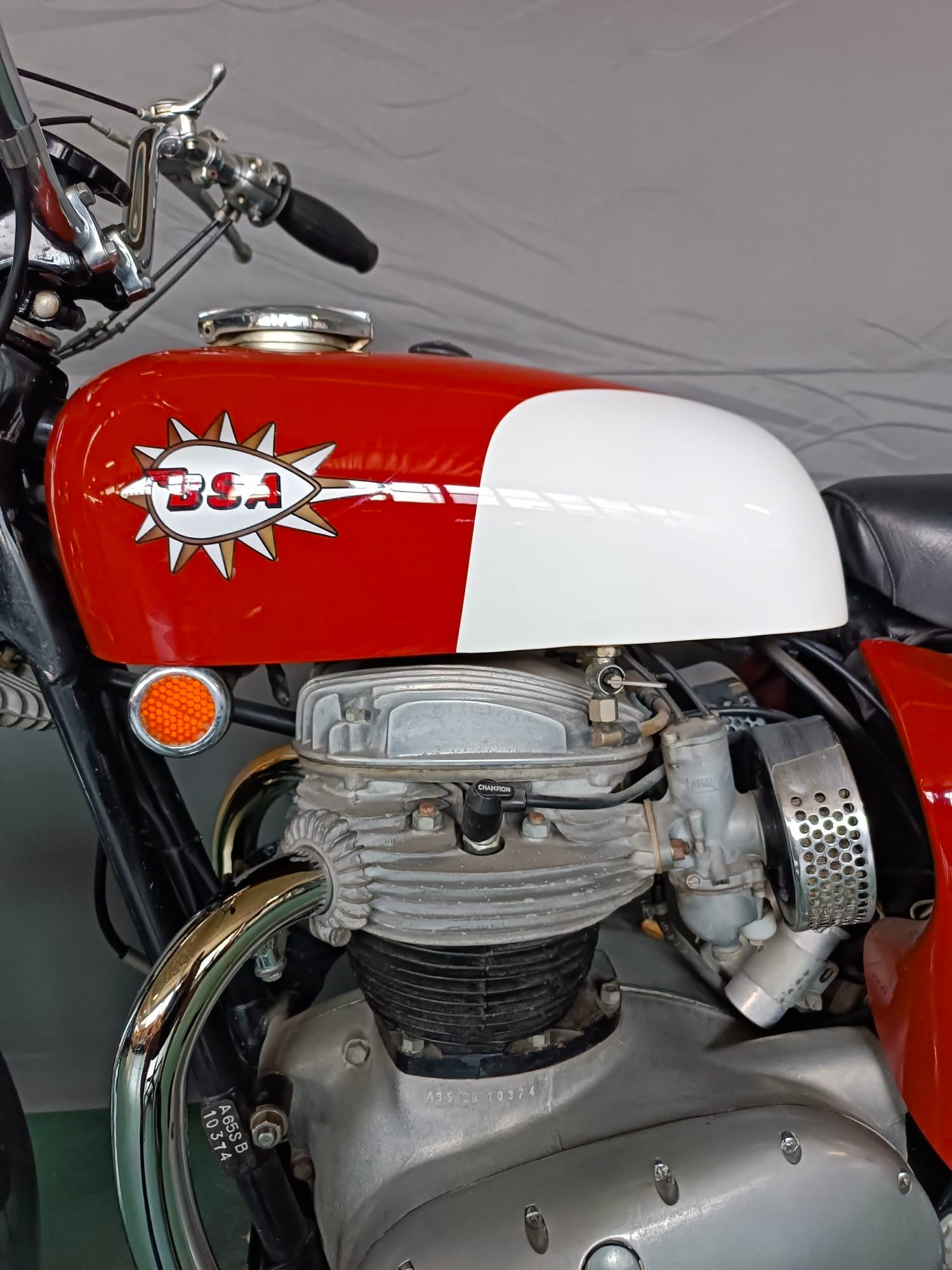
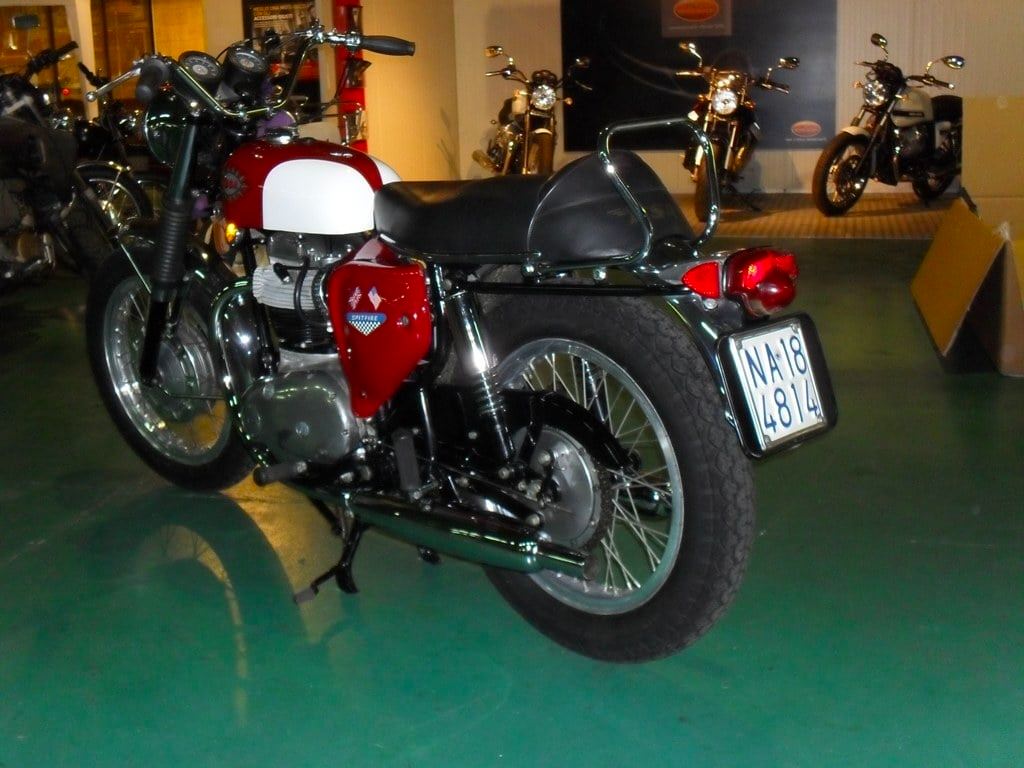
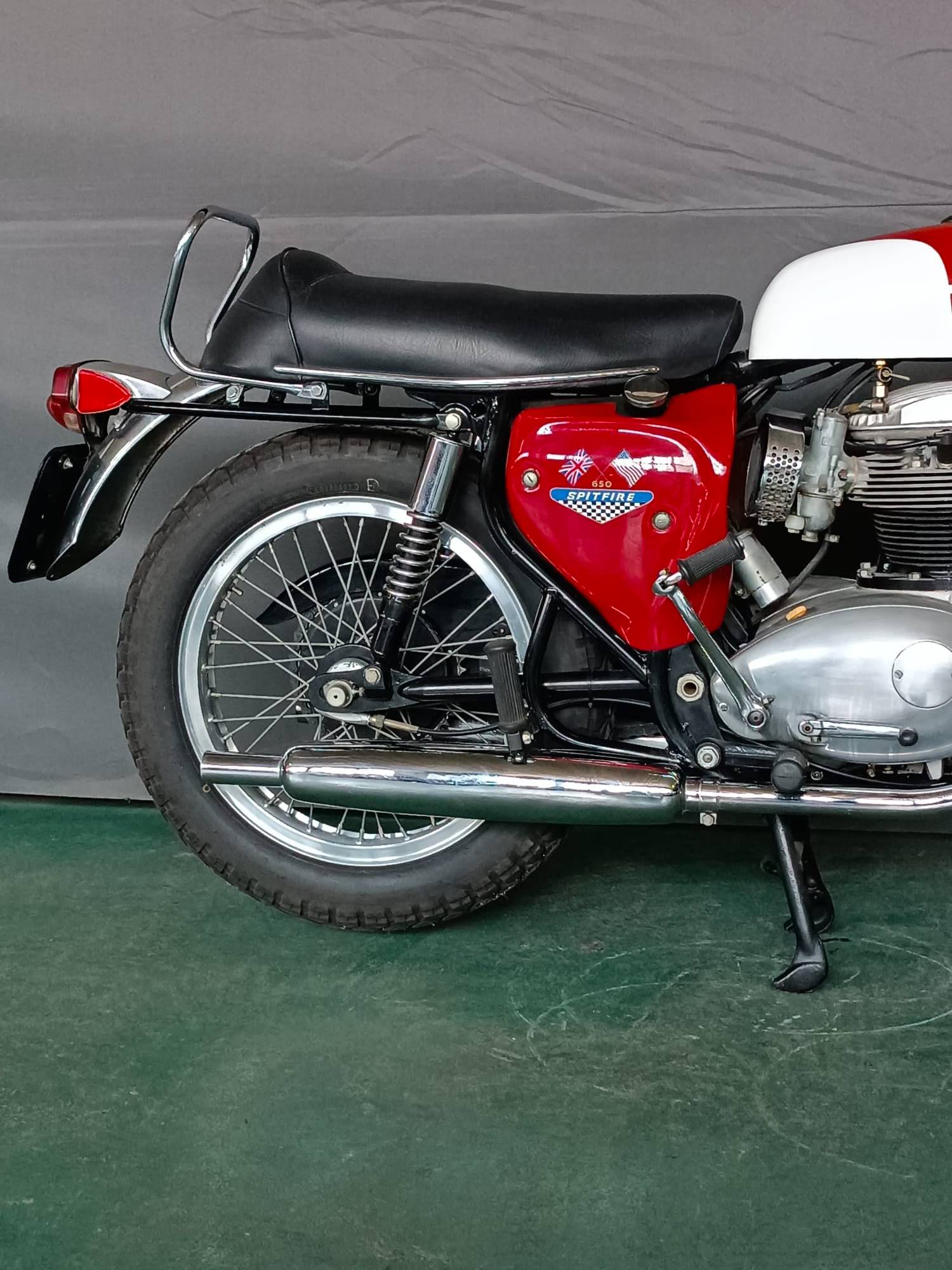
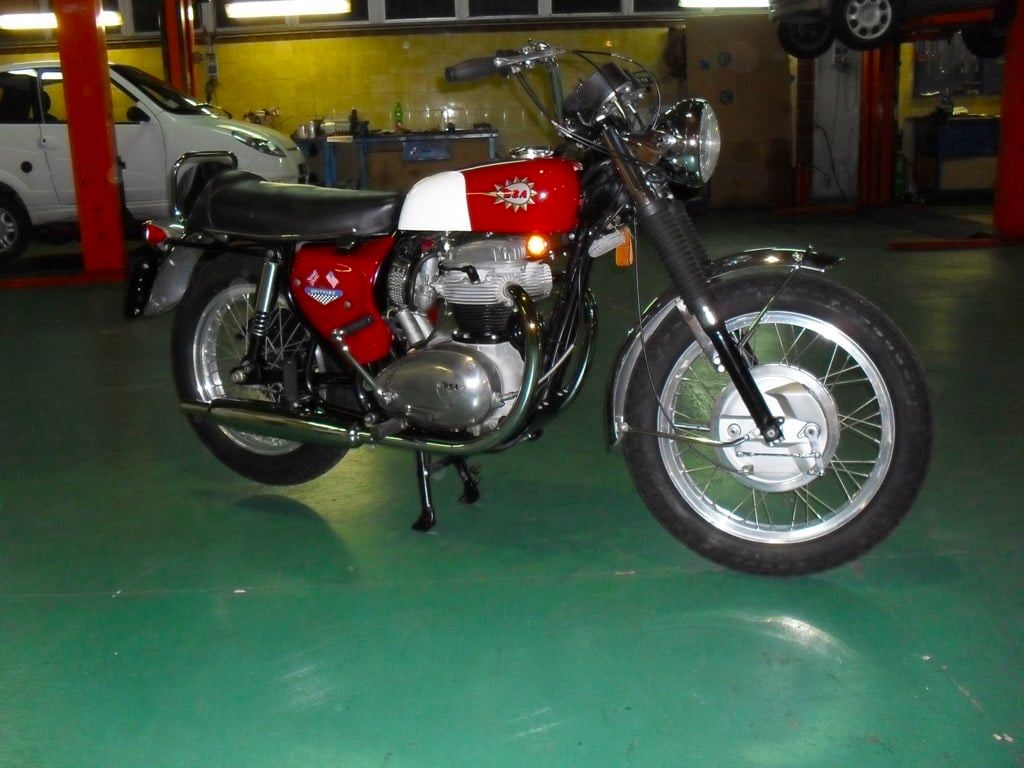
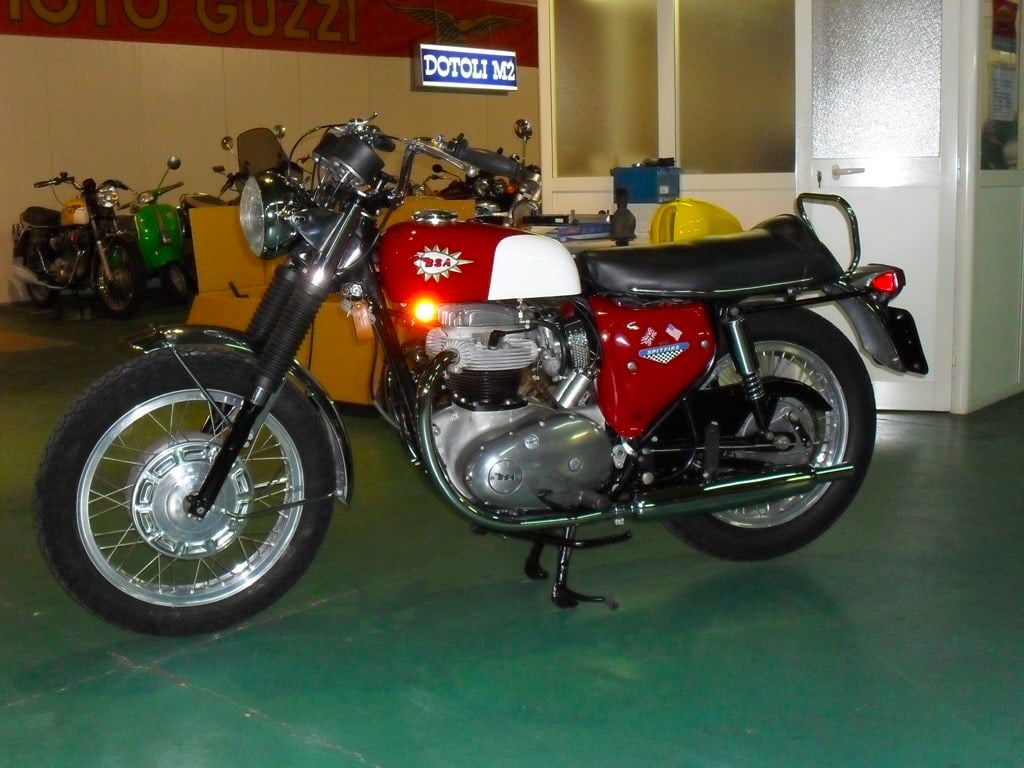
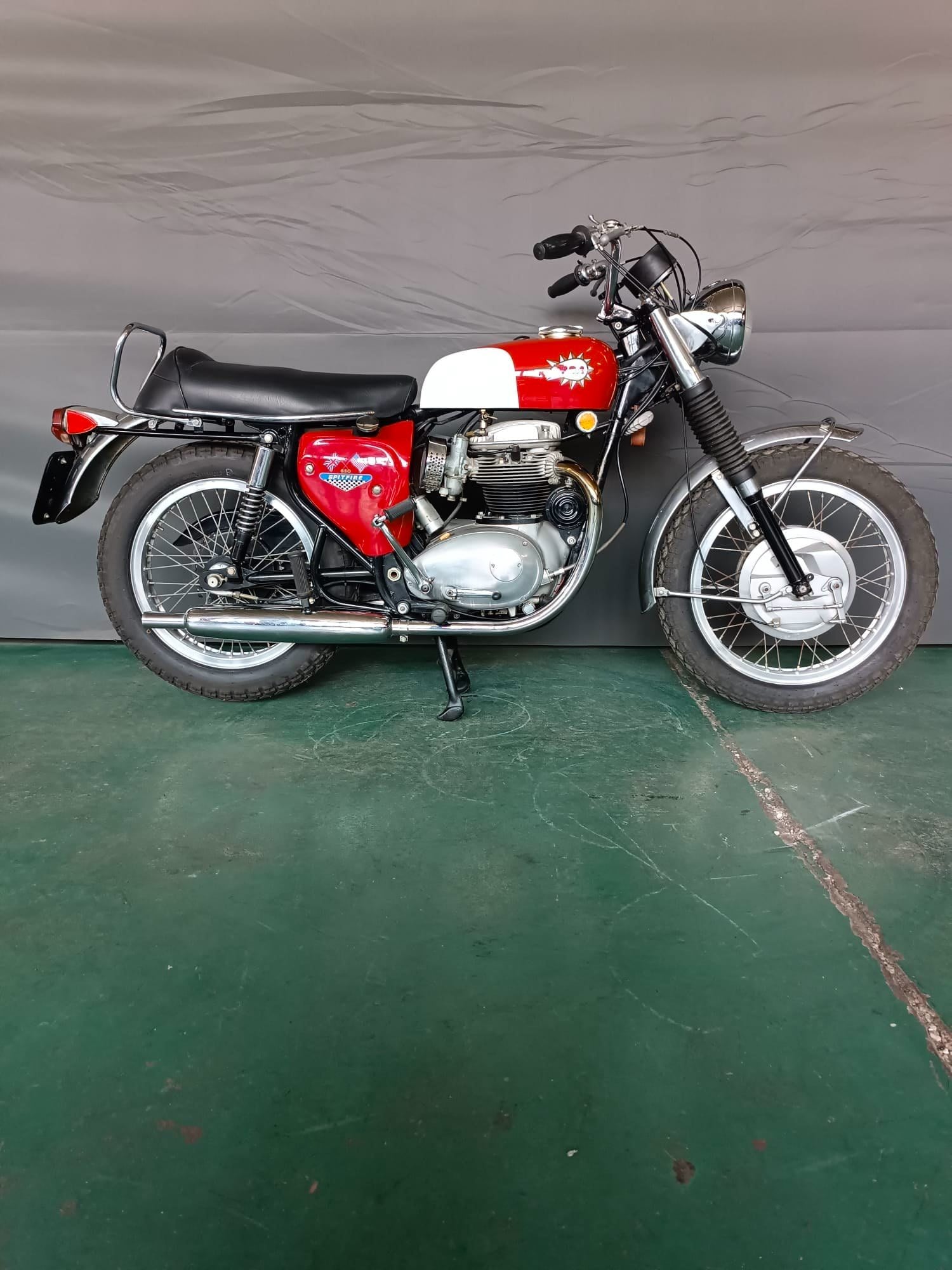
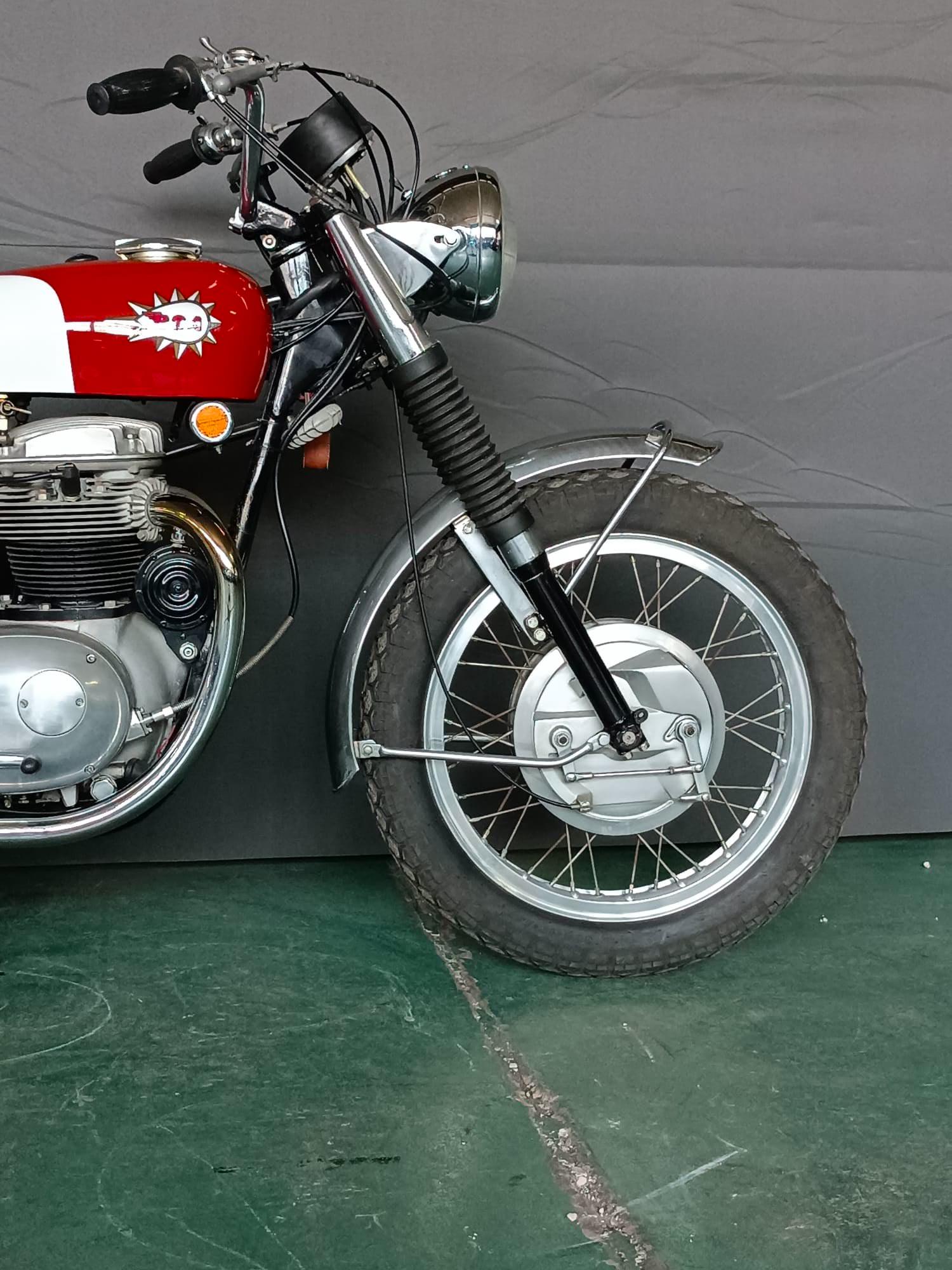
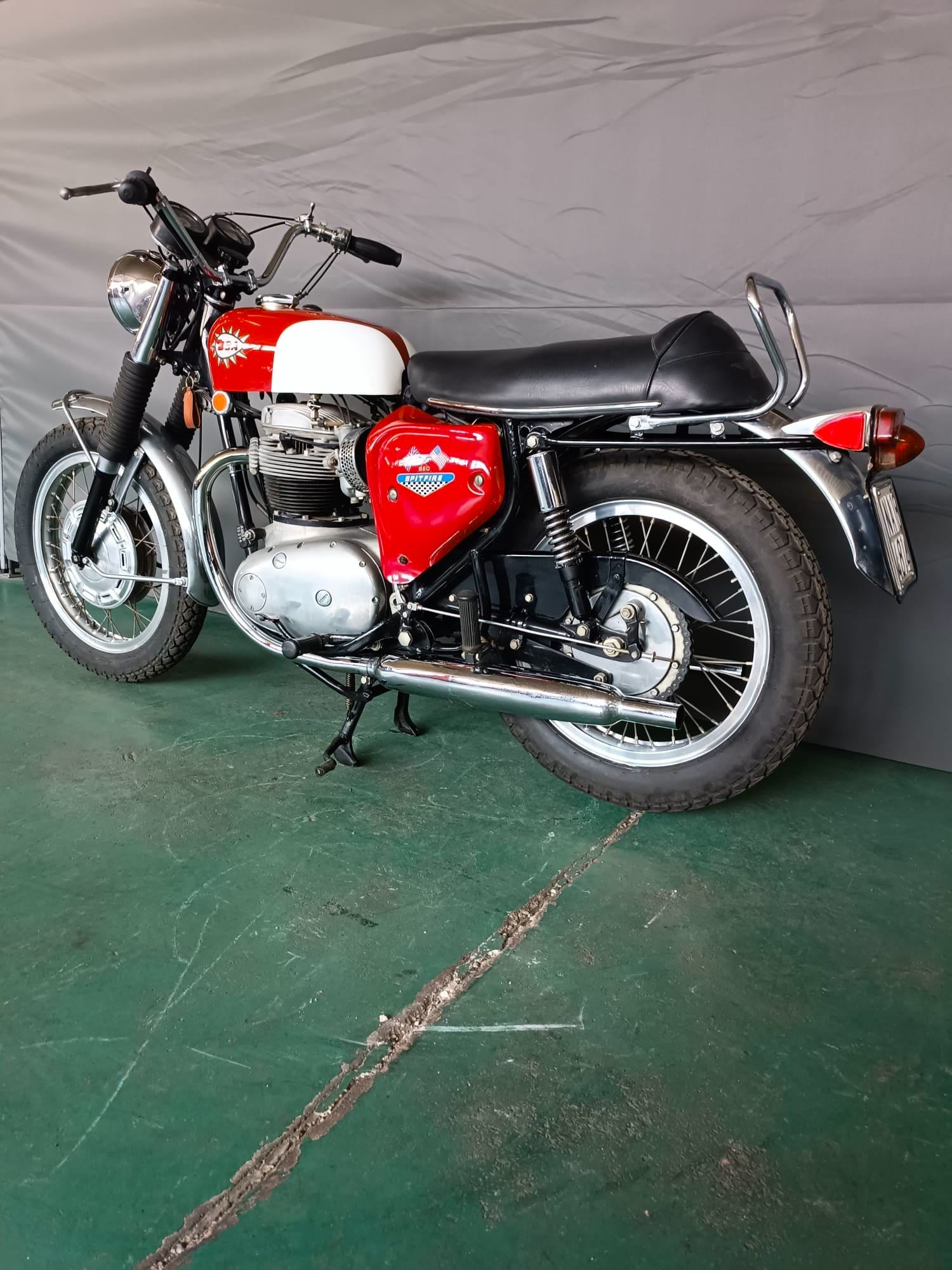
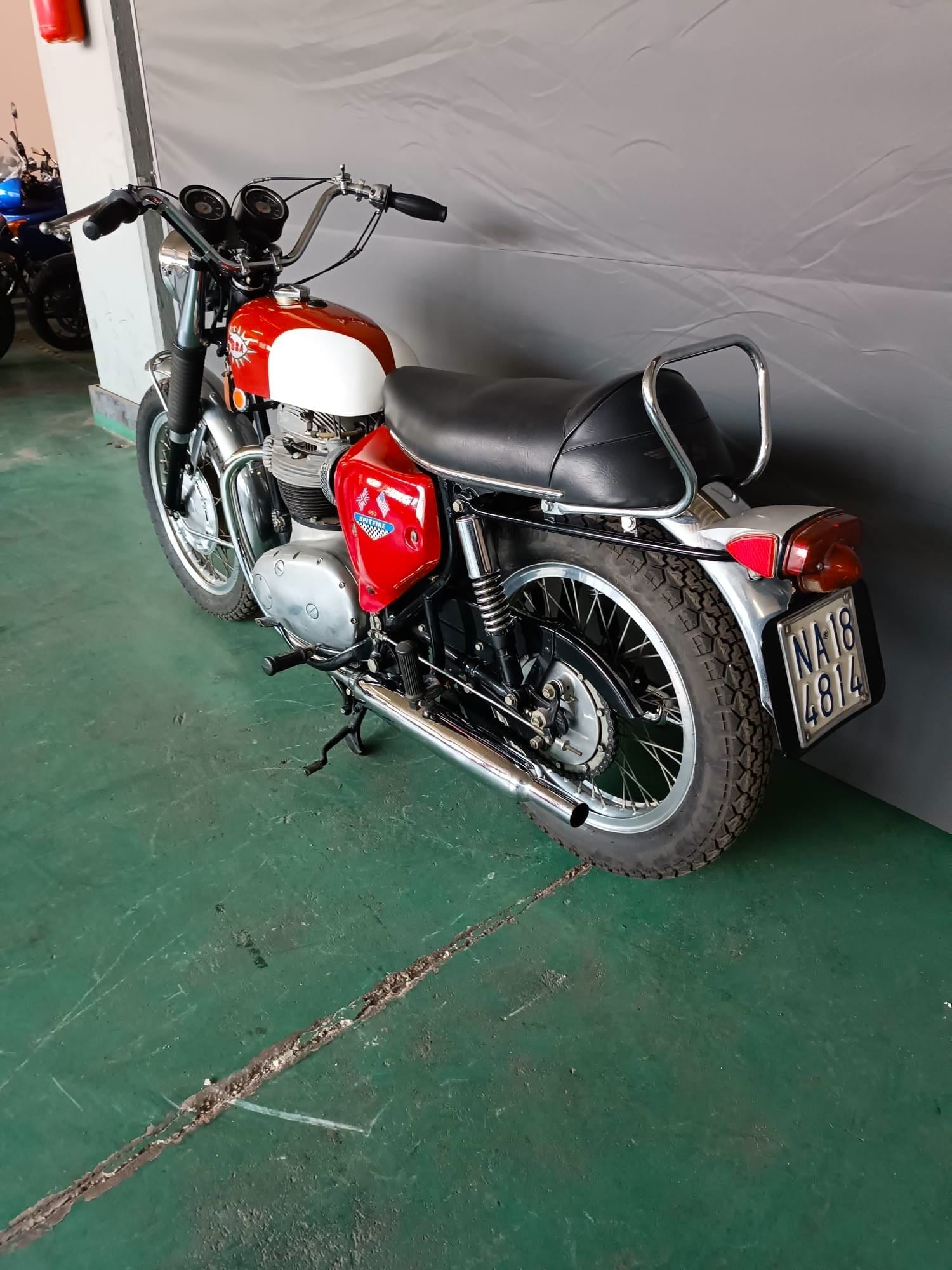
This is a 1968 BSA A65 MK IV Spitfire America, it benefits from a restoration, and it’s now presented in excellent period-correct condition throughout.
The BSA Spitfire name graced three distinctly different motorcycles between the 1950s and the 1960s, always at the upper end of the BSA model range and always targeted squarely at the American performance market.
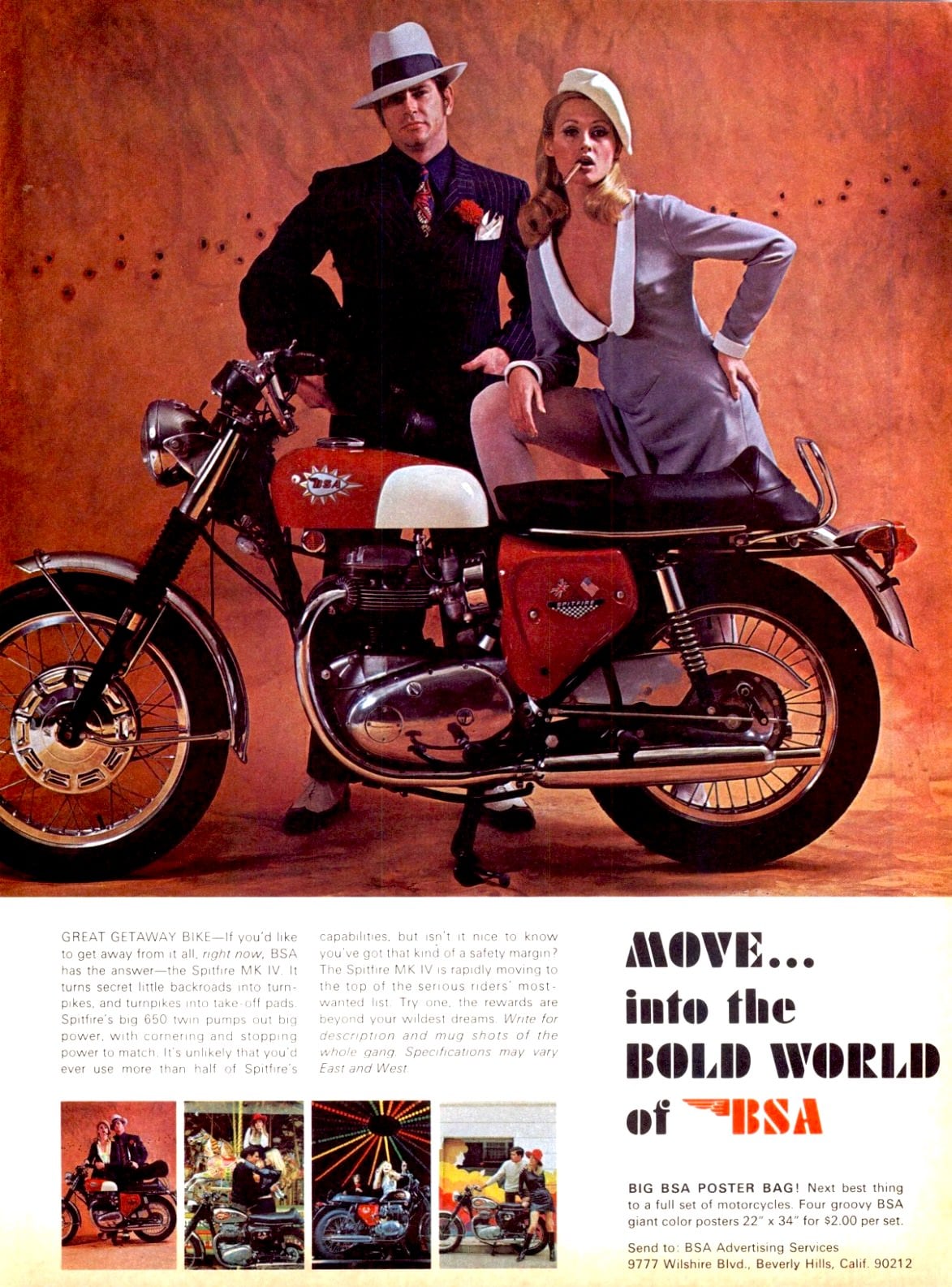
 The third-generation BSA Spitfire was announced in September of 1965 and sold from 1966 onwards as the Mk II, it was a numbering convention that puzzled buyers then and now, since there had been no road-going Spitfire Mk I before it. Image courtesy of BSA.
History Speedrun: The BSA Spitfire
BSA would ultimately use the Spitfire name on three different motorcycles between 1957 and 1968, such was the popularity of the name in post-WWII Britain, with the Spitfire having been the best-loved British fighter aircraft of the war.
The first two BSA Spitfire models were competition machines developed mainly for the American market, by far the most important region for all of the major British motorcycle manufacturers of the time. The third BSA Spitfire was, when it appeared in 1966, the fastest standard road motorcycle BSA built up until that point in time.
The BSA Spitfire Scrambler
The A10 Spitfire Scrambler appeared in 1957 after Hap Alzina, BSA’s West Coast distributor, asked for a 650cc twin that could beat Triumph’s legendary “Desert Sled” in California desert and scrambles racing.
This first Spitfire used the 646cc Road Rocket parallel-twin with high-compression pistons, the “357” race camshaft, a larger Amal Monobloc, and open pipes, fitted at first into Gold Star Catalina running gear and, from mid-1957 onwards, into an A10 frame.
It was export-only, sold without lights as it was intended for racing use only, though BSA offered a lighting kit as an accessory for those who wanted to make it road legal. It was sold from mid-1957 through to 1963.
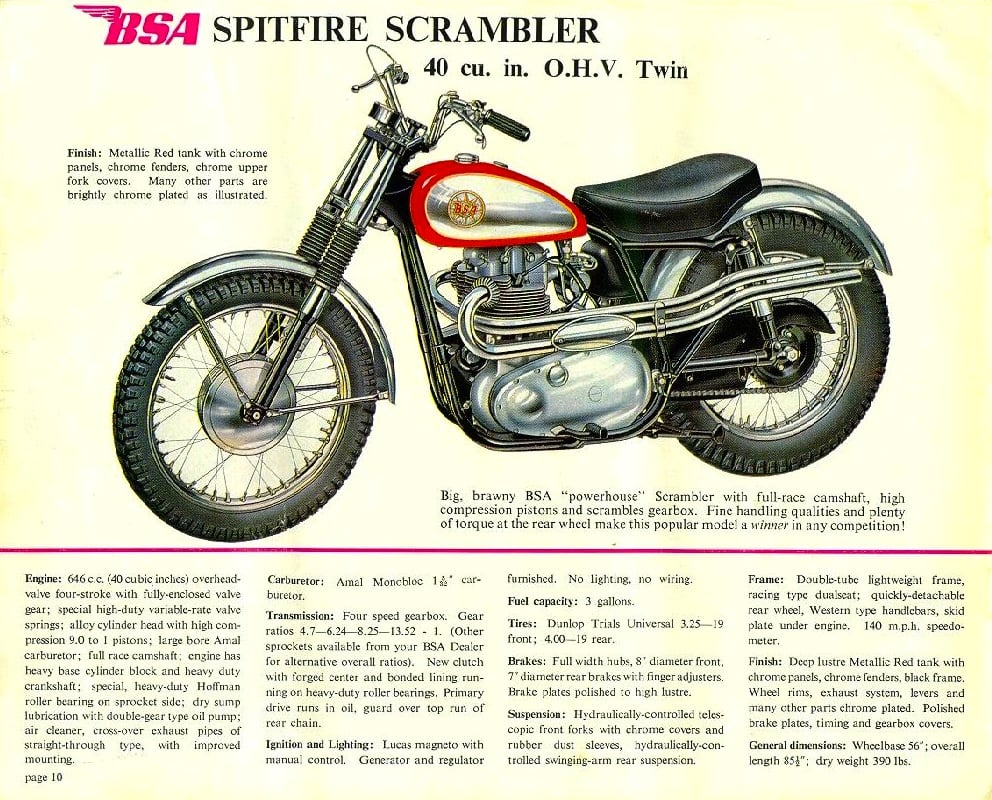
The A10 Spitfire Scrambler appeared in 1957 after Hap Alzina, BSA’s West Coast distributor, asked for a 650cc twin that could beat Triumph’s legendary “Desert Sled” in California desert and scrambles racing. Image courtesy of BSA.
The BSA Spitfire Hornet
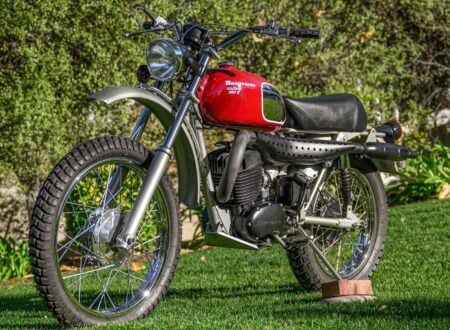
BSA revived the name in 1964 for the A65 Spitfire Hornet, a US-only scrambler built on the 500cc Cyclone with the 654cc unit-construction twin, a two-gallon fiberglass tank, energy-transfer ignition, and no instruments or lights.
An extra two inches in the swingarm stretched the wheelbase to 56 inches after early riders had taken to lengthening it themselves. The Spitfire name lasted two seasons in this guise, the model became simply the Hornet for 1966 and 1967, and for 1968 the road-equipped Firebird Scrambler replaced it in the BSA line-up.
Steve McQueen tested a 1966 Hornet for a magazine feature that year, calling it a keen bike with a strong powertrain, but he felt it was too heavy to be competitive without stripping off excess weight.
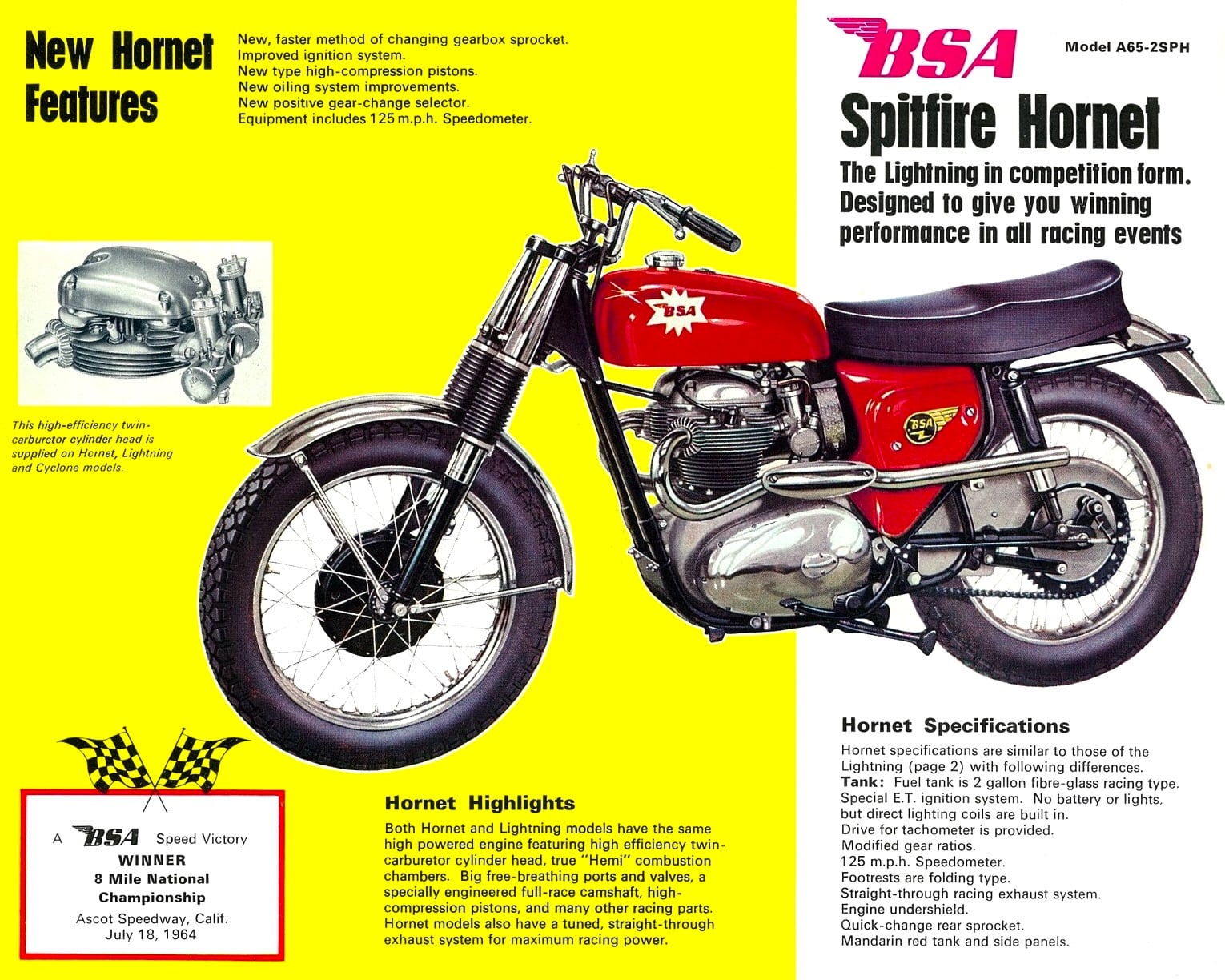
BSA revived the name in 1964 for the A65 Spitfire Hornet, a US-only scrambler built on the 500cc Cyclone with the 654cc unit-construction twin, a two-gallon fiberglass tank, energy-transfer ignition, and no instruments or lights. Image courtesy of BSA.
The BSA Spitfire Mk II, III, + IV
The road-going Spitfire was announced in September of 1965 and sold from 1966 onwards as the Mk II, it was a numbering convention that puzzled buyers then and now, since there had been no road-going Spitfire Mk I before it.
It replaced the Lightning Clubman as BSA’s sports flagship and took that bike’s close-ratio gearbox and high-compression engine further, with 10.5:1 compression ratio pistons, twin Amal GP racing carburetors with open velocity stacks and a shared remote float bowl, and a claimed 54 bhp.
It rode on alloy rims, it had a finned 190mm front drum brake, and 12 volt electrics were standard. The tank and side covers were fiberglass to help lower the weight – the tank on UK bikes was four gallons, but US bikes had only two.
The trouble with the Mk II started almost immediately, the GP carburetors had no throttle stop, made hot starting difficult, and gave the engine flat spots that testers traced to the vibration-sensitive float bowl. Worse, 1966 was the year BSA changed the drive-side main bearing from a ball race to a roller, which let the crank float sideways, wear the timing-side bush and starve the bearings of oil.
Mk IIs also overheated badly enough to seize pistons and valves, BSA eventually traced that to bouncing contact-breaker points which could cause early ignition, and the West Coast distributor assembled a fix kit and fitted it to customers’ bikes free of charge.
The 1967 Mk III addressed what it could, Amal’s new Concentric carburetors with chrome air filters replaced the GPs, compression dropped to 10:1, the rocker box picked up some cooling fins and a timing inspection hole, and the Zener diode moved into a large heat sink under the steering head.
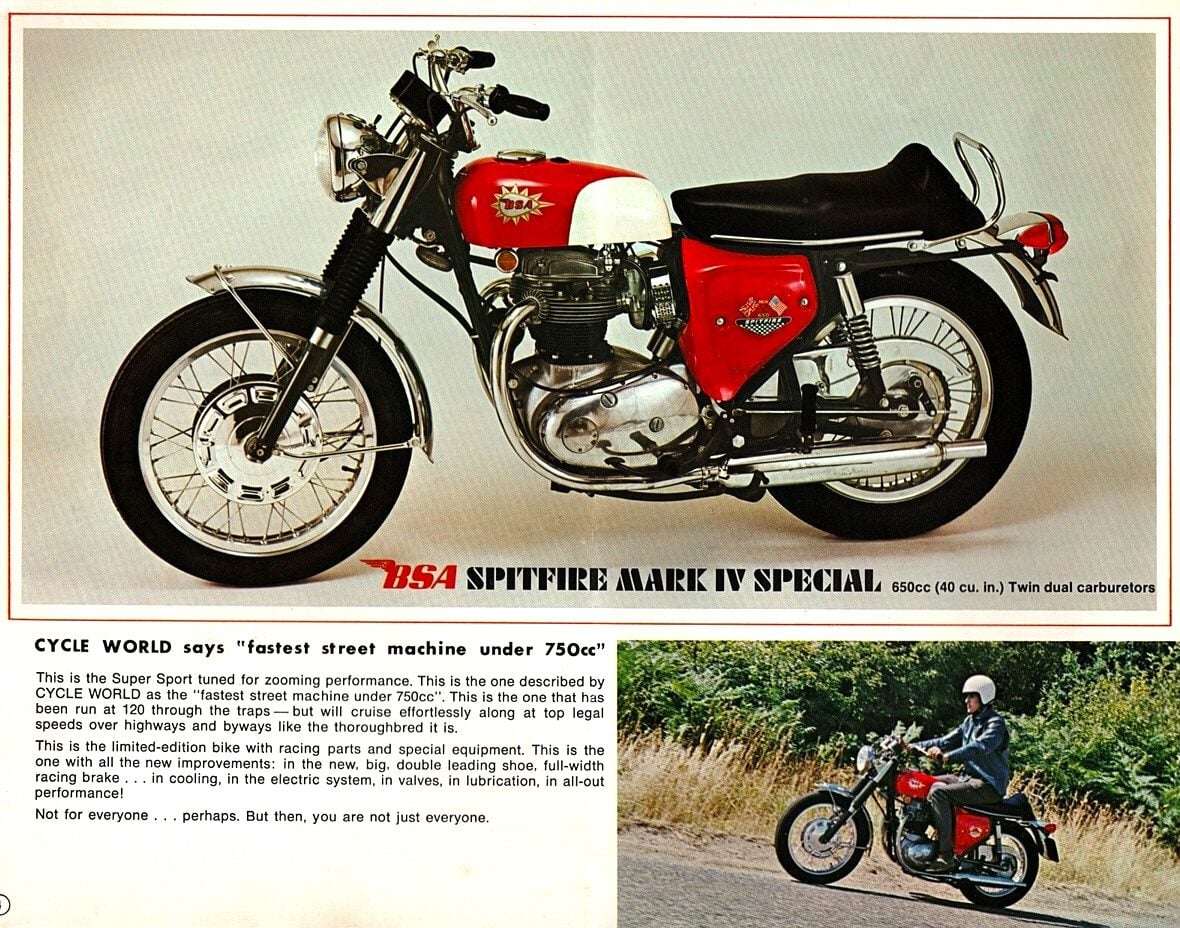
Cycle World timed a BSA Spitfire Mark IV at 117 mph and named it the fastest street machine under 750cc it had tested. The 1968 Mk IV brought the changes buyers had wanted from the start – an 8-inch twin-leading-shoe front brake, exposed-spring rear shocks, and a 53 bhp rating. Image courtesy of BSA.
Cycle World timed one at 117 mph and named it the fastest street machine under 750cc it had tested. The 1968 Mk IV brought the changes buyers had wanted from the start – an 8-inch twin-leading-shoe front brake, exposed-spring rear shocks, and a 53 bhp rating.
Spitfires served as the travelling marshals’ machines at the 1967 Isle of Man TT, and in the 1968 Production TT BSA factory rider Tony Smith brought a 654cc BSA home 3rd in the 750 class at 93.82 mph, behind Ray Pickrell’s Dunstall Norton and Billie Nelson’s Norton. The Mk IV was the last BSA Spitfire, because for 1969 BSA replaced it at the top of the range with the three-cylinder Rocket 3.
BSA returned to motorcycle manufacturing in 2022 as a Mahindra-backed outfit with the new BSA Gold Star 650. The range now includes the Scrambler 650, the Bantam 350, and the Thunderbolt 350, but there’s no new Spitfire (yet).
The 1968 BSA A65 MK IV Spitfire America Shown Here
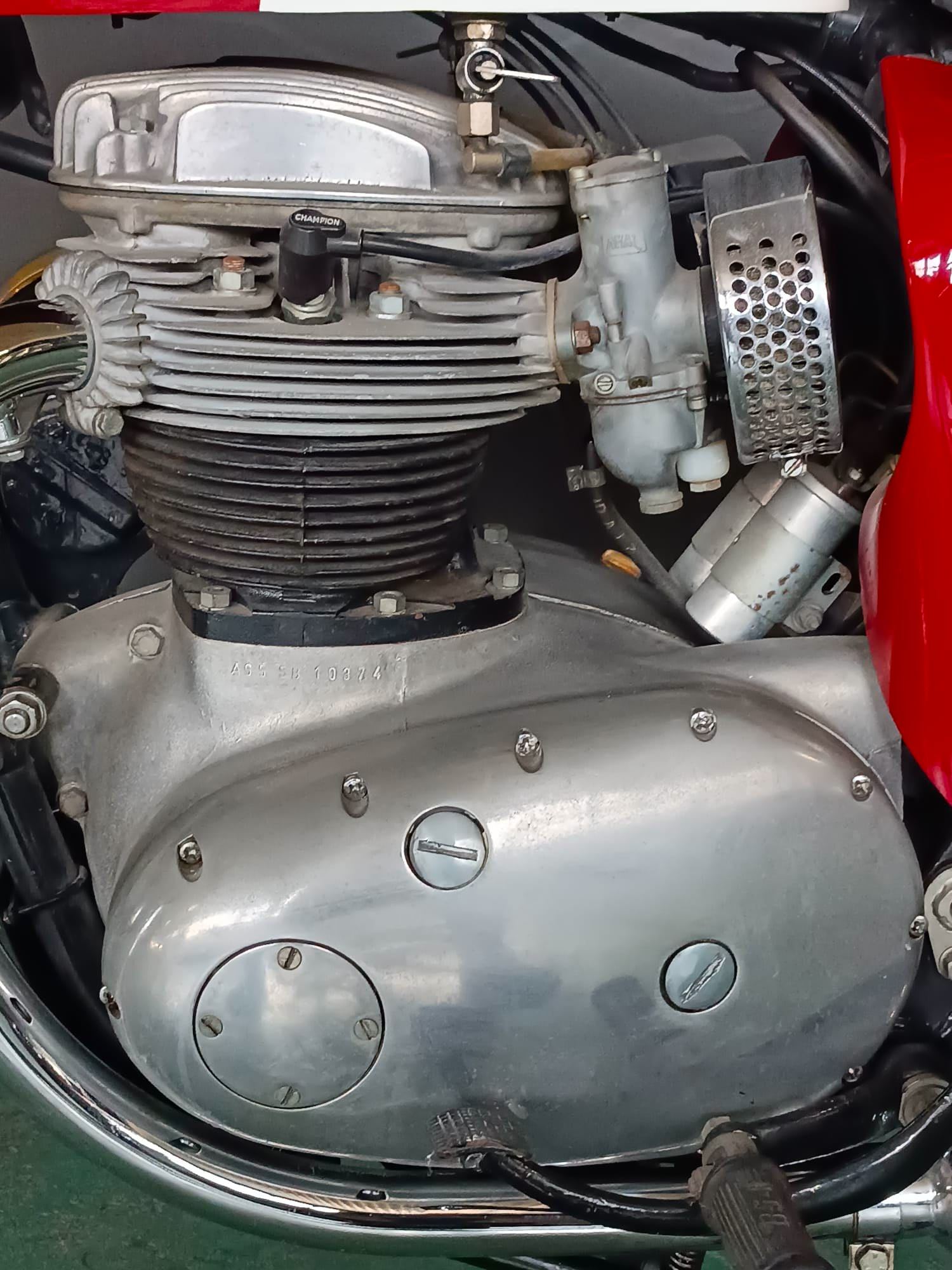
This is a 1968 BSA A65 MK IV Spitfire America that’s reported to be a matching-numbers example that’s been registered in Italy and keeps its original documents and number plate. It’s also registered with the Automotoclub Storico Italiano (ASI), with the corresponding certification included.
This Spitfire America underwent a comprehensive restoration 15 years ago and it’s finished in its original colors of red and white. According to the seller, both the cosmetic and mechanical condition remain very good, with only light signs of use visible – the indicated mileage since the restoration was completed is 1,113 kms (691 miles).
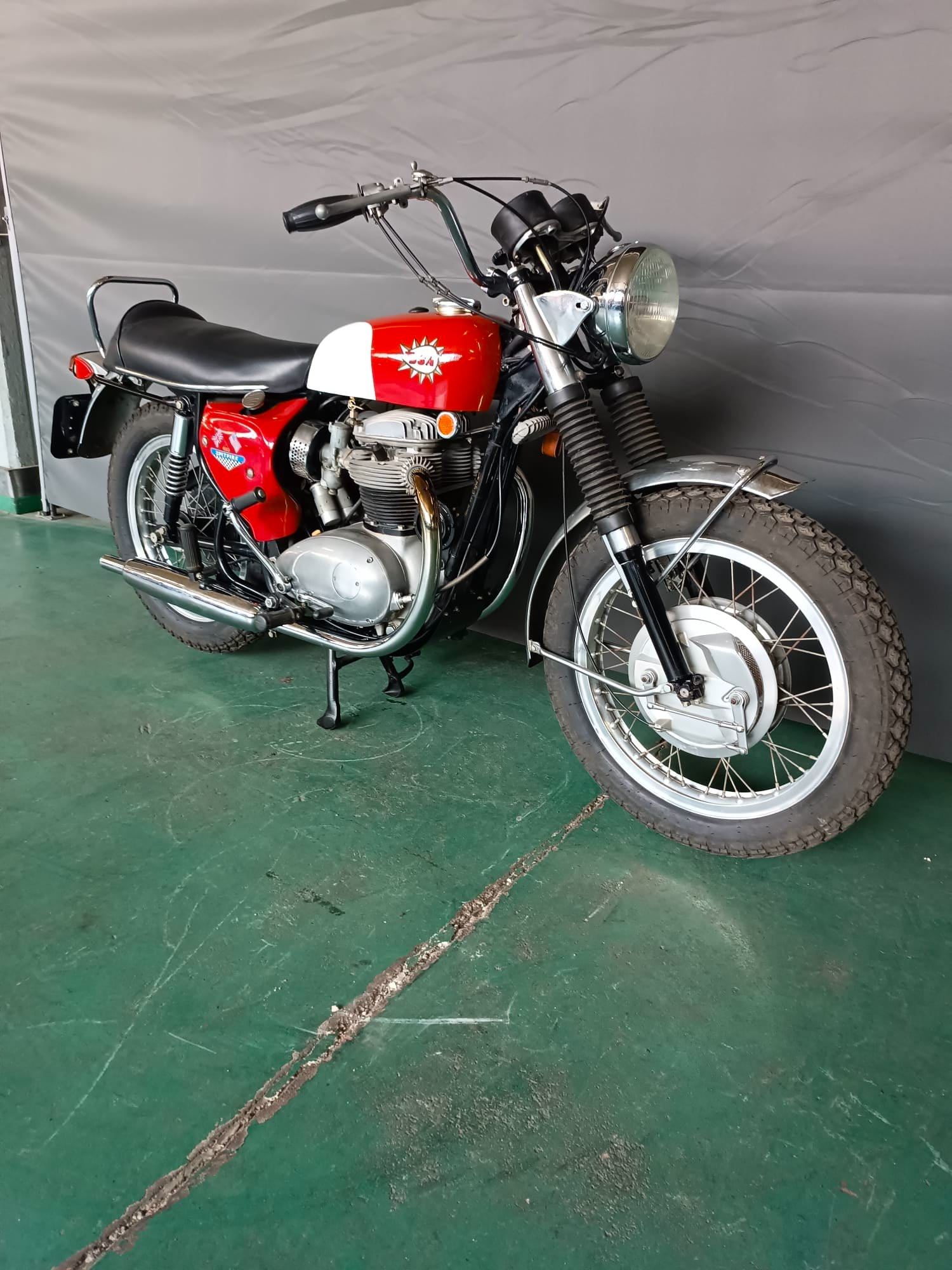
This is a 1968 BSA A65 MK IV Spitfire America that’s reported to be a matching-numbers example that’s been registered in Italy and keeps its original documents and number plate. It’s also registered with the Automotoclub Storico Italiano (ASI), with the corresponding certification included.
As you would expect, the bike is powered by BSA’s 650cc parallel-twin paired with a 4-speed transmission. This bike has been featured in the Italian specialist magazine Motociclismo d’Epoca.
It will come with a fresh Italian Revisione inspection, and the sale includes the original paperwork along with its ASI documents. It’s now being offered for sale out of Italy and you can visit the listing here if you’d like to bid.
Images courtesy of Car & Classic + BSA

Articles that Ben Branch has written have been covered on CNN, Popular Mechanics, Smithsonian Magazine, Road & Track Magazine, the official Pinterest blog, the official eBay Motors blog, BuzzFeed, Autoweek Magazine, Wired Magazine, Autoblog, Gear Patrol, Jalopnik, The Verge, and many more.
Silodrome was founded by Ben back in 2010, in the years since the site has grown to become a world leader in the alternative and vintage motoring sector, with well over a million monthly readers from around the world and many hundreds of thousands of followers on social media.