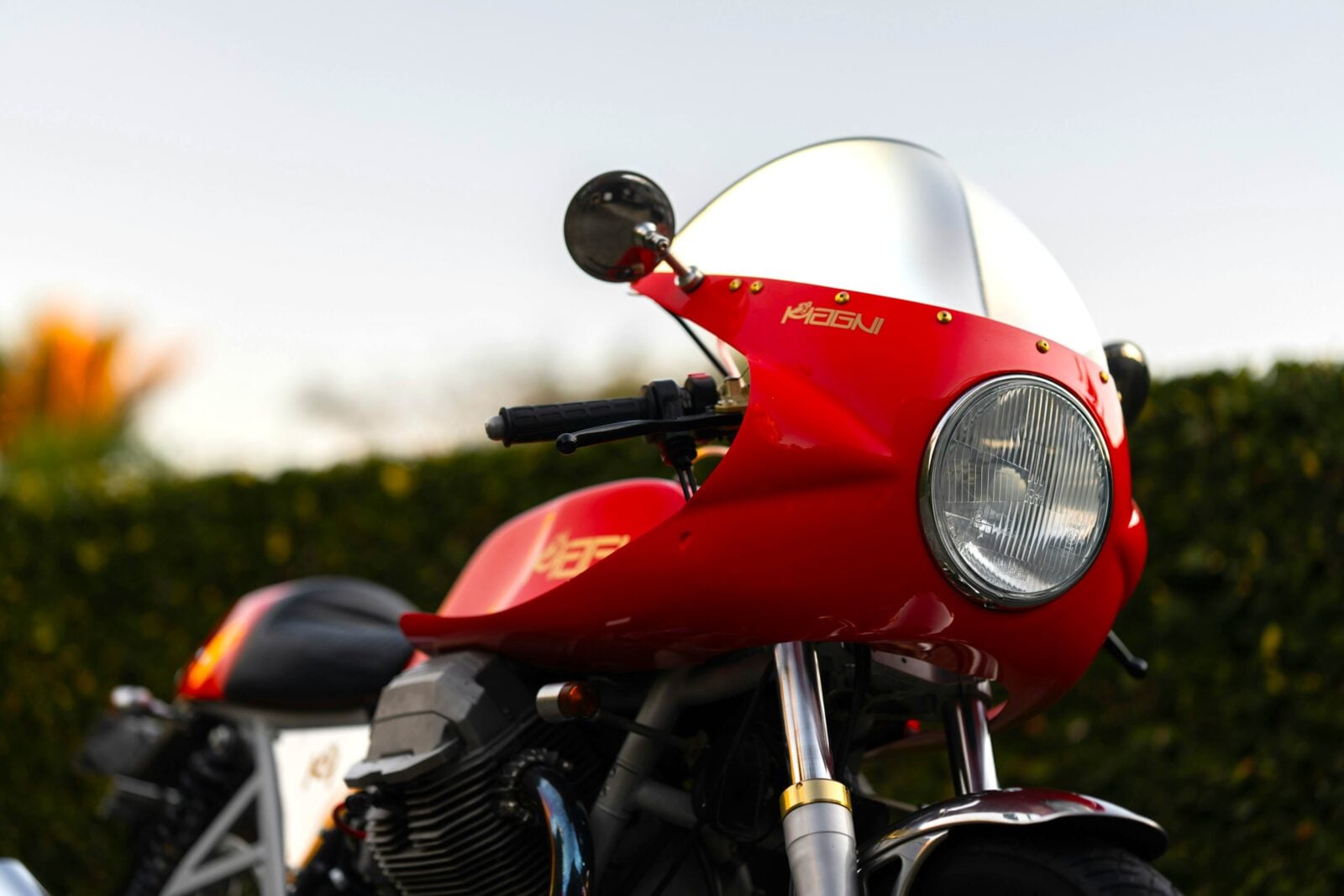
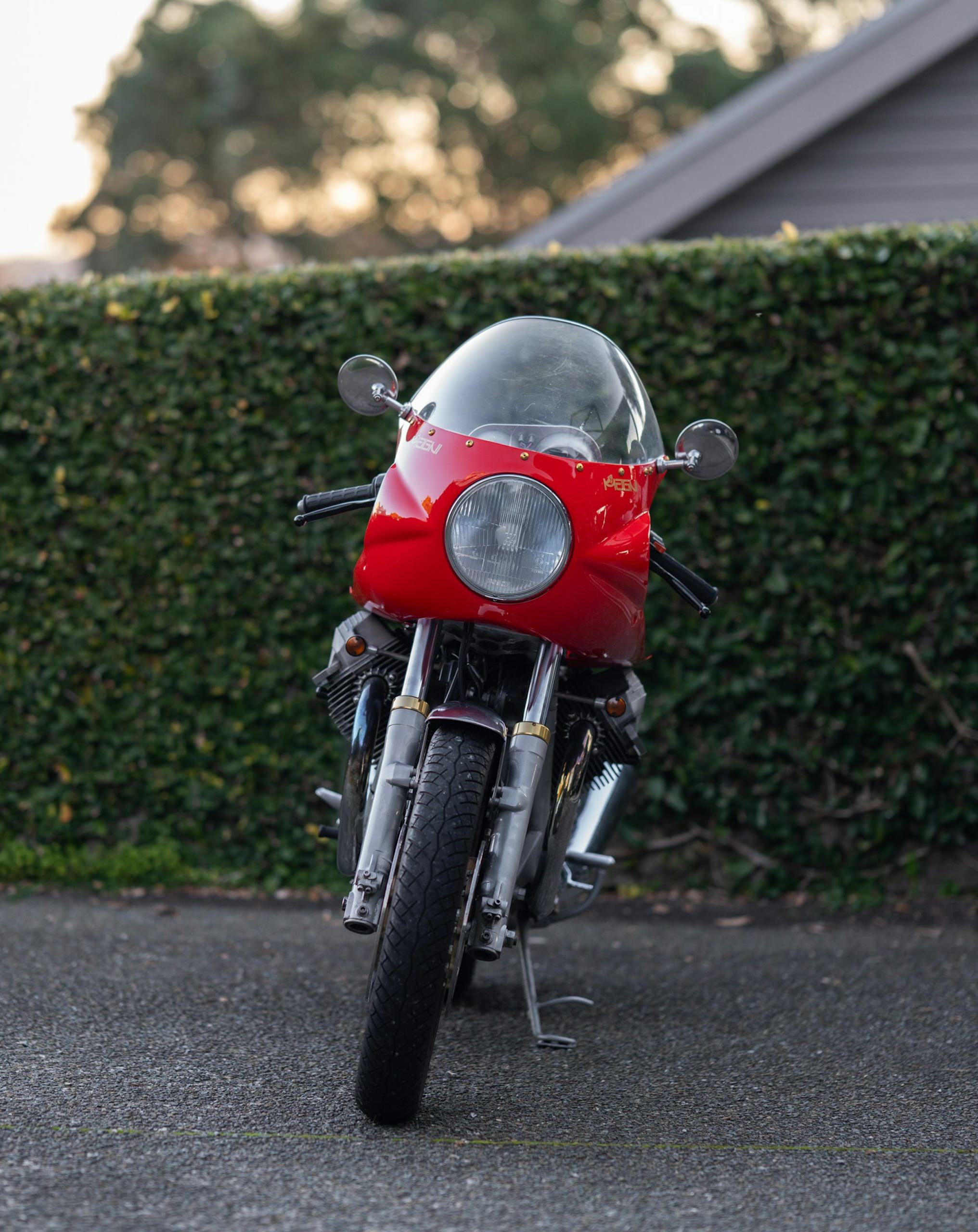
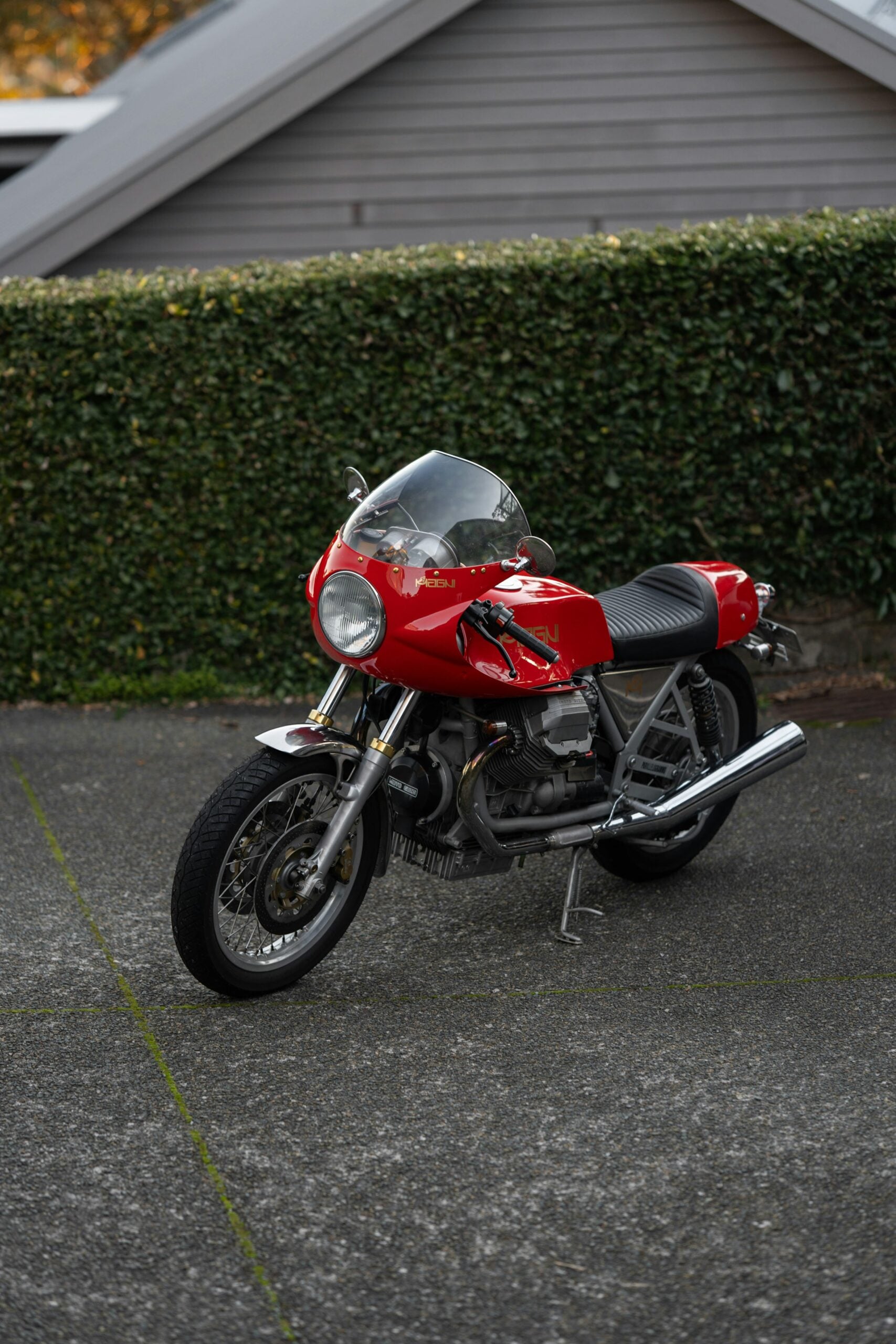
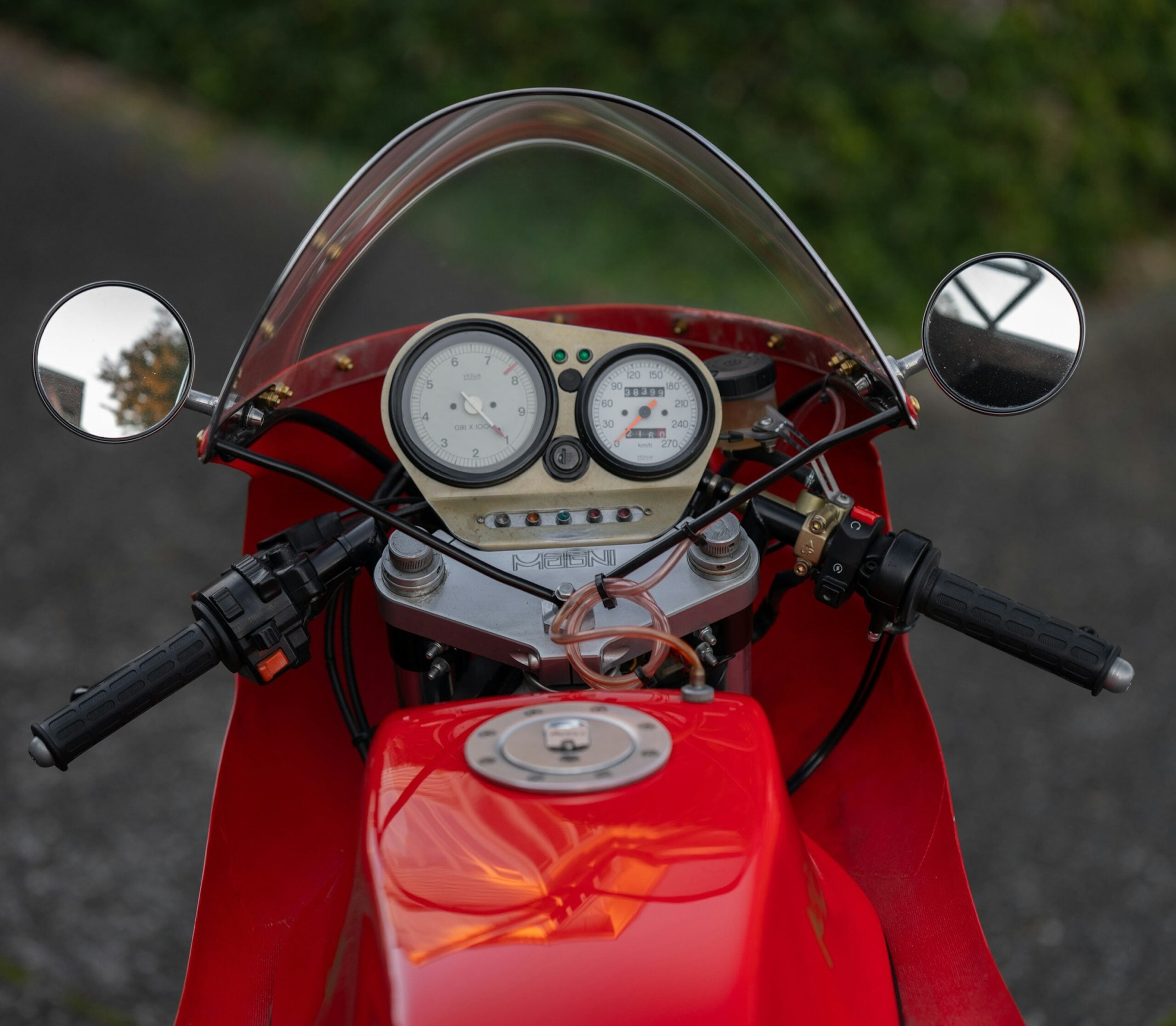
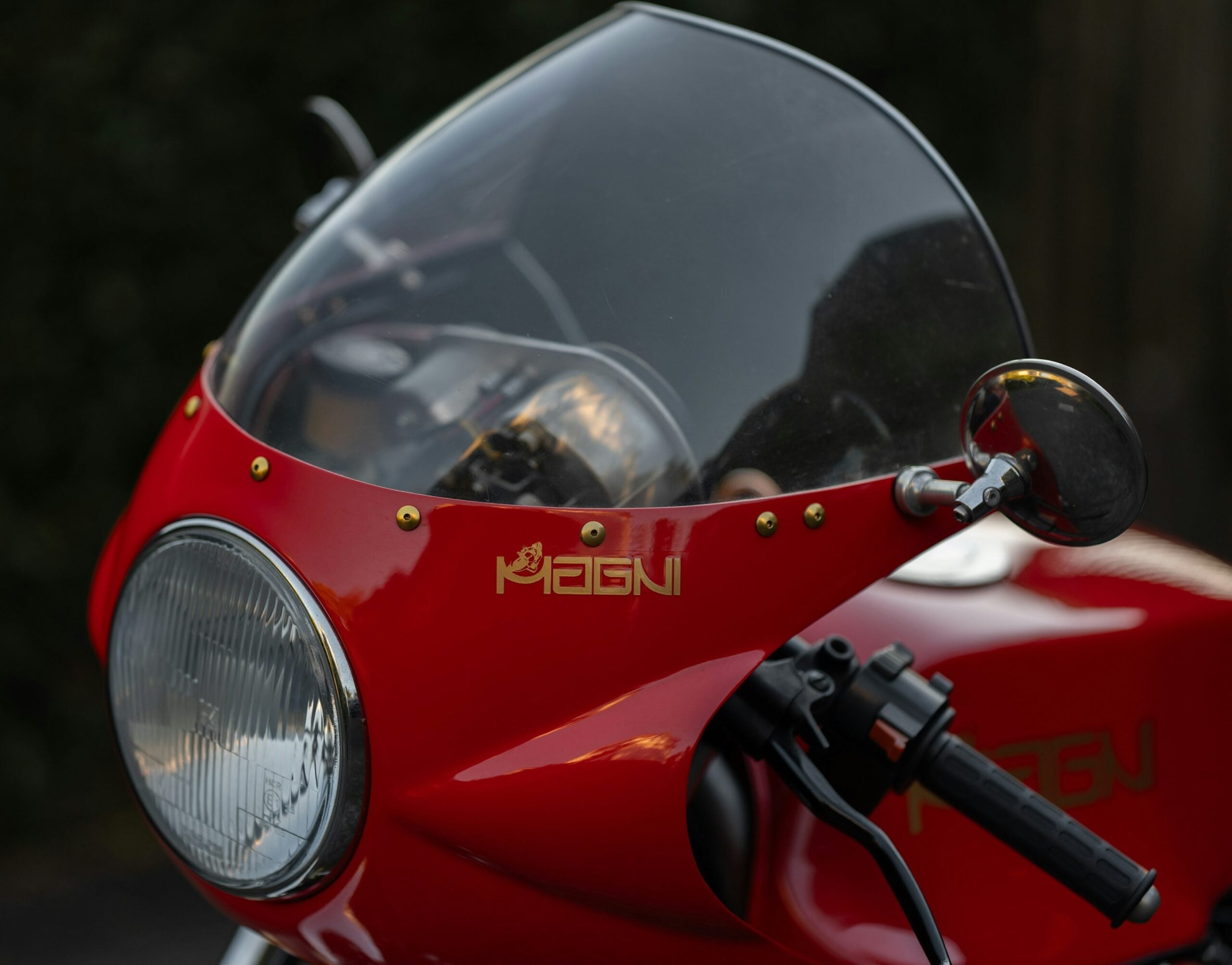
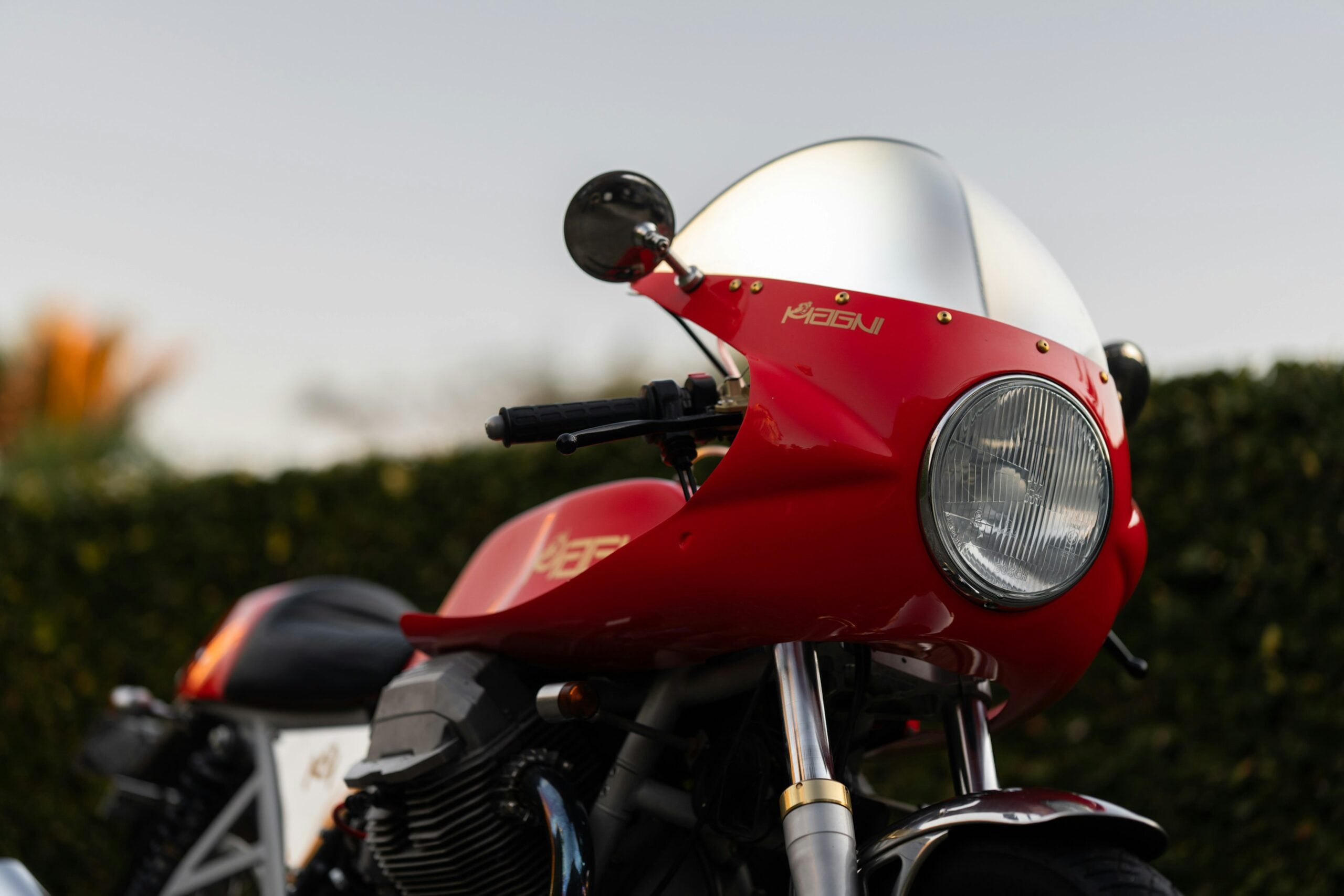
This is an original Magni Arturo 1000 from 1993. It’s one of the most desirable (not to mention beautiful) of the Guzzi-based Magni specials, and unsurprisingly it has a cult-like following in Japan.
The Arturo 1000 you see here was shipped to its first owner in Japan in-period, it’s since been imported into New Zealand and treated to a full restoration – it’s now being offered for sale out of Auckland, New Zealand.
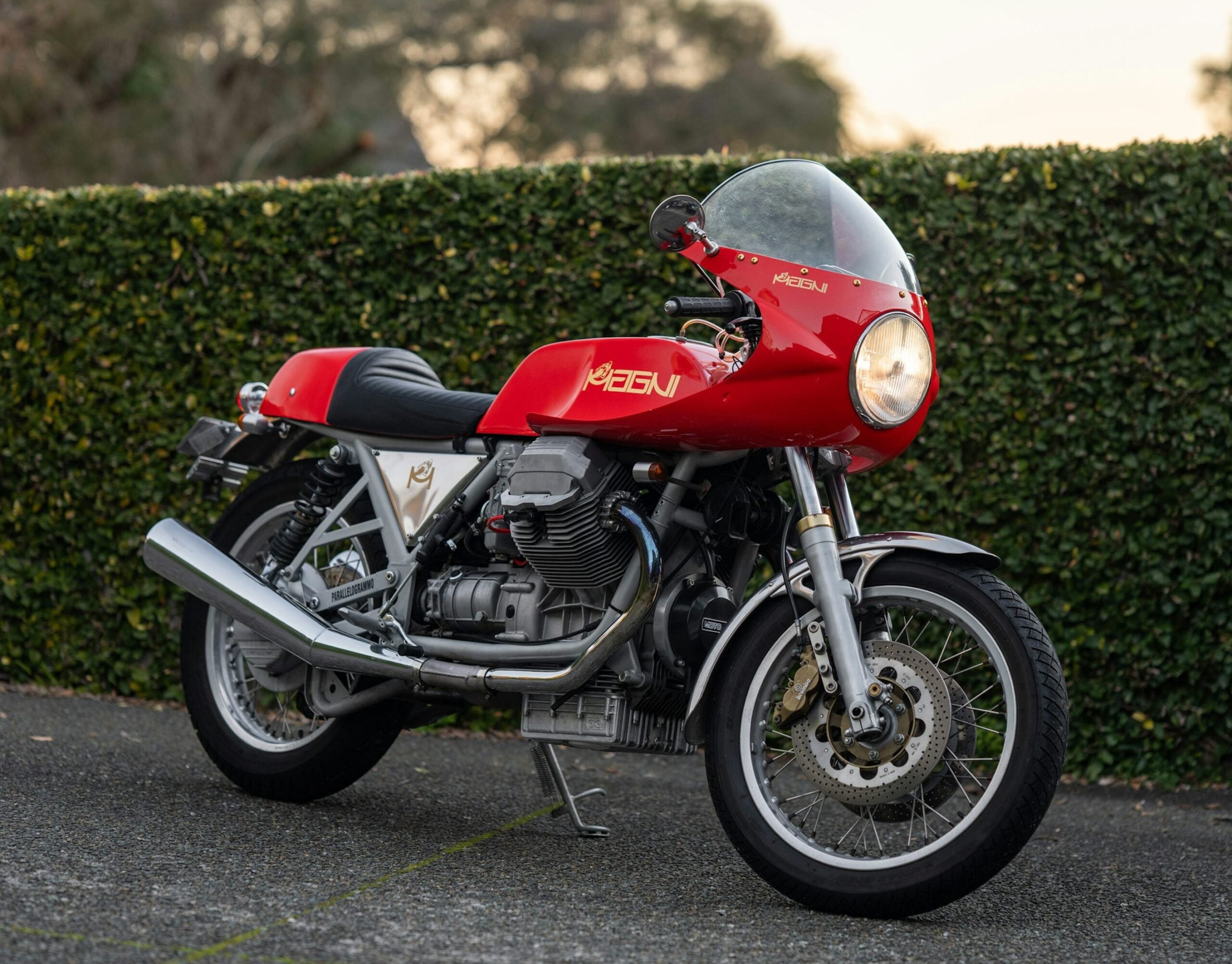
 This is an original Magni Arturo 1000 from 1993. It’s one of the most desirable of the Guzzi-based Magni specials, and a bike with a cult-like following in Japan.
History Speedrun: Magni
Arturo Magni’s now legendary company started out at Samarate, Italy in 1977 making parts for MV Agustas, they built their first complete motorcycles in 1980, and worked their way through Honda fours, BMW boxers, Moto Guzzi V-twins, a Suzuki four, a one-off BSA triple and, since 2013, MV Agusta engines once again.
For most of the history of Magni, the method was identical – buy the engine, and then build everything else around it.
From Gilera To MV Agusta
Arturo Magni was born in Usmate Velate, near Arcore in the Brianza, in September of 1925, he was the fourth of nine children of a farmer and carpenter. In the 1940s he built model aircraft and small engine-driven model cars, drawn-in by the bustling activity at the local Arcore airfield. This childhood hobby led to a friendship with Ferruccio Gilera, son of the motorcycle firm’s founder, and the two spent afternoons flying models in a disused stable on the Gilera estate beside the factory.
Magni joined Gilera in 1947, initially in the service department. The designer Pietro Remor noticed his talent and moved him to the racing shop, though not before setting an entrance test – strip and rebuild a four-cylinder engine without leaving a single nut, bolt, or washer on the bench.
Remor was poached by MV Agusta, and Magni followed him there in 1950 to work on the new 500cc four. He stayed more than 25 years and rose to run the entire racing department. The success of that operation is hard to fully articulate now – Magni later said that during the Agostini-era six or seven technicians handled around 20 machines, from 125cc to 500cc, at each Grand Prix. The department won 75 World Championships, 38 Riders’ Titles and 37 for constructors. It’s a record that remains unparalleled in the history of motor racing on two wheels or four.
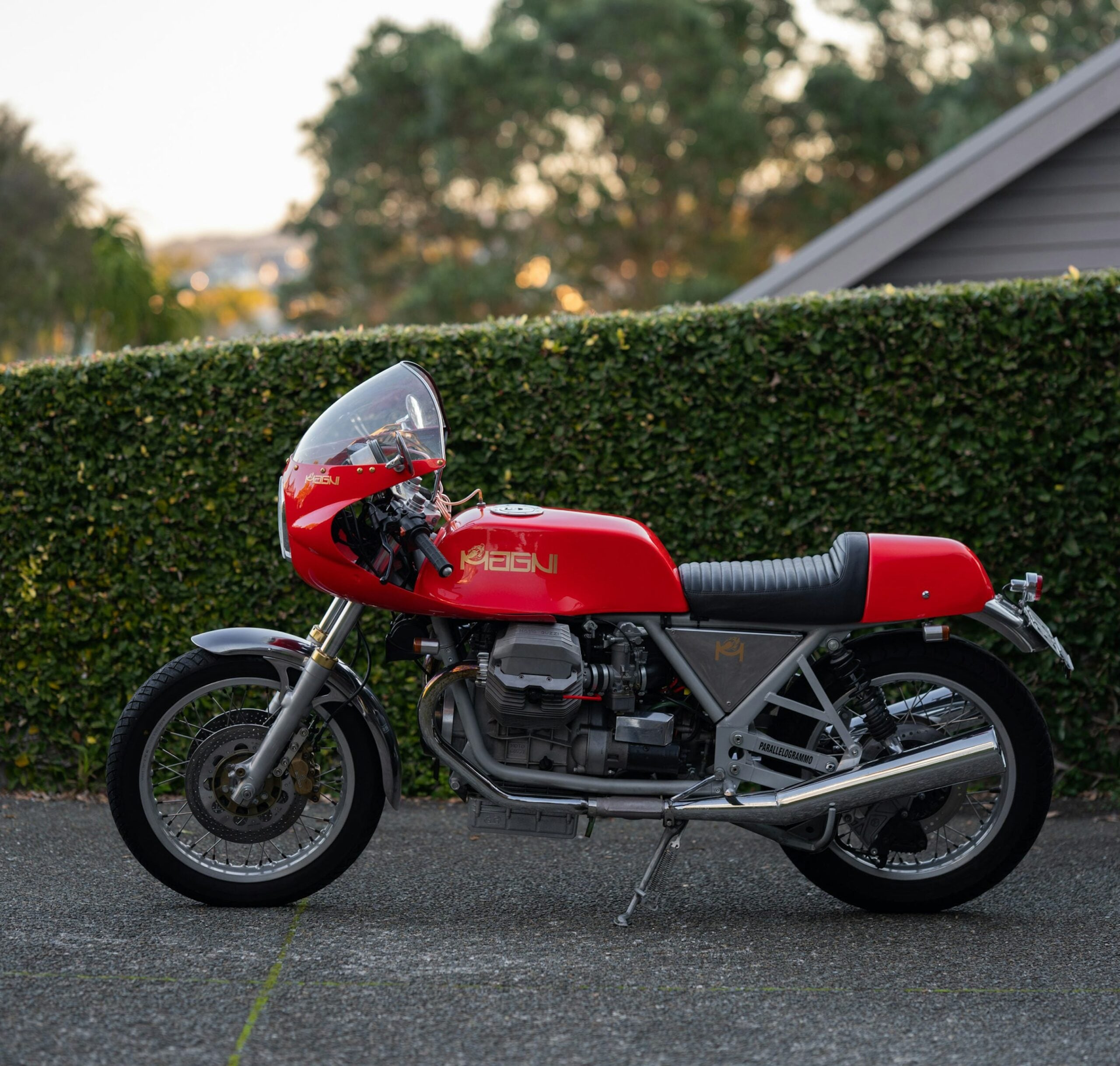
The Arturo 1000 you see here was shipped to its first owner in Japan in period, it’s since been imported into New Zealand and treated to a full restoration – it’s now being offered for sale out of Auckland.
Count Domenico Agusta died in 1971 and the racing effort wound down after his demise. MV formally announced a company-wide retirement from Grand Prix racing at the end of 1976, by which point Agostini was campaigning MV machinery under the privately entered Team API Marlboro banner. The marque’s last Grand Prix win came in the 500cc race at the Nürburgring on August the 29th, 1976.
Back Home To Samarate
Magni set up his own outfit the following year in his hometown of Samarate, in the province of Varese, with his sons Carlo and Giovanni. The first products were performance parts for MV road bikes – big-bore kits, exhausts, frames, and above all chain-drive conversions to replace the 750 four’s heavy shaft drive. A purpose-built chrome-moly chassis for the MV engine followed in 1979.
Then, somewhat tragically, MV stopped building engines – and so Magni went to Honda for the CB900F Bol d’Or four-cylinder unit. This was an engine that some believe was influenced by the earlier MV four-pots, either directly or indirectly. About 300 MH1 and MH2 machines were made in 1980 and 1981, many of them sold in Germany. When Honda moved to V4s, the German importer asked for a BMW-based model, and roughly 150 MB1s and MB2s were built from 1982 around the R100 boxer.
The BMW-based bikes sold much more slowly than the earlier models – Magni’s explanation, recorded by Alan Cathcart, was that BMW riders accepted the idea of a European chassis specialist improving on a Japanese motorcycle but not on one of their own.
A home-grown Italian engine was the obvious next move, but the field of options was narrow. Ducati was in financial difficulty and had just been taken over by Cagiva, which left Moto Guzzi. Magni approached De Tomaso, then Guzzi’s owner, in 1985 and came away with a supply agreement. The result appeared at Milan that November as the Magni Le Mans 1000.
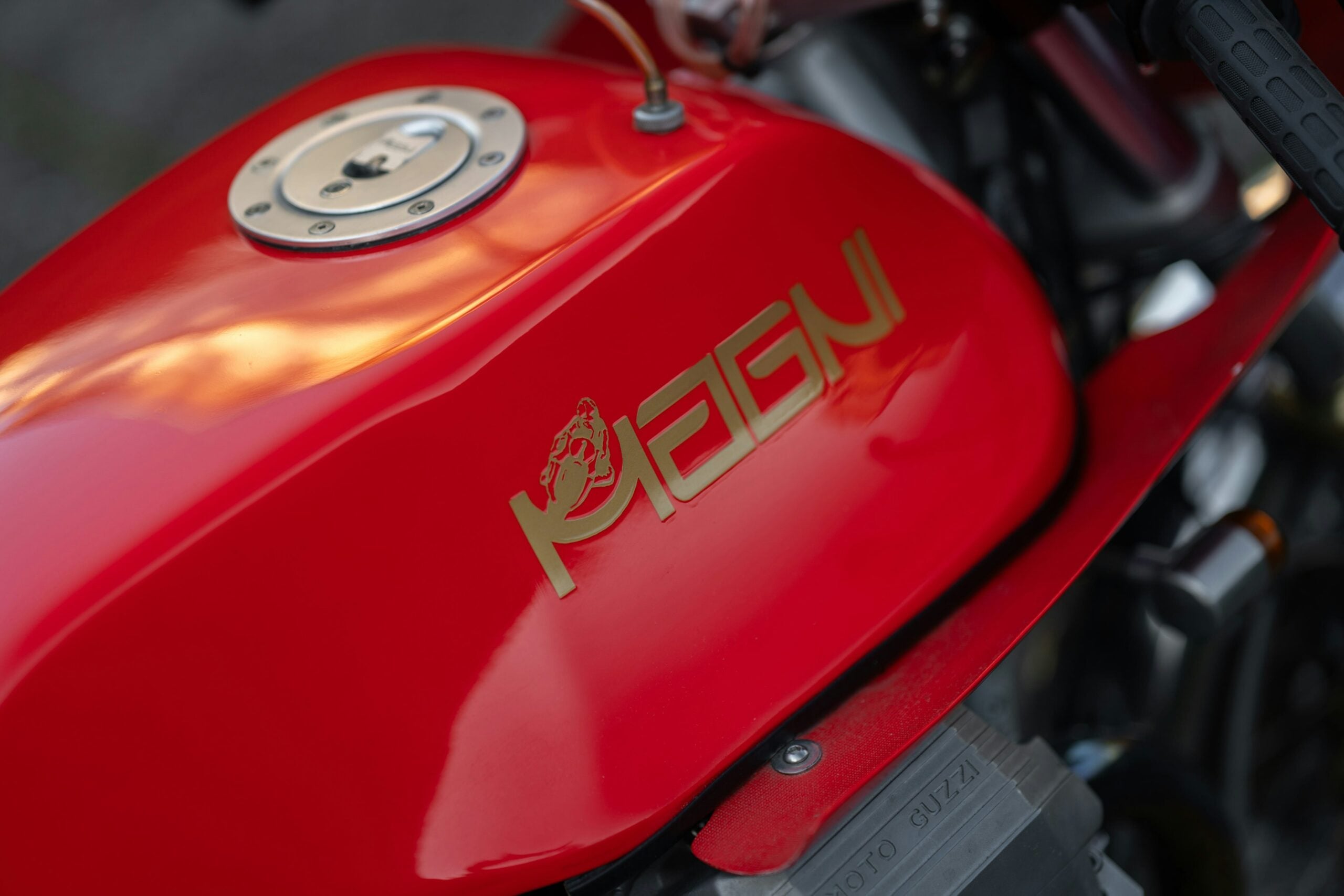
Magni’s take on the Le Mans 1000 had a one-piece tank, seat, and side panel unit combining with a full fairing that covered everything but the cylinder heads. The bike looked entirely of its decade, and it worked. Bruno De Prato tested one for the July 1986 issue of Cycle magazine, recorded 143 mph through the Monza timing lights on the standard engine, and rated it among the best-handling motorcycles then on sale.
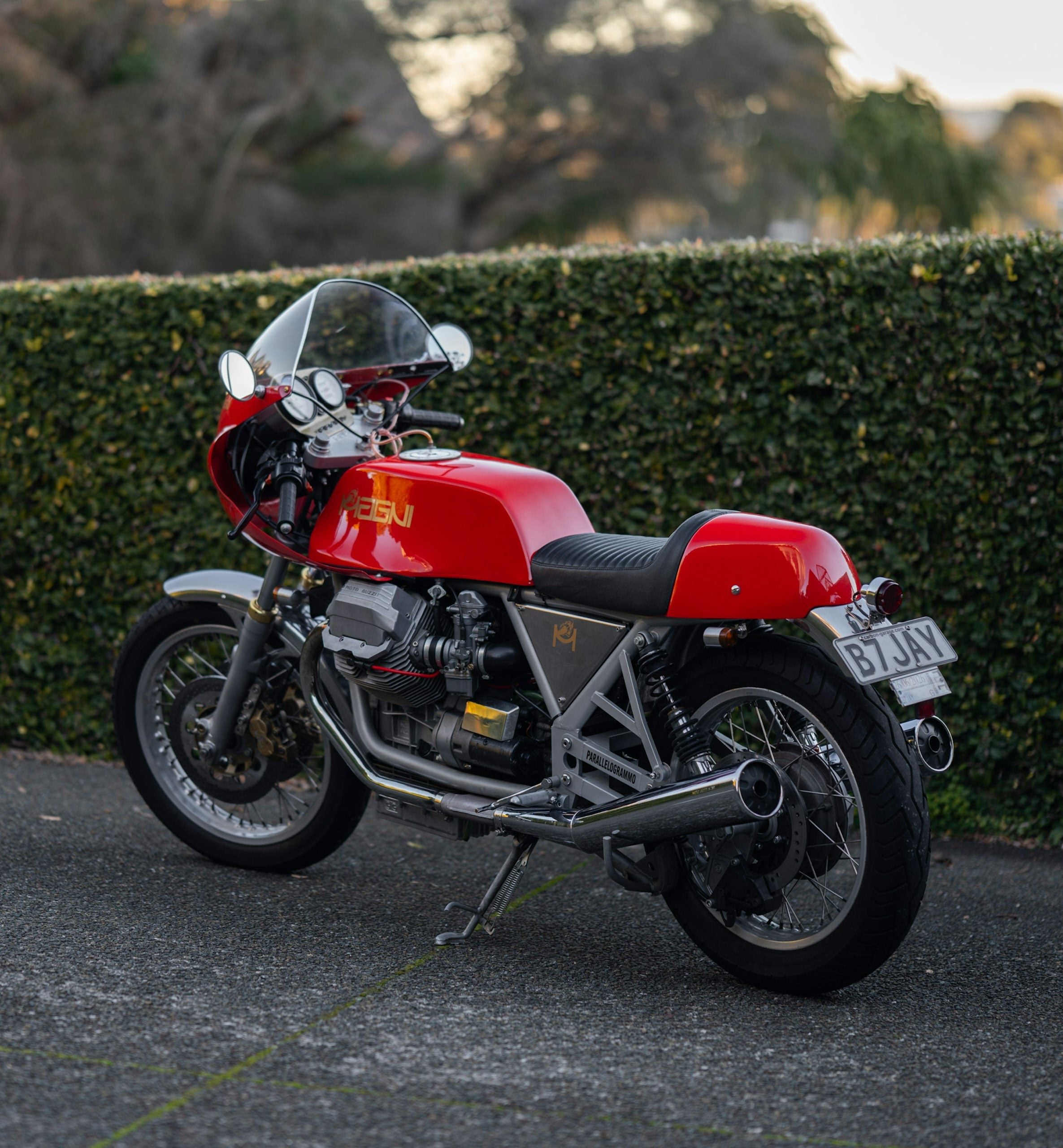
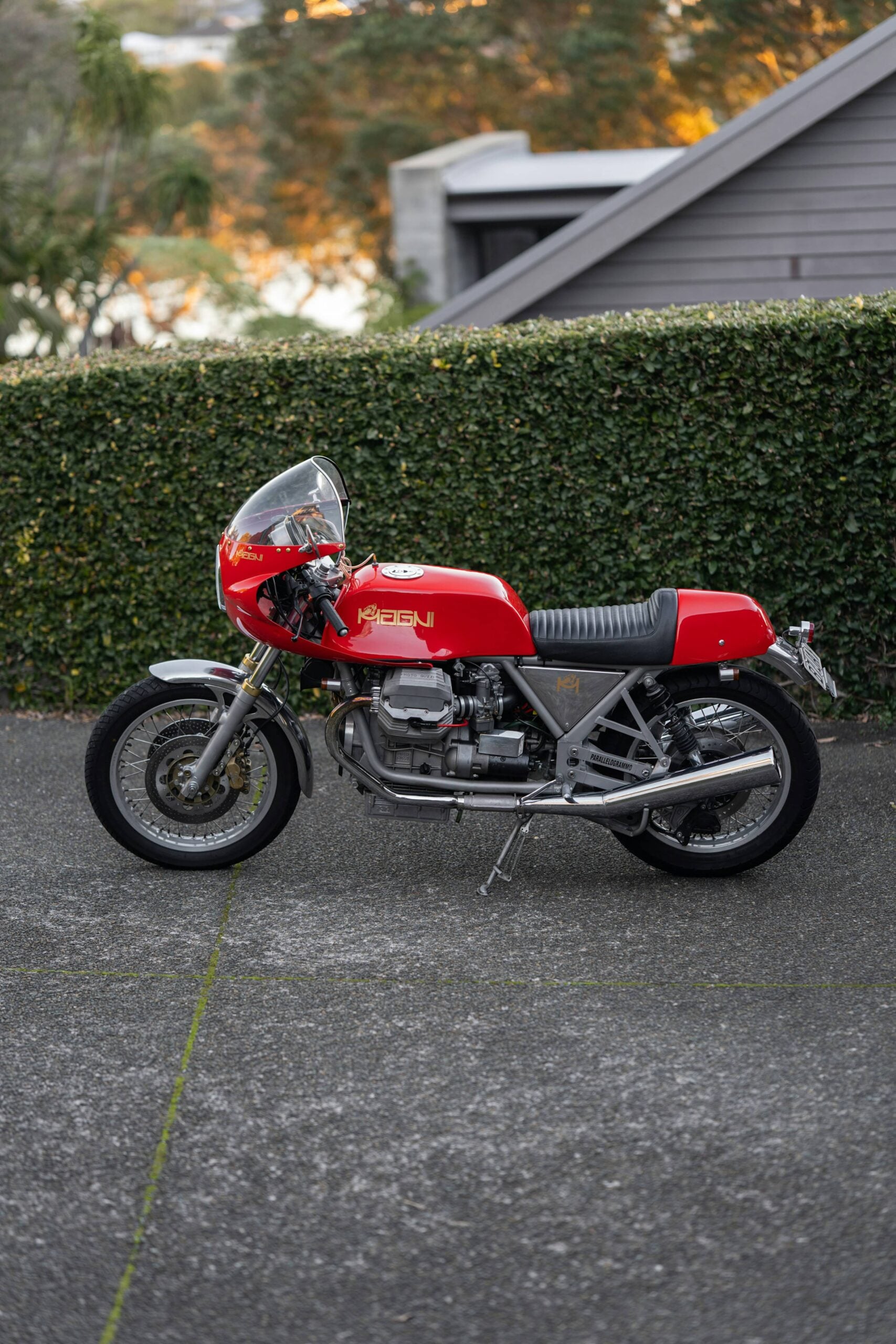
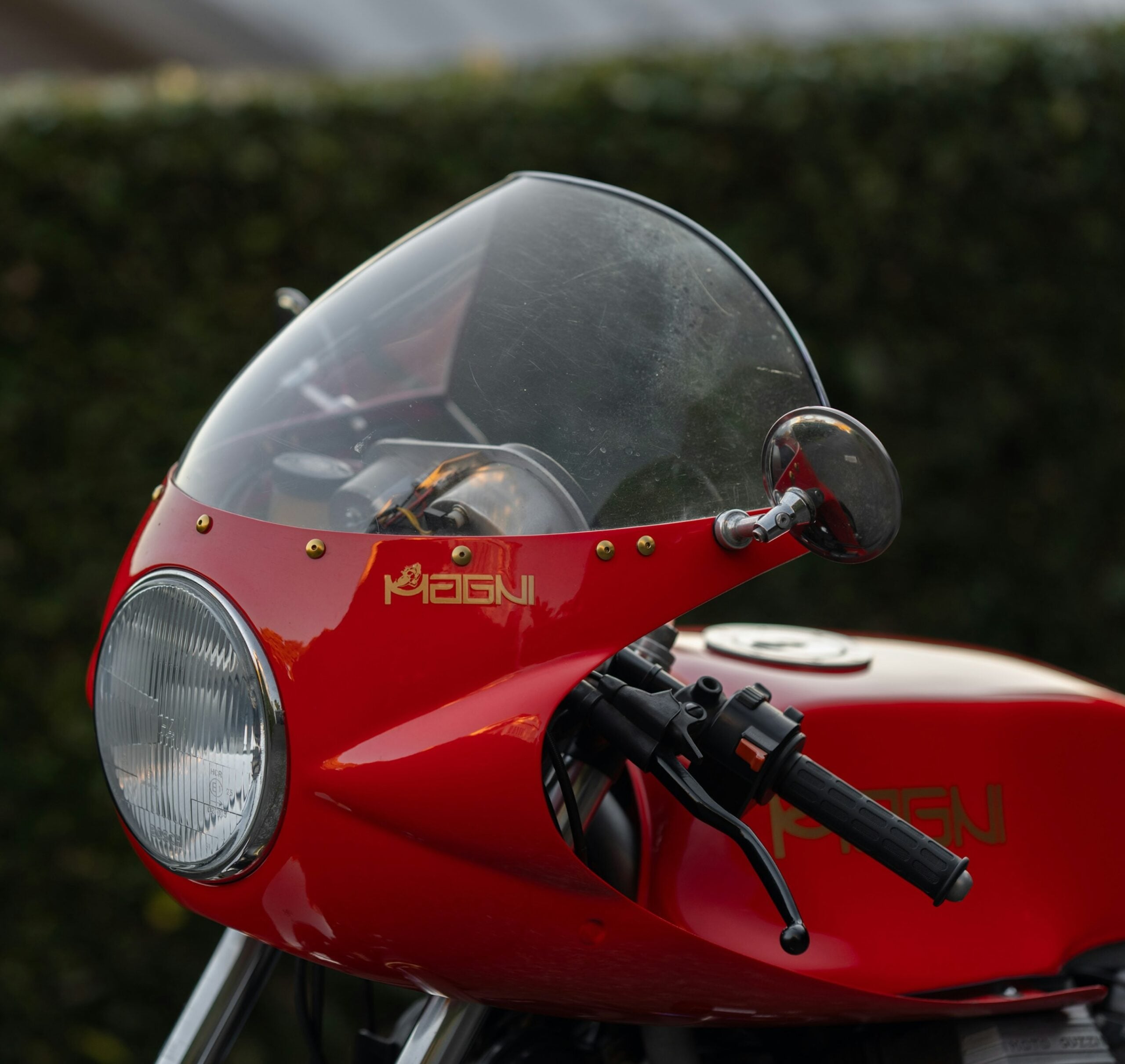
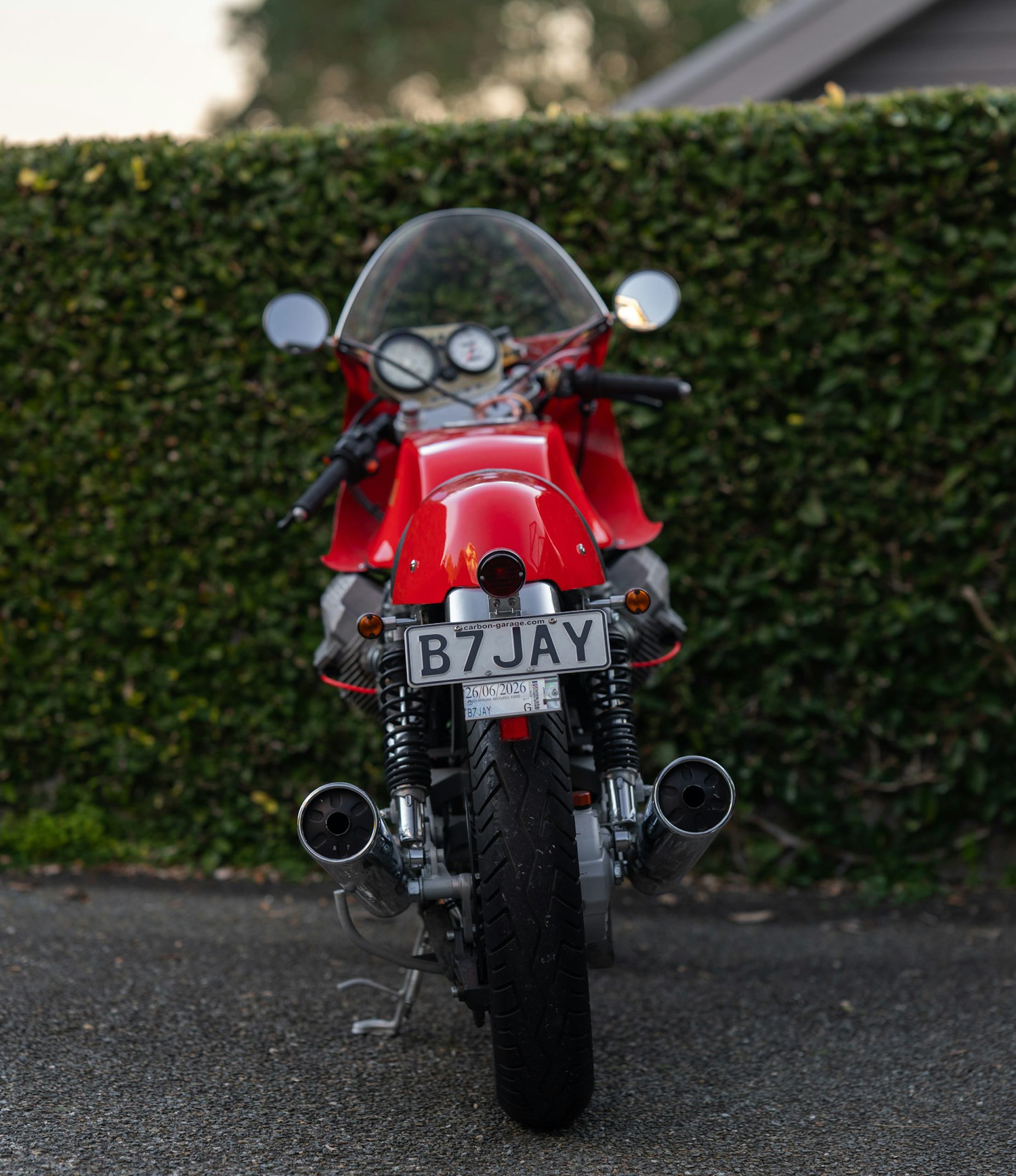
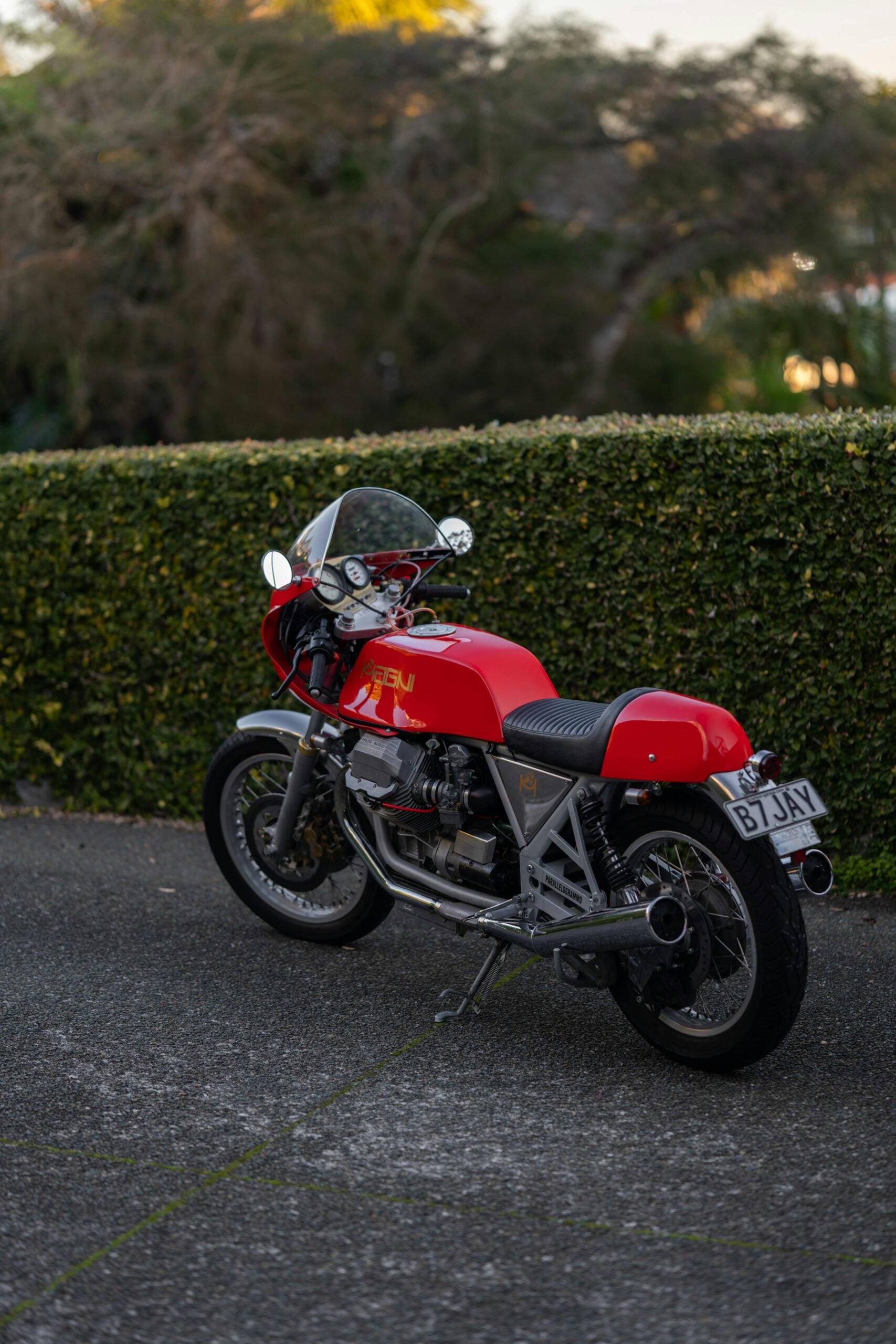
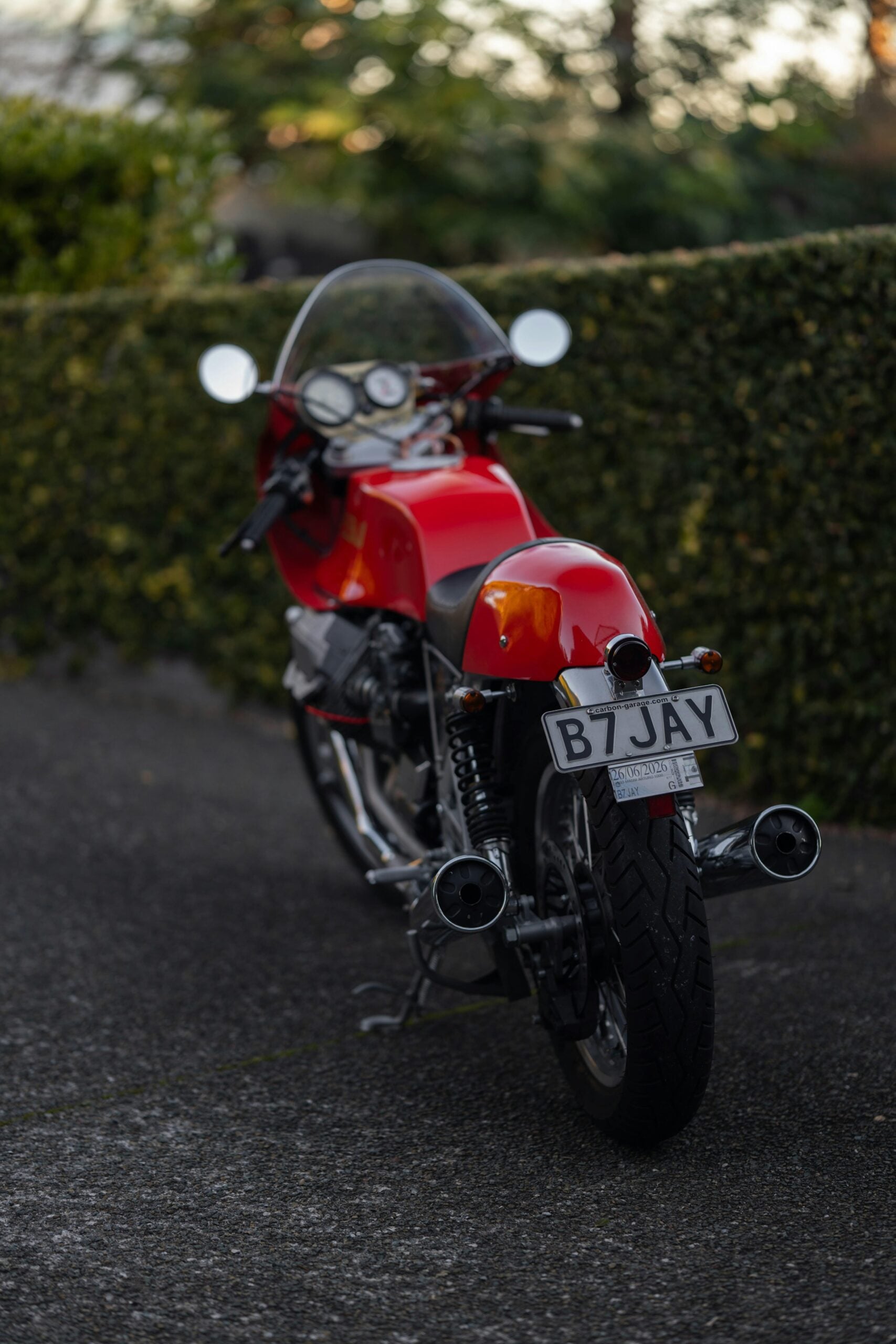
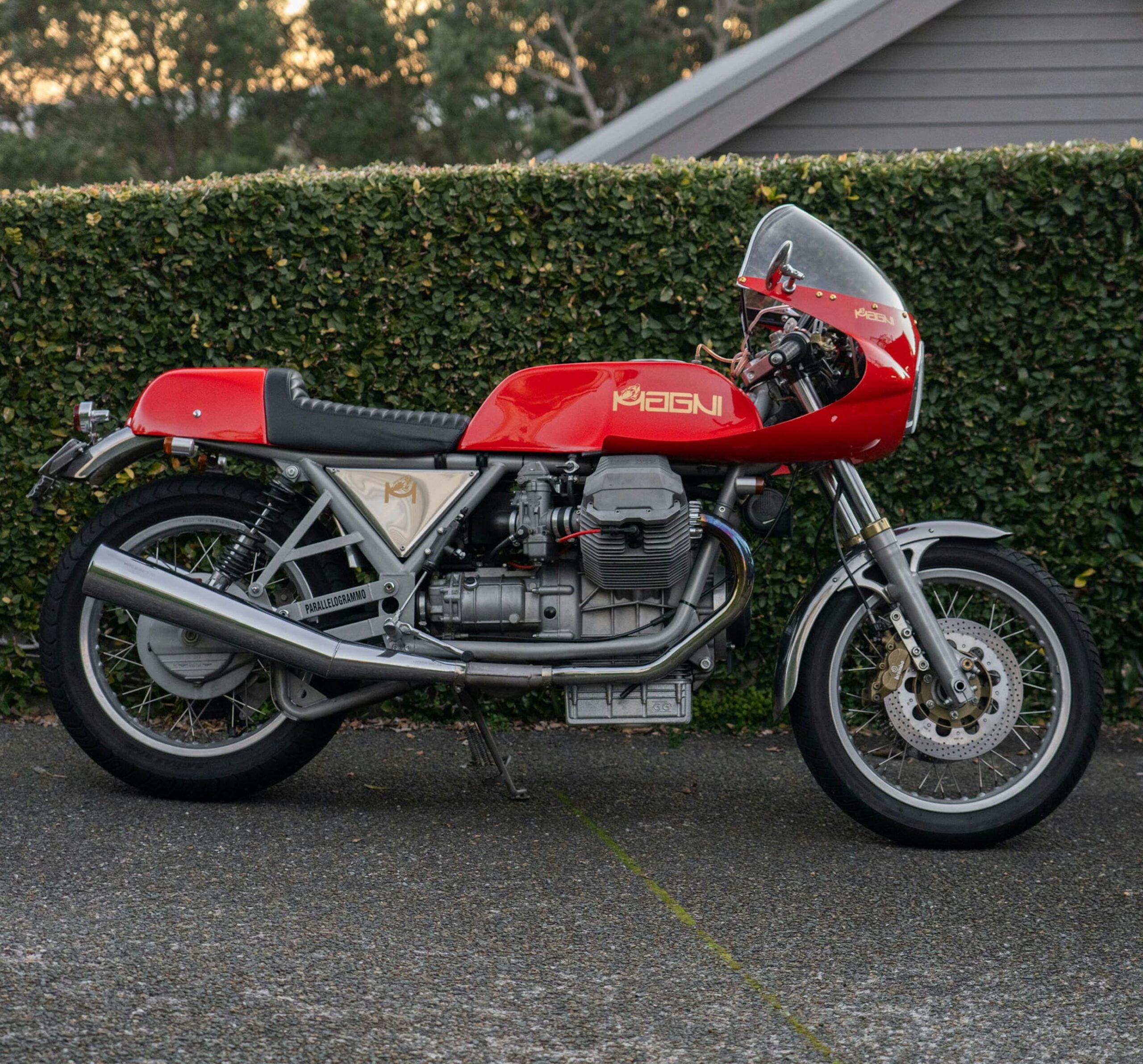
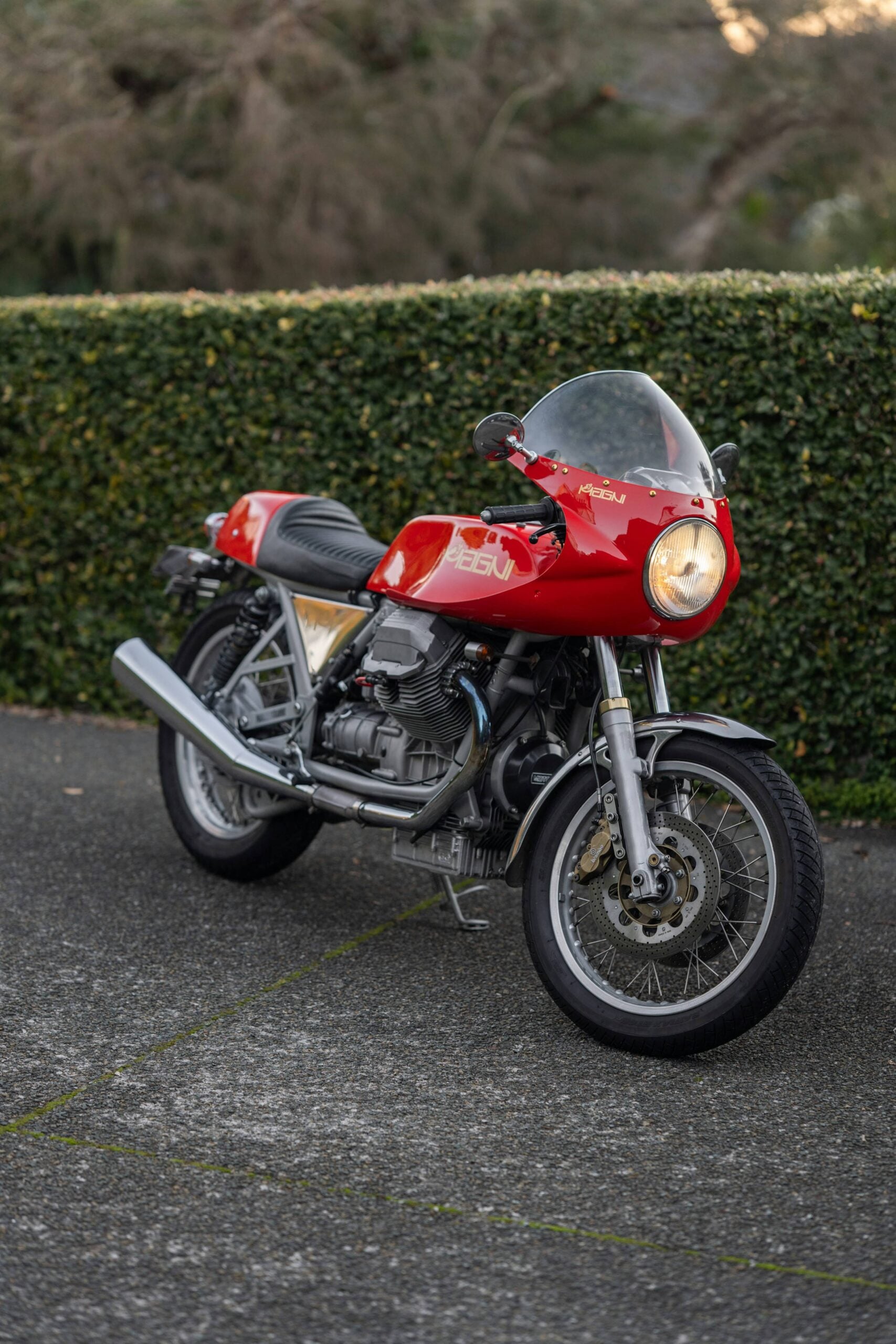
The bike you see here is a red, solo-seat Magni Arturo 1000 with the 1,000cc transverse Moto Guzzi V-twin, shaft drive, and Magni’s now-famous parallelogram rear suspension. It was imported into New Zealand from Japan in 2017 and the seller says it’s been fully restored since arriving.
The Magni Arturo 1000
The Arturo 1000, introduced in 1987 alongside the naked Classico 1000, wrapped the same fundamental mechanical package in 1970s café racer clothing – a round headlight, a bikini fairing, an exposed engine, wire wheels. The Classico did without the fairing, and the Arturo got it.
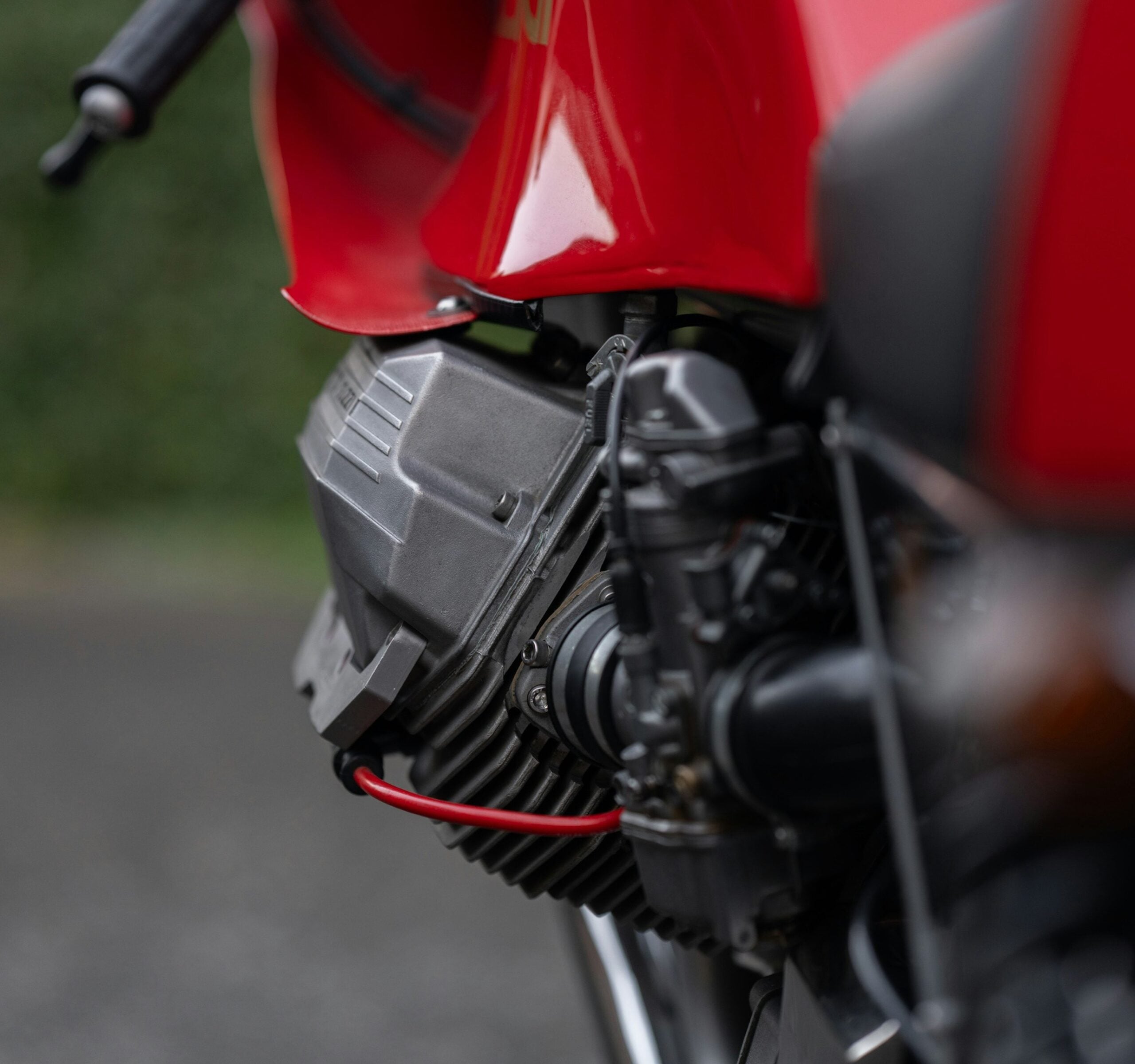
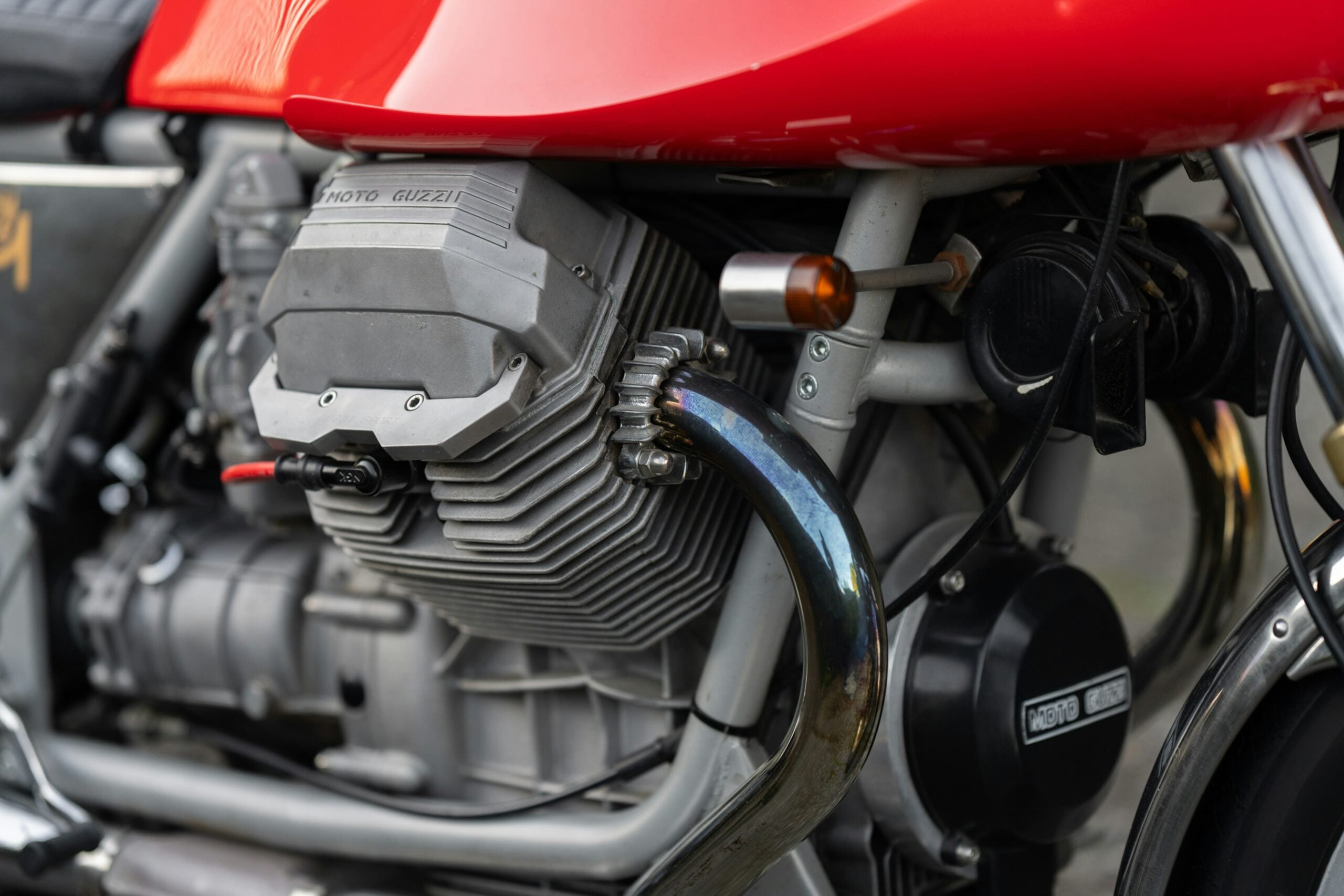
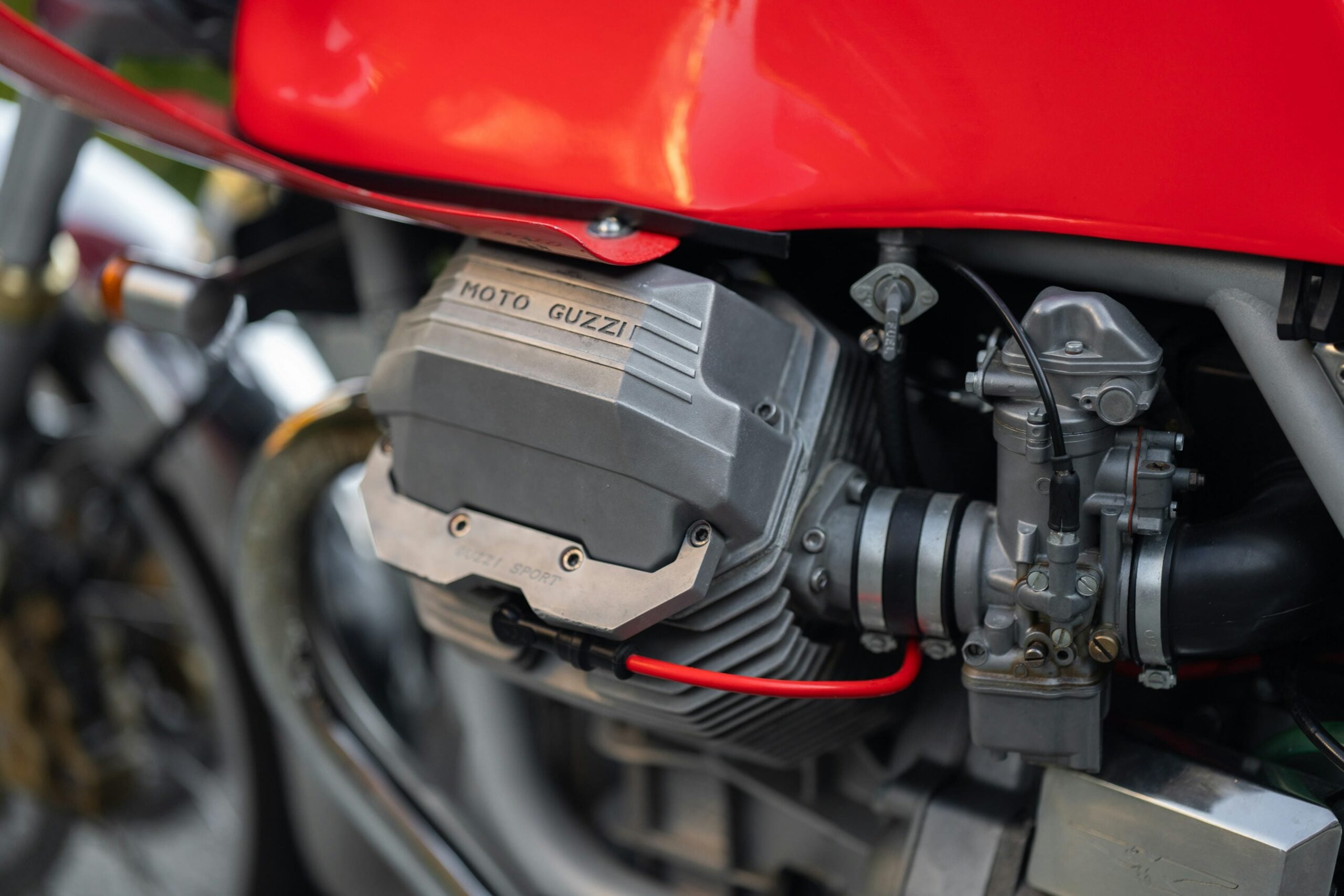
The engine was Moto Guzzi’s Le Mans 1000 unit, the 948.8cc version of the air-cooled 90º V-twin known as the Big Valve, with pushrods worked by a single camshaft in the vee of the cylinders and 40mm Dell’Orto pumper carburetors. Moto Guzzi claimed 81 bhp at 7,400 rpm.
Magni left the engine essentially standard, though a 1,090cc big-bore-and-stroker conversion was available, using 92mm pistons and an 82mm-stroke crank. Willem van der Togt, a Dutch owner who has run one, reported that it added useful midrange torque without meaningfully lifting peak power.
The Parallelogrammo Back End
The chassis was Magni’s own work, dimensionally it sits close to Lino Tonti’s Guzzi frame and shares its 28º steering head angle, but it’s built from 32mm chrome-moly tube, argon-arc welded, and it splits below the steering head rather than at the bottom rails, so the whole duplex cradle can be dropped out to remove the engine. The rear subframe uses flattened tube for an oval section.
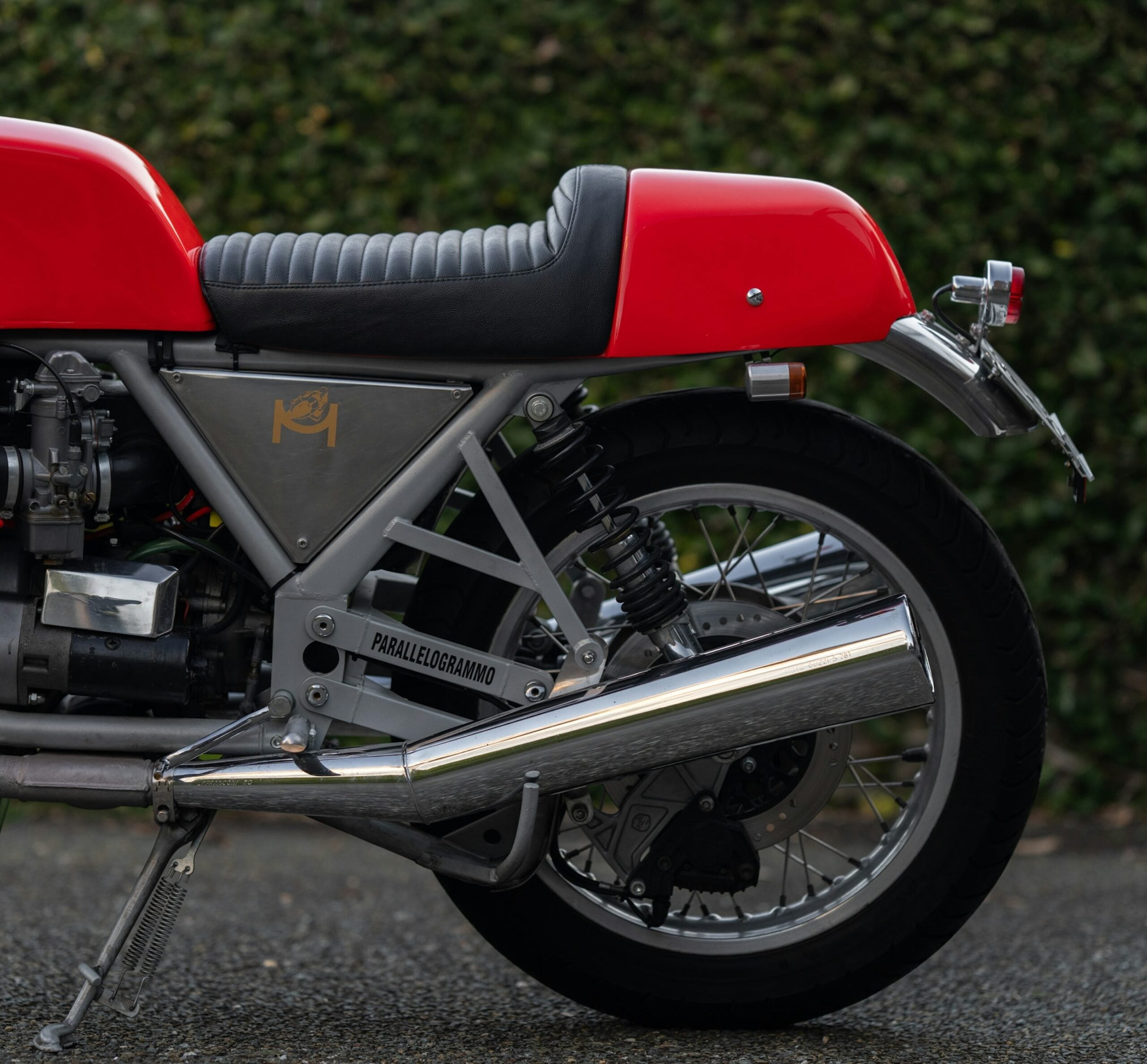
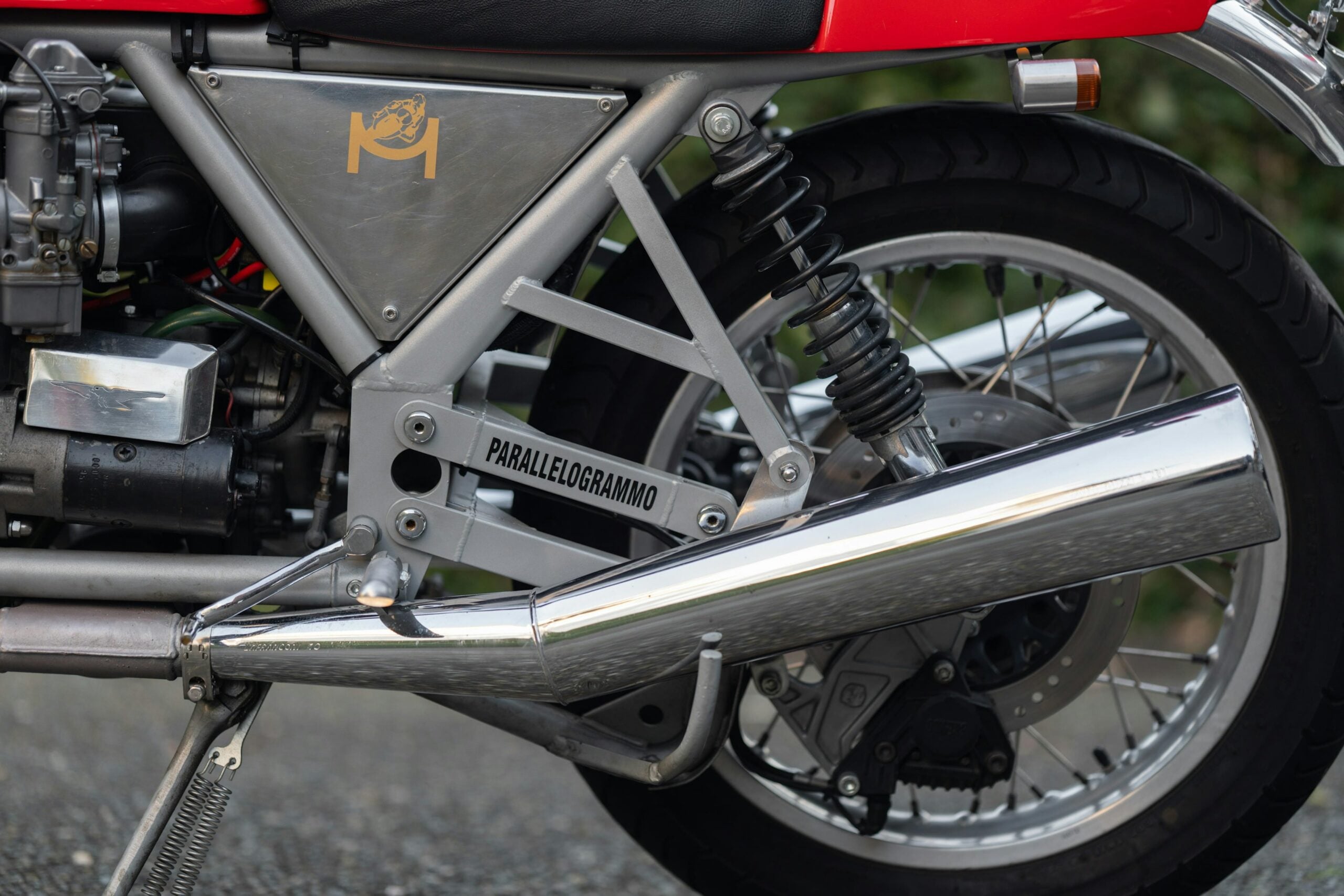
At the back sits the Parallelogrammo, the feature that really separates a Magni Guzzi from the more standard factory bikes. The shaft final drive essentially fights the rear suspension – under acceleration the pinion tries to climb the crown wheel and jacks the back of the bike up, so the suspension stops working properly just when it is needed most.
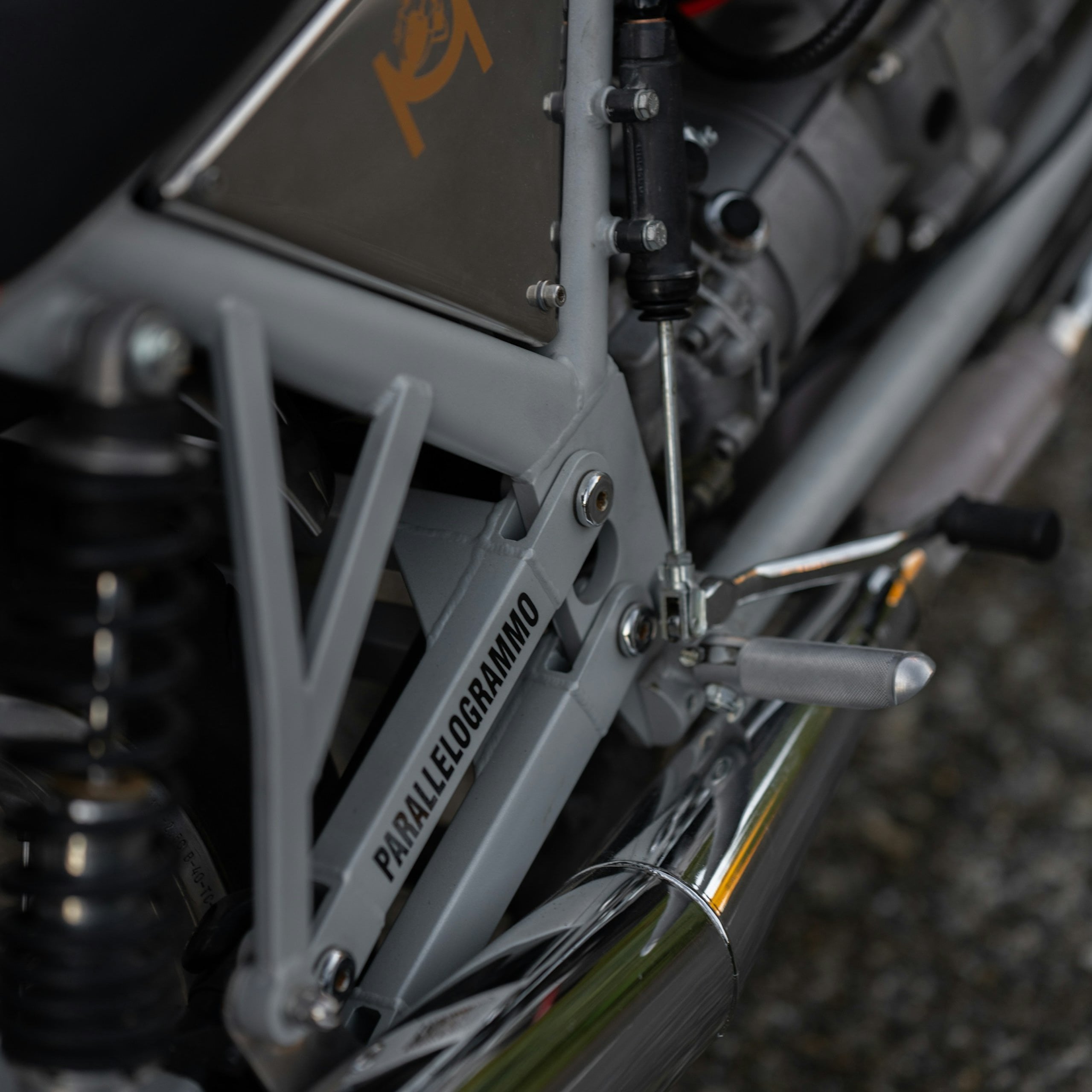
Magni developed the Parallelogrammo to avoid the shaft-jacking issue – it was made up of two parallel box-section arms, pivoting below the junction of the frame’s middle tubes, with the driveshaft taken out of the swingarm and given universal joints at each end so that it no longer binds as the suspension moves.
Magni’s answer was two parallel box-section arms, pivoting below the junction of the frame’s middle tubes, with the driveshaft taken out of the swingarm and given universal joints at each end so that it no longer binds as the suspension moves. The layout was not new to him, it had appeared on the shaft-drive MV Agusta 500 Grand Prix machine of 1950, the very bike Remor had recruited him to help build.
The wheels mark the other clear break from the donor bike – the earliest Le Mans 1000s had a 16-inch front wheel, fitted at De Tomaso’s insistence into a frame designed around an 18-inch unit, without altering the steering geometry to suit. Press reviewers and Guzzi traditionalists both disliked it, and Guzzi worked through three successive fixes including flatter steering yokes to reduce trail on the 1985 and 1986 bikes, then a longer fork, then an 18-inch front wheel made available in 1987.
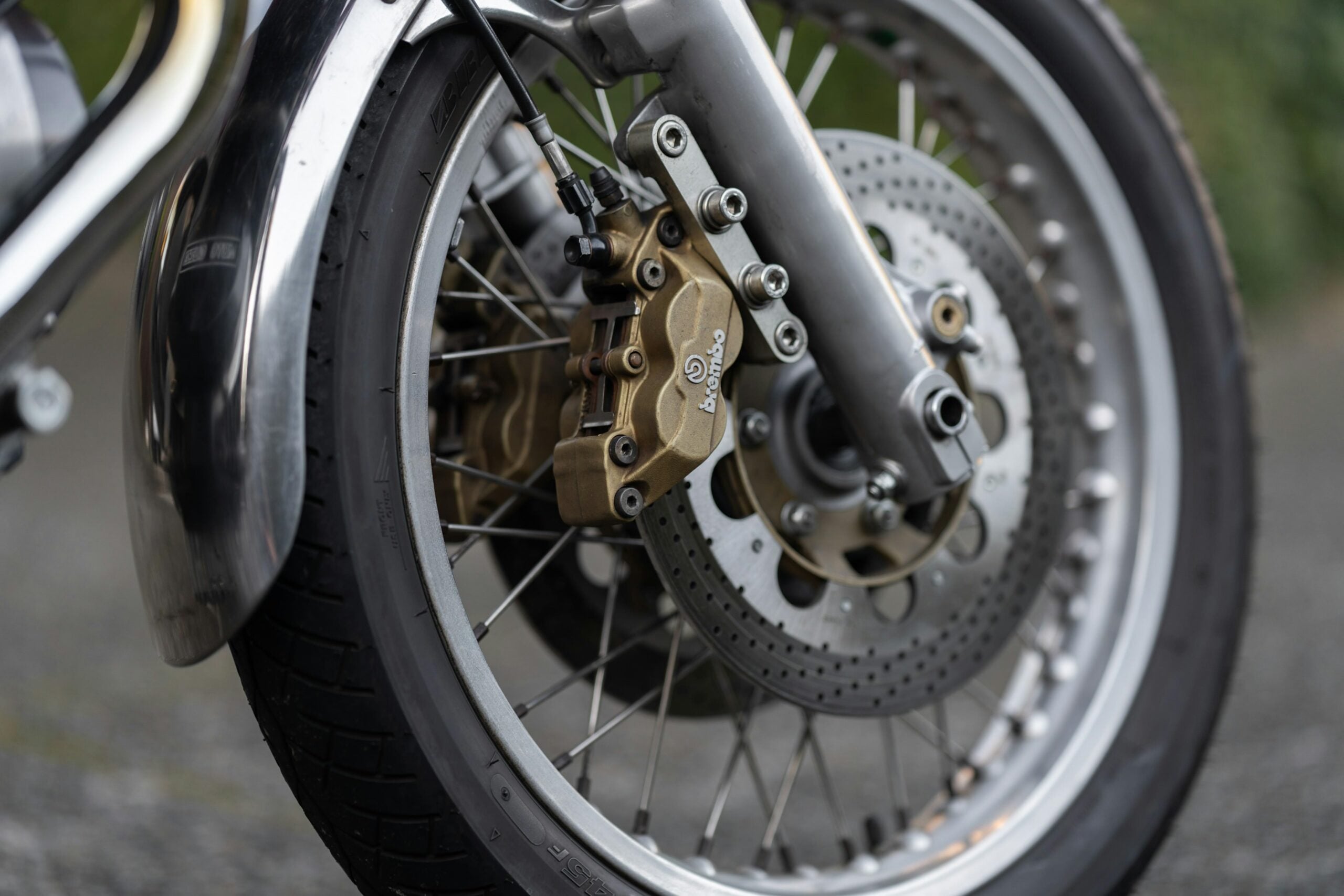
Magni had used 18-inch wheels from the start, cast or wire-spoked to order, on 40mm Forcella Italia forks with anti-dive valving cast into the sliders, and it has Brembo brakes at both ends.
Production + Values
Japan became Magni’s largest export market, surprisingly for some, and the Arturo and Classico were the models that really started the trend. Estimates of how many Guzzi-engined Magnis were built differ, some say 700, while others put it above 900, but both agree that 1990 and 1991 were the most popular years. The market could have actually absorbed more bikes, but Moto Guzzi’s inability to supply engines in higher volumes limited numbers.
Magni-built Guzzis are now sought after bikes but only in a very specific section of the motorcycle world. People have to know about them first, which is usually the main hurdle, and then they need to find one for sale, which can take years.
Arturo Magni died on December the 2nd, 2015, aged 90. His son Giovanni still runs the company from Samarate to this day, restoring the old Magni machines and building new ones around MV Agusta engines once again.
The Magni Arturo 1000 Shown Here
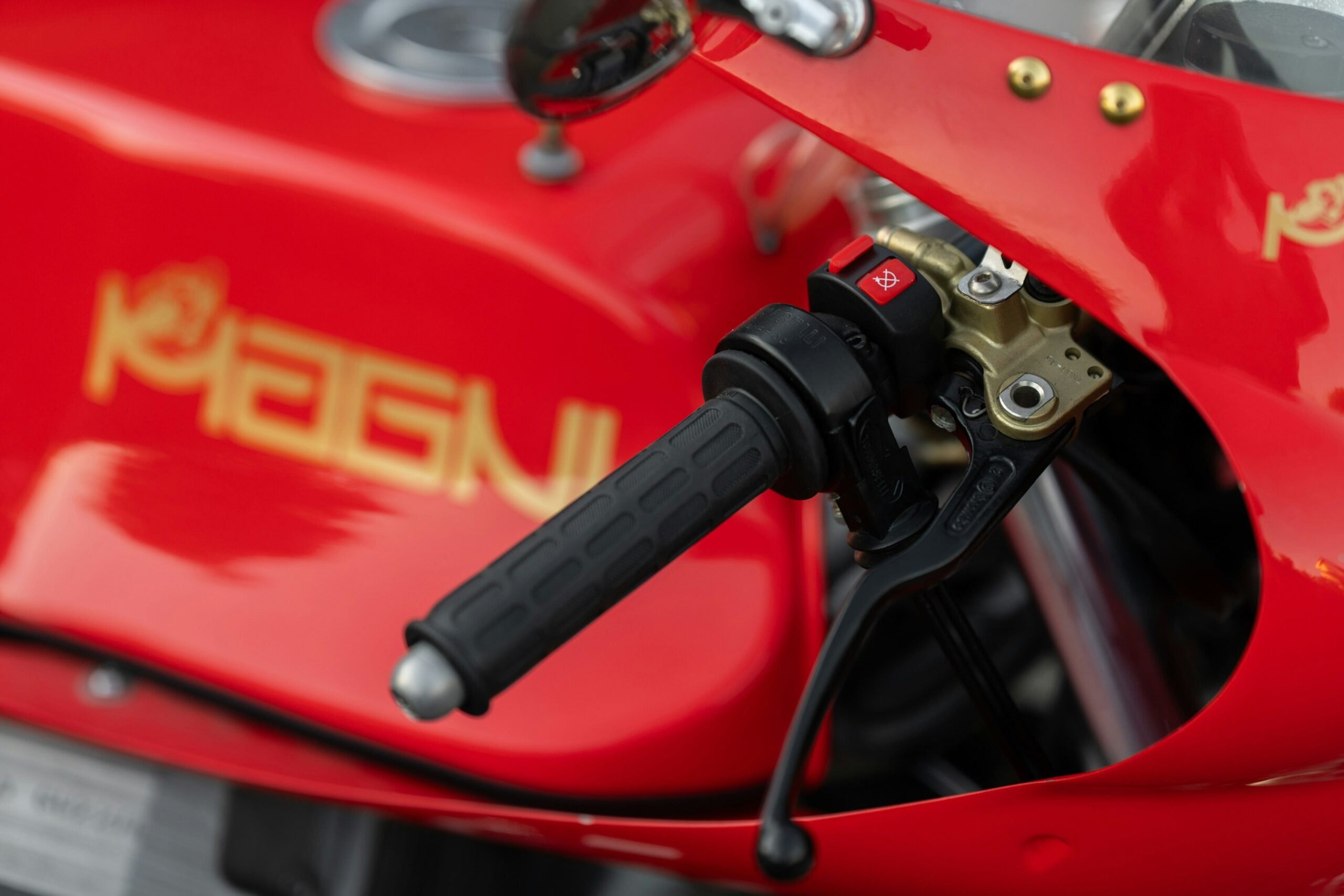
The bike you see here is a red, solo-seat Magni Arturo 1000 with the 1,000cc transverse Moto Guzzi V-twin, shaft drive, and Magni’s now-famous parallelogram rear suspension. It was imported into New Zealand from Japan in 2017 and the seller says it’s been fully restored since arriving.
The bike comes with its recent ownership history, covering the 2017 import from Japan, the restoration work, and confirmation that it has since sat in a private collection under the care of one mechanic. Condition is described as good, with the only noted flaw being a few very small paint chips the seller says are barely visible.
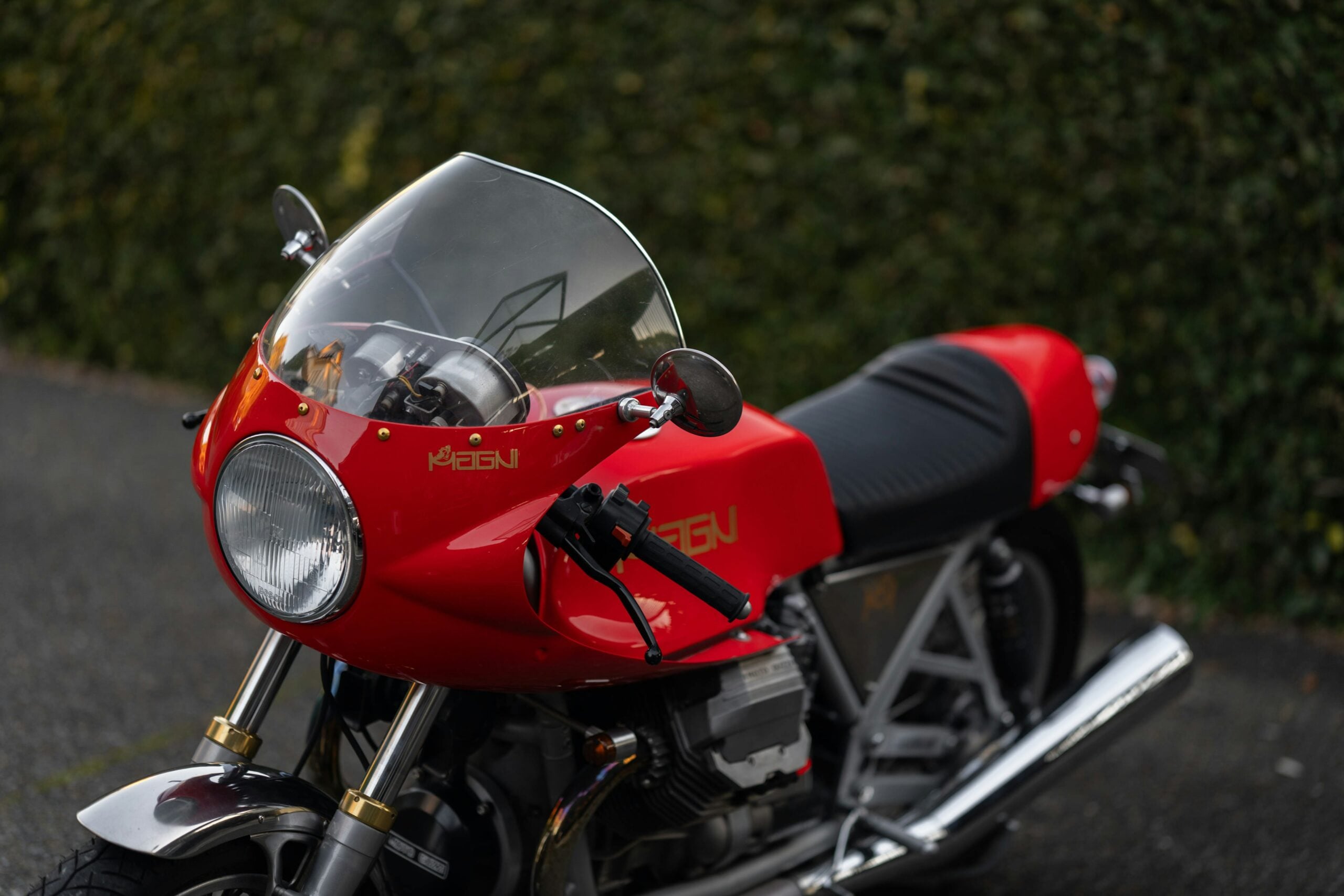
This bike comes with its recent ownership history, covering the 2017 import from Japan, the restoration work, and confirmation that it has since sat in a private collection under the care of one mechanic. Condition is described as good, with the only noted flaw being a few very small paint chips the seller says are barely visible.
The most recent recorded service was in February of 2022 and ran to 21 hours of labor. It covered a full service plus what the listing calls upgraded engine, running gear and modern electrical components, along with a new HT lead and connectors, an alternator rubber boot, an oil seal, fresh 20W-50 oil and assorted stainless fasteners.
It’s now being offered for sale out of Auckland, New Zealand and you can visit the listing here if you’d like to read more about it or register to bid.
Images courtesy of Collecting Cars

Articles that Ben Branch has written have been covered on CNN, Popular Mechanics, Smithsonian Magazine, Road & Track Magazine, the official Pinterest blog, the official eBay Motors blog, BuzzFeed, Autoweek Magazine, Wired Magazine, Autoblog, Gear Patrol, Jalopnik, The Verge, and many more.
Silodrome was founded by Ben back in 2010, in the years since the site has grown to become a world leader in the alternative and vintage motoring sector, with well over a million monthly readers from around the world and many hundreds of thousands of followers on social media.