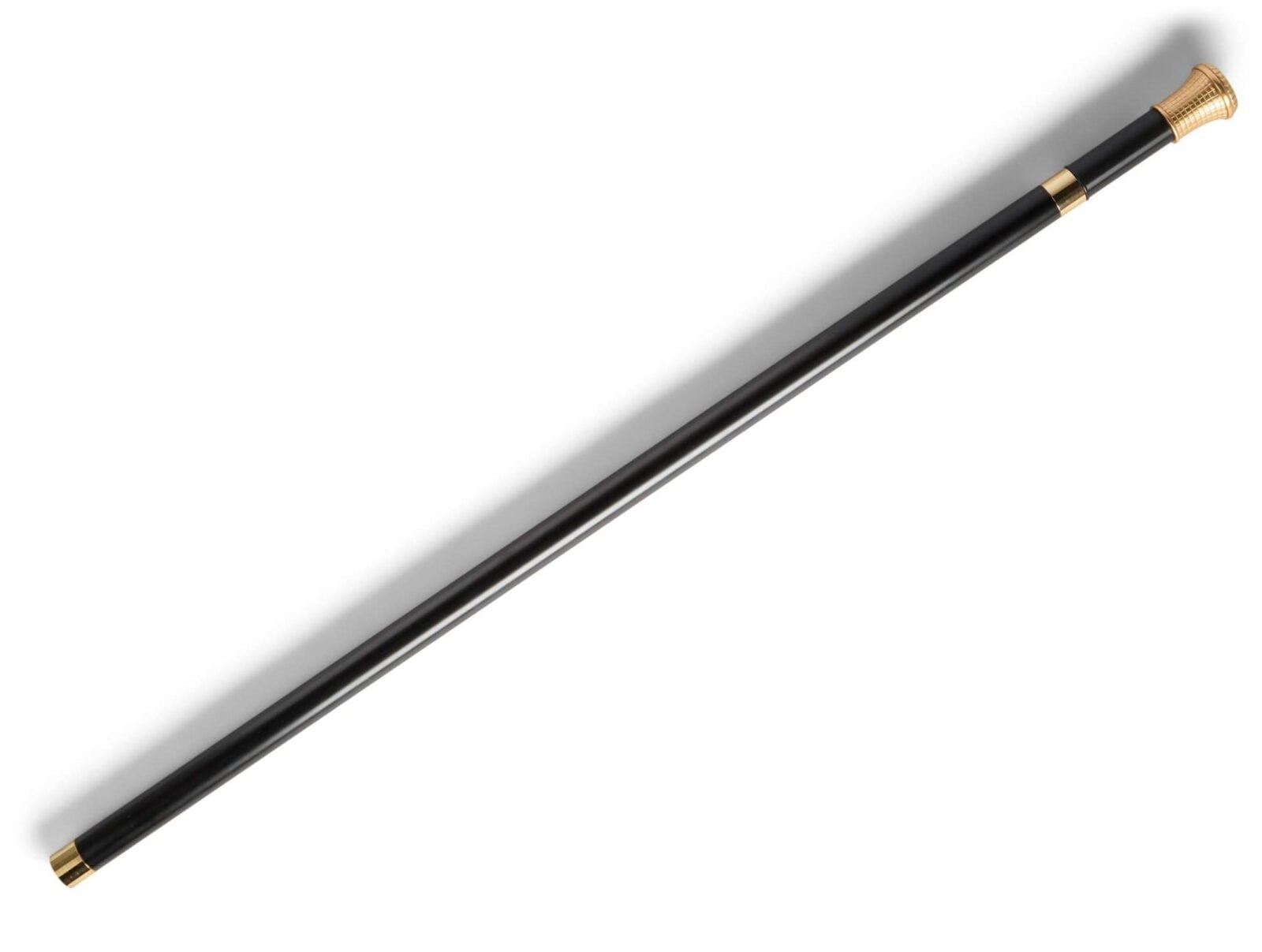
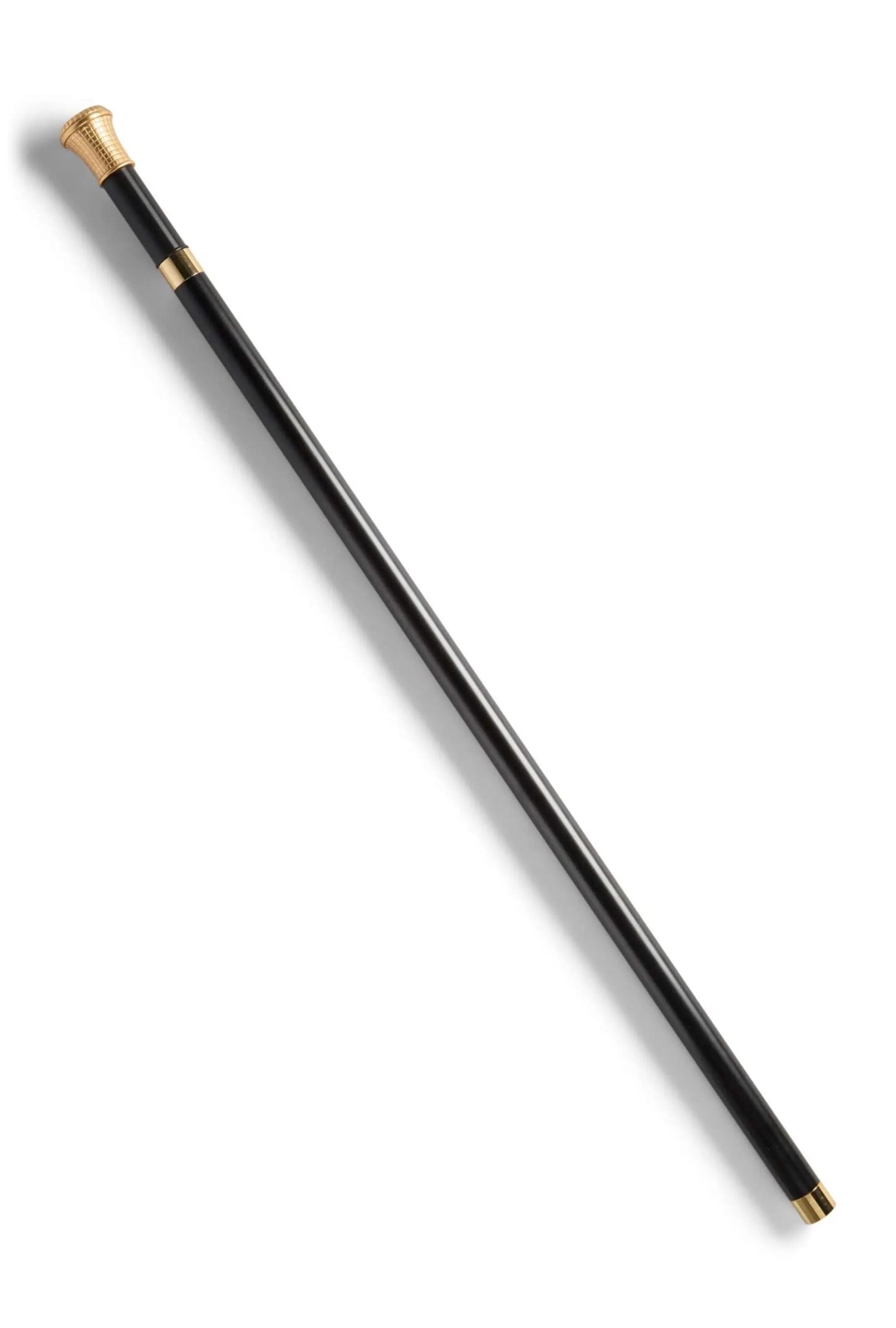
This is number #025 of a limited-edition series of Evel Knievel canes, all carefully designed to replicate his infamous walking stick with its gem studded head, and its hidden liquor compartment.
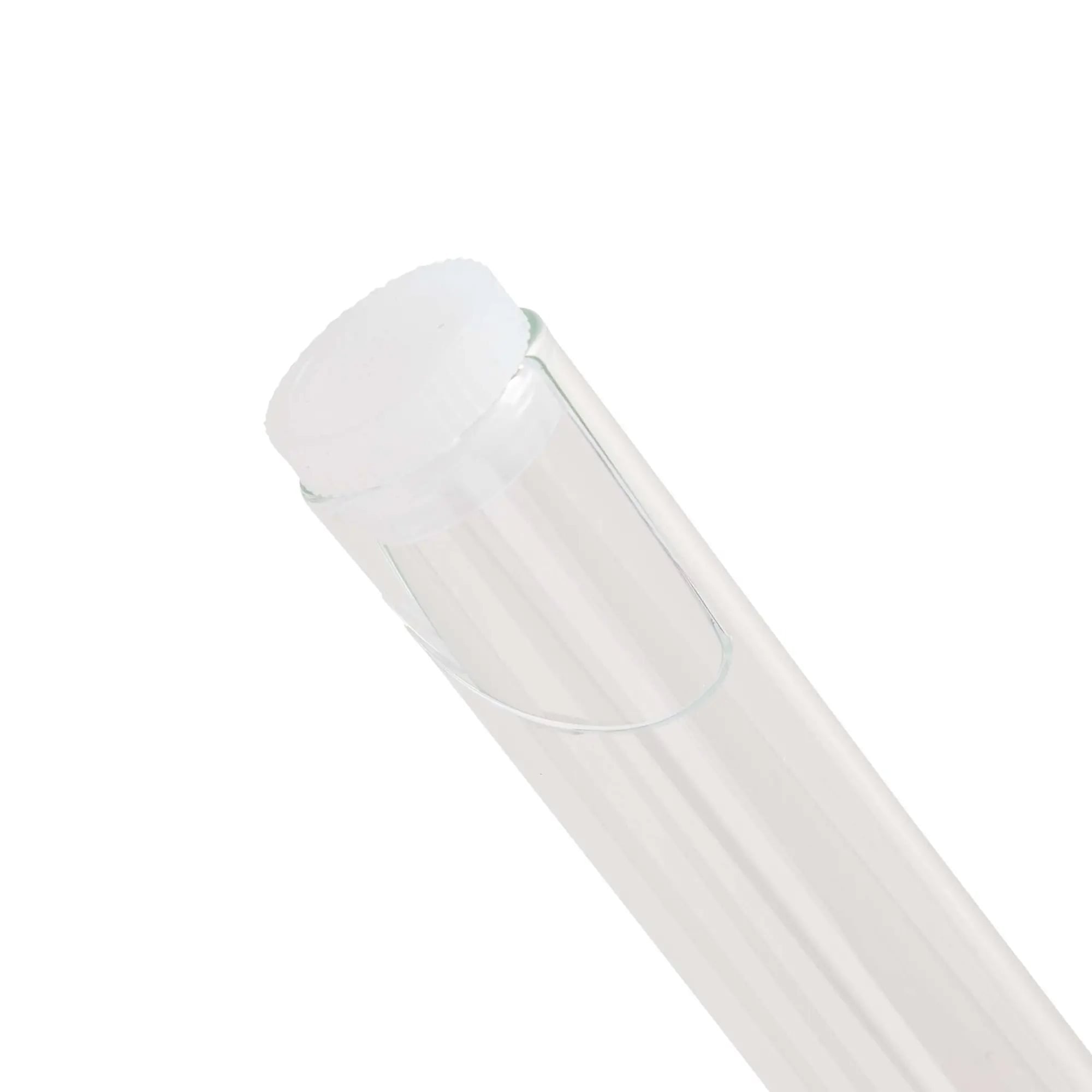
In order to access that liquor compartment you unscrew the bottom end cap, inside there’s a spring that holds a vial of your favorite tipple in place, and this cane comes with five vials in total to make sure you never run out.
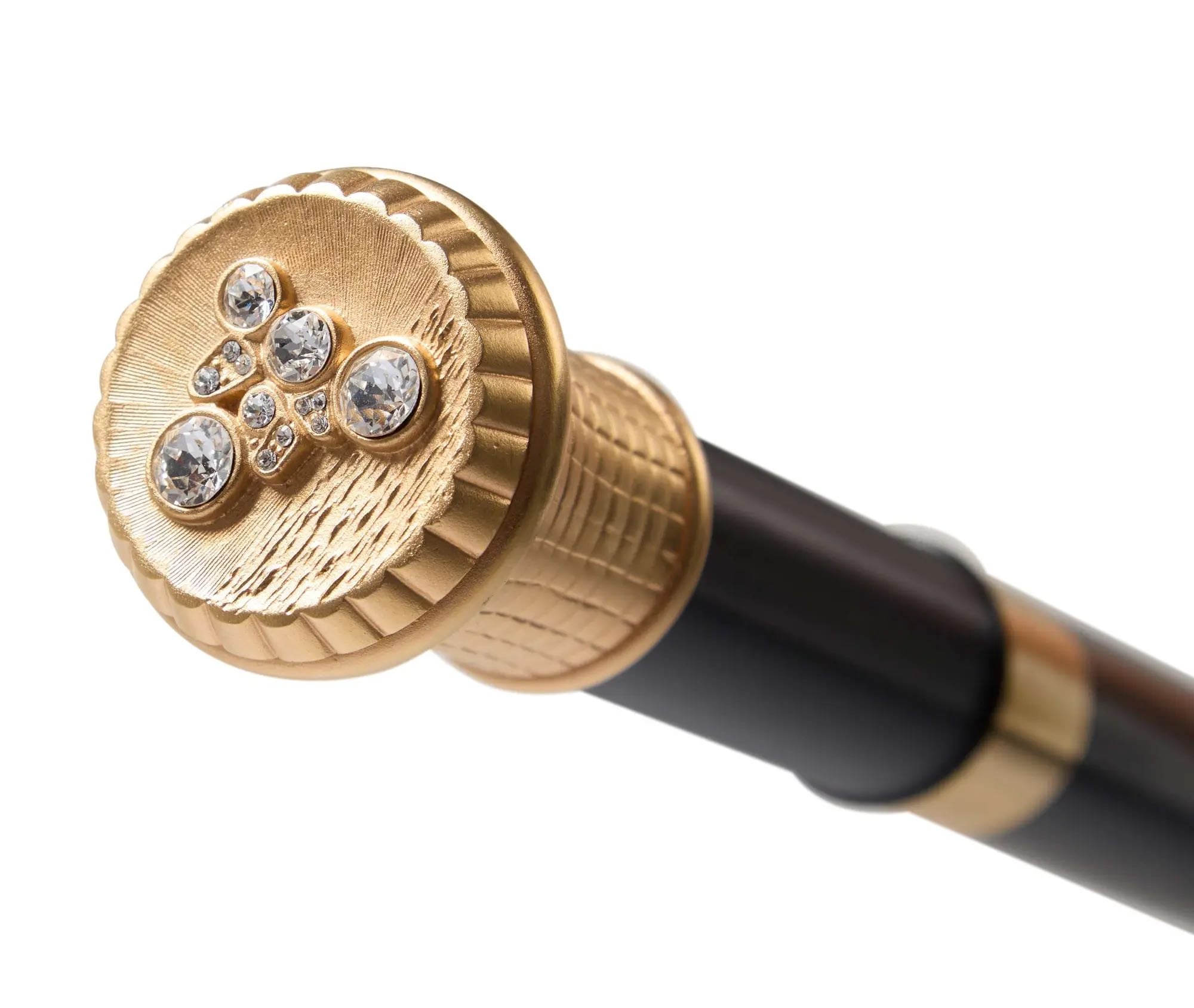
 This is number #025 of a limited-edition series of Evel Knievel canes, all carefully designed to replicate his infamous walking stick with its gem studded head, and its hidden liquor compartment.
History Speedrun: Evel Knievel
On October the 25, 1975, more than half the switched on televisions in the United States were tuned to one man pointing a modified Harley-Davidson XR-750 at a row of Greyhound buses as a white cape billowed out behind him. He jumped all 14 of them, 133 feet in total, and landed hard enough to cleanly snap the bike’s steel frame. It was the longest successful jump of his career and the highest-rated broadcast ABC’s Wide World of Sports ever aired. Perhaps most amazingly, Knievel walked away without a scratch.
Robert Craig Knievel was born in Butte, Montana, on October the 17th, 1938, and spent his 20s trying careers on like dinner jackets – he had worked as a copper miner, a hunting guide, and perhaps most comically, as an insurance salesman. He founded a semi-pro hockey team, the Butte Bombers, and talked the Czechoslovak national side into playing them on their way to the 1960 Winter Olympics.
The Czechs won 22-3. Knievel was ejected in the third period and left the building, and when officials went to collect their travel money afterward the gate receipts were missing. The US Olympic Committee covered the bill. A night in a Butte jail cell beside a man known as Awful Knofel got him tagged Evil Knievel, though accounts differ over whether a jailer coined it or Knievel came up with it himself. He swapped the i for an e, saying he preferred not to be thought of as evil.
His break came from a little telephone trickery – wanting to jump the fountains at the then-new Caesars Palace, he called founder Jay Sarno repeatedly, posing each time as a different journalist keen to cover Evel Knievel’s upcoming jump. Sarno took the bait. On the 31st of December, 1967, Knievel launched a Triumph Bonneville at 141 feet of Las Vegas water, came up short, and cartwheeled into the Dunes parking lot with a crushed pelvis and femur.
The story that he then lay in a coma for 29 days went around the world. It was all invented – his wife Linda later said he made up that story, and casino magnate Jay Sarno’s son described his father slipping hundred-dollar bills to hospital staff to tell reporters Evel was barely hanging on. All publicity is good publicity after all.
Above Video: This is the infamous Evel Knievel jump at Caesar’s Palace in 1967. The crash landing nearly killed him, but it also made him a legend.
From there on out, the stunts only got bigger. Denied permission to jump the Grand Canyon, Knievel leased 300 acres of Idaho’s Snake River Canyon for $35,000 USD and hired rocket engineer Robert Truax to build something that could clear it. Well, maybe clear it.
The Skycycle X-2 was a steam rocket, its 77 gallons of water superheated over fourteen hours. Admission on September the 8th, 1974 cost $25 USD, and estimates of the crowd in attendance run from 10,000 to more than 30,000. Most of them missed the undercard where Gil Eagles rode a motorcycle blindfolded and Karl Wallenda walked a high wire, both staged out of sight of the field for the closed-circuit cameras.
When it was Knievel’s turn, he launched the Skycycle X-2 down the track and up the ramp aiming to clear the canyon, but his parachute opened on takeoff rather than landing. Knievel drifted down to the canyon floor like a dandelion seed. He landed near the river, climbed out, and told reporters he’d given it his best shot.
The following May in London, England a Wembley crowd reported at anywhere from 60,000 to 90,000 watched him take on 13 London buses. He very nearly made it, then crashed violently at the far end, fracturing his pelvis and breaking his hand. He refused the stretcher, had himself carried to the microphone, and retired on the spot. It was a sensational ending to his career, televised around the world and resulting in countless newspaper headlines the next morning.
The retirement lasted until the plane touched down at JFK. A few months later he was at Kings Island, lining up 14 buses.
Sooner after all of this, the Ideal Toy Company’s Evel Knievel Stunt Cycle, a gyro-powered toy motorcycle spun up by a hand crank and ridden by a plastic Evel, was among the best-selling toys in America, and Knievel took an estimated $10 million from the deal. That works out to over $62 million in 2026 dollars.
The Guinness Book Of World Records credits him with 433 bone fractures by the end of 1975. He always thought that figure was a little overheated. His own count was 35, which is about 35 too many for most people.
Knievel died on November the 30th, 2007, and was buried in Butte beneath a headstone a tombstone company had given him 33 years earlier, around the time of the Snake River jump. When it was first made, it carried his birth date, the date of the jump, his likeness, and a blank space left in case he didn’t make it across.
The Evel Knievel Walking Stick Replica Shown Here
Evel Knievel was famous for a few things, his Harley-Davidson XR-750s, his wild jump suits with their capes, his showmanship, and for his walking cane – he was rarely without it even when broken bones didn’t necessitate it.
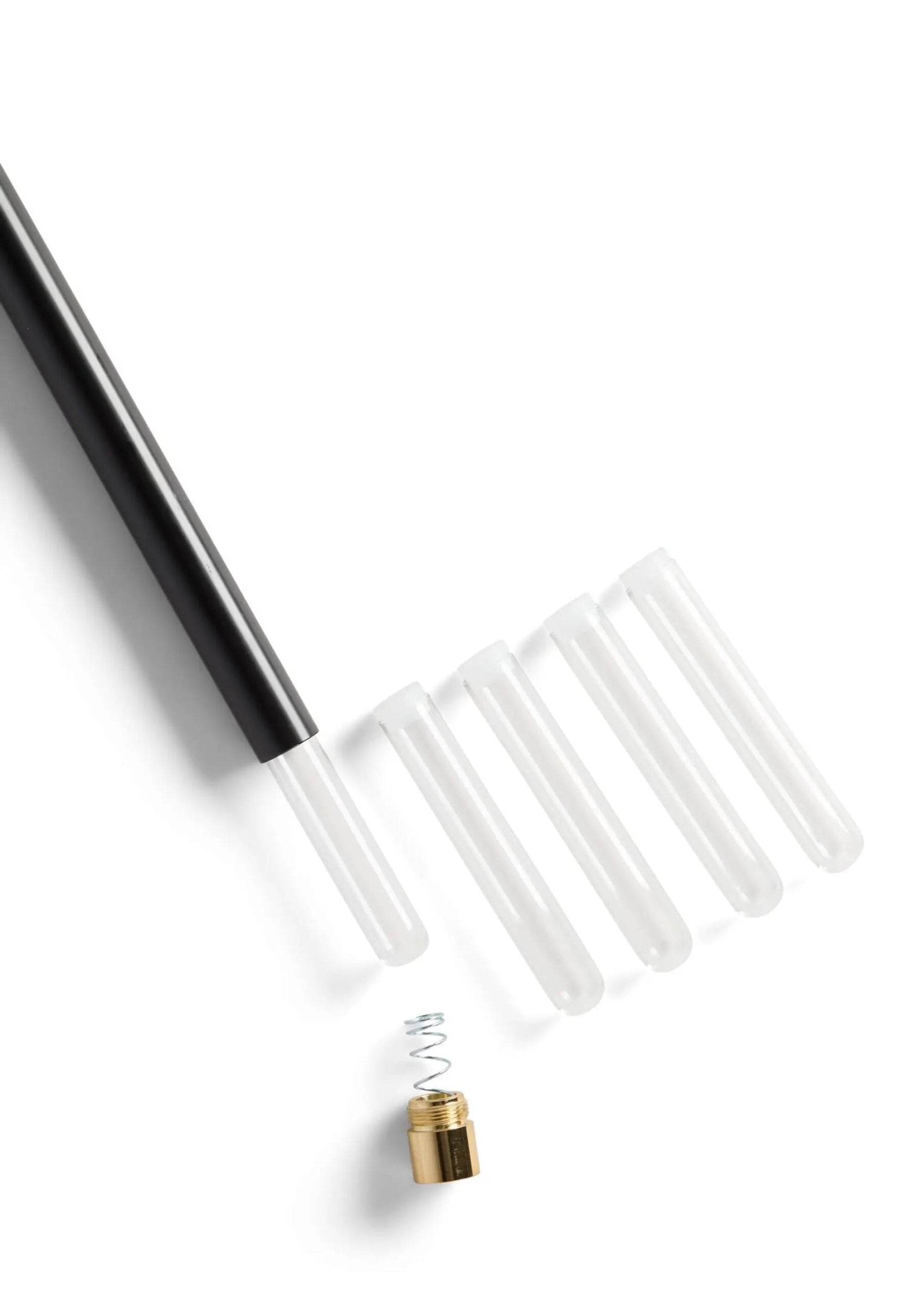
In order to access that liquor compartment you unscrew the bottom end cap, inside there’s a spring that holds a vial of your favorite tipple in place, and this cane comes with five vials in total.
The cane famously had a diamond-embellished handle, with a series of circular cut stones in the shape of a man riding a motorcycle. It was a clever addition, but there was an even more discreet feature. Unscrewing the top section of the cane revealed a secret liquor compartment, a mini circular flask, that typically contained b0urbon – a self-prescribed pain medication that helped take the edge off.
The walking cane you see in this post is a replica of that Evel Knievel original, still with the cut stones in the handle (though not diamonds of course), and it also has that hidden liquor compartment. It’s now being offered for sale on Julien’s here with a price estimate of $1,500 – $2,500 USD.
Images courtesy of Julien’s

Articles that Ben Branch has written have been covered on CNN, Popular Mechanics, Smithsonian Magazine, Road & Track Magazine, the official Pinterest blog, the official eBay Motors blog, BuzzFeed, Autoweek Magazine, Wired Magazine, Autoblog, Gear Patrol, Jalopnik, The Verge, and many more.
Silodrome was founded by Ben back in 2010, in the years since the site has grown to become a world leader in the alternative and vintage motoring sector, with well over a million monthly readers from around the world and many hundreds of thousands of followers on social media.