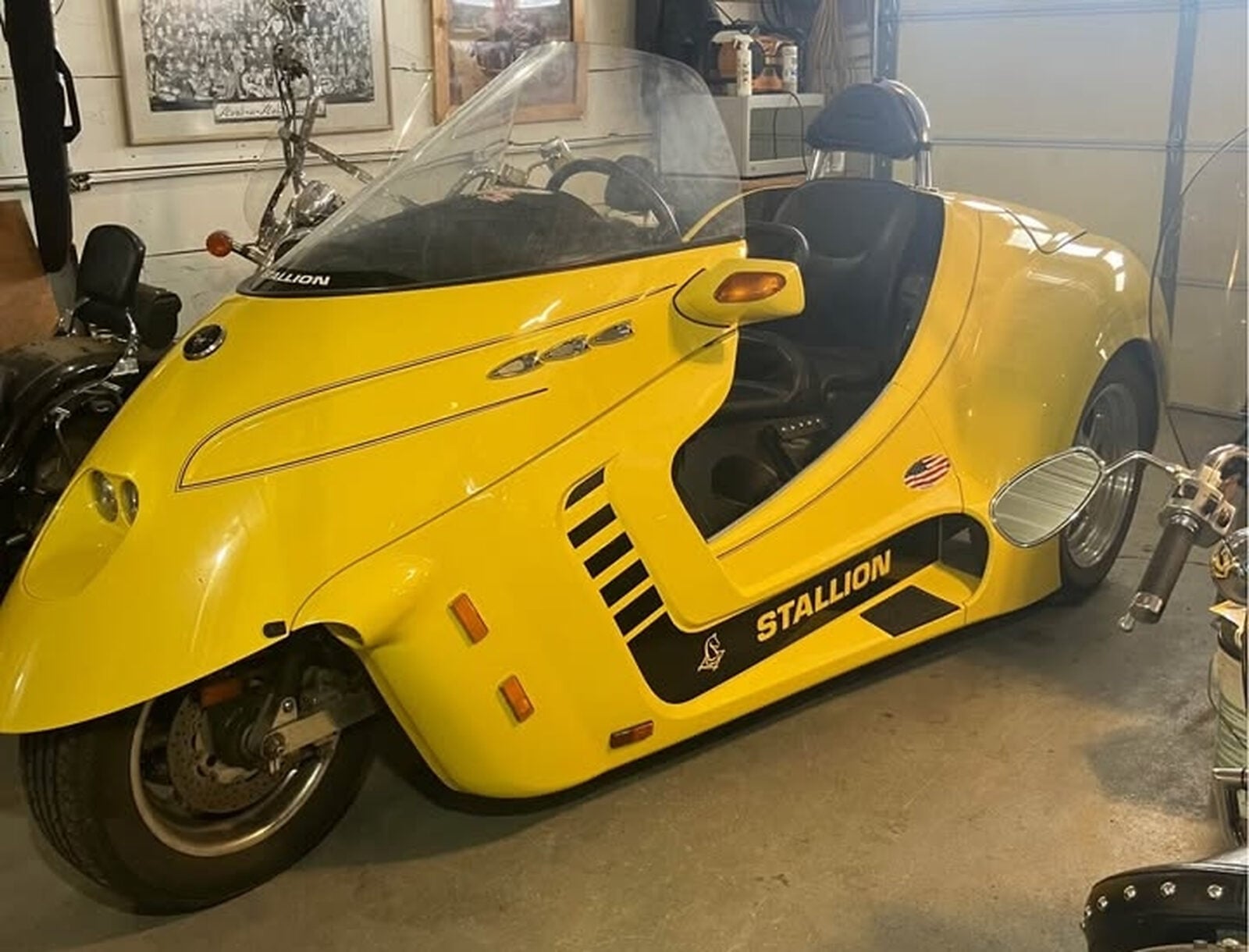
This is a rare, original Thoroughbred Motorsports Stallion. It’s technically a motorcycle, albeit one with a steering wheel, a heater, and a functional air conditioning system.
You would never guess by looking at it, but the Stallion is built around Ford Ranger parts, including the engine, transmission, shortened rear axle, steering column, gauges, electrical system and more. It has a custom steel frame, and bespoke body made in Texas.
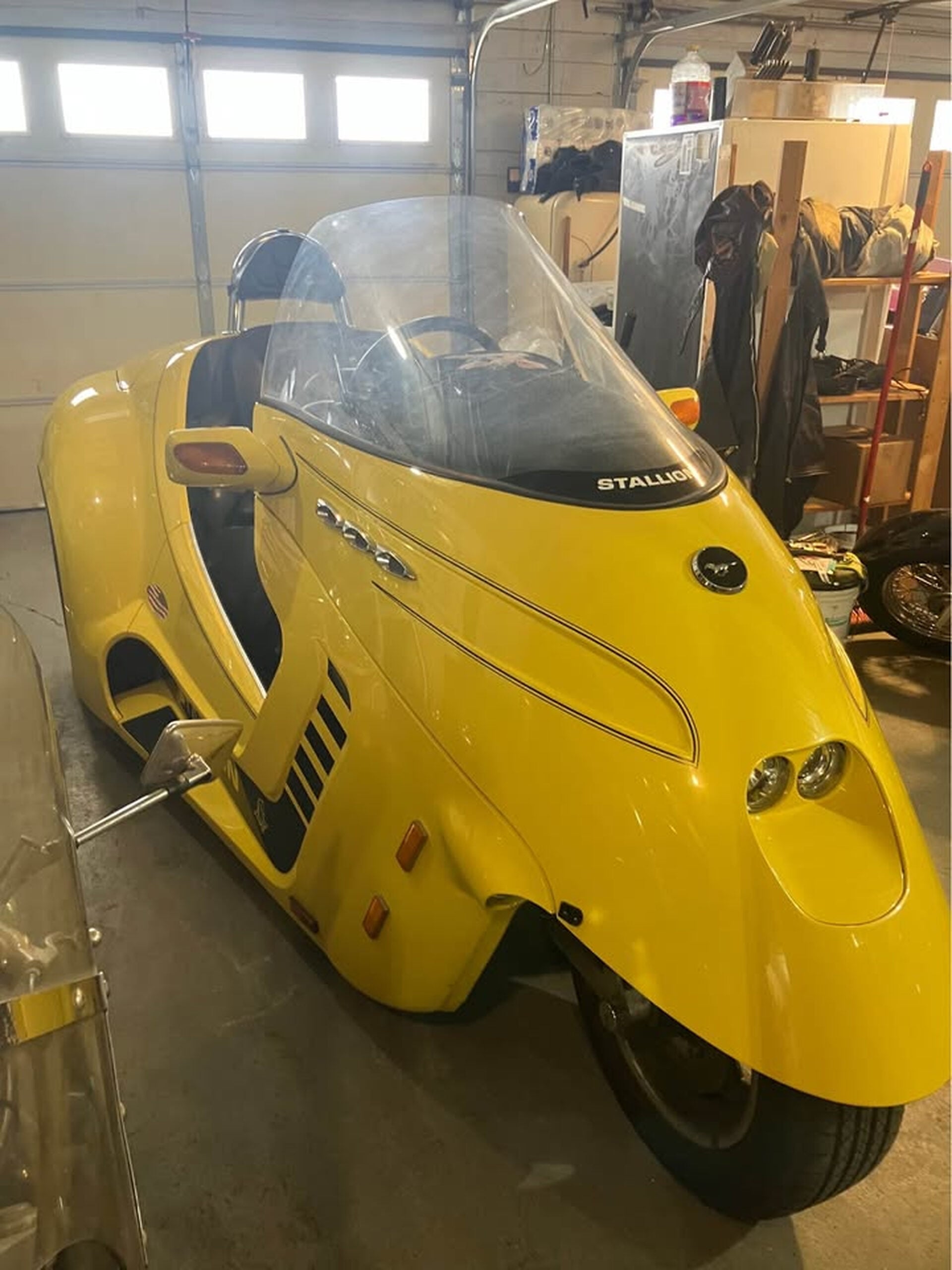
 This is a rare, original Thoroughbred Motorsports Stallion. It’s technically a motorcycle, albeit one with a steering wheel and a functional air conditioning and heating system.
History Speedrun: The Thoroughbred Motorsports Stallion
The Thoroughbred Motorsports Stallion is an unusual three-wheeler that was built in Troup, Texas between 2007 and 2013.
Unlike the vast majority of trikes, it wasn’t a converted motorcycle. It was designed from a clean sheet around the 2.3 liter engine and 5-speed automatic transmission from the third-generation Ford Ranger pickup, with a steering wheel in place of handlebars and a 5-speed automatic in place of a clutch pedal and manual gearshift.
It was federally classified as a motorcycle and was generally titled and insured accordingly (although state rules do tend to vary on this).
From Conversions To A Clean-Sheet Three-Wheeler
Motor Trike, Inc. was founded in August of 1994 by Jeff and Diane Vey, starting out with two employees in a 1,800-square-foot building in downtown Troup, in east Texas. The company initially built its business converting touring motorcycles from Honda, Harley-Davidson, and other manufacturers into three-wheelers, and it grew quickly.
By the mid-2000s the operation had expanded thanks to a series of facility enlargements, and Vey told local station KLTV in 2006 that the firm had averaged 35% annual growth over the preceding five years.
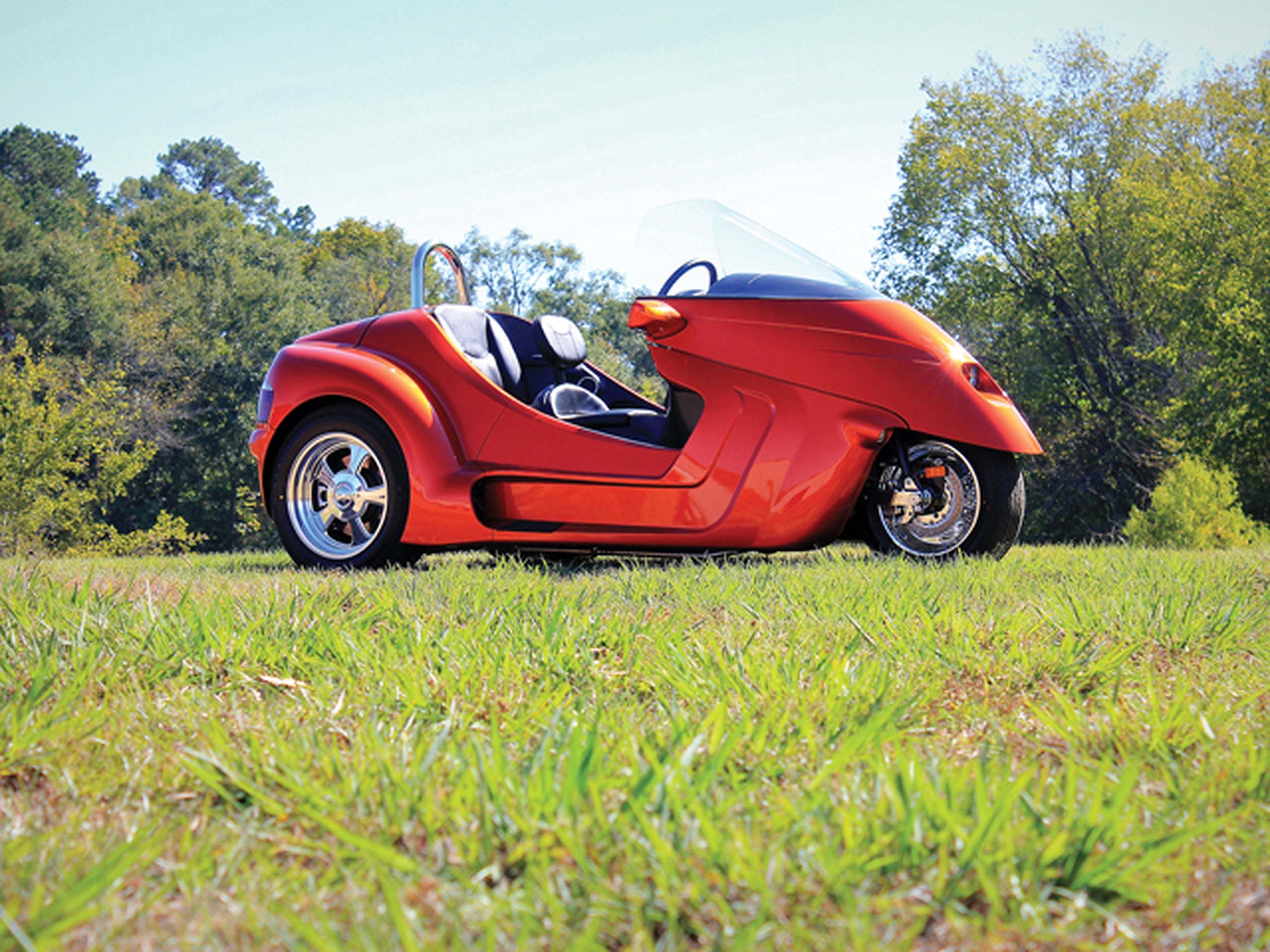
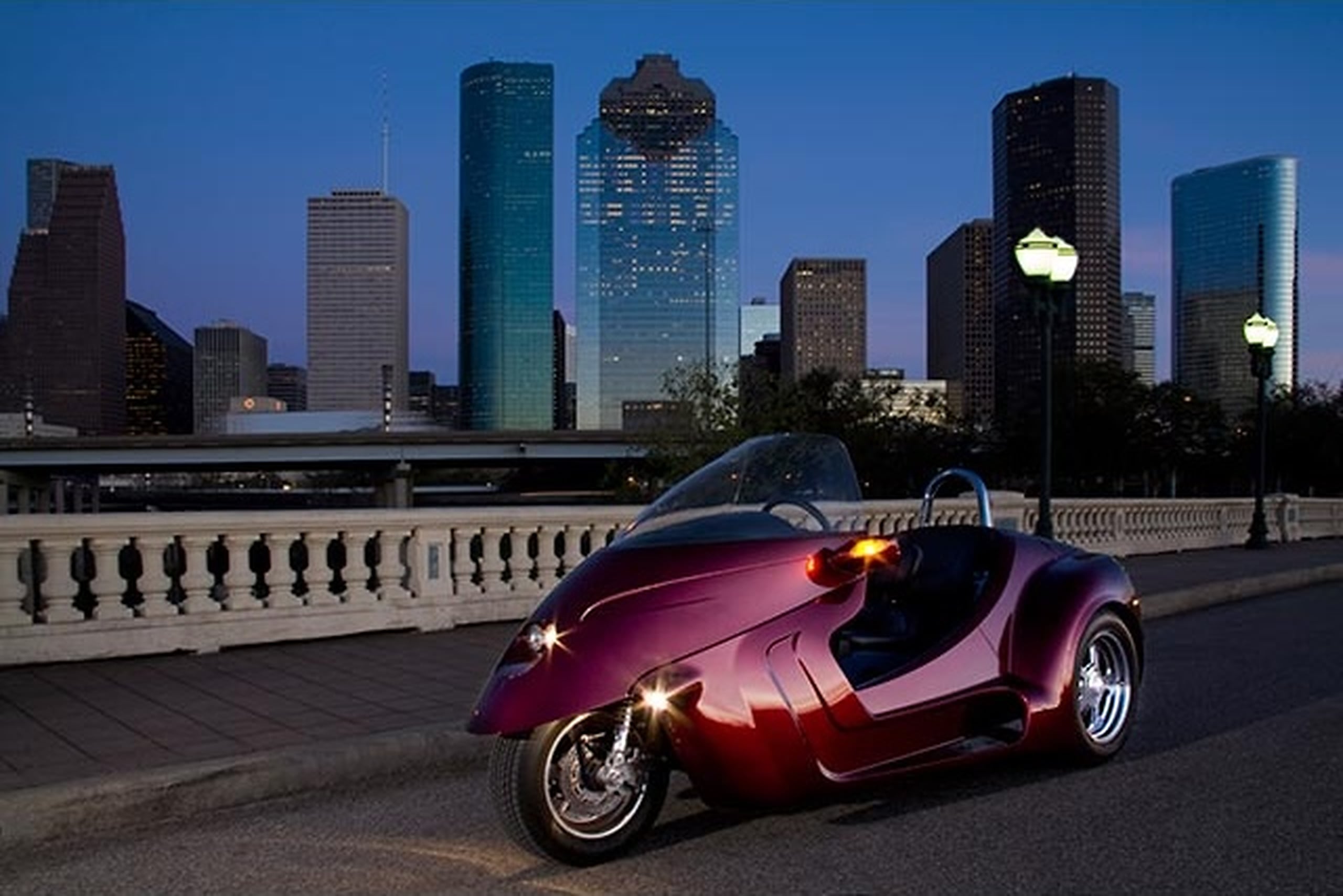
You would never guess by looking at it, but the Stallion is built around Ford Ranger parts, including the engine, transmission, shortened rear axle, steering column, gauges, electrical system and more. It has a custom steel frame, and bespoke body made in Texas. Images courtesy of Motor Trike, Inc.
That year Motor Trike established a sister company, Thoroughbred Motorsports, Inc., to build a trike of its own design rather than modifying someone else’s motorcycle. The reasoning was straightforward – a significant number of potential customers wanted the open-air trike experience with an automatic transmission and car-style controls, and no conversion could deliver that.
If anything, the company was perhaps a little too ambitious – Vey projected production of 5,000 to 7,000 units for 2007 and a list price just under $30,000 USD. Ultimately the company would build around 800 of them – he was close on the pricing though, it eventually came in with $33,995 USD on the tag.
A Ford Ranger (Underneath)
The Stallion used a tubular, box-section steel frame designed in-house. Early production units had hand-laid fiberglass bodywork, available in five colors at launch, later examples used an injection-molded plastic body, with pre-production ABS-bodied examples appearing by late 2008. The front end had a single wheel, and the rear axle carried two. Rear suspension combined a pair of coilover gas shocks with two air bags fed by an onboard compressor, allowing ride height and firmness to be adjusted.
Power came from Ford’s 2.3 liter Duratec 23, the DOHC all-aluminum inline-four that served as the base engine in the contemporary Ranger. Thoroughbred’s spec sheet lists output at 143 bhp and 155 lb ft, essentially matching the Ranger’s factory figures of 143 bhp at 5,250 rpm and 154 lb ft at 3,750 rpm. Thoroughbred promoted it as offering a Corvette-like power-to-weight ratio, not bad for a vehicle with a Ford Ranger four banger under the hood.
The engine drove through Ford’s 5-speed automatic, which gave the Stallion something few motorcycles of any wheel count could offer – a reverse gear.
As you might expect, the parts-bin raid went well beyond the drivetrain, the steering column, gauge cluster, turn signal stalk, electrical system, air conditioning, and rear axle were all Ranger-sourced, to the point that a 2007 Ford Ranger factory service manual is a standard reference in the Stallion owner community.
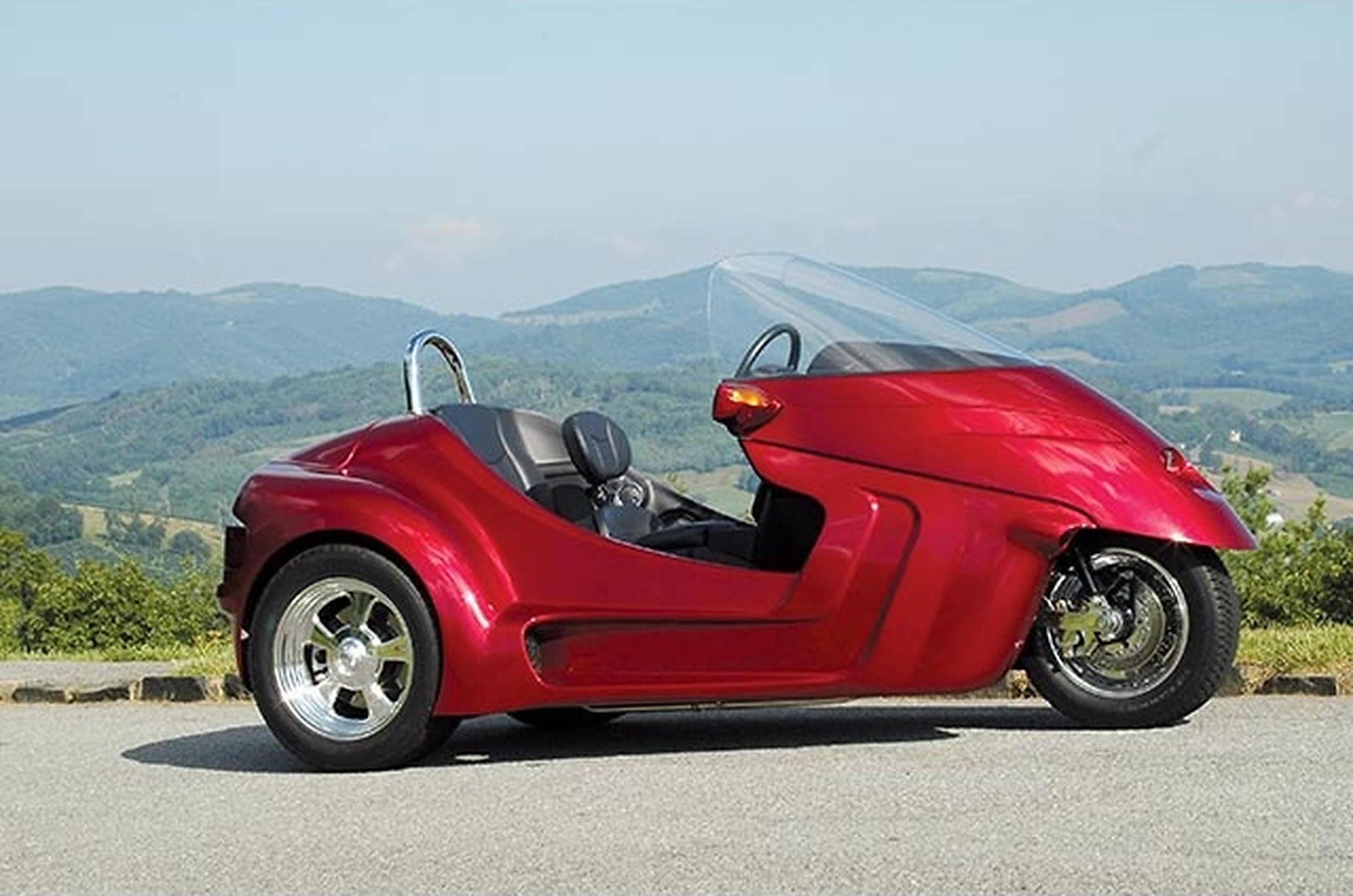
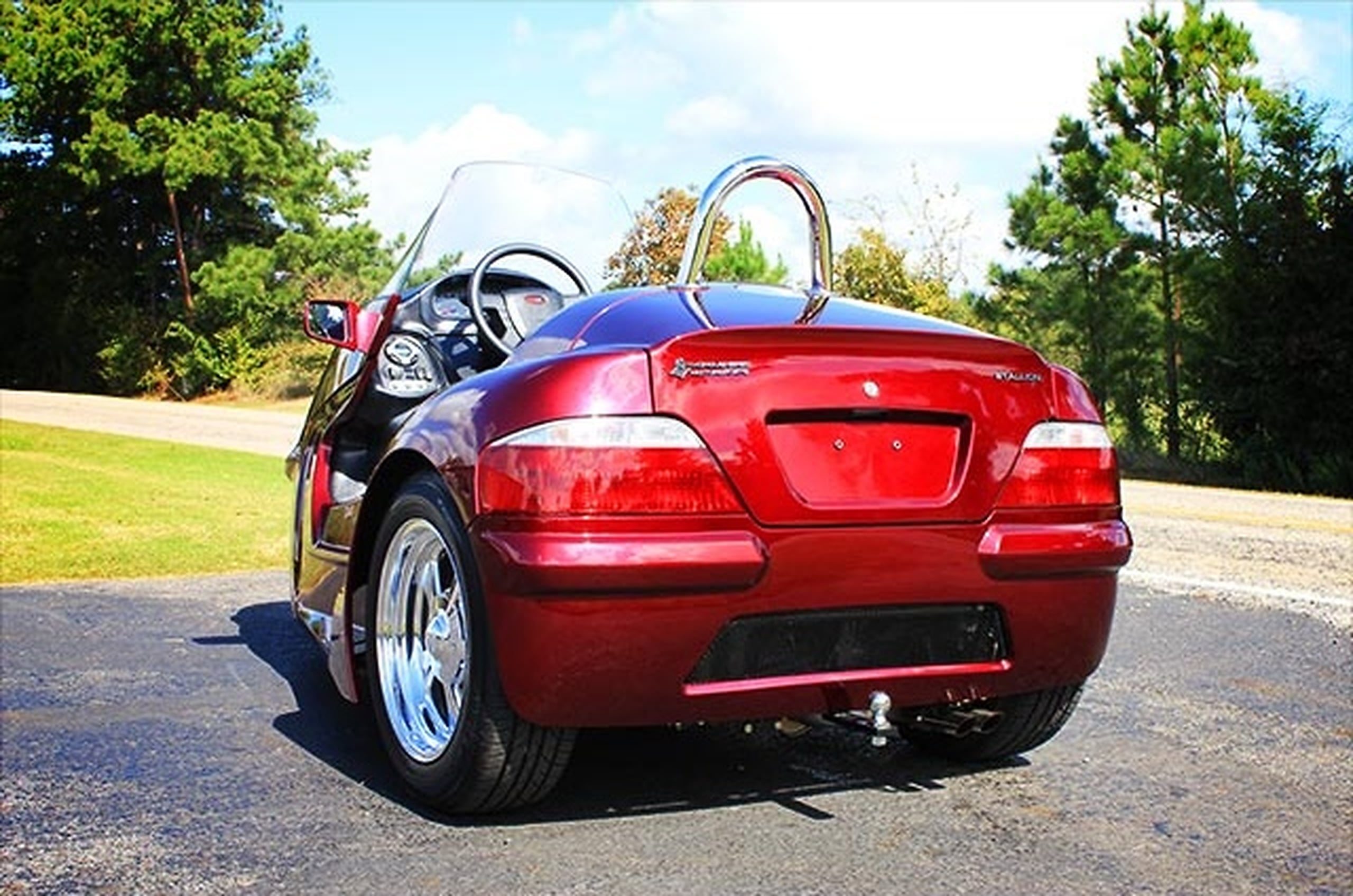
Power comes from Ford’s 2.3 liter Duratec 23, the DOHC all-aluminum inline-four that served as the base engine in the contemporary Ranger, with output at 143 bhp and 155 lb ft. Images courtesy of Motor Trike, Inc.
Standard features included heat and air conditioning ducted to both the rider and the tandem passenger, cruise control, power-adjustable pedals, power disc brakes, leather seating, an AM/FM/CD stereo, a trailer hitch, and a 12-volt outlet.
The Stallion measures in at 125 inches long, 62 inches wide, and 58 inches tall, with a 9.5 gallon fuel tank and seven cubic feet of trunk space. Thoroughbred rated fuel economy at 35 mpg city and 45 mpg highway, and Vey claimed highway figures as high as 55 mpg were possible.
Production, A Pause, And A Revival
Deliveries began in 2007, and the Stallion quickly found a niche market with touring riders who wanted long-distance comfort without the physical demands of a conventional two-wheeled motorcycle. The timing, however, was poor. The Stallion was a discretionary luxury purchase launched directly into the 2008 financial crisis, and demand faded fast as a result.
Thoroughbred’s history page attributes the halt to the economy and to supply no longer matching demand, which seems entirely fair. The 800 units that were built before the initial production run ended in 2010 were the first batch, and a proposed production restart was cancelled in November of 2011 after too few customer deposits were received, however, production was successfully restarted in 2012.
The 2012 revival was announced in May with a planned run of 150 additional Stallions, and deliveries began that October through a small dealer network. Company vice president Wayne Tompkins framed the restart as a return to business as usually rather than a last run, but sadly the revival proved short.
Production wound down for good in 2013. Thoroughbred never published official totals, and owners estimate that around 930 Stallions were built across both runs. No official explanation for the final cancellation has been given, though Ford ended North American Ranger production in December of 2011, which may have complicated sourcing of the engine, transmission, and other Ford parts as inventories drew down.
Surviving Stallions circulate occasionally on the secondhand market, where the Ford mechanicals remain the model’s strongest selling point. Any competent shop can service the drivetrain, and parts remain widely available.
The Thoroughbred Motorsports Stallion Shown Here
The Stallion you see here is a 2013 example, from the second production run, and it’s accumulated just over 12,000 miles on the odometer since new – this is relatively low for a Stallion as many owners use them for extensive cross-country trips.
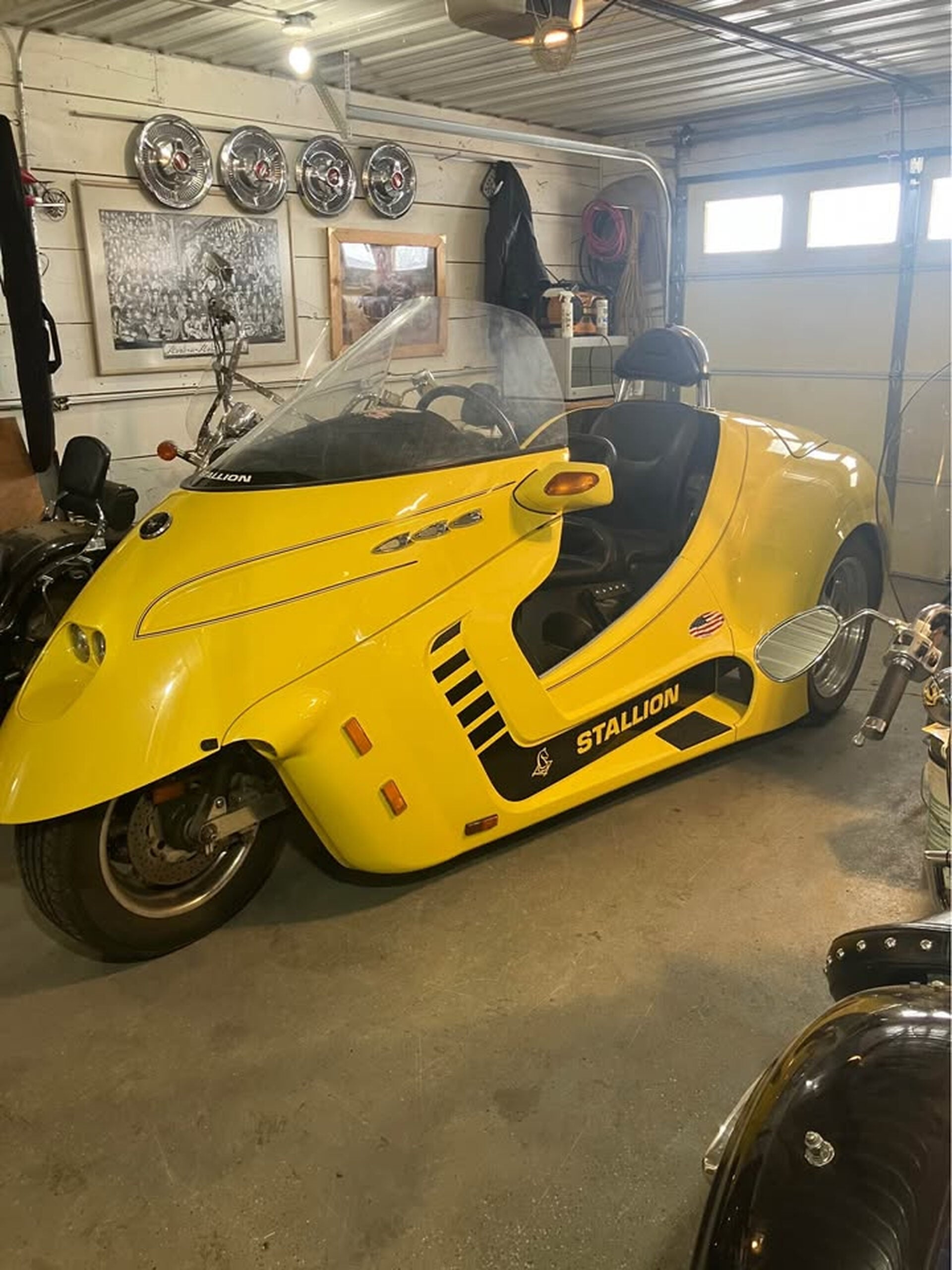
The Stallion you see here is a 2013 example, from the second production run, and it’s accumulated just over 12,000 miles on the odometer since new – this is relatively low for a Stallion as many owners use them for extensive cross-country trips.
It’s now being offered for sale on Facebook Marketplace by the owner’s son, on their behalf, as it hasn’t been ridden yet this year and it seems they want it to go to a new owner who’ll get some more use out of it. They note that it gets a lot of compliments when it’s out and about, and it’s not hard to imagine it attracting crowds of curious onlookers at gas stations.
If you’d like to read more about this Stallion or enquire about buying it you can visit the listing here. They’re asking $29,000 USD and it’s being sold out of Cumberland, Wisconsin.
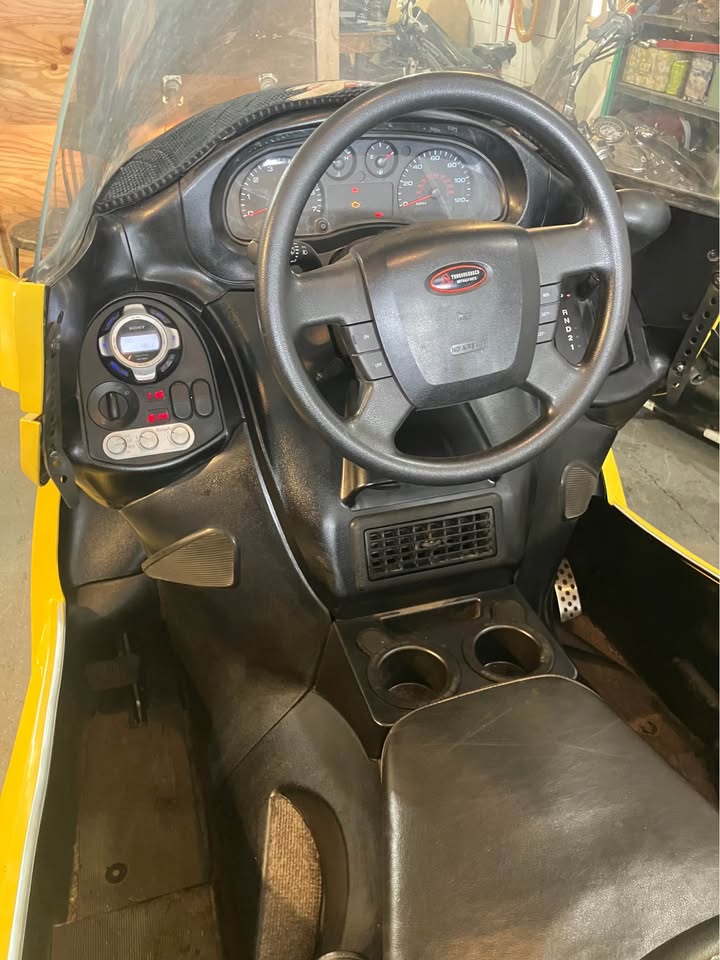
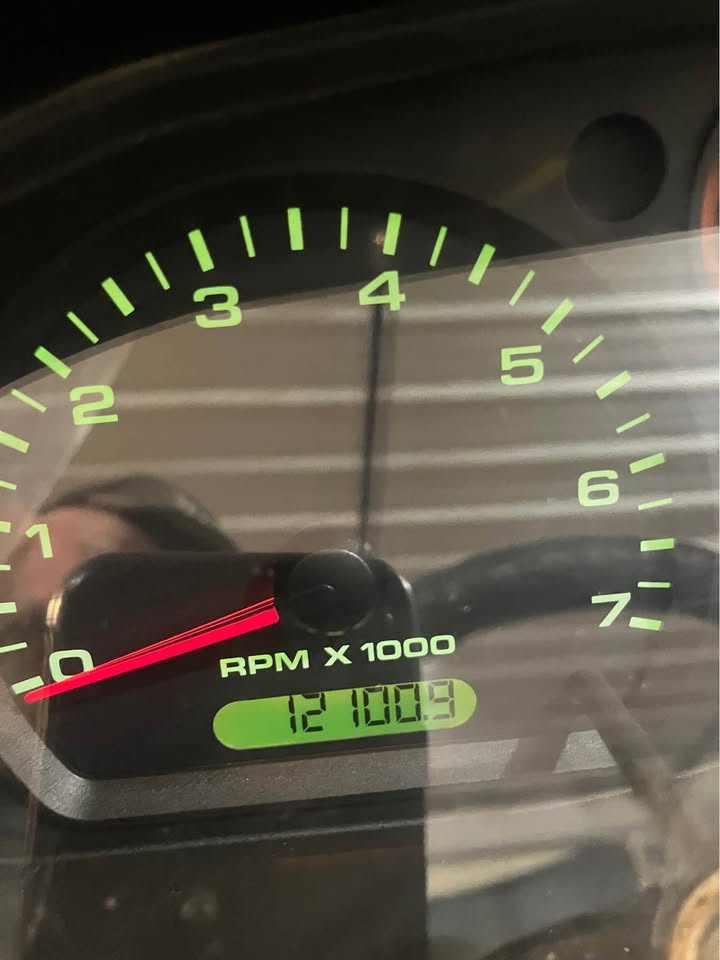
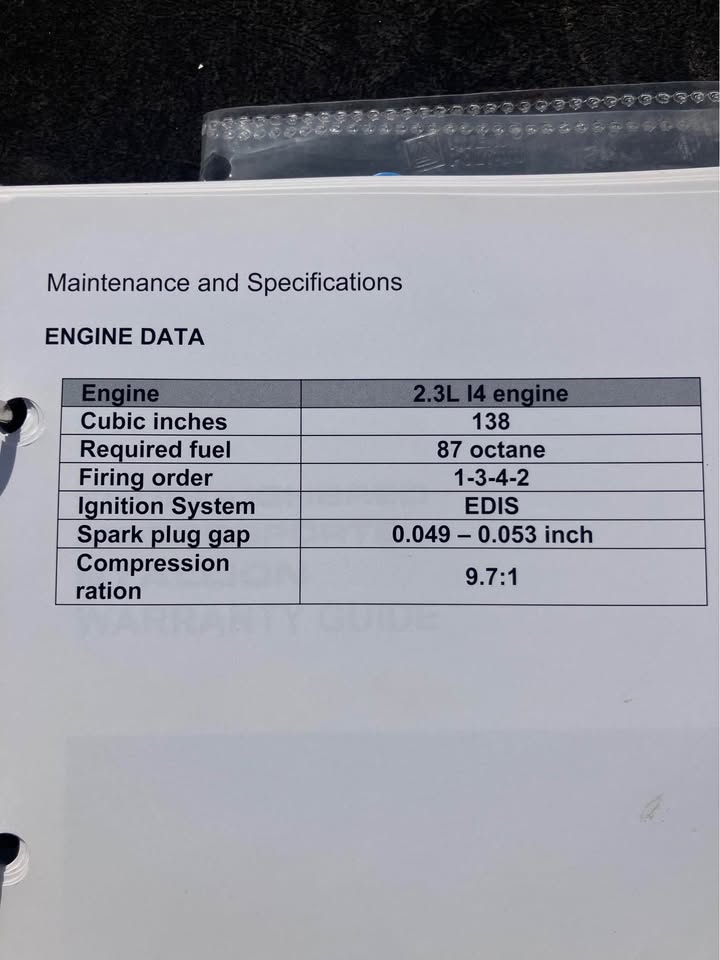
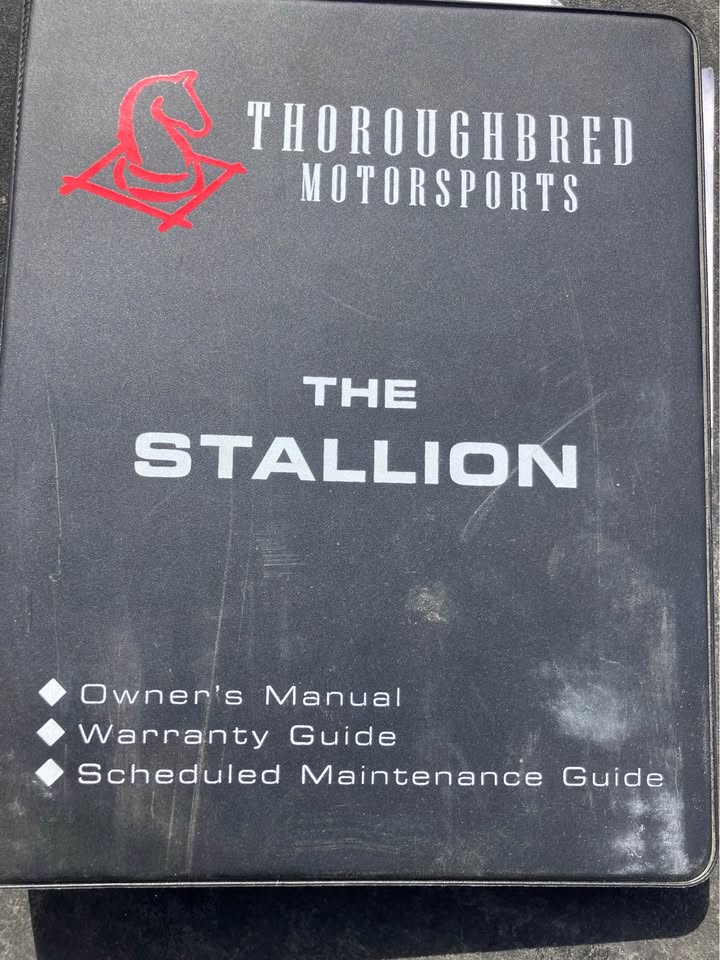
Images courtesy of Wyatt Kuhl

Articles that Ben Branch has written have been covered on CNN, Popular Mechanics, Smithsonian Magazine, Road & Track Magazine, the official Pinterest blog, the official eBay Motors blog, BuzzFeed, Autoweek Magazine, Wired Magazine, Autoblog, Gear Patrol, Jalopnik, The Verge, and many more.
Silodrome was founded by Ben back in 2010, in the years since the site has grown to become a world leader in the alternative and vintage motoring sector, with well over a million monthly readers from around the world and many hundreds of thousands of followers on social media.