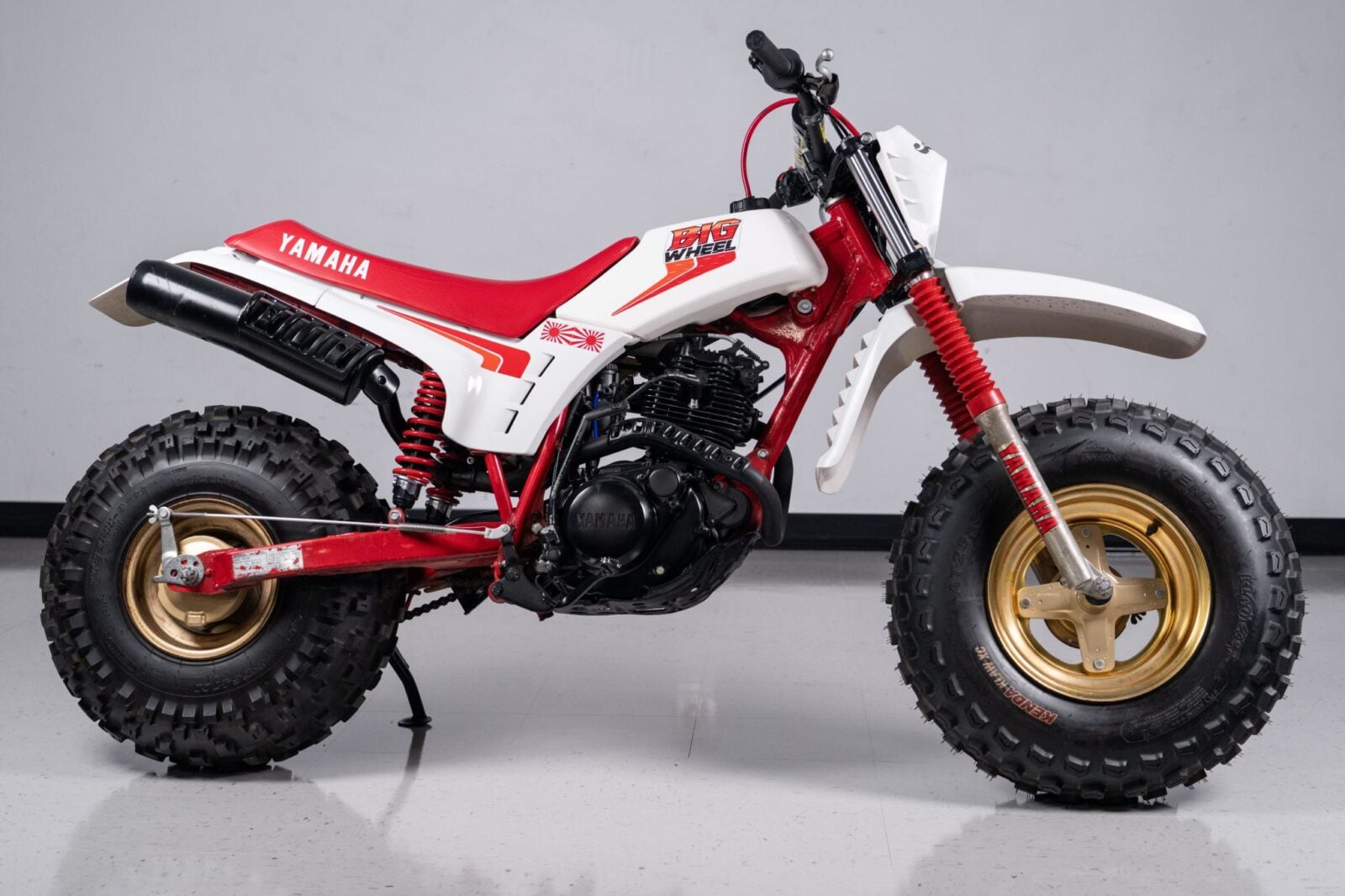
This is an original 1986 Yamaha BW200, the model name stands for “Big Wheel 200cc,” and the bike was designed largely for off-road use on almost any terrain you point it at, from deep sand to mud, snow, gravel, and grass.
The BW200 proved to be a surprise best-seller for Yamaha and it spawned plenty of copycats over the years. It was seen as a lot safer than the three-wheelers that were so popular at the time, and it taught new riders all the skills they would need when they moved up to a full-size dirt bike.
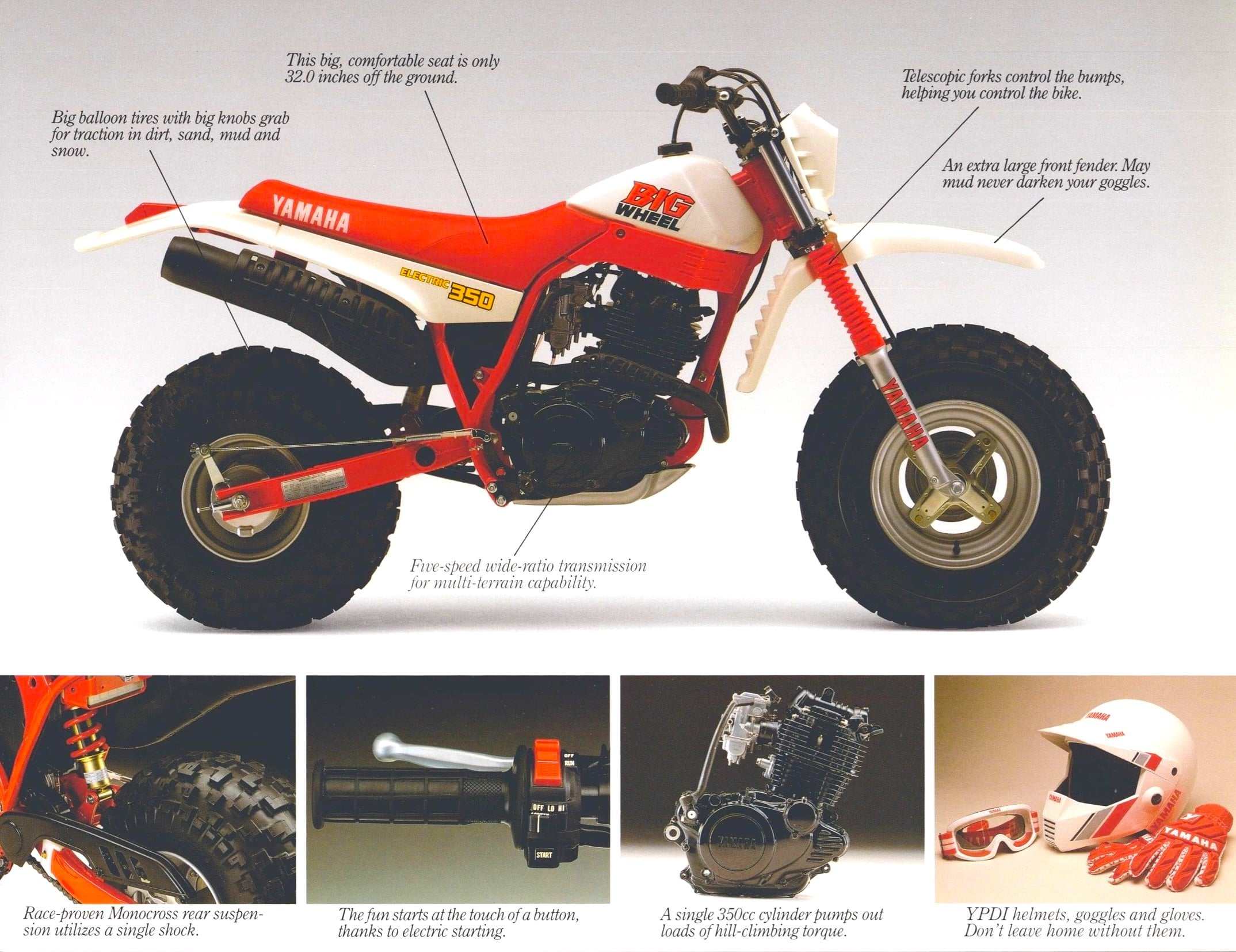
 The BW200 proved to be a surprise best-seller for Yamaha and it spawned plenty of copycats over the years. It was seen as a lot safer than the three-wheelers that were so popular at the time, and it taught new riders all the skills they would need when they moved up to a full-size dirt bike. Image courtesy of Yamaha.
History Speedrun: The Yamaha BW200
The Yamaha BW200 “Big Wheel” is one of those factory-built specials that probably shouldn’t have worked, but did. In fact it worked so well that its success helped prompt Honda to launch the TR200 Fat Cat as a direct rival soon after, and it clearly foreshadowed the TW200 Trailway, a model Yamaha still sells today.
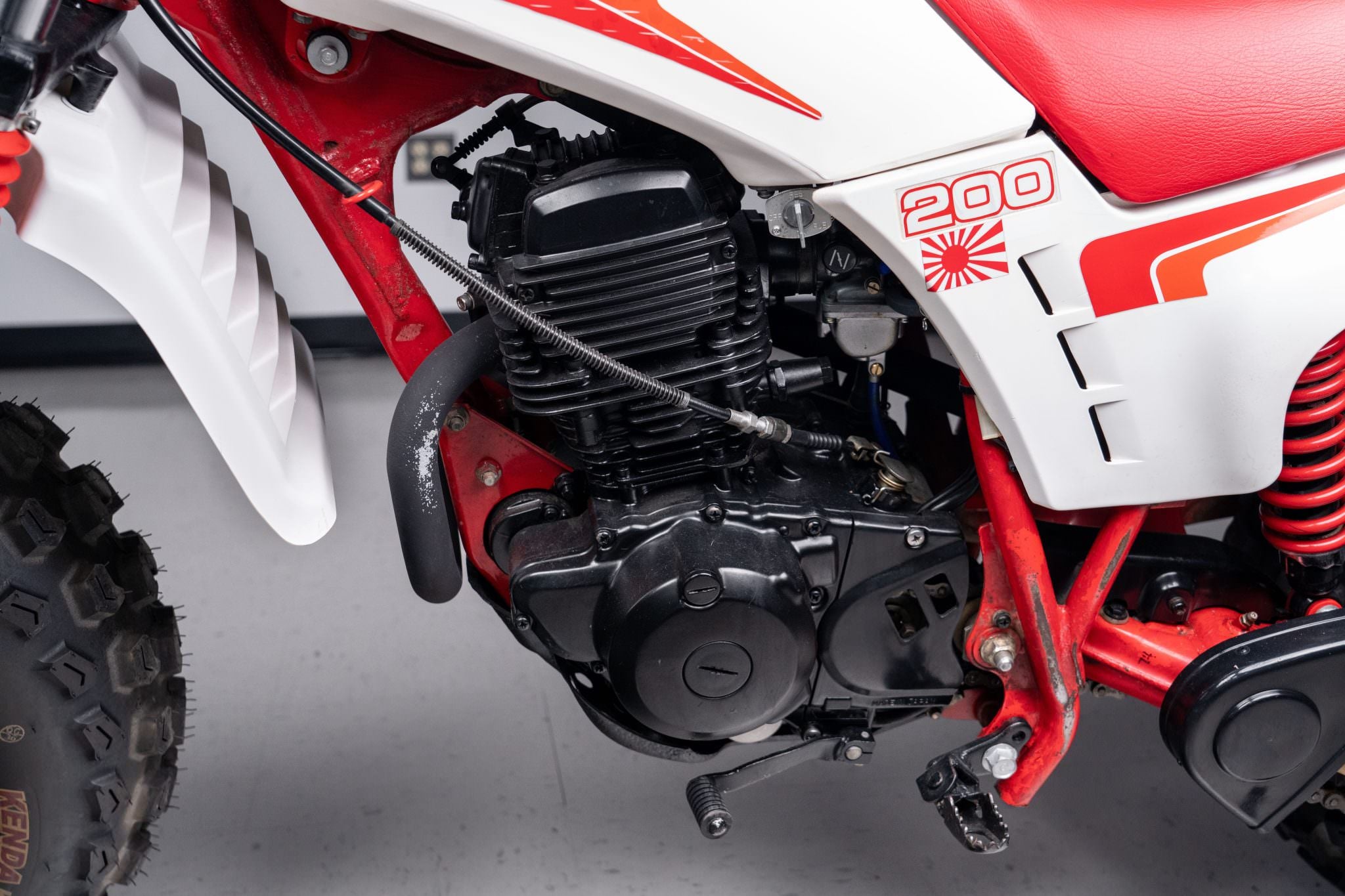
Introduced in 1985, the BW200 was Yamaha’s attempt to create an entirely new market segment. The concept was actually pretty simple – take the 196cc air-cooled, SOHC, two-valve four-stroke single from the XT200 dual-sport, drop it into a new steel frame, and bolt on a pair of oversized ATV-style balloon tires.
Yamaha envisioned the result as both an entry-level off-road machine and a way for experienced riders to relax and enjoy trail scenery without the comparative intensity of a “proper” dirt bike.
That said, the idea wasn’t completely without precedent, both Rokon and Suzuki had explored fat-tired two-wheelers before, but Yamaha was betting that the market had changed enough for the concept to break through and sell at volume.
According to Cycle World’s March 1985 review, Yamaha offered limited numbers to select dealers late in 1984 as a market test, and the first batch sold out as soon as they landed on showroom floors. Full production followed for the 1985 model year, and the BW200 remained in the lineup through till 1989.
Yamaha BW200 Specifications
The engine produced approximately 15 bhp and 10.80 lb ft of torque at 7,500 rpm, fed through a 5-speed manual gearbox. Those aren’t numbers that set the world on fire, but speed was never the point of this bike. The BW200 was geared low and built for flotation over soft surfaces, not outright velocity.
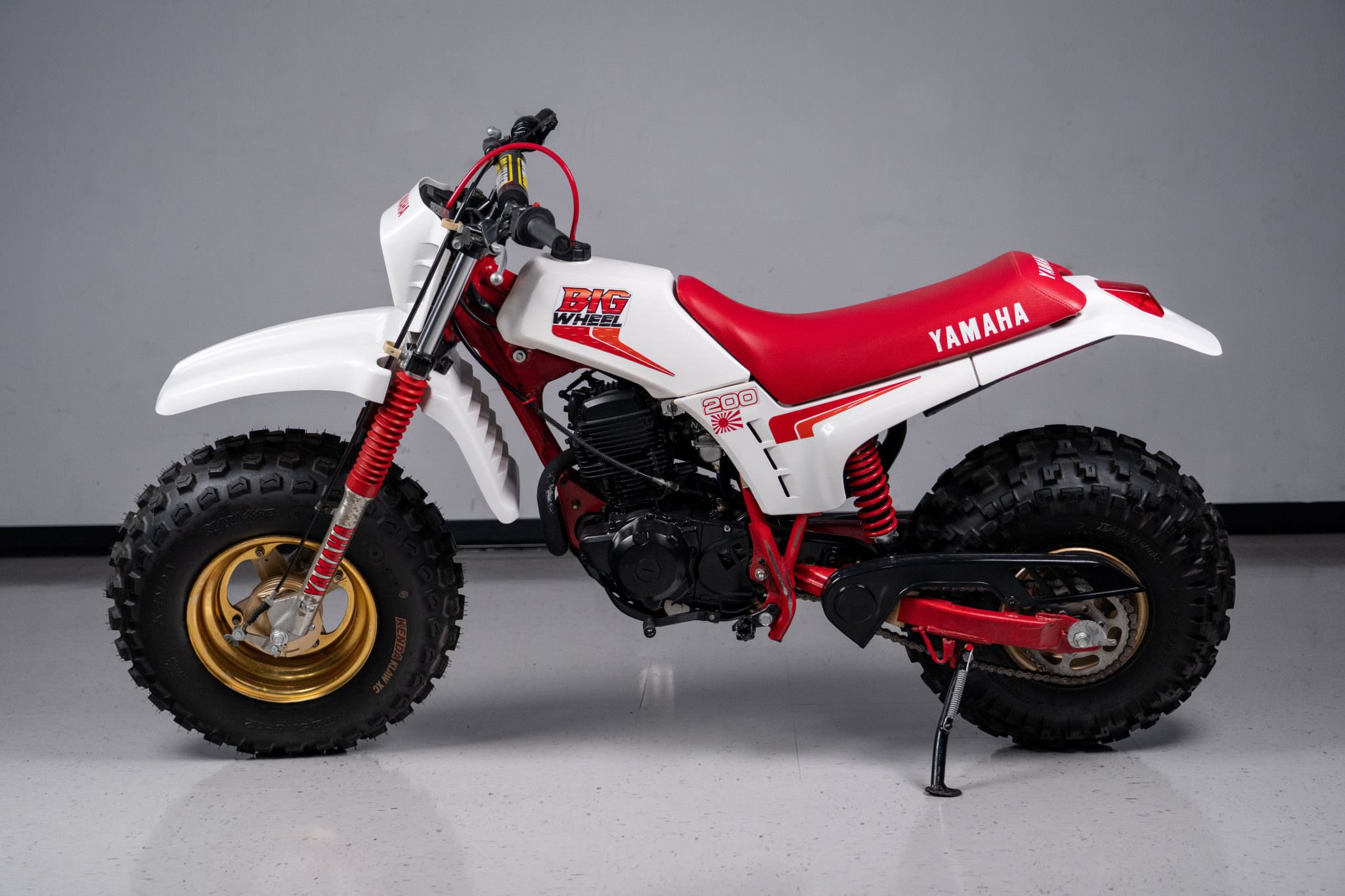
This is an original 1986 Yamaha BW200, the model name stands for “Big Wheel 200cc,” and the bike was designed largely for off-road use on almost any terrain you point it at, from deep sand to mud, snow, gravel, and grass.
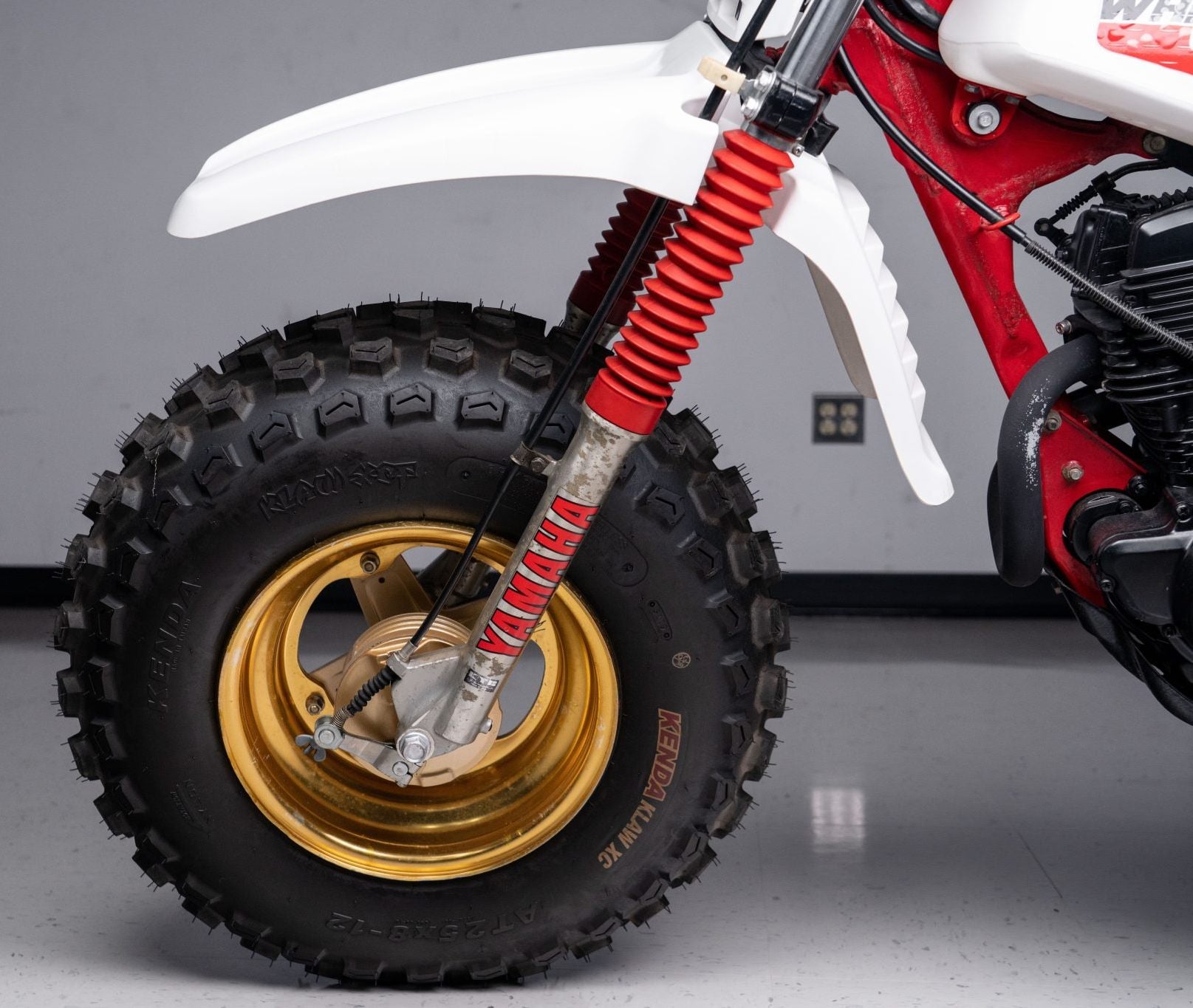
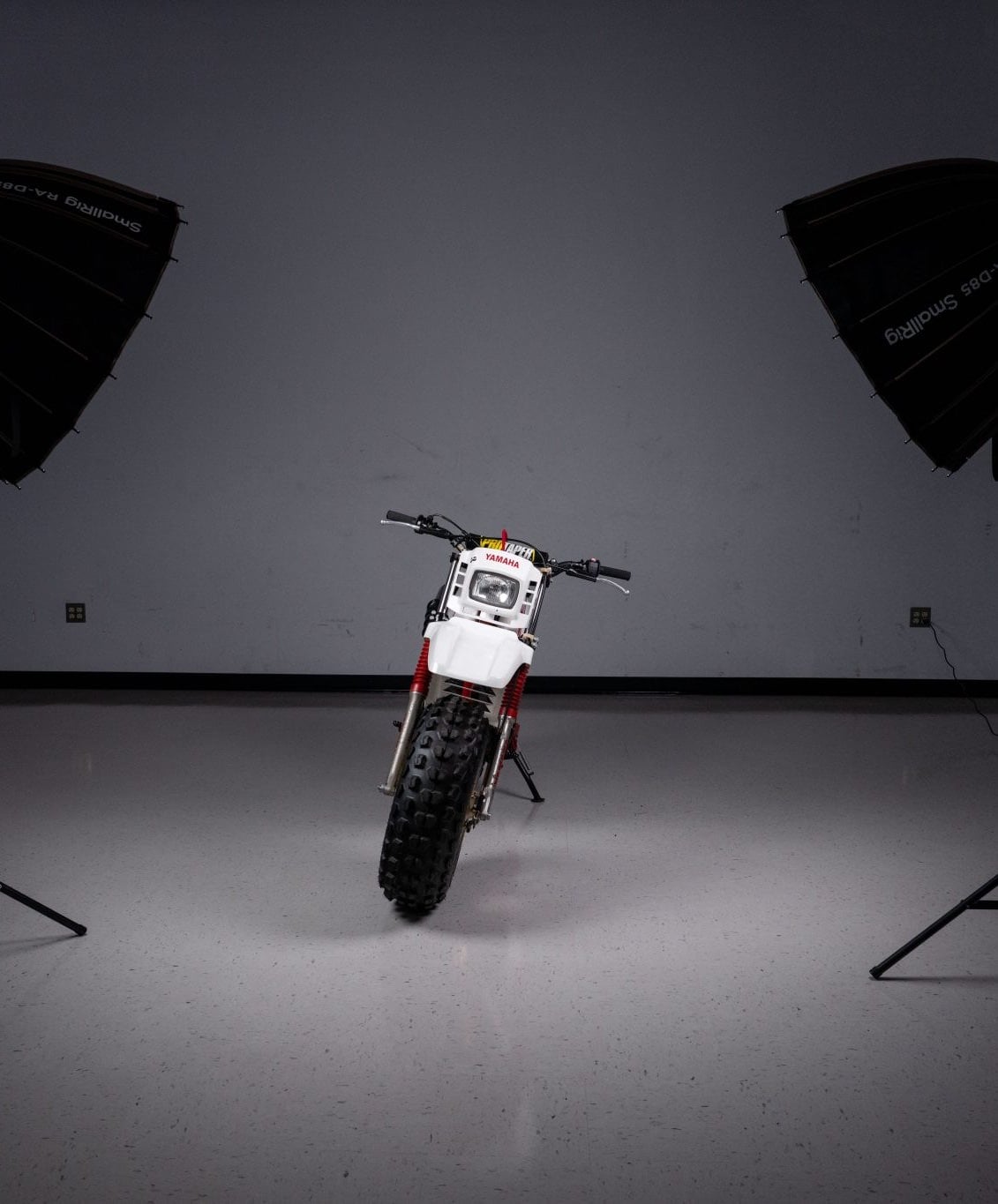
It almost goes without saying that the tires were the bike’s defining feature, the front measured 25×8-12 – 25 inches in diameter with an eight-inch width, while the rear came in at 23×12-9, a full 12 inches across. Mounted on aluminum wheels, they gave the bike an unmistakable look and delivered genuine capability in sand, mud, and snow that conventional knobby-tired dirt bikes simply couldn’t match.
Suspension consists of a telescopic fork up front and a dual-shock swingarm at the rear, each providing 6.3 inches of travel. The only adjustment available was rear shock preload, nothing else could be tuned, but truth be told those large balloon tires probably offered around half of the springing.
Braking was handled by sealed drums at both ends. The bike sat on a 54.3 inch wheelbase, stood 31.3 inches at the seat, and weighed 258 lbs dry. The fuel tank held 1.8 gallons, giving a realistic range of roughly 45 miles at a brisk pace over soft ground.
The 1985 model was kickstart only. An electric-start variant, designated BW200ES, was added to the lineup from 1986 onward, though it’s worth noting that the two configurations used different engine cases and many parts are not interchangeable between them.
By the mid-1980s, three-wheeled ATVs had become a serious public safety concern, attracting intense media scrutiny and mounting lawsuits that would eventually lead to the 1988 Consent Decree. The Big Wheel offered a two-wheeled alternative that scratched a similar recreational itch with considerably more stability and predictability than a three-wheeler, and it fit neatly into the growing demand for safer off-road options. In this regard, its timing was near-perfect.
The Competitors Arrive
The BW200’s runaway commercial success drew Honda’s attention rather quickly, and in 1986, Honda launched the TR200 Fat Cat as a direct competitor. The two machines were close enough in concept that Dirt Bike Magazine staged a head-to-head shootout in their June 1986 issue, ultimately awarding the win to the Yamaha.
The most significant difference was the clutch – the Yamaha BW200 used a conventional manual clutch setup, while the Honda Fat Cat dispensed with the clutch entirely, placing a hand-operated rear brake lever on the left handlebar instead. This made the Honda easier for absolute beginners but failed to teach proper clutch control to new riders – arguably one of the most important skills you need when riding off-road.
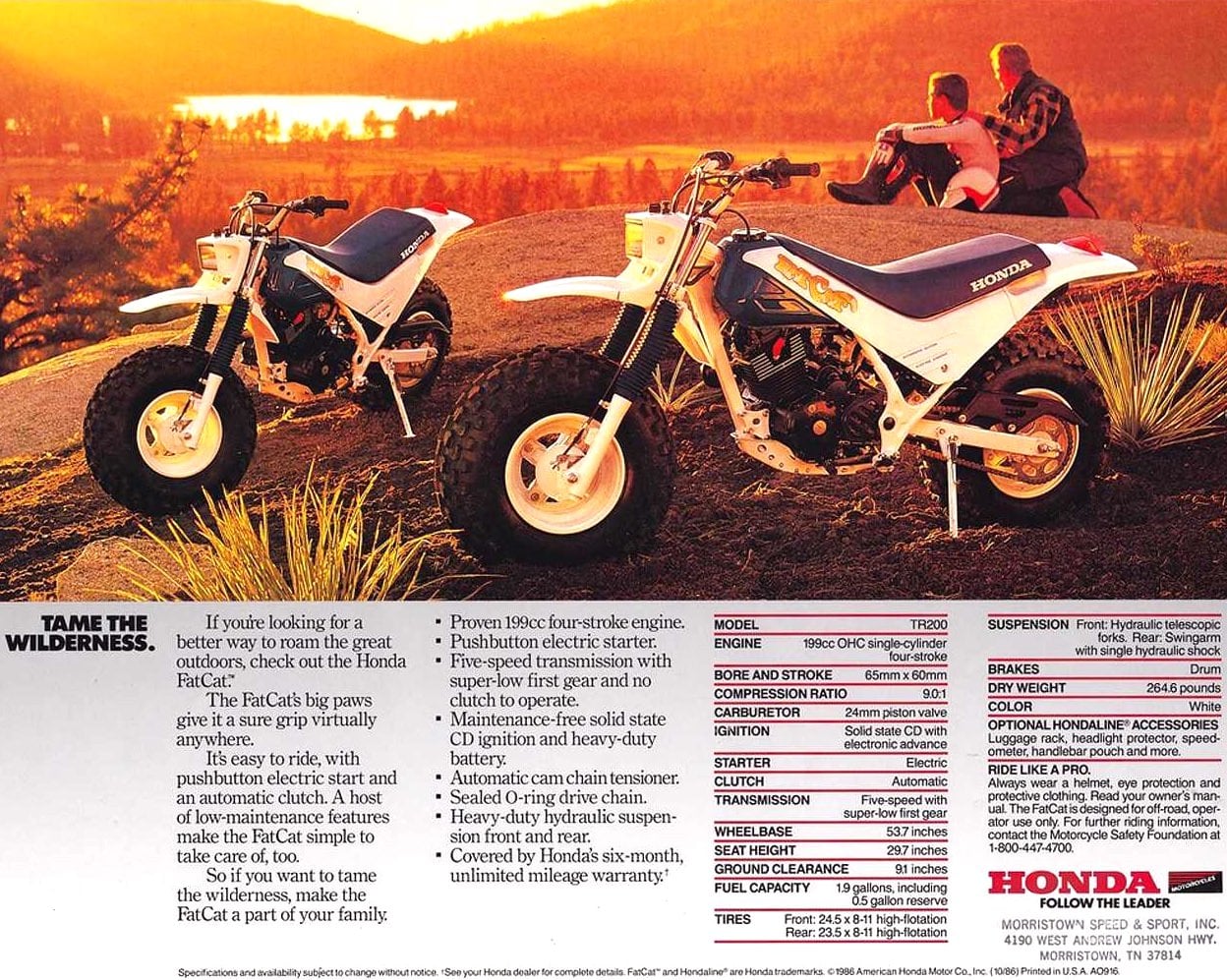
The BW200’s runaway commercial success drew Honda’s attention rather quickly, and in 1986, Honda launched the TR200 Fat Cat as a direct competitor. The two machines were close enough in concept that Dirt Bike Magazine staged a head-to-head shootout in their June 1986 issue. Image courtesy of Honda.
The BW200 was the first and best-selling model in the Big Wheel family, it was followed in 1986 by the two-stroke, 79cc BW80 aimed at younger riders and the four-stroke, 350cc BW350 powered by a single commonly described as TT350/Warrior-derived, producing approximately 32 bhp.
The BW350 had the shortest lifespan, with most sources indicating a production run of only 1986 to 1987, while the BW200 and BW80 both continued through 1989.
The Launch Of The Yamaha TW200 Trailway
The BW200’s most lasting legacy may be its influence on what came next. In 1987 (while the Big Wheel was still in production) Yamaha launched the TW200 Trailway, which applied the same general fat-tire concept in a street-legal dual-sport format.
The TW200 used the same fundamental 196cc engine family, and the two powerplants share extensive parts commonality, the head, cylinder, piston, and many other internal components are interchangeable, with the primary mechanical differences being the BW200’s jackshaft chain routing (to clear the wider rear tire) versus the TW200’s extended output shaft, and the BW200’s compression release lever tied to its kickstarter.
The TW200 remains in Yamaha’s lineup to this day, still carbureted, still air-cooled, and still wearing its characteristically fat rubber inspired by its forebear all those years ago.
The 1986 Yamaha BW200 Shown Here
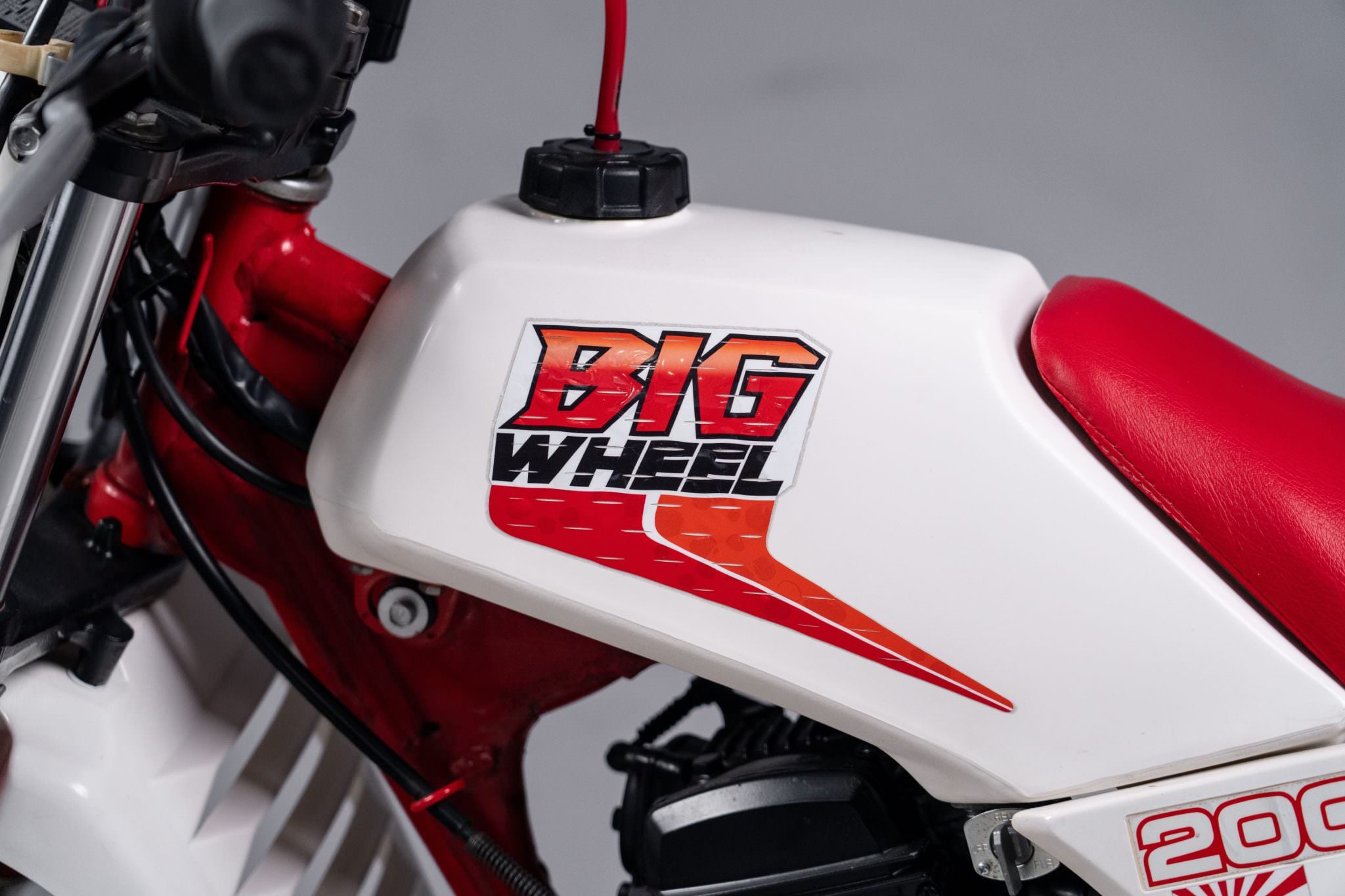
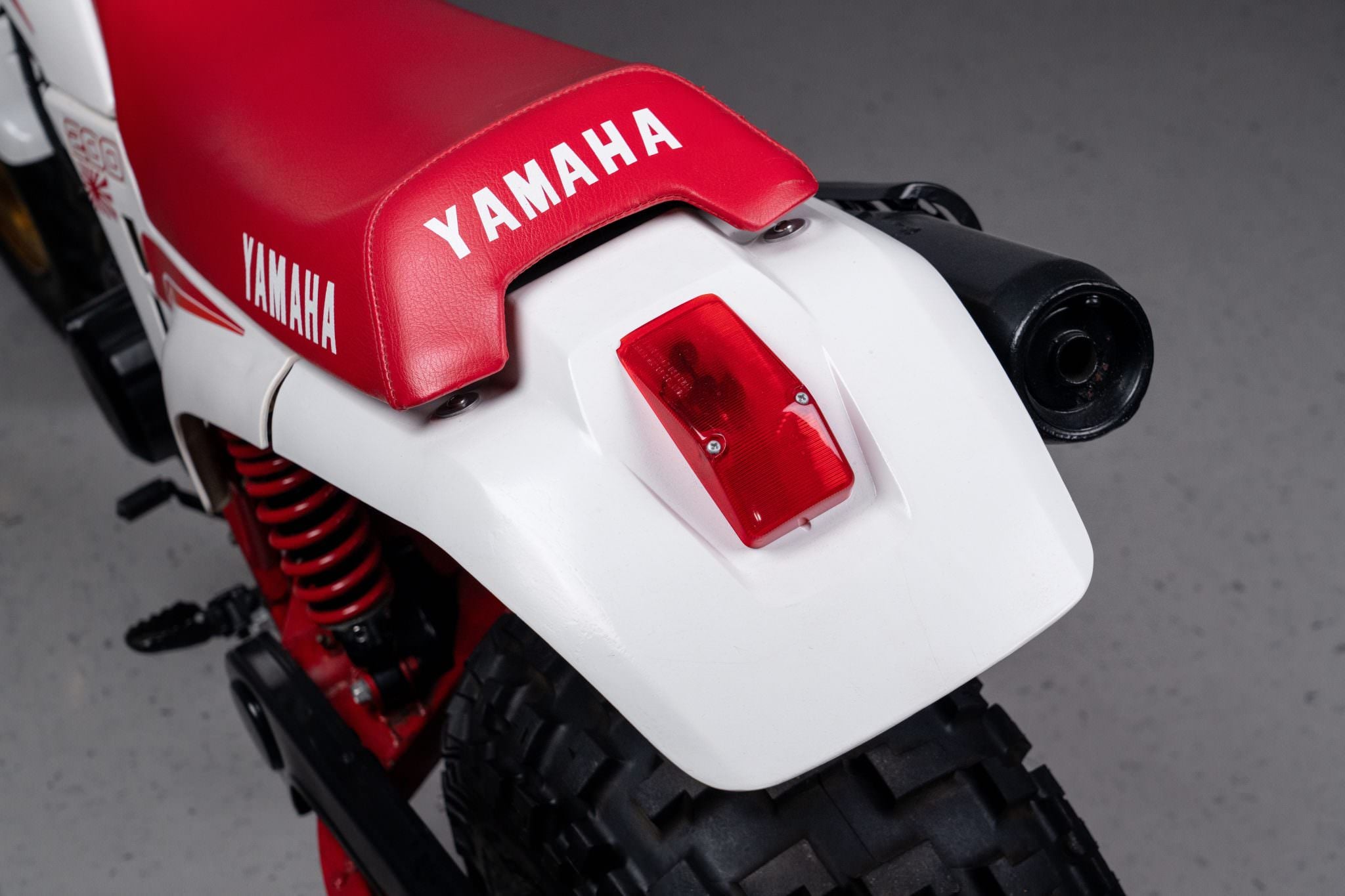
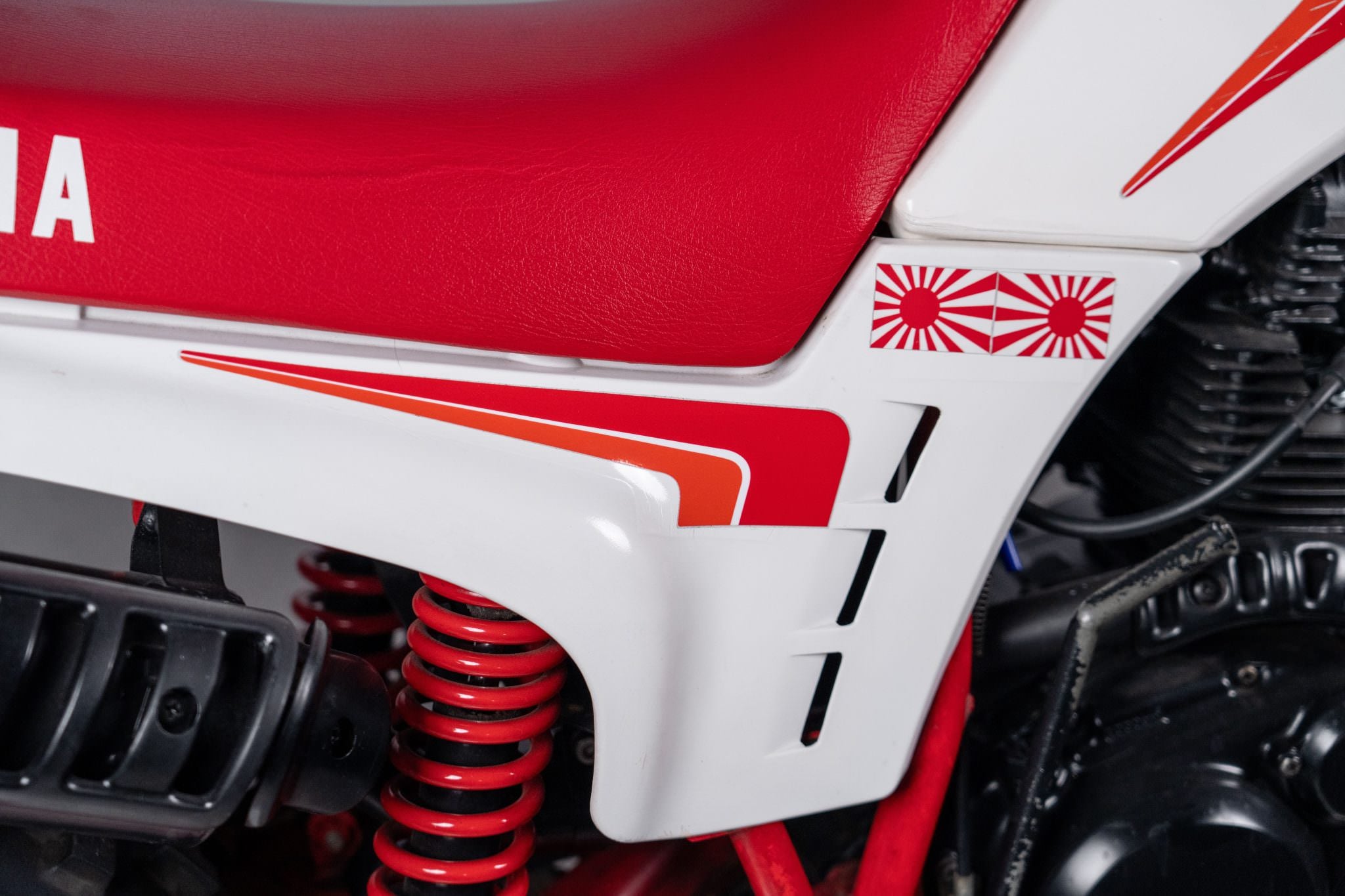
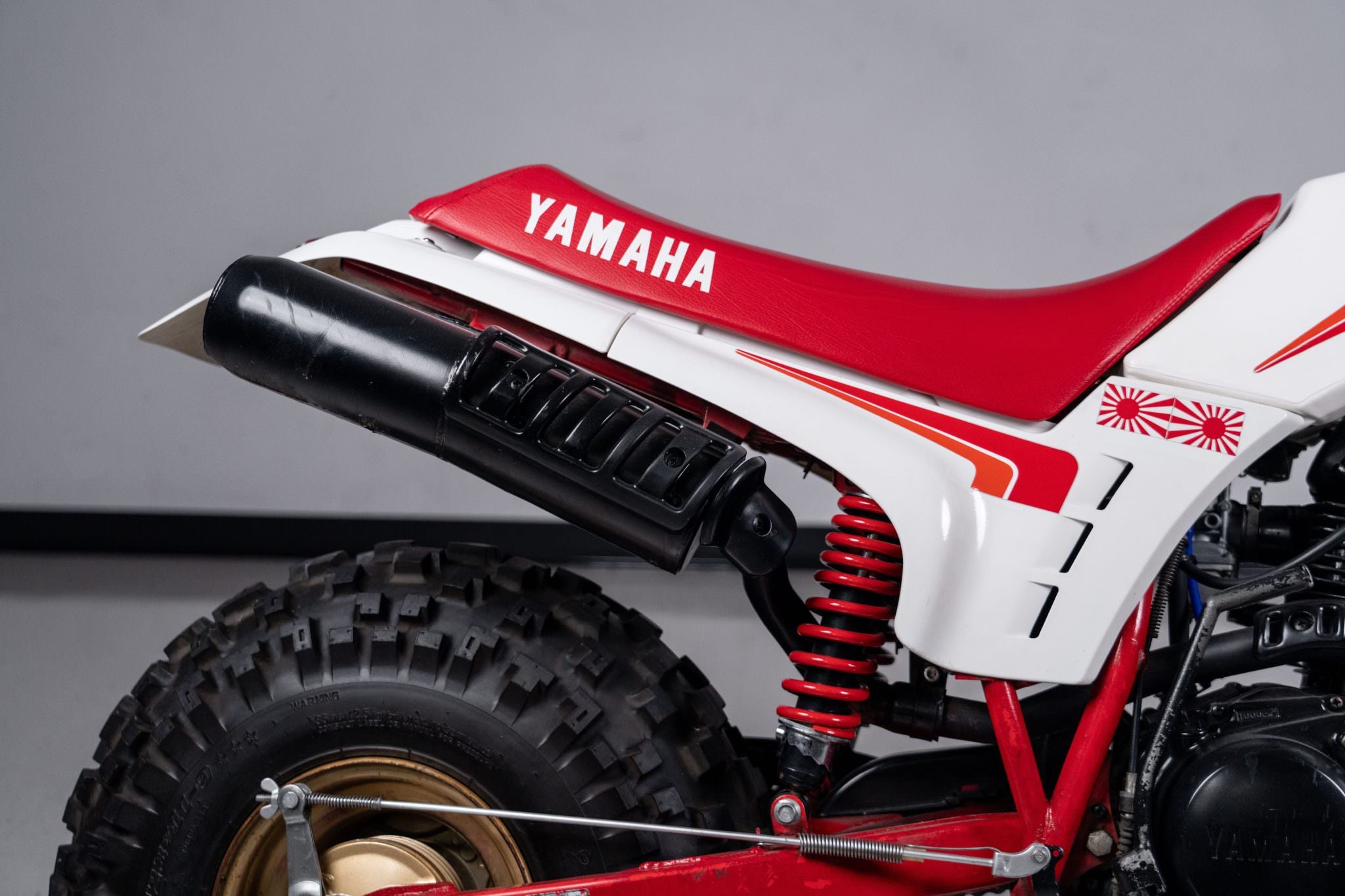
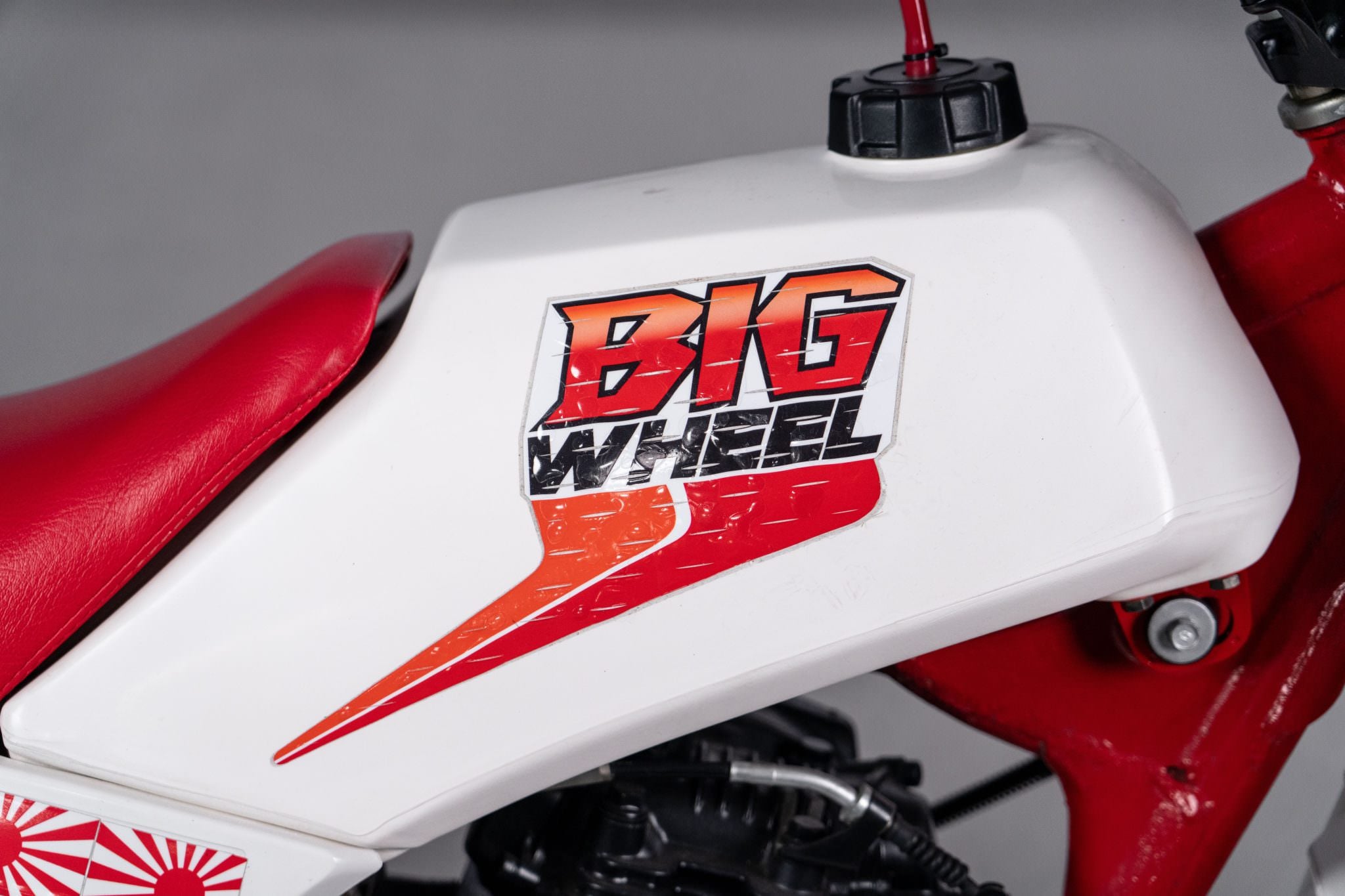
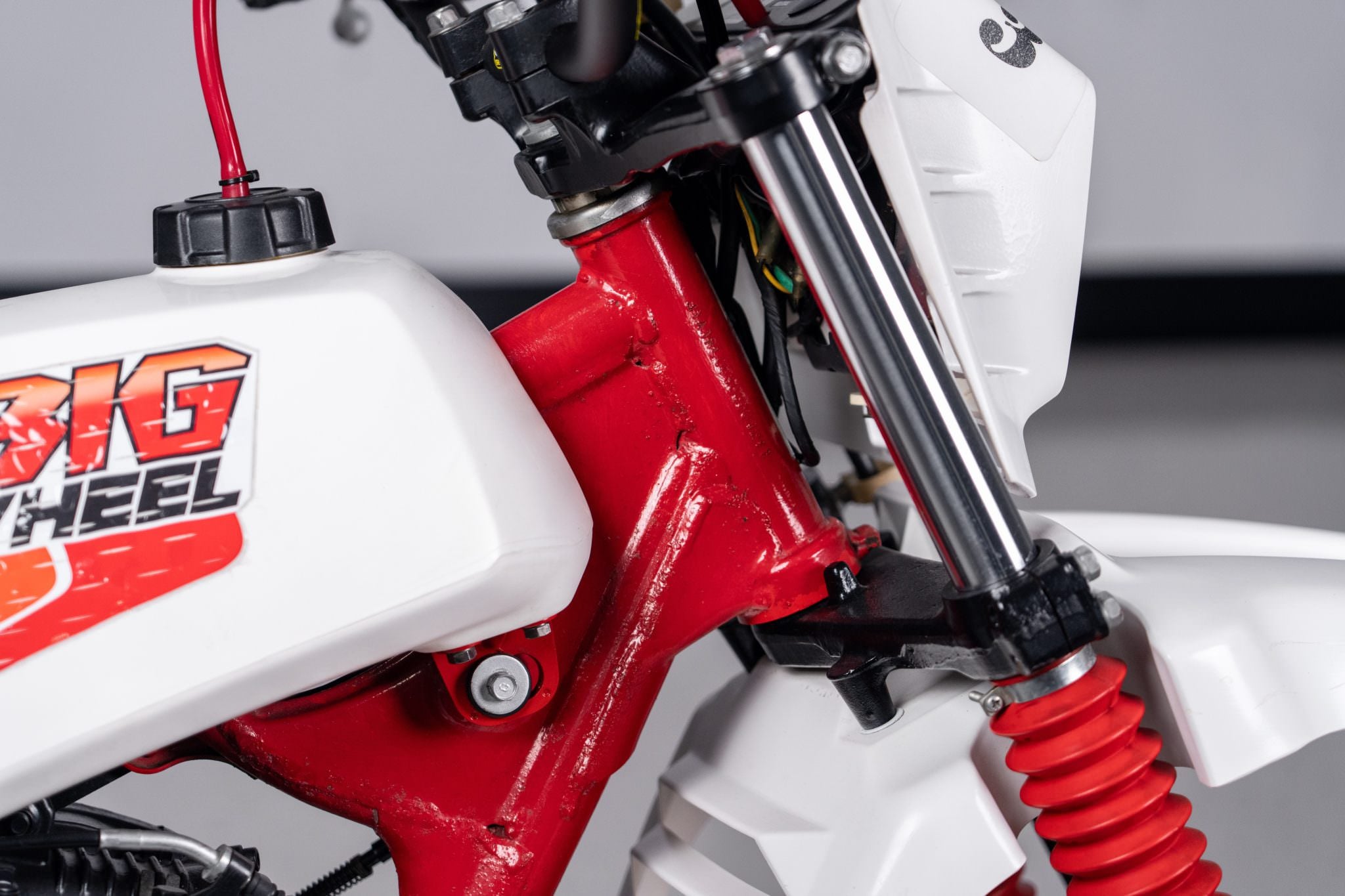
This is an original 1986 Yamaha BW200 with a white and red paint scheme, it has a red steel tube frame carrying white plastic bodywork, with red, black, and orange graphics. The bike reportedly spent time in Michigan under prior ownership before being acquired by the selling dealer in 2026.
As you would expect, power comes from the 196cc air-cooled four-stroke single, equipped with both kick and electric starters and feeding through an upswept exhaust system. The engine is mated to a 5-speed manual transmission, with drive sent to the rear wheel via a chain fitted with an upper guard.
Gold-finished wheels measure 12 inches up front and 9 inches out back, wearing Kenda and Dunlop knobby tires respectively. Suspension consists of a telescopic fork with red Yamaha graphics and dual shocks in the rear mounted to the swingarm and frame.
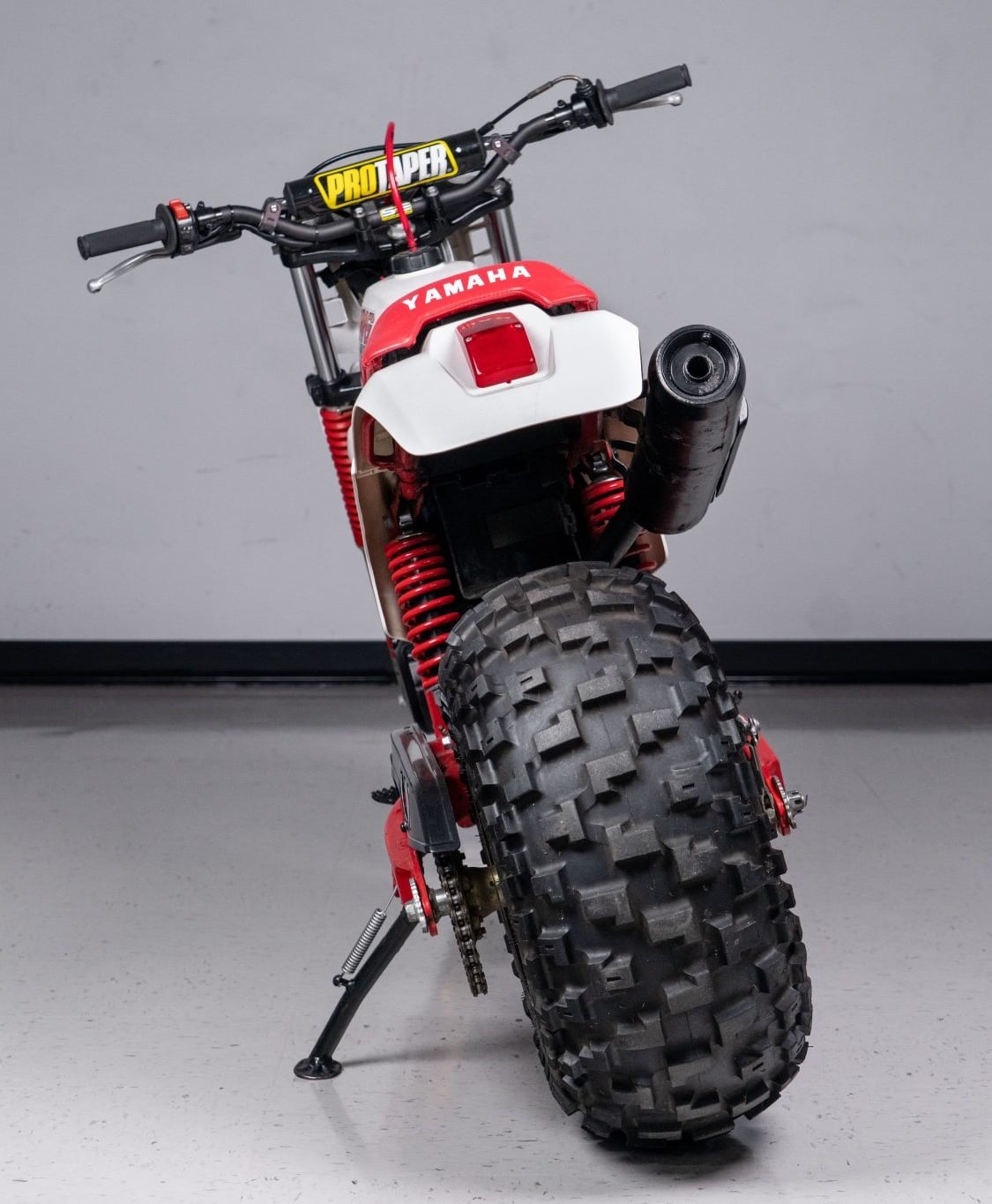
This is an original 1986 Yamaha BW200 with a white and red paint scheme, it has a red steel tube frame carrying white plastic bodywork, with red, black, and orange graphics. The bike reportedly spent time in Michigan under prior ownership before being acquired by the selling dealer in 2026.
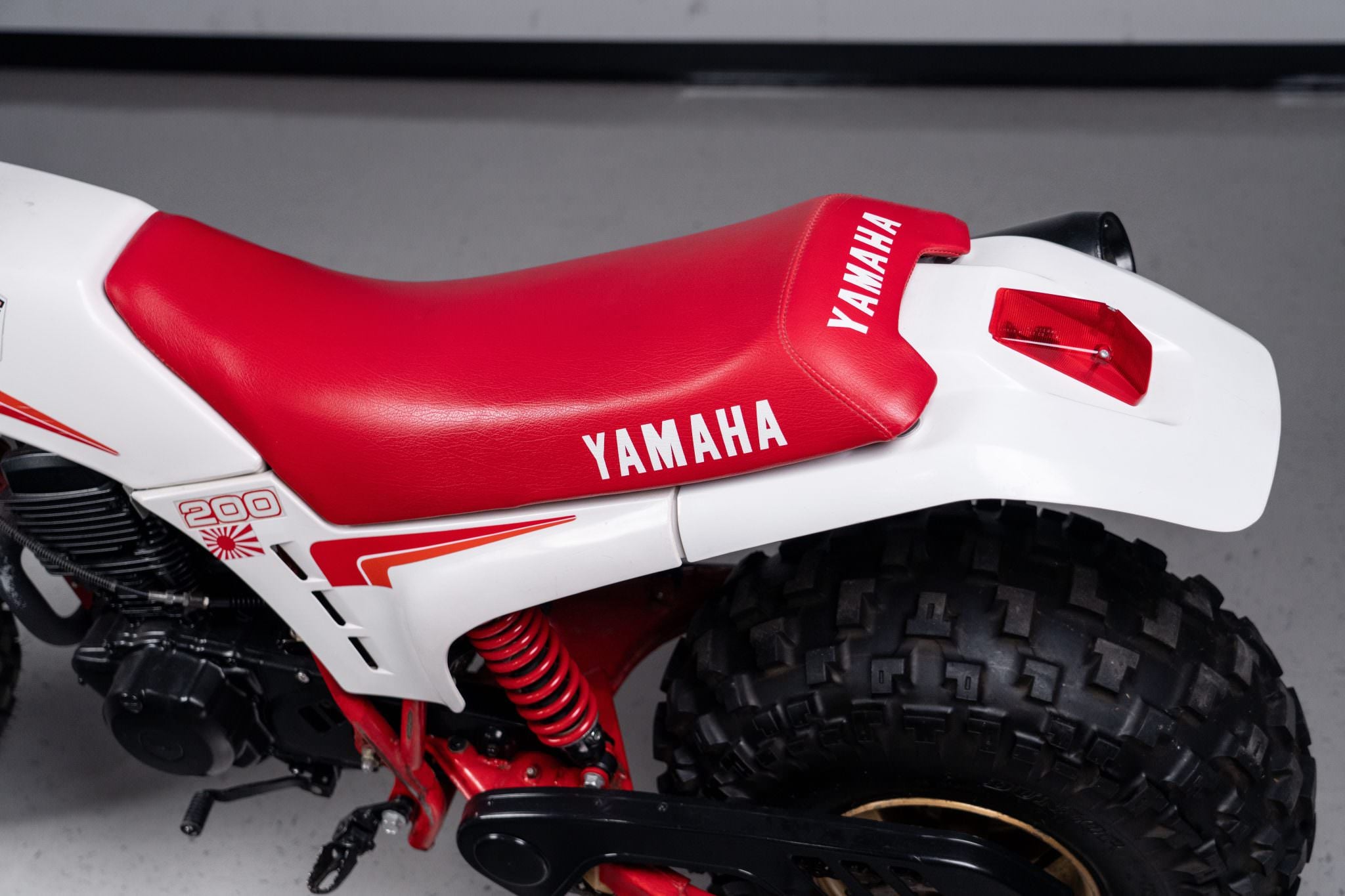
The bike has a cross-braced handlebar with a ProTaper-branded pad, black grips, matching switchgear, a twist-grip throttle, and bright brake levers. It wears a red vinyl solo seat with white script, a 1.7 gallon fuel tank, a skid plate, a side stand, trail lighting, and folding serrated foot pegs.
This Yamaha BW200 is now being offered at no reserve out of Maryland for off-road use only with a bill of sale – no title or registration accompanies the sale. If you’d like to read more about it or register to bid you can visit the listing here.
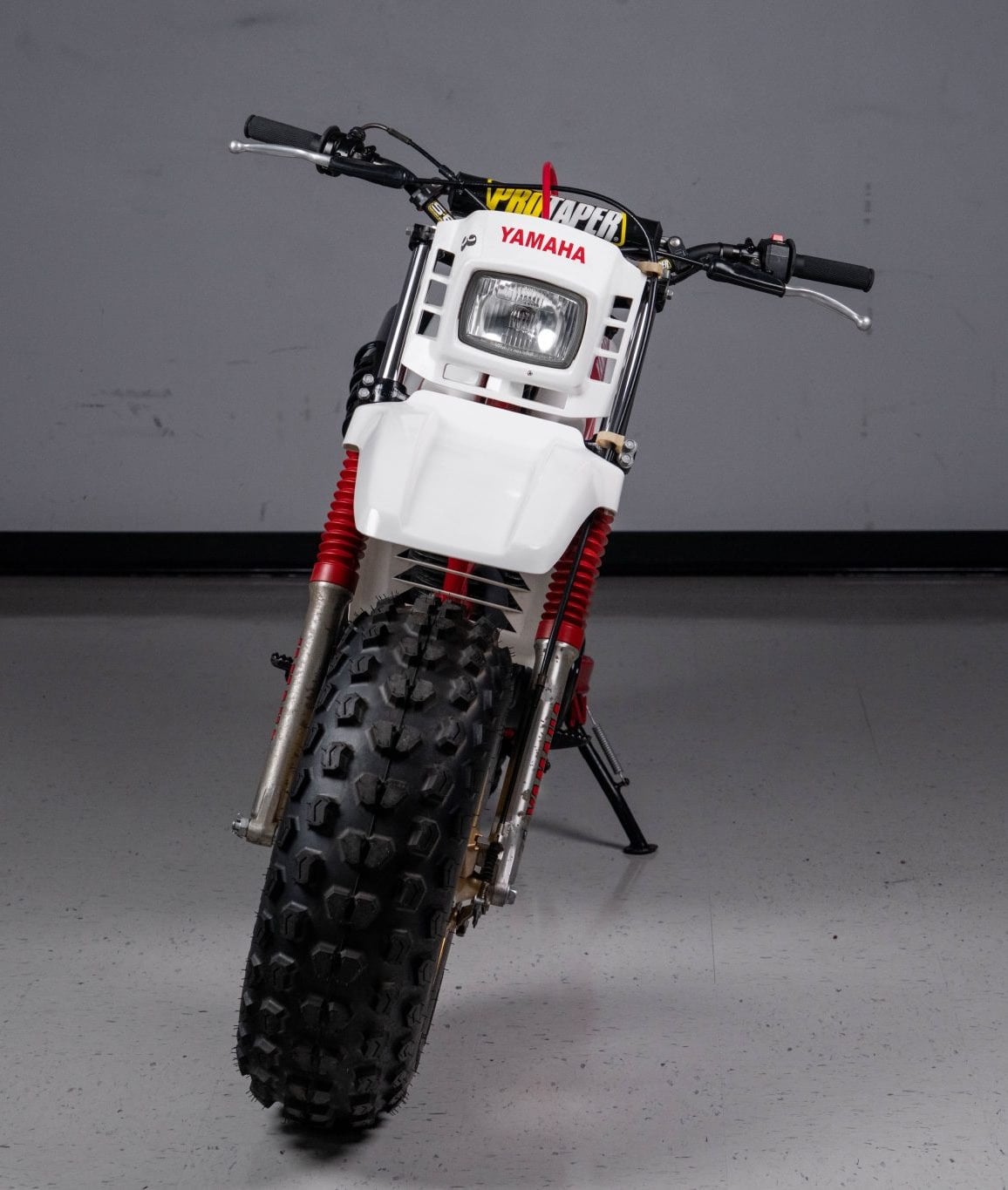
Images courtesy of Bring a Trailer

Articles that Ben Branch has written have been covered on CNN, Popular Mechanics, Smithsonian Magazine, Road & Track Magazine, the official Pinterest blog, the official eBay Motors blog, BuzzFeed, Autoweek Magazine, Wired Magazine, Autoblog, Gear Patrol, Jalopnik, The Verge, and many more.
Silodrome was founded by Ben back in 2010, in the years since the site has grown to become a world leader in the alternative and vintage motoring sector, with well over a million monthly readers from around the world and many hundreds of thousands of followers on social media.