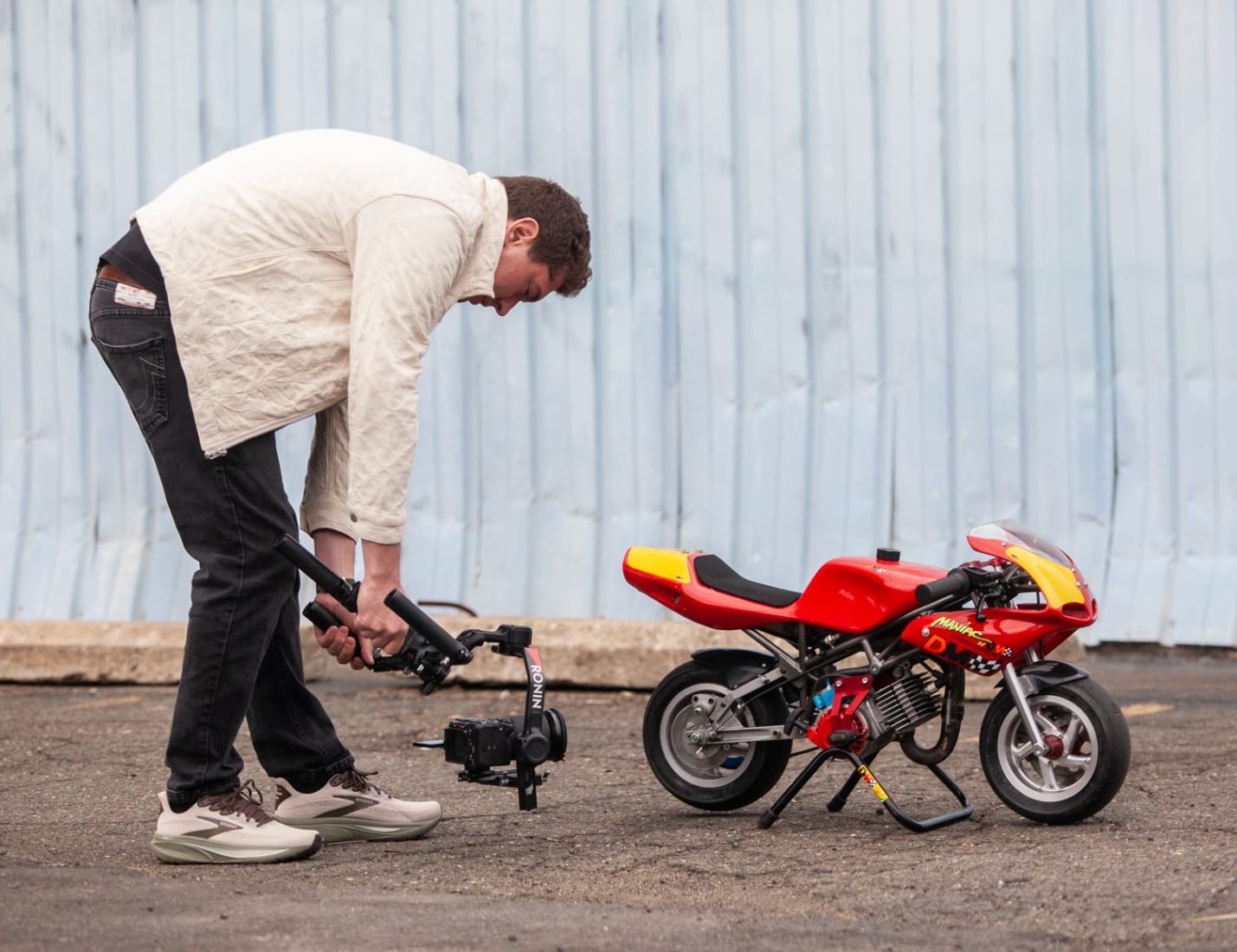
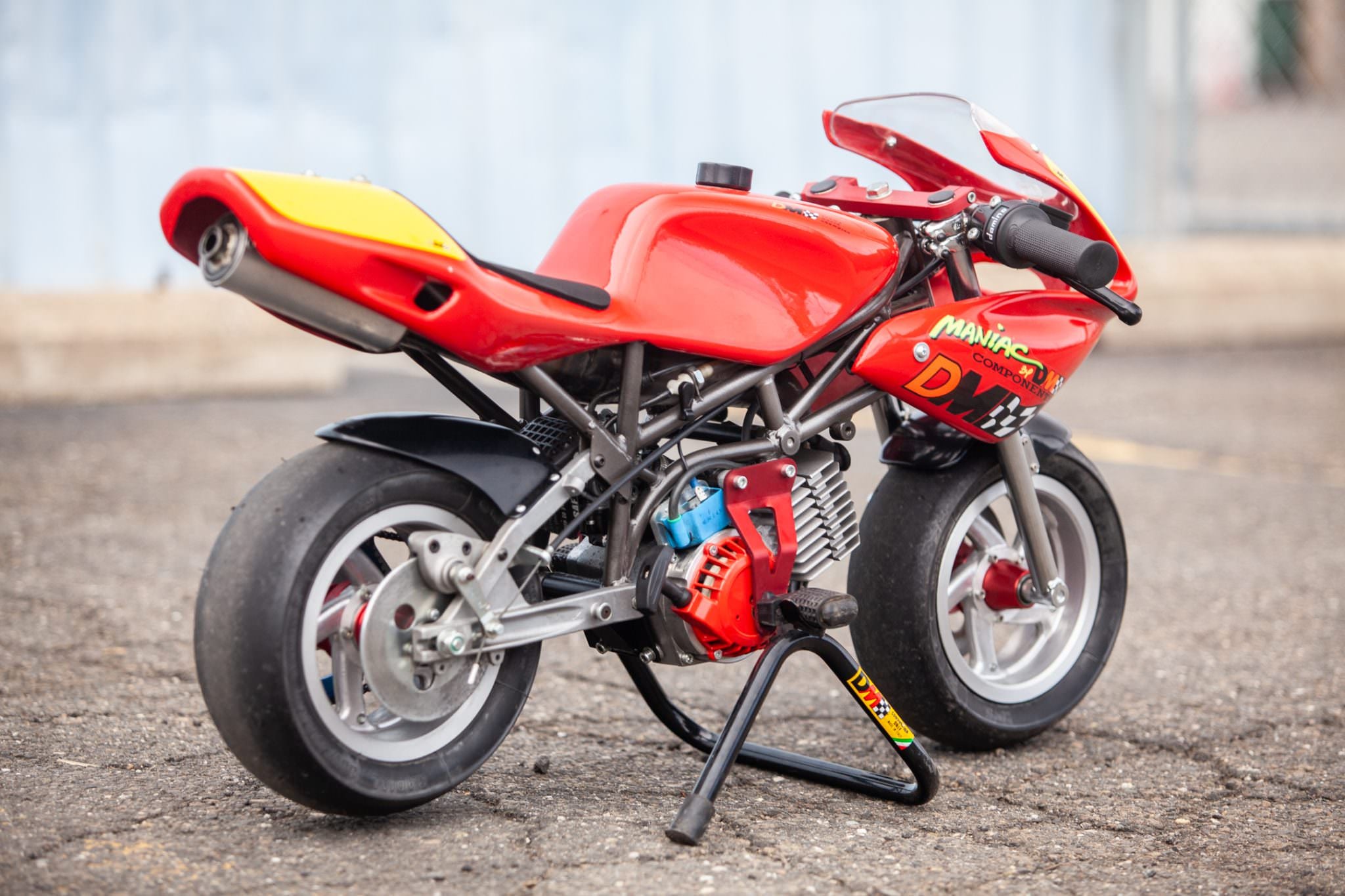
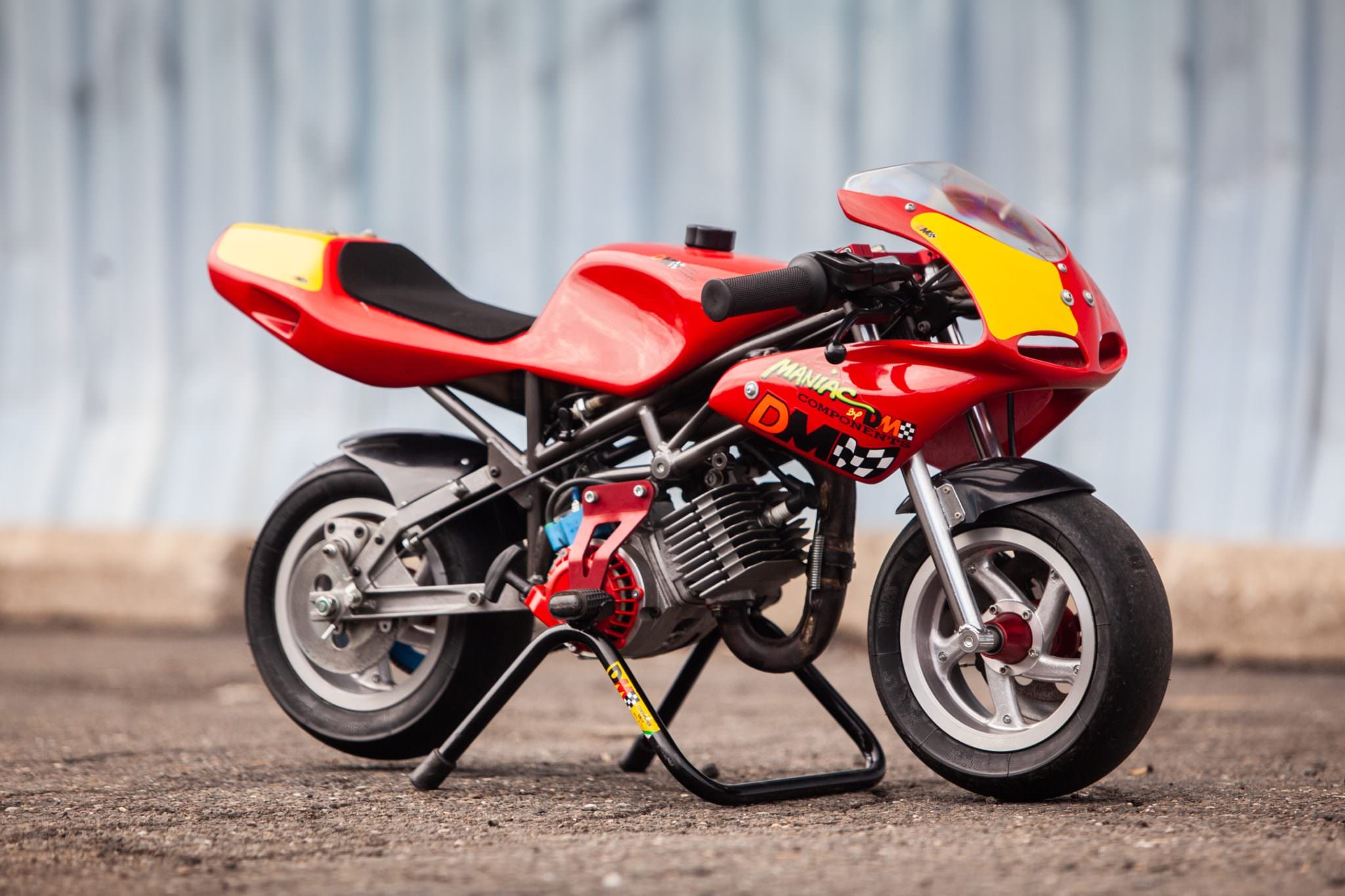
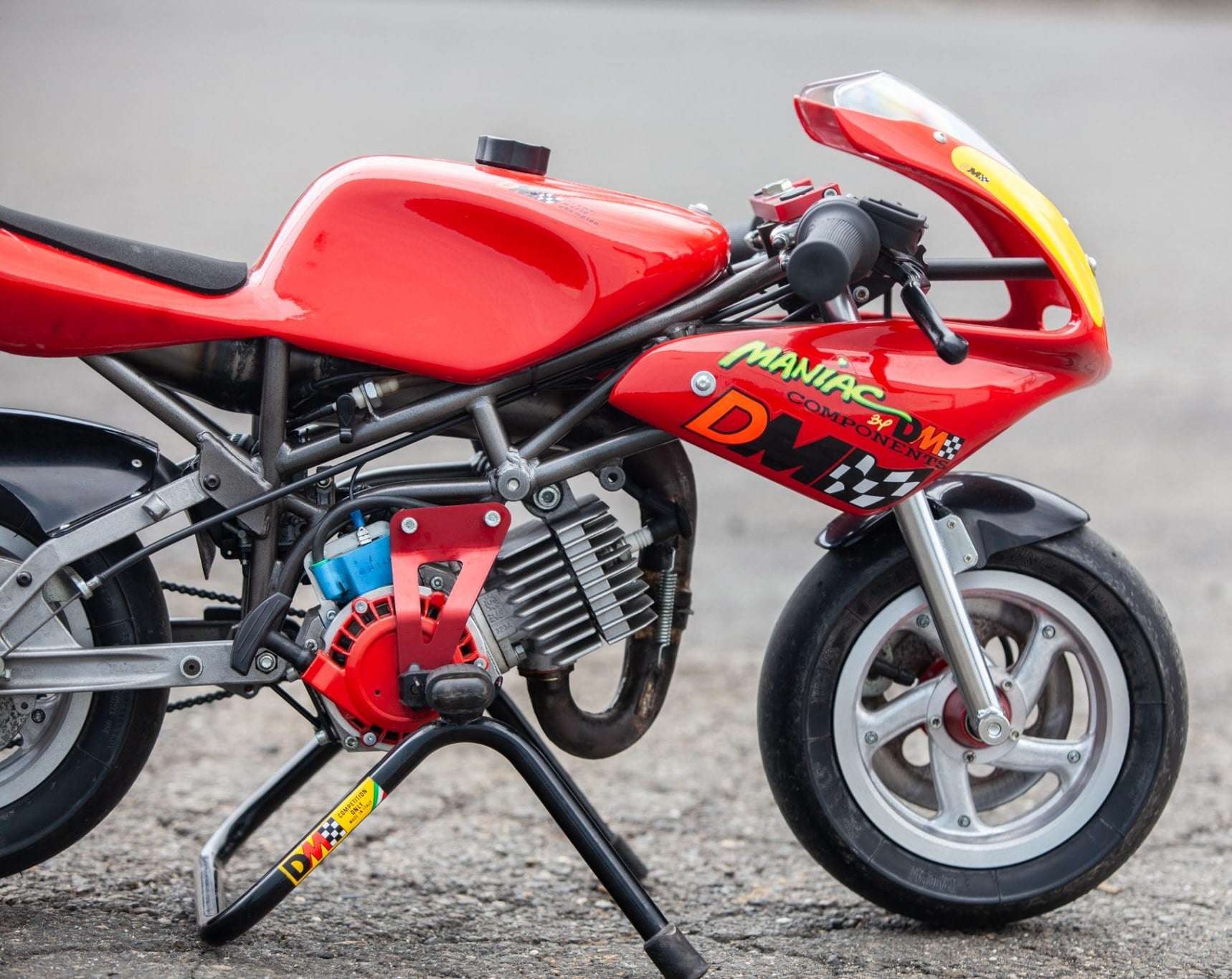
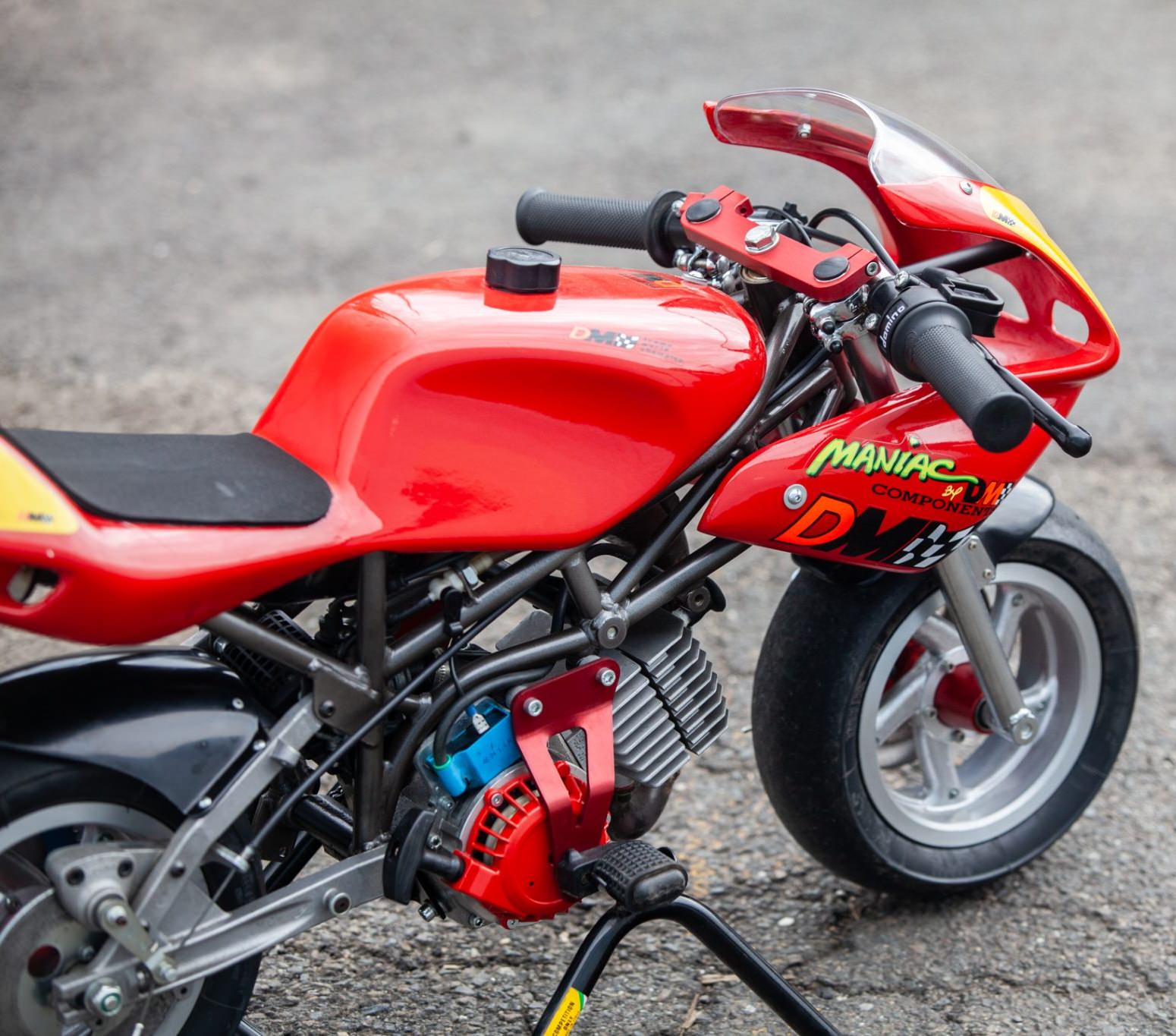
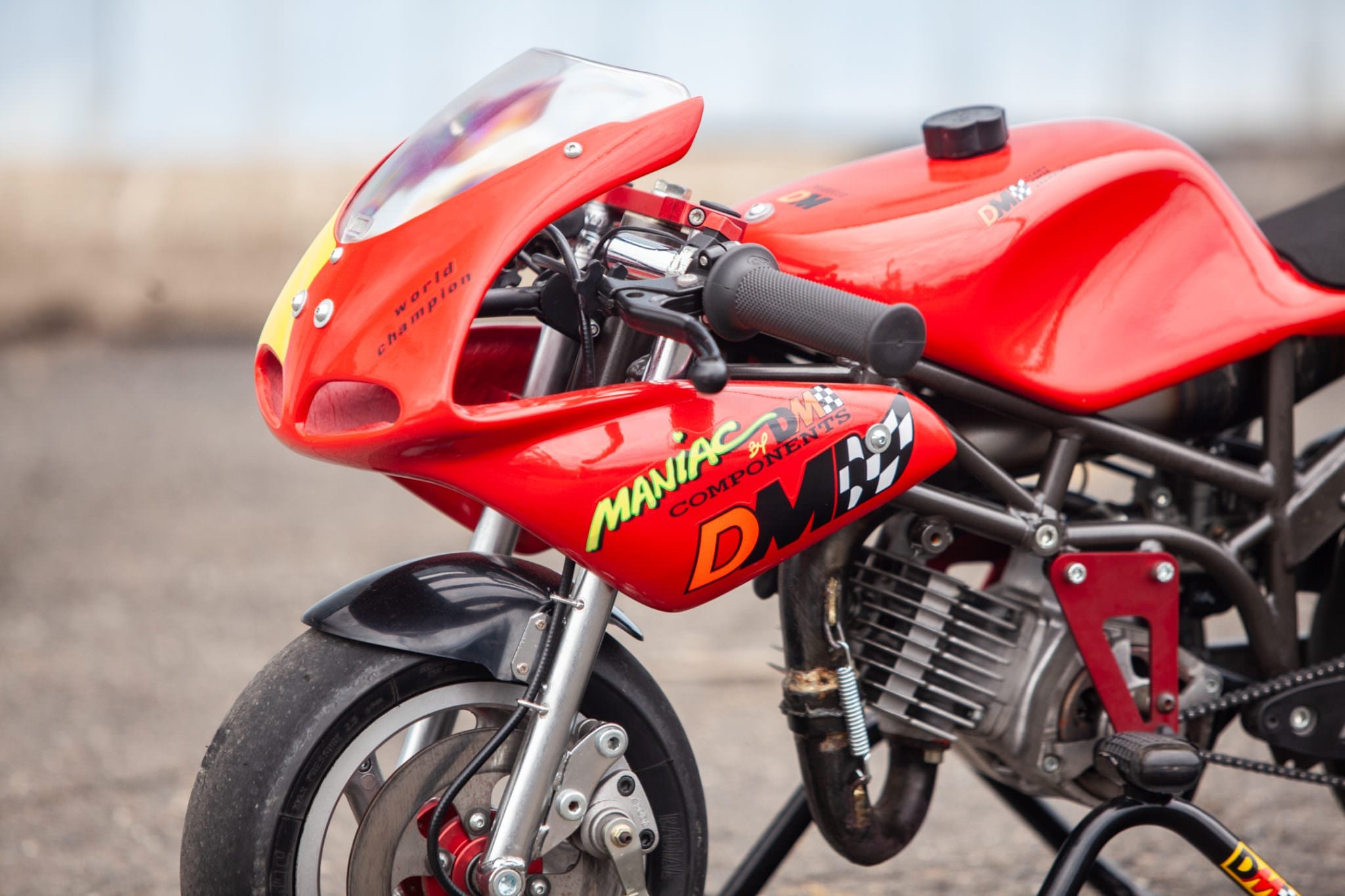
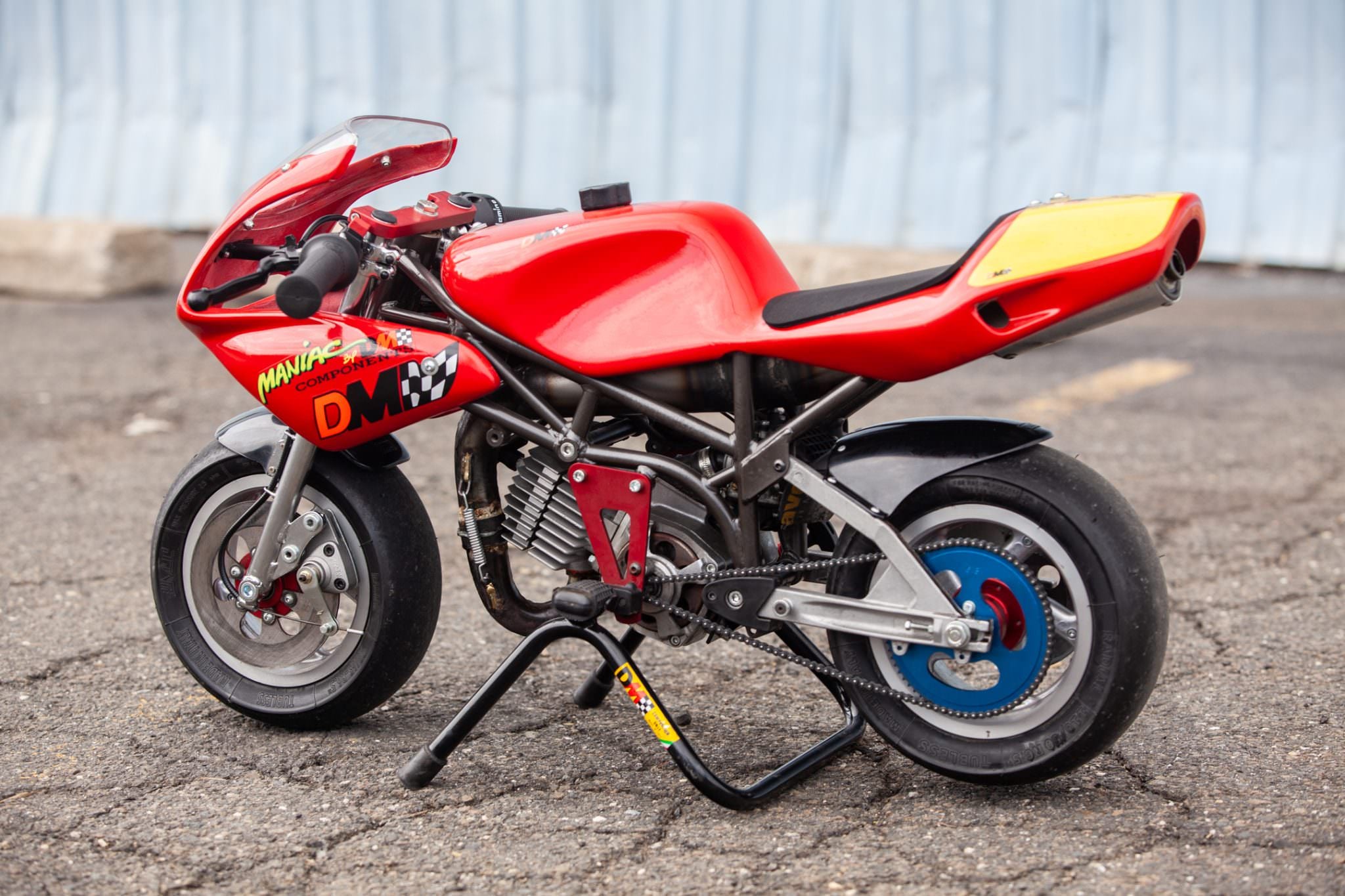
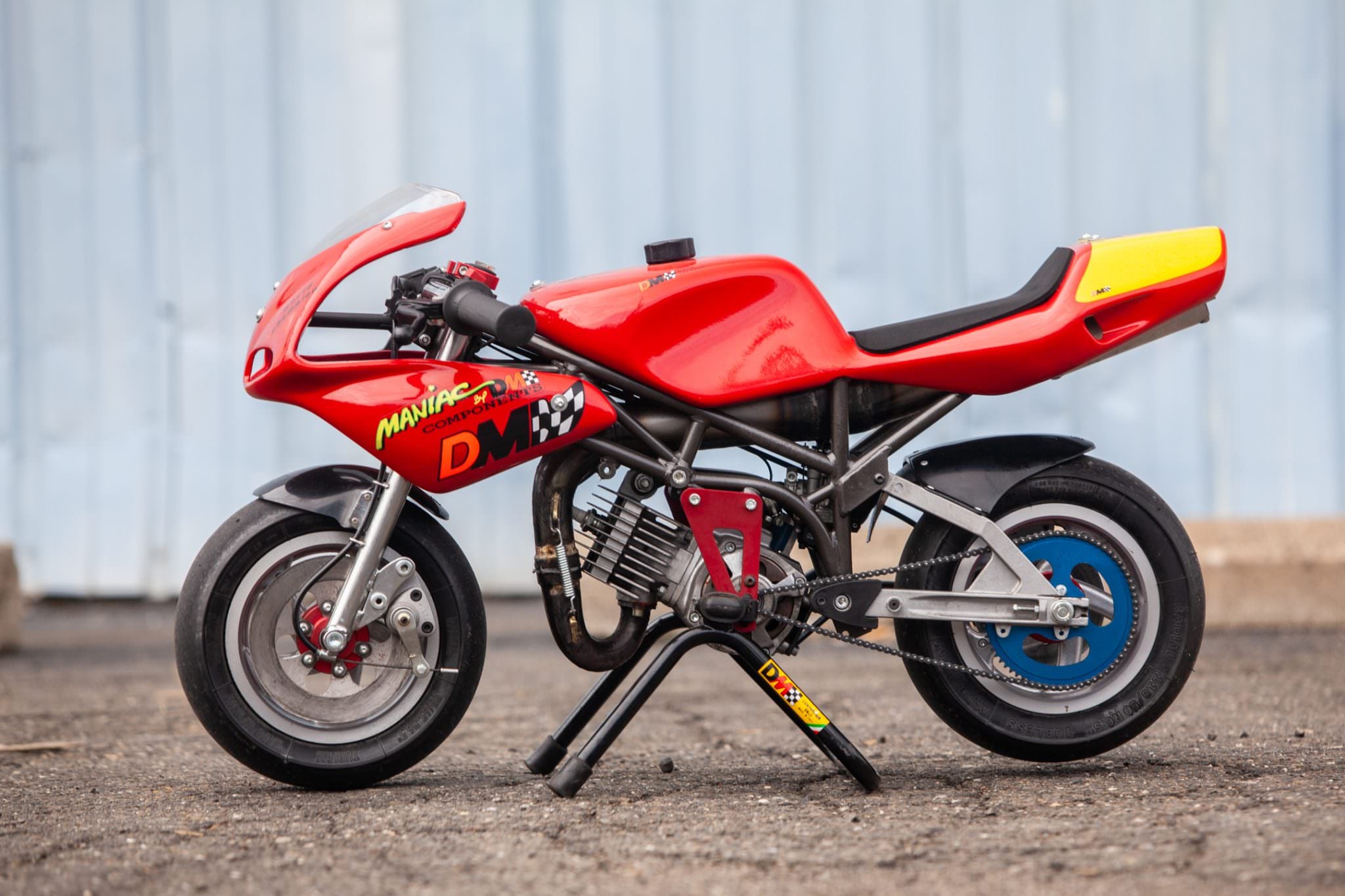
This is a 1995 DM MinimMoto DM1 SS pocket bike that remains in excellent condition throughout, largely due to the fact that it has spent much of its life on static display.
Pocket bikes like this are fully-functional mini-superbikes, usually with sub-50cc engines. They can be ridden by kids or adults, and there are popular racing leagues around the world for them. They’re multiple orders of magnitude cheaper to race than full-sized bikes, and many races take place on go kart tracks.
Above Video: This is a rider’s view of what it’s like to ride the DM Minimoto DM1, as you can see, it’s actually pretty zippy considering its diminutive size.
MiniMoto: A History Speedrun
MiniMoto, also known as “pocketbike” racing, is a category of miniature motorcycle racing that picked up widespread popularity in the 1990s and early 2000s – particularly in Europe and Japan. Despite their small size, they’re typically 1/3rd to 1/4th the scale of full-sized superbikes, MiniMotos are fully functional racing machines, usually powered by two-stroke engines ranging from 39cc to 50cc in displacement.
MiniMoto bikes can reach speeds of 40 – 60 mph, and their light weight and low center of gravity make them good training platforms for younger riders. The earliest origins of MiniMoto racing can be traced to Japan in the 1960s and into the 1970s, when motorcycle enthusiasts began building fully-functional miniature versions of full-size racing motorcycles that were 100% rideable.
By the late 1980s, these pocketbikes began appearing in Europe, mainly in Italy, where they were embraced by the nation’s wildly enthusiastic karting and motorsport communities. Italian manufacturers like Polini, GRC, and Blata soon developed their own highly-refined pocketbike models with aluminum perimeter frames, hydraulic disc brakes, and high-performance two-stroke engines.
Italy quickly became the global epicenter of MiniMoto racing. National championships emerged in the 1990s, and the sport became a formal developmental pathway for young riders aspiring to move into 125cc and 250cc Grand Prix racing. This was much the same as the tried-and-tested karting to Formula 1 progression pathway.
Major MotoGP stars like Valentino Rossi, Loris Capirossi, and Nobuatsu Aoki began their careers on MiniMoto circuits. The emphasis was on tight, technical kart tracks where rider skill could shine over outright horsepower – mirroring the qualities needed in higher levels of motorcycle racing.
In the United States, the MiniMoto scene arrived later and was more fragmented. It gained traction in the early 2000s, often as part of larger karting or amateur motorsport events. American riders tended to favor slightly larger models, sometimes called “Super Pocketbikes,” which bridged the gap between MiniMotos and pit bikes.
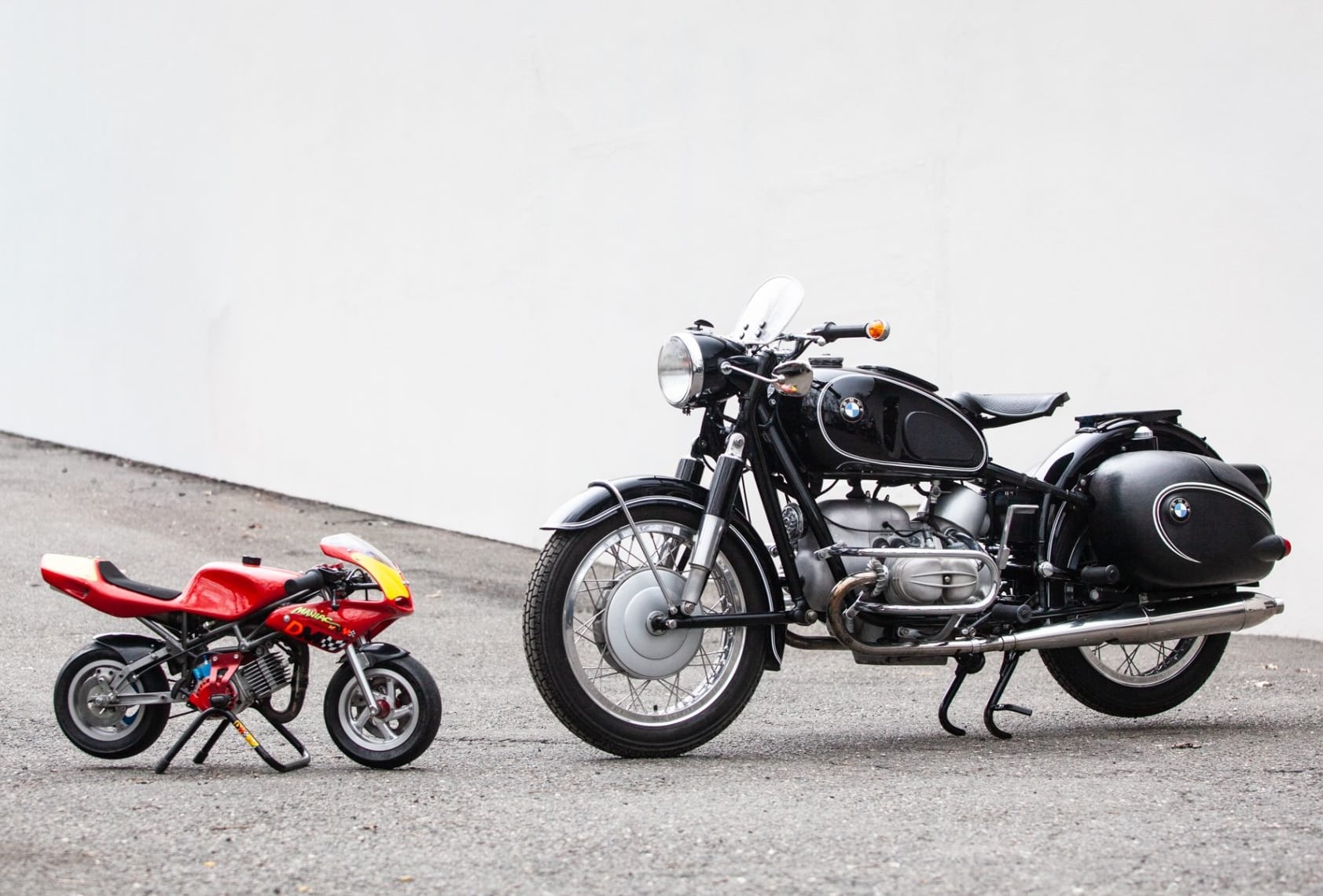
 This is a 1995 DM MinimMoto DM1 SS pocket bike that remains in excellent condition throughout, largely due to the fact that it has spent much of its life on static display.
The rise of Chinese manufacturers in the early 2000s flooded the market with inexpensive pocketbikes, which were often poorly built and prone to failure. They were typically targeted at casual riders rather than racers who knew better.
This briefly diluted the sport’s image, but on the upside it also made the bikes more accessible. Around the same time, governing bodies in Europe introduced stricter regulations to maintain the quality and competitiveness of sanctioned racing.
Today, MiniMoto racing remains a legitimate grassroots motorsport, especially in Italy, Spain, and Japan. It continues to serve as a foundational step in the careers of many professional motorcycle racers and is supported by academies, training schools, and manufacturer-backed programs.
The 1995 DM Minimoto DM1 SS Pocket Bike Shown Here
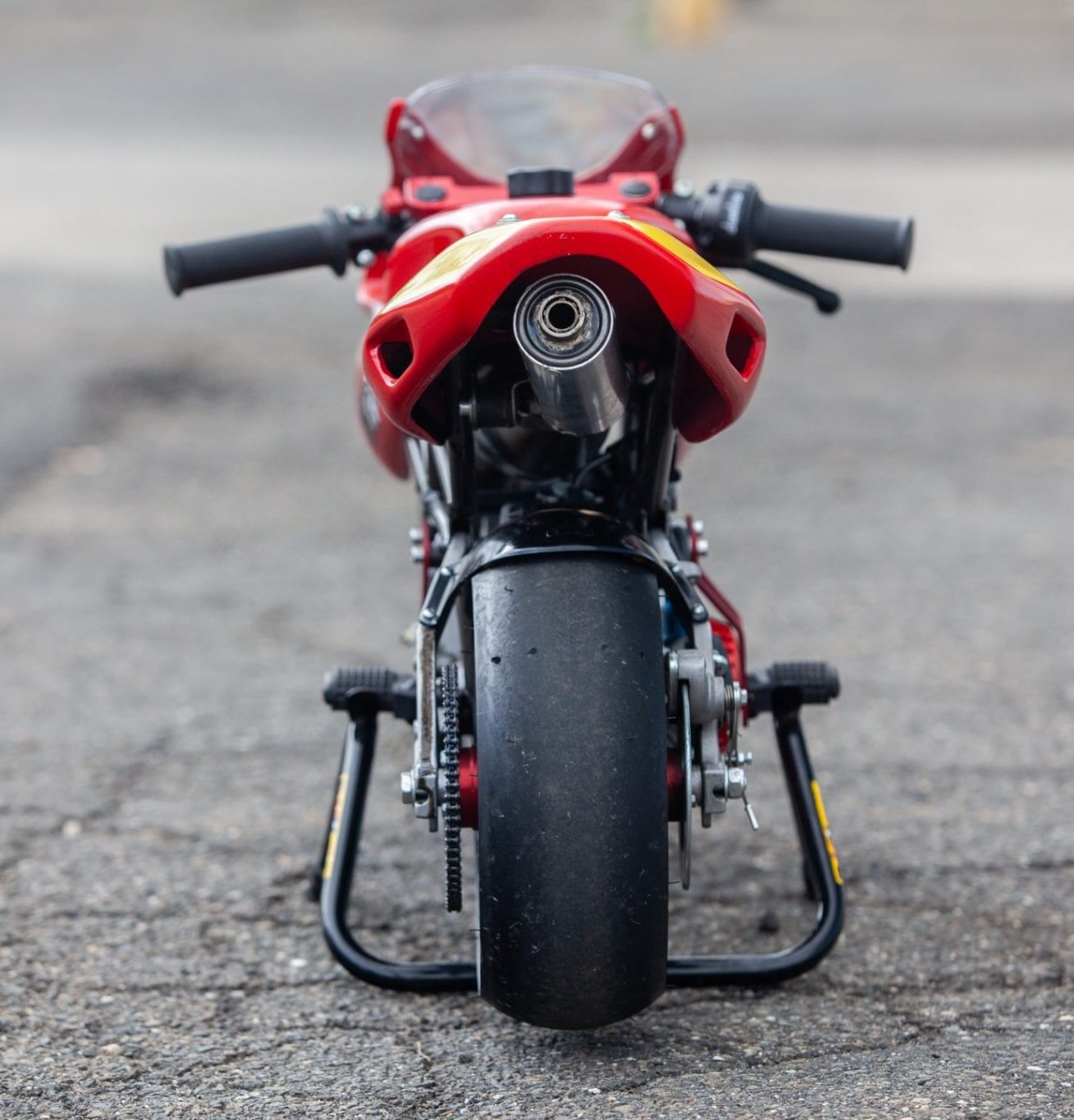
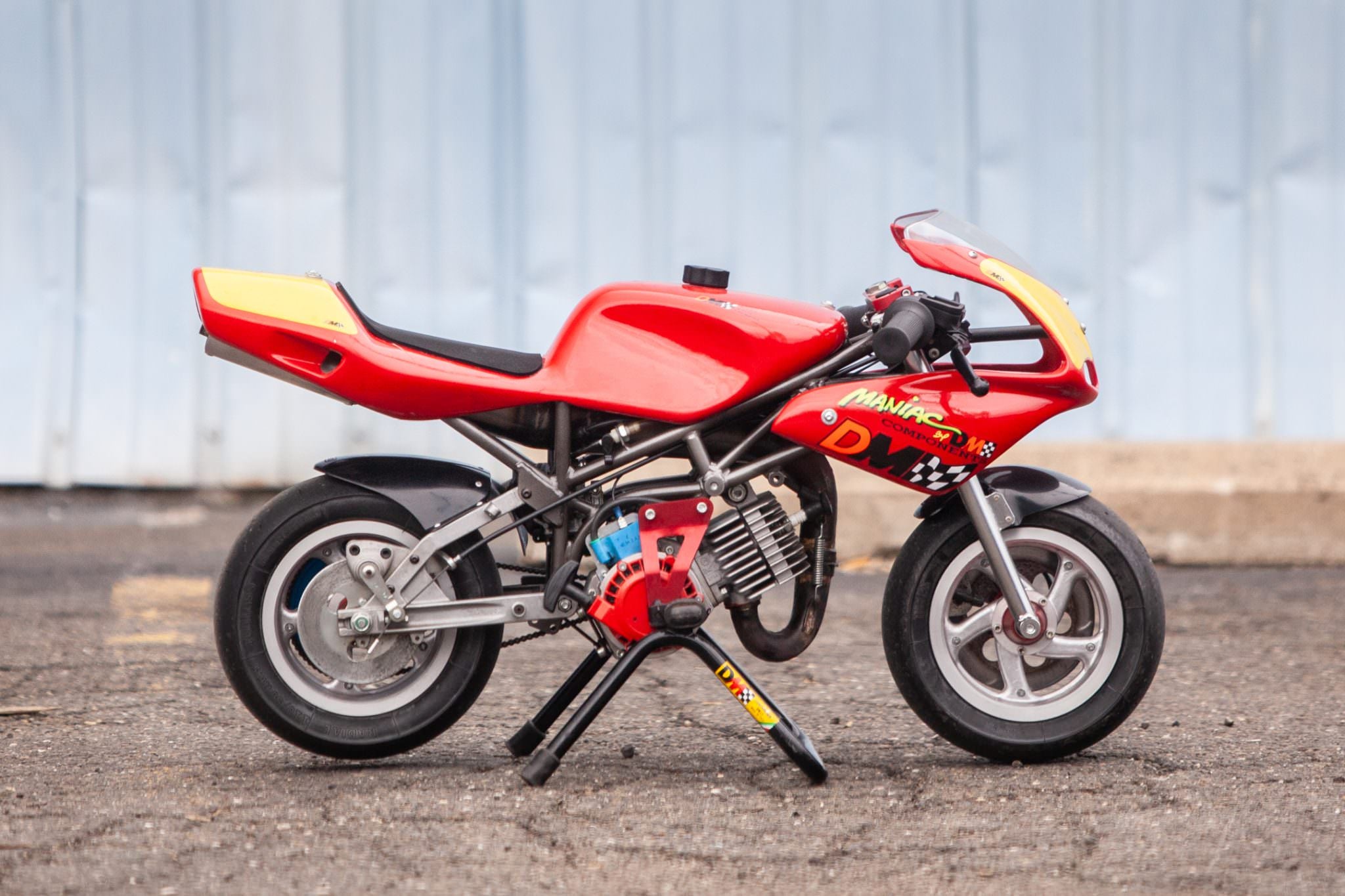
This is a 1995 DM Minimoto DM1 SS pocket bike that reportedly spent its early life on static display with its original owner before changing hands in 2021. Power comes from a 40cc two-stroke single equipped with a recoil starter and an upswept expansion-chamber exhaust system that exits beneath the tail section.
A dry-plate centrifugal clutch and drive chain deliver power to the rear wheel. No odometer is fitted, so total mileage is unknown. The fiberglass and plastic bodywork is finished in red with yellow accents and multi-colored graphics over an anthracite-finished molybdenum chrome steel-tube trellis frame paired with an aluminum rear subframe.
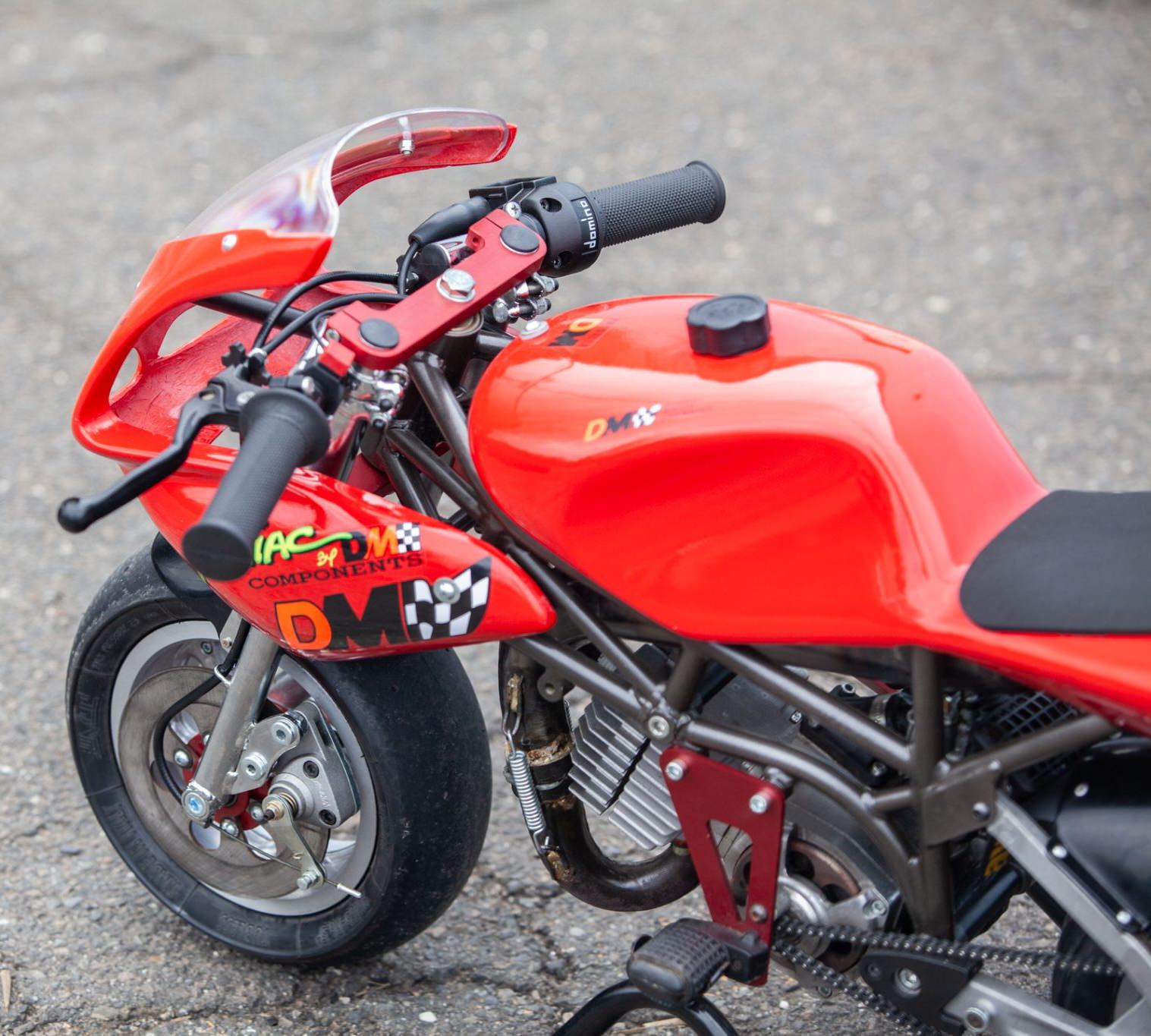
Other details include a black solo seat, a clear windscreen, cooling ductwork integrated into the bodywork, black fenders, and a removable black-finished center stand. The 6.5″ alloy five-spoke wheels are shod with 110/50 tubeless tires, and braking is handled by front and rear mechanical Polini disc brakes. The bike does not have any suspension.
Pocket bikes like this are fully-functional mini-superbikes, usually with sub-50cc engines. They can be ridden by kids or adults, and there are popular racing leagues around the world for them. They’re multiple orders of magnitude cheaper to race than full-sized bikes, and many races take place on go kart tracks.
Clip-on handlebars are mounted below a red-anodized top triple clamp and carry front and rear brake levers along with a twist-grip throttle. The sale includes a period brochure as well as original sale and import documents. The bike does not have a title or registration and is being sold on a bill of sale only.
This DM Minimoto DM1 SS pocket bike is now offered at no reserve out of Stratford, Connecticut for off-road use only and you can visit the listing here if you’d like to read more about it or register to bid.
Images courtesy of Bring a Trailer

Articles that Ben Branch has written have been covered on CNN, Popular Mechanics, Smithsonian Magazine, Road & Track Magazine, the official Pinterest blog, the official eBay Motors blog, BuzzFeed, Autoweek Magazine, Wired Magazine, Autoblog, Gear Patrol, Jalopnik, The Verge, and many more.
Silodrome was founded by Ben back in 2010, in the years since the site has grown to become a world leader in the alternative and vintage motoring sector, with well over a million monthly readers from around the world and many hundreds of thousands of followers on social media.