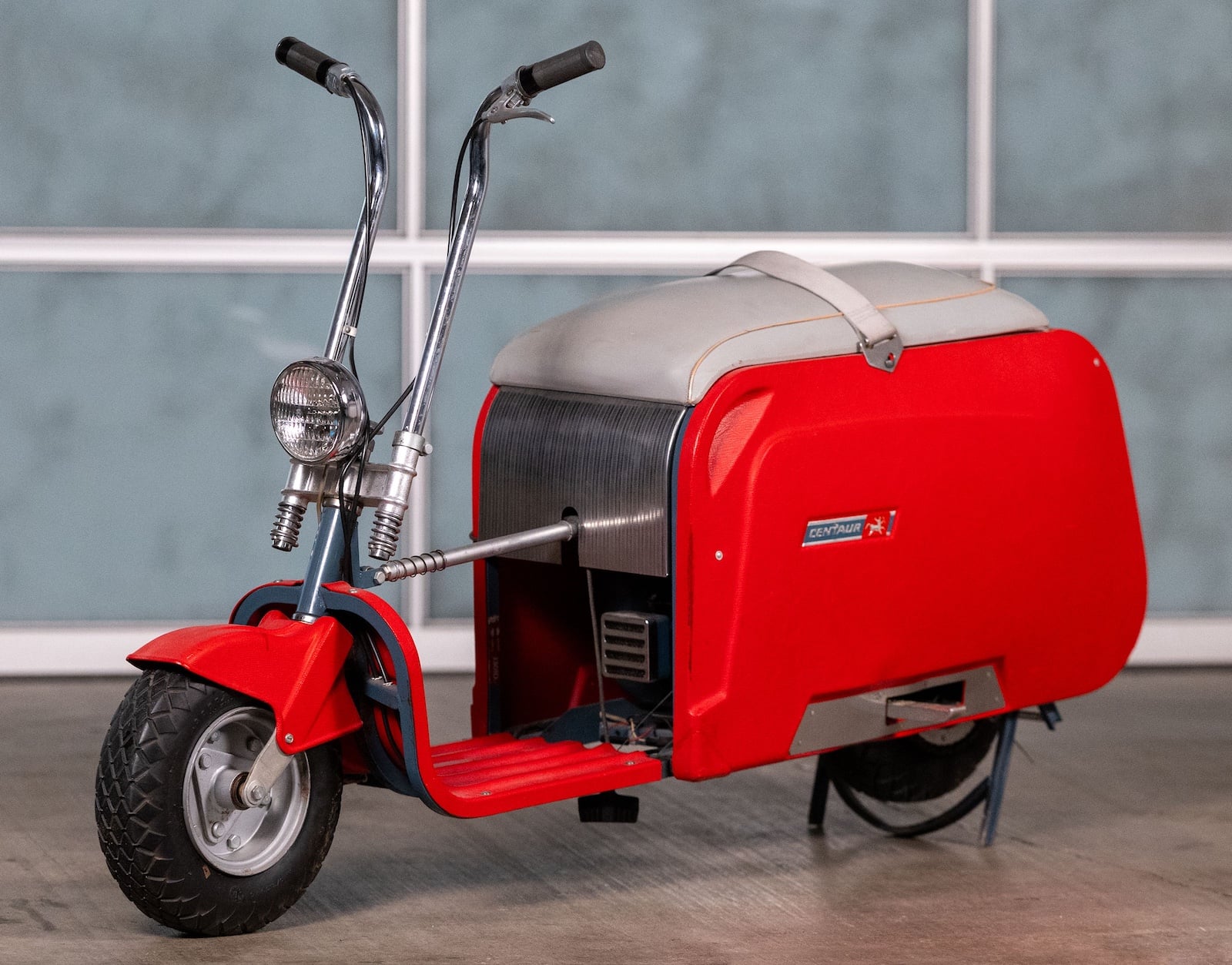
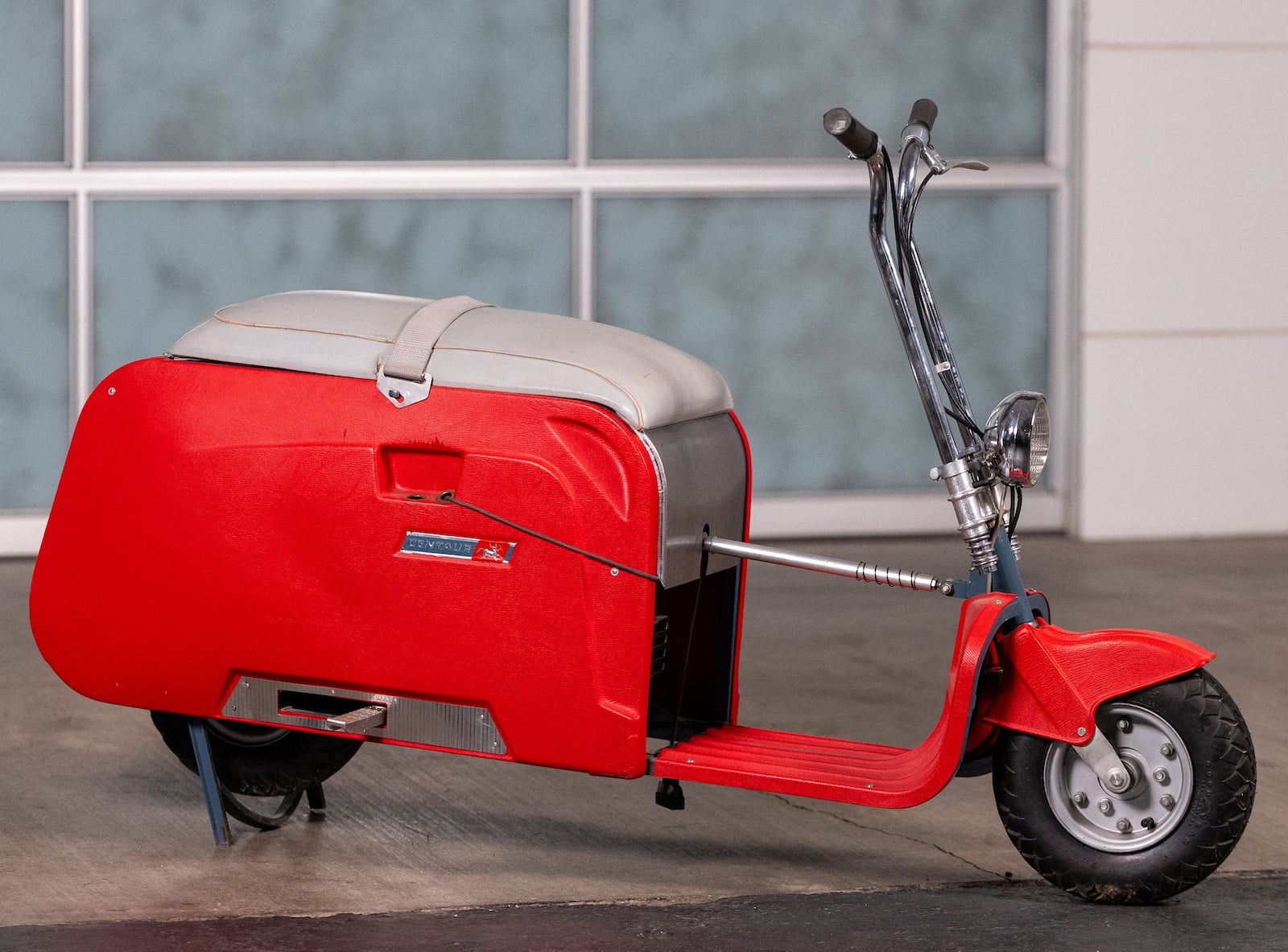
This is a Centaur folding scooter from 1965, it’s an all-American design that folds neatly into a suitcase-sized box that can then be carried, or stored in your car, boat, or plane for when it’s needed.
The folding process apparently takes less than a minute when you get the hang of it, and it can be folded out and ready to ride in the same amount of time. It has fold-out foot pegs, seating space for two, and a blistering 5.2 bhp on tap.
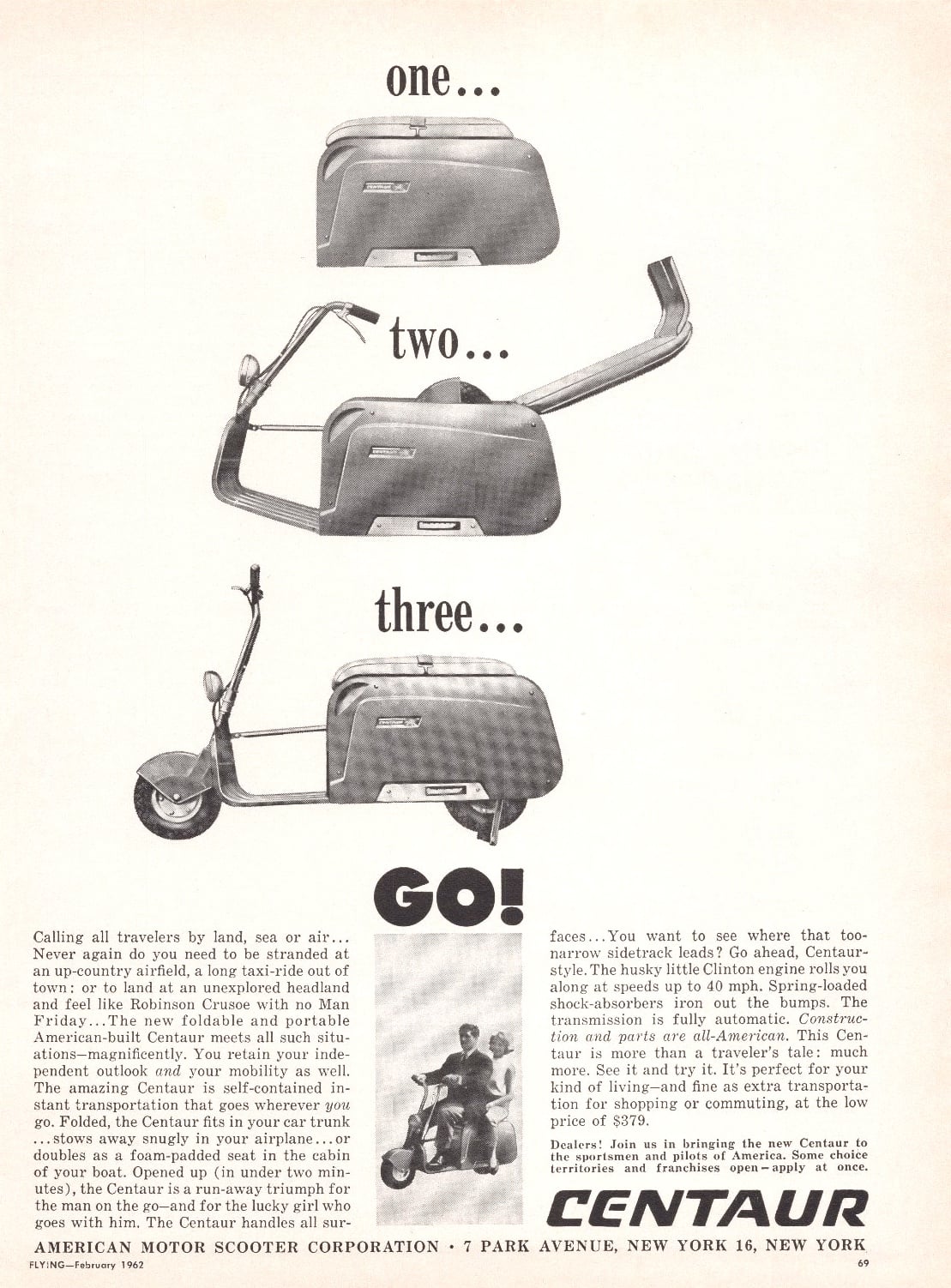
 The folding process apparently takes less than a minute when you get the hang of it, and it can be folded out and ready to ride in the same amount of time. It has fold-out foot pegs, seating space for two, and a blistering 5.2 bhp on tap. Image courtesy of the American Motor Scooter Corporation.
History Speedrun: The Centaur Folding Scooter
In 1959, Italian scooter manufacturer Lambretta went through a major upheaval that forced the company to restrict exports to the United States. For James Wilford Foster, the man responsible for establishing Lambretta’s parts distribution network in America and running a showroom in New York, the disruption was a major setback, but he turned it into an opportunity.
Foster was a lifelong scooter enthusiast, he and his wife Constance had spent much of the 1950s traveling across Europe and Puerto Rico on two wheels, and when an acquaintance brought him a rough concept for a portable, folding scooter, the idea transformed his life.
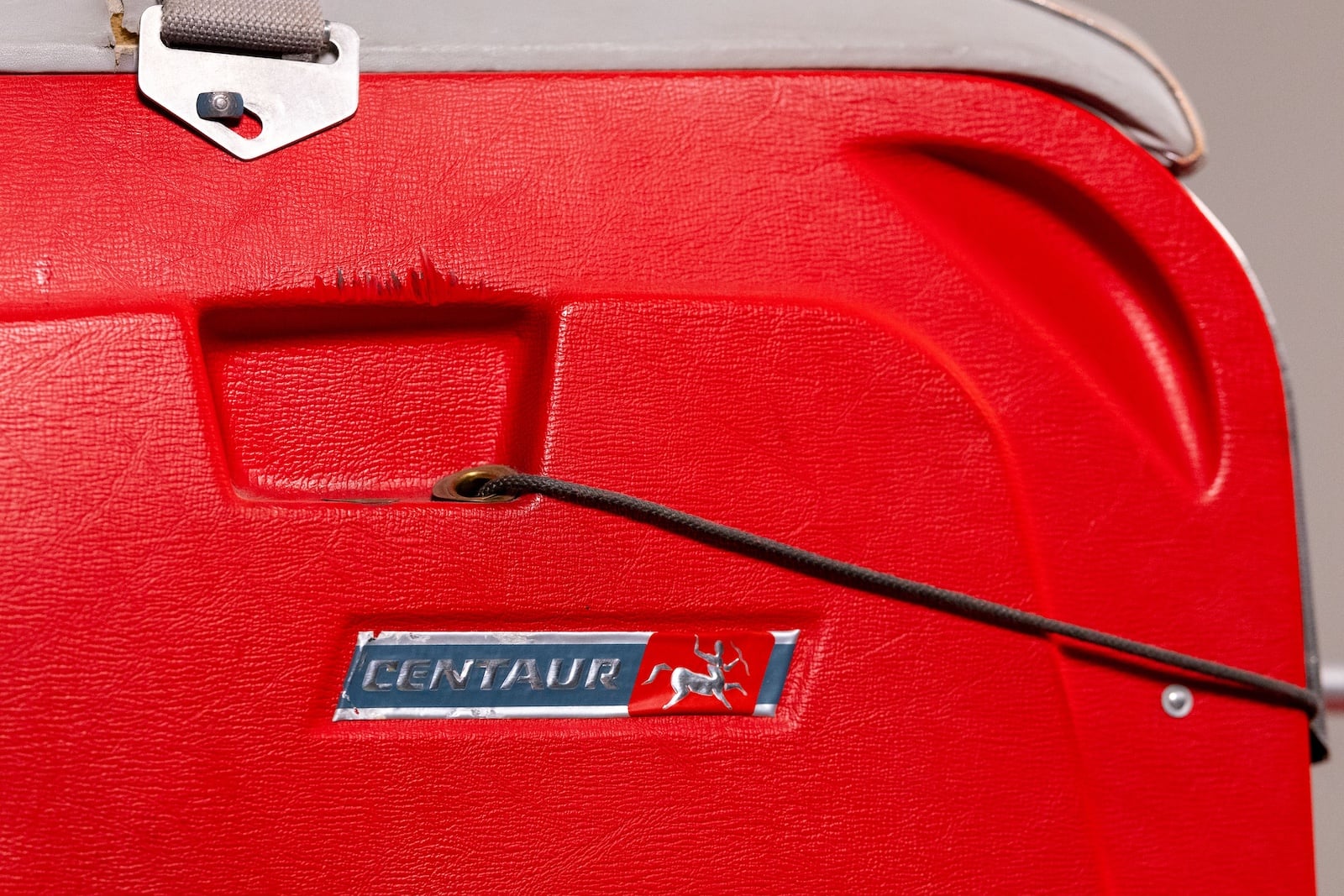
By 1960, Foster had secured financial backing, formed the American Motor Scooter Corporation with offices at 7 Park Avenue in New York City, and established manufacturing facilities in Youngstown, Ohio. The result was the Centaur, billed as America’s only “full-size” folding motor scooter.
The Specifications Of The Centaur
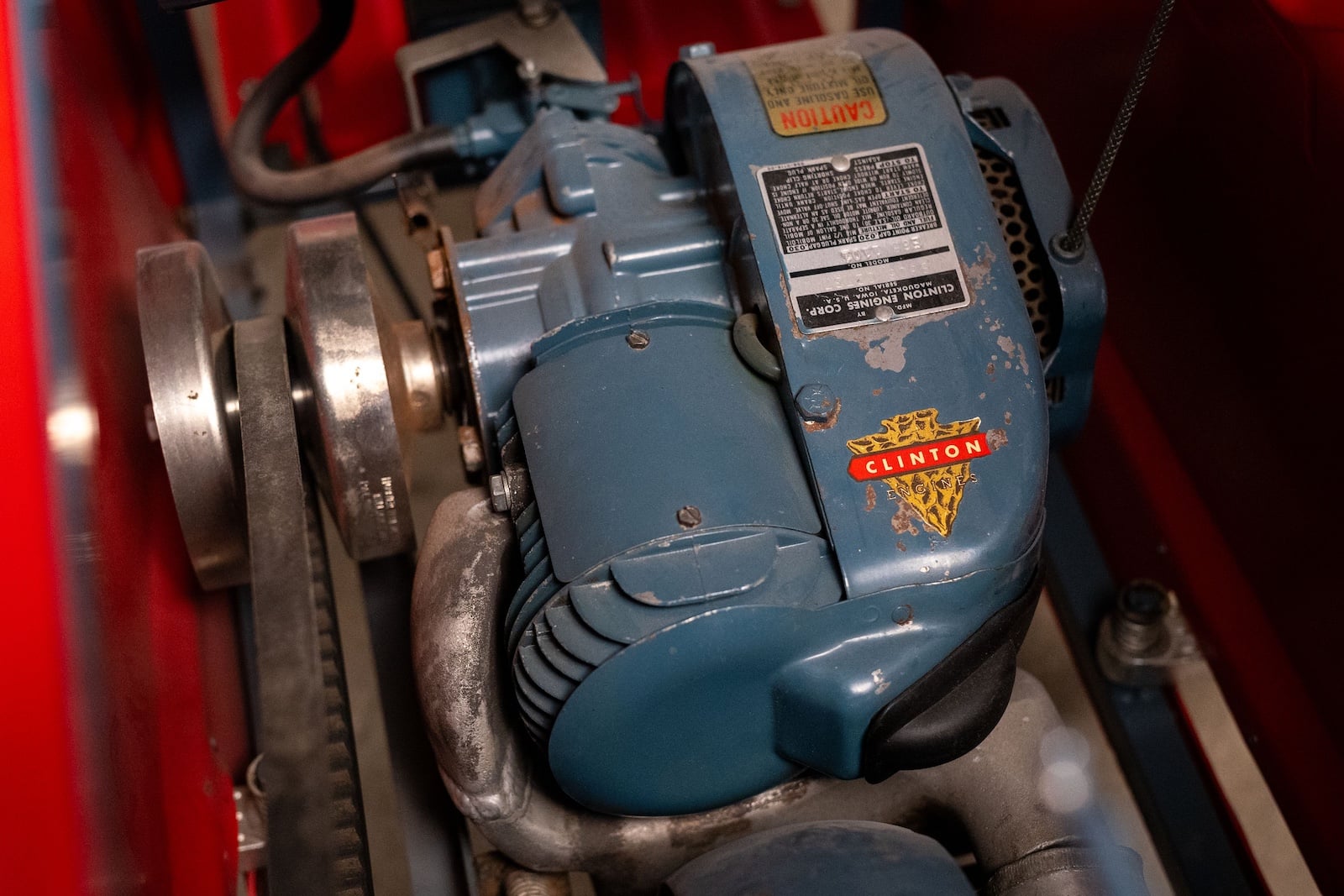
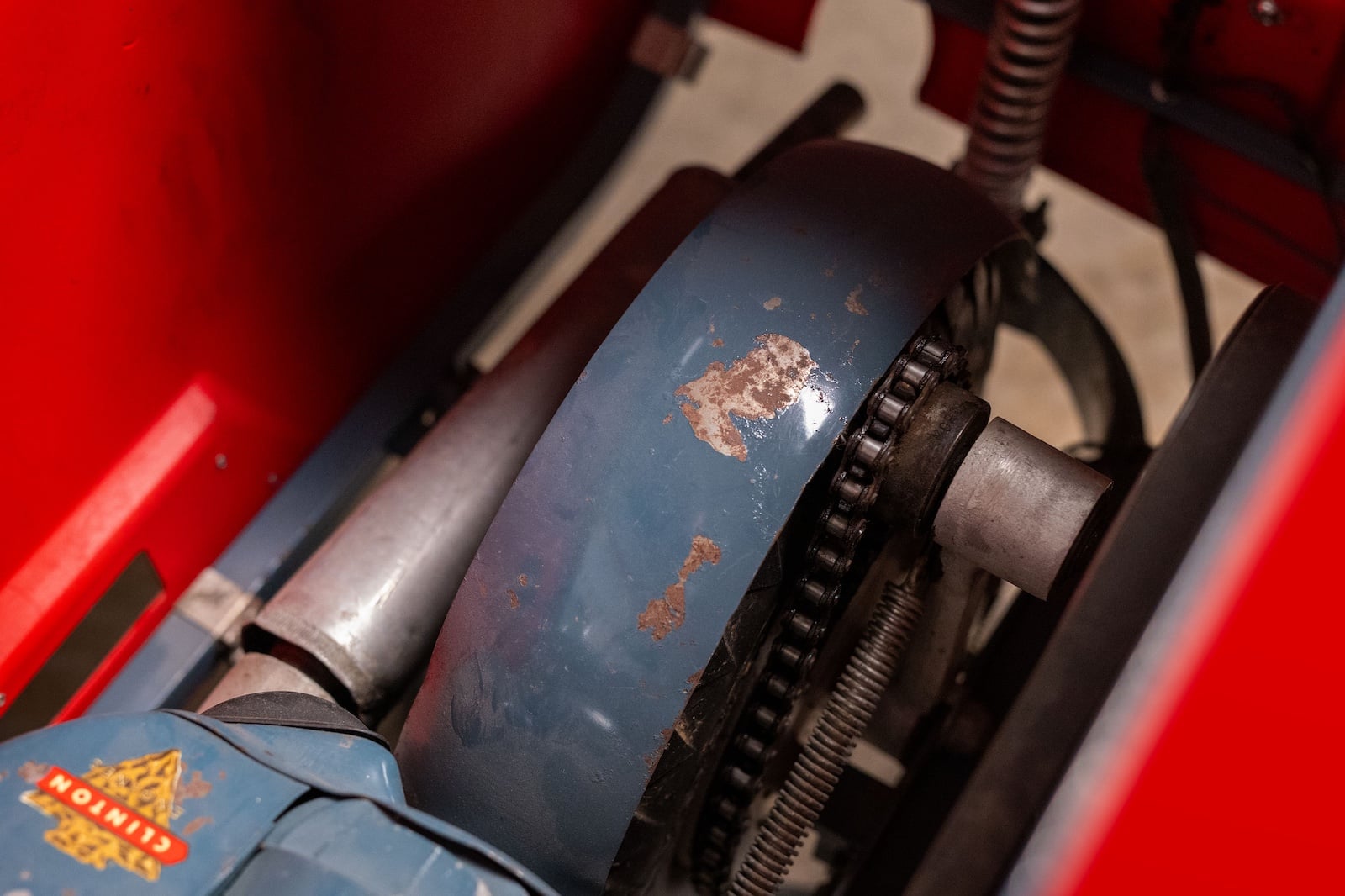
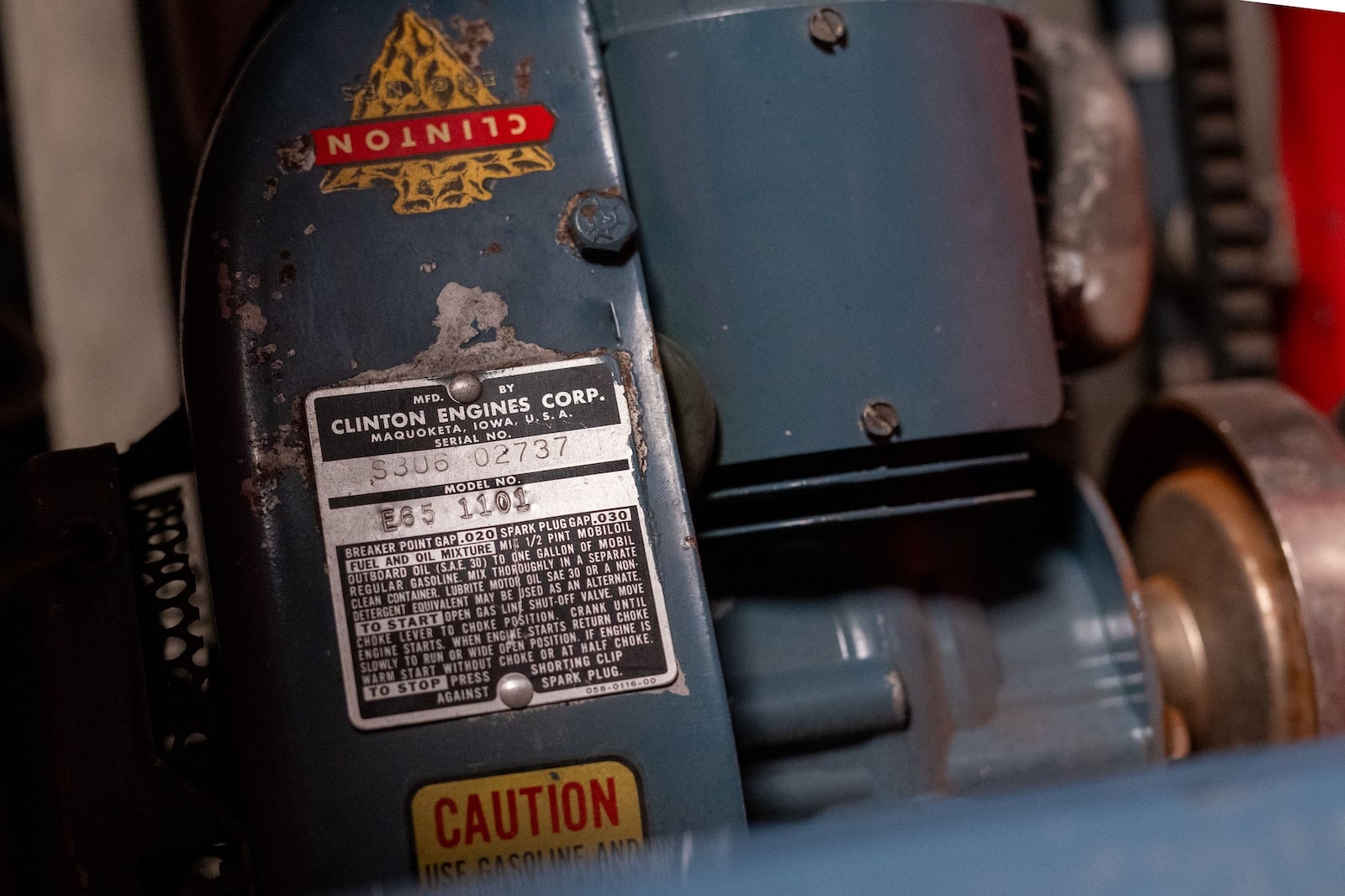
The Centaur’s engineering was remarkably clever. Every aspect of the design was approached with light weight and easy transportability in mind. The scooter was powered by a 49cc, two-stroke, air-cooled Clinton go-kart engine, rated at 5.2 bhp and fitted with period performance parts from Go-Power Company.
The Clinton motor used sealed crankshaft bearings, reducing the risk of crankcase oil leaking during transport or storage. Drive was routed through a belt-driven “Dri-Draulic” torque converter – this was described in the 1963 Cycle World road test as a centrifugal clutch with a variable-ratio pulley and Gilmer belt – that functioned as a fully automatic transmission.
The unit was developed by Walter Hoover, who had been instrumental in the invention of the variable-pitch propeller. The fuel system was equally well thought out, with a shutoff valve and a sealable tank vent that allowed the scooter to be stored and carried in any position without leaking fuel – a crucial feature considering it was designed to be stowed away in a car trunk, boat hold, or even a light aircraft cabin.
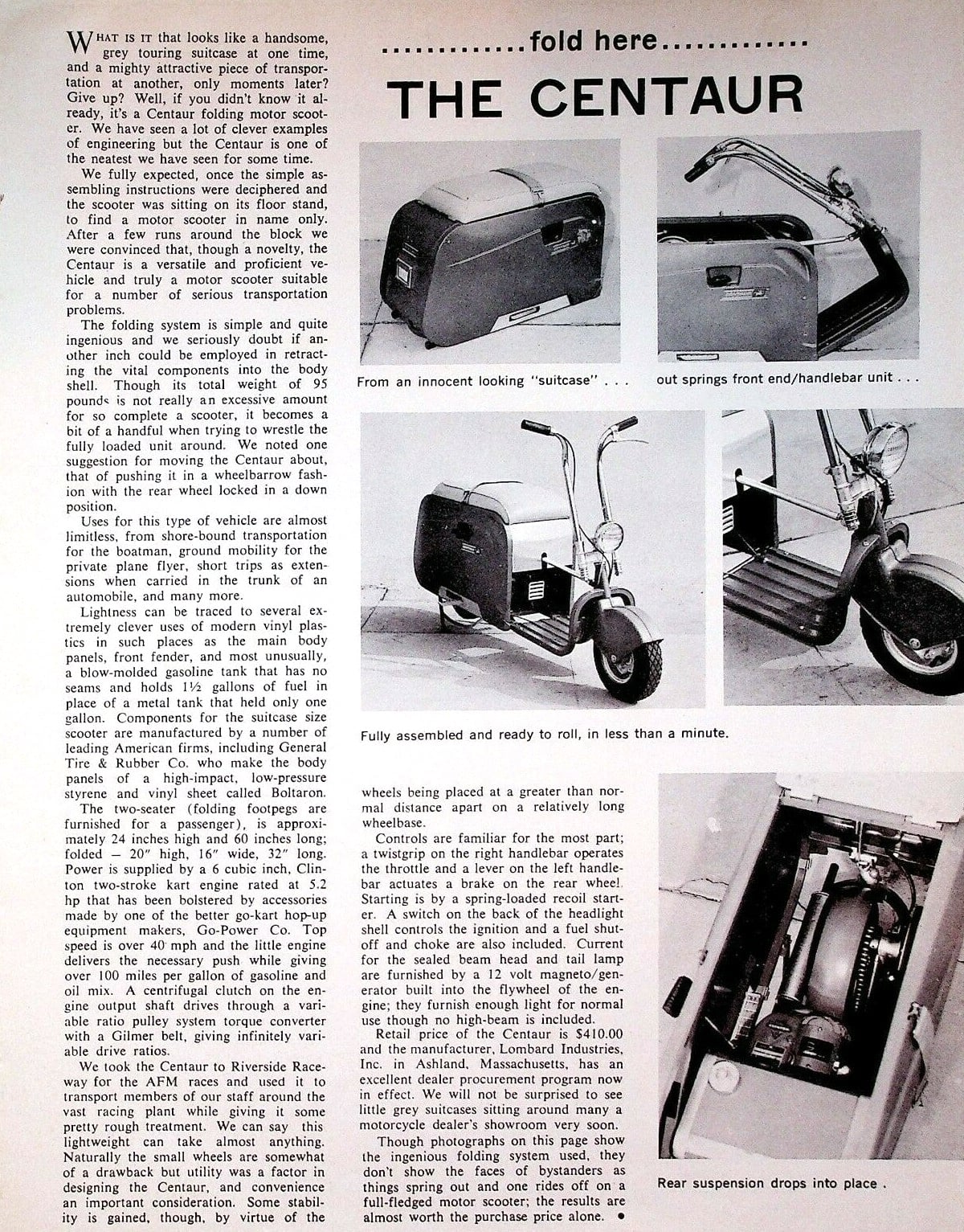
The Centaur was a scooter capable of 40 mph, fuel economy of better than 100 mpg, and a carrying capacity rated at an impressive 400 lbs – all from a machine that weighed just 95 lbs and folded down into a self-contained suitcase measuring 20 × 30 × 16 inches. Image courtesy of the American Motor Scooter Corporation.
True to its “All-American” marketing, the Centaur’s parts were sourced from major domestic manufacturers including General Tire and Rubber, Alcoa Aluminum, Clinton, and Raybestos. The result was a scooter capable of 40 mph, fuel economy of better than 100 mpg, and a carrying capacity rated at an impressive 400 lbs – all from a machine that weighed just 95 lbs and folded down into a self-contained suitcase measuring 20 × 30 × 16 inches.
The original retail pricing started at $379 USD, this works out to around $4,120 USD in today’s dollars – still not bad for a fully functional (and foldable) motor scooter.
How To Fold A Scooter Into A Suitcase
The folding process itself was quite elegant, you simply loosened a knurled nut to release the main support rod, removed the front wheel and fender assembly, lifted the rear suspension to lock the chassis and rear tire inside the body shell, slid the front wheel assembly in beside the engine, and then twisted and collapsed the handlebars into the frame beneath the seat.
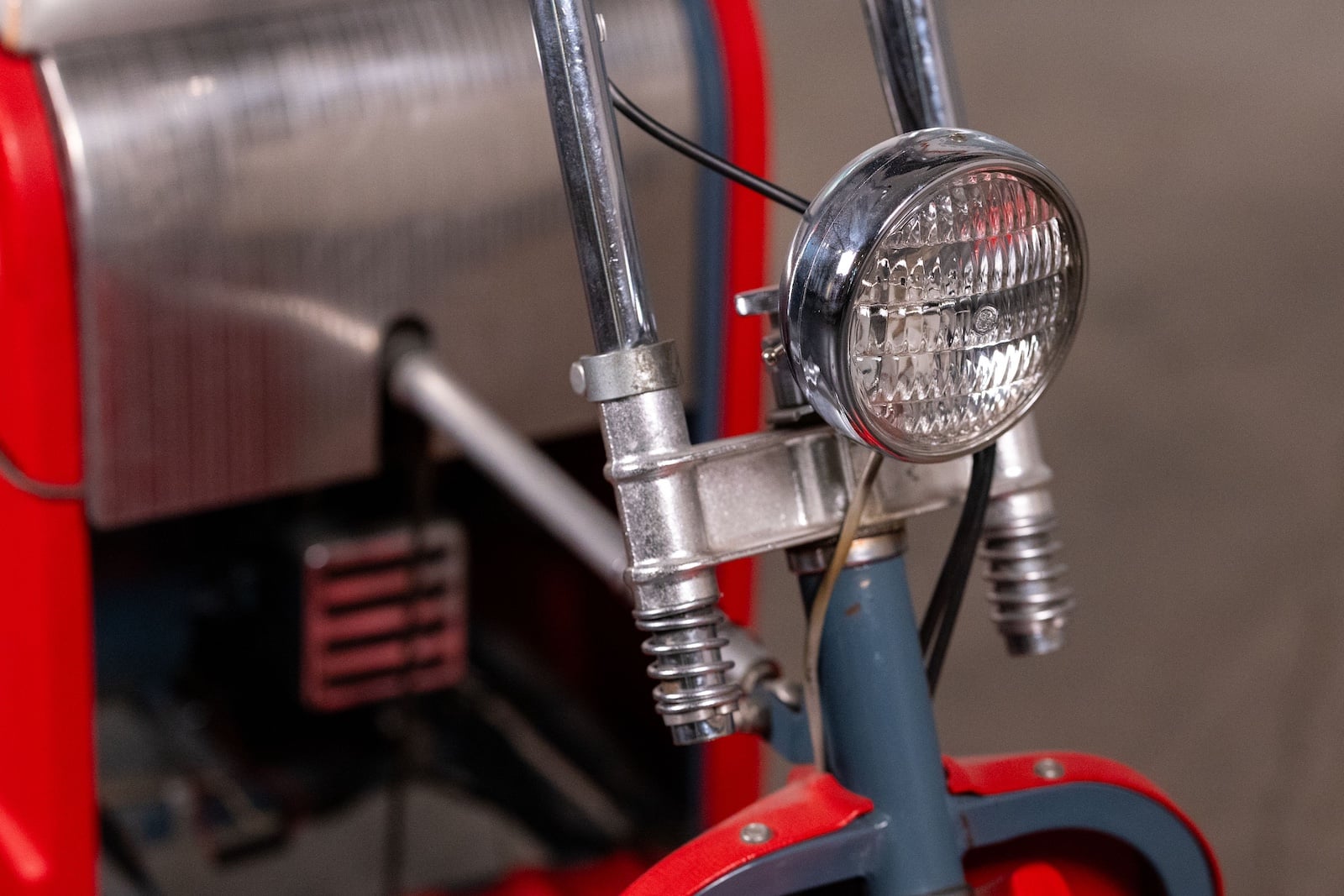
The seat closed over the top so tightly that a recess had to be molded into the underside to accommodate the headlight. With practice, the whole operation is said to take under one minute, and the seat’s retaining strap doubled as a carrying handle.
The Centaur picked up a huge amount of media attention thanks to its novelty value, appearing in Look Magazine, various travel publications, and assorted motorcycle and scooter periodicals. The most detailed period review came from Cycle World in their April 1963 issue.
The magazine took the Centaur to Riverside Raceway during an AFM (American Federation of Motorcyclists) race meeting and used it as a staff transport vehicle around the sprawling facility, giving it what they described as “pretty rough treatment.”
They came away impressed, calling the Centaur one of the neatest examples of clever engineering they had seen, and noting that despite being a novelty, it was a versatile and useful vehicle suitable for a number of transportation uses cases. The scooter also appeared in Popular Mechanics during the early 1960s, winning similar praise.
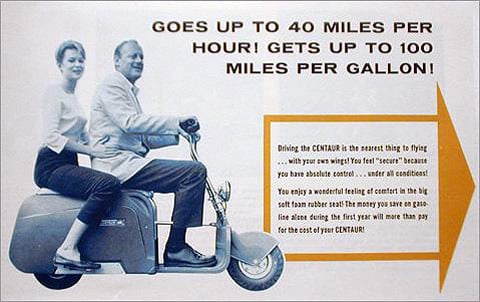
The Centaur picked up a huge amount of media attention thanks to its novelty value, appearing in Look Magazine, various travel publications, and assorted motorcycle and scooter periodicals. The most detailed period review came from Cycle World in their April 1963 issue. Image courtesy of American Motor Scooter Corporation.
Foster himself appeared in the Centaur’s advertising, riding his own creation in promotional photos. Sales were strong enough to support a growing dealer network across the country, but corporate wrangling would ultimately prove fatal for the promising design.
The Beginning Of The End
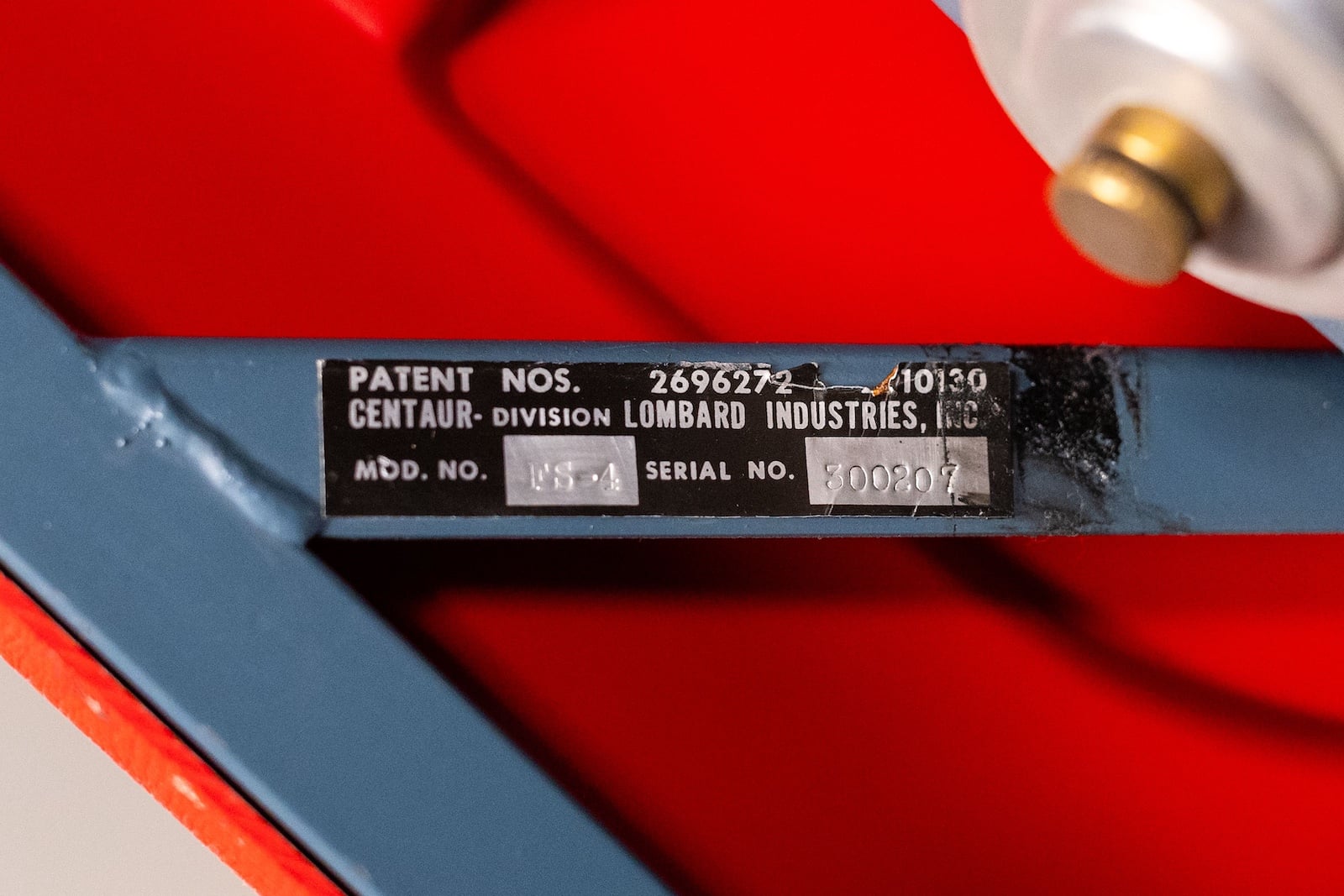
In 1962, Foster’s primary financial backer sold out to Lombard Industries Incorporated, and production relocated to Lombard’s facilities in Ashland, Massachusetts. The scooter continued in production there until the spring of 1964, when Lombard itself was acquired by American Lincoln Corporation.
Despite increasing sales over this time period, the new owners chose to focus on their chain saw operations. When manufacturing moved from Massachusetts to Toledo, Ohio in 1965, American Lincoln pulled the plug on the Centaur for good.
A third company, Alexander Reynolds Company of Hackensack, New Jersey, appears on some late-production examples, including the Lane Motor Museum’s 1964 specimen, though whether Reynolds conducted its own manufacturing or simply distributed remaining stock is unclear due to the lack of published history on the scooter from this time.
Surviving examples are now rare and highly sought after by scooter enthusiasts, and modern versions of a similar concept have been developed – though now using electric motors and lithium-ion batteries.
The 1965 Centaur Scooter Shown Here
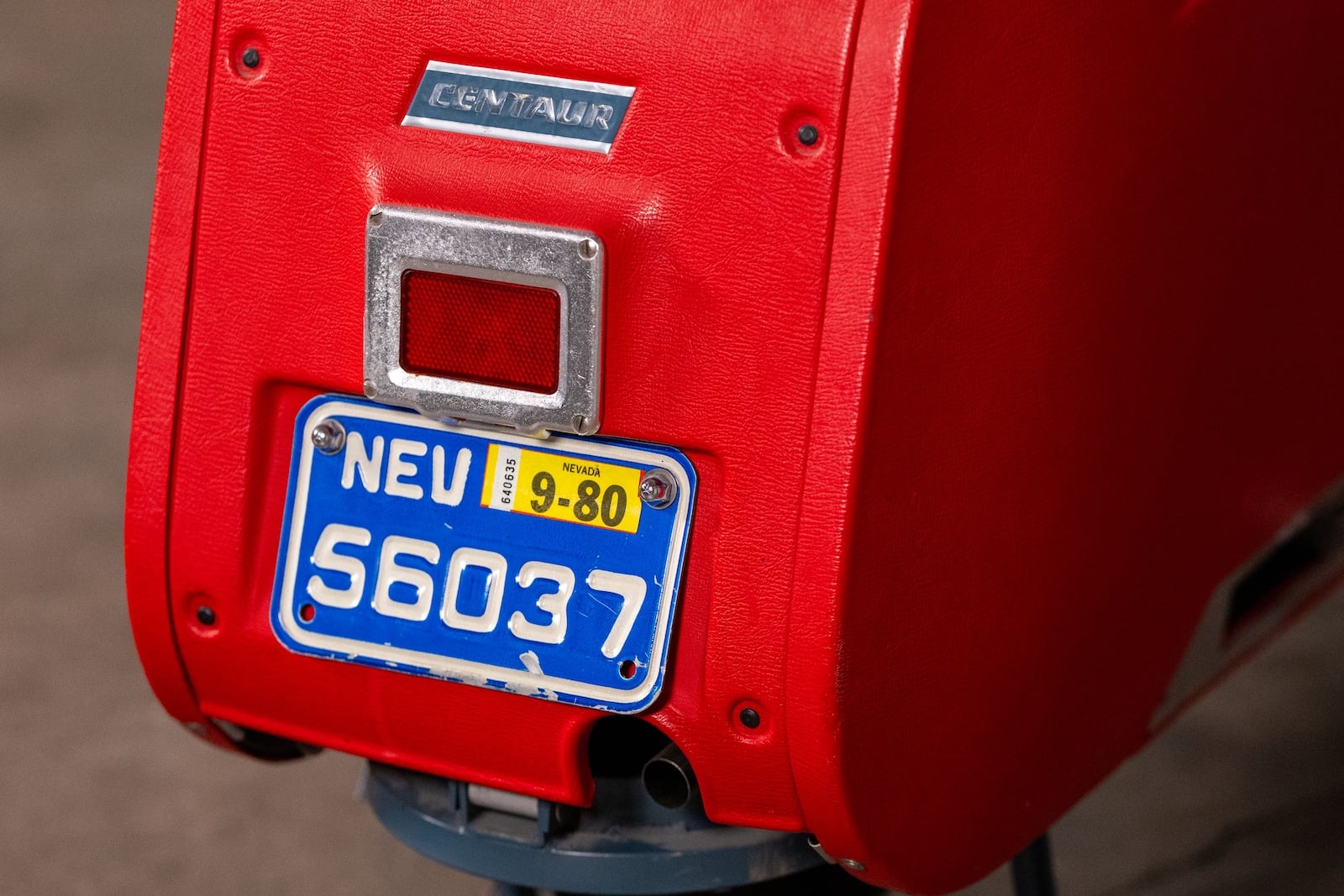
The 1965 Centaur Scooter you see here is by far the best example we’ve ever come across, essentially looking brand new in the listing photographs. It’s finished in red with a beige seat, orange piping, and a gray steel frame.
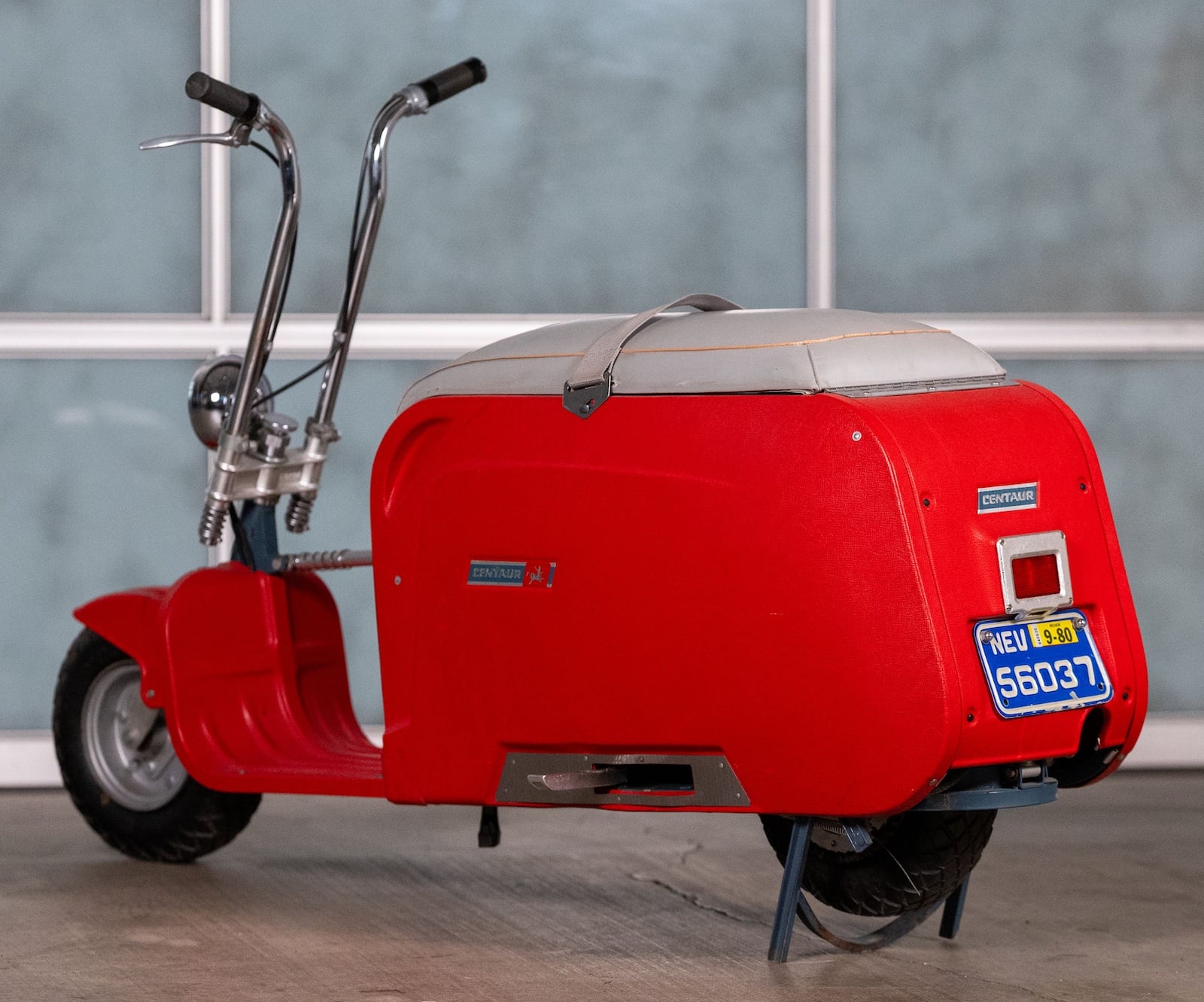
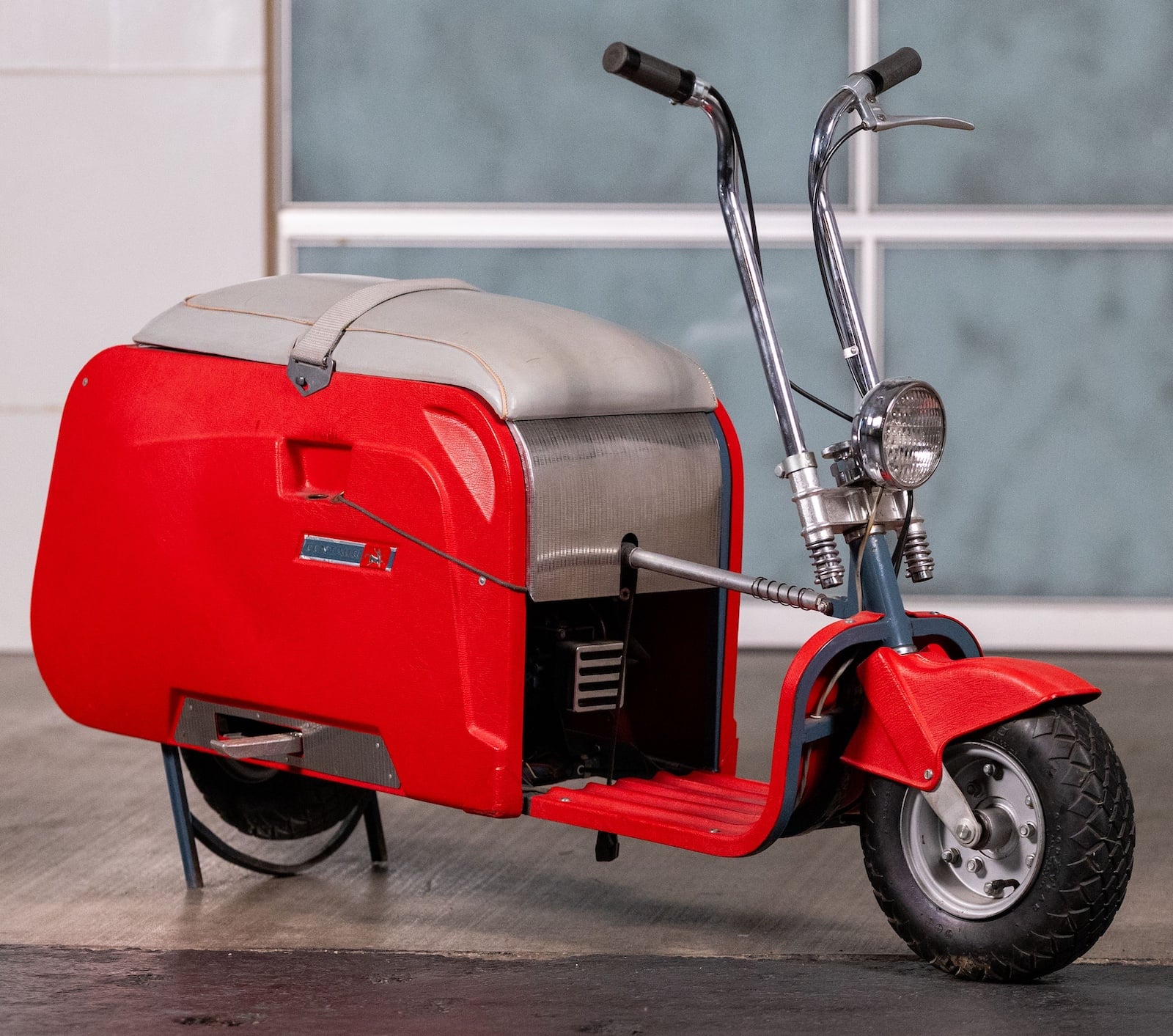
The 1965 Centaur Scooter you see here is by far the best example we’ve ever come across, essentially looking brand new in the listing photographs. It’s finished in red with a beige seat, orange piping, and a gray steel frame.
Sadly, there are no images of this Centaur being folded in the listing, but we have added some period advertising above that shows how it works. This example appears to be complete inside and out, though there’s no mention on whether it’s currently running and ridable.
It’s now due to roll across the auction block with Bonhams as part of the National Automobile Museum Auction in mid-June, and you can visit the listing here if you’d like to read more or register to bid.
Images courtesy of Bonhams

Articles that Ben Branch has written have been covered on CNN, Popular Mechanics, Smithsonian Magazine, Road & Track Magazine, the official Pinterest blog, the official eBay Motors blog, BuzzFeed, Autoweek Magazine, Wired Magazine, Autoblog, Gear Patrol, Jalopnik, The Verge, and many more.
Silodrome was founded by Ben back in 2010, in the years since the site has grown to become a world leader in the alternative and vintage motoring sector, with well over a million monthly readers from around the world and many hundreds of thousands of followers on social media.