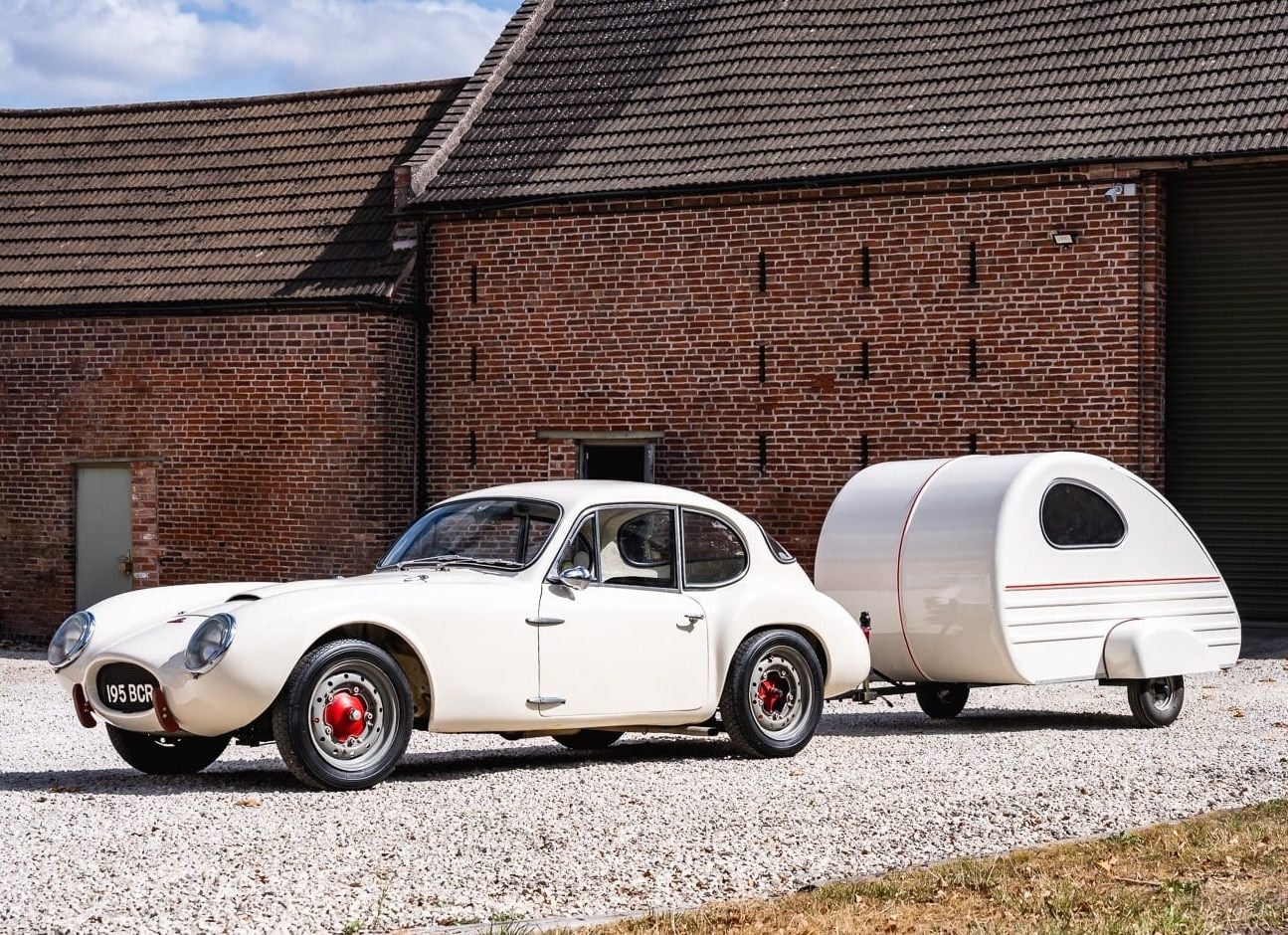
This is an original 1962 Rochdale GT, it’s a sports car you may never have seen before, as only around 80 of them are believed to have survived to the modern day.
Rochdale was a relatively small British automaker that had started out making bodies for racing and sports cars, before growing into a fully-fledged manufacturer. At one point, they were even offering a model with a composite monocoque body, all the way back in 1960.
Fast Facts: The Rochdale GT
- The Rochdale GT was a lightweight fiberglass-bodied British sports car introduced in 1957. Developed by Frank Butterworth, Harry Smith, and Richard Parker, it offered affordable performance using mechanical running gear from aging Ford vehicles. Approximately 1,350 were sold, making it Rochdale’s most successful model, although fewer than 80 are believed to survive today.
- The GT had a lightweight fiberglass 2+2 body with integrated wheel arches, bulkheads, and partially molded flooring. Buyers typically fitted the shell to a Ford Popular chassis, retaining its 1,172cc sidevalve engine and running gear. From 1960, Rochdale also offered a purpose-built tubular chassis with better suspension and handling.
- Rochdale expanded its range with the open-top Riviera in 1959 and the Olympic in 1960, the latter using advanced fiberglass monocoque construction. A devastating factory fire in February 1961 destroyed the company’s original molds, effectively ending GT production. Rochdale eventually abandoned automotive manufacturing in favor of the more profitable heating engineering industry.
- The 1962 Rochdale GT shown here has undergone a comprehensive restoration and retains its distinctive white bodywork with red accents. Its 1,172cc Ford sidevalve engine features Bellamy-style modifications, including an alloy cylinder head and twin carburetors, paired with a 4-speed manual gearbox. Extensive historical documentation accompanies the car, which is now offered for sale out of Britain.
History Speedrun: The Rochdale GT
Frank Butterworth and Harry Smith founded Rochdale Motor Panels in 1948 in an old mill on Hudson Street, Rochdale, England. They were panel beaters doing general repairs until Denys Wolstenholme, a friend and early partner in the firm, introduced them to the 750 Motor Club. They began building aluminum bodies for Austin Seven racers, but aluminum was expensive and slow to work.
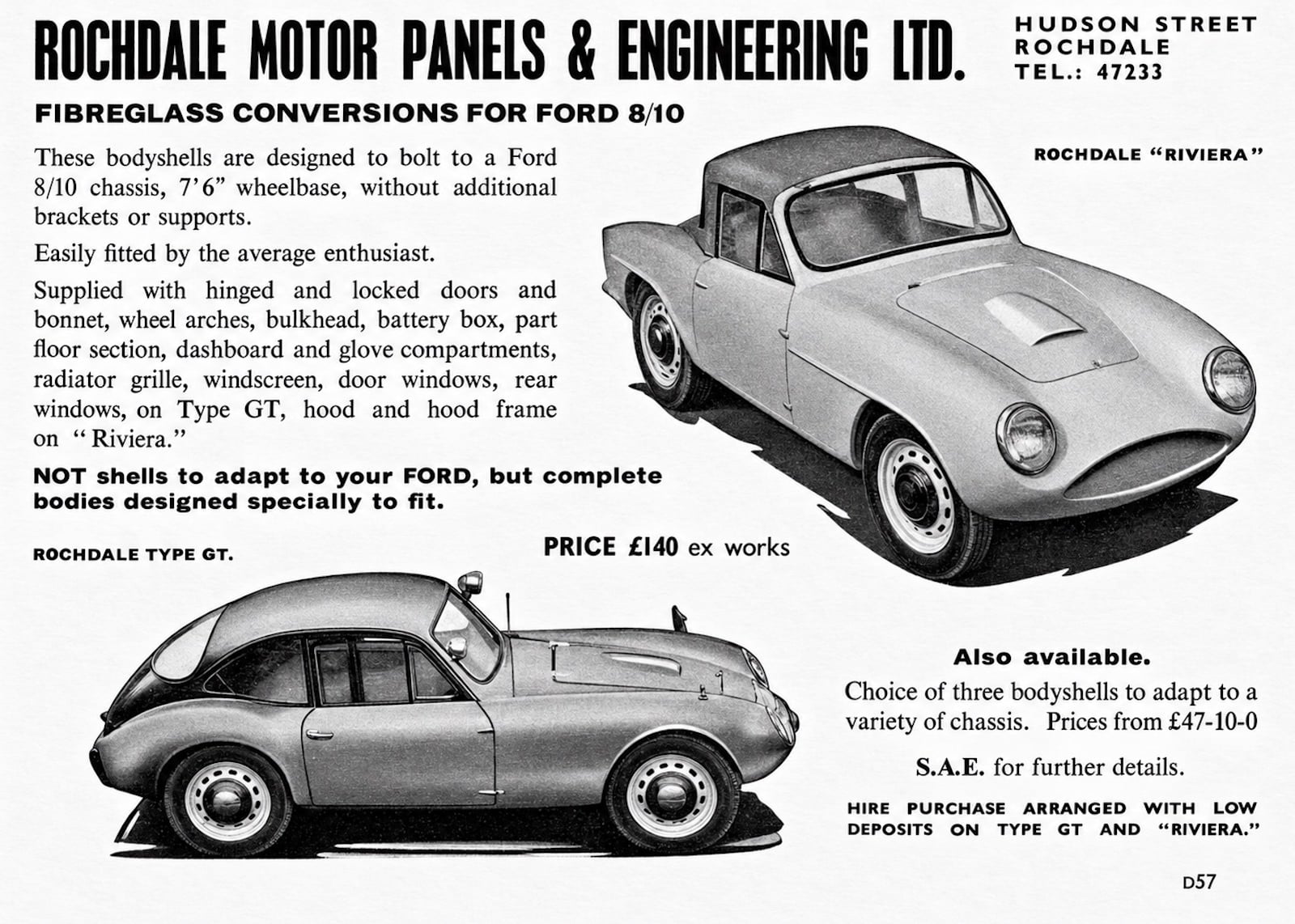
 The Rochdale GT came about partly because Smith’s wife wanted a proper car with a roof and seats for the children. Smith and Butterworth developed it with Richard Parker, a local university student who worked on it during his holidays – they took the company’s F-type racing shell, added a roof and reworked the styling to suit it. Image courtesy of Rochdale Motor Panels.
By 1954 the partners had switched to fiberglass, a new wonder material that vastly accelerated their body production workflow, and their first shell was called the Mark VI – because Smith worried that customers might not buy a Mark I.
By the mid-1950s, British enthusiasts were building sports specials by throwing away the steel body of a tired sedan and fitting a lightweight fiberglass one. Most shells came as bare moldings, and the builder had to cut out the doors and hood and fabricate the wheel arches and bulkheads themselves. Rochdale’s ST of late 1955 bolted straight onto a small Ford chassis with that work already done, but the open shell wasn’t quite stiff enough.
Designing The Rochdale GT
The Rochdale GT came about partly because Smith’s wife wanted a proper car with a roof and seats for the children. Smith and Butterworth developed it with Richard Parker, a local university student who worked on it during his holidays – they took the company’s F-type racing shell, added a roof and reworked the styling to suit it.
The roof made the body stiff enough to be bolted to a Ford chassis with no additional reinforcement needed. Inside, the GT could carry two adults and, in a pinch, two children in the back.
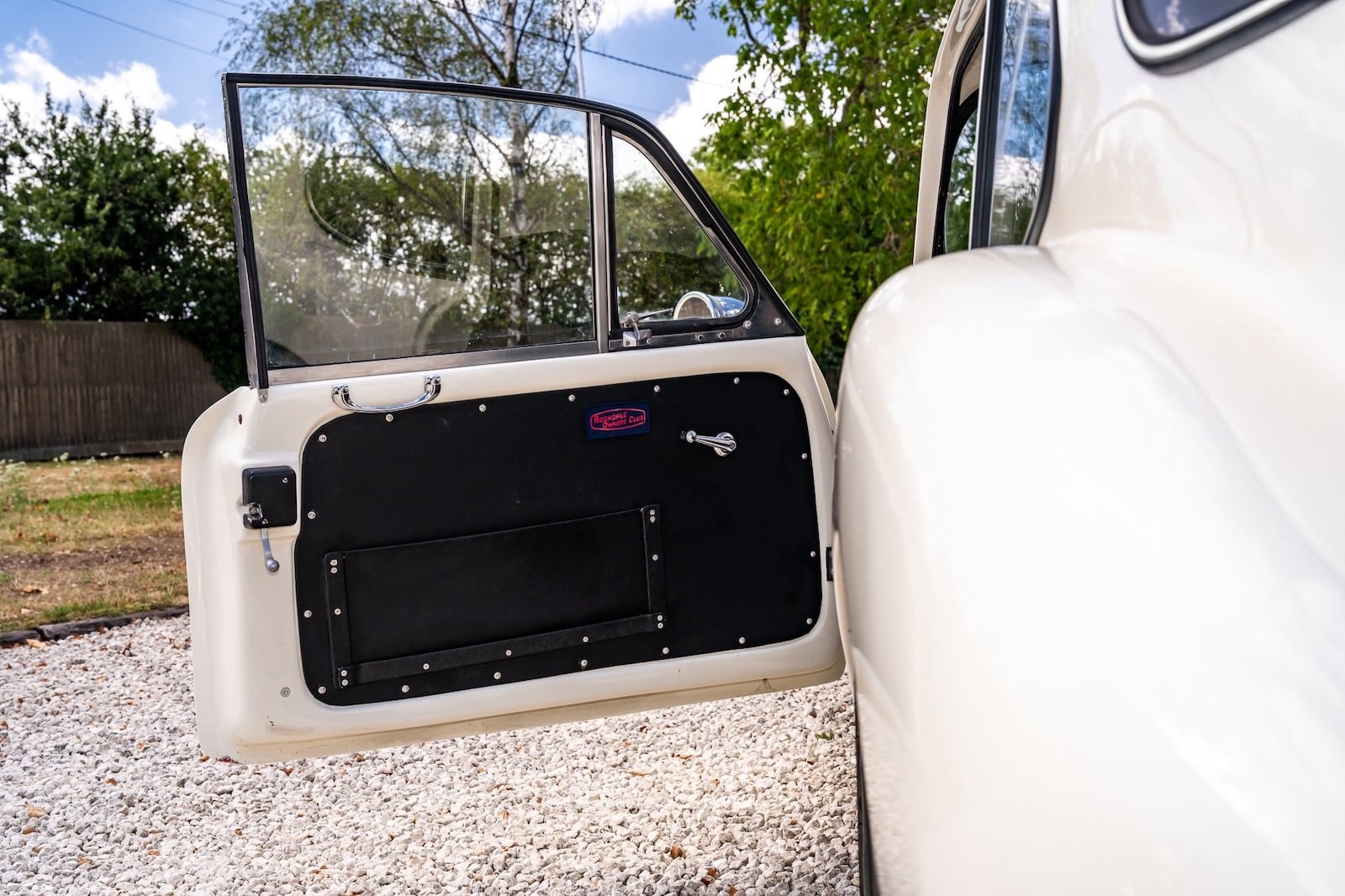
The fiberglass shell came with a fitted curved windshield, and the doors had opening windows and quarter lights made using the tops of Morris Minor doors. Few kit bodies of the time had features like this, and it made the GT one of the best on offer. The inner wheel arches, bulkhead, and part of the floor were also bonded into the shell, and the molded dashboard had a center panel for Ford instruments with a glove pocket on each side. The shell cost £140 (about $390 USD) with its doors, windows, and hood already fitted.
Each body took a week to make, with no forced drying. On sunny days the shells were lined up in the road outside the factory to cure.
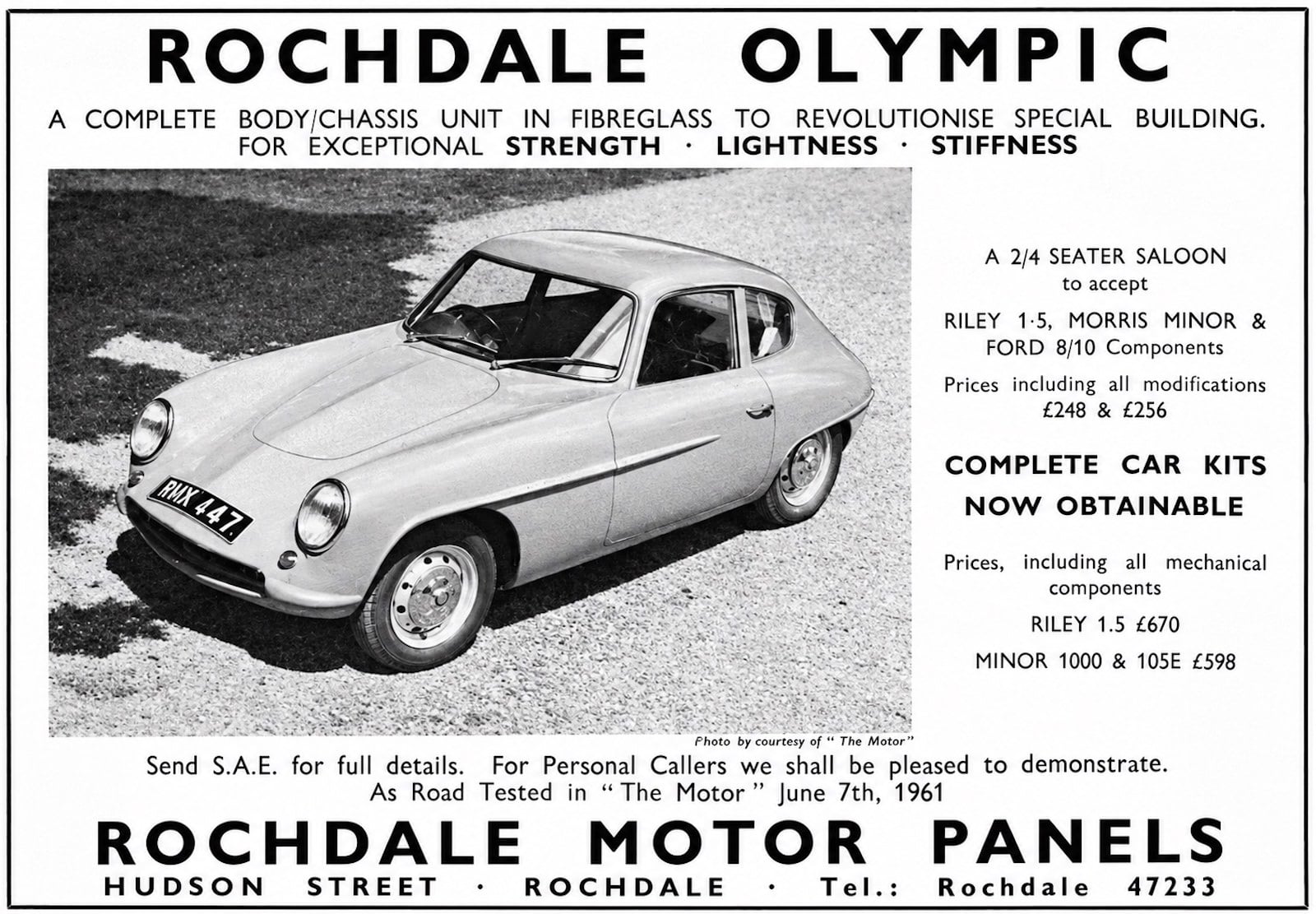
Parker led development of the new Rochdale Olympic, it cost about £10,000 (about $28,000 USD). Its fiberglass body was molded in one piece and served as its own load-bearing monocoque chassis. Image courtesy of Rochdale Motor Panels.
What Went Underneath
Rochdale sold the body, and the buyer supplied everything else, a standard arrangement in the burgeoning custom car scene of the time, on both sides of the Atlantic, with companies like Devin doing much the same in the USA.
The Rochdale GT was aimed at the plentiful, worn-out Ford Eights and Populars of the late 1950s. A Popular 103E donor brought a steel ladder frame with rigid axles on transverse leaf springs at both ends, and rod-operated drum brakes. Its 1.2 liter (1,172 cc) sidevalve four was rated at 30 bhp and drove the rear wheels through a 3-speed gearbox with synchro on 2nd and 3rd only.
From early-1960, Rochdale also offered its own chassis, a lightweight frame built around two large-diameter steel tubes, with a fiberglass floor pan bonded to a GT or Riviera body. Buyers could specify swing-axle independent front suspension, a Watt’s linkage to locate the rear axle, and telescopic spring-damper units at each corner. Handling was significantly improved over the Ford-based cars, and it also meant that Rochdale was now (officially) an automaker rather than just a body maker.
The Riviera, The Olympic, + The Fire
The open-top Rochdale Riviera, developed from the earlier GT model, arrived in late-1959. It was offered as a two-seater with a folding top or a 2+2 with a removable hardtop. Factory records show 42 were sold in total, consisting of 19 two-seaters and 23 2+2s.
By then, the Rochdale GT was selling well and filling the company coffers, which allowed for something more ambitious. Parker led development of the new Rochdale Olympic, it cost about £10,000 (about $28,000 USD). Its fiberglass body was molded in one piece and served as its own load-bearing monocoque chassis.

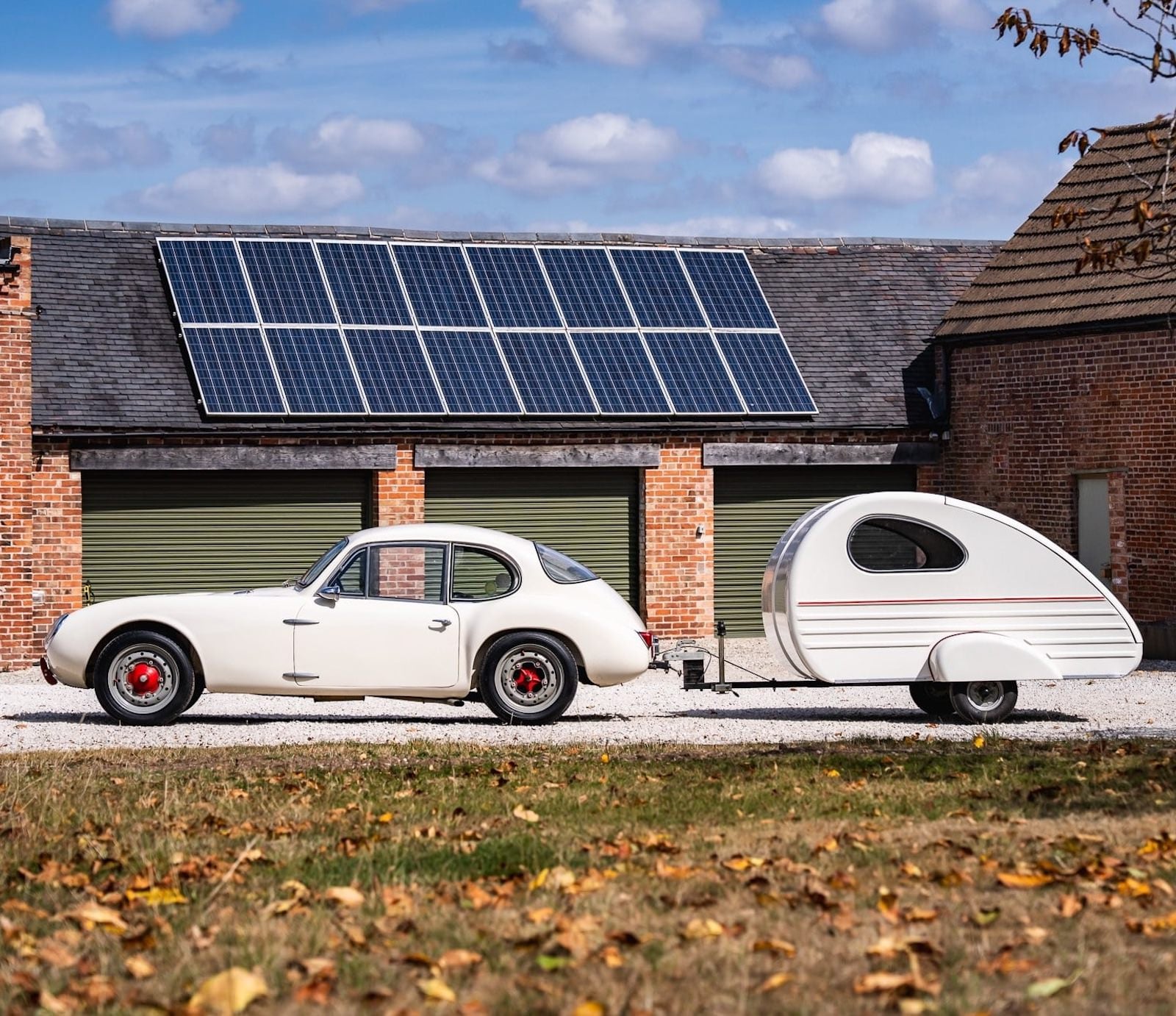
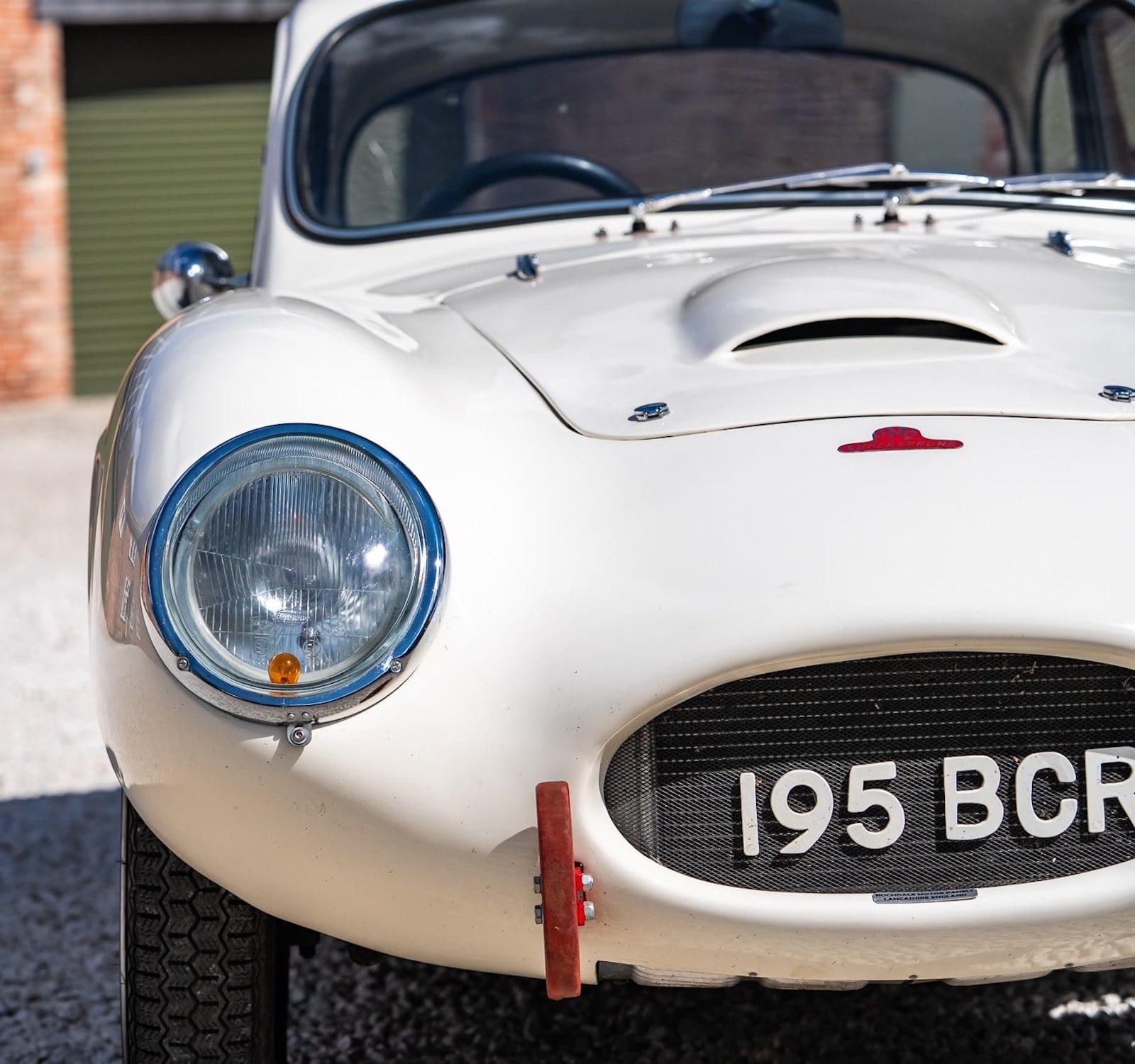
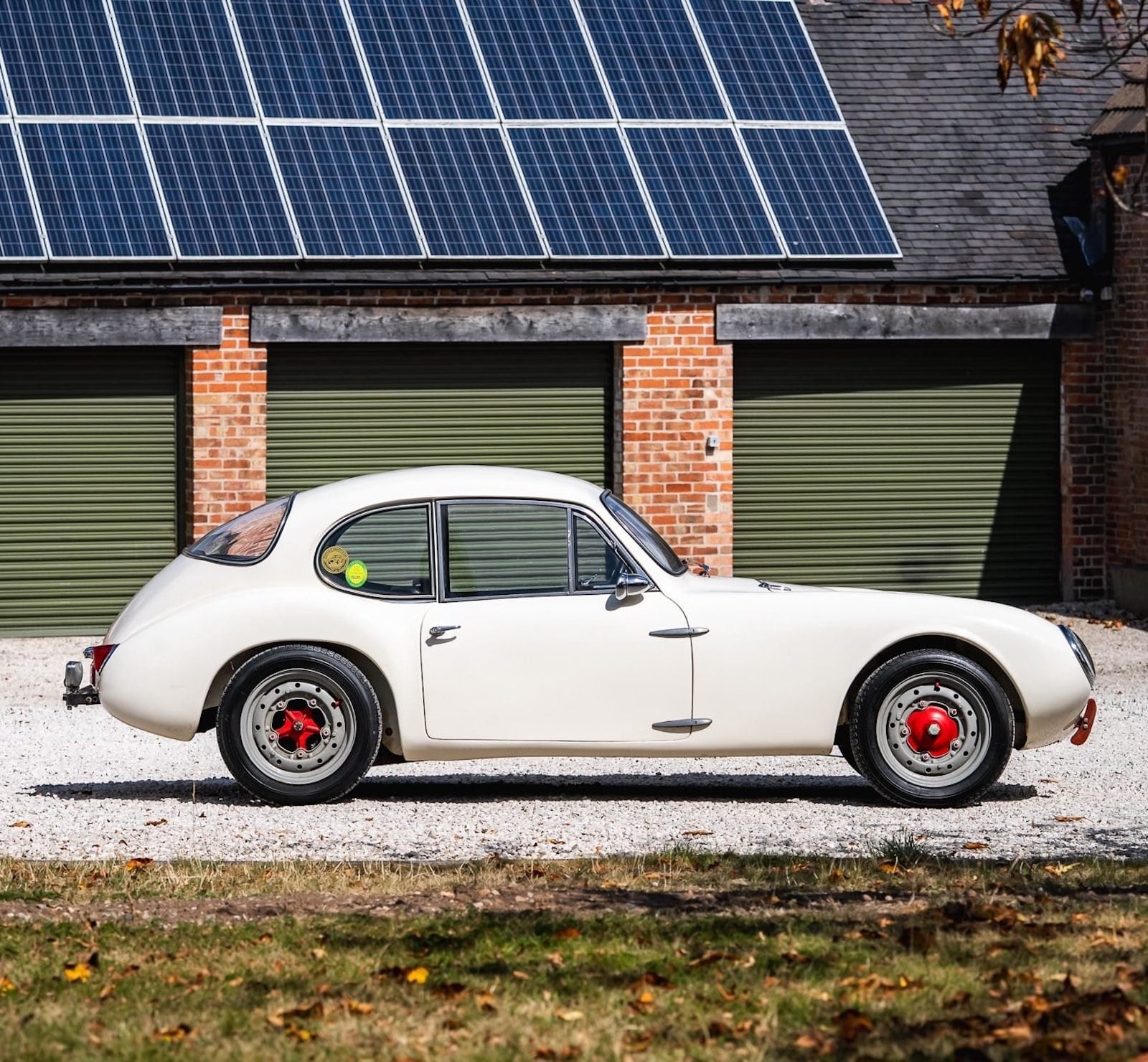
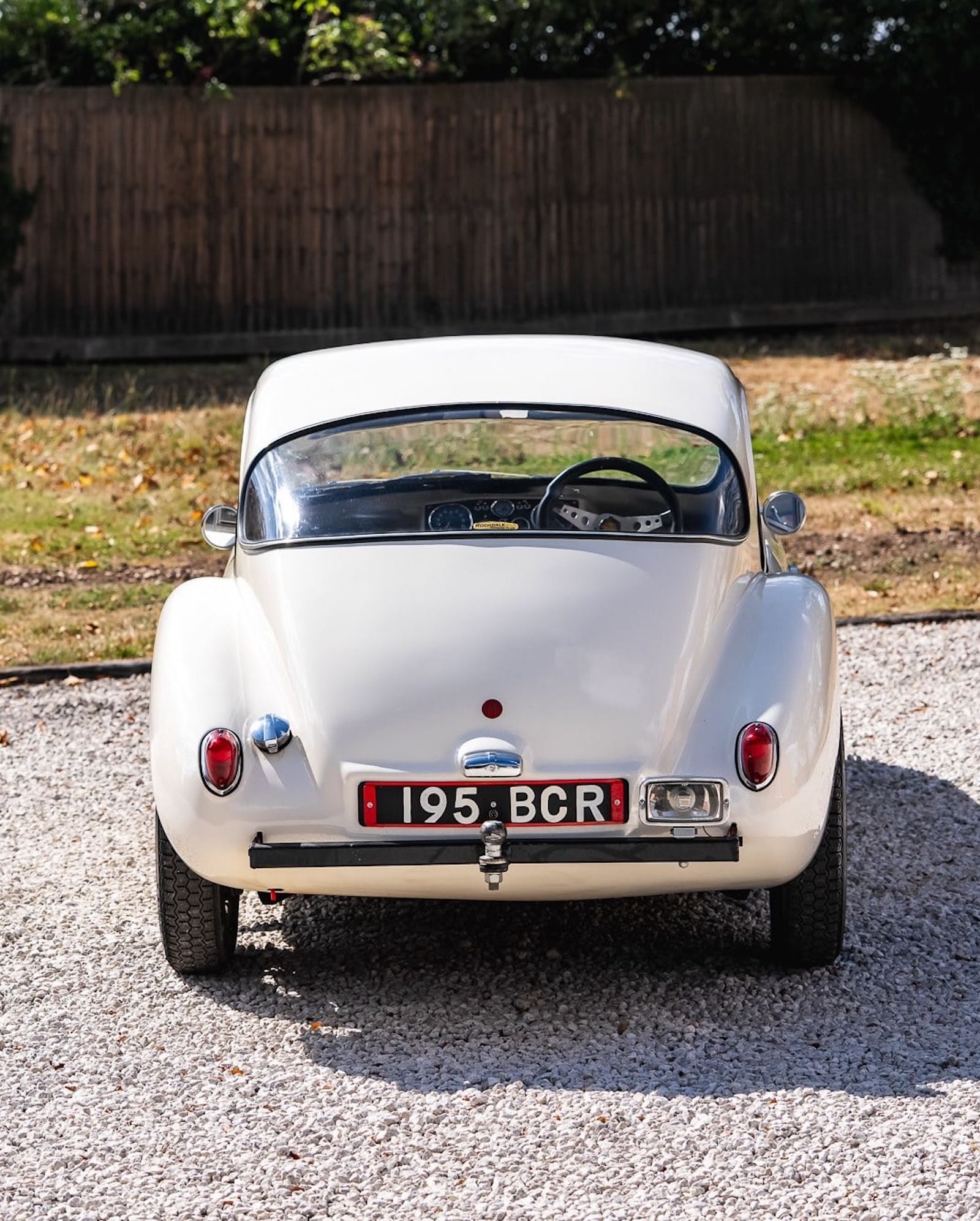
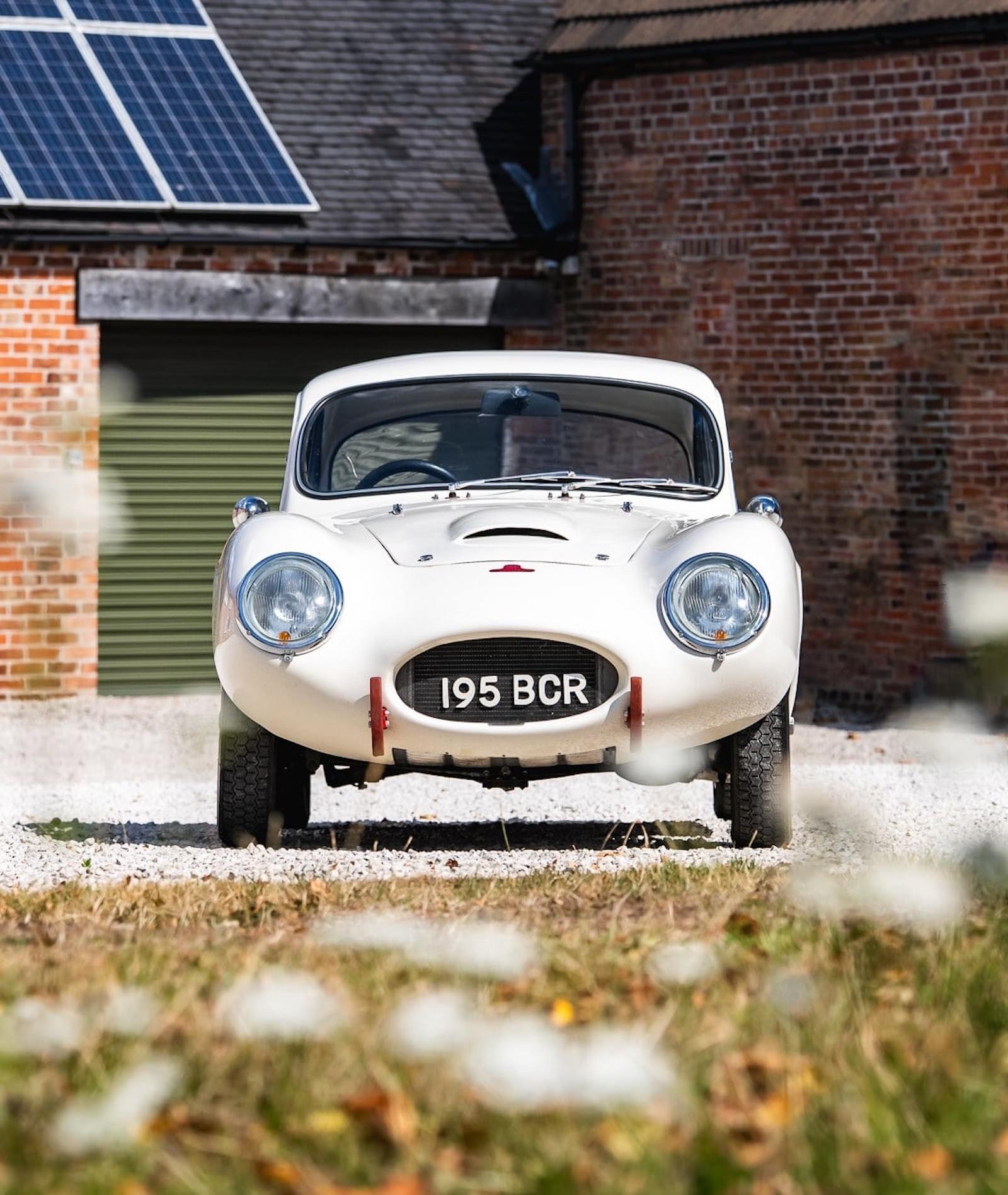
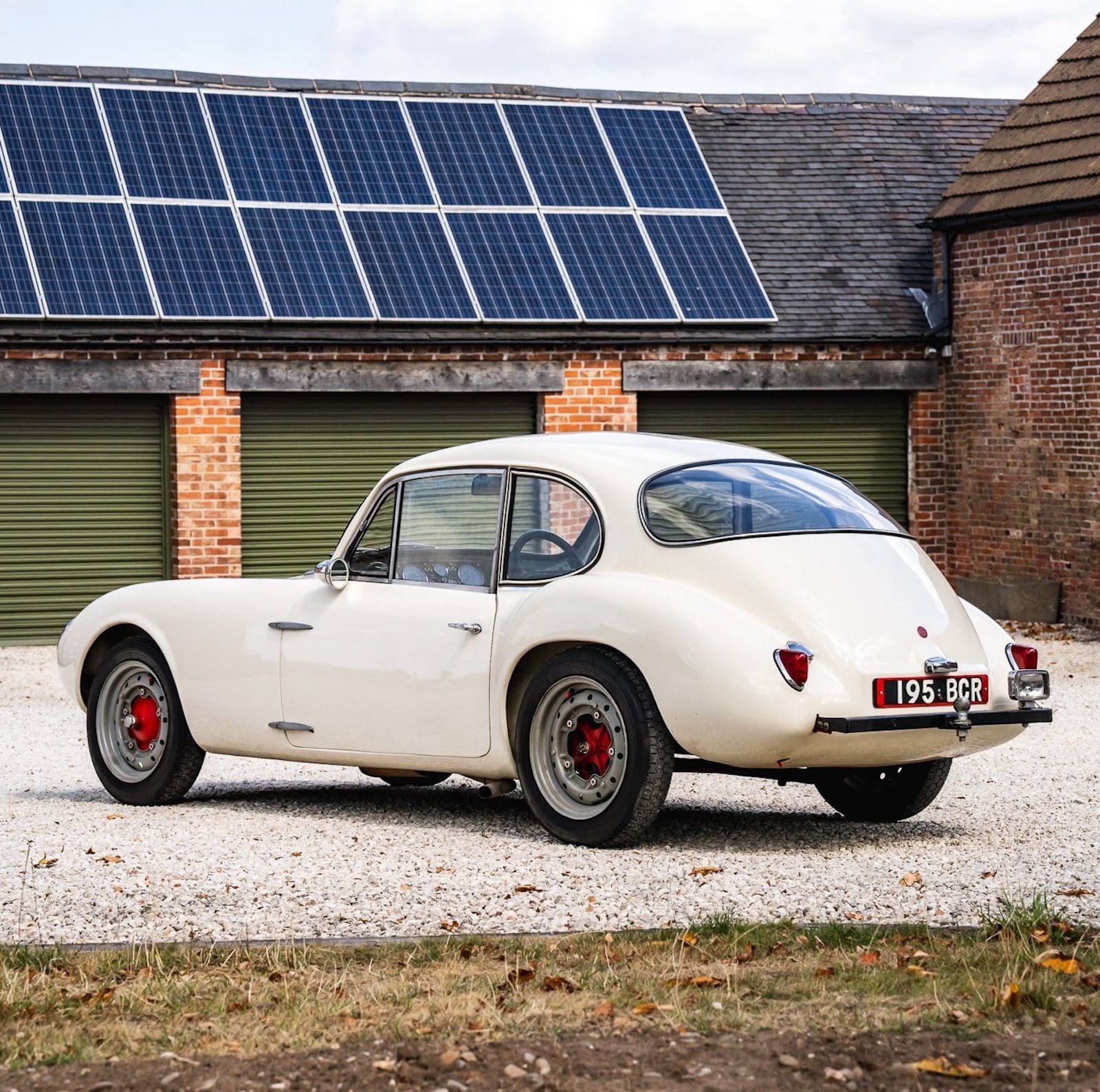
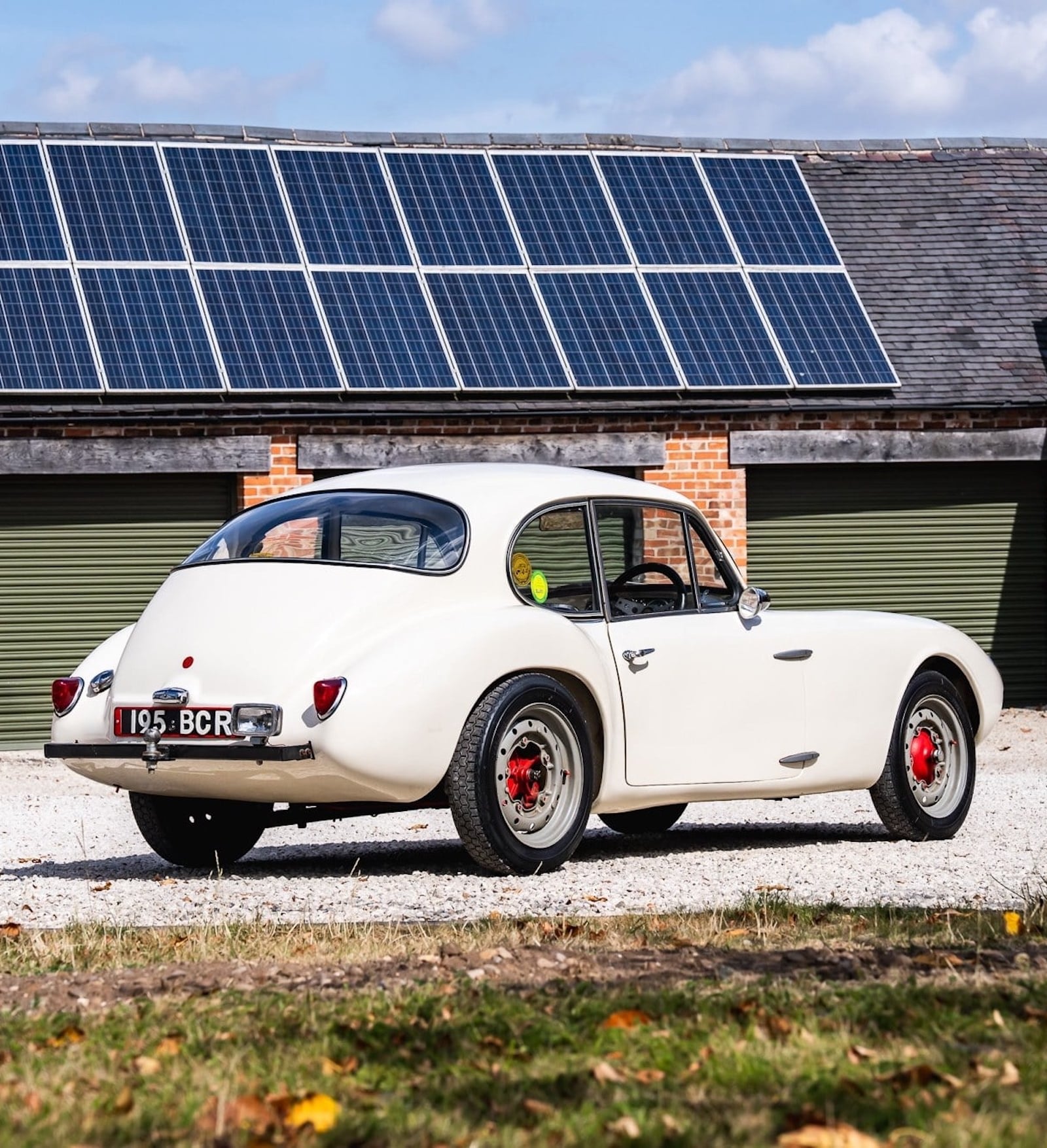
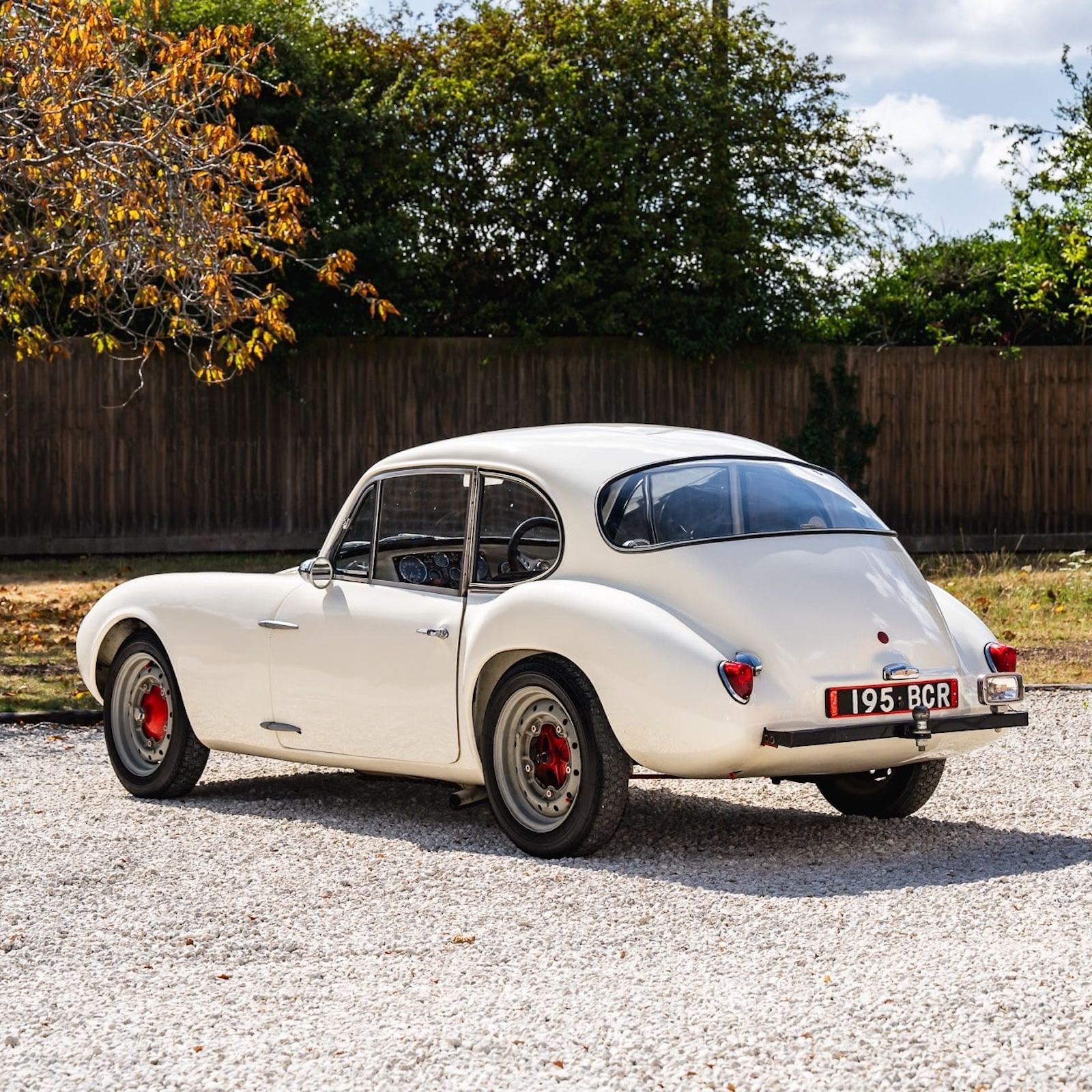
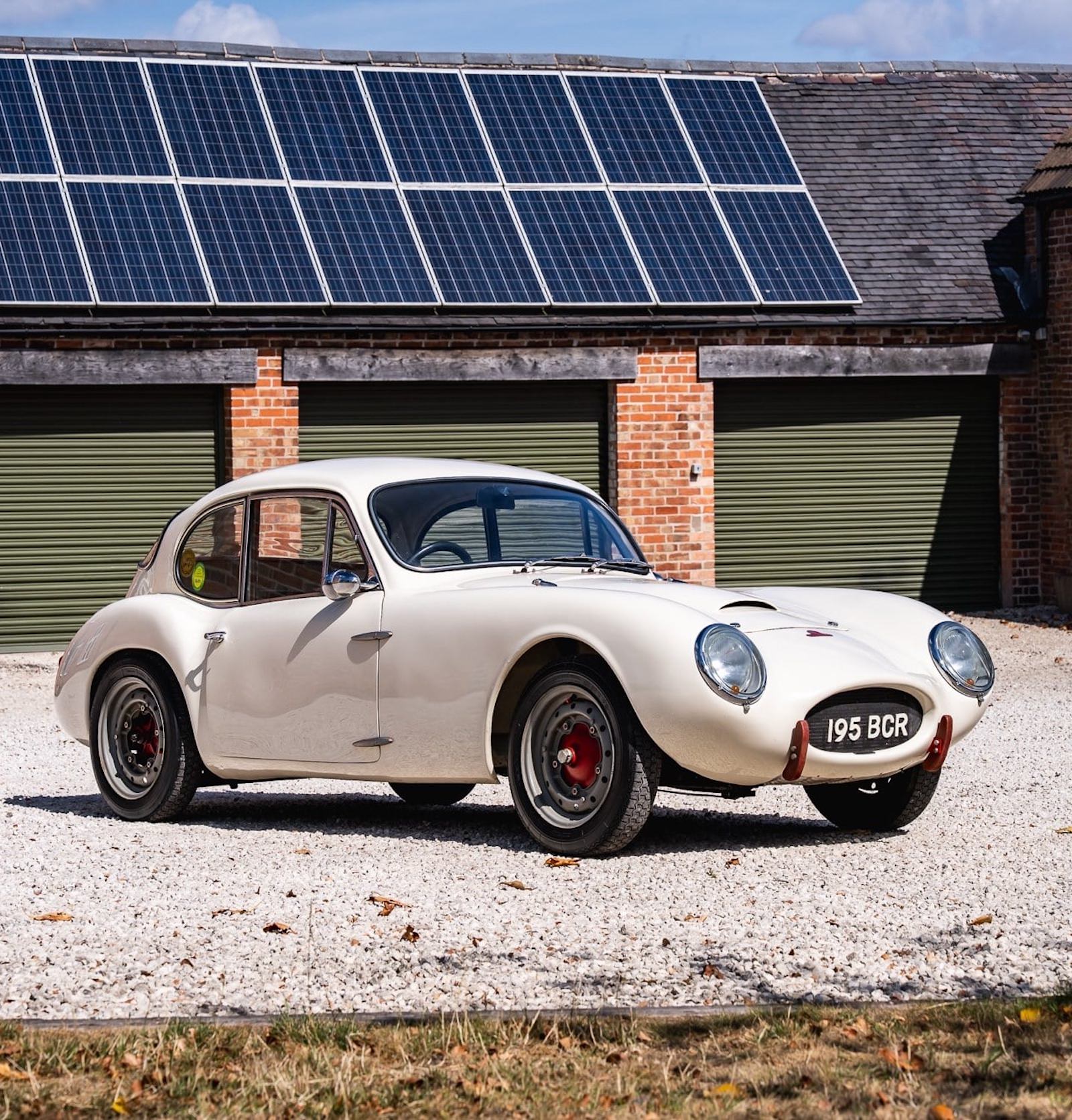
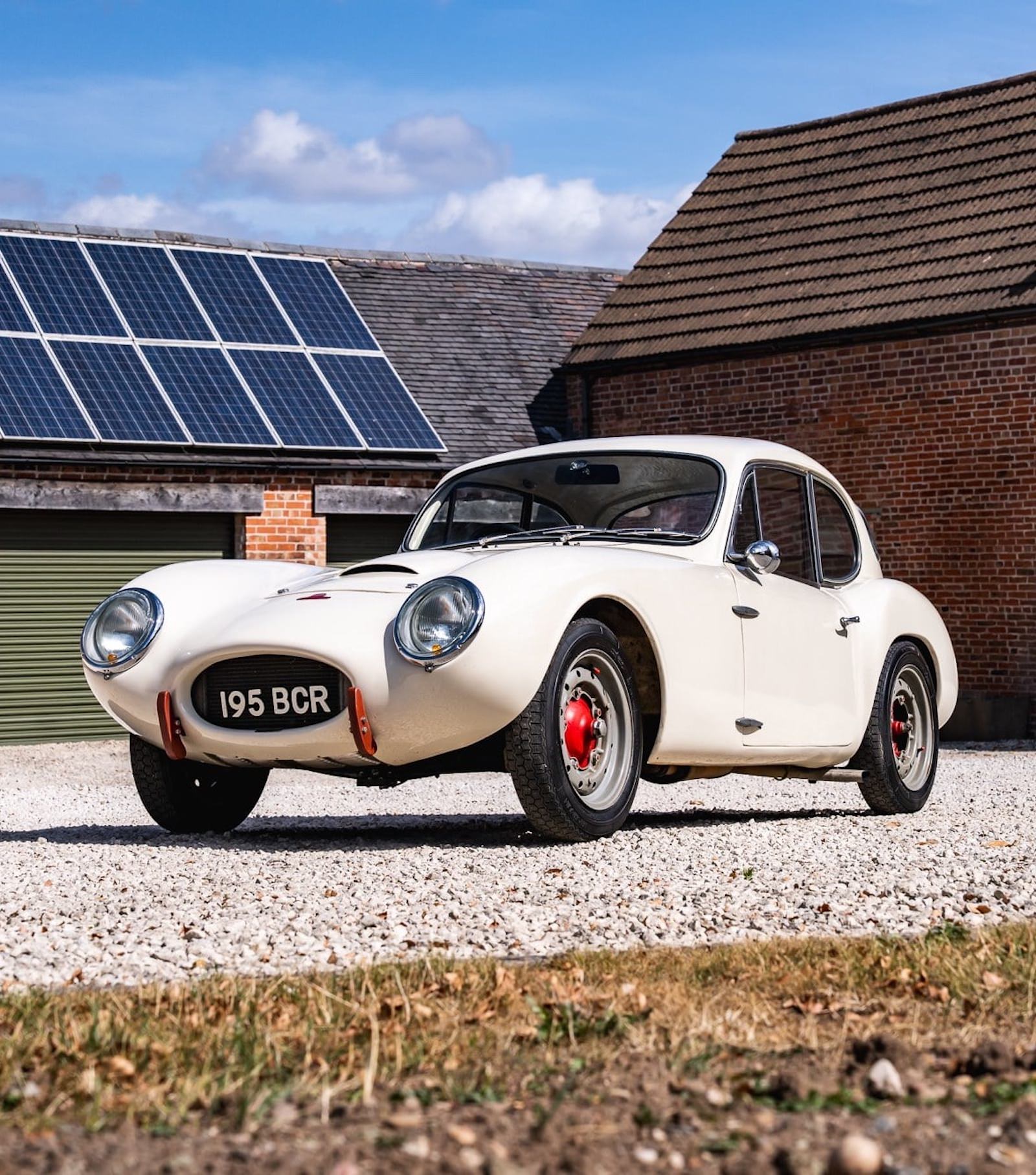
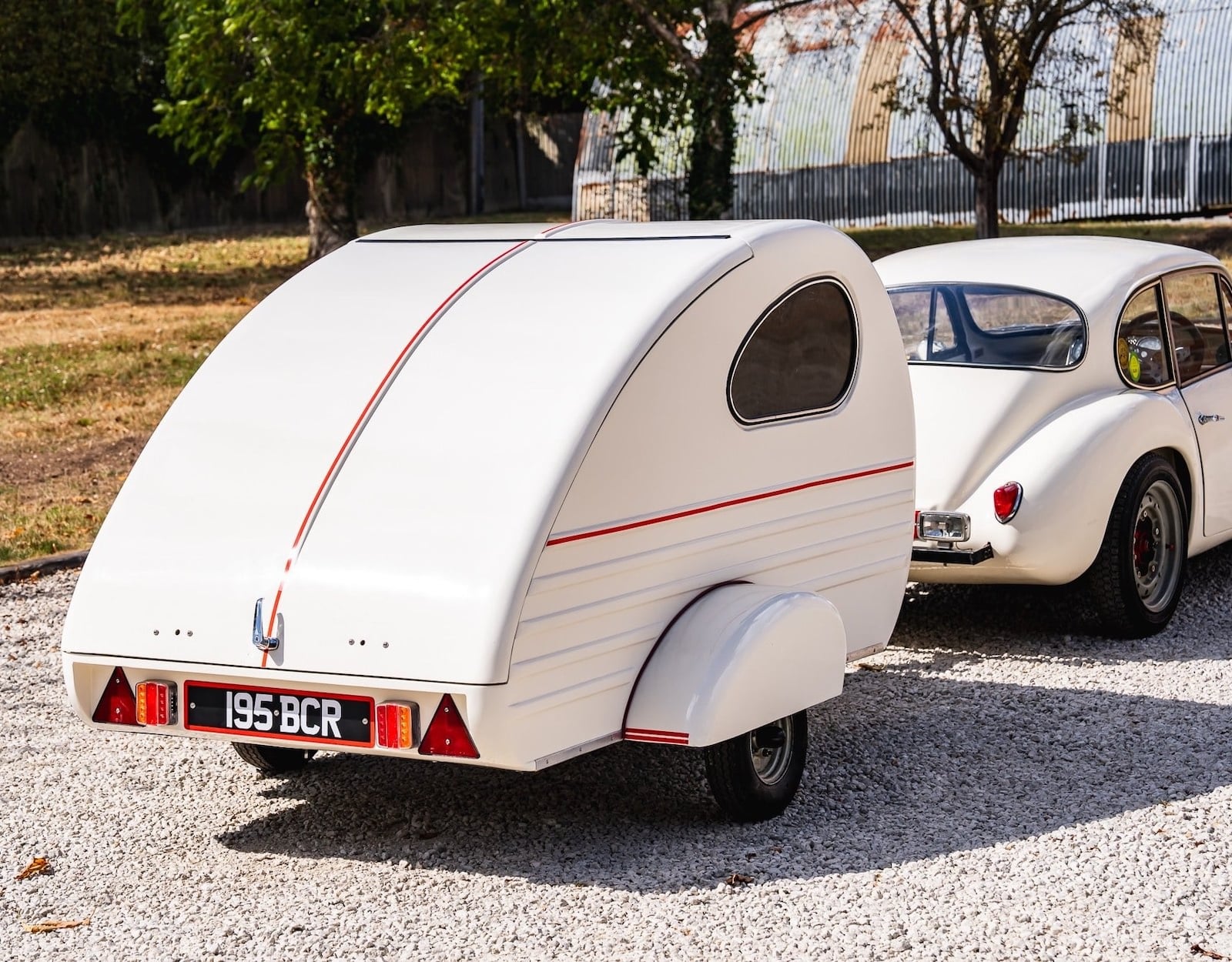
This 1962 Rochdale GT is a rare surviving example of the British fiberglass-bodied sports car, finished in white with red accents and it comes with a matching mini camping trailer. The car has undergone a comprehensive nut-and-bolt restoration carried out by the current owner’s father, with the work documented through photographs, invoices, and an extensive history file.
The only steel in it was a roll hoop in the windshield surround and a bonded-in tubular subframe carrying the engine, front suspension and steering. It followed the Lotus Elite into fiberglass monocoque construction, and Rochdale named it after the 1960 Rome Olympics.
In February of 1961 a fire destroyed the Hudson Street works and every single mold inside it, the company eventually settled on Littledale Street and made new molds for the Olympic. The factory ledger recorded 5 more Rochdale GT shells supplied after the fire, the last in mid-1961. After that the GT was dropped.
The Rochdale Olympic Phase II followed at the London Racing Car Show in early-1963, with Triumph Spitfire front suspension, 9 inch front disc brakes and a 1.5 liter Ford four. With the 78 bhp Cortina GT engine, a road test published in early 1964 credited it with a 114 mph top speed, impressive stuff for the time.
About 250 Phase I and 150 Phase II cars were built. By then Rochdale had moved into heating engineering, this pivot proved to be considerably more profitable, and it stopped making cars in the early 1970s. Fewer than 80 Rochdale GTs are believed to survive to the modern day, and most in the classic car world have never even heard of them.
The 1962 Rochdale GT Shown Here
This 1962 Rochdale GT is a rare surviving example of the British fiberglass-bodied sports car, finished in white with red accents and it comes with a matching mini camping trailer. The car has undergone a comprehensive nut-and-bolt restoration carried out by the current owner’s father, with the work documented through photographs, invoices, and an extensive history file.
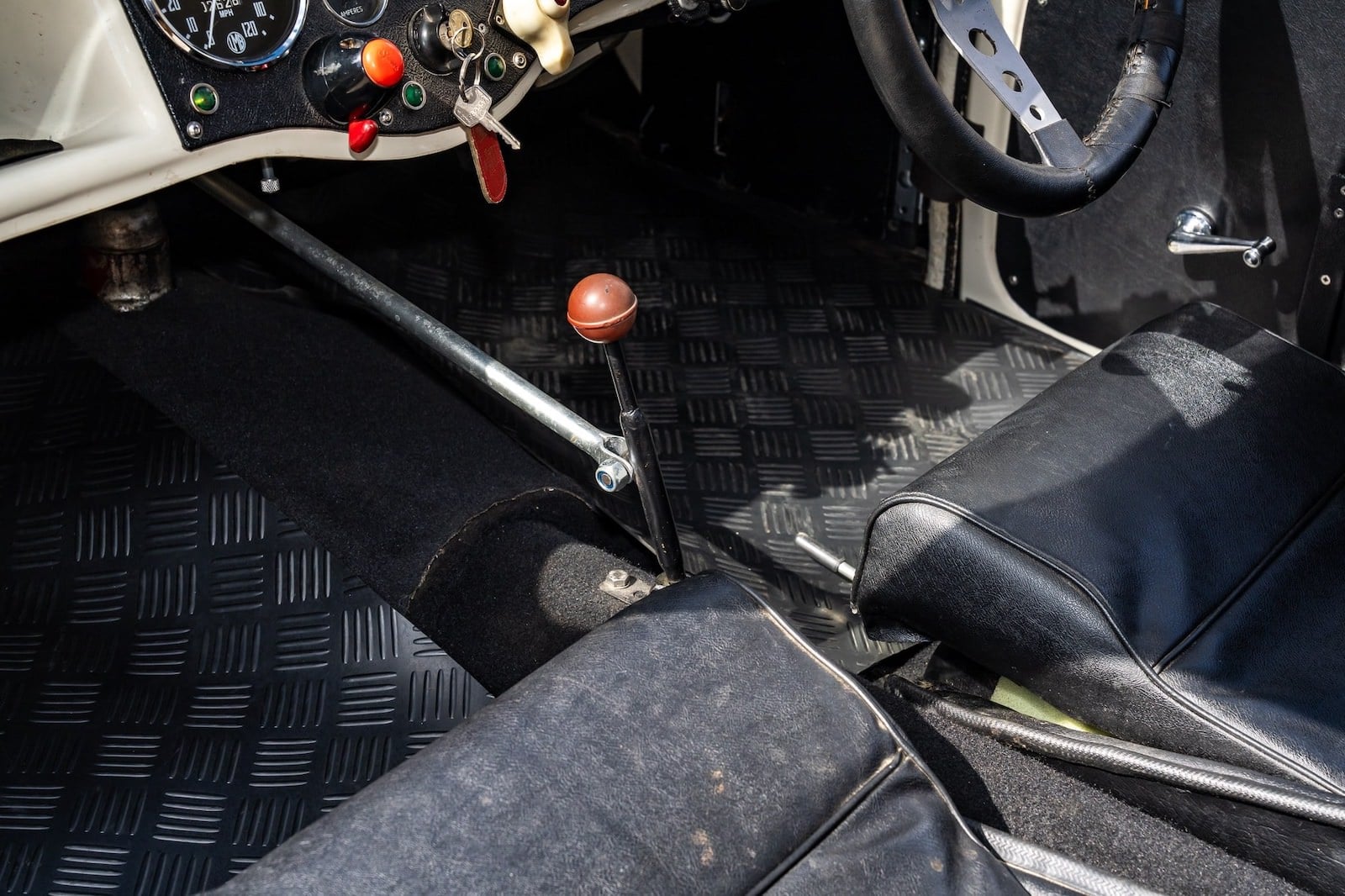
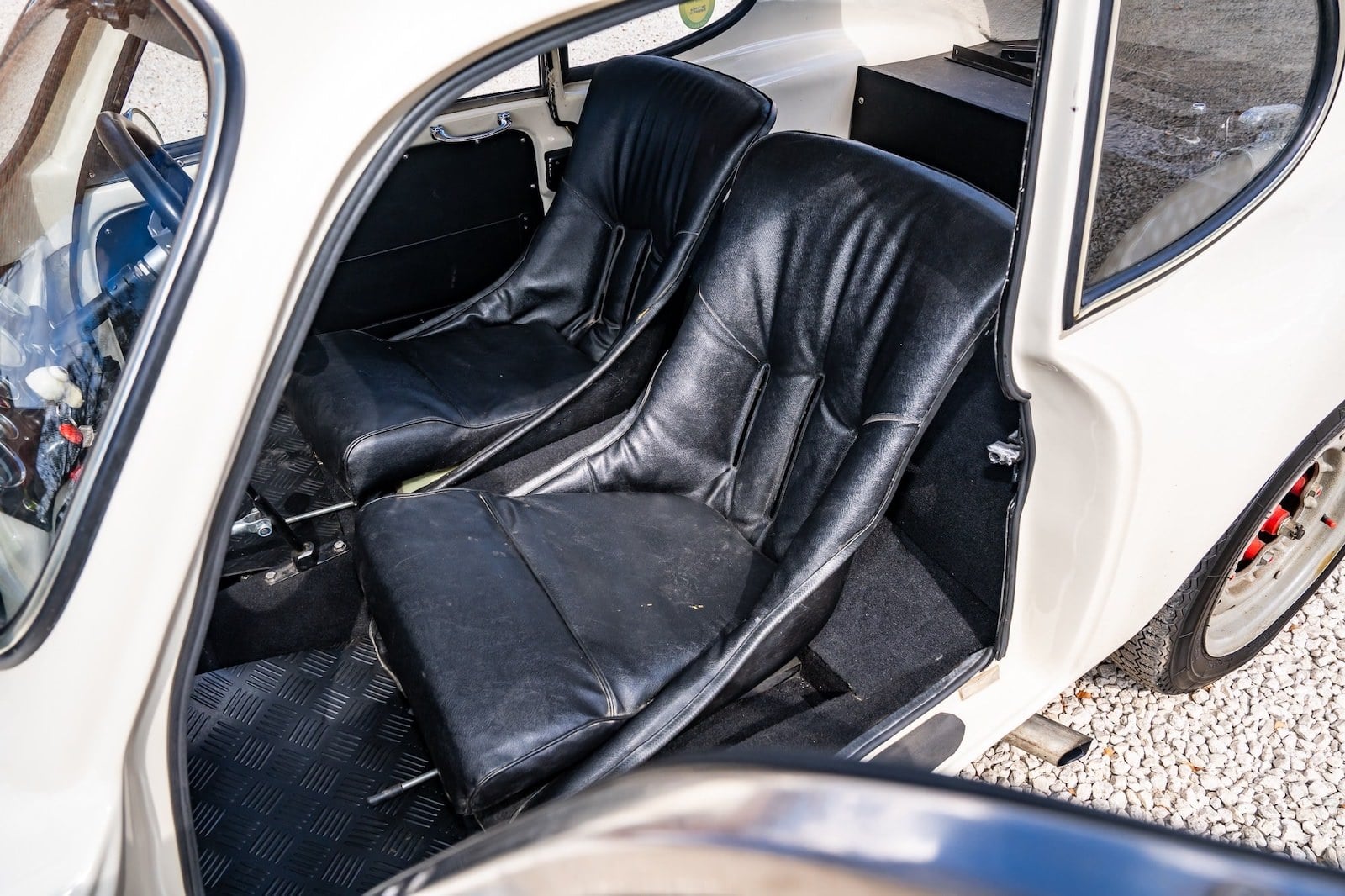
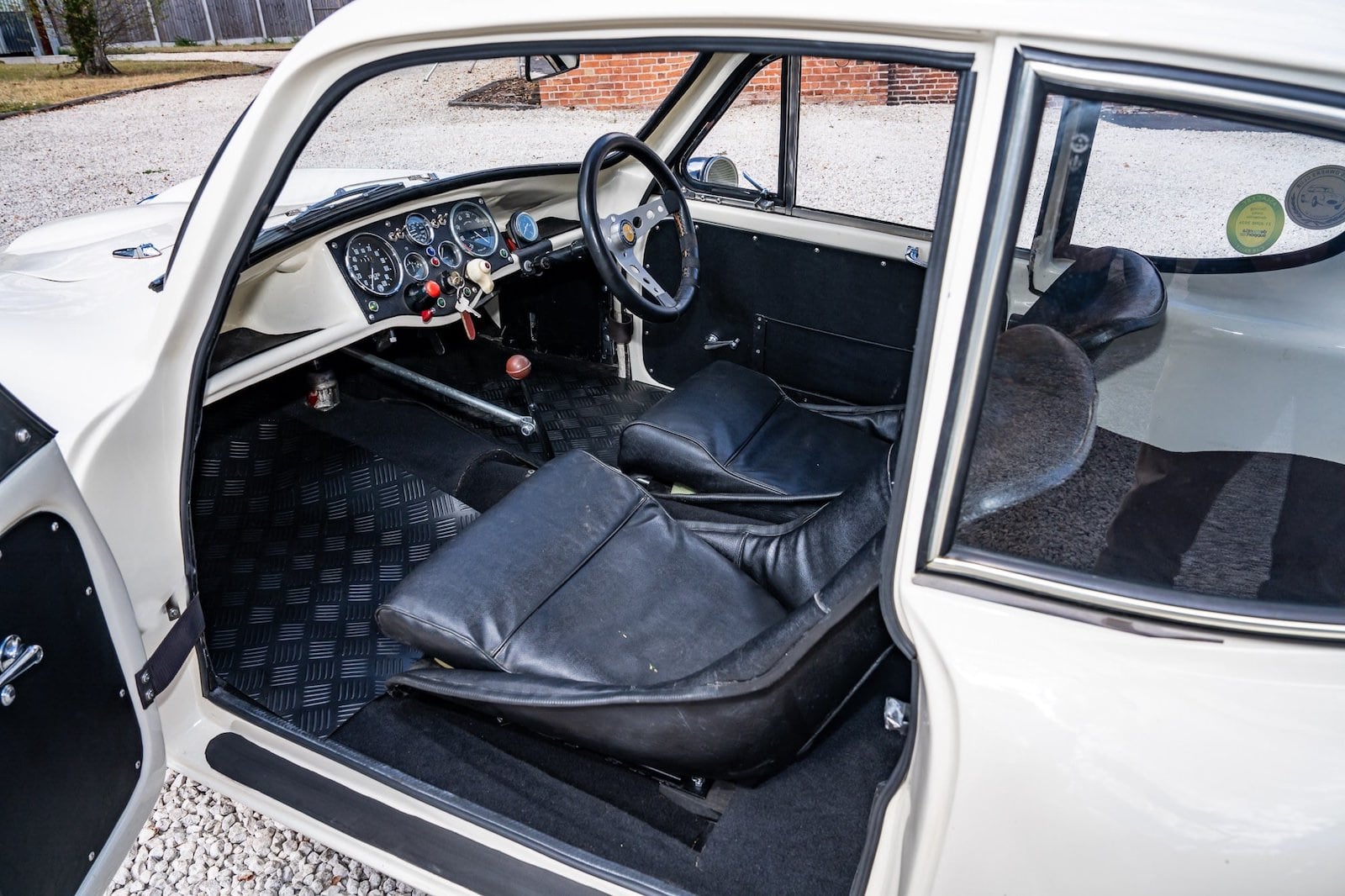
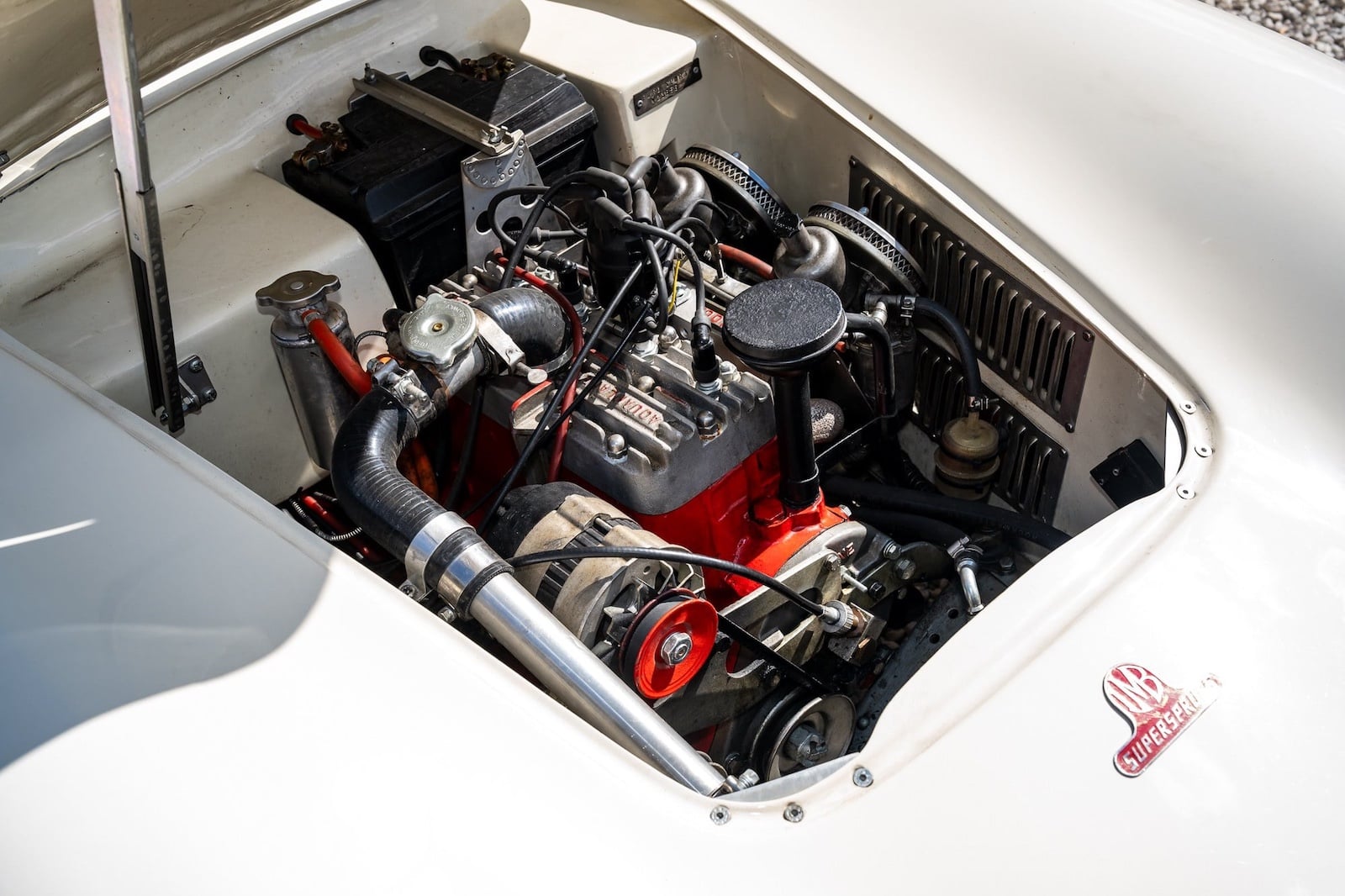
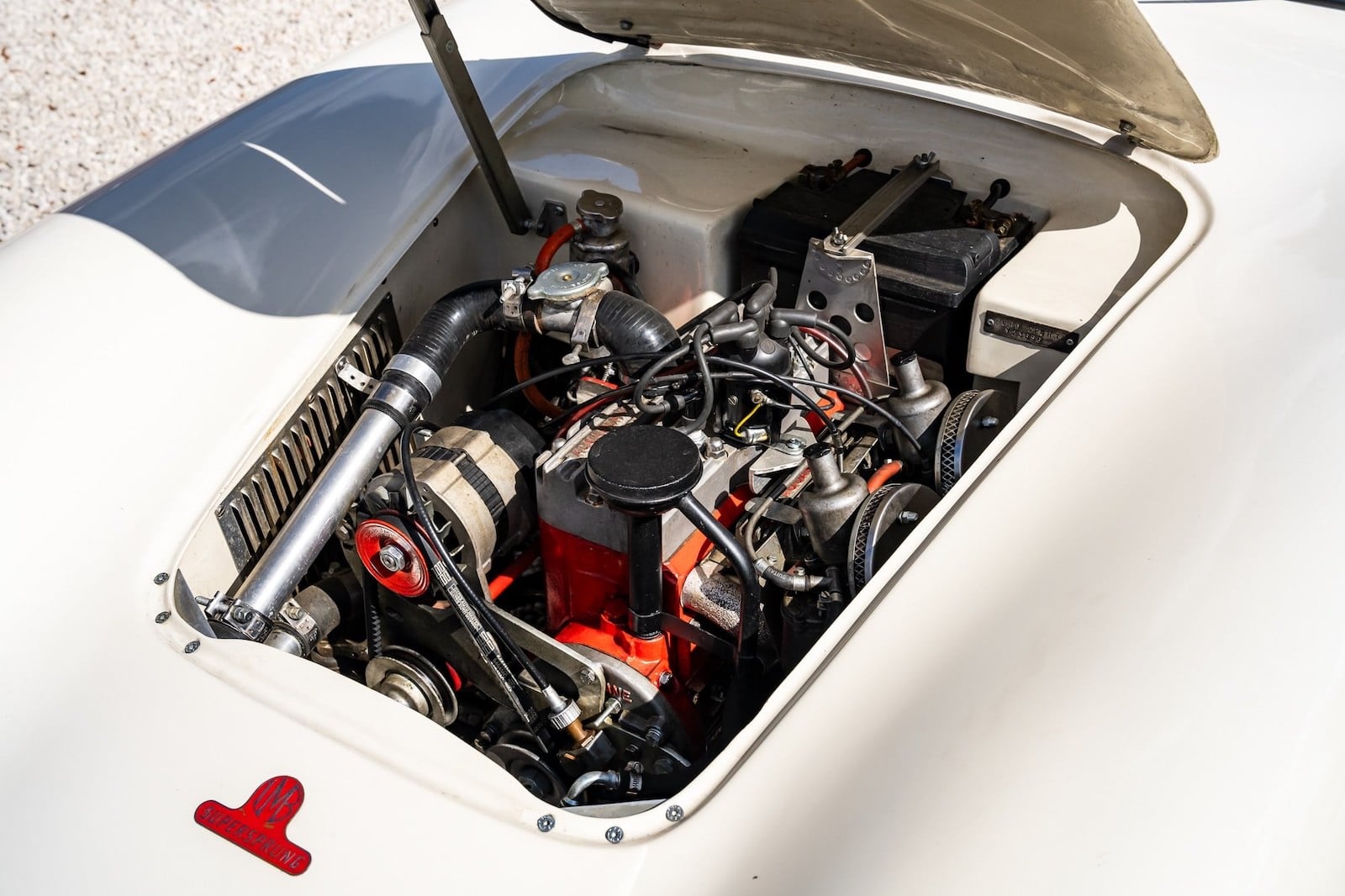
Power comes from a 1,172cc Ford sidevalve four-cylinder engine paired with a 4-speed manual gearbox. The engine has received Bellamy-style performance modifications, including an alloy cylinder head and twin carburetors. The lightweight fiberglass bodywork has been refinished, while the cabin keeps its original character, with beautifully aged seats, an Aquaplane steering wheel, period-correct instruments, and traditional toggle switches.

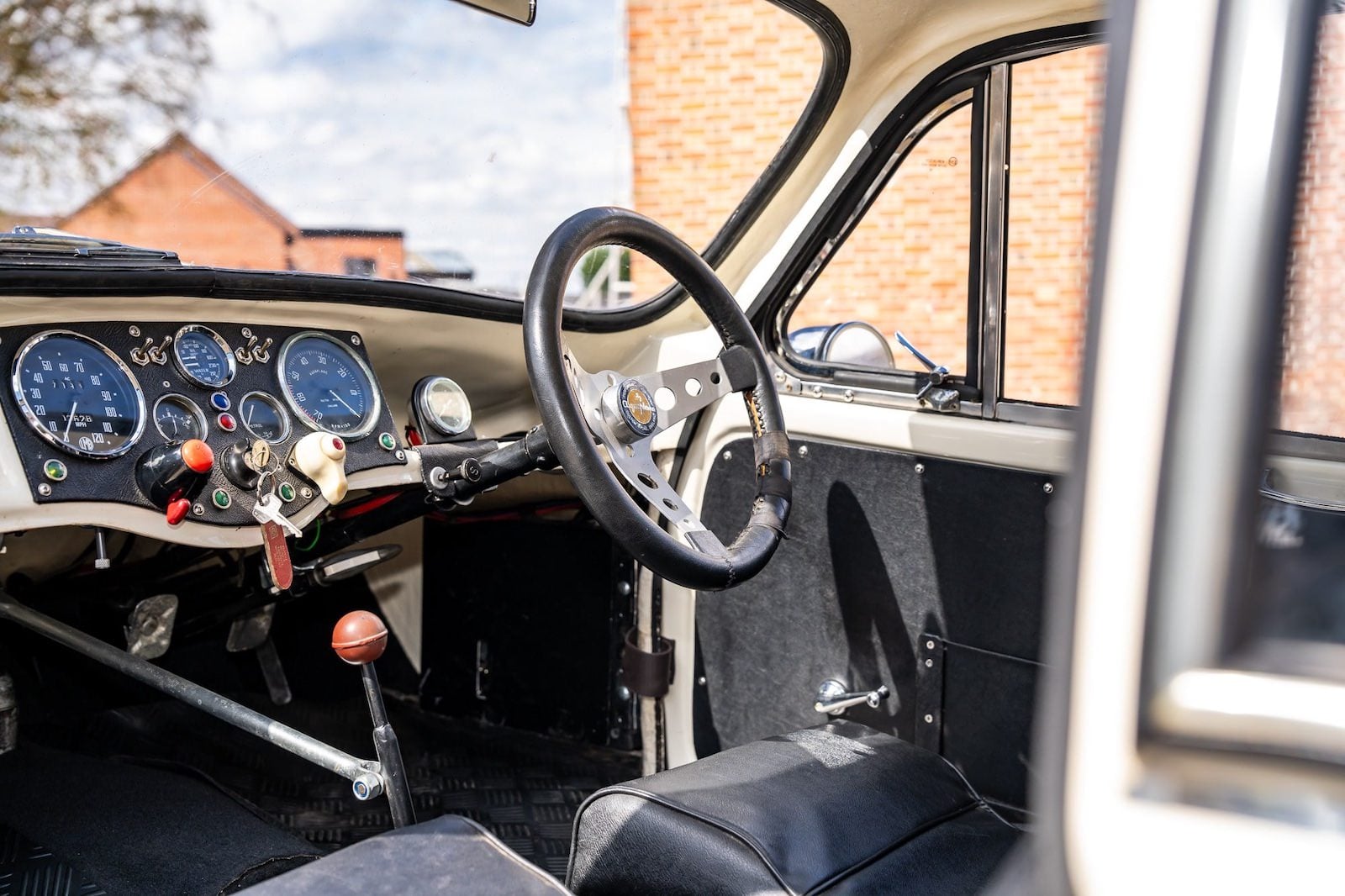
The lightweight fiberglass bodywork has been refinished, while the cabin keeps its original character, with beautifully aged seats, an Aquaplane steering wheel, period-correct instruments, and traditional toggle switches.
The car comes with a substantial collection of documentation, including correspondence between previous owners, historic photographs, and records of maintenance and restoration work. It was featured in the Summer 2020 edition of the Rochdale Owners Club magazine and in the Sidevalve magazine published by the Specials & Sports Car Register.
The car is registered in the United Kingdom and is MOT-exempt. It’s now being offered for sale as its current owner reduces the size of his collection. If you’d like to read more about it or register to bid you can visit the listing here.










Images courtesy of Car & Classic

Articles that Ben Branch has written have been covered on CNN, Popular Mechanics, Smithsonian Magazine, Road & Track Magazine, the official Pinterest blog, the official eBay Motors blog, BuzzFeed, Autoweek Magazine, Wired Magazine, Autoblog, Gear Patrol, Jalopnik, The Verge, and many more.
Silodrome was founded by Ben back in 2010, in the years since the site has grown to become a world leader in the alternative and vintage motoring sector, with well over a million monthly readers from around the world and many hundreds of thousands of followers on social media.