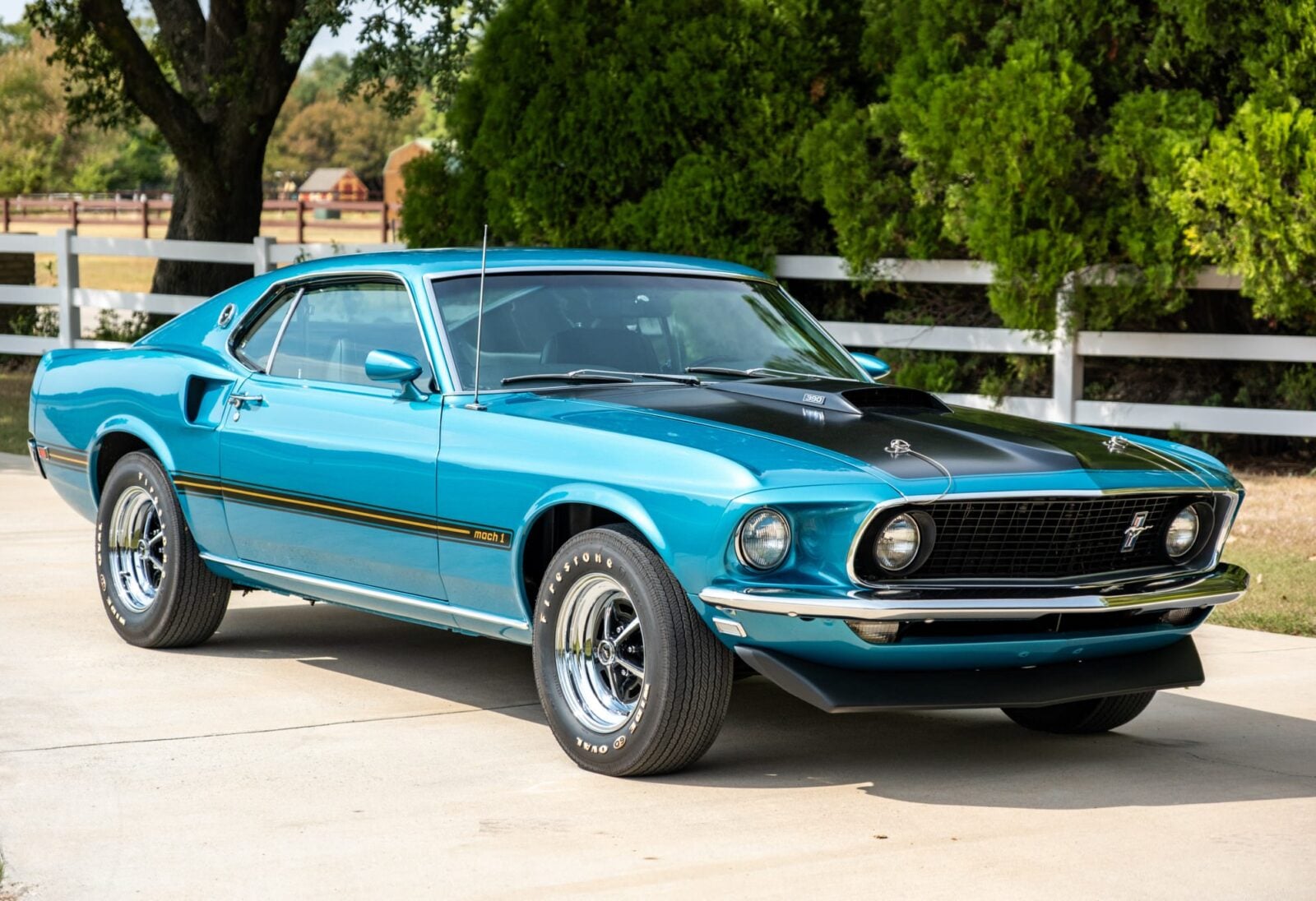
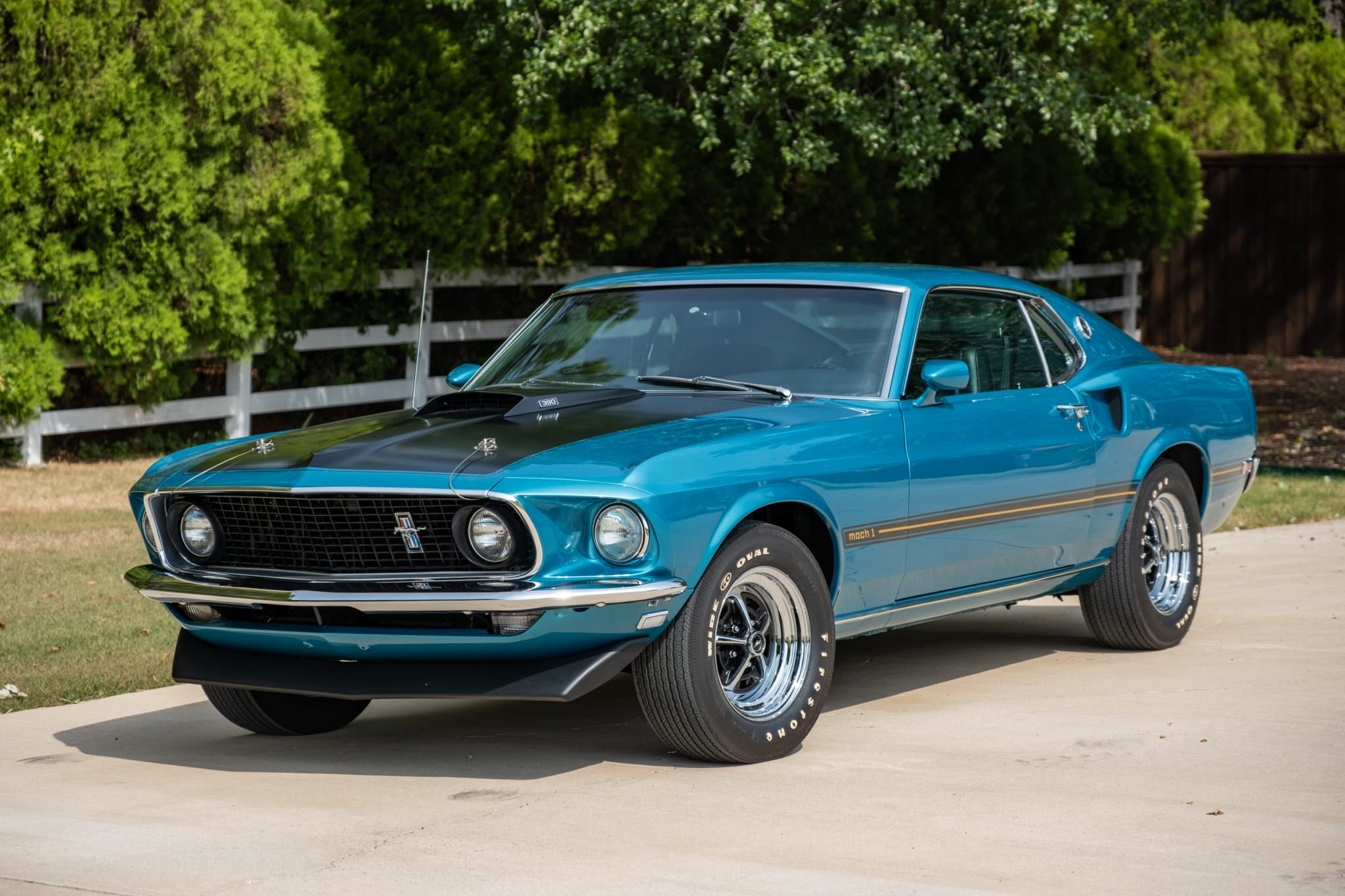
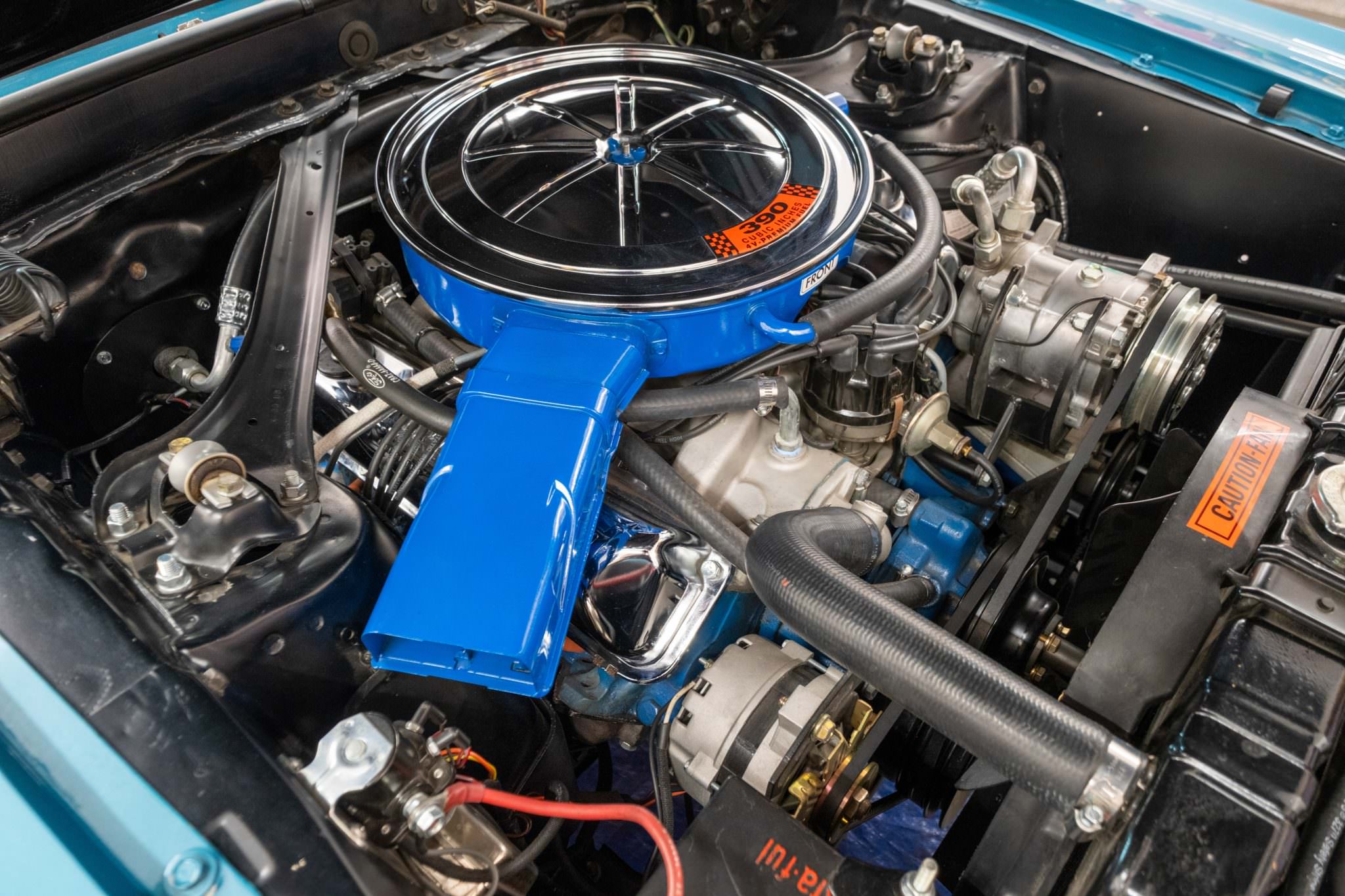
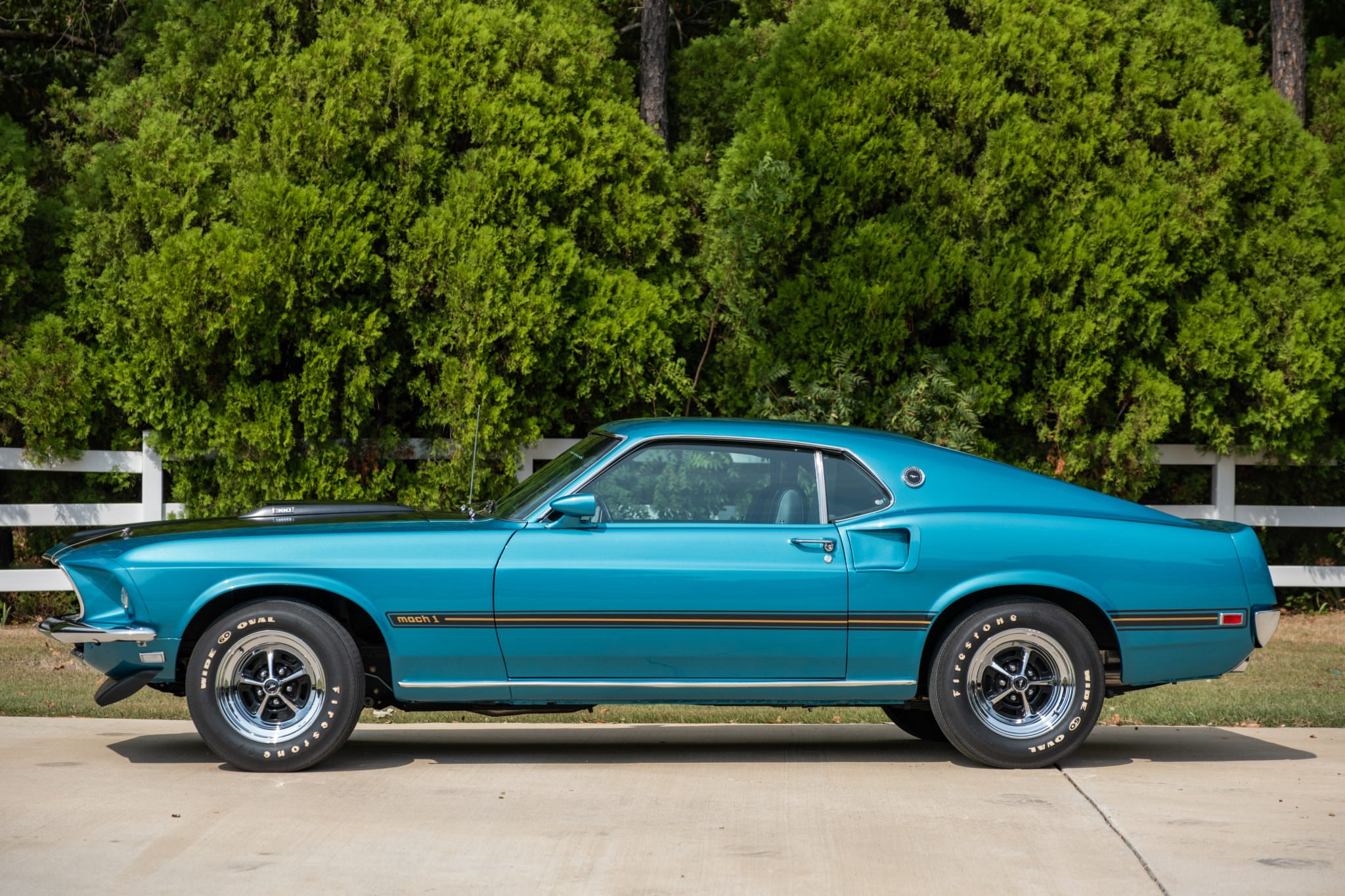
This is a first-year, first-generation Ford Mustang Mach 1 from 1969, and interestingly, it’s a rare S-code version with the 390 V8 and the 4-speed manual transmission.
The Mach 1 would become an instant sales success for Ford and for the Mustang model family, and its immediately recognizable look with the flat-black hood, Mach 1 side stripes, hood pins, and more, has seen it become a bit of an icon of its age.
Fast Facts: 1969 Ford Mustang Mach 1
- The 1969 Ford Mustang Mach 1 debuted as a SportsRoof-only (fastback) performance and appearance package, with 72,458 built in its first year. Standard power came from the 351 Windsor V8, while buyers could step up to the 390 S-code or 428 Cobra Jet, with manual or automatic transmissions available.
- The rare S-code Mach 1 used Ford’s 390 cubic inch FE-series V8, rated at 320 bhp and 427 lb ft of torque. It was offered only for 1969 before being dropped, making these cars particularly desirable today, especially when paired with the enthusiast-friendly 4-speed manual transmission.
- Mach 1s received competition suspension, distinctive graphics, a blacked-out hood, hood pins, high-back seats, and extra sound insulation. Big-block cars were given heavier-duty suspension and some additional front-end reinforcements. Ford also promoted the model through Mickey Thompson’s Bonneville record attempts and successful SCCA road rally campaigns in 1969 and 1970.
- The Gulfstream Aqua example shown was built on November the 11th, 1968, and delivered new to Memphis. Purchased by the seller in 2017, it was restored by 2023, including overhauls of its original 390 V8 and 4-speed box. Only around 450 miles have been added since.
History Speedrun: The First-Gen Ford Mustang Mach 1
Ford ultimately built 72,458 Mustang Mach 1s for the 1969 model year, it was the first year the option package had been offered, and it would prove to be one of the best-selling packages of its kind ever offered on the Mustang platform. “Mach 1” was a performance and appearance option offered only on the fastback body style, and buyers could order it with anything from a 250 bhp small-block to the mighty 428 Cobra Jet.
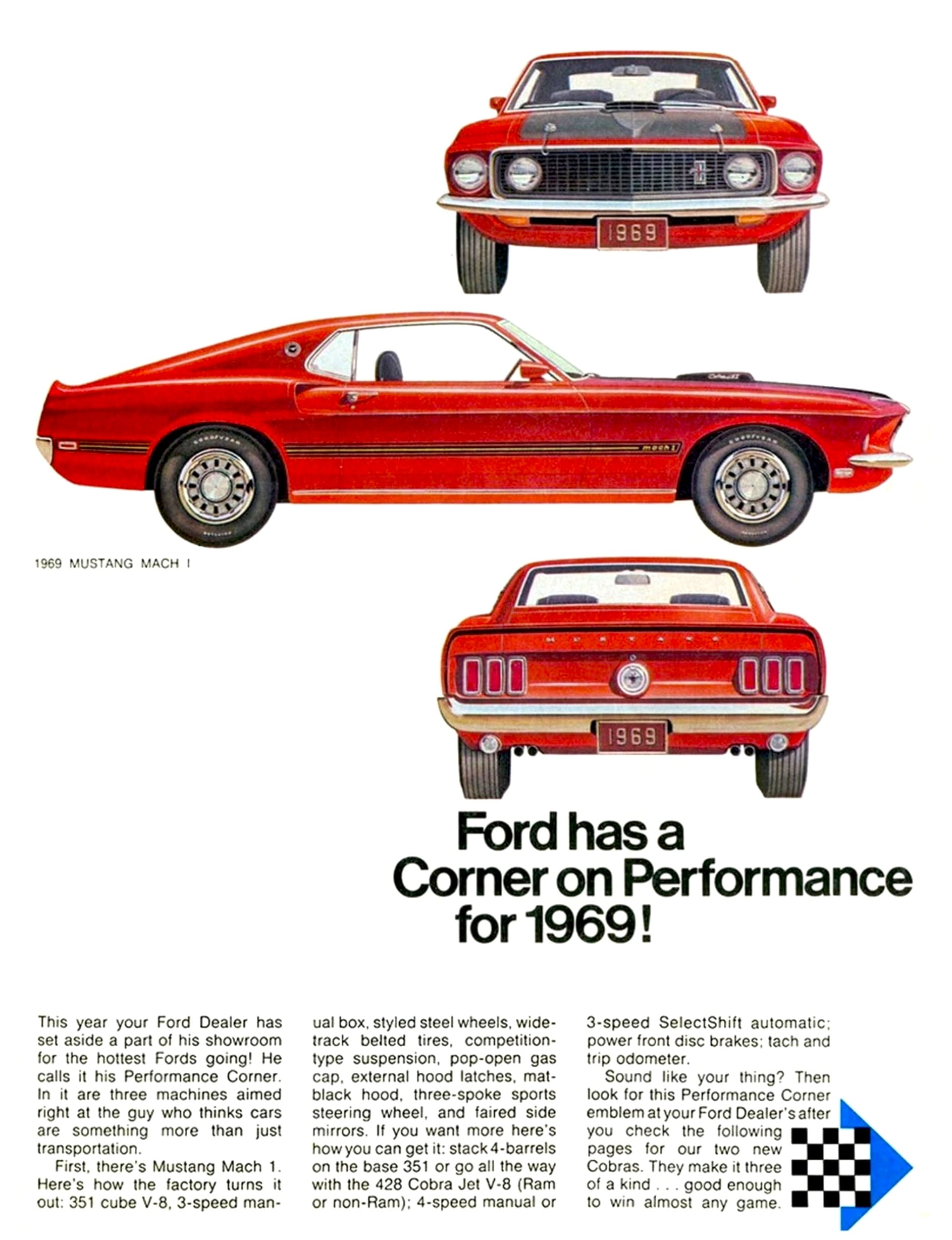
 Ford ultimately built 72,458 Mustang Mach 1s for the 1969 model year, it was the first year the option package had been offered, and it would prove to be one of the best-selling packages of its kind ever offered on the Mustang platform. Image courtesy of the Ford Motor Co.
The Mach 1: A Name From The Jet Age
A Mach number is the ratio of an object’s speed to the local speed of sound. It was named for the Austrian physicist Ernst Mach, and Ford had used the term years before the Mustang ever saw the light of day. In 1959 the FoMoCo displayed the Levacar Mach 1 at the Ford Rotunda in Dearborn – it was a single-seater with no wheels, developed by engineering vice president Andrew Kucher, and it hovered on a cushion of pressurized air like something out of the Jetsons.
The Mach name landed on the Mustang in late 1966, shortly after the Camaro debuted, on a two-seat concept with a heavily chopped roof. Ford restyled that concept and sent it back around the auto shows in 1968, ahead of the larger 1969 Mustang.
The 1969 Mustang + The S-Code
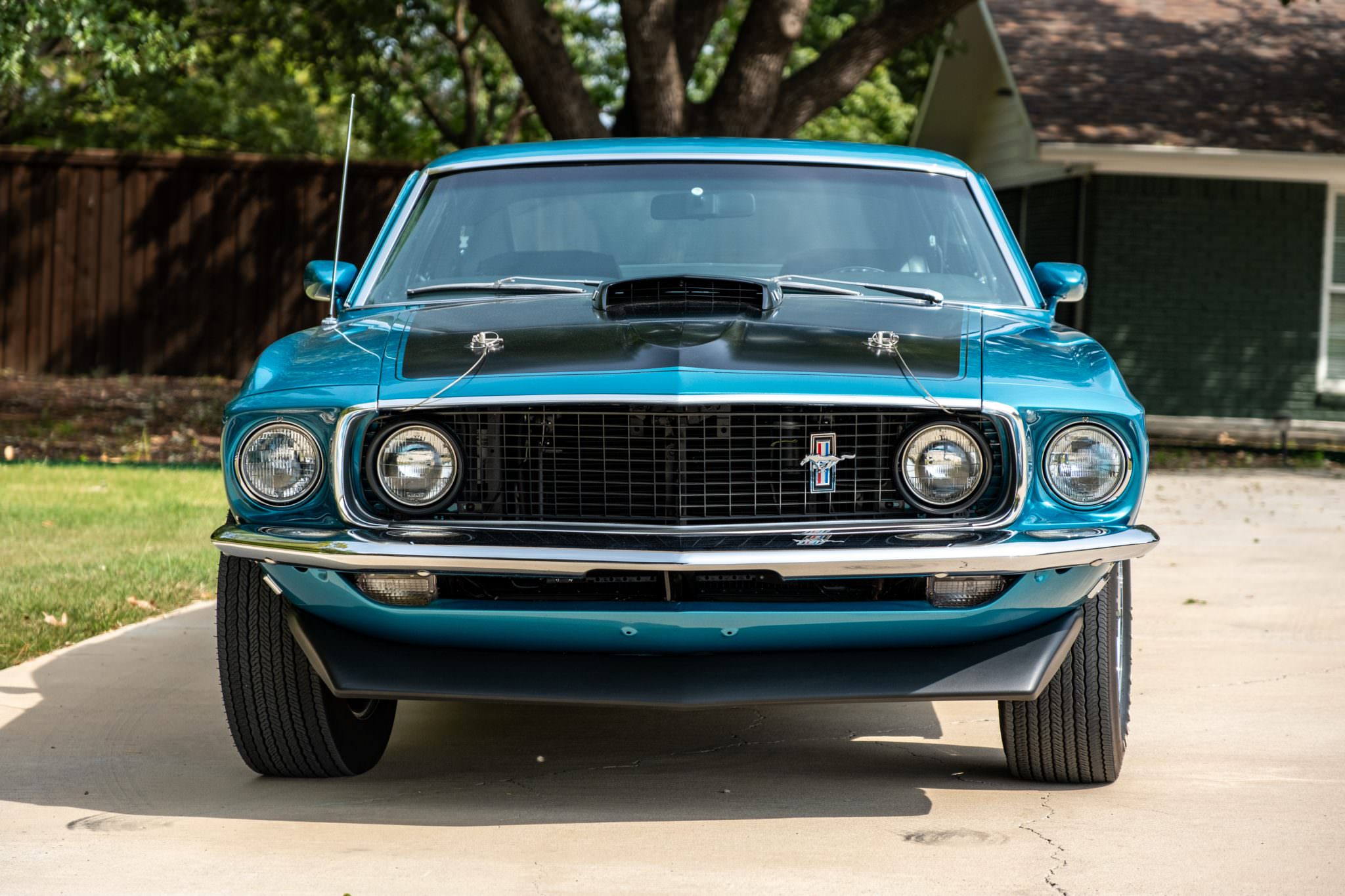
The Mach 1 package was only offered on the SportsRoof (fastback) Mustang, it included a blacked-out hood with locking pins and a non-functional scoop, side stripes, high-back buckets, imitation teak trim, Mach 1 decals, and an extra 55 lbs of sound insulation.
The standard engine was the new 351 cubic inch (5.8 liter) Windsor V8, it had a two-barrel carburetor and single exhaust, was rated at 250 bhp, and was paired with a 3-speed manual. For a few more dollars, the four-barrel M-code 351 made 290 bhp and had dual exhausts. It was a sound investment.
The S-code car took its name from the engine code in the fifth position of the VIN. S meant the 390 cubic inch (6.4 liter) FE-series V8 with a four-barrel carburetor, rated at 320 bhp and 427 lb ft of torque from a 4.05 inch bore and 3.785 inch stroke.
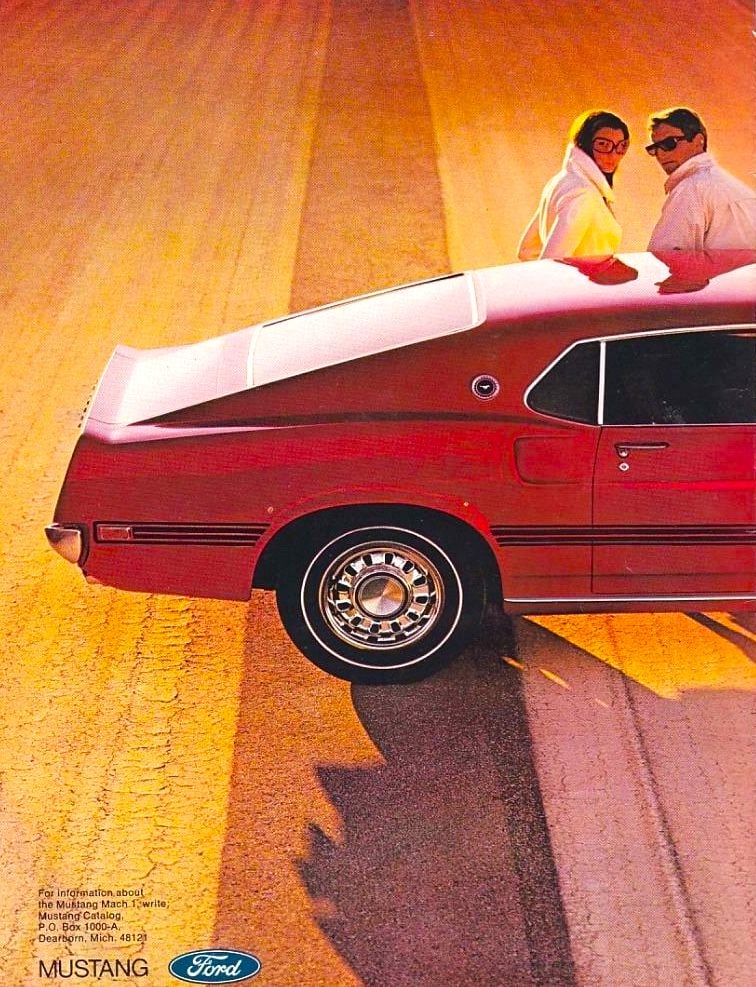
The Mach 1 package was only offered on the SportsRoof (fastback) Mustang, it included a blacked-out hood with locking pins and a non-functional scoop, side stripes, high-back buckets, imitation teak trim, Mach 1 decals, and an extra 55 lbs of sound insulation. Image courtesy of the Ford Motor Co.
The S-code package cost $99.74 over the Mach 1’s standard 351, a decent wad of cash at the time, and the 351 four-barrel was lighter, almost as quick, and far more popular. Ford would drop the 390 for 1970, so the S-code Mach 1 only ever existed as a 1969 car.
The top engine on offer was the 428 cubic inch (7.0 liter) Cobra Jet, rated at 335 bhp and 440 lb ft. It came as the Q-code, or as the R-code with Ram Air fed through the Shaker scoop. The Shaker scoop was mounted directly to the engine and shook with it through a purpose-cut hole in the hood – hence the name. Ordering a 3.91 or 4.30 Drag Pack axle turned the engine into a Super Cobra Jet, with cap-screw “Le Mans” connecting rods and an oil cooler, though its advertised rating stayed at 335 bhp.
The transmissions on offer were the 3-speed, a 4-speed manual, or a 3-speed automatic. The enthusiast’s choice was the 4-speed row-your-own option, and it’s the one the collectors tend to look for today.
Chassis, Suspension, + Brakes
Underpinning every Mach 1, of course, was the Mustang’s steel unit-construction body. The front suspension used upper and lower control arms, with the coil spring and shock absorber mounted above the upper arm, and a strut rod located the lower arm. At the back was a live axle on semi-elliptic leaf springs – an arrangement most American automakers stuck with as long as they could, some even into the 21st century.
Every Mach 1 had Ford’s competition suspension fitted, which was specified according to the engine type. Big-block cars got heavier springs and shocks, thicker anti-roll bars, and steel reinforcing plates welded into the front shock towers. 4-speed 428 cars also received staggered rear shocks.
Steering was recirculating ball, with power assistance optional but advisable, particularly with the big-block versions. Power front disc brakes with floating calipers cost extra, and a Mach 1 ordered without them had drums at all four wheels.
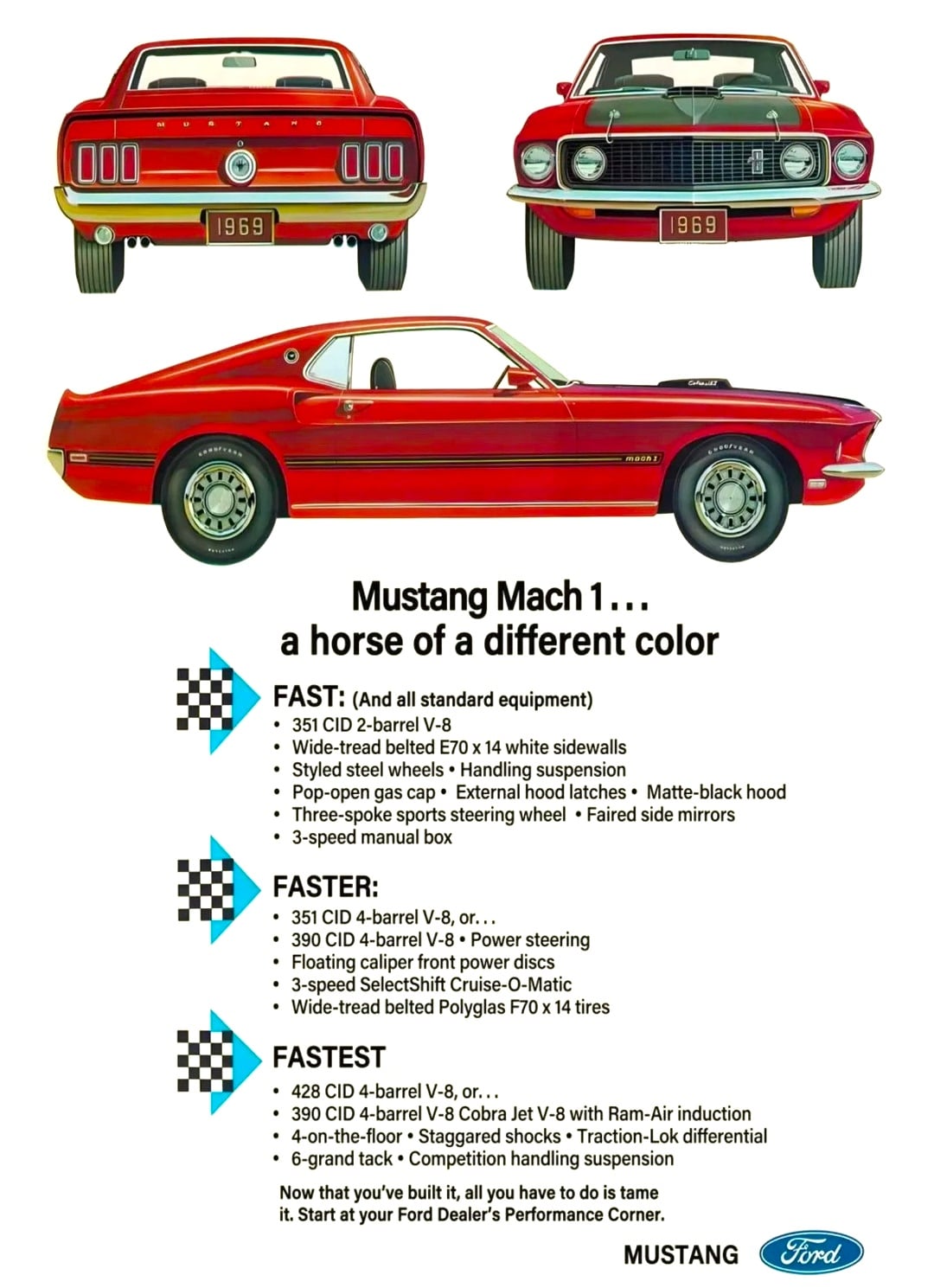
“Mach 1” was a performance and appearance option offered only on the fastback body style, and buyers could order it with anything from a 250 bhp small-block to the mighty 428 Cobra Jet. Image courtesy of the Ford Motor Co.
Salt Flats + Road Rallies
Ford enlisted Mickey Thompson to promote the new Mach 1, in the hopes of giving it some high-speed credentials to better match the much-loved Shelby Mustangs. In 1968, Mickey Thompson and Danny Ongais took three pre-production Mach 1s, prepared by Holman-Moody, to a 10 mile oval on the Bonneville Salt Flats.
In July, rain-damaged salt, spins and minor failures stopped a 24-hour attempt at 500 miles, but the car had averaged 159.556 mph up to that point. In September the yellow car ran the full 24 hours, covering 3,783 miles at an average of 157.663 mph, and the program finished with 295 brand new world records.
Ford also won the Sports Car Club of America’s manufacturers’ road rally championship in 1969 and 1970 with mechanically stock Mach 1s. Those credentials had been well-and-truly secured.
1970 + The End Of The Line
The 1970 Mach 1 got the new 351 Cleveland, with canted valves and large ports, which became Ford’s default 351. H-code two-barrel cars could still receive either a Windsor or a Cleveland, depending on engine supply at each assembly plant. The Cleveland made 250 bhp as a two-barrel or 300 bhp as the four-barrel M-code. The Mach 1 also acquired a rear anti-roll bar and a Hurst shifter for the 4-speed. Production numbers fell to 40,970.
This would be the end of the line for the first-generation Mach 1, however the option package would make multiple comebacks over the next few decades, and it always remained a favorite with fans of the Blue Oval.
The 1969 Ford Mustang Mach 1 S-Code Shown Here
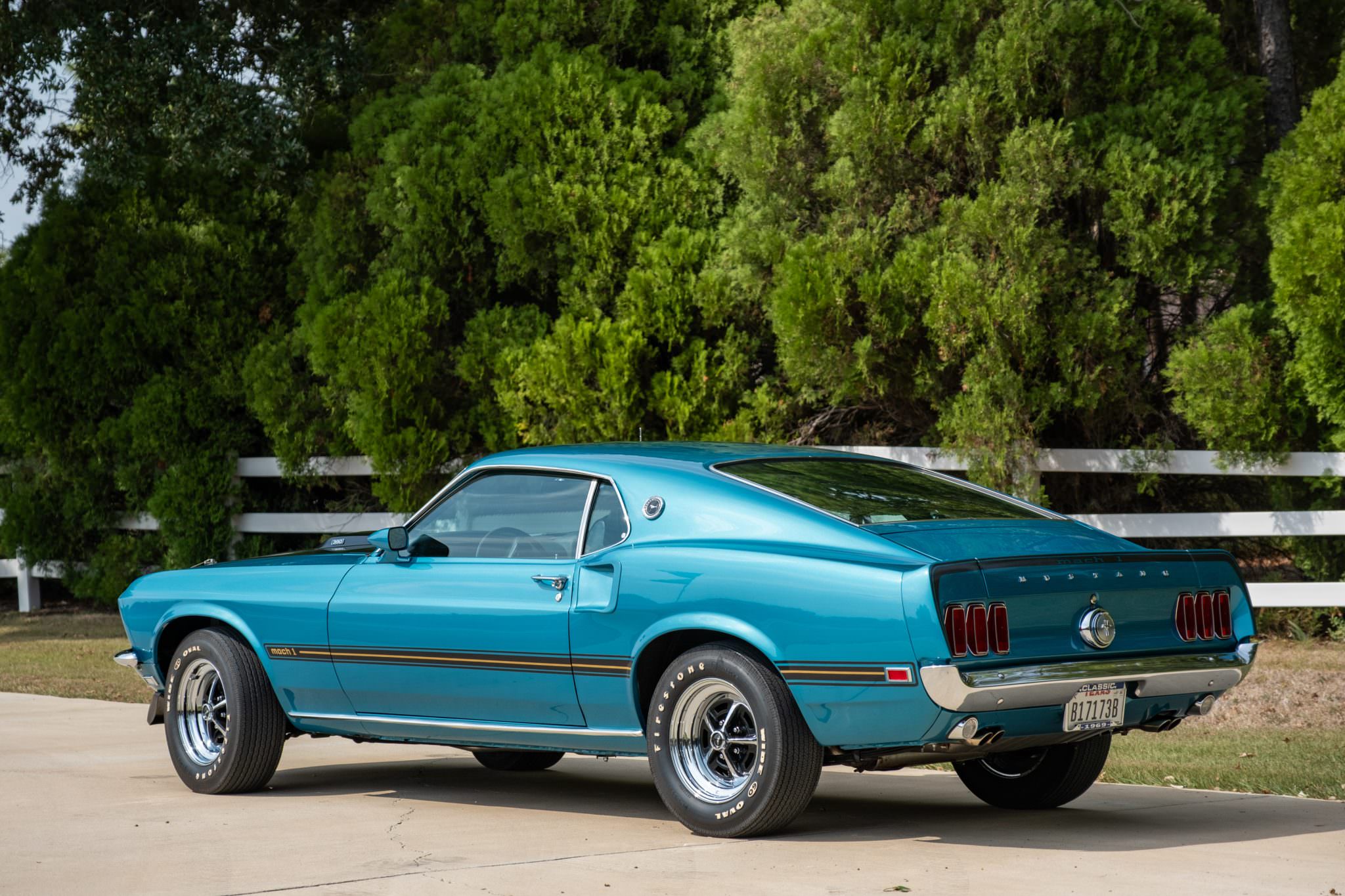
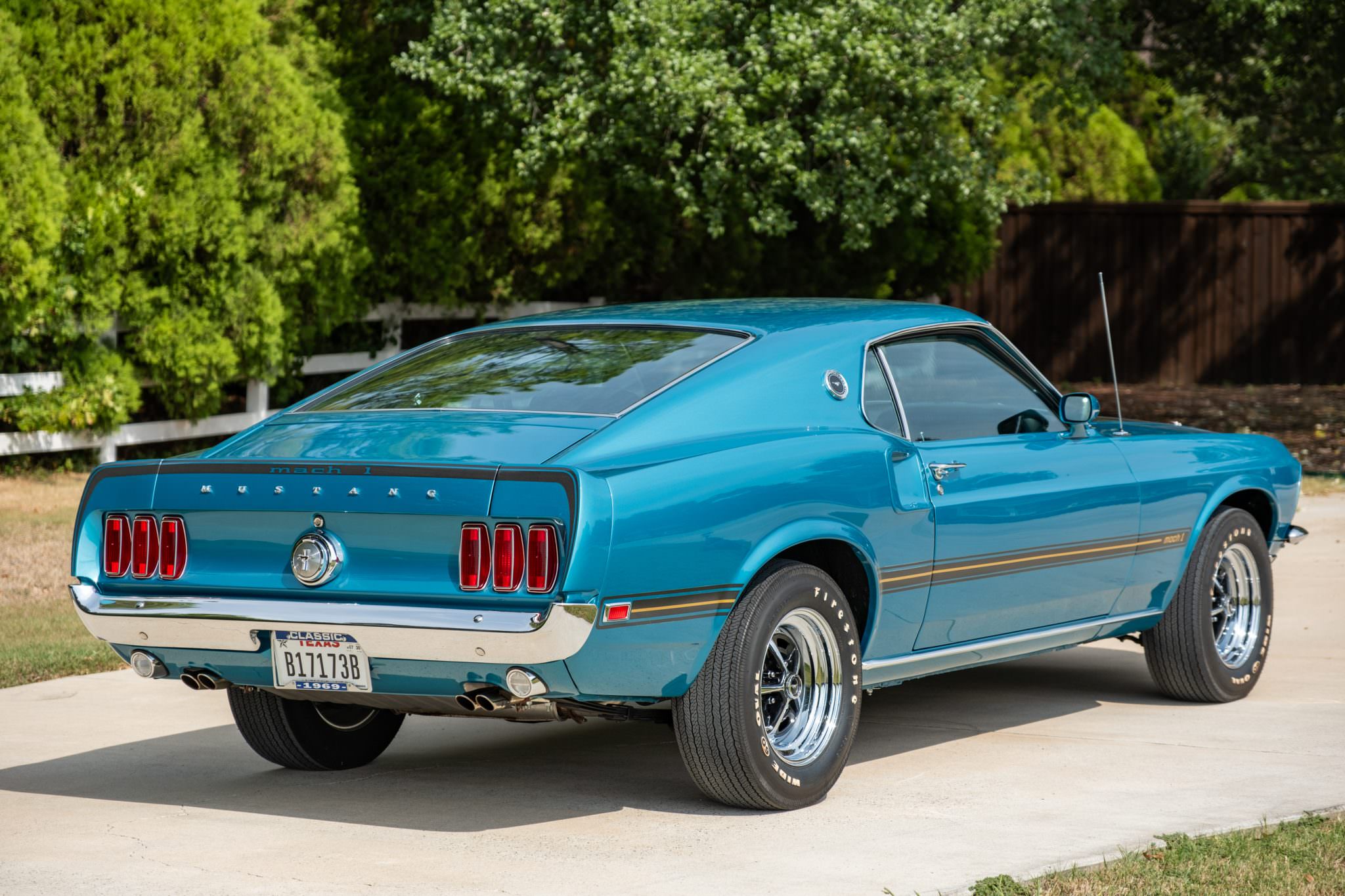
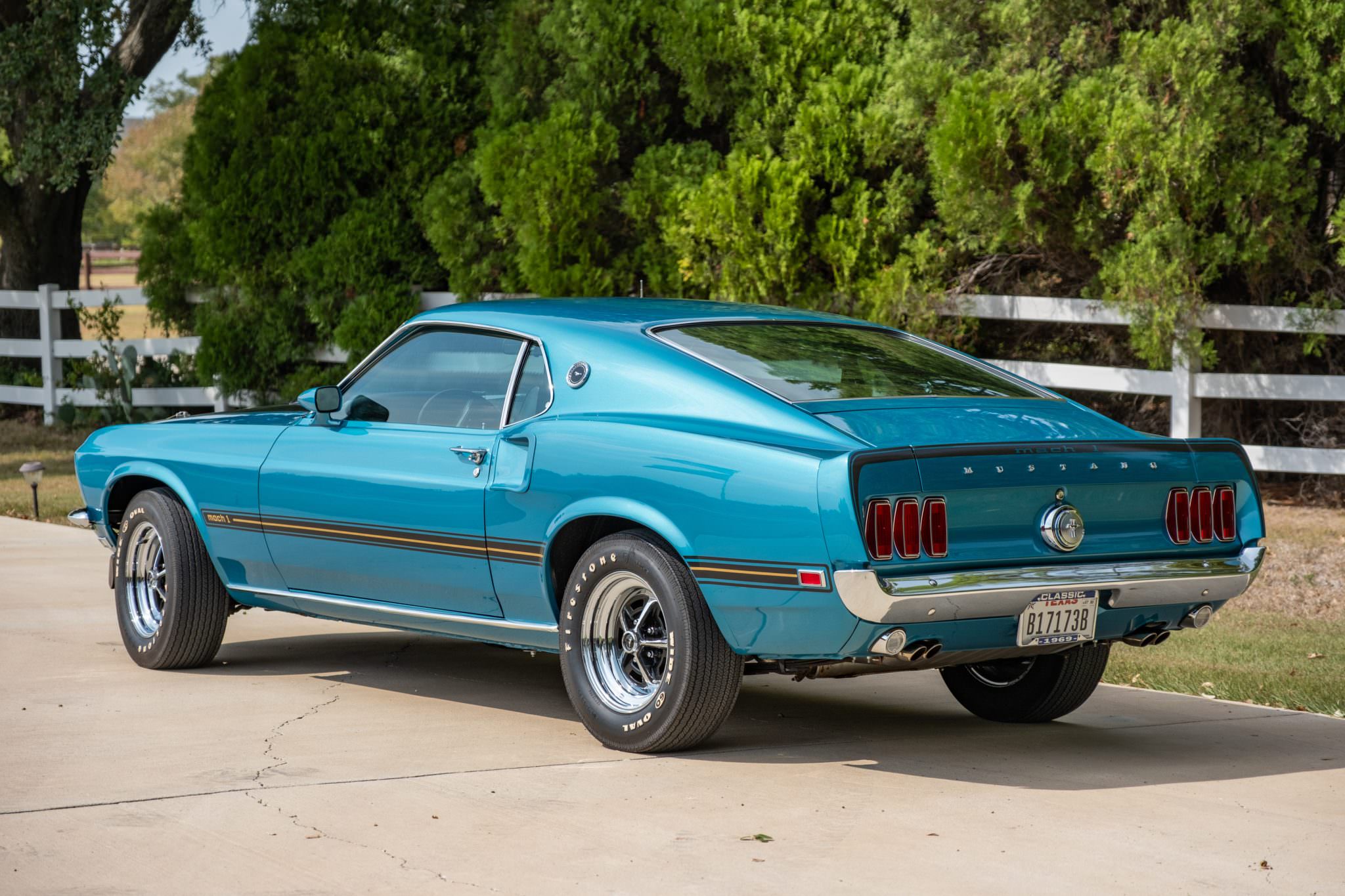
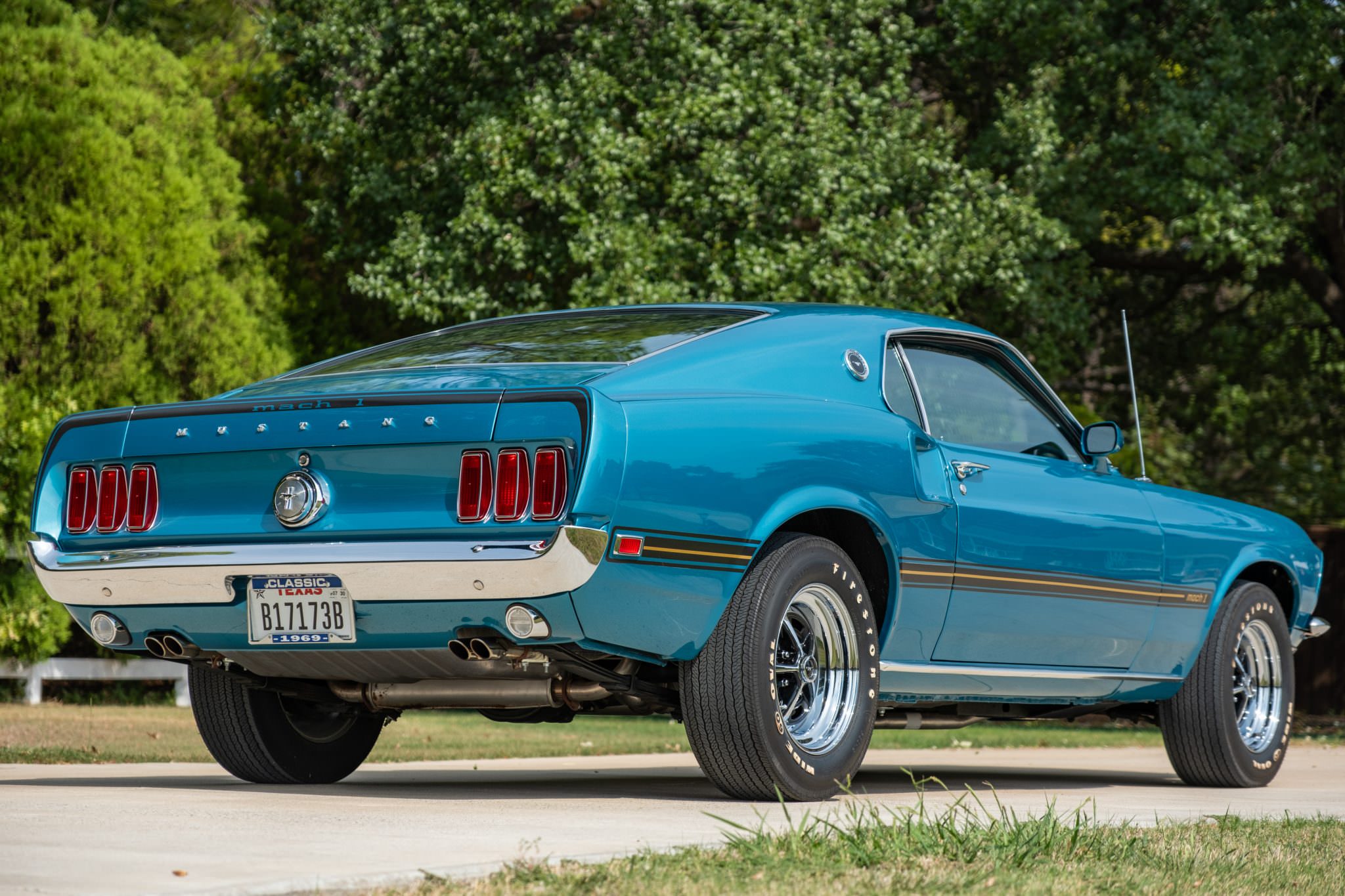
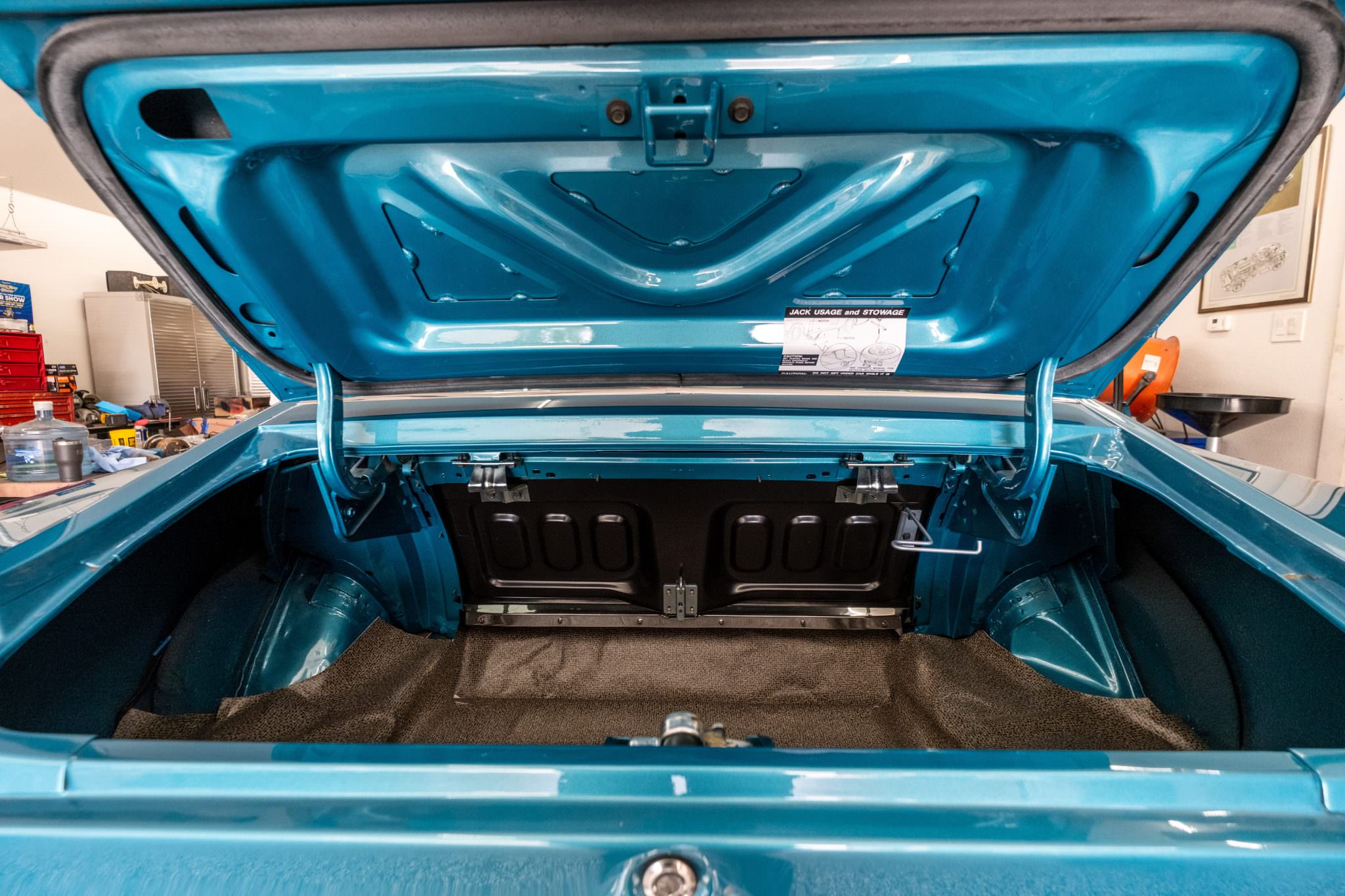
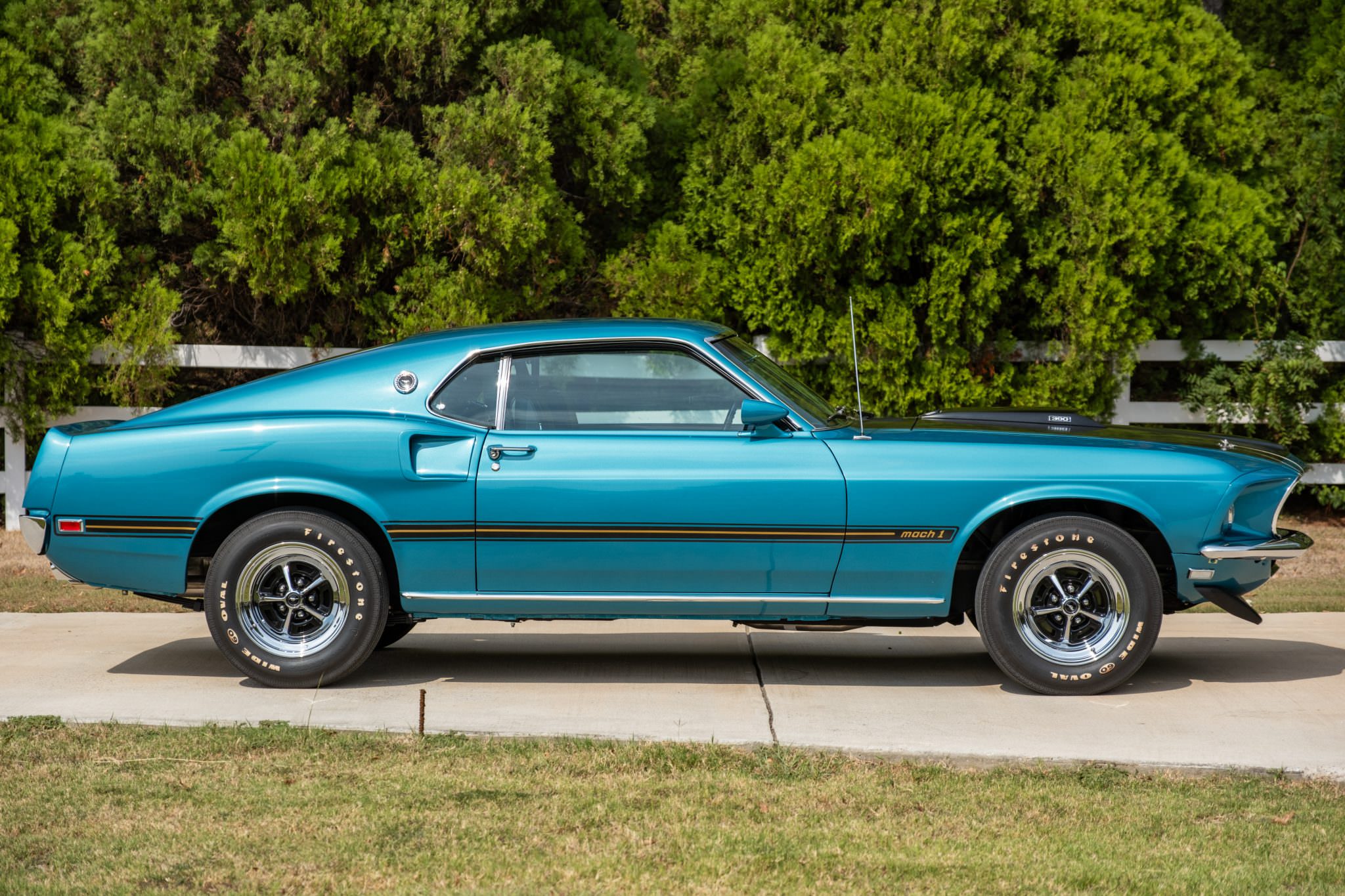
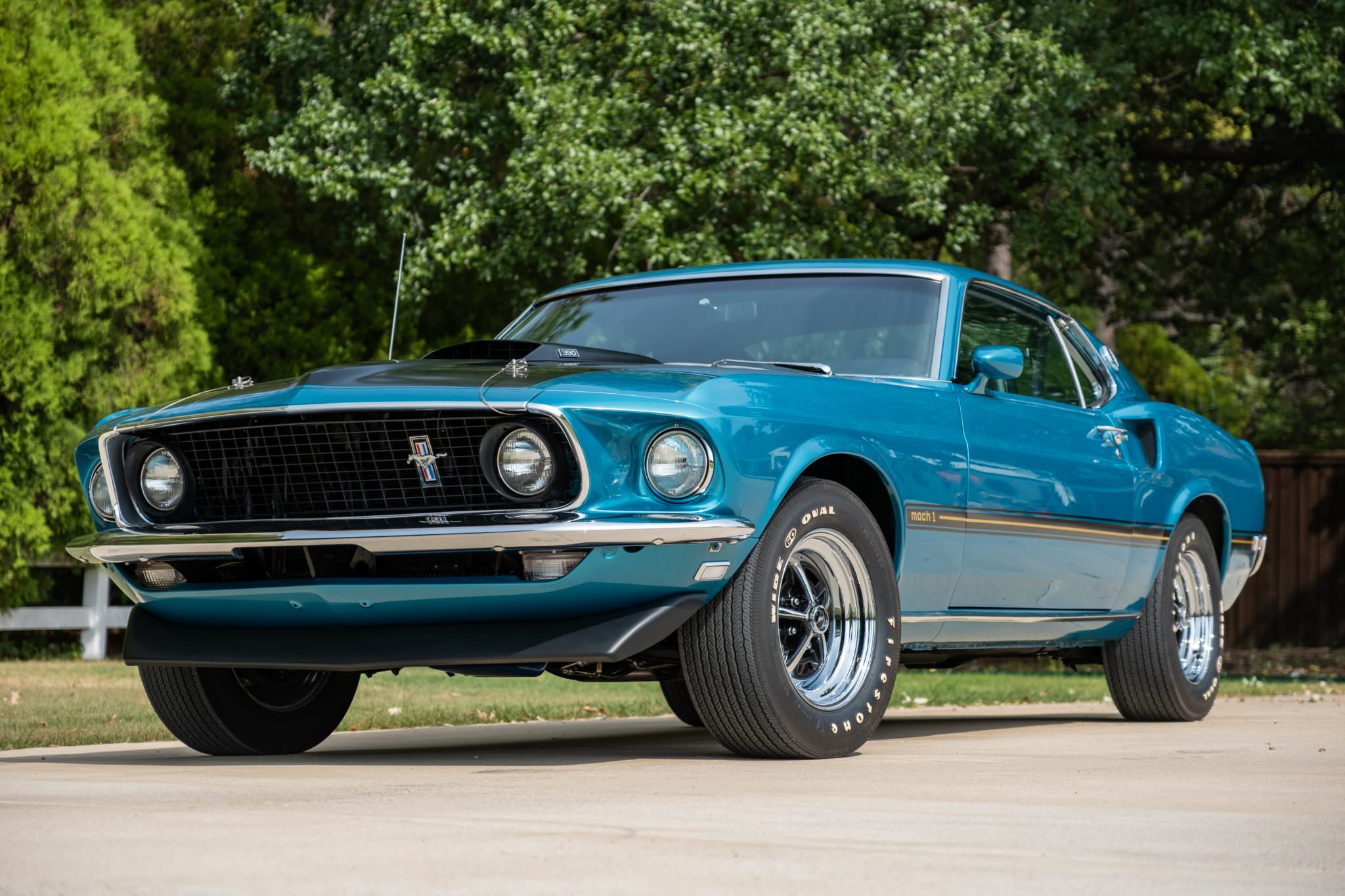
This is a 1969 Ford Mustang Mach 1, it was built on November the 11th, 1968 and delivered new to Memphis, Tennessee. It left the factory finished in Gulfstream Aqua and was bought by the current seller in 2017. The car was subsequently restored, including a repaint in its original color and mechanical work that was all completed in 2023.
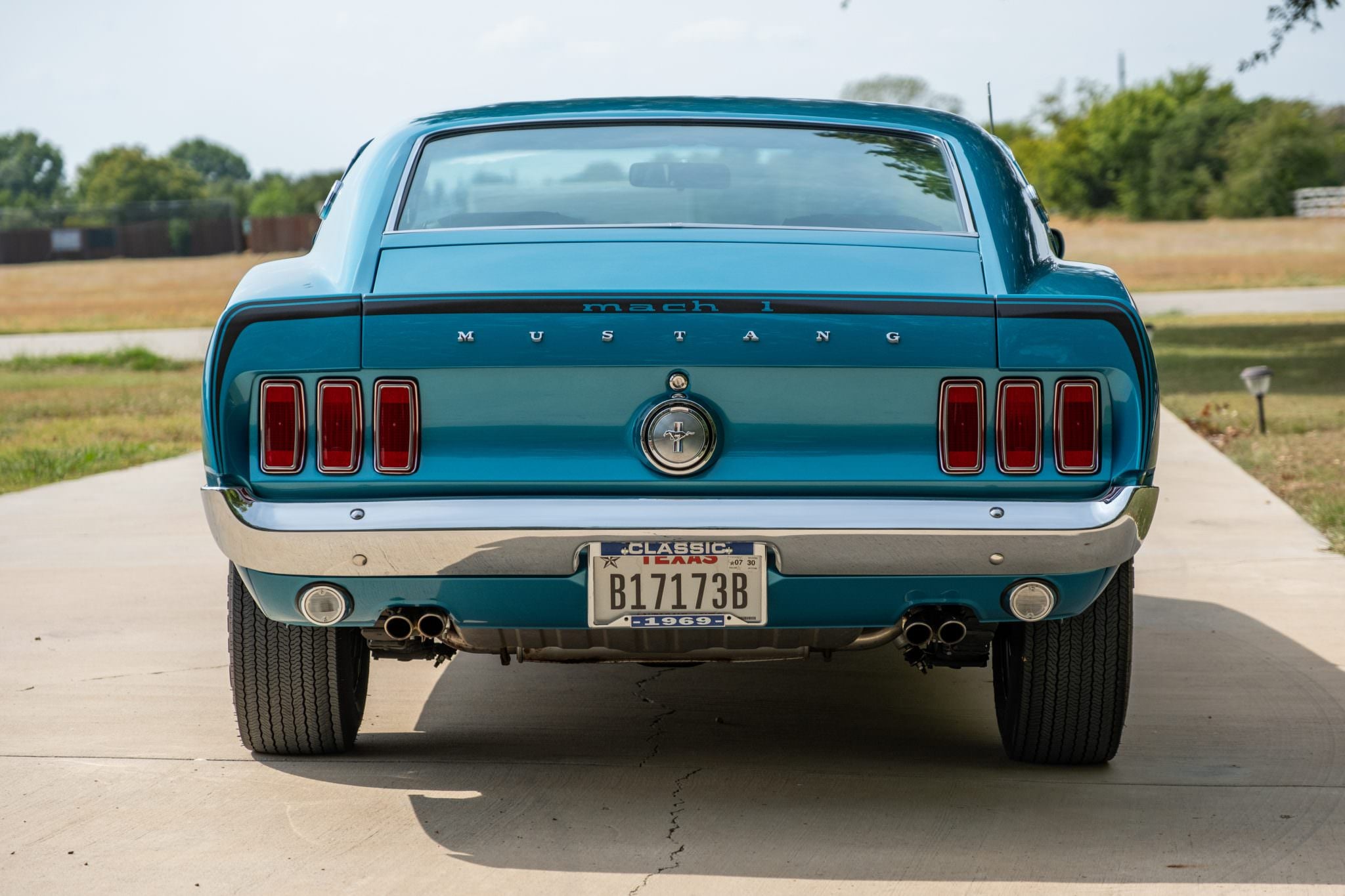
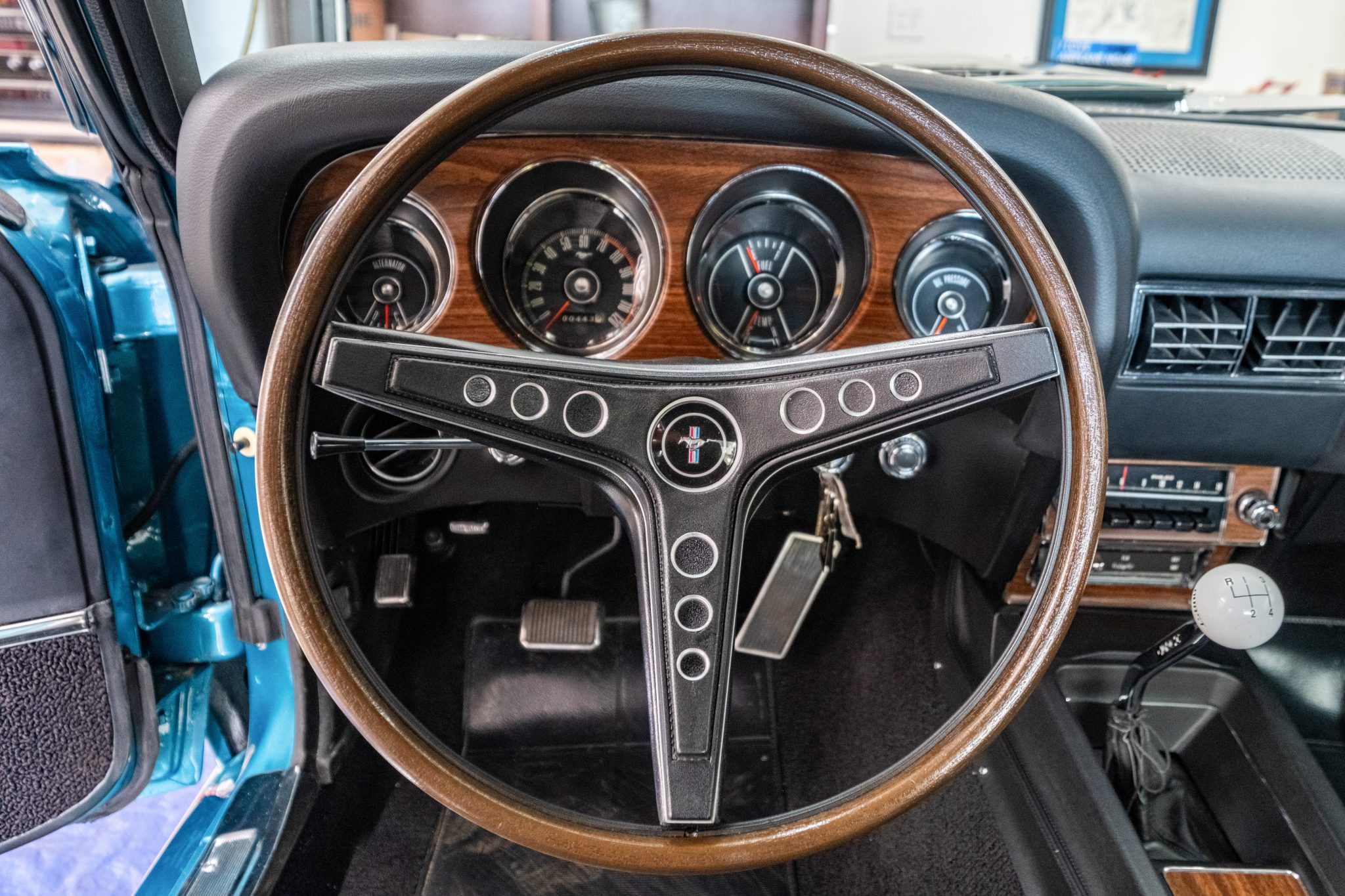
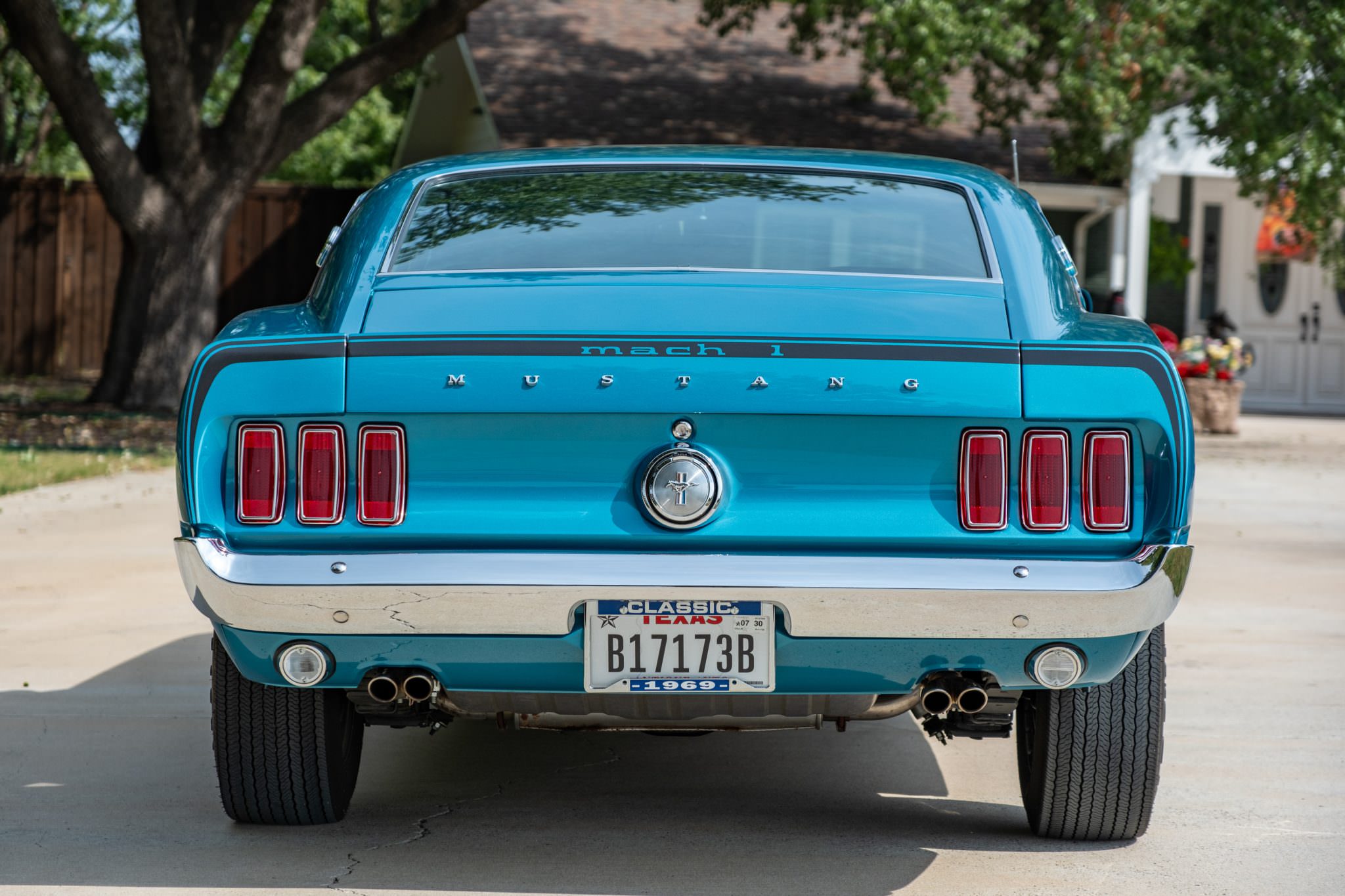
Power comes from its original 390 cubic inch S-code V8, factory rated at 320 bhp. The engine was overhauled during the refurb, along with the 4-speed manual transmission, and power is sent to the rear wheels through a Traction-Lok differential. The car also has a dual exhaust system with an H-pipe and quad outlets, power steering, and power-assisted front disc brakes with rear drums.
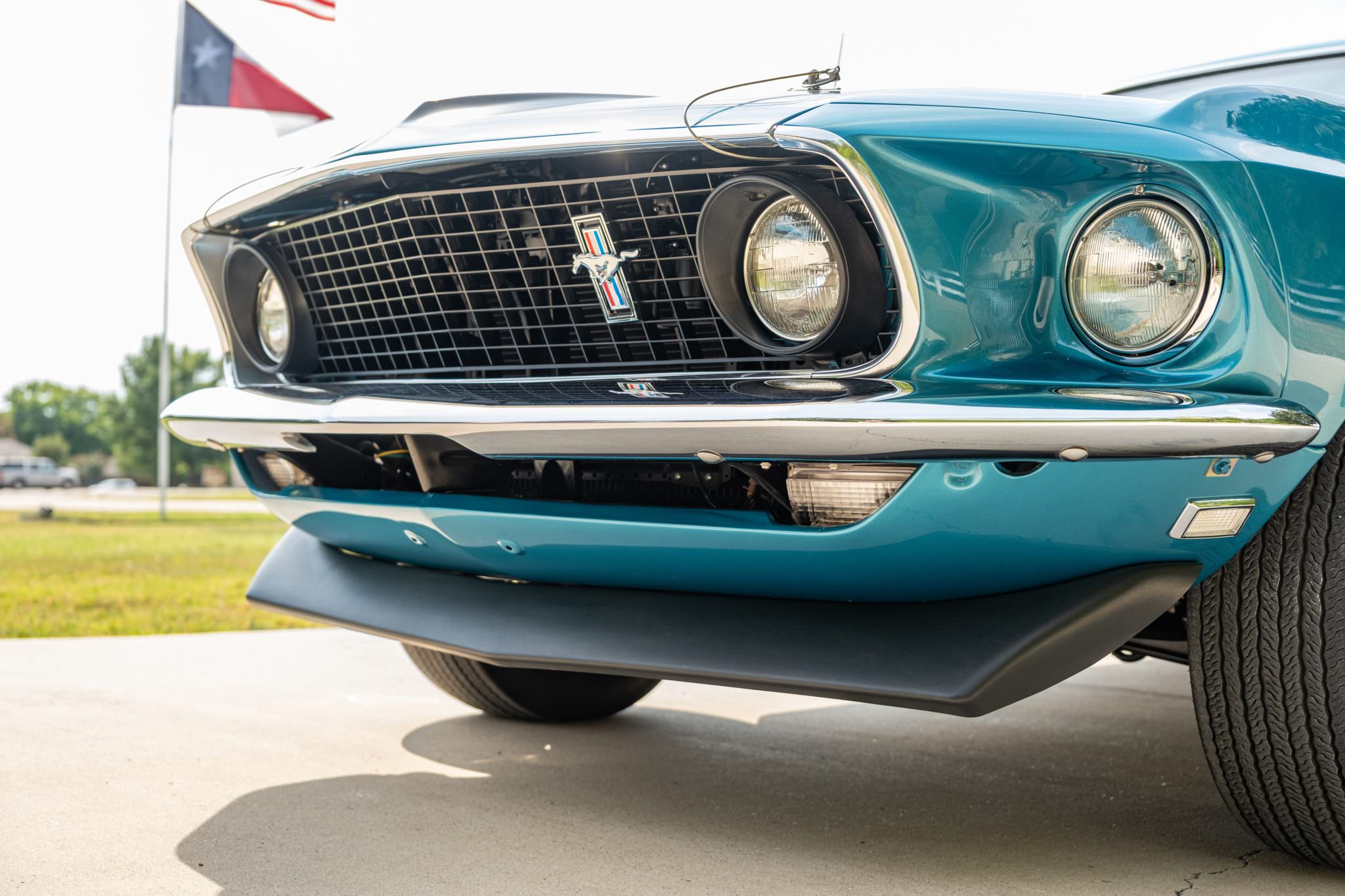
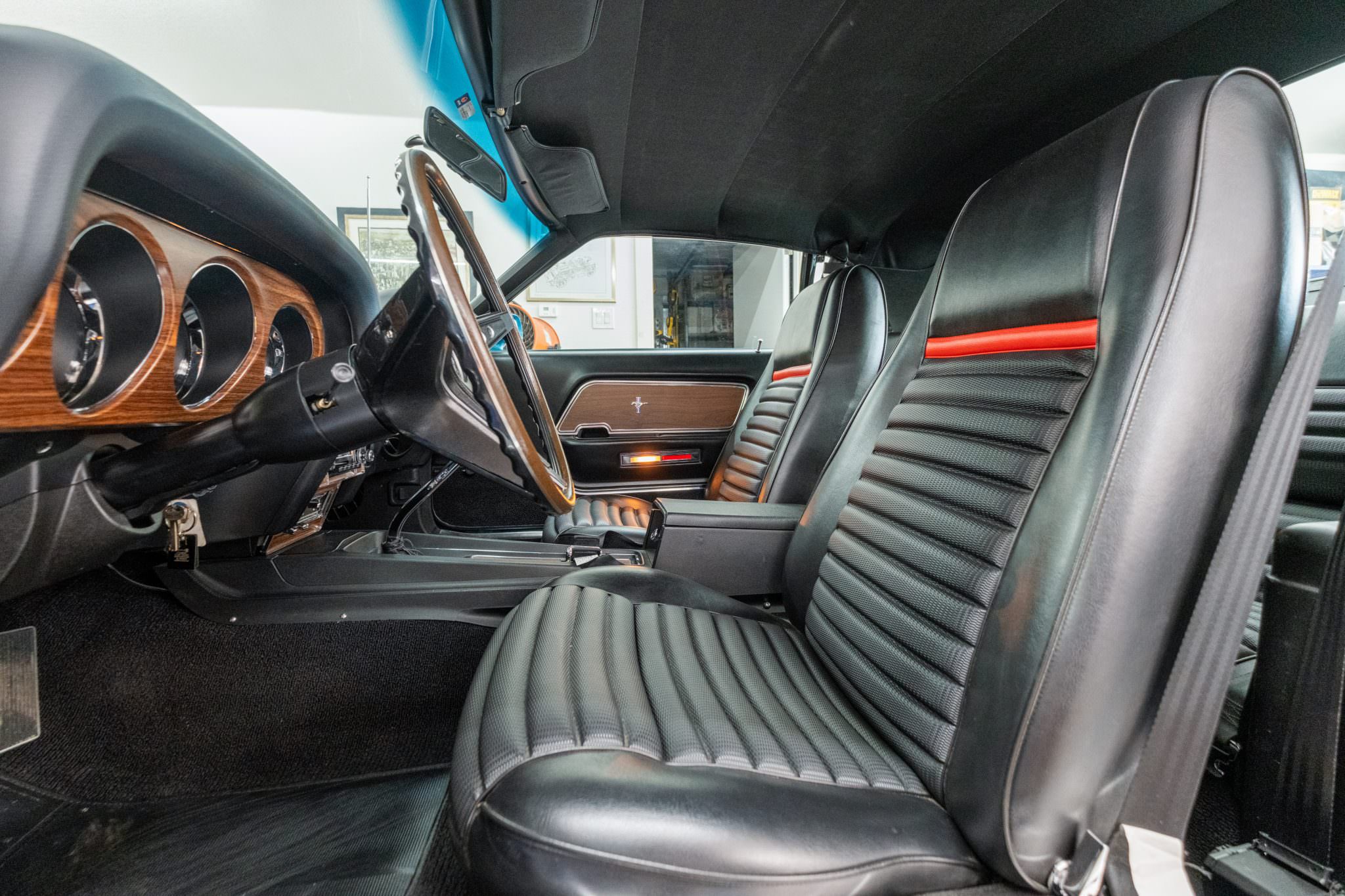
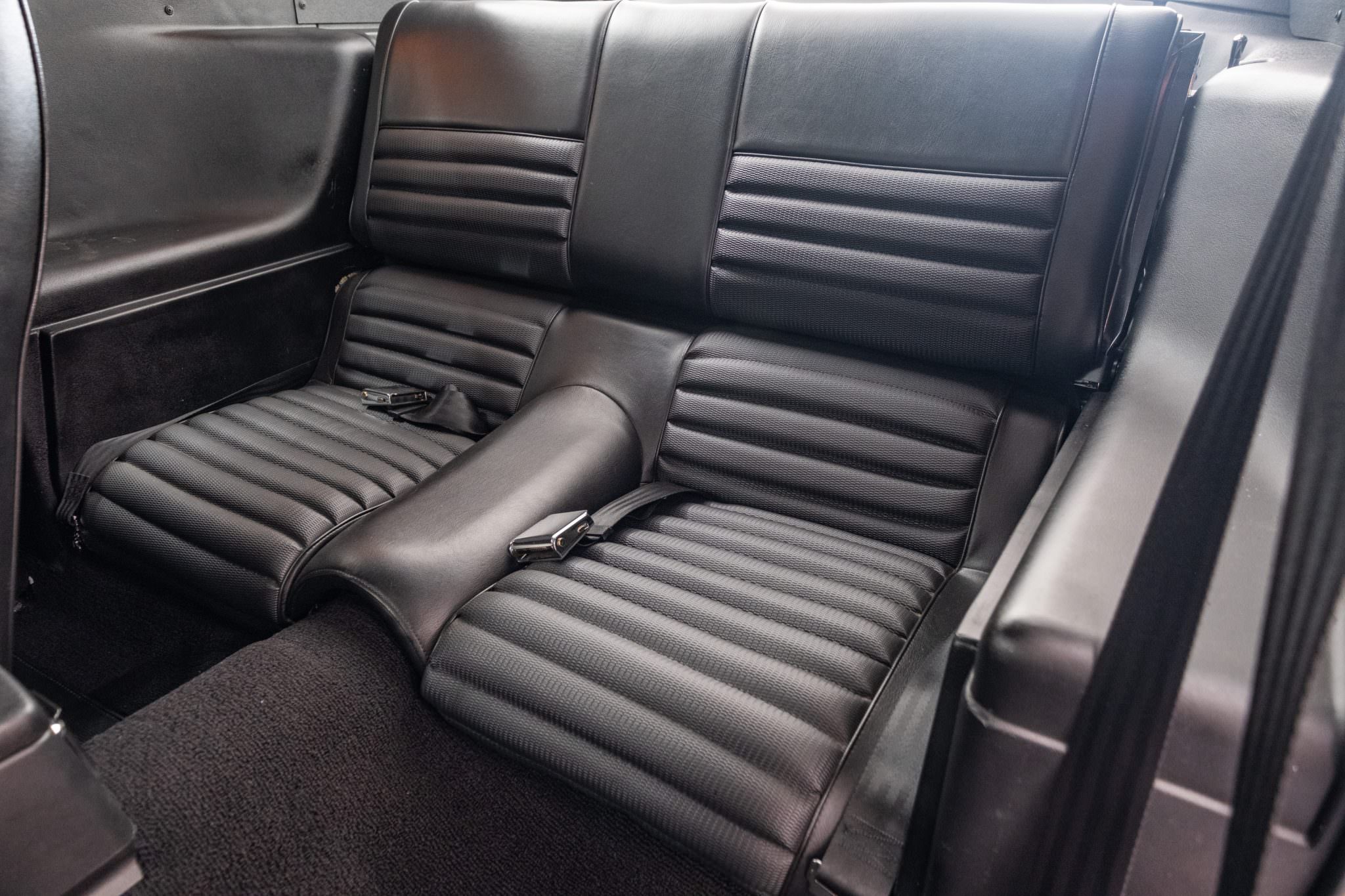
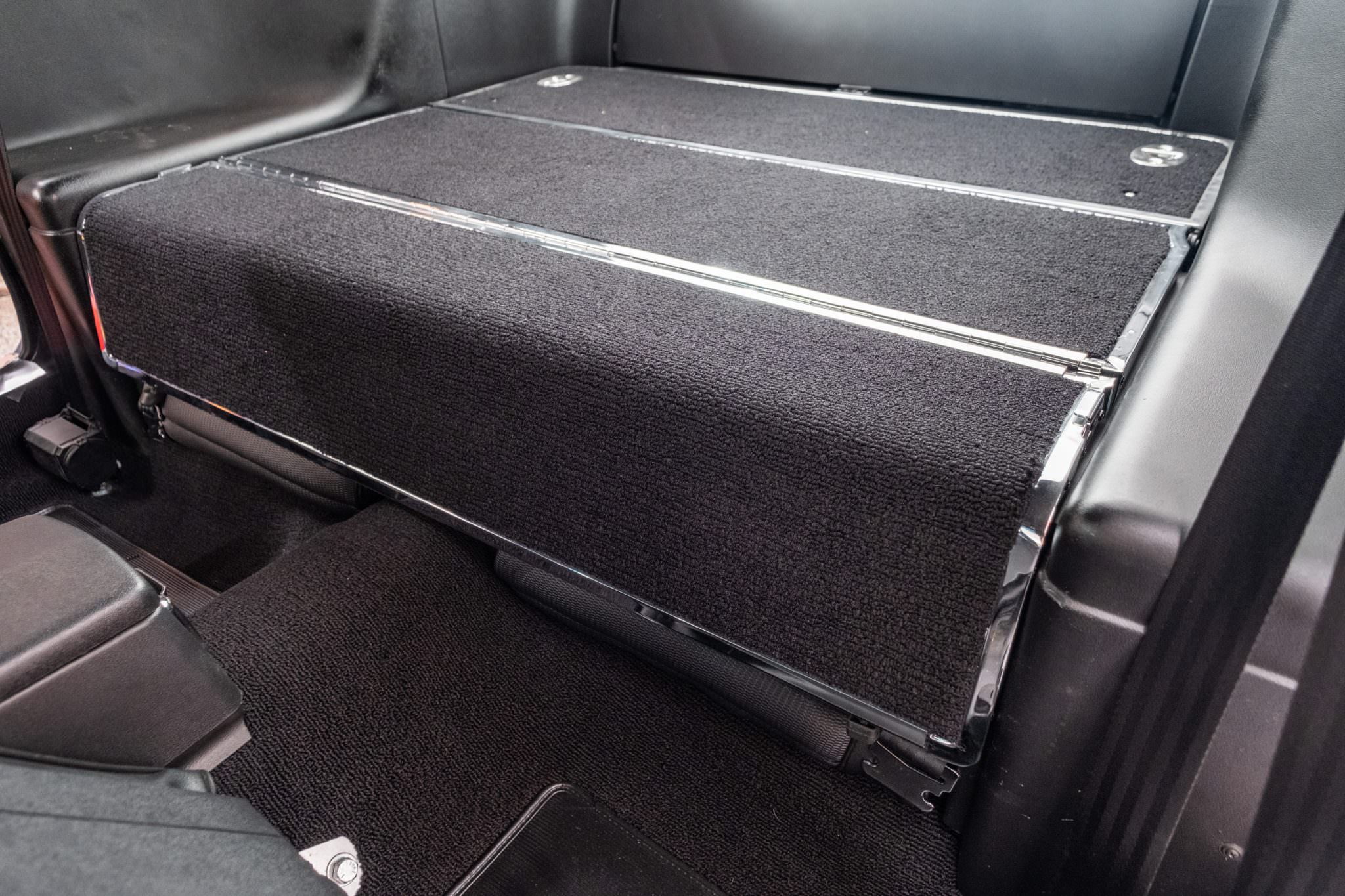
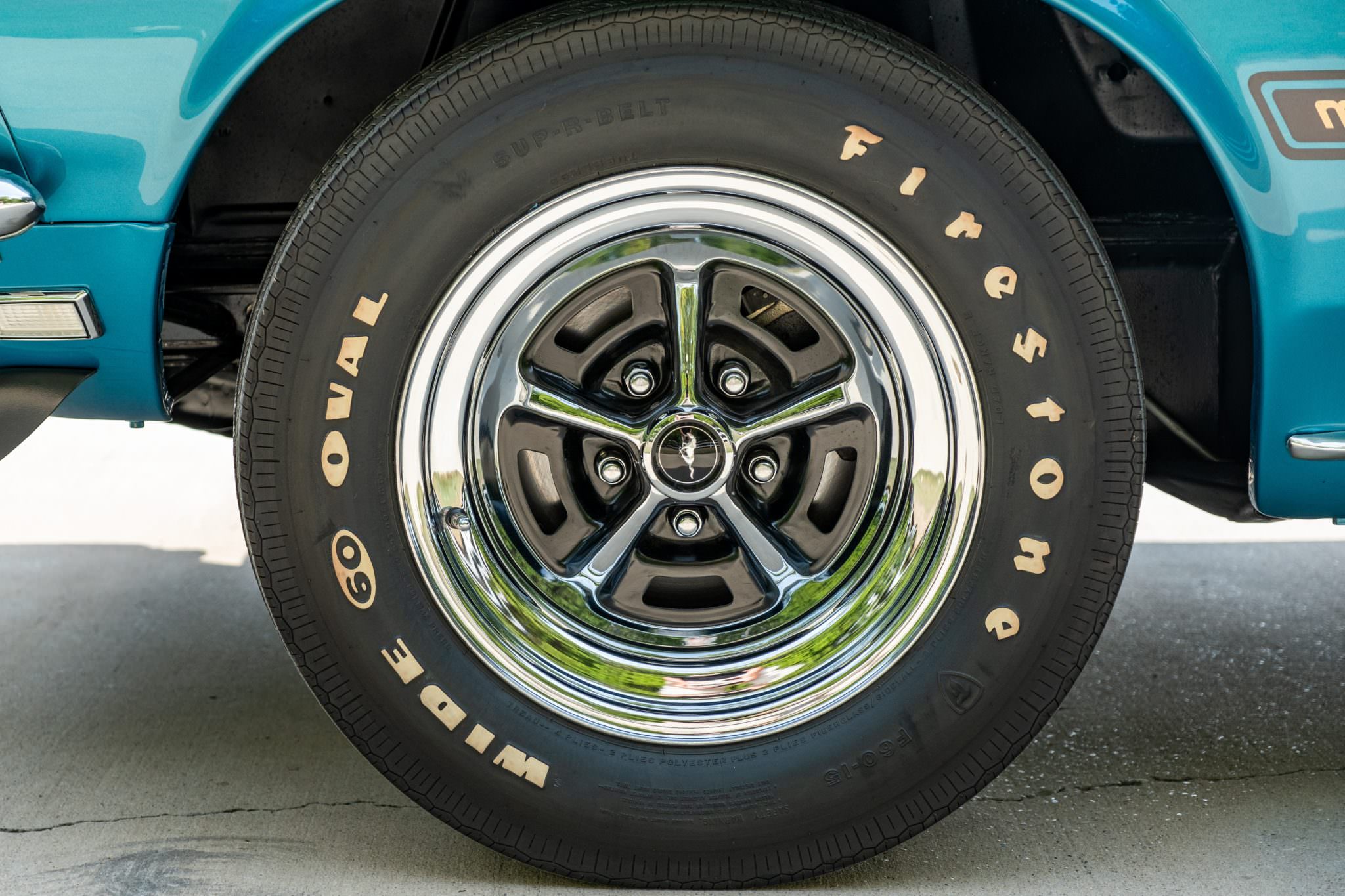
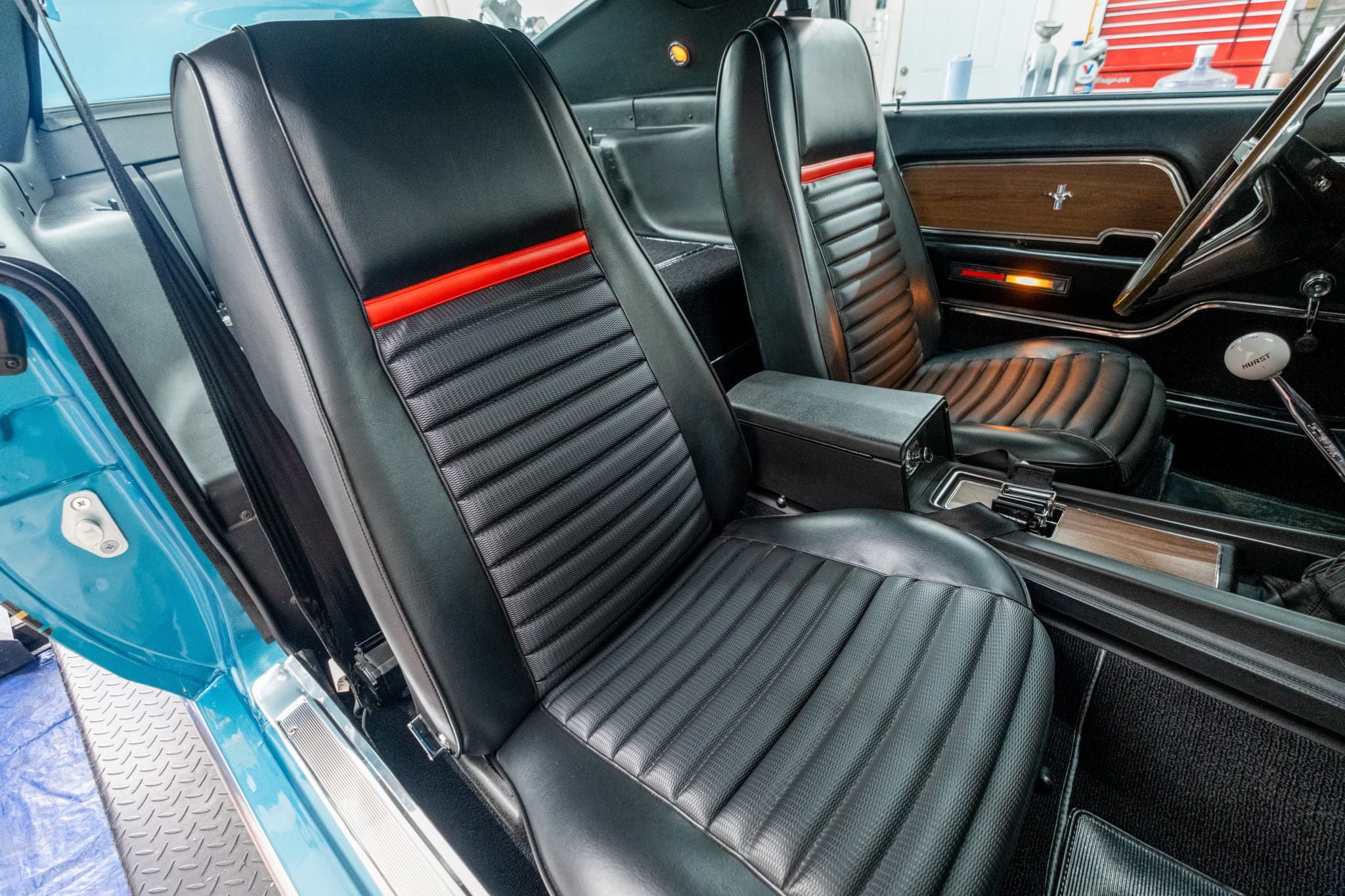
The exterior carries the expected Mach 1 equipment, including a hood scoop, hood pins, front spoiler, Mach 1 grille and graphics, and 15-inch Magnum 500 wheels fitted with Firestone Wide Oval tires. Inside are black vinyl high-back bucket seats with red accents, a folding rear seat, center console, Hurst shifter, AM radio, deluxe seatbelts, and Vintage Air climate control.
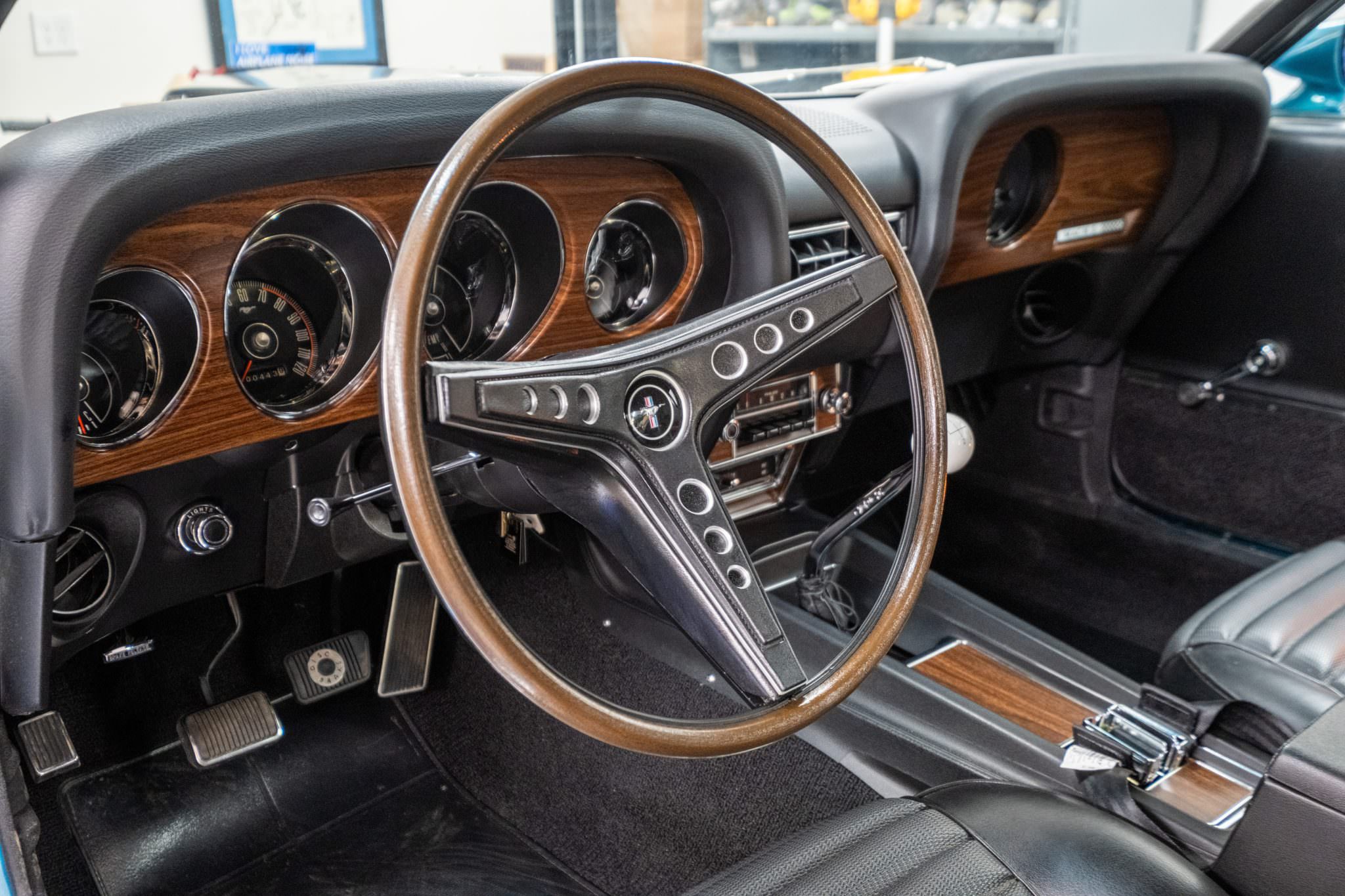
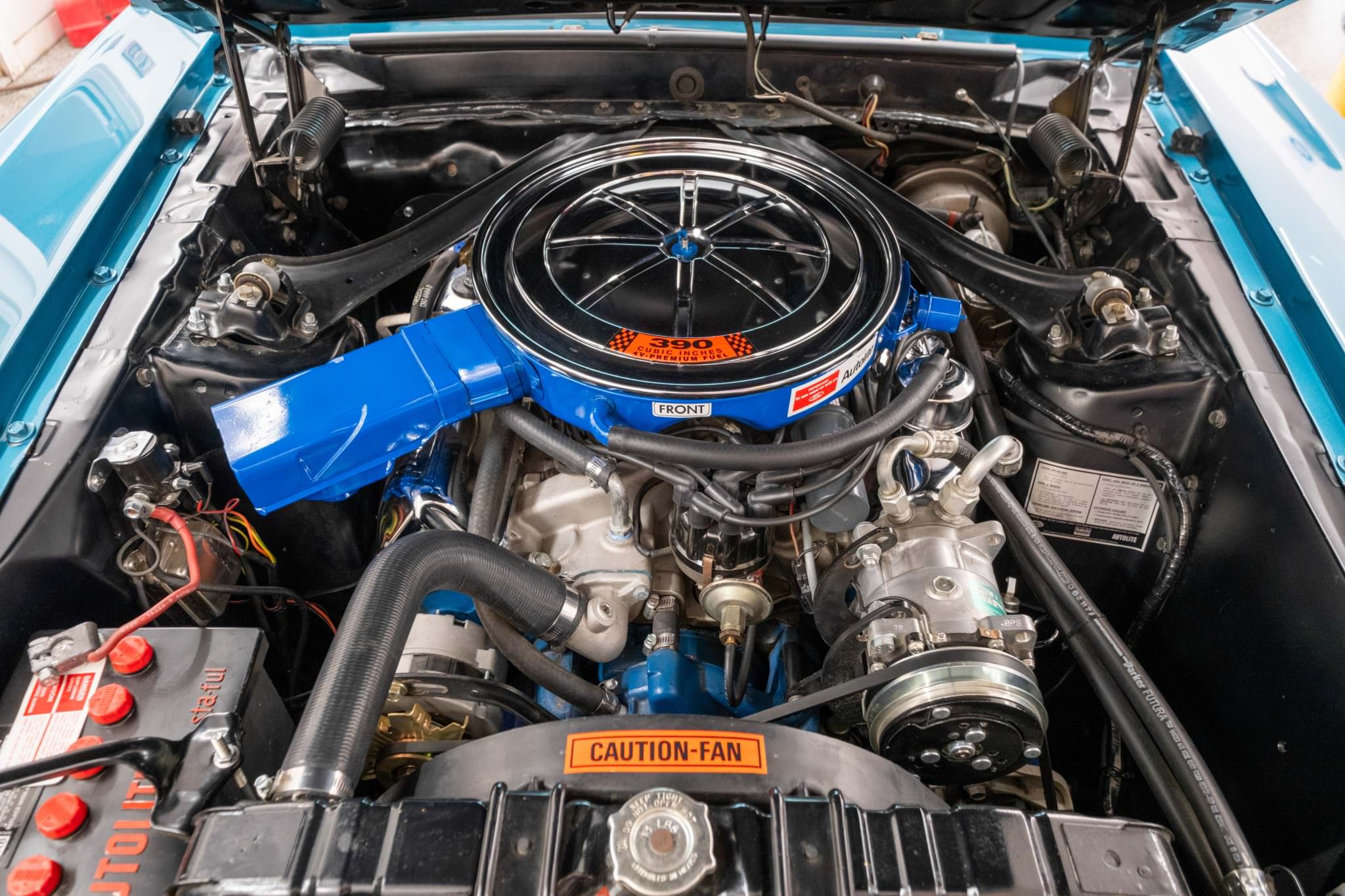
This is a 1969 Ford Mustang Mach 1, it was built on November the 11th, 1968 and delivered new to Memphis, Tennessee. It left the factory finished in Gulfstream Aqua and was bought by the current seller in 2017. The car was subsequently restored, including a repaint in its original color and mechanical work that was all completed in 2023.
Approximately 450 miles have been added since the restoration. The car is now being offered for sale with an Elite Marti Report confirming its factory equipment and build date.
It also comes with build records, a reproduction window sticker, warranty tag, and a Texas title in the seller’s name. If you’d like to read more or place a bid you can visit the listing here.
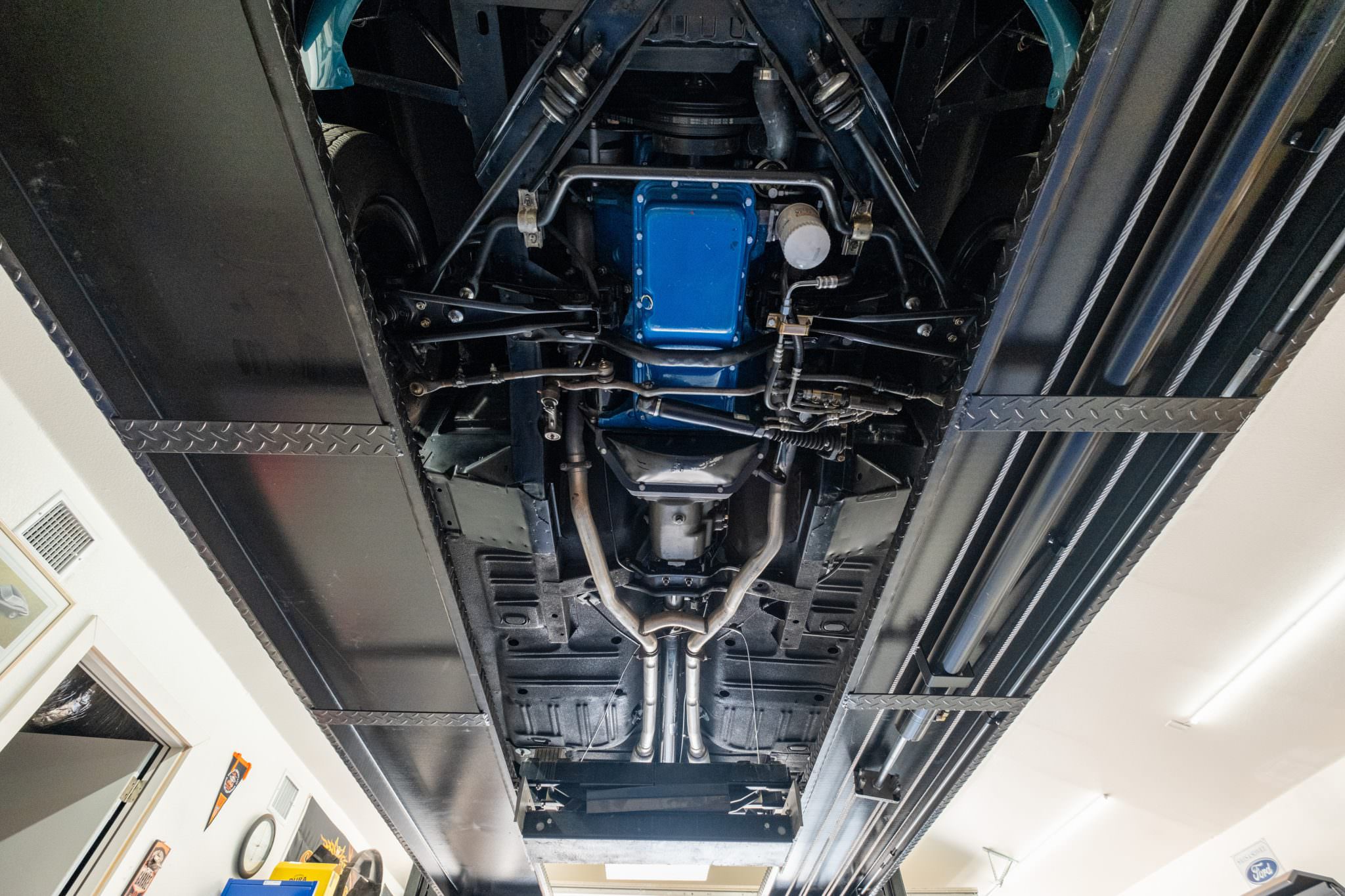
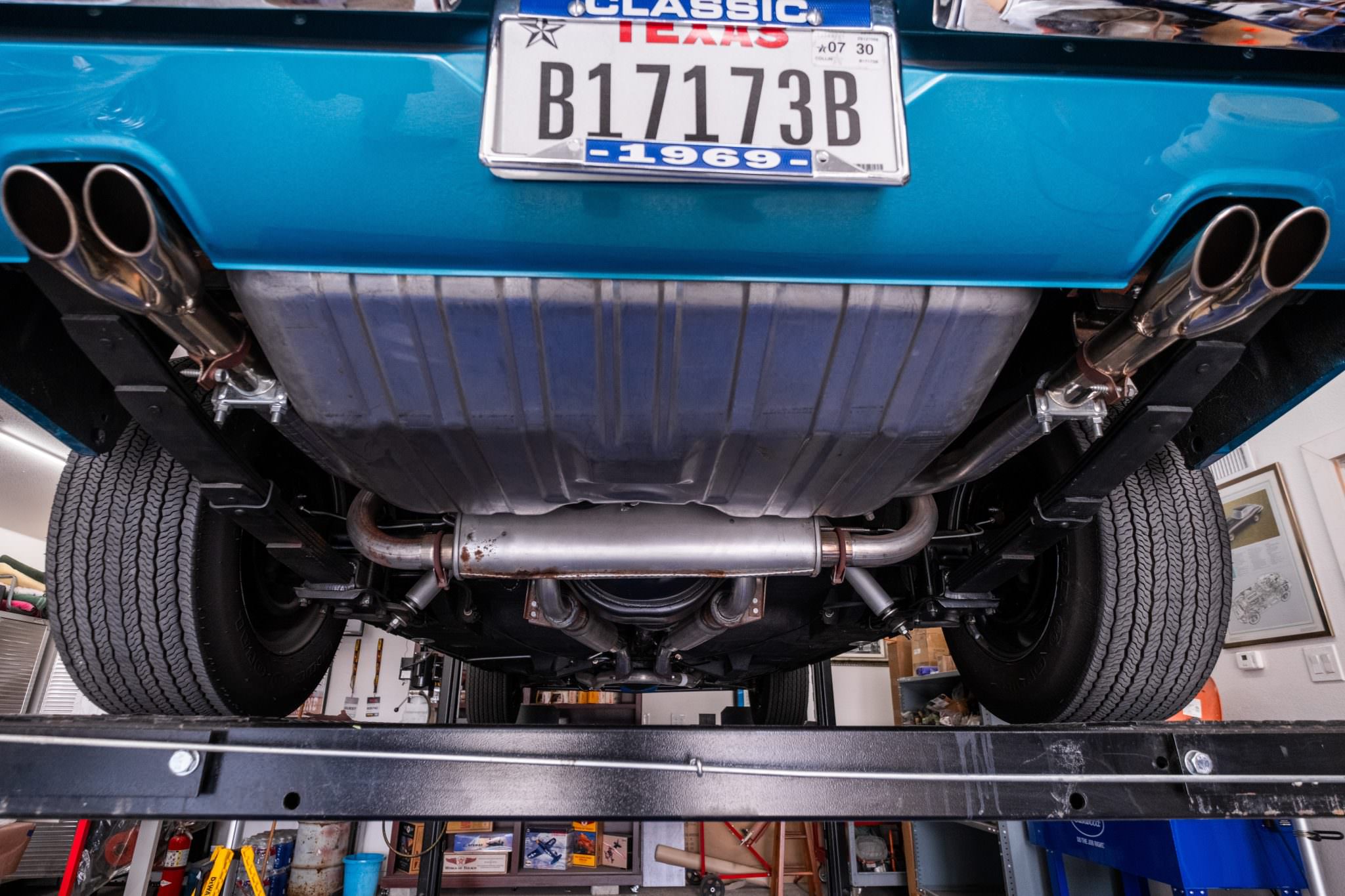
Images courtesy of Bring a Trailer

Articles that Ben Branch has written have been covered on CNN, Popular Mechanics, Smithsonian Magazine, Road & Track Magazine, the official Pinterest blog, the official eBay Motors blog, BuzzFeed, Autoweek Magazine, Wired Magazine, Autoblog, Gear Patrol, Jalopnik, The Verge, and many more.
Silodrome was founded by Ben back in 2010, in the years since the site has grown to become a world leader in the alternative and vintage motoring sector, with well over a million monthly readers from around the world and many hundreds of thousands of followers on social media.