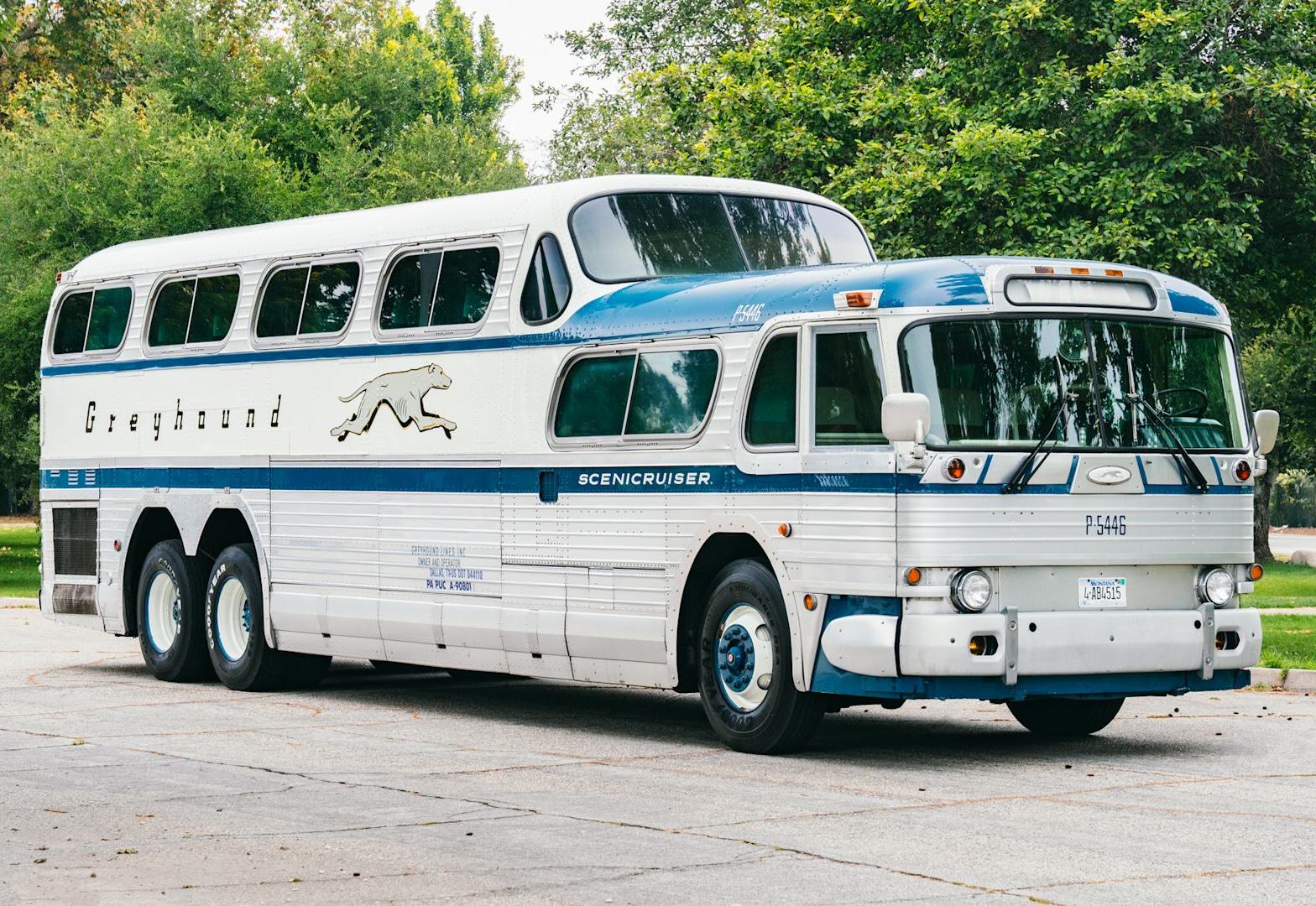
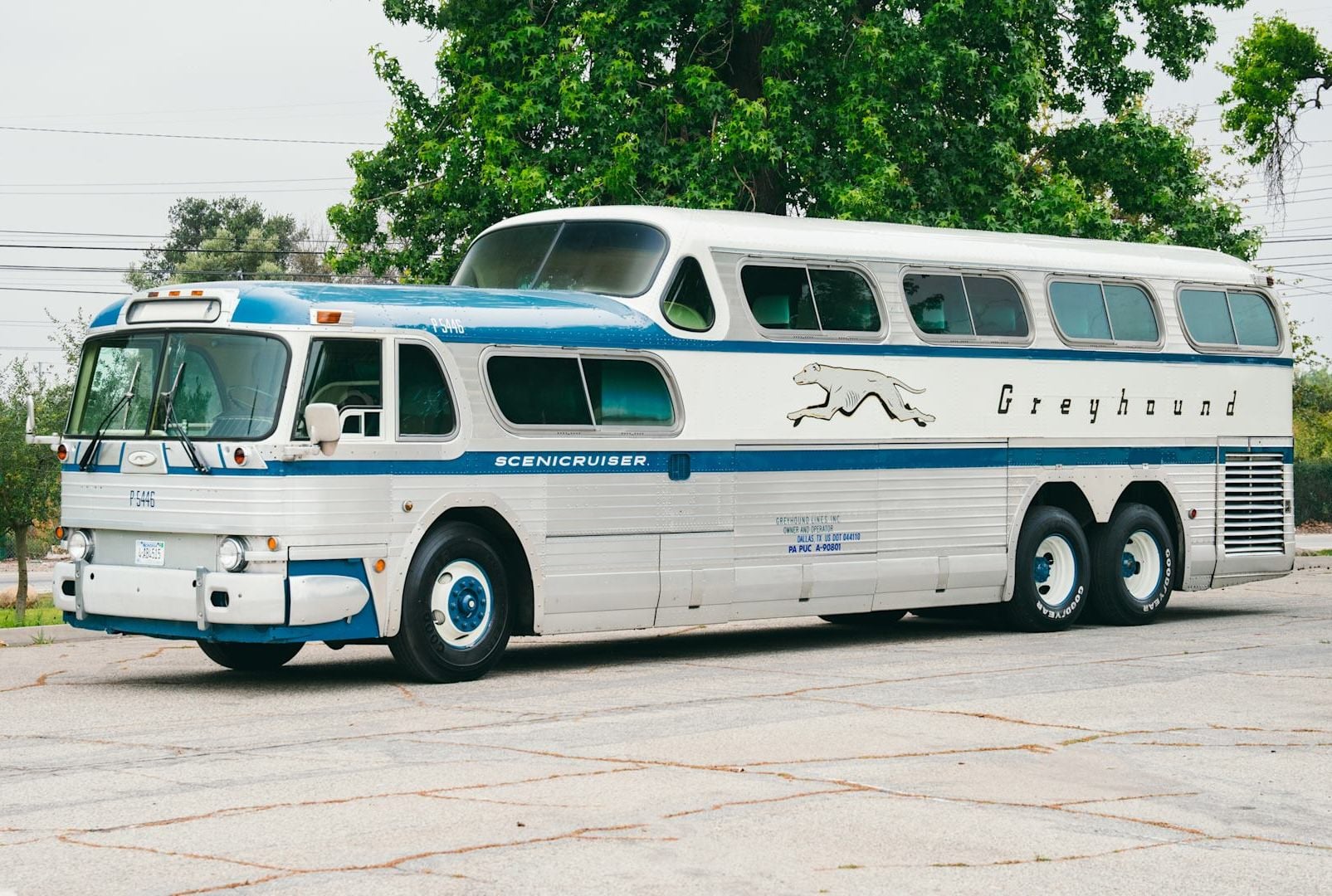
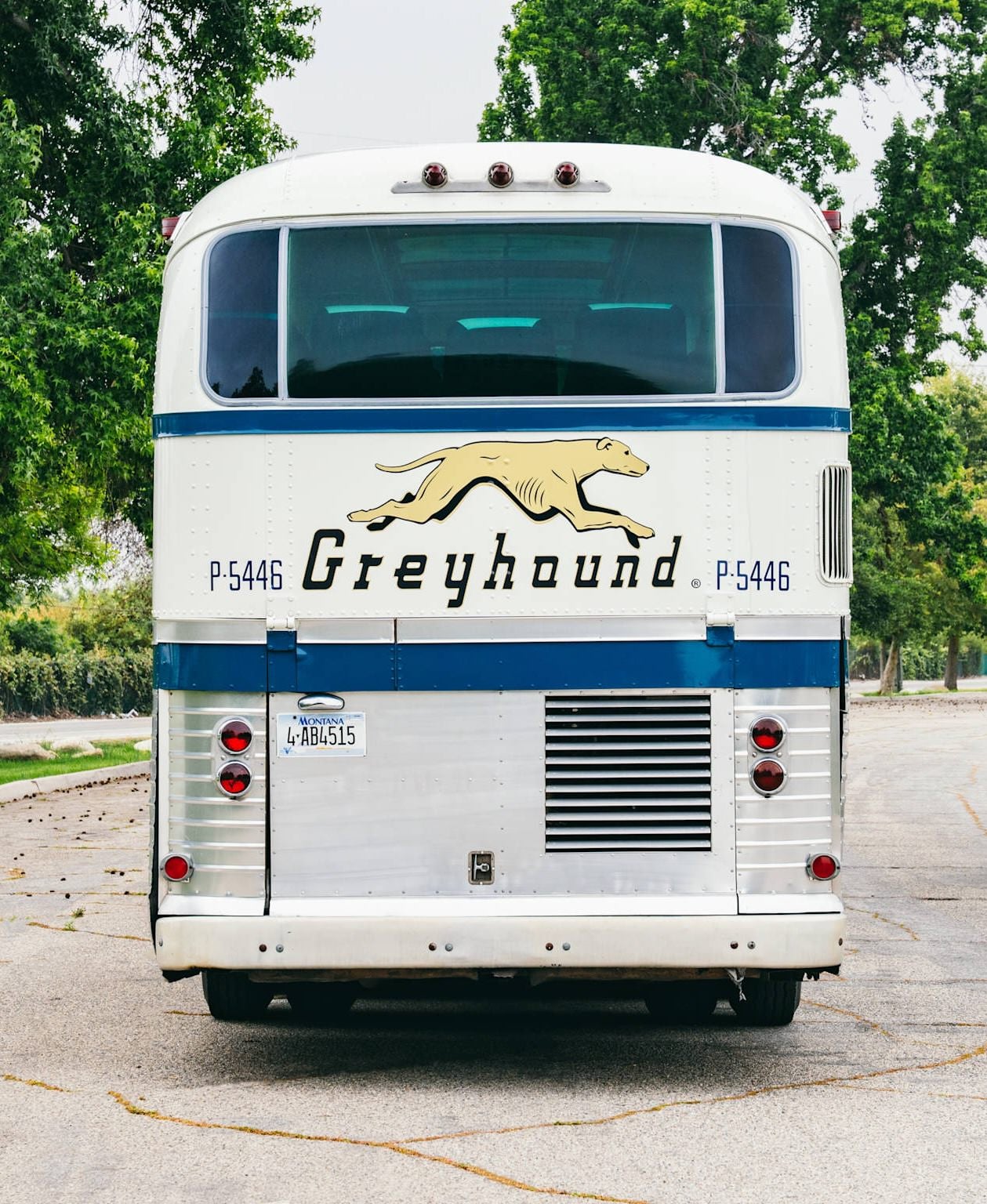
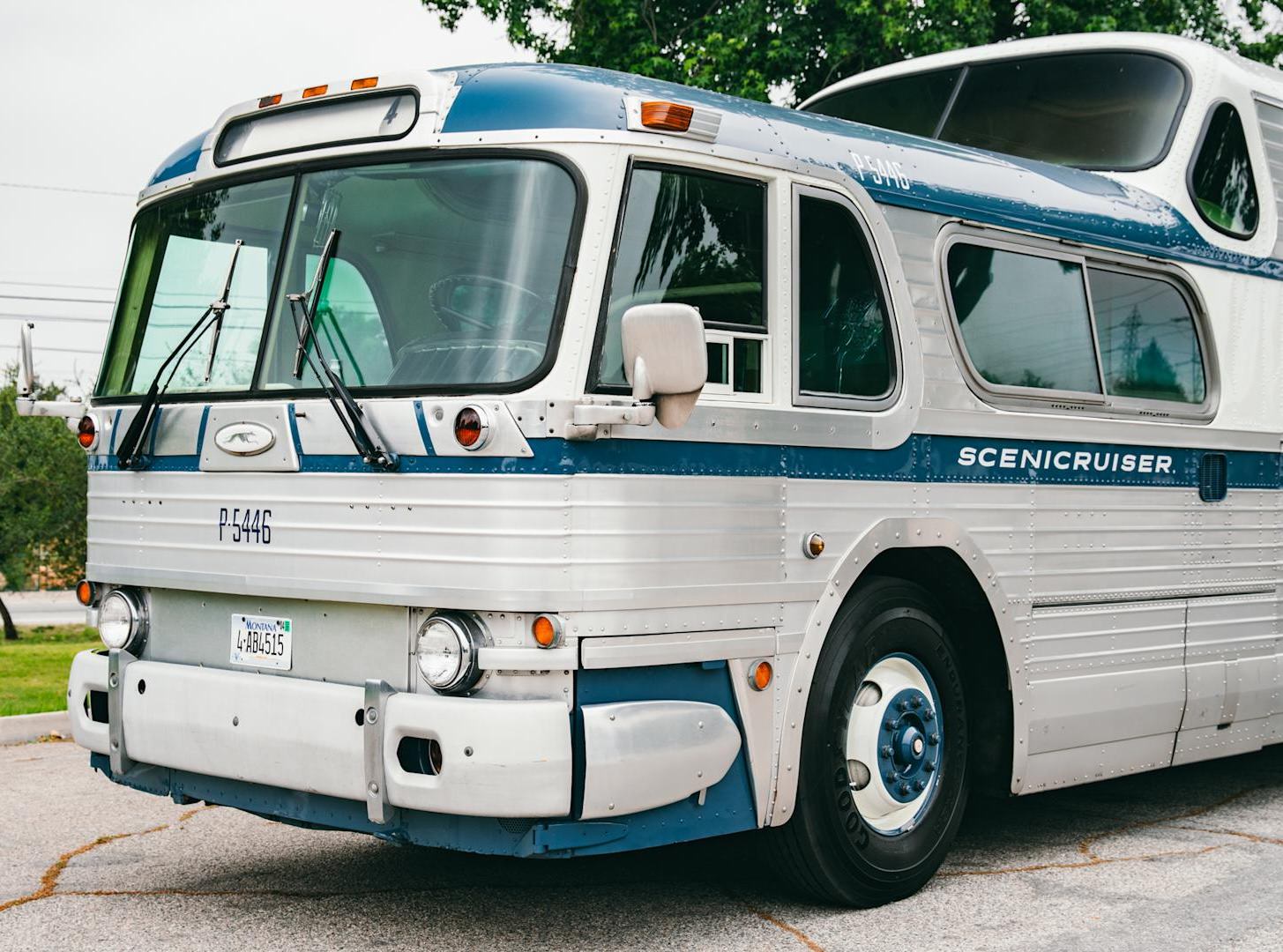
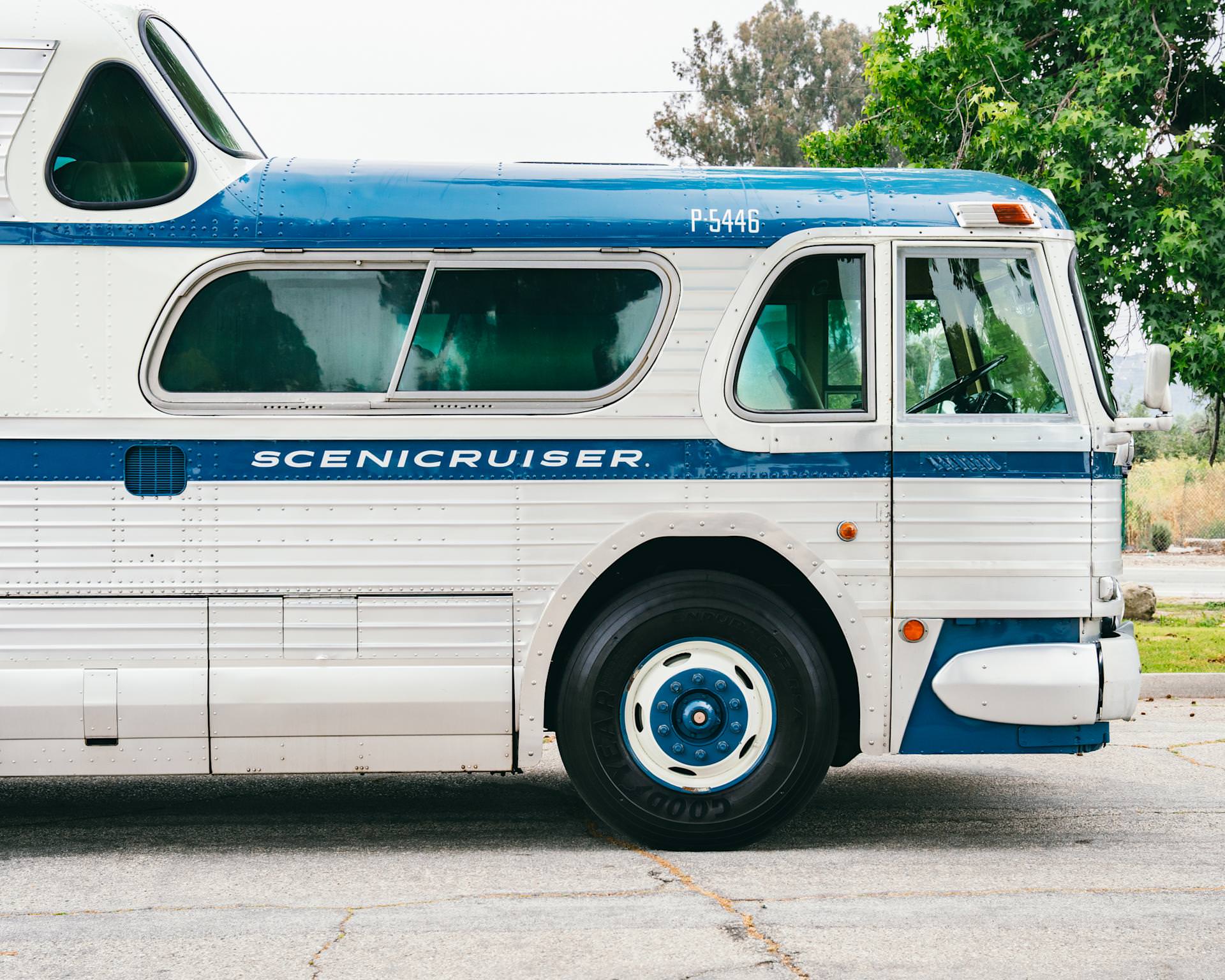
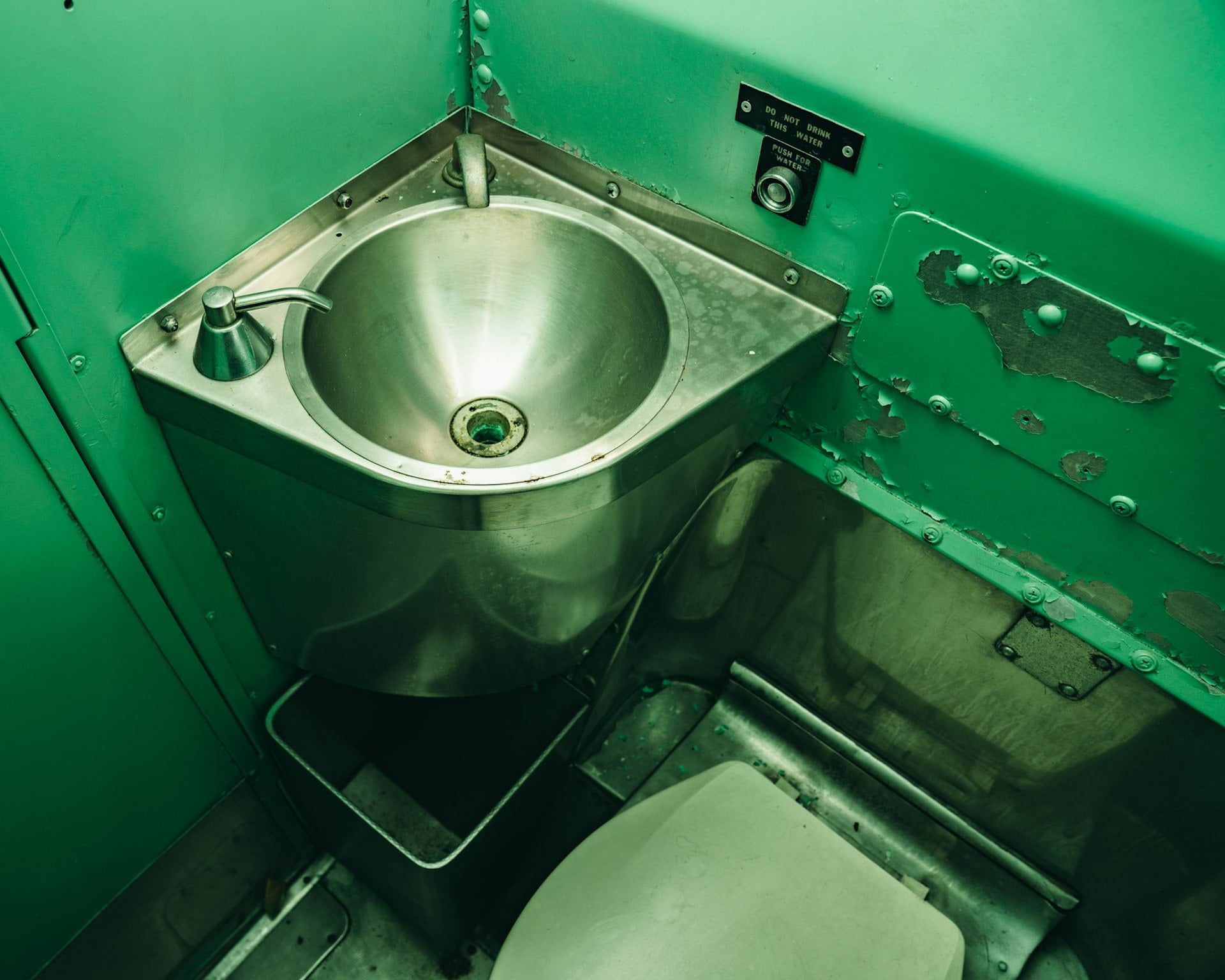
This is an original General Motors Scenicruiser, in fact it’s actually serial number 001, the very first production Scenicruiser ever made. It’s now being offered for sale, and it’s fully fitted out with seats and a bathroom.
The Scenicruiser is one of the most memorable coach designs of the 20th century, if not all time, thanks to its unusual upper deck, monocoque construction, and the fact that when it first entered service, it had twin engines and six forward speeds.
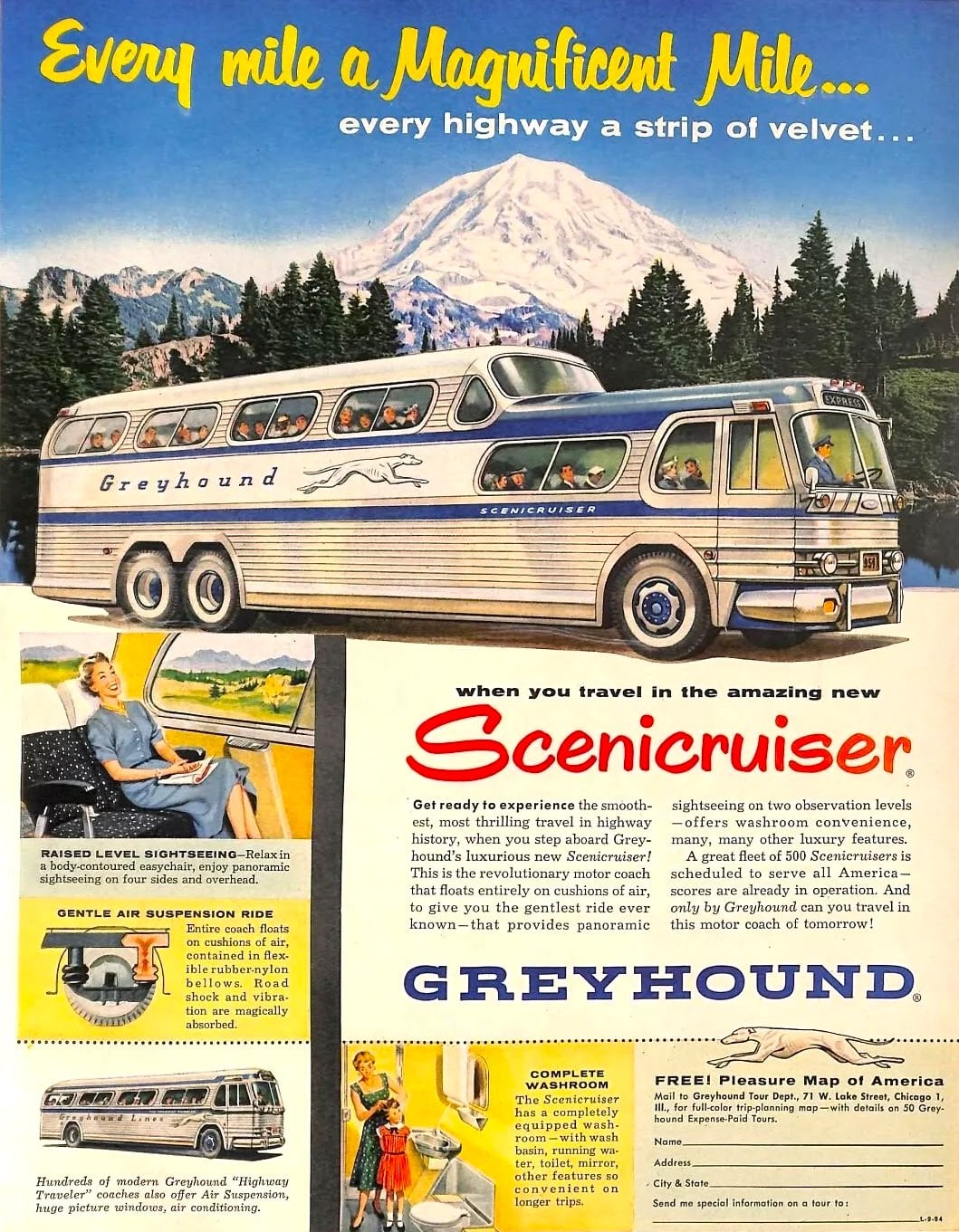
 The design of the Scenicruiser would become one of the most famous and enduring bus shapes in American history, and tragically there are now thought to be only about 20% of them still around. Image courtesy of Greyhound.
History Speedrun: The General Motors Scenicruiser
General Motors built exactly 1,000 PD-4501 Scenicruisers for Greyhound between 1954 and 1956, they then rebuilt the 1953 prototype to the same specification as number 1,001. The design would become one of the most famous and enduring bus shapes in American history, and tragically there are now thought to be only about 20% of them still around.
Despite their undeniable good-looks, the buses were a maintenance nightmare serious enough to threaten a major lawsuit and it helped unravel a coach-supply relationship with GM that dated back to 1930.
The Origins Of The Scenicruiser
The idea behind the Scenicruiser predated the end of WWII, in October of 1944 Greyhound president Orville Caesar and industrial designer Raymond Loewy filed a patent for a double-decker coach that seated 50 passengers within the footprint of a standard 41 seat bus.
GM and Consolidated Vultee received the prototype contracts, but Consolidated withdrew and Greyhound ultimately took construction in-house. The GX-1 “Highway Traveler” was built at Greyhound’s Chicago workshops and revealed in April of 1948. It was a full double-decker, 35 feet long, with the driver upstairs and two air-cooled horizontally opposed six-cylinder gasoline engines from the Franklin engine works. It was soon parked under a tarpaulin.
The GX-2 design of 1949 was the first coach to carry the Scenicruiser name, and it set what would become the final production layout. It was 40 feet long on tandem rear axles, with ten seats on the lower deck and 33 on a raised rear deck, and Greyhound assembled it from an unfinished GM Silversides shell with a single 6-71 diesel engine in the back. Most states still capped buses at 35 feet, so Greyhound toured the coach to state capitals to lobby for a 40 foot limit, and by June of 1950 it had visited 46 states.
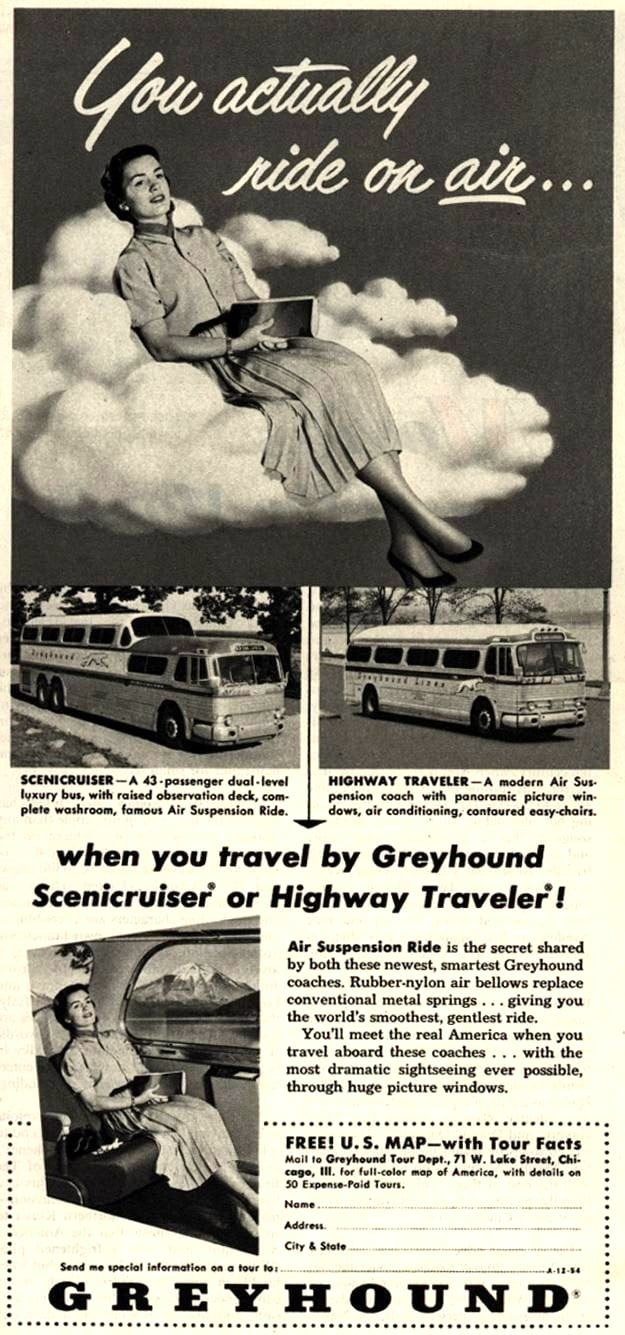
Despite their undeniable good-looks, the busses were a maintenance nightmare serious enough to threaten a major lawsuit and it helped unravel a coach-supply relationship with GM that dated back to 1930. Image courtesy of Greyhound.
Time magazine credited the bus design to Raymond Loewy in 1949, and most later accounts followed along. Greyhound’s 1954 literature said the production coach “was designed by Greyhound in cooperation with the General Motors Corporation,” with Loewy Associates responsible for the interior color scheme. There’s no small amount of controversy about it all, and it’s been researched remarkably thoroughly.
The GM EXP-331 Prototype Debuts
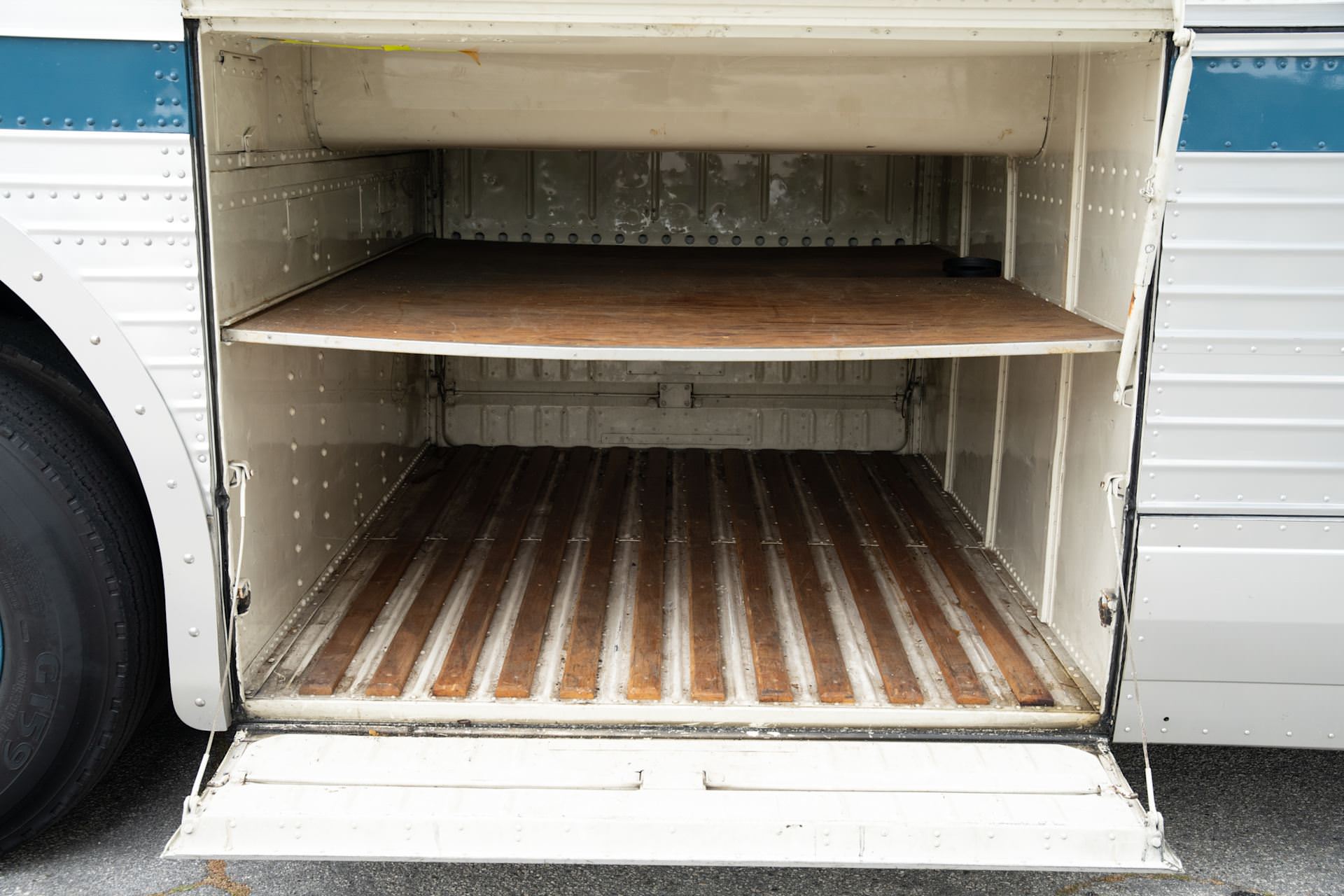
General Motors built the hand-made EXP-331 prototype between 1952 and 1953, the bus shared much of its styling and air suspension with the 35 foot PD-4104 that was launched in 1953. The first production coaches were delivered at a ceremony in Pontiac, Michigan on July the 14th, 1954. The body was a monocoque with fluted aluminum siding, air conditioning and a washroom on the lower deck, there was 344 cubic feet of luggage space under the upper deck, a 180 gallon fuel tank, and a loaded weight of 20 tons. Of the two rear axles, only the forward one was driven.
No single GM diesel engine that was in production at the time could move the weight of the new bus up a grade at highway speed. As a result, GM’s chief engineer, Milo Dean, paired two 4-71 two-stroke fours, each with a displacement of 284 cubic inches (4.7 liters) and 150 bhp, set side by side at a 140º angle. Each engine drove through its own fluid coupling into a common transfer case, then a 2-speed clutch and a Spicer 3-speed gearbox, giving six forward ratios in total.
The right-side engine also ran the air-conditioning compressor. Either engine was meant to be able to bring the coach home alone albeit much more slowly, spare engine units were cached along the routes, and the whole assembly could be pulled out on a dolly for quick swaps.
This engine pairing arrangement didn’t work as intended. Greyhound’s own statistics put almost 88% of mechanical failures on the power plant system. The clutch was solenoid-operated, either fully in or fully out, so on every start the bus lurched awkwardly, GM changed to a mechanical linkage in early 1956, and about 900 coaches already in service were retrofitted.
From coach 571 onwards in mid-1955 the transfer case was redesigned and the driver-operated single-engine running feature was abandoned. New coaches were driven from Pontiac to Greyhound’s Toledo shop for corrections before entering service.
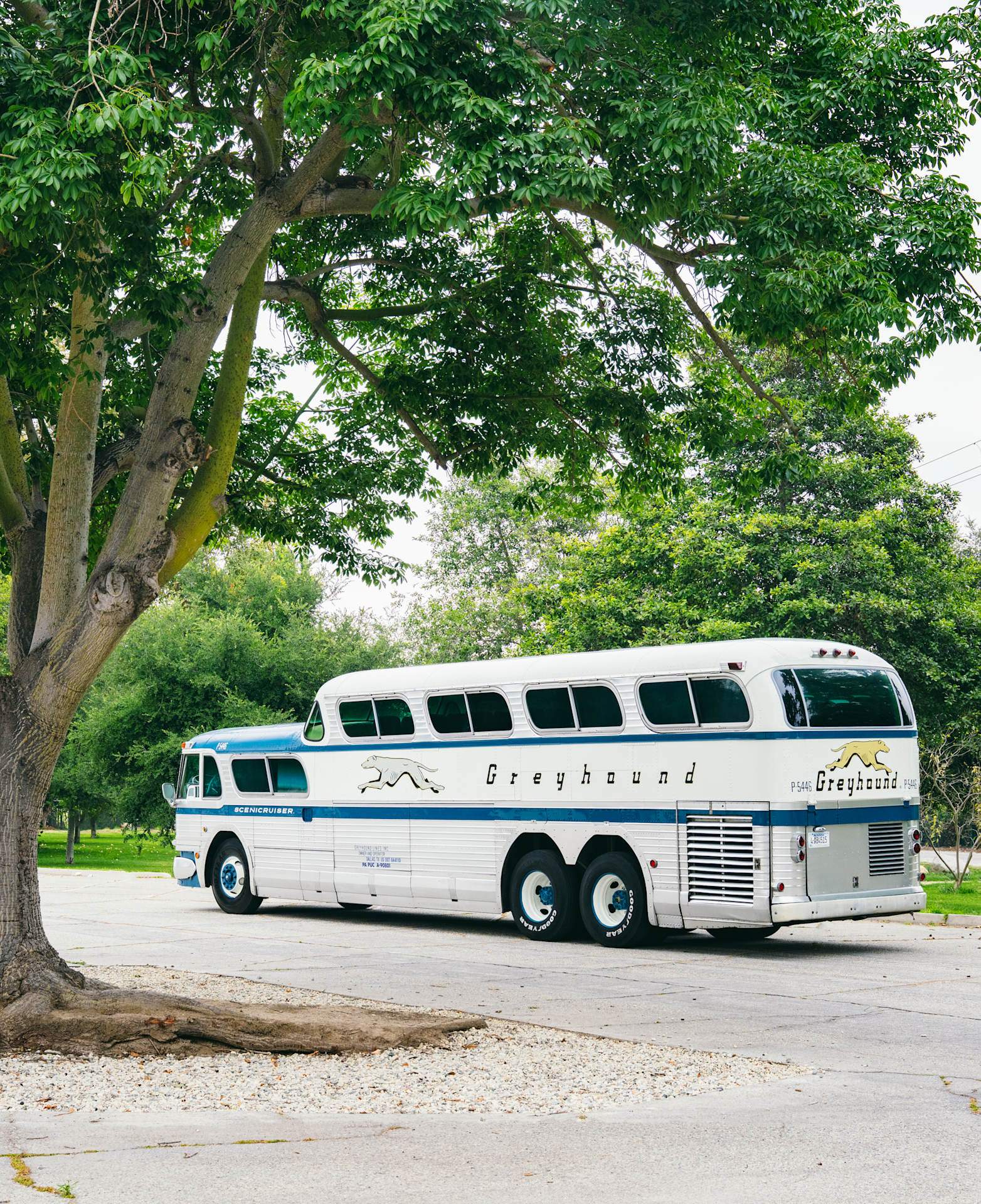
This is an original General Motors Scenicruiser, in fact it’s actually serial number 001, the very first Scenicruiser ever made. It’s now being offered for sale, and it’s fully fitted out with seats and a bathroom.
Arthur Genet, Greyhound’s president from early 1956, announced on July the 25th, 1956, 13 days after the last Scenicruiser shipped, that the company would seek damages from GM for “repeated and extraordinary mechanical failures.” The dispute was settled on October the 11th without a suit being filed, alongside a $17 million Greyhound order for conventional GM coaches.
Western Canadian Greyhound Lines had acquired a majority interest in Motor Coach Industries in 1948 and The Greyhound Corporation bought the remaining shares in 1958, and a 1956 federal antitrust action against GM ended in a 1965 consent decree requiring GM to sell its coaches to any carrier and barring exclusive supply arrangements. Scenicruiser imitators also appeared, among them Beck’s DH-1040 (12 built) and a lone Mack MV-620-D.
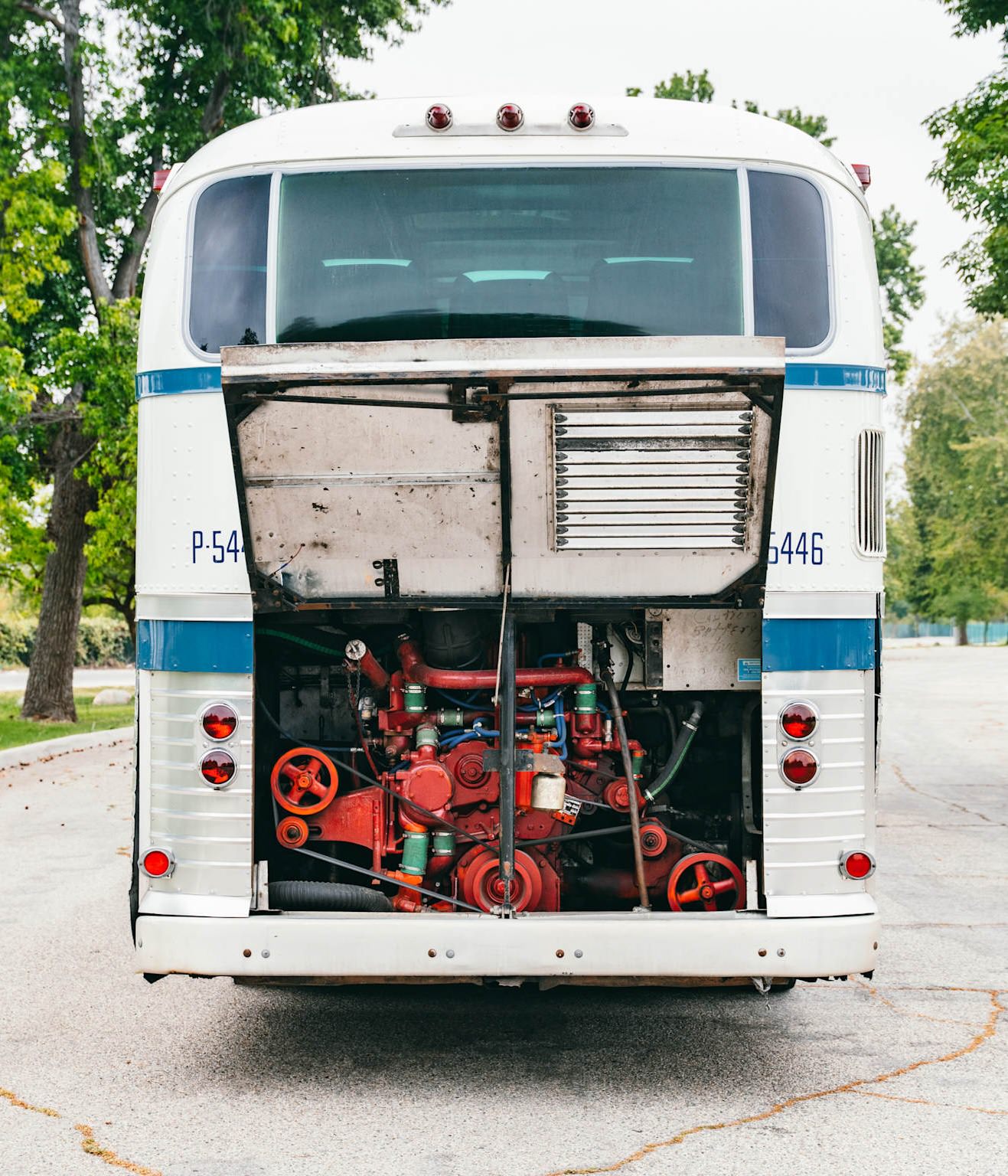
Once the Detroit Diesel 8V-71 engine became available, Greyhound hired Marmon-Herrington of Indianapolis to repower the 979 surviving coaches (22 had been lost to fires and wrecks) between October of 1961 and September of 1962 for about $10 million in total. Each coach received a single 568 cubic inch (9.3 liter) V8, the same displacement as the two fours combined, a conventional clutch and a Spicer 4-speed gearbox. Greyhound spent about $3 million more on interior updates and relettered the fleet as the “Super Scenicruiser.”
These updated coaches went to 17 regional Greyhound operating companies, and around 1970 some 500 of them were renovated again, about 130 became “combo” coaches with a walled-off rear cargo bay for Greyhound Package Express.
The type was withdrawn about 1975, the last of them in commuter service around San Francisco. Second-hand Scenicruisers ran for schools, churches, charter operators, and several Trailways affiliates. About 213 are known to survive, but only 39 of them are thought to still be fitted with seats.
The 1954 GM PD-4501 Scenicruiser Shown Here
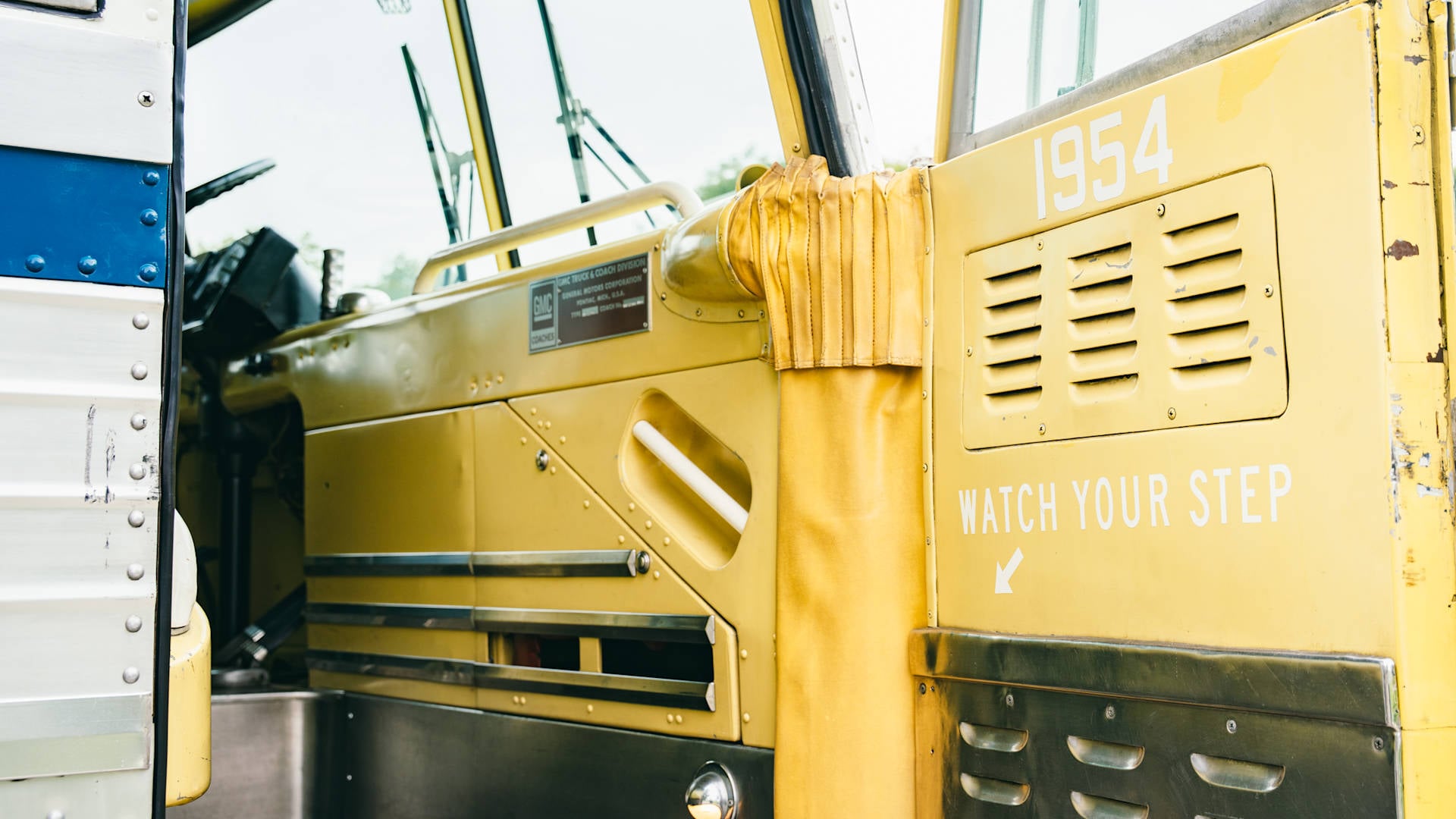
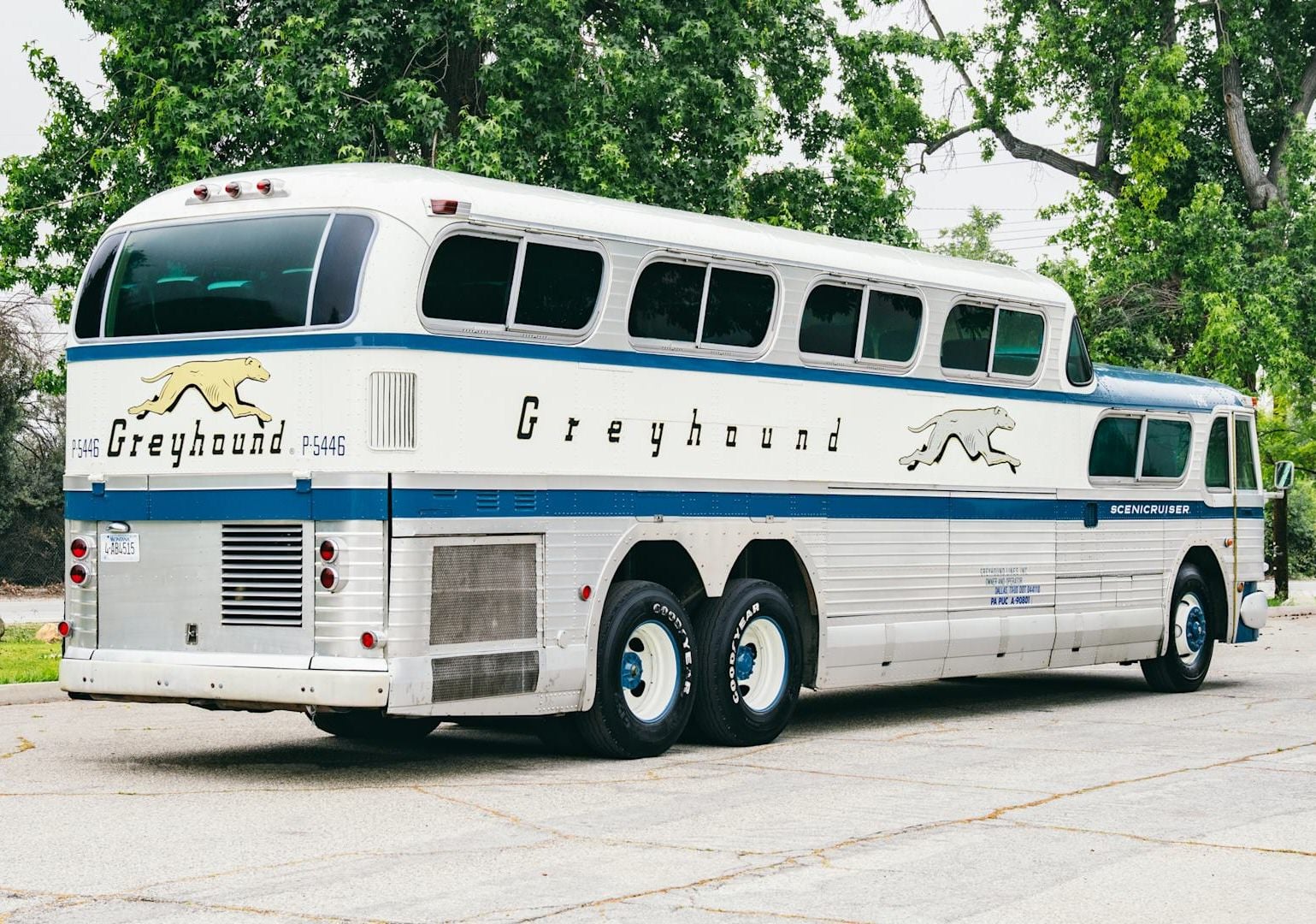
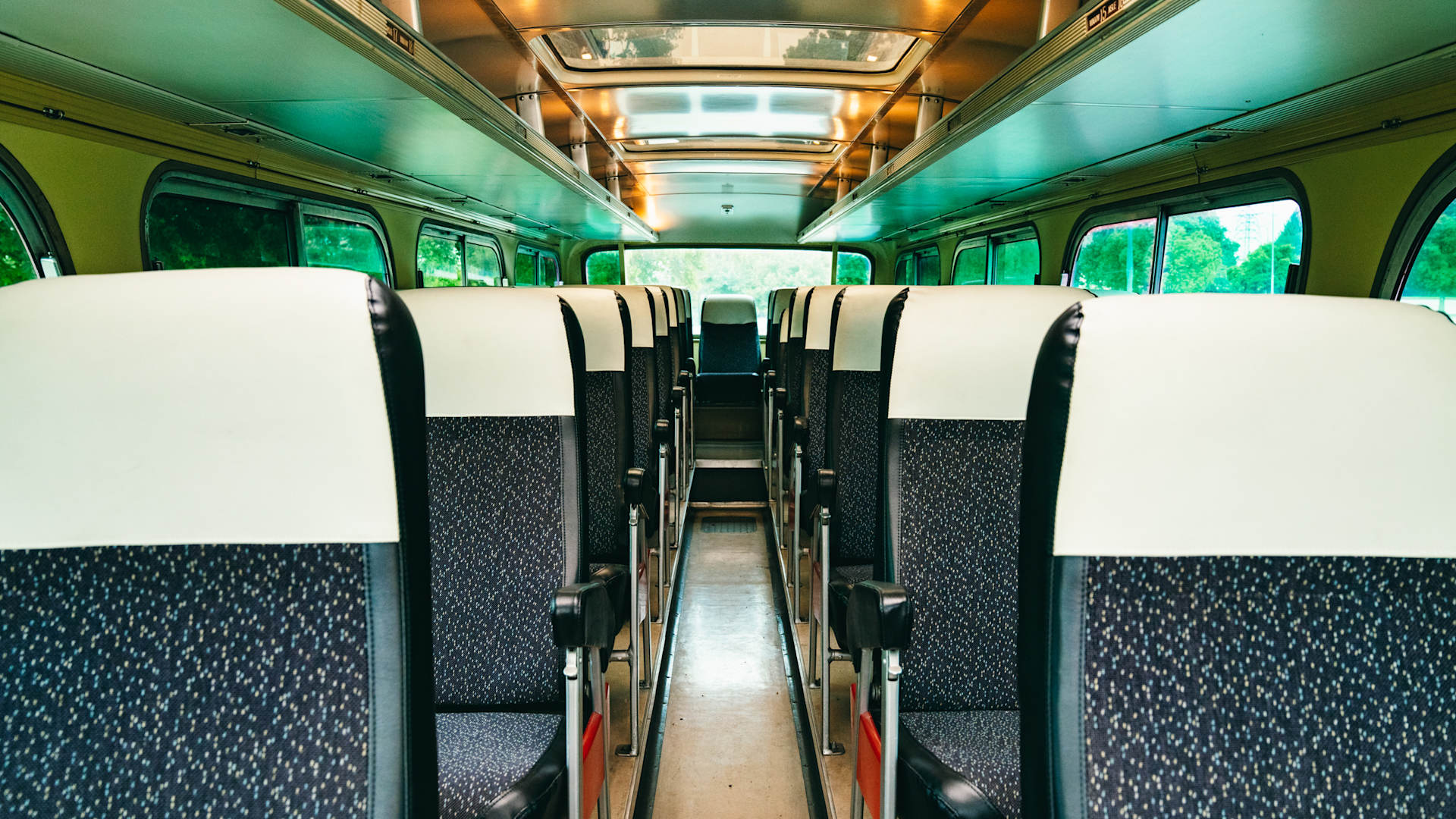
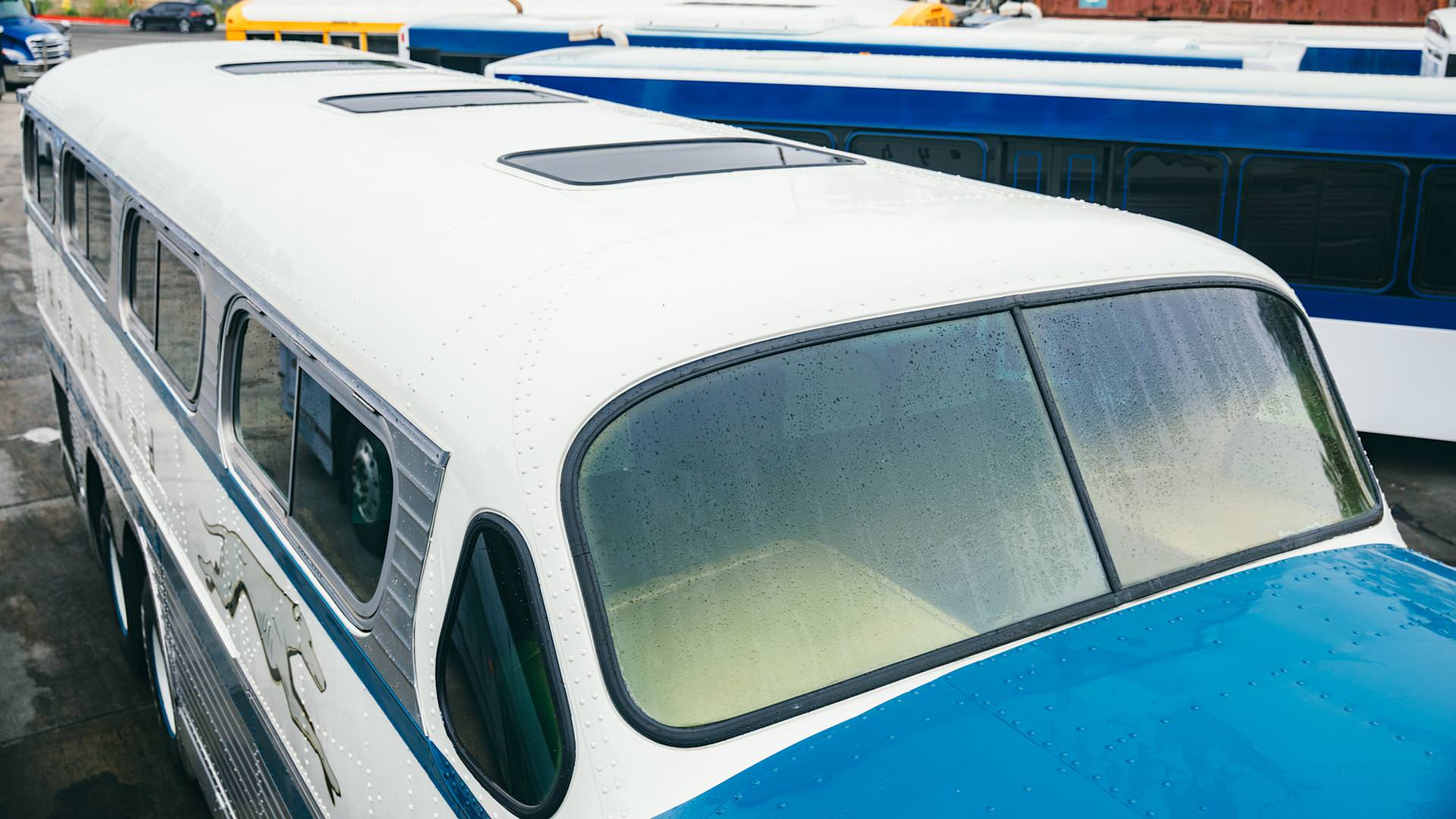
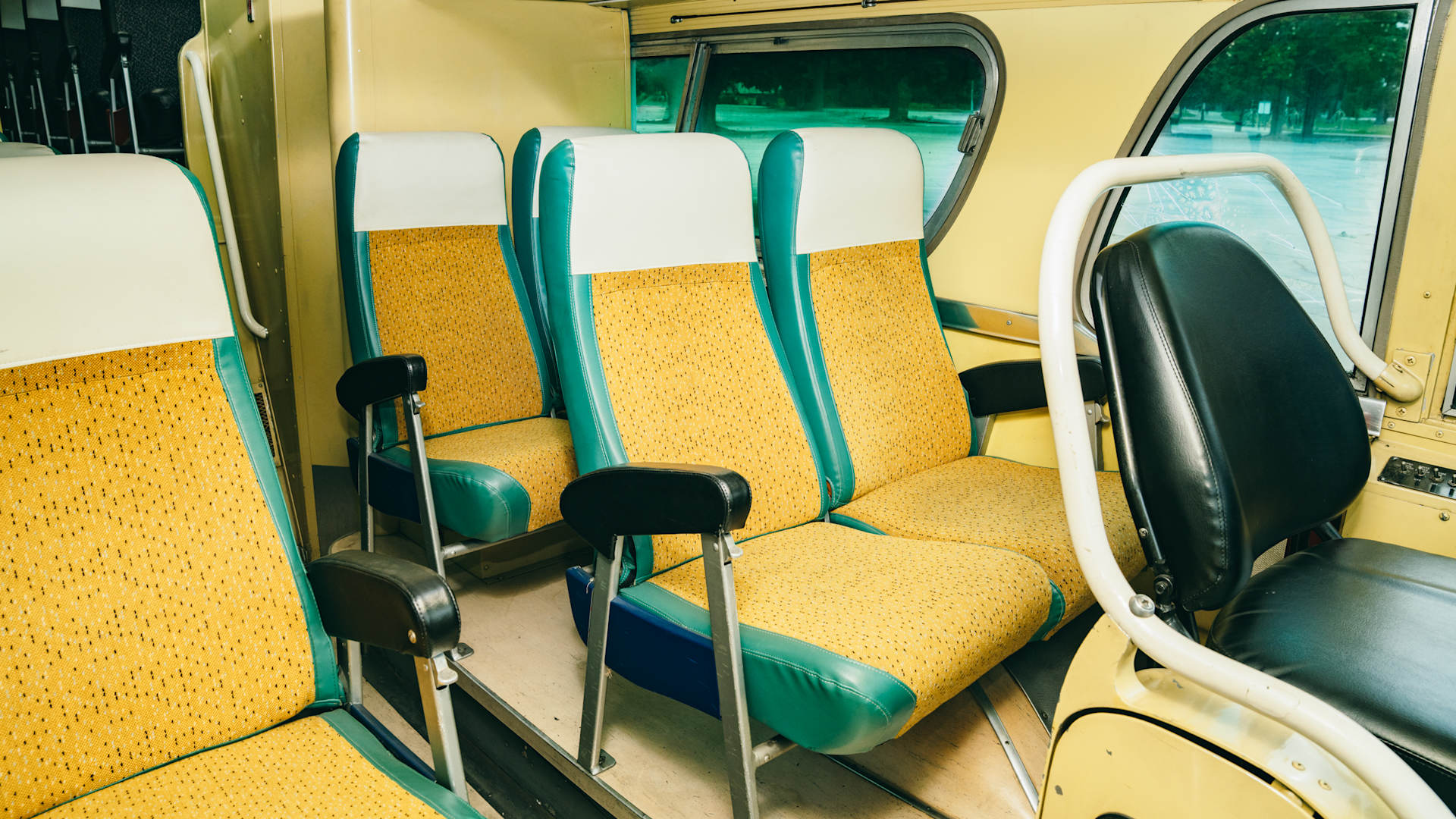
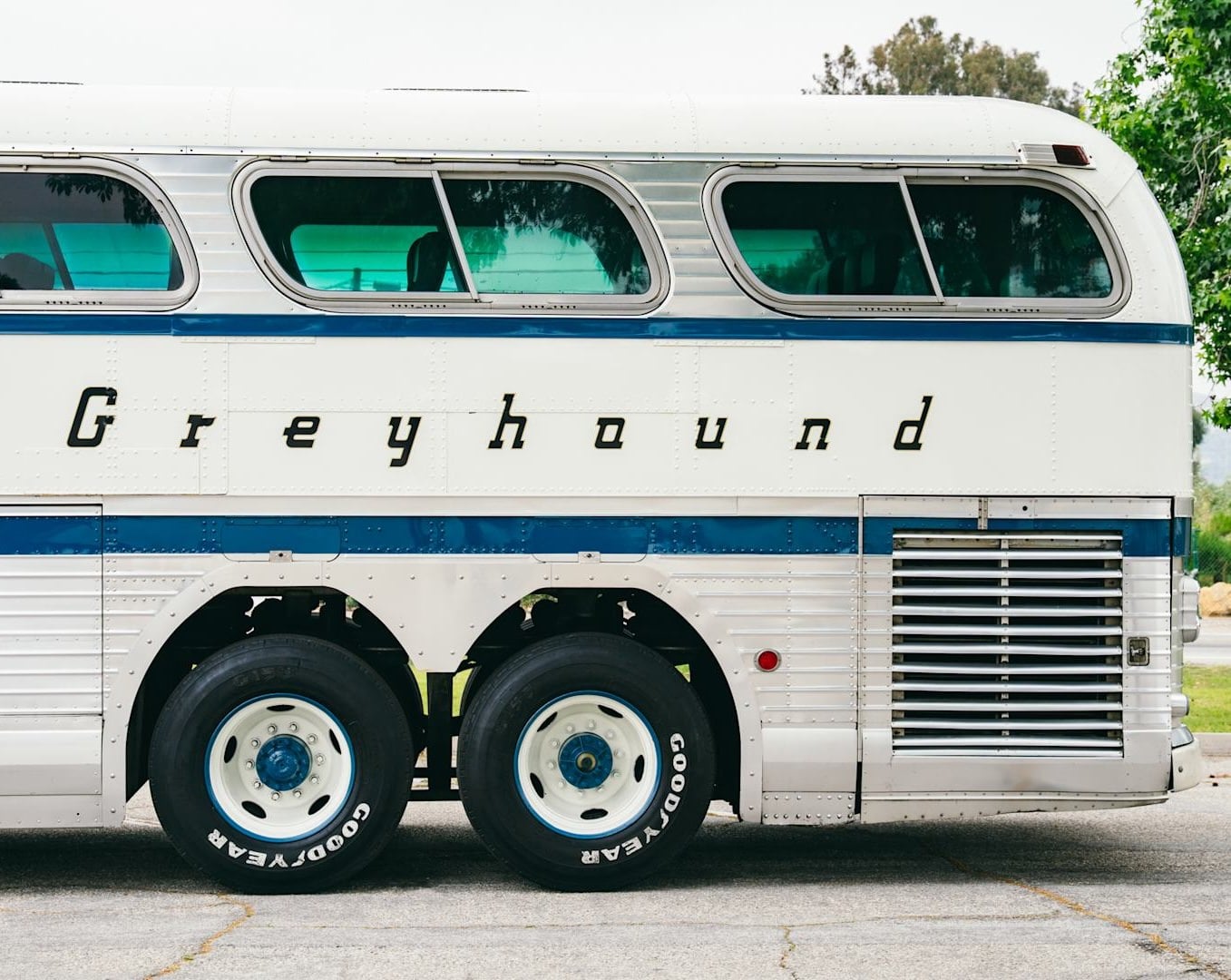
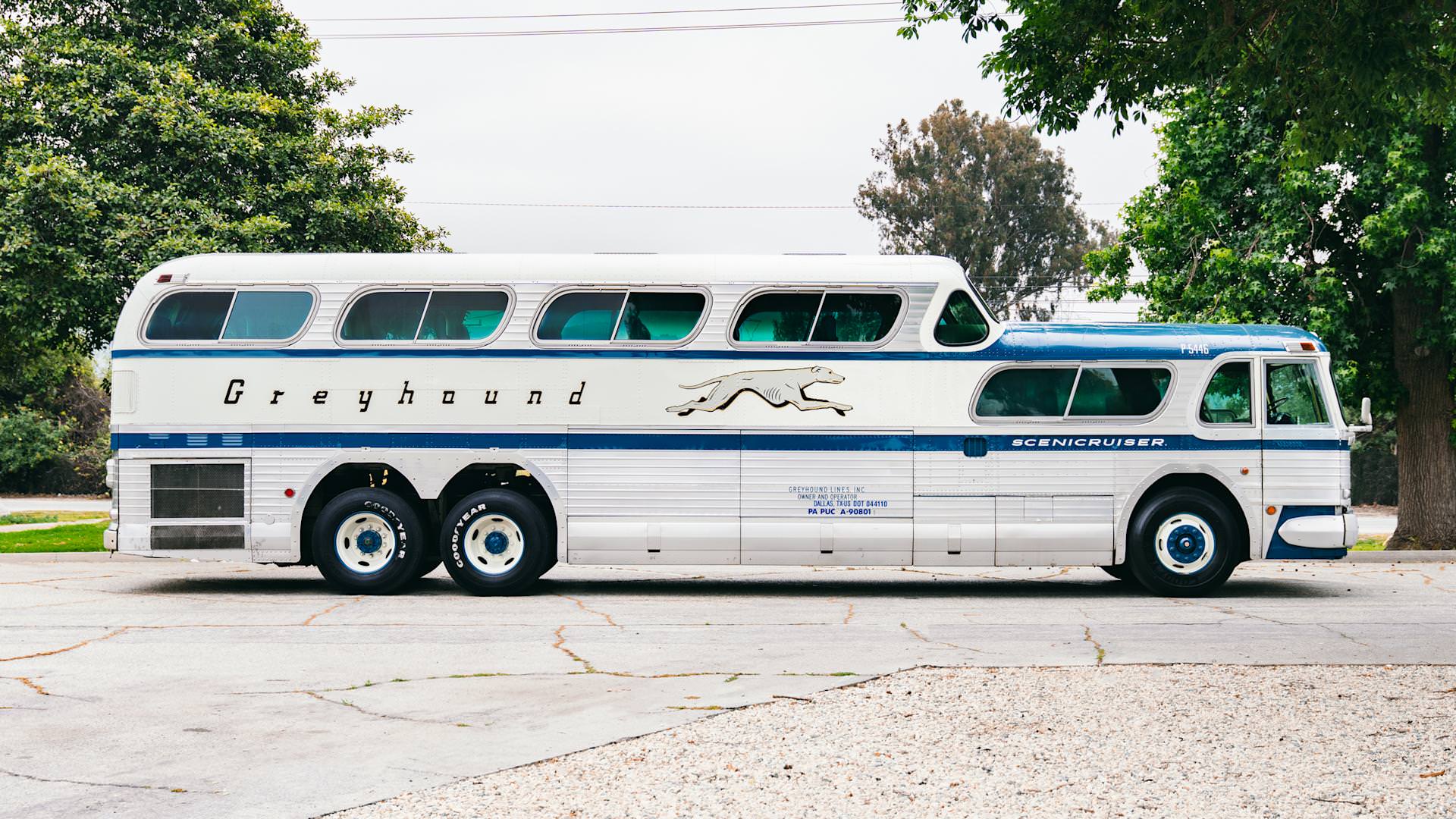
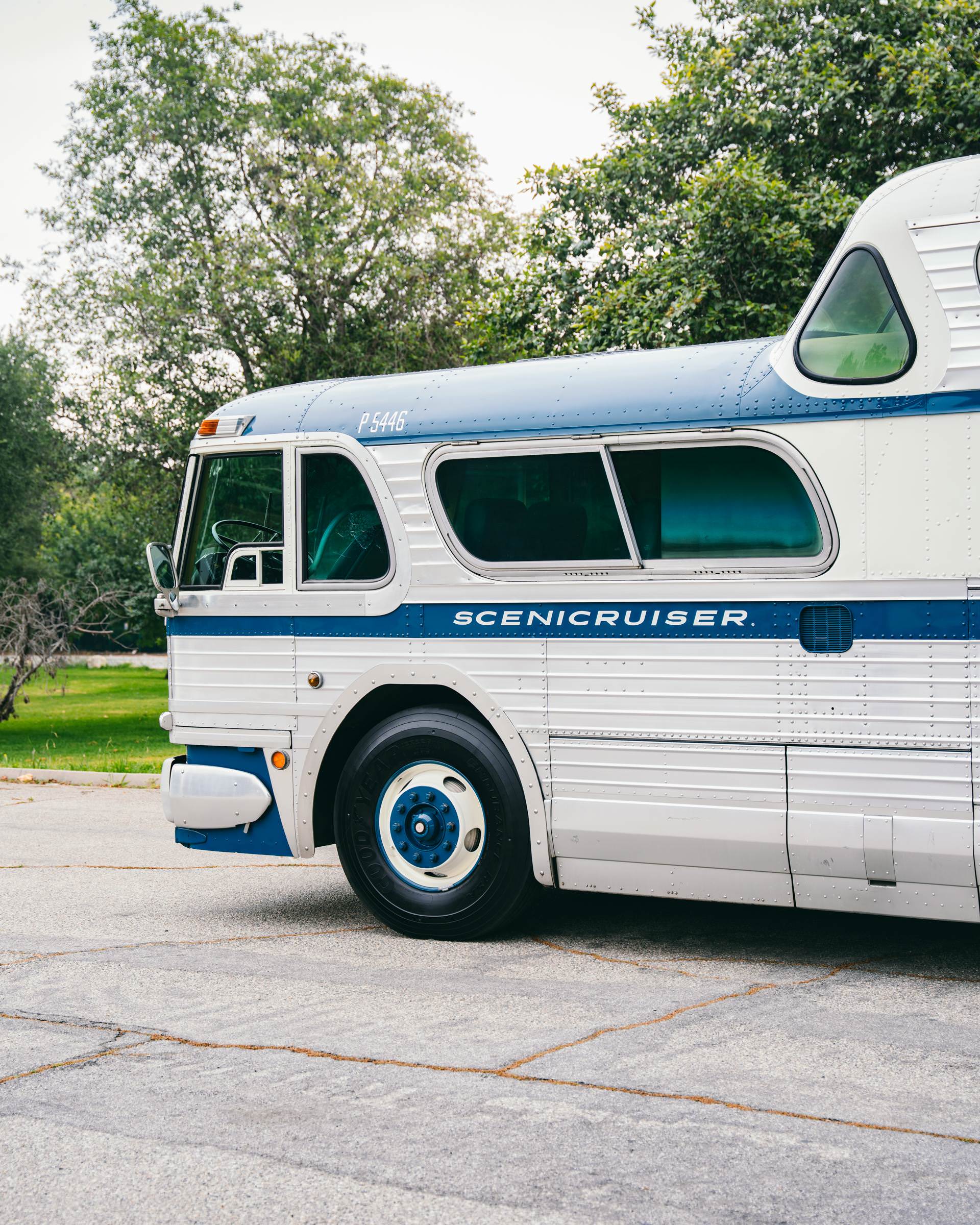
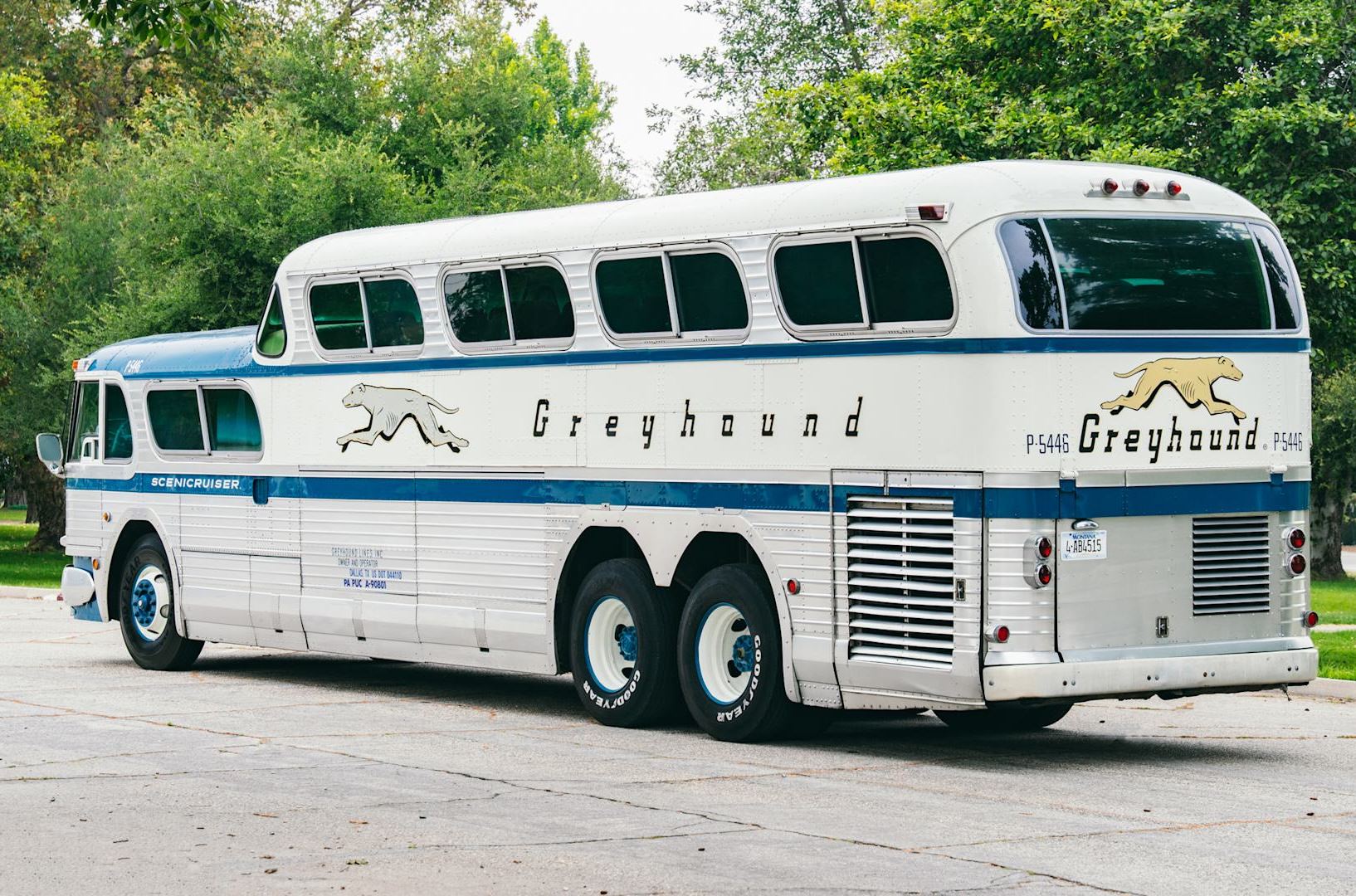
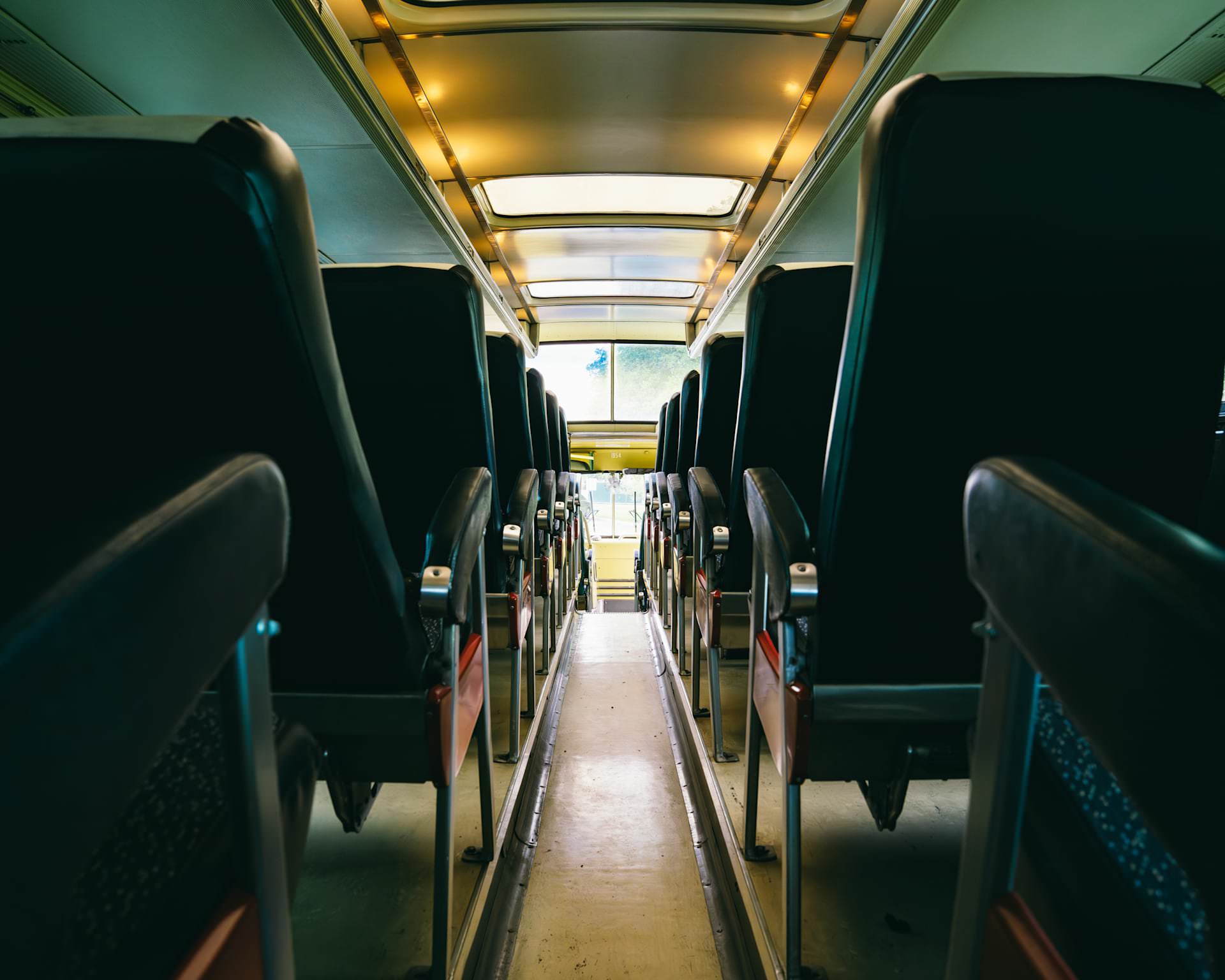
This is an original 1954 GM PD-4501 Scenicruiser, and interestingly, it’s production unit No. 001 – the first example of Greyhound’s now legendary split-level cross-country coach. Measuring in at 40 feet long, it has 10 seats on the lower level and 33 on the upper, along with large panoramic windows.
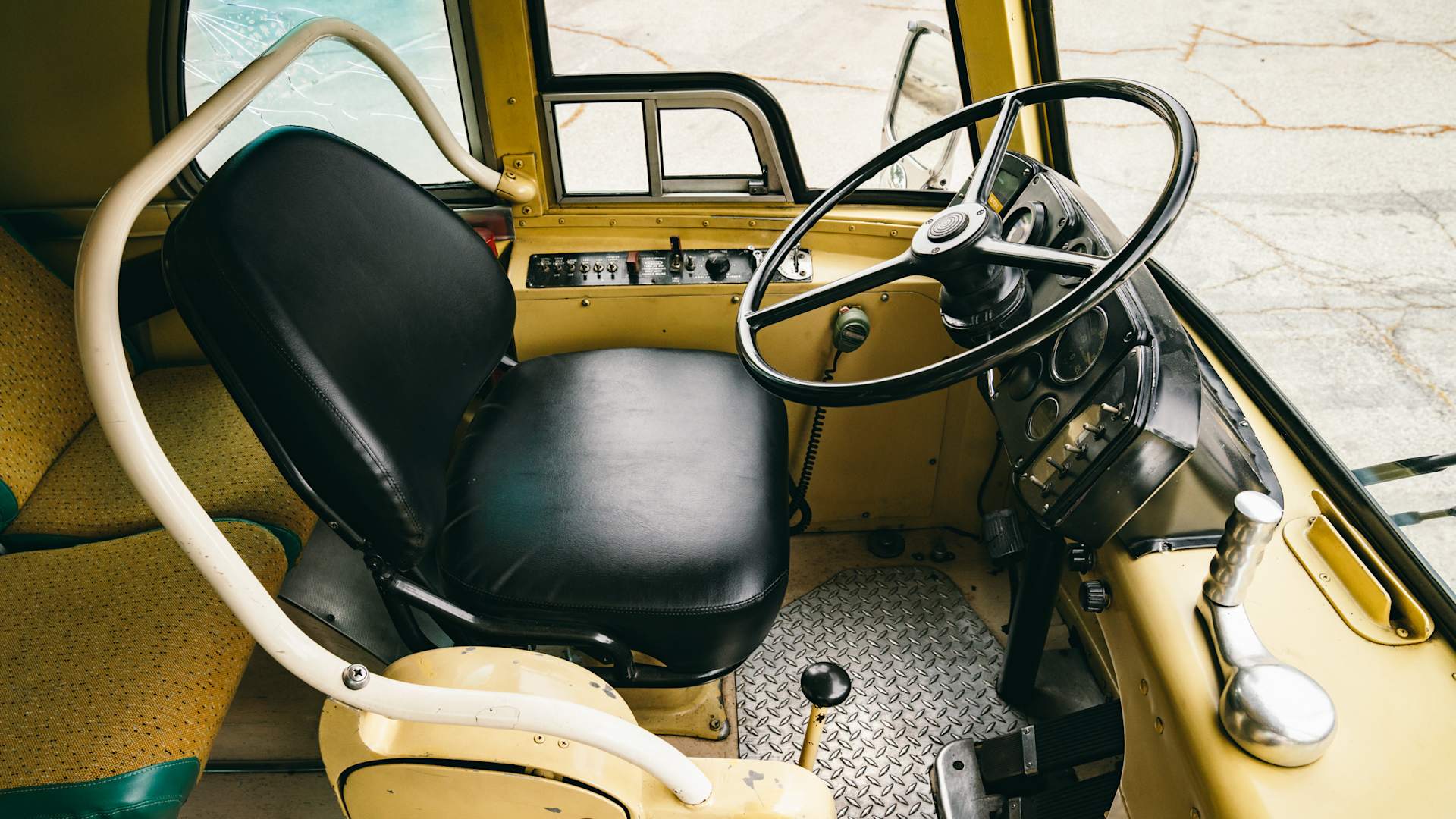
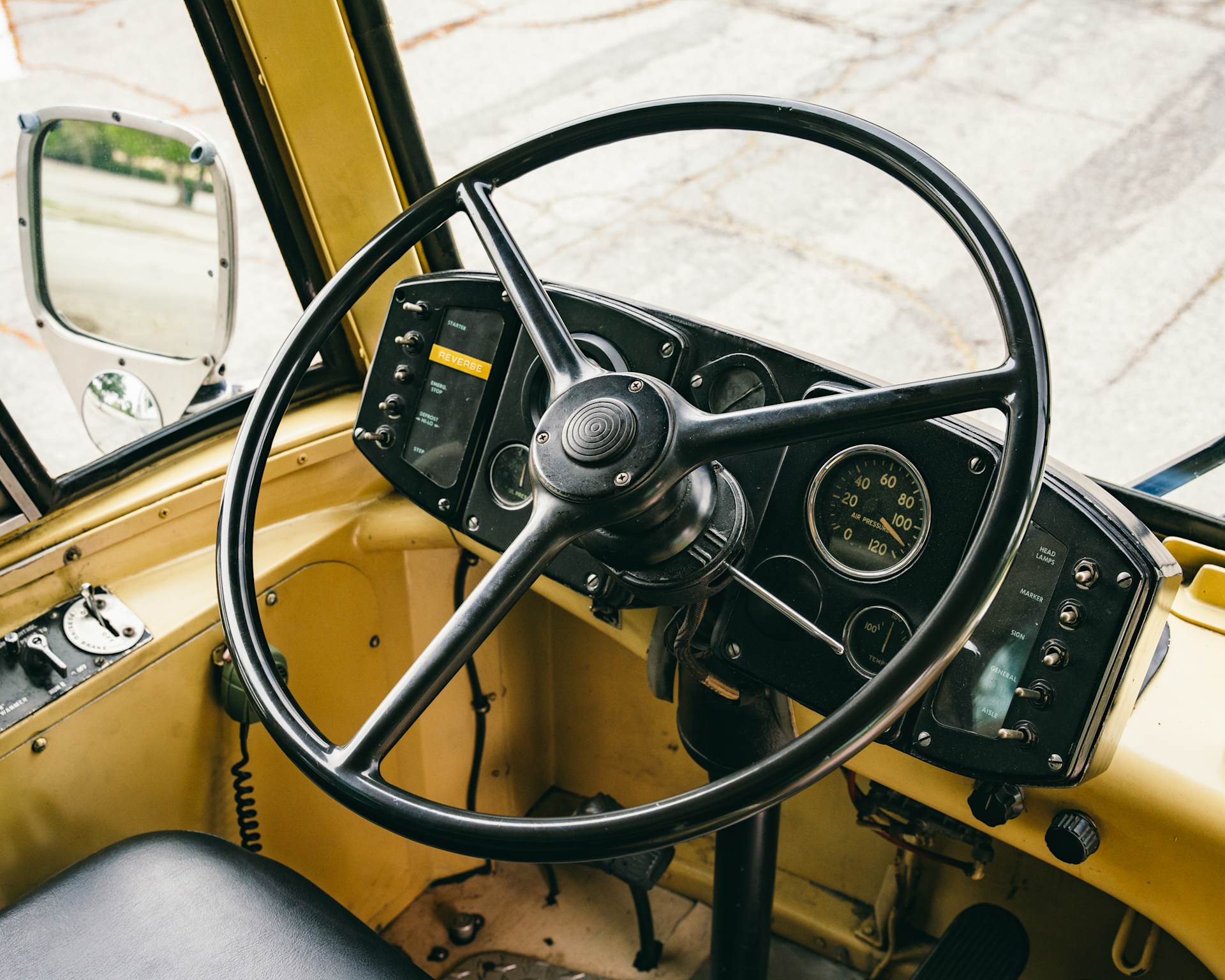
The bus is finished in white and blue Greyhound livery, with a gold and black interior, it rides on air suspension, and it’s shod with Goodyear white-letter tires front and back.
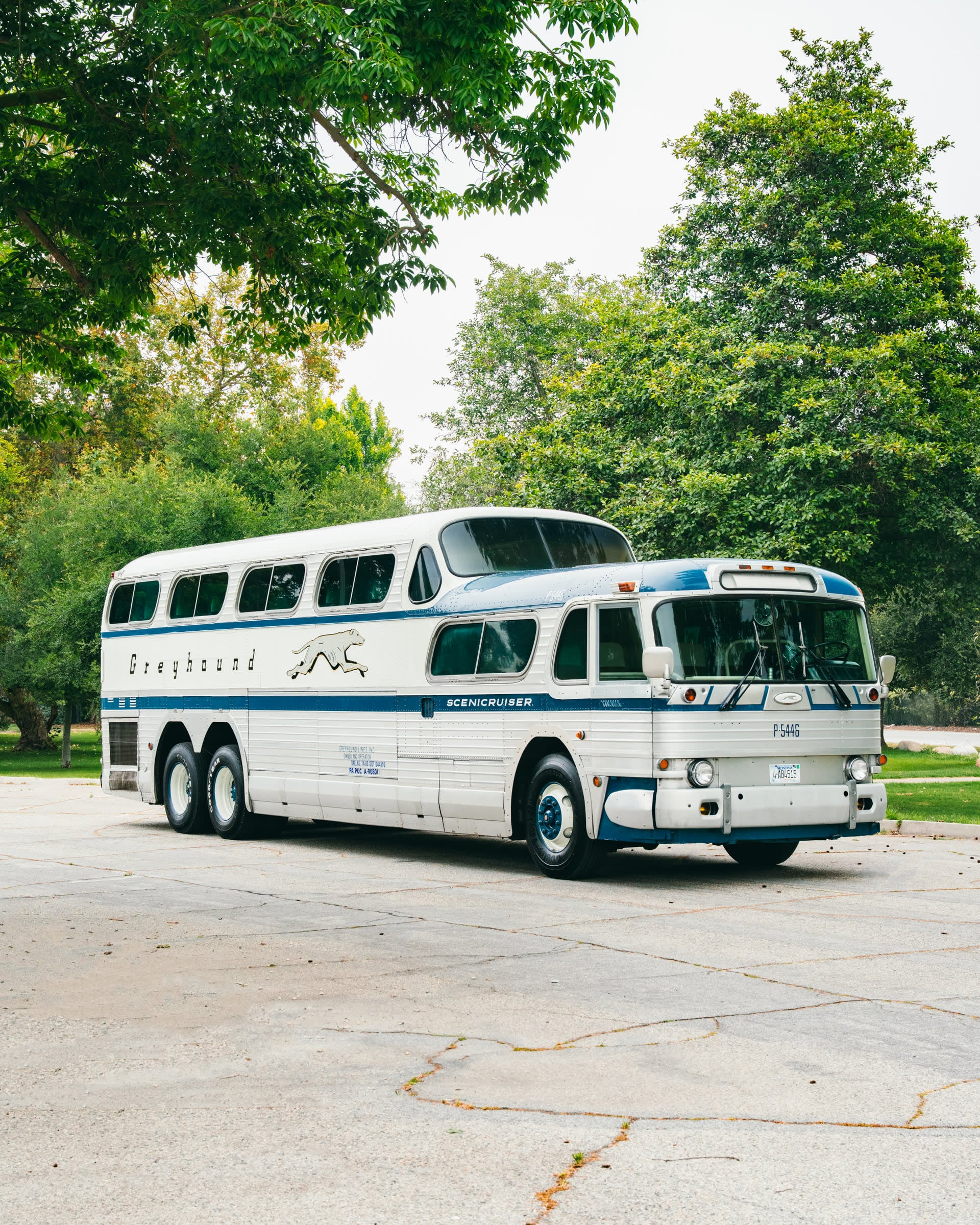
The Scenicruiser is one of the most memorable coach designs of the 20th century, if not all time, thanks to its unusual upper deck, monocoque construction, and the fact that when it first entered service, it had twin engines and six forward speeds.
Mechanically, the original twin-engine arrangement has been replaced by a Detroit Diesel 8V-71 V8 paired with a 4-speed manual transmission. As the first production Scenicruiser built, No. 001 is one of the most historically significant coaches of its time.
It’s now due to roll across the auction block with Mecum in mid-November, and you can visit the listing here if you’d like to read more about it or register to bid.
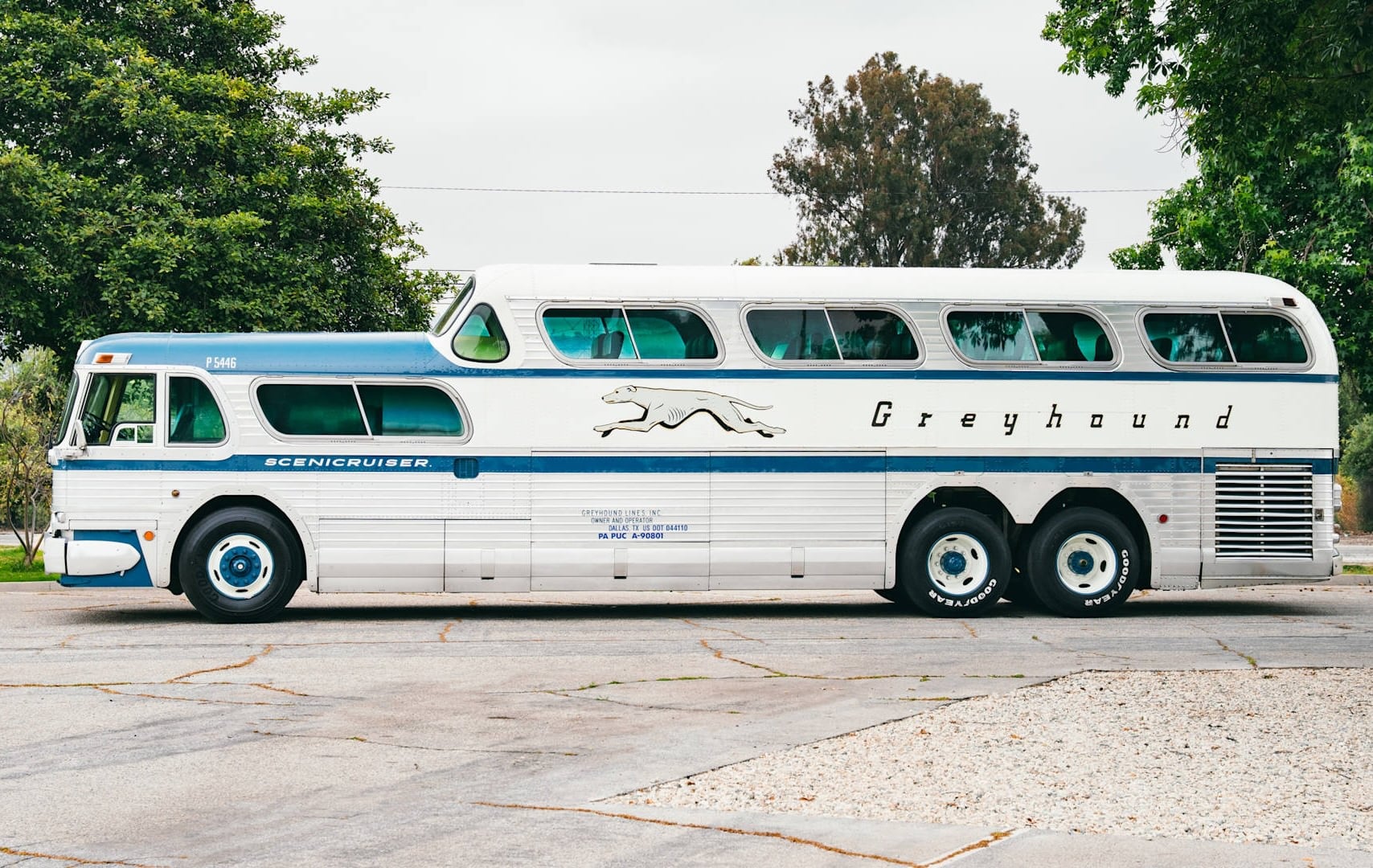
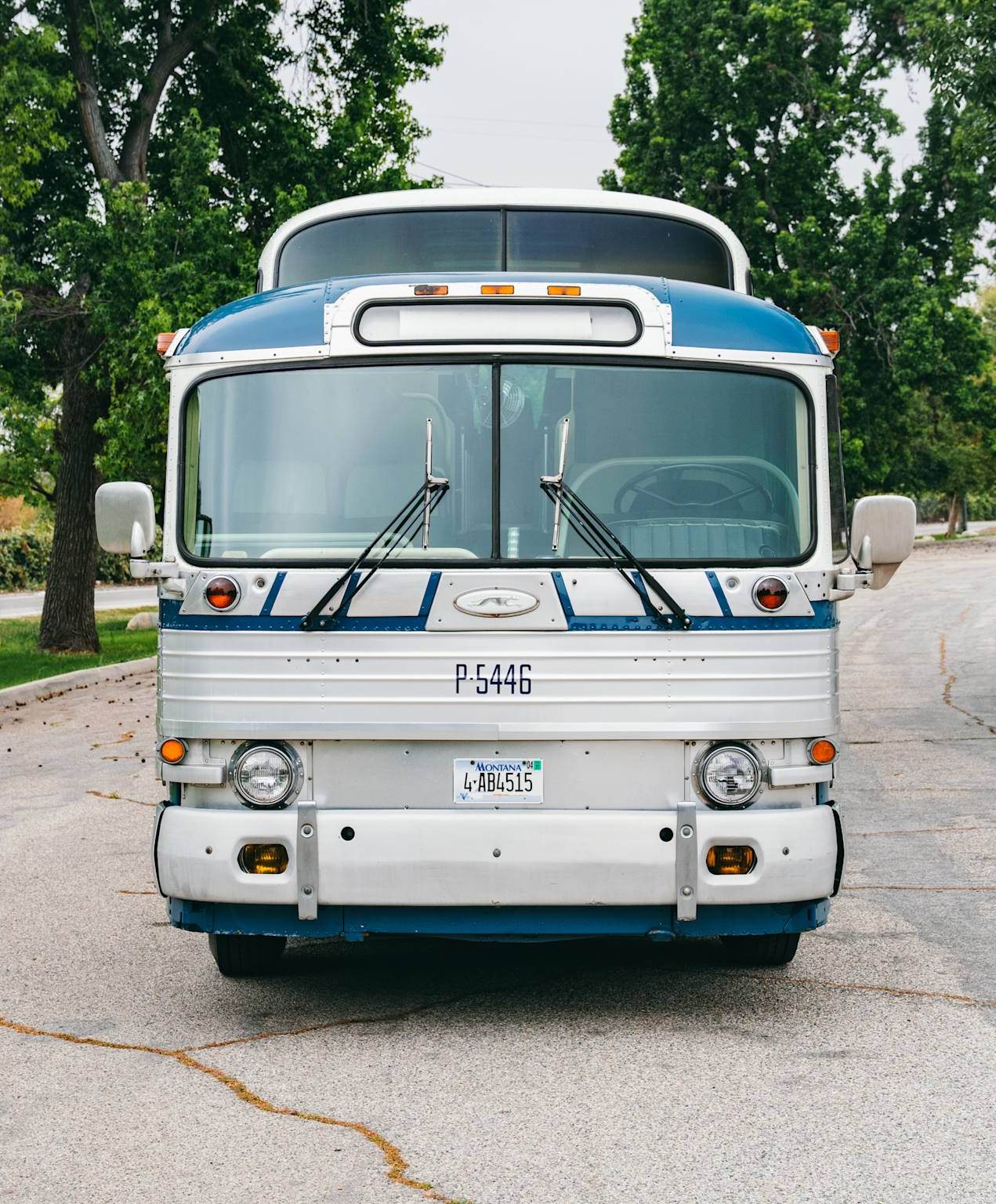
Images courtesy of Mecum

Articles that Ben Branch has written have been covered on CNN, Popular Mechanics, Smithsonian Magazine, Road & Track Magazine, the official Pinterest blog, the official eBay Motors blog, BuzzFeed, Autoweek Magazine, Wired Magazine, Autoblog, Gear Patrol, Jalopnik, The Verge, and many more.
Silodrome was founded by Ben back in 2010, in the years since the site has grown to become a world leader in the alternative and vintage motoring sector, with well over a million monthly readers from around the world and many hundreds of thousands of followers on social media.