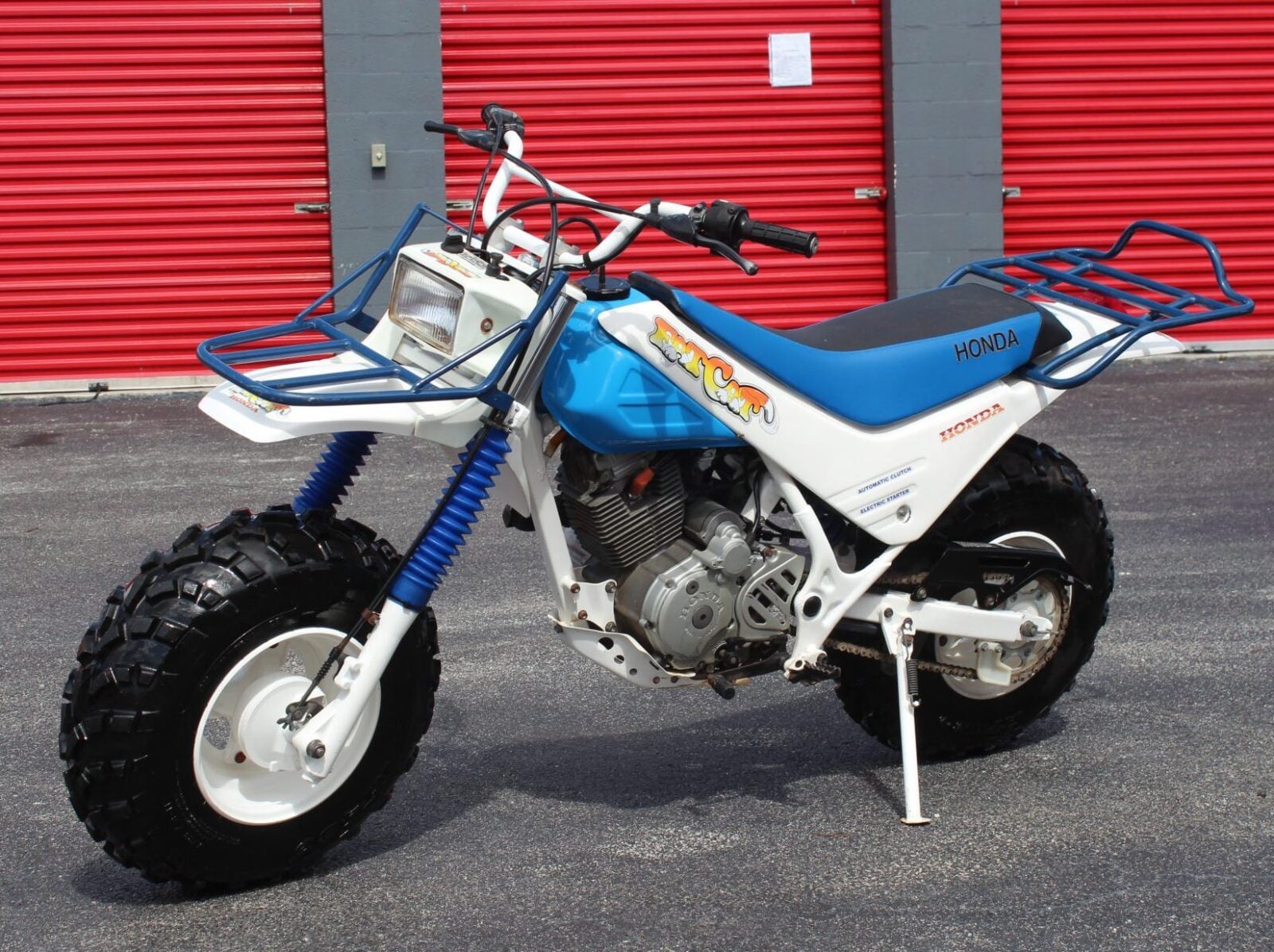
This is a 1987 Honda “Fat Cat” TR200, it’s a bike you may never have seen before as it was only offered for sale for two model years in the late 1980s, and surviving examples can now be quite hard to come by.
With its 200cc single cylinder engine, clutchless 5-speed transmission, and large low-pressure balloon tires, the Fat Cat was developed as an easy to ride bike for adults and kids with little-to-no experience on motorcycles.
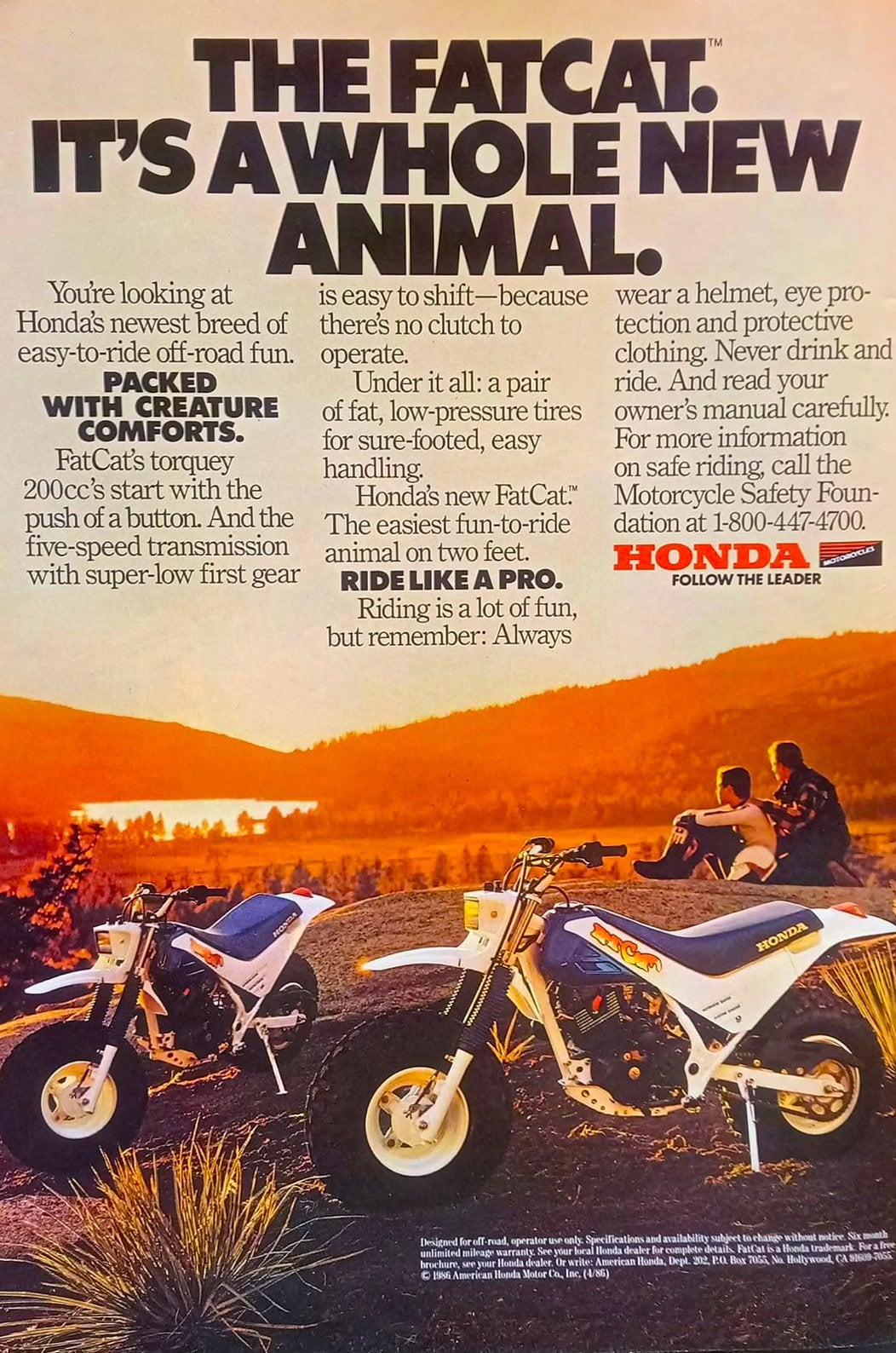
 With its 200cc single cylinder engine, clutchless 5-speed transmission, and large low-pressure balloon tires, the Fat Cat was developed as an easy to ride bike for adults and kids with little-to-no experience on motorcycles. Image courtesy of Honda.
History Speedrun: The Honda Fat Cat TR200
In June of 1986, Dirt Bike Magazine put a pair of unusual looking motorcycles on a sandy trail and tried to figure out which one made less sense. One was Yamaha’s BW200 Big Wheel, a year-old experiment that was already selling well enough to embarrass everyone who had laughed at it when it first landed on dealership floors. The other was Honda’s brand-new TR200 Fat Cat – a single-cylinder oddity that didn’t have a clutch lever and wore ATV tires at both ends.
The Yamaha won the shootout, but the existence of the test at all tells you something about what was happening in 1986 inside the major Japanese motorcycle factories. Two of the world’s most disciplined engineering companies had decided, more or less independently, that the future of recreational off-road riding might involve balloon tires bolted to a two-wheeled motorcycle chassis.
They were both wrong. But for two model years and in the United States only, you could walk into a Honda dealer and buy a Fat Cat.
By the mid-1980s, Honda was the dominant force in the American three-wheeler market, the company alone moved more than 400,000 ATC200-series machines over the line’s life, with entire racing series built around the format.
But three-wheelers in inexperienced hands had a habit of rolling over and hurting people, and the lawsuits were piling up. The Consent Decree that effectively ended new three-wheeler sales in the United States would follow in 1988, not long after the last Fat Cat rolled off the line.
Yamaha had spotted a gap before any of that came to a head. The BW200, introduced for 1985, took the 196cc air-cooled four-stroke single from the XT200 dual-sport, dropped it into a new steel frame, and bolted on a pair of oversized balloon tires originally developed for ATV duty. The idea was a beginner-friendly off-road bike that would float over soft terrain without the technical demands of a proper dirt bike – the test batch sold out as soon as it hit showroom floors.
Honda sat up and took notice, and their response arrived for the 1986 model year.
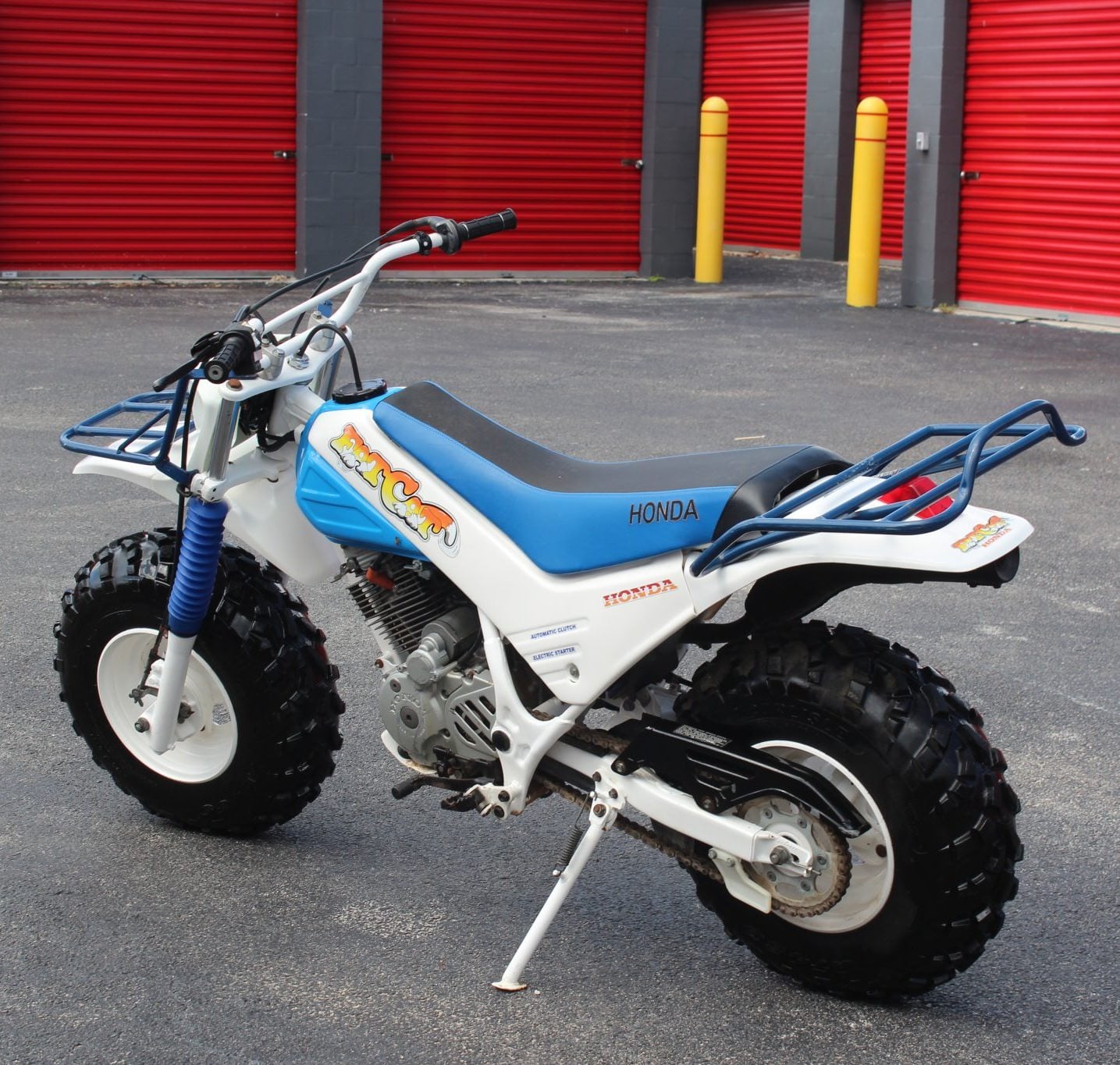
This is a 1987 Honda “Fat Cat” TR200, it’s a bike you may never have seen before as it was only offered for sale for two model years in the late 1980s, and surviving examples can now be quite hard to come by.
The TR200 Fat Cat used a 199cc air-cooled SOHC two-valve four-stroke single, sharing the 65 × 60 mm, 199cc basic dimensions of the contemporary ATC200X – itself an evolution of the earlier 192cc, 65 × 57.8 mm version of the same engine family.
Honda didn’t publish a widely cited official output figure for the TR200, and later sources tend to quote it at around 13 bhp, with the unit generally described as a detuned ATC200X-related engine.
The engine had a single 24mm Keihin carburetor, a 9:1 compression ratio, an electric start with a kickstart backup, and a 5-speed gearbox with an automatic centrifugal clutch. There was no clutch lever – in ATC fashion, Honda put a hand-operated rear brake on the left bar instead.
Shifting was a simple matter of clicking up or down with the left foot, and the bike wouldn’t move until you gave it throttle. It made the Fat Cat remarkably easy to ride for first timers. On the downside, it also taught its riders muscle memory that would work against them the moment they swung a leg over anything with a clutch.
Chassis-wise, the Fat Cat was built around a steel frame with a telescopic fork up front and a mono-shock rear – a step up on paper from the BW200’s dual-shock arrangement, though Dirt Bike found the Yamaha landed jumps better.
Mechanical drum brakes did the stopping at both ends. The bike measured 53.7 inches between the axles, sat 29.7 inches tall at the seat, and weighed 264 lbs dry – about 7 lbs heavier than the BW200. The oversized tires ran at around 4.3 psi cold – these weren’t motorcycle tires in any conventional sense, they were ATV tires bolted to a two-wheeler and designed to offer a large, forgiving footprint.
Every TR200 left the factory in Shasta White with blue highlights and a Fat Cat decal package. There were no gauges, not a speedo, not a tach, just a square headlight, a small taillight, and a kick lever for when the electric start let you down. The MSRP was $1,498 USD, or roughly $4,400 USD in 2026 dollars.
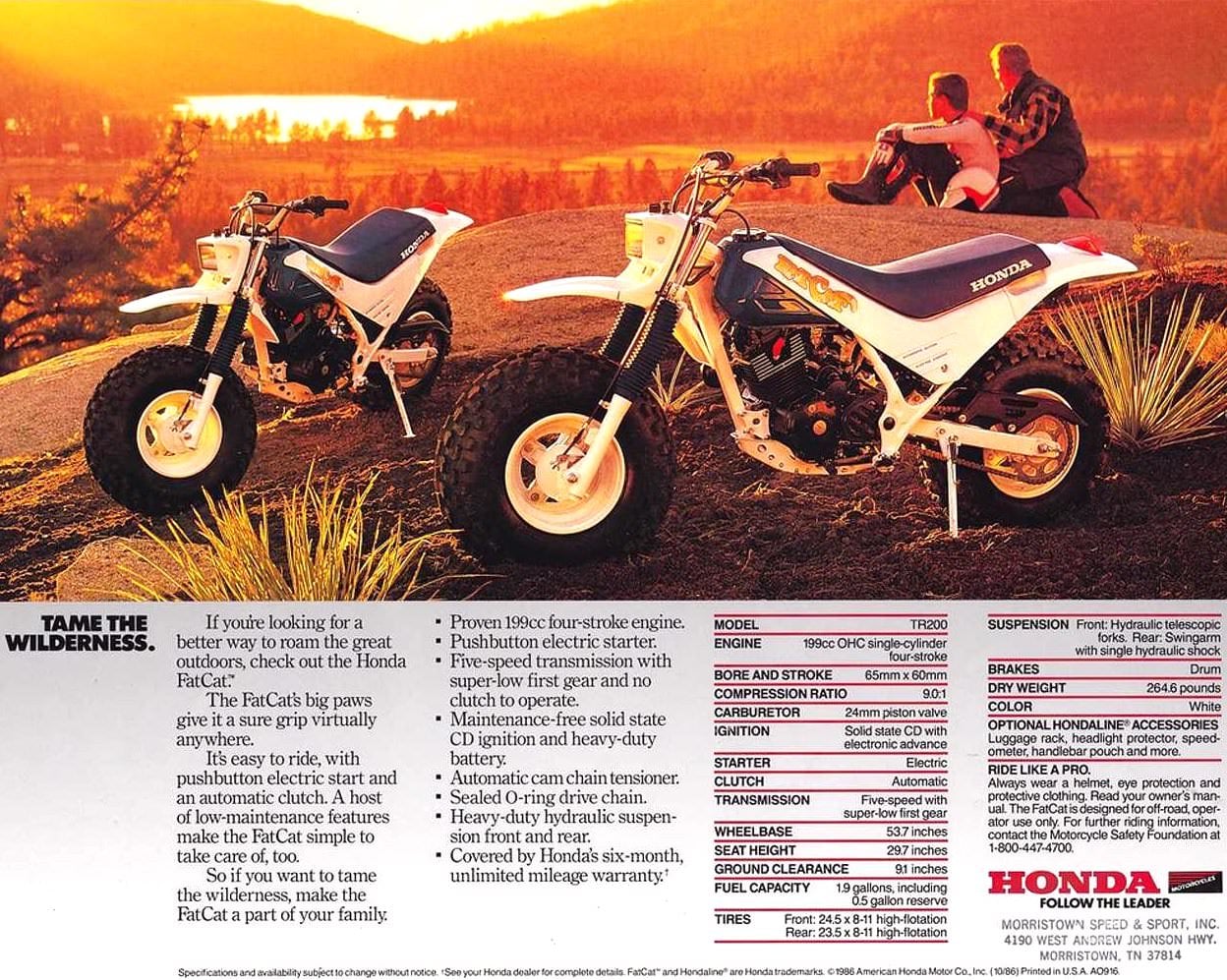
The TR200 Fat Cat used a 199cc air-cooled SOHC two-valve four-stroke single, sharing the 65 × 60 mm, 199cc basic dimensions of the contemporary ATC200X – itself an evolution of the earlier 192cc, 65 × 57.8 mm version of the same engine family. Image courtesy of Honda.
The Dirt Bike verdict, that the Yamaha was the better motorcycle, appears to have been reflected in the sales figures. Honda has never published production figures for the TR200, but anecdotal evidence and the bike’s relative rarity today suggest it was a slow seller in 1986, slower in 1987, and gone for 1988.
Yamaha kept the BW200 in its lineup for several more years, it remained in production through 1989, and used the same fat-tire concept to spawn the two-stroke BW80, the short-lived BW350, and most importantly the TW200 Trailway – this was a street-legal dual-sport that arrived for 1987 and is still in Yamaha’s catalogue today. Honda built nothing like the Fat Cat ever again.
Perhaps a little ironically, this has resulted in them being cult classics in very specific motorcycling circles.
The 1987 Honda Fat Cat TR200 Shown Here
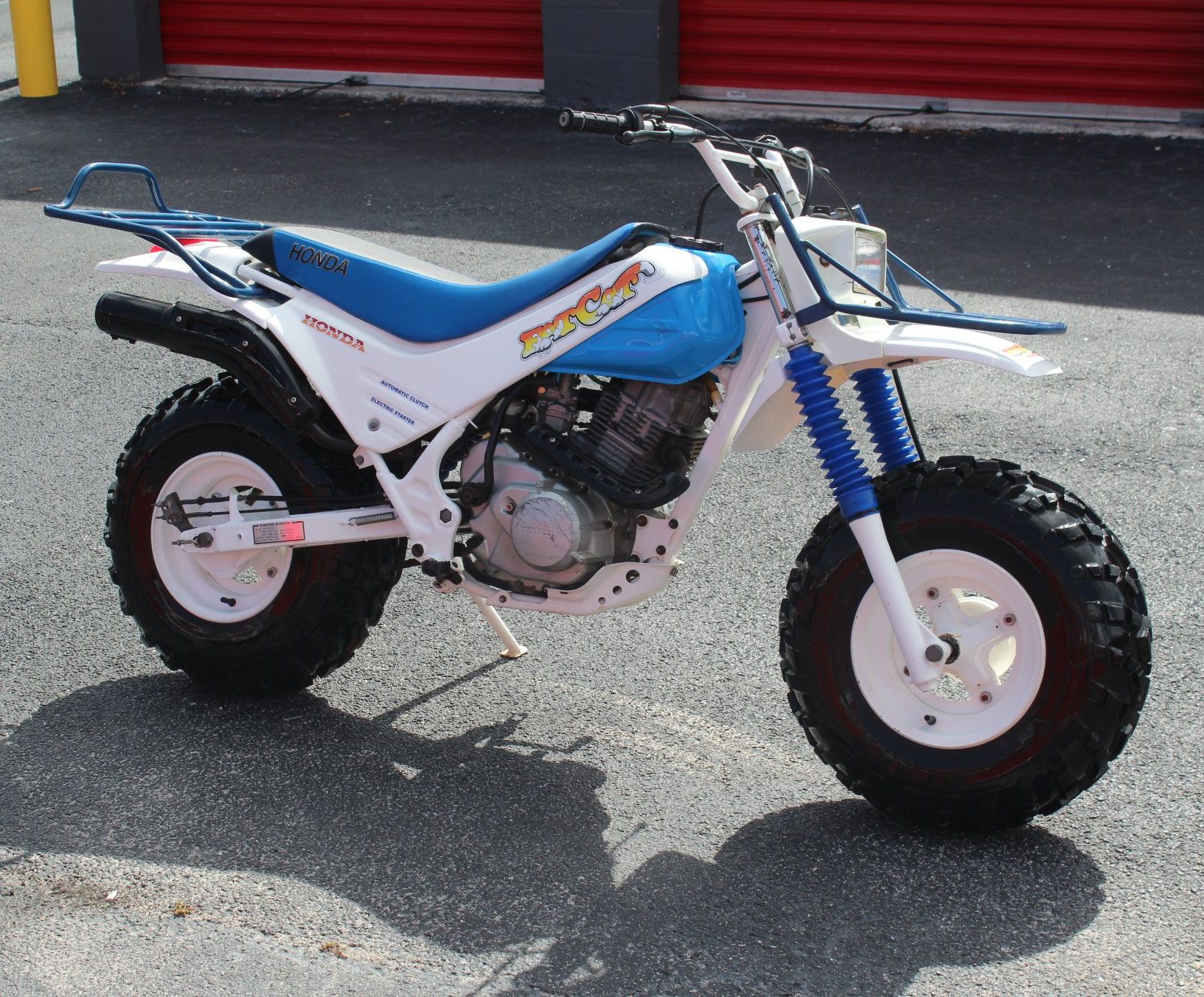
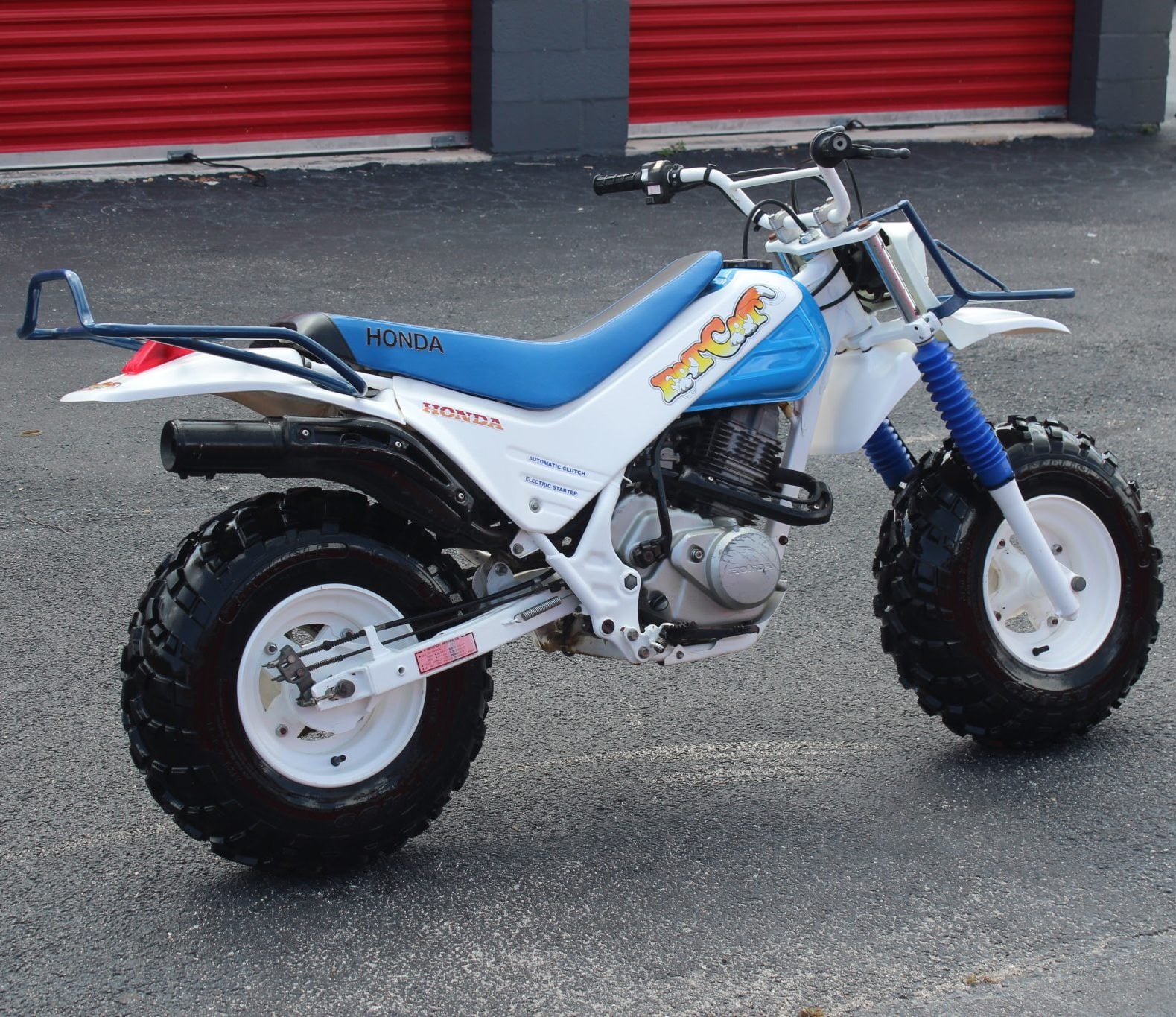
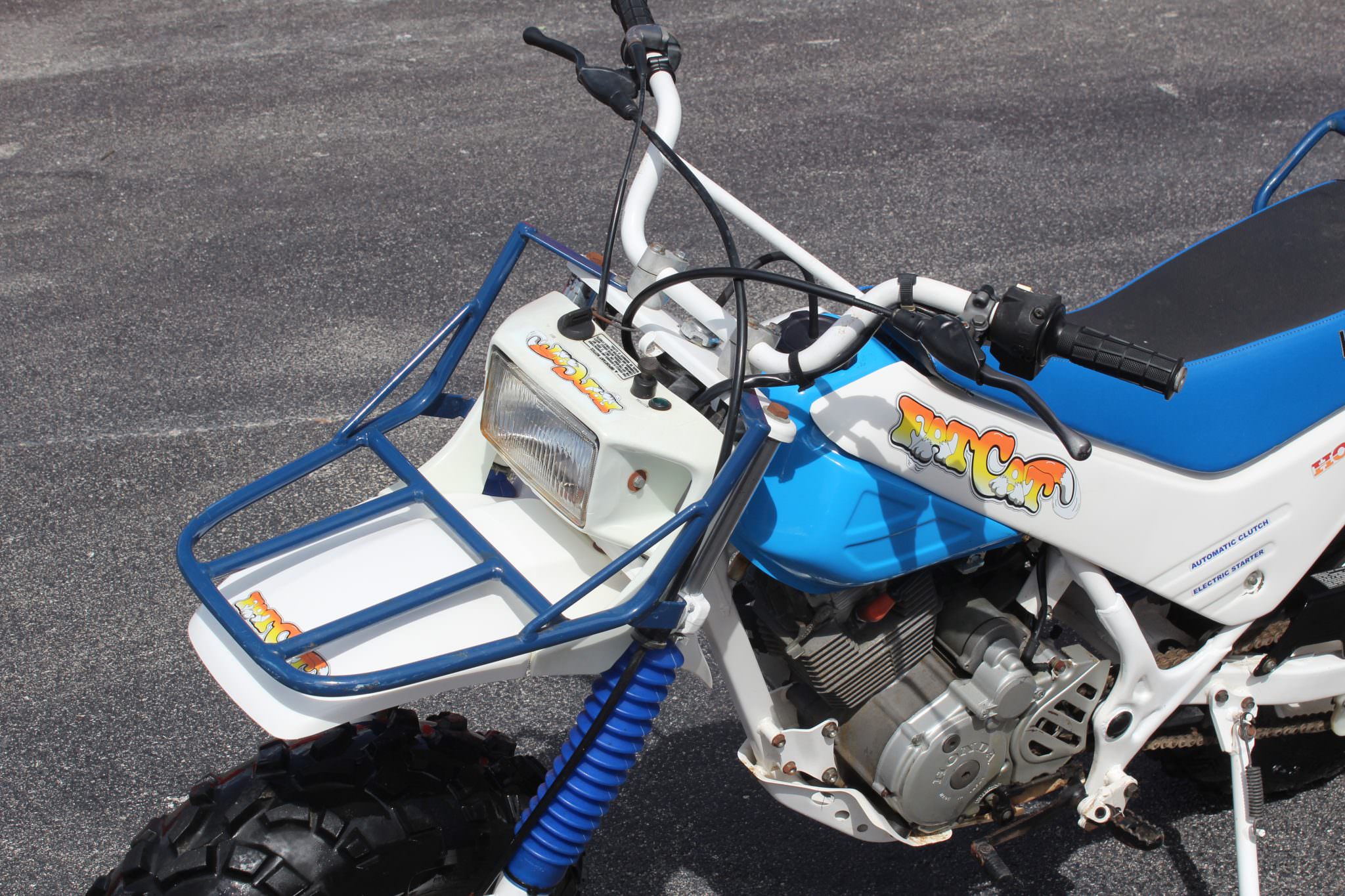
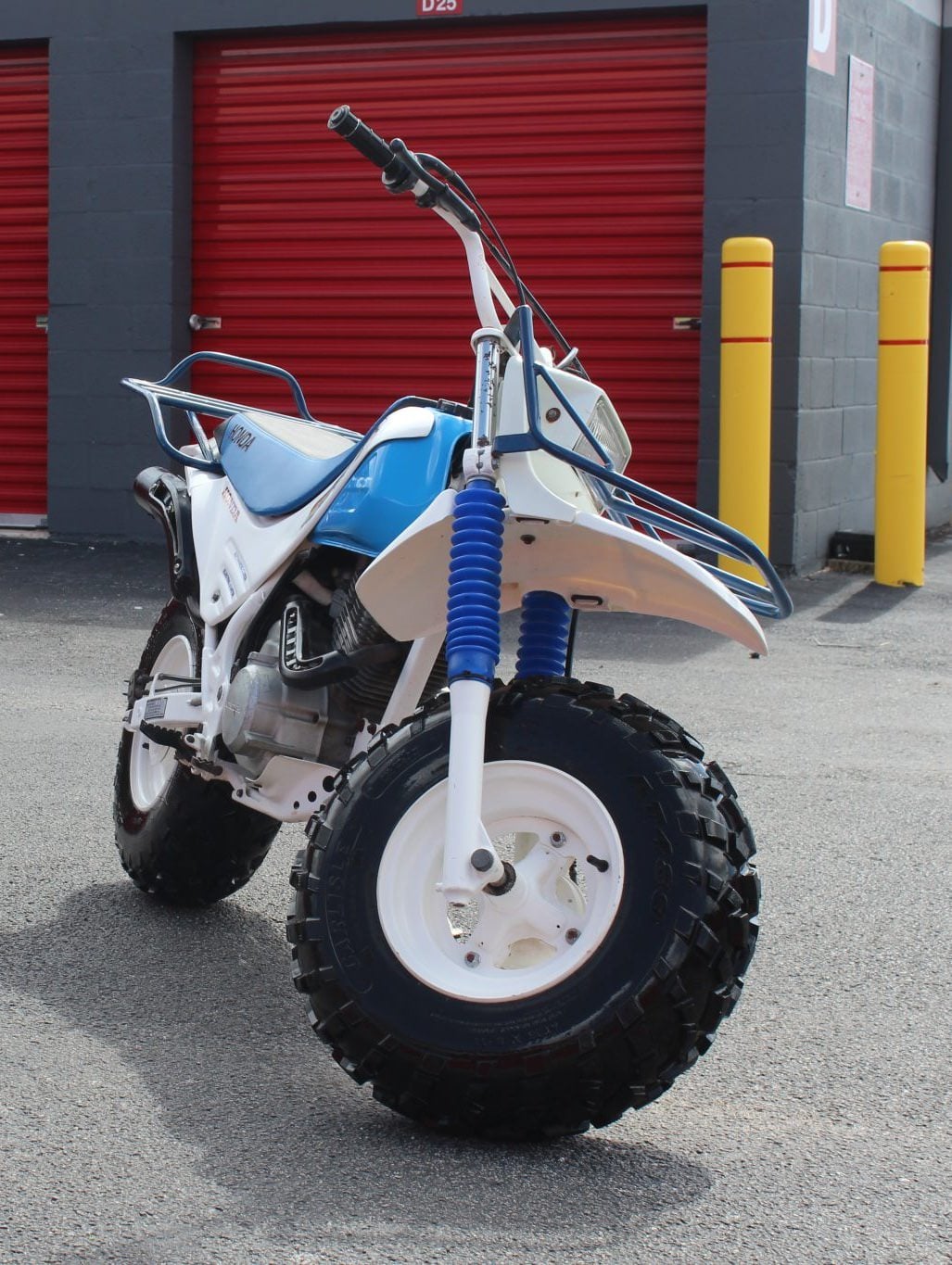
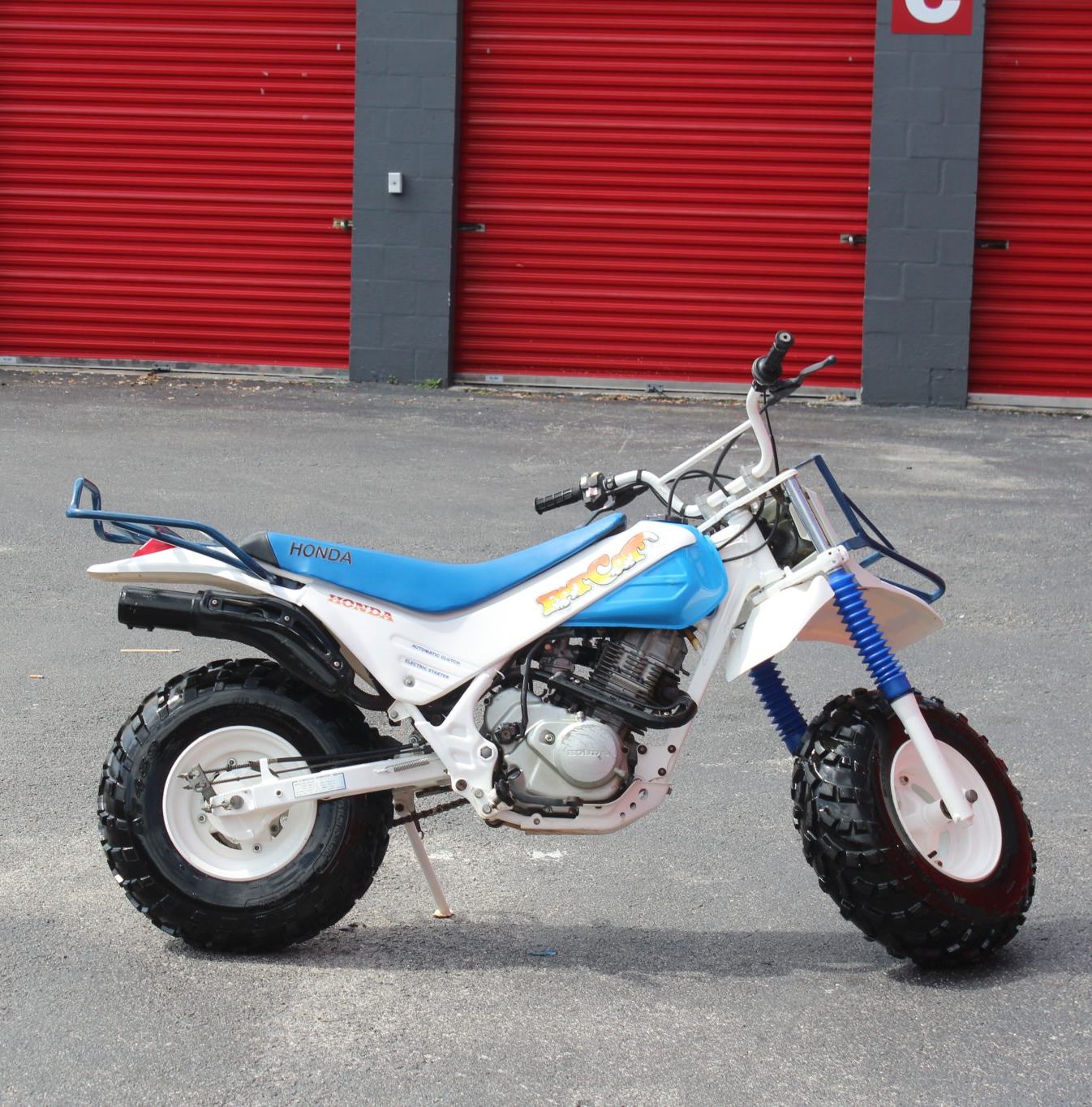
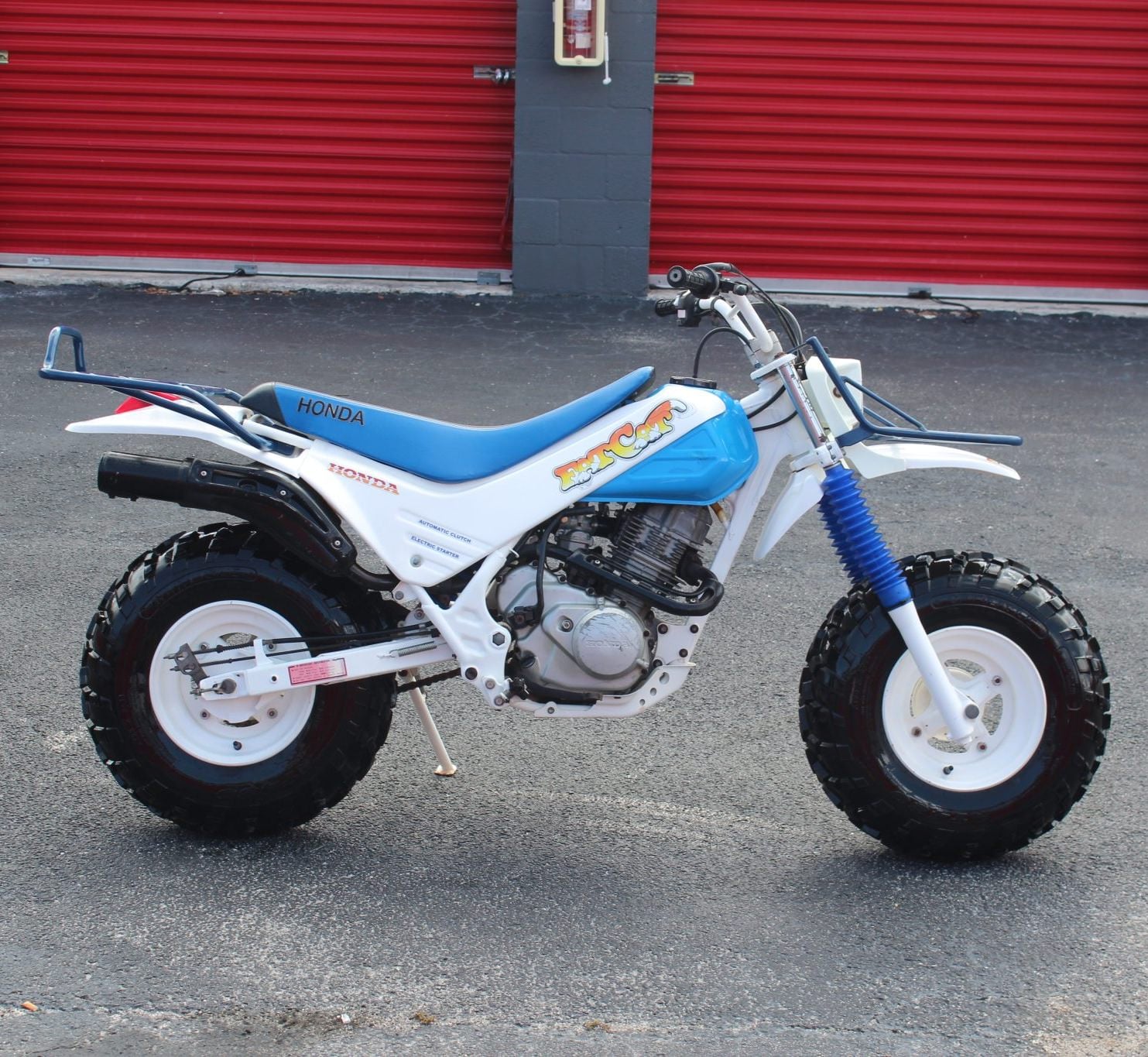
This is an original 1987 Honda TR200 Fat Cat finished in blue and white that was reportedly refurbished under previous ownership before being bought by the current owner in 2026.
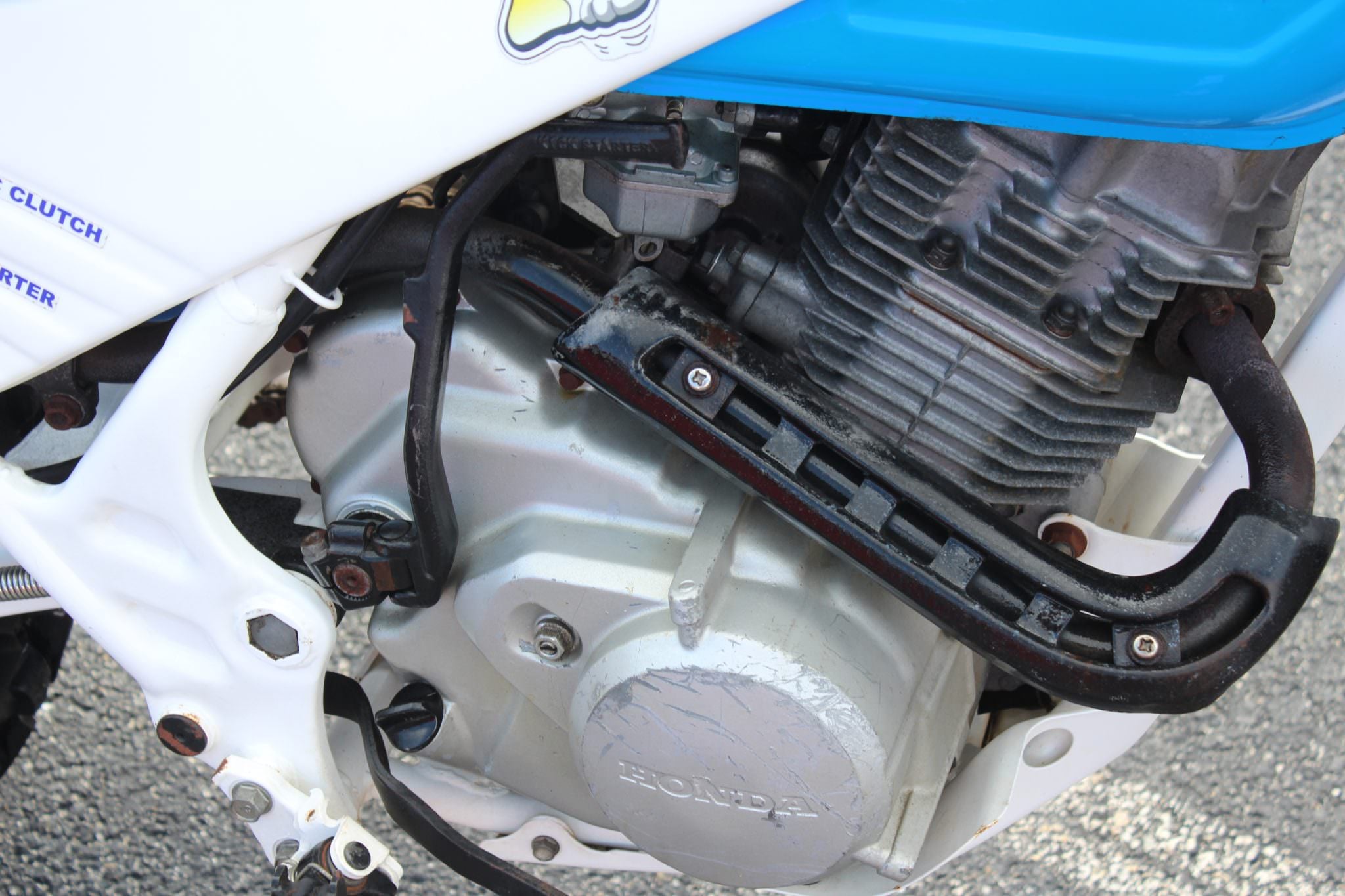
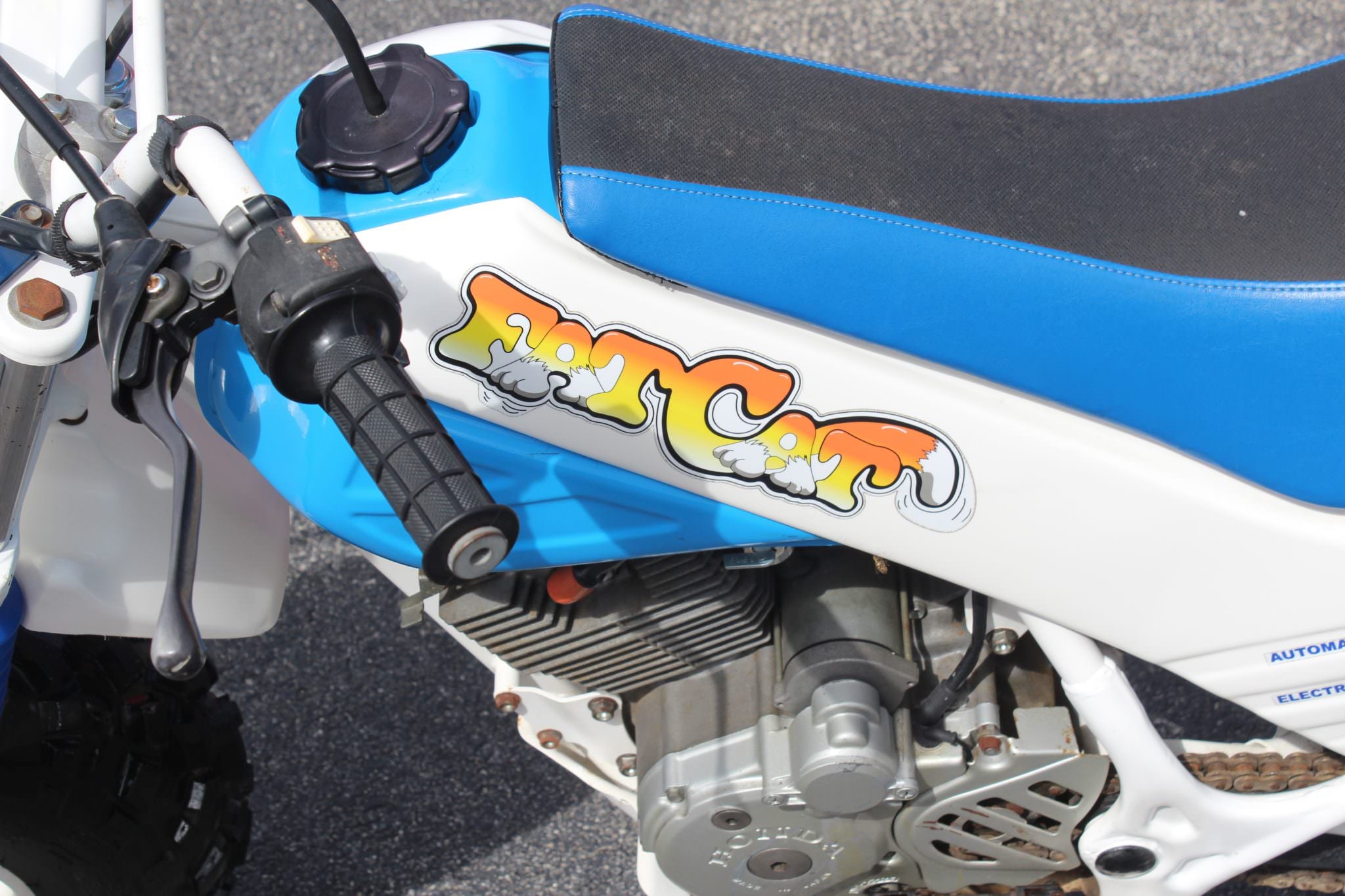
The 199cc air-cooled four-stroke single is fitted with both electric and kick starters along with a compression release lever, and it breathes out through a black-finished exhaust system with heat shields that exits high beneath the rear bodywork. Power reaches the rear wheel through a centrifugal automatic clutch, a 5-speed transmission, and a chain final drive with both upper and lower guards in black.
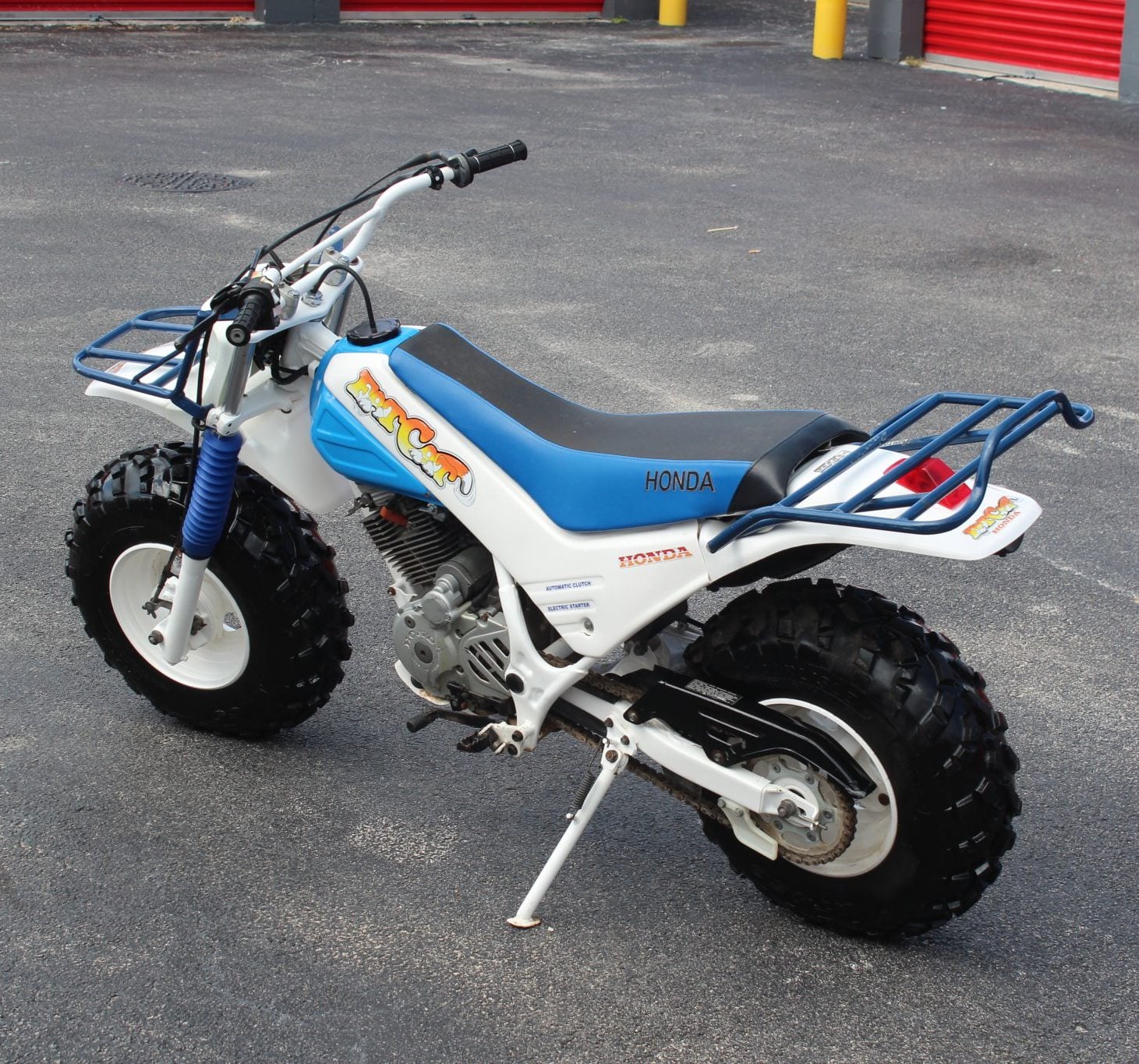
The previous refinish included a blue 1.9 gallon fuel tank paired with white side panels carrying “Fat Cat” decals, along with a blue and black vinyl solo seat. Equipment includes a skid plate, trail lighting, serrated folding foot pegs, high-mounted fenders, front and rear cargo racks, and a side stand.
Multi-piece 11″ steel wheels are finished in white and wrapped in Carlisle tires, and suspension consists of a leading-axle fork with blue gaiters over white lowers up front and a swingarm-mounted monoshock at the rear. Drum brakes are fitted front and rear.
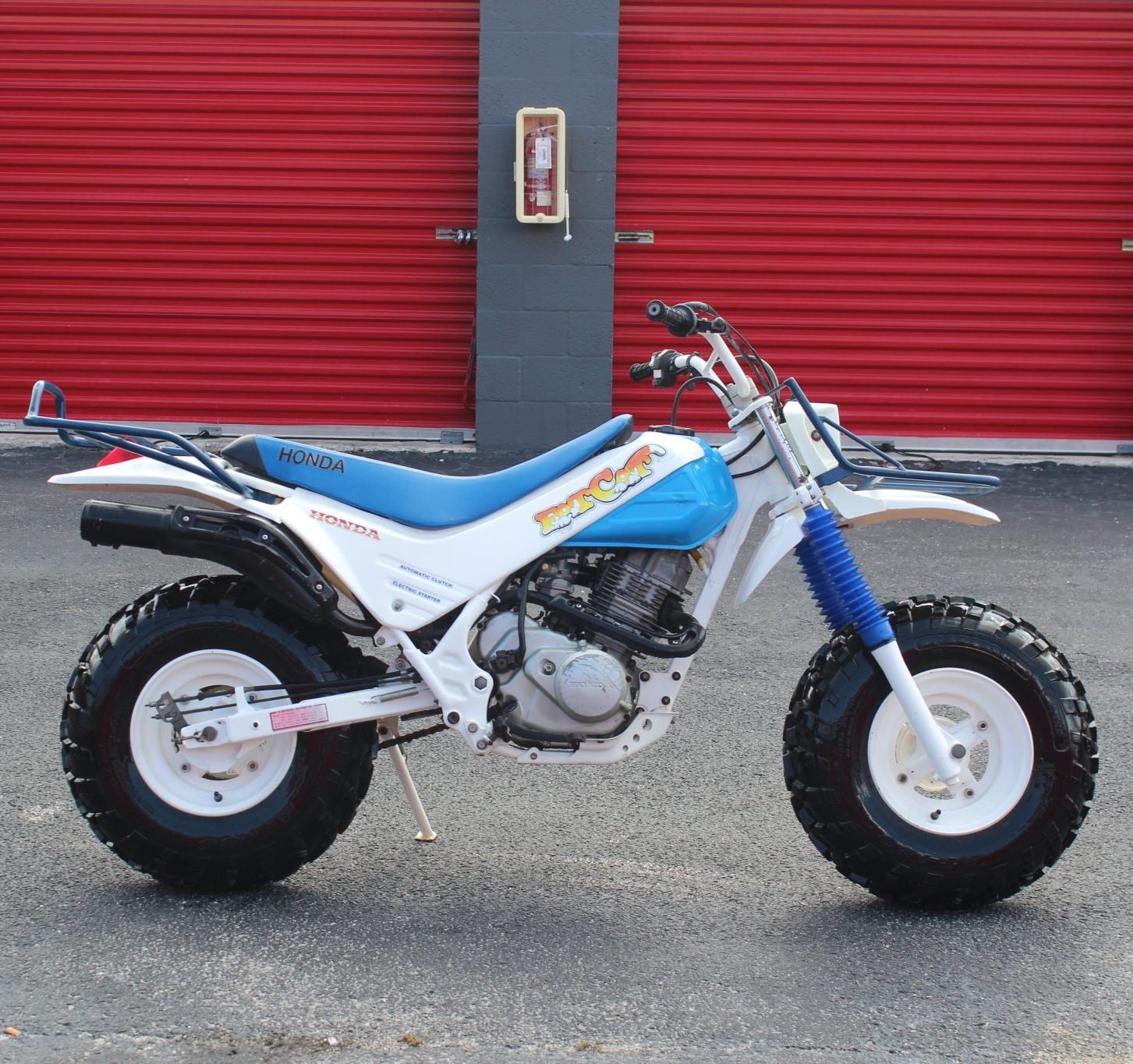
This is an original 1987 Honda TR200 Fat Cat finished in blue and white that was reportedly refurbished under previous ownership before being bought by the current owner in 2026.
The white-finished cross-braced handlebar wears black levers, switchgear, and grips, and sits behind a keyed ignition switch, a choke knob, and a neutral indicator light. No instrumentation is fitted, so total mileage is not known.
It’s now bring offered for sale at no reserve out of Florida, for off-road use only, on a bill of sale – the bike has neither a title nor registration. If you’d like to read more or register to bid you can visit the listing here.
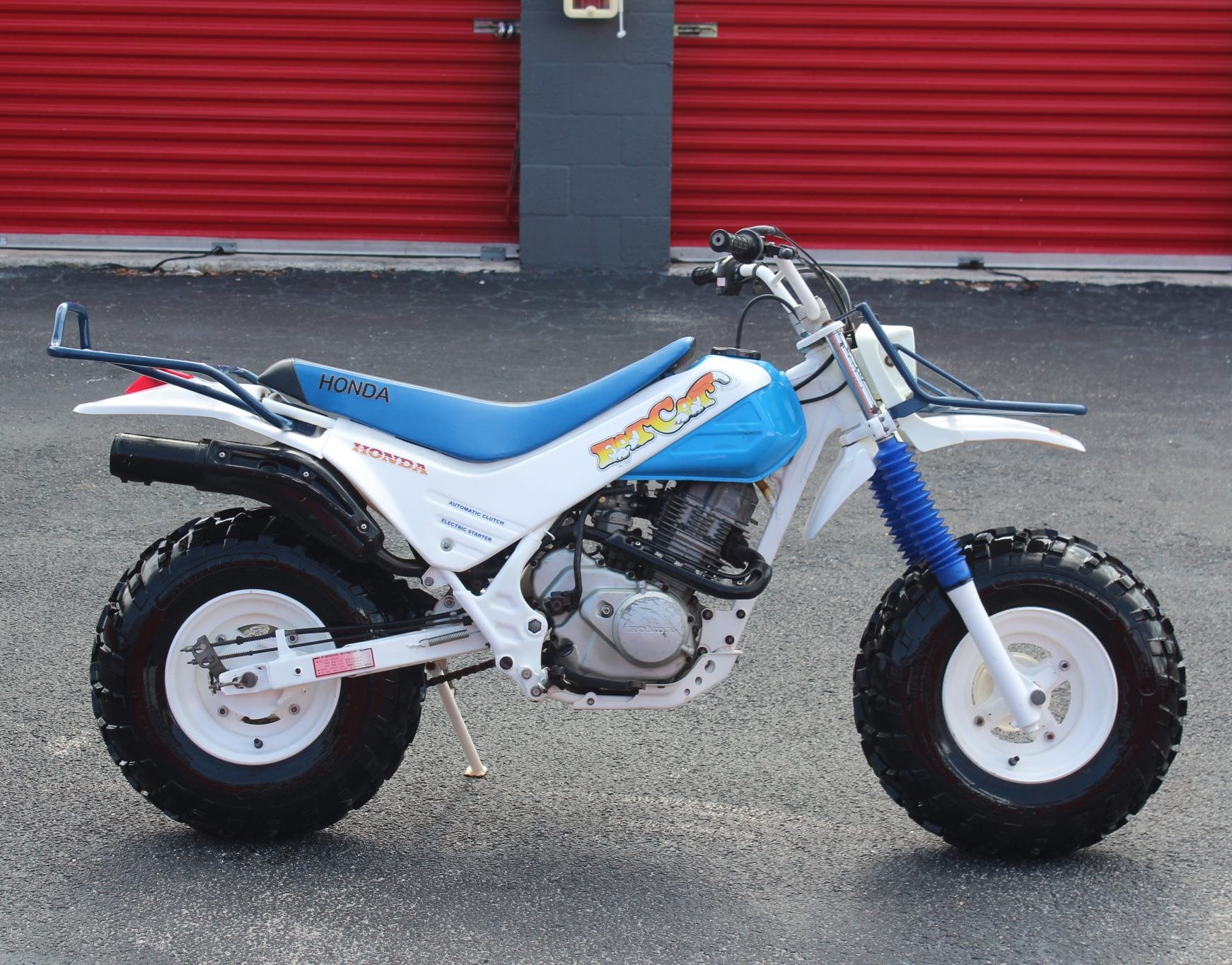
Images courtesy of Bring a Trailer

Articles that Ben Branch has written have been covered on CNN, Popular Mechanics, Smithsonian Magazine, Road & Track Magazine, the official Pinterest blog, the official eBay Motors blog, BuzzFeed, Autoweek Magazine, Wired Magazine, Autoblog, Gear Patrol, Jalopnik, The Verge, and many more.
Silodrome was founded by Ben back in 2010, in the years since the site has grown to become a world leader in the alternative and vintage motoring sector, with well over a million monthly readers from around the world and many hundreds of thousands of followers on social media.