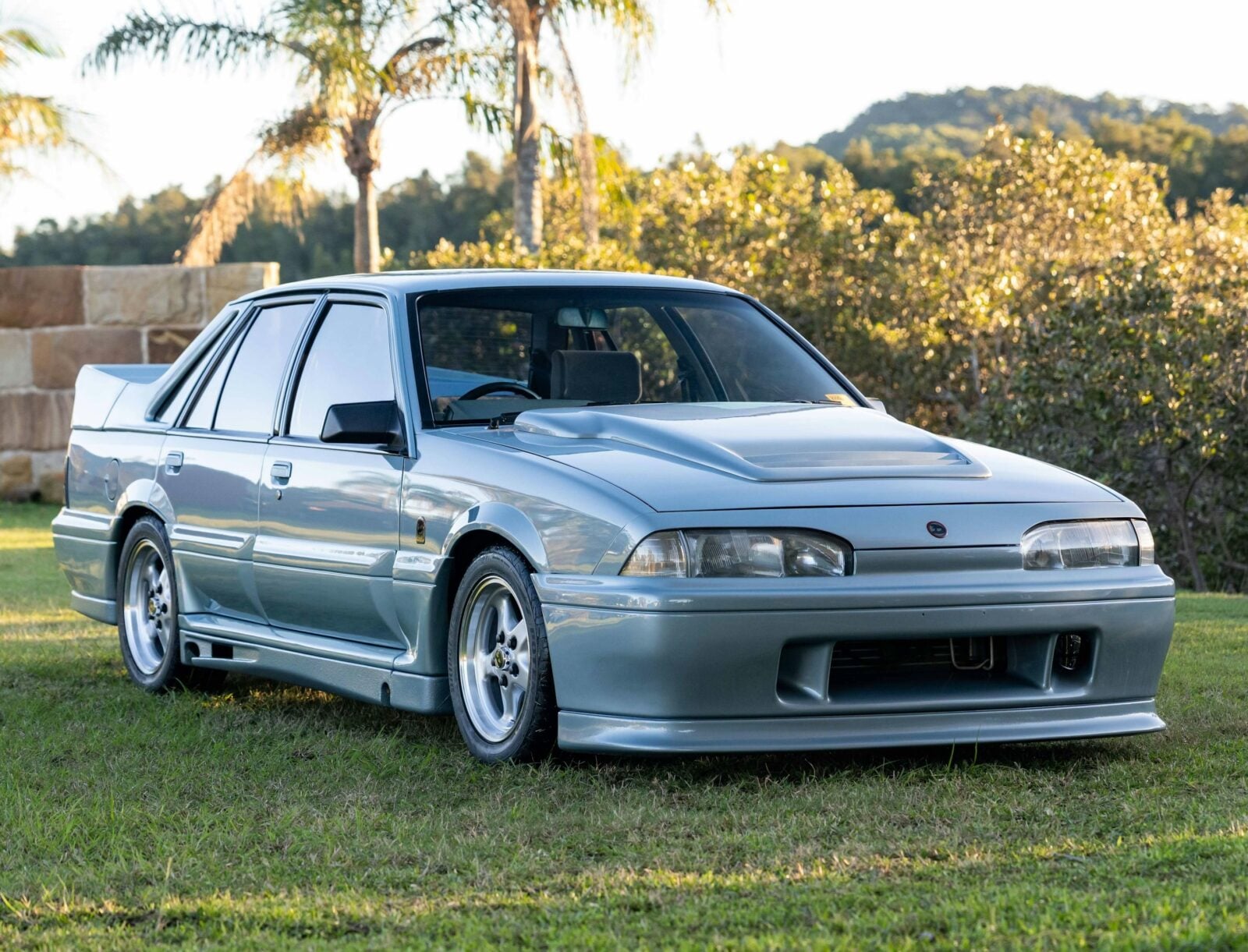
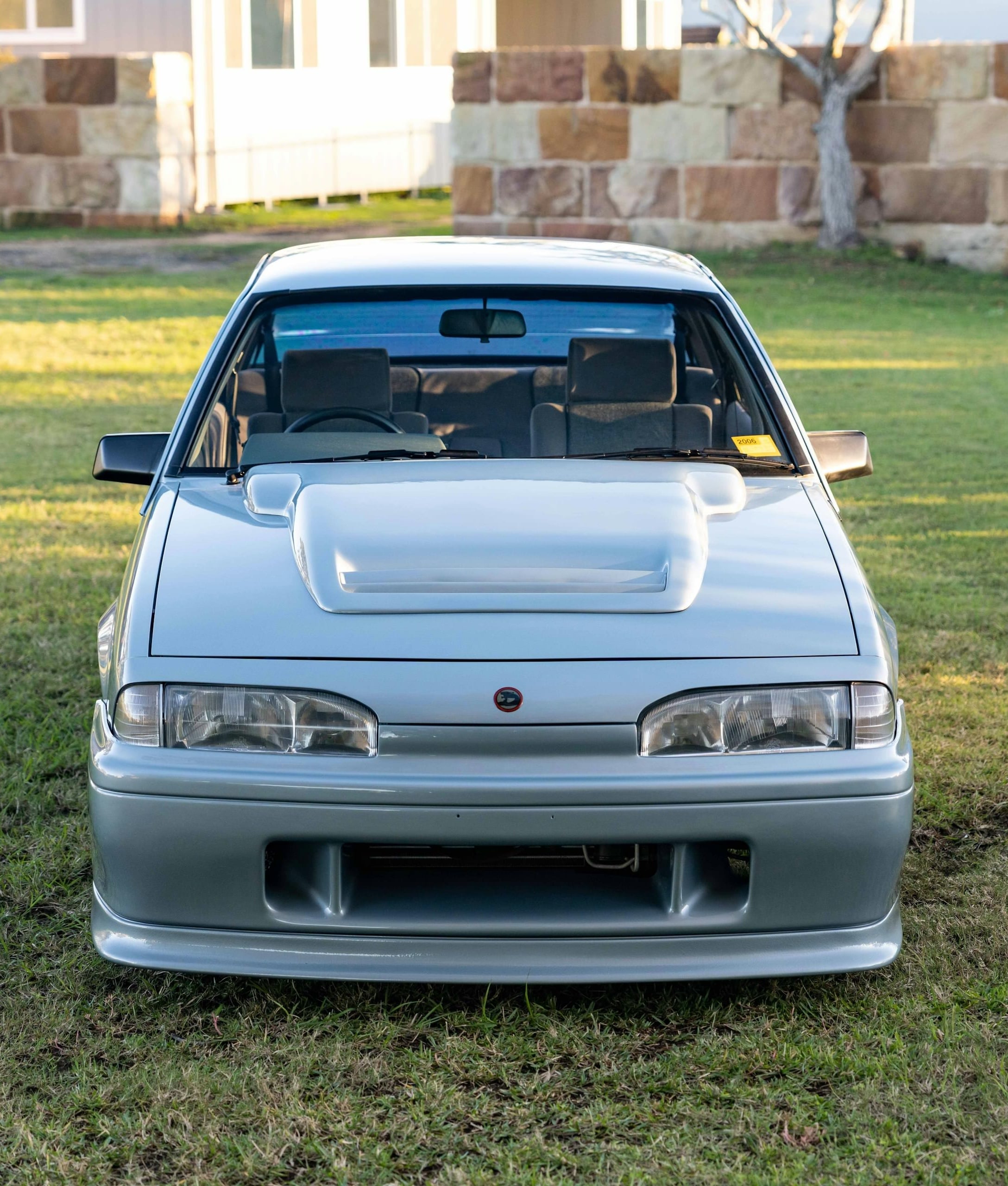
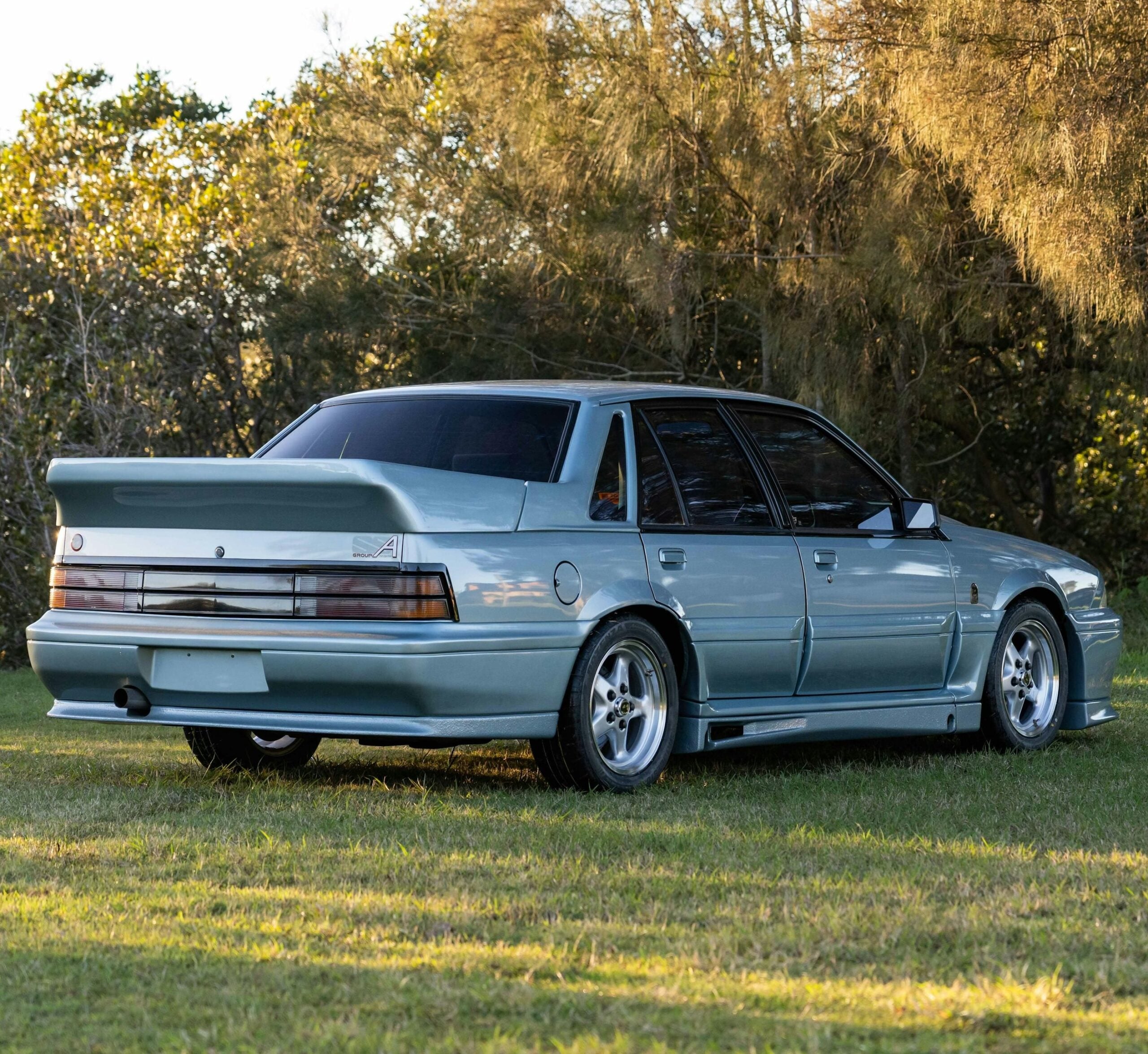
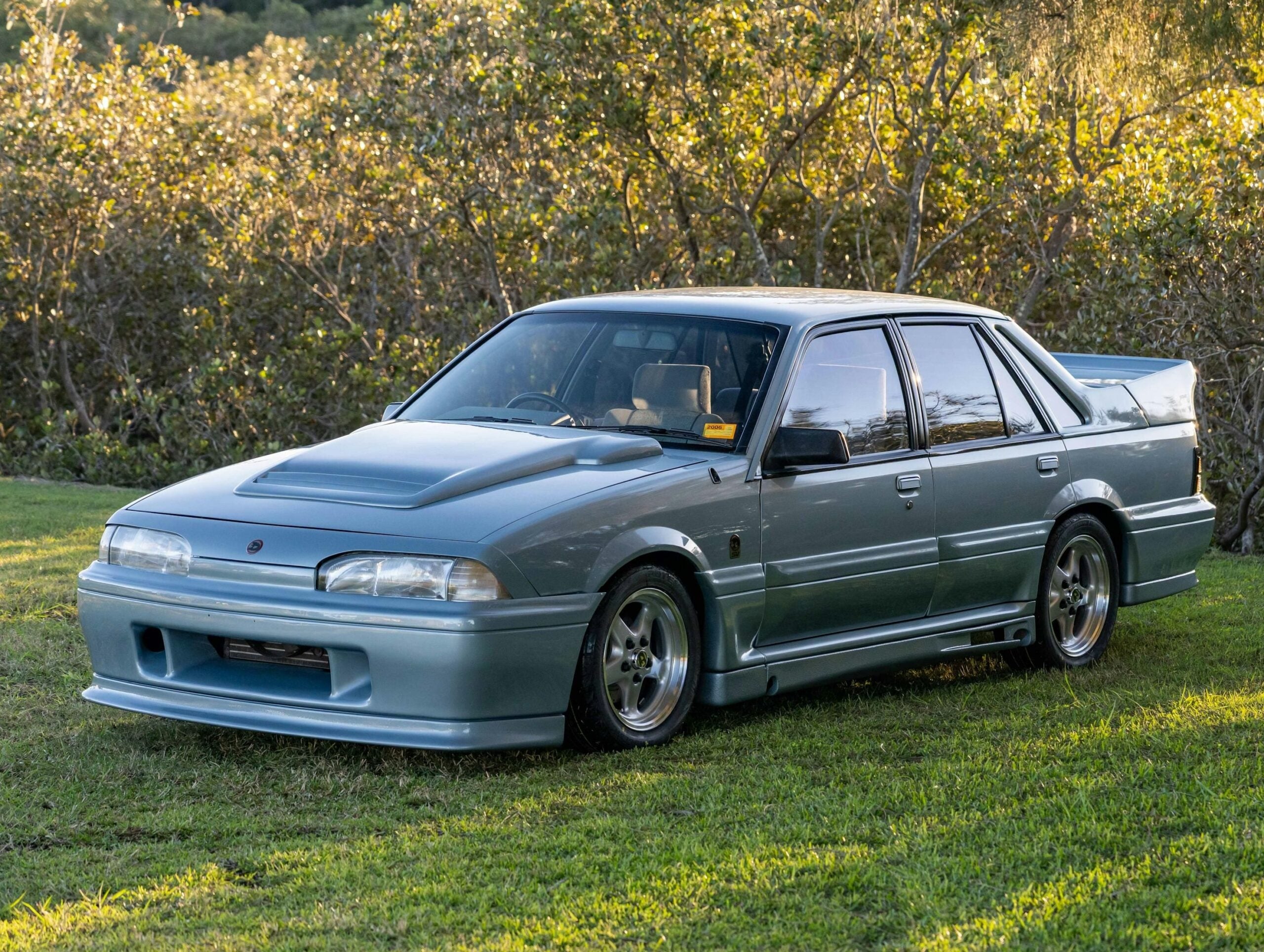
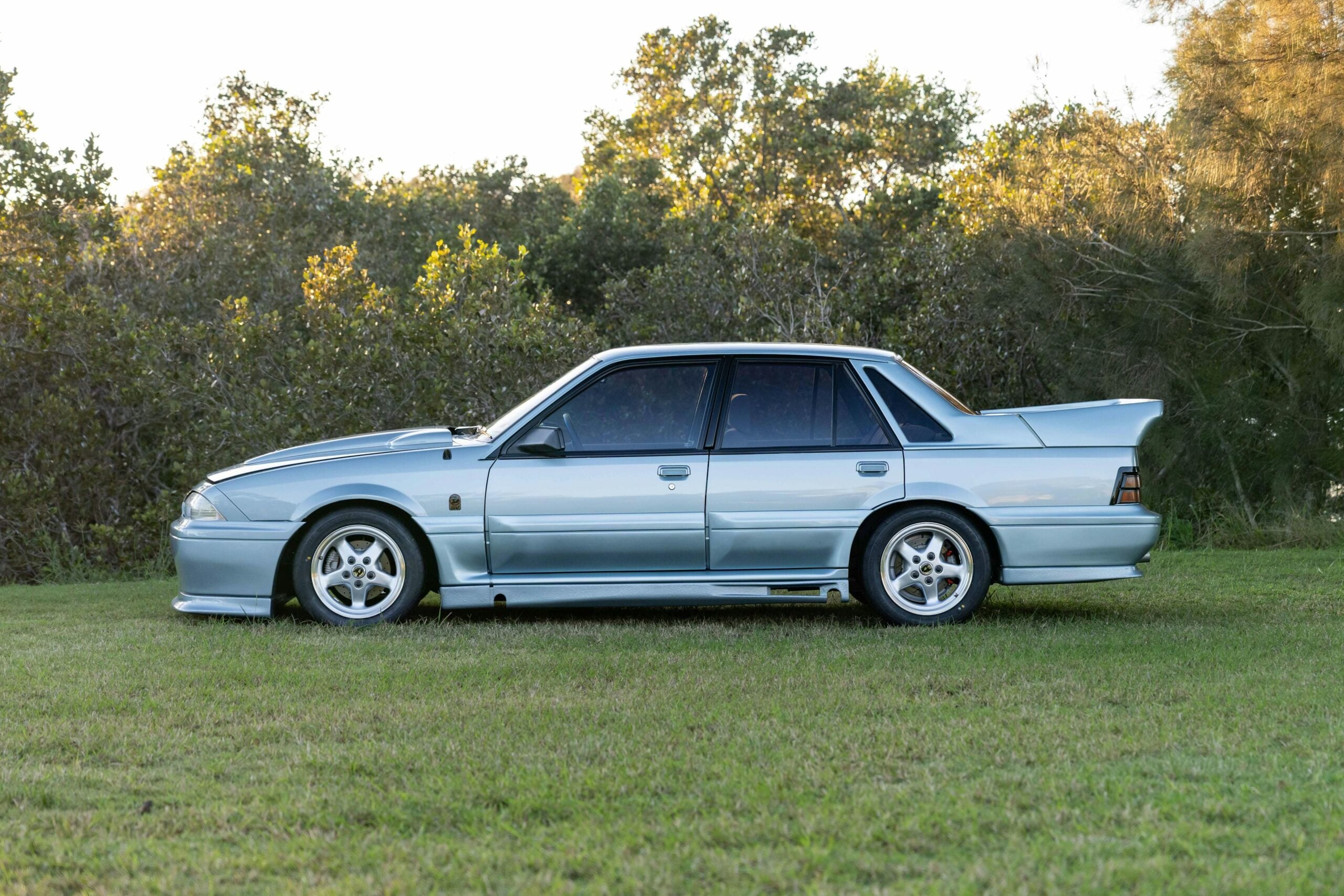
This is a rare, original Holden HSV VL SS Group A Walkinshaw from 1988. It’s one of the most desirable of the 1980s-era Australian super sedans, and it was one of the quickest production four-doors in the world at the time.
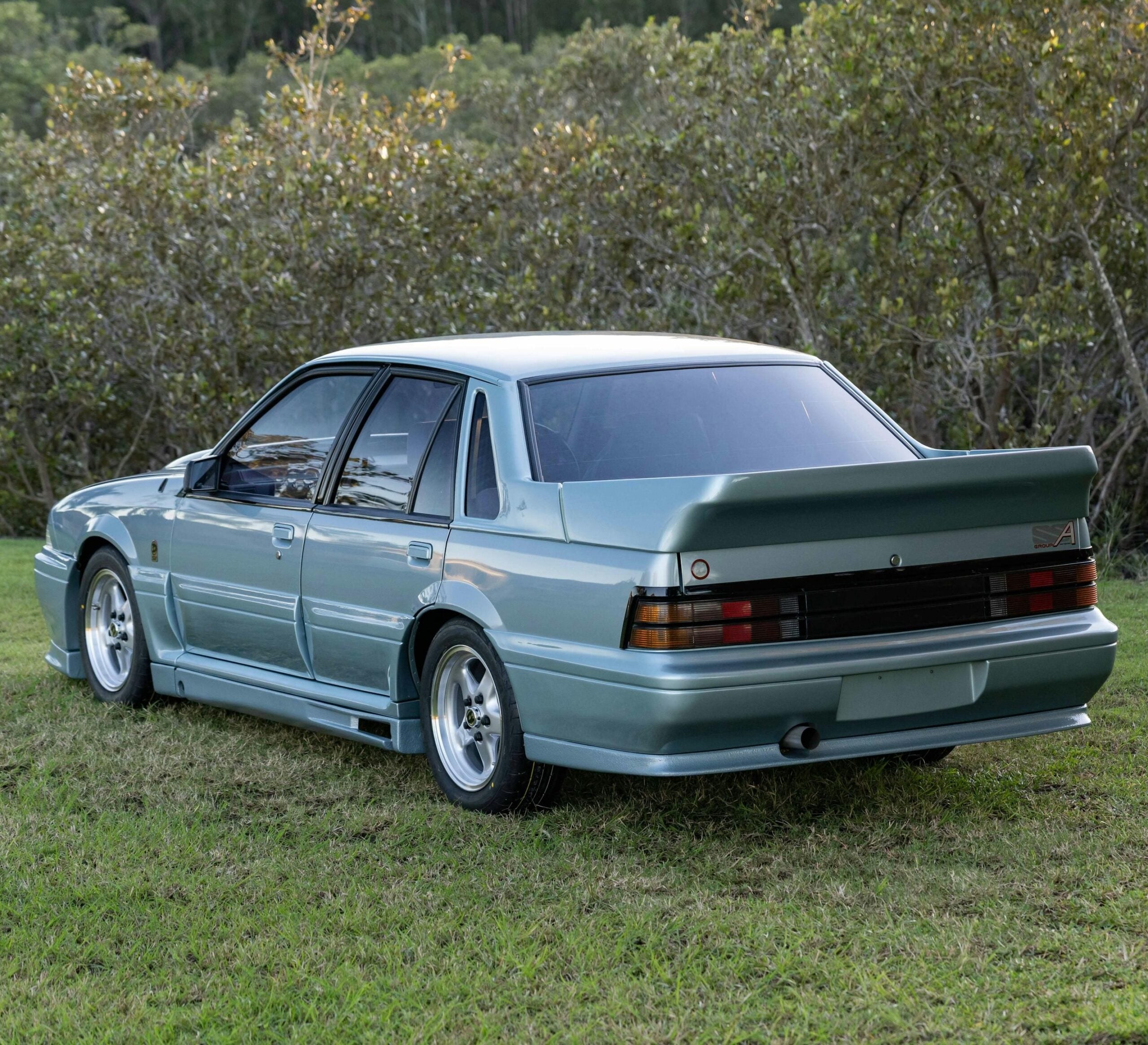
When it was first introduced, the looks of the VL SS Group A Walkinshaw were highly controversial, some even called it the “Plastic Pig,” but the appearance has aged well and most now refer to the car more affectionately as the “Walky.”
Fast Facts: A Holden HSV VL SS Group A Walkinshaw
- The HSV VL SS Group A Walkinshaw was the first car produced by Holden Special Vehicles, the joint venture formed in 1987 between Holden and Tom Walkinshaw Racing after the Energy Polarizer controversy ended Holden’s relationship with Peter Brock’s Holden Dealer Team (HDT). It was built to homologate a Group A touring car.
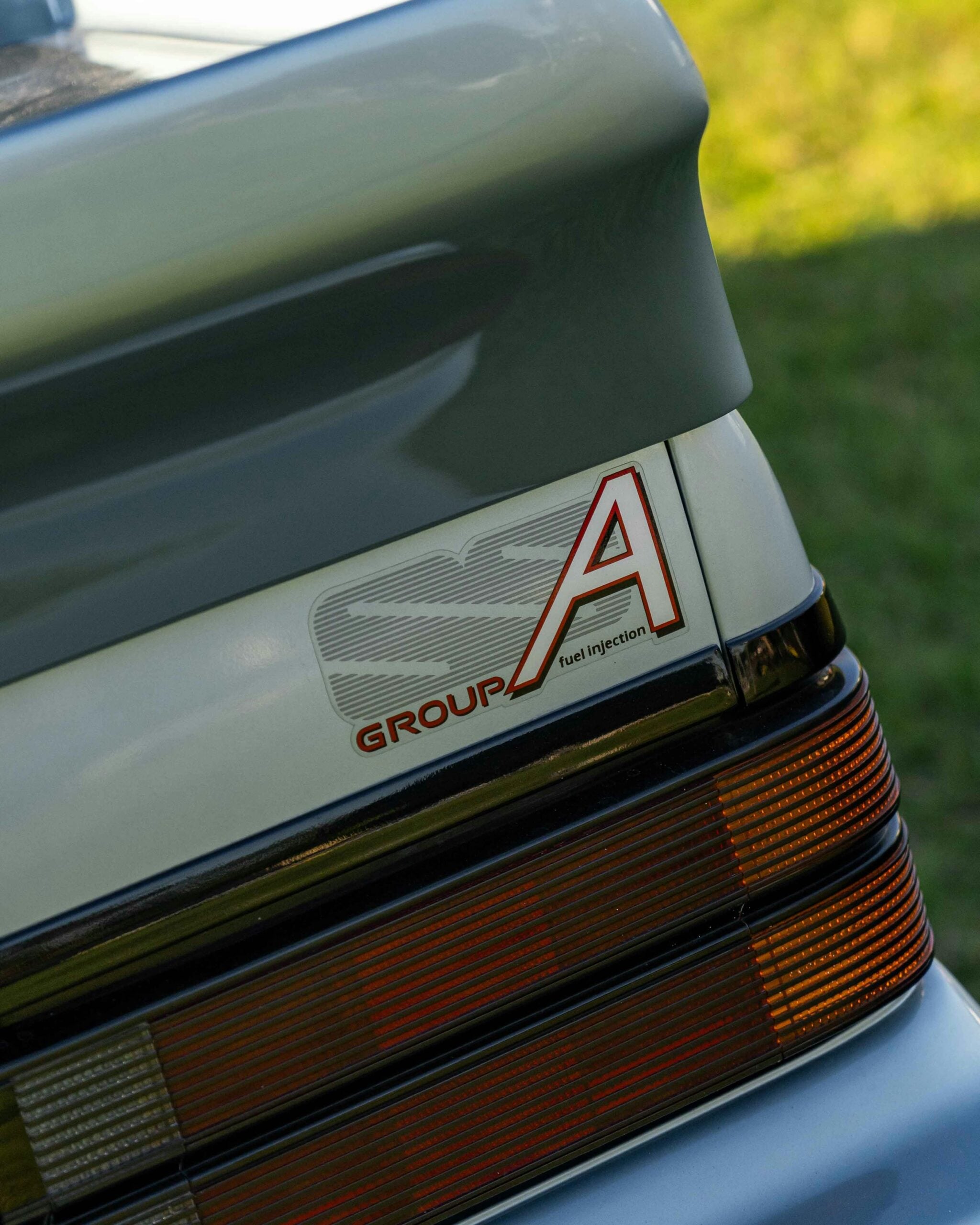
- Just 750 examples were built between March and November of 1988, all finished in Panorama Silver. Each one used a 4,987cc fuel-injected Holden V8 making 241 bhp, fed by the famous Walkinshaw twin-throttle-body intake. The body kit was wind-tunnel developed by TWR and styled by future McLaren F1 designer Peter Stevens.
- After a disastrous racing debut in 1988 (Tom Walkinshaw’s own car retired after just five laps with rear suspension failure), the Walkinshaw was finally redeemed at the 1990 Bathurst 1000, when Win Percy and Allan Grice took an upset victory in the very same chassis Walkinshaw had retired two years earlier.
- The car shown here is build number 285 of 750, finished in correct Panorama Silver over grey cloth, with 45,764 km on the odometer (not warranted). It comes with its HSV Certificate of Authenticity, stamped service book, original owner’s manuals, two keys, original brake rotors, and the removed exhaust silencer.
History Speedrun: The HSV VL SS Group A Walkinshaw
When the Holden VL Commodore SS Group A SV rolled into showrooms in 1988 wearing more than two dozen separate pieces of fiberglass, a wing the size of a coffee table, and paint called Panorama Silver (named after Mount Panorama, naturally), Australian enthusiasts didn’t quite know what to make of it.
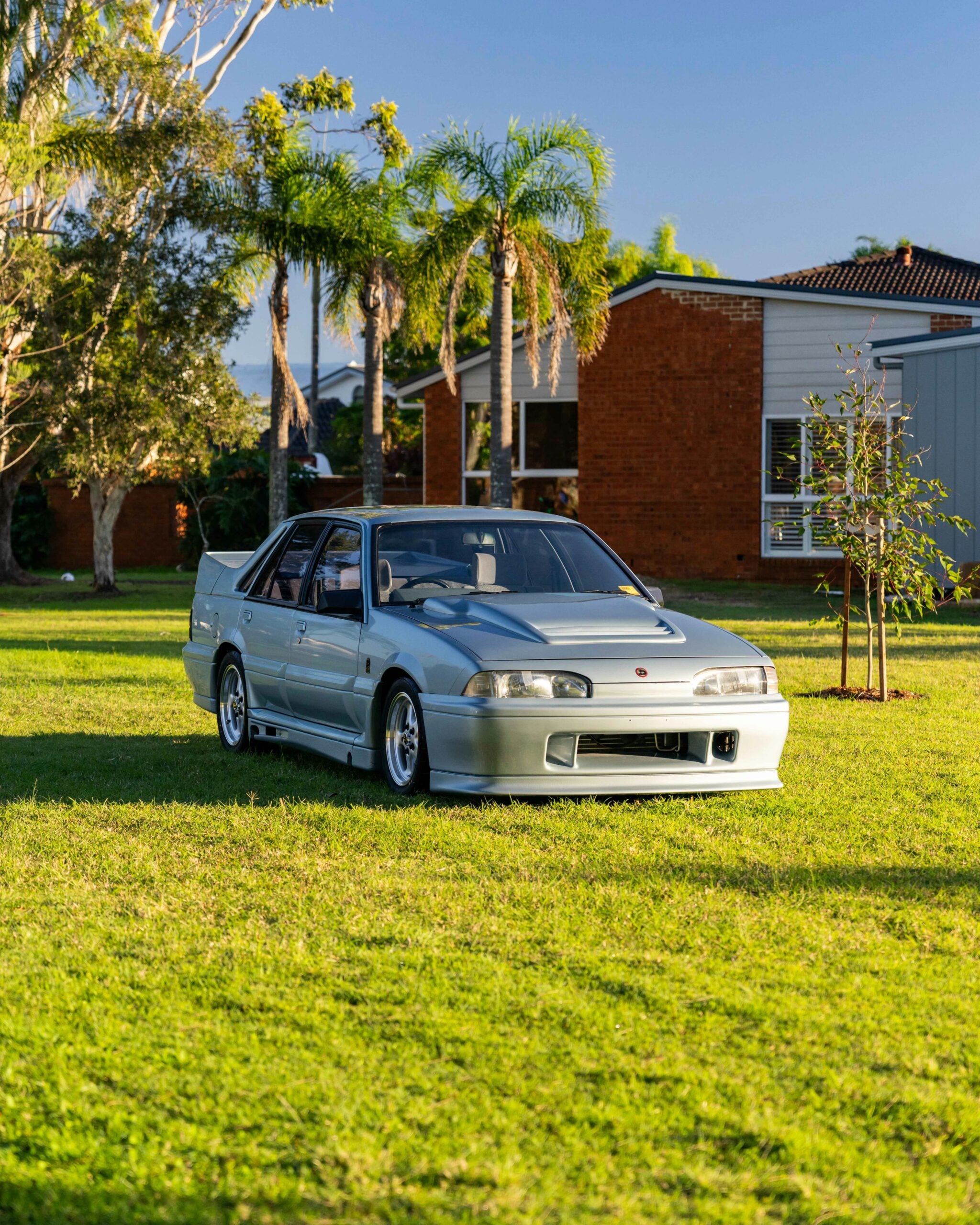
 This is a rare, original Holden HSV VL SS Group A Walkinshaw from 1988. It’s one of the most desirable of the 1980s-era Australian super sedans, and it was one of the quickest production four-doors in the world at the time.
The car drew nicknames immediately. “Plastic Pig” and “Batmobile” from the detractors. “Walkinshaw” or just the “Walky” from those more sympathetic to the Scotsman responsible for the whole unusual enterprise. Whatever you wanted to call it, you couldn’t possibly ignore it.
To understand how the Walky came to exist, you have to rewind back to February of 1987 and one of the most spectacular fallouts in Australian motorsport history. Peter Brock, Holden’s golden boy and the public face of the Holden Dealer Team (HDT), had unveiled the HDT Director, this was a Calais-based road car offered with the now-infamous “Energy Polarizer,” a small plastic box of crystals and magnets that Brock genuinely believed could improve a car through “orgone energy.”
Holden, watching from Melbourne, was less convinced. After months of attempts to rein in Brock and his unusual beliefs in, GM-Holden severed its relationship with HDT.
That left Holden without a performance partner just as Group A touring car racing was getting deadly serious. Turbocharged Ford Sierra RS500s were starting to dominate, and the Nissan Skyline HR31 GTS-R was emerging as another serious threat.
Holden put out a worldwide tender for a new performance partner and settled on Tom Walkinshaw Racing – the British outfit that had won the 1984 European Touring Car Championship, the 1984 Spa 24 Hours with a Jaguar XJ-S, and the 1985 Bathurst 1000 with the same car.
Tom Walkinshaw himself had climbed behind the wheel and taken the 1984 ETCC drivers’ title. Holden Special Vehicles was formed as a joint venture between Holden and TWR later in 1987, with Walkinshaw recruiting Holden executive John Crennan as managing director.
The new outfit’s first job was clear – they needed to build a Group A homologation special that could beat the turbo cars. Group A rules required at least 500 road-going examples, and the resulting car would carry Holden badges rather than HSV ones – homologation regulations demanded it.
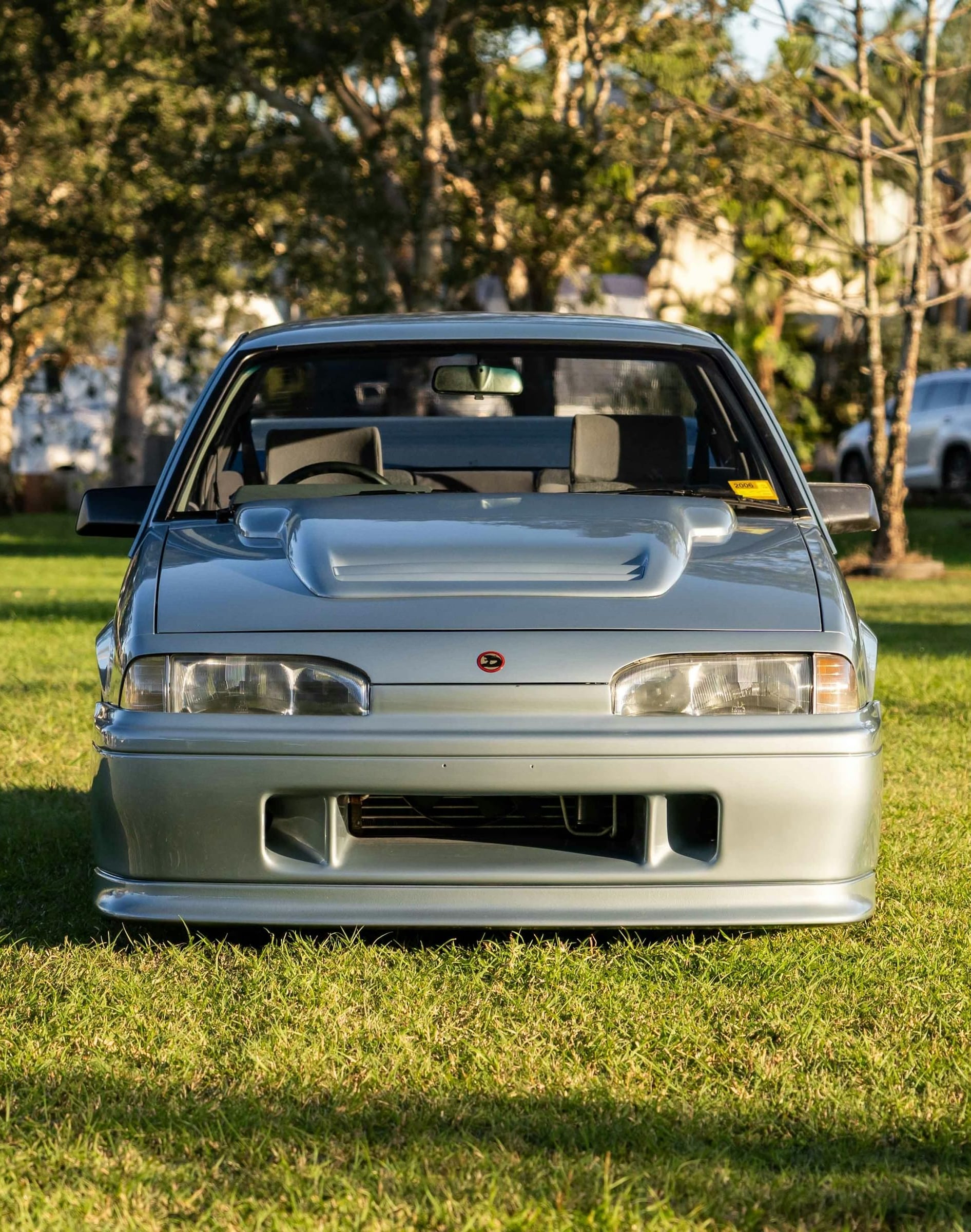
When it was first introduced, the looks of the VL SS Group A Walkinshaw were highly controversial, some even called it the “Plastic Pig,” but the appearance has aged well and most now refer to the car affectionately as the “Walky.”
The design started, according to Crennan, on a napkin in Melbourne’s Regent Hotel, where Walkinshaw sketched out his aerodynamic vision. The styling work itself was farmed out to Peter Stevens, the same Peter Stevens who would go on to shape the McLaren F1, the Jaguar XJR-15, and the Le Mans-winning BMW V12 LMR.
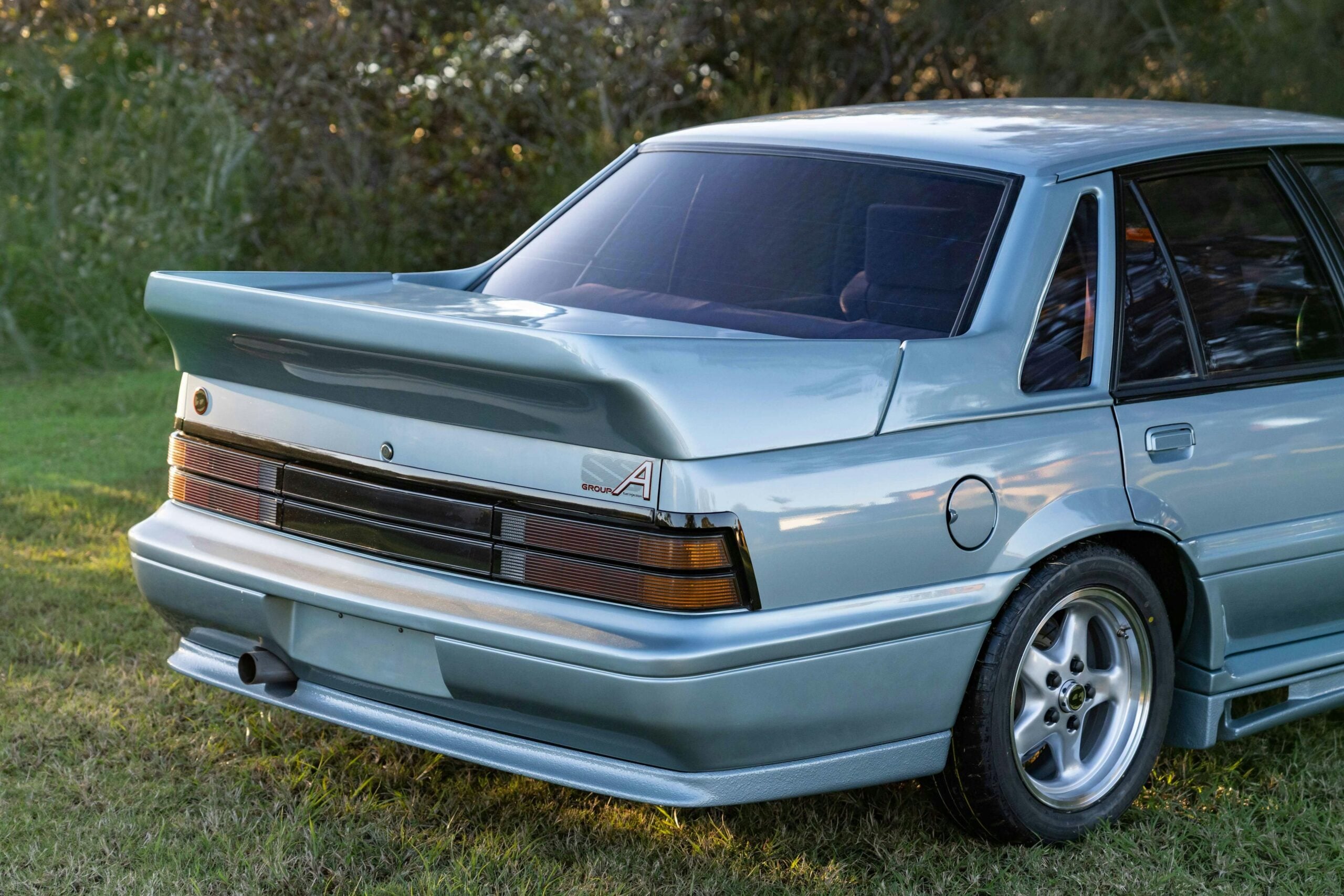
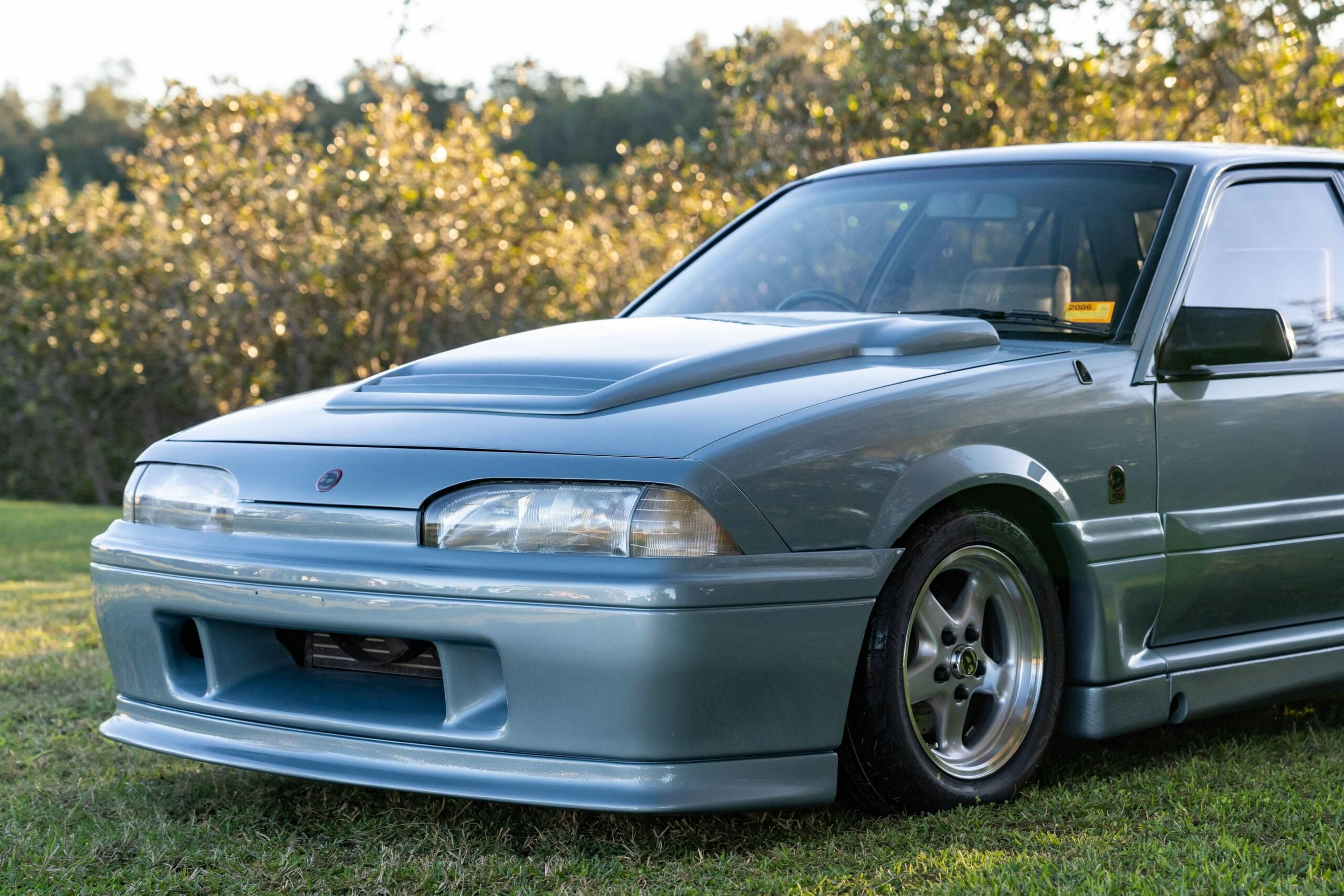
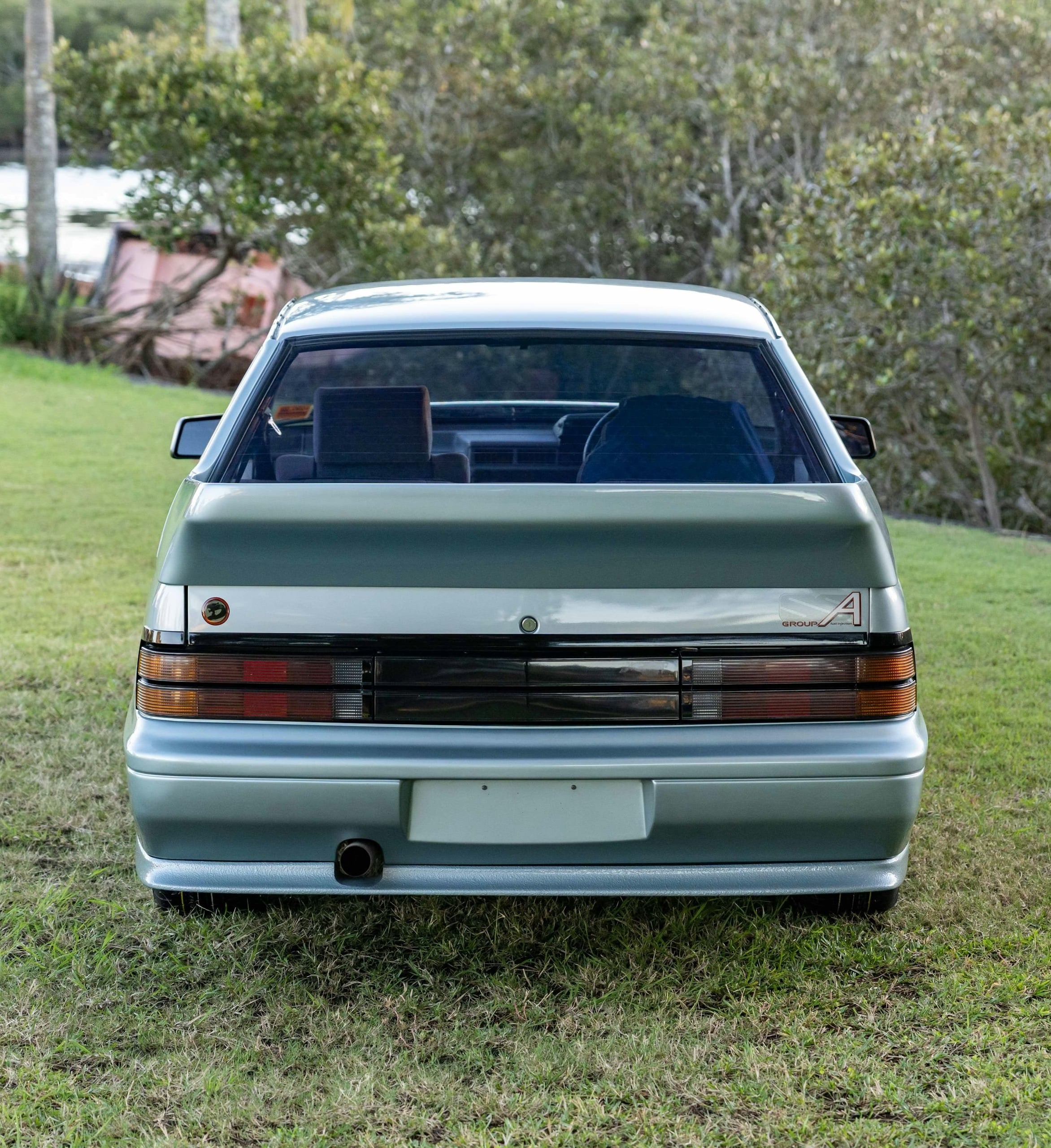
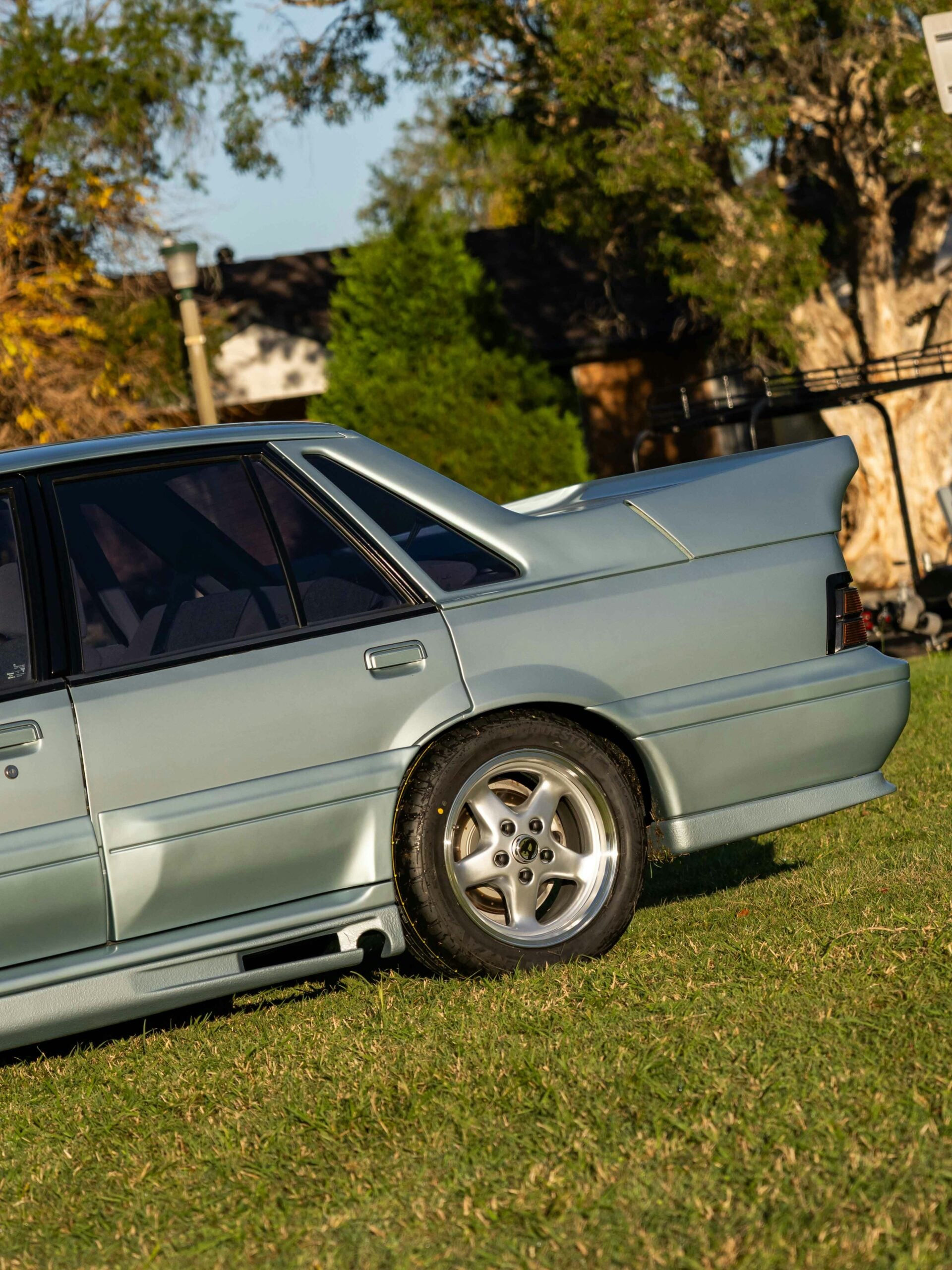
Working freelance for TWR in the UK, Stevens shaped the body kit that would become one of the most polarizing in Australian automotive history. TWR wind-tunnel tested the result, and the numbers backed up the design – it offered a 25% reduction in drag over the previous HDT VL SS Group A.
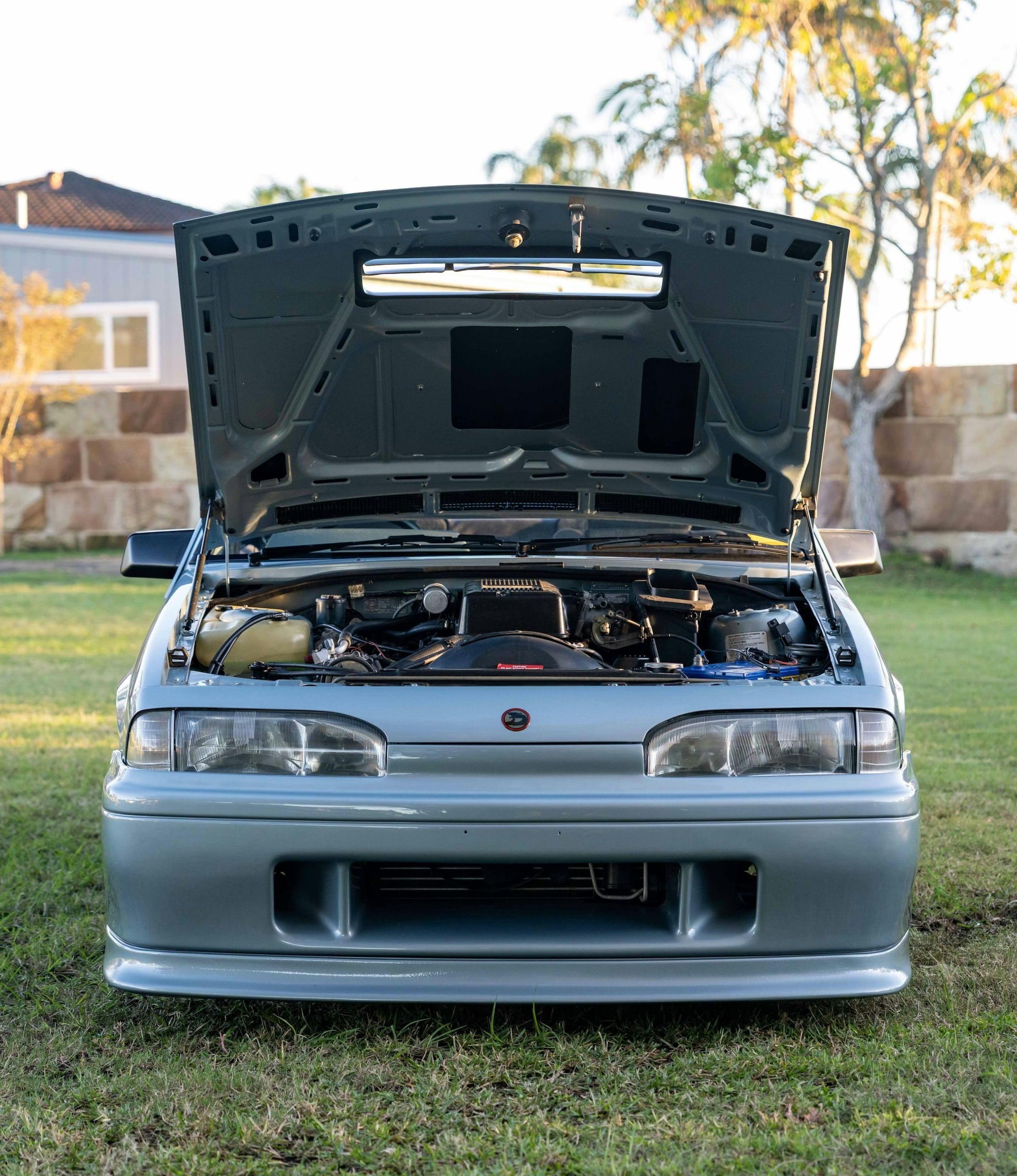
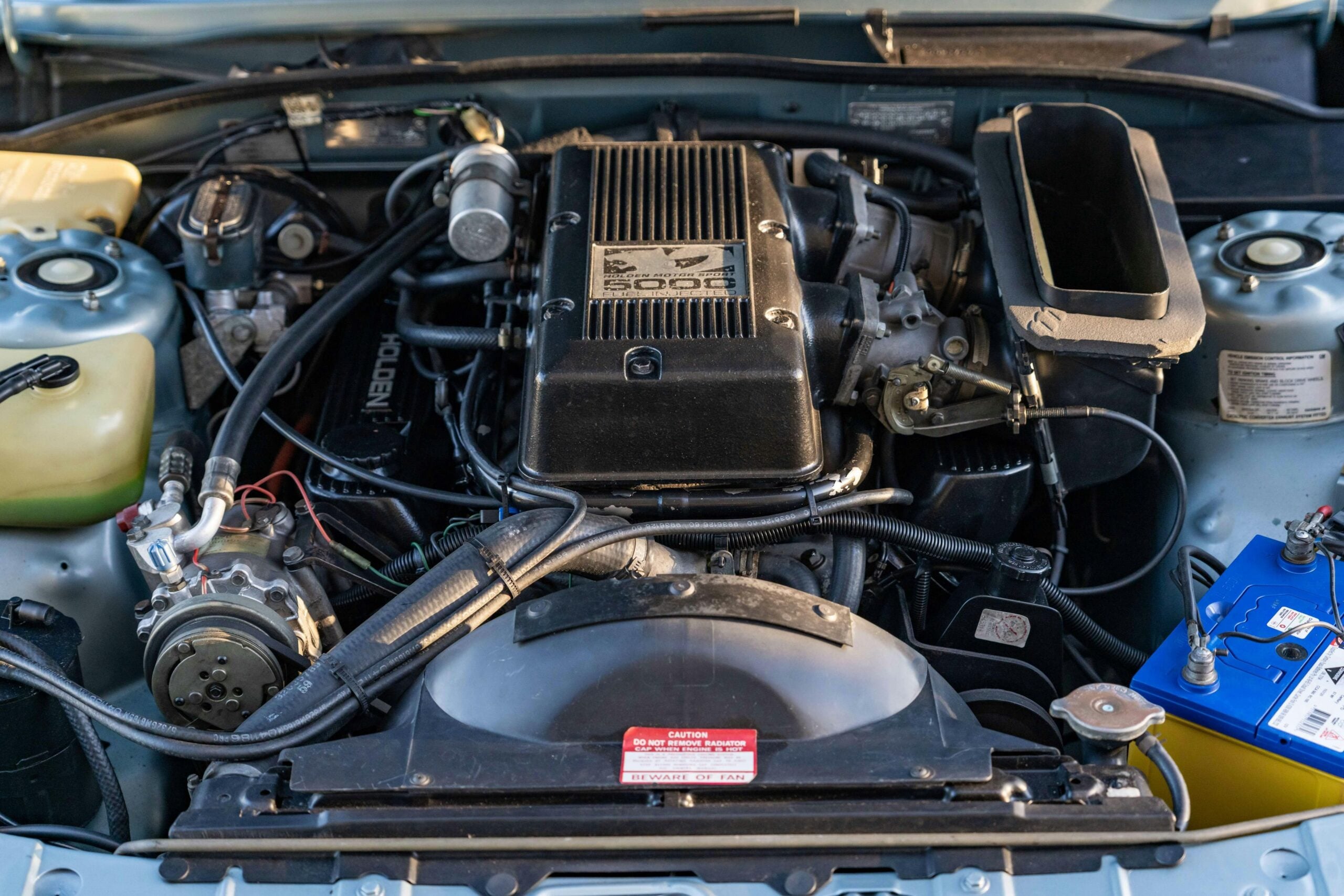
Under the hood, the 4,987cc Holden V8 (known as the 304 for its cubic inch displacement) became the first locally produced Holden V8 to use electronic fuel injection, beating the carbureted version of the regular VL V8 by a surprisingly wide margin.
The block was cast with four-bolt main bearing caps, the heads were reworked with high-flow intake ports and roller rockers. A special crankshaft, connecting rods, and pistons went in, along with a custom exhaust with eight individual primary pipes – designed so race teams could exploit a regulation loophole that allowed the exhaust to be free from the first join.
The centerpiece of this engine was the now-legendary Walkinshaw twin-throttle-body inlet manifold. A 65mm primary throttle body handled low and mid-range demands, while an 80mm secondary opened progressively as the accelerator got closer to the floorboards.
The secondary carried a plastic restrictor plate from the factory. Removing it was commonly claimed to liberate another 50 to 60 bhp, though that figure has never been officially documented. As delivered, the engine made 241 bhp at 5,200 rpm and 280 lb ft at 4,000 rpm, sent to the rear wheels through a Borg-Warner T-5 5-speed manual. No automatic was offered. The car ran 0 to 60 mph in under 7.0 seconds and topped out around 143 mph – these were excellent figures for a four door sedan of the era.
Production ran from March until November of 1988, with the base VLs built by Holden and then converted by HSV at its Notting Hill facility in Melbourne’s south-east. The initial run of 500 sold fast enough that HSV greenlit another 250 cars, taking total production to 750 – all finished in Panorama Silver.
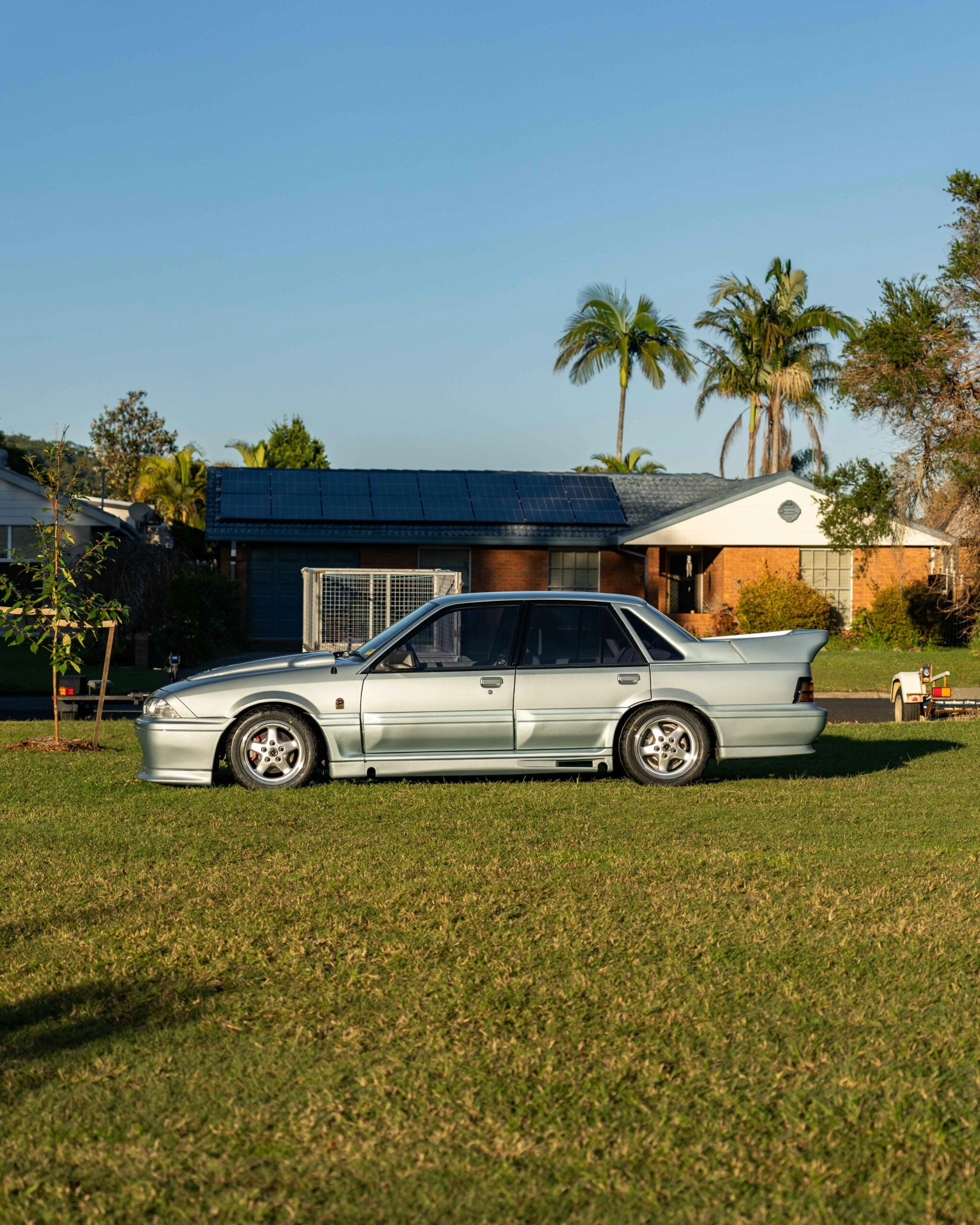
This is an original 1988 Holden HSV VL SS Group A Walkinshaw, it’s build number 285 of the 750 cars HSV produced, and it comes to market from long-term enthusiast ownership – the seller, reportedly the third owner, has had the car for 21 years.
The first cars carried a list price of roughly $43,500 AUD, with the later 250 examples reportedly priced $2,000 AUD dearer. Those last cars lingered, however, and didn’t sell quite as quickly. Holden launched the all-new VN Commodore in August of 1988, and word that a VN Group A was coming made the VL look like yesterday’s news. Some examples sat in dealerships for years before eventually selling.
On track, the Walkinshaw’s debut could only be described as rough. Tom Walkinshaw entered himself and Jeff Allam in the 1988 Bathurst 1000 in a TWR-built car air-freighted from England, the rear suspension collapsed after five laps. The teammate Perkins/Hulme car retired from second with an engine failure. The 1989 season was worse – for the first time since 1978, no Holden made the Bathurst pole shootout.
Then came a completely unexpected redemption. At the 1990 Tooheys 1000, against turbocharged Sierras and the new four-wheel-drive Nissan GT-R that was already being nicknamed Godzilla, Win Percy and Allan Grice drove the very same chassis Walkinshaw and Allam had retired in 1988 (TWR 023) to a famous and entirely unexpected Bathurst victory.
It was the Holden Racing Team’s first Bathurst win, and the only Bathurst victory ever recorded by the VL SS Group A SV.
Today the “Walky” is remembered as the founding car of HSV, a brand that would go on to build more than 85,000 high performance vehicles over the next three decades. Good examples are now often advertised above $200,000 AUD. Not bad for a car that, when new, had enthusiasts shaking their heads at the wild fiberglass body kit and the sheer audacity of it all.
The Holden HSV VL SS Group A Walkinshaw Shown Here
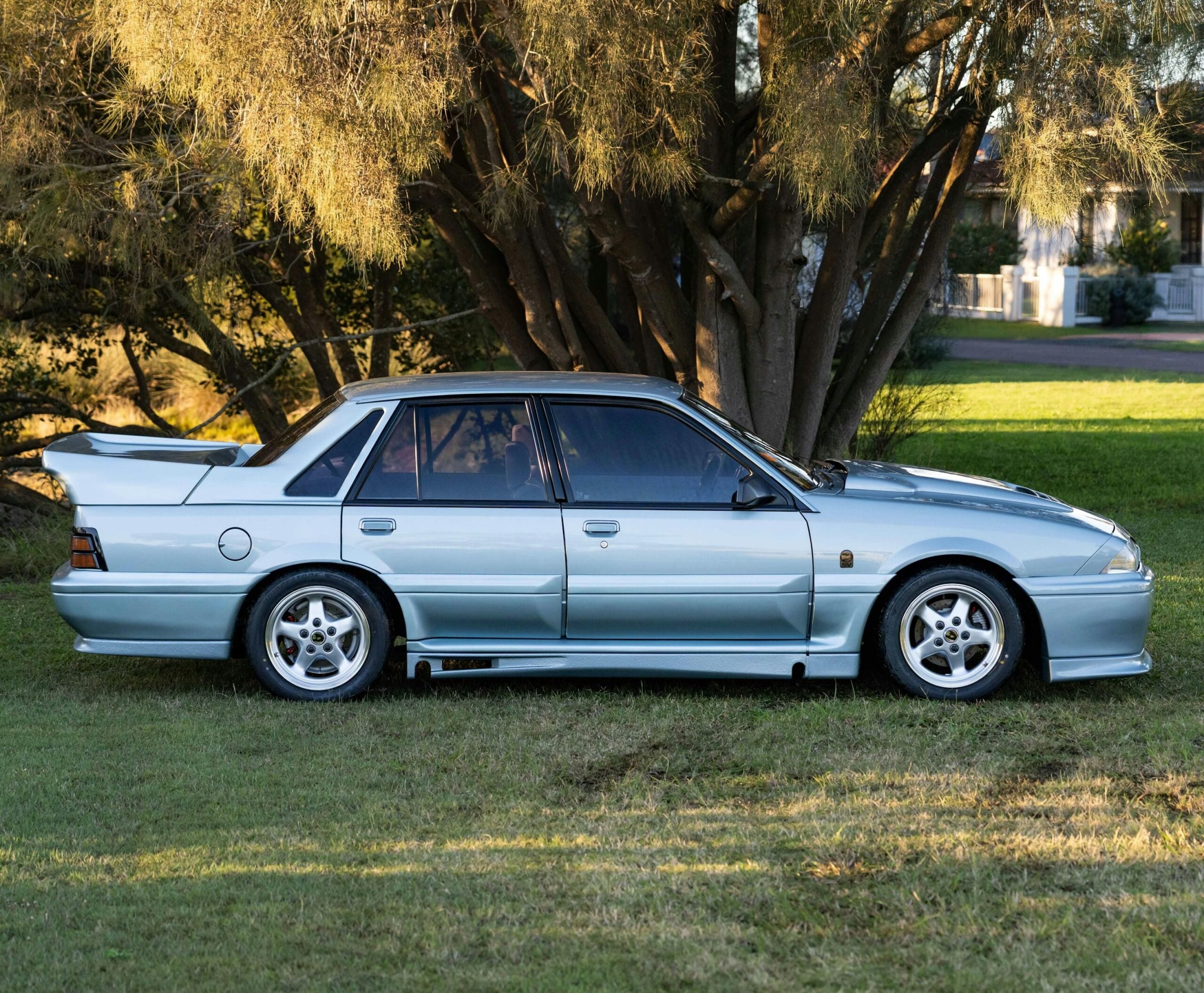
This is an original 1988 Holden HSV VL SS Group A Walkinshaw, it’s build number 285 of the 750 cars HSV produced, and it comes to market from long-term enthusiast ownership – the seller, reportedly the third owner, has had the car for 21 years.
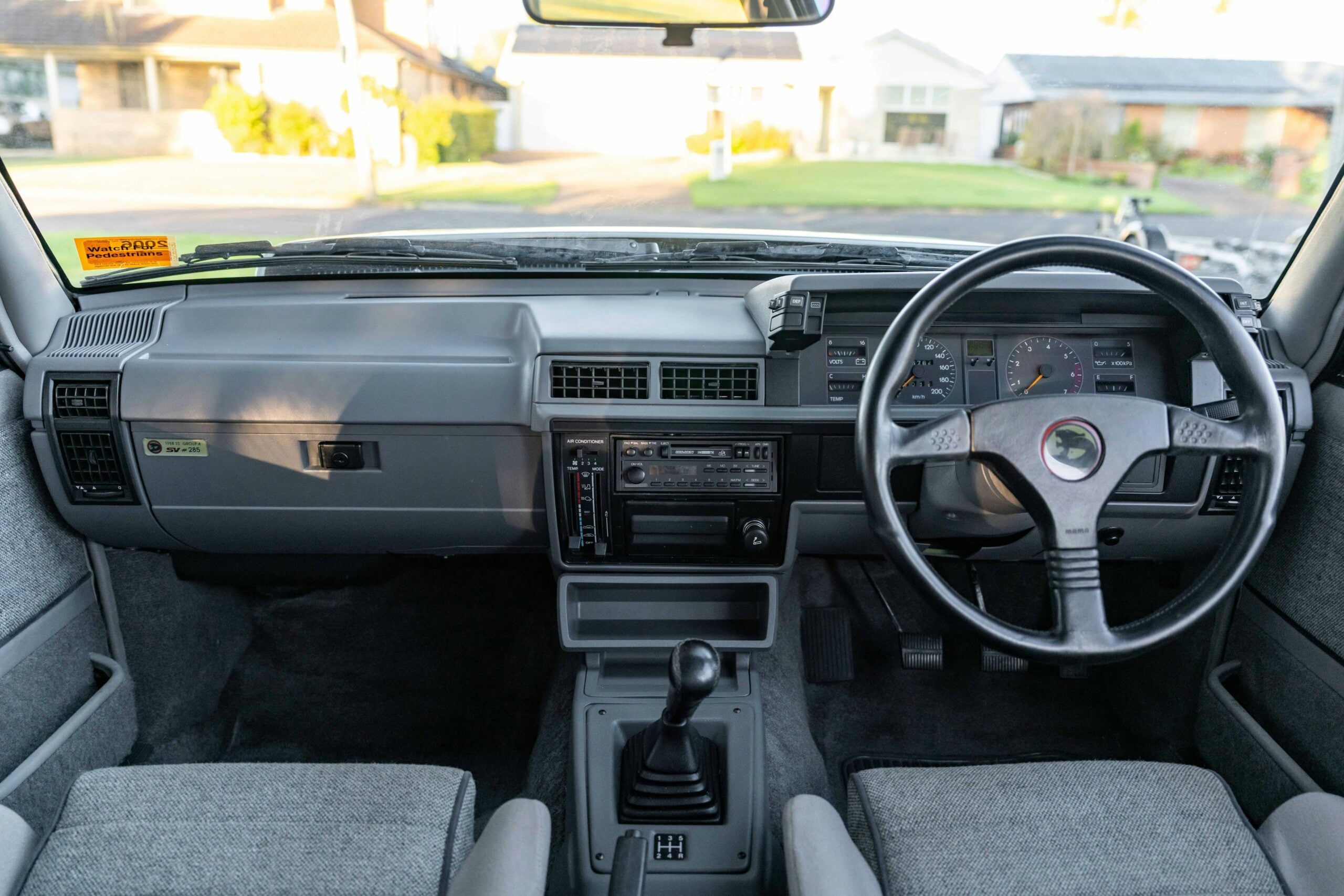
First registered in June of 1988, it now shows 45,764 km on the odometer, though that figure isn’t warranted. Like every Walky to leave the factory, it wears Panorama Silver over a grey cloth interior with the period-correct patterned seat and door card inserts, and it rides on the original 16-inch five-spoke alloys finished in silver with machined lips, shod with Bridgestone Potenza tires.
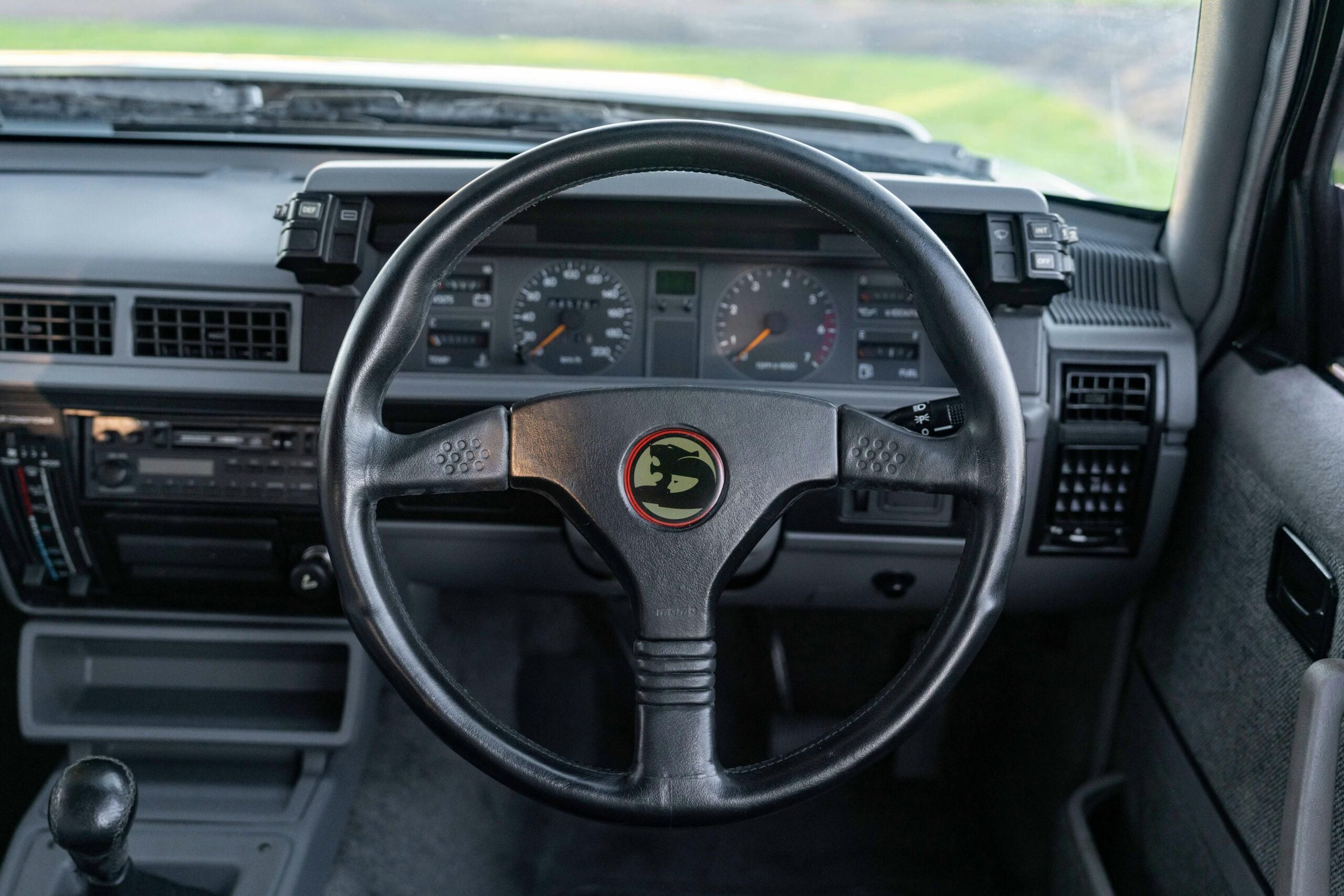
The 4.9 liter fuel-injected V8 is good for 241 bhp, routed to the rear wheels through the Borg-Warner T-5 5-speed manual. The brake rotors have been swapped for drilled-and-slotted units, but the originals come with the car. The rear exhaust silencer has been removed and likewise stays with the sale. Inside it has the black leather-trimmed Momo steering wheel, the Holden-branded cassette stereo, air conditioning, and electric windows.
The car has lived its recent life in a sealed undercover garage, parked there since 2005, and has covered roughly 1,205 kms in the seller’s ownership – though they note it’s been started regularly throughout. The most recent roadworthy test was conducted on the 27th of May 2005.
A new windscreen went in during 2006 to deal with stone chips, and there’s a small paint chip below the left-hand rear door handle. A car bra has been on the front end throughout the seller’s tenure and is included. The most recent service was in December of 2025, carried out by the seller at 45,763 kms – oil and filter, spark plugs, fuel filter, and fuel pump.
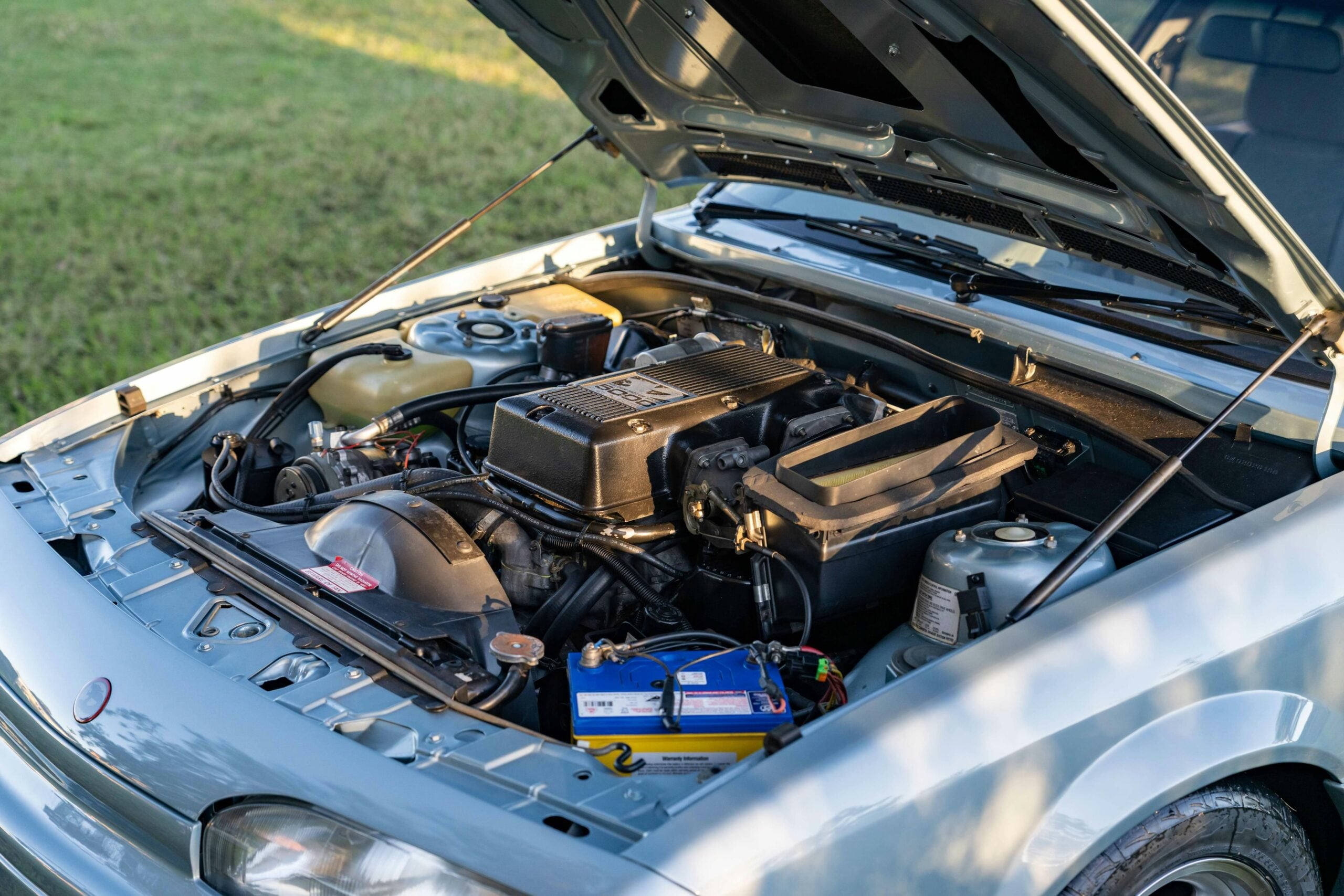
The 4.9 liter fuel-injected V8 is good for 241 bhp, routed to the rear wheels through the Borg-Warner T-5 5-speed manual. The brake rotors have been swapped for drilled-and-slotted units, but the originals come with the car.
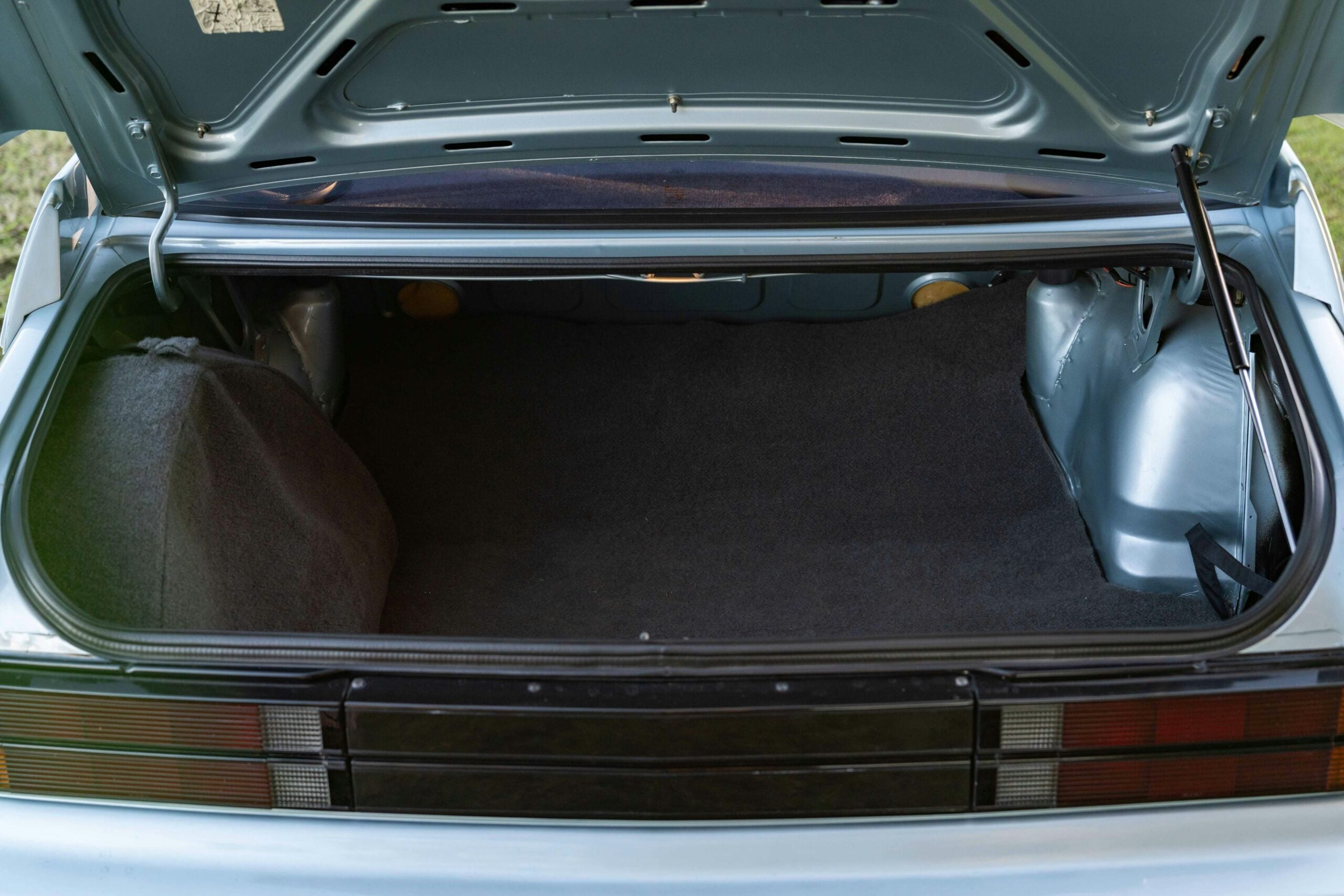
The car comes with two keys, one original alarm remote, a spare wheel, the HSV Certificate of Authenticity, the stamped service booklet, the owner’s manuals in their original black leather wallet, an HSV-branded windbreaker, and a small file of maintenance invoices.
It’s being offered for sale out of NSW, Australia on Collecting Cars, and you can visit the listing here if you’d like to read more about it or register to bid.
Images courtesy of Collecting Cars
Articles that Ben Branch has written have been covered on CNN, Popular Mechanics, Smithsonian Magazine, Road & Track Magazine, the official Pinterest blog, the official eBay Motors blog, BuzzFeed, Autoweek Magazine, Wired Magazine, Autoblog, Gear Patrol, Jalopnik, The Verge, and many more.
Silodrome was founded by Ben back in 2010, in the years since the site has grown to become a world leader in the alternative and vintage motoring sector, with well over a million monthly readers from around the world and many hundreds of thousands of followers on social media.