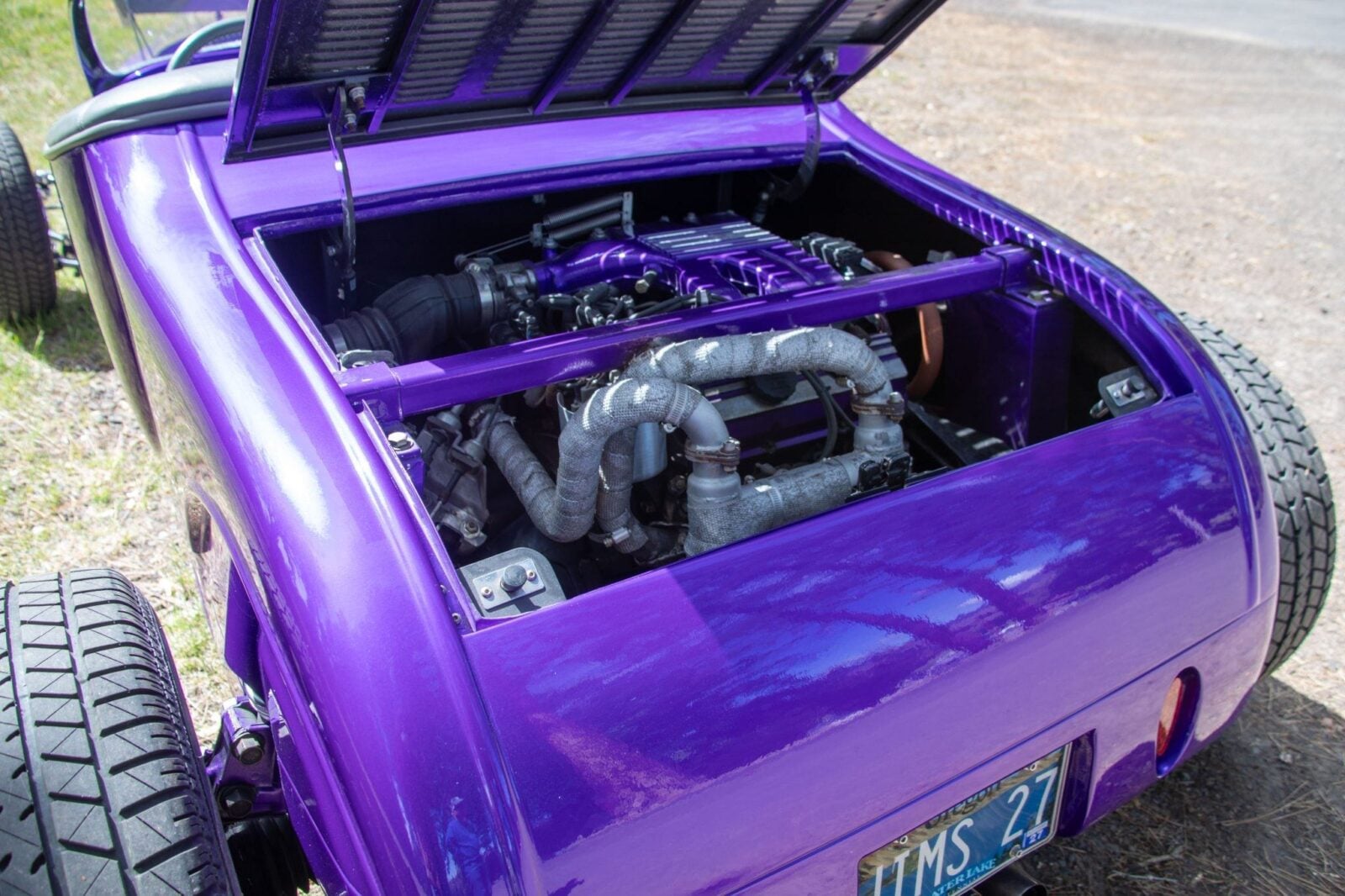
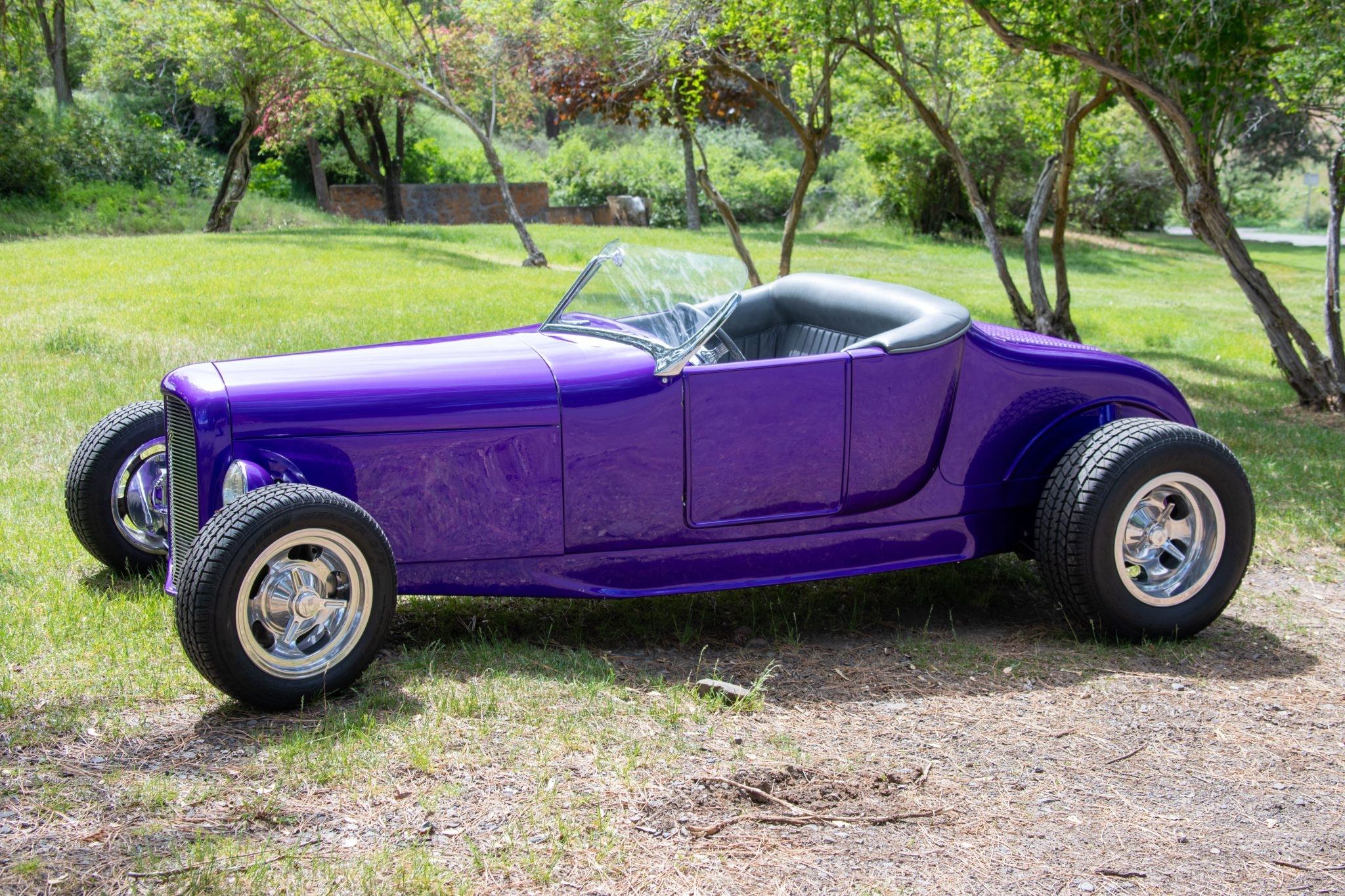
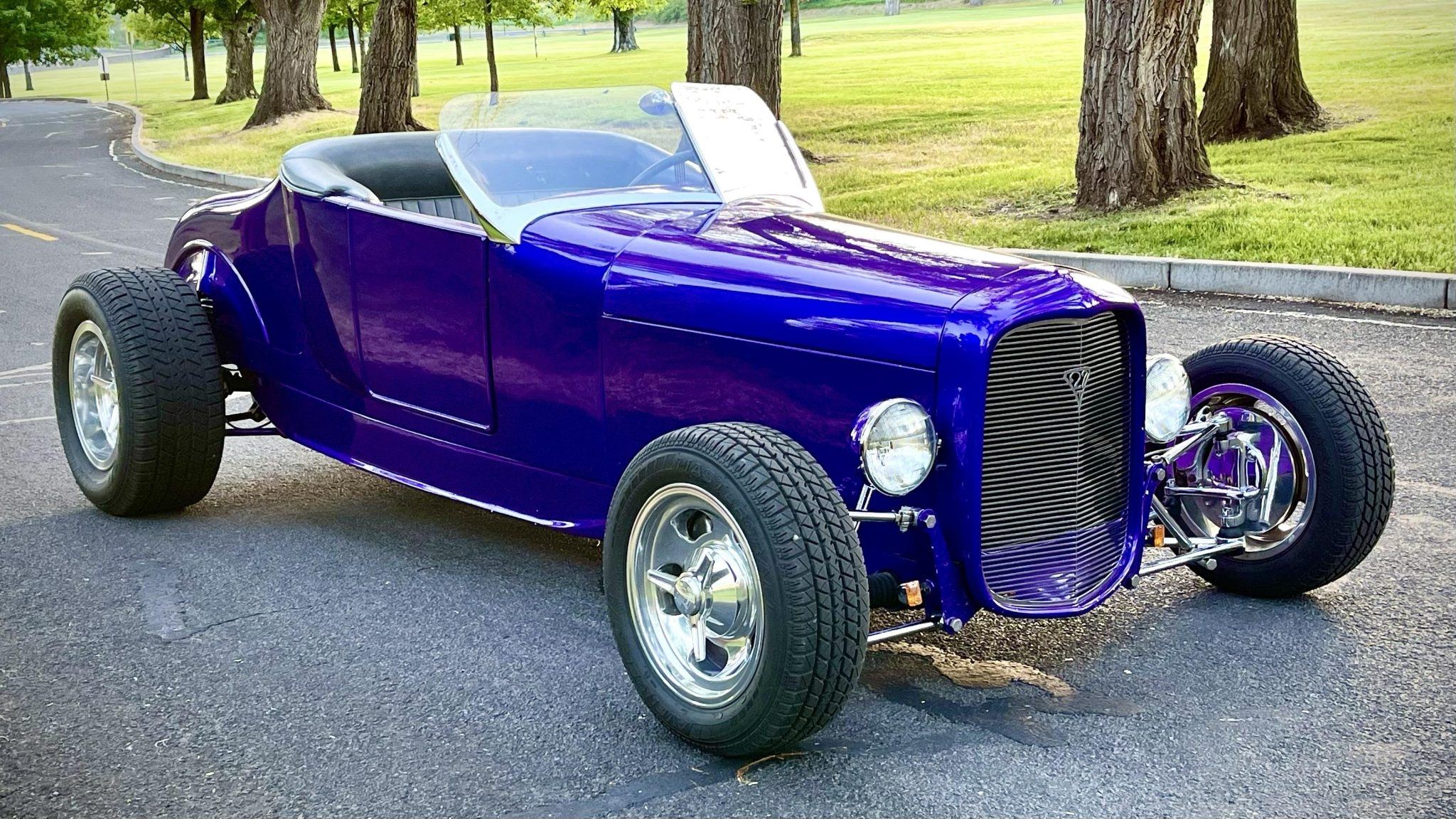
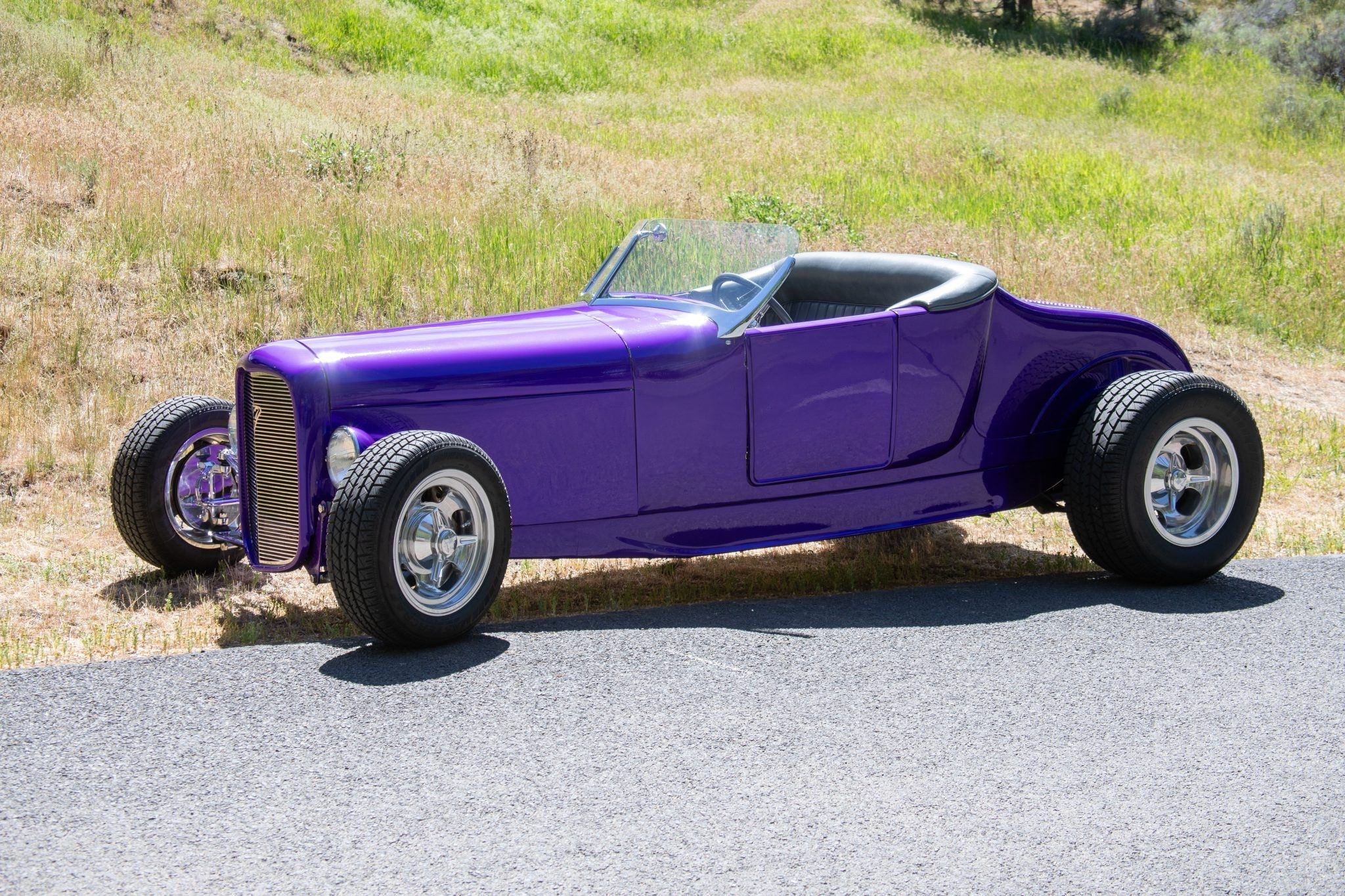
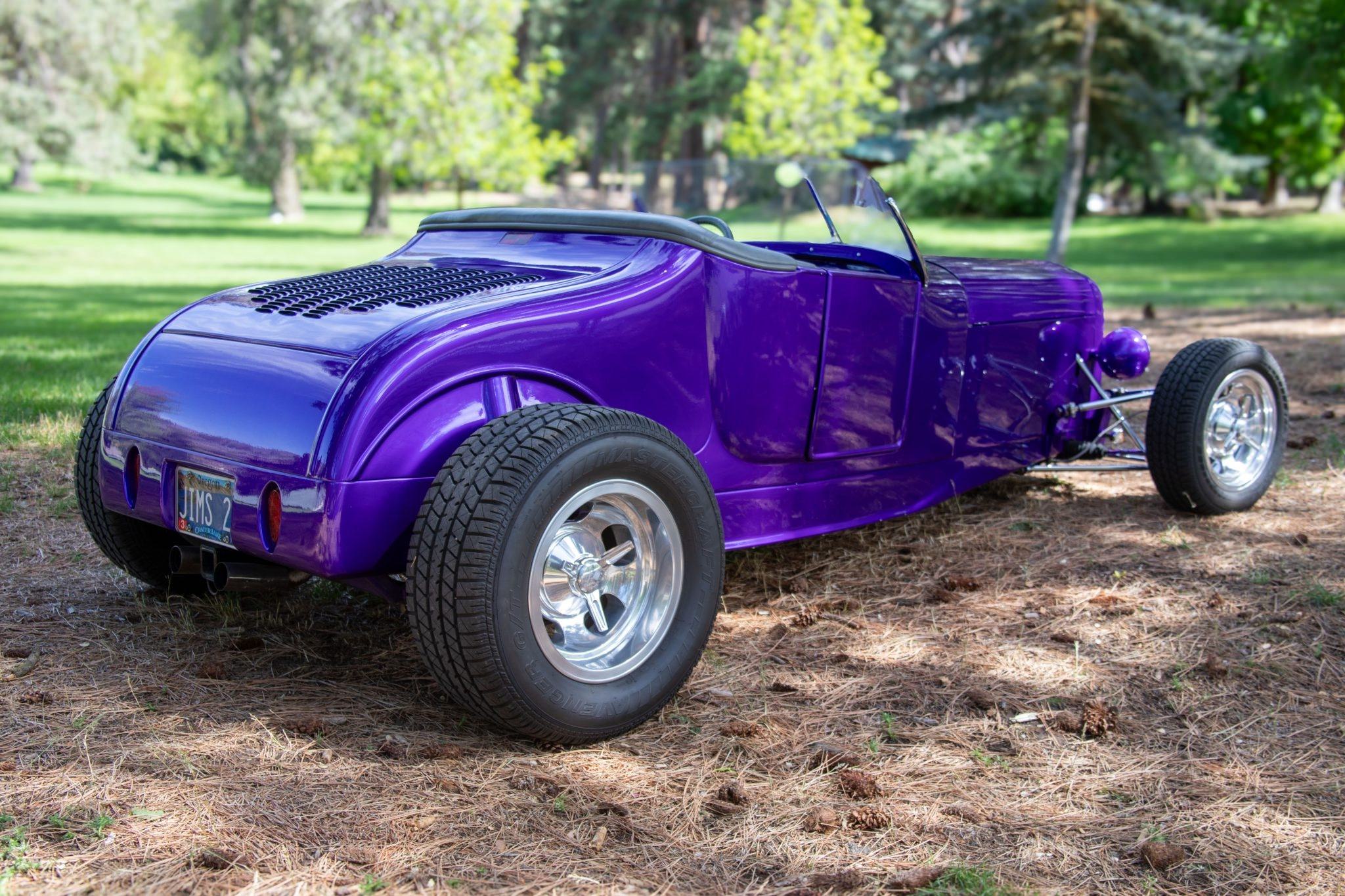
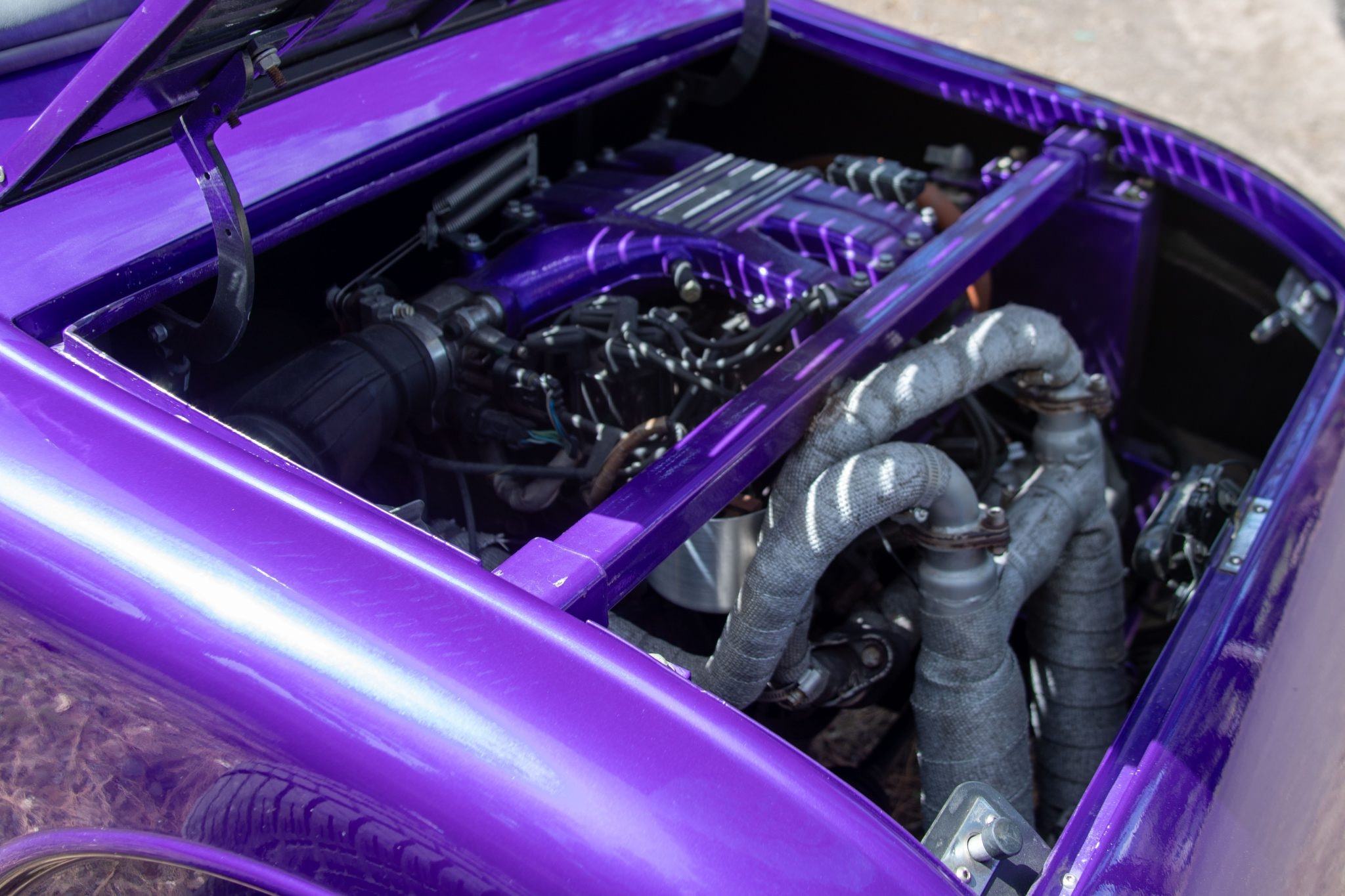
This is a one-off, mid-engined, Pontiac-powered Hot Rod that was built in the late 1990s using drivetrain parts from a Fiero. It was featured in-period in Street Rodder magazine, and it’s now being offered for sale out of Oregon.
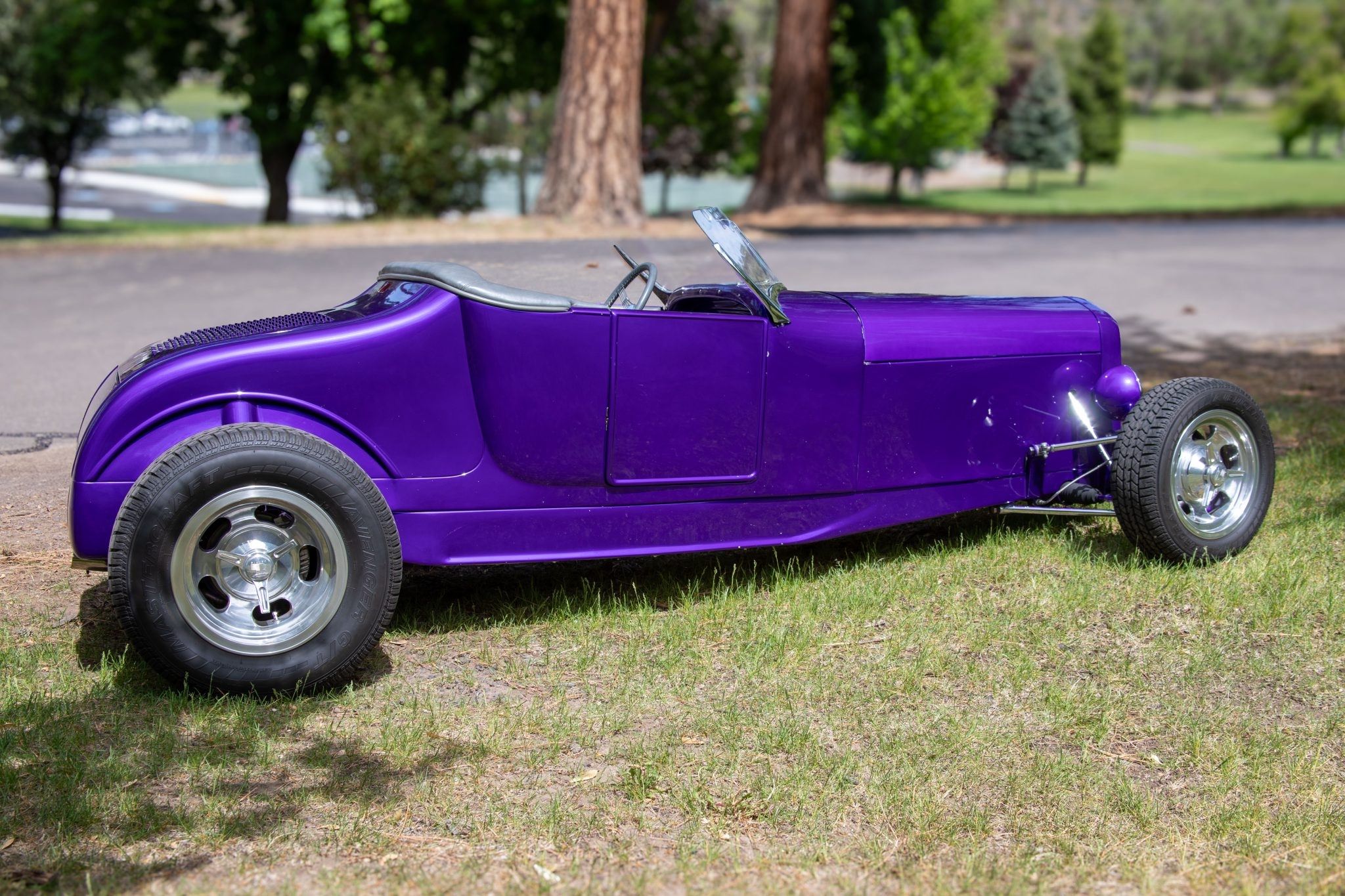
This hot rod has independent front and rear suspension on coilovers, front and rear disc brakes, a custom frame, and a modified T-type body. Despite its mid-engined layout, it retains surprisingly close-to-original dimensions for a T-bucket.
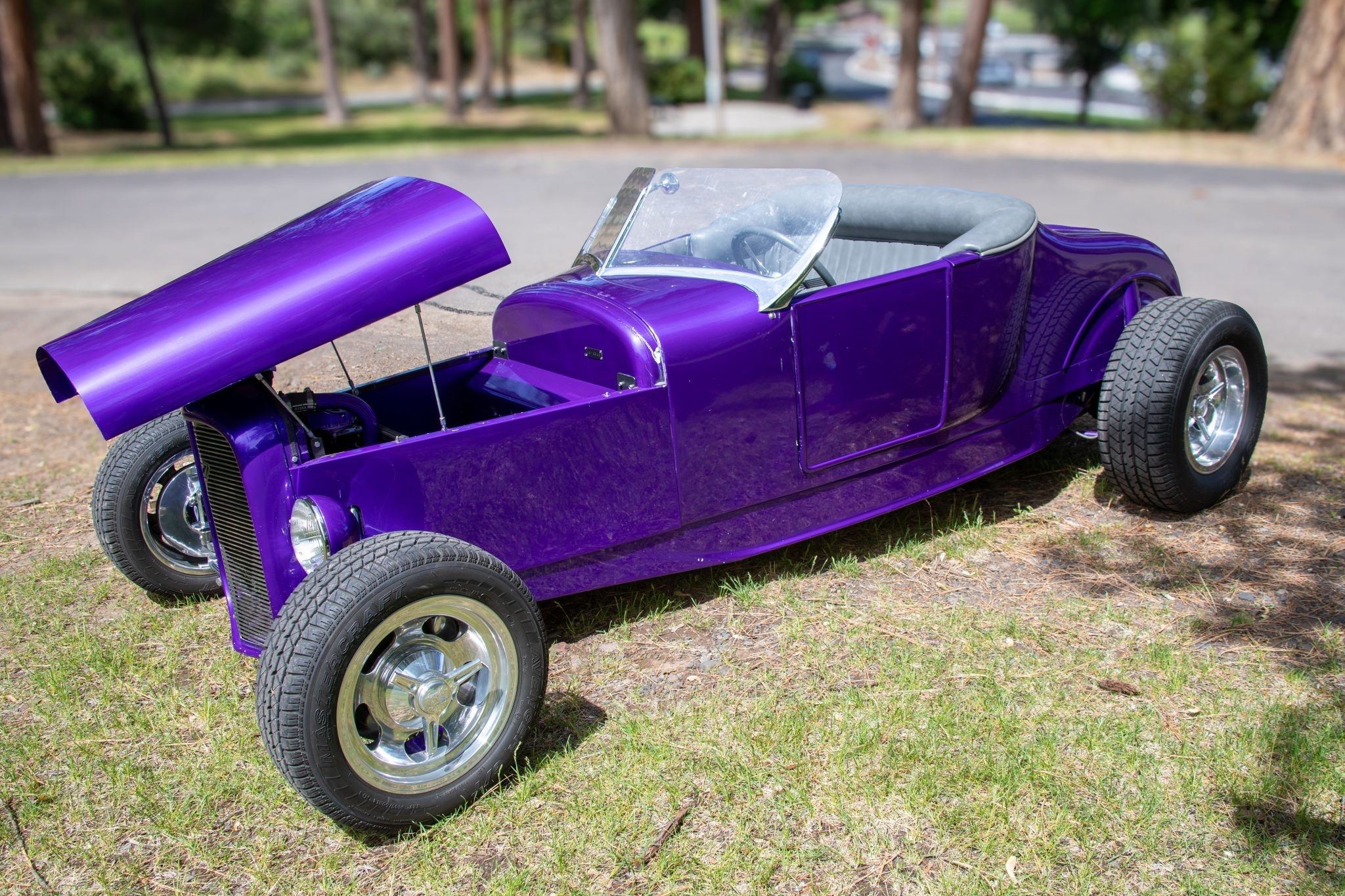
 This is a one-off, mid-engined, Pontiac-powered Hot Rod that was built in the late 1990s using drivetrain parts from a Fiero. It was featured in-period in Street Rodder magazine, and it’s now being offered for sale out of Klamath Falls, Oregon.
History Speedrun: A Mid-Engined Pontiac Hot Rod
Jim English had wanted to build a ’27 T roadster for as long as he could remember – it was a fixation he developed after reading a Hot Rod magazine feature from 1950 on Louis Banta and Sal Macchia’s car – flathead V8, outside exhaust, triple carbs, hand-operated fuel pump and all.
Even while he was finishing a ’32 HiBoy and a three-window coupe, the ’27 sat in the back of his mind. The catch, as he put it in his own build narrative here, was that a flathead T isn’t really something you drive from Portland to Pleasanton without a support car full of spares following you at a safe distance.
So the plan began to shift – a small block V8 was rejected for eating up too much legroom. Then, in long conversations with collaborator Dave Vonada, the idea of a mid-engine T took hold. English went looking for an Oldsmobile Quad 4 to power it and instead stumbled onto a nearly new Pontiac Fiero drivetrain, a 2.8 liter V6 mated to a 4-speed manual transaxle, complete with port fuel injection, and it cost almost nothing. That sealed thew deal – the ’27 would be mid-engine, with the Fiero powertrain bolted in behind the seats.
The chassis was built up from American Stamping ’32 Ford frame rails, fully boxed in 0.125 inch steel, with the front “super-pinched” to tuck inside a chopped ’32 grille shell. The rails were jigged on a fixture bought used from a builder up in Seattle who no longer needed it.
The body was a $650 Poli-Form fiberglass ’27 T shell, modified extensively with hidden hinges on a fabricated door kit, a new fiberglass floor laid up over a shower-board mold, a fresh firewall pushed nine inches forward for legroom, and a Poli-Form roll pan and frenched ’39 Ford taillight buckets molded into the rear.
The grille shell was chopped six inches and capped with a stainless-steel insert that Vonada drew up in CAD and BBC Steel in Canby laser-cut, carrying a “27T” logo and polished by Doug Miller, the builders’ regular polisher.
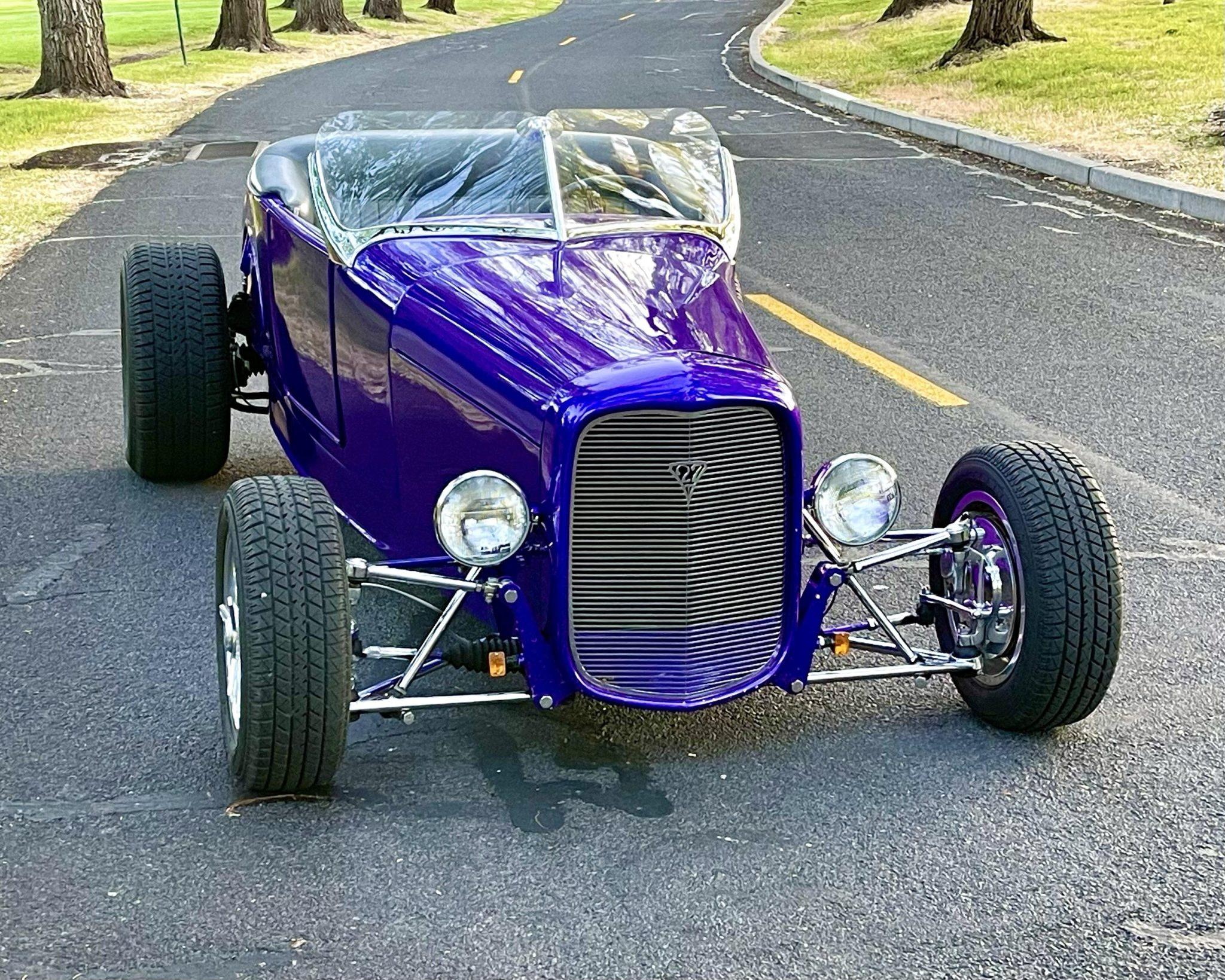
This hot rod has independent front and rear suspension on coilovers, front and rear disc brakes, a custom frame, and a modified T-type body. Despite its mid-engined layout, it retains surprisingly close-to-original dimensions for a T-bucket.
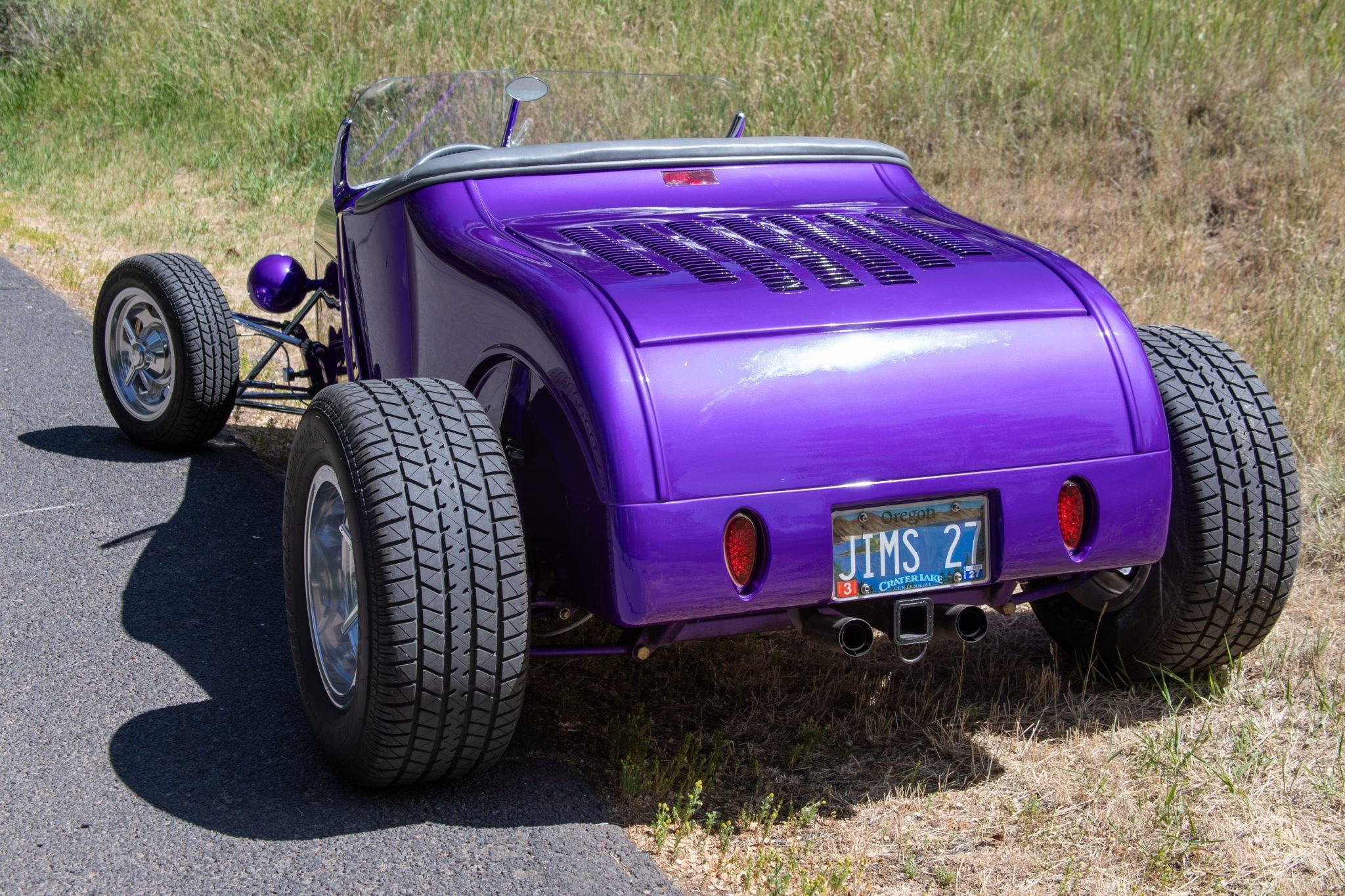
The deck lid is the part English flagged as his biggest time-sink, he wanted a metal lid that operated like a stock one. Jim Meyer was meant to roll the skin, but after the pattern sat in his shop for a year, the project came back home. The crew rolled out a 20 gauge piece on Meyer’s English wheel, Jim described the result as “potato chip looking,” and then worked it the rest of the way with a shrinker and stretcher, folding the far end and shaping each side in turn.
Forty more hours of hand work got the bumps and grooves out. Then they punched 165 louvers into it, and Erik Thompson hand-sanded each one about six times getting it ready for paint. By Jim’s own count, the deck lid alone consumed roughly 200 hours of labor.
The hood is hand-formed 18 gauge steel, with the top bent over a large argon tank used as a forming buck and the ends folded in a brake. An 18 gauge aluminum belly pan runs from the radiator deflector back to the subframe, cutting road noise substantially.
Cooling comes from a custom Brassworks radiator with a center-outlet lower tank feeding copper coolant lines that run the length of the car to reach the mid-mounted V6. The car even has an operating heater, with controls tucked under the dash.
For the front suspension, English looked at what Kugel Komponents was doing with pushrod-actuated coilovers, decided he liked the geometry but not the $5,000 price tag (and that the Kugel setup wouldn’t fit his super-pinched rails anyway) and so he built his own.
The upper and lower A-arms are heli-arc welded from 7/8-inch by 0.156 wall seamless tubing, chrome-plated by Oregon Plating, paired with TCI spindles and polished Wilwood calipers and rotors. A narrowed Dodge Omni rack handles steering, connected to an Ididit column via Borgeson U-joints. The column drop is a small-block connecting rod, which English cheerfully admitted “looks a little cheap, but it’s hard to see and who really cares anyway.”
Out back, the Fiero strut was modified by cutting off the spring perch and sliding a Carrera coilover adjuster over the strut tube, with a custom upper retainer fabricated to suit. Dutchman shortened the half-shafts 2.5 inches and re-drilled the hubs from 5x100mm to a 5×4.5 inch Ford pattern.
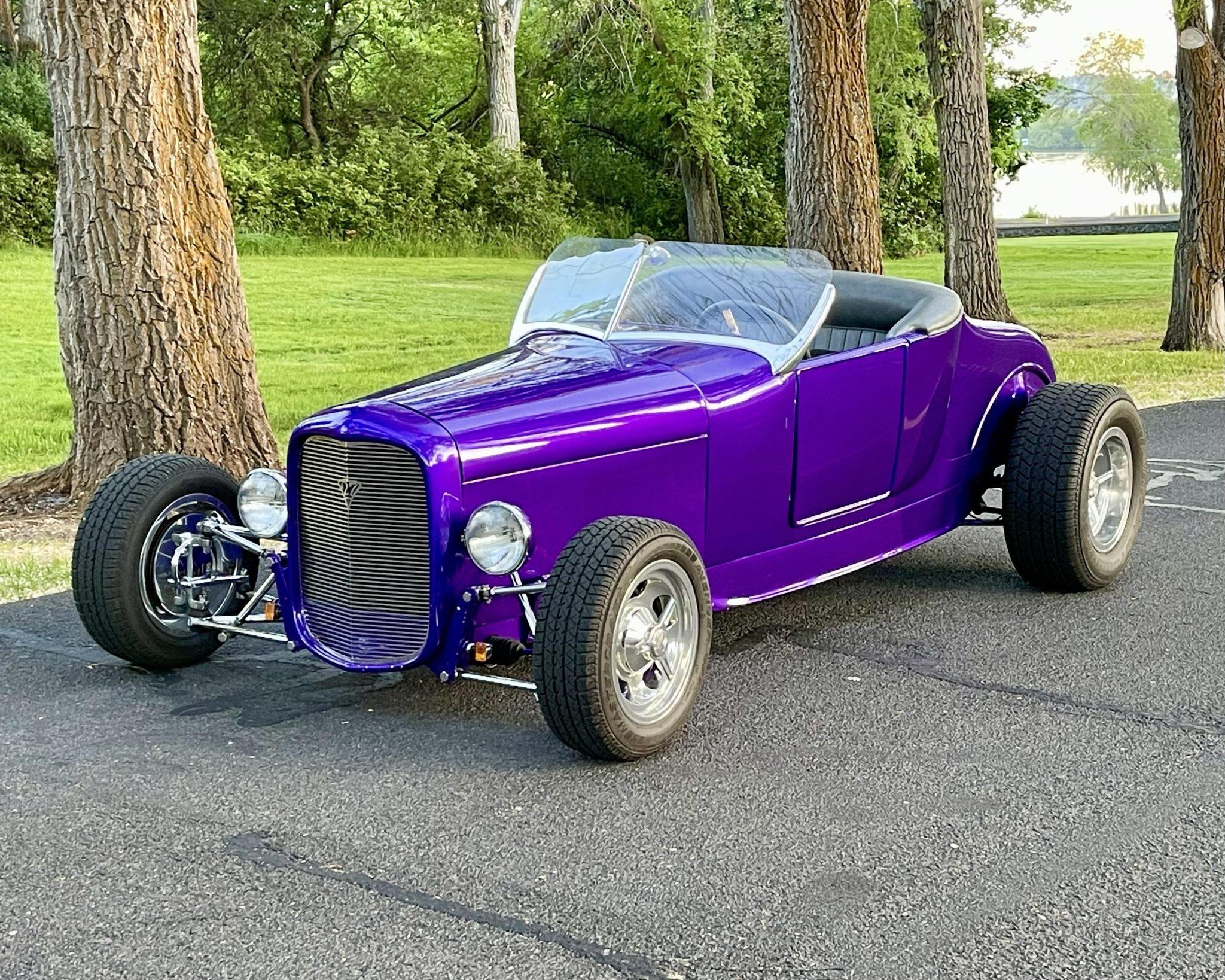
The finished car weighs in at under 2,000 lbs and was featured in Street Rodder magazine in 2000. 25 years and 16,000 miles later, it’s a Pacific Northwest one-off with an Oregon title, and a thick file of build invoices.
The transmission tunnel (obviously empty in a mid-engine layout) became real estate for a sideways-mounted Optima battery, while a hand-built 14-gallon aluminum tank sits behind the battery and below the seat, with a wiring and cable raceway formed into its top edge.
A Nissan electric fuel pump delivers 40 psi to the stock Fiero injection, which still runs on its factory harness and ECU integrated with a Painless wiring block.
The cockpit is centered around a Wescott Model A Auburn dash, narrowed three inches at each end and reworked with a recessed panel so the gauges sit flush from behind. A banjo wheel sits on the Ididit column, and Citation Upholstery in Klamath Falls trimmed the interior in gray.
Body prep was handled by Erik “The Dust Bunny” Thompson, Vonada laid most of the paint, with Thompson handling the rework, all in House of Kolor Pearl Violet. The wheels, they’re slot mags polished by Doug Miller until even the inside of the slots gleamed, wearing what English calls “genuine fake knock-offs.”
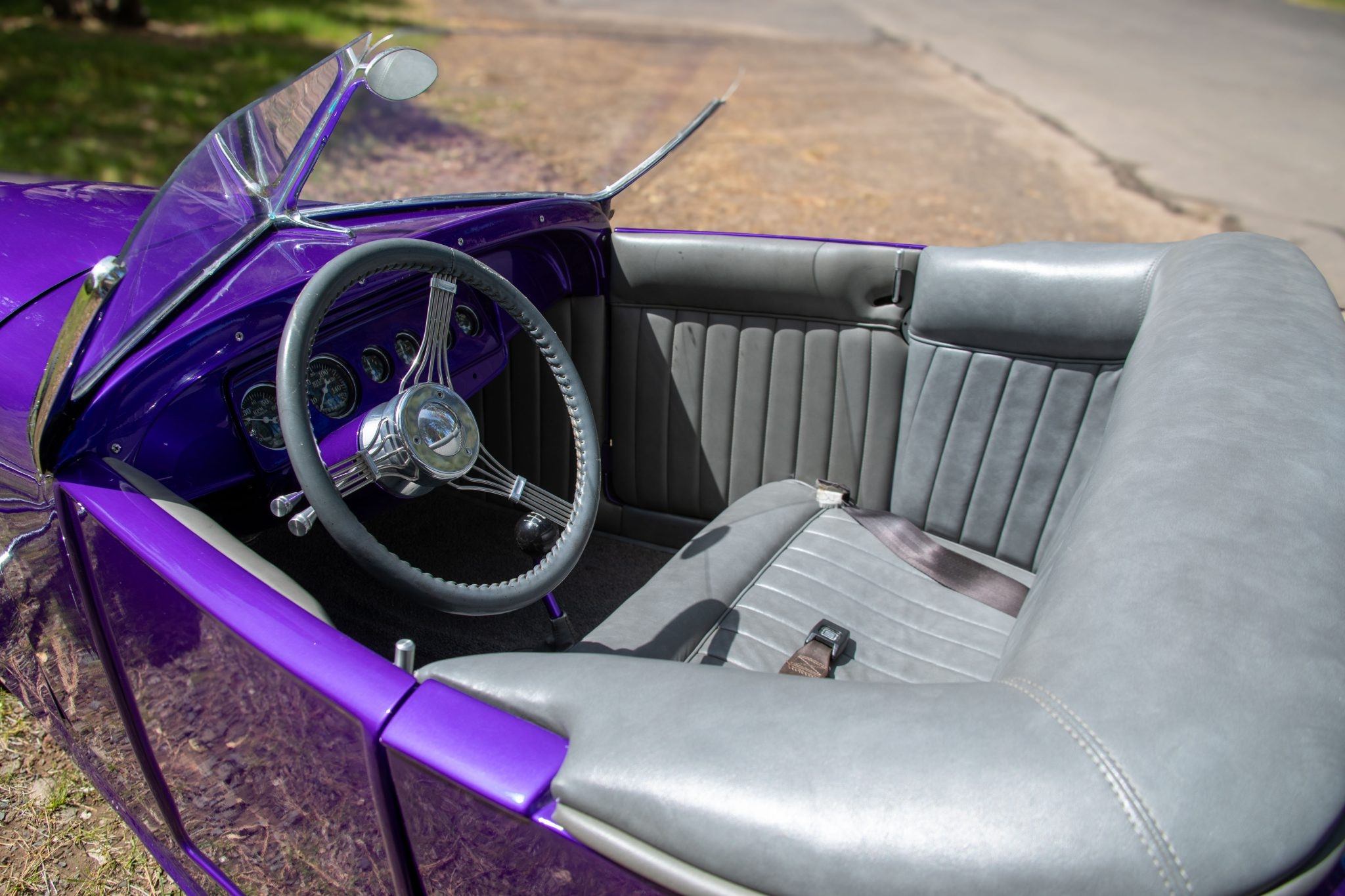
The cockpit is centered around a Wescott Model A Auburn dash, narrowed three inches at each end and reworked with a recessed panel so the gauges sit flush from behind. A banjo wheel sits on the Ididit column, and Citation Upholstery in Klamath Falls trimmed the interior in gray.
The finished car weighs in at under 2,000 lbs and was featured in Street Rodder magazine in 2000. 25 years and 16,000 miles later, it’s a Pacific Northwest one-off with an Oregon title, and a thick file of build invoices.
Jim’s mid-engined, Fiero-powered hot rod is now being offered for sale on Bring a Trailer out of Klamath Falls, Oregon with documentation, spare parts and accessories, and a clean Oregon title in the seller’s name.
Images courtesy of Bring a Trailer

Articles that Ben Branch has written have been covered on CNN, Popular Mechanics, Smithsonian Magazine, Road & Track Magazine, the official Pinterest blog, the official eBay Motors blog, BuzzFeed, Autoweek Magazine, Wired Magazine, Autoblog, Gear Patrol, Jalopnik, The Verge, and many more.
Silodrome was founded by Ben back in 2010, in the years since the site has grown to become a world leader in the alternative and vintage motoring sector, with well over a million monthly readers from around the world and many hundreds of thousands of followers on social media.