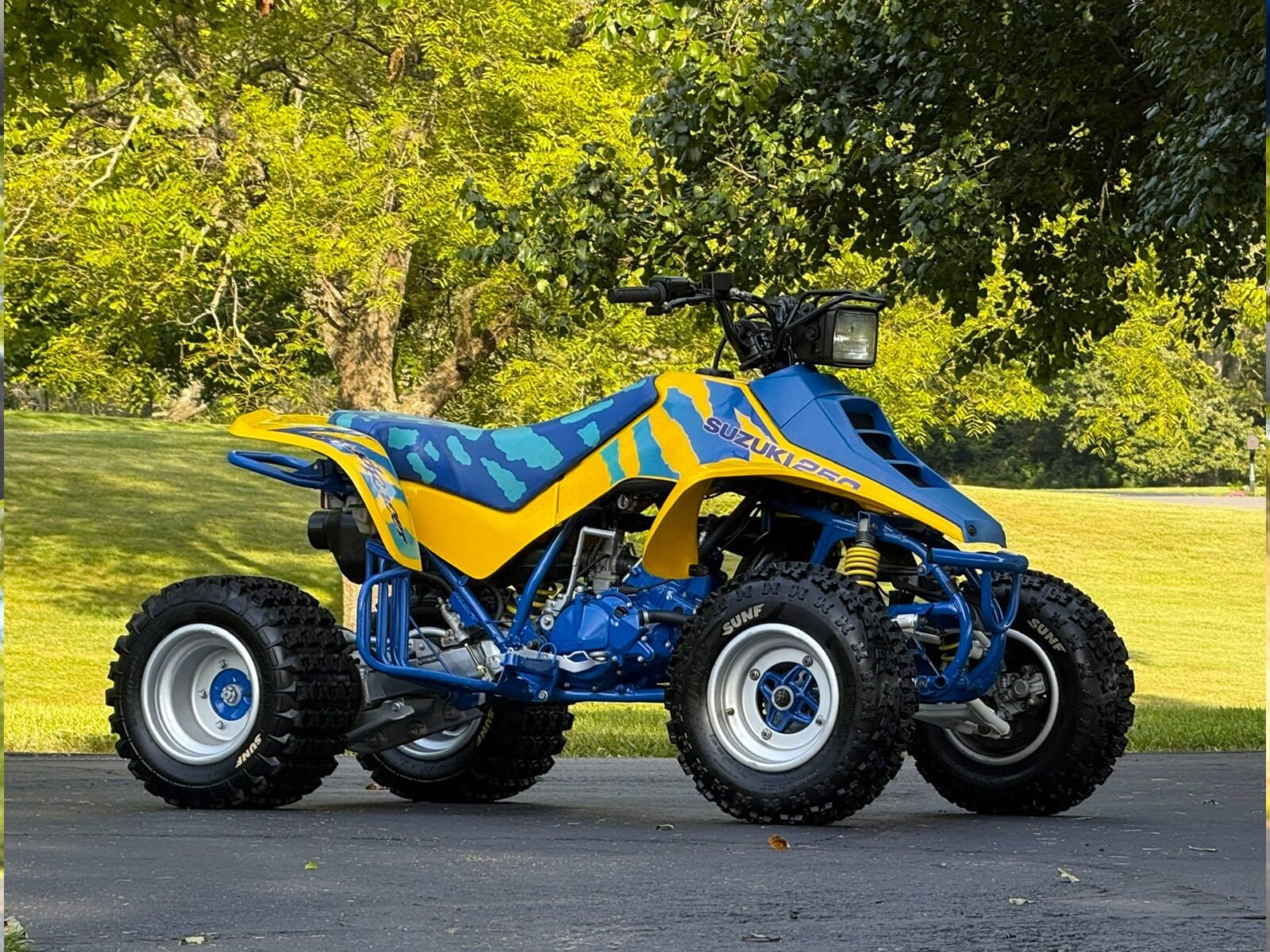
This is an original Suzuki LT250R QuadRacer from 1992, it’s one of the first generations of true quad bikes, debuting in an era utterly dominated by three-wheelers, and then out-performing and ultimately replacing them.
Whether the QuadRacer name was the original source of the use of the word “Quad” for all four-wheeled ATVs remains the subject of some debate, but what isn’t open to debate is the critical importance the QuadRacer had in transforming the ATV industry.
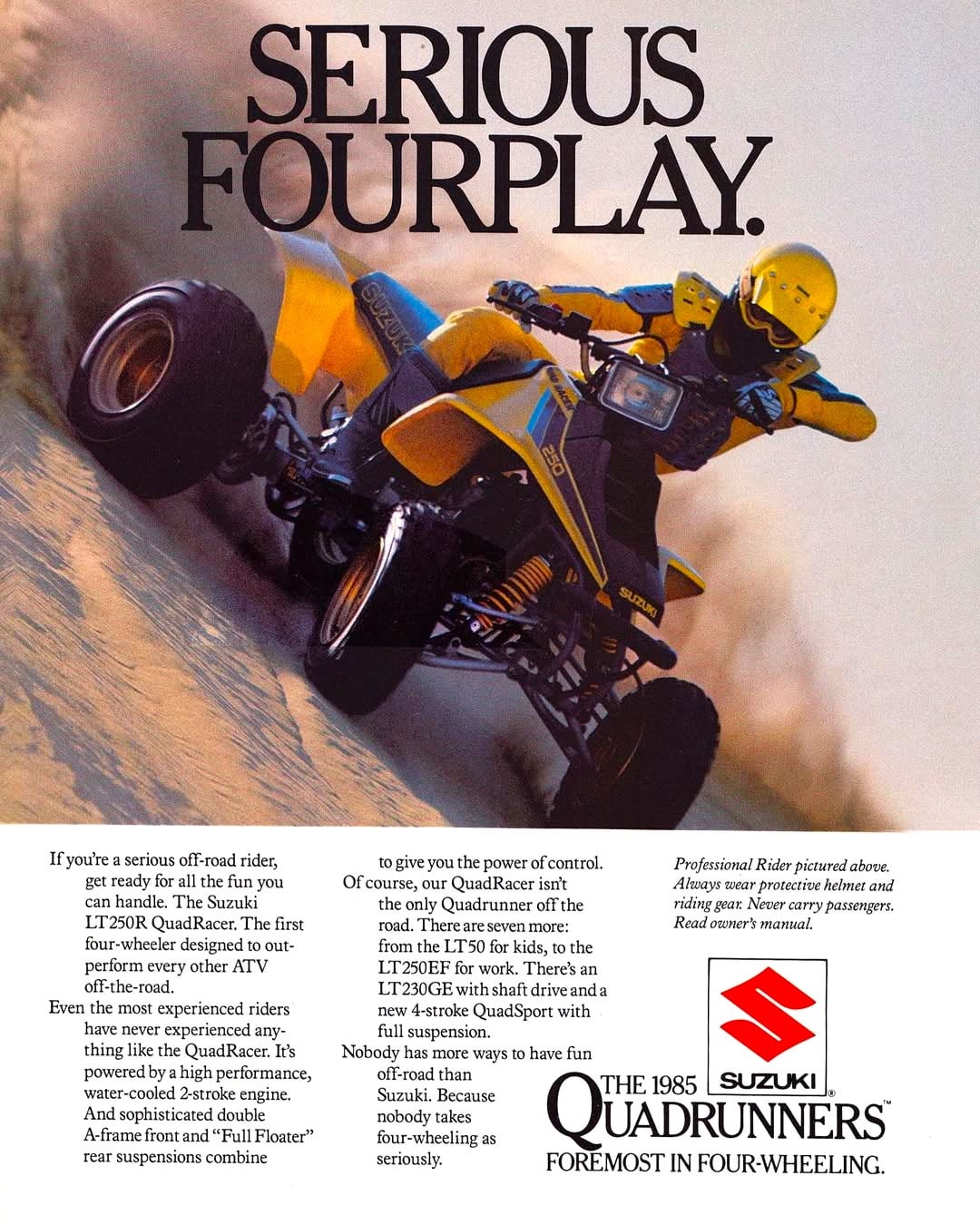
 Suzuki’s LT250R QuadRacer went on sale for 1985, it had a liquid-cooled 249cc two-stroke single, suspension at both ends, and more importantly, it had a fourth wheel. Images provided by Suzuki.
History Speedrun: The Suzuki QuadRacer
Suzuki’s LT250R QuadRacer went on sale for 1985, it had a liquid-cooled 249cc two-stroke single, suspension at both ends, and more importantly, it had a fourth wheel. Every rival it was built to compete with had only three, and that lack of stability provided by a fourth wheel was becoming a major cause for concern at the time. Honda answered with a four-wheeler of its own for the 1986 model year, and the other major Japanese manufacturers weren’t far behind with quads of their own.
Three-Wheelers And The QuadRacer
In 1984 Americans bought an estimated 550,000 ATVs but only 140,000 dirt bikes, in other words, three-wheelers essentially owned the market. Honda had redesigned its ATC250R for 1985 with liquid cooling and a 6-speed gearbox, Yamaha had launched the Tri-Z 250 the same year, and Kawasaki had the Tecate. All three used buzzy quarter-liter two-stroke singles.
Suzuki decided to change tack, and came at the same market from another direction. The LT125 QuadRacer, introduced as a 1983 model, was a mildly tuned four-stroke whose only suspension was its balloon tires, but buyers liked how stable and simple it was. The LT50 and LT185 followed in 1984, and for 1985 Suzuki added two sporting quads – the four-stroke LT230S QuadSport and the LT250R.
No one knew it at the time of course, but these sporting quads were about to set the course that the whole industry would follow.
QuadRacer Engine + Chassis
The QuadRacer engine looked like the one in Suzuki’s RM250 motocrosser, but it wasn’t. Instead, it came from the RH250, a dual-sport motorcycle sold in Japan, and it kept that bike’s milder tune, its wider-ratio gearbox and a counter-balancer to reduce vibration.
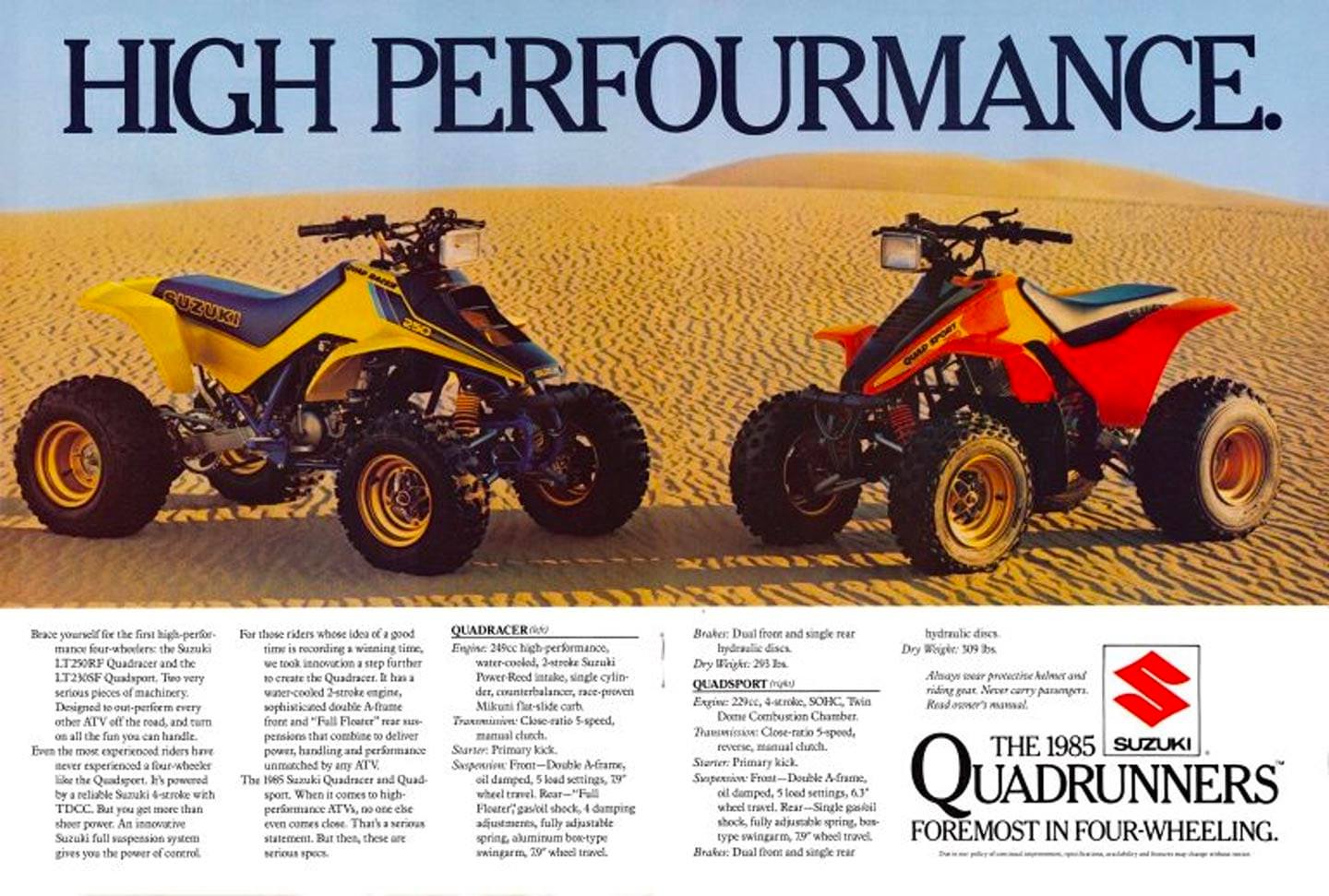
Suzuki decided to change tack, and came at the same market from another direction. The LT125 QuadRacer, introduced as a 1983 model, was a mildly tuned four-stroke whose only suspension was its balloon tires, but buyers liked how stable and simple it was. Images provided by Suzuki.
Suzuki’s Power Reed intake breathed through a 32mm Mikuni flat-slide carburetor, the 1985 version of the RM250 used a 38mm unit. Bore and stroke were 70 mm by 64.8 mm. Power went through a 5-speed gearbox and a chain to a solid rear axle. There was no reverse gear, no battery, and no electric starter. This was a kick-only machine.
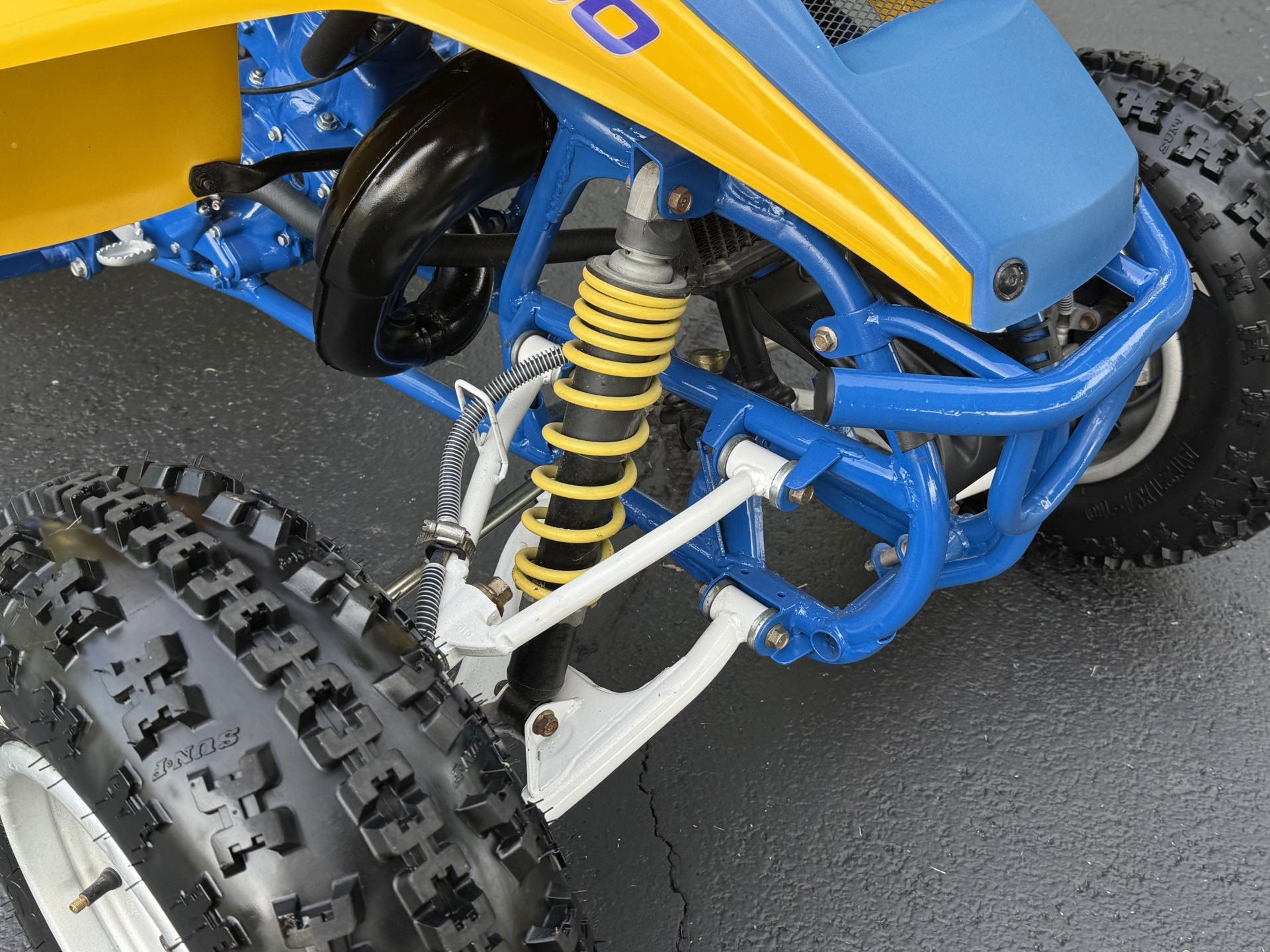
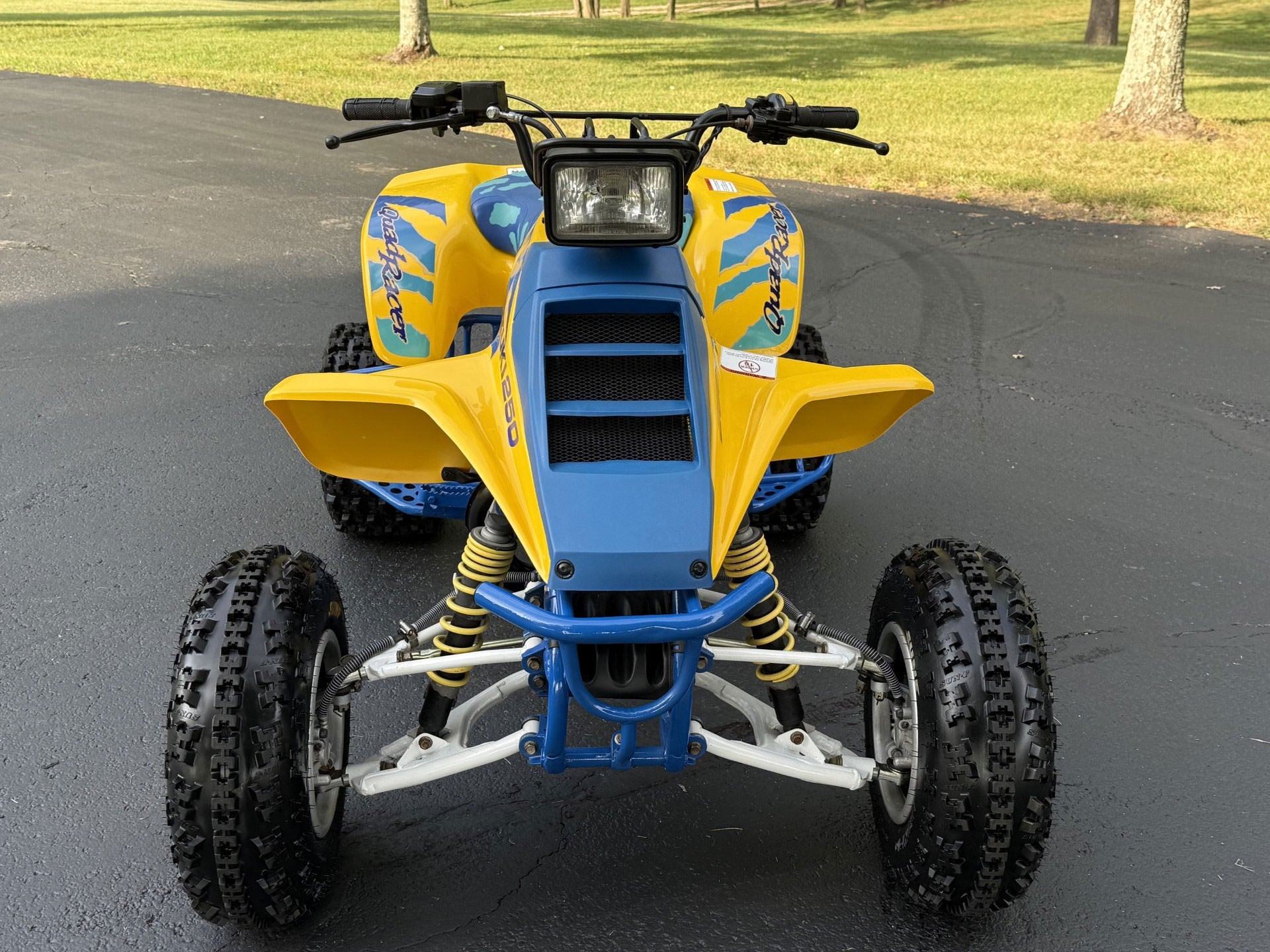
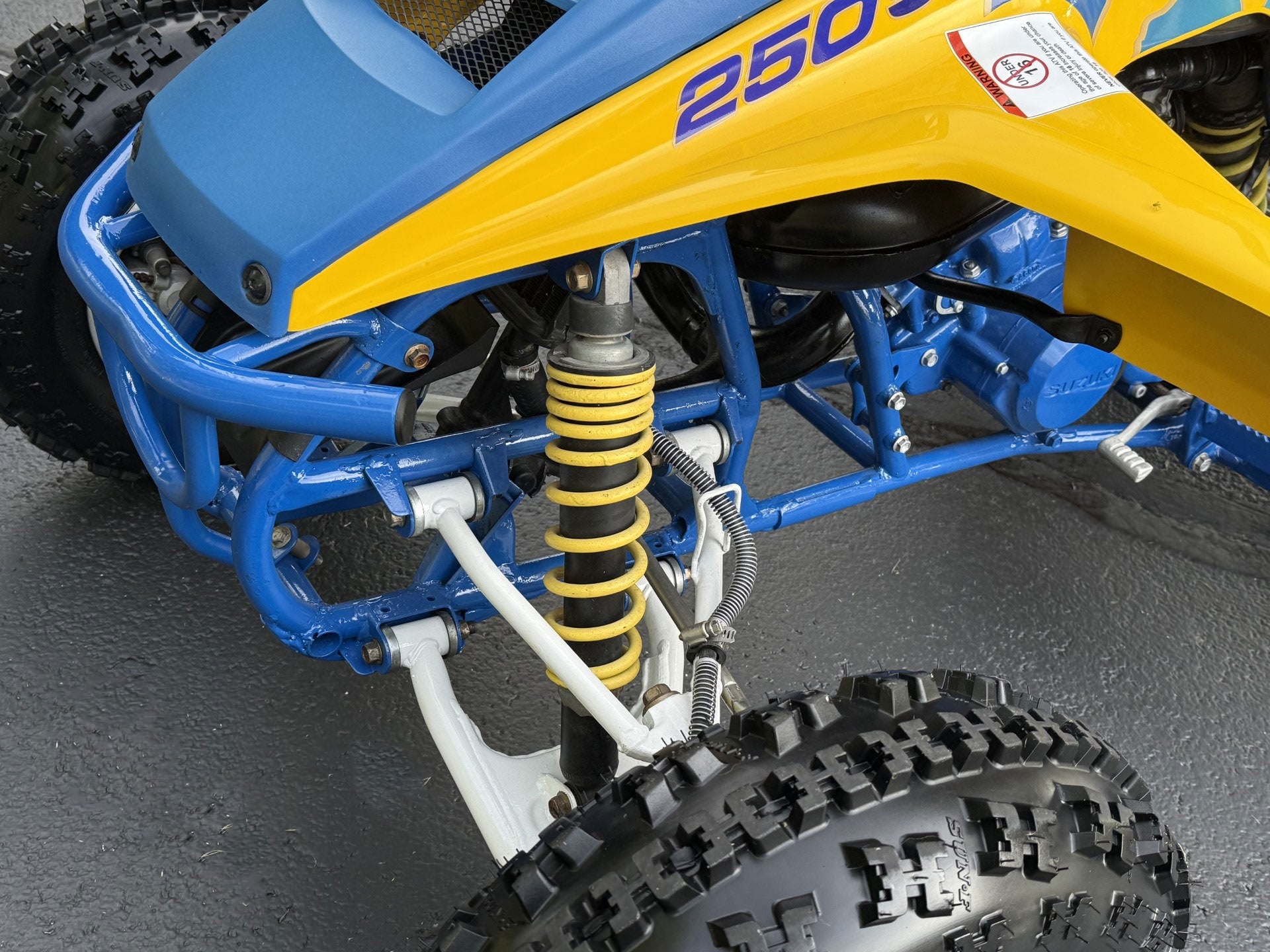
The chassis was a little more unusual, in place of a fork and a single front wheel, the LT250R had double A-arms and twin Kayaba shocks, with a version of Suzuki’s Full Floater single-shock layout at the rear and 7.9 inches of travel front and back.
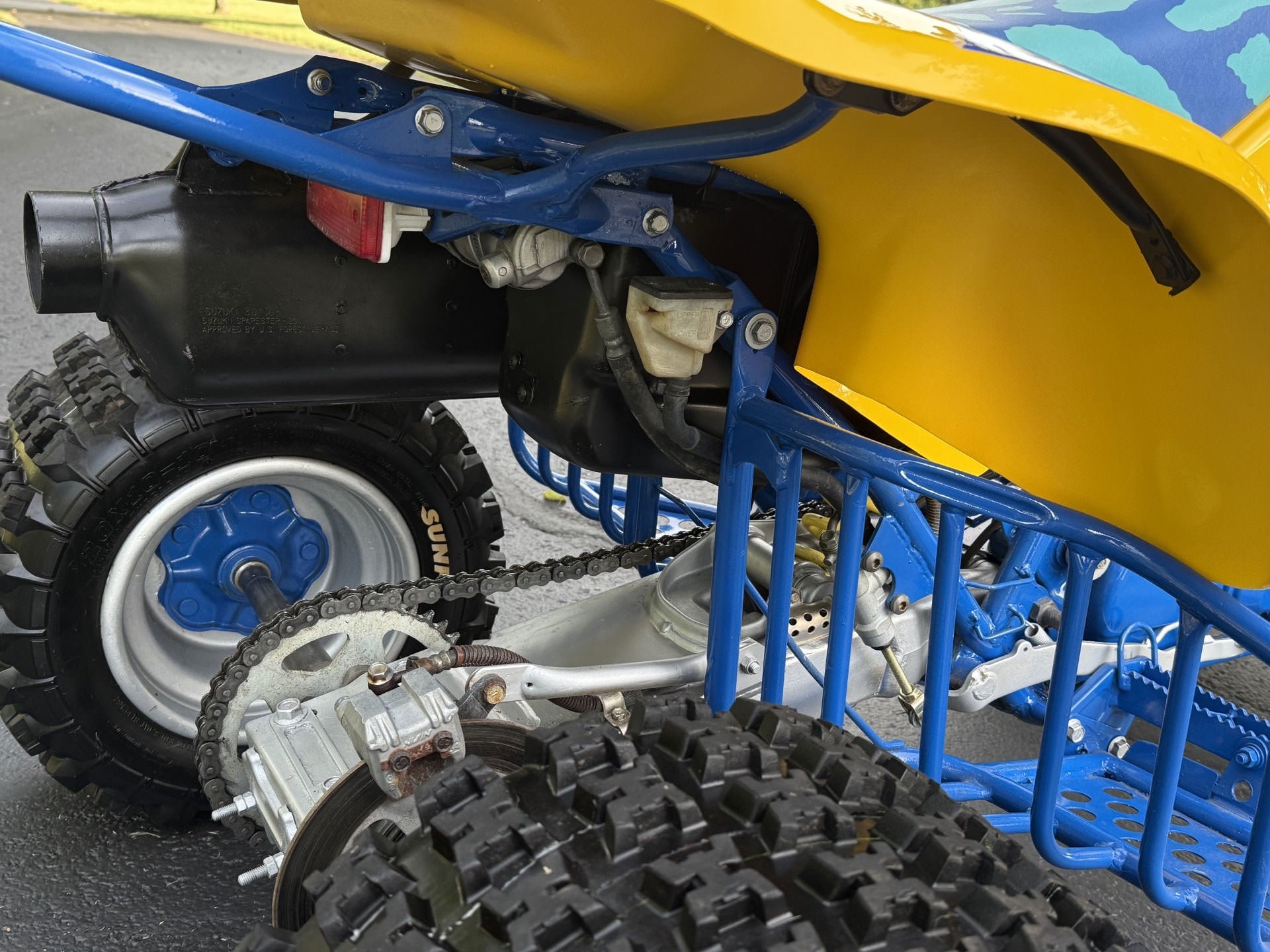
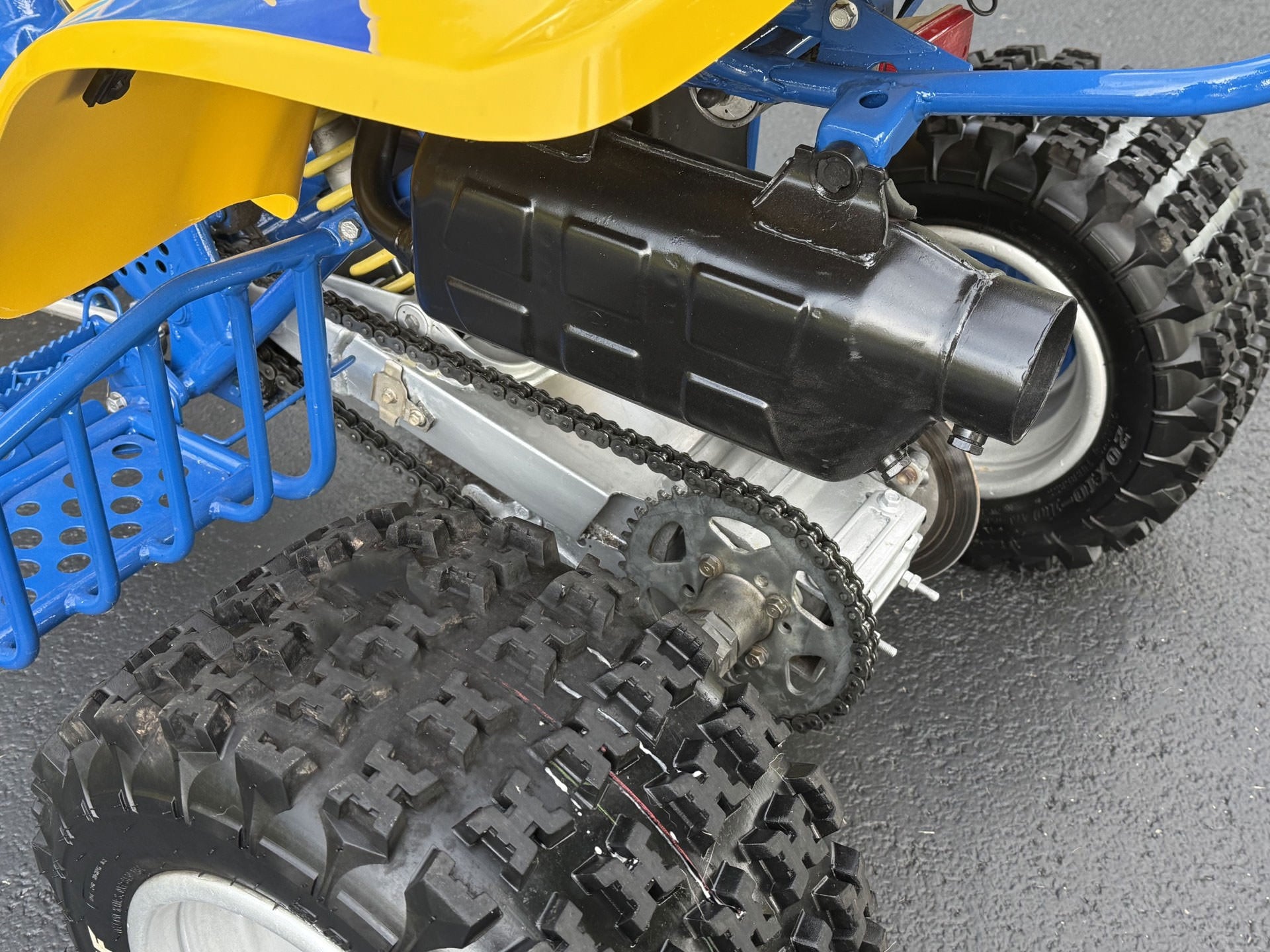
Interestingly, the front track was wider than the rear to improve stability. Suzuki made the box-section swingarm, rear axle carrier, engine cases and rear shock link from aluminum, and the 1985 and 1986 models had aluminum silencers. Three hydraulic discs (two front, one back) did the braking, and the dry weight was 293 lbs, less than the Tri-Z and just 2 lbs more than the ATC250R.
On The Dunes In 1985
The QuadRacer wasn’t fast by the standards of its class, the engine had decent pull low down, pulled well through the midrange but it was perhaps a little short of excitement at the top, which put it level with the Tri-Z and behind the Kawasaki and Honda. Testers who took one to the Pismo Beach dunes in California in 1985 wanted more top-end rush, and found that hard cornering in soft sand could lift the inside wheels.
The key advantage was that it turned better than any of the trikes, a rider no longer had to lever up the inside rear wheel to get round a corner, and fairly inexperienced riders were soon four-wheel drifting it at full throttle. The Pismo testers called the four-wheeler “the wave of the future for all-terrain vehicles,” and reported that QuadRacers were already beating three-wheelers in closed-course races around the country. They also passed on a rumor that Suzuki was preparing a 500cc version.
Honda’s Response To The QuadRacer
For 1986 Suzuki fitted a 34mm carburetor and revised the cylinder porting. Honda’s answer that year was the TRX250R, which used the ATC250R’s engine and rear suspension, in a four-wheeled chassis.
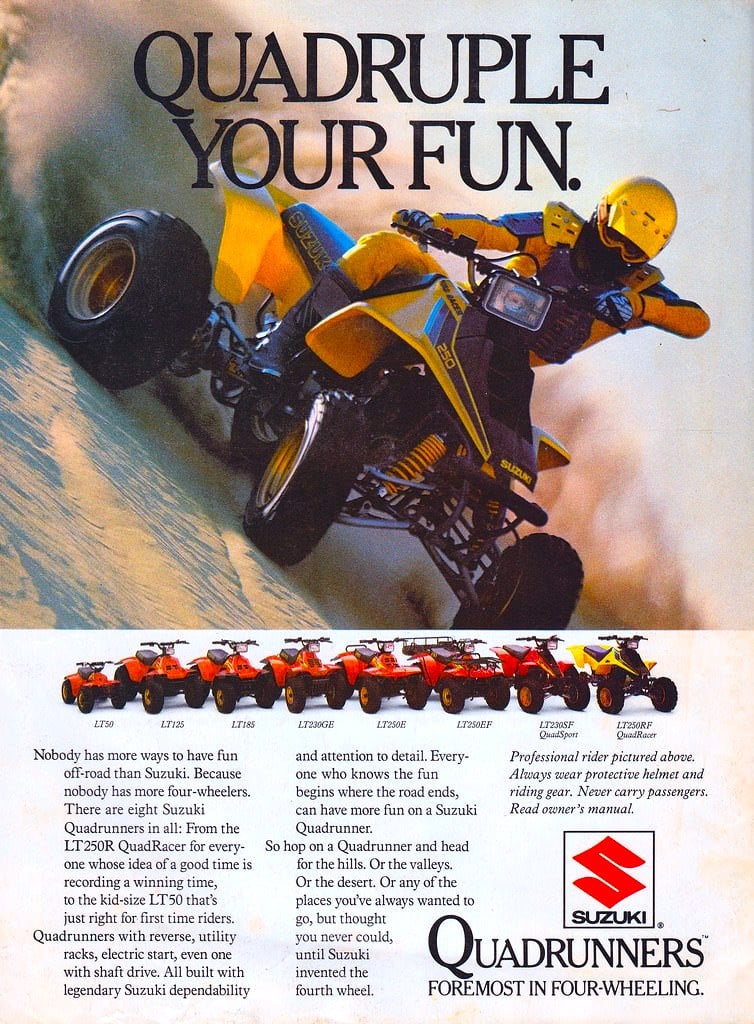
The QuadRacer wasn’t fast by the standards of its class, the engine had decent pull low down, pulled well through the midrange but it was perhaps a little short of excitement at the top, which put it level with the Tri-Z and behind the Kawasaki and Honda. Images provided by Suzuki.
The Suzuki LT250R’s biggest revision came for 1987, the engine was given Suzuki’s SAEC exhaust power valve and a 6-speed gearbox, and its bore and stroke changed from 70 mm by 64.8 mm to 67 mm by 70 mm, dimensions it would keep through to the end of production.
The exhaust now left the front of the cylinder instead of the side, and the cases changed from silver to blue. Suzuki strengthened the frame and fitted a heavier swingarm, as the original could crack under hard riding, the seat widened into a T-shape, a design Suzuki later revived on the LT-R450. The dry weight rose to 324 lbs, 31 lbs over the original.
The rumored big-bore model arrived the same year, the LT500R, it was a 499cc two-stroke nicknamed “Quadzilla.” Suzuki built it until 1990 and it quickly became an icon. The 1988 to 1990 LT250R models had 8.7 inches of suspension travel at each end, and for 1991 a new rear linkage, similar to the LT500R’s, raised rear travel to 10.6 inches.
The End Of The Three-Wheeler
Kawasaki retired the three-wheeled Tecate in 1987. By early 1988, Suzuki, Honda, Yamaha, Kawasaki, and Polaris had stopped selling new three-wheelers in the US. The final consent decrees approved later that year, in the case brought by the Consumer Product Safety Commission, barred the five companies from selling new three-wheel ATVs for 10 years. Four-wheelers stayed on sale, and soon became the de facto ATV format.
The Suzuki LT250R QuadRacer Shown Here
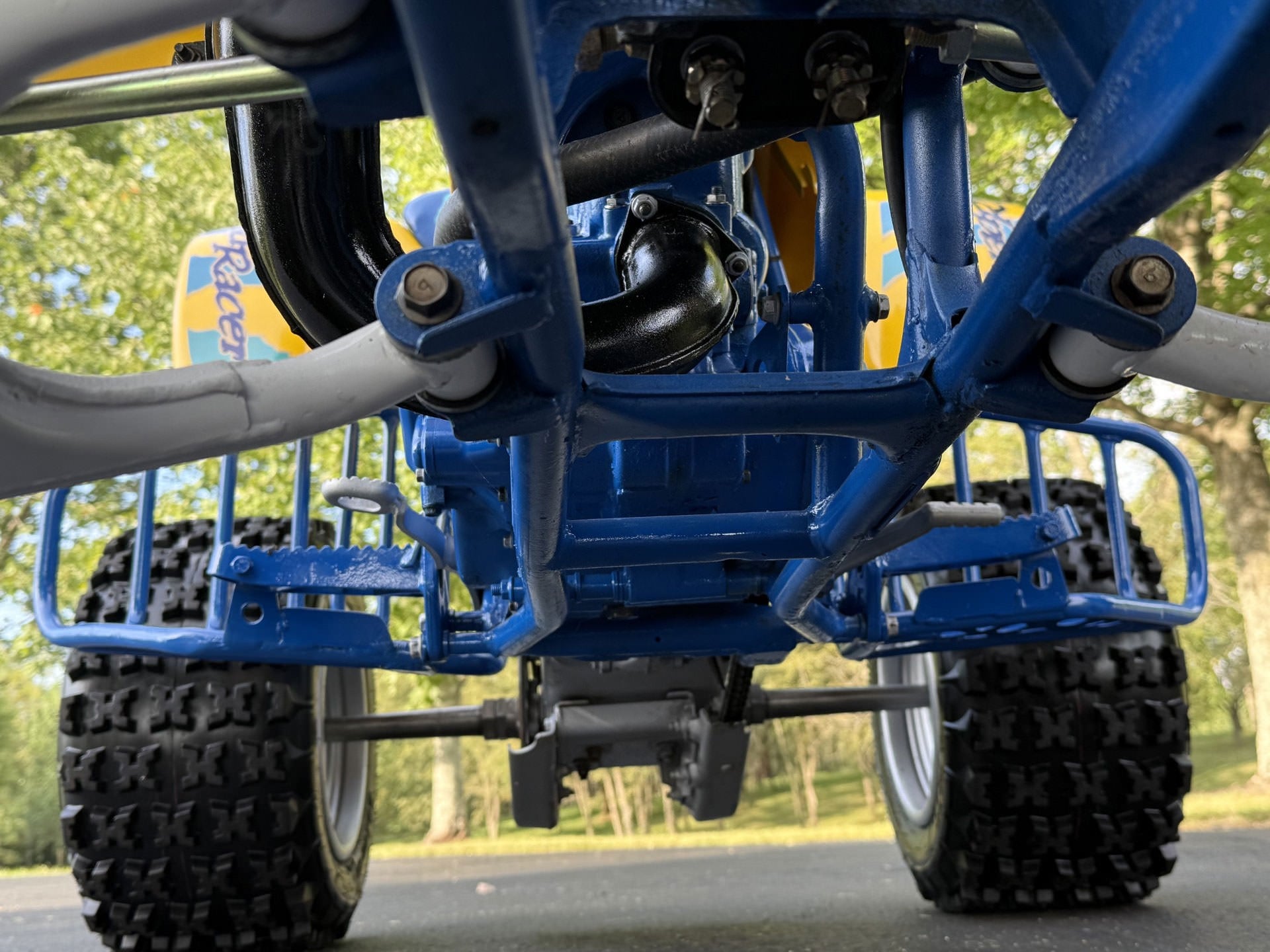
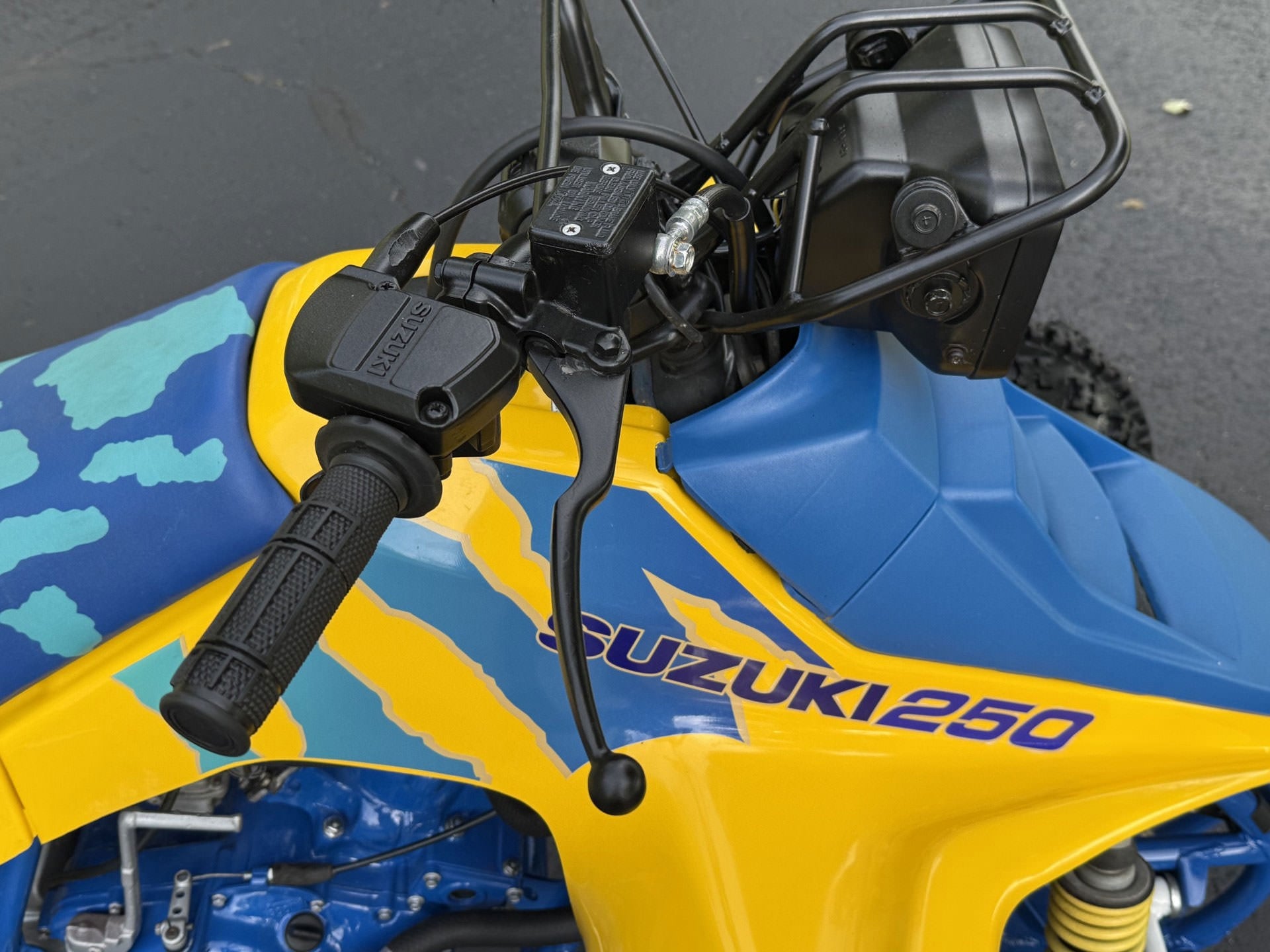
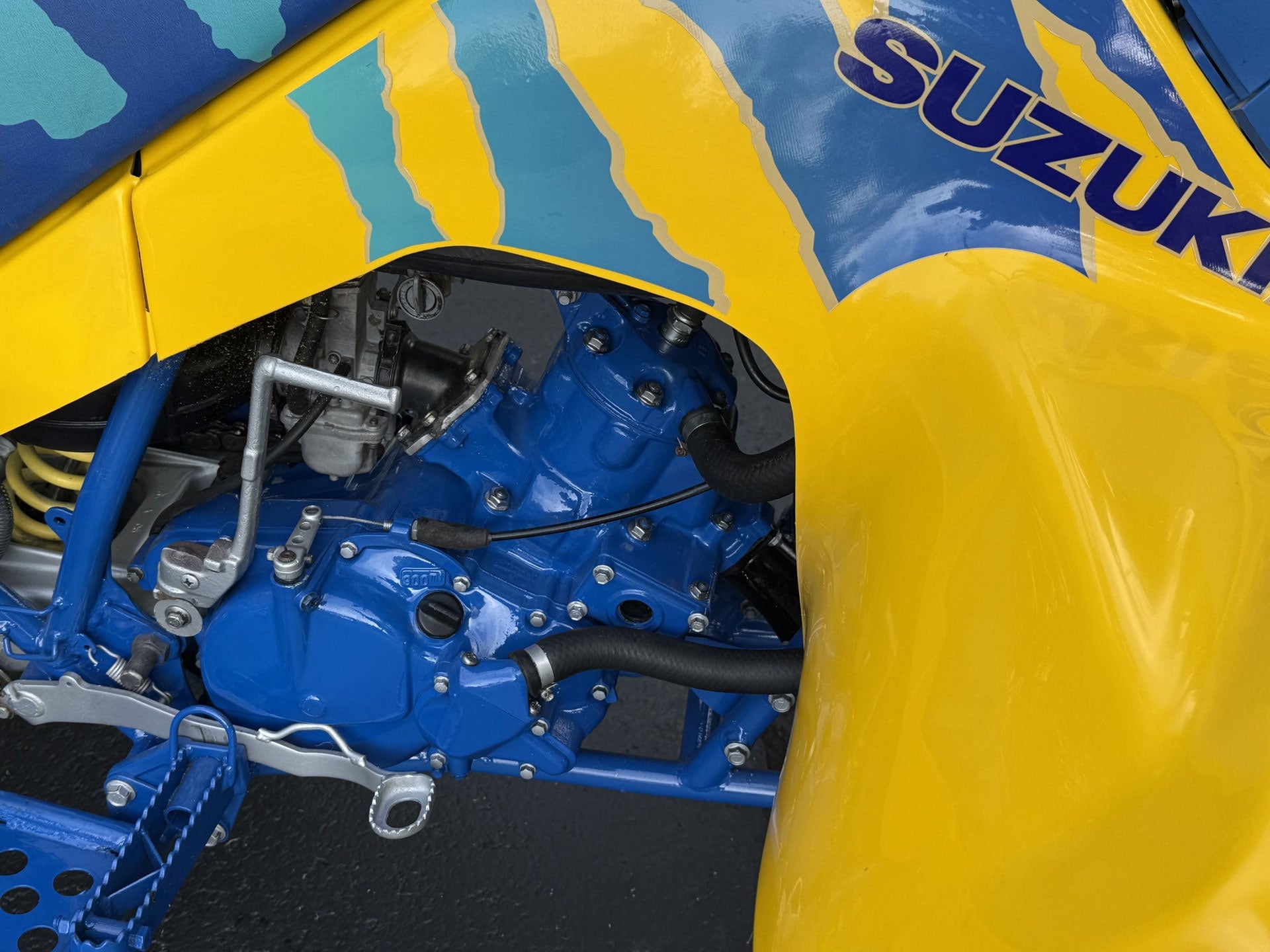
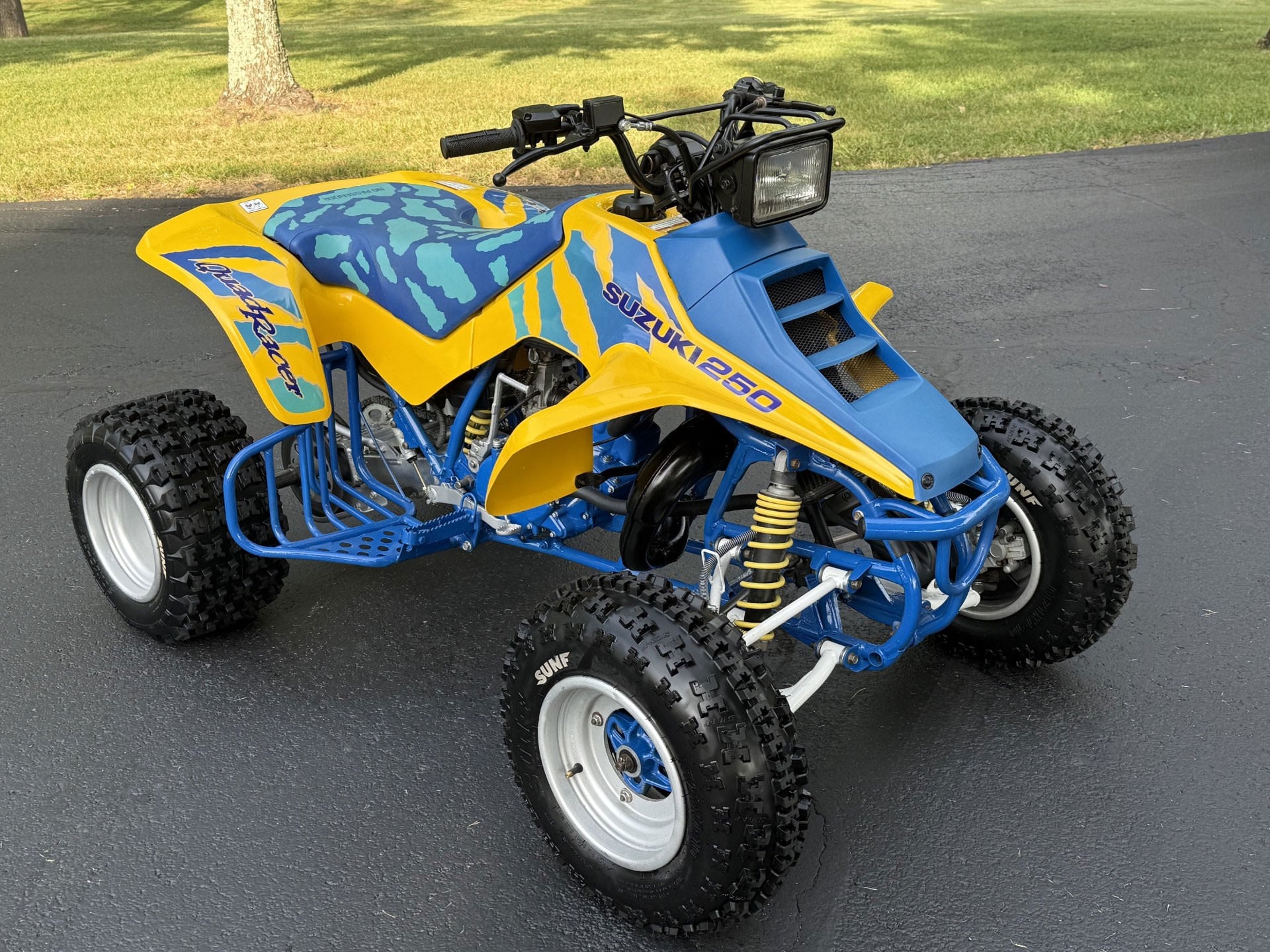
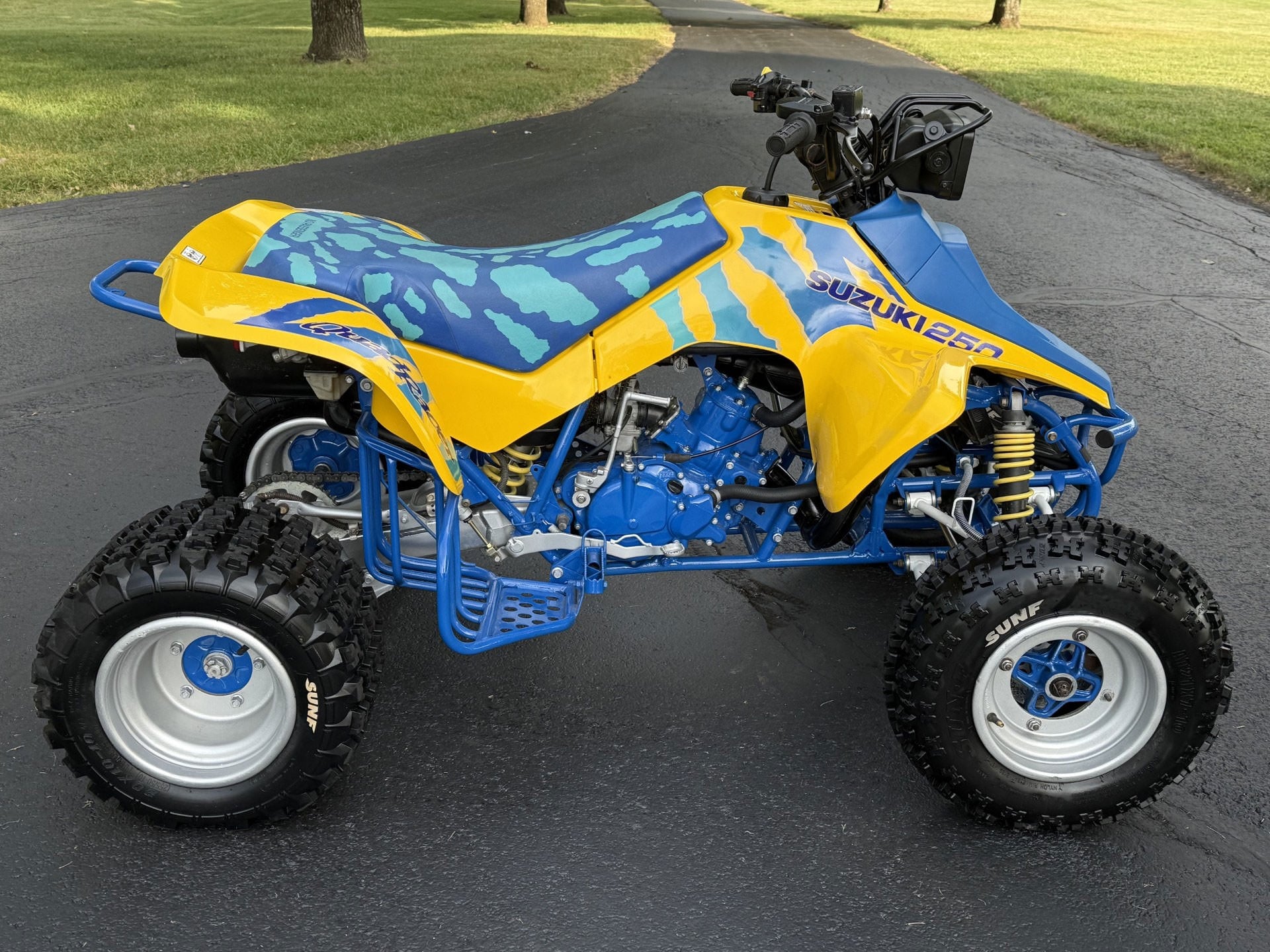
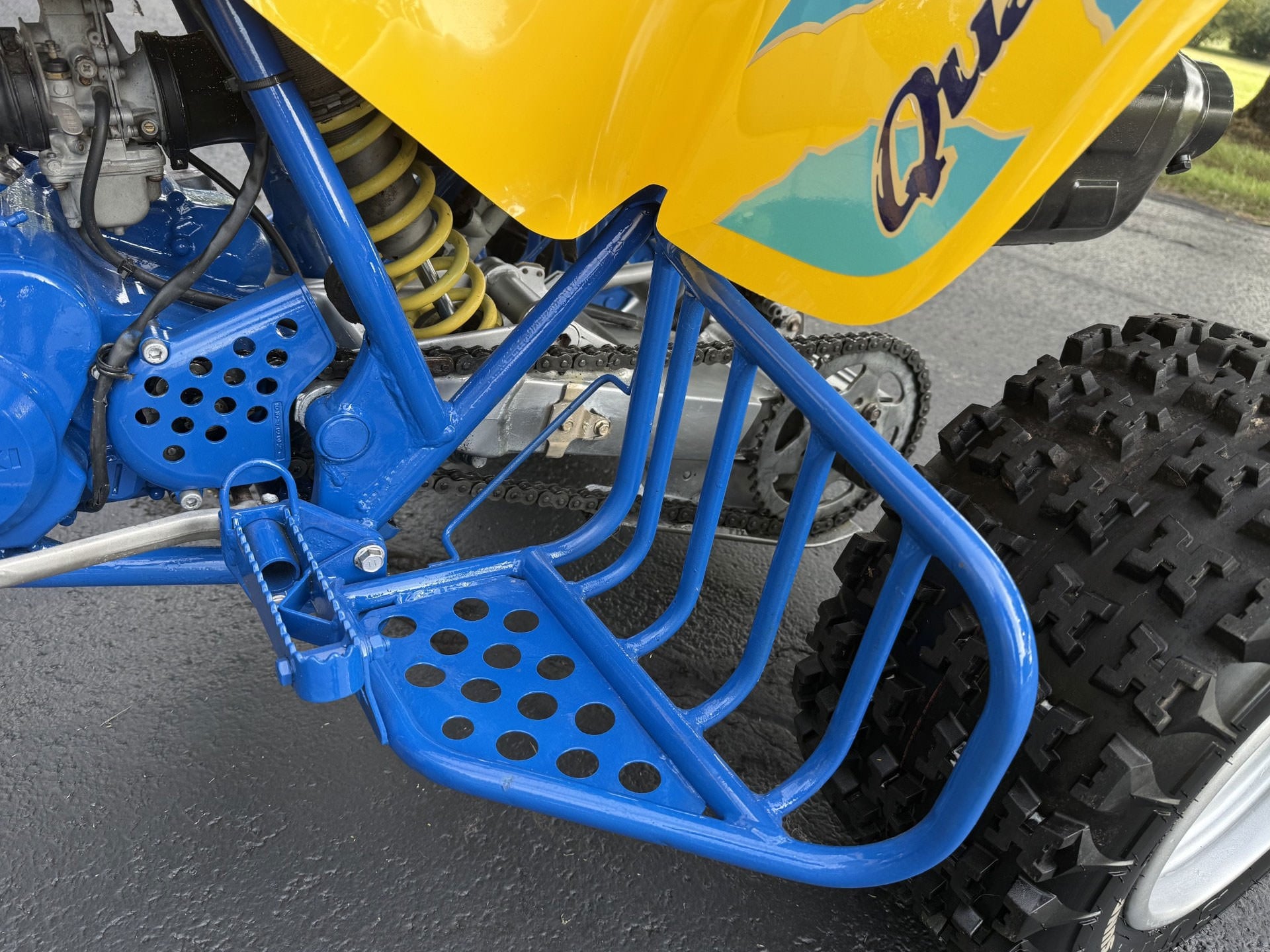
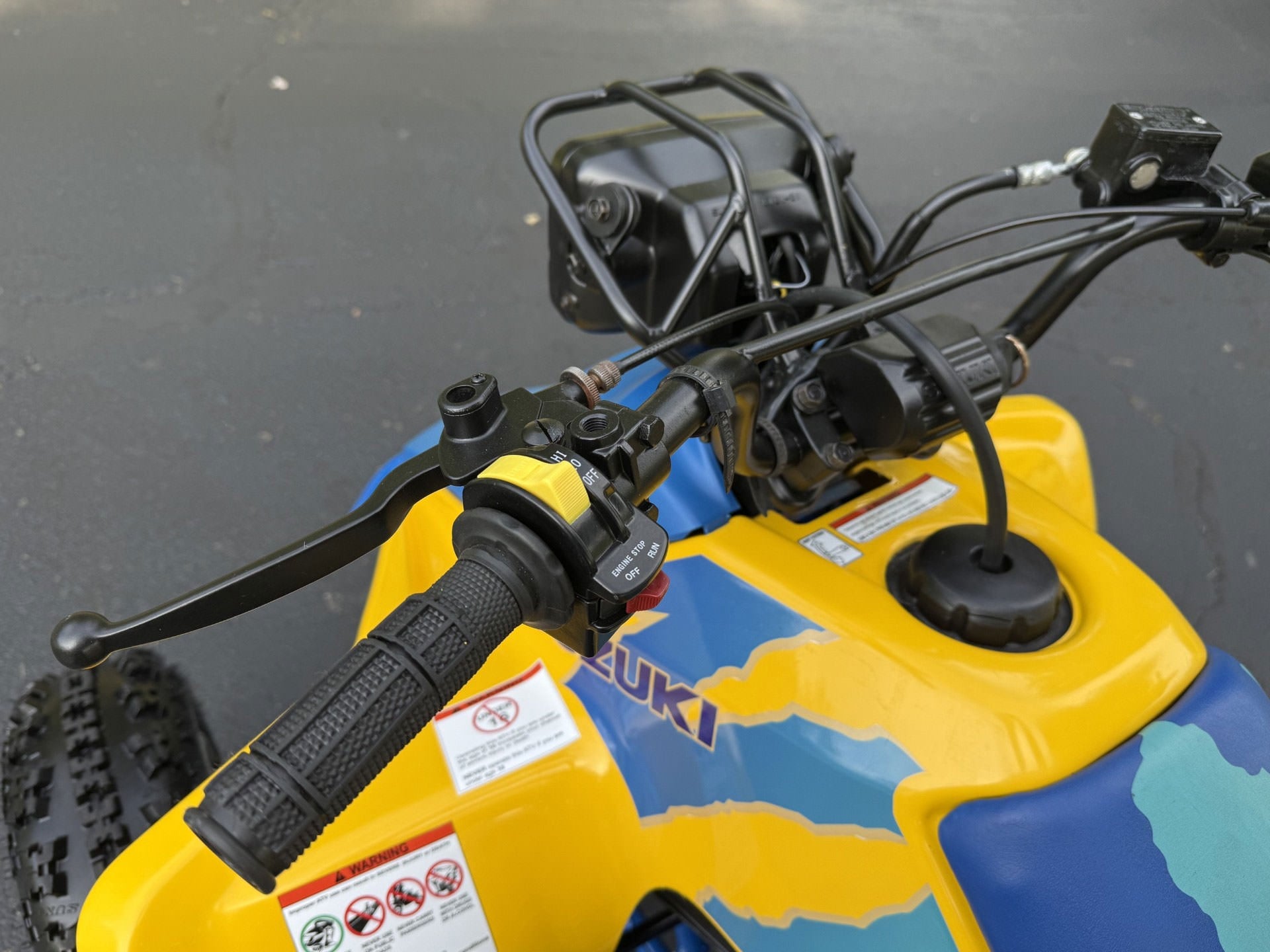
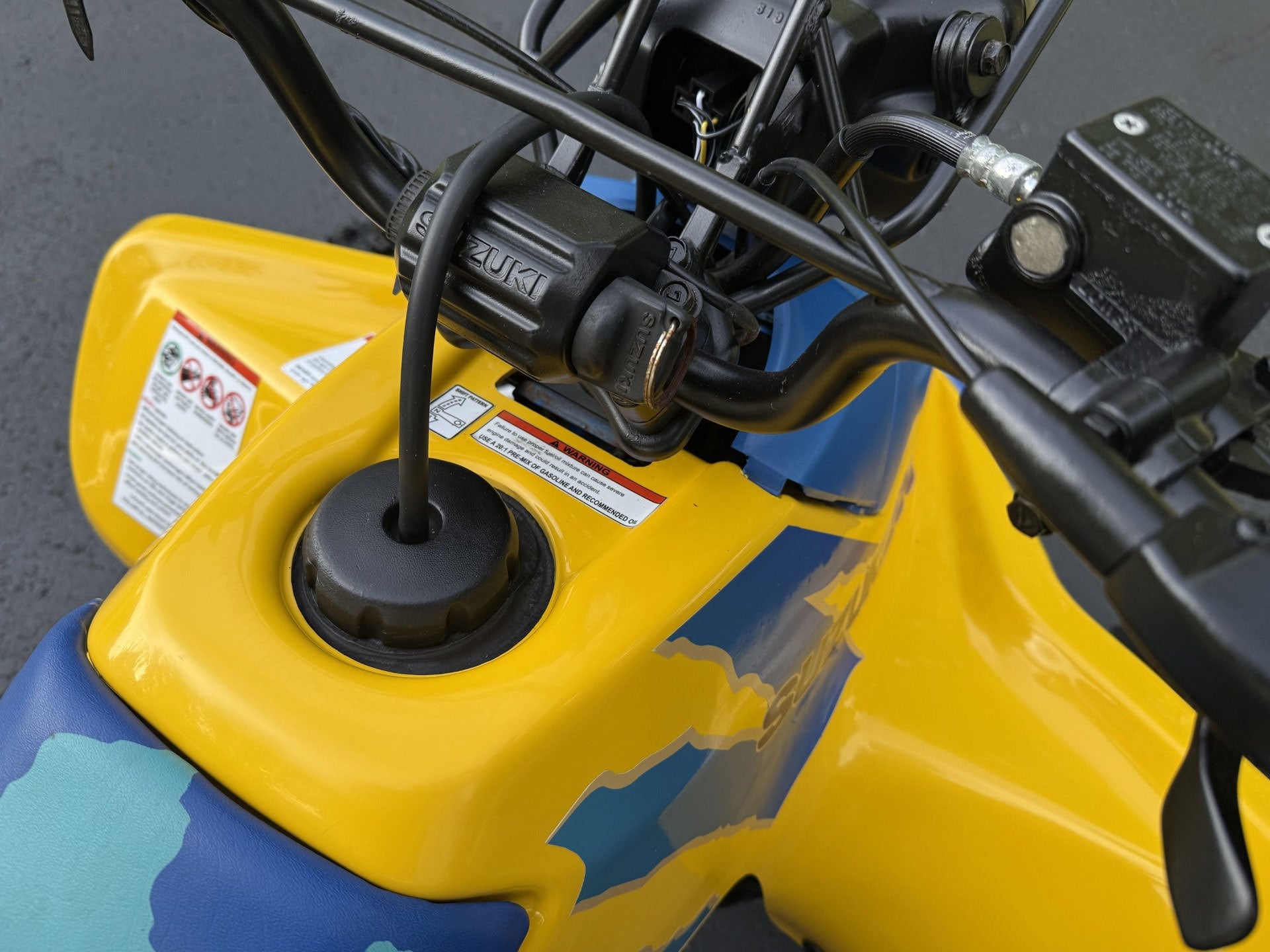
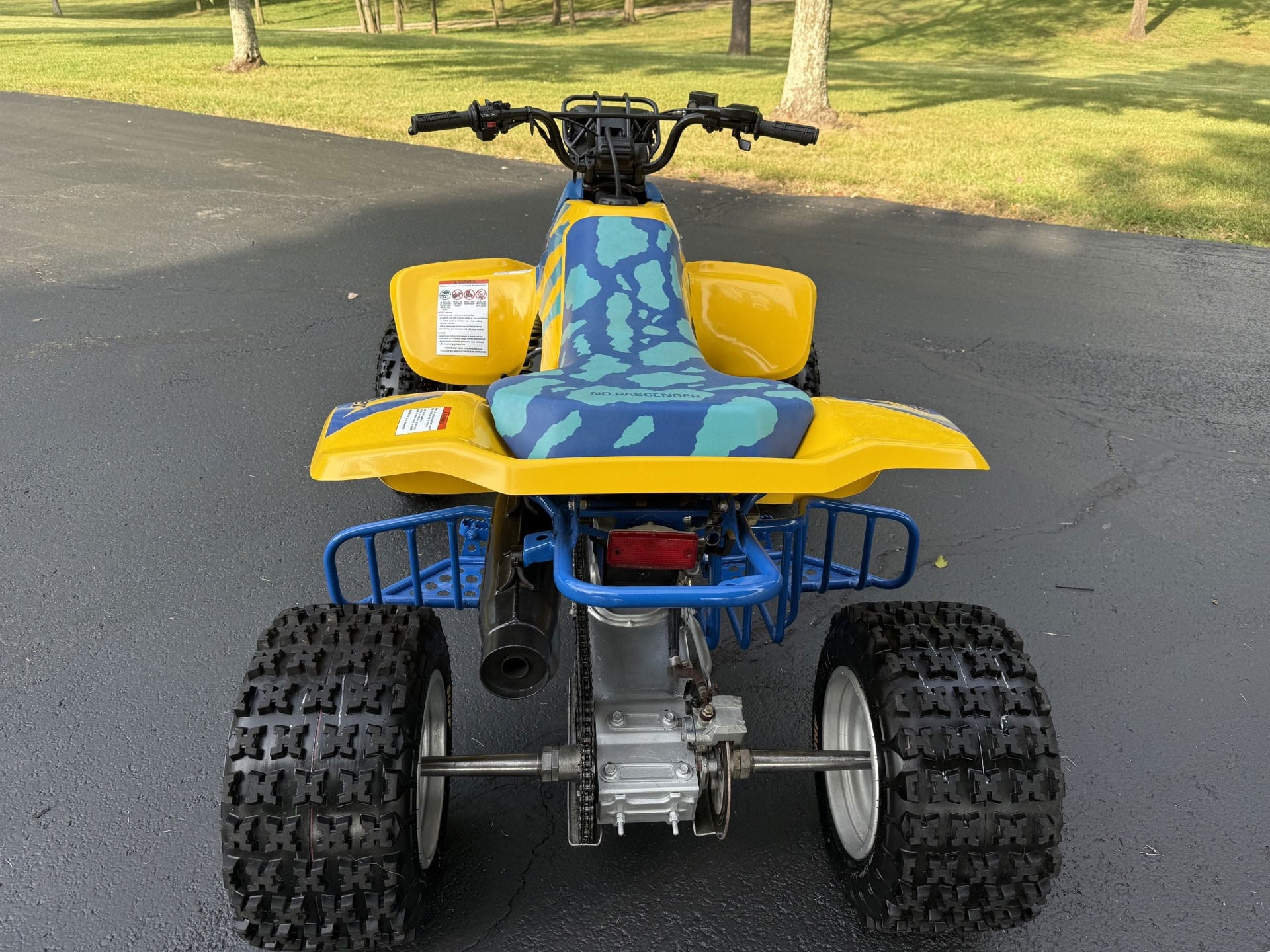
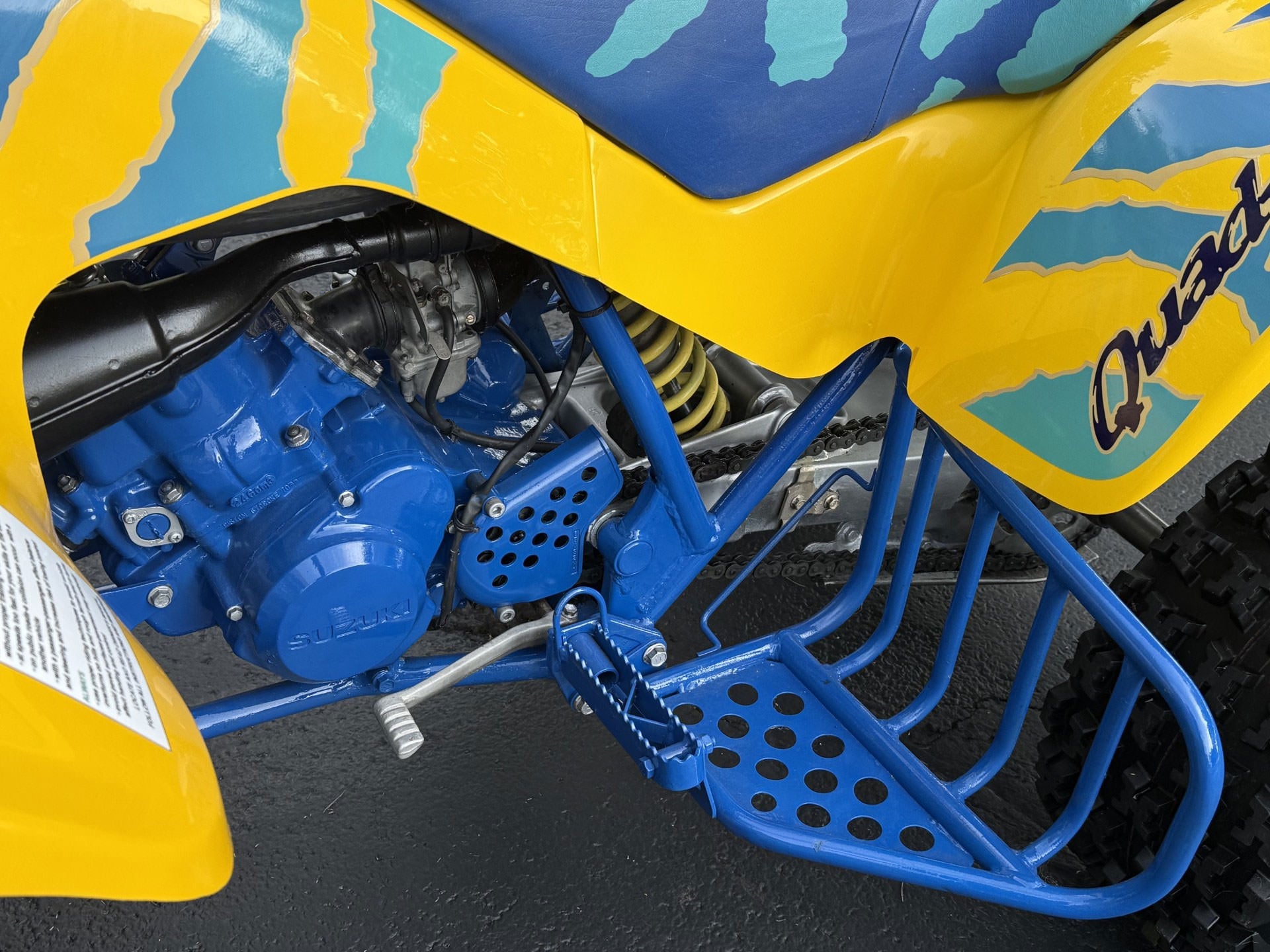
This is an original 1992 Suzuki LT250R QuadRacer, it was bought by the seller in 2019 and underwent an extensive cosmetic and mechanical restoration starting in 2020. Its yellow and blue bodywork was refreshed with blue gradient graphics, while the frame, nerf bars, factory 10-inch multi-piece wheels, suspension, and various other parts were refinished in blue.
New SUNF tires were fitted, and assorted bearings, bushings, seals, steering parts, and controls were replaced or reconditioned. The suspension was also overhauled, including a rebuild of the rear monoshock with a re-chromed stock shaft, new seals, and a fresh nitrogen charge.
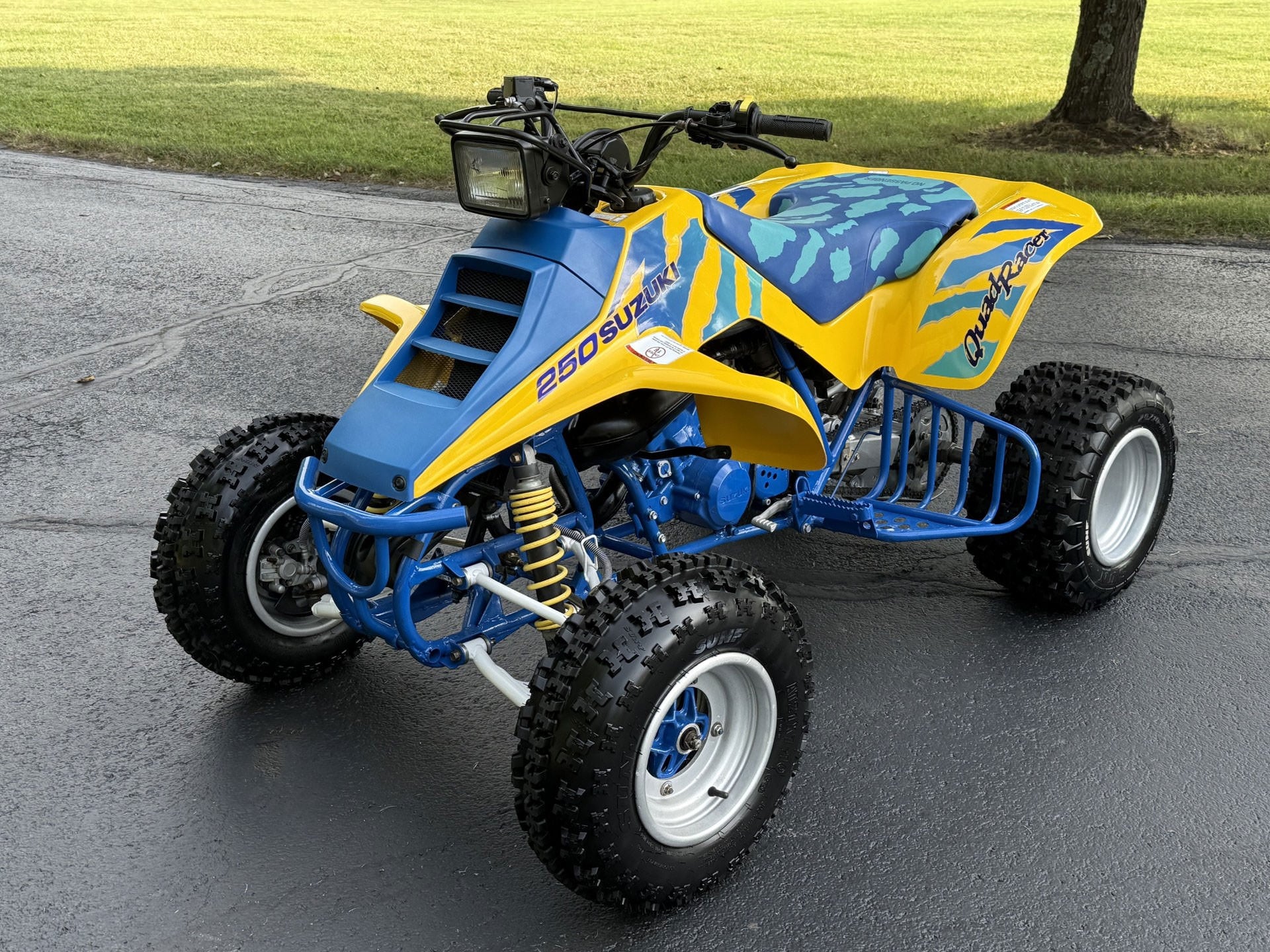
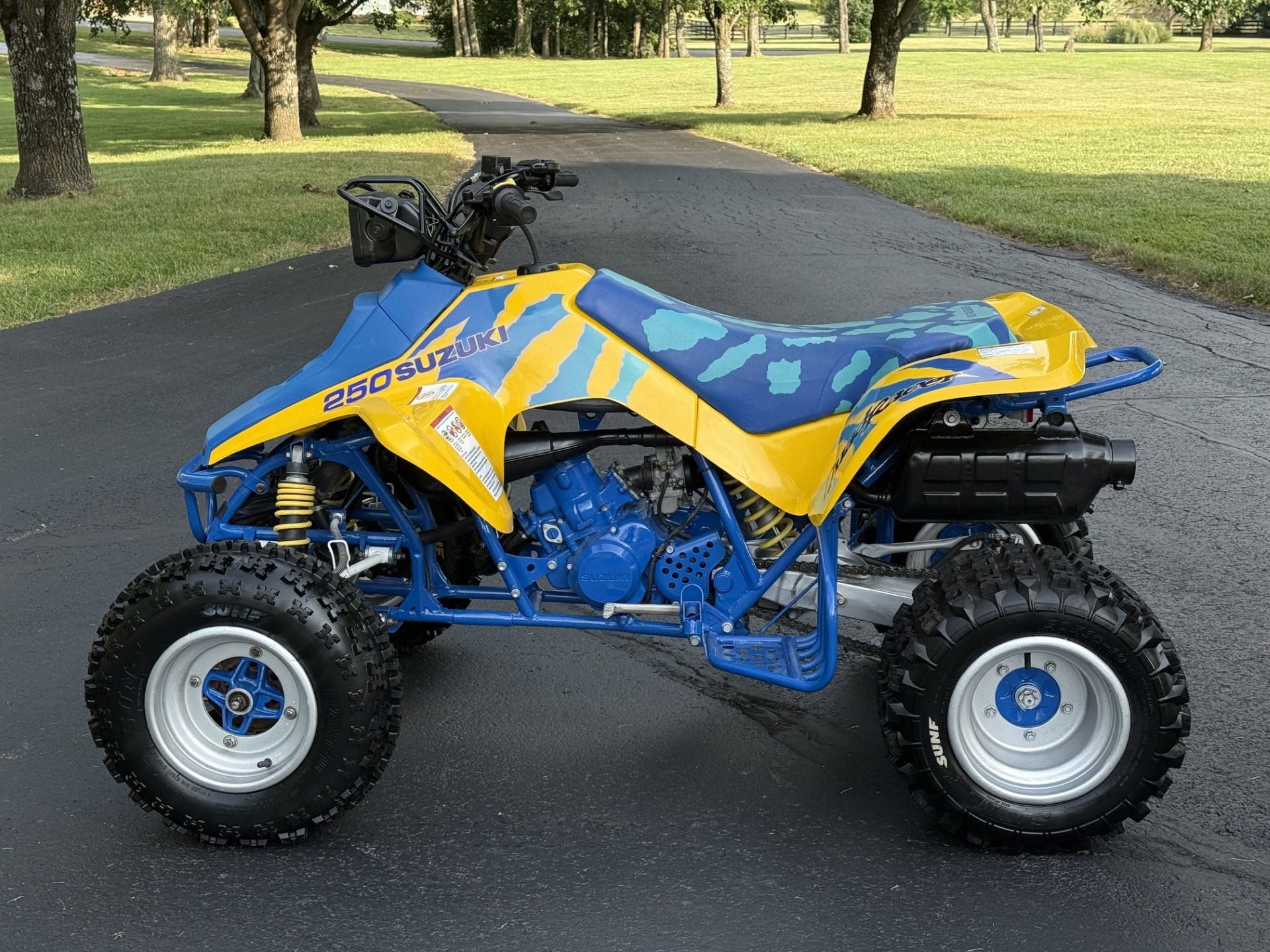
This is an original 1992 Suzuki LT250R QuadRacer, it was bought by the seller in 2019 and underwent an extensive cosmetic and mechanical restoration starting in 2020.
As you might expect, power comes from the original liquid-cooled 246cc two-stroke single, paired with a 6-speed transmission and chain drive. The exterior of the engine was refinished during the 2020 work, although the engine itself was not rebuilt. After the refurb, the ATV was stored for approximately 5 years before being recommissioned for sale, at which time the carburetor was overhauled and tuned.
It’s now being offered for sale out of Georgetown, Kentucky at no reserve for off-road use only with a bill of sale. If you’d like to read more about it or register to bid you can visit the listing here.
Images courtesy of Bring a Trailer

Articles that Ben Branch has written have been covered on CNN, Popular Mechanics, Smithsonian Magazine, Road & Track Magazine, the official Pinterest blog, the official eBay Motors blog, BuzzFeed, Autoweek Magazine, Wired Magazine, Autoblog, Gear Patrol, Jalopnik, The Verge, and many more.
Silodrome was founded by Ben back in 2010, in the years since the site has grown to become a world leader in the alternative and vintage motoring sector, with well over a million monthly readers from around the world and many hundreds of thousands of followers on social media.