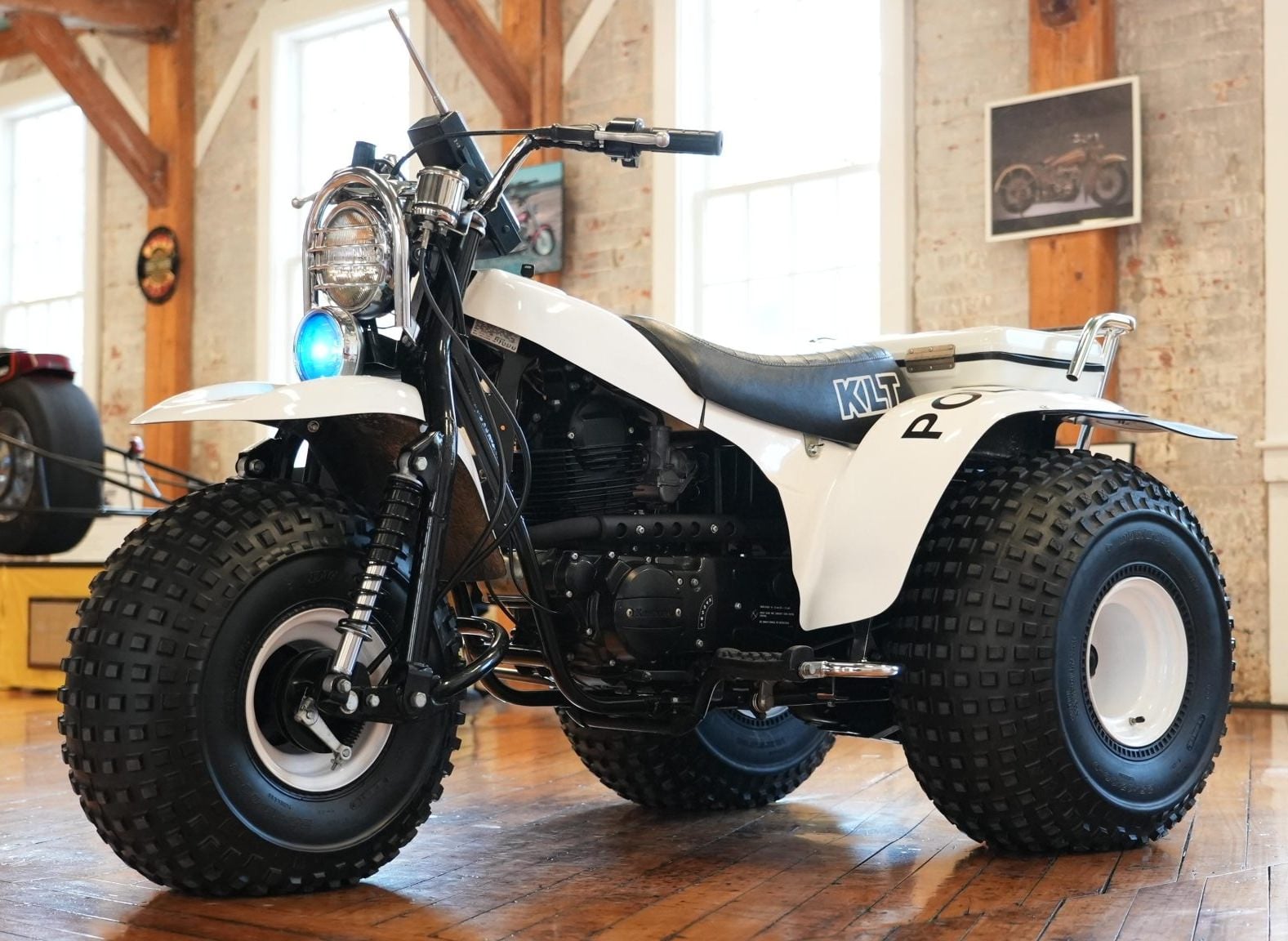
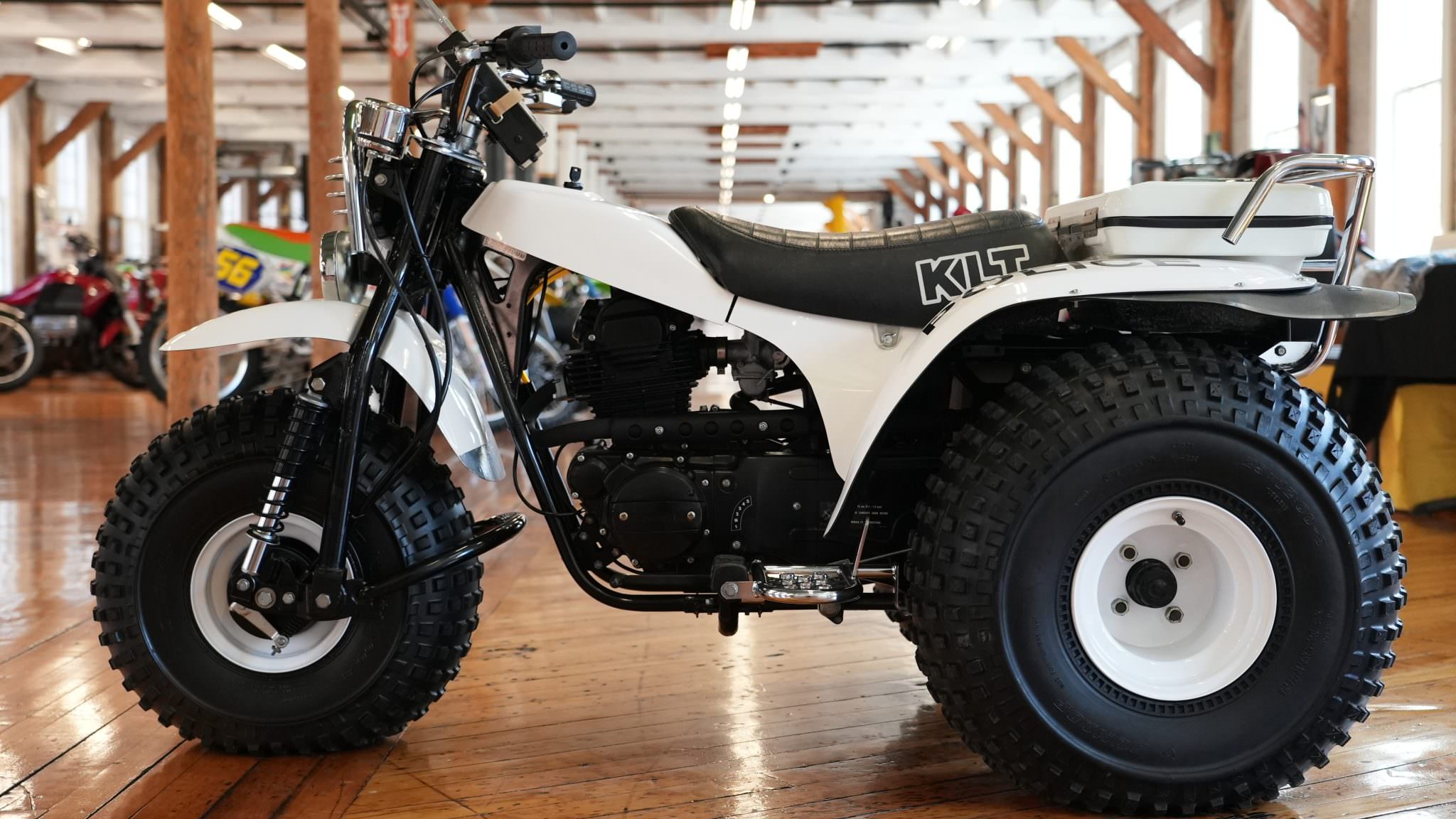
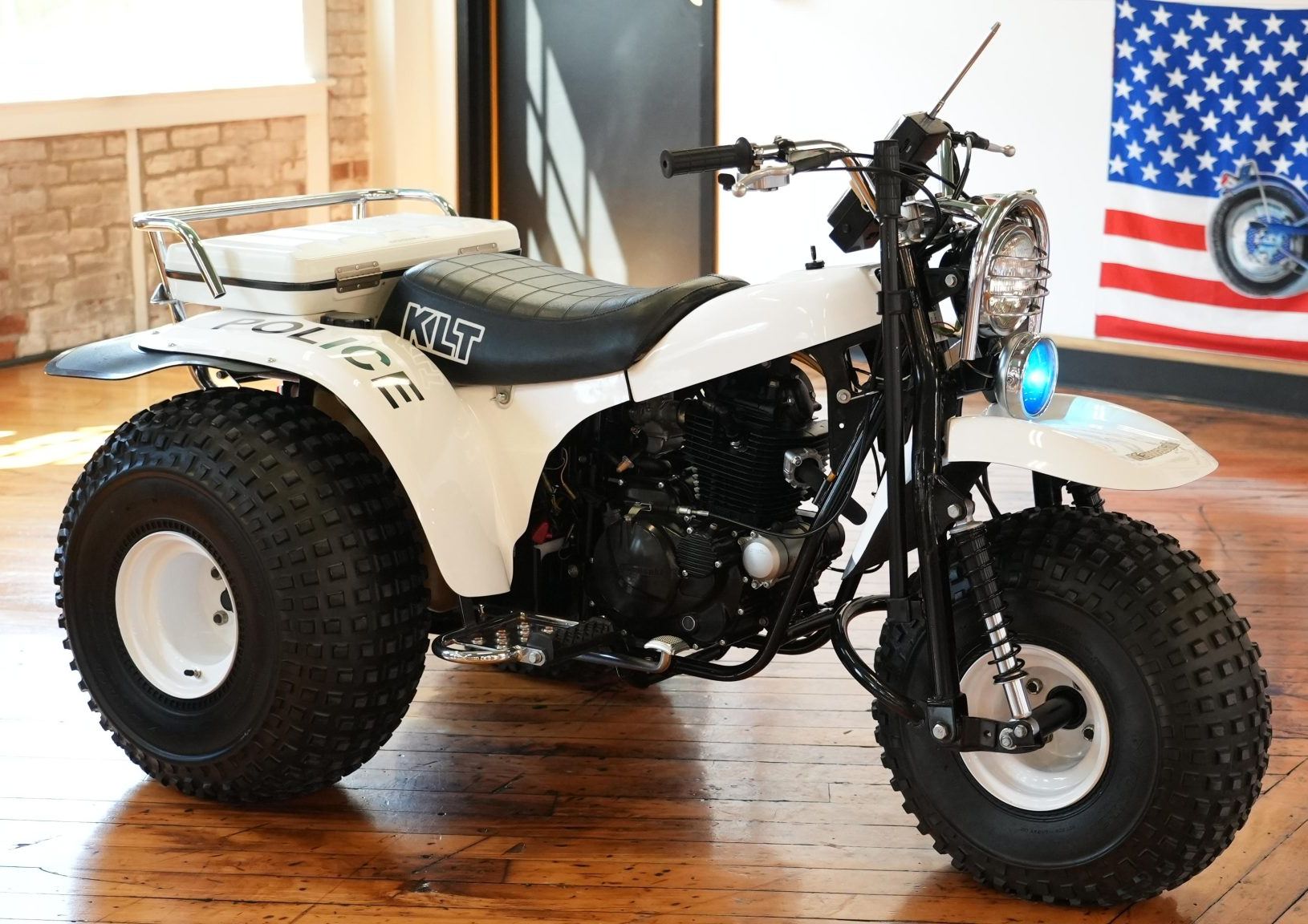
This is one of 50 examples of the Kawasaki KLT250-P1 that were donated to the Olympic Planning Committee for police use at the 1984 Olympic Games in Los Angeles.
These P1 “Police” variants of the Kawasaki KLT250 are among the most collectible trikes from the era, just 300 were made, and the 50 that were supplied for police use during the LA Olympics are considered to be unicorns by enthusiasts.
Fast Facts: The Kawasaki KLT250-P1 “Police”
- This 1984 Kawasaki KLT250-P1 is one of just 50 police-specification three-wheelers donated to the Olympic Planning Committee for law enforcement use at the 1984 Summer Olympics in Los Angeles. Only 300 P1 units were produced in total, making survivors exceptionally rare among collectors.
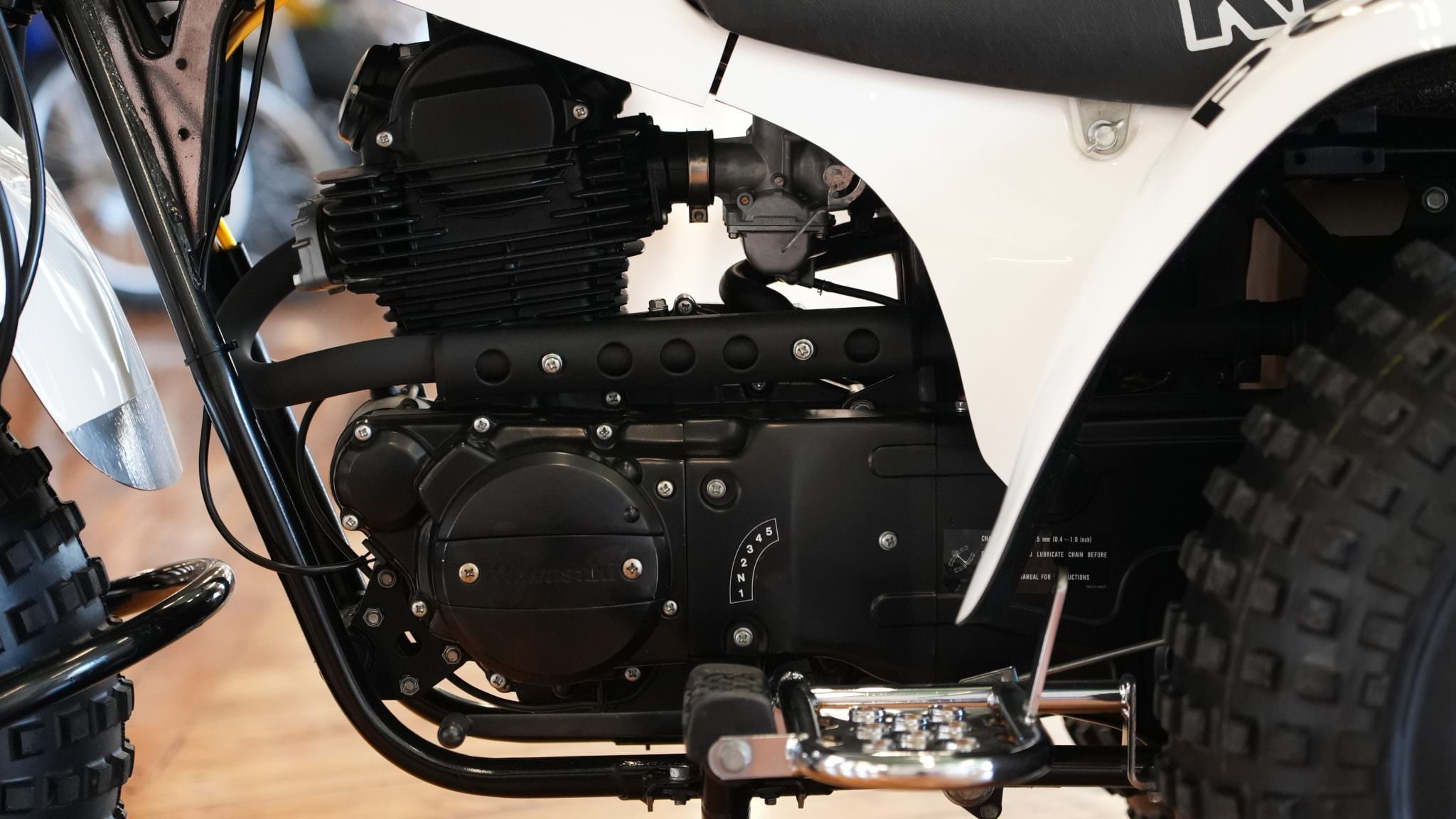
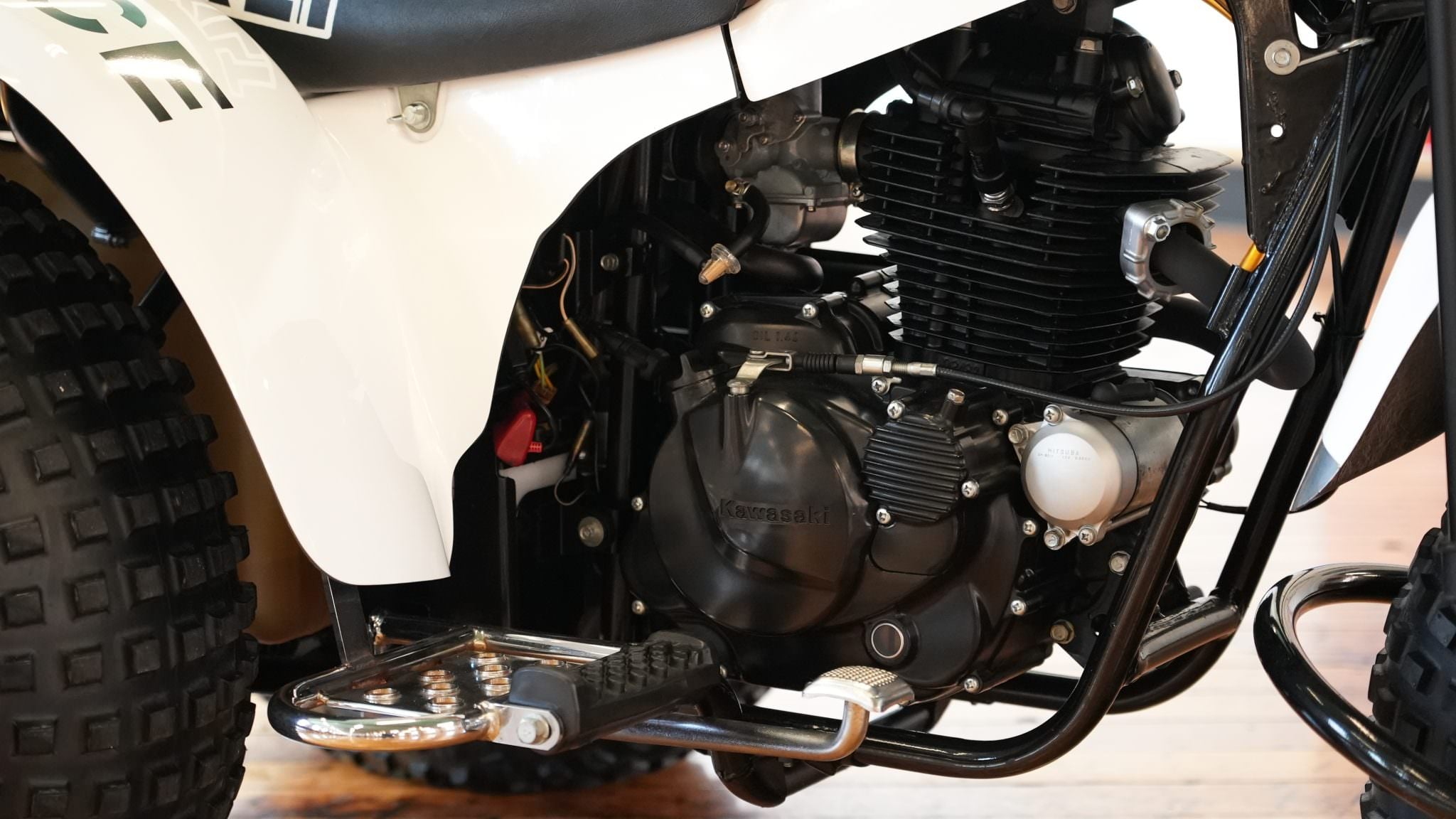
- The P1 is powered by a 249cc air-cooled SOHC single-cylinder four-stroke with a 5-speed manual transmission, enclosed chain drive, and a Dual-Mode lockable rear differential. It rides on a leading-link front fork with no rear suspension (other than the tire sidewalls), and braking is handled by drums at both ends.
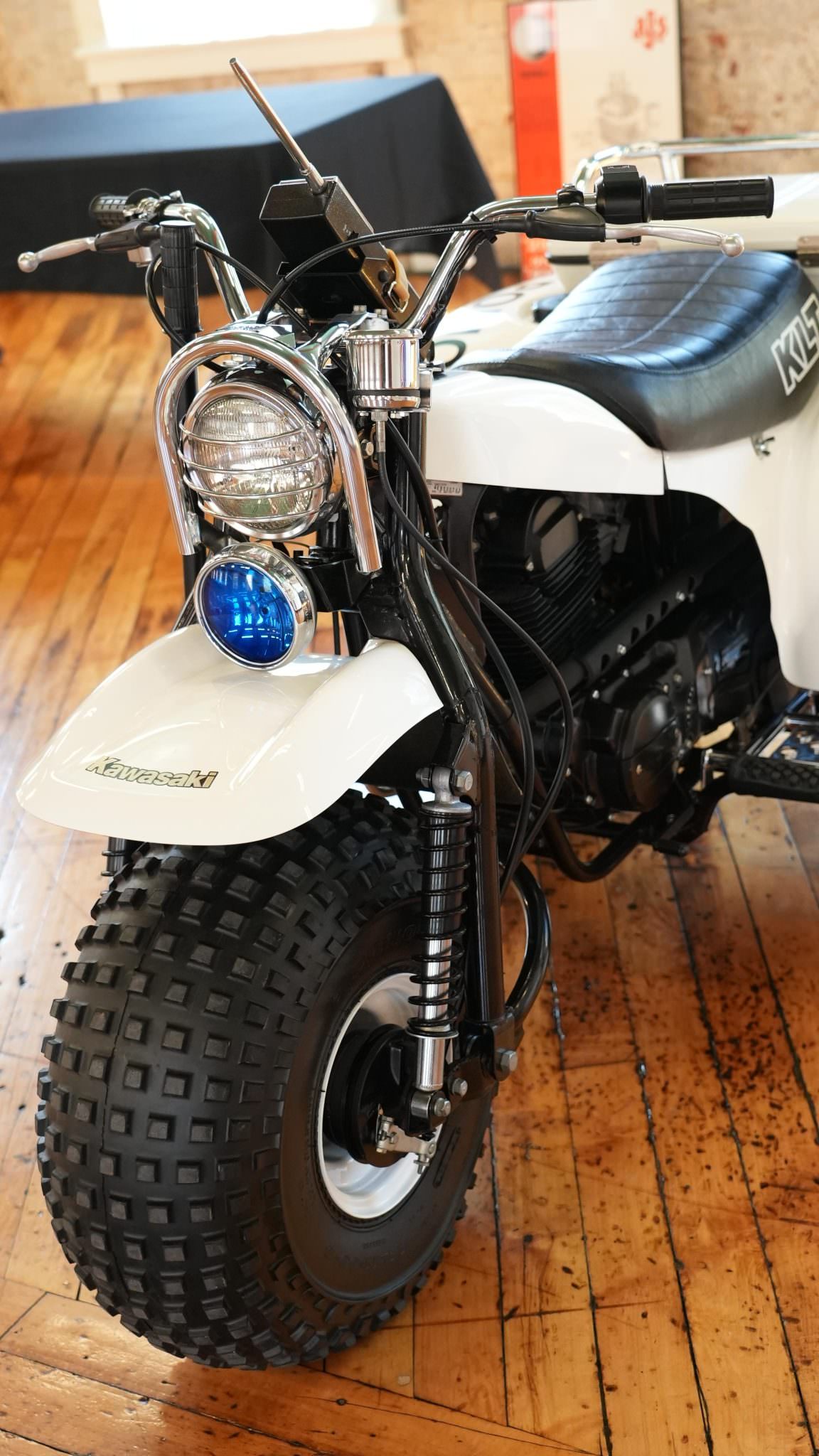
- Law enforcement equipment includes a blue pursuit light above the front fender, a baton and holder on the right fork leg, a hard-case trunk on the chrome rear rack, chrome step/heel guards, a handlebar-mounted Midland CB radio, a 60-mph speedometer, and a keyed three-position ignition.
- The sale includes a sealed owner’s manual, a Kawasaki Law Enforcement Equipment brochure, a light blue blazer with the 1984 Olympic Games crest patch, removed bodywork, and documentation establishing delivery to the Olympic Planning Committee.
History Speedrun: The Kawasaki KLT250
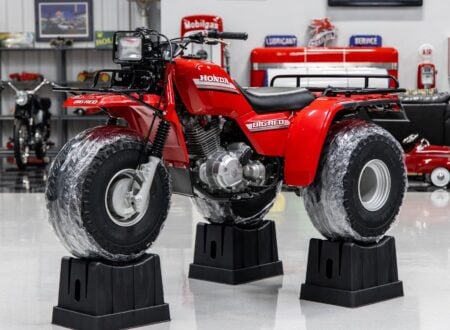
The Kawasaki KLT250 landed in 1982 as the company’s first serious attempt at an adult-sized, four-stroke three-wheeler intended for utilitarian use. Kawasaki had already entered the ATV market with smaller displacement trikes, like the KLT110 and KLT200, but the 250 was a step up both in capability and ambition, aimed directly at the growing utility and agricultural ATV market that Honda’s Big Red had carved out.
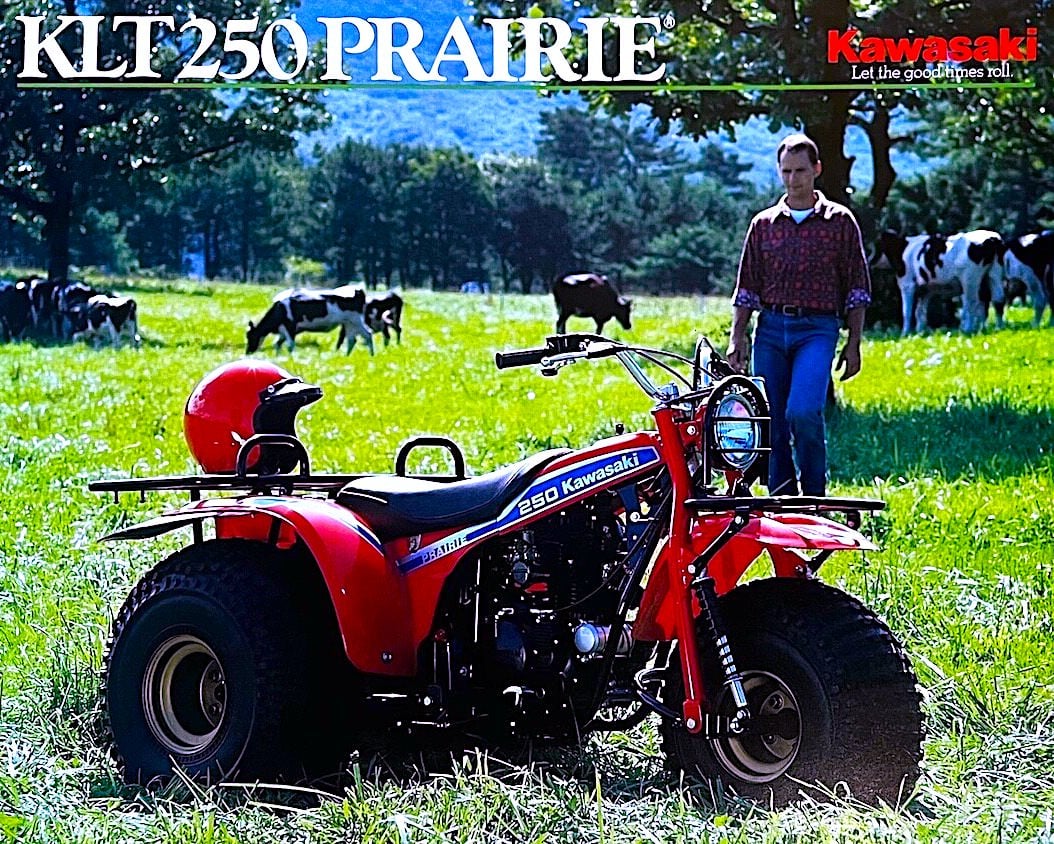
 The Kawasaki KLT250 landed in 1982 as the company’s first serious attempt at an adult-sized, four-stroke three-wheeler intended for utilitarian use. Image courtesy of Kawasaki.
The KLT250 debuted in two major variants – the original A-series which launched for the 1982 model year as a relatively straightforward utility trike. A year later, Kawasaki introduced the C-series under the Prairie badge, adding some features that gave the machine significantly more capability – front and rear cargo racks, a speedometer, lighting, and a limited-slip rear differential branded “Dual-Mode” that could be manually locked and unlocked.
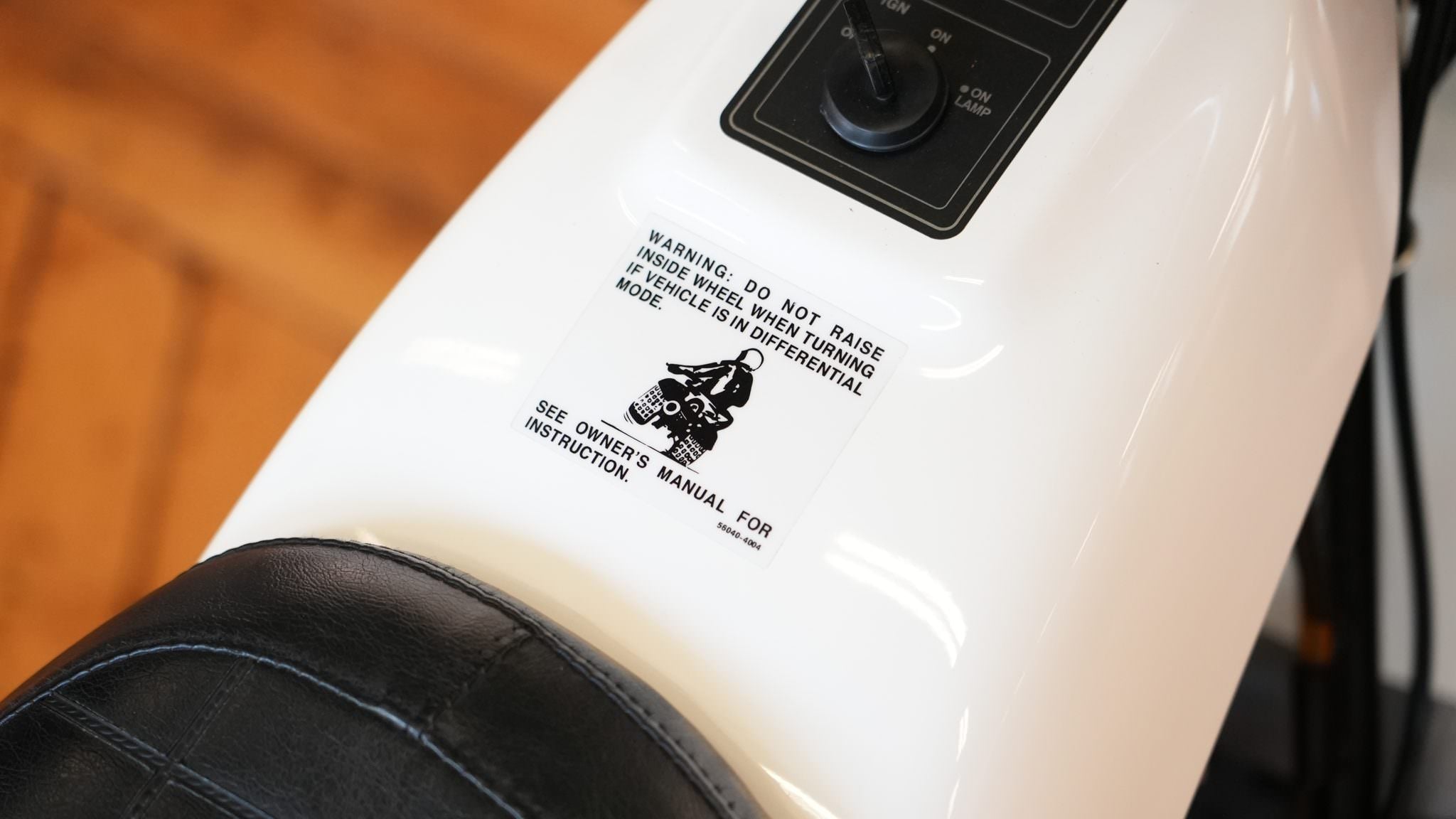
With the diff unlocked, the Prairie was gentle on turf and easy to maneuver, then when locked, it provided the non-slip traction needed for muddy fields, trails, slippery hill climbs, and towing.
These were features aimed directly at farmers, ranchers, and hunters who wanted a genuinely capable working machine. By the early 1980s, Honda had established dominance in the utility ATC segment with the Big Red, and Yamaha had competitive offerings of its own.
Kawasaki needed a way to position its trike as both a practical work tool and a capable leisure machine, and the Prairie badge accomplished that pretty succinctly. The C-series ran for three model years (C1 (1983), C2 (1984), and C3 (1985)) with some key revisions between the first and second year, and relatively minor updates for the third.
In Kawasaki’s lineup, the Prairie sat alongside the entry-level KLT110 (a smaller 103cc machine with recoil start and no suspension), the mid-range KLT200, and the more performance-oriented KXT250 Tecate – this was a liquid-cooled two-stroke aimed at the sport/racing end of the market.
Kawasaki KLT250: Specifications
The Kawasaki KLT250 Prairie was powered by a 249cc air-cooled SOHC single-cylinder four-stroke engine with a bore and stroke of 70.5 x 64mm and a 9.3:1 compression ratio, producing 19 bhp. Fueling came from a Keihin PW26 carburetor, ignition was electronic, and starting was electric – that was a significant convenience feature over the recoil-start machines common in the smaller displacement classes.
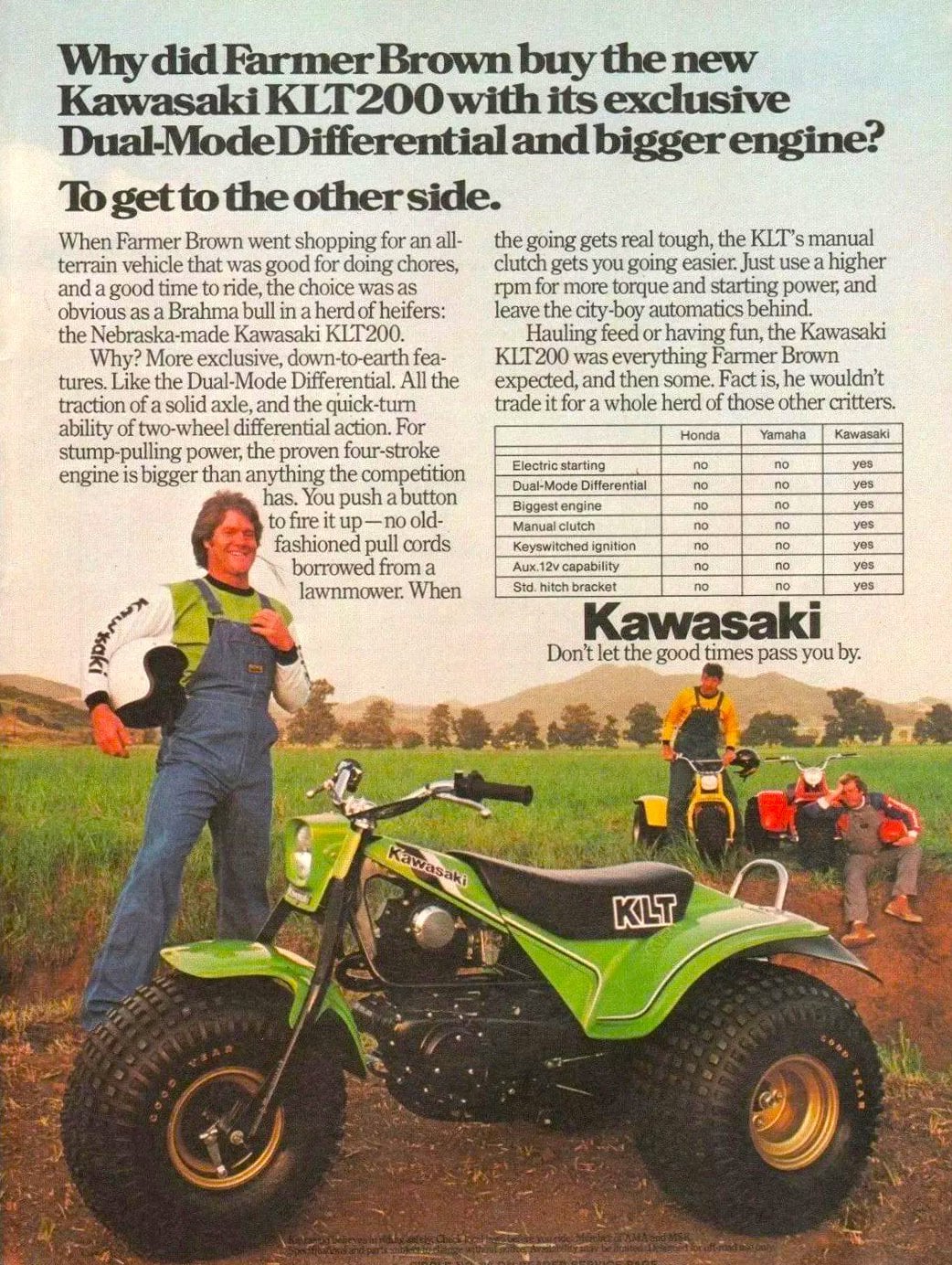
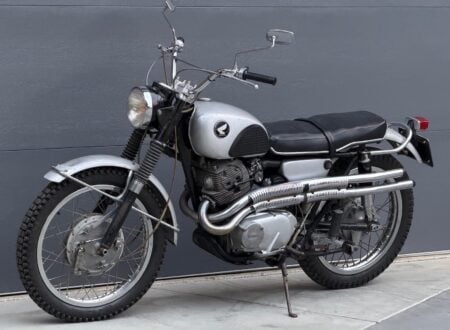
In Kawasaki’s lineup, the Prairie sat alongside the entry-level KLT110 (a smaller 103cc machine with recoil start and no suspension), the mid-range KLT200 (shown above), and the more performance-oriented KXT250 Tecate – this was a liquid-cooled two-stroke aimed at the sport/racing end of the market. Image courtesy of Kawasaki.
The transmission was a 5-speed constant-mesh gearbox with a wet multidisc manual clutch and enclosed chain final drive. The front suspension was a leading-link fork with a stabilizer bar, offering 2.6 inches of travel, while the rear was rigid, with no suspension at all save for the sidewall of those low-pressure balloon tires – this was fairly standard for utility trikes of the time. Braking was handled by drums at both ends.
The Prairie measured in at 74.8 inches long by 42.5 inches wide, with a 47.6 inch wheelbase and 5.9 inches of ground clearance. Dry weight was 362 lbs. The 3.2 gallon fuel tank was mounted beneath the solo seat to lower the center of gravity – this was a smart piece of packaging for a three-wheeled vehicle.
The Rare Kawasaki KLT250-P1 Police Variant
In 1984, Kawasaki built what is now one of the rarest and most collectible three-wheelers ever made – the KLT250-P1 Police. The P1 suffix aligned with Kawasaki’s police-model naming convention, also seen on the KZ1000P police motorcycle, and the existence of a dedicated Kawasaki Law Enforcement Equipment brochure strongly indicates that this was a formal factory program rather than a simple dealership or field conversion.
Approximately 300 KLT250-P1 units were produced, though quoted numbers do vary somewhat. Of those, 50 were donated to the Los Angeles Olympic Planning Committee for law enforcement use during the 1984 Summer Olympics. The remaining units were reportedly sold to other law enforcement agencies, including California coastal beach patrols.
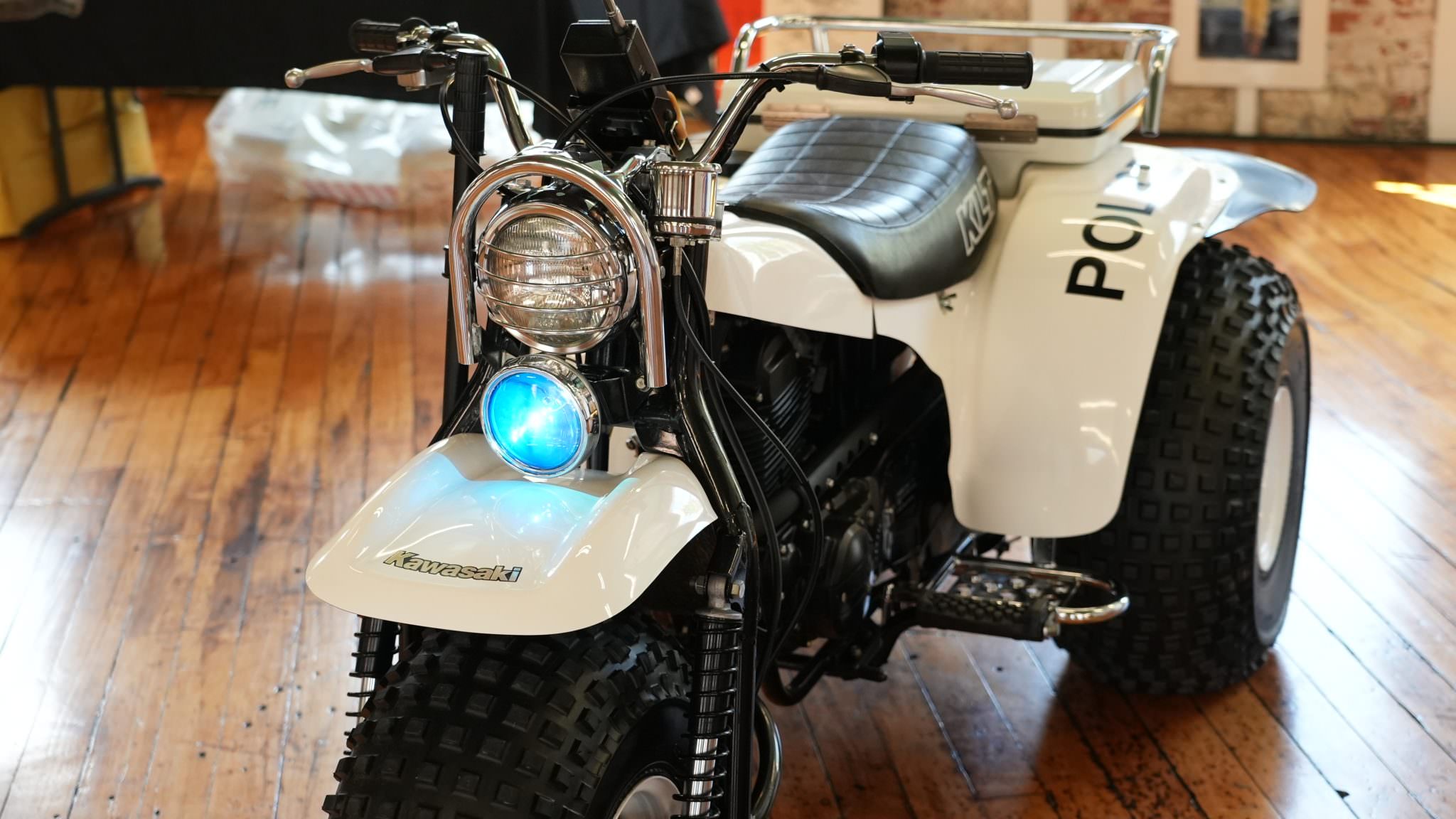
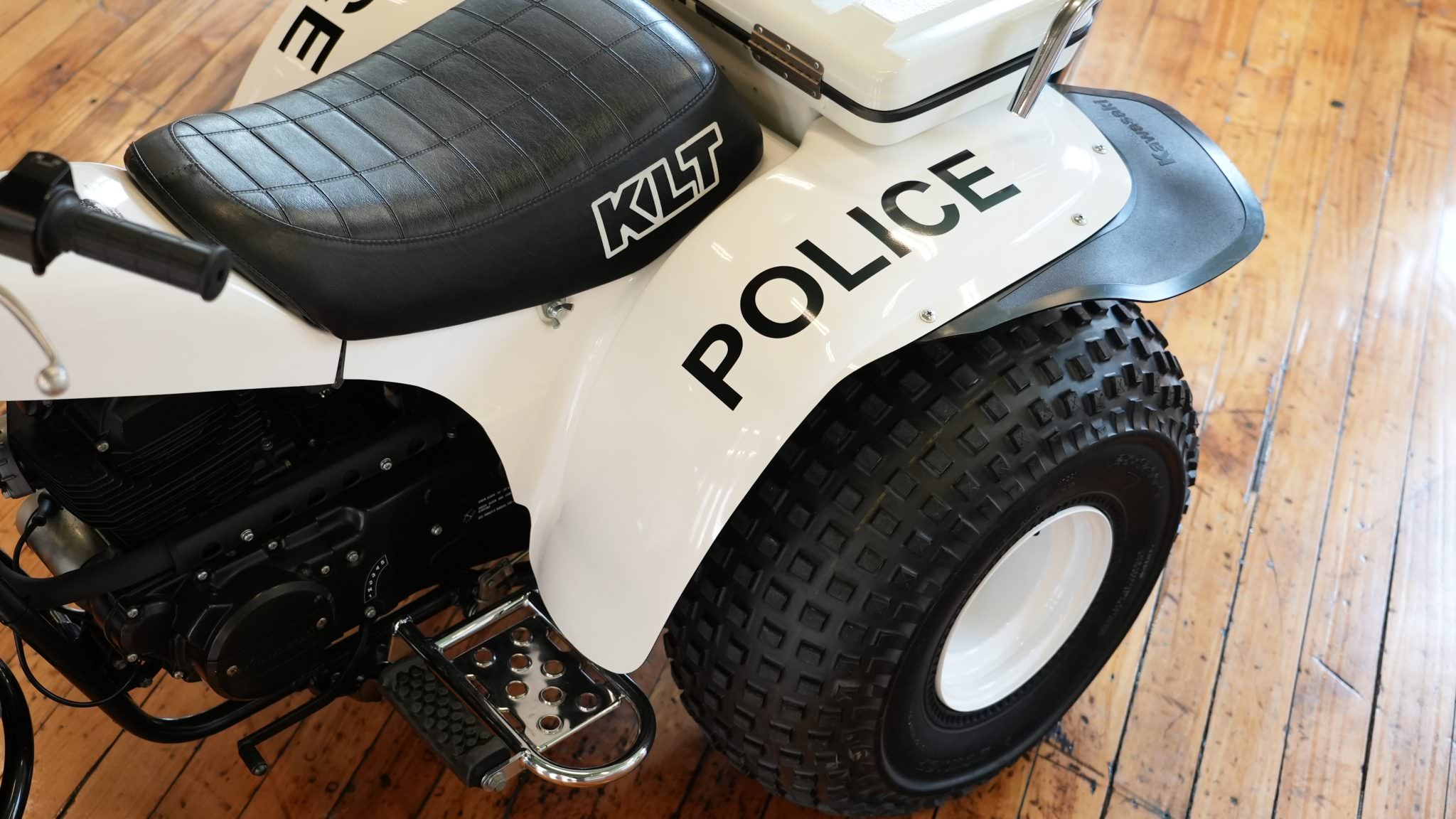
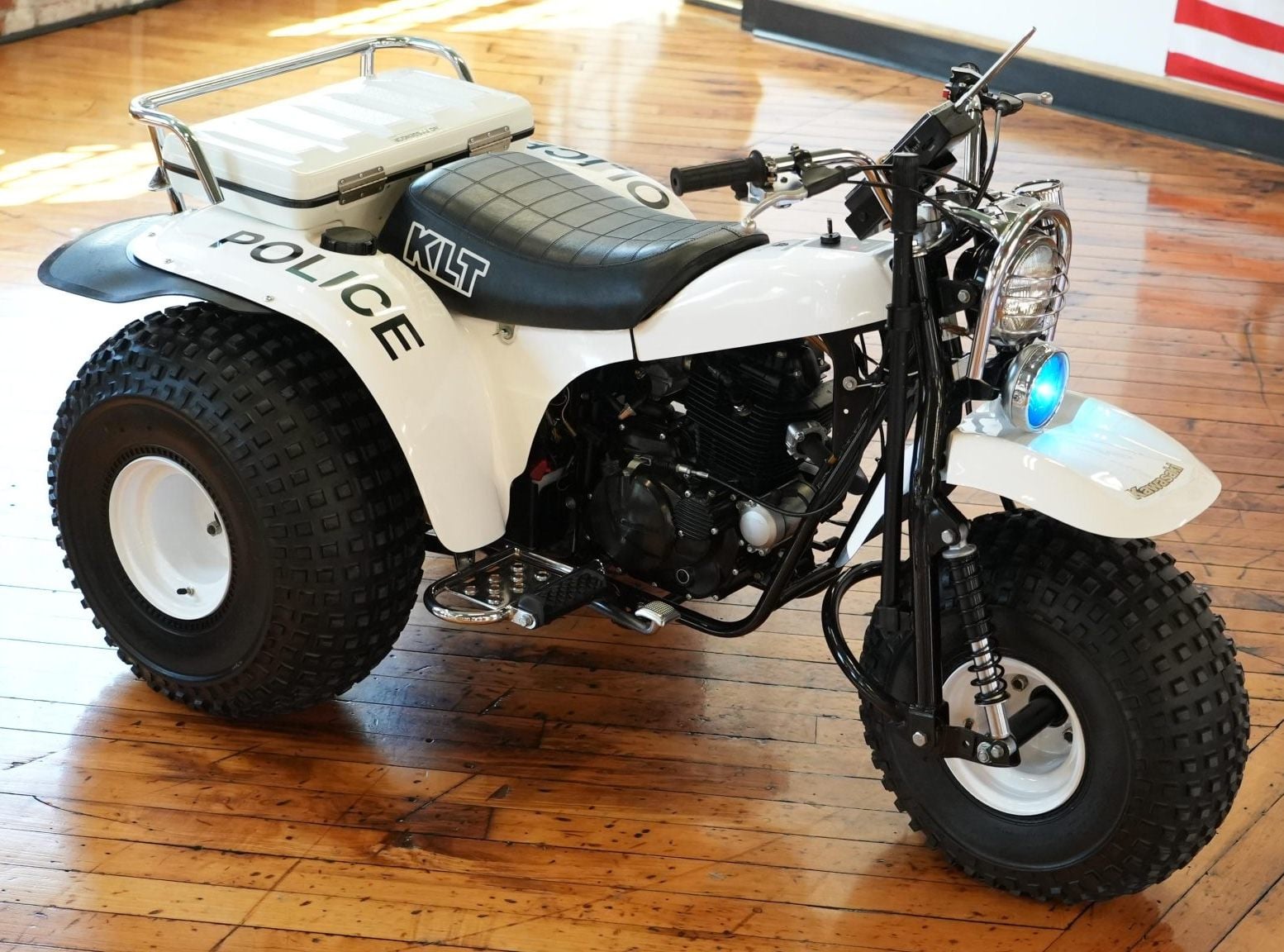
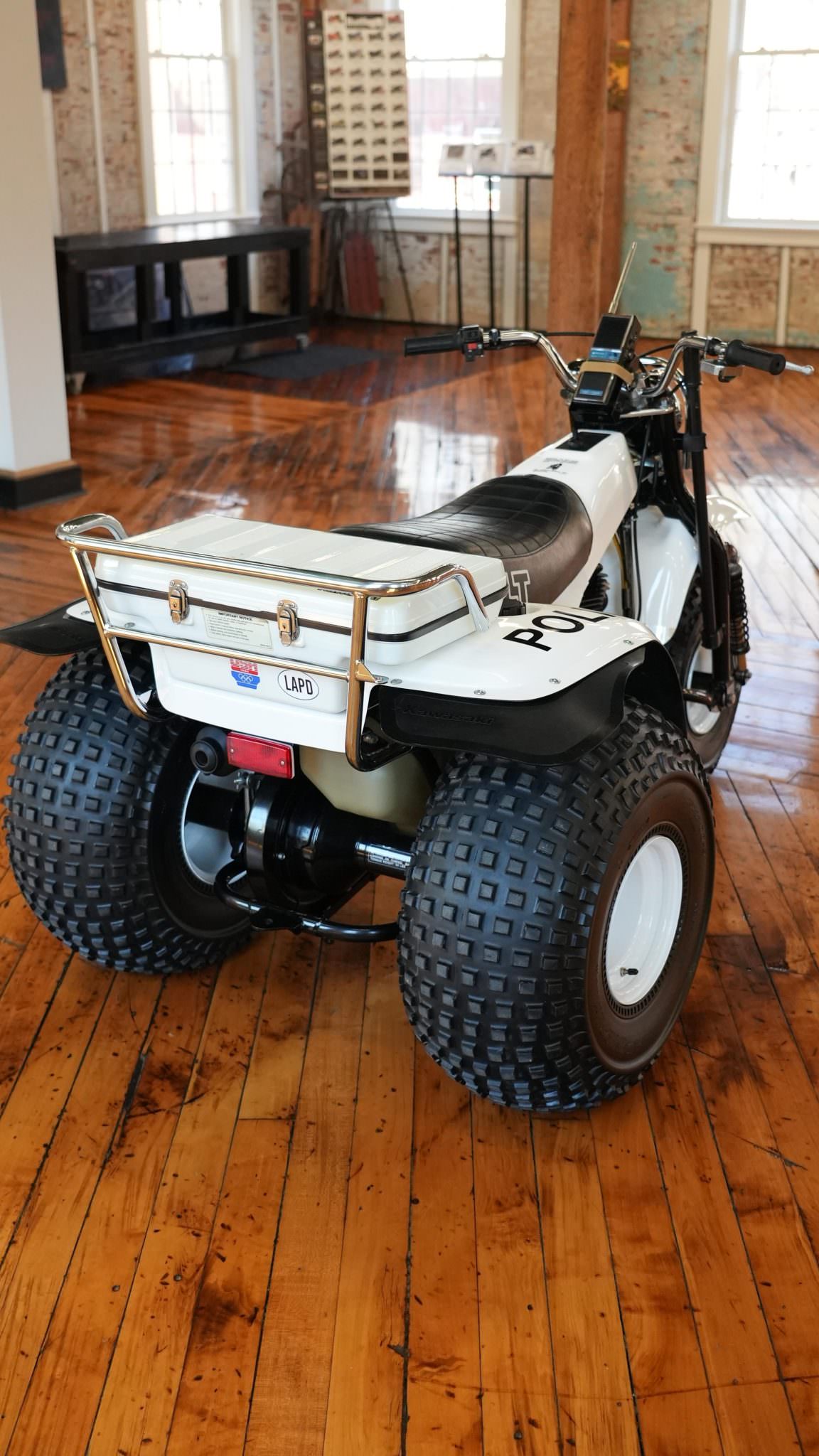
The P1 machines wore white plastic bodywork with “Police” script in black on both rear fenders, set over a black-finished twin-downtube frame. They were fitted with a pursuit lamp mounted above the front fender, available in red, blue, or amber.
The red-lamp models were associated with the Olympics, though at least one surviving blue-lamp example has surfaced with documentation establishing delivery to the Olympic Planning Committee.
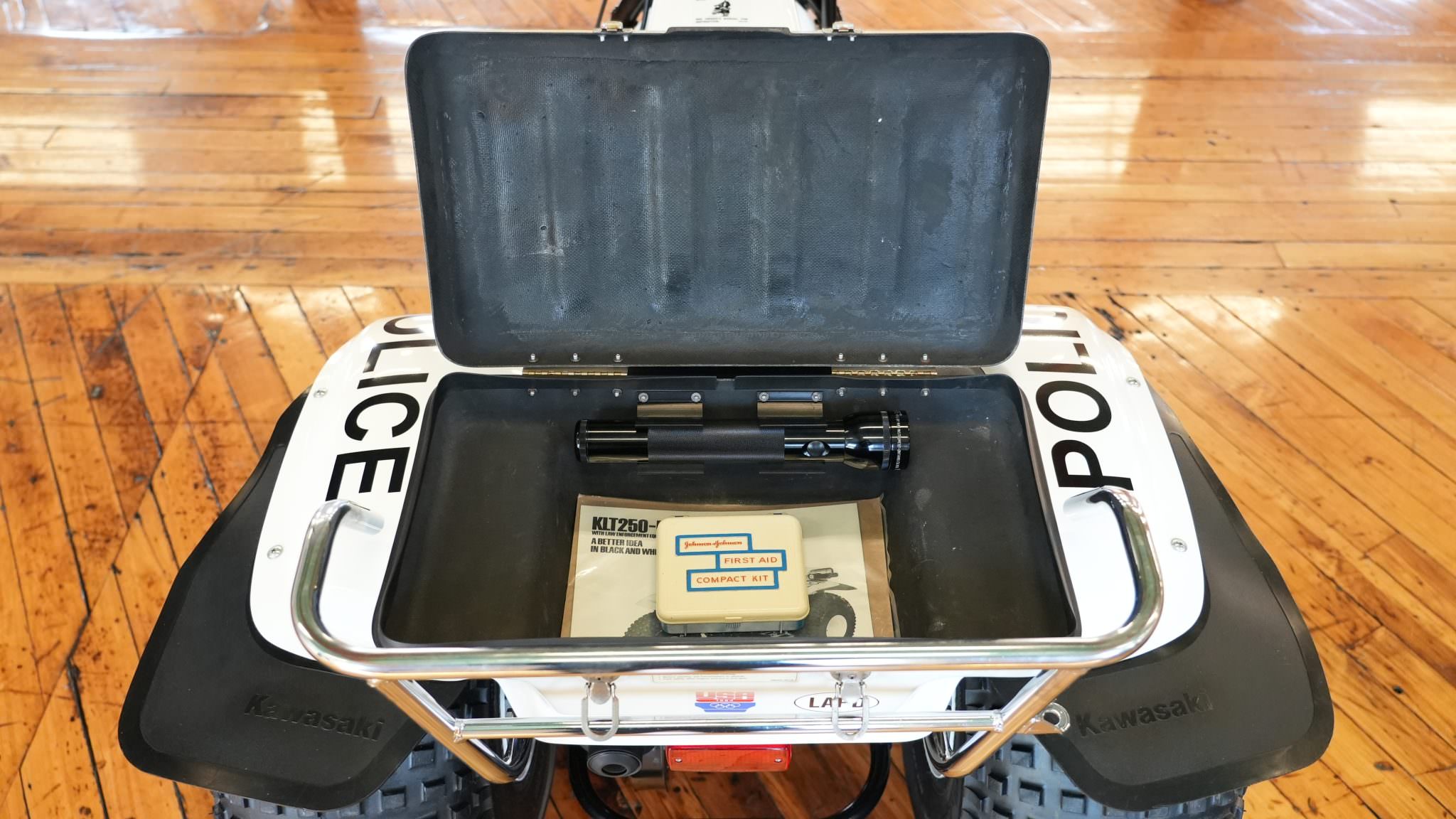
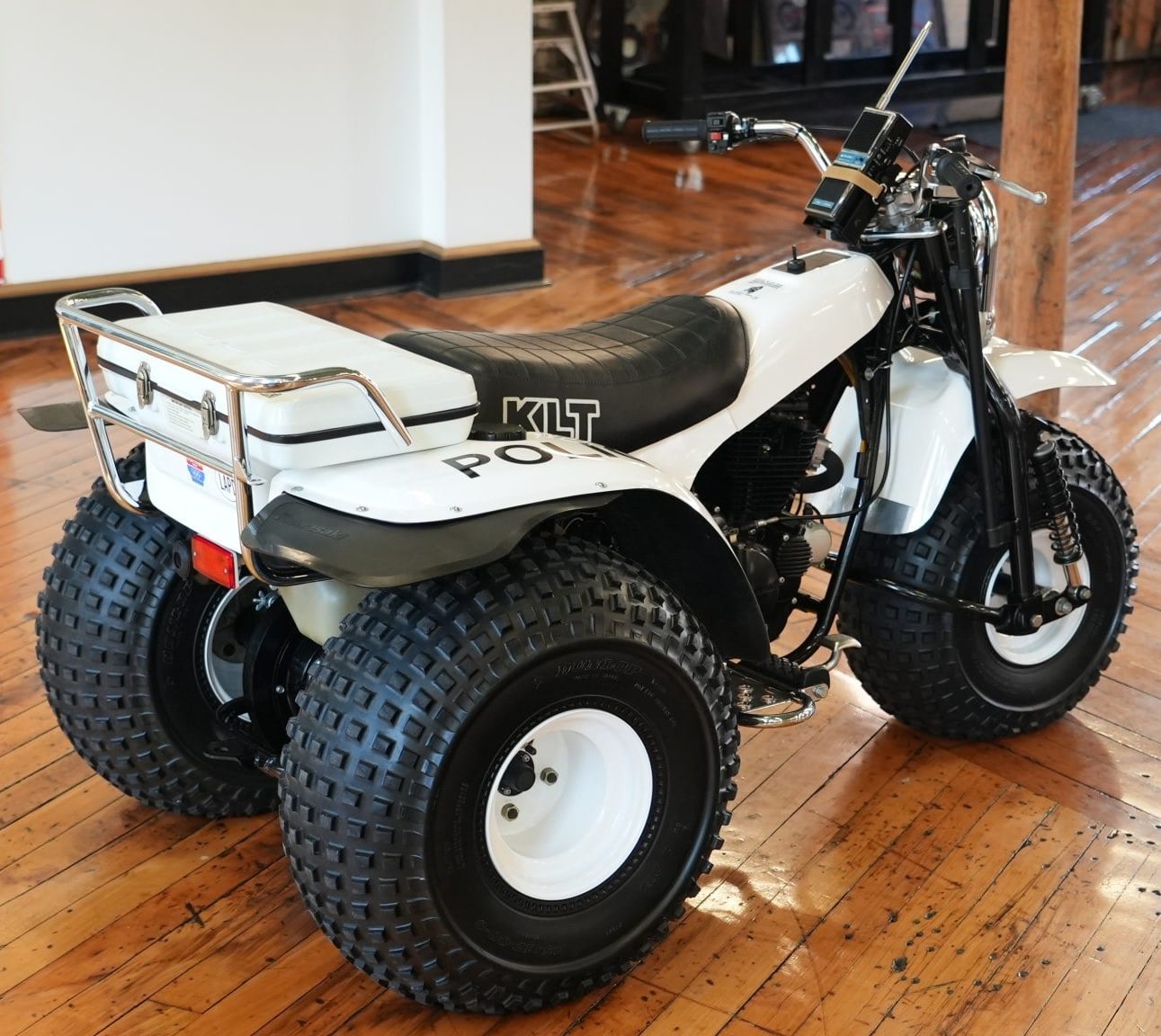
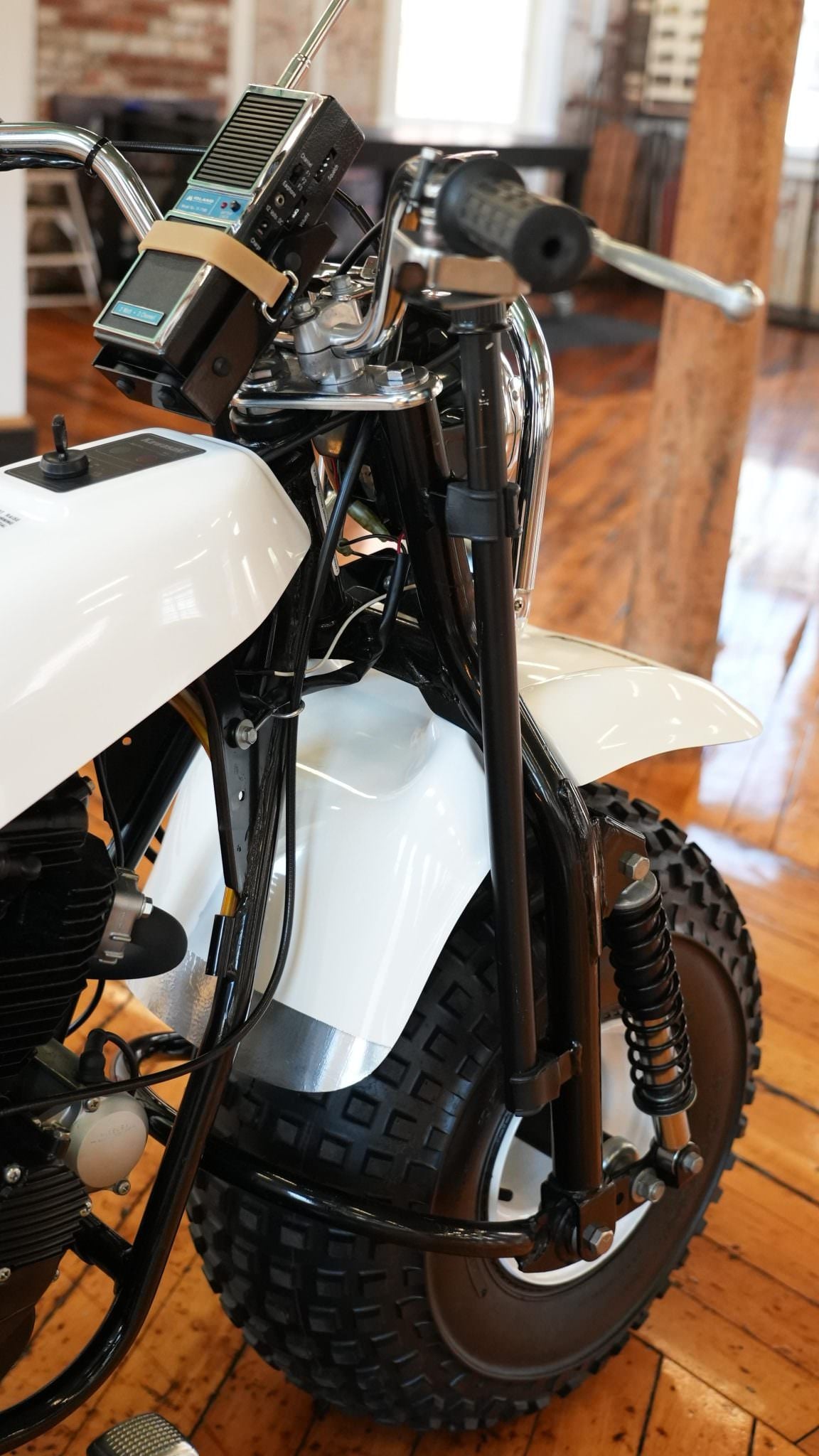
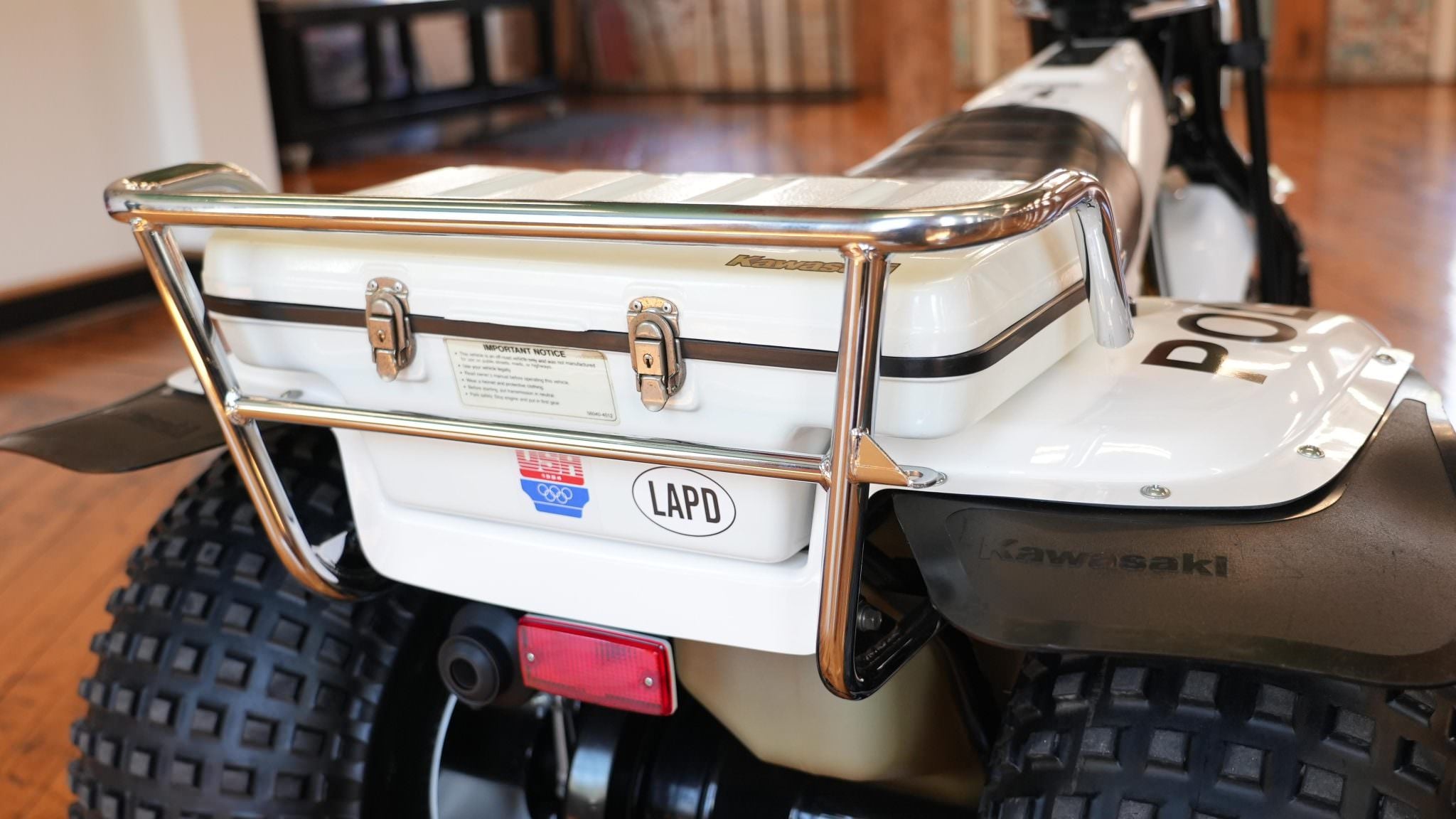
The law enforcement equipment list was surprisingly extensive. A low-profile hard-case trunk with a Kawasaki logo sat on the chrome rear cargo rack, used for paperwork and tools, and a baton and holder were mounted on the right fork leg for use on miscreants.
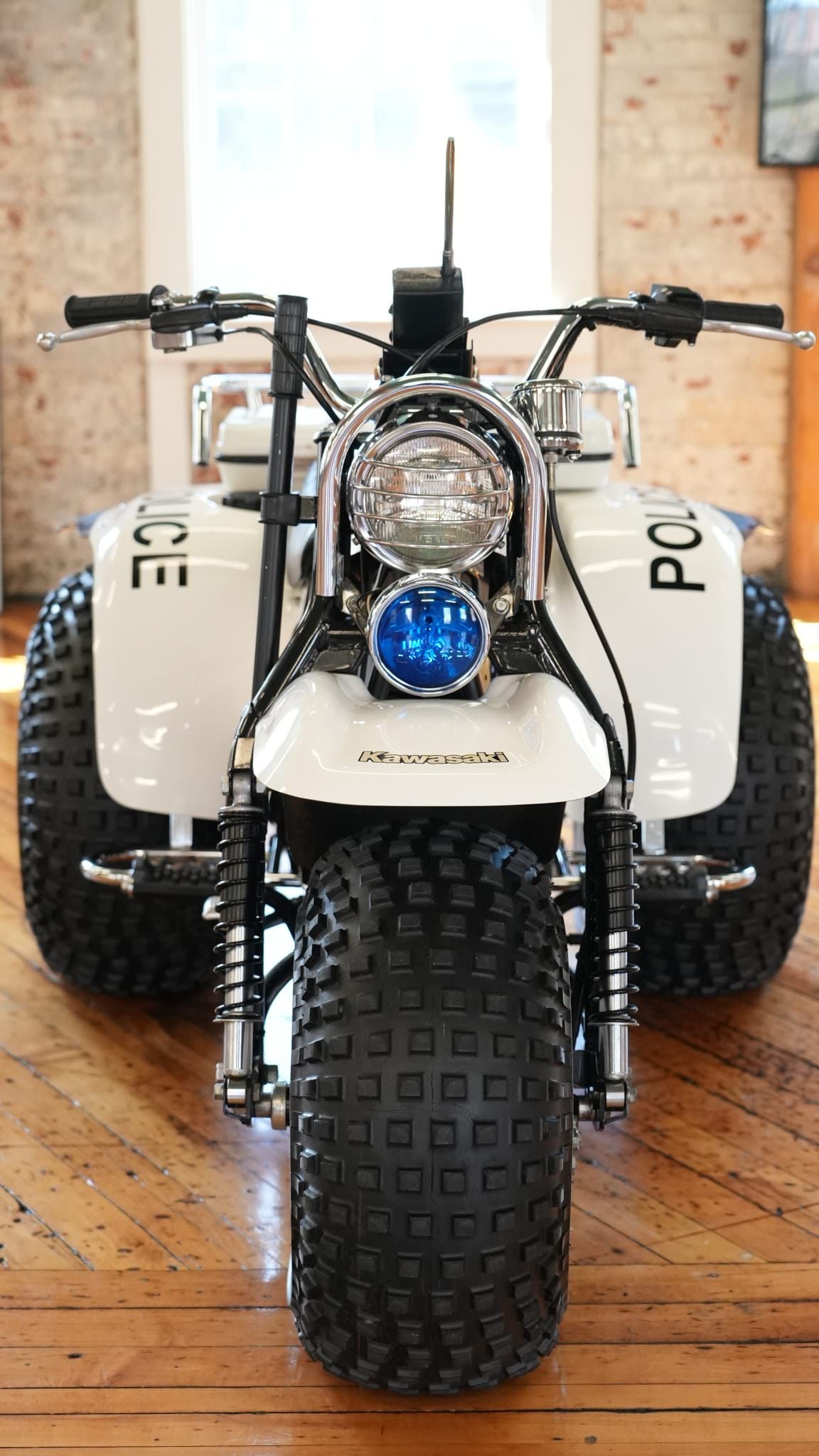
The law enforcement equipment list was surprisingly extensive. A low-profile hard-case trunk with a Kawasaki logo sat on the chrome rear cargo rack, used for paperwork and tools, and a baton and holder were mounted on the right fork leg for use on miscreants.
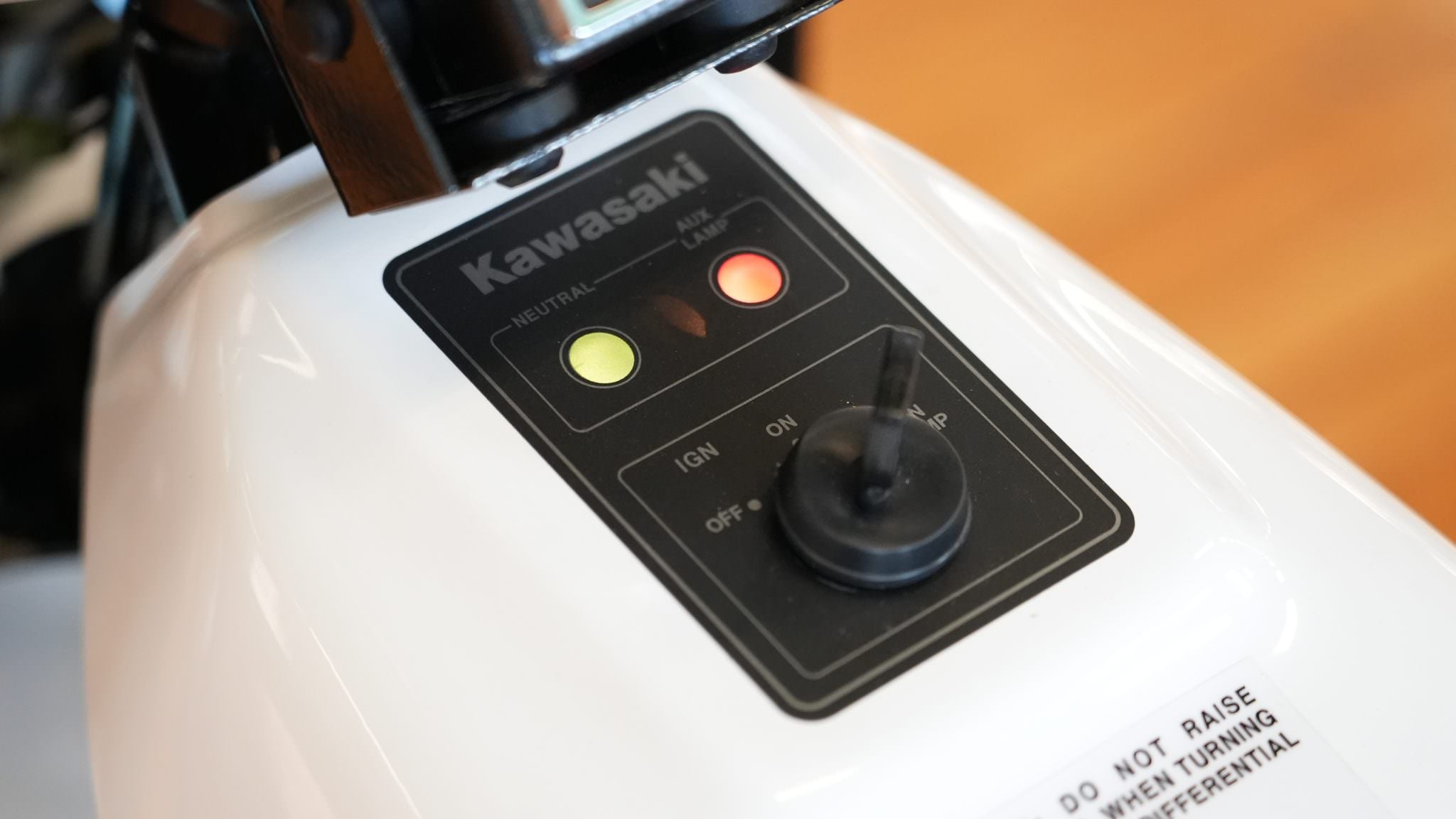
Chrome step/heel guards connected the footpegs to the rear fenders. A three-channel, two-watt portable CB radio was affixed to a handlebar-mounted cradle. A 60 mph cable-driven speedometer was mounted to the left of the headlight bucket, and the keyed ignition featured a three-position switch located on the faux fuel tank. A headlight guard, taillight, rear mudflaps, and a hitch mount rounded out the equipment list.
Mechanically, the P1 was almost identical to the civilian Prairie, with the same 249cc SOHC single, same 5-speed manual transmission with enclosed chain drive, same Dual-Mode lockable differential, and the same leading-link front fork and rigid rear. One minor difference was a slightly larger 3.4 gallon fuel tank versus the civilian model’s 3.2 gallons.
The KLT250-P1 is a genuine rarity today, with only 300 built and decades of attrition, many were working law enforcement vehicles, not garage queens and so survivors are scarce.
The 1984 Kawasaki KLT250-P1 Shown Here
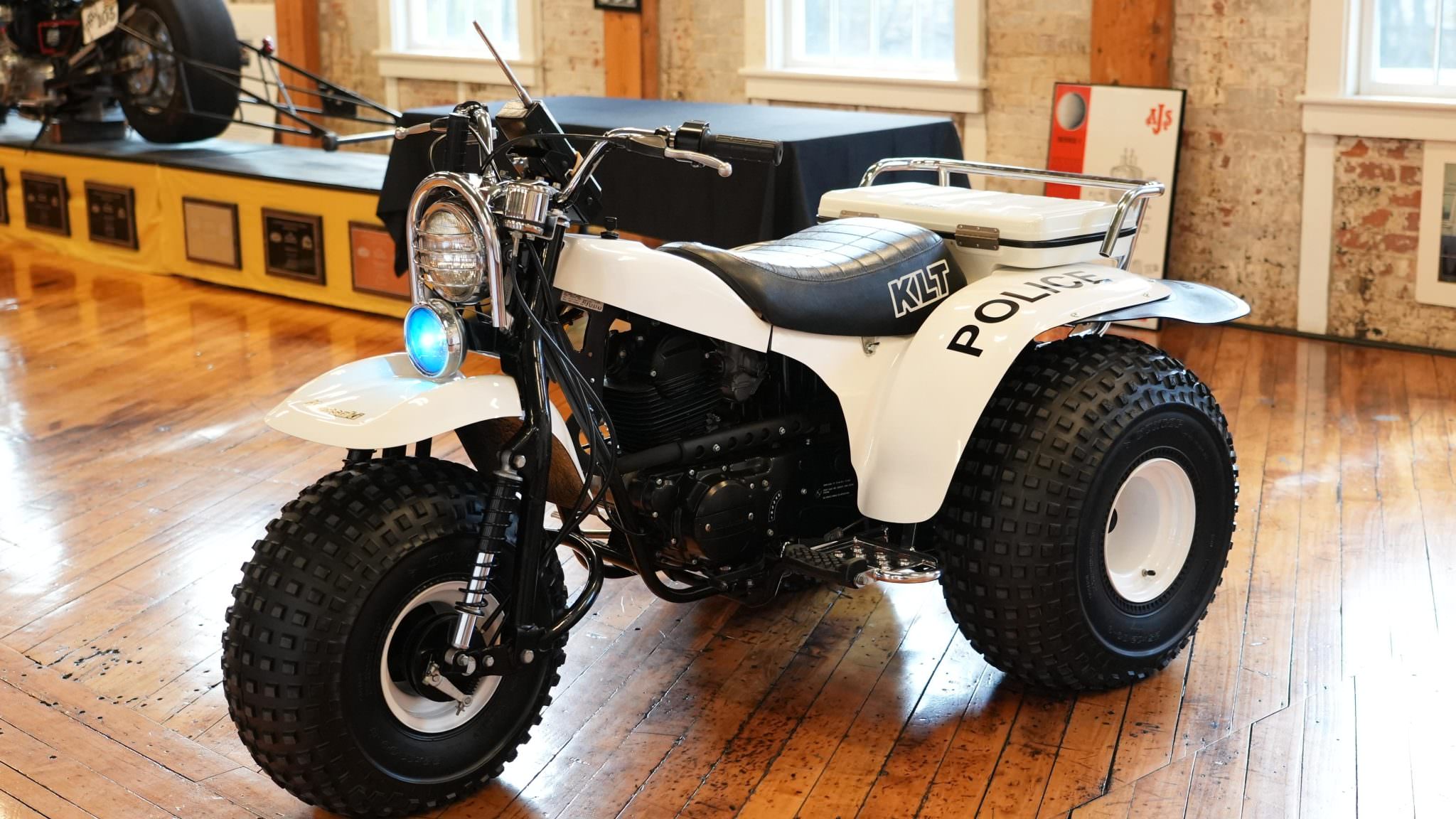
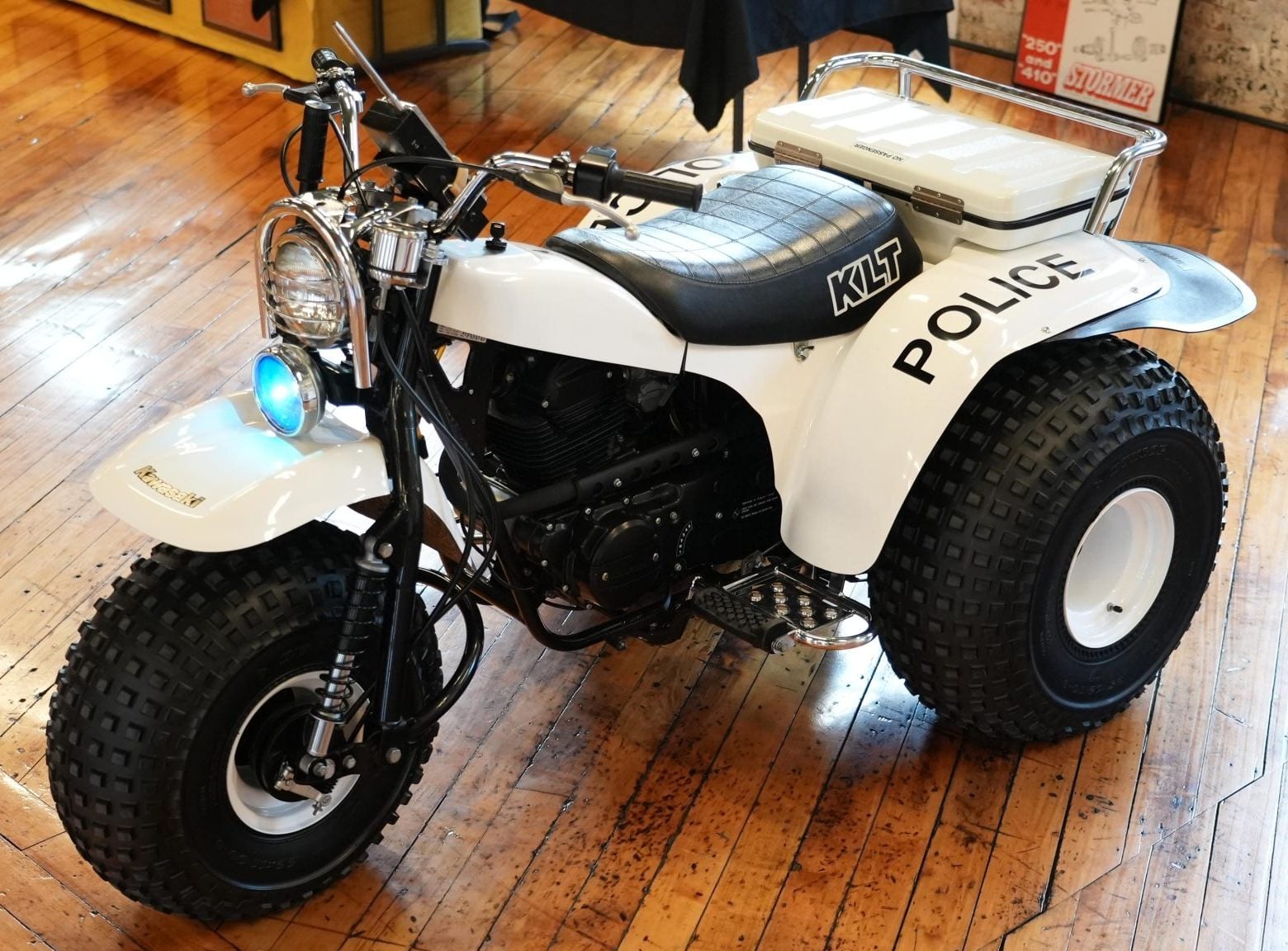
This 1984 Kawasaki KLT250-P1 is reportedly one of 50 examples donated to the Olympic Planning Committee for law enforcement use during the 1984 Summer Olympics in Los Angeles, California. It’s finished in white with “Police” script in black on both rear fenders, set over a black-finished twin-downtube frame.
It’s powered by an air-cooled 249cc SOHC single-cylinder four-stroke paired with a 5-speed manual transmission, an enclosed drive chain, and a Dual-Mode rear differential that can be manually locked and unlocked.
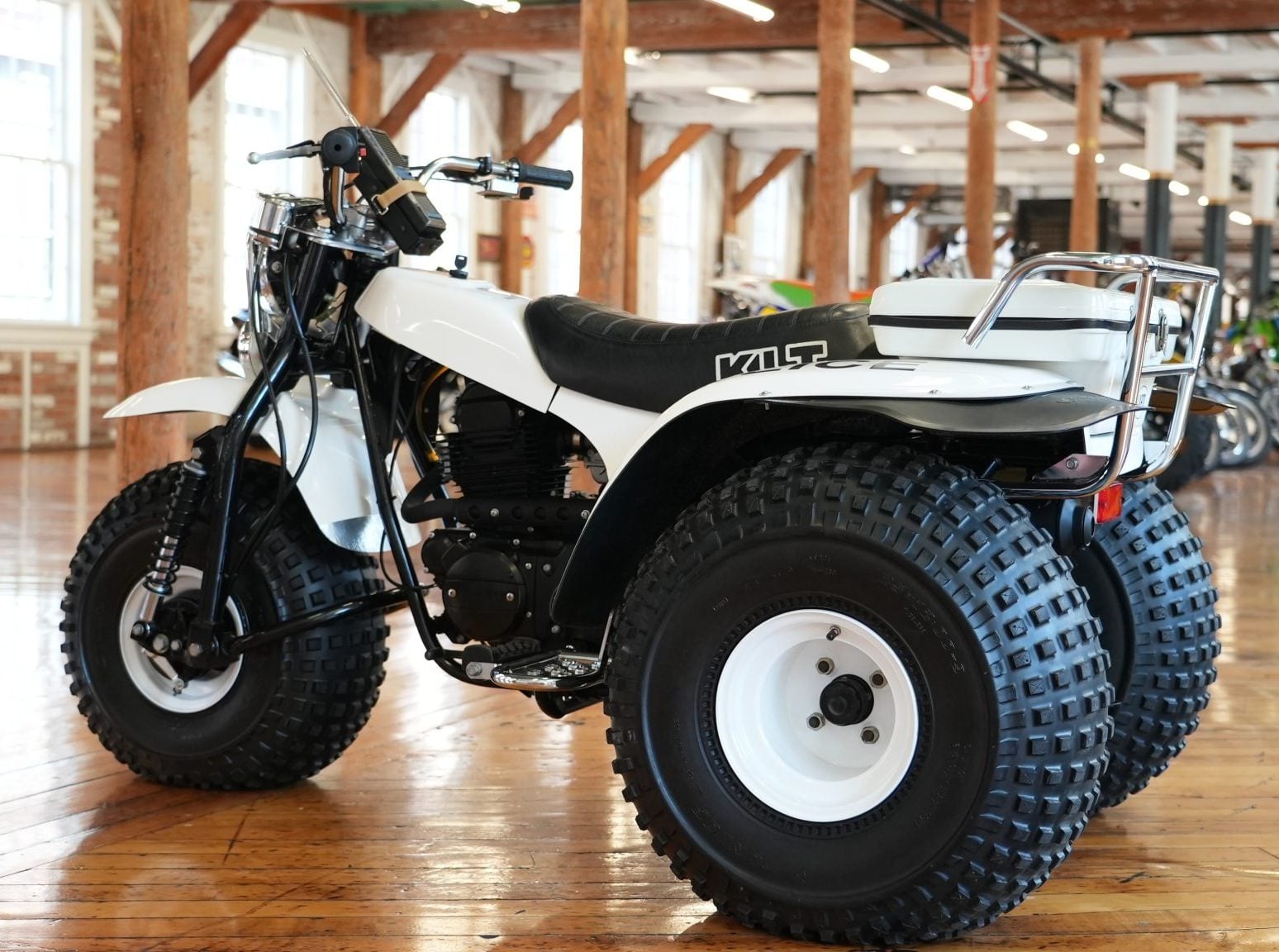
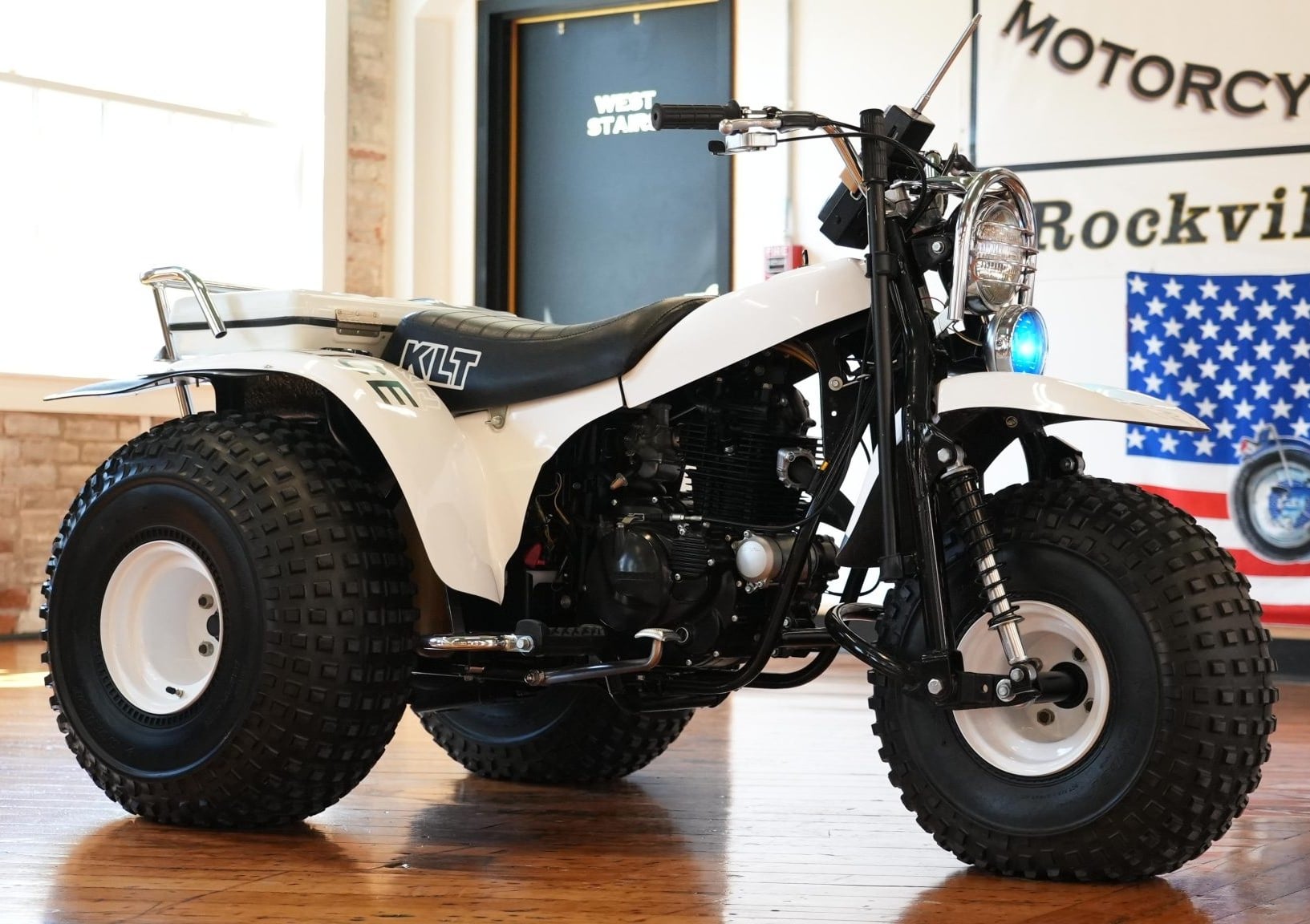
This 1984 Kawasaki KLT250-P1 is reportedly one of 50 examples donated to the Olympic Planning Committee for law enforcement use during the 1984 Summer Olympics in Los Angeles, California. It’s finished in white with “Police” script in black on both rear fenders, set over a black-finished twin-downtube frame.
Law enforcement equipment includes a blue police pursuit light mounted above the front fender, a baton and holder on the right fork leg, a low-profile hard-case trunk with a Kawasaki logo on the chrome rear cargo rack, chrome step/heel guards, a hitch mount, and a three-channel, two-watt portable Midland International CB radio affixed to a handlebar-mounted cradle.
A 60 mph speedometer is mounted to the left of the headlight bucket, and a keyed ignition with a three-position switch sits on the faux fuel tank. Additional features include a headlight with guard, a taillight, and rear mudflaps.
The three-wheeler rides on white-finished steel wheels mounted with older Dunlop tires. Suspension consists solely of a leading-link fork with a stabilizer bar up front – the rear end is rigid. Braking is handled by drums at both ends.
A 3.4 gallon fuel tank is located beneath the black solo seat, and the high-mount exhaust exits under the rear bodywork. The sale includes a mounted Maglite, a first-aid kit, a sealed owner’s manual, a Kawasaki Law Enforcement Equipment brochure, removed plastic bodywork, and a light blue blazer bearing the 1984 Olympic Games crest patch with gold buttons adorned with the Olympic rings.
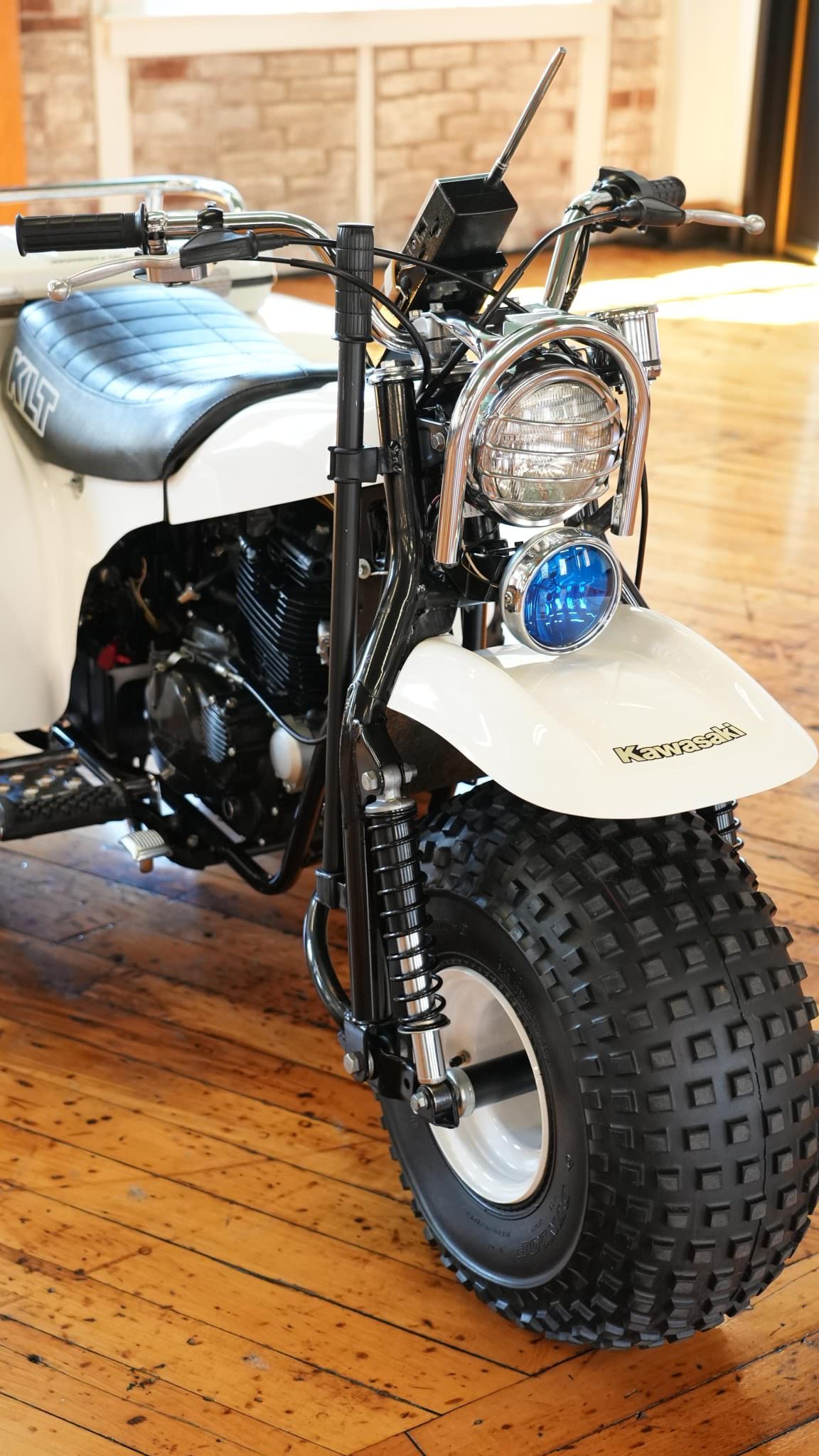
Law enforcement equipment includes a blue police pursuit light mounted above the front fender, a baton and holder on the right fork leg, a low-profile hard-case trunk with a Kawasaki logo on the chrome rear cargo rack, chrome step/heel guards, a hitch mount, and a three-channel, two-watt portable Midland International CB radio affixed to a handlebar-mounted cradle.
The selling dealer states that accompanying documentation establishes that the ATV was delivered to the 1984 Olympic Planning Committee.
The odometer shows 3.6 miles, approximately one of which was added under current ownership, and it is now offered at no reserve in Connecticut on dealer consignment with a bill of sale only – no title or registration. If you’d like to read more about it or register to bid you can visit the listing here.
Images courtesy of Bring a Trailer

Articles that Ben Branch has written have been covered on CNN, Popular Mechanics, Smithsonian Magazine, Road & Track Magazine, the official Pinterest blog, the official eBay Motors blog, BuzzFeed, Autoweek Magazine, Wired Magazine, Autoblog, Gear Patrol, Jalopnik, The Verge, and many more.
Silodrome was founded by Ben back in 2010, in the years since the site has grown to become a world leader in the alternative and vintage motoring sector, with well over a million monthly readers from around the world and many hundreds of thousands of followers on social media.