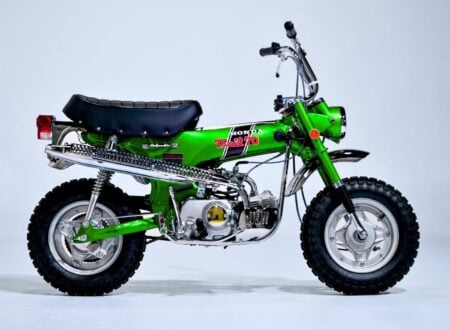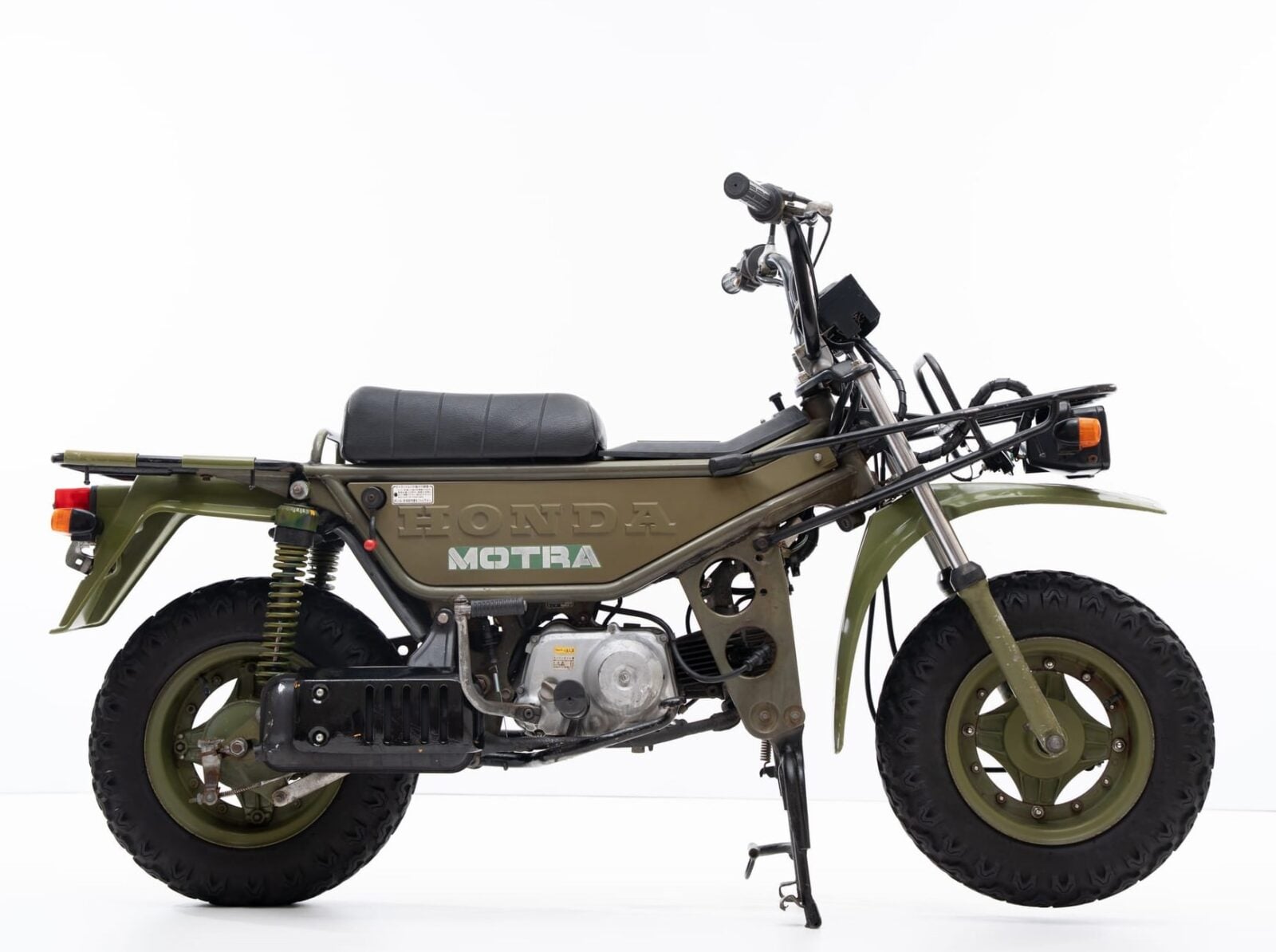
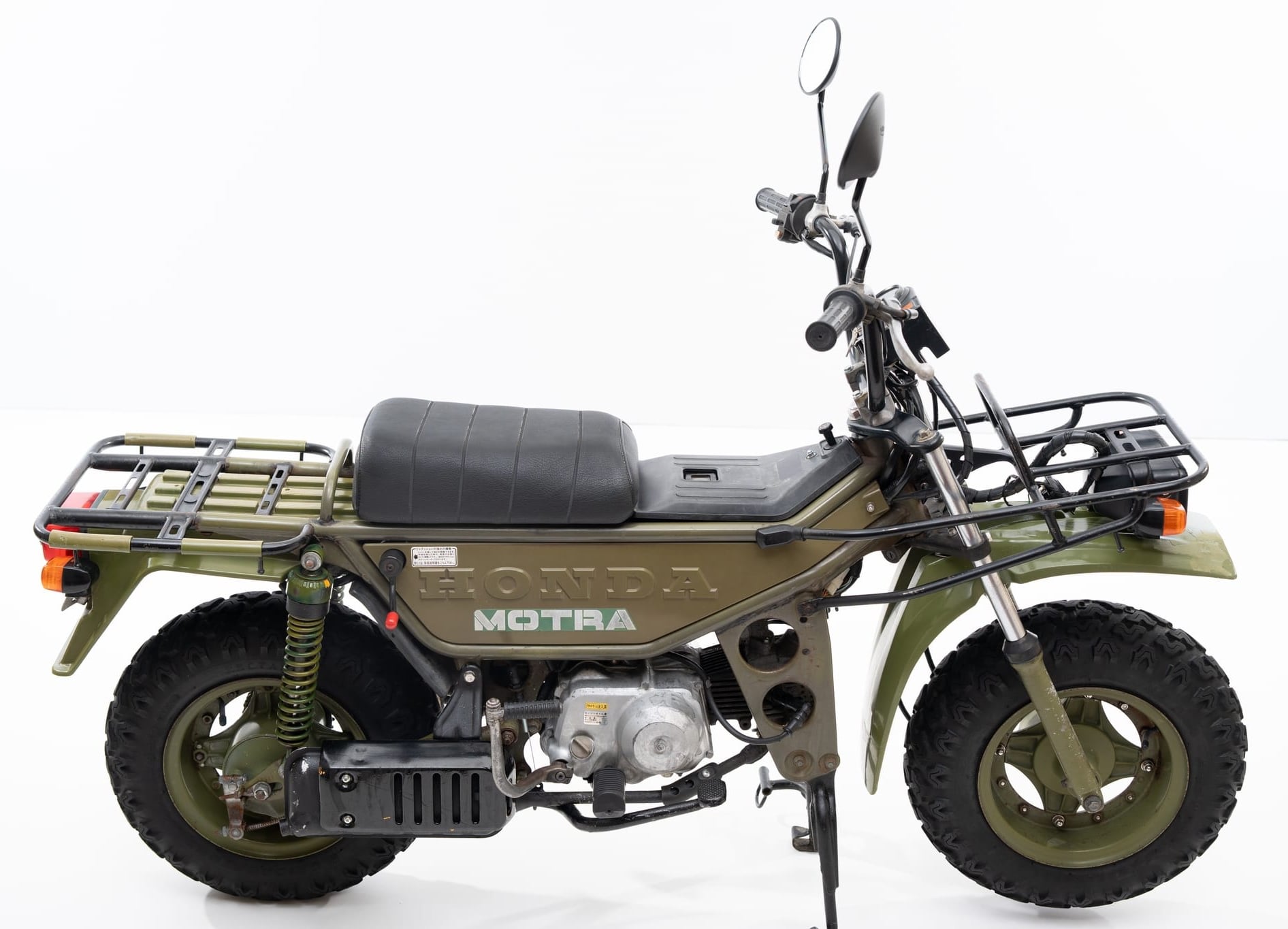
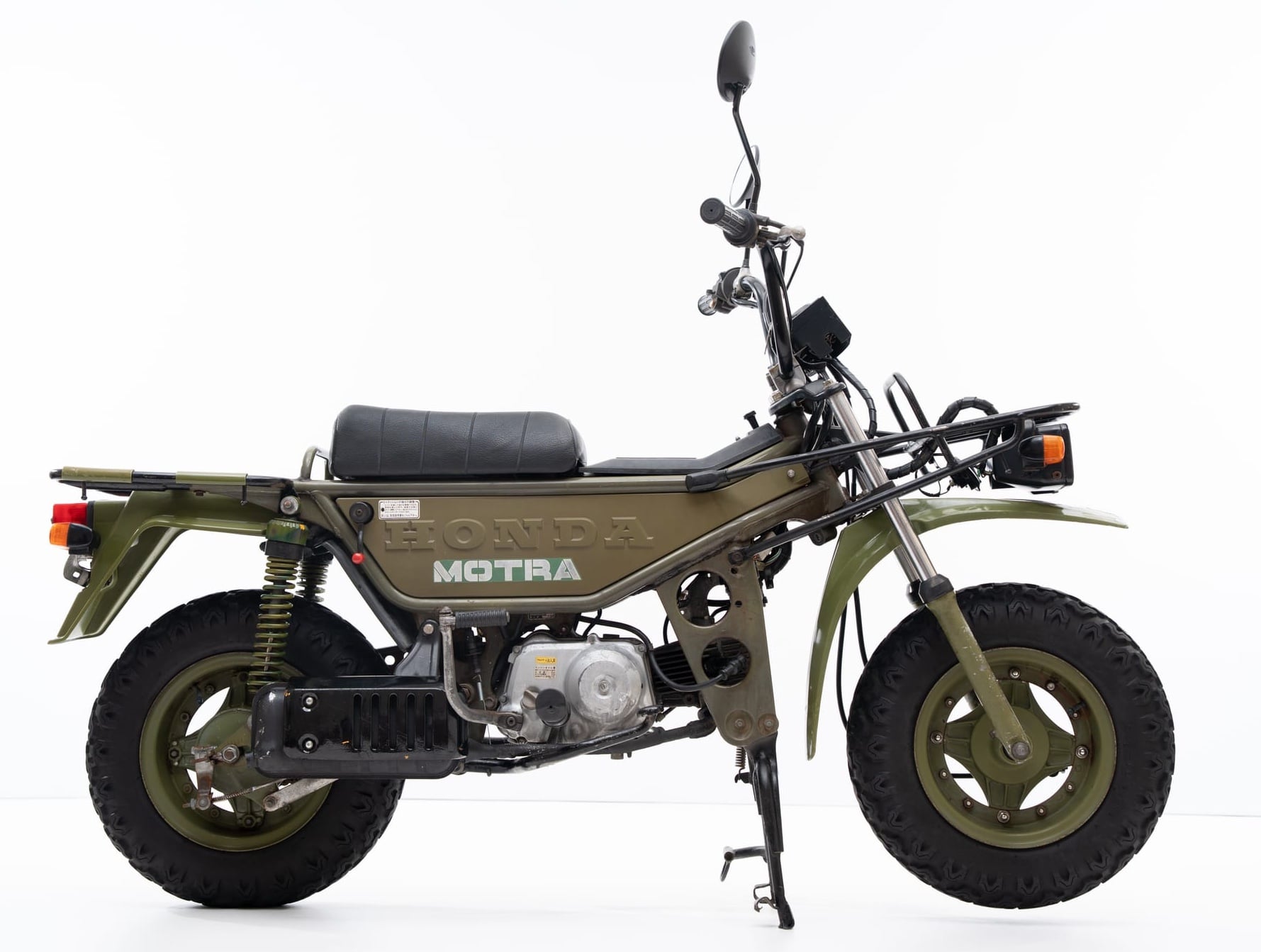
This is a Honda CT50 Motra from 1982, it’s a an unusual work-oriented motorcycle with a 3-speed gearbox and dual-range sub-transmission, giving six forward speeds.
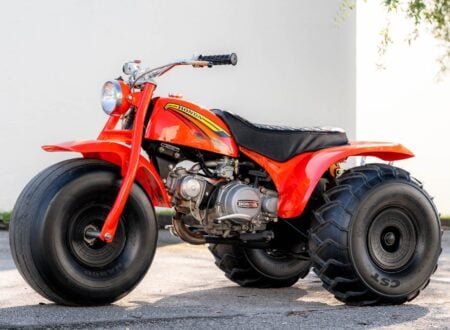
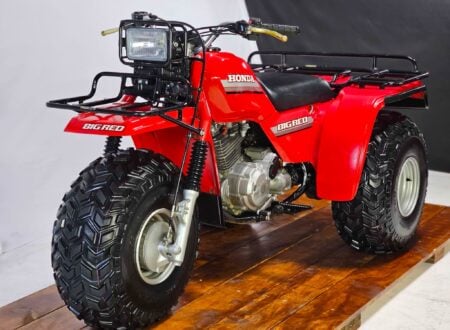
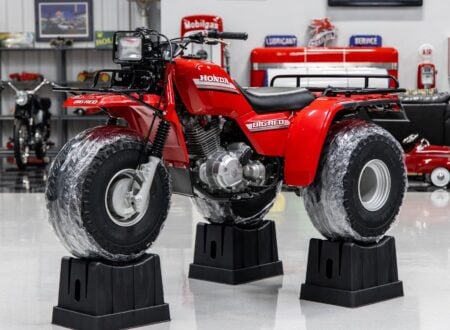
The bike left the factory with front and rear cargo racks, it was intended almost as a two-wheeled companion to the Honda ATC 250ES “Big Red,” they were both intended for more serious off-road agricultural and hunting use than just merely blasting around having fun.
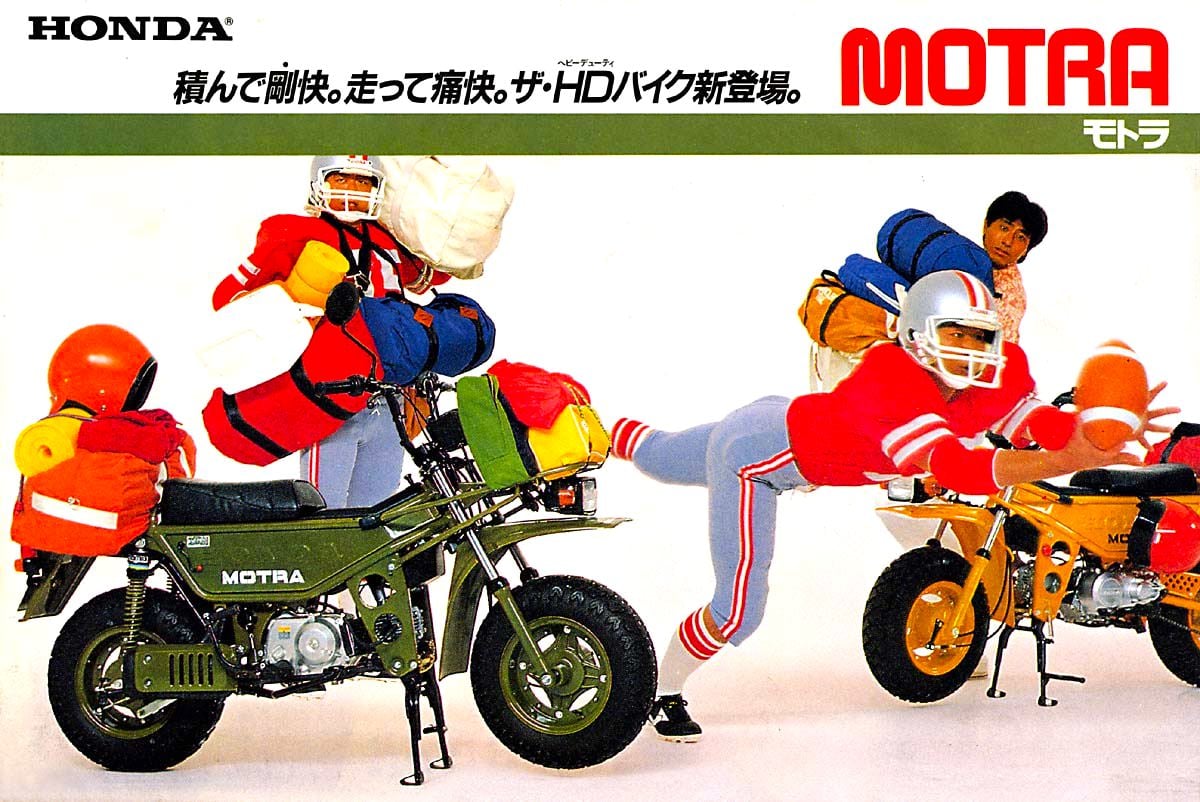
 Honda put the CT50 Motra on sale in Japan on June the 10th, 1982, just one day after announcing it, priced at ¥165,000 (around $2,500 USD in 2026 dollars) and aimed squarely at the campsite rather than the commute. Image courtesy of Honda.
History Speedrun: The Honda CT50 Motra
Honda put the CT50 Motra on sale in Japan on June the 10th, 1982, just one day after announcing it, priced at ¥165,000 (around $2,500 USD in 2026 dollars) and it was aimed squarely at the countryside rather than the commute. It was a 49cc minibike with an unusual dual-range gearbox, welded steel tube cargo carriers at both ends, and a name that was a portmanteau of “motorcycle” and “truck.” Honda’s sales plan called for 45,000 a year, which as it turns out, was a little on the ambitious side.
The Motra landed right in the thick of Japan’s early-1980s 50cc leisure-bike boom, and the launch PR release noted that it brought the company’s leisure range to seven models across 10 variants. Most of the bikes in this displacement range sold on smallness, simplicity, lightness, and charm. The Motra sold on toughness and load carrying ability.
The engine was an air-cooled 49cc four-stroke single that was derived from Honda’s Super Cub-family Econo Power unit, retuned for low and mid-range pull. Output was 4.4 bhp at 7,500 rpm and 3.3 lb ft of torque at 5,500, on a 9.8:1 compression ratio, with CDI ignition and a kickstarter.
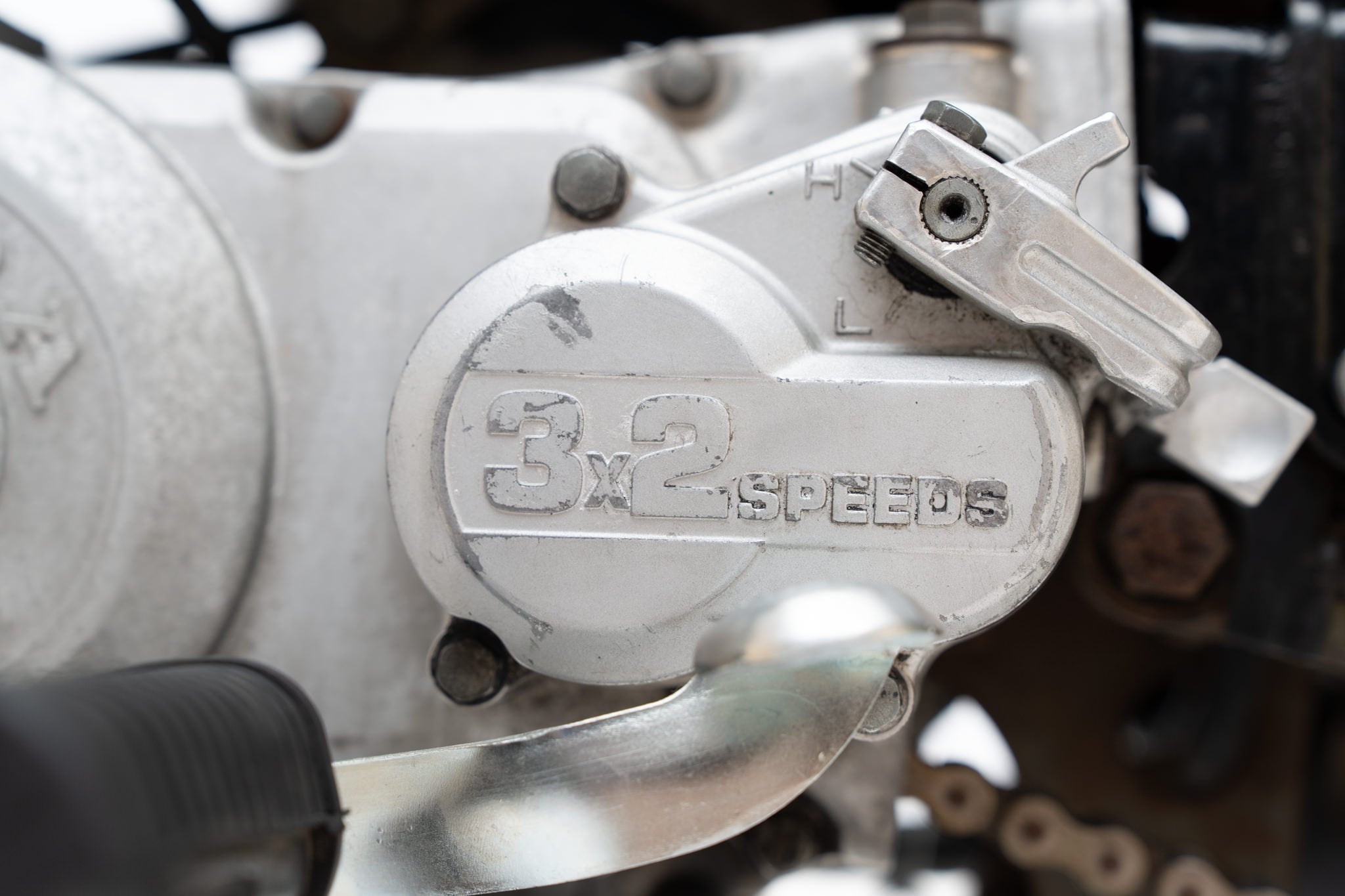
These were hardly numbers we would typically associate with a work bike, but the Motra had an ace up its sleeve. Well, it had an ace behind its 3-speed gearbox but that’s close enough. The ace, in this painfully drawn out metaphor, was a dual-range sub-transmission that gave the rider the option of choosing high or low range – just as you would in a Jeep or a Land Rover.
Honda had already employed a dual-range sub-transmission on its CT-series Hunter Cubs inn the past, operated by a lever. The low range option multiplied all three ratios by 1.459, and Honda claimed it could climb a 23º slope – that’s a 42% grade.
Impressively, the engine was also capable of 100 kms per liter (roughly 235 mpg) in Japan’s 30 km/h constant-speed test. The Motra wasn’t intended as a high speed, highway commuter, it was developed for much lower speed off-road use, hunting, exploring, and agricultural work.
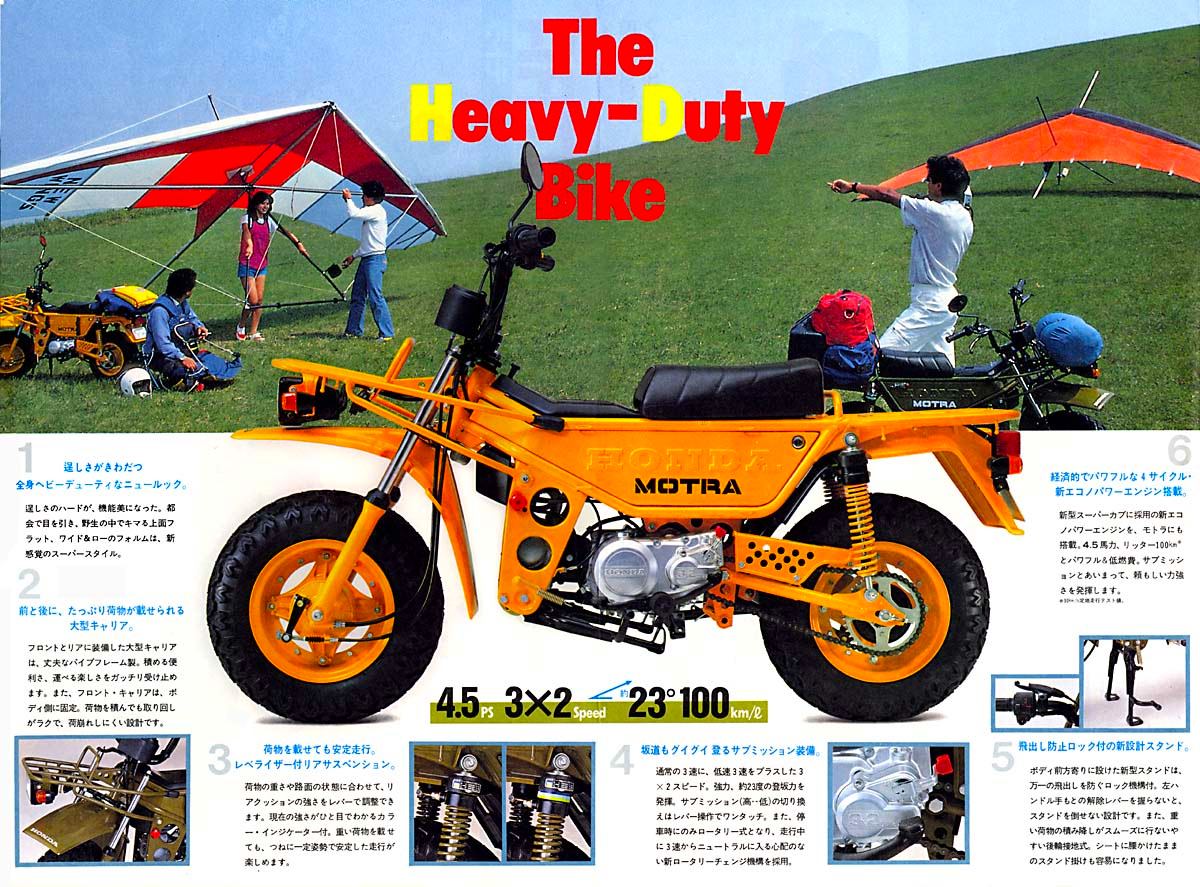
Impressively, the engine was also capable of 100 kms per liter (roughly 235 mpg) in Japan’s 30 km/h constant-speed test. The Motra wasn’t intended as a high speed, highway commuter, it was developed for much lower speed off-road use, hunting, exploring, and agricultural work. Image courtesy of Honda.
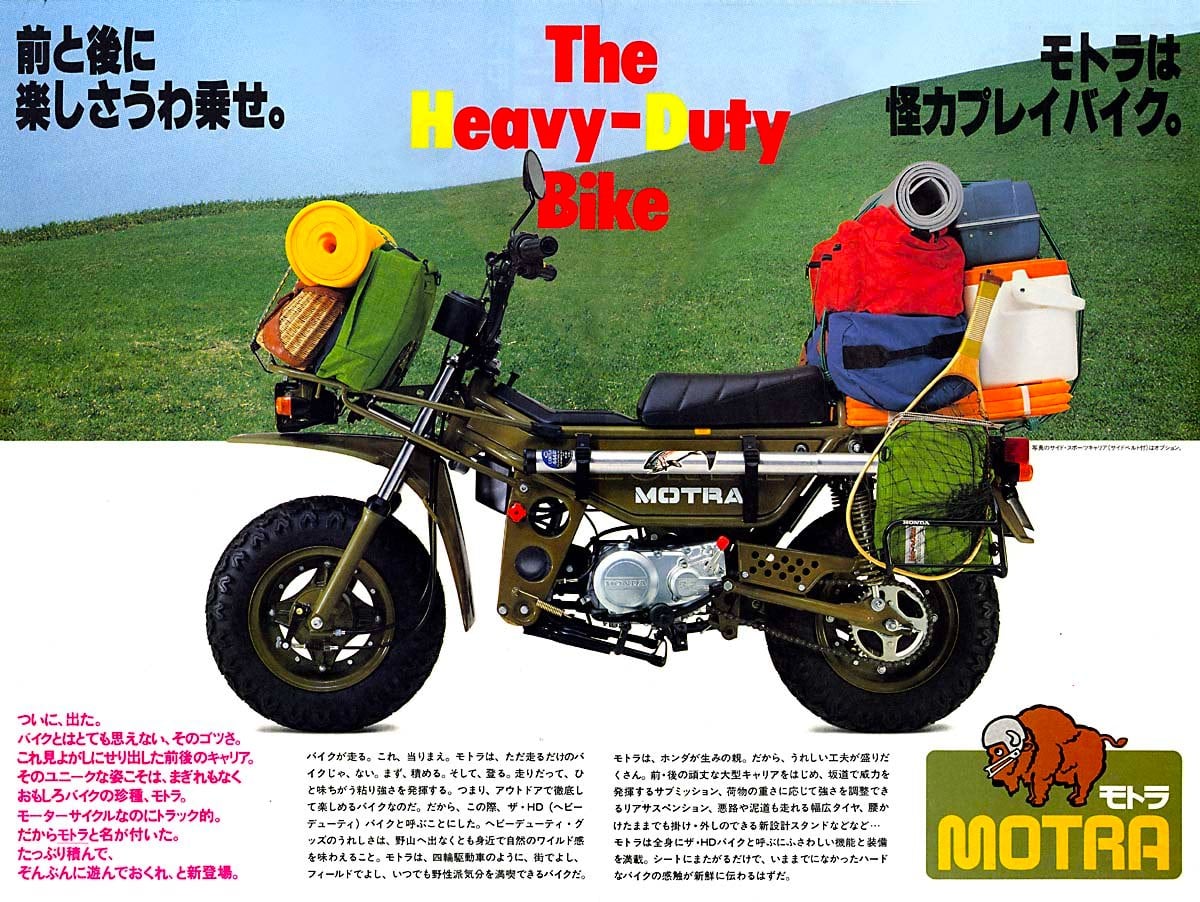
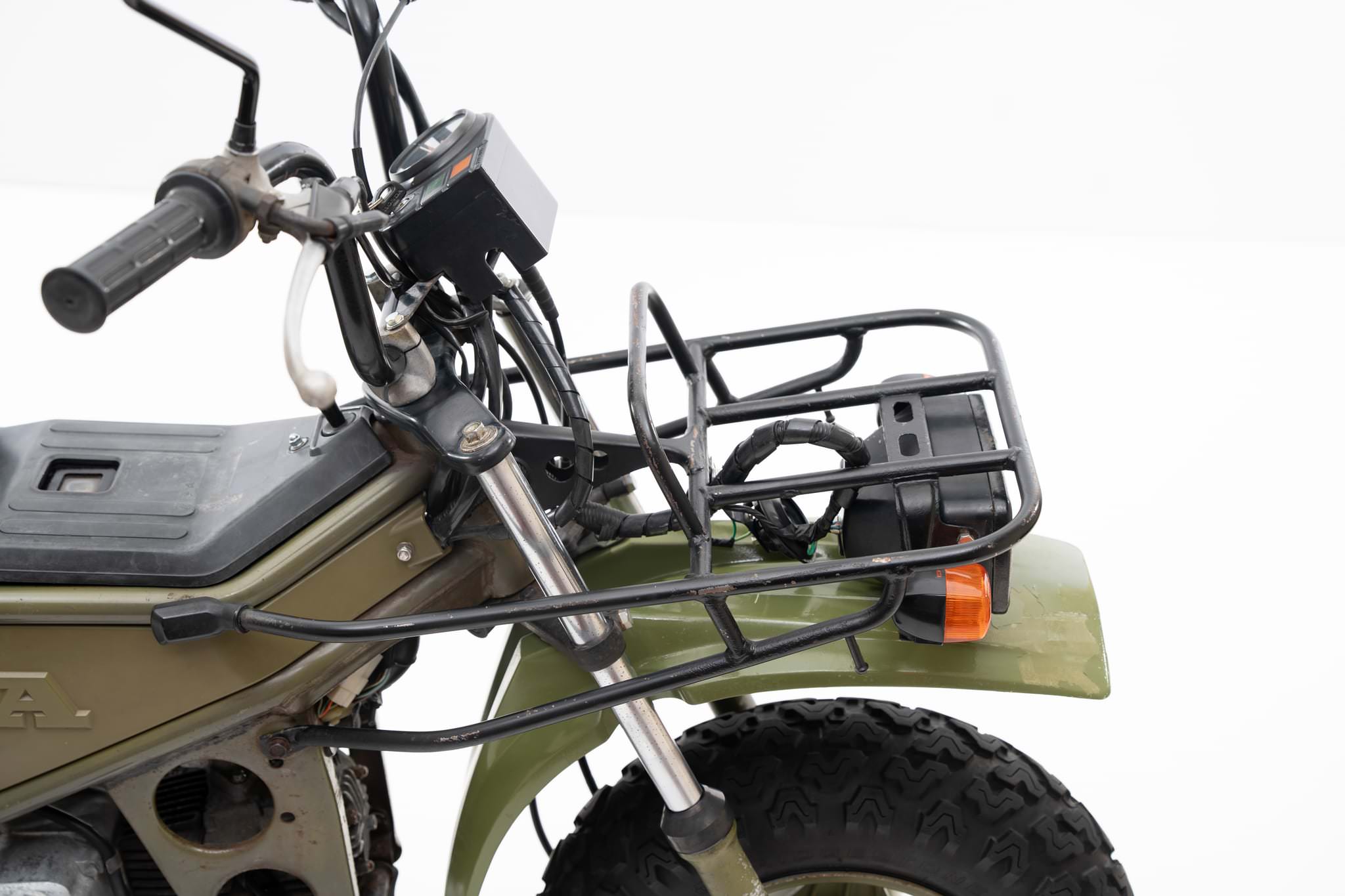
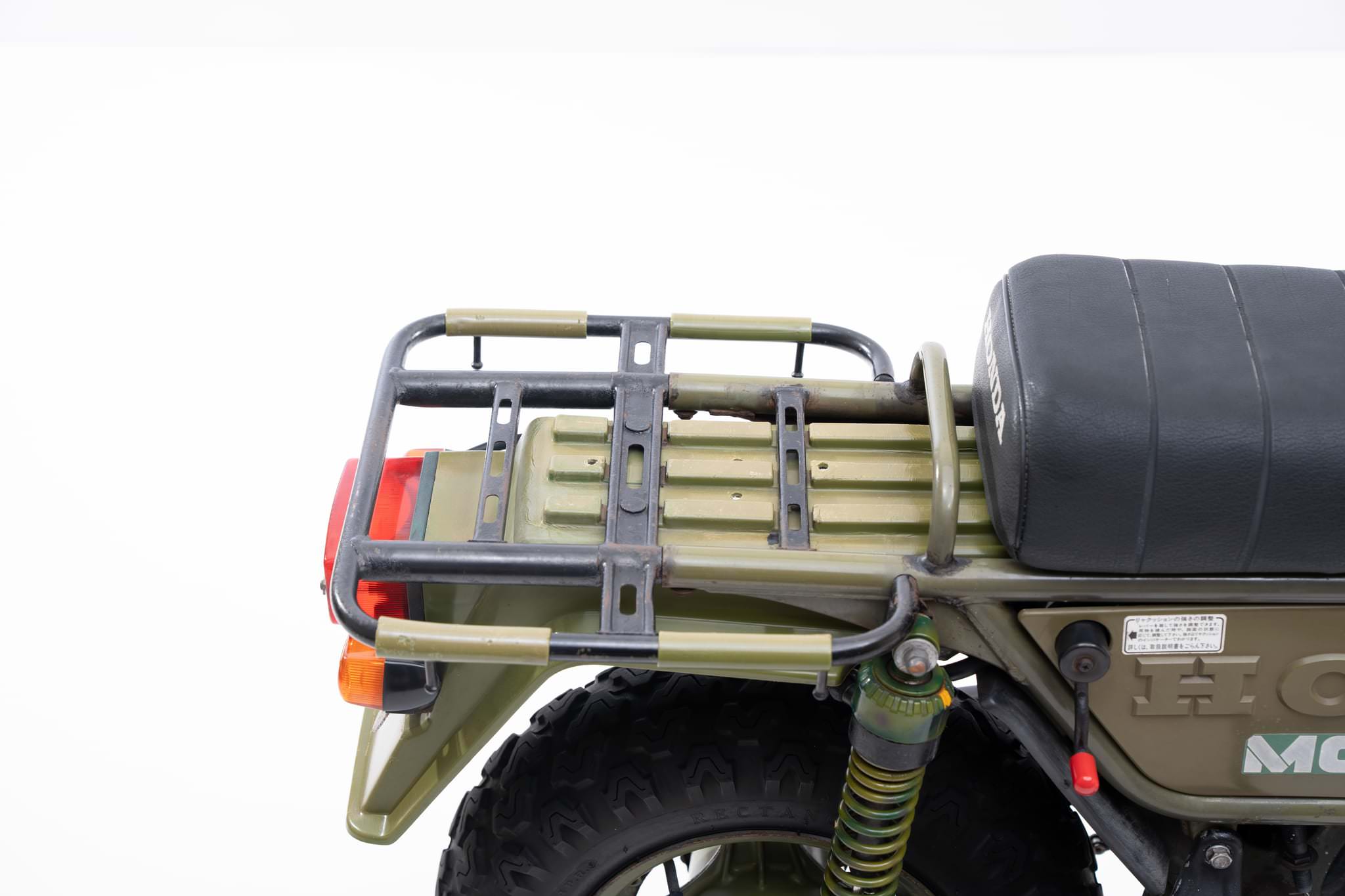
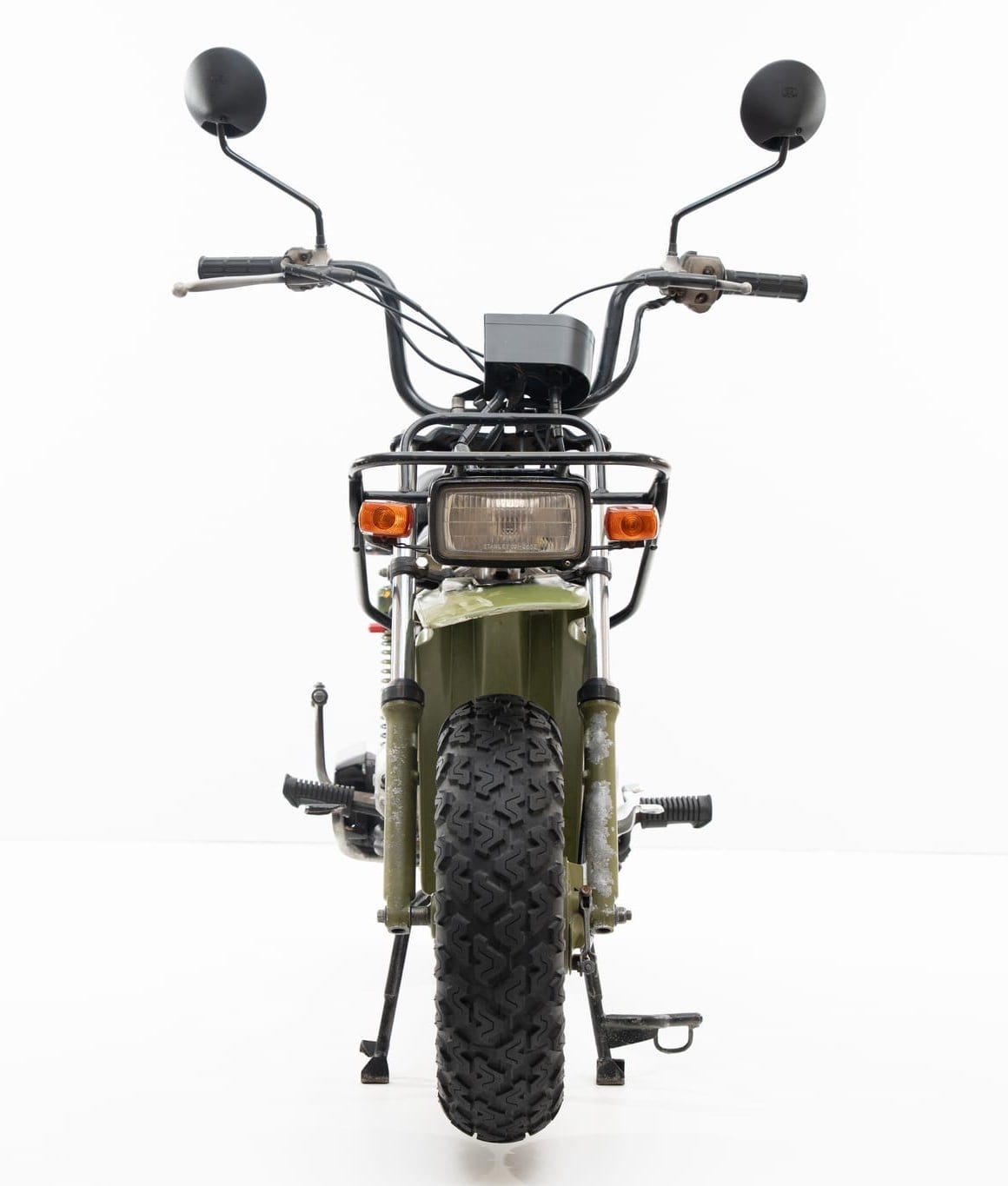
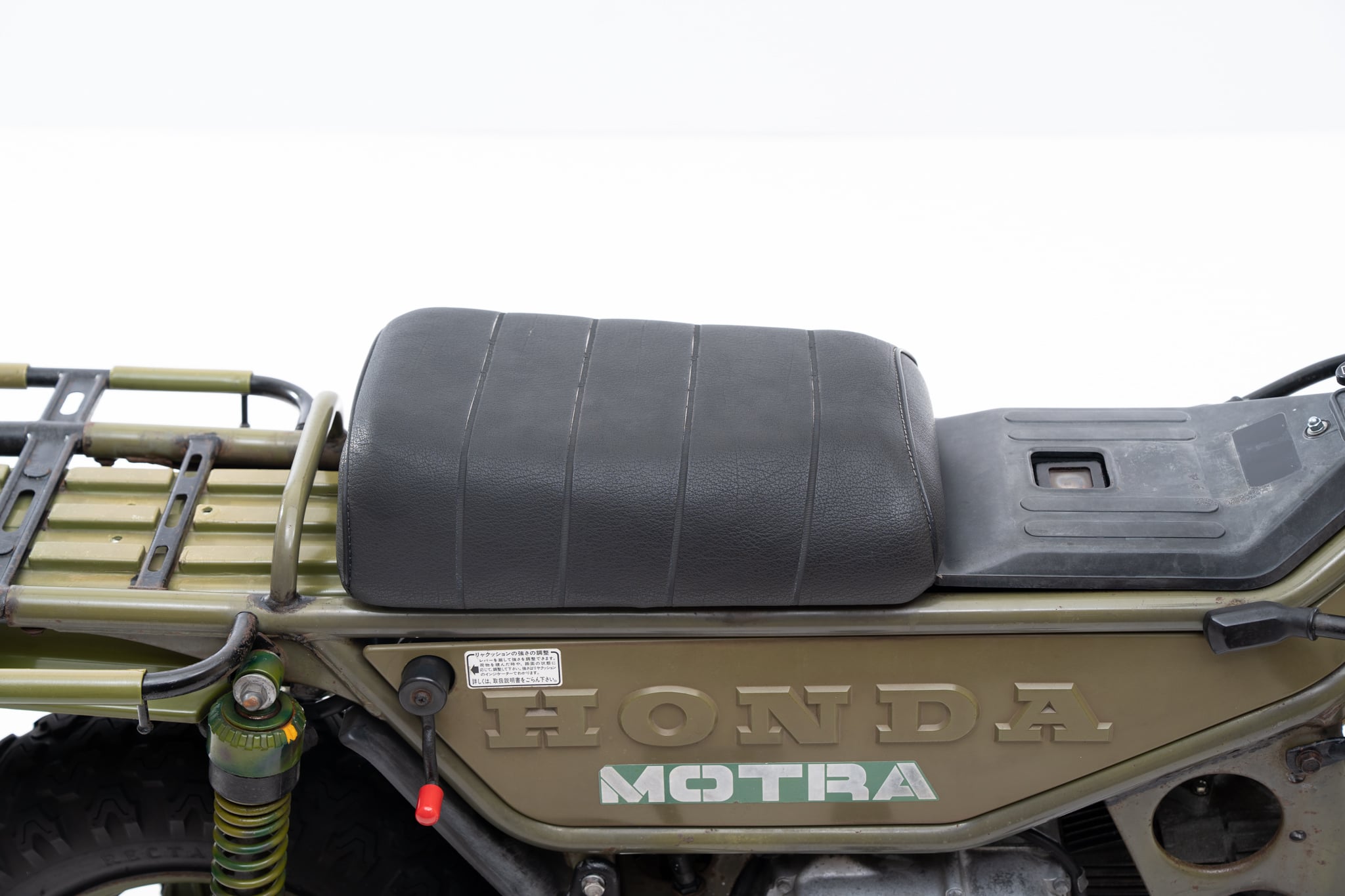
The front cargo carrier was fixed to the backbone frame rather than the handlebars, so a heavy load stayed off the steering and didn’t directly weigh down the front end (though of course it did add some front end weight indirectly). The rear shock absorbers had what Honda called a leveler, essentially a preload adjuster with a setting indicator visible at a glance, for matching the springs to the payload.
The bike was fitted with wide 5.40-10 block-pattern tires at both ends, and the main stand was designed for the job at hand – mounted well forward and fitted with a lock, it could only be operated while a release lever on the left handlebar was held, so a loaded bike stayed put on a sloping track. All in, it added up to 168 lbs dry, or 76 kgs.
Honda offered just two color options, applied to the bodywork and wheels alike – Popo Green, with a distinctly military hue, and Maize Yellow, which was closer to construction equipment. The Honda catalogs of the time showed the carriers stacked with outdoor gear.
Sadly, buyers largely passed on the new model. As a result, the Motra never received a major redesign, early and late examples had some small changes to the seat covering, battery-cover, and the muffler cover, and production ran for four or five years before it quietly disappeared from the range. Honda never published an official production total, but it does seem clear that the numbers never even came close to the 45,000 a year that had initially been hoped.
Honda returned to the exposed-frame utility concept a few years later with the 2001 Zoomer, sold in the United States as the Ruckus, then with the PS250 of 2004, which reached North America as the Big Ruckus for the 2005 model year.
Neither carried over the dual-range hardware, mores the pity. In the years since it left production, the Motra has become a bit of a cult classic and they have been imported in very limited numbers from Japan into the United States, Canada, Europe, New Zealand, and Australia.
The 1982 Honda Motra Shown Here
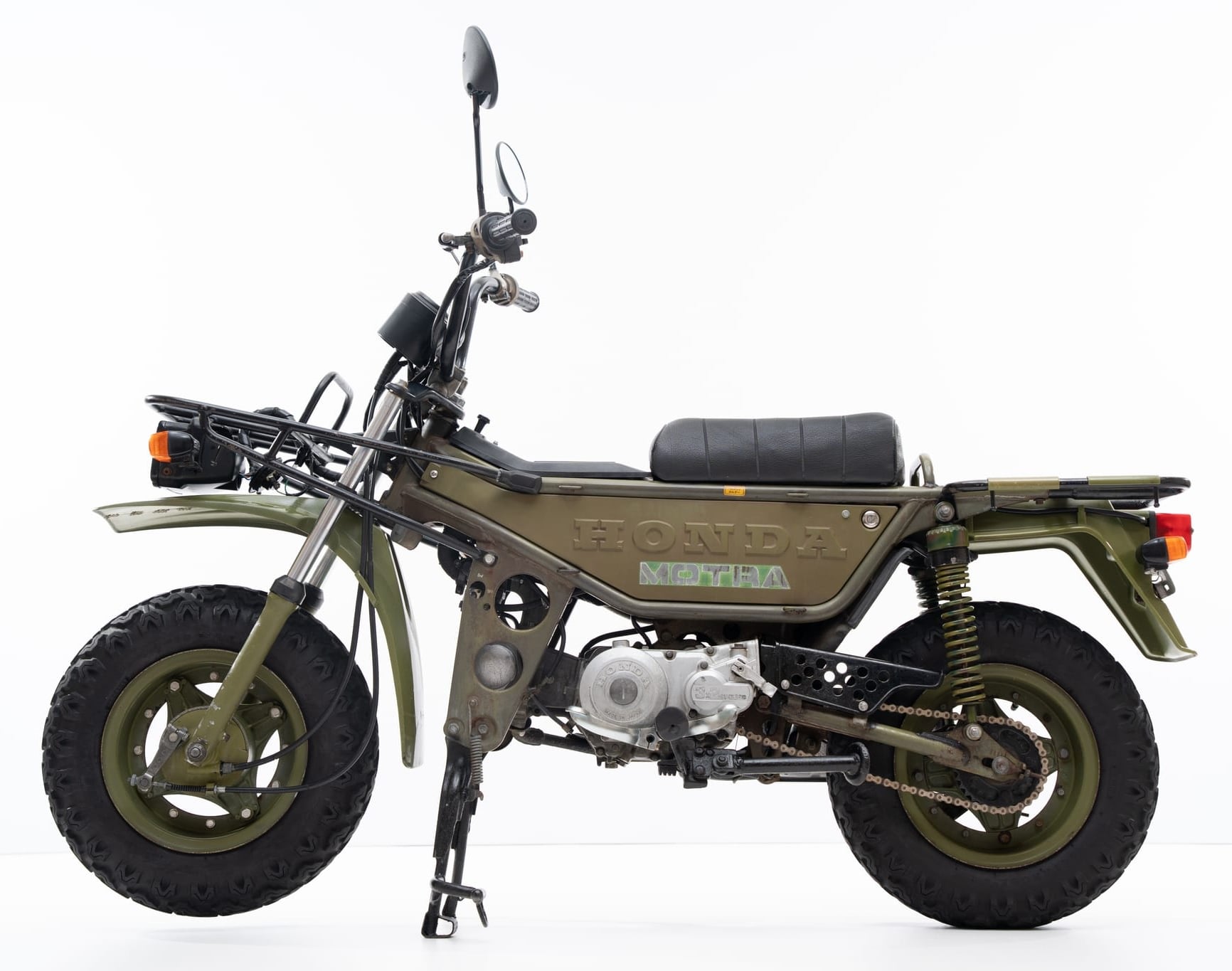
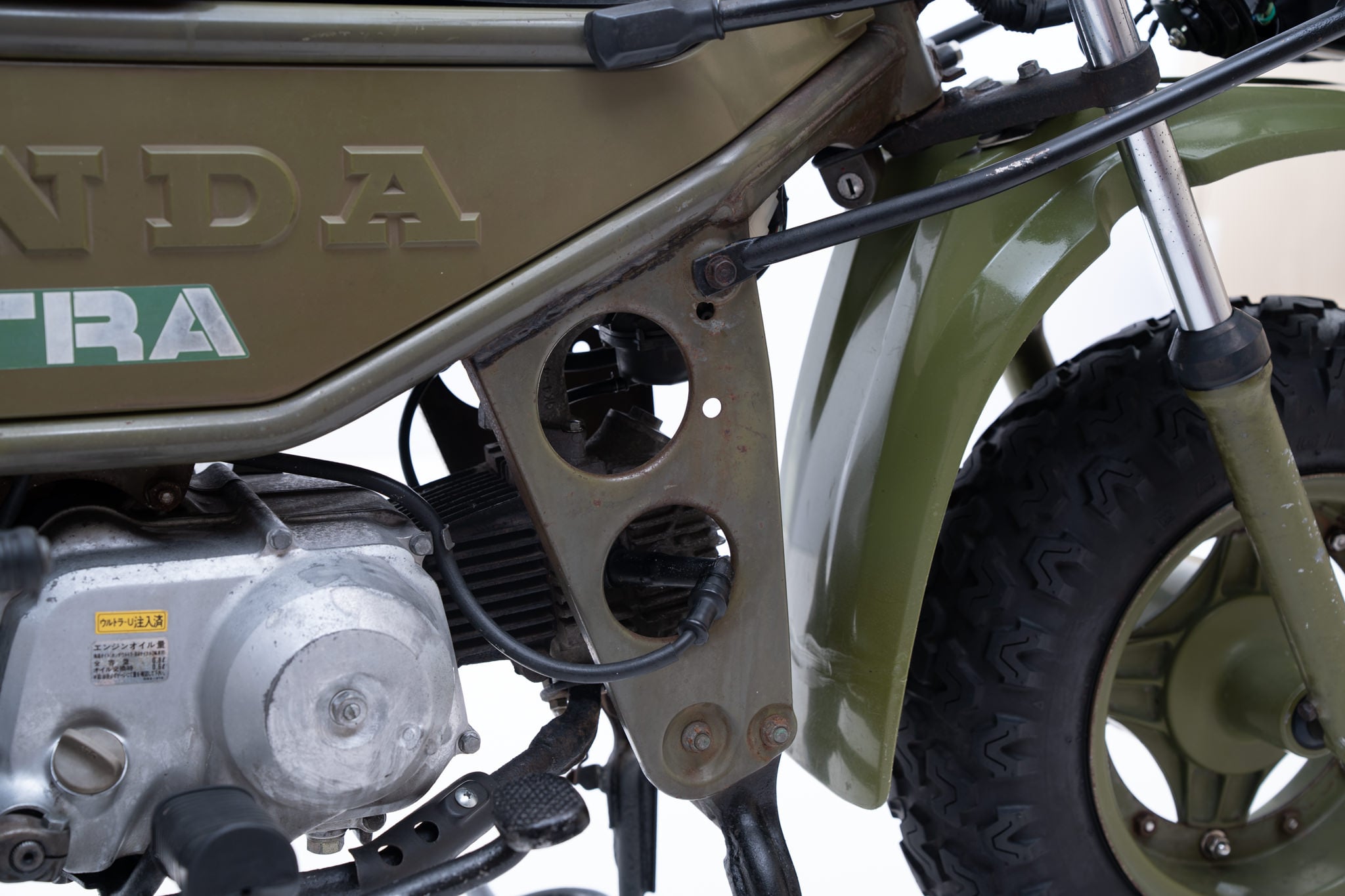
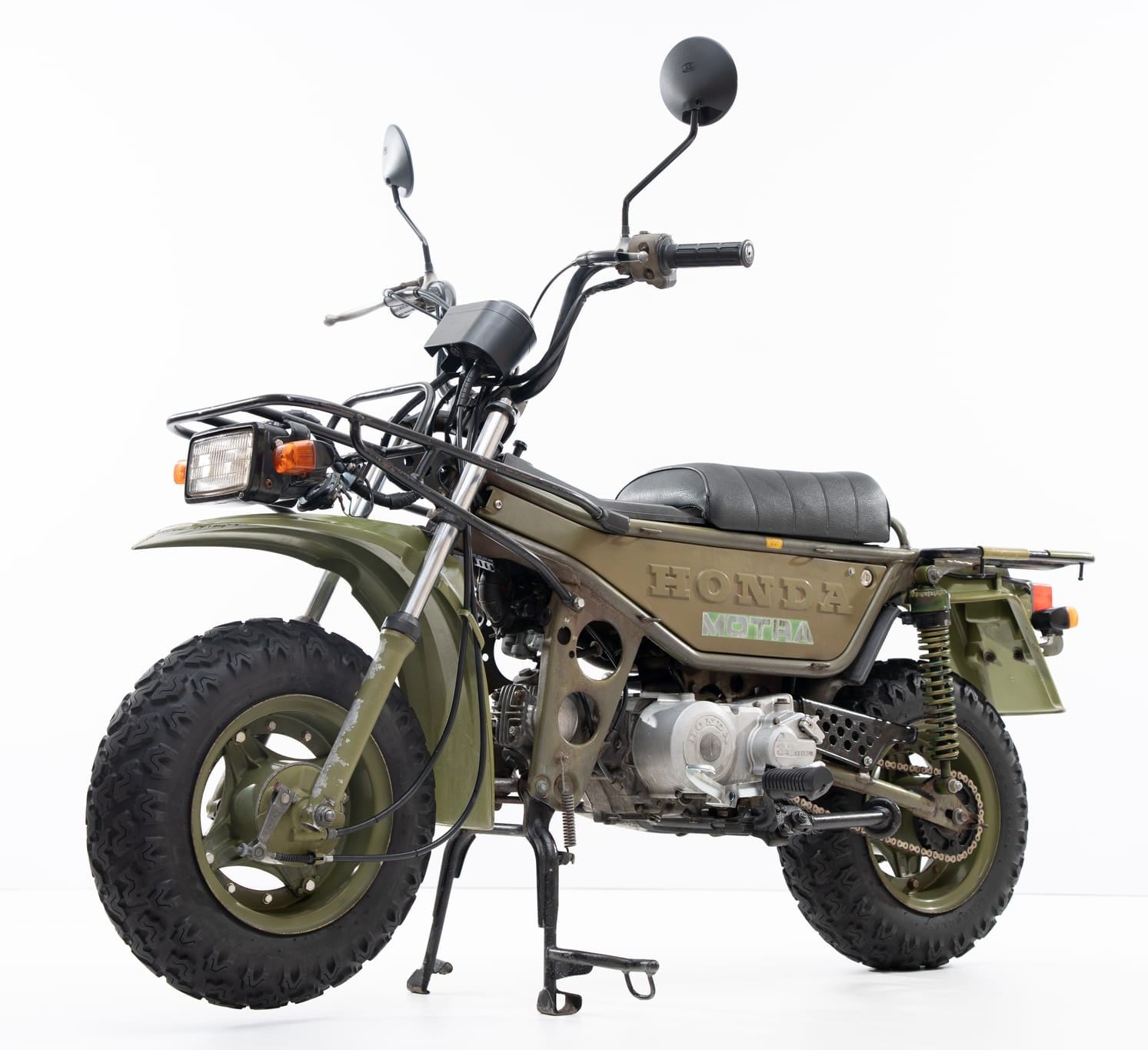
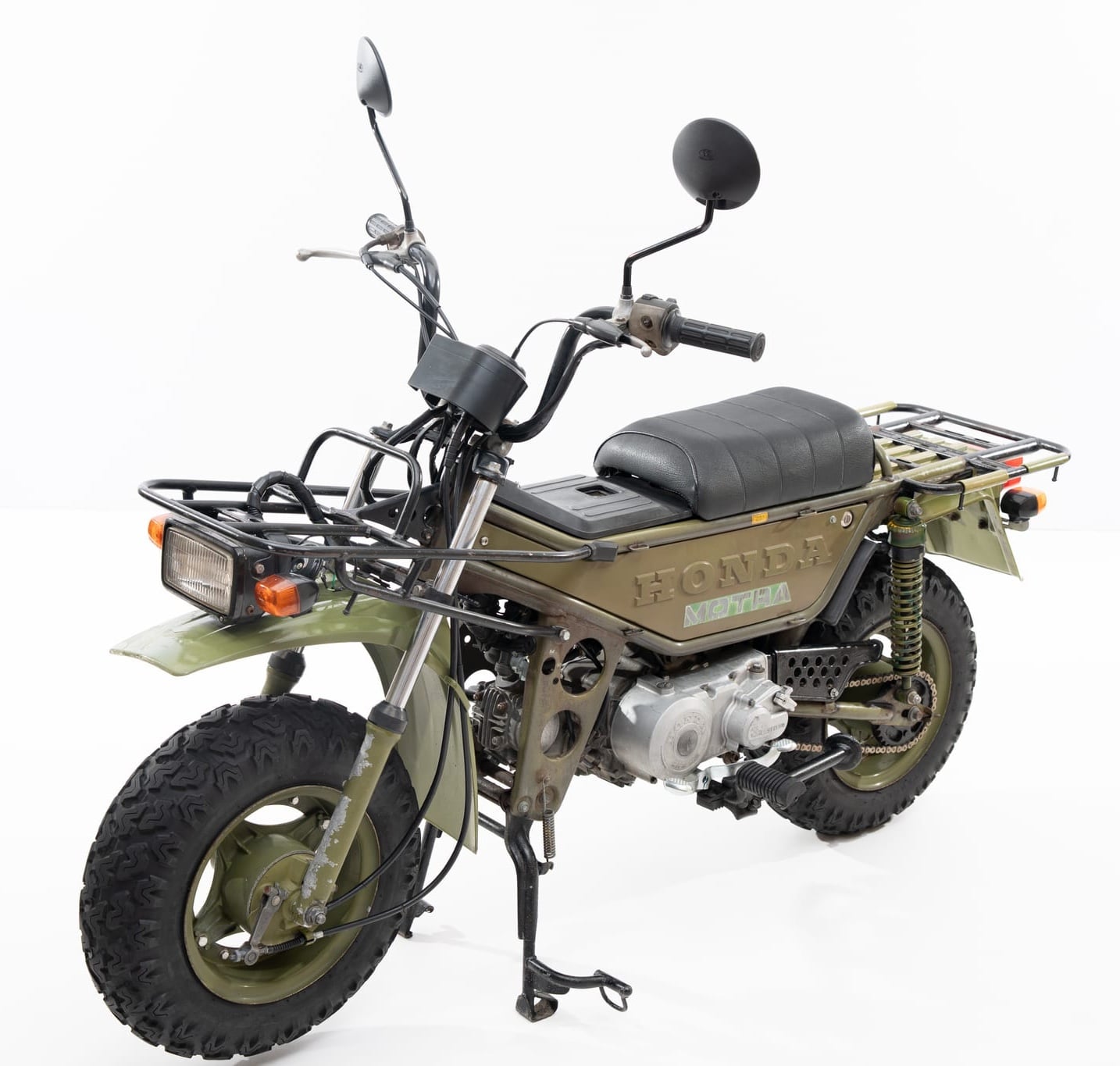
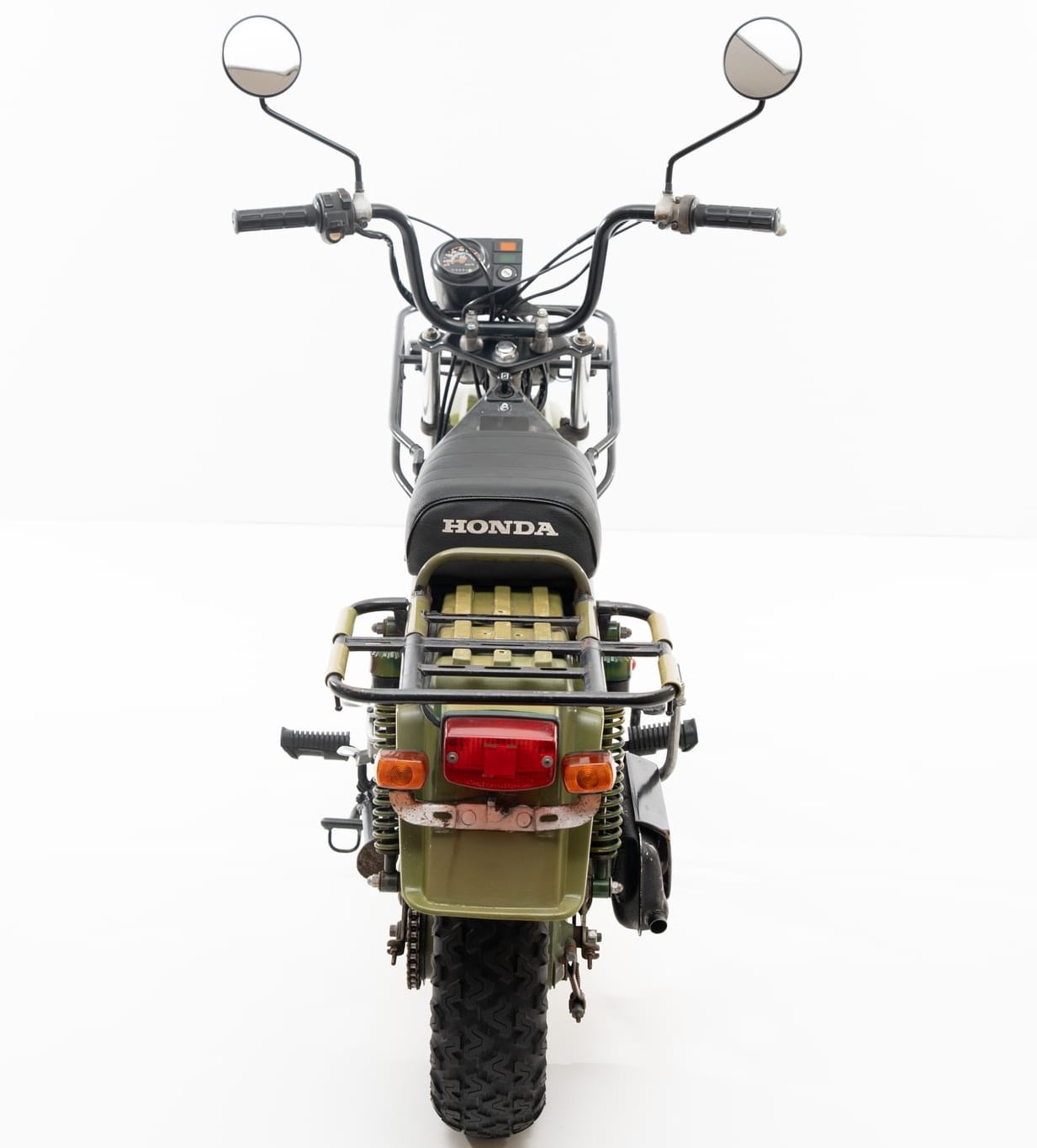
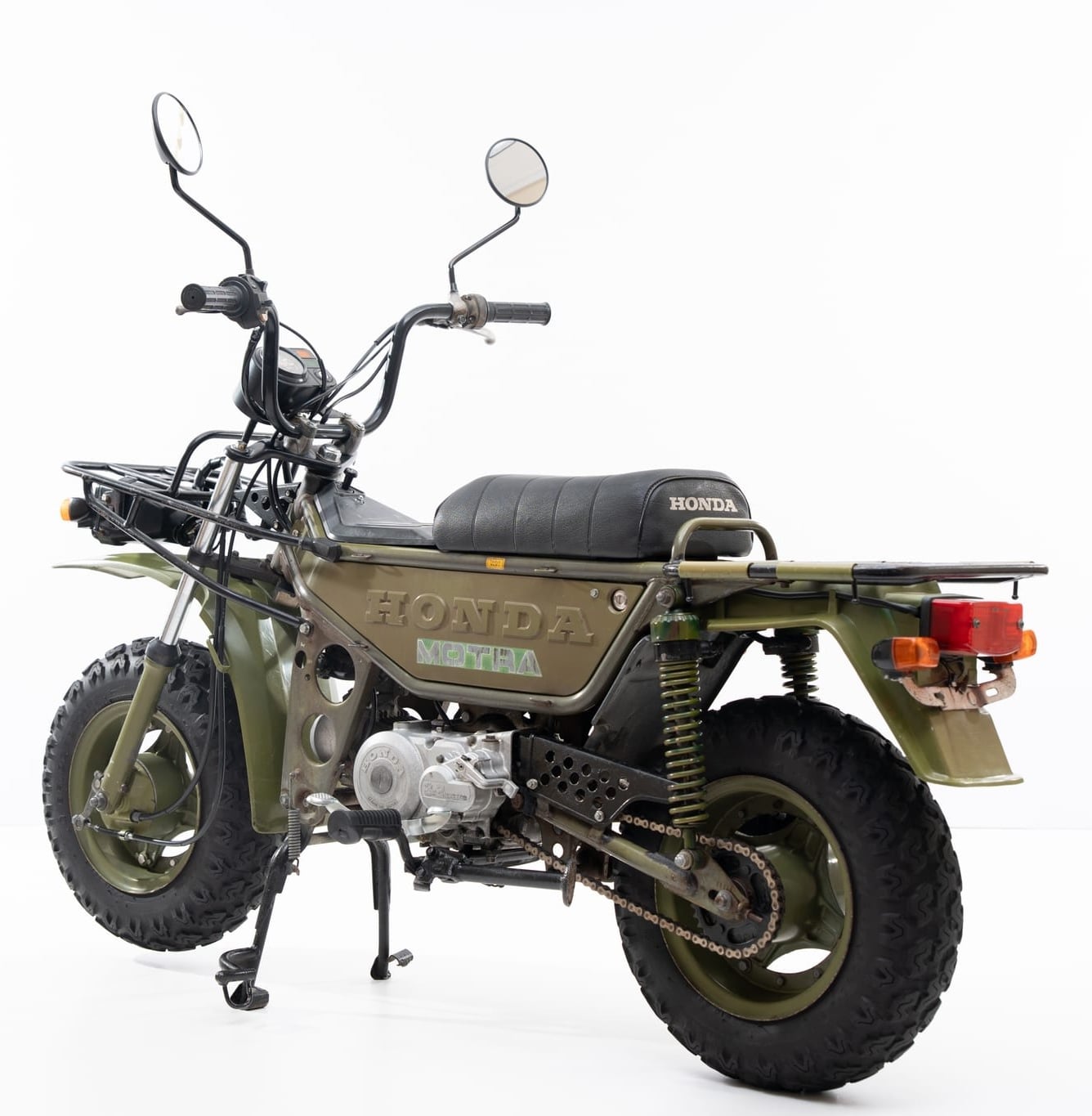
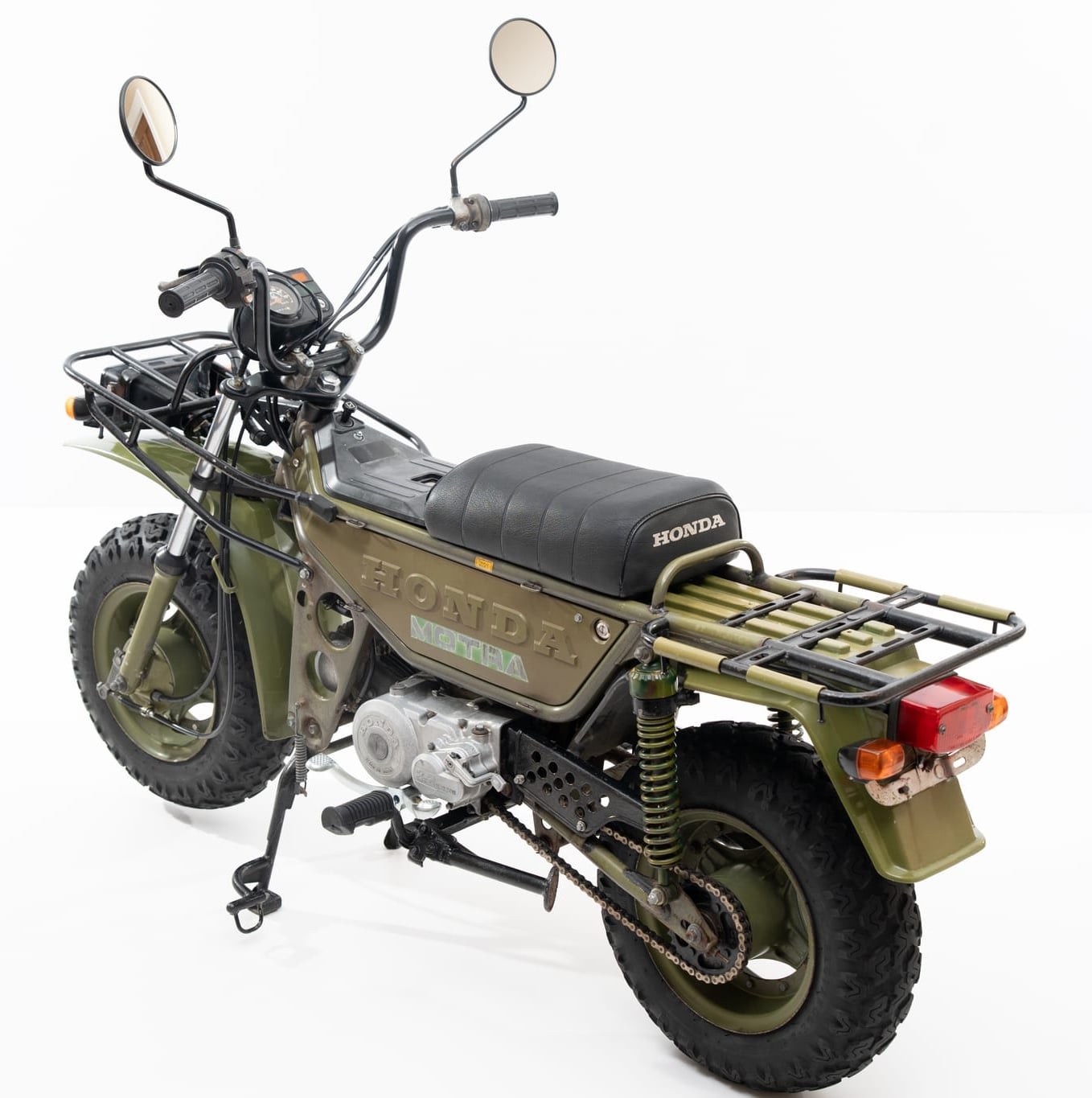
This 1982 Honda CT50 Motra is a Japanese-market example that was imported to the United States under previous ownership. It’s finished in green, it keeps its original matching high-mounted fenders, 10-inch multi-piece wheels, front and rear cargo racks, black vinyl solo seat, engine guard, twin mirrors, and both center and side stands.
As you would expect, power comes from a horizontal 49cc four-stroke single paired with an automatic clutch and an unusual dual-range 3-speed transmission, operated through a heel/toe shifter. The bike also has drum brakes front and rear, conventional fork suspension up front, twin rear shock absorbers, standard lighting, and Bridgestone tires.
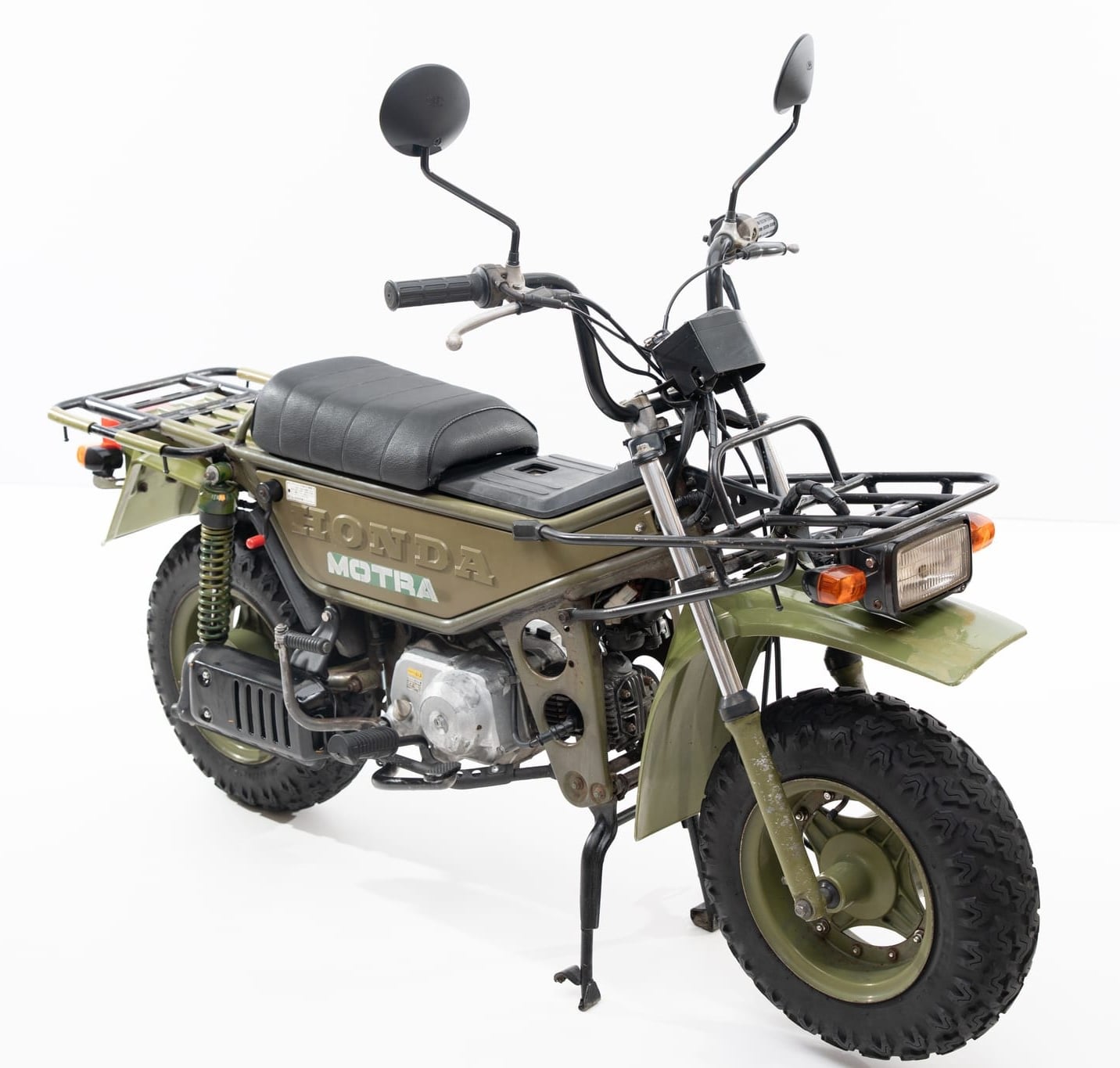
This is a Honda CT50 Motra from 1982, it’s a an unusual work-oriented motorcycle with a 3-speed gearbox and dual-range sub-transmission, giving six forward speeds.
The odometer shows ~3,200 kilometers, or about ~2,000 miles, although total mileage is unknown. The seller bought the Motra in 2026 and has added roughly 50 kilometers since then. Recent servicing included cleaning the carburetor, changing the oil, and replacing the battery and spark plug.
It’s now being offered for sale out of North Salem, New York with a New York title in the seller’s name. If you’d like to read more or place a bid you can visit the listing here.
Images courtesy of Bring a Trailer + Honda

Articles that Ben Branch has written have been covered on CNN, Popular Mechanics, Smithsonian Magazine, Road & Track Magazine, the official Pinterest blog, the official eBay Motors blog, BuzzFeed, Autoweek Magazine, Wired Magazine, Autoblog, Gear Patrol, Jalopnik, The Verge, and many more.
Silodrome was founded by Ben back in 2010, in the years since the site has grown to become a world leader in the alternative and vintage motoring sector, with well over a million monthly readers from around the world and many hundreds of thousands of followers on social media.