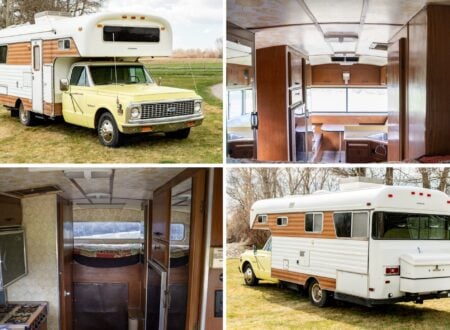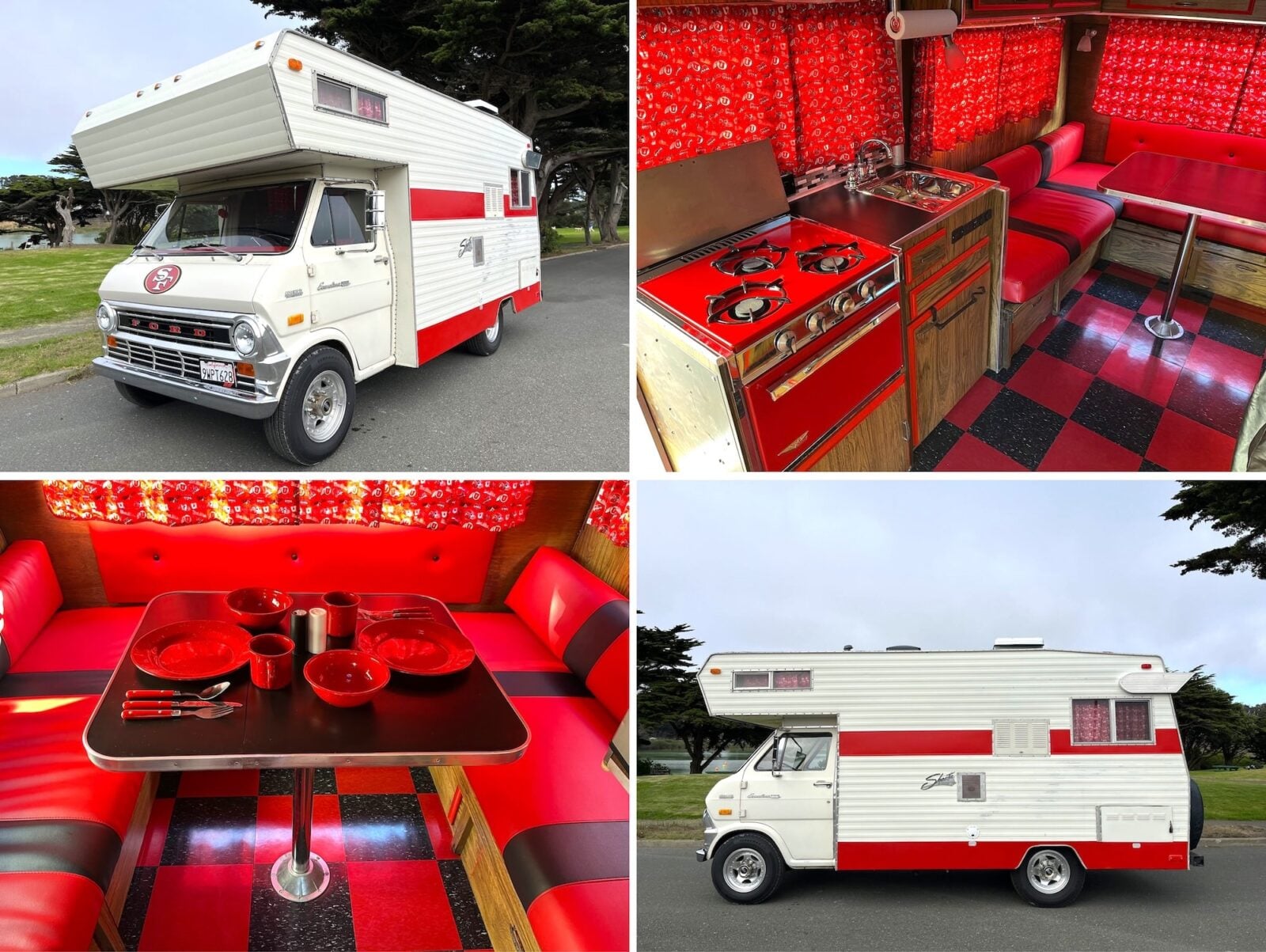
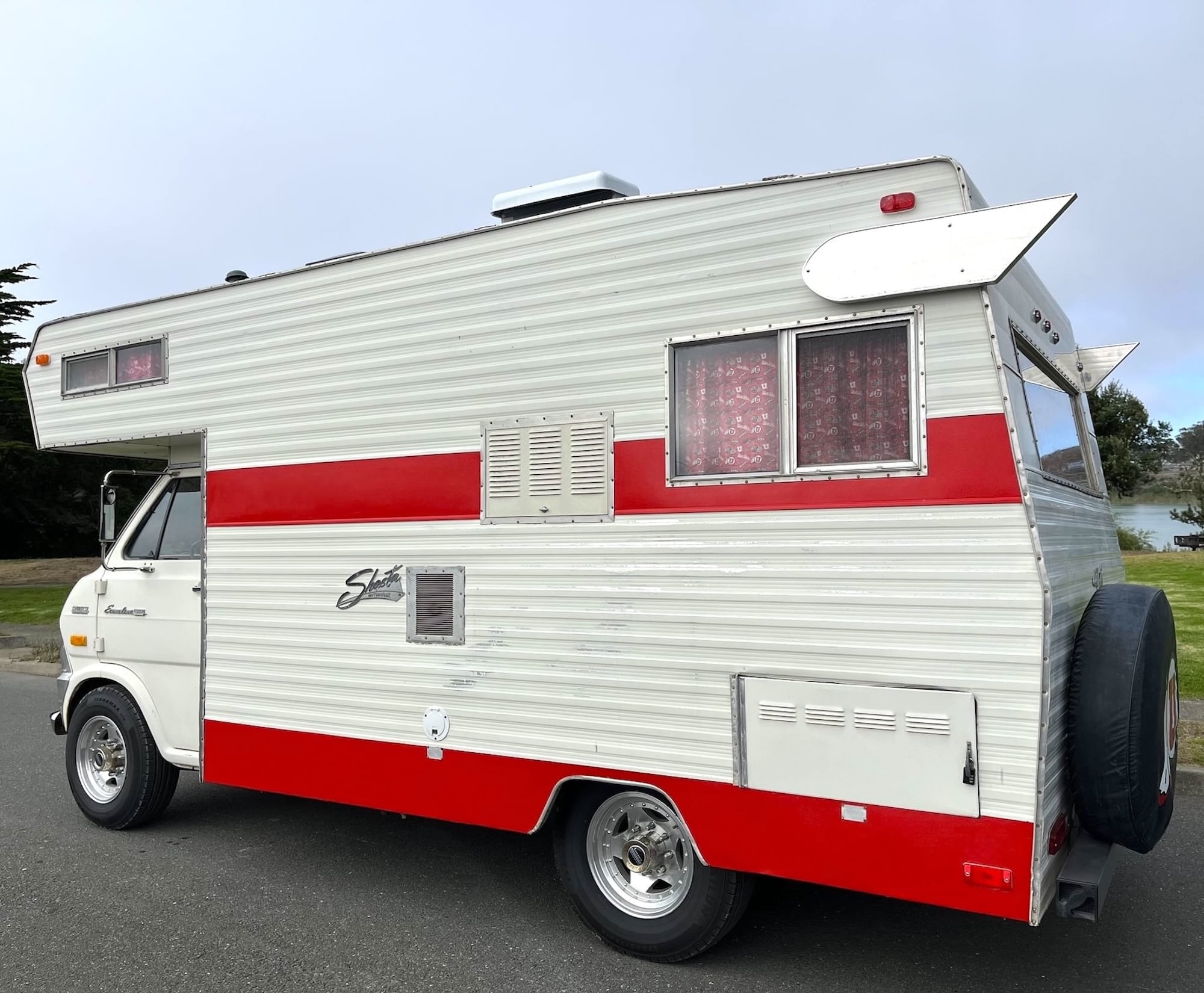
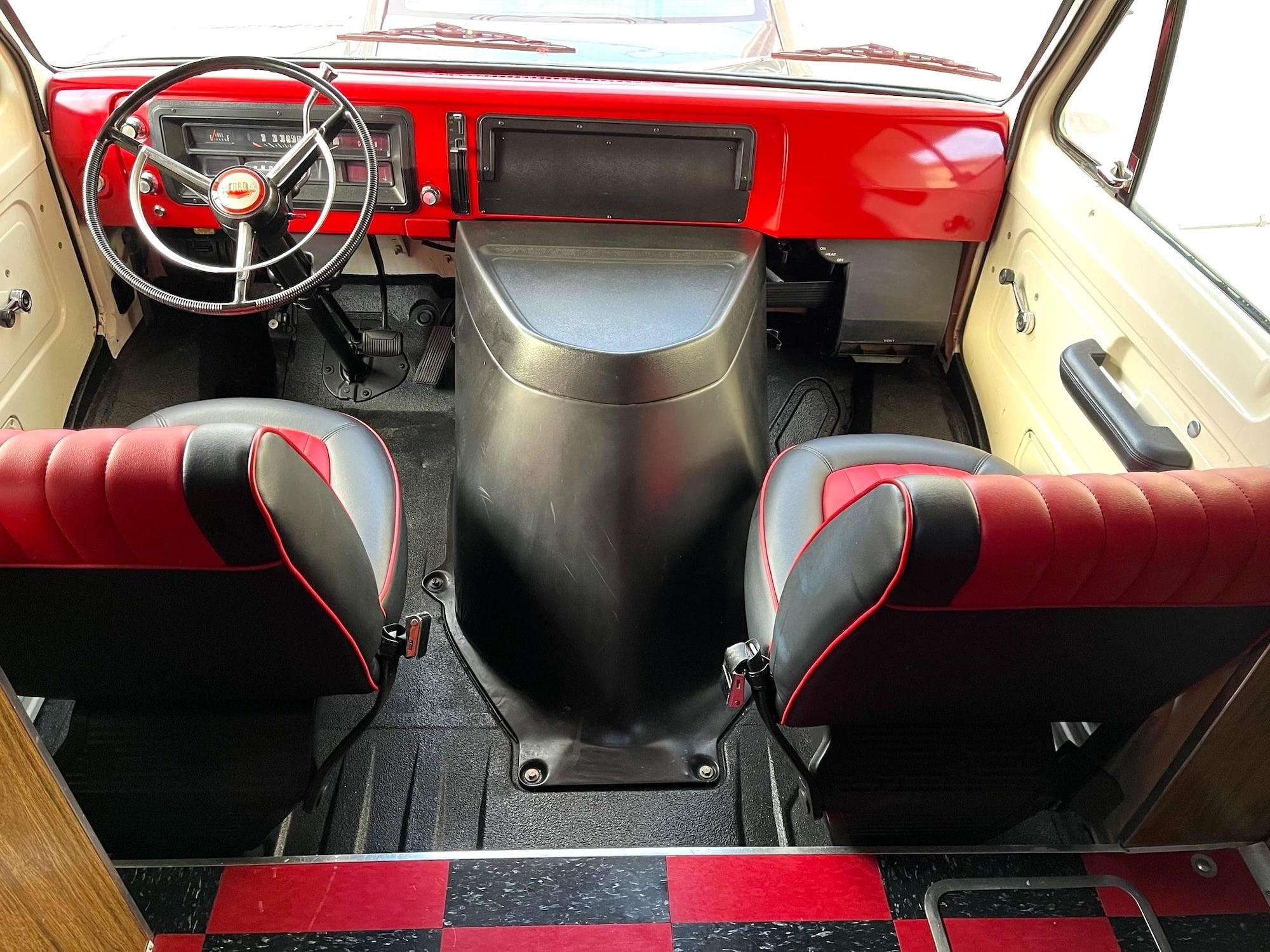
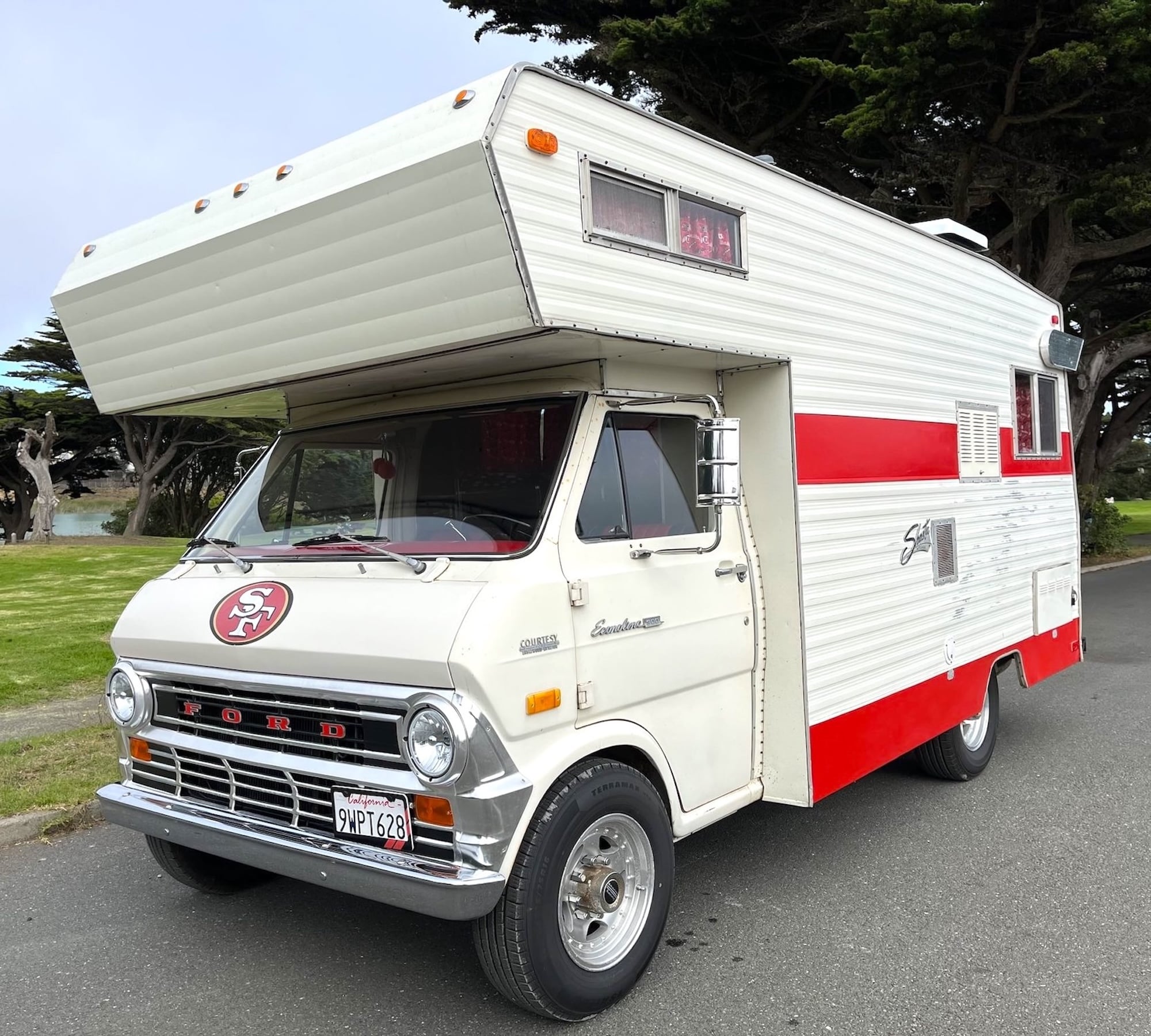
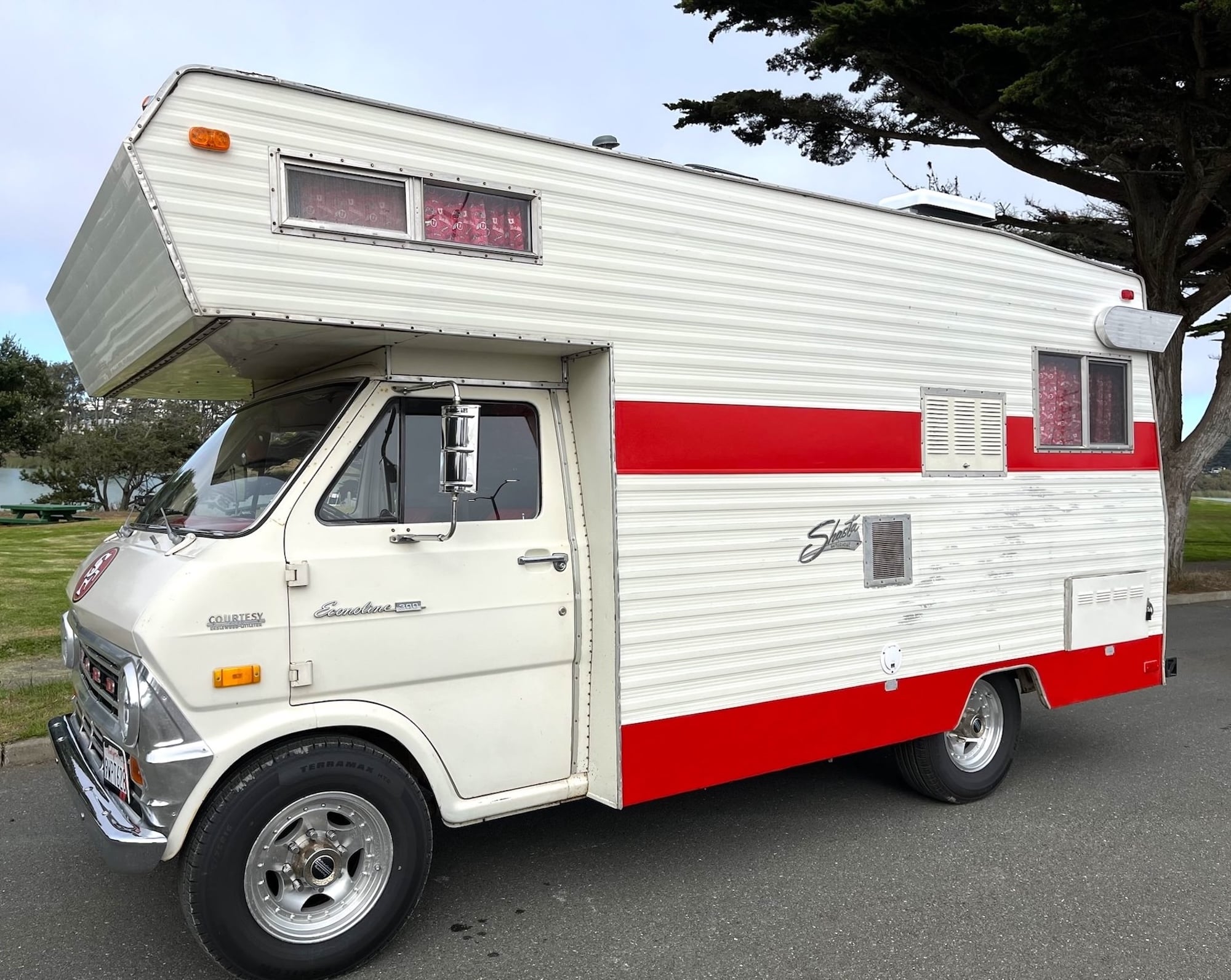
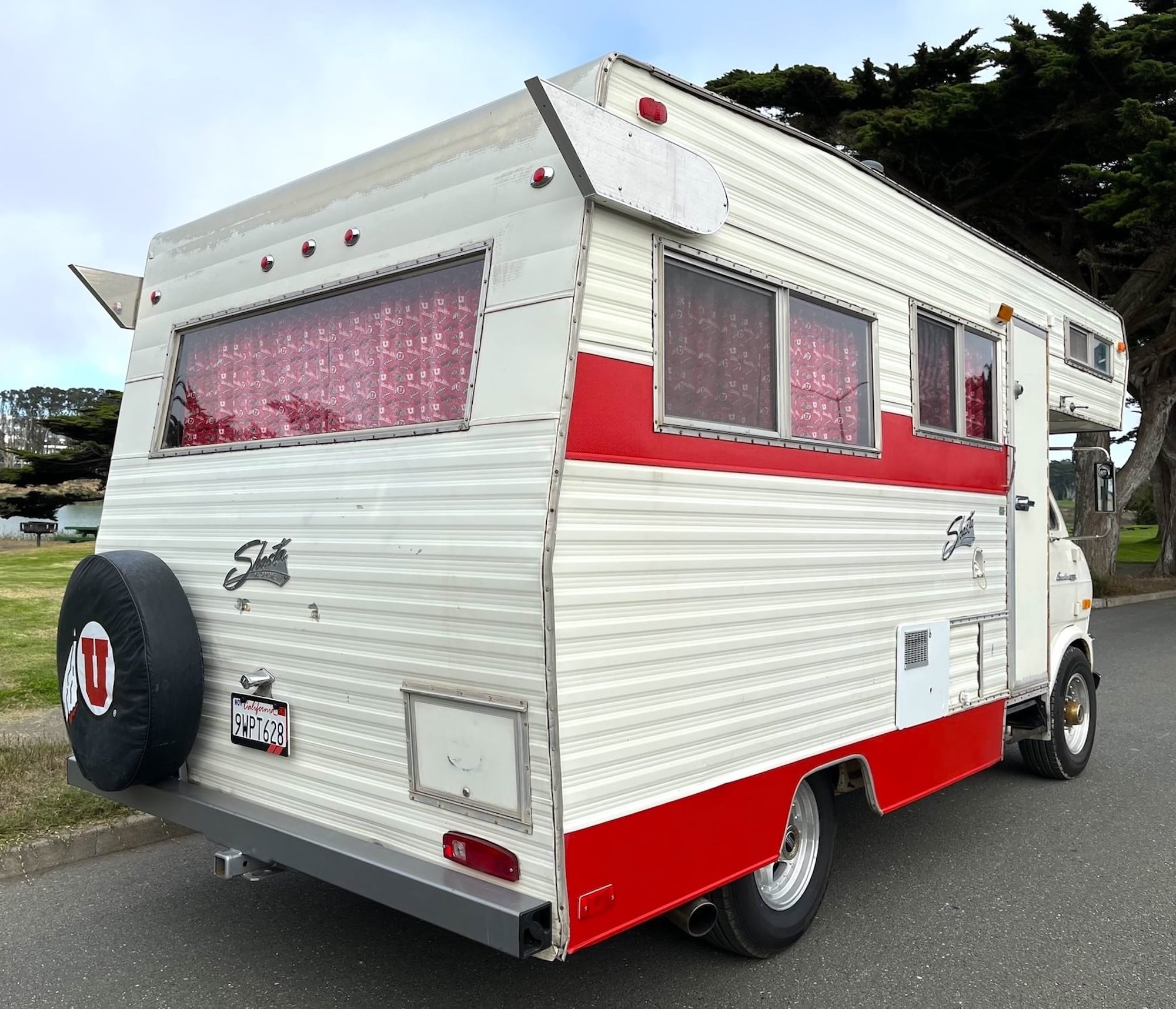
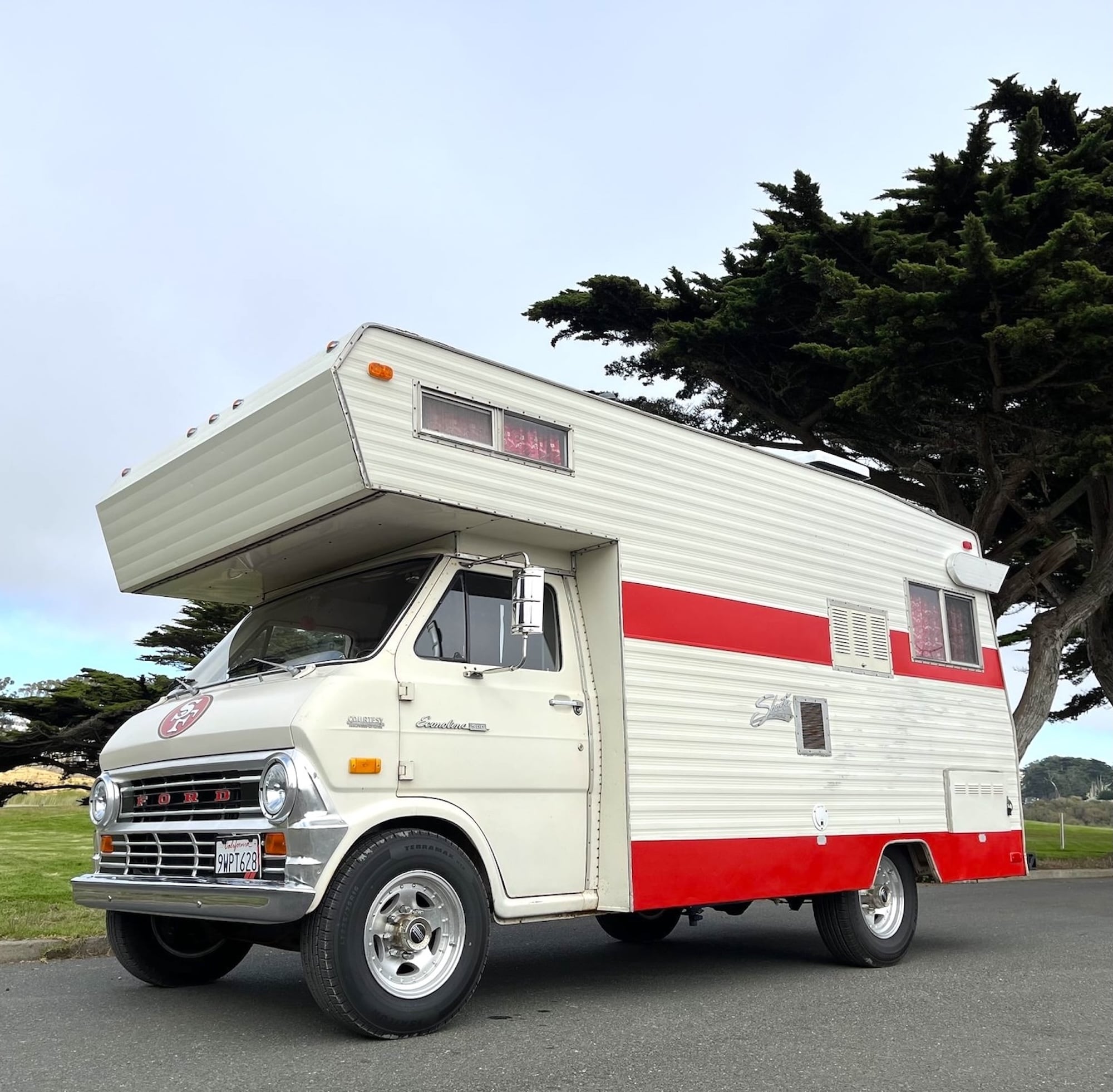
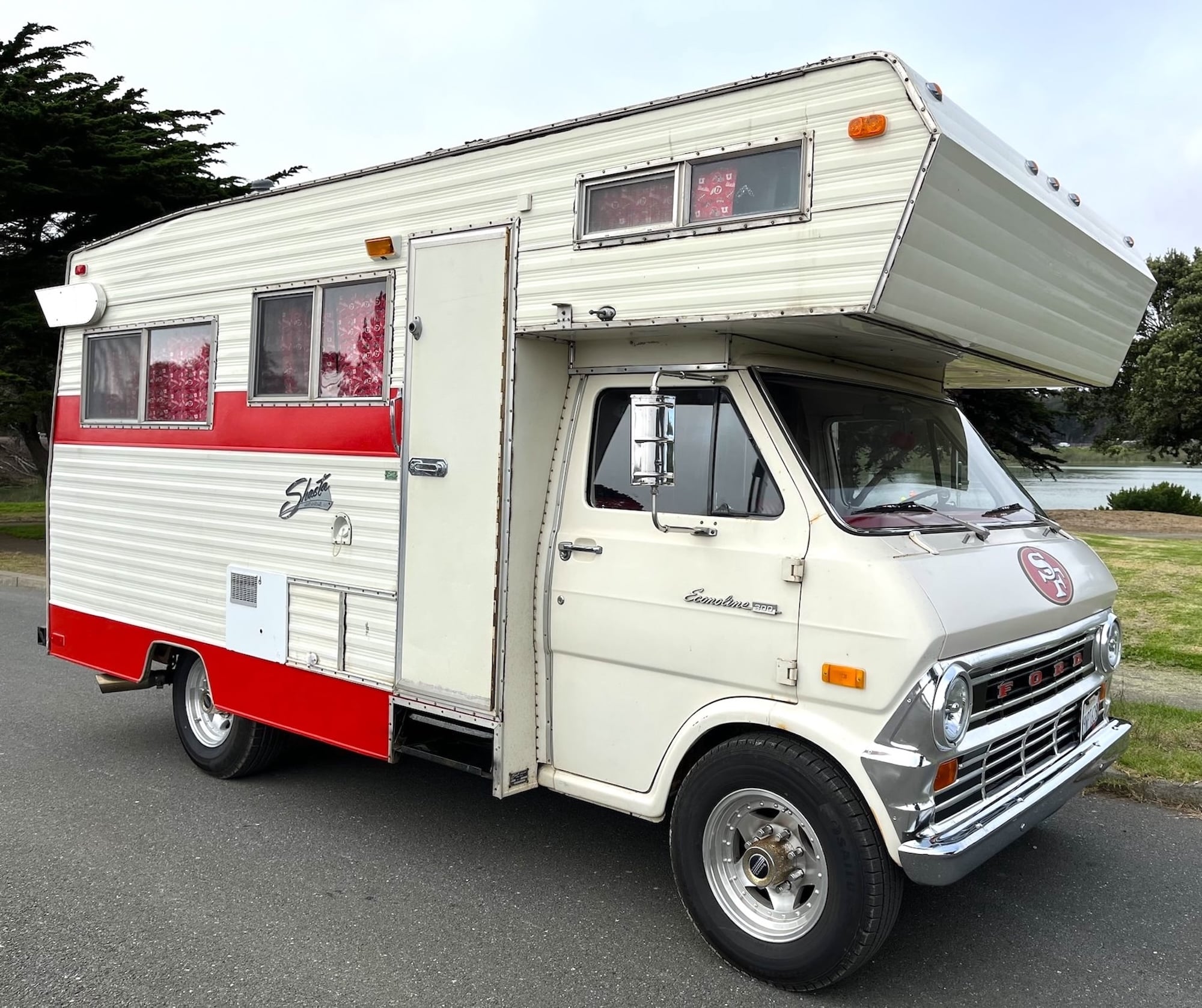
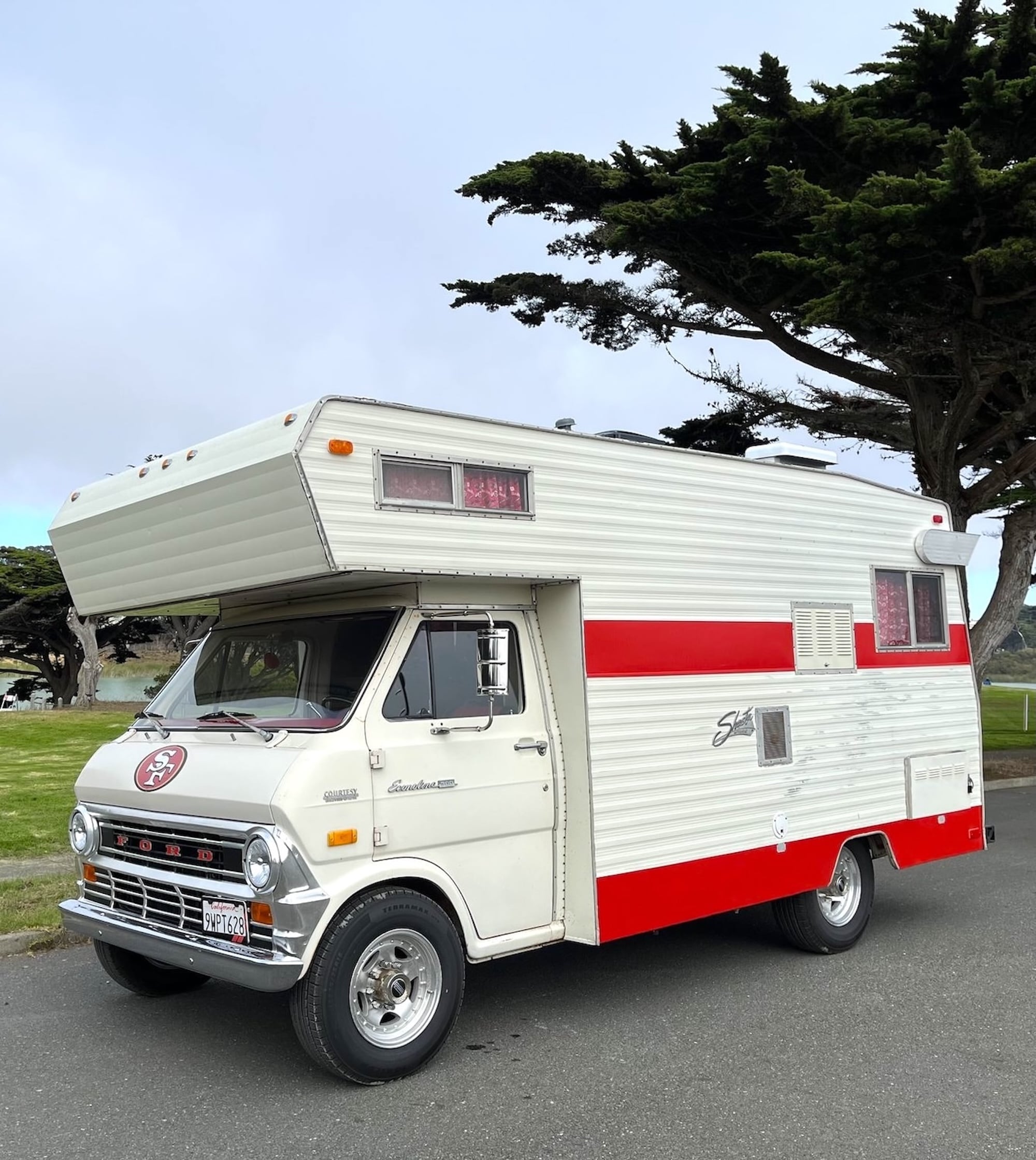
This is a 1971 Ford Econoline that was converted into a motorhome in-period by Shasta Trailers in California. It has seating for two up front, sleeping space for up to four in the back, and it’s powered by the indomitable Ford 5.0 liter (302) V8.
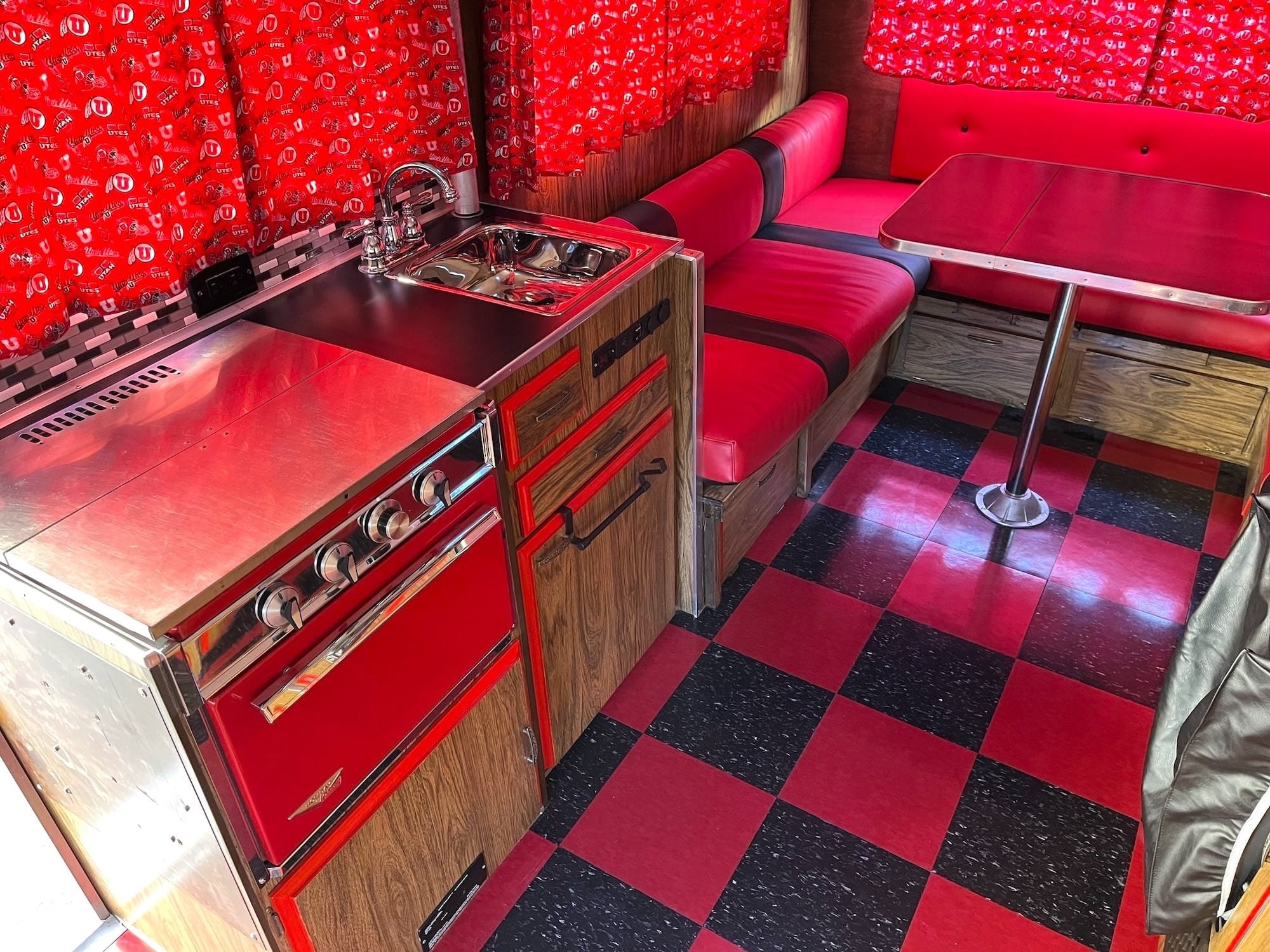
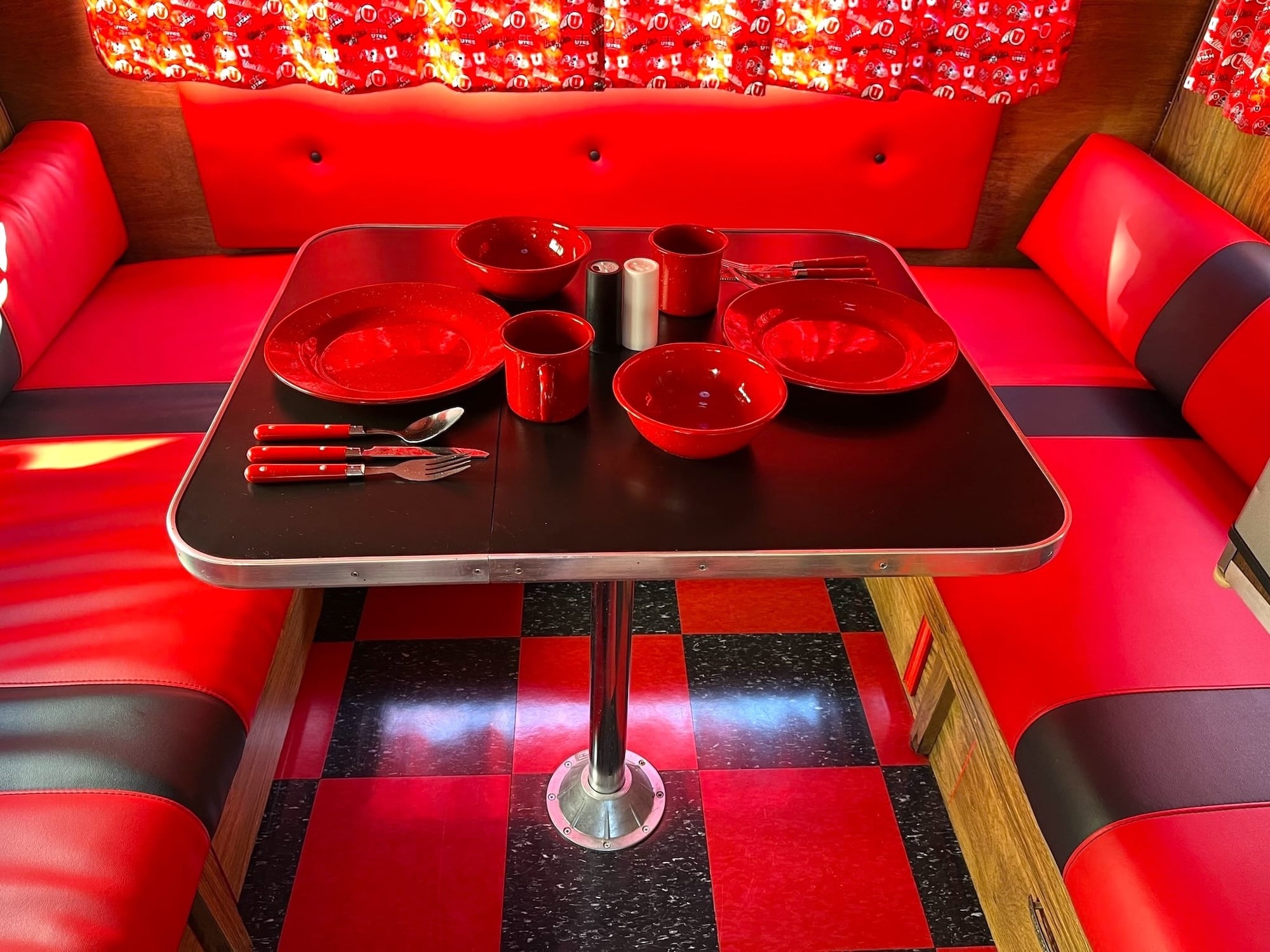
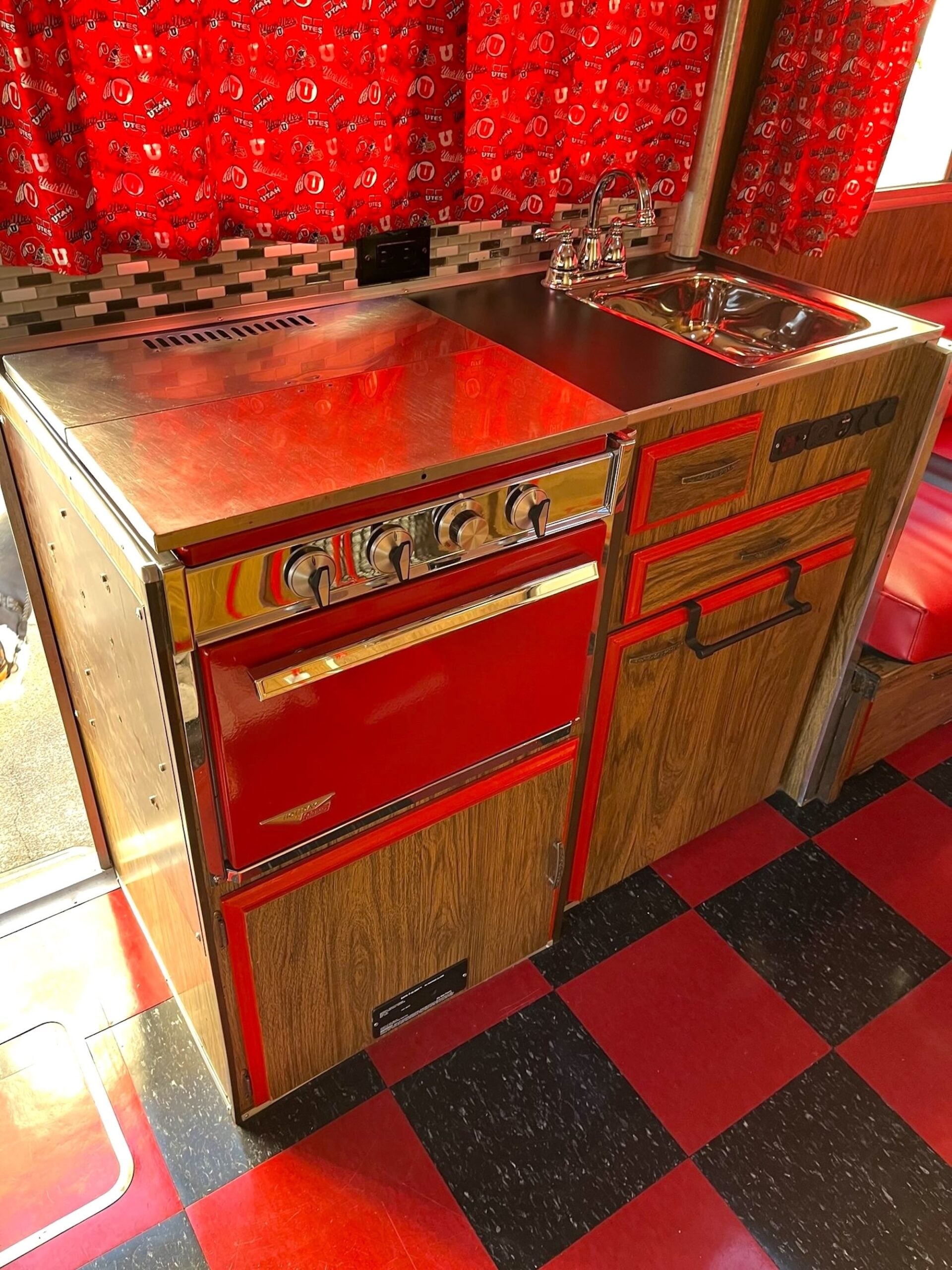
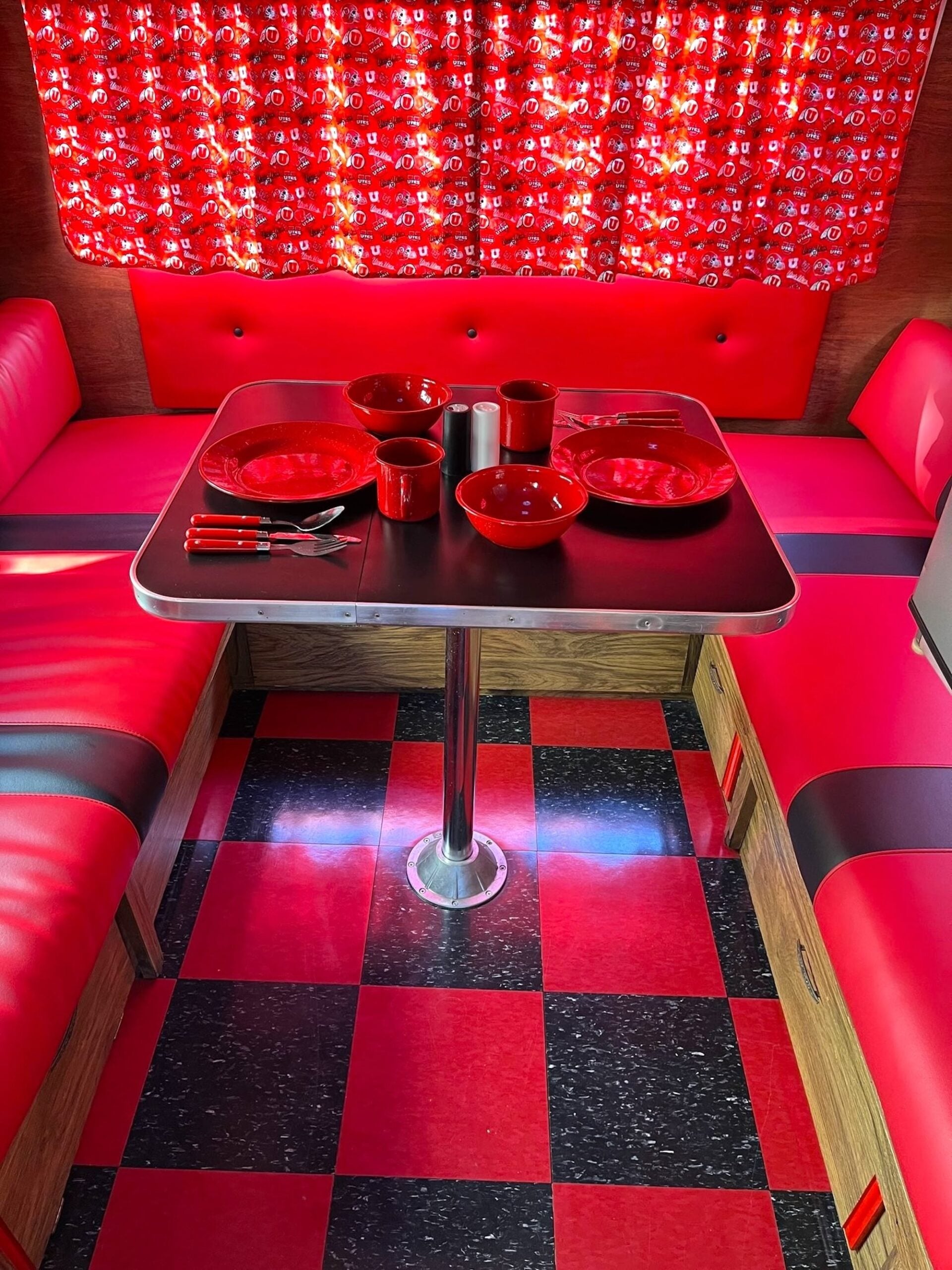
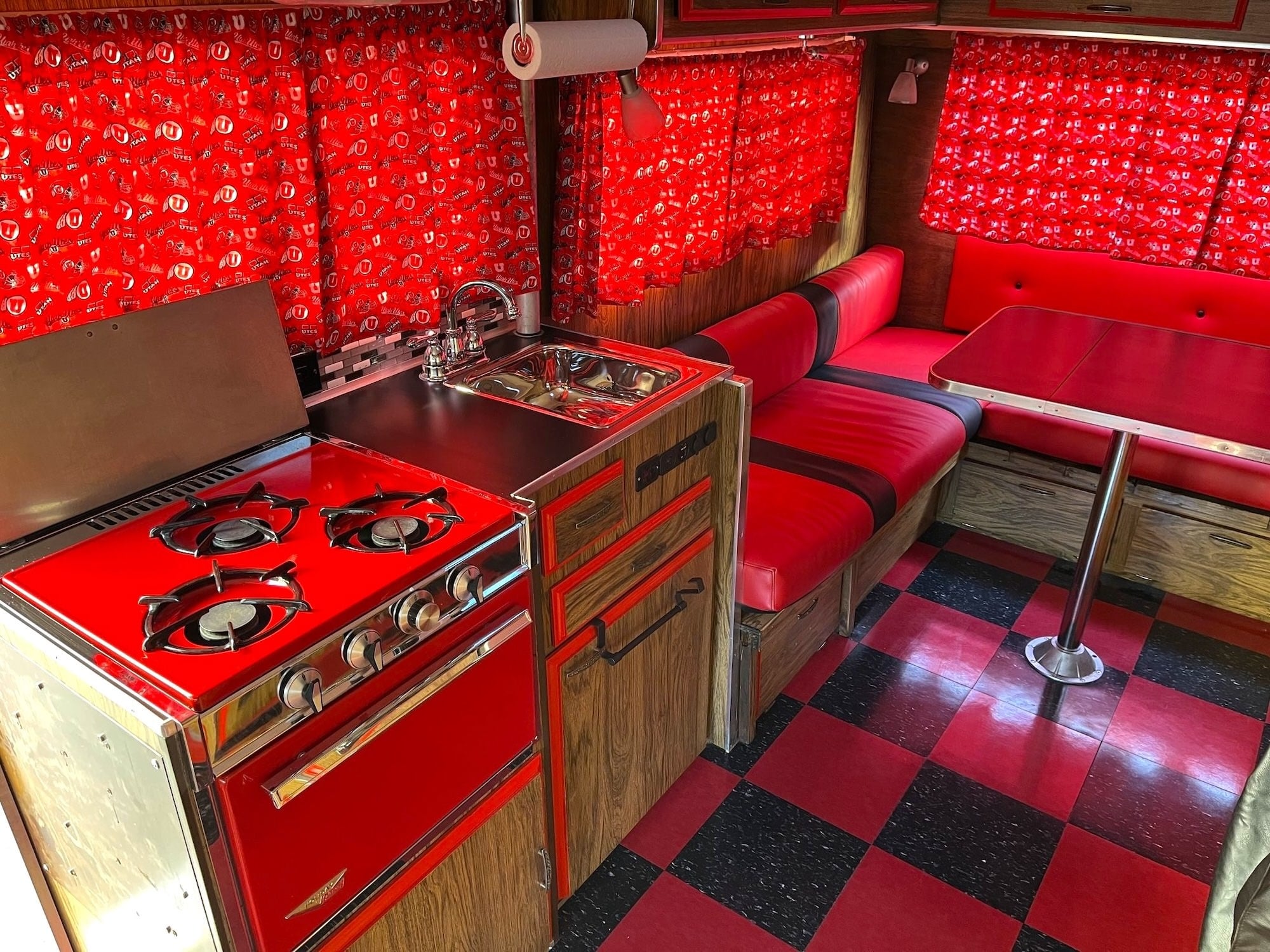
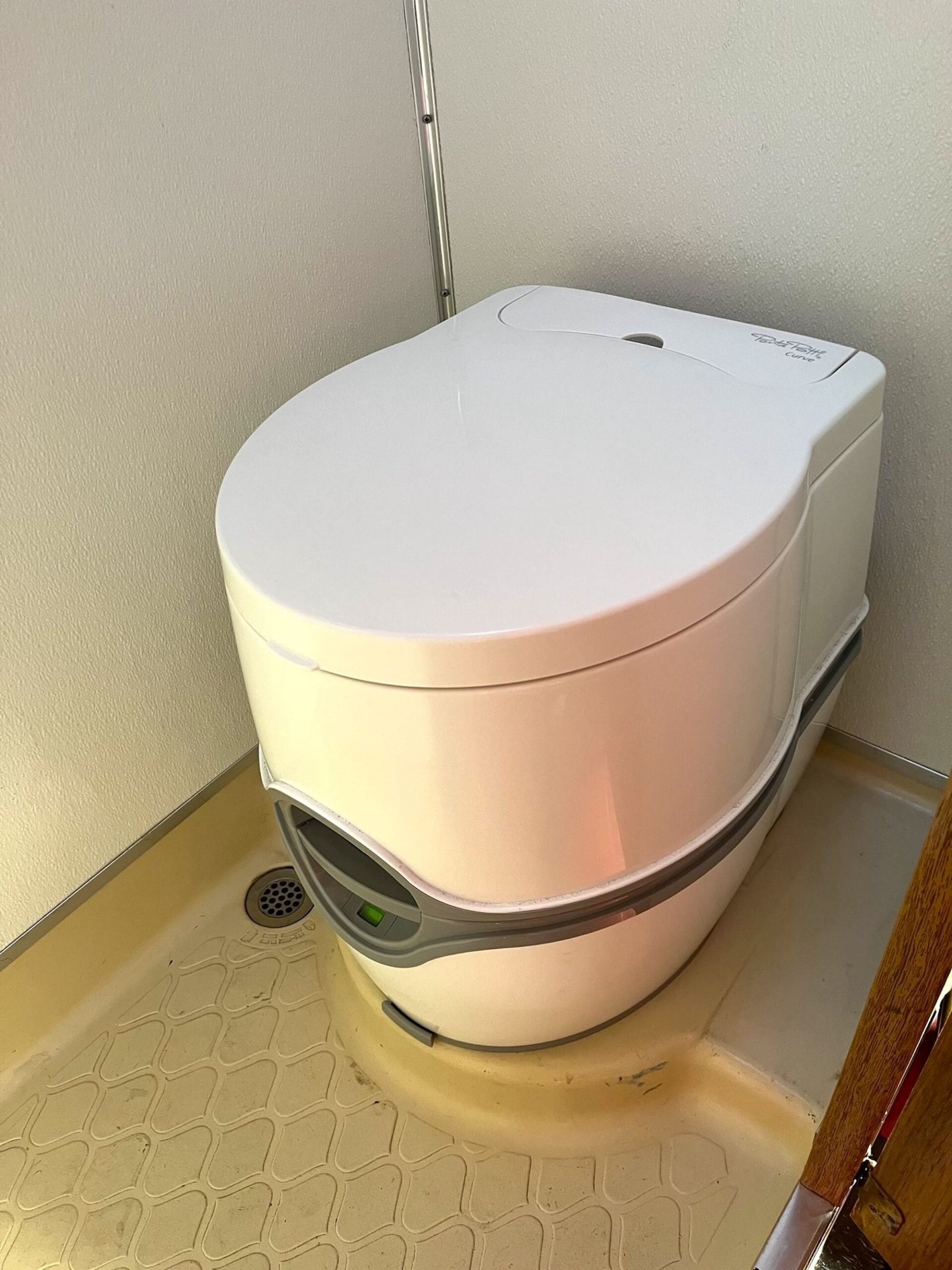
The accommodation in the rear includes a dinette set that converts into a double bed when required, it also has a space for a double bed above the cab. The kitchenette has a sink with running water, a three-burner stove top, an oven, a refrigerator/freezer, and a water heater. There is also a separate bathroom with a toilet.
Fast Facts: A 1971 Econoline Shasta Motorhome
- The Ford Econoline debuted in 1960 as a 1961 model, developed in response to the success of Volkswagen’s Type 2 Van. The first-generation used Ford Falcon drivetrains and a cab-over-engine layout. Offered as a van, station bus, and pickup, it soon became popular with commercial buyers.
- The second-generation Econoline arrived for 1969, adopting F-Series truck mechanical equipment, Twin I-Beam front suspension, longer wheelbases, and an available 302 cubic inch V8. The third generation followed in 1975 with a full-length chassis, making it particularly popular for ambulance and motorhome conversions. The fourth generation arrived in 1992, with conventional vans discontinued after 2014.
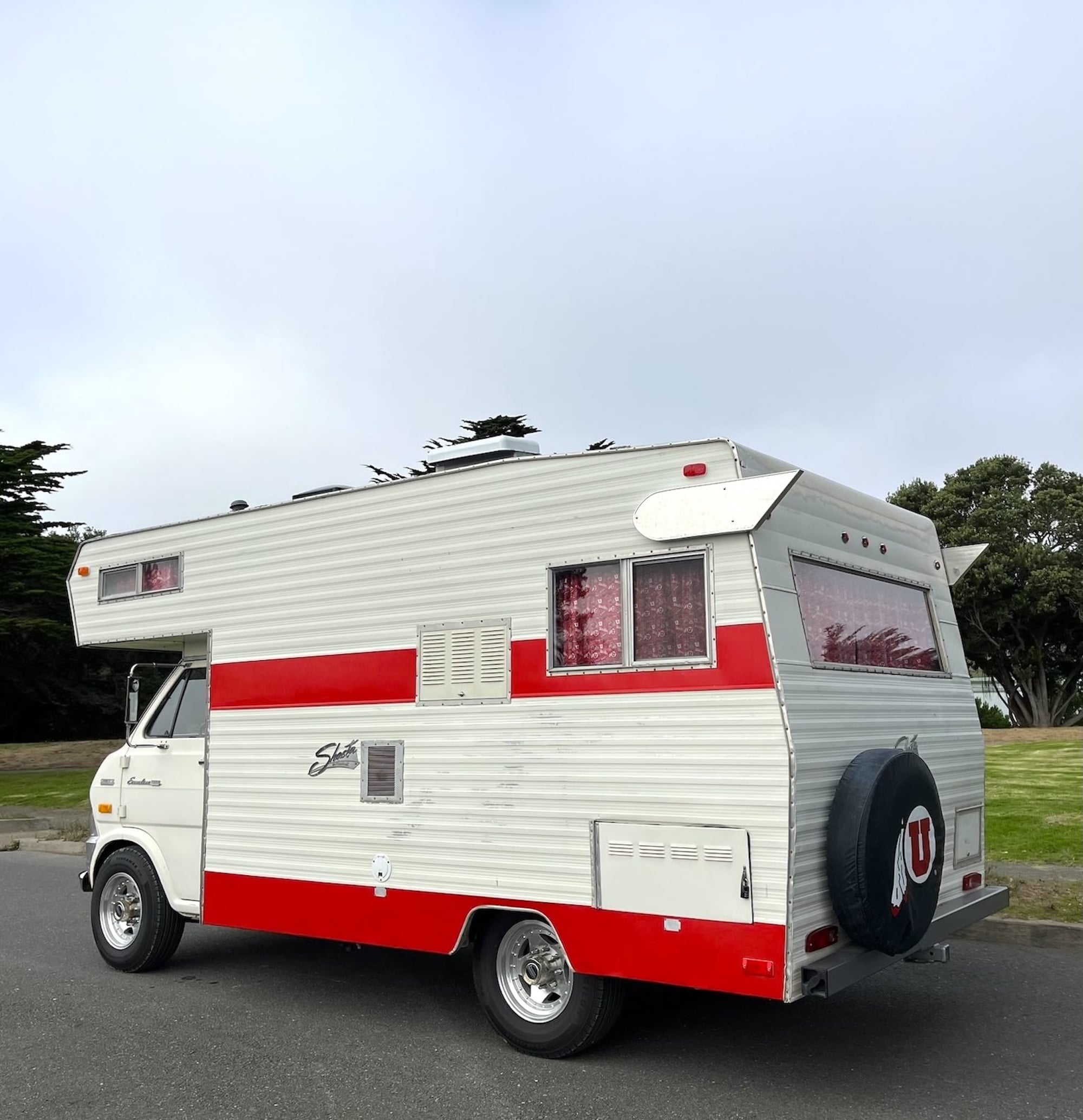
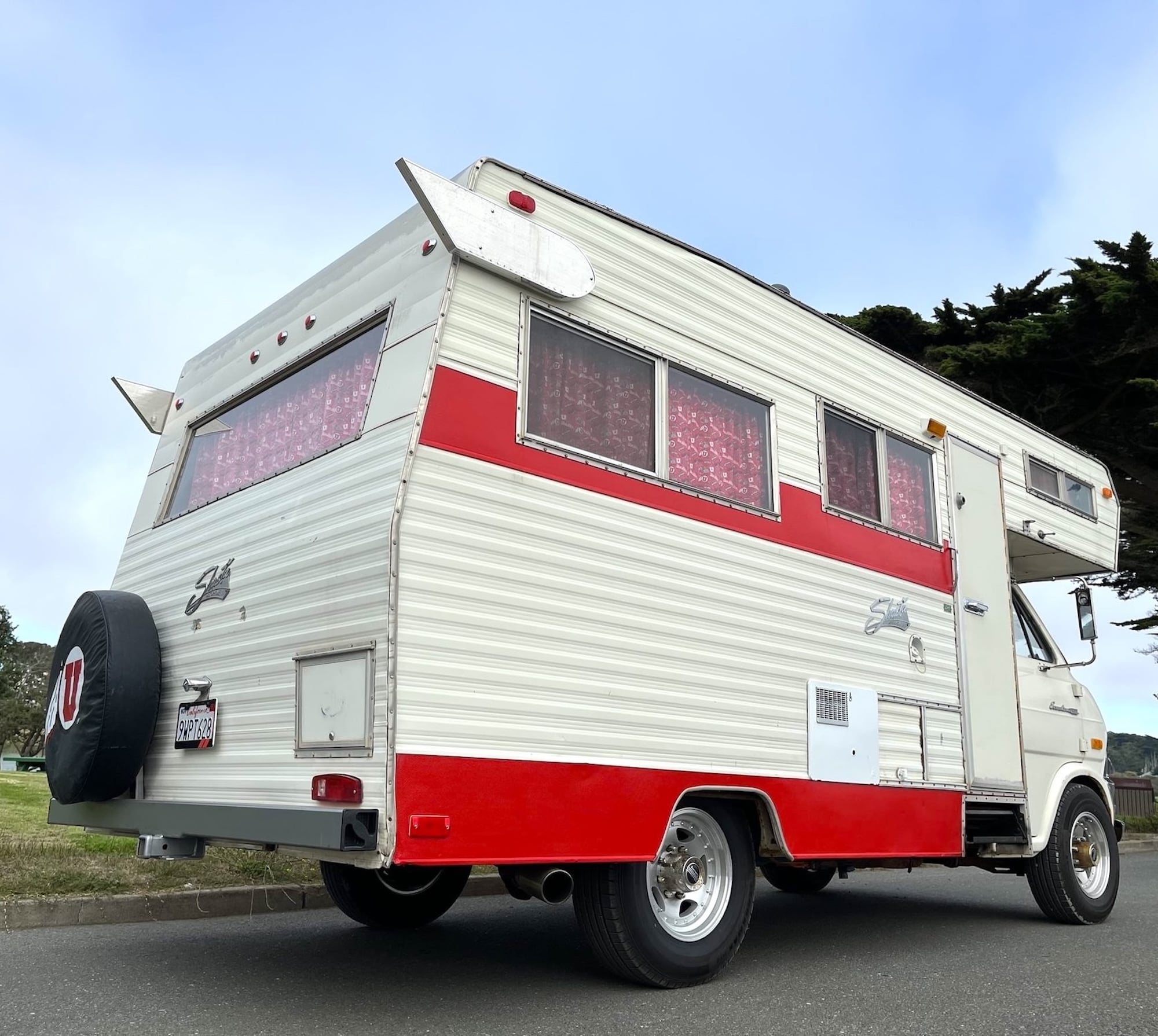
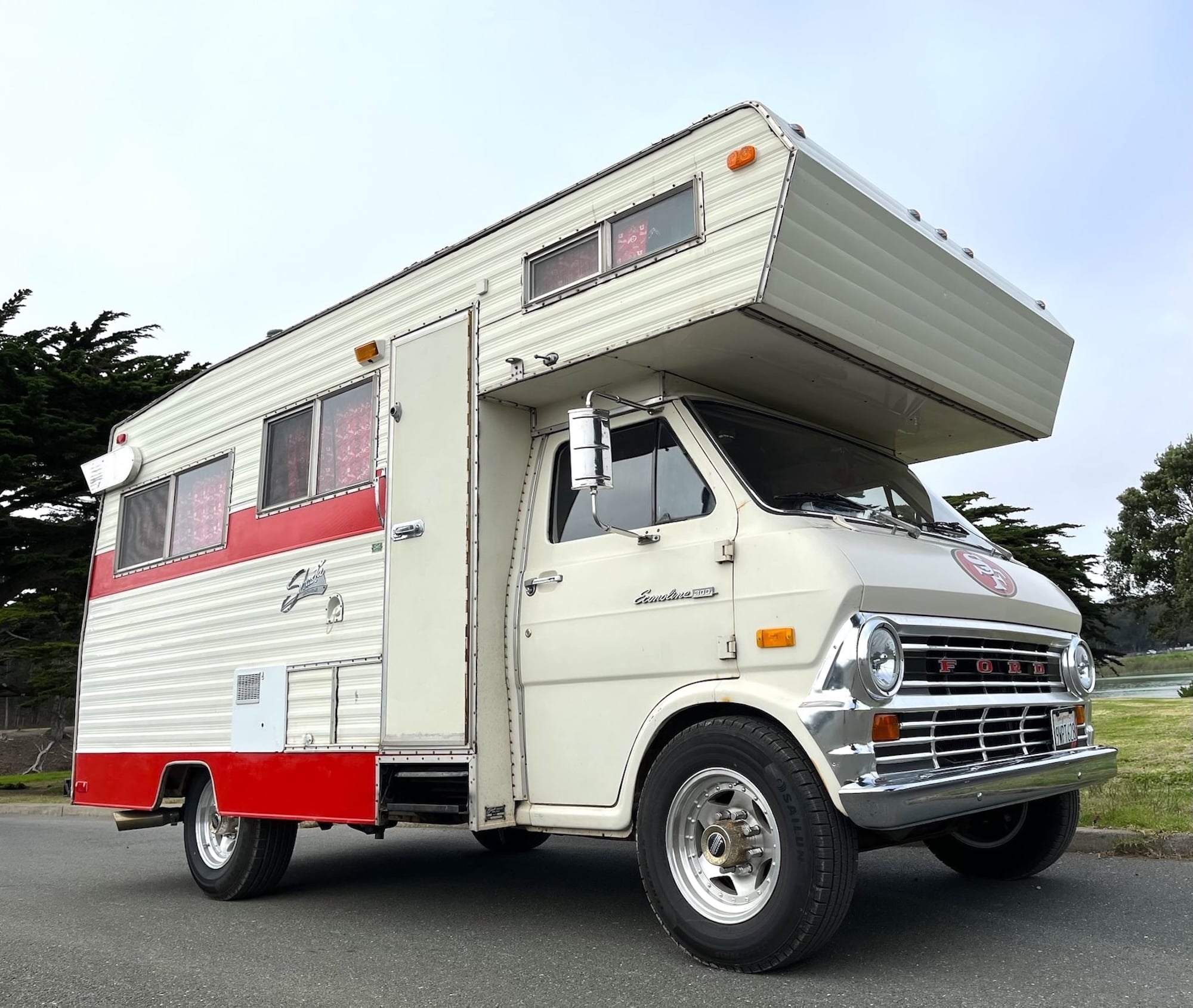
- This 1971 Ford Econoline E-300 was converted into a motorhome by Shasta Trailers in Simi, California. It has distinctive Shasta metal wings on the back, white paint with red stripes, and accommodation for four. The interior includes a convertible dinette, overhead sleeping space, kitchenette, enclosed bathroom, air conditioning, and updated upholstery, flooring, and appliances.
- Powered by a 302 cubic inch (5.0 liter) V8 paired with a 3-speed automatic transmission, the motorhome has 77,000 miles on the clock. It has American Racing wheels, power-assisted front disc brakes, and several recent mechanical and interior updates. Offered at no reserve, it comes with a clean California title, original build sheet, period literature, and historical records dating to 1973.
History Speedrun: The Ford Econoline
Ford unveiled the Econoline van in September of 1960 as a 1961 model, and amazingly, the vans remained in production over four generations until 2014, the cutaway and stripped-chassis versions that sit under ambulances, shuttle buses, and Class C motorhomes are still being built however. A remarkable 65 years of continuous production.
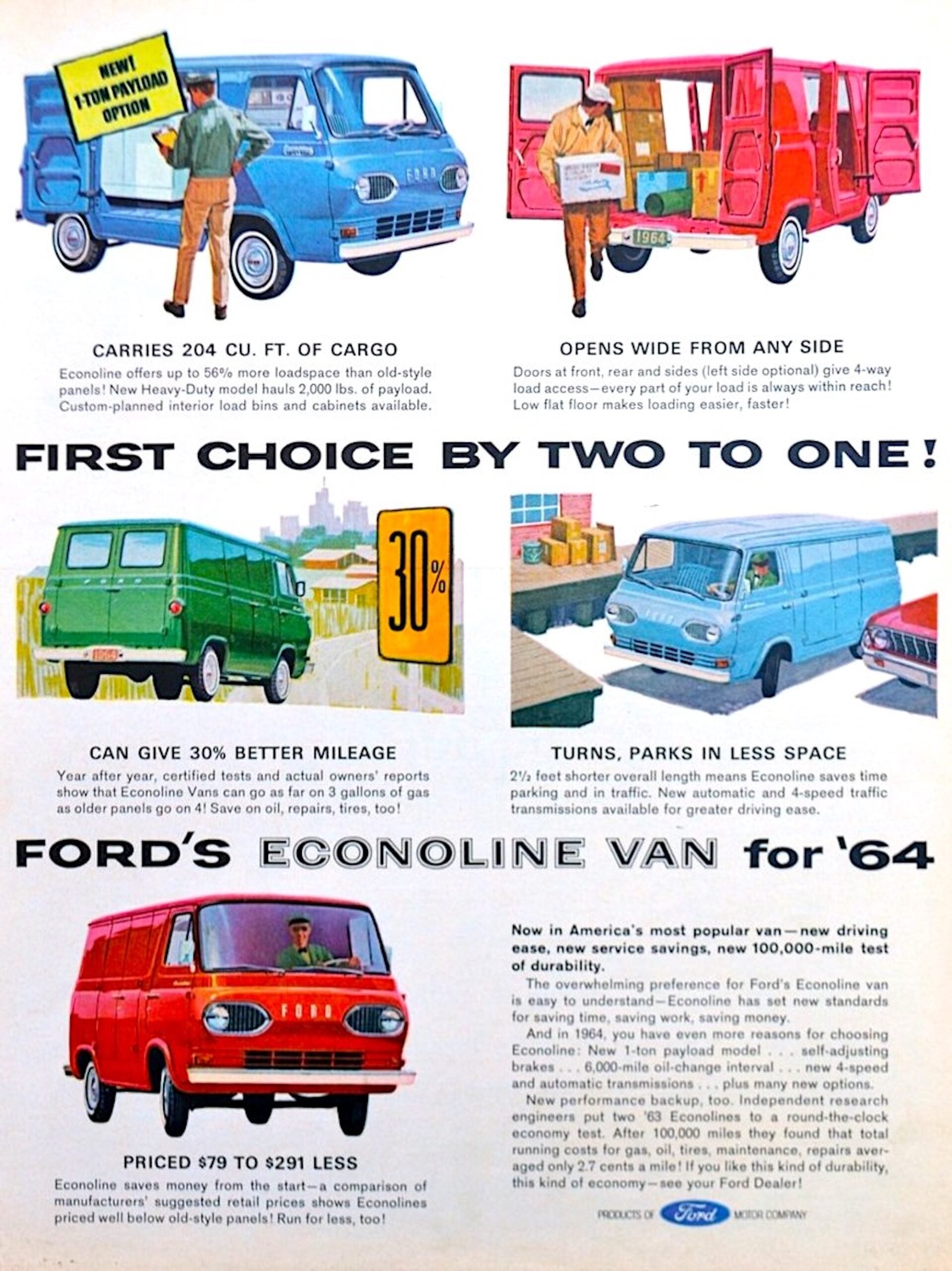
 Ford unveiled the Econoline van in September of 1960 as a 1961 model, and amazingly, the vans remained in production over four generations until 2014. Image courtesy of Ford.
Volkswagen started a van-arms race of sorts among the larger US manufacturers. The VW Type 2 van sold surprisingly well in the United States in the late 1950s, and Detroit certainly noticed.
The Chevrolet team even went so far as to copy the air-cooled, rear-engined layout for its Corvair 95 van. Ford, which began development of their own van series in 1957, went another way entirely. The blue oval engineers took the drivetrain from its new Falcon compact car, built a unit-construction van body around it on a 90 inch wheelbase, and put the engine under a cover between the two front seats, with the driver sitting above the front axle.
A 144 cubic inch (2.4 liter) six was the standard engine, and it came with solid axles on leaf springs at both ends. The Econoline replaced Ford’s F-Series panel delivery series and it came as a delivery van, a station bus, and in a pickup variant.
Ford expected the pickup to be the stronger seller than it actually was, but buyers weren’t that interested in it. Of the 544,335 Econolines built in the United States through to 1967, just 52,121 were pickups, and the body style ended with the first generation. This is perhaps not all that surprising, given that Ford (and the American market overall) already had plenty of fully-fledged pickup trucks in production at the time that made more sense for cargo hauling.
The layout of the first-gen Econoline had its faults, when empty, the van was rather nose-heavy, and engine work meant wrestling the cover off inside the cab. It sold in decent numbers anyway, with fleet buyers including the Bell Telephone System. GM and Chrysler both adopted the same engine layout for their 1964 vans, and it became the most common configuration going forward.
The Second-Generation Econoline
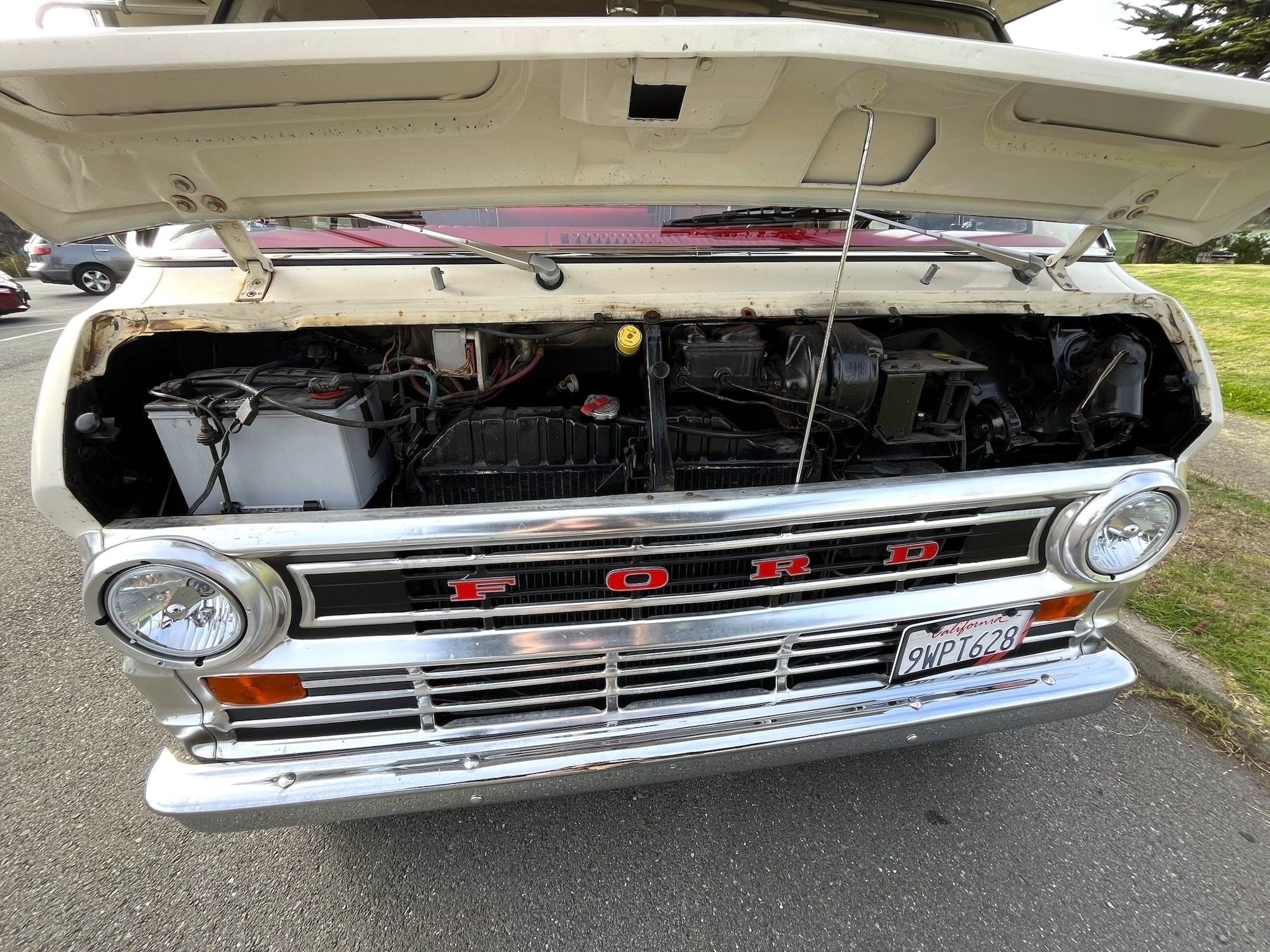
The second-gen Econoline was planned as a 1968 model, but a UAW strike delayed it, and Ford eventually sold it as a 1969 model. The front axle and engine had moved forward, though the engine still sat mostly under a cover inside the cab, with a small snub nose hood outside for routine fluid checks.
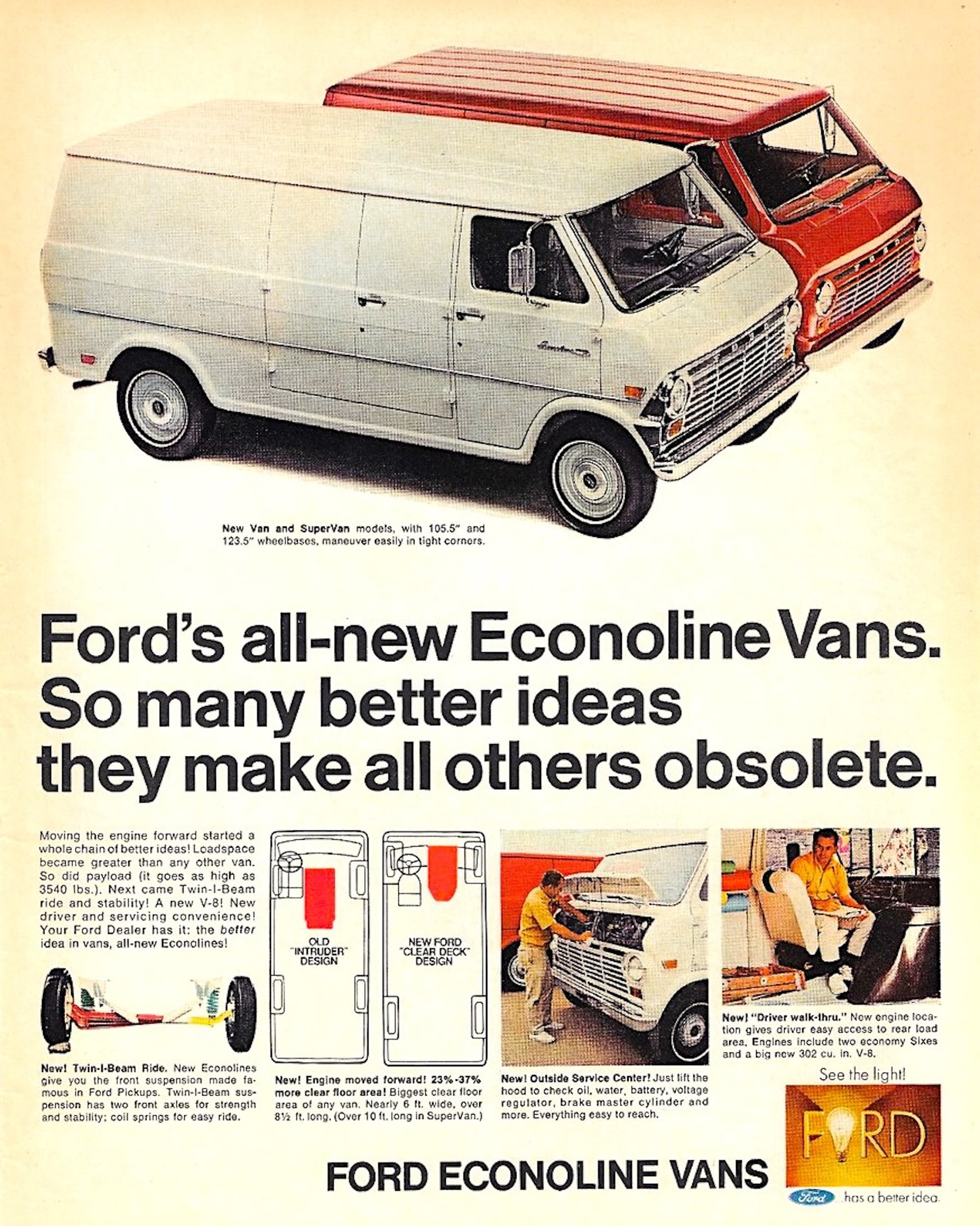
The second-gen Econoline was planned as a 1968 model, but a UAW strike delayed it, and Ford eventually sold it as a 1969 model. The front axle and engine had moved forward, though the engine still sat mostly under a cover inside the cab, with a small snub nose hood outside for routine fluid checks. Image courtesy of Ford.
The Falcon hardware from the earlier models gave way to F-Series truck parts, including Twin I-Beam front suspension, which suspends each front wheel on its own independent beam. Wheelbases grew to 105.5 and 123.5 inches, the body stayed unitized though, and a 302 cubic inch (4.9 liter) V8 was offered for the first time. So was air conditioning. Once again, Ford had set the trend, GM and Chrysler followed this layout too, with their own new vans for 1971.
The Third-Generation Econoline
For 1975, the third generation Econoline put the family of vans on a separate full-length chassis. The wheelbases stretched out to 124 and 138 inches, the hood doubled in length, and the engine range now reached all the way up to the 460 cubic inch (7.5 liter) V8.
The frame made it a natural base for custom body building firms. Ford added a chassis cab version for 1978, and by 1995 it said the Econoline held 90% of the ambulance market and 90% of the Class C motorhome market. The van suited the 1970s custom scene as well, and for 1976 Ford sold its own factory-customized Cruising Van with loud paint, carpeting, and of course, porthole windows.
By 2010, Ford said, it had been America’s best-selling full-size van for 31 straight years.
The Fourth-Generation Econoline
The fourth-gen Econoline followed for 1992, with a new body and interior on a chassis that was largely carried-over from the previous generation. Ford began calling it the “E-Series” in its marketing literature in 2001 and gave it a Super Duty-inspired nose for 2008.
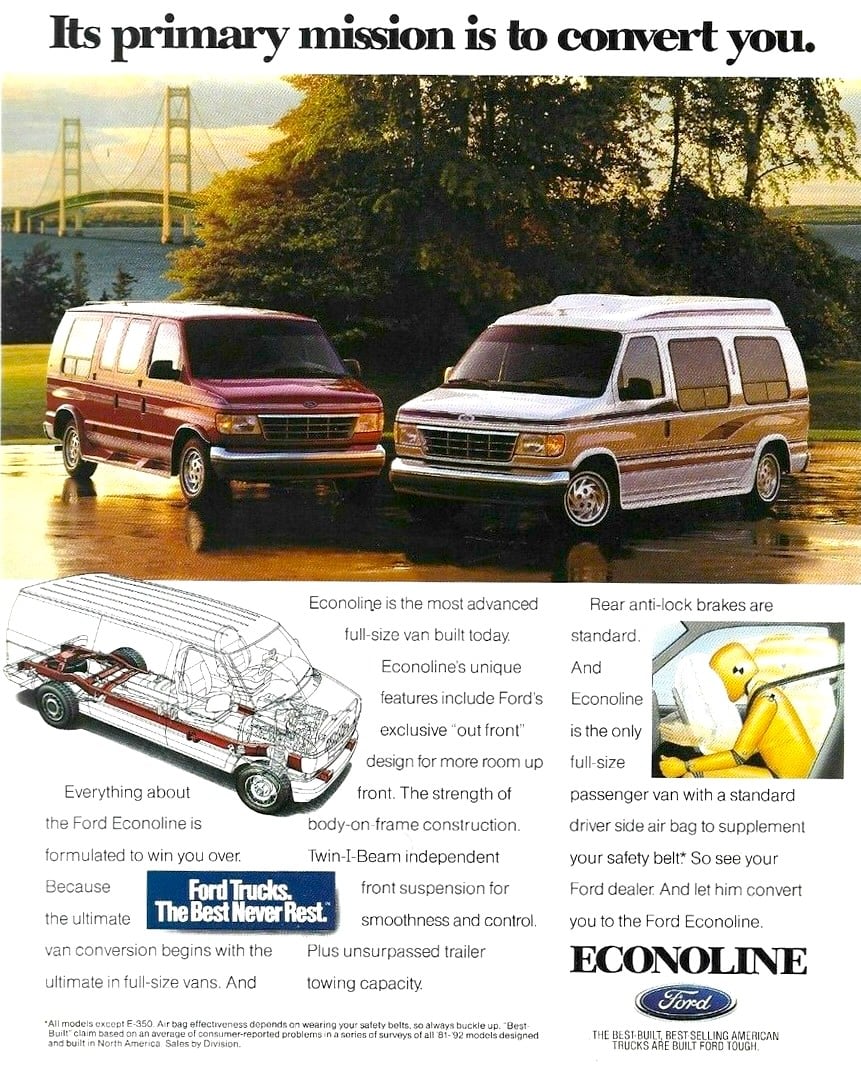
The fourth-gen Econoline followed for 1992, with a new body and interior on a chassis that was largely carried-over from the previous generation. Ford began calling it the “E-Series” in its marketing literature in 2001 and gave it a Super Duty-inspired nose for 2008. Image courtesy of Ford.
That year Ford began marketing it strictly as a commercial vehicle, though passenger wagons stayed in the lineup for a while longer. The cargo vans and wagons eventually ended their run after the 2014 model year, replaced by the Ford Transit van. The cutaway and stripped chassis versions both stayed in production at Avon Lake, Ohio, and since the 2021 model year they’ve used the hefty 7.3 liter gasoline V8 from the Super Duty pickups.
The 1971 Ford Econoline E-300 Motorhome Shown Here
This is a 1971 Ford Econoline E-300 Shasta Motorhome, it was built on an Econoline chassis that left the Lorain, Ohio, assembly plant as a chassis cab before being fitted with its camper body by Shasta Trailers in Simi, California.
It later spent time in Colorado and Utah before being bought by the current owner in 2025. The outside is finished in white with red stripes and it has Shasta’s distinctive bright metal wings on both sides, sliding windows, West Coast-style mirrors, folding entry steps, and a receiver hitch at the back.
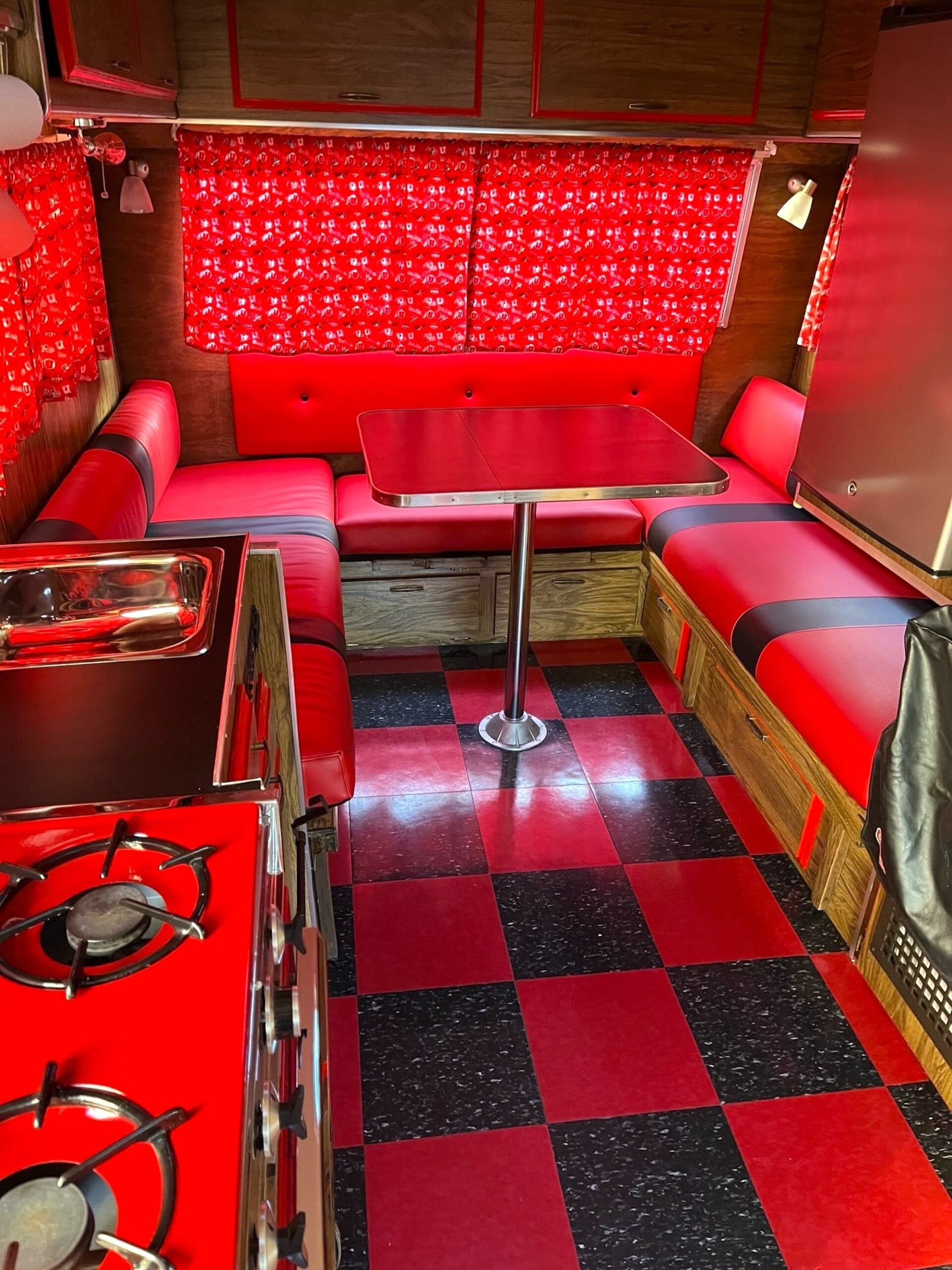
The living quarters in the back were refurbed under previous ownership with custom red and black upholstery, checkerboard flooring, and woodgrain cabinetry with red accents. The kitchenette has a three-burner stove, a replacement 120V refrigerator/freezer, a tile backsplash, and a water heater.
Other upgrades include a replacement water system, radiant heater, roof-mounted air conditioning, and LED lighting. The rear dinette converts into a bed, while the enclosed bathroom contains a cassette toilet, sink, and ventilation fan.
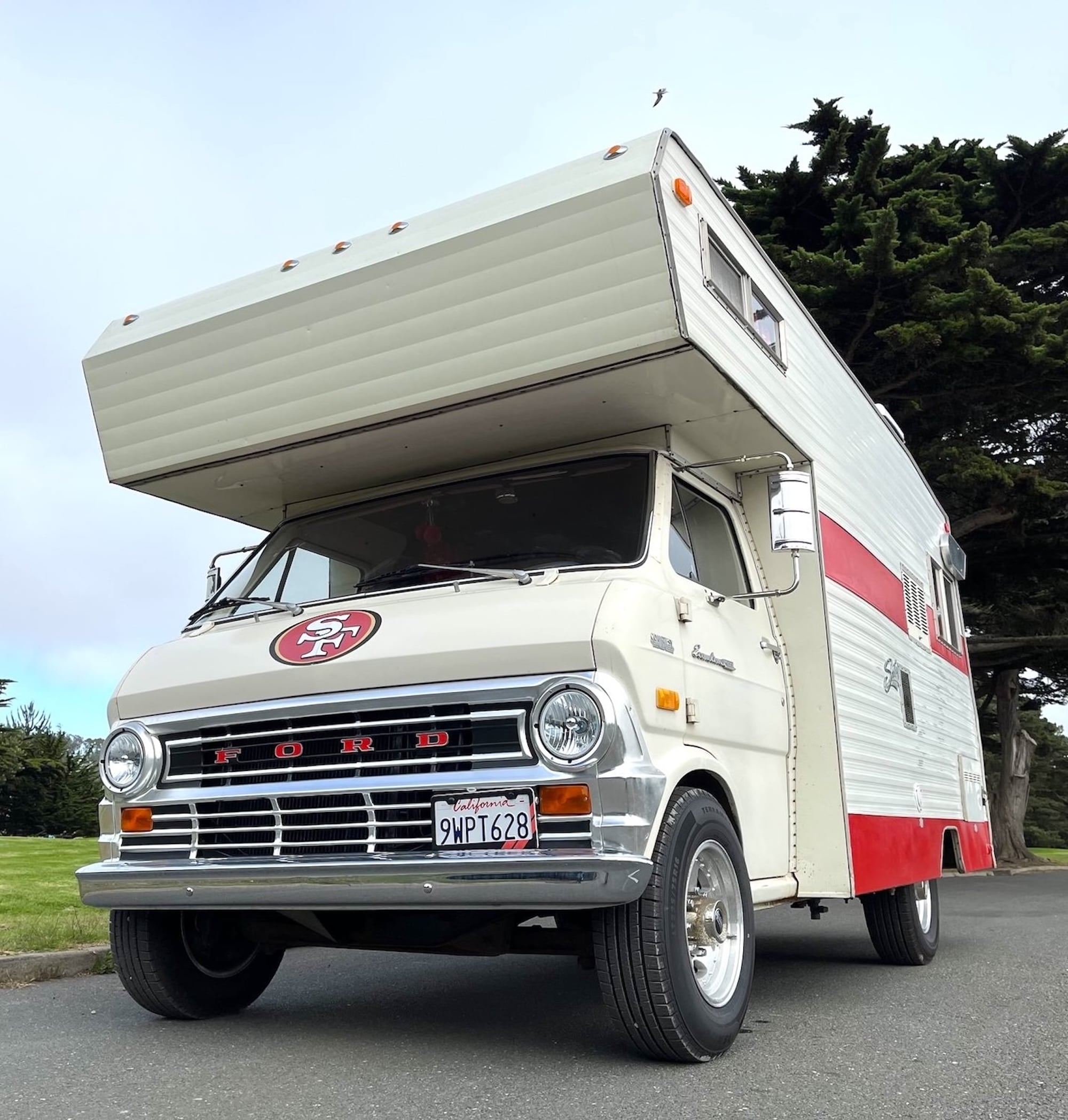
This is a 1971 Ford Econoline E-300 Shasta Motorhome, it was built on an Econoline chassis that left the Lorain, Ohio, assembly plant as a chassis cab before being fitted with its camper body by Shasta Trailers in Simi, California.
Power is provided by a 302 cubic inch (5.0 liter) Ford V8 driving the rear wheels through a 3-speed automatic transmission, reportedly overhauled at 75,000 miles. It rides on eight-lug American Racing alloy wheels fitted with Sailun Terramax tires, with power-assisted front disc brakes and rear drums. The five-digit odometer currently displays approximately 77,000 miles, around 1,000 of which were added under current ownership.
This motorhome is being offered for sale at no reserve with a clean California title out of San Francisco, its original Ford build sheet, period literature, and a handwritten notebook containing records dating back to 1973. If you’d like to read more about it or register to bid you can visit the listing here.
Images courtesy of Bring a Trailer + Ford

Articles that Ben Branch has written have been covered on CNN, Popular Mechanics, Smithsonian Magazine, Road & Track Magazine, the official Pinterest blog, the official eBay Motors blog, BuzzFeed, Autoweek Magazine, Wired Magazine, Autoblog, Gear Patrol, Jalopnik, The Verge, and many more.
Silodrome was founded by Ben back in 2010, in the years since the site has grown to become a world leader in the alternative and vintage motoring sector, with well over a million monthly readers from around the world and many hundreds of thousands of followers on social media.