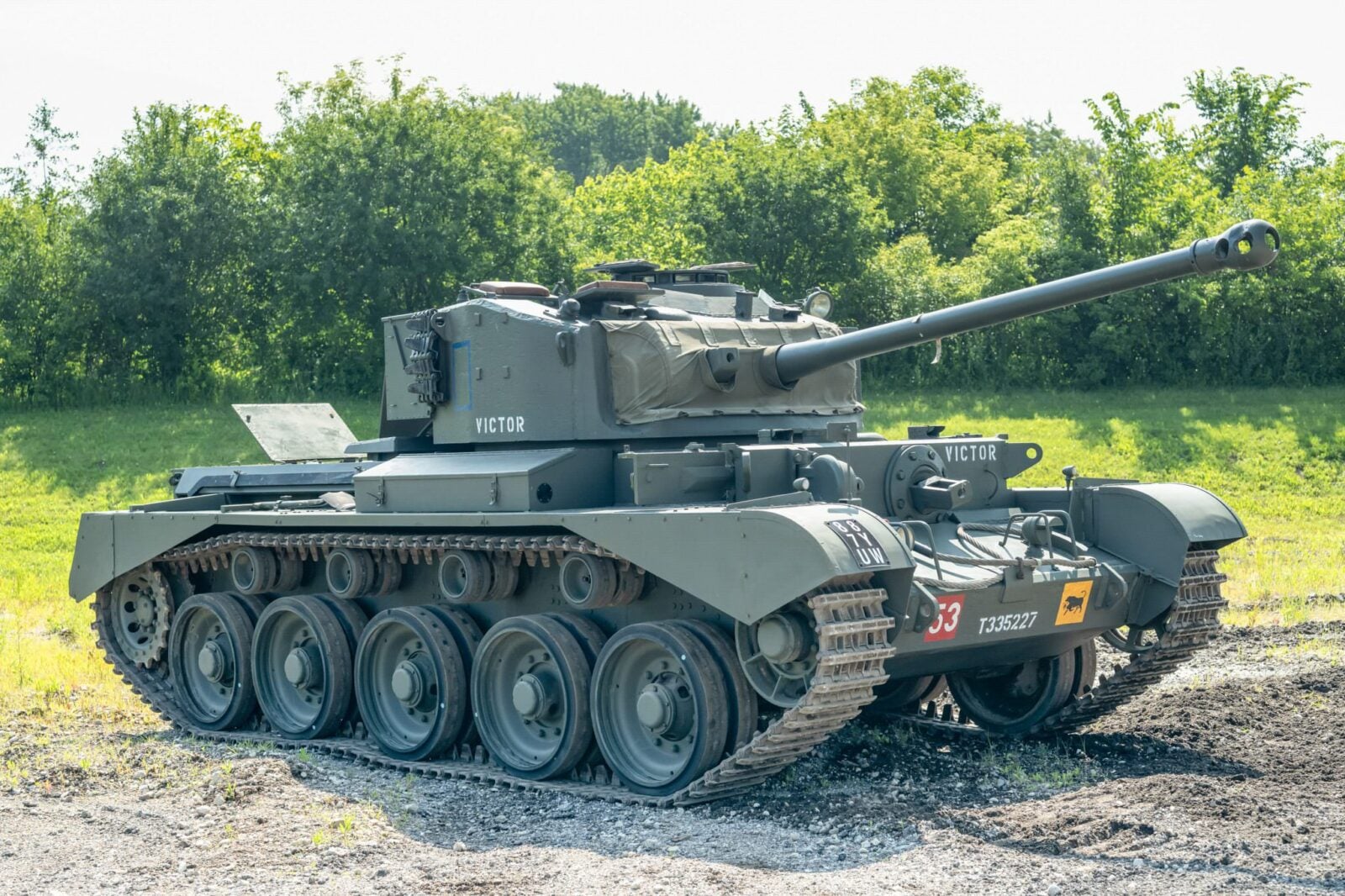
This is a WWII-era A.34 Comet Tank from 1945, it’s powered by a 27 liter Rolls-Royce Meteor V12 (derived from the legendary Merlin), and it benefits from a refurbishment from the Isle of Wight Military and Heritage Museum.
The Comet was one of the best-armed British tanks of the war (along with the Sherman “Firefly” converted tanks), it was also one of the quickest thanks to that prodigious Rolls-Royce V12. Only a handful have survived to the current day, and only a small number remain operation like this one.
Above Video: This is the episode on the Comet by The Tank Museum, the best channel on YouTube when it comes to tank history.
History Speedrun: The Comet Tank
The Tank, Cruiser, Comet I A34 (as it was formally named) was the last cruiser tank fielded by the British Army in the Second World War. It was developed from the earlier A27M Cromwell and was fitted with a new 77mm high-velocity gun derived from the 17 pounder, it entered service with the 11th Armoured Division in January of 1945 and served in British units until 1960. Its crews (and many later historians) have called it the best British tank of the war.
The Comet was developed to answer a specific problem faced by the Brits at the time – by 1943, combat in North Africa and the prospect of heavier German armor in Europe had exposed the firepower gap between British cruiser tanks of the time and the Panther and Tiger.
The Cromwell, though fast and mechanically sound, was primarily armed with the Ordnance QF 75mm gun. The intended high-velocity Vickers 75mm had proved too large for its turret. An interim 17 pounder cruiser, the A30 Challenger, extended the Cromwell hull and set a tall two-loader turret on top.
Truth be told, it was ungainly, delayed a number of time, and built in small numbers. In the meantime, the Sherman “Firefly” conversion carried the load for troop-level anti-armor firepower. The Firefly was a British WWII-era modification of the American M4 Sherman tank fitted with the 17 pounder anti-tank gun.
The Development Of The Comet
Development work on the A34 began under Leyland Motors in 1943, though the actual task of production was later distributed among Leyland, English Electric, John Fowler & Co, and Metropolitan-Cammell. The first prototype ran in February of 1944.
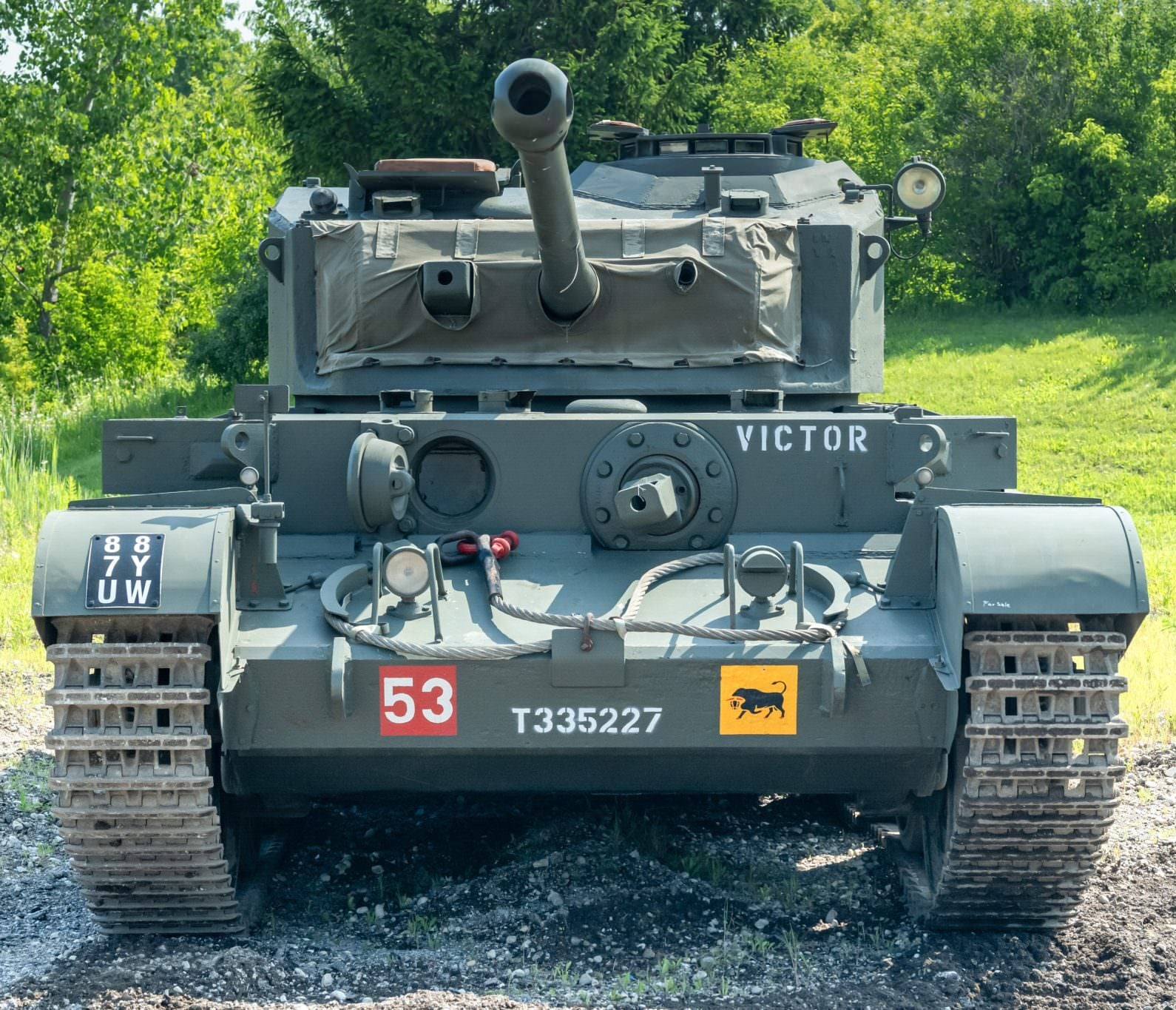
 This is a WWII-era A.34 Comet Tank from 1945, it’s powered by a 27 liter Rolls-Royce Meteor V12 (derived from the legendary Merlin), and it benefits from a refurbishment from the Isle of Wight Military and Heritage Museum.
Leyland kept the fundamental Cromwell layout but revised 60% of the parts – the turret ring was widened from 57 to 64 inches to accept the new gun, without stretching the hull as Challenger had required. The Christie suspension was strengthened, return rollers were added, the hull was fully welded, and the new turret combined welded plate with a cast mantlet.
The turret front and mantlet were up to 102 mm thick, with the hull front around 74 mm thick. The turret traverse was electric, driven by a generator off the main engine, replacing the Cromwell’s hydraulic system.
The 77mm HV Gun
The main armament was the Ordnance QF 77mm HV – its bore was 76.2 mm, the same as the legendary 17 pounder, and the projectiles were common between the two guns. The cartridge case, however, came from the older QF 3 inch 20 cwt anti-aircraft gun, loaded to higher pressures.
The resulting round was shorter and more compact than the 17 pounder’s, which made it far easier to store and handle inside a cruiser turret. The barrel was a shortened 17 pounder tube, muzzle velocity was somewhat lower than the full 17 pounder, but penetration remained excellent.
Firing APCBC ammunition, the 77mm HV was rated at roughly 110 mm of armor penetration at 1,000 yards. The later APDS round made the Comet dangerous to Panthers from the front, though penetration of the heavily sloped upper glacis wasn’t always assured even with a direct hit.
The “77mm” designation was a deliberate misnomer, chosen to prevent supply-line confusion between the Comet’s ammunition and the incompatible 17 pounder rounds used in the Firefly, Challenger, and Achilles. Secondary armament was two 7.92 mm Besa machine guns, one coaxial and one bow-mounted. Ammunition was stowed in armored bins.
Above Video: This episode from The Tank Museum features legendary British comedian Al Murray discussing the history and importance of the Comet with historian James Donaldson.
The 27 Liter Rolls-Royce Meteor V12
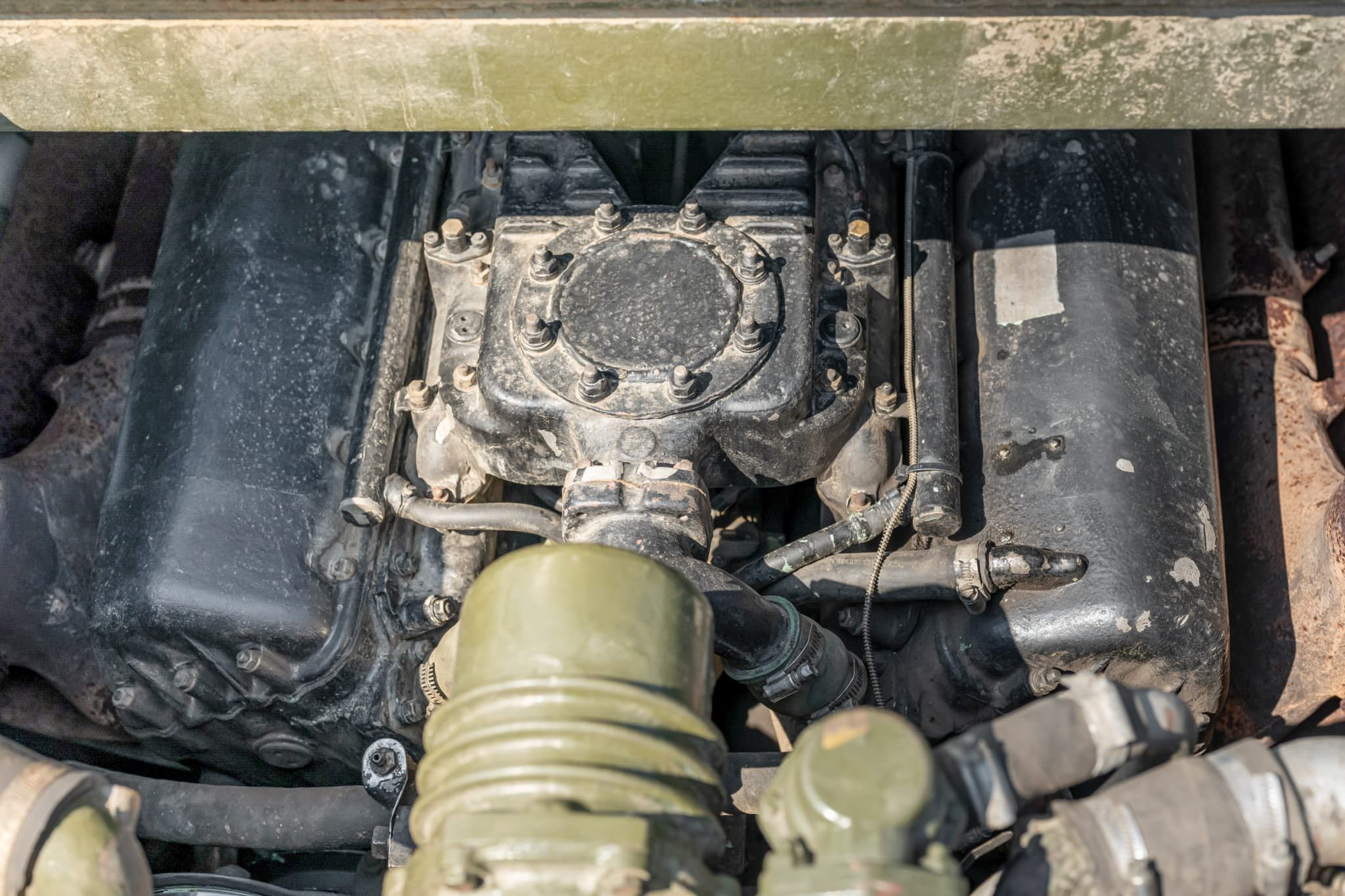
The Comet used the same engine as the Cromwell before it – the Rolls-Royce Meteor Mk III, a 27 liter naturally aspirated V12 producing 600 bhp. The Meteor was a direct derivative of the Merlin V12 aero engine that powered the Spitfire, Hurricane, Lancaster, Mosquito, and, in Packard-built form, the P-51D Mustang.
W. A. Robotham’s chassis division at Rolls-Royce, working out of the Clan Foundry in Belper, developed the Meteor in cooperation with Leyland Motors. The supercharger and reduction gear were removed, the crankshaft rotation was reversed to suit an automotive gearbox, and some of the Merlin’s lighter aircraft-grade parts were replaced in steel.
Many early Meteors were built from Merlin parts recovered from crashed aircraft. Production later moved to Rover under a 1942 arrangement that traded Rover’s jet-engine work at Barnoldswick to Rolls-Royce in exchange for the tank engine factory at Nottingham. The Meteor stayed in production until 1964 and powered the Cromwell, Comet, Challenger, and Centurion tanks.
In the Comet, the Meteor gave a power-to-weight ratio close to 18 bhp per ton, excellent by the standards of the time. At a combat weight of around 33 tons the tank could hold 32 mph on a road, and it was known for its good cross-country pace.
Comet Production + Service Life
Production ended in May of 1945 with 1,186 production vehicles completed. The 11th Armoured Division’s 29th Armored Brigade began preparing to swap its Shermans for Comets in December of 1944, but the Ardennes Offensive interrupted the process and the brigade hastily took its Shermans back into action.
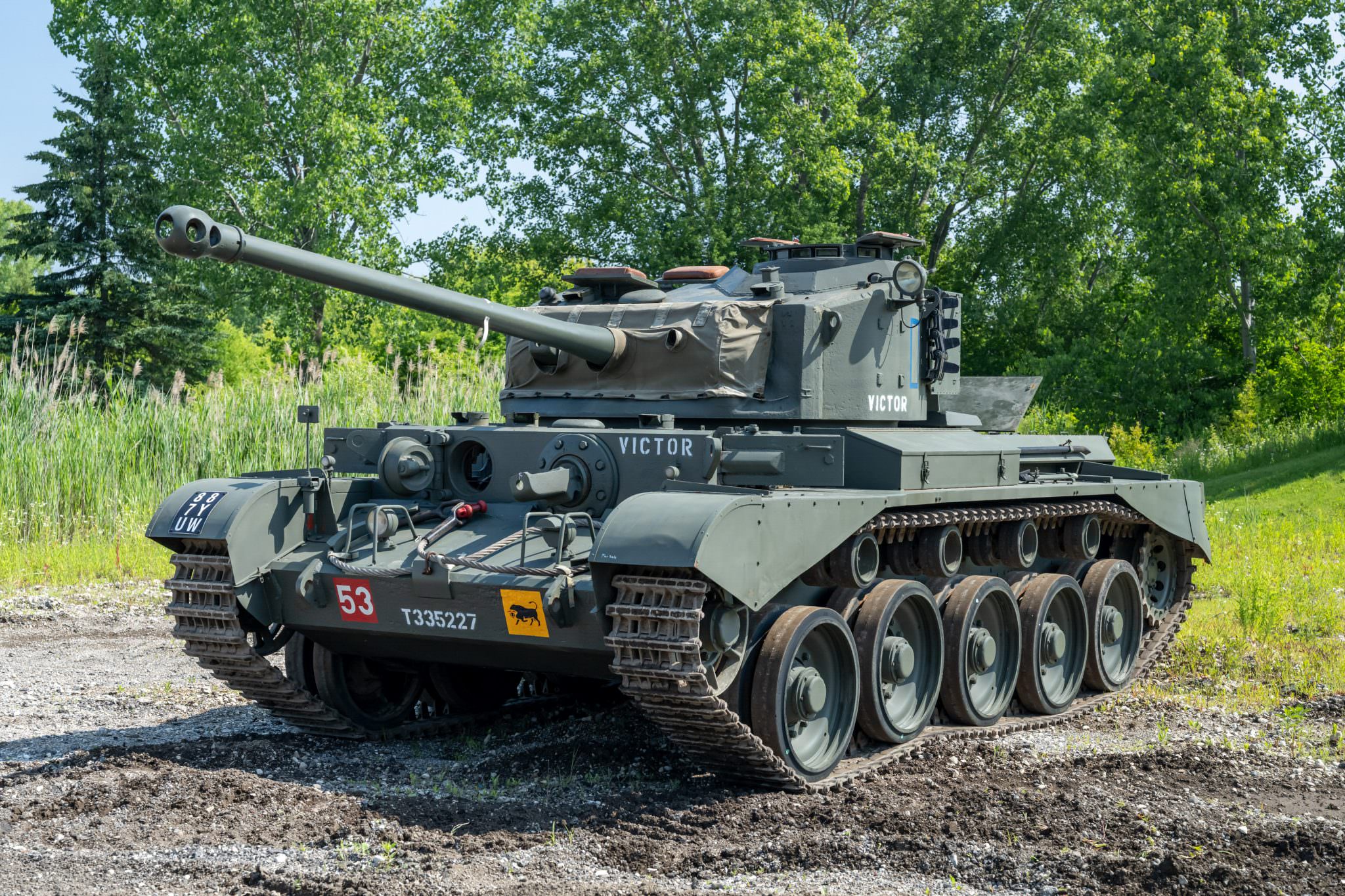
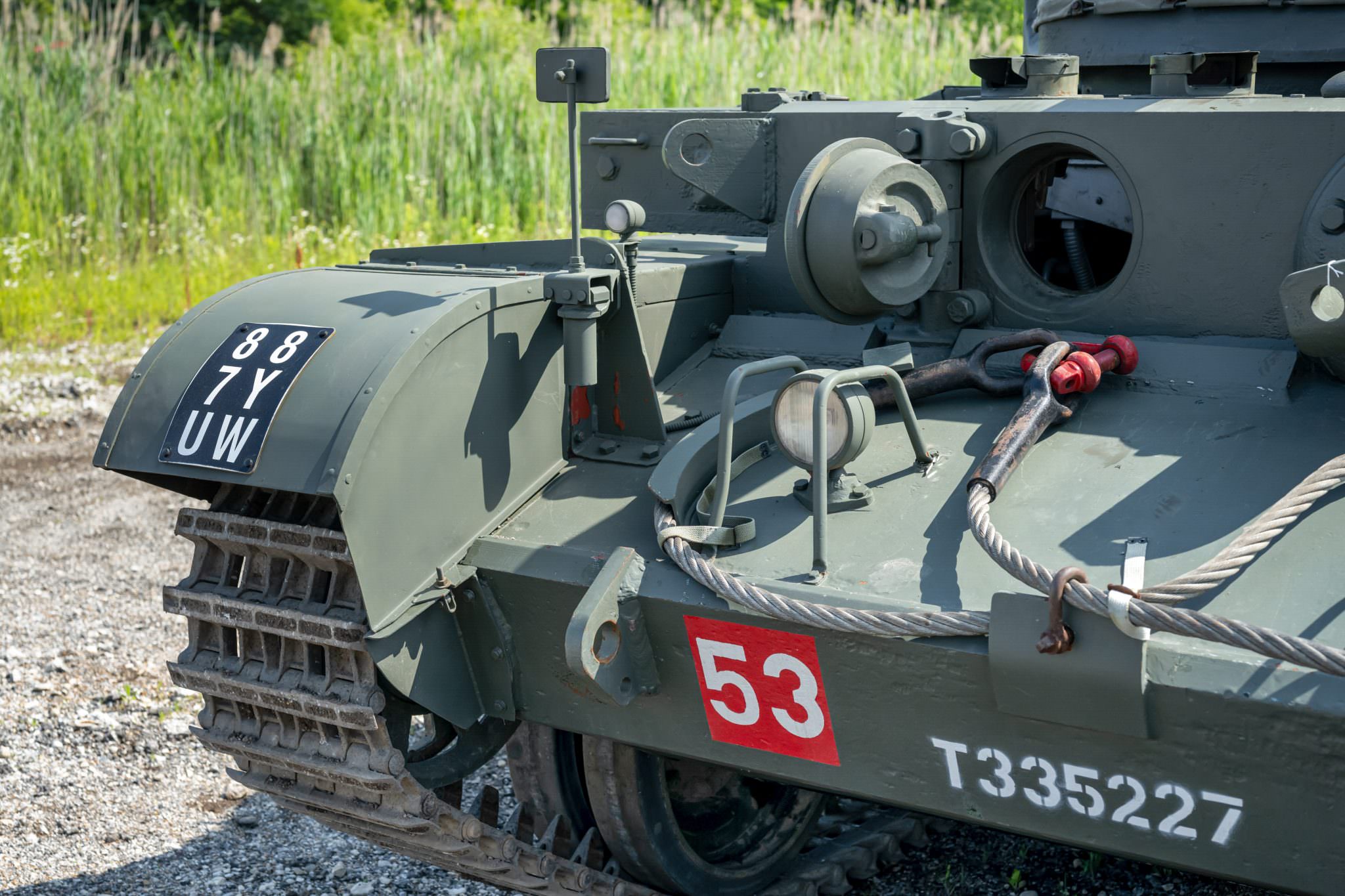
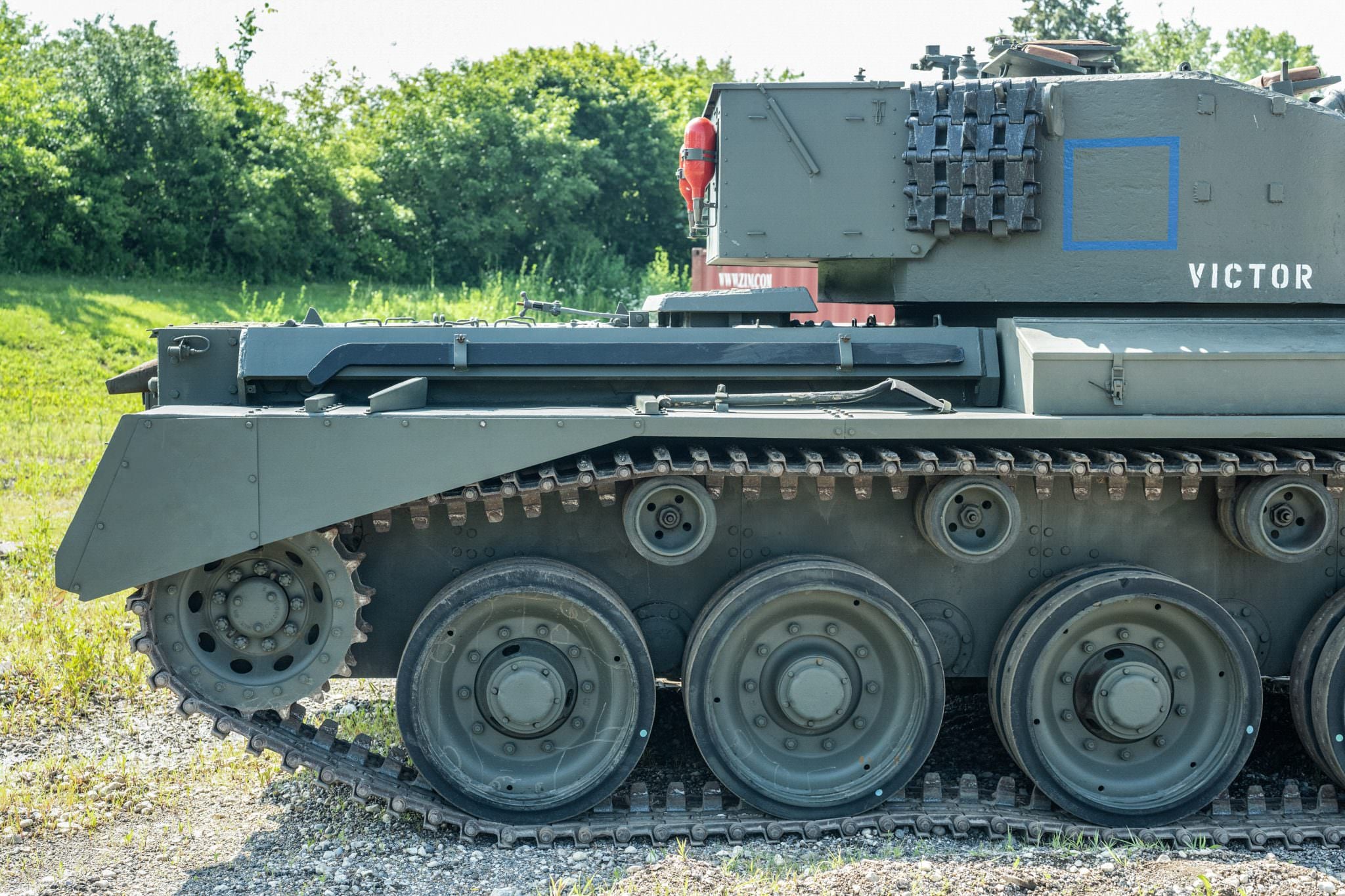
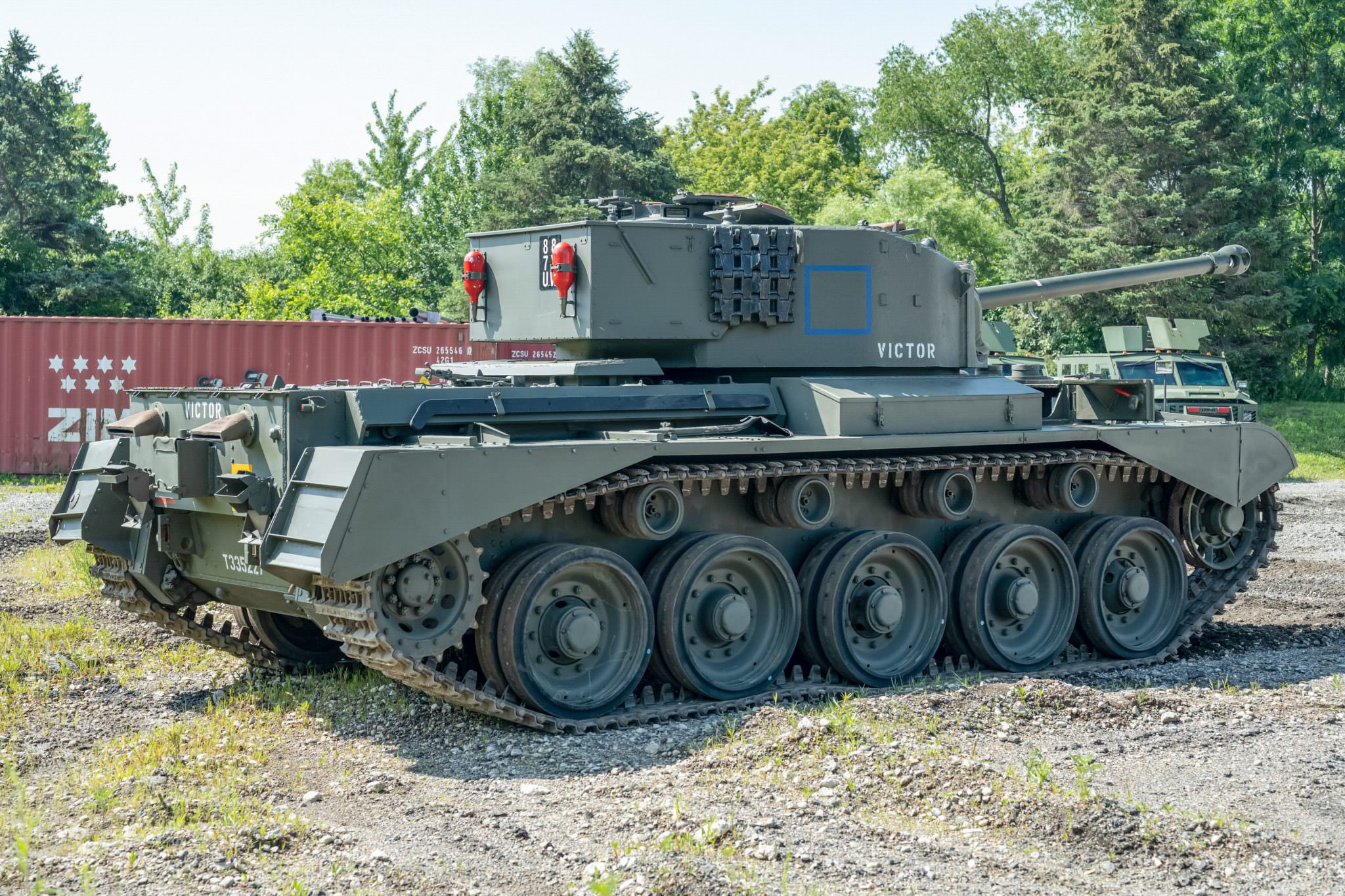
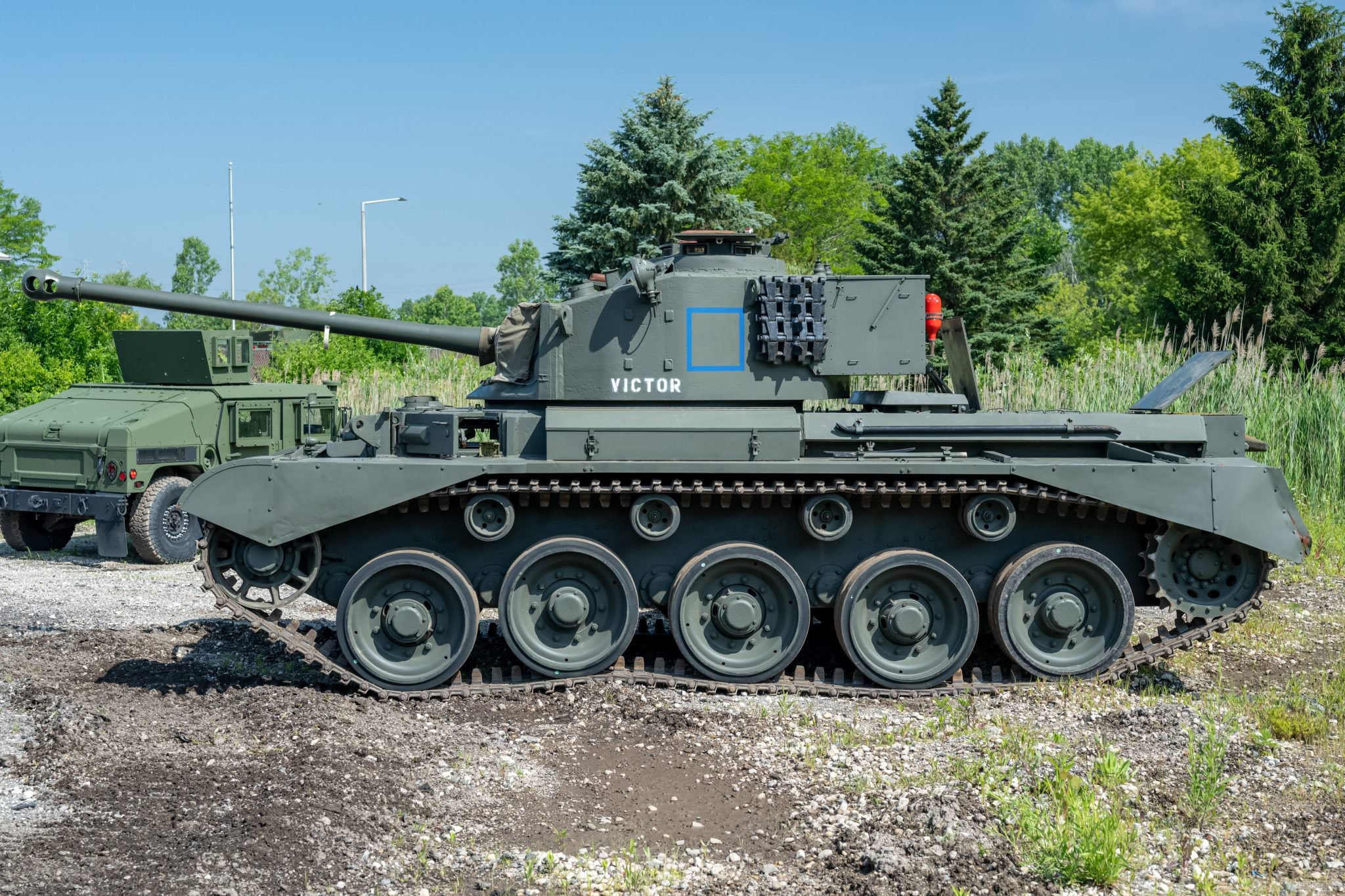
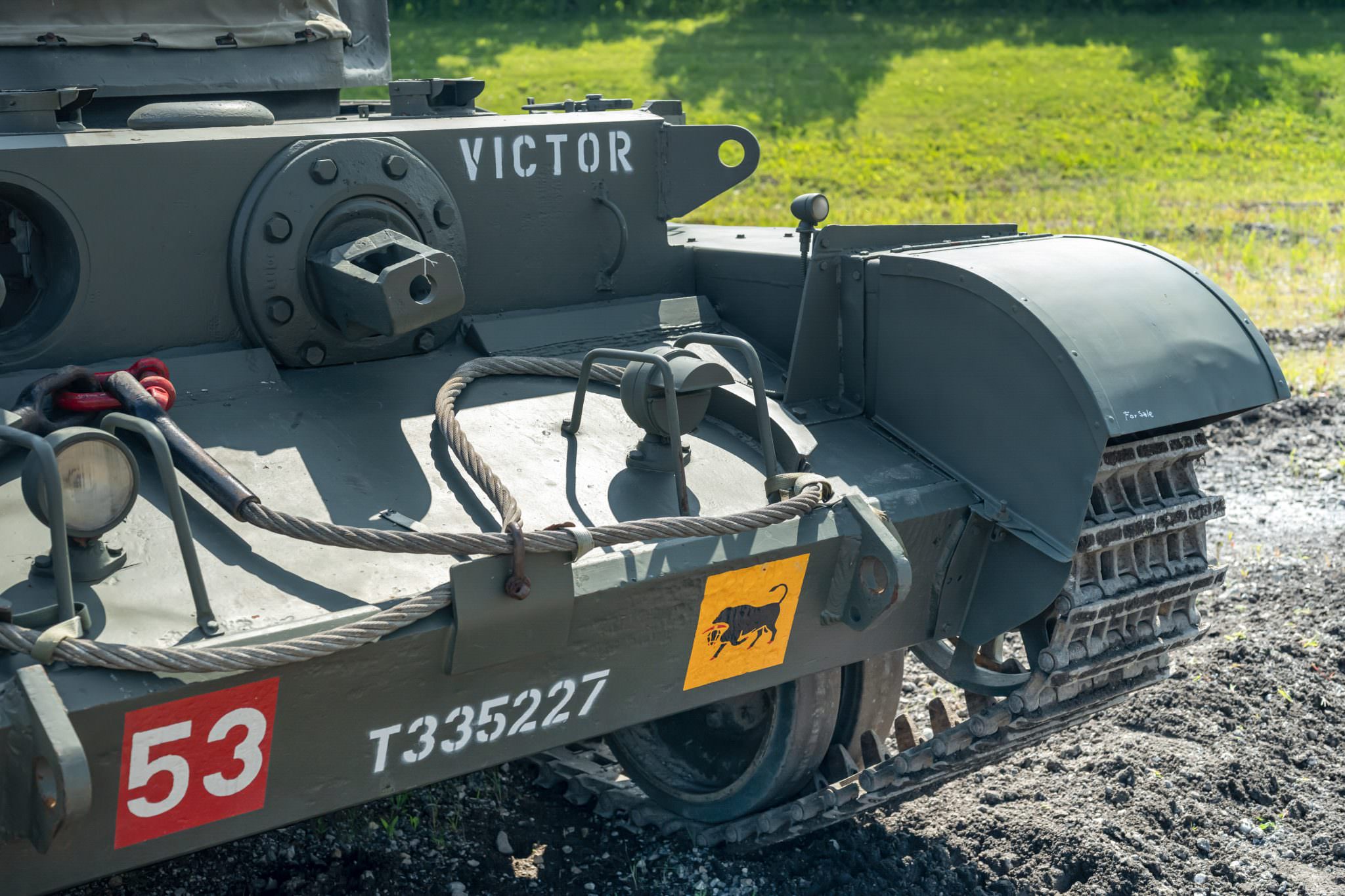
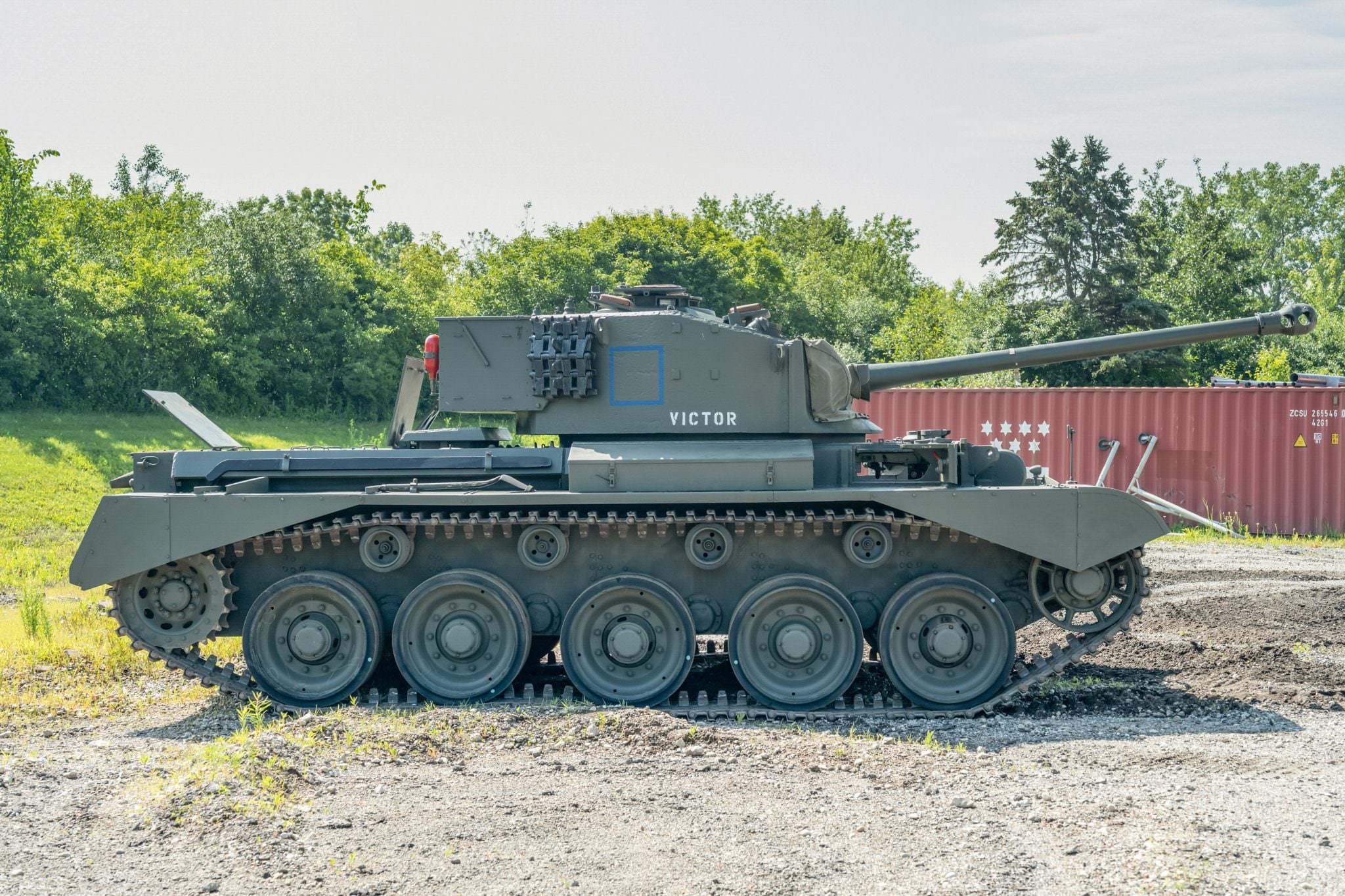
This is a 1945 A.34 Comet, it’s a Type B example named “Victor” and finished in olive drab with white stenciled military markings. It came out of a military museum in Geneva, was bought by a British collector, and was refurbished during its time at the Isle of Wight Military and Heritage Museum in the 2000s.
The conversion was completed in January of ’45, and the division would remain the only British formation fully re-equipped with the Comet before Germany surrendered. The tanks were used extensively during the Rhine crossing under Operation Plunder. The initial assault went in on the 23rd and 24th of March 1945, the 11th Armoured, held in reserve, crossed the Rhine at Wesel on the 28th of March and then took part in the fast advance across northern Germany to the Baltic.
The Comet’s road speed was used to full effect on Germany’s famous Autobahn network. A contingent of Comets took part in the Berlin Victory Parade in July of 1945.
In post-WWII British service the Comet was slowly replaced by the Centurion, itself a parallel wartime design also powered by the Meteor V12 and drawing directly on Comet transmission and running-gear experience. It was largely withdrawn by 1958, with final British service ending in Hong Kong in 1960.
Comets were also sold or transferred to Finland (41 in total, in service until around 1970), Ireland (8, delivered in 1959 and 1960), Burma, South Africa, and Cuba, with some operating well into the 1980s. Around 30 survive today in museums and private collections, and a handful of them remain in running condition.
The 1945 A.34 Comet Shown Here
This is a 1945 A.34 Comet, it’s a Type B example named “Victor” and finished in olive drab with white stenciled military markings. It came out of a military museum in Geneva, was bought by a British collector, and was refurbished during its time at the Isle of Wight Military and Heritage Museum in the 2000s.
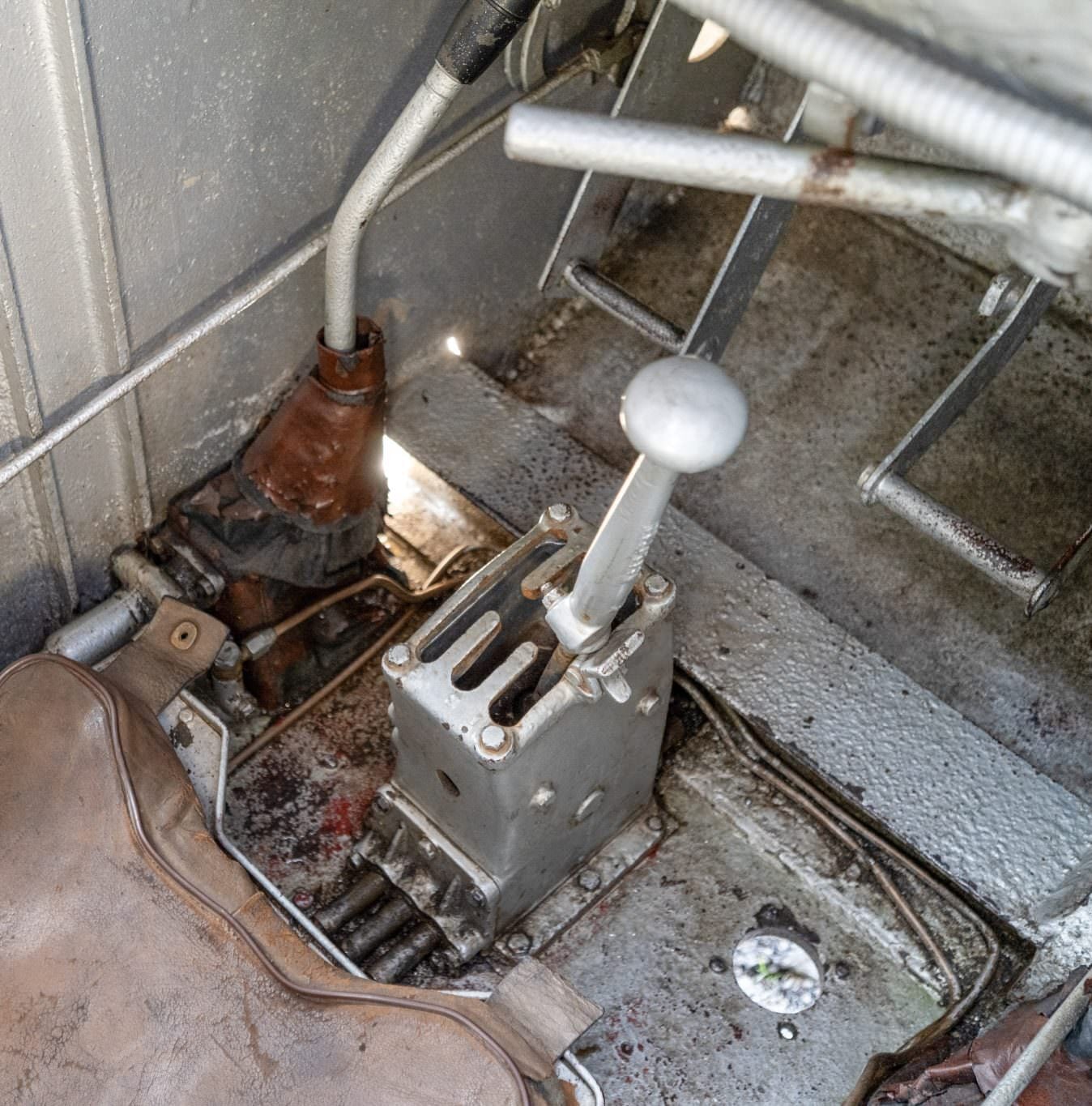
In 2021 it was brought to the United States, spending time at the House of Tank Museum in Wichita, Kansas, before being bought by the current seller roughly a year ago. Mechanically, the tank runs the 27 liter Rolls-Royce Meteor V12 paired with a Merritt-Brown Z5 constant-mesh 5-speed transmission with one reverse gear and integrated steering brakes for neutral steering.
The Meteor has dry-sump lubrication, dual carburetors, and dual magnetos, and one of the carburetors was disassembled and cleaned to fix a sticking float ahead of the sale. Suspension is the Christie type, with five rubber-rimmed road wheels per side on bell cranks and coil springs, four return rollers, rear drive sprockets, and front idlers running 18 inch single-pin tracks. The odometer reads 139 miles.
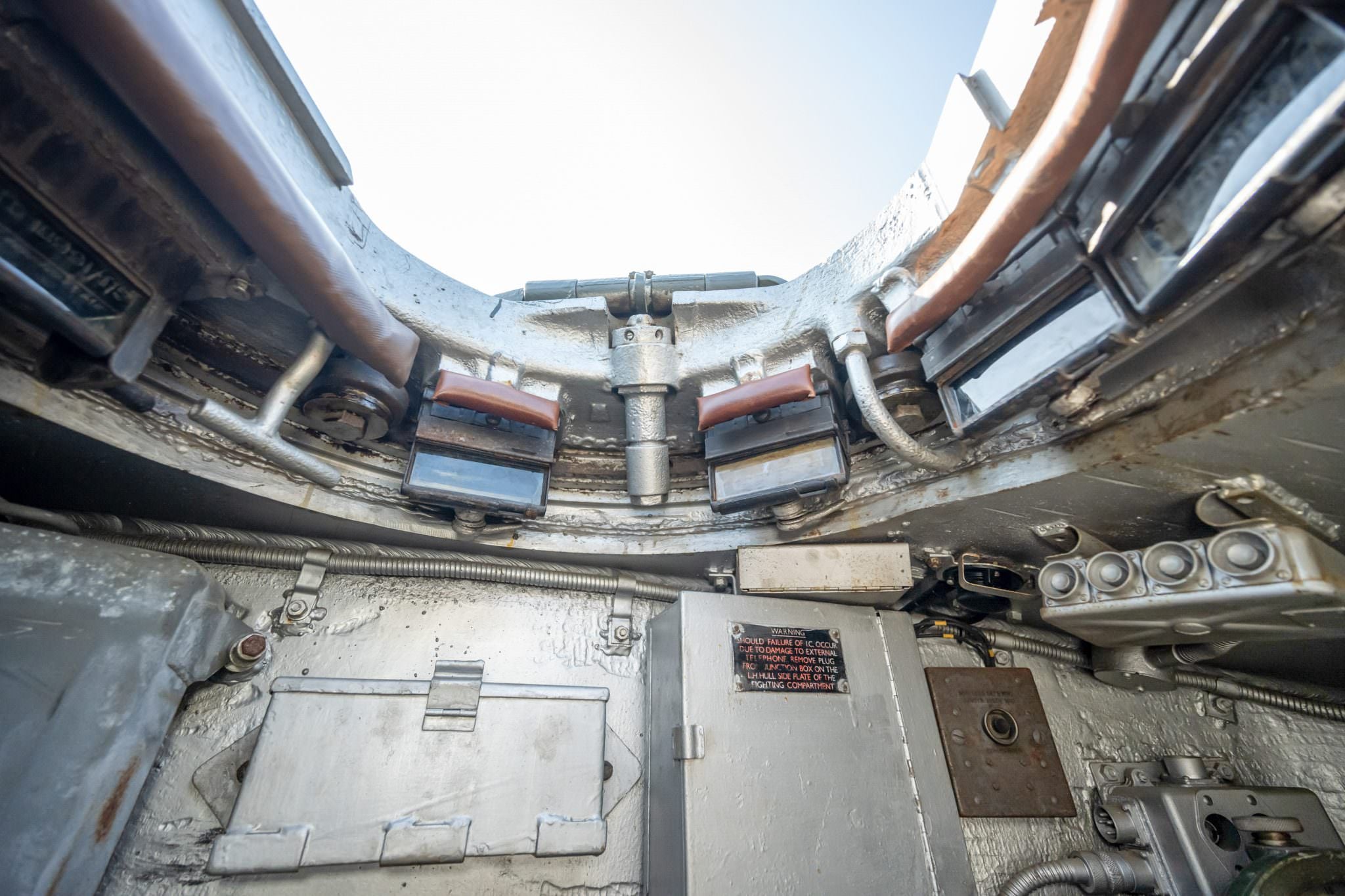
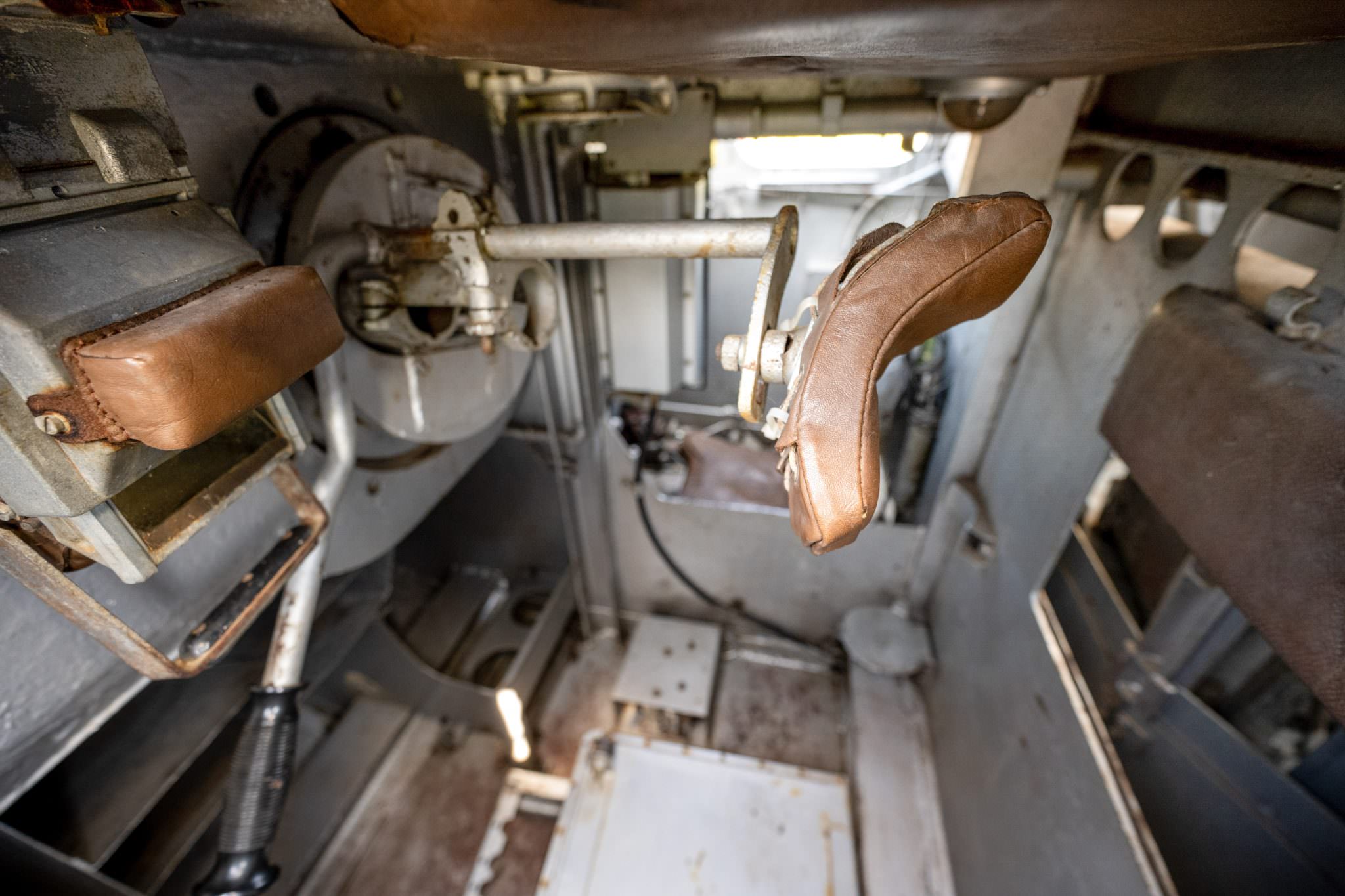
The armament is a 77mm HV main gun, demilitarized with a cut breech and a torch-cut hole in the high-pressure chamber. Machine-gun mantlets are fitted at the front hull plate and turret but no machine guns are installed. Turret features include a powered traverse, a commander’s cupola with 360º manual rotation and periscopes, a loader’s station, gunner’s controls with electric traverse handle and manual crank, a Wireless Set No. 19 radio, and a drinking water tank.
The driver sits in a padded seat on the right front of the hull with dual periscopes and a hinged circular visor, the bow gunner’s position has a periscope and mount but no gun.
The Comet was one of the best-armed British tanks of the war (not including the Sherman “Firefly” conversions), it was also one of the quickest thanks to that prodigious Rolls-Royce V12. Only a handful have survived to the current day, and only a small number remain operation like this one.
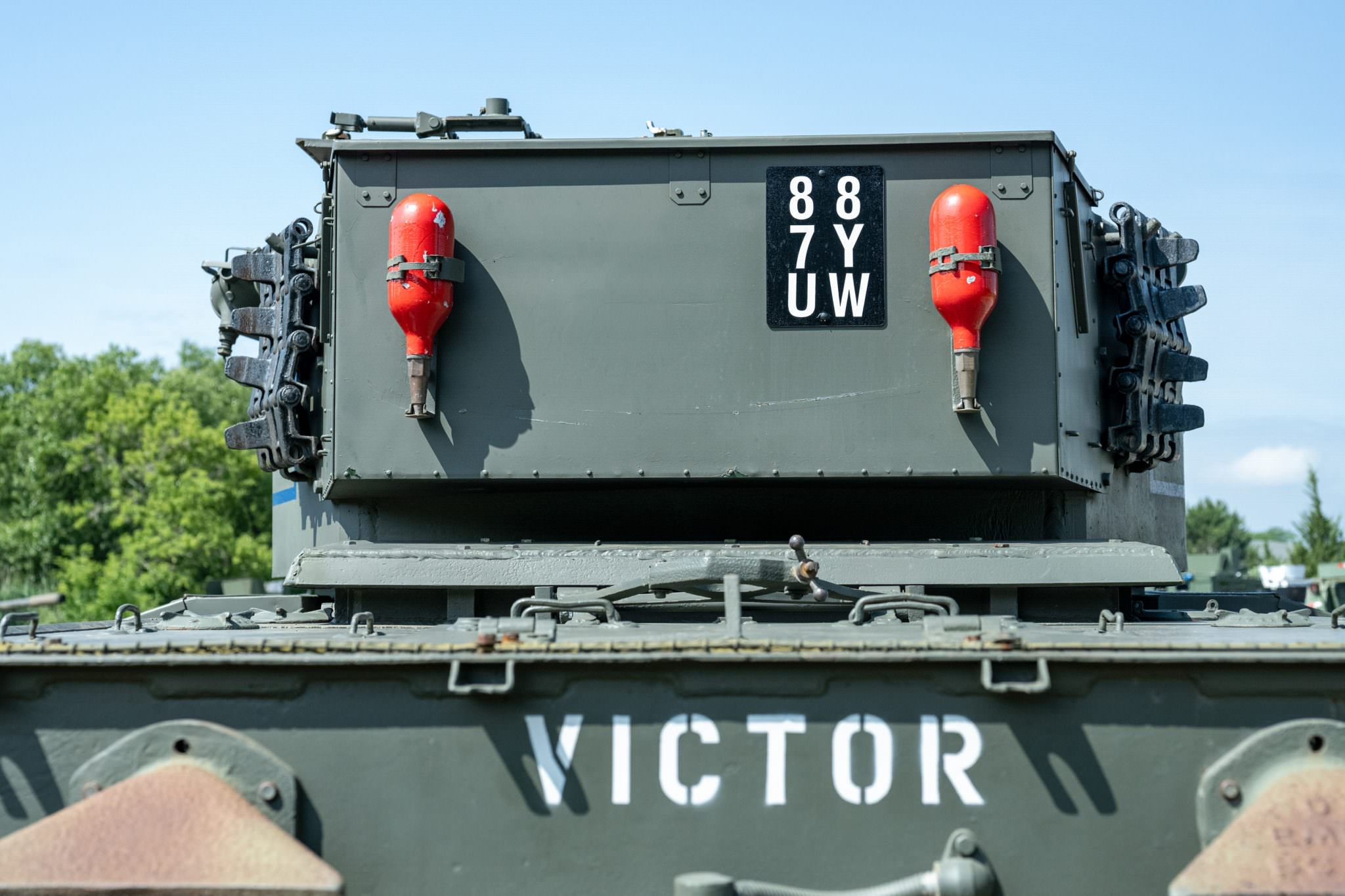
This Type B Comet has twin fishtail exhausts, welded hull with vertical front plate, a headlight, blackout driving light, commander’s spotlight and fold-down vane, hand tools, spare tracks, storage boxes, dual fire extinguishers, and a rear phone box flanked by disconnected smoke dischargers.
It’s now being offered for sale out of Zion, Illinois, on a bill of sale and you can visit the listing here if you’d like to read more or place a bid.
Images courtesy of Bring a Trailer

Articles that Ben Branch has written have been covered on CNN, Popular Mechanics, Smithsonian Magazine, Road & Track Magazine, the official Pinterest blog, the official eBay Motors blog, BuzzFeed, Autoweek Magazine, Wired Magazine, Autoblog, Gear Patrol, Jalopnik, The Verge, and many more.
Silodrome was founded by Ben back in 2010, in the years since the site has grown to become a world leader in the alternative and vintage motoring sector, with well over a million monthly readers from around the world and many hundreds of thousands of followers on social media.