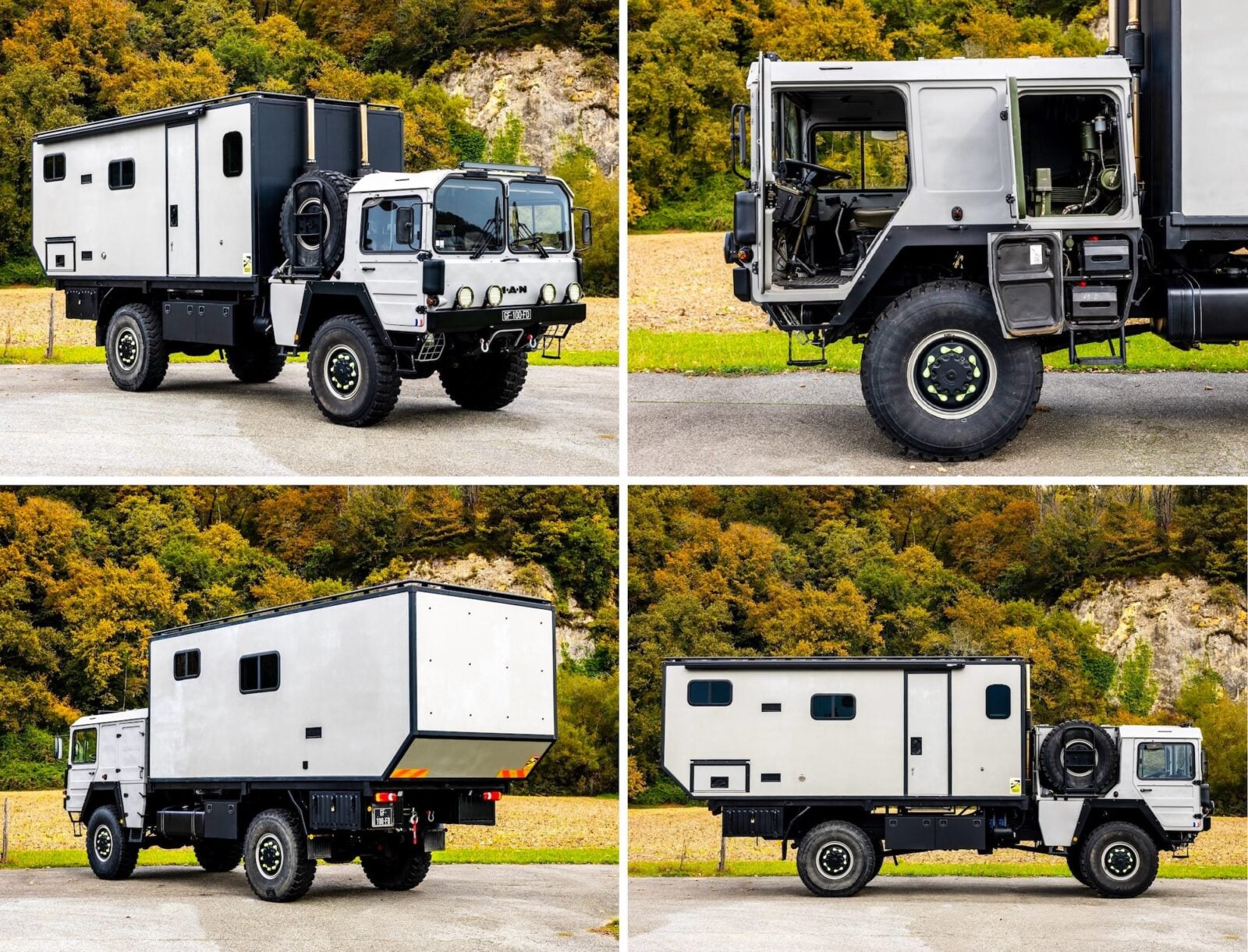
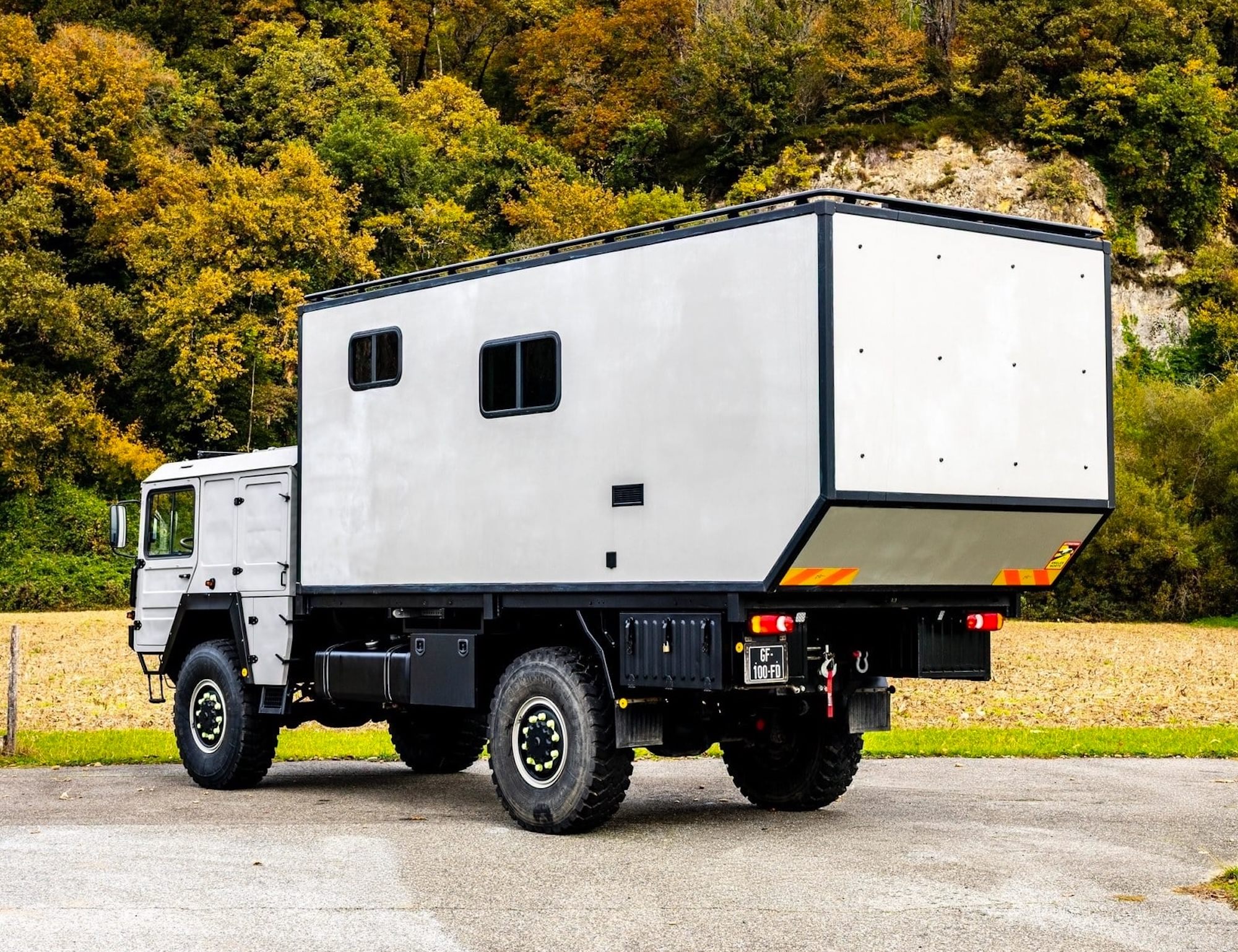
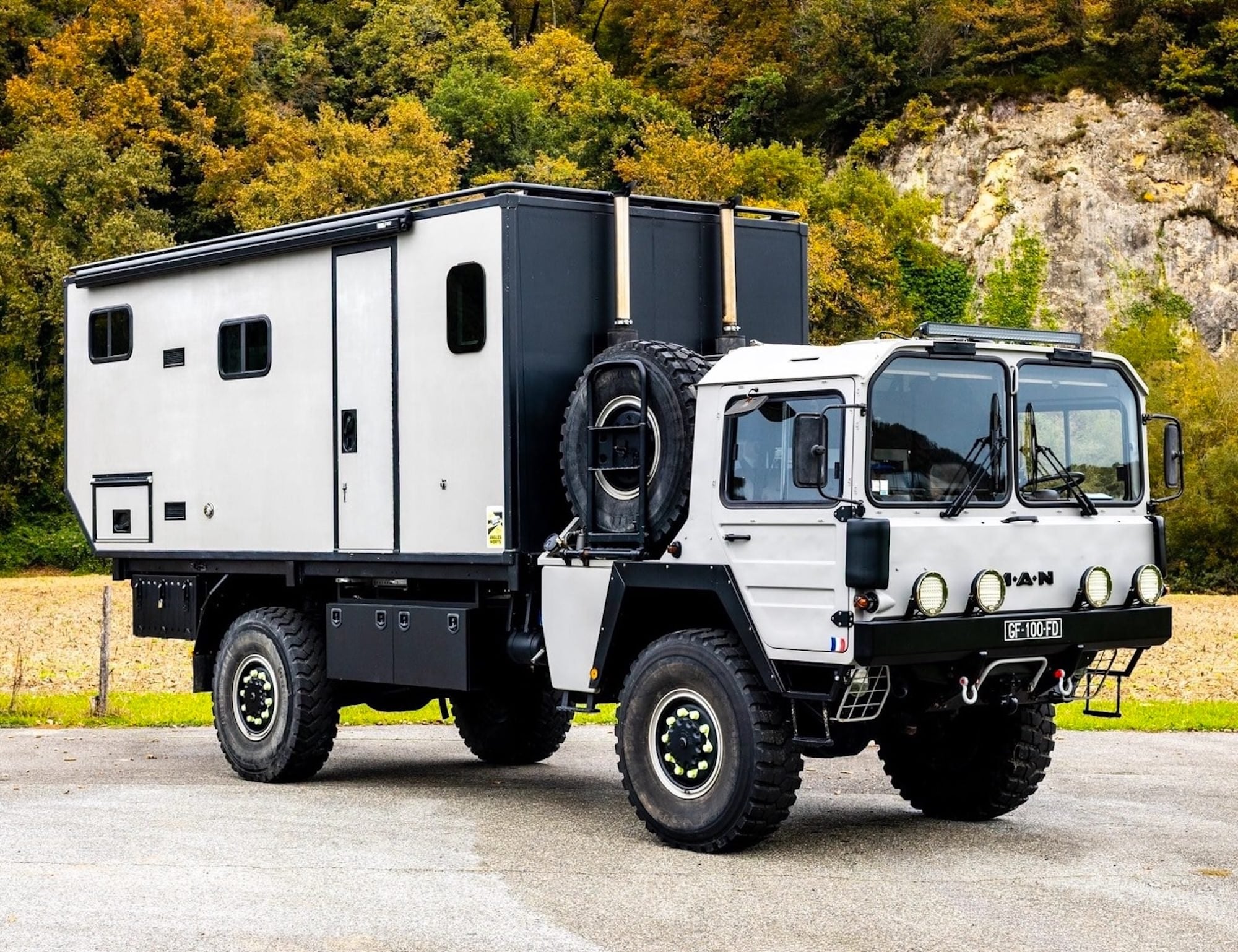
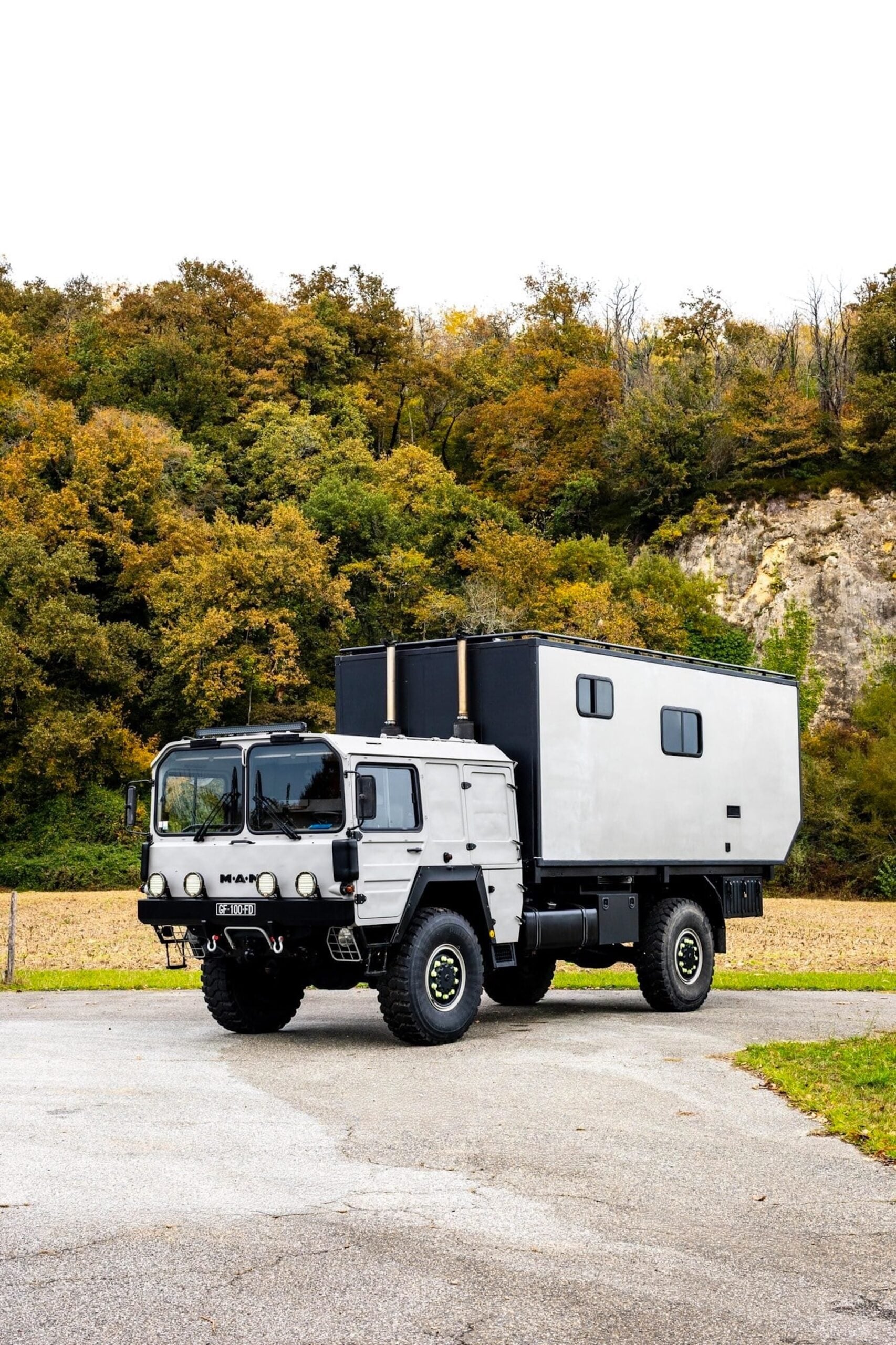
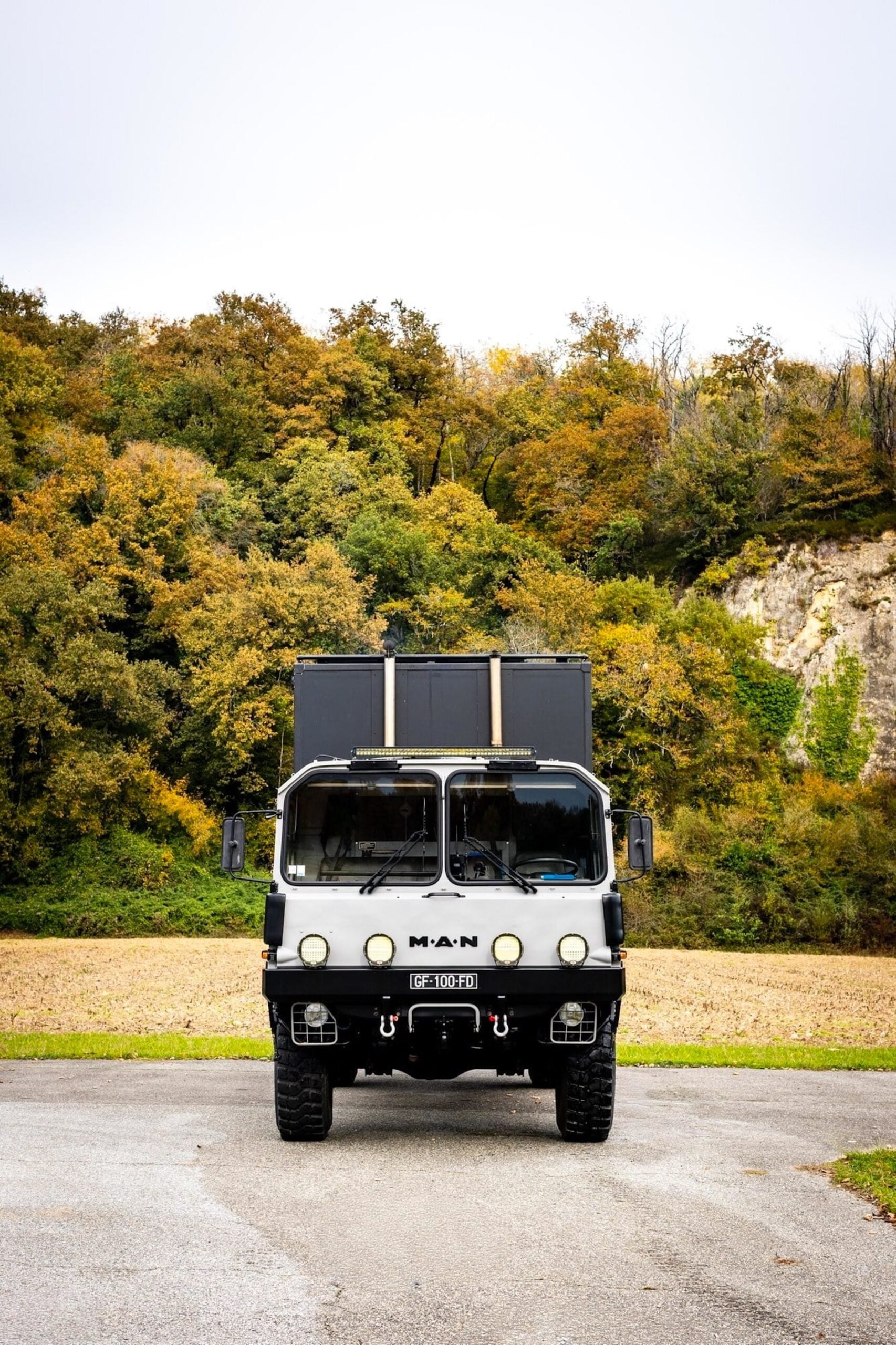
This is a 1980 MAN KAT1 that’s been converted into an expedition-grade motorhome, it’s powered by a 12.8 liter V8 diesel mated to a 6-speed transmission, and it’s four-wheel drive with a dual-range transfer case.
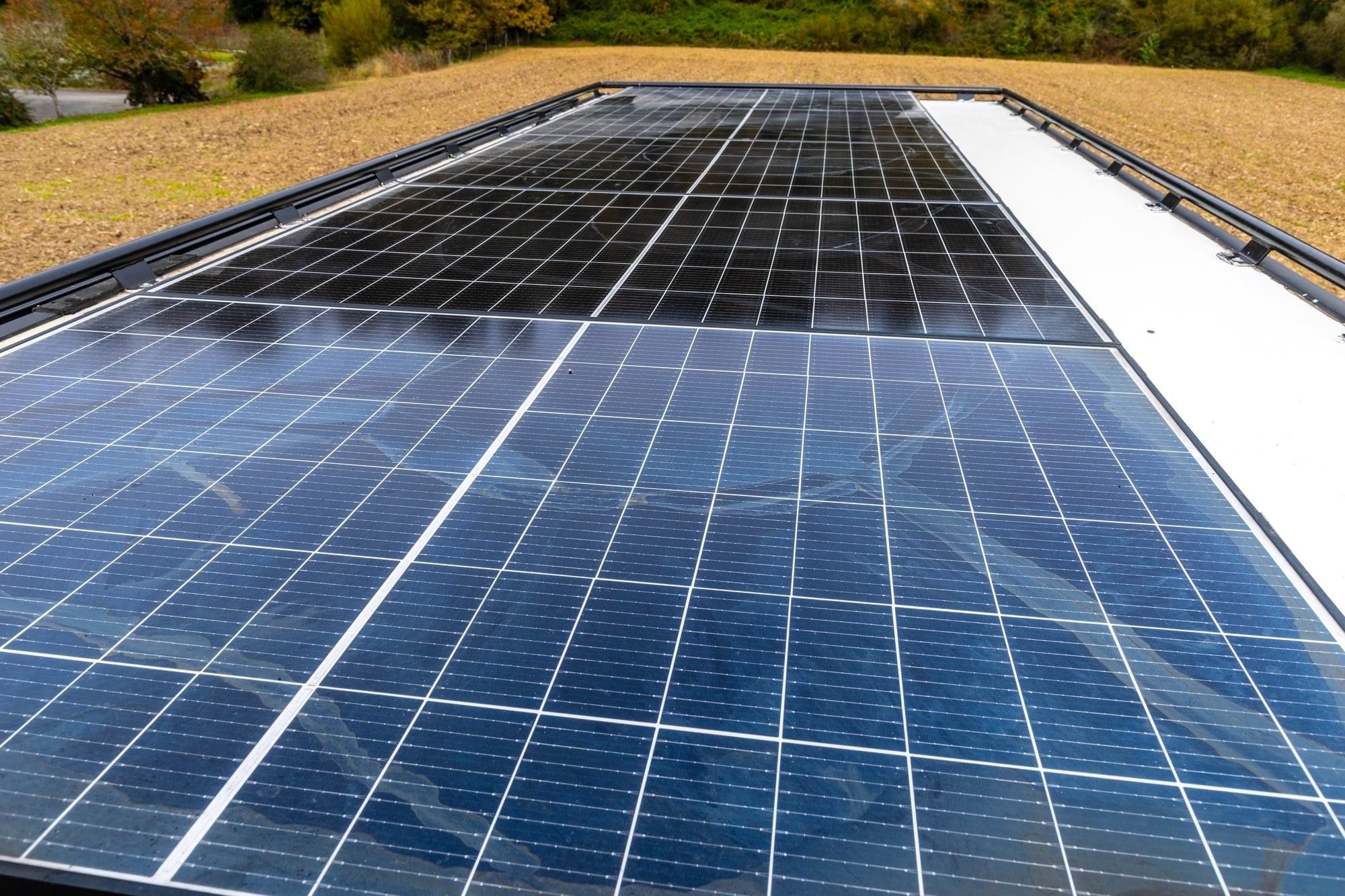
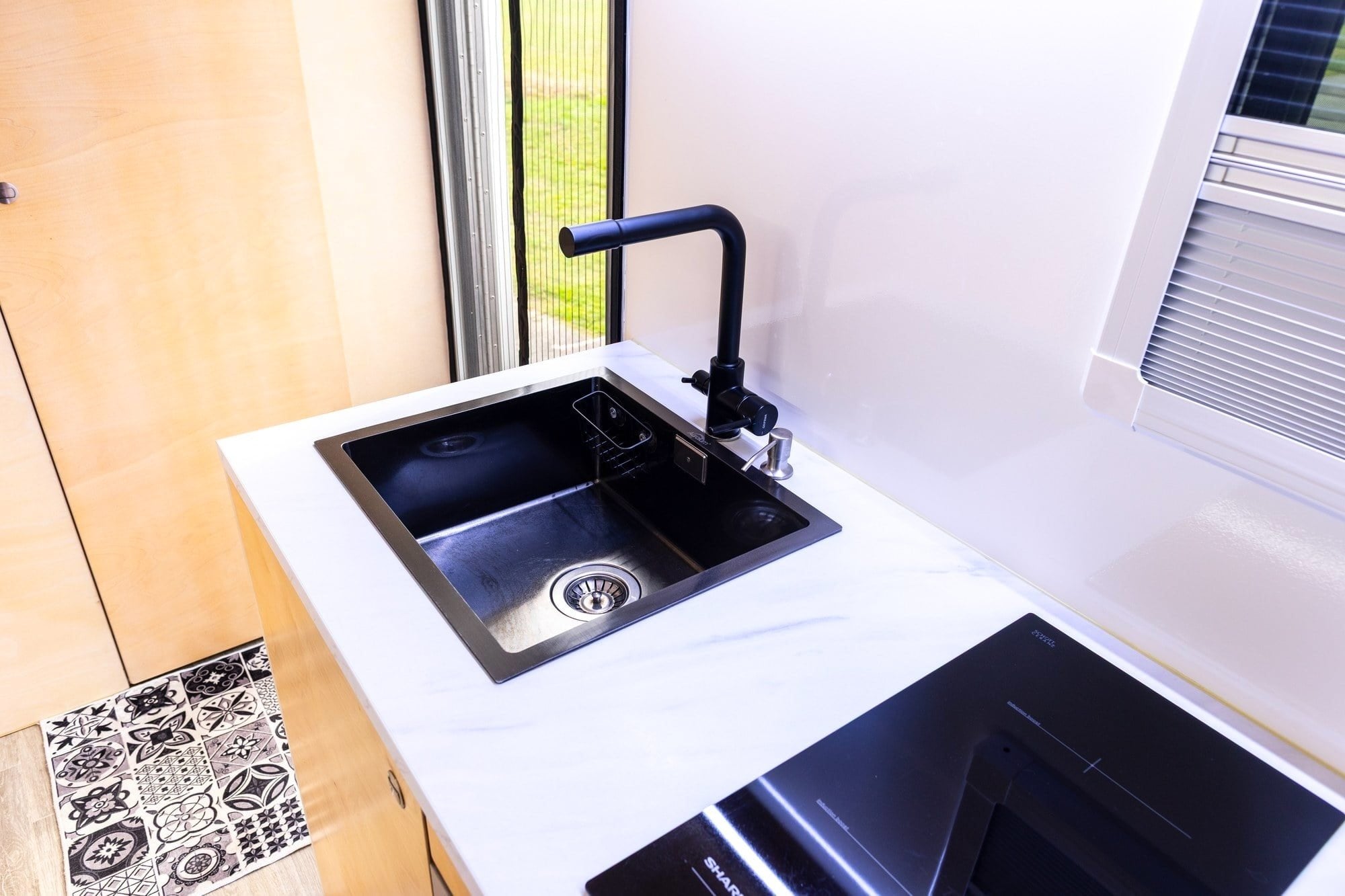
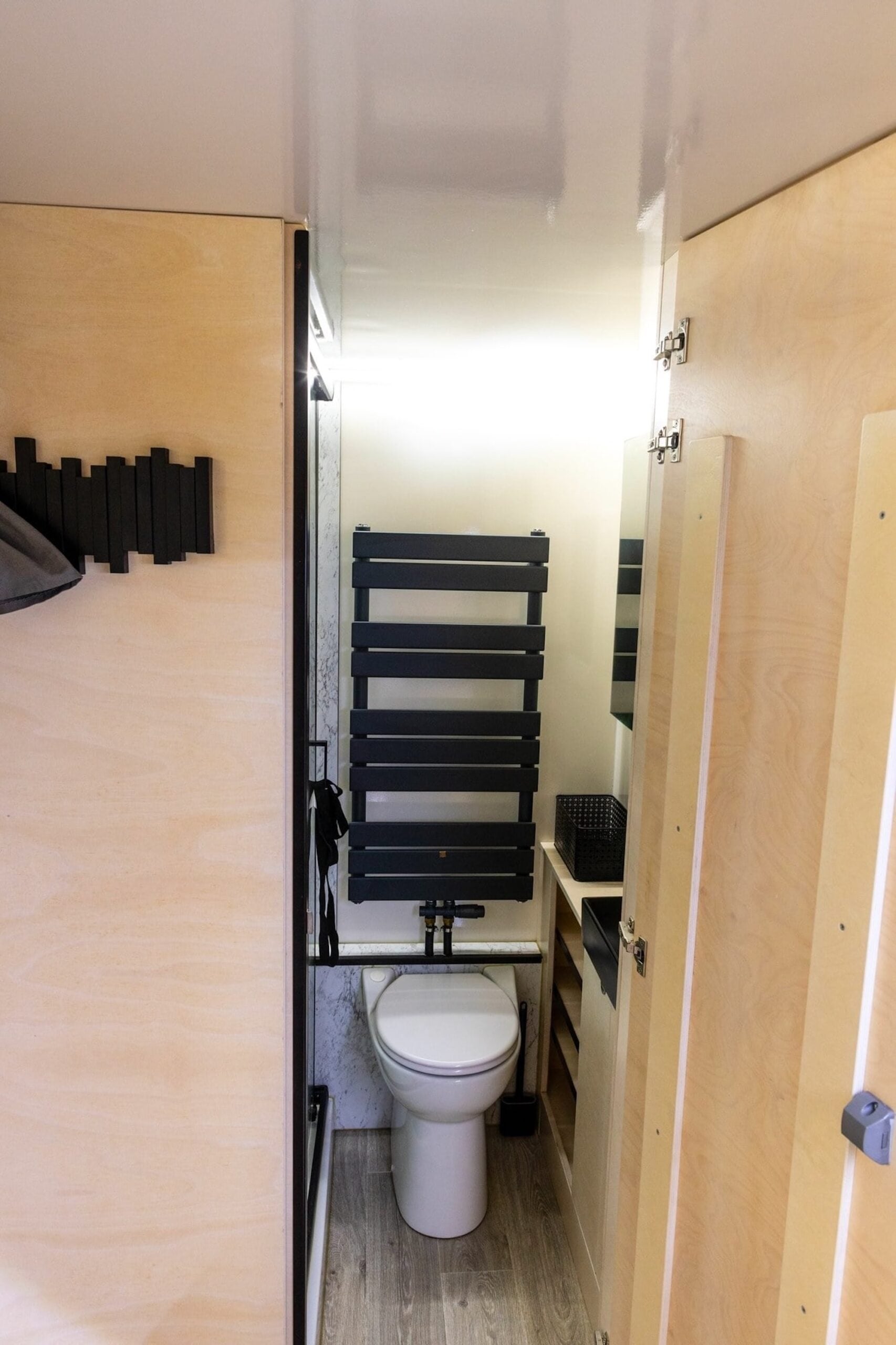
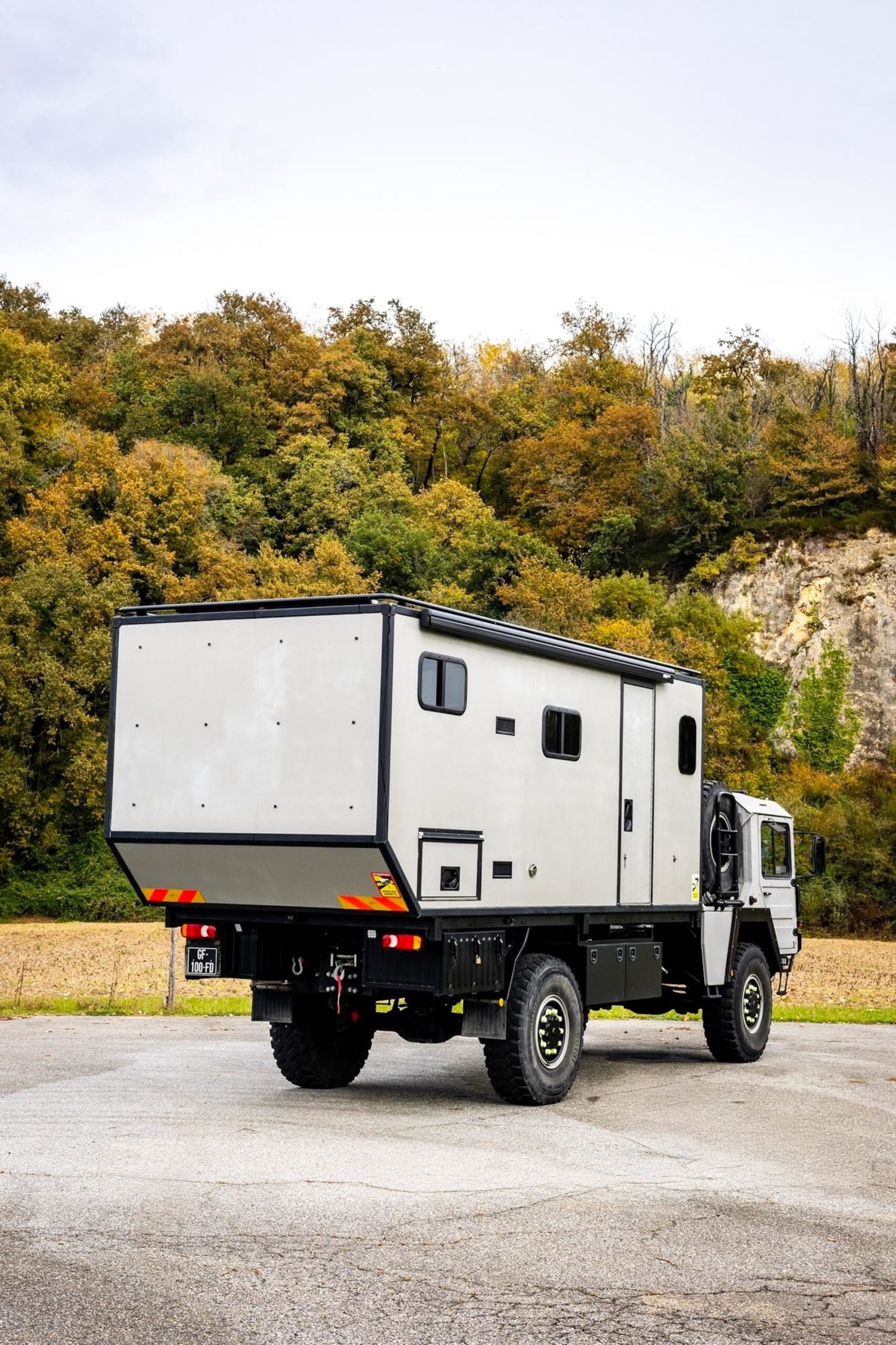
The habitation module on the back is a fully-self-contained home-on-wheels, with a kitchen, bedroom, bathroom, air conditioning and more. Power supply is supplemented with solar panels on the roof, it has a hookup for external power sources, and both a dishwasher and a washing machine.
Fast Facts: A 1980 MAN KAT 1 4×4 Motorhome
- This 1980 MAN KAT1 4×4 is a former German military truck that’s been converted into a fully self-contained expedition motorhome. It has a custom-built habitation module with a kitchen, bathroom, bedroom, air conditioning, television, dishwasher, washing machine, and roof-mounted solar panels to supplement its electrical power supply.
- Development of the MAN KAT1 began in 1962 to meet the requirements of the West German military. MAN led a consortium of German manufacturers, eventually winning a production contract in 1975. Between 1977 and 1983, a total of 10,424 trucks were manufactured in 4×4, 6×6, and 8×8 configurations.
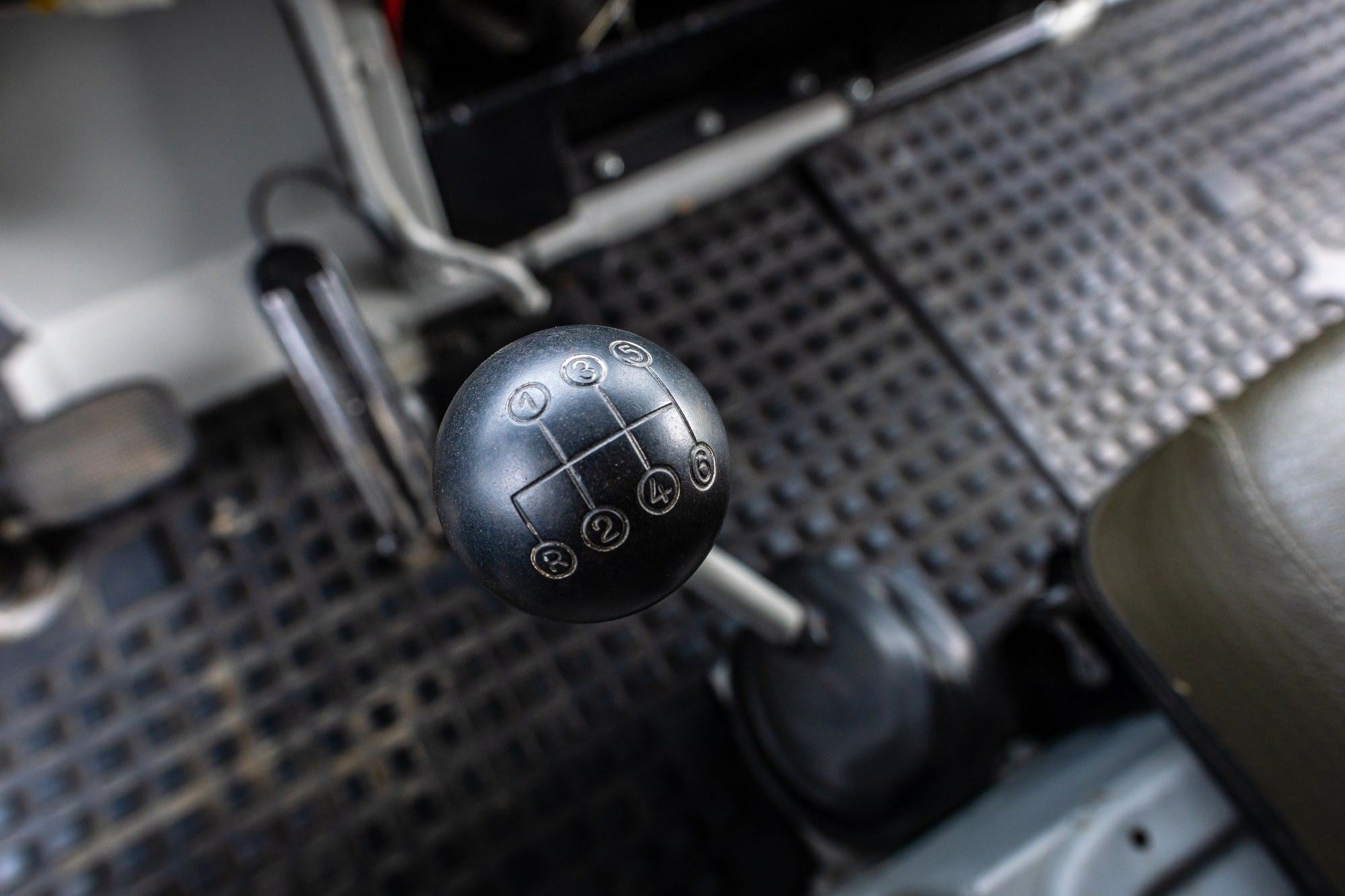
- The MAN KAT1 4×4 was factory-fitted with a naturally aspirated 12.8 liter air-cooled Deutz V8 diesel producing 252 bhp and 579 lb ft of torque. Power is distributed through a 6-speed ZF transmission, with permanent four-wheel drive, locking differentials, hub-reduction gears, and long-travel coil spring suspension.
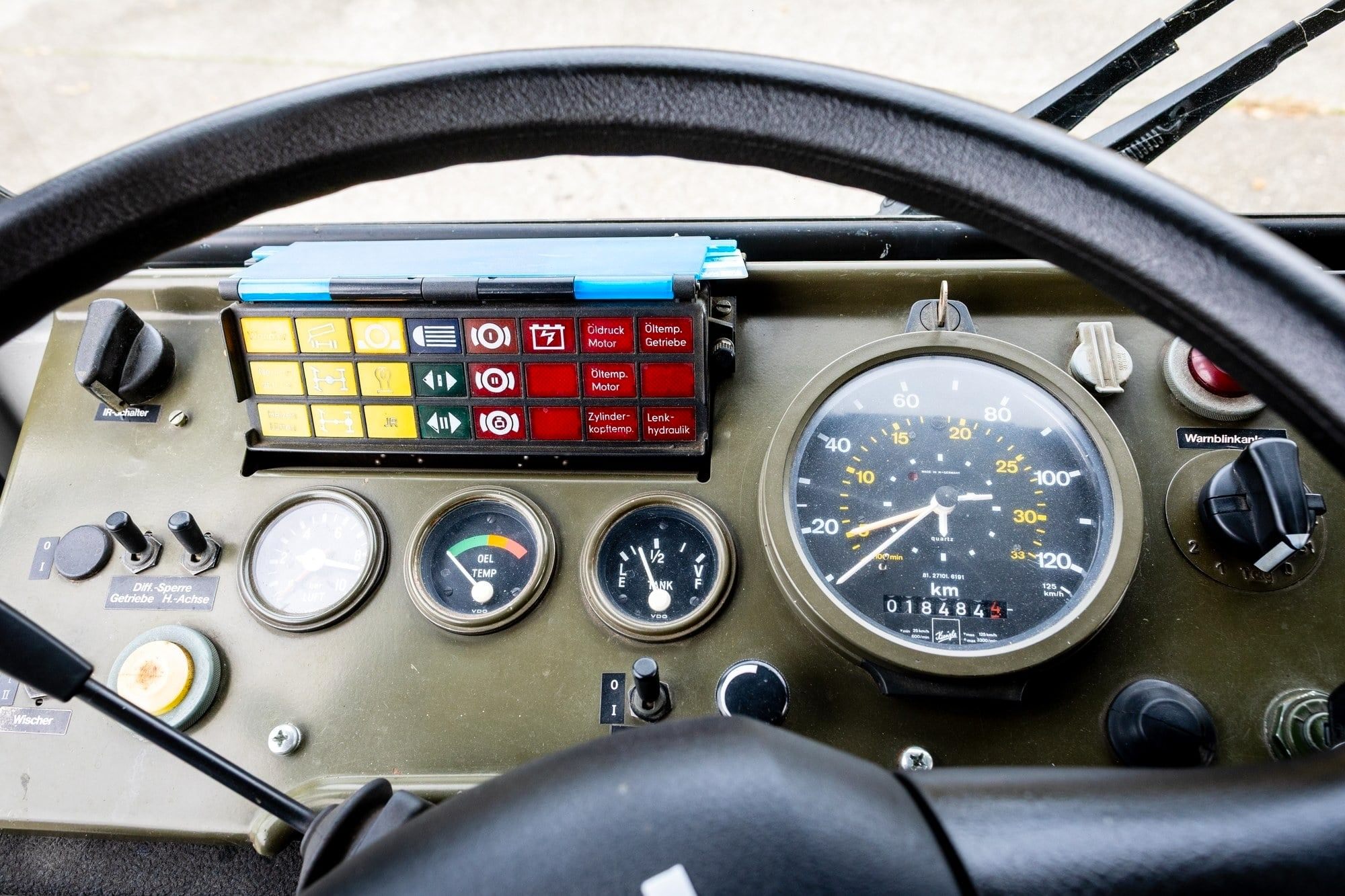
- This example was bought by its current owner in 2022 and retains its original military logbook documenting its personnel transport missions. It has matching chassis and engine numbers, shows just 18,484 kilometers (11,485 miles) on the odometer, and it’s now being offered for sale out of Aquitaine, France.
History Speedrun: The MAN KAT 1
In 1962, West Germany’s defense procurement office began planning a second generation of tactical trucks to replace the aging fleet the Bundeswehr had run since its founding. The wish list was long – it needed to include two, three, and four-axle trucks (including amphibious variants), with permanent all-wheel drive, run-flat low-pressure tires, protection against nuclear, biological, and chemical contamination, and engines that would burn almost any fuel imaginable. They were also meant to follow Leopard tanks cross country at at least 25 mph (40 km/h).
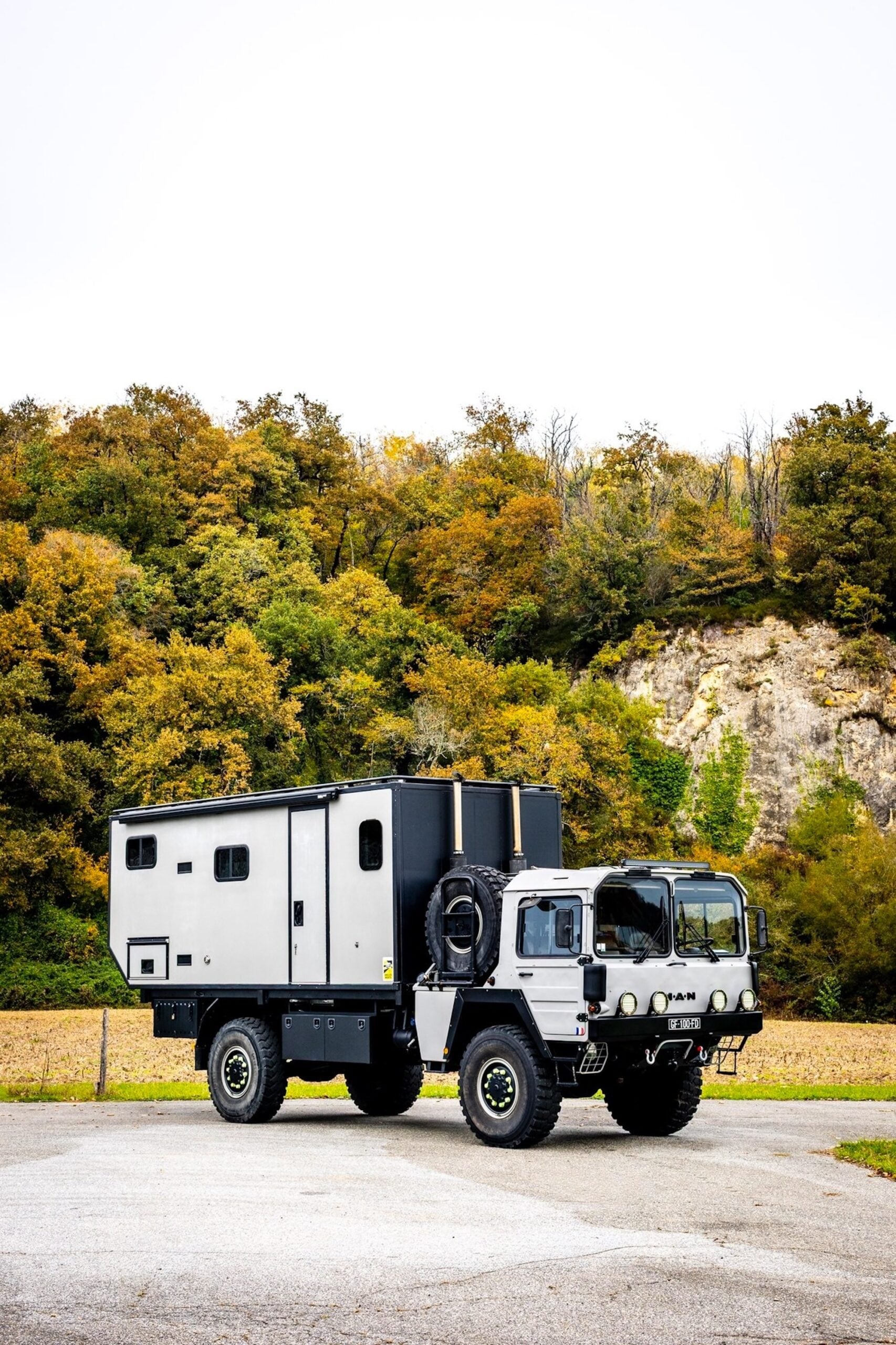
 This is a 1980 MAN KAT1 4×4 that’s been converted into an expedition-grade motorhome, it’s powered by a 13.0 liter V8 diesel mated to a 6-speed transmission.
The procurement office asked the bidding manufacturers to pool their efforts, and in 1964 a joint development bureau was formed under MAN’s leadership with Klöckner-Humboldt-Deutz, Büssing, Krupp and Henschel. The first prototypes appeared at the end of the 1960s, and three of them could swim.
The sheer scope of the specification proved unaffordable when the rubber hit the road, as a result the amphibious and multi-fuel requirements were dropped in 1972, and in place of swimming the trucks would need to be able to cross 47 inches (1.2 meters) of water. Quite a bit less demanding than actually being a boat.
Even then the Bundeswehr couldn’t afford the full spec list for every truck, so it sorted its new vehicles into categories – Category I (“Kat I”) for purpose-built off-road military designs, Category II for purpose-built military designs without off-road ability, and Categories III through VI for commercial vehicles with differing degrees of modification and off-road ability.
Daimler-Benz built an 8×8 prototype of its own in 1973, the LG 497, then withdrew. MAN won the production contract in December of 1975, for 8,385 trucks, and handed over the first, a 10-ton 8×8, on November the 29th, 1976.
An Engine Behind The Cab
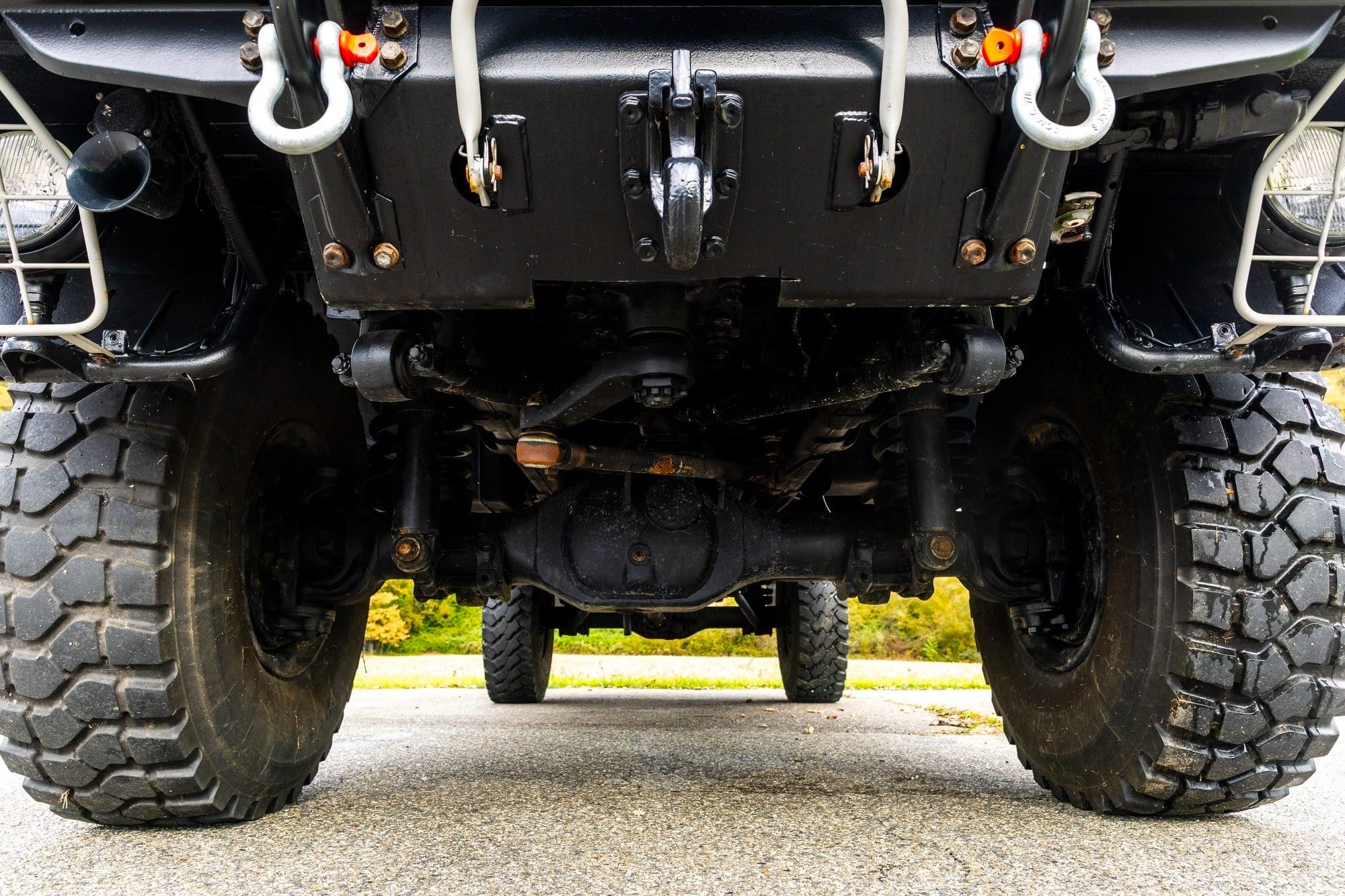
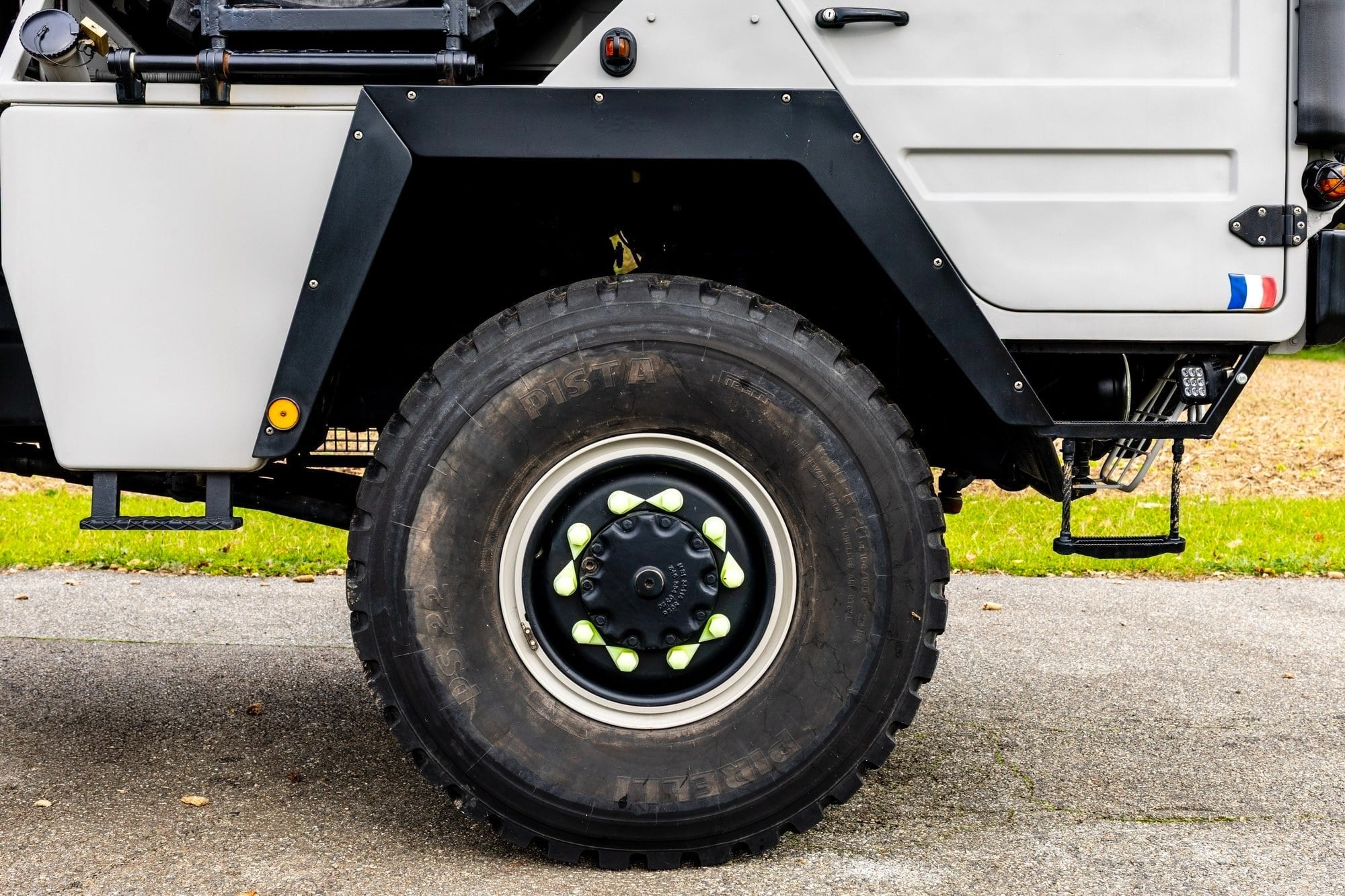
The 5-ton 4×4, 7-ton 6×6, and 10-ton 8×8 (metric tons) share one layout – the frame has closed box-section steel rails with welded tubular cross-members, which resists twisting. Live axles with hub-reduction gears are held by locating arms and sprung on long-travel coil springs with hydraulic dampers. Steering is recirculating ball with hydraulic assistance, on both front axles in the 8×8, and the brakes combine pneumatics and hydraulics.
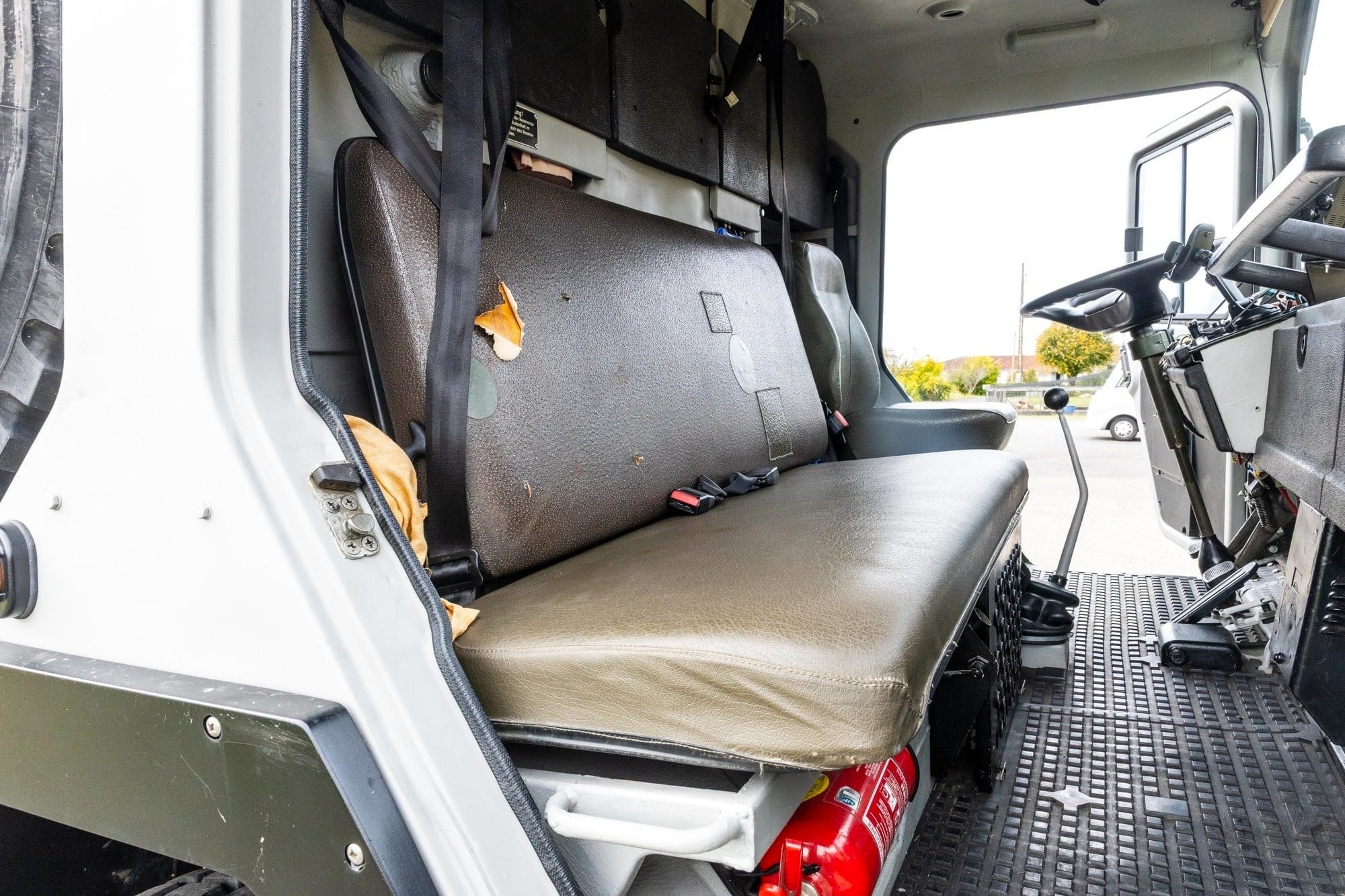
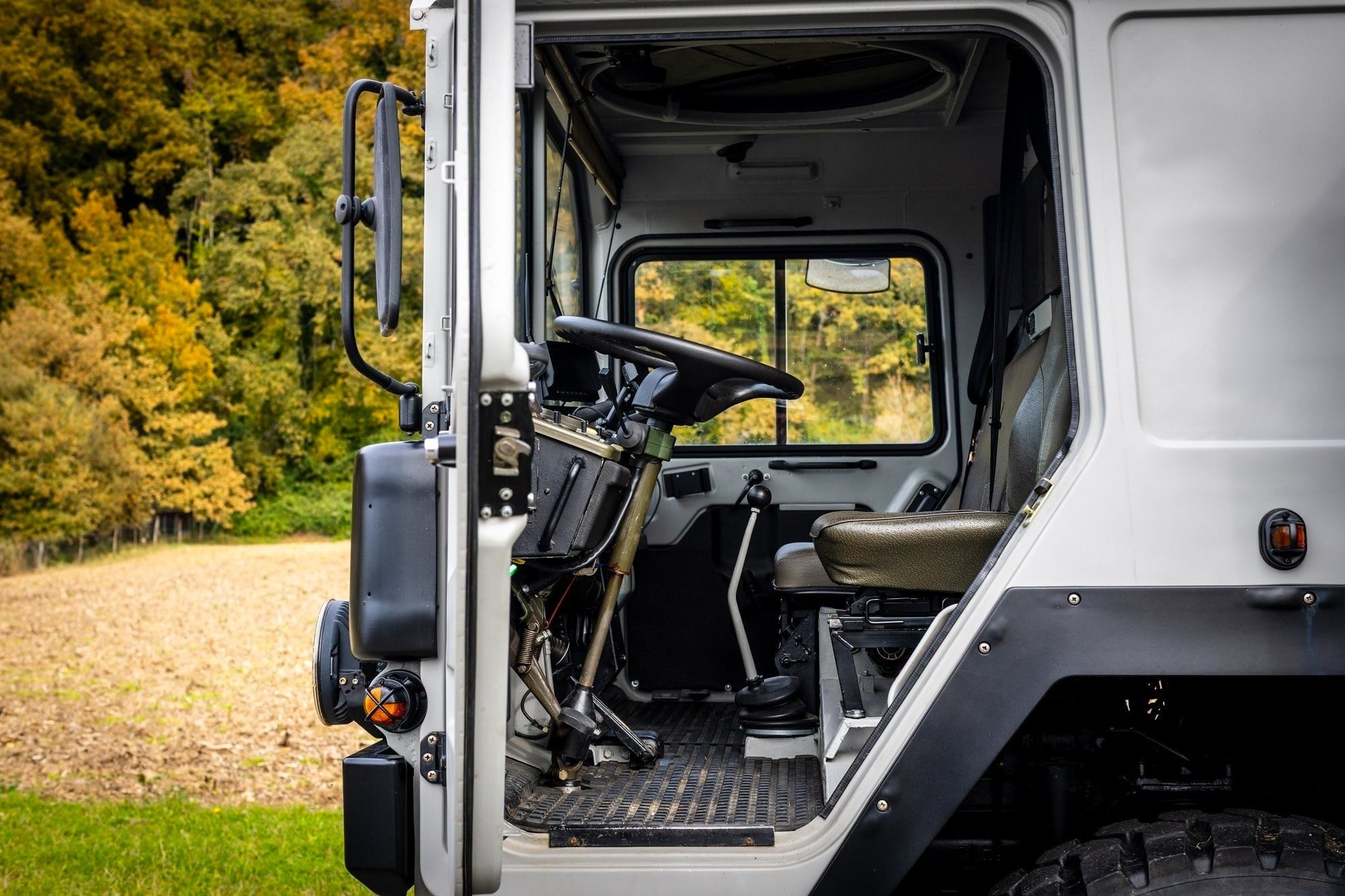
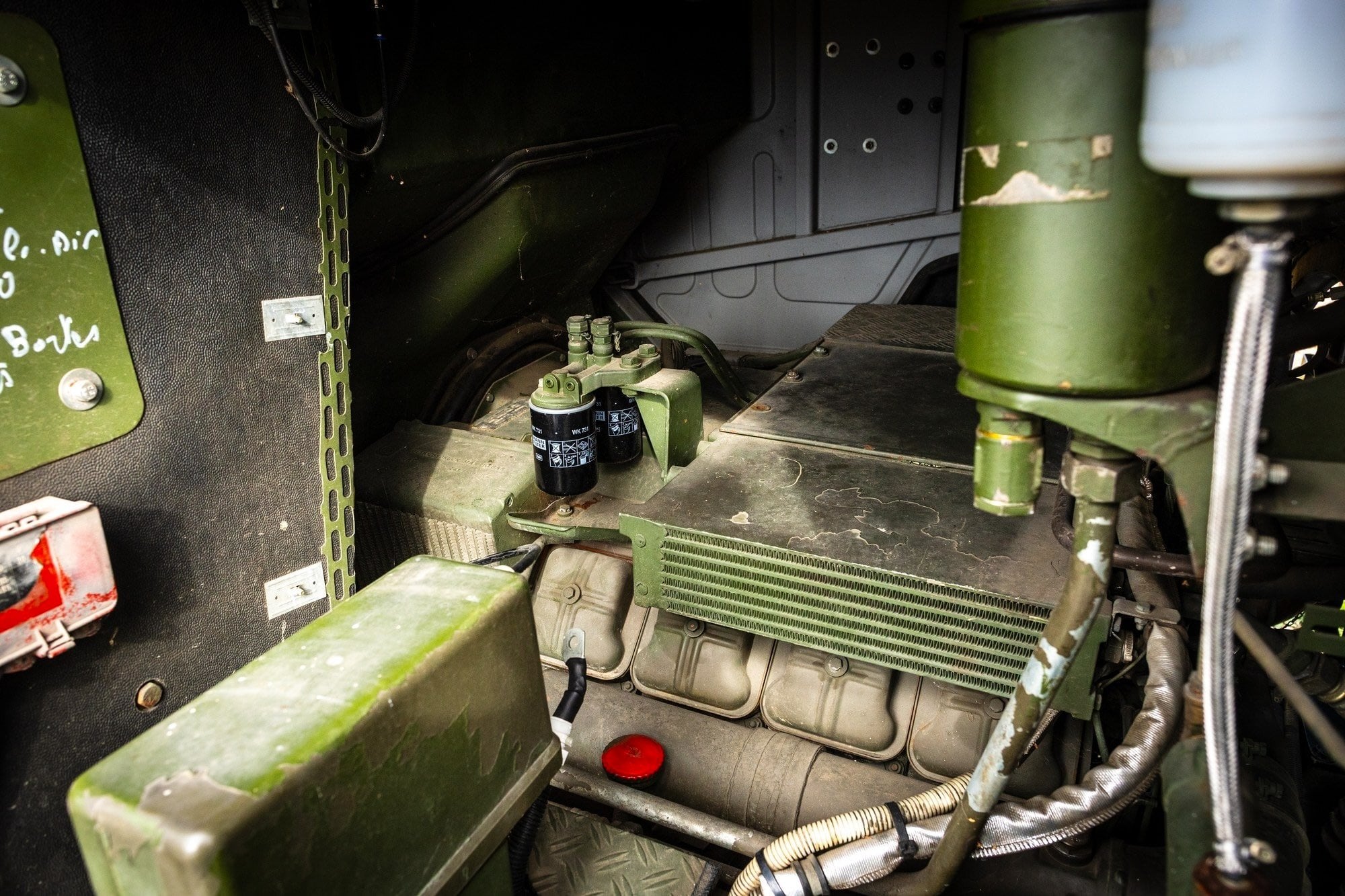
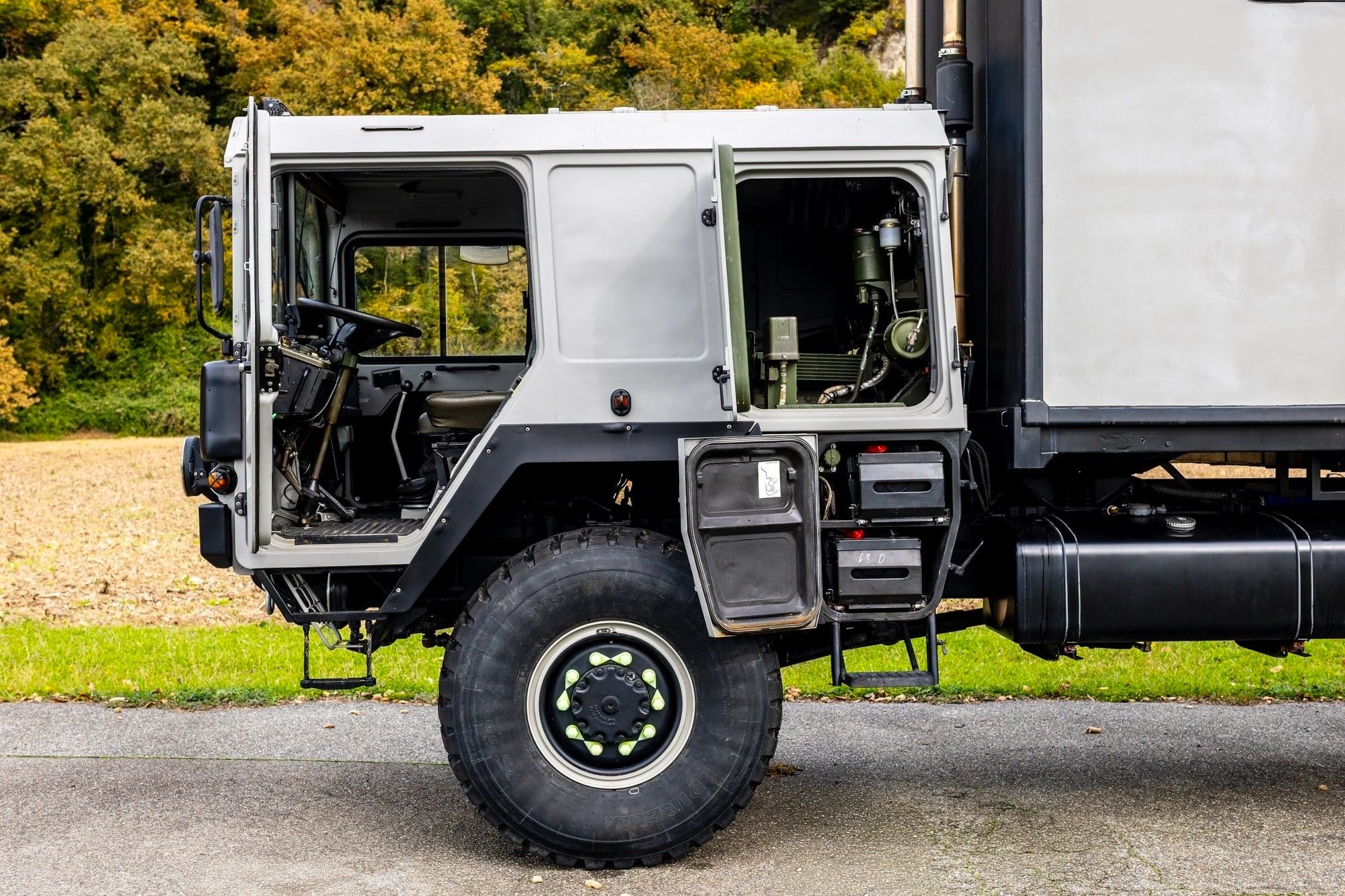
The engine sits behind the cab, not under or in front of it as is more common in commercial trucks. That kept overall height below 9.5 feet (2.9 meters) so the trucks would fit on standard rail flatcars – the cab’s cut-away upper corners are there for the railway loading gauge.
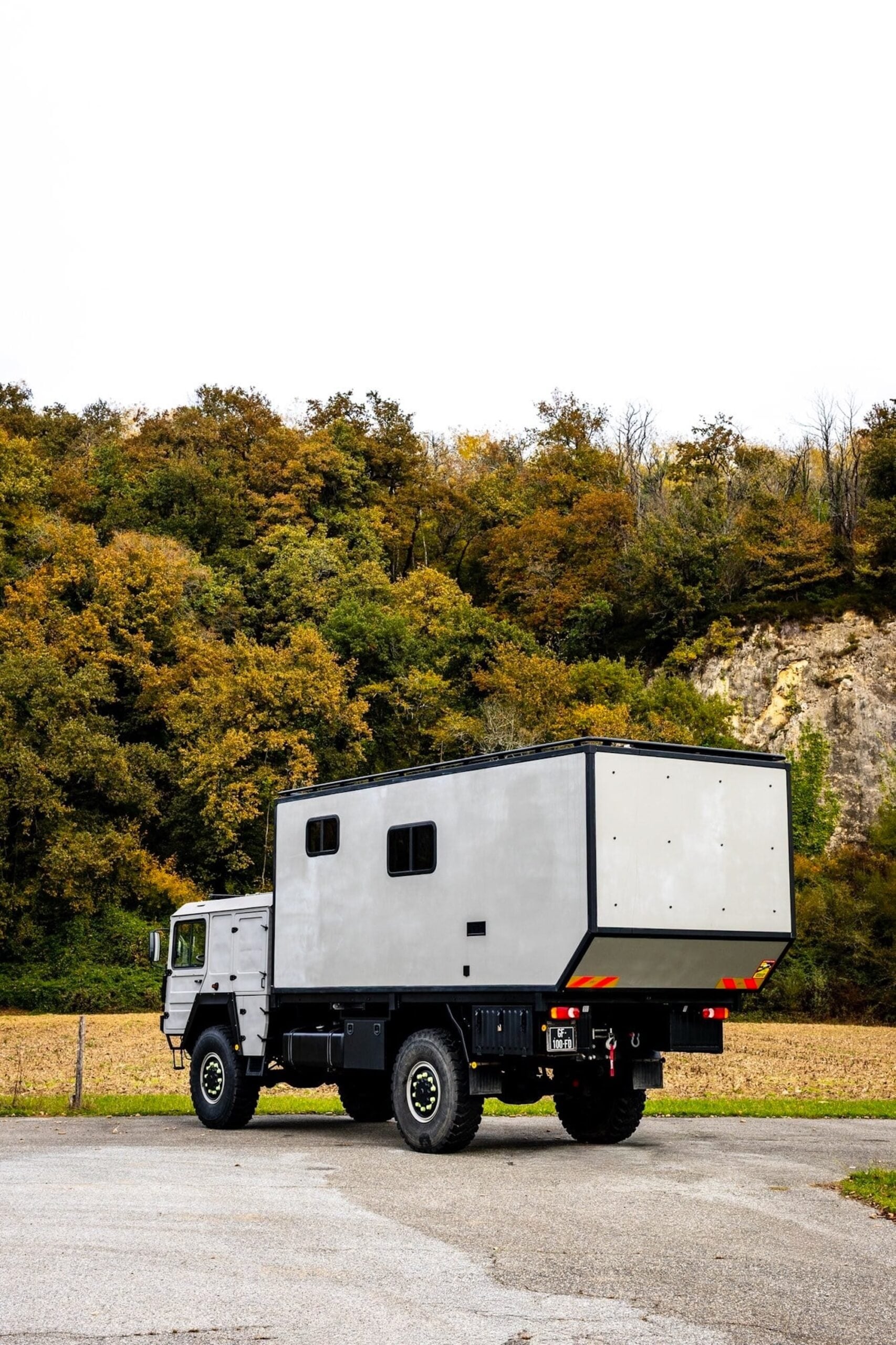
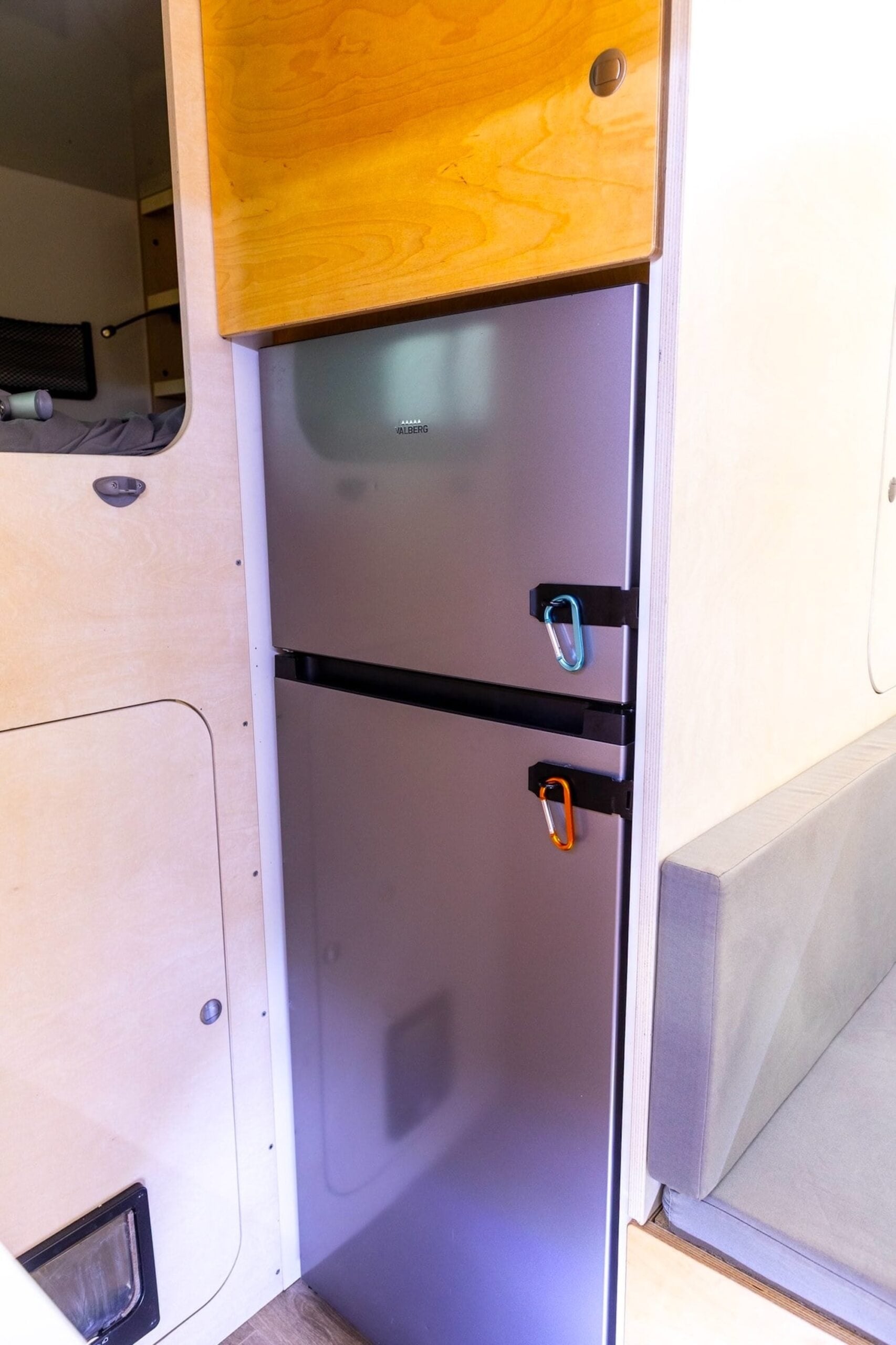
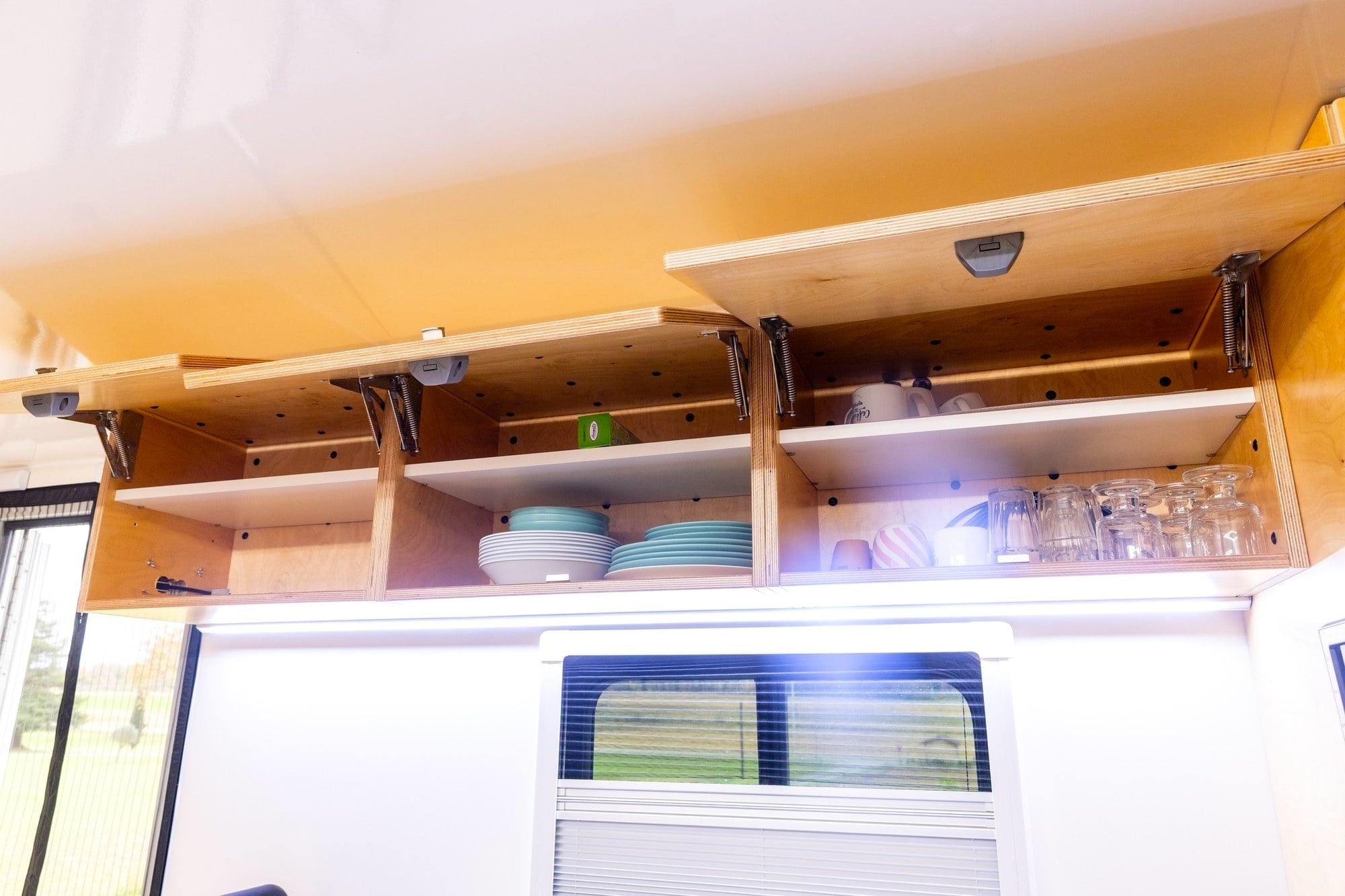
The habitation module is a fully-self-contained home-on-wheels, with a kitchen, bedroom, bathroom, air conditioning and more. Power supply is supplemented with solar panels on the roof, and it has a hookup for external power sources, and both a dishwasher and a washing machine.
Power comes from an air-cooled Deutz V8 diesel, a 12.8 liter pushrod engine with direct injection. In the 4×4 the naturally-aspirated F8L 413F makes 252 bhp and 579 lb ft of torque. The 6×6 and 8×8 use a turbocharged and intercooled version with 316 bhp and 738 lb ft.
The engine drives every axle permanently through a torque-converter clutch and a 6-speed ZF gearbox, and the center and rear differentials can be locked. On the 4×4 and 6×6 the transfer case is part of the gearbox unit, on the 8×8 it’s mounted separately and driven by a prop shaft.
The top speed of these first-series trucks was 56 mph (90 km/h), impressive for the time. The 4×4 had a 45º approach angle, a 40º departure angle, and 16.3 inches (415 mm) of clearance under its diffs. Austria’s ÖAF based its own army 10-tonner on the MAN from 1974 but fitted a water-cooled MAN V8, because the air-cooled Deutz could sometimes overheat at very low speeds.
Production + Export
The trucks were all built at MAN’s Watenstedt plant in Lower Saxony, Germany. A 6×6 dump truck and the 4×4 cargo truck followed the 8×8 in 1977, and the 6×6 cargo truck in early-1979. Production tables would eventually list 10,424 built from 1977 to 1983 – 3,601 4x4s, 2,904 6x6s, and 3,919 8x8s.
The United States bought a modified 8×8, known as Category 2. The M1001 tractor and M1002 wrecker served the Pershing II missile system, and the M1013 and M1014 tractors pulled Ground Launched Cruise Missile semitrailers. More than 500 had been delivered to the US by the end of 1986.
The Paris-Dakar Rally
MAN’s all-wheel-drive military trucks ran the Paris Dakar Rally from its early years as supply trucks for other teams. Under the rules, support vehicles had to be registered as race entries and they had to meet the same time limits.
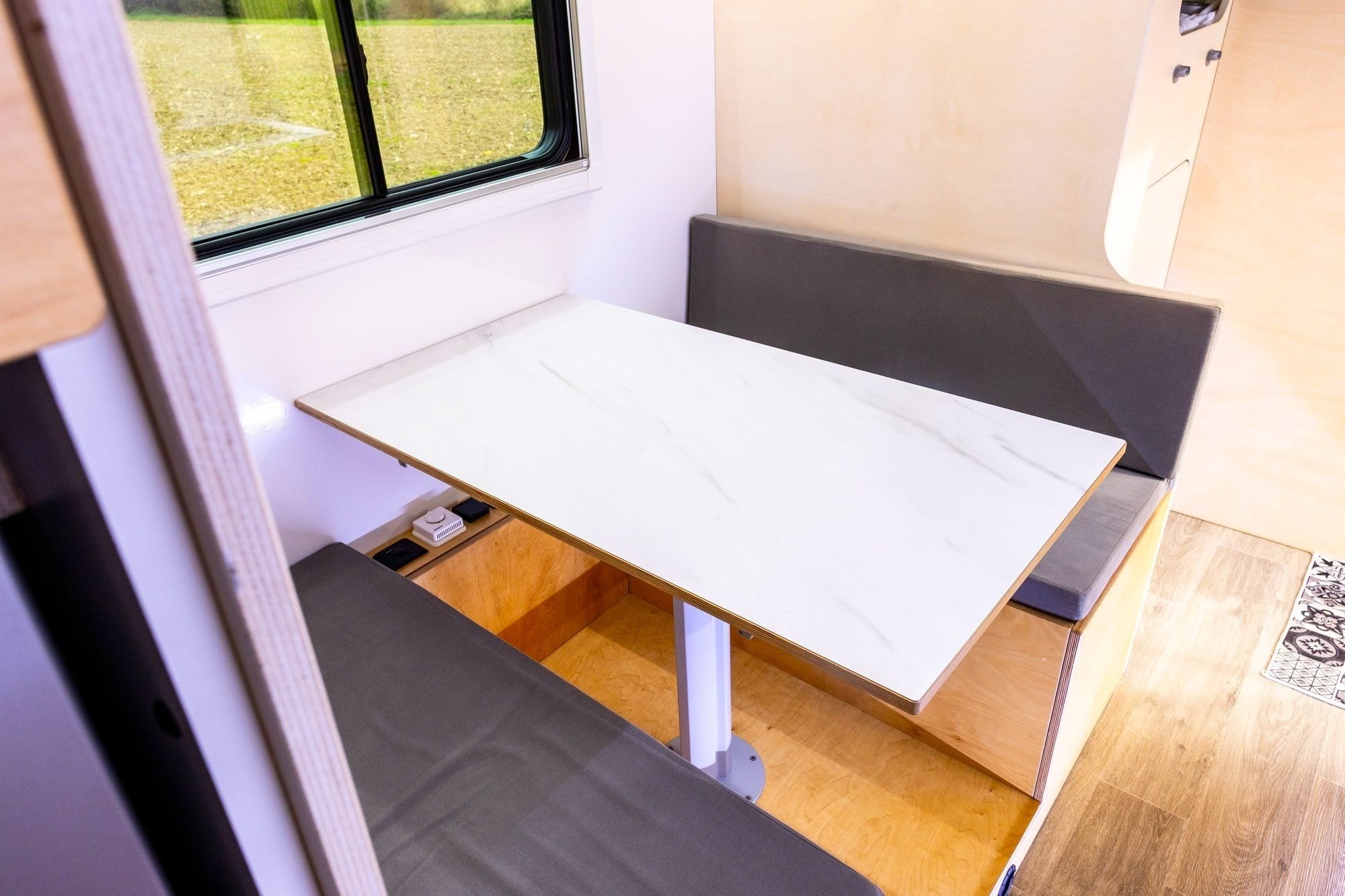
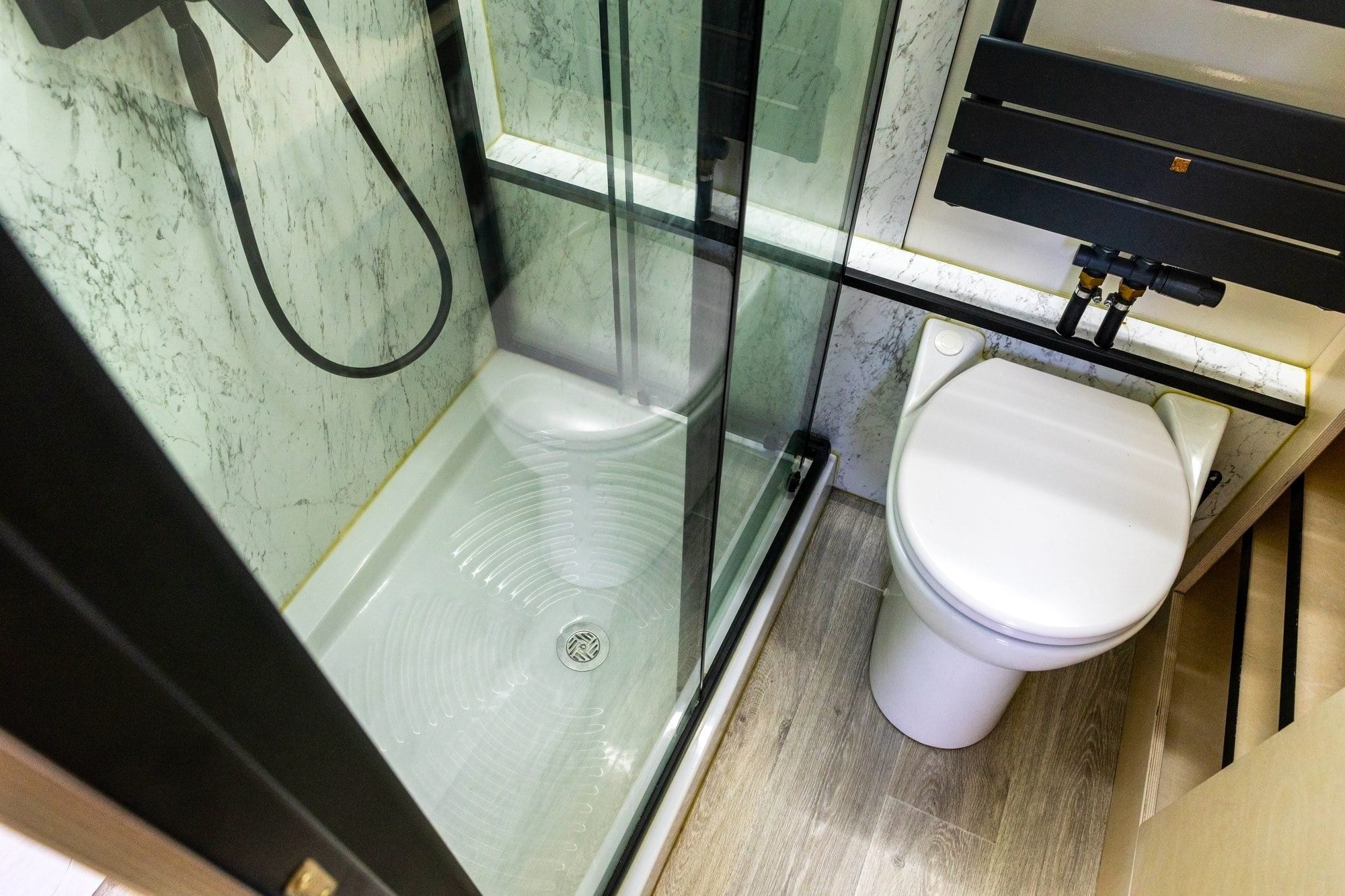
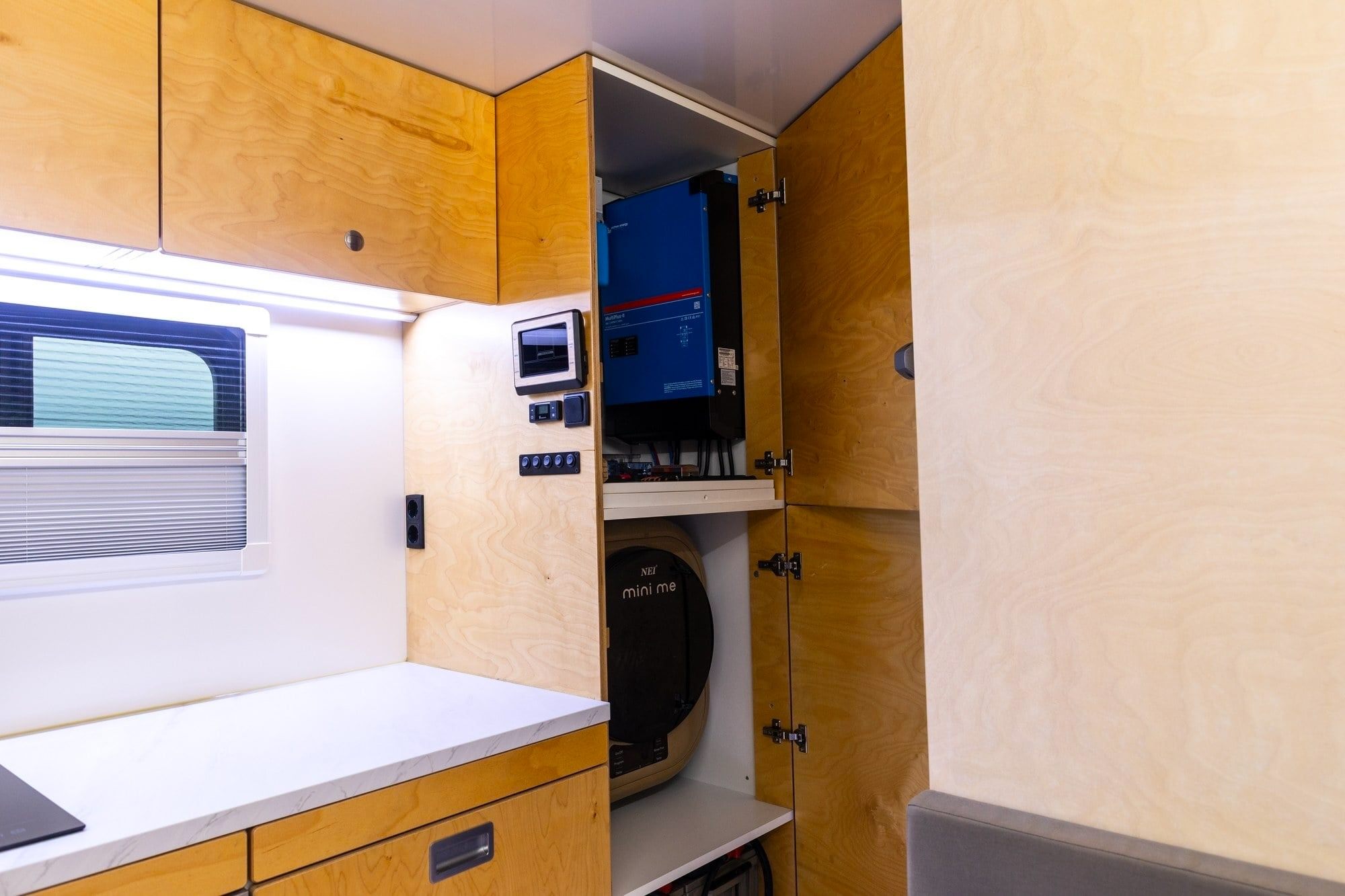
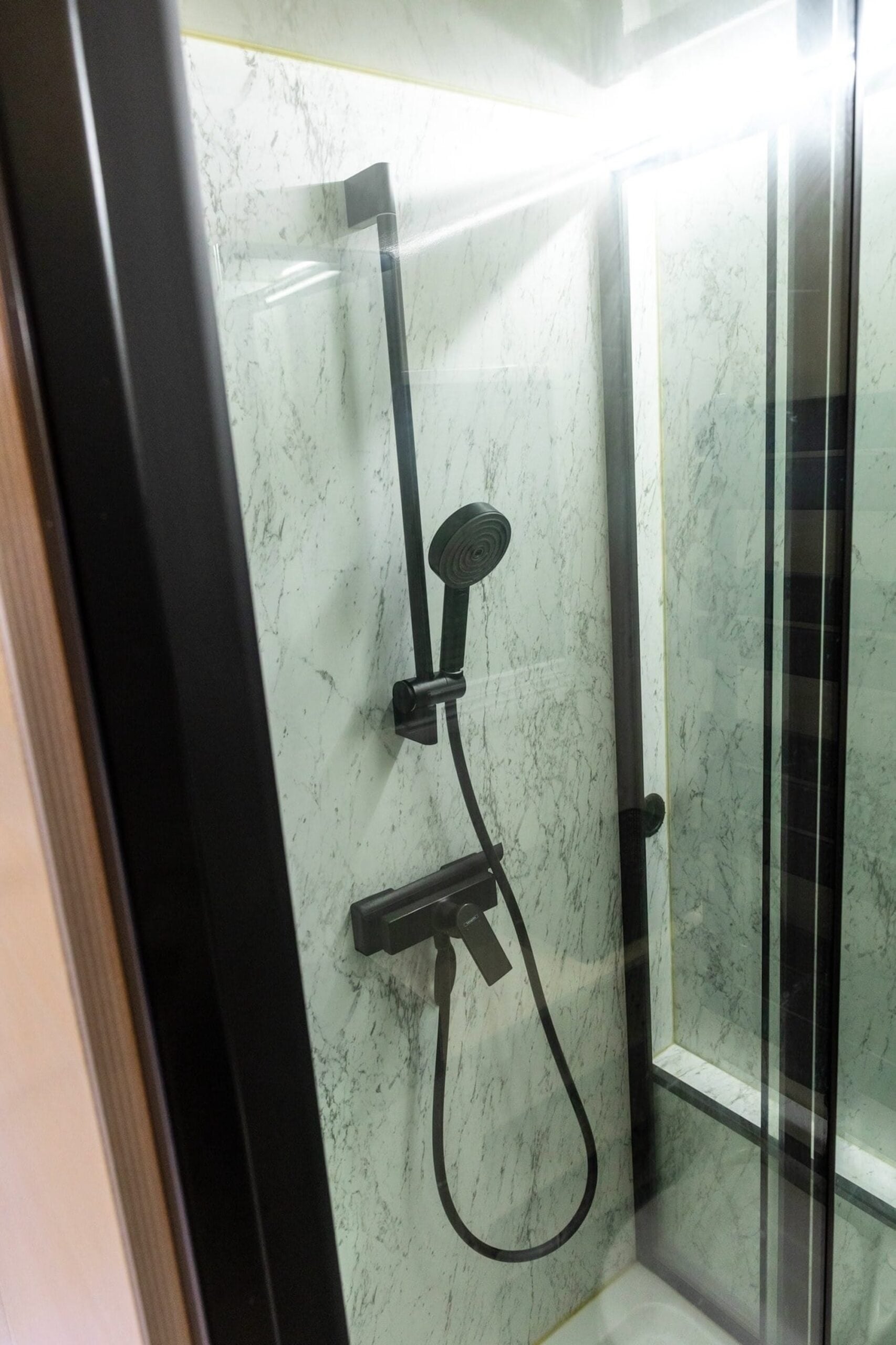
The living quarters contain an oven, dishwasher, washing machine, television, shower, toilet, and Truma Saphir Compact air conditioning. Electrical power is supplemented by solar panels on the roof, with a Victron Energy control unit and a Watts thermostat also fitted.
In 1984 seven MANs started among 31 trucks. A 6×6 crewed by Henri Gabrelle, Alain Voillereau, and Adolf Dierl finished 3rd in the truck class, and an 8×8 Kat reached Dakar in 11th, just outside the time limit. Porsche’s 959s finished first and second in 1986 with two MAN trucks in support.
On that rally, sections of the 4×4 entry’s box frame doubled as compressed-air reservoirs to save weight. For 1987 MAN prepared 12 trucks, a record for the company, all of them support vehicles derived from the standard military models.
The KAT I A1
Production of the revised KAT1 A1 series began in 1987, with a tilting cab, more volume-production parts, and the line continued as the MAN SX until early 2019. The Bundeswehr overhauled its original trucks in the mid-1990s to extend their service life by another 10 years, as there was just nothing that could realistically replace them.
The 1980 MAN KAT1 Motorhome Shown Here
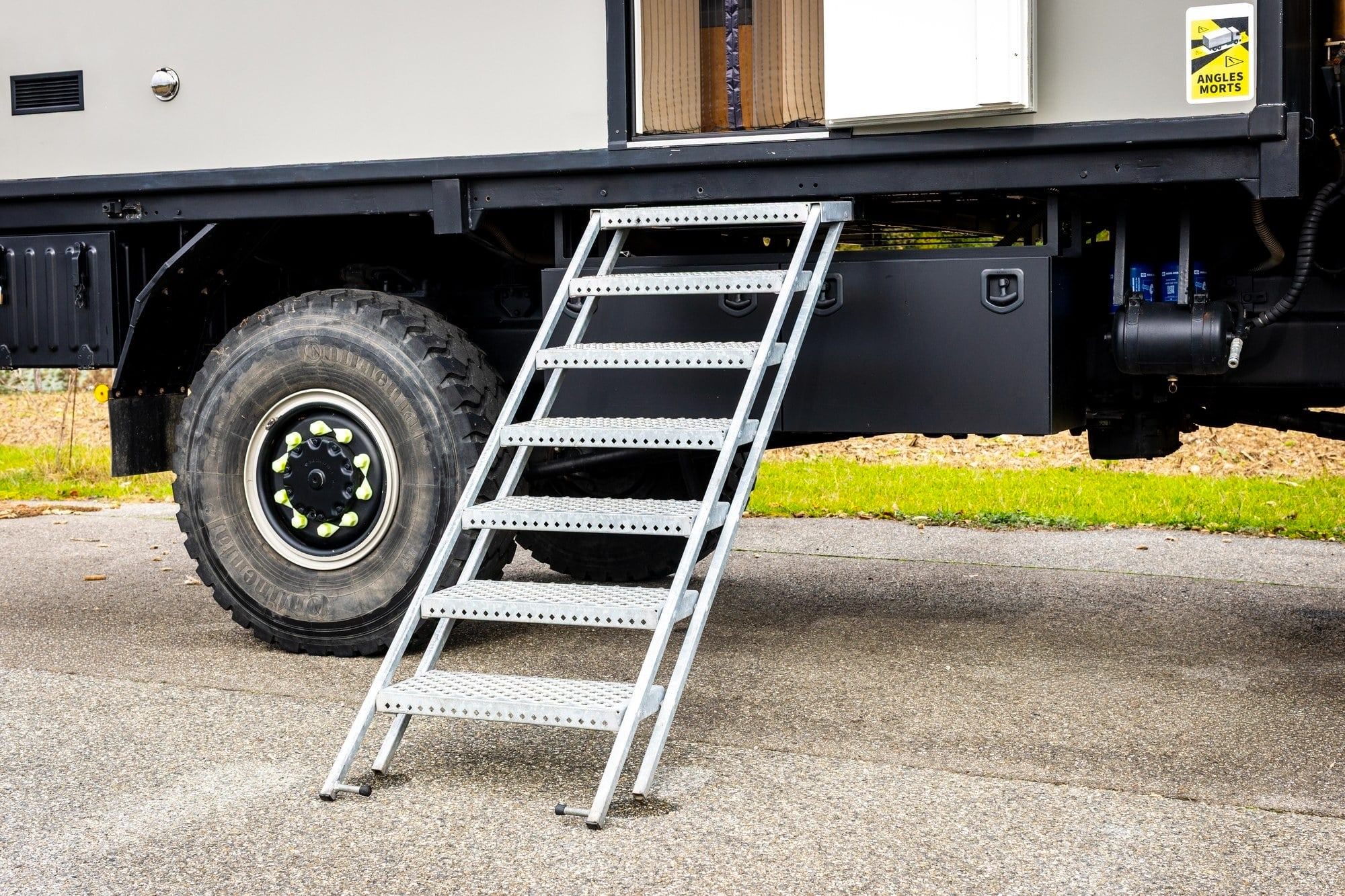
This 1980 MAN KAT1 is a former German military truck that has been completely converted into a self-contained expedition vehicle. During the motorhome conversion, the chassis was sandblasted and repainted before being fitted with a custom-built habitation module designed for long-distance overland travel.
The living quarters contain an oven, dishwasher, washing machine, television, shower, toilet, and Truma Saphir Compact air conditioning. Electrical power is supplemented by solar panels on the roof, with a Victron Energy control unit and a Watts thermostat also fitted.
Power is provided by a 13.0 liter V8 diesel engine paired with a 6-speed manual transmission. The truck has been maintained by its current owner since 2022 and has been kept in a garage throughout their ownership. They describe the mechanicals, bodywork, and paintwork as being in very good condition, with the interior remaining virtually as new.
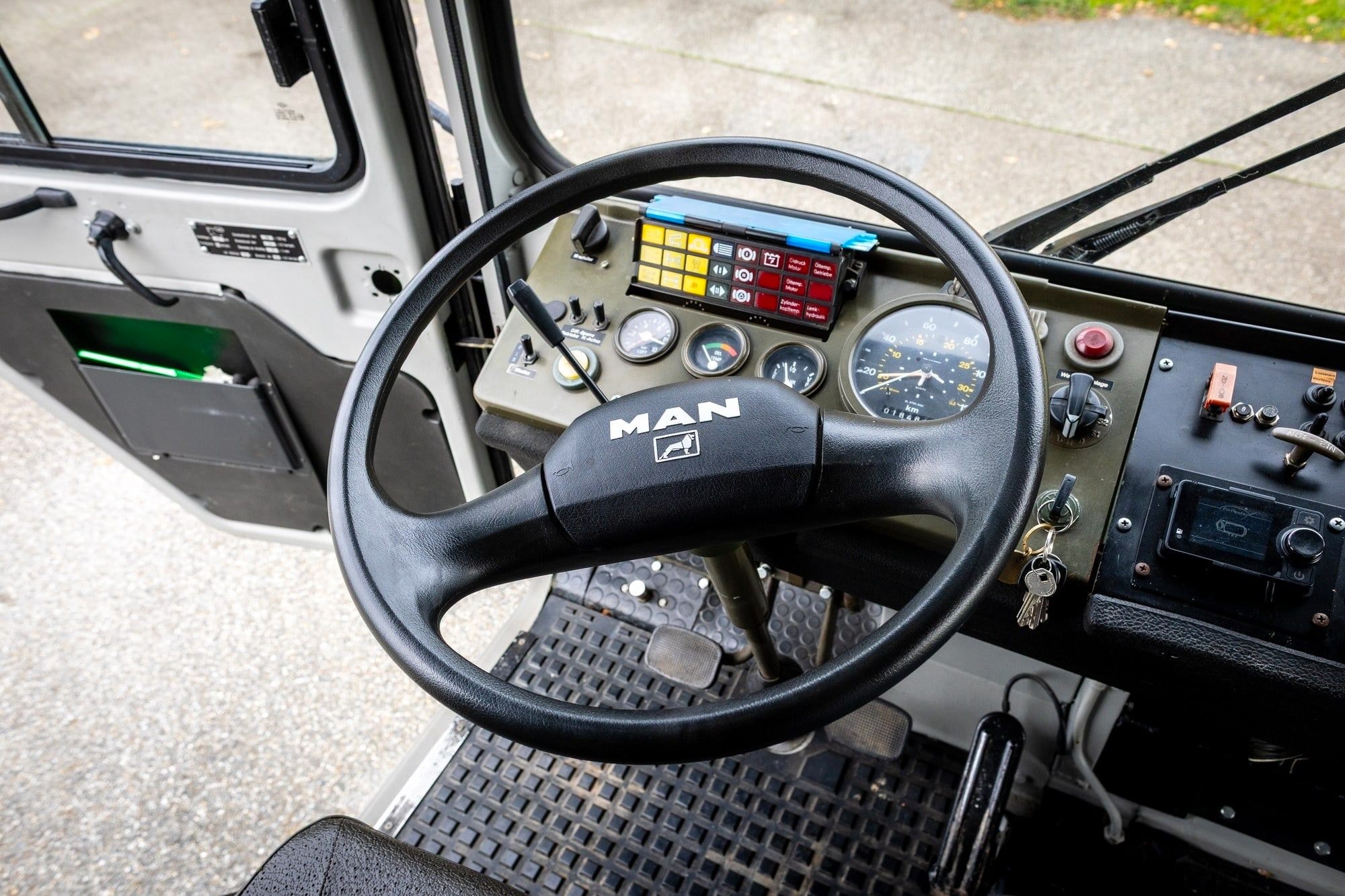
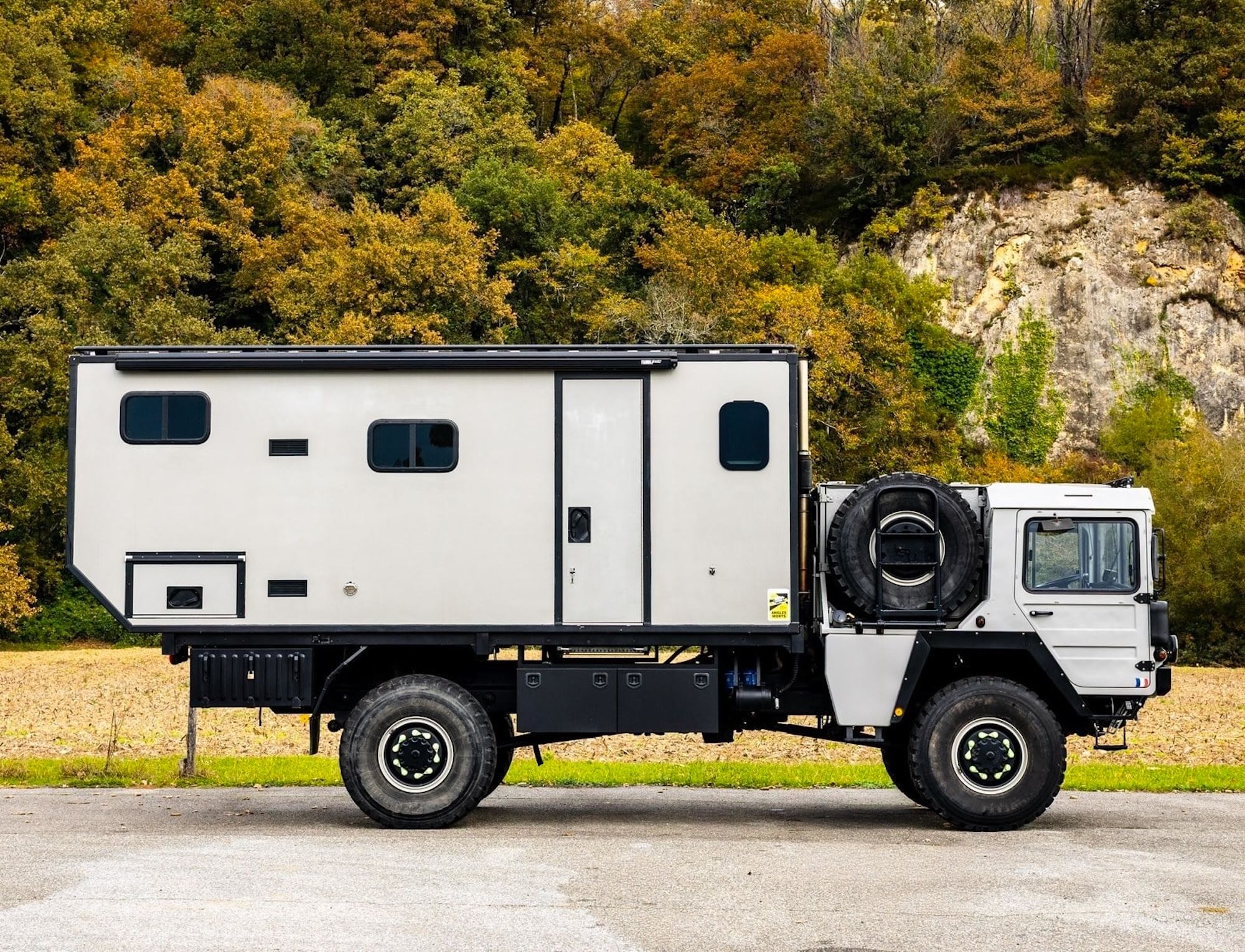
Power is provided by a 13.0 liter V8 diesel engine paired with a 6-speed manual transmission. The truck has been maintained by its current owner since 2022 and has been kept in a garage throughout their ownership.
It keeps its original military logbook, which documents its use on personnel transport missions, and it was bought by its current owner in 2022. The truck currently shows 18,484 kilometers (11,485 miles) on the odometer and it’s registered in France as a historic vehicle, with matching chassis and engine numbers.
It’s now being offered for sale on Car & Classic out of Aquitaine, France and you can visit the listing here if you’d like to read more about it or register to bid.
Images courtesy of MAN + Car & Classic

Articles that Ben Branch has written have been covered on CNN, Popular Mechanics, Smithsonian Magazine, Road & Track Magazine, the official Pinterest blog, the official eBay Motors blog, BuzzFeed, Autoweek Magazine, Wired Magazine, Autoblog, Gear Patrol, Jalopnik, The Verge, and many more.
Silodrome was founded by Ben back in 2010, in the years since the site has grown to become a world leader in the alternative and vintage motoring sector, with well over a million monthly readers from around the world and many hundreds of thousands of followers on social media.