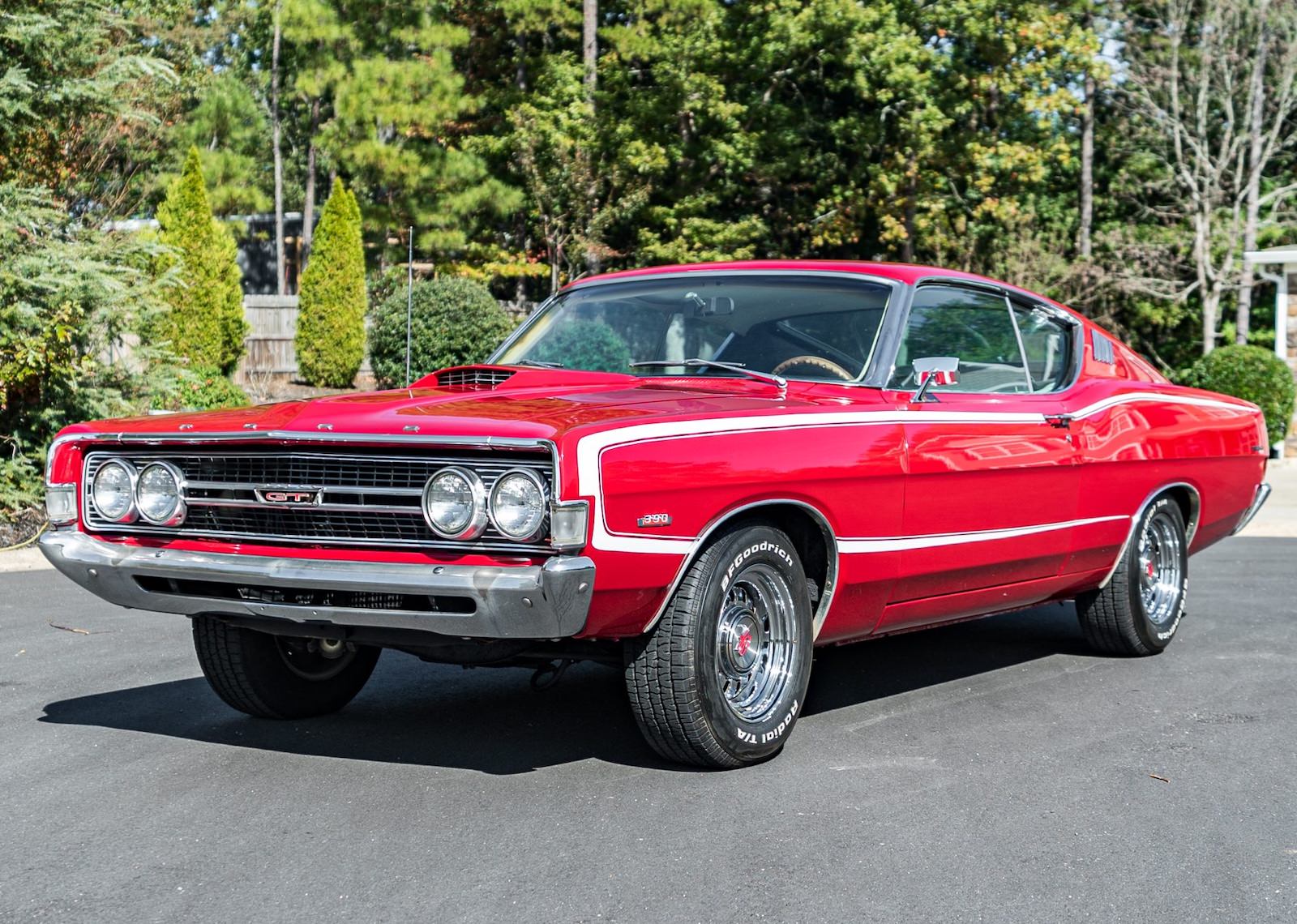
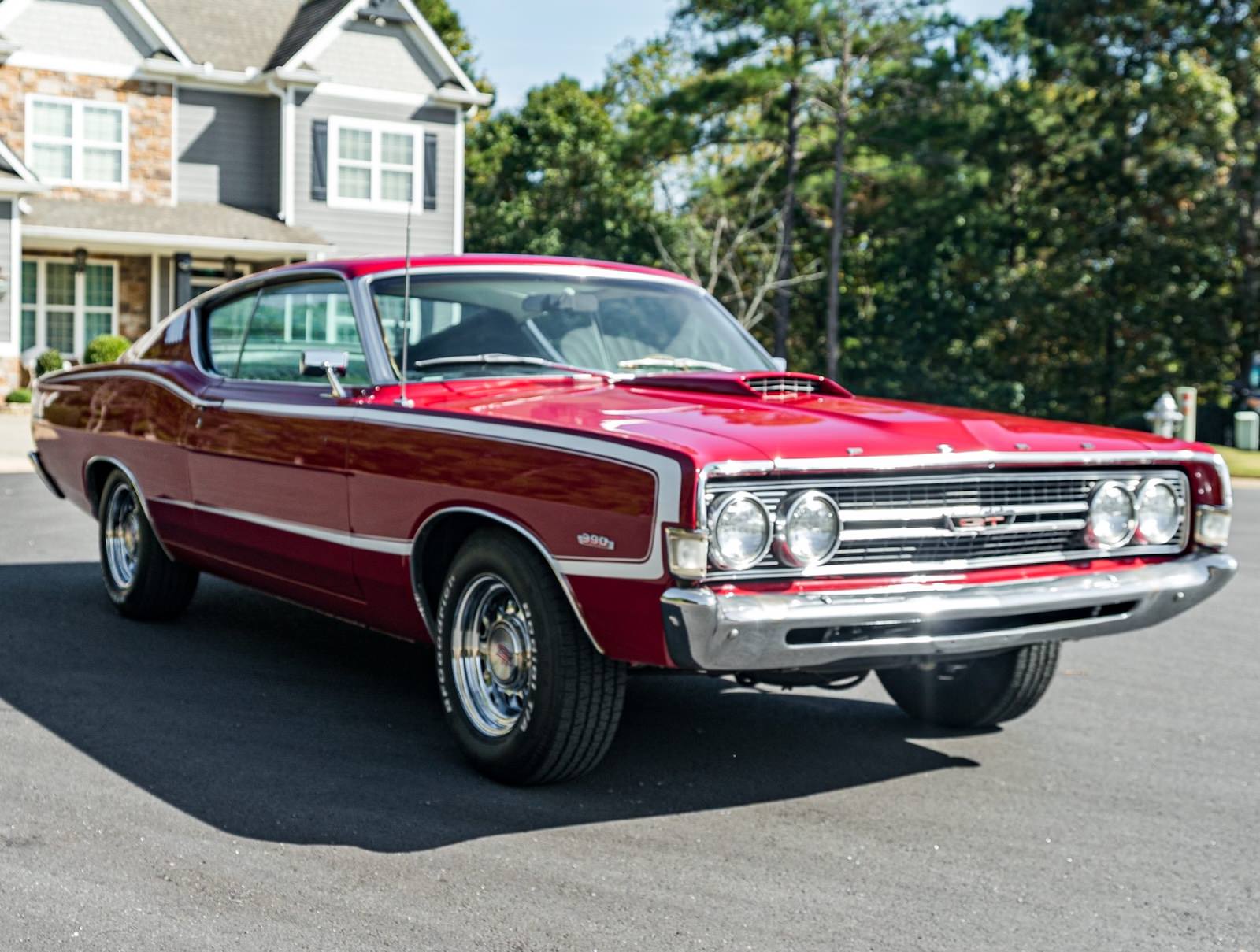
This is a 1968 Ford Torino GT that was factory-fitted with the 325 bhp S-Code 390 V8. These Torinos became NASCAR championship-winning icons in the late 1960s, and they triggered an arms race that saw Dodge and Plymouth releasing new models to chase them around the banked ovals.
The Torino GT entered the Ford model line-up above the Mustang, as a larger, more luxurious grand tourer targeting wealthier buyers. That said, it almost instantly made its impact on the world of motor racing, and its dominance even saw Richard Petty join Ford for a time.
Fast Facts: A 1968 Ford Torino GT Fastback S-Code
- The Ford Torino debuted in 1968 as a premium version of the Fairlane, offering a larger, more luxurious alternative to the Mustang. The sportier Torino GT had V8 power, with engine options including the 325 bhp S Code 390 and the 335 bhp 428 Cobra Jet.
- The Torino quickly established itself in NASCAR, with David Pearson winning consecutive Grand National championships in 1968 and 1969. Ford developed the aerodynamic Torino Talladega to compete with Dodge’s Charger 500 and Daytona. Richard Petty briefly switched from Plymouth to Ford before returning to Plymouth for the 1970 season.
- Ford expanded the Torino range for 1969 with the lower-priced Cobra, powered by the 428 Cobra Jet V8. Subsequent generations became larger and heavier, with the Torino eventually replacing the Fairlane entirely. Production ended in 1976, by which time the Gran Torino had become famous through the television series “Starsky & Hutch.”
- The 1968 Torino GT fastback shown here has a factory S-Code 390 V8, 3-speed automatic, and its original Candyapple Red and Parchment color scheme. Reportedly registered in Georgia throughout its life, it has received extensive mechanical maintenance, including recent carburetor and starter work. It’s offered with a Marti Report and service records.
History Speedrun: The First-Generation Ford Torino
The Ford Torino arrived for 1968 initially as the top two trim levels of a restyled Fairlane, rather than its own freestanding model. Within two seasons, the fastback version had carried David Pearson to consecutive NASCAR Grand National championships and become a legend in its own lifetime. Ford ultimately built 371,787 Fairlanes and Torinos that first year, and the Torino nameplate went on to outlast the Fairlane entirely.
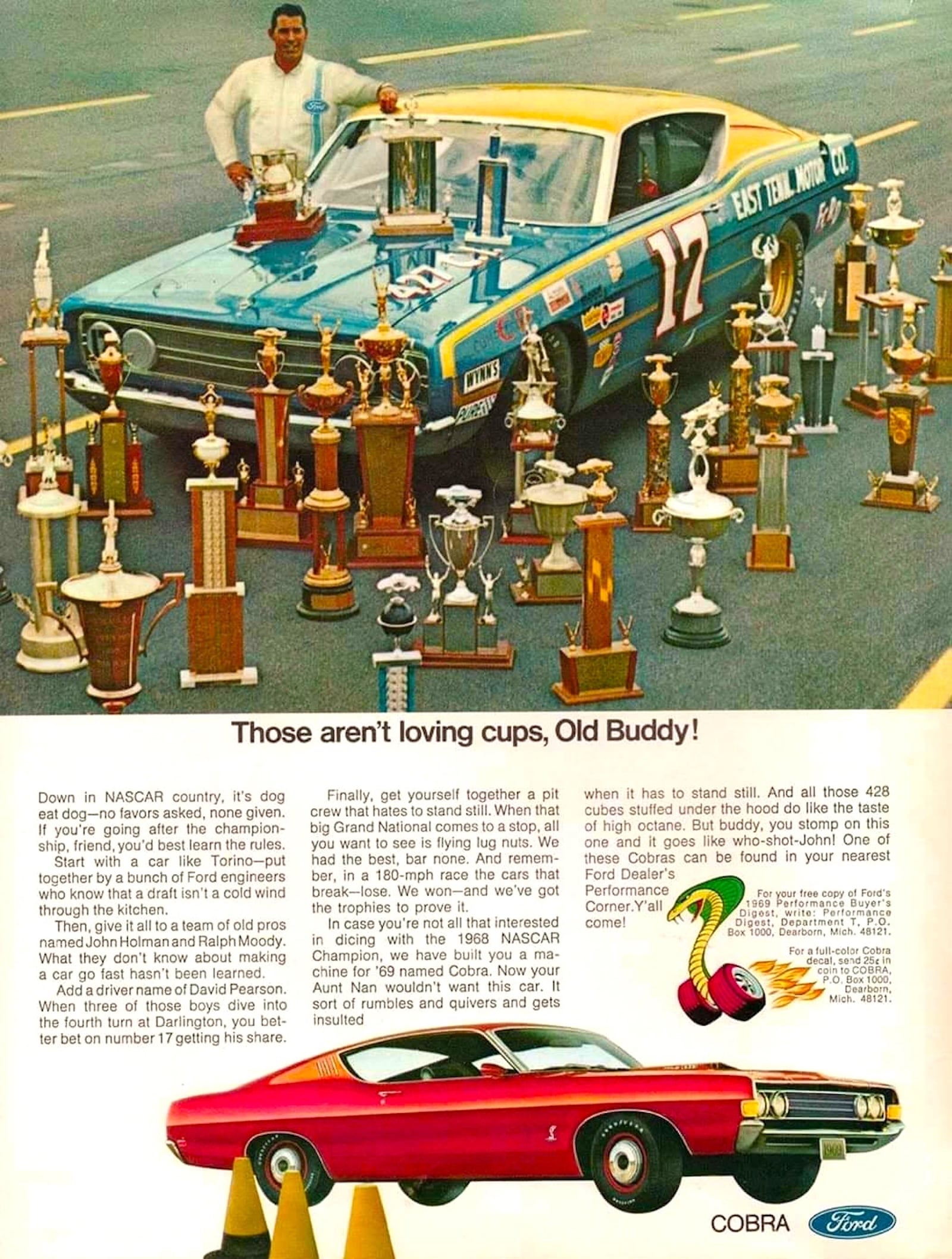
 Within two seasons, the Ford Torino fastback had carried David Pearson to consecutive NASCAR Grand National championships and become a legend in its own lifetime. Image courtesy of Ford.
By the mid-1960s, Ford’s best-selling intermediate model was the Fairlane, but its sales volumes had begun to slip by 1967 due to a seemingly never-ending list of new competitors hitting the market. For 1968, Ford reskinned the car on the existing 1966/1967 platform, it also added two premium series above the Fairlane and Fairlane 500 – they were the Torino and the more sporting Torino GT.
The name came from Turin, Italy’s motor city, and interestingly it had been on the shortlist to be the name of the car that would become the Mustang. The Ford Torino didn’t have any actual links to Italy or Turin, it was just an exotic-sounding name that evoked visions of elegant, high-end GT cars in the minds of many.
The Ford Torino: Engineering + Engines
The first-gen Ford Torino had a steel unibody structure on a 116 inch wheelbase (113 inches for wagons). At the front was a coil-sprung short and long-arm suspension and at the rear you would find a live axle on semi-elliptic leaf springs – steering was recirculating ball.
10 inch drum brakes were standard at all four corners, 11.25 inch front discs and power assistance cost extra. Rear axles came in 8-inch and 9-inch forms. Gearboxes included a 3-speed manual, a Toploader 4-speed, and C4 or C6 Cruise-O-Matic automatics.
Non-GT Torino models were fitted with a 200 cubic inch (3.3 liter) straight-six. The GT was originally meant to get a 210 bhp, 302 cubic inch (4.9 liter) V8, but a six-week UAW strike about a month into production pushed Ford to cut costs, and the 195 bhp, 289 cubic inch (4.7 liter) V8 became the GT’s standard engine instead. Two 390 cubic inch (6.4 liter) FE V8 engine options offered 265 bhp or up to 325 bhp, a 427 cubic inch (7.0 liter) V8 did appear in some brochures, but no 1968 Torino was actually built with one.
On April Fools’ Day, 1968, Ford added the 428 cubic inch (7.0 liter) Cobra Jet, rated at 335 bhp – just 10 bhp above the four-barrel 390, but on the drag strip the gap was quite a bit wider. A period test of a 390 GT fastback ran the quarter-mile in 15.8 seconds at 90 mph, while a Cobra Jet GT managed 14.2 seconds at 98.9 mph. The 428 V8 option cost $306, and it was seen as an essential upgrade for those who wanted the ultimate in 1/4 mile bragging rights.
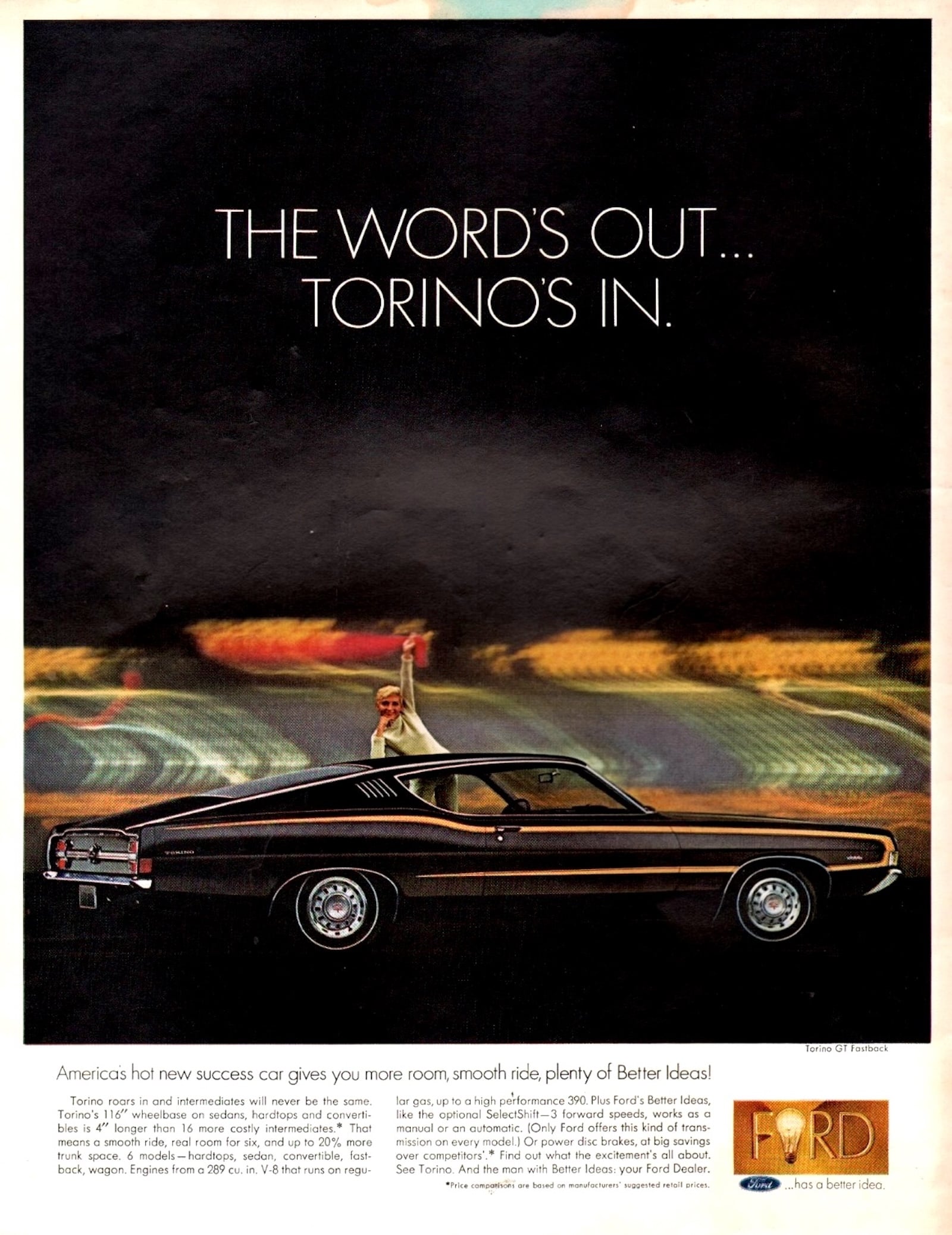
The first-gen Ford Torino had a steel unibody structure on a 116 inch wheelbase (113 inches for wagons). At the front was a coil-sprung short and long-arm suspension and at the rear you would find a live axle on semi-elliptic leaf springs – steering was recirculating ball. Image courtesy of Ford.
The 1969 Torino + The Cobra
For 1969, the straight-six grew to 250 cubic inches (4.1 liters), and the new 351 cubic inch (5.8 liter) Windsor V8 arrived with 250 bhp to 290 bhp. Ford also added the Cobra, its answer to the low-priced Plymouth Road Runner. Offered as a fastback or a hardtop, it came with the Cobra Jet as standard, now rated at 335 bhp and 440 lb ft of torque.
Competition suspension, a 4-speed and F70-14 tires were also standard, but the car used the cheaper Fairlane 500 trim to help keep the price down. Early cars had a large Cobra decal on the front fenders, and it was later replaced by a metal badge.
The Torino Goes NASCAR Racing
Ford based its stock cars on the SportsRoof fastback, its roof sloped gently from the A-pillar to the trunk lid, giving it excellent almost Kammback aerodynamics with clean laminar flow across its upper surfaces. It seemingly helped a great deal, as in 1968, Pearson drove a Holman-Moody Torino to 16 wins from 48 starts and took the championship win. Richard Petty won 16 races in his Plymouth, but he couldn’t quite match the Ford.
Dodge answered for 1969 with the Charger 500, and Ford’s reply was the Torino Talladega, named for Bill France’s new Alabama superspeedway. Holman-Moody and Ford engineers reworked the front end in Ford’s wind tunnel. The result was a nose about six inches longer, a flush grille, and a rear bumper narrowed to fit the front.
Re-rolled rocker panels let race teams run the body an inch lower within NASCAR’s height rules. Every regular-production Talladega came with the Cobra Jet, a column-shifted C6, a 3.25:1 axle and a bench seat, in Wimbledon White, Royal Maroon or Presidential Blue.
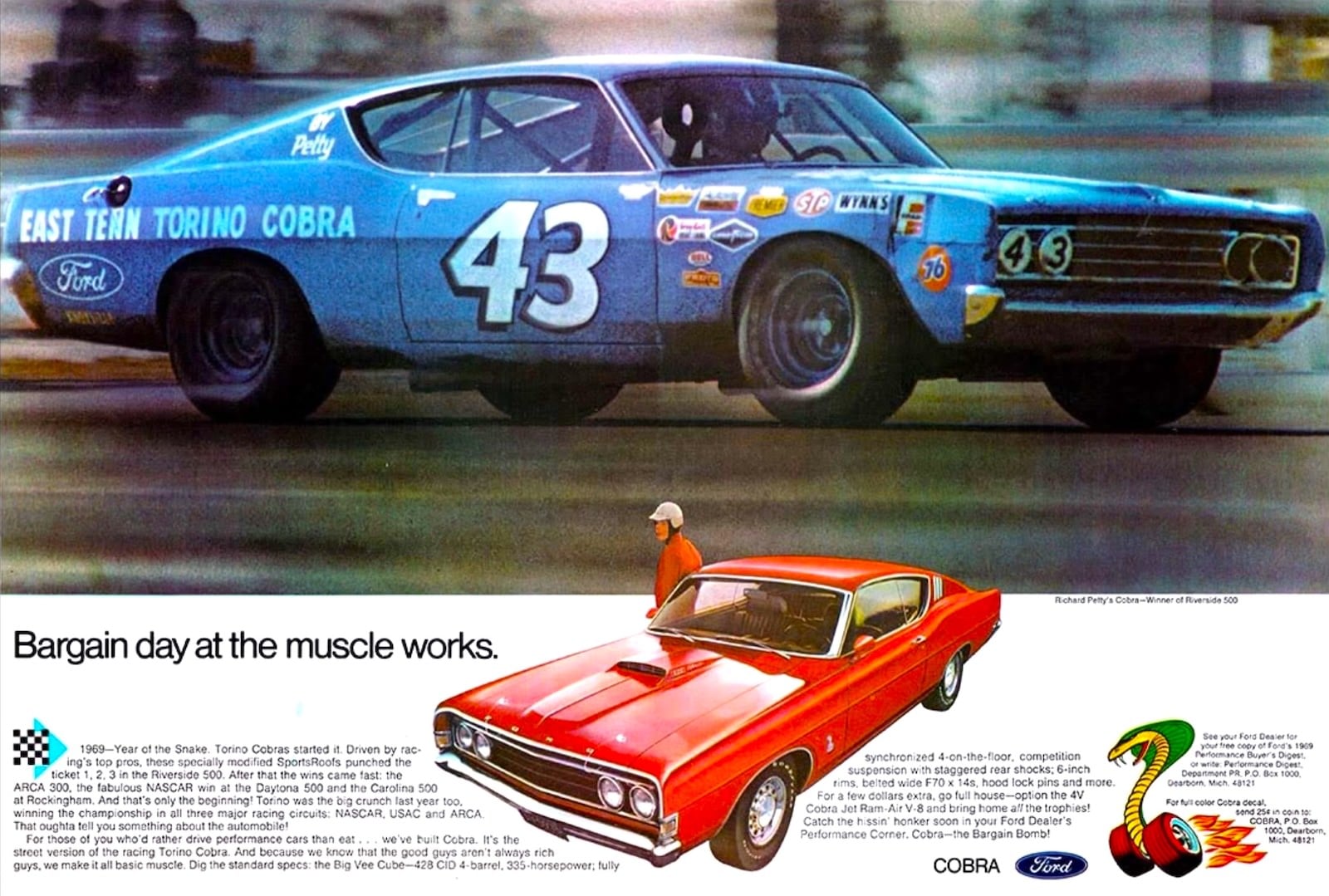
Ford based its stock cars on the SportsRoof fastback, its roof sloped gently from the A-pillar to the trunk lid, giving it excellent almost Kammback aerodynamics with clean laminar flow across its upper surfaces. It seemingly helped a great deal, as in 1968, Pearson drove a Holman-Moody Torino to 16 wins from 48 starts and took the championship win. Image courtesy of Ford.
NASCAR required 500 road cars for homologation purposes, and Ralph Moody later said Ford had built about 40 of the 100 that was needed to start racing when France came to count them. The same cars were driven past him in a loop, and he counted them three times without realizing. It was a sneaky trick, but it worked, and the Torino was rubber stamped to go racing.
LeeRoy Yarbrough took the 1969 Daytona 500 win in Junior Johnson’s Torino Talladega, passing Charlie Glotzbach’s Dodge on the final lap. Petty, who’d left Plymouth to drive a Ford, finished second in points. Pearson won the title again with 11 victories from 51 starts, and Fords won 26 races.
The first race at Talladega, on September the 14th, 1969, went to Dodge. Many leading drivers boycotted over safety concerns, and Richard Brickhouse won in the debuting Dodge Charger Daytona. Plymouth lured Petty back for 1970 with the Superbird. Several Ford teams kept racing their 1969 Talladegas that year because the restyled 1970 Torino was notably slower. Sadly, it was a sign of things to come.
The Torino Generations That Followed
For 1970, Torino became Ford’s main intermediate name. The Fairlane was reduced to a subseries and then dropped entirely for 1971. The new body was longer, lower, wider, and heavier, with Coke-bottle styling on a 117 inch wheelbase. The Cobra switched to a 429 cubic inch (7.0 liter) V8, and the line was named Motor Trend’s 1970 Car of the Year.
The 1972 redesign moved to body-on-frame construction, with a perimeter frame and coil springs at all four corners. The range was recast around the Gran Torino, and the Cobra was dropped from then-on. The cars got heavier through to the mid-1970s as federal bumper rules took effect.
A red-and-white 1975-1976 Gran Torino starred in the wildly-popular TV series Starsky & Hutch. Ford announced 1,000 replicas and built about 1,300 in 1976, the Torino’s final year. The LTD II replaced it for 1977, on the same exact chassis but with a far less exciting name. It was a classic Malaise Era move.
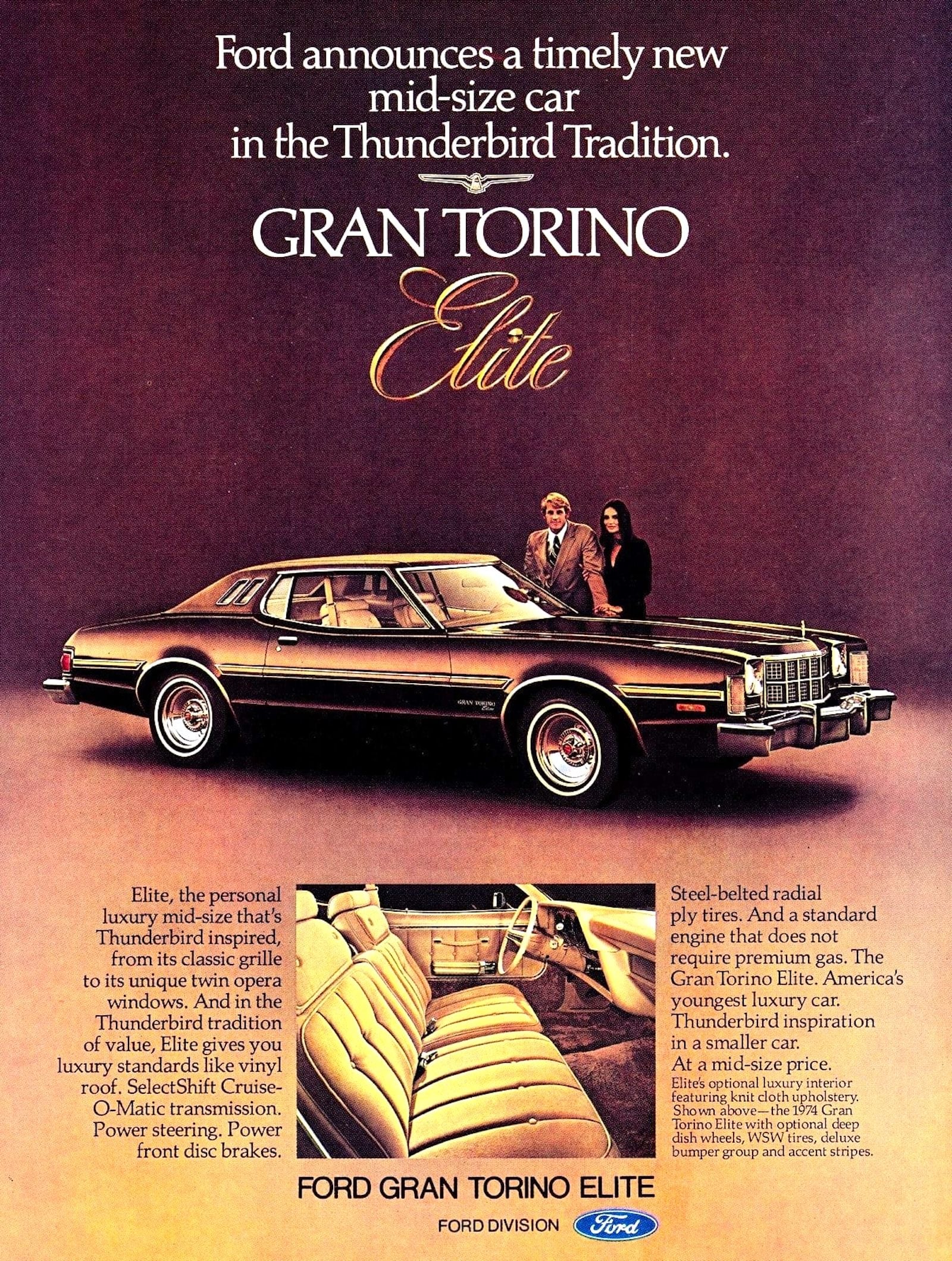
The 1972 redesign moved to body-on-frame construction, with a perimeter frame and coil springs at all four corners. The range was recast around the Gran Torino, and the Cobra was dropped from then-on. The cars got heavier through to the mid-1970s as federal bumper rules took effect. Image courtesy of Ford.
The 1968 Ford Torino GT Fastback S-Code Shown Here
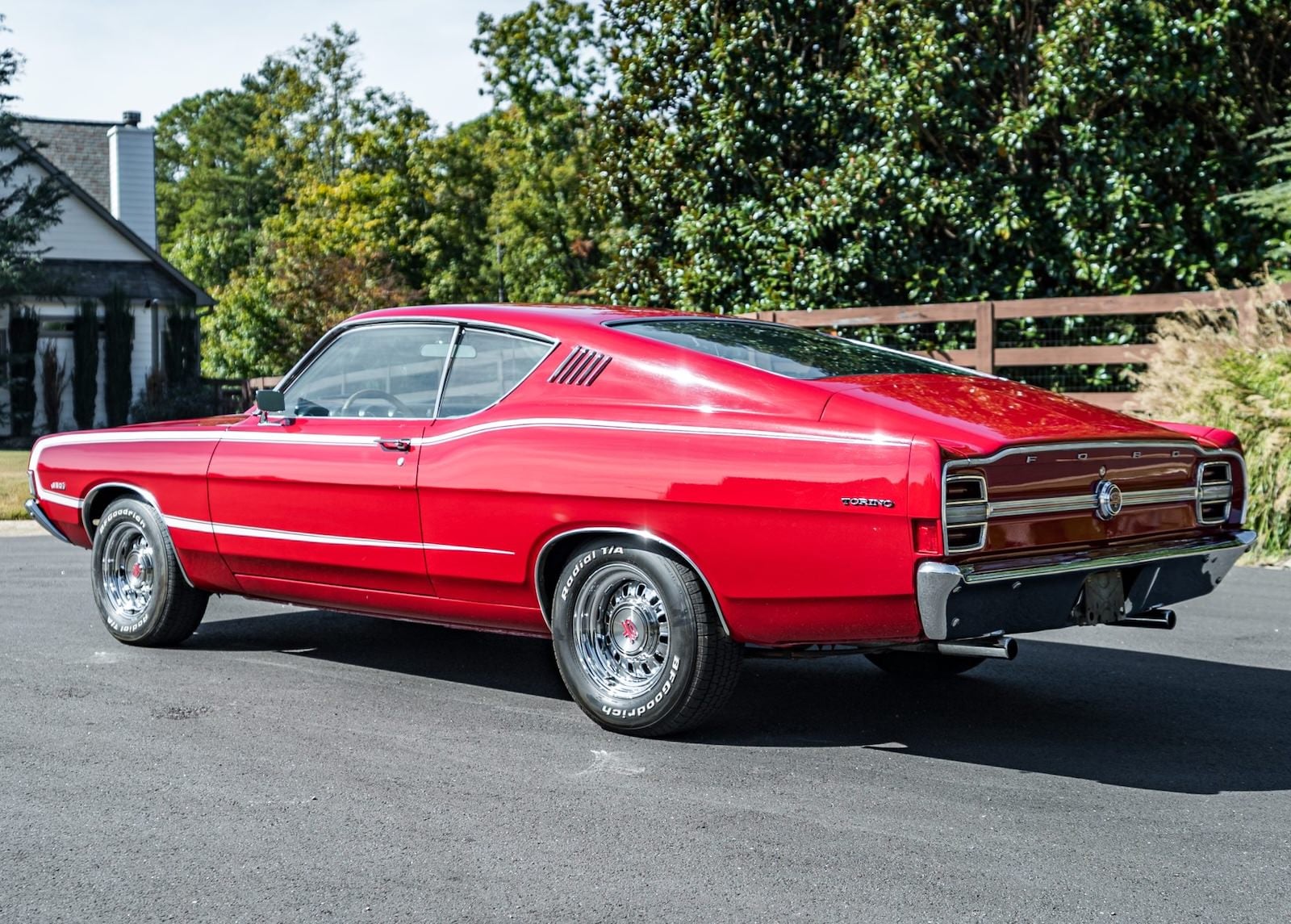
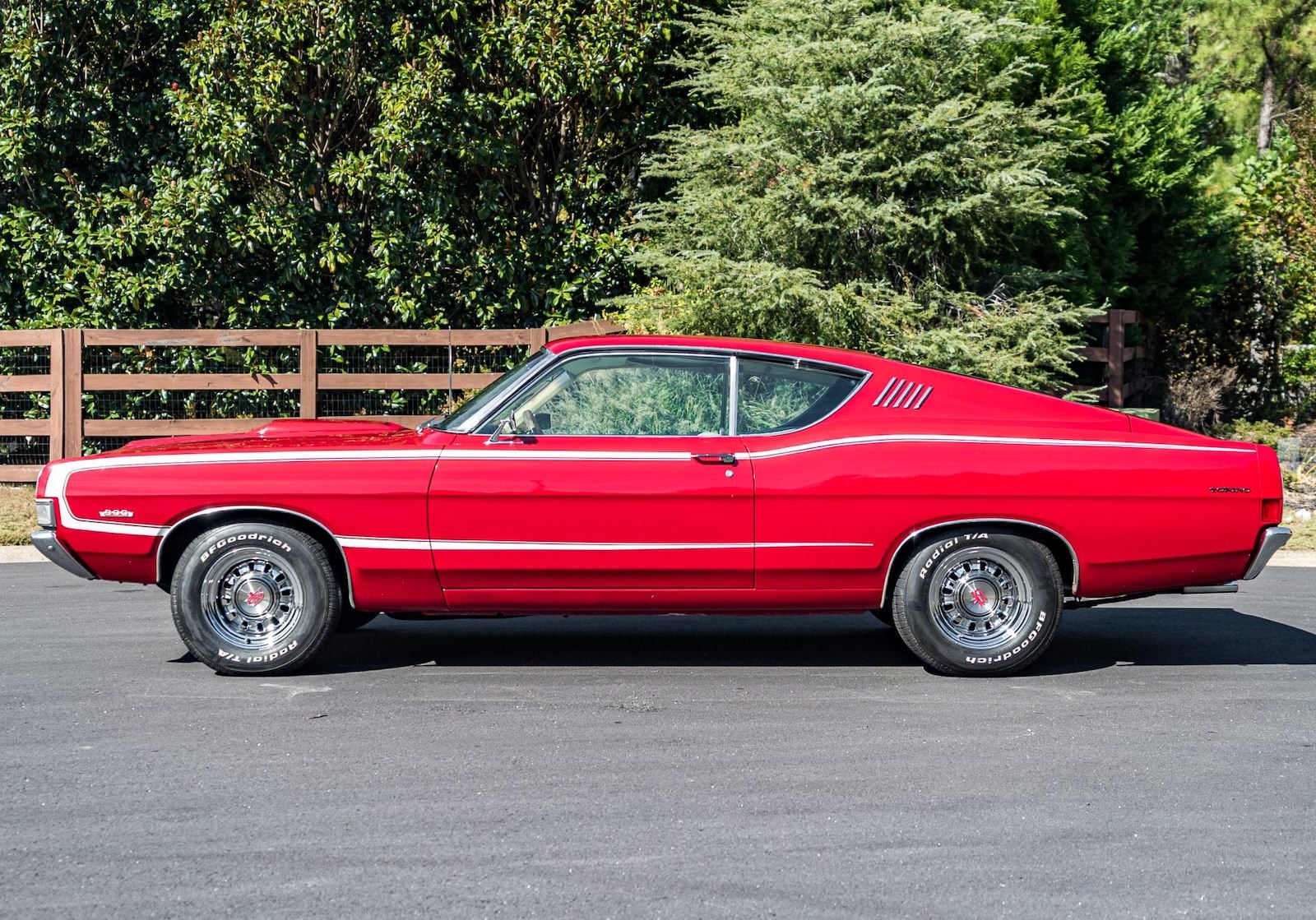
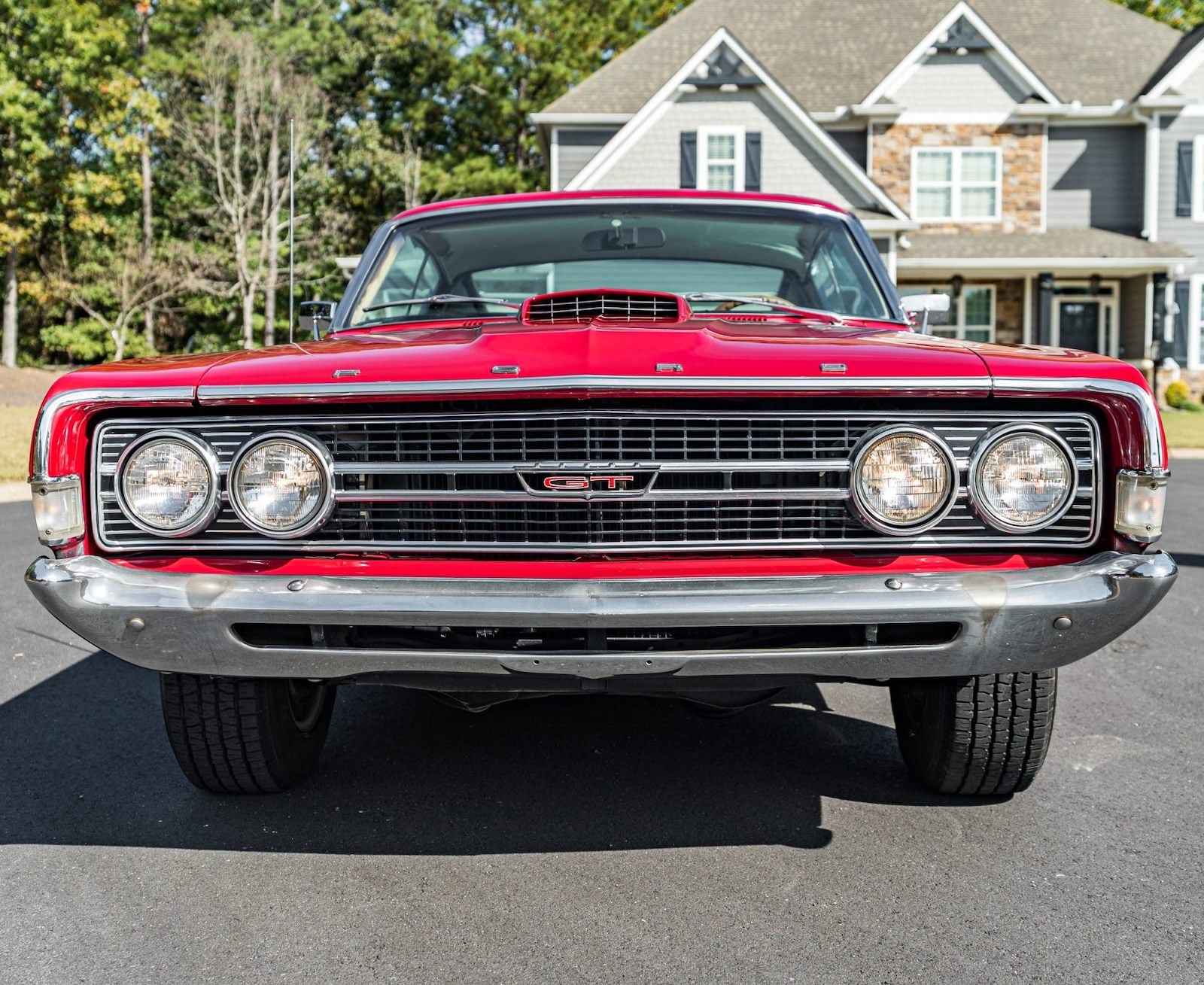
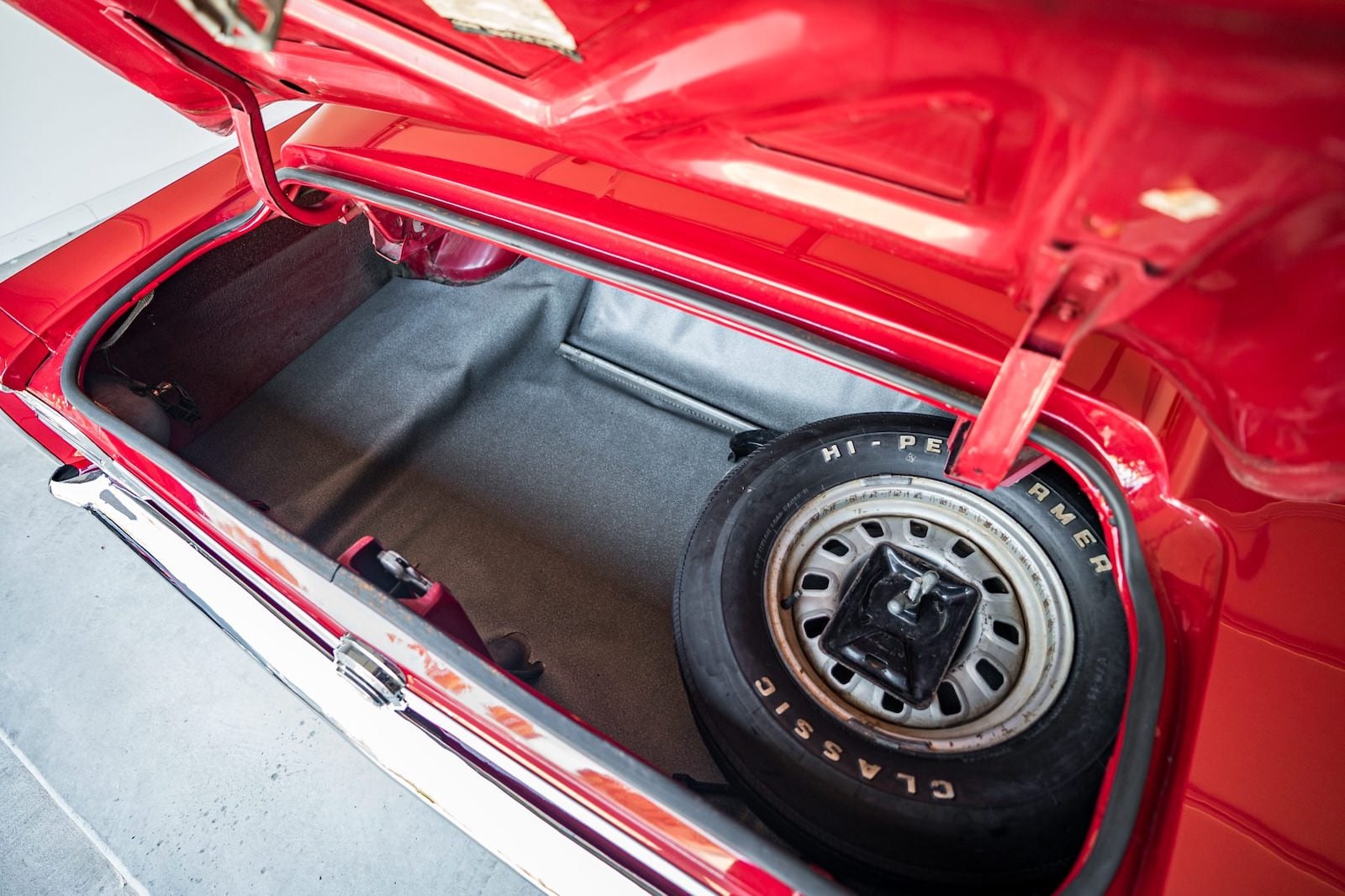
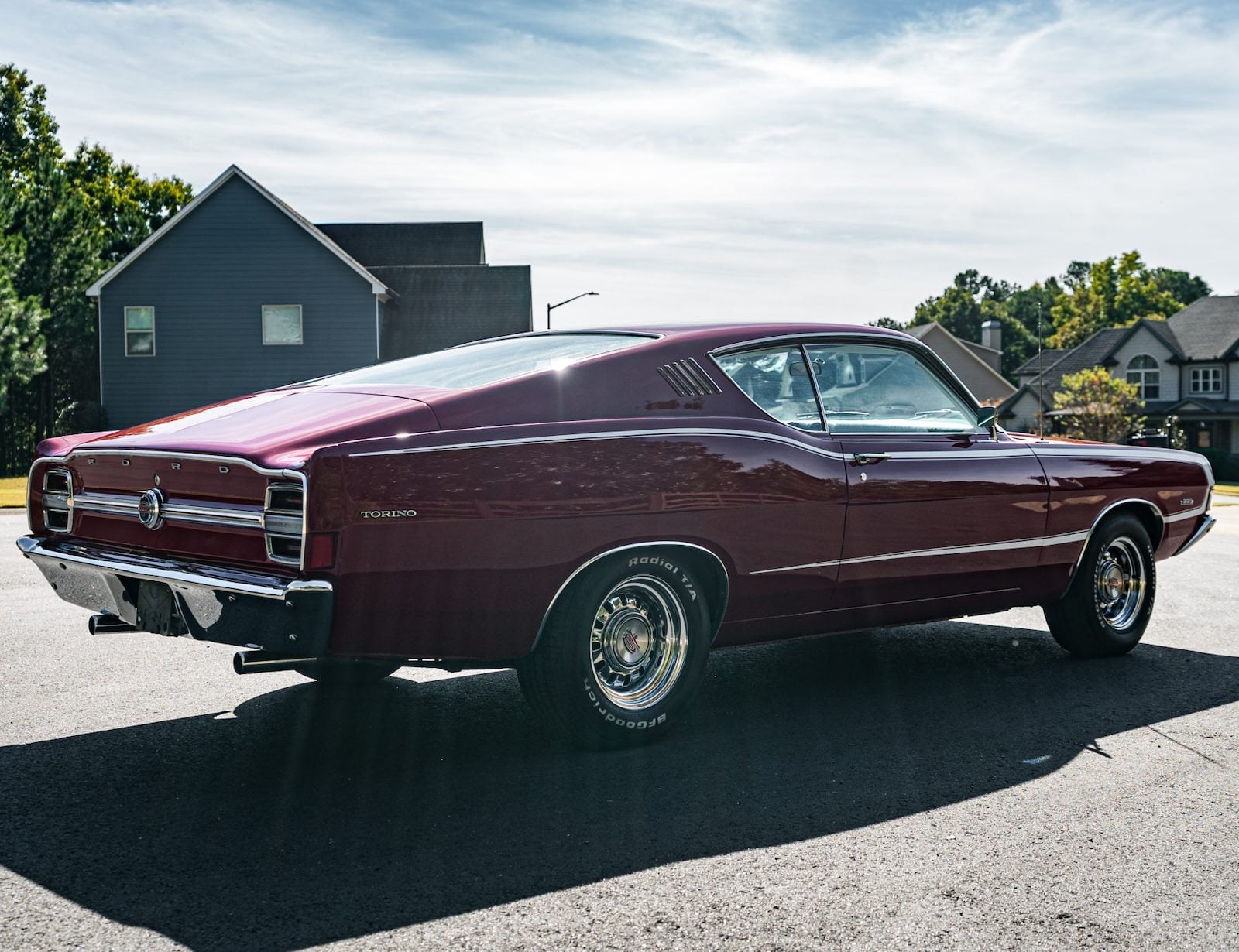
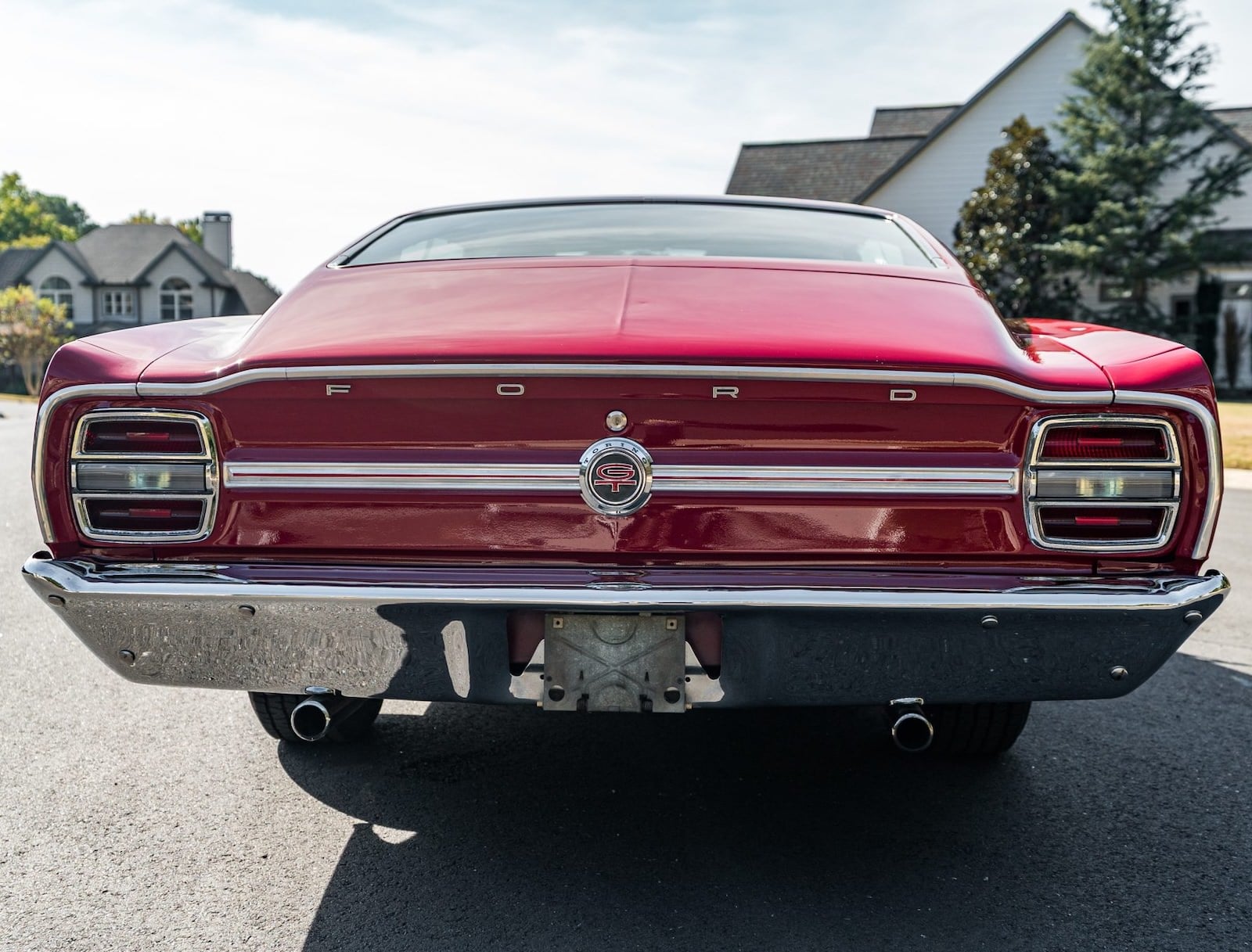
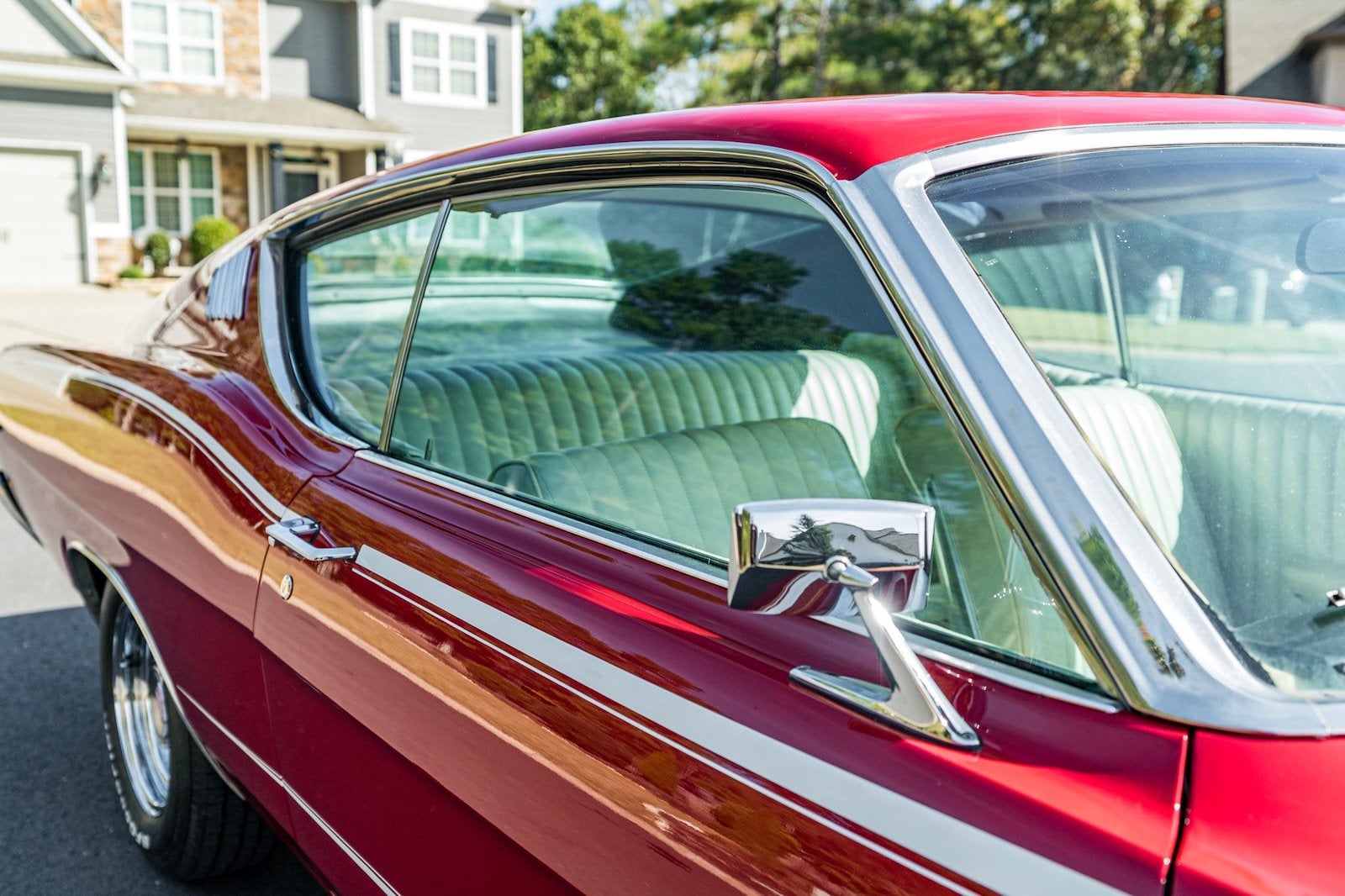
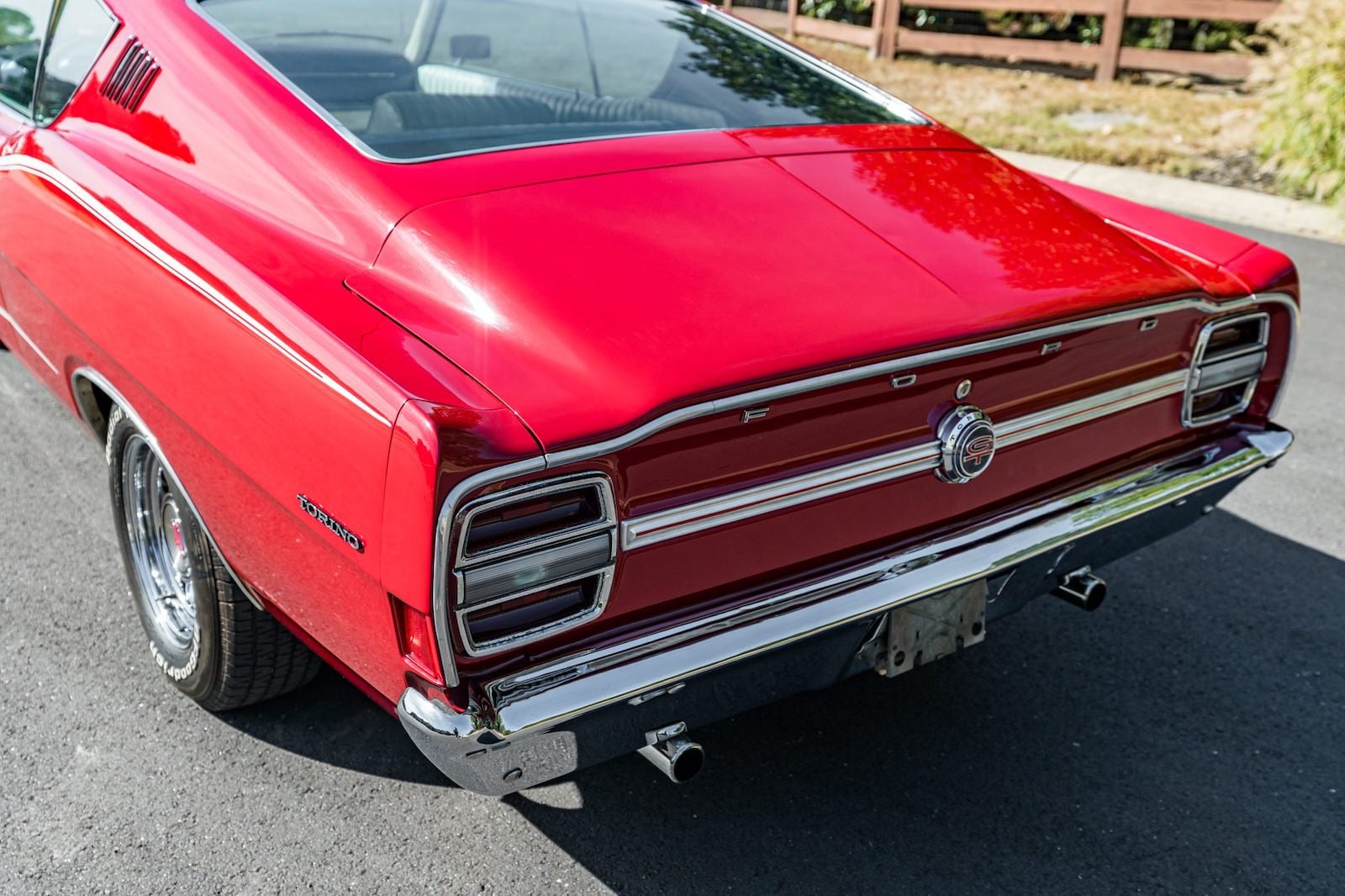
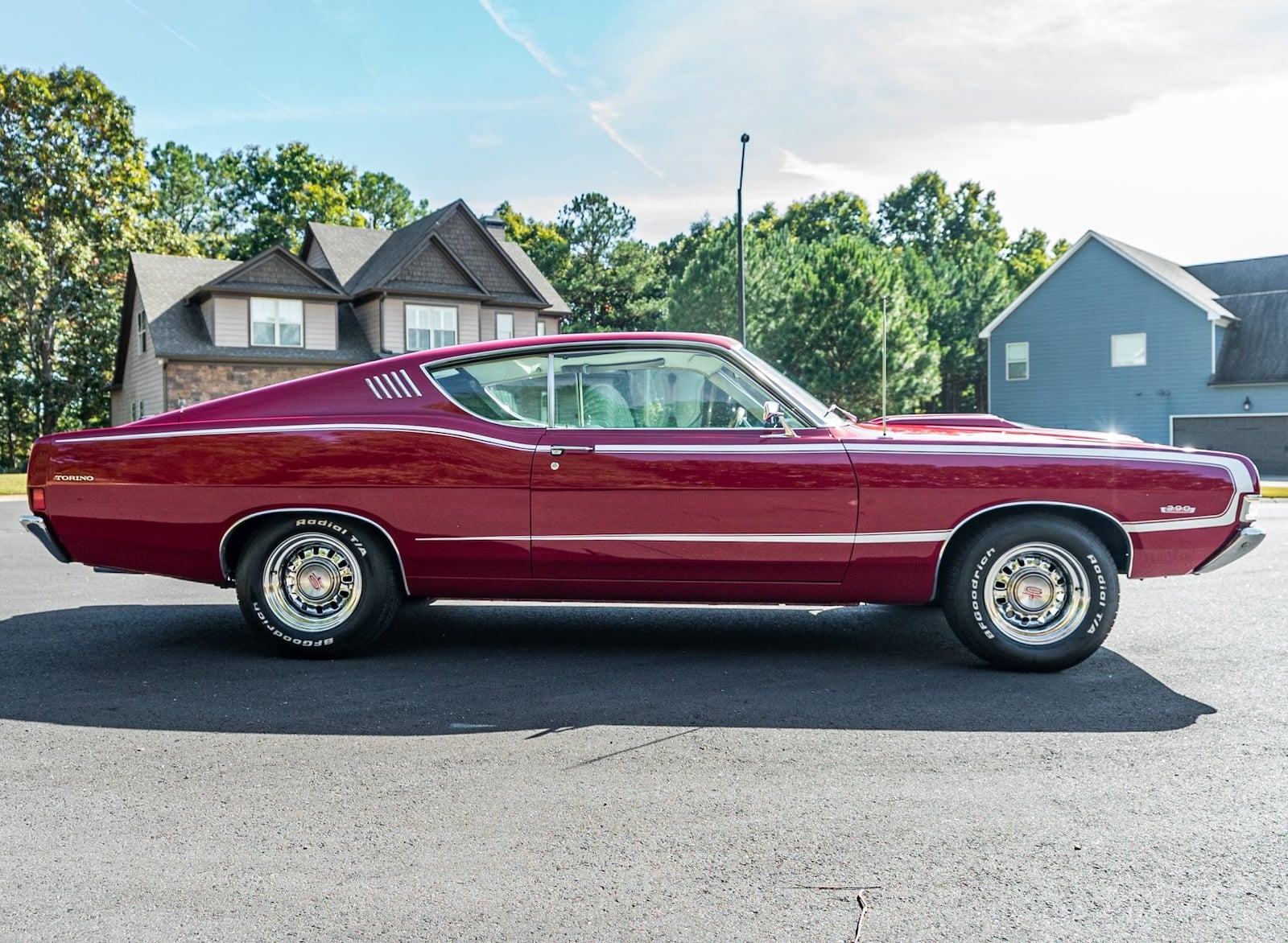
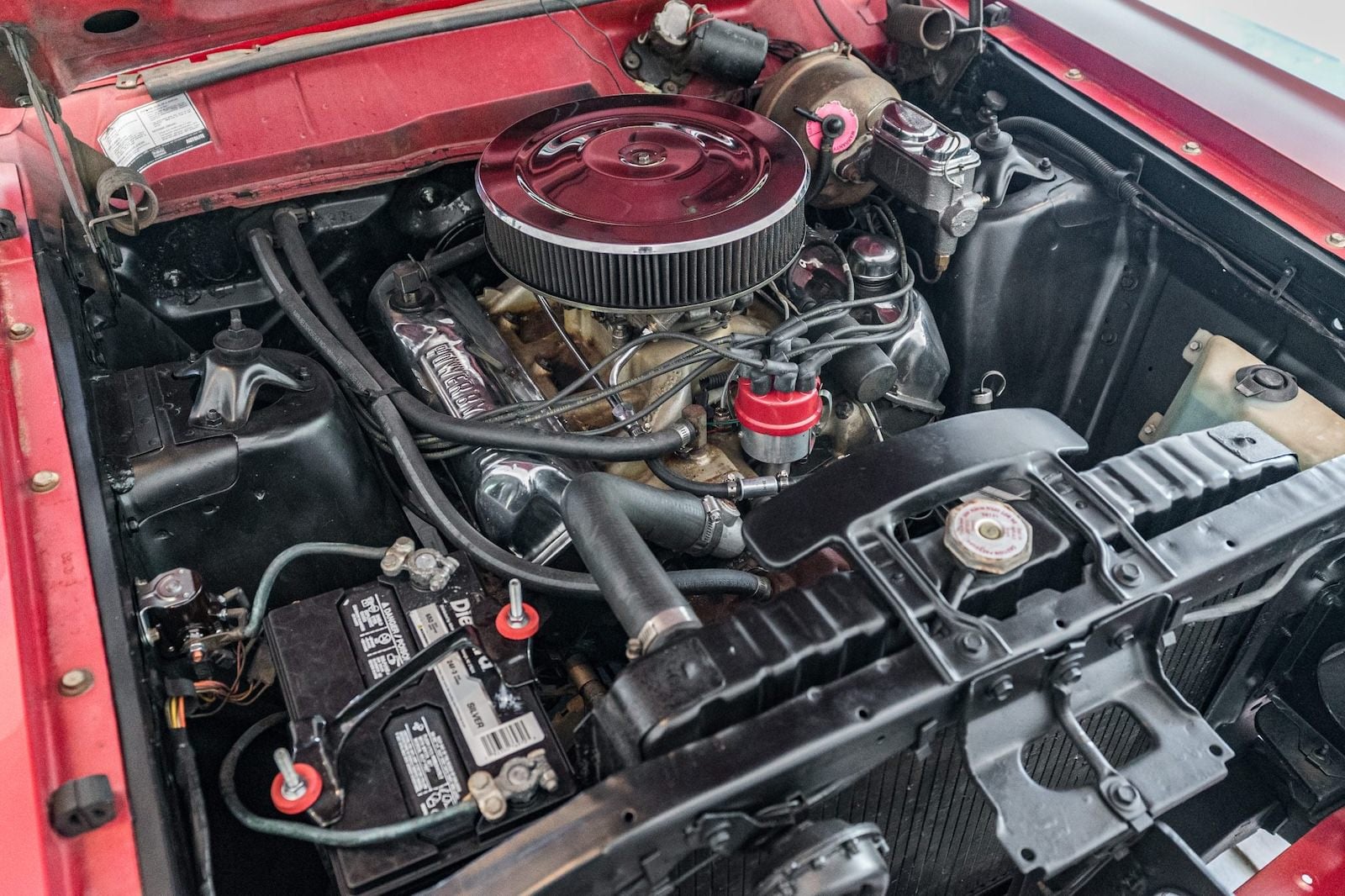
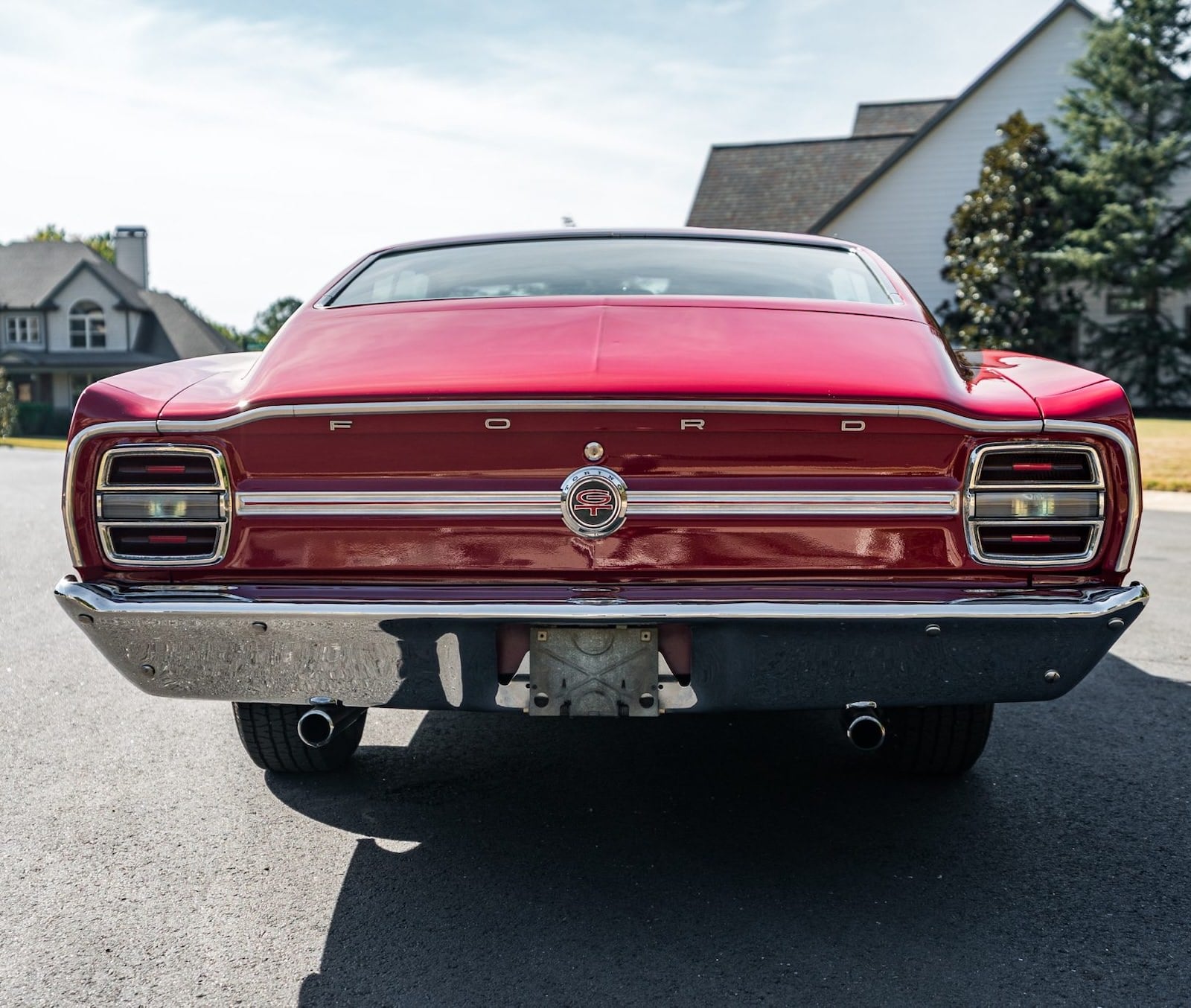
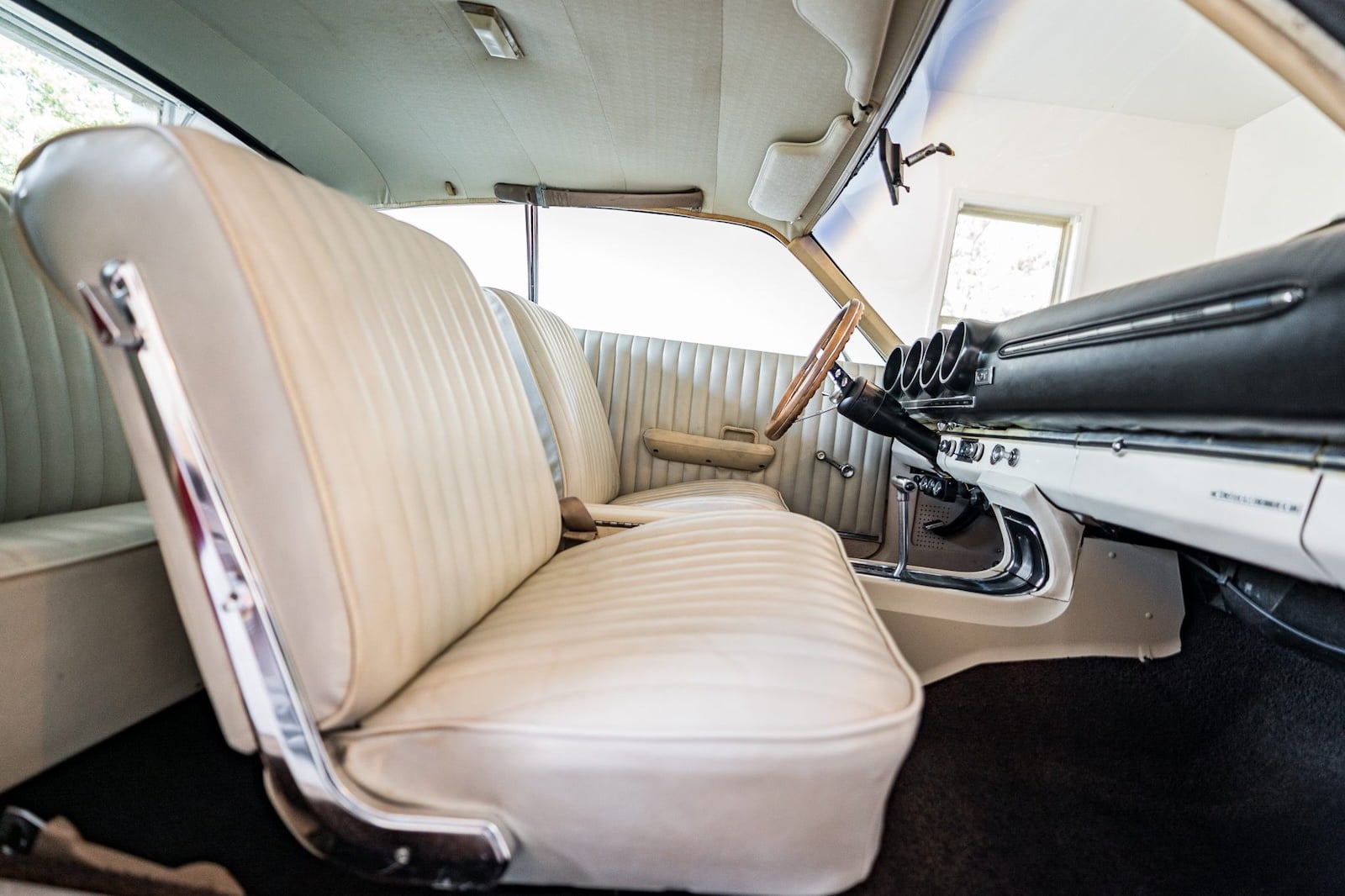
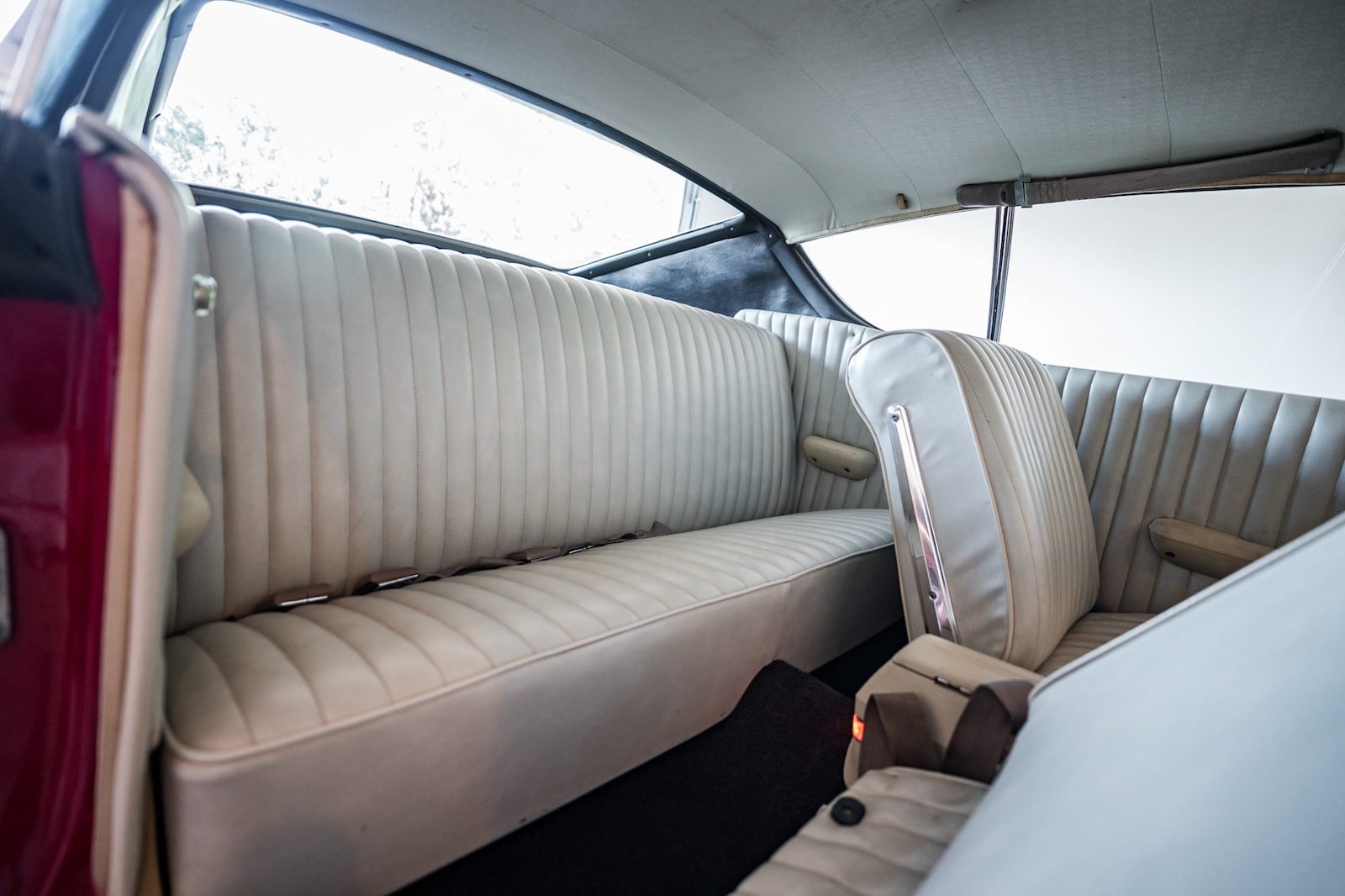
This is an original 1968 Ford Torino GT fastback powered by a factory S-code 390 cubic inch (6.4 liter) V8, rated at 325 bhp when new, paired with a 3-speed automatic transmission. The car is finished in Candyapple Red over a Parchment vinyl interior, and it’s reportedly spent its entire life registered in Georgia.
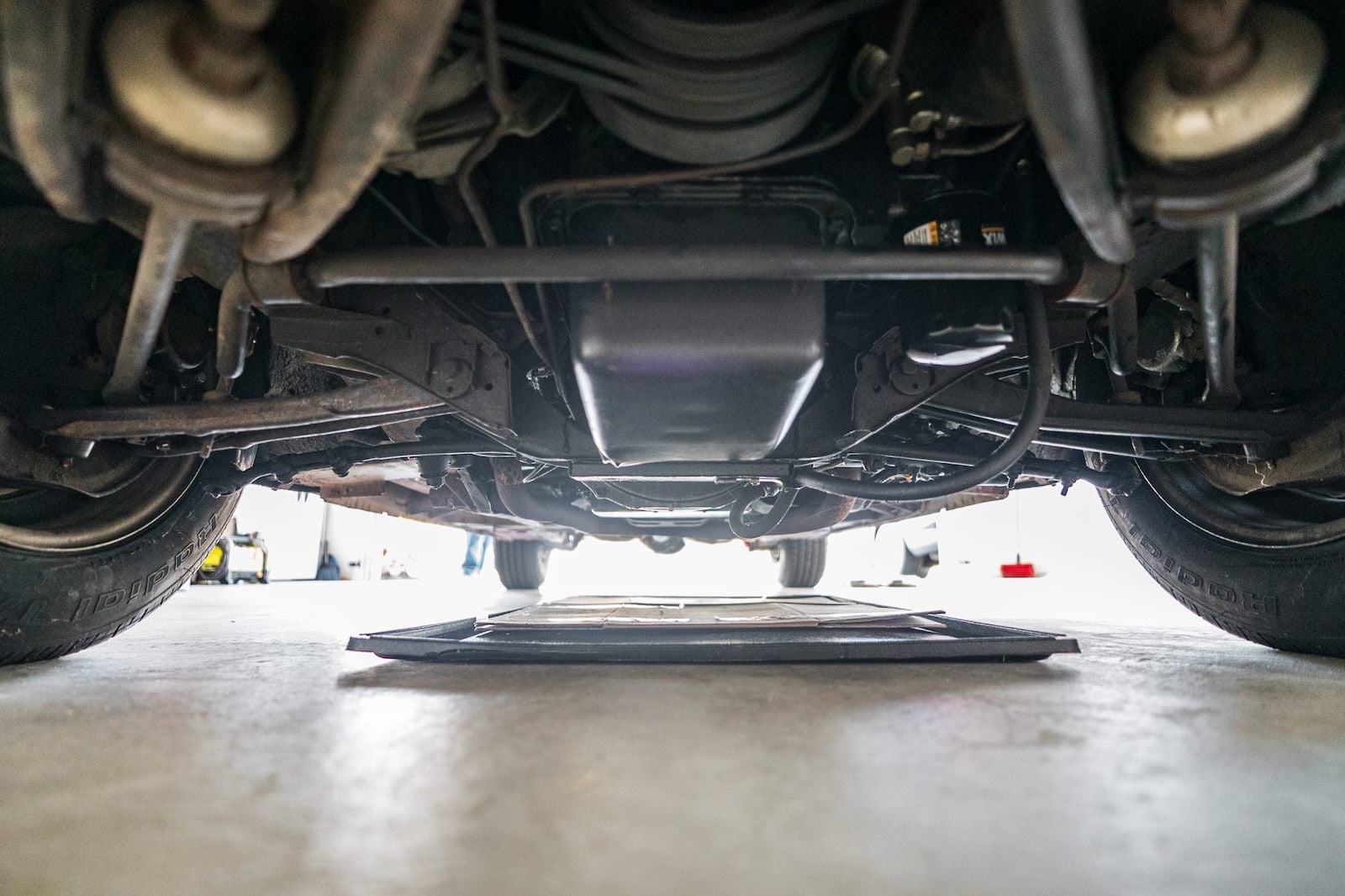
This car keeps its original factory color scheme, although it has been repainted at some point. It has white side stripes, a hood scoop, chrome bumpers, and 15-inch wheels fitted with BFGoodrich Radial T/A tires. It also has power steering and power-assisted front disc brakes.
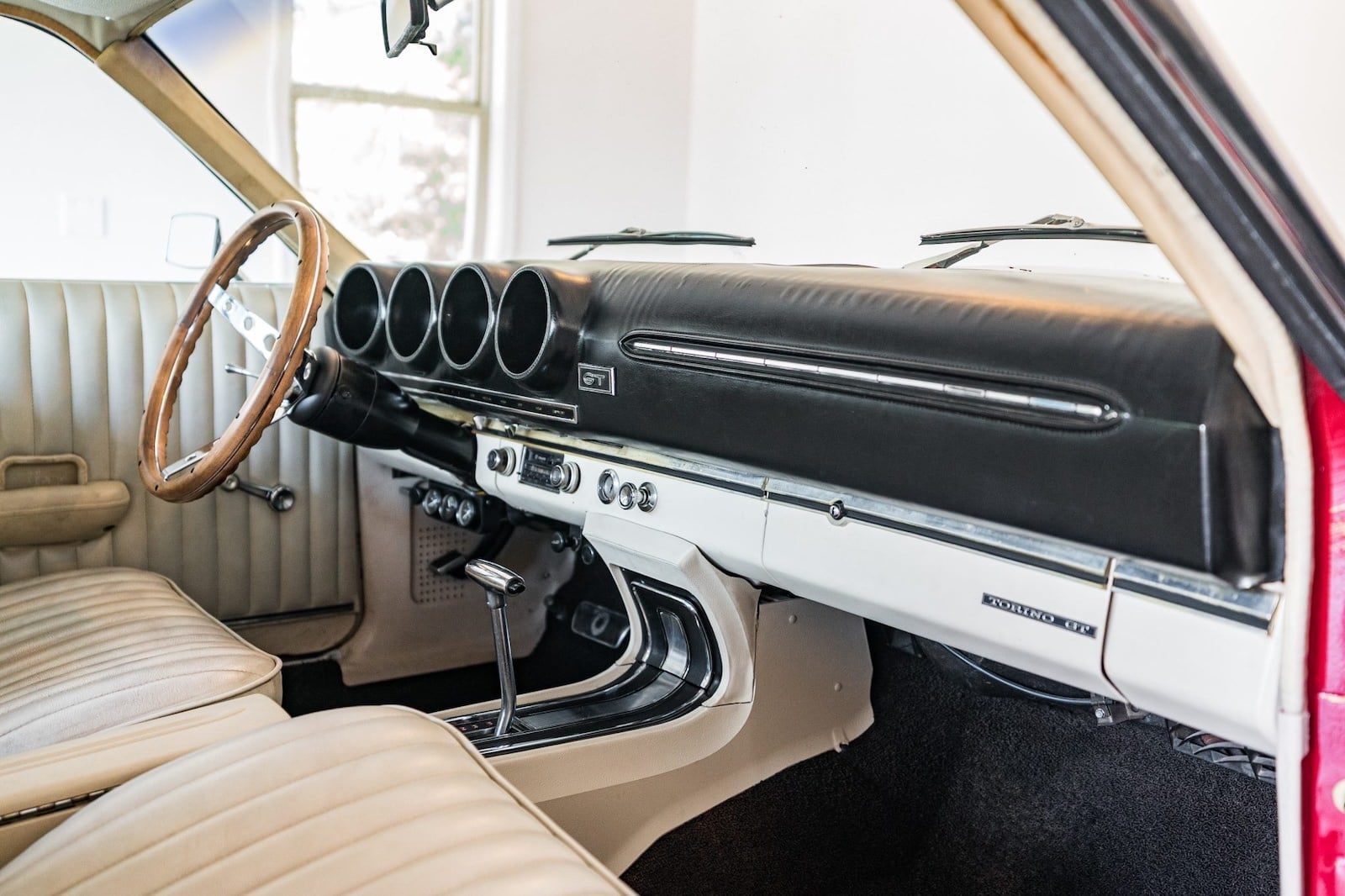
Inside, you’ll find front bucket seats, a center console, a cassette stereo, and an auxiliary three-gauge cluster installed in 2018. The steering wheel was replaced the same year, and the trunk liner was renewed in 2020.
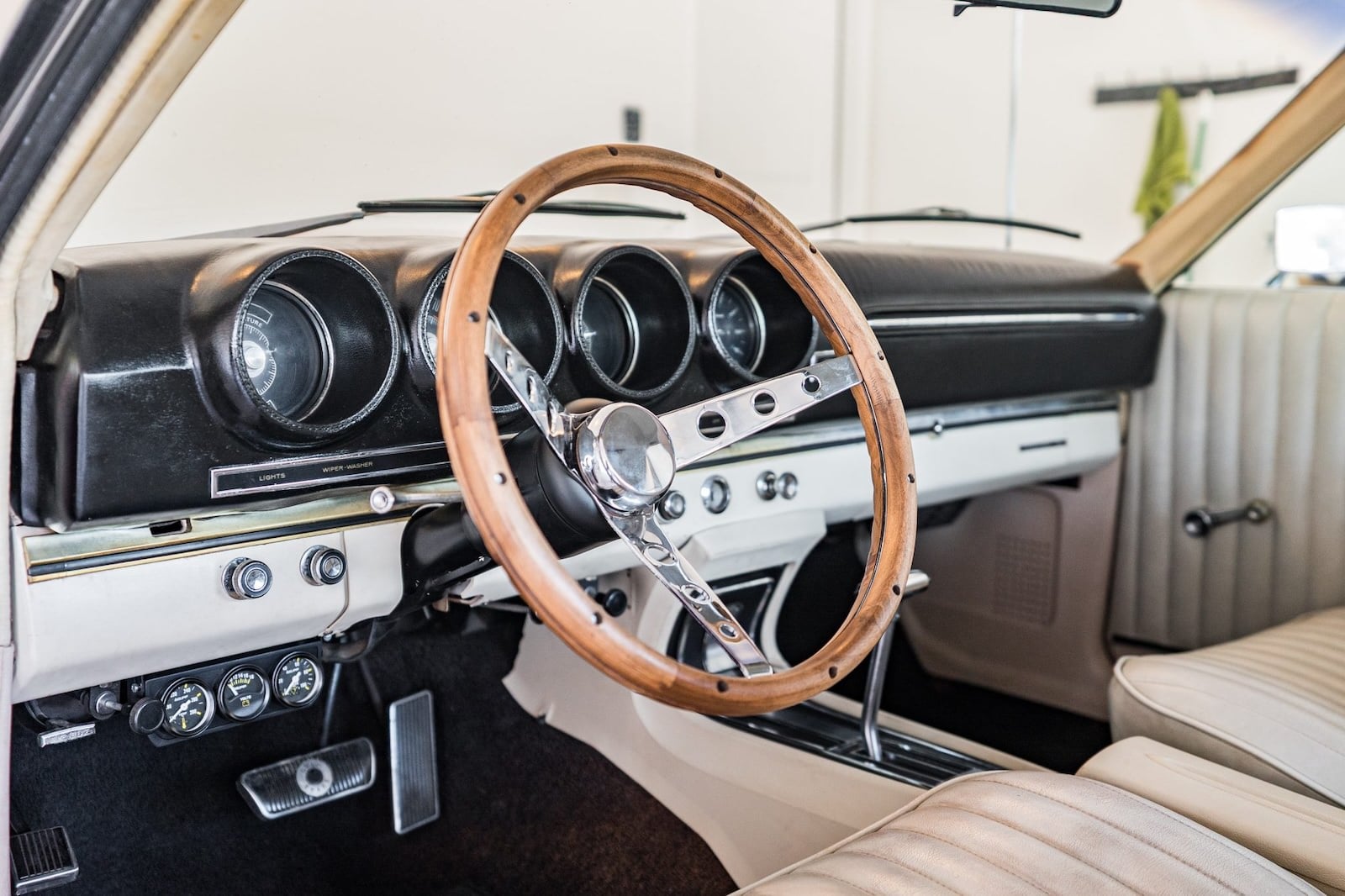
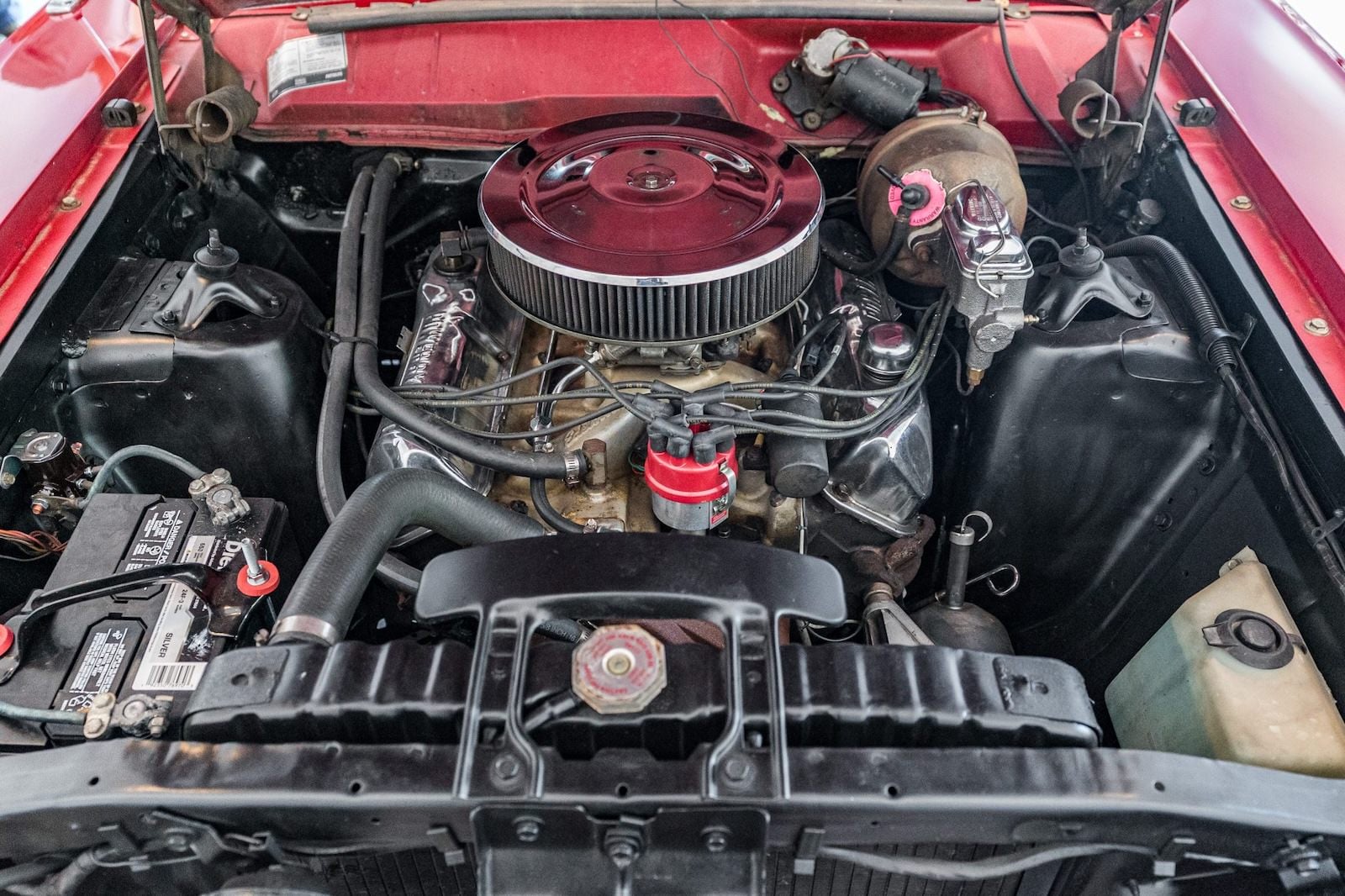
This is a 1968 Ford Torino GT that was factory-fitted with the 325 bhp S-Code 390 V8. These cars became NASCAR championship-winning icons in the late 1960s, and they triggered an arms race that saw Dodge and Plymouth releasing new models to chase them on the banked ovals.
Mechanical work carried out in mid-2018 included replacing the brake master cylinder, front calipers, rear wheel cylinders, and brake lines. The spark plugs were also replaced that year. More recently, in October of 2026, the four-barrel carburetor was rebuilt, the oil changed, and a new starter, starter cable, solenoid, and battery were fitted.
The car is now being offered for sale out of Canton, Georgia with a Marti Report documenting its factory specifications, an owner’s manual, service records, and Georgia registration. If you’d like to read more about it or register to bid, you can visit the listing here.
Images courtesy of Bring a Trailer + the Ford Motor Company

Articles that Ben Branch has written have been covered on CNN, Popular Mechanics, Smithsonian Magazine, Road & Track Magazine, the official Pinterest blog, the official eBay Motors blog, BuzzFeed, Autoweek Magazine, Wired Magazine, Autoblog, Gear Patrol, Jalopnik, The Verge, and many more.
Silodrome was founded by Ben back in 2010, in the years since the site has grown to become a world leader in the alternative and vintage motoring sector, with well over a million monthly readers from around the world and many hundreds of thousands of followers on social media.