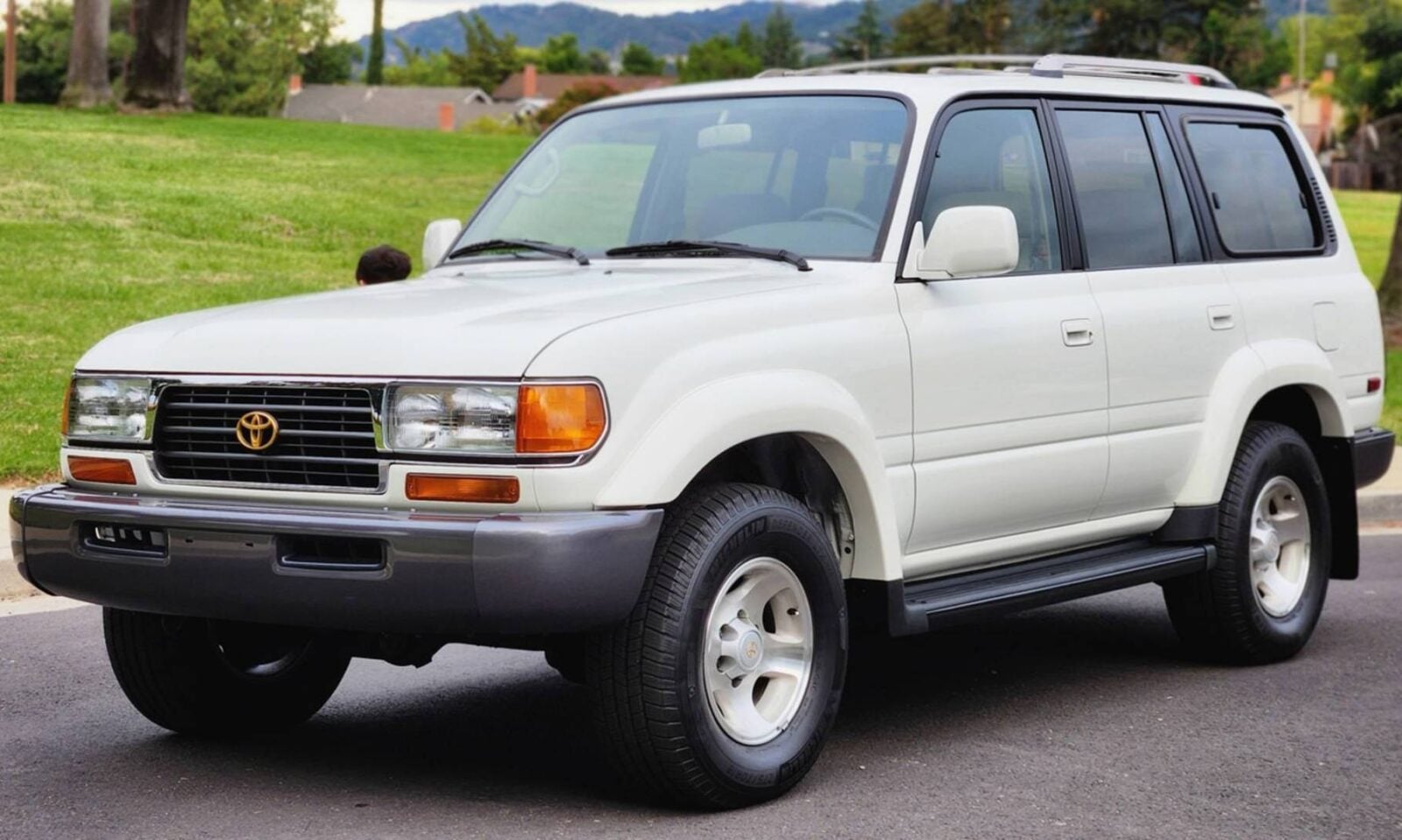
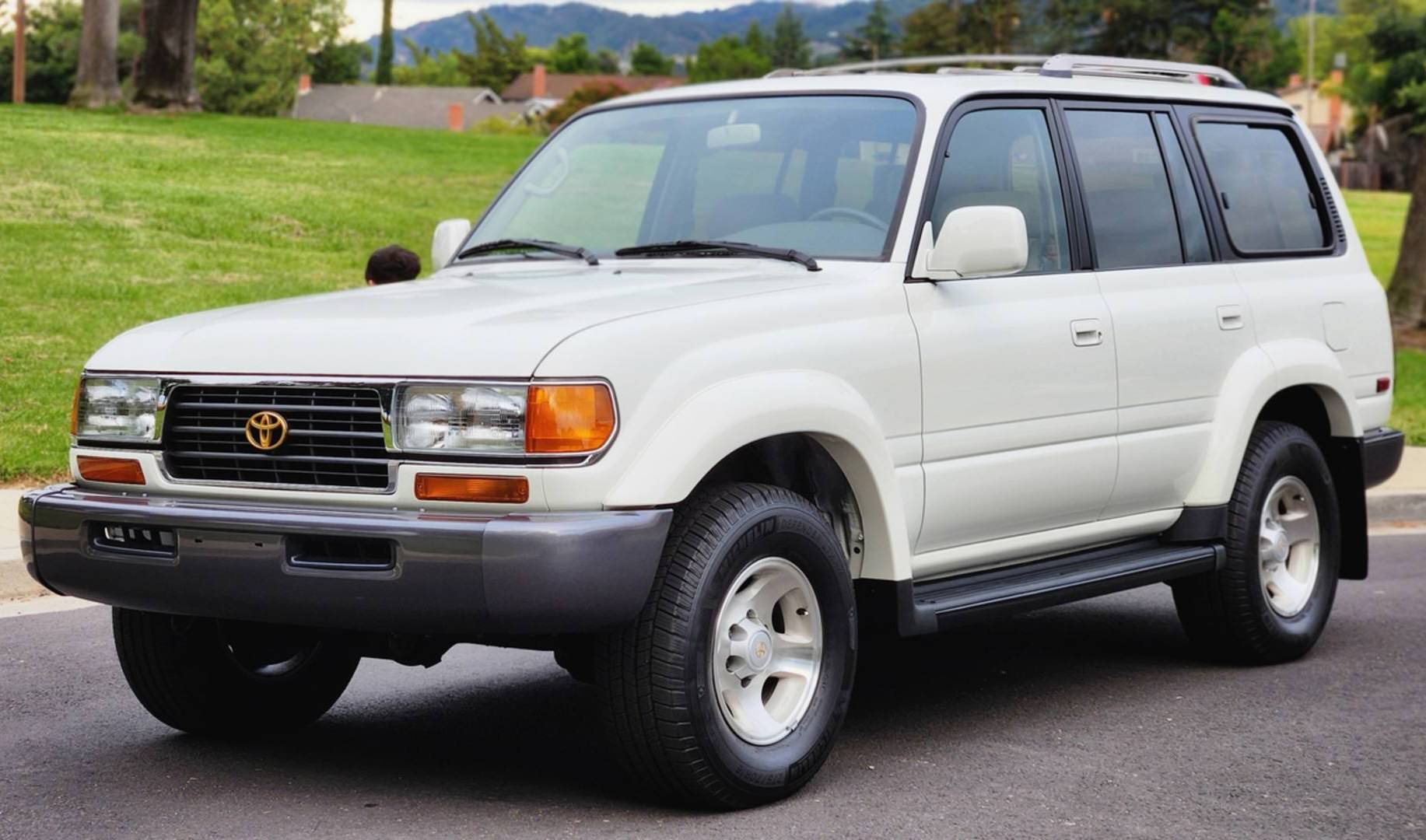
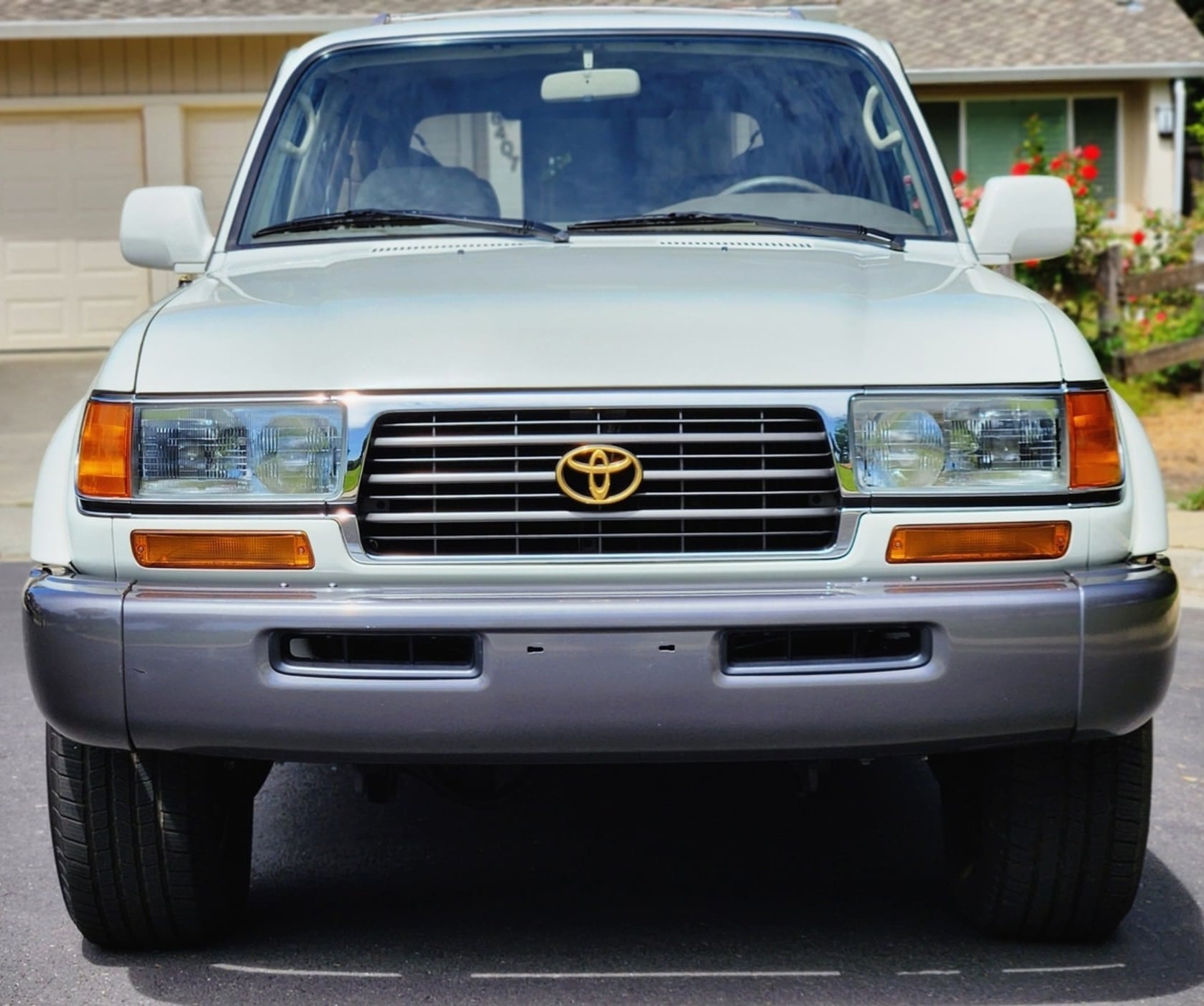
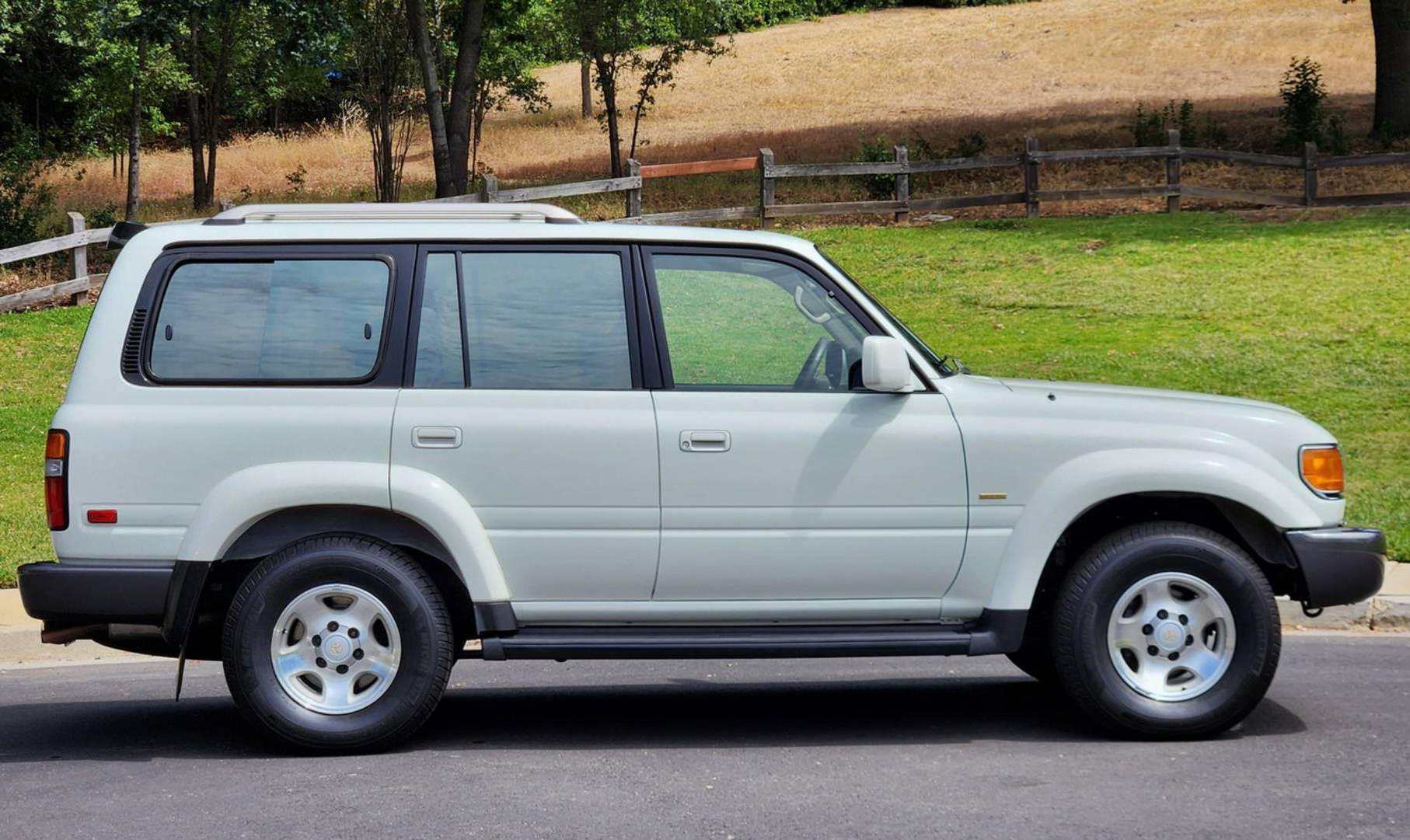
This is an unusually pristine 80 Series Toyota Land Cruiser from 1997, it looks to be in almost time-warp-like condition throughout, because it has just 4,700 miles on the odometer.
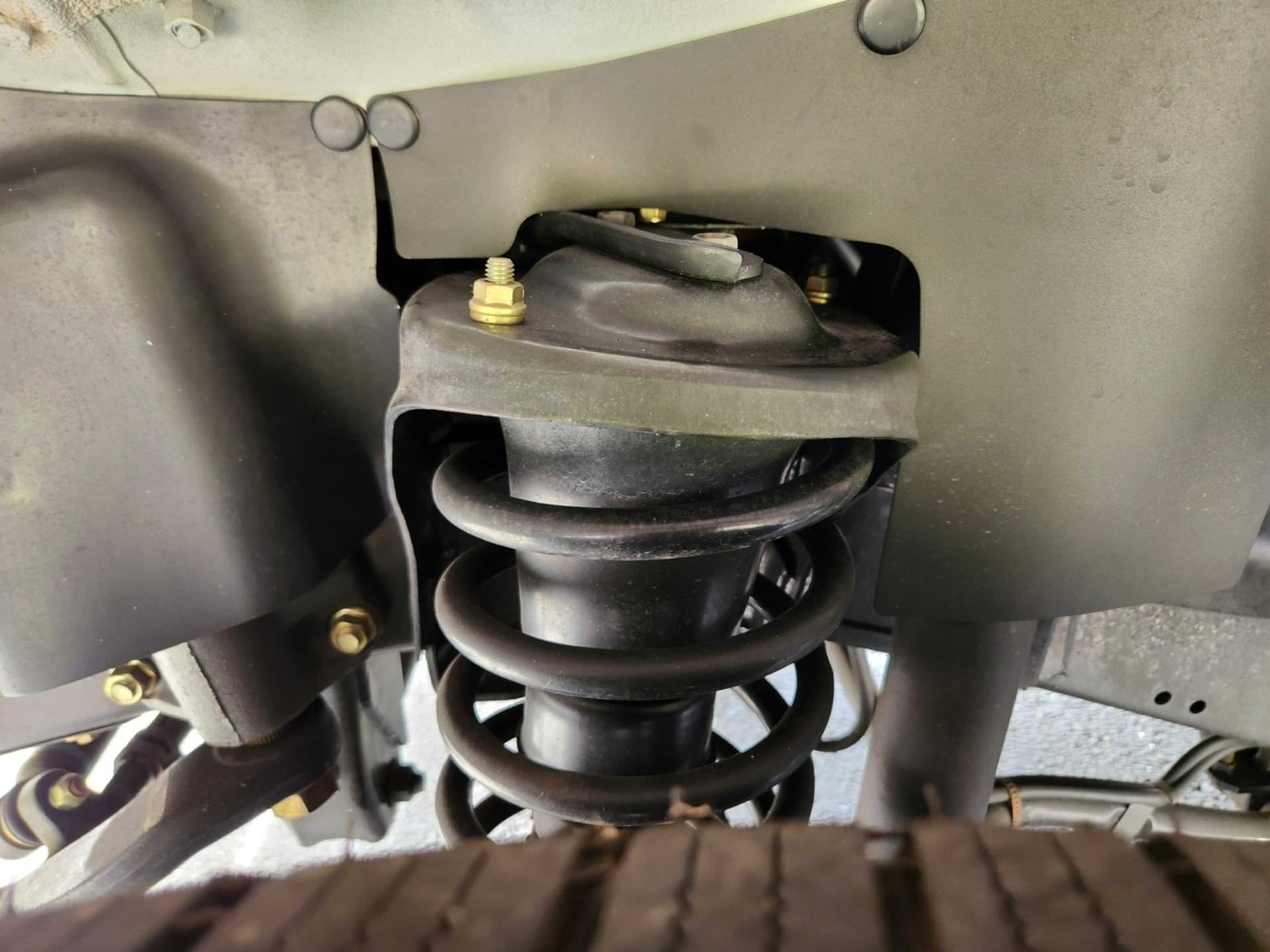
The 80 Series is one of the most important of the Land Cruiser model iterations, it introduced coil springs but kept the front and rear live axles – a combination that remains hugely in demand with off-road enthusiasts today.
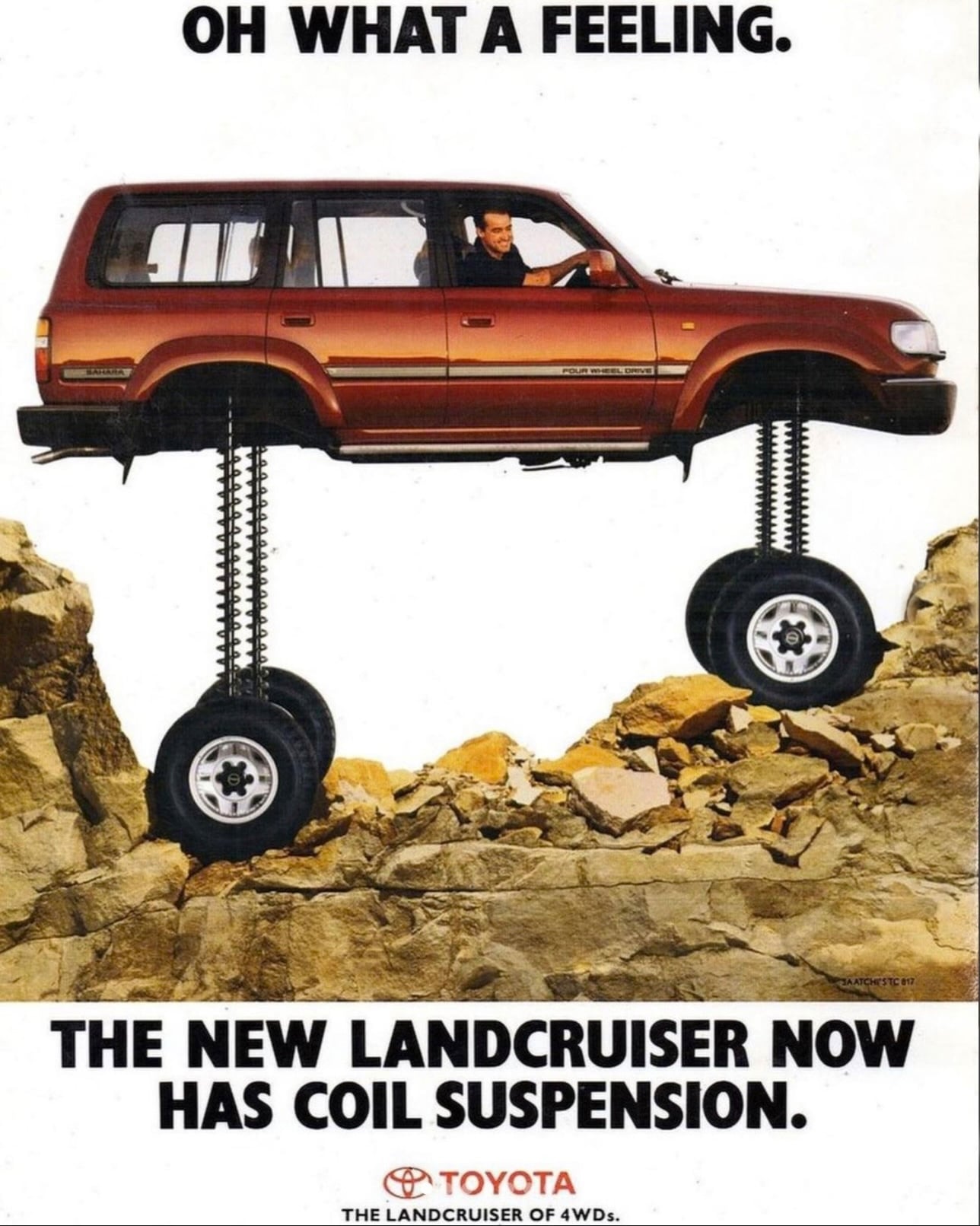
 The 80 Series is one of the most important of the Land Cruiser’s model iterations, it introduced coil springs but kept the front and rear live axles – a combination that remains hugely in demand with enthusiasts today. Image courtesy of Toyota Australia.
History Speedrun: The 80 Series Toyota Land Cruiser
The Land Cruiser 80 Series replaced the 60 Series in October of 1989 and stayed in production in Japan until 1997. It brought coil springs and full-time four-wheel drive to Toyota’s big wagon line for the first time, kept a live axle at each end, and is the truck Toyota reached back to when it designed the 300 Series.
From Toyota Jeep BJ To The Land Cruiser
Toyota’s history of manufacturing 4x4s dates back to World War II, and the history gets murky rather quickly. The company had been tasked with developing 4×4 trucks like the Toyota KCY to better compete with similar American trucks. Then when the Imperial Japanese Army invaded the Philippines they captured a number of American vehicles – the small, light Jeep caught the eye of Japanese commanders and they sent one back to Japan for it to be copied. It was either a Bantam GP or a Willys MB, though no one can agree on which.
Reverse-engineering of the American light 4×4 (we’ll just call it the Jeep from now on for the sake of brevity) led to the Toyota AK10 – a small, light 4×4 of which a few prototypes were made, though full production never commenced.
Using some of the lessons learned from the AK10 project, Toyota developed the confusingly-named Jeep BJ in 1951. It was designed for Japan’s National Police Reserve and offered four-wheel drive, with power provided by the 3.4 liter Type B inline-six gasoline engine from the prewar Model AA.
The Reserve chose Mitsubishi’s licensed Willys Jeep instead, so Toyota turned the BJ over to civilian buyers and began volume production in 1953. The civil police soon changed their mind because test driver Ichiro Taira took a Toyota BJ prototype up Mount Fuji to the sixth stage in July of 1951. No one had ever driven that high up the mountain before, and as a result, the National Police Agency ordered 289 of the Toyotas as patrol cars.
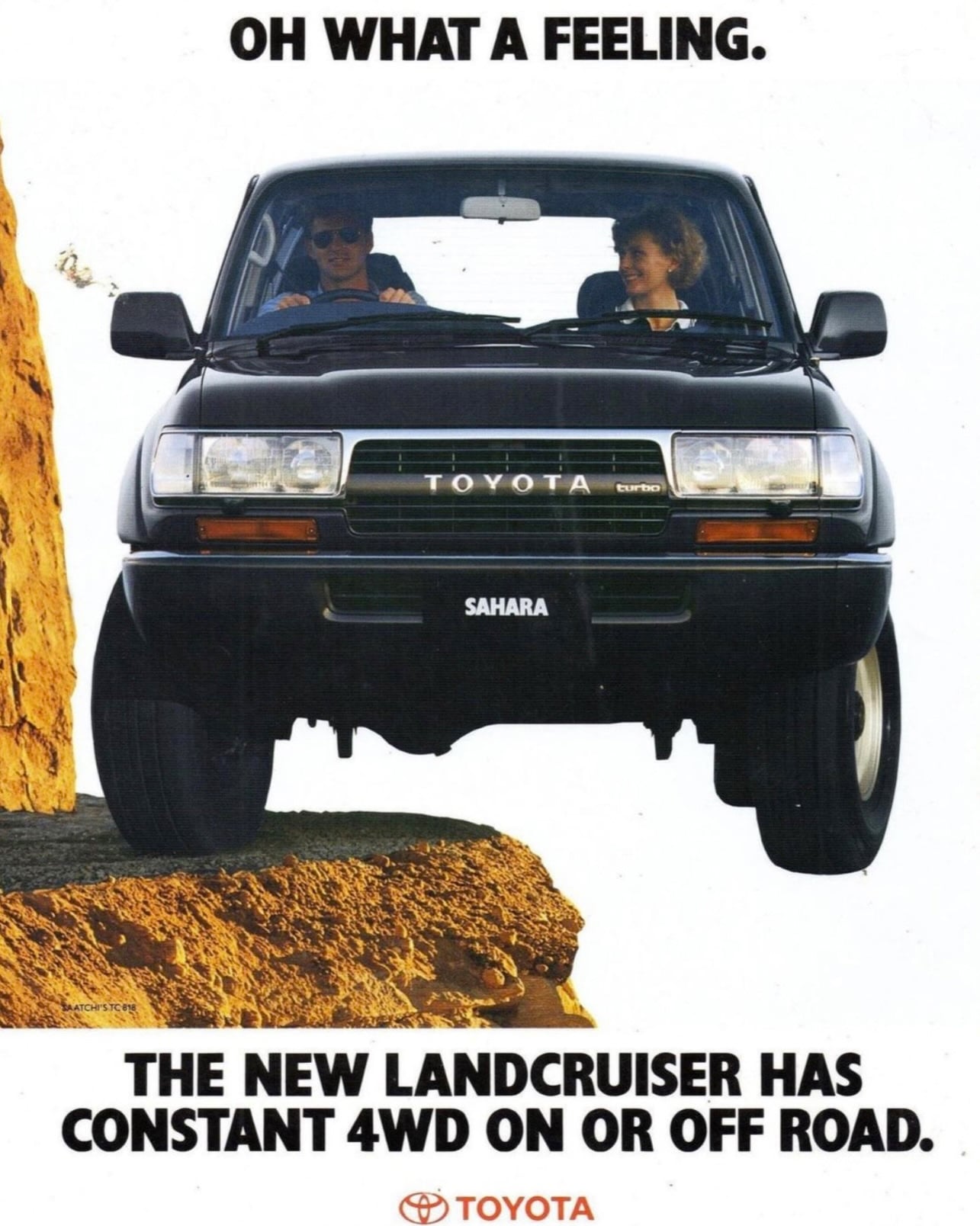
The Land Cruiser 80 Series replaced the 60 Series in October of 1989 and stayed in production in Japan until 1997. It brought coil springs and full-time four-wheel drive to Toyota’s big wagon line for the first time, kept a live axle at each end, and is the truck Toyota reached back to when it designed the 300 Series. Image courtesy of Toyota Australia.
Willys-Overland held the Jeep trademark, they formally protested Toyota’s use of it, and so in 1954 Toyota renamed the vehicle with a British competitor in mind – they called it the Land Cruiser.
“In England we had another competitor – Land Rover,” technical director Hanji Umehara later recalled. He wanted a name that would not sound less dignified than the opposition’s. In a remarkable stroke of luck, American automaker Studebaker had used the Land Cruiser name on an American sedan since the 1930s, but they stopped using it that same year.
The 20 Series followed the BJ in late-1955, with civilian bodywork and the first large-scale exports. The 40 Series arrived in August 1960, brought a two-speed transfer case, and ran for 24 years. The FJ55 of 1967 gave the Land Cruiser its first wagon body designed specifically for civilian comfort, and the 60 Series replaced the 55 in 1980 with optional air conditioning, power steering, and a torquey 4.2 liter six.
Coils + Full-Time 4×4 + Triple Lockers
Each generation of the Land Cruiser had progressively moved further from the spartan military vehicle the BJ had been, and the 80 Series was arguably the largest generational shift up until that point in time. Toyota replaced the 60’s hard-riding leaf springs with coils at all four corners and, on higher-grade models, fitted full-time four-wheel drive with a center diff.
The coils allowed spring rates 25% to 40% lighter than the 60’s, which is where the lion’s share of the ride improvement came from. The live axles stayed at both ends, much to the relief of the purists.
Not every 80 got the full-time 4×4 system – the base Standard Vans in Australia used 75 Series powertrains, which meant part-time four-wheel drive and a manual gearbox only, and part-time versions stayed on sale in Japan and Africa. Cars sold in North America and Europe were full-time throughout.
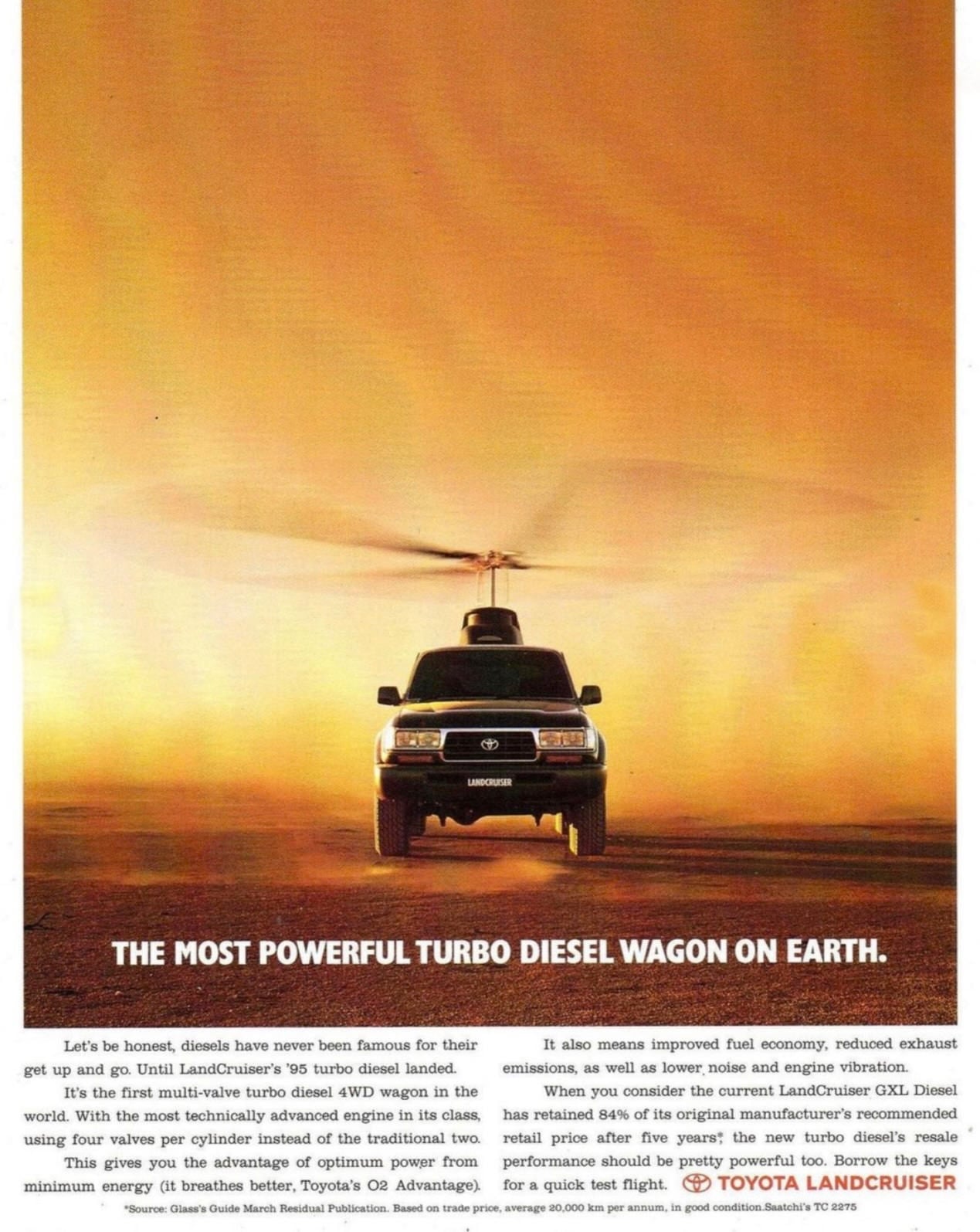
The diesels are why the 80 Series has the reputation it does, well everywhere except North America, which never received one due in no small part to the EPA. Image courtesy of Toyota Australia.
Front and rear differential locks were driver-switchable, standard on Australia’s top Sahara VX and optional on the GXL when the range launched there in 1990, and they worked down to the entry-level RV later. American cars got factory electric front and rear lockers for 1993. With the lockable center differential, that gave three locks on one truck, it’s a combination that made it an absolute tank for challenging off-road work.
The 80 Series Engine Options
American buyers got one engine when the 80 launched there – the 3F-E, a 4.0 liter pushrod six inherited from the 60 Series and rated at 155 bhp. The engine wasn’t really enough for a truck that had seen its numbers go up this much on the bathroom scale. That said, thanks to the dual range transfer case, it would still get you there, just perhaps not as quickly.
Toyota replaced the 3F-E in mid-1992 with the 1FZ-FE, a 4,477cc twin-cam six with 24 valves, a cast iron block and a timing chain for its double overhead cams – the output was now a much healthier 212 bhp at 4,600 rpm and 275 lb ft at 3,200 rpm. Australia had the new engine that same year, American cars got it for the 1993 model year, and a carbureted version (the 1FZ-F) served some markets where emissions weren’t as tightly legislated, but every North American 80 was fuel-injected.
The diesels are why the 80 Series has the reputation it does, well everywhere except North America, which never received one due in no small part to the EPA. In Australian-tune the naturally aspirated 1HZ made 126 bhp and 200 lb ft from 4,164cc, and the turbocharged 1HD-T made 154 bhp and 263 lb ft. Toyota replaced the 1HD-T in 1995 with the 24-valve 1HD-FT, with a slightly more impressive 168 bhp and 280 lb ft.
A Rough First Two Years
Unusually for a Toyota from the tail-end of the golden era, the 80 Series didn’t arrive quite finished. Australian reviewers found the handling unsettled enough on bumpy, winding roads to name the problem the “Land Cruiser Lurch,” a combination of body roll and rear bump-steer.
Lower rear damper mounts could break off the axle housing, including on press cars. The turbo-diesel surged and idled badly, the manual gearbox shifted poorly, and the Dunlop Grandtreks developed for the GXL and Sahara VX damaged easily on rough ground.
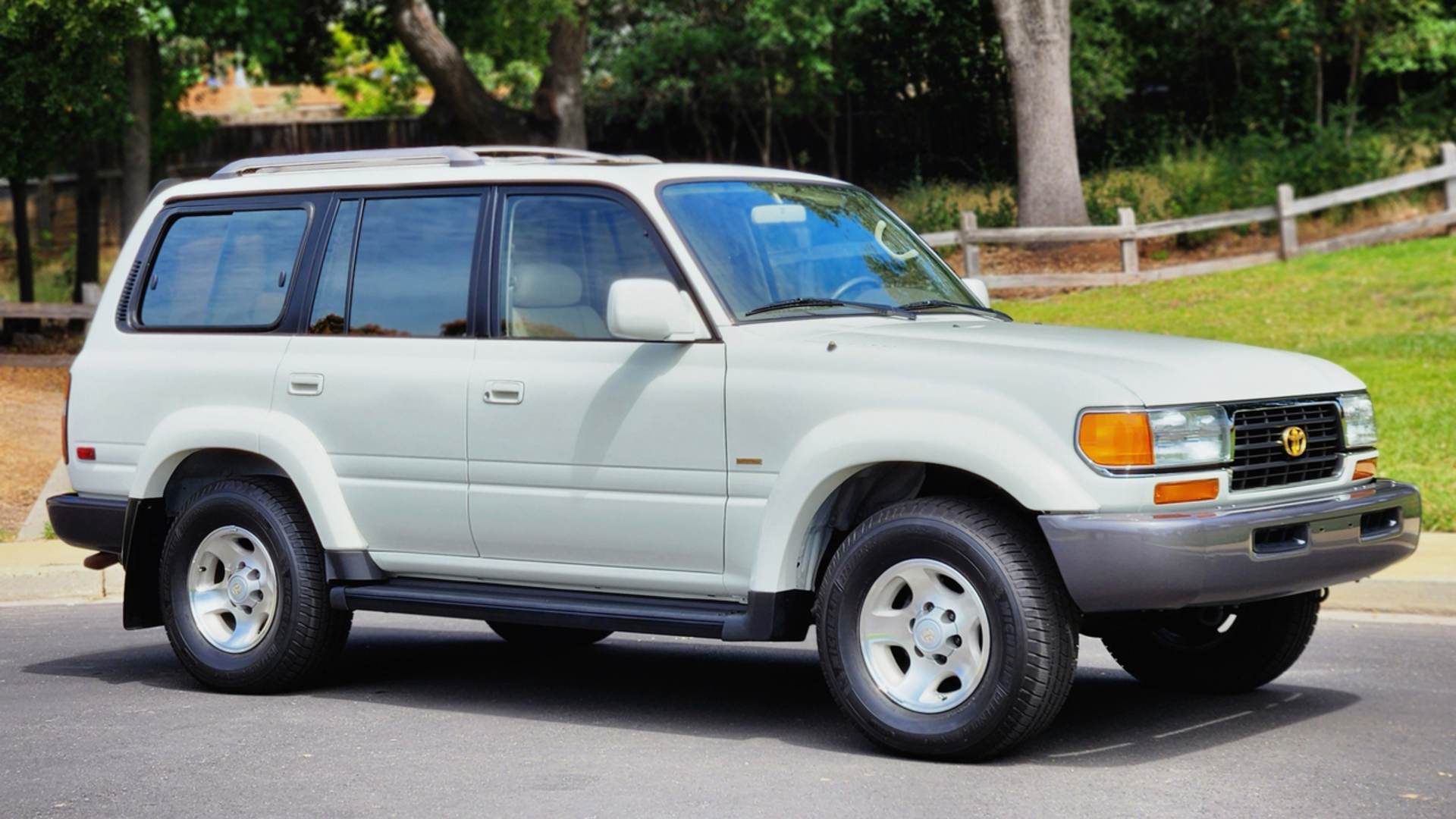
This is an unusually pristine 80 Series Toyota Land Cruiser from 1997, it looks to be in almost time-capsule-like condition throughout – likely because it has just 4,700 miles on the odometer.
The 1992 revision answered most of those complaints, it came with a new engine, a new manual gearbox, recalibrated suspension, bigger brakes, and side-intrusion bars. The Sahara VX gained anti-lock brakes and the option of satellite navigation, cutting edge stuff for the time.
The Lexus LX 450
The 80 Series would also become a Lexus, the first Land Cruiser to do so and the first Lexus SUV to boot. The LX 450 went on sale in the United States in early-1996, differing from the Land Cruiser in its interior, its softer damping, and the grille, cladding and wheels. Naturally, both axles were still solid.
Toyota withdrew the Land Cruiser from Canada in 1996, and Canadian buyers got the LX 450 from 1997 instead. The Lexus ran for two full sales years before the V8-powered LX 470 replaced it. It had been successful enough to show the Toyota boardroom that there was a place in the market for a Japanese answer to the Range Rover.
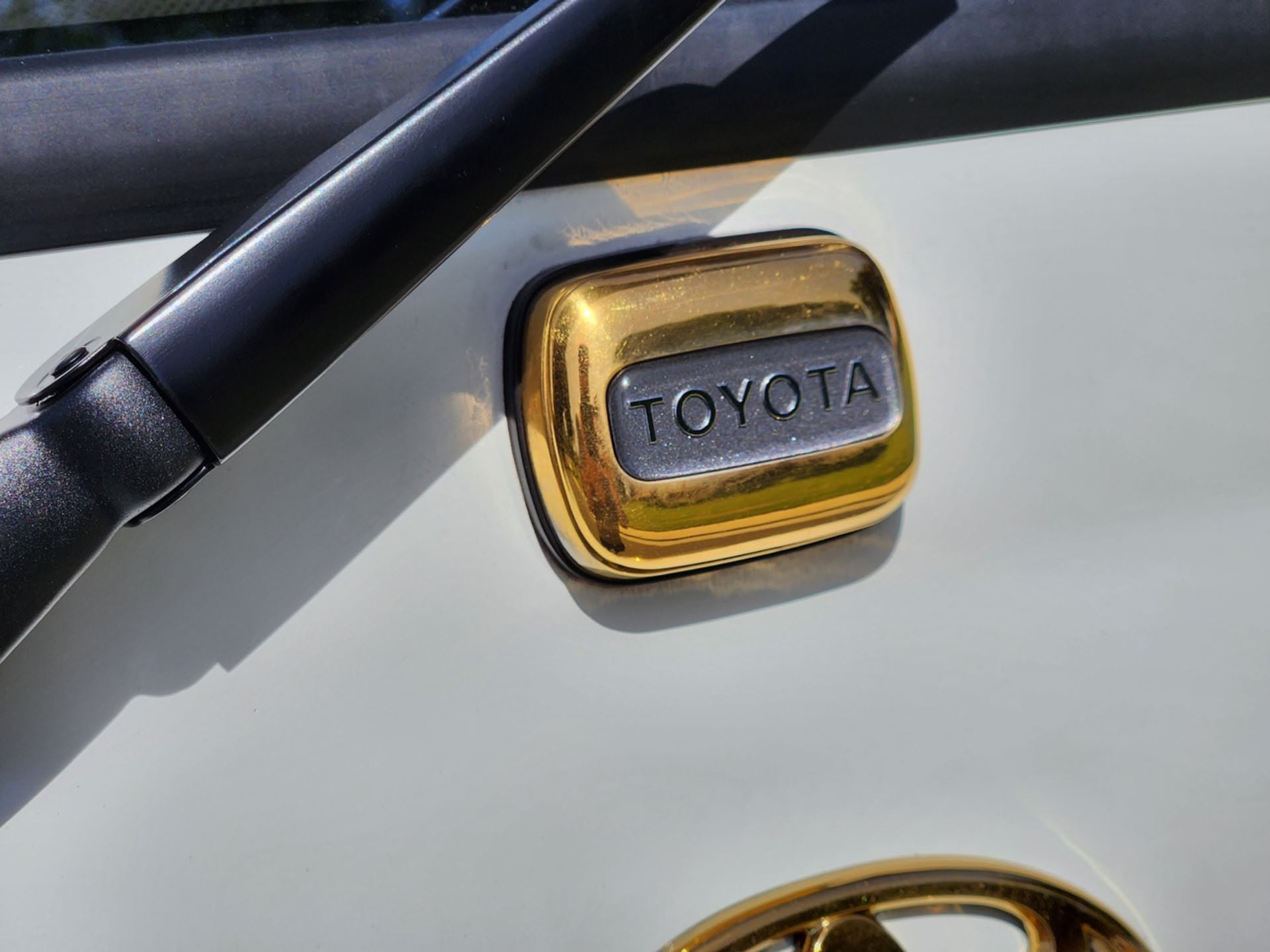
Toyota marked 40 years in America with two 1997 80 Series specials – the 40th Anniversary Limited Edition ran to 4,744 cars, and came finished in Antique Sage Pearl or Dark Emerald Pearl, with two-tone leather, a serial-numbered console badge and fender decals. A Collector’s Edition followed in a wider spread of colors.
The End Of The Road (Mostly)
Almost 75,000 80 Series Land Cruisers were sold in the United States between 1991 and 1997. Japanese production ended that year, and the 100 Series arrived in early-1998 with independent front suspension and torsion bars in place of the solid front axle and coils.
Toyota hedged by keeping a live-axle version, the 105, on 80 Series mechanicals for Australia, Africa, Russia and South America. Assembly of the 80 itself carried on in Venezuela well into the 2000s, where the round bodywork earned it the name Burbuja – Spanish for “bubble.”
The 1997 Toyota Land Cruiser Shown Here
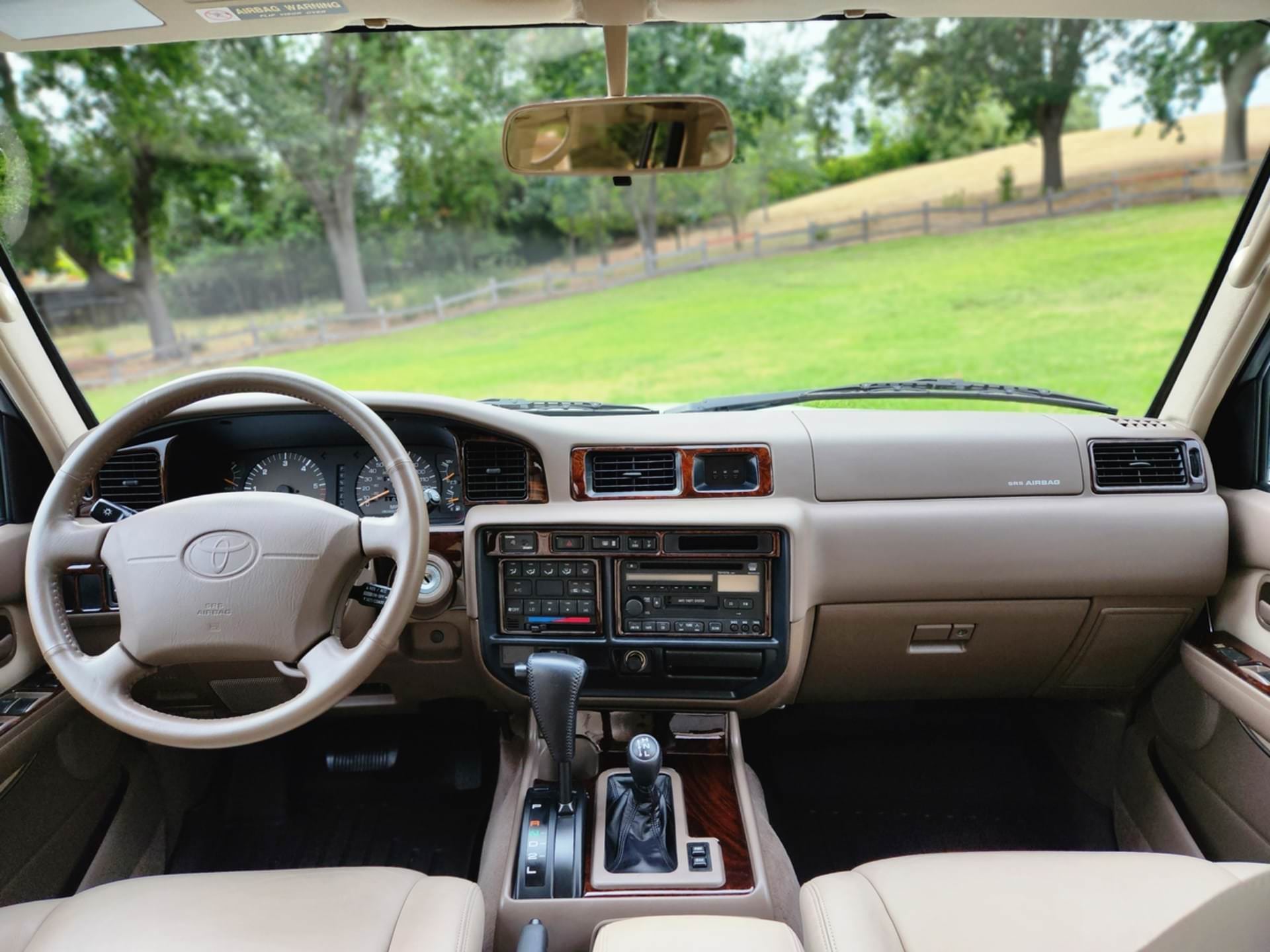
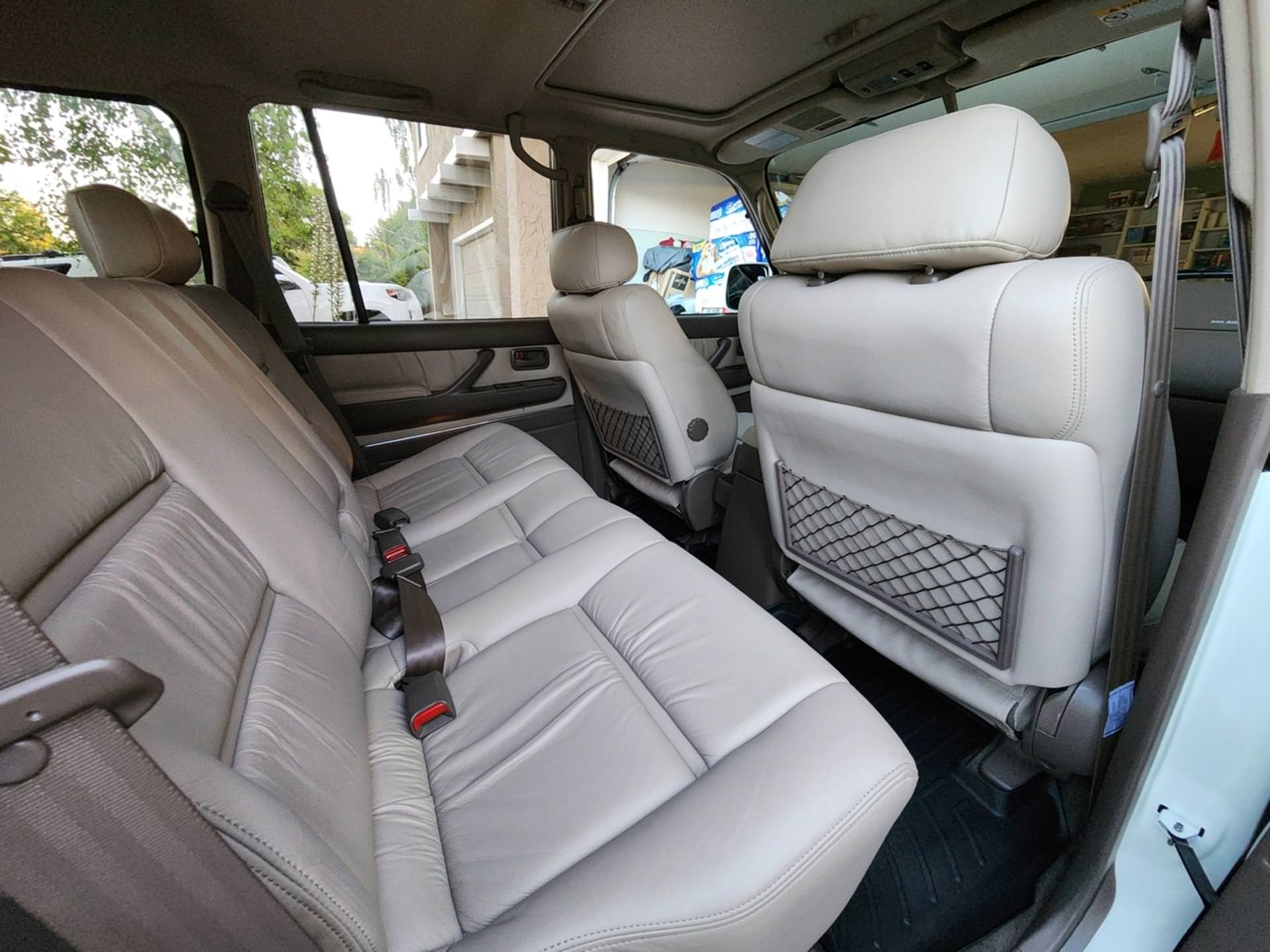
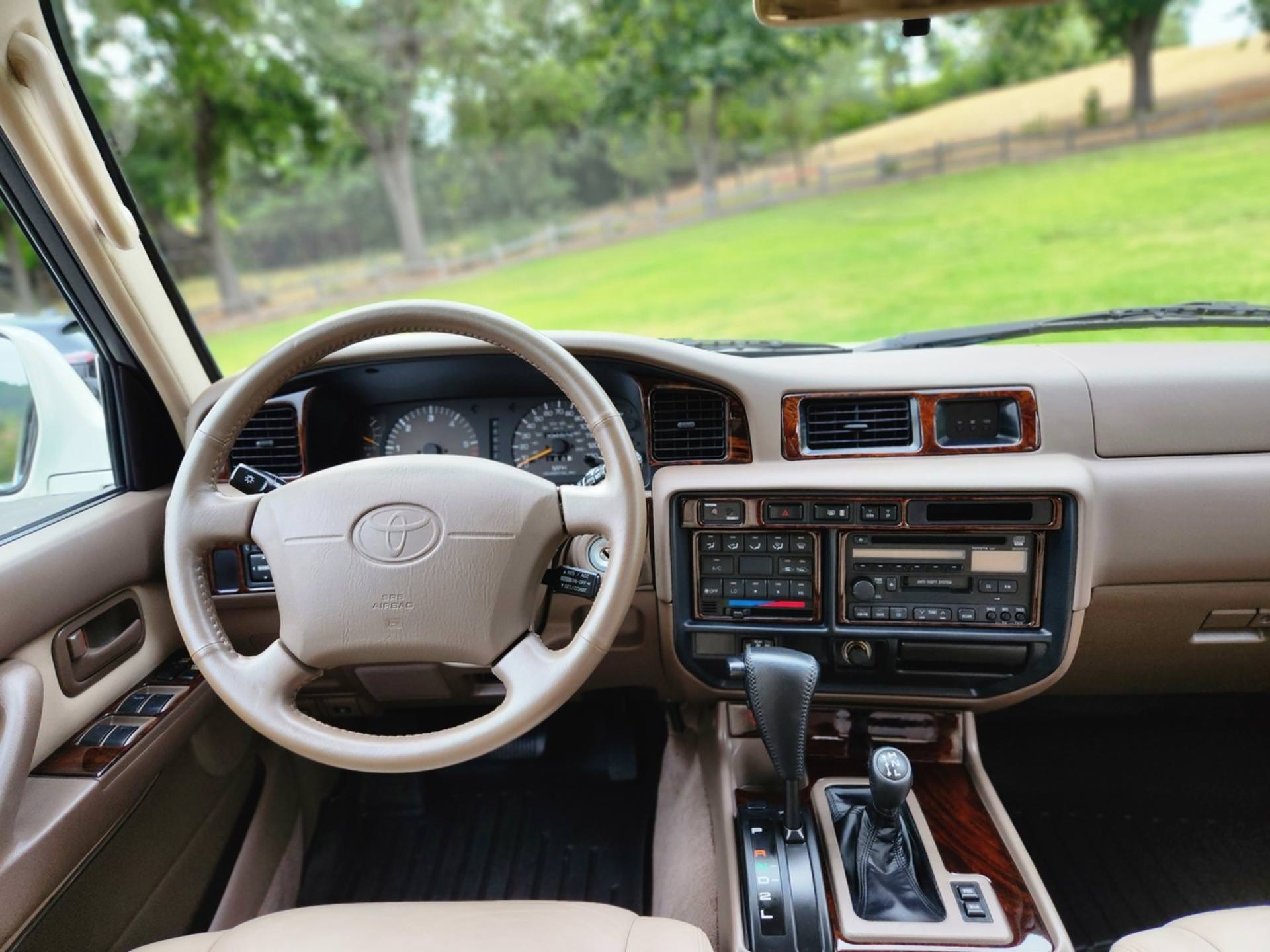
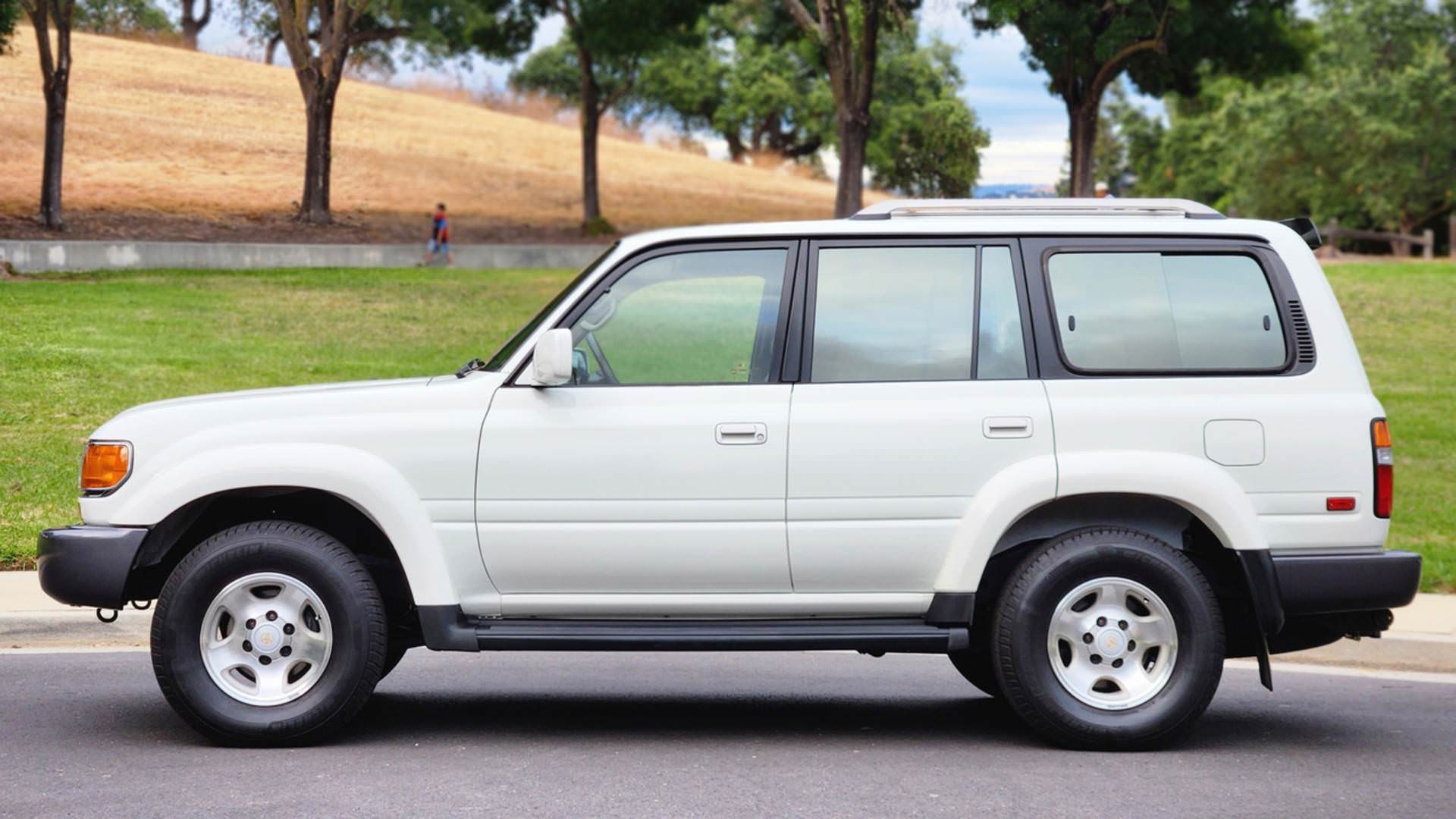
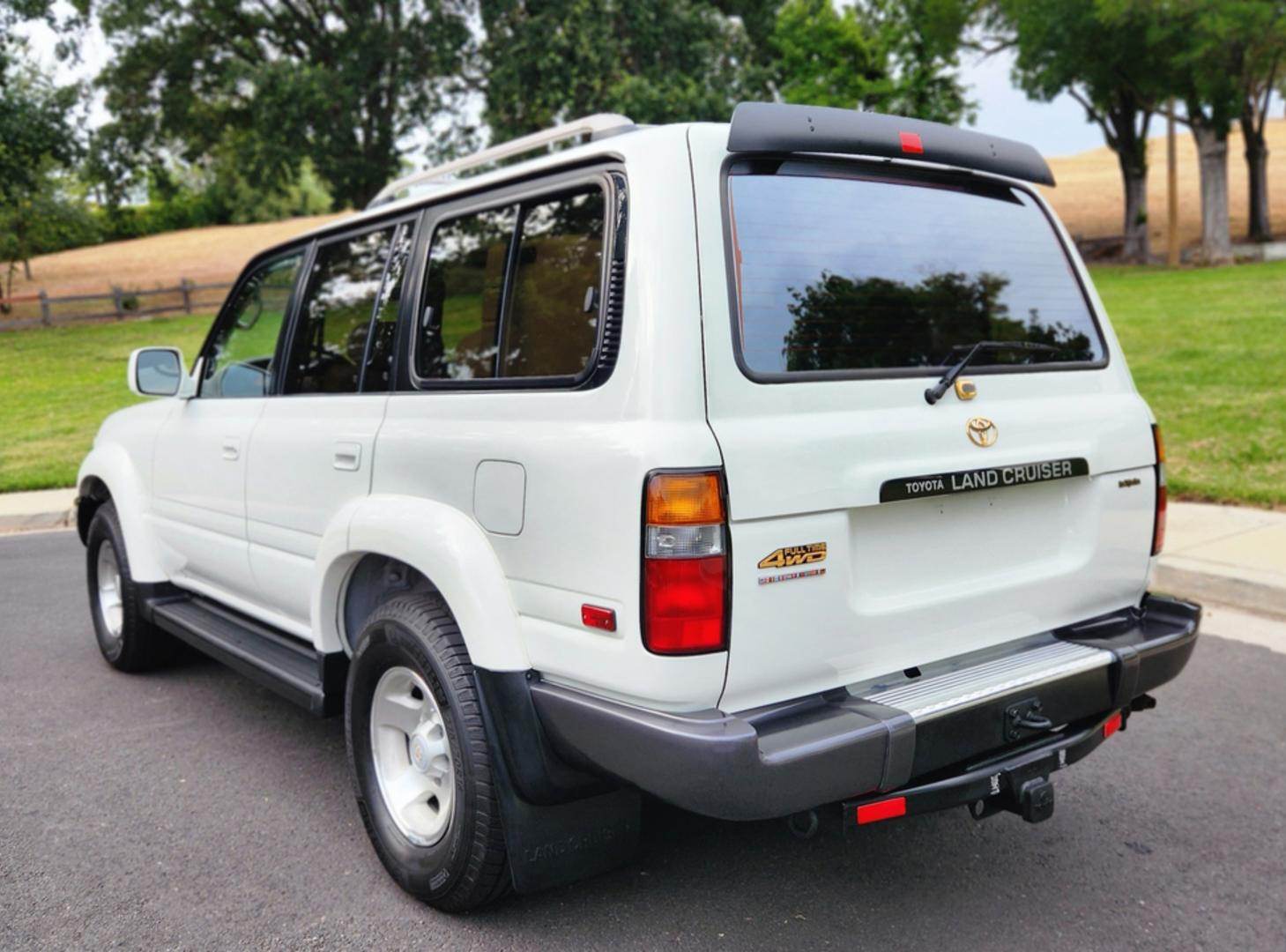
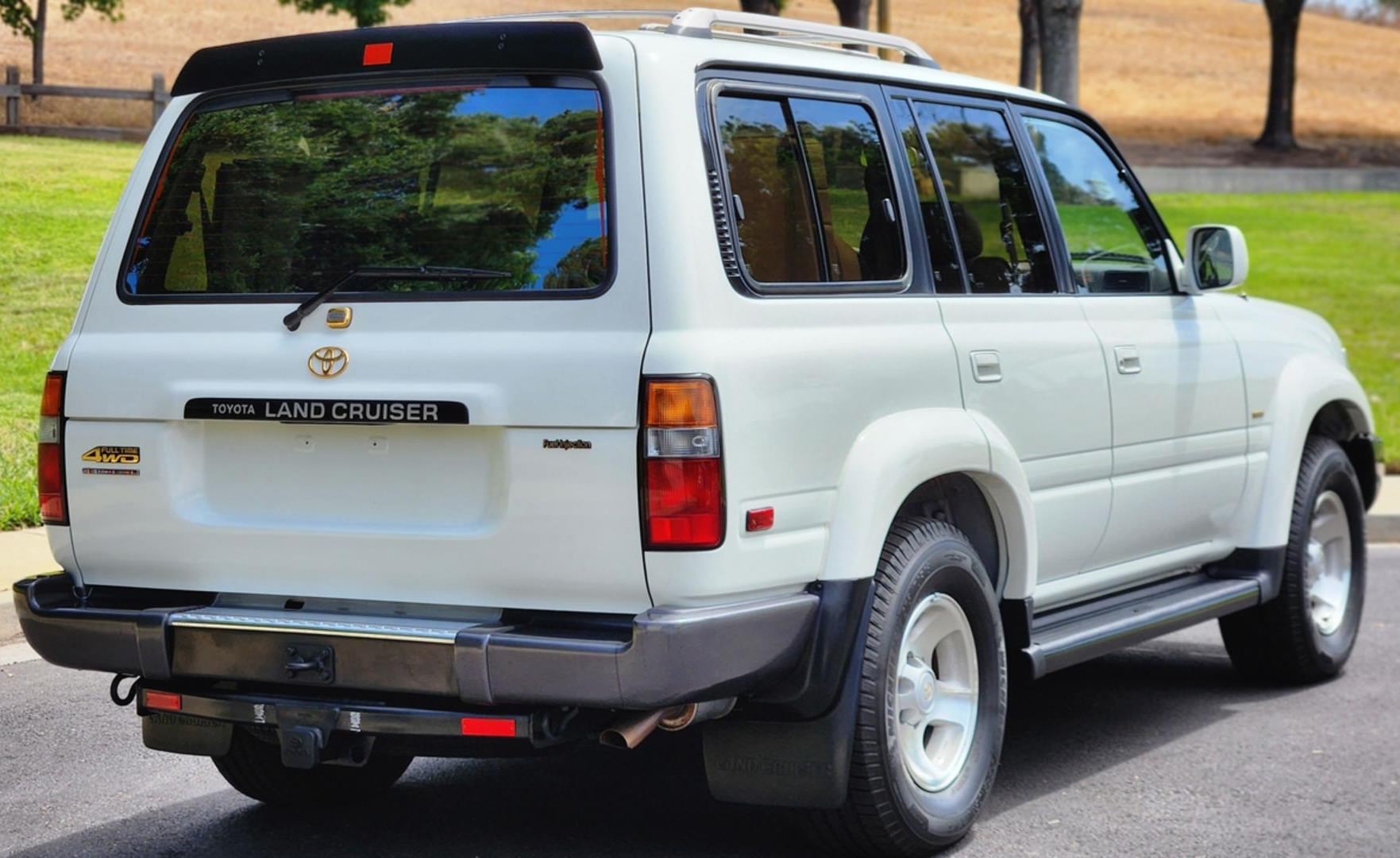
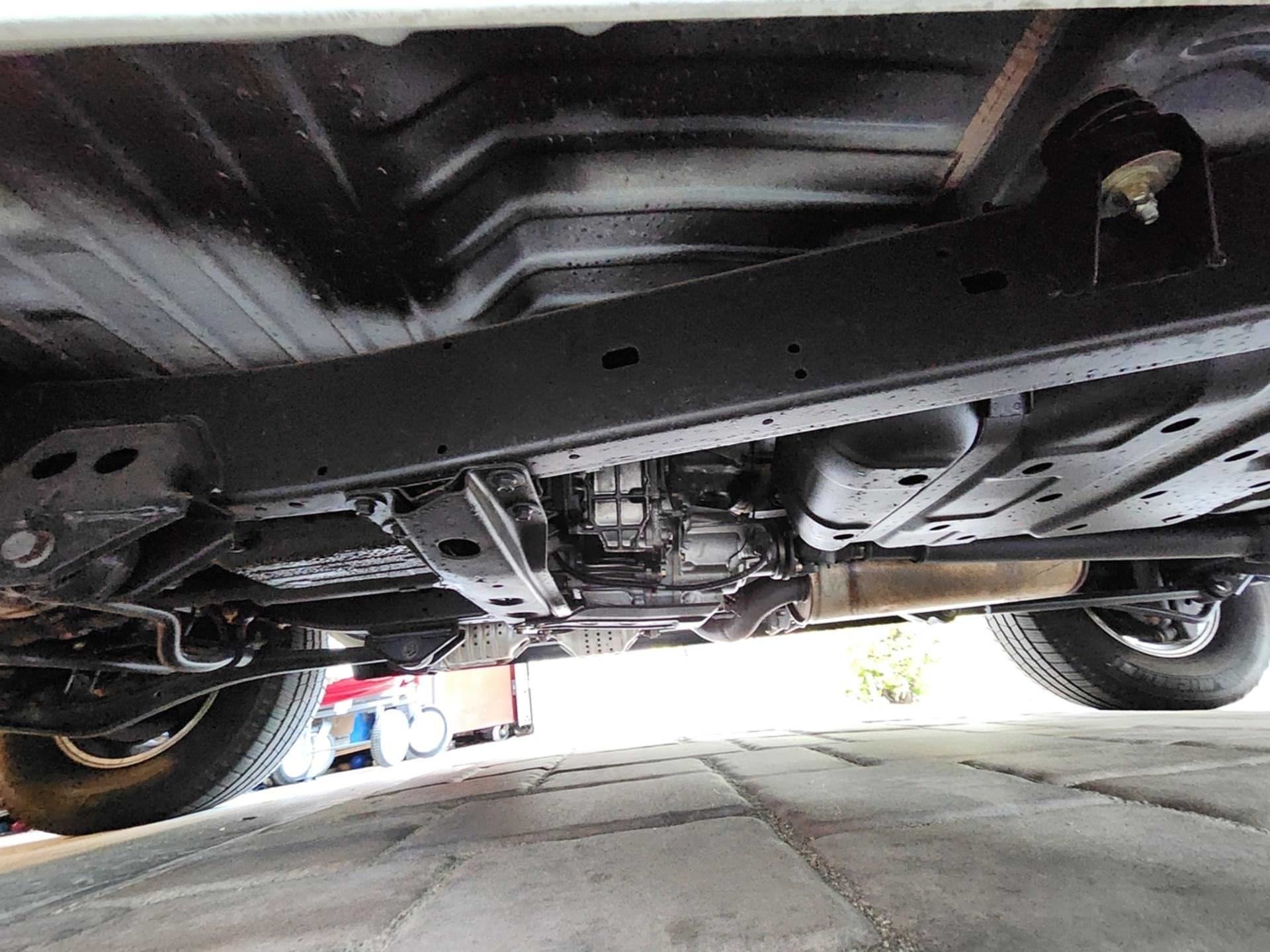
This is a 1997 Toyota Land Cruiser that remains in highly original, unrestored condition – largely thanks to the fact that it’s covered just 4,700 miles – an extraordinarily low figure for a vehicle pushing 30 years old.
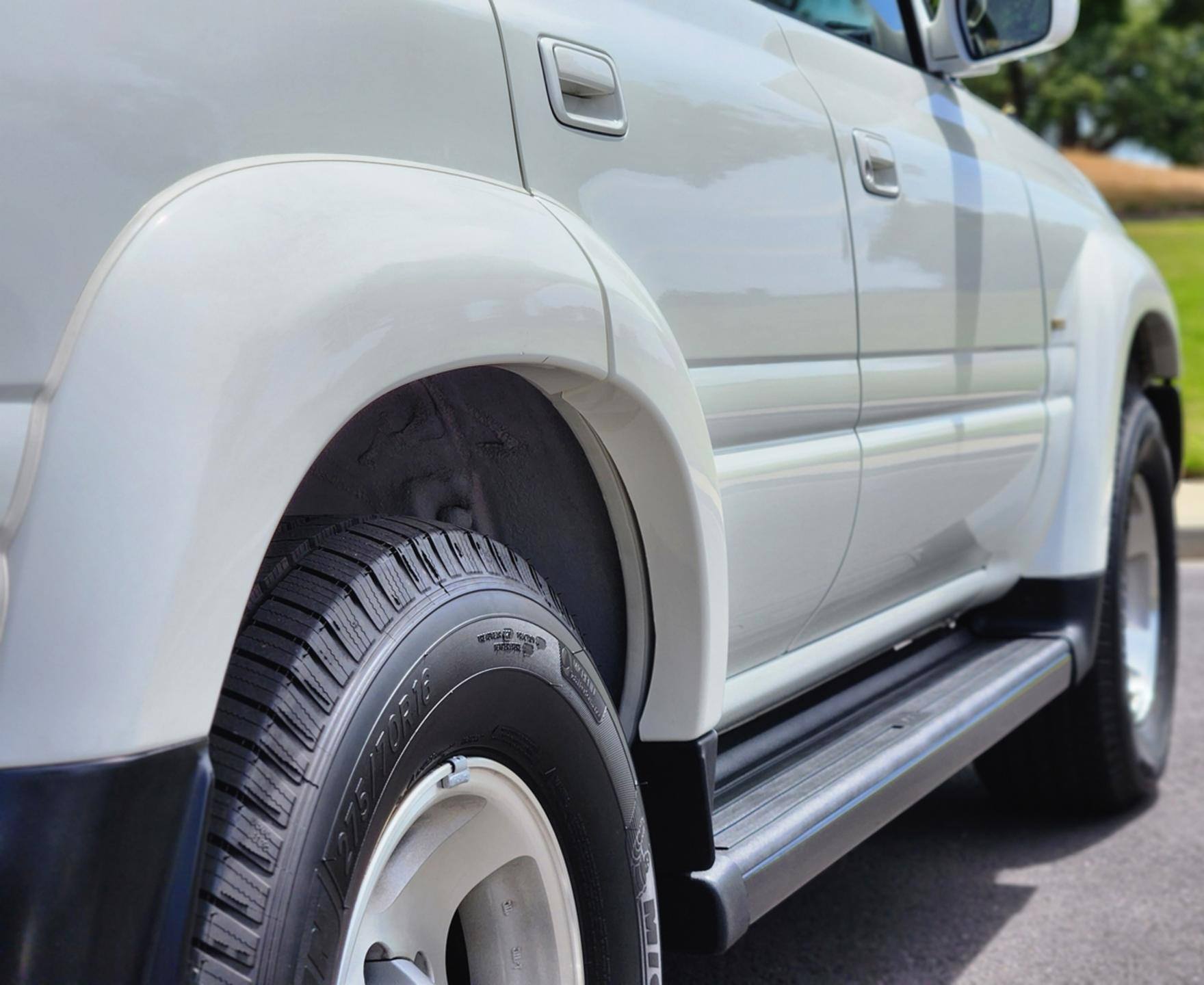
Power comes from the 4.5 liter 1FZ-FE inline-six, factory rated at 212 bhp and 275 lb ft of torque, paired with a 4-speed automatic transmission, a dual-range transfer case, and a locking center differential. Braking is handled by four-wheel discs with ABS, and the truck rides on 16 inch alloy wheels.
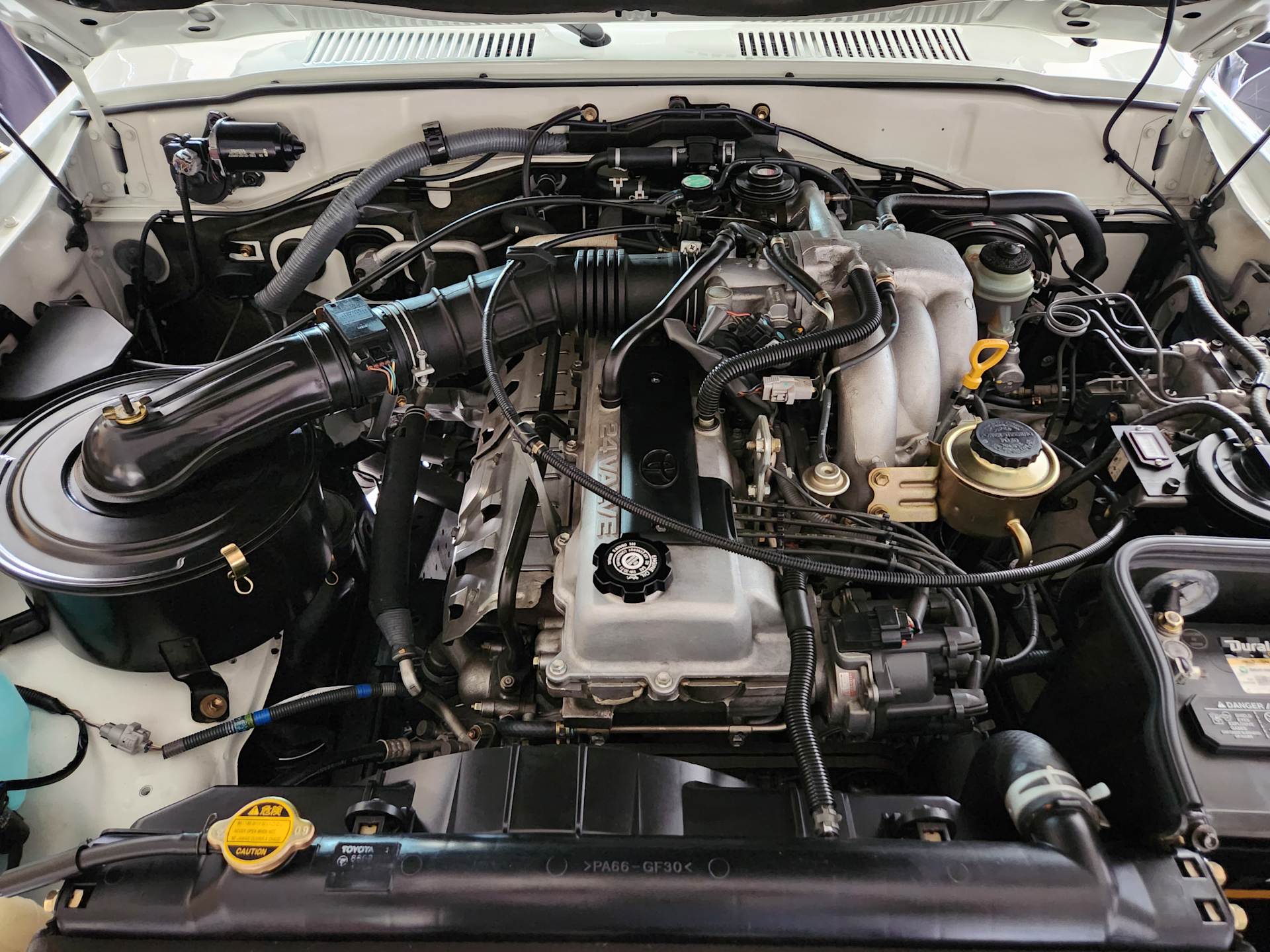
Power comes from the 4.5 liter 1FZ-FE inline-six, factory rated at 212 bhp and 275 lb ft of torque, paired with a 4-speed automatic transmission, a dual-range transfer case, and a locking center differential. Braking is handled by four-wheel discs with ABS, and the truck rides on 16 inch alloy wheels.
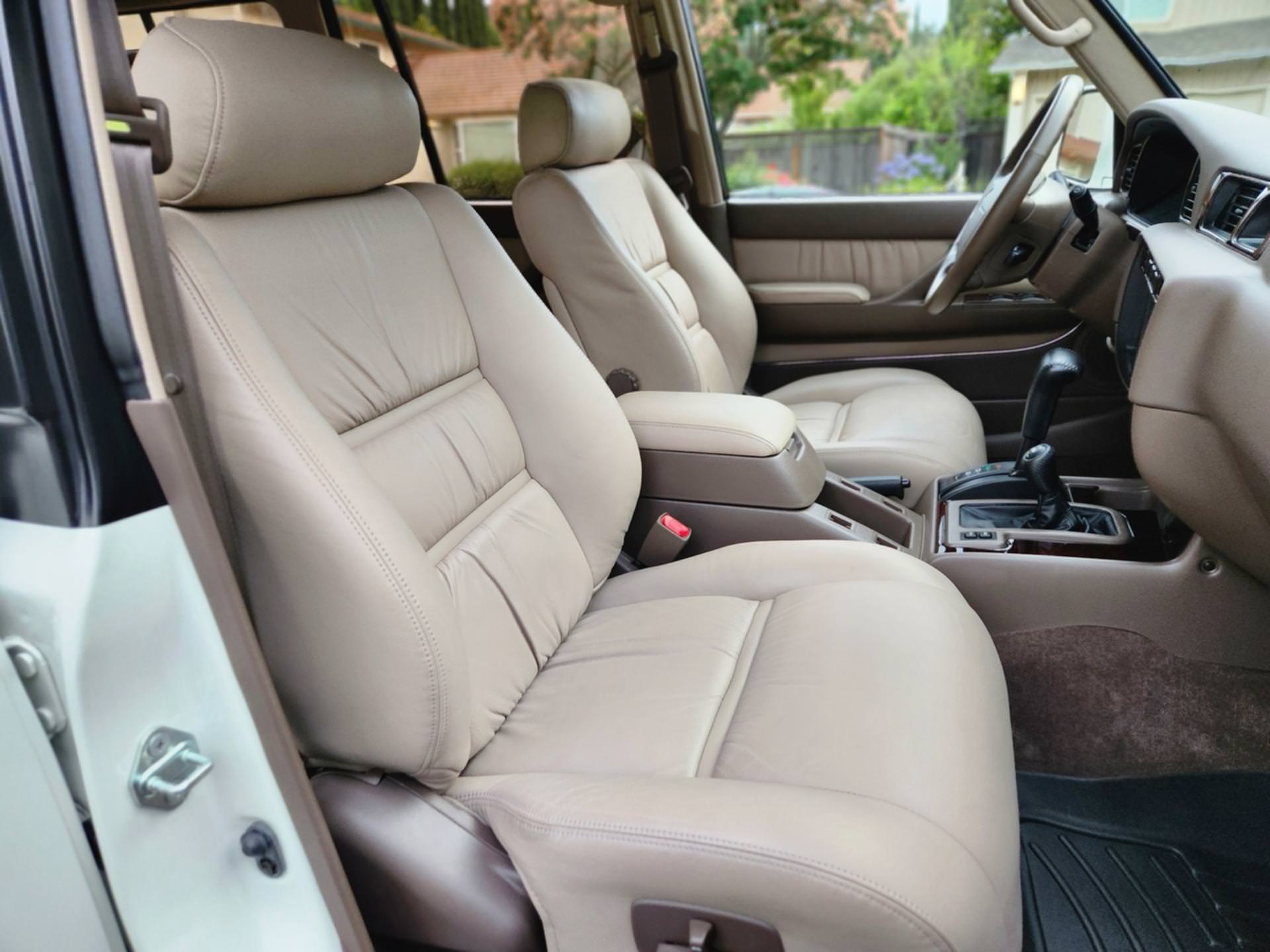
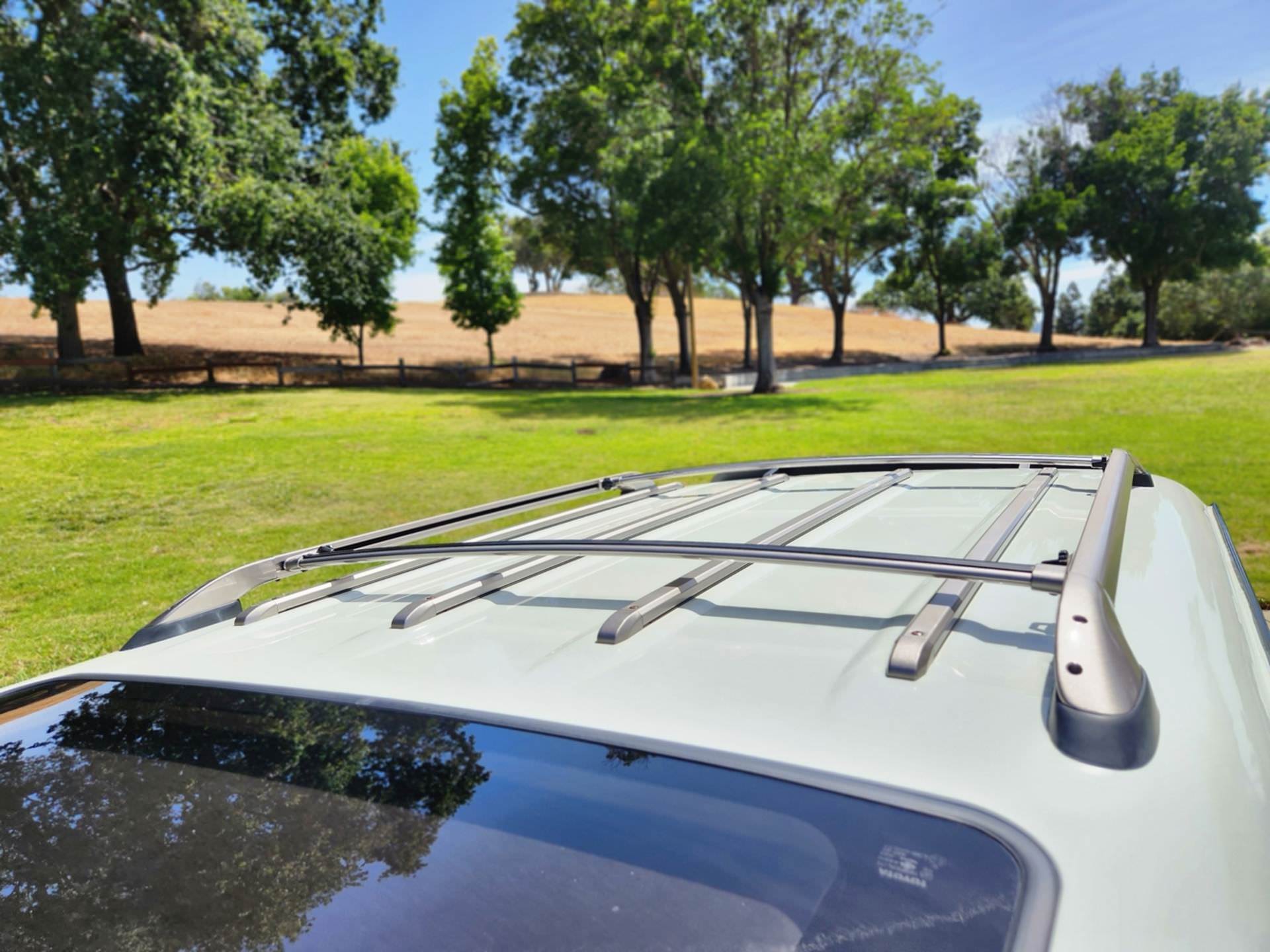
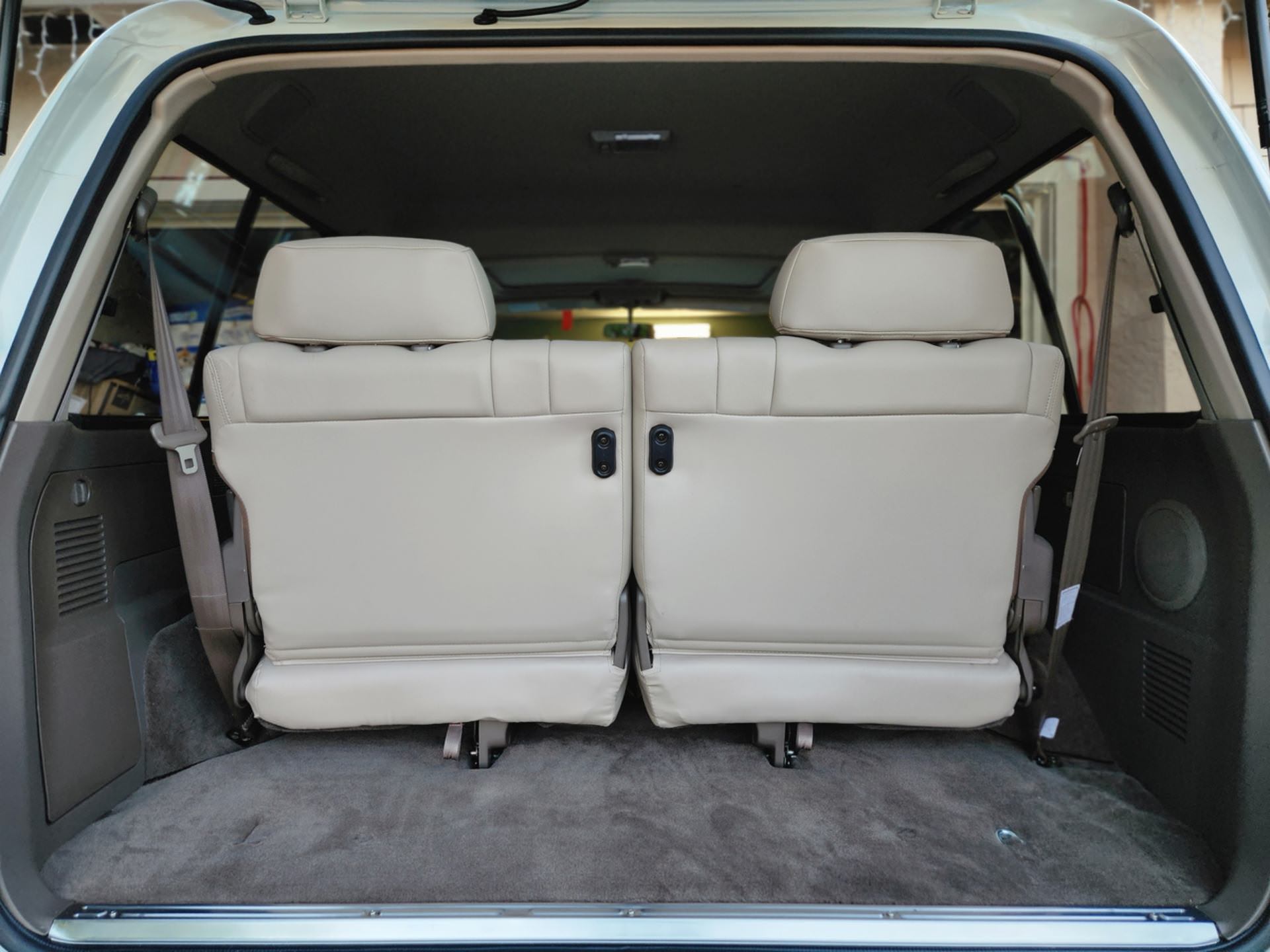
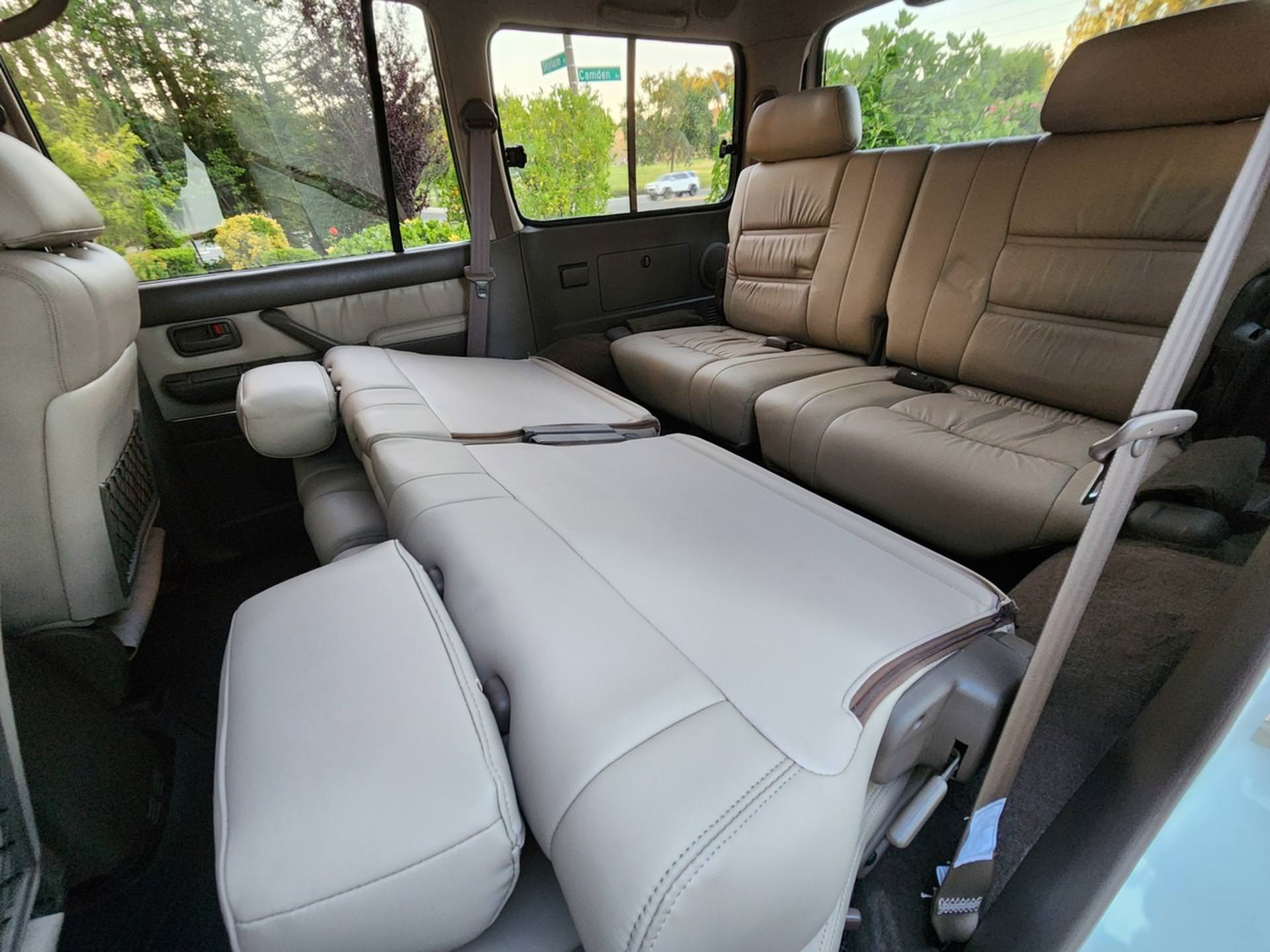
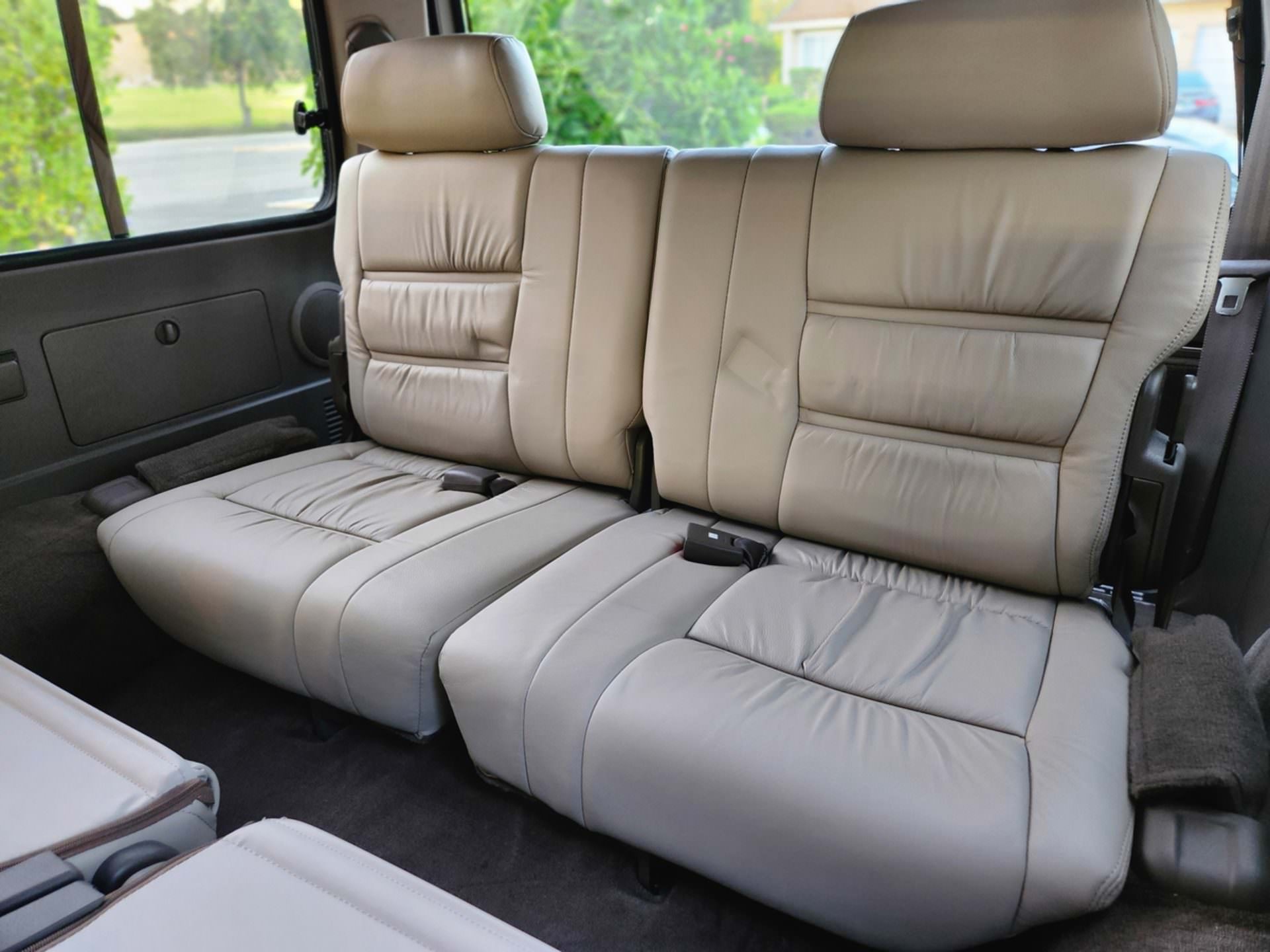
This 80 Series is finished in Super White over an Oak leather interior, with additional equipment including air conditioning, cruise control, a sunroof, power-adjustable front bucket seats, folding third-row seating, a CD/cassette stereo, and power-adjustable side mirrors. It also has a receiver hitch, roof rack, running boards, a rear wind deflector, and a rear window wiper.
It’s now due to roll across the block with Mecum in mid-August and you can visit the listing here if you’d like to read more about it or register to bid.
Images courtesy of Mecum

Articles that Ben Branch has written have been covered on CNN, Popular Mechanics, Smithsonian Magazine, Road & Track Magazine, the official Pinterest blog, the official eBay Motors blog, BuzzFeed, Autoweek Magazine, Wired Magazine, Autoblog, Gear Patrol, Jalopnik, The Verge, and many more.
Silodrome was founded by Ben back in 2010, in the years since the site has grown to become a world leader in the alternative and vintage motoring sector, with well over a million monthly readers from around the world and many hundreds of thousands of followers on social media.