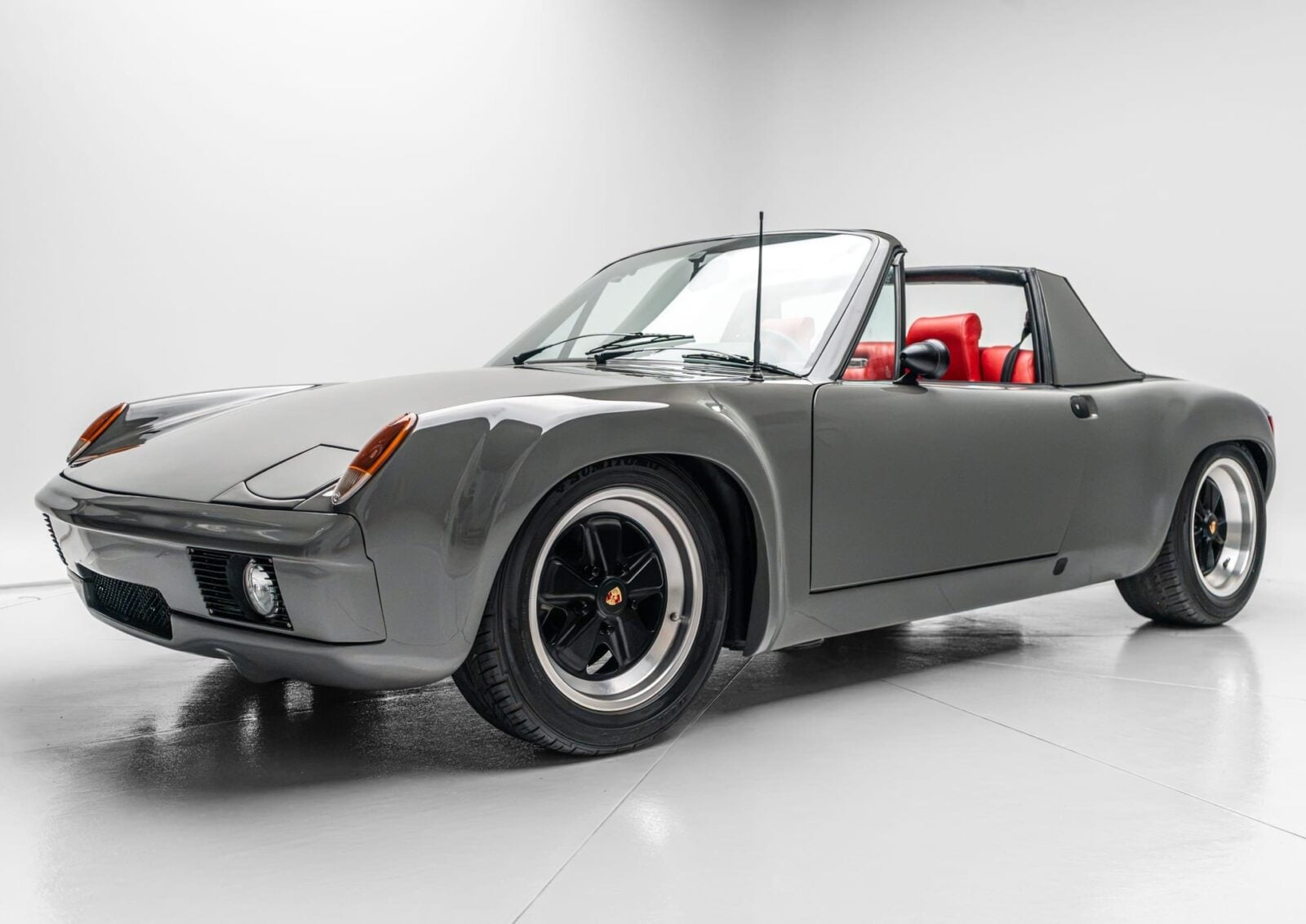
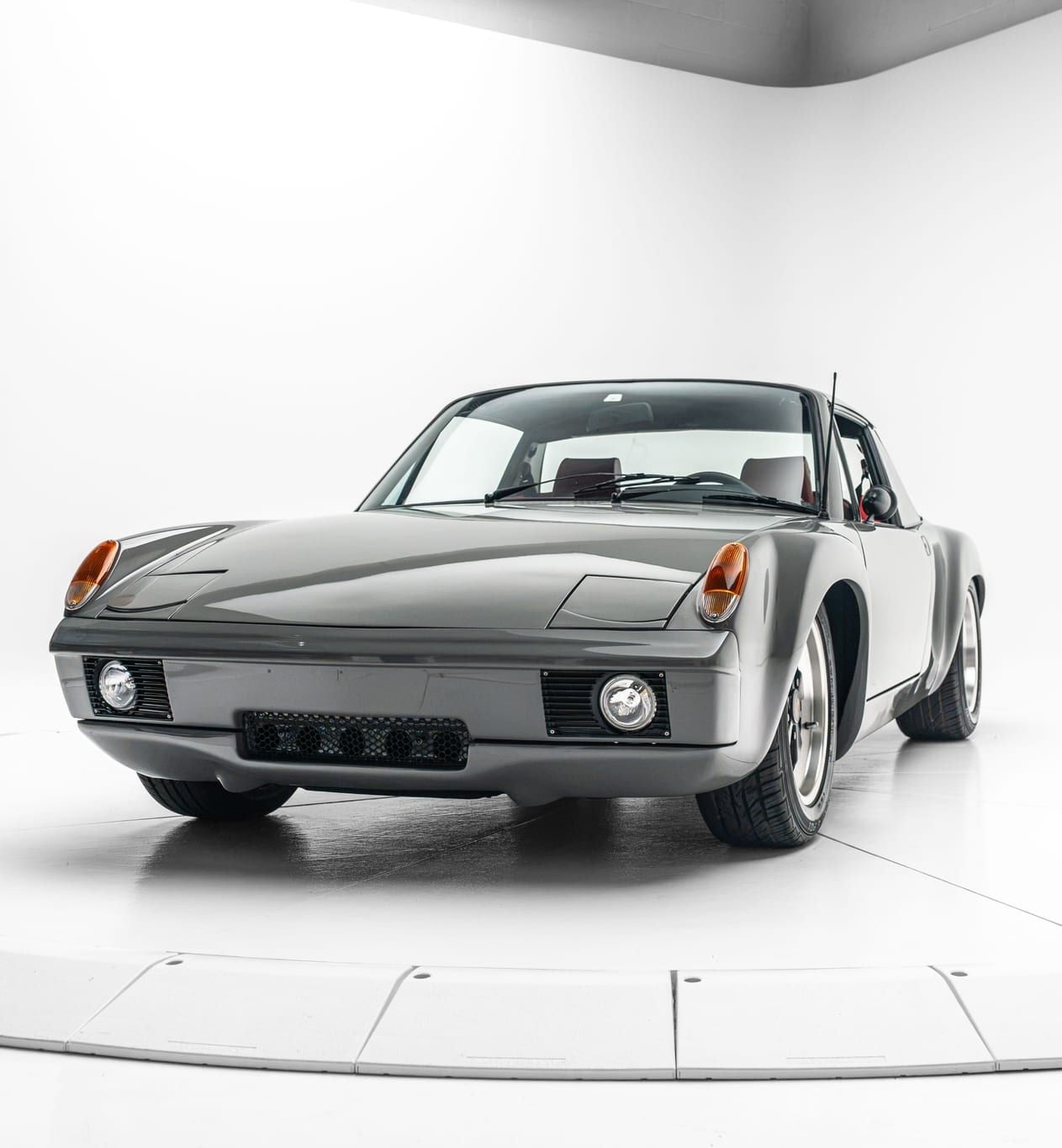
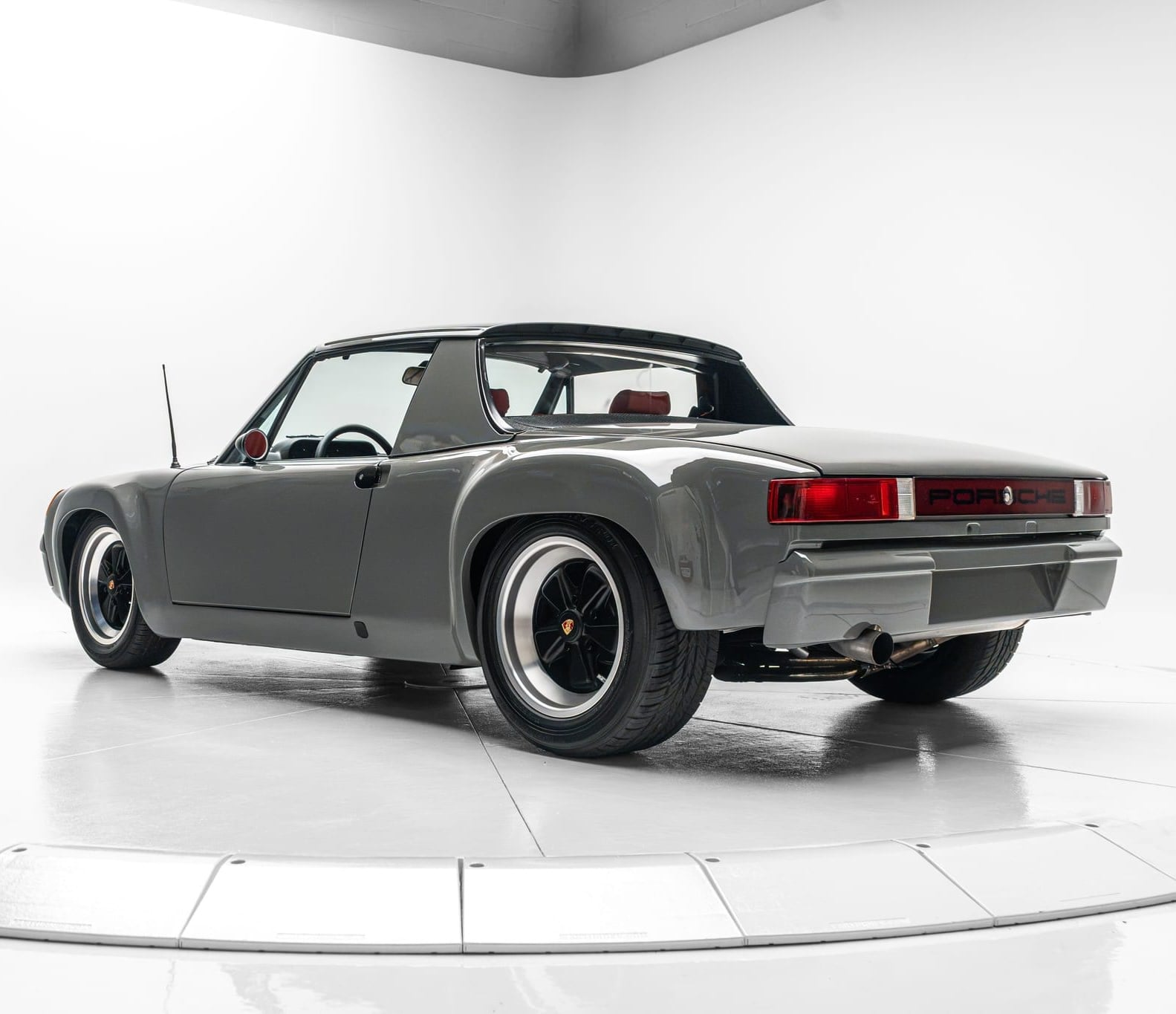
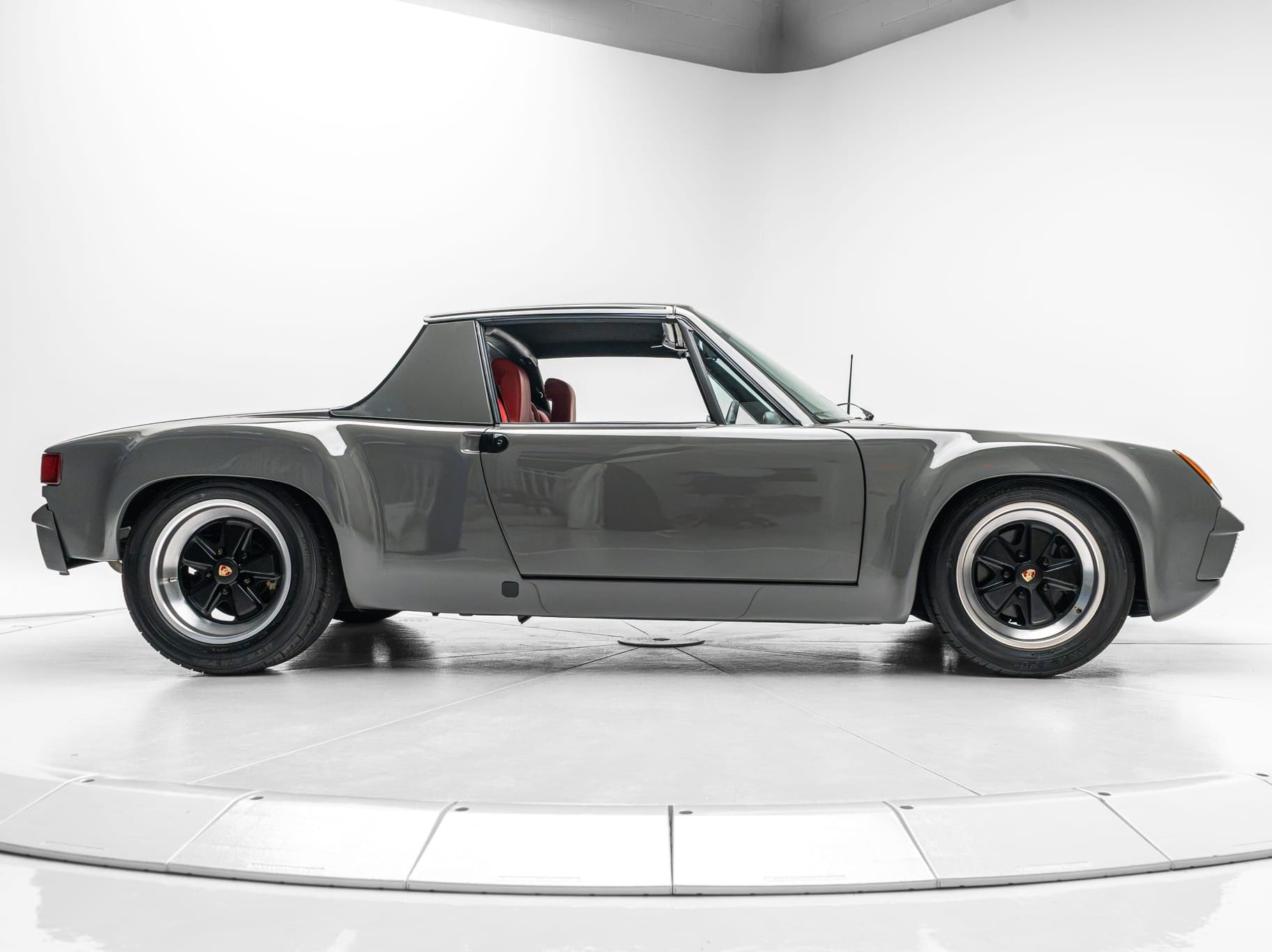
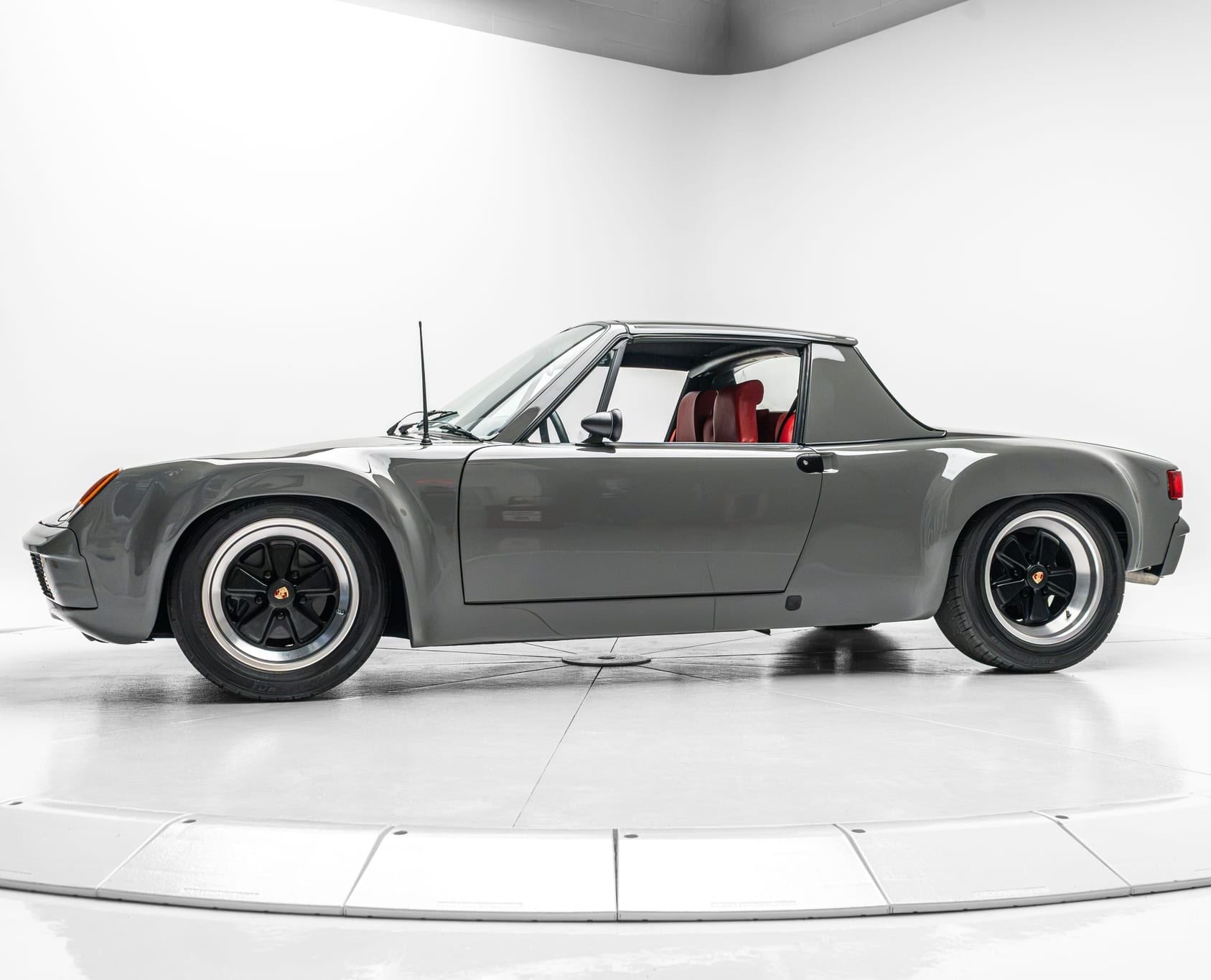
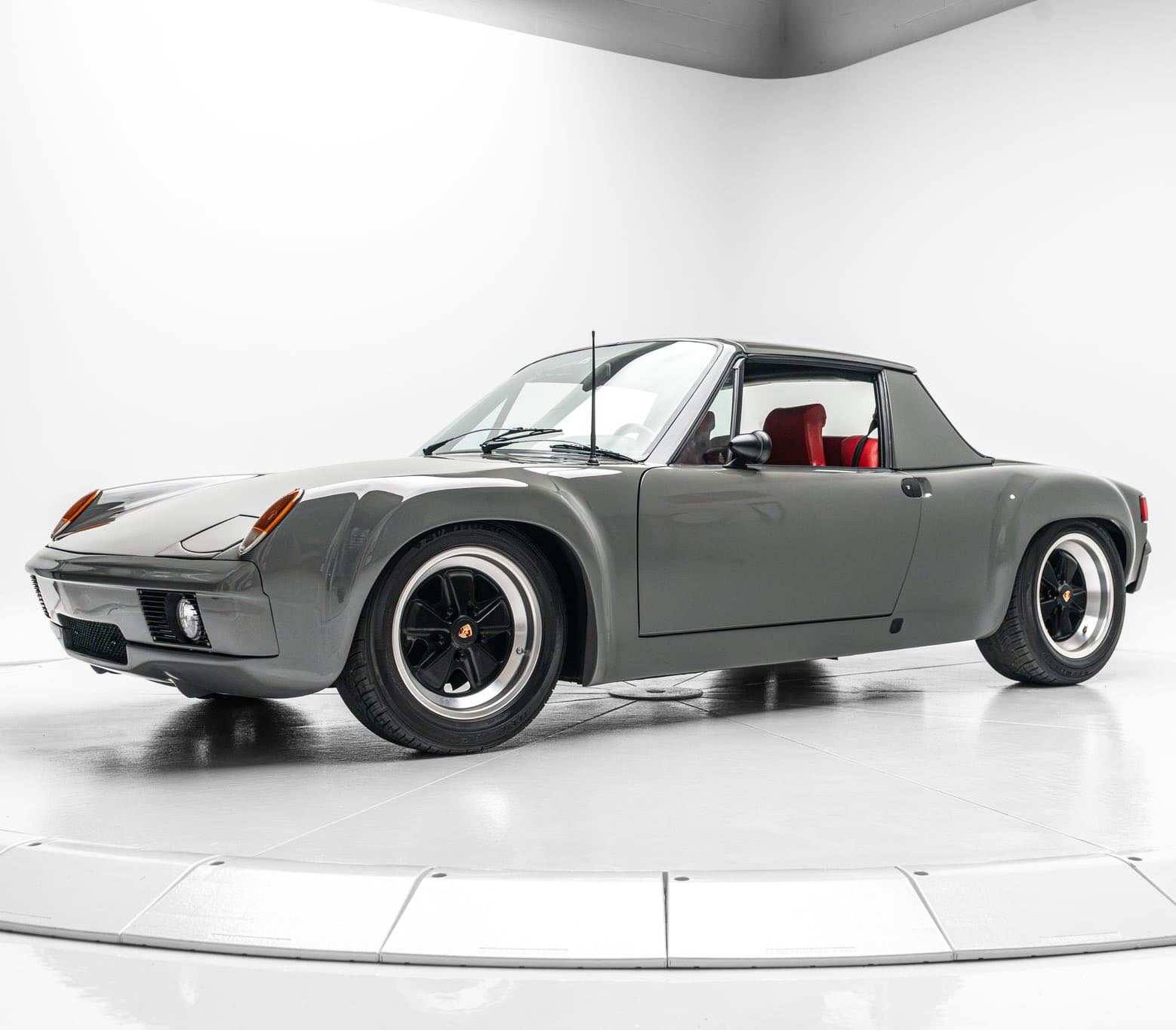
This is a 1976 Porsche 914 that’s been completely rebuilt, with a GT wide body kit, a custom interior, and perhaps most importantly, a Subaru EJ25 flat-four capable of considerably more power than the original VW engine.
The 914 is a car that’s beloved by vintage race enthusiasts and autocross competitors thanks to the fact that, if set up well, it can be an excellent lightweight sports car with scalpel sharp handling. Modified versions like the one you seen here have also shown it can handle a lot more power than it came with from the factory.
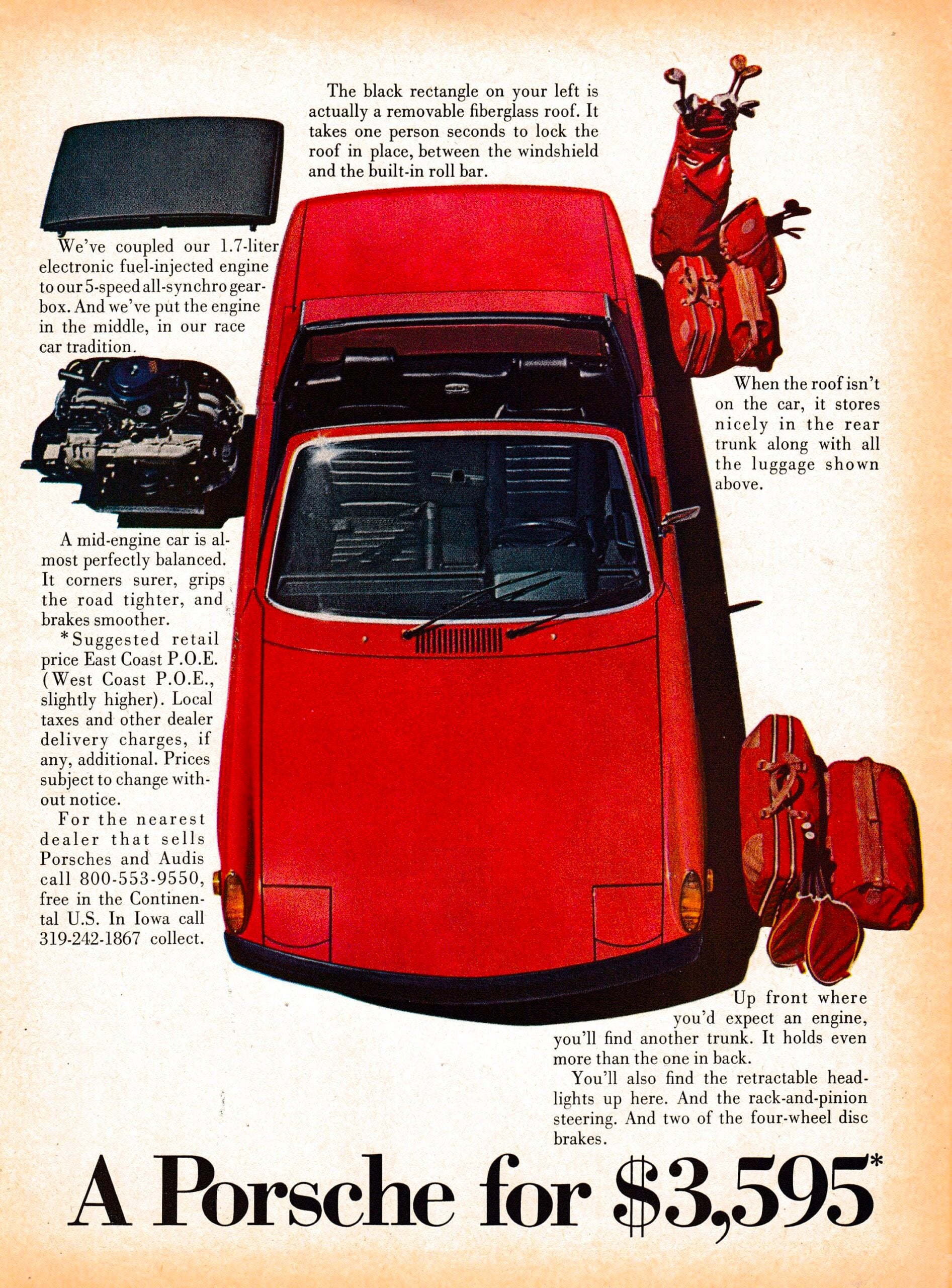
 The 914 was built around a steel unibody with a removable GRP (glass fiber reinforced) roof panel that stowed in the rear trunk when not in use. It has pop-up headlights, MacPherson struts and longitudinal torsion bars in front, and semi-trailing arms on coil springs at the rear. Image courtesy of Porsche.
History Speedrun: The Porsche 914
Porsche built 115,631 four-cylinder 914s but just 3,338 with the flat-six, those four-cylinder numbers made it the company’s volume seller of the early 1970s – it was an approachable, fun, and perhaps most importantly, an affordable sports car.
The 914 arrived as a joint Porsche-Volkswagen project, sold in Europe under a Volkswagen-Porsche badge that America never saw, and it spent most of its production run being argued about. It’s now the most forgotten of the major Porsche production cars, even the 912 seems to be better remembered.
Two Companies + One Car
By the late 1960s both Porsche and Volkswagen needed a new model. Porsche wanted a replacement for the more affordable 912, and Volkswagen wanted a range-topper to succeed the Type 34 Karmann Ghia. The balancing act was that that car had to be capable of being a halo model for one automaker, and a cheaper volume seller for the other.
For decades VW had been contracting its development work to Porsche under an arrangement dating back to Porsche’s founding, and the 914 was set up as the last project under the arrangement, with Ferdinand Piëch at the helm.
The first prototype ran on March the 1st, 1968. Six weeks later Volkswagen chairman Heinrich Nordhoff died, and the handshake agreement he had reached with Ferry Porsche on the price of the bodyshells died with him – it had never been written down. His successor Kurt Lotz took the view that Volkswagen owned the car and had no reason to carry Porsche’s share of the tooling costs.
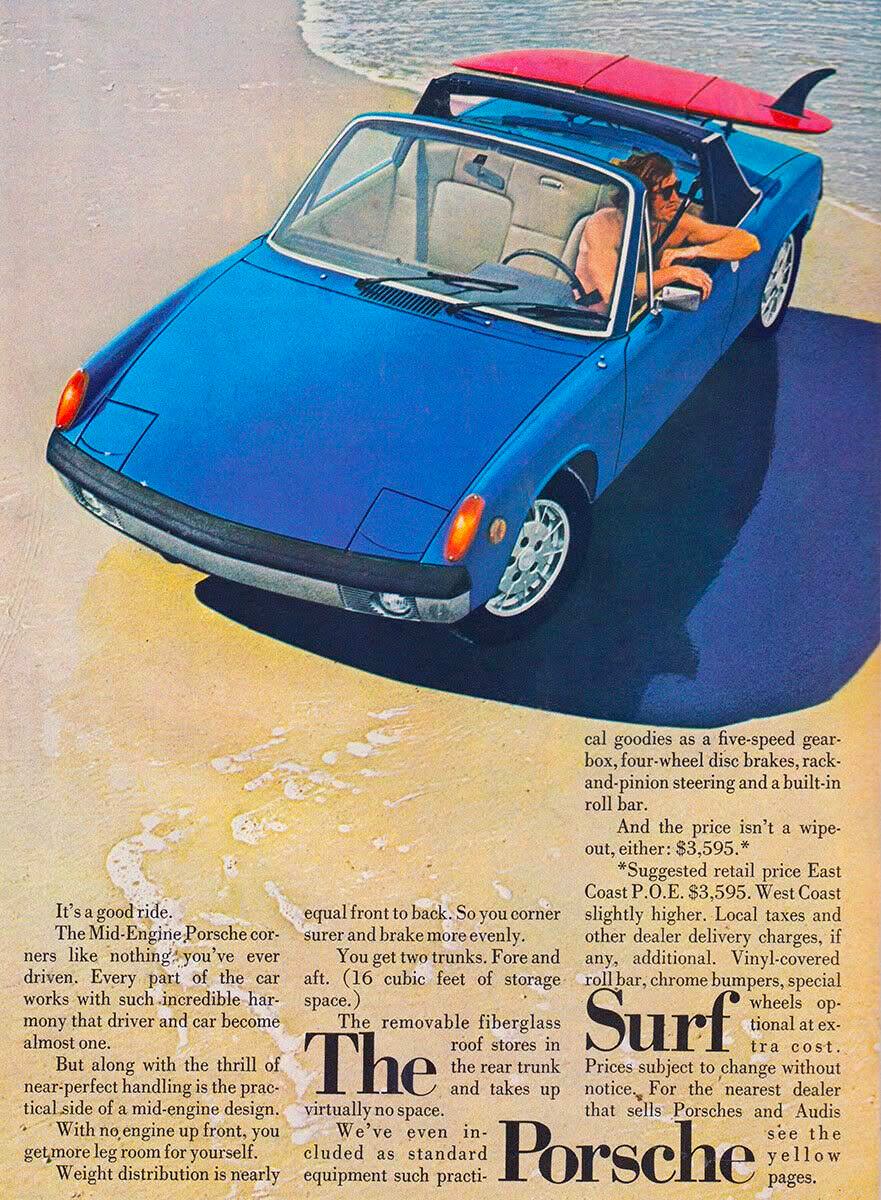
The engine used at launch was Volkswagen’s fuel-injected 1,679 cc flat-four from the 411, rated at 79 bhp at 4,900 rpm. The 914/6 used the 1,991 cc Type 901 flat-six from the 911T on Weber carburetors offering 109 bhp – it also had larger brakes and five-lug wheels. Image courtesy of Porsche.
Body prices rose as a result, and the six-cylinder 914/6 ended up costing only slightly less than the 911T, which was the one thing its position in the range couldn’t survive – not many buyers would take a 914/6 when they could opt for a 911 for just a few more clams.
The car was presented to the public for the first time at the Frankfurt Auto Show in 1969. Karmann built the bodies at Osnabrück and finished the four-cylinder cars, Porsche assembled the sixes at Zuffenhausen. In Europe the four-cylinder version was sold as a VW-Porsche through Volkswagen dealers, while the 914/6 wore Porsche badges.
In North America they were both sold as Porsches, and this has caused no end of confusion over the years that followed.
What The Porsche 914 Was Up Against
At roughly $3,500 in the United States for 1970, the four-cylinder car landed on top of Datsun’s new 240Z, which had 150 bhp and cost about the same. Road & Track put the 914 against the MGB Mk II, Fiat 124 Spider and Triumph TR6 in the June 1970 issue and found it slowest off the line but marginally quickest flat out, with the best braking and fuel economy of the four.
Motor Trend named it “Import Car of the Year” for 1970. This all seemed positive, but the reception to the car’s styling was less favorable, Road & Track called it “unpretty,” and this seemed to be the general consensus among the reviewers of the time.
Right from the beginning, the 914/6 had the harder job. Selling for around $6,000 it faced the 911T above and the 240Z below, it beat neither on value, but enthusiasts knew it could handily beat both around the local track if set up correctly.
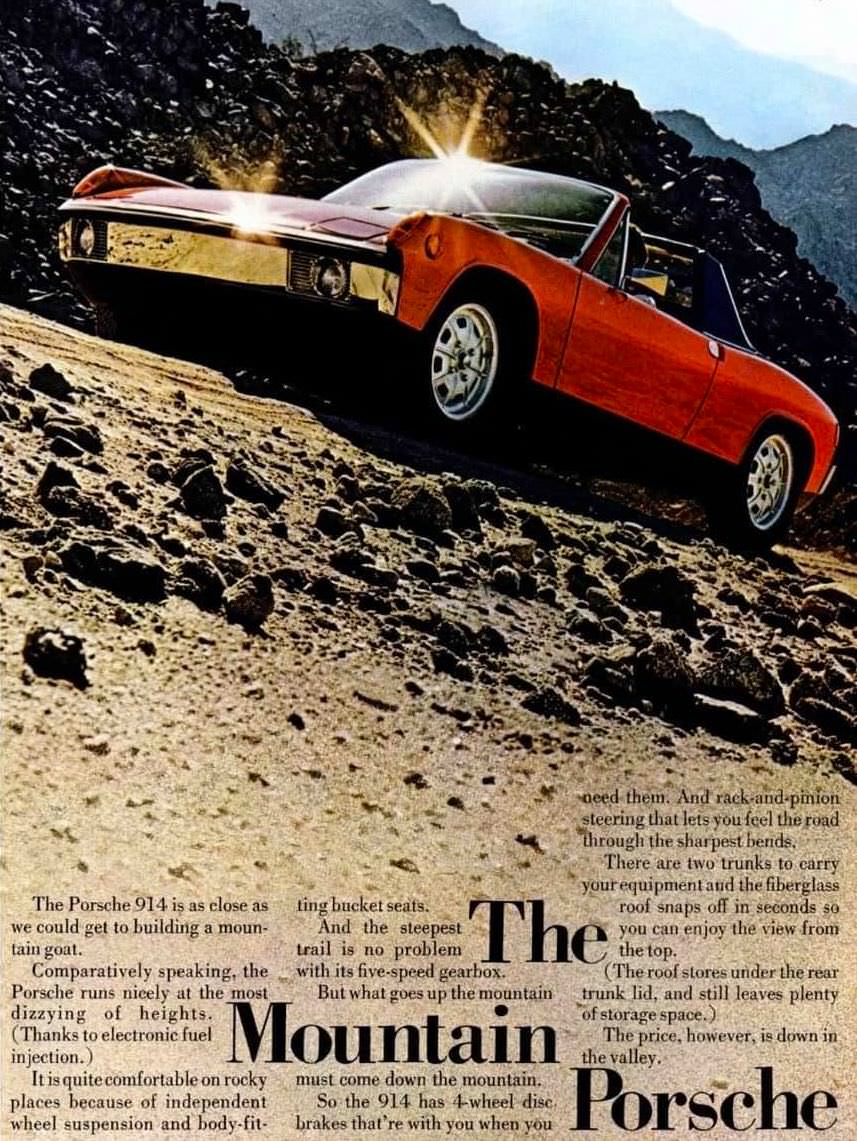
The wheelbase was 96.5 inches and curb weight started at 2,070 lbs – it was a remarkably lightweight car that had been designed from the outset with a convertible/targa layout, meaning it didn’t lose any rigidity or gain any weight due to the removable roof. Image courtesy of Porsche.
Porsche 914 Variants + Specifications
The 914 was built around a steel unibody with a removable GRP (glass fiber reinforced) roof panel that stowed in the rear trunk when not in use. It has pop-up headlights, MacPherson struts and longitudinal torsion bars in front, and semi-trailing arms on coil springs at the rear.
The wheelbase was 96.5 inches and curb weight started at 2,070 lbs – it was a remarkably lightweight car that had been designed from the outset with a convertible/targa layout, meaning it didn’t lose any rigidity (or gain any weight) due to the removable roof.
The engine used at launch was Volkswagen’s fuel-injected 1,679 cc flat-four from the 411, rated at 79 bhp at 4,900 rpm. The 914/6 used the 1,991 cc Type 901 flat-six from the 911T on Weber carburetors offering 109 bhp – it also had larger brakes and five-lug wheels.
The 914/6 was dropped after 1972 and replaced for 1973 with the 914 2.0 now powered by a 2.0 liter four offering 99 bhp, arriving alongside anti-roll bars and a much better side-shift linkage. For 1974 the 1.7 gave way to a 1.8 rated at 84 bhp in Europe and 75 bhp in the United States.
Two more extreme 914 derivatives never entered series production – the 916, canceled after eleven pre-series cars with 2.4 or 2.7 liter sixes, and the 914/8, two cars with 908 racing flat-eights, one built at Piëch’s instigation and one given to Ferry Porsche for his 60th birthday. By most accounts he didn’t really like it, but today it’s a true holy grail for Porsche enthusiasts.
The Porsche 914 Goes Racing
The 914/6 was homologated for FIA Group 4 in March of 1970. Competition cars got wider steel fender flares, lightweight fiberglass panels, a 100 liter tank, 911S racing brakes, a twin-plug ignition system and 207 bhp at 8,000 rpm, at 1,980 lbs ready to race. The car was a weapon on track.
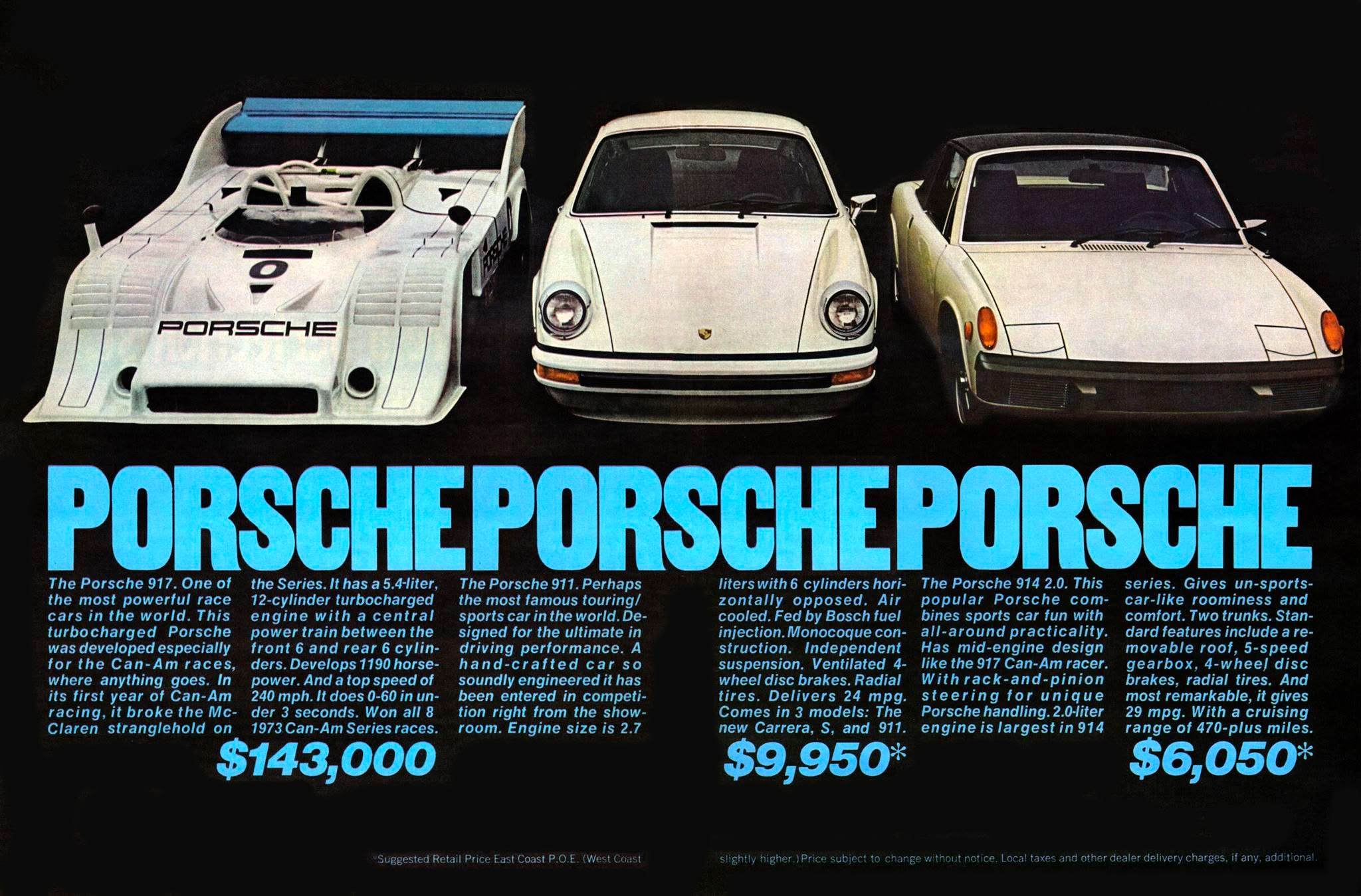
The 914/6 was dropped after 1972 and replaced for 1973 with the 914 2.0 now powered by a 2.0 liter four offering 99 bhp, arriving alongside anti-roll bars and a much better side-shift linkage. For 1974 the 1.7 gave way to a 1.8 rated at 84 bhp in Europe and 75 bhp in the United States. Image courtesy of Porsche.
At Le Mans that June the Sonauto entry of Claude Ballot-Léna and Guy Chasseuil won its class and finished 6th overall. It went largely unremarked, because the same race gave Porsche its first outright Le Mans victory with the 917.
In the 86 Hour Marathon de la Route at the Nürburgring later that same year, three works 914/6 GTs finished 1st, 2nd and 3rd, the winning car of Gérard Larrousse, Helmut Marko (yes, that Helmut Marko), and Claude Haldi covering 360 laps and 10,184 kms.
The repair log across all three cars listed one tire change each, two blown fuses, a taillight bulb, and two broken window cranks. It had proven to be remarkably reliable in what was one of the most grueling circuit races in the world, if not the most grueling outright.
The rallying record of the 914 didn’t go quite so well. The 1971 Monte Carlo had the worst weather in years, two of the three works cars retired with transmission and clutch trouble, and Björn Waldegård brought the survivor home 1st in class and joint 3rd overall.
Porsche opted not to continue the rally program, perhaps wise given the one-two punch of the Alpine A110 and the Lancia Stratos that were waiting just down the road.
In America, Peter Gregg and Hurley Haywood won the first IMSA GT race at Virginia International Raceway in 1971 in the No. 59 Brumos 914/6 GT, and took the GTU title in the series’ opening season.
The car does also have one other claim to fame, at Mosport in September of 1973, a yellow 914 became the first safety car ever deployed in a Formula 1 race, with Eppie Wietzes driving. Race control picked up the wrong leader, and much of the field was lapped by mistake.
914 production ended in 1976, the 924 took its place, though not everywhere at once. American buyers had no 924 yet, so Porsche filled a single model year with the 912E.
The Subaru-Powered Porsche 914 Shown Here
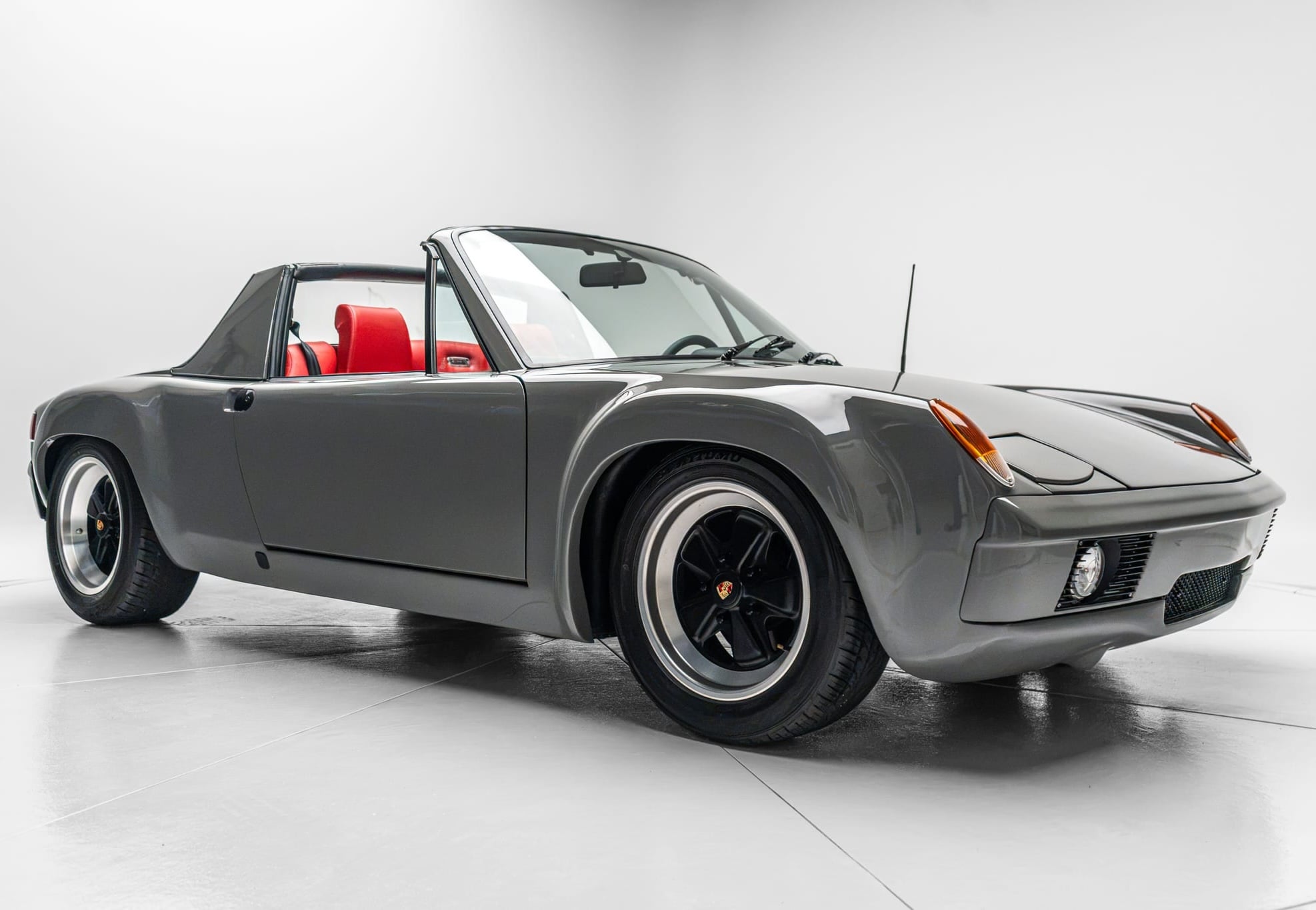
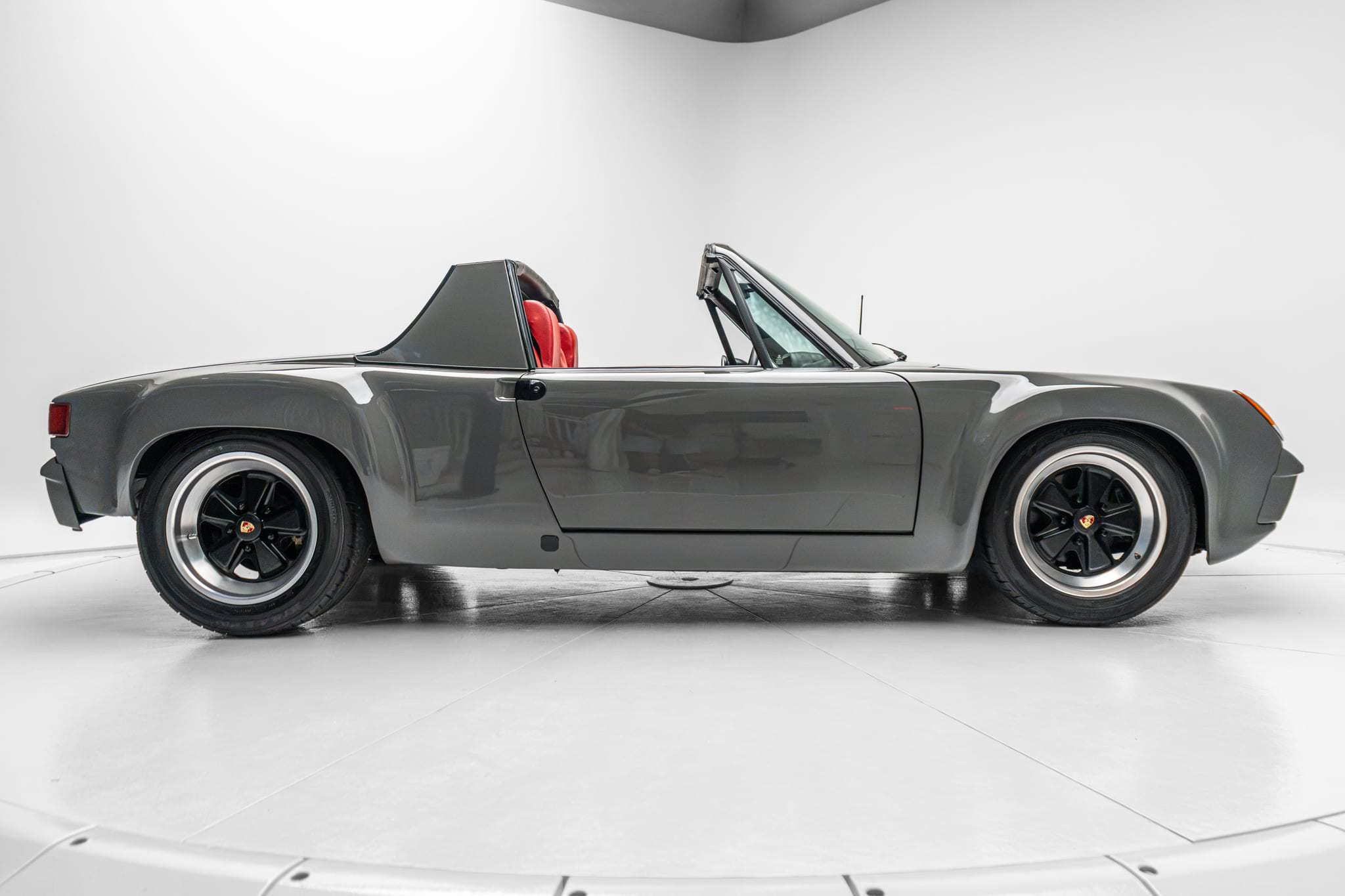
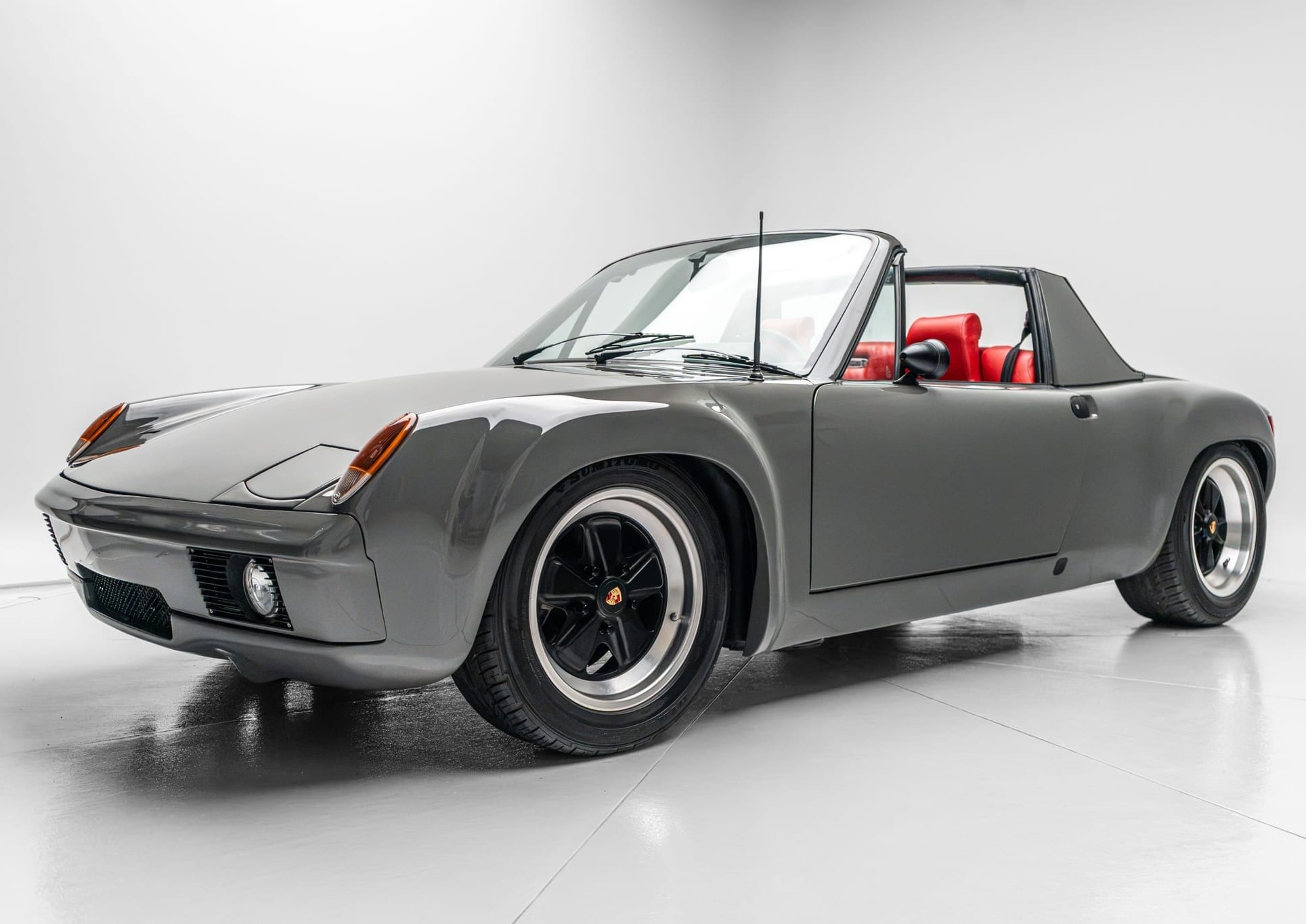
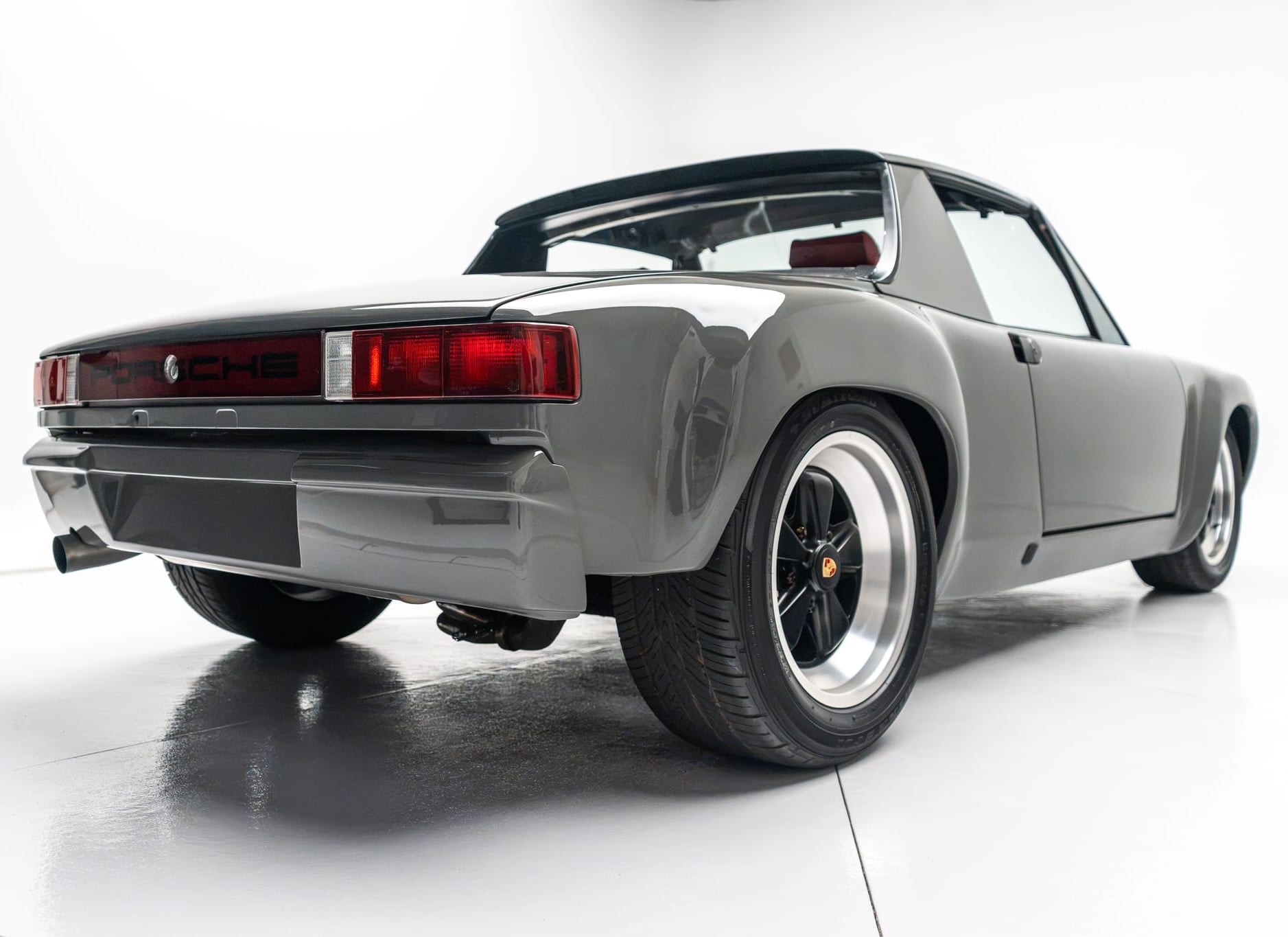
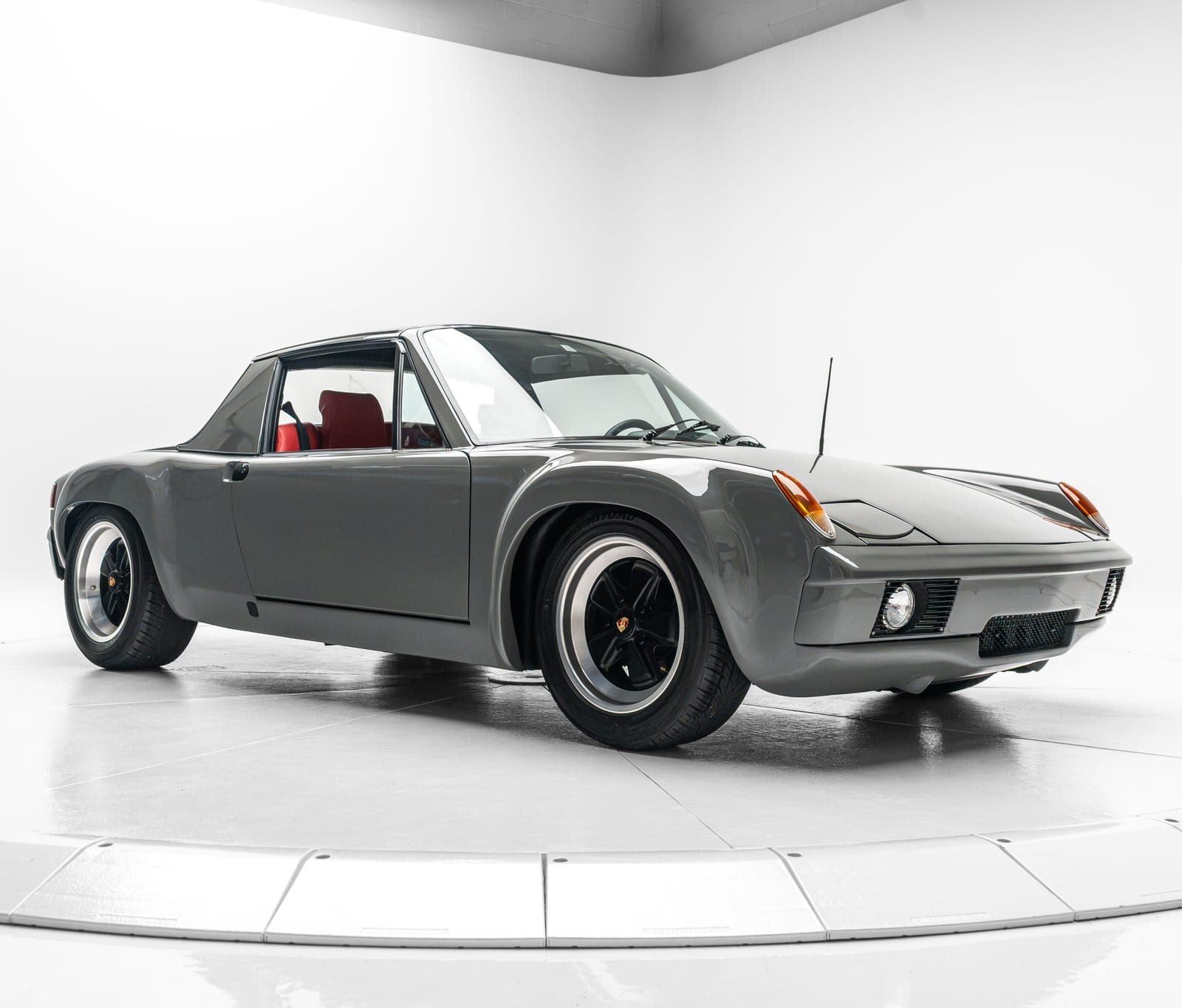
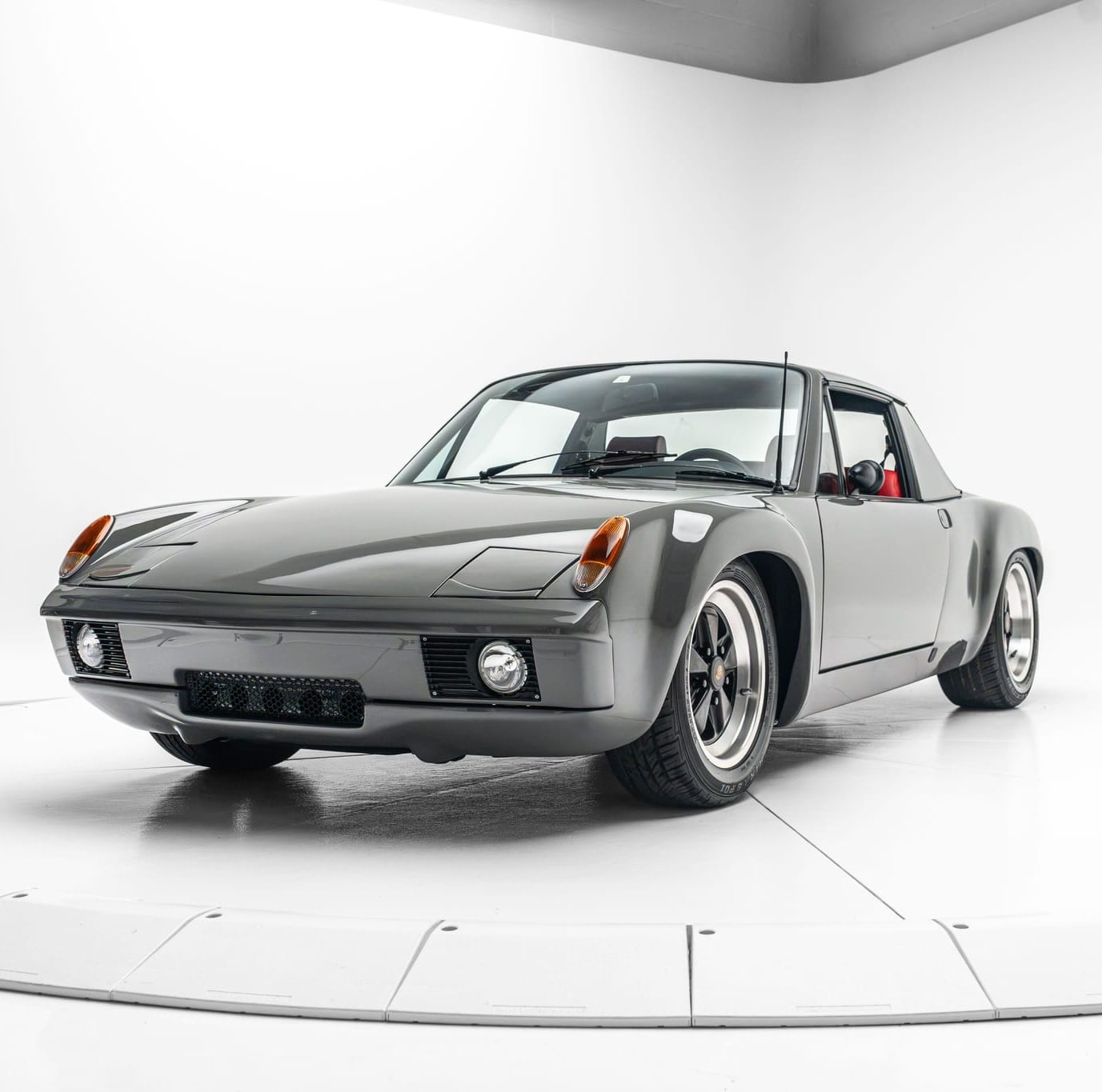
This is a 1976 914 that’s been comprehensively reworked, and it’s now much faster than it ever could’ve been off the dealership floor.
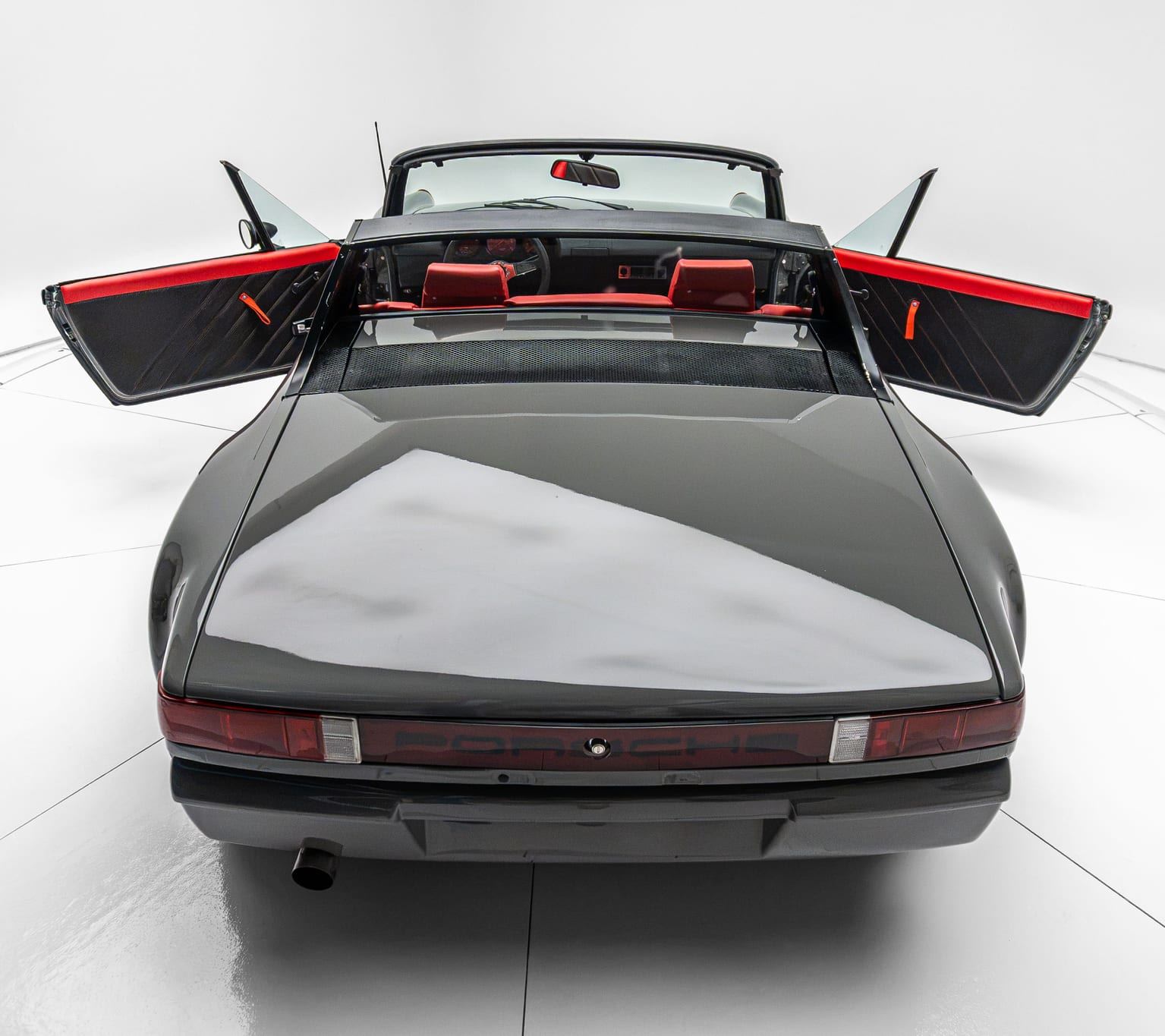
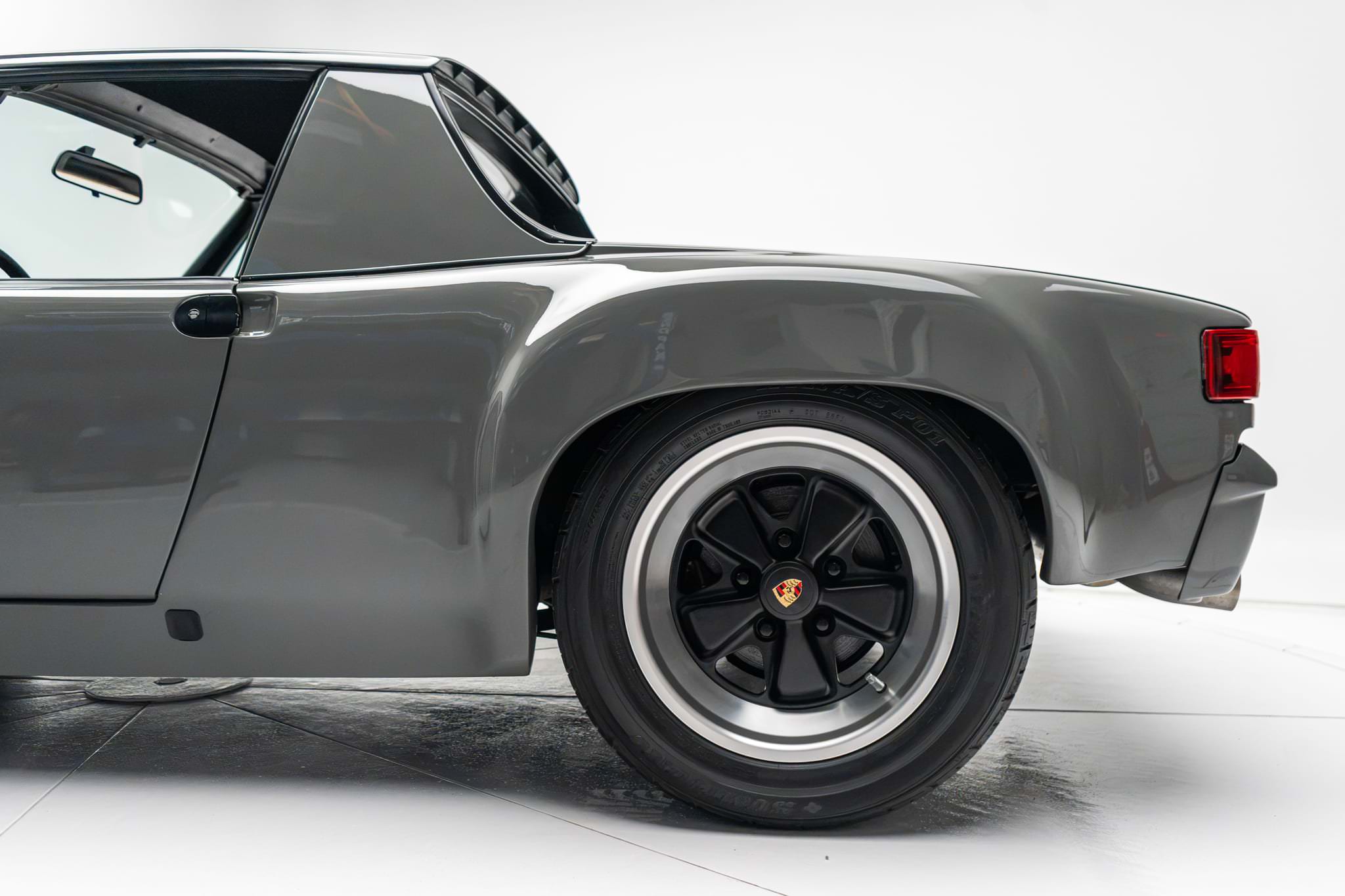
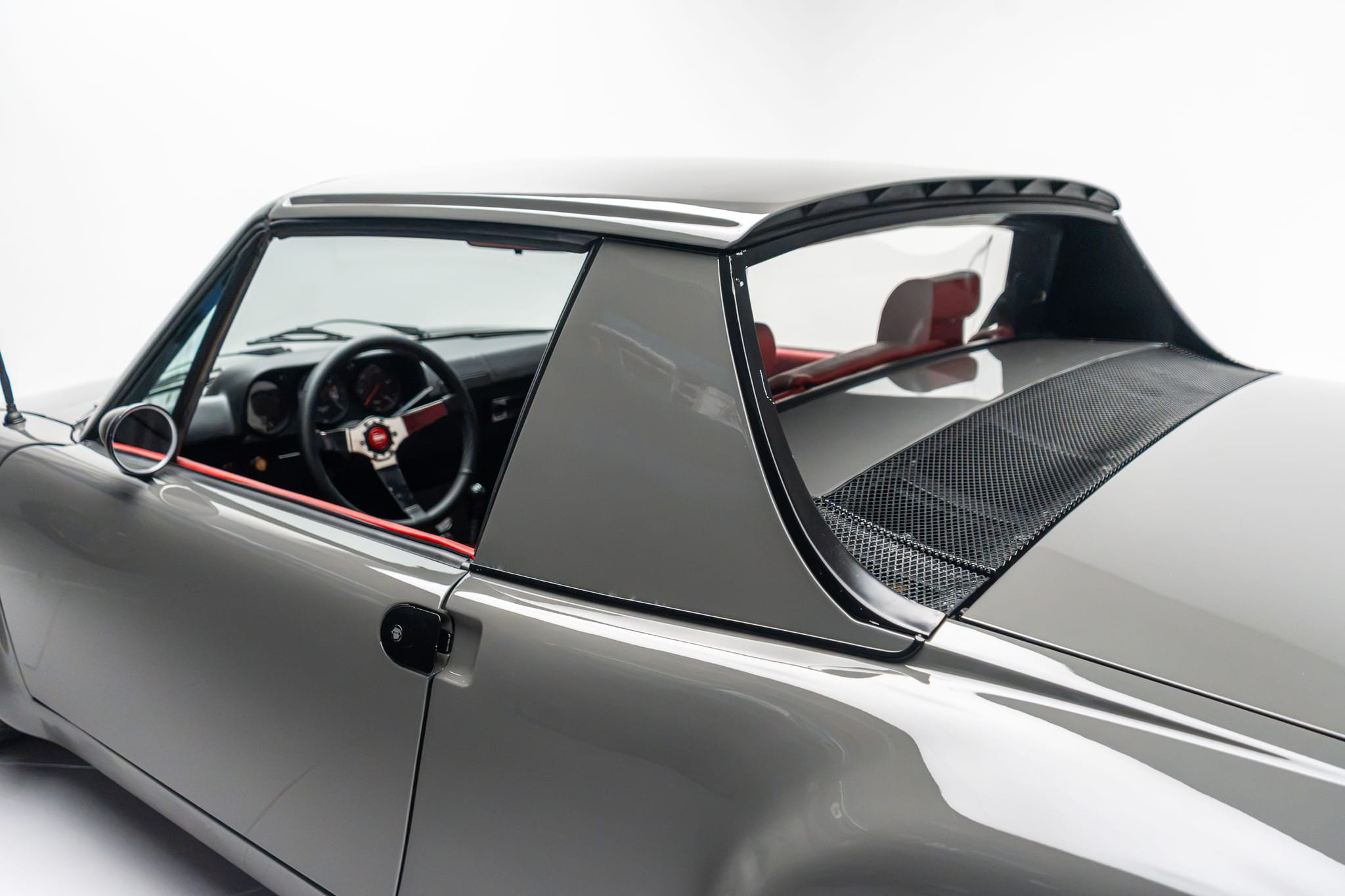
The bodywork now wears GT-style flares, it’s been refinished in gray, with the Targa top and bumpers color-matched, plus a mesh grille, fog lights and a bullet-style mirror. It rides on 16 inch Fuchs-style alloys shod with 245/50 Sumitomo tires and has discs at all four corners.
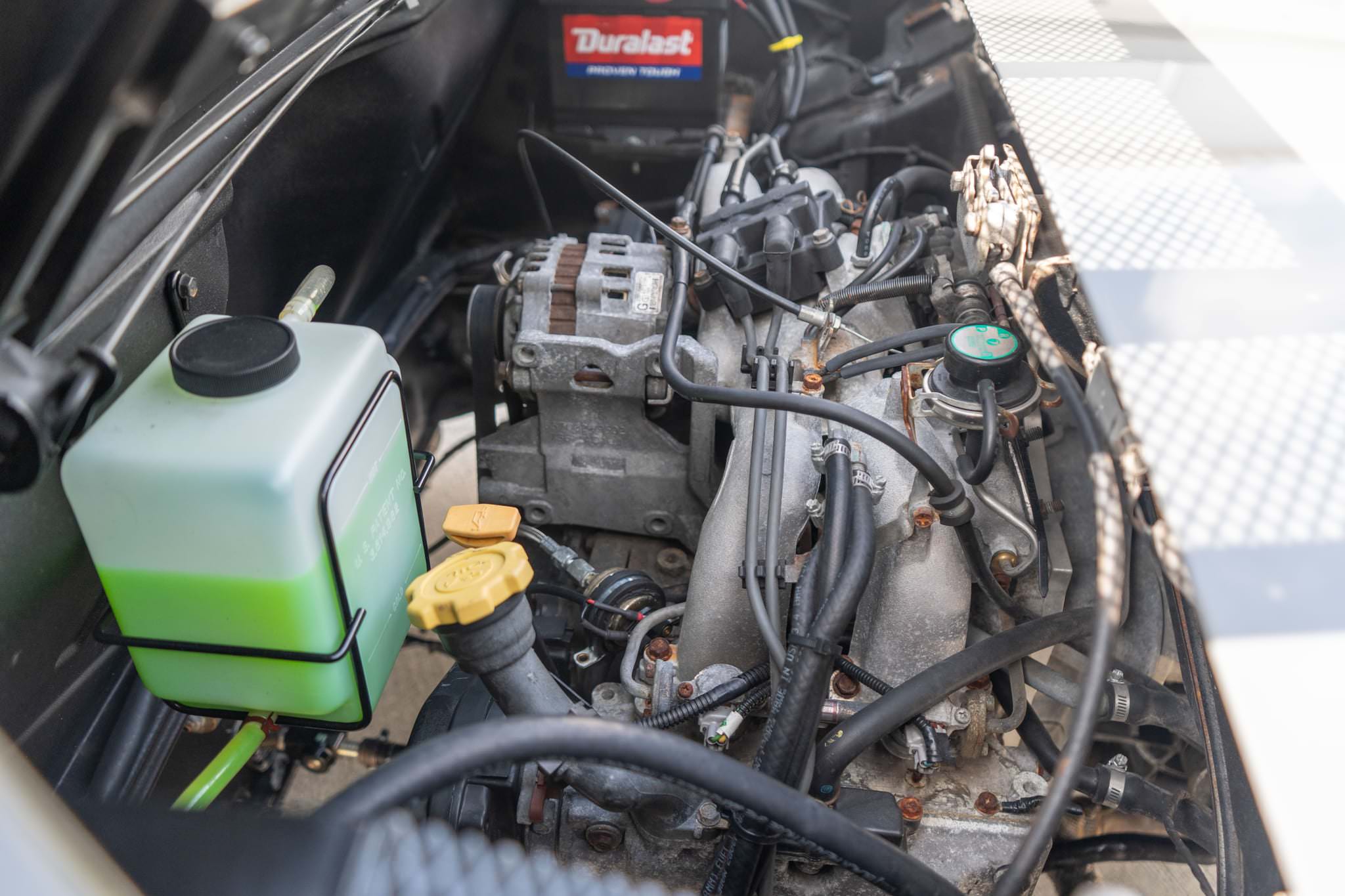
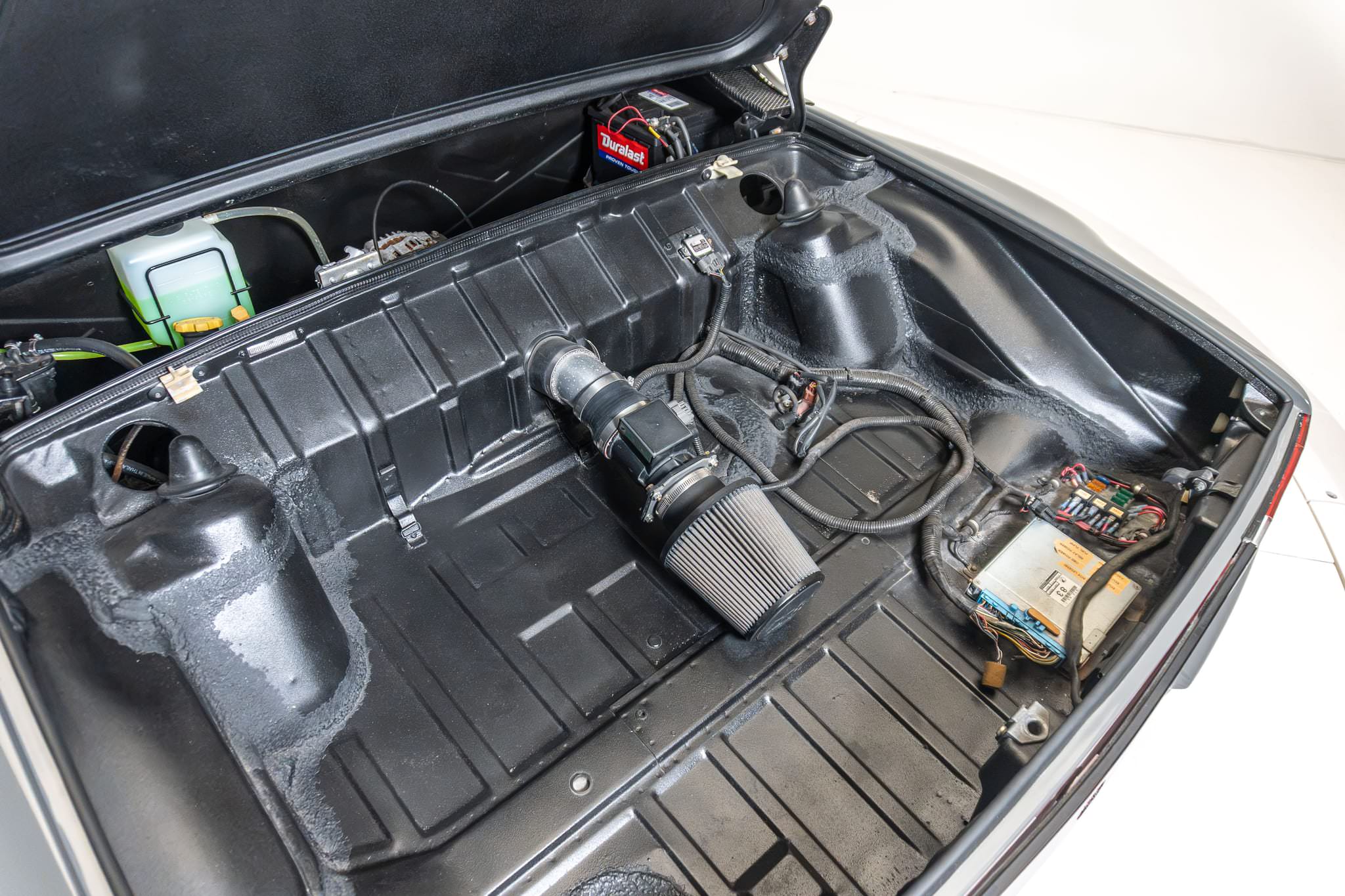
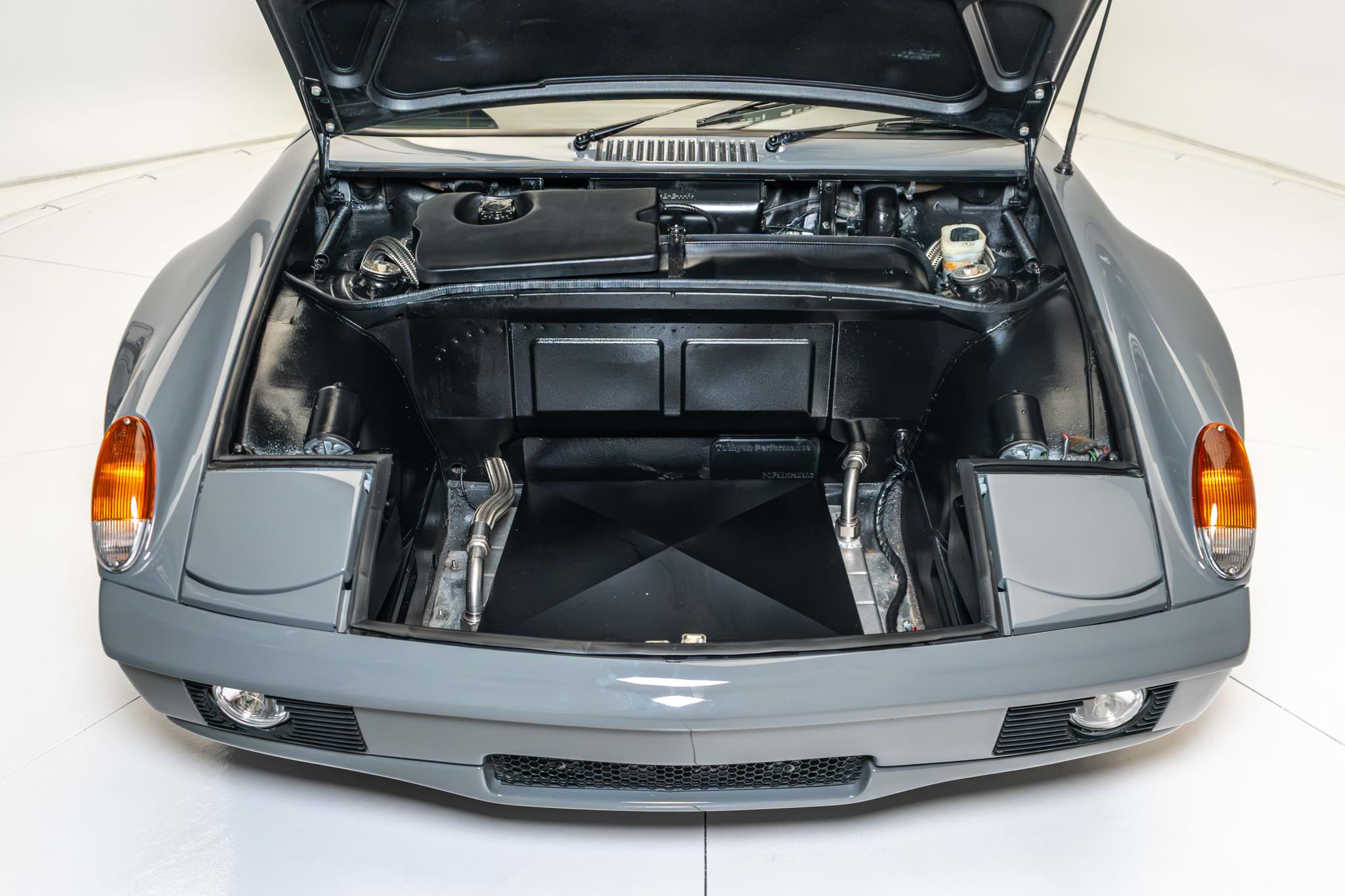
The most interesting part of this 914 lies under the deck lid. The original air-cooled VW-derived flat-four is long gone, now replaced by a Subaru EJ25 2.5 liter flat-four, which has a custom cooling setup with braided lines and a lay-flat fan mounted underneath, and a custom intake air intake.
Unsurprisingly, the exhaust is custom too, with wrapped headers and a MagnaFlow muffler. Spark plugs were done in mid-2026, and the selling dealer says that they have sorted the electronics and changed fluids.
Even in its lowest state-of-tune, a Subaru EJ25 produces 155 bhp and 140 lb ft of torque, over double the output of the 75 bhp unit that was originally fitted.
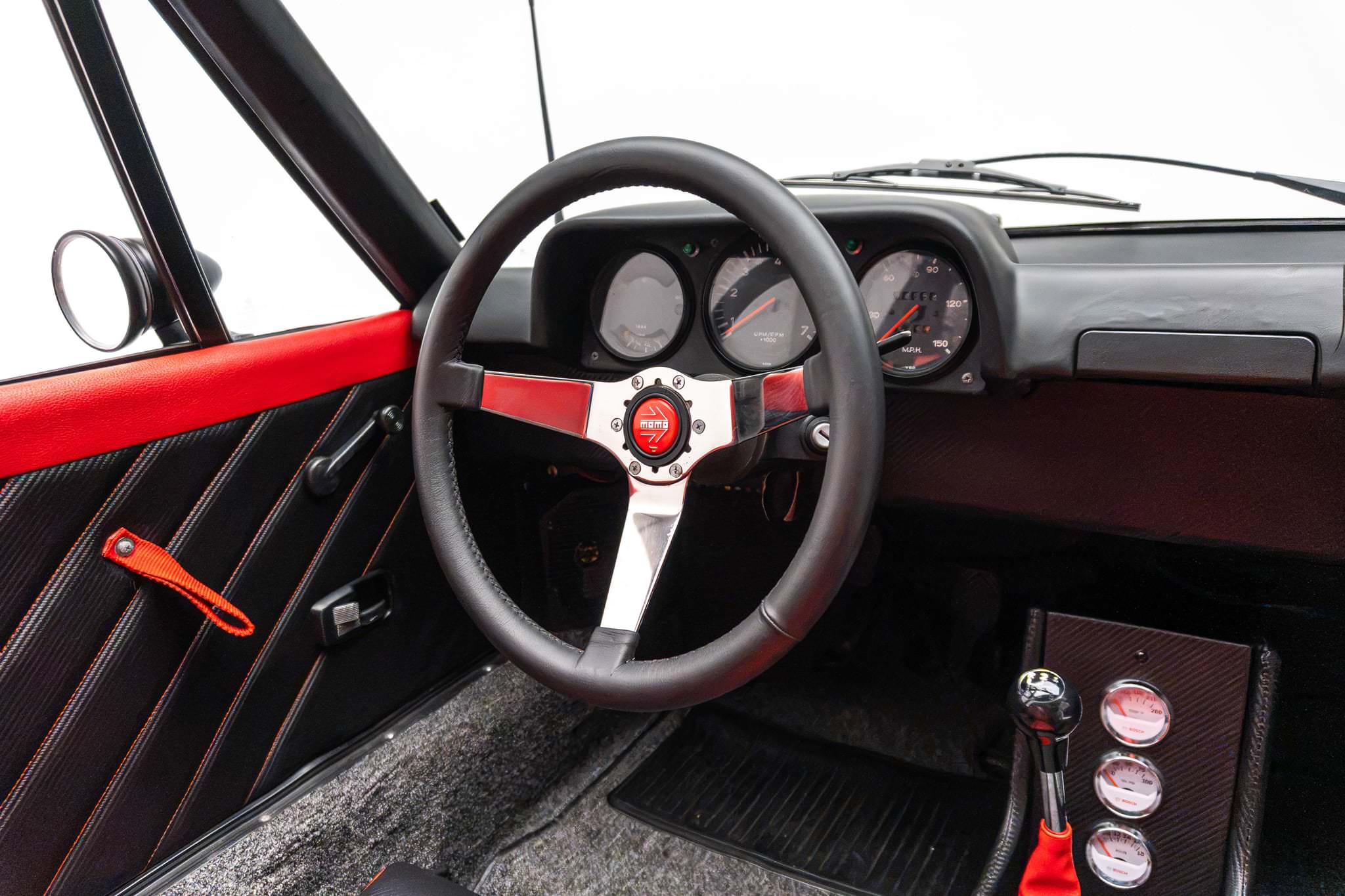
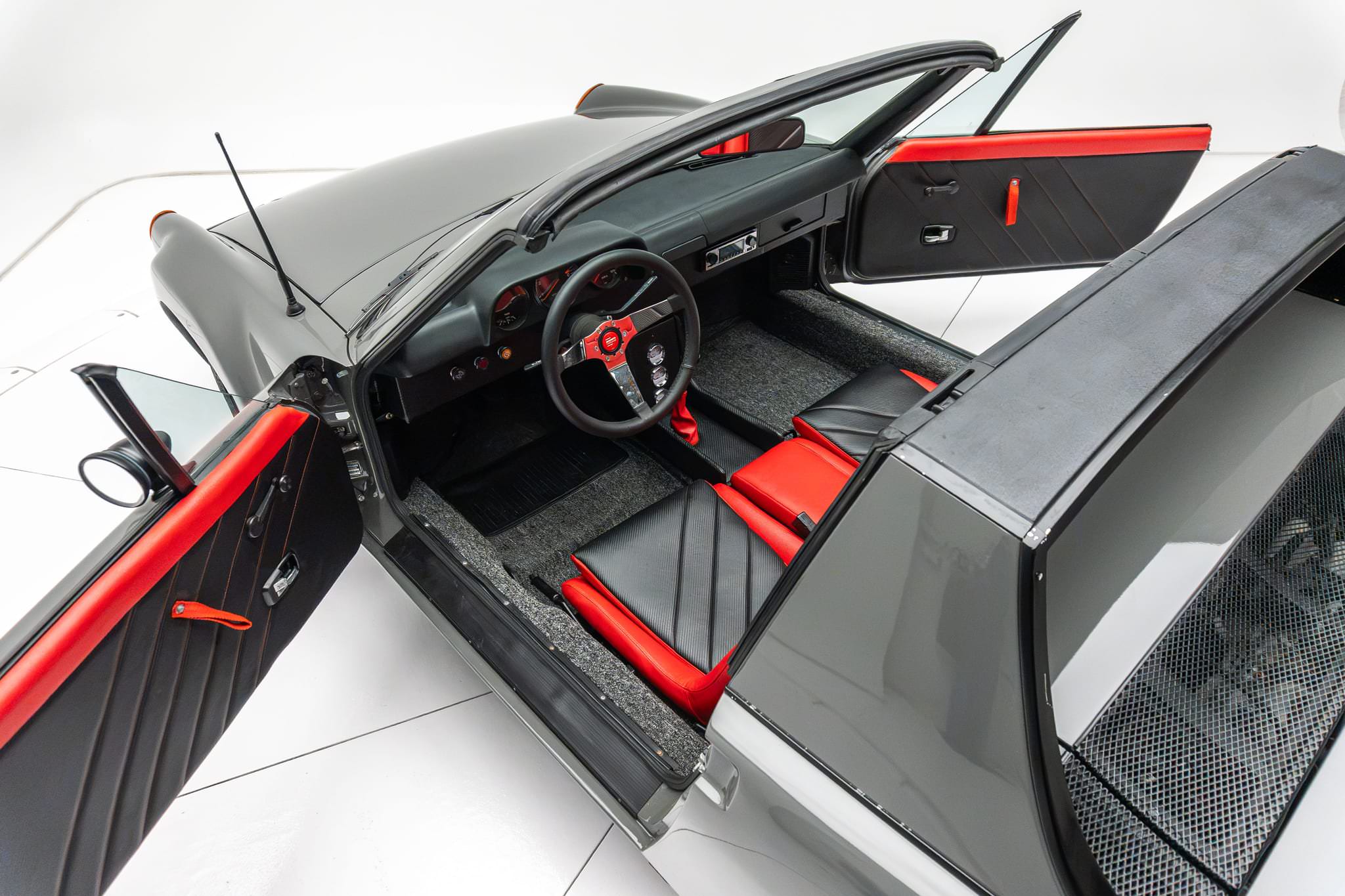
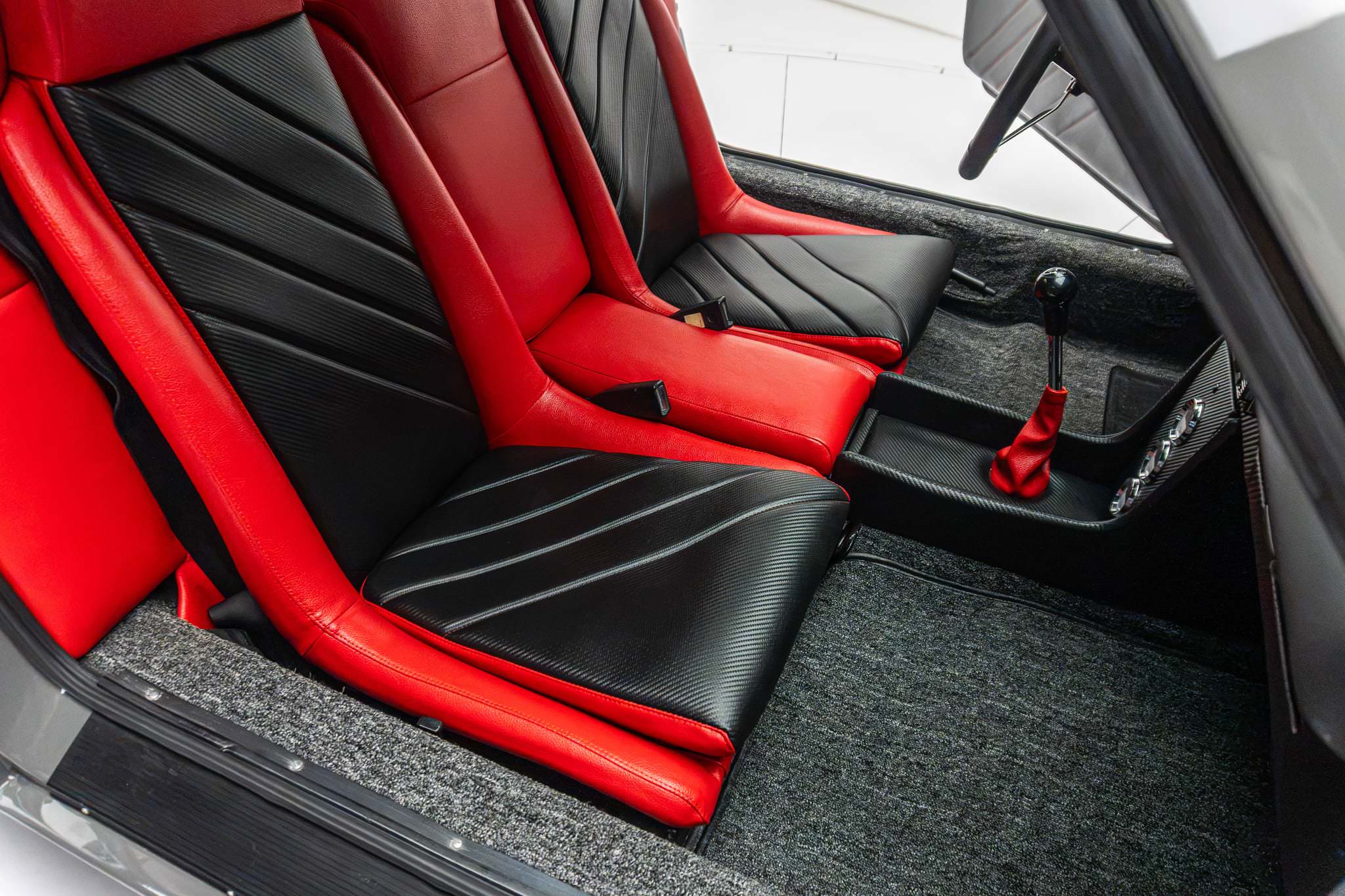
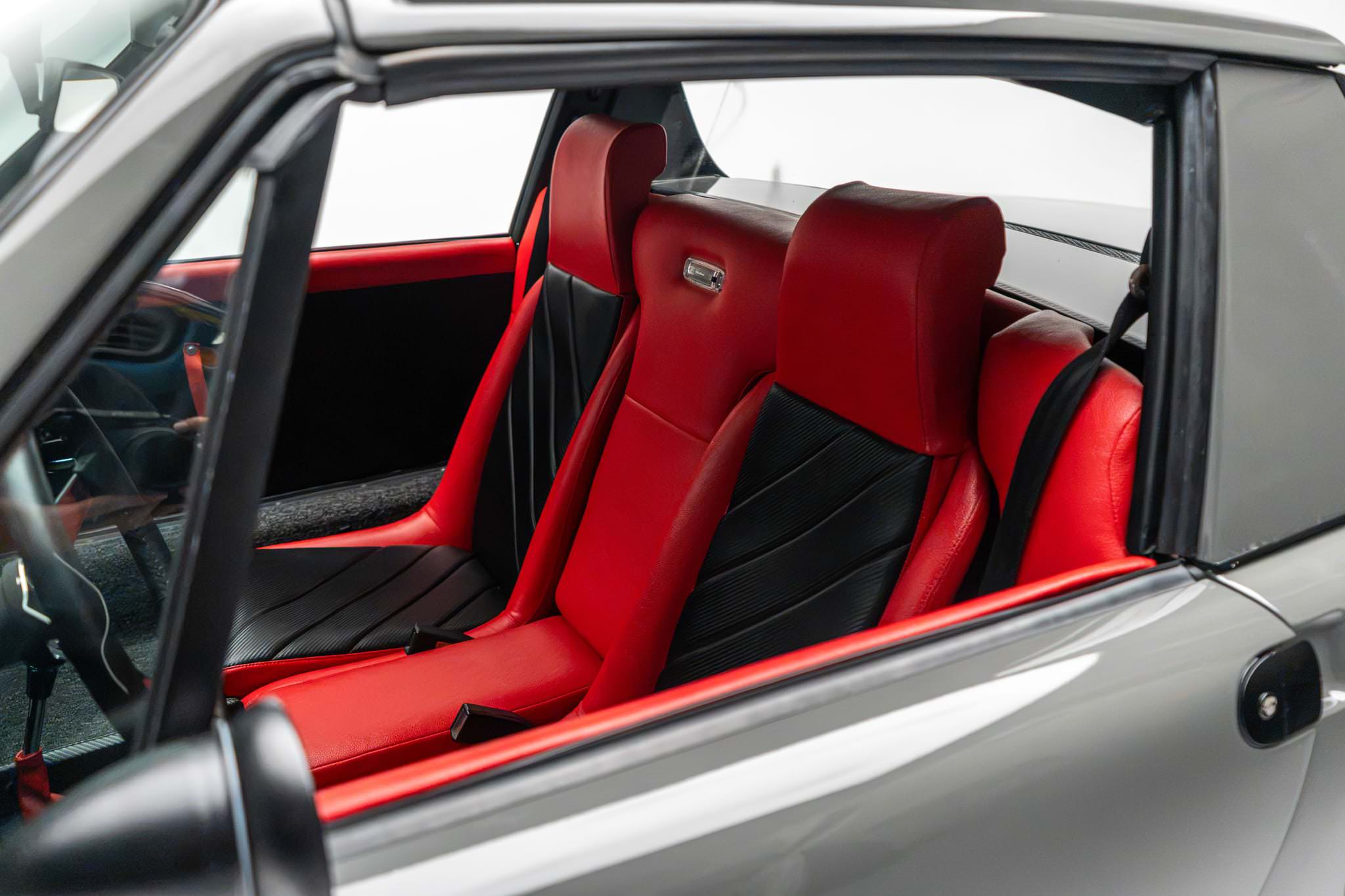
Inside, the seats and door panels are trimmed in custom two-tone upholstery with lightweight door pulls, a matching shift boot and armrest, and carbon-style accents. There’s an aftermarket three-spoke wheel and three auxiliary gauges.
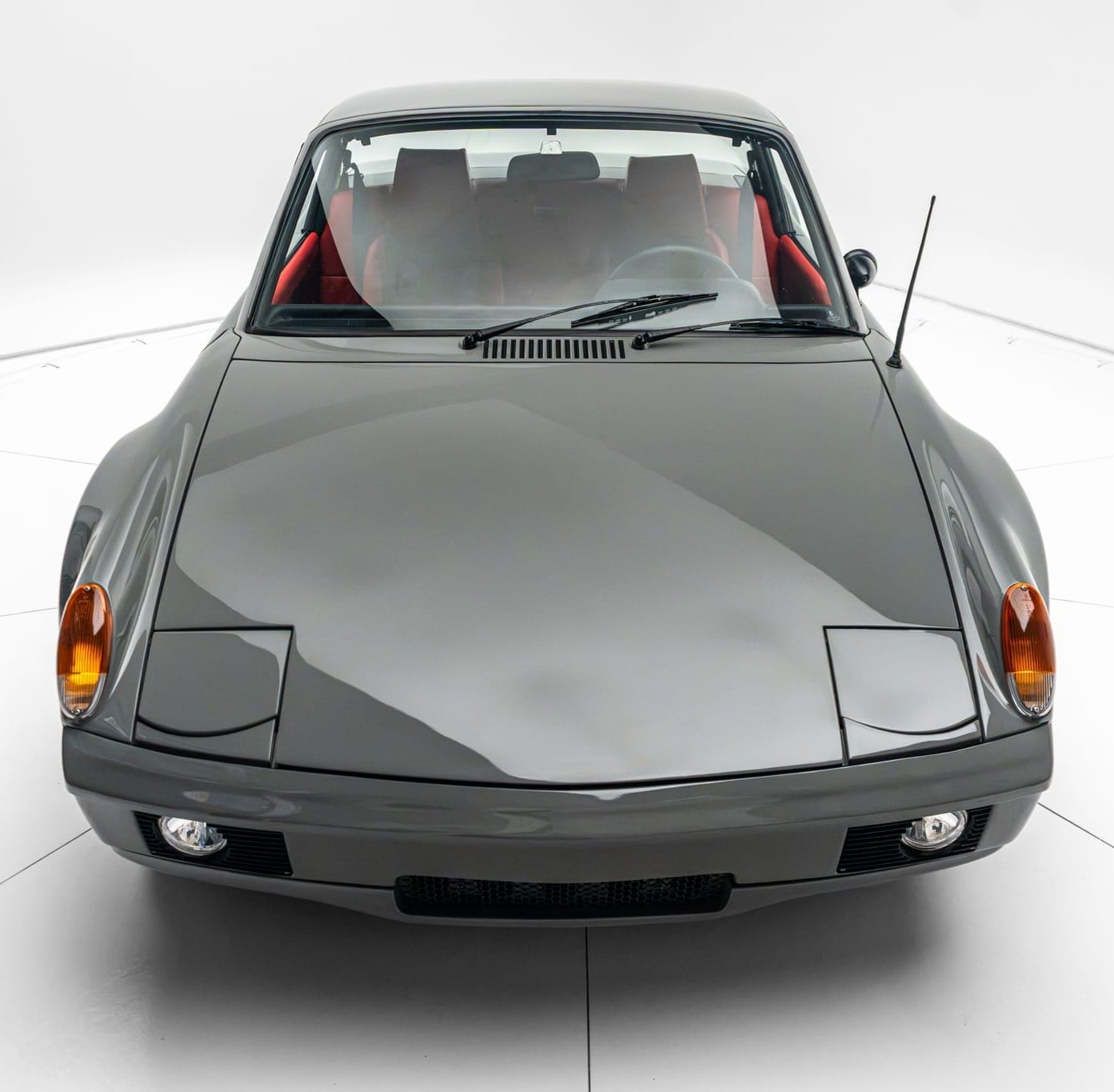
This is a 1976 Porsche 914 that’s been completely rebuilt, with a GT wide body kit, a custom interior, and perhaps most importantly, a Subaru EJ25 flat-four capable of considerably more power than the original engine.
The one disclosed mechanical fault is in the 5-speed gearbox: 4th gear has weak synchros and won’t stay engaged without holding the lever. The shift rod seal and housing gasket have already been replaced, so that work has been done but hasn’t cured the 4th-gear problem. It’s worth pricing a fix before placing any bids.
The car is now being offered for sale out of Fort Lauderdale, Florida with a clean Florida title and you can visit the listing here to read more or register to bid.
Images courtesy of Bring a Trailer

Articles that Ben Branch has written have been covered on CNN, Popular Mechanics, Smithsonian Magazine, Road & Track Magazine, the official Pinterest blog, the official eBay Motors blog, BuzzFeed, Autoweek Magazine, Wired Magazine, Autoblog, Gear Patrol, Jalopnik, The Verge, and many more.
Silodrome was founded by Ben back in 2010, in the years since the site has grown to become a world leader in the alternative and vintage motoring sector, with well over a million monthly readers from around the world and many hundreds of thousands of followers on social media.