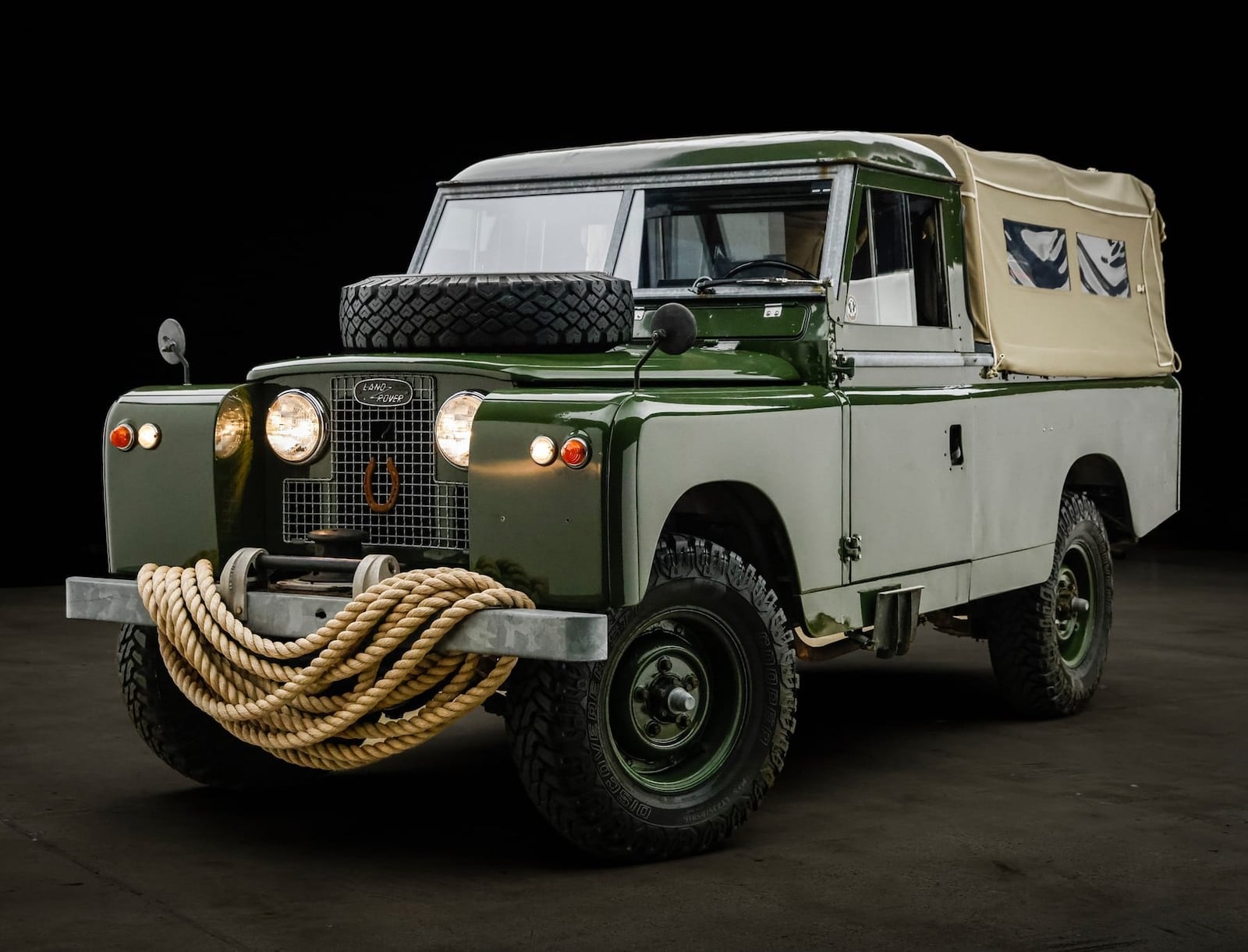
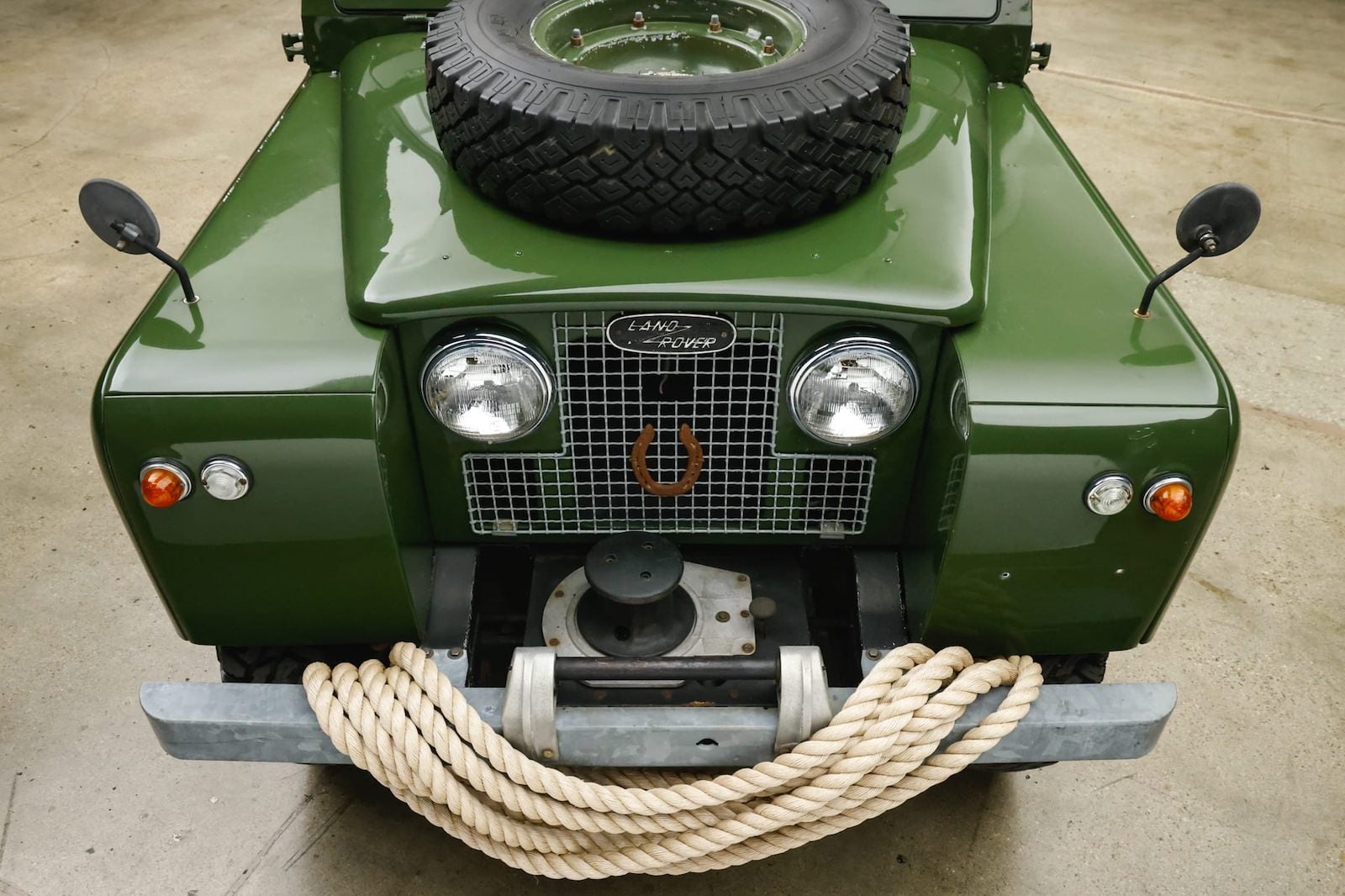
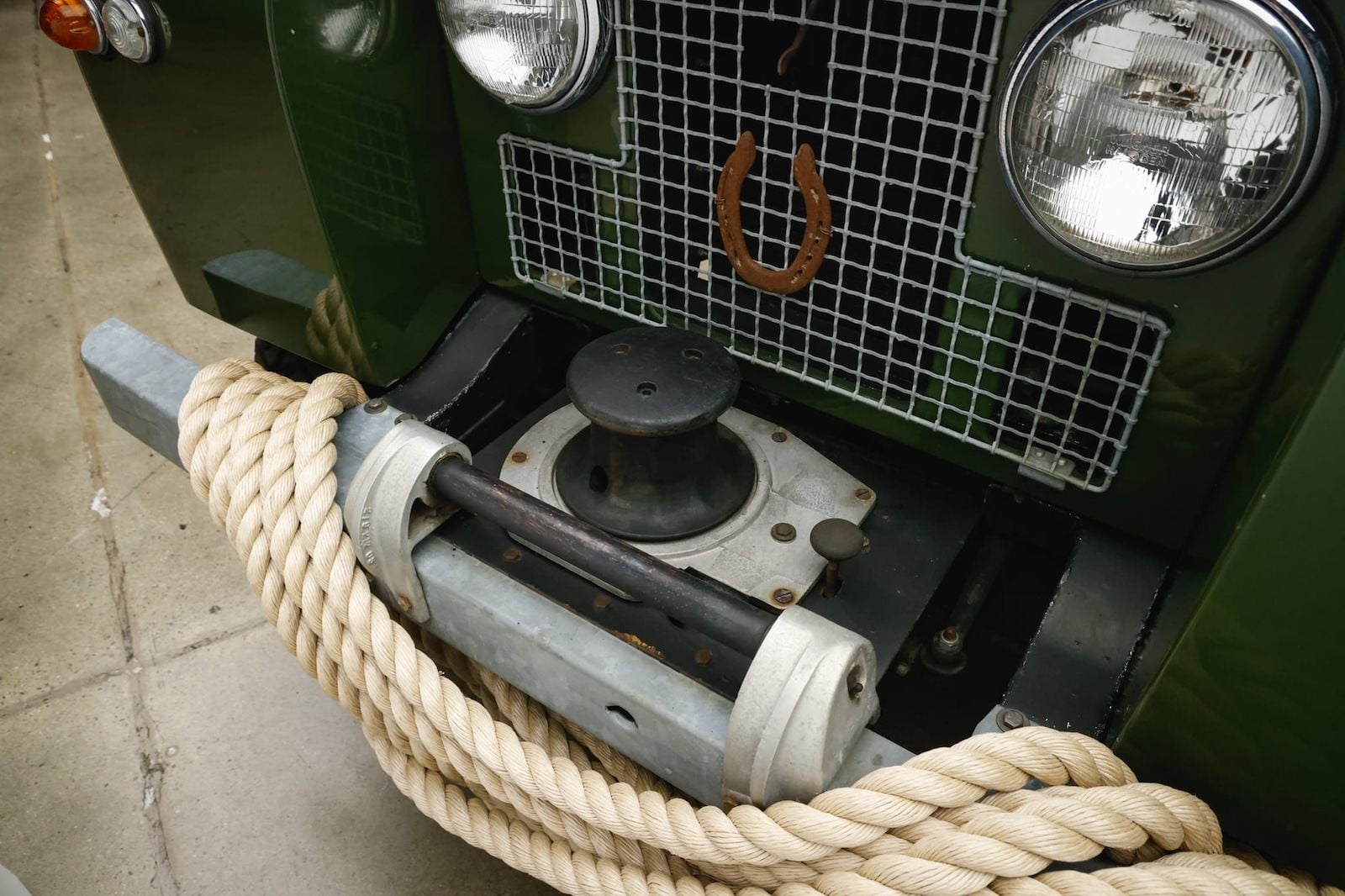
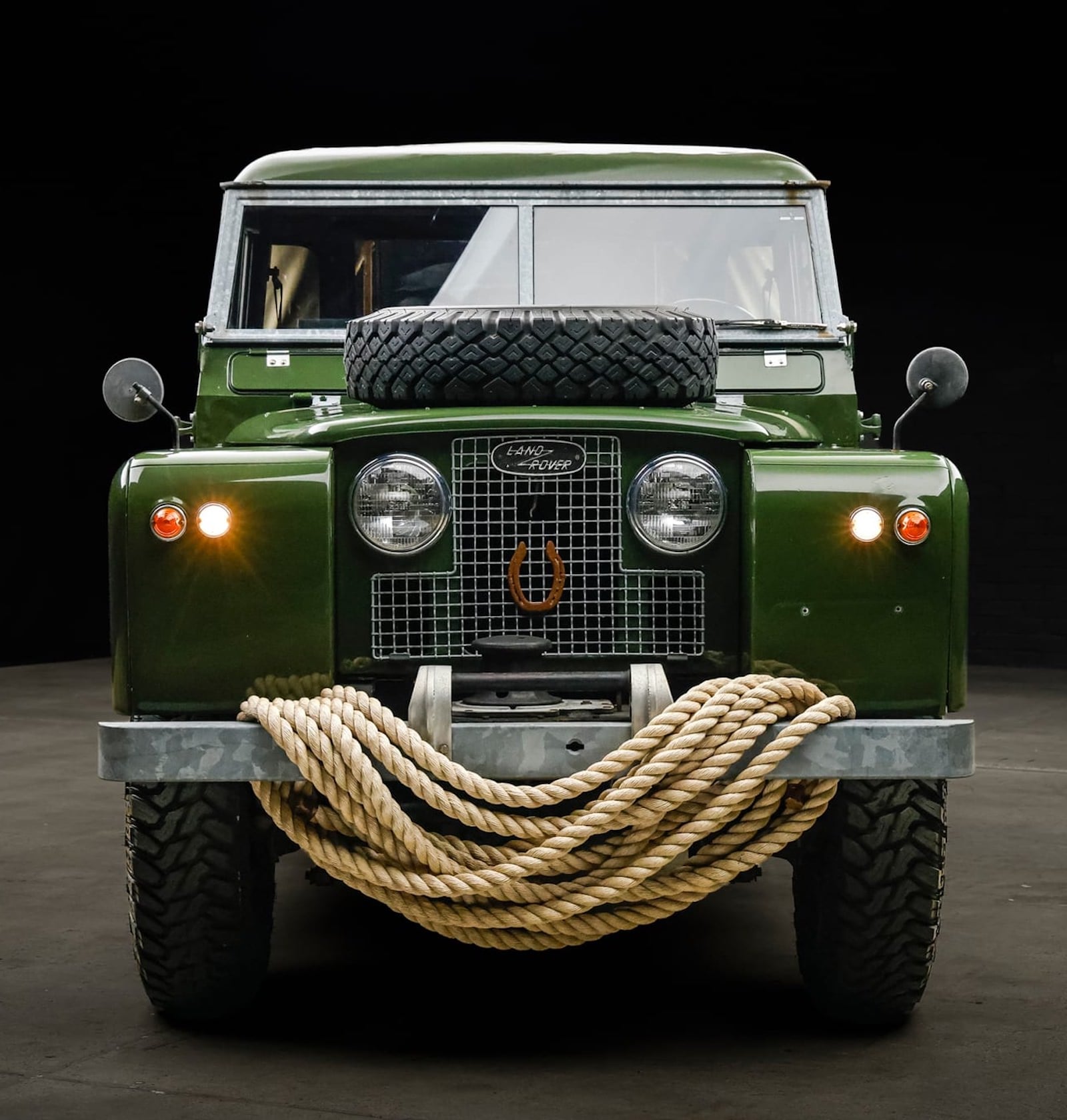
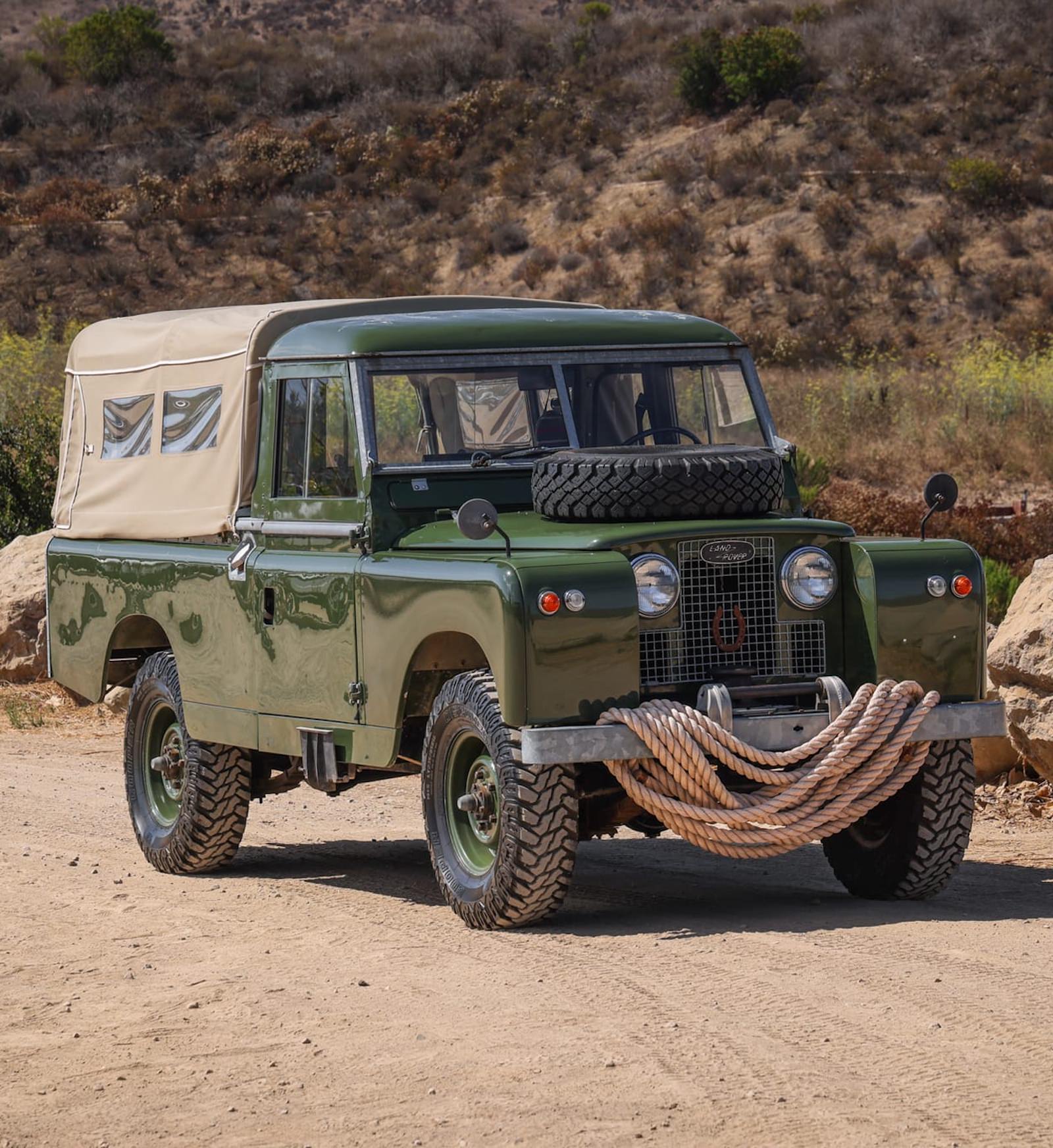
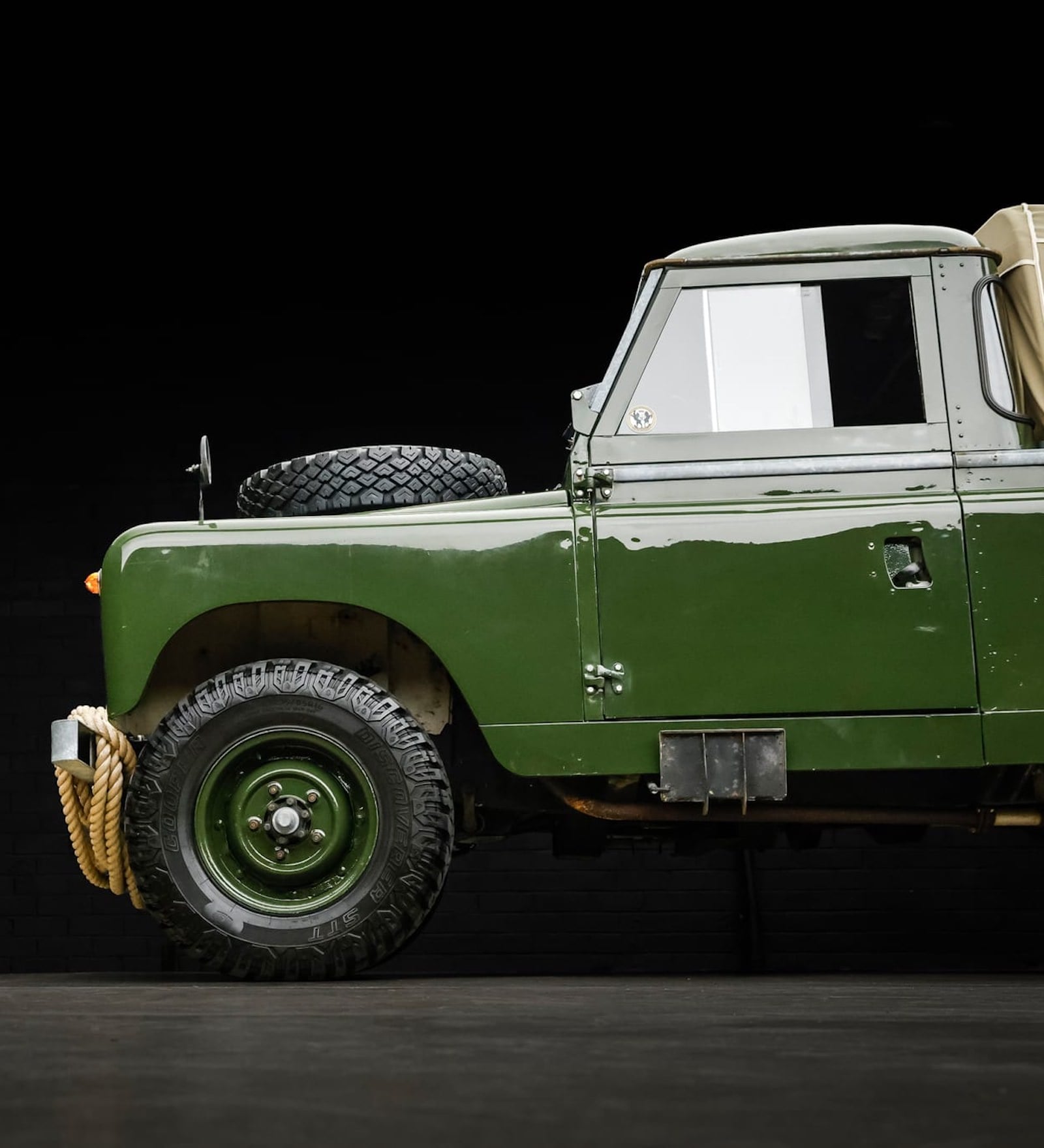
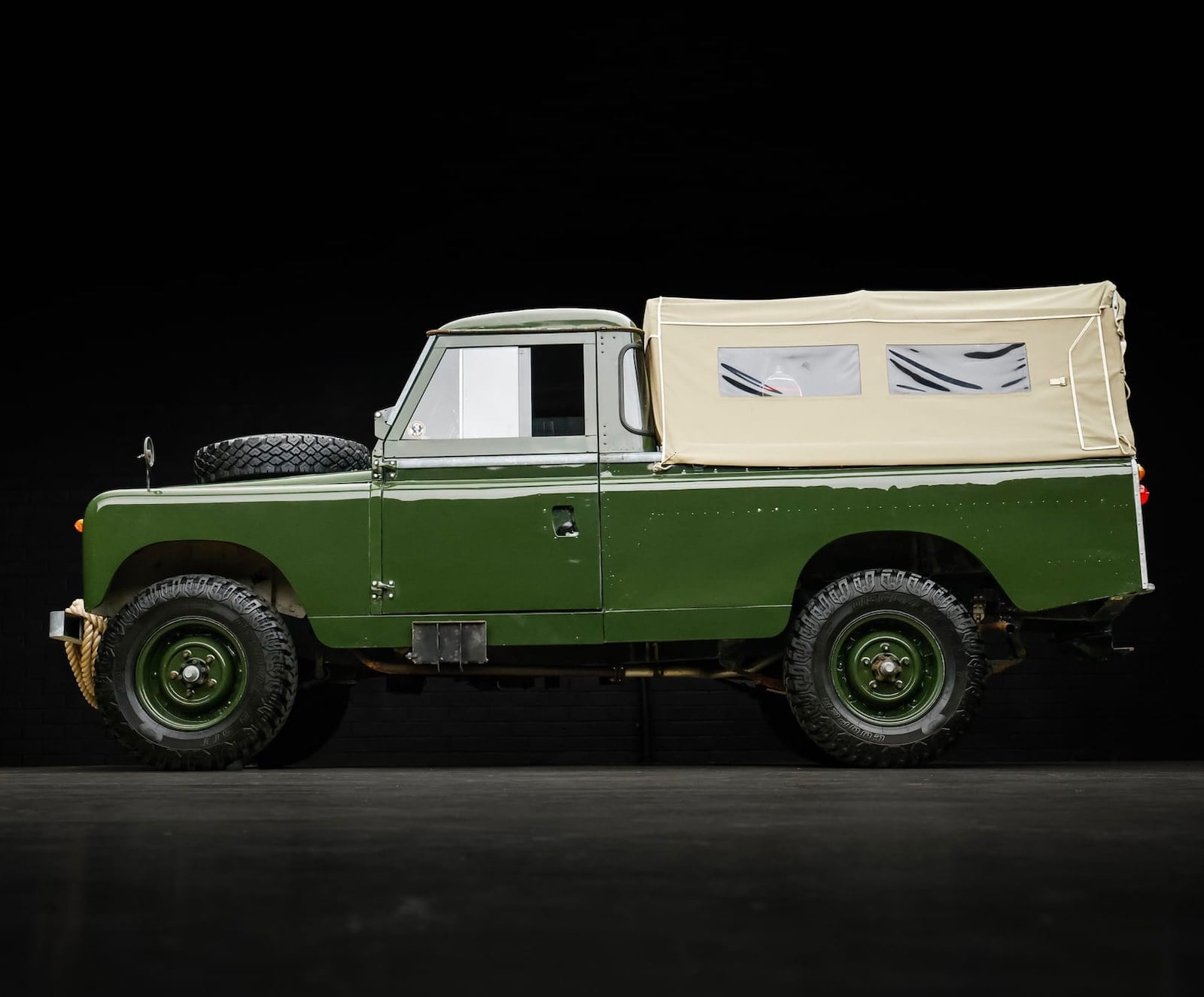
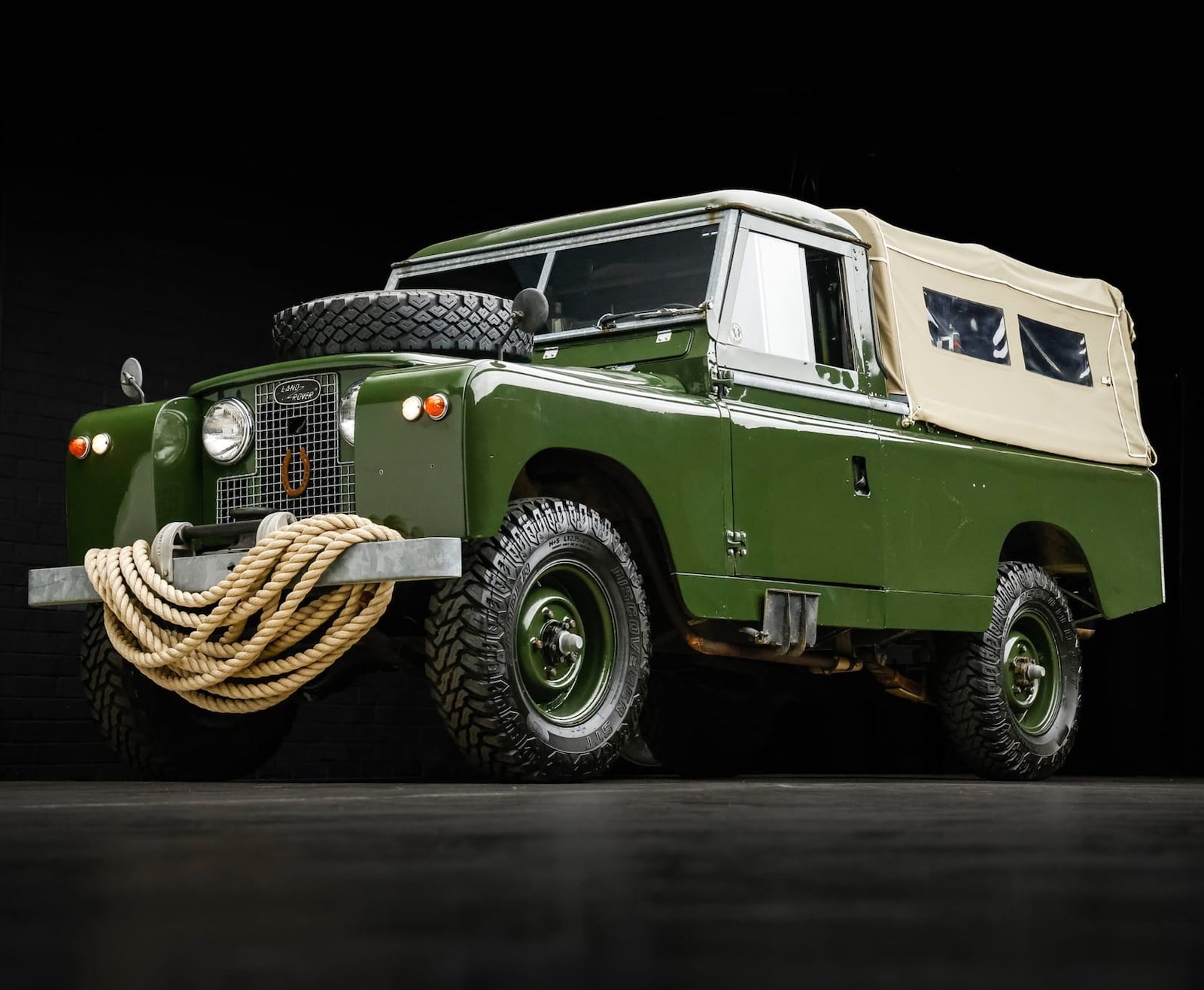
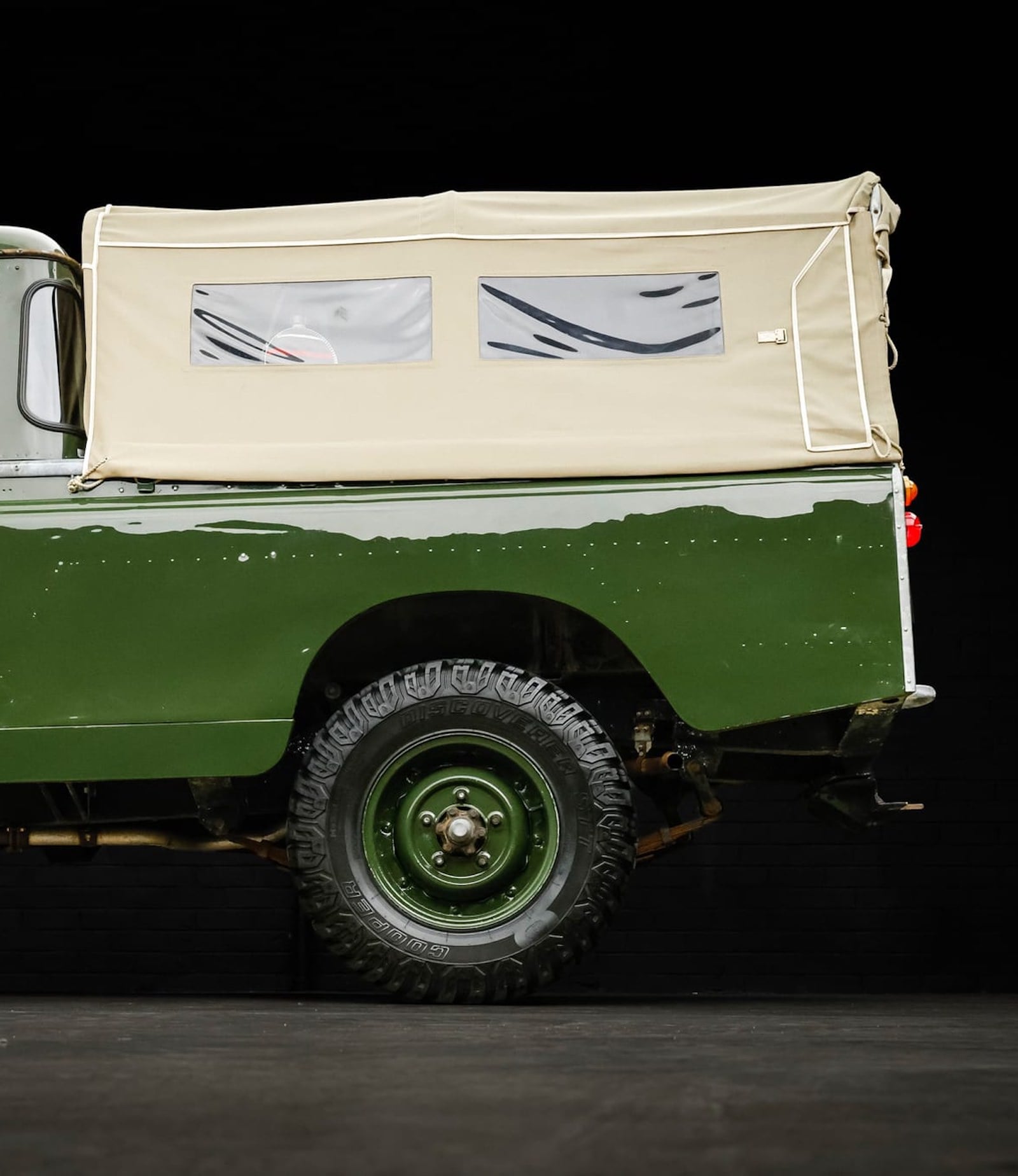
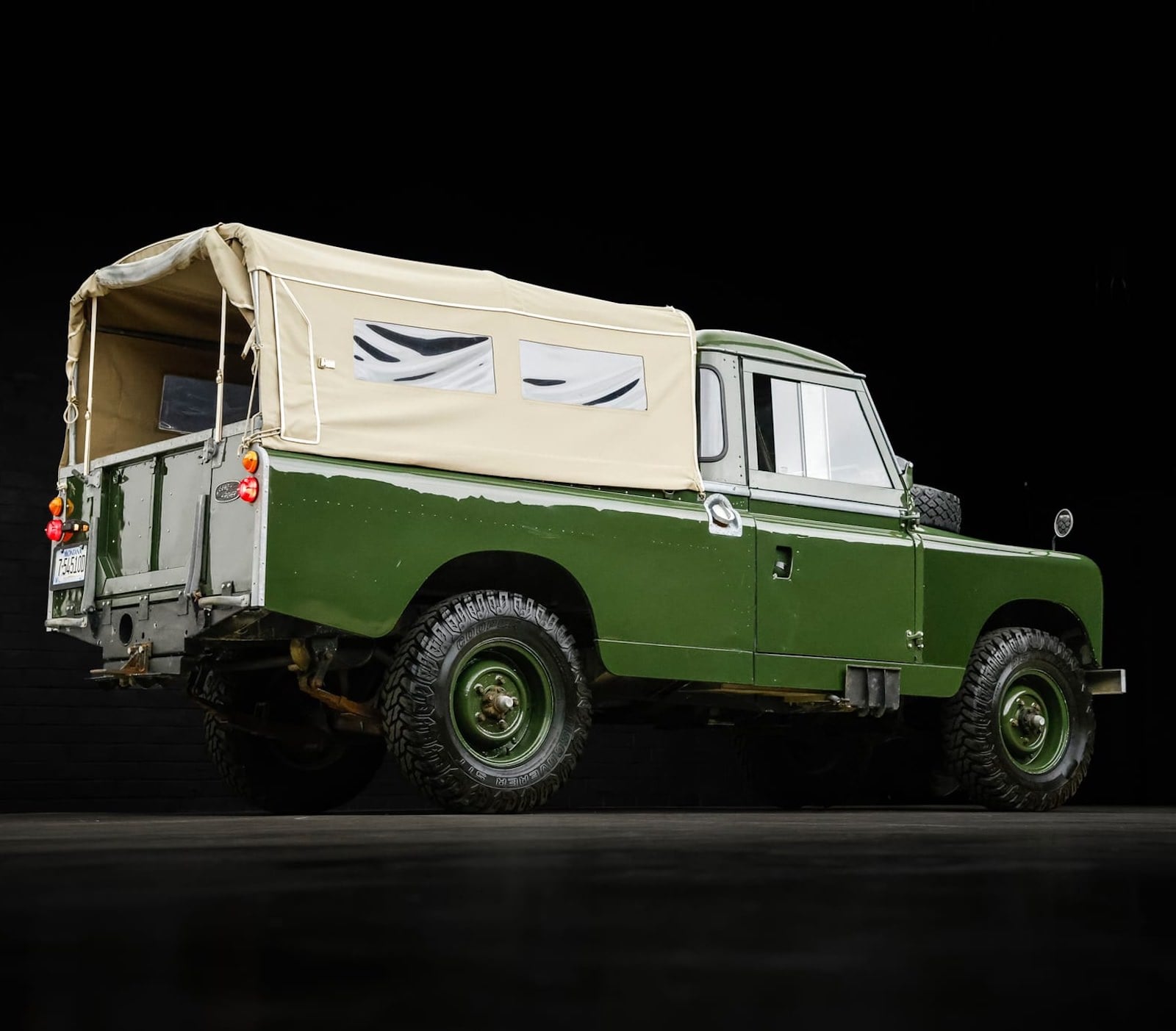
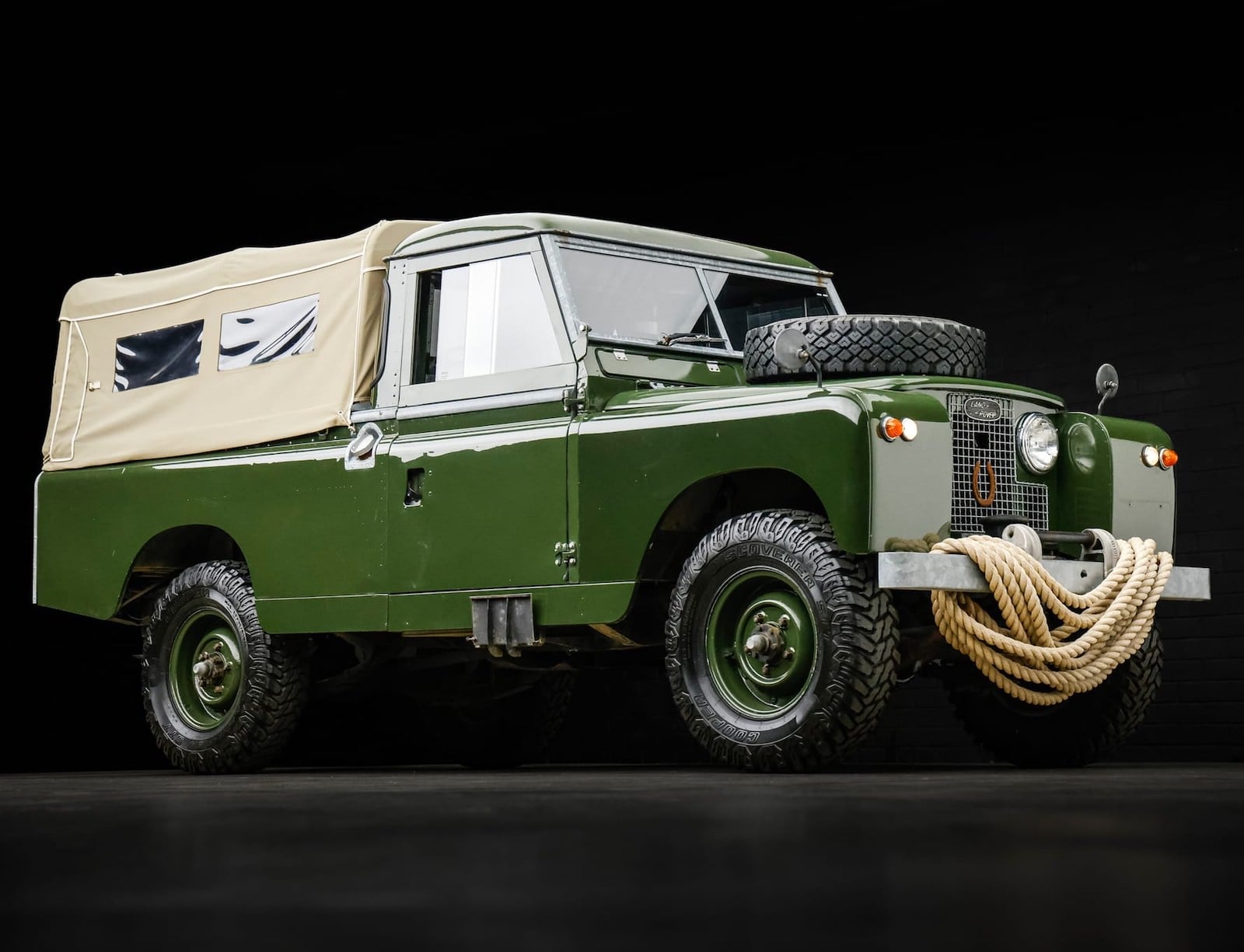
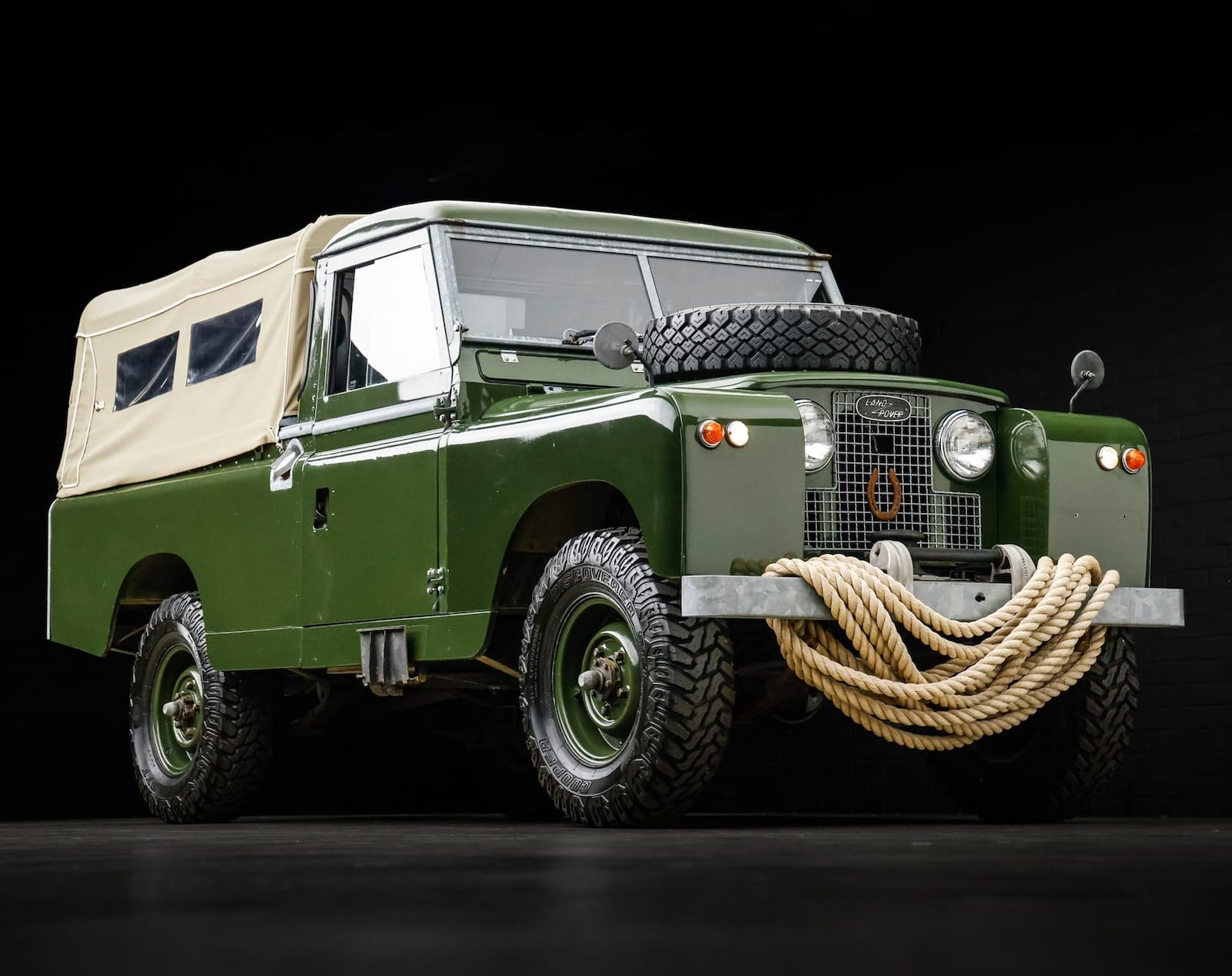
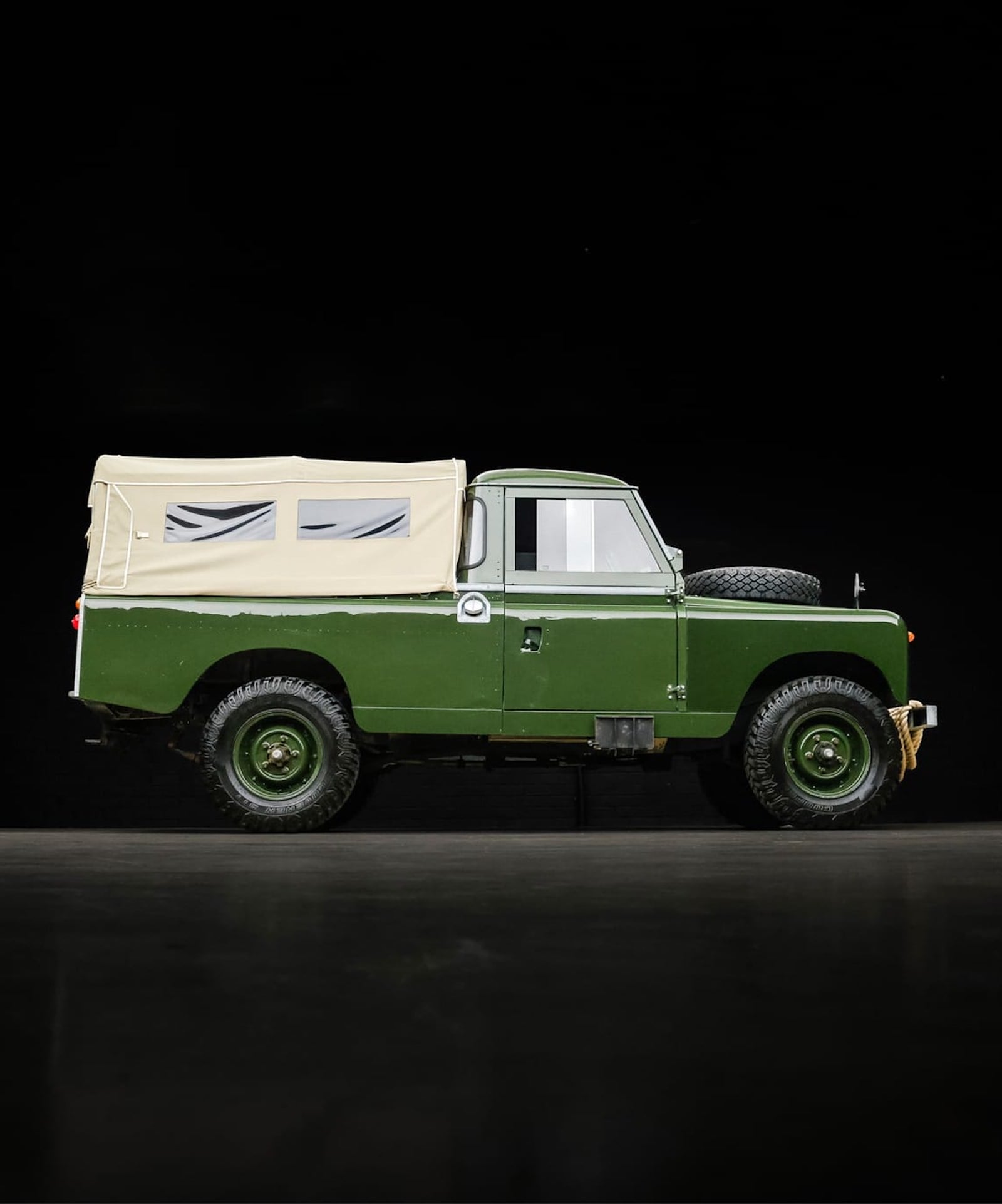
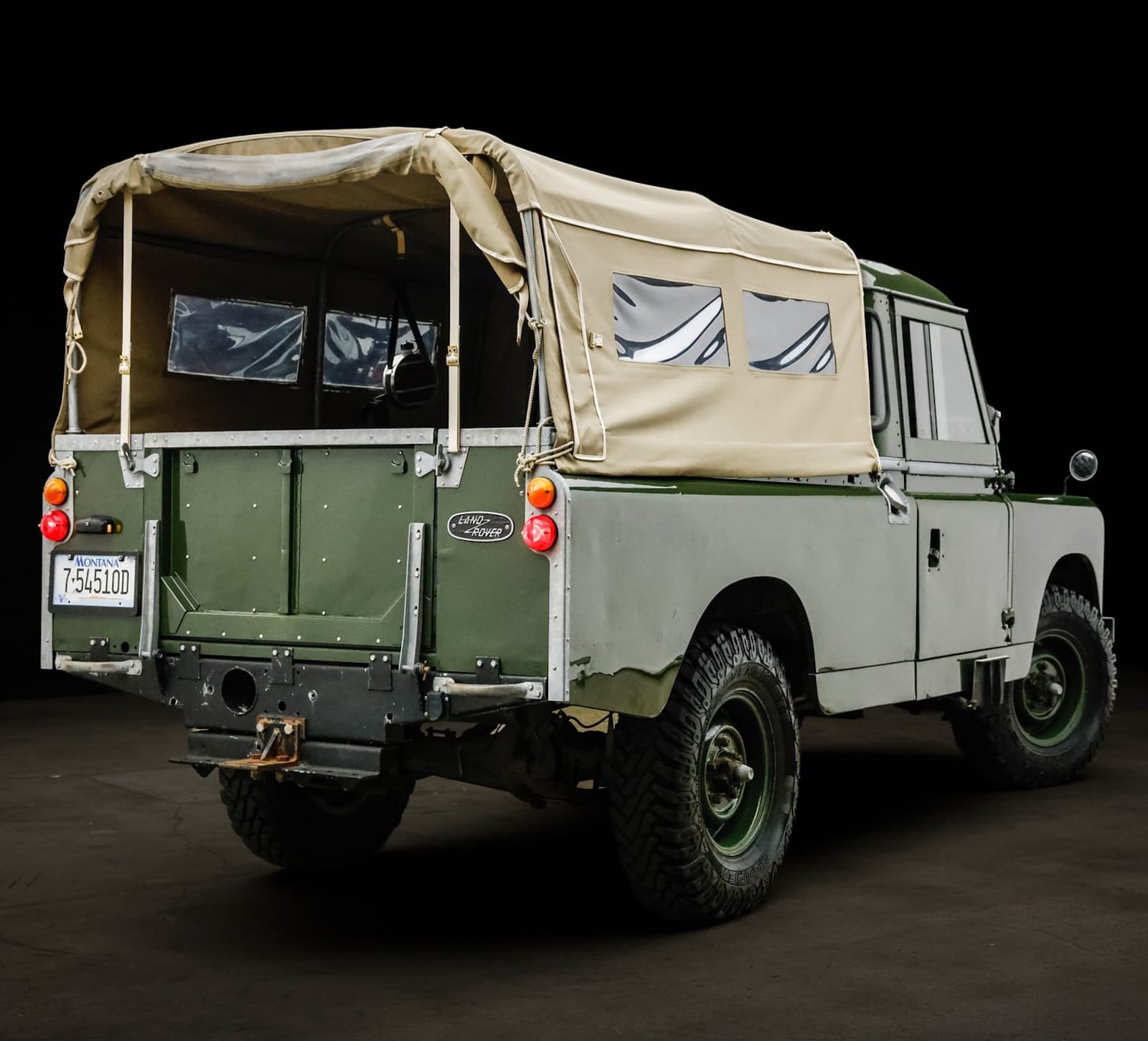
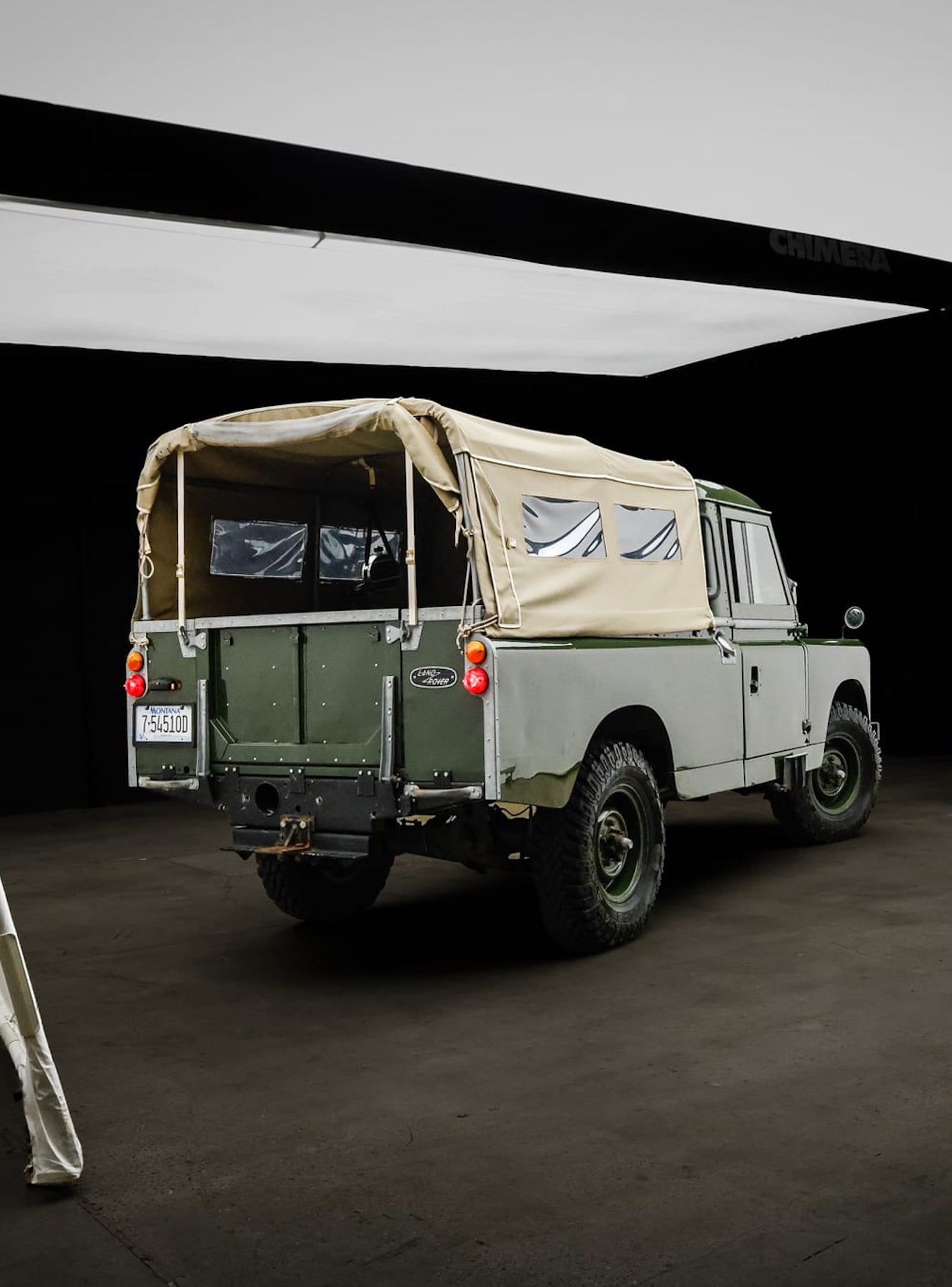
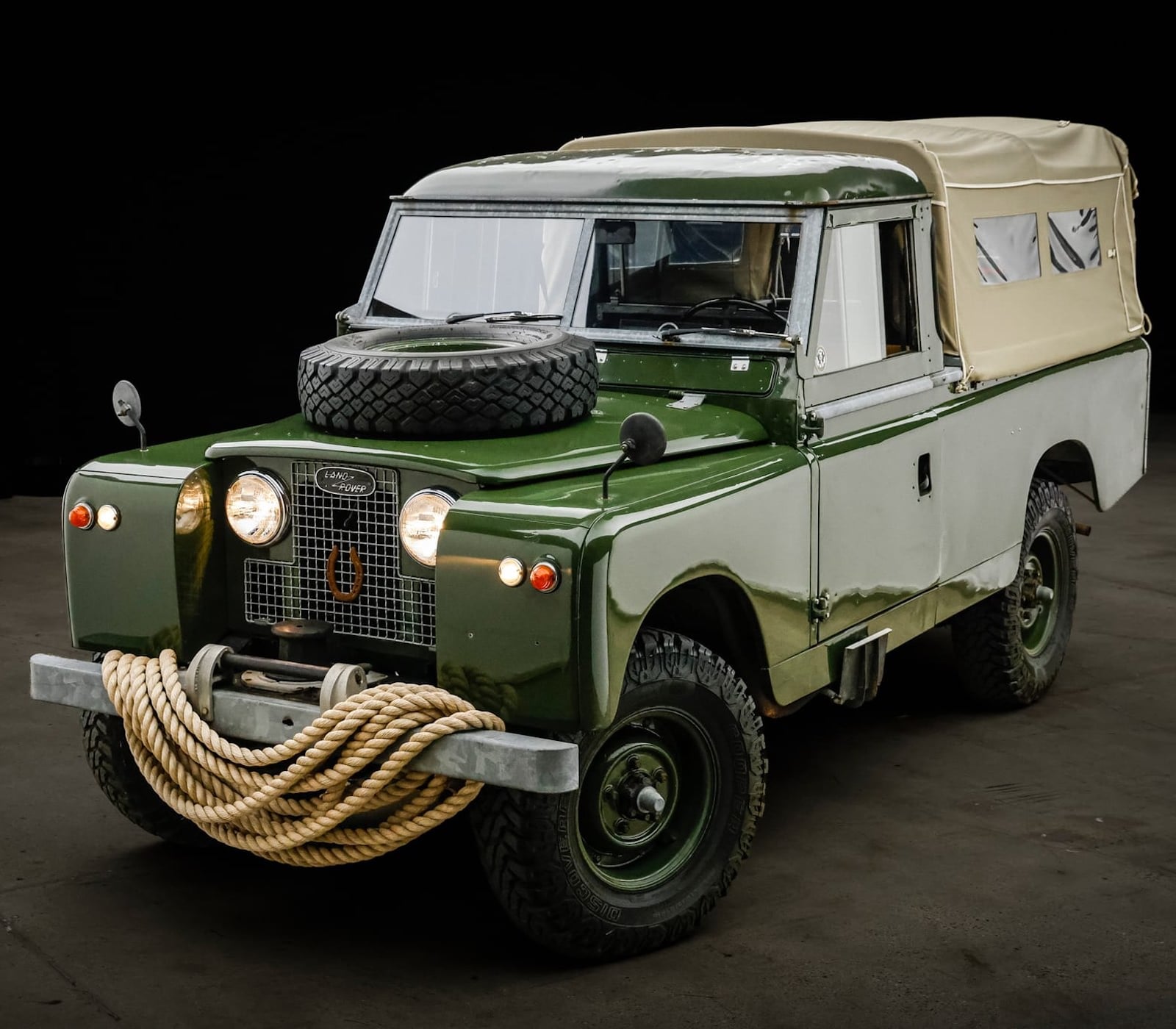
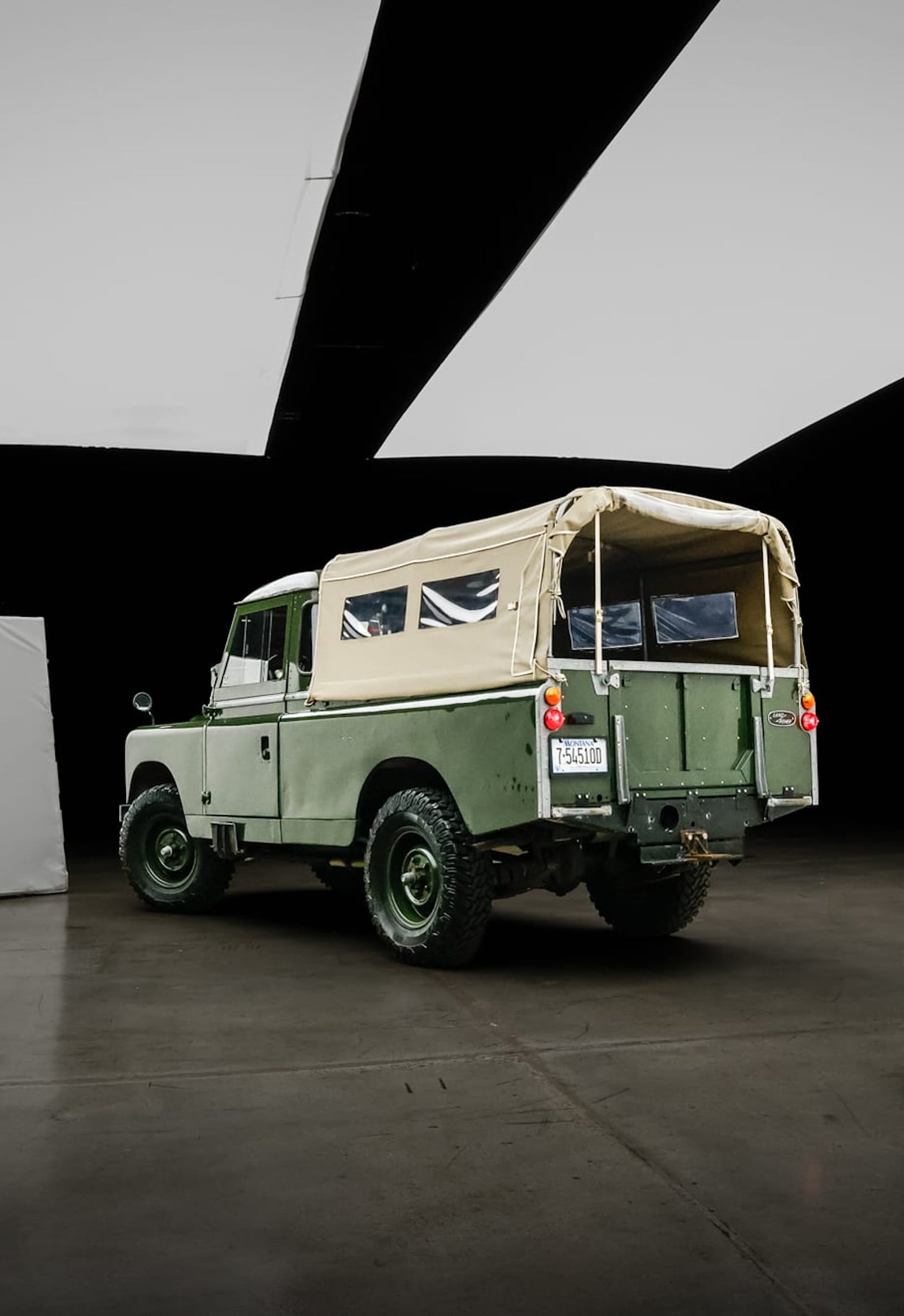
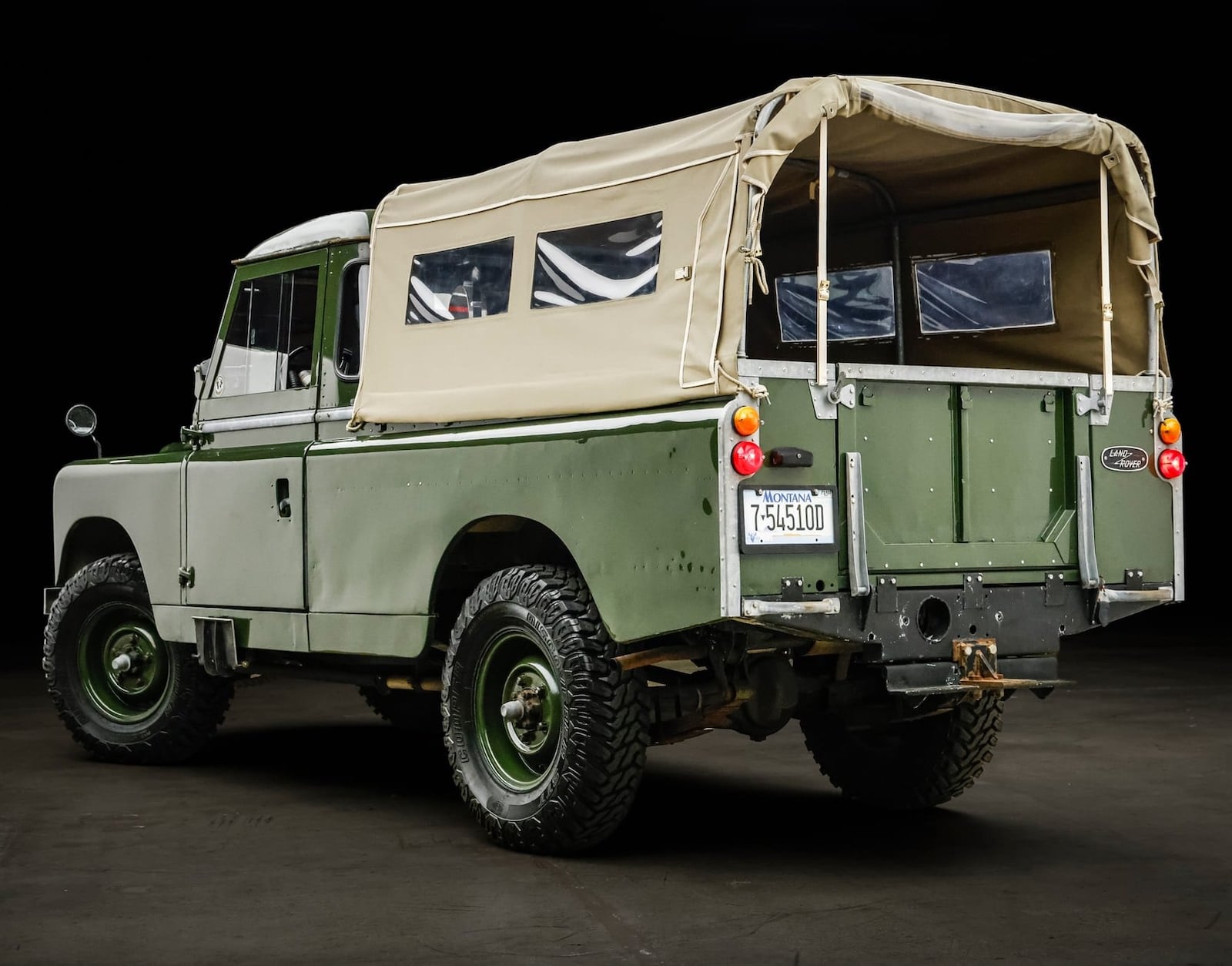
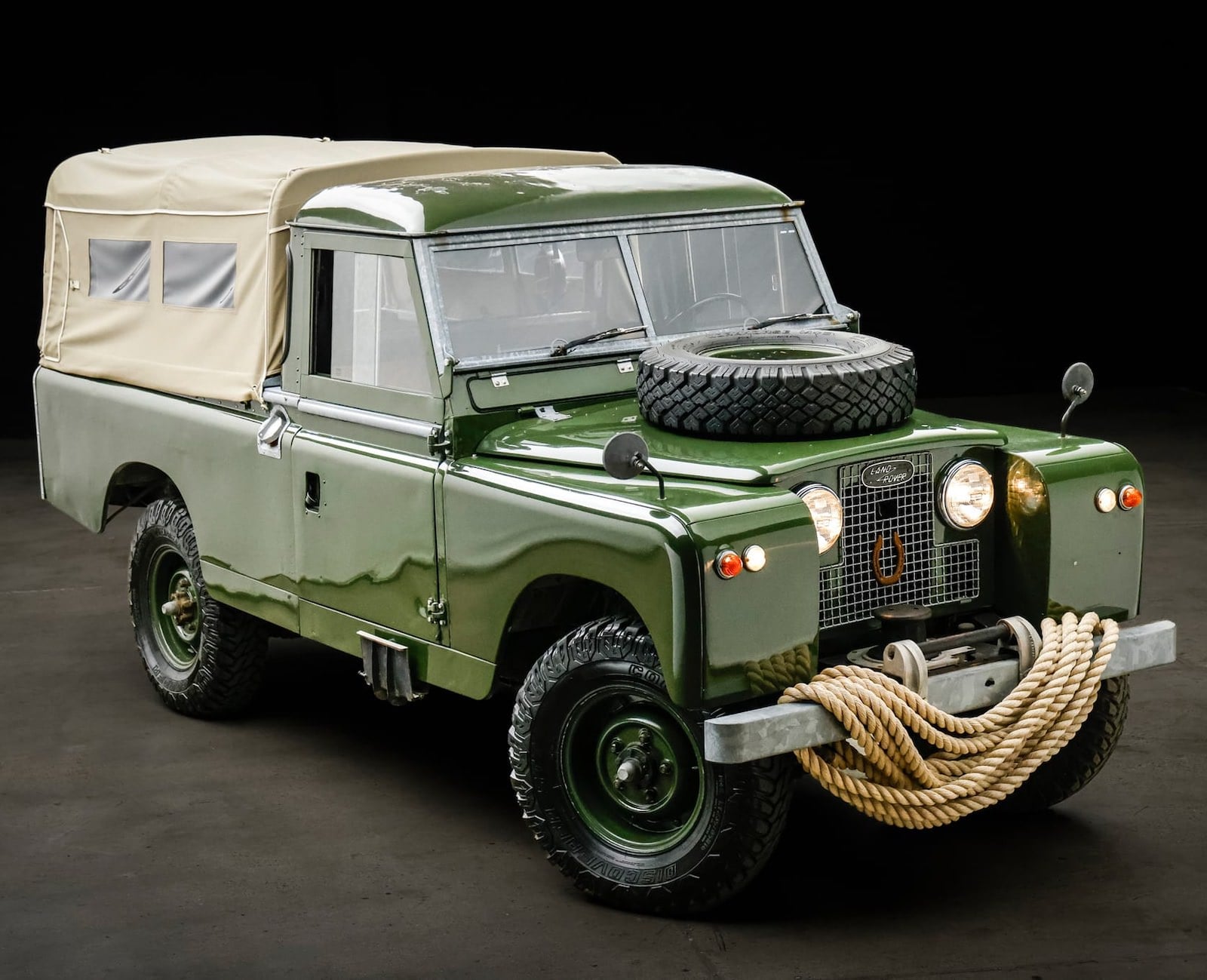
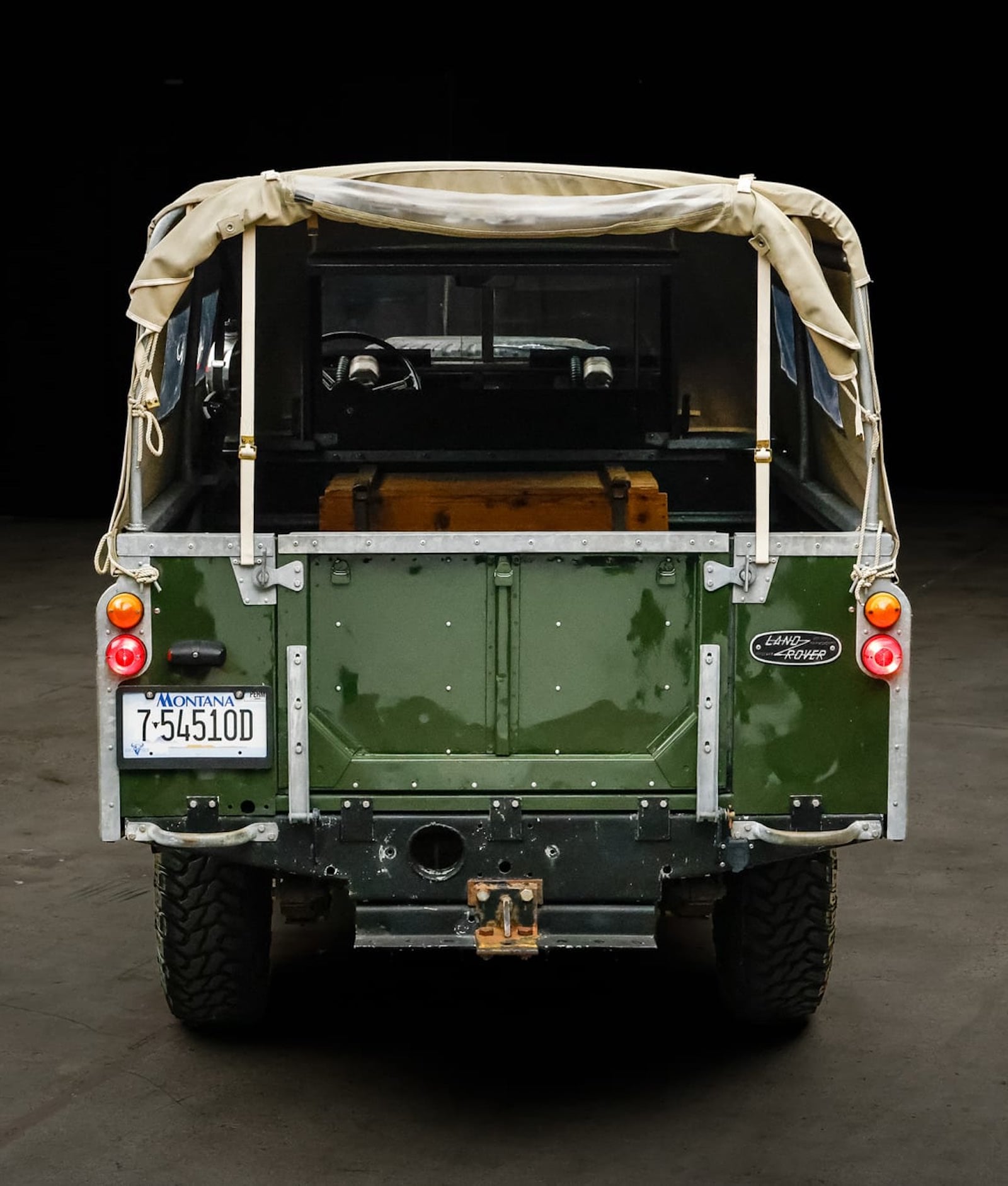
This is a 1959 Land Rover Series II that formerly belonged to Daniel Craig and his wife Rachel Weisz. It’s the long wheelbase 109 model finished in Bronze Green, with a canvas top over the rear and a traditional rope winch up front.
This Series II has been refurbished and it remains in correct factory-spec throughout, with the addition of an overdrive unit for improved cruising speeds, a rope winch, and an Exmoor Trim canvas cargo cover. It’s now for sale out of California.
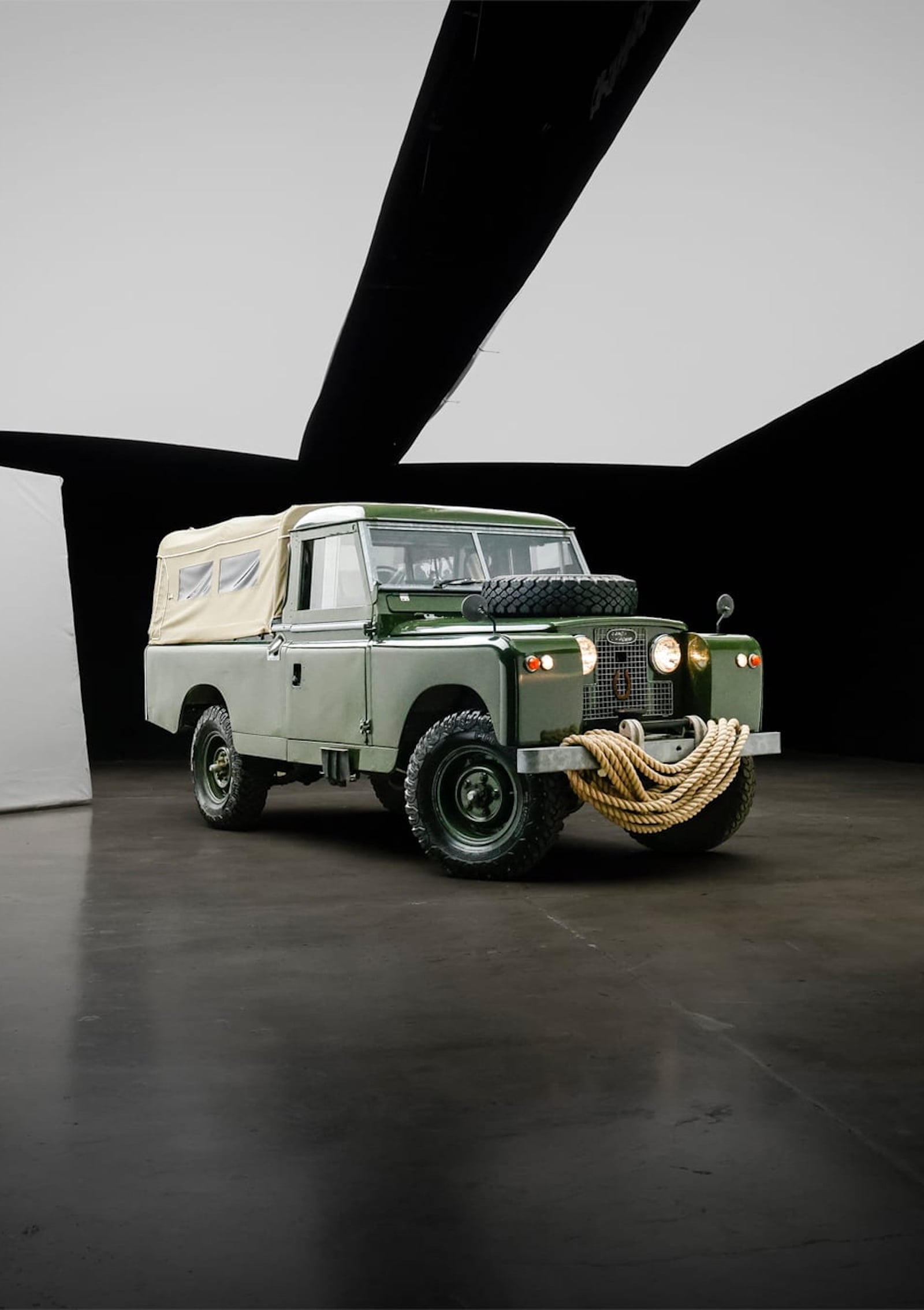
 This is a 1959 Land Rover Series II that formerly belonged to Daniel Craig and his wife Rachel Weisz. It’s the long wheelbase 109 model finished in Bronze Green, with a canvas top over the rear and traditional rope winch up front.
History Speedrun: The Land Rover Series II
When Rover released the Series II, or Series 2, to the press on April the 16th, 1958, the Land Rover was 10 years old and, perhaps unsurprisingly, no version of it had ever passed through a styling department. David Bache, who had joined Rover in 1954 as the company’s first stylist, gave the new model its curved “barrel side” waistline. He did this to cover the wider axle track underneath, and the shape it pioneered stayed on Solihull’s utilitarian vehicles all the way to the last Defender that rolled off the production line in 2016.
The earlier Land Rover that the Series II replaced had famously been improvised into existence – Maurice Wilks, Rover’s Chief Designer, used an army-surplus Willys Jeep on his farm in Anglesey, Wales and in 1947 he and his brother Spencer (coincidentally, also Rover’s Managing Director) decided the company should build something that combined the features of a Jeep and a tractor, for use by farmers.
The tale is legendary in Land Rover circles, the basic story goes that Wilks sketched the shape in the beach sand at Red Wharf Bay. The first prototype used a Jeep chassis, a Rover car engine, and a centrally mounted steering wheel and a power takeoff like a tractor – the production Series I debuted at the Amsterdam Motor Show on April the 30th, 1948.
Postwar steel rationing pushed Rover toward aluminum alloy body panels bolted to a steel box-section ladder chassis and a steel bulkhead, an architecture the marque kept in place for decades on all Series Land Rovers and on the later Defenders. Over 10 years the Series I grew from an 80 inch wheelbase and a 1.6 liter four-banger to a range of 88 inch and 109 inch models with a 2.0 liter petrol engine and, from 1957, an optional 2.0 liter diesel unit.
The Series II Arrives
The Series II Land Rover made its debut in 1958, it carried over those 88 inch and 109 inch wheelbase lengths but sat on wider track axles, which helped improve stability. Bache’s newly updated body design hid the extra width, added sill panels to cover the exposed chassis rails, and gave the truck cab curved side windows and a rounded roof.
The Series II Land Rover made its debut in 1958, it carried over those 88 inch and 109 inch wheelbase lengths but sat on wider track axles, which helped improve stability. Bache’s newly updated body design hid the extra width, added sill panels to cover the exposed chassis rails, and gave the truck cab curved side windows and a rounded roof.
Under the hood was a new 2,286cc four-cylinder petrol engine rated at 77 bhp at 4,250 rpm, against 52 bhp for the outgoing 2.0 liter. The short-wheelbase model waited until September of 1958 for the new engine, using up remaining stock of the old 1,997cc unit. Diesel buyers got nothing new. The carried-over 2,052 cc unit made 51 bhp and 87 lb ft, it was famously slow, but it did get better fuel economy.
The roll out of upgrades between the two Series was deliberately unhurried in the interest of not introducing new parts that may be unreliable. The fuse box, much of the wiring, and the junction box were still Series I parts, and turn indicators remained an optional extra. The Series I 107 station wagon stayed on sale after the rest of the range switched over, holding the fort until the Series II 109 station wagon arrived later in 1958.
Variants + The Road To The Series IIA
Both wheelbases came as pickups, soft tops, hardtops, and station wagons. The 88 inch wagon was available from launch, and the long-wheelbase Series II wagon seated up to 10, albeit not that comfortably. A 12 seat version followed in 1962 under the Series IIA, exploiting UK tax rules that classified a 12 seater as a bus and exempted it from Purchase Tax. That left the biggest Land Rover cheaper to buy than smaller ones.
Demand held strong through the model’s entire run – the 250,000th Land Rover was built in 1959, and roughly 110,000 Series IIs were made before the Series IIA took over in September of 1961.
The IIA’s key headline improvement was a new 2,286cc diesel, redesigned along the lines of the petrol engine, with cooling-system revisions for the petrol and a new chassis-numbering system. Series II numbers ran to nine digits beginning with 1, with the build year as the fourth digit, IIA numbers ran to eight digits beginning with 2.
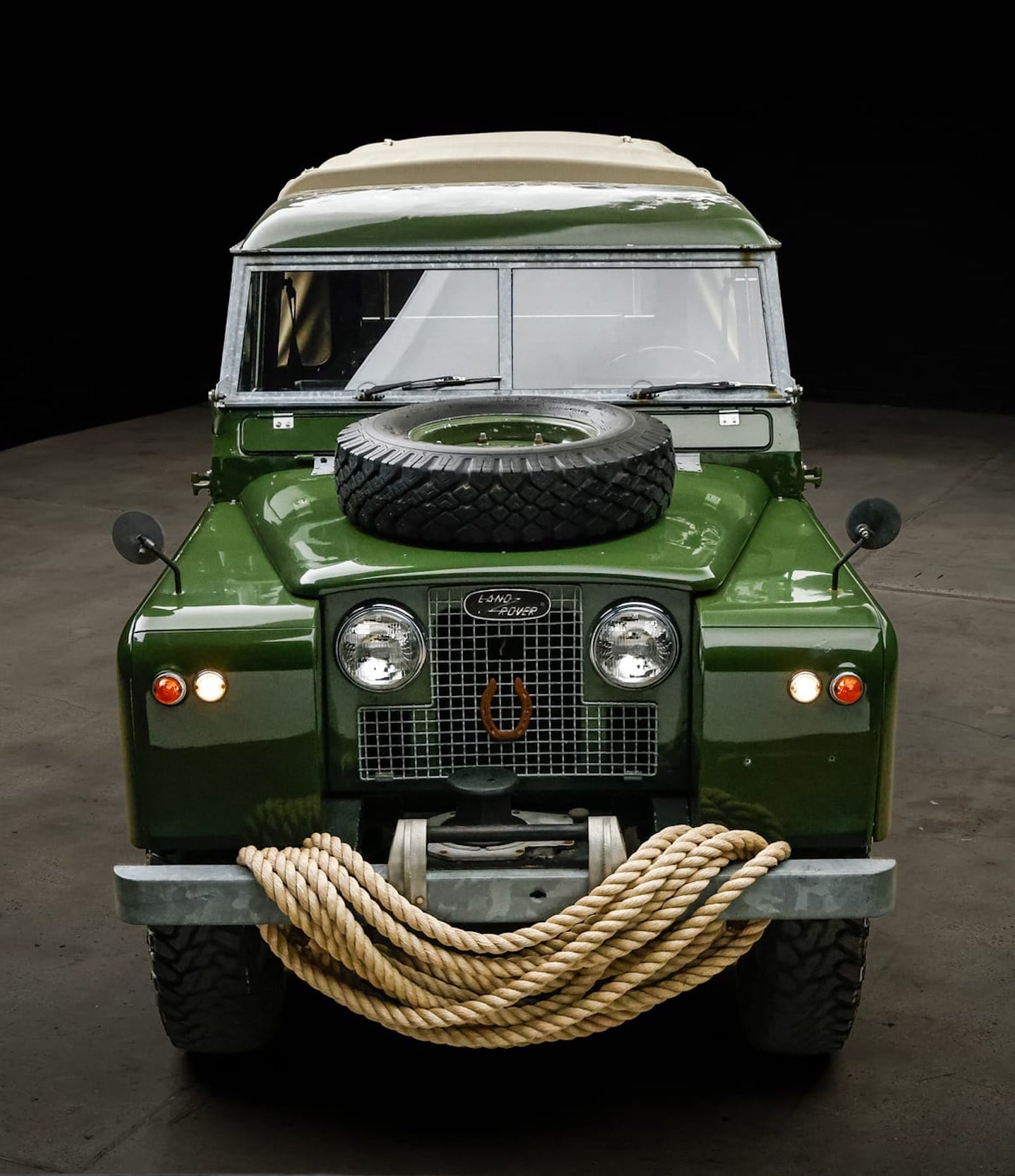
This Series II has been beautifully refurbished and it remains in correct factory-spec throughout, with the addition of an overdrive unit for improved cruising speeds, a rope winch, and an Exmoor Trim canvas roof cover in the rear. It’s now for sale out of California.
A Land Rover Forward Control variant followed in 1962, using the 2.25 petrol and 75% of the standard 109 chassis parts, it proved woefully underpowered and top-heavy, and the improved Series IIB of 1966 answered with wider axles, a 110 inch wheelbase, and the option of a 2,625cc six. That six reached the standard 109 models in 1967, headlights moved out to the front wings in 1968 for export markets and 1969 at home, and the Series III replaced the IIA in 1971.
Original Series IIs are now far scarcer than IIAs, and values for both have risen substantially over the last few years, and somewhat unpredictably, they have now become fashionable – they’re considered a must-have item in some circles.
The Ex-Daniel Craig Land Rover Series 2 Shown Here
This 1959 Land Rover 109 Series II pickup was formerly owned by actors (and married couple) Daniel Craig and Rachel Weisz, and the sale includes a handwritten note from the couple confirming their ownership, along with a portrait signed by Craig.
The truck has been repainted in Bronze Green and fitted with an Exmoor Trim canvas roof cover, rope winch, bonnet-mounted spare wheel, side steps, fender-mounted mirrors, and 16-inch steel wheels wearing 235/85 Cooper Discoverer STT tires. The leaf springs were also recently rebuilt.
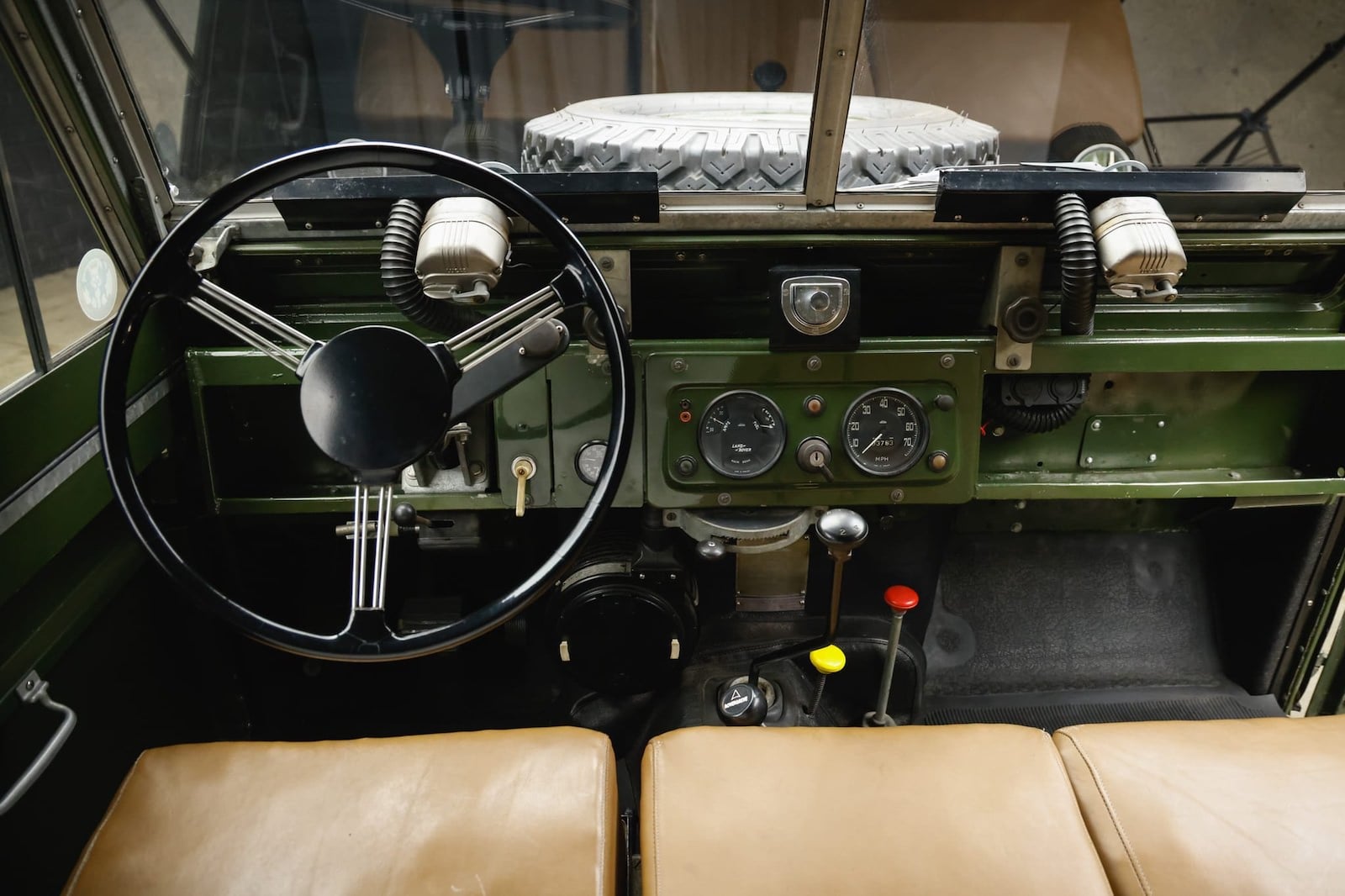
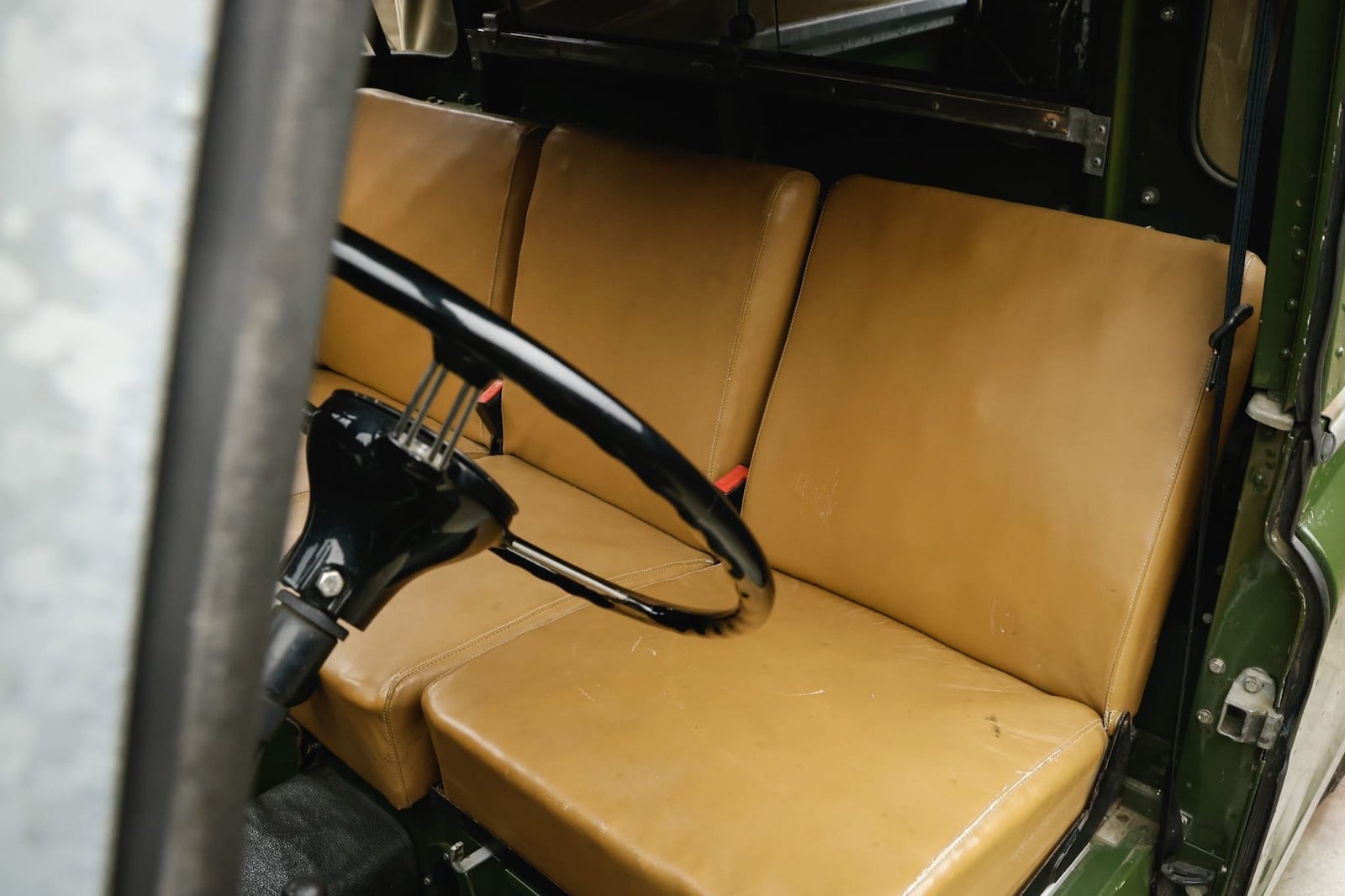
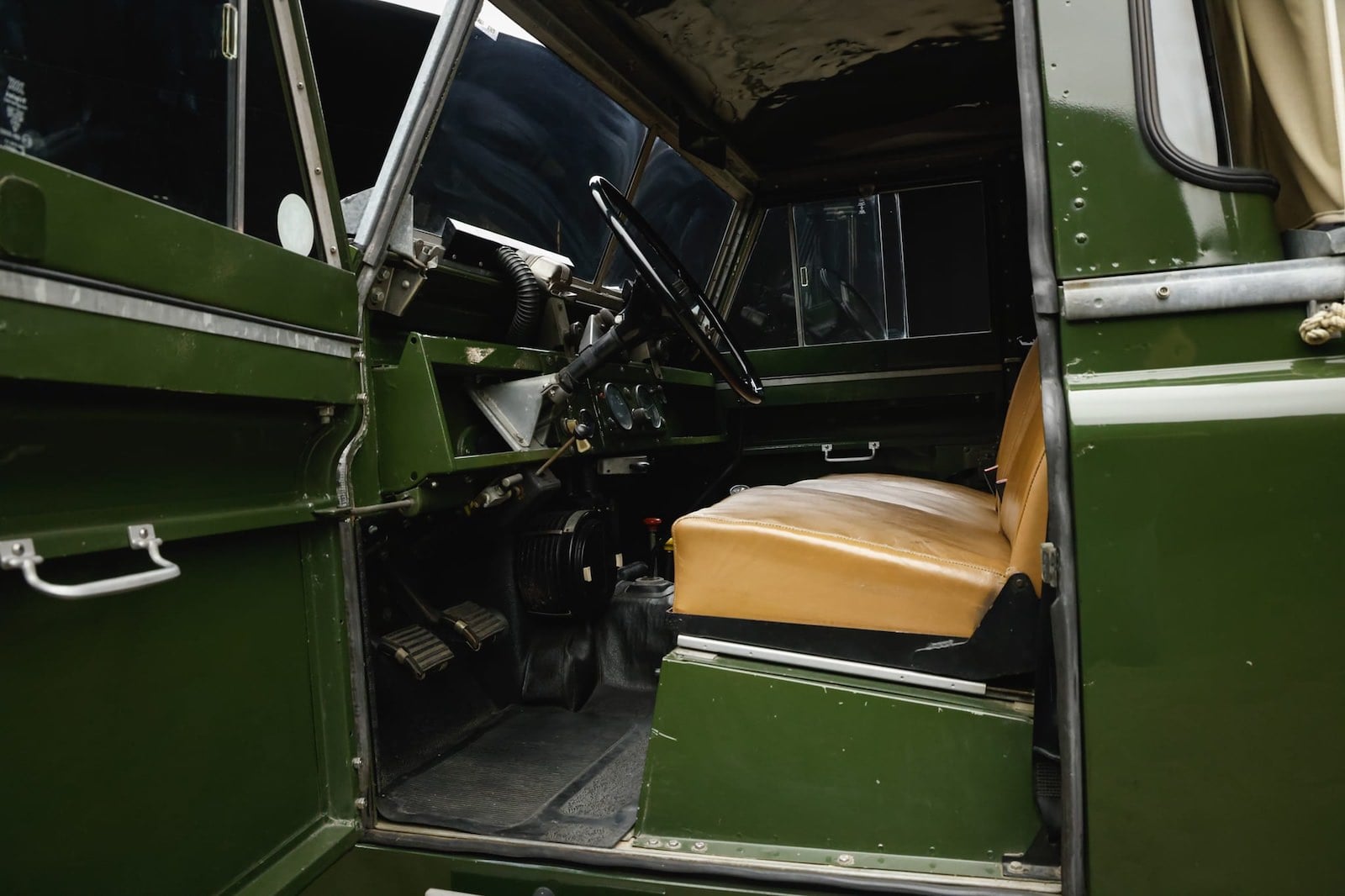
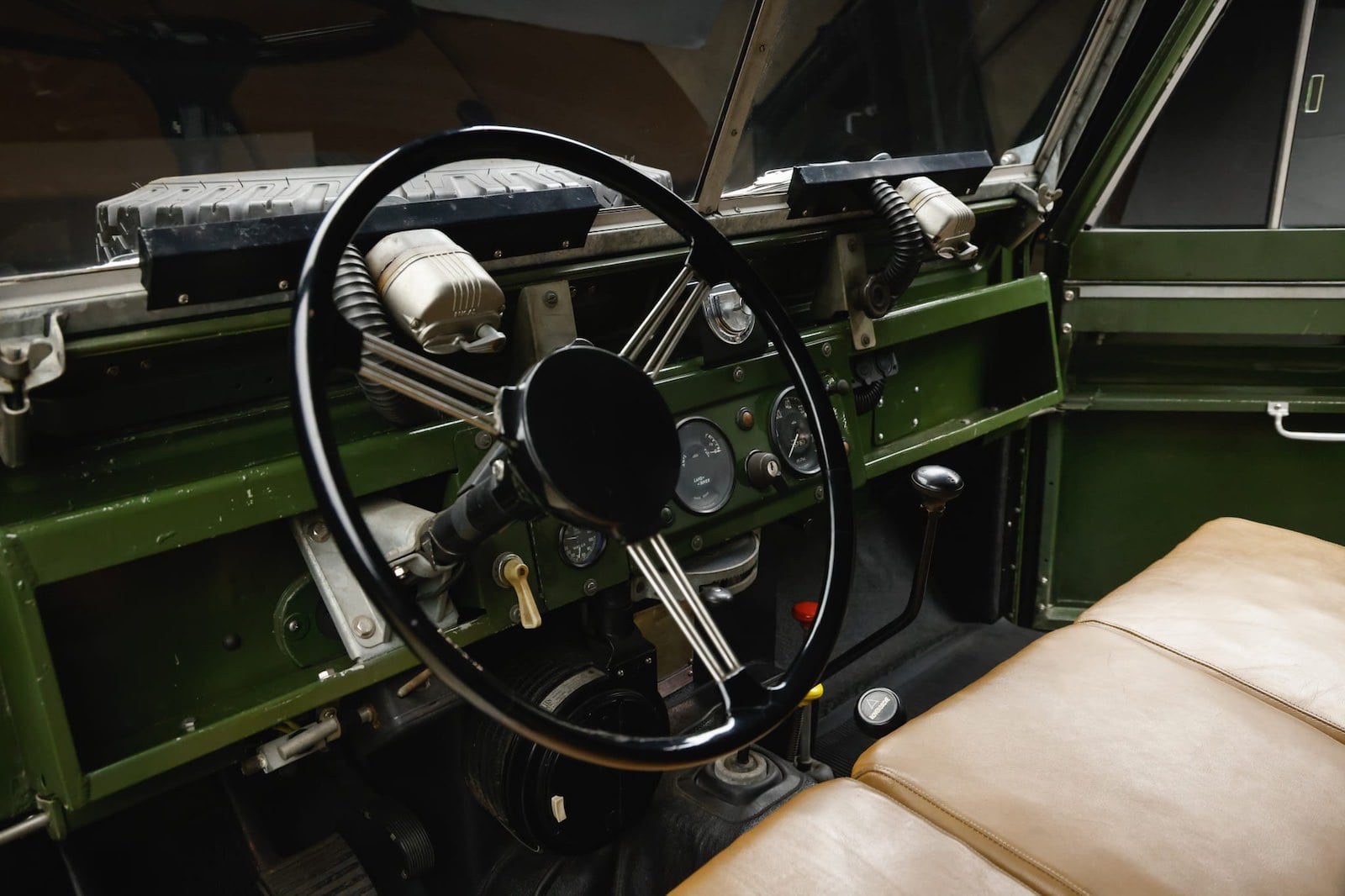
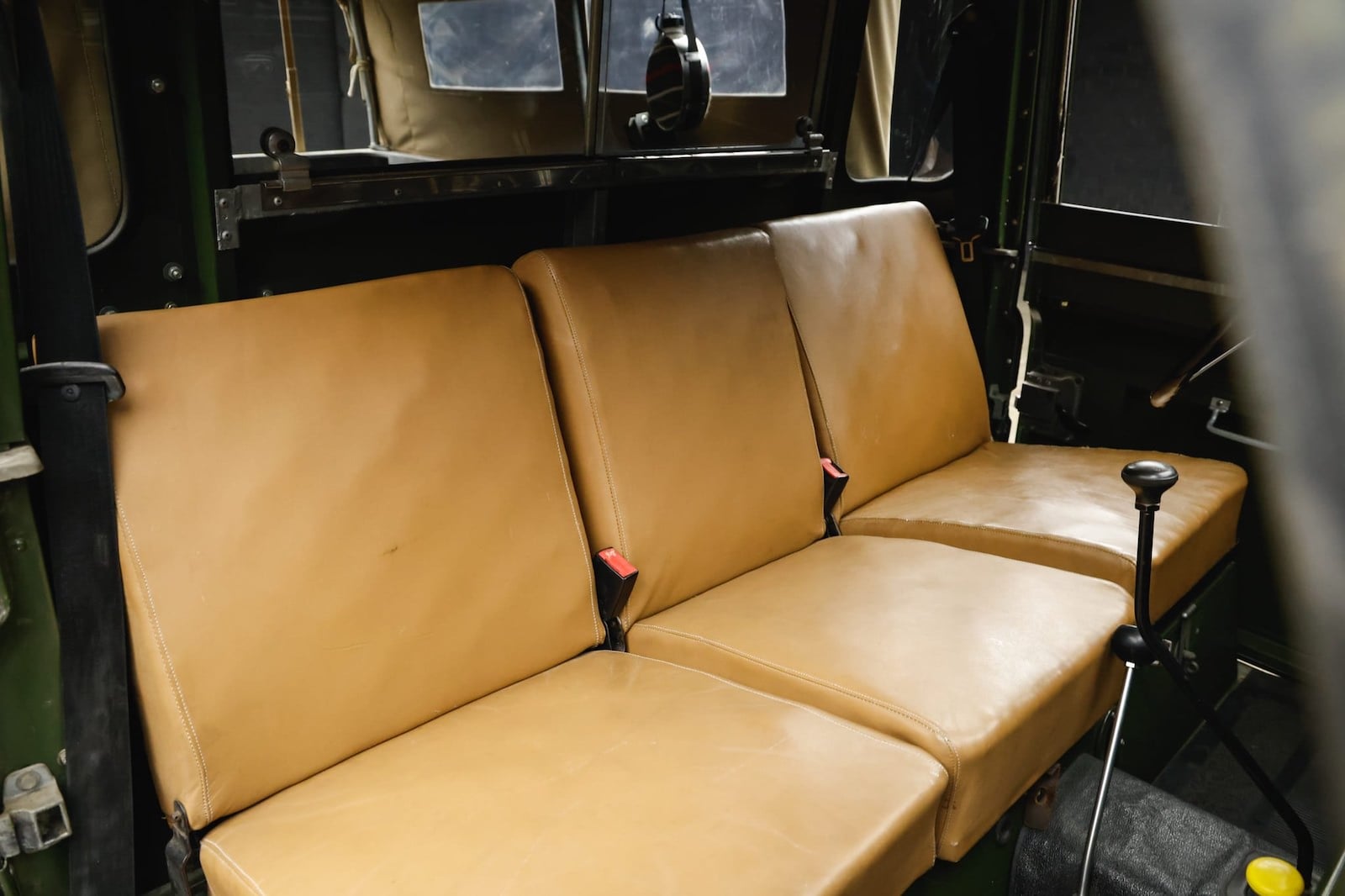
The cab has three individual seats reupholstered in tan vinyl, with three-point seatbelts for the outboard occupants, sliding windows, dash vents, and Jaeger instrumentation. Its odometer shows 3,800 miles, though the seller states that figure is inaccurate and the truck’s actual chassis mileage is unknown.
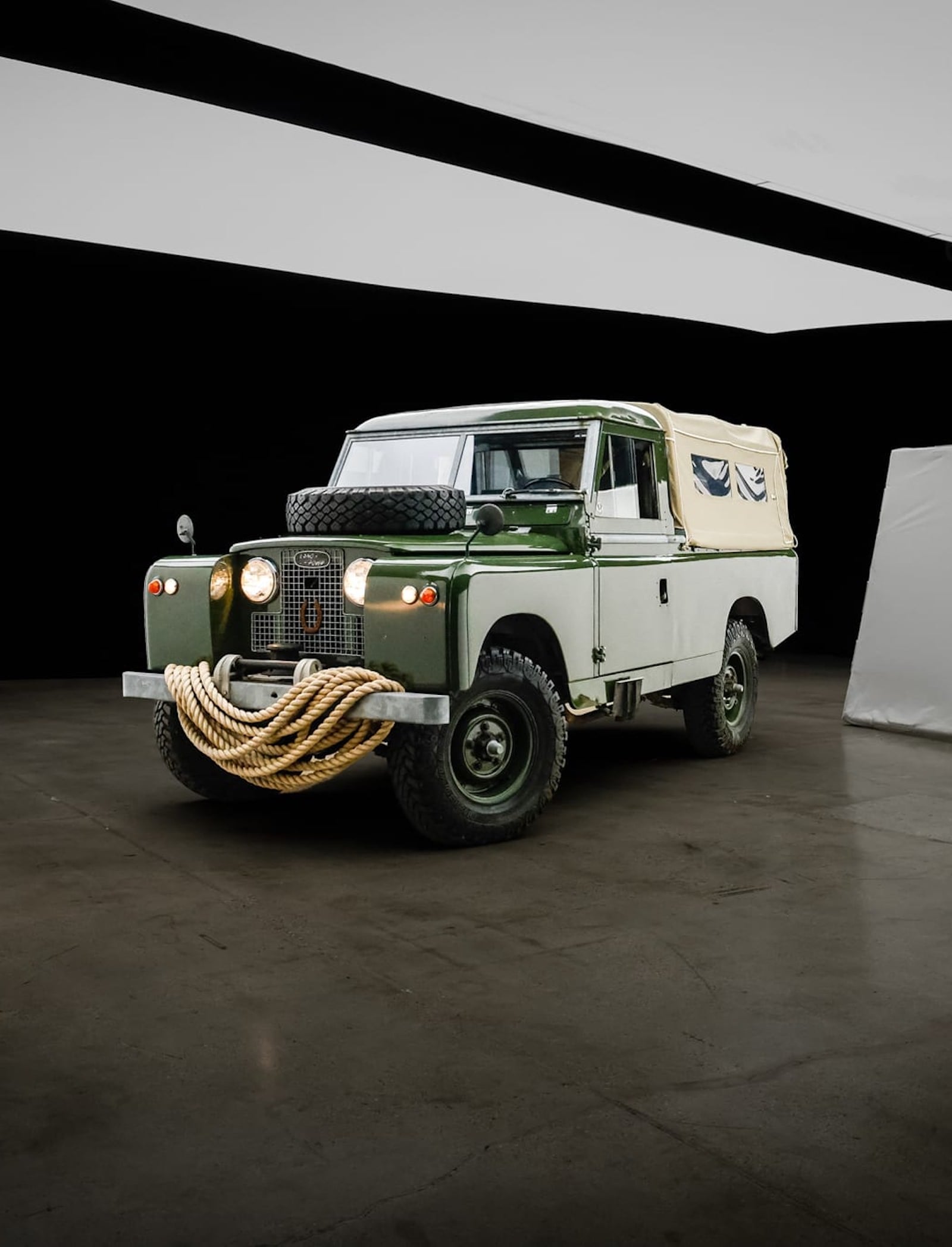
This 1959 Land Rover 109 Series II pickup was formerly owned by actors (and married couple) Daniel Craig and Rachel Weisz, and the sale includes a handwritten note from the couple confirming their ownership, along with a portrait signed by Craig.
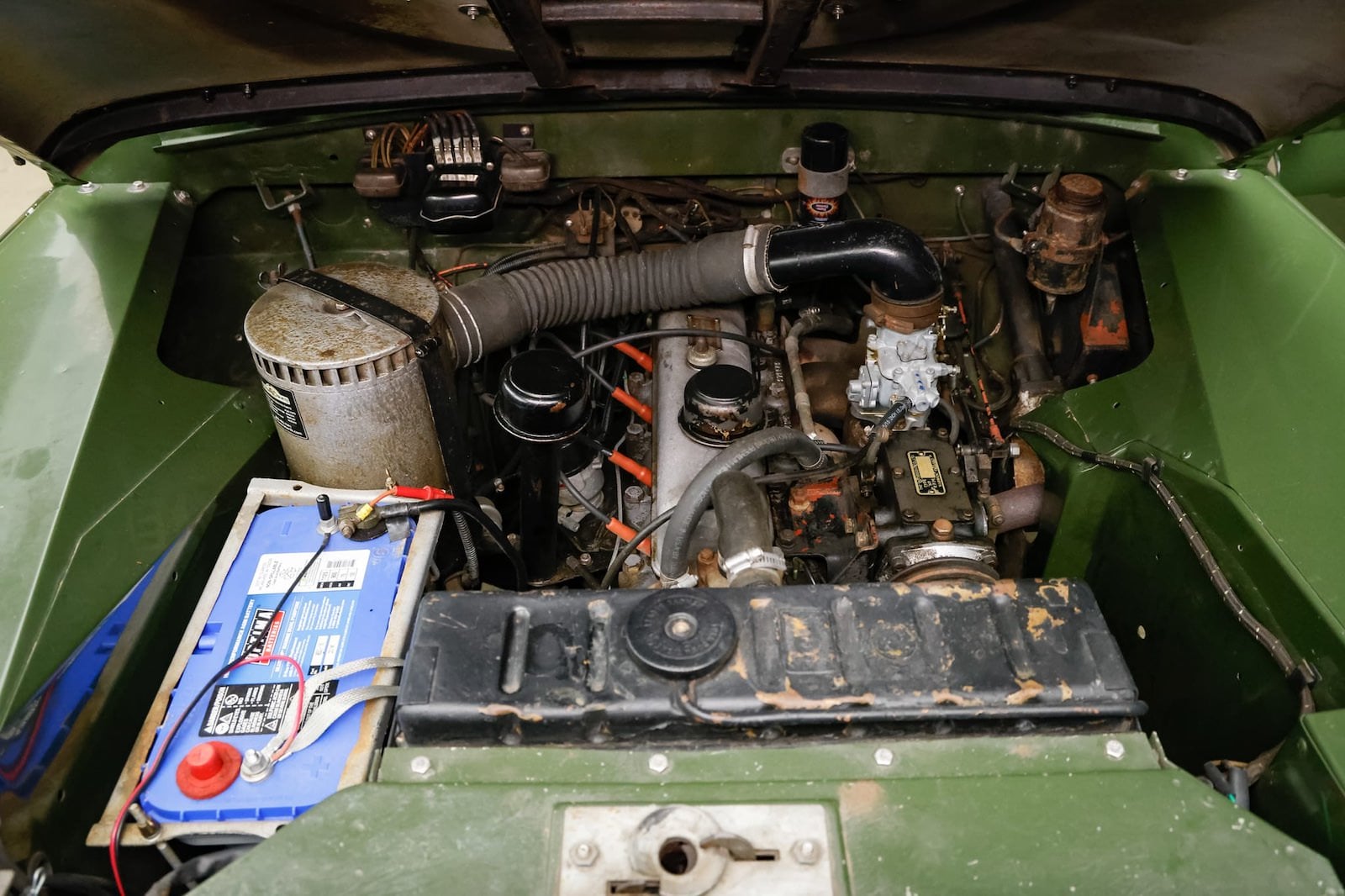
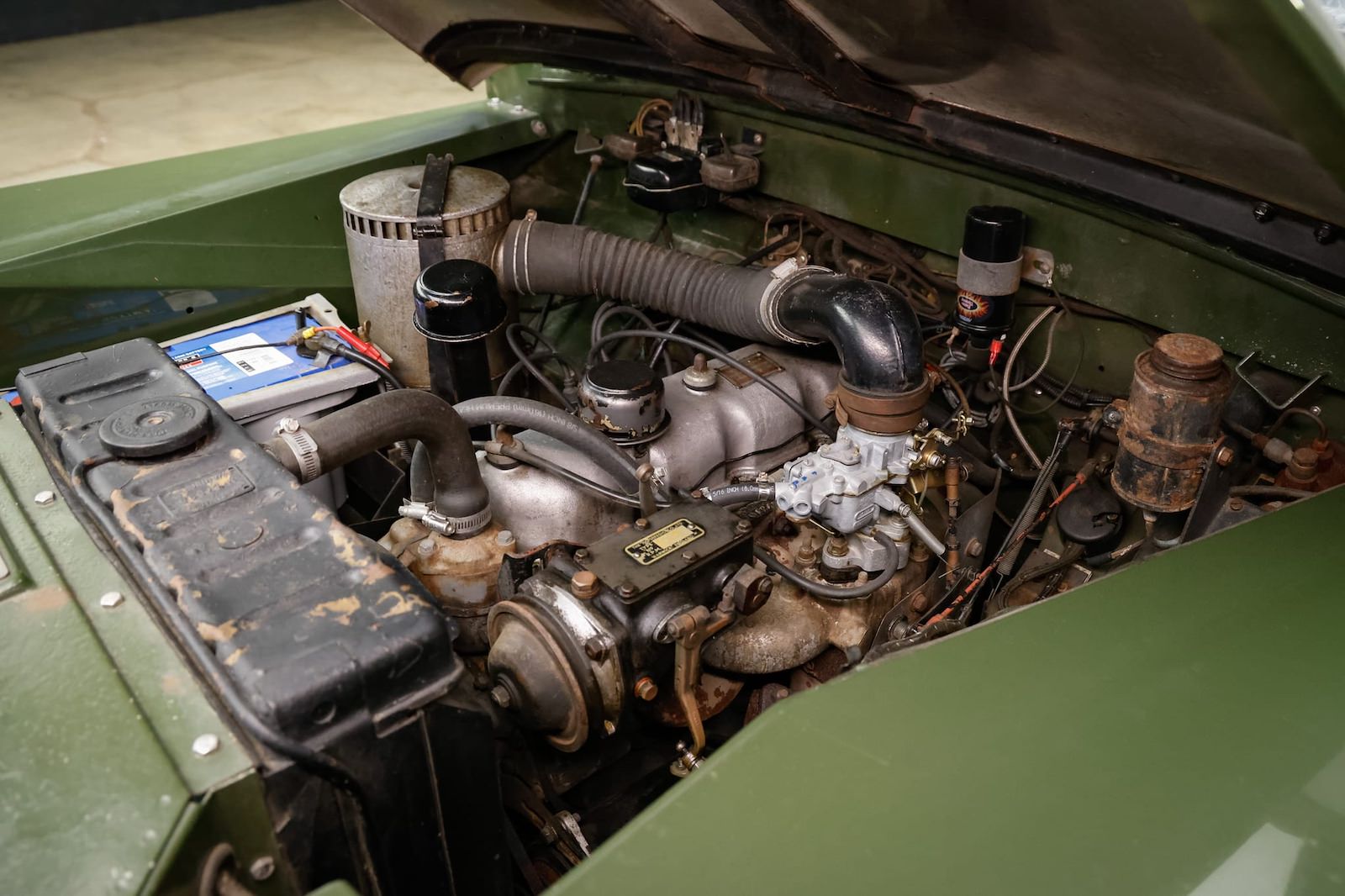
Power comes from a 2.25 liter inline-four, factory rated at 77 bhp and 124 lb ft of torque. Recent work included fitting a Carter carburetor and electronic ignition, replacing the generator, and renewing various engine seals, the removed Solex carburetor and the original ignition parts are included. The engine drives through a 4-speed manual gearbox, dual-range transfer case, and a floor-shifted RoverDrive overdrive system.
It’s now being offered for sale out of Newbury Park, California with a Montana title and you can visit the listing here if you’d like to read more about it or register to bid.
Images courtesy of Bring a Trailer

Articles that Ben Branch has written have been covered on CNN, Popular Mechanics, Smithsonian Magazine, Road & Track Magazine, the official Pinterest blog, the official eBay Motors blog, BuzzFeed, Autoweek Magazine, Wired Magazine, Autoblog, Gear Patrol, Jalopnik, The Verge, and many more.
Silodrome was founded by Ben back in 2010, in the years since the site has grown to become a world leader in the alternative and vintage motoring sector, with well over a million monthly readers from around the world and many hundreds of thousands of followers on social media.