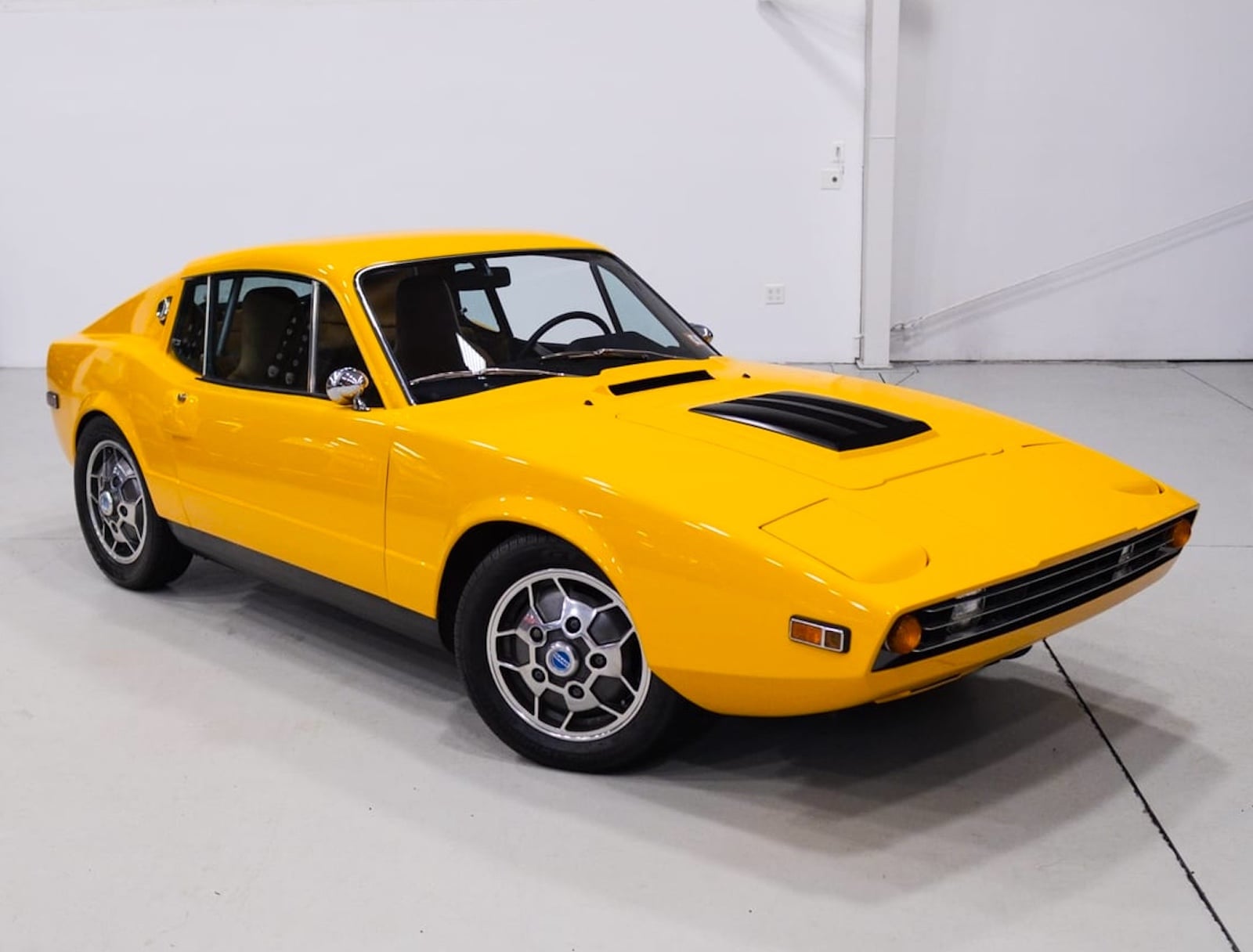
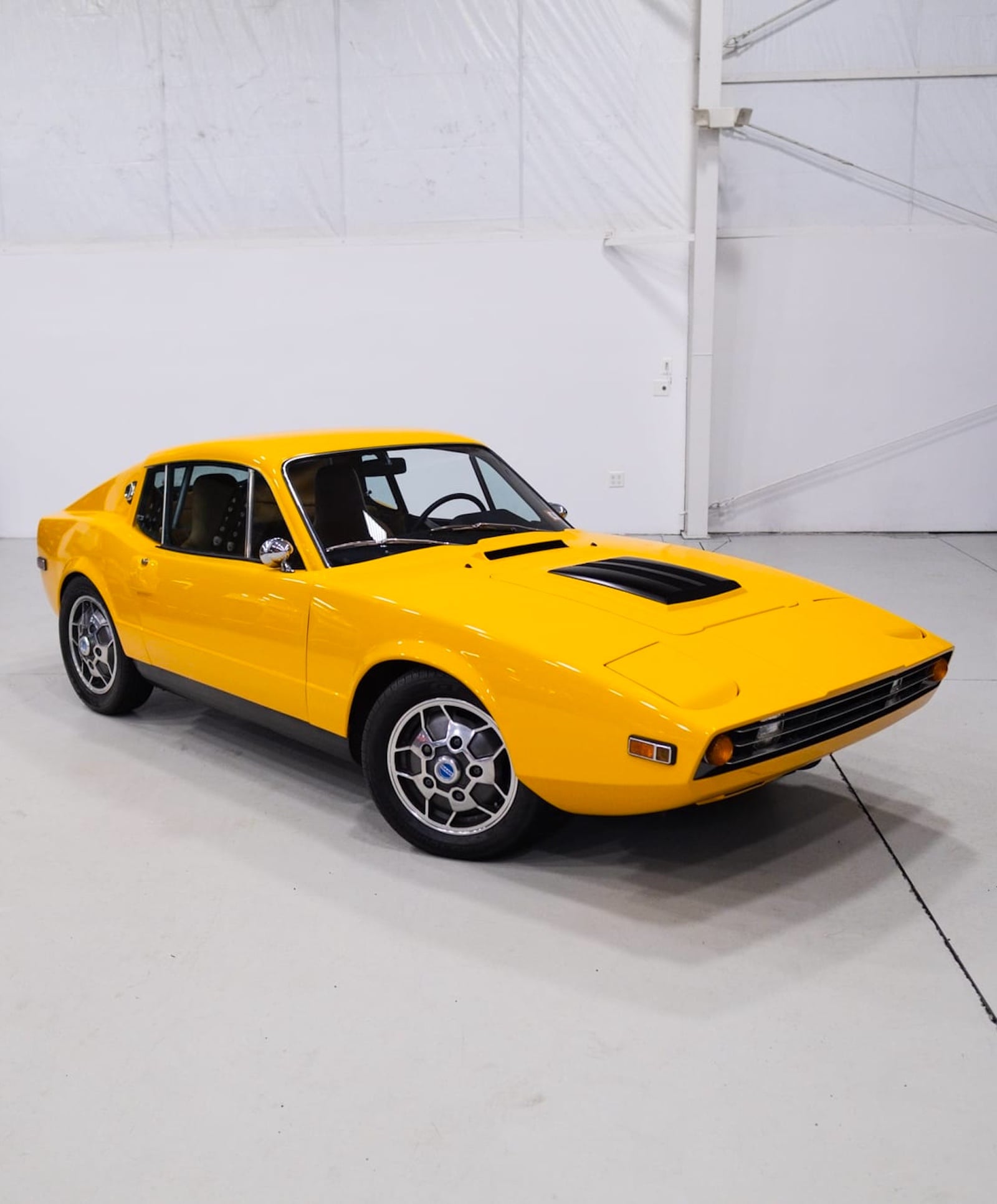
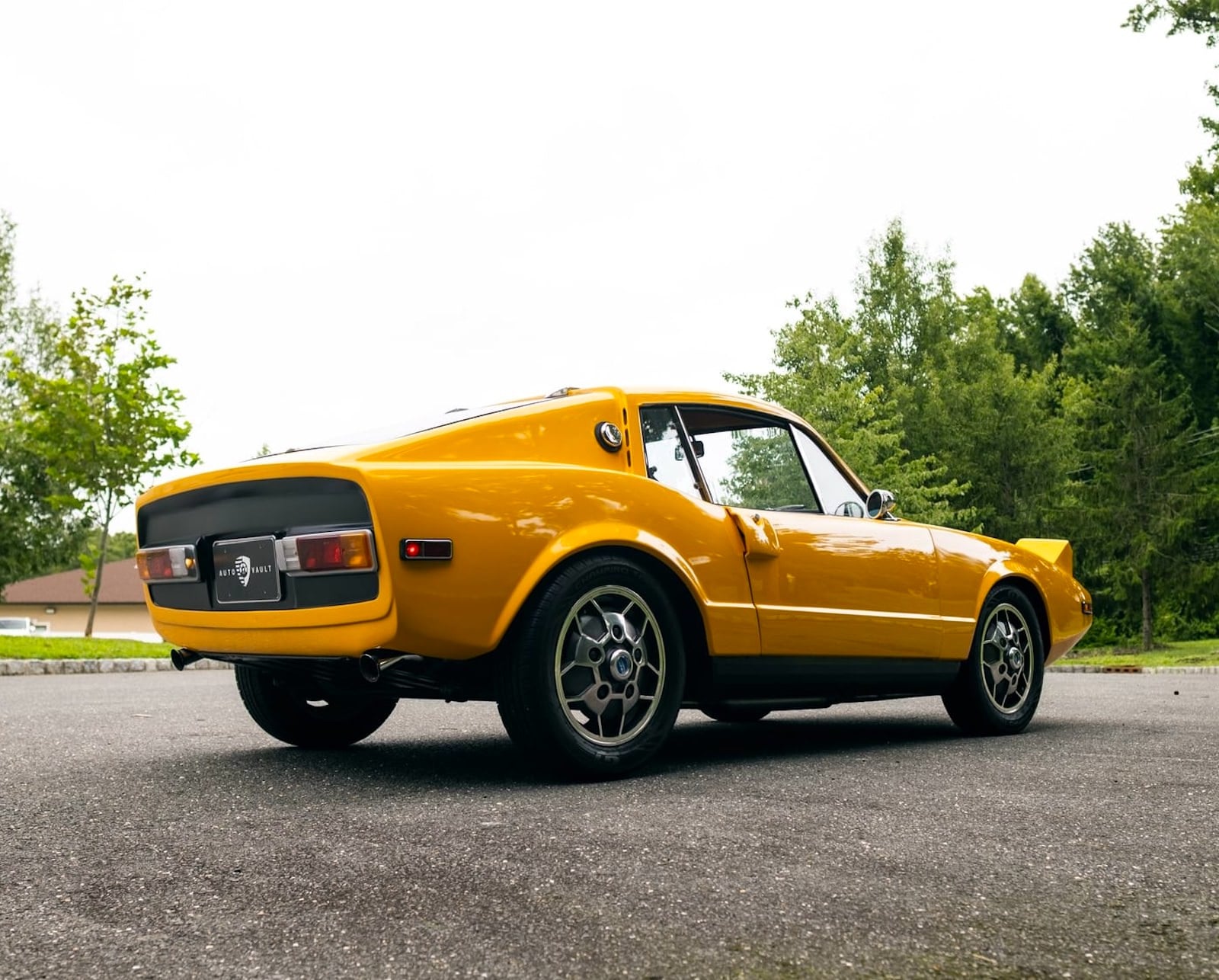
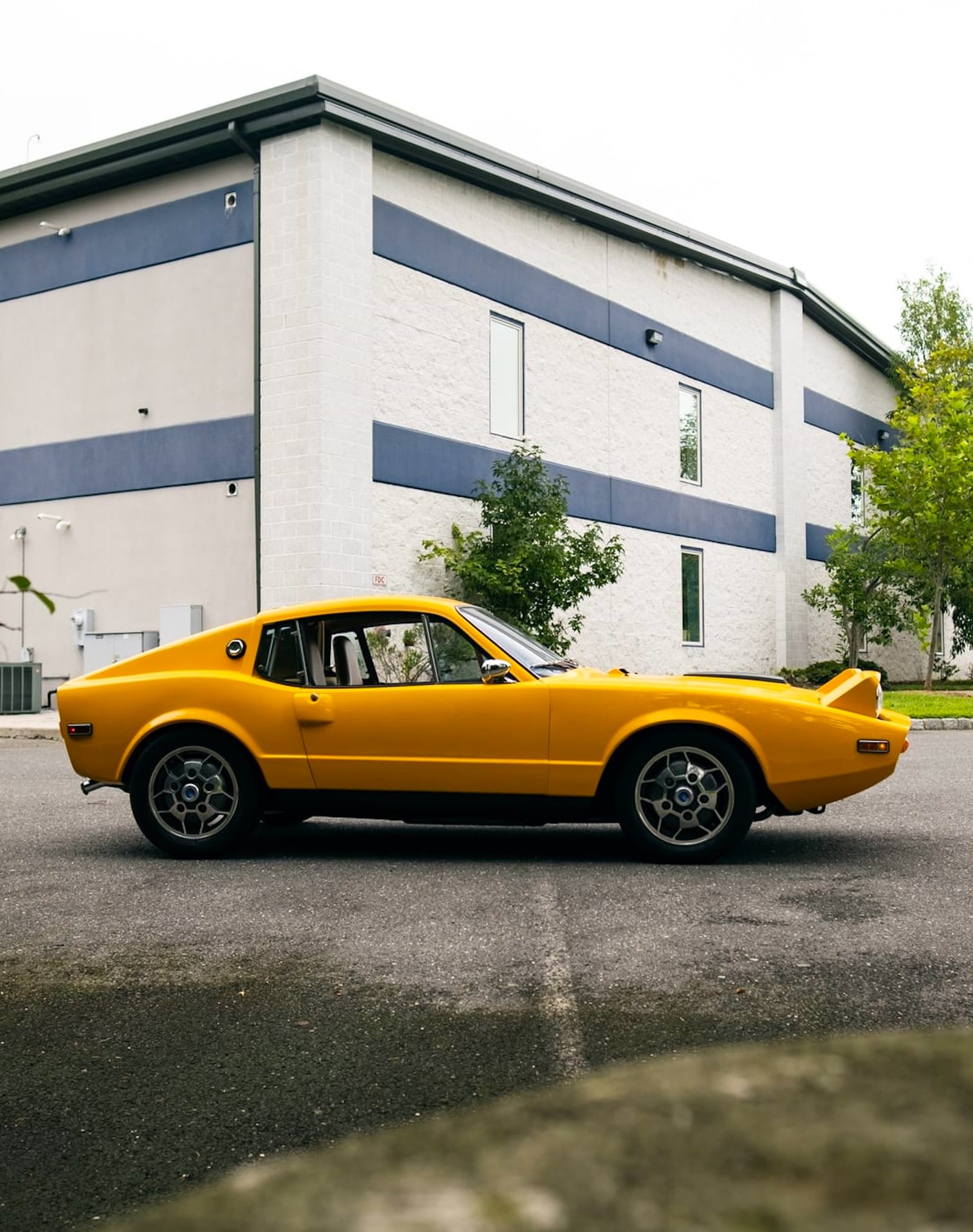
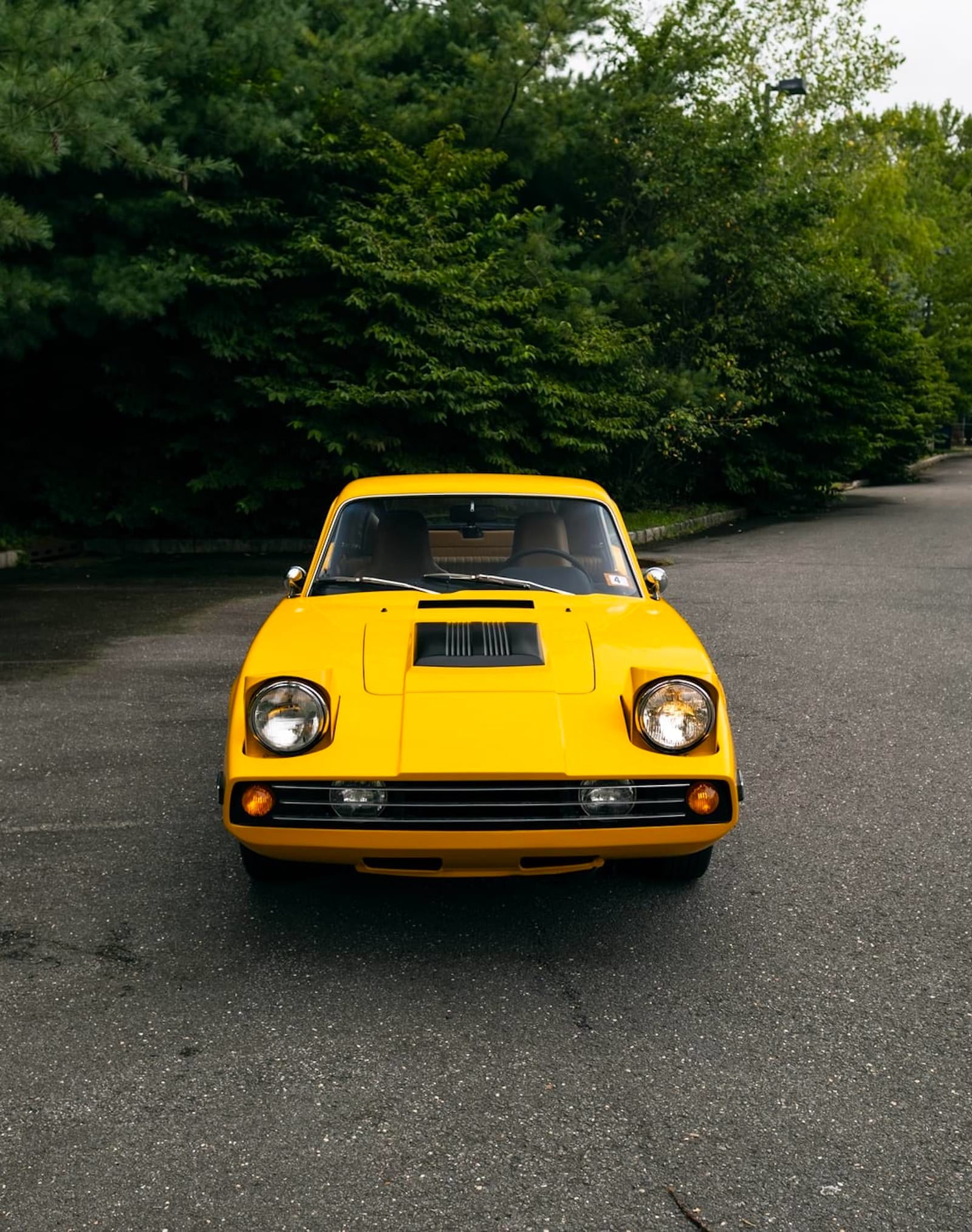
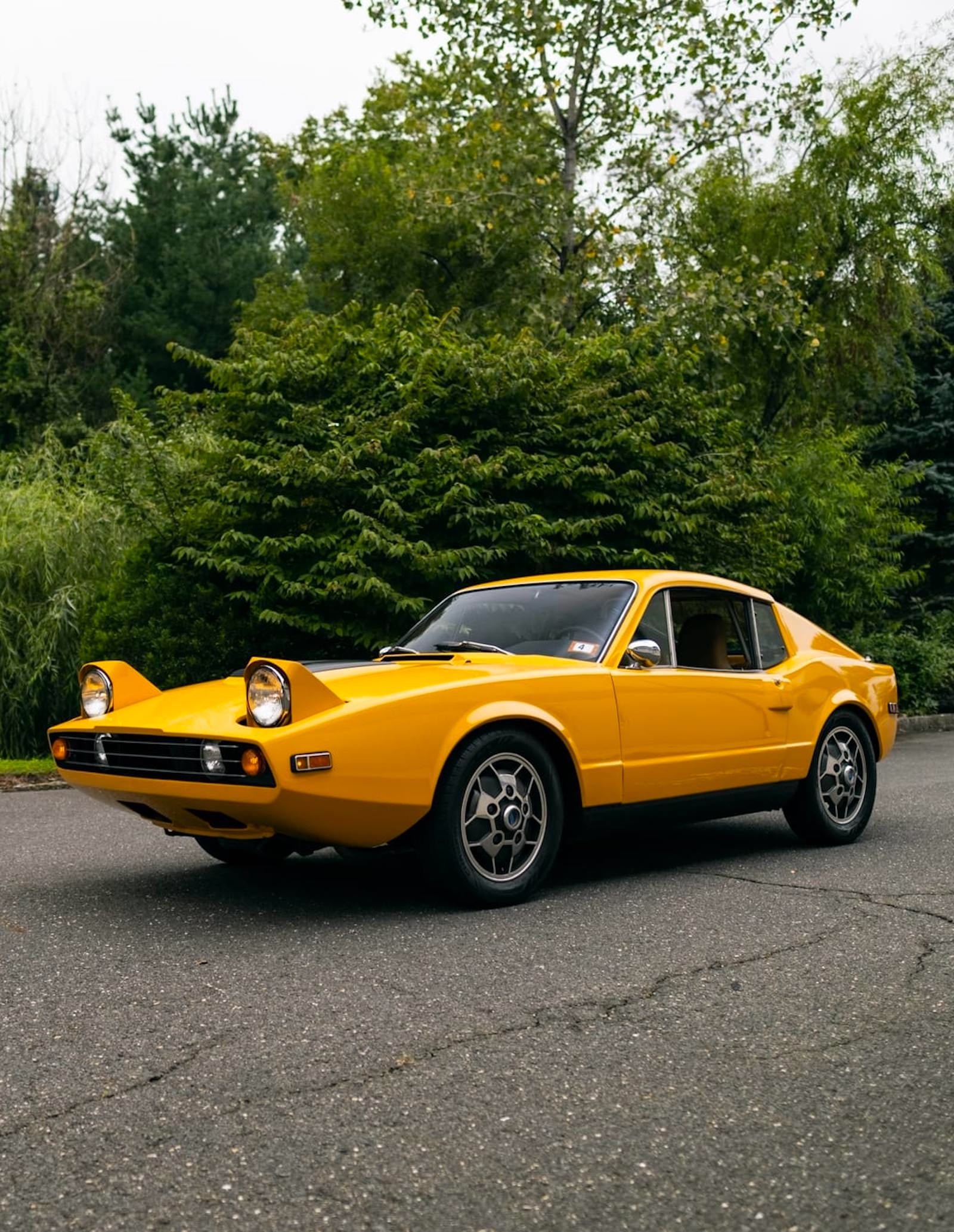
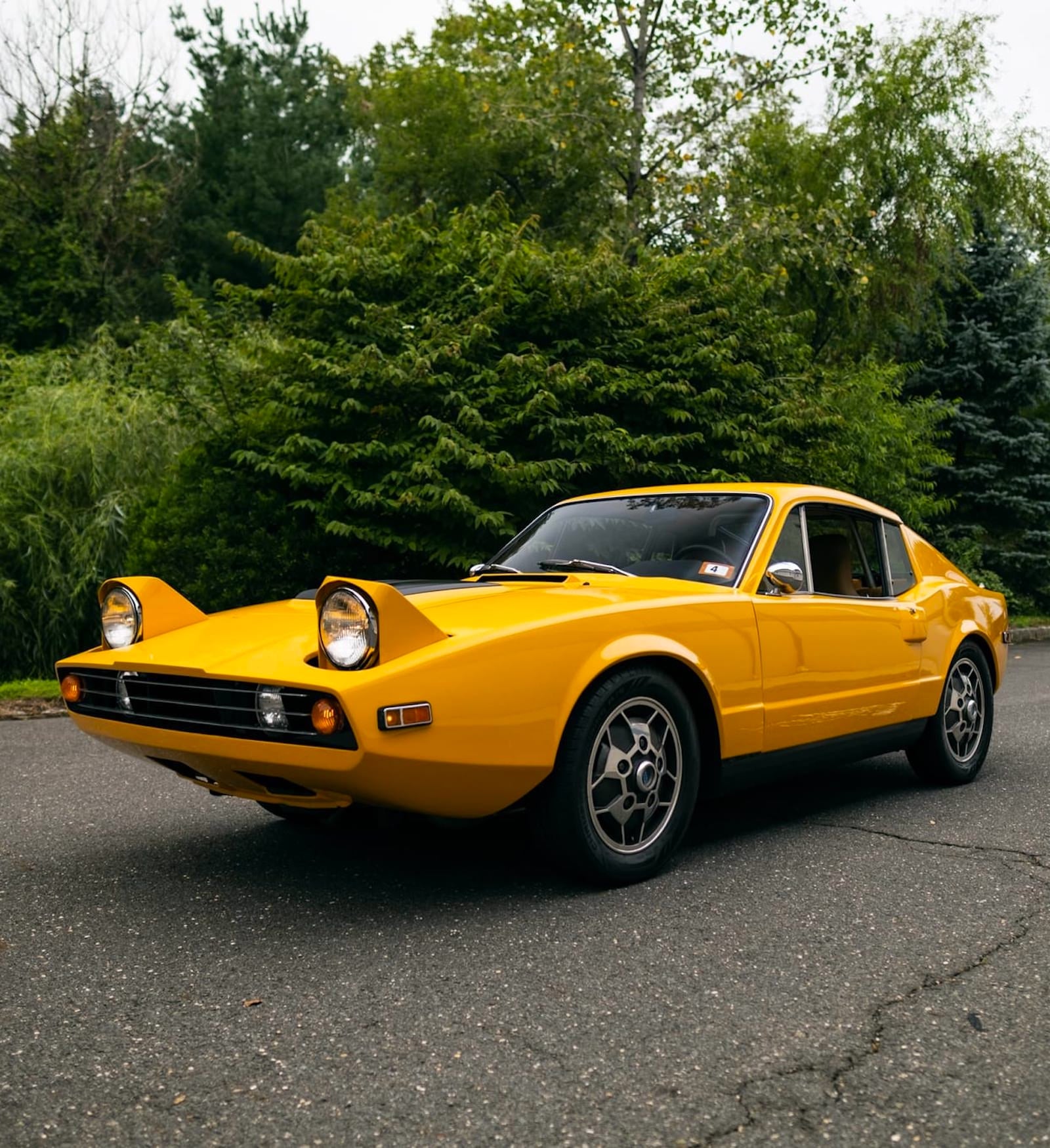
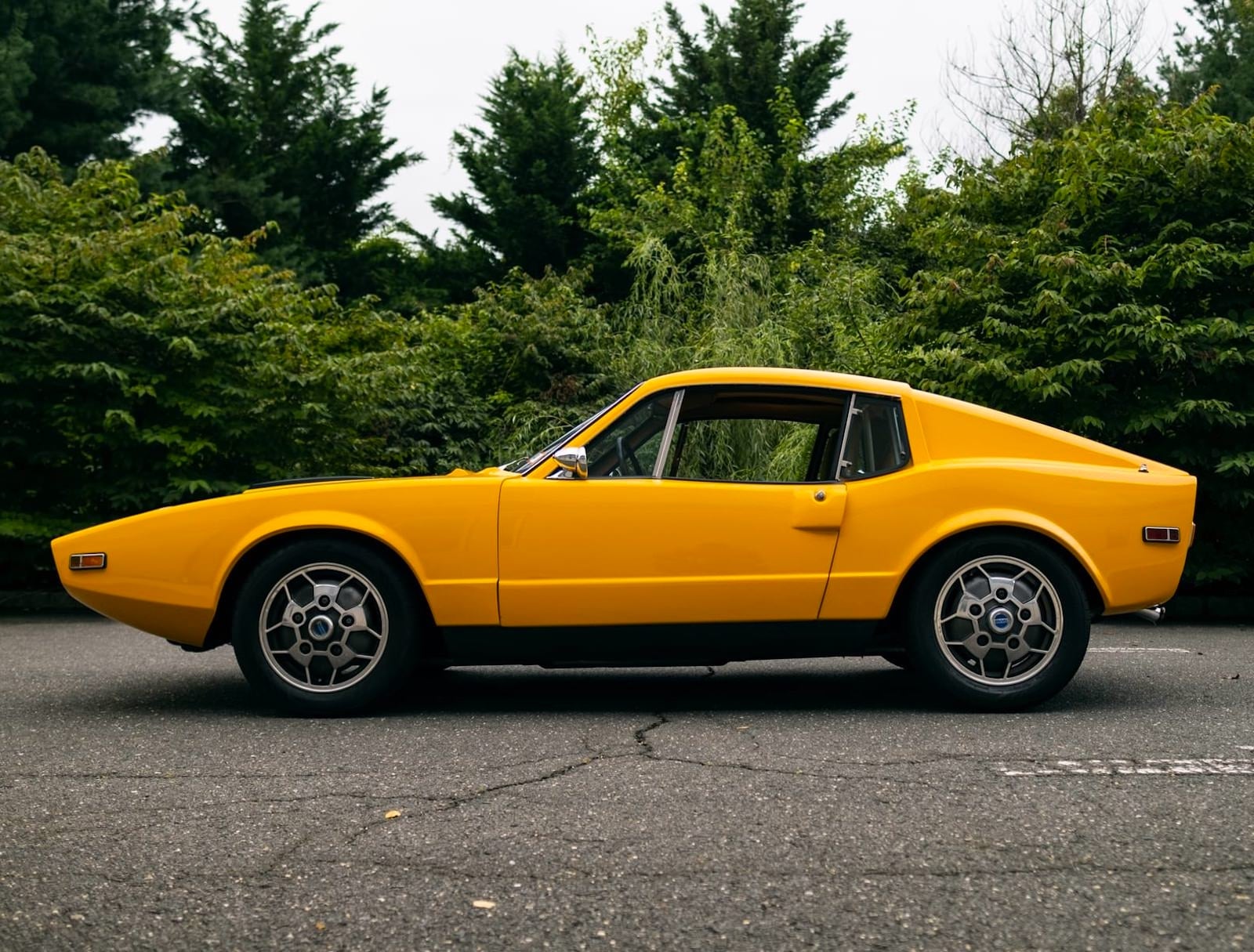
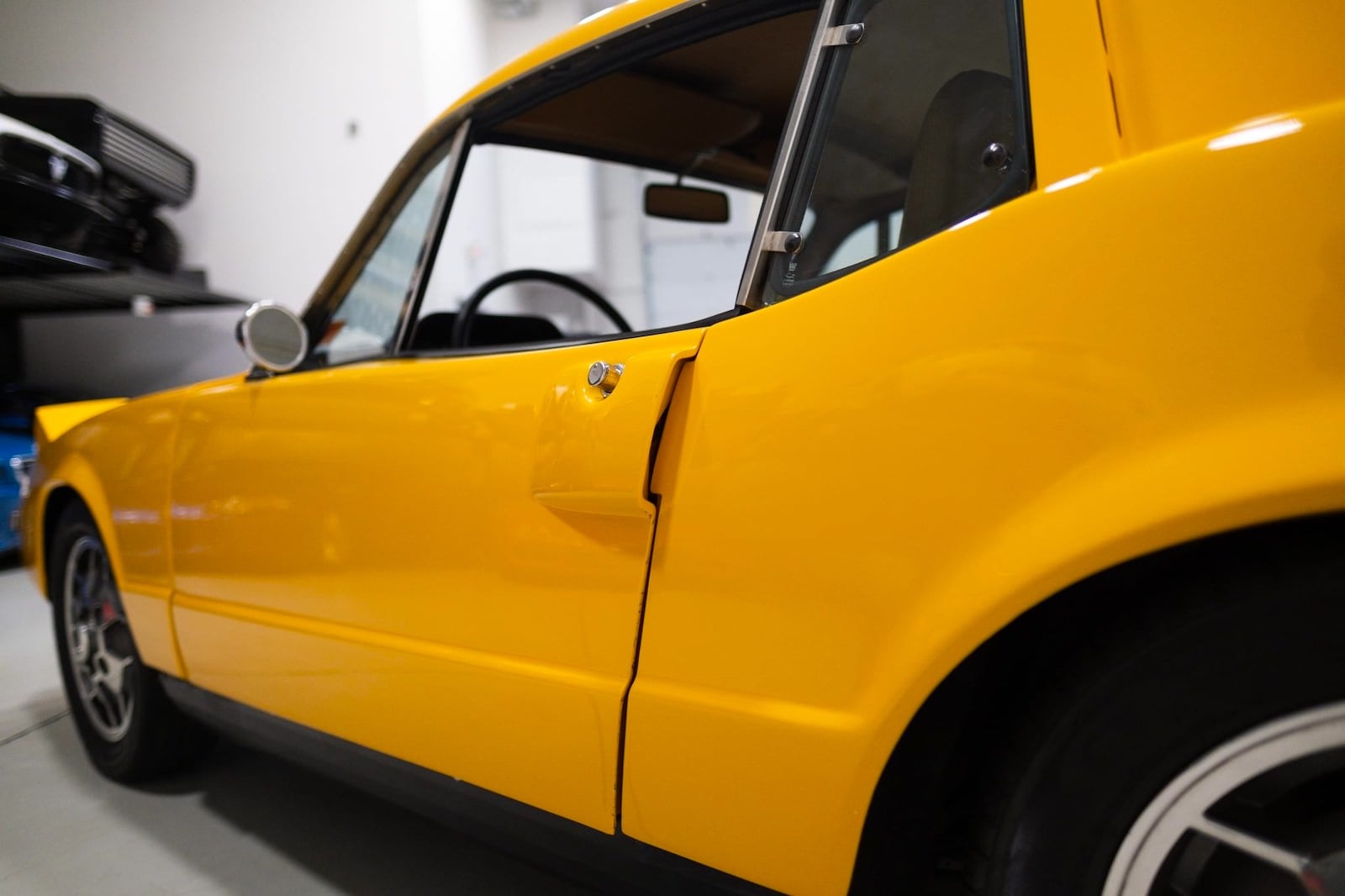
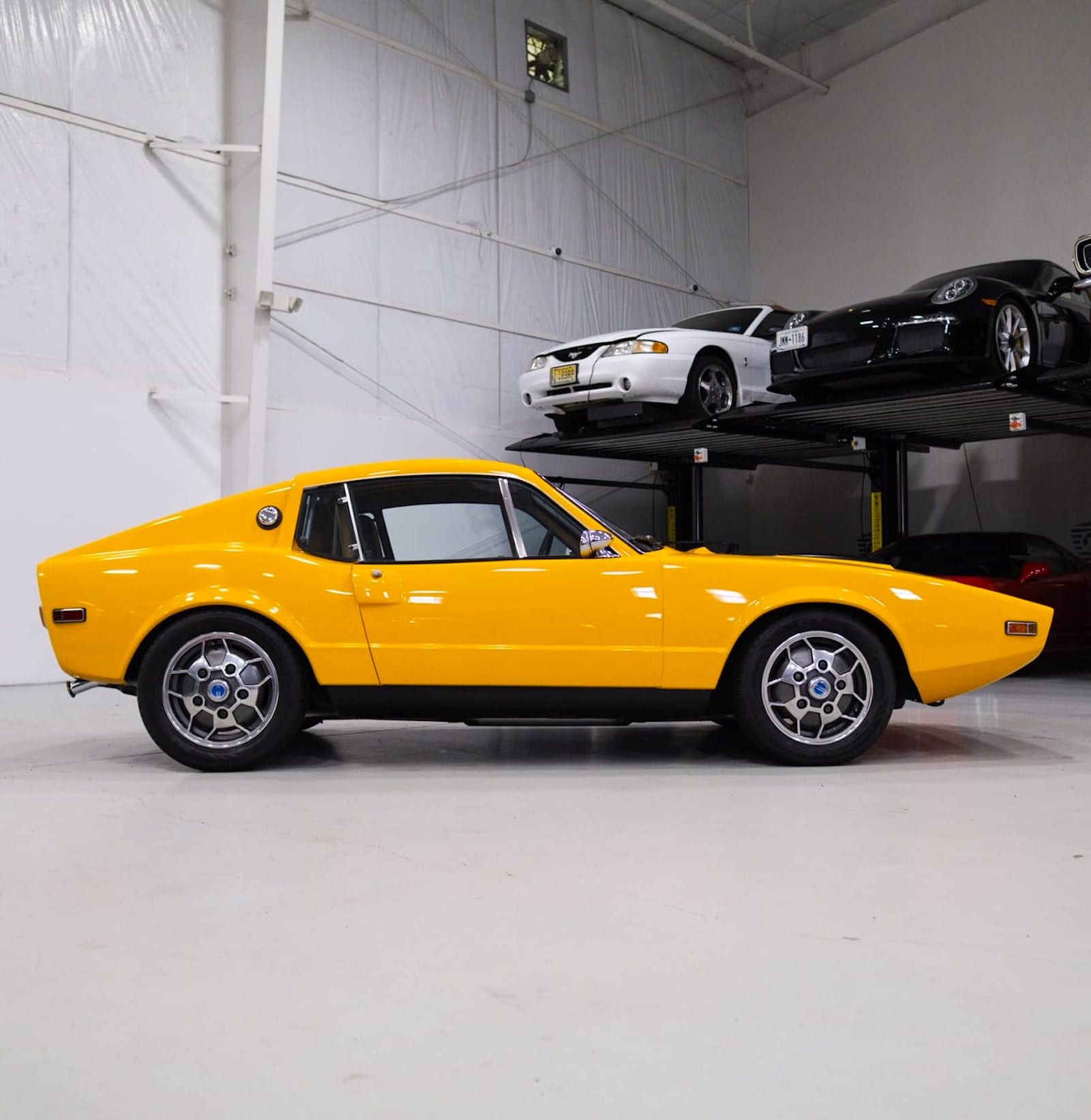
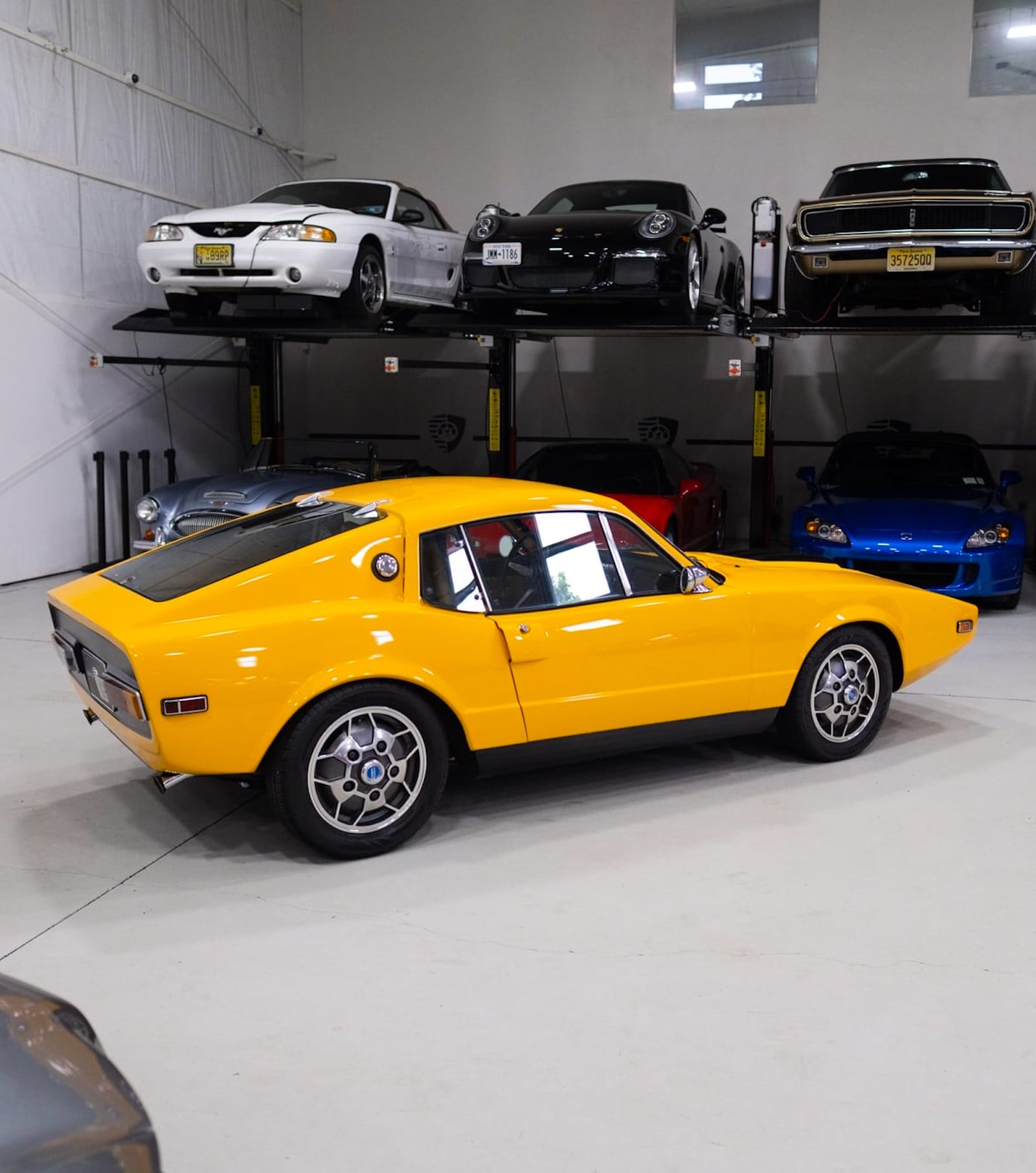
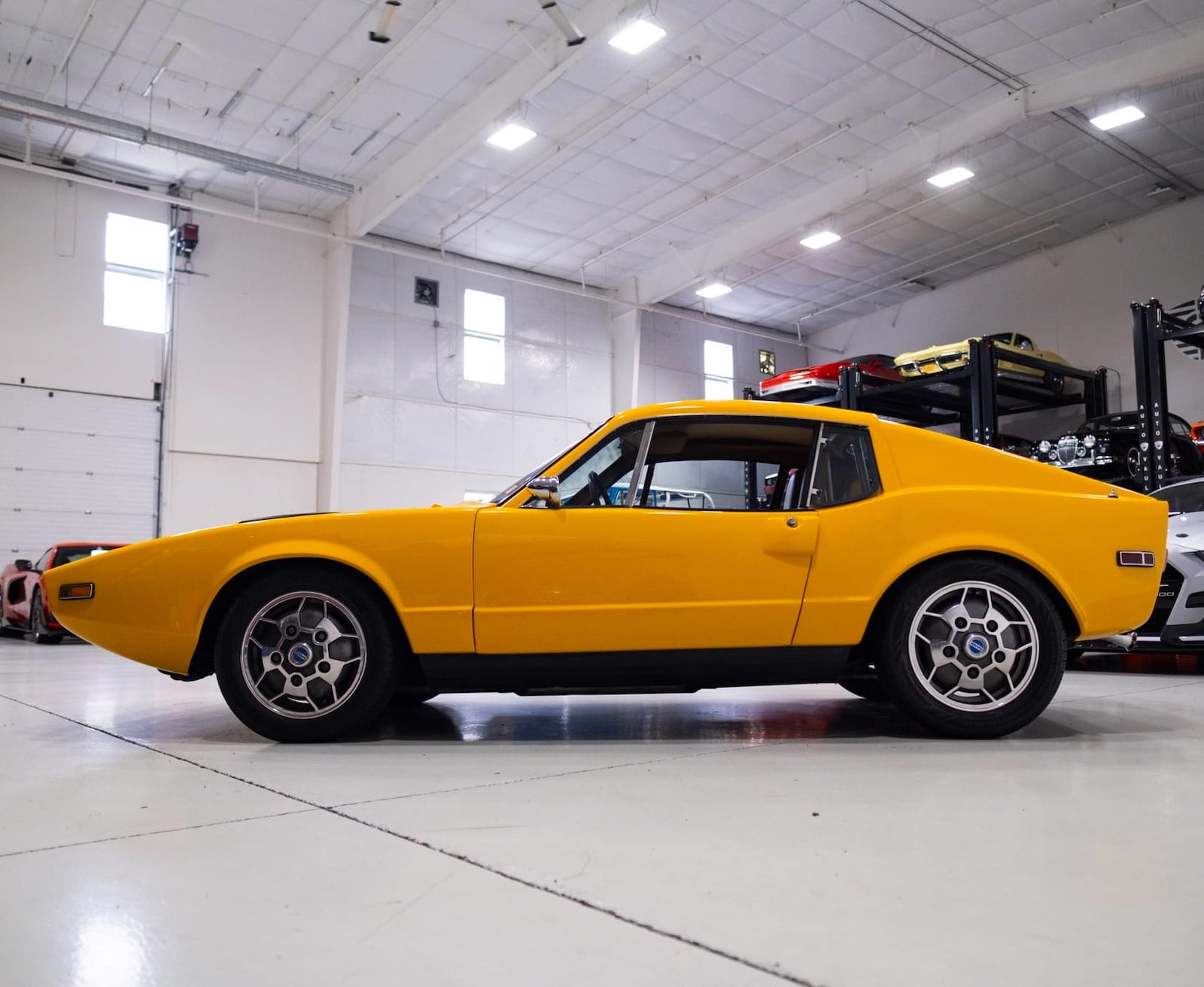
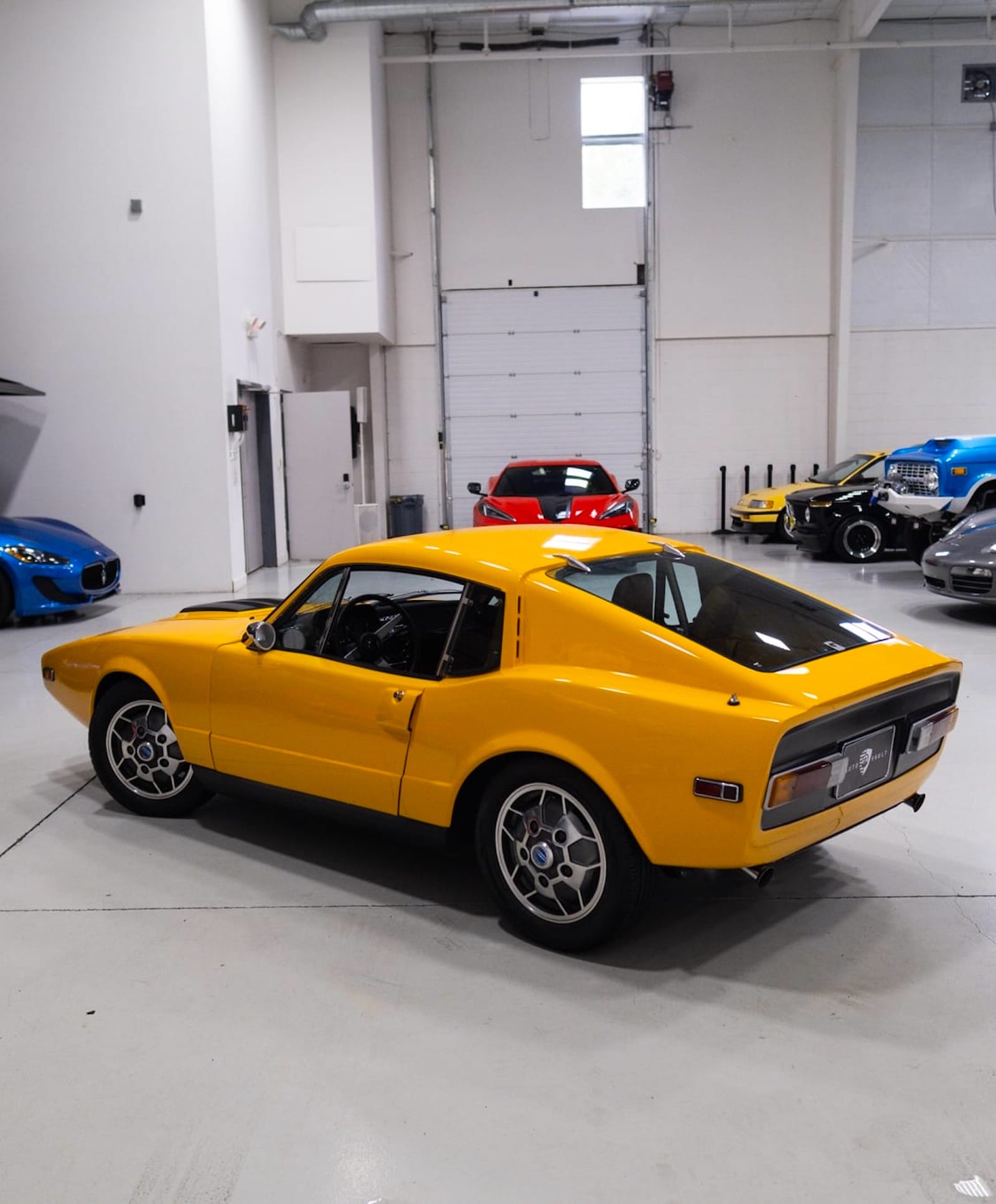
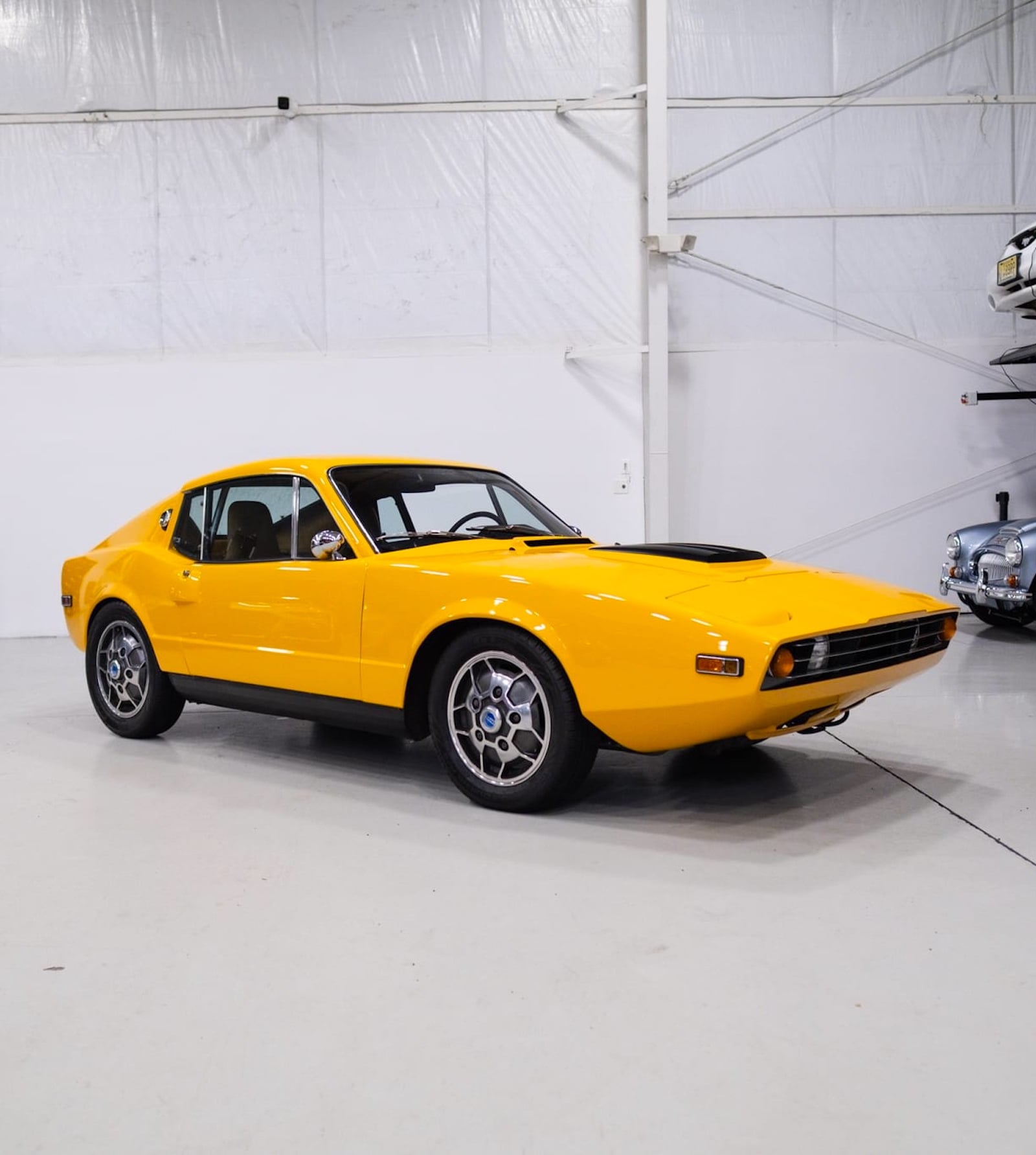
This is a Saab Sonett III from 1971, it’s been given a full body-off restoration, and it now presents as one of the tidiest Sonett IIIs we’ve seen come up for sale in recent memory.
This is a 1.7 liter V4-powered Sonett III, the fastest factory built spec, with the 4-speed manual floor shifter, lightweight fiberglass body, and the unusually advanced sheet-steel box-section platform that was very stiff without being too heavy.
Fast Facts: The Saab Sonett III
- Saab’s first sports car was the experimental Sonett I, developed in the mid-1950s by engineer Rolf Mellde and a small team working largely outside normal company channels. Its lightweight aluminum chassis, fiberglass body, two-stroke engine, and competition focus made it technically ambitious, though changing racing rules ended production plans for the promising little car.
- The Sonett name returned in the 1960s with the Sonett II, developed from the MFI 13 project and aimed mainly at American sports-car buyers. Early cars used Saab’s 841cc two-stroke triple, but limited demand encouraged Saab to adopt Ford’s 1.5 liter Taunus V4, creating the more successful Sonett V4.
- For 1970 Saab introduced the Sonett III, keeping the existing center structure but adding redesigned front and rear bodywork influenced by Sergio Coggiola. It was given pop-up headlights, a floor-mounted shifter, and later a 1.7 liter Ford V4. Production ended in 1974 after 8,368 examples, largely because of tightening US regulations.
- The featured 1971 Sonett III received a body-off restoration before its current owner acquired it in 2021. Its 1.7 liter V4 was rebuilt, the transmission and cooling systems were upgraded, and extensive brake, suspension, and interior work was completed. Finished in yellow over brown vinyl, it currently shows 45,000 miles.
History Speedrun: The Saab Sonett
Saab built just 6 examples of its first sports car, the first one was assembled in a rented barn outside Trollhättan by engineers working in their own time and on their own initiative. That roadster, initially named the Saab 94 Super Sport, is now retroactively known as the Sonett I. The model name returned a decade later on two generations of officially-sanctioned fiberglass coupes aimed squarely at American buyers. When production stopped in the fall of 1974, Saab had built 10,236 Sonett II, V4, and III coupes.
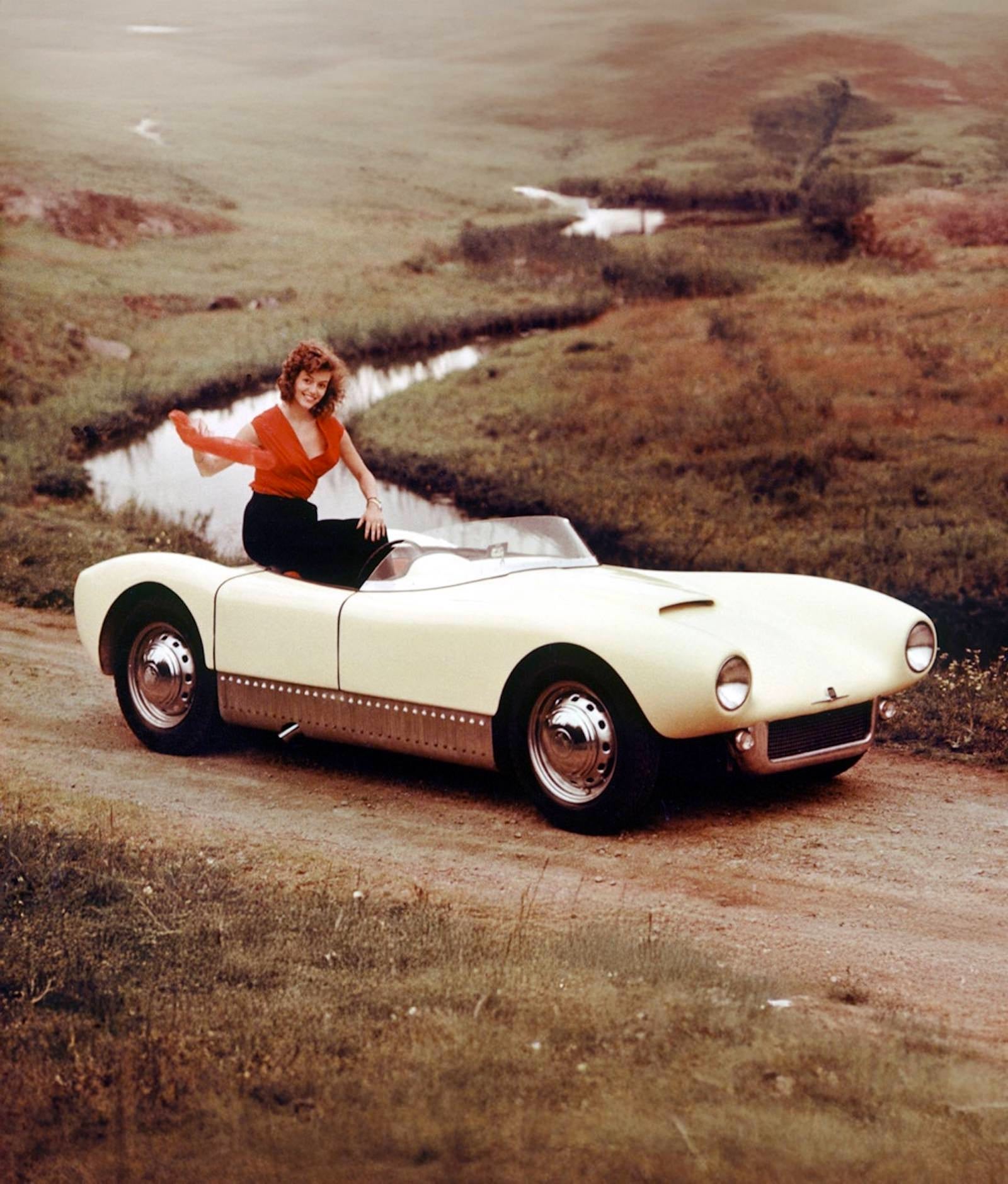
 The Saab Sonett I was unveiled at the Stockholm Motor Show on March the 16th, 1956. Saab built five more officially sanctioned cars, two for exhibition and three for competition, all of them had a more conventional steel chassis, and as late as the end of 1957 it was still considering a production run of 2,000 cars. Image provided by Saab.
A Swedish Roadster Built In A Barn
Saab engine designer Rolf Mellde began sketching a two-seater sports car in the fall of 1954. The notoriously conservative Saab board was wary of anything as risky as a sports car, and so from early-1955 Mellde and a handful of colleagues built the prototype in secret, in a barn rented at Åsaka.
Mellde’s chassis design was an advanced stressed-skin structure of riveted aluminum, built to aircraft practice, and it weighed just 71 kgs (157 lbs). Sixten Sason, Saab’s designer, shaped the elegant little fiberglass body.
The engine and transaxle came from the Saab 93, but Mellde turned them through 180º so the 750cc two-stroke three-cylinder sat behind the front axle, for better front/rear weight distribution. The engine’s rotation had to be reversed, but on a two-stroke, that was relatively easy.
With a 10:1 compression ratio and a new intake manifold, the engine made 57.5 bhp, against 38 bhp for a standard 93. Mellde also put the driver on the right, later admitting he thought it looked “more authentic.”
The car was unveiled at the Stockholm Motor Show on March the 16th, 1956. Saab built five more officially sanctioned cars, two for exhibition and three for competition, all of them had a more conventional steel chassis, and as late as the end of 1957 it was still considering a production run of 2,000 cars.
Sadly, racing rule changes for 1958 ended the plan. They now let modified production sedans into the classes the Sonett had been built for, and at the start of 1958 Saab dropped the roadster to concentrate on the 93-based GT 750.
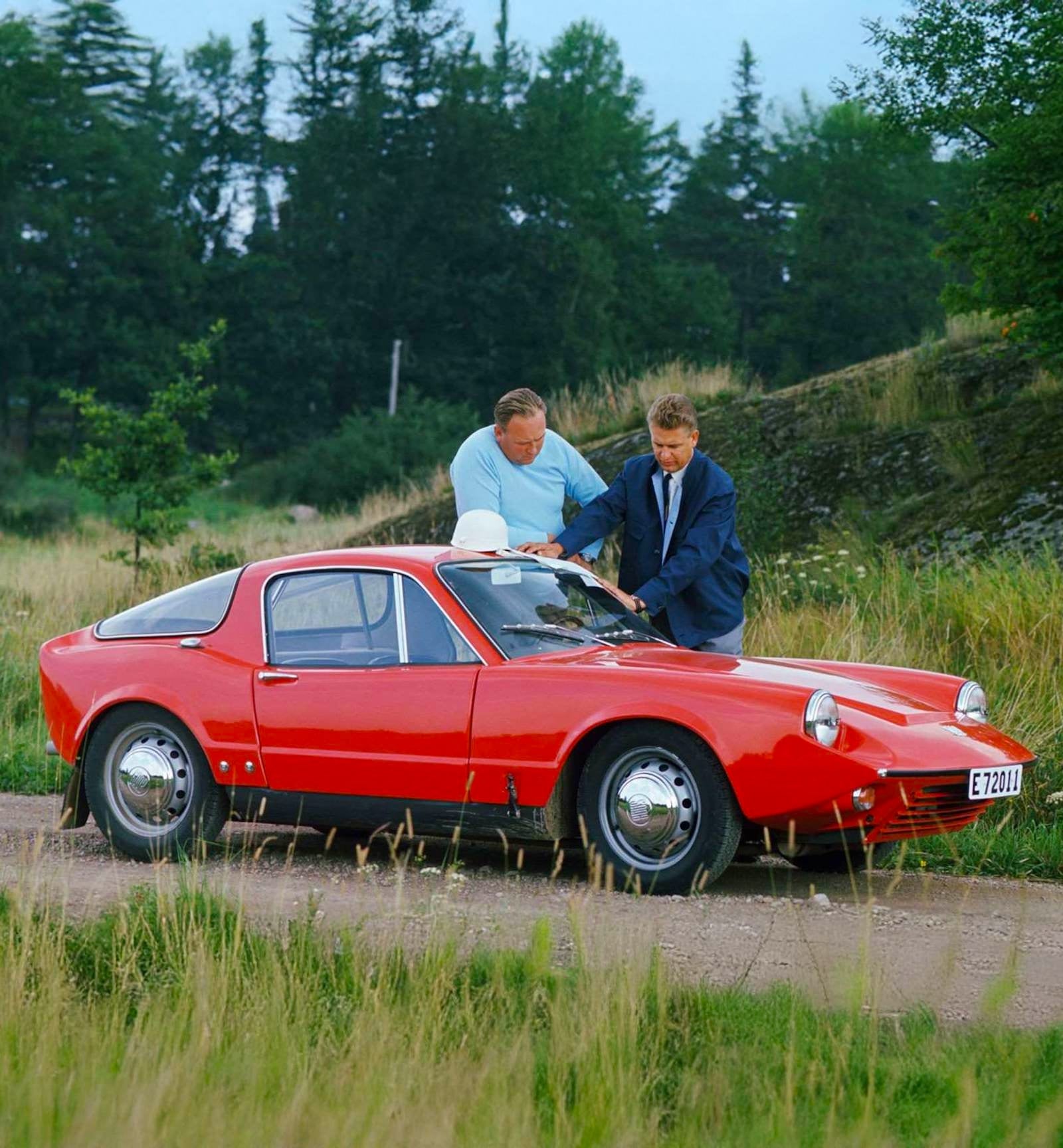
The Sonett II used the 841cc two-stroke triple from the Saab Monte Carlo 850, rated at 59 bhp, and a 4-speed column shift manual. Top speed was a respectable 93 mph (150 km/h). Image provided by Saab.
The Saab Sonett II + Sonett V4
By the early 1960s, with MG and Triumph selling sports cars in vast numbers in the US and around the world, Saab’s American dealers wanted one of their own.
The first was the work of designer Björn Karlström and engineer Björn Andreasson. Karlström had an idea for a sports car built from standard Saab running gear, and he found a manufacturer willing to back it in Malmö Flygindustri, a Swedish aircraft company that gave the car project number 13 (a number no superstitious airman would want).
The project turned out to be anything but unlucky, work began in 1964 with Saab’s knowledge and approval, and Saab later stepped in when a development grant fell through. Heinel’s, a Malmö coachbuilder, made the body in sheet steel, its panels made specifically so they could later serve as molds for fiberglass. Karlström tested his sheet-metal box chassis by making a cardboard scale model and then resting a heavy smoothing iron on the middle of it. It held.
The rival prototype, designed by Sixten Sason and built by ASJ, the Swedish Railroad Works, was called the Catherina. Both cars went to Trollhättan early in 1965, and within a few weeks Saab settled on the MFI 13. ASJ took on the work of turning it into a production car at its plant in Arlöv. The Saab 97 was shown at the Geneva and New York Auto Shows in the spring of 1966, and series production began at the end of the year.
The Sonett II used the 841cc two-stroke triple from the Saab Monte Carlo 850, rated at 59 bhp, and a 4-speed column shift manual. Top speed was a respectable 93 mph (150 km/h). Dealers had asked for a price of no more than $3,000, but unfortunately the Sonett II was unveiled at $3,500 to $4,000, and US sales forecasts were cut from 3,000 cars a year to 500 as a best-case-scenario.
Buyers also typically preferred a four-stroke engine, as it was a better-understood technology in road cars, and so after 258 two-stroke cars had been built, Saab switched (during 1967) to Ford’s 1.5 liter (1,498cc) Taunus V4, rated at 65 bhp. The renamed Sonett V4 was given a hood bulge to make room for the new engine and was 35 kgs (77 lbs) heavier. It proved more popular than its forebear, and Saab built 1,610 Sonett V4s before the model was replaced with the Sonett III.
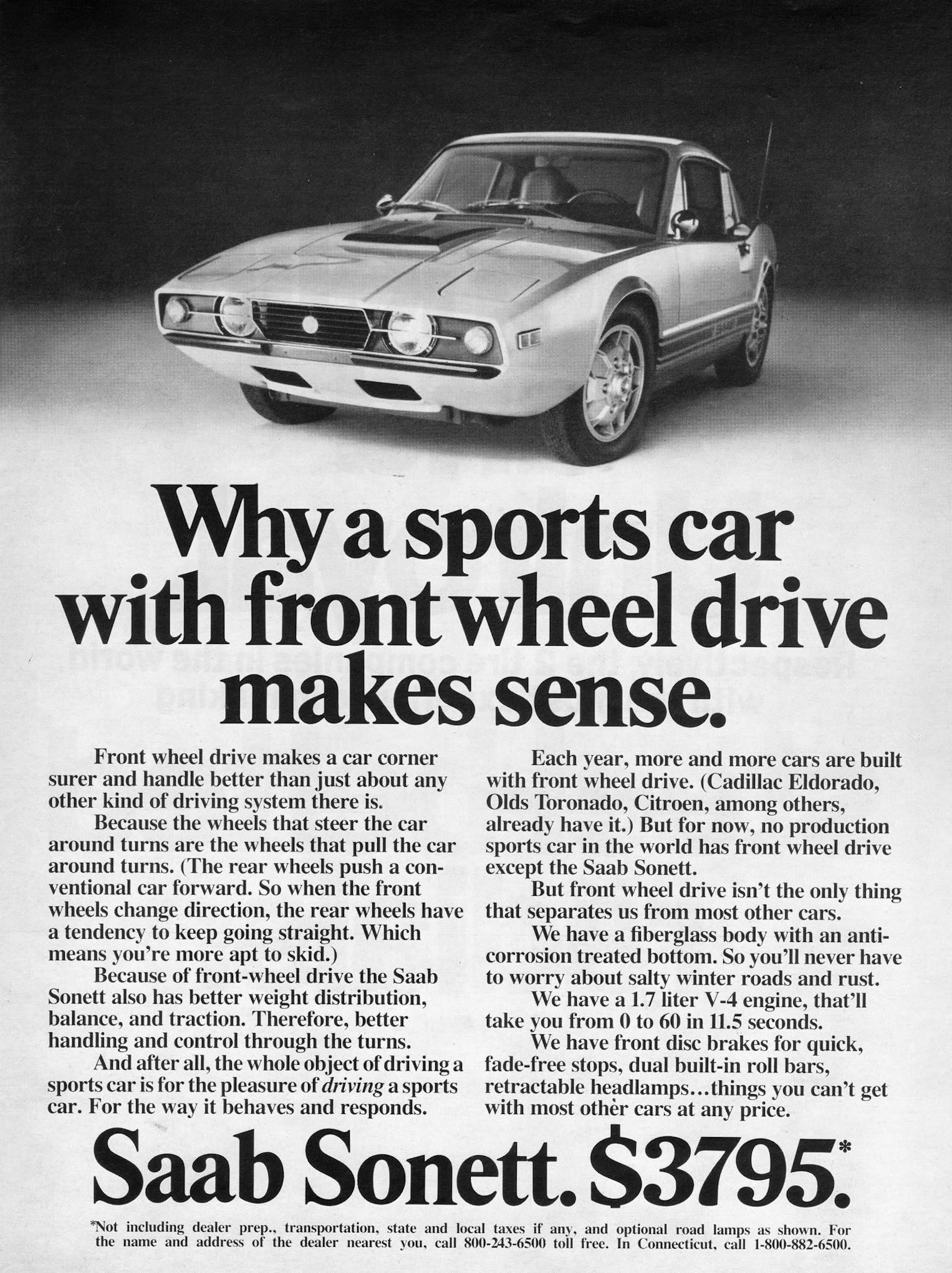
The Saab Sonett III debuted for 1970, restyled with a more modern look by Sergio Coggiola and and now fitted with pop-up headlights. Image provided by Saab.
The Sonett III Makes Its Debut
A period Road & Track magazine review had said that the Sonett II’s styling was miserable and called its designer “naïve, insensitive, unimaginative.” Harsh words, and probably more than a little unfair, but for 1970 Saab reskinned the car.
Celebrated Italian designer Sergio Coggiola re-styled the nose and tail but had to keep the center section, since a new floorpan would have cost too much, Saab designer Gunnar A. Sjögren adapted Coggiola’s proposal for production.
The nose came out so low that it needed pop-up headlights, but fortunately this was an exceedingly popular feature on sports cars at the time. Electric operation of the headlights was deemed too complex and costly, so the driver raised them by hand by pulling a lever. The car made its debut at the 1970 New York Auto Show with a floor-mounted shifter rather than the earlier steering column shifter that many had felt just wasn’t sporting.
From the fall of 1970, US cars got a larger 1.7 liter (1,698 cc) version of the V4 with a revised crankshaft, and output stayed at 65 bhp but torque was improved. Top speed was 103 mph (165 km/h), which was considered decent by the standards of the time.
Saab ended production late in the fall of 1974, after 8,368 Sonett IIIs, because meeting new US safety and emissions regulations would have cost too much.
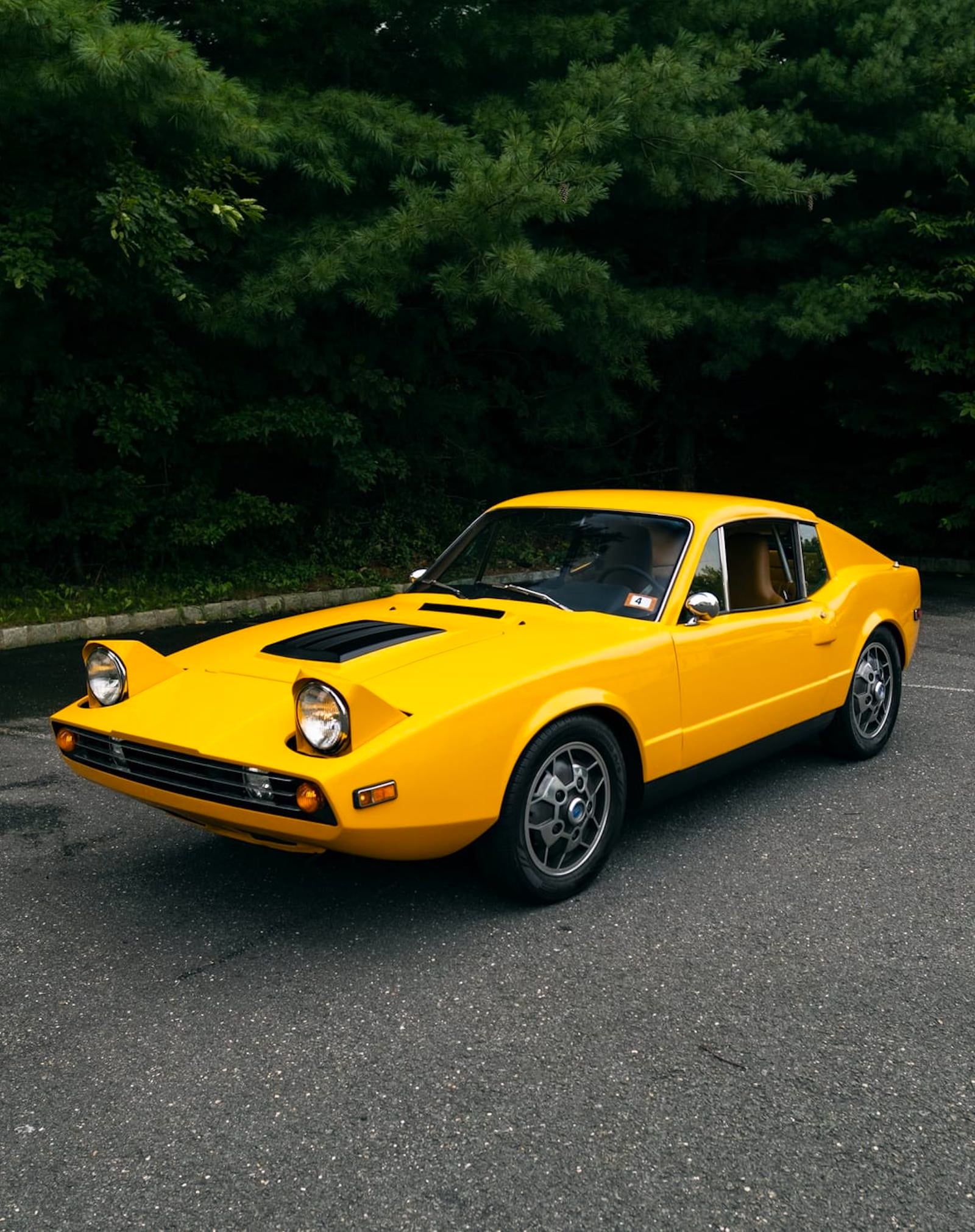
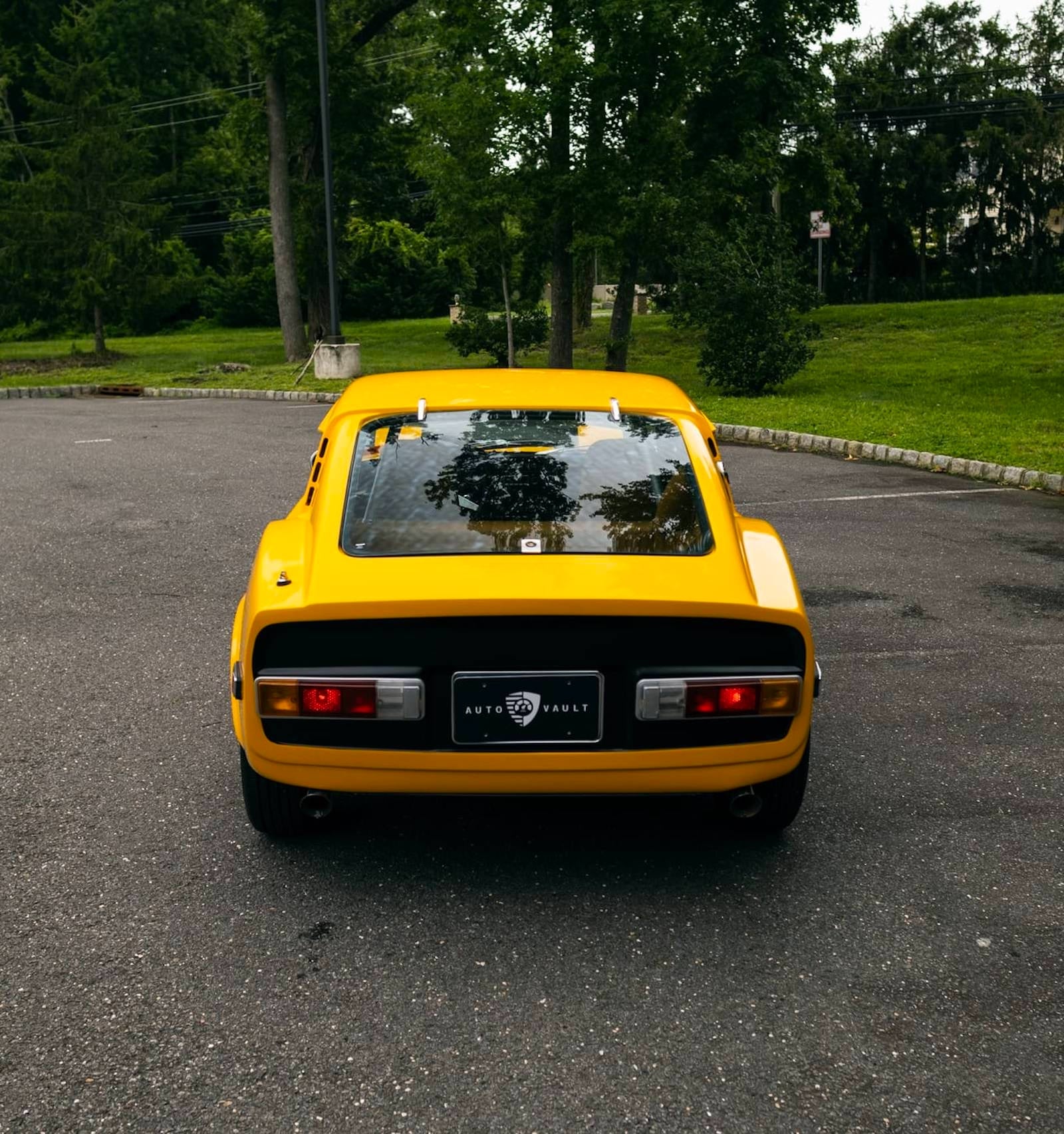
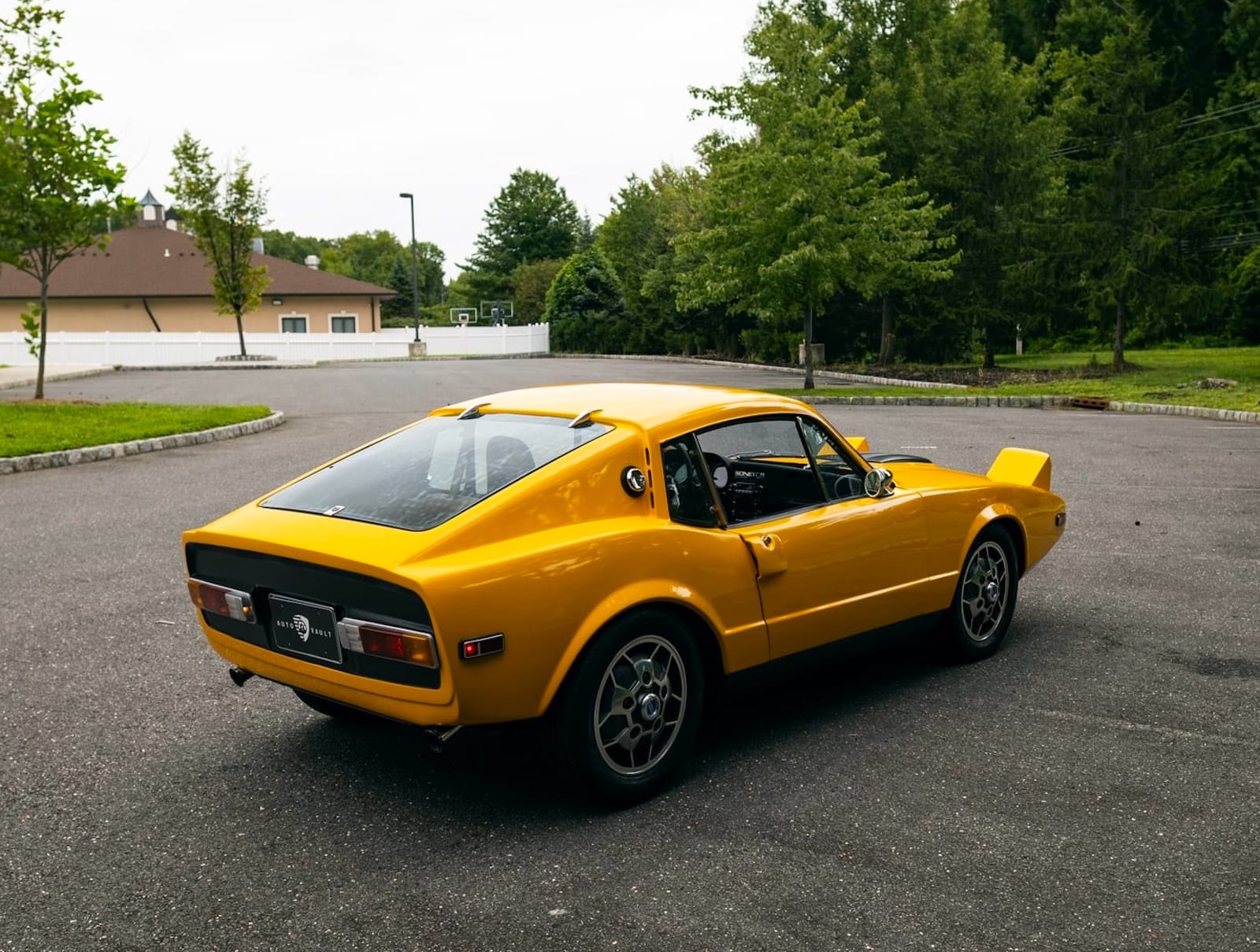
The 1971 Saab Sonett III you see here was subjected to a body-off restoration before it was bought by its current owner in 2021. Its fiberglass body, previously blue, was removed from the frame and refinished in two-stage yellow, while the front and rear bumperettes were deleted.
The 1971 Saab Sonett III Shown Here
The 1971 Saab Sonett III you see here was subjected to a body-off restoration before it was bought by its current owner in 2021. Its fiberglass body, previously blue, was removed from the frame and refinished in two-stage yellow, while the front and rear bumperettes were deleted.
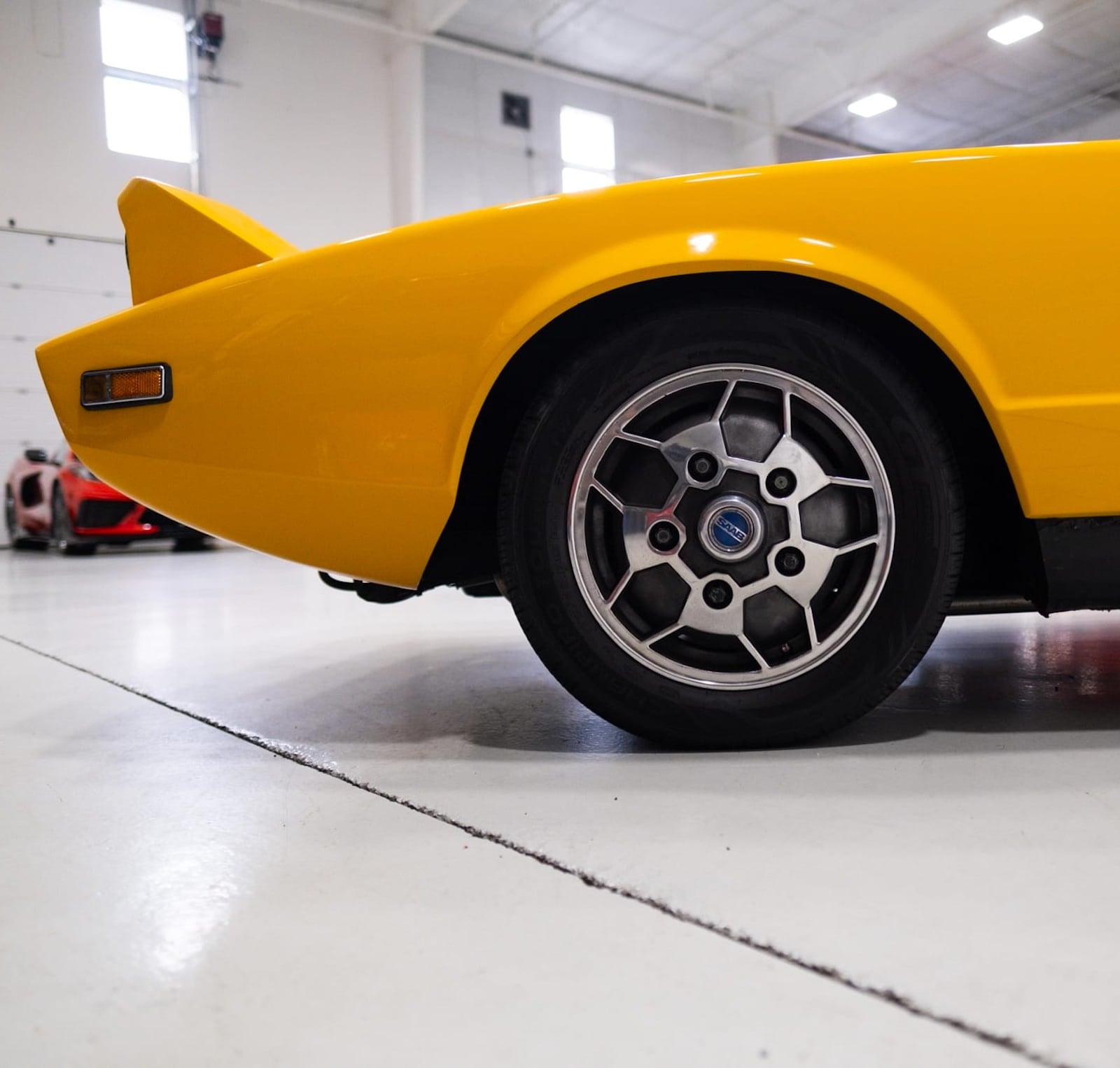
The car now rides on refinished 15 inch “soccer ball” wheels and keeps its pop-up headlights, auxiliary driving lights, bullet-style mirrors, and dual exhaust outlets.
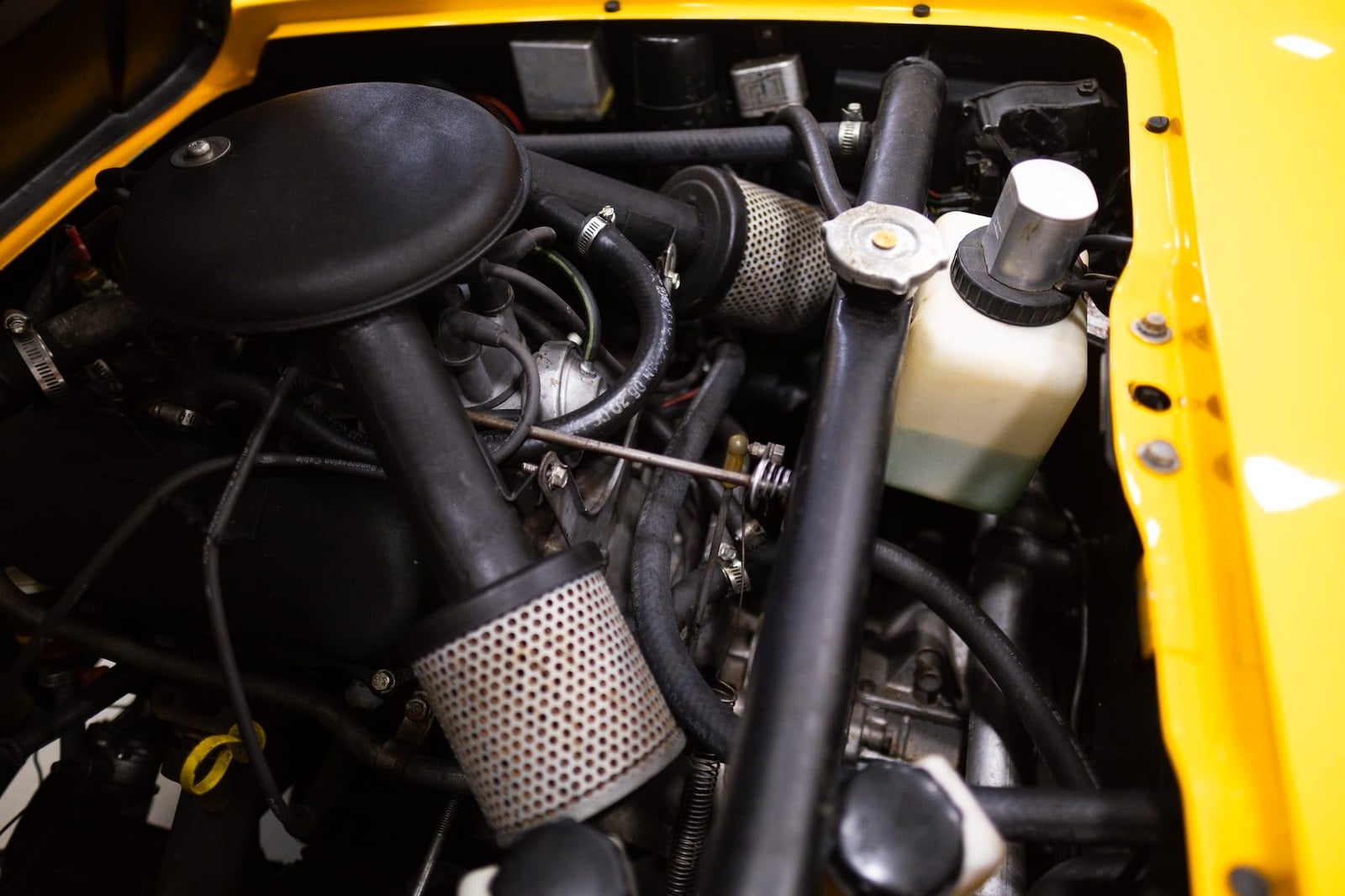
The 1.7 liter V4 was reportedly rebuilt during the refurb, with replacement engine mounts, belts, filters, exhaust parts, a two-row copper-core radiator, an electric cooling fan, and a PerTronix electronic ignition was also fitted for improved starting and reliability.
Power is sent to the front wheels through a 4-speed manual transaxle that has had its freewheeling function disabled and has been fitted with a transmission saver kit and reverse lockout kit. The clutch, clutch master cylinder, and transmission mounts were also replaced.
Suspension work was carried out during the rebuild, while the front calipers, brake pads, rear wheel cylinders, wheel seals, and wheel bearings were serviced or replaced in 2019.
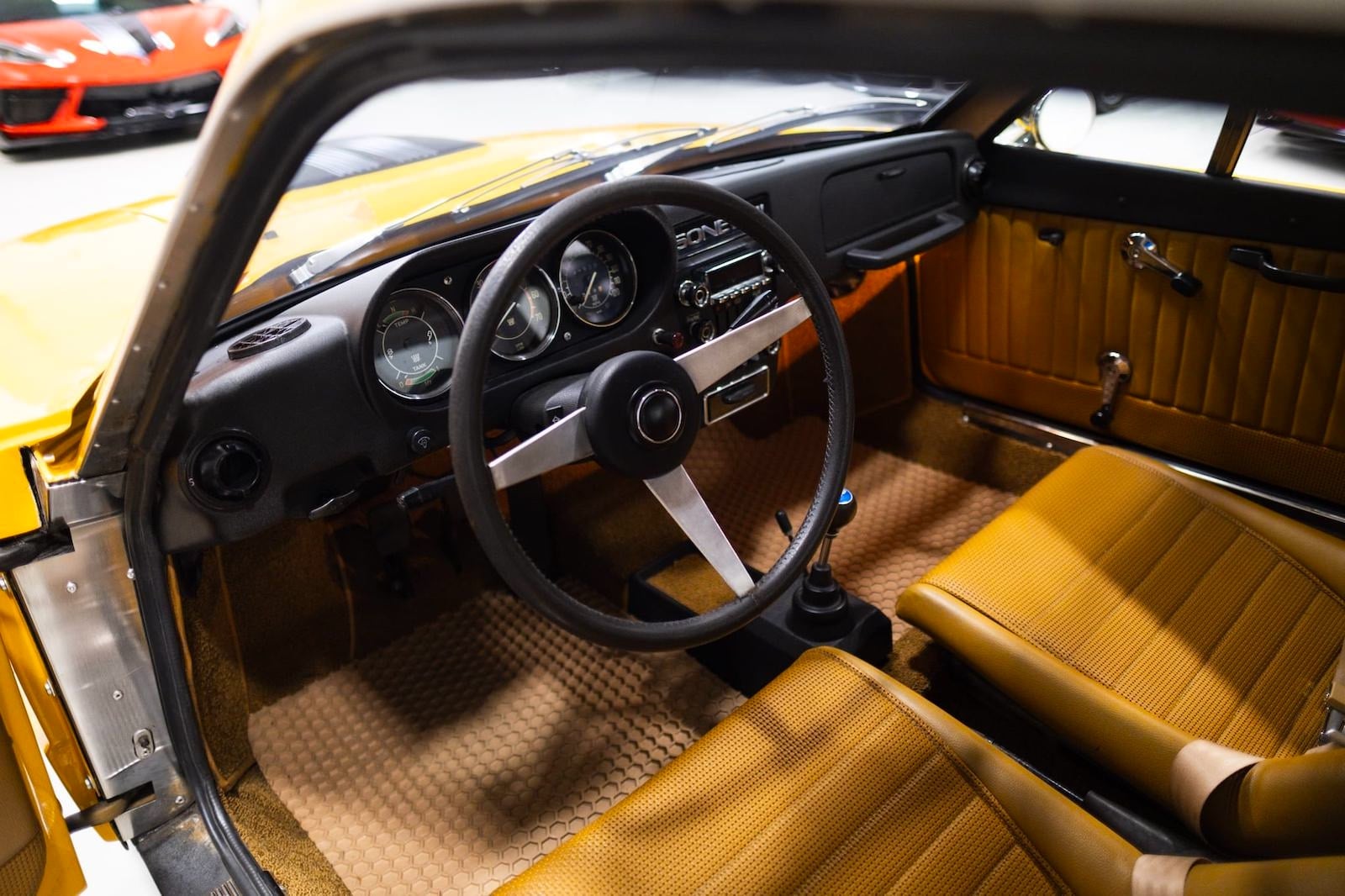
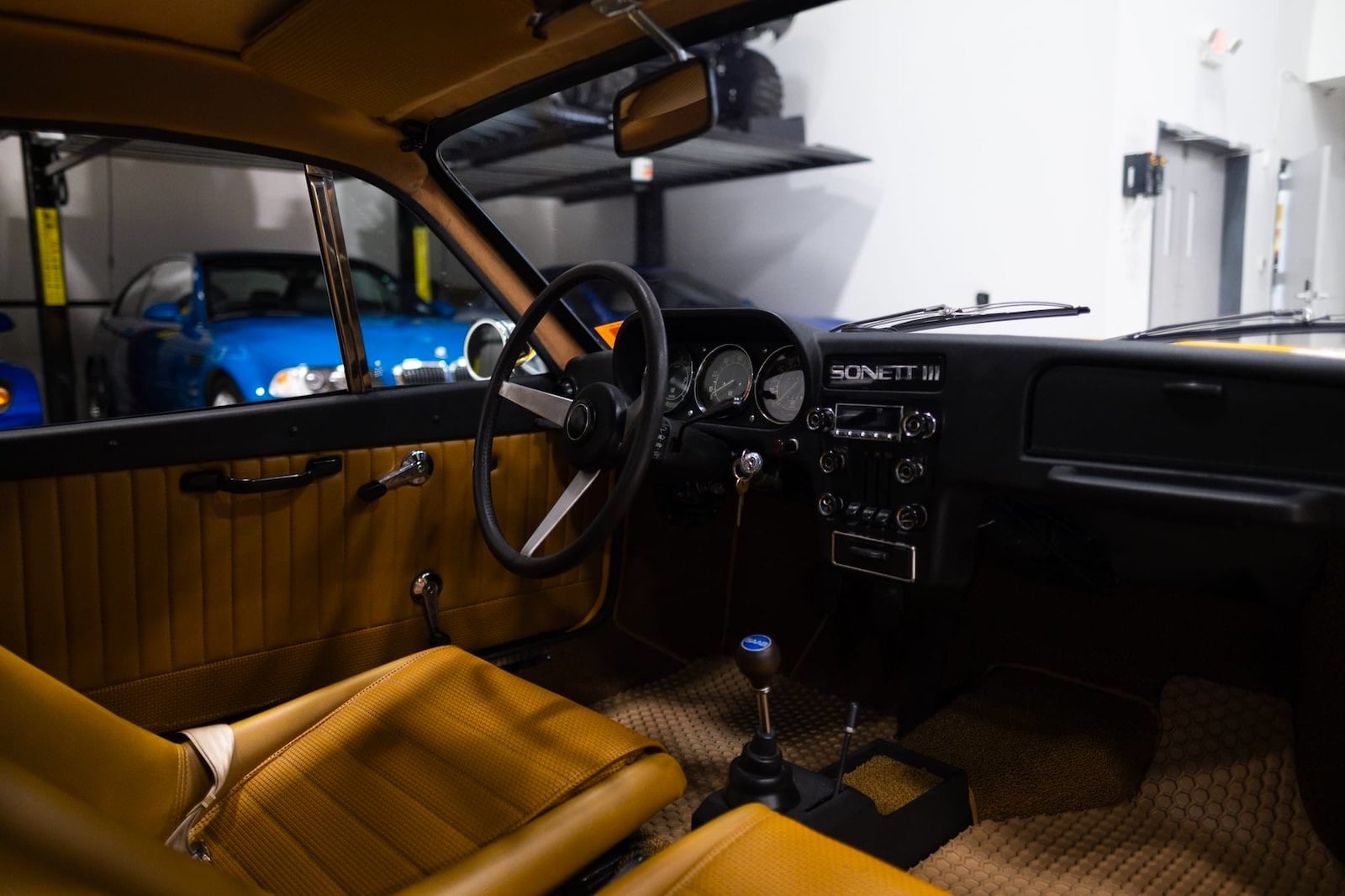
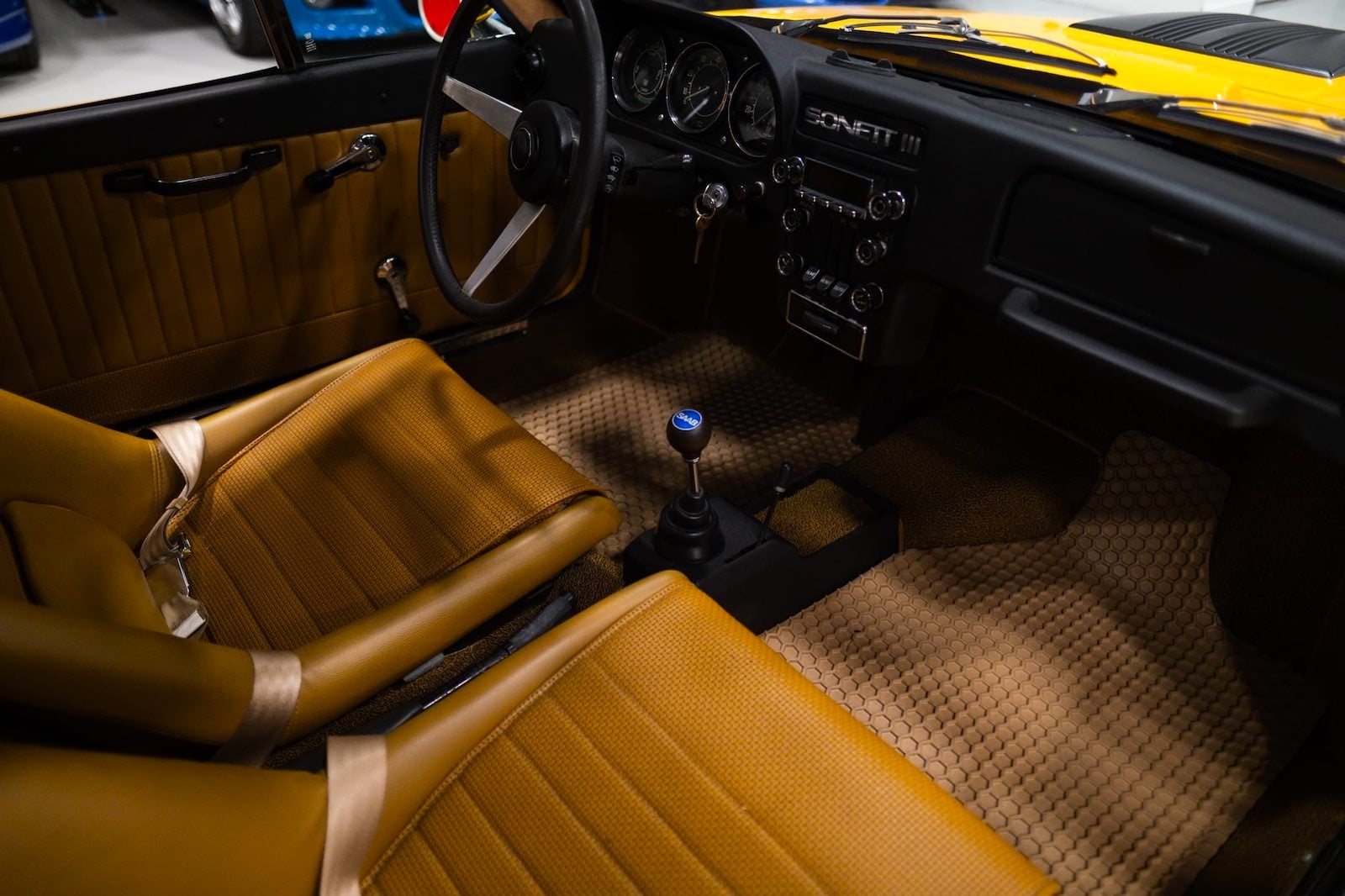
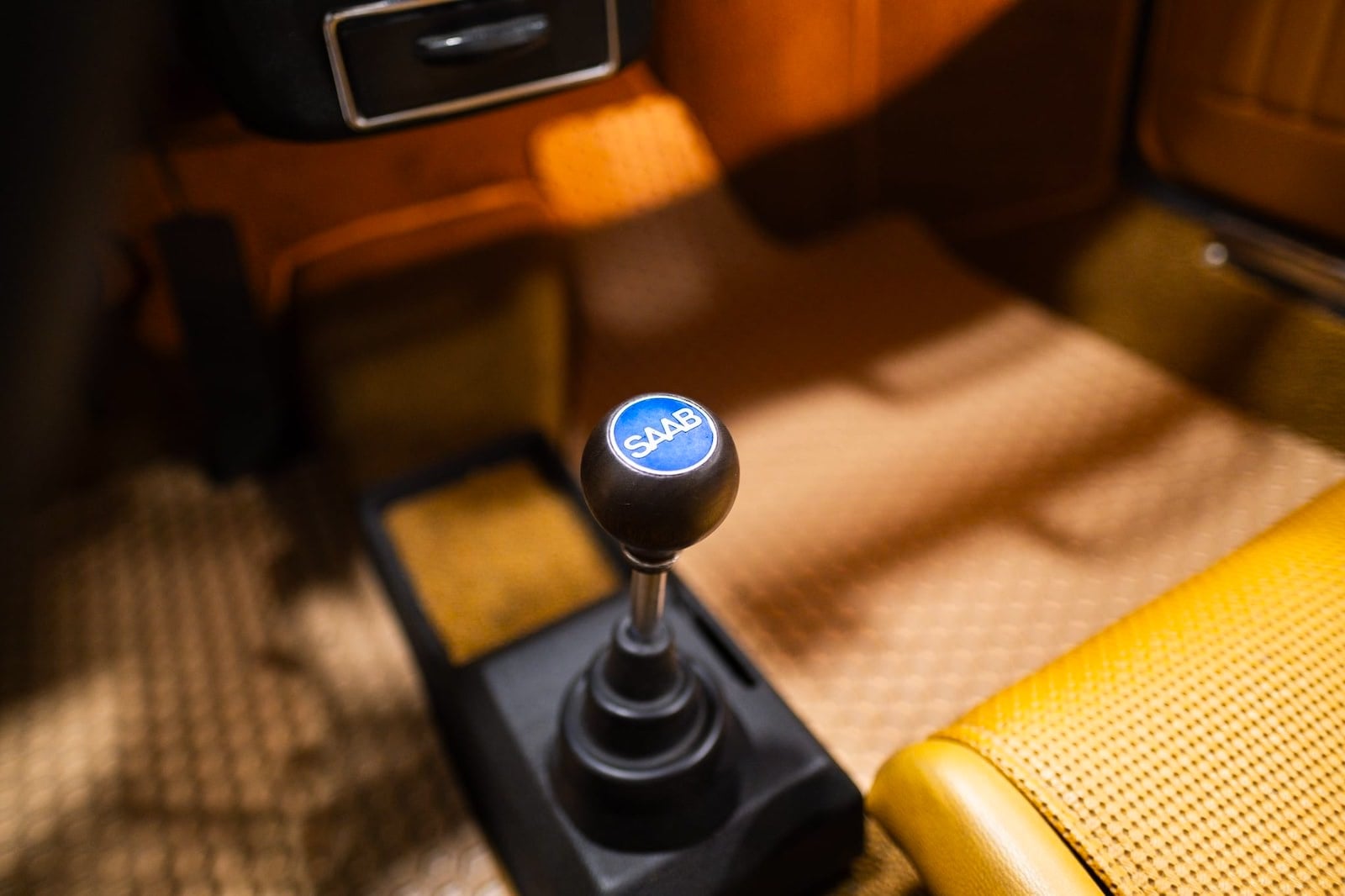
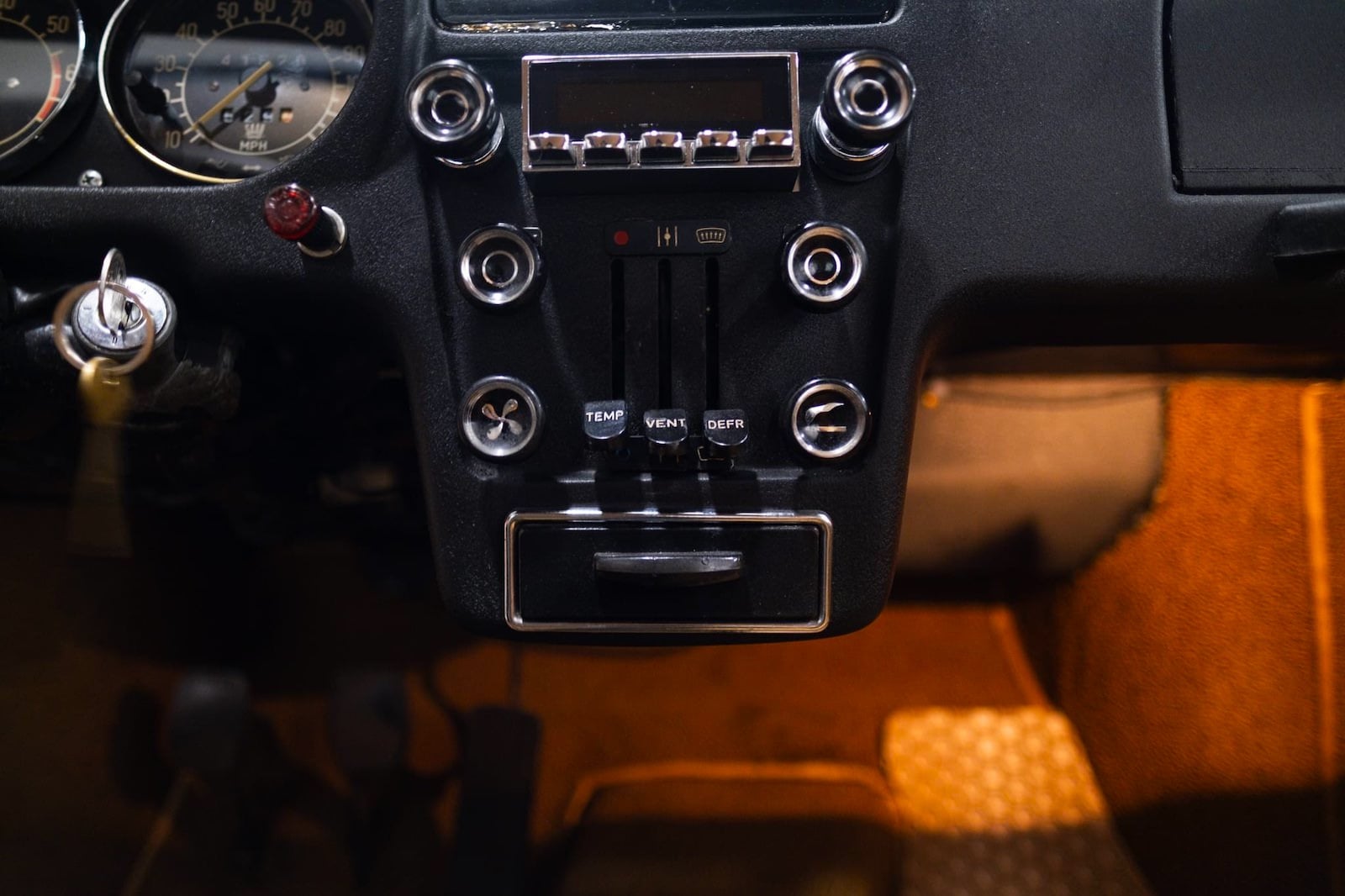
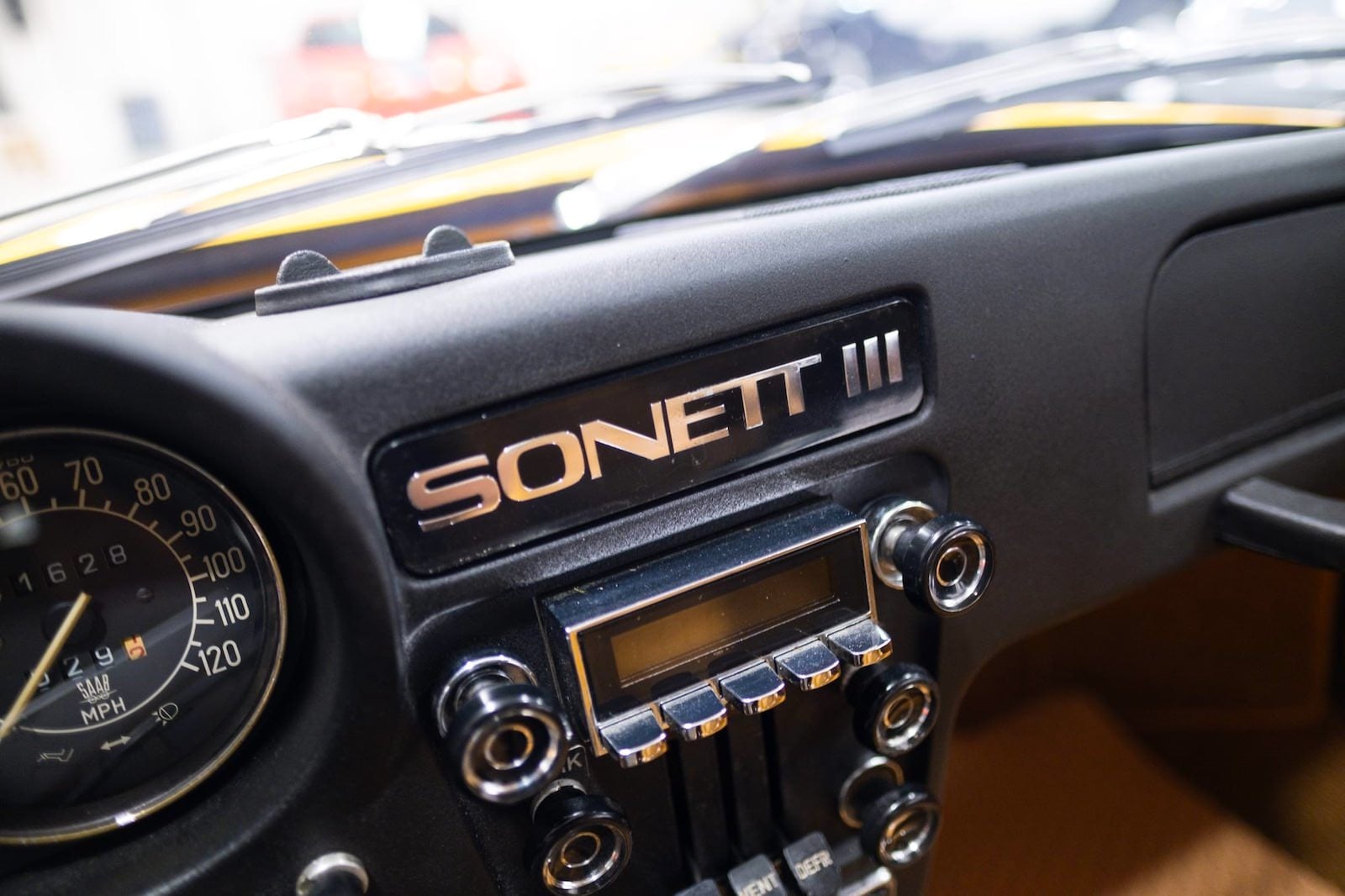
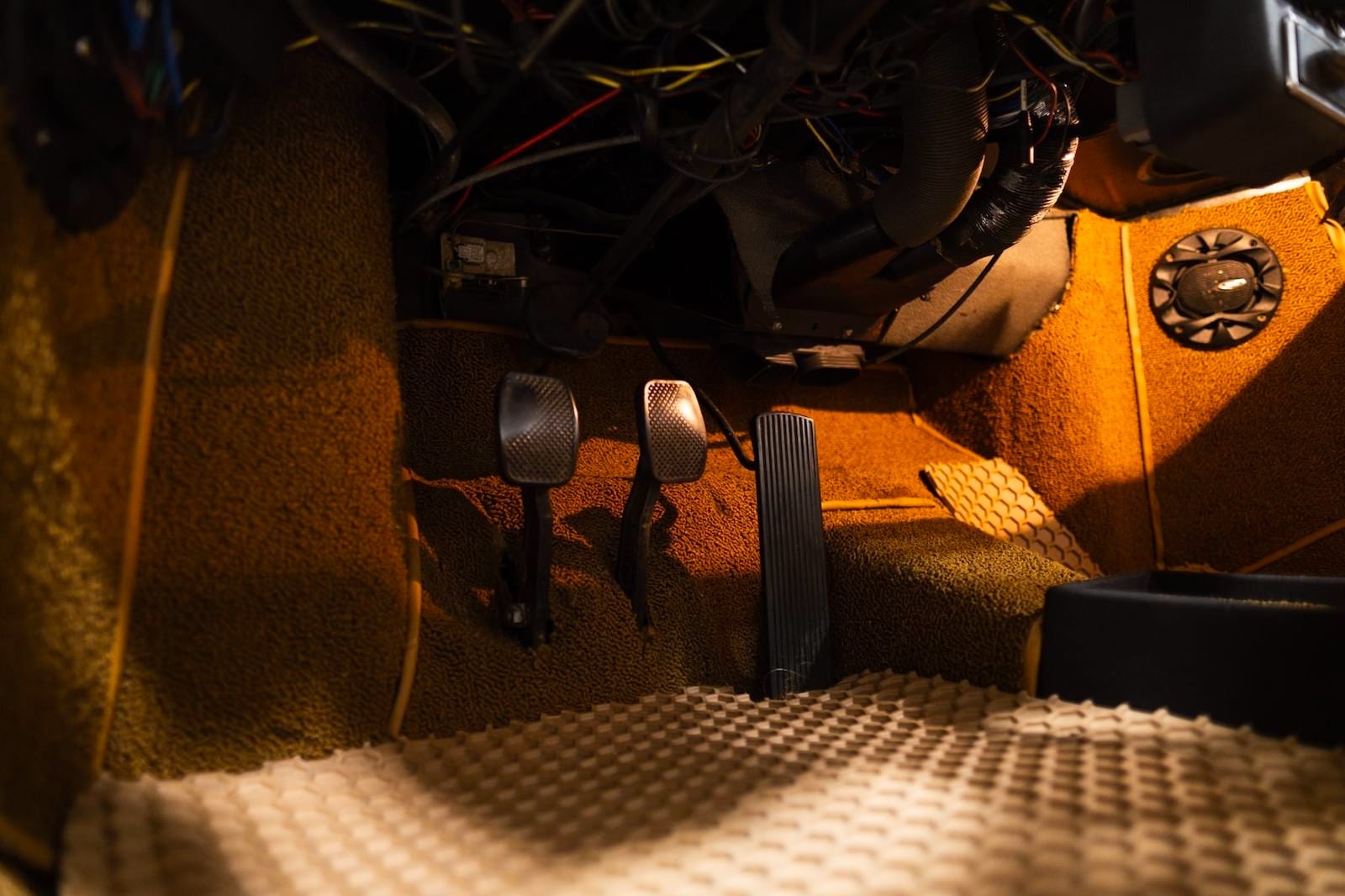
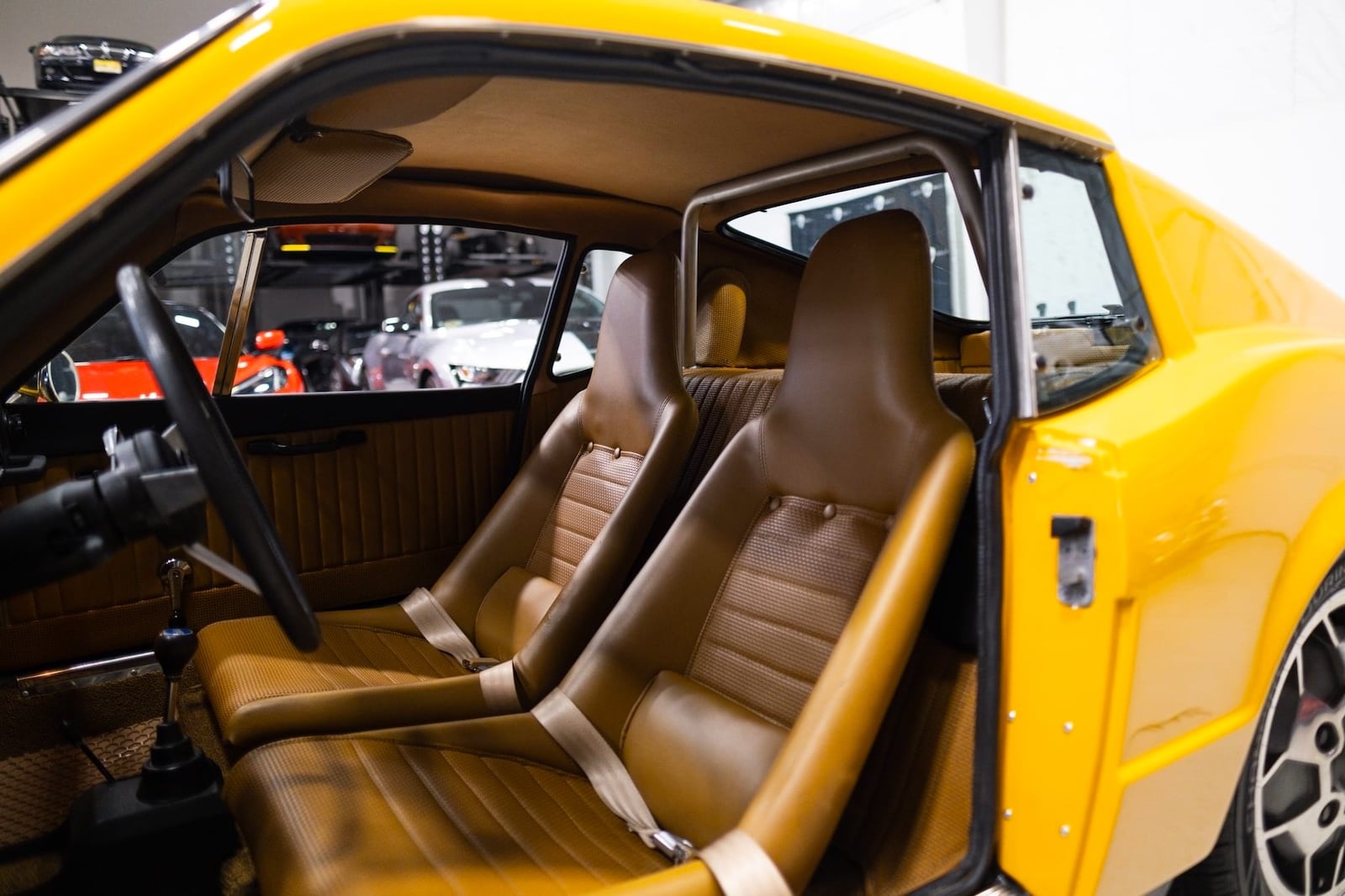
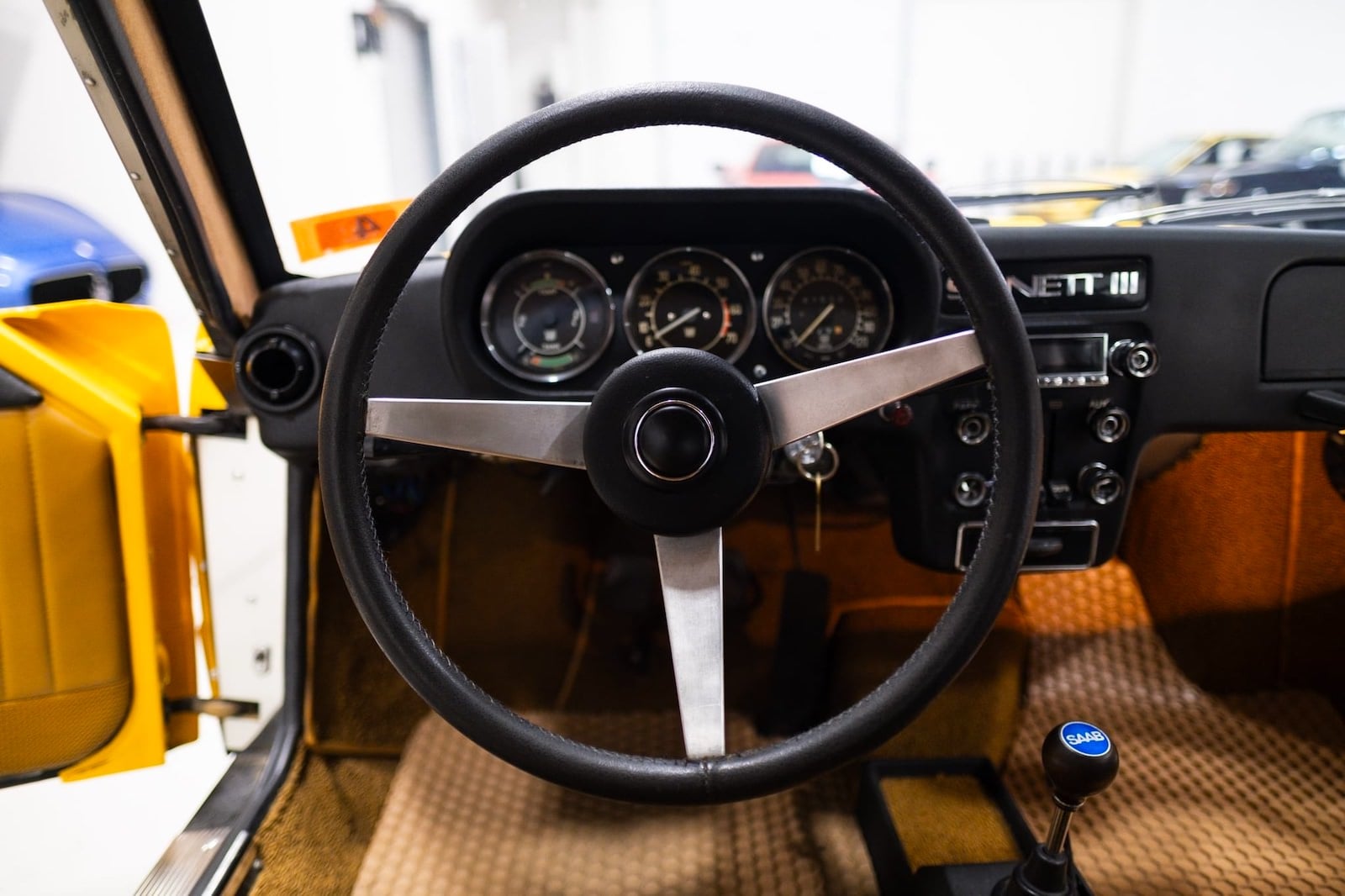
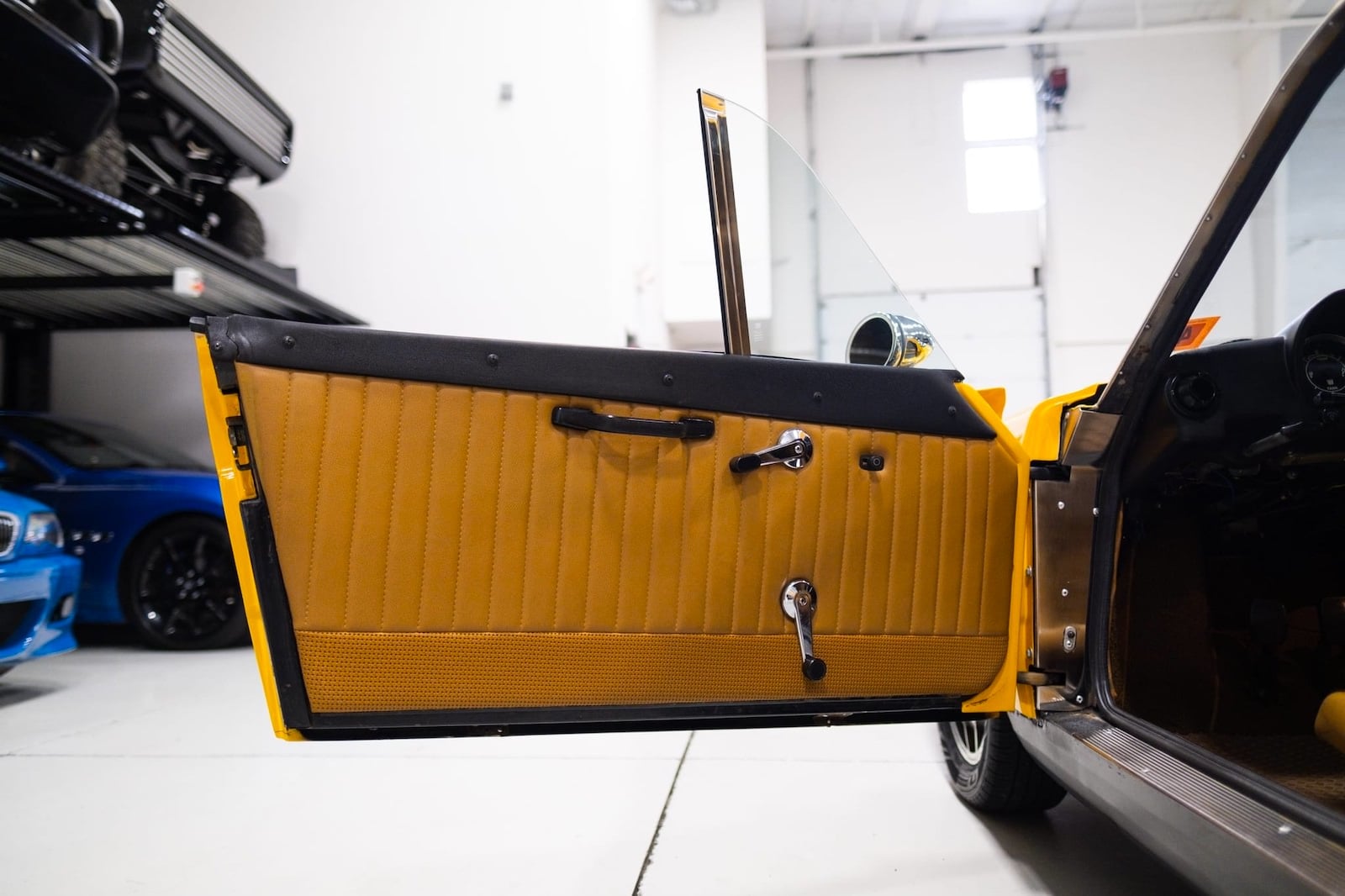
Inside, the fixed-back seats were retrimmed in brown vinyl, Dynamat insulation was installed, and equipment includes a roll bar, heater, Saab-branded shift knob, lap belts, and a Bluetooth-capable Retrosound stereo with additional speakers.
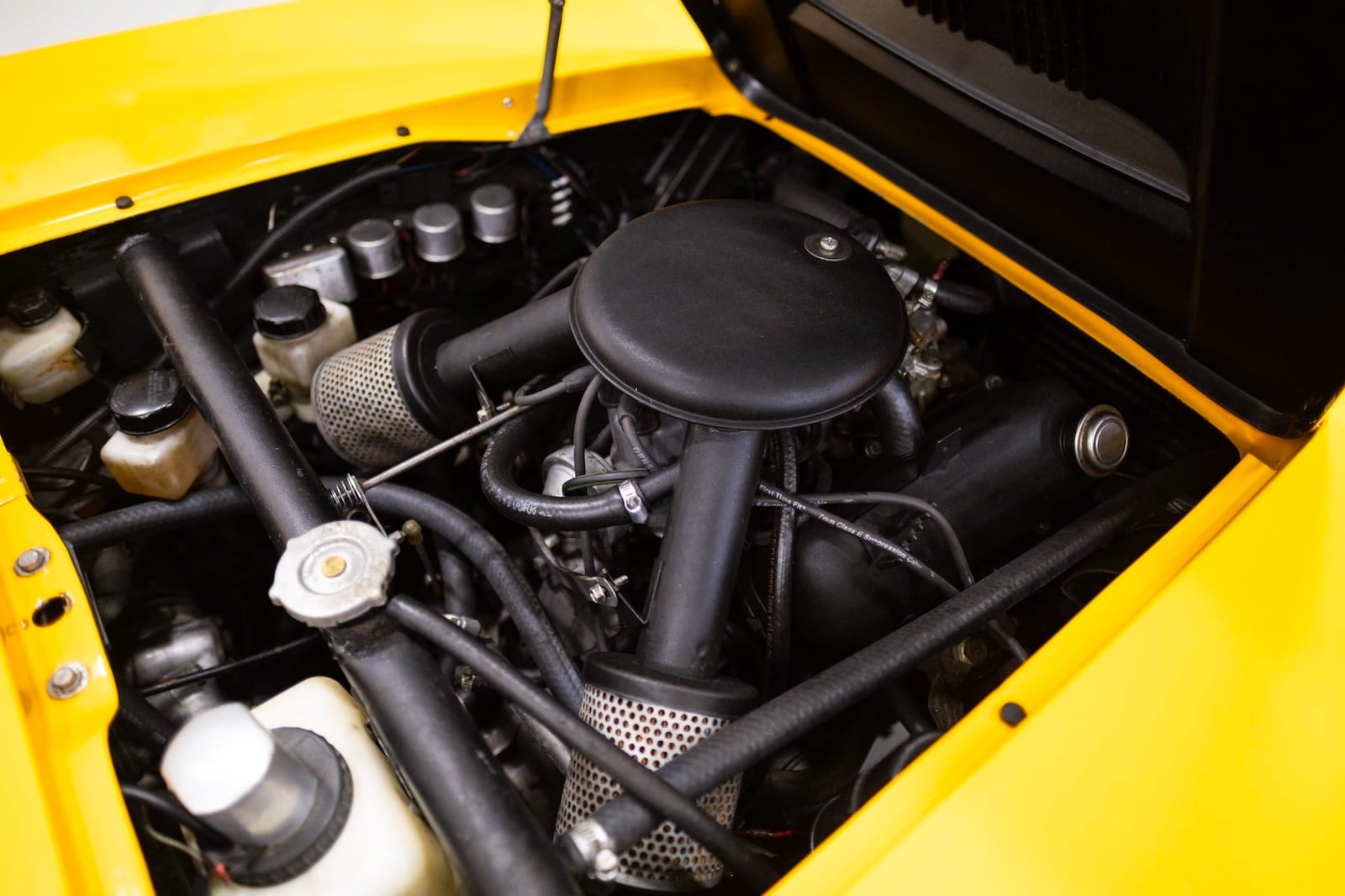
The 1.7 liter V4 was reportedly rebuilt during the refurb, with replacement engine mounts, belts, filters, exhaust parts, a two-row copper-core radiator, an electric cooling fan, and a PerTronix electronic ignition was also fitted for improved starting and reliability.
The odometer shows 45,000 miles, although total mileage is unknown. The sale includes refurb photographs, literature, period brochures, Saab accessories, spare parts, and a spare instrument cluster.
It’s being offered for sale out of Morganville, New Jersey and you can visit the listing here on Bring a Trailer if you’d like to read more about it or register to bid.
Images provided by Bring a Trailer + Saab

Articles that Ben Branch has written have been covered on CNN, Popular Mechanics, Smithsonian Magazine, Road & Track Magazine, the official Pinterest blog, the official eBay Motors blog, BuzzFeed, Autoweek Magazine, Wired Magazine, Autoblog, Gear Patrol, Jalopnik, The Verge, and many more.
Silodrome was founded by Ben back in 2010, in the years since the site has grown to become a world leader in the alternative and vintage motoring sector, with well over a million monthly readers from around the world and many hundreds of thousands of followers on social media.