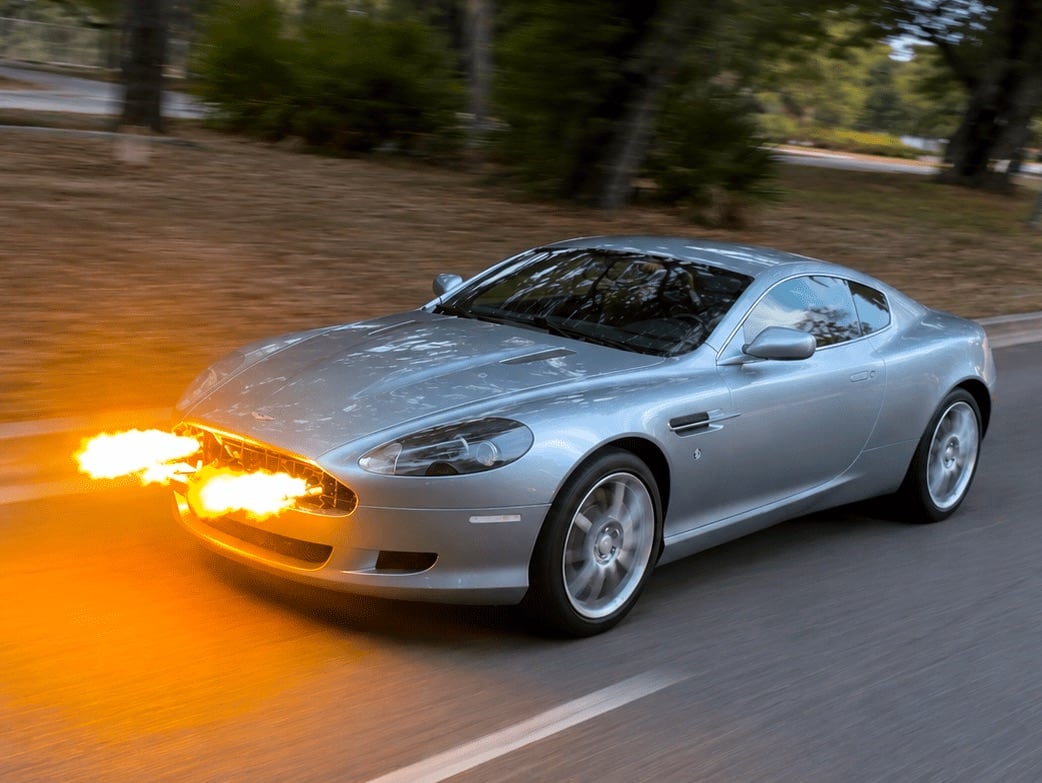
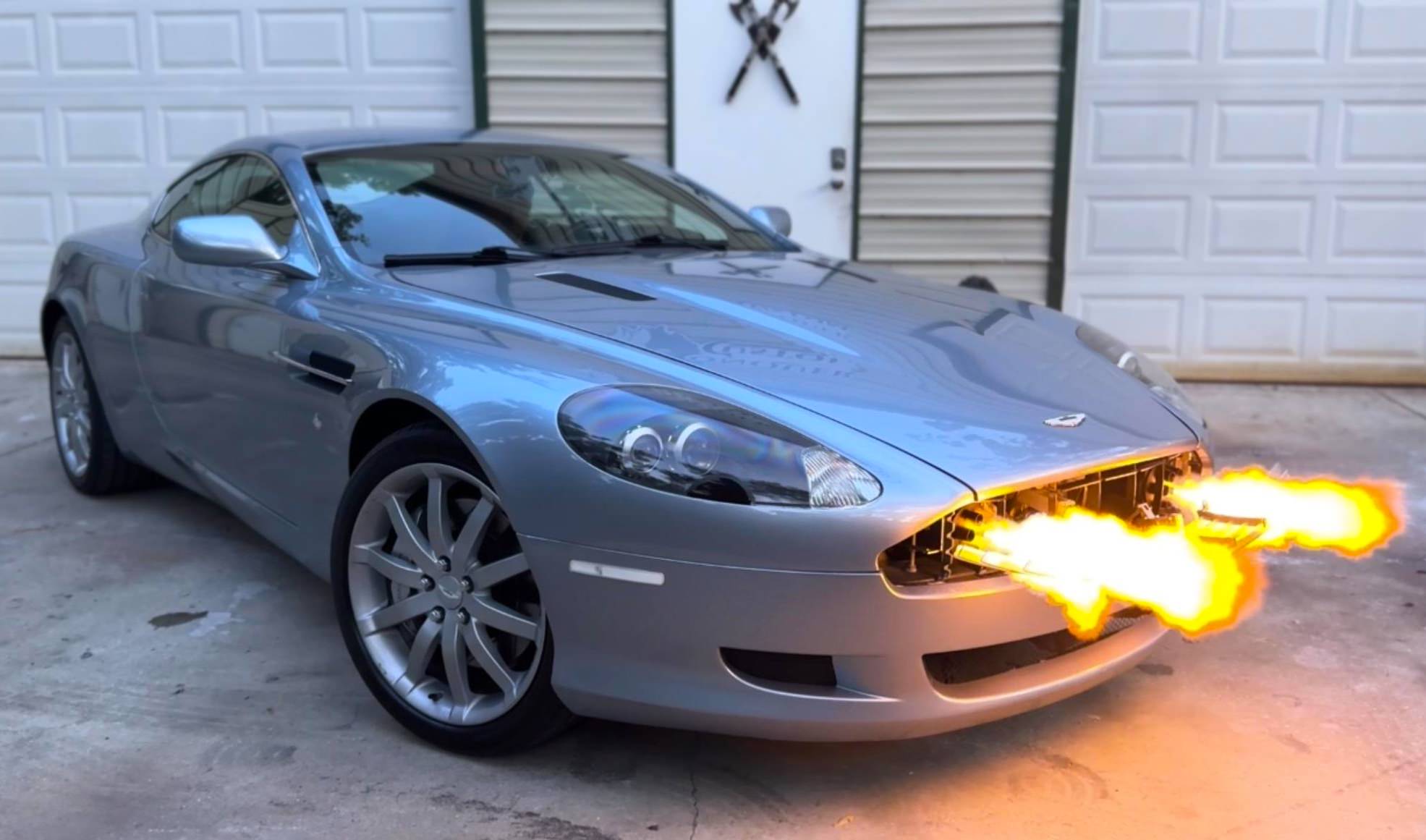
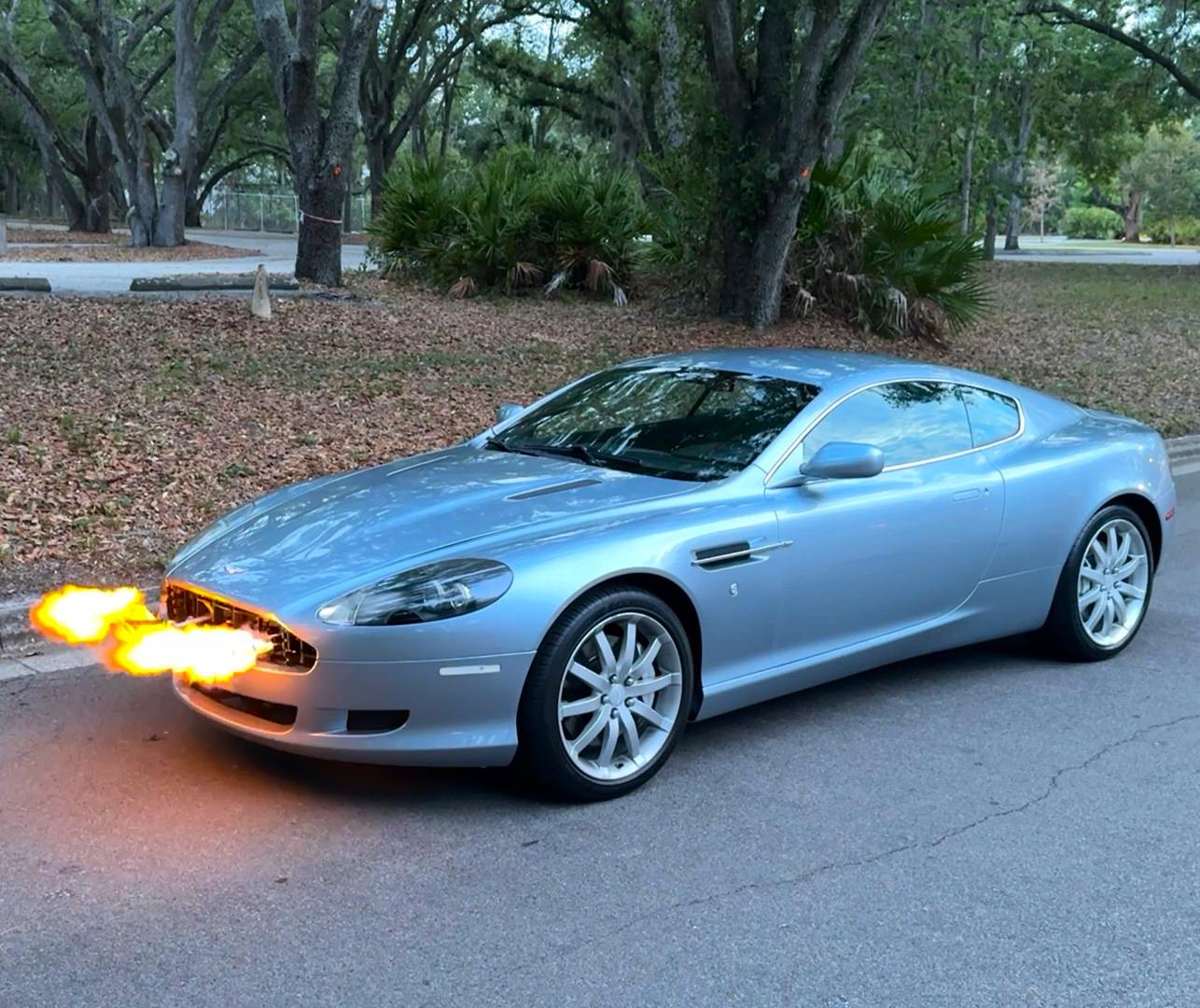
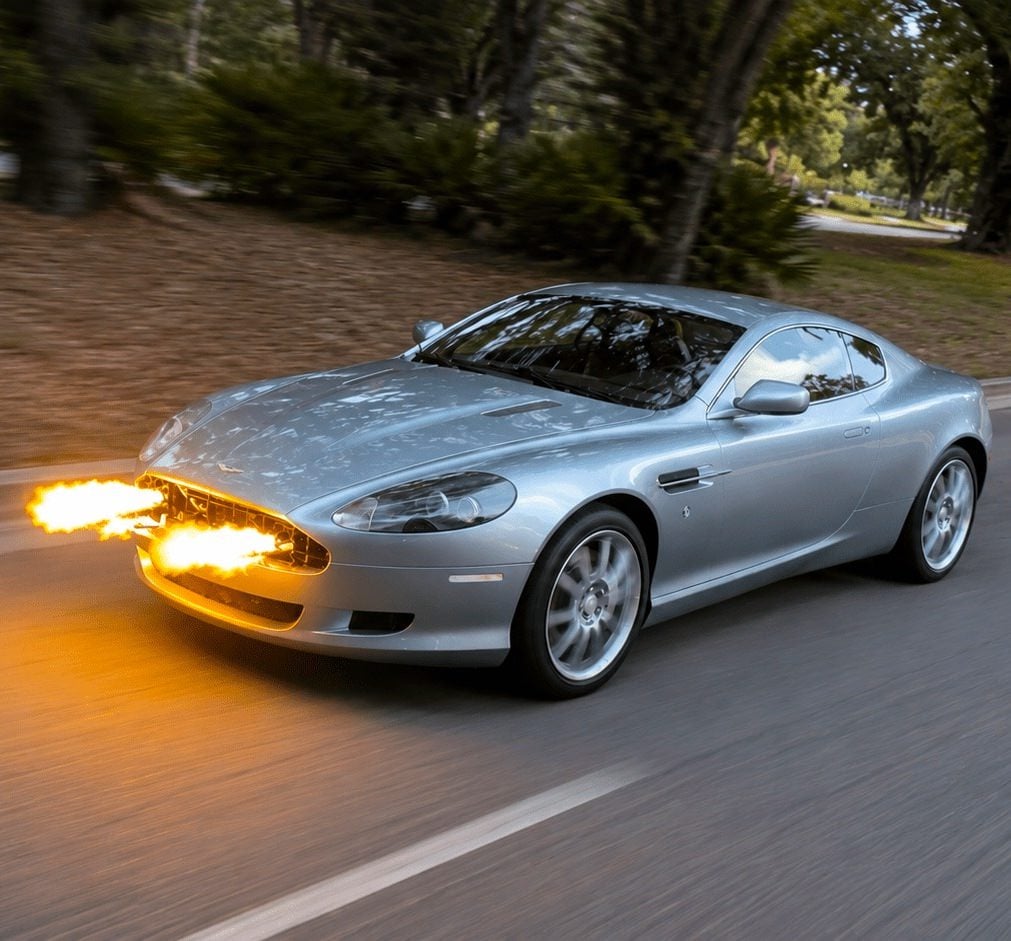
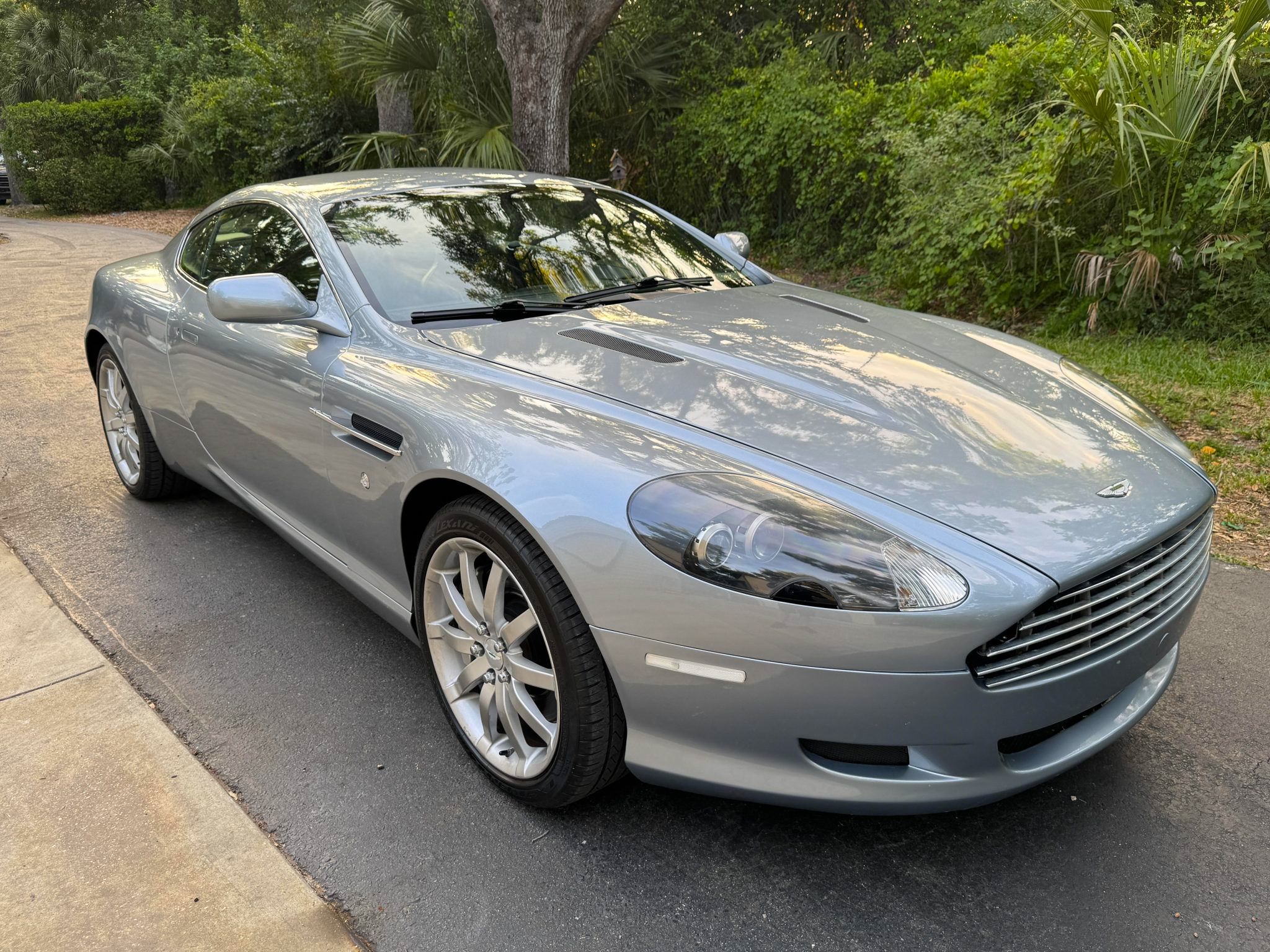
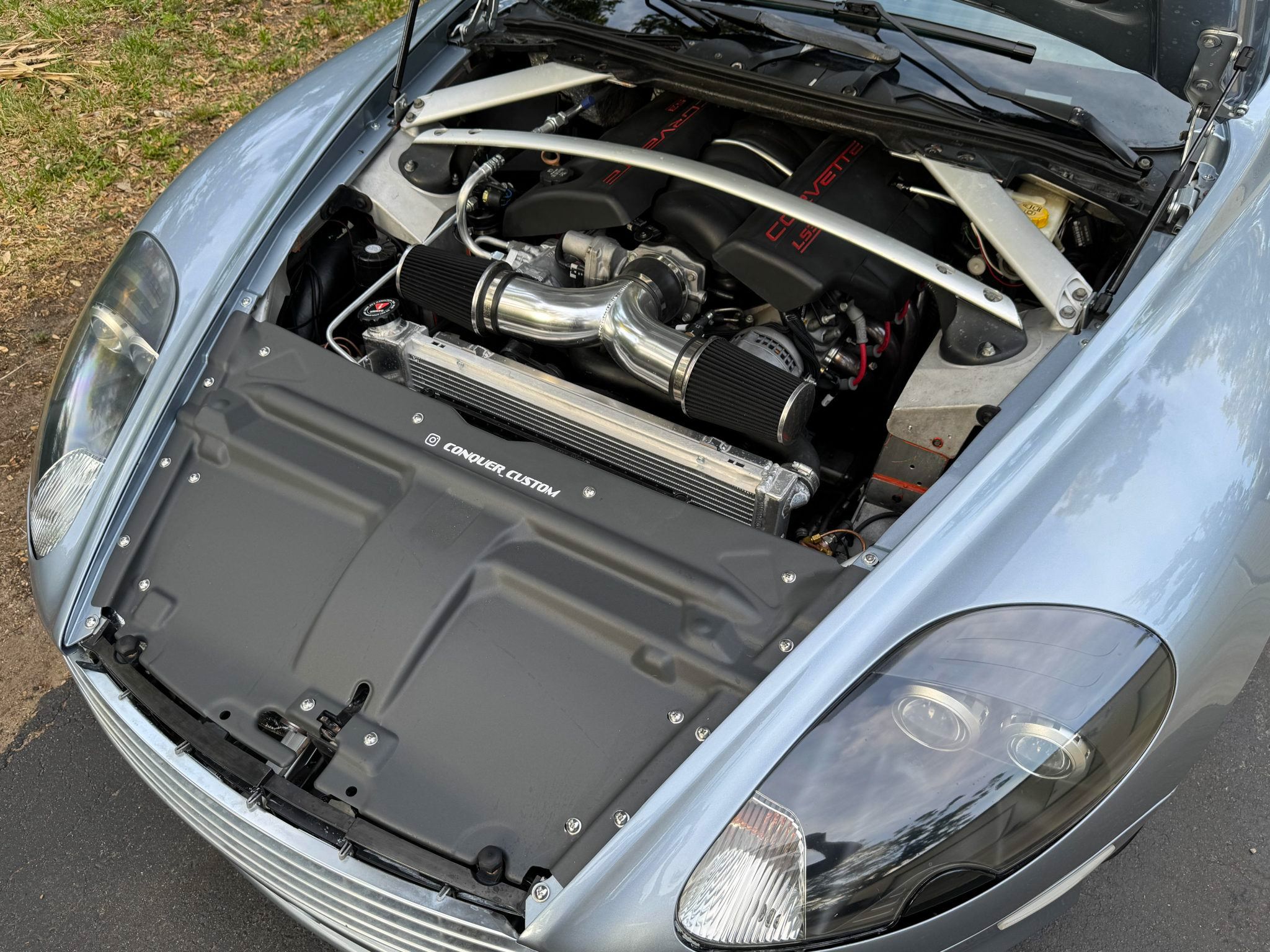
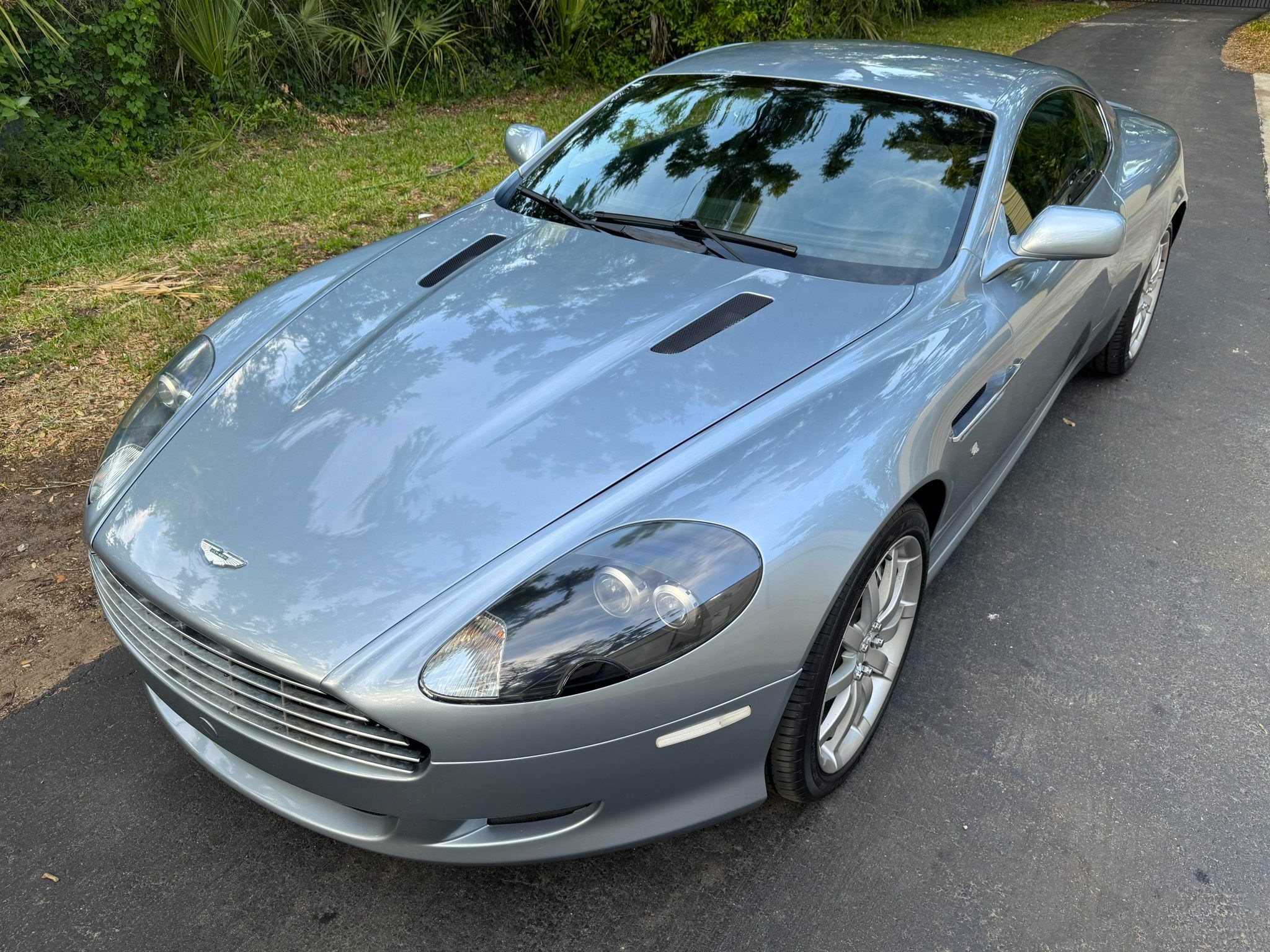
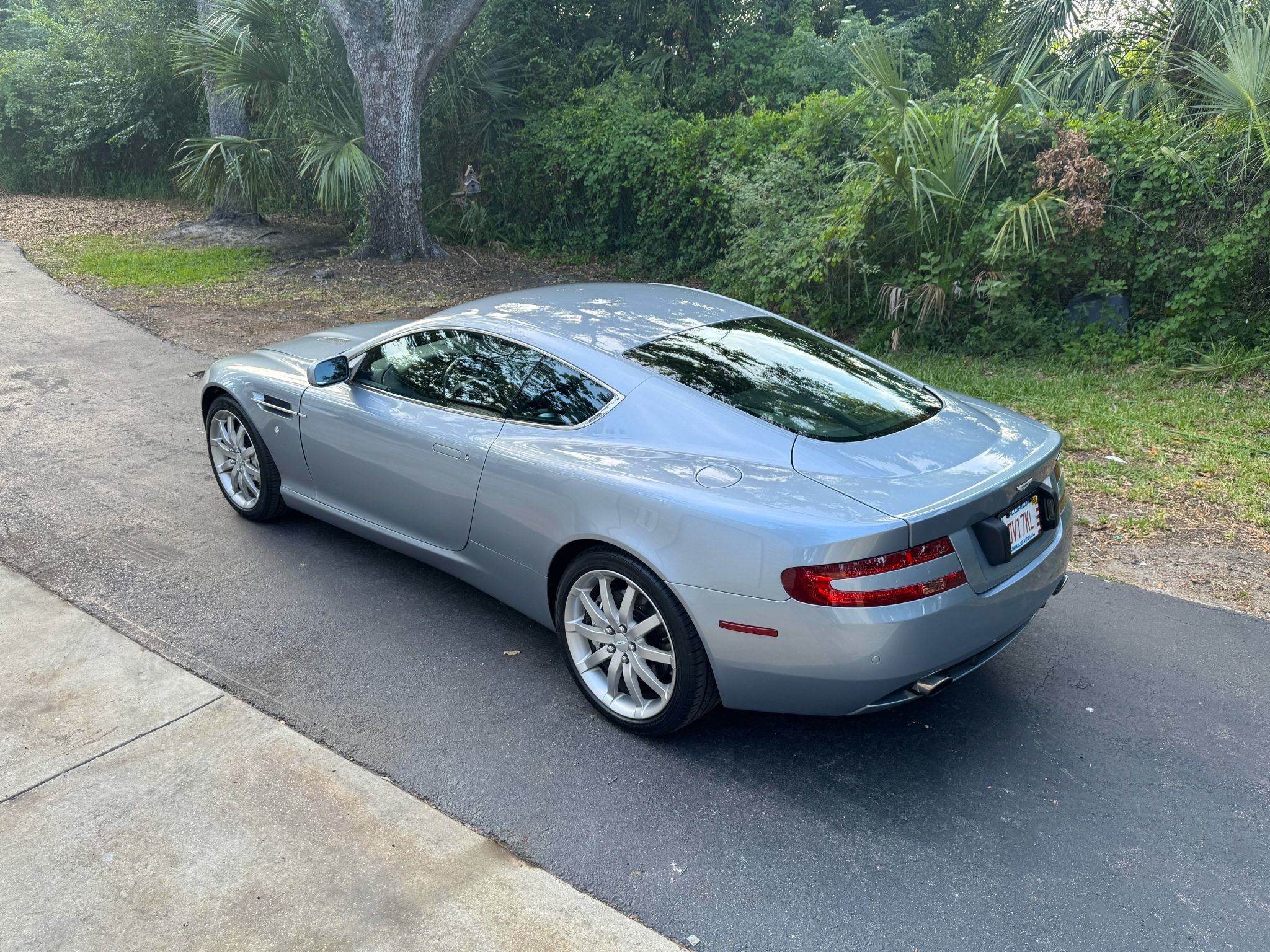
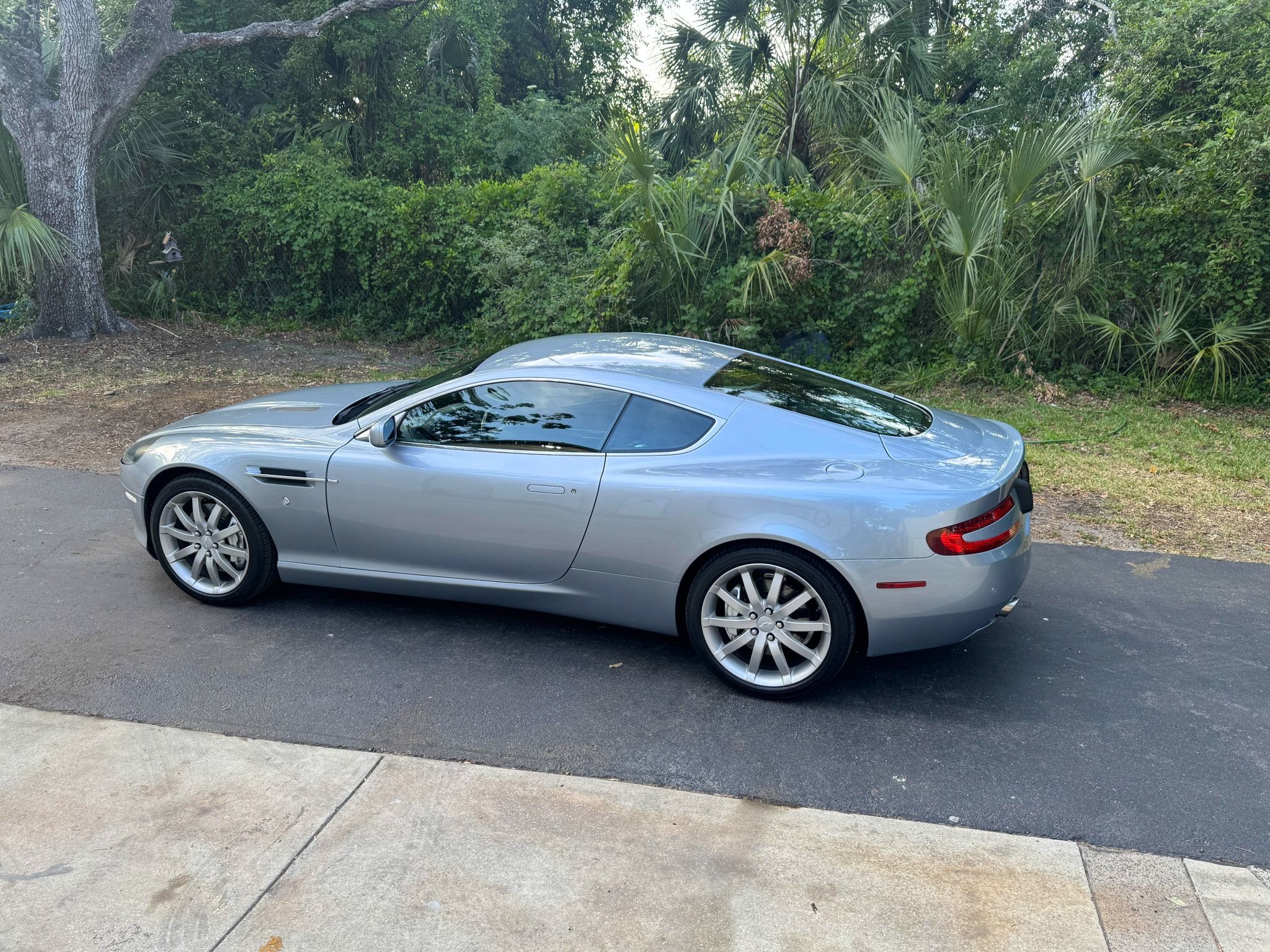
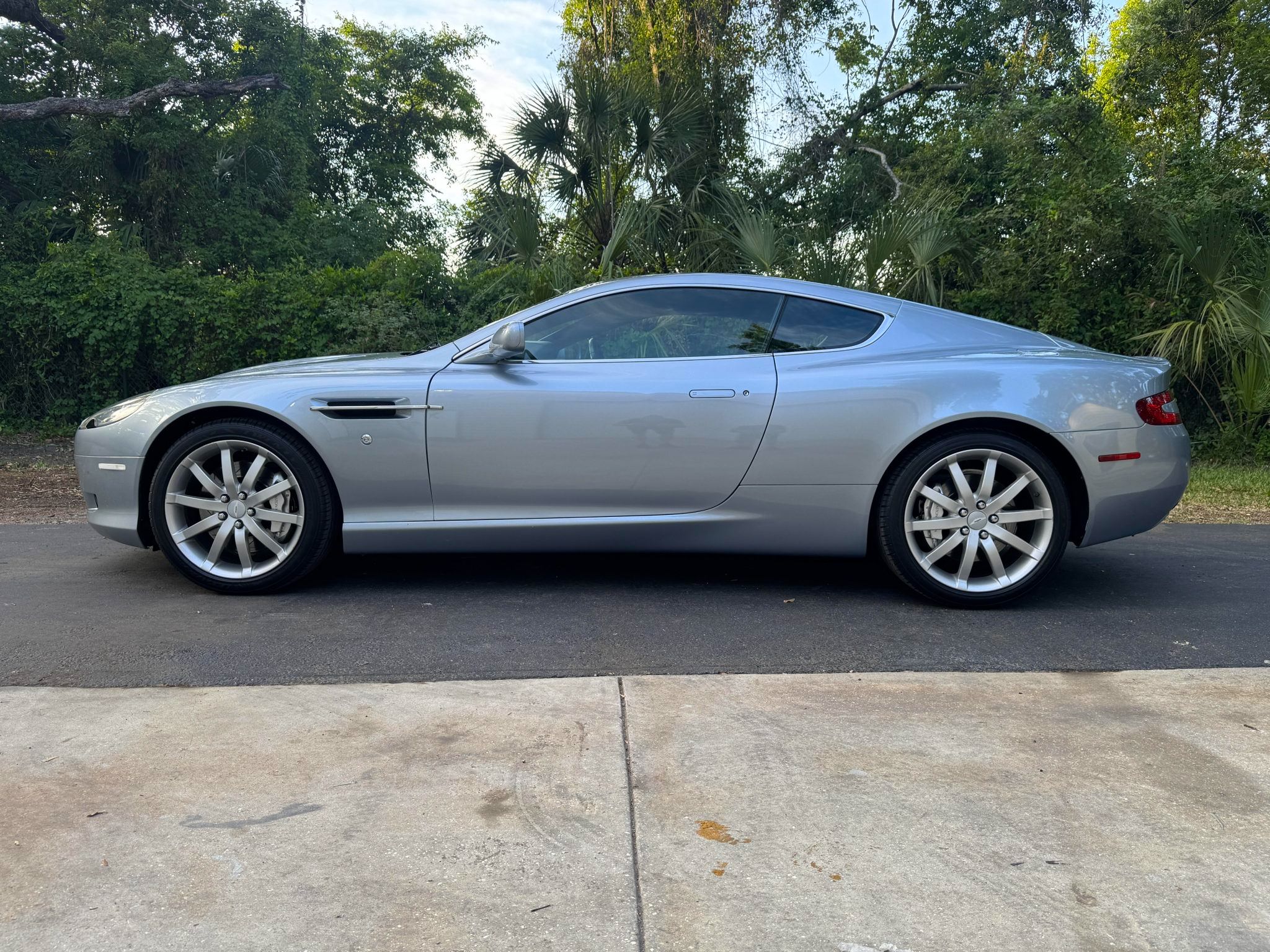
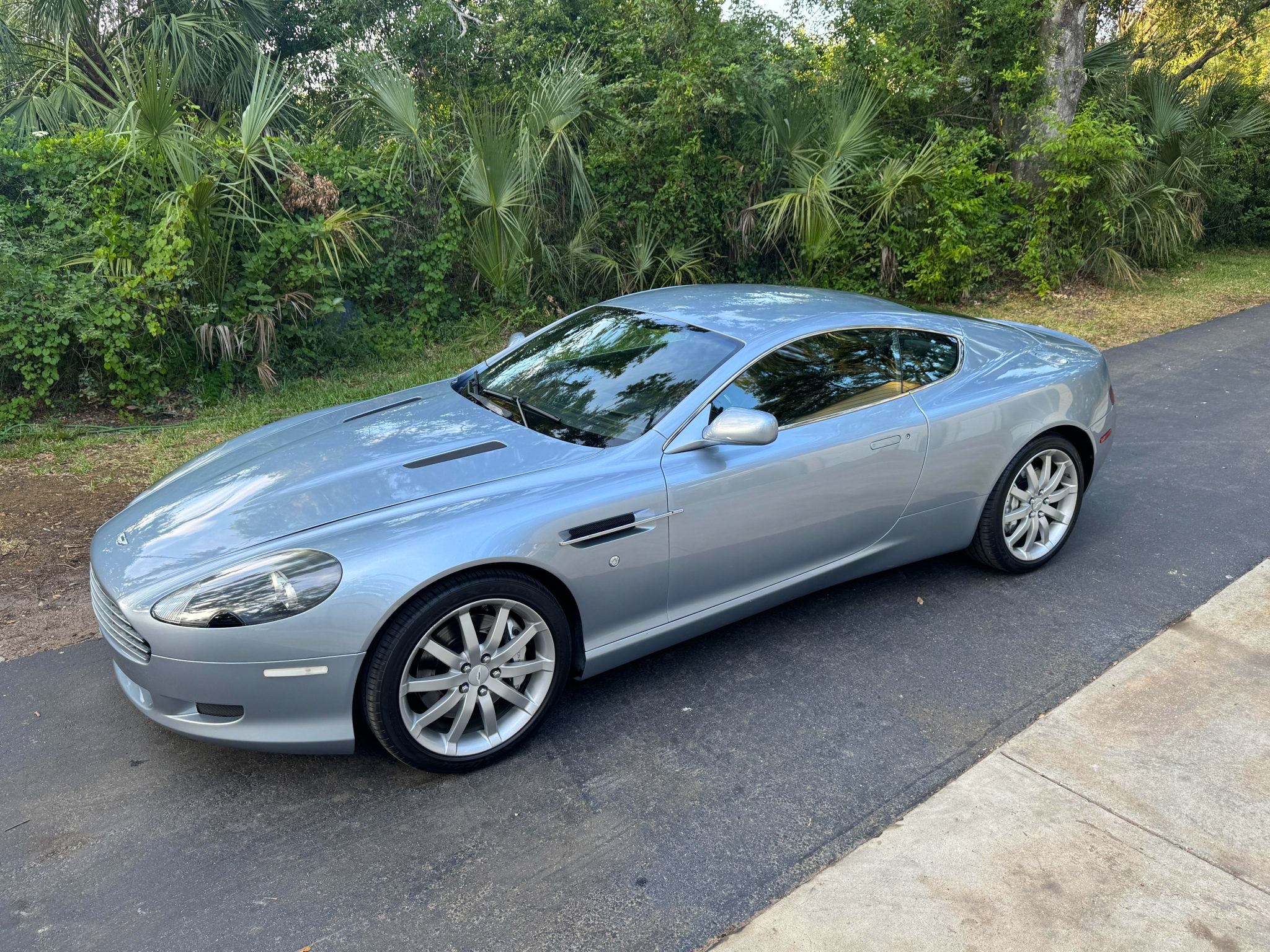
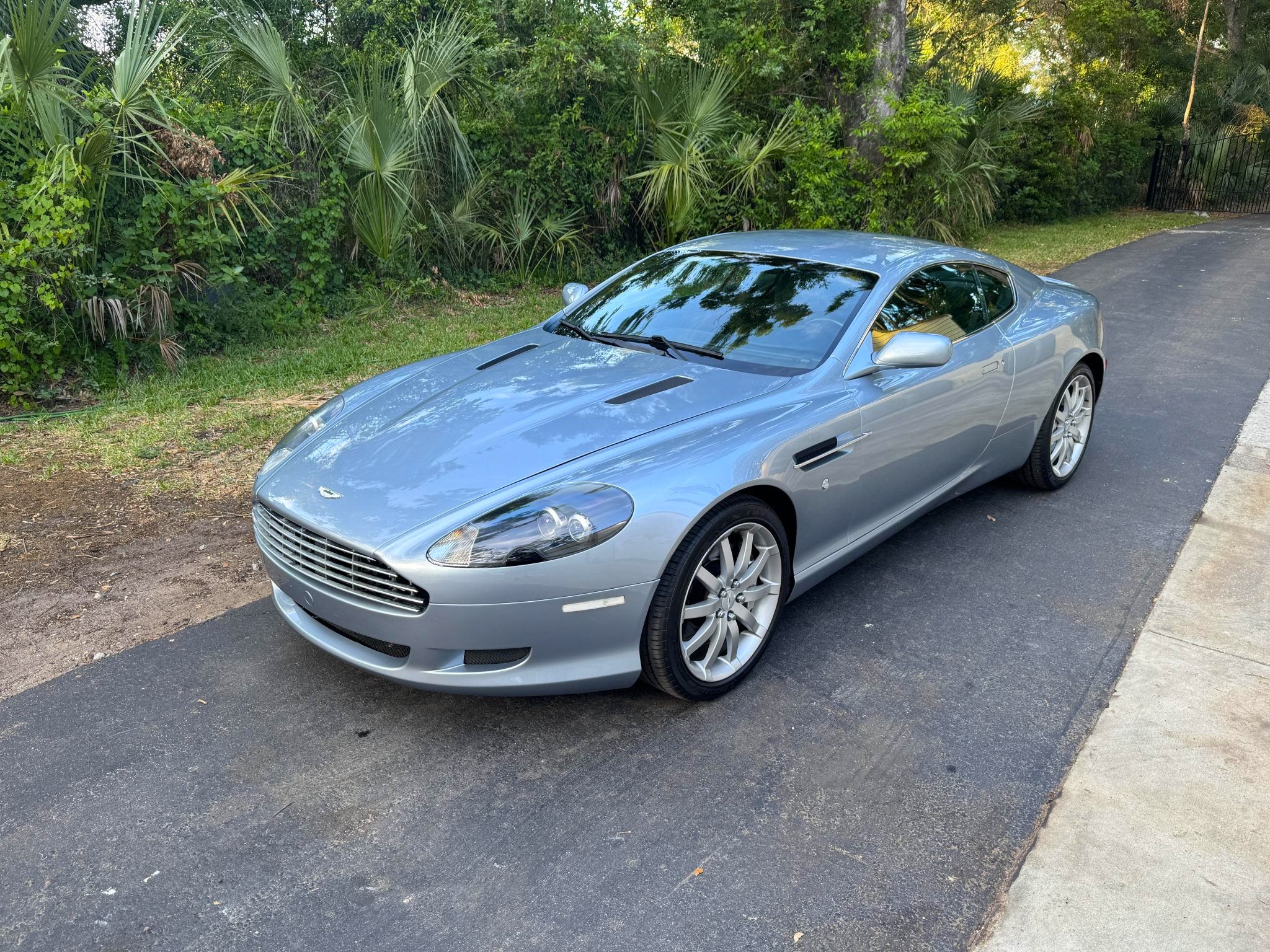
This is an Aston Martin DB9 from 2006 that was comprehensively modified in 2021, it’s now powered by a 6.2 liter LS3 Corvette V8, and perhaps more importantly, it has minigun-style-flame-shooters behind the grille.
This car was built by Conquer Custom in Tampa, Florida as a showcase for the Holley Terminator X Max engine management system. Before any Aston purists get up in arms about a perfectly good DB9 being modified, this car was involved in an accident prior to the rebuild.
Fast Facts: A Corvette-Powered Aston Martin DB9
- This 2006 Aston Martin DB9 is a 007-themed show car built by Conquer Custom in Tampa, Florida to showcase the Holley Terminator X Max engine management system. It was bought by the seller in 2021 and prepared for its debut at the 2025 LS Fest in Bowling Green, Kentucky.
- The original V12 has been swapped for a 6.2 liter LS3 Corvette V8 equipped with the Holley Terminator X Max, a mild-performance camshaft, custom air intake, and long-tube headers. Power reaches the rear wheels through a torque tube and a Corvette-sourced 4L65E 4-speed automatic transaxle mounted to the factory Aston Martin subframe.
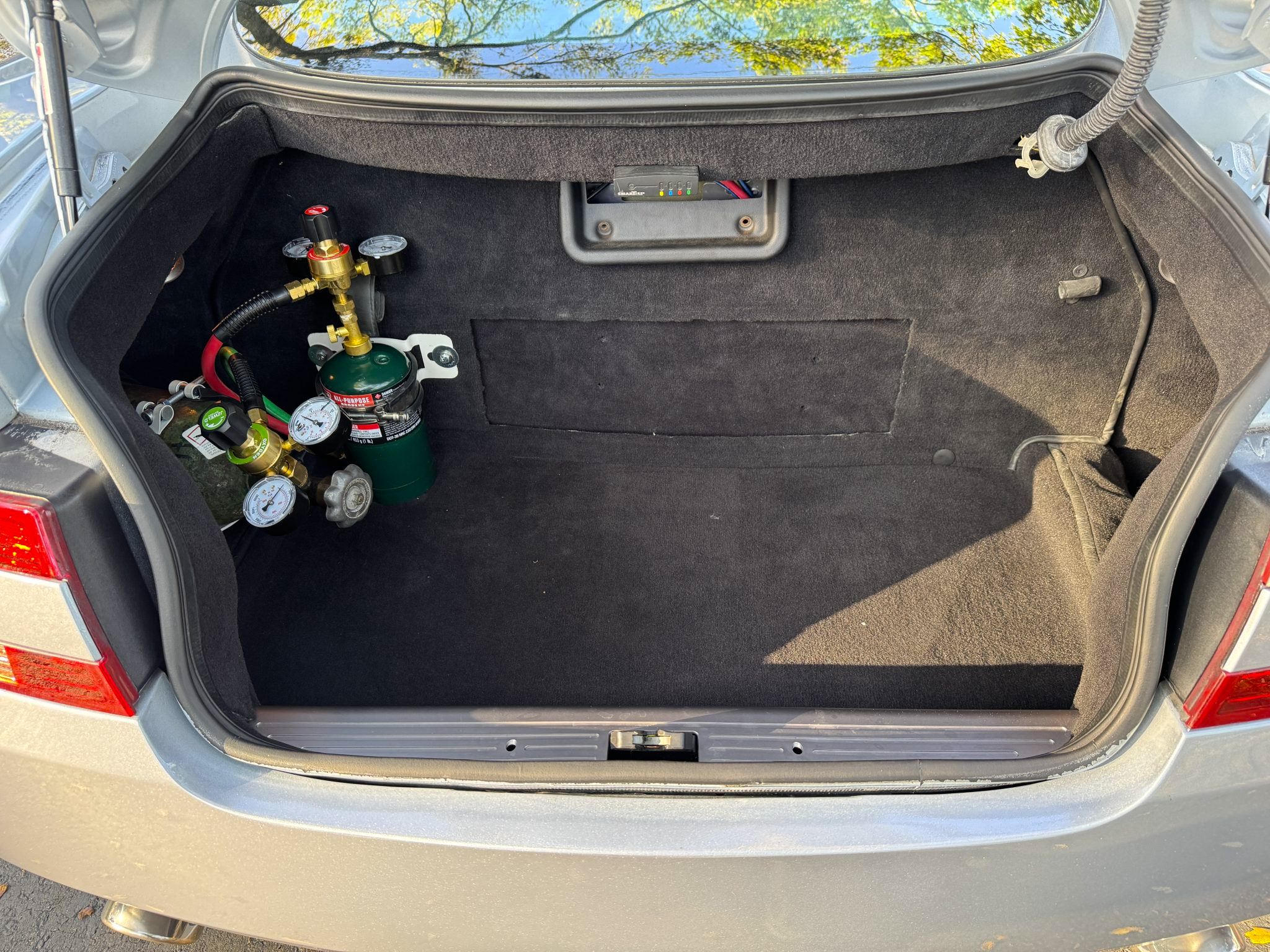
- Bond-inspired modifications include a linear actuator that tilts the grille forward to reveal minigun-style flame-shooting assemblies fed by propane and oxygen tanks in the trunk, plus rear-mounted smoke canisters. The body was repainted in Skyfall Silver in 2025, and the cabin has been fully re-trimmed in black Alcantara with a 007-themed digital display.
- The digital odometer reads 4,500 miles driven since the build was completed, though total chassis mileage is unknown. The Carfax report shows a 2017 accident and subsequent total loss declaration, with multiple salvage titles issued before a rebuilt Florida title was granted in 2026. The car is now offered for sale out of Tampa.
History Speedrun: The Aston Martin DB9
The Aston Martin DB9 is one of those rare automobiles that rose well beyond its original role, and became the rolling foundation on which the company rebuilt itself. Produced from 2004 to 2016, with the Volante convertible joining production in 2005, the DB9 was the car that pulled Aston Martin into the 21st century, establishing a platform and an updated design language that would help define the storied marque going forward.
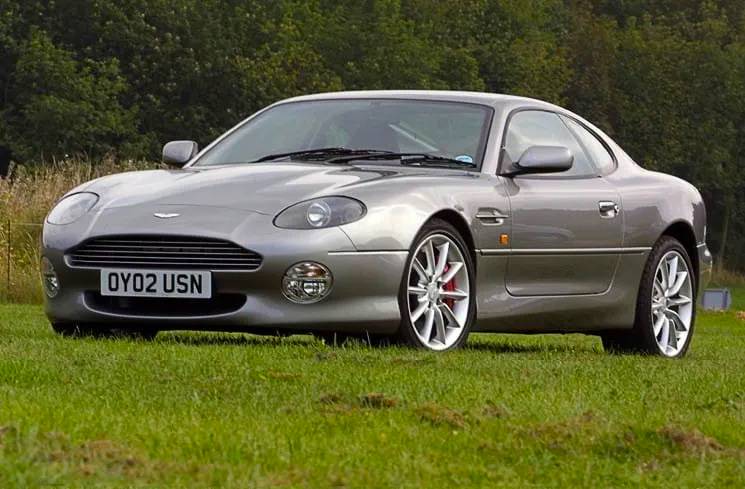
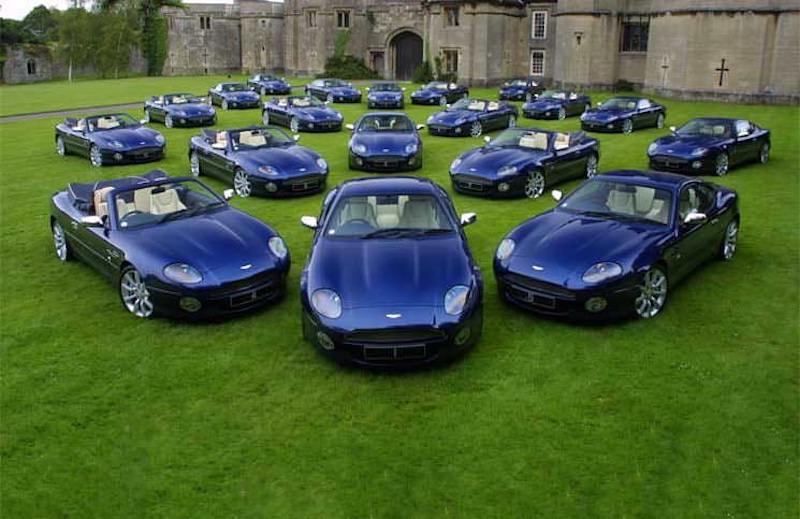
 To understand the DB9, you really first have to understand the car it replaced. The DB7 (shown above) had been in production since 1994, designed by Ian Callum under Ford Motor Company’s ownership of Aston Martin. Images courtesy of Aston Martin.
From The DB7 To Something Fresh
To understand the DB9, you really first have to understand the car it replaced. The DB7 had been in production since 1994, designed by Ian Callum under Ford Motor Company’s ownership of Aston Martin.
It was the brand’s approachable grand tourer, and it used a steel monocoque chassis that had been designed by Jaguar and originally used on the XJS. This platform sharing helped to significantly reduce development time and cost, but the XJS had been developed in the 1970s as a replacement for the E-Type (XKE), and by the 1990s it was well and truly long in the tooth.
The DB7 was available as both a coupe and a Volante convertible, it was initially powered by a supercharged straight-six before the V12-powered DB7 Vantage arrived in 1999. By the time production ended in 2004, 7,000 DB7s had been built, making it the best-selling Aston Martin in the company’s history up to that point in time, and another feather in the cap of Ian Callum.
While the DB7 had been commercially successful, the antiquated nature of the underlying engineering had attracted some bad press. Ford knew that if Aston Martin was to be taken seriously as a rival to Ferrari and Porsche, a ground-up rethink was necessary for any replacement model. In July of 2000, Ford appointed Ulrich Bez as CEO of Aston Martin, and development began in earnest on the DB7’s successor under the project codename “AM802.”
The new car was designed by Ian Callum and Henrik Fisker, with Fisker taking over as lead designer in 2001 after Callum was increasingly needed at Jaguar – much of the design work took place at Jaguar’s design center in Whitley.
The result was so completely different from the DB7 that Aston Martin made the (controversial) decision to skip the “DB8” name entirely. Their rationale was that the new car was considered a revolution rather than an evolution, making a sequential number seem insufficient.
The New VH Platform
The DB9 debuted at the Frankfurt Motor Show in September of 2003, with the Volante following at the Detroit Auto Show in January of 2004. It was the first Aston Martin built at the company’s new purpose-built facility in Gaydon, Warwickshire, and the first to ride on the all-new VH (Vertical/Horizontal) bonded aluminum platform, which Ford had invested heavily to develop.
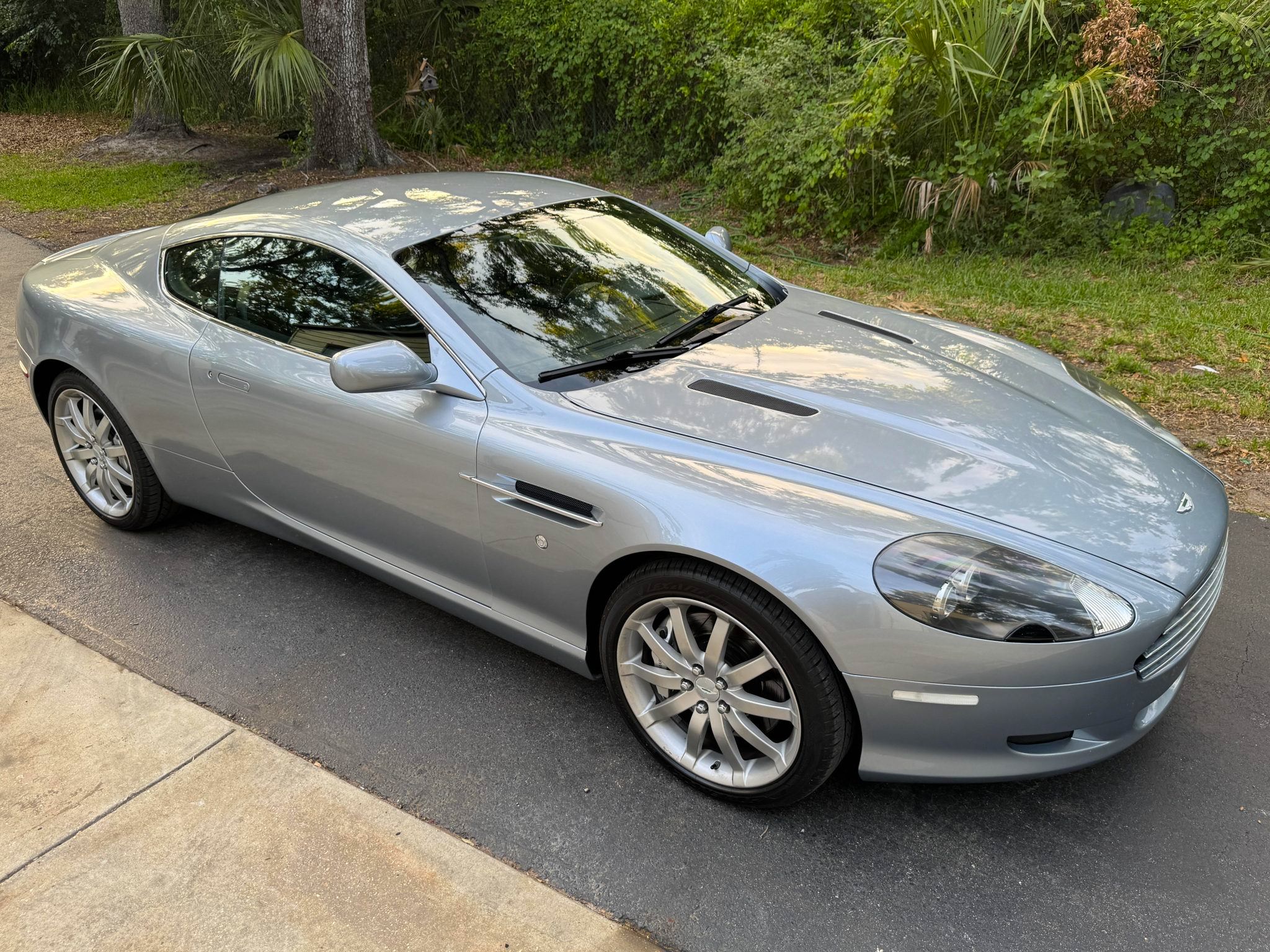
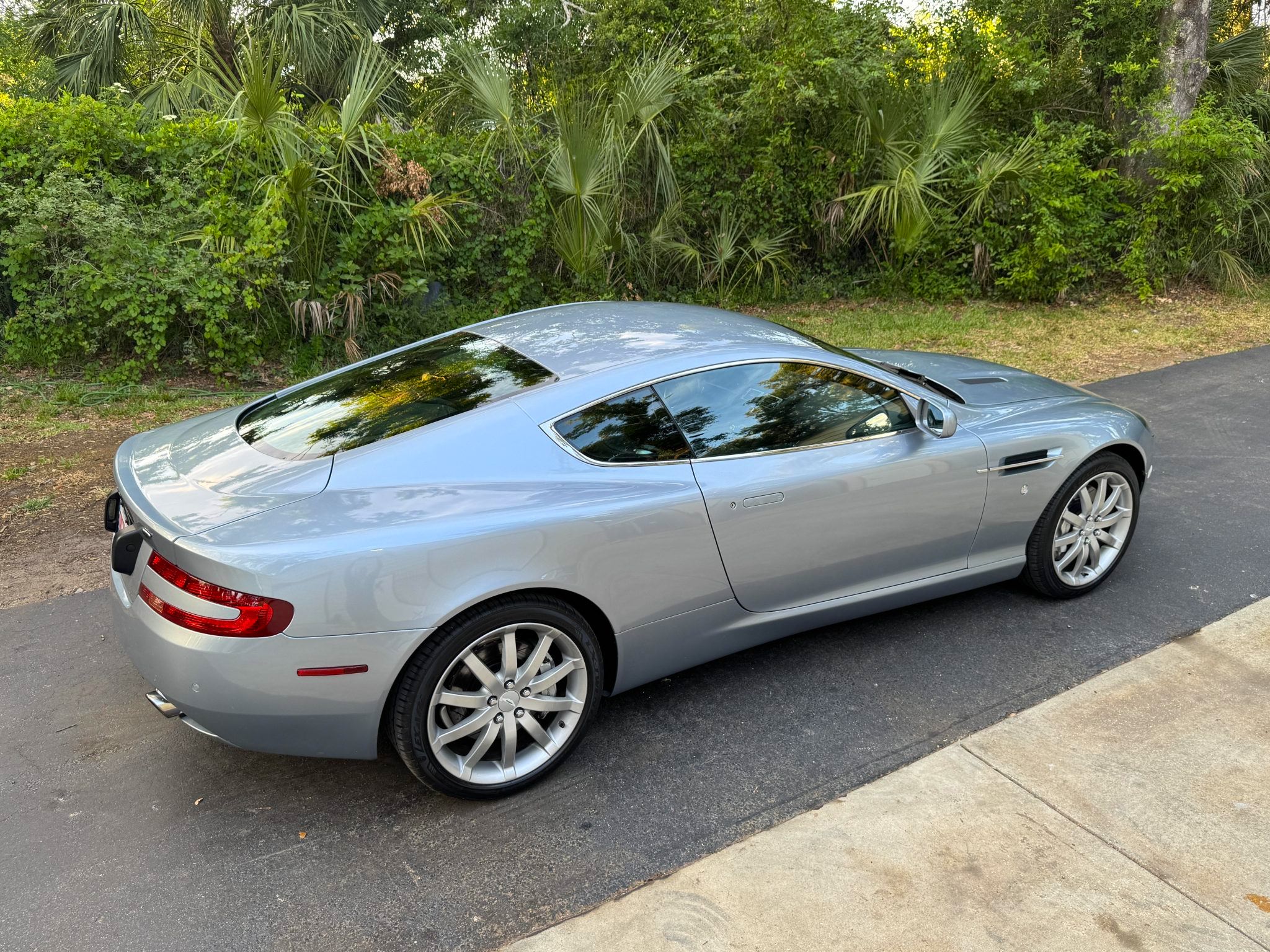
The DB9 was the car that pulled Aston Martin into the 21st century, establishing a platform and an updated design language that would help define the storied marque going forward.
This architecture would go on to underpin virtually every mainstream Aston Martin produced between 2003 and 2016.
The bonded and riveted aluminum structure was a quantum leap over the DB7. Despite weighing 25% less than its predecessor, the DB9’s shell had more than double the torsional rigidity. Power came from a 5.9 liter naturally aspirated V12 sourced from the Aston Martin Vanquish, initially producing 450 bhp and paired with either a 6-speed manual or a 6-speed ZF automatic.
The car had double-wishbone suspension all around, front and rear anti-roll bars, and anti-squat and anti-lift geometry at the rear to keep things composed under hard acceleration and braking.
Ford had invested heavily in Aston Martin and on the DB9 project. It paid off in a big way. Aston would ultimately build 16,500 DB9s over its 12-year run, comfortably surpassing the DB7 as the brand’s best-selling model ever.
DB9 Updates, Facelifts, + Special Editions
The DB9 received a series of updates throughout its production life, 2008 refresh was mostly focused on some interior revisions and a new center console, while the 2009 model update introduced revised Bilstein dampers and reworked suspension arms for improved handling.
Around the 2011 model year, the DB9 was fitted with an available Adaptive Damping System related to that used on the DBS and Rapide. The most significant overhaul arrived in late 2012 for the 2013 model year, when Aston Martin effectively folded the short-lived Virage’s role back into the DB9 range with a comprehensively revised DB9.
This version had restyled bodywork with design cues from the Virage, an upgraded AM11 V12 producing 510 bhp and 457 lb ft of torque, carbon ceramic brakes as standard, and three selectable driving modes – Normal, Sport, and Track. More than 70% of the body panels were new.
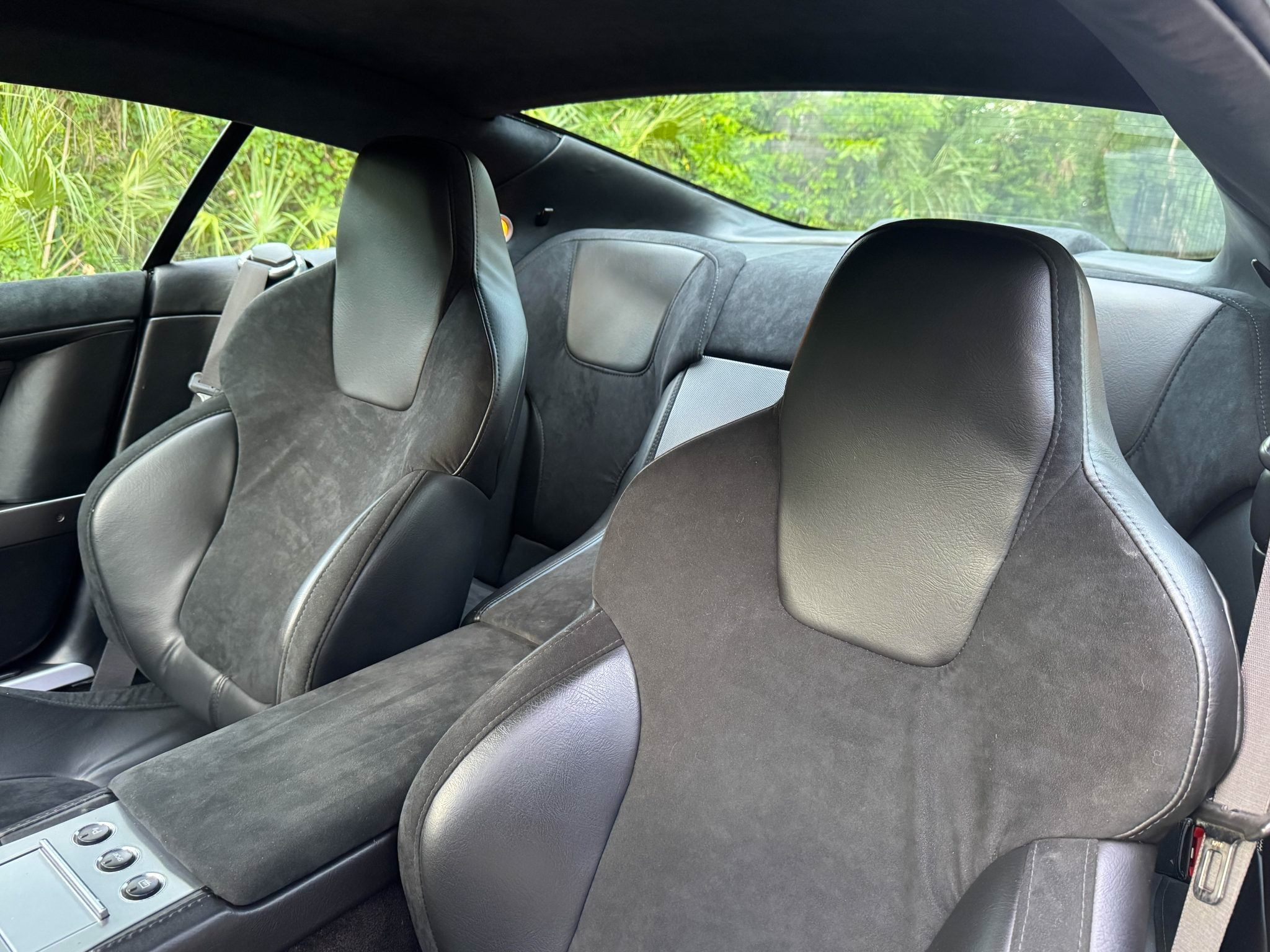
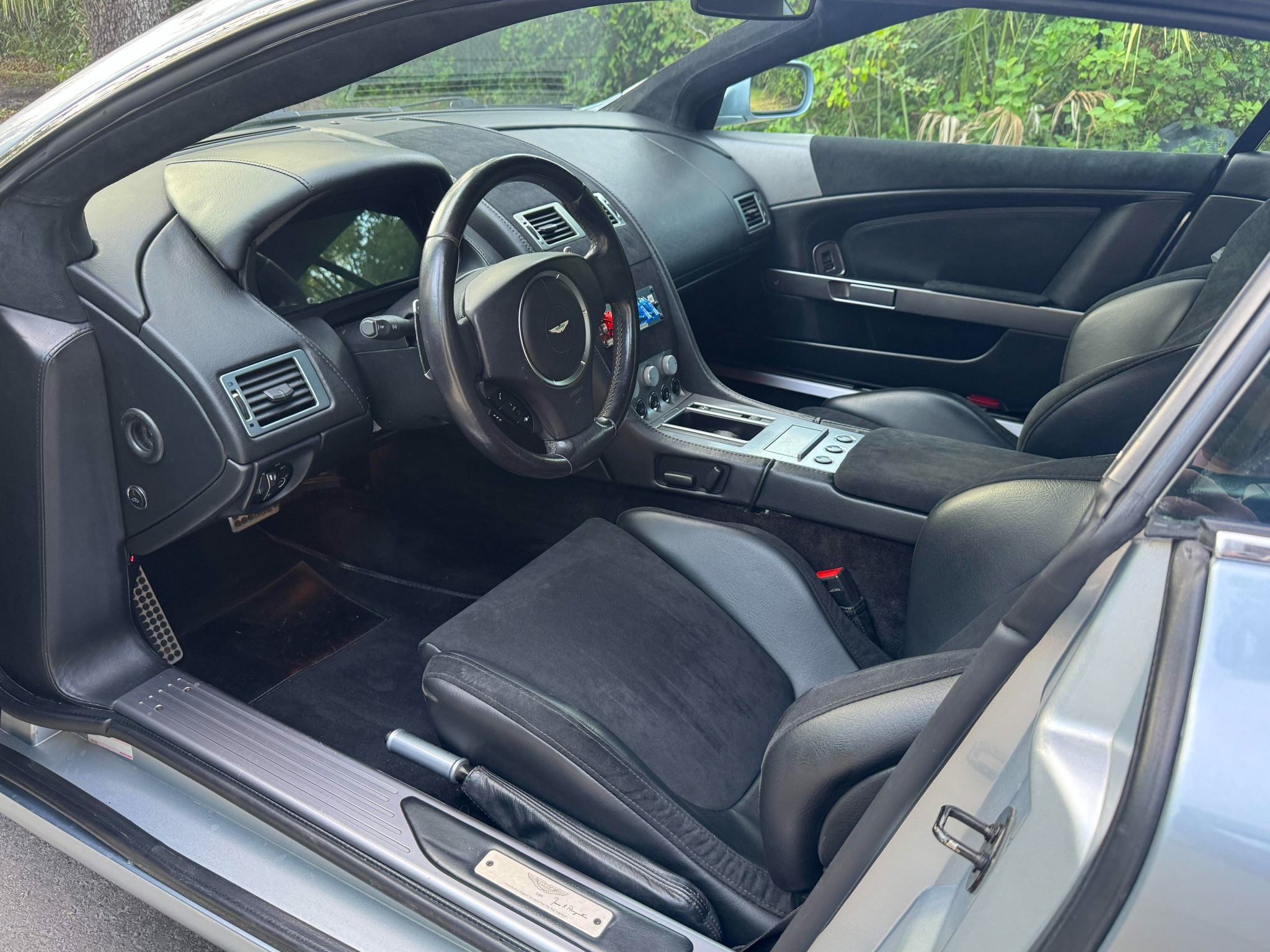
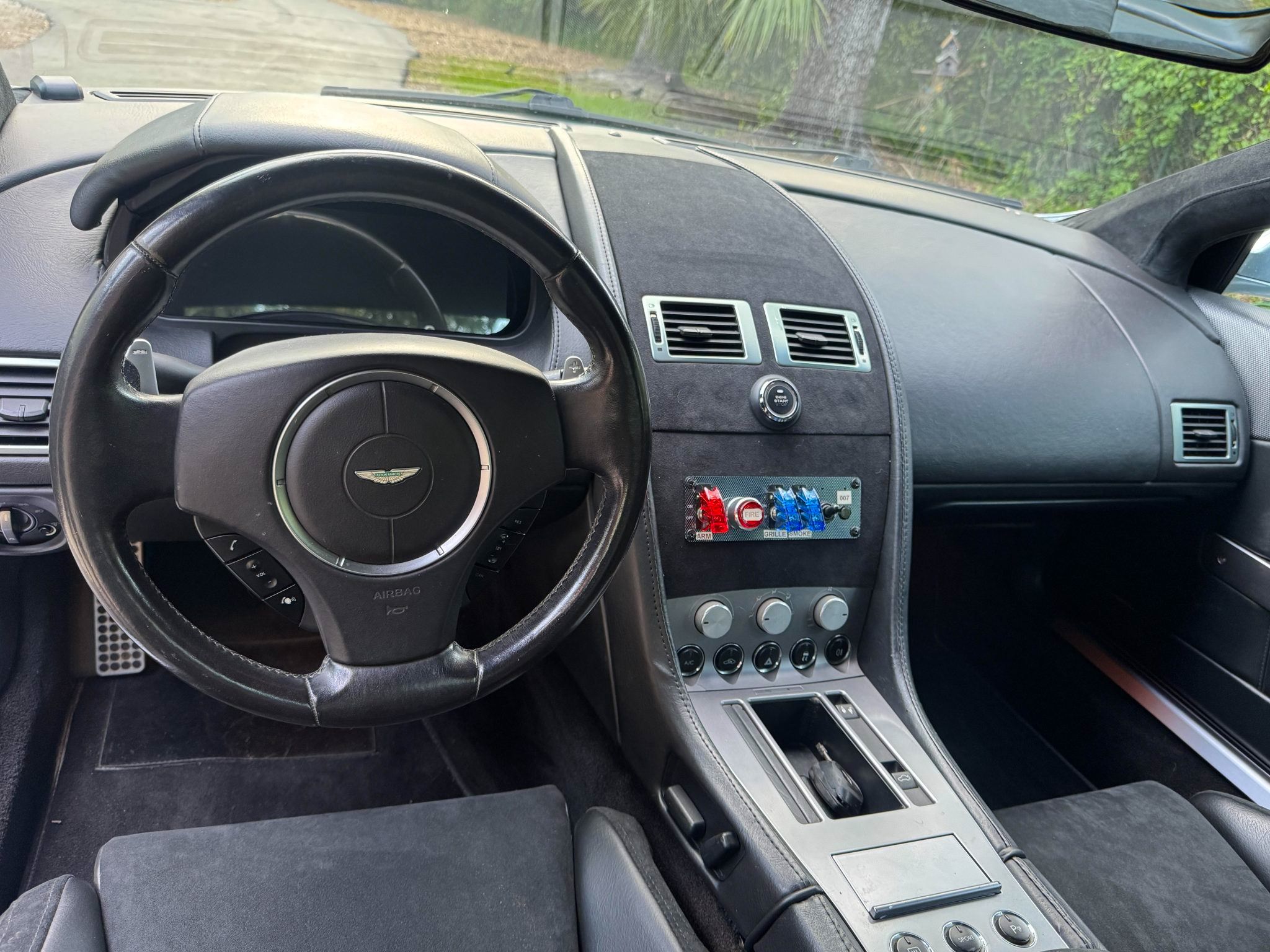
Inside, the cabin has been fully re-trimmed in black Alcantara including the seats, center console, and door panels. A control panel has been added to the center stack, and a Bluetooth-capable sound system has been installed.
In 2015, Aston Martin unveiled the DB9 GT at the Goodwood Festival of Speed as the final iteration of the model. It packed 540 bhp and 457 lb ft of torque from its uprated V12, reached 0 to 62 mph in 4.5 seconds, and topped out at 183 mph. The GT also introduced the AMi II infotainment system and some visual tweaks including black-painted splitter and diffuser elements and new ten-spoke 20-inch alloy wheels.
Among the best-known special editions was the DB9 LM, launched in 2008 to celebrate Aston Martin Racing’s GT1 class victory at the 2007 24 Hours of Le Mans. Finished in Sarthe Silver with red brake calipers and a bespoke black-and-red interior, fewer than 70 were made. Carbon Black and Morning Frost editions also appeared through the years, along with the Carbon Edition with extensive carbon fiber exterior and interior trim.
Bond, The DBS, And The “Secret” DB9s
While the DB9 never technically served as Bond’s hero car on screen, it played a behind-the-scenes role in one of the franchise’s most celebrated films. When Eon Productions was casting a car for Daniel Craig’s debut in Casino Royale, Aston Martin CEO Ulrich Bez showed producer Barbara Broccoli a new DB9-based model under development – the DBS.
She cast it immediately, but the DBS was still months from production. Aston Martin’s prototype workshop hand-built two functioning “hero” DBS cars from scratch for close-up filming, while three former DB9 development cars were modified to serve as DBS look-alike stunt vehicles.
One of those stunt cars performed the film’s iconic crash sequence, setting a Guinness World Record with seven complete barrel rolls at over 70 mph. The DBS went on to appear again in 2008’s Quantum of Solace.
The DB9 On Track
Aston Martin Racing (a collaborative effort between Aston Martin and Prodrive), extensively modified the DB9 for competition as the DBR9 for FIA GT1 racing and the DBRS9 for FIA GT3. The DBR9 replaced most of the aluminum bodywork with carbon fiber, fitted an Xtrac 6-speed sequential gearbox, and managed to dial up the V12 to 625 bhp.
Sensationally, it won on its debut at the 2005 12 Hours of Sebring and later took a famous GT1 class victory at the 2007 24 Hours of Le Mans – the win that inspired the DB9 LM road car.
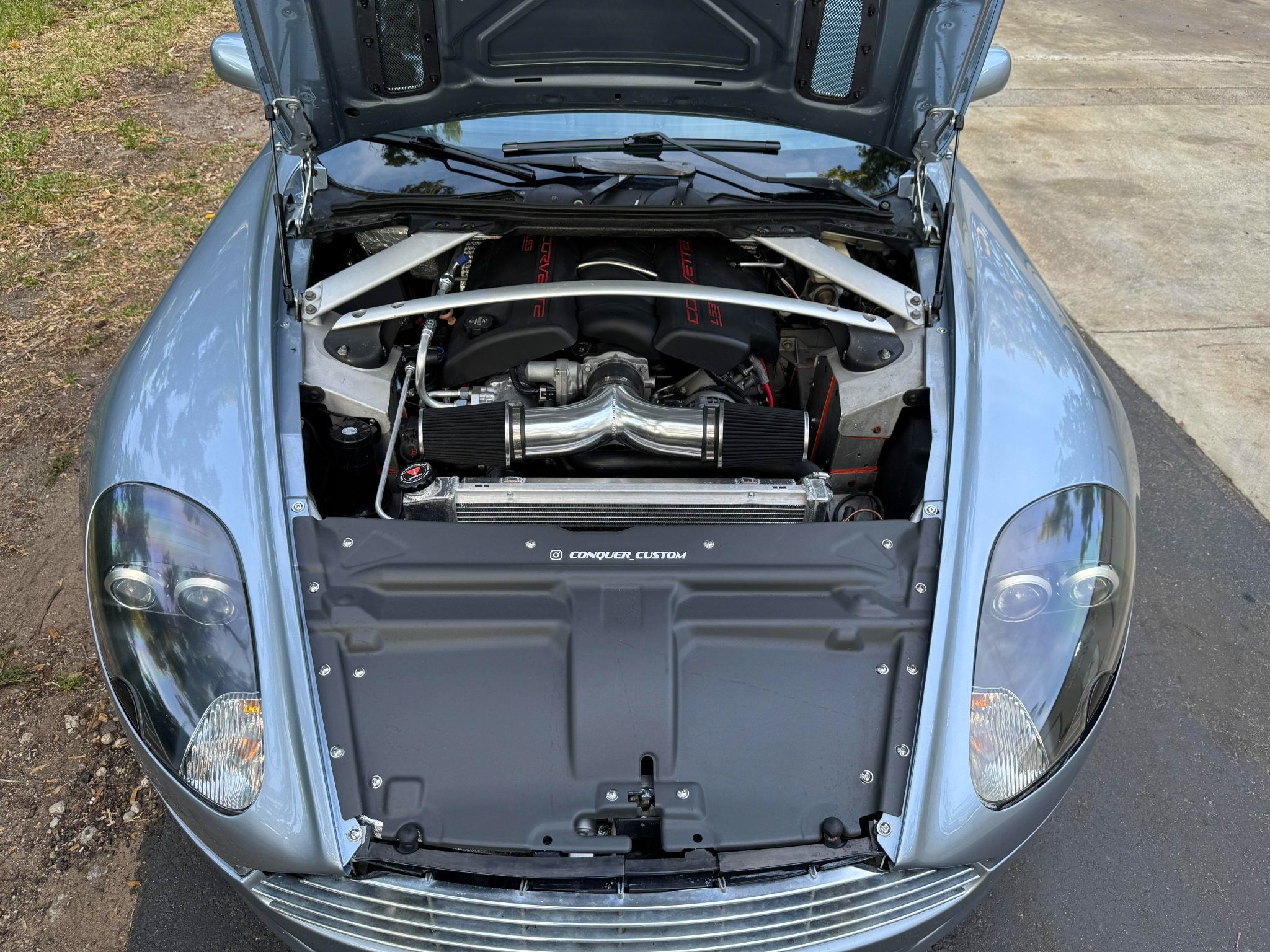
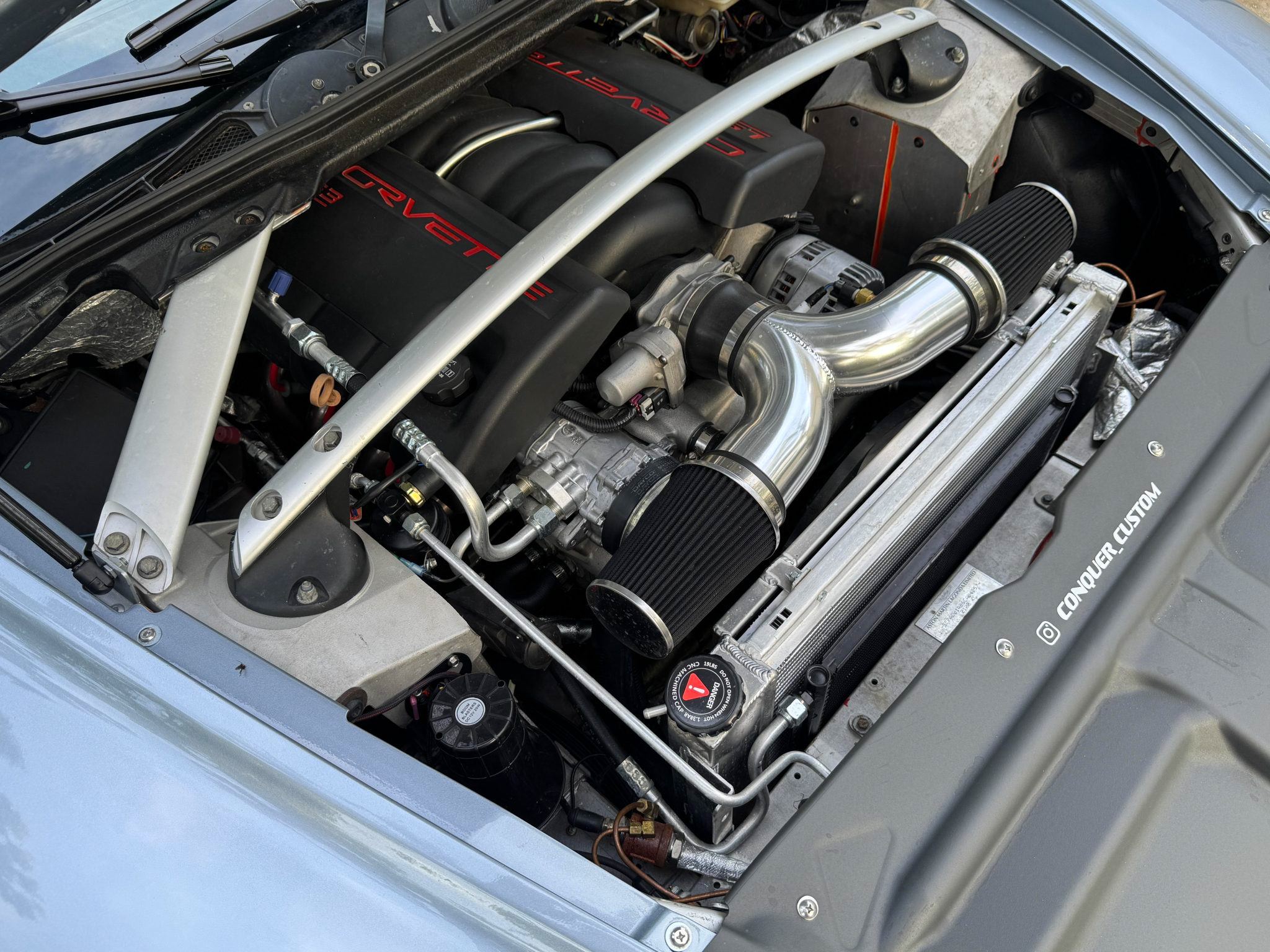
This is an Aston Martin DB9 from 2006 that was comprehensively modified in 2021, it’s now powered by a 6.2 liter LS3 Corvette V8, and perhaps more importantly, it has minigun-style flame-shooters behind the grille.
The DB9’s Successor – The DB11
On July the 27th, 2016, the final nine DB9s (dubbed the “Last of 9” and all finished in dark grey) rolled off the Gaydon production line, closing a 12 year chapter. The DB9’s successor, the DB11, had debuted at the Geneva Motor Show in March of 2016 as the first model under Aston Martin’s “Second Century Plan.”
It rode on an all-new platform, offered a 5.2 liter twin-turbocharged V12 producing 600 bhp and 516 lb ft of torque, and later added a Mercedes-AMG-sourced 4.0 liter twin-turbo V8 option. The DB11 was faster, more technologically advanced, and more spacious than the DB9, but it owed its very existence to the car that had come before it and that had proved that Aston could compete on the world stage in the 21st century.
The Modified 2006 Aston Martin DB9 Shown Here
This 2006 Aston Martin DB9 is a heavily customized, 007-themed car that was built to showcase the Holley Terminator X Max engine management system. The seller bought the car in 2021 and carried out the build at his shop, Conquer Custom in Tampa, Florida, in time for its debut at the 2025 LS Fest in Bowling Green, Kentucky.
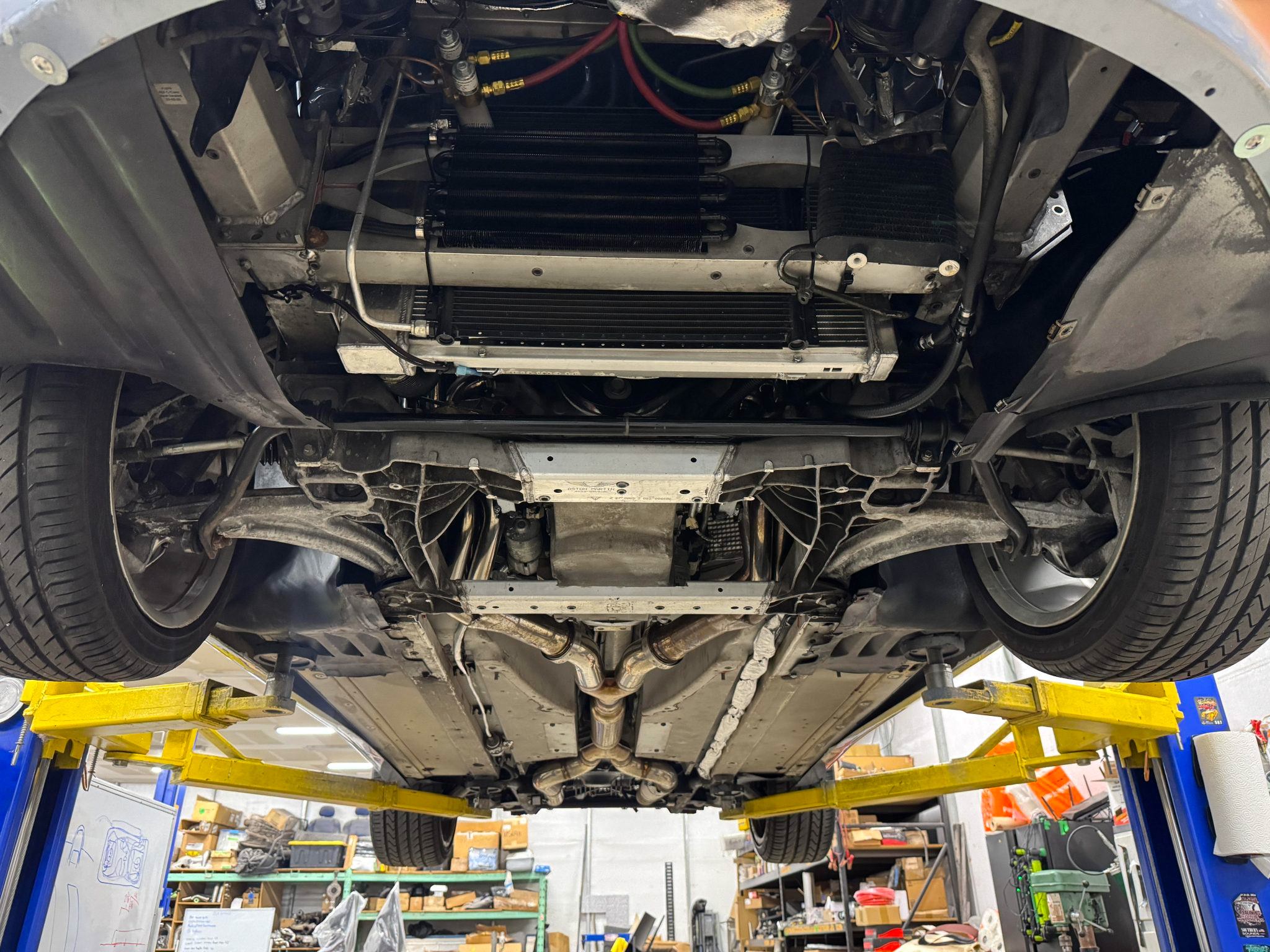
The original Aston Martin V12 has been replaced with a 6.2 liter LS3 Corvette V8 fitted with the Holley Terminator X Max system, a mild-performance camshaft, a custom air intake, and long-tube headers. Power is sent to the rear wheels through a torque tube and a Corvette-sourced 4L65E 4-speed automatic transaxle, which is mounted to the existing Aston Martin subframe, and there is a push-button gear selector concealed in the center console.
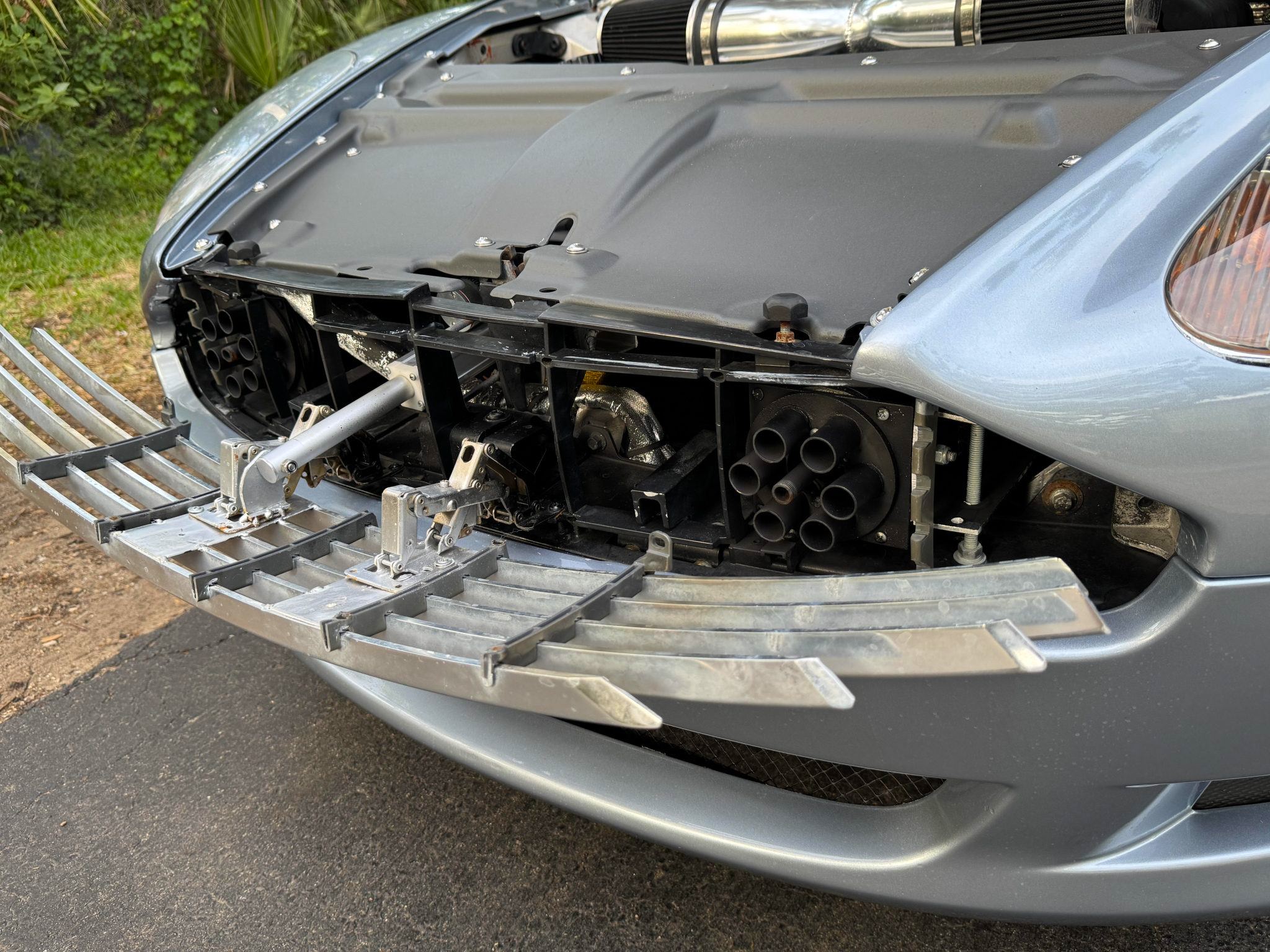
The Bond-inspired theme includes a linear actuator that tilts the front grille forward on hinged brackets to reveal a pair of minigun-style assemblies that shoot flames using propane and oxygen, with the tanks and separate regulators mounted in the trunk.
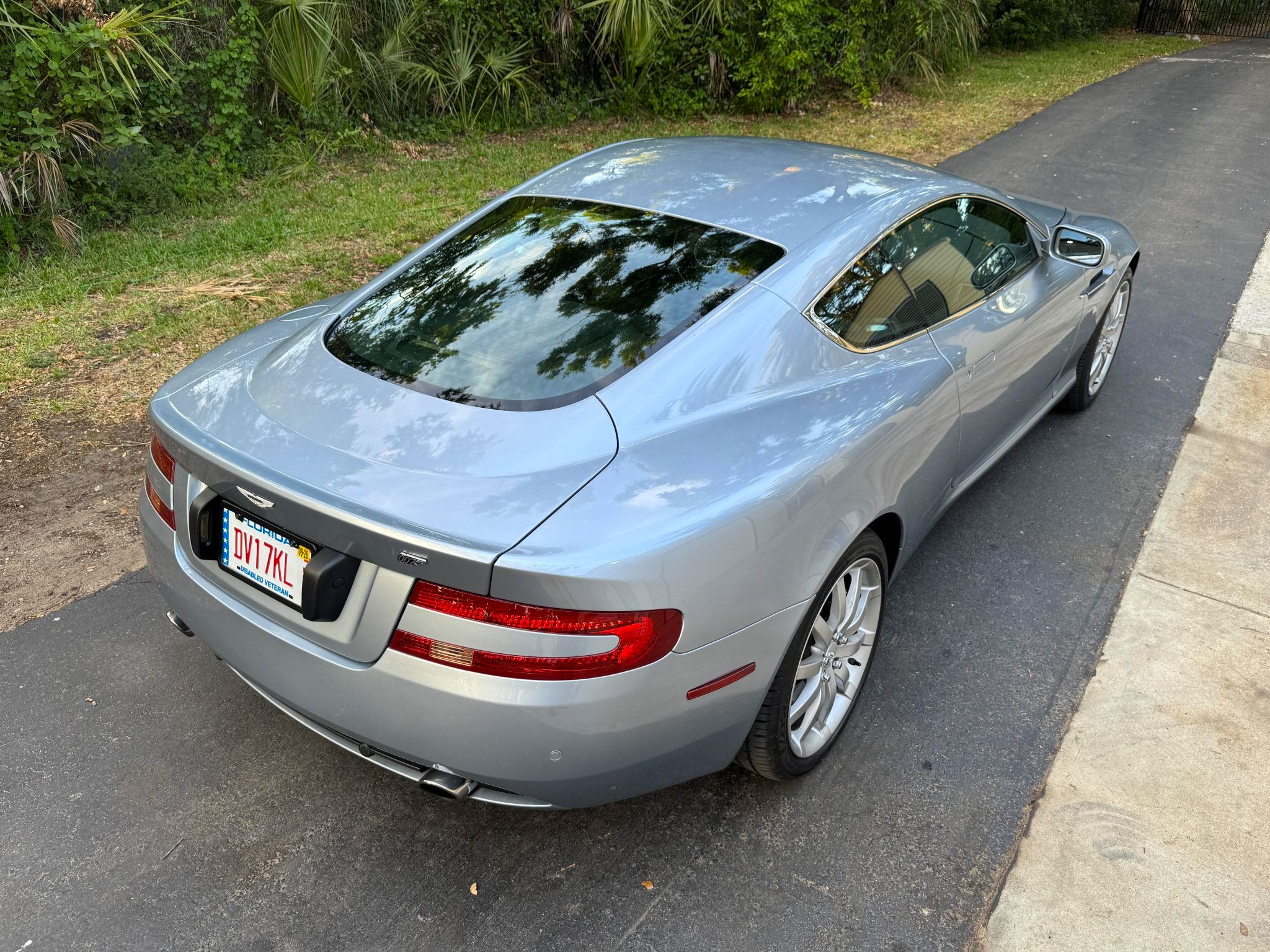
A bracket added to the rear subframe holds smoke canisters activated by a separate actuator. The body was repainted in Skyfall Silver in 2025, and it rides on silver-finished 19-inch alloy wheels shod with Lexani LX-Twenty tires, with Aston Martin-branded calipers over slotted and ventilated rotors at all four corners. The traction control system has been removed.
Inside, the cabin has been fully re-trimmed in black Alcantara including the seats, center console, and door panels. A control panel has been added to the center stack, and a Bluetooth-capable sound system has been installed. The factory climate control knobs were kept, though the air conditioning compressor now engages via a manual toggle switch.
The leather-wrapped steering wheel sits ahead of a digital display with 007-themed graphics. The digital odometer reads 4,500 miles, this is the distance driven since the build was completed, and total chassis mileage is unknown. The seller notes that the windshield wipers do not function and the horn is operated via a dash-mounted switch.
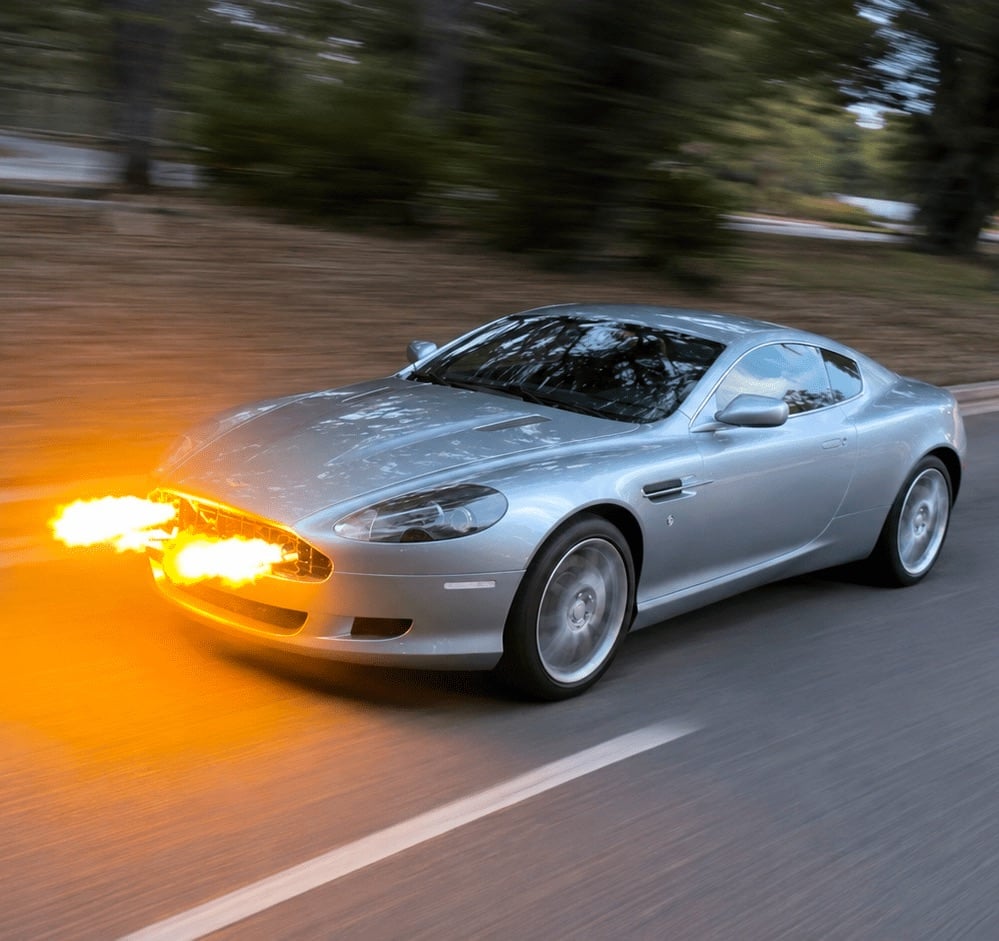
The Bond-inspired theme includes a linear actuator that tilts the front grille forward on hinged brackets to reveal a pair of minigun-style assemblies that shoot flames using propane and oxygen, with the tanks and separate regulators mounted in the trunk.
It’s worth noting that this car has a rebuilt Florida title, with the Carfax report showing a 2017 accident, followed by a total loss declaration, and multiple salvage titles issued across different jurisdictions before the rebuilt title was granted in 2026.
It’s now being offered for sale out of Tampa, Florida with a Carfax report and a Florida title. If you’d like to read more or place a bid you can visit the listing here.
Images courtesy of Bring a Trailer

Articles that Ben Branch has written have been covered on CNN, Popular Mechanics, Smithsonian Magazine, Road & Track Magazine, the official Pinterest blog, the official eBay Motors blog, BuzzFeed, Autoweek Magazine, Wired Magazine, Autoblog, Gear Patrol, Jalopnik, The Verge, and many more.
Silodrome was founded by Ben back in 2010, in the years since the site has grown to become a world leader in the alternative and vintage motoring sector, with well over a million monthly readers from around the world and many hundreds of thousands of followers on social media.