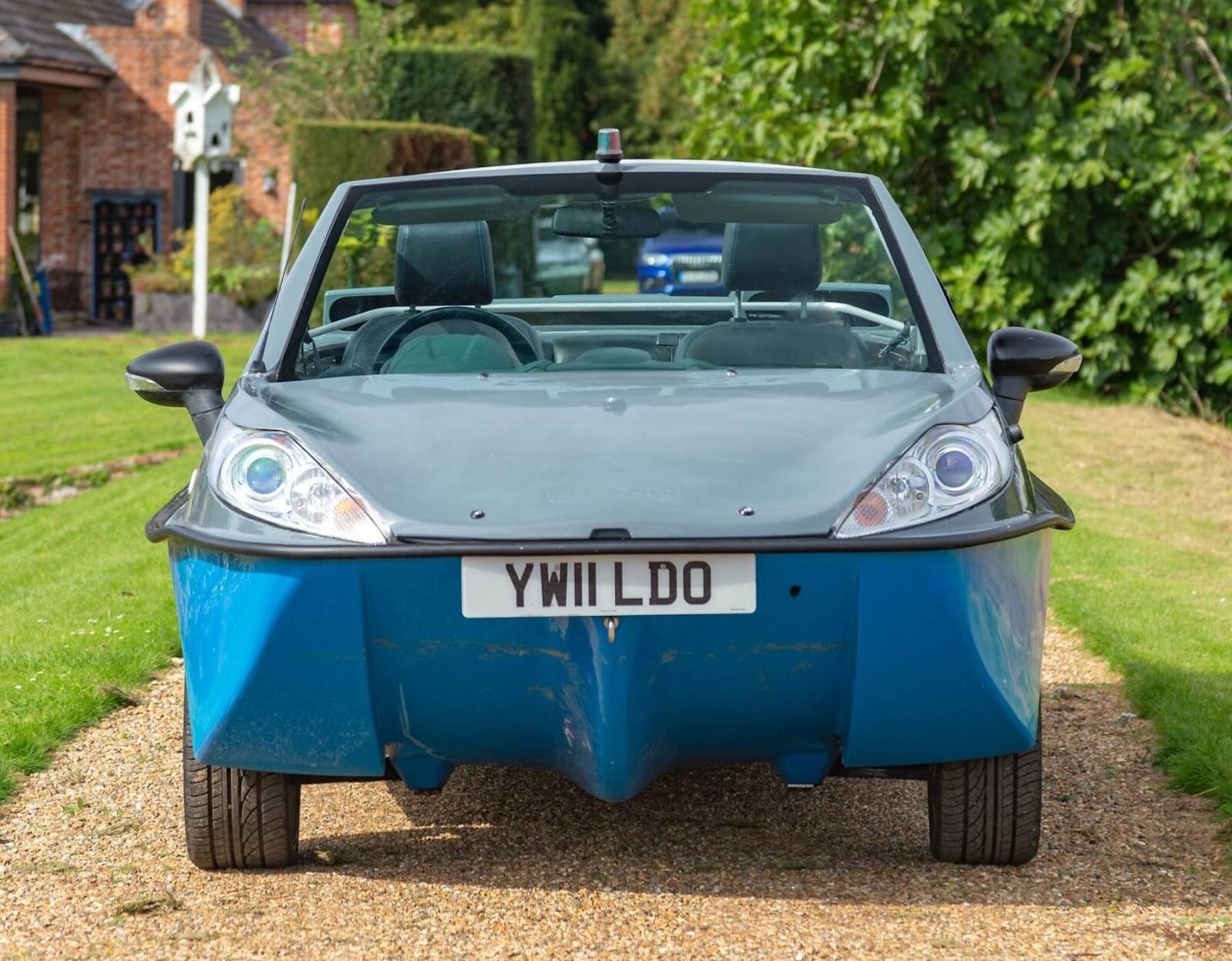
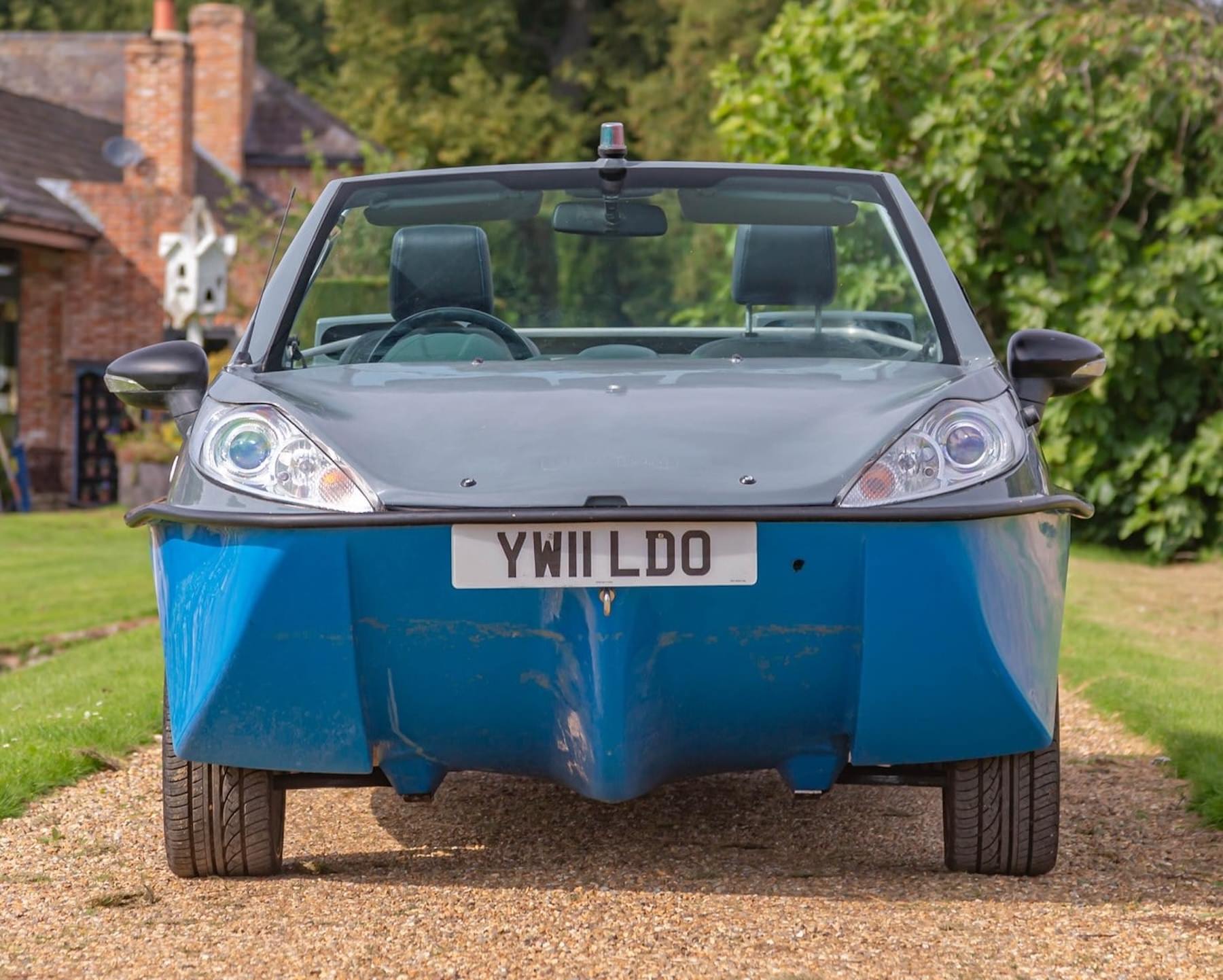
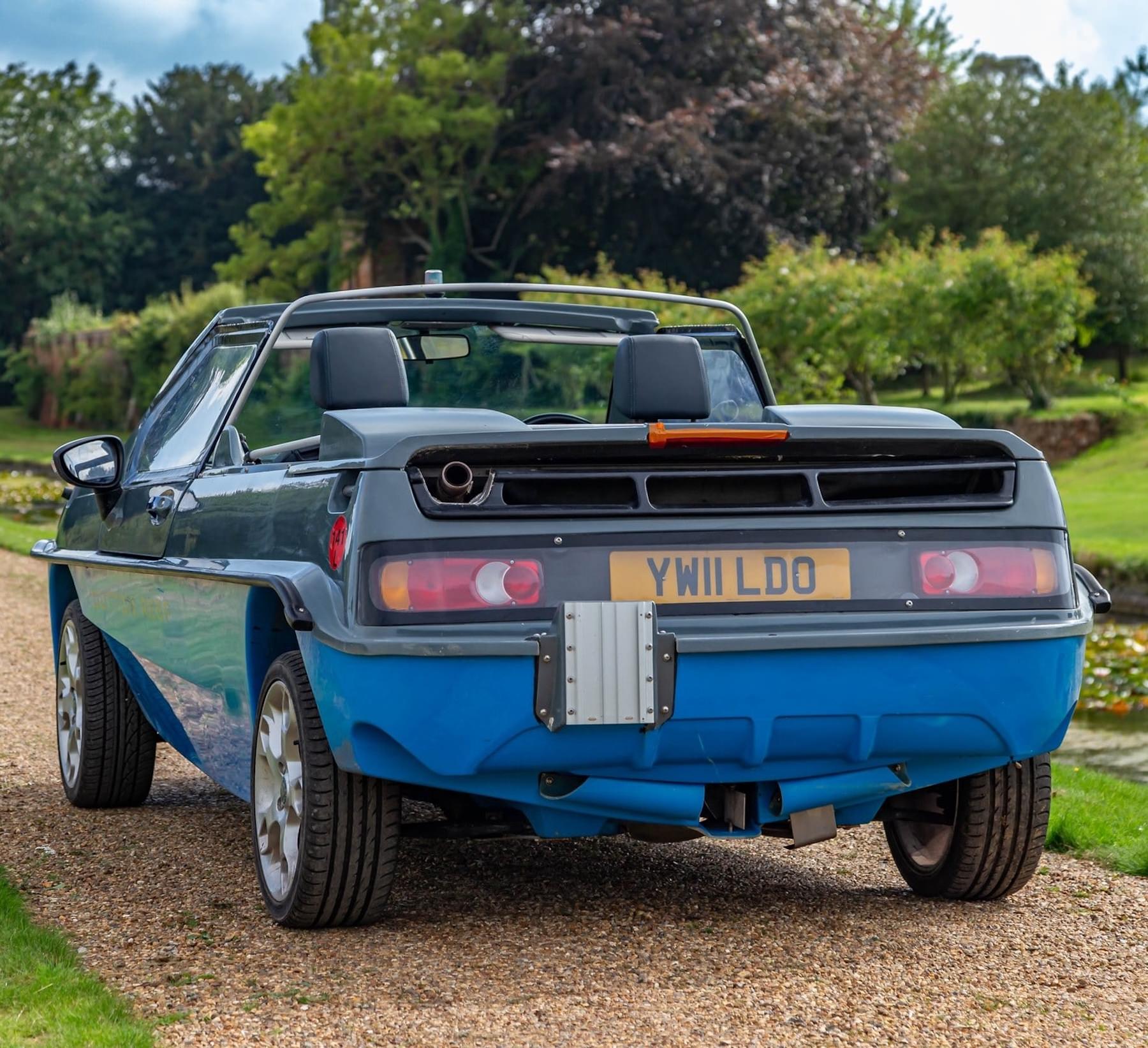
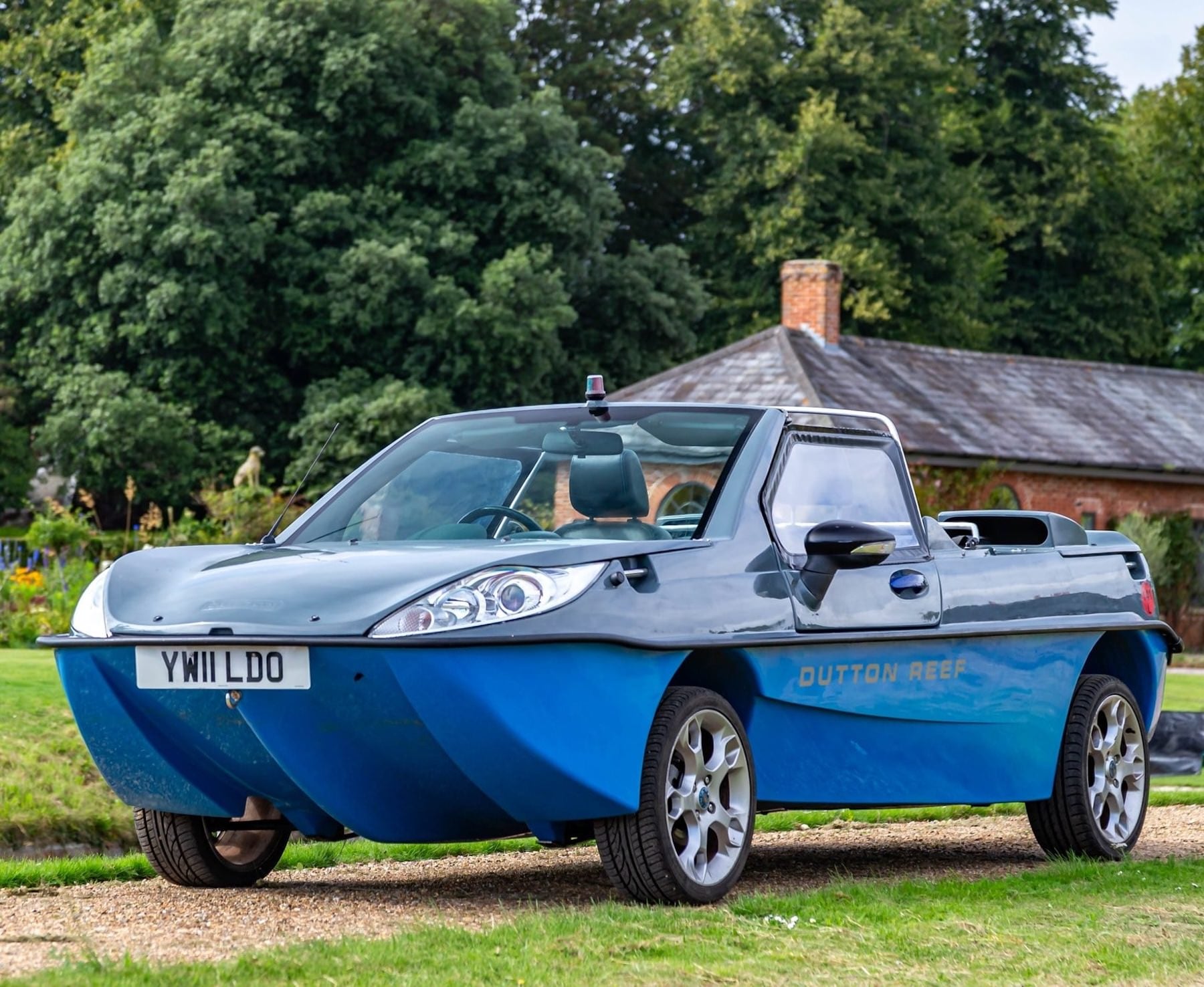
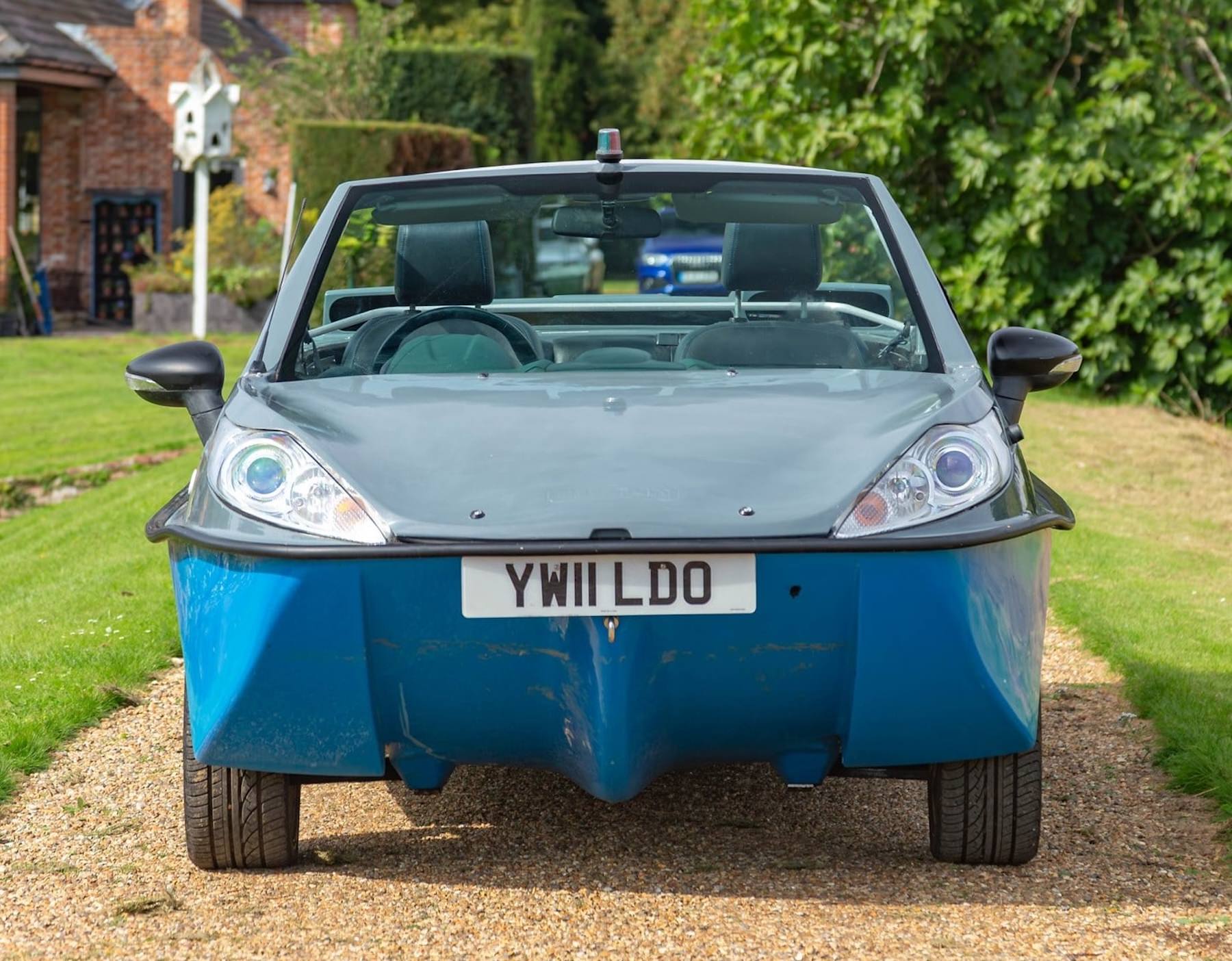
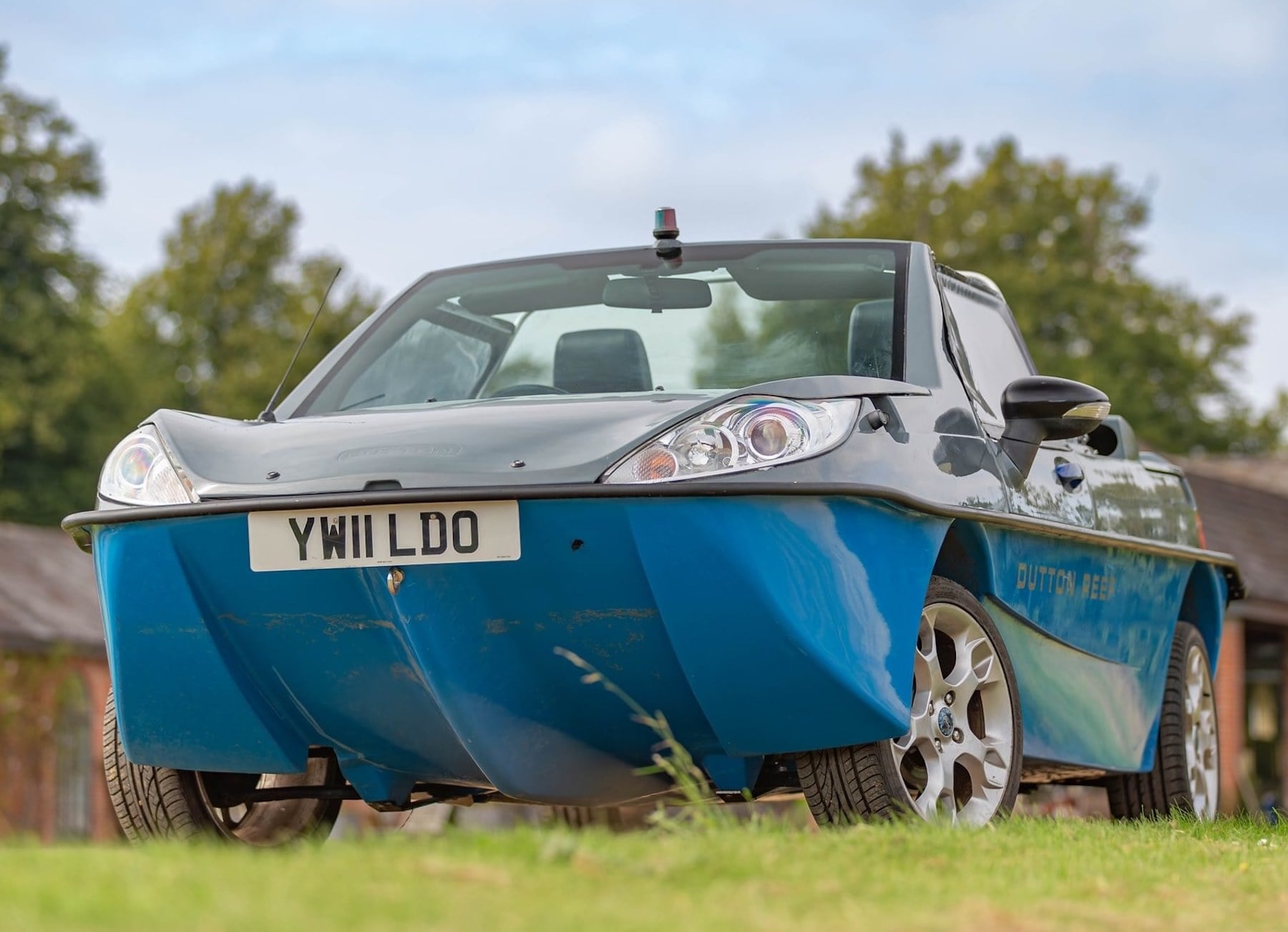
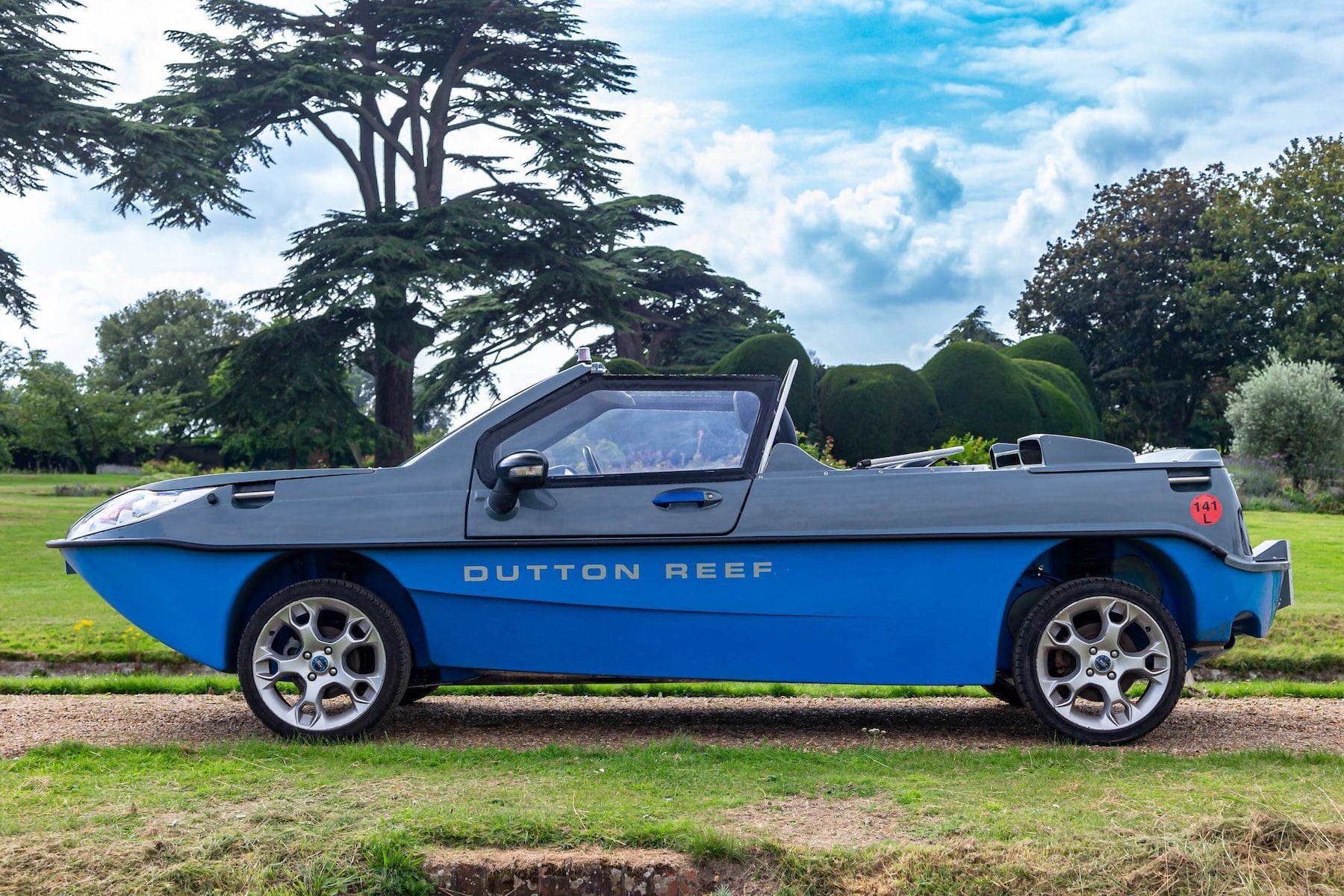
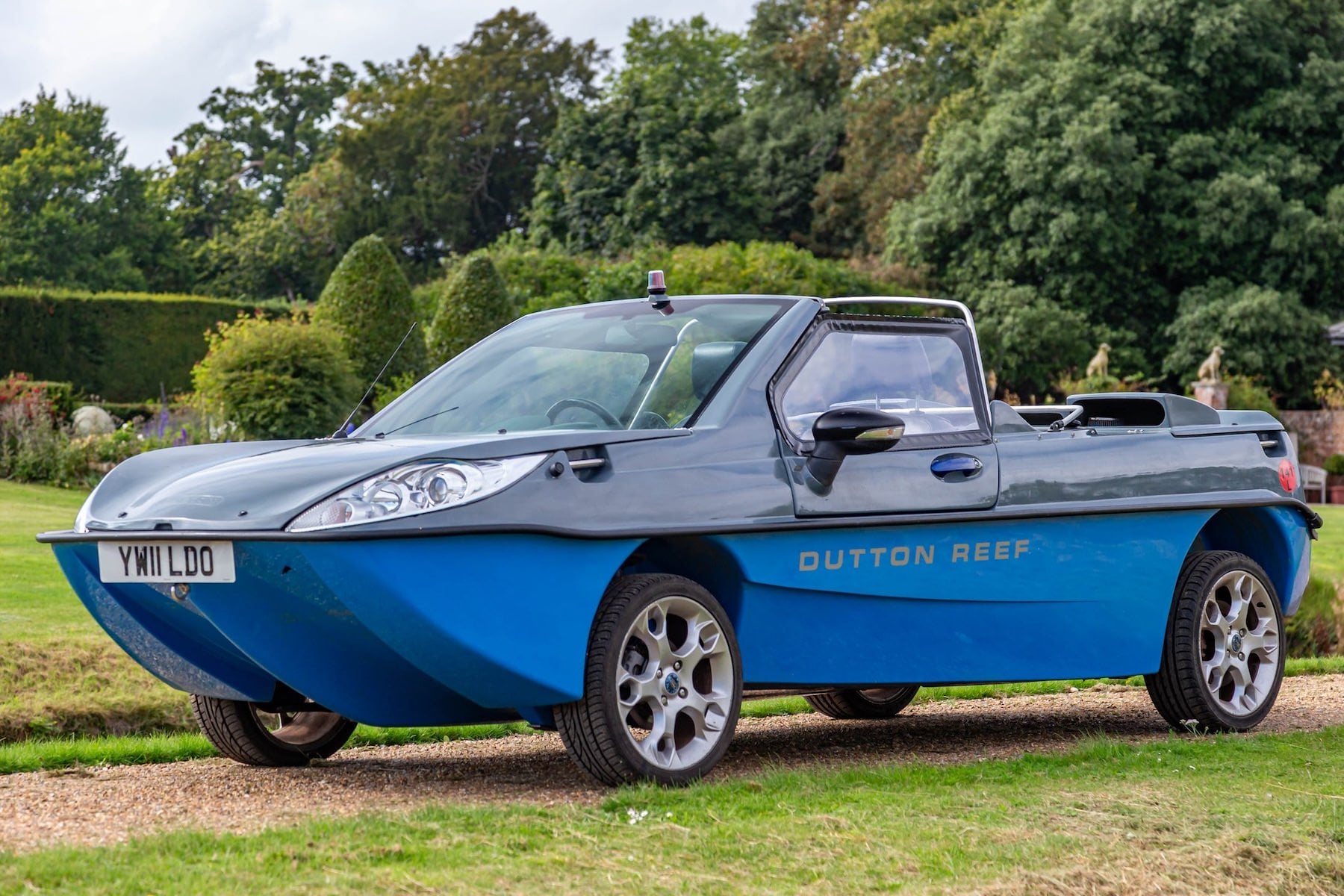
This is a 2021 Dutton Reef, it’s a factory-built amphibious vehicle licensed for use both on the land and on the water, and the good news is that it uses Ford Fiesta running gear, so spare parts are typically quite affordable.
Hundreds of Dutton amphibious vehicles were built over decades of production, more recently the company sold the rights and tooling to a European amphibious vehicle manufacturer, and the Reef now remains in production with them in modified form.
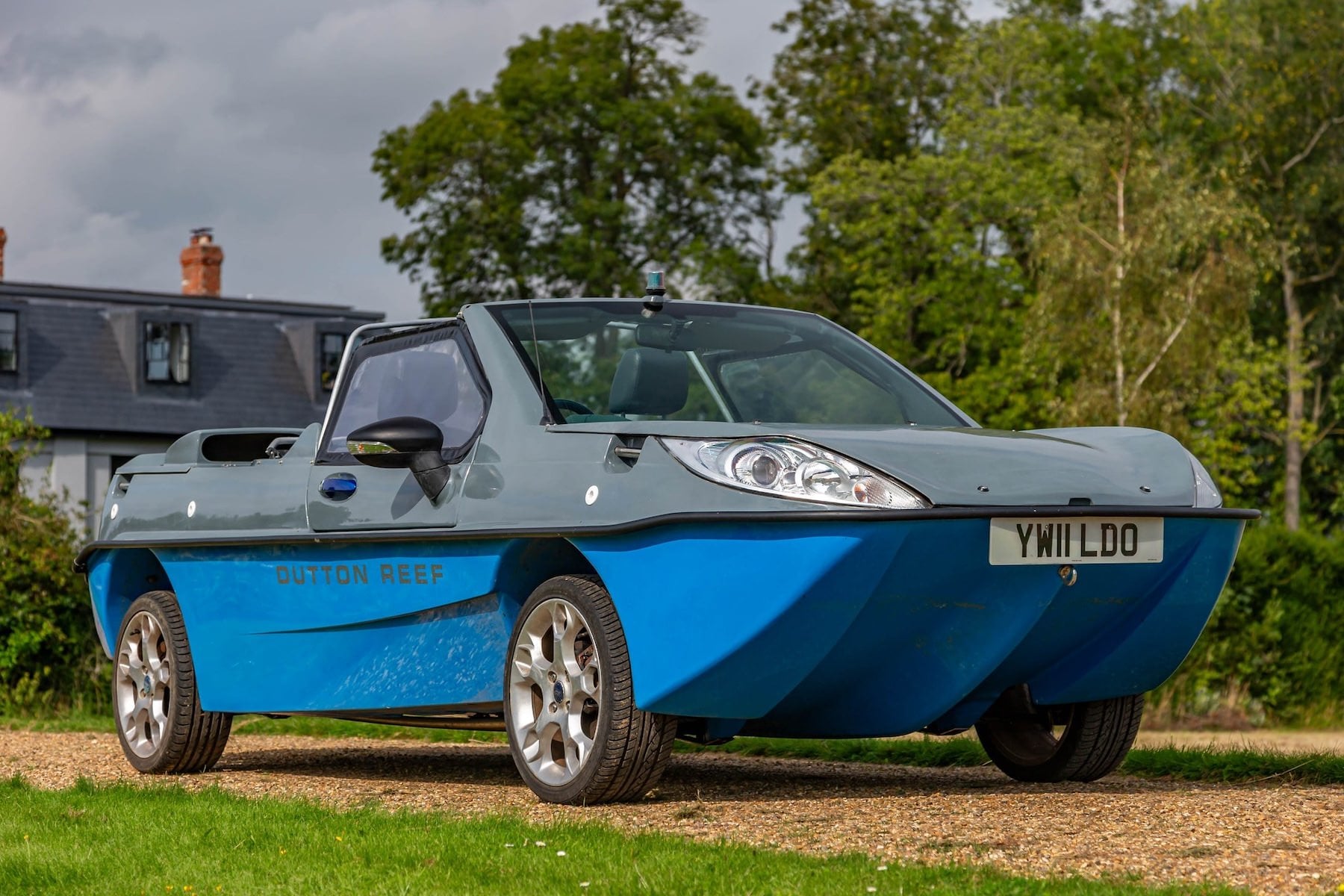
 This is a 2021 Dutton Reef, it’s a factory-built amphibious vehicle licensed for use both on the land and on the water, and the good news is that it uses Ford Fiesta running gear, so spare parts are typically quite affordable.
History Speedrun: Dutton Cars
The Dutton Reef is an amphibious car introduced in West Sussex, England, in 2015 and built there until 2023, after which production moved over to Poland. The Reef uses the engine, gearbox, suspension, and much of the interior of a Mk7 Ford Fiesta, all transplanted into a bonded glass-reinforced plastic (GRP) monocoque hull with a jet drive at the stern. On land it drives kind of like a Fiesta. On water it does its best (about 6 mph).
From A Shed In Sussex To A World Leader
Tim Dutton-Woolley built his first car in a shed behind his mother’s pub in Sussex. Named the Mantis, it was an aluminum-bodied sports car using Sunbeam Alpine components, with a 1,725cc engine rated at 93 bhp. Dutton dates its completion to 1967, and it was registered in November of 1968. A short series of spaceframe cars called the P1 followed, built around Austin-Healey Sprite and MG Midget mechanicals, and no two of them were quite alike.
A standardized model, the B-Type, arrived in the early 1970s using Triumph Herald components, and the operation moved to larger premises at Tangmere near Chichester. Later cars used a steel ladder-frame chassis carrying Ford Escort running gear, and the B-Type evolved into the Phaeton, which remained in the range until the company closed up shop.
The model that made the company’s name was the Sierra, this was an Escort-based estate with off-road styling launched in 1979. In 1982 Ford moved to claim the name for its own new mid-size saloon. The case reached the High Court in London, ran five days, and Ford lost, with the court treating kit cars and factory-assembled cars as separate categories.
Dutton kept the name until Sierra production ended in 1989. The case generated national newspaper coverage and cartoons, and by coincidence (or maybe not), the company’s stand at that year’s Motor Show at the NEC in Birmingham sat right next to Ford’s.
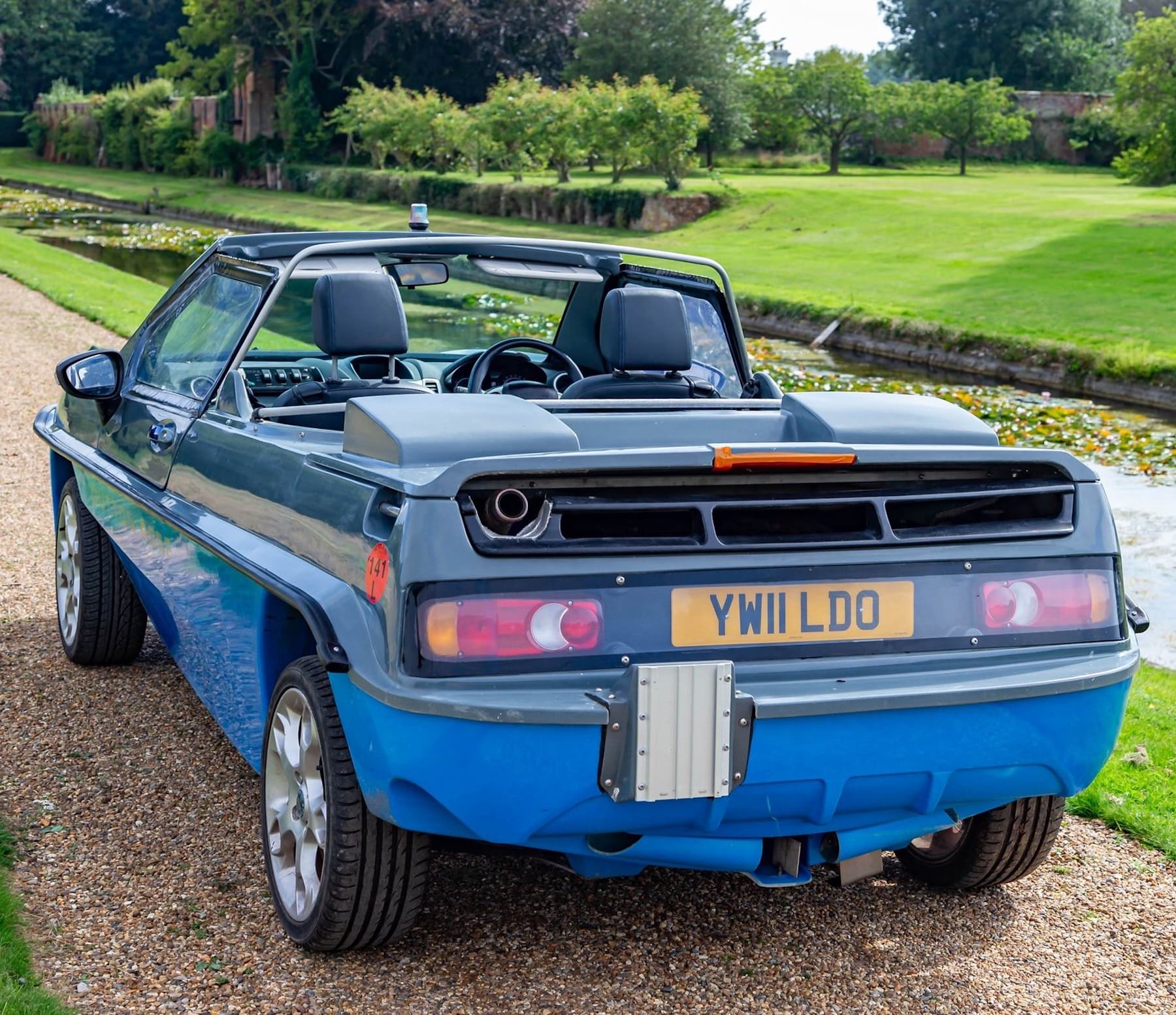
Hundreds of Dutton amphibious vehicles were built over their decades long production, more recently the company sold the rights and tooling to a European amphibious vehicle manufacturer, and the Reef now remains in production with them in modified form.
By 1984 Dutton employed 80 people across four factory sites and a showroom in Worthing, and annual output passed 1,000 cars, peaking at 22 a week. The firm was described as the largest kit car manufacturer in the world by volume during this time period, and it seems to check out.
More than 8,000 Duttons were built before Tim Dutton wound the business down in 1989, having grown tired of a kit car industry he felt was copying itself. No buyer wanted the whole company, so it was split into three parts and sold off. A major fire destroyed the Worthing factory in 1992, taking every development project then housed there with it.
From The Mariner To The Reef
Dutton’s first amphibious car was a 1989 prototype built on the Dutton Sierra platform, with a steel chassis and steel bumper. Production of the first Dutton amphibious cars began in 1994 at a factory at Littlehampton Marina, with the Mariner, which used Mk3 Fiesta mechanicals in a lifeboat-influenced hull, it went on sale from 1995.
The four-wheel-drive Commander followed on Suzuki Samurai underpinnings and ran until 2006, sold as a complete car under the Commander name and in kit form as the Amphijeep. Its replacement, the Suzuki Jimny-based Surf came in 2005 so the two overlapped for a time. Across 28 years, 282 amphibious vehicles were built in total.
The Dutton Reef arrived in 2015 as the two wheel drive model in the range, replacing the Mariner after a 15 year gap. The donor was a Mk7 Ford Fiesta built between 2008 and 2012, in 1.6 Zetec S, S1600, or Metal trim. All used Ford’s 1,596 cc Ti-VCT four with a five-speed manual gearbox, rated at 118 bhp and 112 lb ft in Zetec S form, and 132 bhp and 118 lb ft in the uprated tune fitted to the Metal and to S1600s from 2011.
Moving The Engine To The Back
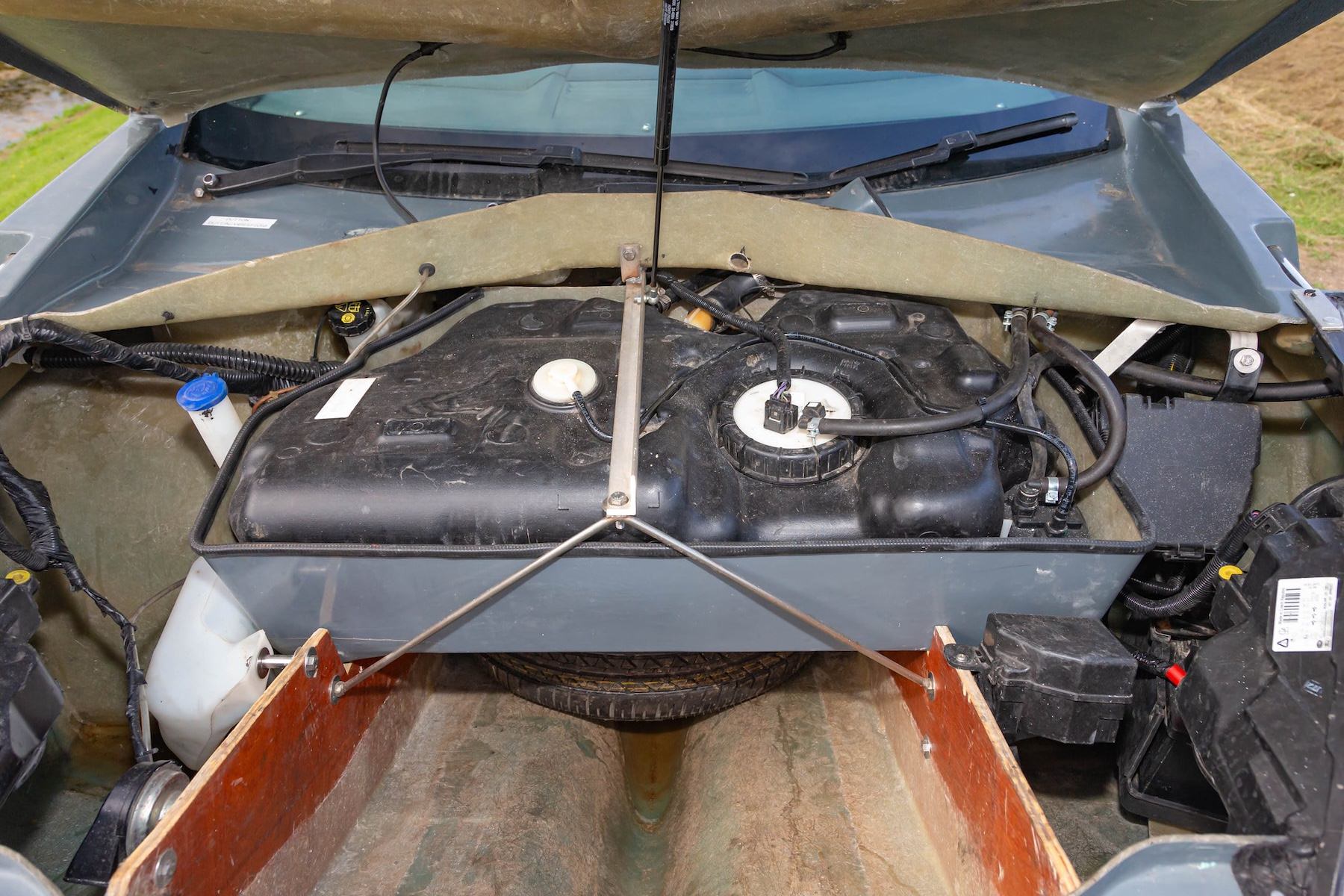
When it came to the Reef, there was a significant departure from earlier Duttons when it came to the engine location. To get a cleaner bow line, the Fiesta’s transverse engine and gearbox were relocated behind the rear seats, making the Reef a mid-engined, rear-drive car on a wheelbase stretched to 106 in. Dutton has since said the job was harder than expected, mostly because the two master wiring looms had to be extended 10 to 15 feet from their original position behind the dashboard.
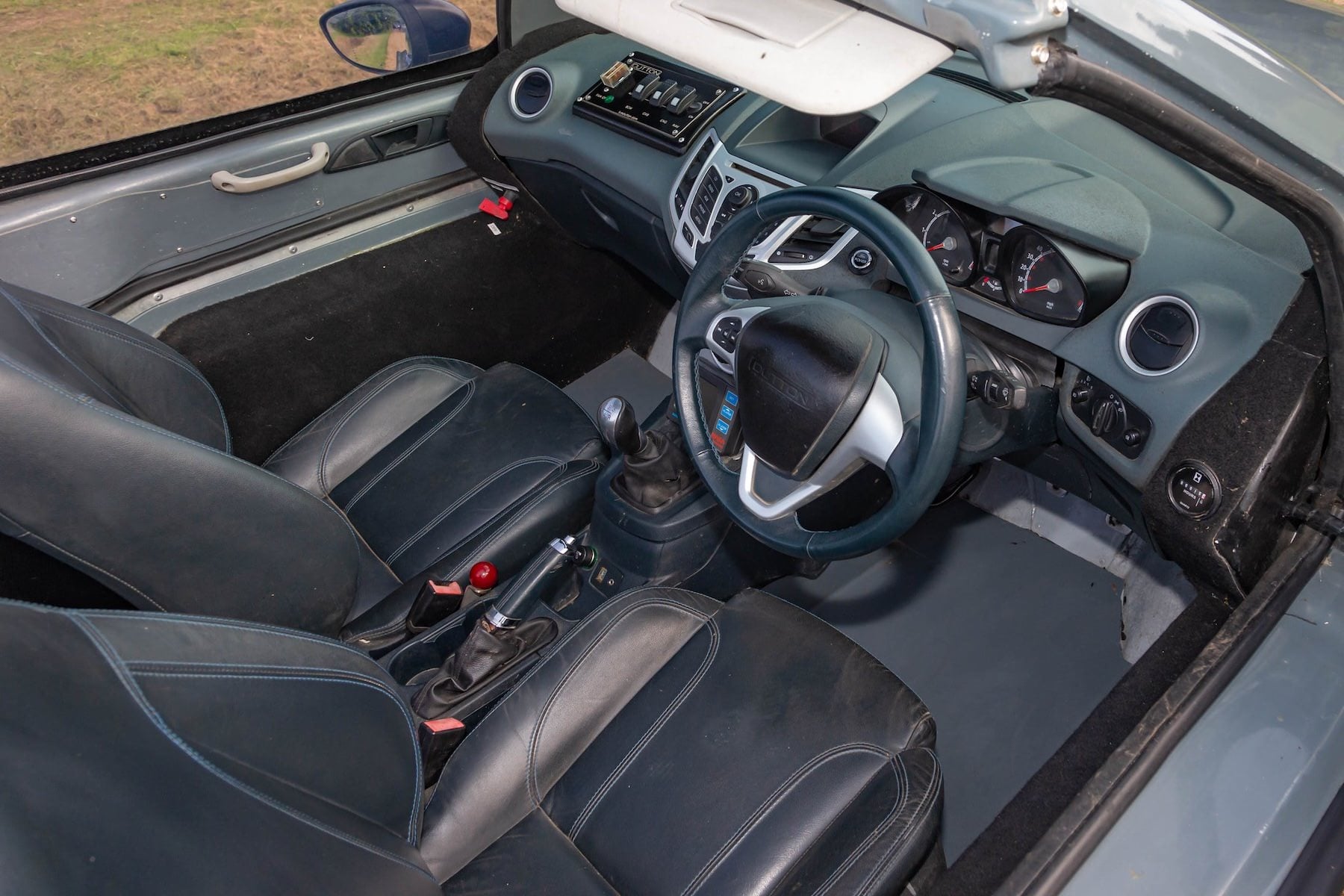
This 2021-built Dutton Reef was registered in the UK in early 2022 and is described as one of the last amphibious vehicles Dutton made before the company stopped building them and sold the rights to the design.
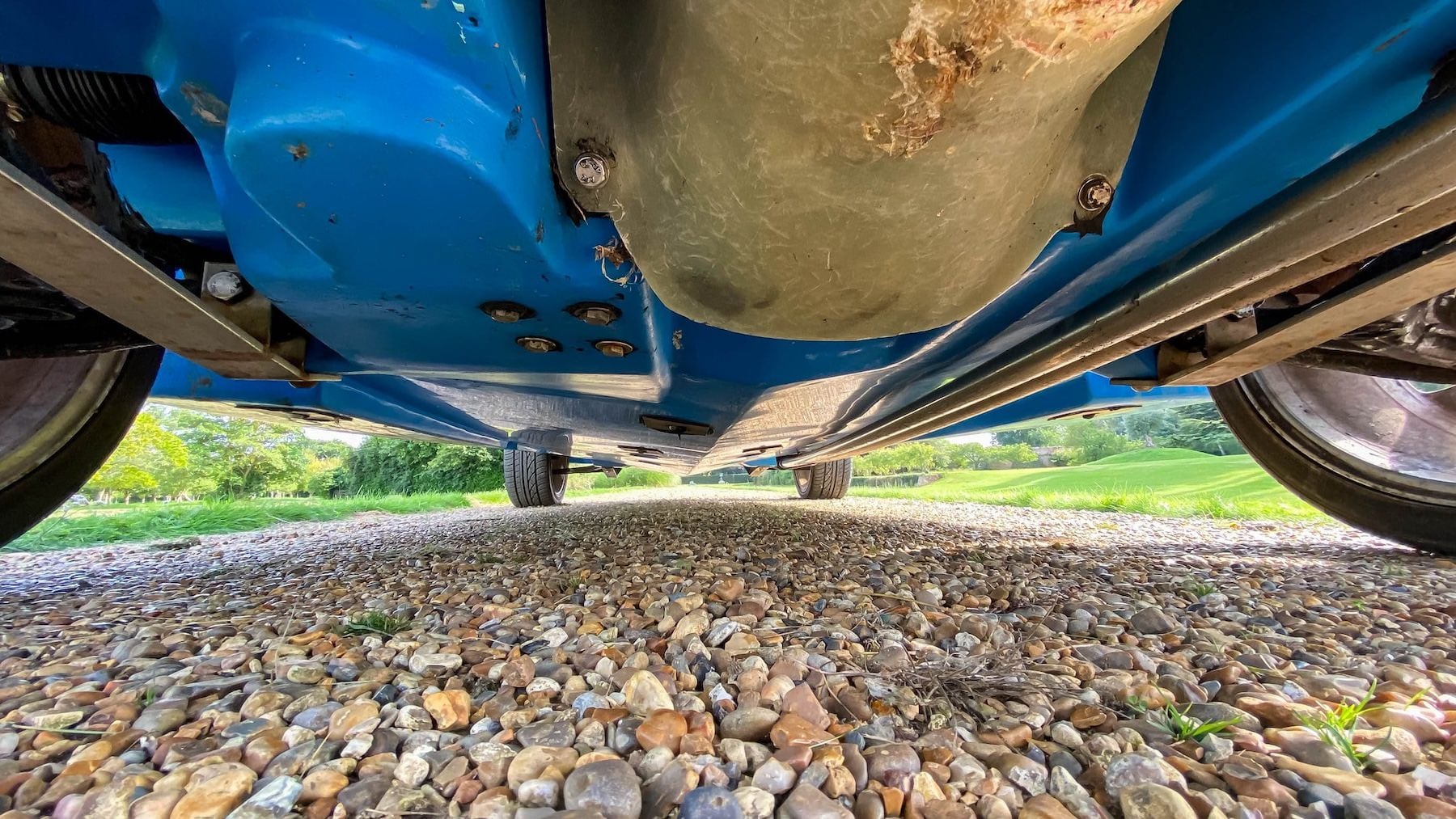
The hull and deck of the Dutton Reef are molded as single pieces and bonded together, forming a self-colored composite monocoque with no steel chassis at all. Marine-grade stainless spreader plates are laminated into the load-bearing areas that carry the engine, gearbox, steering, and suspension.
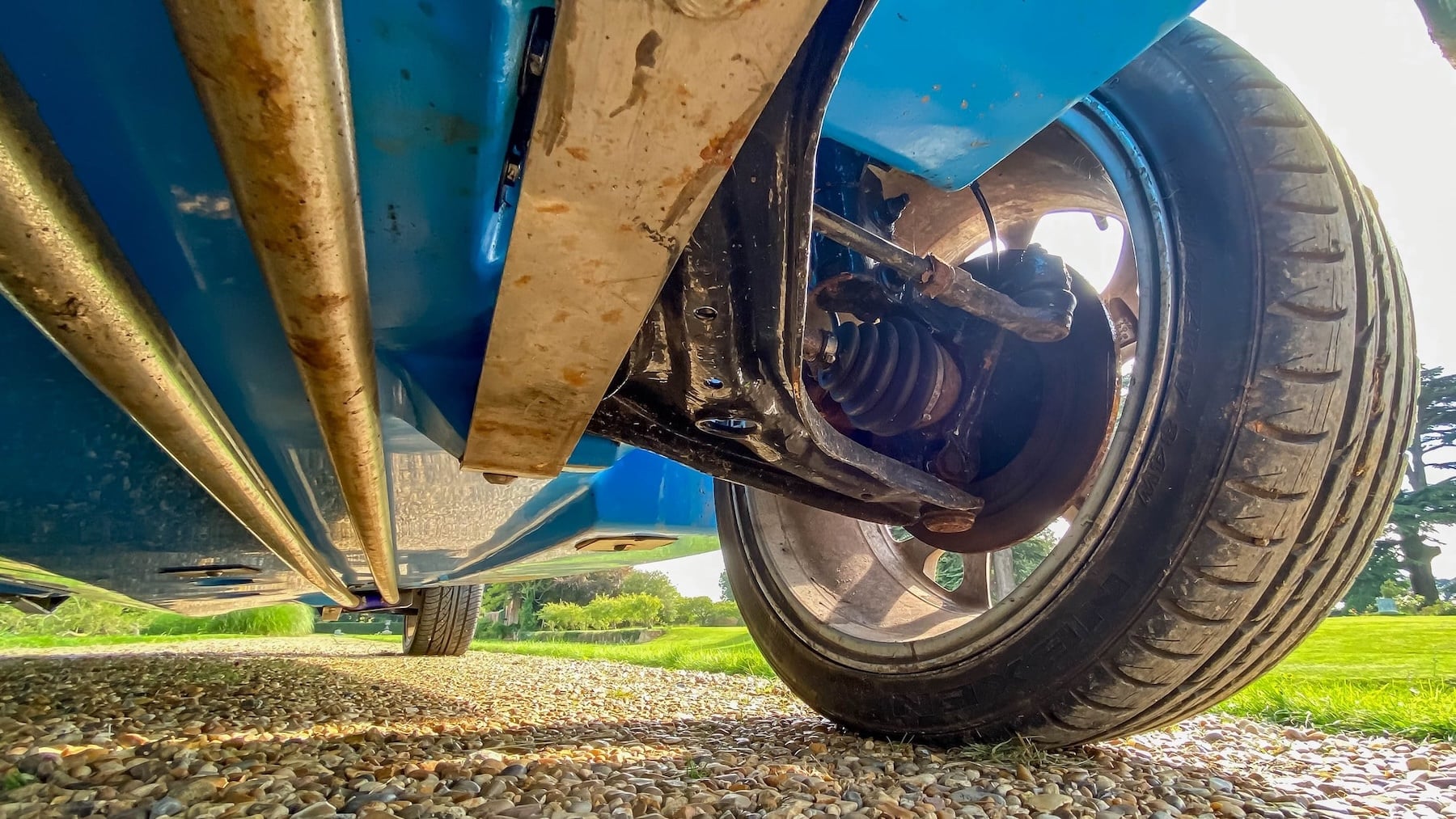
Only the steering arms and driveshafts pass through the hull, running in sealed-for-life stainless ball bearings with integral rubber seals. Every fastener on the wet side is AISI 316 stainless. The suspension is the only Ford hardware exposed to water, and it’s stripped and refinished with marine phosphate primer, undercoat, and topcoat.
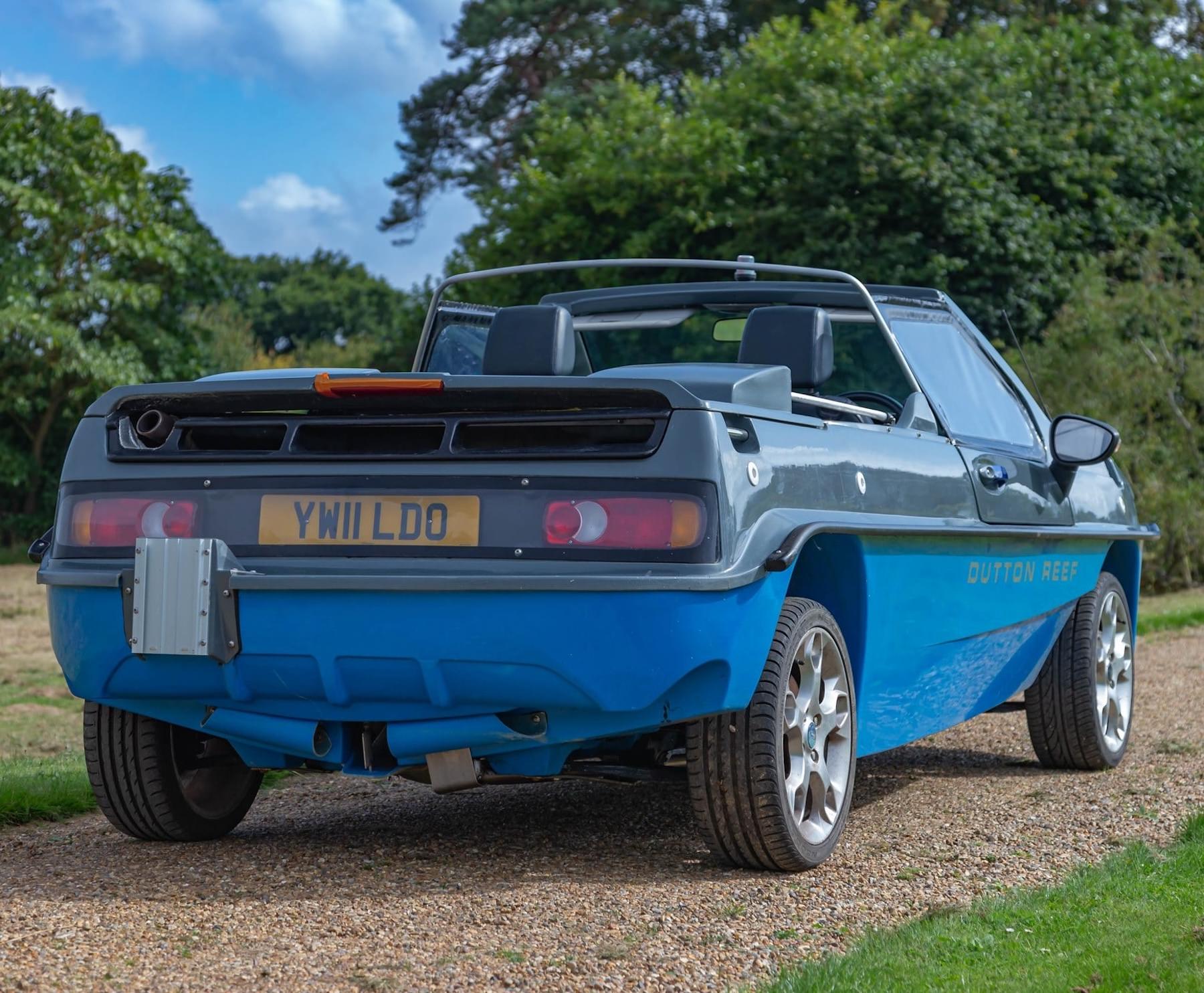
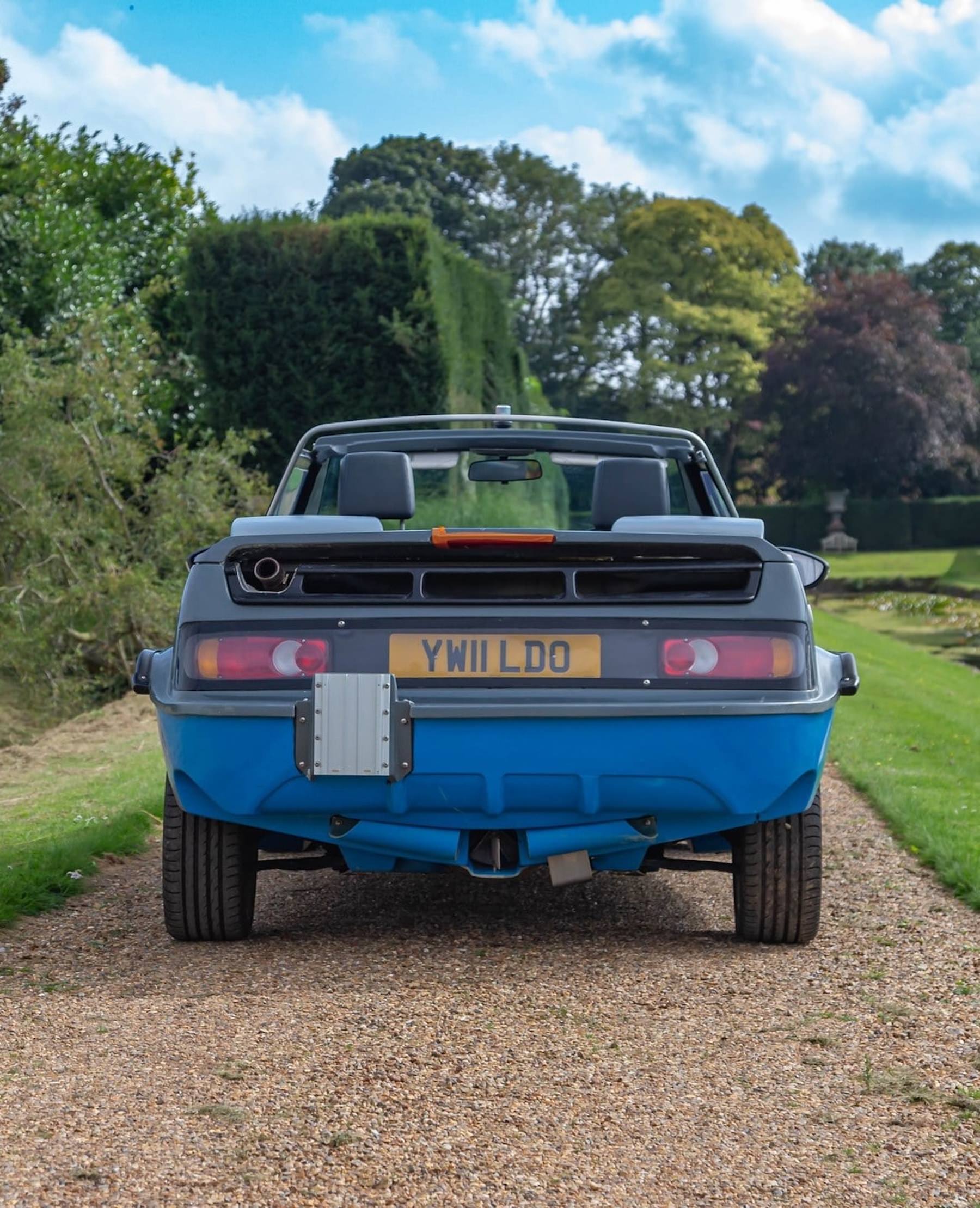
The entire exhaust bolts directly to the engine and exits at the transom, so no part of it sits in the water – saturated silencer packing can otherwise stop an engine turning over. The radiator sits inside the rear engine bay rather than hanging off the nose, the rear lights and license plate are protected behind 8mm of clear acrylic. Three bilge pumps run on automatic float switches, and the doors are cut so they open above the waterline.
Propulsion when in the water comes from a jet unit with an 8 in cast impeller in LM6 marine aluminum, up from the 6 in unit used earlier, driven by a mechanical take-off from the gearbox and engaged by a dog clutch lever between the front seats. The stainless rudder is permanently coupled to the road steering. As a displacement hull, the Reef’s practical water speed is about 6 mph, which is around what an Amphicar managed 50 years earlier.
Kits, Prices, And The IVA Test
The Reef was initially sold as a kit car, from 2021 in a middle “Kit Plus” specification with the heavy assembly work done at the factory, or as a complete turnkey car. Kit sales were later dropped entirely.
Extending the two Fiesta wiring looms to the relocated engine required about 120 butt connectors and upwards of 240 crimped joints, every connector had to be insulated against oil, water, and dirt, while parts of the looms also needed twisting or aluminum shielding. Enough builders struggled with the work that Dutton eventually offered the car fully-built only.
The first production Reef, VIN 0230, was built in 2015 and became the factory press and show car. It appeared at the London Boat Show at ExCeL in January of 2016.
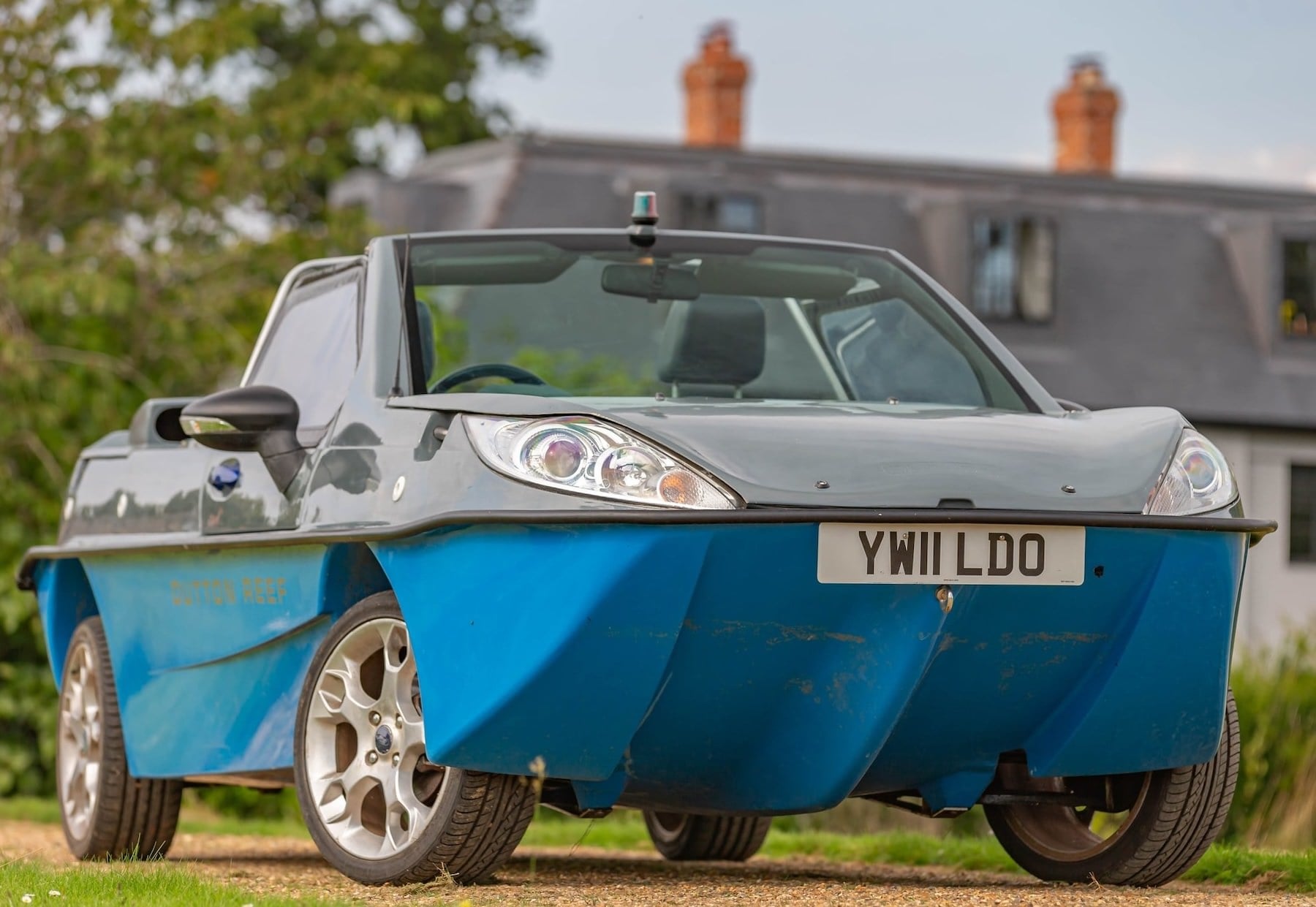
Mechanically, this car follows the standard Reef formula, using Ford Fiesta running gear with a 1.6 liter four and a 5-speed manual, married to a fiberglass hull and deck bonded into a single monocoque. Water drive is by an 8 in cast aluminum impeller engaged via the jet clutch lever.
The Move To Poland
Dutton sold the amphibious business in 2023 to the Kama Eko Group of Katowice, Poland, run by Adam Kloska. Kama had been involved in amphibious-aircraft development since 1998 and says it had worked with Dutton since 2014, distributing the Surf in Poland under its own KAMA SP1 designation before buying the production rights to both models.
By Kama’s account, production was officially relocated to Poland in early-2024, and an industry report that August confirmed the Reef and Surf were building again.
Tim Dutton didn’t retire – in 2025 he unveiled the Phaeton 5, his first new kit car since 1989, based on the Mk3 Mazda MX-5, at the National Kit Car Motor Show at Malvern.
The 2021 Dutton Reef 2WD Shown Here
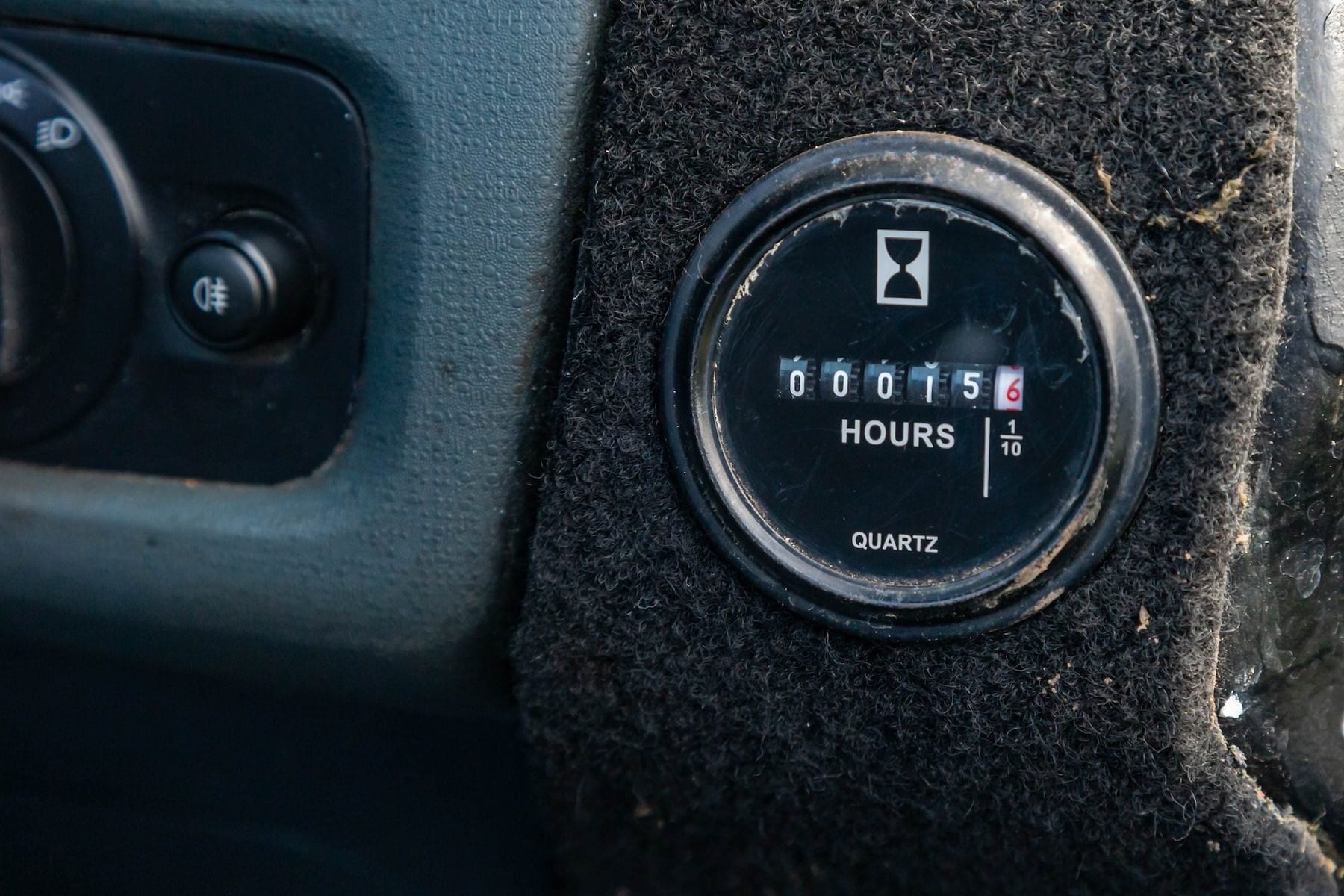
This 2021-built Dutton Reef was registered in the UK in early 2022 and is described as one of the last amphibious vehicles Dutton made before the company stopped building them and sold the rights to the design. It has covered just 15 hours on its hour meter since completion and has had two keepers, the current one since 2023.
Mechanically, this car follows the standard Reef formula, using Ford Fiesta running gear with a 1.6 liter four and a 5-speed manual, married to a fiberglass hull and deck bonded into a single monocoque. Water drive is by an 8 in cast aluminum impeller engaged via the jet clutch lever.
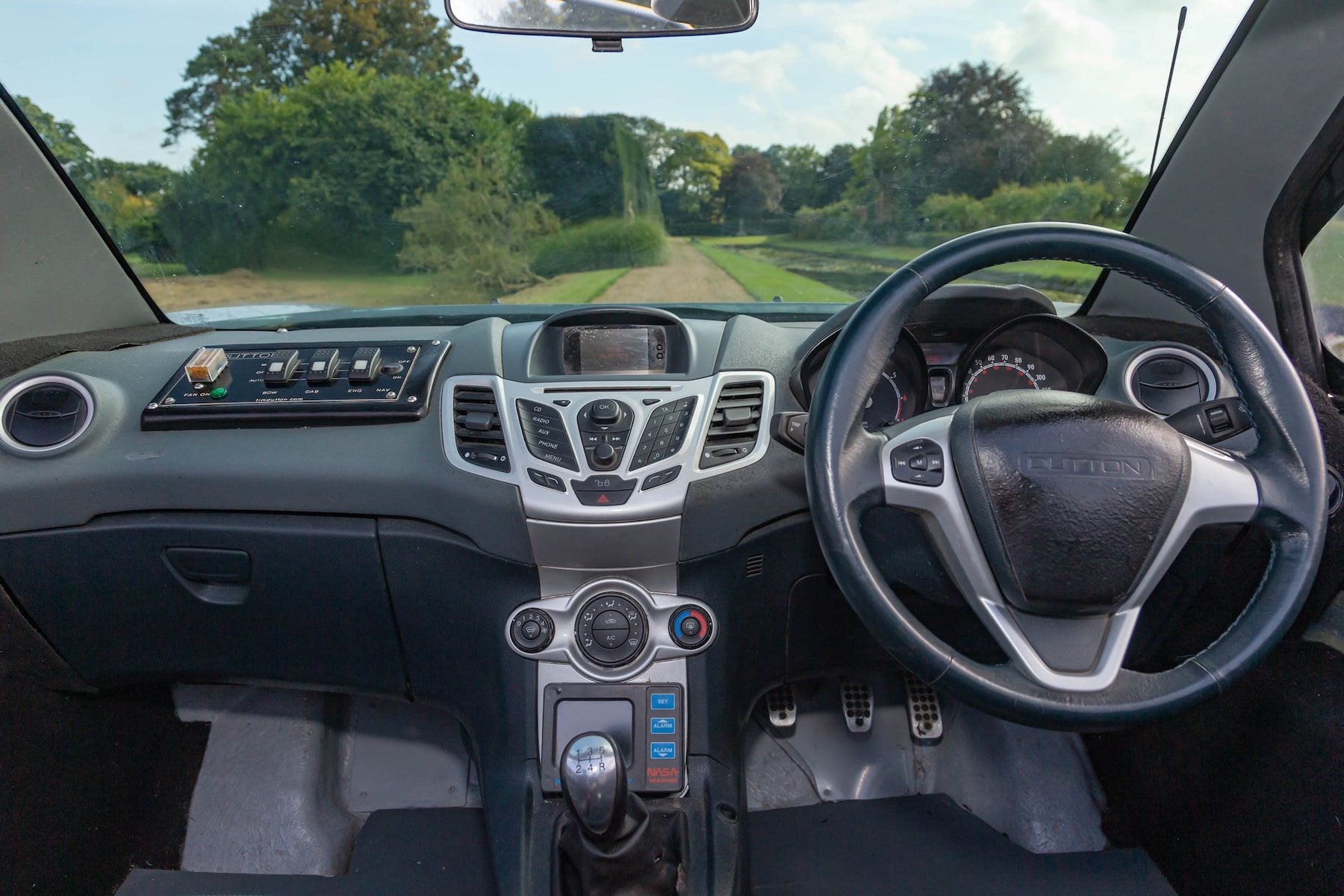
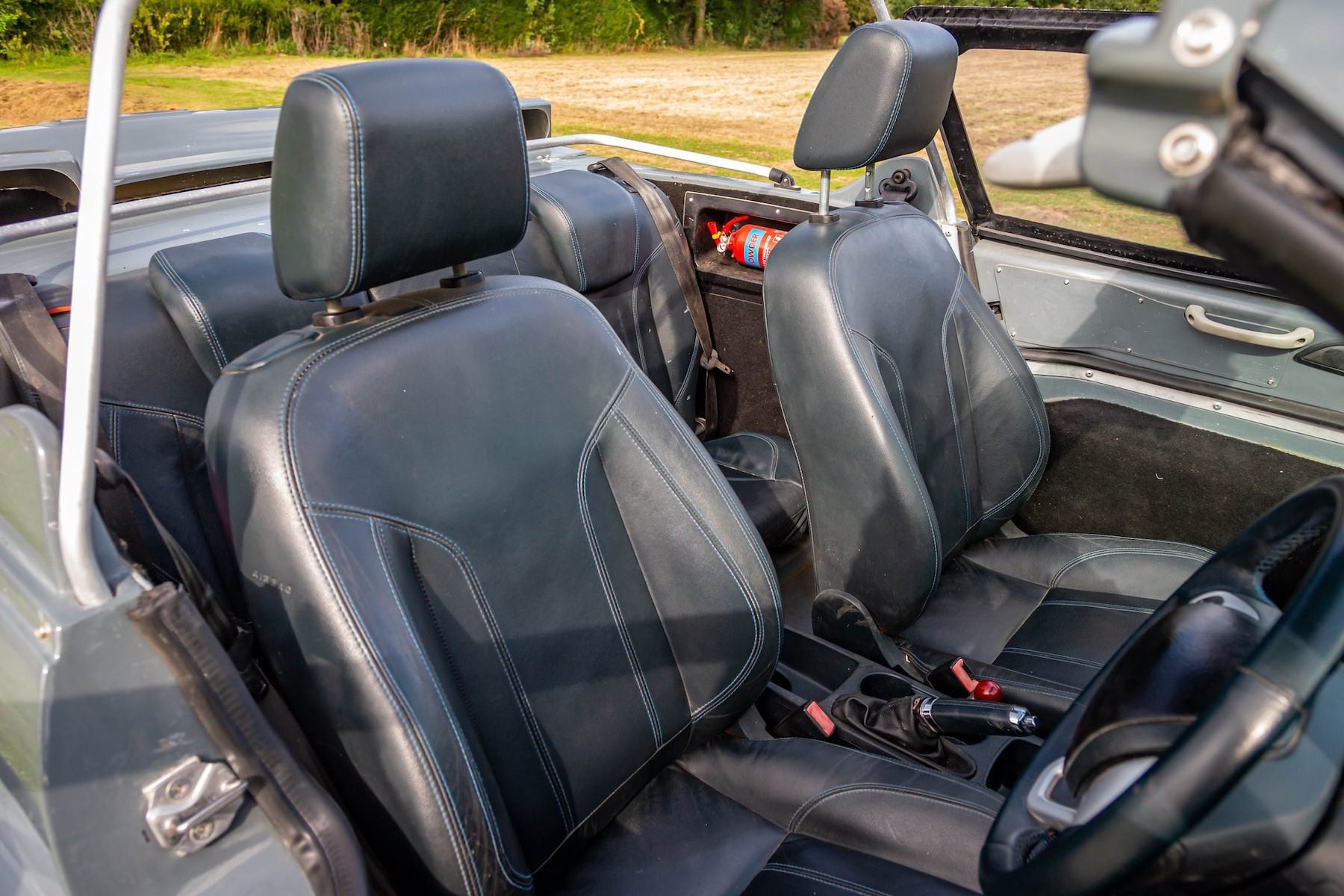
The condition of this Reef is reported as good throughout, the black leather seats show some minor patina with no damage, the dashboard is free of scuffs, and all instruments, the radio, and the NASA Marine depth gauge are said to work correctly with no warning lights. The detachable roof is described by the vendor as like new, the headlights as very good, and the windows and hull rubber strip as unmarked.
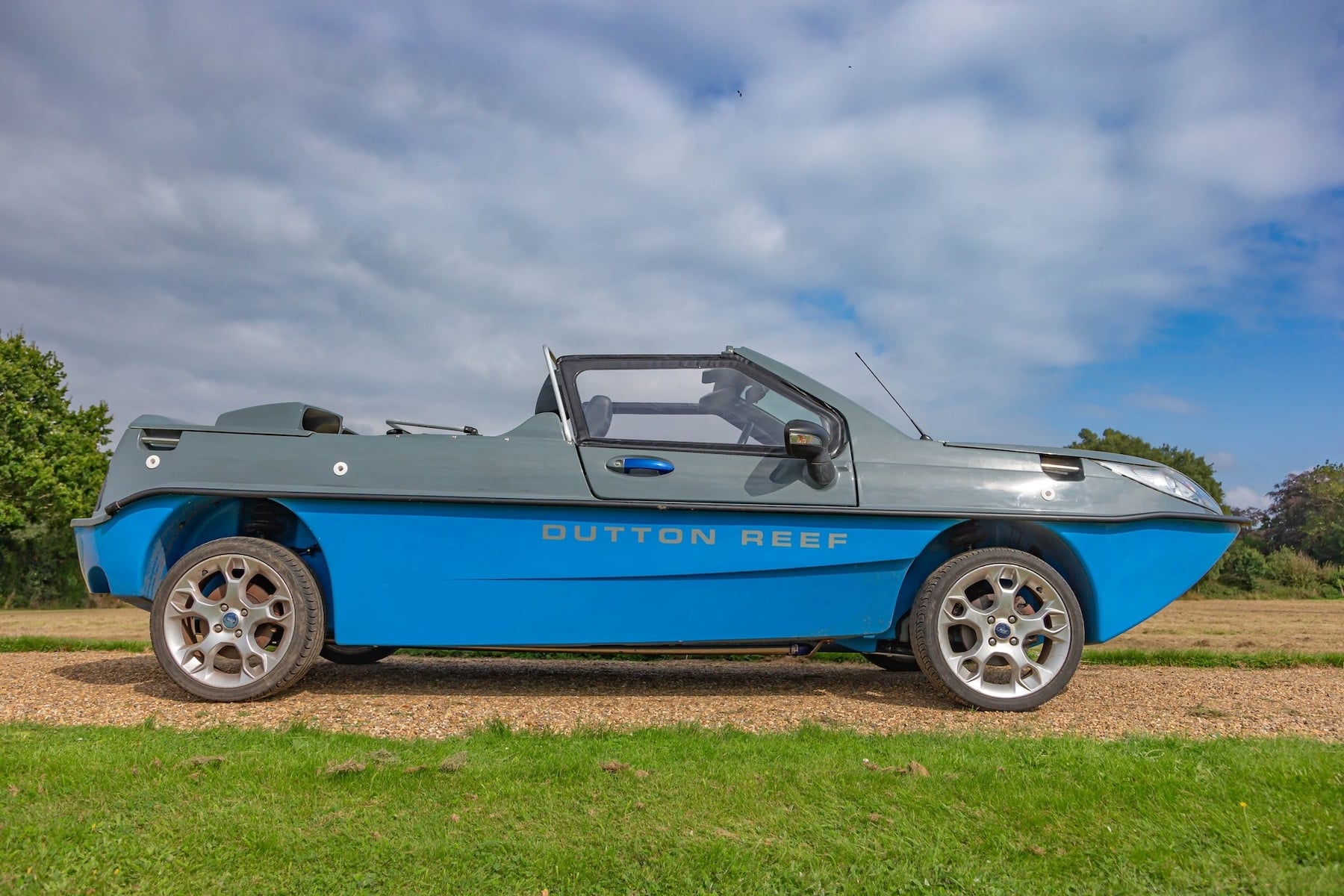
The condition of this Reef is reported as good throughout, the black leather seats show some minor patina with no damage, the dashboard is free of scuffs, and all instruments, the radio, and the NASA Marine depth gauge are said to work correctly with no warning lights.
The few blemishes noted are a small scratch to the left of the rudder, light curb marks on the 17 in Fiesta alloys, and some water ingress in the wheel center caps. Tires are said to have good tread, the carpets have been removed in favor of flat, cleanable flooring, and remote central locking is fitted.
This car/boat is now being offered for sale out of Oxfordshire in the United Kingdom and you can visit the listing here if you’d like to read more about it or register to bid.
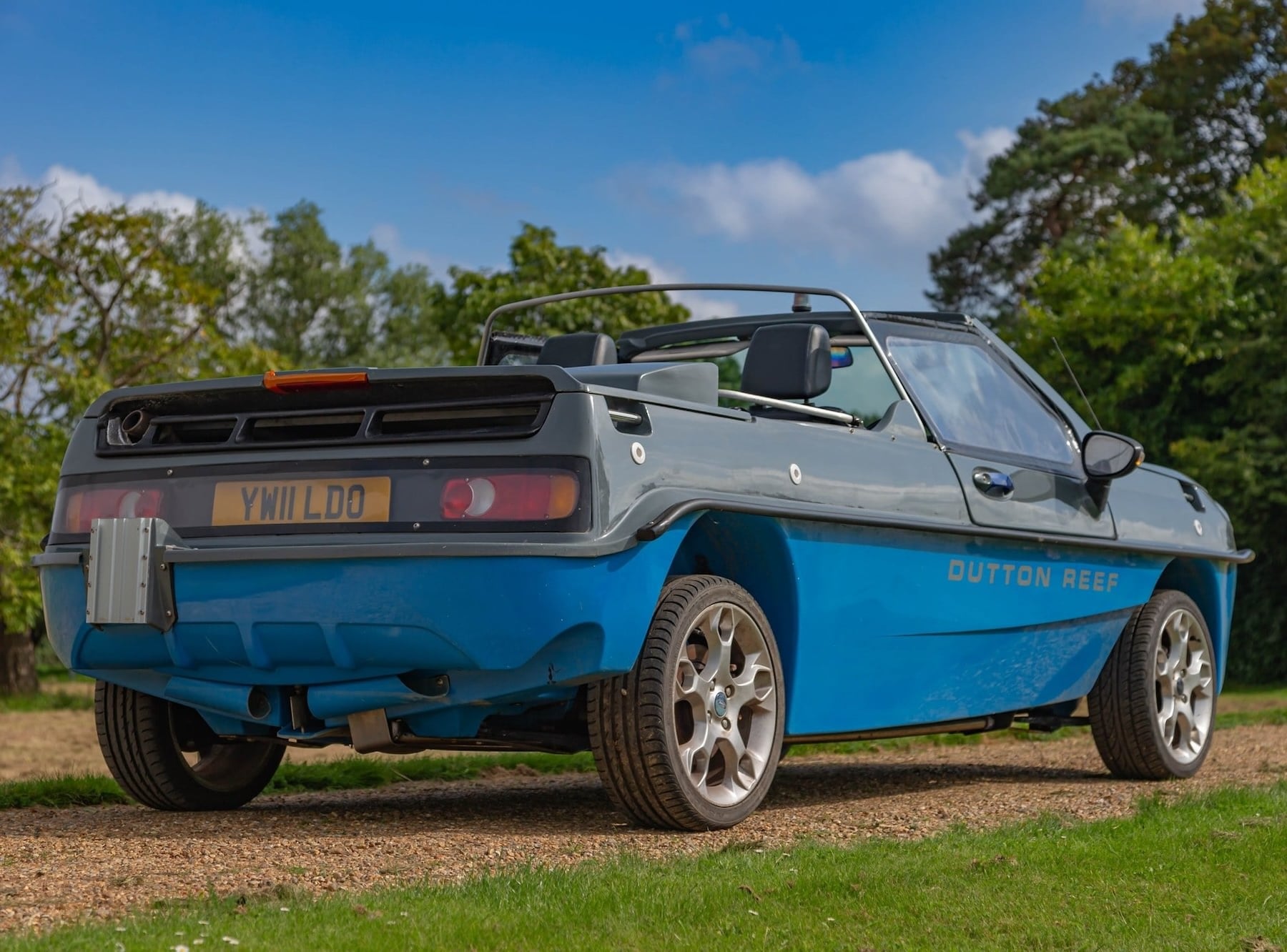
Images courtesy of Car & Classic

Articles that Ben Branch has written have been covered on CNN, Popular Mechanics, Smithsonian Magazine, Road & Track Magazine, the official Pinterest blog, the official eBay Motors blog, BuzzFeed, Autoweek Magazine, Wired Magazine, Autoblog, Gear Patrol, Jalopnik, The Verge, and many more.
Silodrome was founded by Ben back in 2010, in the years since the site has grown to become a world leader in the alternative and vintage motoring sector, with well over a million monthly readers from around the world and many hundreds of thousands of followers on social media.