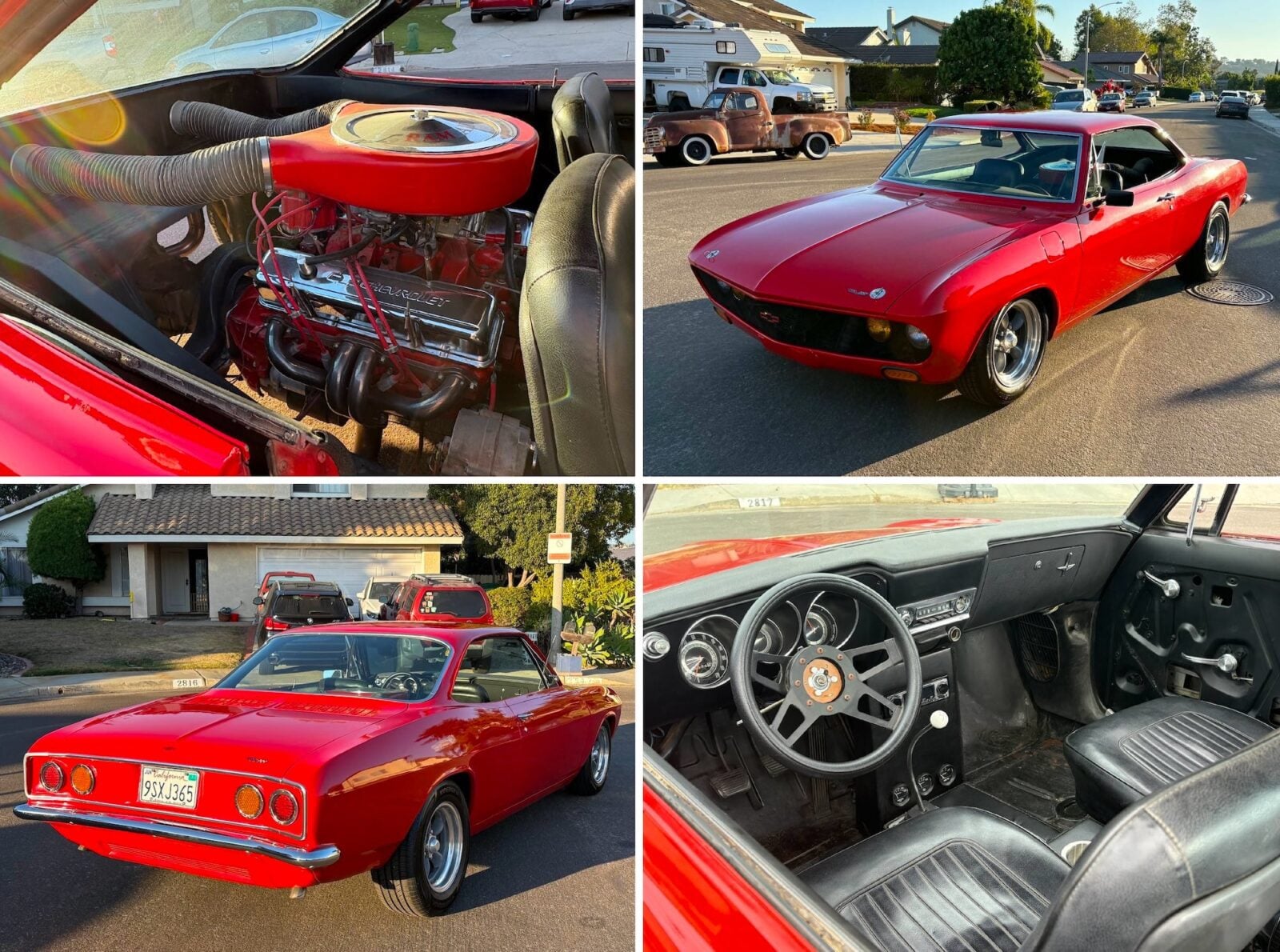
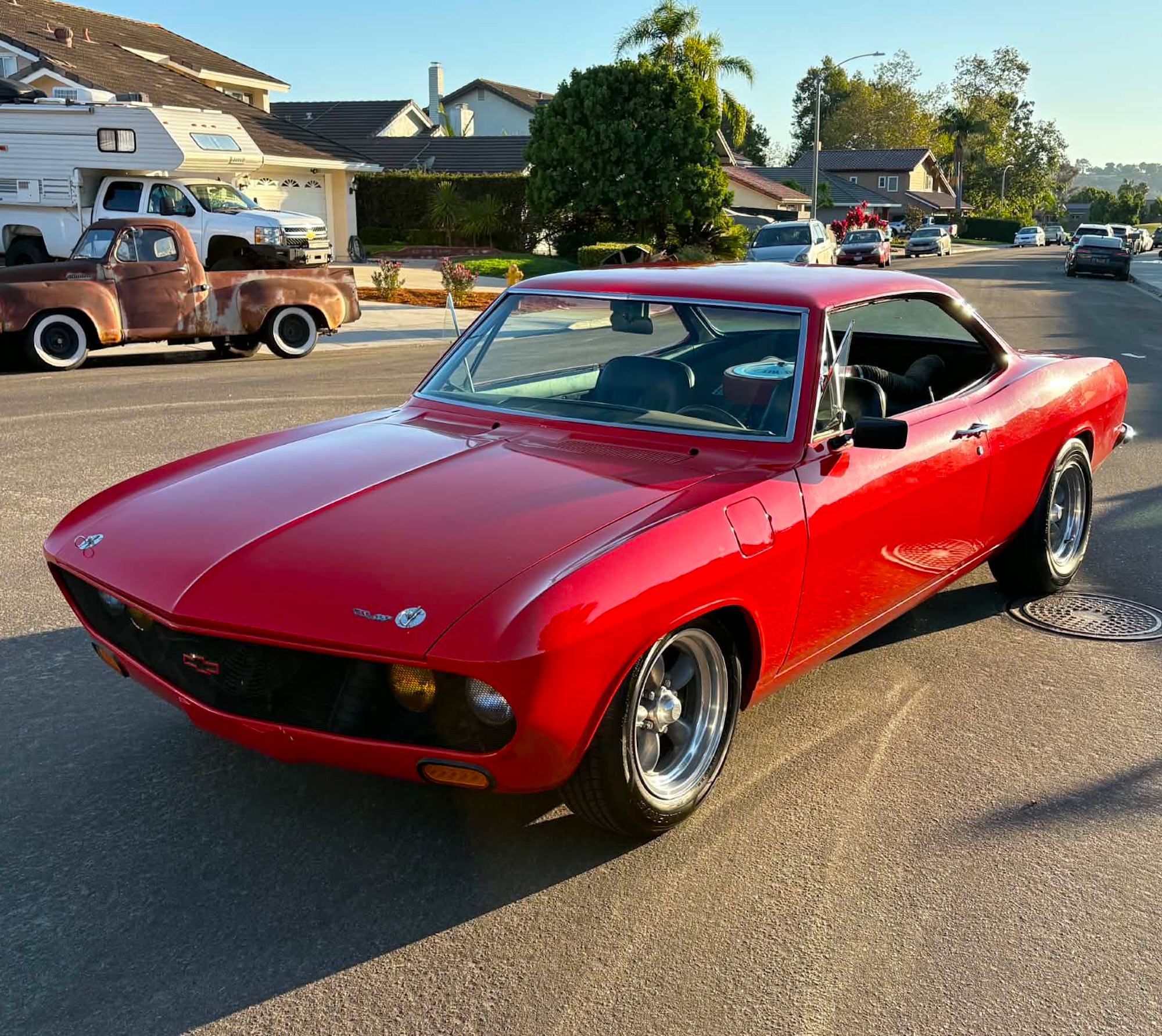
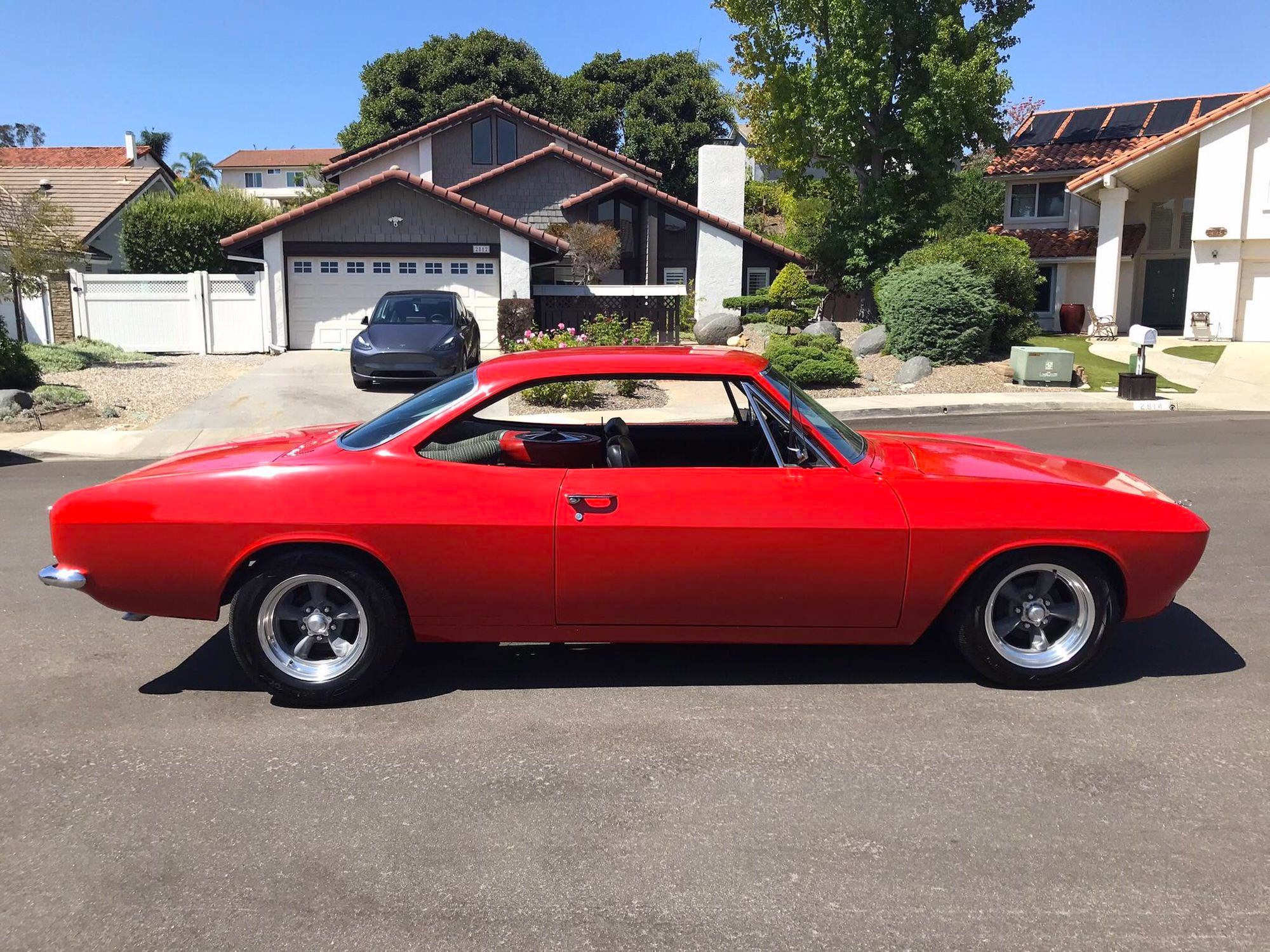
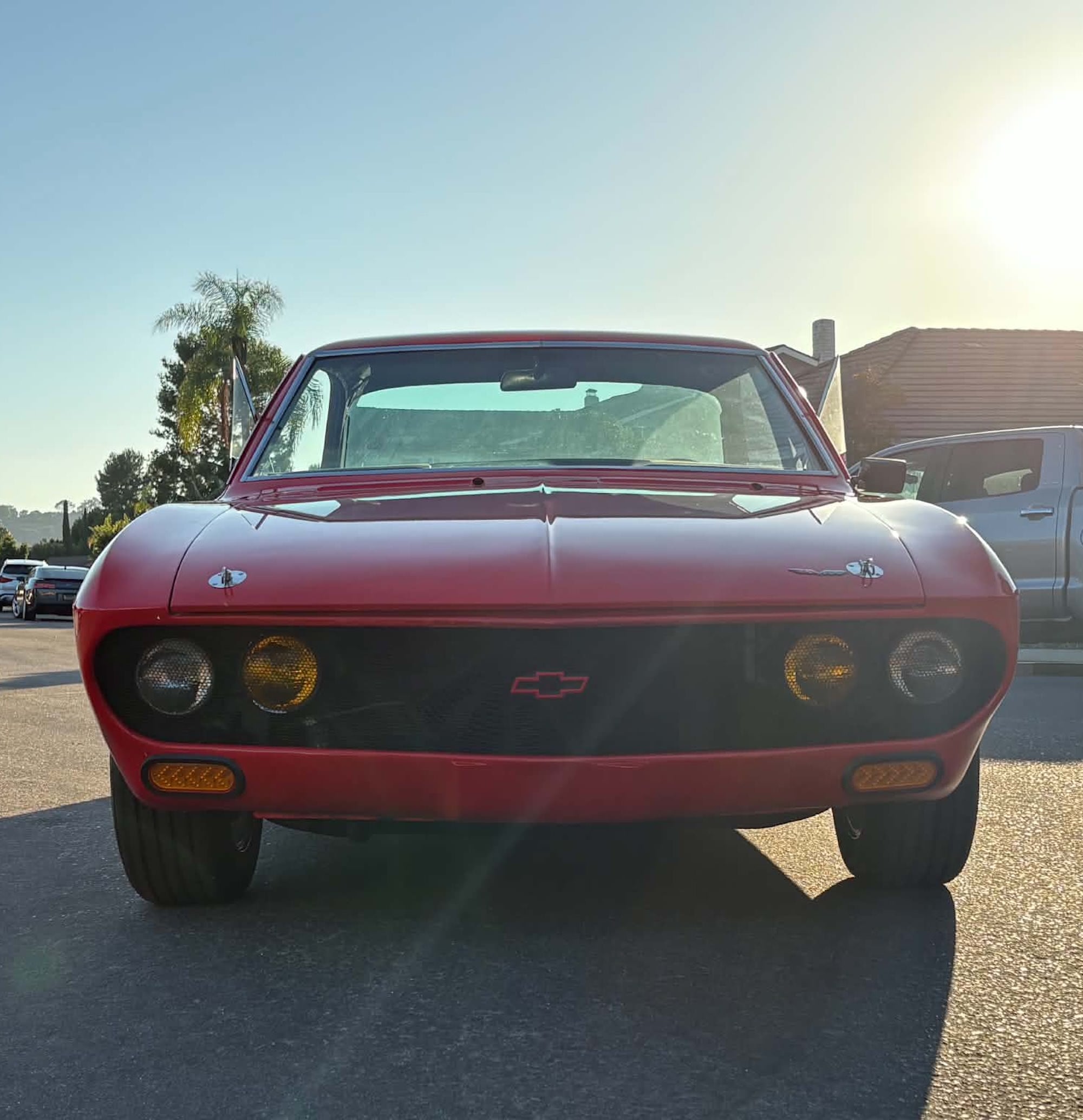
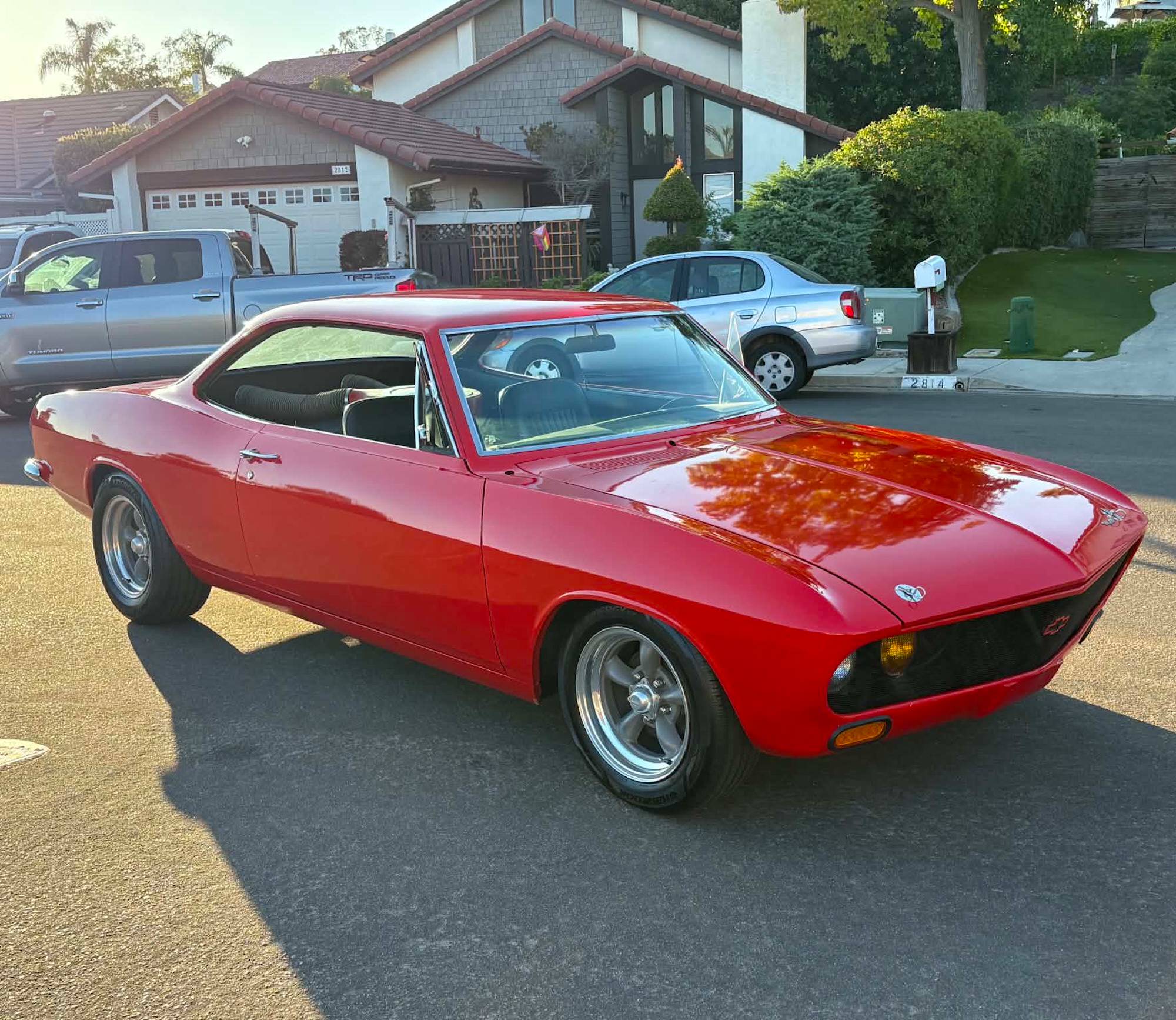
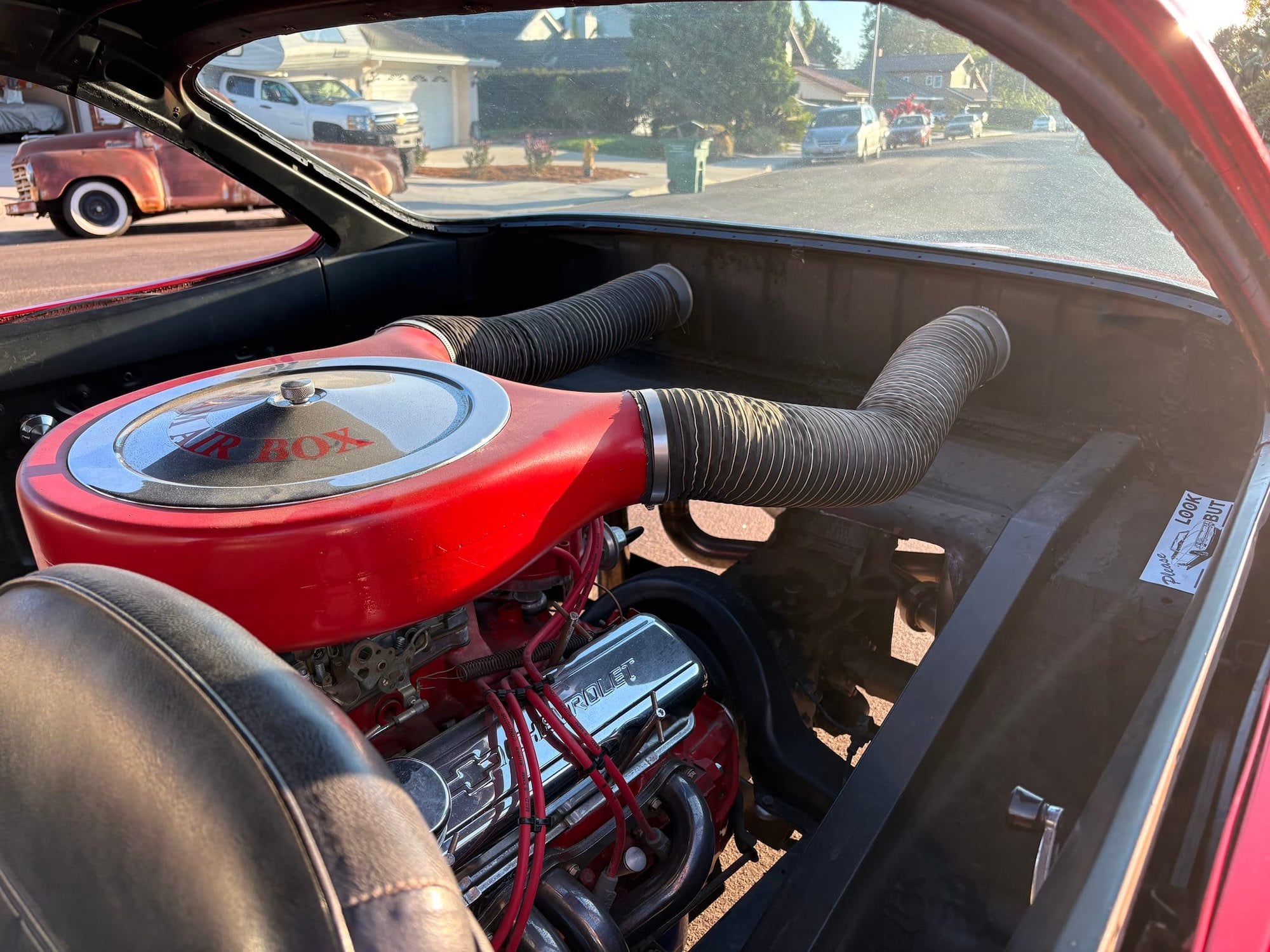
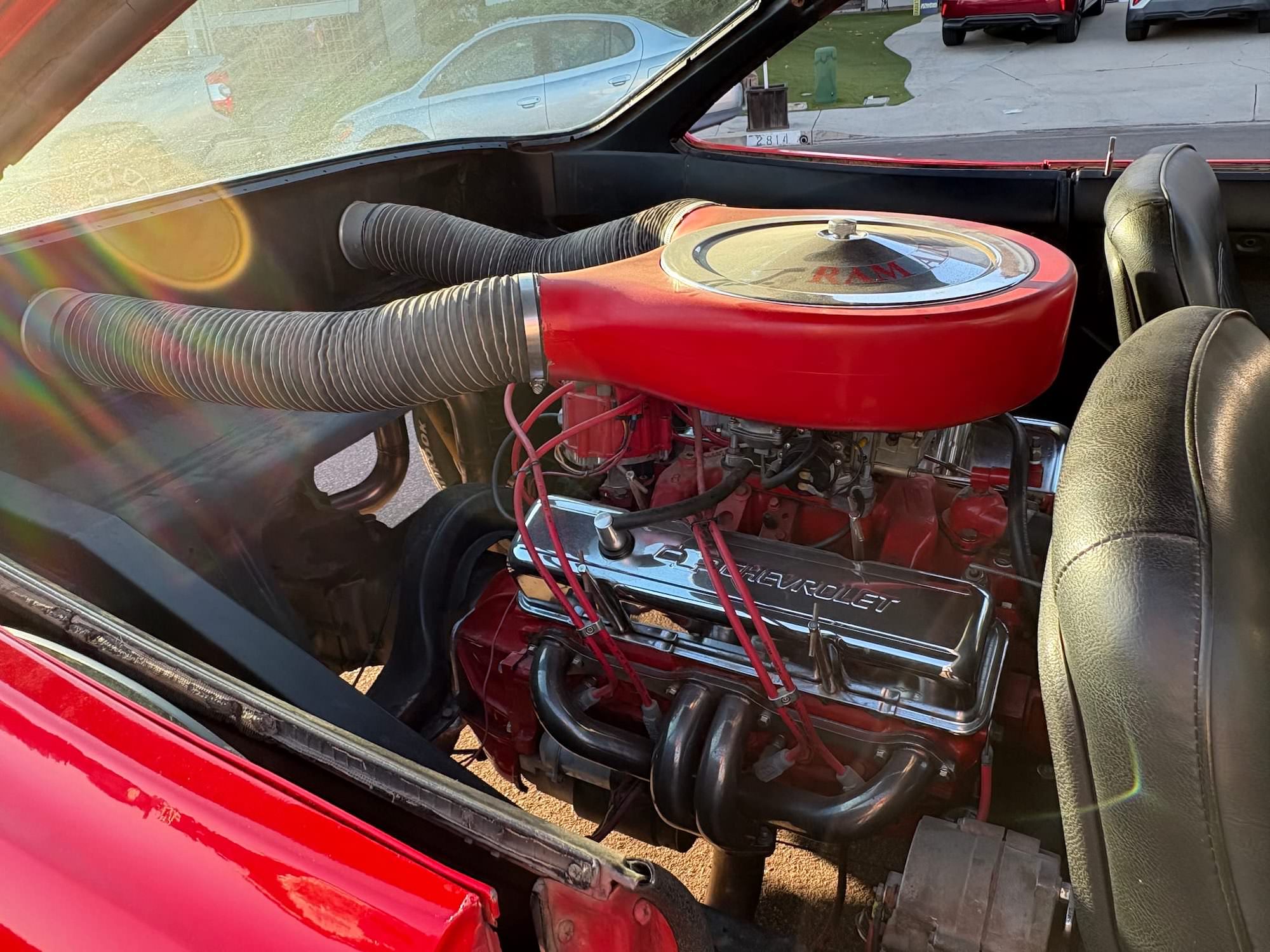
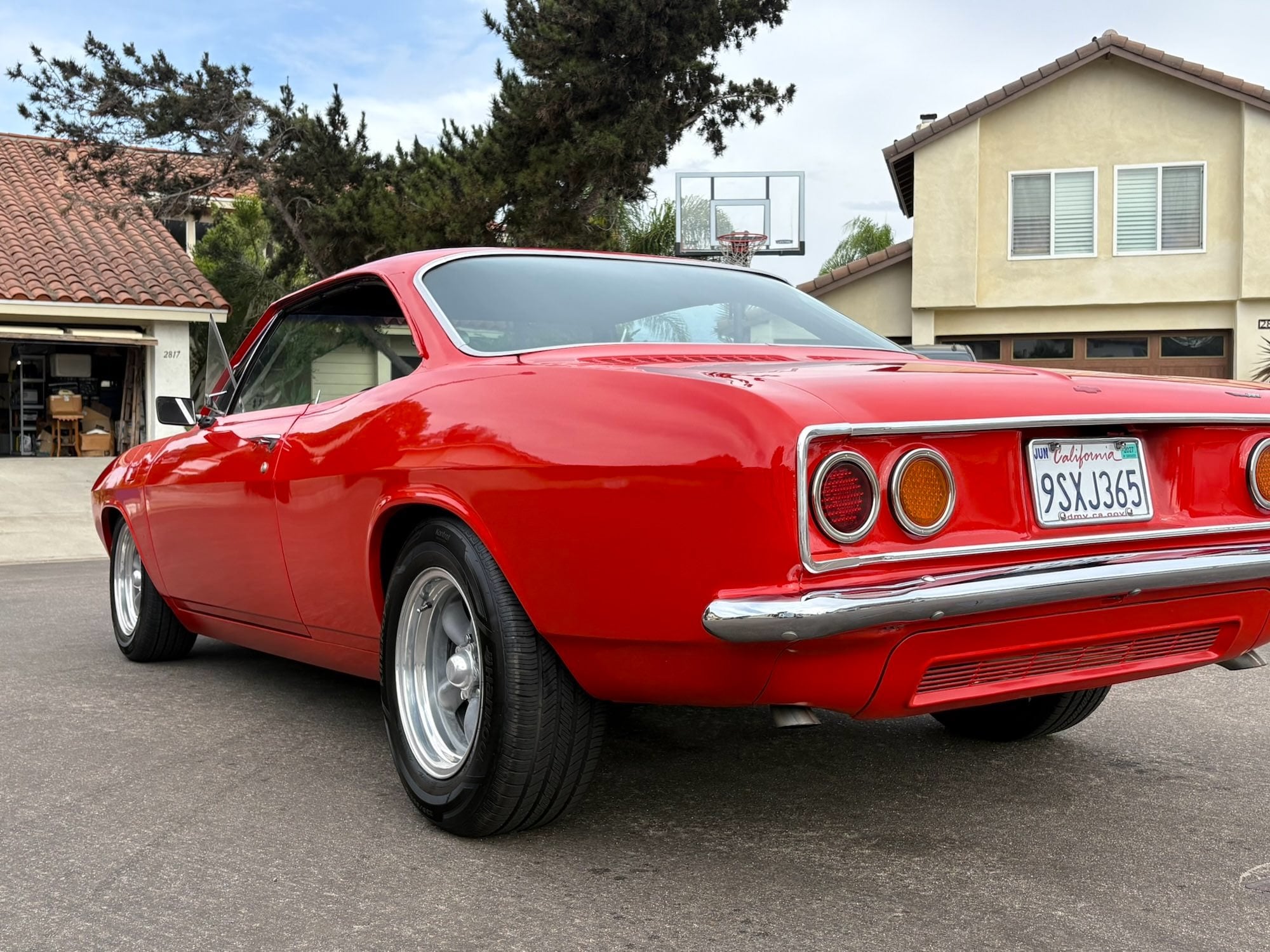
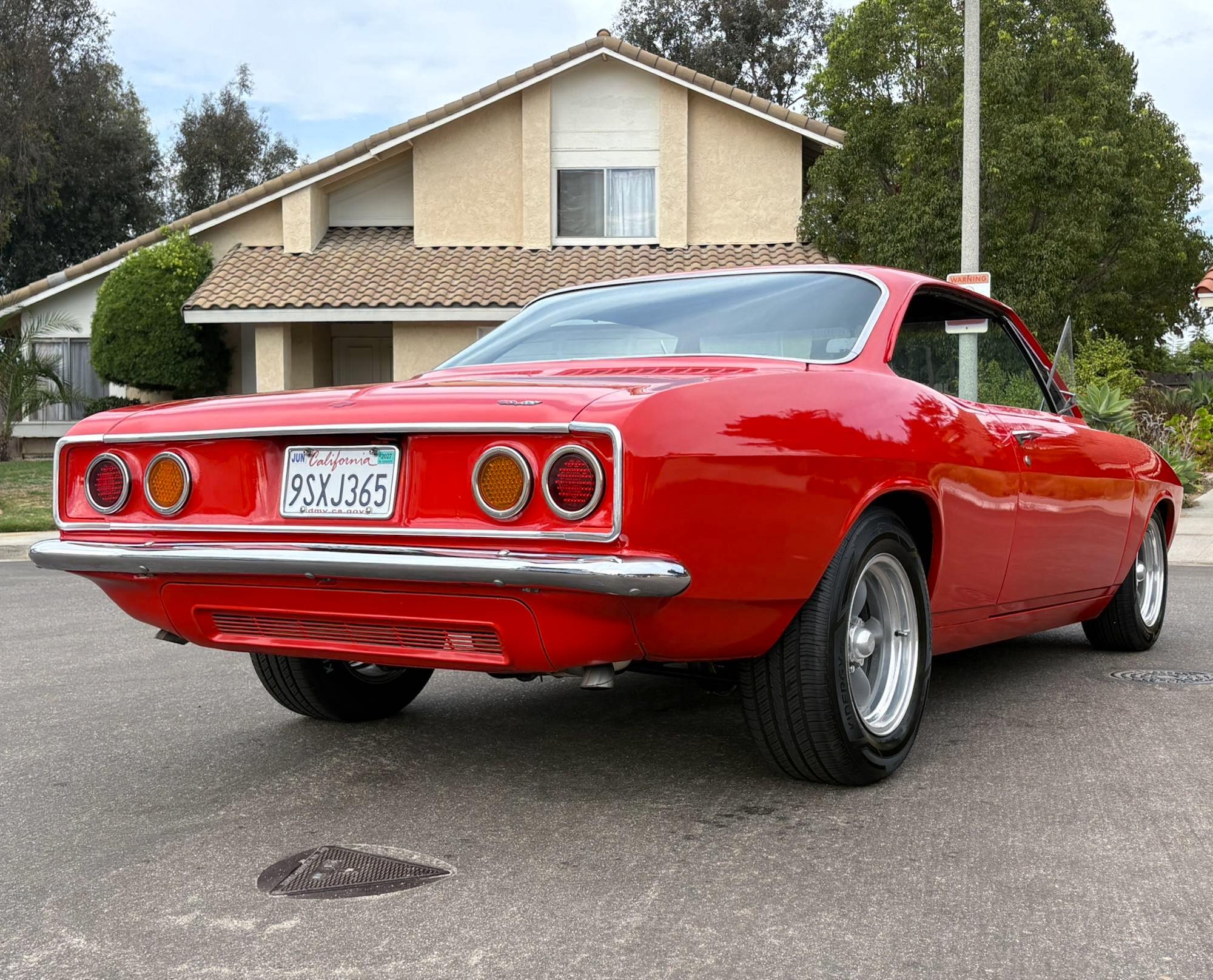
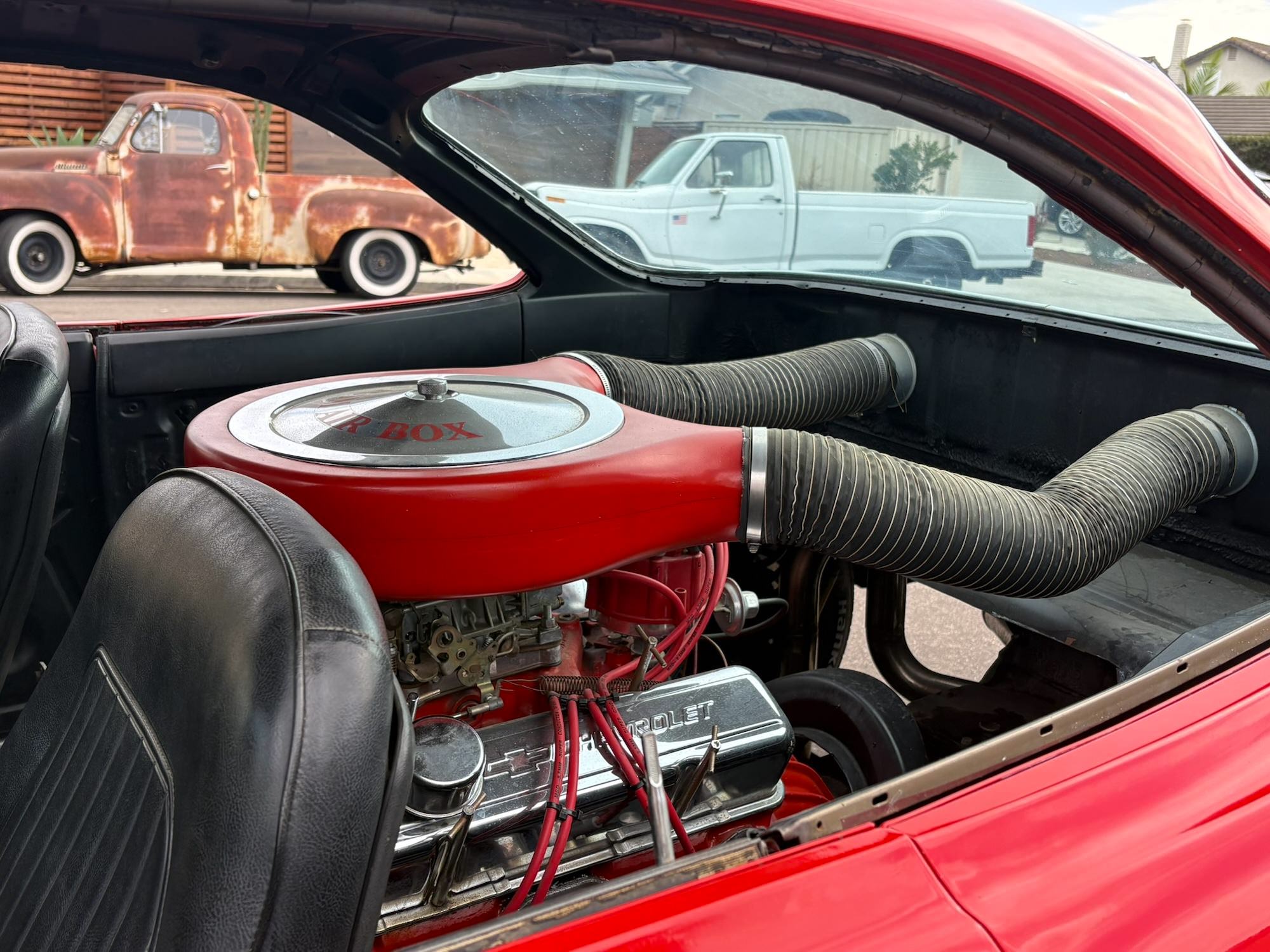
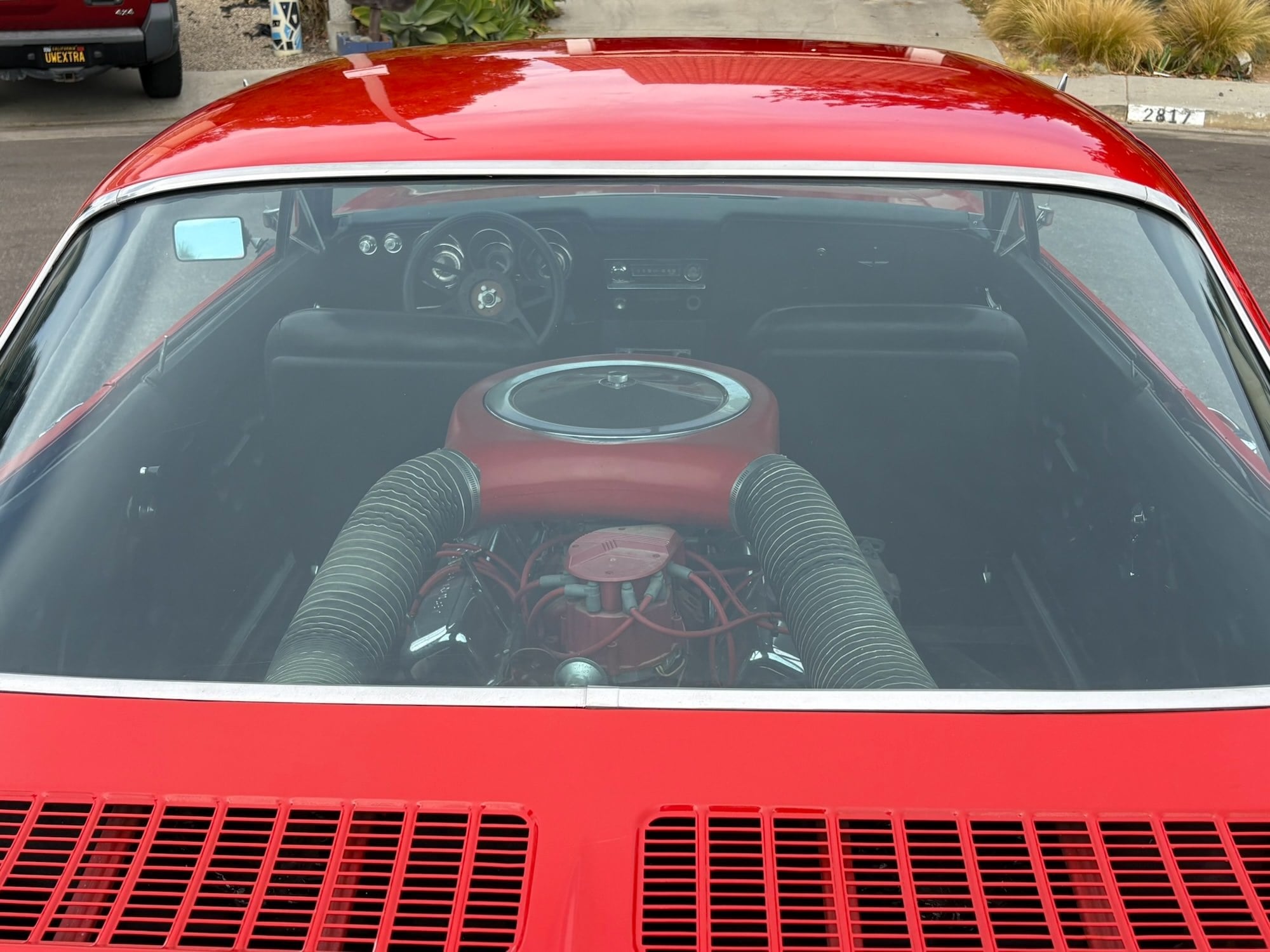
This is a 1966 Chevrolet Corvair Monza that’s been significantly modified, the original air-cooled flat six is now long gone, replaced with a mid-mounted 350 small block V8 sending power to the rear wheels via a 4-speed manual transaxle.
From the factory this car would have been good for around 140 bhp and 160 lb ft of torque, but with its new 350 V8 it will be making closer to 290 bhp and 326 lb ft of torque – a huge difference. That said, we don’t know this specific engine’s output figures, could be more could be less, but the above numbers are about average for a 350 Chevy crate mill.
Fast Facts: A Mid-Engined V8 Corvair Monza
- The Chevrolet Corvair debuted in 1959 as an unconventional American compact with a rear-mounted, air-cooled flat-six, four-wheel independent suspension, and unibody construction. Conceived by Chevrolet chief Ed Cole as a Volkswagen Beetle rival, it initially competed with conventional compacts before the sportier Monza unexpectedly became the model’s strongest seller.
- Chevrolet expanded the Corvair with Monza coupes, sedans, convertibles, wagons, vans, and pickups. The turbocharged Monza Spyder arrived in 1962 with more power, and major suspension revisions soon followed. The redesigned 1965 Corvair had improved independent rear suspension, cleaner styling, and the performance-focused Corsa with up to 180 bhp.
- Sales declined rapidly after 1965 as the Ford Mustang and Chevrolet Camaro captured buyers attention, while Ralph Nader’s book “Unsafe at Any Speed” forever tarnished the Corvair’s reputation. Production ended in 1969. A 1972 NHTSA investigation later concluded the early Corvair’s handling was comparable with contemporary domestic and foreign vehicles.
- The 1966 Monza shown here has been transformed with a mid-mounted 350 cubic inch Chevrolet V8, a 4-speed manual transaxle, lowered suspension, Torq Thrust wheels, Holley carburetor, MSD ignition, headers, and Flowmaster exhaust. Its stripped interior has Camaro seats and aftermarket controls, and it is being sold at no reserve.
History Speedrun: The Chevrolet Corvair
Ed Cole, Chevrolet’s General Manager, conceived the Corvair as an American answer to the Volkswagen Beetle and he developed it in secret. The project was disguised as an engineering program for Holden, GM’s Australian subsidiary, complete with Holden part numbers and purchase orders, until Cole showed the clay model to GM president Harlow Curtice in September of 1957.
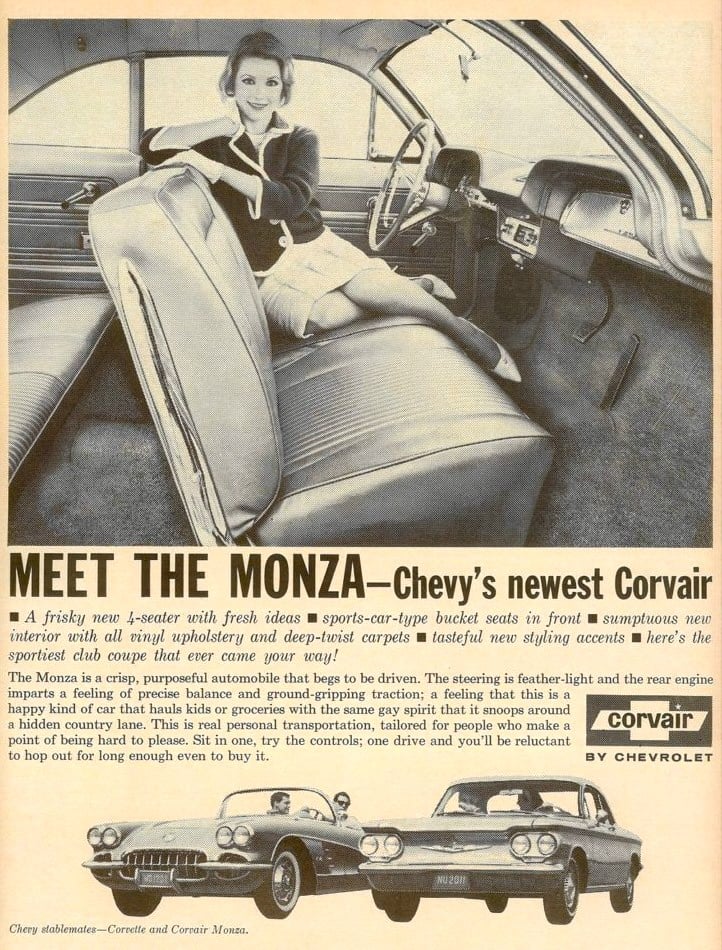
 The new Corvair Monza, first shown at the Chicago Auto Show in early-1960 as a coupe with bucket seats and a sports-oriented trim package, was Chevrolet’s attempt to find a place for the unusual air-cooled model series. Image courtesy of General Motors.
Nothing else in Detroit was built like it, an air-cooled flat-six was fitted behind the rear axle, a two-piece aluminum crankcase with cast-iron cylinder barrels, independent suspension at all four corners, and unibody construction, the first unibody built by Fisher Body. The engine displaced 140 cubic inches and made 80 bhp on two single-throat carburetors.
The car went on sale on October the 2nd, 1959 as a four-door sedan at $2,038 USD and it was Motor Trend’s Car of the Year for 1960. It didn’t outsell the Ford Falcon, its arch rival that arrived a week later and became the best-selling domestic compact car. Within two months Cole had ordered a more conventional Falcon rival, the Chevy II, which left the Corvair needing a new place in the scheme of things if it were to survive.
The new Corvair Monza, first shown at the Chicago Auto Show in early-1960 as a coupe with bucket seats and a sports-oriented trim package, was Chevrolet’s attempt to find a place for the unusual air-cooled model series.
Public response to the Monza was positive enough that a production version reached dealers that spring, a surprisingly quick turnaround, priced $189 above a Corvair 700, with an optional 95 bhp “Super Turbo-Air” engine. Despite the late start it sold almost 12,000 cars in the 1960 model year, not bad numbers, but this was merely the beginning.
In 1961 it outsold every other Corvair by nearly two to one, and the line grew to take in a four-door sedan in March of 1961 and a convertible and wagon in 1962. Some have even argued that Ford’s Mustang, which arrived in April of 1964, followed much of the Monza’s formula.
For 1961 Chevrolet also added the Corvair 95 vans and pickups on a shortened 95-inch wheelbase, 127,221 Forward Control Corvairs were built in the United States through till 1965.
The Monza Spyder arrived in 1962 as a $317.45 option package for the Monza coupe and convertible. A TRW turbocharger, breathing through a single side-draft Carter carburetor with no wastegate and no intercooler, boosted the 145 cubic inch six to 150 bhp and 210 lb ft.
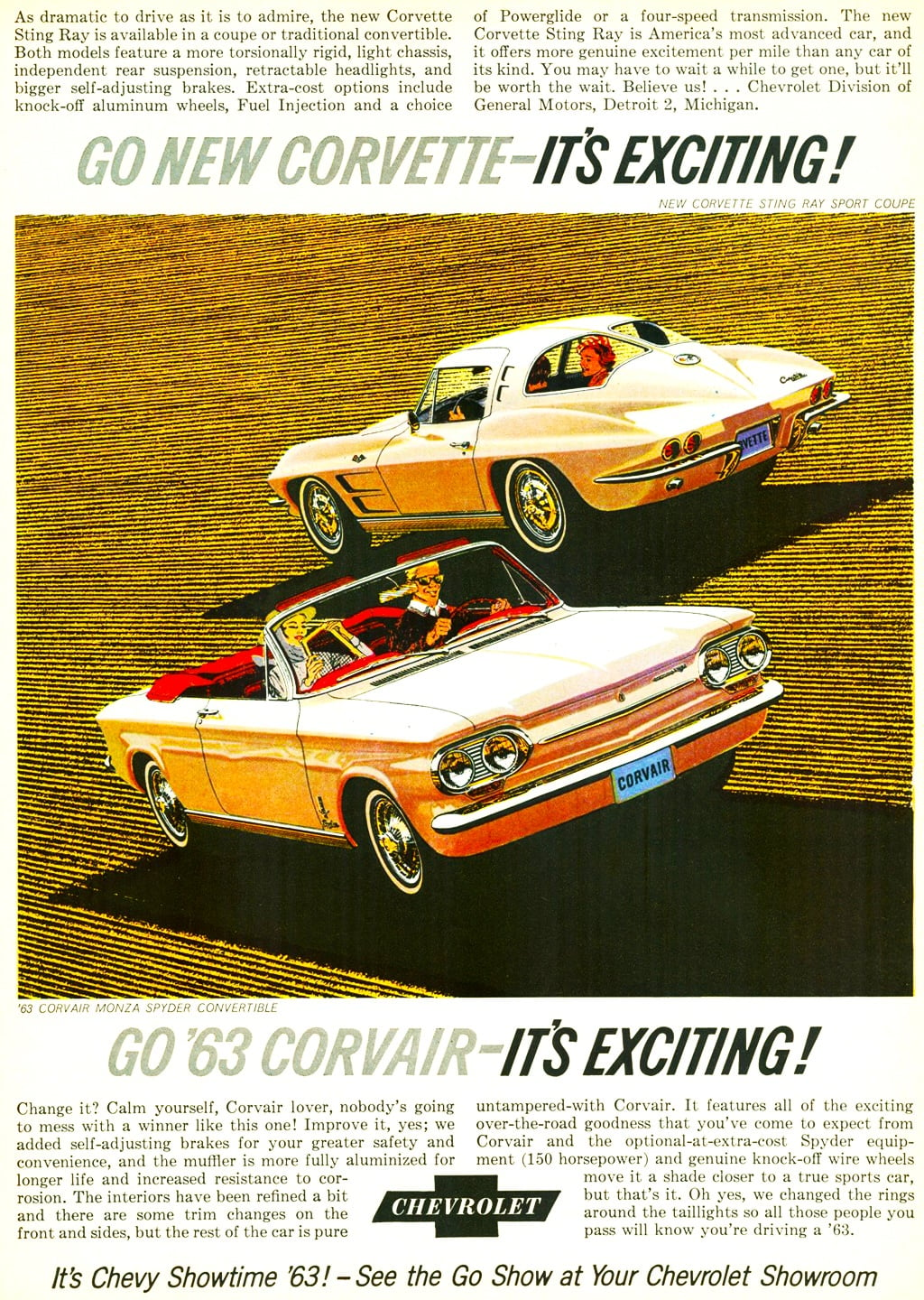
Nothing else in Detroit was built like the Corvair, it had an air-cooled flat-six was fitted behind the rear axle, a two-piece aluminum crankcase with cast-iron cylinder barrels, independent suspension at all four corners, and unibody construction, the first unibody built by Fisher Body. Image courtesy of General Motors.
At launch, the Monza Spyder package required the 4-speed manual gearbox, heavy-duty suspension, and metallic brake linings. A new instrument panel carried a tachometer, a manifold-pressure gauge, and a cylinder-head temperature gauge. The Spyder was one of the first two turbocharged production cars, launched within weeks of Oldsmobile’s turbocharged Jetfire and a full 13 years before the turbocharged-flat-six Porsche 930.
The first-generation car’s swing-axle rear suspension could famously jack up and tuck the outside wheel under in a hard turn, and a front anti-roll bar in the original design had been deleted to save cost. Chevrolet’s substitute was to specify just 15 psi in the front tires and a more reasonable 26 psi in the rear, but it wasn’t a permanent fix by any measure.
A transverse rear leaf spring and a 164 cubic inch engine arrived for 1964. The second-generation car of 1965 went much further, replacing the swing axles with a fully articulated rear suspension derived from the Corvette Sting Ray layout and developed by Frank Winchell’s Chevrolet R&D team.
The good-looking new pillarless body was designed in an advanced studio headed by Ron Hill and brought to production in Henry Haga’s Chevrolet studio. The Corsa replaced the Spyder at the top of the range for 1965 and 1966, with a 140 bhp four-carburetor engine standard and a 180 bhp turbo optional.
By then the Mustang was outselling the Corvair in significant numbers, and GM froze Corvair development in April of 1965 as a result. Ralph Nader’s book Unsafe at Any Speed appeared that fall, aimed at the allegedly dangerous 1960-1963 Corvair swing axle suspension. GM hired a private detective to investigate Nader, and in March of 1966 GM president James Roche apologized for it before a Senate subcommittee. It was a dark time that unfairly tainted the Corvair in the eyes of many.
Corvair production fell from more than 237,000 in 1965 to fewer than 104,000 in 1966 and under 30,000 in 1967, the year the Camaro arrived. The four-door Corvair was dropped in 1968, the 1969 range was a 500 coupe, a Monza coupe, and a Monza convertible – 6,000 were built, 521 of them convertibles, and Chevrolet gave 1969 Corvair buyers a $150 coupon toward another new Chevrolet, valid through the 1973 model year.
In July 1972 the National Highway Traffic Safety Administration published its evaluation of the earlier 1960-1963 Corvair and concluded its handling and stability performance was “at least as good as the performance of some contemporary vehicles,” foreign and domestic. It was a vindication for the car, but it came too late, and the Corvair would be gone from showroom floors before the new decade arrived.
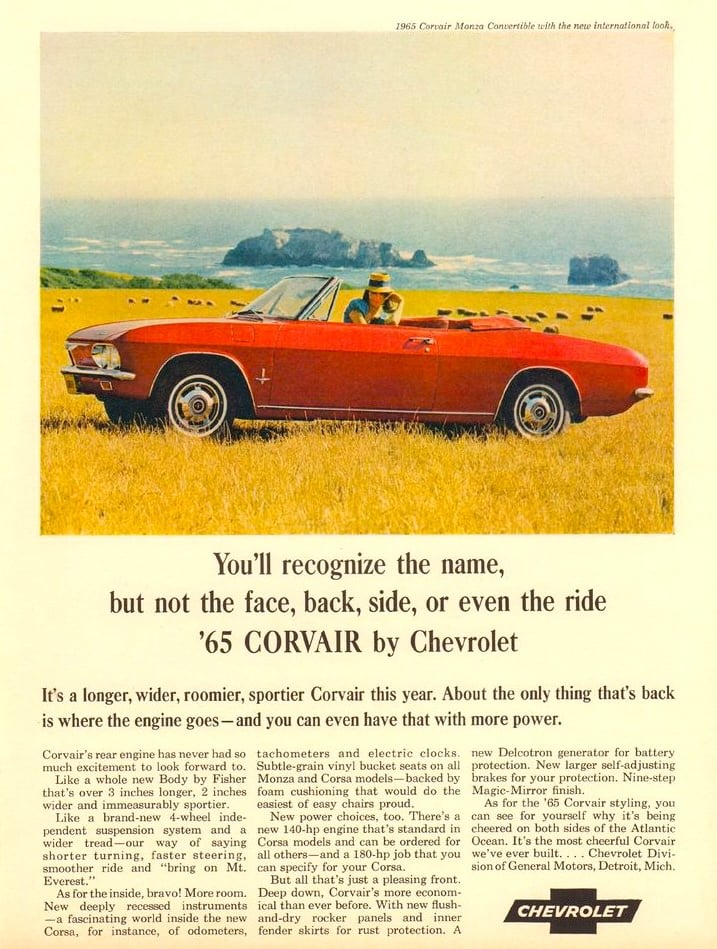
The second-generation car of 1965 went much further, replacing the swing axles with a fully articulated rear suspension derived from the Corvette Sting Ray layout and developed by Frank Winchell’s Chevrolet R&D team.
The Mid-Engined + V8-Swapped Corvair Shown Here
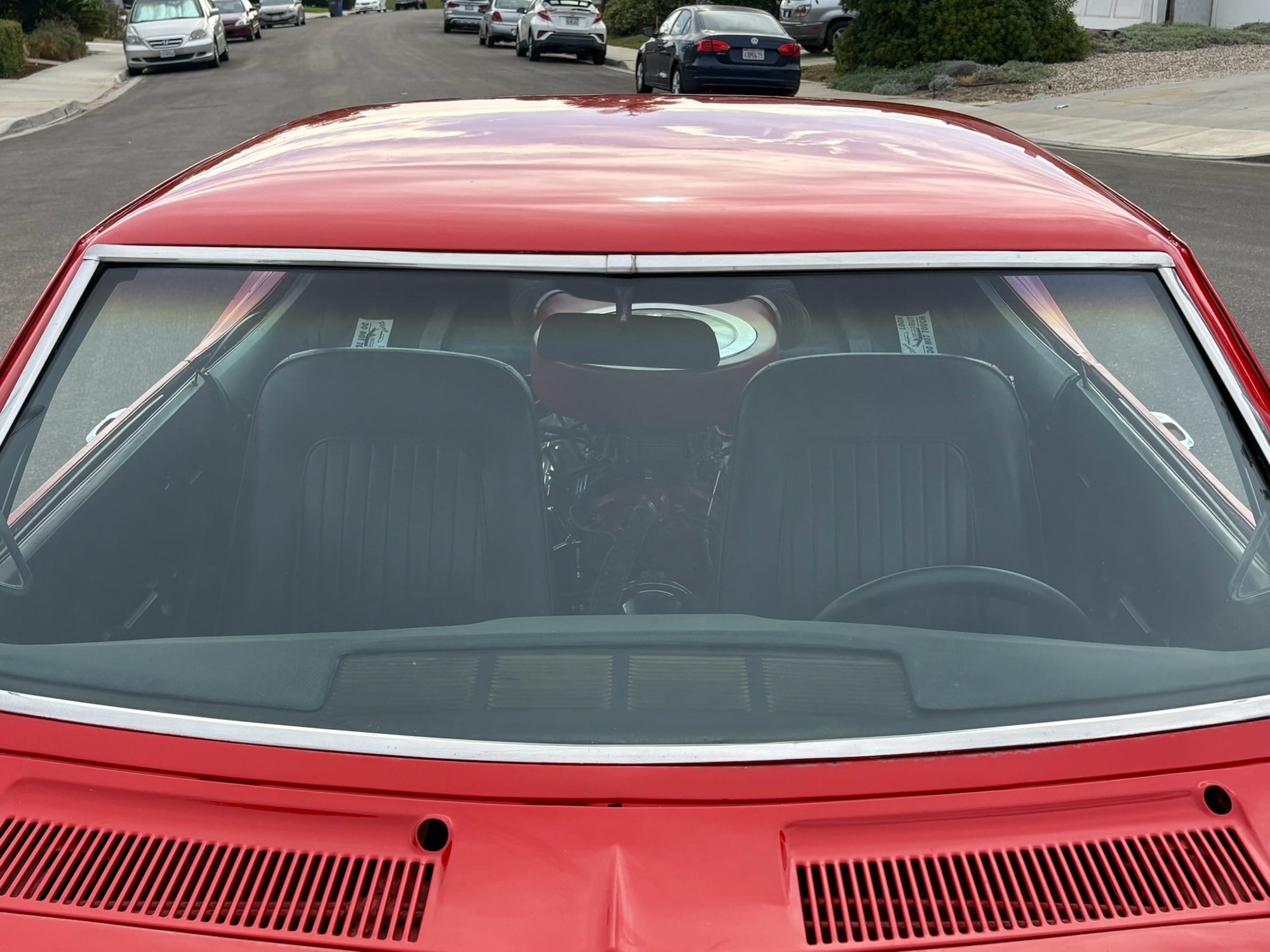
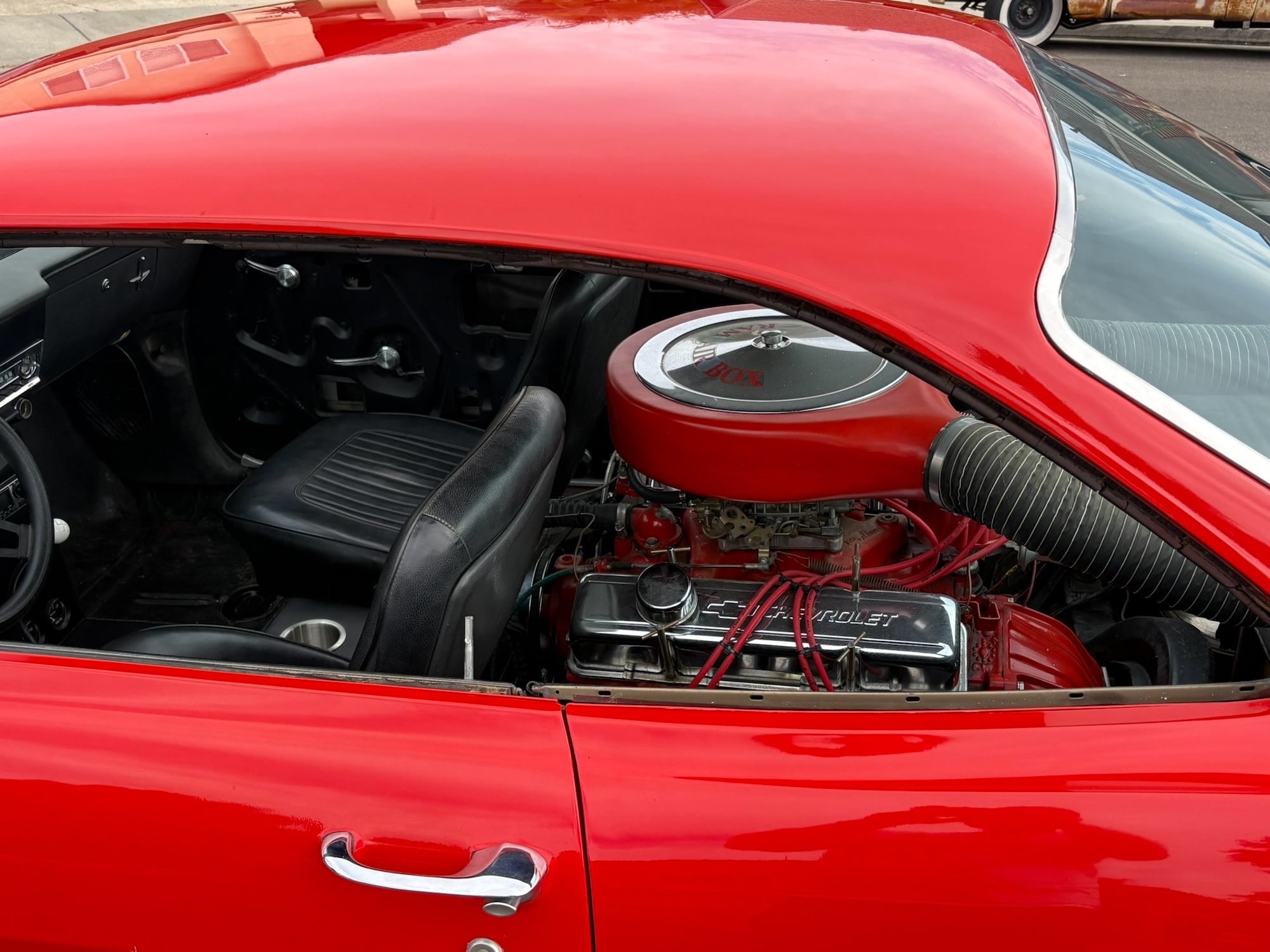
This 1966 Chevrolet Corvair Monza has been extensively modified from new, most notably with the installation of a 350 cubic inch Chevrolet small block V8 mounted amidships, rather than in the rear as the original flat-six would have been.
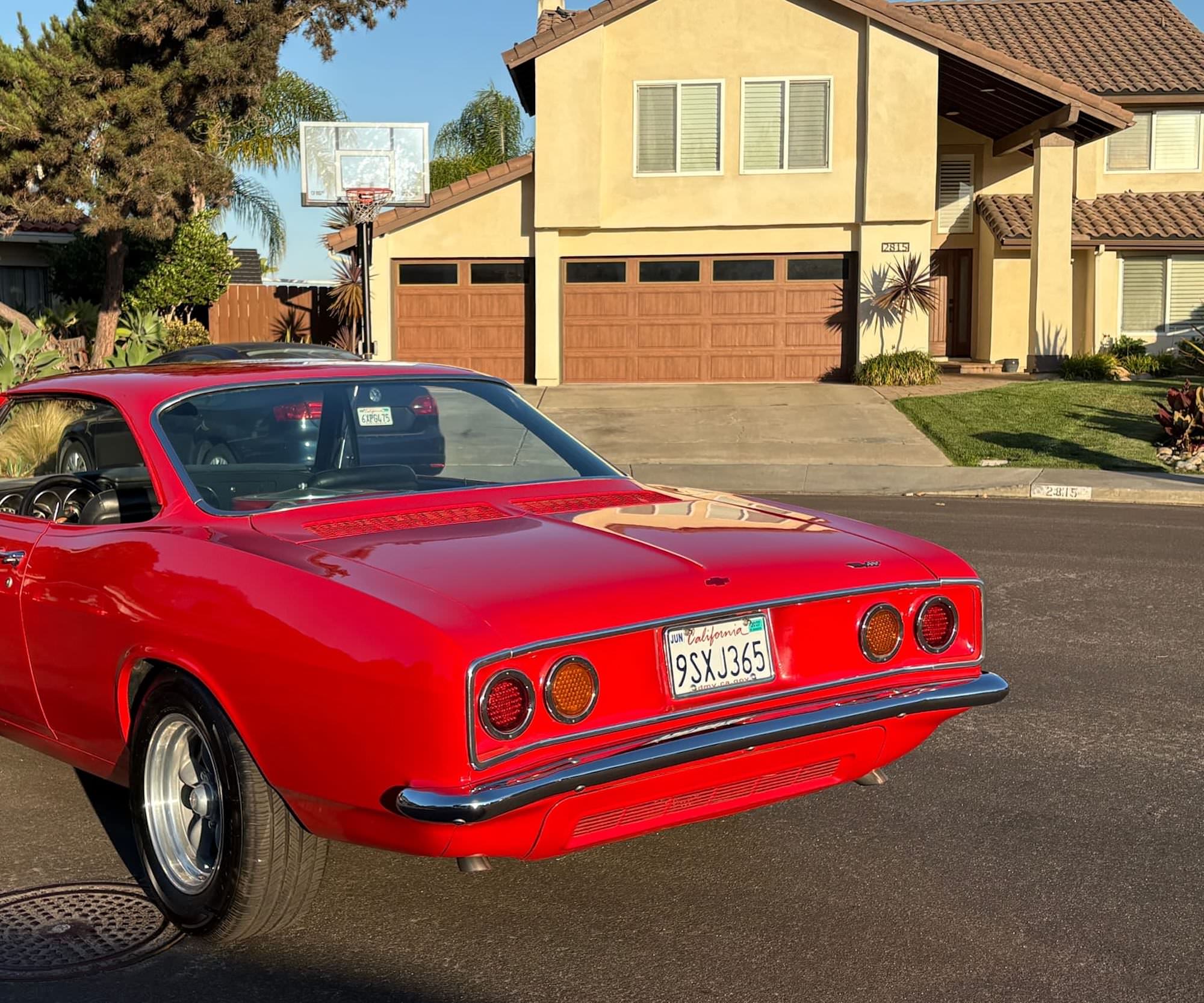
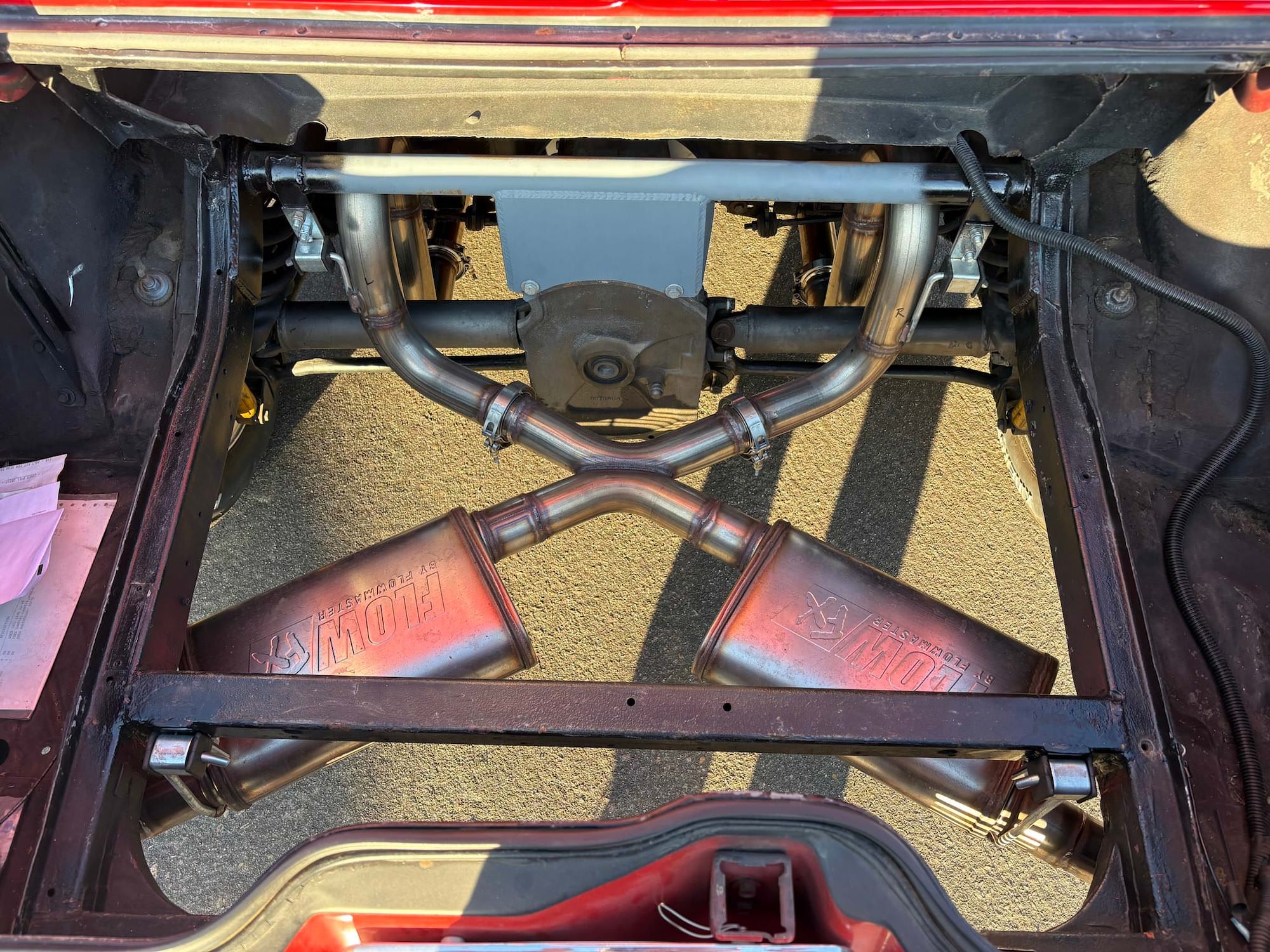
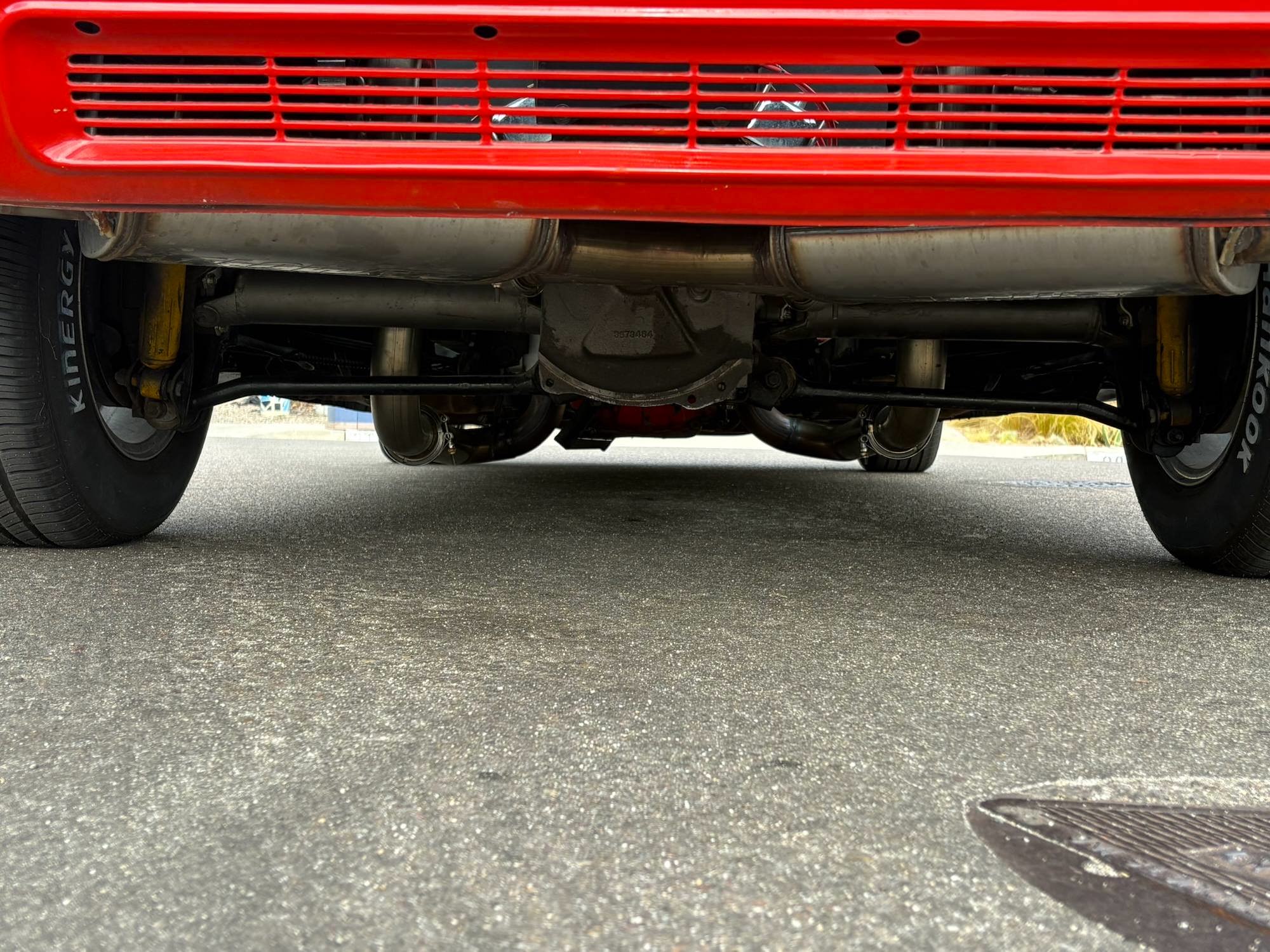
The engine is fitted with a Holley carburetor, MSD ignition, tubular headers, and a dual exhaust system with Flowmaster mufflers, and it sends power through a 4-speed manual transaxle to the rear wheels. The seller notes that an oil change and shifter adjustment were completed in preparation for the sale.
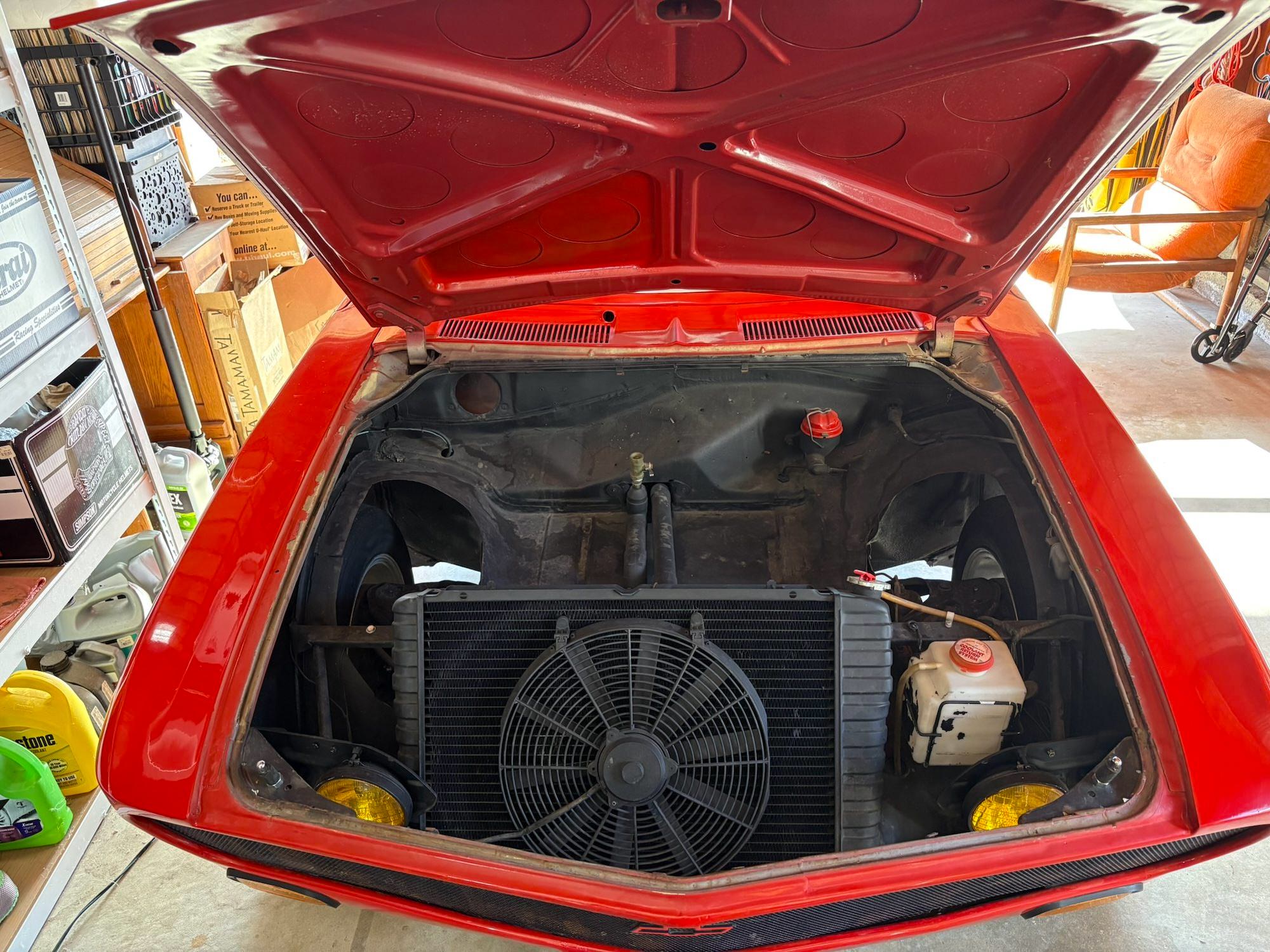
Moving the engine from behind the rear axle line to in front of it will have changed the driving dynamics of the car. From the factory, the Corvair Monza had a 36/64 front/rear weight distribution, making it a little tail happy if the driver didn’t know what they were doing. The 350 V8 in this car is heavier than the flat-six, but it’s also substantially further forward, which should aid in handling.
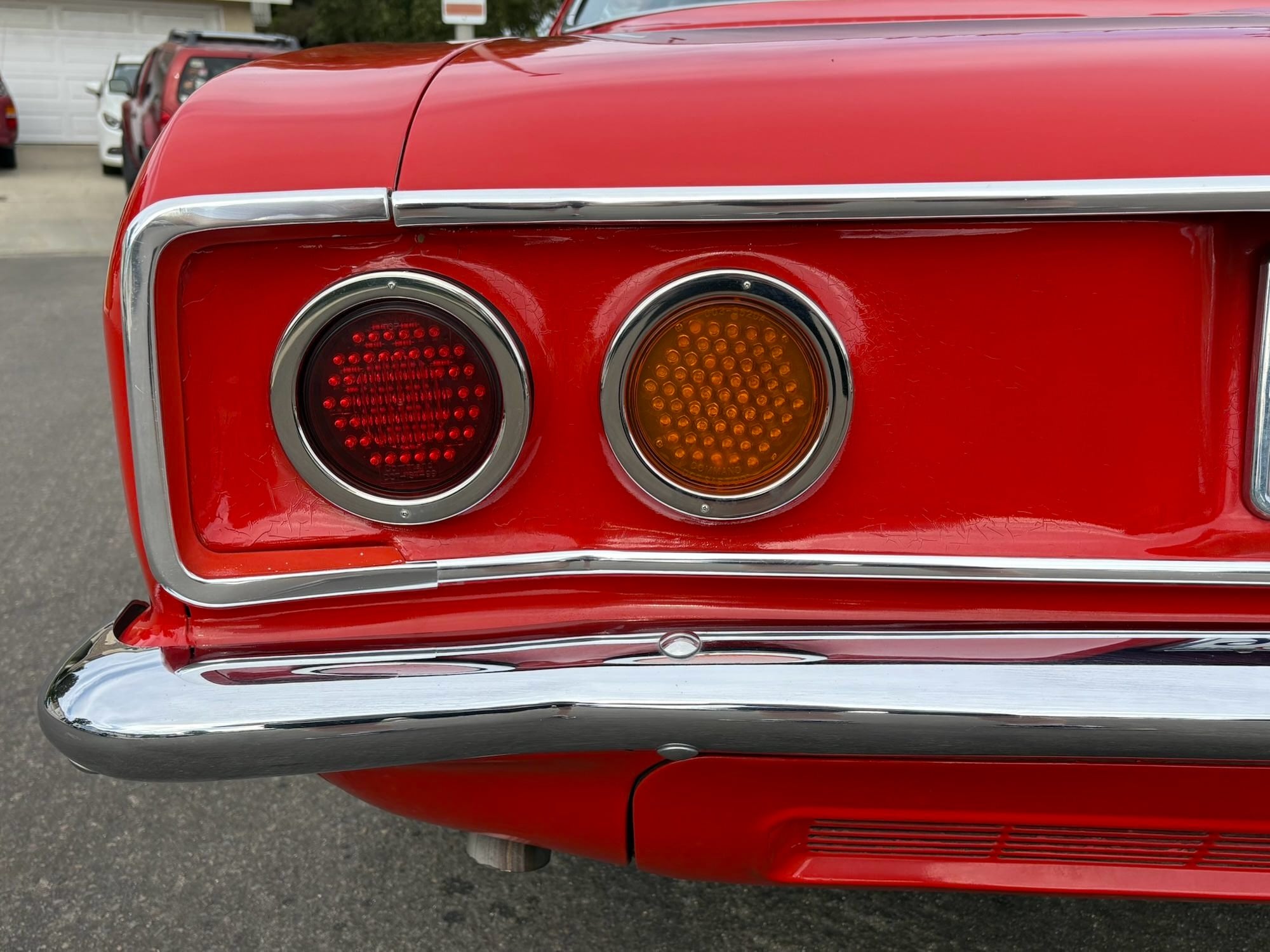
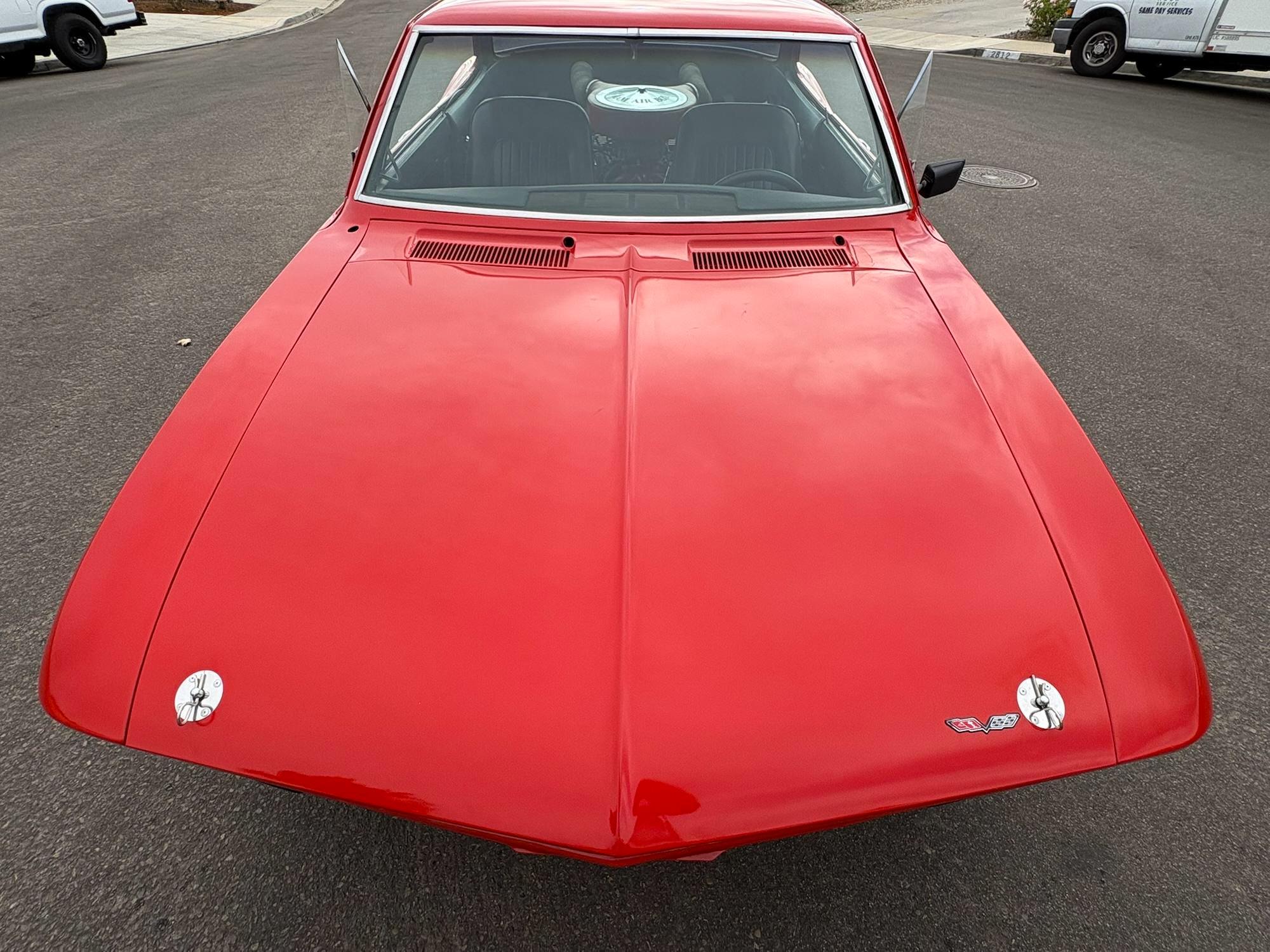
The car is finished in red and rides on lowered suspension with 15 inch American Racing Torq Thrust wheels shod with Hankook Kinergy ST tires. It also has revised lighting, hood pins, and a front bumper delete. The seller also mentions in the listing that the front-left turn signal and parking brake are currently not working.
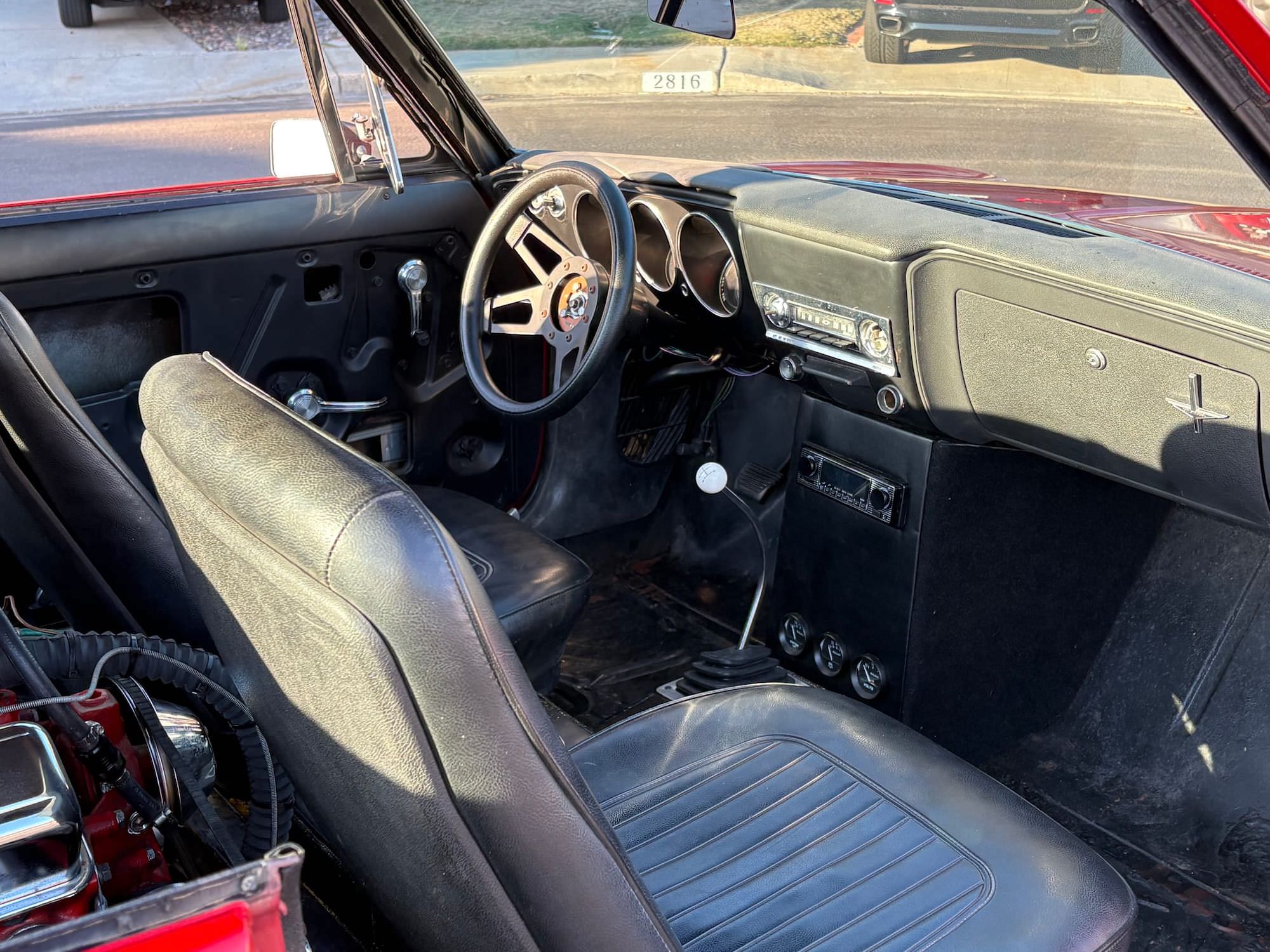
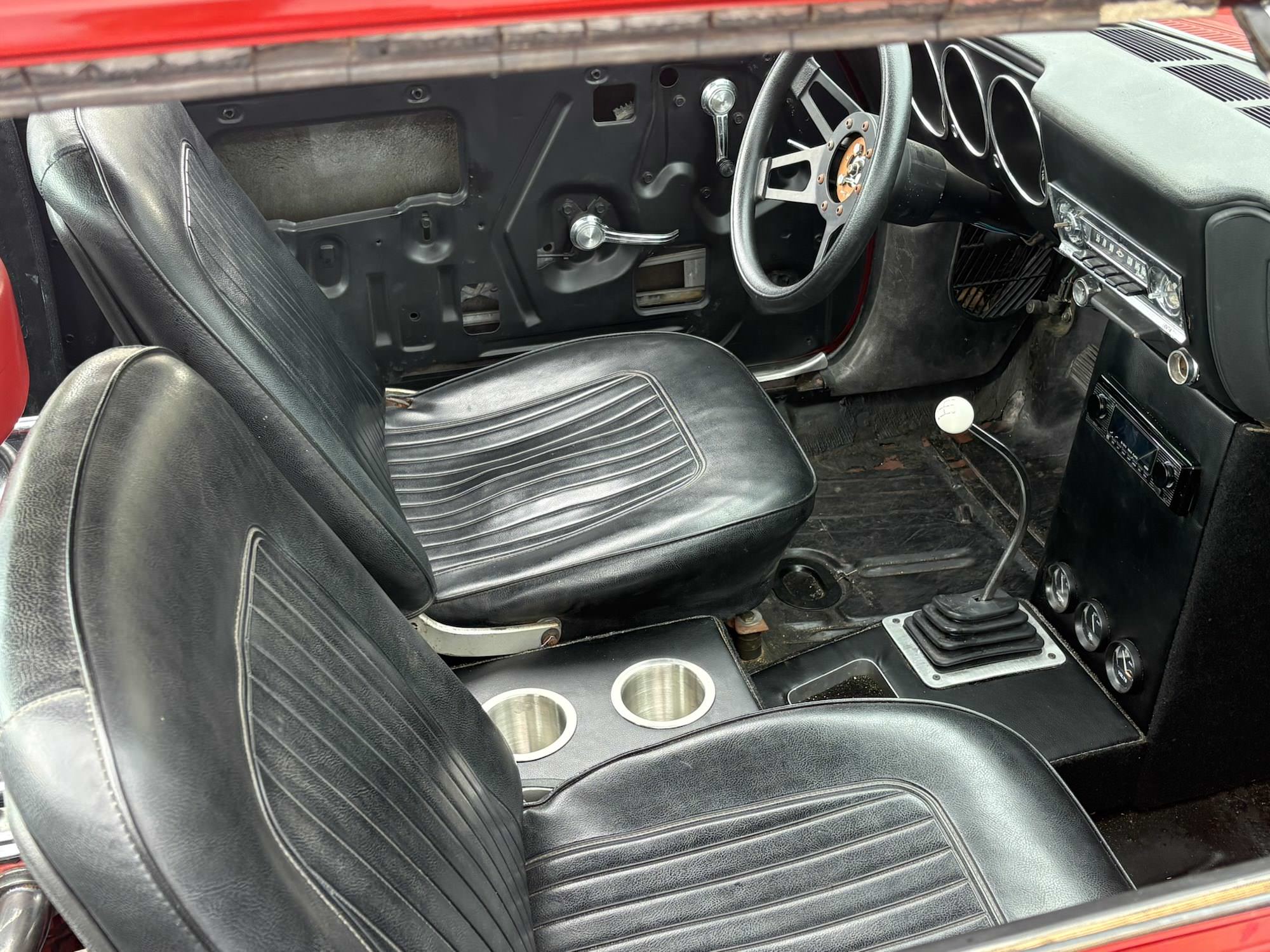
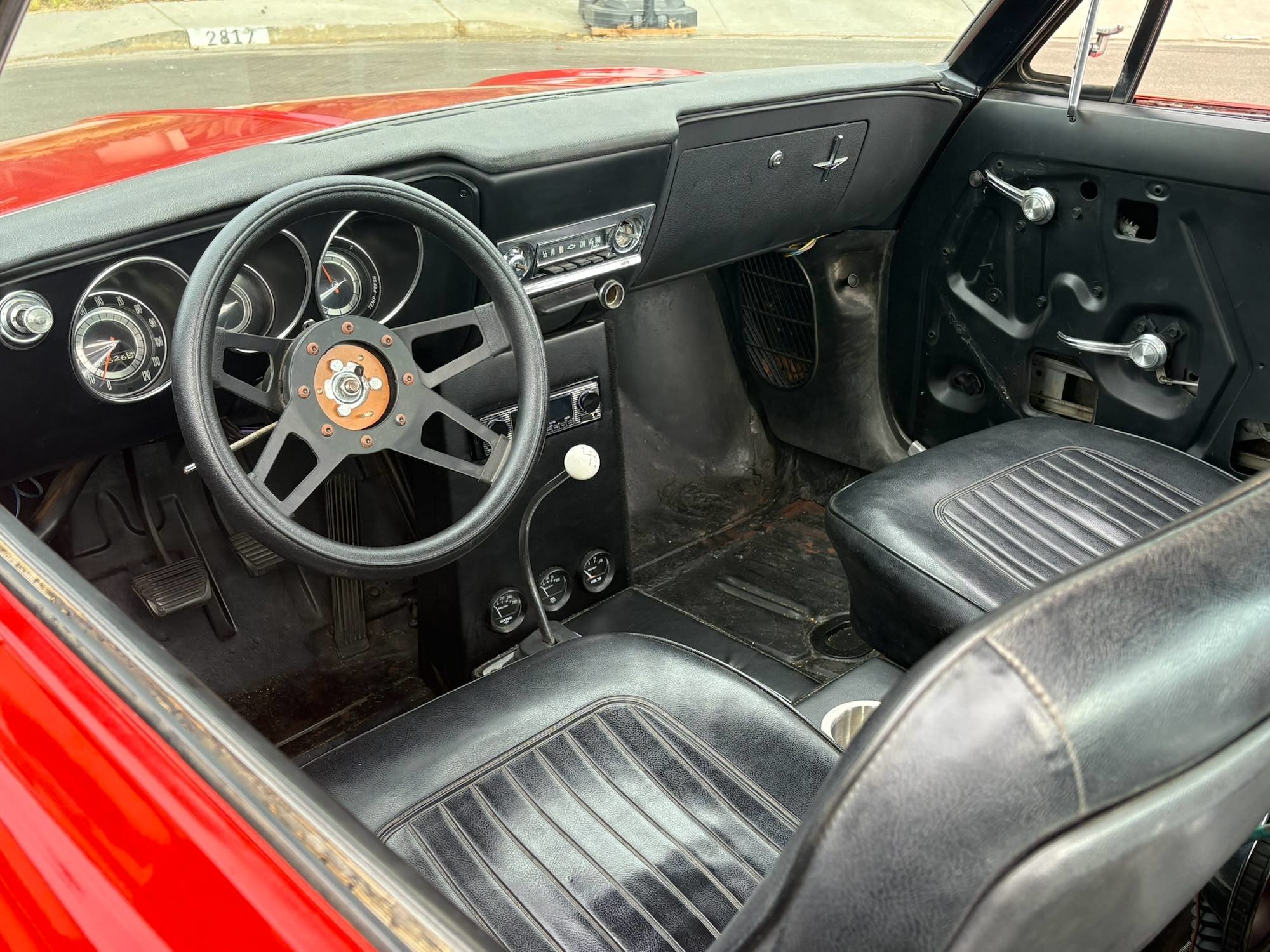
Inside, the car has been stripped of its carpets, door panels, headliner, and sun visors. It has Camaro-sourced black bucket seats as well as a center console with cupholders, while an aftermarket steering wheel and some auxiliary gauges have been installed.
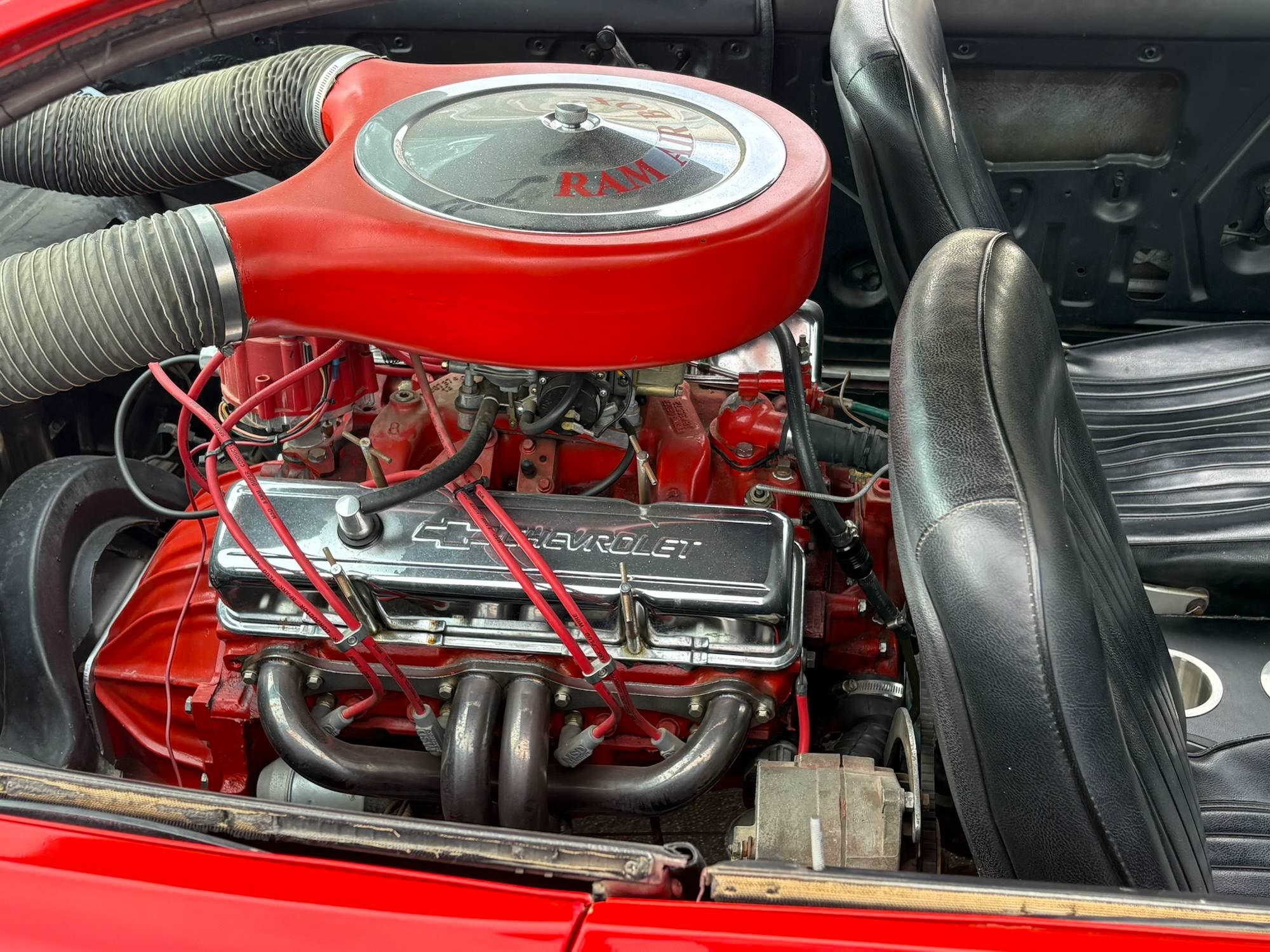
This is a 1966 Chevrolet Corvair Monza that’s been significantly modified, the original air-cooled flat six is now gone, replaced with a mid-mounted 350 small block V8 sending power to the rear wheels via a 4-speed manual transaxle.
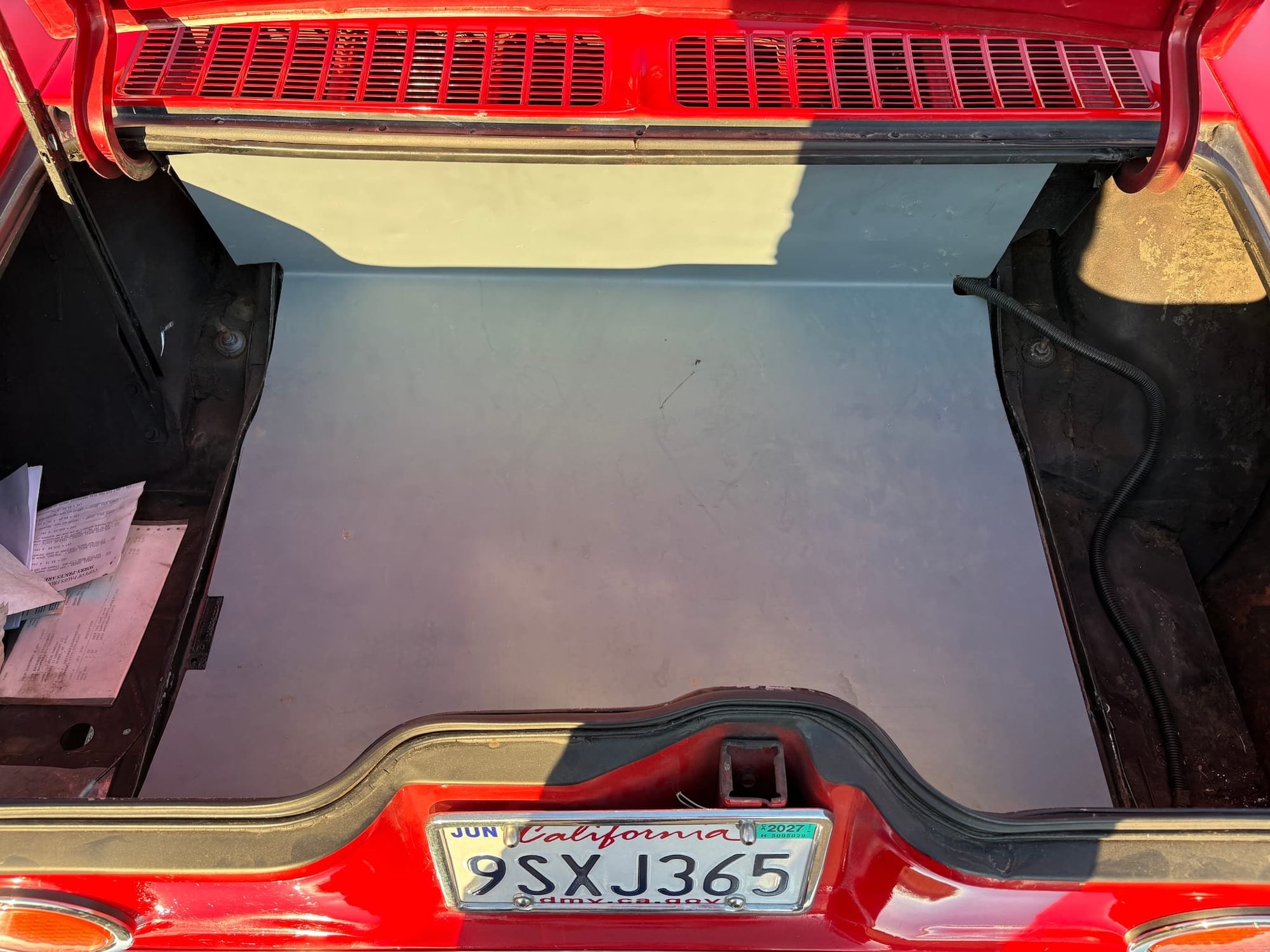
Neither the original push-button radio nor the aftermarket head unit works and the odometer shows 65,000 miles. It’s worth nothing that while the car is running and registered, it wouldn’t really be daily-driver-suitable without some extra work as the engine is installed in the open behind the front seats, and the asphalt is visible beneath it.
It’s now being offered for sale at no reserve with a clean California title out of Carlsbad, California and you can visit the listing here if you’d like to read more about it or register to bid.
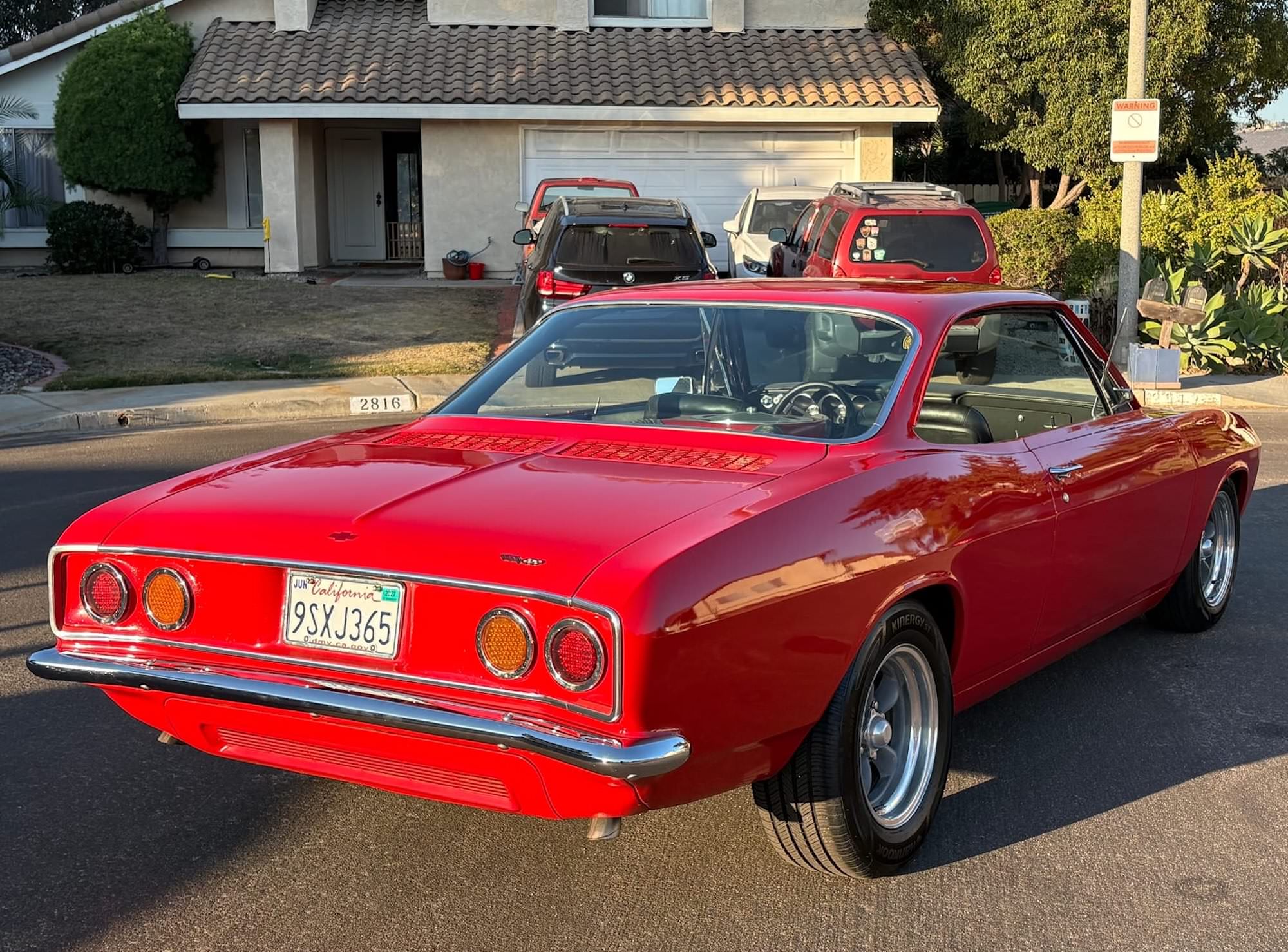
Images courtesy of Bring a Trailer

Articles that Ben Branch has written have been covered on CNN, Popular Mechanics, Smithsonian Magazine, Road & Track Magazine, the official Pinterest blog, the official eBay Motors blog, BuzzFeed, Autoweek Magazine, Wired Magazine, Autoblog, Gear Patrol, Jalopnik, The Verge, and many more.
Silodrome was founded by Ben back in 2010, in the years since the site has grown to become a world leader in the alternative and vintage motoring sector, with well over a million monthly readers from around the world and many hundreds of thousands of followers on social media.