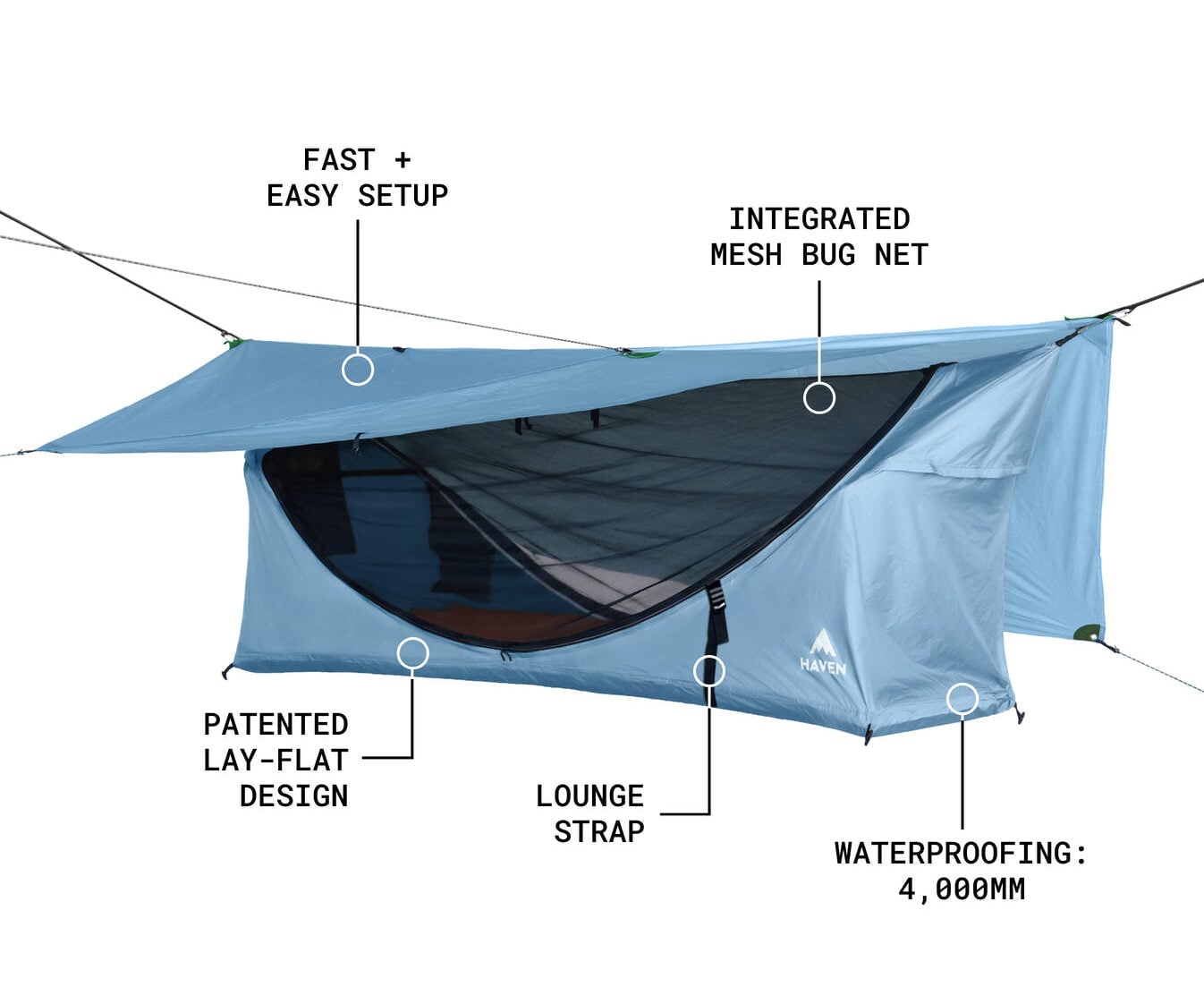
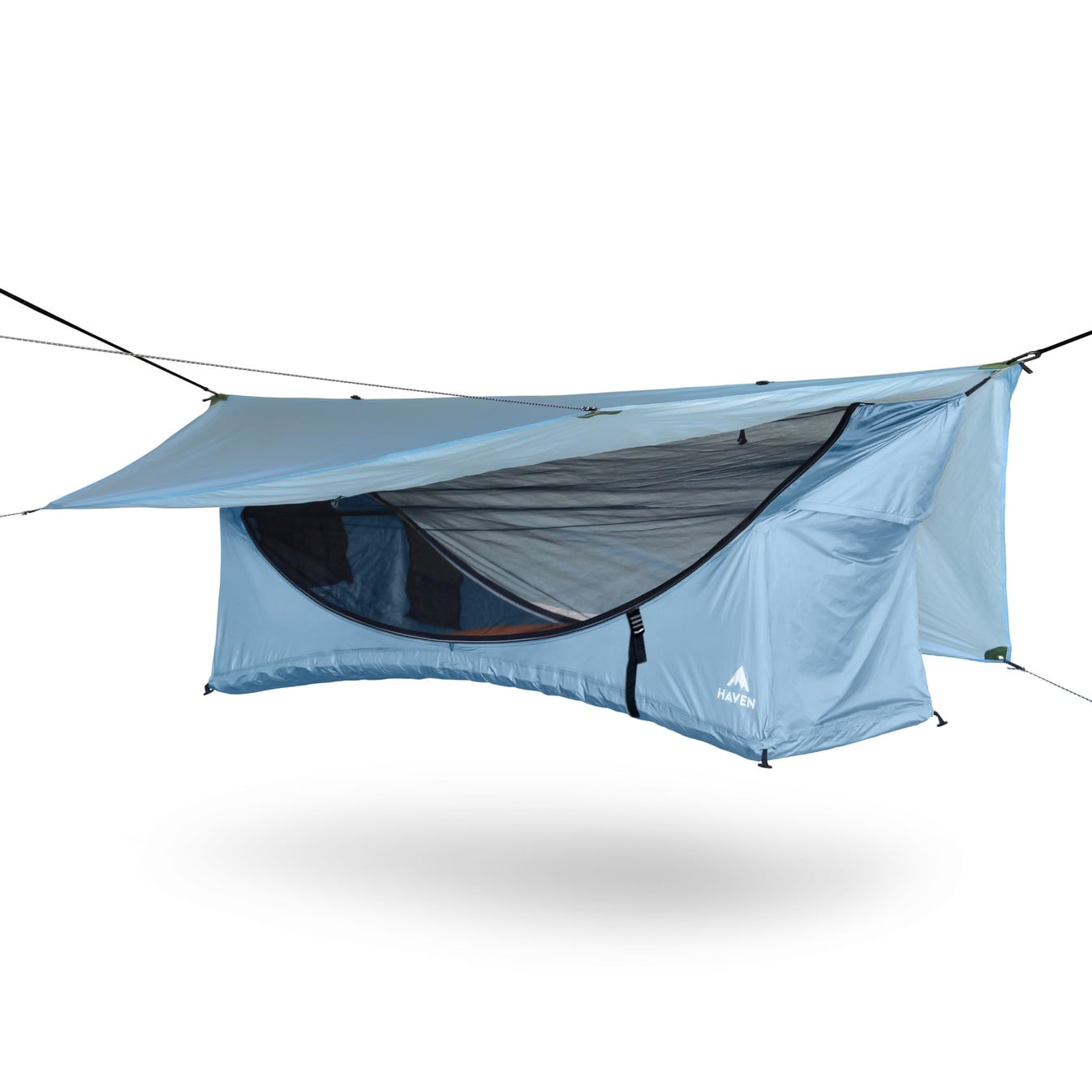
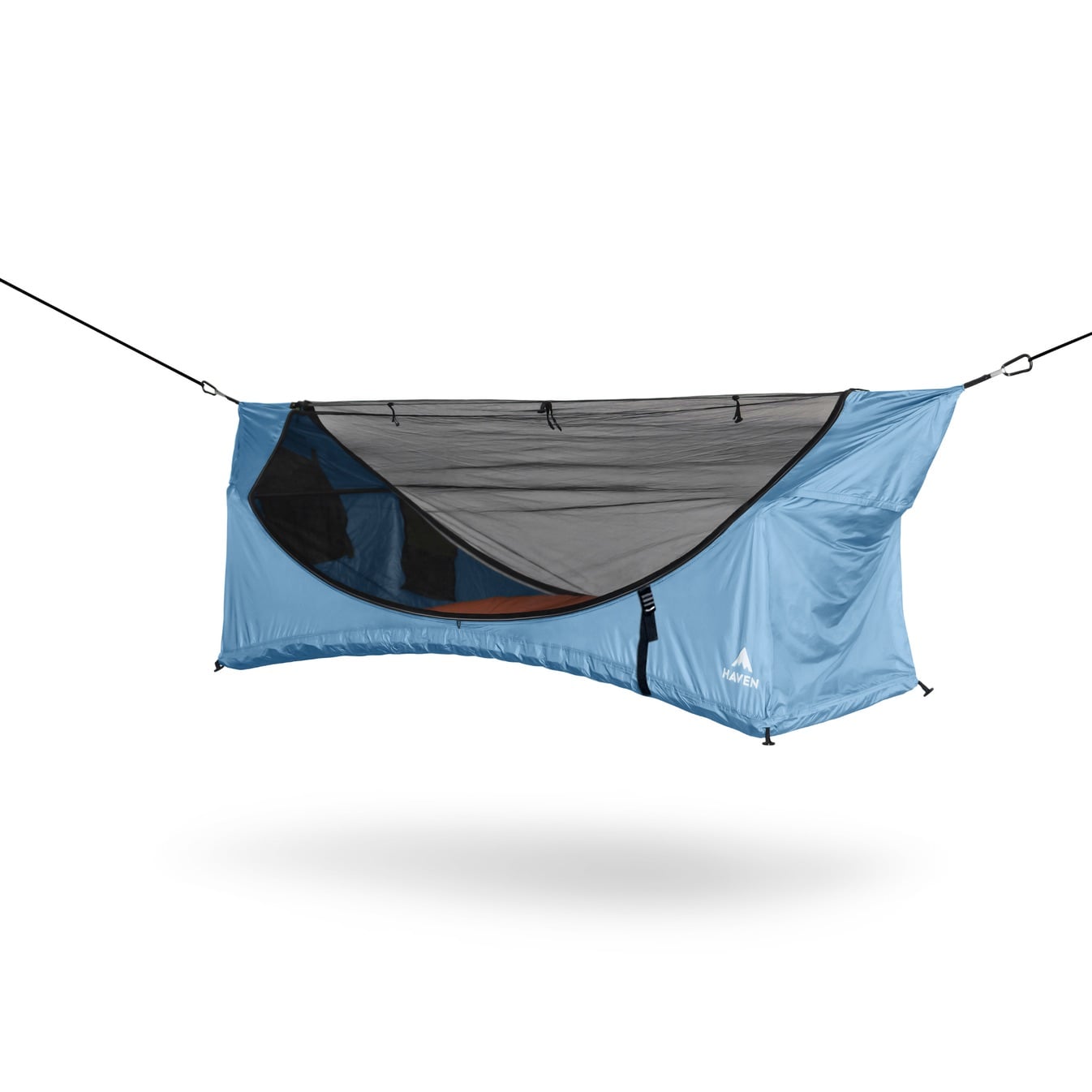
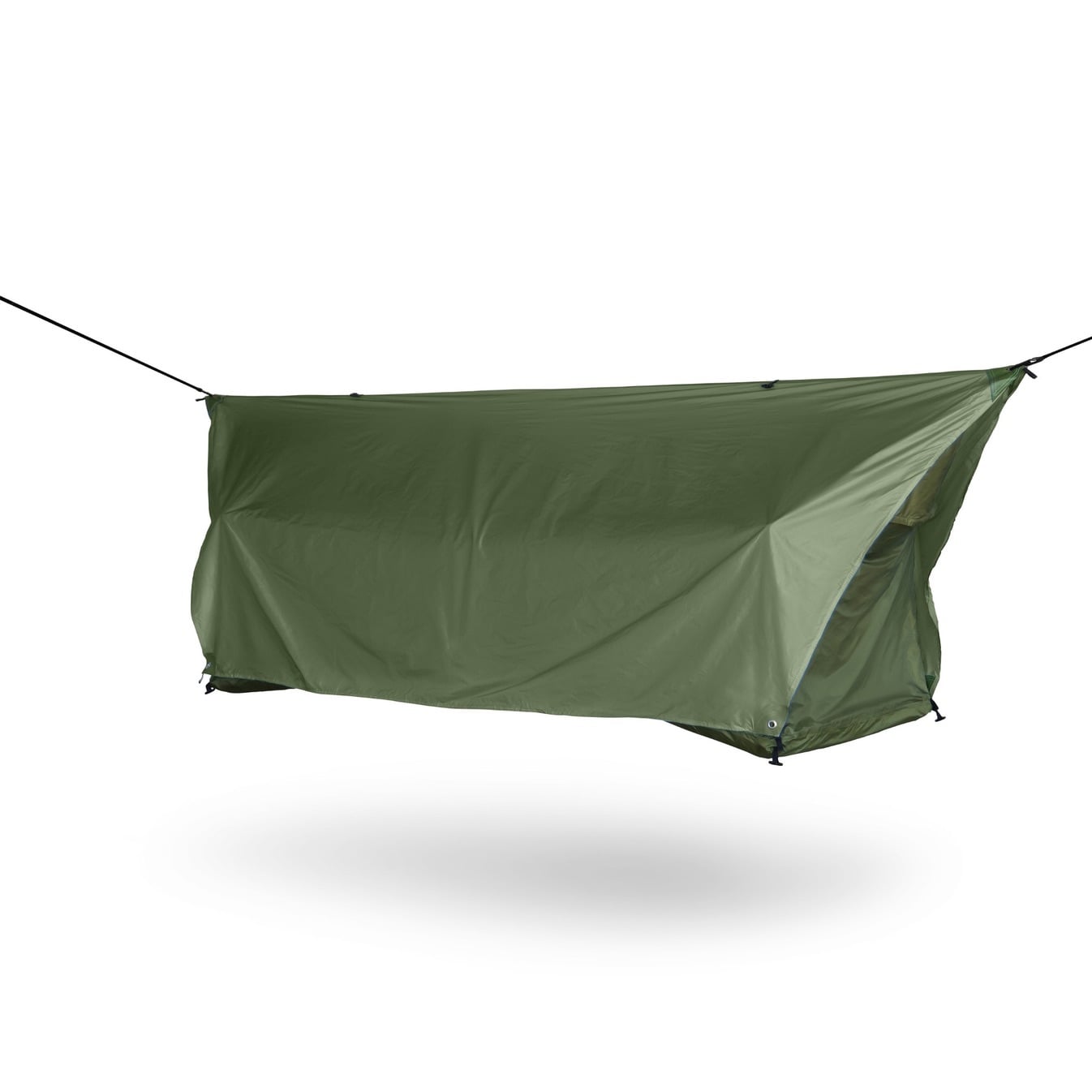
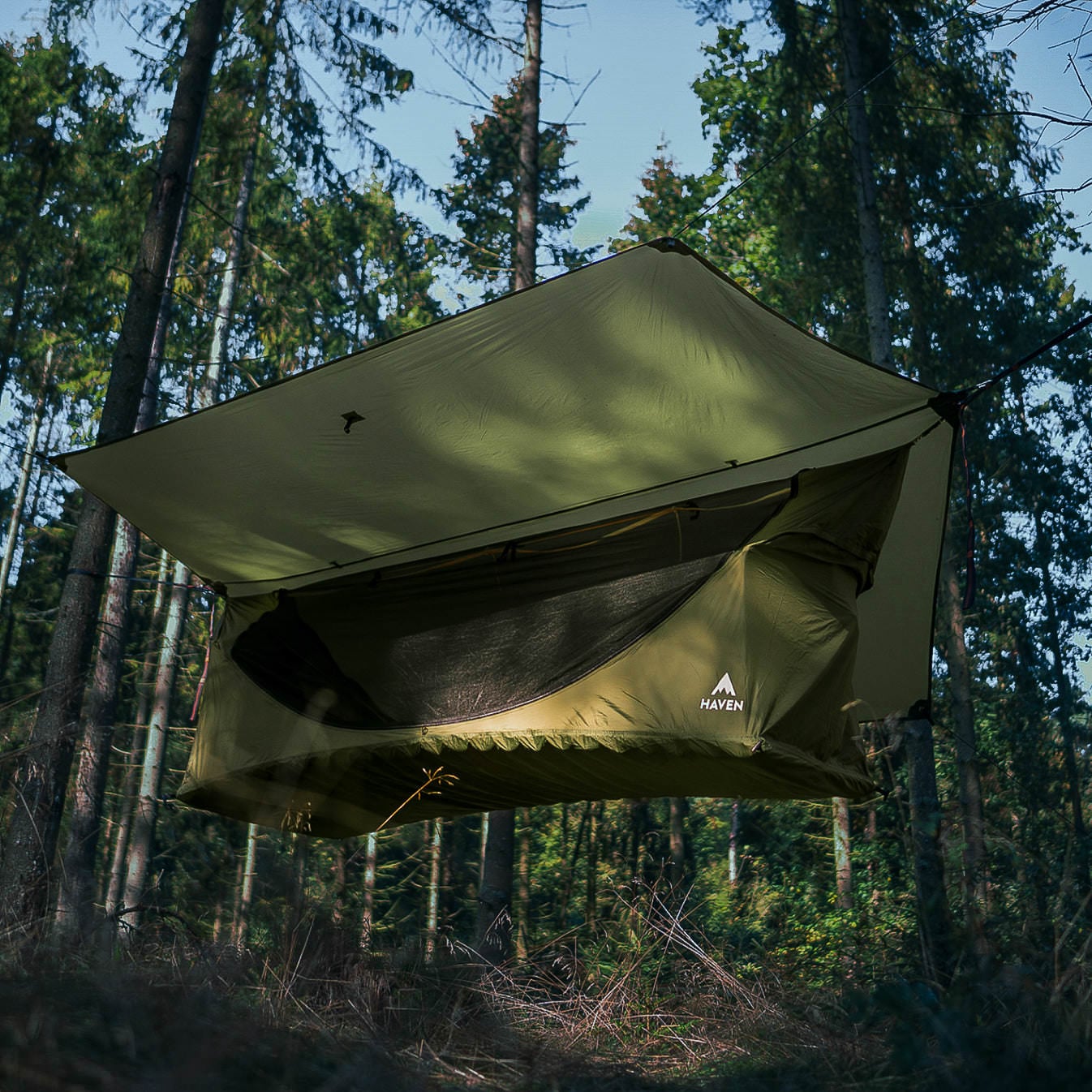
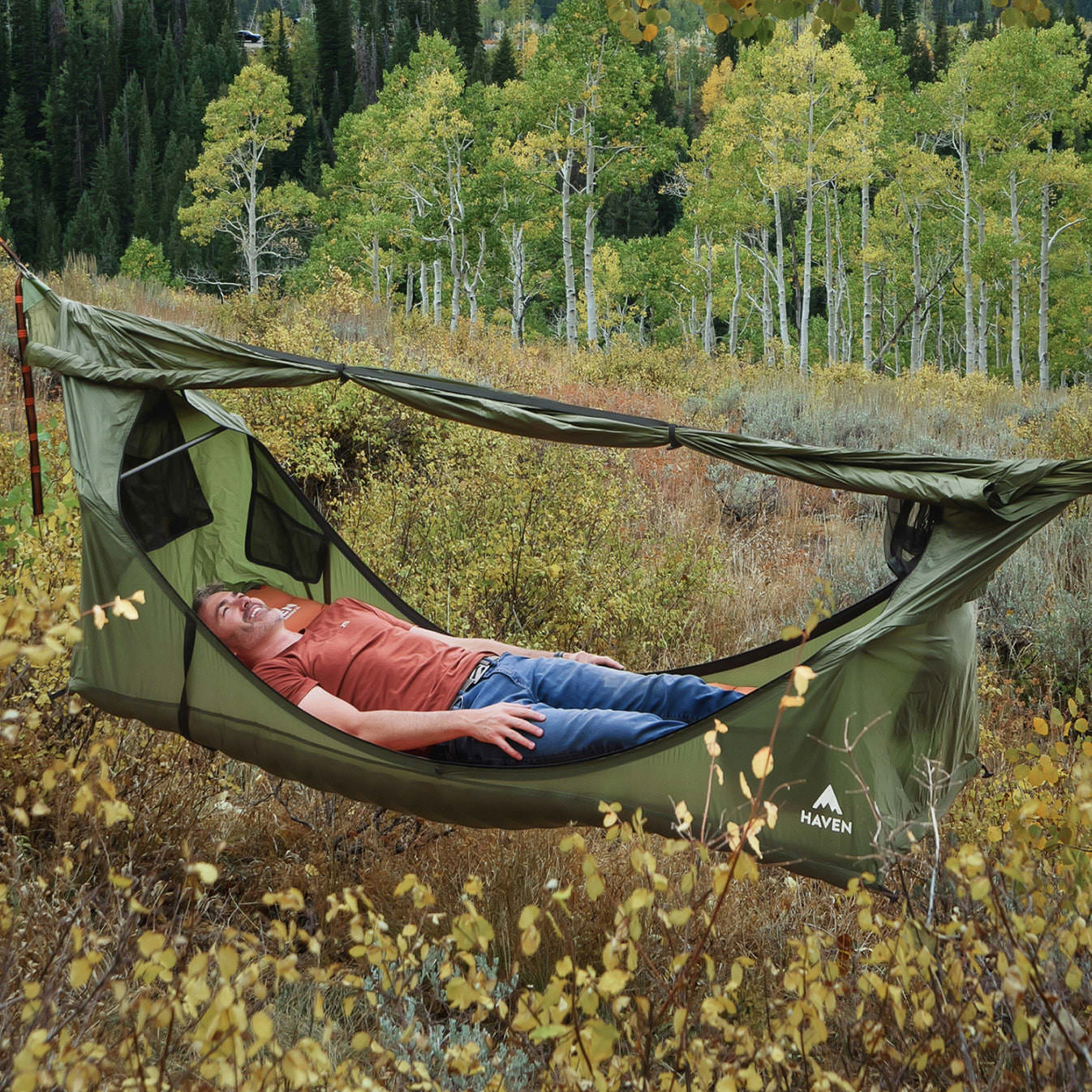
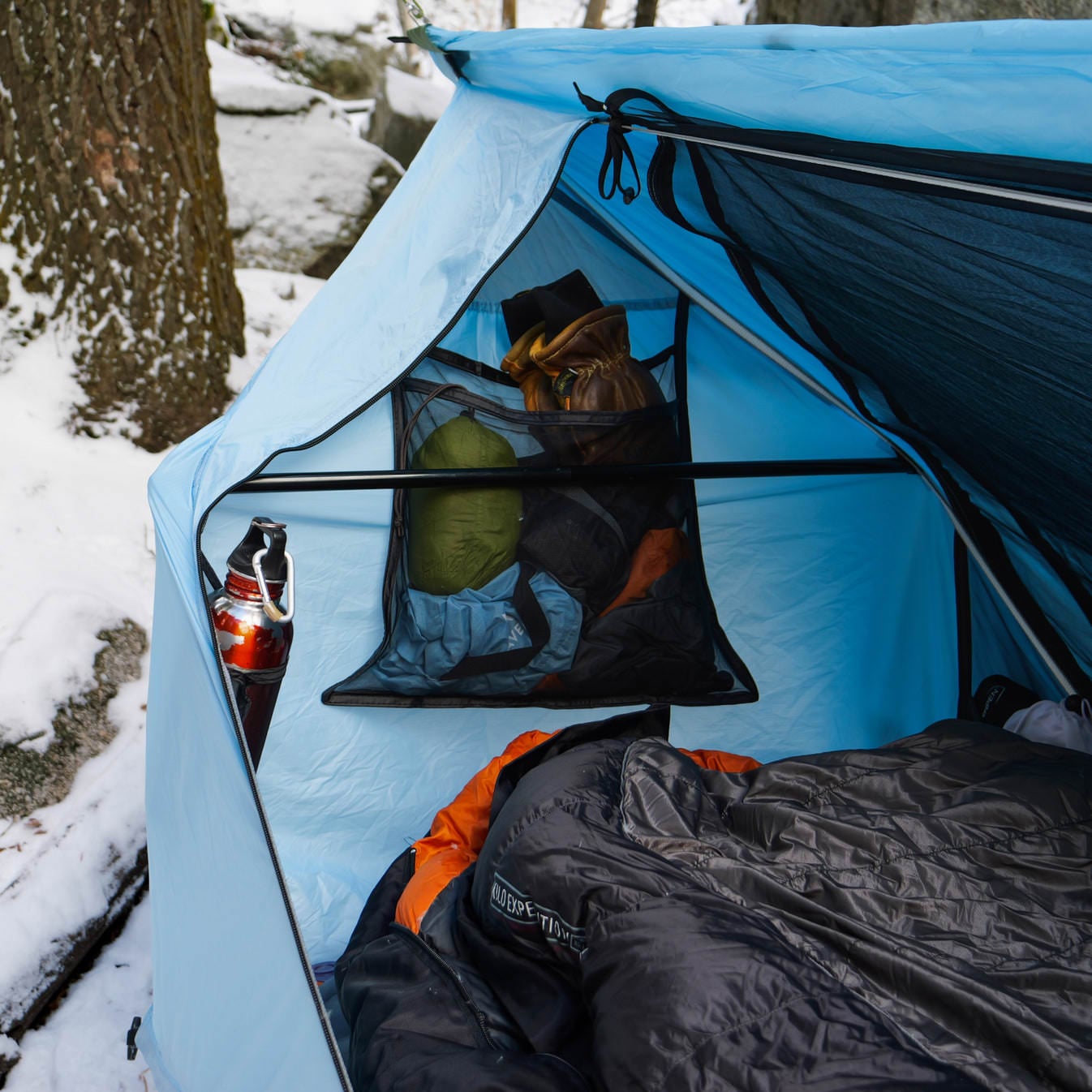
This is the Haven Tent, it’s a clever lay-flat hammock tent that the company developed and patented, allowing you to string a hammock up between two trees and then sleep completely flat.
Hammocks have been around for thousands of years, but many people struggle with them as they curve the sleepers body at the waist and also tend to tighten around the shoulders. The Haven Tent does away with both of those issues, and it has the added bonus of being able to be set up on the ground like a normal one-person tent when required.
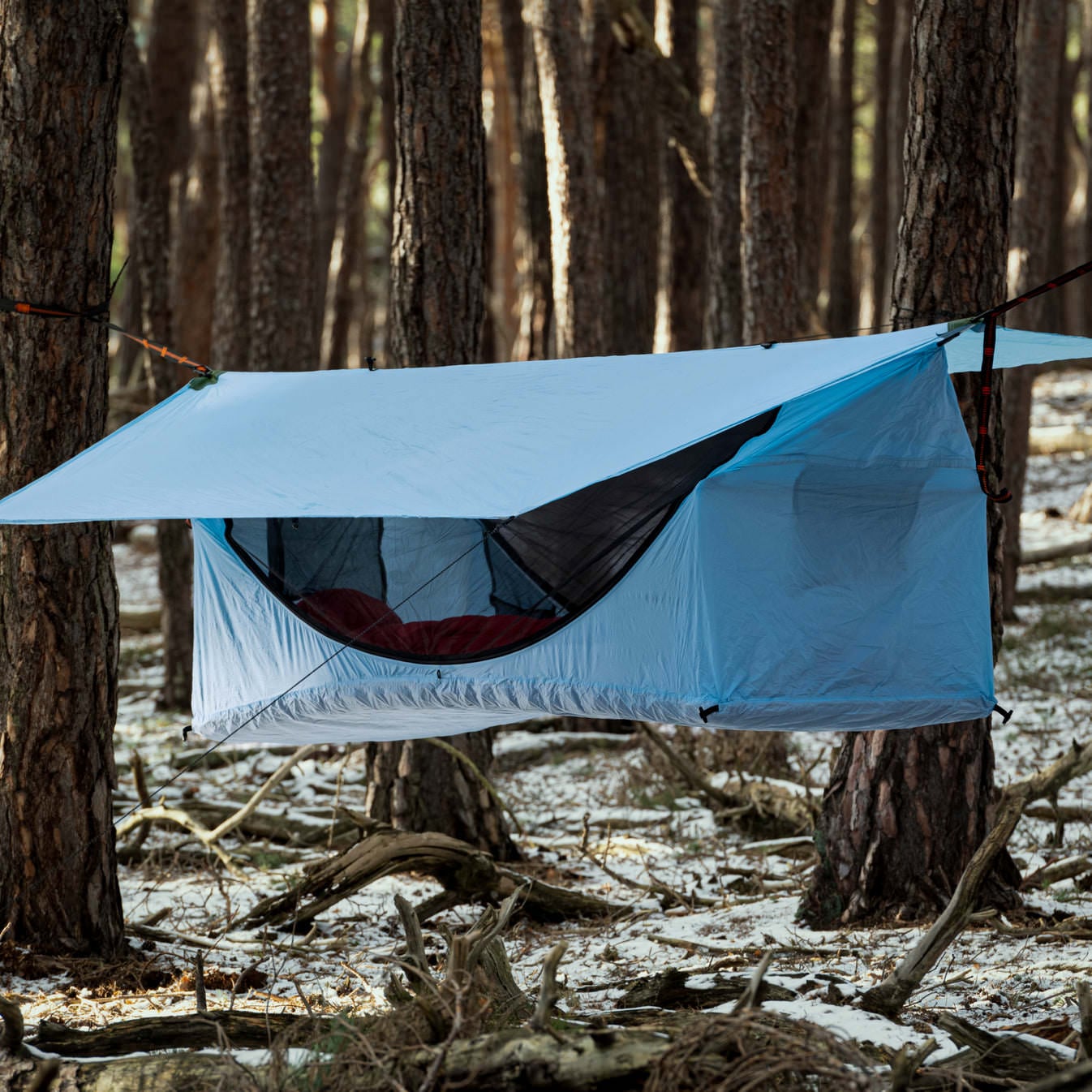
 This is the Haven Tent, it’s a clever lay-flat hammock tent that the company developed and patented, allowing you to string a hammock up between two trees and then sleep completely flat.
History Speedrun: The Haven Tent
Haven Tents launched on Kickstarter back in September of 2019, asking for $10,000 USD to put a new kind of camping hammock into production – one that let the occupant lie completely flat. By the time the 45 day campaign closed, it had pulled in $98,452 USD from 325 backers, and founder Derek Tillotson had a company on his hands.
The problem Tillotson set out to solve is that a conventional hammock hangs in a curve, folding the sleeper at the hips while the sidewalls wrap in around the shoulders. Lying diagonally across the hammock flattens things somewhat, which is how Mayan hammocks are traditionally used, but it takes a lot of practice, and some side and stomach sleepers still find the curved bed difficult to deal with.
Inventors have been chasing a “flat-hanging bed” for over a century, Oscar Potter of Indianapolis filed for a US patent on the idea in 1898 and was granted one in 1902, for a hammock cut to give “a substantially straight support for the body.”
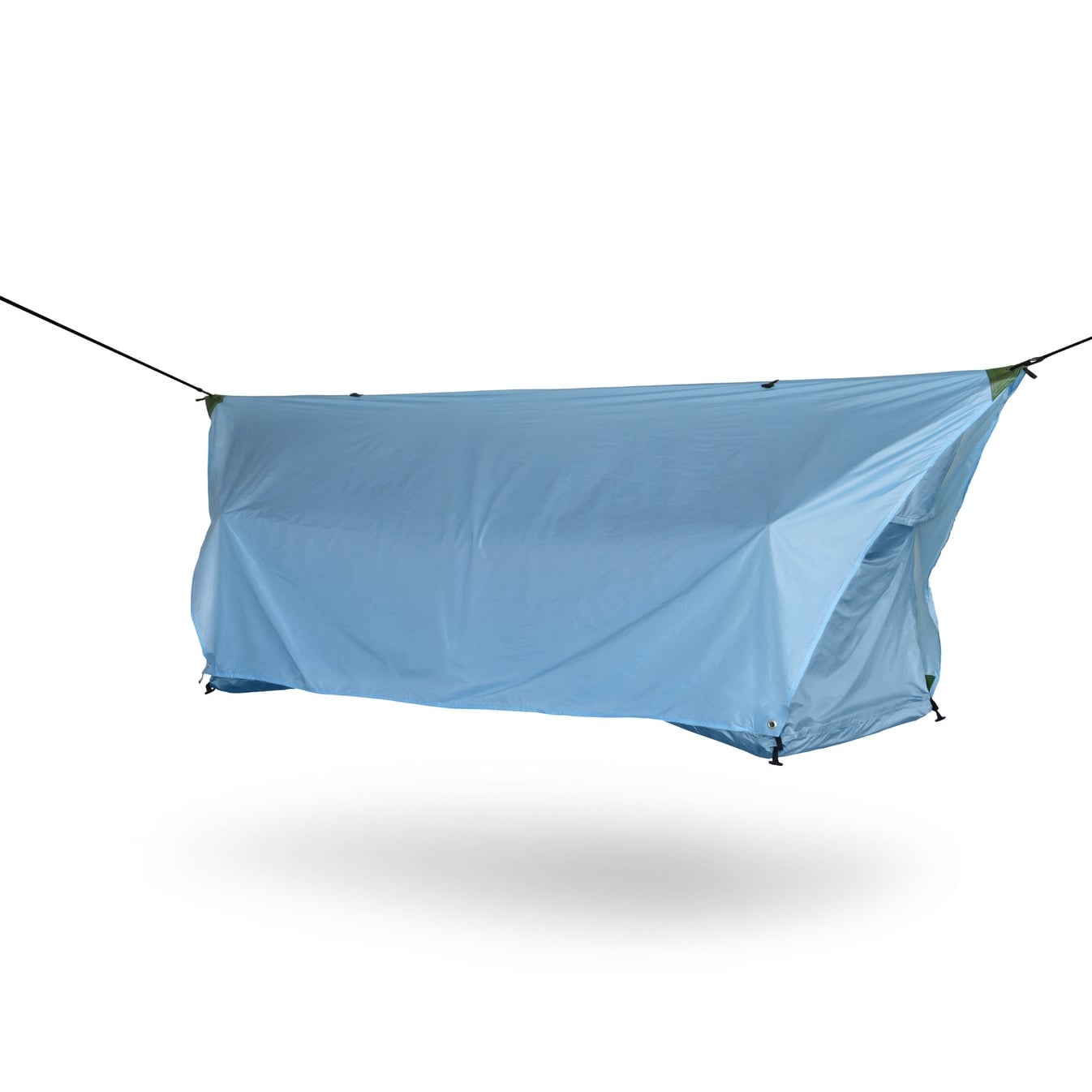
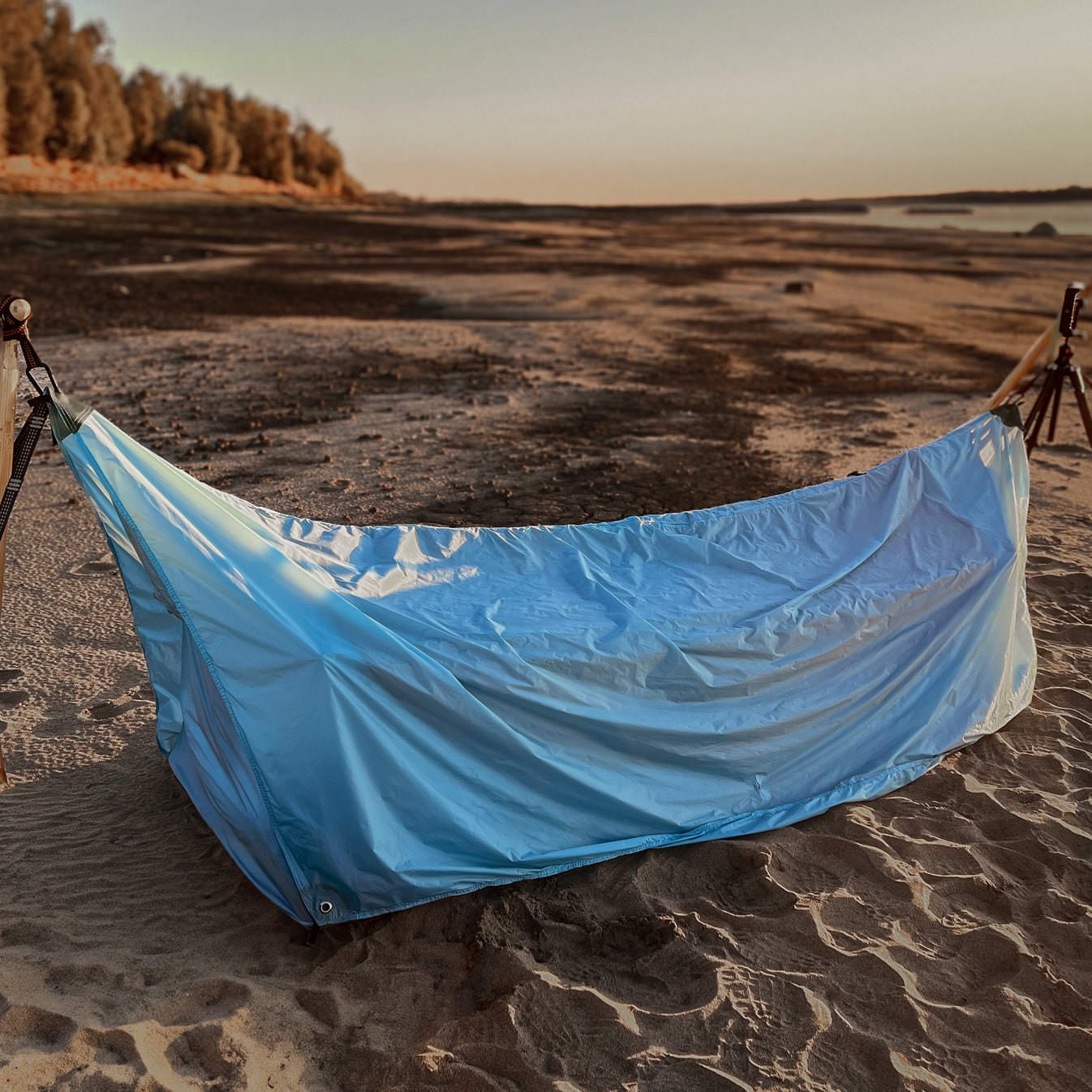
Haven’s version began with Tillotson lying in an ordinary hammock at his family’s ranch in Promise, Oregon, thinking the experience would be far better if he were flat, without pressure on his sides. He filed a US patent application for his hammock-tent design in October of 2018, and developed it into the Haven Tent. It’s a rectangular hammock with an integrated bug net and rainfly that hangs between two trees or pitches on the ground using trekking poles to hold up the ends.
The structure of the Haven Tent was directly inspired by suspension bridges – a support arc runs along each side of the bed following a curve, the natural sag of a rope between two points, the bed surface then hangs below these arcs the way a road deck hangs from suspension bridge cables. The bed is cut with extra material at the head and foot ends, so that when the hammock is empty it actually curves upward slightly, pre-compensating for the sag a body introduces.
The bed has a rectangular insulated air pad to ensure it’s comfortable for a good nights sleep, and its horizontal baffles push outward against the sidewalls, holding the sleeping space open and preventing the shoulder squeeze effect that puts many people off hammocks for good.
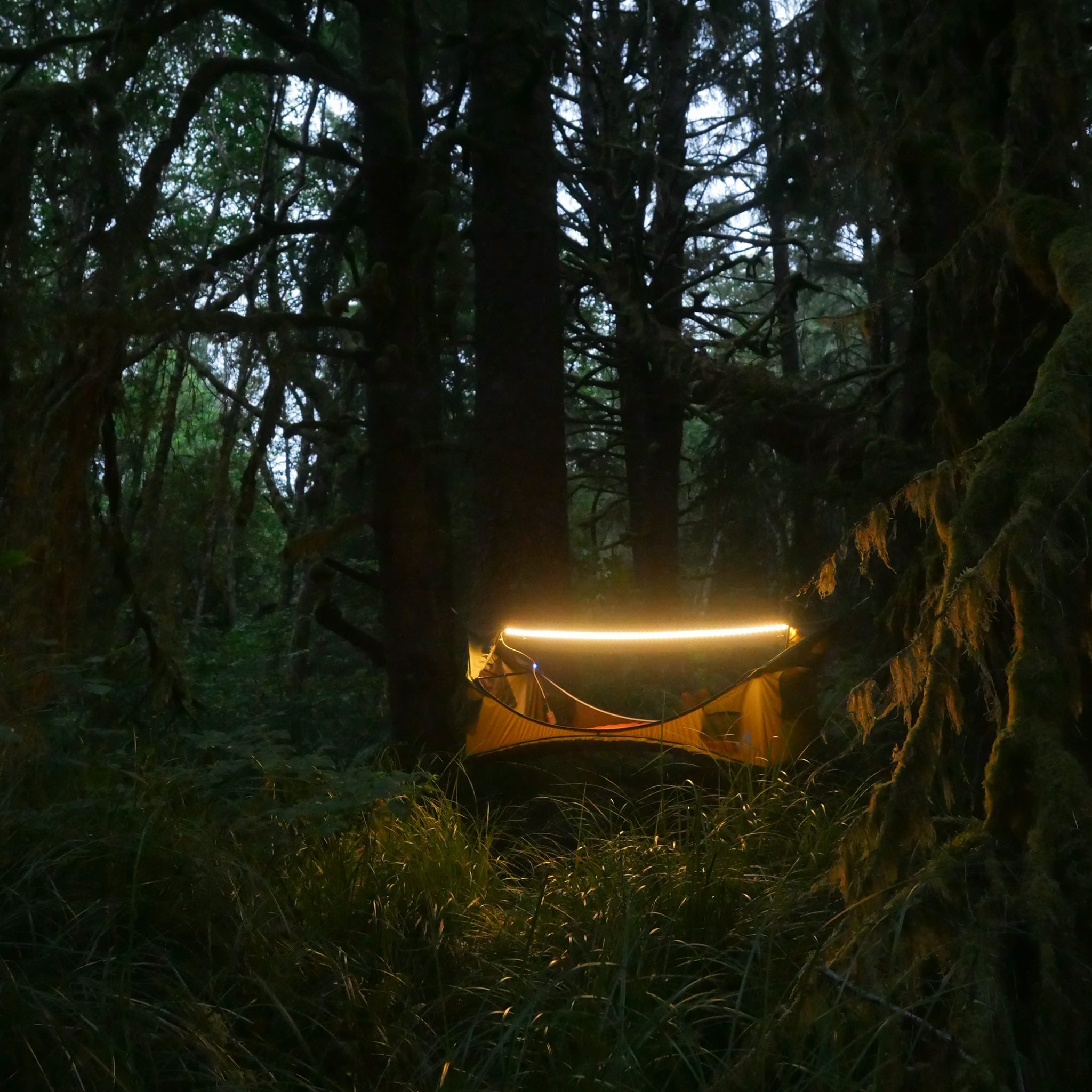
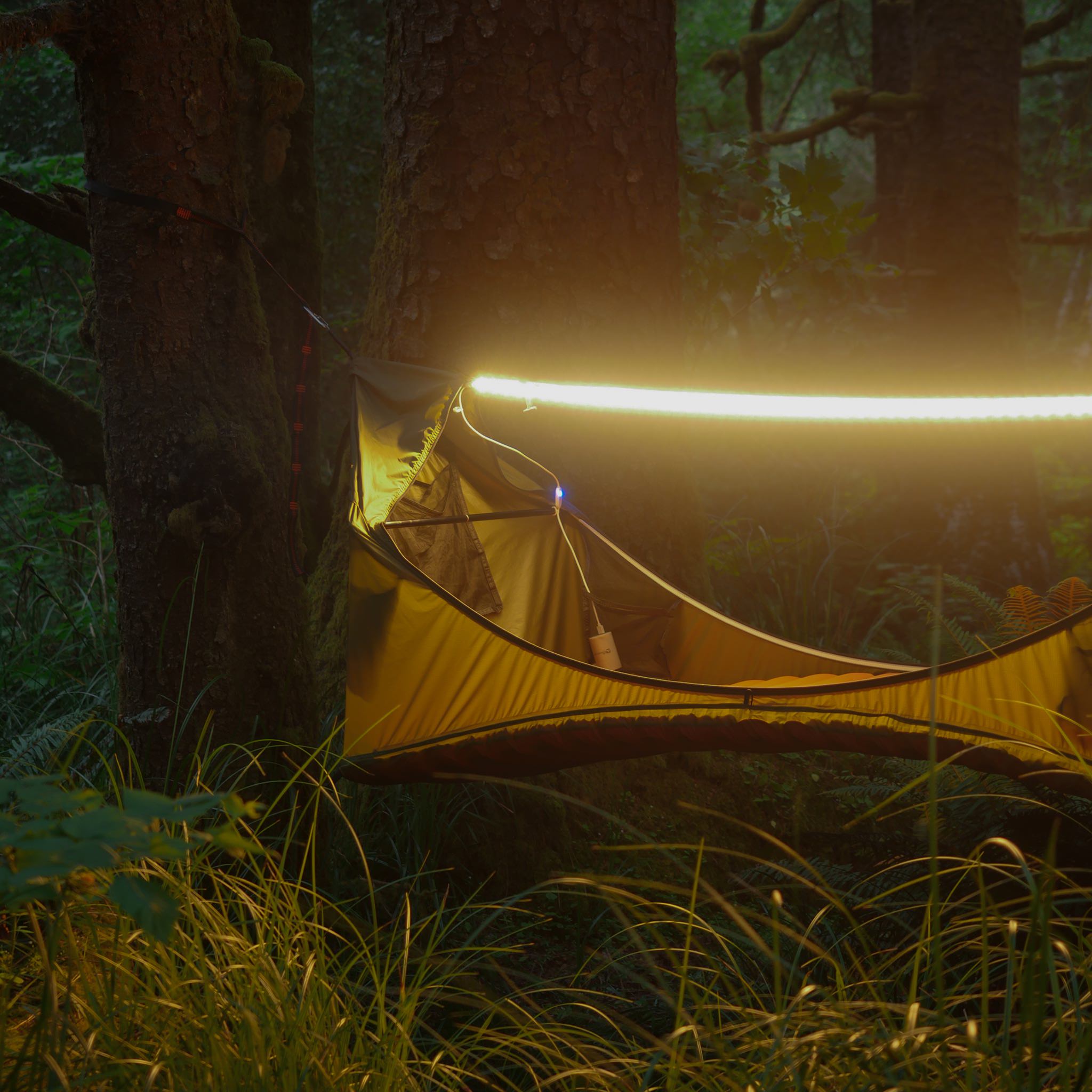
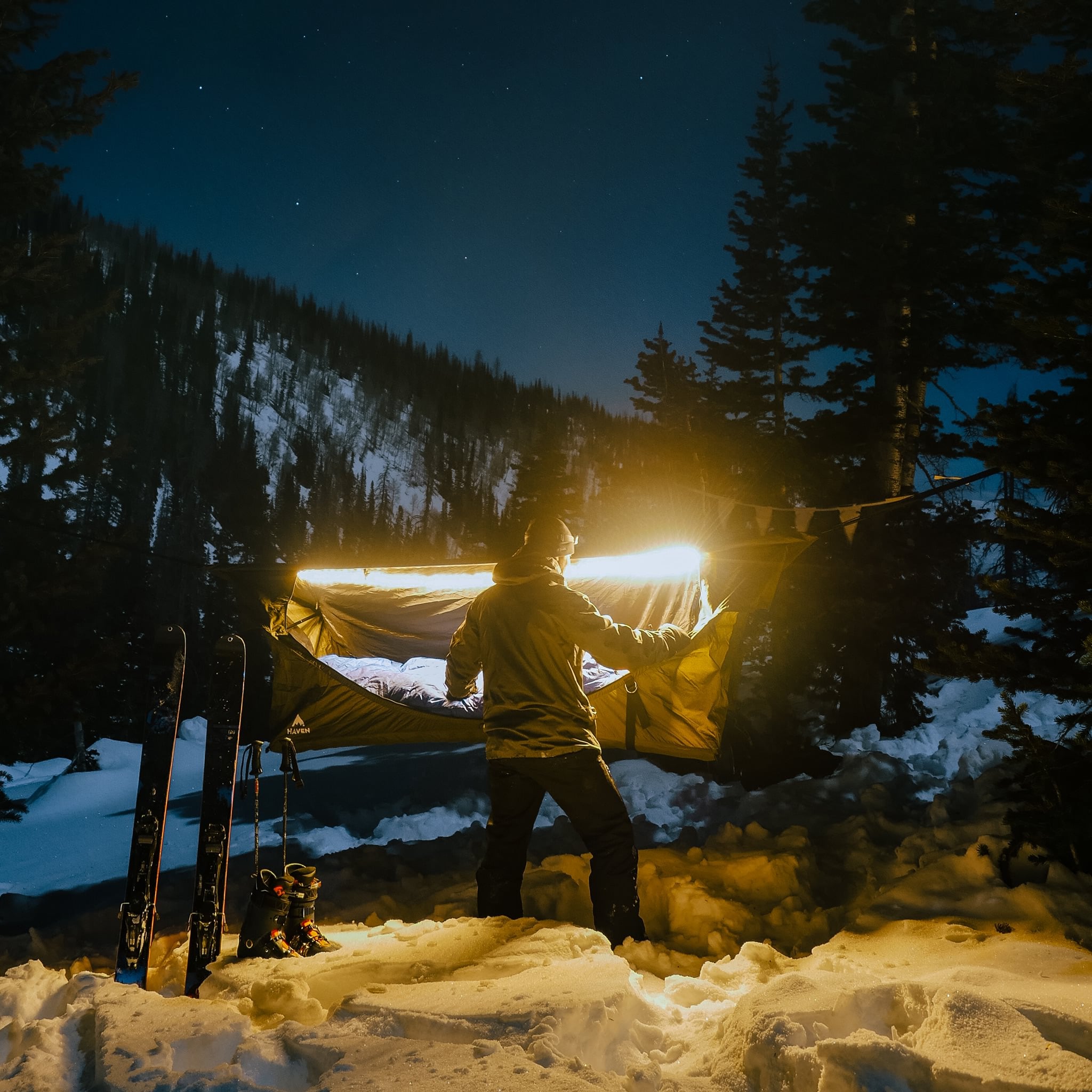
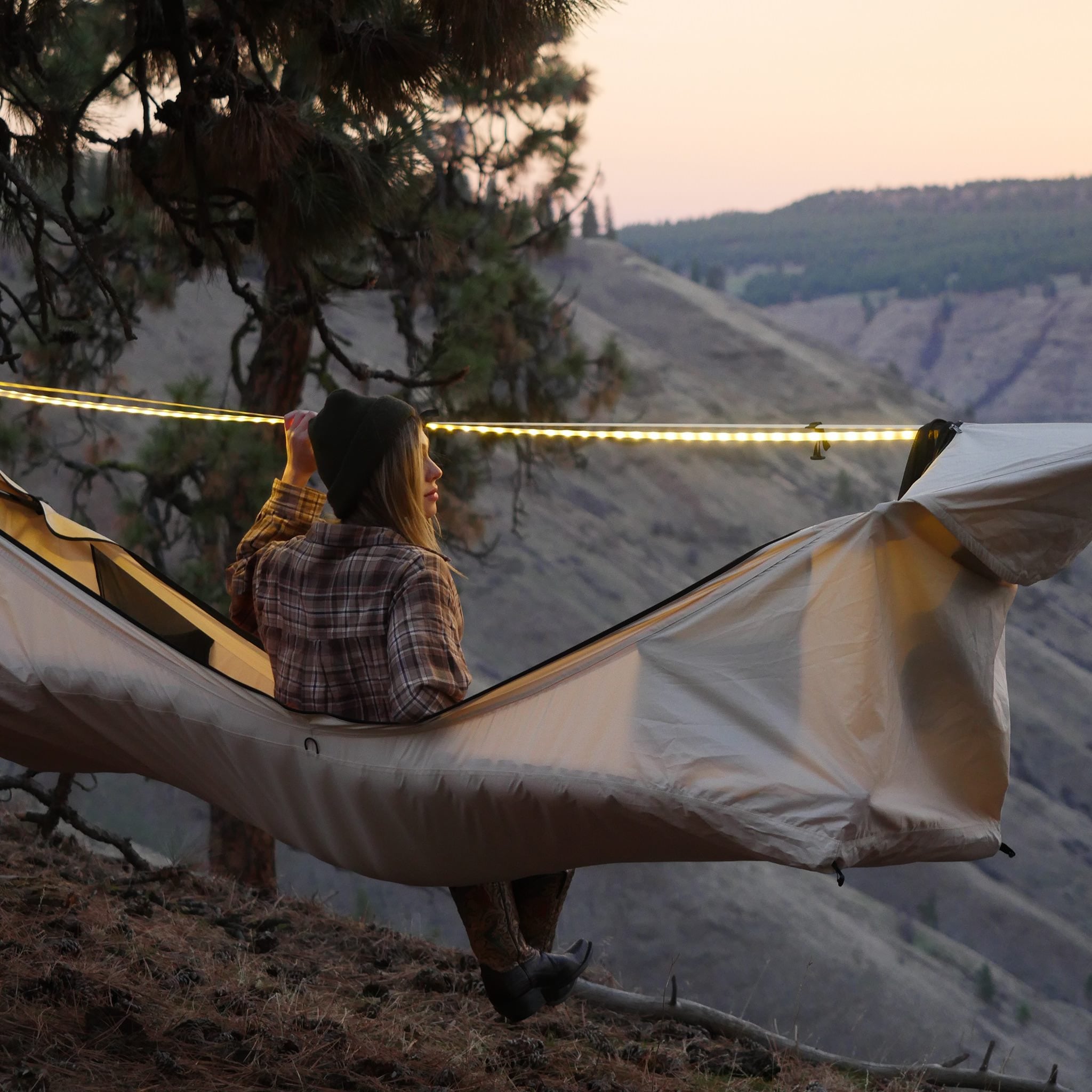
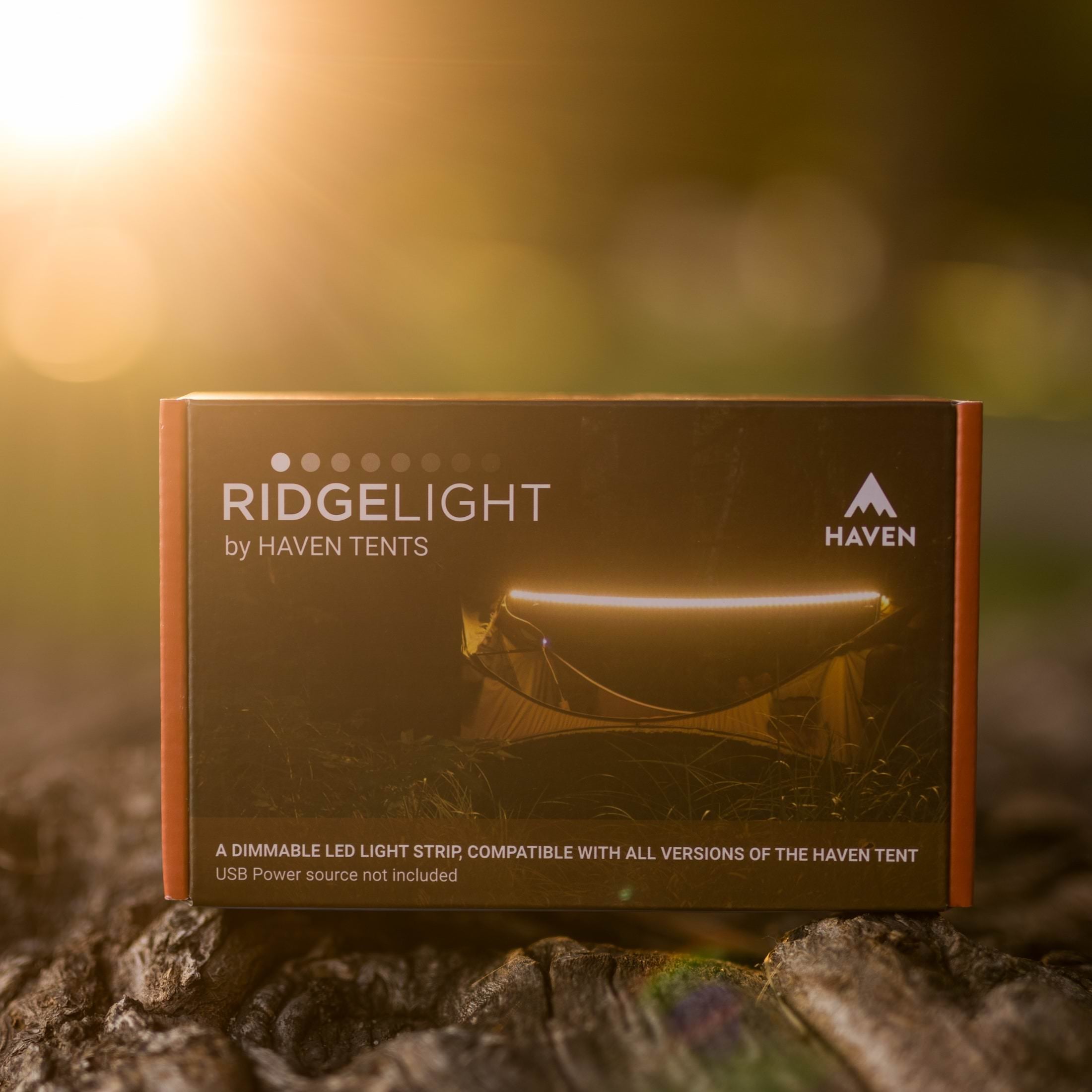
We’ve shown the tents with the Haven RidgeLight in some of the images above and below, it’s a $37 USD accessory that adds a line of LED lights to the upper support, offering natural-feeling lighting with minimal set up required.
Collapsible spreader bars at each end hold the sidewalls away from the sleeper and help to open up the interior, and a structural ridgeline helps hold the bed’s shape across a wide range of tree spacings, so long as the anchors sit roughly 9-10 feet apart or more, depending on the model.
The Haven range now includes four key models – the original Haven Tent has a 24 x 78 inch bed, a 210T polyester body with a 20-denier ripstop nylon rainfly, a 285 lb capacity, and it sells for $388 with the rainfly and insulated pad. The Haven XL widens the bed to 30 x 80 inches for $397.
The Haven Safari model, introduced in 2022, is the heavy one, built from a canvas-like polyester for glamping and all-season use, with a 350 lb capacity and a kit weight just under 12 lbs. Its Kickstarter campaign closed at $402,243 USD from 1,172 backers, Tillotson said during the campaign that it had doubled the original’s total within its first week.
The newest model kind of went in the other direction, the Haven Spectre, which was launched on Kickstarter in April of 2025, is the backpacking version with a translucent Monolite mesh body, carbon fiber spreader bars, and an optional Dyneema rainfly now rated by Haven to 10,000 mm – the company lists it at a featherweight 4 lbs 5.6 oz. The campaign raised $566,889 USD From 1,298 backers, against a much more conservative $20,000 USD goal.
Haven Tents still remains a relatively small operation headquartered in Sandy, Utah, at the foot of the Wasatch Mountains, shipping from there for North America and from Slovakia for their European orders. Nearly seven years after that first campaign, all four models are built around the same patented lay-flat design.
The Haven XL Tent
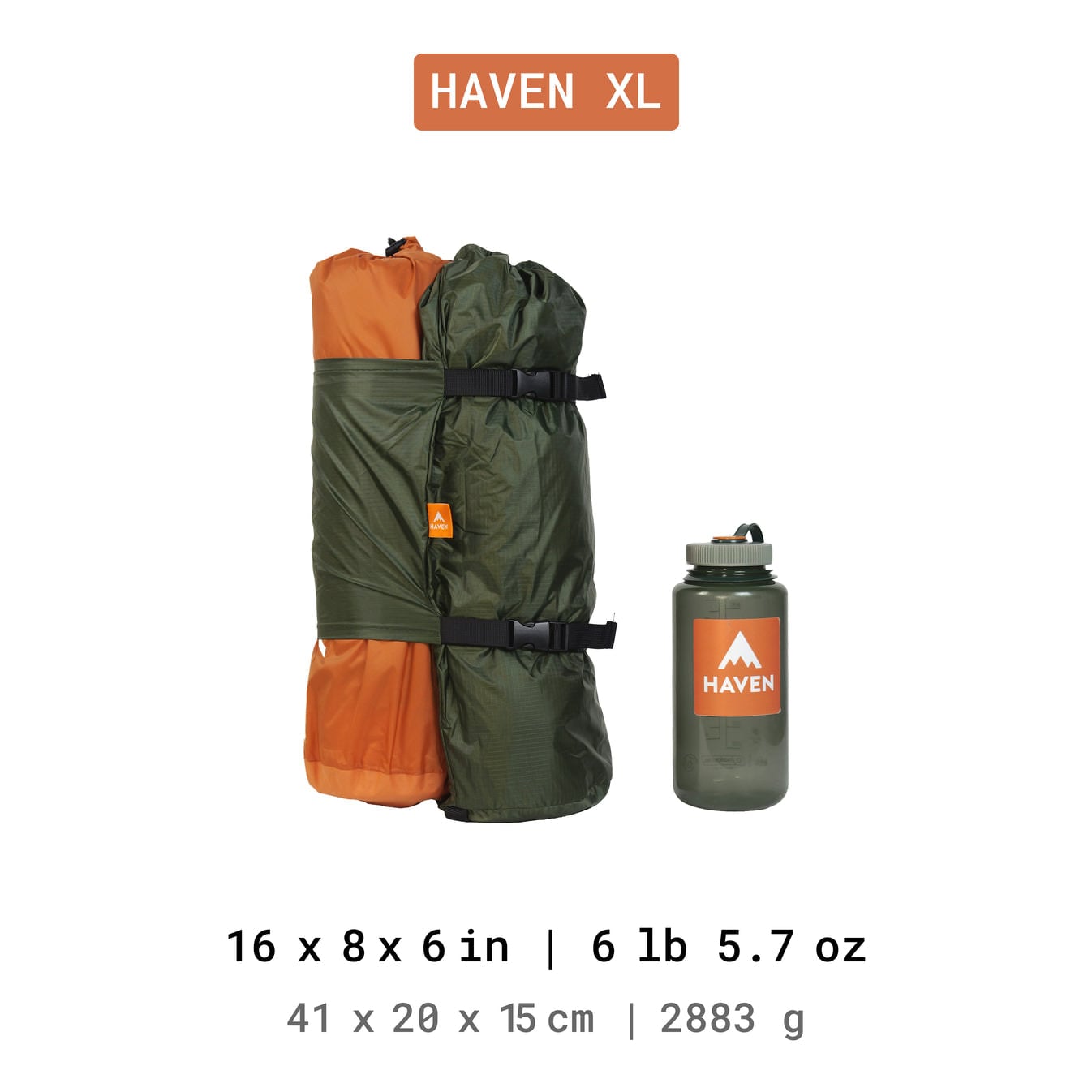
This isn the Haven XL Tent, it’s a slightly larger model than the original, offering a little more internal space as it’s both wider and longer with a higher weight rating.
The lay-flat architecture is unchanged of course, with its support arcs, structural ridgeline, spreader bars, and its fitted insulated air pad, but the bed is now 30 x 80 inches compared to the original’s 24 x 78, giving larger people and side sleepers a little more room to move.
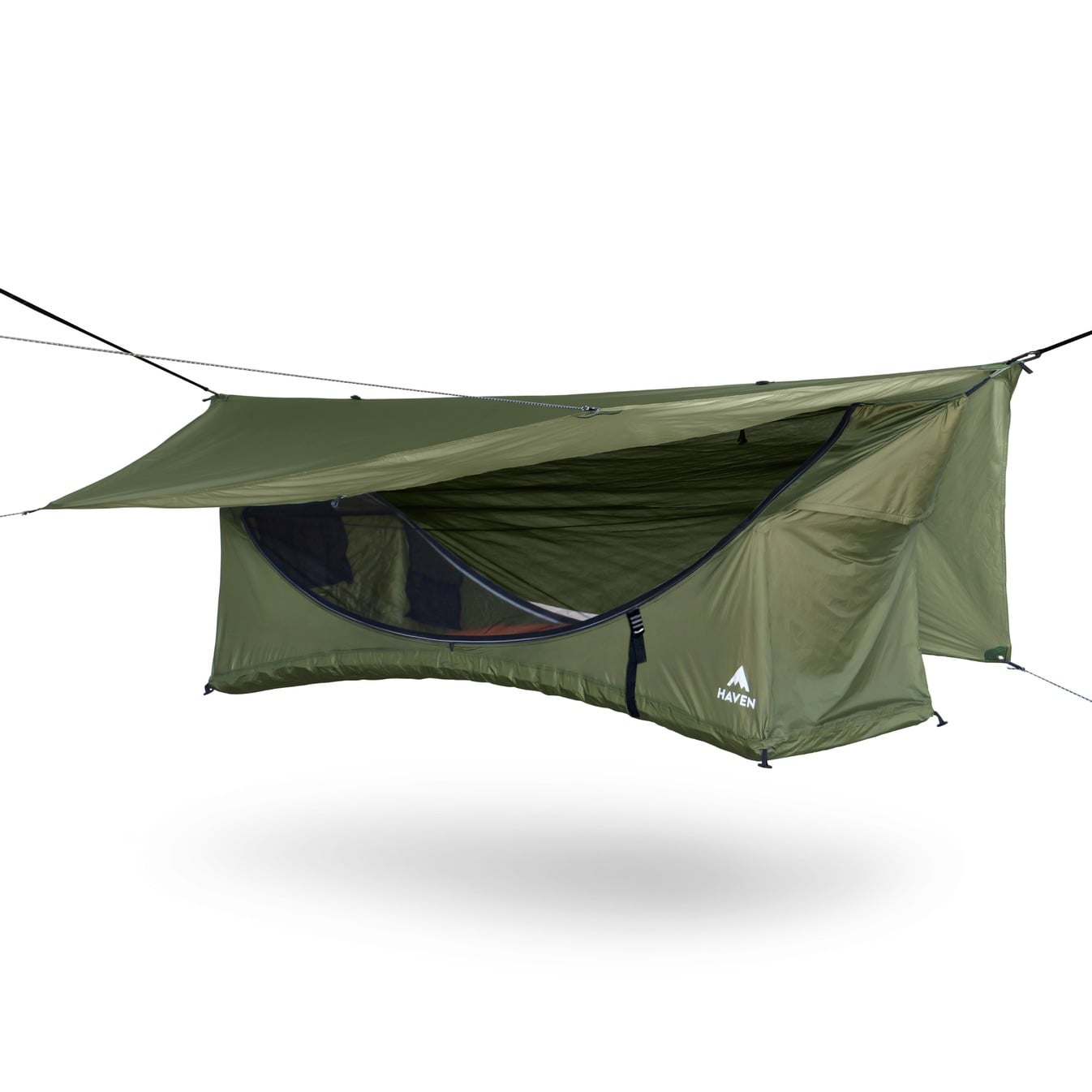
Hammocks have been around for thousands of years, but many people struggle with them as they curve the sleepers body at the waist and also tend to tighten around the shoulders. The Haven Tent does away with both of those issues, and it has the added bonus of being able to be set up on the ground like a normal one-person tent.
The XL uses a 210T polyester body with a 20-denier ripstop nylon rainfly, it has a 285 lb capacity, and it sells for $397 USD with the rainfly and True Level R5.3 insulated pad. We’ve shown the tents with the Haven RidgeLight in some of the images above and below, it’s a $37 USD accessory that adds a line of LED lights to the upper support, offering natural-feeling lighting with minimal set up required.
Haven Tents come in both Forest Green and Sky Blue colorways, with a number of additional color options for the rainfly. If you’d like to read more or order your own you can visit the official Haven Tents online store here.
Images courtesy of Haven Tents

Articles that Ben Branch has written have been covered on CNN, Popular Mechanics, Smithsonian Magazine, Road & Track Magazine, the official Pinterest blog, the official eBay Motors blog, BuzzFeed, Autoweek Magazine, Wired Magazine, Autoblog, Gear Patrol, Jalopnik, The Verge, and many more.
Silodrome was founded by Ben back in 2010, in the years since the site has grown to become a world leader in the alternative and vintage motoring sector, with well over a million monthly readers from around the world and many hundreds of thousands of followers on social media.