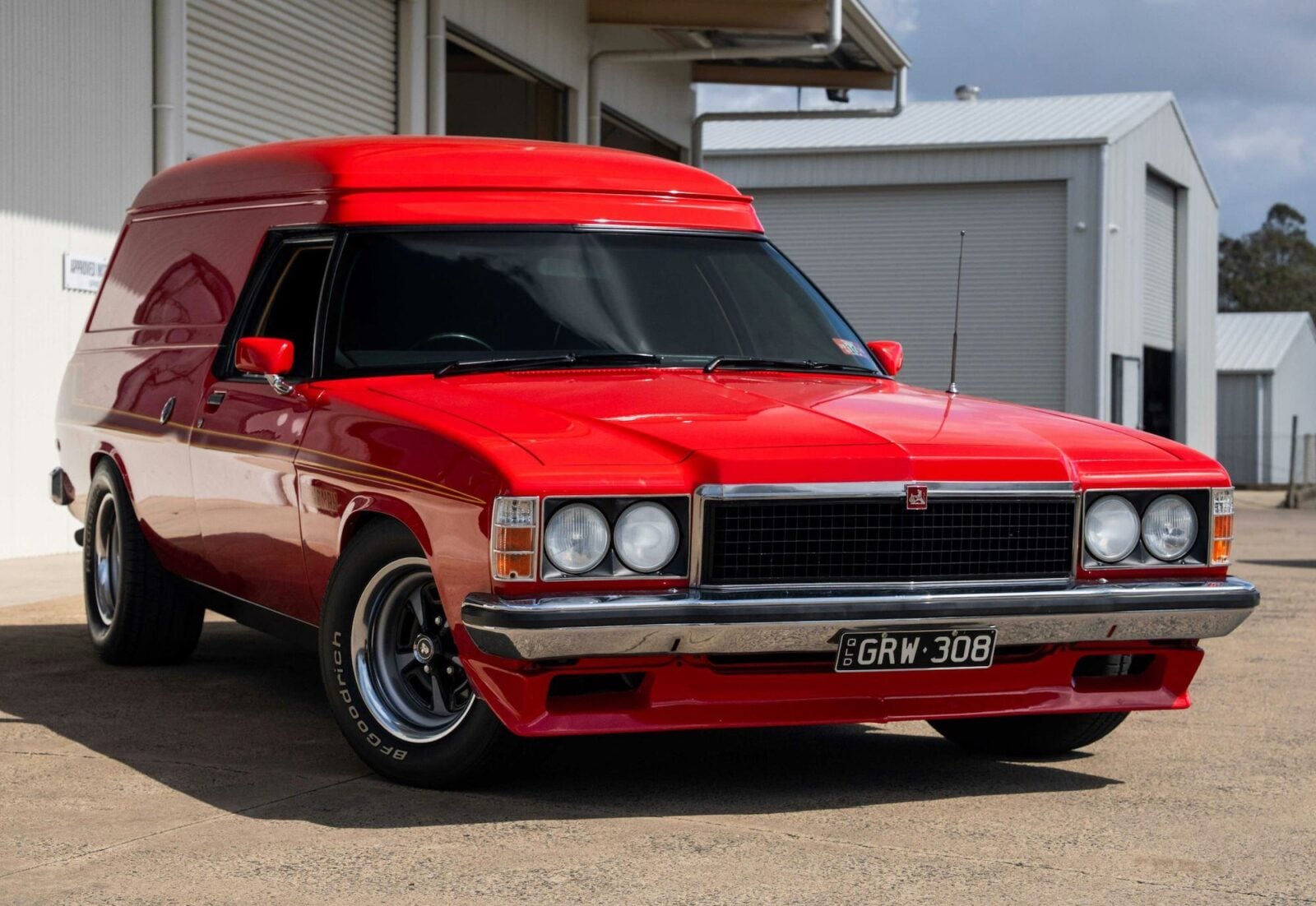
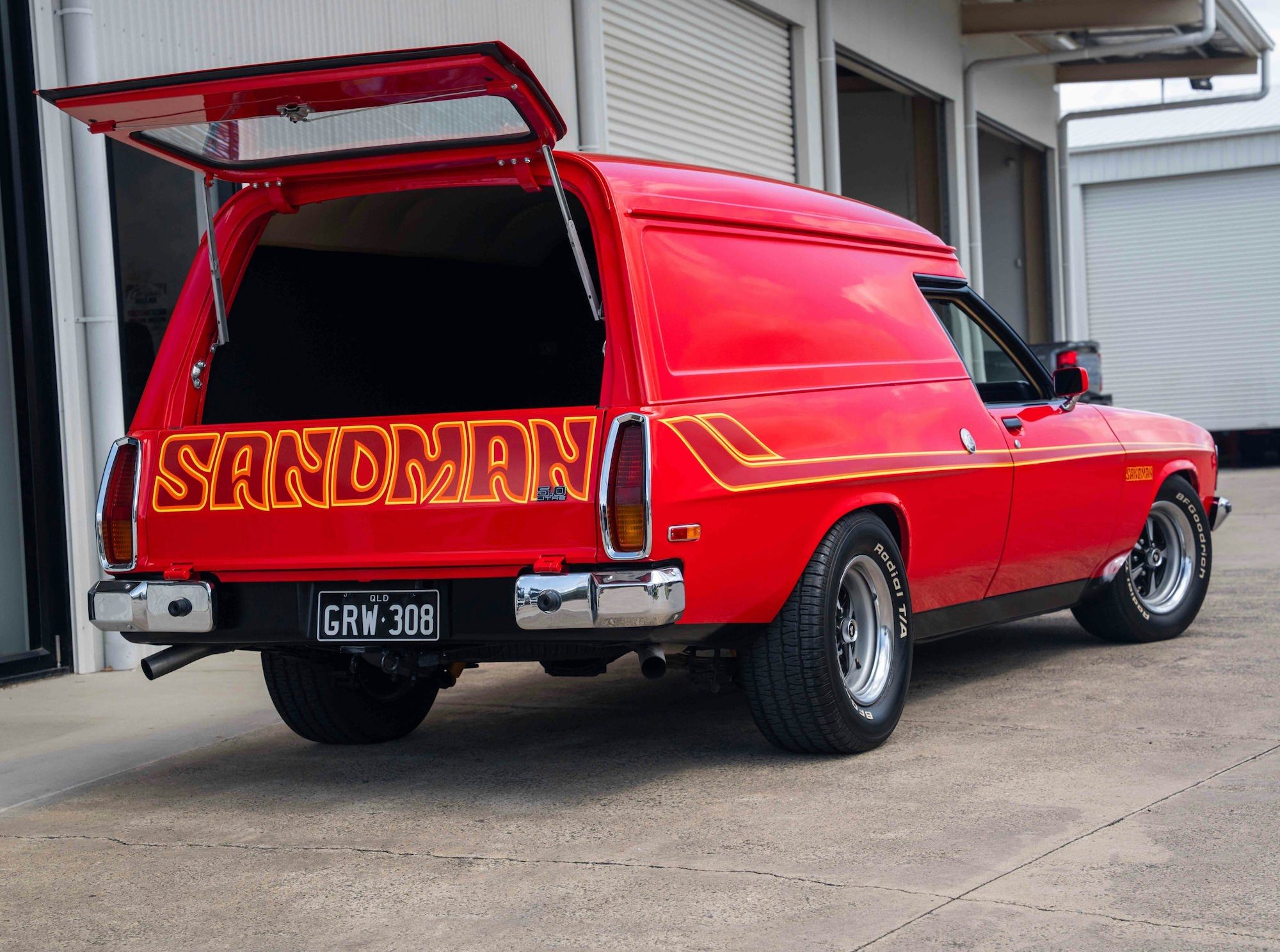
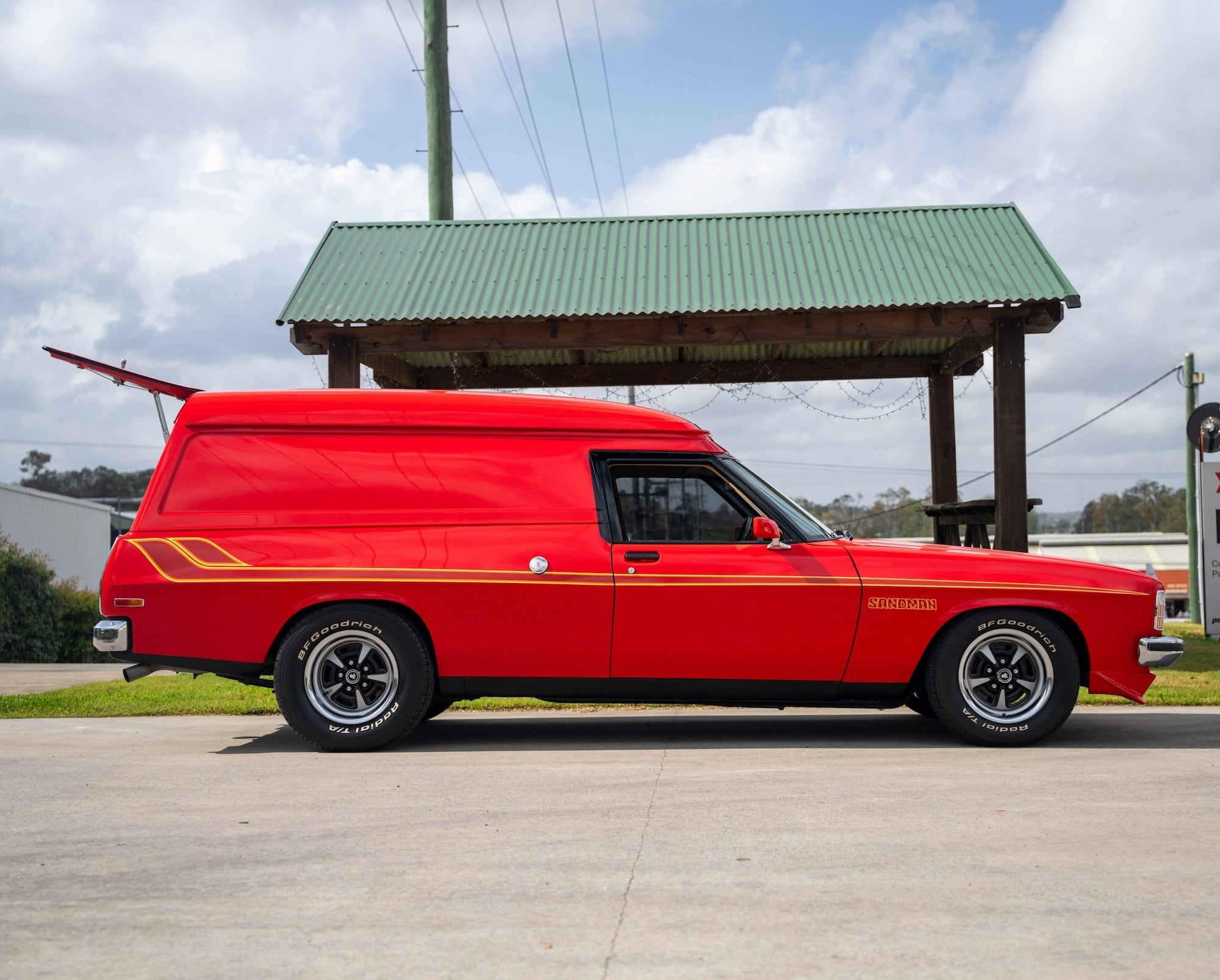
This is a Holden Sandman panelvan from 1977, it has the desirable combination of a factory-fitted 5.0 liter V8 and a 4-speed manual box, and it benefits from a restoration back to period-correct condition.
Panelvans like this, and their ute siblings, are among the most beloved and iconic vehicles ever to come out of Australia. Their cultural impact in the 1970s is hard to overstate, and their values today can comfortably reach well into the six figures as a result.
Fast Facts: A 1977 Holden HZ Sandman
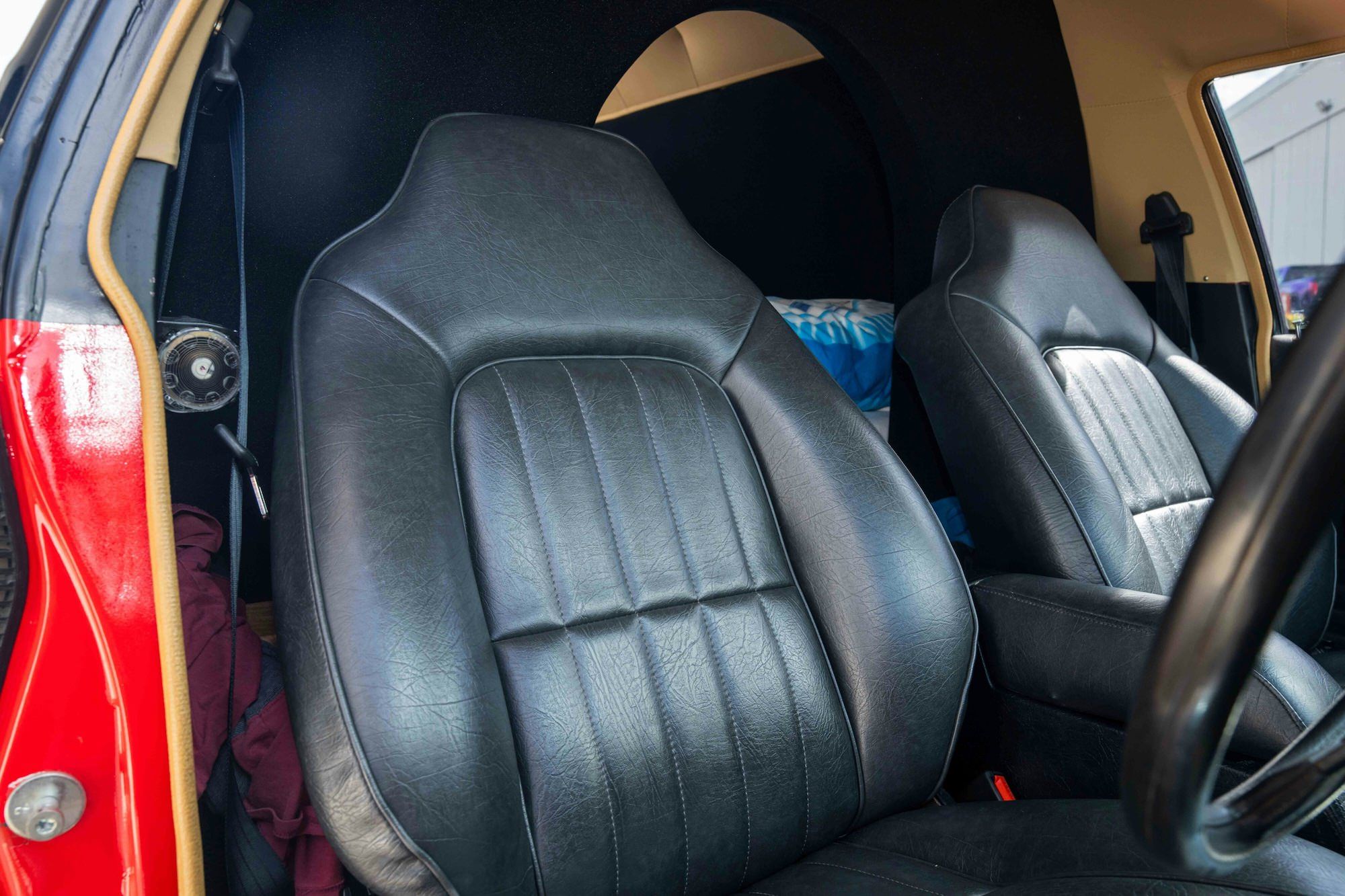
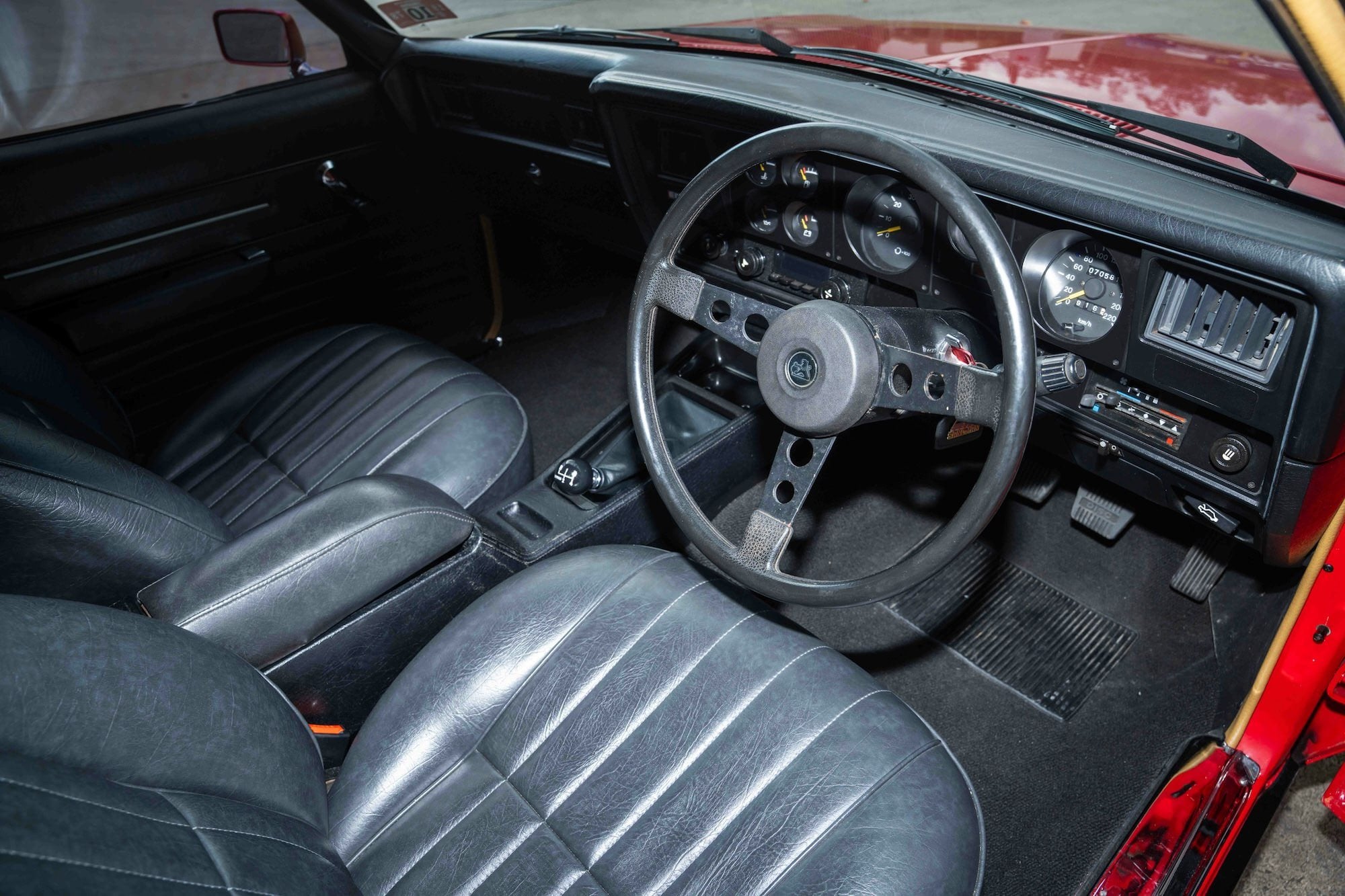
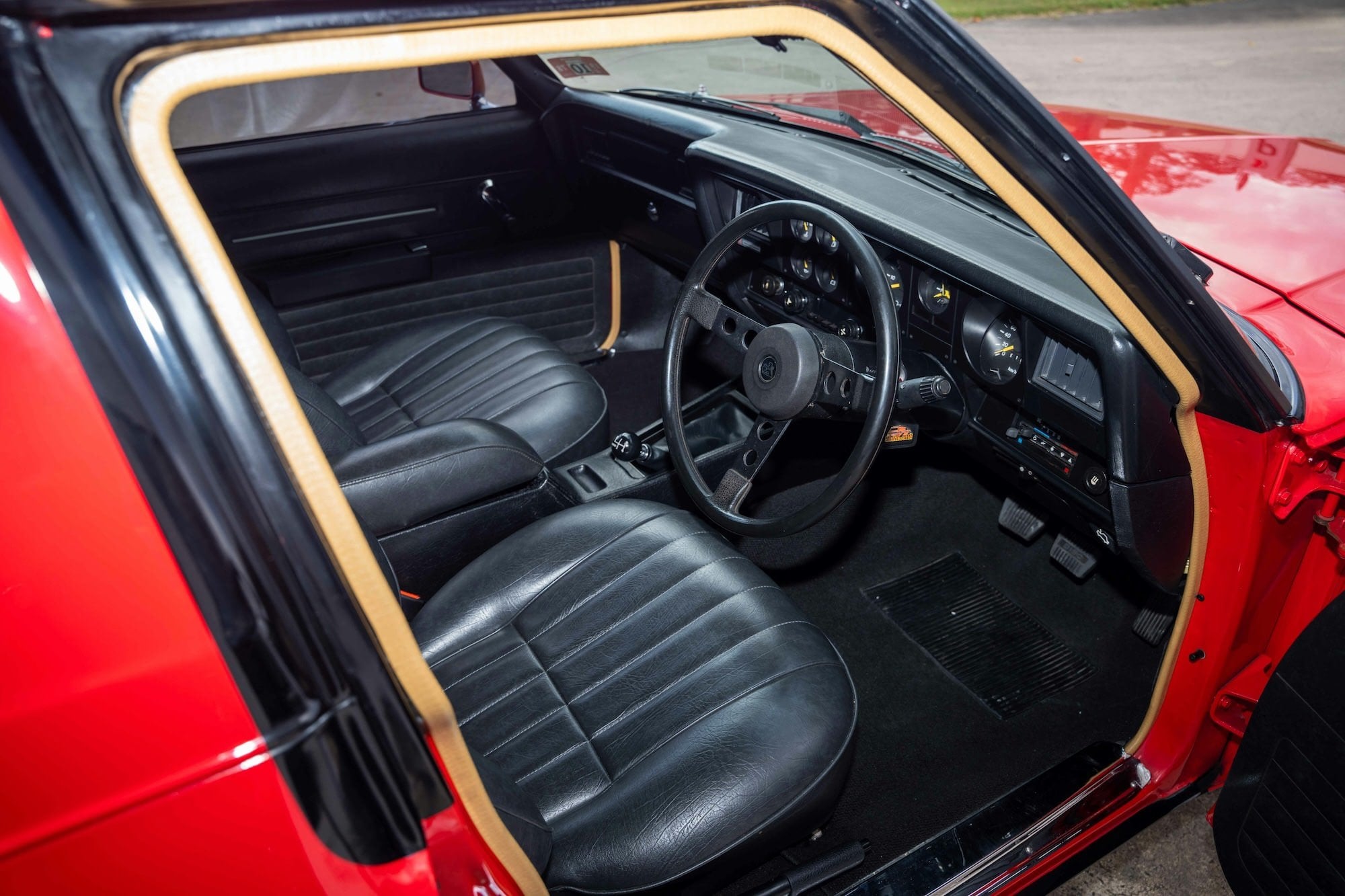
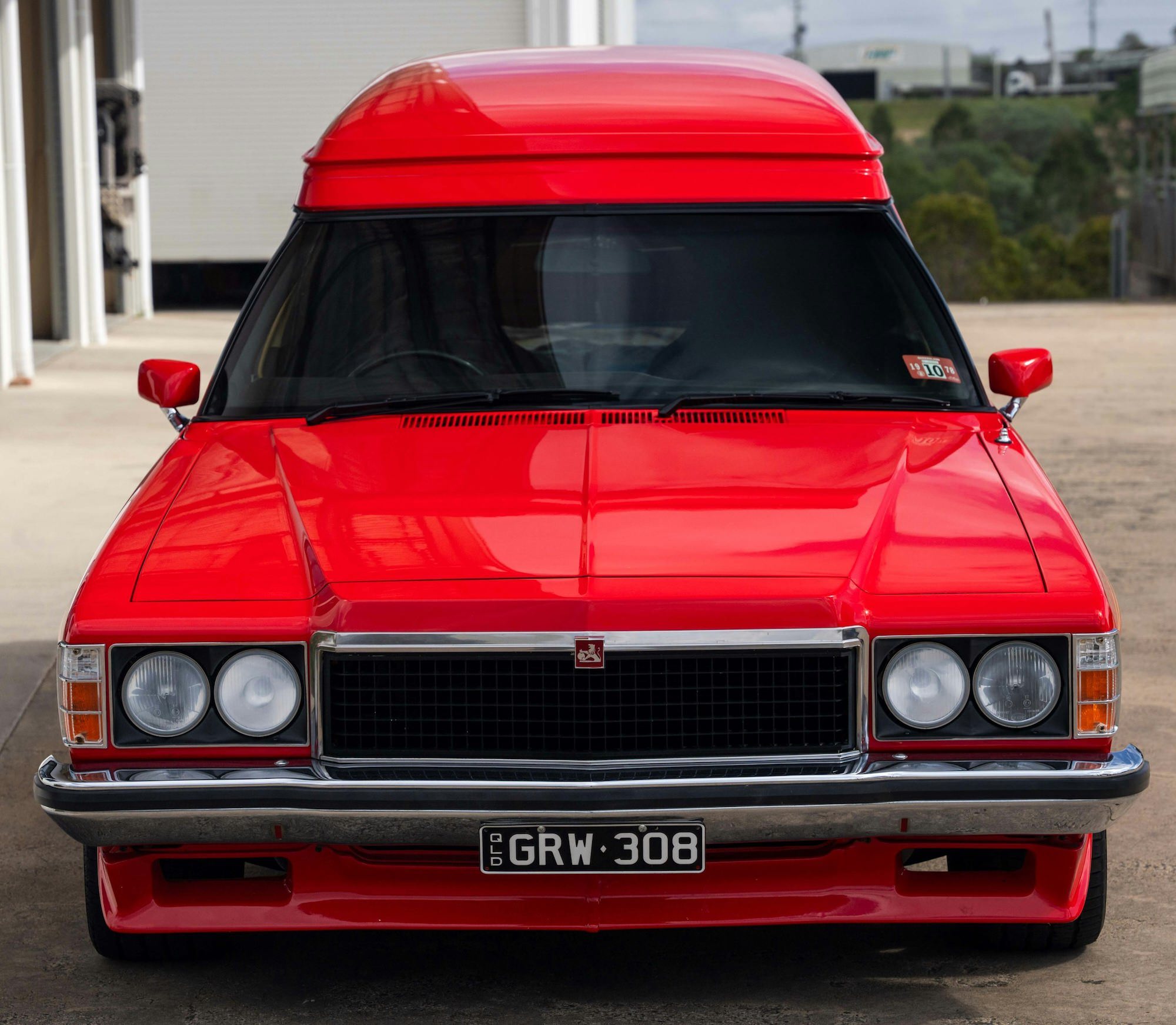
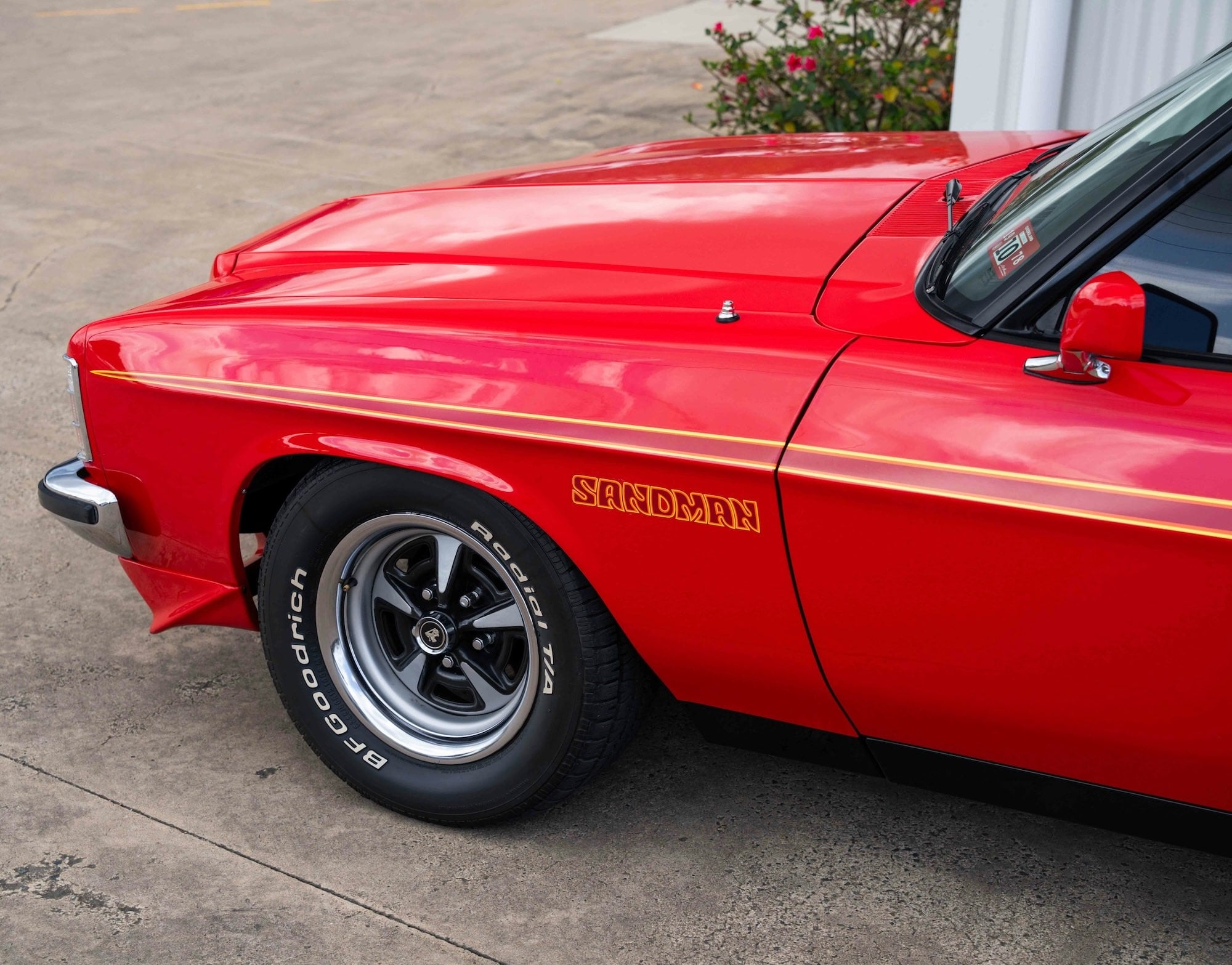
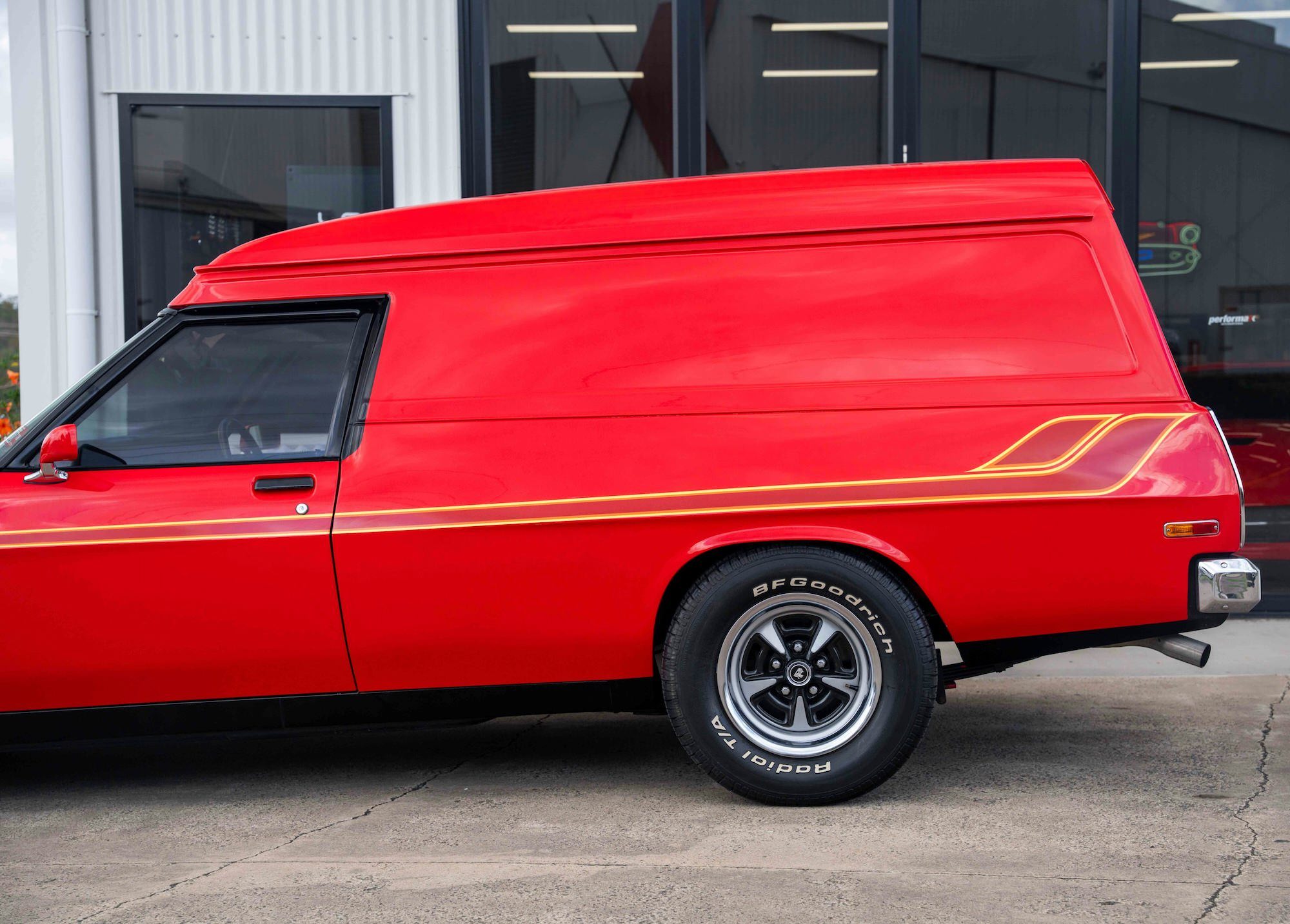
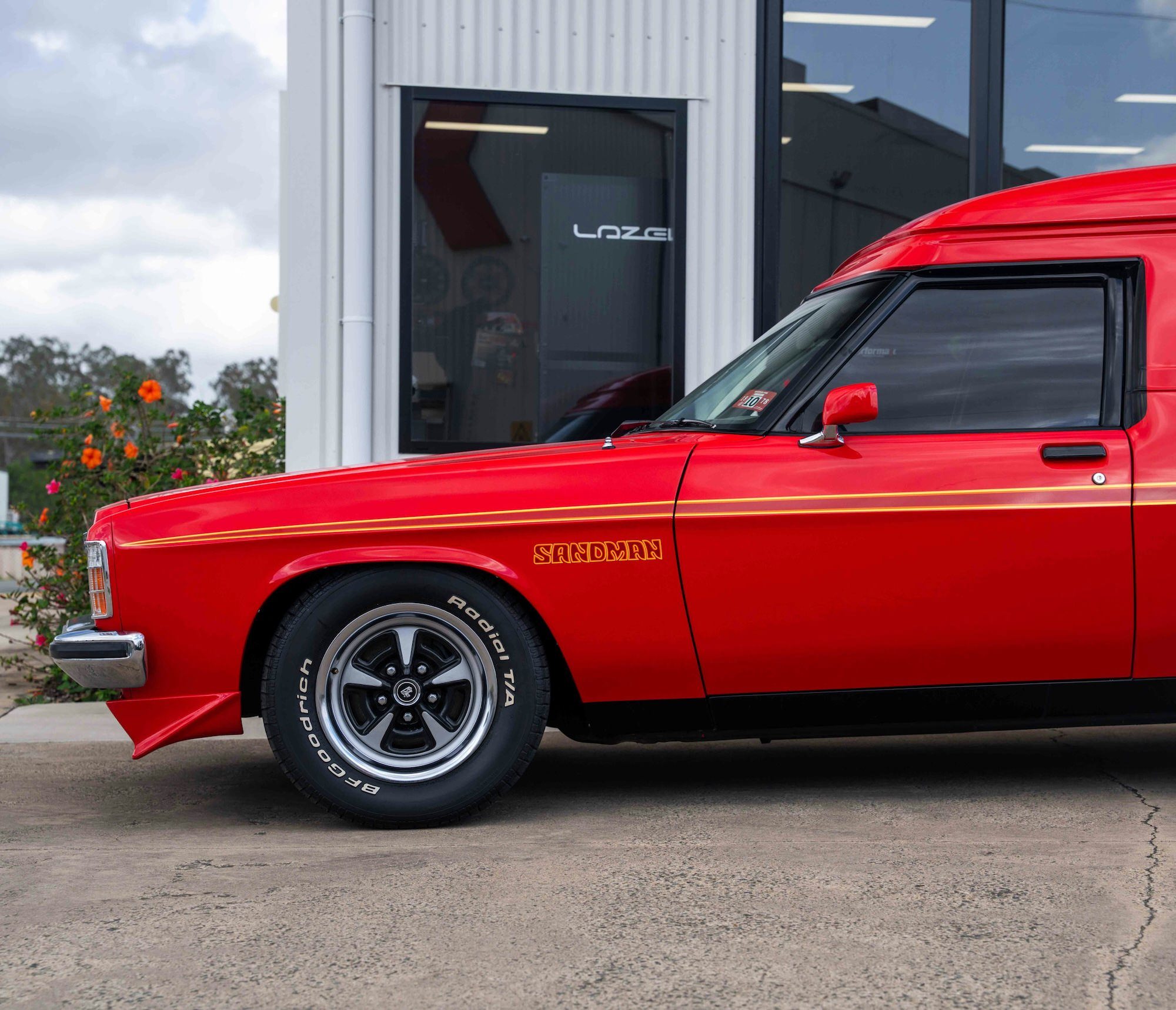
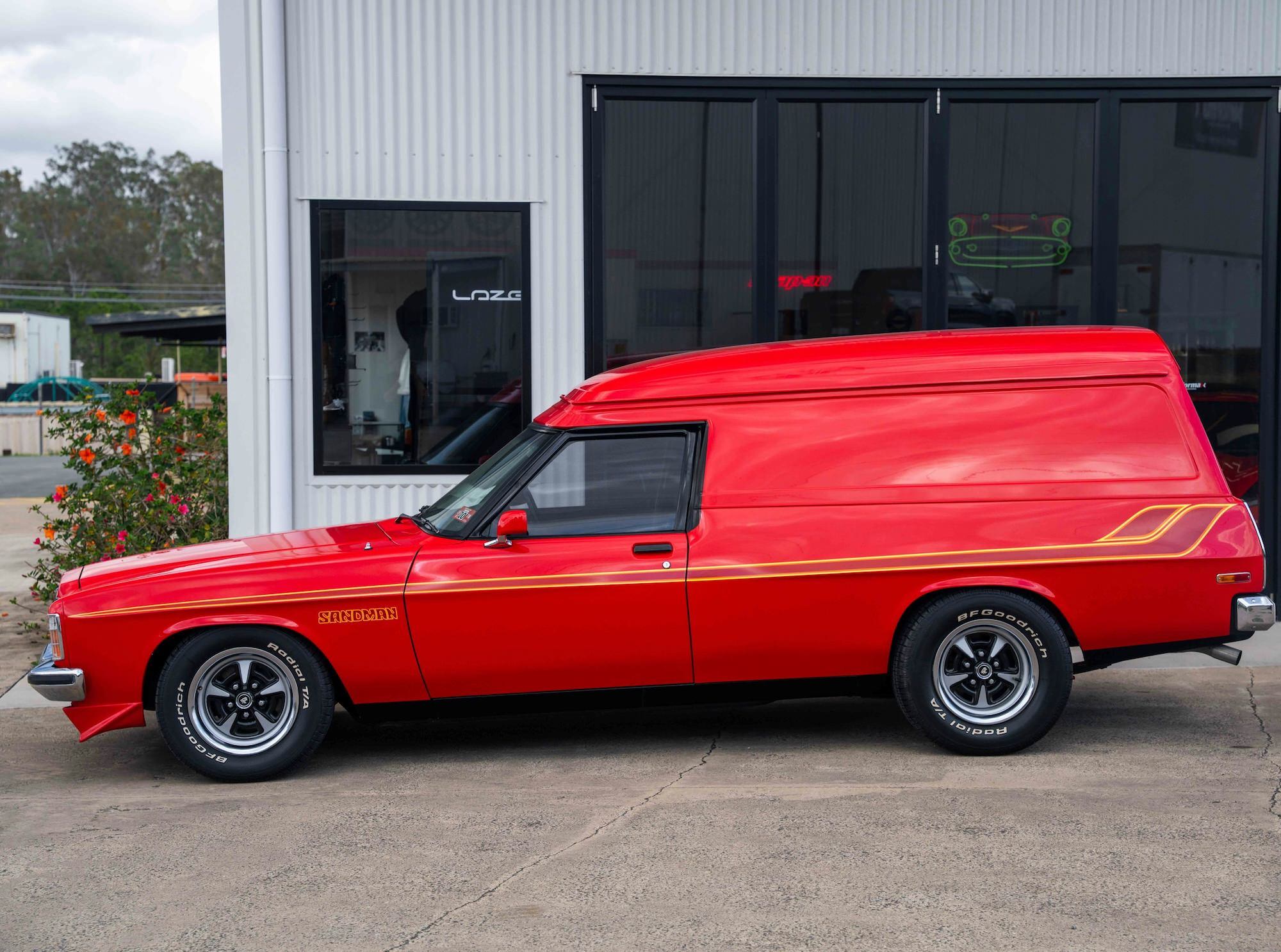
- This 1977 Holden HZ Sandman panel van is a genuine example finished in Flamenco Red with dark red, orange, and yellow graphics over a Slate Black vinyl interior. First registered in December of 1977, it remains in Australia and shows 70,581 kms on its odometer.
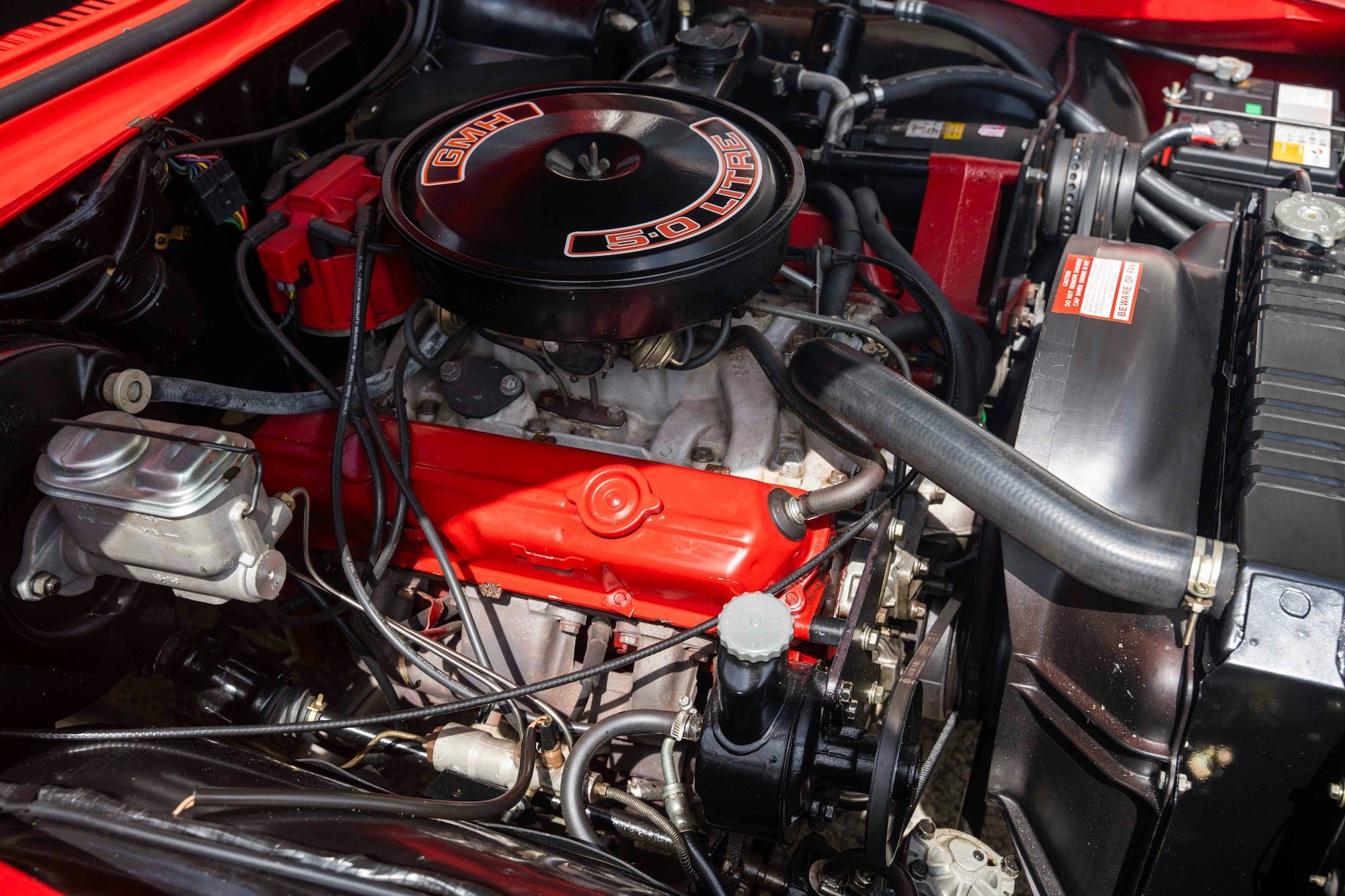
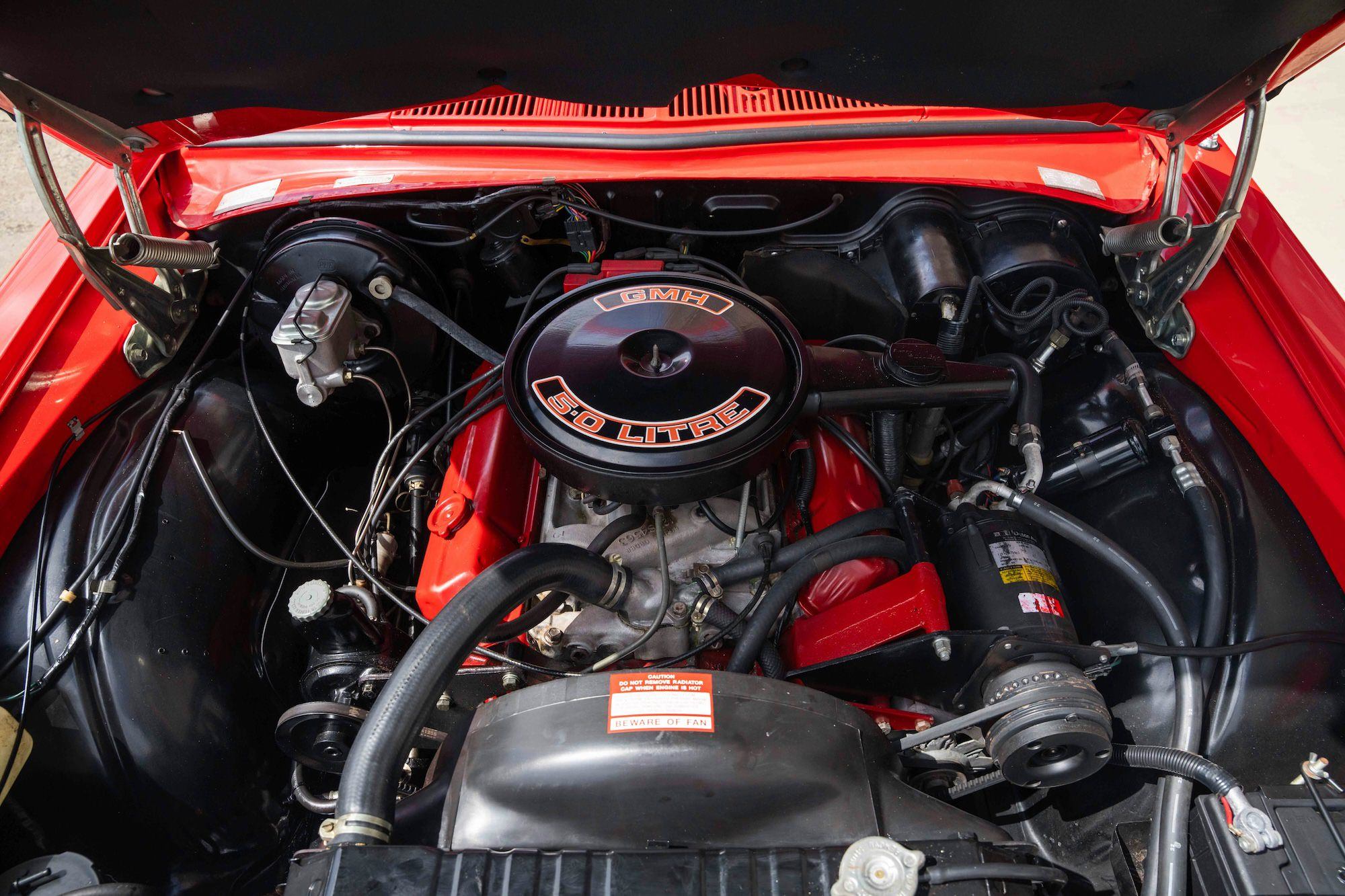
- Power comes from the matching-numbers 5.0 liter naturally aspirated V8, which was rebuilt during the restoration and drives the rear wheels through a 4-speed manual transmission. The van also has power steering, front disc brakes, and HZ GTS sedan rear disc brakes.
- Period-style upgrades include integrated air conditioning sourced from an HZ Statesman and a top-tinted windscreen. It rides on satin-black five-spoke steel wheels with silver accents, with four converted to 15×8 drop-band rims and fitted with BFGoodrich Radial T/A tires.
- The Sandman was restored back to period-correct condition and is accompanied by supporting documentation, including a Sandman brochure, laminated specification sheet, user manuals, and a Holden Historical Services Production Report. It’s currently being offered for sale from Queensland, Australia.
History Speedrun: The Holden Sandman
By the early 1970s, Holden’s product planners had noticed V8 panel vans and utes selling in growing numbers to young buyers. It was a little unexpected and it wasn’t something they’d seen coming, but on looking into the trend, Leo Pruneau’s design department noticed what these buyers were doing next – they customized the interiors and repainted the bodies with oftentimes wild designs.
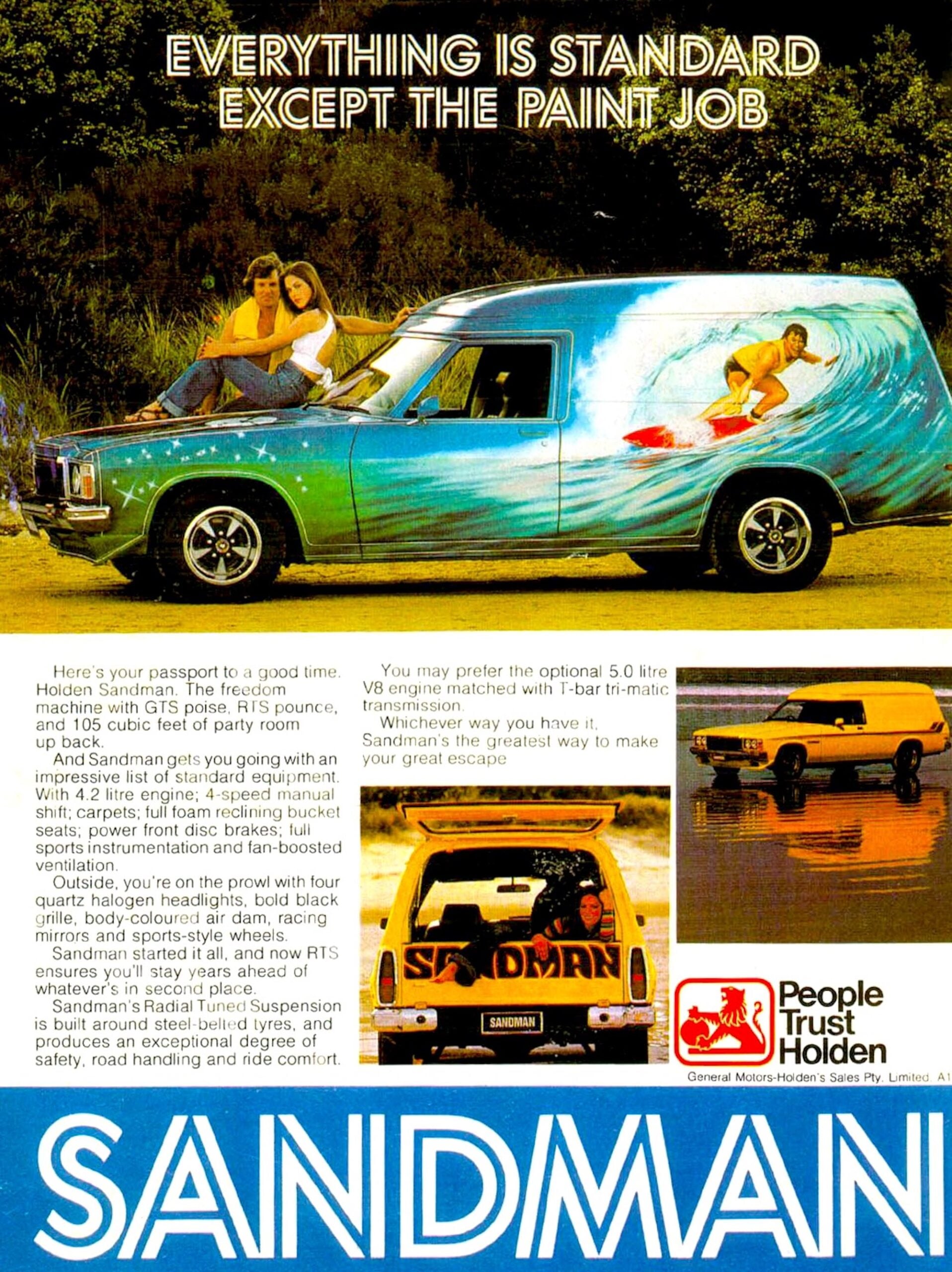
 Panelvans and their ute siblings, are among the most beloved and iconic vehicles ever to come out of Australia. Their cultural impact in the 1970s is hard to overstate, and their values today can comfortably reach into the six figures as a result. Image courtesy of General Motors Holden.
Commercial vehicles, like utes and panel vans, were subjected to less sales tax than passenger cars, which kept a V8 van within reach for many buyers. By the middle of the 1970s, new panel vans made up almost 1/5th of Australian commercial-vehicle sales, and they had become a cultural institution.
Holden had displayed an HQ-based concept ute called the Ewe’t in 1972, a play on words with a sheep pun, but it didn’t catch on. The production car based on the concept was simpler, Pruneau had designer Peter Arcadipane draw decals and long side stripes, then fitted Monaro front fenders, blacked-out headlight surrounds and a GTS steering wheel to a Belmont panel van. He later said that “Holden stood back as they flew out of the dealerships.”
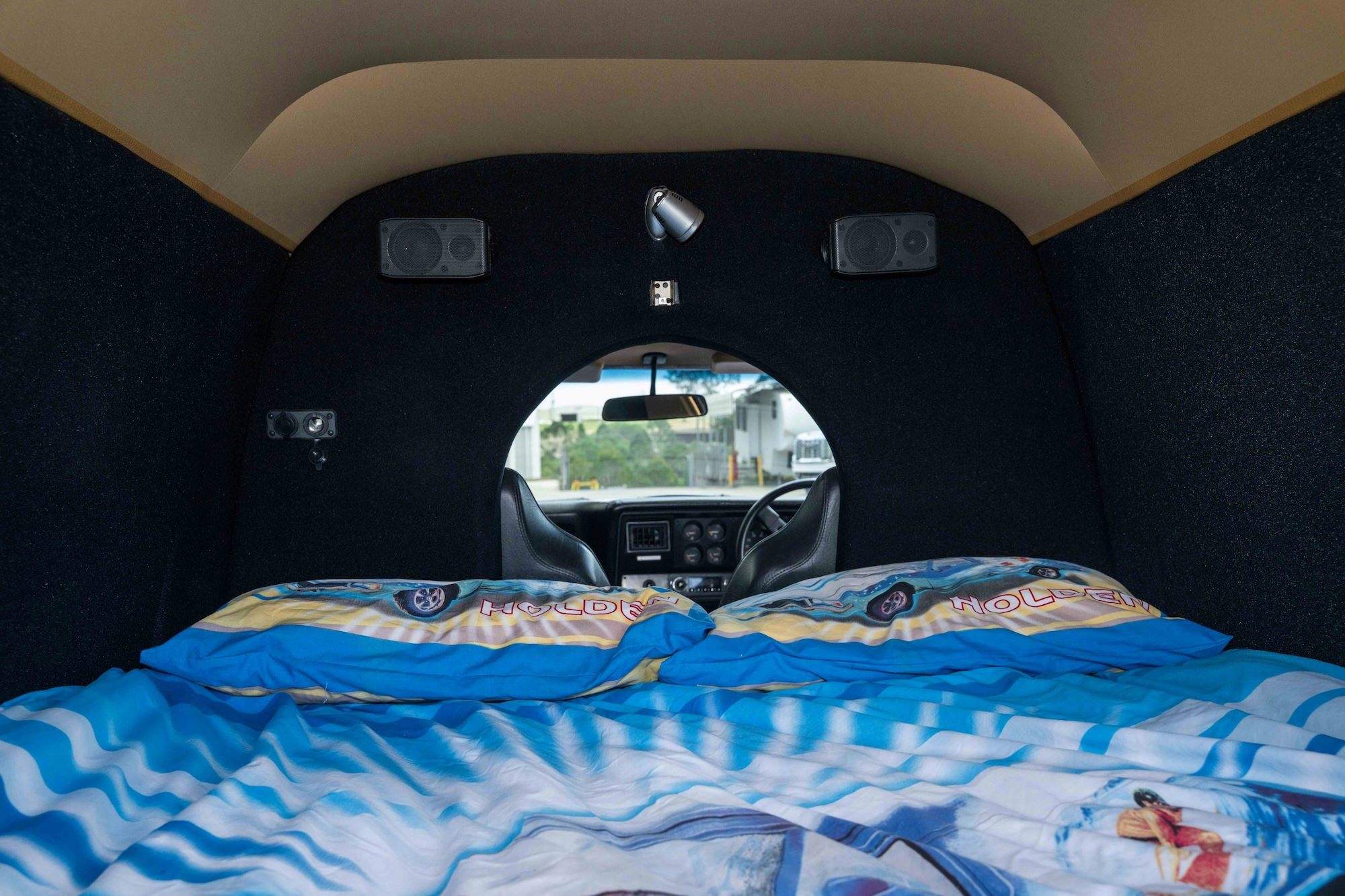
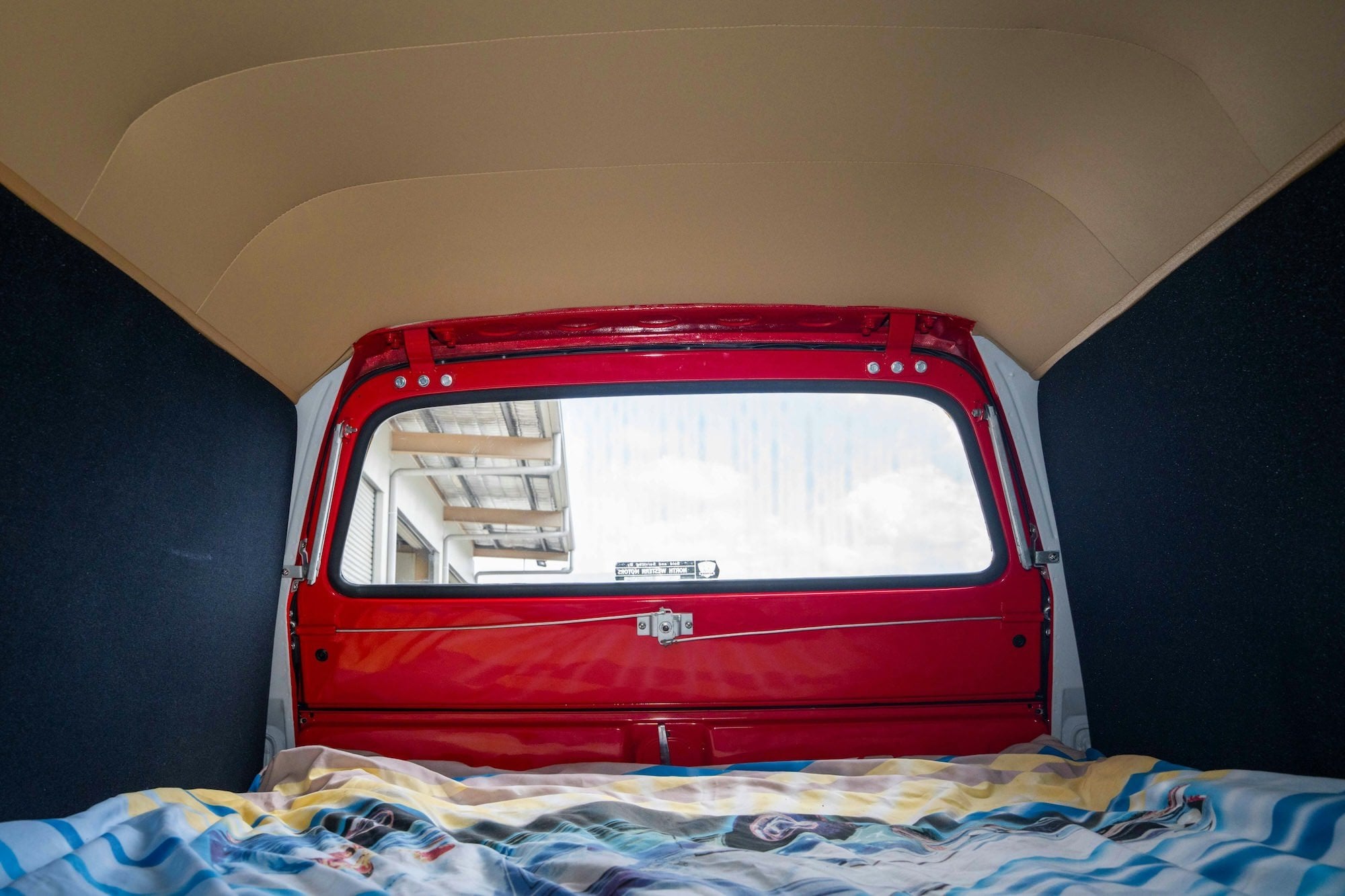
The Australian automaker had a hit on its hands. Customers were making it clear what they wanted – a Holden GTS interior with bucket seats, a wider choice of engines and transmissions, and a bare rear compartment that owners could fit out themselves with plush carpeting, stereos, a mattress, velour walls, and the occasional (miniature) disco ball hanging from the ceiling.
When he showed Holden’s directors the huge Sandman decal planned for the tailgate, they asked if he was serious or if this was some kind of designer joke. Pruneau was dead serious, and he also wanted a mattress on the factory options list, but management refused. It’s a shame because Holden would likely have sold staggering numbers of them.
A tail tent that fitted over the open tailgate did get through, and it appears among the optional accessories in Holden’s HX panel van brochure from the period. Surviving examples are rare today and hugely sought after by collectors.
The Competition: Ford + Chrysler
Ford had introduced a Surferoo package on the XB Falcon panel van in 1973, in 1977 it was replaced by the Sundowner, a Falcon 500 van fitted with GS instrumentation, a sports steering wheel, four headlights, bonnet scoops, slotted wheels and a single tailgate in place of the standard van’s barn doors. Ford carried the Sundowner over to the XD Falcon platform.
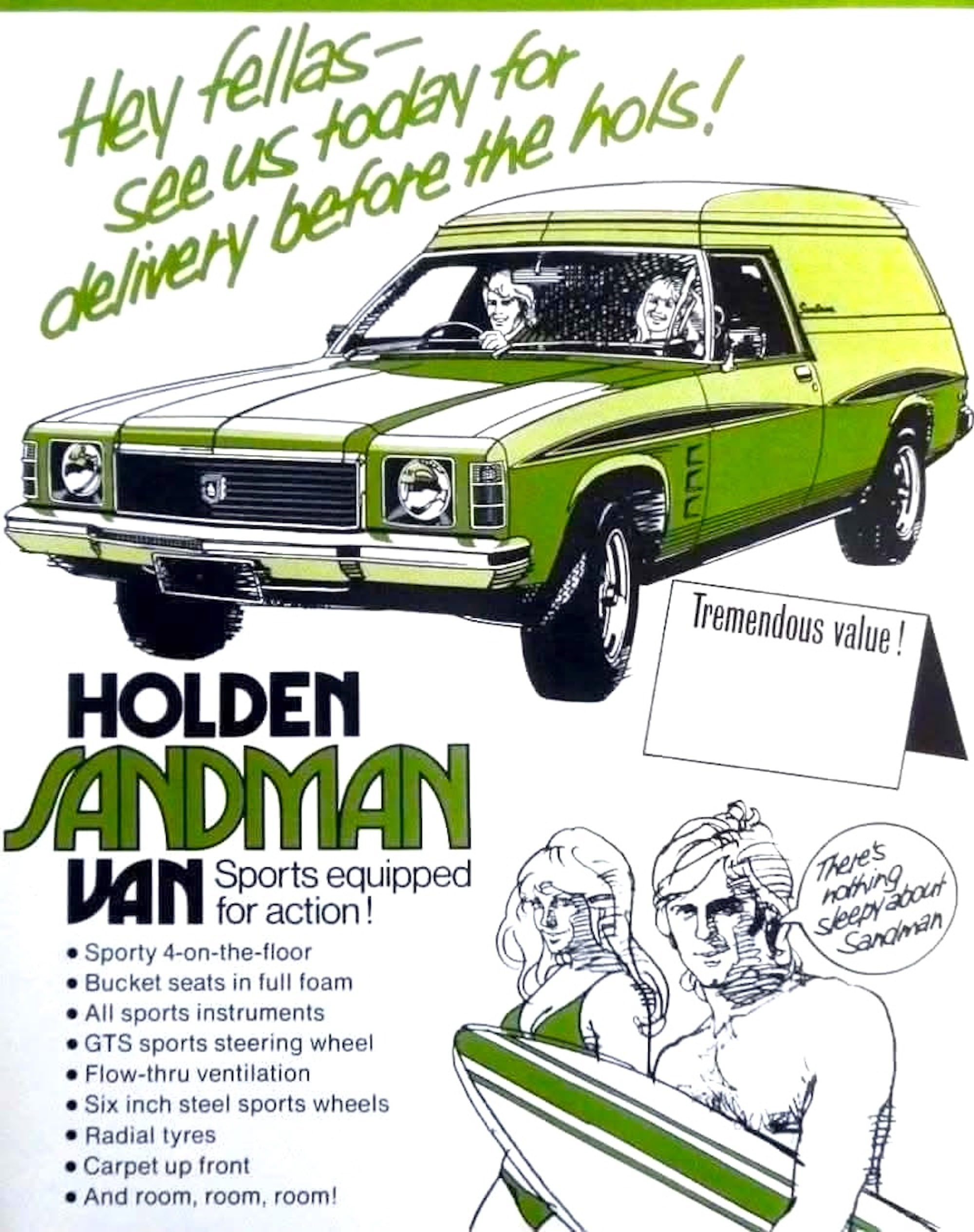
The most desirable Sandman panelvans today are the V8 versions with the factory-fitted manual transmissions, but they only come up for sale rarely. Image courtesy of General Motors Holden.
Chrysler was last to arrive at the party. It had no Valiant panel van until 1977, and the Drifter package soon followed, adding a Charger grille, quartz-halogen headlights, color-coded bumpers and body stripes.
The Drifter lasted less than two years, and the CM Valiant of November 1978 dropped the van and ute entirely. Probably one of the company’s biggest missteps in the Australian market at the time.
The Panel Van In 1970s Australia
The panel van’s cultural impact went well past tradesman use or surfboard transportation. Aussie slang referred to them as “sin bins” and “shaggin’ wagons,” due to the explicit acts that often occurred in the back. Holden’s advertising did nothing to discourage the association, filling its brochures and print ads with scantily dressed models. It was the ’70s after all.
When Peter Robinson tested a Sandman in May of 1976, he found Holden’s panel vans outselling its utes two to one and called the Sandman the “sports car” of the seventies. After ten days behind the wheel, he decided its sporting potential was better realized in the rear compartment than on the road. So to speak.
The Holden HQ Sandman
The Sandman ute and van came out on the Holden HQ platform in January of 1974, relatively late in the HQ model series’ life. The HQ sat on a full-length perimeter frame with a 114 inch wheelbase and leaf springs at the rear, and the Sandman kept that same fundamental layout.
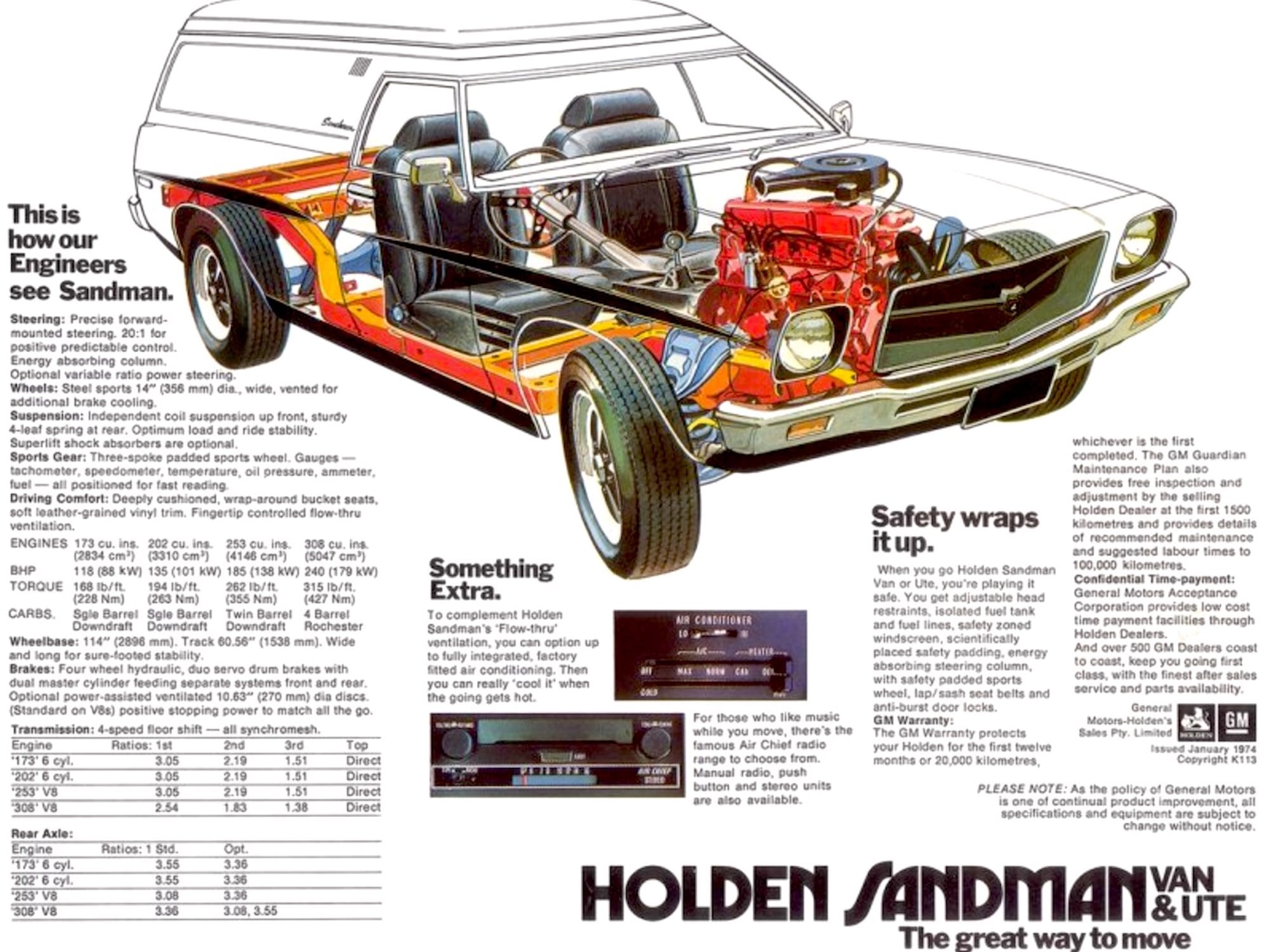
Body-on-frame construction made the panel vans and utes from the era genuinely well-suited to heavy duty use, and many were used by tradesmen as a result. Image courtesy of General Motors Holden.
The Sandman version added GTS-style slotted front fenders, GTS Rally wheels, bucket seats, the GTS steering wheel, full instrumentation and the decal-and-stripe package. Buyers could choose the 173 cubic inch (2.8 liter) or 202 cubic inch (3.3 liter) straight-six, or the 253 cubic inch (4.1 liter) and 308 cubic inch (5.0 liter) V8s. The HJ replaced the HQ in October of 1974.
That left the HQ Sandman about nine months on sale, original examples are now rare, and worth a pretty penny if you can find one.
The Holden HJ Sandman
The Holden HJ series brought a squarer nose and the Sandman was again offered as a panel van and ute, though early HJ utes could be Kingswood-based before the ute package moved to the base Holden utility during the series.
GTS parts again set it apart – with vented front fenders, silver mirrors, white-needle GTS gauges and 14-inch GTS Rally wheels. From late 1975, Holden added a second option code, XU3, for Sandmans on load-rated tires, while XX7 cars ran passenger-car tires and carried a reduced load rating.
The 253 V8 with a 4-speed manual or Tri-Matic automatic was the typical combination. The high-compression 253 was listed at 185 bhp and 262 lb ft, and the four-barrel 308 at 240 bhp and 315 lb ft.
The Holden HX Sandman
The Holden HX was built to meet the then-new ADR 27A emissions rule, and as a result, its engines gave up some power and torque. It was a process that was being mirrored in the United States and Europe, and elsewhere in the world, and it would be a while until drivetrain engineers were able to scrape back the power while still meeting emissions restrictions.
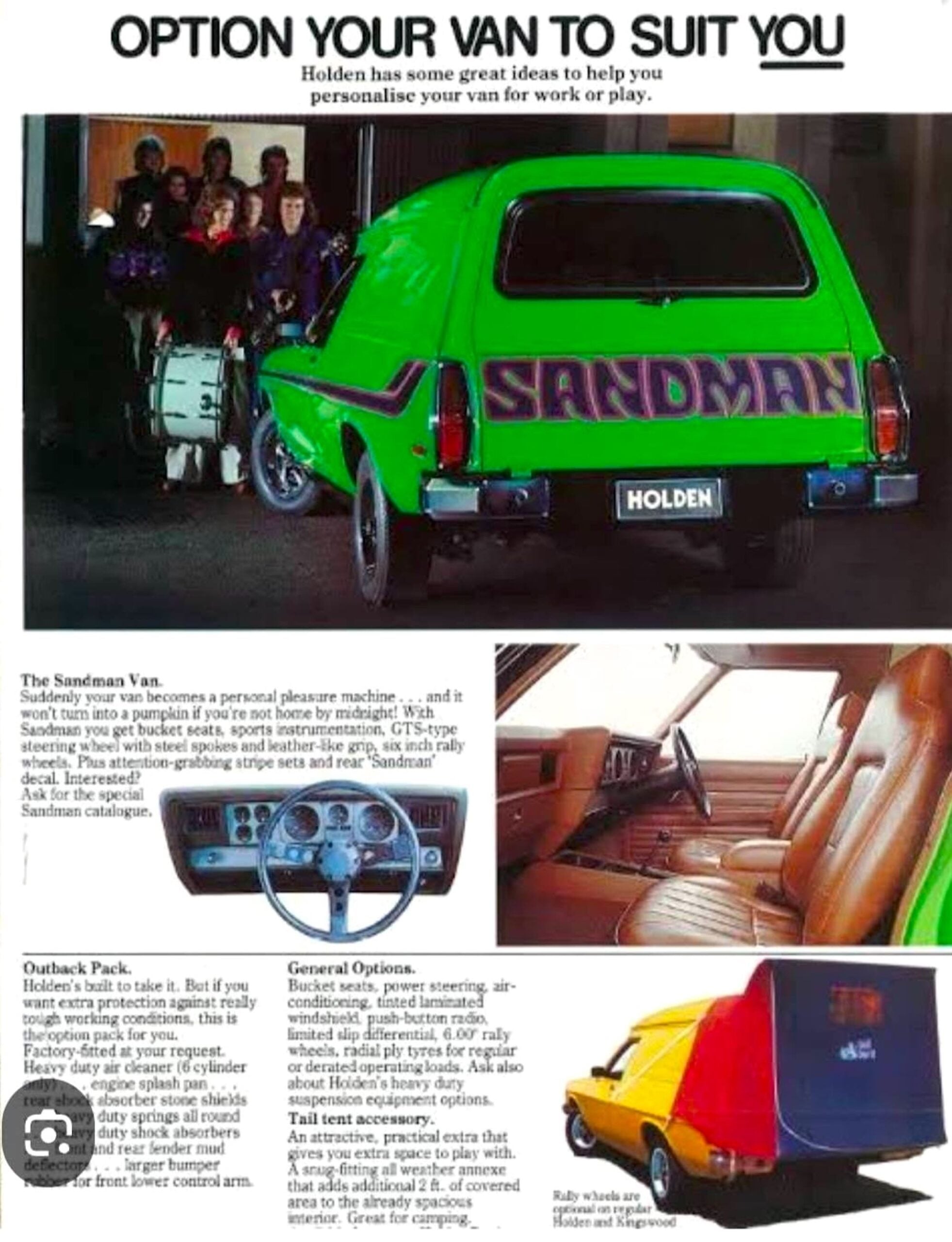
The Tail Tent Accessory was an optional extra people could order with their Sandman panelvan, very few have survived to the modern-day and they’re much sought after as a result. Image courtesy of General Motors Holden.
HX Sandmans were given louder stripes and a large Sandman logo across the tailgate, but they lost the fluted front fenders. Their door frames, door openings, and windshield surround were painted black, as were their Lukey “Slim Line” mirrors. Six-cylinder and V8 engines were both still offered.
The Holden HZ Sandman
The Holden HZ introduced the famous Radial Tuned Suspension, a set of revised springs, dampers, and stabilizer bars tuned for steel-belted radial tires. The Sandman kept its leaf-sprung rear axle, and it took the quad-headlight nose shared with the Premier and GTS, added a front air dam, kept the plain fenders introduced with the HX, and dropped the six-cylinder engine options.
The 253 V8 became standard, rated at 161 bhp and 240 lb ft, with the 308 optional at 216 bhp and 295 lb ft. Sandman ute production ended first, with the final vans following in late 1979. A WB-series Sandman with the 4.2 V8 and 4-speed manual was planned but, sadly, it was never built.
Holden reused the name for a VU-based panel van concept at the 2000 Sydney Motor Show, and then in 2015 they offered a $2,950 Sandman pack on the Holden VF ute and Sportwagon.
The 1977 Holden HZ Sandman Shown Here
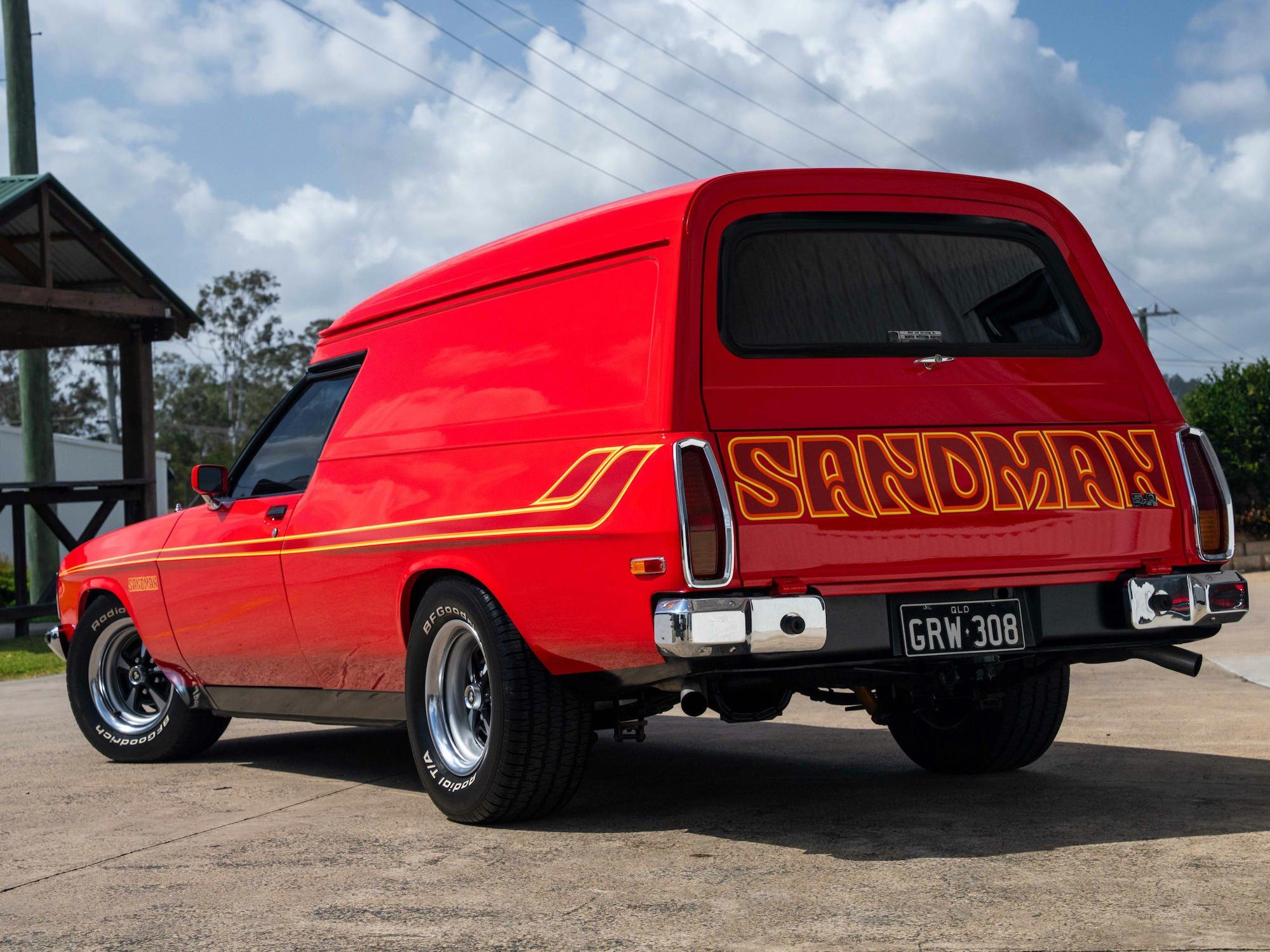
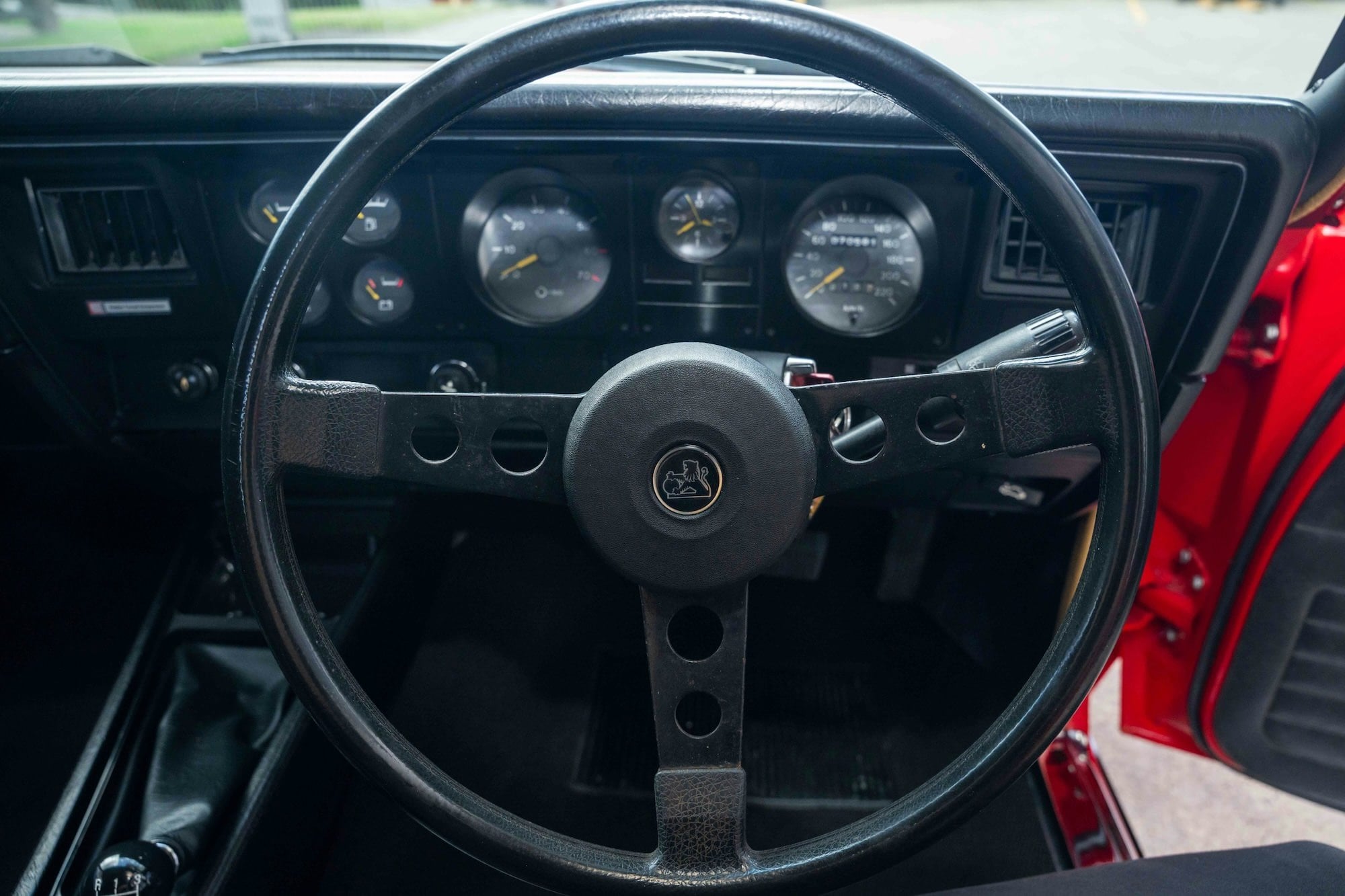
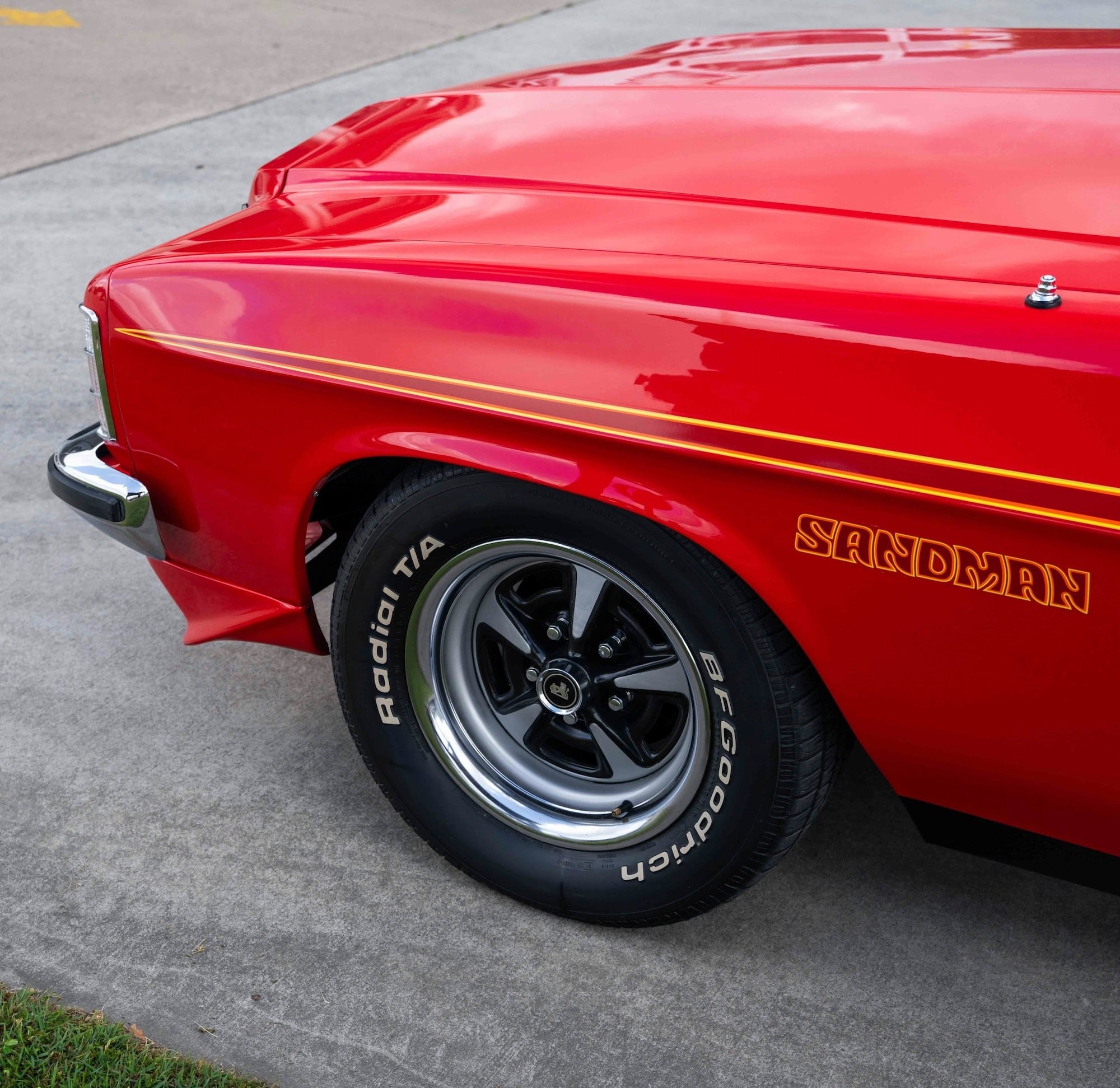
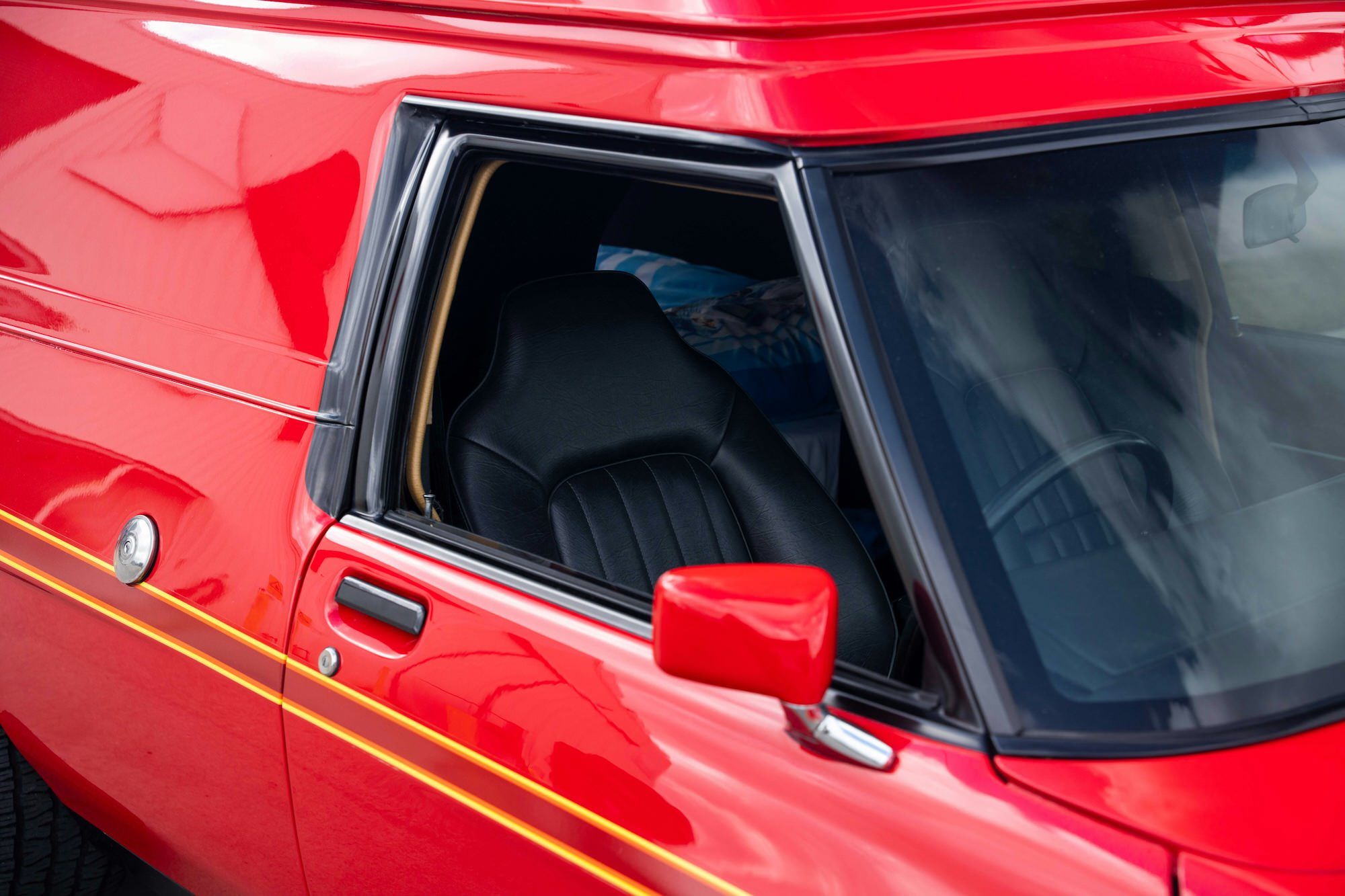
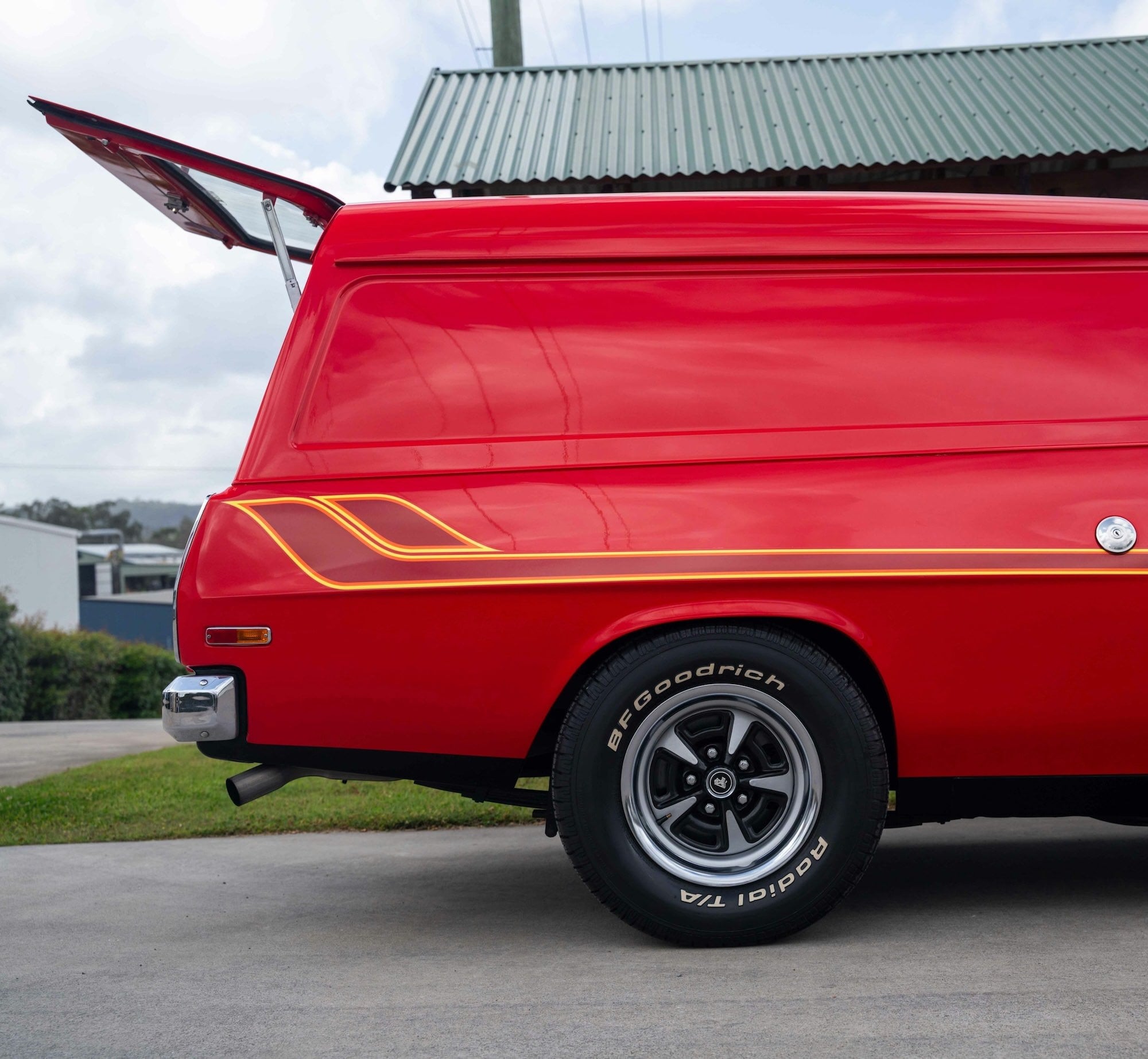
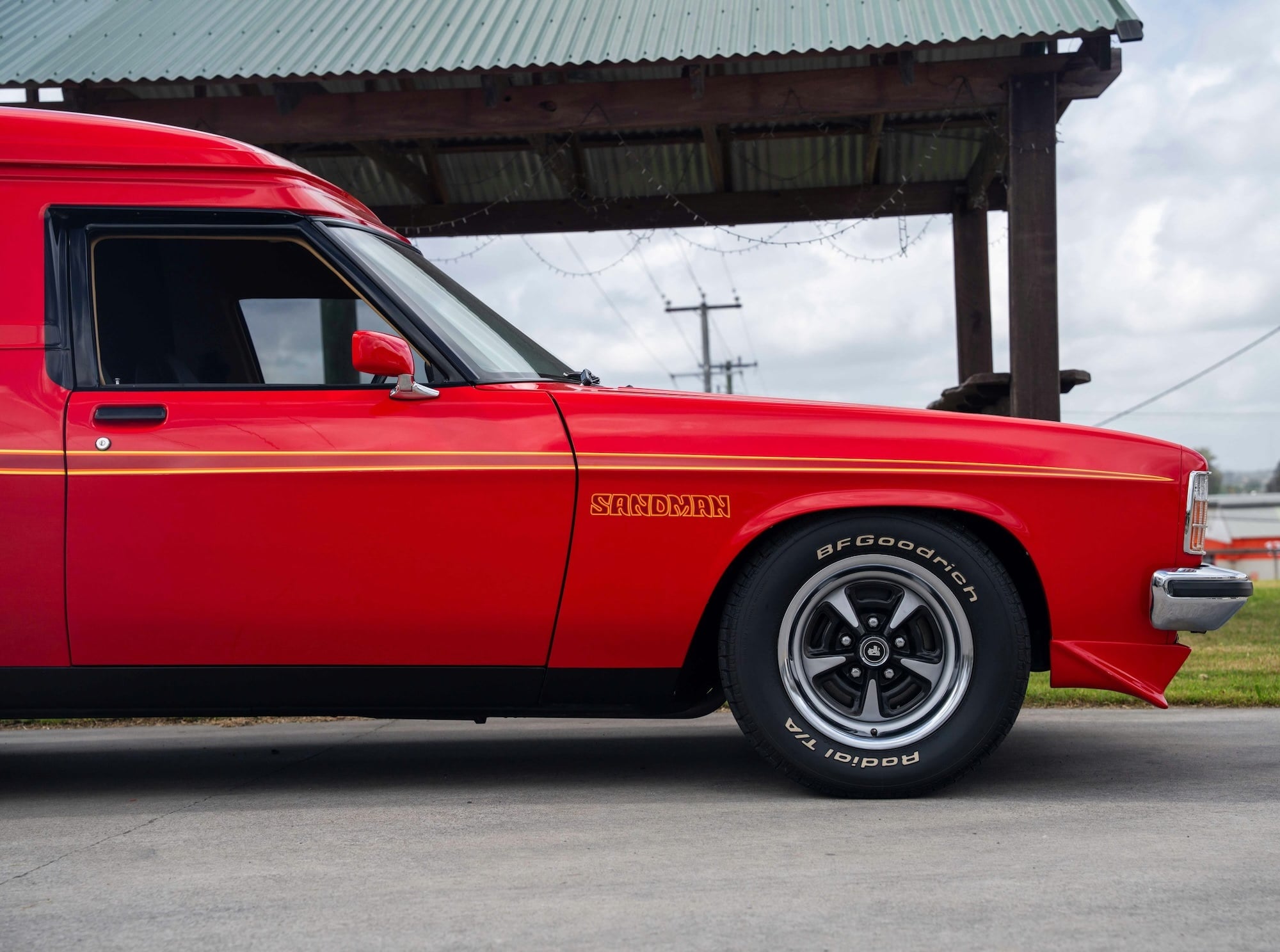
This is an original 1977 Holden HZ Sandman, it’s a genuine example, not one of the later clones, and it’s finished in Flamenco Red with the familiar dark red, orange, and yellow Sandman graphics over a Slate Black vinyl interior. It was first registered in December of 1977, and it remains in Australia today, with 70,581 kms on the odometer.
Power is provided by its matching-numbers 5.0 liter naturally-aspirated V8, which has been rebuilt as part of the car’s restoration. It drives the rear wheels through a 4-speed manual transmission, it’s also fitted with power steering, front disc brakes, and HZ GTS sedan rear disc brakes.
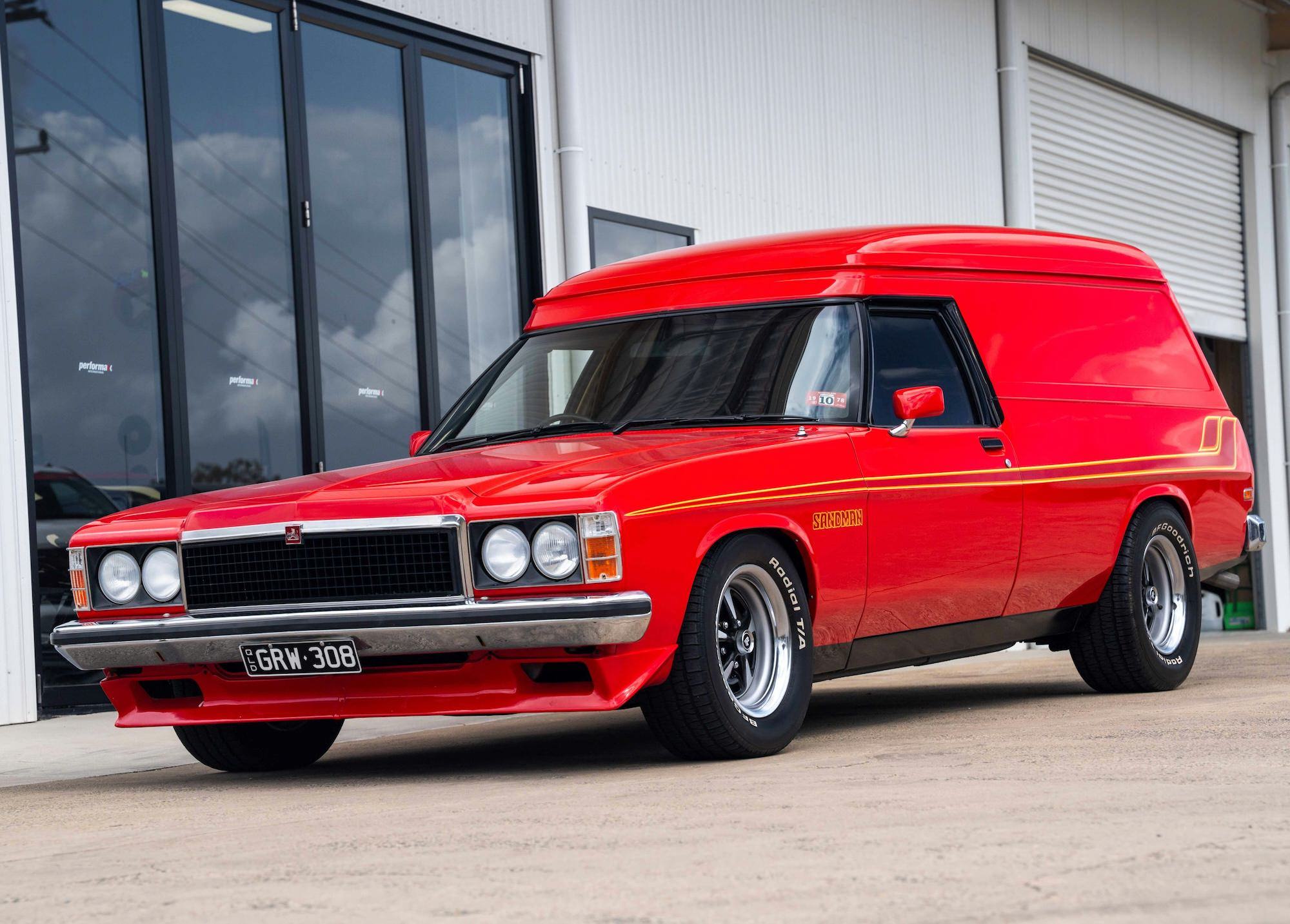
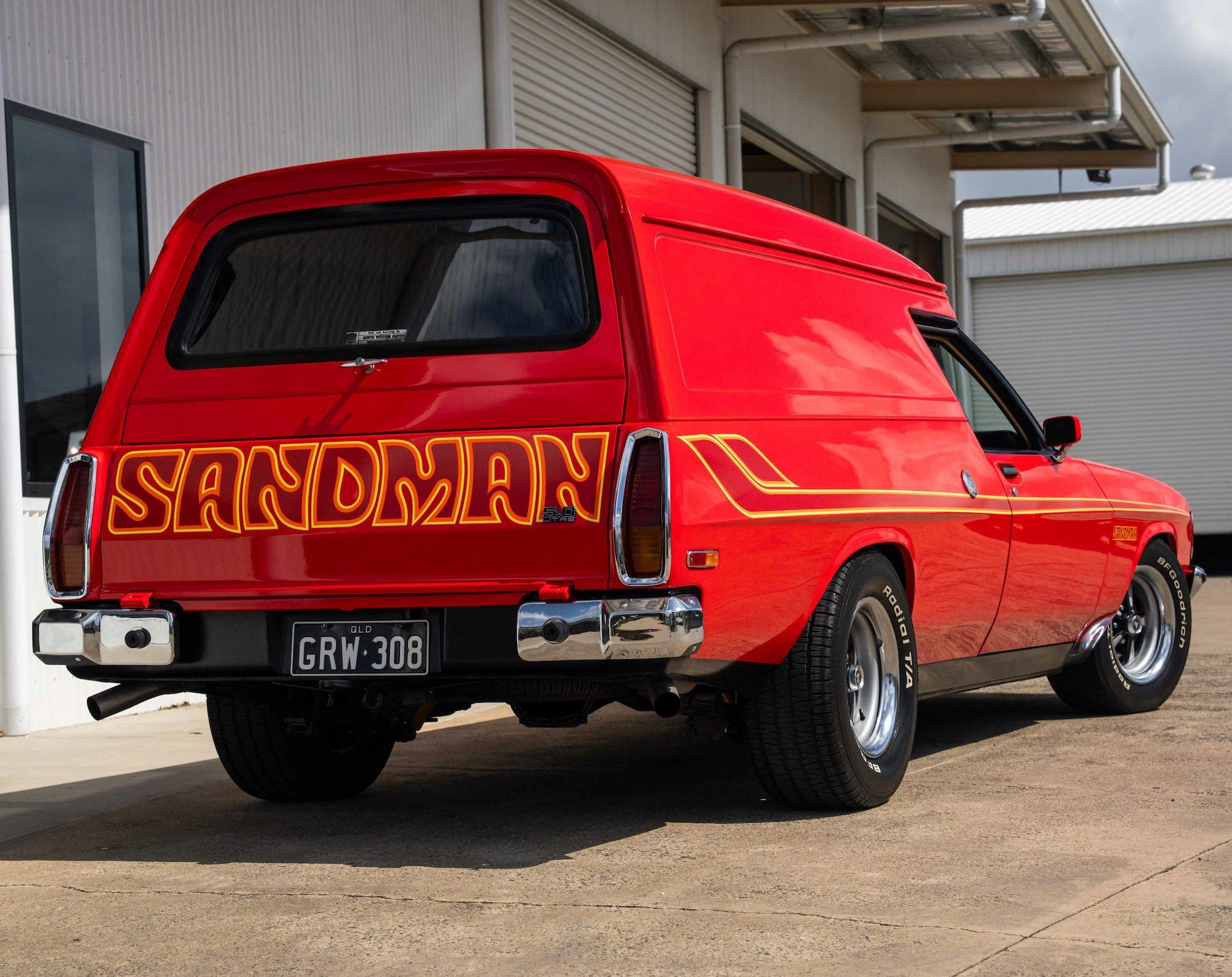
This is an original 1977 Holden HZ Sandman, it’s a genuine example, not one of the later clones, and it’s finished in Flamenco Red with the familiar dark red, orange, and yellow Sandman graphics over a Slate Black vinyl interior. It was first registered in December of 1977, and it remains in Australia today, with 70,581 kms on the odometer.
Several period-correct upgrades have been added, including integrated air conditioning sourced from an HZ Statesman and a top-tinted windscreen. It rides on satin-black five-spoke steel wheels with silver accents, with four wheels converted to 15×8 drop-band rims and fitted with BFGoodrich Radial T/A tyres, while the spare remains a 14-inch wheel.
It comes with a Sandman brochure, a laminated specification sheet, user manuals, and a Holden Historical Services Production Report. It’s now being offered for sale out of Queensland, Australia, and you can visit the listing here if you’d like to read more or register to bid.
Images courtesy of Collecting Cars

Articles that Ben Branch has written have been covered on CNN, Popular Mechanics, Smithsonian Magazine, Road & Track Magazine, the official Pinterest blog, the official eBay Motors blog, BuzzFeed, Autoweek Magazine, Wired Magazine, Autoblog, Gear Patrol, Jalopnik, The Verge, and many more.
Silodrome was founded by Ben back in 2010, in the years since the site has grown to become a world leader in the alternative and vintage motoring sector, with well over a million monthly readers from around the world and many hundreds of thousands of followers on social media.