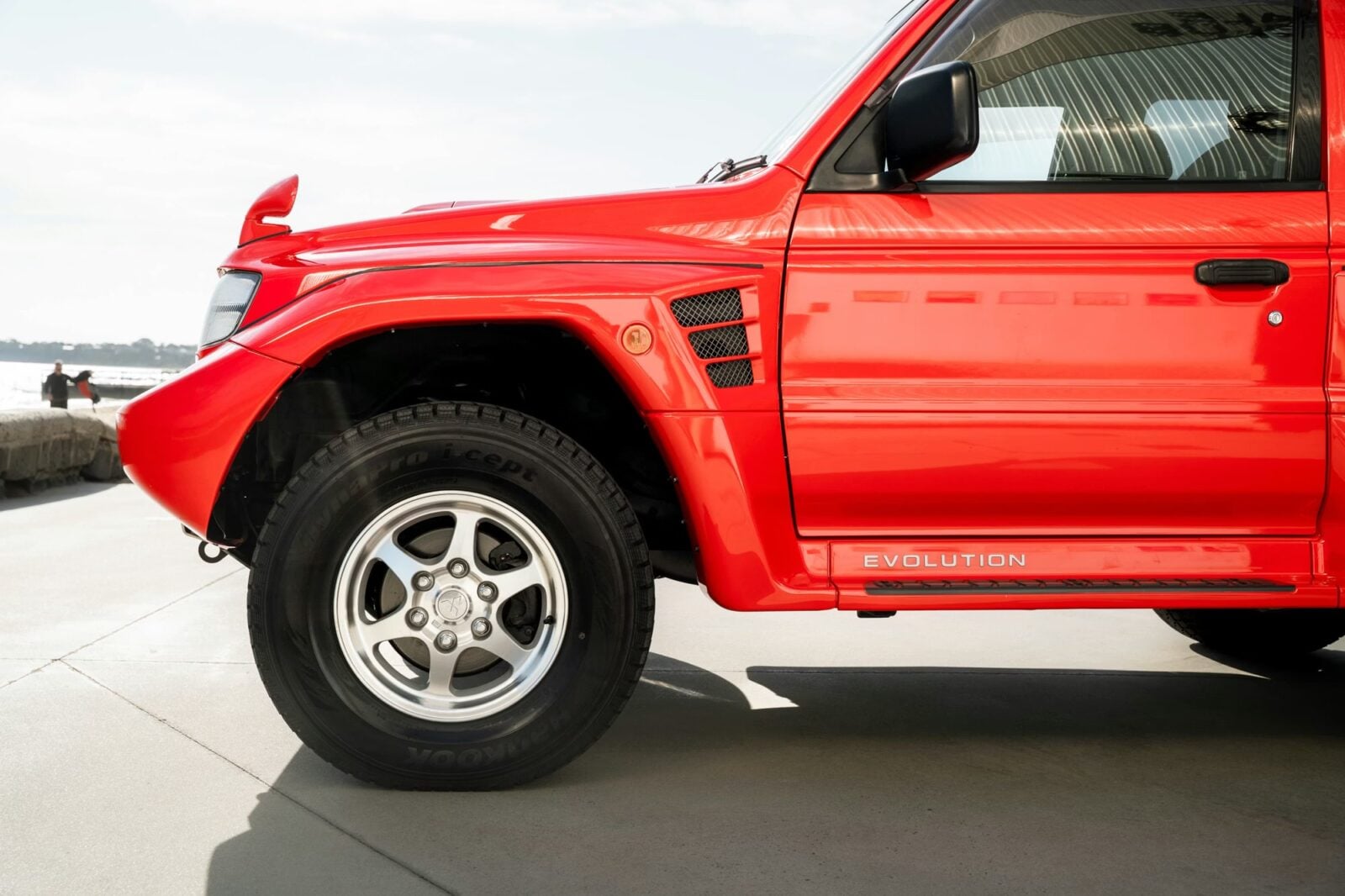
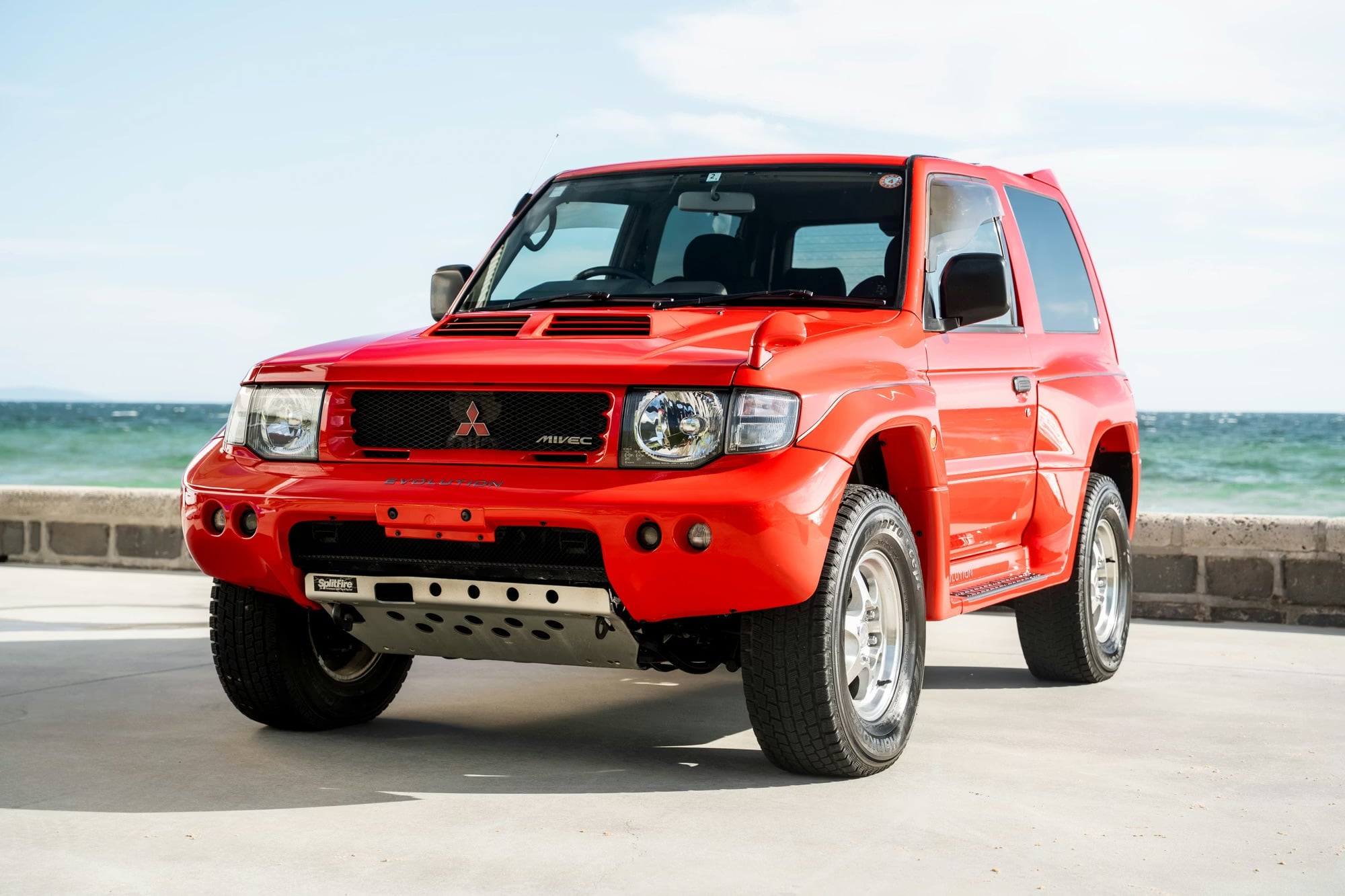
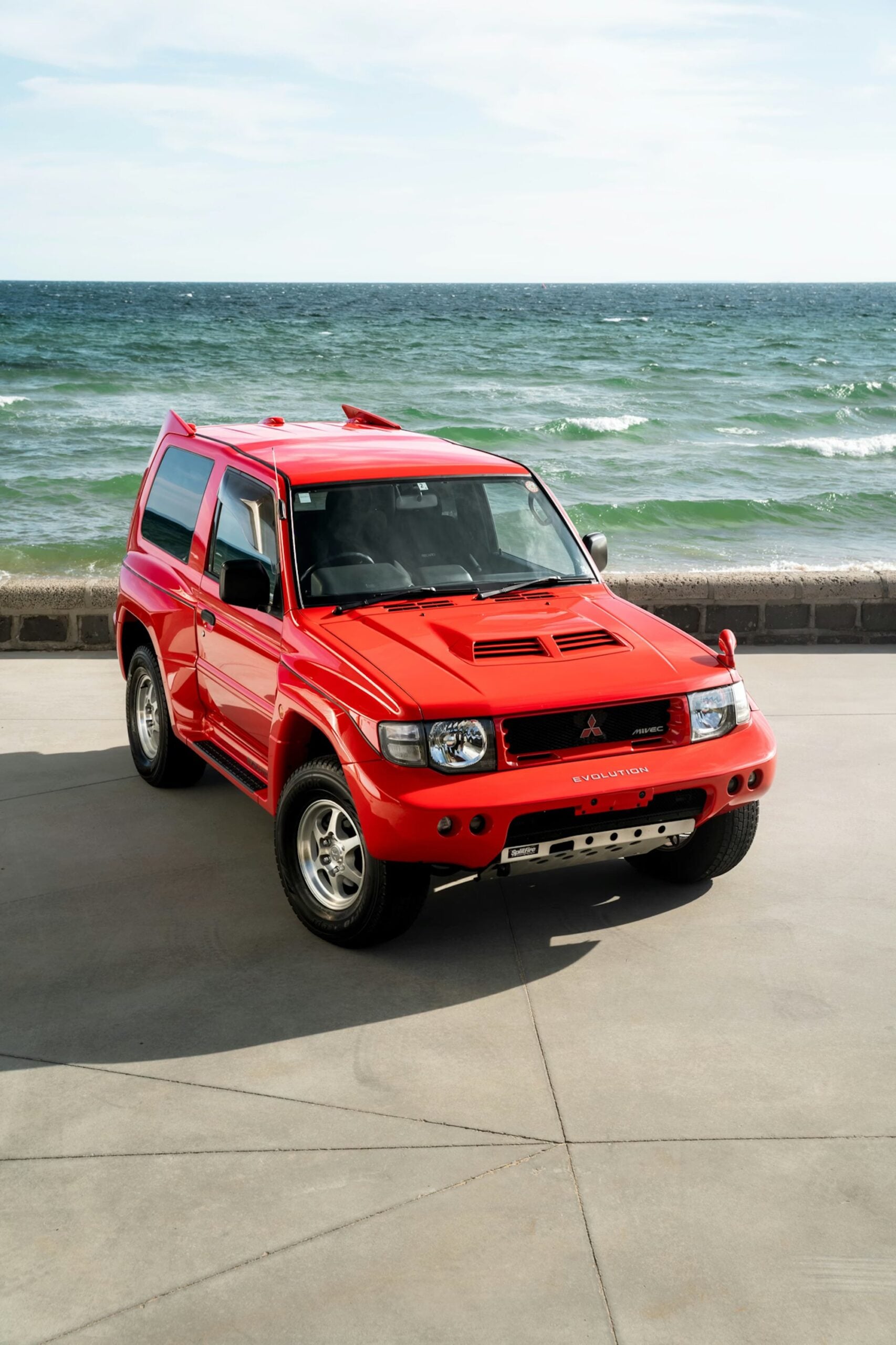
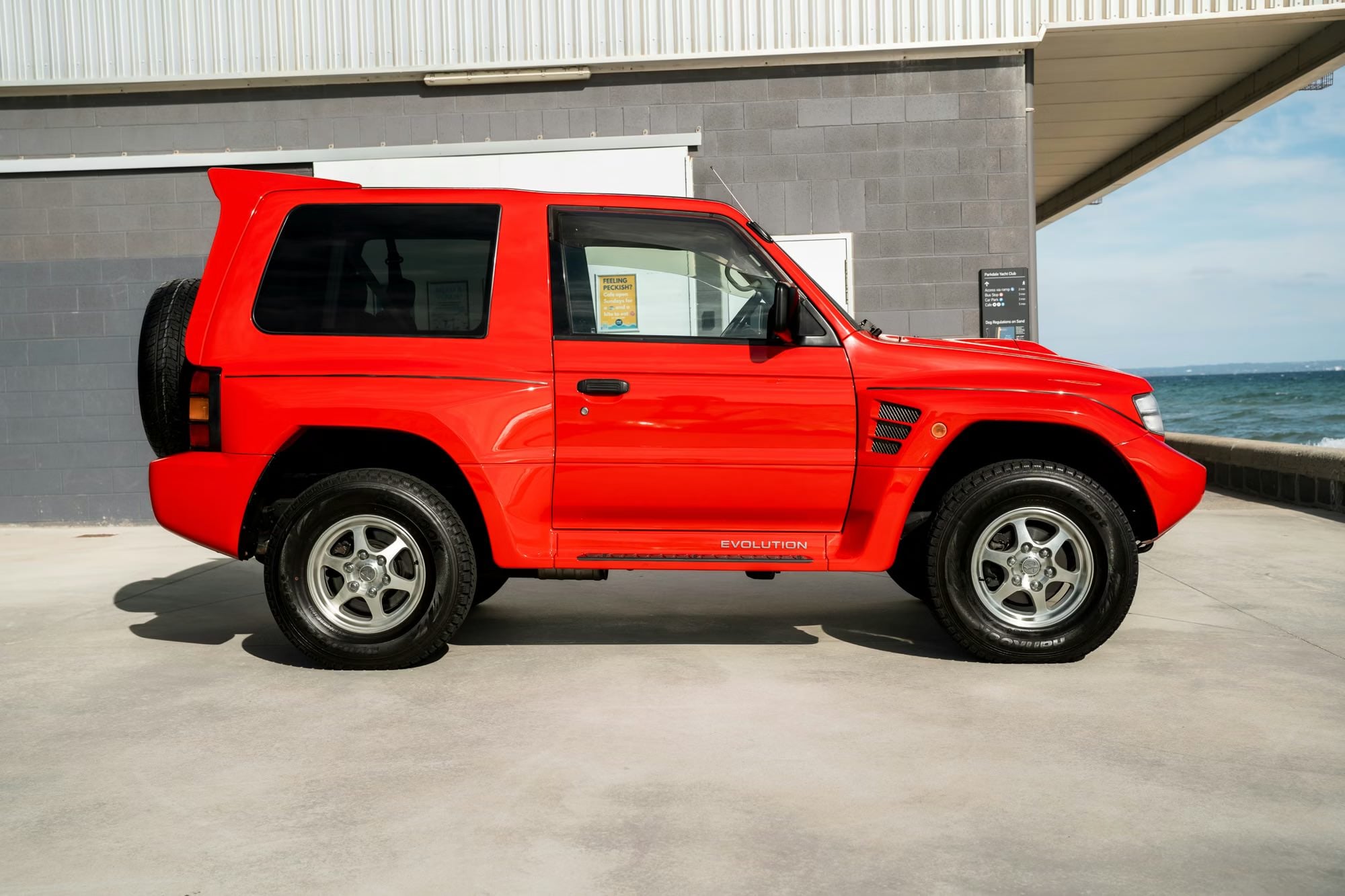
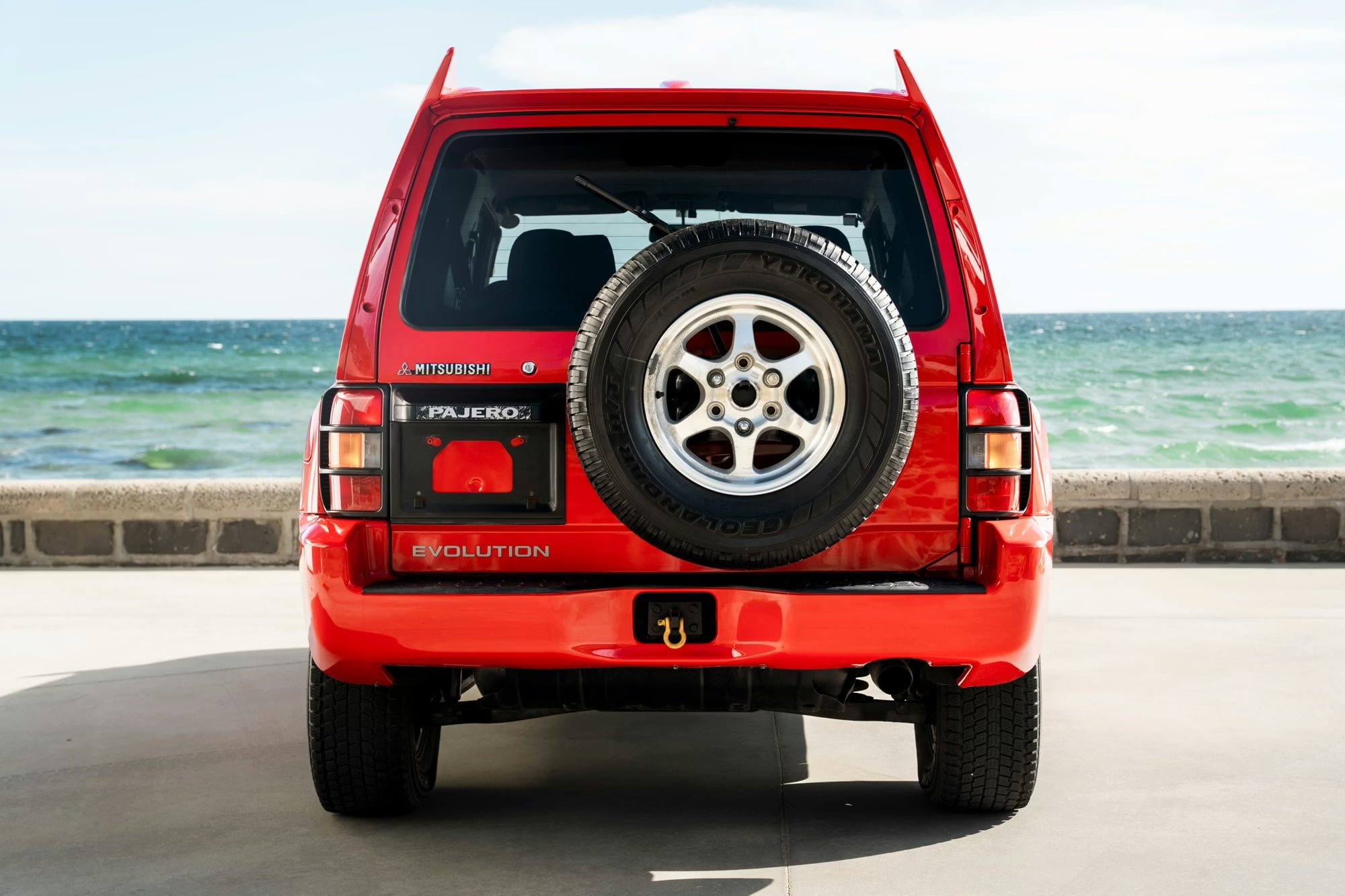
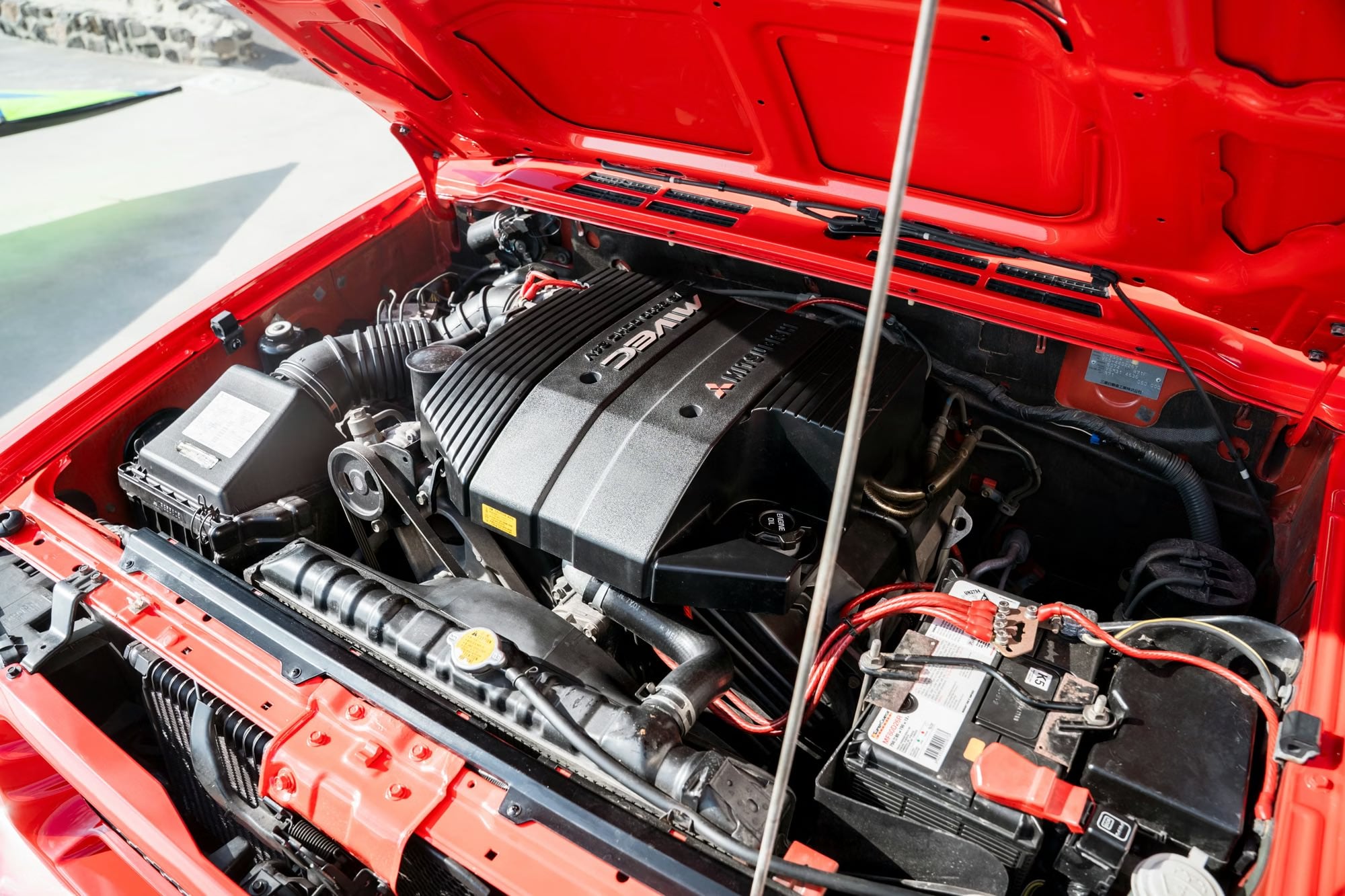
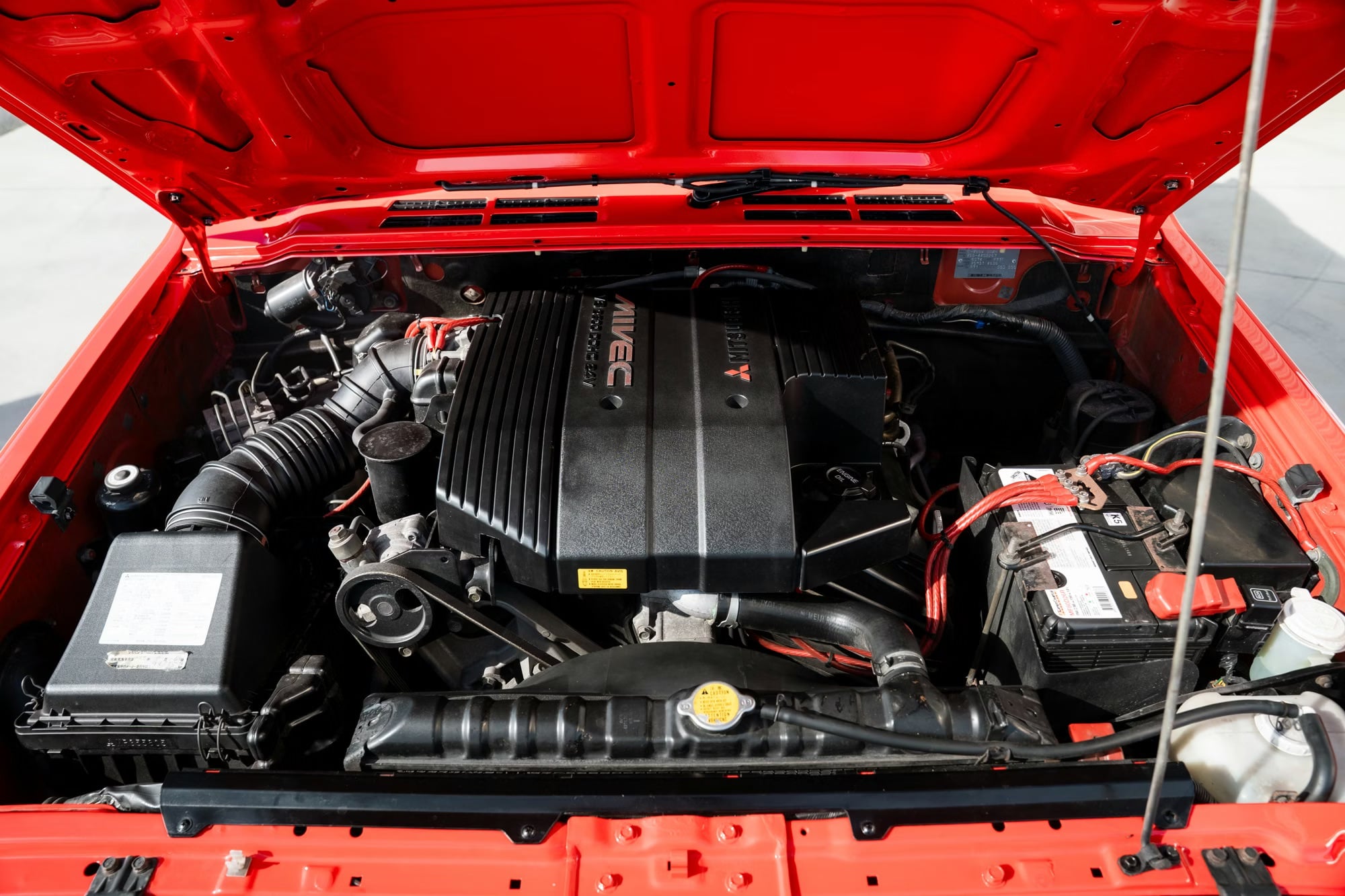
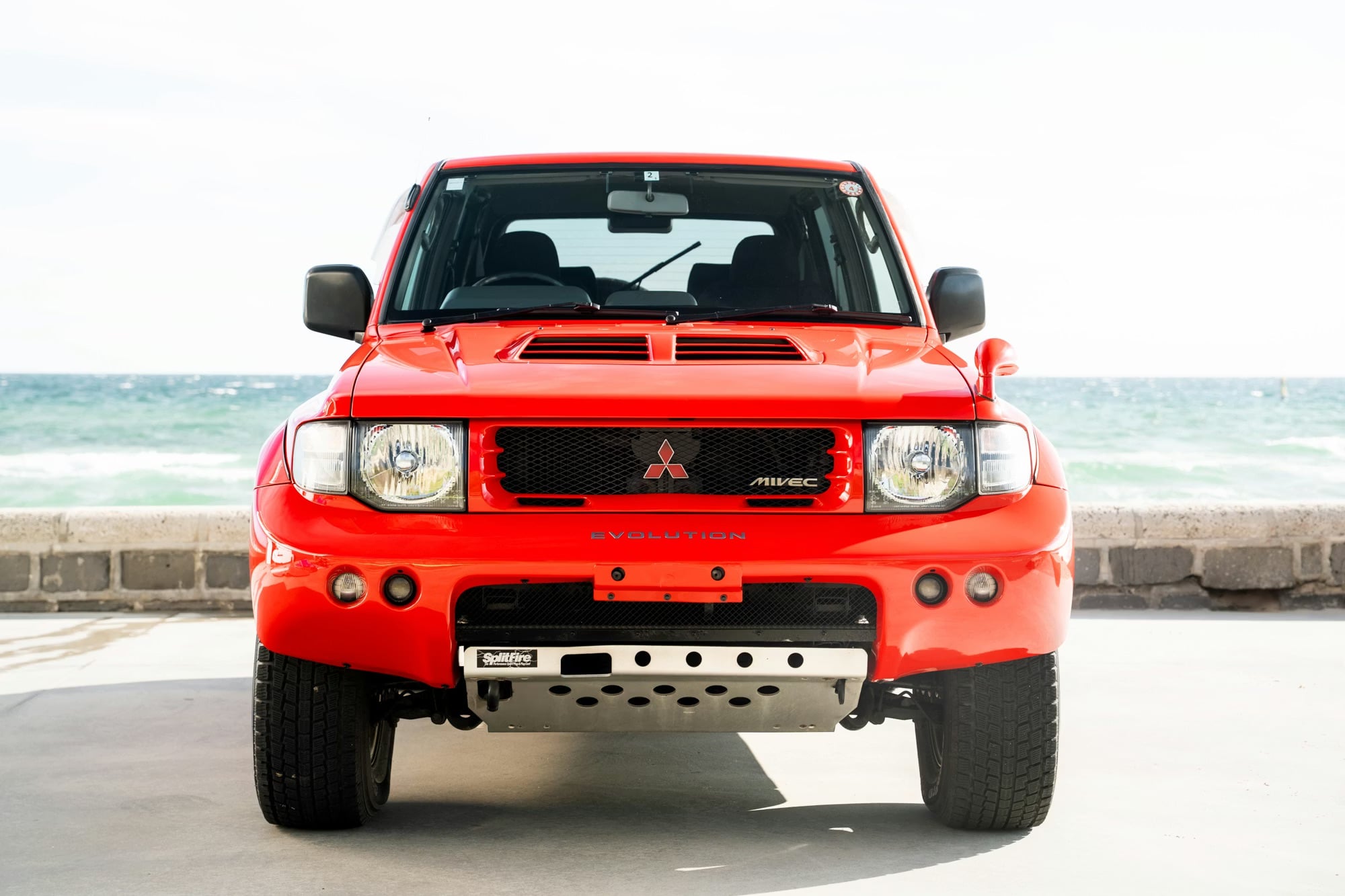
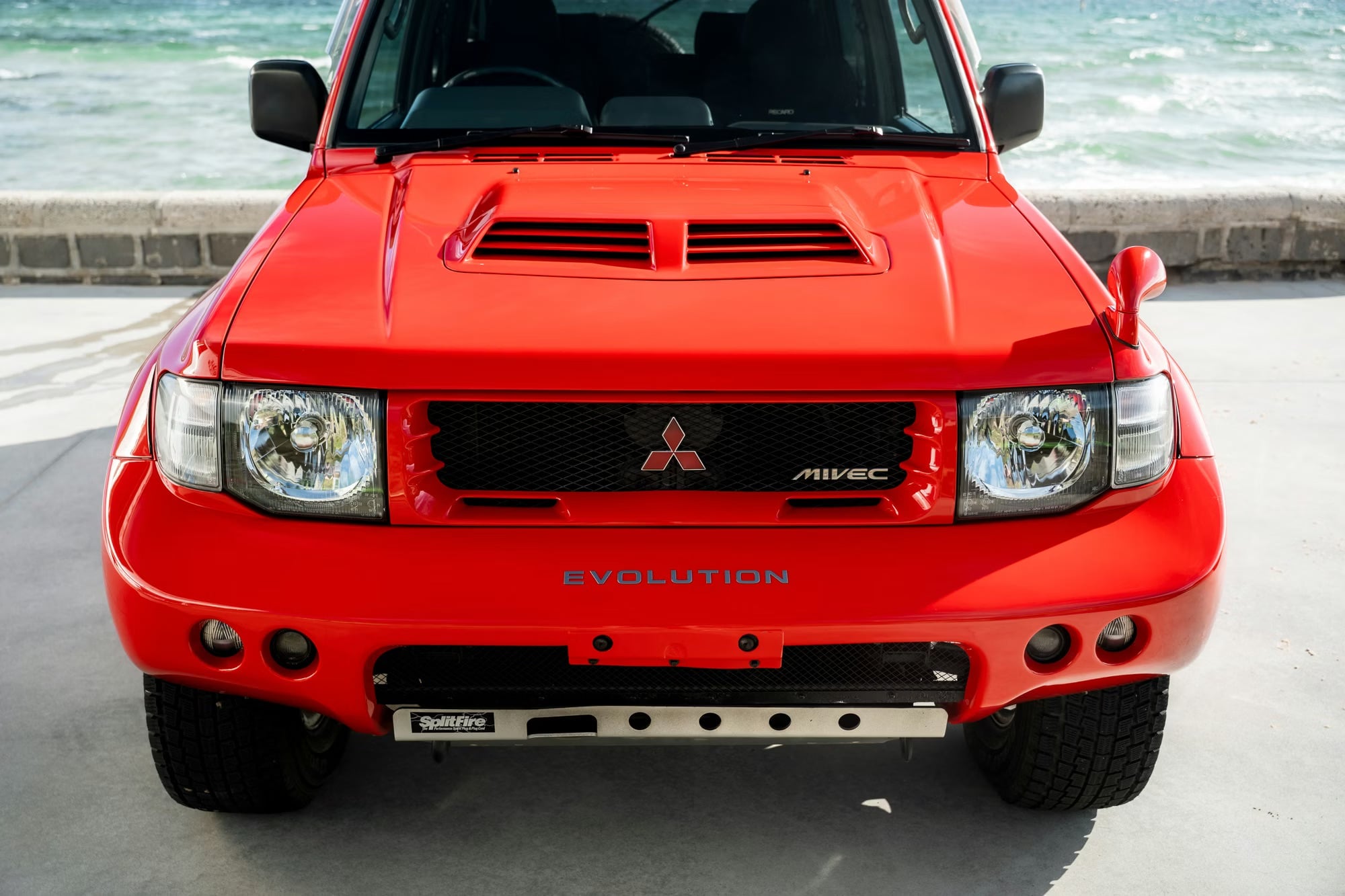
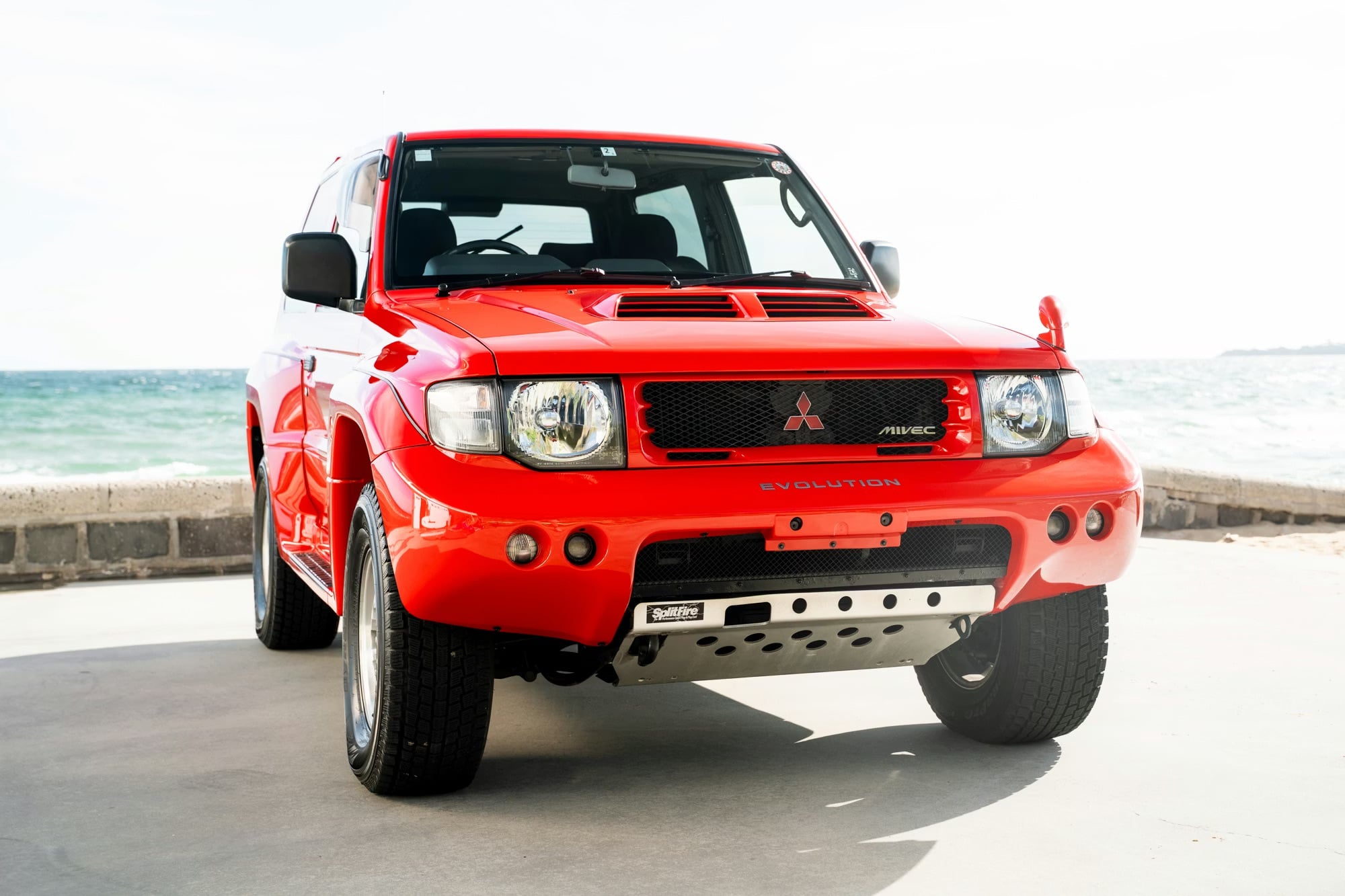
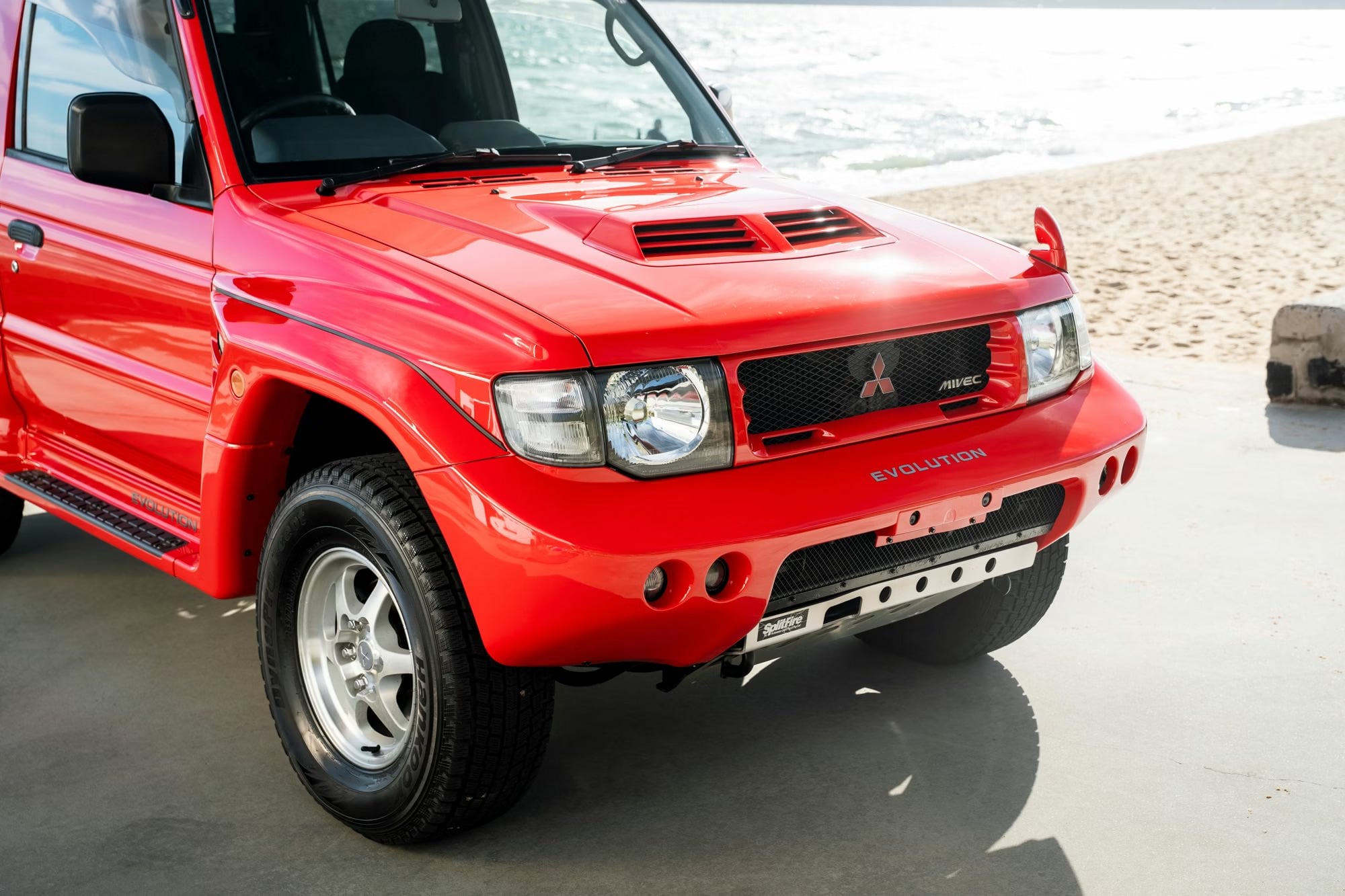
This is an original 1997 Mitsubishi Pajero Evolution finished in Passion Red, and powered by the naturally-aspirated 3.5 liter “6G74” V6 sending power back through a 5-speed manual transmission and a dual range transfer case.
Fewer than 3,000 examples of the Pajero Evolution were sold to the public for homologation purposes, and most of them were fitted with the far more common 5-speed automatic gearbox. This model was only made for the Japanese market, but many have now been bought and imported due to high demand from enthusiasts.
Fast Facts: The Mitsubishi Pajero Evolution
- This 1997 Mitsubishi Pajero Evolution is a rare homologation special finished in the lesser-seen Passion Red, and is believed to be one of only around 600 examples fitted with the desirable 5-speed manual transmission out of the 2,693 road-legal examples built exclusively for the Japanese market.
- Power comes from a naturally aspirated 3.5 liter “6G74” V6 with MIVEC variable valve timing, driving all four wheels through the manual gearbox with a high and low range transfer case and front and rear Torsen limited-slip differentials. Factory equipment includes sculpted Recaro seats, redesigned suspension, flared wheel arches, and a wraparound rear spoiler.
- Originally delivered in Japan, this example was later imported to Australia, where it passed compliance in November of 2022. It’s been held by the current seller as part of a private collection since that time. The odometer reads 115,567 km, though this figure is not warranted, and the car has received a full respray to factory-original appearance.
- The Pajero Evolution was developed to homologate one of the most successful Dakar rally cars ever made, which took 12 victories between 1985 and 2007, including a historic 1-2-3 finish in 1998. It is now being offered for sale out of Braeside, Victoria, with import and compliance documents accompanying the vehicle.
Mitsubishi And The Paris Dakar Rally
The Paris Dakar Rally was first run in 1979 with competitors racing from Paris, France to Dakar, Senegal – hence the name of the event. The race was founded by legendary French off-road racer Thierry Sabine who had become lost in the desert while competing in the 1975 Cote-Cote Abidjan-Nice Rally – he realized it would be a perfect place for a rally raid event.
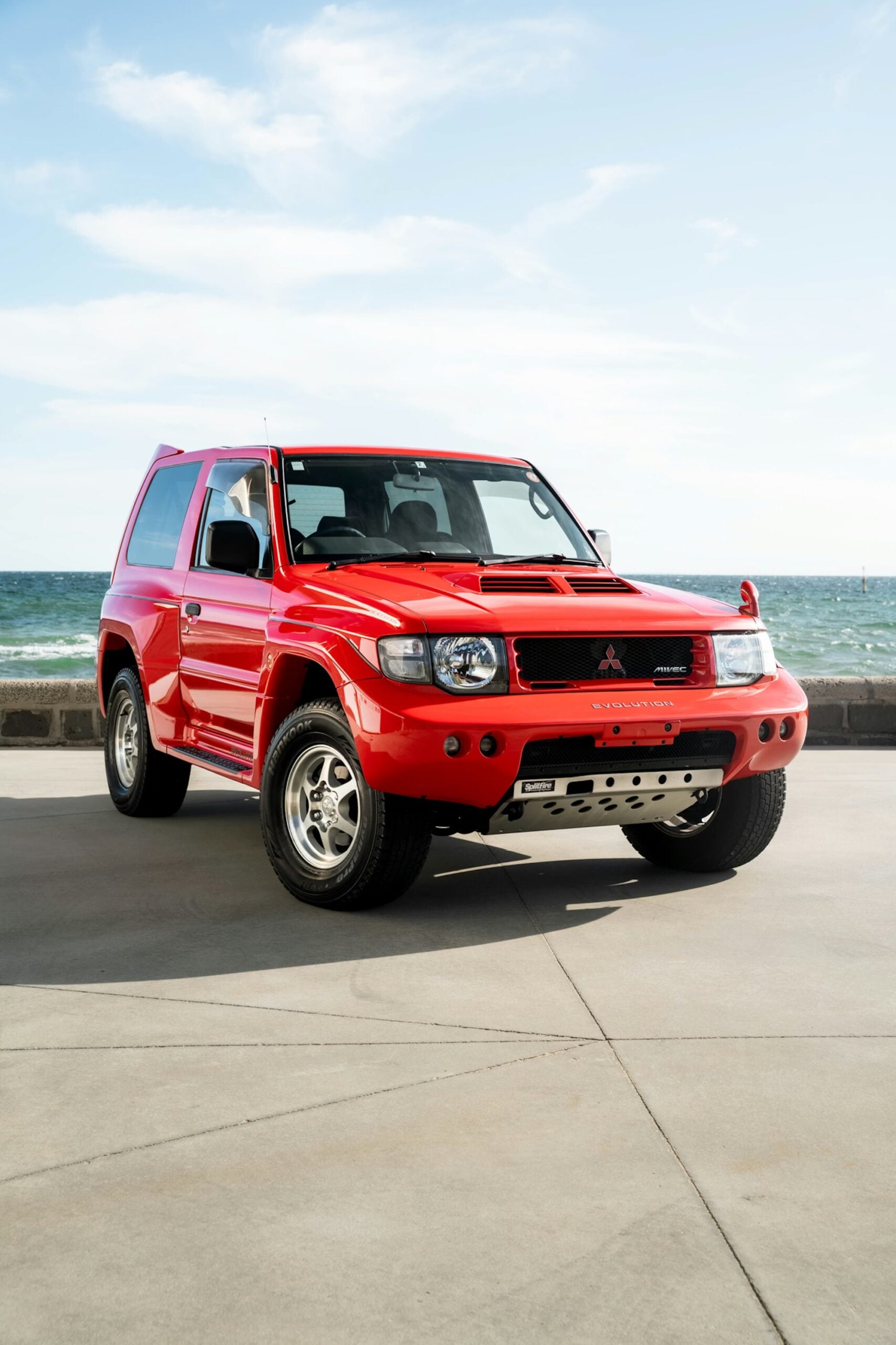
 This is an original 1997 Mitsubishi Pajero Evolution finished in Passion Red, and powered by the naturally-aspirated 3.5 liter “6G74” V6 sending power back through a 5-speed manual transmission and a dual range transfer case.
In the first Paris Dakar Rally 182 vehicles departed from Paris but just 74 of them survived the two week, 10,000 kilometer journey across the Sahara and North Africa. The popularity of the race skyrocketed, in 1980 there were 216 entrants, then 291 in 1982, and 382 by 1982.
In 1983 Mitsubishi entered the rally for the first time, seeing it as a perfect platform to showcase the Mitsubishi Pajero model that had been release a year before to compete with the ever popular Toyota Land Cruiser.
In order to give the new Pajero model a reputation boost a modified version was entered into the Paris Dakar Rally and it defied expectations by winning the non-modified production car class.
The company repeated the feat the next year by winning the class again, over the next two plus decades the Japanese automaker took 12 wins in the Paris Dakar Rally, with 150 stage wins – and they earned the Guinness World Record for “Most Dakar Rally Wins by A Manufacturer.”
The Mitsubishi Pajero Evolution
The long history of Mitsubishi and the Paris Dakar Rally meant that in the mid-1990s when it was time to develop the next competition car the pressure was on. It needed to be based on a current production car for homologation purposes, and a road-legal version needed to be offered for sale to the general public.
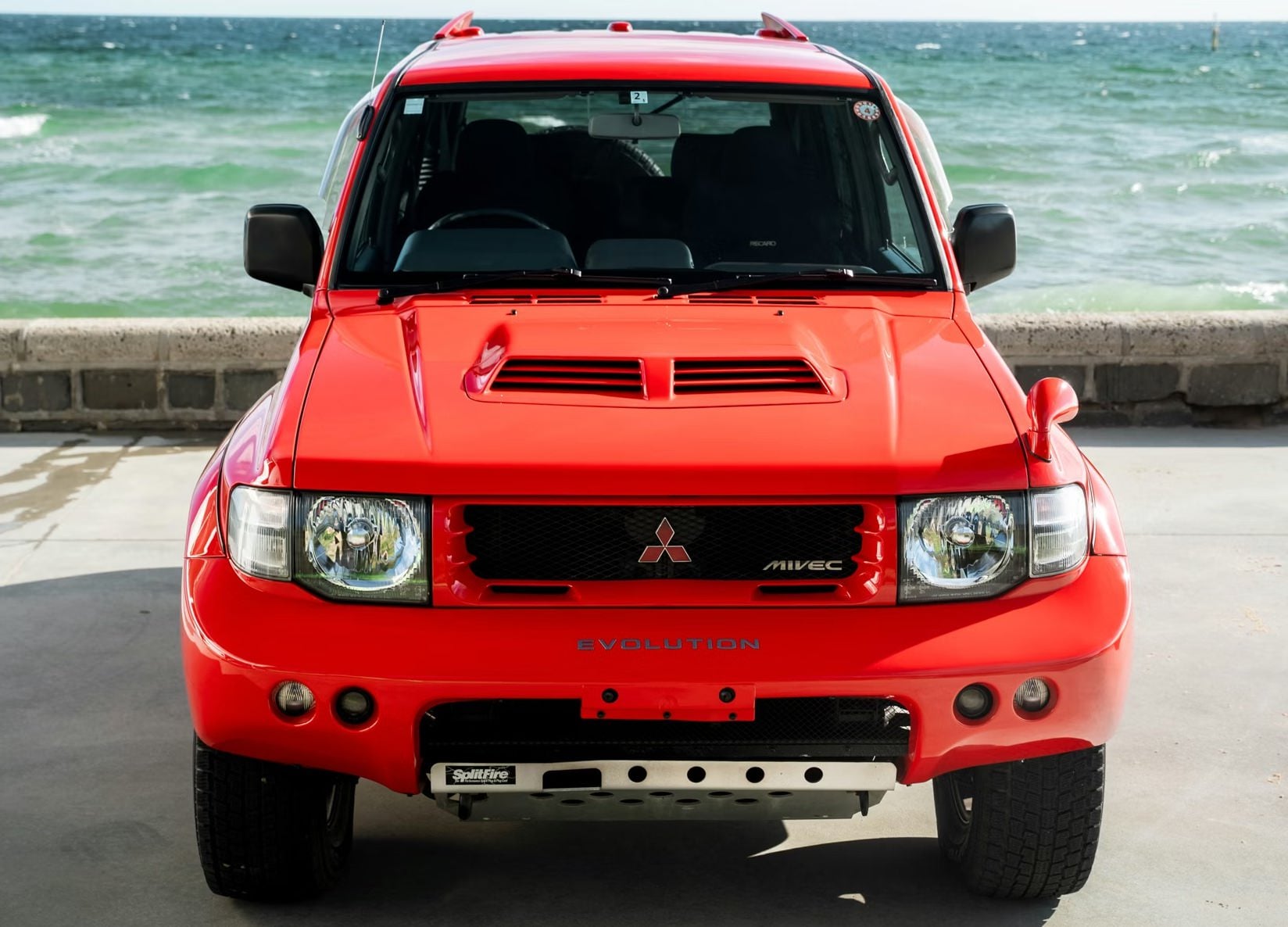
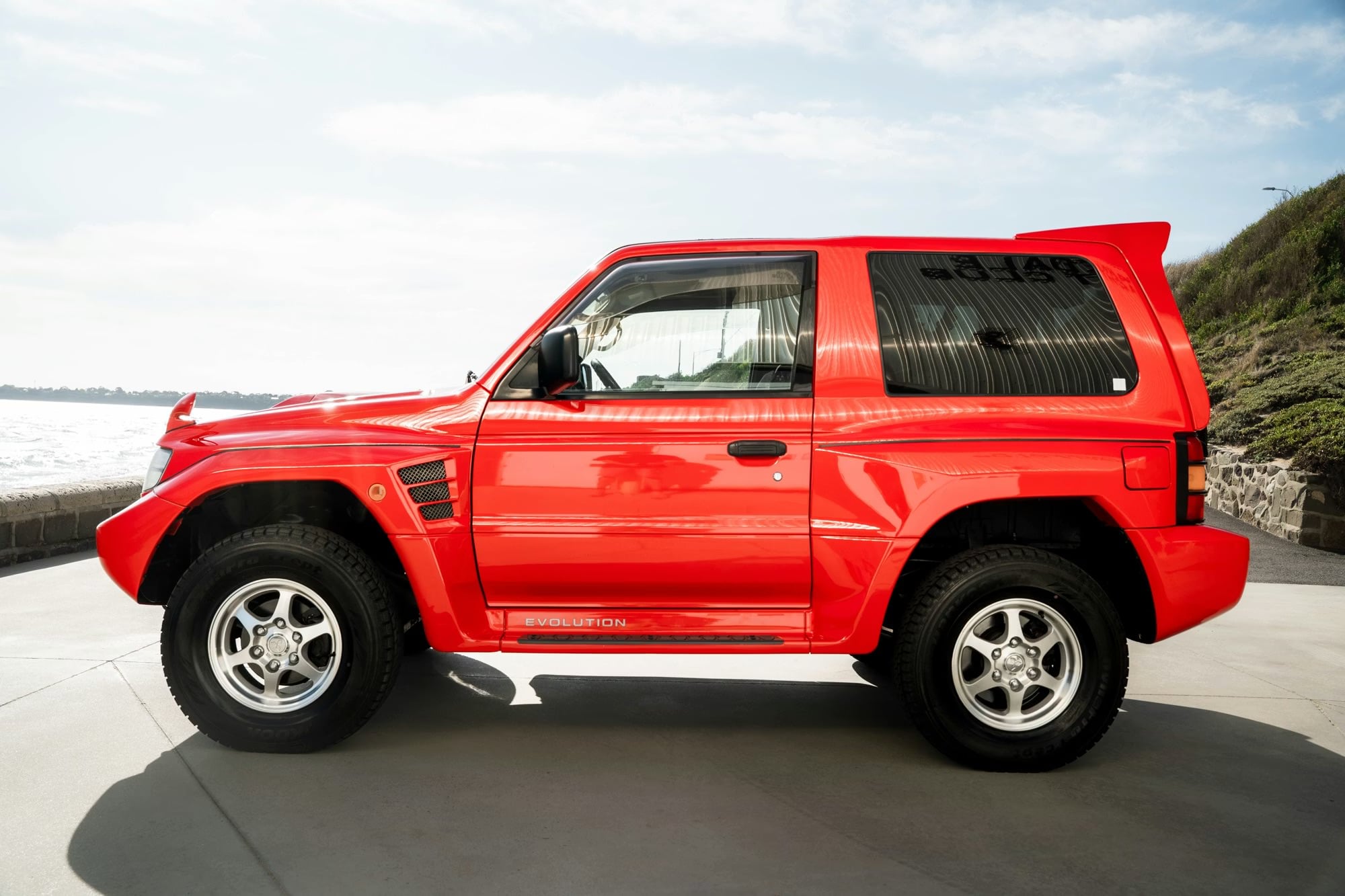
Known as the Mitsubishi Pajero Evolution for obvious reasons, the new vehicle was based on the unibody shell of the second generation Pajero – however it was vastly modified, with new suspension, a wide body kit, skid plates, large mud flaps, with power provided by a 275 bhp 3.5 liter 24 valve DOHC V6 6G74 engine with MIVEC and a dual plenum variable intake.
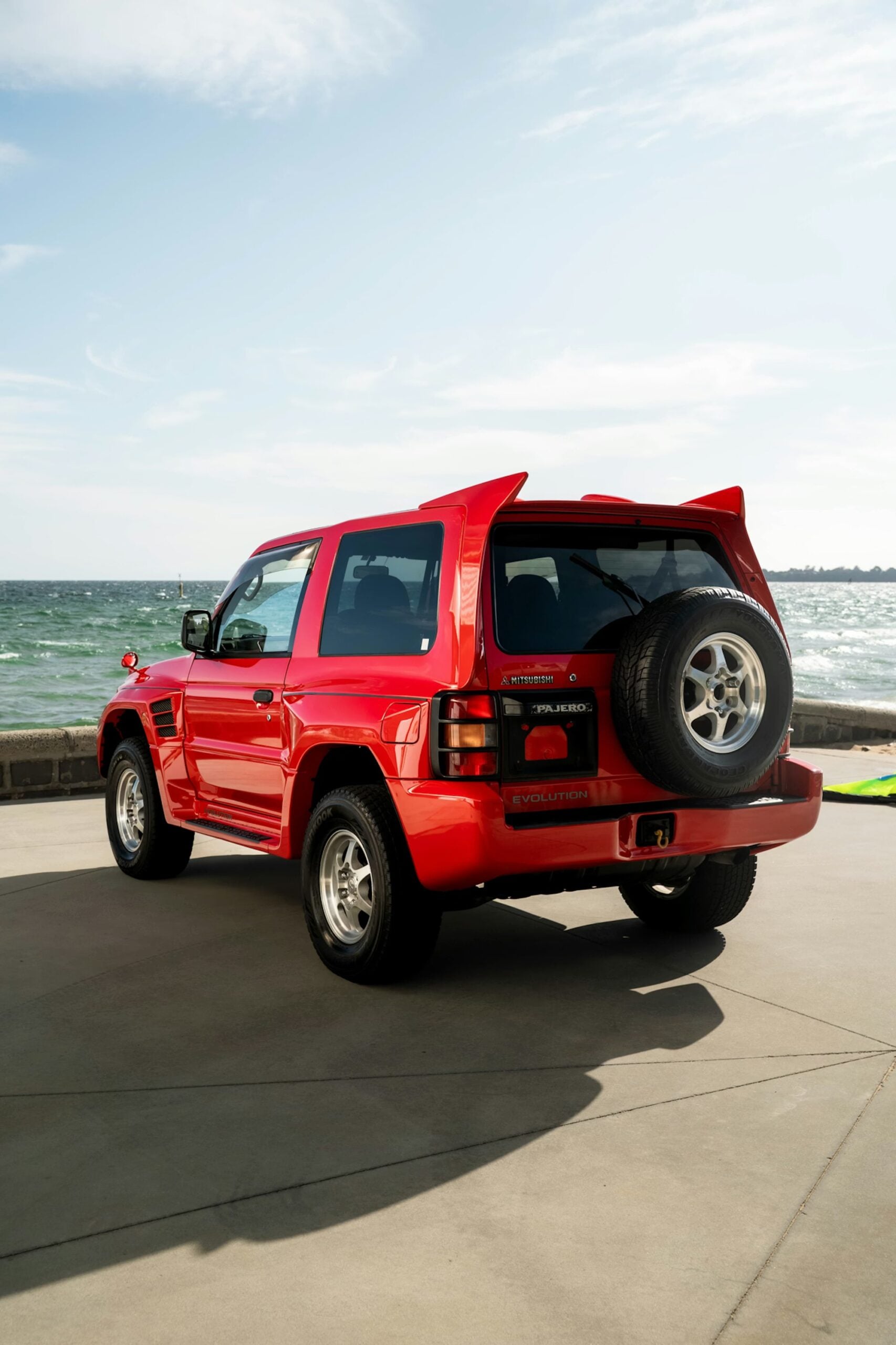
Fewer than 3,000 examples of the Pajero Evolution were sold to the public for homologation purposes, and most of them were fitted with the far more common 5-speed automatic gearbox. This model was only made for the Japanese market, but many have now been bought and imported due to high demand from enthusiasts.
For those unfamiliar with the acronym, MIVEC stands for “Mitsubishi Innovative Valve-Timing Electronic Control” it’s a variable valve timing system that allows different timing for the intake and exhaust valves depending on load, engine speed, and driving conditions.
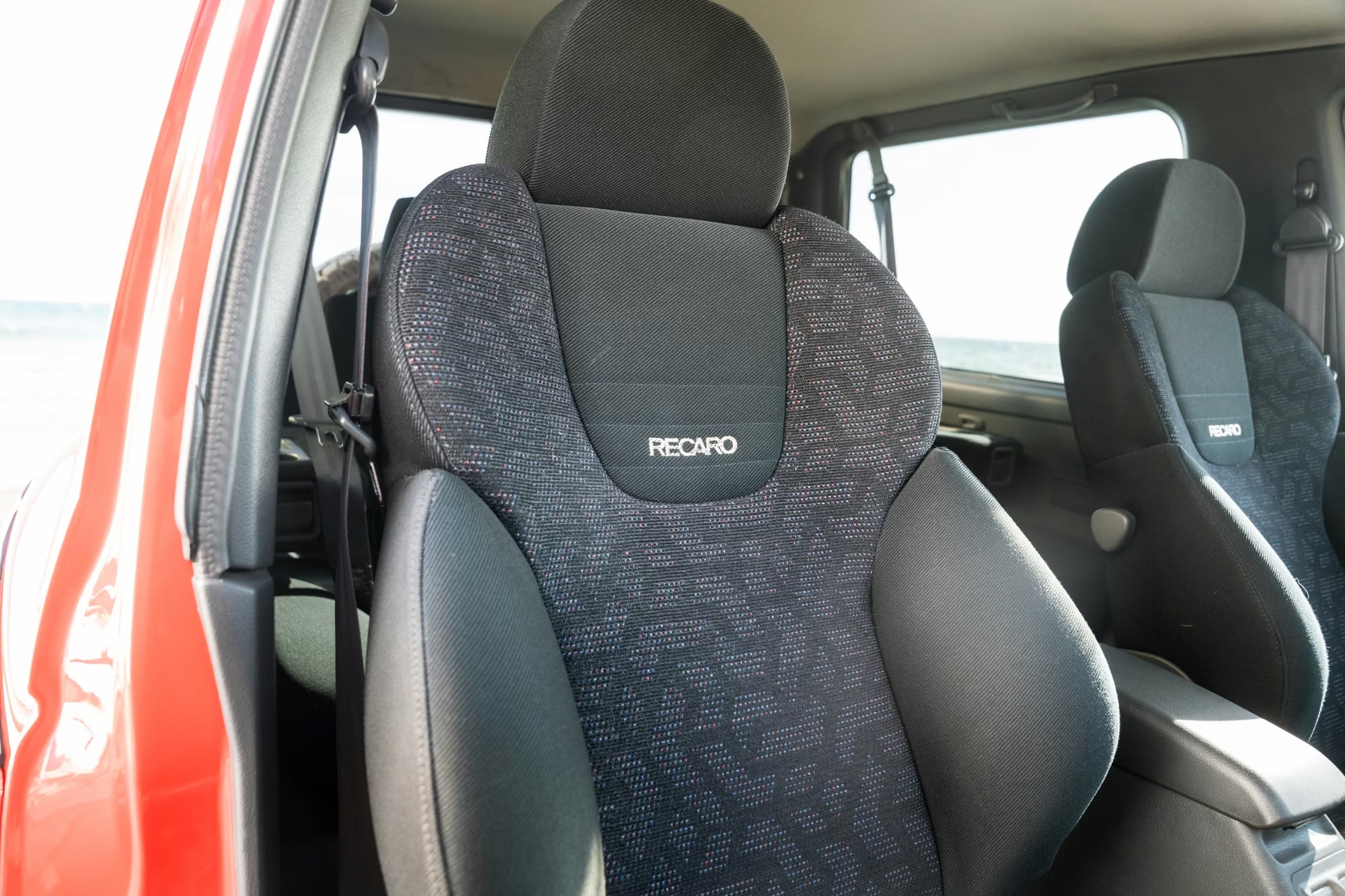
Inside the vehicle you’ll find Recaro seats with larger bolsters than the standard Mitsubishi seats designed to keep the driver and front passenger in place even when enthusiastic off-road driving is undertaken.
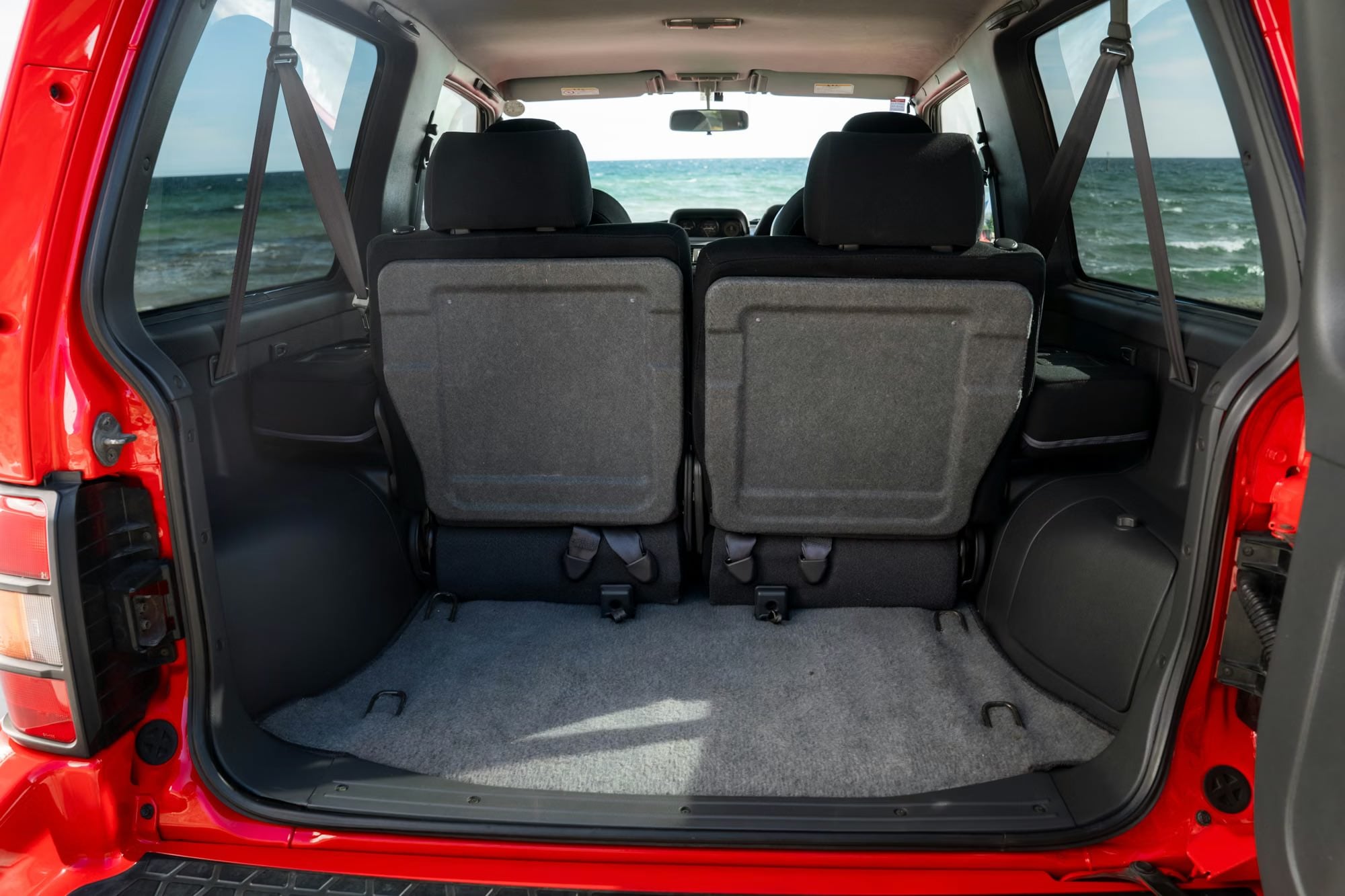
Other than the seats the interior looks very similar to the standard second generation Pajero, largely due to the fact that this was a low-volume homologation model and so interior parts were kept close to stock to keep costs in check.
Mitsubishi built 2,693 examples of the V55W between 1997 and 1999 for homologation purposes. Most were fitted with the 5-speed automatic transmission (with a dual range transfer case) however some received a 5-speed manual – most other specifications remained largely unchanged over the production run.
The Pajero Evolution model series would become the most successful production-based Dakar rally vehicles ever made – taking 12 victories from 1985 to 2007, even managing a historic 1-2-3 finish in 1998 which cemented its reputation as King of the Desert.
Today the Pajero Evolution V55W is increasingly seen as a modern classic and their values have been slowly rising – though one issue many potential buyers face is managing to find one for sale. The values do vary from region to region however the model seems to still be hovering under the radar of most, and they can be bought for reasonable money considering their rarity and race heritage.
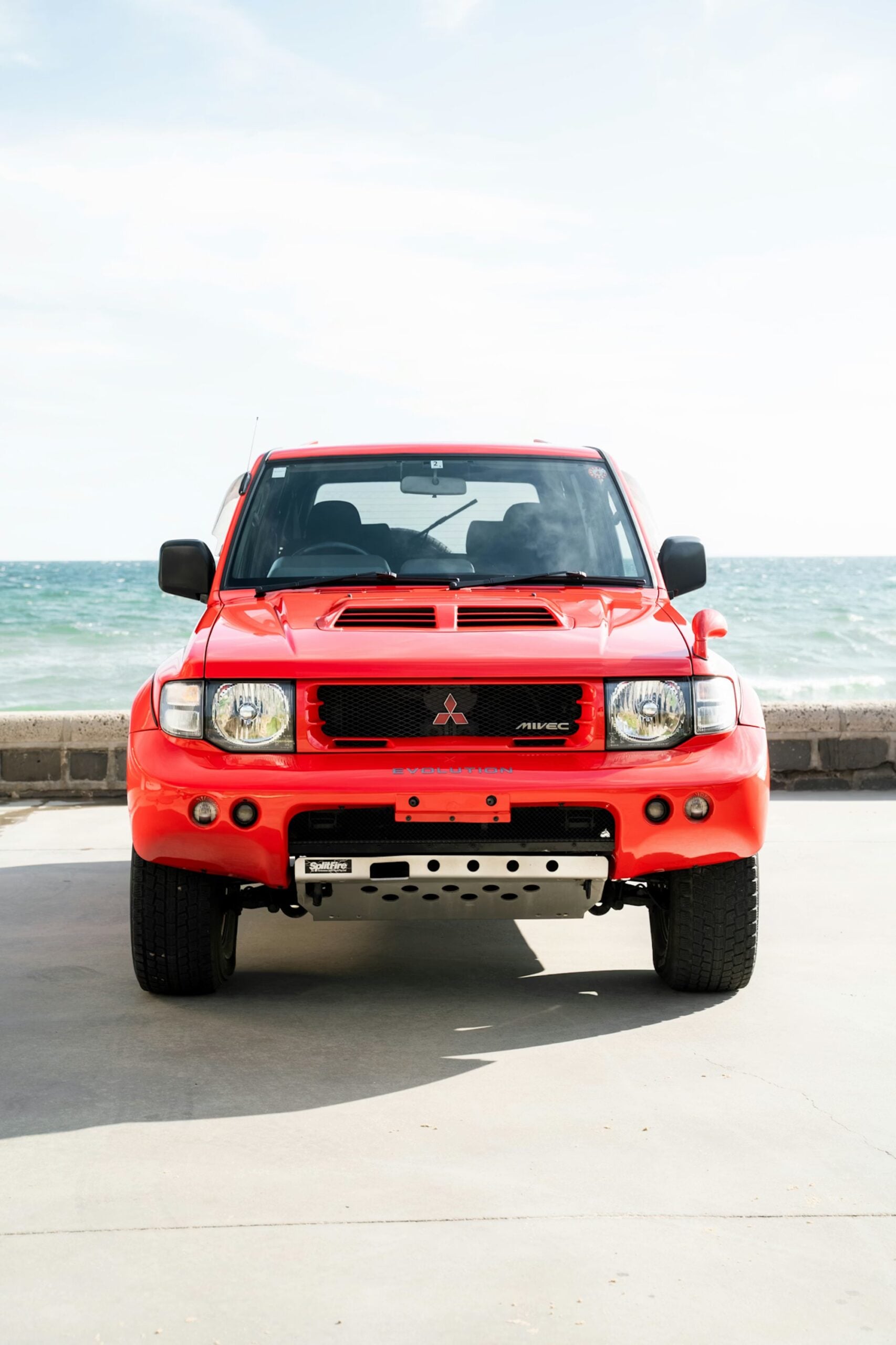
This 1997 Mitsubishi Pajero Evolution is a rare homologation special finished in the lesser-seen color of Passion Red, paired with a black cloth-trimmed interior with patterned seat inserts and carbon-fiber-effect trim.
The 1997 Mitsubishi Pajero Evolution Shown Here
This 1997 Mitsubishi Pajero Evolution is a rare homologation special finished in the lesser-seen color of Passion Red, paired with a black cloth-trimmed interior with patterned seat inserts and carbon-fiber-effect trim.
It’s one of the 2,693 road-legal examples built exclusively for the Japanese market, and it’s believed to be one of only around 600 fitted with the desirable 5-speed manual transmission. Originally delivered in Japan, it was later imported to Australia, where it passed compliance in November of 2022.
It’s been held by the current seller as part of a private collection since that time, though it is not currently registered.
As you would expect, power comes from a naturally aspirated 3.5 liter 6G74 V6 with MIVEC variable valve timing, driving all four wheels through the 5-speed manual gearbox. The drivetrain includes a high and low range transfer case along with front and rear Torsen limited-slip differentials.
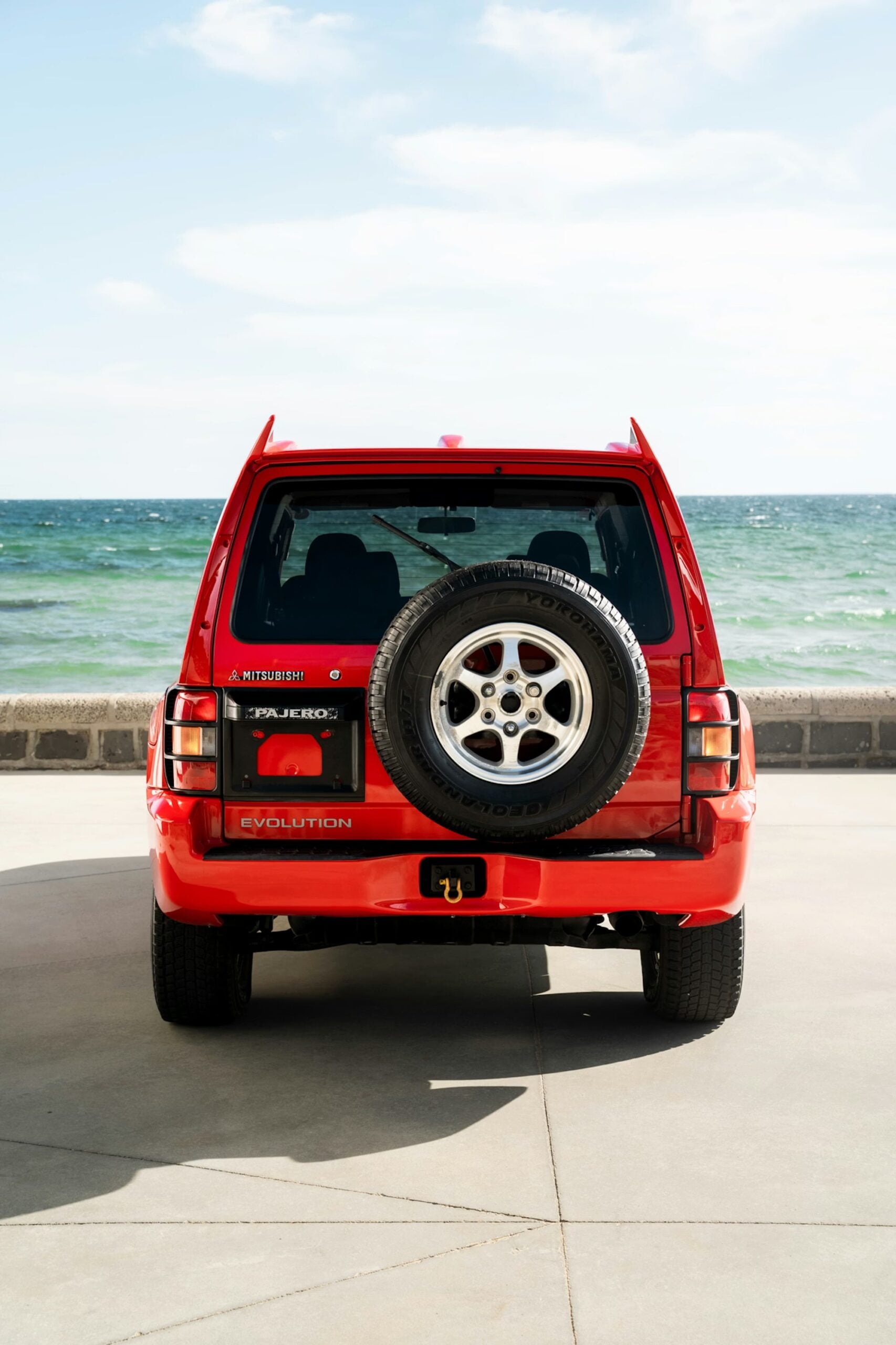
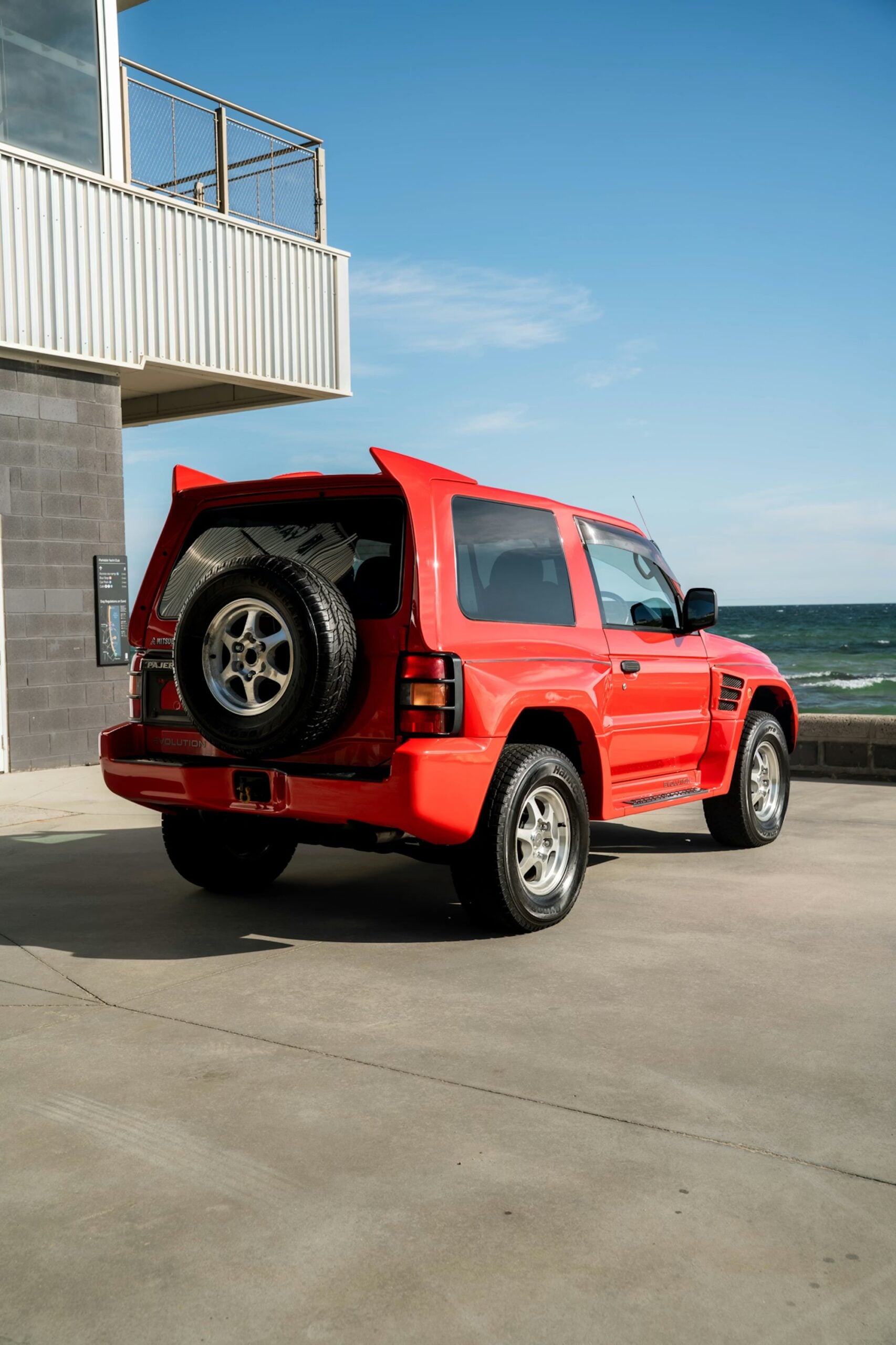
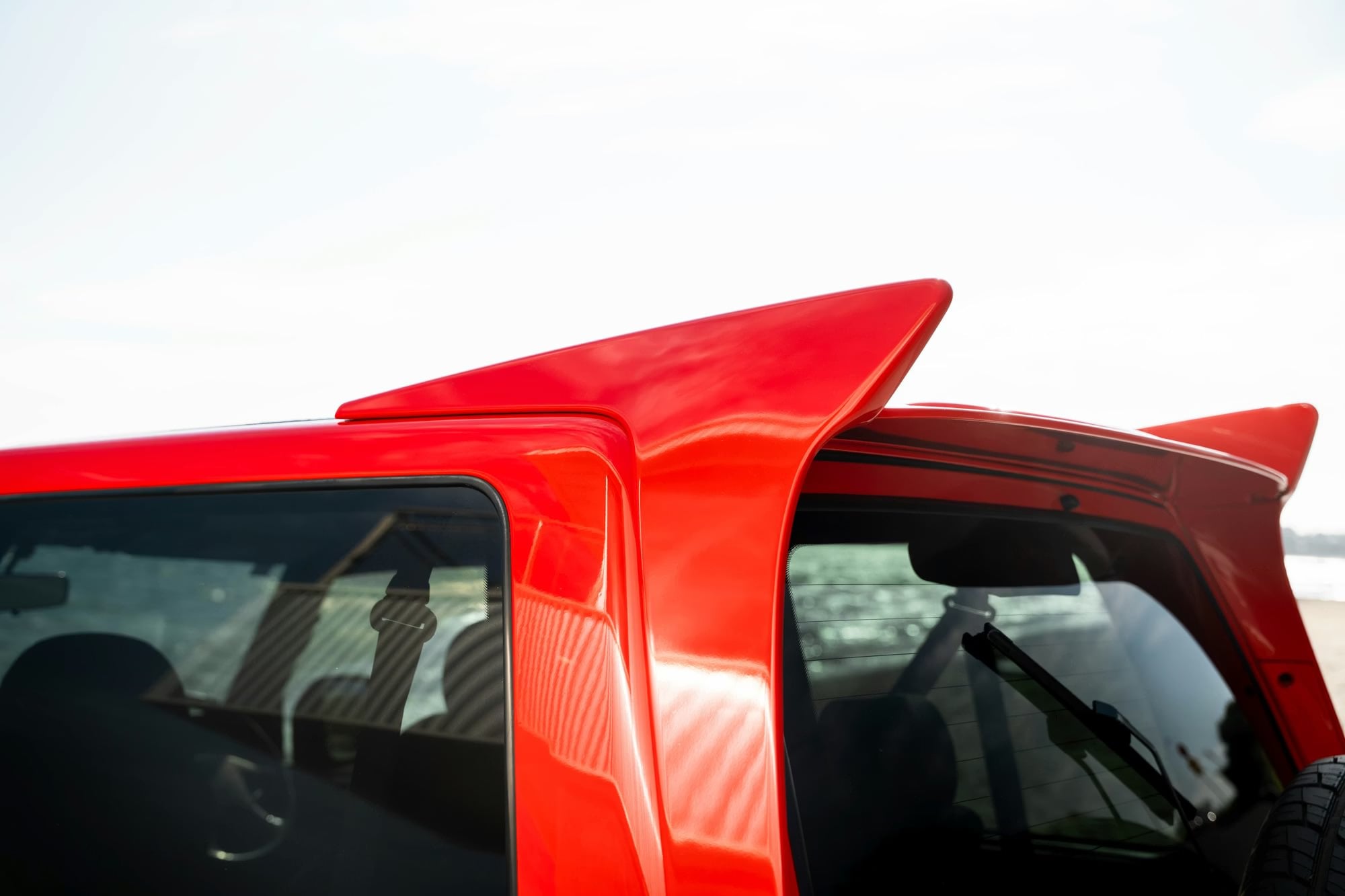
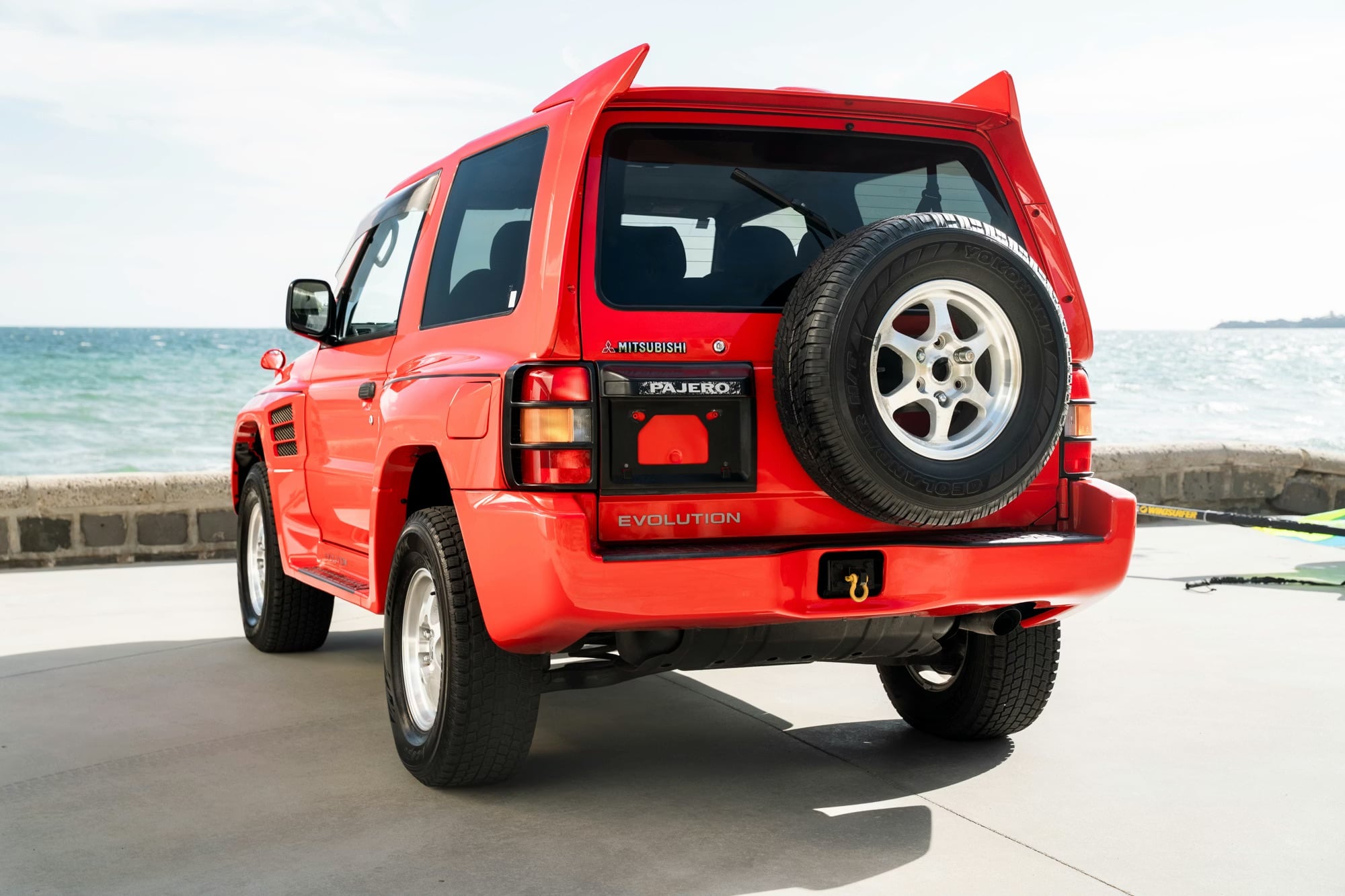
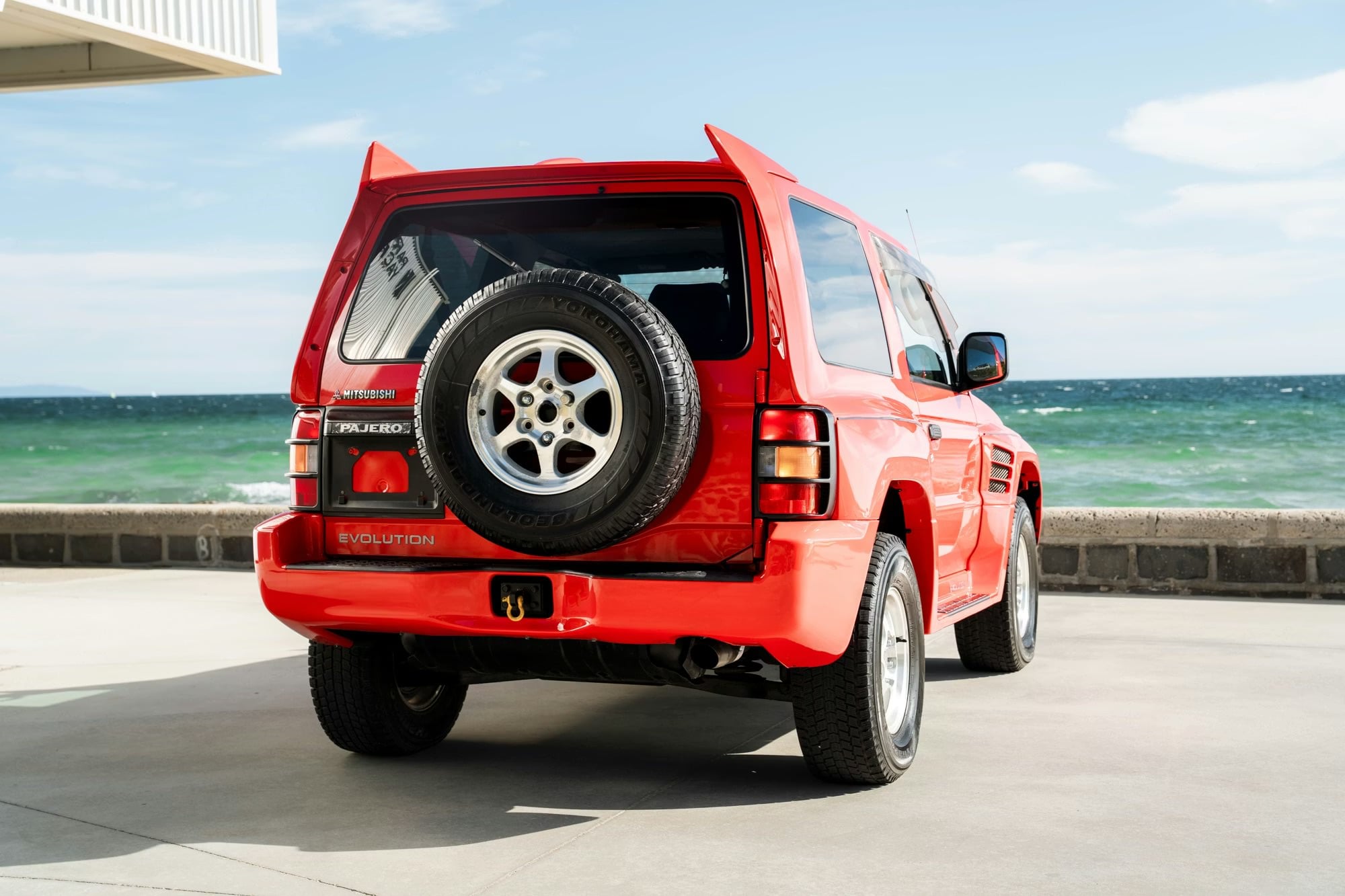
Factory equipment includes sculpted Recaro seats, a steering guard, redesigned bodywork with flared wheel arches, a scooped bonnet, a wraparound rear spoiler, redesigned suspension, automatic air conditioning, electric windows, a heated rear screen, and a rear spare wheel carrier.
The odometer currently reads 115,567 kms, though this figure is not warranted. The seller notes that the car has received a full respray to return it to its factory-original appearance, and slight damage is noted on the centre console.
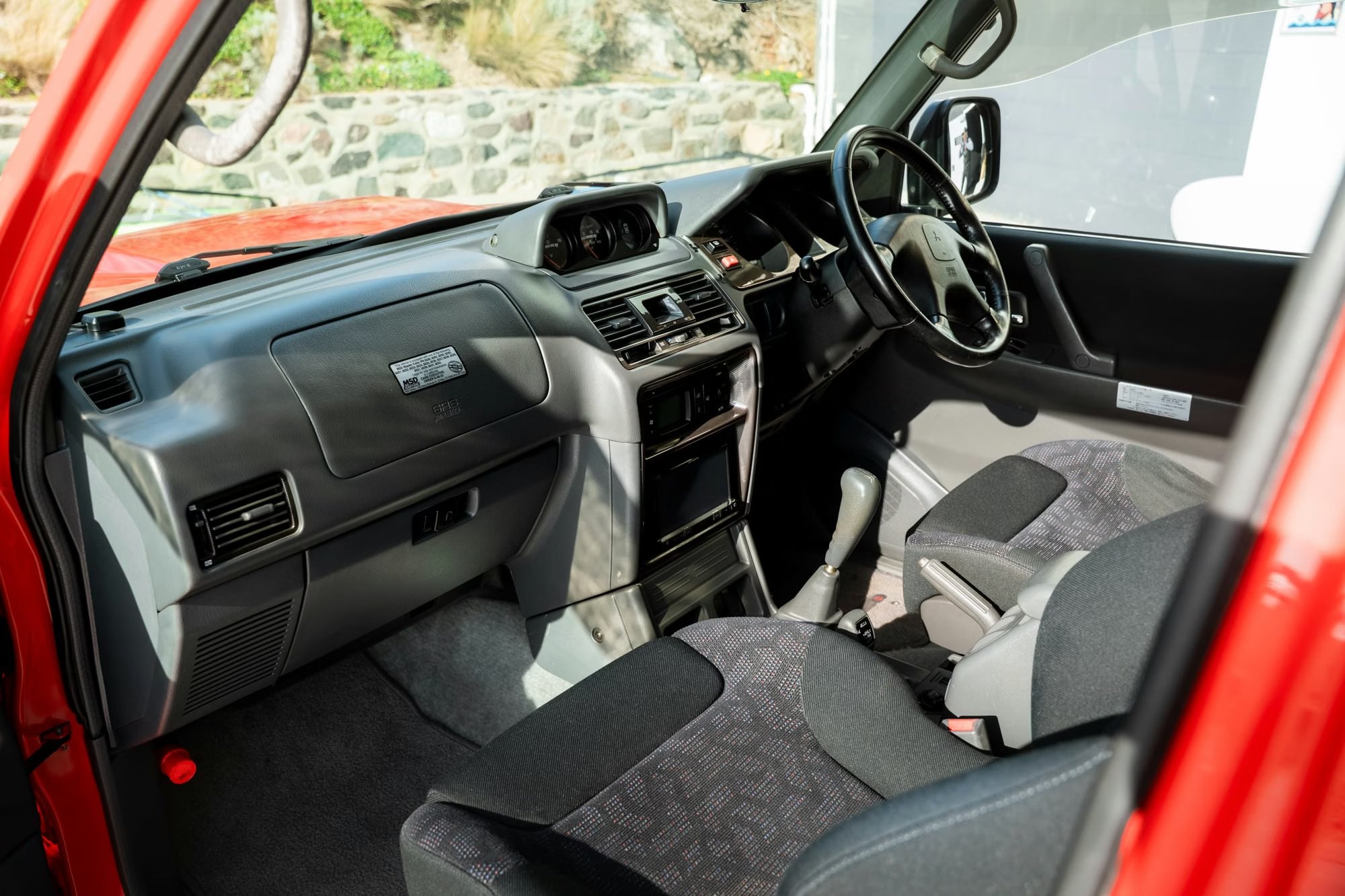
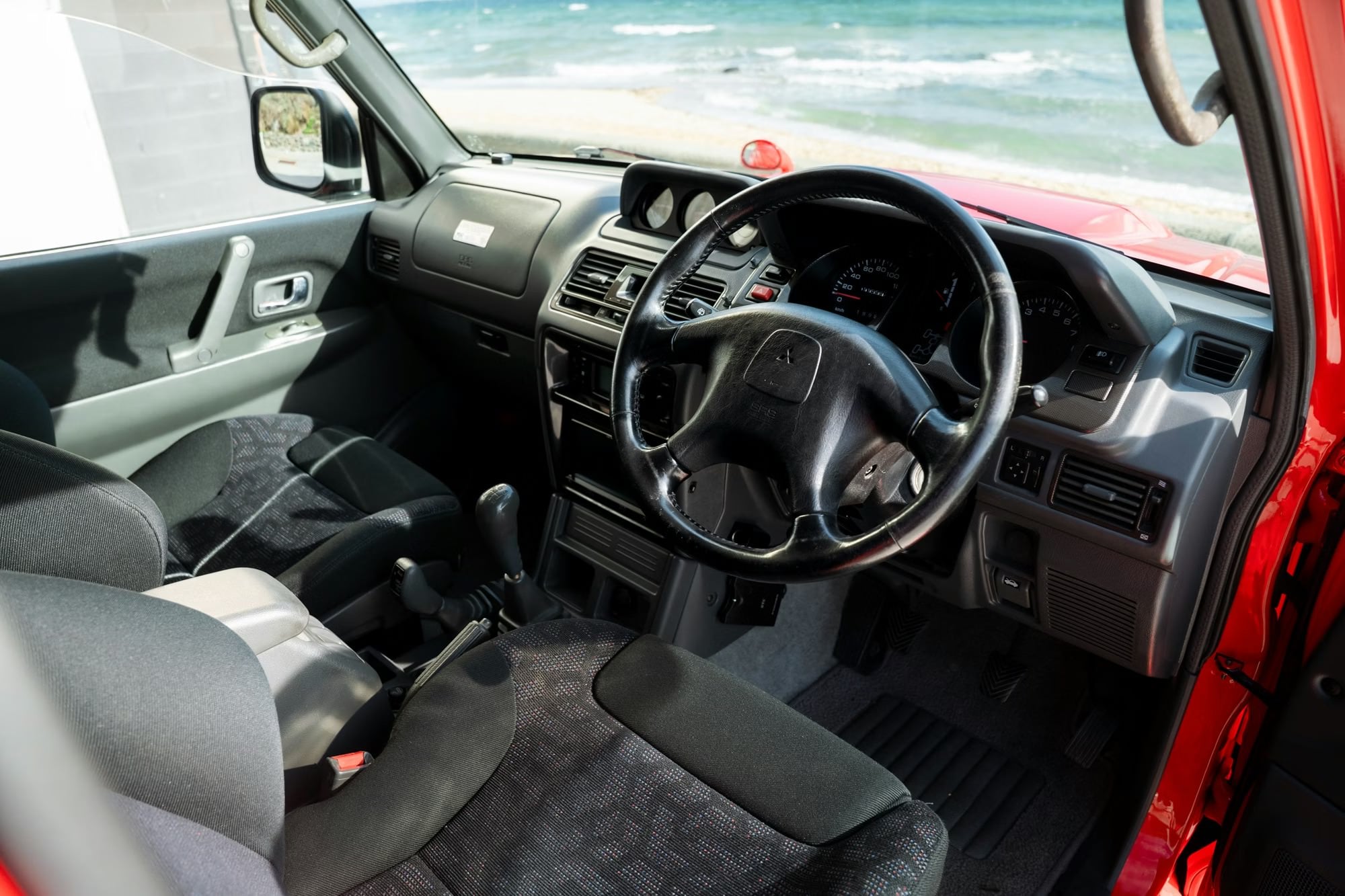
Factory equipment includes sculpted Recaro seats, a steering guard, redesigned bodywork with flared wheel arches, a scooped bonnet, a wraparound rear spoiler, redesigned suspension, automatic air conditioning, electric windows, a heated rear screen, and a rear spare wheel carrier.
The most recent maintenance was carried out in March of 2026 at an indicated 115,550 kms by Mechanicar, consisting of an engine oil and filter service, with the seller reporting general servicing throughout their four-year ownership.
Accompanying the vehicle are import and compliance documents, including the Japanese export certificate confirming the recorded mileage. It’s now being offered for sale out of Braeside, Victoria and you can visit the listing here if you’d like to read more about it or register to bid.
Images courtesy of Collecting Cars

Articles that Ben Branch has written have been covered on CNN, Popular Mechanics, Smithsonian Magazine, Road & Track Magazine, the official Pinterest blog, the official eBay Motors blog, BuzzFeed, Autoweek Magazine, Wired Magazine, Autoblog, Gear Patrol, Jalopnik, The Verge, and many more.
Silodrome was founded by Ben back in 2010, in the years since the site has grown to become a world leader in the alternative and vintage motoring sector, with well over a million monthly readers from around the world and many hundreds of thousands of followers on social media.