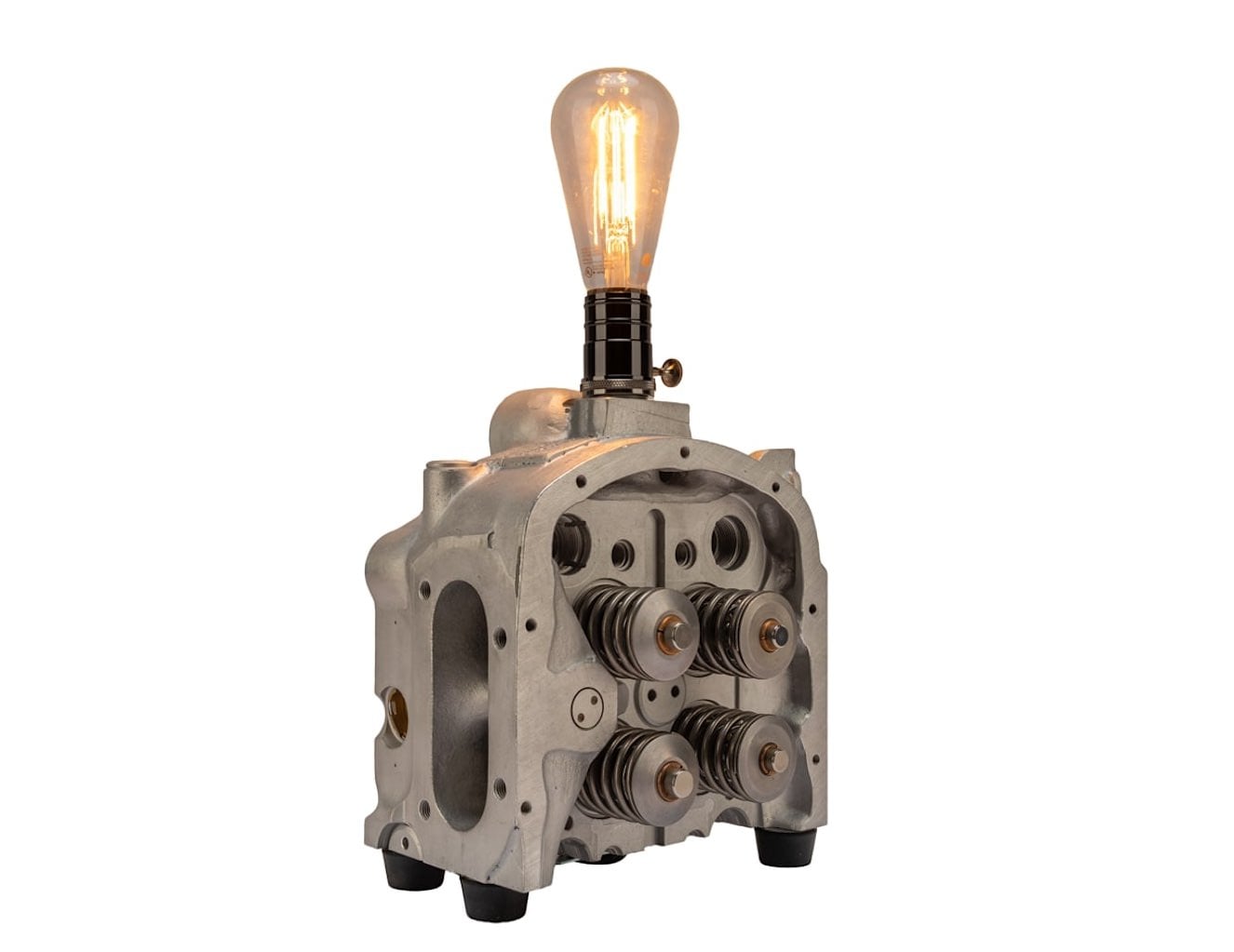
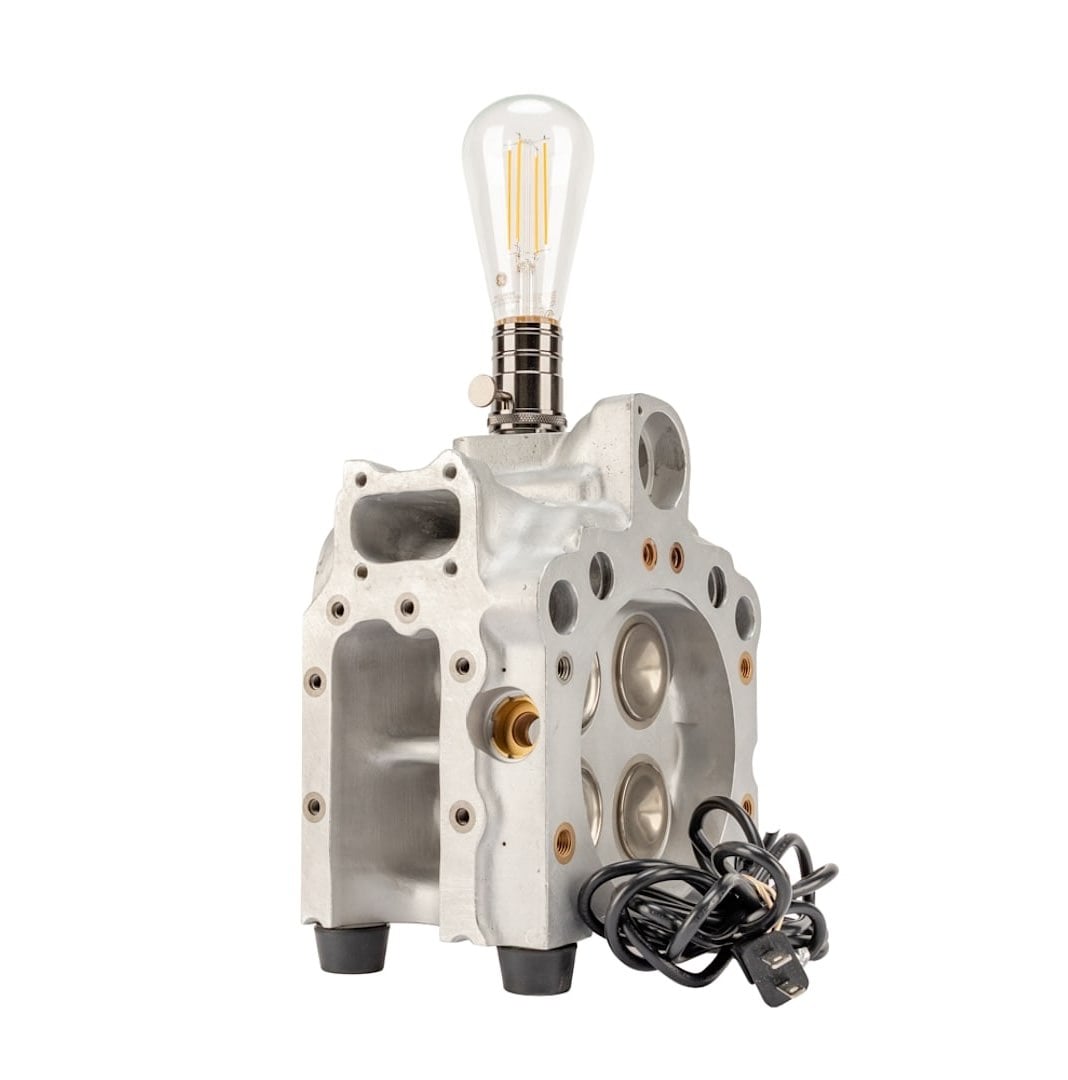
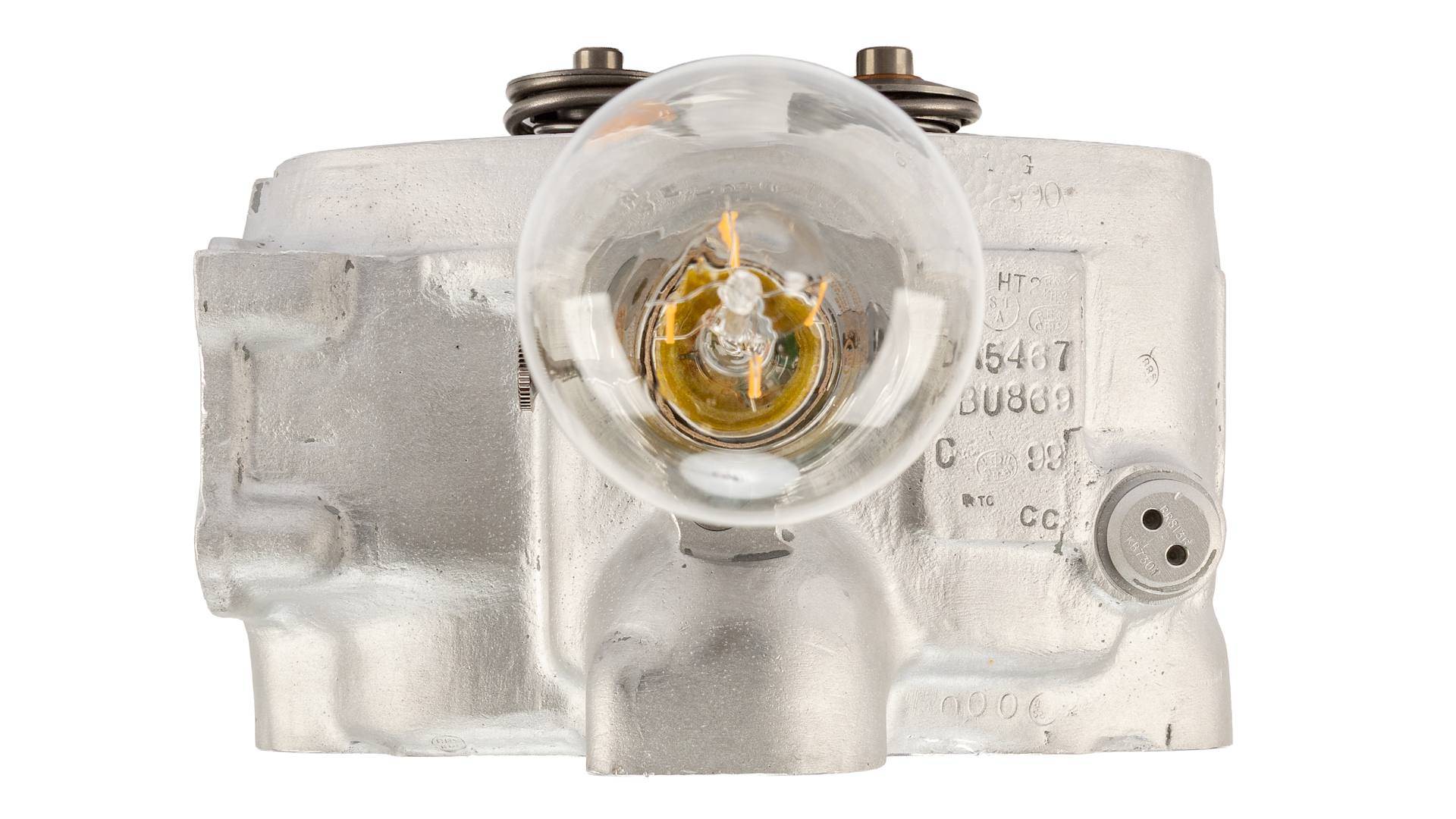
This is one of the most unusual WWII-related items we’ve come across recently, it’s part of a head from a Packard Merlin V-1650 V12 aero engine, and it’s been converted into a desk lamp.
The Packard version of the Rolls-Royce Merlin would power a number of variants of the North American P-51D Mustang, and some of them would also power British Spitfires, Mosquitos, and Lancasters, helping to supplement Rolls-Royce Merlin production.
Video Above: This is a WWII-era film about the Packard Merlin V-1650 V12, it includes footage of the engines actually being made at the time – well worth a watch.
History Speedrun: The Packard Merlin V-1650
The Packard V-1650 was the Rolls-Royce Merlin V12, but built in Detroit. It became famous as the engine that turned the P-51 Mustang into a truly formidable high-altitude escort fighter, one of the very best of the war.
In the early 1930s Rolls-Royce decided its 21.25 liter Kestrel V12 simply wouldn’t be enough for the next generation of high-speed aircraft, and so it began work on an engine that could produce 1,100 bhp – an astronomical, almost biblical figure at the time.
This engine development project received no government money, governments didn’t see the need for it yet, but they soon would. It was labeled PV-12 – Private Venture, 12 cylinders. The of all this was a 27 liter, 1,649 cubic inch liquid-cooled 60º V12 that first ran on October the 15th, 1933.
Bench tests in mid-1934 resulted in the figure 740 bhp, yes it was below target, but this was merely the beginning, and the engineers knew it. The engine first flew on February the 21st, 1935, in the front end of a Hawker Hart biplane.
Two Air Ministry fighter specifications were written around the new engine, F.36/34 covered the Hawker design that became the Hurricane, and F.37/34 the Supermarine Type 300 that became the Spitfire.
Both received production orders in 1936, and the engine went into production the same year under the name “Merlin,” following the company’s custom of naming its piston engines for birds of prey. Not wizards, as some later mistakenly claimed.
The Supercharger Arrives
The Merlin’s second act came thanks to its supercharger. In 1941 a Rolls-Royce team under Stanley Hooker, working on a high-altitude engine for the pressurized Wellington VI bomber, put two supercharger stages together in series. A liquid-cooled intercooler after the second stage brought the charge temperature down before it reached the cylinders, increasing density.
The first two-stage engine ran in March of 1941 and flew that July. The Wellington VI was cut to 63 aircraft, so the two-stage design was developed into the Merlin 61 for the Spitfire IX. It gave the Mk IX a 70 mph advantage over the Mk V at 30,000 feet, a significant upper hand.
By then, Rolls-Royce simply couldn’t build enough Merlins in Britain, and the search for an American maker had taken a detour. Ford accepted an order for 9,000 engines in 1940 and then withdrew, Henry Ford saying his company would build only for US defense firms.
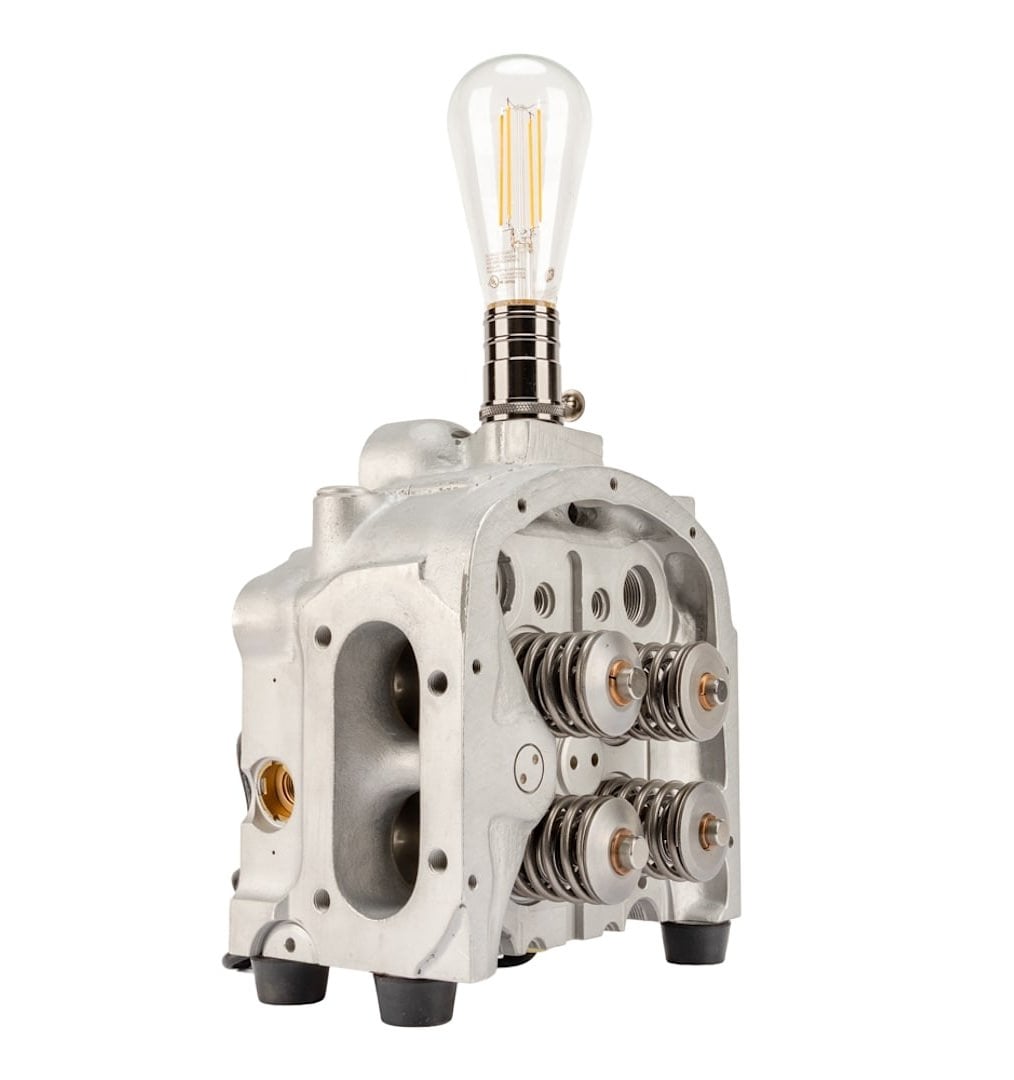
 This is a small desk lamp, and if that’s all it was it wouldn’t be here on the pages of Silodrome. The base of this lamp is made from a section of cylinder head from over the top of a single piston, in a WWII-era Packard Merlin V-1650 V12.
Packard Takes Up The Challenge
In September of 1940 Packard agreed to build the Merlin for both the American and British governments. Packard redrew the Merlin to American drafting and manufacturing standards, a production-engineering job that took up much of the following year, and swapped the copper-lead main bearings for silver-lead ones with indium plating. Its complexity earned it the nickname “the watchmaker’s nightmare.”
Two completed Detroit-built Merlins were demonstrated on test stands at a ceremony on August the 2nd, 1941, and full production began in 1942. That first model, the V-1650-1, was a single-stage, two-speed engine equivalent to the Merlin XX. The British called it the Merlin 28 and fitted it to Lancaster bombers, the US Army put it in the Curtiss P-40F Warhawk.
The two-stage Merlin and the Mustang met in England. In April of 1942 Rolls-Royce test pilot Ronald Harker flew an Allison v12-engined Mustang I at Duxford and reported it would be markedly faster with a Merlin 61 under the hood. He wasn’t wrong.
The Air Ministry wanted every 60-series engine for Spitfire IXs, but Harker and Hucknall’s Ray Dorey got a small conversion program approved. The first Mustang X flew from Hucknall on October the 13th, 1942, with Rolls-Royce chief test pilot Ronald Shepherd at the controls.
The Packard V-1650 Takes To The Air
Seven weeks later, on November the 30, Bob Chilton flew North American’s XP-51B on a two-stage Packard V-1650-3 V12. That engine powered early P-51B and P-51C production planes, the V-1650-7 replaced it in later B and C blocks and powered the P-51D.
In -7 form the Merlin weighed 1,690 lbs, produced a maximum of 1,695 bhp at 3,000 rpm and cost the Army Air Forces $25,000 apiece. It sounds like a bargain by military standards, but it was enough to buy rather a nice house at the time.
In total, 55,511 Merlins were built in the United States for the Army Air Forces – 54,714 by Packard and 797 by Continental. Packard engines also went back across the Atlantic, powering some British Spitfires, Mosquitos, and Lancasters through the last three years of the war.
The Packard Merlin V-1650 V12 Lamp Shown here
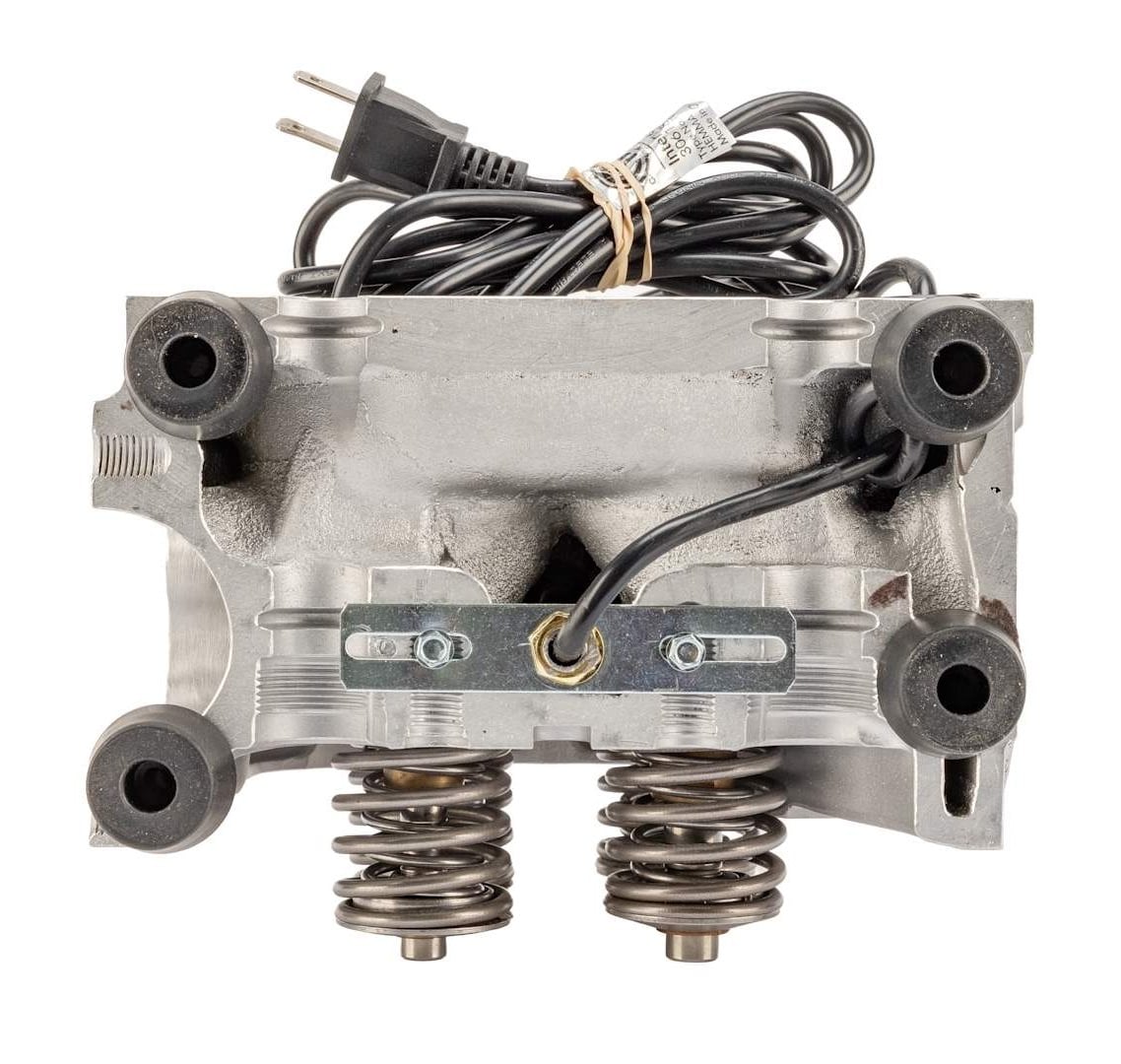
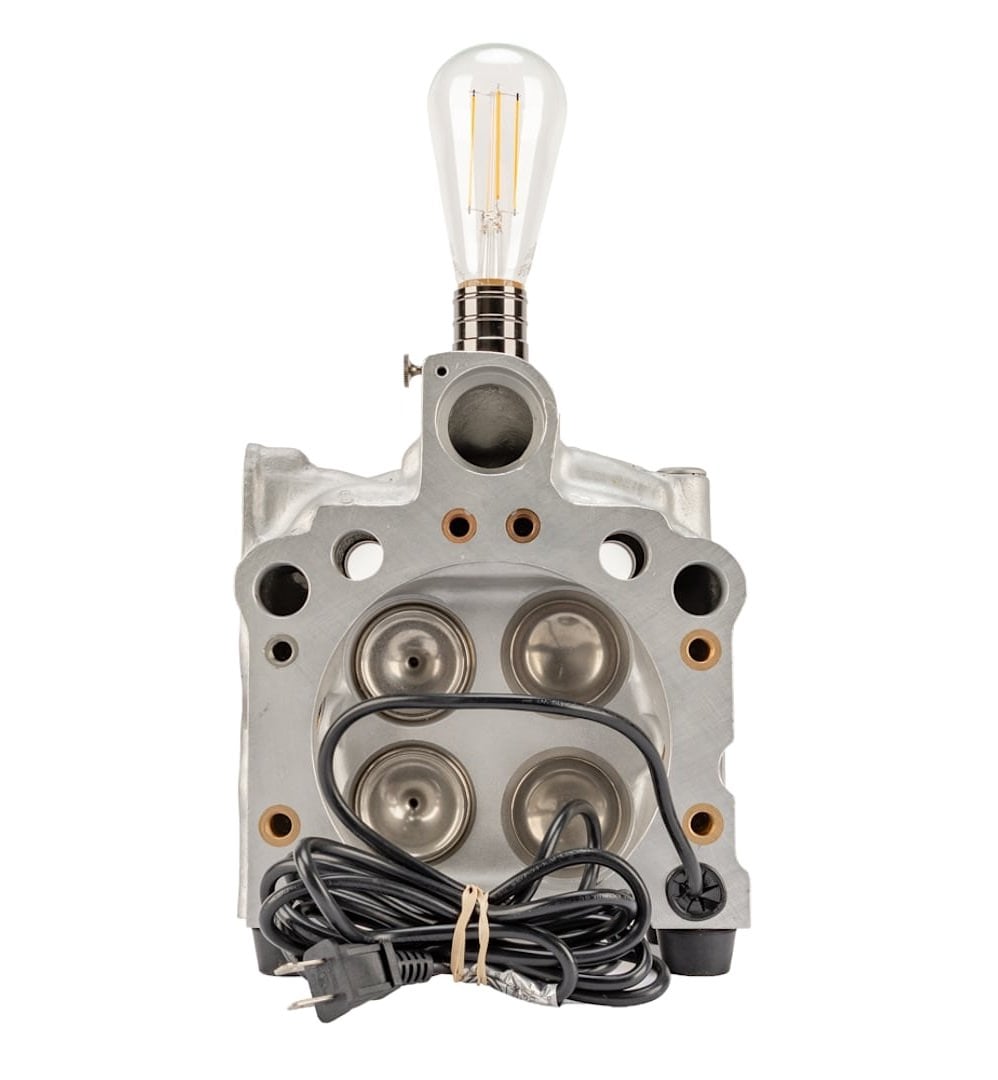
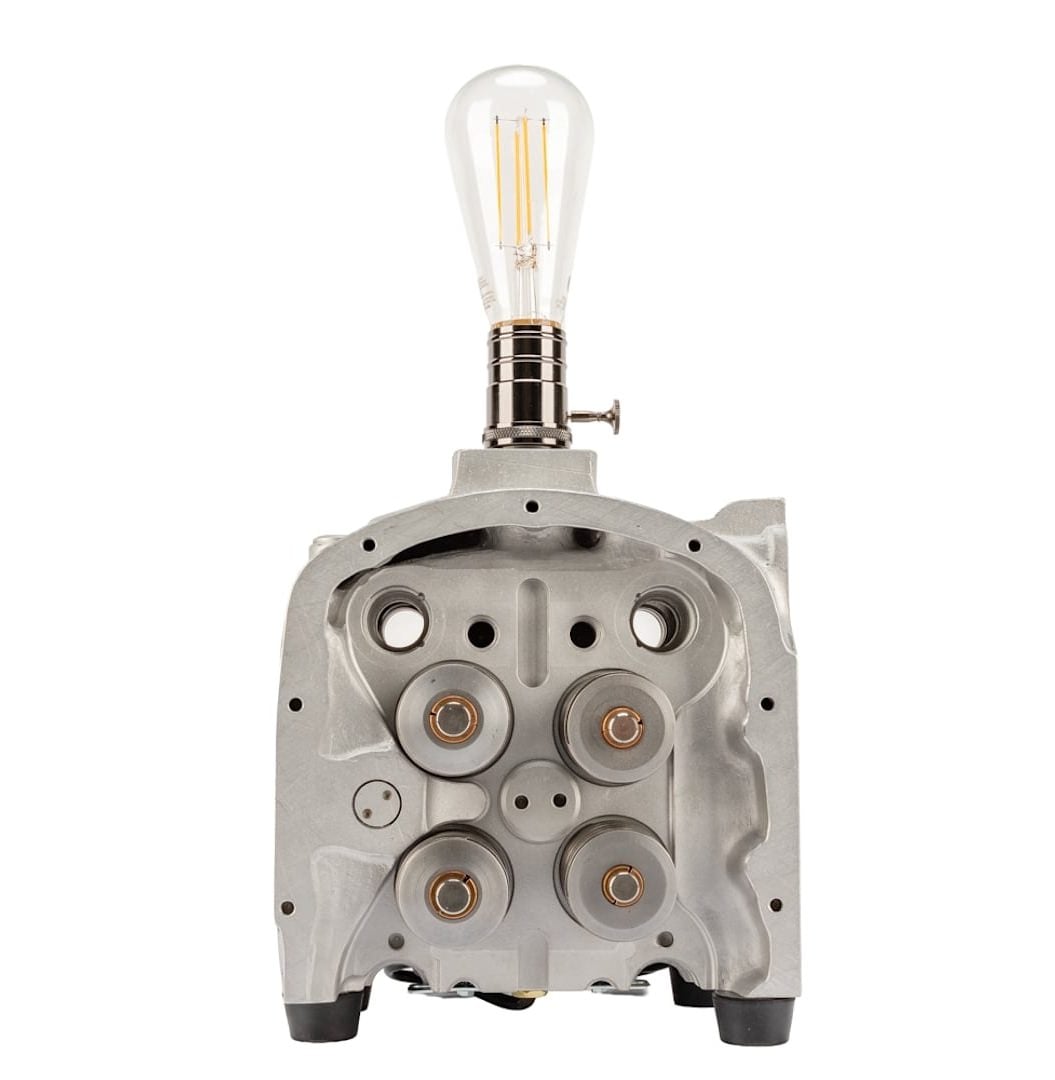
This is a small desk lamp, and if that’s all it was it wouldn’t be here on the pages of Silodrome. The base of this lamp is made from a section of cylinder head from over the top of a single piston, in a WWII-era Packard Merlin V-1650 V12.
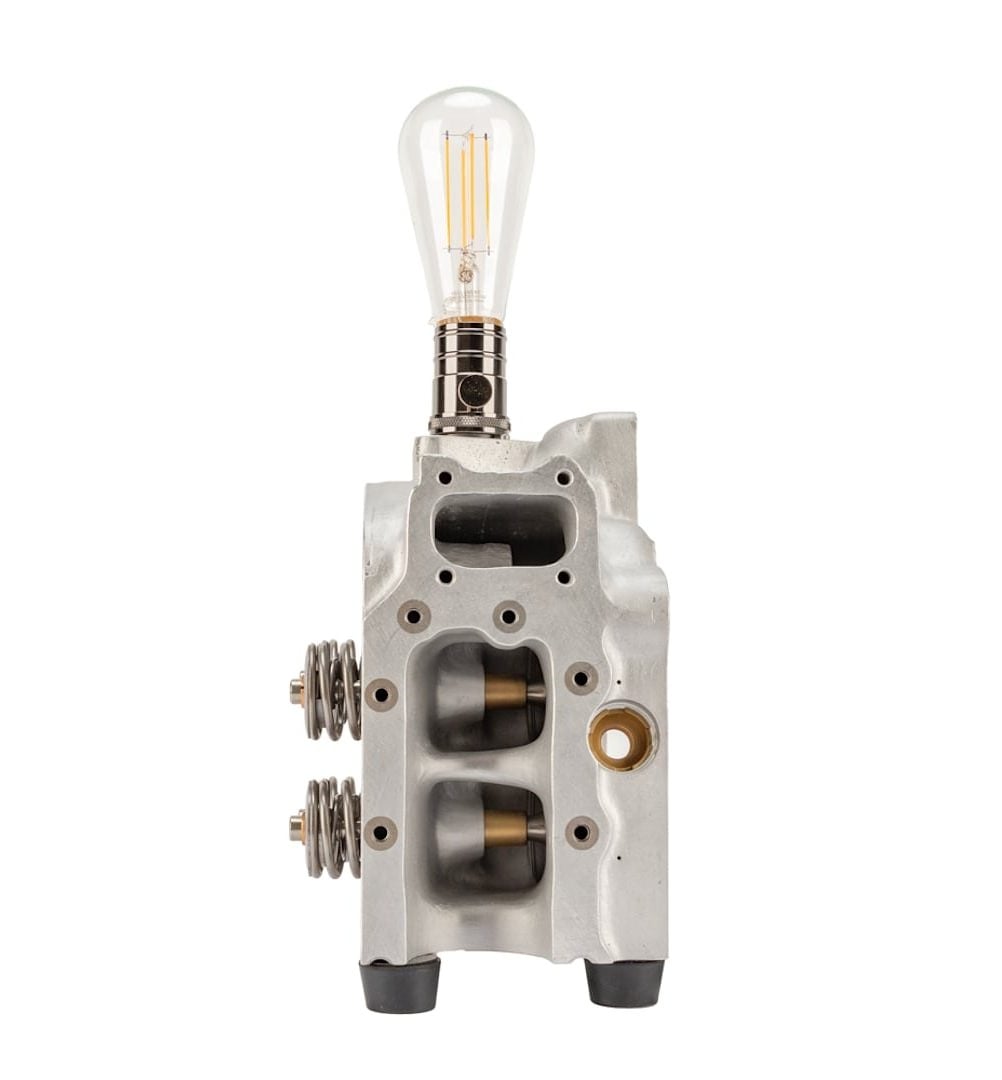
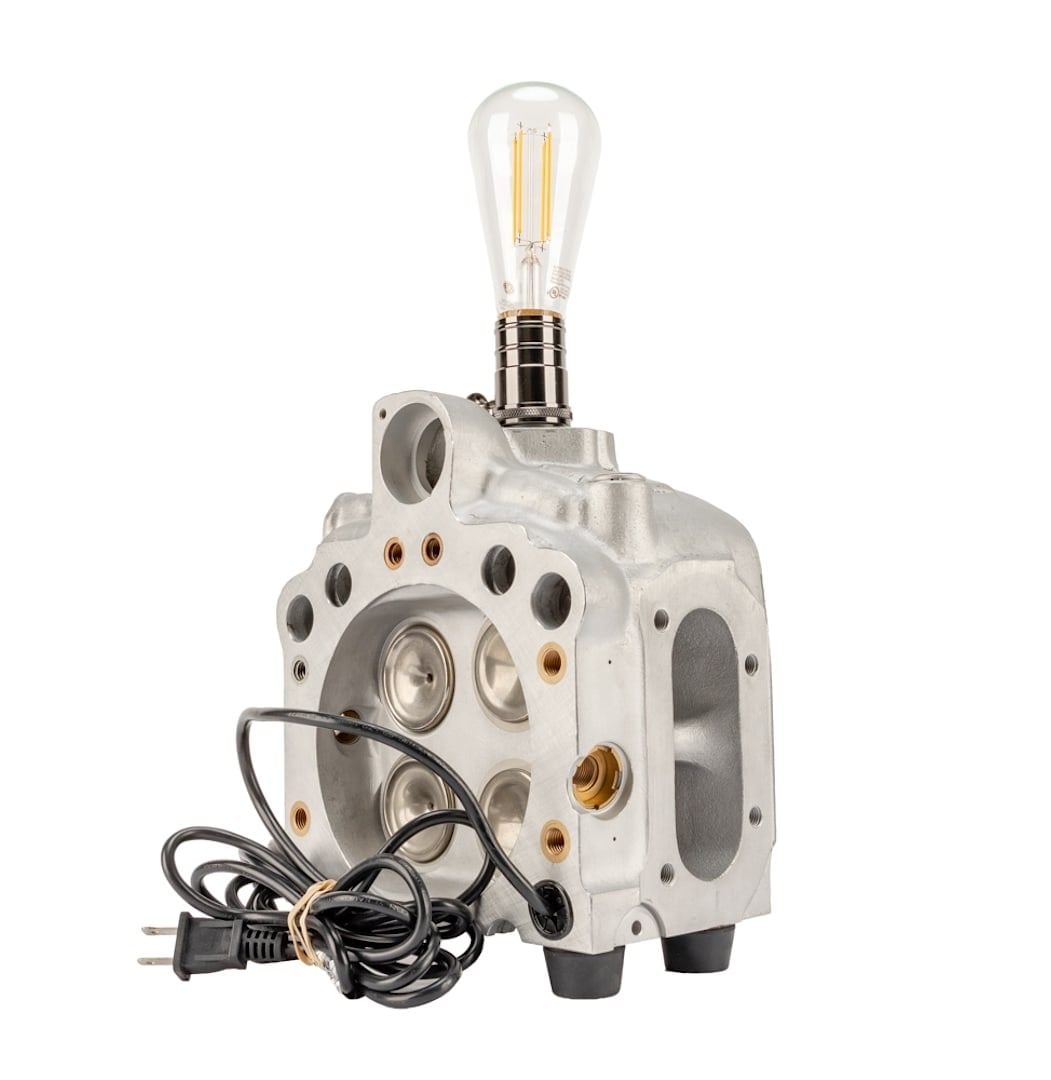
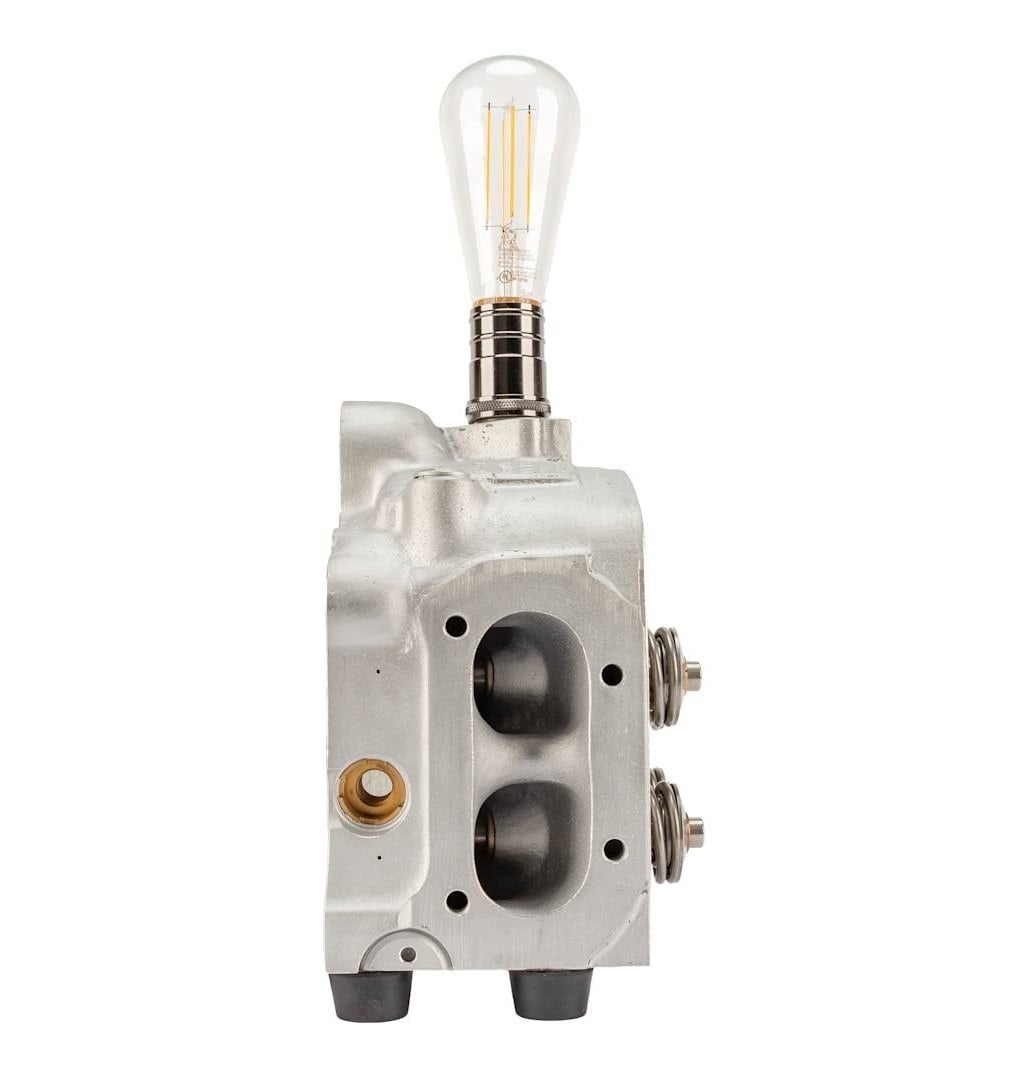
The original valves remain in place, along with the valve springs, and it now comes with an Edison-style lightbulb fitted, along with a power cord to make it work.
The original valves remain in place, along with the valve springs, and it now comes with an Edison-style lightbulb fitted, along with a power cord to make it work.
It’s now due to be offered by Mecum as part of the Roush Aviation collection, and you can visit the listing here if you’d like to read more about it or register to bid.
Images courtesy of Mecum

Articles that Ben Branch has written have been covered on CNN, Popular Mechanics, Smithsonian Magazine, Road & Track Magazine, the official Pinterest blog, the official eBay Motors blog, BuzzFeed, Autoweek Magazine, Wired Magazine, Autoblog, Gear Patrol, Jalopnik, The Verge, and many more.
Silodrome was founded by Ben back in 2010, in the years since the site has grown to become a world leader in the alternative and vintage motoring sector, with well over a million monthly readers from around the world and many hundreds of thousands of followers on social media.