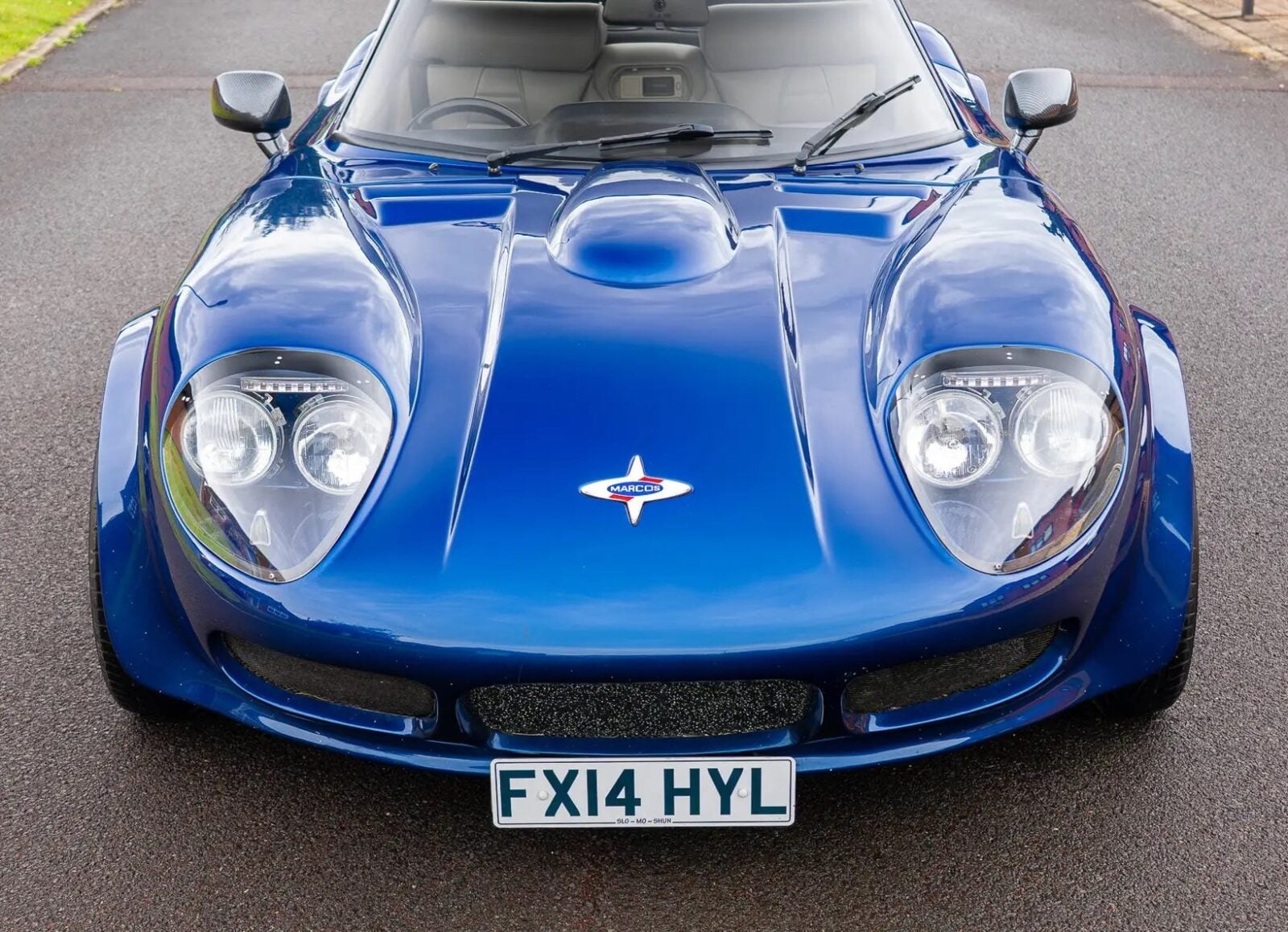
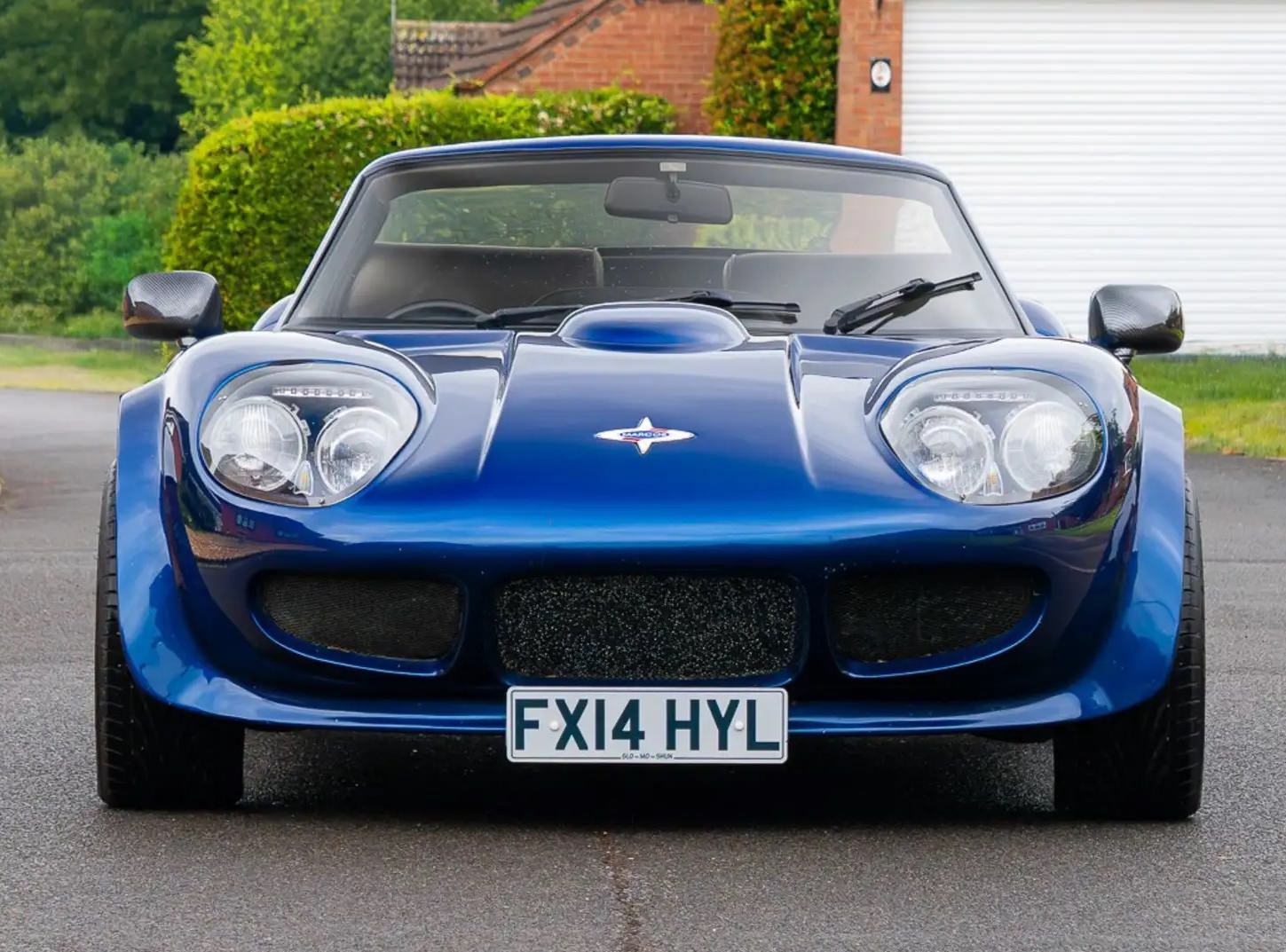
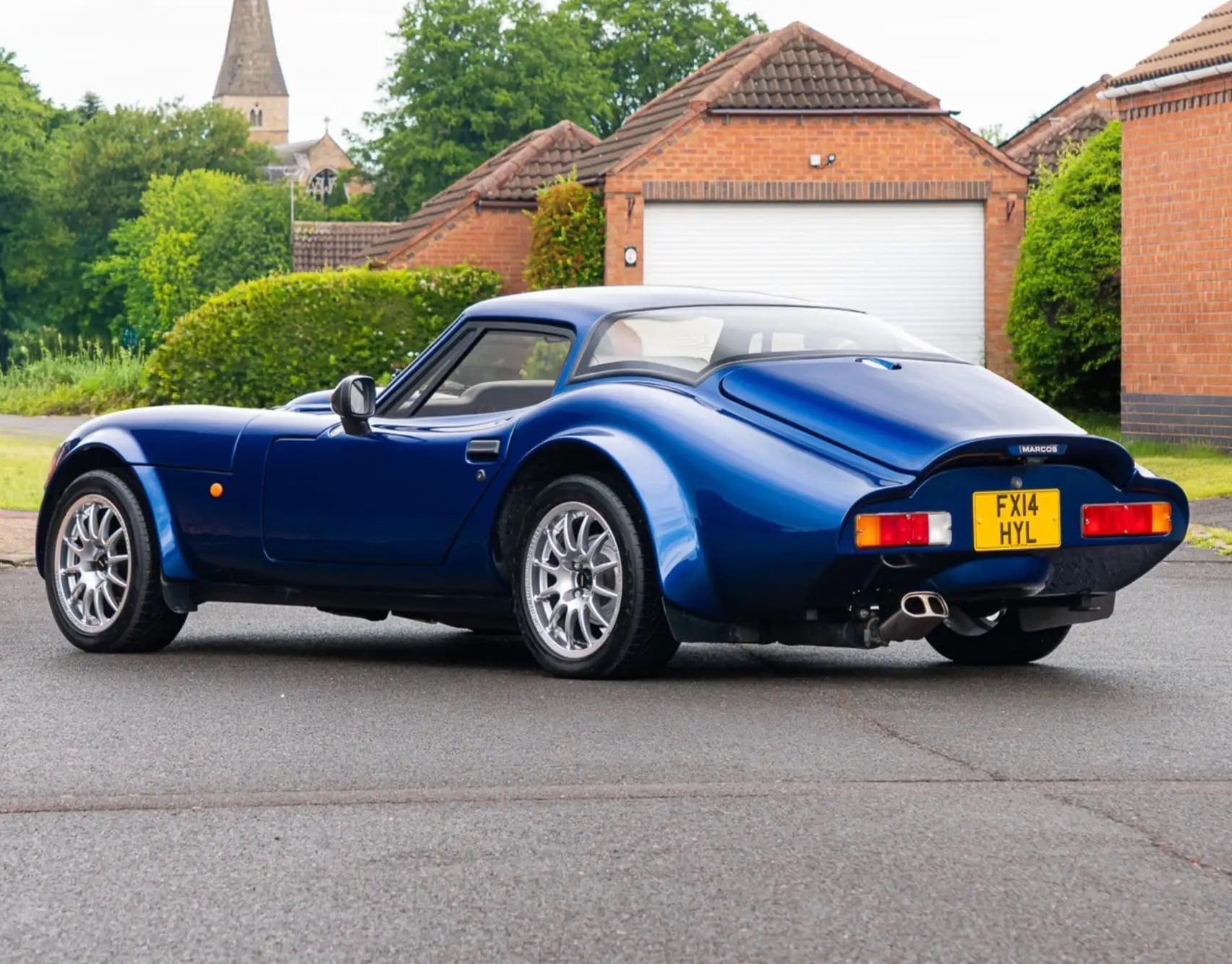
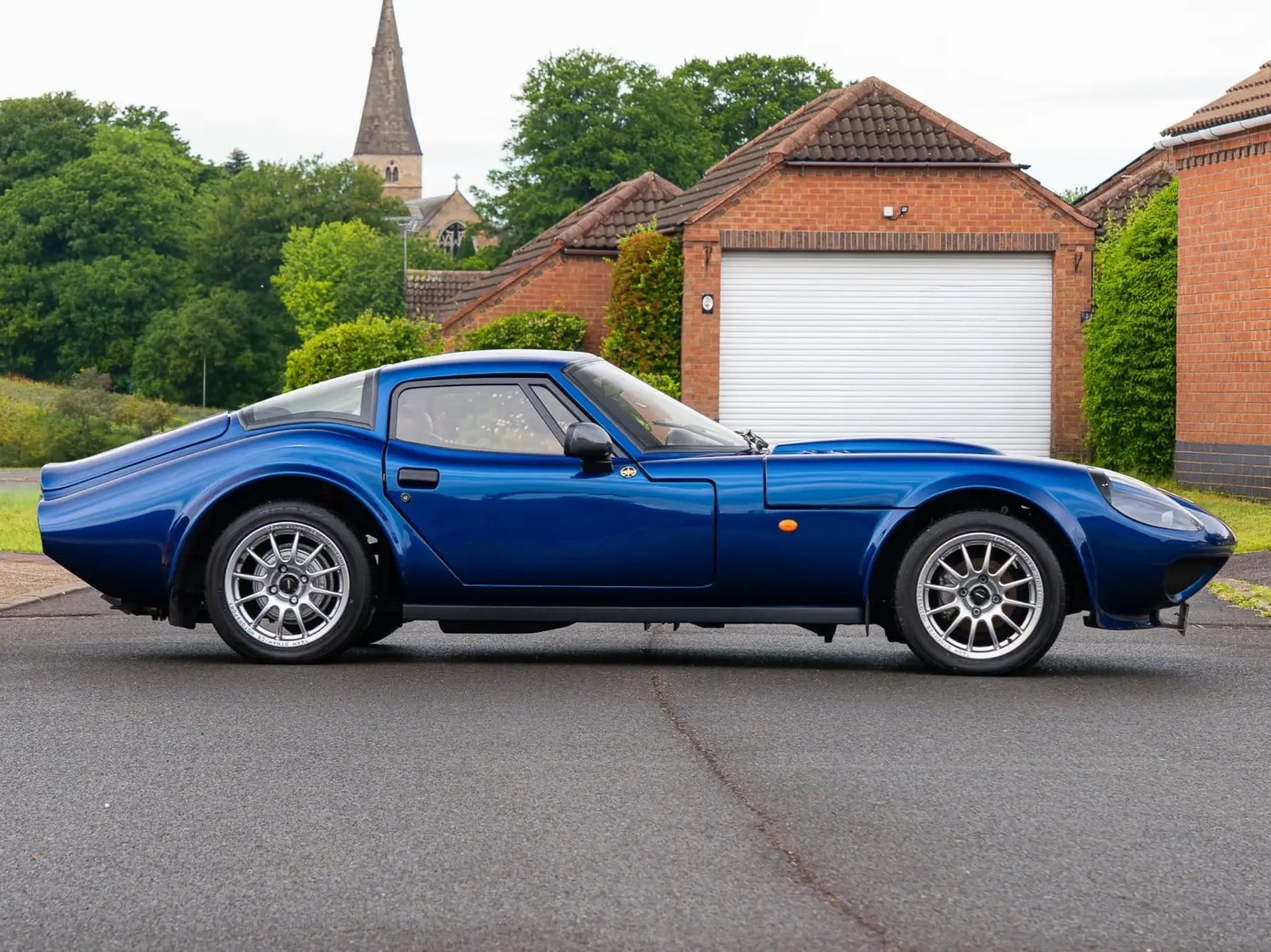
This is a 2014 Marcos Martina, it’s believed to be the last one ever built, and just 80 were made in total. The car has classic Marcos looks, which people seem to either love or hate, but no one can argue that they handle well.
For the uninitiated, Marcos was a British automaker and a period competitor for the likes of Lotus and TVR, though they never became quite as famous. They produced some fascinating sports cars, including one with a full plywood chassis, though most of their cars had more traditional tubular steel frames.
Fast Facts: The Last Marcos Martina
- The Marcos Martina launched in the spring of 1991 as the more affordable entry point into the Marcos range, using the same Adams-brothers-derived body shape as the V8-powered Mantula but built around the running gear of a secondhand Ford Cortina Mk 4 or Mk 5.
- To keep costs down, builders used the Cortina’s drivetrain, front subframe, suspension, steering, pedal carriage, and rear axle to the Marcos shell. The wider Cortina steering rack required flared front wheel arches, and gel-coat shells replaced painted bodywork. A finished Martina could be built for under £10,000 back in the day.
- The most common engine was the 2.0 liter Ford Pinto SOHC four, making 100 bhp in standard Cortina tune, with the 1.6 liter Pinto and Cologne V6 also sometimes used. Most builds kept the 4-speed Cortina manual, though a Sierra or Capri-sourced Type 9 5-speed was a common upgrade.
- Around 80 Martinas were completed, with factory production ending in 1994. This 2014-registered example is believed to be the last Marcos ever finished and registered, built by the seller’s late father and finished in Royal Blue Metallic over Parchment leather.
History Speedrun: The Marcos Martina
The Marcos Martina was launched in the spring of 1991 as the more affordable entry point into the Marcos model range. It used the same Adams-brothers-derived body shape as the V8-powered Mantula but swapped the expensive Rover V8 for the running gear of a used Ford Cortina, and it was sold primarily as a kit car for home assembly. It’s believed that 80 were built by the time production ended in 1994.
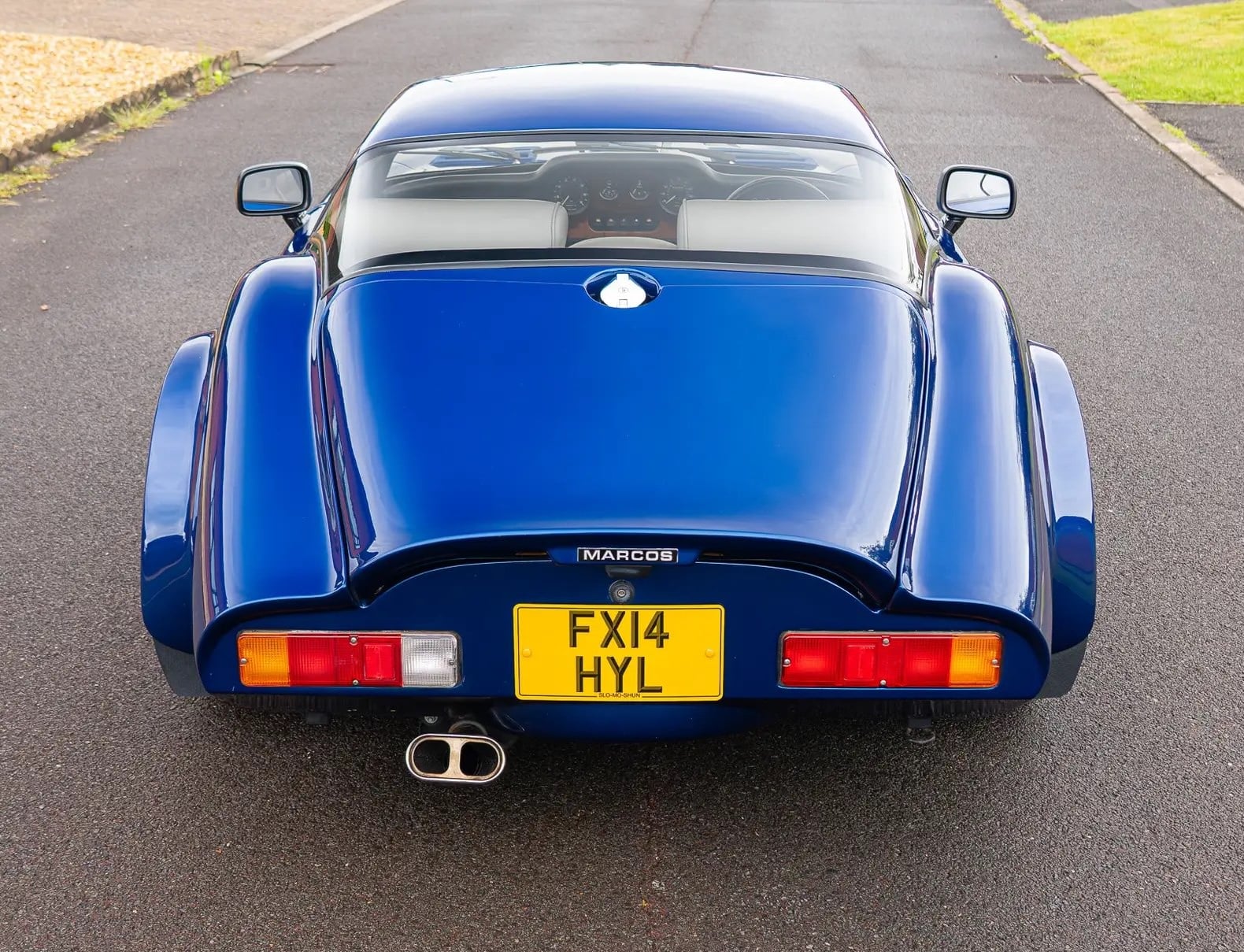
 This is a 2014 Marcos Martina, it’s believed to be the last one ever built, and just 80 were made in total. The car has classic Marcos looks, which people seem to either love or hate, but no one can argue that they handle well.
Marcos Engineering had a long history of building lightweight sports cars around whatever British running gear made commercial sense at the time. Jem Marsh and Frank Costin founded the company in Dolgellau, North Wales, in 1959, and after a first bankruptcy in 1971, Marsh bought back the rights to the name in 1976 and relaunched production in 1981.
The relaunched cars were essentially the 1969 steel-chassis GT sold in kit form, and buyers could choose from a menu of engines that included the 3.0 liter Ford Essex V6, the 2.8 liter Cologne V6, the 1.6 liter Kent Crossflow, the 2.0 liter Ford Pinto, the 2.0 liter Ford V4, and Triumph’s 2.0 and 2.5 straight-sixes. It’s thought that around 130 of these were sold up to the end of the decade.
In 1984 the Mantula arrived, it was close to the 1964 Adams brothers GT design-wise, fitted with the lightweight alloy Rover V8 and a 5-speed gearbox – and it gave Marcos a car that could run with the Rover-powered TVRs and the Morgan Plus 8. The 3.5 liter Mantula produced 190 bhp and 220 lb ft, reached 60 mph in the mid-5s, and topped out at 140 mph. Later cars used the 3.9 liter fuel-injected version of the Rover V8, and from 1985 there was a Spyder convertible alongside the coupe.
The Mantula sold surprisingly well by Marcos standards, with 170 coupes and 119 Spyders built, but it wasn’t cheap. Even in kit form it started at £18,000 by the end of the 1980s, which put it out of reach of the traditional kit car buyer that had been Marcos’s bread and butter since the company’s early days.
The Cortina-Based Martina Concept
The Martina was aimed squarely at the home builder on a budget, it took the Mantula’s body and steel space-frame chassis and adapted them to accept the drivetrain, front subframe, suspension, steering, pedal carriage, and rear axle from a secondhand Ford Cortina Mk 4 or Mk 5. Cortinas from that generation were plentiful and extremely cheap on the UK used car market in 1991.
The donor approach let builders buy one running car, strip it, and transplant its mechanicals into the Marcos shell. According to the factory, a completed Martina could be built for under £10,000, roughly half the cost of a comparable Mantula.
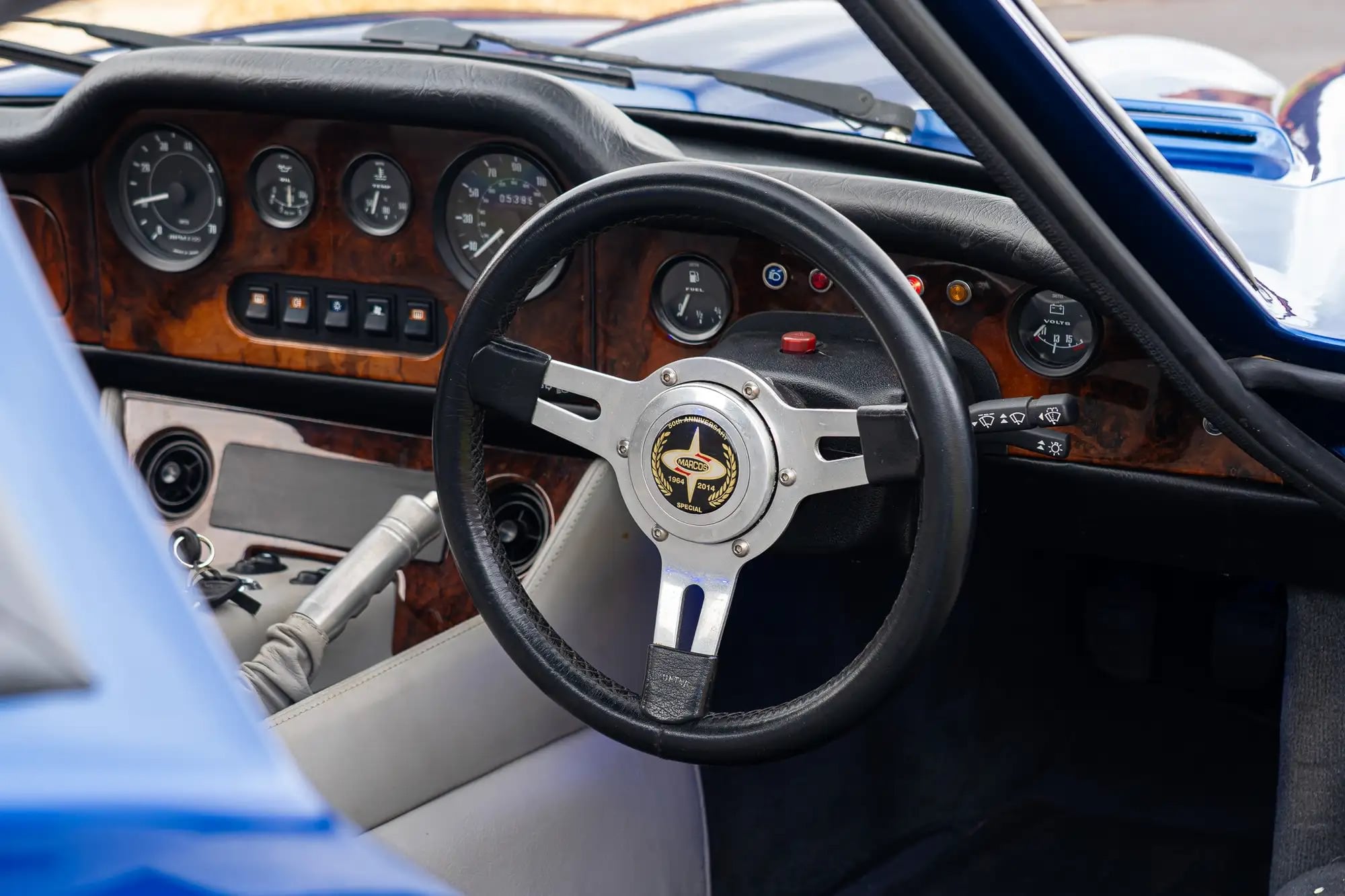
This 2014-registered Marcos Martina is one of the rarest examples of an already-rare model, and it is believed to be the last Marcos ever finished and registered for road use – it was built by the seller’s late father and remained in family ownership from completion through to the current sale.
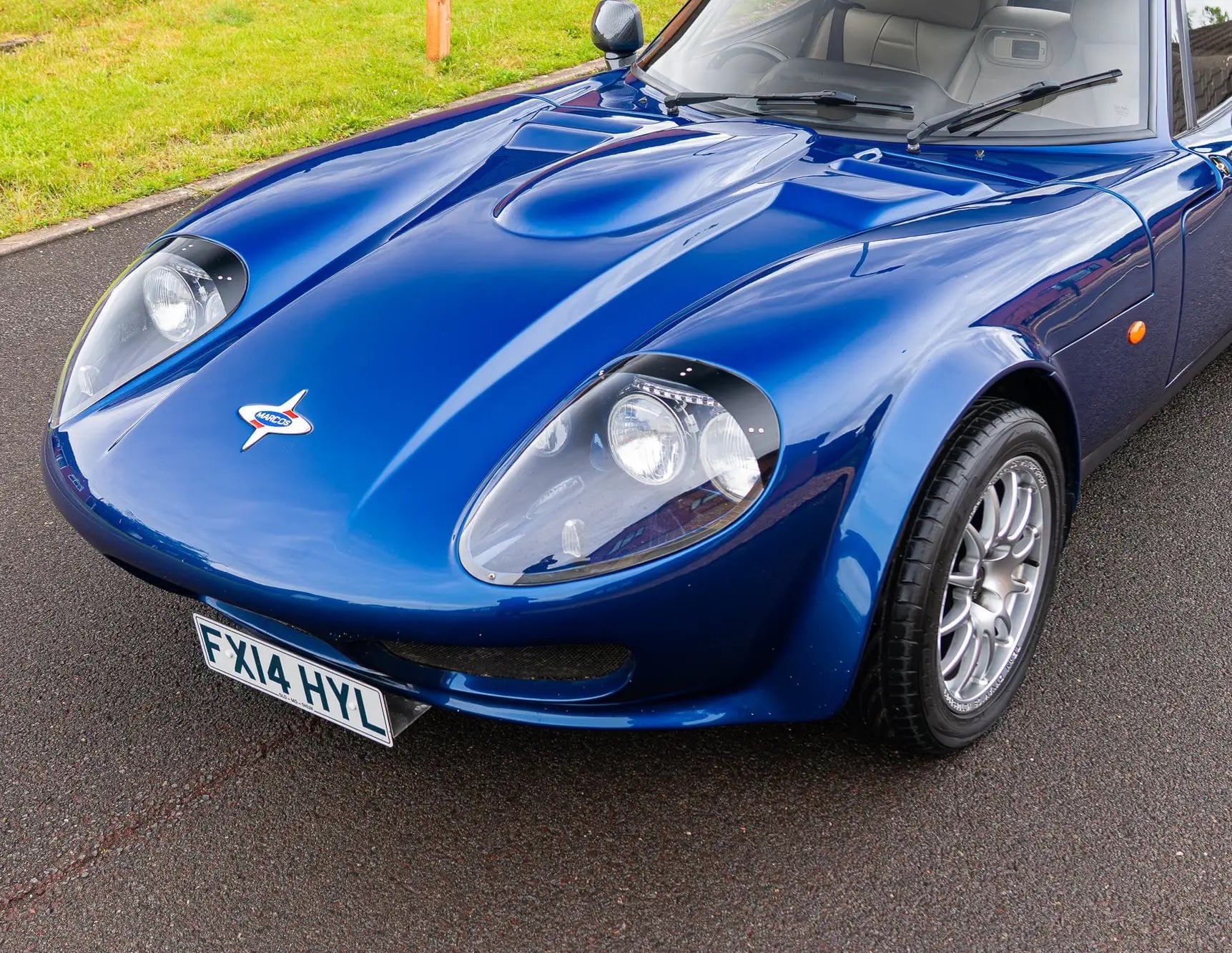
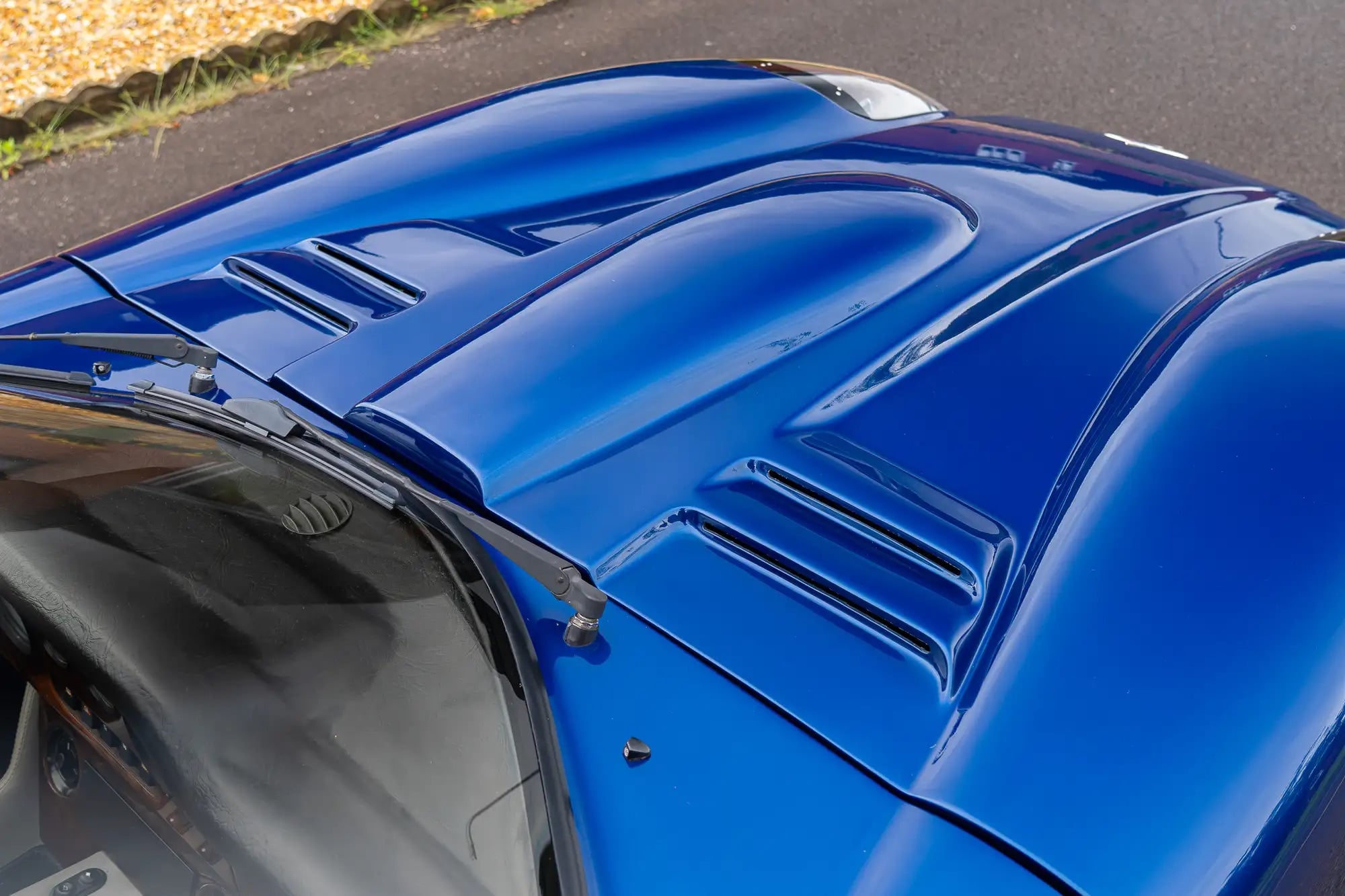
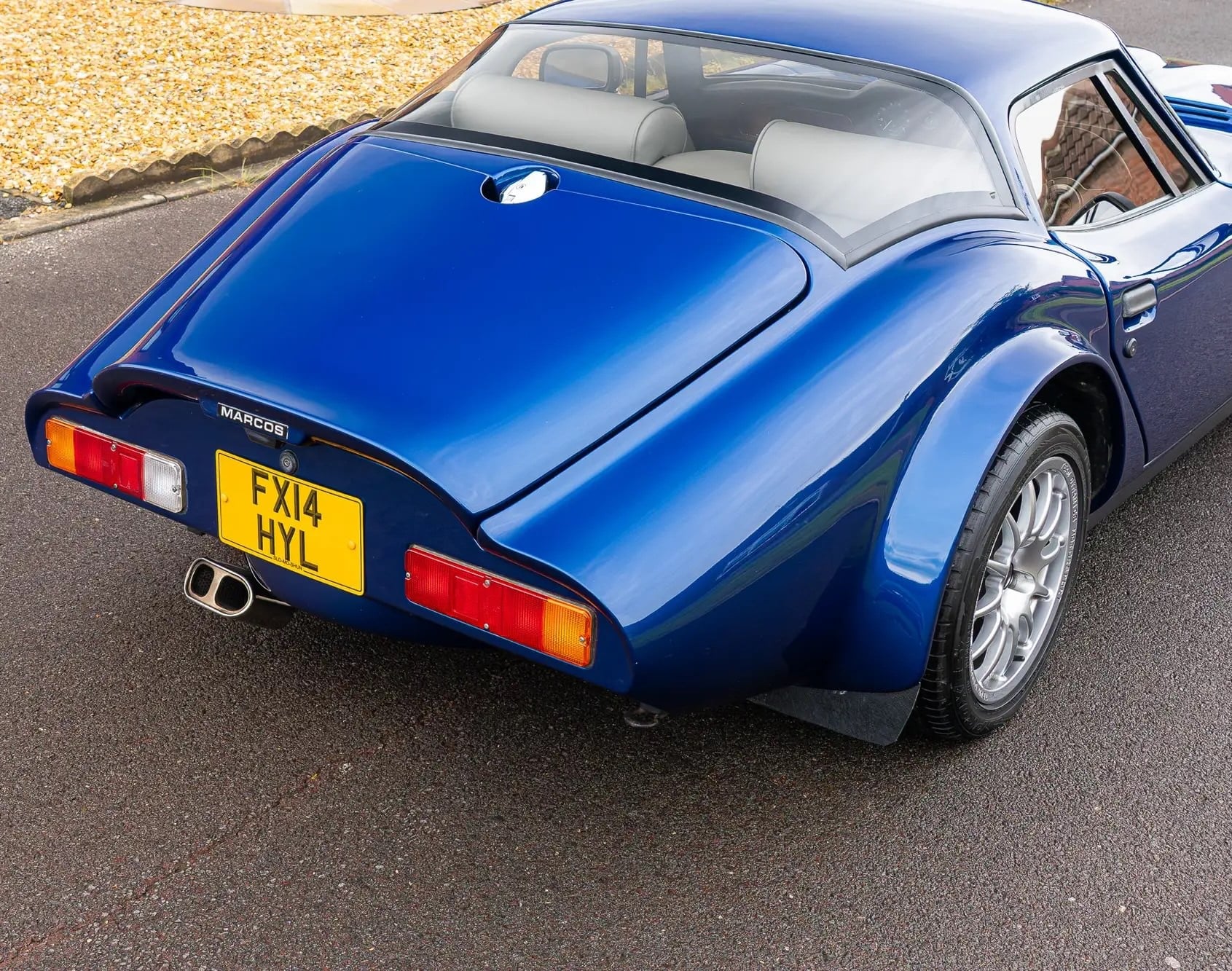
Looking at it from a few paces, the Martina was almost indistinguishable from a Mantula, except at the front that is. The Cortina’s steering rack was wider than the Triumph-derived unit used in the V8 car, so Marcos added flared front wheel arches to clear it. The body itself was fiberglass over a tubular steel space frame, and to keep costs down, the shells were supplied in a gel coat rather than being painted.
Buyers who wanted a painted car had to spray it themselves or pay extra, most didn’t bother.
Under the hood, the most common engine was the 2.0 liter Ford Pinto SOHC four, an all-iron unit with a belt-driven overhead camshaft that made around 100 bhp in standard Cortina tune. The engine had a strong following in the British kit car and rally scene, and many Martinas were often built with modified engines producing quite a bit more than 100 horses.
There was also the 1.6 liter Pinto and the Cologne V6 as options at the smaller and larger ends of the range. Most straightforward builds kept the donor Cortina’s 4-speed manual box, though a Sierra or Capri-sourced Type 9 5-speed was a common upgrade for a better ratio spread and improved highway manners.
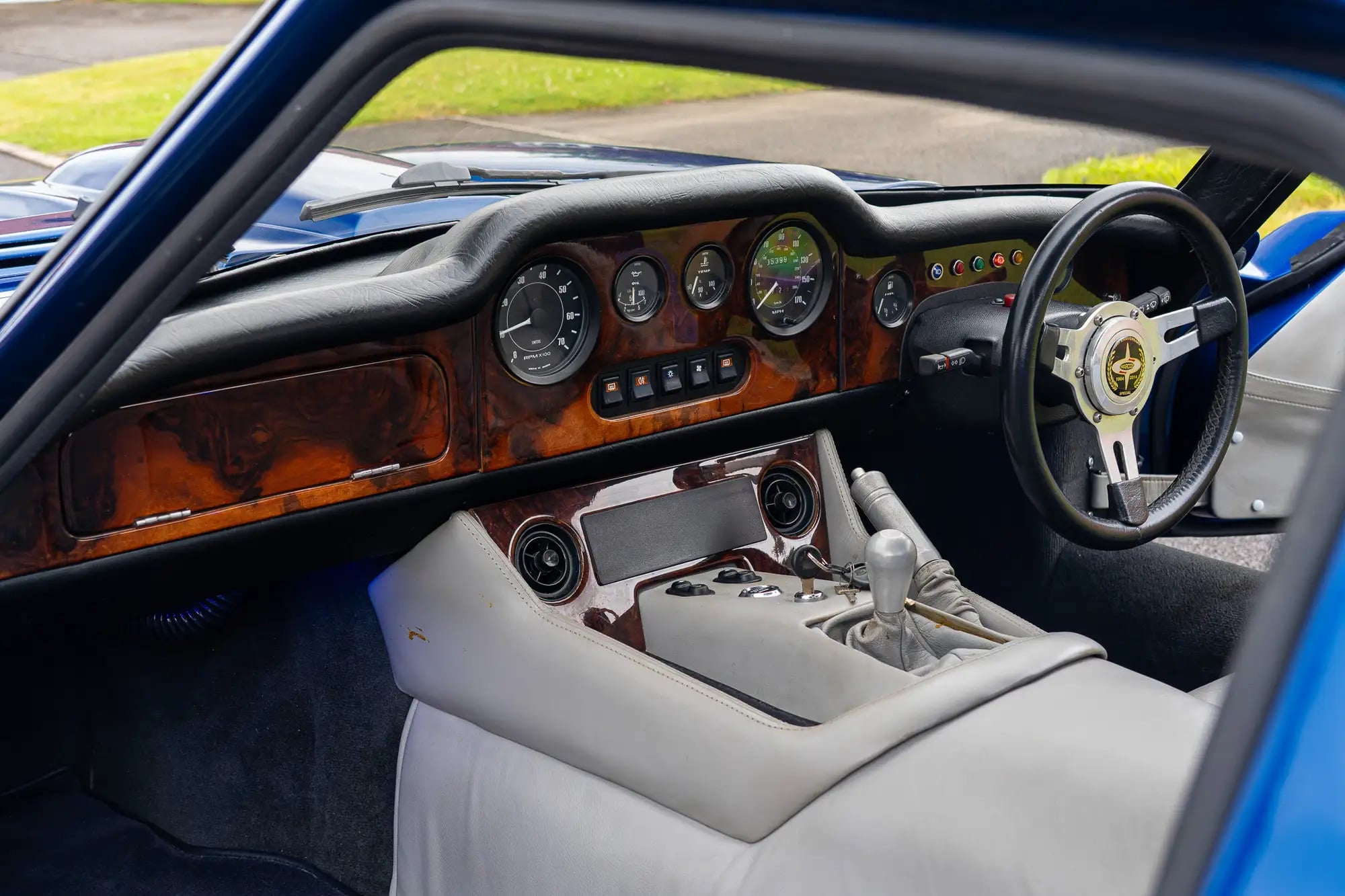
The result was a sports car that shared the Mantula’s look, its 42 inch overall height, and its adjustable pedal box – a Marcos hallmark that let the driver reposition the pedals rather than the seat. Running costs were closer to those of a hot hatch than a more traditional sports car, so insurance was typically cheaper, parts were available at any Ford dealer, and the engines were a lot less thirsty than the alloy V8.
Martina Variants + Production
Both coupe and Spyder Martina body types were offered, following the Mantula’s earlier example. Martinas were available in both kit and factory-built form throughout the model’s life.
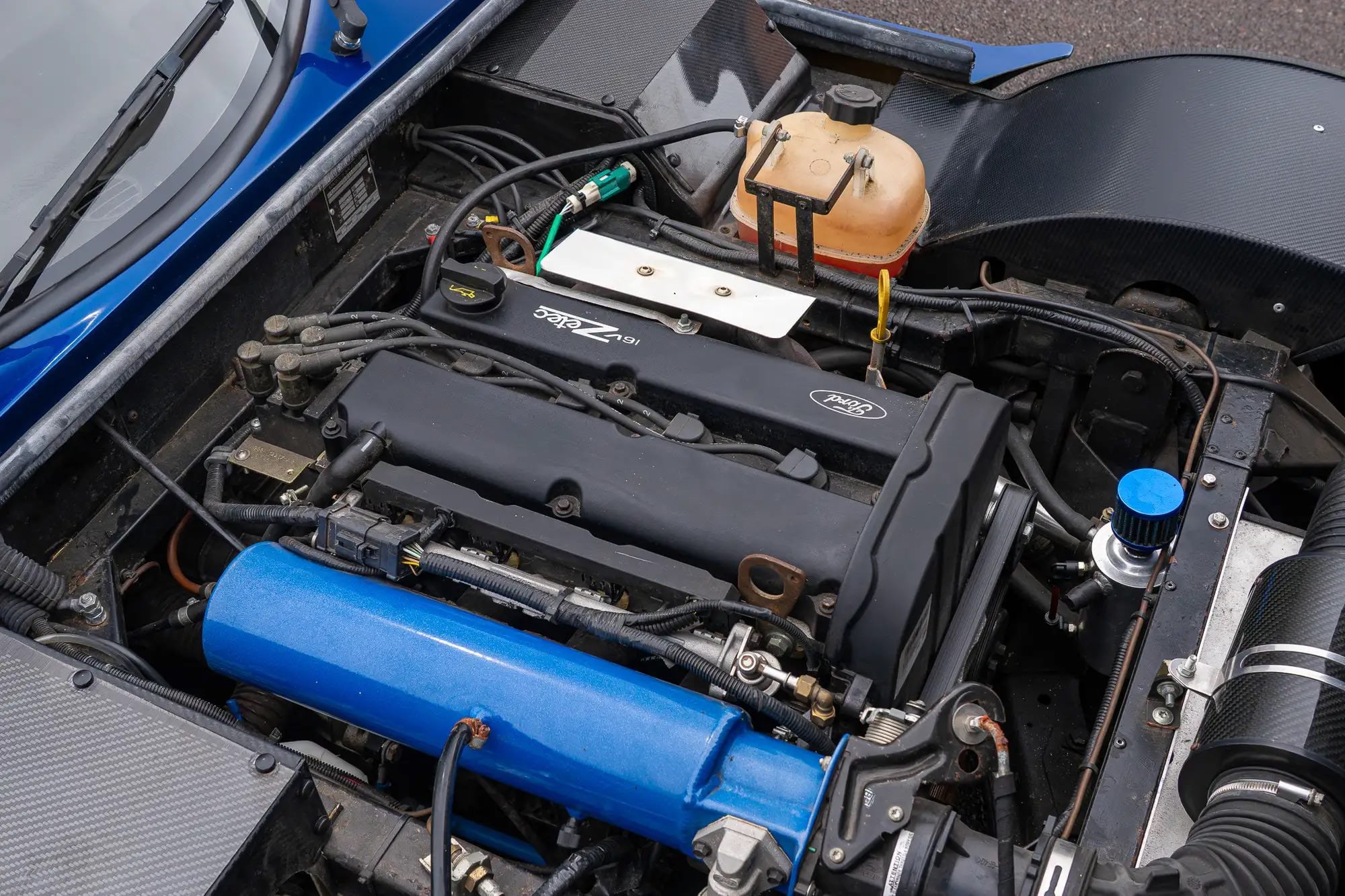
Both coupe and Spyder Martina body types were offered, following the Mantula’s earlier example. Martinas were available in both kit and factory-built form throughout the model’s life.
Marcos Heritage, which holds the company’s surviving build records, says that nearly all Martinas were sold as kit cars, though some were factory-built, it’s just not known how many. It’s thought that ~80 Martinas were finished, the end of production came in 1994 but the last-known Martina kit car build didn’t finish until 2014.
The Mantula’s factory-built successor, the Rover V8-powered Mantara, had already been shown at the 1992 NEC Motor Show, and new UK Low Volume Type Approval rules allowed Marcos to sell it as a completed car through dealers.
The company had decided to move upmarket, competing directly with TVR, Lotus, Morgan, and the surviving specialist manufacturers on the showroom floor rather than through classified ads in the kit car press.
The 2014 Marcos Martina Shown Here
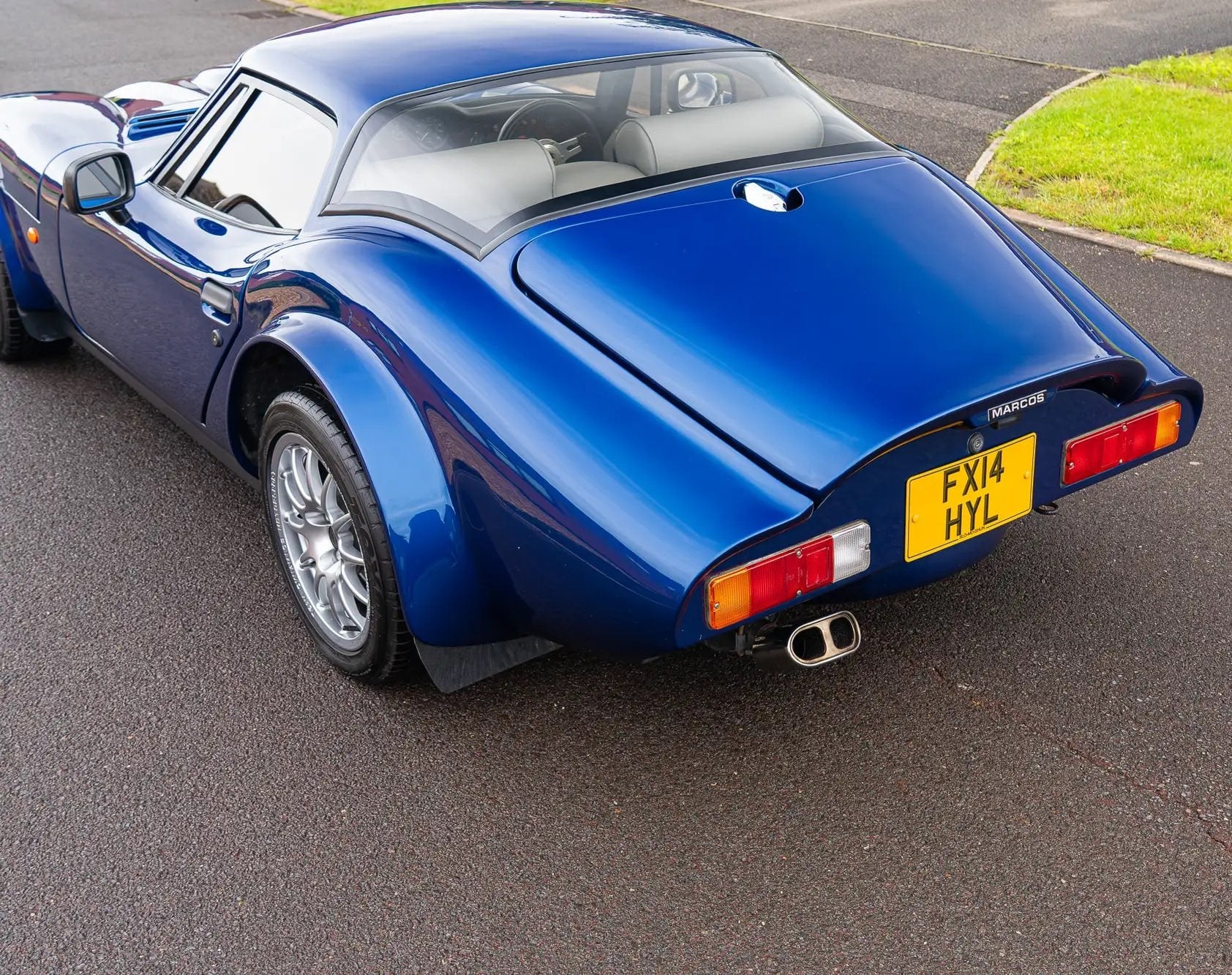
This 2014-registered Marcos Martina is one of the rarest examples of an already-rare model, and it is believed to be the last Marcos ever finished and registered for road use – it was built by the seller’s late father and remained in family ownership from completion through to the current sale.
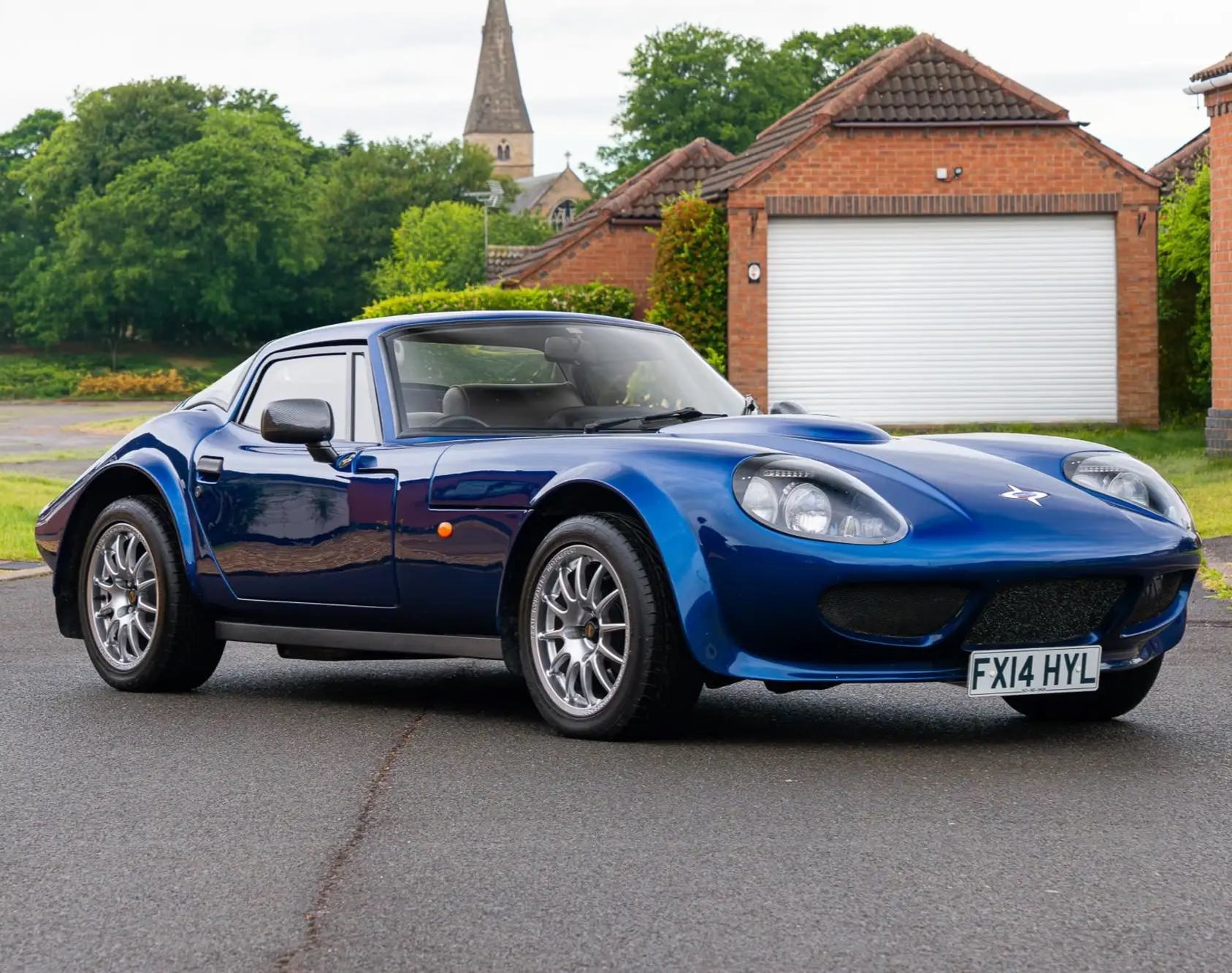
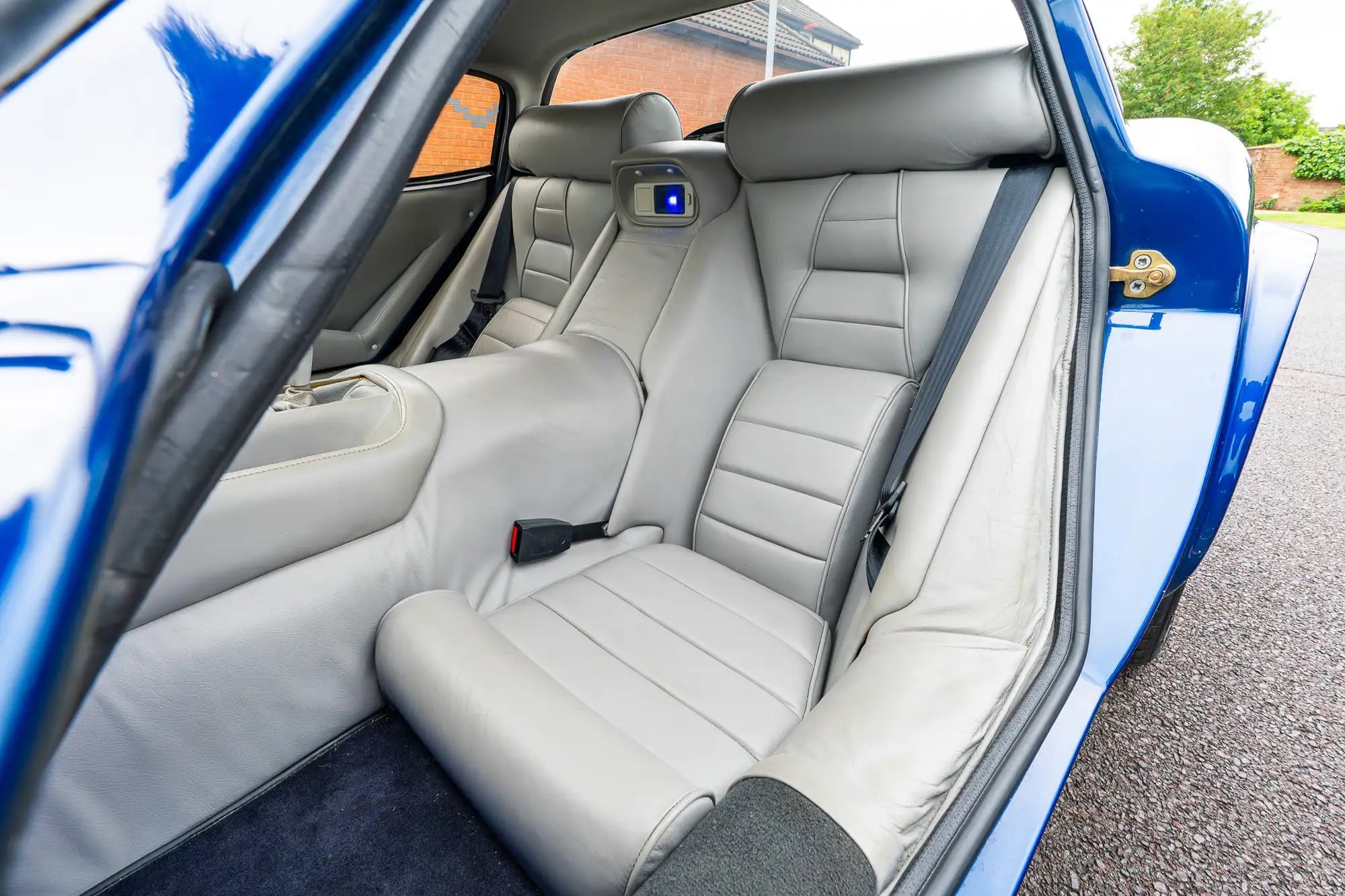
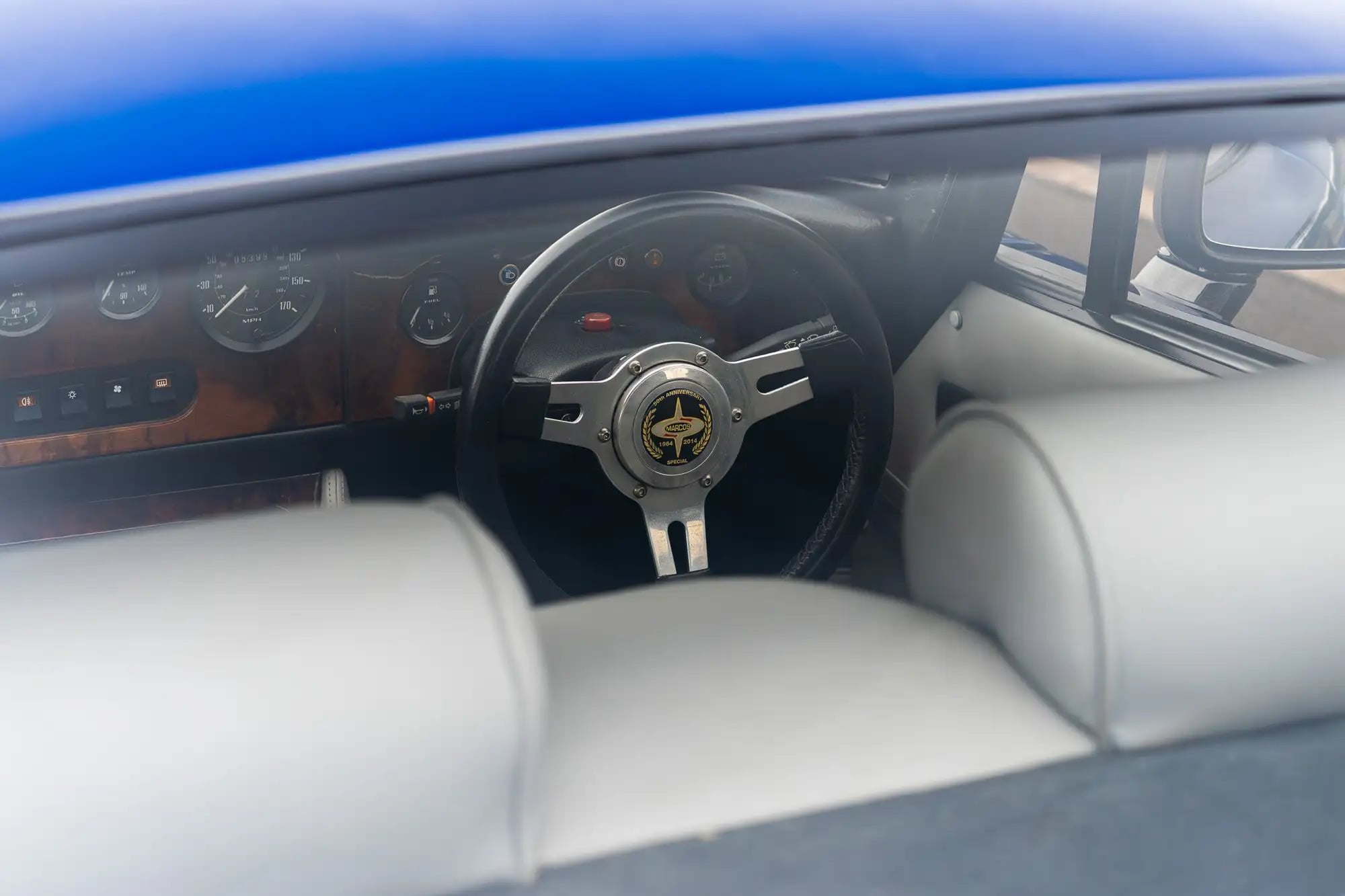
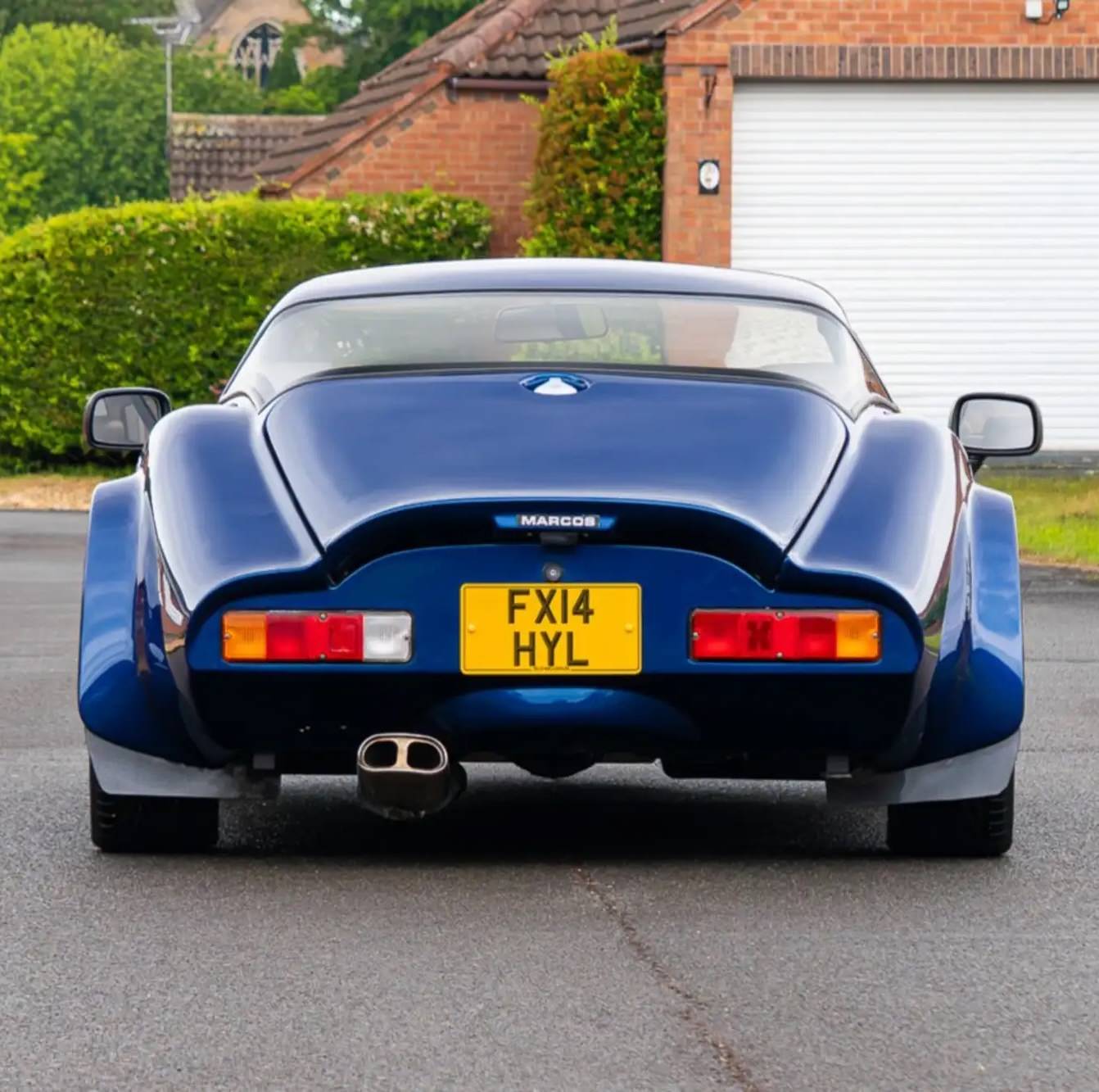
The car is finished in metallic Royal Blue over a Parchment leather interior. It has chassis number WARDMARC0S8506GT2 and the UK license plate number FX14 HYL, and its MOT runs to March of 2027.
The car is finished in metallic Royal Blue over a Parchment leather interior. It has chassis number WARDMARC0S8506GT2 and the UK license plate number FX14 HYL, and its MOT runs to March of 2027.
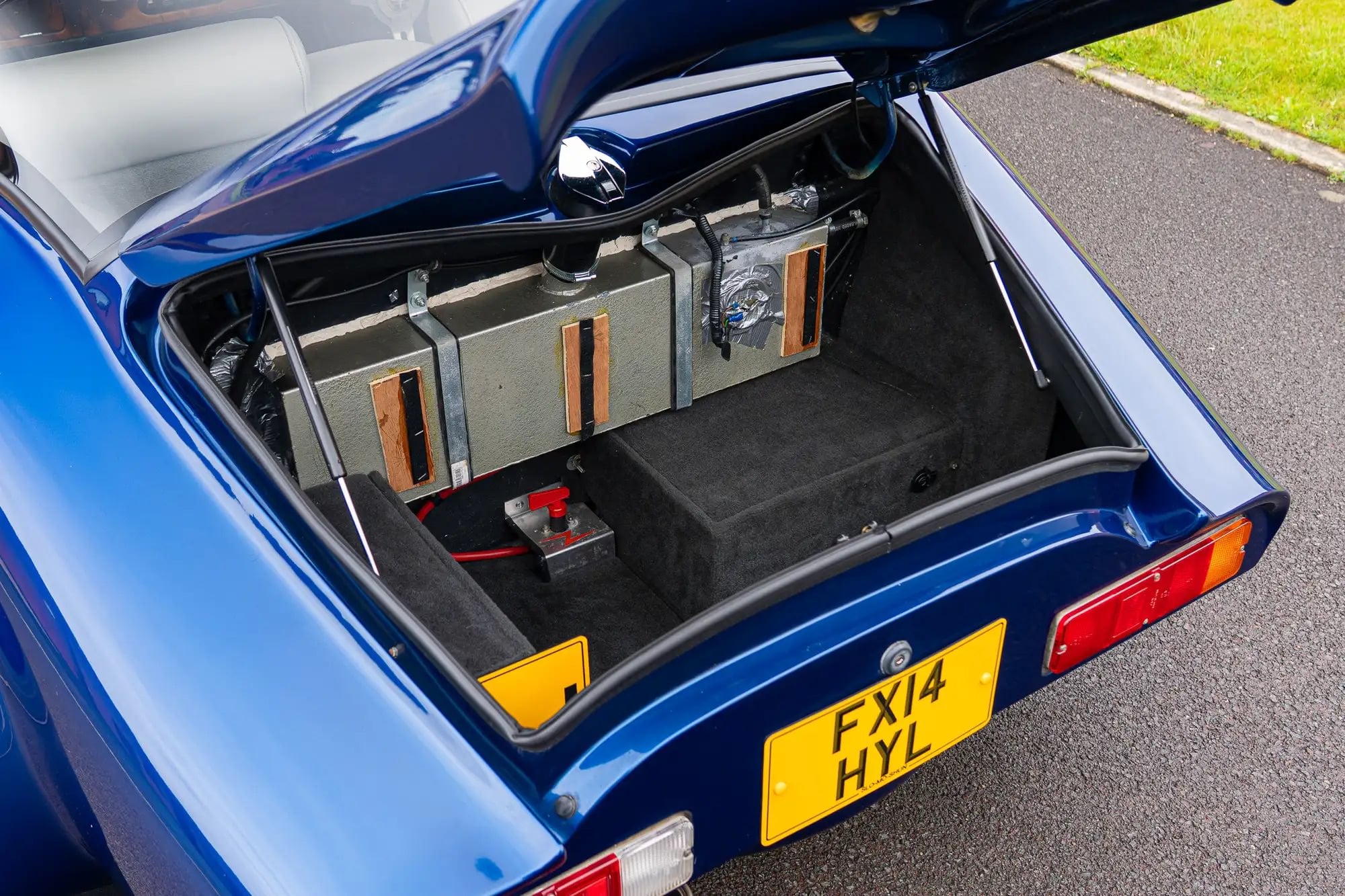
This Martina is offered with the build booklets and supporting paperwork documenting its construction and registration. It’s now due to roll across the auction block with Iconic Auctioneers on the 29th of August with a price guide of £10,000 – £12,000, or approximately $13,385 – $16,062 USD.
Images courtesy of Iconic Auctioneers

Articles that Ben Branch has written have been covered on CNN, Popular Mechanics, Smithsonian Magazine, Road & Track Magazine, the official Pinterest blog, the official eBay Motors blog, BuzzFeed, Autoweek Magazine, Wired Magazine, Autoblog, Gear Patrol, Jalopnik, The Verge, and many more.
Silodrome was founded by Ben back in 2010, in the years since the site has grown to become a world leader in the alternative and vintage motoring sector, with well over a million monthly readers from around the world and many hundreds of thousands of followers on social media.