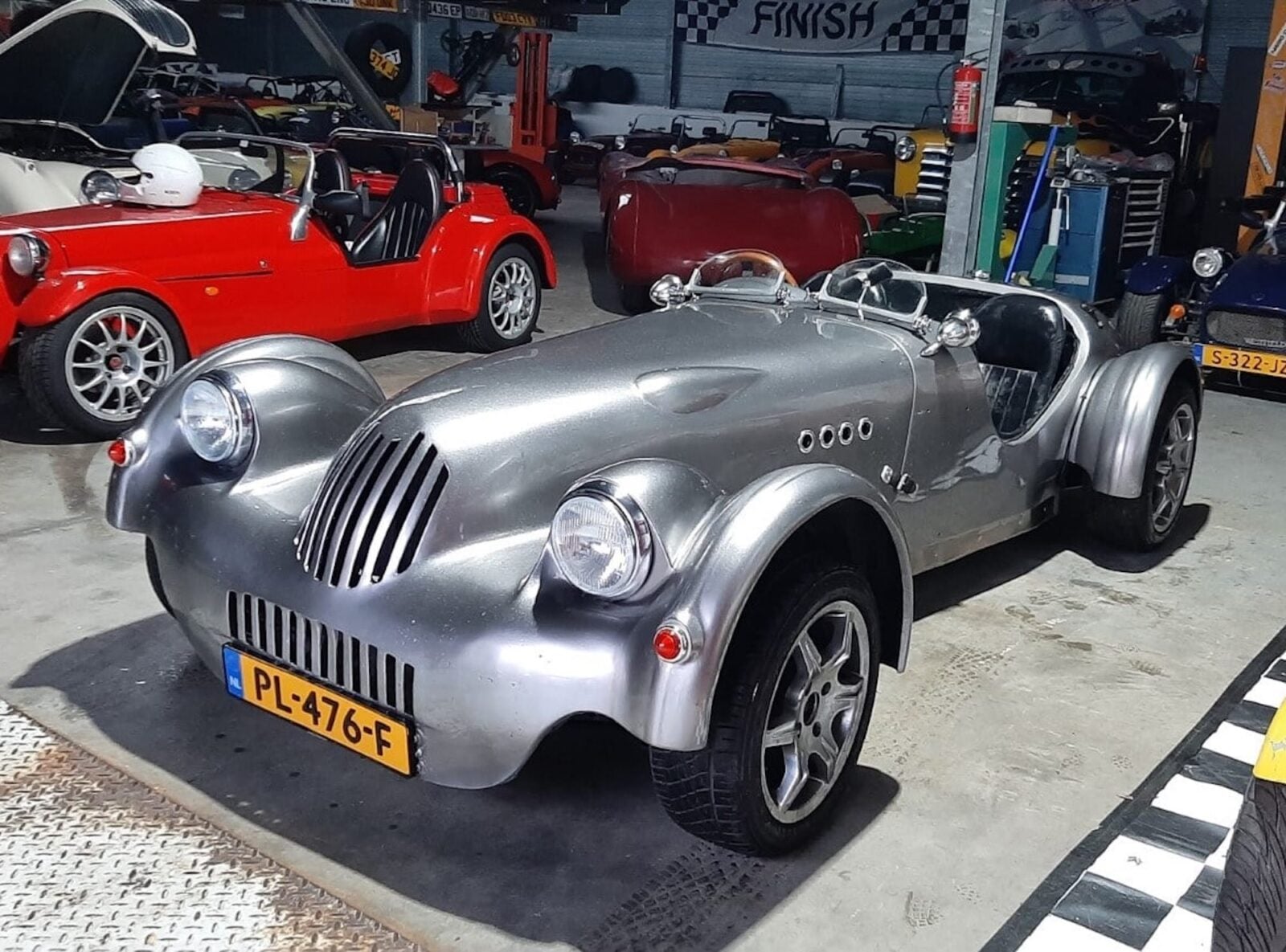
This is one of just seven examples of the Genie Wasp that were ever made – a (very) low-volume sports car that has its origins in the Scottish Borders region of Britain.
The Wasp is a lightweight British sports car in-keeping with more famous competitors like Lotus, TVR, Marcos, and Morgan. Each one was built using Ford Cortina mechanicals, meaning that spare parts (and performance parts) are nice and easy to come by – not to mention affordable.
Fast Facts: The Genie Wasp
- The Genie Wasp is a rare British kit car built by Genie Cars, a small manufacturer based in Ancrum in the Scottish Borders. The company operated from 1989 to 1996, producing just this single model, with most sources agreeing that only seven were ever completed.
- The Wasp was built on a steel tube ladder-frame chassis designed to accept Ford Cortina mechanicals, with the 2.0 liter Ford Pinto OHC engine as the standard powertrain producing around 105 bhp. A Fiat twin-cam engine was offered as an optional upgrade for builders wanting more performance.
- Two fiberglass body styles were available – the Mk I with a rounded tail and the Mk II with a longer, sharply pointed boat-tail rear end evoking the racing specials of the 1930s. The entire nose cone was hinged to lift forward for easy engine access.
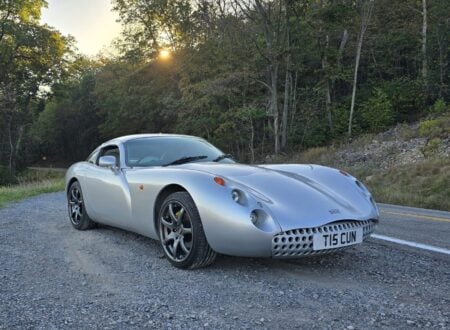
- This particular example is a 1992 Mk II boat-tail finished in gray with twin roadster windscreens, alloy wheels, and the standard Ford Pinto engine. It shows 40,000 miles and is listed for sale in the Netherlands at £12,500 (approximately $16,900 USD).
History Speedrun: Genie Cars
Genie Cars was a small British kit car manufacturer based in Ancrum, a village in the Scottish Borders region of Roxburghshire, near Jedburgh. The company operated from 1989 to 1996, producing just a single model – the Genie Wasp – before ceasing production.
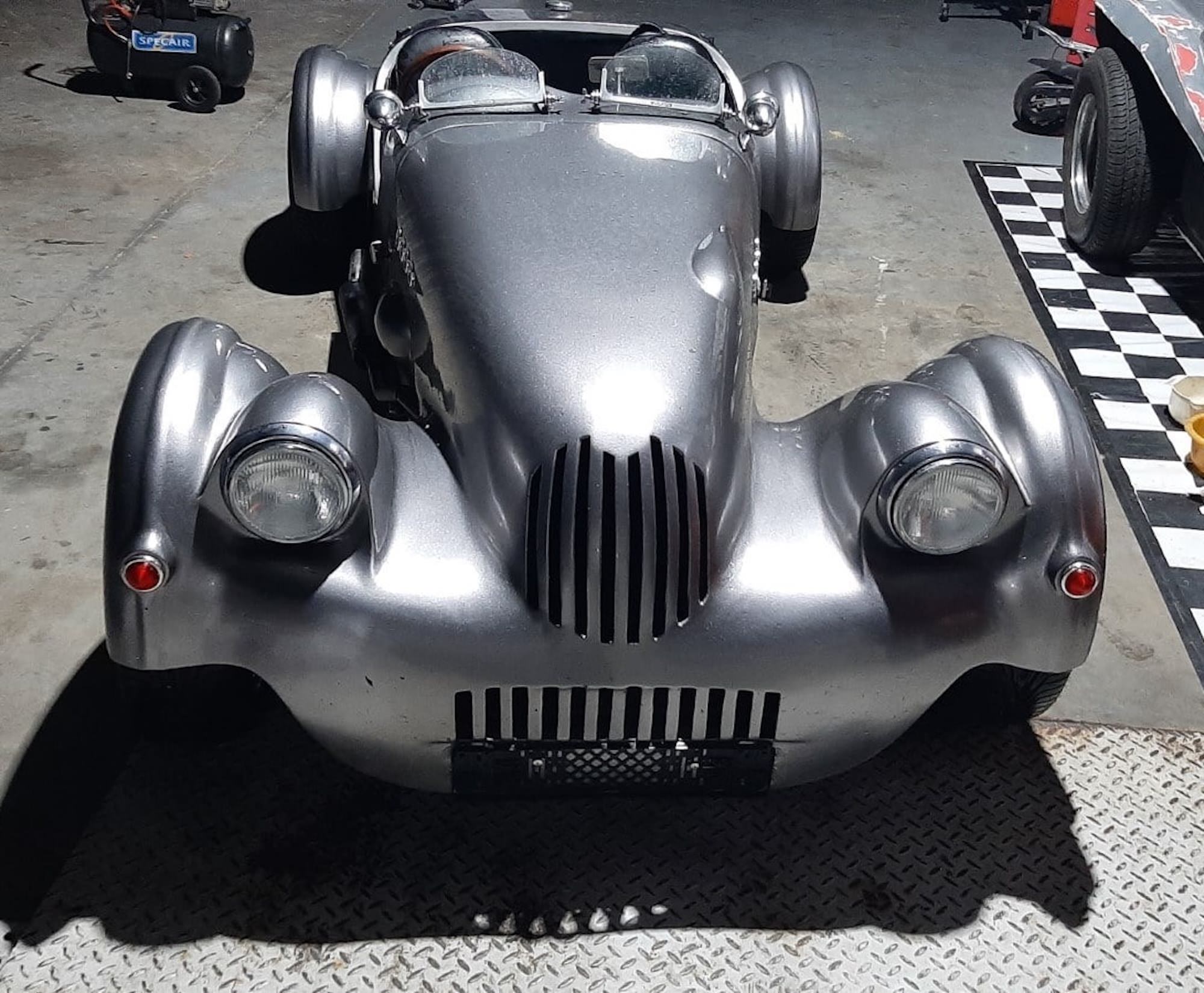
 This is one of just seven examples of the Genie Wasp that were ever made – a (very) low-volume sports car that has its origins in the Scottish Borders region.
Even by the standards of Britain’s famously cottage-scale kit car industry, Genie was a small operation, and its remote location and limited marketing meant that very few Wasps were built during the company’s short lifespan.
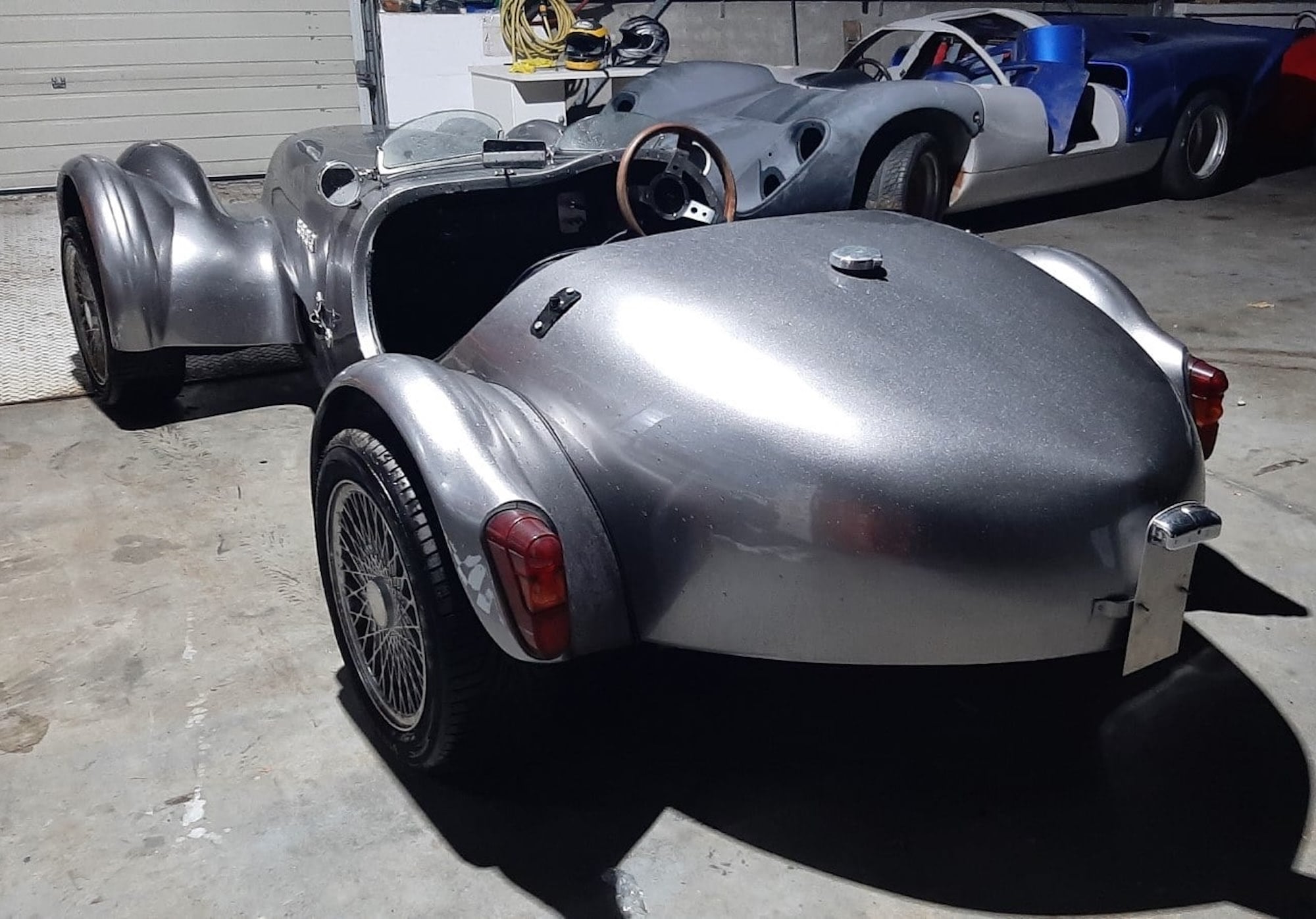
The Wasp was offered in two fiberglass body styles. The Mk I had a rounded tail, while the Mk II had a longer, sharply pointed rear end – a boat-tail design that gave the car a distinctly pre-war aesthetic, evoking the racing specials and speedsters of the 1930s.
Both variants were built on a steel tube ladder-frame chassis that was designed to accept mechanical parts from the Ford Cortina, making the Mk3, Mk4, and Mk5 Cortina the primary donor vehicles. Suspension, steering, drivetrain, and braking systems could all be sourced from a single donor car, which kept build costs down and simplified the assembly process for home builders – a critical consideration for any kit car of this era.
The standard powertrain was the Ford Pinto OHC four-cylinder engine, typically in 2.0 liter form. In Cortina specification this unit produced around 105 bhp, which in a lightweight fiberglass-bodied car provided brisk performance.
The Wasp’s chassis was also compatible with the Fiat twin-cam engine, which was offered as an optional upgrade for builders seeking more power and a higher-revving character. At least one surviving example is known to have been fitted with a Fiat twin-cam, though its current whereabouts aren’t documented.
The design of the Wasp incorporated a series of practical touches alongside its vintage-styling. The entire nose cone was hinged to lift forward in one piece, providing excellent access to the engine, front suspension, and front brakes – a feature that would have made maintenance considerably easier than on many kit cars of the period.
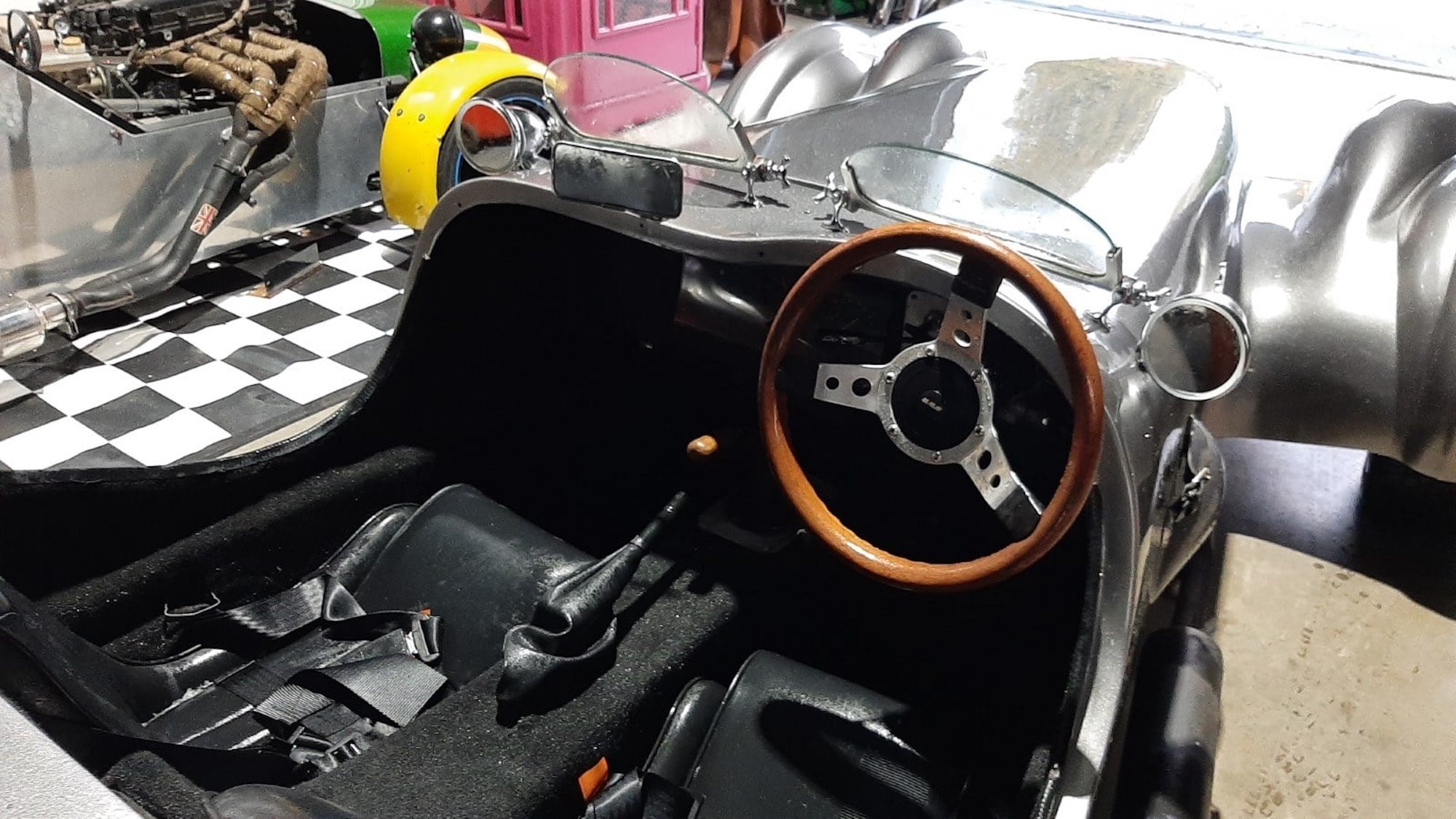
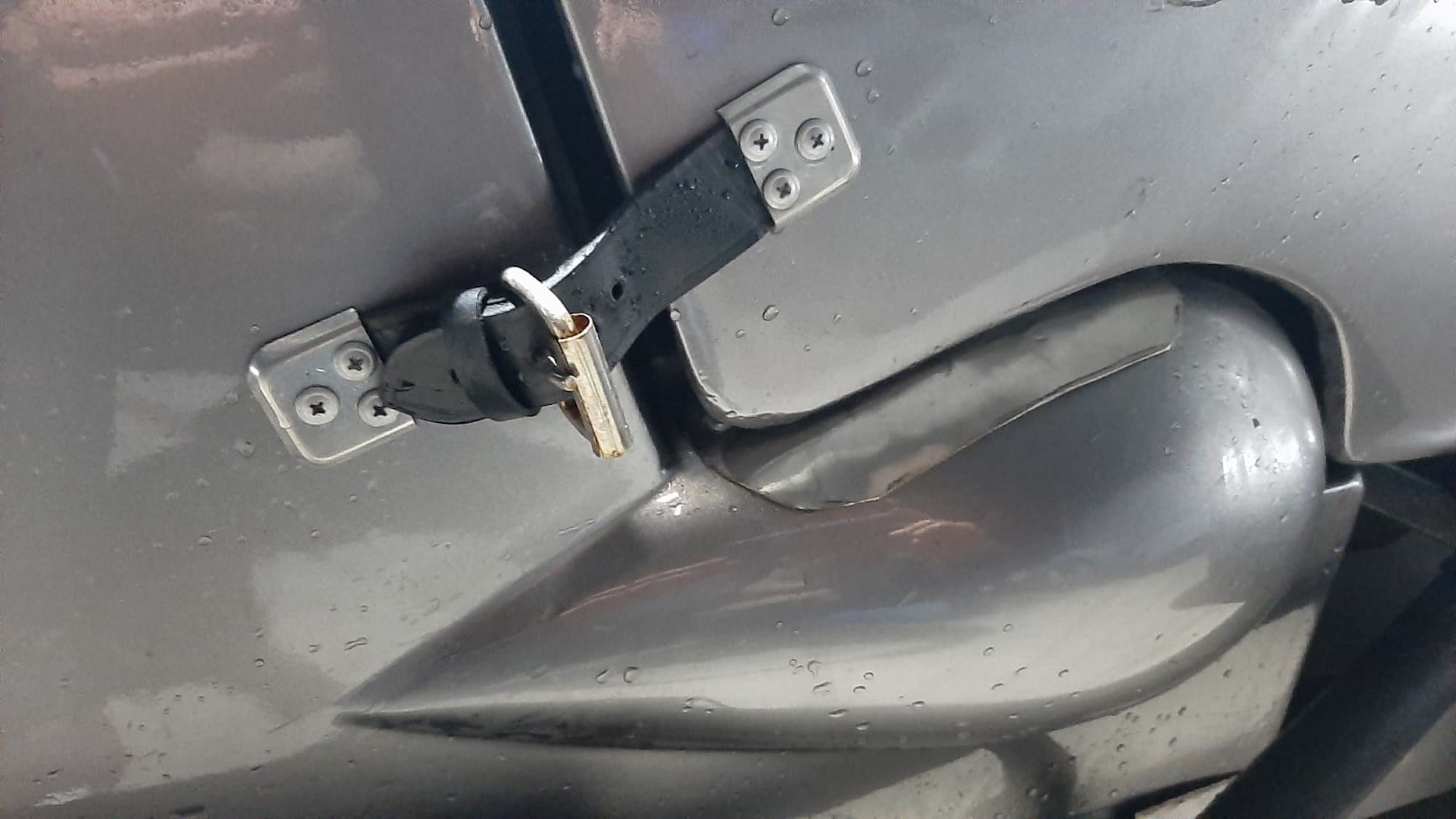
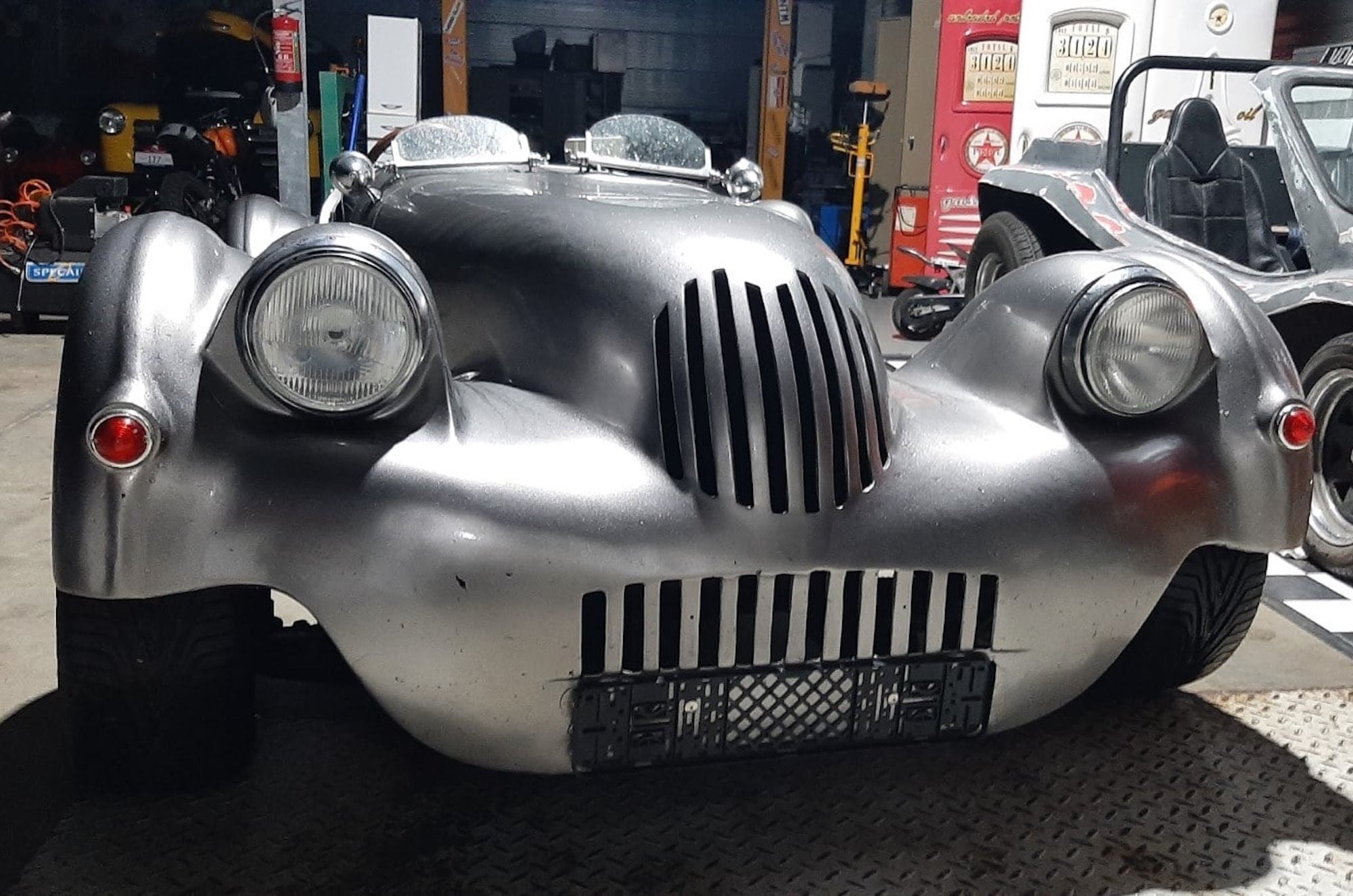
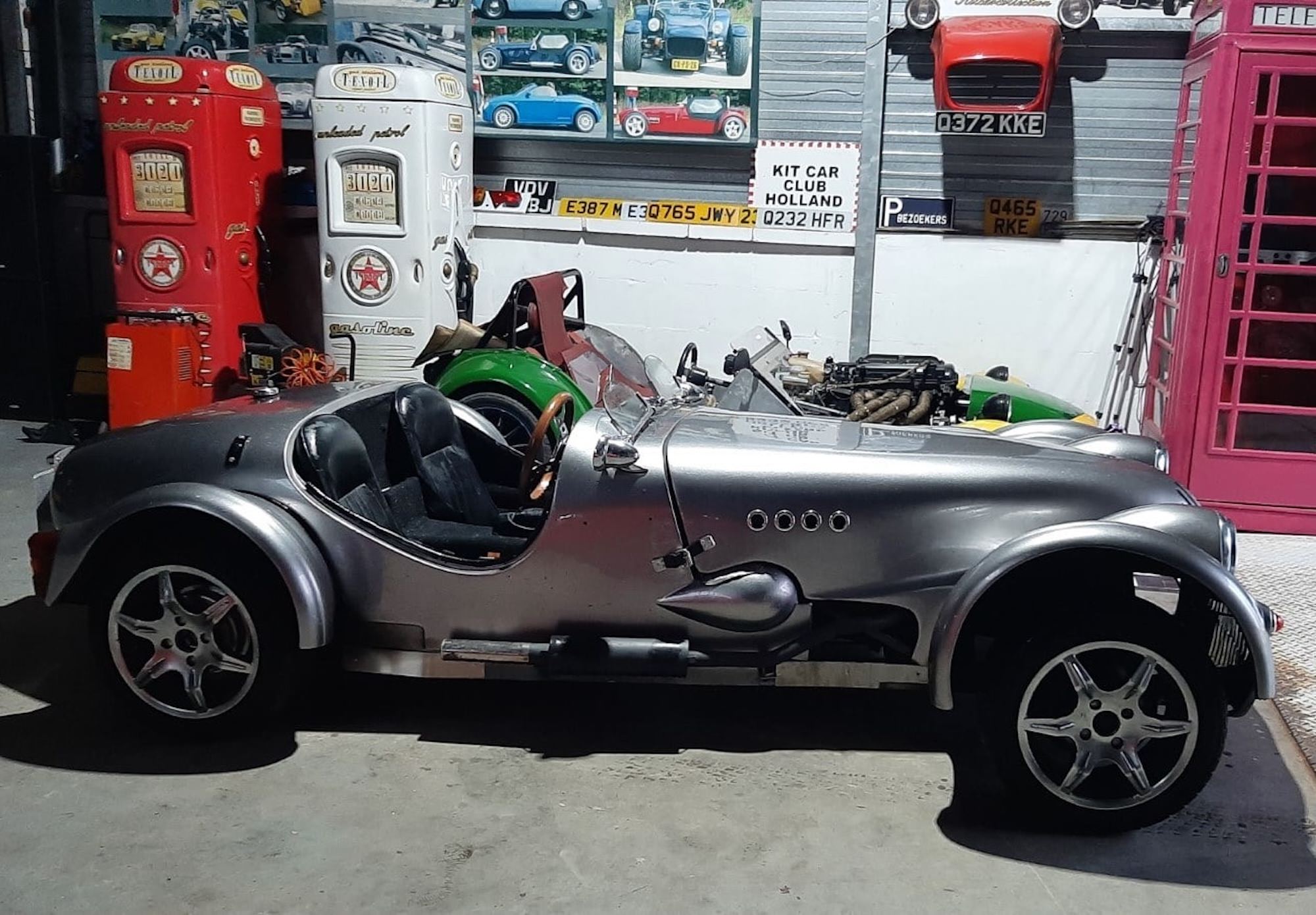
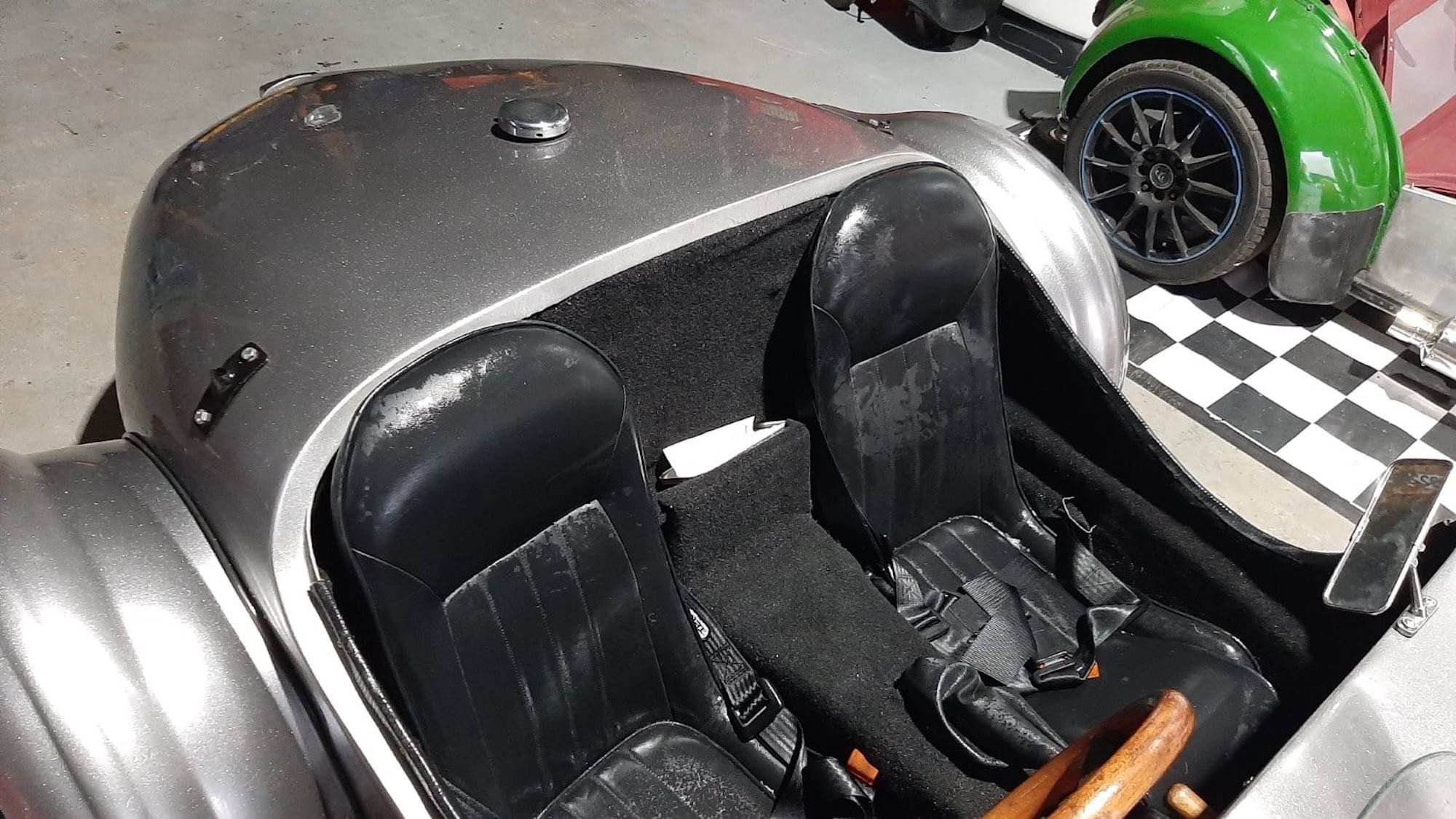
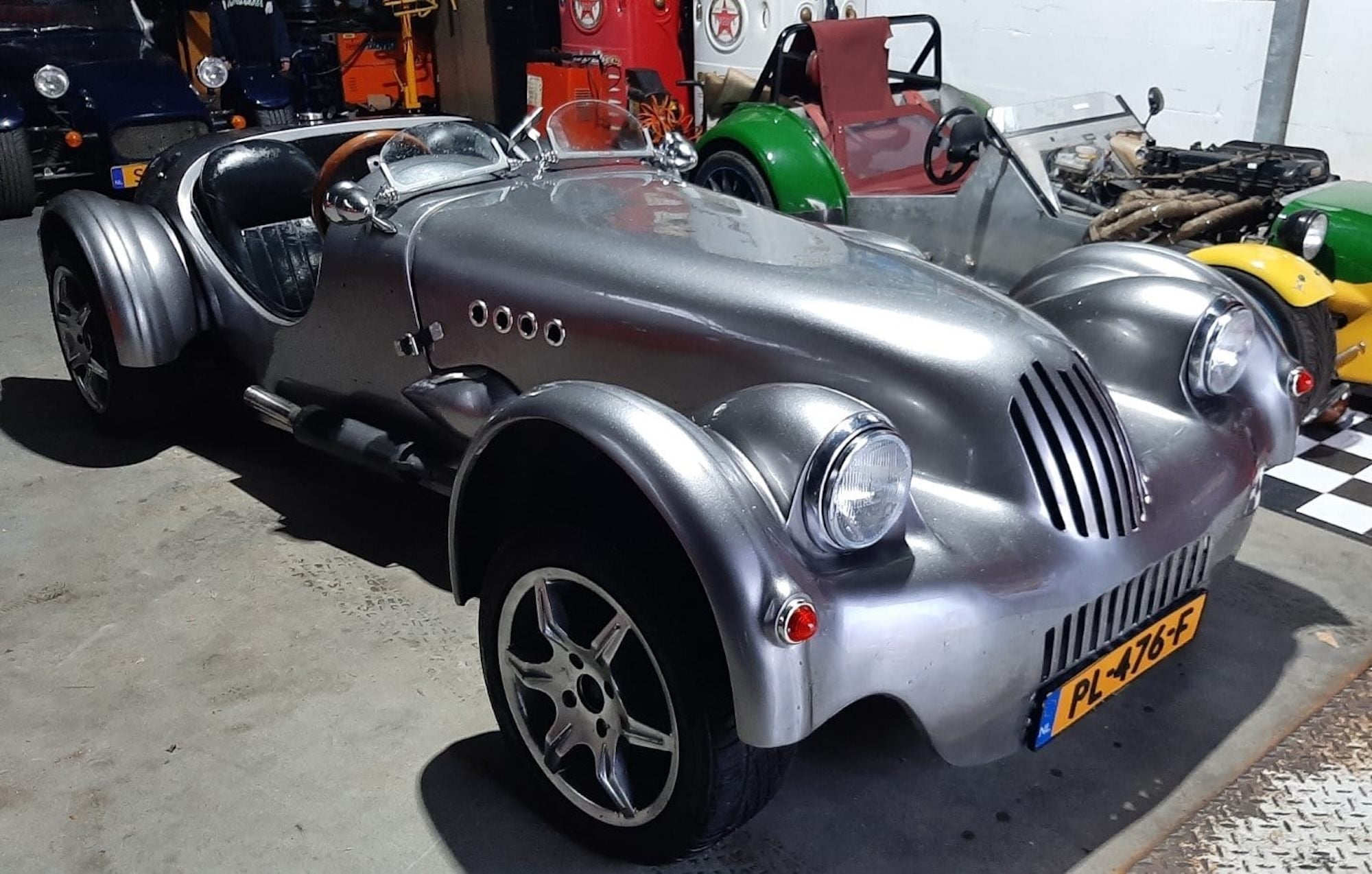
This Wasp is finished in gray, with twin roadster-style windscreens, alloy wheels, a wood-rimmed steering wheel, black upholstery, leather hood straps, and a centrally-located rear filler cap. The car is said to have 40,000 miles on the clock, and it was built in right-hand drive for the UK market.
The car was a simple, open two-seater with minimal weather protection, very much in the spirit of a fair-weather sports car or weekend toy rather than a daily driver.
Precise production numbers are difficult to confirm, most sources agree on seven cars having been built, but some claim as many as ten were made if you factor in prototypes. The Genie Wasp does not appear in any of the major kit car histories or retrospectives that cover the period, and period magazine coverage (if any existed) has not surfaced as far as we can tell.
What little is known about the Wasp comes primarily from a handful of online posts by owners and their families, a brief entry in online databases, and the occasional appearance of surviving cars in classified listings. It now remains one of the more genuinely obscure British kit cars of the late 20th century.
The 1992 Genie Wasp Shown Here
The car shown here is one of the surviving examples of the Genie Wasp, it’s a MkII version meaning it has the boat tail rear end, and it’s powered by the reliable 2.0 liter Ford Pinto engine.
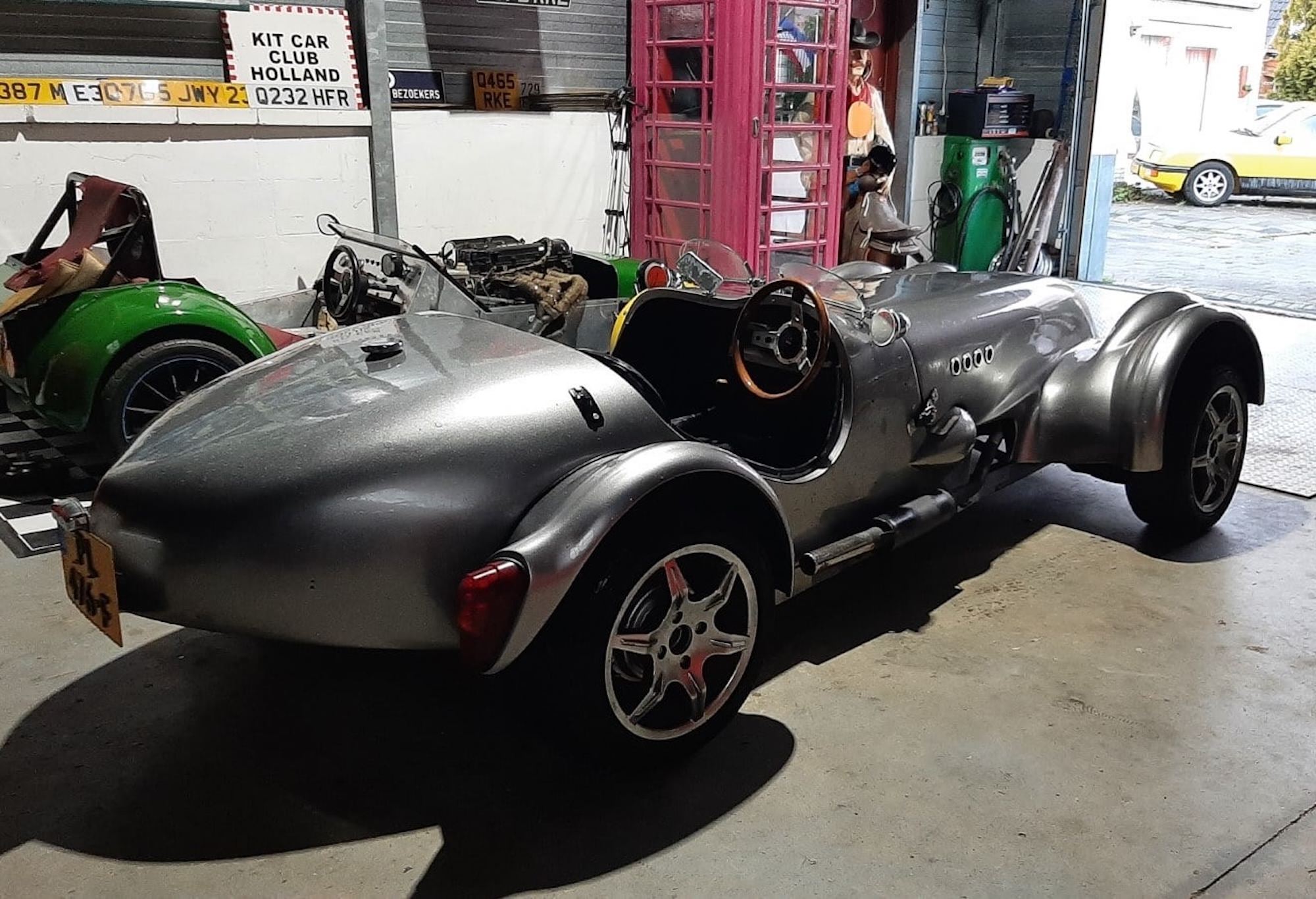
The car shown here is one of the surviving examples of the Genie Wasp, it’s a MkII version meaning it has the boat tail rear end, and it’s powered by the reliable 2.0 liter Ford Pinto engine.
This Wasp is finished in gray, with twin roadster-style windscreens, alloy wheels, a wood-rimmed steering wheel, black upholstery, leather hood straps, and a centrally-located rear filler cap. The car is said to have 40,000 miles on the clock, and it was built in right-hand drive for the UK market.
It’s now being offered for sale out of the Netherlands on Car & Classic with an asking price of £12,500, that’s around $16,900 USD. If you’d like to read more about it or make them an offer you can visit the listing here.
Images courtesy of Car & Classic

Articles that Ben Branch has written have been covered on CNN, Popular Mechanics, Smithsonian Magazine, Road & Track Magazine, the official Pinterest blog, the official eBay Motors blog, BuzzFeed, Autoweek Magazine, Wired Magazine, Autoblog, Gear Patrol, Jalopnik, The Verge, and many more.
Silodrome was founded by Ben back in 2010, in the years since the site has grown to become a world leader in the alternative and vintage motoring sector, with well over a million monthly readers from around the world and many hundreds of thousands of followers on social media.