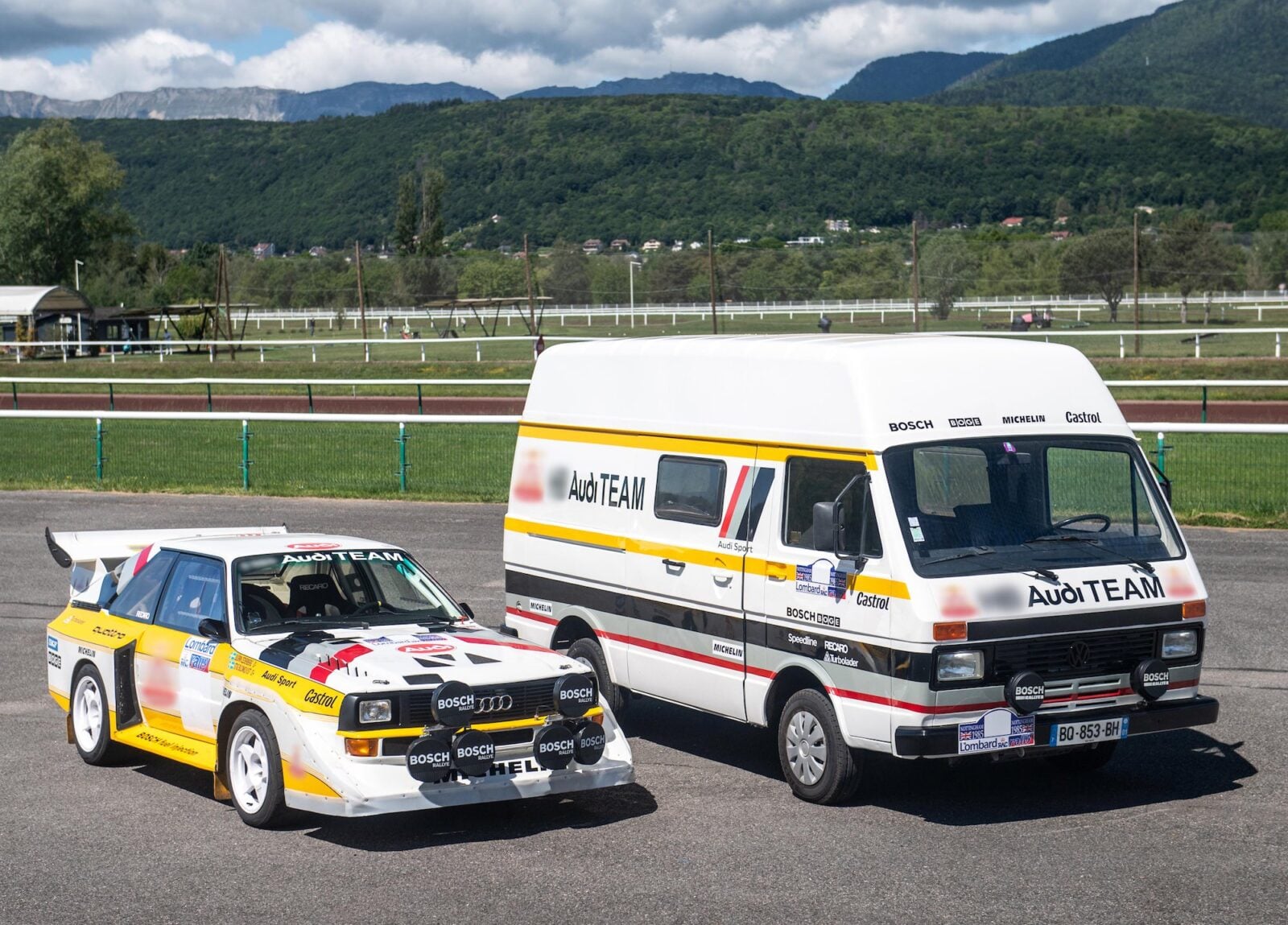
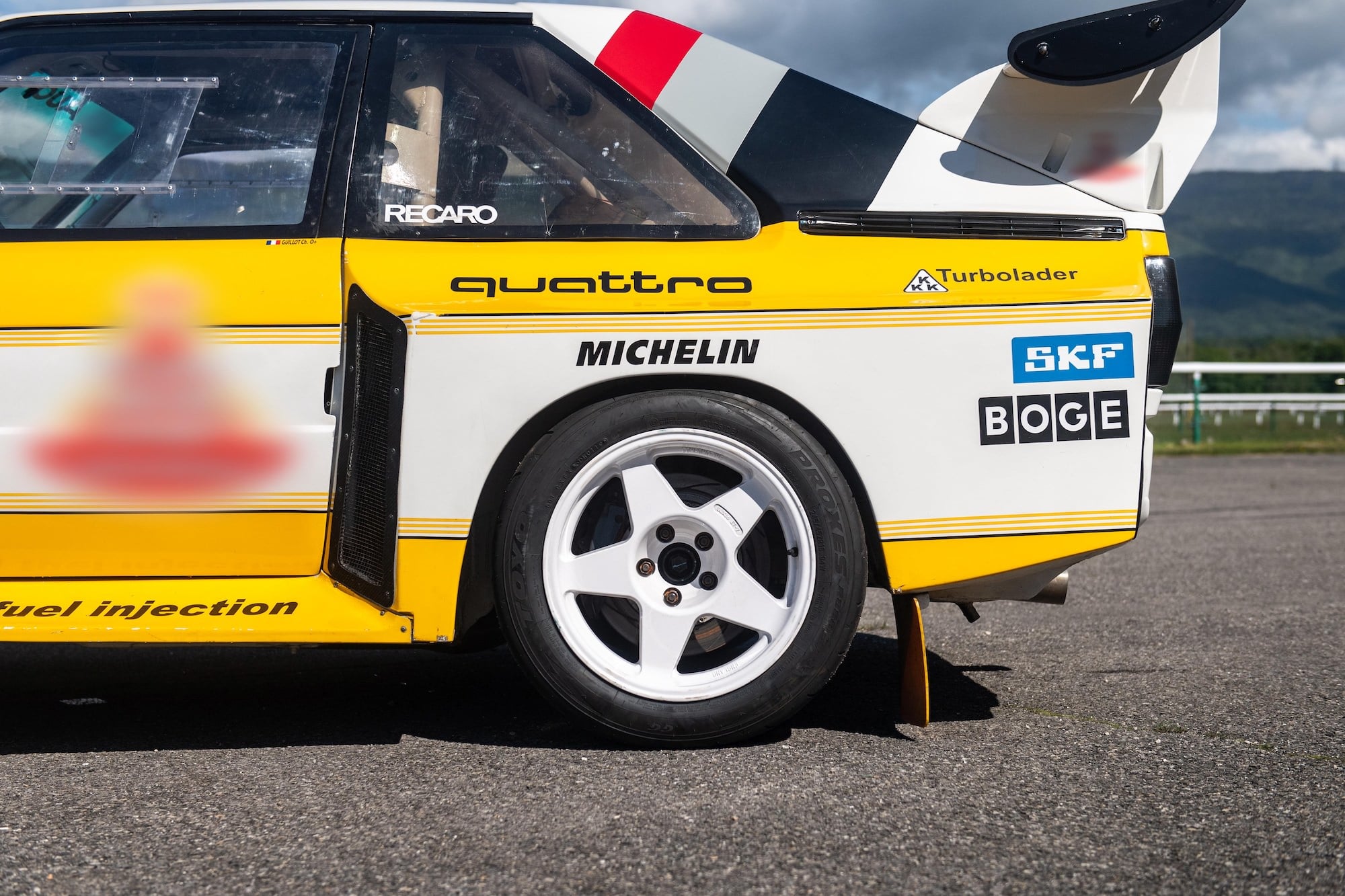
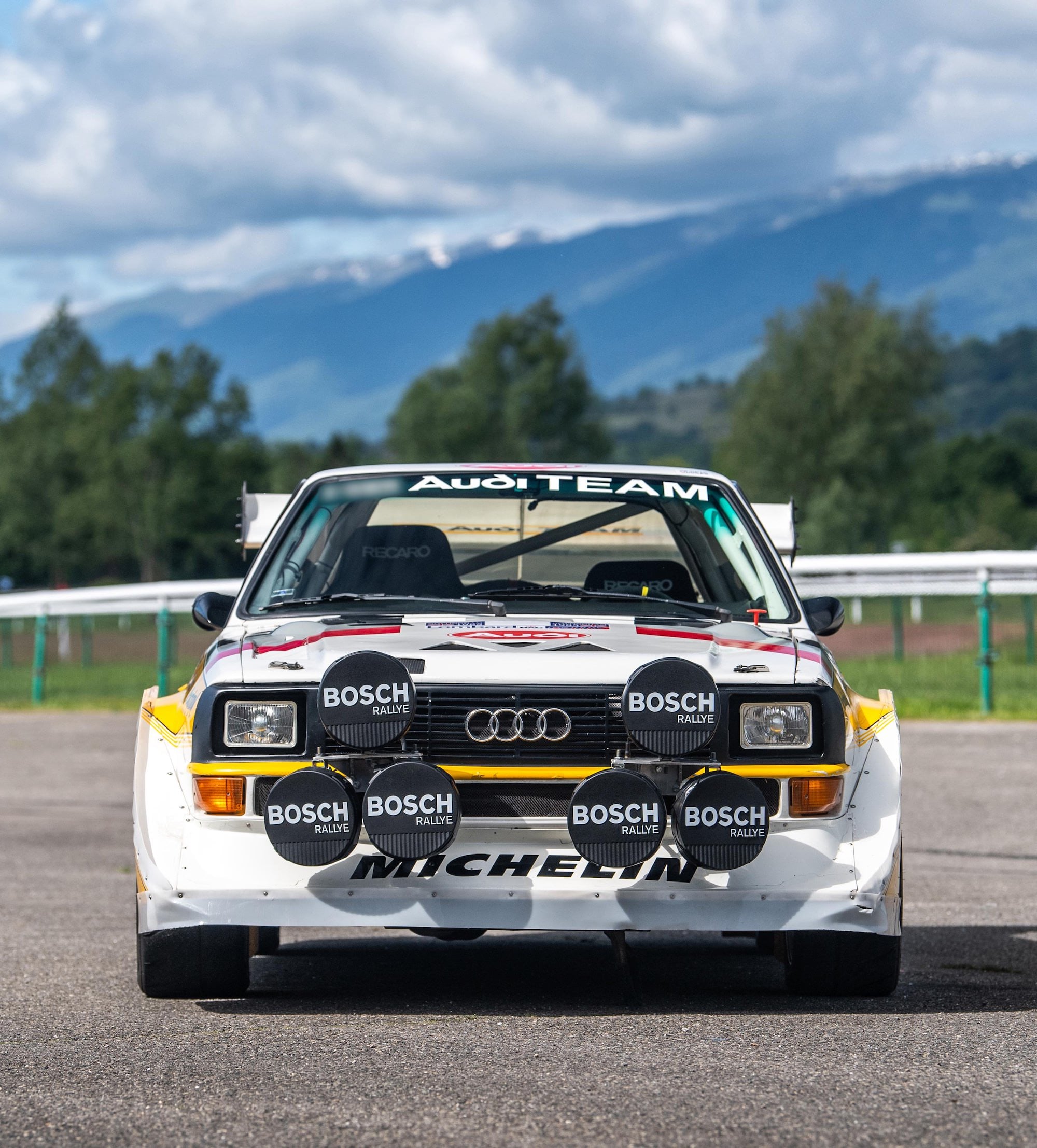
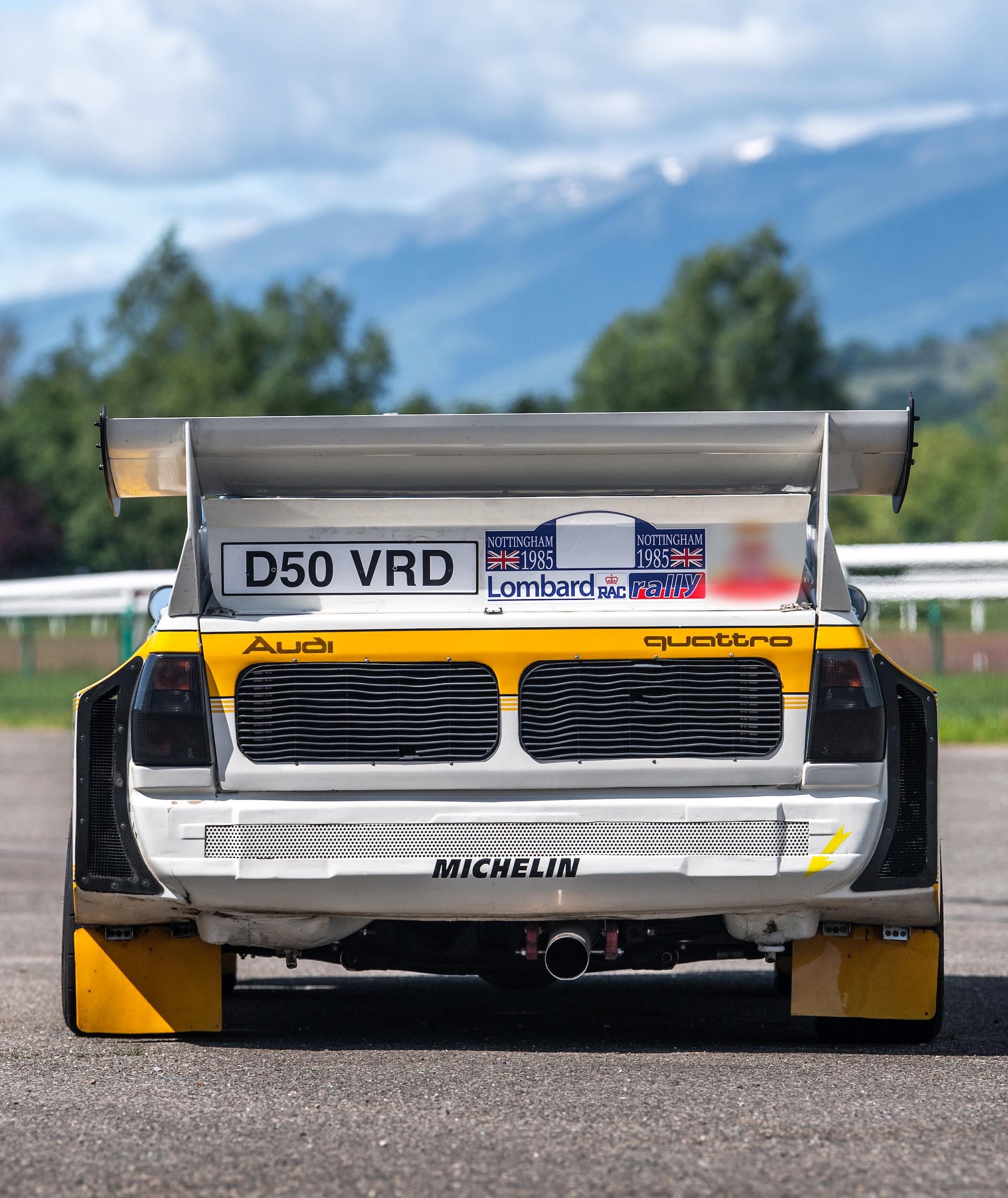
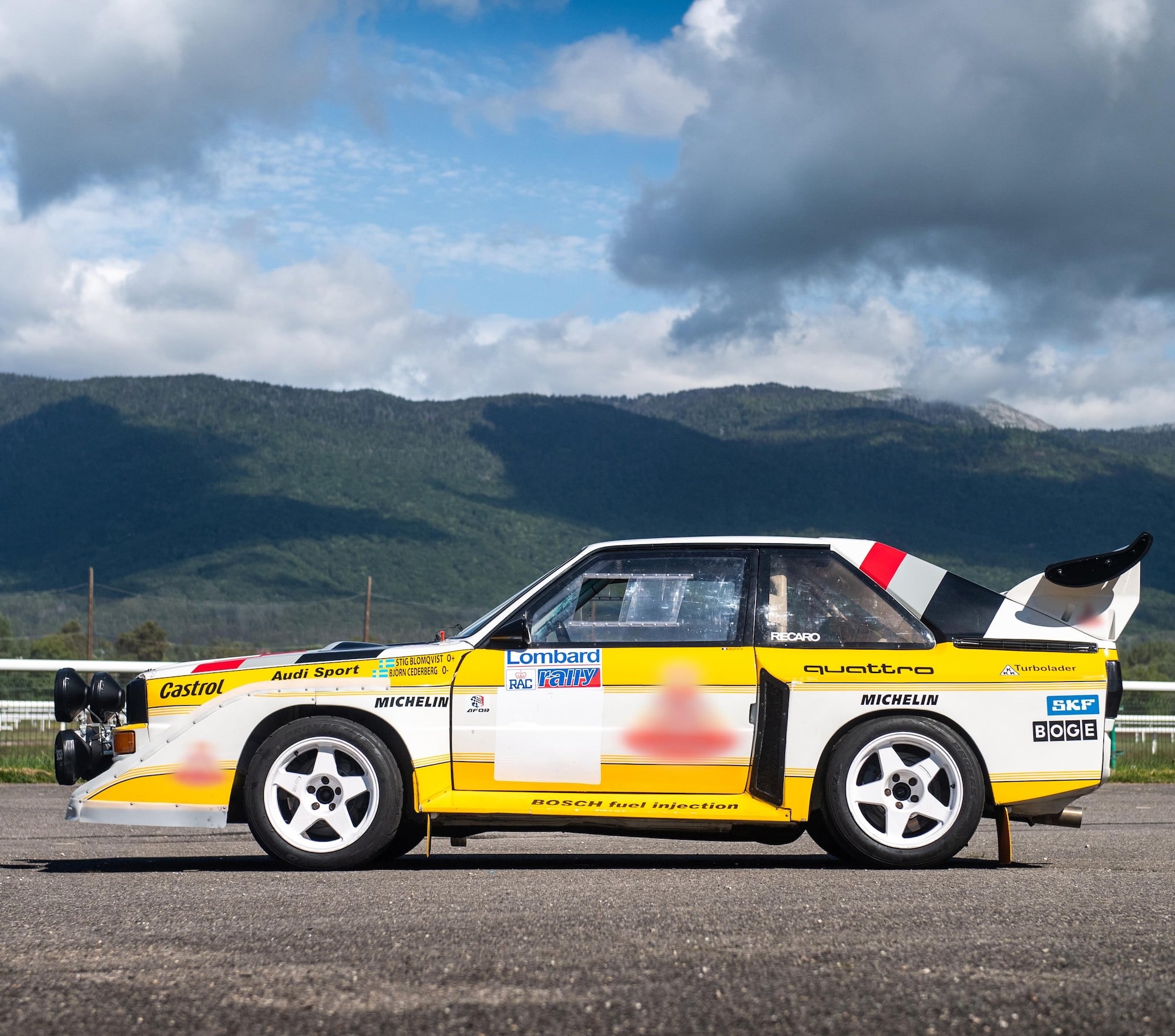
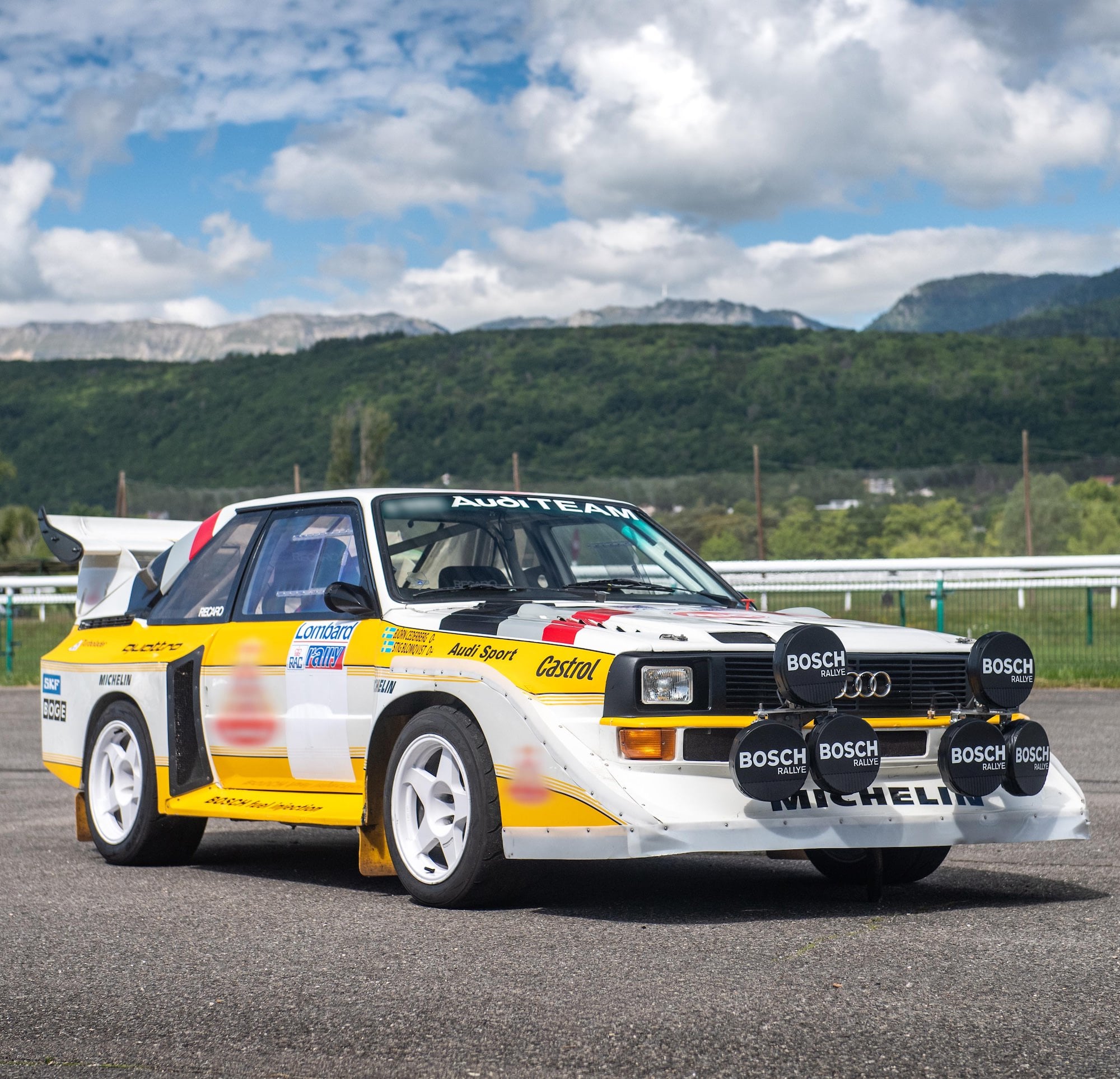
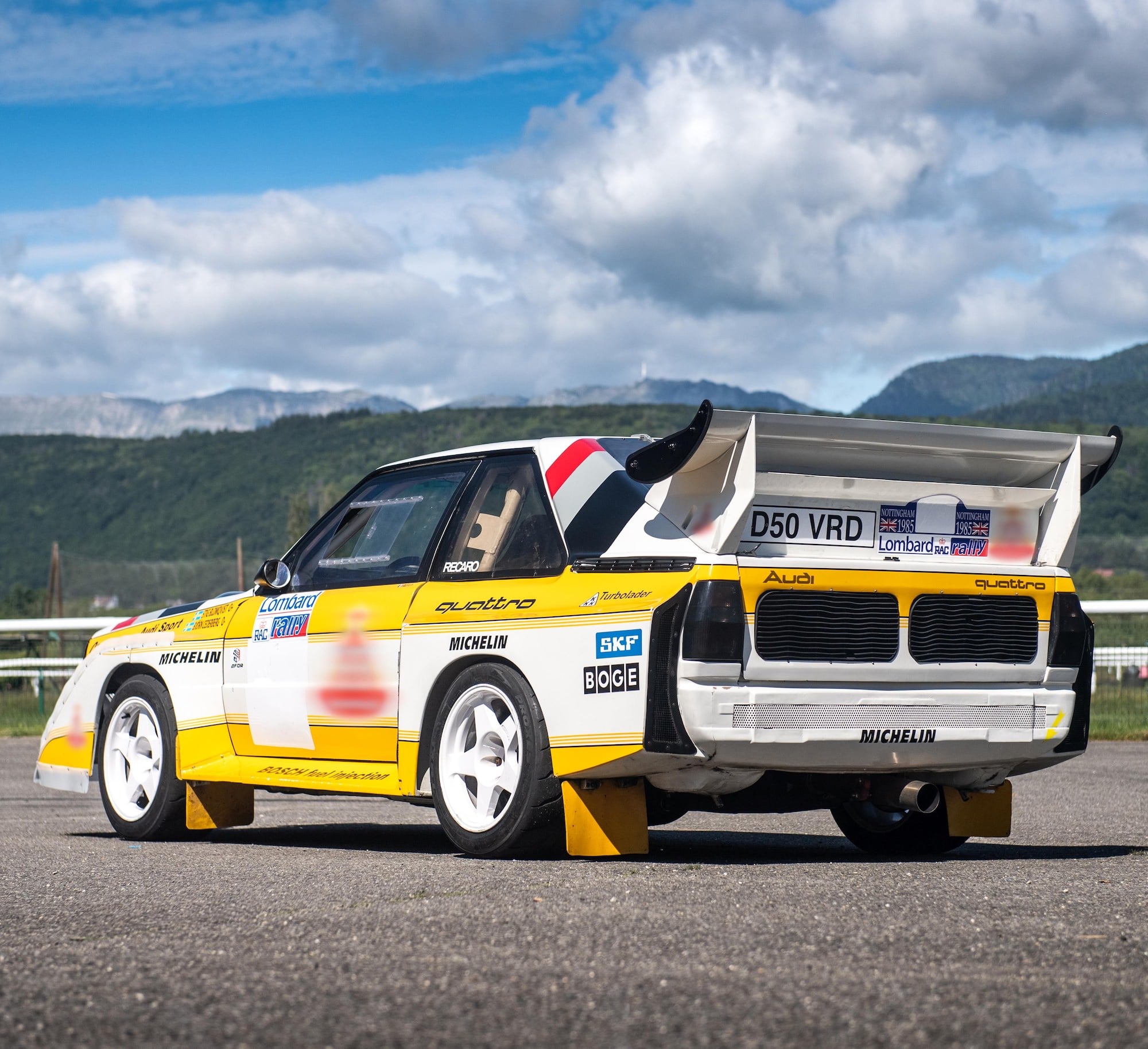
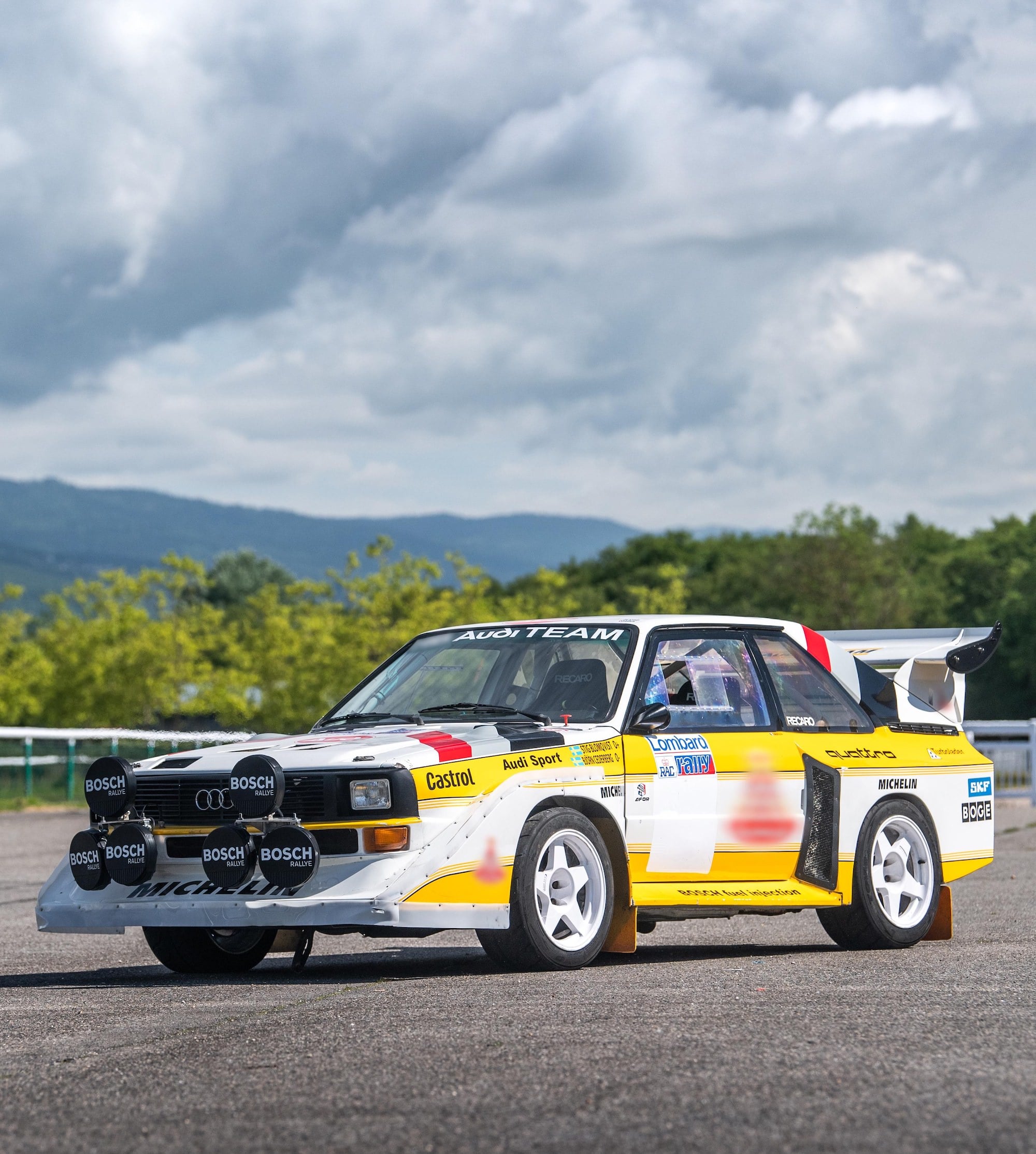
This is a 1986 Audi Quattro Sport S1-E2 that was built from the remains of an original 1986 factory prototype that was damaged during testing. It’s technically a replica, but it was built by Group B specialist Jamie Small to be as close to the real thing as possible.
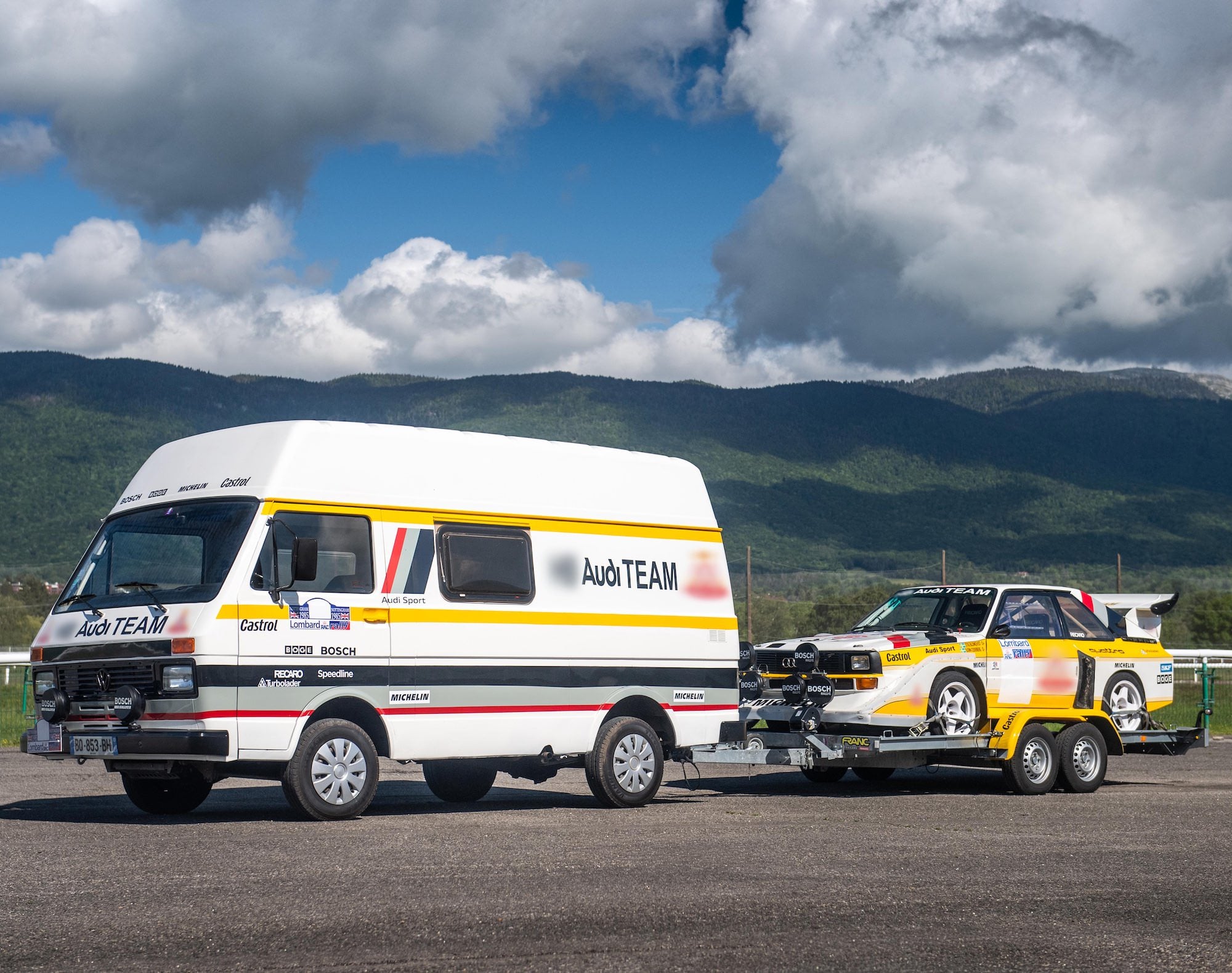
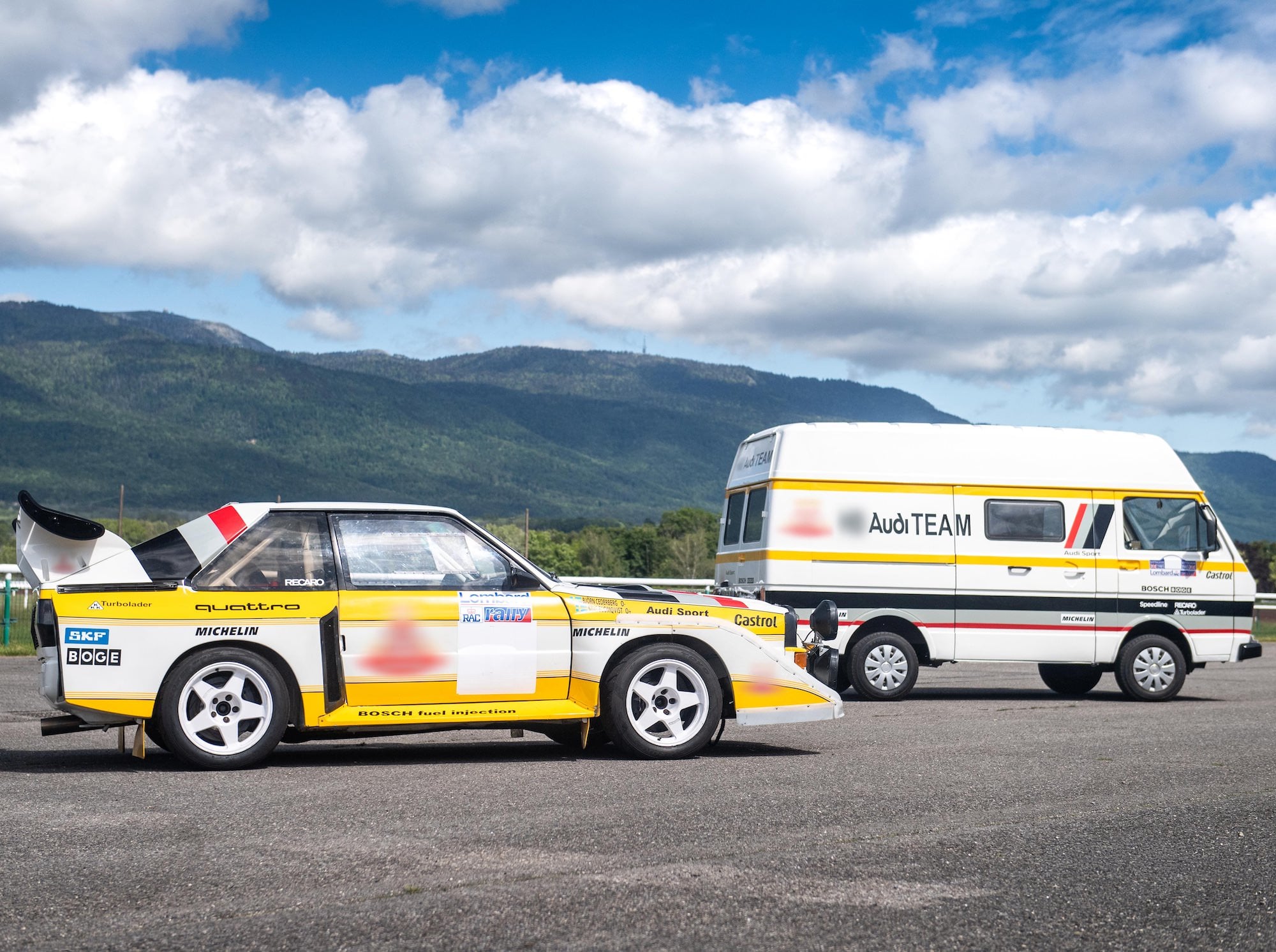
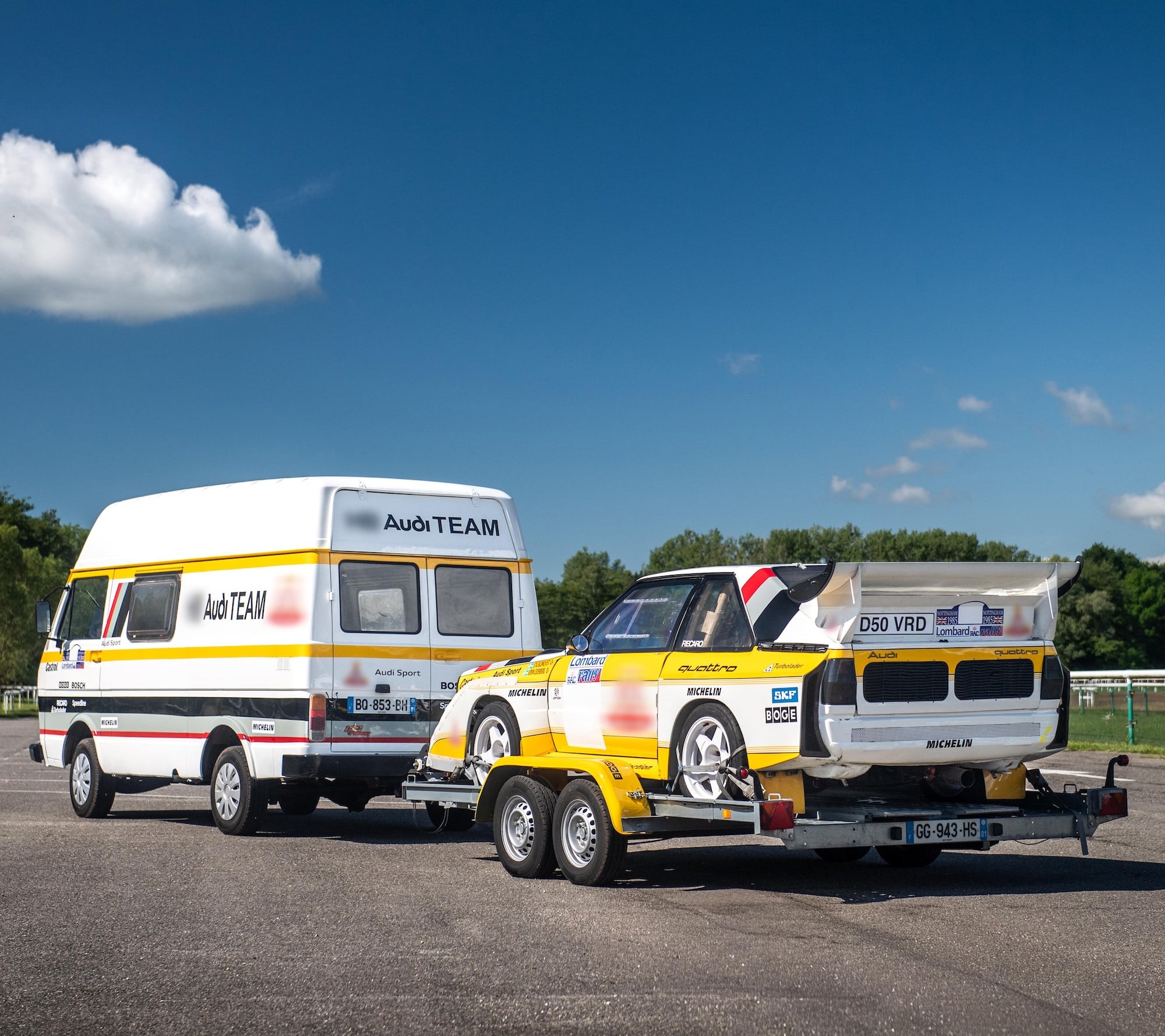
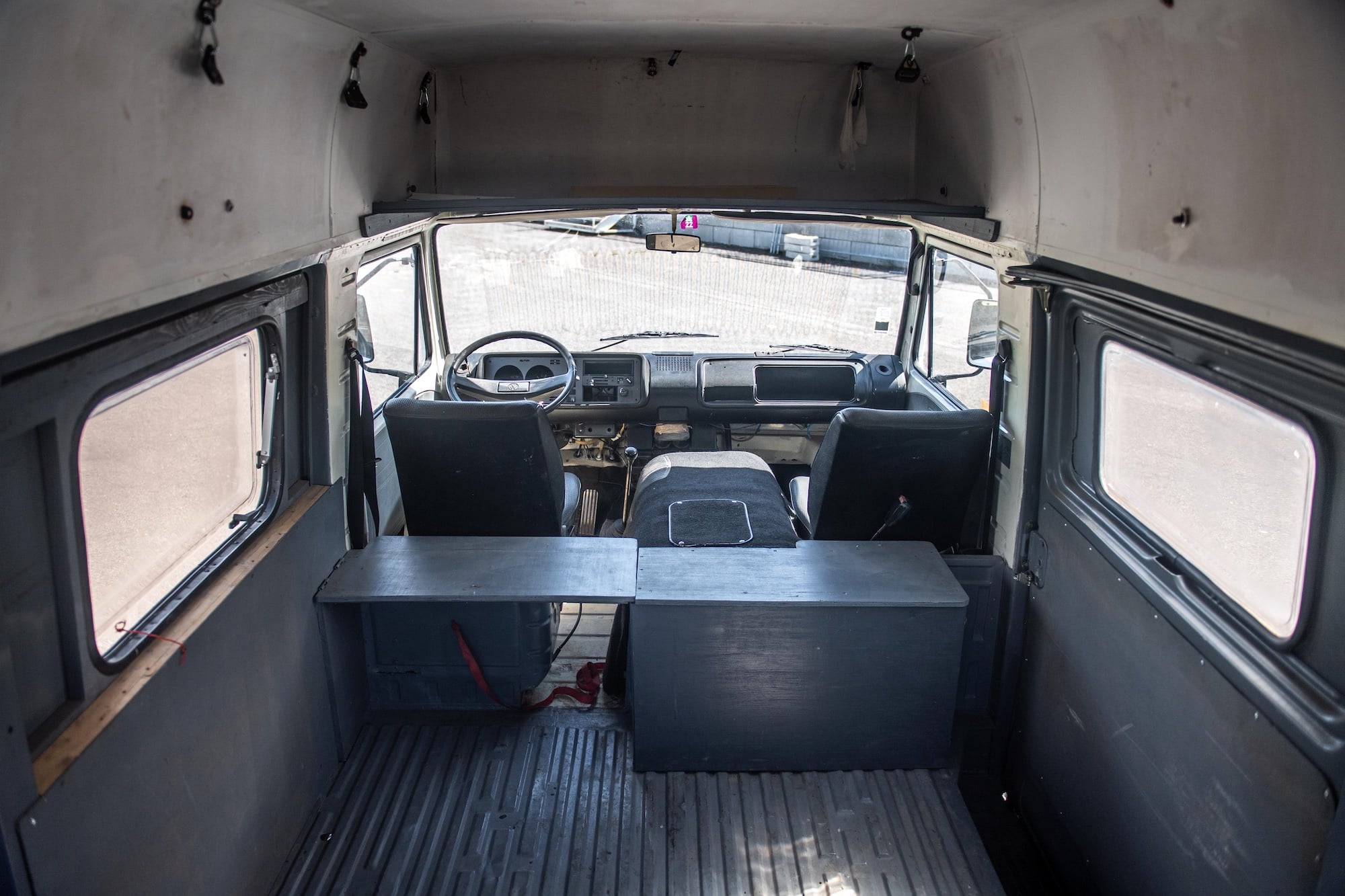
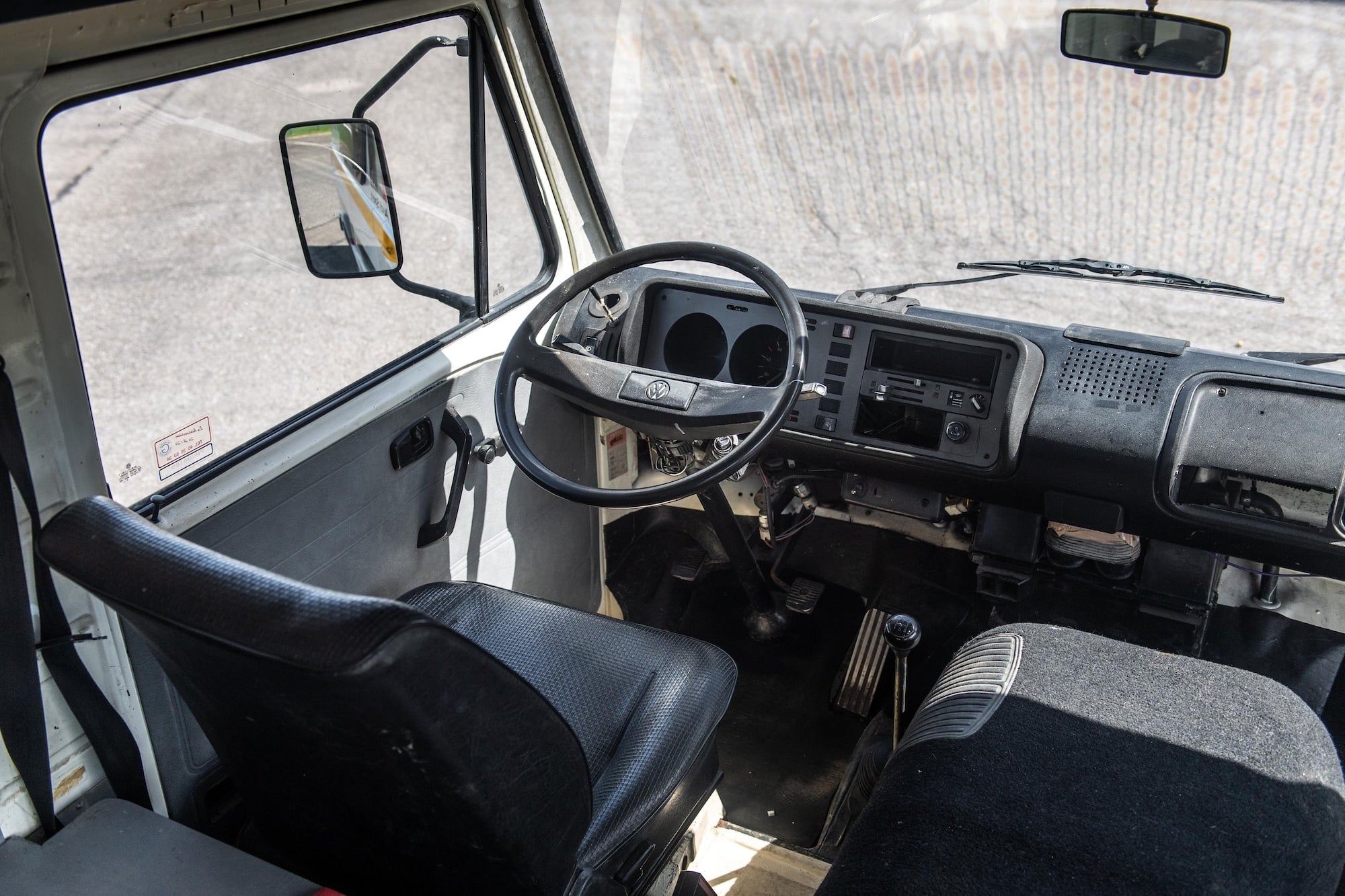
This car is now being sold as a package deal with a period-correct 1988 Volkswagen LT Van that’s been set up like a 1980s Audi rally support vehicle – ideal for towing and for carrying spare parts, tools, and wheels.
Fast Facts: An Audi Quattro Sport S1-E2 Package Deal
- This lot is a two-vehicle transporter package in 1986 Audi works livery: a Volkswagen LT 2.4 D van and a 2022 Trigano trailer carrying a faithful recreation of the Audi Sport Quattro S1 E2. The van handles towing and carries spare parts, tools, and wheels, just like a period Audi rally support vehicle.
- The car is technically a replica but built from an original 1986 factory prototype, damaged in testing and sold by Audi in England without an engine. Group B specialist Jamie Small rebuilt it as one of his first such projects, keeping as many original parts as possible and following factory specification closely.
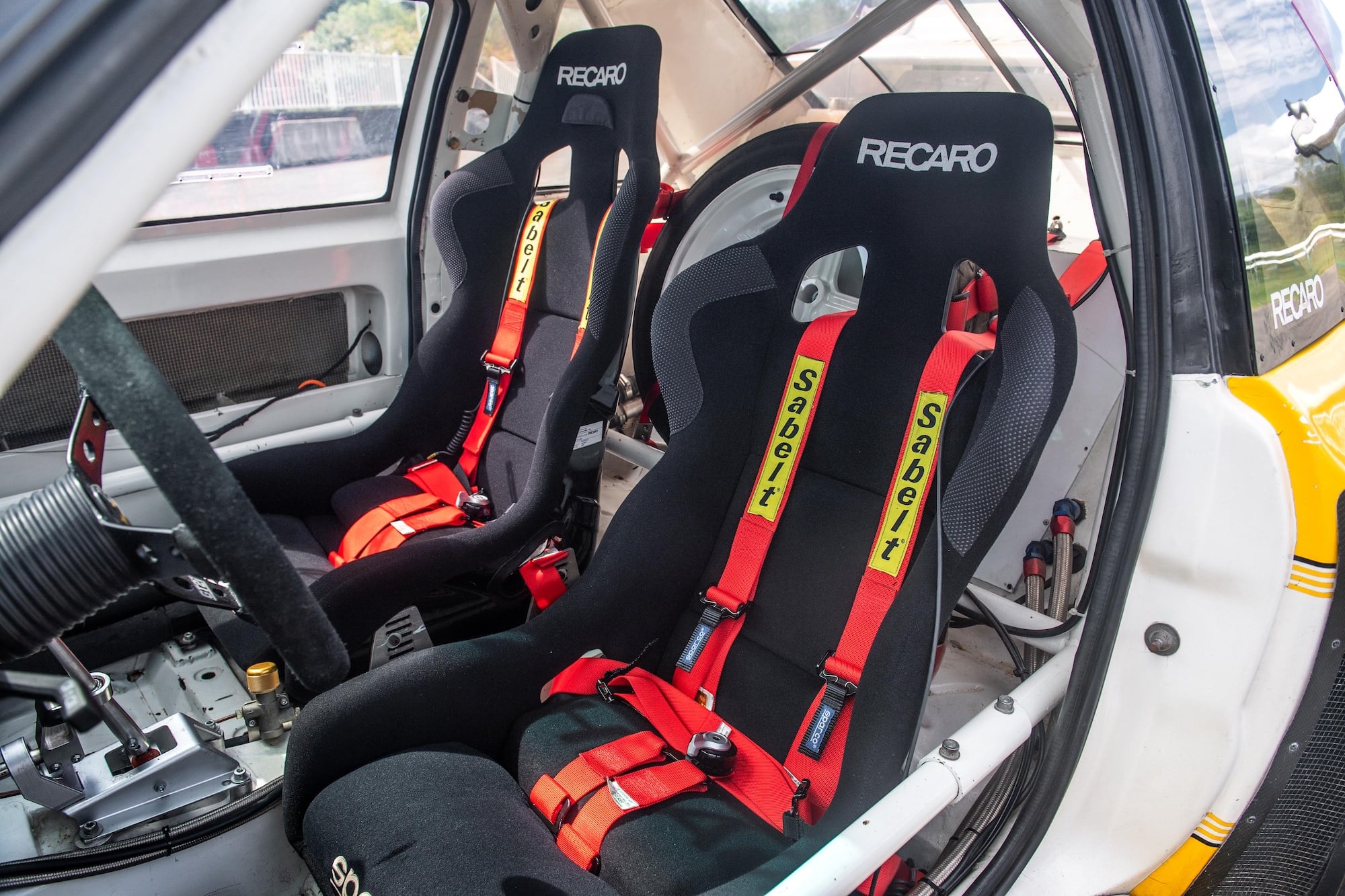
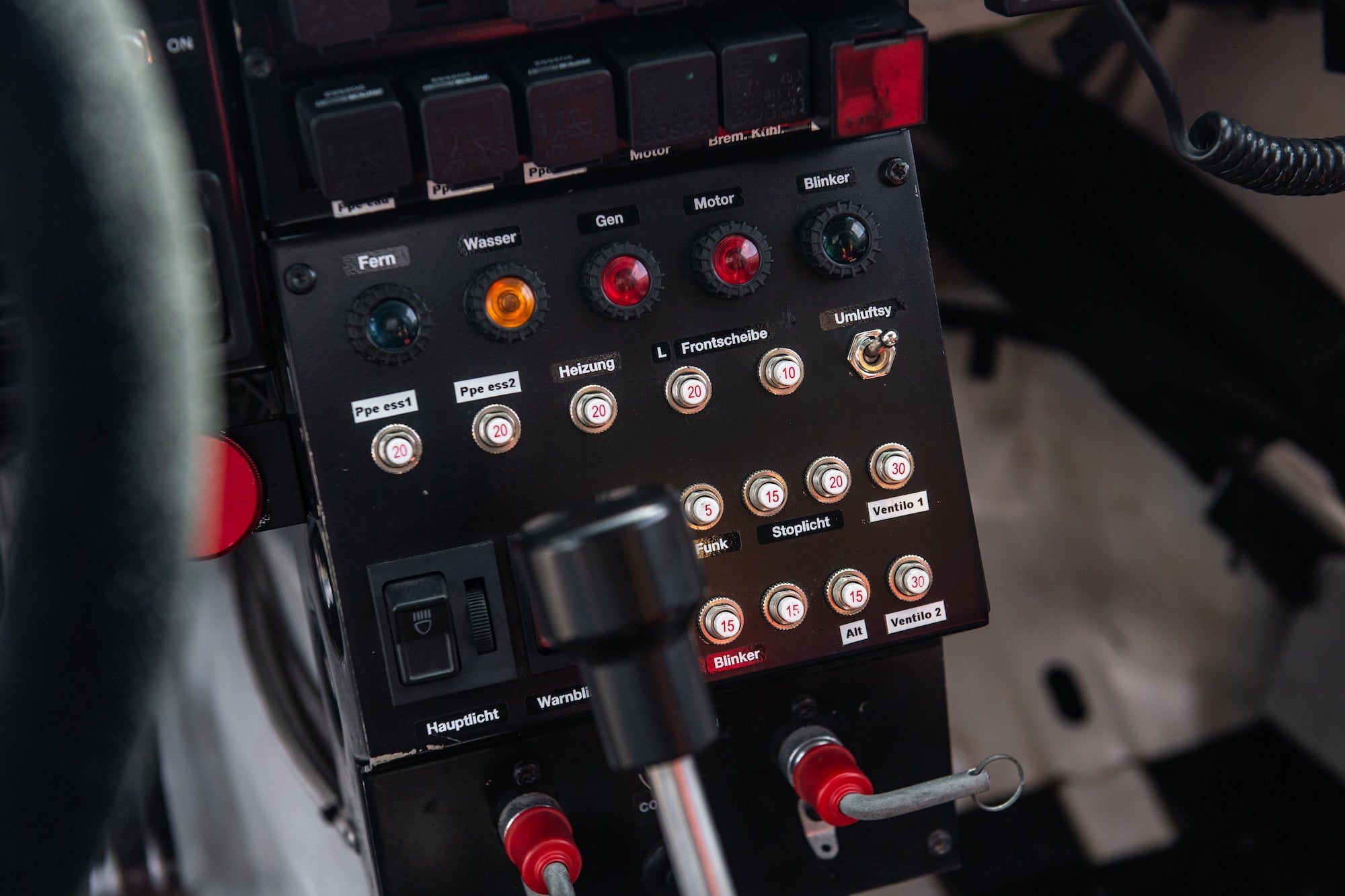
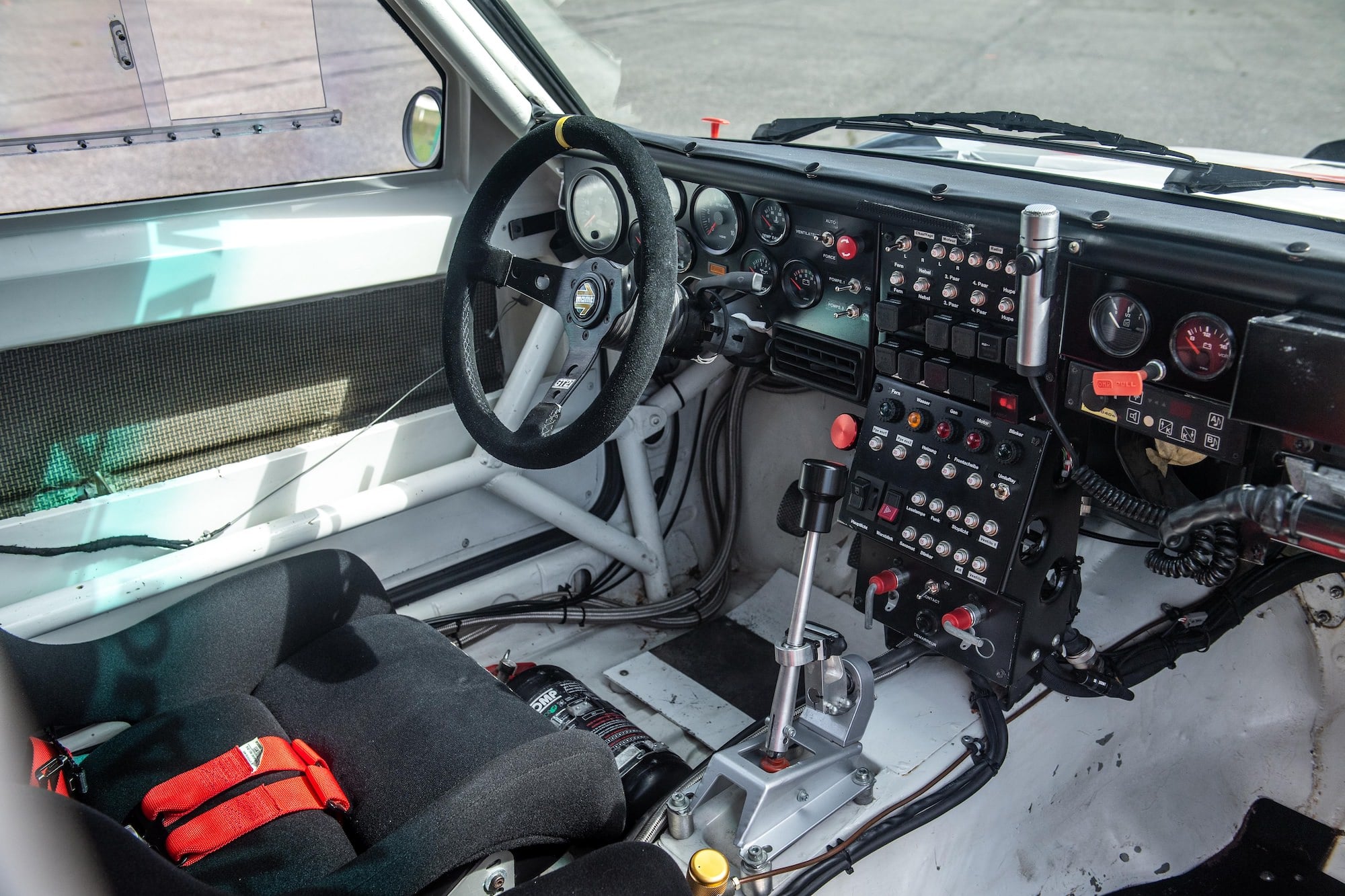
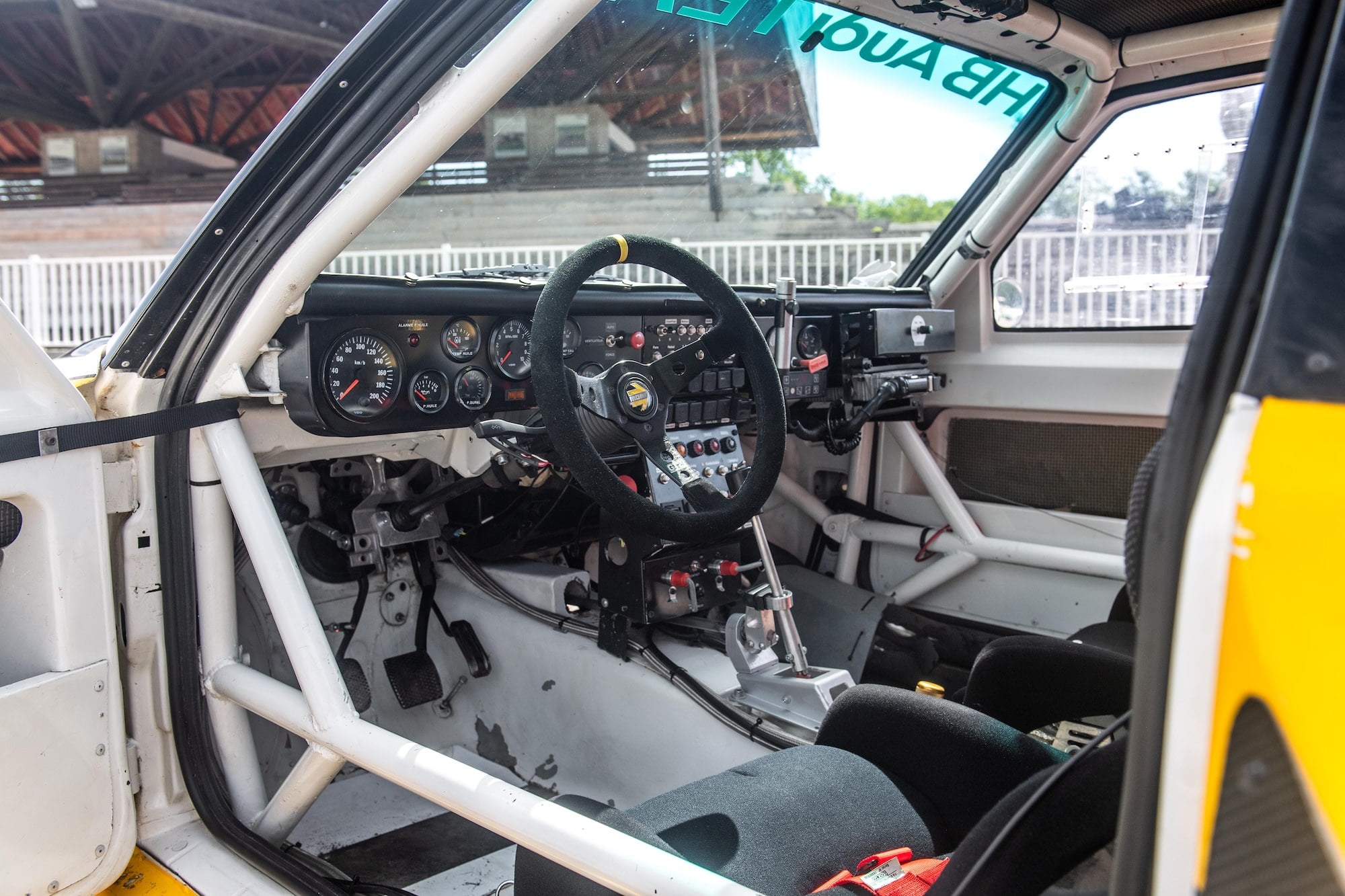
- Mechanically it carries Kevlar bodywork, racing suspension, a roll cage matching the original, and Recaro seats with Sabelt harnesses. Power comes from an original Audi S2 five-cylinder turbo running a Motec ECU, recorded at 600 bhp on the dynamometer, paired with a six-speed dog-engagement gearbox.
- It’s appeared in demonstration runs driven by names including Stig Blomqvist, Hannu Mikkola, Bernard Darniche, Sébastien Loeb, and Anthony Beltoise. Supplied with a file of invoices and registered as a road car, it is intended for track or closed-road use and heads to Artcurial in early July.
History Speedrun: The Audi Quattro Sport S1-E2
The Audi Sport Quattro S1 E2 arrived in the latter half of 1985, near the end of Audi’s competitiveness in Group B. By that point the mid-engined Peugeot 205 T16 had taken over the World Rally Championship, and Audi’s front-engined Quattro, though technically advanced when it first appeared, had become heavy and perhaps a little nose-led by the standards of its mid-engined rivals.
 This is a 1986 Audi Quattro Sport S1-E2 that was built from the remains of an original 1986 factory prototype that was damaged during testing. It’s technically a replica, but it was built by Group B specialist Jamie Small to be as close to the real thing as possible.
Rather than design an all-new mid-engined car, Audi reworked the platform it already had, the result was the S1 E2 – built in a run of about 20 cars, fitted with large front and rear wings, and powerful enough to win a single World Rally Championship event, not long before the category was banned. Its most memorable result came after Group B, at the Pikes Peak hill climb in Colorado.
Audi introduced the original Quattro, later known as the Ur-Quattro, in 1980, just as the rules changed to permit four-wheel drive in international rallying. It was the four-wheel-drive car that would fundamentally change the World Rally Championship.
The combination of a turbocharged inline-five and permanent all-wheel drive gave it all-surface grip its rivals simply couldn’t match, particularly on loose surfaces. After taking its first WRC win in early 1981, Audi won the Manufacturers’ Title in 1982 and again in 1984, the Drivers’ Championship with Hannu Mikkola in 1983, and the Drivers’ Title once more with Stig Blomqvist in 1984.
In 1984 the company shortened the wheelbase by 320 mm to create the Sport Quattro, a homologation model sold to the public in a run of 224 cars. The S1 evolution followed a year later, and the definitive S1 E2 appeared in the second half of 1985.
The E2 combined the 2,110 cc aluminum-block five-cylinder with a 20-valve twin-cam head and a KKK turbocharger. Audi’s official figure was 473 bhp, but the engine’s recirculating-air system, which kept the turbocharger spinning when the driver lifted off the throttle so that full boost returned almost immediately, meant true output could reach above 500 bhp at 8,000 rpm. It was an absolute howler.
The final factory cars of 1986 were rated near 590 bhp. That recirculating-air arrangement was an early form of the anti-lag systems used in rally cars today. The bodywork was Kevlar over a steel structure, and Audi moved the radiator and other ancillaries to the rear to reduce the car’s previous front-heavy weight bias to about 52%, and replaced the earlier manually lockable 50:50 center differential with a variable setup.
The large front and rear wings made the E2 one of the first rally cars built to generate real levels of measurable aerodynamic downforce. At 1,090 kgs (2,403 lbs), it could reach 62 mph in 3.1 seconds, quicker in a straight line than a Ferrari 288 GTO or a Porsche 959. Some examples were fitted with an experimental dual-clutch “power-shift” gearbox, an early forerunner of today’s DSG gearboxes.
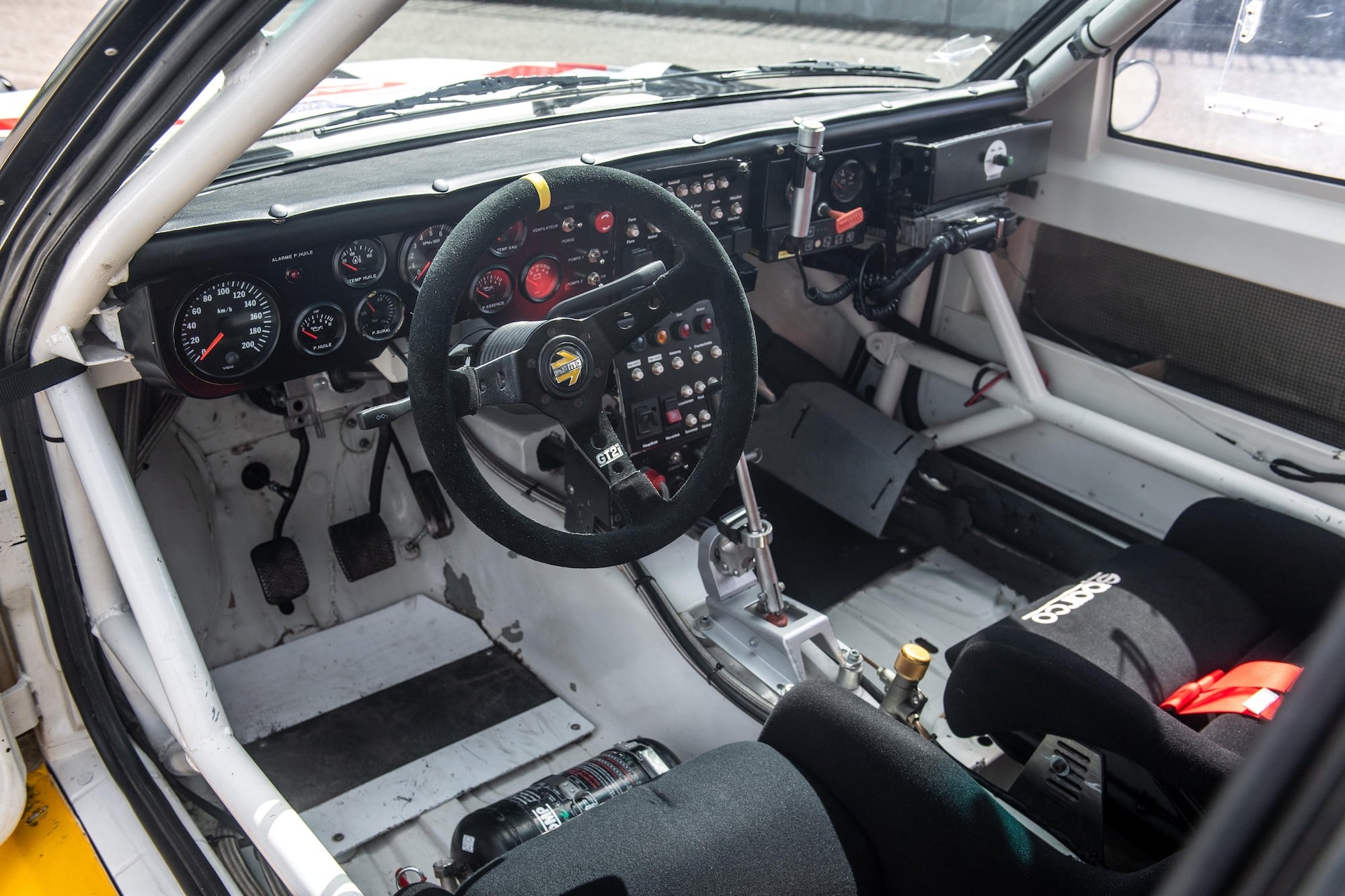
The replica is based on a 1986 factory prototype that was damaged during testing and sold by Audi in England without an engine. It was rebuilt by specialist Jamie Small, who is known for his Group B recreations, and this was among his first such builds. The work kept as many original parts as possible and followed factory specification closely.
The E2’s World Rally Championship record was, sadly, rather short. Its only WRC win came at the 1985 Sanremo Rally, with Walter Röhrl and co-driver Christian Geistdörfer. Geistdörfer later described how the car’s speed had changed familiar corners, making them more difficult and less predictable.
The 1986 season began reasonably, with Mikkola third and Röhrl fourth at the Monte Carlo Rally, but the Group B era was already in trouble. At the Rally de Portugal in March, Joaquim Santos lost control of his Ford RS200 and crashed into spectators, killing three and injuring dozens.
The works teams withdrew from the event, and Audi ended its World Rally Championship program shortly afterward. Two months later, Lancia’s Henri Toivonen and his co-driver Sergio Cresto were killed at the Tour de Corse, and the FIA banned Group B from the championship for 1987. The 1986 season was completed, but the most powerful rally cars yet built had no future in the sport.
After Group B ended, Audi entered the E2 in the Pikes Peak International Hill Climb in Colorado. The company had already done well there – Michèle Mouton won in 1985 in a Sport Quattro, becoming the first woman to win the event outright, and Bobby Unser won in 1986.
For 1987, Audi prepared an E2 with a larger K28 turbocharger and a tall twin-deck rear wing and entered it for Röhrl. He beat the works Peugeot team and became the first driver to complete the climb in under 11 minutes, recording 10:47.85, about 22 seconds faster than the previous record. Audi then formally retired the car from competition.
The car’s influence on rallying came as part of the wider Quattro program – the original Quattro had already pushed every major manufacturer toward four-wheel drive, Lancia team manager Cesare Fiorio described it as the car his company should have built and went on to develop the Delta S4.
After seeing Röhrl’s car at Pikes Peak, Peugeot’s Jean Todt had aerodynamic parts added to the 205. Four-wheel drive, once unusual at the top level of the sport, soon became the de facto standard.
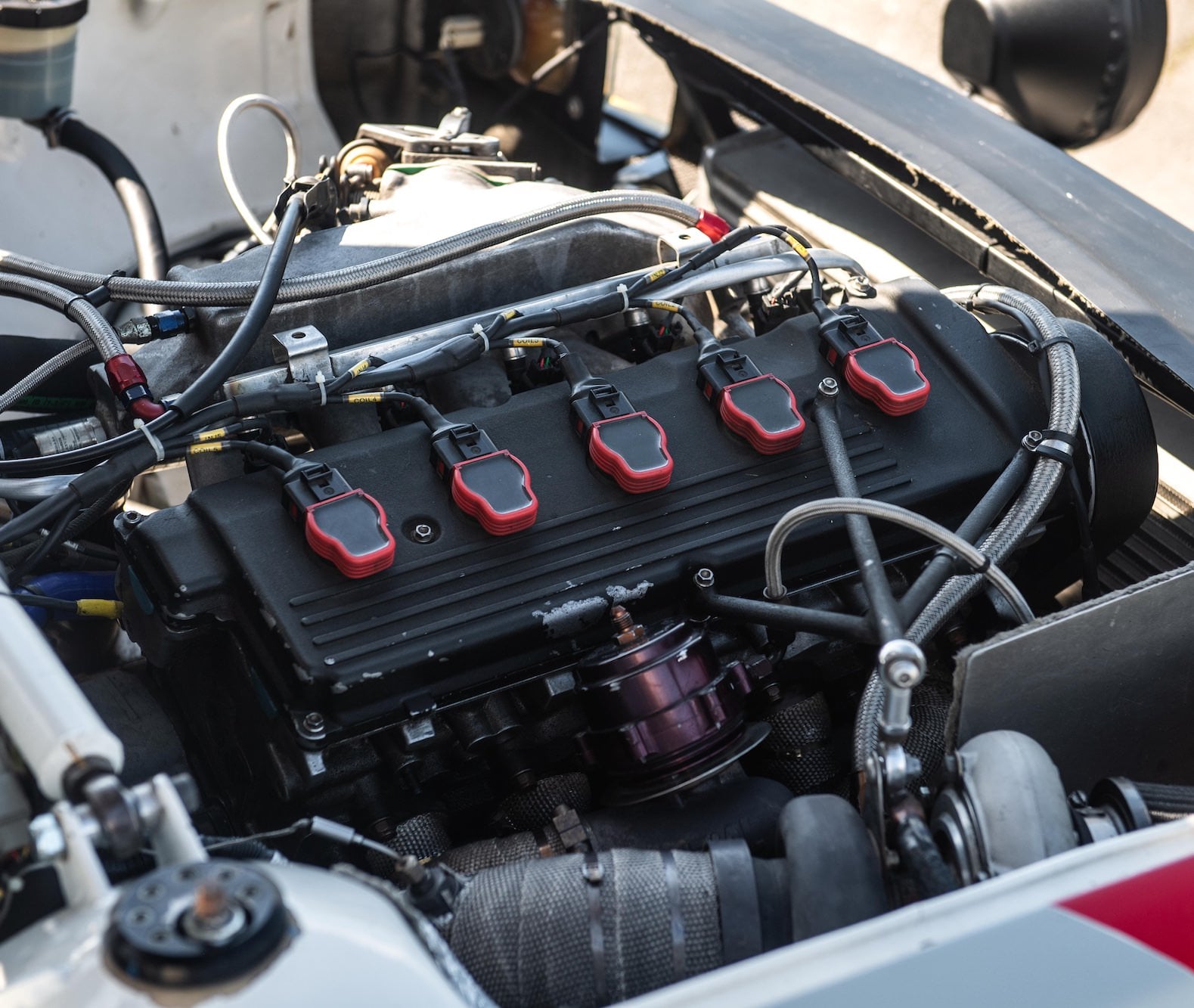
Power comes from an original Audi S2 five-cylinder turbo running a Motec ECU, recorded at 600 bhp on the dynamometer, paired with a 6-speed dog-engagement gearbox.
The Audi Quattro Sport S1-E2 + VW Van Shown Here
This lot is a two-vehicle transporter package finished in the 1986 Audi works livery. A Volkswagen LT 2.4 D van tows a 2022 Trigano trailer carrying a faithful recreation of the Audi Sport Quattro S1 E2, built to closely follow the 1986 factory car.
The replica is based on a 1986 factory prototype that was damaged during testing and sold by Audi in England without an engine. It was rebuilt by specialist Jamie Small, who is known for his Group B recreations, and this was among his first such builds. The work kept as many original parts as possible and followed factory specification closely.
Mechanically, the car carries Kevlar bodywork, racing suspension, a roll cage built to match the original, and Recaro seats with Sabelt harnesses. Power comes from an original Audi S2 five-cylinder turbo running a Motec ECU, recorded at 600 bhp on the dynamometer, paired with a 6-speed dog-engagement gearbox.
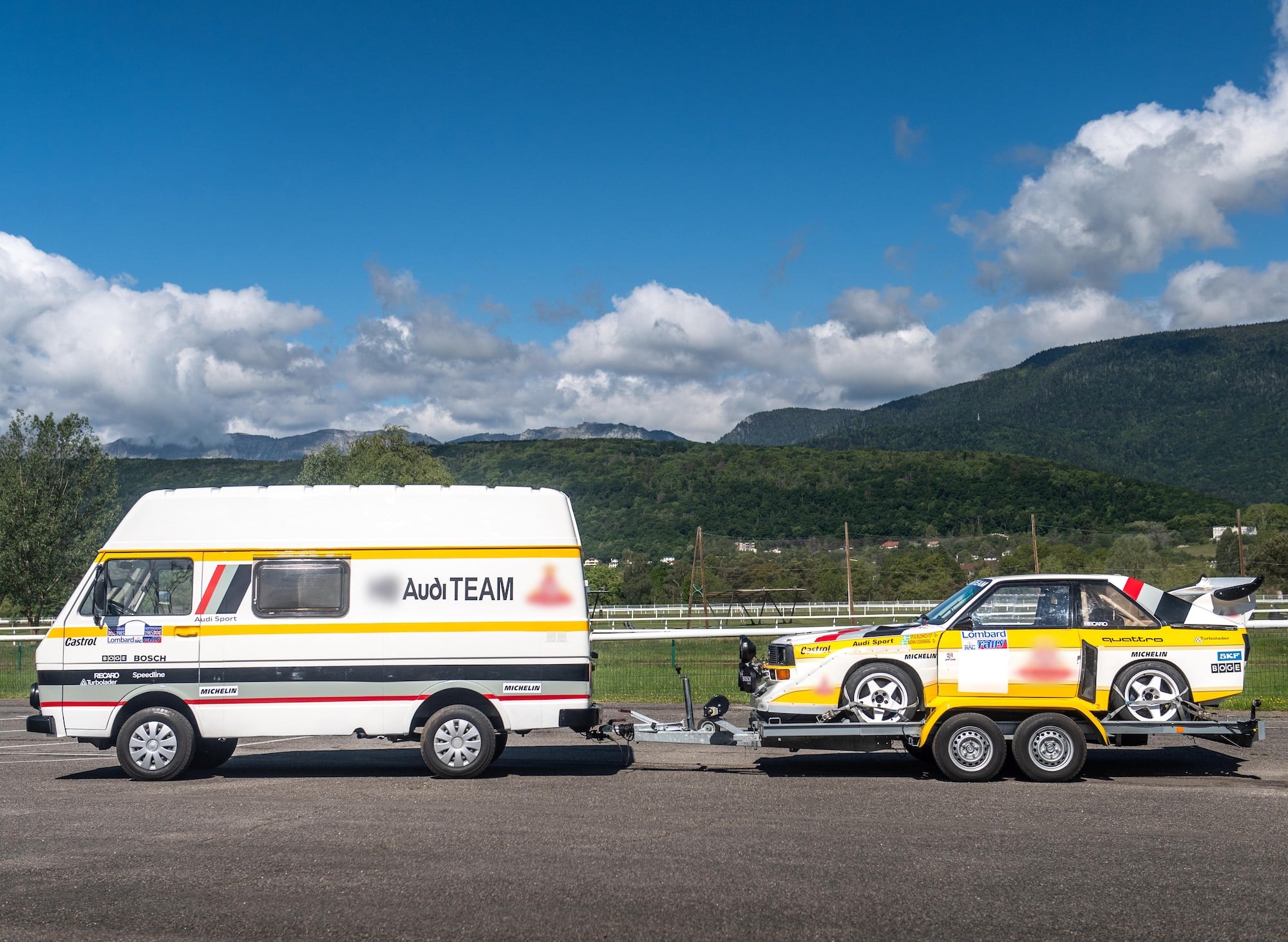
This car is now being sold as a package deal with a period-correct 1988 Volkswagen LT Van that’s been set up like a 1980s Audi rally support vehicle – ideal for towing and for carrying spare parts, tools, and wheels.
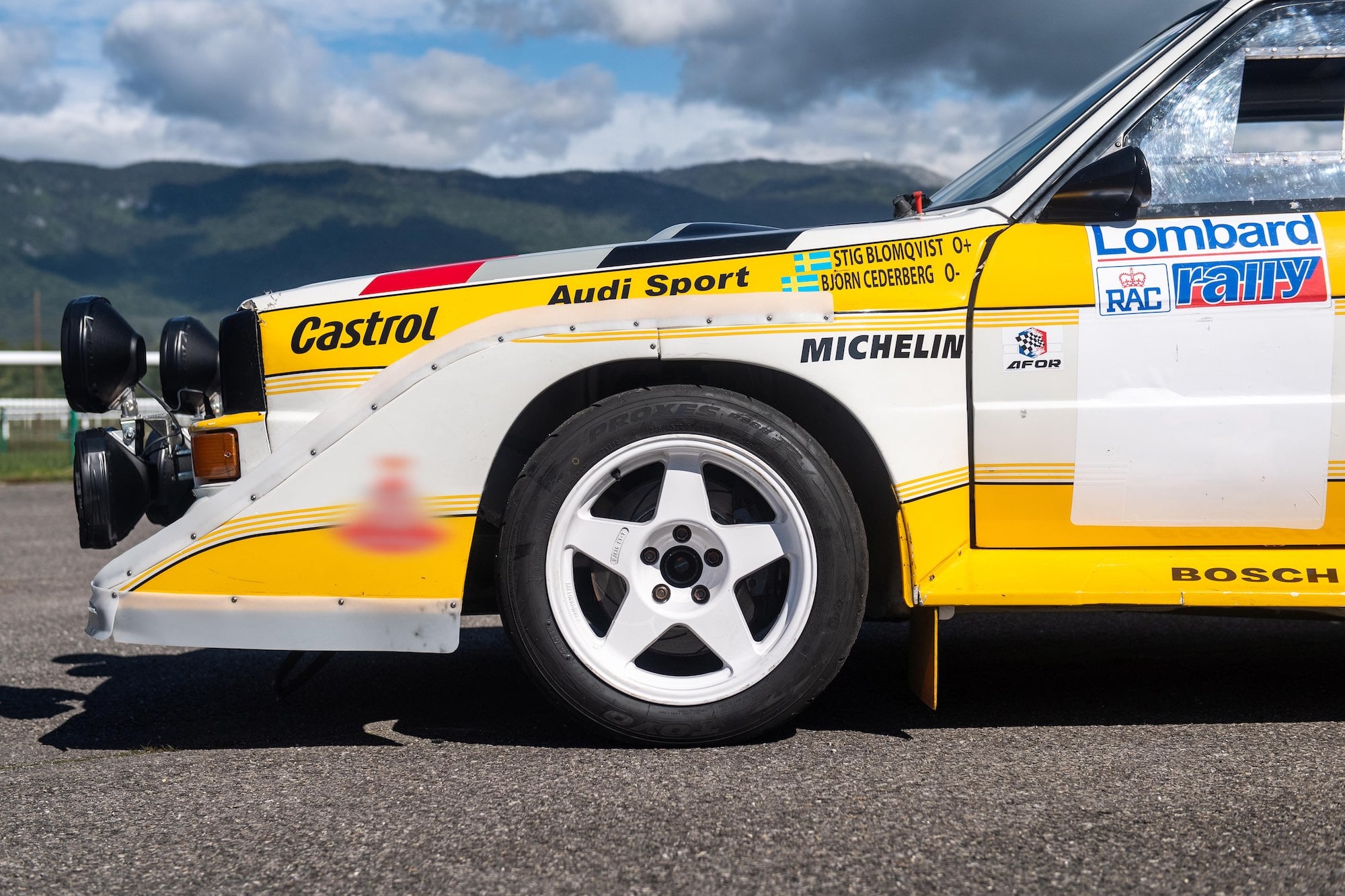
The car has appeared in demonstration runs driven by several well-known names, including Stig Blomqvist, Hannu Mikkola, Bernard Darniche, Sébastien Loeb, and Anthony Beltoise. It’s supplied with a file of invoices documenting the work carried out and parts bought, and has had recent mechanical work.
A registration document certifies its identity as a road car, though it is intended for track or closed-road use only, and it is offered as a more attainable alternative to an authentic example. It’s now due to roll across the auction block with Artcurial in early July.
Images courtesy of Artcurial
Articles that Ben Branch has written have been covered on CNN, Popular Mechanics, Smithsonian Magazine, Road & Track Magazine, the official Pinterest blog, the official eBay Motors blog, BuzzFeed, Autoweek Magazine, Wired Magazine, Autoblog, Gear Patrol, Jalopnik, The Verge, and many more.
Silodrome was founded by Ben back in 2010, in the years since the site has grown to become a world leader in the alternative and vintage motoring sector, with well over a million monthly readers from around the world and many hundreds of thousands of followers on social media.