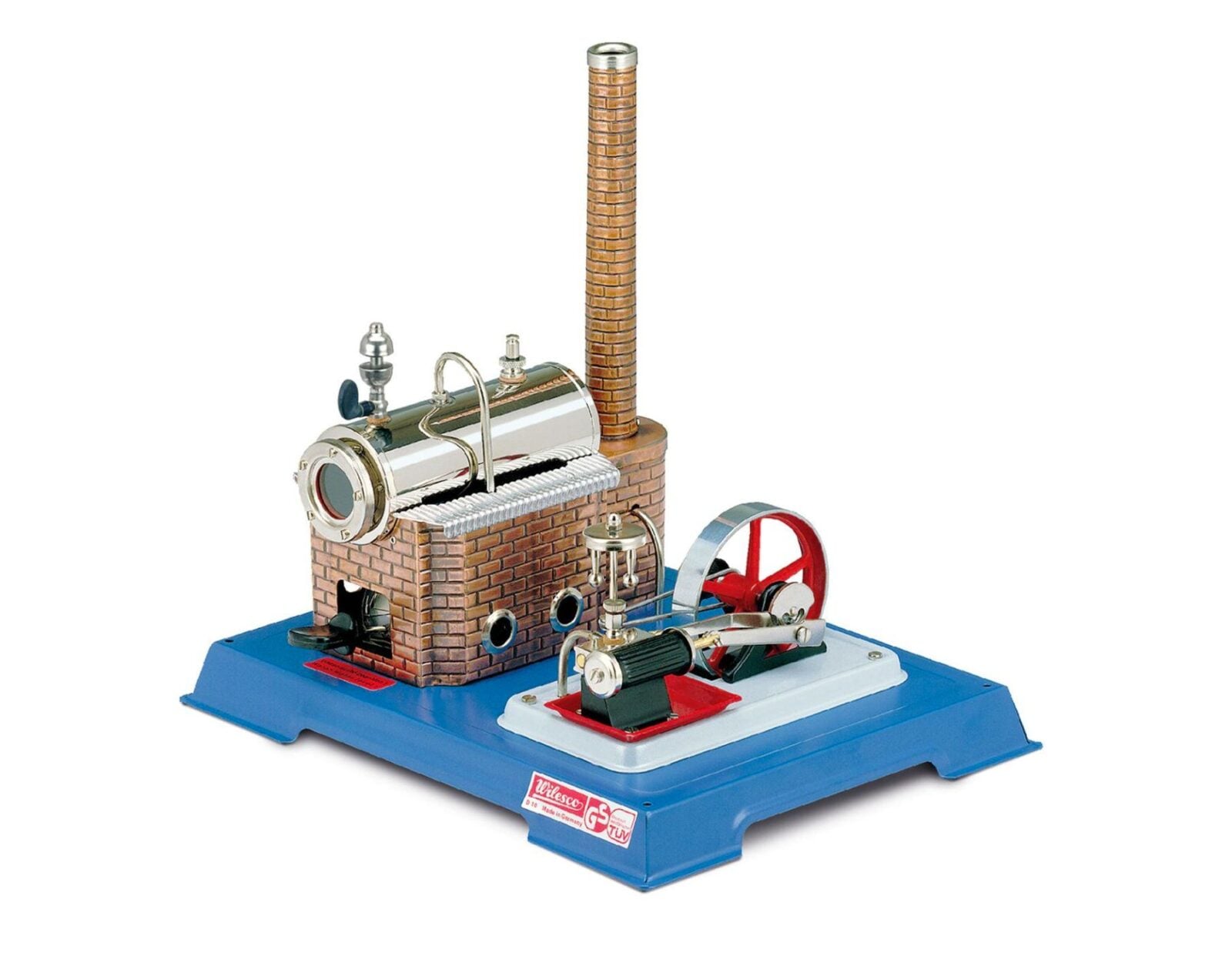
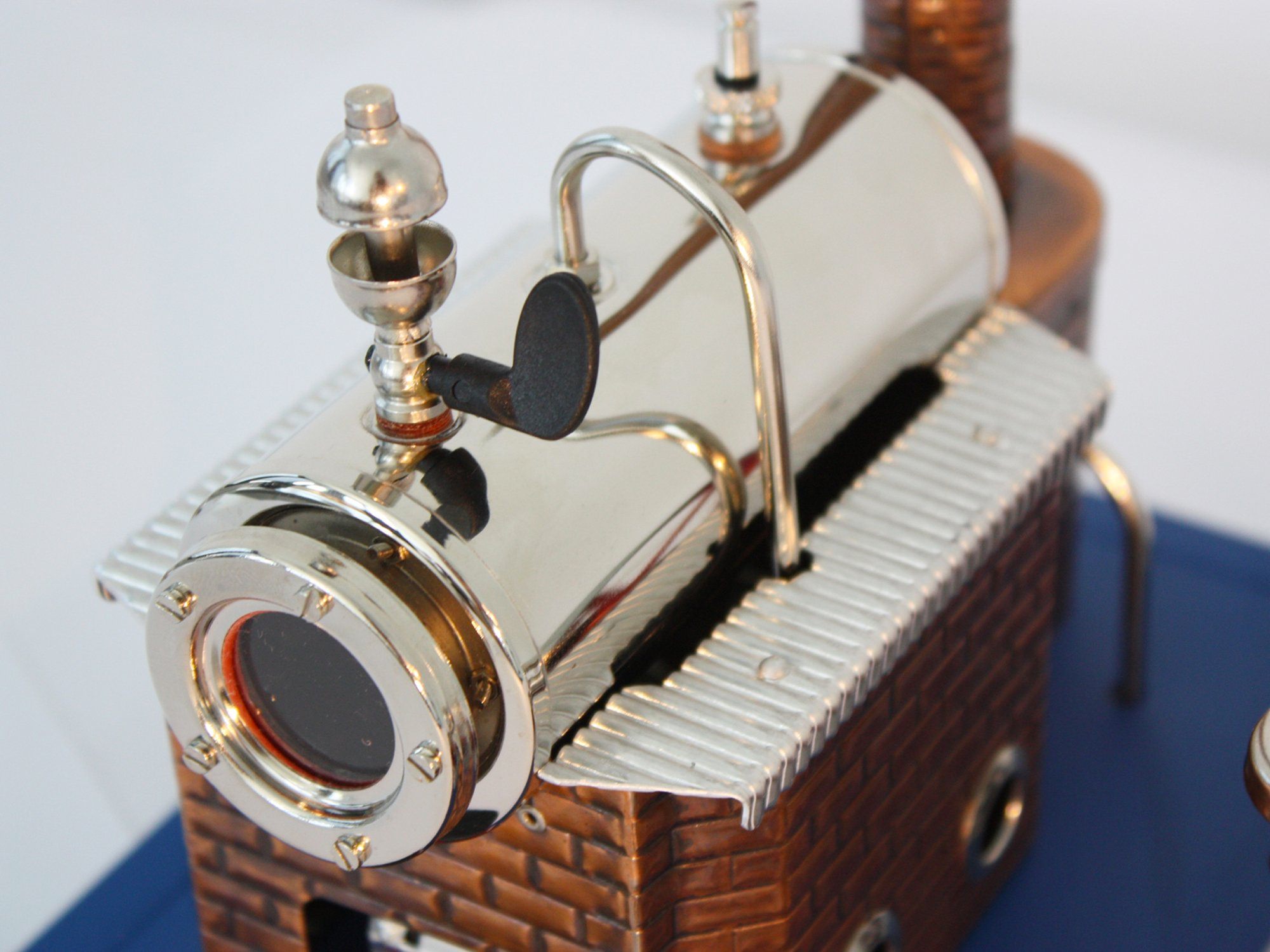
This is the Wilesco D9, it’s a fully-functional desktop steam engine that you build yourself from a kit.
Each is made in Germany using traditional techniques and materials, they’re designed to be heirloom-grade, and last for generations. Wilesco has been in business since 1912, so they know a thing or two about making things that last.
Above Video: This is a video of the Wilesco 10 in operation, it’s functionally the same as the D9 only it arrives pre-assembled. As you can see, when it gets going it can really spin that flywheel.
History Speedrun: Wilesco
The Lüdenscheid metalworks, founded by Wilhelm Schröder and Ernst Wortmann, spent its first 38 years making aluminum cutlery, badges, furniture fittings, and doll’s cookware before it built its first steam engine. It opened in 1912 as an aluminum foundry, and its trademark name, Wilesco, is a contraction of the earlier company name, Wilhelm Schröder & Co.
Wilesco’s miniature cutlery and pots arrived in the early 1920s, according to the company, large export orders from the United States carried it through the Great Depression while sales of plain aluminum cutlery declined as it went out of fashion.
Zinc and aluminum die-casting followed in 1939, and that side of the business still supplies switch parts and connectors to the automotive and electrical industries today, and it also casts the flywheels and linkages for Wilesco’s own steam engines.
Wilesco began building model steam engines, and the belt-driven workshop models they power, in 1950. The early engines were numbered in steps of four – the D4, D8, D12, and upward to the D36 steam roller and D40 traction engine. The D8 stayed in production from 1950 until 2007.
Toy boilers without a water gauge were banned in 1970 on safety grounds, which ended the D4 and the original D5 and brought in the D6 model which complied with the new laws. From 1977, boilers had to be tested at three times their working pressure, itself capped at 1.5 bar (about 22 psi), and the GS and TÜV safety marks appeared on Wilesco’s labels as a result.
Today a Wilesco technician checks every boiler and assembled engine for leaks and functionality before it ships.
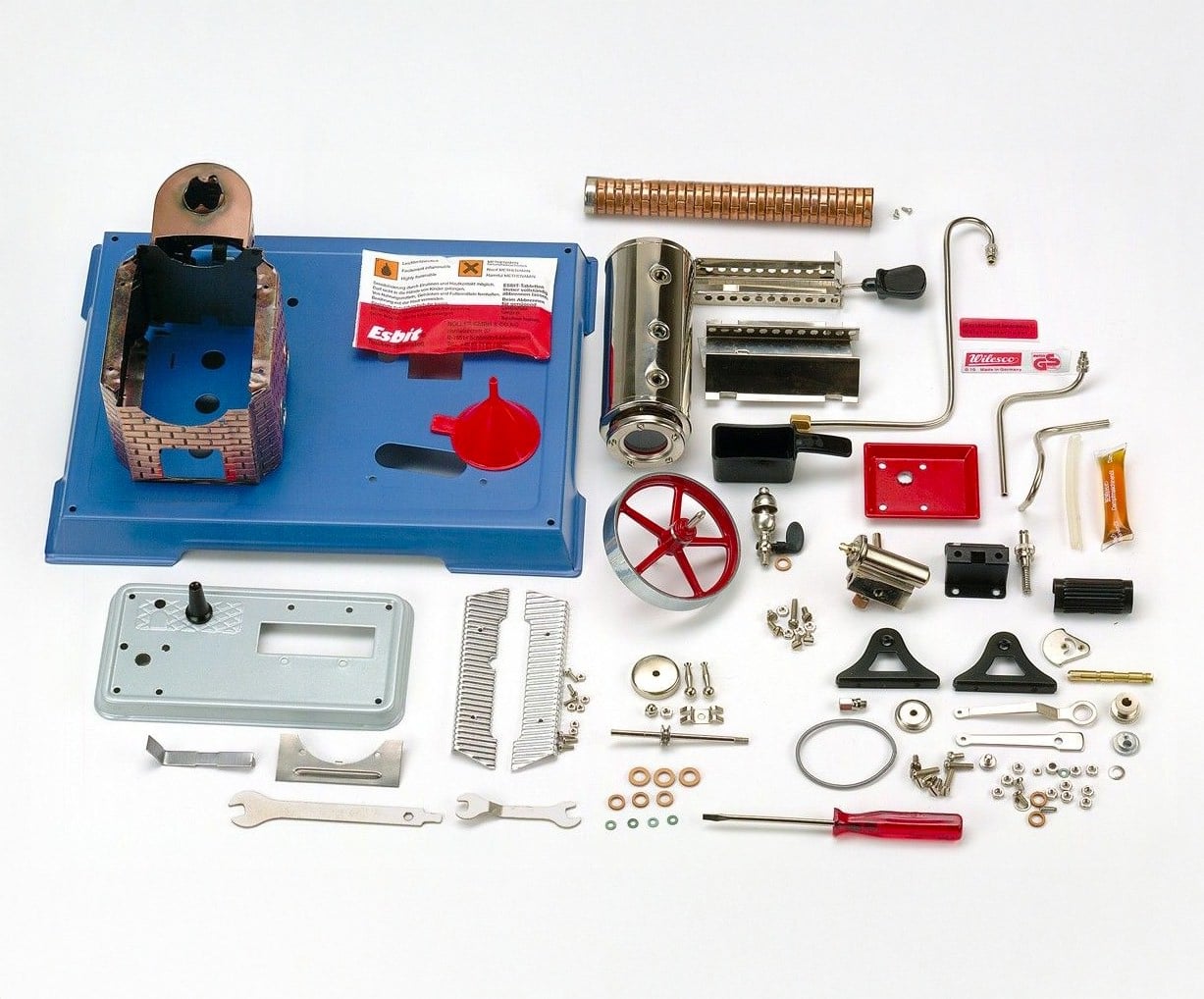
 This is the Wilesco D9, it’s a fully-functional desktop steam engine that you build yourself from a kit. Each is made in Germany using traditional techniques and materials, they’re designed to be heirloom-grade, and last for generations.
In 1966 Wilesco added Old Smoky to the model range, a steam roller patterned on a type widely used in road construction until the 1950s – the company lists it as its first mobile engine. The roller has a 230cc brass boiler and chain steering, a clutch also lets it work as a stationary engine, driving accessories through a spring-wire belt.
The D305 fire engine followed in 1987, the company’s 75th year. It’s based on the self-propelled Magirus steam fire pumps of the turn of the (previous) century, and like them it has a vertical boiler. A steam-driven pump draws water from a tank under the front bench and can throw a jet up to 3 meters (about 10 feet).
Wilesco still manufactures a range of stationary and mobile steam engines to the current day, all are made in Germany to traditional designs.
The Wilesco D9 Desktop Steam Engine
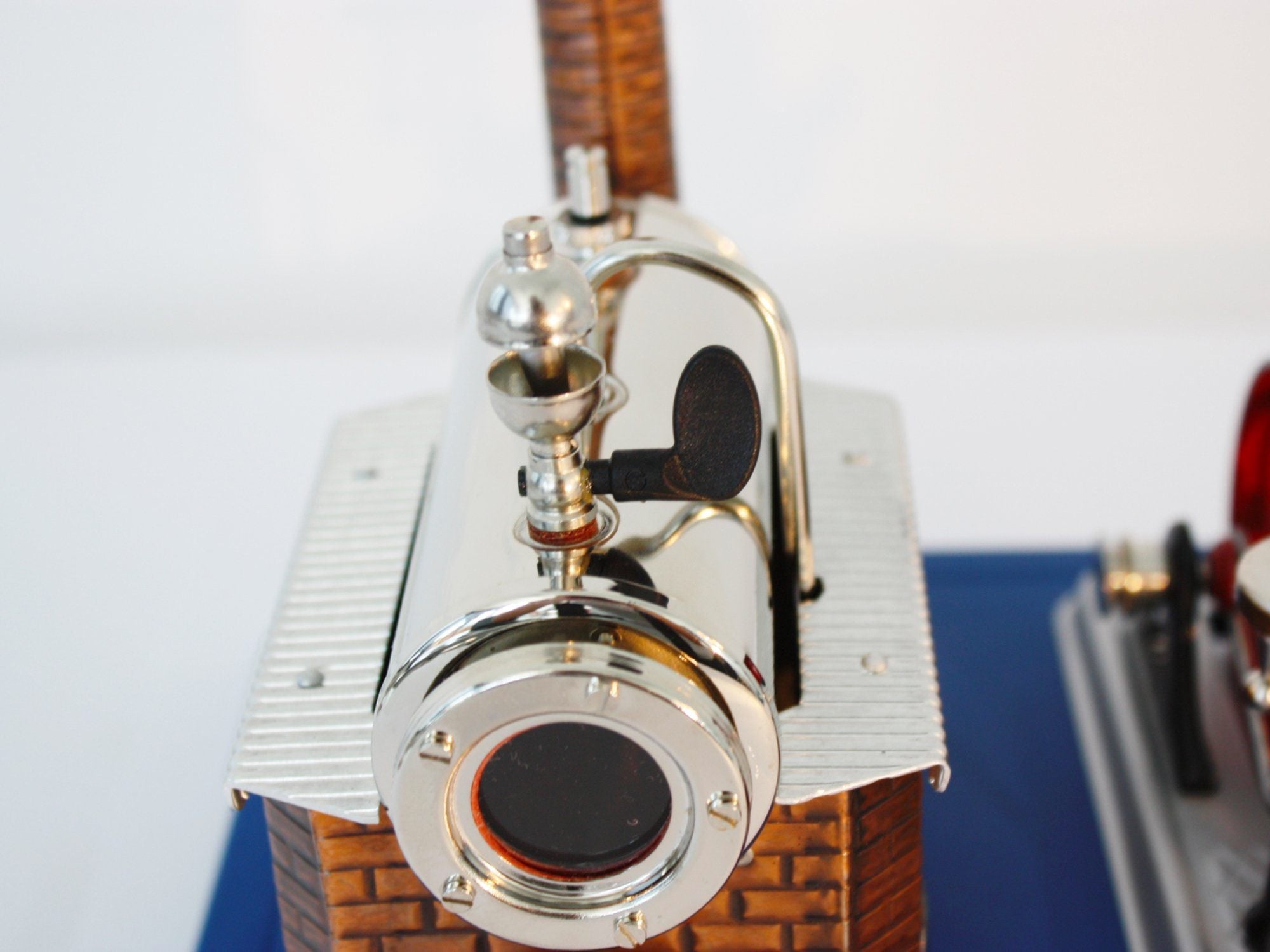
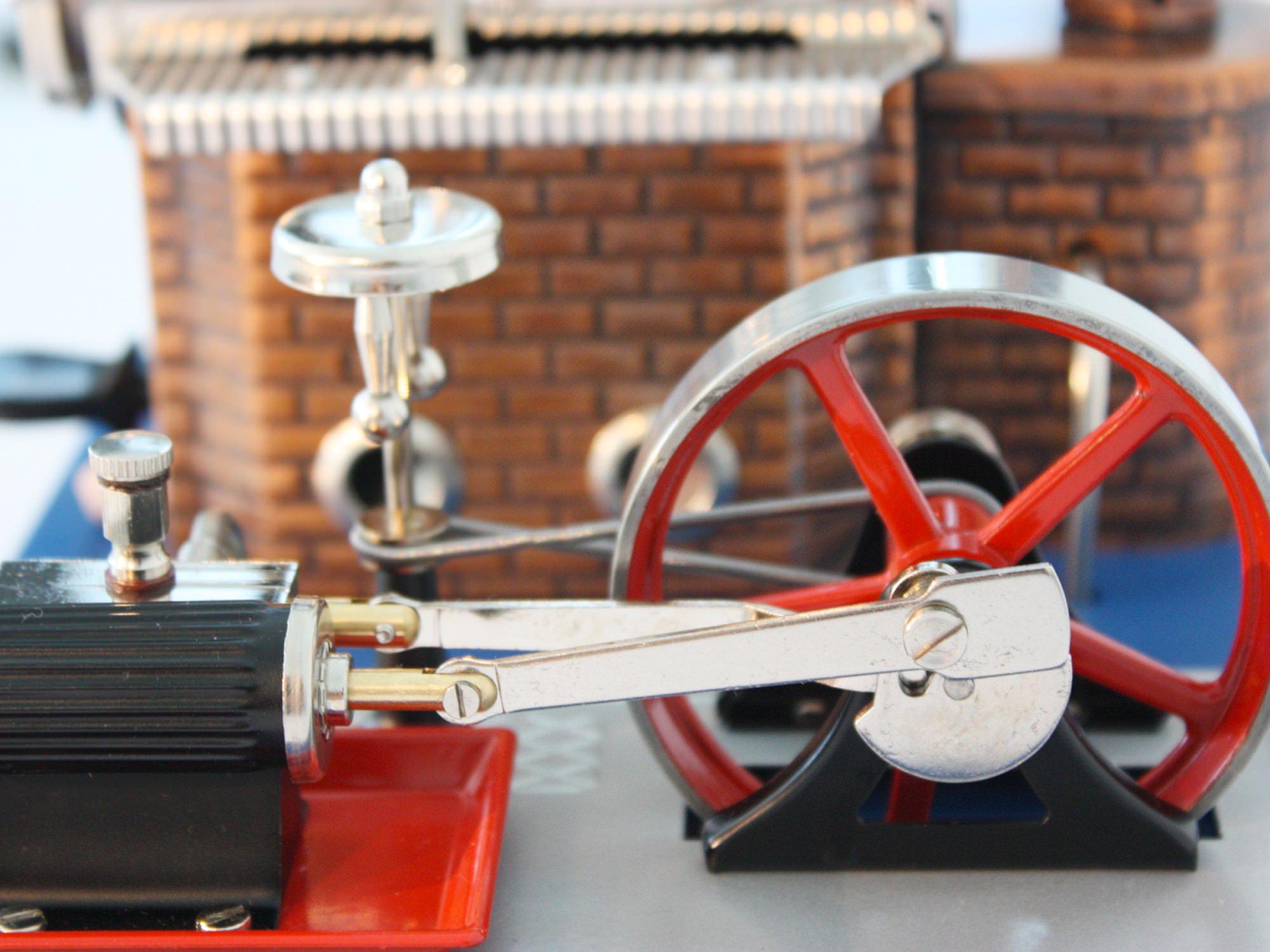
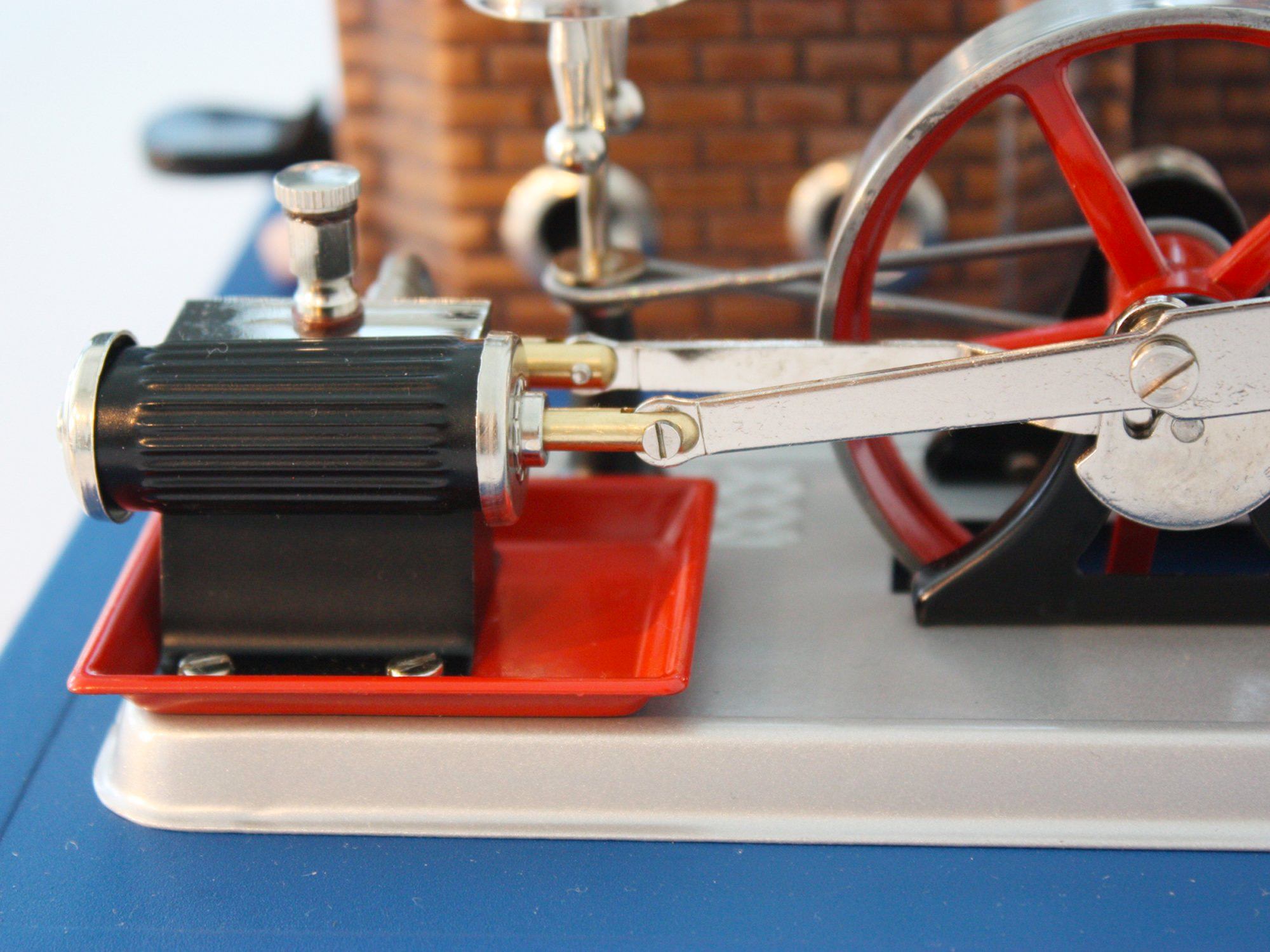
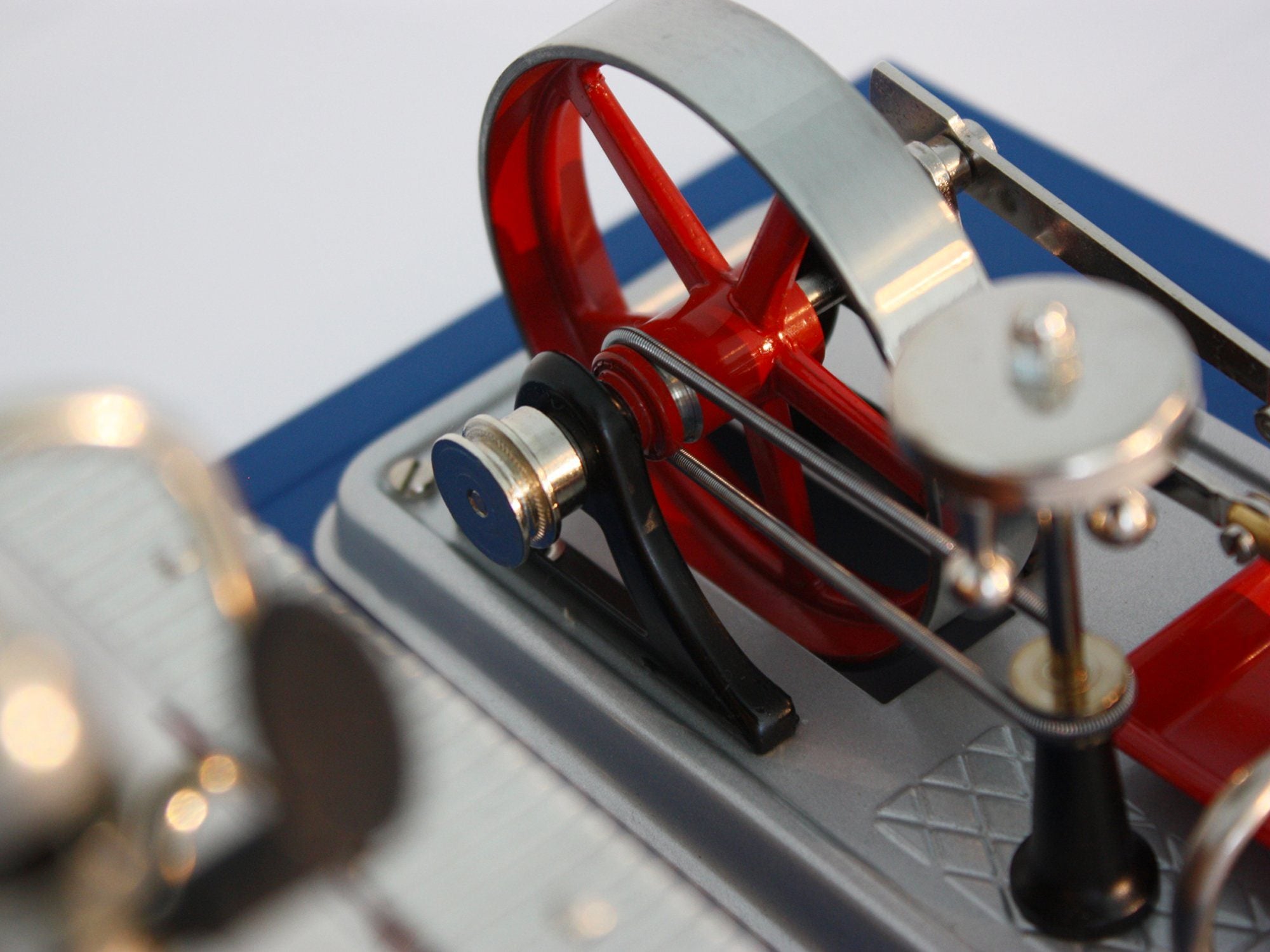
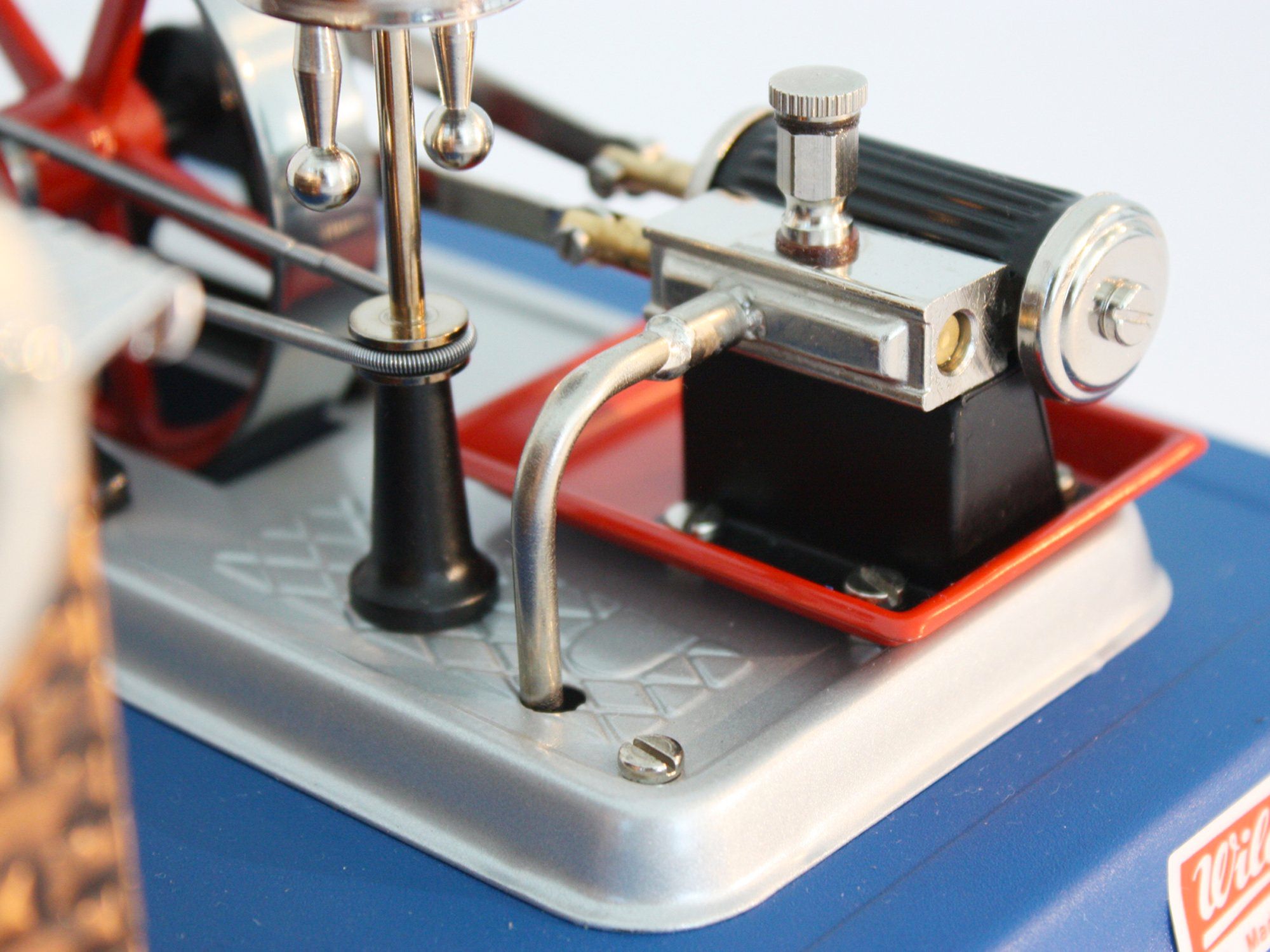
The Wilesco D9 is the German company’s most popular kit-built model steam engine, what really sets it apart from the smaller engines in the range is that it has a fixed, double-acting brass cylinder – in which steam works on both sides of the piston for more power.
The D9’s arrangement gives more power for running drive models and lets the flywheel be started in either direction. Steam comes from a nickel-plated brass boiler with a capacity of 155cc (around 5.2 fluid ounces).
It’s fired by dry-fuel tablets and fitted with a spring safety valve, a whistle and a water-level glass. The engine drives a 70 mm (2.8 inch) flywheel and weighs 1.2 kgs (2.6 lbs) in total.
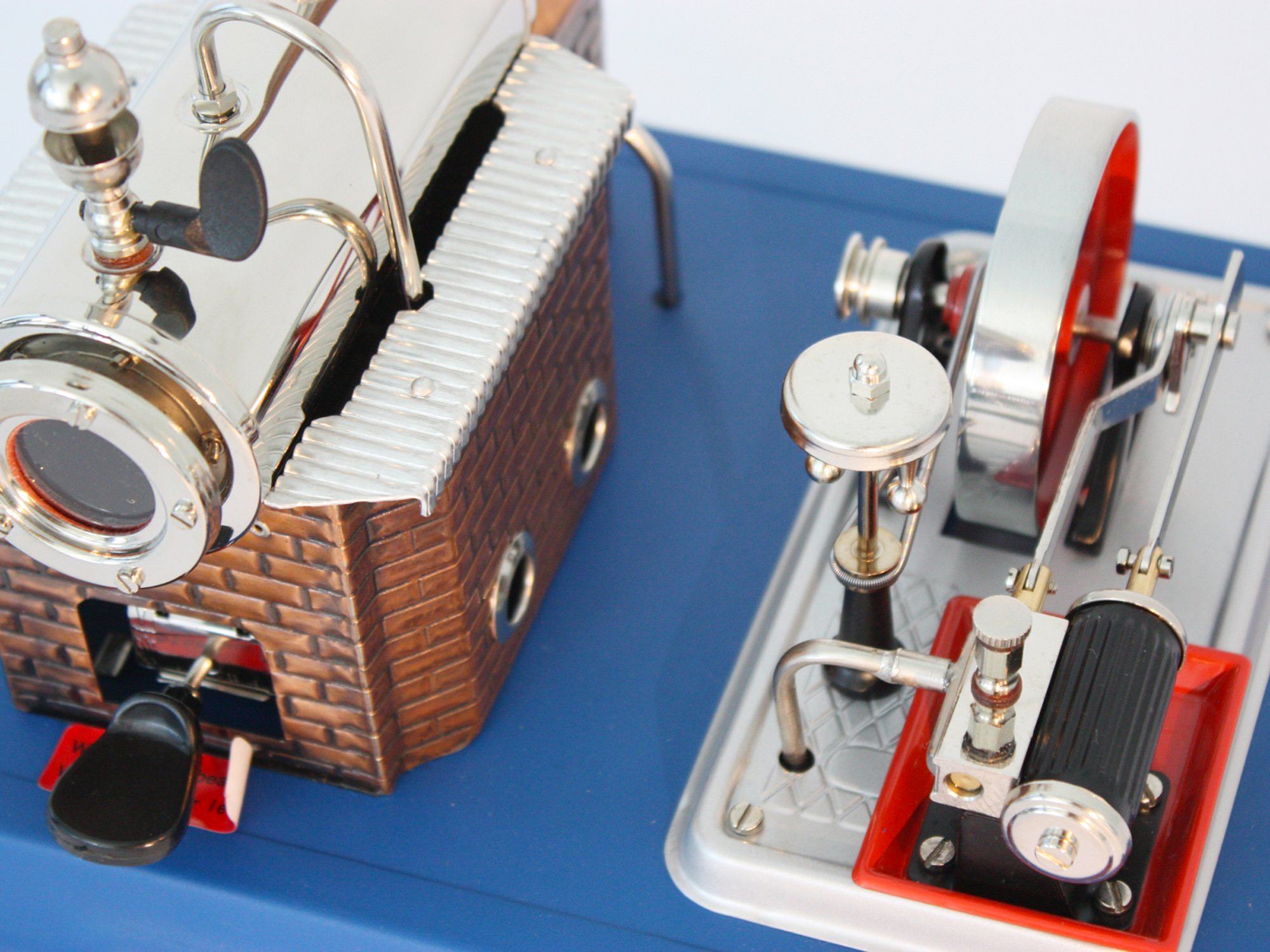
The Wilesco D9 is the German company’s most popular kit-built model steam engine, what really sets it apart from the smaller engines in the range is that it has a fixed, double-acting brass cylinder – in which steam works on both sides of the piston for more power.
Interestingly, condensate from the cylinder is routed to a tray behind the boiler house so that the chimney steams. The D9 remains in production at €249.70 ($286 USD), and it is also sold as a complete, working model (pre-built) under the D10 designation.
If you’d like to read more or order your own D9 kit you can visit the official Wilesco online store here.
Images courtesy of Wilesco

Articles that Ben Branch has written have been covered on CNN, Popular Mechanics, Smithsonian Magazine, Road & Track Magazine, the official Pinterest blog, the official eBay Motors blog, BuzzFeed, Autoweek Magazine, Wired Magazine, Autoblog, Gear Patrol, Jalopnik, The Verge, and many more.
Silodrome was founded by Ben back in 2010, in the years since the site has grown to become a world leader in the alternative and vintage motoring sector, with well over a million monthly readers from around the world and many hundreds of thousands of followers on social media.